Apr 232013
 

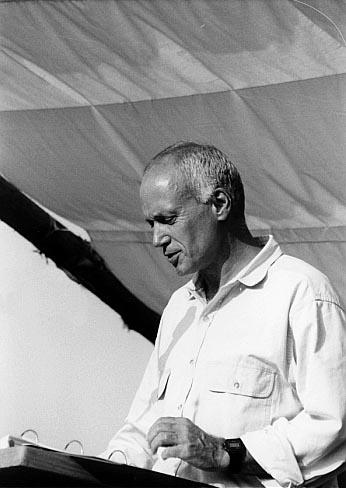
Here’s an interview I did with the Irish novelist John Banville in 1995 after the publication of his novel Athena. Below are two of my reviews of Banville novels. At the beginning and the end, Banville (politely) disagrees with what I say about him (also in the middle somewhere). His disagreement seems a bit disingenuous. I still read his complex and intellectually rich books and shake my head at the idea that he is just describing the world he sees when he looks out his window. In any case the main thing in an interview is to get the subject to say something interesting. It’s a treat to hear Banville’s voice as he discusses his own work; there is a stretch when he begins talking about the beauty and tenderness of the world that is just gorgeous.

Once again, I retrieved this from a box of tapes, clumsily recorded and even more clumsily transferred to an mp3 file. There are a couple of skips near the beginning for which I apologize.

dg

Banville Part 1

Banville Part 2

Banville Part 3

On John Banville’s Ghosts

John Banville is an Irishman with the gift of blarney, an author who writes gloriously impossible novels that seem to evanesce like peat smoke or mist out of the bogs of that strange island, phantasmagoric novels that swirl and race and swallow their own tails or dance between morbid melancholy and golden, baseless hope.

He is best known in America for two historical novels, Doctor Copernicus and Kepler, about the Renaissance astronomers who turned the known world upside down. But lately Banville has returned to the Irish setting of his earlier books (Birchwood, Long Lankin), a fantastically sterile, degenerate place of decaying aristocracy, mythically dysfunctional families, murder, incest, drunkenness and mega-alienation.

In Banville’s last novel, The Book of Evidence (1989), Freddie Montgomery, a failed scientist, impecunious husband, drunkard, liar and all-round weasel, abandons his wife and child in Spain and returns to Ireland to try to raise money by selling his late father’s third-rate art collection. Unfortunately, Freddie’s eccentric and possibly lesbian mother has already sold the paintings to a wealthy dealer living on a nearby estate. While stealing one of the pictures back, Freddie murders the maid (one of the most pathetic, grotesque and revoltingly detailed murders in literature-a joy to read) and ends up serving a life sentence.

In Ghosts, Freddie resurfaces 10 years later (a life sentence in Ireland) as the novel’s unnamed narrator, ex-con, amanuensis and ghost writer to a retired art history professor living on a sparsely inhabited island with his books and a galumphing servant-keeper named Licht (sort of a cracked Prospero with his Caliban-plenty of Shakespeare allusions here).

The professor is supposed to be an expert on Vaublin, a minor Parisian painter who apparently went mad or was haunted by a mysterious imitator in the months leading up to his death. In fact, the professor isn’t an expert and has fraudulently authenticated as Vaublin’s a little masterpiece called “Le monde d’or” (“The Golden Word”), which made up part of the collection Freddie pillaged in The Book of Evidence. He is happy to hand over the work of writing Vaublin’s biography to the maid-murdering narrator.

All this is background, and most of it comes clear late in the book. The connections between Ghosts and The Book of Evidence are pleasing to note without being necessary to the reading of either work. I mention them only because they are about all that can be said with certainty about what happens in Ghosts.

Ghosts actually begins with a shipwreck (shades of The Tempest again). A small band of tourists-two women, an old man, a Mephistophelean character named Felix and three children-is unceremoniously dumped on the island by a drunken ferry captain who runs up on a sandbank at low tide. The tourists feel a mixture of strangeness and familiarity as they clamber up the dunes to the professor’s house.

These tourists bear a striking resemblance to the figures in Vaublin’s painting of the Golden World. In fact, they may be the people in the painting come to life or they may be real people who have found themselves in a painting (or a novel). And, of course, it may be a fake painting or an authentic painting painted by a fake Vaublin.

Suddenly, Banville’s little book drops down a rabbit hole of complexity, with the text oscillating between what you might expect from a normal novel in terms of character and plot and a bizarre aesthetic universe governed by the literary laws of recurring imagery, parallel structure, doubles and literary allusion.

Nothing much happens in Ghosts, and at the same time a great deal happens. The old man in the Panama hat, for example, becomes confused, then begins to obsess, trying to remember the name of that golden “thing they keep the host in to show it at Benediction.” He wanders off along the dunes, falls down in a faint, then returns to the house even more confused.

The old man’s obscure drive to remember is less an aspect of characterization than the strange feeling a real person might have if his brain were being written into by a conniving novelist named John Banville. The missing word is less important than the fact that it is missing and that it is golden and hence stands for the old man’s dreamy awareness that he has stumbled into an alternate, ghostly universe called the Golden World.

After a series of more or less similarly inconsequential events, the little group of tourists gets back into the ferry, which refloats with the tide and disappears. All except for Flora, a vulnerable, rather pretty nanny who has been taken advantage of by the nefarious Felix (sometimes referred to as Freddie’s double). Flora remains in the house to save herself from these unwanted attentions, and briefly it seems as if Ghosts might flower into a romantic entanglement between Freddie and Flora. But then, Flora, too, drifts away.

“Such stillness; though the scene moves there is no movement,” says Freddie, describing Vaublin’s painting “Le monde d’or” (and by extension the novel itself). “What does it mean, what are they doing, these enigmatic figures frozen forever on the point of departure, what is the atmosphere of portentousness without apparent portent? There is no meaning, of course, only a profound and inexplicable significance.”

This mysterious nimbus of significance is the central marvel of Banville’s novel. His characters seem to do nothing but are suffused with a mixture of valor and sadness, a steadfastness in the face of a fate they know they cannot know. And his text glows with a gritty eroticism—remarkable, considering there is no explicit sex in the book. On every page there is just the ghostly shadow of something that never appears and is never named.

This is unsettling stuff for anyone who likes a conventional story. But it should not be dismissed as self-conscious game-playing or decadent estheticism. The conventional novel relies on a certain set of technical devices (plot, character, setting and theme) to produce a fictional world that is a simplified, stereotyped and rationalized version of our own—a world where motives drive people ineluctably into action, where cause achieves effect.

Banville isn’t trying to write this semblance of reality. Rather, he is rocketing his readers into a kind of hyper-reality, a world at the outer limits of human sensibility, a world whose complexity is not reduced by the everyday filters of common sense and the pressing need to get groceries or feed the cat, a world that begins suddenly to seem more like a dream or a poem than what we normally call life.

In this world we are constantly reminded of the brevity of existence, how we always seem to have just arrived while on the point of departure. We are bemused and battened by messages the provenance of which we are only dimly aware. We push along in our daily heroics without any real sense of purpose, with only the feeling perhaps that there should be a purpose, always bewildered by the feeling of being other than what we seem to be.

Ghosts is a strange and beautiful novel about art and the wistful inconsequentiality of being, a little paean to the human heart as it mutters its defiance into the puzzling void.

—Douglas Glover, Chicago Tribune December 12 1993

b

On John Banville’s Athena

John Banville is an author singularly unafraid of the stigma of hyperbole and baroque excess. His novels are littered with incestuous, decaying families, waifish women inviting the whip or the hammer, and drunken, ineffectual male orphans (real or figurative) who move through an fog of decadence, drift and dread worthy of the great Gothic masters.

Known best in America for his historical novels Kepler and Dr. Copernicus, Banville has lately been mining a vein of contemporary Irish grotesquerie centered on a serial character called Freddie Montgomery. In The Book of Evidence (1989), Freddie, drinking too much and down on his luck, tried to steal a painting from a squire’s country house and ended by murdering the maid with a hammer. In Ghosts (1993), free after serving 10 years in prison (a life sentence in Ireland), Freddie turned up on a sparsely populated island where he had been hired as secretary to an aging professor whose specialty was a little known Parisian painter named Vaublin.

If there can be said to be a conventional plot in Ghosts, it turned on Freddie’s abortive love affair with a young woman dropped ashore by a drunken ferryboat captain. This woman and her shipmates bore a striking resemblance to figures in a Vaublin painting called “The Golden World”—part of the collection Freddie pillaged in The Book of Evidence and probably a fake.

In Banville’s new novel, Athena, Freddie’s back, this time in Dublin under the assumed name Morrow, hired by a man called Morden (who works on a street called Rue) to authenticate a cache of 17th century paintings on classical themes. In contrast to Ghosts, Athena is knee-deep in conventional plot elements. There is a cockamamie art fraud plot—something out of The Rockford Files—with a cop called Hackett and a sinister transvestite gangster called Da. There is a plot of sexual obsession and sadomasochistic love between Freddie/Morrow and a girl called A. And there is an astringently tender subplot involving Morrow’s elderly Aunt Corky (not a blood aunt; the connection is vague), who moves into his dingy flat to die. In the background lurks a mysterious serial killer who drains his victims’ blood.

For much of the novel the cracked love story between Morrow and A., a young woman with preternaturally white skin and bruised lips, takes center stage. From the outset the bumbling, chronically depressed Morrow (not since The Ginger Man have we met a character so engagingly and self-destructively melancholy) is besotted and yet knows that she will leave. His breathless, goggle-eyed account (reminiscent of Humbert Humbert’s in Lolita) of their wanton trajectory, from innocent abandon, to voyeurism, to a menage a trois in a seedy brothel, to spanking and whipping and complicit infidelity, is a droll parody of Victorian pornography—melodramatic, perfervid and decidedly unsexy as the situations become more bizarre and mechanical.

Though Freddie/Morrow has taken pains to conceal his identity, everyone else in the novel seems to know exactly who Morrow is—from the criminals who hire him to authenticate their paintings, to the investigating detective, to A. herself, who shocks Morrow one day by asking him to strike her the way he struck that unfortunate maid in The Book of Evidence. Even Aunt Corky hints that she may not be his aunt but his mother. At every turn, an atmosphere of mystery, unreality and downright fraud dogs his steps, so that, though Morrow is telling the story, he seems more and more like a character in someone else’s book, a cog in someone else’s plot.

And interspersed throughout Athena there are catalog descriptions of the paintings entrusted to Morrow, paintings on classical themes of violence, rape and transformation that bear, on the face of it, a strong resemblance to the events of the book (just as in Ghosts the characters seem to have walked out of the Vaublin painting).

So Athena becomes a kind of echo chamber of comic despair in which everything seems fated or written by another hand, where gods toy with humans and turn them into beasts, where a miasma of solipsism hangs in a world of dream, and mysterious lost children, doubles and putative parents hover just out of focus. When A. disappears near the end of the novel, she leaves a note: “Must go. Sorry. Write to me.” But there is no signature and no address, and Morrow is left with only the presence of her loss, a pneumatic void into which he writes his words.

All this is peculiar stuff—heady, hilarious, hyperbolic and strange. Banville’s literary ancestors are writers like Poe, Beckett and Nabokov. His novels are little wars between a repressive, fusty, petty bourgeois sensibility (Irish, Victorian and Modern, with a capital M) and the dark, bubbling, drunken, violent, godlike forces of sex and madness that lurk beneath the surface of life and language.

On the strength of his novels, Banville is not so much a postmodern writer as a pre-modernist, and his critique of modernity rests on a romantic, Arcadian vision of our pre-Renaissance past. Part-way through Athena, Morrow explains how the invention of perspective in painting destroyed the blissful, circular forgetfulness of the past, “spawning upon the world the chimeras of progress and the perfectability of man and all the rest of it. Illusion followed rapidly by delusion: that, in nutshell, is the history of our culture. Oh, a bad day’s work!”

From this vision, everything else follows: Morrow’s confusion, the novel’s atmosphere of fog and drift result from the application of narrowly rigid concepts of self and reality to a world that is ever and always mysteriously other. Stripped clean of contemporary talk show anodynes and psychobabble bromides, the world of Athena is finally hyper-real—one in which in which loneliness, loss and despair throb at the very center of being, and poetry, once again, is possible.

—Douglas Glover, Chicago Tribune July 9 1995

Mar 212013
 

Here is an interview I did with Robert Coover in 1996 shortly after the publication of his novel John’s Wife. We were talking over the phone; the interview starts slowly as we feel each other out. But as it gathers steam Coover says marvelous things about his forerunners, Ovid, Kafka, Rabelais and Cervantes. He talks about how, when he planned the novel, he actually started with a paragraph count and the idea of a Bell curve. He also does a lovely reading of a passage — as he says, his first “telephone reading.”

This is from a raw tape that has been in a cardboard box for years; so my usual apologies for the sound quality.

Click the little triangular button to listen to the interview.

Coover Part 1

Coover Part 2

—Douglas Glover

See also interviews with Gordon Lish, John Hawkes & William Gass.

The Enemies of the Novel: DG Interview With John Hawkes
Causing Damage — Captain Fiction Redivivus: DG Interview With Gordon Lish
Limericks, Degraded Modernism and The Tunnel: DG Interview with William H. Gass

Mar 202013
 

AUTHOR POSTER

The earth will tremble. Nothing short of that. The stars are in alignment. Sydney Lea once gave the best poetry reading dg has ever been privileged to witness. Three poet laureates! Not to mention that Port Dover is itself the scene of many youthful scrapes and escapades of dg’s youth which, happen the day, he may be prevailed upon to reveal at the event.

Ed. Note: Little known facts about Port Dover — In 1814 Americans came across the lake and burned the town; in retaliation Canadian and British troops went down and burned the White House (well, okay, it was mostly the British).

dg

Douglas Glover Douglas Glover, photo by Danielle Schaub

Sydney LeaSydney Lea

John B. LeeJohn B. Lee

OLYMPUS DIGITAL CAMERAMarty Gervais

 Michael SchatteMichael Schatte


Mar 092013
 

Global Brief logo

Two principles rule in human affairs: identity and difference. We yearn for home, comfort and familiarity (self, family, tribe, city, country, language, culture), and yet we are always engaging with difference (through simple curiosity – one of the most endearing human traits – or need, or love, which is the aesthetic attraction). This sets up a paradoxical oscillation between paranoia (excessive fear of pollution coming from outside) and schizophrenia (an inability to distinguish self from other; all messages are the same).

Moats and bridges are perhaps unhappy metaphors for thinking about inter-state relations –except that, of course, that is the way in which we tend to think of them. We are always digging moats, and simultaneously building bridges to get over them. This begs the question: why dig the moat in the first place?

— read the rest @ On Humanity’s Moats and Bridges : Global Brief.

Mar 092013
 

I am quite sure that “went viral” doesn’t fit my present circumstances — a bit hyperbolic, I’d say. But it’s always nice to have someone in the press using the phrase next to one’s name. The Winnipeg Free Press, BTW, is a venerable Canadian journalistic institution.

dg

A Canadian author’s book on writing went viral on social media recently, leading to thousands of would-be fiction writers searching their manuscripts for “Copula Spiders.”

Douglas Glover’s book Attack of the Copula Spiders (Biblioasis) coins the term to refer to the multi-appendaged mess created by circling and linking all of the variations of the verb “to be” in a paragraph. (Copula is a term for the link between subject and predicate of a verb.) Excessive use of sentence constructions like “he was happy” or “the building was unassuming” lead to “flaccid and uninteresting prose,” he writes.

Joe Ponepinto, book review editor of the Los Angeles Review, brought Glover’s ideas to the literary world in a much-circulated blog post subtitled “Why I’ll never write (or read) the same way again.”

via Cameron Dueck’s arts column – Winnipeg Free Press.

Mar 082013
 

Anna Maria and the box turtleAnna Maria Johnson

Virginia Woolf, in her diaries, once said that she didn’t know how anyone could read without a pencil in his hands; Anna Maria Johnson doesn’t just use a pencil, she uses lines, paint, a self-created concordance and icons to mark the patterns when she is reading. Johnson is an artist-writer-reader who has an uncanny instinct for making visual and synchronic what in a text seems abstract and sequential. After she is done with a paragraph, a page, a sequence of pages, you suddenly SEE the text come alive as a trembling matrix of vectors, internal references, and visual rhythms; reading, Anna Maria Johnson, renders text into a startling work of visual art. This is a wonderful ability and not just a parlor trick; reading for pattern is a key element in understanding authorial intention. Repetition is the heart of art. Too many readers skim a work once and never get to appreciate the tactile, erotic quality of  great prose, the physical impulses of tension, insistence and resolution that form its inner structure. Anna Maria Johnson’s “reading” of Annie Dillard’s Pilgrim at Tinker Creek is a delightful and astonishing work of hybrid art in itself, but it’s also a terrific lesson in HOW TO READ.

dg

/

pilgrim epigraph page

Anna Maria Johnson’s altered epigraph page of Pilgrim at Tinker Creek

I. Introduction

EVERY STORY HAS its own circulatory system, with arteries and blood vessels networked and pumping life and nutrients from its heart to every other part. Each book is a watershed, a system of rivers, creeks and underground currents that flow unceasingly, pulled by some kind of unseen gravitational force. A book is a woven web, with silken strands connecting segment to segment.

It’s easy to wonder, while reading an admired author’s flowing narrative, just how she managed to do it. A prize-winning book seems to have been a miracle, a creative rush of genius that burst forth while the writer simply sat and transcribed the words onto the page. But generally, good writing comes down to slow craftsmanship and long periods revising. I find that syntactical patterns and repeated imagery play a dominant role in creating unity and structure, as seen in Annie Dillard’s Pilgrim at Tinker Creek, a book that hangs together through such patterns.

But how, exactly? To find out, I re-read Pilgrim at Tinker Creek. I focused on sentence structure and image patterns, for it is syntax (specifically, repetition, parallel structures, and lyricism), in combination with image patterns (concrete images that recur throughout a given work), which gives unity and movement, or “flow,” to this book. According to Mary Stein, “a sophisticated use of syntax in prose can function well beyond lyric or ornamentation.” Syntax can be used as metaphor, she adds, in order to “motivate narrative movement and provide story structure.” [1] I would add that “syntax as metaphor” sometimes takes the form of image patterns.

Douglas Glover, in his essay “How to Write a Short Story Structure: Notes on Structure and an Exercise,” published in Attack of the Copula Spiders, defines an image pattern as “a pattern of words and/or meanings created by the repetition of an image.” (33) Each repetition is not simply a duplication of the first, however, for the most interesting patterns require variation. Think of the famous bars from Beethoven’s Fifth Symphony: if they were played fifteen times in succession without variation, how grating they would be! But Beethoven artfully incorporated variety into the score so that whenever it returns to the familiar phrase, the audience can appreciate it. Similarly, in visual art, the most successful images employ repetition with thoughtful variation to create unity. Even Andy Warhol’s famous silkscreened Campbell’s Soup Cans are slightly different from one another: each can bears a different label, “black bean,” “tomato rice,” “vegetable,” “green pea,” and so forth. The “cheese” soup even bears a visually different label, with a yellow banner spanning its front.

Glover’s essay names some specific options for varying a repeated image. First, in successive appearances, the author may add a piece of significant history—that is, repeat the image but include new information or detail that the reader wasn’t aware of in a previous iteration. Second, the author may use “association and/or juxtaposition,” pairing the image with another, previously unrelated, image so as to enlarge or alter its meaning. Third, the author may use what Glover calls “ramifying or ‘splintering’ and ‘tying-in,’” where one or more parts of the image are extracted and repeated, then put together again in a later iteration (33).

Image patterning gives a story “an echo chamber effect (or internal memory—important for giving the reader a sense that there is a coherent world of the book,” “rhythm,” and “a root or web effect that promotes organic unity (the threads connecting the pattern in the text are like the roots of a tree holding the soil together)” (33). While Glover is speaking of fiction, the principles of image patterning are equally applicable to non-fiction writing. Essayists and memoirists alike can select images from real life, interpreting such images to add new layers of meaning and symbolism with each recurrence.

I would add that syntactical patterns—even those that are not primarily visual—are capable of providing the above functions in a given work, just as image patterns do, when they are repeated with variations.

Dillard’s book nearly bursts to overflowing with both of these types of patterns. Repetition of syntactical and image patterns lends unity to a work, while variations on those patterns provide movement, or circulation. Still, the process through which image patterns and syntax “work” in the hearts and minds of readers, when they are working well, feels rather mysterious. One writer friend remarked to me that, despite years of studying literature and the writing craft, when she reads books by Marilyn Robinson, they still seemed “like magic.” Similarly, when I first read Annie Dillard’s remarkable Pilgrim at Tinker Creek, I was tempted to ascribe its flow, its circulatory system, to sorcery. But upon subsequent, closer, readings, I began to see patterns emerging, and an inherent, carefully ordered structure—evidence of craftsmanship, not dark arts. The first pattern jumped out to me, suddenly, much the same way that a stereogram image suddenly pops out, unmistakably visible, so that the viewer wonders, “How did I not see that before?” It was the repeated phrase, “the tree with the lights in it,” a specific pattern of text that recurs fourteen times throughout the book, and which, in section III, I will discuss in depth.

Shortly after that first pattern appeared to me, other images began to shimmer from the text: a mockingbird’s graceful free fall, a giant water bug that sucked a frog out of its skin, sharks in a feeding frenzy limned in light, the goldfish named Ellery Channing. [2] I ordered a sturdy hardcover copy of the book for the express purpose of tracking down every image pattern that I could find, cross-referencing them in the margins, coding them with watercolors, and indexing my finds in a chart like a concordance (Appendix A). I’ve included scanned images of some relevant pages so that you can follow this process. I should stress that it was only in the course of many successive readings that many of these patterns became apparent to me; mostly, that which you see sketched out in watercolor and marginalia would remain in the unconscious levels of a reader’s mind for the first reading. The purpose of these added visual elements was to make visible some of the subtle connections that a reader’s mind would perceive as a marvelous, almost supernatural, sense of flow.

pilgrim page 98

Using my concordance of recurring images (for example, planet/earth, sail, giant water bug that sucked a frog, goldfish, tree with the lights in it, snakeskin, et cetera), I next found a photograph to represent each one, and obtained permission from the photographers to use them for my purposes. In some cases, as with the goldfish and sea-anchor, I drew my own and scanned it. I reproduced numerous copies of each photograph or drawing onto sticker paper so that I could place a relevant hand-made sticker as a tag onto each page where a given image appears. Some pages, as in the example above, have multiple stickers, showing that these are pages where Dillard has tied several different images together. On page 128, Dillard links in one sentence several key images: the planet, the giant water bug that sucked a frog, Tinker Creek, the flight of three hundred redwing blackbirds, the goldfish bowl, and the snakeskin. In pencil I’ve drawn connections between repeated phrases, such as solar system, and related phrases such as giant water bug on page 128 and giant water bug’s predations on page 129, or goldfish bowl, the fringe of a goldfish’s fin, and fish’s fin on 129. In margins, I’ve noted the page numbers for other instances when these same visual images or textual patterns occur, such as the Kabbalistic tradition which turns up on pages 30, 198, 261, and the phrase spotted and speckled, which alludes elsewhere in the text to the biblical Jacob’s “speckled and spotted” flock (pages 145 and 239). The word speckled occurs on pages 145, 179, 239, 242, 266, and 271 and, when its various contexts are considered together, serves to link the notion of Jacob’s speckled and spotted flock to the natural world’s intricate details as well as its imperfections. (For a complete list of all the references to these and other repeated images, see Appendix A.)

With the aid of these and other visual annotations, Dillard’s patterns became more apparent—not only the interplay of recurring images, but also some of the syntactical patterns that characterize her idiosyncratic style: parallelism, repetition of key words and phrases, frequent use of colons and question marks, and lyricism through poetic devices. Most delightfully, there is playfulness—Dillard accents her deadpan humor with the use of homophones and other types of word play: puns, allusions to nursery rhymes and jokes (“Like the bear who went over the mountain, I went out to see what I could see,” on page 11), as well as the re-appropriation of popular expressions and aphorisms (“If you can’t see the forest for the trees, then look at the trees; when you’ve looked at enough trees, you’ve seen a forest, you’ve got it,” page 129).

II.  Syntactical Patterns

Virginia Tufte opens her book Artful Sentences: Syntax as Style with an epigraph by Anthony Burgess—“And the words slide into the slots ordained by syntax, and glitter as with atmospheric dust with those impurities which we call meaning,”—and adds the following commentary, “Anthony Burgess is right: it is the words that shine and sparkle and glitter, sometimes radiant with an author’s inspired choice. But it is syntax that gives words the power to relate to each other in a sequence, to create rhythms and emphasis, to carry meaning—of whatever kind—as well as glow individually in just the right place.”  Syntax is what gives sentences that remarkable sense of flowing movement, allowing meaning to glitter. Carefully constructed syntax at the sentence and paragraph level creates larger movement that helps to propel lyrical writing, in the way that the motion of water flowing down small mountain streams create a river’s strong current out toward sea.  In Dillard’s writing, we read not so much because we want to know what is happening (which is, in truth, little more than Dillard sitting watching animals, thinking about religious mystical traditions, and pondering physics and evolution), but rather because of the way in which Dillard expresses her thoughts and feelings: the power of words as they relate in sequence, the rhythms and emphases that syntax creates, and the multiple, shimmering meanings that those words and images carry. In short, syntax and imagery advance the narrative, providing both unity, through repetition and parallelisms, and movement, through variations and rhythm.

Syntactical tactics:  parallel structures, repetition, lyricism

Dillard grounds many of her metaphors in parallel sentence structures. For instance, on the first page, after describing an old tomcat who used to wake her by treading with bloody paws on her bare skin, making her look as though she’d been “painted with roses,” she poses the question, “What blood was this, and what roses?”

tomcat symbol

A compound sentence: the first half inquiring about blood, the second about roses. She follows this short interrogative sentence by another, more involved sentence, which twice pairs “roses” and “blood,” suggesting a variety of possible metaphors (some negative, some positive) for each: “It could have been the rose of union, the blood of murder, or the rose of beauty bare and the blood of some unspeakable sacrifice or birth” (Dillard 1). She continues: “The signs on my body could have been an emblem or a stain, the keys to the kingdom or the mark of Cain”(2). The paired clauses accentuate the multiple possibilities for paired meanings, for opposing meanings. What’s more, the paired clauses carry the same meter and also rhyme with one another (“stain” / “Cain”), attracting the reader’s special attention to this sentence. These parallel constructions set up the reader for what is ahead: room for opposing interpretations of what we find in the natural world.[3] These musings on “union” and “murder,” “beauty,” and “sacrifice or birth” will be followed up with stories of union, murder, beauty, sacrifice, and birth, featuring creatures such as female praying mantises, which eat their mates while they mate, and ichneumon wasps, which are lucky if they lay their eggs before the young begin to hatch and eat their mothers from inside. Dillard’s richly paired, carefully crafted sentences have the power to hold within themselves, on a micro-scale, the same extremities of beauty and horror found in the book as a whole, creating a fractal pattern. Just as these sentences weigh beauty against the violence and suffering inherent to the natural world, so do the paragraphs and chapters that hold them. This is an appropriate structure for a book about nature, as nature tends to be structured in fractals: the veins of leaves, networks of waterways, branches of trees, circulatory systems of human beings. Another example of Dillard’s parallel sentence structures occurs in the passage that introduces Tinker Creek and Tinker Mountain.

The creeks—Tinker and Cavern’s—are an active mystery, fresh every minute.  Theirs is the mystery of the continuous creation, and all that providence implies: the uncertainty of vision, the horror of the fixed, the dissolution of the present, the intricacy of beauty, the pressure of fecundity, the elusiveness of the free, and the flawed nature of perfection.  The mountains—Tinker and Brushy, McAfee’s Knob and Dead Man—are a passive mystery, the oldest of all.  Theirs is the one simple mystery of creation from nothing, of matter itself, anything at all, the given. (2-3, emphases mine to show parallelism)

pilgrim page 2pilgrim page 3

By presenting these metaphors—the creeks and what they represent, and the mountains with what they represent—as paired sentences running parallel to one another, Dillard heightens the contrast between the metaphors. The first two sentences lay out the creeks, their specific names, and what they represent metaphorically: “active mystery,” “all that providence implies.” The second pair of sentences lays out the mountains, their names, and the metaphor that Dillard intends for the mountains to represent: “passive mystery,” “one simple mystery of creation.” She arranges the paragraph with a set of two paired sentences, each with corresponding clauses and even the dashed parenthetical phrases placed in parallel (Article, noun, em dash, paired specific names, em dash, being verb, article, adjective, noun, etc.). I’ve coded the creek-related sentences in blue and the mountains in purple. It’s as if she’s placed signposts reading, “Creek metaphor this way!  Mountain metaphor that way!”  The reader pauses, reflects, notices the subtle distinctions between the parallel structures, the creeks versus the mountains—ah, one is active mystery, the other passive—in keeping with human perception that rivers visibly move, while mountains appear immutable. The former represents “all,” the latter, “one.” Soon Dillard ends the paragraph with two short sentences that confirm the contrast between the metaphors: “The creeks are the world with all its stimulus and beauty; I live there. But the mountains are home” (Dillard Pilgrim 3). These final sentences, too, are parallel, although they are punctuated differently, and have different lengths, forcing the reader to slow the pace of reading in order to think about the differences between “living there” and “home.”[4] [5]

Repetition, like parallelism, can be a powerful syntactical tool. As Virginia Tufte writes, “Repetition and variation constitute that dual essence of prose rhythm, as they do of form in music or in painting. Many types of parallel arrangement, of balance and calculated imbalance in phrase and clause, of repetition and ellipses, pairings, catalogings, contrasts and other groupings, assembled together into distinct prose textures, can contribute to the unique rhythm of almost any kind of prose” (Tufte 234). Repetition captures attention, piques curiosity, builds emphasis, and when interlaid between disparate parts, repetition serves as a connector.

Dillard often repeats a significant phrase or sentence, sometimes with small variations. For example, she ends chapter 4 with, “catch it if you can,” then repeats the phrase as the opening to chapter 5.

pilgrim page 76pilgrim page 77

Chapter 5, primarily a meditation about time being a continuous loop, focuses on a knotted snakeskin that Dillard found in the woods, but is also a reflection on seeking divine power or spirit, which Dillard compares to the mythical hoop snake that rolls along with its tail in its mouth: “the spirit seems to roll along like the mythical hoop snake with its tail in its mouth.” For good measure, she also throws in an allusion to the biblical Ezekiel’s account of seeing the wheels: “‘As for the wheels, it was cried unto them in my hearing, O wheel.’” Dillard concludes with a long sentence that personifies the spirit, “This is the hoop of flame that shoots the rapids in the creek or spins across the dizzy meadows; this is the arsonist in the sunny woods: catch it if you can” (76). She seems to be conflating time with spirit, so that catch it if you can might refer to both. Right across the page spread, chapter 6 opens with the short sentence, “Catch it if you can” (77). The repetition of catch it if you can gives continuity between the two chapters, while at the same time, because it is such an active, daring, quick sentence in its second appearance, propels the narrative forward. A few pages into the new chapter, catch it if you can is repeated to begin another section—but now in this case the sentence is loaded with a somewhat different meaning, as here Dillard discusses not time as a continuous loop, nor spirit, but what it means to dwell fully in the present moment; awareness, rather than time or spirit, is the thing to be caught. “Catch it if you can. The present is an invisible electron; its lightning path traced faintly on a blackened screen is fleet, and feeling, and gone” (79).

Thus far, there have been three replications of catch it if you can, and three associated meanings. Next, over a hundred pages later, in quite another context, Dillard repeats the text pattern, changing one word: it for them, so as to create a variation on the motif.

pilgrim page 186

But now she is speaking of fishing; the pronoun them refers to fish. “You can lure them, net them, troll for them, club them, clutch them, chase them up an inlet, stun them with plant juice, catch them in a wooden wheel that runs all night—and you still might starve. They are there, they certainly are there, free, food, and wholly fleeting. You can see them if you want to; catch them if you can” (186). Notice that she has slyly inserted a reference to “a wooden wheel that runs all night,” which suggests the shape of that continuous loop of time, the hoop snake spirit, and Ezekiel’s wheel from the previous context.[6] But in this context, the pattern carries a new meaning: fish, which here also connote Christ, as Dillard explains that the fish was an early symbol for Christ. (The origin of the fish as Christian symbol might have come because of Jesus’ practice of calling fishermen to follow him, teaching them to “fish for men.”) Dillard has loaded the pattern: “The more I glimpse the fish in Tinker Creek, the more satisfying the coincidence becomes, the richer the symbol, not only for Christ but for the spirit as well” (186). So now, catch them if you can refers to fish, which in turn refers to Christ and spirit. It’s a serious sort of pun.

What a nice trick this is, for by this Dillard has not only added new layers of meaning, but also returned to an earlier one, that of spirit. The symbolism has come full circle—like a continuous loop or hoop or wheel. Fitting!

Later, Dillard again varies the pattern when she writes overtly of stalking the spirit: “You have to stalk the spirit, too . . . and hope to catch him by the tail” (205). About thirty pages pass before yet another variation, “Nature seems to catch you by the tail” (236). Such repetitions, “catch it if you can,” and variations, “catch [him/you] by the tail,” function like a musical theme and variation, providing both unity and variety as the book moves forward. The paragraph that begins with “Nature seems to catch you by the tail” concludes with a list of the tailless animals that got away, adding further rhythmic variation to this text pattern.

pilgrim page 236

One additional thought to note: perhaps the phrase “catch . . . by the tail” alludes to the children’s rhyme “catch a tiger by the tail.” The earlier version of the pattern catch it if you can seems to allude to children’s games (“catch” with a ball), or possible the fairy tale story of the gingerbread man who cries “catch me if you can.”

Another example of phrase repetition is it is chomp or fast. This phrase appears twice in a row on page 237, with only a section break in between its two occurrences:

pilgrim page 237

Before the whole phrase, “it is chomp or fast,” appears at all, however, it is foreshadowed, as the word chomp shows up three times scattered throughout page 227: 1) “I looked beyond the snake to the ragged chomp in the hillside where years before men had quarried stone,” 2) “Is this what it’s like, I thought then, and think now: a little blood here, a chomp there, and still we live, trampling the grass?” and 3) “the world is more chomped than I’d dreamed.”

pilgrim page 227

A few pages later, chomp appears again, this time as a single-word sentence, in reference to parasitism: “the dank baptismal lagoon into which we are dipped by blind chance many times over against our wishes, until one way or another we die. Chomp” (234).

One more brief example: The sentence, “What we know, at least for starters, is: here we—so incontrovertibly—are” (127-8) leads into a brief meditation on the brevity of life, and the importance of working, during the brief time we are alive, at making sense of what we see, in order to discover “where we so incontrovertibly are” (128). By adding a mere w and omitting the em-dashes, Dillard varies the phrase as she almost repeats it, so that it might stick in the reader’s mind for later. Later comes more than one hundred twenty pages further, in the chapter about parasites, when she re-states, “Here we so incontrovertibly are” (240), again without the em-dashes. Such recurrences provide connections between separate passages of the book, stitching them together, providing a syntactical clue that the content of these sections relate closely to one another.

Occasionally Dillard interjects sentences that are so lyrical (in terms of meter, assonance, and rhyme) that they are more like what readers typically expect from poetry than prose. In fact it is tempting to believe that some of these lines, which appear on separate pages at great distance from one another, might once have been couplets that were divided up, like twins separated at birth. For example, the lines, “I was ether, the leaf in the zephyr; I was fleshflake, feather, bone” (32), and “I am the skin of water the wind plays over; I am petal, feather, stone” (201).

pilgrim page 32

pilgrim page 201

Most notably, these sentences rhyme (“bone” / “stone”). More subtly, these two sentences share a parallel structure, “I was . . . ; I was . . .”, “I am . . . ; I am . . .” and have a similar meter when read aloud. In both statements, the narrator has broken out of an objective stance to identify herself with inanimate objects in elaborate but earthy metaphors. Thus, although these lines are found 162 pages apart from one another, an astute (you might say, obsessive) reader may recall the first upon reading the second. In my case, I initially thought that the line on page 201 was a direct repetition of a sentence I’d read earlier (my mind remembered the rhythm); it sounded strangely familiar, so I flipped back through the early pages until I found its correlative. Even readers who do not consciously observe these relationships—probably most first or second-time readers—will sense that the book flows, that there is an ineffable something that unifies the book’s early pages with its later ones.

Word Repetition

Narrowing the scope from the sentence level to that of words, it’s possible to find a good deal of repetition of particular words, which are freighted with additional meanings and associations each time they appear.

The penultimate paragraph of chapter 1 sets up three images that will run throughout the book, lending unity and movement as the repetitions pile up. Describing the “lightning marks,” or deep grooves that “certain Indians used to carve” into their arrows, Dillard writes:

Certain Indians used to carve long grooves along the wooden shafts of their arrows. They called the grooves “lightning marks,” because they resembled the curved fissure lightning slices down the trunks of trees. The function of the lightning marks is this: if the arrow fails to kill the game, blood from a deep wound will channel along the lightning mark, streak down the arrow shaft, and spatter to the ground, laying a trail dripped on broadleaves, on stones, that the barefoot and trembling archer can follow into whatever deep or rare wilderness it leads. I am the arrow shaft, carved along my length by unexpected lights and gashes from the very sky, and this book is the straying trail of blood.(12)

pilgrim page 12

Thus, Dillard writes in metaphor a manifesto of the purpose of this book. This book is the “straying trail of blood,” and the narrator is the arrow carved by “unexpected lights and gashes.” Throughout the text, it is possible to visually see a “trail of blood,” as the word blood appears every few pages throughout the text (see blood in Appendix A). When I circled the word blood each time it appeared throughout the book, painting each one red, the repeated word blood trailing from page to page resembled the sort of track that a wounded animal might make in its attempted escape.

pilgrim page with blood

Similarly, every image pattern, every syntactical pattern, becomes another pathway for the reader to track the quarry, “the game,” as Dillard calls it above (page 12), or “the spirit,” as she calls it on page 76 in connection with the catch it if you can pattern.

Arrows create another such pattern. Soon after this initial reference to arrows at the end of chapter 1, the next chapter begins with a story of the child Annie Dillard, at age six or seven, amusing herself by hiding pennies and drawing chalk arrows on sidewalks pointing the way to the hidden coins. Like the arrow that inflicts the wound on the hunted game animal, these arrows also begin a trail to guide a lucky passerby to hidden treasure. “After I learned to write I labeled the arrows: SURPRISE AHEAD or MONEY THIS WAY. I was greatly excited, during all this arrow-drawing, at the thought of the first lucky passer-by who would receive in this way, regardless of merit, a free gift from the universe” (14). Dillard, now an adult, a writer, is still at the same game, since each image pattern laid into the narrative functions like a series of arrows, carefully drawn to point the reader toward hidden treasure. Whether we think of them as a trail of blood or as a succession of direction markers pointing toward copper pieces, Dillard’s image patterns give the reader a visible track to follow. The reader, finding another repeated image, recognizes it as familiar and therefore unifying, while the variations on each image invite movement, propelling the reader forward to consider: this time, the arrow is a chalked direction on sidewalk, while the last arrow was an Indian’s hunting weapon. The reader’s curiosity is piqued: What sort of arrow will I find next?  What will it point me toward? What will I find at the end of the trail?  (see “Arrow/arrowhead” in Appendix A to follow the trail) In reading Dillard, the journey itself is as much of a payoff as any conclusions to which she might lead us. The process of reading is much like hiking through woods: we follow the blazes marked on trees, enjoying the hike not simply for the view we get at the end, but also for what we see along the way.

The passage from page 12 pictured above yields yet another pattern to follow: light. “Lightning” and “unexpected lights and gashes” are both clues to this trail. I painted yellow all occurrences of the words light, sun, gold, and solar, so that throughout my version, splotches of yellow illuminate another way.

pilgrim page 12 light crop

pilgrim page 62 light crop

pilgrim page 242 light crop

So far, the patterns have been composed of words-as-nouns, but verbs can trace patterns too. For example, the verb to cast occurs throughout the text in several different usages, and often appears in conjunction with other image patterns such as Eskimos, the people of Israel, entomologists, and others. Because the word cast appears in conjunction with several different significant patterns, it links these disparate images, unifying several different threads in the text. The word cast appears first on page 43, as the narrator considers spending a winter evening “casting for arctic char,” which, for her, means staying home and reading about Eskimos and their lives. Next, casting appears several times on a two-page spread, associated with Pliny’s account of the invention of sculpture and other contexts:

A Sicyonian potter came to Corinth. There his daughter fell in love with a young man . . . When he sat with her at home, she used to trace the outline of his shadow that a candle’s light cast on the wall . . .

Muslims, whose religion bans representational art as idolatrous, don’t observe the rule strictly; but they do forbid sculpture, because it casts a shadow. So shadows define the real. If I no longer see shadows and “dark marks,” as do the newly sighted, then I see them as making some sort of sense of the light. The give the light distance; they put it in its place. They inform my eyes of my location here, here O Israel, here in the world’s flawed sculpture, here in the flickering shade of the nothingness between me and the light.

Now that the shadow has dissolved the heavens’ blue dome, I can see Andromeda again; I stand pressed to the window, rapt and shrunk in the galaxy’s chill glare. ‘Nostalgia of the Infinite,’ di Chirico: cast shadows stream across the sunlit courtyard, gouging canyons. There is a sense in which shadows are actually cast, hurled with a power, cast as Ishmael was cast, out, with a flinging force.

pilgrim page 62

pilgrim page 63

Note, in these three paragraphs, the piling of associations with the word cast (I’ve circled cast in black ink): “. . . the outline of his shadow that a candle’s light cast on the wall,” “they do forbid sculpture, because it casts a shadow,” “cast shadows stream across the sunlit courtyard,” “there is a sense in which shadows are actually cast, hurled with a power, cast as Ishmael was cast, out, with a flinging force.”

Not only does Dillard use the word cast in several different senses, but she also describes the action of casting, as in sculpture,without specifically naming it as such, when she retells Pliny’s story of a Sicyonian potter in Corinth who physically cast an image of his daughter’s lover using clay and plaster: “she used to trace the outline of his shadow that a candle’s light cast on the wall” (62). Within two paragraphs, cast is used in a variety of different contexts to refer to shadows cast (by candlelight or sun, in reality and in paintings) but also to refer to a person being sent away, “cast out,” as Ishmael was cast out from his father Abraham’s home. Before mentioning Ishmael, Dillard sets us up for it: “Muslims, whose religion bans representational art as idolatrous, don’t observe the rule strictly; but they do forbid sculpture, because it casts a shadow” (Dillard 62). Shortly afterward she inserts a reference to a famous painting, “‘Nostalgia of the Infinite,’ di Chirico: cast shadows stream across the sunlit courtyard, gouging canyons.” Then it comes, the sentence that joins the notion of cast shadows with the other meaning of cast: “There is a sense in which shadows are actually cast, hurled with a power, cast as Ishmael was cast, out, with a flinging force” (63).

At first, the reference to the biblical Ishmael seems unrelated to the rest of the passage, until the reader remembers that Ishmael (who was cast out) is the ancestor of Muslims, about whom Dillard was just speaking. What’s more, there’s also a reference to the nation of Israel in that paragraph: “They inform my eyes of my location here, here, O Israel, here in the world’s flawed sculpture, here in the flickering shade . . .” (62). This reference to Israel is interesting because it is word play in itself, a homophonic allusion to scripture, the Shema, “Hear, O Israel,” from the book of Leviticus, whose text orthodox Jews post in the shadowy doorways of their homes, and also an allusion to the biblical nation of Israel. Ever since Ishmael was cast out, his descendants and those of his step-brother Isaac (today’s Muslims and Jews) have had a good bit of fraternal conflict, and Dillard seems to connect this conflict to the shadowy side of nature, as she next knits in references to disturbing events in the natural world: mating mantises, the giant water bug that sips frogs from their skins, the mantis that preys on a wasp even while the wasp preys on a bee, prompting even the devoted, insect-studying naturalist J. Henri Fabre to write in 1916, “Let us hasten to cast a veil over these horrors” (64). With that last quotation, Dillard has drawn yet another link to the verb cast, and to be certain the reader hasn’t missed the connection, she continues, “The remarkable thing about the world of insects, however, is precisely that there is no veil cast over these horrors” (64).

The phrase “cast a veil” ties this pattern of cast to yet another pattern that has been running through the text, that of nature being like a veiled dancer, “a dancer who for my eyes only flings away her seven veils. For nature does reveal as well as conceal: now-you-don’t-see-it, now-you-do” (Dillard 16). Later, on page 202, the image of veils being removed (not cast, but “removed” and “whisked”) recurs, and is connected to gaining knowledge of the physical world and its workings: “We remove the veils one by one, painstakingly, adding knowledge to knowledge and whisking away veil after veil, until at last we reveal the nub of things, the sparkling equation from whom all blessings flow” (202).

Later, the verb cast appears several times more in a wide variety of contexts: Jesus urging his disciples to “cast the net on the right side of the ship” (186), Dillard walking in the woods where “tulips had cast their leaves on my path, flat and bright as doubloons” (245), and a leaf being “cast upon the air” (253). Finally, cast becomes adjectival for “a cast-iron bell” (261), and the “cast-iron mountains” which “ring” (271). Notice how the word ring, in combination with the descriptor “cast-iron,” further helps the mountain image to resonate with that of the bell.  These further appearances of cast lend continuity.

How did Dillard come up with all this? And are the rest of us mortals capable of doing the same? After all, a Harvard neurologist once described Dillard as “almost unbelievably intelligent.” Perhaps it is best—that is, most efficacious and most heartening—for aspiring writers to assume that it was through multiple revisions that Dillard discovered—and chose, developed, added to, and enhanced—such patterns. As Lucy Corin, in her essay “Material,” advises writers, “The story, I like to say and remember, is always smarter than you—there will be patterns of theme, image, and idea that much savvier and more complex than you could have come up with on your own. Find them with your marking pens as they emerge in your drafts” (Corin 87). Corin advises writers to then make the most of such patterns, expanding and accentuating them, and controlling their effect. Annie Dillard, in The Writing Life, seems not to disagree: “You write it all, discovering it at the end of the line of words. The line of words is a fiber optic, flexible as wire; it illumines the path just before its fragile tip. You probe with it, delicate as a worm” (7). By “it,” Dillard means the thing you suddenly realize is the new point of what you are writing. Because of this statement and others she makes in The Writing Life, I believe that Dillard means it is in the process of writing, of re-reading one’s work, and revising, re-writing, that the author delicately discovers such patterns and discerns whether to keep them, when to expand them. We writers must probe our own texts to find the intelligence that is there.

For novice writers, this is good news: patterns don’t typically appear all at once in their final form, but they do sometimes suggest themselves. It is the good work of writers to become aware of such emerging patterns, work them with intention and deliberation, and carefully craft the overall work.  Perhaps it would be prudent for us all to read our own work with watercolors in hand in order to better discover what is there!

Lyricism/Poeticism

Lyricism is Dillard’s not-so-secret weapon when it comes to syntax in Pilgrim at Tinker Creek. Her persistent application of poetic devices such as similes and extended metaphors, alliteration, assonance and consonance, even rhymes and homophones, create a strong, consistent, musical voice that both unifies the tone of the work and helps it to move with a strong rhythm, as in this memorable passage, which I quoted in part earlier: “I filled up like a new wineskin. I breathed an air like light; I saw a light like water. I was the lip of a fountain the creek filled forever; I was ether, the leaf in the zephyr; I was flesh-flake, feather, bone” (Dillard 32).

Two frequent poetic devices in Dillard’s work are metaphor and simile. A good example of Dillard’s use of extended metaphor and related similes occurs when she finds herself in a meadow filled with grasshoppers. In the first three pages of chapter 12, while Dillard describes the grasshoppers, nearly every simile and metaphor she uses relates to war, an apt metaphor as she describes these apparently armored insects invading the meadow. Even the chapter title, “Nightwatch,” suggests a soldier on duty keeping watch at night.

pilgrim page 207

pilgrim pages 208 & 209

War-related similes include: “barrage of grasshoppers,” “such legions,” “blast of bodies like shrapnel exploded,” “ordinary grasshoppers gone berserk,” “ranks,” “coat of mail.” Also “mustered this army,” “detonated the grass,” “sprang in salvos,” and “ricocheted” (207-9). By restricting metaphors to such a genre, Dillard not only maintains a specific, dangerous tone as she describes the process by which ordinary grasshoppers adapt into locusts, but also creates writing that coheres, syntax that advances forward.

Extended metaphors lend lyricism and also unify. Another example of extended metaphor is the recurring image of a magician in a circus tent show (ah, you remember the magician pattern, yes?), as well as splinters from, or variations on, this image. The metaphor begins in the first chapter, just after Dillard has described a spectacular sunset.  Then she waxes metaphoric, comparing the optical wonders of nature to a carnival act performed by a fast-acting magician:

pilgrim page 11

Some of the images within the extended metaphor above show up again and again throughout the book, “splinters” from an image pattern.  Examples of splinters from this passage that recur elsewhere are the magician, tent, show, rabbits, scarves, and the words bland and blank (these last two, though not specific to magic shows in general, Dillard more than once associates with the magician image). Such words, in future instances, are joined to the idea of sky/heaven as a dome or tent over the earth (see “magician” in Appendix A).   Dillard refers to several of these images again later: “Some days when a mist covers the mountains, when the muskrats won’t show and the microscope’s mirror shatters, I want to climb up the blank blue dome as a man would storm the inside of a circus tent, wildly, dangling, and with a steel knife claw a rent in the top, peep, and, if I must, fall” (31).

The word show, applied to impressive sunsets and cloudscapes, also refers to stalking muskrats, as in the above quotation from page 31, and again, “If I move again, the show is over” (195), and once in regard to a town’s attempt to exterminate starlings—“the whole show had cost citizens two dollars per dead starling” (37). It is interesting to note that an image that first appears in connection with rich beauty—an astonishing sunset so impressive that it is like a carnival magician’s act—is later applied to horrors: an attempted mass extermination of invasive starlings, and later, to a gruesome Eskimo myth. In the myth, an ugly old woman who, jealous for her handsome son-in-law, kills her own daughter and removes the face to lay as a mask over her own in order to trick the son-in-law into loving her. After recounting the story of the old woman and the skin mask, Dillard applies the tale metaphorically to the natural world, wondering whether the beauty she has sometimes witnessed in creation is really just a clever disguise for nature’s ugliness and cruelty: “Could it be that if I climbed the dome of heaven and scrabbled and clutched at the beautiful cloth till I loaded my fists with a wrinkle to pull, that the mask would rip away to reveal a toothless old ugly, eyes glazed with delight?” (266) Note the similarity between this sentence and the previous one, from page 33, about climbing the dome of the magician’s tent; using syntax and word choice, she’s drawn a striking parallel between these two passages.

Through repeating the metaphor of a magician’s show in different contexts, Dillard complicates and enriches its meaning. In so doing, she manipulates the magician image so that it functions similarly to the images of tomcat, blood, and roses on the first page, raising questions about beauty and horror, sacrifice, birth, and death. Nothing is ever boiled down to a simple, single representation; every image is multi-faceted, open to further exploration and interpretation.

Alliteration, assonance, consonance

 A potential danger in Dillard’s penchant for piling together so many disparate images—cats, magicians, Kabbalistic mystics, physicists, giant water bugs, shadows, artists, clouds, and biblical figures, just to name a few—is that some of them might not seem to fit. Dillard averts danger by connecting all the dots, drawing a web of relationships between image sets. But she also takes a syntactical approach, which includes using similar sounds in a given passage so that the music of the language itself provides cohesion within sections. Returning again the cast passage, an aforementioned pattern composed of quite a variety of parts­­, a reader, intoning it aloud, can hear how similar sounds help the differing parts to cohere.

The lyricism that comes from alliteration, assonance, and consonance helps hold the cast paragraphs together. For example, re-read aloud Dillard’s description of a painting by the artist di Chirico: “cast shadows stream across the sunlit courtyard, gouging canyons” (63). The many hard cees that begin words (alliteration), combined with the soft esses (consonance) in “cast,” “shadows,” “stream,” “across”, “sunlit, “canyons,” as well as the many short “a” sounds (assonance), elevate the description of the di Chirico painting to art in itself, a line of poetry. These devices combine for a rich, musical sound that flows audibly in the same way that the several images of cast and casting flow visually. Those hard cees, soft esses, and short a sounds recur throughout the paragraphs so that the sentences musically flow. This is just one example of how poetic devices create lyricism; the book is rife with these techniques.

Homophones

Sometimes Dillard seems to have such serious fun with the sounds of words. Returning again to the cast passage, remember the homophone of “here, O Israel,” which sounds like the beginning of the traditional Jewish prayer, the Shema Yisrael: “hear, O Israel.” This homophone is appropriate in context, for Dillard is discussing how cast shadows create a sense of place and presence—a sense of being “here”—while at the same time, she alludes to the story of Isaac and Ishmael from the Torah and Old Testament. These are serious, mysterious topics, yet a reader can hardly refrain from smiling to see the play on hear/here.

Another homophone appears in the context of an important central image pattern, that of Dillard’s first time seeing “the tree with the lights in it,” an experience so vital that she eventually builds a book around it (and I’ve built the next section of this essay around it).

Then one day I was walking along Tinker Creek thinking of nothing at all and I saw the tree with the lights in it. I saw the backyard cedar where the mourning doves roost charged and transfigured, each cell buzzing with flame. I stood on the grass with the lights in it, grass that was wholly fire, utterly focused and utterly dreamed. It was less like seeing than like being for the first time seen, knocked breathless by a powerful glance. (33)

But its import is no hindrance to a little serious word play: Dillard writes “wholly fire” (33), suggesting “holy fire.” This homophonic association is in keeping with other religious phrases that appear on the same page describing this event which is, for Dillard, akin to a religious experience: “pearl of great price,” “literature of illumination,” “litanies,” “ailinon, alleluia.”  For Dillard, seeing this light-shot cedar is as profound a moment as seeing a vision, and she describes it in language that suggests biblical figures who experienced divine fire: she even uses the term transfigured to heighten the religious metaphor, for in the biblical gospel account, Moses (who witnessing a flaming bush that did not burn up) and Elijah (prophet who called down divine fire) were both present with Jesus on the Mount of Transfiguration.

This re-appropriation of holy language is wholly Dillard, who ably commands a wide array of syntactical tactics: repetition, parallelism, alliteration, assonance, consonance, and homophones.

Image Pattern: ‘The Tree with the Lights in it’

Dillard’s account of witnessing a particular tree lit up by the evening sun becomes emblematic of her role as a pilgrim at Tinker Creek: she learns to see transcendence in nature. Dillard refers to the “tree with the lights in it” many times throughout, honing its essence but also yielding greater ambiguity (nature is awe-inspiring in sometimes horrific ways), until it becomes one of the central images standing in for Dillard’s conclusion, if there is such a thing, of her philosophical meditation on nature and what it means: “The universe was not made in jest but in solemn incomprehensible earnest. By a power that is unfathomably secret, and holy, and fleet. There is nothing to be done about it, but ignore it, or see” (Dillard 270). Over successive repetitions, she develops this image in such a way that it relates to the Heraclitus epigraph that Dillard chose for her book, “It ever was, and is, and shall be, ever-living Fire, in measures being kindled and in measures going out.”

pilgrim epigraph page

Introducing . . . “the tree with the lights in it.”

Dillard borrows the phrase “the tree with the lights in it” from another source, a “wonderful book by Marius von Senden, called Space and Sight,” which chronicles the experiences of newly sighted people—those who’d had cataract operations to cure lifelong blindness. Dillard quotes Van Senden describing one such little girl: “‘She is greatly astonished, and can scarcely be persuaded to answer, stands speechless in front of the tree, which she only names taking hold of it, and then as ‘the tree with the lights in it’” (Dillard 28). The former blind girl doesn’t understand dimensionality, so sees the negative space around the tree’s branches as lights. Dillard wonders what it would be like to forget dimensionality, to see as if for the first time, and makes a great effort to try to imagine it, wandering peach orchards all summer searching for “the tree with the lights in it” until:

Then one day I was walking along Tinker Creek thinking of nothing at all and I saw the tree with the lights in it.  I saw the backyard cedar where the mourning doves roost charged and transfigured, each cell buzzing with flame.  I stood on the grass with the lights in it, grass that was wholly on fire, utterly focused and utterly dreamed.  It was less like seeing than like being for the first time seen, knocked breathless by a powerful glance.  The flood of fire abated, but I’m still spending the power.  Gradually the lights went out in the cedar, the colors died, the cells unflamed and disappeared.  I was still ringing.  I had been my whole life a bell, and never knew it until at that moment I was lifted and struck. I have since only very rarely seen the tree with the lights in it.  The vision comes and goes, mostly goes, but I live for it, for the moment when the mountains open and a new light roars in spate through the crack, and the mountains slam. (Dillard 33-34, emphases mine)

pilgrim page 33

pilgrim page 34

The passage contains Dillard’s next two repetitions of the phrase “the tree with the lights in it,” a pattern of text that we read in this exact wording a total of fourteen times before the book’s end (see Appendix C). Within the above quotation, there’s Dillard’s first appropriation of the original image pattern, and also the first “splintering” of the image that Glover spoke of (“the grass with the lights in it”), which I have italicized. Next there’s the reversal of the image (“the lights went out in the cedar”), with words fashioned carefully to create a new rhythm (variation).

The passage contains Dillard’s next two repetitions of the phrase “the tree with the lights in it,” a pattern of text that we read in this exact wording a total of fourteen times before the book’s end (see Appendix C). Within the above quotation, there’s Dillard’s first appropriation of the original image pattern, and also the first “splintering” of the image that Glover spoke of (“the grass with the lights in it”), which I have italicized. Next there’s the reversal of the image (“the lights went out in the cedar”), with words fashioned carefully to create a new rhythm (variation).

The tree / with the lights / in it

The lights / went out / in the ce-dar

Before the first paragraph ends, Dillard repeats the initial image pattern, “the tree with the lights in it,” to burn its significance (that though it is fleeting, it reappears from time to time) into the reader’s unconscious mind, a proper set-up for the phrase’s next occurrence forty-eight pages later.

The Real and Present Cedar

The next occurrence of the image pattern “the tree with the lights in it” does two things: 1) it first reminds the reader of the cedar and its initial meaning: to see something as if for the first time, as if it were a divine vision, then 2) adds another meaning—this time, to be fully aware of the present moment while living it—by interweaving with a new image pattern, “patting the puppy.” Dillard sets this up by describing in sensory detail her experience of stopping at a roadside gas station where she finds a beagle puppy. She imbues the experience and image of “patting the puppy” with a particular meaning:  that of being in the present moment, of being in the particular, or opening a door into the present. Then she remembers the previous experience of seeing “the tree with the lights in it,” and connects it to the present moment of interacting with the puppy. The result of Dillard’s interweaving the two image patterns is that the meaning of the new image (the importance of being fully present in a particular moment) is now added to the previous image of the cedar. Dillard doesn’t expect the reader to leap to this conclusion, but painstakingly connects the dots, essaying:

I had thought, because I had seen the tree with the lights in it, that the great door, by definition, opens on eternity.  Now that I have ‘patted the puppy’—now that I have experienced the present purely through my senses—I discover that, although the door to the tree with the lights in it was opened from eternity, as it were, and shone on that tree eternal lights, it nevertheless opened on the real and present cedar.  It opened on time:  Where else? (80)

pilgrim page 80

Later, lest the reader muddle the two associated image patterns, Dillard neatly clarifies the distinctions between them: “Seeing the tree with the lights in it was an experience vastly different in quality as well as in import from patting the puppy. On that cedar tree shone, however briefly, the steady, inward flames of eternity; across the mountain by the gas station raced the familiar flames of the falling sun” (Dillard 80).

Next Dillard adds variety to the pattern with more “splintering,” putting the image of “the tree with the lights in it” into the reader’s mind indirectly. How does she do this? At first, she simply recounts a story of an old king, Xerxes, who once experienced an encounter with a tree so powerful that he halted his troops for days while he contemplated the tree and got a goldsmith to work its image onto a medal. After the story, Dillard drops textual clues. “We all ought to have a goldsmith following us around. But it goes without saying, doesn’t it, Xerxes, that no gold medal worn around your neck will bring back the glad hour, keep those lights kindled so long as you live, forever present?. . . I saw a cedar. Xerxes saw a sycamore.” (Dillard 88, italics mine) Dillard ties the splintered image to the original pattern with careful word choices—“lights” and “I saw a cedar.” Oh yes, the reader remembers, she’s talking about that tree, the cedar, the tree with the lights in it.  This time another layer of meaning is wrapped around the image: we make talismans to try to remember the visions we’ve seen in the past.  Xerxes with his medal, Pascal with his piece of paper scrawled with his recollection of a mystical experience that he called his nuit de fuit, “night of fire” (which Dillard abbreviates to simply one word “FEU” on page 88), Dillard with her book Pilgrim at Tinker Creek—these are the attempts people make to hold on to fleeting visions and wonders, to remember them by.

Each repetition of the image layers additional meanings and associations, building in scope, while at the same time intensifying the concrete, visual image. I won’t attempt to spell out each meaning here; I’ll save some of that fun for you, dear reader, lest this essay run far too long. All told, six of the book’s fifteen chapters contain the direct phrase “the tree with the lights in it” (see Appendix B), while every chapter contains suggestions of the image pattern—trees and lights. This textual repetition allows the image to serve as a shorthand reminder of each previous occurrence of the image, its prior context, and the previous meanings it has held, so that all the meanings are stitched together throughout the narrative, giving coherence and unity without losing focus.

What Galls the Cedar

Late in the book, Dillard throws in a twist that seems, at first, to question the legitimacy of the image pattern’s previous meanings. “The tree with the lights in it” has meant the beauty of revelation, profound experience, acute awareness of presence in the moment, transfiguration, energy, vision— but now, as she explores the topic of parasitism, something ugly is revealed: cedar trees usually have galls. “And it suddenly occurs to me to wonder: were the twigs of the cedar I saw really bloated with galls? They probably were; they almost surely were. I have seen those ‘cedar apples’ swell from that cedar’s green before and since: reddish-gray, rank, malignant” (242).

This new observation plainly galls Dillard (please pardon the pun, as the author herself surely would), who, in the ensuing long paragraph, dives into a wrestling match with the meaning of evil, as seen in the image of galls on her cedar tree. Viewed in the context of a chapter that examines the horrors of parasitism, disease, and death inherent to creation (ten percent of living things survive only by parasitizing the rest of living things), the galls are terribly significant, not something that can be easily overlooked— unless, apparently, one is caught up in a transcendent vision as she was the first time. Eventually, though, Dillard reconciles the multiple, contrasting meanings represented in her cedar tree:

And I can I think call the vision of the cedar and the knowledge of these wormy quarryings twin fiords cutting into the granite cliffs of mystery, and say that the new is always present simultaneously with the old, however hidden.  The tree with the lights in it does not go out; that lights still shines on an old world, now feebly, now bright. (242)

pilgrim page 242

The speaker acknowledges that there are galls. Can the patterned metaphor survive them? Yes. The tree with the lights in it is imperfect, flawed, sick with the ugly protuberances of parasites, yet once, on a particular day, at a particular time, a particular light shone through it, illuminating with such power and beauty that a passing pilgrim was moved to build a book—and a vision of life—around it [7]. The image of “the tree with the lights in it” by now communicates visually what Dillard also articulates another way: “I am wandering awed about on a splintered wreck I’ve come to care for, whose gnawed trees breathe a delicate air, whose bloodied and scarred creatures are my dearest companions, and whose beauty beats and shines not in its imperfections but overwhelmingly in spite of them” (242). This statement, with its reference to a “splintered wreck” joins the “tree with the lights in it” to yet another pattern, that of sailing ships and anchors (anchor itself is holds at least two meanings, as sea anchor but also anchor-hold, the place where an anchorite dwells, as Dillard references on page 2). But the sentence is complex for other reasons, as it ties together several philosophical threads that Dillard has been grappling with, forging an uneasy truce between the notion of the world being a good place, worthy of being embraces and the fact that horrible things occur over the face of the earth daily.

Complex and nuanced though this image pattern has become, it would be much too facile to end even here, Dillard seems to think. Without directly mentioning “the tree with the lights in it,” she inscribes yet another series of allusions, or splinterings.  For instance, she refers to a biblical sacrificial practice involving a heifer and—what else?—a cedar tree. “The old Hebrew ordinance for the waters of separation, the priest must find a red heifer unblemished,” burn her, and “into the stinking flame the priest casts the wood of a cedar tree for longevity, hyssop for purgation, and a scarlet thread for a vein of living blood” (267). The phrase cedar tree resonates subtly in the reader’s brain with the previous images of cedar to lend yet another meaning, that of a holy and disturbing sacrifice, to the already rich pattern.

pilgrim page 267

Next Dillard presents what initially seems to be a brand-new image, a maple key (what I’d call a maple seed, or helicopter), but through subtle word choices, provides links between it and the old, familiar tree with the lights in it. When the maple key falls, she eloquently ponders:

The bell under my ribs rang a true note, a flourish as of blended horns, clarion, sweet, and making a long dim sense I will try at length to explain. Flung is too harsh a word for the rush of the world. Blown is more like it, but blown by a generous, unending breath. That breath never ceases to kindle, exuberant, abandoned; frayed splinters spatter in every direction and burgeon into flame. And now when I sway to a fitful wind, alone and listing, I will think, maple key. When I see a photograph of earth from space, the planet so startlingly painterly and hung, I will think, maple key. When I shake your hand or meet your eyes I will think, two maple keys . . .(268)

It’s as if, hidden inside the text, the speaker is whispering, “Reader, what does this remind you of?” A bell— ah, yes, the speaker has spoken before of a bell. Upon her first encounter with the tree with the lights in it, she thought, “I had been my whole life a bell . . .”  (33). Meanwhile the words “frayed splinters spatter” suggest the line from page 242, “splintered wreck whose beauty beats and shines . . .” And again, Dillard has often linked the word flame with the tree with the lights in it, as in that first encounter, which used the words flame, fire, and unflamed (this last is phrased such that, although it means the opposite of flame, it yet underscores the image pattern)  (33).

Finally, stunningly, in-case-there-remains-any-doubt-about-the-connections-here, let’s-put-it-on-the-very-last-page-so-we-see-for-sure-how-important-it-is, Dillard ties the latest maple-key splinter—via the proxies of the ringing bell and the flame from the long passage quoted above—back to the image pattern: “The tree with the lights in it buzzes into flame and the cast-rock mountains ring” (271). The image pattern is now complete, each stitch knitted securely into the fabric made of all the others. Again, careful phrasing choices, such as “buzzes into flame” on page 271, resonate with earlier wording, “each cell buzzing with flame” on page 3.

pilgrim page 271

Conclusion

Jad Abumrad and Richard Krulwich, in a May 2010 RadioLab podcast called “Vanishing Words,” articulate why readers do the type of deeply analytical work I have done: we all want to get closer to the author that penned those words. From the medieval monks, who spent entire lifetimes making concordances of the Bible, to modern-day literature professors like Ian Lancashire of the University of Toronto, who uses computers to analyze Agatha Christie’s (and other) texts, readers have sought to penetrate the minds of the authors they love. We read to connect.

For me, engaging one text hands-on, with watercolor paints, a sharp pencil, and tiny sticky-backed photographs, was fruitful for recognizing and visualizing textual patterns that would otherwise have remained mostly in my subconscious. But more than that, I felt like I had found a small portal into a favorite author’s mind. Through my study, I became deeply attached to and personally invested in the patterns that Dillard crafts. As a result, my own writing mind is being transformed. On a practical level, this means that I’m more aware of the way I myself use syntax and image patterns, so my latest writing is starting to benefit from the observational and pattern-finding skills I’ve acquired. But on an emotional level, I’ve simply fallen in love with the text. (My husband is a wee bit jealous.)

Not every writer will want to spend a few months taking pens, paints, and pictures to a single text. The physical process is incredibly time-consuming and requires some degree of craftsmanship. Recently, thanks to new advances in technology, a plethora of digital tools exist for readers/writers/scholars to use when actively reading. DevonThink, XLibris, and PapierCraft are a few of the software programs I’ve come across which, to varying degrees, allow readers to interact electronically. A new program, LiquidText, currently under development, will allow readers, via iPad, to view multiple pages at once, add annotations, pull selected paragraphs into a sidebar to organize, group and color-code them, and search for words or phrases. Recent neurological research suggests that the parts of the human brain triggered by iPad and iPhone use are the same as the centers stimulated by empathy, by falling in love. So perhaps it is not completely far-fetched to imagine that these new media will also provide a further means by which readers, scholars, and writers may fall in love with the texts they study, as they explore, like a cartographer, unfamiliar territory in order to know and to map geological features, the edges of landforms, the flow of rivers and streams.

View or download Appendix A, “Selected Image Patterns,” here.

View or download Appendix B, “The Tree with the Lights in It,” here.

Acknowledgments

I owe a debt to several teachers of the writing craft for their insightful instructions on how to read text(s). Lucy Corin’s excellent essay “Material” encourages sketching out the “material” of a given piece of writing, thinking of paragraphs and sentences as objects that can be represented as drawn blocks or lines, in order to detect underlying patterns and structure. Douglas Glover’s personal copy of Thomas Bernhard’s novel The Loser has margins and gutters—nearly all its white space—tightly cluttered with notes in his small, fine handwriting.[8] Glover’s essay “How to Write a Short Story Structure: Notes on Structure and an Exercise” taught me first, what an image pattern is, and second, the importance of attending to them in literature. Virginia Tufte’s instructive Artful Sentences: Syntax as Style lays out for the aspiring writer the elements of syntax in sentences, as well as how it sets the style, tone, and voice of a literary work. Mary Stein’s lecture gave me a framework for thinking about syntax-driven, rather than plot-driven, narrative. Trinie Dalton, in a lecture at Vermont College, described stories as having “circulatory systems,” or some means by which the story moves, or flows. David Jauss, in his essay, “What We Talk About When We Talk About Flow,” credits successful flow to syntax, the way in which sentences are put together.

For the altered book portion of this thesis, I’m grateful to photographers Steven David Johnson and Dave Huth for permission to reprint their images onto sticker paper for my pattern-finding purposes. Dave Huth owns the rights to the photographic images of the giant water bug, dragonfly nymph, frog, and Polyphemus moth; the image of Earth Oceana is used here for non-commercial purposes through a creative commons license by alegri/4freephotos.com; the image of the tree with the lights in it originated with a cedar tree photographed by Ian Robertson, thanks to a creative commons license, and was digitally altered by Steven David Johnson; all other photographs belong to Steven David Johnson and are used with permission. Hand-drawn illustrations are my own.

I wish to also thank artist and poet Jen Bervin for her exquisite textile art that explores the margins of Emily Dickinson’s poetry manuscripts; her work and her conversations with me helped push my thinking about margins and what might happen in them.

For their encouragement and helpful feedback throughout the conception and fulfillment of this project, I thank my advisors at Vermont College of Fine Arts, Richard McCann and Patrick Madden.

Most of all, my greatest thanks to Annie Dillard for writing a book so rich and intricate that I easily spent over six months thinking deeply about it without being bored once. Studying this book was an experience akin to seeing “the tree with the lights in it,” and I’m still spending the power.

— Anna Maria Johnson

Works Cited

Abumrad, Jad and Robert Krulwich. “Vanishing Words.” Radiolab: WNYC. 5 May 2010. Web.

Corin, Lucy. “Material.” The Writer’s Notebook: Craft Essays from Tin House. Portland: Tin House Books, 2009.

Dalton, Trinie. “Good Liar/ Bad Liar: Myth, Symbol, and Choosing the Right Details.” MFA in Writing Summer Residency. Vermont College of Fine Arts. Montpelier, Vermont.  2 July 2010. Lecture.

____________. “Circulatory Systems in Fiction.” MFA in Writing Winter Residency. Vermont College of Fine Arts. Montpelier, Vermont.  Jan. 2011. Lecture.

Dillard. An American Childhood. New York: Harper & Row, Inc., 1987.

____________. Pilgrim at Tinker Creek. New York: Harper’s Magazine Press, 1974.

____________. The Writing Life. New York: Harper & Row, Publishers, Inc., 1989.

____________. “Annie Dillard Official Website.” Annie Dillard, 2010. Website.  Accessed 7/21/2011.

Glover, Douglas. Attack of the Copula Spiders. Emeryville: Biblioasis, 2012.

Jauss, David. “What We Talk About When We Talk About Flow.” Alone With All That Could Happen. Cincinnati, Ohio: Writer’s Digest Books, 2008.

Stein, Mary. “Mucking Up the Landscape: Poetic Tendencies in Prose.” Número Cinq. Volume II, No. 40. Oct. 5, 2011.

Tashman, Craig. “Active Reading and its Discontents: The Situations, Problems and Ideas of Readers.” CHI 2011.  May 7–12, 2011. Vancouver, BC, Canada. Web.

Tufte, Virginia. Artful Sentences: Syntax as Style. Cheshire, Connecticut: Graphics Press LLC, 2006.

———————————-


Anna Maria Johnson’s writing brings together her diverse interests in the visual arts, science and nature, family systems, and spirituality. She studied fiction and creative non-fiction at Vermont College of Fine Art (MFA July 2012). Her short stories and essays have been published in Ruminate Magazine, Blue Ridge Country, Numéro Cinq, DreamSeeker Magazine, Flycatcher Journal, Newfound, and The Mennonite, as well as in the anthology, Tongue-screws and Testimonies. Anna Maria writes, gardens, and makes art along the Shenandoah River’s north fork, where she has lived for seven years with photographer Steven David Johnson and their two daughters. She and Steven are currently collaborating on photo-essays about southern Oregon’s ecology. View their project at www.cascade-siskiyou.org

See also:

James Agee’s Unconventional Use of Colons  by Anna Maria Johnson

Whirlpool (All Tremors Cease): Underwater Video Meditation by Steven David Johnsonby Anna Maria Johnson

What it’s like living here in Cootes Store, Virginia by Anna Maria Johnson and Steven David Johnson

The Quirky Bird Art of Paula Swisher by Anna Maria Johnson

Riffing on Whirlpoolsby Anna Maria Johnson & Steven David Johnson

“Meditation on Mary, for Advent,” a sermon by Anna Maria Johnson

The Way To A Man’s Heart is Through His Stomach, or Kitchen Ostinato, a rondeau by Anna Maria Johnson

Off The Page: Novel-in-a-Box by Anna Maria Johnson


——–


Footnotes    (↵ returns to text)

  1. Mary Stein said this in a lecture at Vermont College of Fine Art. This fine lecture was later published on Numéro Cinq, but with different phrasing. I’ve chosen to retain the original phrasing here to suit my purposes, but highly recommend reading the published version as well.
  2. Dillard’s goldfish is apparently named for Thoreau’s friend and fellow poet Ellery Channing. For scholars familiar with this fact, Ellery’s name swimmingly links Dillard’s goldfish and the Thoreau allusions sprinkled throughout the book.
  3. The practice of making room for multiple interpretations of a given subject is inherent to essaying since the time of Montaigne.
  4. Parallelism and repetition are common literary devices in the biblical Old Testament, a book that seems to have been highly influential on Dillard’s writing judging from the numerous allusions and references to, and quotations from, that source (see Appendix A). It is not surprising that some of the Bible’s rhythms and syntactical patterns would also have found their way into Dillard’s style.
  5. In drawing a contrast between “living here” and “home,” and between “Tinker Creek” and “Tinker Mountain,” Dillard seems to be following the western philosophical tradition of dualism, suggesting that beyond the changing, physical realm lies an eternal, unchanging spiritual realm that is her true home. By using a syntactical structure frequently employed in the Bible (parallelism), Dillard underscores this earthly-versus-spiritual tradition.
  6. A wooden fish wheel, similar to a water mill, is a device used for catching fish.
  7. This might be compared to Christians who have re-purposed the symbol of the cross from being an instrument of execution to one of salvation. The cross is often referred to as a tree, and Christ is called the light of the world, so perhaps “the tree with the lights in it” is furthermore an allusion to the Christian story, which Dillard has woven throughout her book.
  8. Attack of the Copula Spiders also contains a rather nice essay about the importance of structure in this novel.
Mar 022013
 

Douglas Glover changing the world one reader at a time…

dg

I reviewed a book a while back that has stayed with me for many months and has affected the way I write and read, and it’s opened my eyes to a weakness in much creative writing, even in published books. Douglas Glover’s Attack of the Copula Spiders (Biblioasis, 2012) criticizes many aspects of fiction, but saves its most withering scorn for the rampant and indiscriminate use of copulas.

via The Case of the Copula Overdose, or, Why I’ll Never Write (or Read) the Same Way Again | The Saturday Morning Post.

Feb 152013
 

rob mclennan writes here an affectionate and well-read overview of the latest issue of FENCE in which we both appear. He has a poem there called “The Linden Lea Transitions.” Watch for a story of rob’s coming in a future issue of NC.

dg

Generally, I’ve been impressed by the breadth and the quality of each issue of Fence, and every issue contains a surprise, and there are more than a couple within. I’m intrigued by Graham Foust’s poem “Collected Poems,” that begins:

Names for poems—why do I, on Earth, bother?
Some untitled verse is out there just waiting
to be used, like a life vest or a rifle
or an almost impossibly large number,
my noise-only memory’s noise-only ghost.

Emily Pettit, with her poem “Water I Have Seen A Duck,” is slowly becoming a favourite, and there is some remarkable work by a number of other poets, both familiar and unfamiliar to me. I’m attracted to the oddness of Brandon Downing’s poem “DICK CARLA ASTRO,” a four part sequence that begins: “Her breasts shot right out her shirt. / I have one of the things instantly // In my jaw. Both her hands drop / Down—[…].”

via rob mclennan’s blog: FENCE magazine v 15, no 2: winter 2012-13.

Feb 122013
 

I saw Easy Rider the first time in a movie theater in Edinburgh when was in graduate school, age 21. It’s a picaresque and a pastoral combined. A dark pastoral because, hidden in the vast and gorgeous land, is a world of violent intolerance. It had a gloriously romantic effect on me that I find difficult to articulate in its complexity. Among other things, I grew a full beard and hair down to my shoulders (for many of you who have only known me in my dotage, this may come as a shock). All The Band members except Levon Helm were southwestern Ontario boys. Robbie Robertson is from Toronto. Garth Hudson is from Windsor. Richard Manuel is from Stratford. And Rick Danko was from Simcoe, where my mother grew up, just ten miles from our farm. They were local heroes, especially to my younger brother who started playing the guitar in high school. His first band was called Norfolk (after the county where we grew up). His bass player remembered being a little boy and Rick Danko feeding him raw hamburger (or sausage) over the meat counter at the butcher shop where he worked. I don’t know if this story is true anymore. But it was a story. I tell you this for no reason — it came to mind after writing tonight.

dg

Feb 042013
 
Gordon Lish photo by Bill Hayward

Gordon Lish photo by Bill Hayward

One gets tired of all the logrolling articles about Gordon Lish’s editorial dramatics and possibly malign influence on the likes of Raymond Carver, Barry Hannah or Amy Hempel. They are refulgent with schadenfreude and envy. He bought my novel The Life and Times of Captain N for Knopf on the strength of 50 pages and was decent and helpful to me. He would phone me, launching into monologues in that deep, stentorian voice. “Douglas, you have a contract with Knopf, the finest publisher in America, you have nothing to worry about. You are writing to God.” Something like that, meant, I am sure, to encourage me, although the effect was often rather more alarming. These phone calls were terse and epigrammatic (sometimes, though, he would talk about his wife dying or his troubles with his son) — and distracting. I ended up taking notes and putting some of what he said in the novel (the dwarf Witcacy occasionally speaks Lishian).

I don’t say he was perfect; he had some very eccentric ways. But through the editorial process and an interview I did with him later, I realized he had a method, a theory behind what he was saying, that he was not anything like the middle of the road, tell-a-good-story, sentimental realists that are so commercially successful in America. His own best fiction is monologic, obsessively recursive, relentlessly pushing the story and images forward, yet seeming to invent out of a few initial narrative axioms. He loved to cut words, he talked about the whiteness of the page, and about limiting explanation in order to reveal mystery. Mystery is a word that has a special meaning to him. Above all he was thinking about art, not the market.

We publish here a long and comprehensive essay, not about the the Lish-Carver debate circus, but a thorough and honest look at Lish’s theory of composition. Lish hasn’t written this down anywhere. Jason Lucarelli, a young writer from Scranton, Pennsylvania, had to work with class notes published by former Lish students, interviews with Lish and interviews with some of his former students. And then he looked at the writing, Lish’s own work, and the work of people he edited or taught. This is really the first essay of its kind, the first to take Lish seriously as a theorist and try to parse what he says. Lish comes out of an era, the sixties and seventies, the golden age of American experiment, the high modernist years of Hawkes, Barth, Barthelme and Coover (among others). But he is also deeply influenced by French critical theory, especially Deleuze and Guattari and Julia Kristeva. He has had a profound influence on American writers, something like Gertrude Stein in the 1920s. Jason Lucarelli here begins to balance a rather one-sided view of the man who was once known as Captain Fiction.

dg

.

Download2

“…a topic he took up had to be thought through to the end, everything involved in it had to be gone over point for point before he could be satisfied, to take up a topic means to think it though to the end, no aspect of it must be left unclarified or at least unclarified to the highest degree possible…” – Thomas Bernhard, Correction

“Let us endeavor to sum up. How much repetition does it take?”  – Diane Williams, “Scratching the Head”

W HEN I STARTED LEARNING TO WRITE, callow and rebellious like an adolescent, I wanted to repudiate tradition, deny the classics, and discover my art only in what was new and original. I found my natural bent in the modernist aesthetics of Gordon Lish and, especially, people he taught and edited — writers who seemed to me to be in full cry against every convention. Yet when I put my mind to studying Lish, painstakingly decoding his enigmatic nomenclature, I very slowly began to realize that what seemed like an eccentric focus on recursion and “attack sentences” was actually a brilliant way of re-describing the compositional process, how the repetition of words and sequences of events progress toward a naturally developed short story with a coherent plot structure. I gradually began to understand that what he was saying was not so very different from the advice of the classicists — good writing is, after all, good writing. Lish’s genius is in making it strange that we might see it better.

Fiction editor at Esquire from 1969 to 1976, editor at Alfred J. Knopf from 1977 to 1995, publisher and editor of The Quarterly from 1987 to 1995, Gordon Lish edited, taught and championed writers like Raymond Carver, Barry Hannah, Gary Lutz, Amy Hempel, Diane Williams, and Christine Schutt. Lish also taught private fiction writing classes where he talked at length about a compositional toolbox he called consecution, a writing process of “going forwards by looking backwards.” Decoded, consecution seems to mean moving forward in a story while keeping in mind what has gone before through the use of repetition.

Christine Schutt—whose first collection of stories Nightwork was one of the last books to be published by Lish at Knopf—was also one of Lish’s students. She defines Lish’s concept of consecution in the following way:

Each sentence is extruded from the previous sentence; look behind when you are writing, not ahead. Your obligation is to know your objects and to steadily, inexorably darken and deepen them…Query the preceding sentence for what might most profitably be used in composing the next sentence…The sentence that follows is always in response to the sentence that came before. (Believer, 71)

For Schutt and Lish, consecution is about continually coaxing action, conflict, and interest out of prior sentences by bringing out what is implied or suggested in what has already been written. Lish further outlines the type of plot-profitable narrative material most beneficial to a story when he says:

Examine your objects for the tension inherent in them, the polarity, the natural conflict, the innate conflict, what is already there, and in the unpacking of this tension, you will reveal…the whole of your story, and how each unpacked object relates in [the] story to every other object. (Lish Notes, 47)

This “relationship” between objects is the same relationship discussed by Viktor Shklovsky when he says, “A literary work is pure form. It is…a relationship of materials” (Theory of Prose, 189). Douglas Glover says that, “In many stories, much of the material is used again and again” (Copula Spiders, 36). This relationship between and recycling of materials begins at the sentence level and extends outward over the work as a whole. Progressive construction and narrative logic evolves out of clearly represented relationships between materials while indicating what these relationships mean within the context of the rest of the work.

Consecution involves repetition at the sentence level and at the larger structural level of a narrative. The recursive compositional methods of Lish’s principle of consecution are a means of using form to create content.


Starting the Narrative Riff

The start of any story is in its initial sentence, the goal of which is to create interest and draw readers into the world of the story while also announcing, in some way, the essential desire, topic or structure of the story. Lish calls the initial sentence of a story an attack sentence. In a set of class notes transcribed by Tetman Callis, a student who enrolled in one of Gordon Lish’s private fiction workshops, Lish is quoted as saying, “Your attack sentence is a provoking sentence. You follow it with a series of provoking sentences” (Lish Notes, 15). By provoking sentences Lish means sentences that initiate intention, action, opposition, and conflict—all words on loan from Douglas Glover.

Lish continues, “You take the initial sentence, your object, and you extrude and extrude, unpack and unpack, reflect and reflect, all in ways thematically and formally akin to the ways in the attack, the opening, the initial sentence” (Lish Notes, 41). In other words, the attack sentence starts the riff of the narrative, then what follows pushes the narrative forward through a kind of narrative logic that says whatever comes to the page must be a function of what is already present on the page. Consecution is about unpacking or revealing more and more of what is implied—the natural conflict, the innate conflict, as indicated by Lish—in what has already been written.

Lish refers to the process of querying the preceding sentence for what might be profitably used in composing the next sentence as refactoring. Refactoring is the mental process of finding a better or clearer way to word something through continually reinventing upon the initial conditions established in the attack sentence of the story. Think of refactoring as sentence-by-sentence refining, or exposing and excavating of details in the text only hinted at in the prior sentences. The objective of each successive sentence of the narrative is not to fill the narrative space with inconsequential details, but narrative details that further develop character, motive, and conflict.

In the lecture notes transcribed by Tetman Callis, Lish is also quoted as saying, “Curve back in your stories in every possible way: thematically, structurally, acoustically” (Lish Notes, 4). This is not only the key to consecution but to all forms of fine writing. When Lish says “curve back” he means repeat references to hints or clues deposited by earlier sentences through methods of consecution that aim at profitably extending the construction of the plot, the theme, the image or word patterning, or simply words mentioned previously.

Douglas Glover explains more of what should be considered narrative material:

Stories have a liner component based on the forward movement of plot and time. But the stuff, the textured density of material draped over this bare bone of plot, often takes on a churning, recursive quality. Words, thematic topics or motifs, images and memories start up and then recycle through the story, coming back again and again, with variation. (Copula Spiders, 36)

These materials naturally develop relationships as they repeat and recycle throughout a narrative. Glover’s compositional premise is in line with Lish’s consecution. Glover continues to articulate Lish’s recursive compositional method of “curving back,” adding:

A rule of thumb: during composition, when a gap opens up and the story seems to resist moving forward, reach back into the earlier text of the story, find something to bring in again and proceed from there. This recycling or juggling of a basic set of materials contributes to the overall effect of unity and coherence in the story. (Copula Spiders, 36)

This “juggling of a basic set of materials” is accomplished through compositional techniques of consecution that aid in the progressive development of a story by “curving back” or “reaching back.” These same strategies are at the heart of consecution.


Methods of Consecution

The main technique of structural consecution concerns the repetition—or recycling—of relevant plot elements or motifs through the progressive, step-by-step repetition of a story’s main desire and resistance pattern. Glover defines story plot as “a structure of desire and resistance (conflict) in which the same desire and the same resistance meet in a series of actions (events)” (Copula Spiders, 85). Glover uses words like “goal,” “intention,” and “motive” to describe desire while he defines resistance as “the force pushing against the achievement of the concrete desire” (5). Parallels between the main plot and subplot of a narrative are another technique of structural consecution.

A technique of structural consecution at the level of the sentence involves the use of a but-construction—a Douglas Glover term—to create tension at the level of the sentence. Glover defines a but-construction as “the use of the word ‘but’ or cognate to create contrast or conflict between what comes before and what comes after” (106). Lish’s name for this narrative turn is a swerve, meaning to contend with. But-constructions help formulate contrast and surprise or juxtaposition and opposition as a way of adding a surprising turn in the momentum of the narrative.

Parallelism at the level of sentences and paragraphs is another technique of structural consecution that uses sentence-to-sentence repetition in the form of parallel construction (using the same pattern of words to juxtapose or compare equal ideas), tautological repetition (rephrasing an idea using an alternate choice of words), and anadiplosis (ending a passage or paragraph with one word and following that passage or paragraph with that same word).

The thematic method of consecution is the technique of repeating references to the desire and resistance pattern of the story with the aim of adding narrative depth by exploring and questioning character action and motive and general story meaning. Another technique of thematic consecution is the use of rhetorical questions through varying forms and points of view that help to develop deeper insights into the narrative while opening up the possibility for new and surprising action. Another technique of thematic consecution is the use of aphorisms, or stylized assertions that offer insight into the actions and motives of characters in a story, and thereby providing observations about overall story meaning. Aphorisms can help enforce a story’s theme. Image patterning is a technique of thematic consecution that repeats the same image, word or set of words in altered contexts.

The acoustical method of consecution involves, as Christine Schutt says, taking narrative direction from sound. She says, “As a writer, I find that sound can give me meaning, narrative direction. Produce a sentence with any sound and respond to it” (Believer 67). Acoustical techniques include alliteration (the repetition of stressed first-syllable-sounds), assonance (the repetition of vowel sounds), and consonance (the repetition of consonants). Dating back to the classical Greeks, these ancient techniques are often used in harmonious and poetical combinations of sounds within the same sentence or paragraph.

At the level of the sentence, consecution focuses on carrying or pushing forward plot-profitable narrative material, like thematic passages, as the story progresses. At the level of the story as a whole, consecution aims at the progressive step-by-step development of the desire and resistance pattern relative to what has gone before.

As Gordon Lish, in his roundabout way, says, “A story must be about what it is about and continue to be about what it is about” (Lish Notes, 38).


Example Texts and Story Analysis

While these recursive principles abound in all examples of fine writing, I thought it would be interesting to look for examples of all three methods of consecution in writers edited by Gordon Lish or who studied under him—writers whose writing strategies were heavily influenced by Lish’s teaching and insights into composing prose under the methods of consecution. My examples of structural, thematic, and acoustical consecution will come from four stories: Gordon Lish’s “The Death of Me,” Barry Hannah’s “Water Liars,” Christine Schutt’s “Daywork,” and Gary Lutz’s “I Crawl Back to People.”

Gordon Lish’s “The Death of Me” is a story written in the past tense and told by a first-person narrator who remembers the event that evidently became known as “The Death of Me.” The story reads like a monologue or voice-driven fiction. Lish uses an unconventional plot, or, what is essentially a non-plot. All external action has occurred up to the start of the narrative, which begins with the narrator stating his desire (“I wanted to be amazing.”). The monologue traces the progression of that desire as it meets resistance inside the narrator’s obsessive mind. The boy narrator wants to be amazing and has become amazing by winning every field event during his camp’s annual day competition. However, after becoming the only boy ever to win every event in the day competition, the narrator begins to feel everyone around him forgetting his achievement. Lish’s narrative employs consecution at the sentence level where he employs techniques such as parallel construction and tautological repetition to slowly work his way through the ongoing desire and resistance pattern inside the mind of the narrator. At the end of the monologue, the narrator waits with his father and mother for the head of the camp, who comes to shake the boy’s hand. Then the head of the camp goes away and the narrative ends.

Barry Hannah’s “Water Liars” is written in the past tense in a first person, reminiscent point-of-view. “Water Liars” is self-referential and uses repetition to create meaning through the story’s thematic connections. The story begins in a monologue style similar to Lish’s “The Death of Me,” though without the obviously repetitive sentence constructions. The narrator begins by telling us what occasions typically send him down to Farte Cove where old men tell lies and invented tales on the dock. The plot begins when the narrator reveals that he is still upset over his wife’s revelation on the morning after his thirty-third birthday, a birthday that seems important to the narrator “because we all know Jesus was crucified at thirty-three.” On that morning, the narrator’s wife revealed that he was not her first sex partner as she had sworn when they married ten years before. The external action of the story begins in a scene in Farte Cove where the narrator and his friend Wyatt listen to “a well-built small old boy” tell a story about high school kids boozing, smoking dope, and swimming naked. Hearing this story reminds the narrator of his wife and the high school kids who had trespassed against her in the days of her youth. Then “a new, younger man, maybe sixty but with the face of a man who had surrendered” tells a story about being frightened during a fishing trip by “unhuman sounds” coming from shore. When the man went in search of the source of the sounds on shore, he discovered his daughter having sex with another man behind a bush. The other old liars are outraged at this story because it is not a lie. But the narrator feels a kinship with the old man who told the story because, as it turns out, they were both crucified by a sexual truth. The final line of the story coupled with the earlier reference to Jesus being crucified acts as the story’s resolution and evidence of Hannah’s use of thematic consecution to aid in plot development.

Christine Schutt’s “Daywork” is a present tense single scene story told by a first-person female narrator. The external action begins when the sisters enter the attic with the desire of cleaning out the attic, including their mother’s old, unused appliances—the medical and prosthetic devices she relied on to aid in her mobility. Conflict arises when the sister agree that they might be too early in taking apart their mother’s house since she is not yet dead. Each device or appliance in the attic triggers memories of the mother’s hospital trips and her long struggle with sickness and death. The items in the attic (“…these parts of mother that seem a part of her still…”) also trigger the subdued conflict between the sisters over varying care tactics (the narrator buys her mother cigarettes while the other sister spoon-feeds her), and the conflict each sister feels over sending their mother away to live under someone else’s care. Throughout the text, Schutt uses rhetorical questions—a technique of thematic consecution—in which the narrator calls attention to separate instances of resistance against the sisters’ desire to simply clean out the attic. Schutt’s use of image and word patterning links associations between the different appliances littering the attic. By the end of the narrative, the narrator realizes that the sisters are finally cleaning out the attic in the way that their mother wished she could have done herself: “Hose down, no care.”

“I Crawl Back to People” by Gary Lutz is written in the past tense and told by a first person narrator who recalls four separate love affairs all ending in failure. The title itself—“I Crawl Back to People”—is a tip-off to the technique of structural consecution Lutz uses in the story; after each relationship ends for the narrator, another one begins and the narrator moves on to someone new. The story is divided into four sub-headed sections containing parallel plots that detail the rise and fall of relationships. The first lover Leatrice leaves the narrator after discovering a hint in a dream or a diary that the narrator would not be having her much longer. The narrator takes her to the airport, and afterwards, begins searching other people for signs of her. In the second section about a male lover named Caulen, the narrator moves in with him and begins sending Caulen off to bars alone for reasons unknown to the narrator. The narrator’s third relationship with a female named Kell begins with mutual feelings of “I’m not going anywhere,” which eventually progresses to “I won’t keep you.” The final fourth lover is named Faisal, a woman the narrator loves but who eventually grows tired of the relationship and asks the narrator for a lift to the airport. In each story, there is an overlapping theme of the narrator continually looking for remnants of former lovers on the next one. The final section ends with the notion that the narrator has likely reconstructed his most recent lover’s features all wrong in memory, which suggests that the narrator is looking for remnants of someone that he or she cannot even accurately recall.


Techniques of Structural, Thematic, and Acoustical Consecution

I. Plot Structure as the Main Technique of Structural Consecution

Techniques of structural consecution at the level of the work as a whole include the step-by-step progression of the main plot via repetitions of the desire and resistance pattern, and plot doubling in the use of sub-plots and parallel plots.

On the “progressive structure” of plot construction, Viktor Shklovsky says, “The story usually represents a combination of circular and step-by-step construction, complicated by development” (Theory of Prose, 57). By “circular” Shklovsky means “action” and “counteraction,” another way of understanding Glover’s idea of plot as a repetition of a primary desire and resistance pattern. The step-by-step development of the desire and resistance pattern occurs within a series of scenes or event sequences in which, says Douglas Glover, the “central conflict is embodied once, and again, and again” (Copula Spiders, 24). The progressive construction of scenes or event sequences extends the desire and resistance pattern, which develops intensity over the course of the narrative.

Gordon Lish, Gary Lutz, Barry Hannah and Christine Schutt eschew the conventional scene-by-scene embodiment of the same desire meeting the same resistance. Instead, they choose to subvert the conventional linear progression of the desire and resistance pattern of conflict in favor of variation of form.

Let’s look at the progressive step-by-step development of the plot in Gordon Lish’s “The Death of Me.” The desire and resistance pattern occurs in a linear series of steps inside the mind of the narrator. The narrator’s concrete desire is initiated in the opening lines: “I wanted to be amazing…I had already been amazing up to a certain point. But I was tired of being at that point. I wanted to go past that point.” The narrator’s desire to be “amazing” is refined when the narrator becomes “the best camper in the Peninsula Athletes Day Camp.” This desire develops a step further when the narrator says, “I was better than all of the other boys at that camp and probably all of the boys at any other camp and all of the boys everywhere else,” and then refined even further when he says, “I felt like God was telling me to realize that he had made me the most unusual member of the human race…” Recognition for the narrator’s “amazing” feat comes in the form of a shield with five blue stars of which the narrator is the “only boy ever to get a shield with as many as that many stars on it.” Suddenly, the narrative momentum shifts and the narrator encounters resistance inside his own wobbly, obsessive mind. First, the narrator feels himself “forgetting what it felt like for somebody to do something which would get you a shield with as many as that many stars on it.” Then he feels “everybody else forgetting—even my mother and father and God forgetting.” More resistance occurs when the narrator says, “I felt like God was ashamed of me.” The narrator attempts to thwart this internal resistance when he says, “I had to be quick about showing God that I could be just as amazing again as I used to be and that I could do something, do anything, else.” Instead, the narrator oscillates between “lying down on the field,” “killing all of the people” or “going to sleep and staying asleep” until his parents are dead and there is a new God in heaven who likes him better than even “the old God had.” This indecisiveness represents the plateau of action and counteraction inside the narrator’s mind, and when his parents ask him where they should go, or what they, “as a family,” should do, the narrator says, “But I did not know what they meant—do, do, do?” which is repeated again, “I did not know what to do” and again, “I could tell my parents did not know what to do.” While the narrative continues for a few more paragraphs, this is where the desire and resistance pattern ends. In “The Death of Me,” Lish depicts the desire and resistance pattern, or action and counteraction, in an internal fight within the mind of the narrator using techniques of repetition in the form of parallel construction and tautological repetition.

Another technique of structural consecution is the repetition or reflection of a story’s main plot within the sub-plot. In Barry Hannah’s “Water Liars,” the main plot concerns the narrator and his inability to handle the truth of his wife’s past lovers: “I was driven wild by the bodies that had trespassed her twelve and thirteen years ago” (8). The sub-plot concerns the man on the dock who discovers his daughter having sex with another man. After the man tells his story, the narrator says, “He had a distressed pride. You could see he had never recovered from the thing he’d told about” (10). The conflict between the narrator and his wife mirrors the conflict between the man on the dock and his daughter. Coupled with a reference to the narrator turning the age of Jesus when he was crucified (“Last year I turned thirty-three years old…I had a sense of being Jesus and coming to something decided in my life—because we all know Jesus was crucified at thirty-three”), the last line of the story ties the main plot and the sub-plot together: “We were both crucified by the truth.” This level of repetition works on the structural and the thematic level. On repetition of this sort, Viktor Shklovsky says, “In spite of this symmetry, the repetition carries a different nuance the second time around, thereby revealing the full meaning of the story’s structure” (Theory of Prose, 58).

In another similar parallel or repetition in “Water Liars,” when the narrator in hears a story on the dock at Farte Cove concerning naked teenagers smoking dope and swimming, he is instantly reminded of his wife: “I could see my wife in 1960 in the group of high schoolers she must have had. My jealousy went out into the stars of the night above me” (10). This repetition represents a perfect instance of “recycling” or “reaching back” with the purpose of referencing and advancing the main desire and resistance pattern, which concerns the conflict between the narrator and his wife over the lovers she had before him.

Let’s look at structural consecution using parallel plots. On parallel structure, Viktor Shklovsky says, “In a story built on parallel structure, we are dealing with a comparison of two objects” (Theory of Prose, 120). In the case of Gary Lutz’s “I Crawl Back to People,” Lutz relates four parallel plots concerning the “displacement of one object by another” (Theory of Prose, 120). “I Crawl Back to People” contains four sub-headed sections titled for the narrator’s lovers: Leatrice, Caulen, Kell, and Faisal. Each sub-headed section is a depiction of a failed relationship that leads up to another depiction of a failed relationship. Lutz’s parallel plots are based on the same object being brought back in a different way, the same set of issues embodied in a different character.

Besides the repetition of plot structure, each parallel plot carries repetitive details of characters that are seemingly created through comparison. As Shklovsky might say, these details act as a way to “transition from one plot line to another” (Theory of Prose, 138). For example, the narrator cannot tell whether Leatrice was “on the mend or not yet finished being destroyed”; Caulen was “the type not ruinable ordinarily”; Kell “was none too grubby for having dug herself out from other people”; and, finally, Faisal “had suffered at all the right hands.” In the first sub-headed section, the narrator drives Leatrice to the airport after their relationship ends. In the final sub-headed section, the narrator drives Faisal to the airport after their relationship ends.

After Leatrice leaves, the narrator says, “In a couple of days I was already picking her out by the piece here and there on other people…” This is the narrator’s desire—to find pieces of former lovers on other people. After the narrator’s fourth lover Faisal leaves, the perhaps-purposely-genderless narrator is told that, “I would turn up something nicely remindful of her dry-boned elbows or collusive knees on somebody nearer my own age.” The narrator’s desire in this sub-headed section mirrors the narrator’s desire initiated after Leatrice left. While the narrator’s desire is to find these “remindful” remainders of previous lovers on other love interests, resistance occurs when the narrator finds reminders only to lose them once the relationship ends. In an after-story where the narrator meets a kid of seventeen after Leatrice leaves him, the narrator says, “In fact, it was this kid, a high schooler, that I mostly got her dwindled down to by the end of that first summer.” The “her” here is Leatrice, and there are two more instances where the narrator succeeds in finding a “piece” of her: “I could get him to feed me the seizing feel of her sometimes.” And again: “I milked his arms for further thrill of her farewell.” These are all repetitions of the narrator’s central desire.

The fourth section, concerning a female named Faisal, begins with, “There were holes in what I felt for people, and it was through these holes that I slid finally toward this fourth,” which is, essentially, an aphoristic statement that mimics the parallel plot pattern of each sub-headed section. “There were holes in what I felt for people…” is also peculiarly thematic in the way that it references the narrator’s desire to turn up “remindful” remainders of former lovers on new one. When skeptics of the relationship between the narrator and Faisal ask, “What does she see in you?” the narrator responds with, “I told them I was doubling for somebody.” The narrator’s response carries a hint of irony, since the narrator’s new lovers seem to be filling in for the ones of the past. Finally, the narrator’s assertion of the fourth lover (“I have probably got her features collated all wrong in memory anyway”) suggests that the cycle of thematically parallel relationships will never end.


II. Techniques of Structural Consecution at the Level of the Sentence

Techniques of structural consecution also happen at the level of sentences and paragraphs; these include parallel constructions, tautological repetitions, but-constructions, and the use of anadiplosis.

Douglas Glover defines a parallel construction as “a means of using the same pattern of words to show that two or more ideas have the same level of importance. This can happen at the word, phrase, or clause level” (E-mail from Douglas Glover). My first example of a parallel construction is an example at the sentence level: “I wanted to be amazing. I wanted to be so amazing. I had already been amazing up to a certain point. But I was tired of being at that point. I wanted to go past that point. I wanted to be more amazing that I had been up to that point” (160). In this series of parallel constructions, Lish begins with the attack sentence, “I wanted to be amazing,” which initiates the narrative by naming the desire of the narrator. While Lish adds slight variation to the next sentence, the sentence uses a parallel pattern of words to the one that preceded it (“I wanted to be so amazing.”) In the third sentence, Lish adds the phrase “up to a certain point,” further unpacking the circumstances surrounding the narrator’s desire within another parallel construction (“I had already been amazing up to a certain point.”) With each repetition, Lish lures readers deeper into the world of the story by baiting them with the narrator’s intensifying desire “to be amazing.” Each addition to the following parallel construction becomes the obsession or base formulation of the following parallel construction: “I had already been amazing up to a certain point. But I was tired of being at that point.” After a sentence turns the narrative momentum on a but-construction, Lish repeats “point” from the prior sentence (“I had already been amazing up to a certain point”) and introduces motive with “I wanted to go past that point.” The next sentence refines the desire again (“to be more amazing than I had been up to that point”). With each consecutive parallel construction, the narrator’s motive increases in intensity.

The next example of a parallel construction—an example at the clause level—comes directly after the first example:

I wanted to do something which went beyond that point and which went beyond every other point and which people would look at and say that this was something which went beyond all other points and which no other boy would ever be able to go beyond, that I was the only boy who could, that I was the only one. (160)

In this example, Lish elongates the construction on the clause level. In the first half of the parallel construction (“I wanted to do something which went beyond that point and which went beyond every other point and which people would look at and say that this was something which went beyond all other points…”), Lish elongates the sentence by inserting the conjunction “and” between a range of restrictive phrases that quickly raise the narrator’s motive in steps: “…to do something which went beyond…” 1.) “…that point…”; 2.) “…every other point…”; 3.) “…all other points…” The parallel construction continues on with the added contingent: “…and which no other boy would ever be able to go beyond, that I was the only boy who could, that I was the only one.” The narrator’s desire grows throughout the sentence until he arrives at a place attainable by no one other than himself.

The next example of a parallel construction continues along the same desire line: “It was 1944 and I was ten years and I was better than all of the other boys at the camp and probably all of the boys at any other camp and all of the boys everywhere else” (160). Here, Lish also refines the circumstances regarding the narrator’s desire “to be amazing” within consecutive clauses. The narrator was “better than all of the other boys” 1.) at the camp; 2.) at any other camp; 3.) everywhere else. Again, Lish uses the conjunction “and” in order to link the range of restrictive clauses. Lish might call each move within a parallel construction “refactoring the attack sentence,” but basically he is using repetition as a way of refining the narrator’s desire while feeling his way toward the story.

Viktor Shkolvsky refers to tautological repetition as an “impeded, progressive structure” with a “peculiar poetic cadence” and which “reveals a need for deceleration of the imagistic mass and for its arrangement in the form of distinct steps” (24). He also says that within tautological repetition “a parallel is often established, not between objects or actions of two objects, but between an analogous relationship between two sets of objects, each set taken as a pair” (25).

First, let’s look at Lish’s use of tautological repetition in “The Death of Me”: “They said that I was the only boy ever to get a shield with as many as that many stars on it. They said that it was unheard-of for any boy ever to get as many as that many stars on it” (161). This example offers a further refinement of the narrator’s desire (“I wanted to be amazing”) by establishing relationship between the narrator becoming the 1.) “only boy ever” 2.) “to get a shield with as many as that many stars on it.” At this point, the narrator has reached the pinnacle of his being “amazing,” and Lish employs tautological repetition to linger on this moment for added emphasis.

The next example of tautological repetition also comes from Lish:

My parents kept asking me where did I want to go now and what did I want to do. My parents kept trying to get me to tell them where I thought we should all of us go now and what was the next thing for us as a family to do. My parents kept saying they wanted for me to be the one to make up my mind if we should all of us go someplace special now and what was the best thing for the family, as a family, to do. (162)

In this example, the overall progressive structure of the narrative is also decelerated. The impeded progress of the narrative concerns where to go and what to do now that the narrator has reached the pinnacle of his achievement. The narrator is caught between action and inaction, and Lish uses tautological repetition as a way to emphasize the narrator’s internal conflict. Interesting enough, these tautological repetitions are also couched in a series of parallel constructions.

Here is an example of tautological repetition with slight variation from Schutt’s “Daywork”: “Here they are tiled against the attic walls: the legs, the arms, the clamshell she wore instead of a spine. Here is some of mother leaned up in the attic” (57). Schutt’s use of tautological repetition has a way of refocusing on and refining a specific detail in the narrative for emphasis, which is, in this case, the mother’s old medical devices that haunt the sisters as they clean the attic.

A but-construction is a grammatical swerve that torques a story’s progression with subversion, conflict and surprise. According to Douglas Glover, the use of a but-construction “demands content that might not initially be there in order for completeness” (Copula Spiders, 72). The use of a but-construction is a way of creating content—and conflict—at the level of the sentence. Again, a but-construction creates contrast or conflict between what comes before the “but” or cognate and what comes after.

Let’s look at a but-construction from the passage I previously referred to from “The Death of Me”: “I had already been amazing up to a certain point. But I was tired of being at that point” (160). Here, the narrator’s emotional state changes from a contentment at “being amazing up to a certain point” to being “tired of being at that point.” The but-construction undercuts the previous sentence and adds conflict to the narrative by suggesting that the narrator’s success in being amazing is not enough, that he is not satisfied, and that he is motivated to do something else. Lish applies the same sort of contrast in the next example of a but-construction: “They said that it was unheard-of for any boy ever to get as many as that many stars on it. But I could already feel that I was forgetting what it felt like for somebody to do something which would get you a shield with as many as that many stars on it” (161). In this example, Lish combines the but-construction with repetition (“…as many as that many stars on it…”) for easy-to-follow refinement and subversion as the narrator feels himself forgetting his “amazing” achievement. The but-construction initiates the issue of “forgetting” that intensifies to the point where the narrator is afraid that everyone is forgetting about his achievement.

Now, let’s look at an example of a but-construction from Barry Hannah’s “Water Liars”: “I could not bear the roving carelessness of teenagers, their judgeless tangling of wanting and bodies. But I was the worst back then” (10). This but-construction juxtaposes the behavior of teenagers—which, because of the recursive pattern of relation in Hannah’s text, also includes the “high schoolers [his wife] must have had”—with the narrator as himself as a teenager, whose behavior was “the worst.” The association provides temporary comfort to the narrator, who is bothered by the number of his wife’s past lovers. This but-construction is a crucial turn in the narrator’s desire and resistant pattern of conflict.

Let’s look at a cognate of the but-construction in which the narrative momentum of the text turns on “yet”: “It makes no sense that I should be angry about happenings before she and I ever saw each other. Yet I feel an impotent homicidal urge in the matter of her lovers” (8). The narrator introduces reason into his first statement (“It makes no sense…”) and then undercuts his previous assertion in the sentence that follows (“Yet I feel…”). This swerve helps increase the narrator’s conflict while developing the main desire and resistance pattern of the narrative.

Anadiplosis, another technique of consecution at the level of the sentence, is an ancient Greek device in which the last word of a preceding sentence is used in the beginning of the succeeding sentence. Schutt uses this technique a few times throughout “Daywork.” For example, here: “…the patched on nipples from when her breasts had seams and looked shut as drawstring purses. / Purses, there are none here in the attic…” (59) Here again: “…the nurses have been turning Mother, keeping Mother clean in a clean bed. / The nurses, I half expect to see them in the attic…” (63). Then another example with variation: “‘…Remember, will you, visit.’ / One of the visitors…” (58) Anadiplosis helps with continuity between narrative sequences, while also informing the narrative direction of the next narrative sequence.


III. Techniques of Thematic Consecution

Thematic consecution adds a deeper level of coherence and unity to a story with passages that offer insight into story meaning. On thematic material, Douglas Glover says, “A thematic passage is any text in which the narrator or some other character questions or offers an interpretation of the action of the story. Characters in the story explore the meaning of the story by asking questions of their own impulses and actions” (Copula Spiders, 37). These questions are sometimes literally asked through the use of rhetorical questions. Other techniques of thematic consecution that reinforce theme or overall story meaning include the use of image or word patterning and aphorisms. Glover says, “Authors use repeated images, words and concepts to reinforce the thematic encoding of a text” (125).

Rhetorical questions are a technique of thematic consecution that increase thematic narrative depth while opening up the opportunity for surprising new motivation that might aid in the development of the plot or the desire and resistance pattern of conflict. As Douglas Glover notes, rhetorical questions often take the shape of inquires like, “What am I doing? Why am I doing it? Why is that other character doing what he is doing? What does this look like? What does it remind me of?” (Copula Spiders, 7). Rhetorical questions speculate on character motive and overall story meaning. Glover continues, saying, “Thought is action. Characters don’t necessarily have to be right in their assessments, they just have to be true to themselves in the context of what’s gone before.”

Let’s take a look at two examples of rhetorical questions from Schutt’s “Daywork” that explore the theme of the mother’s dying. The first example: “What does Mother want? we wonder. For what cruel attentions does she still lie down?” (59) In this example, the long amount of suffering the mother has endured throughout her life is brought up as the sisters speculate on how long the mother means to live. Another rhetorical question: “Oh, why should it be strange how, loving death the way she has, our mother wants to live?” (64). While the sisters have withstood the mother’s long amount of suffering, this rhetorical question, from the point-of-view of the narrator, seems to suggest that the mother lives by “loving death.” This particular rhetorical question opens up the possibility for new action while speculating on the larger truth of the mother’s existence. Together, these rhetorical questions present the conflict the sisters feel over their mother’s way of living through sickness.

Aphorisms are another technique of thematic consecution that offer insight into the actions and motives of characters in a story, or observations about meaning in the story that result in references to the story’s theme. On aphorisms, Douglas Glover says, “Aphorisms are short, pithy, somewhat artificial statements…stylized forms of thought, or conjecture, mostly structured on the contrast of opposites…” and are good for “rendering thought vigorously, concisely and authoritatively” (37 and 76). An example of an aphorism comes from Gary Lutz’s “I Crawl Back to People”: “What I mean is that people shaded into each other pretty easily, and all I had to do was find her somewhere there in the gradients” (119). A bit ambiguous at first, the first half of this aphoristic phrase references the thematic nature of one relationship displacing the prior one, while the second half reveals character motive through the narrator’s desire to find traces of former lovers on new ones.

Regarding image or word patterning, another technique of thematic consecution, Douglas Glover says

Image (or word) patterns begin with mere repetition and accumulate meaning by association and juxtaposition, splinter or ramify, sending out subsidiary brand patterns, and finally, discover occasions for recombination or intersection of the various branches in…tie-in lines. (Copula Spiders, 95)

Schutt and Hannah use a variation of word patterning by using the same word or set of words within altered contexts, often splitting the main image into associated images throughout the text. Sometimes, these word patterns have a way of reinforcing the narrative’s thematic coding, and other times, these word patterns help to initiate motive and deepen overall meaning.

In “Water Liars,” Barry Hannah uses a variation of word patterning as a technique of thematic consecution, though Hannah’s use of word patterning also progresses the desire and resistance pattern of conflict concerning the narrator and his wife by creating parallels that aid the structure and form of the narrative.

Hannah initiates the main word pattern in the title: “Water Liars.” The main pattern continues in the first sentence: “When I am run down and flocked around by the world, I go down to Farte Cove off the Yazoo River and take my beer to the end of the pier where the old liars are still snapping and wheezing at one another” (7). The main pattern of “liars” continues, but with “lie”: “The lineup is always different, because they’re always dying out or succumbing to constipation, etc., whereupon they go back to the cabins and wait for a good day when they can come out and lie again…” Another reference: “On the other hand, Farte Jr., is a great liar himself.”

The main pattern splits into a subsidiary image of “ghost people” and “ghosts”: “He tells about seeing ghost people around the lake and tells big loose ones about the size of the fish those ghosts took out of Farte Cove in years past.” Then another branch pattern begins with “crucified” (portions of text in italics increase the significance of the image or word with history): “Last year I turned thirty-three years old…I had a sense of being Jesus and coming to something decided in my life—because we all know Jesus was crucified at thirty-three” (8). Here, the narrator establishes a significant parallel between his age and the age of Jesus when he was crucified. In the same scene, Hannah develops a branch pattern with “truth,” arranging a pattern of opposites, or juxtapositions: “On the morning after my birthday party, during which I and my wife almost drowned in vodka cocktails, we both woke up to the making of a truth session about the lovers we’d had before we met each other” (8). The branch pattern also reveals the conflict of the narrator’s wife having lied to him over how many lover she had before him: “For ten years she’d sworn I as the first,” or, in other words, she lied.

Hannah’s word pattern extends to include “liars,” “ghosts,” “crucified,” and “truth,” of which subsidiary branch patterns include “lies” and “sworn.” Hannah brings the main pattern back around to “liars”: “Then I’ll get myself among the higher paid liars, that’s all” (9). This is ironic—the narrator has been lied to, though he claims to be a liar himself.

Toward the end of the story, while on the dock with his friend Wyatt, the narrator overhears two old men on the dock tell stories about “ghosts,” continuing the branch pattern. The first story involves a man named Doctor Mooney having “intercourse” with a “ghost” while the second story involves the “ghost” of “Yazoo hisself.” What follows is a series of tie-in lines that serve an important structural purpose. First, comes the story from “a new, younger man…with the face of a man who had surrendered.” The man says, “We heard all these sounds, like they was ghosts” (10). This word pattern with “ghosts” seems to extend along the similar path as the ones before. Instead, the source of the sounds is revealed not to be ghosts, but the man’s daughter having intercourse with another man: “My own daughter, and them sounds over the water scarin us like ghosts.” Hannah ties the word pattern of “ghosts” and “truth” together when an “old geezer” on the dock asks, “Is that the truth?” Then again from the narrator: “He’d told the truth.” And finally, in the most important plot-profitable tie-in line: “We were both crucified by the truth” (11). Here, the narrator feels allied with the man at the dock who tells the true story of discovering his daughter having intercourse with another man. This tie-in line references the structural consecution technique of parallel plots between the main plot, which concerns the narrator and his wife over the narrator’s inability to cope with the truth of his wife’s earlier sexual relationships, and the sub-plot, which concerns the man on the dock who “never recovered from” discovering his daughter with another man. Hannah’s use of word patterning works two-fold by advancing the thematic coding of the text with “lies” and “truth,” and also progressing the parallel conflict between the narrator and his wife, and between the man on the dock and his daughter.

The next examples of image or word patterning come from Christine Schutt’s “Daywork” and concern the main image pattern of “the attic”: “We enter the attic at the same time, which makes it all the more some awful heaven here, cottony hot and burnished and oddly bare except for her appliances, the parts our mother used to raise herself from bed” (57). Here, the main image “the attic” begins and splinters into a subsidiary image pattern of “appliances” and “parts,” which is given meaning through revealing history. The next reference to “the attic”: “We make such terrible confessions, my sister and I, which is why we are uneasy in the attic in the presence of these parts of Mother that seem a part of her still, quite alive and listening in on what we talk about” (59). The image of “the attic” and “parts” are tied together for the significant reason that being in “the attic” means being in the presence of “these parts of Mother” that aided in her mobility around the house. References to “the attic” are related to setting while references to “parts” and “appliances” are related to the mother’s history with being ill. There are an additional four references to “the attic” throughout the text, but it would be best to trace the subsidiary image patterns. First, the subsidiary pattern with “appliances”: “So what are we going to do with these appliances, these sheets?” (63) Then, the subsidiary pattern with “the parts”: “Dark bags full of Mother’s house—so much we don’t know what to do with we throw out: old clothes cut to fit over the parts that Mother buckled on” (58). In this subsidiary pattern concerning “parts,” another pattern branches off from “Mother’s house.” An additional two references to “Mother’s house” occur in the text. The next example concerns a subsidiary pattern with “the attic walls”: “Here they are against the attic walls: the legs, the arms, the clamshell she wore instead of a spine” (57). Here, the main pattern of “the attic” splits into “the attic walls” where the pattern of “appliances” is extended by the naming of these “appliances.” Another pattern branches off “the attic walls” with a reference to “the legs”: “I look at Mother’s legs, how they stand up by themselves in the attic” (62). “Mother’s legs” is an extension of the subsidiary image pattern concerning “parts” and “appliances.” An additional reference to “the attic walls”: “She is looking at the hinged machinery hooked on the attic walls: a cane with teeth, a bedside pull, a toilet seat with arms” (58). Again, in this reference to another subsidiary image pattern of “the attic walls,” the “machinery” image pattern is detailed in similar fashion to the “appliances” pattern. Image patterning allows the details of the text to pursue themselves into other details later in the story that add depth and significant history when one image is tied to another. Schutt’s compositional patterning of images adds to the cohesion of the single scene story of sisters cleaning out their mother’s attic.


IV. Techniques of Acoustical Consecution

The final method of consecution, acoustical consecution, involves ancient recursive techniques in which sounds repeat in the form of alliteration (repetition of first syllable sounds), assonance (repetition of vowel sounds), and consonance (repetition of consonants). Viktor Shklovsky, advocating for poetical techniques in prose, cites Nietzsche’s aphorism on “good prose” in which Nietzsche says that only in the presence of poetry can one write good prose (Theory of Prose, 21). In a lecture delivered to writing students at the University of Columbia about the strengths of focusing on the effects of sounds in composing prose, Gary Lutz says:

The words in the sentence must bear some physical and sonic resemblance to each other—the way people and their dogs are said to come to resemble each other, the way children take after their parents, the way pairs and groups of friends evolve their own manner of dress and gesture and speech. (Believer, January 2009)

In acoustical consecution, sounds repeat when one word discharges something within itself into successive words in the same sentence. Whether in the composition of poetry or prose, writers often use multiple acoustical techniques within the same sentence or sequence of sentences. Before I highlight the effects of alliteration, assonance, and consonance at work in the same sentence, I would like to highlight examples of each effect separately, starting with alliteration.

On alliteration, Lutz says, “Avail yourself of alliteration—as long as it remains ungimmicky, unobtrusive, even subliminal. Such repetition can be soothing and stabilizing, especially in a sentence whose content and emotional gusts are anything but” (Believer, January 2009). An example Lutz’s use of alliteration: “Go-betweens impart important impromptu breadth to any population, keep cities backed up and abrim” (123). The alliteration is evident with the inclusion of “impart,” “important,” and “impromptu,” though Lutz also uses a slight variation of alliteration with “breadth,” “backed,” and “abrim.” Another example of alliteration from Lutz: “You get better and better at dialing down the light to the point where passerby decide the place is probably closed” (121). Here, the alliteration within the sentence also overlaps between one set of words (“dialing,” “down,” “decide”) and another set of words (“point,” “passerby,” “place,” “probably”). As Lutz says, the content and emotions of these sentences do not pack much of a punch, and so he relies on the repetition of sounds to briefly carry the momentum of the narrative.

On assonance, Gordon Lish says, “The force of English lies in its vowels. You want to resonate the stressed assonances in your work, in a phrase, a clause, a paragraph, a sentence…” (Lish Notes, 45). Similarly, Lutz says, “…reserve assonance for the words in a sentence deserving the greatest stress…” (Believer, January 2009). An example of assonance in a fragment from Lutz: “Jollied a lone, focal mole along the slope of the nose” (124). The assonance is evident in the force of the “o” in “jollied,” “focal,” and “along” and the “oe” sound in “lone,” “mole,” “slope” and “nose. A similar effect of assonance is created in this sentence from Schutt’s “Daywork”: “But we look and look at how the blistered skins of covered bins and trash bags have gone yellow” (57). The assonance is seen in the shared “i” between “blistered,” “skins,” and “bins.”

Now an example of consonance from Lutz: “I milked his arms for further thrill of her farewell” (120). Lutz’s use of consonance is evident in the shared “l” between “milked,” “thrill” and “farewell.” Another example of consonance from Lutz: “We were together one spring, briefly, tickledly, and then it came to her—in a dream, in a diary entry; I forget, that I would not be having her very much longer” (119). Lutz uses the consonantal sound of the shared “y” between “briefly,” tickledly,” “diary,” “entry,” and “very” to drive the rhythm of the sentence.

Finally, let’s look at a sentence bringing together the combined effects of alliteration, assonance, and consonance in another sentence by Lutz: “I could make out the timid din of who she had already been, a hum of harms hardly done” (123). The alliteration effects in the sentence: “hum,” “harms,” and “hardly,” “din” and “done.” The assonance effects in the same sentence: “timid,” “din,” and “been,” “harms” and “hardly.” Finally, the effects of consonance concerning the consonant “d” in the same sentence: “timid,” “had,” “already,” “hardly.” In this example from Lutz, the combined effects of alliteration, assonance, and consonance create a wholly recursive effect of sound throughout the entirety of the sentence. Christine Schutt says that she takes narrative direction from sounds. In a sentence that is so busy with overlapping effects, it’s easy to see how these sounds might have driven the narrative direction of the sentence during composition.

While acoustical consecution holds effects for strong prose at the most fundamental level of composition, Lutz advises against searching solely for sound when composing sentences without keeping in mind how this smaller technique works most effectively in the larger structure of narrative form.  In Lutz’s lecture to writing students at the University of Columbia, he says, “Such a fixation on the individual sentence might threaten the enclosive forces of the larger structure in which the sentences reside…” Something similar might also be said about the techniques within structural and thematic consecution at the level of sentences. In fact, what Lutz warns against is what Viktor Shklovsky also warns against when he says, “Images alone or parallel structures alone or even mere descriptions of the events do not produce the feeling of a work of fiction in and of themselves” (Theory of Prose, 52). Douglas Glover takes this point a step further when he says, “The structures which lend plausibility, focus and meaningful density to a piece of writing are primarily structures of repetition and it is by repetition that we know that reality through our ability to apply consistent and predictable descriptions to it” (127). While the techniques of structural, thematic, and acoustical consecution provide readers with a self-referential map for finding their way through a story, they are techniques that are repetitions—or reflections—of the development of a story’s plot. The logical sequence of events as a depiction of the step-by-step progression of the desire and resistance pattern of conflict is the main feature of narrative, and the recursive details relative to the ongoing action (desire) and counteraction (resistance) are what bind the narrative with unity and cohesion.


Conclusion

Reaching back into the text to pull forward something deposited earlier that can be used to further flesh out the world of the story is the heart of narrative logic. On narrative plausibility, Gordon Lish says:

In the business of world-making, logic is everything…Nothing can be there that you don’t put there, so be careful about what you put there, and be careful about what you assume is there but is, in fact, in the eye of your mind and not in the words on your page. (Lish Notes, 31)

Even with the structural, thematic, and acoustical methods of consecution in my pocket, my problem still lies in improving the situation between what I think is on the page and what actually ends up on the page. More advice from Lish that points to another limp of mine while composing drafts of stories: “You must learn to look and see if what you are writing is appropriate to the form of your story, or if it is mere decoration, empty and pointless fluff” (20). The point here, of course, is learning to write while staying true to the content or structure initiated in the attack sentence of the story, and never leaving the surface of the true narrative as it develops in the moment. As far as I can see, this will always be my struggle. The very least of what I have learned from Gordon Lish through the mouth of Douglas Glover is that the work is never over.

—Jason Lucarelli

Jason Lucarelli

Jason Lucarelli

.

Works Cited

Callis, Tetman. “The Gordon Lish Notes.”1991.

Glover, Douglas. Attack of the Copula Spiders. Biblioasis. 2012.

Hannah, Barry. Long, Last, Happy. New York: Grove Press. 2010.

Lish, Gordon. Collected Fictions. New York: OR Books. 2010.

Lutz, Gary. I Looked Alive. Black Square Editions and The Brooklyn Rail. 2010.

Shklovsky, Viktor. Theory of Prose. Illinois: Dalkey Archive Press. 1990.

.

Jason Lucarelli lives in Scranton, PA. He is in the final stages of completing his MFA in Creative Writing from the Vermont College of Fine Arts.

.
.

Jan 232013
 

FENCE27

Four of my micro stories — “The Poet Fishbein,” “Wolven,” “Splash” and “Dear Richard” — are just out in the new issue of Fence. I can’t give you a taste because that would be pretty much the whole story. They are so short they are not flash fiction but subatomic fiction. They are to the short story what caviar is to ostrich eggs.

dg

Jan 212013
 

Douglas Glover & Sydney Lea

Numéro Cinq‘s own Douglas Glover and Sydney Lea (also Poet Laureate of Vermont)  are on the marquee for a reading EXTRAVAGANZA in Port Dover, Ontario, April 12. (Imagine Port Dover as the Riviera of southern Ontario, sort of.) The reading has been organized by our mutual friend, the poet John B. Lee (who has contributed poems and translations to NC). You should all fly up for the event. Talisker will be flowing in the gutters. It will be epic!


Jan 192013
 

It’s always nice when people say complimentary things about you. This is Marc Christensen on The Malahat Review site recalling a 1981 issue that contains a story of mine called “There Might Be Angels” — subsequently reprinted in my second collection Dog Attempts to Drown Man in Saskatoon (Talonbooks) which, amazingly enough, is still in print. I wrote the story in Saskatoon and in Santa Fe in the winter and spring of 1980 before attending the Iowa Writers Workshop that fall. I was thinking of that George C. Scott movie (not the band) There Might be Giants in which a psychiatrist, played by Joanne Woodward, decides to enter her patient’s mania rather than try to cure him, finding the insanity more truthful than the so-called real world. The movie script was based in part on Don Quixote, which somewhat explains my long obsession with that novel. But the film also seemed to reflect the concerns of the great cracked Scottish psychoanalyst R. D. Laing, who treated his schizophrenic patients by honouring the truth of their delusions. So the ending of the story is an inversion of the normalcy/insanity discourse that governs the preceding nine-tenths of the text. There is also a nice little folktale I invented about three angels traveling incognito on a train together. And, of course, everyone in the story is an angel. When Christensen writes “abroad” he is, in part, referring to the fact that the story is set in Mexico.

dg

…but it seems best to highlight the story written by Ontario-born Douglas Glover, who takes his CanLit background abroad both literally and figuratively to study and challenge the traditions of classical literature. His contribution begins as a railway encounter between an aging, comfortable abbot and a tramp, a set piece that exceeds the expectations inherited from both canon and context several times over – providing a brief but convincing case for the value of homegrown talent in a context of longer ages and wider places.

–Marc Christensen

via The Malahat Review.

Dec 092012
 

Here’s the podcast of an interview I did at CJSW with a woman named Sky Hornig in Calgary during WordFest in mid-October on writing, reading, stupid people, and Attack of the Copula Spiders.

dg

.

.

.

The GG Podcast – Douglas Glover

via Douglas Glover – CJSW – Calgary’s Independent Radio 90.9 FM.

Nov 262012
 

This year’s edition of Best Canadian Stories (Oberon Press), edited by John Metcalf, just arrived on the doorstep with the afternoon mail. DG’s story “The Sun Lord and the Royal Child,” originally published by Philip Graham in Ninth Letter, is included in a stellar list which also contains an amazing number of Numéro Cinq writers: Lynn Coady, Caroline Adderson & Steven Heighton. That means four out of the ten stories included in Best Canadian Stories this year were written by authors we’ve published on these pages. This tells you something about the quality of the work we’re publishing.

Here’s the opening of the story. You can order the book online from Chapters/Indigo.

dg

———-

The Sun Lord and the Royal Child

By Douglas Glover

.

I went to see my friend Nedlinger after his wife killed herself in that awful and unseemly way, making a public spectacle of herself and their life together, which, no doubt, Nedlinger hated because of his compulsive need for privacy and concealment, a need which seemed to grow more compelling as his fame spread, as success followed success, as the money poured in, so that in later years when he could no longer control or put a stop to his public notoriety, when it seemed, yes, as if his celebrity would eclipse his private life entirely, he himself turned reclusive and misanthropic, sought to erase himself, as it were, and return to the simple life of a nonentity.

You will recall that Nedlinger began his career as a so-called forensic archaeologist specializing in the analysis of prehistoric Iroquoian ossuaries in southwestern Ontario and it was then, just after finishing his doctorate, before lightning struck, as it were, that he met Melusina, at that time a mousy undergraduate studying library science, given to tucking her unruly hair behind her ears and wearing hip-length cardigan sweaters with pockets into which she stuffed used and unused tissues, note cards, pens, odd gloves, sticks of lip balm, hand lotion and her own veiny fists, her chin depressed over her tiny, androgynous breasts–in those days she wore thick flesh coloured stockings and orthopedic shoes to correct a birth defect, syndactyly, I believe it is called. Only Nedlinger, with his forensic mind, could pierce the unpromising surface, the advertising, as it were, to the intelligent, passionate, sensual, fully alive being that hid in the shadows.

— Buy the book, read the rest.

Nov 242012
 

“[By] by the time I reached the penultimate chapter, a brilliant examination of, among other things, the catastrophic meeting of the 15th-century book cultures of Europe and the oral cultures of the new world, I had decided that every literate person in the country should be reading Glover’s essays.” — Charles Wilkins

via 43 non-fiction books from this year that are worth a read (or two) – The Globe and Mail.

Oct 162012
 

The Brooklyn Rail has a great essay by Douglas Glover about Thomas Bernhard’s novel The Loser (it is serialized from Attack of the Copula Spiders and Other Essays on Writing, published by Biblioasis.

The essay makes a fine rundown of the various rhetorical devices that makes Bernhard Bernhard. So if you ever wonder how he manages to attain those typically Bernhardian effects, look here. For instance:

via How Thomas Bernhard Works | Conversational Reading.

Oct 132012
 

Here’s a taste of my new epigram at Global Brief. See the whole series here.

dg

For hundreds of thousands of years of human history, we had no history. We call that part ‘pre-history’ – thus cagily rendering the deep past as a semantic extension of, well, history. It is often suggested that the study of history is useful preparation for the future. Edmund Burke said: “Those who don’t know history are destined to repeat it.” But Nietzsche, in his essay “On the Use and Abuse of History,” tells us that the weight of history saps the will; that is, in order to get on with life, we are better off forgetting history.

Philosophies of history are never in short supply, from Carlyle’s Great Man theory to Marx’s dialectical materialism, to Spengler’s rollercoaster rise and fall of civilizations, to Vico’s spirals, the endless cycles of the Mayan calendar, or the elegant gyres of W. B. Yeats.

via On History Repeating : Global Brief.

Oct 092012
 

Here is my reading copy of Alice Munro’s short story “Meneseteung” with my original handwritten notes plus some additional annotations on the pdf itself. This is the copy I used to write my essay “The Mind of Alice Munro” which you can also find in Attack of the Copula Spiders. The two texts, my essay and this marked up version of her story, have a somewhat friendly relationship. And it might be helpful for people wanting to learn to read for shape and technique, or to learn how better to appreciate Munro’s genius, to see how the raw data of the story notes evolved into the essay. (Interesting also to note that Munro published at least one version of this story with a different ending.)

dg

Alice Munro — “Meneseteung” annotated

Oct 052012
 

Many of you know me as “the Shredder,” but there is another side of me as a teacher captured here by Calgary writer Jacquie Moore who was assigned to interview me in the run-up to my Wordfest class next week. 🙂

dg

Along with myriad writing tips, one of the best reasons to take Glover’s class is for this compassionate brand of pep talk for fearful writers. “I worry about a lot of these words like ‘procrastination’ and ‘writer’s block’ and all that crap. I’m very sympathetic to people who want to write something and are daunted by it,” he says. I tell him I’ve written approximately one paragraph of my novel in four years. He is unfazed. “That’s not a sign of weakness. There are all sorts of very good reasons for taking one’s time to get at it,” he says. “We should all give ourselves a break.”

This is the kind of gentle writing advice that has the potential to unclog my perpetual writer’s block—or rather, to get me thinking about it differently. In all seriousness, there are some pretty good reasons for why I haven’t gotten at it yet. For one thing, it’s painful to write about my own family—fictionalized or not. For another, I worry that my dad, who has generously answered all my probing questions about his life, might not be comfortable with me going public with the family history, albeit in lightly disguised form—an impulse Glover assures me is moral and admirable although here I go again envisioning myself with a bestseller rather than writing for writing’s sake. He encourages me to let go of my paralyzingly big idea and submit a vignette-sized piece to his excellent online magazine Numéro Cinq, comfortingly described as “a warm place on a cruel web.”

via The Calgary Herald, The Book in the Basement.

Sep 302012
 

It’s after 2 a.m. and I am still up. I just watched a Bernardo Bertolucci movie Stealing Beauty. Today I drove around to Kannapolis where the huge textile mill just shut down two years ago, and on the way to Mooersville I saw a deer by the side of the road with a vulture standing on top. In Mooersville I risked a local barbecue joint where the shredded pork looked as if I might need anti-rejection drugs to eat, and the waitress laughed at me and said I talked like an alien and then brought me hush puppies to try and then came back and told me NOT to eat them with a fork — “They are finger food around here!” And I slapped her fingers away from my hush puppies and told her to get away from my table, and she laughed, and I gave her a 40% tip for making me feel like I still had some charm. And then I went to Statesville and had coffee and went into a store that specialized in hair products and wigs for black women.

I spent yesterday buried in Genesis. The patterning is obsessive and brilliant. I wish I’d realized all this when I was 20 rather than 56. And now I think I understand what Northrop Frye said about all plot structures being U-shaped — he meant the shape of a chiasm which seems to be one of the governing structures in Genesis, a-b-c-x-c-b-a or some variation. But then also there is a structure of threes coming in over and over and a plot/subplot (antithetical) structure e.g. Abraham plot and Lot plot. And more.

dg

Sep 182012
 

Here is another text in a series of posts on how to read like a writer. This time it’s a work of fiction, Elizabeth Tallent’s very short story “No One’s A Mystery.” You should read the annotations in conjunction with my essay on short story structure in Attack of the Copula Spiders, also Gwen Mullins’ essay on plot structure published here on Numéro Cinq. For more on the contemporary use of  classical rhetorical devices see my essay on Mark Anthony Jarman in Attack of the Copula Spiders. Repetition and parallel construction are dealt with helpfully in Viktor Shklovsky’s essay “Plot Construction and Style” in his book Theory of Prose.

This is the second annotated text I’ve published here. I am including them in the NC collection we call The Numéro Cinq Book of Literary Craft & Technique.

Annoyingly enough, I find that this pdf doesn’t “play” on all pdf viewers. It was written on an elegant pdf viewer called PDF-XChange Viewer which is free and can be downloaded here: http://pdf-xchange-viewer.en.softonic.com/ If you have trouble seeing the comments, and have the patience, please download and install the viewer.

dg

Tallent – No One’s A Mystery w comments

Sep 052012
 

If I had to guess what events will sell out first, my money would be on the Douglas Glover Master Class. He’s a spectacular Canadian writer who has kindly agreed to do a three hour class on the mechanics of good creative writing for WordFest patrons. The best part about it? It’s only 30 bucks per person. What are you waiting for? Follow this link and buy tickets now!

via Post-Launch Blog: A Response | WordFest Blog.

Sep 052012
 

I was going through the NC archives and discovered a very early blog reference to a now defunct file sharing site I used to keep for my students. I was referring everyone to a copy of Ted Kooser’s brilliant essay “Small Rooms in Time” which I had marked up in my usual colourful and ebullient manner.

I am uploading the pdf of that essay with my commentary as an example for readers, also as a homage to a wonderful writer. The markup is a bit informal and I am not sure how it will reproduce on a variety of pdf readers. Have fun.

dg

Kooser – Small Rooms of Time w comments

Aug 292012
 

Robert Day is the best teacher I ever encountered, also one of the most amiable of men and author of The Last  Cattle  Drive, a novel I fondly reread every now and then for its rich comedy, its distinctively clipped and forthright voice, its deft and delicate puncturing of the myth of the west, and its humane decency. Bob and I met at the Iowa Writers Workshop in 1981 when I was a student and he was a visiting instructor. The first day of class he walked into the room and wrote across the whole front wall of blackboard REMEMBER TO TELL THEM THE NOVEL IS A POEM. I have written about this in my essay “The Novel as a Poem” in my book Notes Home from a Prodigal Son. I include the opening paragraphs below (and I wrote about him from memory and no doubt reimagined or even fictionalized details for which sin I hope he will forgive me).

The best writing teacher I ever had was a Kansas cowboy named Robert Day who showed up at the Iowa Writers Workshop as a last minute, one-semester replacement for a sick colleague in January, 1981. The first day of classes he strode into the room wearing Fry boots, jeans and a checked shirt. Without saying a word, he picked up a piece of chalk and wrote across the full length of the blackboard in huge looping letters: “Remember to tell them the novel is a poem.”

At the time, Day had only published one novel, a book called The Last Cattle Drive. He was a tenured English professor at Washington College in Maryland. He had been one of the founders of the Associated Writing Programs. As a young man, he had worked at G. P. Putnam in New York and could recall for us the excitement over the publication of Vladimir Nabokov’s Lolita. Summers he went back to western Kansas where friends ran a borderline ranch. He kept a horse there, a horse which at various times had eaten loaves of bread through the kitchen window, or Day’s hat. All summer long he would hang out with his friends, their cattle and his horse.

That semester we read Queneau, Musil, Rulfo, Achebe, Nabokov, Tutuola, Abe and Marquez. Day did not tell us what he meant–“Remember to tell them the novel is a poem.” Maybe he forgot. Half-way through the semester he read the second draft of my novel Precious, three hundred typed pages of plot, dialogue and scene that stubbornly refused to come alive. I still have the notes I made during our conference, fifty-four words. It took less than fifteen minutes. But like a skilled surgeon he had opened the novel up for me and shown me its heart still beating, its bones, nerves and veins.

The bit about AWP needs expansion (and even now I am not sure I have this right). But according to Bob’s friend and colleague Walton Beacham, in 1971 the infant AWP, then being run by its co-founder R. V. Cassill (George Garrett was the other co-founder), was about to go under. Cassill was bowing out and Brown University was withdrawing its support. Bob and Walton arranged a new home and financing for the organization, and Bob made the trip to Providence to retrieve the AWP archives from Cassill. Cassill handed him a shoebox containing some notecards, the full extent of the AWP archives at the time. Bob remained director and/or sometimes president until 1982.

Bob Day and I have not been much in touch since those days in Iowa, a hiatus probably due to the diffidence that exists between a student and an important mentor. But it’s a huge pleasure now to reunite on these pages — one of the best things about publishing Numéro Cinq is the number of friendships it has revived. When he wrote to me a few weeks ago, he reminded me about the last time we were together. “The last time I saw you we were looking a new jeeps as I was to buy one for the ranch where I worked; they had gone up scale and you said:  Bob, they’re toys.  Right you were.”

Now I am deeply pleased to be able to publish a new Robert Day short story, also to applaud his new book of stories coming out in September: Where I Am Now.

The hunting photo above is by Denise Low.

dg

—–

I had not been a good enough high school student to go “East” for college.  My father had hoped for a scholarship to Yale or Harvard: an Ivy League education was to a young man from Kansas as a wealthy marriage was to a young woman. As for my mother, she had discovered that any college in Kansas had to take you if you had graduated from a state high school.

“I think he should stay in our domain,” she’d say, using in context one of the ubiquitous words she was forever trying to teach me out of her dictionary.

“He should go East,” my father would say without–I would learn later–any sense of history or irony: “Go East,” you could hear him say summer evenings in our front yard as he drank a beer in his webbed aluminum lawn chair.

“I think he should stay in our environs,” my mother said through the open kitchen window as she cleaned up. That spring I was accepted at Emporia State Teachers College.

“William Allen White’s town,” my father said.

“Teachers and government workers are never without a job,” my mother said.

The summer before I left for Emporia, I life guarded at the local pool and helped at home: I mowed the lawn, painted the basement walls, cleaned out the attic, ran errands, and hung the laundry on the backyard clothes line. Some days I fixed flats, pumped gas and changed oil at my father’s repair garage and filling station.  I didn’t know what I was going to do with my life, but I didn’t sit around looking into a gold fish tank.

At the swimming pool that summer, I saved a boy out of the deep end bottom but never said anything about it until my father saw it as a news item in the local paper.  I was the kind of kid who did not explain himself.  It seemed natural. The summer after my first year at Emporia I went back to work at the pool.

“Your uncle Conroy writes that he has a fellowship for you,” my mother said. I was home on lunch break from life guarding.  “It pays wages and you get college credit.  You need good grades in science.”

My mother has said this without much enthusiasm.   She was reading the letter a second and third time.

Uncle Conroy was my mother’s older brother, a pediatric researcher of international fame.   In the cultural gulf between our 1950’s linoleum-floor kitchen in Merriam, Kansas and Doctor Conroy Watkins directing a medical research lab in Berkeley, California, circa the mid-sixties, there was a pleasing pride–as if in our small house we had a first edition signed by Clarence Day.

“Let me see,” my father said.  He had closed the garage for lunch and was also home.

“At the University of California at Berkeley,” said my mother handing him the letter.

I have an hour before I have to be back at work.  After closing I am to take Muff LaRue to Winsteads for a Frosty. My plan is to drive back to the pool for a swim.

“That’s what it says,” said my father.  “A fellowship in Conroy’s research lab that could lead to medical school.  He should get there as soon as possible for training.”  My father left the kitchen with the letter in one hand, his meatloaf sandwich in the other, and headed for the front yard to sit in his aluminum lawn chair.

“I don’t know that General Science counts,” said my mother through the kitchen window.

“Two semesters of A’s,” my father said, talking straight ahead.

They were referring to my freshman grades.  I seem to be present only in the third person.

“I’m going to be a doctor,” I said to Muff LaRue as I unlocked the gates to the pool.

Muff dove in fully clothed and swam to the deep end.  When she got there she pulled herself out and said if I’d turn off the lights she’d skinny dip.  I flipped switches.

“I’ve never dated a doctor,” she said.  “What kind of doctor?”

She walked to the end of the low board, took off her summer shorts and tossed them on the deck.  Then she pulled her t-shirt over her head and threw it in the pool.

“A surgeon.  I am going to Cal-Berkeley to be a pediatric surgeon.”

I was treading water beneath her.

“I’m going to Sarah Lawrence to study Classics,” she said as she dove in.

The next day it was agreed I should accept my uncle’s invitation even though Berkeley might have “agitators” –as my father called them, not unlike Dustin Hoffman’s landlord in The Graduate.  On the other hand, my mother feared impertinence among the rich students.   She told me to find the word in the dictionary she had given me when I left for college, along with instructions to learn three words a day: aplomb, domain, environs.

§

It took me a week to quit my job as a lifeguard, say good-bye to Muff, and pack. My uncle met me at the airport.

“So you want to be a doctor?” he said.

“I don’t know,” I said.

We were driving over the Bay Bridge toward the East Bay.  You have to be a young man from a small town in Kansas to understand how astonishing it is to see the San Francisco Bay for the first time.  There is nonchalance about its grandeur.

When I said I didn’t know if I wanted to be a doctor to one of the most famous and accomplished physicians in America, a man who had no doubt made special arrangements to get me a fellowship, it sounds, even at this distance, something Californian-sixties:  Mellow.   Really, man.  Yeah. Wow. Far out.  That’s not what I meant.   Perhaps I thought–as we crossed the Bay Bridge to the East Bay– that if I couldn’t be a doctor like Uncle Conroy, I didn’t want to be a doctor.  I’d like to think that now.

“I don’t mean. . .” I said as we drove up Grove Avenue past the lab where I would be working.

“I understand,” he said. “Don’t worry about your future.  It is always there.”

“Thank you,” I said.

From Grove we drove into the Berkeley Hills behind the Claremont Hotel to my aunt and uncle’s house overlooking the Bay.

My uncle’s laboratory was the Hansen Pediatric Research Center. My first week at work, I had met Hazen:  Hazen Edmond Floren Reynald who was pleased to introduce himself by all or part of his name, just as it pleased him to pick one of his names (including his last) and use it for a week. Or this:

“My name is Hazen Edmond Floren Reynald, and you may pick the name you like and call me that from now on.  I will remember.  But sometimes I won’t.”

I picked ‘Hazen.’  My uncle and his step-father had picked ‘Edmond.’ His mother used Floren. Aunt Lillian picked ‘Howard,’ and no one had told her that was not one of her choices.

“You may change names as I do,” Hazen said.  “This week I am to myself ‘Floren’.  But you may call me ‘Edmond’.  That’s what my step father calls me.”

Hazen grew up on Russian Hill where he still lived with his mother and stepfather, Doctor Milton Reed. He was a large-nosed, black-haired, stout-chested, short guy four or five years older than I was.  He had dropped out of college after his freshman year to travel in Europe: a trust provided him with funds to “poke around the world and among the girls.”

“Hang up medicine unless it can create a Juliet,” he said when I asked him if he was going to be a doctor. “Hang up medicine unless it can create a Juliet,” he’d say as we worked medical experiments for the researchers who used my uncle’s lab.

“Do you have a girl friend back in Kansas?”  Hazen asked me one day.

“Muff LaRue,” I said.

“’Rue’ means ‘street’ in French,” Hazen said.  “My mother is French.  So was my real father.  I understand we are all coming to dinner at your aunt and uncle’s house.  Very formal.  Mother usually brings her favorite hors-d’oeuvres: pâté de canard.”

I must have looked puzzled because Hazen went on, as if to reassure me.

“Just remember, it is impolite to take the last hors-d’oeuvre, which, if you think about it, means you can’t take the second to last piece because you’re being impolite to the poor bastard who is stuck with not being able to take the last piece. And if you think about it from here to eternity, you can’t take anything off the plate.  You just starve.”

My mother’s fear of impertinence had come true.

“Doesn’t he look good, Conroy?” said my Aunt Lillian.  I was wearing a tuxedo borrowed from my uncle. I had seen myself in a mirror before coming out of my room and thought the same thing:  not bad for a rube from Kansas.

“Very good,” said my uncle who, I understood, did not put much stock in the formalities of social life but had come to a routine acceptance of it.

The reason for the dinner party was Hazen’s step father’s Nobel prize for experiments (done a number of years before) in which he had taken the amino acid  “package” off proteins, then put it back on.  At least that is how I understood it at the time.

Aunt Lillian was wearing what my mother would have called “a cocktail dress.”  Not the kind of dress you saw Harriet Nelson wearing on television in those days (and not the kind my mother owned), but the kind that Olivia de Havilland wore in the movies.  It was pale green with tiny gold flecks that seemed to have been woven into the fabric.  I had never seen anything like it. Later in the evening I would notice that her dress matched in a subtle way the dinner plates, goblets, and even a small glass dinner bell that were put out by Bella, my aunt’s maid.

“Now use your forks from the outside in,” said Aunt Lillian, taking me to the table.  “‘Outside’ being the fork all the way to the left.  And do not use the spoon or the fork above the plate until the plate has been changed, and then use the outer one first; in this case that will be the spoon for the sorbet, then the ice- cream cake fork for the ice cream cake that they make at the lovely bakery on Shaddock where they make so many fine things.  When you are finished with your courses, put your knife and fork at four o’clock on your plate.  That way Bella will know you are finished.  And hold your wine glass by the stem, although Howard’s mother takes hers by the bowl and puts her—I must say—rather large nose—into it.  And sniffs quite loudly.”

By this time my uncle had escaped to stand in the driveway to wait for his friend.

“Hazen,” I said.  “His name is Hazen.”

I had never been to a formal dinner party, much less in the presence of a Nobel Prize winner.  And I had never worn a tuxedo.   My brother rented one for the high school prom.  My sister’s boyfriend picked her up in one for the same dance.   I wore a dark suit, went without a date, and stood by the record player and watched Muff LaRue dance to Dean Martin’s Memories are Made of This.

Living with my aunt and uncle when I first got there had its pleasures.  Even after I moved to an apartment on Derby near the University in the fall, I was always welcome.   If they were away (to a medical conference or to a retreat in Mexico in which they owned an interest), I had the run of their house with its splendid view of San Francisco Bay.  I was well fed, and when necessary, could use one of their cars. For this, my uncle asked only that I drive Aunt Lillian to the store and on errands in her large green Cadillac, complete with fins and air conditioner scoops.

“Let him drive,” my uncle would say. “That way he can learn his way around Berkeley.”

When he had me aside he said:

“Lillian is many fine things, but while she can set an excellent table for a dinner party she cannot cook a breakfast egg nor drive a car.”

§

“Your uncle thinks I am a poor driver because I am alert,” my aunt said one day as we left for errands and to drop me off at the lab.

“That is why he wants you to drive.  He has told me more than once I am dangerous, but ask him how many tickets I have gotten?  None.   Or how many accidents I have had that were my fault?  None.  It is just a prejudice he has about women drivers because we are cautious.”

Aunt Lillian had stopped for a green light on Durant because–as she explained amid the honking of horns behind her–men sometimes run red lights.

“You must be defensive in your driving.  Defensive and alert.   Not alarmed.  But alert to what is coming at you from all sides:  front, back, right, left.  I am perched high and straight in my seat and I am always alert and defensive.”

She achieved her “perch” by sitting on a folded pillow so that her head was well above the steering wheel, and not all that far below the car’s headliner.  From there she could see as well as any present day SUV soccer mom.

“You must be careful of rocks rolling off the mountains,” Aunt Lillian said one day when she came to a full stop in the middle of West View Drive, not far from the end of their lane. I looked up the hill at a large rock protruding from underneath a few scrub trees.  It had probably been deposited by an ice age.

“Would you like for me to drive?” I said.

“Not at all.  You think that rock has been there a long time and will not roll down.  That is what Conroy says.  But because it has been there a long time means it is more likely to roll down.  Hills flatten into plains because rocks roll off them and grind themselves to dust.  That is what happened in Kansas.  It can happen in California.  We have earthquakes. There was a famous one years and years ago that started a fire.  They still talk about it.  You must be watchful wherever you are in a car.  On the small roads.  On the highways.  In traffic.  In the hills with rocks on them.  Just because we are very close to the house doesn’t mean an accident can’t happen.  Most car accidents happen close to home.”

“Did she stop at the top of the hill by the rock?” asked my uncle when I told him I had not been able to drive her that day.

“Yes.”

I drove Aunt Lillian very little, and I never understood why some days she was pleased to have me do so, but on most days she was insistent that she drive.  Nor could I determine why she stopped at some green lights (and ran red ones), but not at others.

“Has Lillian pulled off the road when a truck is coming?” asked my uncle on another occasion.

“No,” I said.

“She thinks some trucks are too big for the roads so she’ll drive off the shoulder to let them go by.  Once I had Triple A pull her out of a ditch, and all she would say was that it was better to be in the ditch than  ‘squished like a beetle.’”

A few days later Aunt Lillian veered the Cadillac onto a lawn because a large cement truck was heading our way, very much on its own side of the road.

“Better up on a lawn than squished like a beetle,” she said as we came to a thud of a stop in a well-tended yard. “A wreck involves the police and smashed fenders and a broken windshield and medical bills.  Just because your uncle is a doctor doesn’t mean we get hospital care free. “

Aunt Lillian looped back onto Stuart just ahead of a woman dashing across the lawn shaking a vacuum cleaner attachment like a fist.  At the next green light we made a full stop.  At the next red light we drove through.

§

“When Bella serves a new course,” my aunt continued, “it is polite to change the direction of your conversation.  You will be sitting between Doctor Reed on your left and Madame de Ferney on your right, and if you have been talking to Doctor Reed for the first course, you then talk to Madame de Ferney during the second course, then back to Doctor Reed for the next course.  Madame de Ferney may not converse this way.  She has a habit of talking to whomever she wants.”

Aunt Lillian paused for a moment and looked at the table, first at one chair, then another, slightly nodding at each, as if more than counting.

“At home we just ate,” I said.  I thought I should say something by way of thanking Aunt Lillian for telling me how to behave.

“It is all a bit fussy,” she said.  “Conroy doesn’t much like it.  He says dinner parties are “fork fetish feasts”.  I suppose he’s right, but we women have to keep up standards.  Do you see a young lady in Kansas?”

“Muff LaRue,” I said, thinking I didn’t know the meaning of “fetish”.

“When did you last see her?” said my aunt, now circling the table to make some adjustments in napkins and silverware.

“At the swimming pool where I work.”

“How nice.”

“Yes,” I said.

Aunt Lillian stepped back to look the table over at some distance. “Everything is in its place,” she said, more to herself than to me.

Then: “One more thing.  Madame de Ferney always brings the hors-d’oeuvres.  A duck pâté on toast points.  I will put them on a large plate and we will have them in the living room with some white wine before dinner.”

“I know it is not polite to take the last one,” I said.

“Yes,” said my aunt, and seemed pleased.  Then, looking past the table and around the dinning room and into the living room where Bella was putting out napkins and wine glasses on the coffee table, she said:  “Madame de Ferney has kept her curious name even though she has been married all these years to Doctor Reed, who as you know, is Howard’s father, just as Madame de Ferney is Howard’s mother, even though she doesn’t have the same last name as Doctor Reed.  Or maybe Doctor Reed is Howard’s step-father and Madame de Ferney is his mother.  I think that’s what Conroy once told me.  She came to America when he was very young and brought Howard with her.”

“Hazen,” I said.

“And for some reason I think Howard doesn’t have the same last name as either of them because Madame de Ferney named him for an uncle for whom a French village is named.  Or maybe she is named for the village.  Howard is an only child so I suppose it is easier to do that when you are an only child.  And Madame de Ferney always calls Doctor Reed, “Doctor Reed,” not by Milton as the rest of us do. So we all call her Madame de Ferney and have for so long by now I don’t remember her first name, but I think it’s Mimi.  You should ask Howard.  Very curious.”

§

“Here they are,” said my uncle from the doorway.

“There is something else,” Aunt Lillian continued, but in a lower voice. “Madame de Ferney keeps both her hands on the table, sometimes even her elbows.  She is French. They have peculiar manners. And her English after all these years is still odd.  A bit of French mixed in with English.  Very odd.”

“My mother said I should cut my food with my elbows down, not up.  And that I should bring my food to my mouth and not my mouth to my food,” I said, again trying to reassure my aunt.  But this time she seemed not to hear me and said: “I am thinking maybe I should seat you. . . but no I can’t. . . that would disturb the arrangement.”  I could hear my uncle at the door saying come in, now, come in and they all did.

§

“Is it the case,” Madame de Ferney said as Bella was clearing the table of the second course, “that in Kansas. . .how shall I put it? . . .comment dirais-je?  Je ne sais pas…”

She said something else in French to her husband.  I saw Hazen frown.  I saw Doctor Reed frown.   Doctor Reed said something in French.  Then Madame de Ferney said to me:

“Is it ‘provincial’ in Kansas?  Provincial?”

She pronounced her second  “provincial” with a certain prairie flatness, as if to make sure I understood.  Not that it mattered: It was not a word I had learned from my mother’s dictionary:  Rube. ff.

While it was true that Madame de Ferney had used her forks according to Aunt Lillian’s rules, she had not–as my aunt had predicted—abided by the formalities of conversation; also, her elbows had been on the table repeatedly, and–my mother would have been shocked—Madame de Ferney had removed her bread from the bread-and-butter-plate and put it on the tablecloth where it left crumbs.  And she not only stuck her nose into the wine glass, she swirled it around before holding it to the light and said: It is the first duty of a wine to be red.

“Don’t you agree?” said Madame de Ferney to my Aunt.

“Yes, indeed.”

“And also from what you call the environs.  Is that the right word Floren?”

“Yes,” I said.  Everybody looked at me for a moment and then Madame de Ferney asked me what kind of wine we drank in our environs.

“My mother has a glass of Mogen David as she fixes dinner,” I said.  “My father drinks Coors.  My mother is Polish.  My father Irish.”  In the small silence that followed everyone took a sip of wine.

“I ask about Kansas being provincial,” Madame de Ferney said, “because I am told they were provincial ici in San Francisco before the gros earth cake.  The gros earth cake and the fire did them a great good because the rebel lost their shanties.”

“Rabble, mother,” said Hazen.

Madame de Ferney paused only to mouth the word rabble silently with what seemed to me impatience toward the English language.

“Mother’s ‘gros’ is French for ‘large’,” Hazen said to me.  “The Great Earth Quake.”

“Thank you,” I said.  And to show I was going to learn French I repeated ‘gros’ out loud.

“You’ll need to work on your ‘r’,” Hazen said.  I had no idea what he meant.

At this point Bella came to serve another course, while Madame de Ferney continued:

“The families whose furniture came “around the Horn” began to assende and that gave the city its culture.  Some people who first arrived in San Francisco brought their furniture with them over the prairie ground in wagons.  It must have been very hard on chairs.  Not to mention desks and tables.  All of Doctor Reed’s family furniture came “around the Horn.”  Our chairs are very solid.  Tres solide.”

Madame de Ferney had been speaking to the table at large, but then she turned to me:

“They have no earth cakes in Kansas to make matters better.  C’est tres mal in that regards, don’t we all think so?    Maybe a dust storm or a prairie bison fire could do the same thing. Does your family have the particle?”

“’Quakes’, mother,” said Hazen. This time Madame de Ferney did not mouth the word.

“They have tornadoes,” said my aunt.  “Tell Madame de Reed about the tornadoes. How Dorothy went to see Mr. Oz on the Yellow Brick Road. That  might be just as good as earth quakes.”

I was about to ask “a particle of what?” thinking Madame de Ferney might have wondered if we owned a bit of farm ground when Doctor Reed coughed loudly a number of times to my left and we all looked his way.  My uncle patted him on the back and asked if he was all right?

“I was telling our nephew the other day,” Aunt Lillian said when Doctor Reed’s coughing spell stopped, “about that big rock at the top of the road, and how it might fall down if we had another earth quake like the one Madame de Ferney has mentioned.”  My aunt stopped and seemed befuddled for a moment.

“You were about to say something about the rock, Lillian,” said Doctor Reed.

“Yes!  Well, if it rolled down the hill it would squish that nice bakery on Shaddock where we got the dessert for tonight.”

“Ah oui!” said Madame de Ferney.  “It is a lovely bakery and Doctor Reed always get something from it whenever we are coming to the University.  There is rien like it even in San Francisco.”

“’Rien’ means ‘nothing,’” said Hazen.  I nodded.  “‘Rien,’” I said, this time doing no better with my “r” judging by Hazen’s look.

“’Nada’,” in Spanish, said Doctor Reed.

“’Nada’,” I said, thinking at least there wasn’t an‘r’.  Again a moment of silence while everyone took another sip of wine and Bella bustled.

“And they probably don’t have a bakery in Kansas like the one on Shaddock that we all like so much,” said Aunt Lillian. “Just like they don’t have hills down from which rocks might fall because they already have fallen down and that’s why it’s flat.   And maybe that is why Madame de Ferney has asked about it being provincial.  No quakes.  No hills.  No rocks.  No bakery.”

“Ah oui,” said Madame de Ferney, at which point Aunt Lillian rang the bell for Bella who was standing beside her.

“Maybe I should not have asked about Kansas being provincial,” said Madame de Ferney. “It is of no matter, but sometimes those of us who live la vie de chateau cannot imagine remote places in the United States as being other than provincial.  That is true in France as well.  We have peasants in many places south of Paris.  Some of them harvesting their own ‘poulet.’”

“’Chicken’, mother,” said Hazen.

“I know it is “chicken” in English,” said Madame de Ferney.  “But I prefer the French.  Who can like a word like “chicken” instead of “poulet”?  Or “duck” instead of “canard”?

“It is what we had this evening,” said Aunt Lillian.  “A recipe right from France.  Chicken Cordon Bleu.  Not that we raise chickens or ducks here in Berkeley.  I expect there is some kind of rule against it.  I know there is one about hanging your clothes out to dry, isn’t there Conroy?”

“There is indeed.  It is called a ‘covenant’,” my Uncle said to Doctor Reed who smiled.  “As if good taste were a religion. No rabbits in cages.  No chickens.  Or ducks.  No horses or goats.  It was quite a list they gave us when we moved here.  No clothes line, as Lillian says.”

“In Kansas we have a clothes line,” I said.  “I do the hanging out when I am home.” Uncle Conroy looked at me and smiled. I was about to say the Simms down the road had both chickens and ducks,  as well as pig they fed out but Madame de Ferney said:

“It is our own limitation, I suspect, and I would be pleased to learn otherwise.  How did your parents’ furniture come to Kansas?”

“Here is dessert!” Aunt Lillian said, and once again rang the bell, even though Bella had returned to the table.

The arrival of dessert and the clatter of plates and forks and the general talk about the bakery on Shaddock changed the course of the conversation and as we ate Madam de Ferney turned to Hazen and asked:

“Do you remember when you were an adultlesson and we took you to Paris?”

“‘Adolescent’, mother,” said Hazen.  “It is the same in French.”

“Yes, I suppose it is,” said Madame de Ferney.  “It is just that we were showing you where I was reared—is that the word?  You raise cows but rear children.  Do I have that right?”

“Yes,” said Doctor Reed to Madame de Ferney, and then to the table:   “Edmond was born in Paris as was Mimi, but after her husband died they moved to America and he was reared here.”

“Conroy and I have not reared any children,” said Aunt Lillian. “This is our nephew,” nodding toward me.   Aunt Lillian seemed either to have forgotten my name or was continuing my family’s tradition.

“Ah oui,” said Madame de Ferney to Aunt Lillian.

“Ah oui,” said Aunt Lillian.  “But do tell us about your rearing in Paris.”

“We lived in the Sixth, but below Saint Germain.  The Sixth goes all the way to Boulevard Montparnasse, but my father would not admit that.  For him it only went as far as Saint Germain.  So I was reared in that domain.  Is that the right word?” Madame de Ferney asked me.

“Ah oui,” I said. I saw Hazen smile. “Or you could say ‘environs’,” I said. Madame de Ferney seemed pleased at this information and this time said environs out loud with a peculiar guttural sound on the “r.”

“My father was tres formal and would not even ‘tu’ my mother.  Of course he did not ‘tu’ me or my sister.” Madame de Ferney paused for quite awhile and looked away from the table. The only sound was Bella putting out coffee cups in the living room.

For my part, I imagined Madame de Ferney was thinking of her days growing up in Paris; I imagined this because in between the rocks tumbling down and squishing the Shaddock bakery, the tornadoes that might be as good as earth cakes, covenants against chickens and clothes lines, I had been thinking in bits and pieces about home.  About my father’s webbed aluminum lawn chair and how he took my uncle’s letter and his meatloaf sandwich outside and read the letter while my mother cleaned the kitchen counter where on summer evenings we “just ate”, my mother having her glass of Mogen David wine while she cooked with no idea about the wine’s duty, my father with his beer in a bottle after dinner as he read the paper or, on Fridays, watched boxing on television.

And it wasn’t when Aunt Lillian asked me about a girl friend that I thought of Muff LaRue.  It was when Madame Ferney was talking about chicken and poulet and duck and canard.  How, after both Muff and I got dressed, not having gone “all the way”, we sat in two chairs under my life guard stand and talked into the night about our futures: me to California to become a doctor, she going East to Sarah Lawrence to major in Classics–and I thought then that studying classics at a fancy East Coast college for girls and skinny-dipping in a Kansas municipal pool with the life guard whose father had a car garage didn’t go together.  But I did not say so.  And how later I drove Muff home and we promised we’d meet again over Christmas break—at the swimming pool, cold and snow or not.

§

“Thank you,” my uncle said to Bella as she began clearing the table of dessert plates, all forks now at four o’clock.

My aunt fingered the spoon on the top of her plate.  She picked up her wine glass by the stem and studied the color.  She started to ring for Bella even though Bella had just left.

“Maintenant that you are ici in Berkeley,” said Madame de Ferney, “do you think it provincial in Kansas?”

My uncle was about to speak and so were Hazen and Doctor Reed when I said to Madame de Ferney and, with considerable aplomb, to the rest of the table:

“Sometimes it is, and sometimes it isn’t.”

“Ah oui!” said Aunt Lillian.

§

“Did you miss Kansas?” Muff said to me.  We are sitting in my father’s lawn chairs that I have taken to the pool and put beneath my old lifeguard stand.  It is snowing.  The pool has been drained, but not to the bottom.  There is a skim of ice on what water remains.  “I did not,” said Muff before I could answer.

“I did,” I said.

“Are you going back?” she said.  “To Berkeley to be a doctor?”

“Hang up medicine,” I said. “Unless it can create a Juliet. The guy I worked with at the lab used to say that over and over again.” She seemed not to hear me and said:

“I learned that Socrates took up dancing in old age.  So I’ve started dancing.  Modern dancing.”  She got out of her chair and did a small pirouette in the snow in front of me.

“I’ve never dated a dancer,” I said.

And then there was a long silence between us.  I took a sideways glace at her.  She was looking at the space just in front of us where she had done her pirouette.  The snow was falling faster now and it was filling her footprints. I never knew her well enough to guess what she might be thinking.  But I was thinking I would not see much of her ever again, and I would be right about that.

“You haven’t said if you are going back.”

“In Berkeley,” I said, “you don’t just eat, and you can’t hang your laundry on the line.”   Again she seemed not to hear me and said nothing but got up from her chair and did a second pirouette, this time putting her toes into the same place where they had been before, and in so doing her feet made their marks in the same place where the snow had almost filled in her previous pirouette. And in coming back to her chair she stepped into the same footprints she had made before, and smiled at being able to do so.

§

When I drove her home Muff asked me if it was true I had once saved a boy from the deep end.

“Yes,” I said.

And it was at the door of her house that she told me where Hazen had gotten his saying, and that was not about medicine, but about philosophy and that when Hazen said it over and over it became his mantra–a word I did not know until I came home that night and I looked it up in my mother’s dictionary.

—Robert Day

——————————

Robert Day’s novel The Last Cattle Drive was a Book-of-the-Month Club selection.  His short fiction has won a number of prizes and citations, including two Seaton Prizes, a Pen Faulkner/NEA prize, and Best American Short Story and Pushcart citations. His fiction has been published by Tri-Quarterly, Black Warrior Review, Kansas Quarterly, North Dakota Quarterly, and New Letters among other belles-lettres magazines. He is the author of two novellas, In My Stead, and The Four wheel Drive Quartet, as well as Speaking French in Kansas, a collection of short stories.

His nonfiction has been published in the Washington Post Magazine, Smithsonian Magazine, Forbes FYI,  Modern Maturity, World Literature Today, and American Scholar. As a member of the Prairie Writers Circle his essays have been reprinted in numerous newspapers and journals nationwide, and on such inter-net sites as Counterpunch. Recent book publications include We Should Have Come By Water (poems) and The Committee to Save the World (literary non-fiction).

Among his awards and fellowships are a National Endowment to the Arts Creative Writing Fellowship, Yaddo and McDowell Fellowships, a Maryland Arts Council Award, and the Edgar Wolfe Award for distinguished fiction.  His teaching positions include The Iowa Writers Workshop; The University of Kansas; and the Graduate Faculty at Montaigne College, The University of Bordeaux.

He is past President of the Associated Writing Programs; the founder and former director of the Rose O’Neill Literary House; and founder and publisher of the Literary House Press at Washington College, Chestertown, Maryland where he is an Adjunct Professor of English Literature.

Where I Am Now, a collection of his short fiction, will be published in September, 2012 by BkMk Press.

Aug 182012
 

The poet John B. Lee has collected a splendid new anthology of poems, original documents and fiction commemorating the Canadian part of the War of 1812 (200th anniversary this year, at least the start of conflict). The book, entitled An Unfinished War, War of 1812 Prose & Poetry (Black Moss Press), is imminent, pre-orders available, and contains two short stories by dg, “A Flame, a Burst of Light” which was first published in The New Quarterly last year and “Swain Corliss, Hero of Malcolm’s Mills (now Oakland, Ontario), November 6, 1814” which first appeared in Gordon Lish’s magazine The Quarterly in the late 1980s (dg still has the ms with Lish’s hand-written editorial notes). This story was subsequently selected by Margaret Atwood for inclusion in the New Oxford Book of Canadian Stories. It also appears in dg’s collection A Guide to Animal Behaviour.

Though written far apart in time, the stories reflect dg’s ongoing obsession with the history of the bloody ground where he grew up, Norfolk County, Ontario, on the north shore of Lake Erie. The Battle of Malcolm’s Mills took place six miles up the road from the family farm; the McCall mentioned in the story is a relative. The return of the prisoners of war took place on Long Point Bay where dg’s Loyalist ancestors settled a few years before. Both events took place in 1814.

In his long effort to parse the historical and geographical grammar of the place where he grew up, dg has collected an anthology of quotations Long Point, a Geography of the Soul: An Anthology of Quotations about Long Point and Norfolk County.

dg

———–

from “A Flame, a Burst of Light”

Of the reasons for our lengthy and fatal sojourn in the swamps of Sandusky, there are several theories. 1) The Americans wished to exact vengeance for atrocities committed by Capt. Crawford’s Indios on the Raisin River. 2) The Americans wished to prevent the men from rejoining their regiments before the close of the summer campaigns. 3) To supply the want of souls in the afterlife.

We were seven hundred dreamers starving and shivering to death in this gateway to the City of Dis.

Of the reasons for our deaths, there are no theories. Ague, fever (quartan, intermittent and acute) and the bloody flux carried us away. Old wounds, opened from damp and lack of common nutriment; pneumonia, dropsy, pthithis, galloping consumption, gangrene and suicide account for the rest. An alarming number of walking corpses attended the fallen like Swiss automatons in a magic show, then tottered off to expire face down in the bulrushes.

In the swamps of Sandusky, there were more corpses than souls. We had a surfeit of bodies. They were difficult to bury in the washing ooze.

Kingsland and Thompson, wraiths and daredevils, murderous on the day with Springfields we borrowed from the Americans at Detroit, mounted amateur theatricals though much bothered at delivering their lines on a stage of sucking mud. Sgt. Collins, of Limerick and the 41st, took the female roles, warbling a sweet falsetto. I mind he scalped Kentuckians with his razor at the Battle of the Raisin, along with Tsenkwatawa’s unspeakable Shawnee….


from “Swain Corliss, Hero of Malcolm’s Mills (now Oakland, Ontario, November 6, 1814”

In the morning, the men rubbed their eyes and saw Kentuckycavalry and Indians mounted on stolen farm horses cresting the hill on the opposite side of the valley. The Kentuckians looked weary and calm, their hollow eyes slitted with analysis. We were another problem to be solved; they had been solving problems all the way from Fort Detroit, mostly by killing, maiming and burning, which were the usual methods.

The Indians were Cherokee and Kickapoo, with some Muncies thrown in. They had eagle-feather rosettes and long hair down the sides of their heads and paint on their faces, which looked feminine in that light. Some wore scalps hanging at their belts.

They came over the hill in a column, silent as the steam rising from their mounts, and stopped to chew plug tobacco or smoke clay pipes while they analyzed us. More Kentuckians coming on extended the line on either side of the track into the woods, dismounted, and started cook fires or fell asleep under their horses’ bellies, with reins tied at their wrists.

General McArthur rode in with his staff, all dressed in blue, with brass buttons and dirty white facings. He spurred his mare to the front, where she shied and pranced and nearly fell on the steep downward incline. He gave a sign, and the Indians dismounted and walked down the road to push our pickets in. The Indians had an air of attending their eighty-seventh-or-so battle. They trudged down the road bolt upright, with their muskets cradled, as though bored with the whole thing, as though they possessed some precise delineation of the zone of danger that bespoke a vast familiarity with death and dying….

—Douglas Glover

—————

Order An Unfinished War: In the US here; in Canada here.

Jul 172012
 

Shelagh Shapiro interviews dg on his new book Attack of the Copula Spiders at Write the Book, Shelagh’s long-running radio show, which, by the way, is fast becoming an institution in its own right, a vast trove of writerly advice and experience. Listen to the interview on Shelagh’s site or download the podcast — it’s also available at iTunes.

Douglas Glover – Interview

Award-winning Canadian author Douglas Glover, on his latest book: a collection of essays on writing, Attack of the Copula Spiders, published by Biblioasis.

via Write the Book