Sep 272013
 

I dunno. Sometimes I overshare.

Also, this terse description may be a bit confusing. John Metcalf was a bystander and observer. My argument was with someone else entirely — just in case you thought otherwise.

dg

Well, there was the time I got into a fistfight in the bar at the Frontenac Hotel in Kingston, Ontario, during a conference organized by John Metcalf, Leon Rooke and David Helwig. This was in the early 1990s. I still remember the look on John’s face as the bouncers pulled me away. The next time I was invited back to Kingston, the organizers had to pay the hotel a damage deposit before they could book me a room. Naturally, I expect nothing like this to happen in Vancouver as I have mellowed over the years.

via Douglas Glover | Vancouver Writers Fest.

Sep 252013
 

Jason Lucarelli, David Winters, and Greg Gerke discuss Gordon Lish, style & life, in a roundtable at The Literarian. Not to be missed, given NC’s commitment to Lish studies and Jason’s two essays here.

dg

When I think of the intersection of style and life, I think mostly of the typical Lish mode, the monologue form. In an interview between Rob Trucks and Gordon Lish, Lish defends his preference for the first-person point of view, saying: “Just to be able to point to a book that was rendered by reason of another kind of device wouldn’t be worth the price in not getting far enough in.” Lish often lectures about “going deep,” about how a writer can never go deep enough. In Tetman Callis’s “The Gordon Lish Notes,” Lish says, “If your work is to work, it must work the way your mind works—the way your mind really works, deep down inside your secret loathsome self.” These ideas, I think, at once dictate the content and the style of the writing produced by Lish and by others who learned from Lish. This daringness, this boldness is reflected in the way these writers often write and in what they are willing to offer up of themselves as they write. There’s often a balancing act—performed through the compositional act of consecution—concerning a secret that, as the poet Mary Ruefle says, “neither hides itself nor reveals itself.” This, I think, is the ethos you’re speaking of, David—the risk of redeeming one’s experience.

Read the rest at The Center for Fiction.

Sep 242013
 

My inaugural reading as Writer-in-Residence at the University of New Brunswick is this Thursday at 8pm in the East Gallery at Memorial Hall. I’ll be reading from Savage Love. This time I get to stretch it out a bit. The readings last week were all pretty short, fifteen minutes or so.  I’ve been reading “Light Trending to Dark” and nothing else. Might have time for the amputation scene from “Tristiana” or some such delight. Someone put in a request for “Little Things.”

A special note to my NC supporters: Please do not consume alcohol before or during the performance, also no fireworks, no flaming lighters (remember what happened last time), no throwing footballs, no water balloons, try not to clog the toilets on the chartered buses, someone keep an eye on Rich.

dg

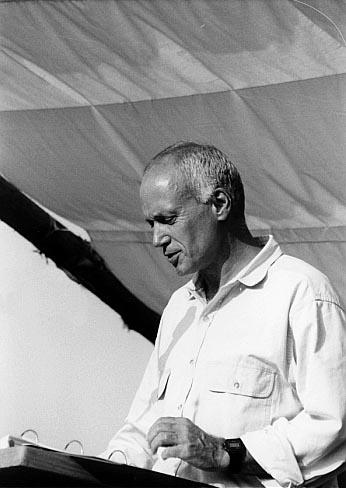
Douglas Glover -large

Sep 232013
 

DSCF6779

Moonlight illuminates the dancers
and the whitewashed concrete birdbath by the standpipe
and coiled green garden hose and the liquid amber gum tree
and the tree nursery under the chicken-wire frame
that keeps out rabbits and deer.

— from “Dancers at the Dawn” in Savage Love

Here is a picture of the birdbath that appears in Savage Love. You can’t see the standpipe, and the tree nursery is gone, but the liquid amber gum is behind the birdbath. I’ve probably said this before: the farm is in southern Ontario, about 20 miles north of Lake Erie just outside a little town called Waterford.

DSCF6715From the garden.

DSCF6760Red dogwood osier

DSCF6761Sign of fall coming.

DSCF6756Hives are brought onto the farm during the growing season.

DSCF6754

DSCF6737Field tomatoes, note the wastage, a fact of modern agriculture — many of these are perfectly good tomatoes that can’t be sold in the current market.

DSCF6703

DSCF6771Cherry tomatoes

DSCF6772

—dg

Sep 202013
 

IMG_20130916_105823Fredericton Airport, Monday morning

DSCF6673Detroit from the Windsor side of the Detroit River

DSCF6672Local Colour

DSCF6684Dan Wells, Publisher at Biblioasis

DG started his Savage Love book-launch reading tour (along with his co-launch touring partner Catherine Bush) at the Biblioasis Bookstore in Walkerville, the historic Windsor, Ontario, distillery district, still thriving, the air full of the yeasty smell of rye whisky in the making (delightful miasma). The bookstore is at the corner of Gladstone and Wyandotte, the Biblioasis publishing house offices in the basement, the Lorelei Bistro next door (dinner was Lake Erie perch caught off Wheatley — for the sake of tradition, I always order Lake Erie perch when near the lake). Two blocks down Gladstone you come to the riverside park and a vision of America’s largest and most famous bankrupt city. You will recall that Biblioasis published my last book, Attack of the Copula Spiders. I hadn’t seen inimitable Dan Wells, the publisher, since our launch at the AWP Conference in Chicago the year before.

Marty Gervais, whose poems we published in the current issue, was there. Also André Narbonne, whom I included in one of the Best Canadian Stories collections I edited. And Karl Jirgens who edits Rampike Magazine. Also my mother’s neighbours from years ago, the Greenslades, whom she still phones now and then for advice about chickens.

The talk at dinner was about how Detroit is contemplating selling off the trove of paintings at the Institute of Arts to cover its debts. In the past, the only reason I went to Detroit was to look at the art, driving through blocks and blocks of devastated urbanscape to get there. There is a huge Diego Rivera mural. We were wondering how they were going to move that sucker.

Great, responsive crowd at the reading including the guy in the front row at my feet who got so into the RHYTHM of what I was reading that he clearly started to laugh about a second BEFORE the punch lines.

dg


Sep 182013
 

1. I live in a virtual world outside my real country and in a place where I get my mail addressed to another place entirely. For lack of a literary community, I invented one: the online magazine Numéro Cinq. It started out as a student blog for a class I taught, then it became a literary blog, then it became a magazine. It keeps shedding its skin. It’s a community. I have re-found old friends, formed new friendships, become a patron for new writers, resuscitated the forgotten, changed people’s lives for the better and made myself a very busy person.

Read the rest via Five Things Literary: The Virtual Literary World, with Douglas Glover | Open Book: Ontario.

Sep 172013
 

.

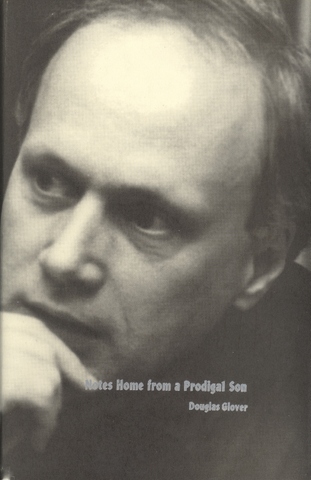
This is the beginning of things, the Ur-essay, the thought-lode out of which most everything else I have written about literature has evolved. It was written in the late 1980s and so, to an ever so slight extent, is a period piece. It forms the centre piece of my book of essays and memoir Notes Home from a Prodigal Son (Oberon Press, 1999). The ideas here expressed evolved out of my philosophical background, long reading, and the lessons I learned during my time at the Iowa Writers Workshop. I mention specifically the novelist Robert Day (who now contributes mightily to NC), but I would be remiss if I didn’t also recall the influence of the late Claude Richard, who was a visiting professor from the University of Montpellier at the time.

I reprint the essay here because the book and the essay were both published long ago; such is the nature of readership that older things fall out of the line of vision. But in fact this essay (and Notes Home from a Prodigal Son), along with The Enamoured Knight and Attack of the Copula Spiders and my long essay “Mappa Mundi: The Structure of Western Thought” form a consistent, coherent and elaborated system of thought about writing, criticism and philosophy.

dg

…there is an other [irony] besides the irony of the learned man; there is the poem, in the sense that it is rhythm, death and future.

— Julia Kristeva

1

The best writing teacher I ever had was a Kansas cowboy named Robert Day who showed up at the Iowa Writers’ Workshop as a last minute, one-semester replacement for a sick colleague in January, 1981. The first day of classes he strode into the room wearing Fry boots, jeans and a checked shirt. Without saying a word, he picked up a piece of chalk and wrote across the full length of the blackboard in huge looping letters: REMEMBER TO TELL THEM THE NOVEL IS A POEM.

At the time, Day had only published one novel, a book called The Last Cattle Drive. He was a tenured English professor at Washington College in Maryland. He was a past president of the Associated Writing Programs. As a young man, he had worked at G. P. Putnam’s in New York and could recall for us the excitement over the publication of Vladimir Nabokov’s Lolita. Summers he went back to western Kansas where friends ran a borderline ranch. He kept a horse there, a horse which at various times had eaten loaves of bread through the kitchen window, or Day’s hat. All summer long he would hand out with his friends, their cattle and his horse.

That semester we read Queneau, Musil, Rulfo, Achebe, Nabokov, Tutuola, Abe and Marquez. Day did not tell us what he meant — REMEMBER TO TELL THEM THE NOVEL IS A POEM. Maybe he forgot. Half-way through the semester he read the second draft of my novel Precious, three hundred typed pages of plot, dialogue and scene that stubbornly refused to come alive. I still have the notes I made during our conference, fifty-four words. It took less than fifteen minutes. But like a skilled surgeon he had opened the novel up for me and shown me its heart still beating, its bones, nerves and veins.

He taught me four basic devices. The first  was what he called the language overlay. My first person narrator was a newspaperman, he had printer’s ink in his blood. Day said I ought to go through the novel, splicing in words and images, a discourse, in other words, that reflected my hero’s passion for the newspaper world. So, for example, Precious now begins: “Jerry Menenga’s bar hid like an overlooked misprint amid a block of jutting bank towers…” Or, in moments of excitement, the narrator will spout a series of headlines in lieu of thoughts.

Second, Day taught me about sub-plots. The main plot of a novel, he said, is like a pioneer wagon train moving across the prairie. The sub-plot is like the Indians coming in out of the hills to attack from time to time. The pattern of the sub-plot must reflect or parallel the pattern of the main plot, Day said, just as the gene inside a cell contains the pattern for the whole body.

Third, he showed me how to use background and revery. My protagonist must have been somewhere before the novel began, he must have a story to tell that will give texture and depth to his thoughts and, by extension, to the narrative. In Day’s words, he wanted me to “give the novel a memory.” Once again, the background must reflect or parallel or bear the seeds of the main action. A revery that does not bear a relation, in pattern, to the main plot is wasted. It diffuses the reader’s attention. It makes the book foggy and boring.

What this means in practice is that far from being “loose and baggy monsters,” to use Henry James’s phrase, in which the author has room to digress, expand or linger, a good novel is a tight, formal production with very few wasted words.

Finally, Day told me how James used the confidante device to modulate the weight of a given speech. In Precious, I had two secondary characters who were both close to the hero. What if I created a pattern of giving and withholding information? What if I made one of the secondary characters the hero’s confidante, the person to whom he told his secrets? He could then maintain an ironic distance from the other, giving opportunities for lightness and humor. The reader would sit up and pay attention when the confidante was on the scene.

Day then lied and told me I could splice all these changes into the novel in three weeks. Actually, it took me five months, and I rewrote the thing from beginning to end. I remember those months as being the best time of my life; the woman I lived with then says otherwise. She says she never remembers me being more miserable. What that means, really, was that the work was hard but also amazingly exhilarating.

What I had learned was far more than a collection of four devices. I had learned a secret about writing stories, novels and poems. Also painting pictures and composing symphonies. I had learned that a novel is not a string of seventy-five thousand words, all different, all pressing the plot forward. If you think about it, the stories of most novels can be told in a page or two of summary. Then imagine me trying to stretch that summary over another two hundred and ninety-eight pages.

Or, to use an image I had carried in my head through two earlier failed novels, think of a novel as a bridge thrown across a bottomless gorge with nothing to support it from one end to the other. In my mind I had to get a running start and write fast for fear of not making it across. I wrote my first novel in six weeks in a state of terror. As a bridge it was a shambles.

What I had learned was that besides story, plot and characters, the novel needs patterns. That in fact the story, plot and characters don’t begin to come alive until they are submitted to a pattern. I had made a common mistake. Before Robert Day, I had assumed that a novel’s “aliveness” depended upon its verisimilitude, i.e. how closely it resembled what we call real life, whereas in fact it depends upon patterns. I think this is what Day meant when he wrote REMEMBER TO TELL THEM THE NOVEL IS A POEM. He meant for us to notice that, like a poem, the novel should be seen as an arrangement of materials of which one, but only one, is the story. This patterning is the poetic quality of prose.

2

In a poem it is much easier to see the patterns. We’ve all had to map out sequences of stressed and unstressed syllables, the ABBAs of rhyme, the internal rhymes of alliteration, the surprising anti-patterns of sprung rhythm and free verse. We’ve all dissected extended conceits, noted the effects of diction and imagery. These are the things we focus on in a poem. Narrative, story and verisimilitude are secondary to the poetry of poetry, by which I mean the effect of patterns.

With novels and stories, the reverse is true. We tend to read a novel first for plot and character and the narrative’s relation to reality, what post-Saussurean critics call its “aboutness,” and only secondarily, if at all, for pattern. This is a little like Ludwig Wittgenstein’s duck-rabbit argument. You know how you can draw a little circular figure with an elongation here and a dot there. If you squint your eyes one way, you can see it’s a rabbit with long ears. But if you squint another way, it becomes a duck with a protruding beak. With poems and novels, you can read for pattern or you can read for aboutness, depending on how you squint your eyes.

It happens to be the case, though, that we rarely read novels for patterns. One reason for this is that the novel’s very aboutness gets in the way. It is the easiest and most natural thing in the world to read a novel for plot and character. In fact, in most cases you have to read for plot and character in order to situate yourself, as an observer, in the world of the novel. The shift of focus, the new squint, if you will, from plot to pattern only happens on rereading. A good reader, as Nabokov wrote in his essay “How to Read, How to Write,” is a rereader.

When we read a book for the first time the very process of laboriously moving our eyes from left to right, line after line, page after page, this complicated physical work upon the book, the very process of learning in terms of space and time what the book is about, this stands between us and the artistic appreciation. When we look at a painting we do not have to move our eyes in a special way even if, as in a book, the picture contains elements of depth and development. The element of time does not really enter in a first contact with a painting. In reading a book, we must have time to acquaint ourselves with it. We have no physical organ (as we have one in regard to the eye in a painting) that takes in the whole picture and then can enjoy the details. But at a second, or third, or fourth reading we do, in a sense, behave toward the book as we do toward a painting.

When Nabokov makes a distinction between “what the book is about” and our “artistic appreciation” of the book, he is separating our reading of the subject, story and characters — the book’s aboutness — from our appreciation of the book’s so-called artistic qualities, the details we would notice if we looked at a novel the way we look at a painting.

Nabokov assumes that we all look at paintings for more than the resemblance they bear to old dead people in funny clothes, for more than romantic seascapes and sunsets. He assumes that we see, for example, Whistler’s mother as something other than an elderly lady in a plain black dress and that we know, perhaps, that the painting of Whistler’s mother was originally titled “Arrangement in Grey and Black” and that when Whistler talked about painting he would say, as he did in a letter to his friend Fantin-Latour:

…it seems to me that color ought to be, as it were, embroidered on the canvas, that is to say, the same color ought to appear in the picture continually here and there, in the same way that a thread appears in an embroidery, and so should all the others, more or less according to their importance; in this way the whole will form a harmony.

Whistler is talking about patterns, patterns of color that exist over and above and through the subject of the picture, its aboutness. And when Nabokov talks about “artistic appreciation,” he is talking about appreciating the patterns of the novel in the same way, the repetition of certain verbal events or structures in a novel like the colors in a painting. This is precisely the way we appreciate poetry, where it is, as I have said, much easier to see that sounds and words are like oil paints or, for that matter, like notes in a piece of music.

3

Other ages and times have provided writers with pattern books, with instructions on rhetoric and composition. They put names to commonly used devices: paronomesia, periphrasis, prosopopoeia. Even in the 1920s at the University of Toronto’s Victoria College, my aunt was taught to write, to compose sentences, by translating back and forth from Latin to English. But no one teaches composition any more except in remedial programs to students who patently can’t write at all.

Instead we teach creative writing with the emphasis on “creative” (which, I guess, implies that there is “uncreative” writing as well, though I have never seen it). At Iowa, outside of Robert Day, teachers tended to urge us to “write what you know.” If we managed to do that, they said, whatever we wrote would come out all right. Ernest Hemingway, that most brazen of liars, once wrote, “All you have to do is write one true sentence…,” sending generations of his competitors chasing vainly after a will o’ the wisp reality. Why people choose to believe what he says about writing and not what he says about his manliness is a curious instance of intellectual willfulness and self-deception.

In university English departments, on the other hand, students are taught criticism — Arnoldian, Freudian, New, Structuralist and Post-Structuralist, etc. Archetypes, symbols, influences, foreshadowing, metaphor and theme. Academic critics tend to see a novel as full-blown, not something built; as something found, not constructed. Academics are romantics — they see, or prefer to think they see, romantic intention in a novel as opposed to the bricks and mortar. I tried to tell a friend of mine, a person partway through a PhD. in English, what I meant by a pattern in a novel. She said, “Well, we call that recurring imagery.” A singularly bloodless phrase. But fair enough. Yes, that is sort of what I mean.

But why does it recur? And who made it recur? And is that all there is to it? Does the phrase “recurring imagery” help a writer? Academic critics generally see recurring images as evidence of a point the author is trying to make, part of the aboutness of the work. Deconstructionists, on the other hand, look for recurring images that the author may not have intended so as to “deconstruct” the aboutness of the work. In either case, they are wedded to thematics, to aboutness, to truth. Write what you know, throw in a little recurring imagery, and it’ll come out right. That’s what the creative writing schools and the English departments teach us.

In general it’s not terribly bad advice. Many writers get by with no other. Every writer borrows to a greater or lesser extent from the real world the images which he or she deploys in his or her novel. Every writer who has read significantly has an instinctive feel for rhythm, pacing and the repetition of images. But to go through life believing “Write what you know and throw in recurring imagery” is like going through life believing in God and free enterprise — it leads to a conservative and narrow view of life and art.

4

Pattern is an ambiguous word and I want to keep it that way. Writing a novel, Faulkner once said, is like a one-armed man nailing together a chicken coop in a hurricane. It helps to be open-minded and undogmatic about the rules of the operation.
Experience itself rests on our ability to recognize patterns — Forms Plato called them — in the sensory flux. A pattern that does not repeat itself is not a pattern, it is chaos, or it is something like God, or it is nothing. And the ability to recognize patterns is tied up with out ability to remember. Pattern, repetition and memory are the foundations of consciousness.

The same happens in a novel. On a very rudimentary level the author depends on pattern, repetition and memory to give the reader confidence in the world of the book, what we call verisimilitude, the quality of seeming to be real. In Leo Tolstoy’s Anna Karenina, Anna appears on almost every page. Anna is a pattern, a group of words and characteristics that repeat. If Tolstoy had changed Anna’s name, age, hair color and social background every chapter or so, we would throw the book down in disgust.

Pattern can mean a model or design upon which something else is constructed. Or it can mean the systematic repetition of certain design elements as in the pattern in wallpaper.

Pattern can, for example, refer to something large such as a plot.  All romances are based on, say, the model boy meets girl, boys loses girl, boy gets girl. We also say there are no new plots under the sun. And we refer to coming-of-age novels, which have plots based on myths and rites of passage, or adventure novels, which are based on the quest model. What we call genre is a sort of pattern.

But pattern can also refer to something minute, a device such as, say, the list or the epic simile or even the structure of a sentence. Here is Nabokov talking about Flaubert’s Madame Bovary:

Gogol called his Dead Souls a prose poem; Flaubert’s novel is also a poem but one that is composed better, with a closer, finer texture. In order to plunge at once into the matter, I want to draw attention first of all to Flaubert’s use of the word and preceded by a semicolon. This semicolon-and comes after an enumeration of actions or states or objects; then the semicolon creates a pause and the and proceeds to round up the paragraph, to introduce a culminating image, or a vivid detail, descriptive, poetic, melancholy, or amusing. This is a peculiar feature of Flaubert’s style.

Now, though the actual number of usable patterns may, for practical purposes, be infinite, we always choose to use a finite number in any given piece of writing. This finite number of further reduced by the fact that many of the patterns are repeated throughout any given work. The more patterns a writer knows, however, the better his or her chances of being published, being read, or of writing a masterpiece that will endure. The way a person learns patterns is by reading; literature is an encyclopedia of patterns and devices.

Though it is possible to invent a pattern that no one has ever used before, originality in a writer generally amounts to an ability to vary the pattern in fresh ways. One might, for example, decide to use Flaubert’s semicolon-and sentence pattern in a contemporary rites-of-passage novel set in Montreal’s Jamaican emigre community. The pattern would be Flaubert’s, but the variation, the unique application, would be the author’s own.

Repetition, as I have said, is also a pattern. But it is a pattern of a different order, perhaps the pattern of patterns. To me, it is the heart of the mystery of art, of novel-writing. Without it, the novel becomes a strung-out plot summary.

I have tried to think out why repetition is appealing, why it is aesthetically pleasing as a pure thing. I think there are two reasons, or sorts of reasons. The first is essentially conservative — repetition is allied to memory, to coherence and verisimilitude.

The second is biological or procreative or sexual. Repetition creates rhythm which on a biological level is pleasurable in itself, the beating of our hearts, the combers rolling up on a beach, the motion of love. This is the sort of thing Lyotard is talking about when he writes about “intensities” or patterns of intensities in his book Économie Libidinal, or what the Spaniard Madariaga meant when he talked about the “waves of energy” in Tirso de Molina’s El Burlador de Seville.

In Anna Karenina there are two sub-plots: Levin’s marriage and Anna’s brother’s marriage. The novel actually begins with a sub-plot scene — Anna’s brother banished to sleep in his study for having an affair with a maid. These subplots are not simply tacked on. They repeat the marriage theme of the main plot, Anna’s marriage. Anna’s brother’s marriage is, like her own, a marriage on the rocks because of infidelity. Levin’s marriage is, by contrast, dutiful and steadfast.

Tolstoy created three identical patterns which twine and leapfrog and reverberate through the novel. Of course, the details, the contents, are different (this is one sort of variation); and, in the case of Levin’s plot, the structure, the pattern, is inverted, a positive to the negative of the other two plots (repetitions of abstract structures such as plots or relationships can vary in three ways — congruence, contrast or inversion, and the tree in the seed).

References to plot and subplot form a kind of rhythm in the novel. This rhythmic repetition of structures has something to do with what we call pace. As each plot comes round again for scrutiny by author and reader, it is like a new wave of energy, a drum beat. Anna’s story is the melody; Levin’s is a kind of booming base note thudding in counterpoint to Anna’s; Anna’s brother’s rhythm is lighter, more frenzied and comic. Or they are like Whistler’s colors, threading through a painting, darker, lighter, heavier, fainter.

There is another sort of repetition in Anna Karenina, one more mysterious yet. Just after Anna meets Vronsky, there is a train accident. A station guard, either drunk or muffled up too much against the cold weather, fails to hear the train approaching and is crushed to death. This station guard returns in Anna’s thoughts over and over again. He begins to inhabit her nightmares. He even migrates into Vronsky’s nightmares — transformed now into a dreadful-looking little man with a bedraggled beard, bending over a sack, groping in it for something and talking in French about having to beat, to pound into a shape a piece of iron. At the end of the novel, Anna sees him again just as she throws herself beneath the wheels of the train: “A peasant muttering something was working at the iron above her.”

Obviously train imagery is repeated as well, at the beginning and the end. Why? Coincidence? Or is Tolstoy telling us something about the 19th century Russian transportation system? Of course not. Is it foreshadowing? Well, sort of. But foreshadowing is a word I don’t trust. Does this mean Tolstoy is telling us ahead of time that Anna is going to die in a train accident? I think not. I think there is some other motive at work, that the repetition of trains and bedraggled peasants, this bookending of image and incident, the beginning and the end, has a pleasing quality all its own, symmetry, if you will, a rightness, that is felt and appreciated, not “known.” Overture and coda, rather than prediction. A symmetry that would be lost, say, if Anna drowned herself or beat herself to death with a hatchet.

As a pattern, this terrifying little peasant just seems to pop up. He is just there — and there and there and there. He “means” nothing, except insofar as he is associated by juxtaposition with a larger pattern of trains, death, dreams and Vronsky. Somehow he manages to accrue all the potential horror of that pattern. He reminds us, not of the end to which Anna journeys, but of the beginning; so that when she dies, her end is freighted with a kind of fatedness that makes it all the more horrible and pathetic. The peasant is a tiny thread in the tapestry of the novel, a hint of color in the painting, a grace note in the symphony. Nothing more. Yet without him, how much shallower a book Anna Karenina might be.

It is worth noting that certain kinds of patterning, e.g. the repetition of character traits, enhance verisimilitude, while others, e.g. Anna’s peasant, work against it. We might distinguish between these by calling the one sort patterns of verisimilitude and the other patterns of technique. Every novel uses both, so every novel is a little balancing act between the two, or a war. John Hawkes, the experimental novelist, for example, says that “plot, character, setting and theme” (which are generally what I mean by patterns of verisimilitude) are the real enemies of the novel. “And structure,” he adds, “–verbal and psychological coherence — is still my largest concern as a writer. Related or corresponding event, recurring image and recurring action, these constitute the essential substance or meaningful density of writing.”

But, oddly, though patterns of technique and patterns of verisimilitude tend to destroy one another, like matter and antimatter, both are necessary to the work. Depending on how heavily the author plays up one or the other, his or her novel will be more or less “realistic” or more or less “experimental.”

Getting the balances right in any given work is part of the art of art and its mystery and is a skill that cannot be taught. It leads to the feeling, a feeling I have had twice, once with each of my novels, of submission, of loss of freedom, of loss of expressiveness. Because there is a point in the process of writing a novel at which you must submit to the strictures of pattern that you have chosen. All of a sudden, there are things you can no longer fit into this novel, things you must cut, and other things that you must put in. And, of course, with something as complicated as a novel, you never get it right. And you end up wanting to slash your wrists.

As Paul Valéry once said, “A work of art is never completed, only abandoned.”

5

I have already noted that some patterns in novels, those patterns which tend to create verisimilitude, are like the patterns of experience in the world. This is as much as to say that a conventionally realistic novel reflects a certain metaphysics or philosophy of being and knowing. Modern novels of a less conventional sort also reflect a metaphysics, but it is a new metaphysics, a radically new way of talking about the locale of existence.

Vladimir Nabokov, whom I have quoted extensively and who has influenced a whole generation of North American writers (in Canada, at least two Governor-General’s Award winners, Robert Kroetsch’s The Studhorse Man and Hubert Aquin’s Trou de Memoire, owe huge debts to the structural and verbal pyrotechnics of Nabokov’s novel Pale Fire), was an intellectual heir of the Russian Formalists. Formalism was an aesthetic and critical movement that thrived in St. Petersburg and other eastern European cities early in the twentieth century. The Formalists pegged a whole philosophy of language and literature on the split between meaning and signifiers, between aboutness and pattern.

What they did was put a theory to the things painters like Whistler and, soon after, the French Impressionists, and Surrealist poets like Breton, Eluard and Ponge — all the way back to Mallarme (Nabokov sneaks Mallarme quotations into his novels) — had been doing ten, twenty, thirty or more years before. They simply recognized that aboutness and pattern were two aspects of the things we call art and language, and that you could, in fact, have pattern without aboutness.

Since it seem impossible to have aboutness without pattern, a corollary of this is that aboutness is somehow secondary, a poor cousin, on the aesthetic scale of things, to pattern. Nabokov again:

There are…two varieties of imagination in the reader’s case… First, there is the comparatively lowly kind which turns for support to the simple emotions and is of a definitely personal nature… A situation in a book is intensely felt because it reminds us of something that happened to us or to someone we know or knew. Or, again, a reader treasures a book mainly because it evokes a country, a landscape, a mode of living which he nostalgically recalls as part of his own past. Or, and this is the worst thing a reader can do, he identifies himself with a character in the book. This lowly variety is not the kind of imagination I would like readers to use.

This is what the post-Sausurrean critics, recently so popular in Europe and on American university campuses, are saying. Aboutness is old-fashioned, authoritarian, and patriarchal. Signs — read, pattern, poetry — are playful, subversive, and female. How a thinker can jump from a purely logical incongruence — the fact that, apparently, you can have pattern without aboutness but not vice versa — to these strings of value-loaded predicates is marvelous indeed and evidence that the instinct for narrative and romance has not died behind the ivy-covered walls of academe.

Another corollary of splitting the categories of pattern and aboutness is that there is a sense in which pattern itself creates meaning. Or to put it another way, the novel is about its own form. Or every book is about another book, or books. And every work of art is a message on a string of messages which begins nowhere and ends nowhere, to no one and from no one, and about nothing except the field of pseudo-meaning created by previous and future messages. It is all a game of mirrors and echoes. A little dance of images, words, and patterns. The of the Hindus, or all is vanity, all is dust, sure enough.

Keats wrote, “A man’s life is an allegory.” Nothing else. Or conversely, Korzybski says, “The map (read, the allegory, the pattern, the words) is not the territory.” Which is to say, as Jacques Lacan does, that all utterances are symptomatic and that the real is impossible.

6

Form (or pattern) and aboutness (or content, or reality) are the binary opposites of thought. The stance of the modern, whether he or she is a novelist, critic, theologian, or psychologist, is that ontology begins and ends with the former, that so-called reality is a highly suspicious article.

We are pressed back to a position of washed-out Cartesianism: I think, therefore, I think; or more precisely, I think, therefore something is thinking. Structuralists like Levi-Strauss say things like, “There is a simultaneous production of myths themselves, by the mind that generates them, and, by the myths, of an image of the world which is already inherent in the structure of the mind.” Linguistic philosophers like Wittgenstein say, “The world is my world: that is shown by the fact that the limits of language stand for the limits of my world…I am my world.” Except that this “I am” is not the body but language itself.

Reality, meaning, aboutness, the good, God and the self are pushed away into the realms of the unconscious, the unknowable, the unspeakable, and the unfathomable. In a very logical sense, they no longer concern us here as we race toward the end of the twentieth century. To say you are writing “realistic novel” is to commit as much of an intellectual solecism as, say, the Reverend Jimmy Swaggart does when he says God spoke with him before breakfast. The words “realistic novel” can only be spoken by a person who is speaking in the discourse of an earlier age or in parody.

Think of yourself in a room with bare plaster walls and no windows or doors. You have an infinite supply of variegated wallpapers. You paper the room with something in blue with a skylark pattern, then you do it over with angels, then an abstract, decorative pattern.

The first thing you notice is that you can’t see the wall anymore. This is the first effect of language, according to the philosophers and critics. As soon as you begin to use language, describe the world, you can no longer see it. You can only see your description. In fact, since we can’t even begin to describe something without language, then the existence of the wall itself becomes moot.

The second thing you notice is that each layer of wallpaper covers the previous layers. They’re lost, though you know they’re under there. In a sense the old wallpaper, the past, becomes part of the reality you are describing with each new layer of wallpaper. And sometimes you wake up in the morning and wish you still had the skylarks. You might even try to scrape some of the new wallpaper off. But that only makes a mess.

All you have is the design of each successive layer of wallpaper, and, just possibly, the shape of the room, its broad outlines, its cubic form. Life and art are a little like this. We only see the current wallpaper, remember bits and pieces of the old in the form of myths and memories of memories and fragments of discourse which no longer “mean” what they once meant. And, if we’re lucky, we intuit, or think we intuit, some vague outline of the something which may or may not be the room or the womb of reality.

To be a writer is to write with this knowledge, that the wallpaper is wallpaper and not the room, walls and plaster. It is to have that quality which Keats said went to form a man of achievement “especially in literature and which Shakespeare possessed so enormously,” what he called Negative Capability — “that is when a man is capable of being in uncertainties, Mysteries, doubts, without any irritable reaching after fact and reason.”

Negative Capability is the artist’s ability to suspend belief in any particular conceptual system (or wallpaper) or to see the conceptual system as pattern, as opposed to reality, as material in itself to be juggled and juxtaposed. Or, to put this another way, aboutness is illusory. What we see as aboutness the artist sees as just another pattern or part of a pattern. Or again, everything is pattern, infinitely plastic and malleable. A person who believes in a particular conceptual system believes that everything can be explained by reference to that conceptual system. Whereas the artist sees the pattern and feels the mystery that looms beyond the pattern.

The truth of the matter, everything that seems supremely important in life, begins when the talking, writing, painting, sculpting, filming and singing of discourse stop. All talk or art that says it’s telling you the truth about life is second rate. Of course, you can write something second rate that’s very popular, even quite good, for all these categories are relative. But great art is pattern over mystery, it is juggling words over whirlpools of silence.

7

In the extended sense, this view of language, life and art can seem exceedingly austere, if not forbidding and bleak. “The ultimate goal of the human sciences is not constitute, but to dissolve man,” says Levi-Strauss. (Just as Nabokov says that one of the functions of a novel is to prove that the novel in general does not exist.) Few of us can help feeling a nostalgia for the old ways, or what we think are the old ways, of talking. For ancient beliefs. For certainty and immortality. For familiar stories with plots and characters and recognizable locales. For adventure, romance and magic.

A lot of fictional, intellectual and political hay has been made out of this nostalgia, a nostalgia expressed, say, in the phrase “breakdown of values.” When an old way of talking disappears, many people are forced to apply narrative in order to explain it to themselves. They often feel they have a stake in the old way. They invent metaphors and analogies — machine breakdowns, erosion, war, disease — to make themselves feel easier. And to sell books.

You can see where nostalgia led Levi-Strauss in his wonderful autobiographical novel Tristes Tropiques. The annihilation of the self, of meaning and aboutness, by structural anthropology drove him into a quest for theological support, which he may or may not have found wandering amongst the Buddhist temples of the Far East. Or think of Sartre turning from the barrenness of existentialism to the warm, sloppy infantilism of Chairman Mao’s Little Red Book. Or of Michel Foucault leaving his university office every afternoon to pursue a gruesome and self-destructive quest through the bath houses of New York until his death from AIDS.

One can look at people like Sartre, Foucault and Levi-Strauss as contemporary monks whose intellectual vigor and honesty led them to the conclusion that God, man and reality cannot be reached through words. (On December 6, 1273, at the age of fifty, Thomas Aquinas suffered something like a nervous breakdown and never wrote again.) That, by analogy, telling a story is a logically impossible project. That our only recourse (save for silence) is to take a step willy-nilly into narrative, or faith — Keat’s Negative Capability is something like Kierkegaard’s Leap of Faith. It can’t be done — all the critics and philosophers tell us — but some of us will jump in anyway and start the story “Once upon a time…”

In this regard, the American Catholic novelist Walker Percy once wrote:

…a novelist these days has to be an ex-suicide. A good novel — and, I imagine, a good poem — is possible only after one has given up and let go. Then, once one realizes that all is lost, the jig is up, that after all nothing is dumber than a grown man sitting down and making up a story to entertain somebody or working in a “tradition” or “school” to maintain his reputation as a practitioner of the nouveau roman or whatever — once one sees that this is a dumb way to live, there are two possibilities: either commit suicide or not commit suicide. If one opts for the former, that is that; it is a letzte Losung and there is nothing more to write or say about it. But if one opts of the latter, one is in a sense dispensed and living on borrowed time. One is not dead! One is alive! One is free! I won’t say that one is like God on the first day, with the chaos before him and a free hand. Rather one feels, What the hell, here I am washed up, it is true, but also cast up, cast up on the beach, alive and in one piece. I can move my toe up and then down and do anything else I choose. The possibilities open to one are infinite. So why not do something Shakespeare and Dostoevsky and Faulkner didn’t do, for after all they are nothing more than dead writers, members of this and that tradition, much admired busts on the shelf. A dead writer may be famous but he is also dead as a duck, finished. And I, cast up here on this beach? I am a survivor! Alive! A free man! They’re finished. Possibilities are closed. As for God? That’s his affair. True, he made the beach, which, now that I look at it, is not all that great. As for me, I might try a little something here in the wet sand, a word, a form…”

—Douglas Glover

Sep 112013
 

Here’s a teaser to the third in my series of short essays on Building Sentences at the National Post. We are, yes, in the drumroll phase of my book launch for Savage Love.  Much appreciation to Mark Medley, the book editor at the National Post, for giving me the opportunity to write these.

dg

Parallel construction was another one of those structures English teachers taught me in high school without also telling why it was in the least useful or beautiful. Drone, drone, eyeballs rolling back in my head; another C- on that test. Later I learned the lesson. Here is an example from Mark Anthony Jarman’s great short story “Burn Man on a Texas Porch.”

“I’m okay, okay, will be fine except I’m hoovering all the oxygen around me, and I’m burning like a circus poster, flames taking more and more of my shape–am I moving or are they? I am hooked into fire, I am hysterical light issuing beast noises in a world of smoke.”

What you have here are two sentences built on a series of parallels that invert briefly at the parenthetical em-dash and then modulate into a variant (I’m, I’m, I’m, am I, I am, I am). The simple meaning of the sentence is that the narrator is on fire. But Jarman uses parallels to throw the sentence forward in a series of waves of energy, each surge encoded with another grotesque and moving image of self-incineration. The parallels delay the end of the sentence (as the Russian Formalist Viktor Shklovsky tells us, delay is the first problem in writing a story) and create a passionately dramatic telling. Instead of mere description, the sentences become a poem.

    Each new iteration of the parallel creates more of that mysterious thing I call aesthetic space, a blank spot into which the author has to imagine new and surprising words. Form never limits a writer; it creates openings for fresh invention. It also creates an opportunity for what I call narrative yoking, syntactically juxtaposing two or more ideas to create astonishing new connections, or psychological parallelism.

Read the rest at the National Post


Sep 102013
 

Here’s the second in a series of short essays about writing sentences that I am putting together for the National Post in Toronto this week as part of the promotional fanfare leading to the publication of Savage Love. Yesterday I did but-constructions; today we have the rhetoric of lists. Here’s a teaser; it was just published earlier this evening.

dg

    The first technique I learned and applied consciously was the list. This was in an early story “Pender’s Visions” that begins with a line – “Pender is a bottle, a glass, a table, a gun, a house.” The line becomes a refrain through the text, only to modulate in the last section of the story into “Pender, a bottle, a glass, a table, a gun, a house, a world…”

    This was, as I say, a first attempt (no apologies for being young), but you can see the rhythmic effect of a long series that becomes a structural effect by the repetition of the line throughout the text, and then becomes a thematic effect by the modulation of the series at the end. The modulation is especially significant because a series (of vaguely like entities) creates reader expectation, and the reader always enjoys having his expectations tweaked.

    Rabelais was a gargantuan list-writer. In an early chapter of Gargantua and Pantagruel, he gives a paragraph long list of plant matter the boy Gargantua uses to wipe his butt. “Then I wiped myself with sage, with fennel, with dill and anise, with sweet marjoram, with roses, pumpkins, with squash leaves, and cabbage, and beets, with vine leaves, and mallow, and Verbascum thapsus (that’s mullein, and it’s as red as my _____)–and mercury weed, and purslane, and nettle leaves, and larkspur and comfrey. But then I got Lombardy dysentery, which I cured by wiping myself with my codpiece.”

    This is complex and hilarious, hilarious because it is a long silly list that contains some very odd choices. Pumpkins? Note also that list makers pass on conventional punctuation and grammar. Instead of a series of items separated by commas right to the end, Rabelais modulates to comma-and breaks, then reverts to the earlier convention, then goes to comma-and to the close of the sentence. A lot of “ands.” Rhythm is everything in a list, but you don’t want the rhythm to send the reader off to sleep.

    Rabelais also disrupts the list with the Latin name for mullein and inserts a comical parenthetical (breaks voice, as it were) and comments directly to the reader, creating a syntactic drama that breaks the rhythm temporarily. Then he adds a but-construction (see my previous column) that gives the list a plot. Instead of an endless repetition of the same wiping act, the boy gets dysentery (with an ethnic slap at Lombards). Then we come back to wiping.

    This is brilliant list writing because it’s outrageously funny, rhythmic, and has plot. The basic principles are all there: list, rhythm, disruption (by changing up series members, by grammatical disruption, by authorial interruption, by but-construction), and plot.

Read the rest at the National Post.


Sep 102013
 

Gordon Lish, known as Captain Fiction in the days when he edited fiction at Esquire Magazine, was my editor for my novel The Life and Times of Captain N. (Knopf, 1993). As I recall, Lish wrote the flap copy for that book, and he sent me to bill hayward to have my picture taken for the cover. Gordon also published a story of mine in The  Quarterly, “Swain Corliss, Hero of Malcolm’s Mills (Now Oakland, Ontario), November 6, 1814″ (it’s in my collection 16 Categories of Desire). Both bill and Gordon have now graced the pages of Numéro Cinq, and we’ve published Jason Lucarelli’s astonishing essay on Gordon Lish and his concept of consecution not to mention the radio interview I did with Gordon, yea, these many years ago. Gordon graciously consented to write a cover blurb for my book of stories, Savage Love, just now on the brink of publication. He sent me this page — he doesn’t use email (mostly he sends handwritten messages on blank white USPS postcards). It is typical of Gordon, ebullient, incantatory, celebratory, exotic, and dramatic. It was too long for the book cover, but he was graceful about letting me cut it, despite his admonition to the contrary at the bottom. Here are his words as they appear on Savage Love:

I, your admiring reader, report myself ever again restored to find in hand the company of your righteous sentences, shout hooray, shout hooray, even splendid, splendid, splendid (borrowing from the great poet Jack Gilbert), like loins, he wrote, like Rome, he wrote . . . .

And here, resplendent in all its glory, is the original, which, in fact, I like much better and for which I am deeply grateful.

dg

scan0024-001


Sep 092013
 

This week, at the National Post in Toronto as part of the build up to the publication of Savage Love, I am writing a series of very short essays on, well, writing. Mostly about writing sentences. Here is a teaser for the first; it was just published this morning.

English was my worst subject (next to Health) in high school right through to my second year of university when I stopped taking English. I’d fallen afoul of the empty rule syndrome. Don’t use the pronoun “I” in an essay; don’t begin sentences with “but” or “because”; write paragraphs to the topic sentence-body text-conclusion pattern (even if it bores you to death to say the same thing three times); vary sentence structure. The trouble with these rules is that no one told me why any of them would be especially useful.

Vary sentence structure was a rule I puzzled over for years. No one explained grammar to me well enough to make a connection. At first I thought, well, I can write long and short sentences, something like Hemingway. Then I practiced emphatic placement of important material (at the beginning or the end of the sentence, I was told) and inversion (writing the sentence backwards — kind of fun). None of this got me anywhere because I could not connect the spirit of a sentence, what emotional and factual impact I intended, with the idea of sentence structure.

I puzzled through instruction books. I discovered the wonderful distinctions between simple, compound and complex sentences and the even more mysterious cumulative and periodic sentences. I practiced writing periodic sentences until I was blue in the face without actually being able to discover how that made them interesting for readers. They weren’t very interesting to me. And my stories did not seem any better for having good topic sentence paragraphs, long and short sentences, and a scattering of lovely periodic sentences.

The rules were still inanimate, void of life. The nexus of intention and form escaped me. Above all the whole idea that you had to know what you were going to write before you wrote it was like a lock on my soul. It made writing drudgery.

Read the rest here: Douglas Glover: Building sentences


Sep 072013
 

Fresh Air resident “bookies”—CBC book columnist Becky Toyne and CBC Books producer Erin Balser—joined Mary to recommend some of the hot fall books..

Listen to the radio clip audio (runs 7:22)

Erin and Becky’s recommendations:

DOCTOR SLEEP by Stephen King
BLEEDING EDGE by Thomas Pynchon
OH, MY DARLING by Shaena Lambert
KICKING THE SKY by Anthony De Sa
SAVAGE LOVE by Douglas Glover
THE LUMINARIES by Eleanor Catton


Sep 012013
 

Douglas GloverAdam Segal at Whole Beast Rag in Los Angeles read Savage Love in manuscript (how he got the ms. is a story for another time) and emailed me his admiration (always appreciated) and an invitation to do an interview. It turns out to be one of the best interviews I’ve done in ages. Adam gives great prompts; he’s got a literary spirit; I get to say some things that are new even to me — I like it when the long string of arguments that is my mental life take a new turn.

Here is Adam’s introduction; click the link beneath to read the interview.

dg

SPECIAL REPORTING: ADAM SEGAL

I was introduced to the work of Douglas Glover earlier this summer when I was given the unique opportunity to read an early manuscript for Douglas Glover’s forthcoming collection of stories, Savage Love. It’s a gorgeously vivid, inventive, and occasionally brutal collection, steeped in blood, familial affection, and North American history. If you’re a fan of short fiction, it’s not one to ignore.

Glover, who holds a Master of Letters in philosophy from the University of Edinburgh and an MFA from the Iowa Writers’ Workshop, has been writing stories, novels, and essays for over thirty years. He is also the founder of the online literary magazine Numéro Cinq. Douglas Glover is, as Maclean’s Magazine suggested in a review of his 2003 novel Elle, “the most eminent unknown Canadian writer alive.” Indeed, Elle won the Governor General’s award for Fiction, Canada’s most prestigious literary award. But let’s not listen to the awards for a moment, and instead listen to the man himself.

I recently spoke with Glover about the flickering quality of ironic language, about the proper ways of approaching historical fiction, about talking corpses and strangled cats, and finally about the massive importance of human self-delusion. Read on, read on:

Read the rest at DOUGLAS GLOVER — WHOLE BEAST RAG ISSUE #6.

Editor’s Note: The magazine is not defunct, but you can read that issue and the interview here.

Aug 302013
 

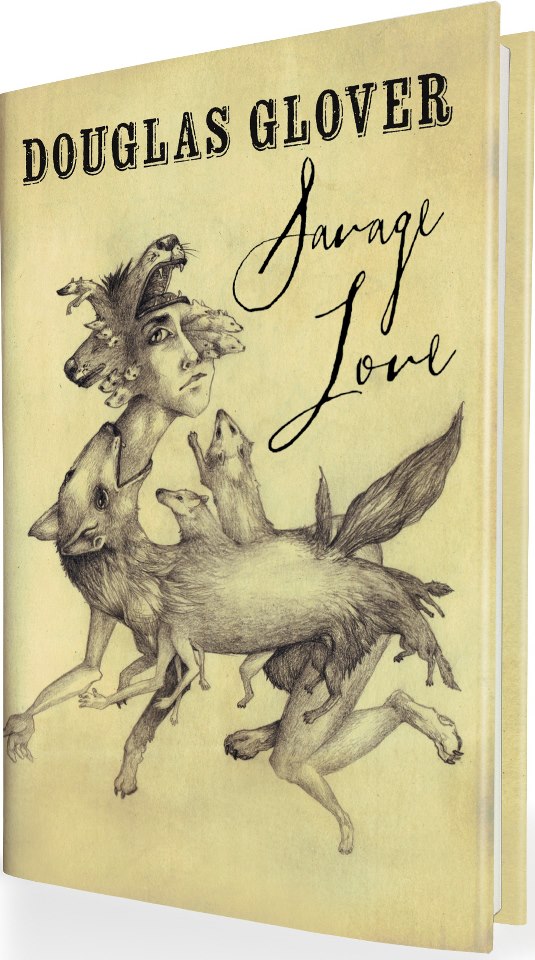
Savage Love Cover

This reading is courtesy of Dan Wells and Biblioasis, who published my essay book Attack of the Copula Spiders last year. I’m very much looking forward to seeing Dan again and the Biblioasis Bookstore and also to standing on the Windsor side of the river and looking across at Detroit, the largest bankrupt city in America. (Actually, the truth is that it’s always a stirring sight. I used to drive to Detroit to look at the collections at the Detroit Institute of Arts, which was founded in better times.) Biblioasis is a great Canadian publishing house; Dan Wells is a hugely energetic and innovative literary entrepreneur. As you’ve read along with NC, you’ll have noticed translations and excerpts from several Biblioasis books.

dg

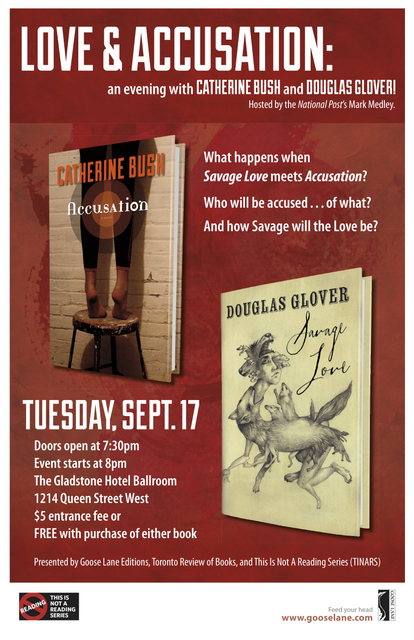
On September 16th Biblioasis is proud to present an evening with Douglas Glover (Savage Love; Goose Lane, 2013) and Catherine Bush (Accusation; Goose Lane, 2013).

Douglas Glover’s new collection of short fiction demonstrates once again that the GG- and Writers’ Trust Award-winning author is a master stylist and more. Also featuring four-time novelist and national bestseller Catherine Bush, this event is a must for fiction-lovers and aspiring writers alike.

Location: 1520 Wyandotte St. East
Hours: 7:30 pm
Email: info@biblioasis.com

via :: Biblioasis :: FRESH LIT (Not Canned) :: The Best in IndieLit.

Aug 282013
 

Here’s my little blurb on the Faculty of Arts page. The photo is one taken of me reading at the Eden Mills Festival by the Israeli photographer Danielle Schaub. Connections: Catherine Bush, whose novel is co-launching with my book of stories September 17, is a former WIR. As is Gerry Beirne, who has contributed mightily to NC.
dg

The University of New Brunswick runs a prestigious Writer-in-Residence program. Writers-in-Residence have an office in the Department of English where they meet with students and community members to provide feedback and advice on their creative writing. Over the past decade, the position has been held by Joan Clark, Sue Sinclair, John Barton, Fred Stenson, Gerry Beirne, Patricia Young, Karen Solie, Catherine Bush, Erin Mouré, Ken McGoogan, Anne Simpson, John Steffler, George (Douglas) Featherling, Colleen Wagner, Richard Sanger, Carol Malyon, bill bissett, and Kenneth J. Harvey.

The Writer-in-Residence for 2013-2014 is Douglas Glover.

Douglas Glover is an itinerant Canadian, author of six story collections, four novels, two books of essays, and The Enamoured Knight, a book about Don Quixote and novel form. His bestselling novel Elle won the 2003 Governor-General’s Award for Fiction and was a finalist for the IMPAC Dublin Literary Award. In 2007 he won the Rogers-Writers’ Trust of Canada Timothy Findley Award. His most recent book is the short story collection Savage Love. He edited the annual Best Canadian Stories from 1996 to 2006. Since 2010, he has published and edited the online magazine Numéro Cinq.

via Fredericton | Faculty of Arts | Graduate Programs | English Graduate Program.


Aug 222013
 

See also in this fall preview list books by Cynthia Flood and Jeet Heer, both of whom have contributed to NC.

Expect the unexpected: “Glover skewers every conventional notion we’ve ever held about that cultural-emotional institution of love we are instructed to hold dear.” This short story collection promises to make readers both laugh out loud and reel back in horror.

via Writers and Editors, Murders and Infatuations, Love and Comics: New Books of Note | The Toronto Review of Books.

Aug 132013
 

andrewgallix

We live in a culture at war with itself, and I don’t mean the War on Drugs. I mean the thousand-year war between the rhetoricians and the dialecticians (as McLuhan had it), between the Ciceronian, elaborated style and the plain style of Peter Ramus, between writers who believe in the aesthetic joy of linguistic play over those who think words are just for communication (how dull and, well, Soviet that word can sound). Andrew Gallix offers here a dazzling and provocative note, a report from the front, on literary Modernism and Paul Valéry’s famous sentence “The marquise went out at five” conceived as a critique of the traditional, conventional, realistic, well-made (pick your own epithet) novel, or, really, anything that smacks of the prosiness of prose, of mere communication. Valéry’s line cleaved to the centre of the debate: Would you write a novel or a story or an essay containing a sentence as mundane as “The marquise went out at five”or not? As Gallix points out, the marquise has become a shibboleth in France for a certain kind of traditional (dull) writing. Not so much over here where prose dominates the market place. Something to think about. Andrew Gallix is the brilliant founder of 3:AM Magazine, he teaches at the Sorbonne, he writes for the UK Guardian. It’s a great pleasure to present his work here.

dg

.

How is the marchioness? Still playing Alice in Rubberland?
– Adam and the Ants, “Rubber People”

Surprising as it may seem, “The marquise went out at five” ranks among the most famous quotes in modern French literature. It could have been tossed off by some Gallic Bulwer-Lytton type, and in a manner it was, albeit a fictitious one. These hapless words were first recorded in the 1924 Surrealist Manifesto, midway through a rant against what Barthes would dub the “reality effect“. André Breton recalls the time when Paul Valéry assured him he would never write a novel, adducing his aversion to opening sentences à la “marquise”. Referenced by numerous authors, from André Gide to Nathalie Sarraute through Francis Ponge, the marchioness and her teatime peregrinations, came to embody everything that was wrong with a certain brand of conventional fiction.

It was not just the insipid incipits of well-made novels that Valéry objected to. He believed that writing always betrayed the complexity of human thought. “The more one writes,” he wrote, “the less one thinks.” Valéry’s Monsieur Teste — a close cousin of Melville’s Bartleby and Musil’s Ulrich — is particularly scornful of novels and plays, in which “being is simplified even to stupidity”. Like his character, the reluctant author felt that prose was essentially prosaic — a communication tool as pedestrian as a peripatetic marquise in a potboiler. Poetry, on the other hand, was conversant with the ineffable, and could therefore be regarded as a true art form. The fact that some of the greatest novels of the last century merged prose with poetry, and that some of the greatest poets of our time (Gary Lutz) are fiction writers, seems to invalidate this dubious theory. Nonetheless, Valéry’s quip tapped into a growing sense of disillusionment with the novel, which, despite some very notable exceptions, already seemed to have ossified in its Victorian incarnation. Compared with the avant-garde movements’ attempts to bridge the gap between art and life — chief among them, Breton’s Surrealism — the novel’s “puny exploits” (Beckett) seemed risible.

Above all, Valéry objected to the arbitrary nature of such perfunctory preambles, anticipating Knausgaard‘s recent crisis of faith: “Just the thought of fiction, just the thought of a fabricated character in a fabricated plot made me feel nauseous”. Here, the reader’s willing suspension of disbelief is tested to breaking point by the nagging feeling that the marchioness could just as well have been a duchess on a different timetable, or an alien on another planet. What is lacking, to quote Dylan Nice, is the sense of “a text beyond the writer to which the writer submits”.

The refusal to submit to external constraints was key to the emergence of the novel. Gabriel Josipovici analyses this trend in What Ever Happened to Modernism?: “Genres were the sign of submission to authority and tradition, but the novel, a narrative in prose, was the new form in which the individual could express himself precisely by throwing off the shackles that bound him to his fathers and to tradition”. The flipside of this emancipation of the writer (or privatisation of writing) was, as Walter Benjamin pointed out, isolation. No longer the mouthpiece of the Muses or society, novelists could only derive legitimacy from themselves. It is this crisis of authorial authority that Valéry’s marquise throws into relief.

In Reading WritingJulien Gracq took Valéry to task over the alleged randomness of his imaginary opening sentence. “Everything counts in a novel, just as in a poem,” he argues; it just takes longer for patterns to emerge. Quite. Even at a micro-level, any minor amendment can trigger a butterfly effect. Should the marchioness morph into a princess, for instance, we might suddenly find ourselves slap bang in fairy-tale territory. Should she pop out, say, instead of simply going out, the register, and perhaps even the meaning, would be altered, and so forth. The point, however, is not whether everything counts in a novel, but whether a novel of this kind counts at all.

“The marquise went out at five” parodies all those narratives that aim for verisimilitude whilst inadvertently advertising their fictive status. In so doing, the sentence conjures up a quantum multiverse of alternatives. It haunts itself, begging to be rewritten over and over again, until all possibilities have been exhausted, and it can finally be laid to rest. The most recent example of this repetition compulsion is Jean Charlent’s Variations Valéry (2011) — a series of pastiches of 75 different authors, riffing off the famous phrase (which Claude Mauriac had cheekily used as the title of an early novel). Significantly, the marchioness made an appearance in One Hundred Thousand Billion PoemsRaymond Queneau‘s famous collection of ten sonnets (1961). Composed as an antidote to a bout of writer’s block, it comes in the singular — but fittingly ludic — shape of a flipbook. The fourteen lines on each page are printed on individual strips, so that every line can be replaced by the corresponding line in any of the other poems. By the author’s reckoning, it would take someone 190,258,751 years to go through all possible combinations. Queneau thus succeeded in producing a work that was at once complete, always in the process of becoming (with a little help from the reader) and necessary (on its own combinatorial terms). It was also the founding text of the OuLiPo — Ouvroir de Littérature Potentielle, or Potential Literature Workshop — which Queneau launched with François Le Lionnais, in 1960.

Queneau parted company with the Surrealists over aesthetic, as well as political, differences. He increasingly objected to their experiments in automatic writing, premised on the idea that freedom was “the absence of all control exercised by reason” (Breton). “Inspiration which consists in blind obedience to every impulse is in reality a sort of slavery,” countered Queneau, “The classical playwright who writes his tragedy observing a certain number of familiar rules is freer than the poet who writes that which comes into his head and who is the slave of other rules of which he is ignorant.” Italo Calvino concurred: “What Romantic terminology called genius or talent or inspiration or intuition is nothing other than finding the right road empirically”. It is, paradoxically, through the observance of rules that emancipation takes place. “I set myself rules in order to be totally free,” as Perec put it, echoing Queneau’s earlier definition of Oulipians as “rats who build the labyrinth from which they plan to escape”.

Historically, the importance of the Oulipo is to have provided an escape from the Romantic cul-de-sac of unfettered imagination (or its Surrealist avatar, chance) through the reintroduction of external constraints.

—Andrew Gallix

.

Andrew Gallix teaches at the Sorbonne in Paris, and edits 3:AM Magazine. His work has appeared in publications ranging from The Guardian and Times Literary Supplement to Dazed & Confused. He divides his time between Scylla and Charybdis.

.
.

Aug 092013
 

Christ Church Cathedral, Fredericton

Lucy and I are heading to Fredericton, New Brunswick, in September for a gig as Writer in Residence at the University of New Brunswick (I am going to be the writer, Lucy will be the dog in residence). I’ll be there until May more or less. There will be no disruption in service to NC readers, except for the usual disruptions. I will dedicate a page on NC to my activities as WIR, readings, special workshops, parties, masked balls, protests, riots, police arrest reports, and such. No doubt many of you will be chartering jets and buses (bring your passports).

New Brunswick is familiar ground to me. I taught philosophy at the University of New Brunswick in 1971-72. I worked as a reporter at the Evening Times-Globe, a daily newspaper in Saint John, 1972-73, my first (of many) newspaper jobs. I was the Writer in Residence for a year at the university in the the late 1980s. The Saint John River Valley is a beautiful and mysterious place to me. I particularly love walking home down University Avenue late in the evening on a fall night. And I have many friends there. My longtime, loyal, and beloved publisher, Goose Lane Editions, is located in Fredericton. I’ll be living in Mark Anthony Jarman‘s vast warren of a house on Waterloo Row (another denizen is NC Senior Editor R. W. Gray). NC’s famous weight-lifting poet Sharon McCartney also lives in Fredericton. As does Gerard Beirne among others including several contributors to the NC at the Movies slot.

dg


Jul 172013
 

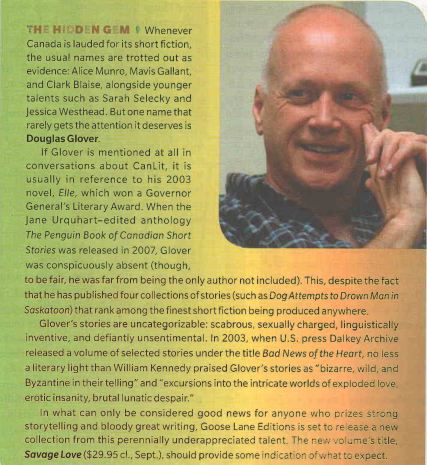
This is just out. Print edition of Quill & Quire in Toronto. It’s very nice but, of course, I wasn’t born under a rock. What is this constant mantra: the unknown Douglas Glover? Why is it that people can only remember that they have forgotten me? There is some deep phenomenological issue to be explored here. Or possibly a medical trend?

Re. the photo: This is one of set of photos taken during a writing class at Davidson College. I had assigned the class an exercise: write a sex scene. They were reading them out loud, hence the uncharacteristic expression of quizzical delight on my face. I learned things during that class that I never wanted to know.

All this is beside the point. You can pre-order my book at immense savings.

p.s. I like being called “scabrous.”

dg

Quill and Quire preview of Savage Love by Douglas Glover

Jul 022013
 

Sophfronia ScottPhoto by Tain Gregory

Sophfronia Scott offers here a thoughtful, provocative and pragmatic account of the ways a nonfiction writer can use reflection to engage the reader. She talks specifically about the use of techniques such as metaphor, direct appeal, shared experience and the right voice to engage the reader’s heart and imagination. Especially helpful are Scott’s explorations of particular texts to illustrate her technical points: Elie Wiesel’s Night, Eula Biss’s Notes from No Man’s Land, and James Baldwin’s Notes of a Native Son.

dg

———

Introduction

In the past I rarely embarked on a personal essay unless specifically asked for one by an editor because it never immediately occurred to me anyone would have any interest in what I had to say about a particular topic, especially if the action involved happened only to me. I have also had a distaste for the trend towards memoir in the publishing world. When the writer Douglas Goetsch, a recent graduate of Vermont College of Fine Arts, said to me in conversation that he thought the United States was suffering “from an epidemic of memoir,” I, having read my share of melodramatic manuscripts flooding the marketplace in recent years, was inclined to agree. There are, it seems, millions of keyboards where writers are too enthusiastically tapping out their tales of child abuse, alcohol abuse, road trips, adoption secrets, illness, injury, divorce, you name it. I saw no reason to add my words to this particular multitude.

However in August 2012 I found myself deeply engaged in the writing of a personal essay inspired by a series of tweets I had posted to a friend on Twitter describing a talk I’d had with the singer Lena Horne about learning to iron my father’s shirts. The previous day I had been ironing my husband’s shirts and I posted on Twitter:

I’m going to combine my housework with my literary love and pretend I’m a Tillie Olsen character: I stand here ironing…

lena-horne-smiling-475

The next morning I saw my friend had re-tweeted the post and as I tweeted my thanks for some reason the memory of my Lena Horne talk came to mind.  I wanted to tell my friend about it; he enjoys a good story and I thought he would appreciate it, especially since it included a celebrity. I sent the following in quick succession:

1.)   Thanks for the RT! I once had a conversation with Lena Horne about ironing—we both learned as girls…

2.)   …She said she could never get it right. “I used to weep over my daddy’s shirts.” I said, “And they were all white shirts,

3.)   …right?” My father’s shirts were all white too. She said yes. I was in my 30s. She was in her 80s. But we walked through…

4.)   …Central Park together as girls ironing our father’s shirts.

5.)   I’m in tears now remembering that day.

And I really was in tears. I embarked on the writing of an essay with no ambition other than to explore the source of those tears. This walk with Lena Horne was still in my heart and at the forefront of my mind over ten years later for a reason and, as I discovered as I wrote, those reasons had little to do with her. As the paragraphs of the essay came together I realized that walk had crystallized an important personal moment for me in which I recognized how much love and forgiveness had replaced the anger I once held for my difficult, demanding father.

“Such forgiveness is possible, I believe, not because he is long dead, but because of these unexpected moments of grace reaching across generations reminding me of this: the reason I hurt so much then was because I cared so much then—and still do. As I look back on that autumn afternoon and how Lena took my arm again as we continued our stroll through Central Park, I can see how in that moment I was in my 30s, Lena was in her 80s, but we were both girls ironing the shirts of the first men we ever cared for, and hoping they could feel our love pressed hard into every crease.”

The completed essay, “White Shirts,” when published in the September 2012 issue of Numéro Cinq Magazine, received favorable written responses. What surprised me about the posted comments was how many of the readers saw themselves and their own memories in my essay:

I recall my Aunt Virginia showing me how to iron a shirt when she was doing them for her husband and family of 5 boys after a morning of working in the fields. Yours are exactly the same instructions I recall her demonstrating. Thanks for sharing this evocative memory.

You’ve taken me back to my childhood, ironing the handkerchiefs and pillowcases while I watched my mother and grandmother iron starched white shirts. Thank you. 

This is precious, pulls you into the story, and encouraging to me as a young housewife finding I have grossly undercooked the potatoes in a casserole, and realizing just how quickly a cleaned bathroom collects new hair and dirt- I can get better!

This brings back my own ironing memories. My grandmother, who would be 120 if she were still alive, taught me how to iron. I don’t remember what she had me iron, but I do remember burning my fingers. If I look hard enough, I can still see the tiny scars.

This excited me as a writer—it was as though the essay had become bigger, more vital, because it had struck a chord for so many people. We were all, at once, at the ironing board with our mothers, aunts and grandmothers. I found myself thinking, if this is what creative nonfiction can do, this is the creative nonfiction I want to continue writing.

But how? I felt I had created this shared experience, a kind of universal appeal, by accident. I know the best essayists must be able to make such connections consistently. I decided to begin an exploration of the techniques these writers use to help them communicate their very personal experiences to the broadest possible audience. I believe this is a necessary exploration because, as Richard Todd says in Good Prose: The Art of Nonfiction, “In the family of writers, essayists play poor cousins to writers of fiction or narrative nonfiction.” Indeed their medium, the personal essay, is an unusual form because its existence defies the fact that the reader, at first blush, has no reason to read it. What is the essay’s purpose? Fiction offers entertainment as an essay can, but on a different level: fiction can also present escape, perhaps even a fantasy in which the reader can place him or herself as the main character. Journalistic nonfiction serves the purpose of educating the reader or providing desired information. Poetry can charm with its rhythms and imagery. These forms answer upfront the reader’s ongoing question of  “What’s in it for me?” In a society where words and phrases such as “So what?” and “navel-gazing” and “whatever” demonstrate a less than supportive environment in which to offer one’s story, the essay is immediately at a disadvantage. In everyday conversation we don’t always listen to the stories of strangers, or if we do it’s done with half an ear because the listener is more interested in hearing a moment where they can interject what they have to say, which they believe will be more interesting or more important. Douglas Glover, in his book Attack of the Copula Spiders, warns against  “bathtub” narratives which he defines as “a story which takes place almost completely as backfill in the mind of a single character (who often spends the whole narrative sitting in a bathtub—I am only being slightly facetious).” He notes the form for its lack of drama and movement. But what is a personal essay if not a long form “bathtub” narrative completely crafted from the writer’s thoughts being turned over and over in her mind?

Since I’ve been able to focus on creative nonfiction in my studies, I’m learning this type of focused reflection is not the problem with the personal essay. I realize the essays and memoirs that bother me the most are ones where deep thought and reflection are nonexistent. On top of this the author has not taken the pains to write in a way that would allow the reader access to her personal experience. The writer, either through neglect or inexperience, has produced a work in which she is so caught up in telling her story, usually a traumatic event, that she has not made the thoughtful reflection required to instill the event with meaning. It’s not enough that a person has experienced something horrible such as the death of a loved one, physical abuse, divorce or illness. The person must be able to step back and look at the whole tapestry and contemplate the placement of the event and its effects on her whole being. Once that piece is understood, this gives the writer the foundation to craft and revise a piece with the intention of highlighting this insight.

In many cases the writer has not stepped back at all. Such writers are, in my opinion, still caught up in the event, even if many years have passed. For them writing down the story is the big accomplishment, and that’s because the pain of finding the words has them reliving the event and “surviving” it again. They are too much in it to be above it, so there is no reflection. Thus the event is still too personal for the writer and hence out of reach for the reader. If anything this type of writing does a certain violence to the reader because it subjects them to raw, naked details very similar to a news report from a crime scene. We, as readers, endure the pain, the harsh visuals, and the terror of the event. Then the author thinks it is enough just to explain they got through it, and they’re okay. But how can we believe that when we’re still ourselves in that place of fear and trembling, exactly where they left us?

And yet there are essays and books of essays describing terrible events that, despite their personal nature, manage to capture the reader’s heart and imagination, engaging both the ear and the heart. In order to gain such credibility with the reader a writer’s work should demonstrate that the author has done some focused thinking, first about herself, and then for the reader. For herself the writer wants to do the mental work and reflection that shows she is ready to discover and understand the deeper meaning of the events of her life—to take the step that truly turns life into art. Next, the writer makes choices with the reader in mind—choices of imagery, language and voice with the intent of making a connection with the person reading the words. I will detail here how this process can work using as examples authors who have written engaging, yet deeply personally essays that succeed because the writers have brought to bear the powers of both inner work and conscious attention to craft.

Reflection as Foundation

dmooreFirst of all, reflection is necessary. Dinty W. Moore in The Truth of the Matter: Art and Craft in Creative Nonfiction, points out that while everyone loves a well-told story, “the…reason people care relates to what the writer has made of the experience and how the author’s discovery often rings true for a wide readership.”  This reflection can happen before, during, and after the writing of the essay’s initial draft, but it must happen because the writer must be open to new ideas at each level. Otherwise writers may find themselves unwilling to begin because they fear what will come of the writing, stuck partway through because they get mired in the trauma of re-telling their story, or unwilling to revise because they’re still not ready to think about the event at a higher level. I admit this involves mental and emotional issues and maturity as well. As Phillip Lopate notes in the introduction of The Art of the Personal Essay, “It is difficult to write analytically from the middle of confusion, and youth is a confusion in which the self and its desires have not yet sorted themselves out.”

The “how-to” aspect of reflection is difficult because any technique would be contingent on the author’s awareness of the necessity of thinking deeply about the circumstances of her life being examined in the essay, and her willingness to make the conscious decision to do it. These aspects are not always present in a personality. However I would like to venture forward with a few questions a writer may ask if she does want to begin the process of reflection even if she doesn’t know what the answers are or what to make of them. These questions are:

      • Why do I want to write about this particular topic/event/circumstance in my life?
      • Who was I before this event happened to me?
      • Who am I as a result of it? In other words, how do I see the world through the lens of what happened to me?
      • How do I feel about the people I’m writing about? Have these feelings changed over time? Have they not? Why?
      • What are my physical/emotional reactions around my topic? How fresh is the “wound?”

I would also suggest a writer begin a mental practice of consistently asking these questions during the writing process and whenever a memory or past reference presents itself for consideration. On a positive note, this kind of thinking is open to all, young and old, so younger authors need not despair even if the writing results in musings for which they have no clear answer just yet. The fact that they are questioning and making that apparent may be enough to engage the reader. Many readers appreciate the vulnerability of a writer who is willing to admit she doesn’t know the answers. The fact that she is daring to ask the questions that could reflect the reader’s own silent struggle builds credibility for the writer and will eventually help to create stronger work.

The Four Techniques

This paper will focus on four techniques that can be used by writers who can reflect, have reflected, and want to make their writing connect with as many readers as possible. These craft points can help the writer to open the door for readers, to allow them to more easily share in the emotions, thoughts and events the writer is laying before them.

The first technique involves the use of metaphor. As defined in the Google search dictionary, a metaphor is:

1.)   A figure of speech in which a word or phrase is applied to an object or action to which it is not literally applicable.

2.)   A thing regarded as representative or symbolic of something else, especially something abstract.

In Elie Wiesel’s memoir of the Holocaust, Night, he tells the horrifying story of his year as a teenager in concentration camps, including Auschwitz and Buchenwald, in which he suffers the deaths of his family members, his friends and, eventually, his own faith. The title Night evokes the metaphor that is the foundation of the whole book. The traumatic material within the covers requires a powerful metaphor. How else can he help the reader grasp the incredible terror and darkness felt by himself and by his people except by connecting it to the darkness we experience regularly and, as children, even fear? It seems every time night falls in the book there is no rest, only fear and concern for what the next day will bring. Night becomes the representation of the darkness cast over Wiesel and his people. He refers to the “nocturnal silence that deprived me for all eternity of the desire to live.” In this section Wiesel combines the metaphor of night with fire to represent the furnaces of the concentration camps:Since in personal essays we deal in the abstract continually, especially when it comes to the writer’s emotions, metaphor becomes essential. Sue William Silverman, in her Vermont College of Fine Arts lecture “Metaphor Boot Camp,” notes the use of metaphor in personal essays allows the writer to make abstract terms or emotions such as the words “love,” “hate,” or “misery,” accessible and tangible for the reader through the use of imagery. This is the answer to the question of how else can the reader relate to a story that only happened to you. It also aids in this question of reflection: “Metaphor helps us to understand what this experience in the past actually meant.”

“No one was praying for the night pass quickly. The stars were but sparks of the immense conflagration that was consuming us. Were this conflagration to be extinguished one day, nothing would be left in the sky but extinct stars and unseeing eyes.”

There is a haunting elegance and beauty in Wiesel’s writing that comes through even in translation. His imagery doesn’t sugarcoat events. If anything it makes them more alive and, though horrifying, accessible. This works because, as Sue Silverman points out in her lecture, “Once you have developed metaphor, you’ve transformed your life into art and all art is universal.”

goodproseThe second technique involves the direct appeal, in other words, the writer brings the reader directly into the essay with the use of “we” or “society.” The idea is that what the writer is talking about leads us to question or examine the bigger picture and how it affects all of us. The direct appeal assumes a certain kind of reader—a concerned citizen, a reader engaged with the world and who wants to know about actions and their consequences on society at large. It also assumes the writer has set herself up in a certain way: she establishes her authority to validate why she can speak to the bigger picture. Richard Todd would argue this isn’t necessary. “What gives you license to write essays?” he asks in The Art of Nonfiction. “Only the presence of an idea and the ability to make it your own.” But he does acknowledge the importance of training a discerning writer’s eye on the issues of our time and the essay being the right vehicle in which to do so:  “An essay both allows and requires you to say something more than you are entitled to say by virtue of your resume alone.”

Eula Biss in her collection of essays, Notes from No Man’s Land, travels back and forth between personal experience and issues such as racism, immigration and education. She lays the foundation of her authority by presenting research she has done. In her essay “Time and Distance Overcome” she connects the innovation of the telephone to another more disturbing American innovation: lynchings. In stating statistics, and quoting newspapers and reports of documented lynchings, Biss creates the framework through which to discuss racism. The facts she presents are aimed to evoke our outrage and disbelief:

“More than two hundred antilynching bills were introduced to the U.S. Congress during the twentieth century, but none were passed. Seven presidents lobbied for antilynching legislation, and the House of Representatives passed three separate measures, each of which was blocked by the Senate.”

This mode of universality is more often used in essays of a journalistic type, but a a personal essay may actually be the better forum. There is less distance between the reader and the concepts discussed because the writer provides the human connection through their personal experiences and observations. The writer can say “I know this is true because it affected my home/my health/my town/my family/my job.” Her observations are not conjecture, but a living example of the concepts she is pondering in the written word. The concepts alone in such essays are big and difficult: racism, immigration, politics, ecology, religion. When the writer offers as a starting point her own experience, it is an easier way for the reader to wade into the waters of discussion. Several times in her book Biss mentions her own reaction to her discoveries—in one instance watching a documentary has her in tears:

“The point at which I began to cry during the documentary about Buxton was the interview with Marjorie Brown, who moved from Buxton to the mostly white town of Cedar Rapids when she was twelve. ‘And then all at once, with no warning, I no longer existed…The shock of my life was to go to Cedar Rapids and find out that I didn’t exist…I had to unlearn that Marjorie was an important part of a community.”

Biss lays the foundation of her argument with such emotion, then walks us backwards to show how she came to this reaction so that we might understand and possibly even feel the same way.

When a writer appeals to the reader to connect to his or her own experience in relation to the author’s, the writer is utilizing the third technique to communicate to a broad audience. The writer can do this by referencing events or actions that most people have experienced such as having children or eating a satisfying meal. Dinty W. Moore writes in The Truth of the Matter, “We all know grief, fear, longing, fairness, and unfairness. We all worry about losing someone dear to us. We crave attention, from everyone, or from certain people. We love our families, yet sometimes those families greatly disappoint us…These basic human worries and emotions will always resonate when brought clearly to life on the page.” In my essay “White Shirts,” I invoke the pain of touching a hot iron: “A burn rises quickly, a living red capsule on the surface of your skin. You think it will never heal because that’s how much it hurts when it happens.”  I also conjure the feel of a shirt as it is being ironed: “the shirt large and voluminous in Lena’s small hands, the white cotton hopelessly scorched…” and “Sleeves are tricky because of their roundness. They don’t lie flat well so I will usually iron a sleeve and turn it over to find a funky crease I didn’t mean to create running like a new slash down the arm.” I chose these details because my memories of ironing trigger my senses of touch, sight and smell. This is how I made the words I wrote alive for the reader and myself.

The use of detail with this technique is key. The right details can spark the reader’s memory and cause them to, in the moment, relive their own experience even as they are reading about the author’s. Henry Louis Gates does this successfully in his piece “Sunday,” in which he describes the traditional dinner served weekly in his family home. Dinty Moore points out:

“Much of the intimacy here is in the family secrets Gates chooses to share, and the generous description of the table laden with food: ‘fried chicken, mashed potatoes, baked corn (corn pudding), green beans and potatoes (with lots of onions and bacon drippings and a hunk of ham), gravy, rolls, and a salad of iceberg lettuce, fresh tomatoes (grown in Uncle Jim’s garden), a sliced boiled egg, scallions, and Wishbone’s Italian dressing.’ Instead of a weak line like ‘you can’t imagine how much food there was,’ Gates puts us right at the table.”

I should note this technique is different from the use of metaphor because the detail doesn’t have to represent something else. It can stand on its own representing nothing more than the experience itself—it is the experience that connects the reader. In Night such details are found in the descriptions of thirst and heat as the neighborhood is gathered and made to march without water under the heat of a summer sun: “People must have thought there could be no greater torment in God’s hell than that of being stranded here, on the sidewalk, among the bundles, in the middle of the street under a blazing sun.”

The fourth technique involves the writer hitting upon the right voice in the telling of the story. A reader will react to a writer’s voice with the same discernment anyone would use at a cocktail party—if you don’t like the tone or attitude of the voice talking to you, you’re more likely to move away and speak to someone else. In experiencing a personal essay, a reader will not stay at the “party” if they encounter a voice they feel is arrogant, bossy, pedantic, whiny, annoying or anything else that makes them uncomfortable. The writer’s goal is to establish authority and a likeable voice at the same time. For myself, I deem a voice likeable if it is confident, knowledgeable and, if appropriate, has a good sense of humor. This doesn’t mean the writer has to bend over backwards to make her voice likeable. Some writers do this to the detriment of the work, relying too much on colloquialisms or self-deprecation. Even in the real world, trying to be everyone’s best friend simply doesn’t work and usually results in the person transmitting a bland, false persona. In writing this would translate as beige, uninteresting prose. In developing and considering voice the writer would do well to remember that in doing so, she is also establishing her narrative presence, the person in the room she wants to be. Mimi Schwartz, in her essay, “Memoir? Fiction? Where’s the Line?” says if the writer’s voice is “savvy and appealing enough to make the reader say, ‘Yes, I’ve been there. I know what you mean!—you have something good. But if the voice you adopt annoys, embarrasses or bores because of lack of insight, then beware. The reader will say, ‘So what? I don’t care about you!’ often in anger.”

Having the right voice also gives the writer more leeway in sidestepping the common essay obstacles of egotism and navel-gazing. The nineteenth-century writer Alexander Smith discusses how much can be forgiven a writer if the work is engaging: “The speaking about oneself is not necessarily offensive. A modest, truthful man speaks better about himself than about anything else, and on that subject his speech is likely to be more profitable to his hearers…If he be without taint of boastfulness, of self-sufficiency, of hungry vanity, the world will not press the charge home.”

A writer develops voice through the discerning use of vocabulary, colloquialism, and a general overall sense of camaraderie and shared confidence. When the writer has achieved this, she relates to the reader regardless of age, race, or culture background. James Baldwin, in his reflections on race and his young adult life in Harlem in Notes of a Native Son, develops a voice that is both mature and youthful as he looks back at how certain discoveries and experiences have shaped him and caused him to lose the innocence he once held about his place in society. At his essence, Baldwin’s voice is his connection, authority and narrative rolled into one: I am a human being. And he is most shocked when he finds himself in situations where that simple fact is not acknowledged or respected. “…there must never in one’s own life, accept these injustices as commonplace but must fight them with all one’s strength. This fight begins, however, in the heart and it now had been laid to my charge to keep my own heart free of hatred and despair.”

Such vulnerability and bareness allows the reader to relate to the writer to the point of oneness. “The essayist can also appear as a figure who boasts of little in the way of heightened emotion or peculiarity of feeling,” says Richard Todd in Good Prose. “This sort of writer’s whole claim on the reader is the claim of the norm: I am but a distillation of you.” Indeed, this has been one of the most admired aspects of Baldwin’s book—his ability to reach out beyond his very specific experience to touch, intimately, readers who are nothing like him. In 2012, in an essay published in recognition of the 25th anniversary of Baldwin’s death, the writer Robert Vivian recalls how as a young white man first reading Notes of a Native Son, he felt Baldwin’s voice spoke directly to him:

“…there was something about his voice and how he wrote that felt intimate and familiar and deeply personal, almost as if he were writing in my voice, my skin, my way of looking at the world, which must be why some writing is so capable of addressing the universality of human experience regardless of the very real and limiting facts of people’s lives through the mysterious, sympathetic alchemy of prose that can, in its greatest practitioners, so deeply strum the common chords that make us all one.”

Communicating from No Man’s Land

Eula Biss’s award-winning nonfiction collection, Notes from No Man’s Land: American Essays, is a challenging read because the author takes on some of the most difficult subject matter of our time: race, the loss of self, sociopolitics, immigration and education. But her use of the four techniques described here makes the material easier for the reader to digest. It’s as though Biss is taking readers by the hand and gently leading them on her expedition through No Man’s Land.

blissnotesfromnomansland

The book is organized around Biss’s experiences of different parts of the United States beginning with her time spent in New York, then moving on to California and later the Midwest. It opens with “Time and Distance Overcome,” an essay on racism that sets the tone for the ensuing pieces. It ends with “All Apologies,” a reflection on whether apologies can truly be made and whether real forgiveness is possible when the perpetrators of a wrong are long deceased or apt to commit the wrong again and again.

In her essay “Letter to Mexico” Biss uses the metaphor of the ocean and its tides to communicate the sense of the city of Ensenada being overwhelmed by ever surging numbers of ugly Americans who have, courtesy of the North American Free Trade Agreement (NAFTA), relieved Mexicans of a good chunk of their wages and manufacturing businesses. The Mexicans are powerless against the influx of Americans just as any person would be powerless against the enormity of the ocean.

“I was confined to the shore there, even when I was not in the tourist district, where the cruise ships unloaded and middle-aged Americans periodically swarmed the bars and souvenir stands then receded like a tide.”

Biss also uses metaphor in her essay “Three Songs of Salvage” to communicate how the ever present rhythm of drums from her childhood when her mother practiced the Yoruba faith still mark time for her today. “I fell asleep to the distant sound of drums, which I was not always entirely sure was the distant sound of drums. Rain, blood in the body, explosions in the quarry, and frogs are all drums…I know now that I left home and I left the drums but I didn’t leave home and I didn’t leave the drums. Sewer plates, jackhammers, subway trains, cars on the bridge, and basketballs are all drums.”

Biss frequently uses the direct appeal in “Is This Kansas” to challenge the reader to question how we view the behavior of college students and the connection of that thinking to what our society looks like. There is a chiding nature to her comments as she presents her observations. The reader might feel she’s being called out by Biss because the reader may very well have one of views the writer highlights. If the reader does have such a view then a crack has been opened and Biss has the opportunity to make the reader see things in a different light.

“I would often wonder, during my time in that town, why, of all the subcultures in the United States that are feared and hated, of all the subcultures that are singled out as morally reprehensible or un-American or criminal, student culture is so pardoned. Illinois home owners propose ordinances against shared housing among immigrants, while their sons are at college sharing one-bedroom apartments with five other boys. Courts send black teenagers to jail for possession of marijuana, while white college kids are sentenced with community service for driving while intoxicated, a considerably more deadly offense. And Evangelicals editorialize about the sexual abominations of consenting adults, while very little is said about the plague of date rapes in college towns.”

In using details to connect the reader to their own experiences, Biss helps the reader experience with new eyes a place such as New York City that the reader may only know through movies or television show myths. She appeals to their sense of loneliness, alienation, and even fear because that was so much her own experience of the city. Biss anchors all of this with details that engage the reader’s senses.

“I could see barges silhouetted against the hazy pink horizon at dusk. I tried to walk down to the water and promptly dead-ended at a huge, windowless building labeled Terminal Warehouse.”

“The station at Coney Island was half-charred form a fire decades ago and packed with giant inflatable pink seals for sale…Caramel apples were seventy-five cents and the din of the fair games was intolerable. One freak-show announcer screamed, ‘If you love your family, you will take them to see the two-headed baby!’ It was gross and crazy and base…The beach was packed with naked flesh and smelled like beer and mango. And the Wonder Wheel inspired real wonder as I rose up over Brooklyn in a swinging metal cage.”

The voice Biss develops in her book has an intriguing mix of vulnerability and authority. From a writer’s standpoint such a voice puts you exactly where you want to be with the reader: the vulnerability helps to establish trust and rapport; the authority seals your credibility. The reader will listen to what you have to say. We feel for Biss in her youthful questioning of her guilt, her feelings about her race, her fear. But she is fearless when it comes to delving into research to support her marked disturbance and indignation over attitudes, traditions and social norms. In “Land Mines” she discusses the failures of the education system, first establishing herself as a participant in that system, and then examining policies she has directly read or experienced. Her indignation sometimes seems close to bubbling over when she describes the University of Iowa’s considerations for how to make their school more diverse in ways that do not consider the well-being for their diverse students.

“One didn’t need to spend very long at that institution before realizing that the interests of everyone else—the funders, the administrators, the professors, the graduate students—came before the interests of the undergraduate students. And as in any feudal system, the people on whom the entire system depended were robbed, as completely as possible, of their power.”

Her essay “No Man’s Land” has a voice presenting Biss’s views with wide-eyed clarity. She puts herself, as well as society, under the microscope as she compares her experiences in the slowly gentrifying Chicago neighborhood of Rogers Park with the observations of Laura Ingalls Wilder of how the white man usurped the lands of the native Americans. Biss establishes her voice with direct rhetoric, using her research and her strong point of view to ground her statements about “pioneering” in America and what that really means—in one example it means unjustified fears:

“This is our inheritance, for those of us who imagine ourselves pioneers. We don’t seem to have retained the frugality of the original pioneers, or their resourcefulness, but we have inherited a ring of wolves around a door covered only by a quilt. And we have inherited padlocks on our pantries. That we carry with us a residue of the pioneer experience is my best explanation for the fact that my white neighbors seem to feel besieged in this neighborhood. Because that feeling cannot be explained by anything else that I know to be true about our lives here.”

Biss’s voice also makes it easier for readers who may be longtime fans of Ingalls Wilder’s Little House books to look at the series in a different way. If Biss had been too harsh the reader could have been led to misinterpret the essay as a criticism of the books. Instead Biss shows respect for the author and, in turn, her own readers as she follows through with her observations.

Mining the Night

As mentioned earlier, Elie Wiesel in his memoir Night uses the night as a long-form metaphor to invoke the darkness and horror of his experience as a teenager in the concentration camps of Auschwitz and Buchenwald during the Holocaust. But he also uses other metaphors and the rhetorical techniques discussed here to draw as many people as possible into the intimate nature of his pain and despair.

night_cover_lg

The book opens in 1941 with Wiesel as an eager 13-year-old student of the Talmud. When the “foreign Jews” including his own Kabbalah teacher, Moishe the Beadle, are removed from their town of Sighet, Transylvania, few members of Wiesel’s community read the action as the precursor of the horrors to come, even after Moishe escapes and returns with his eyewitness account of the killings of the deported Jews. Wiesel details the downward spiral of his people’s condition and their continued hope that things will get better until, sealed in rail cars, they can no longer ascribe to the delusion.

The powerful emotions related in Night require metaphor to help the reader access the book’s hard moments of despair and desolation. “Not far from us, prisoners were at work,” he writes, “Some were digging holes, others were carrying sand. None as much as glanced at us. We were withered trees in the heart of the desert.” Pain on such a scale can only be abstract to the outside observer. But metaphor, as noted from Sue Silverman’s lecture, allows Wiesel, in beautiful language, to turn his experience, though terrible, into art that the reader can take in and be in.

Wiesel uses the direct appeal technique in a different way. Instead of speaking directly to or challenging his readers, he is making the appeal by telling his story. It is an implied appeal: Wiesel is telling his story so he can bear witness to these atrocities to the world. In turn the readers learn from his testimony and the appeal is that we don’t allow such atrocities to happen again. He says this directly in the book’s introduction. It is the whole reason for the book’s existence and the reason Wiesel does his best to help the reader look, not look away.

“For the survivor who chooses to testify, it is clear: his duty is to bear witness for the dead and for the living. He has no right to deprive future generations of a past that belongs to our collective memory.”

There’s also, I believe, an appeal present in the undercurrent when Wiesel and the people around him more than once wonder at how and why the rest of the world didn’t know the extermination of the Jewish people was in progress. And if they did know, why wasn’t anyone saying or doing something about it? “How was it possible that men, women, and children were being burned and that the world kept silent? No. All this could not be real.” This, to me, feels like Wiesel’s call to all readers to be awake to the occurrences of the world, no matter what country.

In terms of details, Wiesel frequently activates the reader’s senses through his descriptions of pain, heat, cold, smells, colors, and more. In early parts of the book, his descriptions of spring recall the normal aspects of the season: brilliant skies, beautiful blossoms, delicate smells and bright green grass. This is the part the reader can relate to. Then he overlays the fear of the Germans and the transfer into the ghettos. He also uses the details of home, the trappings of home, to communicate to the reader what is being left behind. When he and his family enter the home of family members who have been transported away, they find “the chaos was even greater here than in the large ghetto. Its inhabitants evidently had been caught by surprise…On the table, a half-finished bowl of soup. A platter of dough waiting to be baked. Everywhere on the floor there were books. Had my uncle meant to take them along?”

When describing the camp’s horrors Wiesel’s descriptions become more physical:

“We whispered. Perhaps because of the thick smoke that poisoned the air and stung the throat.”

“An SS officer had come in and, with him, the smell of the Angel of Death. We stared at his fleshy lips.”

“ ‘It doesn’t hurt.’ His cheek still bore the red mark of the hand.”

The voice Wiesel uses often sounds like that of a witness giving testimony, which is exactly what he is doing. In fact, one reviewer refers to the book not as a memoir or essay, but as a “human document.” But Wiesel also has a poetic rhythm in much of the work that mesmerizes the reader with the beautiful depth of his dark musings. There is a natural vulnerability that comes through because of the youth of Wiesel’s narrative character during the events. He is at once sympathetic and authoritative with being strident, accusatory or vengeful. This makes Wiesel all the more believable, because he has created a voice that doesn’t seem prone to exaggeration or puffed up with hyperbole. Even when an observation could seem outsized, the words are presented with such gentle calmness that the reader can’t help but take them seriously. This happens, for example, when he conjures the image of he and his campmates as lost souls condemned to a kind of purgatory from which they can never escape.

“In one terrifying moment of lucidity, I thought of us as damned souls wandering through the void, souls condemned to wander through space until the end of time, seeking redemption, seeking oblivion, without any hope of finding either.”

At times Wiesel’s rhetoric is straightforward such as in instances when he uses repetition to evoke emotion. The repetition of the word “never” in the following passage, for example, has the heaviness of a hammer driving home the losses Wiesel knows he must live with for the rest of his life.

“Never shall I forget that night, the first night in camp, that turned my life into one long night seven times sealed.

Never shall I forget that smoke.

Never shall I forget the small faces of the children whose bodies I saw transformed into smoke under a silent sky.

Never shall I forget those flames that consumed my faith forever.

Never shall I forget the nocturnal silence that deprived me for all eternity of the desire to live.

Never shall I forget those moments that murdered my God and my soul and turned my dreams to ashes.

Never shall I forget those things, even were I condemned to live as long as God Himself.

Never.”

The Voice of Inclusion

James Baldwin’s 1955 essay collection Notes of a Native Son is described on the cover of the 1979 paperback edition as “the moving chronicle of Baldwin’s search for identity as a writer, as an American, and as a Negro.” At the time of its writing, a time in America where segregated bathrooms, restaurants, hotels and transportation still existed, such subject matter could easily be considered singularly personal and exclusive. However, Baldwin’s work succeeded in accessing an audience so broad that the work is still considered relevant both to society as a whole and to each individual reader who experiences it.

jbaldwincover

The first part of the book features Baldwin’s unflinching assessment of creative works including the abolitionist novel Uncle Tom’s Cabin, the film Carmen Jones, and Richard Wright’s novel Native Son, and his examination of what they have to tell us about current views on the mythical perceptions of Negros especially concerning issues of skin tone, sexuality, and cleanliness. Baldwin then moves into personal reflection regarding his life in Harlem, memories of his father, and his frustration with the realization that racism will affect him regardless of how clean, educated or well spoken he is. These reflections go deeper as Baldwin’s insecurities are laid bare in Paris where he is arrested for a menial crime and incarcerated in a system that cares little for his rights or personal comfort.

Baldwin uses his most powerful metaphor in the opening paragraphs of the book’s title essay. He describes the race riots in Harlem that took place after his father’s funeral and the smashed glass in the streets become, for Baldwin, a representation of the apocalypse—a destruction of a world he has known and a harbinger of the unknown world he is entering.

“A few hours after my father’s funeral, while he lay in state in the undertaker’s chapel, a race riot broke out in Harlem. On the morning of the 3rd of August, we drove my father to the graveyard through a wilderness of smashed plate glass…And it seemed to me, too, that the violence which rose all about us as my father left the world had been devised as a corrective for the pride of his eldest son. I had declined to believe in that apocalypse which had been central to my father’s vision; very well, life seemed to be saying, here is something that will certainly pass for an apocalypse until the real thing comes along.”

At the end of the section, this metaphor returns when Baldwin hurls a water glass at a restaurant waitress who refuses to serve him. The glass hits a mirror behind the bar and shatters. This gives rise to another metaphor, this time evoking the cycle of freezing and thawing, and how in this moment, Baldwin “thaws” and is freed from a frozen state of anger and boldness which then moves him to a state of fear.

“She ducked and it missed her and shattered against the mirror behind the bar. And, with that sound, my frozen blood abruptly thawed, I returned from wherever I had been, I saw, for the first time, the restaurant, the people with their mouths, open, already, as it seemed to me, rising as one man, and I realized what I had done, and where I was, and I was frightened.”

Baldwin does not make direct appeals so much as direct observations of America as a whole or large, significant groups within it such as the “Progressive Party” or the “optimistic American liberal.” These observations challenge the status quo, with Baldwin unafraid of declaring when he feels a situation is unacceptable. At the time of his writing this fearless tone would have made Baldwin’s readers uncomfortable about their own commitment. They also might feel concern over the risk of a Black writer speaking so plainly when he could still suffer the consequences of his words.

“Finally, we are confronted with the psychology and tradition of the country; if the Negro voter is so easily bought and sold, it is because it has been treated with so little respect; since no Negro dares seriously assume that any politician is concerned with the fate of Negroes, or would do much about it if he had the power, the vote must be bartered for what it will get…The American commonwealth chooses to overlook what Negroes are never able to forget: they are not really considered a part of it.”

In his essay “Equal in Paris” Baldwin uses detail to convey the fear and alienation of his days-long incarceration in a French prison. It’s interesting how a few of these details are not all that different from the ones Wiesel chose to describe the cells at the concentration camps. Baldwin allows the cold, the hole that served as a common toilet, the narrow cubicles, and the very fact that he begins to cry, to communicate to the reader the dire nature of his situation and his emotional condition. At one point, during his transport to another facility, “I remember there was a small vent just above my head which let in a little light. The door of my cubicle was locked from the outside. I had no idea where this wagon was taking me and, as it began to move, I began to cry. I suppose I cried all the way to prison…”

As mentioned earlier, Baldwin’s voice has served to connect to readers who find his voice so familiar that they identify with him, even across the wide canyon of time. It’s interesting that readers react to him this way because I didn’t find the voice particularly friendly or appealing. Baldwin has a formality about his phrasing and choice of words that, to me, make me feel he wasn’t an easy person to get to know in real life.

“But it is part of the business of the writer—as I see it—to examine attitudes, to go beneath the surface, to tap the source.”

Perhaps he felt this formality was necessary for the time and his subject matter. I can respect this choice. He was, after all, still a young man when Notes of a Native Son was published. He wanted to write about his thoughts on serious matters and in order to be taken seriously he had to establish his sound of gravitas. This is his business as a writer. However, I believe he also understood the importance of letting the reader know he is a real person and he does that effectively as well. In his “Autobiographical Notes” at the beginning of the book there is some hint of warmth as Baldwin notes how he loves to laugh and talks about his commitment to his writing.

“…I love to eat and drink—it’s my melancholy conviction that I’ve scarcely ever had enough to eat…and I love to argue with people who do not disagree with me too profoundly, and I do love to laugh. I do not like bohemia, or bohemians, I do not like people whose principal aim is pleasure, and I do not like people who are earnest about anything…I consider I have many responsibilities, but none greater than this: to last, as Hemingway says, and get my work done.

I want to be an honest man and a good writer.”

Maybe that’s the Baldwin readers connected with first, and that is the voice they carried with them as they read the ensuing essays. He has introduced himself as a respectably amiable person. There’s no reason for the reader not to want to accompany Baldwin on his musings.

Conclusion

Though the focus of this exploration has been how to reach the broadest possible audience, I believe every piece of writing, at its heart, is an author’s attempt at conversation with just one reader. In many cases the writer knows at the outset the communication will be a difficult one, akin to two people speaking different languages. The writer, in order for her endeavor (which is to tell a story or relate an experience) to be successful, must try as many ways as possible to bridge the gap of understanding. If she can manage to do that, the happy result may be a bridge that more than one reader can utilize. In fact it can be used again and again, with readers crossing from all angles. In this way the writer achieves the broader audience.

The techniques described here can hopefully be the building materials a writer uses to build this bridge, keeping in mind that even the use of just one can bring a reader closer to relating to the writing than if she attempted none of them.

—Sophfronia Scott

————————-

Works Cited

Baldwin, James. Notes of a Native Son. Toronto [u.a.]: Bantam, 1979. Print.

Biss, Eula. Notes from No Man’s Land: American Essays. Saint Paul, MN: Graywolf, 2009. Print.

Glover, Douglas “How to Write a Short Story: Notes on Structure and an Exercise.” Attack of the Copula Spiders: And Other Essays on Writing. Emeryville, Ont.: Biblioasis, 2012. 23-42. Print.

Kidder, Tracy, and Richard Todd. Good Prose: The Art of Nonfiction. New York: Random House, 2013. Print.

Lopate, Phillip. “Introduction.” Introduction. The Art of the Personal Essay: An Anthology from the Classical Era to the Present. New York: Anchor, 1994. Xxiii-Liv. Print.

Moore, Dinty W. The Truth of the Matter: Art and Craft in Creative Nonfiction. New York: Pearson/Longman, 2007. Print.

Scott, Sophfronia. “White Shirts: Essay — Sophfronia Scott.” Numero Cinq. N.p., Sept. 2012. Web. 03 Apr. 2013.

Scott, Sophfronia. “Writing Your Heart Open.” Hunger Mountain: The VCFA Journal of the Arts. Hunger Mountain, 20 Sept. 2012. Web. 21 Apr. 2013.

Vivian, Robert. “Baldwin in Omaha.” Hunger Mountain: The VCFA Journal of the Arts. Hunger Mountain, 6 Dec. 2012. Web. 03 Apr. 2013.

Wiesel, Elie. Night. New York: Hill and Wang, 2006. Print.

William Silverman, Sue. “Metaphor Boot Camp.” Vermont College of Fine Arts, MFA in Writing Residency. College Hall Chapel, Montpelier, VT. 4 Jan. 2013. Lecture.

End Notes

INTRODUCTION

Glover, Douglas H. “How to Write a Short Story: Notes on Structure and an Exercise.” Attack of the Copula Spiders: And Other Essays on Writing. Emeryville, Ont.: Biblioasis, 2012. 23-42. Print

Kidder, Tracy, and Richard Todd. Good Prose: The Art of Nonfiction. New York: Random House, 2013. Print.

Lopate, Phillip. “Introduction.” Introduction. The Art of the Personal Essay: An Anthology from the Classical Era to the Present. New York: Anchor, 1994. Xxiii-Liv. Print.

Moore, Dinty W. The Truth of the Matter: Art and Craft in Creative Nonfiction. New York: Pearson/Longman, 2007. Print.

Scott, Sophfronia. “White Shirts: Essay — Sophfronia Scott.” Numero Cinq. N.p., Sept. 2012. Web. 03 Apr. 2013.

Scott, Sophfronia. “Writing Your Heart Open.” Hunger Mountain: The VCFA Journal of the Arts. Hunger Mountain, 20 Sept. 2012. Web. 21 Apr. 2013.

THE FOUR TECHNIQUES

Gates, Henry Louis. “Sunday.” As published in The Truth of the Matter: Art and Craft in Creative Nonfiction. New York: Pearson/Longman, 2007. Print.

Moore, Dinty W. The Truth of the Matter: Art and Craft in Creative Nonfiction. New York: Pearson/Longman, 2007. Print.

Lopate, Phillip. “Introduction.” Introduction. The Art of the Personal Essay: An Anthology from the Classical Era to the Present. New York: Anchor, 1994. Xxiii-Liv. Print.

Schwartz, Mimi. “Memoir? Fiction? Where’s the Line?” As published in The Truth of the Matter: Art and Craft in Creative Nonfiction. New York: Pearson/Longman, 2007. Print.

Vivian, Robert. “Baldwin in Omaha.” Hunger Mountain: The VCFA Journal of the Arts. Hunger Mountain, 6 Dec. 2012. Web. 03 Apr. 2013.

——————————

Sophfronia Scott recently completed her second novel, Lady of the Lavender Mist, and has essays in two new Chicken Soup for the Soul books: Inspiration for Writers (May 2013) and Reader’s Choice 20th Anniversary Edition (June 2013). She published her first novel, All I Need To Get By, with St. Martin’s Press in 2004. Her work has appeared in Time, People, More, NewYorkTimes.com, Sleet Magazine, Gently Read Literature, The Mid-American Review, The Newtowner, and O, The Oprah Magazine. Sophfronia is currently a masters candidate in fiction and creative nonfiction at the Vermont College of Fine Arts. Her short story, “Murder Will Not Be Tolerated,” will be in the Fall 2013 issue of The Saranac Review. She blogs at www.Sophfronia.com.

Jun 252013
 

The Writers’ Trust of Canada recently asked me (along with several other estimable authors) to send a list of what I hoped to read this summer and what I think other people might be interested in reading. The result was just published online. Here is my bit. Now you’re set for beach reading.

dg

bookI am going to shortly read George Fetherling’s The Writing Life, Journals, 1975-2005. Also re-reading Michael Ondaatje’s The Collected Works of Billy the Kid, André Breton’s novel Nadja. New books: Ror Wolf’s Two or Three Years Later: Forty Nine Digressions, also Tranquility by Attila Bartis.

A work I just read that I recommend highly is Alexander Pushkin’s The Captain’s Daughter, a short novel, fascinating for its construction (multiple orphans and adoptions) and its ironic and elegant use of genre (the family memoir). There’s a wonderful essay you can read along with it “Pushkin’s Novel The Captain’s Daughter as Fictional Family Memoir” by Leslie O’Bell published online by the North American Pushkin Society.

Douglas Glover’s latest collection of stories Savage Love will be published in September 2013.

via The Writers’ Trust of Canada – Recommended Reading.

.

Jun 222013
 

Here’s the opening to my new back page piece at Global Brief. For the whole series, look here.

dg

There are individuals and there are the anonymous. Most of us are individuals to ourselves, family and friends, but anonymous to the rest of the human race. We are anonymous in crowded cities, in the vast bureaucracies of government and multinational corporations. We are anonymous in statistics, and when we are dead. We are anonymous except in the hearts of loved ones. But that memory eventually burns out as well. Before history, we are all anonymous – a tide of humanity swept up in events, lucky to die in a bed of our own with loved ones around (feeling like an individual).

The idea of an individual is paradoxical, like Wittgenstein’s famous duck-rabbit parable: look at a diagram one way and it’s a duck, tilt the paper and it’s a rabbit. Or it trembles, to use Jacques Derrida’s felicitous verb. Individual/anonymous. We strut our individuality, but we are haunted by images of the beehive and the anthill, where the individual is subsumed under the sign of the collective. Are we simply carriers of genes – worker bees in a hive? Is civilization merely an accumulation of minute anonymous gestures by replaceable minions? Or are we individuals with a particular claim on the infinite – infinitely precious (to a superior being, perhaps), with a will and the power to create and alter forever the course of history?

via The Individuals and the Anonymous : Global Brief.

May 302013
 

16 Categories of Desire

Coincidentally — never happened before — after yesterday’s affectionate review of my story “The Obituary Writer,” I found Steven Buechler’s informal (and affectionate) review/notice of my story book 16 Categories of Desire at his site The Library of the Found Inkwell. Yes, yes, a discriminating and saintly reviewer is  Steven Buechler. I love it when people quote me back to myself. I remember writing those words! I think. I was never happier.

dg

Douglas Glover’s 16 Categories of Desire is a collection of short stories that detail where love goes; right, wrong, unknowing, confused or even weird. Although the plots of each story are wonderful, Glover writes great paragraphs to each piece that detail the emotions of the human heart that speak to the reader. (And the reader should learn from those examples to apply to their lives.)…Douglas Glover’s 16 Categories of Desire is a book about love and its passions. It is a book that any adult can learn from and maybe understand themselves  and perhaps forgive themselves a bit.

via The Library of the Found Inkwell: Review; “16 Categories of Desire” by Douglas Glover (2000), Goose Lane Edition, Fredericton, New Brunswick, Canada.

May 292013
 

Obviously a discriminating critic (possibly a saint), Steven Beattie writes and curates That Shakespearean Rag where he has just published this appreciation of my short story “The Obituary Writer” from which, coincidentally, the name Numéro Cinq is taken (you can read about that in the About page underneath the testimonials). The story is from my book A Guide to Animal Behaviour.

dg

Glover, one of the great unsung story writers this country has ever produced, tips his hand with the epigraph, from Philippe-Paul de Ségur, an aide-de-camp to Napoleon during the disastrous French invasion of Russia: “We drifted along in this empire of death like accursed phantoms.” Glover’s story locates itself in an “empire of death,” in which the inhabitants do, for the most part, drift along like accursed phantoms, not cognizant of their essential mutability and ephemerality.

Read the rest @ 31 Days of Stories 2013, Day 28: “The Obituary Writer” by Douglas Glover | That Shakespearean Rag.

May 082013
 

One of those recent trips took me to Canada, where I was one of six artists participating in a couple of mixed-genre events. These were arranged by the wonderful Ontario poet and essayist John B. Lee, whose works are so copious, accomplished and varied that I can’t single out any one, two or three books by his hand to recommend. Google this terrific author and you won’t be disappointed, whichever book may catch your fancy.

Besides John, I sat in with Marty Gervais, another more than noteworthy Canadian poet (and journalist), one whose modesty, both personal and literary, belies a huge soul and deep insight; and with longtime friend Douglas Glover, whose readings of some of his short-shorts (though he practices a number of other fictional and essayistic modes) roused the packed houses, first, in Port Dover, a wonderful and funky Lake Erie fishing town, and then, two hours to the west, in Highgate, where we performed in a beautiful old Methodist church, reclaimed as an arts center.

I must likewise mention the two musician-songwriters who rounded out the bill. Young Michael Schotte is, simply, a guitar virtuoso; check him out too. And our master of ceremonies, Ian Bell, curator of the excellent Port Dover Maritime Museum, is also a fine instrumentalist. Ian is also author of song lyrics that are every bit as “poetic” as anything else I heard on those stages. Look him up– and prepare to be mightily impressed.

via Sydney Lea’s Blog: Don McKay and Canada’s cultural riches.