Dec 092013
 

Aquin

“There is only one possible law of style: write to the maximum of intensity and incantation.” That’s Hubert Aquin, from his 1968 novel Trou de Mémoire (Blackout in the English translation). It’s the only rule you need for writing and for life. And the novel itself is astonishing for its combination of obsession and rupture.

I wrote an essay about Aquin, “Difficulty and Revolution,” which is in my essay book Notes Home from a Prodigal Son, but you can also read it online in Dalkey Archive’s magazine Context.

And here is a Jacques Godbout documentary about Aquin; Godbout, an eminent novelist and filmmaker, published two of my books in French in his capacity as editor of éditions du Boréal in Montreal (Les Pas de L’ourse and Seize sortes de désir)

dg

Two Episodes from the Life of Hubert Aquin by Jacques Godbout, National Film Board of Canadaé

Dec 062013
 

dg and Lucy at Lawrencetown Beach in Nova Scotia

The Fiddlehead is one of the grand old Canadian institutions, a literary magazine that first published in 1945, that published me regularly back in the days when I was a young strip of a writer just starting out (in those days the fiction was edited by Kent Thompson and  Roger Ploude). Now Ross Leckie is the editor; his office in the English Department at the University of New Brunswick is just down that hall from mine. Mark Anthony Jarman and Gerard Beirne are the fiction editors; the summer fiction issue has become a major publishing event of the year under their inspired leadership.

dg

Introducing the Judges for The Fiddlehead’s 23rd Annual Literary Contest

The Fiddlehead‘s annual literary contest is now closed, and we’re pleased to announce this year’s fabulous judges.

Fiction Judge
Douglas Glover
Douglas Glover’s newest book, a collection of short stories called Savage Love, appeared in the fall of 2013. He has won the Governor General’s Award for his novel Elle as well as the Rogers Writers’ Trust Timothy Findley Award for his body of work. He edited Best Canadian Stories from 1996 to 2006. He teaches in the MFA program at Vermont College of Fine Arts and is the current Writer-in-Residence at the University of New Brunswick. He edits the international online arts magazine Numéro Cinq.

via The Fiddlehead Blog: Introducing the Judges for The Fiddlehead’s 23rd Annual Literary Contest.

Dec 042013
 

Butane Anvil

Savage Love Cover

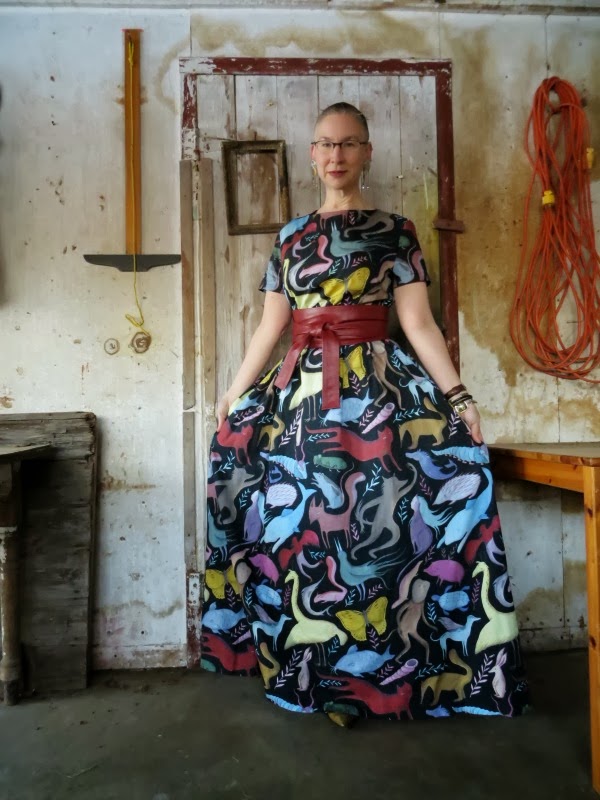
Butane Anvil, aka Amber Homeniuk, is a friend from Norfolk County where I grew up. She’s also a chicken-owner and expert who advises my mother on her flock. She likes to dress up and take pictures. She also writes poems — see a selection we published on NC. Re. insomnia — it seems to be going around these days.

I dunno. I love that name, Butane Anvil. I wish I had thought of it.

dg

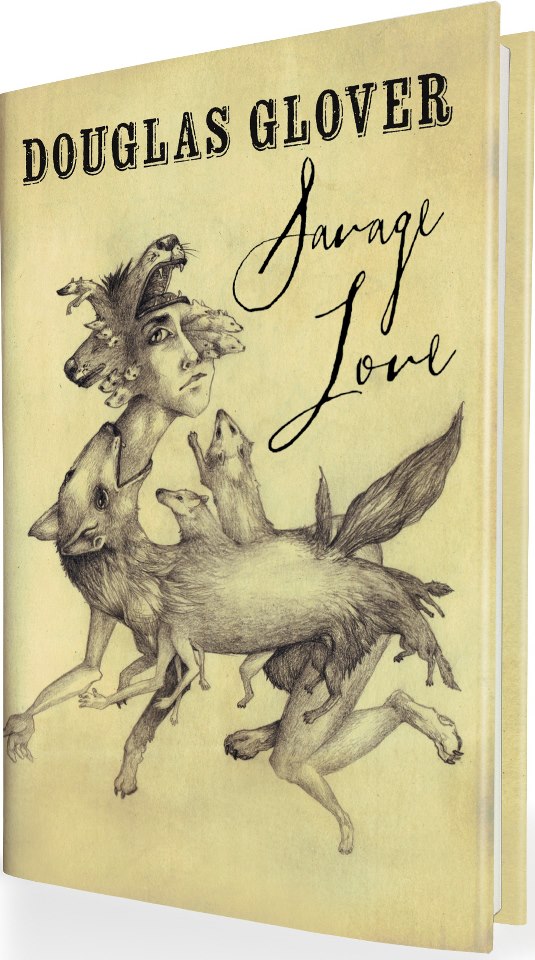
An exceptional read this fall was Savage Love by highly esteemed Canadian author and my friend Douglas Glover. In contrast to the aforementioned extremely terrible yet effectively soporific vampire novels, the stories in Savage Love more easily encourage a deliciously unsettling insomnia as they tend to stick to the ribs, or in many cases between them, being keen-edged with interpersonal horror, levity, and relentless skewering.

via Butane Anvil: And Its Heart So Savage.

Dec 012013
 

BeethovenBooksBeer-page-001

Just so you know, the Saint John Free Public Library event last night was a blast (too bad for all of you who missed the chartered buses out of Boston, New York and Toronto). When I arrived at the door a couple of hours early to check things out, there was a SOLD OUT ribbon across the poster. I was told they could have sold an extra 50 tickets. I have never been party to a SOLD OUT event in my life.

There was food and wine and beer. The beer was a special one-of-a-kind whiskey pale ale invented by Big Tide Brewing Company brewmeister Wendy Papadopoulos for the occasion — it was called Three Pages to the Wind (I am certain now that this is the reason for the SOLD OUT sign). I naturally started out the evening resolutely insisting that I could not drink because I was going to have to drive back to Fredericton through the moose-haunted dark highways of New Brunswick after. But then someone said the magic words “whiskey pale ale” once too often and I am afraid I succumbed.

Then the Saint John String Quartet started to play and I discovered the truly zen experience of sitting in a library with books all around and a glass of whiskey pale ale in my hand and four lovely people playing stringed instruments for me (I dunno, everyone else seemed to be talking). They played for 45 minutes which, you know, required a second whiskey pale ale and then Wendy Papadopoulos got up and gave an entertaining talk on how she came to invent Three Pages to the Wind (which was, really, so entertaining — the woman is a genius — that I could have listened to it again as there was still beer left).

And THEN I was called up to read from Savage Love, which, was a little frightening because there were three steps up to the lectern and I wasn’t sure by then that I could navigate them. I was told after that I performed creditably and several nice people bought books to make me feel better. Later there was some helpful confusion (no doubt due to the prevalence of whiskey pale ale); I was given clear instructions on how to navigate (I have used the word “navigate” twice — the whole idea of navigation had become problematic for me at this stage) out of the city though somehow I got lost driving out of the parking garage and took ages to find my way back onto the moose-infested highway (I think I was using some sort of echolocation technique at the end).

Of all my reading experiences lately this was the best — what I remember of it. And the words “whiskey pale ale” are forever burned into my brain.

dg

Nov 292013
 

Savage Love Cover

A collection of stories contemplating the vastly different types of love. Don’t expect soppy sentimentality: These wildly creative tales reflect the ferocity of love, how the unexpected, forbidden, illicit and illegal play out on our psyches, how love begins and what is left when it abandons us.

via Chatelaine Book Club: Best books of 2013 by Books Editor Laurie Grassi.

Nov 262013
 

Books of the Year

Savage Love Cover

Okay, for sheer outrageous panache (“the Gordian Knit, the Holy Trinity…” and me) this might be one of the best sound bites so far. Re. my obscurity: Luckily, I am not alone in the world. My dog still recognizes me. Although, okay, she is not much of a reader. Her favourite character in literature is Spot.

dg

Certain mysteries abide in this world: the Gordian Knot, the Holy Trinity, and the literary obscurity of Douglas Glover. Over the course of a career spanning three and a half decades, Glover has produced some of the most stylish, adventurous fiction this country has ever seen, and yet he seems to be continually passed over for recognition (a 2003 Governor General’s Literary Award for his historical novel Elle notwithstanding). The reason for this oversight is frankly inexplicable, outside of a general nervousness when confronted with technically brilliant fiction.

Read the rest at Quill & Quire » Savage Love by Douglas Glover (Goose Lane Editions).

Nov 172013
 

BeethovenBooksBeer-page-001

Hmmmmmm. My kind of event. I hope I get past the beer tasting to my reading. It’ll be touch and go. It could be a wild reading. I’ll have to get someone to point me toward the audience (but who knows what condition the audience will be in?). So far I have not yet been asked to sit in with the String Quartet, but I expect an invitation at any moment. I don’t know what Beethoven is going to do, read from his new book? I hear he brings his own stein to these events and gets morose and quiet near the end and needs a cab ride home.

Actually, it will be fun to return to Saint John, scene of many youthful hijinks (I taught philosophy at the university campus there when I was 22 and then worked at the city daily, the Evening Times-Globe).

1971

I used to haunt the great old Andrew Carnegie public library when I lived in Saint John, not the same building as I am going to read in unfortunately. But there is a ultra-brief sex scene snippet in my story “The Obituary Writer” that takes place in the stacks. You might want to look it up; it’s in my book A Guide to Animal Behaviour. Perfectly tasteful and not auto-biographical, I might add, as are all the scenes in my books. All I did at the library was read. That story, “The Obituary Writer,” is set in Saint John; the city becomes a character in the story in a sense. And also, of course, the name Numéro Cinq comes from that story.

dg

§

BEETHOVEN, BOOKS & BEER.

Saint John Free Public Library, 1 Market Square, Saturday November 30

7:00 pm. An after-hours event. Words and music in celebration of the Library’s 130th anniversary. The Saint John String Quartet will be playing, Governor General Award winning author Douglas Glover (and Writer-in-Residence at the University of New Brunswick) is booked to do a reading from his new story collection Savage Love, and Big Tide is set to cater and supply a specially crafted beer. Tickets: $10 and include one drink and snacks. There will also be a silent auction. Tickets are available at Central, West, and East Branches of the SJFPL.

Nov 132013
 

There is a style of writing novels that is not style; I call it novelese. The language skitters along the surface of things in a lively pastiche of known phrases and ideas and reference without plumbing the depths. There is even novelese for “plumbing the depths” in a superficial, unadventurous, non-threatening way. Depth that only vaguely looks like depth, Ideas that look like ideas but aren’t. Tim Parks doesn’t give it a name, but his idea of contemporary non-style is similar to mine.

Read this essay next the two Andrew Gallix essays on the tired conventions of literary realism: “The End of Literary Realism” and “Of Literary Bondage,” and read my essays “The Novel as a Poem” and “Difficulty and Revolution,” and you’ll begin to see a density of argument and a critical vector that should lead you to consider or reconsider your approach to writing and reading.

dg

Such is the future of literature and literary style in a global age: historical novels, fantasy, vast international conspiracies, works that visit and revisit the places a world culture has made us all familiar with; in short an idea of literature that may give pleasure but rarely excites at the linguistic level, rarely threatens, electrifies, reminds us of, and simultaneously undermines the way we make up the world in our own language. Perhaps it is this development that has made me weary with so much contemporary fiction. In particular I have started reading poetry again. There indeed things can still happen with the language, and writers are still allowed to produce texts that are untranslatable and for the most part unprofitable.

via Literature Without Style by Tim Parks | NYRblog | The New York Review of Books.

Nov 122013
 

Or “Fuck Realism” as he says on his blogpost linking to the essay, which, yes, is an impassioned cry against the reductive, prosaic monotony of the what Northrop Frye called “low mimetic” realism, the realism of the middle of the road, market driven, read-and-toss, consumer fiction of our day (and days before). Gallix is a leading new Modernist (I keep trying to come up with a tag that will fit the bill—this one is provisional), founder of 3AM Magazine in the UK, and contributor to Numéro Cinq. Put this new essay from the Guardian together with his essay “On Literary Bondage” from our August issue and then throw in my essay “The Novel as a Poem” and figure out where you stand.

dg

Literary fiction is dead – or if not dead then finished, according to the Goldsmiths prize-shortlisted writer Lars Iyer, who argues it has become a “repertoire, like The Nutcracker at Christmas” and suggests that novelists should spread the word that “the time for literary novels is over”. But literary fiction has always been dead, has always needed the mould-breaking writing which the Goldsmiths prize celebrates.

Ever since its birth, writers have been suspicious of the novel, reaching for the authenticity of the real – often presenting their work as memoir, à la Robinson Crusoe. For Scheherazade, storytelling is, literally, a stay of execution. For the rest of us, it is merely a pastime; a distraction from our ultimate destruction. Ashamed of its frivolity, fiction drapes itself in the gravitas of non-fiction.

If literature needs to be something more than just storytelling, then perhaps one could argue with Maurice Blanchot that it only truly becomes grown-up when it “becomes a question” hanging over the space separating it from the world. By showing its sleight of hand, the novel can live up to Adorno’s definition of art as “magic delivered from the lie of being truth”, but it loses its innocence in the process. No longer is it possible for a serious novelist to go back to the “good old days” when – as Gombrowicz put it – one could write “as a child might pee against a tree”.

via The end of realist stories | Books | theguardian.com.

Nov 102013
 

Savage Love Cover

Timothy Taylor (a terrific writer whom I put in Best Canadian Stories when I was editor) chaired one of the panels I was on at WritersFest in Vancouver last month. As I was jetting away on Monday, he emailed me saying that he’d had his advance fiction class at the University of British Columbia read “The Sun Lord and the Royal Child” from Savage Love and would I care to add some thoughts to the discussion preemptively by Wednesday. (He didn’t use the word “preemptively,” but he did say it was an “insane” request since I was in a jet and he needed the comments the next day.) In particular he was interested in the way I comically torqued the idea of celebrity around my rock star forensic archaeologist character and my use and abuse of history.

So I wrote the following:

A quick note then: That story in part comes out of my fascination with the part of southwestern Ontario where I was born — history, geology, prehistory.

Here’s the link to a collection of quotations selected from my research in general.

Some of the items here feed into the story directly including the probably apocryphal Neutral oral history pieces by the McMaster University scholar named Noble. The Southwold Earthworks have always fascinated me (though I have never driven over to see them, just keep saying I am going to every time I am on the farm — thus they are much bigger in my imagination than they are, no doubt, in reality).

I am also very interested in the uses we make of the natives and their prehistory, such that pretty much most of what comes out as history, especially what is commonly understood as native history, is already wrong and spinning off in some over-romanticized, hygienic, idealized image of natives, who, after all, are just people, too.

Thus the forensic archaeologist  in question is a celebrity because he is wrong.

One of the patterns of the story, aside from the irony of celebrity, is the inner corruption of contemporary Ontario (which is about the same as Texas sometimes in my mind in terms of Tea Party politics and philistinism). Although, of course, that’s a joke as well and doesn’t represent a thoroughgoing attitude or belief on my part, a bit of whimsy based on impressions that are always countered by other impressions, as I am sure you know.

And then there are doubles, double betrayals, a pattern of plot multiplication, the webbed toes (which go with my ongoing thoughts on mermaids–there is another southwestern Ontario mermaid story in the book).

 Hope this helps the class

—Douglas Glover

Oct 302013
 

DG has been hiding out on the farm for a day and a half between events, dreaming nightmares of being chased and shot at (typical reading tour dreams). The fields are worked up and pocked with leftover tomatoes, the woods are noisy with black squirrels skipping about happily (apparently, it has been a good “nut year”). The Aged Parent is also skipping about, much repaired after breaking her hip in the spring.

Off to Toronto shortly. Below we information for the second Toronto event.

dg

IFOA2

Oct 282013
 

Yes, yes, still touring. I am afraid earlier reports of my disappearance during a celebrity writer bus tour of the pulp mills of Nanaimo were exaggerated. It is true however that hotel security did prevent me from escaping into the writer-free zone beyond the perimeter last night (I was beaten with wet manuscripts in places where the bruises won’t show during panel discussions). There are legends, whispered in the corridors, that somewhere beyond the walls, people actually live undramatic, non-narrativized lives of peace, love and domesticity without ever talking about a book or how they get their ideas.

Catching a flight to Toronto at noon. The International Festival of Authors beckons. Friday I am reading with the lovely Cynthia Flood who has appeared in NC twice (see the fiction contents page).

Click on the image below for more information or tickets or for the hell of it.

dg

IFOA1

/
/

Oct 222013
 

Savage Love Cover

In this book, Glover takes us far, far out into a vast sea of imaginative possibilities, shadows, violence, and twisted logic. There is a persistent questioning of the real consistent with his post-modern precursors, but there is also a disappearance into myth and mystery, which isn’t a denial of the world in a swirl of signifiers, but an embracing of its ultimate instability. It is a world that is knowable in fragments; it’s just that the fragments keep falling apart. Glover has always embraced the absurd, but he’s more grounded in facts than Kafka—witness the unlikely and extremely intriguing title of an earlier short story, “Dog Attempts to Drown Man in Saskatoon.” Glover’s catalogue of opening sentences would nearly make a book on its own. He is a master at setting up the awkward and the curious, often romantic, situation that demands explication. The frisson of desired transcendence lost in repeated failure veers seemingly inevitably toward catastrophe. Carol Shields used to say that Alice Munro’s stories don’t end, they swerve into mystery. Glover’s stories enter mystery early and never leave. Readers are drawn along for the journey on slipstreams of luminescent prose.

Read the rest at Savage Love | Music & Literature.

Oct 212013
 

WritersFest

Writersfest2

DG is on the road again later this week. My first appearance in Vancouver is Saturday morning at the Vancouver Writers Fest, details above. Click on the post to buy tickets, or go here. If you’ve been following my wanderings, you get a sense of what these tours are like. Elizabeth Ruth and I were on a panel together Thursday in Calgary; Nancy Jo Cullen and I were on the Sexual Politics panel in Calgary the same day; Wayne Johnston and I read together Thursday night. It’s a traveling road show. This aspect of the book tour thing can be quite pleasant; new and old friends, catching up. And there is always a hospitality suite in the evening after the events are over.

dg

Oct 202013
 

AquinHubert Aquin

Here is an essay of mine from my book Notes Home from a Prodigal Son, also published in Dalkey Archive’s magazine Context, which you can find at the link below. It used to be online but then disappeared when Dalkey reorganized its website. Now it’s back. The late, great French-Canadian novelist Hubert Aquin was a huge influence on me: he was a pyrotechnic genius, a black romantic, a revolutionary spirit and a suicide. He burned hard and bright. Nothing like him anywhere else.

dg

1. Why are some novels more difficult to read than other novels? Why do some authors choose to write difficult books when they could just as easily write so-called well-made books, books that would presumably have a better chance of achieving a wide audience and commercial success? If writing a book, like speaking, is a form of communication, then doesn’t difficulty rather defeat the purpose of writing at all? What is the difference between a difficult book and a well-made book? And how do they both relate to the not-writing of a book, to unwriting, to silence?

Read the rest at Difficulty and Revolution | Dalkey Archive Press.

Oct 102013
 

As if you all didn’t know by now.

For the first time in history, the Nobel Prize in literature has been awarded to a Canadian. Alice Munro, one of the world’s most respected and admired writers, was announced this morning as the winner of the prize in an especially notable year: one in which she has announced her retirement.

The 82-year-old author of 14 books of short stories is only the 13th woman to win the world’s most prestigious literary award. Earlier this year she announced her intention to stop writing, stating that her most recent book, Dear Life, would be her last.

via Canadian Alice Munro makes history with Nobel Prize win for literature – The Globe and Mail.

I published an essay, “The Mind of Alice Munro,” in Attack of the Copula Spiders. It had appeared in the magazine Canadian Notes & Queries and is still on the 0nline site there. I published here as a reading aid my marked up and annotated copy of the story.

“The Mind of Alice Munro”

Alice Munro — “Meneseteung” annotated

Just in care you’re interested.

dg

Oct 092013
 

Savage Love Cover

A review of Savage Love by Jonathan Ball in The Winnipeg Review that also contains, parenthetically, one of the most hilarious summations of the work, although the reference is a bit obscure to non-Canadian readers:

Glover reads like a crack-addled David Arnason — take that as a compliment to Arnason and Glover both. If you took The Circus Performers’ Bar apart, added crystal meth, and put it back together, you might wind up with something like Savage Love.

dg

At times, Glover mocks the conservatism of other authors openly:

Someone had replaced the Price Chopper muzak with a Stevie Ray Vaughan selection. Shelby loosened his scarf. He said something about the magical charm of atmospheres how things might change for no reason except that you suddenly felt better, because of Stevie Ray Vaughan and a little 420 action in Price Chopper and customers turning into people, against all odds, and holding conversations. Although you could never write a story like that.

Almost every one of Glover’s stories is, in some way, “a story like that” (not to mention, of course, this particular story of repeating love triangles), in which an atmosphere of harried terror is at the selfsame time a sort of comic respite.

via ‘Savage Love’ by Douglas Glover | The Winnipeg Review.

Oct 042013
 

There is absolutely nothing prosaic about Savage Love. These stories engage in a process of aggressive defamiliarization, wreaking havoc with readerly sensibilities and exploring — deliberately and insistently — the extreme possibilities of language. Glover’s collection is bracing, angry, violent and funny. It is, regardless of genre, one of the best books you will read this year.

Read the rest at Shortcuts: Oh, My Darling, and Savage Love | National Post.

Oct 032013
 

Here’s the date, time and place for short story panel — Short Break — in which I am a participant at the International Festival of Authors in Toronto.

dg

Théodora Armstrong, Kevin Barry and Douglas Glover debate the merits and complications of the short story form. Hosted and moderated by Tim Conley.

Saturday, November 2, 2013 – 2:00 PM
Round table: IFOA
York Quay Centre – Brigantine Room
235 Queens Quay West
Toronto M5J 2G8
Cost: $18/$15 supporters/FREE students & youth 25 and under

via Short Break | International Festival of Authors.

Oct 032013
 

Here’s the date, time and place for my International Festival of Authors reading. Wonderful to be reading with Cynthia Flood who has twice published fiction here at NC.

dg

Authors George Elliott Clarke, Cynthia Flood, Aminatta Forna, Douglas Glover and Charlotte Gray share their latest works. Hosted by Helen Guri.

Friday, November 1, 2013 – 8:00 PM Reading: IFOA York Quay Centre – Studio Theatre235 Queens Quay WestToronto M5J 2G8Cost: $18/$15 supporters/FREE students & youth 25 and under.

via READING: George Elliott Clarke, Cynthia Flood, Aminatta Forna, Douglas Glover, Charlotte Gray | International Festival of Authors.

Sep 292013
 

Before meeting with Douglas Glover to discuss your creative work, it would save time and create a common set of assumptions and a vocabulary for ongoing discussion if you would read through some of his/my published work on writing and the Writing Resource and Craft Book sections on Numéro Cinq. While these readings are not a requirement, it makes sense (and is an act of courtesy) to familiarize yourself with what has already been said and written before asking the same old questions.

Read the rest at University of New Brunswick Writer-in-Residence Meeting Guides.

Sep 272013
 

The first big (the Toronto Globe and Mail) review of Savage Love, and it’s beautiful, intelligent, well-written and perceptive (if I do say so myself). I could not have asked for a better reading. I am touched. The reviewer knows my work well enough to gauge the differences between my last book of stories and this one, the modulations of theme, and so on. He does a wonderful job of illustrating the emotive range of the texts. It’s rare to get this kind of adult attention, let me tell you.

dg

Douglas Glover is a distinguished member of the tribe of Nabokov. Glover is as gifted a writer as Canada has ever produced and the source of his strength is the ferocious quirkiness of his sentences.

Glover’s new story collection, Savage Love, is an astonishing book only partly because of the loopy and incessant inventiveness of his narratives. The 22 stories range daringly in space and time, taking us from a stomach-turning battle scene during the War of 1812 to a contemporary farm family whose sheer wackiness, condensed into 25 pages, puts to shame any eccentric clan one can think of, whether it be J.D. Salinger’s Glass family or Wes Anderson’s Tenenbaums.

These stories are rich in plot, full of love triangles, murders and descents into madness. The appalling events Glover describes might, in the hands of a lesser writer, seem like mere attention-grabbing sensationalism. Yet his stories leave a genuine emotional scar, because the words he uses are sharp enough to claw into us.

Read the rest at Douglas Glover comes out swinging, prose first – The Globe and Mail.