Apr 112014
 

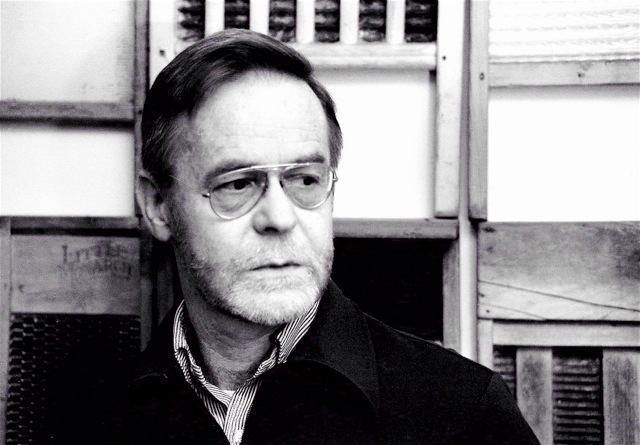
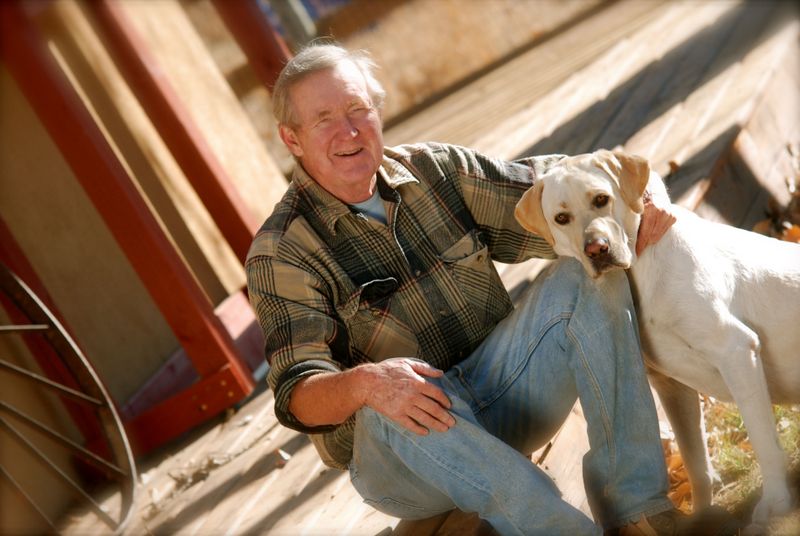
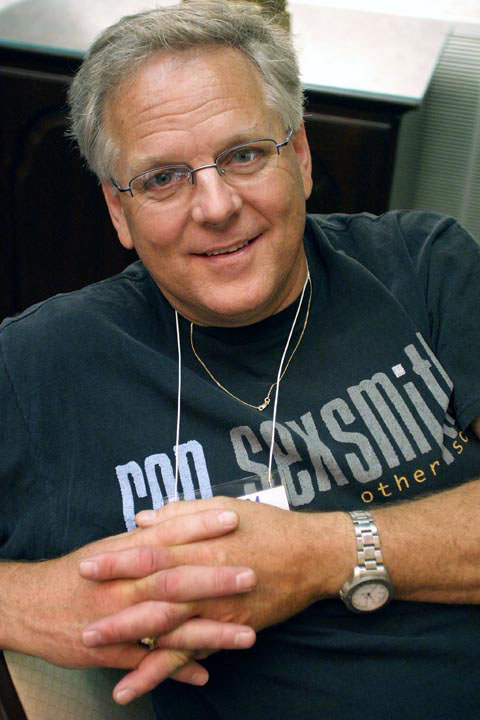
john lee portrait

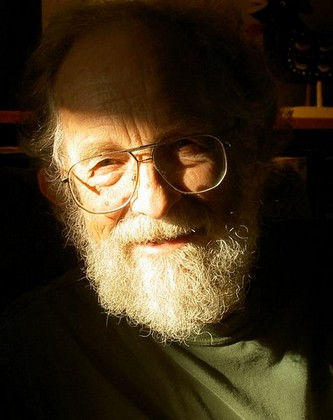
In poetry, the local is the universal. As William Blake wrote:  “To see a World in a Grain of Sand / And a Heaven in a Wild Flower, / Hold Infinity in the palm of your hand / And Eternity in an hour.” John B. Lee is an old friend, published many times in Numéro Cinq, who lives in Port Dover, Ontario, just down the road from the farm where I grew up. We both have a special affection for Norfolk County, to me, always both local and an epic ground, filtered with blood of ancestors (see my anthology of Norfolk County history “A Geography of the Soul“). And in these poems, he remembers a relative of his, Ida Wright, born in Waterford, the farming town, where I went to high school. Ida went to China as a missionary — the rest I will let John tell. But notice, yes, how these poems rise by degrees to compass all life (and beyond), from a southwestern Ontario schoolroom to eternity.

we all share our nature with the dead
one name carved deep in the cave
of every empty desk is yours
and one name there is mine

We have also translations of the poems into Spanish (we’ve done this before as well), courtesy of John B. Lee’s Cuban friend and colleague Manuel de Jesus Velázquez Léon.

dg

The poems in this document are taken from a manuscript in progress called Into a Land of Strangers. The central figure in the poems is my great-aunt Ida Wight née Emerick, born in Waterford, Ontario, and raised by her father and mother in Bothwell, Ontario. After a brief stint as an elementary school teacher in Highgate, she joined the Mission to China and she became a missionary in China in the late 1800’s where she married a fellow missionary. Widowed during the Boxer Rebellion, she and her baby daughter fled on foot along with other westerners, surviving by eating boiled cotton and shoe leather. She spent two years in Canada before returning to China where she became superintendent of missionary schools. During the Second World War, she fled  to Hong Kong where she was eventually placed in an internment camp by the Japanese. Liberated by the Americans in late 1944, she traveled to Durban, South Africa, where she remained until her death on January 1, 1952. Her grandchildren were also interned in a camp for the duration of the war. The book Into a Land of Strangers tells the story of three generations of the Emerick family beginning with the German-American late-come Loyalist Francis Emerick who served on the Canadian side in the Lincoln militia during the War of 1812 after which he farmed a farm in what is now Middlesex County in southern Ontario. 

—John B. Lee

.

A Person on Business from Porlock

There is an imam
mosqued in the empire of the west
who preaches
that the greatest sin
in the land of the golden mountain
is the American lawn
even the burning earth
of south Texas, even there
on the torpid border of old Spain
that stolen-water-green thing thrives
with a great thickening
of wide-bladed
low-growth St. Augustine grass
even there
in the blue boil
of the unusable summer pools
of suburbia
in that necessary evaporate cool
all along the arroyos
the dry brown rivers
of parched clay
thirsty mud cracking open
like oil on old canvas
in the brilliant mirror of an unreflecting sky
the monolithic malady of modern paradise
insists itself
between the dream houses
of every middleclass mind

if one thinks of Cathay
and the Khan’s palace
in the city of Chandu
where mare’s milk spills
like moonlight on marble
and light falls in chords through cracks
like strands of silk that brace the bamboo palace
where leopards slip the saddle
in let-loose leaps
and the jessed hawks fly
over the claw shade of a shadow-measured wall

as I think now
of my own neighbour
mowing his yard for
the fourth time today

or as it was
with the woman next door
who plucked cut blades
one by one
from the sweet fragrance
of her wet-sock work with a similar care
one might use to pull stray thread
from a new garment

and I also recall
the mad lady nursing lost leaves
at midnight
in the candle-glow under star-dark heaven
when the world is otherwise laudanum black

and behind the forehead
like stones in a deep stream
something sleeps
turning green

.

Una persona de Porlock en negocios

Hay un imam
en una mezquita del imperio del oeste
que predica
que el pecado más grande
en la tierra de la montaña áurea
es el césped estadounidense
incluso la tierra ardiente
del sur de Texas, incluso allí
en la frontera letárgica de la vieja España
esa cosa verde del agua robada prospera
con un gran espesamiento
yerba de San Agustín
de anchas hojas
incluso allí
en el corral azul
de inservibles piscinas de verano
de los suburbios
en ese fresco necesario que se evapora
a lo largo de los arroyos
los secos ríos pardos
de árido barro
fango sediento que se resquebraja
como el óleo en el lienzo viejo
en el espejo brillante de un cielo sin reflejos
el mal monolítico del paraíso moderno
insiste
entre las casas de sueños
de cada mente de clase media

si uno piensa en Catay
y el palacio del Kan
en la ciudad de Chandu
donde la leche de yegua chorrea
como luz de luna sobre el mármol
y la luz cae en acordes a través de las grietas
como hebras de seda que apuntalan el palacio de bambú
donde los leopardos se deslizan de la montura
en saltos sueltos
y los halcones encorreados vuelan
sobre la penumbra desgarrada de una pared medida por su sombra

mientras pienso ahora
en mi propio vecino
cortando el césped de su patio por
cuarta vez hoy

o como fue
con la mujer de la casa de al lado
que recogió las briznas cortadas
una a una
desde la fragancia dulce
de su trabajo de medias mojadas con cuidado similar
al que pondríamos para sacar hilos extraviados
de una nueva prenda de vestir

y también recuerdo
la señora loca cuidando hojas perdidas
a medianoche
al fulgor de una vela bajo un cielo oscuro de estrellas
cuando el mundo está por otra parte negro como el láudano

y detrás de la frente
como piedras en una corriente profunda
algo duerme
tornándose verde

.

The Superintendent

looking at the comfortable room
in the luxurious home
she had built for herself
in the orient
my cousin said
of our late aunt
posing like widowed gentry
lolling amongst her precious things
“I thought missionaries
were supposed to be poor …”
her silk pillows
embroideries
gilt upholsteries, silver
tea service, fine cloth
painted vase, and
exotic 
high-buttoned
tight-bodice
dress, the tats
and flounces—doyen
of the wealthy classes
mistress of a private school
privy to
the Sino-Victoriana
of a distant land that changed the mind
like the slow conversion of green
in slanting shade
where everything greys
in the lonesome lamentation of a solitary light
growing older
in a homeland no longer home
in the piano parlour silence
with that deep-toned quiet
of untouched ivory, each key
yellow as a smoker’s tooth

who does not fear
or loathe to hear
the superintendent of schools
with her disapproving
and ultra-grammatical
crepitation, clearing her throat
with a phlegmy “ahem”
from the back of the room
her spine as stiff as a pointer
she strides
her heels cracking the floor
as she seizes the chalk of the day
and with white streak
screeching

is it a sin or is it a dream of sin
to see through the third eye
how the children tremble
shading their work
for a smudge of errors
the grand failures
we feel
in the pedagogical squint
of the once-a-term stranger
in a classroom smelling of spilled ink
and the bass notes of old plasticine
fragrant in bent fingers
and multi-coloured snakes of clay
rolled flat on the modeling board
one name carved deep
in the cave of every desk

for we are the bullied, the shy
the wild, the plump
the brilliant, the lost
the bratty, the eager-to-please
the quiet, the pimpled
the unclean, the poor
the criminal, the crippled, the maimed
the doomed-to-die young
the bad seed, the sniffling, sniveling
easy-to-hate tattle tale
the pampered
the beaten, the bewildered
the too-stupid-for words
learning one lesson in a tall cone-shaped hat
under tousled hair

and one in the tasseled
mortarboard

we all share our nature with the dead
one name carved deep in the cave
of every empty desk is yours
and one name there is mine

.

La superintendente

mirando el aposento confortable
en la casa lujosa
que ella construyó para sí
en el oriente
mi primo dijo
de nuestra tía difunta
posando como viuda aristocrática
reclinada entre sus objetos preciosos

“creía que los misioneros
se suponía que fueran pobres…”

sus almohadas de seda
bordados
dorada tapicerías acolchadas, servicio de
té de plata, finas ropas
jarrones pintados, y
exótico
vestido abotonado hasta arriba
con corpiño
ajustado, los encajes
y cenefas—decana
de clases acaudaladas
maestra de una escuela privada
consejera en
la Sino-Victoriana
de una tierra distante que cambió la mente
como una lenta conversión del verde
en matices sesgados
en los que todo se torna gris
en la triste lamentación de la luz solitaria

envejeciendo
en una patria que ya no es hogar
en el silencio del salón del piano
con ese silencioso tono profundo
de marfil intacto, cada tecla
amarilla como los dientes de un fumador

que no teme
o detesta escuchar
la superintendente de escuelas
con su traqueteo reprobador
y ultra-gramatical,
aclarándose la garganta
con flema “ejem”
desde el fondo del cuarto
su espalda tan tiesa como un puntero
camina a grandes pasos
sus talones golpeteando el suelo
mientras toma la tiza del día
y con un trazo blanco
chirreando

es este un pecado o el sueño de un pecado
ver a través del tercer ojo
como los niños tiemblan
sombreando sus trabajos
por un borrón de errores
los grandes fallos
que sentimos 
en la bizquera pedagógica
del extraño de una vez un trimestre
en un aula que huele a tinta derramada
y las notas bajas de la plastilina vieja
fragante en los dedos doblados
y las serpientes de barro multicolores
enrolladas y aplastadas en la tabla de modelar
un nombre gravado profundamente
en la caverna de cada pupitre

porque somos los intimidados, los tímidos
los salvajes, los regordetes
los brillantes, los extraviados
los niños malos, difíciles de complacer
los callados, los espinillosos
los sucios, los pobres
los criminales, los lisiados, los mutilados
los condenados a morir jóvenes
la mala semilla, los que se sorben los mocos, los llorones
fáciles de odiar parloteadores
los consentidos
los golpeados, los atolondrados
los demasiado estúpidos para las palabras

aprendiendo una lección en un sombrero de alta copa
bajo el pelo desgreñado

y uno en el birrete
adornado con borlitas

todos compartimos nuestra naturaleza con los muertos
un nombre gravado hondo en la caverna
de los pupitres vacíos es tuyo
y un nombre allí es mío

.

The Impossible Black Tulip

“The men of old see not the moon
of today; yet the moon of today
is the moon that shone on them.”
……………………—Chinese proverb

I wonder, Ida
when you joined the mission bound for China
did you know the name
Matteo Ricci, the Jesuit priest
from Italy
the man the Chinese still call
“the scholar from the west”
a sixteenth century Catholic polymath
wearing the robes of a Buddhist monk
impressing the mandarins
of the Ming
mastering the culture and
language of the middle kingdom
and then, mapping the world beyond the world
tracing coastlines on the impossible black tulip
of cartography wherever Magellan sailed
and Columbus lost his way
where the Portuguese, the Spanish, the French
the English, the Dutch
went warring for land
and the madness of gold
and the minds
of the savage
and the bodies of slaves
the rivalries of red-haired kings
and red-robed churches
barbarians and buccaneers uncouth humans
in the era of inquisition
after Copernicus spun the globe
and Galileo gave heaven away for fear of burning alive
and there the new lands were named
even the home of your birth Jiānádá
first named and thereby known
by the learned classes
who opened their eyes to the west
and the faith of the west
inscribed with the allegory of the Holy Land
and he, the first westerner
to enter into
the Forbidden City
died a failure to evangelize
though he built a cathedral
in the capital
and still, long after
the gunboats have fallen silent
and the opium wars
have burned away
and the Boxers razed
your home and murdered your kind, and the Japanese
imprisoned you and your children
for the sins of empire—his name
lives on
in reverence—
like Li Po’s drowning moon
held loose
and glowing in the drunkard’s palm
of a midnight pond
the one we might see
if we dare to dream
of a darkness yet to come

.

El tulipán negro imposible

“Los hombres de la antigüedad no ven la luna
de hoy; sin embargo la luna de hoy
es la luna que brilló sobre ellos.”
…………………………………….—Proverbio chino

Me pregunto, Ida
cuando te uniste a la misión destinada a China
si sabías el nombre
Matteo Ricci, el sacerdote jesuita
de Italia
el hombre que los chinos aún llaman
“el sabio del oeste”
un erudito católico del siglo dieciséis
que usaba la túnica de un monje budista
impresionando a los mandarines
de los Ming
que dominaba la cultura y
la lengua del reino medio
y luego, trazaba mapas del mundo más allá del mundo
dibujando la línea de las costas sobre el tulipán negro imposible
de la cartografía dondequiera que navegara Magallanes
y Colón perdiera su ruta
donde los portugueses, los españoles y los franceses
los ingleses, los holandeses
se fueron peleando por tierra
y la locura del oro
por las mentes
de los salvajes
y los cuerpos de los esclavos
las rivalidades de los reyes pelirrojos
y de las iglesias de mantos rojos
bárbaros y bucaneros humanos groseros
en la era de la inquisición
luego de que Copérnico hiciera girar el globo
y Galileo entregara al cielo por temor a que lo quemaran vivo
y entonces se nombraron las nuevas tierras
incluso el hogar de tu nacimiento Jiānádá
primero nombrado y por tanto conocido
por las clases ilustradas
que abrieron sus ojos al oeste
y la fe del oeste
inscrito con la alegoría de la Tierra Santa

y él, el primer occidental
que entrara en
la Ciudad Prohibida
murió en el fracaso de evangelizar
aunque construyó una catedral
en la capital
y aun, mucho más tarde de que
las cañoneras se han callado
y las guerras del opio
han consumido en llamas
y los Bóxer arrasaran
tu hogar y asesinaron a tu gente, y los japoneses
te hicieron prisionera con tus hijos
por los pecados del imperio—su nombre
perdura
en reverencia—
como la luna inundada de Li Po
suelta
y luciendo en la palma del borracho
de una laguna a medianoche
la que veríamos
si nos atrevemos a soñar
en una oscuridad aún por venir

.

Considering Ancient Chinese Erotica

in the spring palace
behind high walls
of the Forbidden City
the perfumed concubine
lolled with her bound-as-a-child body
lamed by beauty
the crimson water lily of the royal house
playing bring on the clouds and the rain
with the wealthy lords
of the Ming
in the court of songs
otherwise dishabille women
their misshapen bones
broken in slippers
crippled by pain her feet made small as a deer
for the visual delight of men
well-born girls
wearing bow shoes embroidered in silk
walking with the lotus gait
the short-step sway of pampered ladies
even in time the eldest daughter of the poor
wanting to marry highborn
achieved the crescent moon
of the cramped arch
with its erotic allure
an intimate and chaste concealment
lasting a thousand years
until the corseted Christians
came at the time of the heavenly foot
their own vital organs cramped
in whalebone
their tight breasts swaddled
in winding-cloth white wear
sending home souvenirs
amazing the congregation
amusing the minister
tantalizing all future museums
where horrified visitors troupe past
in clicking stilettos and blushing tattoos

.

Considerando la antigua erótica china

en el palacio de invierno
detrás de las altas murallas
de la Ciudad Prohibida
la concubina perfumada
se arrellanaba con el cuerpo envuelto como el de un bebé
lisiada por la belleza
el agua de lilas carmesí de la casa real
jugando a llevar al emperador al éxtasis del placer
con los señores acaudalados
de los Ming
en la corte de las canciones
por otra parte mujeres en traje de casa
sus huesos mal formados
rotos en las sandalias
lisiadas por el dolor en sus pies hechos pequeños como los de un venado
para el deleite visual de los hombres
muchachas bien nacidas
usando zapatos de arco bordados en seda
caminando con el modo del loto
el bamboleo de paso corto de las señoras consentidas
incluso con el tiempo las hijas mayores de los pobres
que querían casarse con los de alta cuna
alcanzaban la luna nueva
del arco agarrotado
con su encanto erótico
un casto disimulo íntimo
que dura mil años
hasta las cristianas encorsetadas
llegaron en la época de los pies celestiales
sus órganos vitales agarrotados
entre barbas de ballena
sus apretados pechos envueltos
en blanca ropa enrollada
enviando a casa suvenires
que sorprendían la congregación
divertían al pastor
tentando a todos los museos futuros
donde los visitantes horrorizados pasaban en grupo
en chasqueantes estiletes y tatuajes ruborizados

.

Into a Land of Strangers

the muddy root
of the lotus, also
desires the sky

………………..*

tropical lotus
blooms in the night
white flesh a white moon dreams

………………..*

black water, blue sky
two minds
consider one light

………………..*

undulating cutwater
darkens beneath
the white of a single cloud

………………..*

the lotus open
in the moon-wane of morning
how young a fading white

………………..*

how might the lotus thirst
in the ever-evaporate black
of a deep pool

………………..*

into a land of strangers
she comes
a stranger to herself

………………..*

in the seed pearl
of her beloved moon
the sand grain of her soul

………………..*

celestial stranger
your secret revealed
to a secret concealed

………………..*

an unpainted lotus
imagines the mind
wet brush dampens dry water

………………..*

here in the seam of true silk
the chrysalis clings
to the force of an unborn wing

.

A tierra extranjera

en la raíz lodosa
del loto, también
desea el cielo

………………..*

loto tropical
florece en la noche
blanca carne que una luna blanca sueña

………………..*

agua negra, cielo azul
dos mentes
consideran una luz

………………..*

ondulante rompeolas
se oscurece bajo
el blancor de una nube solitaria

………………..*

se abren los lotos
en el cuarto menguante de la mañana
qué lozano el blanco mortecino

………………..*

como puede el loto languidecer de sed
en el negro en evaporación
de una laguna profunda

………………..*

a tierra extranjera
ella llega
una extranjera para ella misma

………………..*

en la perla seminal
de su amada luna
el grano de arena de su alma

………………..*

extranjera celestial
tu secreto revelado
a un secreto guardado

………………..*

un loto no pintado
imagina la mente
el pincel mojado humedece el agua seca

………………..*

aquí en la sutura de la verdadera seda
cuelga la crisálida
ante la fuerza de un ala por nacer

—John B. Lee & Manuel de Jesus Velázquez Léon

.

John and I (1)Manuel Leon, translator, and John B. Lee

John B. Lee is the author of over sixty published books and  the recipient of over seventy awards for his writing. Inducted as Poet Laureate of the city of Brantford in perpetuity, he now lives in Port Dover, a fishing town located on the north coast of Lake Erie. He and Manuel have collaborated on translations on several occasions, the most substantial project being Sweet Cuba: The Building of a Poetic Tradition: 1608-1958 (Hidden Brook Press, 2010), a bilingual anthology of Cuban poetry in original Spanish with English translations.

Manuel de Jesus Velázquez Léon is a professor at University of Hoguin. A co-founder of the Canada Cuba Literary Alliance, he is editor-in-chief of the bilingual literary journal, The Ambassador. He and John B. Lee collaborated on the 360-page bilingual anthology Sweet Cuba: The Building of a Poetic Tradition: 1608-1958, (Hidden Brook Press, 2010). Sweet Cuba has been called “the most significant book of translated Cuban poetry ever published.”  He lives in Holguin, Cuba, with his wife and their young son and is the publisher of Sand Crab books which recently printed a bilingual editon of Saskatchewan Poet Laureate Glen Sorestad’s book, A Thief of Impeccable Taste.

.
 

Apr 092014
 

Julie Larios

Herewith impish, gracile, nimble poems by Contributing Editor (one of our own) Julie Larios whose continuing Undersung series has become a mainstay of the magazine and a model of poetic discourse. Julie’s poems are playful, yes — the body “poor sot” and men! who only need “A belief in the afterlife, or in the theory / that size doesn’t matter” — and her language is fast, packed with snappy rhythms, sly puns and rhymes that twist and curl meaning from word to word. Just read this:

of how the living, soft-bodied, feed at the bottom
of these lists, how we list too often, as in you lean, you lose, 
or at the very least or most, moist and semi-soft,
we end up ripened and spread too thin

But prosody aside, she has also a lovely set of themes, always coming back to a view of life, mischievous yet grand, the comedy of the body that won’t stop, that has its knowledge, that faulty and doomed as it is nonetheless is holy, the house of the spirit. And Julie, I think, never loses sight of the current of spirit that runs beneath appearances. Oh, to have written that line.

I love, God says, whatever steers the boat of that bird’s body.

dg

What Body Knows 

Body
knows how
to go
slow now,
to fool Doom,
to bow down –
to grow
old.

Body
knows not
how to grow
cool, nor cold,
knows not
how
to stop,
poor sot.

.

What Every Man Needs

A pot to piss in.
A Porsche.
A few pit stops.
And to mark the right spots, several X’s.
Great sex or— on slow nights— a few seeds
to spit off the porch into the dark.
Down any mine shaft, a bright torch.
A daft aunt or two for comic relief.
A belief in the afterlife, or in the theory
that size doesn’t matter.
A mother, ha, like a hole in the head.
A starry sky in the Wild West, a loyal horse.
And to carry him down off his cross, a Blessed Virgin.
On New Year’s Eve, champagne’s satin fizz.
In July, a slow drizzle after the long drought.
In October, sun out after rain.
A magic grain of rice from a folk tale.
A tall tale about the one that got away.
A day on a raft on the Mighty Mississippi,
home-fried catfish and Huck’s Jim  for a buddy.
Beauty minus her Beast.
And the best BBQ baby back ribs
this side of Hell or Heaven.
A 7-11 on one corner, a Jiffy Lube on the next.
An exit plan for every war gone wrong.
And after a long day’s work, just a little peace
and quiet, for Christ’s sake,  can’t a man get
a little peace and quiet?

.

Proposal for a Whole New Scale
………………with a nod to David Letterman

Being the new measurement of how things scratch,
that is, what scratches what, which surfaces face
which other surfaces down, as in showdown,
screw-up, or turnover, what marks the softer body
with its harder body by turning over and over,
what breaks last when heated or frozen, relative
to the heart and/or the balls, what clangs the bell
or strikes up the band, what wins hands down
the Grand Prize on the scale opposite the prize
known as Booby, and being also the new measurement
of how the living, soft-bodied, feed at the bottom
of these lists, how we list too often, as in you lean, you lose,
or at the very least or most, moist and semi-soft,
we end up ripened and spread too thin, half-empty
rather than half-full, while sneaking up behind us
and hindering our progress or congress or aiding
our regress are the Straightened, the Leanless,
the Unsnackable and NonSpreading, aka the Moribund,
so tough and tactless, the pins of their blue ribbons
scratch more than our surfaces, then pop
the inflatable lifeboat and we’re surfacing for the first
the second, the last time, trying to breathe which is
an unchangeable characteristic of the living no matter
what scale we draw or weigh in on, including this one,
even when we give the grid a twist, a tweak, or toss in
an extra handful of beans, and even when
we’ve been snookered and when we begin again,
with a new batch of statistics, optimistic as we leave
an inch or two of air at the top, give the whole thing
a new moniker, make it a game called Will It Float?

..

I’m Telling That Story Again

The one where I pull into the driveway
and see a cop car and a hearse and my feet
don’t touch the ground until I’m inside the house
and find out the kids are fine, it’s my father
who’s in a body bag outside only this time
I tell the story without the hearse and without
the cop car and without the body bag,

so this is the story where it’s summer
and my feet touch the ground and I stay
in my body all the way out to the beach
where my kids are playing at the low tide line,
there, where the rocks meet the saltwater,
they’re playing with my father, and I
can only say thank god it’s not the story I told

where my feet didn’t touch the ground
because I was actually the one in the bag,
because once when I told that story I had to
change the part about my feet, due to confusion
about whether I was still in my body or not
at that stage, and I had to change the part
about the beach and my kids and my father
and summer and all of our several bodies,
and I had to admit that I wasn’t much of a storyteller
because my memory was so bad,  though I do remember
every detail about the low-tide line and the saltwater

and would anyone mind if I started over and told
another story, a better story, about somebody else’s body,
since I’m pretty sure it will be about a body—
no matter how confused I am, all my stories now
seem to end up being about bodies and seasons
and the point at which feet do or do not touch the ground.

.

Upon Coming to Plate XI in A Nomenclature
of Colors for Naturalists and Compendium
of Useful Knowledge for Ornithologists

………………—for Daphne Kalmar

God draws a bird then names its parts:
mandible, crown, the lesser, middle and greater coverts.
He names the rump. He names the contoured flight feathers
in the tail, calls them rectrices: Helmsmen.

Which do you love most, the philosopher asks,
those feathers or the metaphor?

I love, God says, whatever steers the boat of that bird’s body.

—Julie Larios

Julie Larios

Julie Larios has had poems chosen twice for inclusion in the Best American Poetry series. She is the winner of an Academy of American Poets Prize and a Pushcart Prize, and has published four collections of poetry for children.


Mar 132014
 

Gillian-Conoley-448

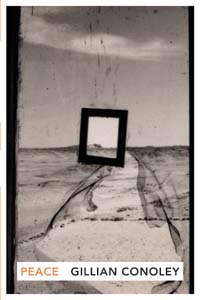
Peace quietly lends two quarters for a coffee in the hospital lounge while I wait, reading. White space percolates this lyric, while the current lull in American military actions forms the occasion of this book, Gillian Conoley’s seventh poetry collection. With poems titled “late democracy,” “[Peace] contrary to history,” and “Trying to Write a Poem about Gandhi,” the work pulls one way and then pushes back another, testing the inner ground for breath. — A. Anupama

Peace-Cover

Peace
Gillian Conoley
Omnidawn Publishing
112 pages, $17.95
ISBN: 978-1-890650-95-7


Peace quietly lends two quarters for a coffee in the hospital lounge while I wait, reading. White space percolates this lyric, while the current lull in American military actions forms the occasion of this book, Gillian Conoley’s seventh poetry collection. With poems titled “late democracy,” “[Peace] contrary to history,” and “Trying to Write a Poem about Gandhi,” the work pulls one way and then pushes back another, testing the inner ground for breath.

Conoley is founder and editor of VOLT, the literary magazine of Sonoma State University, where she currently works as professor and Poet-in-Residence. A book of her poetry translations, Thousand Times Broken: Three Books by Henri Michaux, is expected out later this year (City Lights Pocket Poets Series). Previous collections include The Plot Genie (Omnidawn Publishing), Profane Halo (Wave Books), and Tall Stranger (Carnegie Mellon University Press), which was a finalist for the National Book Critics’ Circle Award. Other honors include the Jerome J. Shestack Award from The American Poetry Review, the Fund for Poetry Award, and a National Endowment for the Arts grant. She was born in 1955, in Austin, Texas, where her parents owned and operated a rural radio station. Her father fought in Guam during WWII and was honored with a Silver Star for bravery and three Purple Hearts.

In an interview with Rusty Morrison, Conoley comments on her process of poetic inquiry: “In the longer sequence poems, “Begins” and “Peace” I found a formal construct that seemed to me to work well with the question or notion of whether or not peace and war could co-exist on an experiential plane, if we are to have any peace at all. So the short lines began to press against one another line to line, oppositionally, in a paratactic way. I love that parataxis is Greek for ‘placing side by side,’ because I called this short lyric form I started to work in “Sapphic paratactic”—that was my private name for it.”

Parataxis, according to the OED, is a grammar term for “the placing of propositions or clauses one after another, without indicating by connecting words the relation (of coordination or subordination) between them, as in Tell me, how are you?” In the poem “The Patient,” Conoley cunningly plays this unhinged element of poetic craft against firmly attached biological and material elements.

I am the patient. That is my mineral fact.

I have long term storage in double helixes

my two long polymers of nucleotides

my backbone made of sugars and phosphate groups

joined by ester bonds. I see imagist pears dissolving down

golden arms I hear needle-less the sleep aid cd’s

real violins, then float blue-black

at the eventide, injure

of the taut to and fro, cut-back

asphalt road, a path of greening twigs nourishing

nothing personal…

The poem continues for five pages, shaking loose any false adhesions. In Conoley’s paratactic tactics, the phrases are often balanced in length and only separated by the line break, not punctuation. Another five-page poem, “My Mother Moved My Architect,” takes the inquiry deeper, this time plying parataxis with the grain of the physical disconnections.

My mother moved
my architect
cutting out newspaper clippings
making the life-long collage
had I sense
I would have
papered the hallways with
instead it is an ephemeral art

a flaxen gene
her left shoulder
out of its socket

The end of the poem continues the line of inquiry through doubling of images (echoes, heads, tail lights, gloves), and then turns quietly to become an ars poetica.

My mother moved my architect
bade fair
she slipped the bolt
upright
like the great sea chest
none of us
had ever seen open

My mother moved my architect
she made it pump and eat

She made this lake
where I come to

over-identify with the dead and call

Dear Echo to my echo,

She made me nude —sheer— and nude again
She made it interesting right up to the end

So that
I have to think what is with

these two heads blurred and blended, this veil
not seen back through

Tail lights,
white gloves with the green stain

as you entered the sunless woods
best to keep the road a little feral where the color is

and your world part dust
fed and unkilled            I am not through
being a poet or a being

What fallen ash
is the power to live

what pituitary
is the grace to keep
doing so

and what good
is temporary measure—

did you say thank you                   and were you                   thanking

The shorter poems in the sequence titled Peace use parataxis in tandem with opposites (descend v. ascend, vision v. blind, vagina v. cock, peace v. war). But in the sixth part of this sequence, the oppositional forces dissolve a bit, and the caesurae (by which I mean the spaces within the lines indicating pause) reveal time working up through the lines while the breath slips down deep.

one mystery of the breath: it does not hover

in the body but spirals

and up to two hours            in the less known

mammalian diving reflex            water must be

ice-cold            some people survive

if time began we would do it again

the lungs two oars in the middle of the ocean

Conoley envisions specific people and events in her inquiry, too, as in “Opened,” which includes references to both the tragic shooting of Representative Gabrielle Giffords and the tsunami that devastated Japan in 2011. From the second page of this six-page poem—

so that’s where

the two bullets went through.

What sphinx pushes up out of the fog in the parking lot

turning each

upon each

our moral imaginations. If it’s a gun law,

this tragedy will pull through.

And what was there to                        and did she

see, gritty blue sink of desert night sky            with her

off to the side like a wonder, or

your basic hospital room, sleep,

a solitary male nurse, a husband.

 In her interview with Rusty Morrison, Conoley explains some of her inquiry into peace and nonviolence in the process of writing this collection: “I was initially concerned that some might read the title as a call to action, or a promise of peace, somehow. The book contains neither, but is really more of an extended meditation/inquiry of the notion…. Once I began to realize what I was writing about, I started to read about the lineage of nonviolence that runs through Thoreau to Tolstoy to Gandhi to Martin Luther King. Gandhi’s notion of ahimsa (nonviolence) dates back to the Upanishads, 8th or 7th century BCE, which bars violence against all creatures (sarva-bhuta). I began to think about these historical figures who wrote about peace and how to get it, and how they may still operate in or haunt our lives.” In the poem “Trying to Write a Poem about Gandhi,” the speaker moves between abstract reflection and the concrete actions of doing laundry and looking outside at the garden. Without shying away from the great leader’s failings, Conoley’s poem seeks balanced footing on a field of percolating magma.

Why think
God doesn’t like

pussies, cocks, girls, Gandhis           all together

well, you’d have to ask the girls,
and later

It’s a subrosa geological planet, with shifting hot mantels of tectonics,
someone should tell Einstein—
even though it’s too late—who said,
“Future generations will hardly grasp that
such a man as this walked upon the earth.”

Conoley attempts a glimpse of Rev. Martin Luther King, Jr., in “Toughness of the Serpent,” which ends this way—

MLK really tired at this point.

Wonder what he’s got on his mental sky.

Moon yellow scorch of the morning iron, serene, serene

The 12-part poem that ends the collection is titled “Begins,” and it does exactly that, offering no conclusions, offering instead to launch you in a dozen different trajectories with the caffeine hidden in the parataxis—

for one eye, a small Mesopotamian figure

for one eye, a big abstract

I look, and your face is like a part of speech not spoken

a tragedy so near its comic ash

one eye is my future, one eye, my mausoleum

the divine in what is seen

in which we view only the shade of

possibility: a semi-reluctant scribe I read her book trembling

Peace holds some beautifully revealing poems in the middle of the collection, especially “A hatchet with which to chop at the frozen seas inside us” and “Plath and Sexton,” which deserve their places at the center. In these, the duality is stripped away—from the first: “what if paradise was only lifting the veil to flirt.” And from the beginning of “Plath and Sexton”:

there should have been a third
my friends and I

to not feel so incomprehensible
we were carrying your dead books

we were washed in the blood of them
but we were wanting one more

The collection’s overall organization seems to concentrate these central poems at the heart. Though Conoley claims to offer no answers, she insists on the energy of inquiry throughout her lyric. Peace lends us the price of using the percolator, even as the K-cups in the vending machine are steep.

—A. Anupama

.
A. Anupama

A. Anupama is a U.S.-born, Indian-American poet and translator whose work has appeared in several literary publications, including The Bitter Oleander, Monkeybicycle, Fourteen Hills, and decomP magazinE. She received her MFA in writing from Vermont College of Fine Arts in 2012. She currently lives and writes in the Hudson River valley of New York, where she blogs about poetic inspiration at seranam.com.


Feb 132014
 

Ronald JohnsonPhoto courtesy of Robert Glenn Webb, who writes: “It dates from 1984 and was taken by Mario Pirami (who died not long after) and was given to me by Jodi Johnson Panula, Ron’s sister.”

In the spirit of our Undersung series on the great-but-somewhat-unnoticed poets, Denise Low, former poet laureate of Kansas, pens here a passionate, erudite essay on the late Kansas poet Ronald Johnson, as she says, a second-generation Black Mountain poet, who invented a brilliant “cascade” structure for his poems. I love this essay for its close reading of the text, its technical expertise and for its consciousness of tradition and influence. It seems to me that unless you have read for years and studied hard the territory of poetry can seem dauntingly homogeneous. But an essay like this sets out a part of the map. It’s also a part of the map with which I feel an affinity, the San Francisco poets (I practically memorized Kenneth Rexroth’s Autobiographical Novel at one point) and the Black Mountain poets (reading Charles Olson taught me about place and the economy of the parenthetical). I even brushed up against this world (which still seems distant) personally having once had the opportunity to interview the poet Robin Blaser. In any case, what I mean to say is read the essay! Think about the traditions, the landscapes and the form.

dg


In the mid-1990s I saw poet Kenneth Irby at the Lawrence public library, a brief encounter over book shelves, and he mentioned the Kansas poet Ronald Johnson had moved to Topeka. This was the first I heard of Johnson, who had just returned from the San Francisco Bay Area. This lumberyard worker’s son, born in 1935, is one of the most influential second-generation Black Mountain poets. Indeed, he and Irby (born in 1936) both were influenced by Charles Olson’s geography-informed poetics; Robert Duncan’s experience of occultism; and the synergy of the Bay Area during the 1960s-70s.

Johnson wrote one of the first and most influential erasure poems, RADI OS, in 1977 (Sand Dollar Press). For this project, Johnson found copies of Paradise Lost in used bookstores and erased words on each page to create his own text. He experimented with concrete poetry, and he wrote the epic ARK (Northpoint Press, 1980, and Dutton, 1984) in the tradition of Ezra Pound, H.D., and Louis Zukofsky.

His influence is considerable, and as his work becomes more widely available, it will grow. Peter O’Leary, his literary executor, has edited new editions of Shrubberies (2001), RADI OS (2005), and most recently ARK (2013). All of these are from Flood Editions. Kenneth Spencer Research Library at the University of Kansas houses the Ronald Johnson archives, where first editions and journals are available.

Johnson’s last work, The Shrubberies, has apparently modest dimensions, short poems of two to fourteen lines. Nonetheless, the collection innovates a poetic form influenced by botany and optics.

This last work, written from 1994 to 1998, is Johnson’s “own elegy,” his final project, written with full awareness of his own mortality (Naylor 507). He had returned in 1993 to care for his father, but within months he collapsed with symptoms of his own final illness (O’Leary 128). He worked part-time as a groundskeeper and handy man at a public garden in Topeka, and so plants were in his daily sight. The Shrubberies grew to “perhaps 300 poems” (O’Leary 128). The resulting posthumous book, “pruned” by his friend and editor O’Leary, is 125 poems, arranged chronologically for the most part (128). I am most interested in the optics, especially mirrored binary structures, in the poems. Binary couplings appear throughout the work, including life / death, natural / cultural, light / dark—“oscillation between light and dark” (Naylor 513)—and belief / disbelief—“stanzas of belief / strewn with disbelief” (Shrubberies 55).

Johnson does not declare his overall arrangement for the book-length collection of poems in explicit terms, and Naylor see the book as “a long, unfinished series” (507). O’Leary selected a poem from the middle of the manuscript for the opening poem, following Johnson’s own direction: “I have not altered the order of the poems in the manuscript, with the exception of the first poem, which is to be found in the middle of the manuscript. Although it was not the first poem composed, Johnson marked it with the marginal notation: ‘beginning’” (130). The rest is a chronological sequence, with some references to seasons and garden tours, so some temporal and spatial ordering do occur (O’Leary 128).  However, because Johnson gardened, I believe he set a master plan, probably in his mind as gardeners plot out their beds before sketching them on graph paper. Johnson structured all his major works deliberately, like the concrete poem projects or the RADI OS erasure based on Paradise Lost. His open-ended plan for Shrubberies is a deliberate if not closed system. He understood the organic composition of a garden and its imperfect symmetries.

The poem Johnson chose to open the book creates a template for physical construction of the rest of the book’s poems, at micro- and macro-levels. Here is the first The Shrubberies poem in its entirety:

mostly circadian rhythms
“and words to jointly knit”
a series of circumlocutions
eye in the eye of things
mirror cascade of asphodel
yet delight in spectacle   (1)

The most important trope is “mirror cascade.” This splicing of two similar but unlike things joins opposites—human-constructed “mirror” and the parallel term “cascade,” a natural water feature. This parallels how a mirror reflects a Plato’s cave dyad: flat cave wall reflection and its intangible and complex physical form.

The opening two lines set the pattern of balance between natural and imaginative qualities: “Circadian” references human measurement of daily cycles, in latinate vocabulary—Johnson used European tropes as the deep text within his writings. “Rhythm” is abstraction of time intervals, vague and unquantifiable. The quotation “and words to jointly knit” is from Richard Tottill’s description of Queen Elizabeth I’s acceptance speech for a gift, a purse of gold, presented in a public procession. This was just before her coronation, January 12, 1558-9. Tottill described the great woman’s rhetorical craft:  “. . . if it moved an extraordinary shout [from the crowd] and rejoicing, it is not to be marvelled at, since both the heartiness thereof was wonderful, and the words so jointly knit.” Johnson “jointly knits” his own procession through a rhetorical garden of delights.

Nature and culture interweave in the work and in this poem, with language as the medium. Johnson’s choice of “circumlocutions,” in the third line emphasizes speaking around meanings, as in riddles, and the concise poem-lets are indeed like word games. This set of poems is a “series,” writes the poet, not just isolate occurrences.

Next, the poet is the human “eye” or “I” or “aye” within “the eye of things”—and despite his dire health, Johnson, found affirmation, and indeed “delight,” through his inner- and outer-directed sight.

But most important are the last two lines. The “asphodel,” or white asphodel, is a plant associated with death in Greek mythology. Robert Glen Webb agrees that Johnson felt his mortality as he opened The Shrubberies with this flower symbol: “I’ve always felt the asphodel had the echo of the Greek Asphodel Meadows and thus his foreknowledge of death.” The spectacular spike-like asphodel has myriad small blooms, each with five sharp petals. Their translucent, white texture would reflect that hue intensely in direct Kansas summer solstice sunlight, with sap visible through the light-colored petals. The effect would be a clump of prisms, so indeed asphodel is a “mirror cascade.”

So the entire The Shrubberies cascades, one page after another. Poems are similar but not identical, like Kant’s mitten pairs. Johnson himself writes of his use of accretions and  bricolage. He described Sam Rodia’s building Watts Towers, as “realm of mosaic” and used it as a model for his deliberately built ARK (311-2). But cascading tiles are linked even more closely to each other than mosaic pieces. They have intentional overlaps and reflections of parts. They create a more liquid effect, like waterfalls. To emphasize this fluidity, the poet uses no line capitals or end punctuation, so the individual verses read as a continuous sequence, all parts of the whole stream. Poems were interchangeable parts because of their shared structures. Johnson did not know the final make-up of the book, but any assembling order would create his “cascade” effect.

The poetics itself is mirror-based. The lines have a binary, reflective quality within themselves, and the sequence from one line to the next is a continuum. This entire opening poem has a doubled quality, a mirrored symmetry. At each level—from line to couplets to entire poem—the composition is like paper snowflake cutouts, made by folding paper in half to create repeated patterns. This initial poem has three beats to the line, asymmetrical, with perhaps the fold in the middle of the line.

Match-ups within lines are: “circadian” and “rhythms”; “’words’” and “’knit’”; “series” and “circumlocutions”; “eye” and “eye of things”; “mirror cascade” and “asphodel”; “delight” and spectacle.” The pairs repeat each other, and the lines, one after another, re-contextualize the ideas and sounds of the line before. Lines one, three, and five, use latinate terms—circadian, circumlocution, “cascade of asphodel.”Even-numbered lines two and four have one-syllable Anglo Saxon words like “words,” “knit,” “eye,” and “things.” The poem ends with a rhyming couplet, end-words being “asphodel” and “spectacle.” Latinate and Anglo Saxon words balance in the first four lines, and the ending couplet is its own sets of more cultivated Graeco-Roman-based words.

Another couplet illustrates this bisymmetry, not quite half-way through the collection: “a plummet depth / death plumed / heights prized / into Empyrean” (60). Here deep earth—the site of graves—couples with flames of the Greek heaven, where fire originates. “Plummet” is a fall, while plumes are agents of flight. Indeed, the next poem takes up the mirrored themes of human and natural, with the opening line “tigered orange & black / a gathering of Monarchs.” The themes of “spectacle” and royal procession overlap this as well.

And so the cascade moves forward, from one sight to the next, from one dance of verse to the next. The entire poem is overlapping, paired lines, stanzas and individual poems. Bradin Cormack describes the mirror-like quality of lines in a later The Shrubberies poem: “The way that one body mirrors another is an instance of the repetition whereby the singular moment or event is preserved even as it is woven into a complete and recursive whole” (521). Each poem is an individual reflecting tile, assembled into a spire of a larger aggregate. The model of the asphodel spiked blooms is both regular and irregular, an overlapping of natural and cultivated geometries. Kenneth Irby did visit with Johnson briefly, during the composing of The Shrubberies, and they had brief correspondence. From both Kansas-by-way-of-Black-Mountain poets I learn to look closely at each word, how each evokes etymological lineages, other imperfect and overlapping sequences.

Based on comments presented on the occasion of the Kenneth Spencer Research Library- Special Collections exhibit of Ronald Johnson manuscripts, 16 April 2013.

—Denise Low

WORKS CITED

Cormack, Bradin. “A Syntax of Vision: The Last Poems of Ronald Johnson.” Ronald Johnson: Life and Works,” ed. Joel Bettridge and Eric Murphy Selinger. Orono: National Poetry Foundation, 2008. 517-528.

Johnson, Ronald. ARK. Chicago: Flood Editions, 20013.

—–. The Shrubberies. Edited by Peter O’Leary.  Chicago: Flood Editions, 2001.

Naylor, Paul. “After ARK.” Ronald Johnson: Life and Works,” ed. Joel Bettridge and Eric Murphy Selinger. Orono: National Poetry Foundation, 2008. 505-516.

O’Leary, Peter. “Afterword.” The Shrubberies by Ronald Johnson. Chicago: Flood Editions, 2001: 127-31.

Tottill, Richard. “The Passage of our most drad Sovereigne Ladye Queene Elyzabeth through the Citie of London to Westminster, the day before her Coronation, Anno 1558. Imprinted at London in Flete Streete, within Temple-Barre, at the Signe of the Hand and Starre, by Richard Tottill, the WWIIII day of January, quoted in John Gough Nichols’s compilations of  accounts of royal processions – 1837 – City of London (England) p. 57

Webb, Robert Glenn. Personal correspondence. 1 April 2013.


Denise.12.insight.blackdirect

Denise Low, 2nd Kansas Poet Laureate, has published 25 books, including Ghost Stories (The Circle -Best Native Am. Books of 2010; Ks. Notable Book). Heath Fisher writes: “Filled with vivid imagery of the land and the culture, and both verse and prose, Ghost Stories is an enchanting tribute to the plains and the history (Rain Taxi). Low’s Natural Theologies: Essays (The Backwaters Press, 2012) is the first critical review of mid-plains literature. Mary Harwell Sayler writes: “The literature of the ‘New Middle West’ seems to adapt, innovate, and follow Low’s insightful view” (Rattle). Low is a former board member and past president of AWP. She writes articles, blogs, and reviews and also publishes a small press, Mammoth. A critical article on the poetics of Kenneth Irby is forthcoming from Jacket 2. Her heritages include British Isles, Delaware, and German. Recent writings appear in American Life in Poetry, Yellow Medicine Rev., Virginia Q. Rev. New Letters, Yukhika-latuhse, Unraveling the Spreading Cloth of Time (rENEGADE pLANET), I Was Indian (Foot Hills), I-70. You can find Denise Low on the web at http://deniselow.blogspot.com and  www.deniselow.com.

,
,

Jan 082014
 

Phil Hall

Phil Hall is a language-player whose restless mind and tender sensibility makes poems that l like to read over and over. The first time we met up was at the Cow Cafe in downtown Toronto. Someone had put salt in the sugar bowl and I ended up spitting tea down the front of his shirt. He smiled and dabbed at his clothes, the picture of grace when blindsided by an unexpected event. He approaches language and image the same way, welcoming the unanticipated and ushering it inside the poem. Phil Hall has been short-listed for the Griffin Poetry Prize twice and has won the Governor General’s Award and the Trillium Book Award.

— Ann Ireland


Ann Ireland interviews Phil Hall

Ann Ireland: How did you come to poetry?

Phil HallGet that goddamn / dog out of here / before I get the shot / gun down (said my father – sounding a lot like Milton) Blue & green / should never be seen / except in the washing machine (said my mother – sounding a lot like Beatrix Potter)

I came to poetry through all of the usual pathetic early tunnels: Wilf Carter and Hal Lone Pine, Kipling and Service, The Song of the Lazy Farmer, greeting cards… I came to poetry backwards, secretly, on an outside track: I would be an actor, because theatre is the art form by which one gets the most immediate response and attention. I was hungry to be told I was OK, and clapping is a big (if fleeting) OK. (Thankfully, writing poetry means that not a soul is in the audience. The inside track and the stadiums are for prose. Hear the novel whizzing by…) I came to poetry – I guess you could say – missionarily – is that a word? The clean & holy parents of school friends sometimes took me along to Baptist Sunday School & Church in Bobcaygeon. Here I heard and sang hymns devoid of melody but rich with long dark tones, the foot pedals pumping on the organ. That chastising drone got into me, I guess – along with the bag-pipes at Orange Lodge parades… Between Milton & Potter: half mighty condemnation / half little animal jingles –  I sing.

AI: What does living in nature bring you?

PH: I grew up on farms, but was allergic to everything: hay, ragweed, goldenrod, dust, horses, dogs, cats, blue & green molds…When it grew cold, and those spores weren’t in the air, I got asthma, bronchitis, skin rashes…A dead deer was hanging in the woodshed, dripping – I wouldn’t eat meat. What the hell is wrong with him! Fortunately, books have in them none of the things I am allergic to – except as referents. Books saved me. And peanut butter. I am allergic to rural life, I guess…or ultimately, I am allergic to Ontario. But I have grown out of the asthma, have never smoked so my lungs are clear, can avoid horses & pets & dust & weeds, mostly. And living back in the country, in nature, now, I feel at home – with my aversions. I am writing with Blake’s rural pen, or trying to. I have a little garden, even. The poems eat the leaves off my bean plants.

AI: You burrow at words from the inside-out: I will write a poem again today / it will make no sense // my claver will clawhammer the bars of the word barbaric // sense can be a gag order / silence can be made to sound civilized & free. This feels like a statement of poetic intent. Care to comment?

PH: If we don’t work with words from the inside-out, we are using them as they have been sold to us, cheaply. A poem will then be no more than a Cabbage Patch Frankenstein composed of imitative sound-bits. Poem as soma – in the Huxley sense of a pacifier from the State. Coke. Against this – we may try to honour the historical and sonorously complex revolt against propriety that is each word in truth. Also, to write this way makes me laugh, and is clarifying. I have come late to the pondering of words, late to letter-rumination. Neither Milton or Potter care-took language in this way, contemplating words as objects, designs, sounds, shapes. (In other ways, they did.) Susan Howe, bp Nichol and Robert Duncan are my Virgils in this. But let me tell what I know about these lines you quote…Claver – in Scots means gossip or jibber-jabber. Clawhammer – is a style of banjo strumming, as you know. And you have seen already that the word barbaric has two bars in it. My kind of talk in a poem will strum the two bars in a word like barbaric, acknowledging it visually as well as referentially. Making sense turns out to be very limiting. There is more to be said than — Then she said…And don’t ever think that silence is proper (it is wild). Or that by saying nothing you can remain free. If you don’t write the poem as a full invite to all of the potential barbarism its words embody, your voice is being muzzled, tamed, and eventually killed by…what…education? Morality? As Clark Blaise (another of my heroes) says of the short story: literary justice is at war with morality. This applies to poems too. How would Gertrude Stein or James Joyce write of having been sexually abused as a kid? There are rigorous savannahs of possibility still.

AI: What goes on between spoken words and words on the page?

PH: One of the most common mistakes people make when giving poetry readings, is that they proceed as if the poem – as written – were sacred. It isn’t. When shared aloud, the poem is a non-page creature. Listeners deserve to be entertained. Not preached to, or taught. And certainly not regaled by sly or hip examples of the poet’s sensitivity. For me, this involves composing a reading by pasting together various sections & stanzas of poems from throughout a whole book. I often will tear a book apart, then cut & paste. Making a new thing to read…This turns a box of fossils into sea life again. And listeners are grateful for the iconoclasm.

AI: Sound is dug into the soil of your poetry, so I’m assuming that music is important to you. What do you listen to? Do you listen while writing?

PH: I listen to jazz. Oscar Pettiford, Charlie Mingus, Roland Kirk, David Murray, Jerry Gonzalez & the Fort Apache Band…Horns & bass full-tilt. Sometimes I can write while inside that harsh wall of sound, for it blocks out the constant nitter-natter, and is oddly calming. I listen to early Zydeco and The New Lost City Ramblers. I listen to a lot of fiddle tunes: Jarvis Benoit, Wade Fuge… I have been trying to get the fiddle tunes inside me – to replace the organs & hymns. I’ll keep the bag-pipes.

AI: Do you read poetry in translation? Care to comment on translation in poetry?

PH: I am ashamed to say I use only one language, but what poverty of word there would be without translation! When I read in translation, I know I am looking down through water at cities I can’t walk around in, but I am voracious for wavering glimpses of those foreign cities. Many of my masters are non-English poets: Vallejo & Jimenez, Elytis & Ritsos, Mandelstam & Tsvetayeva, Char & Césaire, Brossard & Pato…Many of what we consider great English poems are in imitation of models from other languages.  And what presumption to assume that one language – ours – can always be where the best writing is…Shelley said that to translate a poem was to boil a tulip. I prefer boiled tulip to no tulip at all. At worst, I get that shimmering recognition of something deep in the water; at best, there are translators and trans-translators who give us luminous furtherances of poems…new poems built in border-crossing forms…

AIAh research / now there’s the ear’s coffin – This is my favourite line because, like so much of your work, it makes perfect sense although I couldn’t tell you quite what, or I’d get tangled if I tried. It’s also funny. There’s that research and that ear – and the ear is within the research as if tucked into a coffin!

PH: You’ve got it – visually, the word research enacts all of what I’m saying. A pet peeve of mine: the popularity of researching a subject and then writing poems based on that information, the popularity of young poets getting Phds. Too much research, too much information, kills the ear’s ability to hear music. For example, look at the Augustan poets, Dryden & some of his lesser contemporaries. They were solid, pragmatic versifiers, and translators, mostly on classical themes. Designed purely for instruction…reasoned into truth. Lectures & fables cut into heroic couplets. Dryden was like (later) Darwin with a metronome. Dull stale stuff. I prefer, though it sounds flaky in these reactionary times, the ephemeral scatter of Mallarmé. Or I like what Philip Levine says – about actually avoiding learning to do many things – while waiting for the voice to enter him. Not inspiration – but certainly there is more than enough to know about these complex interlocking mysteries of personhood & language – without having to mummify your ear in some archives…There are exceptions, but generally – a book of poetry about something gives me the heeby-jeebies.

AI: I’ll stop there. What the heck is Plevna?

PH: Plevna is a town near here, in the Ottawa Valley. I’ve used as titles for a number of poems in this new book the odd names of nearby towns: Tweed, Poonamalie, Ubdegrove, etc. These poems aren’t about those towns, I just like the sounds of the place-names. And who knows, maybe I have represented my place and mind – by invoking the map of sounds I live within…Who wouldn’t want to call a poem – Oompah!

— Ann Ireland & Phil Hall

IMG_1138

Three poems from The Small Nouns Crying Faith (BookThug, 2013)

SPACE

Tweed

..The chewed-corn gaff of the mullein
its tall standard rising behind the wood-pile
..(between the wood-pile & the woods)

seems yellower as the morning darkens
..& the maples gather darkness into themselves
& clouds combine as overcast moil

..& the highest poplars tell of what’s to come
throwing their paper bangles up / letting loose
.[their crepe-ribbon noise (braided loops

being pulled down after the party
..that was sleep)[**]such blinkered comfort to write like this
the supposedly-tender anthropomorphic wit

[.of witness that is really a hiding-out
under stupid traditions[**]while the ramps narrow
[.in the tock yards

it is going to do a whole lot more than rain

 /

Greenbush

.[I am away[**]up side-roads[**]into another attempt

at local song[**]have begun to see how to possibly fix[**]again
.[an obscure entry or warped fragment[**]its pulse taken at word

crossings-out[**]circles with arrows[**]crossed-out arrows

[.I am lost[**]my only anchor / dither[**]dither as dubious power

I have sold my children to the zero & the one[**]& complete sets
[.of My Book House to the fox[**]to Fox[**]to Captain Fox

I drink only Adam’s Ale[**]have no one to read to but yellow-jackets

[.when I sit still[**]when I try to be clear & silent[**]I go & & & &

my ear at some hive[**]listening to flight thicken

/

The Access Route

[.There were coy-wolves howling in our woods last night

what is rarer & rarer is an un-surveilled common
[.when it was coming dawn out[**]enough grey-blue[**]the lake grey-blue

I looked out to see the thermometer
[.there were riot police around the cabin
leaning hard against the logs[**]staring straight ahead[**]locked eyes

[.on point with the new chinking
I tapped the window[**]but they didn’t acknowledge
[.they aren’t supposed to I guess[**]the weather continues
& I am the same age I’ve always been[**]am trying

[.not to talk about the weather or my age
for instance I didn’t know hallowed or hollowed
[.was a choice[**]I got told by example something different
victims convinced of their own goodness

[.& up to despicable distractions[**]these were my people
so I chose hollowed by scar[**]when I could have had hallowed
[.which is my initial h plus allowed

now I’ve changed my thinking on this[**]I allow that a hole is for echo not ache
[.bless me 26 times[**]that I may be finally not the point

but the pointer[**]sheep & citizens beware

/

Two sections from the poem sequence X, published in a deluxe special edition of 100 copies by Thee Hellbox Press of Kingston, 2013

[.My posture[**]crumbling[**]says its word

quick-ache-to-sternum-slump
[.but the little sweet Tommy Sweets

grown off of one last tree[**]beside the furthest stile

[.up Devitt’s Settlement[**]scrub cedar[**]mullein[**]purple thistle
are down[**]all down[**]derry-down

[.warty-yellow in the unscythed timothy

my posture says I never went there[**]when I could[**]& can’t now
[.but I did[**]always did[**]& am

/

§

/

[.Few poems worth knowing

worth suspect[**]knowing suspect[**]/[**]few suspect
[.seeing double[**]hearing less out of one ear

to have had to be 60 to say in a poem the abuser’s name

].is this success or failure[**]both[**]neither
my tongue’s baloney-smell[**]articulating adios


 — Phil Hall

————————–

IMG_1139Phil Hall is the 2011 winner of the Governor General’s Literary Award for Poetry in English, for Killdeer, published by BookThug. His is also the 2012 winner of Ontario’s Trillium Book Award for Killdeer. This book of essay-poems also won an Alcuin Design Award, & was nominated for the Griffin Poetry Prize. Previously,Trouble Sleeping (2001) was nominated for the Governor General’s Award; and An Oak Hunch (2005) was nominated for the Griffin Poetry Prize. Among his many titles are also: Old Enemy Juice (1988), Hearthedral—A Folk-Hermetic (1996), White Porcupine (2007), & The Little Seamstress (2010). In the early 80s, Phil was a member of the Vancouver Industrial Writers’ Union, the Vancouver Men Against Rape Collective, & the Starvation Army Band. In the early 90s he was Literary Editor at This Magazine. He is a graduate of the University of Windsor, & has taught writing & literature at York University, Ryerson University, Seneca College, George Brown College, & elsewhere; currently, he offers a manuscript mentoring service for the Toronto New School of Writing. In 2007, Phil & his wife, Ann, walked the Camino de Santiago de Compostela in Spain. He has been poet-in-residence at Sage Hill Writing Experience (Saskatchewan), The Pierre Berton House (Dawson City, Yukon), & elsewhere. In 2012, he was writer-in-residence at Queens University in Kingston. He plays clawhammer banjo, is a member of the Writers’ Union of Canada, & lives near Perth, Ontario.

Dec 062013
 

William Olsen

William Olsen is a dear friend and former colleague at Vermont College of Fine Arts, a publisher, editor and poet, a major force, diffident and yet such a presence. In this new poem, he pens what he calls “among other things, some sort of response to and loving argument with a favorite poem, Coleridge’s “Frost At Midnight.” The Coleridge poem situates itself as an address to the poet’s son, sleeping in his cradle. It’s night; it’s cold. Frost outside. Everyone is asleep except the poet. The world is so still the stillness seems to flutter with presence that disturbs meditation, the presence of the Stranger, which is a kind of Coleridgean encapsulation of a neo-Platonic deity behind or beneath the phenomena of existence. The poet bemoans his own childhood (much to complain of there) cooped up in the city grime and tells his son he’s lucky; he’ll grow up in sight of “…lakes and shores / And mountain crags…” that are the “eternal language” of God.

Olsen’s poem plays with Coleridge’s poem starting with a brilliantly suspended first sentence that takes seven stanzas to come to an end as the poet takes us deeper and deeper beneath the surface of things, past regret and mother’s tears and “funereal vacuities” (more than a hint of humor here) to something that, in the end, is not Coleridge’s Stranger nor his God, rather something the poet cannot name or even choose to name. Note the line “wherever it is leaves must fall” and its echo farther down “The leaf falls to earth…”

The leaf falls to earth and keeps
falling and cups the frost,
then decomposes beyond the deeps,
to teach us how to be lost.

And the word “teach” here echoes the Coleridge poem that also is about teaching: God “Great universal Teacher!” But Olsen is much less credulous or sanguine than Coleridge. He cannot say why things are nor who speaks through the delicate traceries of frost and the decomposing leaves that teach.

dg

Far down below black, lowest regret,
deeper than death, and deeper yet,
down where my mother weeps to me
to leave tomorrow’s sorrows be,

far below sadness and tenderness,
where more is less and less is less,
below the sky or the sky-blue lake
brimming over like the hull of a shipwreck,

below where the crows crow and the cows sleep,
below the bluestem and the apples the cows crap,
below the prettiest sunset,
below even the bluest white-

bright-last-sunlight upon even bluer waves
gleaming their overly-precious granite graves,
below funereal vacuities,
extravagant superfluities,

far below the lovers’ quarrels,
or their story’s broody morals,
in its own good timely time, time has gone back home.
Time and time again, homeless time—

all the time in the world, homeless,
homeless space of universe,
all the time that time might pass
inside a shiny timeless hearse——

far down below idling hopes,
below the learned astronomer’s telescopes,
wherever it is leaves must fall
is neither my life nor my choice to call.

                            §

Upon a few gnarled stunted vines
fall’s first frost fairly shines,
mist rising up from fields while new minted frost
mummifies a shingle-sided house.

Here is a glittery homelessness
better acquainted with earth than with us.
All we are is less substantial,
all our fears, less substantial.

Dawn is ready and the heart is able.
Fear could not be less substantial.
I’ve had it with odes to dejection,
which is never more than the fear of rejection.

                            §

Here’s what frost isn’t—insubstantial,
querulous, of itself too full,
a mood of ferried buried
waves and the threadbare eroded

dunes we sightseers climb up and down to ruin.
Torment never spread itself this thin.
Incandescent, heartless, so like tin—
gull-gray gulls shriek atonal tunes.

The light of frost is the understudy of day,
this lake, once, as hard as rock:
icebergs—like ships, they broke
to floes which, farther down on their luck

drowned, to nothing—invisibly.
This frost is anything but free.
It looks like the moonlight got good and lost.
It got busted, sprung, and lost.

Frost has a cryological conscience:
the afterworld is cold chance.
Lunatical . . . white as a grin.
It shines unapproachably, like sunlight shines on tin,

whitening fields between cars and houses.
Plow-slashed furrows freeze
over smooth to its silver sky.
Forgive this intricate analysis

but it looks so stunned and incredulous.
It is spotty, like a roof of a vacant crystal palace,
Instantaneously tenuous,
it scribes the window glass.

                            §

It is so distinct from rain.
It shuns asphalt as too human.
The lustrous is
incipient in us.

Its deposition of glory
is inexplicably ordinary.
What a tenacious
underside of heaven it is—

it won’t be pushed around or salted or plowed like snow.
It won’t be tracked on and no weatherman will see it lift.
It is profligate thrift.
Its past is vaporous.

Beauty never spread itself so thin—
incandescent, the heartless night
turned inside out—
pasture field light.

                            §

The great lovers once frantic to touch
in darkness no dawn or frost can reach—
my mother gone in the blink of an eye,
my father going by and by,

all mothers, all sisters, all fathers, all sons,
all brothers and keepers, everyone’s
truest, best, lost influences,
nameless lovingkindnesses. . . .

it is all and none of this.

                            §

It seems irretrievably early.
Time is awake, only barely,
infinitesimal hates,
infinitesimal fights.

Tight, fibrous and delicate,
around the fine white plow bared roots,
its extremely minute white
threads appeared overnight.

It prompts us and then reproves us.
Its intricate paralysis
crystallizes . . . miraculous.
Preposterous.  Analogous.

                            §

The leaf falls to earth and keeps
falling and cups the frost,
then decomposes beyond the deeps,
to teach us how to be lost.

                            §

So night may be said to be over,
over, and over at no real cost,
each dawn the stars take cover.
Stop fretting about the frost.

Frost clung to the shadow places
and as always already was there
before anyone could take a step.
In the sky, stars stayed on

while you were asleep.

                            §

While you were asleep
everyone was asleep;
if we sleep, if we die,
stars hang in the sky.

Between our houses
is its heartlessness,
but whatever grass
is, the frost blesses

whoever sees this,
whoever would mean
that frost be seen
not heard in this:

now fields steam and
its steam mists to sky.
Under us is only sand
and who can say why,

or whose voice this is.

—William Olsen
———————————-

William Olsen is author of five collections of poetry, including Sand Theory (Northwestern, 2011). He has received fellowships from the Guggenheim Foundation, the NEA and Breadloaf.  He is co-editor of Planet on the Table: Writers on the Reading Life (Sarabande) and, most recently, Poetry in Michigan/Michigan in Poetry (New Issues). He teaches in the MFA and Ph.D program at Western Michigan University and edits New Issues Press. His home is in Kalamazoo.
/
/
/
———————————————————–
Nov 142013
 
Photo by Hank Lazer

Photo by Hank Lazer

Urban Tumbleweed

Urban Tumbleweed: Notes from a Tanka Diary
Harryette Mullen
Graywolf Press
120 pages, $15
ISBN: 978-1-55597-656-9

Walk, don’t run, or you’ll miss it—Harryette Mullen’s feat of taking to her feet to capture the hum of bees in the botanical garden, droning of news headlines, and blare of vuvuzelas, all within 31 syllables. In Urban Tumbleweed: Notes from a Tanka Diary, Mullen’s daily discipline of walking and writing tanka poems blossoms page-by-page into this reflection on nature and human nature.

Born in Alabama, Mullen grew up in Texas, and received degrees from University of Texas and University of California at Santa Cruz. She published her first book, Tree Tall Woman, in 1981 and went on to write several more including Trimmings (1991), S*PeRM**K*T (1992), and Muse & Drudge (1995) (Graywolf collected these three books in Recyclopedia in 2006). She is a language poet, influenced by Gertrude Stein among others, also known for her wit and humor and her interest in social activism. Mullen is now an English professor at UCLA, teaching creative writing and African-American literature. A decade has passed since her collection, Sleeping with the Dictionary, which was a finalist for a National Book Award, National Book Critics Circle Award, and Los Angeles Times Book Prize.

In the introduction to this new work, Mullen claims to be engaged with merely taking walks and writing poems, on a mission of personal health, mind-body alignment, and closer observation of human-versus-nature duality. This book doesn’t flaunt her wondrous powers of poetic play, punning, and language games, which are showcased in her previous collections. The real accomplishment of this collection occurred to me while I spent a couple of days without my car, walking my usual school-home-work circuit after hitting a high-bouncing soccer ball on a six-lane highway. Urban Tumbleweed offers up the beautiful heartbreaks of encounters in an urban ecosystem. Mullen’s skillful subversion of stereotypical thinking has merely taken on a stealthier strategy in her diary of 366 days of walking and writing.

In Urban Tumbleweed, Mullen uses her own variation on tanka, which is a Japanese form traditionally written in a single line with a syllabic pattern of 5-7-5-7-7. When translated or written in English, the poems usually take line-breaks at the end of each syllabic unit. Mullen’s variation adheres to the 31-syllable limit but uses a three-line format. Throughout the book, a consistent layout of three poems per page promotes a sense of conversational tension across the gutter of every page-spread. An example from early in the collection of two poems directly facing each other:

Flowers of evergreen tree called bottlebrush,
not stiff bristles but velvety filaments,
leave fingers brushed with yellow pollen.

Flame tree, I must have missed your season
of fire. All I see are your ashy knees, your kindling
limbs, branches of extinguished blossoms.

The images of pollen-dusted fingers and ashy knees overlap subtly across the page, bringing into focus the conversation between human and nature. In other instances, poems contrast sharply with each other, as in this example of facing-page poems from near the middle of the book:

These colorful little stucco houses in
Sunkist Park don’t look so bright today
beneath this overcast sky of cloudy gray.

We’re jerked awake as helicopter blades beat air.
Light glares from above. An amplified shout
orders a fleeing suspect to halt.

Darkness in the middle of an ordinary day versus blinding brightness in the middle of the night sets up the scene for the two poems beneath each of them, which push and pull against each other with complaint, image, and specific observations.

A shivering dog left out in the rain,
dripping wet and cold as a miserable
werewolf, each raindrop a silver bullet.

My usual half-hour ride to work took
two hours today because the president
returned for another fundraiser.

Expressions of complaint and keenly observed natural detail define Japanese poetic diaries, including classics as Matsuo Basho’s The Narrow Road through the Provinces and Masaoka Shiki’s A Verse Record of My Peonies. Ki no Tsurayuki, an acknowledged master of the tanka form and one of the compilers of the first imperial anthology of tanka poetry, invented the Japanese poetic diary with The Tosa Diary (935 CE), a fictional account from a female protagonist’s point-of-view based on his own travel experience with a group returning to Kyoto from a distant province. The discomfort of travel by boat, unfavorable weather, and her recent loss of her young daughter set the scene for many poems of longing, hope and sorrow. Different characters compose and recite tanka poems, which Tsurayuki varies according to their roles and personalities in the story. The overlaps and contrasts seen in Mullen’s collection are abundant in this and other Japanese poetic diaries. A short excerpt from Earl Miner’s translation of The Tosa Diary:

The 4th

The captain said, “The condition of the wind and the sky is extremely unfavorable,” so that it has not been possible to put out the boat. All the same, neither the wind nor the waves rose so high. This captain really seems unable to tell anything about the weather. On the shore of this harbor there are many beautiful little shells and pebbles. For all their beauty, because they are just the sort of thing she would have liked to gather, they remind me of my little girl who has passed away. I made a poem.

Beating upon the shore,
O waves, I wish that you would bring
Shells of forgetfulness
That I might pick a shell of comfort
From the heavy thoughts of her I love.

When I spoke the poem, there was one with us who was unable to remain silent and made a poem on the sufferings of our voyage.

Shells of forgetfulness—
Not they the things I shall take up,
But pretty pebbles
To remind me of a precious child,
To be a souvenir of her I loved.

Mullen also shares a little of this collaborative effect of writing tanka:

After hearing that poem from my tanka diary,
you handed me a smooth and pleasing stone
shaped like a lopsided heart.

A kind friend sent me a hastily scribbled note,
inquiring about my “tanka dairy.”
I wrote back to say, “I’m milking it.”

Because her poetic has tussled directly with identity politics throughout her work, I was surprised to find so little obvious sign of it in her approach in this collection. From her poetic statement in American Women Poets in the 21st Century:

My desires as a poet are contradictory. I aspire to write poetry that would leave no insurmountable obstacle to comprehension and pleasure other than the ultimate limits of the reader’s interest and linguistic competence. However, I do not necessarily approach this goal by employing a beautiful, pure, simple, or accessible literary language, or by maintaining a clear, consistent, recognizable, or authentic voice in my work. At this point in my life, I am more interested in working with language per se than in developing or maintaining my own particular voice or style of writing, although I am aware that my poems may constitute a peculiar idiolect that can be identified as mine. I think of writing as a process that is synthetic rather than organic, artificial rather than natural, human rather than divine. My inclination is to pursue what is minor, marginal, idiosyncratic, trivial, debased, or aberrant in the language I speak and write. I desire that my work appeal to an audience that is diverse and inclusive, at the same time that I wonder if human beings will ever learn how to be inclusive without repressing human diversity through cultural and linguistic imperialism.

The following consecutive poems veer toward explanation of Urban Tumbleweed’s method:

This curly cloud don’t grow straight or need
straightening. It takes rough wind to wreck the ‘do.
To some, when brushed and combed it still looks tangled.

You could say I am borrowing light
from the moon when I write my tanka
after reading translations of Princess Shikishi.

Toward the end of the collection, the cross-talk between tanka poems increases as does the musicality of the individual poems. These two poems across the middle of their pages speak of “head” versus “heart”:

At first, the dog walker mistook it for a horror-
movie prop—that severed head found in the park,
beneath the HOLLYWOOD sign.

The heart of a saint, stolen from a church
in Dublin. Thieves leave golden chalices,
costly art, choosing this most priceless relic.

Some of my favorites from the collection accomplish together the inclusiveness that Mullen strives for with a touch of humor, especially where nature turns around and examines the poet. In one a hummingbird momentarily mistakes the poet in her red dress for a giant flower. And much later in the collection:

“Who do you think I am? Tippi Hedren
in an Alfred Hitchcock film?” I wondered,
when that flying object pecked me on the head.

Another represents Mullen’s intent throughout the collection with this:

TUMBLEWEED, name in black letters
on the side of a bright yellow bus
delivering students to open gates of Windward School.

Mullen mentions in her introduction that she leads students on tanka walks in the botanical garden where she teaches. This glorious discipline of the mind and body moving through poetry is better experienced than explained, and Urban Tumbleweed offers a moving invitation.

DSC_0300

—A. Anupama

Final photograph of the New York Botanical Garden’s 2013 exhibition, Kiku: The Art of the Japanese Garden, including the drummers from Taiko Masala, and poetry displays co-presented by the Poetry Society of America and curated by Jane Hirshfield.

References:

Rankine, Claudia, and Juliana Spahr, eds. American Women Poets in the 21st Century: Where Lyric Meets Language. Middletown, CT: Wesleyan University Press, 2002.

Miner, Earl. Japanese Poetic Diaries. Berkeley, CA: University of California Press, 1969.

———————————–

A. AnupamaA. Anupama is a U.S.-born, Indian-American poet and translator whose work has appeared in several literary publications, including The Bitter Oleander, Monkeybicycle, The Alembic, Numéro Cinq and decomP magazinE. She received her MFA in writing from Vermont College of Fine Arts in 2012. She currently lives and writes in the Hudson River valley of New York, where she blogs about poetic inspiration at seranam.com.

Nov 062013
 

Jordan Smith 1

John Clare was a farm worker’s son, a contemporary of Keats, and, sometimes, a madman who thought he was Shakespeare and Byron. “I’m John Clare now,” he wrote. In one of his most famous poems, “I Am,” he penned the lines:

I am: yet what I am none cares or knows,
My friends forsake me like a memory lost;
I am the self-consumer of my woes,
They rise and vanish in oblivious host,
Like shades in love and death’s oblivion lost;
And yet I am! and live with shadows tost

In the July issue we published Jeanette Lynes’ wonderful selection “From School of Flowers: The John Clare Poems.” Jordan Smith read those poems and almost immediately sent me some of his John Clare poems, written long before but aching to be part of the conversation. This delights me because I do have the persistent idea that NC is a community, a group of readers and writers talking to each other, not just numbly glancing and racing to the SUBMIT page. NC writers inspire each other and are inspired by the same things. I also really enjoy seeing two poets dealing with the same material (more or less), a practice that throws their styles and personalities into a bold relief. Read Jeanette’s poems and Jordan’s poems side by side and you will read them both better, find their individual felicities in difference.

When he sent me his poems, Jordan wrote: “I read the set of John Clare poems right away, with the complicated pleasure that the warps and threads and vines and dead ends of Clare’s life and work offer. I’ve thought about him a lot in the last several years, and spent a good part of a sabbatical in 2010-11 writing a book-length sequence about him. Jeannette Lynes’s poems are quite different than what I was up to, but I can see we were caught in the same gravity of that sweet, sad, class struggle of a life.”

dg

John Clare via WikipediaJohn Clare

John Clare, His Early Poems

He wrote on scraps of paper his mother craved
For her own purposes, tedious, domestic,
Practical. He hid his drafts away;
Practice in penmanship or arithmetic,
He’d lie straight-faced if any such were found.
He spoke one once. He claimed it.  The room went round

With laughter. Later, he found a stratagem
That suited his desire be heard
Unmocked. He’d read his poems and say he’d found them
In an almanac. Then they thought them fine,
Though as he grew more deft, more sure in verse,
He found he liked best those that they thought worst.

And yet they cared and prayed. His mother talked
Of service, her highest hope for him, in livery
To a lord. He nodded as a horse will, balked
and bridled, pawed and stood his ground, quivered,
Feigned stupidity. Feckless and disheveled
He wrote to tell the truth and shame the devil.


Clare Absconditus

Under an ivied oak in Oxey Wood
He twisted young vines into a bower
And hid there and found it good,
Cramped, and private. So the hours
Flee in idleness and rhyme.
Both shamed him, He knew that time

Loves the industrious and labor’s
The first cause of God and his first
Rebuke. Play Adam’s sin with tabors,
Pipe Eve’s as well; no sin is worst.
And yet see what has come of it:
Fields, towns, the unfit ruled by the fit.

He knows all this. He hates it. Briars
Are better friends to man, and God
Is not our friend when not a liar,
Governing with a wink and a nod.
The men who felled the tree thought witches
Hid there. Good guess, you sons of bitches.


John Clare at School with the Gypsies

Were it not for dread of winter cold,
He might have gone with them, whose talk
Was horses, lasses, dogs, who were less bold
Than rumor claimed and cannier, who balked
When questioned closely about God, or why
Their men had a crooked finger (sly,

They broke them to avoid the king’s levy
Of soldiers that would not claim a crippled man).
Their thefts were petty, their arts were mummery–
Beguiling, fortune telling. They could mend pans,
But not their slandered, squalid reputations.
One reverend judge suggested extirpation,

Hardly needed once the groves were cut,
The fields fenced, paths gated, commons turned
To private profit. They dwindle now like June
Flowers in a storm or ash trees burned to ash.
He should have gone too. His sadness was a riddle
They might have answered. They taught him how to fiddle.


Thoreau’s Flute, Clare’s Fiddle

Thoreau’s flute was made in Albany
By Firth & Pond, given by his father
With a family book of tunes; an Irishman’s
Shanty supplied Walden’s planks, his mother
His laundry. Don’t scoff. He knew what he was about.
Pure New England. Make do, or do without,

As writers do, though making do means taking
Some small advantage of another’s work
To do your own, and better that than waking
To make pencils, teach a day school, fork
Manure, survey a lot, herd the cattle, bend
And scrape to scrape by, and defend

A little leisure anyway you might.
Take up your flute, your fiddle, and you’ll find
No one asks you why, no one slights
A good tune. Even the halt and blind
Harper might find a place at the lord’s right
Hand, the cramped, closed hand, the one that writes.


Clare’s Library

Included Thompson’s Seasons, Ward’s Mathematics,
Fisher’s Young Man’s Companion, Robin Hood’s
Garland, pamphlets and sermons, Joe Miller’s antic
Jests cheek by jowl with Death of Abel, the good
And bad alike brought home at no small cost.
A Shatterd Copy of Milton’s Paradise lost…”

His mother gave him a small locked wooden chest
To save his coins for clothes in. Leave off writing,
Buy no more books, she said, meaning the best.
He knew she did. He had no thought of quitting.
He rhymed in secret, furious, a kind of theft,
Locking the drafts away inside her gift.

What else could Milton teach him? Mankind plunges
Into labor, an angel guards the garden.
We study to get back, nothing expunges
Our desire to know. We scribble in the margins
Of any texts. n.b, q.v, inter alia,
Ad infinitum, our gloss, our glossolalia,


But Everywhere He Is In Chains

The ego is a chain. The chain
Connects the trap and stake. The stake
Is class, an accident maintained
By some as virtue; the trap’s the stake
By other means, sharpened teeth, weight
Of bite, sprung jaws. The ego’s bait–

How’s that, you say, stake, trap, and bait?
Imagine you stood by the road.
A distant horse. Dust. You think your fate’s
A calloused palm’s line. Hoofbeats. Goaded
(he’s used his whip) you start to sing
An old ballad, made new each spring.

A gypsy lures the lord’s wife out;
She forgets herself in the song he sang,
Rolls in his arms. (She’s in yours now,
Joyous.) They’re caught. The gypsy hangs.
He canters up. You doff your hat.
Good song, lad.
……………………….M’lord. (I’ll rewrite that.)


Genesis, Reconsidered in Light of the Enclosure Acts

The Great Rift, where all time began
In endings, scavengings, some ape
With thought, thought’s ape, leading his clan
Through thought’s default, jaws’ agape,
And wonder at, yes, flower, flock,
And pelt, as earth, unseemly, quaked

And humped, plate sliding under plate.
It strikes Clare that the world can be
So lovely only when unconstrained,
That God’s hand in the willow’s leaves
Must wither when enclosure comes,
His voice among the reeds go dumb.

That Pan should die, and panic not
Seems mystery enough.  The grip
Of property’s another, and the lot
Of all the wretched, pox and grippe,
And scarcest of all, happiness,
That sweet disorder, undone, blessed.


The Poverty of the Imagination

Is nothing to it. The poverty of spirit’s
Mere fiction, noble or otherwise
Ill-intended; the poverty inherent
In inheritance (the will’s demise)
Is but circumstance; the poverty
Of scholarship’s self-fashioned penury–

Compared, I mean with this morning’s mourning-
Grey sky, a hospital hallway, windowless
Whose inmates mutter, scoff, and scorning
Reason as the king’s gang scorns the impressed
Sailor. Let’s join them in that suite
Of endless rooms, that hell whose only heat’s

The mind’s fevers, flaring like the sun ,
And each room similar as snowflakes,
But maddeningly, meltingly its own
Design. Left to these, how they ache;
And hunger’s nothing to it,nor an ear,
Throbbing, bursting with what it alone can hear.

/

Clare’s Badger and the Arrest of Big Bill Haywood, Denver 1904

Pull it, you son of a bitch, pull it…”
Big Bill, bulky, blind in one eye,
Down at the Denver depot, decked
Capt. Williams, faced down the carbines,
You damn bastards, was hauled by the neck,
Pistol whipped in the hall of the Oxford Hotel—
As Marlowe said, we all know hell:

It is the baiting of such fierce nobilities,
Clare’s badger harried from his sett
For dogs to worry; it is equality
Redrawn as suffering and the yet
Undisproven axiom that the rich
Deserve their riches. Son of a bitch.

They used a cuspidor to catch
His blood (they get a forked stick
To bear him down) after they pitched
Him headlong down the stairs (till kicked
And torn and beaten there he lies).
He did his best. He didn’t die.


An Economy of Poetry
………………..— for Hunter Brown

Poetry is necessary
Only to those who find it so,
That is to say, unnecessary
To whatever makes the world go:
A mill’s shuttle, the back and forth
Of industry walking over the earth,

Each step a thread, the weft, the cross-
Hatched fence through the warp of property,
A world ill-divided, lost,
As Adam Smith said labor must be
In details, infinite, repeated,
Efficient, skilled, or not, depleted.

Imagine a poet and the few
And fit readers in a public house
A small fire, small beer, the news
Is war, ventures; the talk is loose
As capital, but talk is cheaper.
And poetry cuts its losses deeper.


Clare’s List, Like Orwell’s

So we must imagine Orwell lying in his sanatorium bed,
                gaunt and wretched, going through his notebook…wondering….
                which of the 135 names to pass on to Celia.
……………………………………………………………………………— Timothy Garton Ash

A notebook full of unnoted treasons
Of the cloaked and waspish enemies
Of language, which is to say, of freedom;
Nettles; among the anemones,
A serpent’s sibilants. So he names
Names. Wouldn’t you do the same:

The carpers, the false friends who claimed
He did not write his verses, wastrel
Publishers and  patrons and the damned
Mutability of public taste,
Those who’d write in fealty
To tyranny, authority.

He is no saint, and they would try
A saint’s patience, much less a wrecked,
Sick man who, before he dies
Would like to think words have effects,
Even his, and so he hands his muse
These private notes, for her public use.

§

These poems are a fantasia on the life and work of John Clare, and make no claim to accuracy. For whatever fidelity to the facts they possess, the author is indebted to Jonathan Bates’ John Clare: a Biography and to David Powell and Eric Robertson, the editors of the remarkable John Clare – By Himself. The epigraph to “Clare Finds a Watch Upon the Heath” is from William Paley’s Natural Theology. J. Anthony Lukas’s Big Trouble provided the epigraph to “Clare’s Badger and the Arrest of Big Bill Haywood, Denver, 1904.” Background information and the epigraph to “Clare’s List, Like Orwell’s” are from Timothy Garton Ash’s essay, “Orwell’s List,” in Facts Are Subversive.

—Jordan Smith

 ———————————————————-

Jordan Smith’s sixth full-length collection, The Light in the Film, recently appeared from the University of Tampa Press. His story, “A Morning,” is in  Big Fiction # 2, and Clare’s Empire, his book-length sequence of poems after the life and work of John Clare will be published in a digital edition by The Hydroelectric Press. He lives in eastern New York and teaches at Union College.

Oct 132013
 

descriptionThis photo was taken in the 1980s with my grandmother and her grandchildren. I’m the tallest one. —BK

Bunkong TuonPhoto by Carol McCord

Bunkong Tuon’s grandmother carried him out of Cambodia on jungle trails on her back. In California, he was a lost kid, a dropout working in a donut shop, too bereft to find a footing in the West. One day he pulled a book off a library shelf and it changed him. The book and the author became this fatherless exiled orphan’s new father. You can read about this in his wonderful essay “On Fathers, Losses, and Other Influences,” published on NC  in February.

This time we have a handful of BK’s poems about his grandmother. They will break your heart.

They will break your heart, not through design but because BK knows how to pare his poems down to their emotional core; he knows how to get out of his own way. Like his poetic father, Charles Bukowski, he is a master of sentiment without being sentimental. BK writes: “My tongue has been cut / to fit the meter of another world,” which is a nod to his refugee roots, his loss of his native Khmer language. But here it is almost a conceit, for his heart speaks English all the same, and his poems are a remarkable testament to the power of one woman’s love and determination and the author’s own redeeming spirit.

All my life I told myself I never knew
suffering under the regime, only love.
This is still true.

dg

My collection of poems, Under the Tamarind Tree, is a story of leaving Cambodia, living in refugee camps, and growing up in the United States, exploring both the history and culture of Cambodia and the early experience of a refugee in America. I write about Cambodia’s rice paddies, water buffaloes, early memories of my mother and father, life in the refugee camp on Thailand-Cambodia border; I also write about growing up as a refugee in Revere and Malden, MA, in the early 80s, collecting bottles and cans, getting into fights after school, feeling culturally alienated, discovering the work of Charles Bukowski in a Long Beach public library, teaching at a small liberal arts college in the East Coast; in short, the emergence of a hyphenated Khmer-American identity.

—BK

§

Dead Tongue

We are each other’s
springboard to another world.

I search for mother in you,
and you see your daughter in me.

I never knew how to thank you.
The words don’t sound right.

My tongue has been cut
to fit the meter of another world.

The words bounce off walls,
deflated, a dead poem.


Gruel

We were talking about survival
when my uncle told me this.
“When you were young,
we had nothing to eat.
Your grandmother saved for you
the thickest part of her rice gruel.
Tasting that cloudy mixture
of salt, water, and grain, you cried out,
‘This is better than beef curry.’”

All my life I told myself I never knew
suffering under the regime, only love.
This is still true.


Calling Home

My cousin left me this message:
“Grandmother fell in the bathroom
and hit her head against the sink.
There’s a small gash over her right eye.”

I call home, and my uncle answers.
“No need to worry.  You can’t talk to her.
She’s sleeping now.  How’s work?
When will you be up for that review?”


 Pic for Grandma poems 2This picture (of grandmother and me) was taken in 2004 at Wat Phnom, in Phnom Penh, Cambodia.


Breakfast with Grandmother

Her maroon beanie, a Christmas gift
from one of her grandchildren,
rests snugly on her shaved head,
a stained bib around her neck.
The pills, crushed in a spoon,
sprinkle the murky gruel.
The water must be heated
to the right temperature, somewhere
between hot and not warm enough.
She cries each time one of us leaves
and is surprised when we return.

I sit at the table trying
not to stare at the cut near her temple,
watching her eat her breakfast,
to let her know that I am here
for her
when suddenly she screams in pain.

Afterward, she sobs quietly,
starring into the gruel
of Jasmine rice, chicken broth,
and now, tear and mucus.


Dining in Chinatown

My twenty-eight year-old cousin says,
before putting a piece of sesame beef into his mouth,
“She can’t be lonely.  She has everyone by her side,
her children, grandchildren, and great-grandchildren.”
He pours chili oil over black and pepper squid,
and continues, “Whatever she needs, we get for her.
Food, medicine.  She has Elder Uncle who sleeps
in her room to make sure all her needs are met.
Unlike some of her friends whose children
are all over the States, she’s lucky to have us around.”

I watch, fascinated by his ability to take in all that food.
Maybe he’s making up for all that lost time
in the refugee camp.  “And that damaged nerve of hers,
her pain stops whenever you’re around.  It’s psychosomatic,
or something like that.  I don’t know.  You’re the Ph.D.”


Exile

On the couch she watches
her great-grandchildren chase
each other down the hallway.

Commanded by the eldest,
they are Power Rangers battling
some evil robot.

A smile flickers.
Memory lit, before it disappears
into darkness again.


Early October, My Cousin’s Four-Year-Old Daughter’s Birthday

Our house booms with noise—four generations under one roof. My grandmother, uncles and aunts, me and my cousins, and their children. Grilled chicken, steak, fried rice; hot dogs, hamburgers, potato salad. Soda pop and beer. The kids are chasing each other in the hallway that connects the living room to the kitchen. I sit with the adults around the dining room table. Grandmother is having her lunch of finely crushed rice powdered with her daily medicine.

—She’s fine.  The doctor says she needs to exercise.

—I try to get her to move around. She walks a couple times between here and the living room, then sits on the couch, and seconds later, she’ll be snoring.

—She sleeps too much during the day. At night, she keeps all of us up with her night talks, about her husband,  her young brother, our missing brother, and your mother.

—I get goose bumps sometimes, listening to her talk like that.

—Doesn’t she want to go to the temple anymore? She has friends there and the monks really like her. Didn’t they come to bless her in August?

—Her friends are old, too. Grandma Jeat passed away last month from cancer. She was sixty three. Grandma is eighty-four.

—She needs to get out of the house and be with people her own age. I see her sitting by herself in the living room watching the kids run amok and yelling at them to speak Khmer.

—She’s out of breath just walking from here to the bathroom. Besides, it’s getting cold outside. She can’t handle the weather that well now.

—When is her next doctor’s visit?  I’d like to go with you, Uncle.

Staring at each of our faces,
Grandmother speaks in clear, measured Khmer:
“Why is everyone speaking English?
You think I don’t know that you’re talking about me?
‘Doctor.’ ‘Hospital.’  ‘Yiey Jeat.’
I’m no dummy. ”

.

A Lesson

I tell myself.
There must be a lesson
in old age.
As the body withers,
truth appears.
It’s wishful thinking,
but it’s good
to think of hope
and renewal
in something beyond
our control.

But, seriously,
how long can we
ask this
of our elders?
How long can we
ask this
of ourselves?


Thanksgiving Farewell

Grandma is holding my wife’s hand:

Take care of each other.
He doesn’t have any parents.
I’ve taken care of him
since his mother passed
away under Pol Pot.

Grandma sobs and turns to me:
Tell her. Speak for me.

She places my hand on top of my wife’s:
You. He. Take care.

Seeing our stunned faces, she repeats.
You. He. Take care. OK?

I give her a hug and say in Khmer:

There’s no need to cry, Lok-Yiey.
We’ll be back around Christmas.


Breathing In

Waiting for the broth to boil,
so that I can drop in the noodles

That Grandma used to make,

I imagine that phone call
from home,

The kind you see in the movies,
where a couple is awakened,

Two in the morning,
fumbling in a darkness

That will never leave.

I breathe in
to become part of you.

 —Bunkong Tuon

———————-

Bunkong Tuon teaches in the English Department at Union College, in Schenectady, NY. He completed a book of poems, “Under the Tamarind Tree.” These Grandmother poems are from this collection. Inspired by the reception of his essay “On Fathers, Losses, and other Influences,” he is currently working on a book of essays on family, memory, and home.

Oct 102013
 

Betsy book pics 2013 - 236Author photo by the poet’s daughter, Hannah Tarkinson.

Last May we published a gorgeous Betsy Sholl essay on Osip Mandelstam, “The Dark Speech of Silence Laboring: Osip Mandelstam’s Poems & Translations,” and now we offer the poet’s own work, her own words, and at the same time give our readers a sneak preview of her new book, Otherwise Unseeable, due out in next spring, 2014, from the University of Wisconsin Press. Betsy is an old and dear friend and a colleague from Vermont College of Fine Arts, and partly we are friends just because I admire her poems, because she WILL write lines like: “Ah love, the wind sighs— / doesn’t love always undo the very thing / done up to draw it in?”

Just take an extra moment to meditate upon this poem — “The Wind and the Clock” — because it is marvelous. It’s built on a clash of opposites, a semantic and syntactic confrontation between, yes, wind and clocks, between the wild, scattering forces of nature and the will to control, to order and number, of the domain of clocks (and civilization and man — it’s a romantic poem). But the conflict comes in a series of inflections, beginning with the wind (oh, that wonderful verb “dresses” in the first line — that almost makes the poem all on its own) and backing and forthing with the clock, until, awful to say, the clock wins. And here Sholl magnificently escapes the convention of the poetic confrontation, escapes mere romantic whimsy, and launches the poem into something more sustained and epic. Her amazing final stanza leaves you just hollowed out, haunted by the spectre of death, the final winner of the argument (although the wind is back in the last line — those “little eddies”).

So, its argument won, the clock strikes,
as if it had no second thoughts, never
once wished for wind’s little ruckus

to swirl up old hair, dried wings, dust
from the stars, dust from the dead. The dead,
for whom all ticking has ceased, who come
to mind, and then go, invisible as the—
Oh, the wind, stirring its little eddies.

dg

§

Latcho Drom
“Safe Journey”—After the Tony Gatlif film

Nowhere to nest, to rest their heads,
like starlings scattered by gunshot—

a flock of gypsies.
When the town runs them out,

tosses scarves and pots into the street,
then sweeps,

they even roost in an old tree—nail up
ladder rungs, then, limb after limb,

add platforms, cook stoves, cradle slings,
hang sheets for loose billowing walls.

But a town wants roofs, wants rent, rules
to keep the rich rich,

keep the poor shame-faced
behind closed doors—

until the flagrant gypsies come,
 until they’re chased out,
chased up,

until their charred throats, their knife-glint eyes
slide under our buttoned shirts

and find that secret place a song lives,
that choked-back sob tucked inside—

call it the soul—it slips out
to sit under their windy rooms,

among parrot-bright skirts, raven coats
and the wings of a violin.

All night it lingers in that throb of song,
hearing how the world poisons

fruit-eating birds, shoots a flock
into drifting feathers,

how the road is rough and dark,
but better than the town’s spit…

At dawn, the town wakes
to wooden wheel clatter, horse hooves,

feel of something missing, snatched—
though we don’t know what.

SPACE

The Wind and the Clock

The wind dresses itself in trees, handbills,
dust balls, feathers and rags—anything to be seen—
unlike the upright clock in its polished box
sure of the world’s respect for synchronized
numbers, the world’s need for balance and weight.

Oh wait, the wind cries, shaking the window
in its sash, aching to get near the clock,
to knock at its door, unlatch that wooden world
inside. And once there? The clock knows
the wind would toss its weights like halyards

clanging in a stormy boatyard, hurl sand
in its fine-toothed gears, or lick its many
moon faces blank. The clock has seen how
wind strews autumn leaves like clothes tossed
on a lover’s floor. Ah love, the wind sighs—

doesn’t love always undo the very thing
done up to draw it in? But the clock thinks,
Faceless, what would I be, my hands spun
to a dizzy blur, my numbers scattered?
Numbers! the wind cries, does love keep

accounts? Didn’t St. Peter say a day
and a thousand years were one and the same?
To want what you can’t have is a fool’s dream,
the clock tells the wind. To not take what
you want—that is love. And the wind,

which just now was stretching its invisible flag
in long rippling waves, falls limp.
So, its argument won, the clock strikes,
as if it had no second thoughts, never
once wished for wind’s little ruckus

to swirl up old hair, dried wings, dust
from the stars, dust from the dead. The dead,
for whom all ticking has ceased, who come
to mind, and then go, invisible as the—
Oh, the wind, stirring its little eddies.

SPACE

 Rush Hour

We’d been sipping wine at an outdoor café
in late afternoon light, my friend and I, our words

making light of whatever they touched, two flies
on the rim of a glass, talking as if the sky admired us.

Then out of the skateboards, bass thrum and laid-on horns
of jammed traffic, a woman appeared beside us,

set down her canvas bags, and the way her fingers flew,
it was clear she was deaf, signing a kind of shriek

at the street, at the cars and the awning over us,
which I saw could any minute collapse.

Small cross at her neck, short hair flecked with gray,
smudged glasses sliding down her nose,

the woman leaned in, flicked her hands toward my face,
so I looked up, away, then back, and had to shrug,

“What? I don’t understand.” Staring at me,
she conked her head three times with the heel of her hand,

and who couldn’t understand that?–
bang against the world’s bony ears,

whack to shake something loose,
tell the Furies, “Back off, settle down.”

The light changed, she gathered up her loose
handles and straps, stepped wordless into the glint

of bumpers and hoods. In her wake we watched
light drain from our glasses under the thinning sky,

watched her move through sirens, skate clatter, taxis,
snatches of rap, and what could we say

that wouldn’t leave everything inside her
unheard?

SPACE

What I Can Say: To My Sisters

Maybe we will never yank out the old root
of our wounds, and if it begins to die
that’s only because one day we will die too,
our birth certificates moved to another file,
even our shadows removed from earth—
where we once stood: air, dust-flecked light.

And the rocks at the foot of my stairs,
smoothed by eons of sea, the smaller stones
on the sill, striated, speckled, heart-shaped—
each one plucked glistening from the waves,
or salt-crusted rubble line? Someone else
will gather and—I don’t like to imagine—

dispose of them. But at least they can’t be
destroyed, no matter what happens to us,
what happened to Mother, Father, to all
the animals we have buried, who must
be vegetable or mineral by now,
secrets the earth holds and will not release.

But don’t listen to me. So many feelings
are rooted in us we did not plant
but became good soil for. What does a root
know of stem and leaf, of what blossoms
beyond its sight? Perhaps we go down
that others might rise. What do we know

more than this stranger at the next table,
glancing up from his book to see our brief
meeting of here and now, how we’ve appeared,
three sisters, the fact of us insisted on,
against all odds, as if our lives were a gift,
and so, shouldn’t we ask, for whom?

SPACE

O For a Thousand Tongues
……………—Charles Wesley

Having climbed to the thinnest branch that will
hold, I must be more ponderous to the tree,
and less musical than the birds I’ve scared off,
less supple than the paper lantern I’ve come
to hang, to elaborate on a midsummer night.

I can hear my ancestors, not the leaves,
hissing, “frivolous”—my people of the book,
of trees cut, shaved, pressed into pages of rules
warning against the mind branching out too far—
frivolous, that word easy to stammer,

so if I were on solid ground I’d stomp,
push it out with fricative force, though up here
I’ll just hum to myself, looping a string around
the branch so this paper moon will cast its soft
unreal light, which, yes, the first drops of rain

could easily snuff. Oh my flaw, my friend,
my stammering tongue, how I stumble over
your fff’s and vvvv’s like a drunk, your liquid llll’s
that won’t pour from my lips, as if words were rust,
woodblocks, wet wool, scotch tape, chipped marbles,

and why not? Why should it be easy to speak?
A flaw looked at another way is—I meant to think
“a source,” but it came out “scorch.” So be it,
as my ancestors would say, those for whom
the body always betrays the spirit’s goal,

for whom the soul was a canary sent
into the world’s mine, all mission, no pleasure.
They disdained ornament, as if to decorate
were to insult God. I don’t know what they saw
when they gazed into wind-blown bristling trees.

It’s a miracle that my ancestors actually
conceived, that all those overdressed mothers
gave birth. They wrote our names, weight and length
on one page of the book, our first words, steps,
baptisms on the next. But they were silent

on the matter of delight, so we had to find
our own way through spindrift, dog romp,
dancing in the streets, through one kind of flaw
or another, as branch by thin branch, we teetered,
and swayed, strayed, yes, found ourselves blown away—

frail lanterns hanging on a twig’s tip end
where wood blends with air. But singing there,
adding a little back beat, a little howl
to flesh out the tune, until as the song says,
our stammering tongues fall away.

— Betsy Sholl

——————

Betsy Sholl served as Poet Laureate of Maine from 2006 to 2011.  She is the author of seven books of poetry, most recently Rough Cradle (Alice James Books), Late Psalm, Don’t Explain, and The Red Line.  A new book is forthcoming from the University of Wisconsin Press.   Her awards include the AWP Prize for Poetry, the Felix Pollak Prize, a National Endowment for the Arts Fellowship, and two Maine Individual Artists Grants. Recent poems have appeared in Ploughshares, Image, Field, Brilliant Corners, Best American Poetry, 2009, Best Spiritual Writing, 2012.  She teaches at the University of Southern Maine and in the MFA Program of Vermont College of Fine Arts.

Oct 042013
 

photo2

Julie Bruck won the Governor-General’s Award for Poetry last year for her third collection MONKEY RANCH. She is from Montreal but lives in San Francisco. Her other two books (all three published by Brick Books) are THE END OF TRAVEL (1999) and THE WOMAN DOWNSTAIRS (1993). Herewith NC offers a wonderful interview Julie recently gave NC’s Contributing Editor Ann Ireland plus a trove of poems. By mysterious Fate or Synchronicity or sheer Coincidence (still astonishing) it just so happens that Julie Bruck will be reading in Fredericton (where dg is the Writer-in-Residence at the University of New Brunswick, in case you’ve forgotten) Saturday and Sunday at Ross Leckie’s famous Poetry Weekend. According to the latest reading schedule (there is a cast of dozens it seems; never so many poets in once place—difficult to organize; a veritable extravaganza of poets with a huge party at Sharon McCartney‘s house where DG will partake of the Barking Squirrel), Julie Bruck will be reading at Gallery 78 Saturday at 2pm and again at 8pm on Sunday at Memorial Hall.

dg

§

Ann Ireland: Your poems slow the reader down so that we pay attention to moments that might fly by, unobserved. In your first book the poem CLOSURE feels like  a statement of poetic intent. Thoughts on this?

Julie Bruck:

CLOSURE

Who hasn’t had days when the door
stayed  ajar; the important business call
in which you meant to sound brisk
but goodbye came out bye-bye?
Or when you talked over someone
saying what they’ve tried for years
to say;  hung up in the middle
of I love you, or got hung up on.
A plane takes off and a small child
turns from the cloud-streaked
window, asks, what happened?,
and sobs for the rest of the trip.
Poof!–gone are her grandfather’s
delicate nose-hairs, the sunlit world
with its parking-lot  demarcations.
There’s just this terrible shaking
between the past and future.
You want  to know when it stops.

There’s  a poem I haven’t thought about in a long time! When it was written, circa 1990,  I wouldn’t have pegged  the poem for an ars poetica, but you’re definitely on to something. I’m a person who mourns for what has yet to be lost, for whom the concept of “closure” is laughable. I refuse to come to terms with how provisional and temporary life is. Is that a form of arrested development? I suspect so.  Meanwhile, looking slowly and clearly at even the smallest things is an attempt to wrest a snippet of meaning from the passing moment, or to restore the dignity or beauty—even the embarrassment—inherent in what can be so ephemeral.

If I revised that poem today, I’d change “delicate” to “wiry,” a more concise word for how an old man’s nose hair looks to a child. I’m starting to  understand why poets like Stanley Kunitz and Donald Justice kept changing and reissuing their early poems in their late years. I’d also cross-examine those semi-colons. But please, stop me before I start. What a slippery slope.

AI:You write of place, of growing up in Montreal. How did it affect your writing to move to San Francisco?

JB: I have a long, intimate connection to Montreal, the kind you don’t get twice in one lifetime. It took almost a decade before I felt like I lived in San Francisco, as seductive as this place can be. When I was new to the Bay Area, I once complained to (the poet) Heather McHugh about homesickness, and she said something to the effect of, you never leave where you come from, you simply carry it with you. At the time, this advice sounded more like one of Stuart Smalley’s Daily Affirmations on Saturday Night Live, but Heather, who also has roots in Canada, is the smartest person I know. Sure enough, as both cities took up residence in my writing, I came to feel both more grounded in California and more connected to where I’m from. That was an enormous relief, though I should have had more faith: so many writers whose work I admire retain a creative foot– if not both feet–in their place of origin. James Thurber said, “The clocks that strike in my dreams are often the clocks of Columbus.” My chimes will always be the CBC’s “long dash, followed by a period of silence,” though I’m beginning to  take comfort in the emergency siren that sounds here every Tuesday at noon, with its warbling reminder that “this is just a test.”

Julie Bruck 4

AI: How might you describe your upbringing, the household you grew up in?

JB: Idyllic and fraught. My dad, who died just days before his 98th birthday this March, was the president of a textile company when there still was a large domestic textile industry in Canada, so our family was quite affluent. I grew up in a big Georgian greystone in Westmount, and my two older brothers and I went to a private school a few blocks away. By the time I was nine, my brothers had left for colleges in the U.S., and their absence had a big effect on me, though I didn’t know it at the time. On one hand, I gained a great deal of solitude in the big house (a state I still crave today), and on the other, I became an only child, wedged between my parents, absorbing the dissonance from two well-meaning people who never should have married. My father was, despite his liberal politics and fascination with Thomas Jefferson, very traditional in his family expectations, while my mother wasn’t one for the bell jar. While my dad would come home wrung out from dealing with budding labor unions, my mother was organizing anti-poverty or clothing drives on behalf of the children of these very same people. So, while I enjoyed all the pleasures that my father’s work brought us, I also received a clear message from my mother, which was that our largesse was built on someone else’s labor. Something was always rotten in the state of Denmark, and I began to look at things from a slight remove, a stance I still have. These particular family matters are things I’d just begun to revisit in Monkey Ranch, and I don’t think I’ve quite exhausted them, as my long answer to your question suggests.

AI: When did you start reading poetry? Were you read poetry as a child? Which poets first excited you?

JB: My mother read Edward Lear and other children’s verse out loud when I was little, and my father liked to quote Ogden Nash, but aside from a voracious appetite for British children’s mysteries with ponies in them, I never became an enthusiastic young reader. My parents loved to read, and this may have been a reaction, I don’t know. I do know that I wanted to be outside, preferably with real animals instead of imaginary ones. It wasn’t until my early 20’s that I started to read actively. Those were tough years, and I was looking for meaning and excitement wherever I could find it. I read lots of Canadian women poets, especially Atwood. I had much reading ahead of me. If I’d known how much, I might have fled for the hills.

AI: You began training as a visual artist. What caused the change in direction? Do you still make visual art or is your highly visual poetry taking care of that?

JB: After a few years of photography, using both 35mm and large format cameras, I was frustrated with needing so much equipment to make  such quiet, simple things.  I’d just completed my freshman year at The San Francisco Art Institute, and the little kitchen in my apartment doubled as a darkroom. Since I was using traditional archival methods, one day it dawned on me that I was probably washing my fruits and vegetables in selenium toner or gold chloride.  To make a long story shorter, the simplicity of a pen and a notebook looked good. And of course, poetry is another way of framing what one sees, one that uses revision instead of dodging and burning to fill in the shadows and set the brightness, the contrast, the tensions in the work.  There are plenty of kinships between the two mediums.

This week, I stumbled across a familiar bright orange box at the local thrift shop, the same rare, soft Agfa portrait paper I used to use.  Someone had ripped open the light-proof black wrapping inside the box–to inspect the contents, I guess–exposing and ruining every sheet. I stood there for a few minutes, feeling very sad and very analog.

I still have my Olympus OM-1, but it needs repair, which is both hard to find and expensive. Eventually,  I’ll have it fixed, even if I take the film to Walgreen’s, and have the images digitized.

AI: How is the writing scene in Montreal different from SF?

JB: Montreal’s Anglophone writing scene is very small and intimate, while the Bay Area’s writing “communities”  are multiple and widely scattered.  In a way, they mirror the topography here, which has scores of neighborhoods folded into these dramatic hills. If you chose to, you could attend a literary event every night in San Francisco, and never touch down, but it would be hard to get any work done.

AI: Did you know any writers when you moved to SF?

JB: My spouse, Lewis Buzbee, is a writer and a third-generation Californian, so I got to know local writers through him. I’ve also made writerly friends on my own here, but  much of my writing life remains tied to Canada, and  I still exchange work with friends in Montreal. I was 40 when I picked up stakes, and these old affections transcend geography. They’re akin to what Leonard Cohen lovingly refers to as his “neurotic affiliations” in Montreal. They run deep.

JulieBruck5

AI: Advantages to having a foot in Canada and the USA. Any disadvantages?

JB: Quite honestly, I never  plan  much according to practical advantages and disadvantages, for better and for worse. I’ve just followed my dumb heart so far. Except for parenthood, which changes everything,  my daily life here isn’t so different from what it was in  Montreal. Like most writers, I  struggle to carve  time  from work and other responsibilities to get a few quiet hours to work .

I sometimes wonder whether living in San Francisco isn’t more like being in Oz than living in the U.S. It’s such a left-leaning, progressive place, it’s easy to lose sight of the rest of the country from here. Meanwhile, growing up as an Anglophone in Quebec might have been the perfect training for living a bit of a split existence. I can just add one more hyphen. When I lived in Canada, I had a foot in the States.  Now I have a foot in Canada. When you come down to it, isn’t that how most writers live–with one foot in the immediate surround, and another inside  the work that goes on in their heads? Ugh, I’m mangling this metaphor so badly, I should have to walk around with a foot in my head.

AI: What kind of work do you do in SF?

JB: For nearly nine years, I’ve taught  year-round poetry classes for adults at The Writing Salon in the Mission district, as well as working privately with a few individual writers.  During the academic year, I also tutor part-time at The University of San Francisco, and pick up various freelance gigs. This is an expensive city, and we have a teenager, so I scramble a fair bit.

AI: Thoughts on teaching poetry? What is it that you teach your students?

JB: If there’s one thing I try to convey above all else, it’s the importance  of breaking the tyranny of  pre-determined subject matter, just enough to allow for real discoveries to happen in the writing. This is something  I’ve had to learn and relearn myself, and  each time I  “relearn”  it is an exhilaration.

Many beginners–and not just a few seasoned writers–feel that they can’t write without that familiar pressure in the chest, the one associated with something particularly painful in their lives. They’re carrying such a heavy biscuit when they sit down to write, it’s no wonder they avoid their desks.  What I try to teach, and it’s often a challenge since we’re so often bound by our versions of “what actually happened,” is that whether you’re exploring metaphor by writing from the point of view of a lychee nut, or taking on the challenges of some new and unfamiliar form, it’s the engagement with language that matters most.  If divorce is on your mind, that lychee nut might be cleaved, that delicious word that means both torn apart and joined, and what would that suggest about separation and loss? Maybe a villanelle’s patterns of repetition won’t narrow your possible word choices, but actually expand them, pointing to a word you’d never have considered, but which couldn’t be more apt. These kinds of playful engagements are, I think, the best ways  to discover meaning  you couldn’t have predicted, and to make poems that are fresher, deeper, and more relevant to the reader. In that state of mind, your heart rate goes up just reading the dictionary. You come to realize that your angle of approach can vary wildly, but your own themes  will always surface, and that  no-one’s going to take away your voice.

Hmm, I notice that the teacherly “you” has infiltrated this conversation.

Monkey Ranch

AI: How has your work changed in form and content over the three books?

JB: I hope the work has become more expansive. Some poems from the first two books might confuse precision with depth, though I’m likely not the best judge of that.  The books span 20 years. I’ve grown older, had a kid, and the newer poems should, to steal a photographic term, have a wider angle of view. Teaching has also been helpful to me as a writer.  I decided early on that I couldn’t impose anything on my students I wasn’t willing to try, and I think that kind of playfulness, coupled with the game exuberance I see in so many of my students has  tempered a streak of preciousness in me. It’s made the writing more fun.

AI: You’re not prolific ( I should talk)—can you talk about your writing process?

JB: Yes, I’m awfully slow, but most of that has to do with being an ardent reviser. And often, it’s only when I see the shadow  of a manuscript emerging from what had been just a stack of drafts, that I can finish certain pieces, since the revisions involve not only what’s on that particular page, but how that poem might interact with its new neighbors, in its new town.

AI: Thoughts on traditional poetic forms and metrics?  How important is sound?

JB: I like the constraints of traditional forms, and the surprising ways those limitations can be freeing, but I’ve only included a few loose sonnets in my books. That may change in the next collection, since I’m having a good time with certain fixed forms at the moment.

Sound matters a great deal. Free verse is really just variations on basic iambic pentameter  (I hate to see de eve’nin sun go downta-dum,ta-dum,ta-dum, ta-tum,ta-dum–the sound of our heart-beats), and patterns of stress are an essential part of a poem’s tension and meaning. I’ve never written strict metrical verse, but my ear is tuned to where the stresses fall in a poem, as well as to alliteration,  assonance and consonance, and to how line breaks manipulate sound.

AI: How does a poem gather in your head?

JB: A poem can begin almost anywhere,  but the most common scenario starts as an itch that I can’t quite scratch. There might be two or three seemingly unrelated images or bits of conversation or musical phrases, and an intuition that these things are connected. The real work lies in finding that connective tissue, and in the process, discovering why this particular poem wants to be written, what gesture it wants to make. I once heard Robert Pinsky describe some poems in terms of their “infinitives.” He looked at several pieces for the particular movement or gesture in each one; to seek, to lament, to persuade.  That’s an approach I’ve found to be very helpful, as long as I don’t close in on the poem’s infinitive too soon, and exclude other possibilities the poem may hold.  I always want to let the poem lead, and I think a reader knows when a writer has wrested control of the thing too early. Those poems feel predetermined, as if the writer has decided the poem’s an elegy, while the poem itself feels resistant –like it really wants to blow the deceased’s cover.

Very rarely, a finished poem just lands in my lap. But those usually come when I’ve been working hard on thorny pieces, or ones I’ve had to abandon. I no longer stand around waiting for lightning to strike. Life’s too short.

The End of Travel

AI: Do you see yourself as having a ‘poetic project’ that continues as a through- line in your books. What is it that you seek to engage with, to investigate over the years?

JB: Probably, ibid: That life’s too short. Occasionally, I’ll concoct grand plans for what’s next, but in the end the work seems to create its own path. I have to trust that there’s more than one note to be struck concerning the fact that we’re temporary–I think the history of literature certainly bears that out–and that those notes can also  be ones of dark humor, and even joy.

AI: In Monkey Ranch: “Snapshot at Uxmal, 1972,” you fix on what appears to  be a photograph of you as a teenager with your photographer mother. Mother pays attention to detail in her work, lots of zoom lens; father speaks of the – ‘vast scale of what he saw while heading off to visit larger ruins.’ You remark on the teenager in the photo: ‘Her father’s impatience hasn’t flared in her yet, / though she carries that too, an unstruck match.’  Care to comment?

JB: That poem arose from coming across a photo I’d taken of my mother, resting against a temple wall with her cameras. At fifteen, I was heavily identified with her. I would never have guessed that aspects of my father I also carried–his single-mindedness among them–were the very things that would let me differentiate myself from her later on. When a child acts as a buffer, or a compensation for a shaky marriage,  growing up and away can feel like a betrayal of that close parent. It can also anger the more distant parent, who needs the child to fill in for them emotionally, and that creates additional pressure on the kid.

That’s a lot of baggage for such a little poem to carry. I hope the reader doesn’t need all that information to feel the latent tension between a mother and daughter, but it is what underlies the “unstruck match.” A lot of young people feel  they are responsible for maintaining their family dynamic, and that opting out  of their assigned role is tantamount to setting fire to the family.

AI: I note several references to Elizabeth Bishop. How has she influenced your thinking and writing?

JB: I’ve been reading Bishop for many years–the poems and prose, all her collections of letters, and every biography out there. In truth, I have no idea whether my great affection for her work has had any direct influence me or not, but I’ve often felt changed as a person by reading her. What I love best about her poems is how the emotional pressure of what’s left unsaid seeps through. All she has to do is describe that greasy little doily or the “hirsute begonia” in  her poem “Filling Station,” and I’m awash in both beauty and loneliness.

AI: Do you need any particular circumstances to be able to write?

JB: An empty flat is best but very rare, so I use the circumstances at hand. At the busiest times of the year, I have a standing, weekly writing appointment with my notebook in a parked car. As long as words get put down on a regular basis, I can live with myself, and I suspect this makes me easier to live with. I had a residency at The MacDowell  Colony many years ago, and I’ve kept a little essence of that kind of stillness tucked away inside. When I need it, I pour out just a few drops. A tincture of quiet. One day, I hope to get back there and refill it for the next decade or two.

AI: Which poets should we read, dead and alive?

JB: I’m a promiscuous reader, so I’ll narrow it to (mostly) living writers in my country of residence. I have two current enthusiasms. The first is for what the Buddhists call “monkey mind,” meaning poems that dramatize the movement of mind,  with all those meanderings and loop-de-loops, though never at the expense of clarity and communication.  This would include work  by Lucia Perillo, Bob Hicok, Paul Muldoon, Jim Harrison, Nikki Finney, and C.K. Williams, just for starters.

A second excitement  comes from  poems that compress and distill, and here I think of Charles Simic, Kay Ryan,  Rae Armantrout and Jane Kenyon. Of course, this excludes poets who do both. It’s an impossible question, and if we throw Canada in the mix, I’m overwhelmed. Suffice to say, I can’t wait to get my paws on a copy of Sue Goyette’s new book, “Ocean.”

_Woman_Downstairs

AI: Californians are very outdoorsy, hiking and camping etc. You?

JB: Such a waste! I’m an urban creature, happy with daily walks or runs in  Golden Gate Park. Occasionally we leave the neighborhood to be astounded by the natural beauty of the state, but at heart we are city rats. You don’t really need to leave San Francisco to feel connected to nature. We have the shoreline of the Bay, the Presidio,  Crissy Field, all the boats,  and the fog blowing in and out. In our neighborhood, the fog tends to be in, which lends a winterish character to the summers.

AI: What music do you listen to? You refer to Richard Thompson a couple of times in your work.

JB: I’ve always been a devoted  fan of Richard Thompson, both as a guitarist and songwriter, and there are other singer-songwriters on my list (Patty Larkin, high among them), but  my  own playlists have been eclipsed  by my 15-year-old’s . She has the vinyl collection, and the biggest speakers in the house. That means I hear a lot of  Vampire Weekend  and  The Vaccines, among others. Hardship? I think not.

— Ann Ireland & Julie Bruck

§

Poems from Monkey Ranch

/

THIS MORNING, AFTER AN EXECUTION AT SAN QUENTIN

[SPACESPACE]My husband said he felt human again
after days of stomach flu, made himself French toast,
[SPACESPACESPACESPACESPACE]then lay down again to be sure.

[SPACESPACE]I took our daughter to the zoo,
where she stood on small flowered legs, transfixed by the drone
[SPACESPACESPACESPACESPACE]of the howler monkey,
[SPACESPACESPACESPAC]a sound more retch than howl.

[SPACESPACE]Singing monkey, my girl says.
She is well-rested. We all are. As we slept, cold spring air arrived,
[SPACESPACESPACES]blown from the Bay where San Quentin
[SPACESPACESPACESPACESPACE]casts its sharp light.

[SPACESPACE]Tonight, my girl will tell her father
(a man restored, even grateful, for a day or so), about what she
[SPACESPACESPACESPACESPACE]saw in the raised cage.
[SPACESPACESPACESPACE]Monkey singing, she will tell him,

[SPACESPACE]and later, tell every corner of her cool dark room,
until the crib springs ease because she’s run out of joy,
[SPACESPACESPACESPACESPACE]and fallen asleep on her knees.

/

SPACE
SNAPSHOT AT UXMAL, 1972

Leaning into the sun-warmed stone, she must
be fifty, still beautiful, her strong frame
easy inside her loose shirt and jeans.

He’s gone to a larger ruin for the day,
someplace deeper in the jungle, more
challenging to reach by jeep or tank.

Here, where the early Mayans worshipped
the sun, appeased their gods with routine
live sacrifice, she will photograph only

small details in black and white. Later,
he’ll describe the jungle’s colours, ornate
bird plumage, the vast scale of what he saw.

She will need the afternoon to document a single
weed growing through a crack in the pediment,
a candy wrapper blown against an ancient step.

And there is the daughter, fifteen and not
quite as sullen as she’s going to be, shouldering
the pack of lenses, her mother’s fine-grain film.

Her father’s impatience hasn’t flared in her yet,
though she carries that too, an unstruck match,
trailing her mother through the tall, dry grass.

/

SPACE
LIVE NEWS FEED

I am watching my mother’s neighbourhood
explode on live TV, when Ruth, my father’s
girlfriend, calls from her renovated kitchen,
reports she is baking an apple cake.

On screen, one more disaffected youth
in a trenchcoat, and bodies–trauma units
filling up fast with the dead and injured.
My father is 92, she is ten years younger.

They live in her B.C. apple orchard
after a twenty-five-year affair, which
somehow slipped under everyone’s radar,
lasting half of my parents’ marriage.

Are you watching the news? I ask.
Yes, she says, terrible isn’t it?
If I’d been able to speak, I would
have said, Yes Ruth, I haven’t reached

my mother: perhaps she’s dead.
But my father needs to talk
about an insight he’s gleaned
from a Steinbeck novel-on-tape.

I ask whether he’s seen the news.
Awful, isn’t it? he says,
and returns to East of Eden.
It is already dark in Montreal.

Blue police lights bounce on wet
streets and buildings I knew better
than my own hand, everything
cordoned with yellow crime-tape.

Once, I’d thought we’d all driven
my father away: conversation at the family
table was fast, digression the rule.
He’d often dozed off by dessert.

Guns drawn, a SWAT team flanks
the door to my mother’s building.
My father wraps up Steinbeck, inquires after
my health, says their kitchen smells good:

Ruth took those apples from the neighbour’s orchard.
She swears stolen apples have more flavor.

/

SPACE
OCEAN RIDGE

I used to watch my supple mother
bend to collect shells on the beach.
They piled up on the porch furniture–
she rarely threw anything back.
Look at how the water’s made
a Henry Moore hole in this one
she’d say, look–but I didn’t want
to be told what to look at, how to see,
didn’t want her using my head as
a spare room for her own, a self-
storage unit, though I couldn’t have
said so then, not even to myself.
Instead, I’d get a knot in my chest
that tightened on cue, I’d darken.
Now, when I gaze at my daughter,
she raises her eyes to mine in defiance:
Stop looking at me, she’ll growl, and why
am I surprised? I was looking at her brave brow,
the profile that’s her own and no-one else’s,
because yes, she’s a physical extension
of her father and me–I’m looking at what
we made, and she knows this in her marrow, puts
on her 100-yard stare and turns her face away:
all I can see is the tip of one ear,
sunlit almost to transparency,
its delicate runnels and inlets
shaped, as if by water.

/


Poems from End of Travel

/

SEX NEXT DOOR

It’s rare, slow as a creaking of oars,
and she is so frail and short of breath
on the street, the stairs–tiny, Lilliputian,
one wonders how they do it.
So, wakened by the shiftings of their bed nudging
our shared wall as a boat rubs its pilings,
I want it to continue, before her awful
hollow coughing fit begins. And when
they have to stop (always), until it passes, let
us praise that resumed rhythm, no more than a twitch
really, of our common floorboards. And how
he’s waited for her before pushing off
in their rusted vessel, bailing when they have to,
but moving out anyway, across the black water.

/

SPACE
A BUS IN NOVA SCOTIA

“I felt as if I was being kidnapped, even if I wasn’t.”
–Elizabeth Bishop

Imagine Elizabeth six years old,
being torn from this narrow province,
a train’s headlamp dividing the dark, south-west,
all the way to Worcester, Massachussetts, 1916.
Our bus flies down the same curved road,
past the sign for Pictou County, and a yellow
diamond warning magically of Flying Stones.
The skies are wild and northern. I can still
hear the aggrieved honking of the Canada goose
I disturbed this morning in the Wildlife Management Area,
and now, by the sign ordering us to YEILD
in the late half-light, I almost expect
Miss Bishop’s lonely moose, high as a church,
homely as a house, to appear at the next bend.
Our driver waves to every passing truck.
Their headlights flash across a farmhouse window,
redden the eye of a roadside dog.
One trucker doffs his cap as he roars past,
going home to his invisible house by the water,
where five pennies buys you a great many humbugs,
where the dress was all wrong. She screamed.
The child vanishes. Where the moon
in the bureau mirror looks out a million miles.

/

SPACE
WAKING UP THE NEIGHBOURHOOD

Just back from California this early Sunday,
and now, those introspective singer-songwriters, or Bach,
even the manic genius of Glenn Gould–just won’t cut it.
Outside, in the gentle Montreal morning
of my childhood, an old man shuffles past
on the arm of his paid, young companion.
Pink impatiens do what they do in orderly beds,
as the odd cyclist zips by in black-and-white Spandex
under Sherbrooke Street’s arched maples.
A homeless man, his hand out for change, seems
tentative, even apologetic. In San Francisco,
I heard someone tell a panhandler, ‘Sorry man,
but change comes from within.’ Yes, that’s
a non-sequitur, and neighbours, I’m sorry.
But this moth on the window screen is too grey
and plain to me, after driving the fire-seared hills
of Oakland, after crossing the Bay Bridge
to the city at nightfall, as bank fog moved
like pure violet cataclysm across the navy bay.
Neighbours, this calls for Peter Gabriel,
his overblown synthesizers, overlaid drum tracks.
Neighbours, we live like orderly mice here
atop the Laurentian fault, Precambrian
and deep as the San Andreas. Surely, this
calls for a brighter noise. I’m sorry, neighbours–
you, concert pianist; you, sleepy optician;
you, McGill phys.ed coach with the girlfriend,
here only on weekends–I’m sorry. But the man
I love sleeps on his side in that other landscape,
fog stalled over the city, as Sandburg said, on cat’s feet.
Here, our papers fill with fights over the language
of signs, instead of what they signify. I’m sorry,
neighbours, to wake you from pleasant or anxious
dreams, but the very limestone under your beds
is grinding against itself right now (for God’s
sake, I could have put on Wagner’s marches!),
and this building settled on its foundations
nearly one hundred years ago and trembles
with every bus that goes by. Neighbours,
I’m sorry about all this bass and percussion
so early on a Sunday, but hey–d’you feel that?

/

SPACE

IN CALIFORNIA

At the edge of sleep, I thought it was snow
I heard brush and rattle the bay windows;
the same hour when cars glide soundlessly
down white Montreal streets and the smell
of winter creeps around window frames,
straight under doors into dreams.
But our baby is now the size of a lima bean
and growing fast in this place where winter
means red bottle brushes dangling from trees
and crazy-fragile freesias in street vendors’ buckets.
I must have curled myself around our bean
like a thick seed-coating against the cold,
and I was glad to do so, though when I woke,
way, way down in the bed, small as I could
make myself, what I heard in this clear, indigo
midnight, was the bottle-picker’s progress
among our block’s blue boxes, and it was
a minor miracle that the empties could rattle so
in a grocery cart filling with snow.

— Julie Bruck

———————

Julie Bruck is the author of three collections of poems from Brick Books: MONKEY RANCH (2012), THE END OF TRAVEL (1999), and THE WOMAN DOWNSTAIRS (1993). Her work also appears in magazines and journals like The New Yorker, MsPloughshares, The Walrus, The Malahat Review, Valparaiso Poetry Review, Maisonneuve, Literary Mama, and others, and her poems have been widely anthologized. Her awards and fellowships include, Canada’s 2012 Governor General’s Literary Award for Poetry, The A.M. Klein Award for Poetry, two Pushcart Prize nominations, Gold Canadian National Magazine Awards (twice), a Sustainable Arts Foundation Promise Award, as well as grants from The Canada Council for the Arts, and a Catherine Boettcher Fellowship from The MacDowell Colony. Montreal-born and raised, Julie has taught at several colleges and universities in Canada, and has been a resident faculty member at The Frost Place in Franconia, New Hampshire. Since 2005, she has taught poetry workshops for The Writing Salon in San Francisco’s Mission district, and tutored students at The University of San Francisco. She lives in San Francisco’s foggy Inner Sunset district with her husband,  the writer Lewis Buzbee, their daughter Maddy, and two enormous geriatric goldfish. She is currently writing poems for a new manuscript, with the working title of DOMINION.

Ann IrelandAnn Ireland is the author of four novels, most recently THE BLUE GUITAR, which has been getting excellent reviews all across Canada. She coordinates the Writing Workshops department at the Chang School of Continuing Education, Ryerson University, in Toronto. She teaches on line writing courses and edits novels for other writers from time to time. She also writes profiles of artists for Canadian Art Magazine and Numéro Cinq Magazine (where she is Contributing Editor). Dundurn Press republished Ann’s second novel THE INSTRUCTOR in Spring, 2013.


Oct 012013
 
Photograph: Christopher Pillitz/Getty Images

Photograph: Christopher Pillitz/Getty Images

borges3

Borges at 80: Conversations
Edited by Willis Barnstone
New Directions, 192 pages, $18.95

Professor Borges
Edited by Martín Arias and Martín Hadis
New Directions, 288 pages, $26.50

Jorge Luis Borges: The Last Interview
Translated by Kit Maude
Melville House, 176 pages, $15.95

Jorge Luis Borges is a dead, white male. But he isn’t European. So he lacks imperialist cred and isn’t taught among the typical classics. As editor and translator James E. Irby remarks in the 1961 New Directions edition of Labyrinths, “Not being French has undoubtedly also relegated Borges to comparative obscurity in the English-speaking countries, where it is rare that a Hispanic writer is ever accorded any major importance at all.”

A lover of contradictions, he would appreciate the paradox of his current position: he is sometimes overlooked, often mislabeled. Some lazily lump him in with Marquez, with magical realism. Others tie him to dadaism, surrealism, modernism, post-modernism. Borges was a dreamer who described himself as constantly puzzled, stuck in a labyrinth, so perhaps he won’t mind being labelled so haphazardly. Probably aware of the futility of the exercise, David Foster Wallace attempted to classify him more accurately, calling him the “great bridge between modernism and post-modernism.”

He was barely even a writer—more a librarian, a professor of literature and philosophy who just happened to translate and write free verse poetry and brilliant experimental stories. His prose is usually short—compact yet expansive, deeply-rooted in a mixture of traditions yet simple in its fascination with time and eternity. A symbolist, Borges thought in metaphor from the beginning, but turned deeper into his imagination when he began losing his eyesight in his fifties. What results are his story-puzzles of infinite regression and infinite possibility.

New Directions was the first to bring Borges to an English-speaking audience when they published Labyrinths in 1961. That same year he and Samuel Beckett shared the Prix International, awarded by the Formentor Group (created by Carlos Barral). This brought more attention to his work. That collection of stories and short essays remains the essential primer to Borges. Now New Directions has released in short succession Borges at Eighty: Conversations and Professor Borges: A Course on English Literature. The former presents the interviews he gave to Willis Barnstone, Dick Cavett, Alastair Reid, and others during a visit to the U.S. in 1980. The latter is a transcription of twenty-five classes Borges gave in 1966 at the University of Buenos Aires. This spate of new material was just barely preceded by Melville House’s Jorge Luis Borges: The Last Interview, which came out in June, and contains a 1968 dialogue with Richard Burgin, a fantastic discussion with the editors of Artful Dodge, and of course the last interview Borges gave before his death.

In a short meditation written at Borges’ death in 1986, Sven Birkerts called him “the Euclid of the secret orders of time.” Birkerts, writing in the Boston Phoenix, captured the Argentine’s writing in as close to a nutshell as one can: “These are not stories at all. These fanciful narratives are the author’s way of telling us his truth; they are whimsical-looking ciphers in a most serious code.”

Nothing in Borges is superfluous or forgettable. But he was not much interested in character. Borges obliquely addressed this in The Last Interview. Burgin asks about writers like F. Scott Fitzgerald who have (Burgin’s words) “no metaphysical feeling.” Borges says, “They take the universe for granted […] They don’t think it’s strange that they should be living.” His stakes were metaphysical and only somewhat existential. One of his most memorable characters, Pierre Menard, decides to rewrite Don Quixote. To do this he seeks to immerse himself in old Spanish, recover his Catholic faith, and fight some Turks so as to become Cervantes. Menard’s work would be more formidable than the original, because Cervantes had the benefit of living in the sixteenth century. Cervantes had the benefit of being Cervantes. And the story is about identity and authority instead of personality.

In one article-cum-story, Borges invents a world where the spoken language contains no nouns (among other deformities). In the logic of Wittgenstein, the language dominates the world. On Tlön:

…they do not conceive that the spatial persists in time. The perception of a cloud of smoke on the horizon and then of the burning field and then of the half-extinguished cigarette that produced the blaze is considered an example of association of ideas.

Borges was a poet steeped in Leibniz and Spinoza, with a preference above all for Schopenhauer. He loved Whitman and Stevenson. He admired but also criticized Kafka and was fascinated by Zeno’s paradox of Achilles and the tortoise. He described himself not as an author but rather as an interpreter through which writers of the past were filtered. He found a fascination in mirrors and labyrinths, in the distortions not only of the senses but of the mind. Everywhere he saw tradition, variation, and the fictional hrönir.

Centuries and centuries of idealism have not failed to influence reality. In the most ancient regions of Tlön, the duplication of lost objects is not infrequent. Two persons look for a pencil; the first finds it and says nothing; the second finds a second pencil, no less real, but closer to his expectations. These secondary objects are called hrönir and are, though awkward in form, somewhat longer. […] Curiously, the hrönir of second and third degree […] exaggerated the aberrations of the initial one; those of fifth degree are almost uniform; those of ninth degree become confused with those of the second; in those of the eleventh there is a purity of line not found in the original. The process is cyclical. (Labyrinths)

borges4

Born in Buenos Aires in 1899 to a bookish father and a mother whose forefathers were criollo soldiers, Borges was outspoken against Argentina’s support for Mussolini. Early in his life he took firm liberal stances—especially against the ruling Perón family. He became disenchanted by his home country, or at least he became more careful in public proclamations, which lack nuance. He also became less productive in general when he began to lose his sight. As with Milton, blindness did not end Borges’ writing career. But it slowed him down and hampered his reading of contemporaries, which might have contributed to the complaints that he ignored his country, its literature, and its politics.

Meanwhile he was too shy (and, perhaps, too clever) to fully embody a public persona, presenting himself as humble and apologetic for all the fuss made over his work. In his short essay “Borges and I,” he plays with the duality of his life as both a public figure and a quiet, sociable person. Just read this and shudder:

I like hourglasses, maps, eighteenth-century typography, the taste of coffee and the prose of Stevenson; he shares these preferences, but in a vain way that turns them into attributes of an actor. It would be an exaggeration to say that ours is a hostile relationship; I live, let myself go on living, so that Borges may contrive his literature, and this literature justifies me. It is no effort for me to confess that he has achieved some valid pages, but those pages cannot save me, perhaps because what is good belongs to no one, not even to him, but rather to the language and to tradition. (Labyrinths)

Twenty-seven years after his death, these new books show how much he affected to prefer the non-writing Borges to the controversial, acclaimed writer. That said, whether at the podium or in an interview, it’s not always clear which one is speaking. Though he says he hopes his work will be forgotten, and that he’d like to become Ellison’s “invisible man,” he seems to enjoy these conversations too much to completely disown the public Borges.

borges2

Though Borges tells Richard Burgin in The Last Interview that he hates cameras (because “a camera is a kind of mirror”), Borges clearly enjoyed being interviewed, and evidently also loved to teach, to converse about the writers he felt a closest kinship to—not Marquez or Cortazar or Joyce but Whitman, Shaw, and James. In Professor Borges, he covers a selective history of English literature from kennings to Stevenson, for Spanish-speaking students who have never encountered the tradition before. The main pleasure of this collection is to wade into the mind of a lover of books, the one-time head librarian of the National Library of Argentina. Borges again seems more like a curator of tradition than an inventor of fictions.

In Borges at Eighty, the writer comes alive, touring various universities and the New York PEN Center. Of all places, he is most revealing on The Dick Cavett Show. The discussion ranges from the differences between Spanish and English, to Hitler, to Citizen Kane. When Cavett asks about Argentina’s fascist past, Borges sounds resigned:

Look here. I think the Argentine Republic cannot be explained. It is as mysterious as the universe. I do not understand it. I don’t profess to understand my country. I am not politically minded either.

Borges’ literary games were so much more than clever tricks—they were metaphors through which he conveyed as poetically the strange, lonely world he inhabited. Cavett asks whether they are artistic flourishes or “something alive.” Borges replies:

I am always being baffled, perplexed, so a maze is the right symbol. They are not, at least to me, literary devices or tricks. I don’t think of them as tricks. They are part of my destiny, of my way of feeling, of living. I haven’t chosen them.

In other conversations from Borges at Eighty, he explains why free verse is as difficult as prose, and how either is more challenging than structured verse. He describes immortality as a threat, rejects his early work as too baroque, and explains simply that he never wrote novels because he could not do it. He admits, “I am a bit of a prig,” and expounds on the importance of saving humanism. He bemoans his inability to reason, finding in himself instead a preference for dreaming.

In these new books there is much to like about Borges the dreaming librarian, but, oddly, neither the writer nor teacher seems interested in including women in the library. He will say things like, as he tells Burgin, “I think men are more prone to metaphysical wondering than women. I think that women take the world for granted.” When asked to identify significant women in literature, he offers Emily Dickinson. When asked whether there are more, he says, “Yes of course.” He then suggests Silvina Ocampo, “who is translating Emily Dickinson at this moment.” Sometimes his remarks borders on the condescending. In The Last Interview, he tells Burgin:

I have known very intelligent women who are quite incapable of philosophy. One of the most intelligent women I know, she’s one of my pupils; she studies Old English with me, well, she was wild over so many books and poets, then I told her to read Berkeley’s dialogues, three dialogues, and she could make nothing of them.

It can be argued that Borges’ gender gap is also a gap in the tradition he so loved. Borges might have recognized this flaw, though he did not address it very well. As Colm Tóibín notes when discussing the Menard story, Borges is keenly aware of his difficult role as a writer and “the concept of the writer as a force of culture imprisoned by language and time.” Like many of his compatriots, Borges faced a crisis of identity: embrace Western modernism or turn back to the “gaucho” sensibility and poetic style of the earlier Argentina, exemplified by José Hernández’s poem El Gaucho Martín Fierro. But nothing captures better Borges’ conflict with identity—personal, visual, aesthetic, national, gendered—than the short epilogue to Borges at Eighty, from an interview held at the National Library in 1979. The statement touches on a number of problems with the notion of universality:

Reading should not be obligatory. Should we ever speak of ‘obligatory pleasure’? […] I have always advised my students: If a book bores you, leave it; don’t read it because it is famous, don’t read it because it is modern, don’t read a book because it is old. […] If a book is tedious to you, don’t read it; that book was not written for you.”

It is a shame Borges did not recognize his weak position on female writers. His critics either will not forgive him this, or perhaps they do not understand the Argentine’s general appeal to cosmopolitanism. His accepting of an award from Pinochet and professed admiration for Franco did not help either. Such utterances form one contradiction too many for the contradictory universalist.

 Borges

Of the three new books, The Last Interview stands out in that it brings us the English translation of Borges’ last interview, with journalist Gloria López Lecube. He spoke with her right before his departure for Geneva, where he planned to die. In this “last” interview, he speaks fondly of his mother and describes for López Lecube how he dreams in color. We see a man anticipating his death with the air of a giddy boy who will finally learn how the magic trick worked.

Spinoza says that we all feel immortal, yes, but not as individuals, I assume, rather immortal in a pantheistic way, in a divine way. When I get scared, when things aren’t going well, I think to myself, ‘But why should I care what happens to a South American writer, from a lost country like the Republic of Argentina at the end of the twentieth century? What possible interest could that hold for me when I still have the adventure of death before me, which could be annihilation; that would be best, it could be oblivion…

This is the most interesting thing about these new books, ultimately—not the lectures on Stevenson, but the description of his late solitary walks through Buenos Aires, or the colors of his blindness:

It came like a slow summer twilight. I was head librarian of the National Library and I began to find that I was ringed in by letterless books. Then my friends lost their faces. Then I found out there was nobody in the looking glass. And then things grew dim, and now I can make out white and gray. But two colors are forbidden me: black and red. […] I live in the center of a luminous mist. […] Grayish or bluish, I’m not too sure. It’s far too dim. I would say that now I live in the center of a bluish world. (The Dick Cavett Show)

One of the problems with writing a review of three recent books about Borges is the books do not bring much new attention to Borges’ texts, but rather to his persona. He comes off sounding self-deprecating and amiable, curious and perhaps a bit embarrassed by his fame. Though the books are by no means a definitive take, readers will enjoy immersing themselves in the wandering, conversational writer/non-writer Borges. Professorial dictums and self-deprecating jokes aside, his writing is more important. It must be read, reread, and played with. His work is universal and cosmopolitan in nature, and generally runs shorter than the average New Yorker article. Within a five-page story you will find a new language, a labyrinth, a library.

—Tom Faure

———————

Tom Take 4

Tom Faure is an MFA in Fiction student at Vermont College of Fine Arts. His work has appeared in Zocalo Public Square, Splash of Red, Chattanooga Times Free Press, The Journal News, and undergraduate magazines at Columbia University. He lives in New York, teaching English and Philosophy at the French-American School of New York. Contact: tomfaure@old.numerocinqmagazine.com

Sep 162013
 

Marty Gervais by JanisseMarty Gervais by Janisse

Marty Gervais is a poet, prose writer, photographer, historian, journalist and publisher from Windsor, Ontario. His family is ancient, descended as it is from early French settlers along the Detroit River (in the days when the French owned a vast North American empire stretching from Louisiana to New Brunswick and far to the west — the thirteen American colonies were hemmed in along the Atlantic seaboard). Marty is special to me because he published my first book at his publishing house Black Moss Press. He’s a gifted reader of his own work, also an amiable and hilarious raconteur; I got the full effect during the little reading tour Marty, Sydney Lea, John B. Lee and I did last spring along the Lake Erie north shore (many readers will recall the Extravaganza by the Lake). When you read the first poem “Cathedrals,” remember that Windsor sits across the river from Detroit. When you read the second, remember that Marty was  raised Catholic by the nuns and speaks easily if whimsically of angels and such. And when you “The Wedding Dress,” beautiful and aching with human sweetness, remember that he is a family man with a large heart.

dg

Cathedrals

They were cathedrals
—these sprawling factories
with frosted glass metal-framed windows
that tilted open to a landscape
of wartime houses and brick schools
—the men, like monks, moved
in slow motion, and my father
in a white shirt and crooked bowtie
paced among them
worried over meeting the numbers
Today, these places lie mute —
edifices of crumbling brick
cracked and broken windows
and the rubble-strewn earth
taking back the 20th century
with trees bursting up
through the busted concrete
Months before my father died
we cruised the empty streets
and picked our way among the ruins
of the old Studebaker and Ford plants
the Motor Lamp on Seminole,
boarded up dry goods stores
and barber shops and fish & chip joints
We stood in the middle of the sunlight floor
of the place where he made headlamps —
an acre of concrete once complicated
by conveyor belts and sturdy steel columns
and he told me of those mornings
walking to work from Albert Road
chomping on an apple
a metal lunch pail tucked under his arm
a skinny boy of 16 having landed her
from the mining towns in the north
a job on the line, a job he’d never quit
till his heart gave out, and now
there are mornings when I pause
before a single building
and peer through a toothwall wall
of broken glass imagining life
on that concrete floor
He told me once how he’d trade
Everything to return to that time
that sweet independence
of youth and a job
and a cheque on Fridays


Guardian Angel

He’s lazy and never around
when I need him
I drive down
to the coffee shop
in the early morning
and find him reading the paper
or talking to the locals
I want to tell him
he’s not taking this seriously
— he’s supposed to watch over me
He shrugs and says the rules
have changed
I can reach him on Facebook
Besides he carries a cell phone
I want to ask how he got this job
Why me? Why him?
Luck of the draw, he shrugs
our birthdays the same
we both have bad eyes
a hearing problem
and can’t eat spicy foods
But where was he in October 1950
the afternoon on Wyandotte
when I was four
and I ran between
two parked cars?
He was there, he says
coming out of the pool hall
to save me
to cup my bleeding head
on the warm pavement
to glare at the driver
who stood in the open door
of his Ford worried sick
that I might die
He was there, he said
otherwise I might not
be having this conversation
and he was there again
when I lay curled up
and unconscious
in the hospital room one winter
swearing at the hospital staff
after bowel surgery
and he touched my lips
with his index and middle fingers
and quieted me
Besides, he’s always there
and there’s no point
having this conversation
— he’s so far ahead
and knows so much more:
a hundred different languages
names of every star
in the universe, the physics
of flying, and the winner
of the Stanley Cup
every year till the
end of time


The Wedding Dress

The first time I saw it
I was six
and sunlight spilled
through the bedroom window
I lifted this limp white satiny dress
from a flattened cardboard box
in the cedar chest
I raised it high above my head
— the fitted narrow waist
with a row of fabric covered buttons
and the invisible side buttons
along the left side seam
I could hear Arthur Godfrey on the radio
in the other room
the kettle’s whistle
I could hear the man next door
working on the roof of his house
I held the dress high above me
fingers marveling at its smoothness
lost in its whiteness
and the full length skirt
cascading gracefully
in alternating tiers of sheer chiffon
when suddenly my mother’s voice
at the doorway told me
it was a summer day like this
It was at the farm in Stoney Point
when she first put on the dress
and how she had gone upstairs
in the room shaded by the front yard maple
and how she remembered
gleaming cars zigzagged in the yard
and her fingers fidgeting
as she slipped on this dress
how the day was hot and cloudless
and how her father complained
there hadn’t been enough rain
and she told me she had waited
forever resting on the edge of the bed
for her mother to come and approve
and how she sat there
staring out the window
shoes resting beneath her
like two sleeping birds
on the hardwood floor
then she heard her mother’s
voice at the edge of the room
the softness of the words
enveloping her in that moment
and she knew it was time
to take the car to the church
its steeple towering above the flatness
of the farm fields
and she wondered then
if it was all a mistake

—Marty Gervais

———————

Marty Gervais is an award winning journalist, poet, playwright, historian photographer and editor. In 1998, he won the prestigious Toronto’s Harbourfront Festival Prize for his contributions to Canadian letters and to emerging writers. In 1996, he was awarded the Milton Acorn People’s Poetry Award for his book, Tearing Into A Summer Day. That book also was awarded the City of Windsor Mayor’s Award for literature. In 2003, Gervais was given City of Windsor Mayor’s Award for literature for To Be Now: Selected Poems. His most successful work, The Rumrunners, a book about the Prohibition period was a Canadian bestseller in 1980 and was re-released in an expanded format in 2010 and was on the top ten Globe and Mail bestseller list for non-fiction titles. Another book, Ghost Road and Other Forgotten Tales of Windsor was released in 2012. An earlier collection, Seeds In the Wilderness, of his journalism appeared with Quarry Press in Kingston. It includes interviews Gervais conducted with such notable religious leaders as Mother Theresa, Bishop Desmond Tutu, Hans Kung and Terry Waite. With this latter book, Gervais photographed many of these world leaders.

Sep 152013
 

Vaclav HavelVáclav Havel via The New Yorker

Václav Havel was a hero to my generation, a poet, playwright, and political dissident who stood resolutely against Soviet domination during the final decades of the Iron Curtain, who spent years in prison, and who eventually helped engineer his country’s so-called Velvet Revolution in 1989. I have read Havel and about Havel all my life, it seems, and now it is a special honour to be able to publish in Numéro Cinq a hitherto untranslated Havel poem, “The Little Owl Who Brayed.” This is an amazing coup made possible through the efforts of the poet and translator David Celone who not only translated the poem and wrote an astute essay for us but also contacted Havel’s widow and obtained the necessary permissions for publication of both the translation and the original Czech version of the poem.

dg

.

The Little Owl Who Brayed

Wisdom’s little owl brayed:
“How beautiful is rot’s decay.”
A pine grove bleated low:
“Come on, easy does it now.”

A serpent hissed: “I love graveyard’s bliss.”
A flower extolled:
“Where ambitions pit your soul?”

Pines gushed: “Wise up.”
Flower hissed: “Let it stink.”

“You should never, it’s true,”
calls motherland insistent,
“in twilight’s advancing gloom
be the least resistant.”

Pines shot: “Reason rots.”
Flower shrieked: “Beauty reeks.”

Serpent hooted: “The graveyard
is paradise, so tranquil and muted.”

You should never, I cry,
in our nation’s interest
beneath twilight’s grimace
ever have to resist.
Dig in. Resist. Persist…

— Václav Havel 1977 (translated by D. Celone, with Liba Hladik and Paul Wilson)

/

ZAHÝKAL SÝC 

Zahýkal sýc: „Krásné je hnít.”
Zašuměl bor,
že: „To chce klid.”

Zasyčel had: „Hřbitov mám rád.”
Zaskvěl se květ:
„Kam se chceš drát?”

Zahýkal bor: „Rozumný být.”
Zasyčel květ:
„Nechat to čpít.”

„A tak by se neměl věru,”
volá vlast,
postupujícímu šeru
odpor klást.”

Zasyčel bor: „Rozumně hnít.”
Zaskučel květ:
„Krásné je čpít.”

Zahýkal had: „Hřbitov je ráj
a je tam klid.”

A tak by se neměl věru
v zájmu vlasti
postupujícímu šeru
odpor klásti.
Odpor klásti…

— Václav Havel, 1977

 §

Václav Havel’s many incarnations led him from poet to playwright, to essayist and dissident, to become the final president of then-communist Czechoslovakia in 1989 before being elected as the first president of the newly formed democratic Czech Republic in 1993.  He was jailed for his writing in samizdat (government suppressed and censored) underground publications and for signing Charter 77, a public indictment of the government’s human and civil rights abuses, the dissemination of which was considered a political crime.  Notions of peaceful resistance proffered by Charter 77 evolved into what became known as the Velvet Revolution, ultimately toppling the communist regime in Czechoslovakia.  During Havel’s nearly four-year incarceration, he continued to write letters and to dream of new scripts for plays.  His letters from jail to his wife were subsequently published as Letters to Olga, a fascinating introspective journey of personal snippets, joys and woes during his prison term.  Little is known of Havel’s poetry outside of the Czech language and archives of the Havel Library in Prague.  His fame revolved around his plays that used absurdist humor to expose the plight of a country and its people oppressed by communist rule.  Havel’s political career brought him into the public light, winning him many international accolades and honors for his work as an outspoken proponent of human rights including the U.S. Presidential Medal of Freedom, the Gandhi Peace Prize, the Philadelphia Liberty Medal, and the Order of Canada.  This poet turned playwright turned politician deserves much of our attention as writers and humanists.  Yet, his poetry remains a mystery.

The 1970s in Czechoslovakia was an era and place where totalitarian rule under the then communist regime took great tolls on the Czech people.  The state normalization politics of quietism backed by strong-armed police efforts and state-led propaganda campaigns attempted to convince the Czech people that silence and tranquility were the traits needed to live in peace and harmony with one another while submitting to the political will of communist rule.  The alternative, of course, was jail.  Imprisonment for speaking out against the state, including censorship and arrest of writers and artists, exile, loss of work, and loss of educational opportunities for the children of political dissidents became the norm.  As a result, the heavy iron hand of the communist regime laid waste to artistic creativity and voice, breeding considerable unrest and dissidence.

Václav Havel, playwright, essayist, poet, dissident, politician, was part of a group of artists and writers that published samizdat, or underground leaflets, to avoid total censorship.  This group, loosely organized to avoid political trouble, eventually authored and signed a document known as “Charter 77” in 1977.  This public manifesto criticized the Czech government for failing to implement certain human rights provisions in national documents it had signed including the 1960 Constitution of Czechoslovakia.  Some short time after signing Charter 77, Havel wrote the poem “Zahýkal Sýc,” which has gone largely unnoticed by the cohorts of Havel archivists, translators, and, therefore, readers.  I have undertaken to translate this poem into English, which, to my knowledge after some considerable research of the Havel Library archives and other sources, is a first for any Havel poem other than his concrete poetry and one, short, nine-word poem entitled “We Promise” published in From A Terrace in Prague: A Prague Poetry Anthology.  (Delbos, Stephan. From A Terrace in Prague: A Prague Poetry Anthology. Ed. Delbos. Prague: Litteraria Pragensia. 2011.)

The English title of the poem I’ve chosen is “The Little Owl Who Brayed.”  It is replete with allusions and paradoxes, with an owl that brays, a serpent that hoots, a flower that hisses, and a forest that bleats, gushes, and moans.  All are absurdities that point to the deeper absurdity of the political order of the day and its heavy hand of political, social, educational, and cultural censorship.  “Zahýkal,” literally translated, means “murmured something painfully.”  “Sýc” is an owl, and an owl with a history in Greek myth and European hunting practice.  An owl that brays is clearly not well, and must feel considerable pain when making such an unusual noise.  There are several antithetical vocal elements at play, beginning with the wise owl who speaks with the paradoxical asininity of a donkey’s voice, then moving through a host of natural elements whose voices strain reason.  Havel approaches this poem in epistemological form, with an eye that describes and depicts nature at its most absurd, to convey a hugely powerful message to the Czech people.  In many ways, this poem serves as a roadmap for the type of dissidence that Havel and the members of Charter 77 would propound and follow for the next decade or so until communist rule devolved.

Classics from the then-popular movie Doctor Zhivago, itself an early samizdat publication authored by Boris Pasternak that had to be smuggled out of the Soviet Union, and Jaroslav Hašek’s novel, The Good Soldier Švejk, are invoked through such lines as: “krasne je zit,” meaning “how beautiful it is to live” from the leitmotif “Lara’s Theme” in Doctor Zhivago (later becoming the basis for the English-language song “Somewhere My Love”) turned on its head to “krasne je hnít,” meaning, literally translated, “how beautiful it is to rot.”  Havel expresses his perspective of life in a satellite state of the Soviet Union as a place to rot rather than to live while also exposing a country that is, itself, rotting under the oppressive palm of the totalitarian hand.  So, too, does Havel use “to chce klid,” a famous line from Hašek’s Švejk meaning “take it easy,” or “don’t speak out and awaken the powers that be” as a defeatist form of quietism prevalent in then-communist Czechoslovakia—keeping one’s mouth shut was heralded by the government unless it wanted damning information about a neighbor, family member, or friend, in which case silence may well have become a political crime.

Havel then moves the poem and the reader into a world of absurdities in which animals and other characters in nature, such as a pine grove and a flower blossom, along with the prevailing iconic cultural themes of the day noted above are upended to convey the need to resist the state, the police, and the required social norms purveyed by the communist regime’s deep-rooted marketing and sloganeering propaganda efforts.

Similarly, Havel uses paradox to deliver his final message.  With “klast odpor,” meaning “to resist,” or, in biblical parlance, “to dig in” or “entrench,” and “vola vlast,” or, “motherland calls.”  Havel allows, sottovoce, and in the extant voice of the country itself to, at first, encourage people not to resist, or, in an absurdist twist of linguistic irony, to never “be the least resistant.”  Does this mean to not put up resistance against communism, or does it mean, as the country speaking in its double-negative voice implies, to never be the least resistant and, thus, arguably, to, in fact, be the most resistant to the country’s advancing gloom and plight?  It would seem the latter is what Havel had in mind, yet he couched it in terms the government might not readily understand.  Brilliantly, Havel used the absurd and circumlocution to make his political point while avoiding the strict scrutiny that otherwise might have censored his poem.  This was a trick he used during his lengthy jail term when writing letters to his then-wife, Olga.  He learned how to avoid censorship by making oblique references to certain places or people that he knew his wife would understand.

“Little Owl” also offers, at its most absurd, the notion of a cemetery as a place to which the Czechoslovakian people should aspire because it is a paradise of peace, tranquility, and quiet calm.  The poem closes with the voice of the country merging with Havel’s own narrative voice to urge the Czech people to, in fact, resist, persist, and resist again.  Throughout, Havel uses the voices of animals to mimic the political sloganeering of the communist government that offered constant passive-aggressive messaging and reinforcing innuendo that passivity and tranquility were the best ways to be a friend of the state in order to achieve peace and safety for oneself and one’s family.  Alternatives for those who spoke their minds were not favorable or pretty as Havel and his Charter 77 colleagues learned while serving out prison sentences.

Quietism, or keeping one’s thoughts private about politics and the state became a cultural agenda that took root and extracted a considerable toll on generations of disenchanted Czechs subjected to the encroaching gloom of a twilight that settled in upon their country over decades of communist rule.  Too, the notion of speaking out against friends or family to curry favor with the regime while “selling out” to communism comes under fire in this poem when the flower, a symbol of the country’s great beauty by virtue of its mention in the Czech national anthem, comments “Kam se chceš drát?,”  meaning, “Why be ambitious?” to benefit yourself to the detriment of others.  Personal ambition was frowned upon by the state and by most people living under the state’s powerful mind-control techniques.  In a double entendre of irony, Havel also brings to light the type of ambition the state allowed, which was to inform on others, thereby putting entire families at risk of being incarcerated.  Nobody felt safe from the watchful eye of the government as children, parents, or other family members, friends, colleagues, or complete strangers could levy accusations that might be taken seriously by the police.  Due process did not exist.  The rule of totalitarian law was extreme.  Little beyond quiet acceptance of state rule was tolerated.  The creative spirit of a nation was shorn.

As the final stanza suggests, and, again, with Havel’s use of the impish double negative, the Czech people should never have been put in a position to think about resisting the type of political regime under which they lived.  Yet, here they were tolerating, and oddly ignoring, the evils of communism.  They had entered the world of “Zahýkal Sýc” and its many absurdities that parallel reality under communist totalitarian rule.  The world of “The Little Owl Who Brayed” lives somewhere between nursery rhyme and parable, or fantasy and reality.   It is a rebuke of the prevailing defeatist tendencies of the people of Czechoslovakia at the time, leading to a country’s and a people’s entropy—politically, culturally, socially, individually, religiously, and artistically.  Yet “Little Owl” is also a highly emotional summons to the Czech people to take action and stand fast to principals of humanity and moral practices not condoned by the state and the Soviet regime.  By virtue of its use of cultural symbolism and natural elements known to all, direct story-telling prose, and poetic rhyme, this poem achieves its goal simply, dynamically, and with a deft hand and brilliantly wry wit.  At its end, in classic comic and absurdist form for which Havel is known as a dramatist, the narrator draws the reader in to resist the type of “wisdom” being purveyed by the state, or the snake.  In counterpoint to the serpent who hoots and preaches about paradise as a quiet graveyard, Havel offers the Czech people a poetic choice: they can choose freedom through resistance to overcome the serpent’s snare and break free of the political bonds that trap them like the owl, wise though it may be, or they can accept an ongoing existence of rotting within the decaying fabric of their once beautiful country by acquiescing to the demands of the communist propaganda, political, and police-state machine.  This poem is an epistemological triumph that delivers new knowledge through the elements of nature posited as absurd voices, while illuminating the Czech populace that their notions of normalcy were, in fact, completely invalid and out of touch with nature, reason, and humanity.  Havel hopes to move people away from entropy and call them to action to resist the ruling order of the day.

While Havel’s calling out to resist what is happening in the Czech homeland closes the poem, it gives rise to several complex questions about why he chose the various symbols to represent the speakers in the poem.  The owl, the serpent, the pine grove, the flower, and, most certainly and obviously, the country itself all have important allusory standing within this poem.

In brief, the owl represents wisdom, much as it did when perched on the shoulder of Athena, Greek goddess of wisdom and just warfare, who carried an owl with her, and who carries the image of the goddess Nike on her helmet.  It is Nike who is depicted in a statue with raised sword in triumph memorializing the Battle of Volgograd, one of the bloodiest battles in all of human history with more than two million casualties and a turning point in which Russia defeated the German army in World War II.  The statue of Nike is named “Matka Vlast Volá” or, “Mother Motherland Calls,” similar to Havel’s use of “vola vlast,” or “motherland calls” in the poem.  Thus, Havel may well be offering a reminder of the terrible bloodshed that can happen under totalitarian rule—even when power is wielded to protect a country—and a stern rebuke that aggressive resistance leading to bloodshed is not the best way forward for the people of Czechoslovakia.

The Little Owl (Athena noctua) carried by Athena was common in European pine forests and typically was used to hunt small prey.  Its particular facilities lay in its ability to be trained to catch animals (snakes included) in its claws and, most importantly, to learn to return again and again to the snare, or cage, of its captor and handler.  “Drat” in Czech, means “wire” or “snare,” as well as “to wear a wire” or microphone for eavesdropping or spying purposes.  “Drat se,” a reflexive verb, means “to push oneself forward” or “to be ambitious” to the demise of others as noted above.  Thus, the owl, though wise, serves its master willingly, obeys, and returns to its captor’s snare over and over much like Havel suggests the Czech people do through entropy and defeatism in the face of their political oppressors.  Too, like the owl, they are handled and trained by the state, held captive by the state police powers and propaganda machinery, and allowed only limited scope in which to live always being required to return to their nation-state cage itself held captive by the Soviet Union.  They also fall into the trap the state set that encouraged them to spy on others for personal gain or else be considered enemies of the state.  Havel delves deep beneath the veneer of the absurd, with an owl that brays, yielding further absurdities such as this symbol of wisdom that curries favor with its captor in exchange for a freedom that will never materialize.

The serpent suggests the obvious biblical allusion to Adam and Eve and its offer to them of knowledge versus life in Eden.  In this case, it is the serpent’s paradoxically irrational offer of living in a cemetery in exchange for peace that represents the state’s offer to the Czech people—not much of an offer to be sure!  The pine grove (“bor”) and the flower (“květ”) figure prominently in the Czech national anthem, thus invoking the love of country and Czech pride as important voices to heed.  The flower is, with the exception of the narrator in the final stanza, perhaps the only rational voice in the poem.  It is the flower that defines the beauty of the Czech homeland in the national anthem, and it is the flower that defies the seemingly rational voice of the pine grove.

—David Celone

Acknowledgements

I’ve been helped with this translation by native Czech speaker Liba Hladik of East Thetford, Vermont.  Liba is a Czech refugee who works for Dartmouth College.  I’ve also received generous assistance from Paul Wilson of Heathcote, Ontario.  Paul was Havel’s biographer, translator, and friend for many years.  He is also a freelance writer who was expelled from Czechoslovakia by the Communist government for his association with the dissident movement.  Liba and Paul have agreed to add their names to my translation of the “Little Owl” poem as I now affectionately call it.  I was further encouraged to take on this translation project by some wonderful people at the Václav Havel Library in Prague including: Jan Hron, Jan “Honza” Macháček, and Martin Palouš.  They’ve given me access to the Library archives and have allowed me to translate “Zahýkal Sýc” into English.  I’d also like to extend my gratitude to another Czech refugee who shall go only by the initials ZB, and his lovely wife, MMB, for their enduring friendship and for introducing me some time ago to the Václav Havel Library and its mission.  You’ve all helped me bring a newly translated voice into this world.  I am truly grateful.

Finally, and to echo the words of Robert Hass in his introduction to the selected poems of Tomas Tranströmer, translating is a “fiddlers task,” as opposed to editing, which belongs to the meddler.  (Tranströmer, Tomas.  Selected Poems 1965-1986.  Ed. Robert Hass. Hopewell, New Jersey: The Ecco Press. 1987.)  I’ve come to realize that tinkering with the strings of the Havelian fiddle is an enormously gratifying experience, producing beautiful music in a mellifluous language that many ears will hear for the very first time.  And, of course, I extend my abundant thanks to Jen Bervin and Rick Jackson of Vermont College of Fine Arts for their guidance as my faculty advisors, and to Douglas Glover of VCFA and his brilliantly designed online magazine Numéro Cinq for making Havel’s poetic music so readily available.  I expect to tinker further with more of Havel’s yet-to-be-translated verse over time.

———————

djcelone photo

David Celone has worked in higher education development and alumni relations for the past seventeen years at Dartmouth College, The Tuck School of Business at Dartmouth, and Vermont Law School.  He holds a law degree from Vermont Law School and has practiced law in Vermont and Connecticut. Celone grew up in the seaside village of New Haven, Connecticut.  He lives in Lyme, New Hampshire, as he pursues a Master of Fine Arts degree in creative writing at Vermont College of Fine Arts.

Sep 122013
 

pinwheel book cover image

Pinwheel
Marni Ludwig
New Issues Press, 2013
63 pages, $15.00
ISBN: 978-1-936970-14-8

photo by Kristine MorfogenPinwheel, selected by Jean Valentine for the 2012 New Issues Poetry Prize, is Marni Ludwig’s first full-length collection of poetry. “By what small margin we escape and look up” is Ludwig’s own synopsis of the collection, taken from the last line of her poem “A Reenactment.” Perhaps then it is fitting that I used this slim volume of poetry as my substitute for a sunhat in my poolside chair, simultaneously escaping the summer sun and looking up into this mysterious and effective darkness.  And perhaps it’s fortunate that I read Pinwheel in such pleasant environs—Ludwig’s evocation of trauma and addiction builds a powerful empathy. But as difficult as the terrain is, the poems tempt with hints and subversions, with intensifying repetitions and images, with intelligent sound play. The poem “Ceremony for Lying Completely Still” occurs early in the collection and sets the style of Ludwig’s poetic inquiry.

I say I had my accident,

after which two men ran
into the street while I counted

the number of steps it took
to get to where the door hurt.

All drawings are by thieves
with beautiful hands.

All silences are accurate.

I like a mask. I like music.
When I get sick I take my logic
with a spoon.

Did you notice if he was wearing gloves?
I’ve come to trust only questions.

At approximately 2 p.m. I was lying face-down
on the floor, asking nicely for an afternoon.

“Among the Living as Among the Dead,” also appears near the beginning of the collection, and this one reads like a lightly spun ars poetica while highlighting the poetic devices Ludwig uses. “How do you cure memory?” she asks, as though rhetorically. In this poetry, however, nothing is ever rhetorical, and the sound-play attempts to solve the question’s dilemma.

…Choreograph the sky
and the birds all turn to plastic bags

or else they smack the glass.
Say something less true
but with one true face,
like a statue. Say something else.

I sold the future for a second past,
told the snow my name
but it knew. White logic,
black spoon, scare tactic,

nodding out in a hospital bracelet
humming some third harmony
you shouldn’t sing
a kid. You shouldn’t sing.

You should step aside.
The birds hit back here,
where want is an event
visibly breathing in its sling.

You died twice in a lace dress,
in a folding chair,
you didn’t hear the door…

Ludwig’s repetitions act to intensify attention, especially as objects reappear in different poems, like characters do in different acts of a play. In the poem “Confectionary,” which appears at about the two-thirds mark in the collection, the birds and the act of dying twice share a poem again, where the question is “Who cares what flowers are for, /  selling jigsaw puzzles door-to-door?” Answer: “Life without relief. / Layer cake mystique / telling secrets to the tongue.” The repetitions intensify even more here by Ludwig’s sound-play and slant rhymes between and within the lines. Following closely: “Life without relief. / Layer cake mystique / telling secrets to the tongue” leads to the word “seek” hidden in the word “secrets,” but very slightly revealed in the heightened sound of these poetic lines. The last poem in the collection is titled “Secret.”

I sought out the repetitions of objects and phrases in the collection, as though they were clues in a mystery novel. But, unlike a mystery novel, this book invited flipping back and forth, looking for the lemons, lakes, canaries, mirrors, and spoons. The repetitions also represent the poet’s process of inquiry, where the images are tested against each other, or in different contexts, or from different points of view.

Ludwig has mentioned Joseph Cornell, famous for his surreal assemblages, as one of her inspirations. One example is the parallel inquiry between the two poems “Cigar Box” and “Refrigerator.” In “Refrigerator,” the box itself speaks: “I am liking you leaning in / for yogurt and morphine.” The sharp humor here is welcome relief from the powerful lyric voice that enacts most of this collection. Still, the brilliance is unabated, as this metaphoric Cornell box speaks to that voice of their shared experience:

—and the eggs hum
to the insect
in your chest—

One is frightened
and spins all night
in its carton.

In “Cigar Box,” the box remains a witness or silent accessory to the voice, which remarks: “In school I was good in death and math. / I practiced your name on yellow scratch paper.”

Another instance of repetitions and their effect on poetic inquiry are the many references to the moon and death. Each of these poems also takes a different twist or theme, as in “Ceremony for a Susie” (moon + death + a doll) and “Ferry” (moon + death + river stones). The poem “Parade,” in the center of the collection and marked off by blank flanking pages, contains four sections, the first and last of which participate in the moon-death arc. The first section begins

All the songs about the electric chair
sound like love songs. Weather

carries our Chevy to sea,
merrily, merrily, merrily.

A mariner with a stand-in moon
can’t quite stomach daybreak.

The reference here to a nursery rhyme set my poetic ears on its own delightful inquiry, as to whether the moon and the spoon would reconcile somewhere. The fourth section heightened my curiosity and seemed to encourage the idea with “blow a birthday / cake into orbit. Moon podium, dead satellite, / the physical feeling of falling back / into favor.” The suggestion is “Hey Diddle Diddle” and Edward Lear’s “The Owl and the Pussy-cat” as opposed to Walter de la Mare’s “Silver,” or maybe it’s some deft remix of the three childhood rhymes. The moon and spoon do end up together, trysting in the first stanza of “Arrow,” as the collection starts to accelerate toward its end.  The very next poem “Everything Is a Hat” declares

The moon,
a chipped tooth
confused
with the room
you died into.

Sleep,
like a black
kite soaring
from your wrist.

Sleep,
lying prone
in the family
position.

She leaves the moon/death motif behind at this point, and sleep takes over. Anesthetists and “muffled white sheep” inhabit the next poem, and the poem after that asks “Are you sleeping?” In “Mermaid Parade,”

I wish you slight misfortune
and a self-prescribed sleep disturbed
by dreams of immaterial lobsters.

Ludwig packs wonderment in the collection so that empathy for the difficult movements of pain and fear can take. In the first lines of “Petite” near the end of the collection, she writes, “The author wants you / to be interested in her nature.” The poem “Parallax” sums up this beautifully dark poetry collection of image and sound and herself.

I can’t swim in my condition.
Say the sand is discarded by the sea,
The flowers you loved were weeds.
It hurts to be right, a slight need satisfied.
The dead kick a ball around the yard.
The living remain wedded to their paths
Like rooks. Once I took a dandelion
For granted, with some sun.
It is possible to be sick with intuition.
I seem to be leaving, but still I am looking.

—A. Anupama

————————————–

A. Anupama

A. Anupama is a U.S.-born, Indian-American poet and translator whose work has appeared in several literary publications, including The Bitter Oleander, Monkeybicycle, The Alembic, Numéro Cinq and decomP magazinE. She received her MFA in writing from Vermont College of Fine Arts in 2012. She currently lives and writes in the Hudson River valley of New York, where she blogs about poetic inspiration at seranam.com.

Aug 112013
 

Nance cover art

Four gorgeous poems this morning arrive to you from NC, the first four poems of Nance Van Winckel‘s brand new poetry collection Pacific Walkers, the central poem being an inquiry into the body of an unidentified dead man washed up on the bank of the Spokane River, the man’s body itself becoming an inquiry, “a small inquiry unfit for the big answer.” In a flash, in a phrase, the poet has told you of what all life and art consist: we are all small inquiries unfit for the big answer, but the small inquiry and the big answer fuse in the poem, and the poet accords the unidentified dead man a signal honour, knighting him with the epithet “Little Prince of the Reigning Question.” The poems are poignant, raw, mysterious and lovely.

…Once you were a bud
in someone’s belly. A swim, a sleep,

then to crown your way out. Keep
mum. Keep it to yourself, Little Prince

of the Reigning Question,
the would-you-do-it-all-again
there there, now now.

dg

van_winckel_2.

SPACE


§

Signing On with The Daily Sun

Nearing a thousand words a minute, I can type
to your health. I can input a print that’s fit
to all. Can get across baby without
a single b. I can keep my prayer mat
under wraps. Ditto the armband. I have the facts,
you have the contracts. Sure, you can change
my name to Lance in the byline.

Like jerking off Band-Aids, I can rip away
calendar pages so fast, no one will even know
we’re over the past. Day in, day out, I can
make them play along with my playing
along, can make them believe decedent,
can disseminate and disguise at the same time
what’s face up, fetid, gnawed at by weasels.

Just. The. Facts. I am like you. Or passing
through you like a taco. Easily rolled up
to swat a pesky moth. Spread wide to accept
your bounty of trout guts. Quick to appear,
pass the verbiage, and disappear.
I can stay anon. I can live anon.
I can keep anon in my heart.

§E

Last Address

What gold flitter has made of your ear
a hive? Clouds tug loose a last dream

and now the rainfall bears down
your secrets. The question’s not

if the river had its way with you,
spit you out as a small inquiry

unfit for the big answer. No,
the question won’t pertain to tattoos

or unmatchable DNA, but to what
world, under what sun, in what situ

we go on finding each you, each you,
the not-missed, the never missing.

* SPACE*SPACE *

We stand at the foot of you.
Bees and swallows rustle the grass

around half flesh, half bone, half
here, half gone. Dot of earth: nothing

owed or owned. Once you were a bud
in someone’s belly. A swim, a sleep,

then to crown your way out. Keep
mum. Keep it to yourself, Little Prince

of the Reigning Question,
the would-you-do-it-all-again
there there, now now.

SPACE

Found on the bank of the Spokane River at approximately 2200 W. Falls Street. Adult Caucasian male. This male was 5 feet 11 inches in height and weighed approximately 161 pounds. His hair was dark brown or possibly black. Clothing worn: a pair of black lace up boots with a brand name listed as “CORCORAN,” a pair of black socks, a pair of light blue denim pants with a brand name listed as “RUSTLER,” a pair of red slightly meshed under shorts, a dark colored T-Shirt with the size listed as medium and a name brand of “EDDIE BAUER.” Dental identification information obtained, no match found. Fingerprints unobtainable.
………Spokane County Medical Examiner’s Records

§

Briefing

When the intern asks why
hadn’t the animals eaten this man
the river months ago washed up,
the examiner numbers
his answers.

An order. Of course. Most
to least. The day animals
vs. the night ones. If six,
thorns. If thy right eye
offendeth. I doodle.

My sketch in the place of
reason: a moustache on Mr.
Numbers. If three magpies
flap away. Therefore an
ambiguity of eye color.

Sketch it: how weird,
the moustache needs
a matching beard. Hair
today. Eight trumpet vines.
Twelve solstice winds.

What had he gone by?
My reason. God’s hard.
If one. If the earthly
life. The this life. His
other car was a train.

§

SPACE

His Other Car Was a Train

My tapping for him
against the Corona. Ding
at the end of the line.
The trestle bridge,
a light table with a lean
negative him. The fording
of, the fire in the belly of.
Getting the outside air
coming in. Sleet as rain’s
sequel, and anxious
were the trees and good
the green fields pressing forward
and how great the distance.
Boxcars with zero sans serif,
with only space—space
maybe going somewhere.
Somewhere, how can we
leave it now?

Nance cover art

——————————-

new nance pix2Nance Van Winckel is the author of six collections of poems, including After A Spell, winner of the 1999 Washington State Governor’s Award for Poetry, and the recently released Pacific Walkers (U. of Washington Press, 2013). She is the recipient of two NEA Poetry Fellowships and awards from the Poetry Society of America, Poetry, and Prairie Schooner. Recent poems appear in The Pushcart Prize Anthology, The Southern Review, Poetry Northwest, Crazyhorse, Field, and Gettysburg Review.

She is also the author of four collections of linked short stories and a recent recipient of a Christopher Isherwood Fiction Fellowship. Boneland, her newest book of fiction, is just out with U. of Oklahoma Press. Her stories have been published in AGNI, The Massachusetts Review, The Sun, and Kenyon Review. Nance’s photo-collage work has appeared in Handsome Journal, The Cincinnati Review, Em, Dark Sky, Diode, Ilk, and Western Humanities Review. New visual work and an essay on poetry and photography appear in Poetry Northwest and excerpts from a collage novel are forthcoming in Hotel Amerika and The Kenyon Review Online. Click this link to see a collection of Nance Van Winckel’s mash-ups of poetry and photography, which she calls photoems. She is Professor Emerita in Eastern Washington University’s graduate creative writing program, as well as a faculty member of Vermont College of Fine Arts low-residency MFA program. She lives near Spokane, Washington with her husband, the artist Rik Nelson. Her personal web page is here.

 
Aug 022013
 

A. Anupama

Stunning poems from A. Anupama who also translates classic Tamil love poems (in Numéro Cinq: here and here): you can see the traditional Tamil markers (the lotus, Shiva, the hibiscus blossom, the poem to a lover). But A. Anupama has welded the old to the new, the new being an American vernacular, an easy, confident humour, and a lovely way with line breaks and rhyme (internal and slant rhymes). There is a surprise, a turn in every line. And, oh my goodness, the parrot — the parrot that disappears into the hibiscus in the first poem (the flower ends up in Minakshi’s hair) returns in a later poem to croak the words of Shiva: “Will destroy you all, all, all, all…” over its sleeping mistress. These are the poems of a mature, cosmopolitan poet, a poet who can mix genres and traditions and, instead of a muddle, create poems of surpassing impact and beauty.

dg

Listening

A red hibiscus flower in a tall hedge
attracted me with its color
and its long bright stamen,
extended in a sort of greeting.

I didn’t notice until I got closer
the green parrot sitting directly above it.
I stopped still, for fear of startling the bird.
It looked at me with one eye, then hopped
deftly into the flower,
where it disappeared.

I was startled.
I stood in front of the hedge
examining the branches behind the flower.
The parrot was gone, maybe flown out
from the back of the hedge, or disappeared
into higher branches, I reasoned.
Since it seemed to be done
with the flower, I picked the bloom
and put it in my hair behind my ear.

§

SPACE

When a man and a woman are very much in love with each other, and, not thinking of any pain or hurt, embrace each other as if they were entering into each other’s bodies either while the woman is sitting on the lap of the man, or in front of him, or on a bed, then it is called an embrace like a ‘mixture of milk and water.’

–from The Kama Sutra of Vatsyayana, tr. by Sir Richard Burton

Minakshi Meets Her Shiva

When her third breast disappeared, her blouse sagged in the middle.
It had been specially tailored for her with that extra point and fold.
It lay empty, and she covered it with the drape of her sari,
pulling it higher on her chest, as though with modesty, her downturned eyes
implying chaste shyness were just her observation of her newly balanced chest.

He looked up from his ascetic practice and saw her, with her chin pointing down.
He looked down, tilting his head with the crescent moon toward her, and felt
the eye in the center of his forehead fill.
Not with tears, with milk.
It overflowed, and an ocean
of milk was made
for us.

§

SPACE

Lotus Heart

I see small islands in oceans of clouds.

Kilauea is over there, some Rockies,
and the sphere turns. Old tectonics.

In several hours I see Kailasa
and the archipelago of Himalayas.
Let me down, I want to say.

Why am I exiled here, I ask instead.

I sit down again on the lotus seat,
letting the petals slowly close again.
I weep.

The tears run down my face
and into the cup of the flower.
Some nectar spills out in a little trickle
running down the stem.

Why was I suddenly brave?

§

SPACE

A Poem and Its Translation, Line by Line

The river is frozen today.
It doesn’t shimmer the way it did that day,
the end of the warm summer
when daybreak leapt on the ripples,
which this morning are limited to the creek,
water still running from under the streets.
Under, the water flows under the ice
and runs toward the sea.
The sea receives it, the warm under-water.
A still gleam of sunlight here,
but sunlight there shimmers still
on the never still, always churning ocean.

I am cold.
I miss you.
We were making our own warmth.
You saw my nipples for the first time.
We didn’t restrain ourselves.
We are still running from ourselves.
Our feelings are not frozen.
We will die too soon.
Something vast receives us.
I still love you.
It is a shining memory, our lovemaking.
I live.

§

SPACE

After Moon Salutations, Outdoors

Savasana
SPACE looking at stars and
SPACE SPACE in front of them, fireflies
occasionally a bat
SPACE across the clouds’ dark shapes
SPACE SPACE and the blue that is leaving.
The sky will be dark
SPACE soon and the moon
SPACE SPACE will have a blue halo.
I don’t close my eyes.
Bugs pass close
SPACE I can hear
SPACE SPACE and hear the droning of their families and families
in the trees.
SPACE The bell rings
SPACE SPACE more stars.

§

SPACE

Minakshi’s Parrot

She is sitting on a shelf in their bedroom
watching him with one eye.
Her head is turned
so her hooked beak shows its powerful profile.
“Kill you,” it squawks.
“Destroy you,” it croaks.
“Destroy, destroy you,” and Shiva looks up
from where he lies in bed.
The sheets just cover his shoulder
and he looks around the morning room,
remembering where he placed his keys
the night before and checking to make sure
the damn bird hasn’t moved them.
The parrot turns her head too
and then stretches out her neck,
letting the feathers on her back
restack themselves more neatly.
Her mistress is still asleep and
hasn’t moved, and she’s waiting
impatient
for the morning smile, calling her to her hand.
Shiva has closed his eyes, put his head back down,
and the parrot cries out now,
“Will destroy you all, all, all, all,”
while bobbing its head.
Shiva turns and opens all his eyes
and the bird vanishes into
dust, a light white ash coating the shelf
where the colorful feathers had gleamed before.
His glare closed again,
Shiva puts his head back down in the cool pillow
turning his face now to his wife.
Minakshi still sleeps
her face calm as a mango
and heavy.
He caresses her hair
and a new smile cradles her lips.
As her dream leaves her,
her eyes open and her hand rises
from under the sheets
to the air above their bed.
A whir of feathers beats a breeze on their faces
as the parrot alights on her middle finger.

— A. Anupama

——————-

A. Anupama is a U.S.-born, Indian-American poet and translator whose work has appeared in several literary publications, including The Bitter Oleander, Monkeybicycle, The Alembic, Numéro Cinq and decomP magazinE. She received her MFA in writing from Vermont College of Fine Arts in 2012. She currently lives and writes in the Hudson River valley of New York, where she blogs about poetic inspiration at seranam.com.

Jul 172013
 

Seawrack paper cover full

Two years ago we published a set of poems from “Seawrack,” a longer poem by the prolific Canadian poet and novelist David Helwig. Now the book is out, just published by the estimable Frog Hollow Press in British Columbia as part of its Contemporary Canadian Poetry series. The cover is a gorgeous George Loewen painting. Here is what I wrote at the time about the poems we published:

The DOW is down 266 points today; America waits for the consumer to spend money so we can get out of the current crisis; the consumer won’t spend money because the debt ceiling deal promises more uncertainty about pensions, medical insurance, and jobs; it’s a merry-go-round spiraling down; and the ancient gods appear as cartoon musclemen in 3D instead of guardians and saviours. In these David Helwig poems, Lady Godiva has joined the Tea Party to protest paying taxes and money distracts us from infinities. There is, perhaps, nothing to do but write comic poems about the current situation, Post-Empire poems, in the current NC jargon of the day. These poems are taken from a 47-page long poem or group of poems called “Seawrack.”

dg

David Helwig

Seawrack
Contemporary Canadian Poetry, volume 7
Poetry by David Helwig
Cover painting by George Loewen

David Helwig has written two-handed poetry: a lyrical seasonal record appears in series with a strange, discomfiting, valedictory narrative. The seasonal record is short and tight, the odd narrative explosive in subject and in emotion. Helwig has already found acclaim as a poet but this book will surprise his devoted readers and should attract new ones.

Offered in two bindings, both printed on 80 lb. Mohawk Superfine Text. Covers printer with K3 pigment inks. Typeface: Sabon, designed by Jan Tschichold. 108 pp.

Deluxe Edition: (HC) An edition of 30 numbered case-bound books, cloth-over-board; handmade Nepalese endpapers; headband.
ISBN 978-1-926948-09-6. Price $60.00.

Regular Edition: (PB) An edition of 80 numbered Smyth-sewn books with a St-Armand white cotton cover and Nepalese Lokta flyleafs.
ISBN 978-1-926948-10-2. Price $28.00.

Jul 112013
 

CV 2 cover

Jeanette Lynes is an old friend and amazing poet, also an amazing novelist. We met eons ago when I was on an east coast (Canada) reading tour and she was deputized to be my minder (sorry, I mean host) at Mount Allison University. Now, these many years later, she coordinates the new MFA in Writing Program at the University of Saskatchewan in Saskatoon (where I once, in another lifetime, worked on the newspaper). The poems here presented are absolutely fascinating, both poetically and in their subject matter — Jeanette channels the 19th century English working class poet and madman John Clare who was the son of a farm labourer, a contemporary of Keats, and ended up dying in a lunatic asylum (what they called them in those days). This is limned beautifully in the inset bio note on the first poem below — real wife/imaginary wife. Clare even imagined he was really William  Shakespeare. But what a subject. A mad poet is a poet to the 2nd power, a poet squared, a stance that allows Jeanette’s own imagination loose on the page in spectacular ways.

dg

John Clare via WikipediaJohn Clare

§

Unwritten Dictionary of Biography Entry:
John Clare, Farmer, Poet-Rock-Star

bioThe Valdy of his day, play him
a nightingale song or don’t play
him no song at all. Always on tour,
the people perpetually confused:
‘Is he still around? I thought he
was dead’. A walking house-party.
Getting down with the folk yet
ultimate loner, deuce of a paradox.
His village’s Stompin’ Tom
with a more muted stomp
due to lousy boots and fear of
fritting the birds. A one-man Byrds,
everything turn turn turned.
The original acoustic act that never
went electric. Collector of local songs.
Enthusiast. The Townes Van Zandt
of his era (minus the oil money);
Clare’s advice for Townes
might have been: after the ale
don’t just climb the rock, be the rock.
Voice of the quarry. Lamenter. Dirty
Realist (don’t let all the pretty flowers
fool you). The Steve Earl of his parish.
Writer-in-residence of his asylum.
Follower of wild things that turn
turn turn. Follower of Byron
in a spinning world where
somehow one thing remains
strung to another: day follows
night, Sancho squires Quixote,
Pokey trails the pragmatic
flares of Gumby’s legs,
Pancho shadows Lefty, death,
life, and John Clare’s only
train ride carried his body
from the cuckoo’s nest
back home to Helpston.

SPACE

Song for His Country

The stream – deemed outlaw – buried.
Blooming laburnums still drop golden ropes –
gallows for moles. Owls –
file under Pagan – the badger, Infidel.
[Yet much resists enclosure.]
Wildflowers never will
bend to some landlord’s bill.
They follow their own school.
He is more than the sum of his outrage;
He loves his country with constraint
and hard labor – each hawthorn
pruned for a few pence, every turnip field
hoed, all those hedge-gang shifts
‘til the whistle blows and he loves
a little less. And sleeps. And dreams
in rows, earth ranked, owls defiled.
He may as well wear militia buttons.

SPACE

Another Brush With Keats

Still no Keats, though close –
the doctor of Keats
plans to study my head.
To have the same medic (though not
the same ailment)
is something.

The first time I did not
meet Keats, he scribbled an address
(not mine) on one of my letters.
To Keats it was simply
scrap paper. To have the same
publisher as Keats
is something.

The second time I did not meet
Keats he was dying though sent
his opinion of my poems –
it should not take twenty lines
to describe the grass
(in so many words).

SPACESPACE The dying,
I reckon, do not have that kind
of time. The grass, I suppose
must be grass and be
quick about it.

Because Keats was dying I wished
him well at the wishing well
near Swordy Well. Had he not been
dying I might have written –
quizzed him on the nesting habits
of his nightingale and must
everything be so Grecian and
to me it matters, the weave
and awn of grass, it matters.

SPACE

Spokes; Or, the Edge of the World, A Theory

Where Glinton Steeple slips from sight
there the world stops. There must be more;
he sets out to locate the edge
of everything, to walk, his pocket
full of peas, a feather for a heart
to the horizon and back, through open
fields, commons, what the grid-builders
call waste grounds. He passes the last
standing willow, his old pin-and-thread
fishing spot, the laughing ghost-boys
with their proggling-sticks, his own ghost.
He has never seen a map. He walks
a crankled course, sometimes he soodles,
only him and the cuckoo flower.
He is careful not to climb trees (this never
turns out well). He’d like to witness
the grasses’ view. Three crows
signal the brink of everything.
The scene is familiar enough.
He turns back through fields akin
to the spokes of some great, ruined wheel –
not a grid like the mighty ones decreed –
rather, circle, spire, a rounding of home.

SPACE

The Asylum Years: A Retrospective

Who was he?
Before he was a lunatic, a poet in brimful meadows, amid rushes, and fens.

Prior to his captivity: Extreme walker until the soles fell from his shoes onto the road to ruin, leaving him lame.

From the asylum he wrote his wife to come & fetch him away (“…all the peoples brains are turned the wrong way”) & remember him to the neighbors. Why he was shut up in there he did not know. He never felt better in his life.

As for poesy, he came to see the sonnet for what it was, yet another instance of enclosure.

In the end, “the best is nothing like a good cow.”

The asylum stood in a forest but green captivity is still captivity.

He left the forest in a hurry; he escaped. Walked, leaving his soles on the road.
For several days he lived on tobacco & grass & felt quite well. Why no one believed him he did not know. (Yet every clown in his village was a politician!) How his head got sewed back on after he lost it at the Battle of Waterloo he cannot remember. He considered it a miracle. Poets have long sought miracles in brimful meadows, amid rushes.

He was Byron. He was Shakespeare. He was. He wished someone might bring him a few flowers, that is the least they could do, or a good cow, the best.


Notes on the Poems

The first quote in “The Asylum Years: A Retrospective” is taken from The Letters of John Clare, Edited by J.W. and Anne Tibble. London: Routledge & Kegan Paul, 1951, page 299. The second quote comes from the same book, page 295.

— Jeanette Lynes

———————–

Jeanette Lynes is the author of six books of poetry and one novel. Her most recent collection of poems, Archive of the Undressed (Wolsak and Wynn, 2012) was shortlisted for two Saskatchewan Book Awards. A graduate of the University of Southern Maine’s Stonecoast MFA in Writing, she is Coordinator of the MFA in Writing at the University of Saskatchewan. She lives in Saskatoon, Canada.


Jun 132013
 

John B. Lee

In John B. Lee’s study, there are piles of stones, cobbles to pebbles. He’s a collector, no doubt mystifying endless airport security agents monitoring his luggage. One wonders about this, except that stones are mnemonic devices (this one means a day on the beach in Korea with my son and his son). And words are like stones, bearing the same trace mineral flecks, striations, layers, conglomerates and evidence of former life. You put them together and a mysterious meaning radiates (call it a poem). John is a frequent contributor to these pages. He’s the poet laureate of Norfolk County where I was born. He lives in Port Dover on Lake Erie, home of what was once the world’s largest freshwater fishing fleet (oddly shaped boats made of steel, called turtlebacks). He hosted the the April Extravaganza on the Lake, when NC Contributing Editor Sydney Lea and myself journeyed thither and read and grown men were heard to use the word “beauty” as if it were a real thing like a Porsche or an Audemars Piguet wristwatch. After which we drove down the lake to Highgate for a second reading, gossiping about the loves and suicides of famous southwestern Ontario writers, stopping to look a graves or the farm where John grew up. Reading John’s poems like a similar marvelous adventure.

dg

——-

Suseuk — Viewing Stones

my son, my grandson and I
were walking
the gravelly shores
of the Yellow Sea
on Daebun Island
looking west through amber sky
west to the entirely imaginary far-away
coast of mainland China
the sun
shining like a dulled brass gong
hung in soundless heaven
over the low-tide mudflats of Korea
and we were
looking to gather up
the most interesting stones
and only recently empty shells
the small cochlear conches
that hold the ocean winds of the world
as poems might hold
a meaningful breath
at the moment of deep-breath knowing

and I have gathered
my own little tea bowl
of chalk and silvery anthracite
carrying home the light of hope
brought here from these broken mountains
and that scaling off of iron oxide
from the water-loud coves
with their coming in and going away
of moon-drawn amplitudes
that swallow the road and drown the ankles
where the beach turns to vanish under
the afternoon drop-shadows
of the great engines of the sea
and as I hold council here
with silent beauty of granite
and pink rock
cobbled with dead creatures
who cling, barnacled
to the underbelly of a time-crushed
stratum and substratum
of cold vermillion

I think back
to the finding
when our three shades crossed
like the slow dampness of dragged black cloth

and there is this consolation to loss
the way memory
brightens
the shades and hues of meaning
like wave wash on dry rock
and tomorrow’s freeze
that set the coast
in hard-white unwalkable shards of dropped ice

what we’d seen
beneath the heavy burden of winter
unpacking its load
on the threshold of a second morning
made everything
unavailable to the hands

but there
the heart reached through


Timmy’s Down the Well

as I am conscious
of the perils
of living in a world
that is bellum
and full with the falsity
of the fierce and terrible yawp of war
I send out
the kinder dog
of my most beautiful thought
and I am
wagging memory at important windows
I am barking
at the scriptoriums
of mad leaders
where oak drawers slide shut
on the keepsakes of life
I am howling
at the Lupercalia of a romantic moon
where light
and the mirror of light
are drawing in the muddy skirts
of my hometown waters
while the deeper ambitions of love
arrive and leave in waves
like the bridal bed
evenings and mornings
of warmed dreamers
who wake and sleep
in the swan tuck of angels

my son
who works and thrives
in the government regions of Seoul
tells me
his school is at the epicenter
of the animosity of big guns
training their dark zeroes
at the soul of the city
and I know—
any sunrise
has its own Gallipoli
all moonsets in yellow air
might break the shining glass
with a seismic whump of a great shattering noise
where we are all bad hammers
we are all
the pelt and pummel
of red stone and sharp sticks
on soft flesh

Mr. President
you with the burning tongue
take your crimson axe away
from my broken brain
I am here
singing from the common tree
among the magpies
among the crows
I come
palm line open to the blue ceiling
give the greater graves
the balm of a short shadow
I cast my longer darkness
onto the green recline
of an out-of-reach light
where we both breathe
we all breathe

and into this lasting language
of even the most ancient poets
I say, let Caesar weep
on the senate stair
let him weep at the river
I refuse
the map lines of his desire
I bark
at the buoyant well holes
of my body
and am dangerous with a different
and far more powerfully resonant echolalia
of the resounding voice of a father’s love

—John B. Lee

———————————

john lee portrait

John B. Lee is the author of over sixty published books.  In February he won the Winston Collins / Descant Prize for Best Canadian Poem for the second time. Inducted as Poet Laureate of the city of Brantford in perpetuity, he was also recently appointed Poet Laureate of Norfolk County where he now lives in Port Dover, a fishing town located on the south coast of Lake Erie.

Jun 012013
 

img001

“Love bears the name of our fathers, of their leaving themselves behind,” writes Byrna Barclay in her self-reflection upon this suite of poems upon, yes, her lost father. It’s nearly impossible to go mentally from the sweet photo above — father and daughter in a hammock, a book, the daughter sleeping safely in the cradle of his legs — to the idea that Byrna Barclay never actually knew her father, that he was dead before she was three. Byrna Barclay’s poems are poignant reconstructions of absence, they are like the light from a cosmic event millions of years old, the light filters through the universe but the star is gone.

Byrna Barclay lives in Saskatchewan. She is prolific writer of novels and short stories. She is not exactly an old friend. We shared a car ride from Saskatoon to Regina one summer day in the last century and managed not to keep in touch until Numéro Cinq brought us back into contact. A wonderful thing about the magazine is that it picks up lost threads.

See more work in the NC Fathers Collection here.

dg

It seems to me that every writer has a Robertson Davies’ snowball, a traumatic event in early life after which nothing is ever the same again.  So many spend their writing life avoiding the telling, but that single moment not only informs their work but is the pressure beneath the lines.  It always erupts in imagistic and recurring threads, like dream.  Mine was the death of my father on the day before my third birthday.  That loss punctuates everything I write. 

Sometimes,  in the search for father one must go through the mother to find him.  The absent father.  So shape-changing he disappears at the point of contact.  Yet love bears the name of our fathers, of their leaving themselves behind.

—Byrna Barclay


From the Land of the Dead

I once knew a poet who took three naps a day
then wrote poems about his dreams.  Mine
are wild these nights, with flying
red tea-table chairs from my childhood,
empty closets, bookshelves bereft
of my father’s unfinished stories.

When I wake up I feel as if I’ve been held
by someone who didn’t appear in the dream.
How did that old song go?  Darn that dream.
I can still hear the sugar-sprinkled-on-cream-
of-wheat voice, but can’t recall the singer’s name.
I remember stories but forget the authors,
how between Great Wars a plum burst
in a poet’s mouth.

Tonight my mother takes my children
to the merry-go-round-man
I once wanted her to marry
so I could have all the rides she couldn’t afford.
Too much money spent on story-books treasured
in the linen closet.  I read my self to sleep.  At school

I made up the story.  The King of the Dead Sea
looked like my father & rode a seahorse out of clouds,
twirling a seaweed rope that turned into a ladder
to save trapped in the turret of the castle school
a pigtailed child who looked too much like me.

From the land of the dead my mother
lugs home my teacher father’s scarred desk,
his steamer trunk full of Dime novels,
his portable Royal typewriter, its red ribbon
shredded, even his ink blotter.  A feather pen.
She puts them in all the wrong places.

She brings me his manuscripts:
a radio play, a textbook on how to teach
Drama.  A story about Riel.  Rebellion.  His last
memory about his home in India: Ivory hunters
& elephants long walks, their struggle to die
in ancestral graveyards.

With indelible ink he signed his name.  Letters
squirm like unfolding larva, leap
to a height undreamed of by a moth,
final landing soft.  In my palm:
proof that my father lived, his ivory voice
no longer lost
among elephant bones.


Always, Father

More than I wanted the big kids
to boost me up to the window
so I could kiss Dougie
just back from the sanitorium
I wanted his sloe-eyed father
just back from the War
to marry my widowed mother
so she would stop her nightly fall
down a bottomless well.  Stop
screeching about boys spreading germs.
She made a doctor take pictures of sacs
in my chest the same way
Dougie’s shoe-salesman father
let me see how the bones of my feet fit
inside brand-new Mary Janes
through a magic box that made snow.

More than I wanted to marry Allan
when I grew up, I needed his shoemaker
father who hid red licorice in his leather apron
to marry my mother when his mother died.
In the pockets of his father’s pants
hanging on the line we found matches
and struck them on the stucco house.
His mother screamed and slapped Allan,
and mine warned me about the danger
of playing with fire.  She never knew
how Allan and I practiced for our parents,
he wearing his father’s airforce jacket and cap,
me trailing my mother’s lace curtain veil
in a ceremony fired by loss.

Years later, more than I wanted to marry
a man with the same initials as my father’s
I needed to get away from my mother.


Red is the Colour of Mourning

My father has finally come
not for me, twenty-one years older
than he was when he died,
but for my winter-weary mother.

He waits on the other side
of a window.  Large
so my mother can look out
at a changed world: Sun-grilled
dunes ripple away from scrub
towards a calmed river
as far-reaching as the sky.

Only three when he left,
I never knew him,
yet I’m awed by suddenly remembered
perfection of features clearer
than the line where a lowering sky meets earth.

Humped nose broken three times
on the rugby field.
Eyes as large and mild as a sacred cow’s
in the country of his birth.  He wears a red turban,
an out-of-place scarlet coatee
as if he’s just come from a ghat.

In India red is the colour of mourning.
Here, it’s the deep shade
of my mother’s passion,
of her anger at his leaving her,
of her forgetting his name.

I hear my father’s voice
modulated and muted
as if coming from the bottom of a river.
More than a call to my mother, or a comfort to me,
it’s the knowing: I heard this voice
before I was old enough to remember
riverside
a swaying hammock, his singing
me to sleep and every little wave had its night cap on…

I expect my father to come for my mother
in a winter caboose pulled by Clydesdales,
but he beckons from a refurbished roadster,
the one my mother crashed into a ditch
to avoid hitting the Rainbow
bridge where he carved their initials.
He won’t let her drive now.

Leaving me behind glass,
they’re away, river-bound,
with a salute from him,
a promise to return for me.

img002 

.
Love Stories You Just Can’t Tell

Your widowed mother picked up a stranger
on a train. He wore a suit just like your dead father’s.

She said she’d sub-letted her barn of a house
& you had to stay in a hotel until the renters left.

He said his name was the same as the hotel’s,
only backwards: George King.

When you fell asleep he was taking off
your father’s identical trousers.

.

Among My Father’s Curios

In this chanber of glass
this cabinet of teak carved
with thistles and flights of birds
I find the jaded head of the judge,
my father’s grandfather.

Against the scent of jasmine
against the blowing up of sand
his nose turns down. Brief & jagged
line of lip & curve of jaw
juts above his court tabs
stiff with starch. They say in India
he ordered hung sixteen sepoys
each mutinous day.

One severed lock of his powdered wig
lies safe in a silver snuff box
with monogram: W.L.H.

Here is a photo of my faher,
a sultry turbaned boy
astride a country pony. They say
he spoke only Hindustani. Forbidden
his grandfather’s English tongue
lest he speak improper Cheechee
learned from the servant holding the reins.

On the first shelf
a blue chiffon violet
folds its leaves
into a square of silk.
…………………………………………My first Elizabeth was my first love.
On the second shelf
in a curry dish
a single hook & button of jade
a wooden brooch: cherries
dropping redly
…………………………………………My second Elizabeth was the mother
…………………………………………of my children.
On the third shelf
a shop girl’s bright brass camel,
ivory tusks of her trade. They say
to her he left all his worldly goods,
disinheriting his children. My father.

…………………………………………\My third, Eliza, the delight of my dotage.
Beneath crossed sabers
…………….whips & spurs
I staring stand & dare not
touch the jade(d) head
sitting in judgement
on the skin of a leopard.

.
Did He Dance?

Dorothy told me they buried my father under the ice. She was four whole years older. She took me to her church after supper. The girl with the brilliant hair twirled, flimsy skirt flared. She’s going straight to hell, Dorothy said. The girl’s red mouth opened: she howled. She fell down and her hair hid her face. See? Dorothy said. She gripped my hand. The screen went dark, the lights came on, and Dorothy led me down the rows of bowed heads to the back of the hall. A woman in a blue dress made me kneel on the seat of a chair. The scabs on my knees hurt. Her father died, Dorothy said. They put him in a box lined with satin and buried him under the ice. Was he baptized or christened? the woman said. Did he drink? Did he smoke? Did he dance? Pray for your father’s soul! On the way home, crossing the skating rink, I twirled circles on the ice. I fell down. I brushed away the snow. The ice was clear and blue. I pressed my face into think snow, tried to see my father buried there, his last pale unshaven face, his last dance.

.
How I Want to Remember Them

1. I must forget how I moved
….in…. slow…. motion
through air white as a blank page.
So white. My father’s freckled face,
his raven-wing hair fanned on a pillow.

In my mother’s black photo album
he holds me aloft, as if awed
by his own small reflection.
This is how I know
………………………he knew me.

2. I must forget my mother’s death mask,
the sharp beak of a squab,
her hair cropped albino crow-feathers,
a crone’s toothless mouth agape.

This is how I remember her:
Saturday morning opera from New York.
Jan Peerce’s voice filled with light.
My mother’s let-down braids
the colour of sun’s early song, red
chenille robe whirling, me on her hip,
she dances me
………………….Till doors change places with windows.

3. Only a dream can give memory
to a child too young to remember them
together. I find them mirrored
in the silver tea service tray he gave her.
Every day he brought her breakfast in bed
until he fell ill, and she served him
while in the mountain ash outside
a robin sang of morning.

Picture them in pillowed bliss,
honeyed lips, a bit of döppa, dunking
thin strips of toast in soft-boiled egg
or in coffee made in the Swedish way
just for her. Braided life-
bread, sticky with icing and jam.
He won’t let her lick her fingers,
dipping the tips in a silver bowl,
then dabbing them with starched white serviettes
saved for these mornings reflected
in a silver dream she polished for me.

img003

.
My Father’s Gloves

Found in my mother’s steamer trunk
the suede gloves she saved
have taken the shape of paws
yellow backhair curried
padded underside cracked
& each long finger
the curl of a claw.

I hold palm against palm
smell the dampness
of an old cave
close(d)
into winter sleep.

My hands grow a second skin
yellow fur.

.
My Surrogate Father

I called him Uncle, my mother’s cousin, Karl Mauritz The Moose Millar. When he was thirteen and the eldest of ten, his switchman father died, and his mother left one porkchop on the window sill so the neighbours would think they hae meat for dinner. That night The Moose left home and didn’t return until he found a job as a stockboy for the Buffalo Nut & Bolt Co. He worked his way up to Vice-president, one of the last of the self-made men.

The Moose looked after everyone in the family. Leg braces for sister Maimie. Food for sister Violet when her steel-maker-man boozed away his pay cheque. When he found his first wife in bed with his brother he paid for her care in an asylum. He lost his son Missionary Bob to malarial anger, the chill of grieving too long for an absent mother.

Every week The Moose wrote to me, the Canadian half-orphan, stories about our great-grandmother who swept the streets of Ystad to pay their way to America, how my grandmother looked like the gleaner in The Song of the Lark. His own painting of her granary house failed when he forgot her woodflowers transplanted from the grave of her father to her husband’s beneath our Canadian cold-blue spruce. When I turned thirteen he wrote: Never dance with a kilted man. It all started when our Swedish ancestor, with grog jug in on hand and the hair of his woman in the other, dragged her up the Celtic shores.

The Moose gave me away when I eloped with the son of a Scot, his glasses splashed with old tears.

.

Love Bears the Name

I am the child lifted
onto my father’s heaving chest.
His raven hair sweeps back
into wings.
……………………….What’s going to happen
””””””””””””””””””’to my holy-hecker? His last words
beating through halls turning.
A dark-hooded woman leads me to another room
where stained glass refuses morning.

A box lined with satin
will hold his sleep.
I believe I took away
his last long breath.

He has gone to the War.
He floats under ice.
He has gone to Winnipeg.
I will find him if I reach
for the red sky.

I dream of the men who took my father away
on a bed with straps, away in a wailing car.
Into my hands my mother thrusts
a small red box. A snake
writhes around her fingers. In side the box
her wedding ring sinks into leaves soft as dust.
On a sleigh-shaped bed
my mother slides over ice.
She screams herself awake
from an endless fall.
Morning is the hardest.
Basement cold. Night ashes
in the furnace. No coal.
She struggles to her school,
falls on ice. And stars
stare down: red.

She tells me my father’s dream:
when his father died
he found him boarding a plane.
He couldn’t stop his father
from flying away.

Love bears the name of our fathers,
of their leaving
…………………..themselves
………………………………….behind.

—Byrna Barclay

———————————-

Byrna Barclay

Byrna Barclay has published a series of novels known as The Livelong Quartet, three collections of short stories, the most recent being Girl at the Window, and a hybrid, searching for the nude in the landscape. Her many awards include The Saskatchewan Culture and Youth First Novel Award, SBA Best Fiction Award, and City of Regina Award,  YMCA Woman of the Year, CMHA National Distinguished Service Award, SWG Volunteer Award, Sask. Culture Award, and the Saskatchewan Order of Merit.  In 2010 she published her 9th book, The Forest Horses, which was nominated for Best Fiction for the Saskatchewan Book Awards.  Her poetic drama, The Room With Five Walls: The Trials of Victor Hoffman, an exploration of the Shell Lake Massacre, won the City of Regina Award.  She has been president of SWG twice, President of Sask. Book Awards, and Fiction Editor of GRAIN magazine.  A strong advocate for Mental Health as well as the arts, she served as President of CMHA, Saskatchewan, was the founding Chair of the Minister’s Advisory Council on Mental Health, and for twenty years was the Editor-in-chief of TRANSITION magazine.  Vice-chair of the Saskatchewan Arts Board from 1982-1989, she is currrently the Chair. Mother of actor Julianna Barclay, she lives in Regina.

May 092013
 

Jordan Smith 1

I’ll say it once: read these poems. Sombre, eloquent beauty marching by the words, line after line. I have known Jordan Smith since we were students at the Iowa Writers Workshop together, yea, these thirty or more years ago. He has only gotten better (can’t say the same for myself). Just look at “Brevity” which in one long sentence seems to compass life and mystery and the dwindling of self  (“…we disciples of friction, know how each little slip/ Undoes becoming, becomes undoing…”) and the flight of wisdom (“that great, awkward/ (Scrawled in the margins) auk”). Beautiful poems. Nothing more to be said.

dg


2 Movies, 3 Transgressions
— for DSJ

Brideshead. The Dreamers. There is a great house,
An unexpected arrangement; a moment, a manner of meeting.
Brother, sister, friend of my youth. Instructions
For lovers (not yet), a protocol for seeing, for memory,
For the accidental, which is also the most practiced. There is a veil,
But we are allowed this glimpse, and so the first
Transgression is nearly the second: the wish to see
Becomes the sight, becomes only what remains
Of nobility: its willfulness, its audience. Not the dress
Circle dozing through Pelleas and the long diminuendo,
Not indifference, or all its commonplace misapprehensions,
Nor the familiar, shrugged hope that it will all end badly enough.
It is sentiment we’re left with, as if all those scandals
Were only a means to linger in the presence of something
Like pleasure, something, like salvation we were called
To witness, nodding assent to its poor tangled (gone,
And none too soon) shadows until the lights came on.


A Glass of Finger Lakes Red
Winifred  Smith, 1917-2011

Summer 1964,
Ten years old, drowsy, bored
In the catspaws on Canandaigua Lake,
I could hear the halyards shake,
See the telltales flutter, shift
As wind freshened off the shale cliffs
Of the Bristol Hills. The mainsail slacked
Then filled, the hull heeled as we tacked.
I held the jib.  Dad, smoking, perched
On the foredeck, half on watch
To see I kept things trim. Mom
Had the tiller. It was her calm
Pleasure I remember best,
Repeating the words for me, the mast
And gunwales, the centerboard shackle,
The frayed wire stays, the boom’s worn tackle,
Names for the boat, the lake, the weather.
In memory, love and naming tethered;
She’s in the low sun, bow splash, rope
On the palm, waves’ pitch and slope,
A few high cumulus barely looming.
He arm rests on the cockpit coaming.
And sunset is a local wine
Like this one, sweet and full, entwined
With shale and silt, the long, thin lake,
A sailboat, a mother, and their wake.
Sleepy, the boy lets the jib sheet fall,
The canvas luff, feels the hull stall
Until she takes both sails in hand,
Course set, no hurry, back towards land.


A Little Macbeth

Goes a long way. On the Saturday broadcast
On the way home from the grocery store, the witches—
Not three voices, but three choruses, the announcer says,
And trained to screech, swarm from the woods
To preach lies (sort of) to power. And I might be tempted too,
To sit in the driveway, to listen to how it all comes to light,
Jung’s collective unconscious, but so singular in how
We bear it, bear it forth. Until, of course, Verdi
Hams it up—he can’t resist those pizzicatos, those
Piccolos, those you’ve-got-to-hum-it melodies—
And though the voice over’s back, telling us how
In the third act all apparitions, mute or lyric
Will be revealed, here’s this astounding early spring
Heat wave, a shimmer of new buds, and as welcome
As simple prophecy: the space between bare trees
Dwindles, and is it just the summer or are they moving
Towards us, into the emptiness some king has left,
And not to crown the oak or bristling pine,
But only because the same chorus I can’t see anywhere
Has fallen silent to summon them.


Brevity

Is the soul of it, so easily worn, worn away, to keep
The foot from the path, and although the mystics say the two
Are one, we disciples of friction, know how each little slip
Undoes becoming, becomes undoing, and to speak of it
Requires that we have less and less to say, which is all
I seem to have left, now that wisdom, that great, awkward
(Scrawled in the margins) auk has simply shown itself, flightless
And gone, a kind of sermon, and the kind I like best
Since it’s over quickly, so quickly I startle in the pew
As from a dream of brevity that meant just to go on and on.


The Dream of the Quarry

The night I knew my mother would be dying
I dreamed the dream again, but differently.
A small town square, cobbled streets, close houses,
A labyrinth of lanes, and mews, and closes,
The kind of doorways you might see in Dublin,
But this was on a height above the Hudson..
This time I was no tourist, drawn to the windows
Of shops or down streets where the vista dwindled
Beyond the dream’s permission. I wanted home,
Somewhere beyond the river’s cliffs: homecoming.
The fog was thick. The road I took led upward,
Past rising shale, dead-ending in a quarry.
There was one door, a hall of seated children
Silent in rose red robes, in meditation.
(The night before I’d dreamed of a temple carved
Of rock that color, elaborate, barbaric,
A place of sacrifice, panic, assassins,
But this was worse, so calm,as if redemption
Meant letting go at last of all we’d loved,
Meant admitting the world was stone, unmoving.)
I left, more lost, climbed a wooden scaffold
Near the wall’s top. On the river below, a gaff-rigged
Sloop was tacking upstream, upwind, and heeling.
Remember how for Christ the world unreeled
Below him as the tempter offered thrones,
Powers, dominions, the conclusion half-foregone,
Half balanced like a foot on a ladder’s rung,
No place to put it right that wasn’t wrong.

—Jordan Smith

——————————————-

Jordan Smith‘s sixth full-length collection, The Light in the Film, recently appeared from the University of Tampa Press. His story, “A Morning,” is forthcoming issue of Big Fiction. He lives in eastern New York and teaches at Union College.

Apr 152013
 

Pierre JorisPierre Joris

Two truly lovely poems here by the prolific Luxembourg poet, novelist and editor Jean Portante translated from the French by my old friend and former colleague at the University at Albany Pierre Joris who is himself a prolific and peripatetic poet, impresario and world-traveler. (Please revisit his gorgeous translations of Habib Tengour’s “Five Movements of the Soul & Hodgepodge” published earlier on NC.) These are amazing poems. The first is an insistent, undulating, rhythmic meditation on the desert, sand, the sea (the anti-image) and the poet’s self, the sand and the desert inhabiting the self as metaphor and soul. The poem is leavened with sweet touches of wit (the poet at the line between one desert and another, watching the grains of said get married in secret before crossing). And, oh my goodness, just look at the “The One I Saw Again” — three parts, three characters; take the first, with its recursive “passed and passed,” the train passing before the eyes of the subject who is sewing up his wound again and again and not seeing the passing and passing though it is reflected in his eyes. Oh language, oh beauty! Helps heal the day.

dg

PortanteJean Portante

§

 THE DESERT

Le désert compta ses rides et l’aigle et le

faucon répandirent, aussitôt la nouvelle.

— Edmond Jabès

it is due to the general indifference of

the grains of sand

that the desert came about

but also because the sand

knew how to remain gregarious

………………..*

to know that all the grains of sand

of all the deserts sleep in me

does not reassure me

like them every night

I get underway

searching for a dry dream

a dream which in order to defend us

would brave the meanders of humidity

………………..*

I went to station myself

on the line separating one desert from the other

to watch the grains of sand

getting married in secret

before crossing the border

………………..*

when I said I had the desert in me

I was thinking less of the dryness

than of the incessant swarming of the sand

and caught in the swirl

I stopped weeping

even though I had been weeping for joy

………………..*

each desert hides a secret

each secret hides an injustice

nobody knows who slipped it in there

but it makes everybody rejoice secretly

………………..*

I’ve read somewhere or did I dream it

that the desert was the scar a sea left

o what anguish to think

that one day the wound could open again

………………..*

in my childhood my youth my life for short

I have known many a gathering of sand

the words I have spoken or written

rest there temporarily

a wind comes up and worries them

………………..*

I envy the desert’s sand grains’s anonymity

they come and go they say hello good night

they love & know how to recognize each other

because there where one ends the other begins

in the desert the eternal return

is a question of life and death

………………..*

no one has as much imagination as a desert

the sea was there first

but the desert knew how to dry it up

& seize its memory

that’s why no one

has as much imagination as a desert

………………..*

Certain words disappear

when they venture into the desert

the stories that emerge from it

nearly always seem truncated

but if one looks at them closely

one notices that they have become purer

………………..*

All poets should speak of the desert

and the musicians would do well

to think of it from time to time

if only because history

has all too often slandered it

………………..*

to be as happy as a desert or as sad as water

is not a malediction

one couldn’t have avoided

today you can love the one

without betraying the other

………………..*

we should thank the desert

for having taught us to ration the water

this could come in handy

during the next drought

m

m

THE ONE I SAW AGAIN


…………….THE ONE I SAW AGAIN

two days ago kept sewing

the same wound up again:

if he still sat facing

the train that passed and passed

again it was not because he

particularly loved the

journey but because of this

window that gave

onto the viaduct:

yet the train as it passed

and passed again over the

viaduct before him still reflected

in his eyes:

did he know this as he kept sewing

the same wound again & again:

and what did he know of immobility:

and the one sitting across from

him on the train that passed

and passed again over the viaduct

was he jealous that across

from him the other thus

sat at his window giving

on this viaduct without

particularly loving

the journey:

and isn’t it exactly because

of this that the train passed

and passed again as if

instead of carrying its

passengers towards a specific

destination its only mission

was to agree with this

statistic that states that of

two men sitting one at

least will ceaselessly be sewing

up the same wound.

m

…………….THE ONE I SAW AGAIN

previously held at the end

of a long string a distant

kite that his hand reeled

in and reeled out:

the clouds were close by

and the migratory birds that

were returning from afar

were also tethered to a string:

just like the clouds

by the way and even the sun

when it hid:

and if you looked carefully you

saw that there was also

a string from one language to

the other or from the apple tree

to the olive tree and our gazes

remember were linked

one to the other by two

strings on which wept like

clothes hung out to dry

or rain that falls and wets

the pro and con

of love:

the kite also wept

on its flight:

you could have thought the entire

universe was repenting:

the strings of course were

invisible to the naked love

but when the storm

broke and the flash of

lightening photographed the

landscape didn’t you see

as if you were all

these hands that reeled in and

reeled out all remorse.

m

…………….THE ONE I SAW AGAIN

more than a week ago

like a dead man hugged

the walls of the city:

you’d have thought he was

sorting the mirrors

from the shadows:

there were graffiti

behind him on the walls

he was hugging but he

didn’t read them:

everything he did or

didn’t do was

carefully sorted:

I confess that I didn’t

read what the walls

said either and when

I said that I saw him again

more than a week ago the one

who like a dead man hugged

the walls of the city maybe

I was a little too forward:

it was pitch black already

and a street light of uncertain

origin was projecting

shadows on the walls:

what I saw was that

some were missing

others not as if light

had its preferences:

so then I started to count

these shadows thus sorted

on the walls of the city

and coming to mine with

a step darker than usual

I like someone who knows

but doesn’t say anything

to anyone thought back on

this story of a kite that

doesn’t fly which

I often tell and on these chance

occurrences that sort so well

the secret from death

but I told no one about it.


 —Jean Portante translated by Pierre Joris

———————

Born in Differdange (Luxembourg) in 1950, though presently living in Paris, Jean Portante is a writer, translator and journalist. He is the author of some thirty books including volumes of poetry, collaborations with artists, narratives, plays, essays and novels. Published in 15 countries, his work has been translated into English, Spanish, Italian, German, Slovakian, Croatian and Rumanian.  He has translated Juan Gelman, Gonzalo Rojas, Jerome Rothenberg, Maria Luisa Spaziani, Edoardo Sanguineti, John Deane, Pierre Joris many other poets into French. For editions Phi in Luxembourg he directs the poetry book series graphiti. In 2003, he was awarded the Prix Mallarmé for his book L’étrange langue  and the Grand prix d’automne de la Société des gens de lettres 2003 for the whole of his work. En 2005, a Selected Poems came out from Editions Le Castor Astral. The sequnce above is from “Journal d’un oublieur intime” in La réinvention de l’oubli. Editions Le Castor Astral, Paris,  2010.

Pierre Joris has moved between the US, Europe & North Africa for 45 years, publishing over 40 books of poetry, essays and translations. Coming in early 2013 are Meditations on the Stations of Mansur al-Hallaj (poems) from Chax Press & Barzakh (Poems 2000-2012) from Black Widow Press. Just out from UCP is The University of California Book of North African Literature (vol. 4 in the Poems for the Millennium series), coedited with Habib Tengour. Exile is My Trade: A Habib Tengour Reader edited, introduced & translated by Pierre Joris (Black Widow Press) came out in early 2012 as did Pierre Joris: Cartographies of the In-between, edited by Peter Cockelbergh, with essays on Joris’ work by, among others, Mohamed Bennis, Charles Bernstein, Nicole Brossard, Clayton Eshleman, Allen Fisher, Christine Hume, Robert Kelly, Abdelwahab Meddeb, Jennifer Moxley, Jean Portante, Carrie Noland, Alice Notley, Marjorie Perloff & Nicole Peyrafitte (Litteraria Pragensia, Charles University, Prague, 2011).  The Collected Later Poems of Paul Celan, translated & annotated by Pierre Joris, is scheduled for early 2014 from Farrar, Strauss & Giroux. Other recent books include The Meridian: Final Version—Drafts—Materials by Paul Celan (Stanford U.P. 2011), Canto Diurno #4: The Tang Extending from the Blade, (poems, 2010), Justifying the Margins: Essays 1990-2006 (Salt Books), Aljibar I & II (poems) & the CD Routes, not Roots (with Munir Beken, oud; Mike Bisio, bass; Ben Chadabe, percussion; Mitch Elrod, guitar; Ta’wil Productions). Further translations include Paul Celan: Selections (UC Press) & Lightduress by Paul Celan which received the 2005 PEN Poetry Translation Award. With Jerome Rothenberg he edited Poems for the Millennium, vol. 1 & 2: The University of California Book of Modern & Postmodern Poetry. He lives in Bay Ridge, Brooklyn with his wife, performance artist Nicole Peyrafitte & teaches poetry & poetics at the State University of New York, Albany. Check out his Nomadics Blog.


Apr 142013
 

Richard Jackson

Poems and images intertwine in Richard Jackson’s “Soundings,” a series of nature photographs juxtaposed with the superb poems they inspired, the photographs themselves iconic, metaphorical and mysterious. The human and the natural intersect at the level of form when the poet spies a dilapidated chair in the forest, a cluster of roots resembling tank traps. A bee becomes a soul and a gap between facing cliffs looks like, well, a gap and the gap is violent, a pile of shell casings. Images and poems project a moral grid onto the cluttered world, they compose a judgement and a puzzle.

This is what Jonah had to learn, that it is
all loneliness, all forgiveness, all gathering
from the puzzling depths he carried within him.

Richard Jackson is a peripatetic poet and translator, an admired colleague at Vermont College of Fine Arts where we both teach, a good man to travel with and a profoundly engaged human being. He has published poems, translations and essays on NC before and it’s a pleasure to have him back.

dg

Soundings photo by Richard Jackson

.

SOUNDINGS

What we know deeply we know for such
short time before it appears again, distant and foreign.
Where do our words go once they are spoken?
The whale sheaths itself and leaves behind a footprint
of oil.  The sea gathers the setting light of the sky.
At some point, the sea becomes the sky.
This is what Jonah had to learn, that it is
all loneliness, all forgiveness, all gathering
from the puzzling depths he carried within him.
Above, a gull dives into a cloud. An invisible
plane leaves a vapor trail the wind bends. There is
a kind of truth we only see when we close our eyes.


Butterflies photo by Richard Jackson

.

BUTTERFLIES

All the energy collected by Radio Telescopes since
they started is only equal to the energy of a butterfly
landing on a flower. Which is to say how little we know
about what is in our own solar system, or ourselves.
In fact, Pluto’s orbit is so irregular we don’t know where
it will appear next. Which is how, I suppose, you have
landed here in this sentence and, like gravity, have begun
to shift the focus. Maybe that’s why I think of Newton,
who, poisoned by Mercury from his alchemy experiments,
couldn’t remember where he put his proofs for elliptical
orbits. There’s no reality without its proof, Halley had argued
years before the comet was named for him. The energy
it takes to remember is the energy it takes to love,
the saying goes, taking so little, as those butterflies know,
to flutter and fly off because there is no formula, and
because love is stronger than the proofs we remember for it.

.

Chair by Richard Jackson

.

THE CHAIR IN THE FOREST

The story begins with the muffled hum of bees you can’t see
as they circle a nest in the cushions. It begins with their sound
that folds the air into bolts of cloth. It begins with the whine
of the truck half a mile away on the nearest road. It begins
when we live in the absent sounds of someone else’s dreams.
They have gone where they had to go. The sunlight strikes
where it wants to go. There was never any money to stuff into
the cushions. The felled trees have their own stories but are
of no interest here. The path to the next clearing has not been
told yet. Pascal was right, there is no center or circumference.
The bees are souls. The bees wander off. The story begins there.

……

.
Tank Traps Richard Jackson

.

TANK TRAPS
Ljubljana, Slovenia, 1992

Someone is watching from the window across the square.
There are Nightbirds complaining as they maneuver
And dive between the lights. We could drink the darkness.
Those aren’t child’s jacks or crosses as they seemed from afar.
Below us, a Roman city smirks about what we’ll never know.
South of here the souls of the dead disguise themselves as
Clouds to escape the militia. Each day is another trap.
Our words are blemishes on the truth. Every heart is crossed out.
The darkness provokes a few whispers.  Everywhere we look
Something crosses our path. We can’t see the lovers yet,
About to cross from the right. We can’t see the child
Crossing out what he’s just written. There are no halos
On the streetlights. These designs imprison us. The sky
leans down. If we aren’t careful we’ll cross out the world.

”””””””’
Rock Bird  Richard Jackson

.

ROCK BIRDS, BISTI WILDERNESS, NM  

No wonder the first people here believed we came from stone.
What these birds were waiting for was the day we would return.
The lizards wrap themselves in light. The wind whispers into
the ear of the sky. The shadows have a purpose we’ll never
decipher. Nevertheless, these birds invite us to speak to them.
At night these rocks will be iced with light. The question
they would answer is why they left the air. They are no longer
surprised by what we have tried to carve into history.
Sometimes our words hold an idea for a few moments before
the sand claims it. The mind shivers at this thought. Reality
seems like a provocation. Nevertheless, these birds, they are
silent to say whatever has been wearing us down, carving us
into shapes we could never imagine, never refuse to believe.

 .

Fog Richard Jackson

.

FOG

Crows and Elephants watch over their dead and mourn.
How strange to come back now to that sentence, weeks
later. It’s almost time to leave. Every sound is louder
in the fog. My watch strains to go backwards. Shadows whisper
where no shadows could be. An echo of the moon strays
out of the last ruins of darkness. Yes, the two men in the boat
about to become fog are real. So, too, the dreams that are
lost among the fallen trees that scratch the shoreline.
Last night, the stars on the water were trap doors. The crows
with their charred wings are complaining to a hawk.  It’s time
to pack up  the sunsets the dawns and move on. There’s our dog
sniffing below this window who knows everything else we can’t see.


.Not Said Richard Jackson

.

NOT SAID

Gravity happens to the lens. Words squint but
it doesn’t help. I want the mailman to deliver
another story. Instead there are only the homeless
men washing the windshield for a quarter. Why
does love seem stuffed in the trunk? This is not
a calculus problem.  The bridge from here
to there hasn’t been delivered. Empty bullet
casings litter the scene. No one is ever a witness.
The heart sags. My footprints forget me.
I don’t think anything will ever be the same.
This is the edge of the cliff and you can’t move,
can’t jump. Everything is vertical. With binoculars
you can see where you’ll be in an hour. Raindrops
collect on the lens. A fine mist. It hides us.
It drifts into clocks. Gravity presses your hands.
Some hurts never get said. Some get smuggled.

—Richard Jackson

—————————-

Richard Jackson is the author of ten books of poems, most recently Resonance (Ashland Poetry Press, 2010) which won the 2012 Eric Hoffer Award), Half Lives: Petrarchan Poems (Autumn House, 2004) Unauthorized Autobiography: New and Selected Poems (Ashland Poetry Press, 2003), Heartwall (UMass, 2000 Juniper Prize), Svetovi Narazen (Slovenia, 2001), a limited edition small press book, Falling Stars: A Collection of Monologues (Flagpond Press, 2002), Richard Jackson: Greatest Hits (2004), and several chapbooks of translations. He has edited two anthologies of Slovene poetry: The Fire Under the Moon and Double Vision: Four Slovenian Poets (Aleph, ’93) and edits an eastern European Chap book series, Poetry Miscellany and mala revija. He is also the author of a book of criticism, Dismantling Time in Contemporary American Poetry (Agee Prize), and Acts of Mind: Interviews With Contemporary American Poets (Choice Award). His several dozen essays and reviews have appeared in Georgia Review, Verse, Contemporary Literature, Boundary 2, Kenyon Review, Prairie Schooner, Numéro Cinq and numerous other journals, as well as anthologies such as The Planet on the Table: Writers Reading (2003) and John Ashbery (ed. Harold Bloom, 2004). In addition, he has written introductions to books of poems by four different Slovene Poets for various presses, and a special Slovene issue of Hunger Mountain (2003). He edited a special 50-page section of Poetry International (2004) on William Matthews with an introductory essay. In 2000 he was awarded the Order of Freedom Medal for literary and humanitarian work in the Balkans by the President of Slovenia. He has received Guggenheim, NEA, NEH, Witter-Bynner and Fulbright Fellowships, and five Pushcart Prizes.His new poetry collection, Out of Place, will be published by Ashland Poetry Press in 2014.

Apr 072013
 

McCabe phot (2)

For your Sunday morning delectation, over coffee and bagels or eggs and bacon or hominy and grits and the New York Times or the Sunday Star or the London Sunday Times, preferably while you’re still in bed, here is Marilyn McCabe singing Leconte de Lisle‘s “Les Roses d’Ispahan” put to music by Gabriel Fauré. Marilyn’s popular translation and performance pieces have a very special place at Numéro Cinq; she’s done a bunch and I have to say it’s a treat I keep returning to, just to switch onto NC, find Marilyn and shut my eyes listening to her voice. So I’ve collected all her the contributions onto one page to make this easier for readers. Just click on her name in this paragraph to be taken to The Marilyn McCabe NC Archive Page. For each of these pieces, Marilyn also provides a deft translation of the original poem.

dg

In keeping with the West’s long love affair with the idea of the East, Leconte de Lisle (1818-1894) invokes the mystery and seduction of Iran, its aromas and flora. He plays with formal constructions, limiting himself to four end words in French poetry’s traditional alexandrine or twelve-syllable lines.  When he put the poem to music, Gabriel Fauré dropped two of the original stanzas, but breathed something into the lines that the text does not quite offer. Translator/traitor indeed, my pale rendering into English fails the poem’s romance. The original’s oo’s and oi’s naturally purse the lips to a murmur, toward a kiss.

Marilyn McCabe

Leconte de Lisle

.
Click on the PLAY arrow and listen to Marilyn McCabe.

Les Roses d’Ispahan

Les roses d’Ispahan dans leur gaîne de mousse,
Les jasmines de Moussoul, les fleurs de l’oranger
Ont un parfum moins frais, ont une odeur moins douce,
O blanche Leïla! que ton souffle léger.

Ta lèvre est de corail, et ton rire léger
Sonne mieux que l’eau vive et d’une voix plus douce,
Mieux que le vent joyeux qui berce l’oranger,
Mieux que l’oiseau qui chante au bord d’un nid de mousse.

O Leïlah, depuis que de leur vol léger
Tous les baisers ont fui de ta lèvre si douce,
Il n’est plus de parfum dans le pale oranger,
Ni de céleste arôme aux roses dans leur mousse.

Oh que ton jeune amour, ce papillon léger,
Revienne vers mon coeur d’une aile prompte et douce,
Et qu’il parfume encore la fleur de l’oranger,
Les roses d’Ispahan dans leur gaîne de mousse.

—Leconte de Lisle


The Roses of Ispahan

The roses of Ispahan, their sheath of moss,
the jasmines of Moussoul, their orange blossoms,
send forth a perfume less fresh, a scent less soft,
O pale Leila, than your breath, so light.

Your lips are of coral and your light
filled laugh more lovely than swift water, your voice more soft;
more joyful than the wind that shivers the orange blossoms,
than the bird that sings beside its nest of moss.

O Leilah, since all the kisses have fled light-
ly your lips, there is no soft
perfume in the pale orange blossoms,
nor scent of roses in their moss.

Oh, that it would return on light
wings, your love, that butterfly, quick and soft,
and perfume again rise from the orange blossoms,
the roses in their sheath of moss.

—Translation & Performance by Marilyn McCabe

———————————

Marilyn McCabe’s poem “On Hearing the Call to Prayer Over the Marcellus Shale on Easter Morning” was awarded A Room of Her Own Foundation’s Orlando Prize, fall 2012, and is forthcoming in the Los Angeles Review. Her book of poetry Perpetual Motion was published by The Word Works in 2012 as the winner of the Hilary Tham Capitol Collection contest.


Apr 032013
 

Bob Day post

April is National Poetry Month and, to celebrate, Robert Day (my teacher at Iowa, the man who walked into the classroom the first day and wrote across the length of the blackboard REMEMBER TO TELL THEM THE NOVEL IS A POEM) herewith offers a witty and casually erudite meditation on the poems of John Ashbery and Tadeusz Różewicz, this “chance encounter” taking place in a dining room in Kansas City. Yes, folks, in America today, despite all the narrowness, spleen and vitriol exhibited in the legislatures of the country, it is still possible to find a dining room in Kansas City where two people talk intelligently about poems, quote lines, and pass books back and forth across the table. Now if we could just spread the light.

I should add that Bob, in his amiably noncommittal way, has allowed as he might do more of these literary “chance encounters” for NC, make them a semi-regular or irregular feature. Please help me twist his arm.

dg

Robert Day

§

“….that old woman who/is leading a goat by a rope/is more necessary/and more precious/than the seven wonders/of the world/any one who thinks and feels/that she is not necessary/is a mass-murderer…” 
—Tadeusz Różewicz, from In the Midst of Life

“…Ah nerts,/…this guy’s too much for me.”
—John Ashbery, from Self –Portrait on a Convex Mirror

By chance:  I was reading  John Ashbery’s poem “Resisting Arrest” in the April 30th , 2012, issue of the New Yorker at Fred Whitehead’s dining room table in Kansas City, Kansas.

–Look at this, I said.

–Look at this, Fred said, and handed me a copy of Tadeusz Różewicz’s  New Poems.

If the world of political religion were only as generous and accommodating as the world of poetry we could all live in un-interesting times, unless you count reading verse that makes nothing happen (in both senses of Auden’s famous phrase) as interesting.  Which I do.

That these two poets are popular and splendid in ways beyond their received definitions (Ashbery, the modern master of Ars Poetica yoked to back stories; Różewicz, the voice of poetry as assertion), is evidence that some small part of what passes as modern civilization is free from cant, hypocrisy, and contempt—not to mention drone strikes, suicide bombers, female circumcision, and the mass murders of innocents by tyrants fat and skinny.

An Ashbery poem—at least like “Resisting Arrest”—begins in the middle of…. what?  And goes from there with interruptions by folk mostly inside the poem. Exits and entrances pursued by themselves.  The stanzas are verbal brush stokes (in French coup de pinceau, as I recently learned from writing a short story) that are being applied (even as we watch) to the making of abstract expressionist verse.  It is what William Stafford called the “adventure” of writing.  But for most poets we don’t watch the adventure in process.  Ashbery’s process is his poetry.

He told a cheering crowd the infighting was over
at least for that day.  They had more affairs
to remember than just that one time. Why,
he went over it and that was that. Plethoras
 to be announced, etc.  You’re telling me.

That is not the first stanza of Resisting Arrest, but why not?  Begin anywhere, to borrow the title of Frank Giampietro’s astonishing poem from his book by the same name (Alice James Books).

However, Różewicz is narrative.  His strength is the absence of mystery about who is talking, and about what:

Tuesday April 23
the 113th day of 2002

today
I have the day off

I listen to the rain falling
I read poems
By Staff and Tuwim

…………………….(From:luxury”)

An adventure of sorts, but it does matter where we begin: elsewhere and everywhere in New Poems:

On the road
of my life
which has been straight
though sometimes
it disappeared
round the bend
of history

there were whirlings

on the road of life.

      ……..      (From:  “on the road”)

Różewicz’s is the road taken, and there are plenty of folk along the way:

Midnight
I read Chekhov smile at him
What a kind good man
He must have loved people…
“ich sterbe” he said and passed away

        …..    (From: “The poet’s other mystery”)

Pound
was right
not to be fond
of capitalists and money lenders
he sought to drive the merchants
from the temple…

P.S.
too bad Pound never finished
Mein Kampf
Before he started extolling
The Fuhrer

………………( From: “Too Bad”)

We meet people in Ashbery’s travels as well, but mostly they seem residents of the poem:

A pleasant smell of frying sausages
Attacks the sense, along with an old, mostly invisible
Photograph of what seems to be girls lounging around
An old fighter bomber, circa 1942 vintage.
How to explain to these girls, if indeed that’s what they are,
These Ruths, Linda, Pats and Sheilas
About the vast change that’s taken place
In the fabric of our society, altering the texture
Of all things in it?

……….( From: “Mixed Feelings”)

What both poets have in common is the allure of their language.  In Ashbery it is mystery coupled with glamour. In Różewicz  the language is  attractive because of his minimal bluntness.  And both poets are diarists; it is just that Ashbery’s entries are coded, and Różewicz’s are not.  That, too, is part of their respective allure.

–Poetry is what gets lost in explaining it, I say to Fred, sort of quoting (I think) Frost.

–Talking about literature is as natural as breathing, Fred says.  Eliot.

I am trying to remember what Philip Larkin said about all this so I can keep our verbal duel going, but my mind shoots blanks some days—and this is one of them.

“Globed fruit” comes to mind, but I know that is not Larkin. To cover my tracks, I read two poems out loud, one from each:

philosopher’s stone

this poem
should be put to sleep
before it starts
to philosophize
before it starts

to cast about
for compliments

summoned to life
in a forgetful moment

attuned to word
to glances
it seeks deliverance
from a philosopher’s
stone
passerby walk on
don’t lift the stone

under it a tiny white poem
naked
is turning
to ash

.

Paradoxes and Oxymorons

This poem is concerned with language on a very plain level.
Look at it talking to you.  You look out a window
Or pretend to fidget.  You have it but you don’t have it.
You miss it, it misses you.  You miss each other

The poem is sad because it want to be yours, and cannot.
What’s a plain level?  It is that and other things,
Bringing a system of them into play.  Play?
Well, actually, yes, but I consider play to be

A deeper outside thinking, a dreamed role-pattern
As in the division of grace these long August days
Without proof.  Open-ended.  And before you know it
It gets lost in the stream and chatter of typewriters.

It has been played once more.  I think you exist only
To tease me into doing it, on your level, and then you aren’t there
Or have adopted a different attitude.  And the poem
Has set me softly down beside you.  The poem is you.

Fred and I are quiet for a moment wondering (at least I am) can anyone not know to whom these poems belong?  Then we talk more about language, and how Ashbery’s vernacular  becomes literary in spite of itself:

The difficulty with that is
I no longer have any metaphysical reasons
For doing the things I do.
Night formulates, the rest is up to the scribes and the eunuchs.

………(From: The Preludes)

As for Różewicz and his plain style, at the end of “learning to walk” Jesus edits him as follows:

then He came to a stop
and said
friend
strike out one “big word”
from your poem
strike out the word “beauty”

Which apparently Różewicz did, as it does not otherwise appear.

By chance: It is also true that The Library of American’s edition of Ashbery’s Collected Poems 1956-1987 and Archipelago Books’ edition of Różewicz’s New Poems, are both elegant in binding and design—albeit, like the poets themselves, in different ways.  Which brings me to (in fact) the opening stanza of “Resisting Arrest.”

A year and day later the wolf stopped
by as planned.  He made conversation
about this and that but you could tell
from the way he favored his gums that all was not
well.  Later the driving pool shifted.
I had no idea that you were planning
to stage an operation but it’s all right
this time.  Then I read your account and
was dully impressed, right at the edge
of the sea where the land asserts itself.

 –What’s that about? Fred asked.

 –Beginning anywhere, I said.  And maybe the end of “No meaning except in things.”

 –William Carlos Williams, Fred said.

 –“Globed Fruit.” Archibald McLeish. I said.

 –I think so, Fred said.

 —Robert Day

———————–

Robert Days most recent book is Where I Am Now, a collection of short stories published by BookMark Press. His novel The Last Cattle Drive was a Book-of-the-Month Club selection.  His short fiction has won a number of prizes and citations, including two Seaton Prizes, a Pen Faulkner/NEA prize, and Best American Short story and Pushcart citations. His fiction has been published by Tri-Quarterly, Black Warrior Review, Kansas Quarterly, North Dakota Quarterly, and New Letters among other belles-lettres magazines. He is the author of two novellas, In My Stead, and The Four wheel Drive Quartet, as well as Speaking French in Kansas, a collection of short stories.

His nonfiction has been published in the Washington Post Magazine, Smithsonian Magazine, Forbes FYI,  Modern Maturity, World Literature Today, and American Scholar. As a member of the Prairie Writers Circle his essays have been reprinted in numerous newspapers and journals nationwide, and on such inter-net sites as Counterpunch. Recent book publications include We Should Have Come By Water (poems) and The Committee to Save the World (literary non-fiction).

Among his awards and fellowships are a National Endowment to the Arts Creative Writing Fellowship, Yaddo and McDowell Fellowships, a Maryland Arts Council Award, and the Edgar Wolfe Award for distinguished fiction.  His teaching positions include The Iowa Writers Workshop; The University of Kansas; and the Graduate Faculty at Montaigne College, The University of Bordeaux.

He is past President of the Associated Writing Programs; the founder and former director of the Rose O’Neill Literary House; and founder and publisher of the Literary House Press at Washington College, Chestertown, Maryland where he is an Adjunct Professor of English Literature.


Mar 072013
 
JH Pic

Jennica Harper

.

Inspired by the insanely provocative television series, Mad Men, Jennica Harper’s poem cycle here traces the meandering thoughts of pubescent Sally Draper, the oft times neglected offspring of paterfamilias and part-time Lothario, Don Draper. Harper’s monologues capture Sally’s experiences at the edges of the masculine, cut-throat world of Manhattan’s advertising, and the shifting social upheavals of the 1960s.

Though Sally’s not a leader for the sex, drugs and rock and roll revolution, she is a reactive element: a baby boomer kid with some indelible philosophy. In “Sally Draper at the Premier of Jaws,” her approval-seeking banter annoys her date and she realizes that she’s missing the entire point of being in a dark theatre with a boy. “This is me flirting,” she states, “I know I’m doomed.” In “Sally Draper: Upwardly Mobile,” she deems the consolation prize for not following her career path as being relegated to “wife.” For her, this means, “You may start pretty, but you get old fast. You become a secondary character in your own life. A wife.”

Harper foregrounds Sally’s sense of being a “secondary character,” by emphasizing her self-conscious voice and her obsessive need to see herself from afar. Whether she’s painting her lips in Hellbent and Taboo, taking peyote and contemplating the lyrical origins of “Puff the Magic Dragon,” or romanticizing her first abortion as “A calculated fainting” where she should be “woken with smelling salts by ladies in waiting – [her] problems gone,” her inner-monologue captures her disassociated steely understanding of the human condition. Despite the dishonesty and emotional fallout from her parents’ generation, she’s ready for change and wields it like “a sword in a virgin cocktail.”

These poems are not Harper’s first foray into adolescent voices and perspectives. She has also written a poetry collection from the point-of-view of thirteen-year-old girls, What it Feels Like for a Girl, and works on the YTV sitcom, Mr. Young. Incidentally, some years ago, Jennica and I completed our MFAs at UBC together. I remember her being quick even then at cross-hatching pop culture and the ten angst as she does here and in her other poetry collection, The Octopus and Other Poems.

For Harper, youth culture is a poignant watermark of what’s deemed frivolous in the previous generation. Perhaps this is why she is drawn to Sally Draper: because she is such a mercurial figure, as she struggles with realpolitik and her parents’ emotional tailspins into extramarital affairs and vodka martinis. These poems attest to Sally’s sense of unmooring. As Sally herself suggests, “There should be a system,” or at least balefire to illuminate her turn toward adulthood at the cusp of the most explosive youth culture movement in American history.

—Tammy Armstrong

—–

alicia1

§

The Sally Draper Poems by Jennica Harper


Sally Draper at the Premiere of Jaws

I recognize that beach. Something about it – even in the dark.

Hey, Martha’s Vineyard!
Shhhh!
Jeez.

I whisper to him. We used to go there in summer.
He rolls his eyes.

We’re under the surface now, with the girl.
She has pretty legs, like a dancer.
They hired that girl just for her legs.

He looks at me. Pleading.
Sorry.
She treads water. I suck in my stomach.

The cold water’s just making me colder.
They sure did crank the A/C – to the point
I barely remember that it’s June.
They made it cold in here
so we’d cuddle up to our boys.

This is me flirting. I know I’m doomed.
He doesn’t look at me. I guess to not
encourage more talking.

The sound kicks in, and I jump a little.
Da-da. Da-da. Da-da. I recognize it as a tuba
from the years Bobby practiced in the basement.
Stuck with that fat thing after being out sick
the day instruments were picked. I take it in. Know
the notes. E-F. EF, EF, EF.

I don’t turn to him. Don’t tell him about the tuba.
Now that I’m quiet, he takes my hand. Rubs
it between his to warm me up.

I know it’s supposed to be scary
but they won’t let this girl be hurt. They can’t.

§

Sally Draper Hides

Ten feet below me
decisions are made.

I hide under the bed, though
she says I’m too old.

You learn a lot, ear to the floor.
Which boards squeak; that the front door

(opening after midnight – witching
hour, I once heard Francine say)

releases a tiny gust of air that floats
up the stairs, ever so stealthy and sweet,

blowing dust bunnies by.
I watch them hop and bob…

they’re dancing like lovers! Or,
it’s possible, running for cover.

§

Sally Draper’s First Kiss

I knew kissing a boy would be different when it wasn’t your brother, I just couldn’t imagine how. I’d turned my hand into a mouth, like Senor Wences (but didn’t let him talk). Brought my hand close, really slowly, shut my eyes most of the way, keeping them open just a slit so I could see, too. Tasted the salt on my fingers; tried to imagine what the hole of my hand was tasting. I’d stuck my tongue in, but there was nothing there, just air.

When finally I made James stay still so I could kiss him, I knew what had been missing: resistance. I slipped my tongue through his teeth, happy he put up a fight. The kiss made me want to pee and made me want to kiss him again. Then James wanted to keep going, and I got distracted by the TV.

Now, whenever I see a ventriloquist – or puppets, Pinocchio, any wooden boy, boy on a string, boy with a hand inside him – I have to excuse myself.

§

Sally Draper Struggles to Buy a Christmas Gift

He’s got no hobbies –
doesn’t fish or golf
like other men.
He’s not cultured.
Wouldn’t care about
opera tickets,
or the new Neil
Diamond. A magazine
subscription’s out,
of course. The ads.
He might wear a tie,
but I can’t bear to buy
him something so dull.
So I choose The Spy
Who Came In From the Cold.
Maybe he’ll see
the symbolism –
a man wanting
out. Hope. The girl.
And if not,
maybe he’ll at least
wonder
why this book, what does it mean,
and he’ll realize I’m
interesting.

§

Sally Draper Buys Red Lipstick

The woman at Marshall’s
lines my lips first, with Brick,
as in House,
as in Shit-A.
I make an O.

Next comes the stick: Dare You.
I want to say, You win!
I’ll buy you, but you’ll just
languish in a drawer
with Hellbent and Taboo.

All my life I have
shied from these lips – his
lips. Bowed and smacking
of blow-up doll…
Ode to an O.

But today I’ll wear red.
The red of a cherry
on a sword in a virgin
cocktail I’ll have to sip
through a straw.

§

Sally Draper: Upwardly Mobile

I’ve seen what happens when you don’t push for it. Follow your dreams. You may start pretty, but you get old fast. You become a secondary character in your own life. A wife.

It’s the kind of war you can’t let them know you’re waging. And you can’t ever fall asleep – or onto a mattress – while on watch.

What they don’t tell you is, you still have to pay your dues. And your dues may mean bringing coffee to men, again and again. A wife on the clock.

At home, my mother had it made and brought to her by the help. Something I think about when I pour.

§

Sally Draper Contemplates the Interstellar Mission

Apparently the planets are aligned,
so they can shoot (launch? dispatch?)
the two pods into deep space – they’ll
hop from orbit to orbit, hitching lifts,
their trajectories curving out, dots
connecting to form a conch-like shell.
I guess Voyager is, kind of, a conch.
We’ve spoken into it, hoping sound travels.
Everything about the mission is designed
with beauty in mind: the hope of it all. The sounds
on the record (whales, that kiss from a mother
to her baby, and my favourite, thunder).
The fact there are two, a pair, twins,
a couple mated for life like swans.

So how come when I think of those things
hurtling out, carrying Earth’s seeds, all I can
think is that we are fucking the universe
like a man fucks a woman, and I want to fuck
the world like that too?

§

Sally Draper Takes Carla Out for Lunch

It’s taken me a year to find
her. There’s no maid directory.
There should be a system; something.

I’d no idea we could live with women
and they could be taken from us and we
could not even know their full names.

She cooked me hot dogs. She taught me
fractions. Once, she spanked me. I
deserved it, and she took no pleasure in it.

I wanted to take her to a nice restaurant, but
on the phone she said no. The lunch counter
at Woolworth’s it is.
When she arrives

she looks the same to me. Except my size,
instead of the powerful figure she’d been.
I stand to hug her, but she sits before I can.

She orders a clubhouse. I barely eat
my salad. I tell her about college. Classes,
living with the girls.

She tells me things have been fine,
she went to work for another family,
with twins. Smart boys. Nice boys.

I tell her she should have pulled the toothpick out
of her sandwich first. She smiles. Pulls
it out. It comes out clean, and I feel sick.

When I can’t stop the tears from coming,
she holds out her napkin. Then changes
her mind, daubs at my eyes.

I thought. I thought.
She says, I know, sweet pea.
You know, you’re nothing like her.

She doesn’t know what she’s talking about.
When I get back home I dye my hair
a dull yet shocking shade of black.

§

Sally Draper On Doctors

As soon as she came out,
I bought Surgeon Barbie. Her scrubs
are short, it’s true. Still, score
one for us. I put her box
on my desk for when I study.

I will worship no idols beyond thee!

………………….*

Then it’s Miss America Barbie.
For a laugh, I buy her too. Put
them side by side. But one day
I come home drunk and open her
so I can comb her hair.

I will worship no god but irony.

………………….*

He asks me which I’d rather be:
the career girl or the beauty. Of course,
I say the surgeon. He knows it’s true.
What I don’t say? My doctor, dentist, gynecologist,
therapist… men. Always will be.

I worship you in hopes you’ll worship me.

§

Sally Draper Hears the News

I get the call. Feel my face
go cold. The lion can’t die.

No tears, yet – not till
I’m on the subway, really
trying not to cry. I let a man
give me his seat, and ride
in comfort all the way uptown.

At the wake, I speak, read
Yeats, though I know
he’d have preferred O’Hara.
Tougher. But tough,
the day isn’t for him.
It’s for us, the living.

And I wait for it. The fire.
I expect it to ignite in me,
his fire, it’s my
right, I’m the eldest,
the heir. But the cold
persists. A cold there’s no
coming in from.

Twice a week, I try
his death on for size.
A coat of imaginary grief
I’ll wear like armour.

I should send a card
for his birthday this year.

§

Sally Draper’s First Abortion

Junior year is hard on the girls. Two got married
and quit school. One became a drunk and flunked.
Then there’s me, failing for no good reason
and for the first time, two men in one month.

They ask me who’s picking me up —
I lie. Say my brother, though I haven’t called either
in weeks. I’ll take a cab home, have a nap.
Then study. Clean the kitchen. Be useful.

Except: I didn’t know you were awake
when they did it. I guess I imagined being under.
A calculated fainting, then woken with smelling salts
by ladies in waiting – my problems gone. But no.

Bet she never wondered what kind of mother
she’d be… I call her. There’s no answer. I will not cry.
They say a name, the name I gave them, the other
me, and I stand. Put on my father’s face.

So this is what it’s like to be brave.

§

Sally Draper Will Never Do Mescaline Again

It’s natural. It’s from a cactus. Native Americans
in Mehico have been using it
for thousands of years.

Yeah, but there weren’t cars you could get hit by.
Or fifth-story windows to jump out of.

Do you trust yourself, Sally?

Not really.

[…]

Just, put it in a drink or something.
I don’t want to taste it.

Even you have limits
for what you’ll put in your mouth,
huh?

Funny.

Now we wait. Soon the backs of our
eyelids will be like stained glass.

Puff, the magic dragon, lived by the sea

My dad used to sing me that song.
But he’d turn Little Jackie Paper
into Little Sally Draper

That’s sweet.

Ehn.

That song’s about grass. You want some?

It is not.
And yes.

It’s a well documented fact. Ask anyone.

[Without warning, it hits me. I want to ask him.
I want to call, wake him up, beg him
not for the truth
but for what I want to hear.
He was always good
at what I want to hear. But
I don’t know his number
off by heart, I’d have to
call information.]

I’m feeling pretty good. How about you, Sall…?
Sallster? I’m sall…ivating. For you.

Shut up.

Are you crying?

I’m Jackie, and I’m Puff.
I left and am left behind.

[…]

I am going to be like this
for the rest of my life.

Would that be so bad?

[…]

 —Jennica Harper

.

Jennica Harper’s books of poetry are What It Feels Like for a Girl (Anvil Press) and The Octopus and Other Poems (Signature Editions). In 2012, What It Feels Like for a Girl was published as an e-book for Kindle and Kobo, and was adapted into one-third of the critically acclaimed theatrical experience Initiation Trilogy at the Vancouver International Writers Festival (Marita Dachsel/Electric Company). The Sally Draper Poems are part of a new manuscript, Wood. Jennica is also a screenwriter and is currently working on YTV’s teen comedy Mr. Young.

§

Our guest introducer Tammy Armstrong‘s poetry has appeared in literary magazines and anthologies in Canada, US, Europe, UK, and Algeria. She has been nominated for a Pushcart Prize, the Governor General’s Award, and short-listed twice for the CBC Literary Prize. She is currently a PhD candidate at the University of New Brunswick, working in Critical Animal Studies and North Atlantic Poetry.

Capture

Tammy Armstrong

.
.

Feb 122013
 

San Francisco Intl Festival

I love this photo of Yahia Lababidi. How can you resist a man with words written all over him and a book in his hand? Egyptian-born Lababidi is a poet, aphorist, essayist and mystic. He is steeped in the traditions of Western philosophy but comes from a world where the desert reminds you constantly that you are surrounded by a vast inimical emptiness; the ancient Christian hermits used to sit in the Egyptian desert because from there you could place a toll-free call to Paradise. But it is also a world in which mysticism finds an easy partner in eroticism, the metaphors of love. This is equally true of some Western traditions but especially those with Arabic influences, for example, the fantastic love poetry of the Troubadours. It’s not much of a stretch to see that influence standing behind Don Quixote’s passionate ideal love for the non-existent Dulcinea del Toboso, the adoration that drives him through 800 pages of Cervante’s great novel. These are poems toward a future collection, poems that are often aphoristic in their turns, poems that turn often on a relationship to a self, an other, an alter ego (Pessoa is cited) or a wound. Although it may seem contradictory to say so, the mystic is a person in conversation; everything in him burns toward that conversation.

NC earlier published a selection of Yahia Lababidi’s aphorisms entitled “Flirting With Disaster.” But you will find a helpful introduction to the man in this essay “The Artist as Mystic” written by Arie Amaya-Akkermans.

dg

.

Dark Room

Awoke, with an unseen
reel of dream film
I’d found wandering

And, now wondering
where does one develop
such unreal pictures?

.

Alter Ego

“ I wasn’t meant for reality, but life came and found me.” – Fernando Pessoa

The first thing you noticed was how pale
the skin – the second, was how naked
a mess of long limbs, knees and elbows
you’d not have known what to make of it

The albino squirmed in the cruel sunlight
a thing of porcelain, as brittle and bright
grass scarcely covered the strange flesh
and birdsong masked its muffled cries

All day the dream-being remained that way
an odalisque of indeterminate sex
clearly in exquisite pain, yet alluring
and commanding an odd authority

Only when night fell did it make sense
-the androgynous specimen was male-
the way it crouched, danced and leapt
luminous in the moonlight, fearless.


Pen pal

He went to bed, cradling a pen
his back turned to the woman
when he awoke, she was gone
and, in her place, a giant pen.

,

Exchanges

Don’t grieve. Anything you lose comes round in another form.  – Rumi

What unexpected turns our losses take
in winding their way back into our arms:

an absent lover returns as many others,
a nation forsaken in the shape of a new life;

poems might take the place of mothers
and friends gone come back as a wife.

If Love were not always a step ahead
how would it ensure we kept up the chase?

,

Master and servant

Rarely, having neglected his art
the man catches a glimpse of the artist

that cold, appraising gaze
the glint of an eye-tooth

better to turn away from the mirror
and best not to have a blade in hand.

.

St Sebastian

Sometimes, he found it difficult
to dislodge the arrows
preferring to keep them there
reverberating in silence
along with his invisible wounds.


You again

You again, of the singing wound
here again, lost and found and lost
trafficking in metaphysics and eternity
as the nearest hopes

where to, pilgrim
outdistancing chasms
rationing emotions
seeking sustenance

for the self too subtle and proud
for words
nocturnal flower, nurtured solitude
watered night

there you go, restraining the impulse
to say it all at once
even surrounded by silence
still filled with noise

now, having stirred some thrumming
hour when the moon throws
her full-bodied light
over all, like a silver screen night
of silent films, the whirring
of the reel.

—Yahia Lababidi

———————-

Egyptian-born, Yahia Lababidi is the author of three collections:  Signposts to Elsewhere (aphorisms — 2008 Book of the Year at The Independent in the UK), Trial by Ink: From Nietzsche to Bellydancing (essays) and Fever Dreams (poetry). Lababidi’s work has been widely published in US and international journals as well as being translated into several languages, including: Hebrew, Slovak, Spanish, German, and Italian. A juror for the 2012 Neustadt Prize for International Literature, his latest book project is a series of ecstatic, literary dialogues with Alex Stein, titled:  The Artist as Mystic: Conversations with Yahia Lababidi. Here is a link to a conversation from The Artist as Mystic, where the author discusses how he began writing aphorisms (among other things)

Yahia Lababidi

Feb 082013
 

SwanJohn Haney, Weidendammer Bridge, Berlin, November 2004

Amanda Jernigan and her husband John Haney collaborate here on a gorgeous photograph and poem combination, the photograph providing the inspiration or focal point for the poem which is an irregular sonnet, a gorgeous thing, that builds its power through a series of contrasts, contradictions, and denials: delivered/abandoned, surreptitious/scandalously bright, dying swans sing sweetest/swans aren’t known to sing, never spoken/never taken back, (white — note: a word not used in the poem)/black. Read this way, you can see how achingly poignant each of the contrasts or denials is, sad, beautiful reversals. Even the poet reverses herself and seems to begin to disappear in that amazing double negative “we could hardly feign not having seen it,”  or near double negative. In the middle, the poem offers a dense run of literary references, other poems and books, swans, sirens, all concentrated in the moment when the vision of the glowing swan (see the photo; the swan has an aura) disappears under the dark bridge. Note also the rhymes leading to the end: Brewer/truer and sirens/silent and the gorgeous back/black that bookends the last line.

Amanda Jernigan earlier contributed five poems to Numéro Cinq that went into her collection Groundwork which NPR picked as one of the top five poetry books of  2011.

dg

§

Reflection

The swan slipped under the bridge — a palmed card,
a dropped coin, a swaddled child, delivered
or abandoned — a surreptitious movement,
but scandalously bright, and we could hardly
feign not having seen it. I thought about
Macpherson’s swan, white habited; and Baudelaire’s,
an exile from its lac natal; the snow-
white somnatational swans of Outram’s
‘Ms Cassie by Tarnished Water’: dying
swans sing sweetest, Brecht maintained. But Brewer
tells us swans aren’t known to sing. The sirens,
too, were silent, according to Kafka. Truer
words were never spoken, never taken
back. In your negative the swan is black.

—Amanda Jernigan

——————–

Pearl Street South 2

Amanda Jernigan is a poet, playwright, essayist, and editor. Her first book, Groundwork: poems, was published by Biblioasis in 2011; her second book, All the Daylight Hours, is forthcoming from Cormorant, this spring. She is the editor of The Essential Richard Outram (Porcupine’s Quill, 2011), and is currently at work on a critical edition of Outram’s collected poems.

John Haney is a photographer, sculptor, and wood engraver. His work has been exhibited in public and private galleries in Canada and abroad. He is represented by the Christina Parker Gallery in St. John’s, Newfoundland, and in Europe by Emerson Gallery Berlin. He is currently at work on a series of black-and-white contact prints entitled Common Prayer (http://johnhaney.ca/common_prayer/), for exhibition at the Rooms Provincial Art Gallery in Newfoundland, in the spring.

Amanda and John are sometime, amateur letterpress printers. Since 2000, they have collaborated annually on a hand-printed pamphlet or broadside, featuring one of Amanda’s poems and one of John’s photographs, issued in a small edition under their imprint Daubers Press. ‘Reflection’/Weidendammer Bridge … is in that tradition — the first of their collaborations to make its debut in digital form!

Amanda and John live in Hamilton, Ontario, with their young son Anson, and their loyal dog Ruby, of previous Numéro-Cinq fame: (http://numerocinqmagazine.com/2011/01/21/five-poems-from-the-sequence-first-principals-by-amanda-jernigan/).


Jan 122013
 

Robert Currie

Robert Currie is a Saskatchewan poet with six collections out and a novel, Living With the Hawk, his first, about to be published this spring. He lives in Moose Jaw, which is substantial city, but his concerns are mostly rural (Saskatchewan is mostly prairie farmland and bush in the north). And if you have read your Farley Mowat (e.g. The Dog Who Wouldn’t Be) you would know that growing up Saskatchewan in a certain era was all about the outdoors, the weather, the seasons, fishing, bird migration, shooting — this was near the Age of Innocence before hunting and fishing became signs of ecological imperialism. It was also a time when your parents would let you bounce around in the back of a pickup truck (without fear of arrest for child endangerment) and teachers used the strap — all of which are things I remember. “Under the Blanket” is a charming, sweet depiction of youthful sexual exploration (while bouncing around in the bed of a pickup truck) and “The Days Run Away Like Wild Horses Over The Hills” is a gorgeous poetic welding of winter and wild horses (beautiful galloping lines). “He Visits His Ex-Wife” is a looney, ever so touchingly comic poem about the poet visiting his demented ex in a home (you don’t know it’s a home till the end) where she tells him an unsettling and inscrutable tale about an elderly couple eaten by bears. These are poems from another world in both time and geography and it’s a great pleasure to introduce them here.

dg

—-

UNDER THE BLANKET

Our fathers were singing in the front seat,
driving back to town for a block of ice,
our mothers in the shack at the lake,
frying chicken on the wood stove,
patting the sweat from their faces,
cotton aprons raised from the waist.
The two of us rode in the back seat,
an Indian blanket over our heads,
you a year older than I, both of us
giggling, waiting for the next bump
to bounce us together.  You leaned
toward me, breath stroking my right ear,
and whispered, “Now’s your chance.
Do you want to see?”  I did
and I didn’t.  Unable to speak,
I nodded my head and waited
in the snug world of the blanket,
my mind anxious, wheeling with wonder.
I saw your lips twist into kind of a smile
before we lowered our heads and looked down:
your brown thighs tanned from days at the beach,
your hands tugged at your shorts, your panties,
sliding them down, a mound untouched by sunlight,
and in the smooth white flesh directly below
an improbable groove that stopped my breath
and altered forever the gait of my heart.
We must have reached the ice-house then.
When I came up from under the blanket
the first thing I saw was my father
handing me a chip of ice in a cracked cup.
I remember the slippery feel of it,
cold and hard on my tongue,
and how quickly it melted away.

.

THE DAYS RUN AWAY LIKE WILD HORSES OVER THE HILLS
(from a title by Charles Bukowski)

The weeks gallop from summer into September,
gallop away from the lake, a sheen of ice by the shore.

Hoofbeats hammer the gulch where deer hide from the hunter,
echo across a dry slough; a last goose cries in the empty sky.

The weeks snort at a sliver of moon, shiver in the night
of the coyote, its chill call stretching across the land.

Snow obscures the moon, now frost-bitten, withered,
and piles into gullies and hollows deep in the hills.

The nights grow long; the weeks grow shaggy and lean.
They lunge and plough through drifts that plug the valley.

Where the wind whips the hillside almost bare,
they paw at the snow, their jaws tearing the grass.

Winter lodges among them, the frozen carcass of winter,
and spring, next spring, will it ever come?

Bunched together in the lee of a thicket,
the wild horses neigh and neigh and neigh.

.

HE VISITS HIS EX-WIFE

When I entered the room, she smiled and said,
“Their cabin was nearly as dark as that,”
and she pointed to the wall by her bed,
an echo of sunshine from the open window.
“Uncle Henry liked to fly-fish in the mornings
and Aunt Lil always baked bread in the kitchen.
I suppose it was the smell that brought them around.
The bears, I mean.  I love the smell of bread myself.
When it’s golden brown and fresh from the oven
you can’t wait to tear off a piece of the crust.
People said they were both eaten by bears,
but I never believed a word of it.
Uncle Henry was big as a bear himself
and Aunt Lil never cared to go fishing.”
She nodded at the TV set, which was off.
“You can see how dark the room is.
Looks kind of spooky, doesn’t it?”  She laughed.
“Maybe the bears got in after all.
You know, you can just make them out, there
in the breakfast nook, across from each other,
Uncle Henry and Aunt Lil sharing a meal.
As much in love as the day they were married.”
She reached out then and took my hand.
“I think I’ll write the papers, tell them the truth.”
She gave my fingers a squeeze.   “Thanks for coming.
It was really nice to meet you”  And later,
driving away from the home, I thought,
somehow she’s still as pleasant as ever,
and I was glad again that I’d come.

.

CAUGHT

Chick showed me once exactly
how to set a snare on a rabbit trail.
I took five feet of copper wire
from my father’s basement workbench,
folded it into my loose-leaf binder,
took it to school.  No branches here
to pin to the ground, I wrapped the wire
around the steel leg of my desk,
looped it into a noose, twisted a slip-knot,
set the noose upright in the aisle.

Mrs. Dornan checking arithmetic books,
moved ever closer down the row,
paused at Kenny’s desk in front of me,
side-stepped slowly backward, the noose
slipping over her shoe, tightening,
the twist of wire tearing her stocking.

When, hands shaking, I finally got her free,
she pointed to the cloak-room door,
drew from the centre drawer of her desk
the strap, thick black leather.  “For you,”
she said and followed me out of sight.
Oh man, that strap, I must’ve been crazy.
At last I lifted my hand.  Strove to hold it still.

“You like to play games so much, try this.”
She raised the strap, slammed it hard
four times against the far wall.  Frowned.
“You behave yourself,” she said, “or else
the class will learn what happened here.”

.

BEYOND THE OPEN WINDOW

It’s true, just the other afternoon,
when I’m at rest in my easy chair,
a glass of whiskey handy as my elbow,
a good novel propped upon my knee,
my right arm disengages from my shoulder, the hand
flips me the finger and goes with it, sailing out the window,
its flight erratic as a wing stripped from an erring angel.
Unable to attain heights remotely close to heaven,
the arm wavers near the ground, rising for a few seconds,
then brought down by gravity, dipping so low it terrifies
a cocker spaniel peeing on a pole, sends the dog
howling home before it strikes a garbage bin,
bounces to the curb, ricochets away, off-kilter,
tumbling end over end down the street

where people work, men with blistered hands
wheeling cement across a concrete pad
to other men with shovels, trowels and floats.
Beyond them a guy who drives a backhoe
rubs away the sweat that runs toward his eyes.
Shuffling along the sidewalk a street person
wonders if anyone is hiring labourers today
and asks to see the foreman.  He doesn’t notice
the arm clip a girder where a wall will go,
doesn’t see it skid across a gravel pile, pausing
to shake off dust that covers scratches at the elbow.
The arm shudders and hoists itself upright, the hand
raising a thumb as if it might want
to hitchhike home to me.

—Robert Currie
————————–

Robert Currie is a poet and fiction writer who lives in Moose Jaw, Saskatchewan. He is the author of six books of poetry, including YARROW (Oberon, 1980) and WITNESS (Hagios, 2009). He served two terms as Saskatchewan Poet Laureate (2007 – 2010). In 2012 he delivered the Anne Szumigalski Memorial Lecture at the conference of the League of Canadian Poets. His tenth book, a novel, LIVING WITH THE HAWK, will be published by Thistledown Press in the spring of 2013. In 2009 he received the Saskatchewan Lieutenant Governor’s Award for Lifetime Achievement in the Arts.