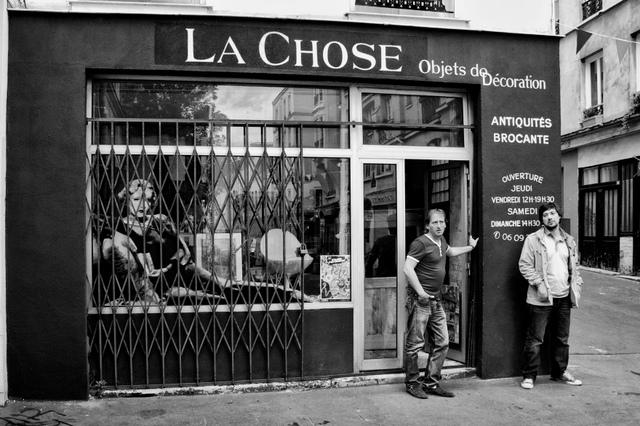
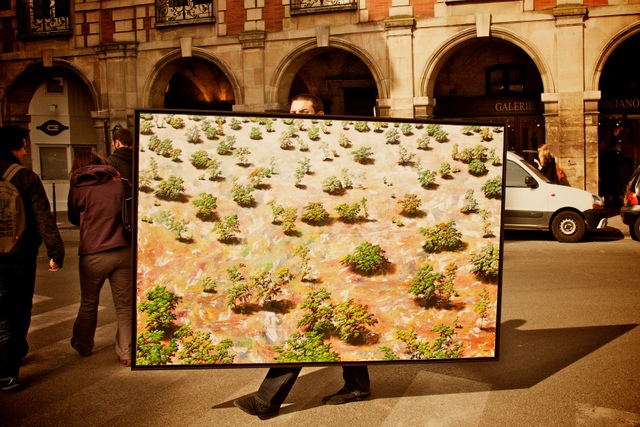
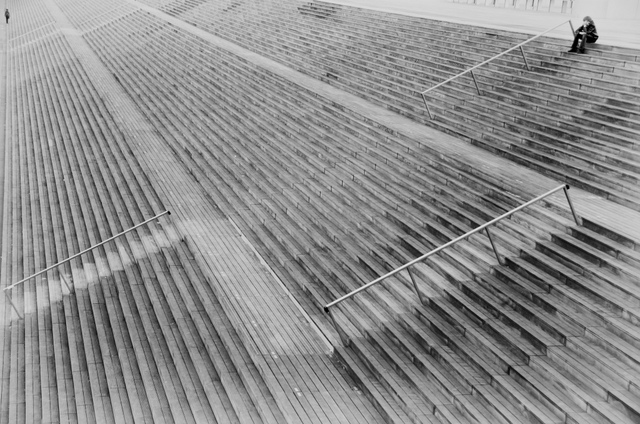
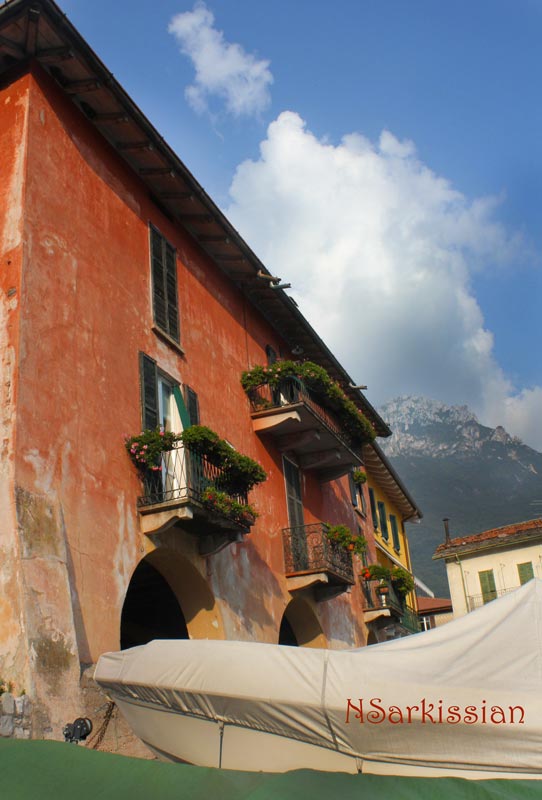
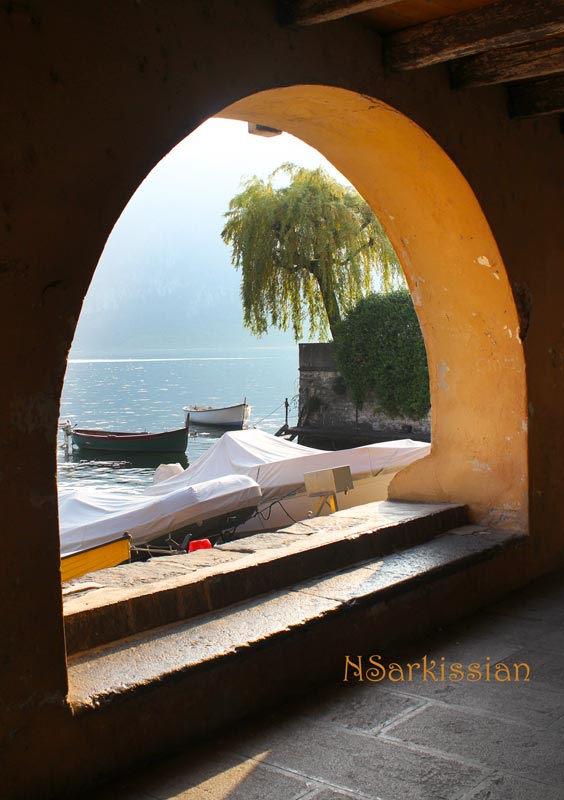
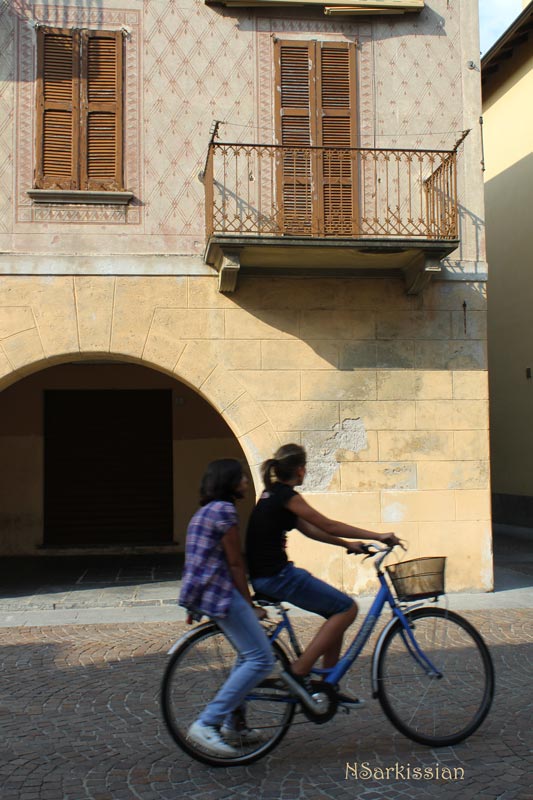
Mar 062015
 

tunnelweb

.

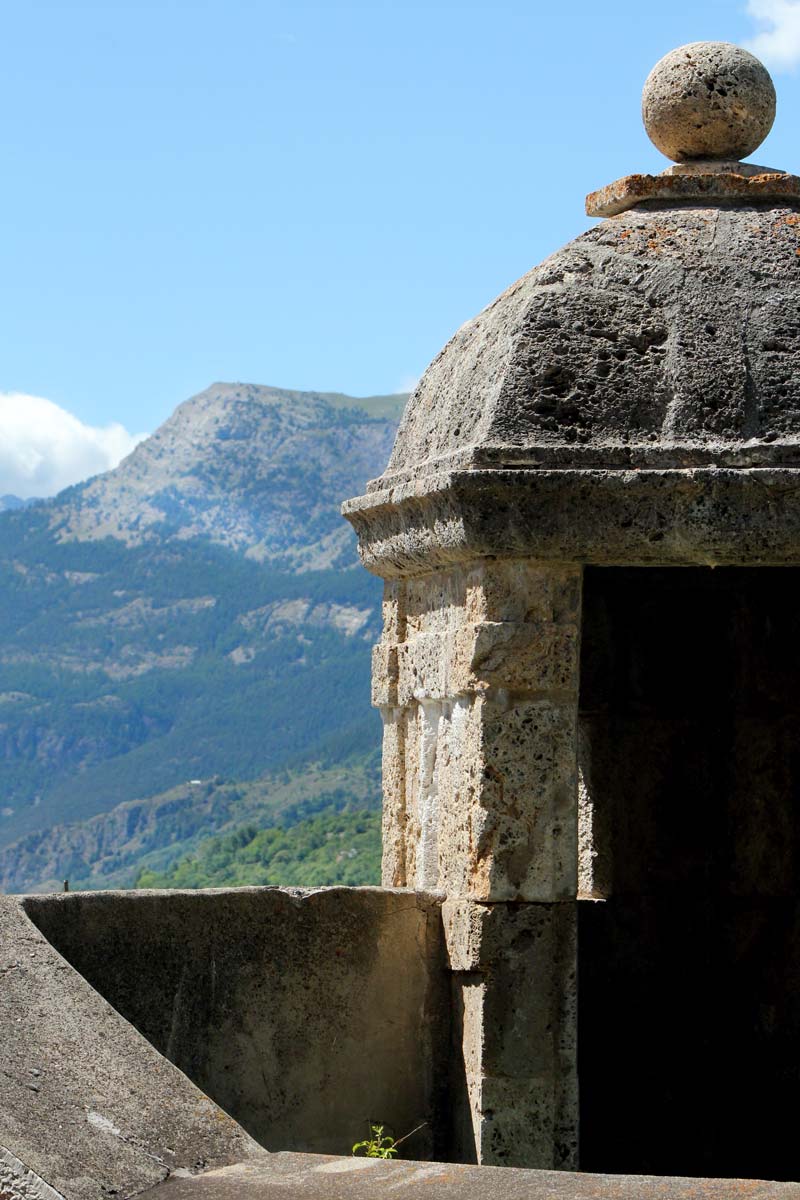
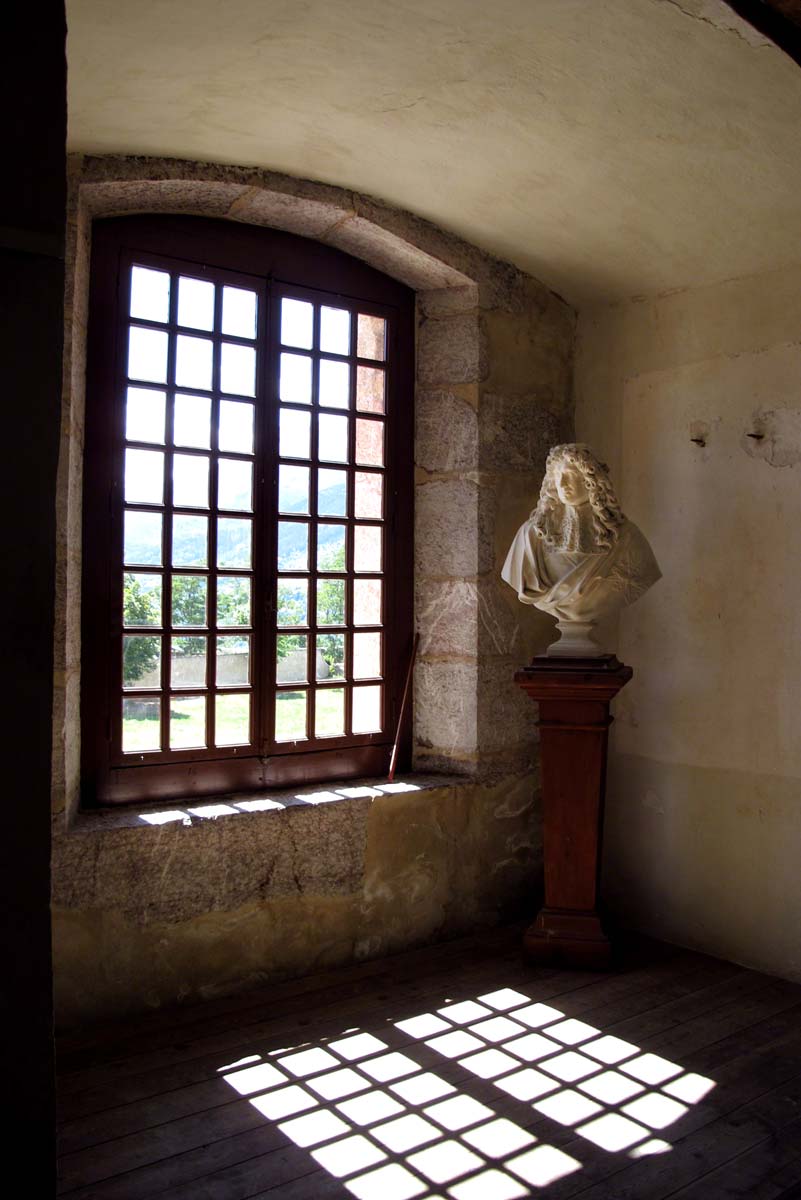
AT 9:00 AM ON A SUNNY MORNING, while your teenage son sleeps, make plans with your husband to visit the city of Briançon and the stronghold of Mont-Dauphin. Just over the Italian border in France, these are World UNESCO sites where the military engineer, Sébastien Le Prestre Vauban (1633-1707), designed forts and walls for the Sun King, Louis XIV.

Wake your son. Don’t tell him about the history trip ahead. You know he’s always hated history—facts have always proved slippery, elusive, dull. Instead, tell him you want to take him to France for a crêpe. When he hops out of bed without a complaint, hand him an espresso. While he’s in the shower, charge your camera batteries. Pack chocolate.

Smile when your husband says, surprised, “That was easy.”

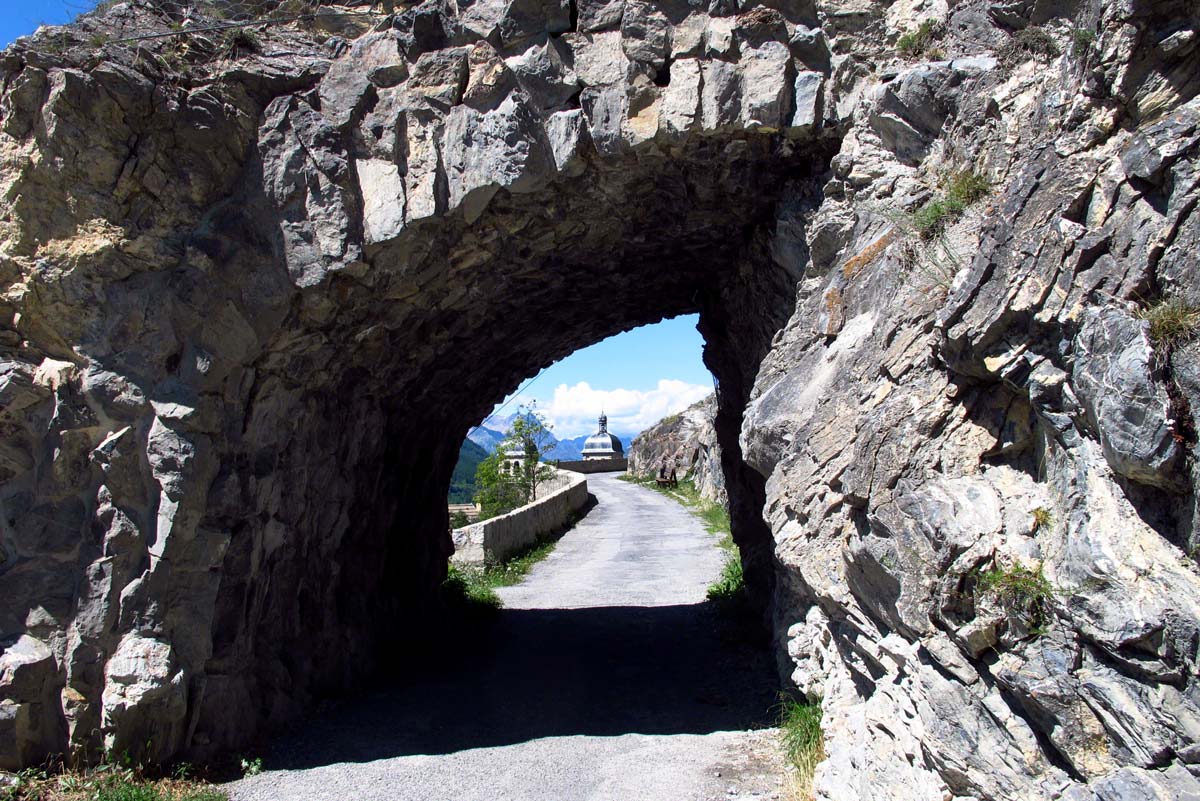
At 10:30 am, let your son sit in the front seat next to you while you drive west. Hand him your camera. Direct him to take pictures of the road slicing through granite and slate. Remind him of Hannibal the Carthaginian and his elephants, of the Romans who fought the Gauls, of the Duke of Savoy who fought the Sun King. Tell him that armies have always climbed through the Alps first one way, then the other, shifting boundaries first one way, then the other.

Inhale when he nods.

RoadBrianconweb

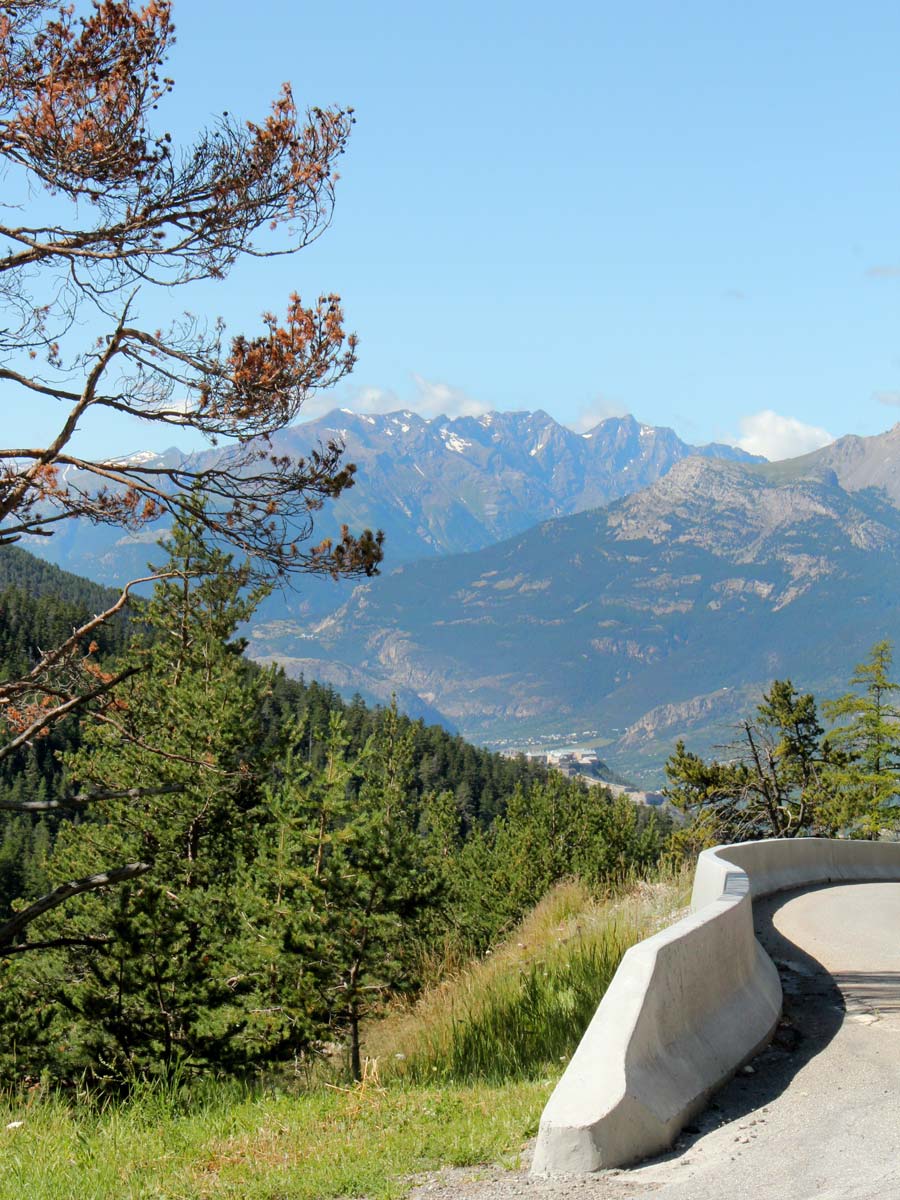
Pull into a scenic lookout when he says “Stop.” Climb out and gaze at the rock scantily clad with snow while he takes pictures.

Agree when he says, “This road is tough, but without the asphalt and tunnels it was tougher.”

GatewayCityViewBrianconweb

Where Italian and then French flags blow, at the top of the pass at the Col du Montgenèvre, say to your husband and son, “Bienvenus en France, mes chers.” Then, since you’ve forgotten your son’s ID, panic when you see gendarmes at the booth ahead scrutinizing arriving traffic. Look at the police straight on though, and smile when they wave you through.

Agree when your husband says, “Borders are porous these days.”

buildingcliffbriancon

fortandrooftops

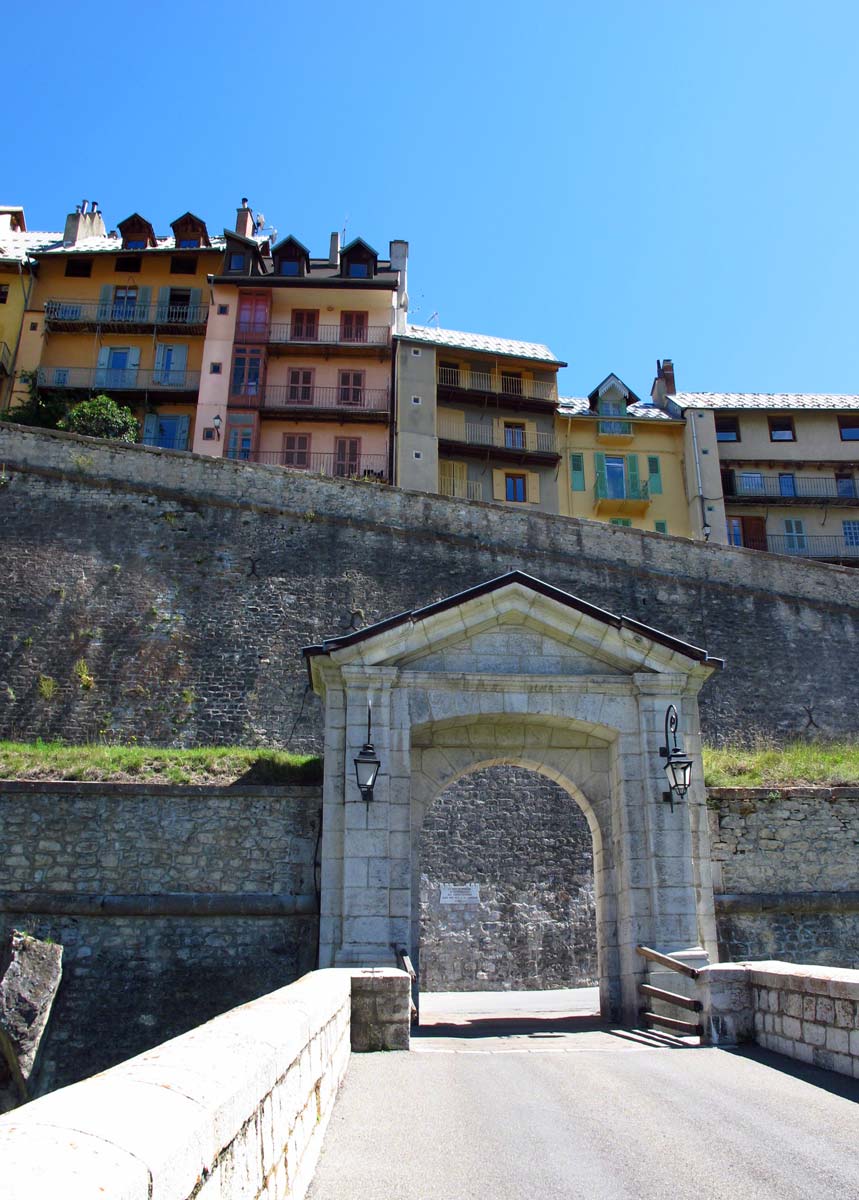
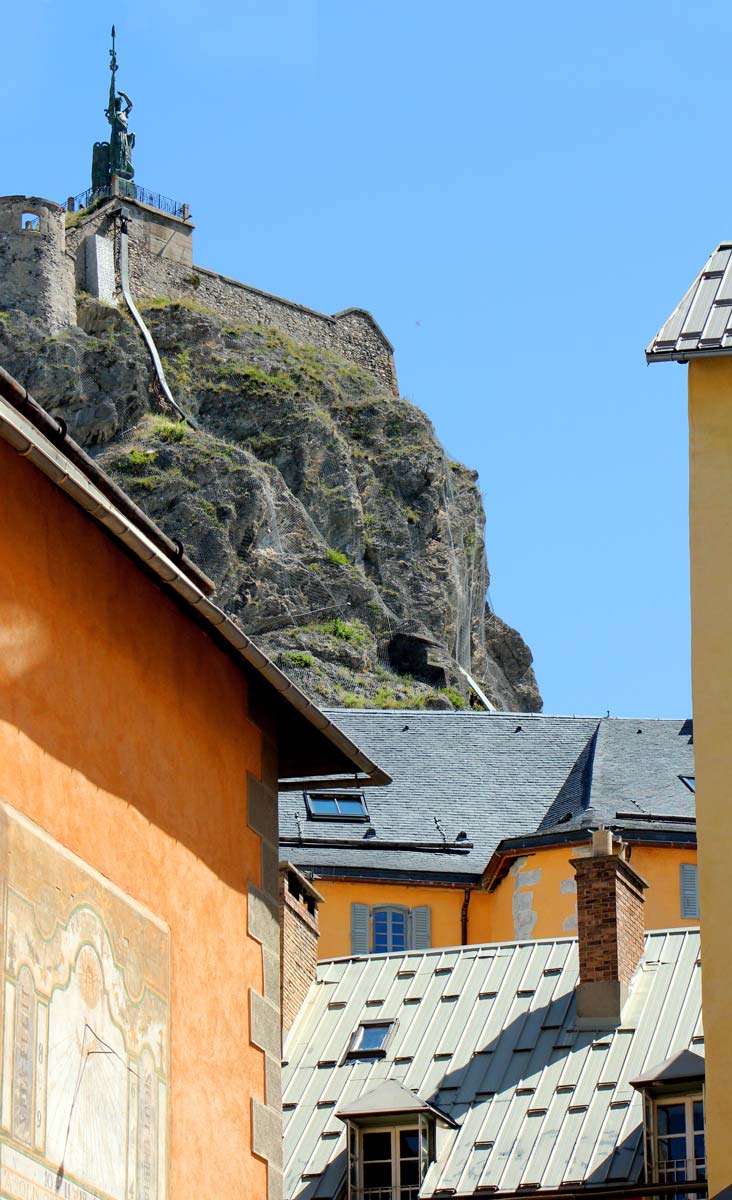
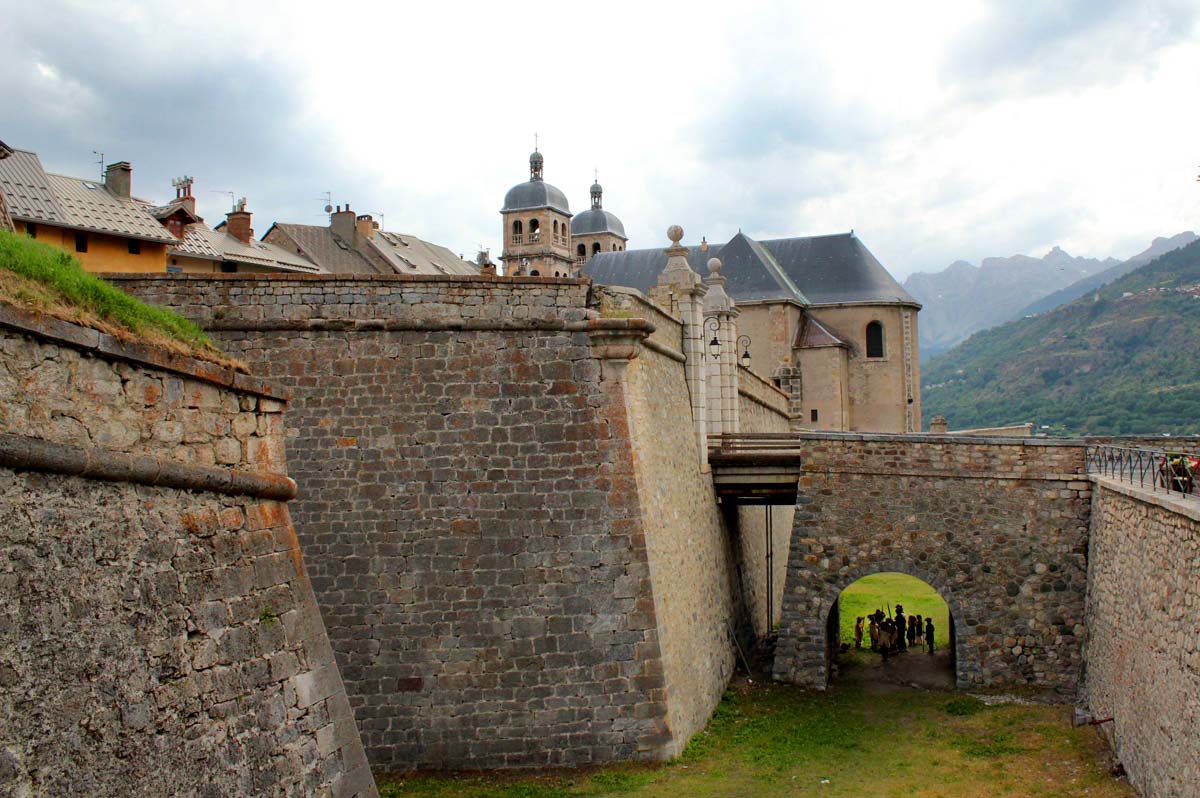
At 11:30, stop at the old walled city of Briançon that Vauban fortified after the Duke of Savoy pillaged the surrounding countryside in 1692. Park your car. Wind down steep streets to the main square. Buy a guidebook in a bookstore. Find a café. Order crêpes and pommes frites. Point to the fort on the crest looming above. Say, “Those rocks are a reminder of the past.”

TunnelBrianconChurchTowersweb

Agree when your son says, between mouthfuls of buttery food, “These mountains are tough, but the men were tougher.”

BoySoldiersMoatBrianconweb

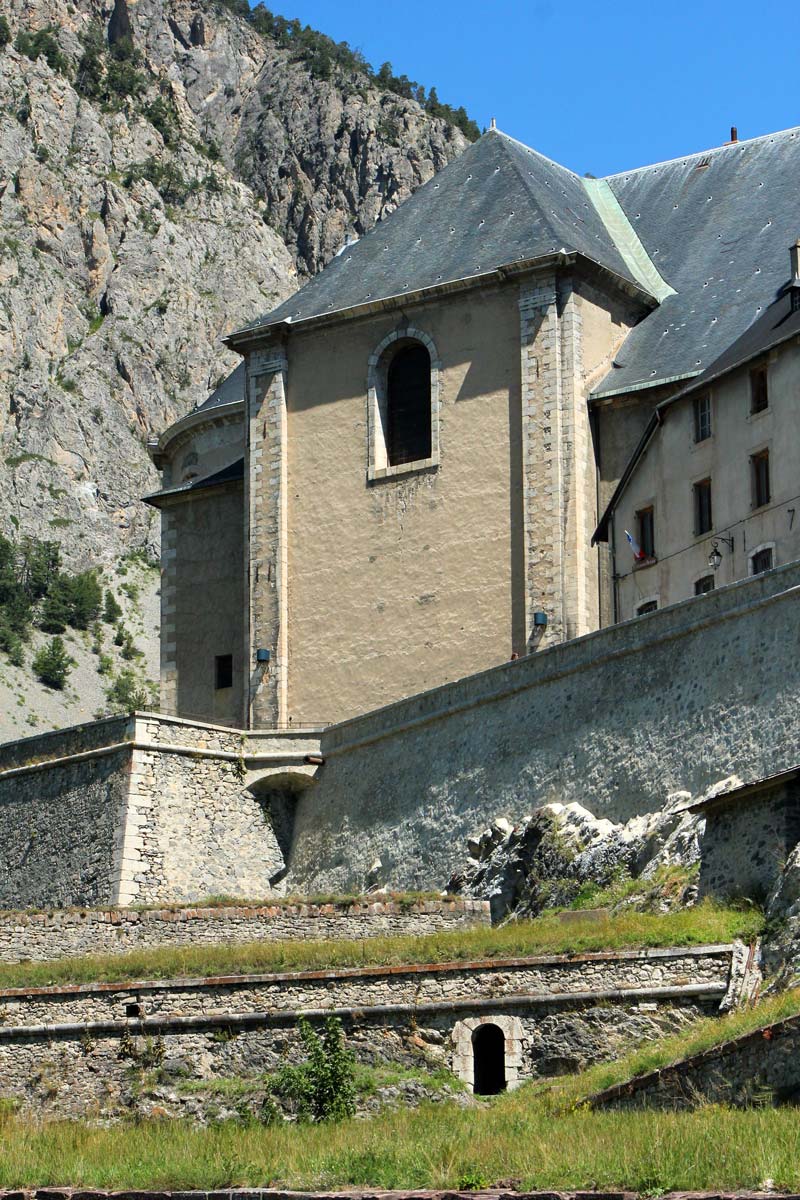
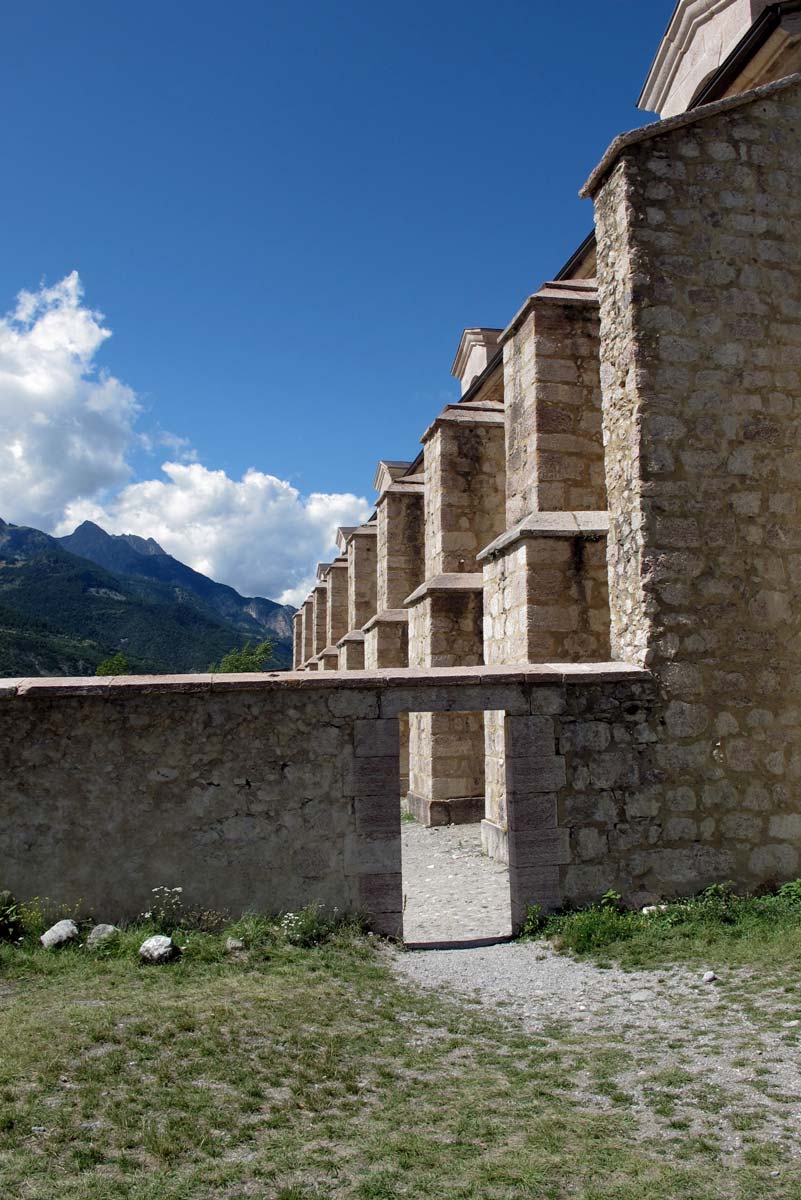
At 2:30 suggest getting ice cream down the road. Drive south for thirty minutes, alongside the Écrins National Park. Admire the winsome villages with spiky churches and red geraniums. At picturesque Eygliers turn left. Note that your son’s breath catches at the sight of Mont-Dauphin, Vauban’s citadel that crowns the Millaures plateau which means ‘at the cross of the winds’ in Occitan.

Ask what he’s thinking.

Nod when he says, “Those towers above are a cliff full of mystery.”

ViewMontDauphinBridgeweb

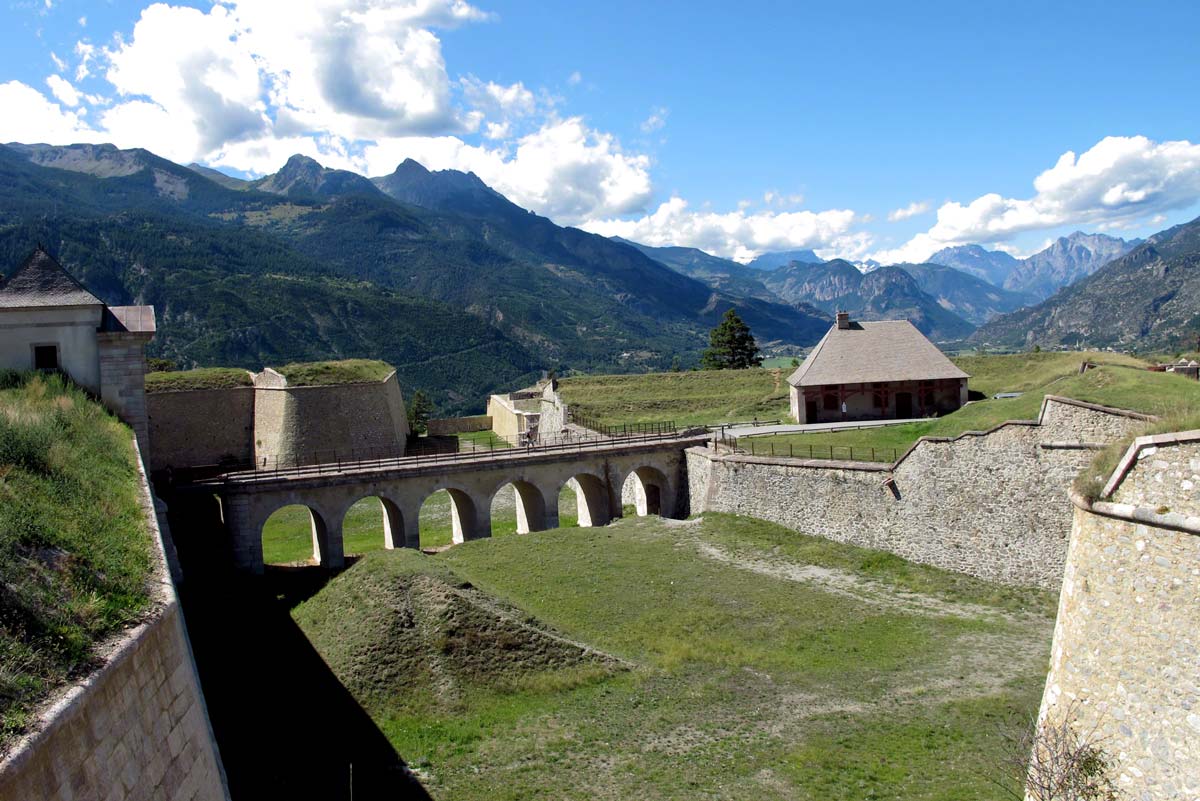
Together climb over grass-clad ramparts. Cross the bridge that fords the empty moat. Explain how Vauban began building this citadel in 1693 but that it came to a halt with the Treaty of Utrecht in 1713 when the border was pushed elsewhere. Listen when your son reads aloud from the guidebook: “No actual battle ever took place here.” Shake your head when he adds, “too bad these walls went to waste.”

Buy ice cream. Lick the drips.

iciserepose

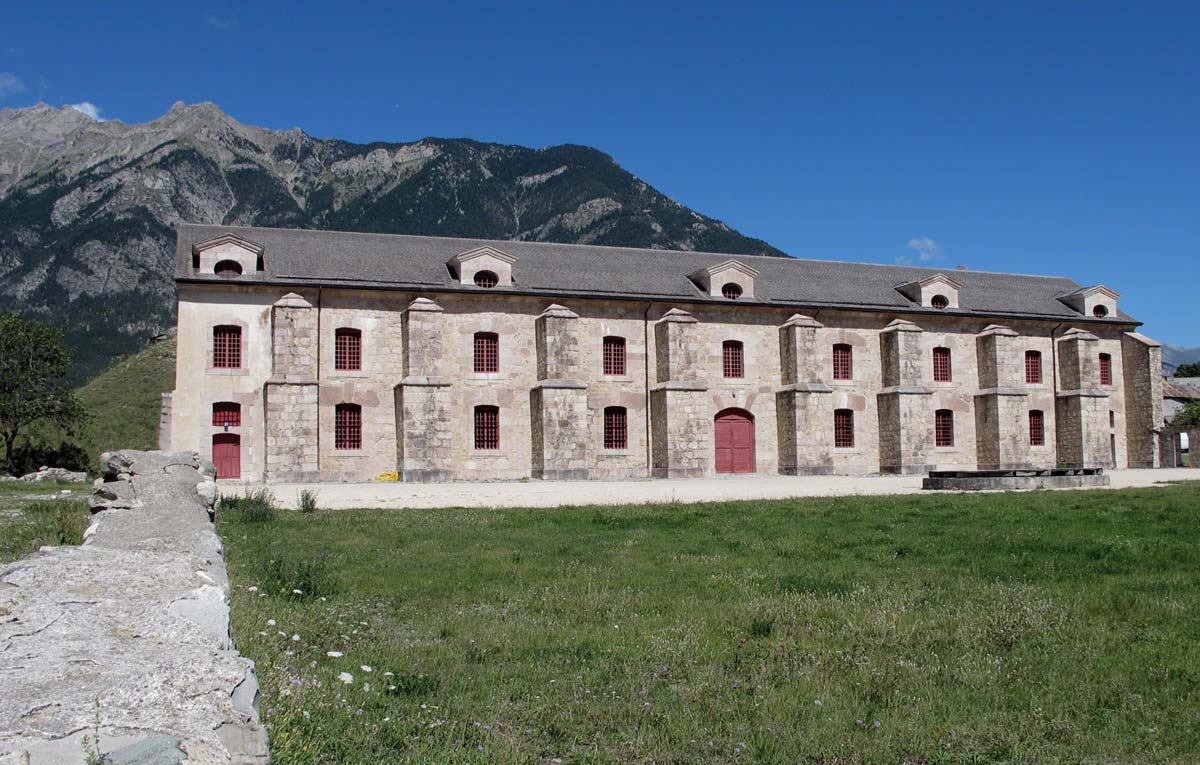
Circle clockwise. Photograph the church that was never completed. Photograph the remaining wing of the Arsenal where guns and ammunition were kept. Listen when your son reports, “the flanking wing was destroyed in World War II when Italians flew over and bombed it.” Agree when he adds, “So this place saw some action after all but it was only one brief blaze.”

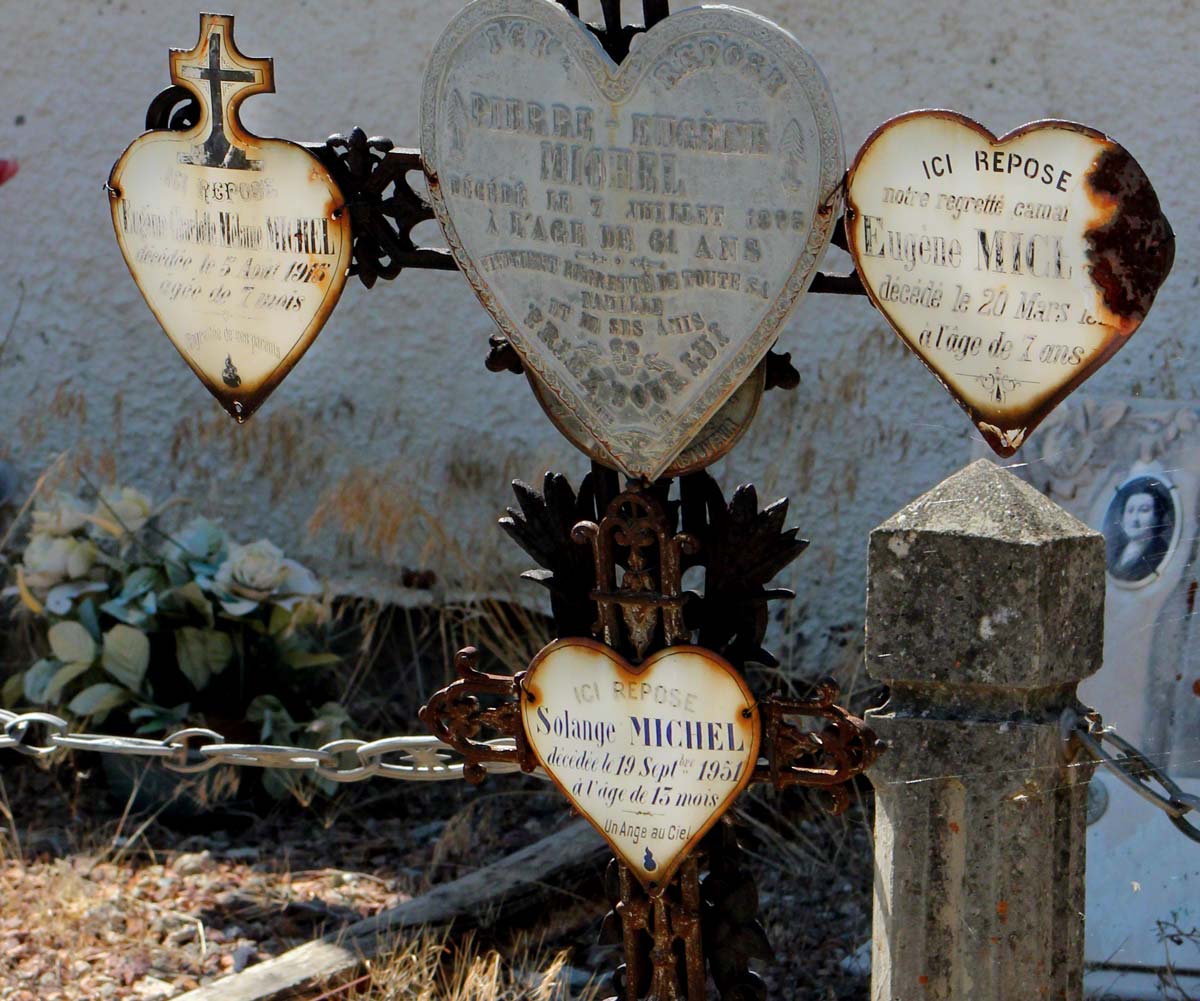
Visit the cemetery. Look at the rusting crosses and dates. See how they’re relatively recent.

ChurchmontDauphinweb

Arsenalsideviewsunshineweb

EntireArsenaleSunshineweb

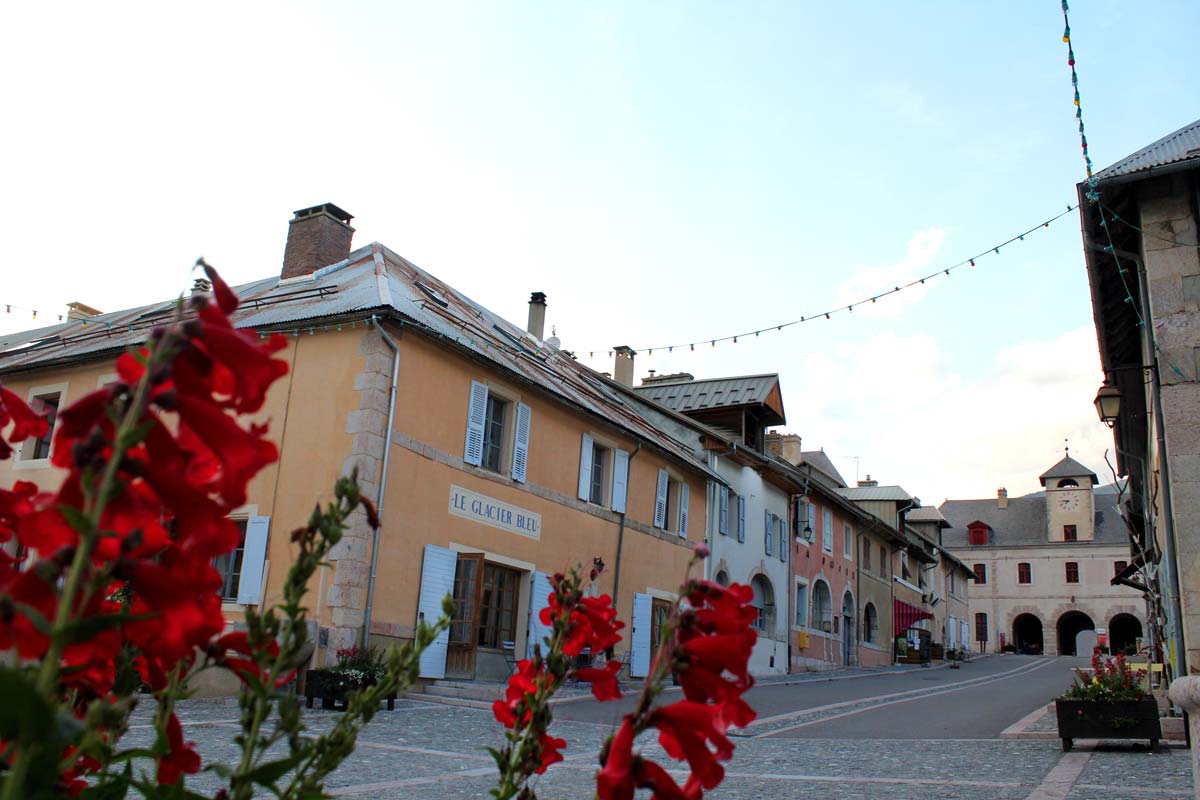
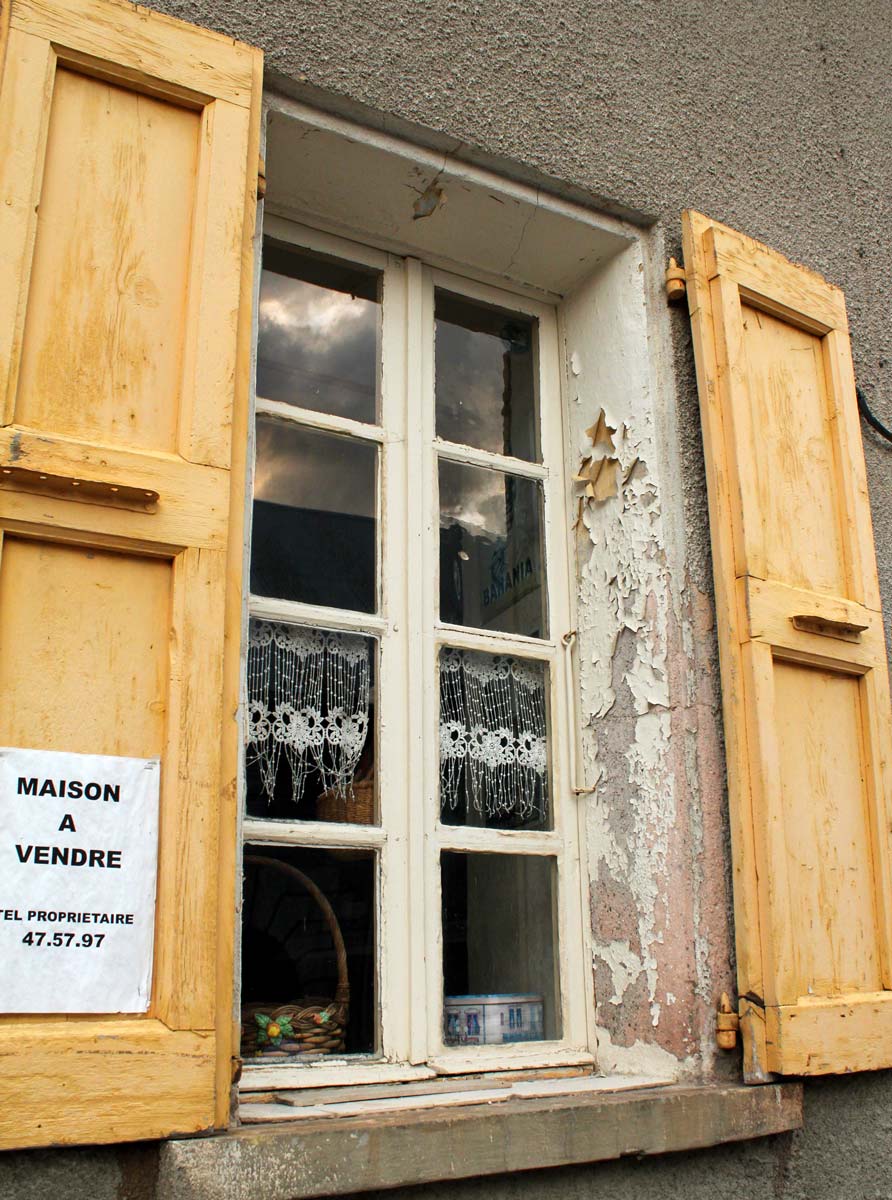
Photograph the main street where officers once lived. Together imagine how they waited for war that never materialized. Tighten your scarf around your neck again and again when the wind—the incessant wind—blows through. Notice how some places are boarded up and others are for sale.

GlacierBluweb

Nod when your son observes, “This has always been a ghost town even when the soldiers were here.”

Yellowshuttersignweb

At 7:00 pm, climb in the car, head back down the hill, turn right onto the highway. Drive north along the Écrins National Park toward Briançon and the Alps. Honk at a camper hogging the road. Swerve left when a stream of bicyclists in black nylon and silver helmets encroach on your lane.

Agree when your son, who is now in the back seat, says, “Look, these are today’s road warriors.”

lookoutweb

Ask your son his impressions of his day in France. When he says he liked the crêpe and the ice cream, sigh, but say “Good, I’m glad.” When he says, “I know it was a ruse to get me to come,” deny it. But smile broadly when he says, “The best part was walking where the armies had been. We should do this more often. Can I see the guidebook again?”

Don’t remind him you’ve always done it. Don’t list the museums and sites you’ve gone to together.

Vaubanweb

Shake your head when your husband says, “That was easy.”

Then hand over the book, pull out the chocolate you packed, and share it.

  —Natalia Sarkissian

.

Natalia Sarkissian

Natalia Sarkissian has an MFA in Writing from Vermont College of Fine Arts and has been an editor and contributor at Numéro Cinq since 2010. Natalia divides her time between Italy and the United States.

.
.

Apr 102014
 

author photo 2013

The moral overhang of plants, in the present case a disregarded bonsai, is the notional subject of this deft, intricate essay (with photographs) by Shawna Lemay, an essay that is also an anthology of quotations (about plants, art and people) and gnomic phrasing, an essay that almost seems to unwrite itself as it is written. “…we understand each other illegibly.” “In this way we come to know the unrepeatable secrets of flowers, and then to forget them.”

dg


The bonsai, now. Purchased years ago from the hardware store. A wish, a pretension, a desire for peacefulness, with an envious thought to the serious practitioners, precipitated its purchase.

Relegated to the basement when it sensed I was not living up to its requirements for emptiness, calm, and a true tenderness. It became too lush and I could not be severe in bringing it back to balance. Years later, it re-emerges. Parts of it have died, irretrievable. Unbalanced but splendid and we understand each other illegibly.

At the stage where she was dreaming, conjuring, The Waves, Virginia Woolf wrote in her diary, “A lamp and a flower pot in the center. The flower can always be changing.” There would be, “…a perpetual crumbling and renewing of the plant. In its leaves she might see things happen. But who is she?”

Bonsai-7

Quickly followed by the wish she remain unnamed. The leaves would most certainly see things happen.

I forge a plan which I quickly abandon, to ask women I know about the plants they have on their windowsills, kitchen tables, desks. I imagine receiving answers about geraniums being overwintered, about African violets, and about bouquets of grocery store tulips and about long stemmed, candy coloured daisies, and roses that deliberately open. Once, someone told me about the aloe vera plant she has on her desk  which has vast properties of healing and with which she conducts séances and hearing this made me too delicate.

We breathe the plant in and the plant receives our exhalations and our chakras align accordingly.

Of course, with Clarice, I’ve been thinking about the sadness of flowers in order to feel more fully the order of what exists for a very long time.

As Cixous said, we have all lived one or two flowers. We have felt the light of them, the light they attract and which goes right through them, and also the heaviness, the gravity, and we have known, perhaps, as the painter Francis Bacon called it, the violence, of roses. Not just the thorns, but the colours changing and bleeding and seeping out of those generous, soft, petals. The way our souls might rise up and speak to flowers, met by flowers, their breathing, the faint breath of them. The pain of finding we can’t quite sip, can’t quite internalize the answers, to the question of scent.

Bonsai-11

I imagine the pots and vases of flowers on a table near a window in time lapse photography, one that encompasses several years. The first day emerges deliberately. It begins in a veil of morning light, I place a vase of garden roses on the weathered table. The pink-orange petals are so various, each one a slightly different combination of pink fluttering into orange. They have opened under the sun, been changed by breezes gentle and ardent and arduous. Insects have nibbled and continued on their way. And now the light becomes more diffuse, evens out, brightens, declines again, and then moonlight comes in and bathes the roses, they soften and at the same time become more radiant, full. The leaves droop a little, curl, the water clouds, the edges of the petals wither, turn a greyish brown, and the pinks become less vibrant, and the orange deepens, lessens. They begin to look tattered in the repetition of this cycle, more graceful, more noble. At one point a hand comes into the frame, and shoves the vase from the center of the table to the edge, to the far end.

In this way we come to know the unrepeatable secrets of flowers, and then to forget them. We learn opening, opening. And then empty, drunk, we succumb to their heavenly sadness. It is the sadness of flowers that reminds us to keep the secret.

The table is empty for several days. The time lapse speeds up. A geranium arrives in a terracotta pot. The stems are thick and gnarled. The plant has lived and lives on in the slips that have been taken. It grows, leaning toward the light through the day, a slow dance. And then the cuttings are removed, and it must grow more leaves, and it does, small sprouts emerge. At which point someone takes it to make room for a gift, a vase of flowers. A ghostly image enters the frame and leaves, which reminds one of security camera footage.

An arrangement, a gift. A florist’s concoction. Tulips, roses, hydrangeas, snapdragons, bits of greenery in a  rigorously balanced and visually interesting triangle. Light pink, fresh green, and lavender. For days they stay as placed, rather too perfect. But then the tulips begin to droop through the course of a single day and are nearly done in.

The time lapse slows and then speeds up, and this feels alarming, how the flowers move as though in a deep conversation, the intensity of their gestures, leanings, listings, to and fro, petals drop in what could be happiness one moment, anger the next, then resignation.

Those which have perished are removed, and the bouquet is awkward, strange. A hand removes the bouquet, the arrangement returns in another form, the remaining flowers cut down and placed in a water glass. They last a day or two more. And at this point, the light in the room becomes grainy, and I can’t help but think about the clouds which must be responsible for this effect.

Bonsai-14

It goes on like this. Long periods where the space is empty. Shadows of people pass over the table. A bird flies by and casts a low and fleeting shadow. Snow falls so the window resembles a 20th century television screen at three a.m. The window is opened and the curtains blow into the frame, ever so gently. Punctuated by moments of flowering. Flowers changing. And changing.

It goes on like this. The fragrance. The colours. The fading. The beauty of decline, the simplicity. All of the attendant moods arrive and pass in waves, swelling and subsiding, at dawn, at dusk.

While I’m imagining the flowers on a table I’m also thinking about 17th century Dutch flower paintings. The way that artists would make and collect studies of  flowers so that they could paint them into lush floral bouquets that couldn’t really exist as the specimens wouldn’t naturally bloom at the same time. Sometimes an artist would share a particular study they’d made, so that another artist would have the exact same rendering of a flower in their own floral painting.

I also remember the painting by Remedios Varos called Still Life Reviving, which is the last thing she painted before her unexpected death. At the center of a small round table with a tablecloth draped on it is a lit candle. Swirling around and hovering above the table are plates, and above them various fruits which at times collide and explode, all of this witnessed by dragonflies. Seeds drop from the colliding fruits, and plants are being born from them before they hit the ground.

I remember the way things appear to lose their magic, and later regain it.

Paper whites in winter. An amaryllis bulb, forced. Spring plum blossoms. Forsythia. Peonies. Roses. Tiger lilies.

The flower is always changing which is dizzying. Which is why, still life.

—Shawna Lemay

Shawna Lemay is a writer, blogger, editor, photographer, and library assistant. She is the creator and co-editor of the website, Canadian Poetries. She has written five books of poetry, All the God-Sized Fruit, Against Paradise, Still, Blue Feast and Red Velvet Forest, a book of essays, Calm Things, and a work of experimental fiction, Hive: A Forgery. A book of poems and poem-essays, titled Asking, is forthcoming in April of 2014. Her daily blog is Calm Things.  She resides in Edmonton, Canada, with her partner, Robert Lemay, a visual artist, and their daughter, Chloe.

Sep 132013
 

ValTroncheawithFlowers

Tonight I’ve Watched

The moon and then
the Pleiades
go down

The night is now
half-gone; youth
goes; I am

In bed alone

                           —Sappho

 bench

Eight a.m. August 13th. I’m sitting outside at a café in Sestriere, a small Alpine town in Piedmont, eighteen kilometers from the French border. The sun shines white at this early hour but the rays are unfettered by clouds or mist. Already the grass on the mountains glows like green flames. The slate in the peaks overhead glints like diamonds. Although chilly at this hour in this 2,000-meter-above-sea-level paradise, soon the temperature will balloon. In the meantime, I zip up my parka.

Down the road, my husband and dog are still asleep at our friend’s place. Further away, on the Ligurian coast, one son visits his friend’s family. In Lombardy, our other son explores the lake district with his girlfriend. Just a few years ago we all vacationed together. Now I’m here at this table, alone, hoping to get some work done. Instead, I reflect on mutability and my reading of the night before.

In her book of collected lectures, Madness, Rack and Honey, Mary Ruefle makes the case that the theme of poetry from all cultures and periods, from Sappho to Wordsworth and beyond, is mutability. In other words, poetry [and by extension, writing], “is about love and death, innocence and experience, praise and lament, the passing of time, appearance and reality, stability and instability; all these marked themes are nothing less—or more—than mutability.” [71] While dissolution and the passage of time are difficult for the imagination to encompass, we have no alternative. As she writes, “mutability offers us no choice at all: we die, it is built into our wiring like those batteries designed for obsolescence.” [72]

Squiggles(Roads)

I don’t want to be maudlin about mutability while I’m sitting here in this sparkling cleft in this green and blue sphere. I don’t want to think about how my boys have grown and are now off in the world. I don’t want to consider the wrinkle I’ve earned or the fold I’ve gained. I don’t want to recognize that summer dwindles and autumn looms. Nor do I want to ponder the paradox of the mountains themselves: solid yet eroding. I’m late on a translation I’ve contracted to do. I need to think about that.

But while I’m trying to concentrate on translation, a pretty little boy, blond with curls, one who reminds me of my own boys twelve and fourteen years ago comes into focus.

This twenty-first-century cherub looks like he escaped from a Venetian ceiling by Veronese. The boy carries a brioche, a glistening square of focaccia and a pink newspaper—Gazzetta dello Sport—toward a man who sits at a table not far from mine. Juggling three items in his small hands, he bites his lip with the effort. He manages to deliver the brioche and the newspaper to the tabletop but drops the focaccia.

“Ooof,” he says. “Scusa.”

“Che cretino,” I think I hear the man say.  He frowns, picks up the focaccia and blows it off.

The little boy smiles. Because of the smile, I think I’ve misunderstood. Perhaps the father said something like, “che bravino (not a bad job)or “che sciocchino (silly)”. I hope so, at any rate. It never crosses my mind that the boy’s smile is meant as appeasement.

Because of the smile, I can see that the boy has all his baby teeth. I decide he can’t be more than five. I wonder if the boy will be required to fetch their beverages next, but am relieved when instead he climbs into one of the gleaming steel chairs next to the man’s. He seems too young to be charged with fetching hot drinks.

Soon an athletic woman, presumably the boy’s mother, in a hoodie and short velour shorts approaches with a tray. She sets frothy milk in a glass cup in front of the boy, a tumbler of orange juice in front of the man, a steaming teapot in front of an empty seat that she immediately claims. At this hour, the waitress isn’t yet on duty. This is a do-it yourself café in this mountain-top eyrie.

Bee&Clover

All three sip their drinks. Shade recedes. The climbing sun hits my face. The white light has heated to yellow. I slather on some suntan cream and unzip my parka. I open my computer but instead of working I watch the boy and dream; a reel of images flashes. I imagine how quickly his limbs will lengthen and carry him off. Again I remember Mary Ruefle, who writes that sentimental thoughts “give pleasure—or put a lump in our throats—and they make us think.” [45] So I give in. I let myself consider how his parents will miss him one day. They’ll wonder where the time went. Maybe they’ll remember sitting in these glorious mountains on a beautiful summer morning having breakfast together. I have memories like these.

I shake myself and open my Word file. I’m considering the best translation for the word ‘regret’ when the little boy cries out and I look over.

“That’s mine,” he’s saying, waving his outstretched hands at his mother who is eating the brioche. She takes another bite while the boy hops up and down in his chair. “Mamma, that’s mine!”

“You wanted the focaccia,” she says. “And you dropped it. Now you eat it.” She chews, examining her vivid pink fingernails. Even from where I’m sitting, behind her and over by several yards, I see that they are slick and professional. A slew of bracelets—pastel-colored plastic beads—rattles on one wrist. On the other I spot a gleaming watch—possibly a Rolex. Around her neck is a camouflage-patterned scarf.
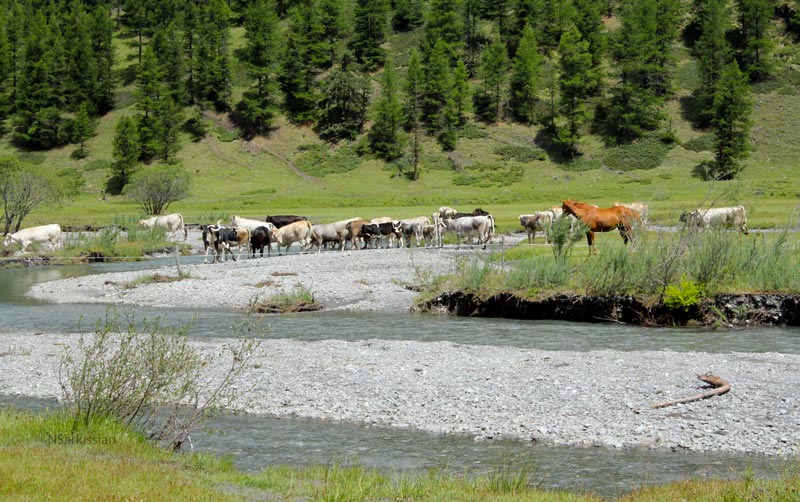
FlockValArgentera

Maybe over time, I’ve forgotten just what it was like to mother a voluble young boy. Perhaps this mother’s teaching him to be flexible or not waste food. I want to believe that she has his best interests at heart. But there’s something not quite right. It’s as if the Venetian ceiling I imagined the cherub flew from now has a crack running through it.

“But Mamma.” From where I’m sitting, just a two tables over, I can see his eyes fill with tears.

She takes another bite.

The little boy howls.

In the scheme of sounds it isn’t a loud howl. But the boy’s mother reaches over across the table. I think she pinches him, but I’m not sure. It happens so fast.

His hand flies to his cheek. He whimpers.

“I’m warning you,” says his mother.

“Serves you right,” says his father.

“I want the brioche,” the boy says. “Can’t I have the brioche?”

“Stop it,” the mother says. “Now.” She snaps her fingers under his nose. “One. Two.”

But the little boy still fusses. I really wish he wouldn’t fuss. I don’t like the sound of his mother’s voice. My stomach’s knotted like the sweater I ruined in the wash last week. I’m thinking I should buy the little boy a brioche. What would his parents do if I bought their son a brioche? While I’m trying to decide, the father catches me staring. He frowns. I feel threatened, so I pretend to be engrossed in my computer screen. But I’m listening. The boy still cries. He still wants the brioche. I soon look up. I watch the mother take another bite. I watch her sip her tea. The boy flails his arms.
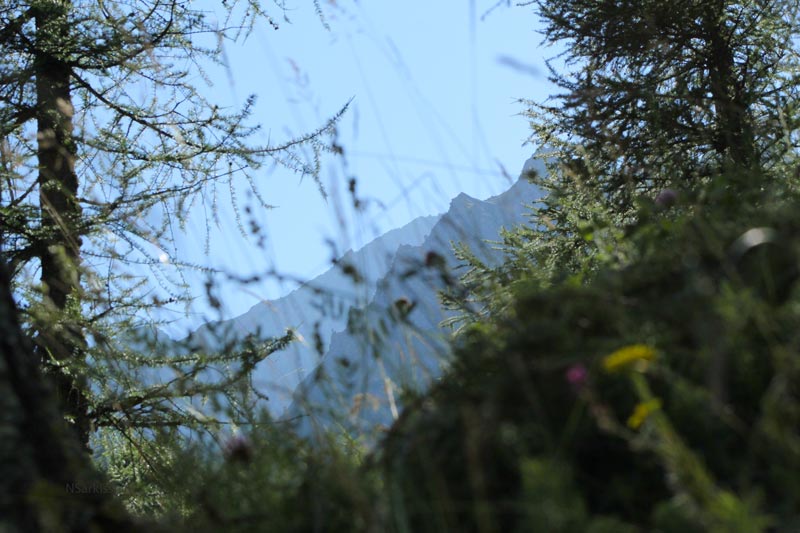
Mountainpeaks

A woman in a white blouse and dark pants hurries into the café, tying on her apron, brushing past me. My papers rustle in the rush of air. The waitress, late for duty. I’m thinking that when she comes back out here to the terrace, I’ll order a brioche for the boy. But just then the mother stands and reaches over the table. Grabbing her son’s curls, she yanks him out of his chair. She leads him from the café, toward the curb.

“Stupido,” I hear her say. “Deficiente!” Then I hear sharp slaps followed by thicker thuds—either she’s kicking him or spanking him, I can’t quite see—a wall is in the way—and therefore I can’t tell.

“Oh my God,” I cry, leaping up, waving my hands, knocking my computer off the table. “BASTA! BASTA! STOP IT RIGHT NOW!”

This is Italy. Children aren’t usually disciplined like this, especially not in public. Nonetheless spanking is not considered child abuse. But I’m finding she’s overstepped the line. But it looks like I’m the only one here with such an opinion. Two old men at two different tables nearby keep their noses in their papers. A middle-aged couple within hearing distance continues to sip their coffee. No one else pays the slightest attention to the commotion—to the mother spanking, to me yelling. But the father hears me—his head jerks in my direction. I think he looks embarrassed. His mouth twitches. I can’t tell for sure though, because he continues to sit in his seat, stony like the mountains above, his sunglasses reflecting light.

AlpineFlowers

The woman leads the boy back to the table. She has him fast by the ear. He has balled his fists and wipes his eyes.

“Ignorante,” says the man when his wife and son draw near, “stupido.” So he wasn’t embarrassed after all. “You deserved everything you got. Now you eat that focaccia. You hear me? You dumped it on the ground. Not me. Not your mother.”

Hiccuping, the boy sucks on a green pacifier while his mother finishes the brioche.

I gather my computer from the pavement. I’m afraid to see if it works or not. I slip out of my parka and peel off my sweater. I’m sweating.

A pretty brunette in linen pants draws up. The father introduces her to the mother. The three adults talk and laugh about the joys of vacation. Now conversation veers to the kid.

“Why is he crying?” the brunette wants to know.

“He’s terribly spoiled,” the mother says. “He wanted focaccia but then dumped it on the ground so he could have my brioche. He made a terrible scene.”
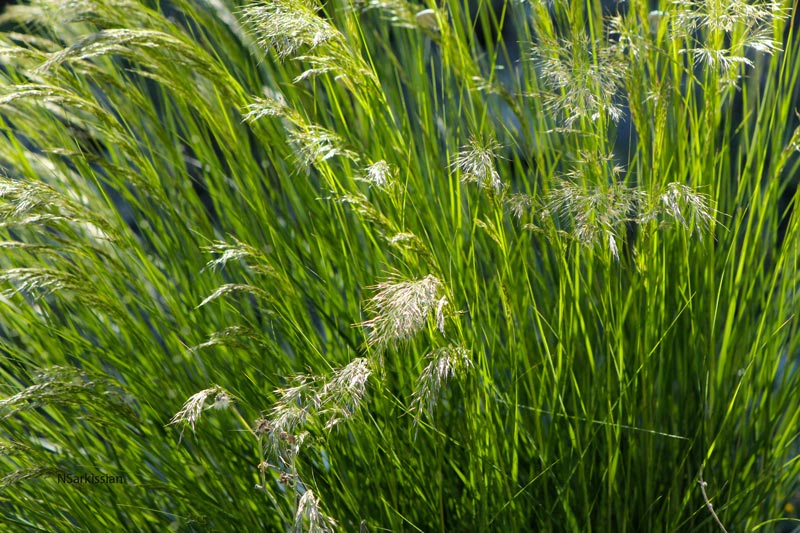
GrassValArgentera

Meanwhile the boy’s wiping his eyes and is sucking on the pacifier. Snot runs down his face. His eyes are red. He doesn’t remind me of Veronese any more. The brief passage of time has turned him into an urchin from Dickens.

“Isn’t he too old for a pacifier?” asks the brunette.

“He’d drive me crazy without it,” the mother says.

“She’s a saint,” the father says, pointing at his wife.

“Yes, I’m a saint with all I put up with.” The mother laughs.

Soon another woman draws up to their table. Everyone kisses everyone. This woman’s wearing a white lab coat.

The boy’s mother asks, “Hey, do you have something I can give the beast”—she points to her son—“to make him sleep?”

“Ordinarily, I’d say not without a prescription,” says the woman in the lab coat. It appears she’s a pharmacist; perhaps she works at the pharmacy just down the road.

“But since it’s me, you’ll close an eye.” The boy’s mother whispers to the pharmacist, the women look at the boy, then both explode with laughter.

The boy fishes inside a pocket and draws out another pacifier. This one is red. He tries to fit both in his mouth at once.

“TWO pacifiers?” asks the brunette.

CowValTronchea

The boy’s father shrugs. “He’s only five.” It’s the nicest thing I’ve heard him say about his son. His son thinks so too. He climbs into his father’s lap and threads his legs through his father’s. “I’m cold,” he says. The father zips up his son’s hoodie.

“What a good father,” the brunette says.

The newly genial father rubs his son’s legs. He rips a bite-sized hunk from the focaccia, and feeds it to his son.

“There you go,” says the brunette while the boy chews, “that wasn’t hard was it? You’re a good boy, aren’t you? You got up on the wrong side of the bed, but you’re a good boy.”

“I’ll see about the sleeping drops,” says the pharmacist. She studies the boy, frowning. “But maybe he doesn’t really need them.”

“We ALL need him to have them,” says the mother. Everyone laughs.

My breathing speeds up. I want to tell the brunette and the pharmacist what really happened. I want to tell them that the mother needs medication. But I don’t. They’d all think me crazy. They could sue me for slander. They’d hear my accent and think I was a hysterical foreigner. I am a coward.

Pine

I press the on button on my computer. A strange click erupts but the screen lights up. It takes longer than usual to start and I discover I’ve lost the few changes I made to my translation.

I stare at the screen. I can see the boy, his mother and father engaged in bigger battles in ten years. I can see the parents not taking responsibility for anything, blaming their kid, telling him how rotten he is. I wonder about the pacifiers the boy might then use.
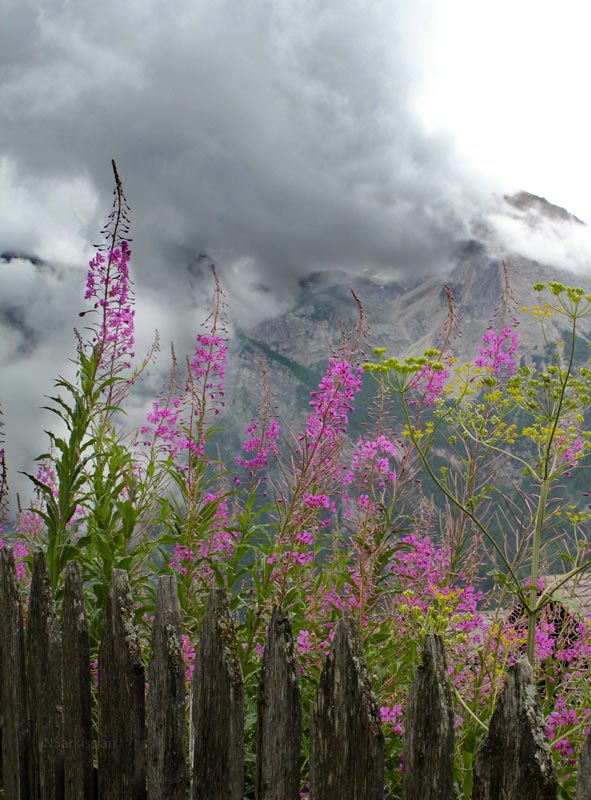
Clouds

I want to be sentimental. I want to tell them. If you screw this up you won’t get a second chance. But as Wordsworth says in his poem, Mutability, they won’t hear me and my “melancholy chime” about change and dissolution.

Mutability

From low to high doth dissolution climb
And sink from high to low, along a scale
Of awful notes whose concord shall not fail;
A musical but melancholy chime,
Which they can hear who meddle not with crime
Nor avarice, nor over-anxious care.
Truth fails not; but her outward forms that bear
The longest date do melt like frosty rime,
That in the morning whitened hill and plain
And is no more; drop like the tower sublime
Of yesterday, which royally did wear
His crown of weeds, but could not even sustain
Some casual shout that broke the silent air,
Or the unimaginable touch of Time.

—Wordsworth

Deaf and insensitive to the passage of time, the boy’s parents will see their own towers fall.

A German couple sits at the table behind me. I overhear them speaking English to the waitress. “We love it here,” they’re saying. “So green and sunny. So very friendly. If only we knew Italian better. Our stay would be absolutely perfect.”

I close my eyes. All around me the mountains loom. Soon the grass will wither. Ice will cleave to the hazy blue outlines. Rock will crack. Next summer, the crags will cast a steeper shadow.

AlpineViewtowardFrance


—Natalia Sarkissian

— — — — — — — — — — — — —

Natalia Sarkissian has an MFA in Writing from Vermont College of Fine Arts and has been an editor and contributor at Numéro Cinq since 2010. Natalia divides her time between Italy and the United States.

SelfportraitwithFlowers


May 112013
 

David Helwig

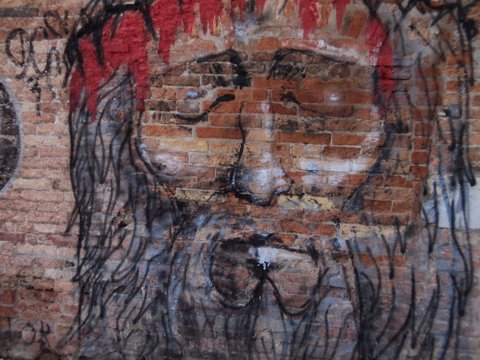
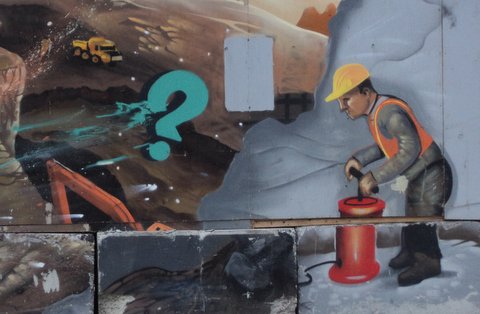
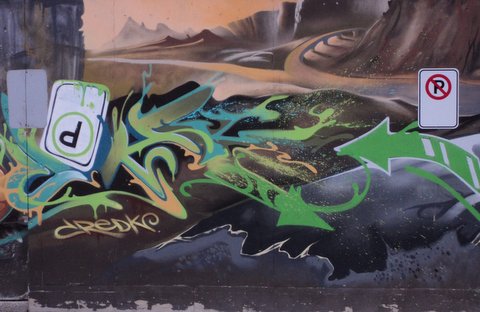
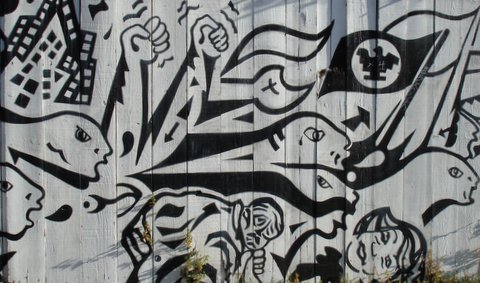
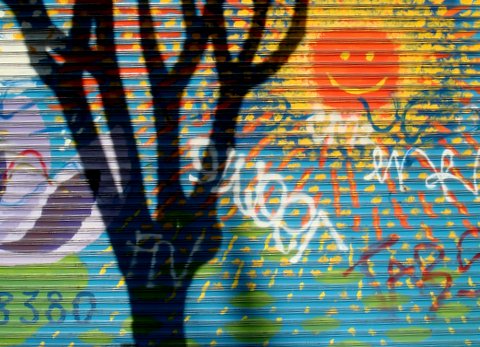
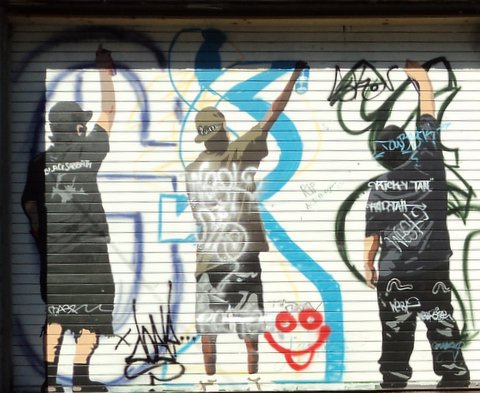
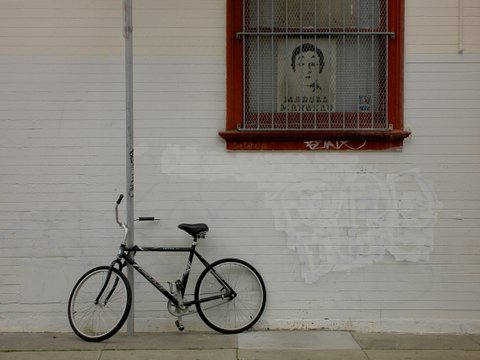
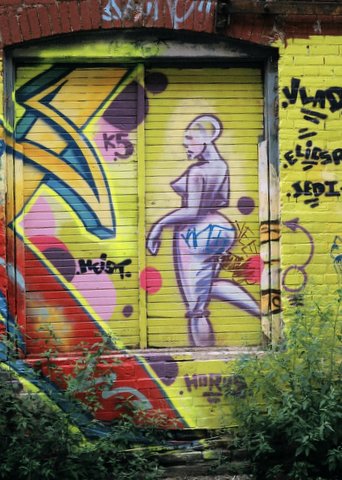
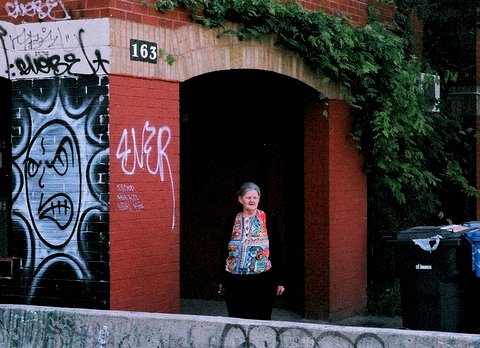
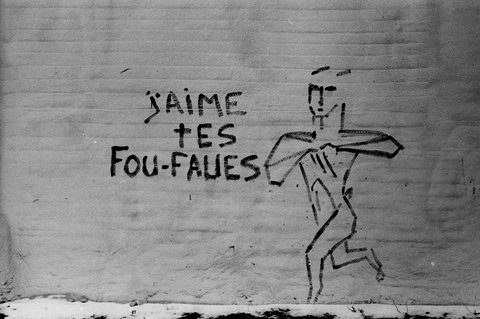
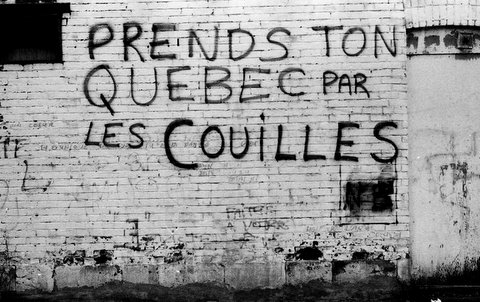
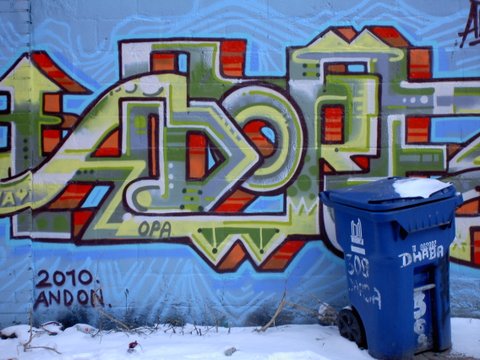
David Helwig, author of over 35 books, who has contributed translations, poems, and fiction to NC over the years, an insistent and constant recidivist in other words, herewith changes genre and turns photographer, offering a collection of graffiti art he has discovered, mostly in Canada but as far away as China and Venice. Graffiti art is folk art, hybrid art, amateur art, uneasy art — rebellious, dramatic, inappropriate (often), underground, illegal (sometimes), piratical, dangerous (how do they do those highway overpasses?), a sign of life.

dg

Venice12 040Venice 2012

Trip OttTor 020Gatineau 2011

Trip OttTor 019Gatineau 2010

  Toronto Wall art 09-04-2010 11-34-38 AMSan Francisco 2010

Toronto Wall art 09-04-2010 11-06-18 AMSan Francisco 2010

TO 067Toronto 2011

SnaFran 014-2San Francisco 2010

87210015Toronto 2009

87190006Toronto 2011

55120086Montreal 1993

55120062Montreal 1993

53040102Montreal 1994

53040021Montreal 1993

15490008China 1987

2010-12-45Toronto 2010

2010-12-34Toronto 2010

 —David Helwig

—————————————–

David Helwig is the author of more than 35 books of poetry, fiction, and non-fiction including, most recently, About Love, 3 Stories by Chekhov (Biblioasis) and The Year One (Gaspereau Press), Duet and his autobiography The Name of Things (Porcupine’s Quill). The founder of the Best Canadian Short Story Series, he has edited more than 25 books for Oberon Press. His avocation, however, is not writing but vocal music. After abandoning this for some years, he returned to it in his forties and has sung with a number of choirs in Kingston, Montreal and Charlottetown. He has appeared as bass soloist in Handel’s Messiah, Bach’s St Matthew Passion, and Mozart’s Requiem. He currently lives in an old house in the village of Eldon in Prince Edward Island.

Mar 112013
 

Gordon Lishgordon lish ©bill hayward

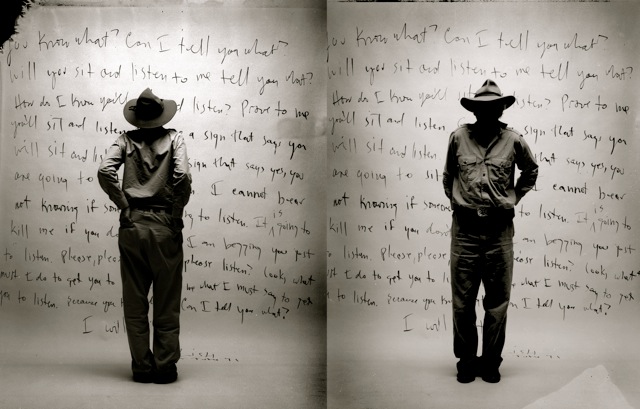
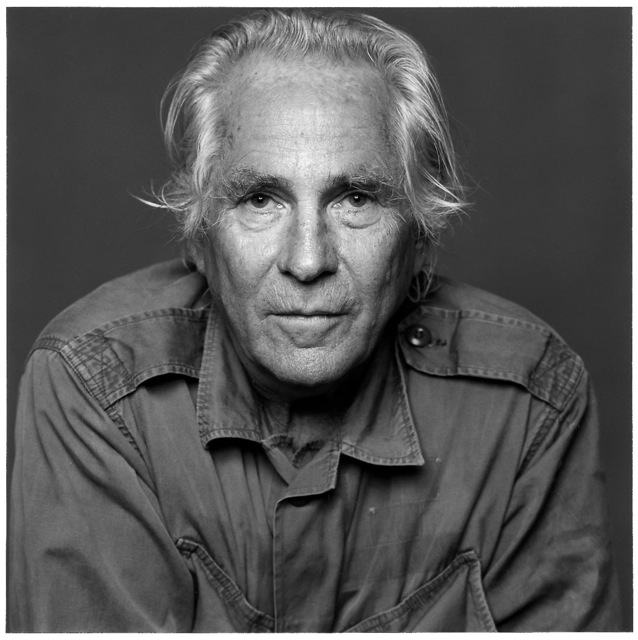
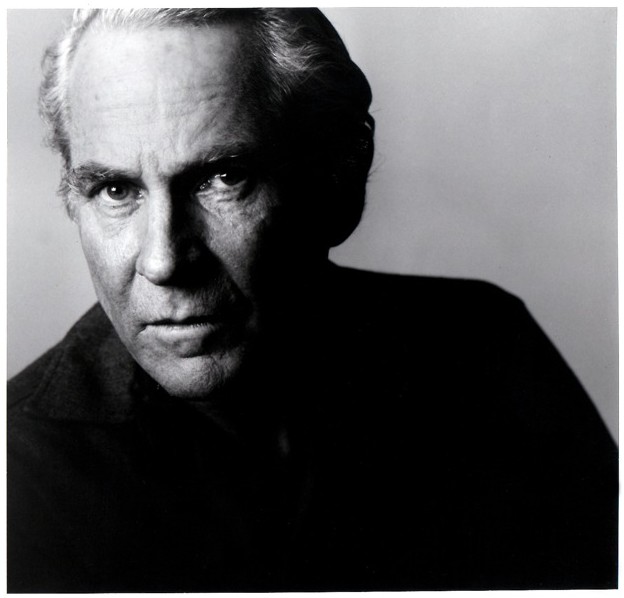
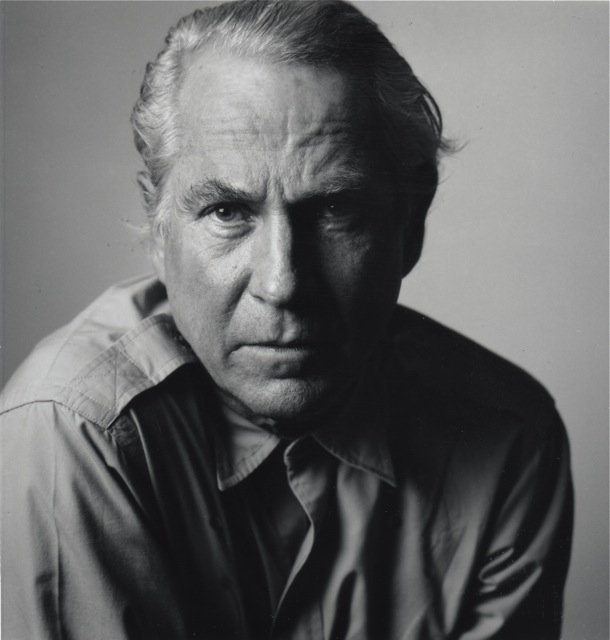
I’ve known bill hayward since 1993 when Gordon Lish had him take my author photo for The Life and Times of Captain N. Gordon depended on bill for a lot of his author photos and also his own jacket photos. And bill has kindly given permission for us to run a selection. The photo above is from bill hayward’s 2000 book of author/artist portraits Bad Behavior, a gorgeous collection, unique in the method bill chose to situation his subjects: he set them up in his studio with a giant roll of white paper and a bucket of black paint and various brushes and charged them to create their own scene. The results were spectacular as you can see from this image of Gordon Lish before the page: a double image, the author, wearing an out-sized Stetson, back and front and shadowed, first examining his own work and then facing the viewer/camera, somewhat diminutive in relation to his hat and his own work. The three portraits below are more conventional, the patrician Lish, the authoritative Lish, craggy and mythic, larger than life and every detail emblematic.

And beneath, Lish’s own words, in full cry, as it were. His introduction to bill hayward’s 1989 collection of images Bill Hayward.

dg

gordon lish ©bill hayward

Gordon Lish photo by Bill Haywardgordon lish ©bill hayward

 Gordon Lish photo by Bill Haywardgordon lish ©bill hayward

Gordon Lish’s Introduction to bill hayward’s 1989 book of images Bill Hayward

Come on, let’s face it, it’s tits and ass, right?

I mean, when it comes to sticking a camera in front of or—heh, heh—in back of: the good old nakedy naked bod, pal, I, for one, would like for you to show me how in Hades you think you are going to beat the rap of—ah, God, who’s kidding who?—of tits and ass, right?

Oh yeah, sure, I suppose you could go get real cute on us and stick your lens up on the ceiling or get it sneaked on down there from up under a floor which you went and made them make for you out of glass—but let’s get serious, okay?

Like, you bet, I, the looker, I, the eye, I, the lens, am—right, right—not ever going to go instantly anyway hunting down there and up there for the tits and ass as, er, well, as sort of let’s say distantly, terrifically, charmingly, discoverable fauna way on out there back behind the quaint but cunningly, dismissible topography of, um, the tops of the shoulders—or, uh, the bottoms of, yeah, the feet.

(Sure, sure, and when were the fucking feet ever like flat, you know?)

Make your fakes.
Meanwhile, we will — didn’t you always just know it, you devil, you? —just keep on checking the text for tits and ass. And, hey—Christ, yes! —for dicks, too.

Oh, but leave us not consider that there is always this other deal you always see—all the oopsie-poopsie bullshit evasions where the camera is going out of its fucking mind in some crazy, vicious song-and-dance aimed at the politics of giving the categories a quick shuffle and of knocking your brains out to punish some poor, helpless, arbitrary annexed zone of us (but, forget it, never really of just us but always only of a Jack La Lane-y species of us) into a dune, or maybe into an abyss, but anyway into a cruel, moronic geography via the pornography of partition, of amputation, of part.

I am talking about the stupid fascism of the fragment, the mute physics of the super-superficient!

Swell.

So this is the scene, those are the unbridgeable terms, these are the relentless players.

But now enter Bill Hayward. I mean enter Bill Hayward! Infernal machine in hand. Well, whatever he really has in hand—heart? Whereas—agreed, agreed—people are people and here they are, all of them waiting for him—buck-naked.

Not easy, right?

But I said: Enter, goddamnit, Bill Hayward.

Now go ahead, start turning pages—and see for yourself what a fucking artist can do when it comes to doing the unfucking impossible.

Gordon Lish: Introduction to Bill Hayward (Paglia Press, 1989)
—————————————————
bill hayward lives and works in new york city and montana.
bill_hayward_©billhayward
bill hayward ©bill hayward
Dec 022012
 

Herewith stunning and mysteriously timeless photos of the Vermont College of Fine Arts green, College Hall, and Alumni Hall, caught with a smartphone camera by John Solaperto who renders the familiar strange and other-worldly, out of time. He doesn’t just snap a photograph; he completely alters our perception not only by the common techniques of framing and point of view but also by his canny and original use of black-and-white and a photo app that makes new things look old. As John aptly points out, the photos look like they date from the 1920s, but they were taken last winter. I don’t know — this stuff knocks me out; I love how art twists the neurons in my brain, and these photos do that. And, frankly, I just warm to a real, down to earth photographer who doesn’t make a fetish out of gear and renders the world beautiful with whatever comes to hand.

John is an old friend from many a VCFA residency. Some of you know him as an amiable, intense, helpful presence at lectures and public occasions. It’s a pleasure to discover his art.

dg

—–

There’s an adage among photographers that “your best camera is the one you have with you.” My experience with the camera on my smart phone over the past two or three years has really driven that home for me. I’ve limited myself to only two camera apps, but there are dozens available.

I’m particularly taken with one called Hipstamatic, which lets me choose a lens and film combination that produces a black and white image with enough pixels that I can make a decent inkjet print at approximately 6”x6”.

The configuration with which I’m shooting produces an image in a square format. The camera is set up so I can’t see the entire scene in my viewfinder. Such a configuration adds an element of chance that I like. It’s an image capture process reminiscent of the plastic cameras popular in the 1980s and 90s that used 2”x2” black and white film. One must make a lot of images to get something usable in terms of content, tone, and sharpness. This particular series of images has a rather specific target audience, namely those associated and familiar with the Vermont College of Fine Arts community. I’d like to think, however, that they also have the potential to engage a wider audience of viewers in visual narratives more specific to the context of their personal life experiences.

The two images of skaters at ground level were shot late in the day on a rather cold Sunday afternoon in late winter. They were chosen from nearly 200 exposures, made as I walked around the rink on the college green. Besides the action of the figures, the photo has a certain quality of light that I find engaging. College Hall, functioning as a backdrop, adds to the nostalgic, period quality of these images. They look as though they could have just as easily been captured in 1912.

The aerial images of skaters were shot a few days later from a second floor window of College Hall. I was aware of the figures but thought of them as secondary to the composition of the other elements of the scene, i.e. the flag, sky, tree, and light post. As it turned out, the interaction of the figures with each other provides an even stronger visual interest  than the interaction of the figure with the other compositional elements. As a photographer, I feel that the image of the child with outstretched arms was an especially wonderful gift.

The aerial shot devoid of figures is included here as related to, but not really part of, the “skater series.” It was shot from the highest window I could reach in College Hall. While speaking with a colleague, I noticed the long, thin cloud or patch of fog moving rather quickly from south to north, just below the horizon. My colleague very graciously allowed me to open her office window to shoot. Of the 30 or so exposures I made to get this image, most had some part of College Hall’s architecture intruding into the composition. The one included here does not.

The night image of College Hall is an experiment in pushing the limits of available light. I think that the overall quality of light in the image, the footprints in the snow, and the diagonal motion created between the Christmas lights on the portion of the lamp post along the left edge of the image and the face in the clock tower, as well as the light in the doorway below the tower and the lamp post that lines up with the window in the center of the image, all work together to form a strong composition. The overall effect is eerie but pleasing.

All of these images represent the study of alternating patterns of light and dark tonalities. They’ve been edited with software, but not in a manner that is inconsistent with traditional dark room practice, i.e. I have made just basic tonal adjustments in all photos, and in some cases, I’ve done a lot of dodging & burning.

—John Solaperto

————————————————–

John Solaperto is a digital photographer and vocalist from Worcester, MA. He currently lives and works in Worcester, MA with his daughter and two grandsons. He is the Learning Resource Manager for the Applied Arts Program at Quinsigamond Community College and teaches Digital Photography in an adjunct capacity, evenings and online. He also spends approximately 12 weeks a year in Montpelier, VT serving as a media coordinator for Vermont College of Fine Arts’ two MFA in Writing programs and its Visual Arts program. He has an undergraduate degree from Clark University’s Studio Art Program (1993) and an MFA from VCFA’s MFA-V program (1995).


Oct 032012
 

A good photographer makes the world look different; good photography is not just a matter of reflecting what’s there — it’s a matter of perspective, taste, emotion, framing and rendering the world so that the viewer sees it fresh. In the best of his pictures, Roger Crowley makes myth of Montpelier, Vermont, makes it grand and spectacular, makes it look like no other place on earth. We all know Roger, without knowing him, because he’s there at every Vermont College of Fine Arts residency taking the graduating class photo. Now we get to know him a little better.

dg


Alley between the Coffee Corner Diner and Bear Pond Books in Montpelier, Vermont.

Snowy barn doors in Montpelier Vermont.


First Night Fireworks Downtown Montpelier Vermont.


A decaying poster on a brick wall reflects shadows of a band in Montpelier Vermont on July 3rd 2012.

American flag in Montpelier Vermont – July 3rd Parade 2012.

College Hall at Vermont College of Fine Arts in Montpelier Vermont.

College Hall from Cliff Street in Montpelier Vermont.

Bob Sassaman takes a noontime slide down a hill in Hubbard Park, Montpelier, Vermont during his lunch break.

— Roger Crowley

————————————————–

Roger Crowley is a freelance photographer living in East Montpelier, Vermont. He specializes in images of New England and Eastern Canada, sports, nature, landscape and portraits. His pictures have appeared in major magazines and newspapers as well as online publications. See more images at www.CrowleyPhotos.com.

May 232012
 

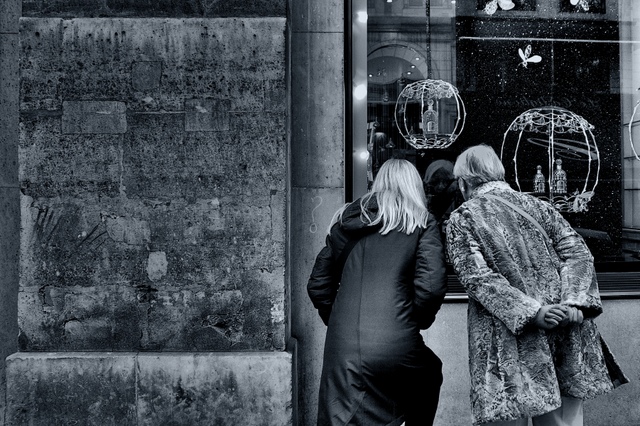
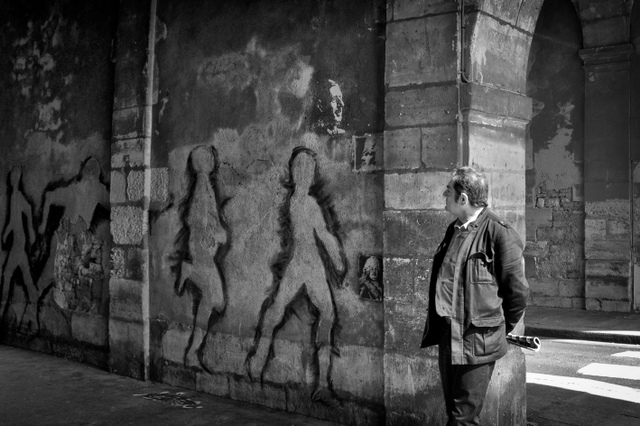
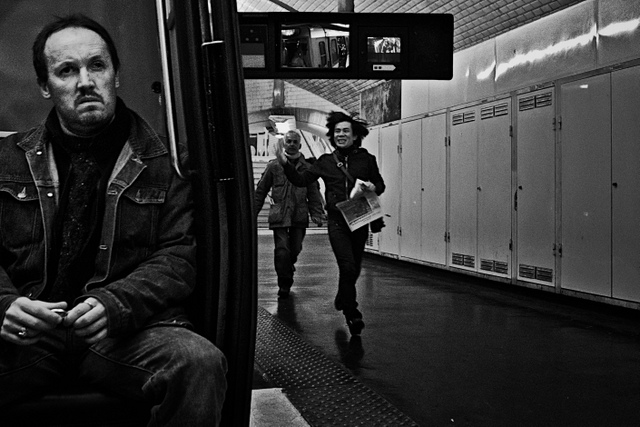
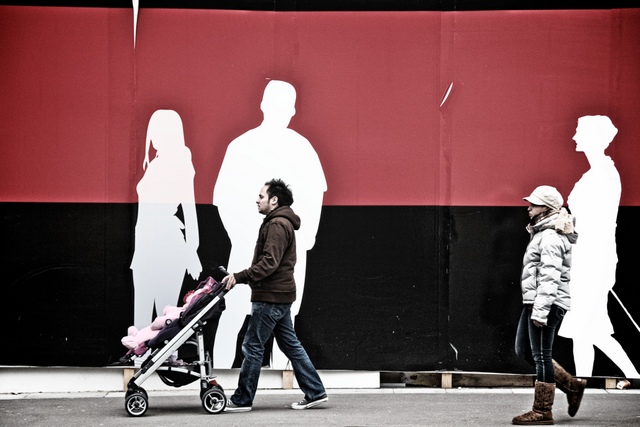
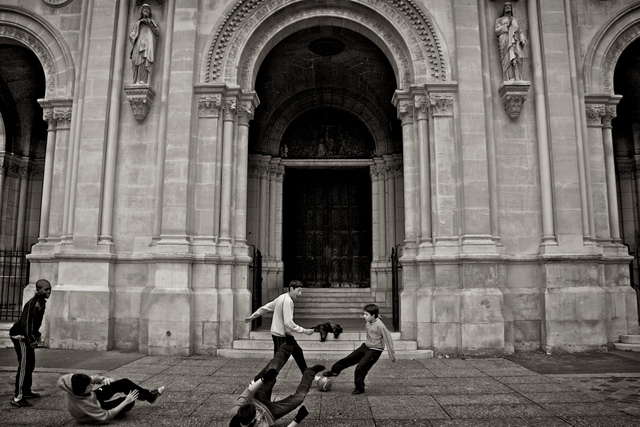
Here are some luscious photographs of Paris, not your tourist Paris, but the Paris streets, and not just the Paris streets but a selection of photos that are in many ways a homage to the history of Parisian street photography, that is, photographs with a particularity, an edge, derived from history and impersonation. These are from the Montreal poet/novelist Mark Lavorato (see his poem in the last issue) who started taking pictures as a moment of research for a new novel. He impersonated a 1920s Parisian street photographer who would be a character in his book, and, Lo! he became a photographer himself.

dg


I was researching my third novel, Burning-In (forthcoming), in which one of my characters is a photographer in the 1920s. What I soon learned in my research is that the art of street photography came before the advent of photojournalism. This was astounding to me; that the art aspect of photography came well before its utility.

I picked up a camera and took to the streets to learn about how my protagonist would feel as a street photographer, and I found that, surprisingly, it was me, and not my protagonist, who was doing all the feeling. So I dove into street photography with all the fascination and intensity of someone discovering a new and rich medium.

— Mark Lavorato


— Mark Lavorato

—————————————-

Mark Lavorato is the author of three novels, VeracityBelieving Cedric, and the forthcoming Burning-In. His first collection of poetry, Wayworn Wooden Floors, had just been published. One of the poems from that book was published in a previous issue of Numéro Cinq. Mark lives in Montreal and is currently seeking galleries to exhibit his work.


Aug 032011
 

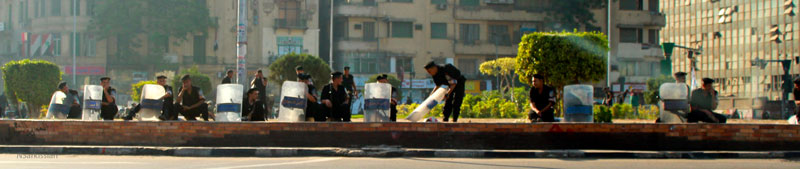
LineUP1905

Line Up

Tahrir Square, August 2011

Photographs by Natalia Sarkissian

.
Since the last time I wrote about Egypt after the Revolution, just a month ago, the atmosphere has changed. The military police are back in Tahrir Square after several recent protests became violent. Tanks have once again been deployed. And in the side streets, vans and more police sit, at the ready. It’s Ramadan, and according to local newspapers, “this year it will be more political than previous ones.”

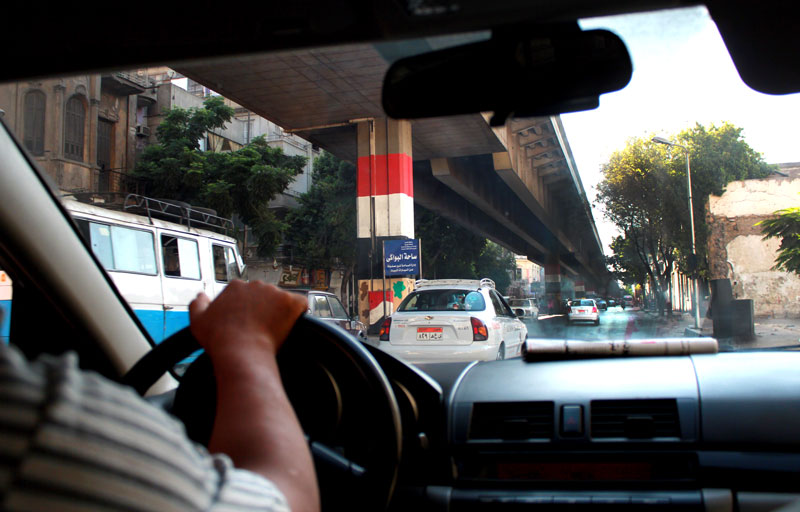
Today, August 3, history is being made. Today Hosni Mubarak has been flown in from Sharm el Sheikh. His trial is set to begin. Today, armed with my camera and accompanied by my driver and my husband, I went to Tahrir Square. In addition to the police, we found others there, like us, gathering, waiting. Wondering what is to be.

LionGateBridge1971

Bridge over the Nile at dawn

DrivingwithMo2094

On our way with Mohammed

Continue reading »

Jun 022011
 

Something self-indulgent about dg publishing these lovely Nicole Dixon photos because they reference a brooding, romantic, Heathcliff streak in him, the part of him that likes the idea of climbing Signal Hill in St. John’s, staring into the fog, and knowing there is nothing between the rock he’s standing on and Europe to the east except the vast, surging, very cold Atlantic. (Just behind you is Deadman’s Pond and just in front of you is Cuckold’s Cove—they have a way with names in Newfoundland.) There is also something satisfyingly uterine about St. John’s Harbour—ships go in and out through a narrow passage called, um, The Narrows (which you can see at the bottom of Signal Hill) while the harbour itself is, well, it all looks like an anatomy diagram dg remembers from when he was 12. DG has many writer friends in St. John’s who sometimes call him up late at night from the bars. It is also the home of the Burning Rock writing collective, an amazingly vibrant literary community with the best name ever. (Sometimes it seems St. John’s must have more writers per capita than any other place in the world.) On a personal note (as if talking about anatomy diagrams wasn’t personal enough), dg’s mother was stationed in St. John’s as a radio operator with the Royal Canadian Air Force during World War II. He has photographs of her marching through the streets as part of the VE-Day celebrations (also pictures of the massive victory party after). She used to like to go out to Cape Spear, just south of St. John’s and the eastern-most tip of North American, and look out into the Atlantic, too.

Nicole Dixon is an estimable fiction writer, with a first story collection coming out next year (see bio below). She  took these photos on a recent trip to St. John’s to attend the Atlantic Provinces Library Association conference, where she co-presented a paper on Sea Stacks (seastacks.ca), a web-resource she built to promote and disseminate information about Atlantic Canadian authors and books for children and teens. Much appreciated.

dg

.


IMG_0297

Continue reading »

May 012011
 

NC has a whole hybrid art theme, understated but insistent—Nance Van Winckel’s photoems, graffiti art, Domenic Stansberry’s graphic novel, and Nance’s off-the-page workshop video. We also like our art seasoned with a dash of wit and arrogance. So on this slow, droll Sunday, NC offers for your delectation a spritely, deadly comic photo essay by photographer Melissa Fisher who recently spent an afternoon in Whitehall, NY, (where the United States Navy was founded, mysteriously far from any ocean front, and a place noted for its Big Foot sightings—there is a Big Foot Liquor Store). Melissa has, in fact, a lot of affection for Whitehall where once she says, her car broke down and the local mechanic was sweet and persistently helpful as was the guy at the Sunoco station where she got a slice of pizza. She also, being from Vermont, has an affection for the backwoods, forgotten places, vestiges of older times, and the quirky things you find when you get off the main street. Whitehall proved to be a goldmine of comic signage, poignant in its juxtaposition with a kind of upstate economic decline. Her work has been published in Vermont Life and Hunger Mountain, and she has had an exhibition at After Image Studio in Montpelier.

dg


Continue reading »

Apr 272011
 

Tucked away in the pages of Numéro Cinq are skillfully told stories that pull us inside. The best of these hold us tight and whisper things that haunt our thoughts, urging us to care more deeply. Robert Semeniuk tells such stories with his photographs. He has been a photojournalist and human & environmental rights activist for 3 decades. I met Robert and his wife, musician Ruta Yawney on Bowen Island a few months ago and today I am honored to introduce you to Robert’s work. Each of the images shown here is excerpted from a story. These particular stories about the Inuit of arctic Canada, preventable blindness in Ethiopia, war affected children, and AIDS in Botswana are elaborated in image and word on Robert’s webpage.

— lynne quarmby

Five Photographs

By Robert Semeniuk


Tea time on the cariboo hunt

Gaza boys playing ‘Arab & Jews’

Continue reading »

Mar 102011
 

Allen Ginsberg, QE2, Albany, NY, 11/29/90


Dan Wilcox is an Albany, NY, poet and photographer who claims to have the world’s largest collection of photos of unknown poets. But many of the poets he has photographed over the years are, in fact, very well known. Allen Ginsberg, Anne Waldman, Lawrence Ferlinghetti and Quincy Troupe are among the illustrious authors who have found their way to Albany. Also pictured here are dg’s friends, the novelist William Kennedy who, as director of the New York  State Writers Institute, hosts many of the visiting writers, a young Pierre Joris whose translations have been published on NC, and Susan Novotny, owner of the Bookhouse.

dg

I started taking photos many years ago of poets & writers reading their work & my photos have been used for the cover of poetry chapbooks, for publicity & author’s photos, in poetry magazines & online.  Before digital cameras, I was often the lone photographer in the audience.  I estimate to have approximately 10,000 photos, many of famous poets & writers, but mostly the unknown community poets who read at open mics in the Capital District area.  You can many of my photos at www.flickr.com/photos/dwlcx. —Dan Wilcox

Author Photos

By Dan Wilcox


Allen Ginsberg adjusting his camera, QE2, Albany, NY 112/29/90


Allen Ginsberg & William Kennedy, Half Moon Cafe, Albany, NY 11/30/90

Continue reading »

Feb 052011


Whirlpool I (Above and Below)

A whirlpool dyad: one we see from above, the other we view from the side.

In the same way, I present to you two views of the artist’s mind: one as seen “from above” in an artist’s statement, and second, from the side—a visual mind-map of influences on this photo-series (Steven created this map using node software).

Whirlpools

“Like our own bodies, whirlpools take the molecules of the material world and organize them into temporary dynamic systems. For me, these abstract images of whirlpools on the Shenandoah River, North Fork serve as metaphors for the energy, beauty and brevity of life.”—Steven David Johnson

Continue reading »