Aug 182013
 

Ann Ireland

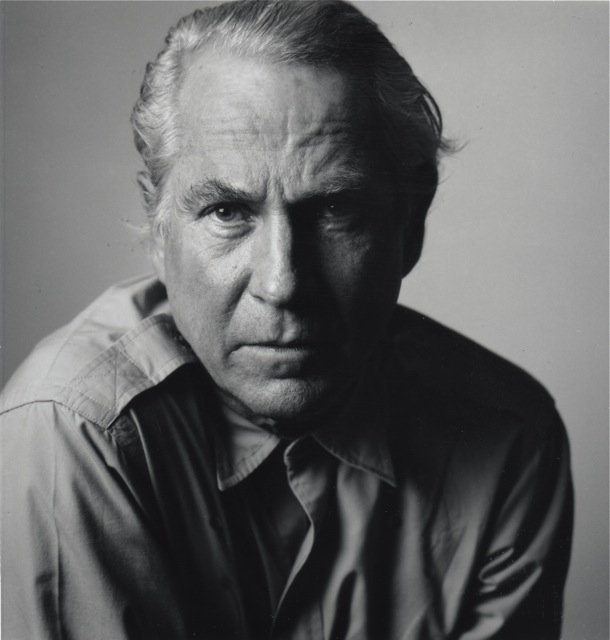
Part way through the opening chapter of Ann Ireland‘s novel The Instructor, the narrator remarks that her putative lover (and art teacher) is like “a scout for some enemy camp, logging facts for a future ambush.” To me, this is about as exact a description of love as I have ever come across. La-de-dah romantics tend to ignore the fact that two people are distant countries, speaking foreign tongues, and that the progress of love is a sort of invasion that is always followed by hasty translation, colonization attempts, power struggles, and, often, retreat. Alice Munro, who wrote the jacket blurb for the novel, gets the picture. The Instructor, Ireland’s second novel, has just been reprinted by Dundurn Press, and we have the honour of publishing the first chapter here for the occasion. The novel tells the story of how 19-year-old Simone Paris falls for her much older art teacher, Otto Guest, on the first day of classes — and what ensues. Ann Ireland is a sophisticated observer of human affairs (of all sorts), and she is deceptive: she tells a good story, sure enough, but she also eschews relationship stereotypes by drilling into the complex undercurrents and finds uneasy answers.

dg

Chapter One

MY DEAR OTTO:

See my hand shaking like crazy? It’s not because I’m scared, not in the least. Though two hours ago I was so damn nervous and fidgety I scurried to the outhouse every ten minutes, then worried you’d choose that instant to roll up the hill. There I’d be, popping open the door of the little pagoda, while you leaned against the door of your car, grinning.

I jammed crackers in my mouth, thinking I needed the salt.

Why was I in such a state?

After all, you were history.

The phone call had come out of the blue. “Let’s have tea, just the two of us,” you said, your voice so low and intimate I glanced over my shoulder just to make sure you weren’t standing there.

My own voice, when it found itself, was guarded.

“Late afternoon is best. I’ve got meetings.”

That sounded important.

It is important. We’re running through the slate for next year’s program and I’ve been fighting for that New Music trio to be given the residence position.

“Why do you want —” I said, too late, into the dead phone. As was your habit, you’d hung up without warning. I was shaking then too … for this was my chance to show you what I’d become, how I’d devised a life of my own.

To begin with, the vehicle was all wrong. Come on, Otto, a brick-coloured Honda? It had to be a rental.

When you slipped out of the car, legs first like some starlet, I let out a sigh. For it was you, in the flesh and life-size. You strolled up the dirt path jiggedy-jog, legs bent at the knees, hands thrust deep into your pockets, so loose-limbed I swore you were about to keel over. Your face, grinning widely, so sure of its welcome, grew bigger and bigger — and still I didn’t move a muscle. I was nailed to the position I’d decided on since yesterday’s phone call: arms crossed, back sloped against the doorjamb of the cabin, wearing a black tank top that bled into the darkened interior. Like some Walker Evans photo, I decided, most of my hair drawn back with an elastic, the rest sweeping over my face in the lake breeze.

“Very nice, Simone,” you nodded, missing nothing. A cigarette dangled from your lips. I let you come right up until our toes touched.

“Hello, Otto.”

Of course we embraced, though perhaps a little stiffly. My face got buried in the base of your neck and it seemed to me I’d spent a lot of time gazing into the hollow of your throat where the pulse tapped silently. My fingers curled around the cloth of your collar — threadbare, soft denim — and I was whisked without warning to the hill outside San Patricio: hard earth and scrubby cactus, burros grazing. The heat and dryness made our skin crack and fissure, mimicking the landscape. We’d hiked all afternoon toward the peak where the cross stood, passing only gruff men in straw hats tending goats, then, as we neared the top, no one at all. It was your idea that we couldn’t look down till we reached the summit.

“No cheating, Simone.”

You wanted the vista to hit us in one overwhelming stroke — no dribs and drabs, no gradual seeping in. I scrambled up ahead the last few feet and touched the wooden cross, then turned to look. I felt myself teeter toward the land, which rolled out in all directions, a vast tanned skin of parched mountain and plain declining toward the horizon in minute gradations of brown. The town, with its clay roof tiles, sprawled up the walls of the valley. The sounds were more precise in distance, less cluttered by our own noises: dogs yelped and howled in the endless loop of call and response, while ancient buses groaned up the hills. A woman was calling to her children, her voice spinning effortlessly through the miles of open space. For once I forgot you were there until suddenly your arms swooped around my waist and tugged me in: this same shirt, I swear, my eyes batting against this hollow of a throat.

“I would hardly have recognized you.” You reached up and pulled off your cap, regulation New York Yankees model. Your hair, always bushy, had been flattened, and when you ran your hand through it I saw extra streaks of grey.

“Come on, Otto, it hasn’t been that long.”

“Four or five years.”

“Six, actually.”

“Really?” You seem genuinely astonished. “You look fantastic.”

I had to smile.

Of course you’ve got twenty-five years on me — and look it. What’s happened to your eyes that used to be so clear and sharply focused? And I have to say this, Otto, your jawline is starting to ripple toward the neck. You seem thinner, more brittle, though I felt the little pot belly when our bodies pressed together. An unexpected squish.

“I look like hell, I know it.”

“I wasn’t going to say that.”

“But you were thinking it, dear.”

Dear. That rankled.

We continued to stare at each other, you jiggling change, me stock-still. And I thought, nothing’s happening. The butterflies that had been charging through my stomach all morning seemed to have been drugged. Do you understand what I’m saying, Otto? You stood a foot away and I felt a big fat zero.

“Going to let me in?”

“Of course. Sorry.”

You pushed past and I let you poke around the cabin, lifting objects off the mantel: the cracked coil pot, an Indian basket, the black-and-white photo of Father digging the outhouse hole. The woodstove received special attention, and you lifted the burner and peeked inside. I wouldn’t have been surprised if you’d reached in and touched the ashes, but you just looked, as if deciding whether I’d chucked something in there to burn. After, you strolled past the coffee table, picked up the book of feminist film criticism, flipped through, and I got the distinct impression you knew it had been selected for display. My cheeks heated up. Your hand swept over the tops of chairs and bookshelves, leaving streaks of shiny wood. Why did I feel you were a scout for some enemy camp, logging facts for a future ambush? I stiffened; the nervous feeling kicked in again. It was almost a relief; this was how I expected to be with you.

I decided to make tea and handed you the kettle so you could fetch water from the outside pump.

“This place is great!” you enthused on your return. “Your dad made it?”

“With my mother.”

“It’s like …” You tilted your head. “The house where the seven dwarfs lived. A cartoon cabin.” You hunched under the door frame. “Bet your old man is exactly five foot six. Everything’s scaled to that height.”

Right as always.

I found of box of lemon biscuits and tossed them on the table. You began to make short work of them, knocking two at a time into your hand, while crumbs scattered down the front of your shirt.

“Where’s your mother now?” you said, dropping onto a chair.

“She moved into a condo in Etobicoke. Nice view of the lake. She loves it.”

“And your dad?”

“He died three and a half years ago.”

“I’m so sorry.” You winced and briefly shut your eyes. “I didn’t know.”

“Of course not: how could you?” I pulled away from your reaching hand and watched you swing your legs so you could follow my movements around the room. You didn’t speak, and I knew you were hoping I’d say more about him. Your face waited, creased in sympathy. I measured tea into the Brown Betty pot and rinsed out two mugs. I collected the plastic honey jar from the shelf, then poured milk into a tiny pitcher. I would not give you this chance to pry me open. The spoons received a quick wipe on the towel.

You watched each gesture avidly.

“Then will you at least tell me what you’ve been doing with yourself?”

I let out a breath, staring at the back of my own hand as it closed over the teapot handle. You could still do it, make me achingly visible to myself.

“What do you want to know, Otto?”

“Everything. The works — every second since you left me.”

“You think I’ve been writing it all down, waiting for the day you’d turn up again?”

You smiled quickly. “Haven’t you?”

I flushed, because in a way I had. Lived my life and at the same time wondered what you’d make of it, anticipating your comments, your chuckles, and of course, the withering asides that had the effect of turning whatever I was doing — or whoever I was with — into something faintly comical.

“Well?” You leaned forward, following the motion of my fingers as they wrapped around the copper tray. “There must have been plenty of men sniffing around.”

You wanted all the details, fixing me with your eyes until I’d find myself describing the colour of the sheets, the texture of skin and hair. I set down the tea tray, the smell of Earl Grey a consoling presence, and pulled up a chair.

“Anyone serious?” you persisted.

“What’s this all about, Otto?”

“Curiosity.”

“Is that all?”

You hesitated only a second. “Of course.”

I stared into your face looking for signs: irony, amusement … but could read only the wide-eyed innocence you’d chosen for display.

I could tell you about Raymond, the dancer — but stopped just as I saw the edges of your mouth tighten. Already I was turning Raymond into a story, a series of tiny tropes to make you howl with delight and commiseration.

I shook my head, half laughing at my narrow escape, trying to shake that eager stare, at the same time bathing in its intensity.

“No, Otto, it’s my turn.”

“Your turn?”

“That’s right. My turn to ask questions.”

“Ahhh,” you exhaled noisily and pushed your chair away from the table. You lifted your chin toward the window and a glazed look came over your face that I instantly recognized: the Shift. The moment of withdrawal. Suddenly, with the practiced move of an old-time actor, you launched, full-tilt, into a monologue.

Something about light refraction that you’d read in a scientific journal. “Great diagrams, and a nice sequence of time-lapse photos …” Your legs splayed and you crooked an arm over the back of the chair.

The room shrank.

“… This guy’s theory knocks away all our notions of how we see, how our eyes gather and process light.”

I was supposed to lean into every word.

Instead, I gazed at you in amazement; you’d known, hadn’t you, exactly what I’d been about to say? The more you blabbed, underlining every third word with your finger on the tabletop, the sadder I felt.

And I was bored, Otto.

That was a first.

“… So you just change the angle of dispersal.” You hiked a cigarette from the package and positioned it just so on the table. “What appears to be pigment is really nothing more than mirrors!” You giggled with delight.

“Otto —”

“Think what could be done —”

“Ot-to —” singing it now like “Yoo-hoo.” Nervy. You weren’t accustomed to being interrupted in full flight.

Finally you tugged your gaze away from the open window and looked at me.

“I want to know why you’re here.” I was proud of that, the simple declarative statement.

Our stares hooked for an instant, then, incredibly, you drop-ped right back into the soliloquy as if I’d never uttered a word.

“… bombard them with photosensitive materials …”

I saw exactly what was going to happen, how you’d leave with nothing said and that it would drive me crazy and I’d spend the next six months berating myself, reconstructing the scene. So I pushed my chair back and brazenly set my face close to yours.

“Why are you here, Otto? Don’t natter on about goddamn light refraction — mail me the article!”

Your cheek muscles worked up and down. Your stare was flat, as if you were overhearing some foreign language. Then you chuckled, flicked an ash off your cigarette, and said, “You haven’t yet told me what you’ve been up to.”

You weren’t going to be snared by an amateur.

“It’s been six years, Otto.”

“So work backwards.”

Of course. Time is a fluid concept, its direction determined by a tilt of the glass.

“I’m director of the Summer Arts Festival.”

A quick smile. “Good for you.”

“As of two years ago.”

“Still making art?”

“No time.” I made a dismissive gesture but felt the familiar pang.

“Of course not. You have a real job. Someone has to run the country.”

“It’s a big operation,” I heard myself insist. “We cram two months full of chamber music, author readings, dance performances, workshops, and classes. Our budget’s doubled in two years and most of that is local money.” I sounded like the Chamber of Commerce.

You nodded. Smoke drifted from your nostrils and made its languid way toward the ceiling rafters. You were enjoying this. And why not? I was right where I had always been: desperate to please and impress you.

“I’m on a roll,” I declared. “They do everything I want. When Krizanc, chairman of my board, starts to rant about ‘market-driven programming,’ I tell him we have to create our audience. Not let the audience create us. Make them drowsy with something familiar — then kick open the gates. Blow them away!”

Who was this talking?

All these years of careful filtering, reclaiming my voice — and now this: the mimic reborn.

Late-afternoon sun pressed through the window and I leapt to tug the curtain. “It’s all in the presentation. Make them think they’re on the cutting edge right here in Rupert and it becomes a point of pride. They expect art to be tough; they want it to be.”

Your word, as in “tough-minded,” “tough-thinking.”

“Bravo.” You hooked a chair with the toe of your boot. “Sit down, Simone, you’re very flushed.”

I obeyed, hating the way I felt, overheated and sticky, pulse racing.

“My half-dozen years haven’t been nearly so fruitful.”

I forced myself to look straight into your face. “What have you been doing?”

One of your famous pauses.

“I stayed on,” you said at last.

“In San Patricio?”

You nodded.

“What on earth did you do there for six years?” I was shocked; it never occurred to me that you might have stayed on. All this time I’d been walking down Spadina Avenue in downtown Toronto every chance I got, glancing up at your studio window, wondering if you were in there with your ripped-up magazines and glue stick.

“Got drunk most days. Made a truckload of bad drawings. Then one morning I got sick of the sun and the smell of rancid cooking oil and started to drive north.”

“And?”

“That’s it.”

“What about your ex —”

“Wife? Carmen’s out of the picture, except where Kip is concerned.”

Your son. He’d be twenty-one by now. Older than I was when I stepped on the plane to come home. “What’s he up to?” You always loved to talk about your son.

Your fingers wrapped around your teacup, the nails chewed to bits. “I saw him this morning. Not so good, Simone. Not so good.”

I stared.

“They’re adjusting his medication. Makes him screwy, his equilibrium is shot. The kid can hardly walk.”

“Medication? What are you talking about?” My self-consciousness vanished.

“He gets seizures.” Your eyes scanned the room without focusing. “It began five or six years ago. Of course, you’d have no way of knowing.”

“What kind of seizures?”

“He goes months without any problem, then suddenly, keels over wherever he is: the gym, a crowded subway.”

“Jesus, Otto, I had no idea.”

“Of course not.”

“It doesn’t have anything to do with” — I struggled to sound casual — “that time he fell off the boat?”

“What?”

You sound genuinely mystified.

“In San Patricio, on the lake.” I prodded, already wishing I hadn’t brought it up.

You stared at me, fully engaged for a few seconds. “I don’t see how. He wasn’t under more than a minute.”

Right.

“The worst of it isn’t the seizures,” you went on. “Which happen maybe three, four times a year. It’s his attitude that stinks. Yesterday, at the hospital, he made his neck go all floppy, then titters, ‘What a shame your kid’s a crip.’ Crip my ass!”

The table shuddered as you smacked it with your hand. “Ninety-five percent of the time he’s perfectly okay. There’s guys a lot worse off than him — blind! Imagine being blind, or deaf! But you don’t see them hanging out on Queen Street, playing skinhead, cadging cigarettes and spare change. He snorts PAM out of a goddamn baggie …” You took a deep breath and snapped open the top of your shirt. “He’s quit three schools, got caught boosting a pair of Doc Martens from the Eaton Centre …”

Had you driven two hours to spout off against your son, ask my forgiveness for being such a lousy father?

“I’m sorry, Otto.”

“So am I.” Your tone was aggressive, as if you were determined I’d know the worst of it. “I thought if I stayed far away in some hill town everyone would be better off, that I was so fucked up it would overwhelm them. Pure ego.” You laughed. “Which I’ve never been short of.”

I didn’t deny this. “He lives with you, or Carmen?”

“He’s in a halfway house for kids who screw up. They huddle out on the sidewalk most of the day, smoking, or they’re taking courses in something called ‘Life Skills.’” You snorted. “He asked after you, just as I was leaving today.”

“Me?” My mind was racing.

“He wondered if you were ‘still on the scene.’”

“What did you say?”

“That I hadn’t seen you for years. That it wasn’t meant to be.” Your knee pressed against mine. “He’s convinced you saved his life, that time he pitched overboard.”

I reddened. “That’s absurd.”

“Even so, he likes the idea that you pulled him from the brink.”

“But it’s not true!”

“He thinks it is.”

First your knee, now your thigh. Uneasy, I shifted, but didn’t move away.

You reached for the cookie box and shook it. Empty.

This wasn’t the scene I’d be picturing, far from it.

Hell, I was feeling sorry for you. I’d been prepared for anger — even desire, but not this.

“Sometimes I used to feel you two were conspiring against me.” You spoke with studied casualness. “When you came in from riding those underfed nags, Kip was so flushed and healthy-looking — I used to wish I had that power.”

Power? I had to laugh. So you were jealous, Otto. This notion would have pleased me once. Now I just felt drained. The numbness crept back. Here we were again, using Kip as our topic, and I was supposed to pretend I cared. I reached for the tea things and scraped cookie crumbs onto a saucer.

A long time ago I was reaching for you to tear the world open. Now, in your presence, I felt hemmed in, claustrophobic.

“I need to live in Toronto again, to be near Kip.”

“That makes sense.” I didn’t hide a yawn.

“Last Saturday I picked up the newspaper and who did I see but you — with this most professional smile planted on your face. Very impressive, Simone.”

“You saw that?” I couldn’t help feeling pleased. The Globe had done a feature in the Arts section, underlining how the Summer Festival had “revitalized” the area and pinning much of the success of its “fresh, young director.”

“I thought, She looks so damn competent — pretty too.”

I crumpled the cookie box and tossed it toward the trash.

“I’m flat broke, Simone. Benny says the art market’s shriveled, nothing’s moving, nothing he can do for me.”

Benny — your dealer.

“There’s a recession, Otto. Even in San Patricio you must have heard about it.”

“I need a job.”

“Right.” I still didn’t get it.

“So —” You followed me to the sink with your saucer and cup. “You’re running this nice little festival. You could fit me in, as a teacher, artist-in-residence. I’m flexible as an old shoe, and more to the point, I’m desperate.” A smoke ring escaped from your mouth and hung in the air.

“As a teacher,” you continued, “I’m the best there is. You, if anyone, should know that.”

I dumped the leaves into the compost bowl. Now I understood why you’d come.

“We always got along well.”

I stared, mouth open.

You were jiggling a set of keys: Budget Rent A Car. At least I was right about that. “Think about it. Drop me a line, or call, as soon as you get a moment. I’ve got my old studio back.”

* * *

The little Honda bucked down the hill until its muffler scraped highway asphalt.

Then you cranked your window down and shouted into the hot still air: “You must feel very safe here!”

I opened my mouth to protest — “Who the hell wants safety?” — then remembered: they were your exact words, uttered years earlier.

It was a scruffy copy of Lassie Come Home, borrowed from the Rupert Public Library, and as I turned each page my fingers buffed scabs of peanut butter and petrified snot.

I didn’t even notice the sun was falling and I was losing my light. I simply tilted the book a little more every few minutes — until a word stopped my eye mid-sentence.

What was this word?

She.

Lassie, I’d just discovered, was a “she.”

The book dropped between my knees. Lassie, the hero of the tale, was actually a heroine. That was like those other despised words: poetess, actress, cowgirl — images of women in fringed skirts, riding sidesaddle, squealing with terror. How could I identify with the girl version of the real thing? How can fantasy be populated by underachievers?

—Excerpted from The Instructor

Copyright © 2013, Ann Ireland. All rights reserved. www.dundurn.com

———————-
Ann IrelandAnn Ireland is the author of four novels, most recently THE BLUE GUITAR, which has been getting excellent reviews all across Canada. She coordinates the Writing Workshops department at the Chang School of Continuing Education, Ryerson University, in Toronto. She teaches on line writing courses and edits novels for other writers from time to time. She also writes profiles of artists for Canadian Art Magazine and Numéro Cinq Magazine (where she is Contributing Editor). Dundurn Press will be re-publishing Ann’s second novel: THE INSTRUCTOR over the summer of 2013.

Aug 152013
 

stig

Herewith is “Us.” I’ve chosen this excerpt of Through the Night (Dalkey Archive Press), translated by Seán Kinsella, to illustrate the power of Sæterbakken’s prose, particularly his narrative voice and control of the moment. “Us” comes early in the novel, and is perhaps the origins of Karl and Eva’s eventual separation. But as this section makes clear, Karl poses many existential questions on love and fidelity, which are paralyzing, and for him unanswerable. This rather prismatic questioning of life is repeated throughout the novel, adding to the novel’s overall tension and psychological terror.

Jason DeYoung

cover

Us

“Do you think the two of us will always be together?”

We’d eaten a late dinner, and I was pouring Eva some wine from a newly opened bottle, after she had, surprisingly enough, asked me to check and see if we had one. I felt a smile cross my face as I stood in the closet with the bottle in my hands, Eva had that carefree air about her, the one she usually had, in fact, when circumstances suited her, and as I stood in the kitchen cutting off the bottle’s seal with the tip of the corkscrew, I couldn’t help but smile again, as if it were our very first night together.

“Do you think the two of us will always be together?”

The question gave me a start and I tightened my grip on the bottle, anxious about where she wanted to go with this. Why did she ask? Because she figured, no matter which way she looked at it, that the answer had to be yes? Or because she figured, no matter which way you looked at it, that the answer had to be no? And I thought about how often the questions we asked each other were in reality the questions we wanted to be asked ourselves.

“Do you think the two of us will always be together?”

I looked at her. Her neck, her shoulders. So beautiful, everything! Sometimes in the evenings I massaged her while she watched TV. I felt like a sculptor when I did it. This was what a sculptor must have felt, I imagined, when he had finally gotten a piece just as he wanted it, standing there running his hands over his finished work. And, in fact, she now placed her hand on her own shoulder, there at the table, and began to rub at it, without being aware she was doing so, which was usually an expression of exhaustion, self-pity, of wan despair, but which now seemed more like a self-caress.

“Do you think the two of us will always be together?”

In order to avoid answering, I raised my glass and clinked it against hers, and asked for her own opinion on the matter. The subject could hardly be coming up out of the blue, it occurred to me, when I actually thought about it: it was only a few days since one of Eva’s old friends, whom she hadn’t heard from for years, had called her up and described in detail—they’d been on the phone for almost three hours—the last few years of her marriage, a marriage that had lasted since the days she and Eva had been at school together, but was now over, as it had turned out that her husband, who had been her childhood sweetheart, was jumping into bed with practically every woman who had come his way, most recently with his sister-in-law, something that of course had come out, by and by, and had in turn triggered an absolute avalanche of confessions. This friend told Eva that she felt that her entire life had been ruined. All those years she’d regarded him as her one and only, believing him to be regarding herself as his . . . She’d said she would have felt better if she’d been the one who had done it, if she’d been the one who had lied and cheated, the one who now had to put up with the accusations, the one racked with shame and regret. She’d embarked on a few reckless escapades after she’d found out, she confided to Eva, as a revenge of sorts. But it was too late. There was nothing to be gained from it, neither for her nor for him. Nothing for her to win, nothing for him to lose. Everything was ruined. And she had never even had any fun of her own!

“Do you think the two of us will always be together?”

I looked at Eva. I remembered when I had gone back to her place for the first time, how amazed I’d been at how neat and tidy it was. It was like a household already, just as though the apartment was furnished for the life she wanted but had yet to acquire. It was a home, just standing there waiting for its family to arrive. And I remember thinking with horror about my own one-bedroom apartment, which she still hadn’t been to, how hopelessly juvenile and unfinished it would appear to her compared to all the things she kept around her. The chairs she had were comfortable to sit in, in the kitchen she had good quality knives on a magnetic strip above the range. She wasn’t a student! She was a complete person! There was something extremely appealing about it. I’d been filled with admiration as I looked at her standing there with a bottle of wine in each hand, asking me which I’d prefer; I wanted to move in with her right away, abandon everything I had, take nothing along, just advance to the start, her start, and begin there, over again.

So what did I think? Did the fact that I hesitated, that I didn’t have a ready-made answer, mean that the answer was no? Or was it just that I hadn’t formed any particular opinion yet? In which case it must mean that one outcome was just as likely as the other? Why hadn’t I thought it through properly? Was it because I was so certain that nothing would ever happen that could threaten us, our relationship, the vows we’d made?

I looked at her, the lovely renewed Eva. The just right level of tipsy Eva. The slightly nonchalant, amenable Eva. Whenever I dreamed of her, she was wearing the red dress she’d had on the first time we went out, to that Chinese restaurant. Yes, I think the two of us will always be together, I thought. What else could we possibly want? Her hair, which had grown and was long, fell across her face every time she turned her head, but it was as though she wanted this to happen, since she liked to rake her hand through it, gather it, pull it back behind her ear in a fresh futile attempt to fix it in place, the most beautiful of power struggles.

I looked at her and thought: Now it’s turned into the kind of night where anything can happen. Now we can say anything, anything that comes to mind, without either of us being hurt. At this moment we can take anything. And I remembered a film I’d seen, where you could enter another dimension through a hole in the atmosphere that was only open at certain times, and even then only to those who knew the secret formula. It was there now, the wormhole. It was right in front of us, the possibility to say anything we wanted, exactly what we had on our minds, without the need to take anything else into consideration. At this moment we ourselves didn’t need to be taken into consideration, neither of us. Right now we were the opposite of jealous. At this moment we were equally strong and could tolerate everything.

There and then I felt the need to do it, reveal something, confess something, anything at all, in order to affirm the new intimacy that had arisen (and that would soon vanish again), the candor that now existed between us (and that I knew would soon close again, like a flower that only blooms at night, which folds together as soon as the first rays of the sun fall on it). I despaired. Did I really have nothing to say? No, it seemed that I didn’t. No confessions. No admissions. Nothing to answer for. My conscience was clear. I felt ashamed at the thought. Because it was true, there really was nothing. Nothing other than some altogether insignificant episodes, some embraces that perhaps lingered beyond the merely amicable, some too-close dances, some fleeting touches, one or two kisses that were so innocent that I’d only make a fool of myself if I told Eva about them.

I thought: What in the world have I actually gotten up to in all these years?

A thousand thoughts, a thousand possibilities tumbled around in my head—I had to act quickly, our night was in danger, it could collapse at any moment, and if it did, then nothing could save it from the wan abyss, from the greedy maw of everyday life—but none distressing enough to take advantage of this opportunity, this potential for a new sort of relationship between us. No, to my horror, I had to face the fact that I had nothing to say. My God, if only I’d deceived her one single time! And I cursed myself, my honesty, my excessive caution. My sole sin: omission. Time was up, but there was nothing. She was ready, and I had nothing to offer her.

And a new anxiety pierced through me. What if she now came out with something? What if she now felt the same as I did, that the time had come to admit things, and that she, in contrast to me, actually had something on her conscience, something she now wanted to take the opportunity to unburden herself of? How then would I deal with that? I didn’t have anything to offer her in return, nothing of my own to balance the books with. And for a moment I felt helpless, terrified of what I might hear. I looked at her, waited for her mouth to open, for her to say the words, in an oddly toned voice, which would constitute the introduction, accompanied by a somewhat fearful glance, uncertain of exactly how open she could be.

“Why did you fall in love with me?” she asked before I could think of anything to say, and what I initially took as being a tender thought, a romantic invitation, was in reality, I realized, as I was about to answer, a challenge, a provocation, there had been something aggressive about the way she’d posed the question that only sank in afterward, like a delayed sting. And before I had time to answer, she continued, “Why us exactly? Why didn’t we both end up with other people? Why is it the two of us, in particular, sitting here?” And then she made a gesture with her hand: surrounded by all this. “Why you and me exactly? Why did you decide that I was the one? What was it that made you take that decision?” I searched for something to say, something to stay her with. Because I could see where this was going. But I couldn’t think of anything. And why should I? She wasn’t looking for answers anyway. Her eyes had that slightly glassy look about them, as if they weren’t being used to see anymore.

“Why?” she asked again, pausing before she continued, “Why did you marry me? Why didn’t you wait until you met somebody else? What was it that was so special about me? Was it really impossible for it to have been, just as easily, someone else? Did it only just happen to work out that way, that it was me? Was it just that I was at hand, that I was around when you thought the time was right?”

I said her name, but she didn’t hear me. She was far away. How am I going to get her back? I wondered. If I can’t get her back now, the evening will be lost. Then it was as though she came to life, her cheeks were crimson and a flame danced all the way up along her neck, it looked like her collarbone was on fire, the way her skin flushed and tightened over her throbbing veins.

“Am I the love of your life, Karl? The love that only comes along once in a lifetime? Am I?

“And does it only come along once in a lifetime? What do you think? Maybe it comes along a few times? Or is it something you can use up? What do you think?

“What about you, Karl? Could you love more than once? Is there anything left in you? Or have I taken it all?”

I should have stopped her, defended myself. But the way she’d worked herself up, I knew the only way to get her to stop would be to let her exhaust herself. She was like a riverbed in a spring flood. Any obstacles in her path would only increase the pressure.

“Why don’t you answer me? I’m only asking a few simple questions. What else can I do but ask when you don’t give me anything to work with? You never answer! What is it you don’t want to say? Are you hiding something? Are you hiding something from me, Karl? Are you keeping secrets from me? You don’t have any secrets you’re keeping from me, do you, Karl?”

She looked out of her mind, with her flaming red neck and the purple blotches all around her eyes and cheeks.

Then her head tipped forward, her face hidden by her hair. I didn’t know what to do, only that I’d be wise to wait a little longer before doing it. It looked like she was asleep, but I knew that her eyes were open, that she was sitting there struggling to collect her thoughts. Yes, best to wait, I thought. I took her hand, it was freezing. I warmed it up in my own, and after a while I felt it twitch a little. And then, at long last, she lifted her head and looked at me, fixed her eyes on mine, tried to lift herself up using only our eye contact as a prop. And now the glassy look had vanished, now her eyes sparkled, the light deepening, her look of despair finding expression, her lips regaining their color, the person in her returning, all her wrinkles and lines slipping back into place.

I stood up, still holding her hand, got down on my knees in front of her, and stroked her hair. She sat there for a long time just looking at me, smiling, rather contritely, it seemed. Then she grabbed me by the arm and stared into my eyes with an almost parodic over-seriousness: “Whatever you do, Karl,” she whispered, “whatever you do, don’t lie to me! Do you hear me? I think I’d be able to forgive you almost anything. No matter how idiotic. But not if you lied to me. Not if it turns out that you’d lied to me. Will you promise me? Promise me that you’ll never, ever lie to me?”

I promised, swore a solemn oath. Unconditionally, right there and then, I promised. I felt a pang of conscience as I said it. But then it vanished. Does it matter what you say, what you promise? I remembered how scared I used to be, at the time we were first getting to know each other, of her demands. It was as though she wanted us to live in a way the era in which we lived simply wouldn’t allow us. It was as though marriage was one of the antiques she’d collected, one she felt a particular attachment to. We had friends who’d already divorced and remarried, it was like a perpetual round dance, fueled by the same desires and the same disappointments at every point in the circle. They sought out marriage in order to realize their dreams, and they broke out of marriage in order to realize their dreams—which is to say, they married and divorced for the same reason. All the same, it didn’t occur to me to protest against the old-fashioned boundaries Eva set. Maybe she was right? Maybe it needed to be that strict if it was to mean anything at all? What would be left of fidelity once it was broken? All or nothing, wasn’t that how it had to be? If it happened once, what was to prevent it happening again? Was breaking your marriage vows five times any worse than breaking them twice? Is it better or worse to go to bed with ten different people or to do it ten times with the same person? Is the sin made greater when it’s repeated? Does fidelity even have any meaning in cases where it’s not absolute? And what value does it have if it’s going to be violated someday anyway? The smallest crimes are the largest. By perpetrating them you demonstrate that you are capable of anything.

What had bothered Eva’s friend wasn’t that her husband was unfaithful, but that she herself hadn’t been. Since she herself had refrained, when he did not, all of her years of fidelity became an object of shame. Her entire attitude, her devotion, her marital investment were all taken from her in one fell swoop. Her life-choice became a mockery, retroactively. Her outlook held up to ridicule. Her commitment a waste of time, when all was said and done.

Eva sat staring at me, with a look of either joy or despair, it was hard to say which. Then she tossed her head, sighed heavily, and shook off whatever it was that either delighted or distressed her. All at once she seemed completely sober. The transformation was almost uncanny, as if she’d only been pretending to be drunk.

“Does it make any difference,” she asked, watching me from inside that part of her brain she’d managed to keep on dry ground, away from the alcohol that had been flowing through her, “whether you do it or not, if you really want to do it?”

I asked her what she meant.

“If you meet someone you find attractive, someone you’d like to go to bed with, someone you know you could go to bed with, if you wanted, and then you don’t, out of consideration for me, have you been unfaithful to me anyway? What difference does it make, if it leaves you thinking about how nice it would’ve been to do it? Is there any difference? Does it affect our relationship any less, if you don’t go through with it? Is there less damage being done to our marriage if we do it in our heads and not in reality?”

For the umpteenth time that night I was again at a loss for words. All the same, I was aware that I was enjoyed talking to her about this. I liked the danger of it, the delicacy of it, liked the fact she was on a roll, that she was challenging me, I liked the way it all gushed out of her, how months of constantly recycled thoughts were suddenly being given vent, how everything that was usually concealed was now frolicking so openly between us. Oh, darling, why don’t we do this every night? Why don’t we sit like this, night after night, filling the cup till it overflows, talking about ourselves and our relationship, repeat things we’ve said a hundred times before, tell each other stories we both know by heart, let the familiar mill grind down the corn of our solidarity? Why does such a long time have to pass between each time we do it? Why does such a long time have to pass between each time we find our way to one another like this? What’s the point in everything we do if it doesn’t lead us here, the only place worth being? This is what we live for! This is the purpose of everything we do! The nights that make our days pale by comparison, which bathe our intimacy in a glow, the nights when it’s obvious and evident we can sit across from one another and tell each other everything. Why don’t we do this all the time? Why isn’t every night like this? If there’s a price, then let’s pay it: forty days of silence for one voluble night! As though it all runs by clockwork, gears turning us so slowly, impelling us, cogs that have to make a full revolution before their teeth again connect, slip into one another in precisely the right way, falling into the position needed to set the clock striking. And then come the beautiful, delicate sounds. And everything becomes melodious and obvious. Before the cogs move on, beginning the next long, slow revolution.

“Eva?”

“Yes?”

“I love you.”

—Stig Sæterbakken, Translated by Seán Kinsella

Aug 142013
 

stig858


Equal parts fantasy, horror, and domestic drama, Through the Night is a confident and spacious novel, touching on familiar themes in Stig Sæterbakken’s work—grief, loss, isolation. It tells the story of one man puzzling out his incessant and insidious sorrow over his son’s death against a surreal backdrop of terror. It is a novel with a stirring combo of artistic ambition and moral ambiguity, steeped in the spirit of Céline, Beckett, and Kafka. —Jason DeYoung


cover


Through the Night
Stig Sæterbakken
Translated by Seán Kinsella
Dalkey Archive Press, 2013
259 pages, $15.00

GOD PLEASE FUCK MY MIND FOR GOOD snarls the disquieting music in the rather sinister nightclub Neusohl near the end of Through the Night. EVERYTHING’S BACKWARD! EVERYTHING’S BACKSWARD! the song urges. Our narrator, Karl Christian Andreas Meyer, a fractured, grief-pierced family man, is here to get the key to the house where “hope turns to dust.” In reversal of the typical quest story, Karl is questing for pain, a long-desired punishment for his familial betrayals which he believes led to his son’s suicide. This house is where you’ll be confronted with your greatest fears, where cocky, self-assured men are carried out, turned into babbling ruins and devastated by what they’ve seen. Karl hopes to see his son once again. As we’re told, punishment is a sort of medicine.

Equal parts fantasy, horror, and domestic drama, Through the Night is Stig Sæterbakken’s final novel. Compared to the other two translations of his work Dalkey Archive Press has published, Through the Night is downright baggy narratively and straightforward. The other two, Siamese and Self-Control, are taught, claustrophobic novels, pushing against the smallness of the lives of their characters, with very little in the way of backstory. In fact, Self-Control reveals so little of its protagonist’s history that when it does in its final sentence readers are confronted with near-total reassessment of whose story they have been following. Although Through the Night touches on familiar themes in Sæterbakken’s work—grief, loss, isolation—it spreads out. It’s a confident and spacious novel, with a narrator seeking a kind of genealogy of guilt while limning his own stratums grief.

Before he took his own life in 2012, Stig Sæterbakken was renown as one of Norway’s best living novelists—as well as one of its most infamous.  As a writer, Sæterbakken insisted “that literature [be] a free zone, a place where prevailing social morals should not apply…[that] literature exists in a space beyond good and evil where the farthest boundaries of human experience can be explored.” His novels investigate much of what is unflattering about human behavior. In Through the Night there is no filter on the narrator’s thoughts, and because of this the novel is unyieldingly intense and heartbreaking—we see how startlingly pathetic, confused and human Karl is.  It is a novel with a stirring combo of artistic ambition and moral ambiguity, steeped in the spirit of Céline, Beckett, and Kafka.

Through the Night opens after the suicide of the narrator’s son, Ole-Jakob. Karl’s betrayal is hinted at but not revealed in these opening few pages, instead we are lulled by Karl’s narrative voice, thoughts on sorrow and escape, and we witness how distraught his family has become after Ole-Jakob’s death. Eva, Karl’s wife, cleaves the family’s television set with an axe in response to Karl’s binge viewing. Stine, his daughter, goes mute after the funeral until finally she breaks her silence with GOD DAMNED FUCKING SHIT and a stream of more complex profanities. “I felt a pang of happiness,” Karl says, “the first sign of life from someone we’d thought was lost to us.” This first section also sets up the lore of the mysterious house. Karl’s friend Boris[*] Snopko, a sort of failed novelist, tells the story:

Boris told me about the mysterious house, someplace in Slovkia, he didn’t know excacly, where if you contacted the right person and paid a sufficient amount of money, a staggering sum apparently, you were given a key and a scrap of paper with an address on it, where you, if you were to let yourself into the house at exactly that time, would be confronted with your greatest fears….where hope turns to dust.

The first section concludes with the retelling of Prince Unknowing, a fairy tale Karl told Ole-Jakob as a bedtime story. Although Karl’s profession is dentistry, he published Prince Unknowing, a story about a young man who is unaware of his royal heritage. The title of the novel comes from Karl’s tale. When the prince is reunited with his father, he asks “Will you look after me, no matter what happens?”  His father, the king, replies: “You have nothing to fear, may son….No matter what happens, I will be there to look after you. No matter where the road my take you, I will be by your side to protect you. Through the night and into the day.”

Alas, Karl is no fatherly king. But the retelling of Prince Unknowing sets up a motif in the novel.  Secondary stories abound in Through the Night.  Plots of films are retold, Karl attends a showing of The Ape Planet, a kind of art student attempt at avant-garde theatre, and there are two novelists—Boris and Karl’s sister—whose novels are recounted. As Karl says early in the novel about his television viewing: “I’d become part of that second reality, where pain doesn’t exist.” The stories are a form of escapism, but strangely enough they also add a sense of mimesis to Through the Night, acknowledging that Sæterbakken’s characters  live in a world where they too tell stories to one another to explain their lives.

The second section of the novel takes up the history of Karl and Eva’s marriage, the birth of their children, and the eventual extramarital affair Karl has. Because of the novel’s first person point of view, culpability for the collapse of Karl and Eva’s marriage is put into question. Yes, Karl has an affair, but Eva initially questions their marriage and fidelity. Either way, after Karl’s return from his “fairy tale affair,” as Eva calls it, disharmony reigns in the Meyer house, and Eva, Stine and Ole-Jakob are emotionally wounded and distrustful of Karl. In an act of inexplicable and extreme teenage defiance Ole-Jakob steals his parent’s liquor and then their car and drives it head on into a tractor-trailer. After Ole-Jakob’s death, Karl thinks:

I had gone from knowing everything to knowing nothing. I hadn’t seen that my boy was in danger. Whatever was needed in order to keep things going had deserted him. He’d gotten to the end, and I wasn’t there to hold him back. Was that why he did it? Because I didn’t have any idea? Because I didn’t have a clue about what was going on? Was that his way of saying it, of drawing the attention of the whole world to it, that I hadn’t understood goddmaned fucking shit? Was it was his final protest against the unsuspecting bastard of a father he’d been saddled with?…And I though of the beautiful girl who had been on her way to meet him an who would have kissed him and said that she loved him and made it impossible for him to wish for his own death.

After the funeral, Karl leaves his family again, this time traveling to Redenburg, Germany, which he calls Christmastown—“as I couldn’t help but call that place, overwhelmed by all the details, all the finesse, that served to reinforce the idyllic impression of a closed world free of anxiety and suspicion.”  In Redenburg he meets Caroline, whom at first he thinks is trying to kill herself by jumping off a bridge (in fact Karl sees potential tragedy everywhere he looks).  She is a photographer, working on an exhibition of photographs paring images of water with facial wrinkles. Caroline is also the name of one of characters in Prince Unknowing and Redenburg shares numerous similarities to the illustrations in the published manuscript, all of which lead Karl to feel an affinity for the small town, and it releases him somewhat from his guilt. He listens to a harpist in the town square, and realizes it’s the “first piece of music…[he’d] been able to perceive as beautiful” since his son’s death. He agrees to Caroline’s request to take his picture and sees her on multiple occasions, as she becomes an emblem of survival for Karl after she recounts her brother’s suicide. These opening few chapters of part three are off-plot but reveal the state of Karl’s soul, so to speak. Enticing as it is, however, Karl cannot stay in Redenburg: “it all seemed hopeless from beginning to end, everything I’d gotten myself into, in the enchanted hope of finding another life, another place, in believing in a fresh start, in believing in anything at all….Dear Ole-Jakob, can you forgive me?”

With the idyllic Redenburg behind him, he starts his quest for the house. He travels to Slovkia, finds the nightclub Neusohl and its owner Zagreb, who has the key to the house at Skubínska Cesta 64. Neusohl is a shit-smelling club and Zagreb turns out to impossible to read. Is he evil or good? By this point it doesn’t matter really, as Zagreb’s little speech on ‘reality’ reveals:

God may be a bastard. But someone is watching over us, I don’t think anyone can be in any doubt about that. The Black Death. The Holocaust. AIDS. Hurricanes and typhoons. People have turned religious over far less. Auschwitz and Hiroshima and the Gulag, they’re God’s winepresses! He uses them to crush us and squeeze out the juice needed to survive, Imean for the ones who’re left!…If you look at it like that, the house is no more mysterious than what’s going on around us all the time, it’s just that the house is on a smaller scale, actually.  It can’t compete with the world, after all…Look at whatever’s waiting for you there, whatever it might be, as your own private miniature Holocoust!

Sæterbakken’s descriptions of the interior of the house are exquisite; if it were a film, it would be a long-take, five minutes or more of silence, image after image of a home devoid of life. He takes us through each of the rooms and the attic. We see how common, drab, almost dull this house of horrors is. Atmospherically, however, it’s stunning with the plumbing emitting a “plaintive howl” and “the light from the lamp in the staircase growing dimmer.” At first Karl finds nothing in the house and assumes “the only thing [the others had] found, and which made them lose their minds, the ones who’d been in the house before me, was themselves, their own spooky emptiness, I thought, overwhelmed, suddenly, by a despair so intense that I couldn’t manage to restrain a scream, drawn-out and as unfamiliar to me as a the voice of another man.”  Against the advice of everyone he has spoken to about the house, Karl falls asleep, and it is upon waking that his true horror is revealed to him.

Bleak, complex, and precise, Through the Night is a masterful novel of ones man puzzling out his incessant and insidious sorrow.  The surreal textures of the novel provide a backdrop of terror for Karl’s existential questioning: how much is he to be blamed for the end of his marriage, how much is he to blamed for Old-Jakob’s death, how does one heal after the death of a child. Mid-way in the novel, the narrator thinks: “It was over. Yet it continued.” What this “it” is isn’t clear. His marriage, his sorrow, his existence? A fate worse than death is life seems to be the conclusion. In the end Karl’s all-consuming guilt takes him. The novel’s last pages speak ambiguously about a fire that Karl swears he did not set. But there is no clear fire in the novel only a neglected frayed cable in his son’s room, but there is longing for obliteration; Karl frequently wishes that his home would burn down, he desires to drown, he wishes to “arrive without a trace.”  Obliteration, as he sees it, is the only escape from his labyrinth of moral shame.

—Jason DeYoung

——————————————-

Jason DeYoung lives in Atlanta, Georgia.  His fiction has appeared or forthcoming in REAL: Regarding Art and Letters, New Orleans Review, The Los Angeles ReviewNuméro Cinq, and The Best American Mystery Stories 2012

Jason DeYoung


Footnotes    (↵ returns to text)

  1. There seems to be a definite nod to Andrei Tarkovsky in Through the Night.  Boris is one of the names of the Strugatsky brothers who wrote the novel Andrei Tarkovsky’s Stalker was based upon. The movie tells the story of three men traveling to another mysterious room, this time in a place called the Zone, where their greatest desire would be granted. Other similarities with Tarkovsky—notably all the fire and water imagery in Through the Night—make enticing fodder for consideration.
Aug 132013
 

andrewgallix

We live in a culture at war with itself, and I don’t mean the War on Drugs. I mean the thousand-year war between the rhetoricians and the dialecticians (as McLuhan had it), between the Ciceronian, elaborated style and the plain style of Peter Ramus, between writers who believe in the aesthetic joy of linguistic play over those who think words are just for communication (how dull and, well, Soviet that word can sound). Andrew Gallix offers here a dazzling and provocative note, a report from the front, on literary Modernism and Paul Valéry’s famous sentence “The marquise went out at five” conceived as a critique of the traditional, conventional, realistic, well-made (pick your own epithet) novel, or, really, anything that smacks of the prosiness of prose, of mere communication. Valéry’s line cleaved to the centre of the debate: Would you write a novel or a story or an essay containing a sentence as mundane as “The marquise went out at five”or not? As Gallix points out, the marquise has become a shibboleth in France for a certain kind of traditional (dull) writing. Not so much over here where prose dominates the market place. Something to think about. Andrew Gallix is the brilliant founder of 3:AM Magazine, he teaches at the Sorbonne, he writes for the UK Guardian. It’s a great pleasure to present his work here.

dg

.

How is the marchioness? Still playing Alice in Rubberland?
– Adam and the Ants, “Rubber People”

Surprising as it may seem, “The marquise went out at five” ranks among the most famous quotes in modern French literature. It could have been tossed off by some Gallic Bulwer-Lytton type, and in a manner it was, albeit a fictitious one. These hapless words were first recorded in the 1924 Surrealist Manifesto, midway through a rant against what Barthes would dub the “reality effect“. André Breton recalls the time when Paul Valéry assured him he would never write a novel, adducing his aversion to opening sentences à la “marquise”. Referenced by numerous authors, from André Gide to Nathalie Sarraute through Francis Ponge, the marchioness and her teatime peregrinations, came to embody everything that was wrong with a certain brand of conventional fiction.

It was not just the insipid incipits of well-made novels that Valéry objected to. He believed that writing always betrayed the complexity of human thought. “The more one writes,” he wrote, “the less one thinks.” Valéry’s Monsieur Teste — a close cousin of Melville’s Bartleby and Musil’s Ulrich — is particularly scornful of novels and plays, in which “being is simplified even to stupidity”. Like his character, the reluctant author felt that prose was essentially prosaic — a communication tool as pedestrian as a peripatetic marquise in a potboiler. Poetry, on the other hand, was conversant with the ineffable, and could therefore be regarded as a true art form. The fact that some of the greatest novels of the last century merged prose with poetry, and that some of the greatest poets of our time (Gary Lutz) are fiction writers, seems to invalidate this dubious theory. Nonetheless, Valéry’s quip tapped into a growing sense of disillusionment with the novel, which, despite some very notable exceptions, already seemed to have ossified in its Victorian incarnation. Compared with the avant-garde movements’ attempts to bridge the gap between art and life — chief among them, Breton’s Surrealism — the novel’s “puny exploits” (Beckett) seemed risible.

Above all, Valéry objected to the arbitrary nature of such perfunctory preambles, anticipating Knausgaard‘s recent crisis of faith: “Just the thought of fiction, just the thought of a fabricated character in a fabricated plot made me feel nauseous”. Here, the reader’s willing suspension of disbelief is tested to breaking point by the nagging feeling that the marchioness could just as well have been a duchess on a different timetable, or an alien on another planet. What is lacking, to quote Dylan Nice, is the sense of “a text beyond the writer to which the writer submits”.

The refusal to submit to external constraints was key to the emergence of the novel. Gabriel Josipovici analyses this trend in What Ever Happened to Modernism?: “Genres were the sign of submission to authority and tradition, but the novel, a narrative in prose, was the new form in which the individual could express himself precisely by throwing off the shackles that bound him to his fathers and to tradition”. The flipside of this emancipation of the writer (or privatisation of writing) was, as Walter Benjamin pointed out, isolation. No longer the mouthpiece of the Muses or society, novelists could only derive legitimacy from themselves. It is this crisis of authorial authority that Valéry’s marquise throws into relief.

In Reading WritingJulien Gracq took Valéry to task over the alleged randomness of his imaginary opening sentence. “Everything counts in a novel, just as in a poem,” he argues; it just takes longer for patterns to emerge. Quite. Even at a micro-level, any minor amendment can trigger a butterfly effect. Should the marchioness morph into a princess, for instance, we might suddenly find ourselves slap bang in fairy-tale territory. Should she pop out, say, instead of simply going out, the register, and perhaps even the meaning, would be altered, and so forth. The point, however, is not whether everything counts in a novel, but whether a novel of this kind counts at all.

“The marquise went out at five” parodies all those narratives that aim for verisimilitude whilst inadvertently advertising their fictive status. In so doing, the sentence conjures up a quantum multiverse of alternatives. It haunts itself, begging to be rewritten over and over again, until all possibilities have been exhausted, and it can finally be laid to rest. The most recent example of this repetition compulsion is Jean Charlent’s Variations Valéry (2011) — a series of pastiches of 75 different authors, riffing off the famous phrase (which Claude Mauriac had cheekily used as the title of an early novel). Significantly, the marchioness made an appearance in One Hundred Thousand Billion PoemsRaymond Queneau‘s famous collection of ten sonnets (1961). Composed as an antidote to a bout of writer’s block, it comes in the singular — but fittingly ludic — shape of a flipbook. The fourteen lines on each page are printed on individual strips, so that every line can be replaced by the corresponding line in any of the other poems. By the author’s reckoning, it would take someone 190,258,751 years to go through all possible combinations. Queneau thus succeeded in producing a work that was at once complete, always in the process of becoming (with a little help from the reader) and necessary (on its own combinatorial terms). It was also the founding text of the OuLiPo — Ouvroir de Littérature Potentielle, or Potential Literature Workshop — which Queneau launched with François Le Lionnais, in 1960.

Queneau parted company with the Surrealists over aesthetic, as well as political, differences. He increasingly objected to their experiments in automatic writing, premised on the idea that freedom was “the absence of all control exercised by reason” (Breton). “Inspiration which consists in blind obedience to every impulse is in reality a sort of slavery,” countered Queneau, “The classical playwright who writes his tragedy observing a certain number of familiar rules is freer than the poet who writes that which comes into his head and who is the slave of other rules of which he is ignorant.” Italo Calvino concurred: “What Romantic terminology called genius or talent or inspiration or intuition is nothing other than finding the right road empirically”. It is, paradoxically, through the observance of rules that emancipation takes place. “I set myself rules in order to be totally free,” as Perec put it, echoing Queneau’s earlier definition of Oulipians as “rats who build the labyrinth from which they plan to escape”.

Historically, the importance of the Oulipo is to have provided an escape from the Romantic cul-de-sac of unfettered imagination (or its Surrealist avatar, chance) through the reintroduction of external constraints.

—Andrew Gallix

.

Andrew Gallix teaches at the Sorbonne in Paris, and edits 3:AM Magazine. His work has appeared in publications ranging from The Guardian and Times Literary Supplement to Dazed & Confused. He divides his time between Scylla and Charybdis.

.
.

Jul 132013
 

anna_kim from Austrian Cultural ForumAuthor photo via www.acflondon.org

Anna Kim’s Anatomy of a Night is composed of fragments, few more than a page or two in length. The novel, translated from the German by Bradley Schmidt and just released by the Berlin-based publisher Frisch and Co., tracks the suicides of eleven members of an east-Greenlandic community within a five hour period. Kim is interested in exploring the complex connections between a place and its people. She is interested in sentences that extend and modify lines of thought (check out the sentence that begins the second fragment below – the one that starts: “Ole, who had originally befriended Magnus…” – how it keeps interrupting itself, how it never quite arrives at where it set out for, but ends someplace visceral all the same), while also painting miniature portraits.

Kim’s prose demands rereading. In the excerpt below, which comes about a third of the way through the novel, watch for the way that attributes of the setting, Amarâq, described in the first fragment as a place where “you could believe you are dead and yet still exist . . . perhaps one must say before birth,” manifest themselves in Inger’s love for Mikkel in the third fragment: “a timeless love, without space, an end . . . it would be a beginning and an end at the same time.” Note that both Keyi and Inger are thinking of a sentence, but not the same one. What initially seems arbitrary is anything but, and the more one rereads Anatomy of a Night, the more the fragments – trimmed and wedged and sanded first by the author, then by the translator, and finally in the mind of the reader – fit together.

—Eric Foley

Anatomy of a Night

The nights in Amarâq are an impenetrable black mass, what one imagines nothingness is, an image the eye cannot comprehend. And for a brief moment, you could believe you are dead and yet still exist: finding yourself at the other end of life, at a point that doesn’t yet exist, that is searching for its existence, perhaps one must say before birth, though there can be no talk of a mystic primal state, this darkness is concrete, it’s almost tangible, it’s a thicket. Day and night aren’t the same place, not in Amarâq.

As a child Keyi didn’t count the days, he counted the nights after the hunt, when the stories traveled from mouth to mouth, reappearing in similar form, the same heroes, the same monsters, but the story about the world’s creation impressed him most of all. The empty night was filled all at once when the earth fell from the sky, and with it fell the mountains, hills, valleys, rivers, lakes, and stones, they fell and landed in the darkness. Finally the first humans crept from the middle of the earth, at first they couldn’t speak, only eat and flail around, and they didn’t know how people died because there was no death in those distant nights. When from those few people too many arose, they were forced to choose between night and immortality and day and mortality, as if it was merely visibility which made them mortal. They chose day. The words were pronounced, and the first ones died, but they didn’t know how to die correctly, they stuck their heads out of their stone graves, the stone mounds that had been stacked over them, in an attempt to stand up and leave, and they had to be pushed back into their graves and be banished with words, with magic.

The tamed night, the stars and the moon, came with the day, and Keyi believes he had once heard the souls of the dead flying across the sky and becoming stars, and he was surprised he thought of that sentence, today, in this moment, and even more surprised that he remembered the voice of the person who said it, his grandmother, who spoke these words while pouring milk over cooked whale meat, to drive away the taste of liver; it was a voice he had believed he couldn’t remember—in Amarâq the nights are a reservoir for everything that has been forgotten, buried. The memory becomes invisible at the moment of forgetting, only to fall back to earth like a bolt of lightning, at the other end of life.

Ole, who had originally befriended Magnus because he had a television as large as an altar, and just as ornately decorated—with porcelain figurines (a ballet dancer, a shepherd and his sheep) and plastic roses winding their way around the base—it was more than a device, it was a view out into a world which, as it seemed to Ole, couldn’t exist in this form: wonderful, at the same time infinitely ugly and full—

and he became lost in the television pictures at first, didn’t understand the faces of those strange people as faces, he saw only pieces of faces, often just the mouths, which made familiar tones and transported him back to an earlier time, when he was reproached due to his failure to understand a language which repeatedly commanded him to be less himself—

ultimately he refused to decode these words, he gave up and was satisfied being what he should have been from the beginning: one of those who, like his parents and brothers before him, wouldn’t make it, but for that reason fit into this world, Amarâq, all the more, where being no one at all didn’t make a difference because the infinite nature of Amarâq reduced and negated every difference—

and while his parents buy beer from the welfare they collected at the post office on Fridays between nine and twelve, to maintain their inebriation until Sunday evening, because they know how to drink themselves senseless then roll around on the floor, depending on where you kicked them, Ole tries to ignore the stench of vomit that had become ensconced in the house, in the air and the walls, in his clothing, in his hair, in his skin, a stench he couldn’t wash off, even after scrubbing himself every morning in the shower at school with a piece of soap that Magnus had given him—

he can’t get rid of the puke, it had been etched into his nose along with his father’s kicks, his mother’s punches.

His stomach growls.

Are you hungry?

Ole nods.

Come.

Magnus quietly opens the door, sticks his head through the crack, to see the lay of the land. No one there. Slips into the dark hallway, the steps creak with every movement, and into the kitchen, he rummages through the cupboards, picks out a bag of toast, butter, marmalade, sausage, and orange juice.

Help yourself.

A noise from the shower room startles Inger.

Her first instinct is to hide, duck down; she quickly looks around, to see if she could crawl under the table or slip into a dark corner, but then abandons this plan and listens. She is used to listening; as a hunter’s wife, she learned to listen on a professional level. Niels, who couldn’t differentiate between his obsessions, who pursued hunting as obsessively as he pursued dreaming, loving and hating, black and white, in his world there were no shades of gray; he tracked his quarry for days, studied their habits, their preferences, to anticipate their wishes and find out when they were most vulnerable. He attacked when they were happy because he knew that they, paralyzed by happiness, wouldn’t be able to defend themselves. His strategy paid off; for a long time, he was one of Amarâq’s most successful hunters, despite his scarred eyes, he was esteemed and respected, and it was said that in his dreams he could see where the best hunting grounds were and what he would hunt next—until one day he found himself at the mercy of his prey: a polar bear which had lost its way and come close to town. It quickly recognized its mistake and slipped away, but Niels had seen it, he had been following the animal, day and night, in his dreams; and then days, weeks, months passed, and the desire to capture this creature became his sole purpose, his life dictated by his obsession: this time the hunter was the one captured.

In those lonely days, Inger thought that every hunting relationship is also a love affair, and she turned a blind eye when, after half a year, Niels returned home empty-handed, emaciated, sick, and weak, half of his gear either lost or broken, and when he recuperated, he signed up for welfare, and he never spoke of hunting again. Perhaps his hunting instincts had turned in a different direction—he concentrated on his immediate vicinity, on those who were easier to capture, his child and her mother, and every blow led necessarily to a subsequent blow, because they could still move, weren’t yet bagged—

until an outside competitor interfered, the Danish man named Mikkel Poulsen, who hunted as a hobby, chugging aimlessly around the fjord and shooting indiscriminately into the waves at everything that vaguely resembled a living creature, he taught broken English in school using broken Danish, his tongue had lost its way in this cold desert that calls itself Amarâq. This man snatched Inger, and she grabbed at him, let herself be pulled from a fragile life. And they compared the fragments, placed them next to each other, edge against edge, and discovered some of the parts complimented each other, and they trimmed the pieces that wedged, sanded down the corners, and Inger transformed herself from the wife of a hunter to the wife of a teacher. And because she could answer him in broken Danish and he could answer her in broken Greenlandic, she believed he was what people call the love of their life, a timeless love, without space, an end, because no other love could follow a love like this, it would be unmatchable, it would be a beginning and an end at the same time.

When no further noises come from the shower, Inger decides to check. She carefully opens the door and gropes for the light switch. It’s a small room, covered with tiles, the shower itself is a hose with a hook, and warm water comes out of the faucet, not from the stove, like at her house. Once white, the tiles are now a shade of yellow and some of their corners are broken. The mirror above the sink is smeared with toothpaste and soap. The window above the toilet is cracked open, and a cool breeze streams in. Before she closes it she peers outside, although she knows she won’t see anything, but she believes she hears footsteps in the darkness, steps that move away swiftly, a quick tapping of soles on stony ground, quiet smacking on the damp earth.

She turns around and returns to the laundry room, still an hour and twenty minutes, the yellow numbers glow on the washing machine display. The fact that a person ceases to be arbitrary for someone else, the beginning of this sentence has been floating around her head, and she has been trying to finish it for days, but she hadn’t been able to decide on an ending—when it emerges voluntarily: is almost a miracle.

—Anna Kim translated by Bradley Schmidt


Jul 092013
 

Marcom 2

I have secret writers: or writers I want to keep secret. At the same time, want to tell everyone who will listen to go read their work. Micheline Aharonian Marcom is one of those writers. She is not an easy read by any means, even when she writes with short sentences, they are often heartbreaking and frequently morally and socially ambiguous. She is a writer of the heart—a heart in conflict with itself—and A Brief History of Yes (Dalkey Archive Press) is a very sincere novel. Modern cynicism won’t be welcomed. As in her previous novel The Mirror in the Well, I think she is trying to rehabilitate words that have lost their meaning through overuse or cliché.  Words like “love,” “lover,” and “beloved” abound in this novel, and at one point her protagonist poses the question—“What is love?” The modern reader winces at this point of inquiry because to his/her ears it’s hokey and played-out—it’s pop music lyrics appearing in a serious novel. Yet to read Marcom’s book is to ponder the question without prejudice and with seriousness.

Herewith are the opening five chapters of A Brief History of Yes.

Jason DeYoung

brief-history-yes

.

1.

So that, yes, here are the two lovers again, and their love affair spans a calendar year—August to August, dry season to dry season—and like the songbird who remains a short while in the hillside grove before he departs for the south—the lovers arrive and pass their season together and then pass on to other lovers and another season in the following summer, or autumn for the hermit thrush who returned to the girl’s hillside grove in October from the North two months after the end of the love affair, made his yearly urgent unstoppable migration, stays his three weeks, and the earth revolving around the sun, and the songbird singing his ingrained blood song and moving toward his final winter destination as the weather permits and decrees.

.

2.

He is tall, blond-haired, blue-eyed. She is tall for a Portuguese, and dark-eyed, dark-haired. She is called Maria like so many of the women of her generation for the mother of God, and he bears a deformity across his chest where the bones and cartilage did not form properly across his heart when he was a child—“There was the possibility of a surgery when I was a boy,” he tells Maria after they have removed their clothes for one another for the first time, the naked body, and made love in August and she sees his concave chest area, the hollow, in the summer eve in the window light of his bedroom, “a surgeon offered to break each rib bone in my chest and to place a steel rod through the cartilage below the sternum.” He is a man with a concave chest, he is someone who needs love she thinks when she sees him naked on this first occasion; or: he is someone who has not had it, his heart tight and duly too hemmed in by the chest cartilage which holds closely to the muscle. “My parents did not force me to have the surgery,” and he says that he is grateful to them now, “for there could have been complications,” he tells her while they lie on the wide bed in his city apartment, “the procedure has since been improved upon, and now to correct the deformity the surgeon will place an enormous magnet below the skin and one on the top of it also, here, and thereby make a force to pull the chest bones outward,” he smiles, and Maria smiles also: her brown eyes, his blue, the colors magnetic, the invisible chords which draw this particular woman, a Portuguese, across the ocean from her city on the Tagus to this man in his city by a large salt-water bay in America. I made a journey to your country to find you, she doesn’t tell him. It is also true that she has lived in his country for twenty-five years and there have been many lovers before him and a husband also, and an eight-year-old son from her marriage and I’ll fix your heart, she thinks, a little arrogant in the way that she thinks it, as women sometimes are in their desire to fix and alter and abrogate the male (I’ll wash your feet for you); my own muscle to pull yours hidden outward.

Twelve months later in August, the blue-eyed lover will tell the Portuguese girl that he would like to end their affair, “I love you, Maria, but I am not in-love with you,” he will say to her on the telephone. She cries into the black machine after he says the not-in-love-with-you words. “But last week,” she tells him, “when you said” and. And she will think at that moment on the telephone and their bodies separated by miles, by the bay waters, by the ineffable, not of him but of his ill-formed and moderately collapsed chest bones, the concavity of his body which unprotrudes below the satellites of his sternum, of love and property—and of his conventional and moderate ideas (and hers always immoderate) of love and property, for it is a small fact like a small nuisance (a small corrosive fact) that her blue-eyed lover is a rich man and his monies sit in accounts where the numbers only move skyward, and many things rise up for her lover except for his breast bone and cartilage contused and dimly knitted and hunkered down over muscle, except for love. And like a boy alone on his child’s bed, the boy who hit his head against a wooden headboard in his inability to sleep and find ease each night at bedtime, and so rocked and hit the body against wood for the rhythm it made the sleep it then brought, her lover not-thinks but learnt that succor is found in these lonely collisions. His mother told Maria of it once, “I could hear him alone in his room when he was a boy. He’d hit his head against the black board of his bed and rocked himself thereby to sleep each night.” I couldn’t stop it, I could not help him, his mother did not say to Maria, but the quiet blue-eyed, anxious-failed-look of the mother said it to the Portuguese girl: the too tightly knit mother for whom all things must needed to be proper and in their place and observant of all of the codes of the moral Protestant upper classes and the codes placed thereby above the son (which needs which desires, his terrors) when he was a boy and the mother was filled with all of her strict and proper (not love) ideas of love.

.

3.

The lovers take a walk on the beach in the third week of their affair, months before Maria met her lover’s mother, months also before he mentioned to Maria on a walk in a dark wood how he used to put himself to sleep each night by rhythmically rocking and hitting his head against the wall of his headboard when he was a child. The lovers walk together on the long beach, although they do not walk hand in hand, for the blue-eyed lover does not like to hold the hand of his beloved, “It makes me uncomfortable,” he says. The lovers walk and the waves crash against the sand and the sea water is cold and they tell each other the stories that lovers will tell at the beginning of an affair, he of his family on the Eastern Seaboard, of his schooling (although he will not yet confide that he and his family are of the upper class, just as he does not confide for many months: eight: how many women he has fucked and the prostitutes and the casual encounters he makes via the dating services; I distinguish virgin and whore), “My mother was a brat,” he says. And Maria is surprised and taken aback at the casual and critical manner in which her lover speaks of his mother, and to someone whom he has only just met, and they are walking unhand in hand on the beach, her shoulder presses against his at certain intervals.

And Maria tells her lover of her parents and of her childhood in Lisbon, and of the summers they spent at the village house in the Alentejo when she was a young girl, and of how she emigrated to America twenty-five years ago with her mother when she was fifteen years old.

Later at a Japanese restaurant he will say, “I am not like everyone else.” Or Maria says it, “I am unlike the others,” and the two lovers smile at each other: his blue and hers brown smiling look, thinking that we have found each other, that here you are: recognition in a flash of light of dialogue a phrase handed out between two perambulators first on a beach and now sitting in a Japanese restaurant, “Yes,” she says; yes he also; and the yeses make light, make something to yes to, to love alongside of in time.

.

4.

In January at her lover’s house, in her lover’s bed, Maria dreamed of the old village house in the Alentejo and of ghosts. A ghost stood in the living room in her dream, as he stood in the old house when she was a girl, and it was a frightening, lurking feeling to see him again, and the winds, the waters of the Atlantic rested tightly upon his brow, and he was a fisherman who died too early and then returned and would not leave the village house and says to Maria that he is lonely, alone, cold, and sad, that can she help him. Then Maria is in the house she lives in now in the dream, by the hillside grove of trees, except that it is a house down the street from her lover’s house and in her lover’s city and she is alone (as she was often alone in the village house in the Alentejo) and there is a different ghost and no, she says, she won’t allow it inside of this clean house. Then she walks into the garden and there is a newly dug grave, whose grave? she wonders, and sees in the dirt hole a decaying corpse but does not cannot recognize the man. And she and her lover did not fight last night, in fact there is love like a river between them now, and moves down stronger, wider than the Tagus and with pleasure—she loves him, he doesn’t leave her now, I love you, he says into the space they make between their chestbones in bed and naked.

Last night they touched their knees one to the other, and she told him a story about the beginning of their love affair and he told her how when he saw her walk into the bar the first time that he saw her (what did you think? she asked), he thought that she was beautiful. Ah, she said, I am happy now. I am happy also, he said. And the two lovers went to sleep side by side and she fell into sleep so deeply and soundly that upon waking she didn’t know where she was, only the remembered houses with ghosts and bright colors, the dead fisherman from the sea in the Alentejo in her dream in the past. Who, she wondered, and what. And does the corpse return, does death.

.

5.

He and she stand at a threshold not holding hands; they stand apart, they break apart. He says, “Maria, you are not right for me. We are no match, not a good match” like an unlighted object. Or: “Maria, your English breaks down sometimes and incorrectly turns a phrase or long vowels: why can’t you put it together more correctly.” Or: “Maria, you could laugh more; you could laugh into my ear tonight late and why don’t you laugh more and play with me and are all the Portuguese as you are—sadder?” And, “Maria, I need a happy girl, a girl for whom to be happy and to laugh come easily like a clean and organized house: easy for a woman to make it so,” (and to fix my buttons, resole my shoes, cook the meal, hold the unheld heart, laugh me up into the rising thermals; in this house all of the insides of kitchen cabinet drawers are orderly and clean and happy.)

Maria made a story about the lover and he was blond and blueeyed and he arrived into the village house in the Alentejo in a lonely white clay city at night inside a bar with twin palms painted onto the sign hanging outside of the bar premises, palms for victory and auspicious futures. You were sad; whiteshirted; I saw you could save you, Maria says in the story she made; in my country I saved thousands of men. And today she is poised on the threshold and she is going to pass through into another place without the lover, for the lover has berated her, he has turned from love, he has said to her not this. (What has the girl said; what story wrought from iron from past-tense muscles? What no?)

There are three-legged dogs in the white clay city, they jump up and down onto their lone back appendage. There is a girl, Maria is dark-eyed, dark-haired, some say that she could be beautiful in the night if the lights have not risen over the steep crevices of the lonely mind; inside of the The Twin Palms Bar where the lovers first met in August, she is the most beautiful. In the August of the following year, she is afraid. “Lover,” she turns to look at him, “Lover, do I pass over the threshold without you? Will you, will you not, miss me? (long for me?)” This is the beloved’s poorly phrased question, Maria says: “Lover, the world began with a yes.”

Sometimes I have wondered, she thinks, if in the realm of the lover, the beloved, some things must be felt, some powers wielded with knife, with mace, and it matters not who wields the weapon: just that the invisible energies of the lovers move around the girl, the boy; he berates her; she cries; she walks out of the room from him; he says you are not right for me; she says that he is blind; she then he then he then she. As if the invisible forces must have their due; as if the old gods have not disappeared into ether, although their stories no more read told or understood than the three-legged dogs, the limping and howling taciturn mongrels of the white clay city, they can dance only on the one extant hind leg.

But today, Lover, she says, we have not spoken in more than a century. The winds have passed over and into tree branches outside my window; there is a house on a hill across the saltwater bay in another city, it has windows; doors; a songbird which returned today to the grove of trees adjacent to it. Do you hear it singing? Maria asks her young son in the morning. She has not yelled her lover’s name; her son has not cried this morning to see the maenad, his mother, avenging with her black cape her black nails and ugly old eye-looks. I am old now, Maria thinks, since my lover and I parted ways.

Do I call you? What will I say to you? Return to me, for I am afraid at the loss of your scent, your blue-eyed look when it is filled-to with desire on the occasions that your fear was abated; your feet and the curvature of the nails on your feet, your hands (I could wash your feet). But which sacrifice? Have I not listened? Have I not been myself, and who is she: Maria? The beloved? A woman from Portugal’s capital city. A sexually voracious she-ox? The suffering one. Mother of god. And inside of the maze of my own thoughts and ideas, Maria thinks, did I lose the girl who said I am free I laugh the joy comes on like the next awaited season.

—Micheline Aharonian Marcom

.
.

Jul 082013
 

MAM1

A Brief History of Yes is seemingly a novel about a break-up, but it is also about an inestimable loss of something, something nameless, ancient, beyond or before language. It is a homesick novel. —Jason DeYoung

brief-history-yes


A Brief History of Yes
Micheline Aharonian Marcom
Dalkey Archive Press, 2013
119 pages, $14.00

A Brief History of Yes is a weeping novel. Its cohesion is mourning. Ineluctable sorrow manifests in its structure and grammar, in its sounds and imagery.  Its subject is one woman’s obsessive grief and despair after a break-up. But it would be impertinent to think of A Brief History of Yes as a trite break-up novel. In prose, in thought, in raw emotion it defies expectations, seeking in its disregard of traditional novel form to describe in the “language of the heart” the misery of having one’s ideals and ideas of love confronted and dashed by a lover. And Micheline Aharonian Marcom’s abiding interpretation of this language is reaching and relentless and unrestrained.

Micheline Aharonian Marcom is the author of five novels. The first three—Three Apples that Fell from Heaven (2001), The Daydreaming Boy (2004), and Draining the Sea (2008)—take as their subject genocide, and operate loosely as a trilogy. For Marcom the role of the artist is to be “concerned with the things as they are: not as they ought to be,”[1] and in these first three novels she depict characters in all their warmth and coldness, hopefulness and despair. They are intense, deeply felt novels, uninhibited by subject or style. Her new novel, A Brief History of Yes, is the companion novel (and the second in a new trilogy)[2] to The Mirror in the Well. Marcom describes these new novels as “domestic,” and they are ostensibly about love affairs. The Mirror in the Well explores physical love, ecstasy, and (very openly and beautifully) female sexuality. As Marcom told The Rumpus, in The Mirror in the Well “I wanted to write a book, in effect, from the female sex, where the word ‘cunt,’ that fine and strong old Anglo-Saxon word from Old Norse, is, I hope, a little bit rehabilitated as a word…the taboo on its use upended.”

While The Mirror in the Well burns with the rapture of an illicit affair at the edge of love, A Brief History of Yes wallows in the fizzling of a break up at the edge of madness. Its main character, Maria, is a middle-aged woman of mixed heritage—Armenian and Portuguese. She is divorced and has an eight-year old son.  She is difficult to characterize since much of the novel focuses on her inexpressible emotions and internal conflicts (at one moment she summons this disheartening reaction: “I would not like this feeling that I have now, which is a feeling without a name, not a feeling even…”). She is passionate, a woman who “loves love,” and she is flawed—she believes quite wrongly that her lover is some sort of savior.  The lover is an engineer, and we have Maria’s understanding of him to rely upon: “a man who is reasonable above all things (above love).” Between the characters lie a multitude of insurmountable dichotomies and intractable psychological wounds: Maria is from a Roman Catholic family, he: a Protestant; Maria is metaphorically the heart, the lover is the head (in fact, he has a concaved chest as if no heart can lie beneath his ribs); they are both haunted by parental abuses—she by her father’s, he by his mother’s. The polarities continue as she says “yes” to everything, while he says the decisive “no.”

It is a relationship ill-fated from the outset as Maria intuitively knows, yet she continues to believe that they were brought together because she “called” to him, as her grandmother had “called” for her husband, Maria’s grandfather. There is a mysticism that runs through this novel. Ghosts, daemons, and old-world gods inhabit Maria’s mind—holdovers from her heritage, perhaps. But they’re not to be dismissed. They give her depth and soulfulness whereas her lover denies his deeper passions and seeks “only…playful and happy girl[s] to sleep with and to love.”

The interplay of gods and spirits relates to the overall time structures of the novel, too. From the first sentence there is a sense that for the next 119 pages the reader will hear a tale that has been told before, that is perhaps both ancient and modern: “So that, yes, here are the two lovers, again…” (my itals.) Marcom steeps herself in an heirloom narrative—unrequited love—and time is elusive and recursive in A Brief History of Yes. In the timeline of the novel, the earliest chapter is just a few months before the lovers meet, and the latest one is three months after the break-up. With each chapter we shift forward and backward, shuffling vortex-wise around the night of the break-up.

Jean-Paul Sartre writes on Faulkner’s The Sound and the Fury that “the order of the past is the order of the heart,”[3]. While apt words for Faulkner’s novel, they also apply here. From the start we know that the couple has parted. We know that they were together for one year—from August to August, from “dry season to dry season.” But time is something that resides in this novel like a capricious god, giving it a semblance of arc, and Marcom does a superb job of placing the actual break-up scene close to the middle of the book. But in many ways time becomes odd, sometimes superfluous—“There is no today”—and at other moments of dire importance. We are locked in Maria’s festering memory. Some chapters straddle two timelines, some depict scenes that never occurred, and at the crux of the novel there is a breakdown of reality all together—“she pulls her own heart from her chest…” Maria in fact “puts scene together” to see what “unhappiness looks like.” At times we cannot be certain of what we are shown. Maria is smarting from grief, bewildered, and Marcom shows us how “trauma is a repetitive mode of the mind,”[4] giving the reader less of a narrative and more of a stratum of grief. Marcom is writing “into” her character’s emotion. And the suspense of the novel is whether despair will take Maria under or will she be washed ashore—“Madness either destroys you at the abyss, or from there a new form is made; something else is born.”

In counter beat to Marcom’s rendering of this language of the heart, palpitates a plaintive, commiserating music, echoing Maria’s emotions. The song of the hermit thrush reoccurs through out the novel. It is a bird, Harold Bloom writes, that “behave[s] … like a person in mourning, withdrawing from the world when overcome by grief.”[5]  It is a stunning image for Marcom to apply, and creates an enticing allusion with the fourth section of Walt Whitman’s “When Lilacs Last in the Dooryard Bloom’d”:

In the swamp in secluded recesses,
A shy and hidden bird is warbling a song.

Solitary the thrush,
The hermit withdrawn to himself, avoiding the settlements,
Sings by himself a song.

Song of the bleeding throat,
Death’s outlet song of life, (for well dear brother I know,
If thou wast not granted to sing thou would’st surely die.)

Yes, Whitman is grieving Lincoln, but Maria views the break up as a death too: the lovers have “died to one another.” The thrush’s “death carol” (Whitman) is an “ingrained [song], what sounds and song-form were made in his species millennia ago” (Marcom). Grief is old, the thrush’s warble is its serenade:

And the thrush: two ounced the song filling the tiny lungs the hillside grove and hills in the distance his brown small body brown feathers black eyes and pink grabbing feet he hops up and he cannot be seen while he sings, hides as he sings, and seeing him he does not look like a god, Maria thinks: small brown not-beautiful bird but for the melody and in his song all of the world, its beauty, its growth and decay.

Music appears elsewhere in the novel and entwines itself with language. Marcom has called her novel a “literary fado,” comparing the novel to a style of Portuguese music that is mournful, characterized by sentiments of resignation and melancholy. “Song is always a nostalgic form, the past is always its guide—the longing for home,” she writes. By the end of the novel, Maria is a woman in exile—her ex-husband and son celebrate Thanksgiving without her, her lover doesn’t want to see her, she is hundreds of miles away from her mother, even further from her native home of Portugal. Amália Rodrigues’ “Fado Português[6] plays on the radio. It is around this time the word saudade emerges:

In English you don’t have this word, and there’s no accurate translation of it. Is it nostalgia? Or yearning for the absent one? Or the love that remains after the beloved has gone? All of this could be saudade.  Have you not seen your Christ on the cross? And why does the Protestant deny the image where the knowledge can be felt.

I love that, “where the knowledge can be felt.”  It is without words, obscure, similar to the hermit thrush’s song, to Whitman walking with the “knowledge of death,” to the elegiac voice of Amália Rodrigues, to Maria’s internal place where she goes when she is feeling pain, a place without language. In fact, A Brief History of Yes, and most of Micheline Aharonian Marcom’s work, is a challenge to the sufficiency of language.  She strives through neologisms and disarticulated and run-on sentences to press the English language to do more. And despite the third person perspective, A Brief History of Yes is ultimately a private narrative, built out of one individual soul’s language, unhinged from collective rules of punctuation and meaning and time:

It is the early morning of the American holiday of the mythical meeting of the Indians and the English, and Maria is not celebrating today, she doesn’t cook the holiday fare and in any case her son is with his father in another city celebrating, eating, and the old husband fucking his American wife with the horsy face and there is nothing chosen or wrong with a horse’s face, Maria thinks, my face today is lined, aggrieved, unmalleable, and the icon suspended above my bed when I was a girl, the small palm-sized image Mãe hung on the wall above my headboard of the Madonna and Child, one of grandfather’s early icons, of the small unreal-looking Jesus child, the stiff, small-faced, thin-faced mother of Christ inviting, eventually, Maria’s own face today years later when she took the photograph of herself and saw the grief of the lost son, lost lover, husband, and father in it.

A Brief History of Yes is seemingly a novel about a break-up, but it is also about an inestimable loss of something, something nameless, ancient, beyond or before language. It is a homesick novel. As the title suggests, this is a history of a word, of the word, not a love affair or a couple or a life. “Lover, the world began with a yes.” (The echo with the Christian Bible is unmistakable, compounding the sense that Marcom is working with material that is old, elemental to the human condition.) Without yes there is nothing, we are told. It is from the Old English, the “single present subjunctive of beon, to be.”  Without yes there is no life, no richness of feeling, no good, no bad: no heartbreak, but no love.  It is yes that starts the affair, and it is yes that Maria ultimately returns to for self-salvation.

There are few living American writers who write novels as challenging, mesmerizing, and intriguing as Micheline Aharonian Marcom. She proves herself again and again to be a writer with an unremitting gaze, and her work wounds and leaves behind sacred scars as they show us a love for humanity’s spectrum—its gorgeousness and wretchedness. Since she takes on as her subject the ineffable in her characters, her novels are difficult to talk about and convey. Her characters often go to a place—whether internally or externally—that is beyond or without language. And, if they themselves have no language for their feelings, what is our hope in being able to speak about it? We offer our silent commiseration, our imperative as sincere readers. Often I sense there is something in the novels that aches to re-experience the charge and mystery of myth, and as with A Brief History of Yes, her novels read like poetry. Structured, yes, but full of sequences that don’t succumb to the dictates of prose, passages that go on unpunctuated and grow wild on the page. It is a style honest to Marcom’s characters and to her own challenge to push language, a style that brings forth originality and worthy of love.

Jason DeYoung

——————————————-

Jason DeYoung lives in Atlanta, Georgia.  His fiction has appeared or forthcoming in REAL: Regarding Art and Letters, New Orleans Review, The Los Angeles ReviewNuméro Cinq, and The Best American Mystery Stories 2012

Jason DeYoung


Footnotes    (↵ returns to text)

  1. Shushan Avagyan, “Interview with Micheline Aharonian Marcom,” Context, No. 22, Dalkey Archive Press, Date?
  2. “I think of it as a trilogy because I’ve written three ‘domestic dramas,’ different from the historical books which preceded them.” Micheline Aharonian Marcom in interview with Taylor Davis-Van Atta, “A Conversation with Micheline Aharonian Marcom,” Music & Literature, Issue 1, page 144
  3. Jean-Paul Sartre, “On The Sound and the Fury: Temporality in Faulkner,” We Have Only This Life to Live: The Selected Essays of Jean-Paul Sartre 1939 – 1975, New York Review of Books, 2013, page 21
  4. Taylor Davis-Van Atta, quoting Micheline Aharonian Marcom, “Marcom & the Possibilities of Language,” Music & Literature, Issue 1, page 164
  5. Harold Bloom, Walt Whitman, Chelsea House Publishing, 1999, page 92
  6. For those who are interested, this song is based on José Regio’s poem Fado Português.  Even if you cannot read Portuguese (as I cannot) a quick web translation reveals the precision of Marcom’s choice in this song with its reoccurring lines: que, estando triste, cantava, / que, estando triste, cantava.
Jun 152013
 

Ann Ireland

Iris and Lydia are watching a divinely tasteless tourist wedding on a beach in Mexic0, the ceremony punctuated by the recorded voice of the groom singing “We’ve Only Just Begun.” Ominously, the word “narcotraficantes” floats into the conversation, not given another thought, except that the reader knows, the READER KNOWS! Something will come of this. Iris is 78 and charges through life with a certain comic grandeur, tossing off Spanish phrases. Lydia, her daughter, is cautious, middleclass — her husband has “escaped” her. The air is one of golden sand and indolence. Attentive, amenable Mexican waiters humor the gringos with money; the wedding counterpoints Lydia’s anxious memories of a lost husband; a delightful irony suffuses the entire scene, coupled with threat. And, yes, we’ve only just begun.

This a section plucked from the opening of Contributing Editor Ann Ireland‘s novel-in-progress Where’s Bob. Her fourth novel The Blue Guitar was just published this spring.

dg

—-

‘That’s for us,’ Iris said, pointing to the final item on the activity menu. ‘Archery is excellent for balance and concentration. I always thought I might be good at it. But you must join me, in case I start to tip over.’

Squeals of laughter rose from the swimming pool where a member of the Star Team was conducting an aerobics class, though not very vigorously, judging by the unmanaged hopping up and down as salsa music blared from the speaker.

Lydia, Iris’s middle aged daughter, frowned, and not at the noise. ‘Not such a good idea, Mama, considering your fragile bits.’

‘I have no fragile bits,’ Iris insisted and gave her thigh a hearty slap. ‘You might say that I’m better than ever.’ The left hip had been replaced two years ago, an arduous couple of months, but well worth it. ‘I am perfectly intact in limb and joint, probably tougher than you, given the fact that there’s titanium in there.’ She paused and added in a softer tone: ‘We may as well have it out now on day one of our vacation: You are not to fuss about me.’

‘I don’t fuss,’ Lydia objected. But she sounded cross.

‘Tipping over refers to a slight tendency to vertigo. As your father might have said – ‘Expect the unexpected’ – and should a rescue be required, I’ll let you know, loud and clear.’ Iris smiled at the anticipated drama of such a moment, where her daughter, no spring chicken herself, might race across the beach to catch her teetering mother.

‘Got that?’

‘Do I have a choice?’ Lydia said.

‘You do not.’

 The two women, one tall and majestic (Iris), the other shorter and thin with sparse hair (Lydia) sloughed past the beach volleyball court where girls in bikinis lunged for the ball aided by bare-chested men, not all them young.  Long-limbed, the girls neighed like thoroughbreds, tossing blonde hair over shoulders.  Iris and Lydia treaded in their sandaled feet through the fine-grained sand of the Yucatan coast. To one side, the shore sloped to the turquoise sea which was scattered with bathers, who, for the most part, stood in place and let gentle surf wash over them. To the other side was La Piramide, a five star sprawling resort whose main building was shaped in the form of a Mayan pyramid. Their room was in the Toucan wing where public areas were painted cheerful tropical colors, as opposed to the Colonial wing with its tasteful dark wood and murals of the conquistadores. Everyone wore plastic wristbands indicating where they could dine and drink without having to worry about carrying money – Iris’s idea of heaven. Money, anywhere, in any manifestation, was a pain in the neck.

She stopped beside the end of the meandering swimming pool with its tiered series of waterfalls.

‘Have you ever imagined such a place?’ Iris said, taking in a long breath of sea air, tinged with coconut oil.

‘Not in my wildest dreams,’ Lydia said.

In her tone Iris detected a certain contempt, an easy disregard for the sort of people who demanded artificial waterfalls and non-stop entertainment when they left home, not to mention five restaurants, six bars, two buffets and a snack bar that was open 24/7. The sort of places Lydia and Charlie took the kids, when Lydia and Charlie were still a team, were proudly shabby, tiles missing in the bathroom, a toilet that didn’t quite flush, iffy water flow and air conditioning, a simple hostel in some off the beaten path, perhaps in Cuba. They would bring toothpaste and underwear to the chambermaids, if there were chambermaids, and a parcel of magic markers and exercise books for local school children.

The two women threaded between loungers laden with oiled-up vacationers, their eyes now fixed on the rustic hut where a trio of blenders scoured fruit into luridly colored cocktails.

Discreetly, Lydia tucked an arm under her mother’s elbow as the sand shifted and Iris had begun to sway. She was 78 and had suffered her share of surgeries in recent years.

‘Shoot me if I get like that,’ she spoke into in her daughter’s ear.

She indicated with a nod a hefty woman of advanced years (though not as advanced as Iris) lying on a cot – a woman who had peeled down the top of her bathing suit to reveal the upper portion of two massive freckled breasts. A fanned out copy of a Harry Potter novel rose and fell on her impressive belly.

‘No one has the right to let herself go to that degree,’ Iris continued, sotto voce. ‘It’s a disgrace.’

‘To womankind?’ Lydia supplied.

‘Exactly!’ Iris nodded, pleased that they were in agreement.

Iris held herself well and had retained a defined waistline that she was proud of;  her silver bathing suit featured a braided belt around the midriff and her feet were encased by strappy sandals– a pointed contrast to her daughter’s sensible espadrilles.

‘Ah, there’s my lad,’ Iris declared, arriving at the palapa, slightly breathless from the effort of crossing the beach. ‘Miguel!’ she hailed the young man in a crisp checked shirt who was operating a blender with one hand and pouring beer with the other. She fully expected him to remember her from last night when she and Lydia had arrived, hot, dirty, and fed up from the airline journey and the hour-long bus ride to the resort. Miguel had fortified them with jolts of tequila.

 Today he greeted her with a wide smile, for of course he remembered the gringa who spoke Spanish.

‘Por favor, toss us a couple of margaritas, con limon fresco,’ Iris said.

 The small crowd around the bar parted to make way for Iris, who didn’t seem to notice that she’d slipped to the head of the line: a prerogative of age. Iris looked so delighted that no one wanted to spoil her moment.

Her daughter offered an apologetic smile while Miguel set two foaming margaritas in plastic glasses on the sticky counter.

‘You got pesos for a tip?’ Iris whispered back to her daughter. Like the queen, she rarely carried money.

Lydia dug a coin from her beach bag and flipped it into the jar.

‘Now where shall we position ourselves?’ Iris said, spinning around, holding both drinks.

Lydia pointed to a shady area near the infinity pool. ‘I’ll take the booze over then come back for you.’

Iris frowned, as if she hadn’t heard. Soon she was beetling across the hot sand, making her way to a pair of loungers at the end of a row on the beach.

‘Mum!’ Lydia called sharply. ‘There are towels on them. They are occupied.’

Her mother called over her shoulder. ‘I see no occupants.’

As Iris pressed forward she thought it would have been wise to give the drinks to Lydia. But now she was stuck with them and crossing ridged sand that had been meticulously raked by staff in the morning, cigarette butts and other detritus collected into bags, not to mention the horse manure that cascaded from the rear ends of the sorry beasts that paraded up and down the beach at dusk. Iris set a grin firmly in place: this would not be the time to pitch forward and bust a limb,  sticking Lydia with the task of carting her off to some dubious hospital. She tossed back her blonde-and silver tinted hair, noting that people were watching her progress. Well hell’s bells, she was used to a certain amount of attention, and not just from geezers. She did not cater to the commonly held belief that women of  a certain age couldn’t hope to attract notice. A person creates her own visibility, insists on it.

She stood alone, wavering, barely keeping the margaritas upside. The sun was fierce. She felt her lips under crimson lipstick pucker in the salty air and she squinted, light bouncing off the water.

Lydia scampered to her side, grabbed the drinks, and said in an exasperated tone: ‘I’m doing my best.’

‘You are dear, I can see that.’

‘Just don’t go running off like that.’

Iris took advantage of the moment to gather her equilibrium. Time to slather on lotion, throw back a drink and get on with the business of relaxation.  You could tell where one one hotel property stopped and the next began by the color of the pillows on the loungers. Blue striped (theirs) became salmon pink at Mission de La Rosa.

‘I’m sorry, dear. Hard for me to slow down,’ Iris said, conciliatory. She’d raised such an earnest, well meaning sort of girl.

Lydia lifted her arm like a wing so that her mother could cling to it, and she wasn’t too proud to do so. Glancing down, Iris noted that Lydia had neglected to shave her legs; it was some sort of feminist thing, and Iris almost remarked on it – then decided not to. It was sometimes wise to keep one’s counsel. Lydia had been a sparky child, prone to singing and dancing about the house and  inventing imaginary friends; in other words, promising. I want an interesting child, not an obedient one, Iris used to say while other mothers cast disapproving glances. Perhaps most mothers felt this about their grown up children, a sad realization that they had become ordinary. Iris herself had never felt ordinary and no one had ever mistaken her as such.

They reached the cots, webbed plastic with gaily striped vinyl cushions, and a pair of damp towels – so Lydia was right about that: clear evidence of being claimed. Could be that young couple bobbing in the water close to shore.

‘Need help?’ Lydia said. She’d noted her mother staring, like an engineer, at the low slung pieces of furniture.

Whoever designed these loungers didn’t take into account that a segment of the population needed something to grab onto while dropping themselves to shin level.

Lydia wedged the drinks in the sand, giving each a half-turn so it screwed in, then offered her hand for Iris to clasp.

After a few scary seconds of hovering in no man’s land, followed by an alarming thud and a wheeze of vinyl –Iris was settled. In every way except flexibility the new hip was grand. Beside her, Lydia glided effortlessly onto the other lounger, draping the wet towel over its end. People must not claim turf that they didn’t need; if the world paid attention to this  basic principle they’d all be in less trouble.  Iris shut her eyes against the sun. She could hear the rustling of her daughter as she fetched a crossword puzzle book from her beach bag and set to work. Behind them a Mexican family, mother and father and two small children, chattered in Spanish, something about their aunt who would, or would not, be joining them this weekend. A slap of a card game to one side. A  thrilled shriek as an unexpectedly big wave rolled in.

‘Mum? Your drink. I’ll set it on the table next to you.’

Noises retreated; the body stretched into languor, muscles cramped from air travel released and it was like drowning in new air, giving up, limb by limb. Iris fell asleep for perhaps twenty minutes. When her eyes fluttered open, the Mexican family had disappeared, leaving cameras, books, towels and beach toys behind. Her drink, what was left of it, was baking in the sun, ice cubes long since dissolved. Lydia was sitting cross-legged on her cot, reading intently with a pen in hand, ready to underline pertinent passages.

Iris said in a lazy tone: ‘Are we allowed to mention Charlie?’

‘Of course,’ her daughter replied.

‘Because, no matter how this unfolds, he remains the father of your children.’

Lydia cast those huge brown eyes towards the glistening sea, as if the obvious had been spoken, as indeed it had. Cliches popped out of Iris’s mouth around Lydia. It was because she was trying to act ‘motherly’,  a role she’d never taken to in a natural way. It was Lydia’s father, Richard, Iris’s first husband, who used to point this out, saying  – ‘Not everyone is cut out to be Old Mother Hubbard.’

‘When you share kids, you share for good,’ Iris added.

This unoriginal comment warranted no reply.

Lydia continued to stare out to sea, a widow searching the horizon for her husband’s vessel. Charlie did disappear on water, though hardly in a whaling boat; he heaved off from the dock in his carefully restored Chestnut canoe, storm clouds bundling overhead, while Lydia stood barefoot on shore in her hippie dress, fretting about lifejackets and lightening strikes, worry escalating into pleas, then anger. Iris could imagine this scene all too easily.

Charlie was escaping.

That’s how Iris saw it, because she was a champion escaper  herself – and who could blame the poor man? Lydia made it out to be a spontaneous gesture, but Charles Kingsley had never been a man to act recklessly: his disappearance was most certainly plotted. By profession, he was vice principal at Danforth Technical and Vocational Collegiate in east end Toronto – hardly a pirate. He’d sent his mother in law a crisp email after the fact, a cryptic message that Iris had never shared with her daughter. It read simply: ‘Sorry.’

‘Have you heard from him lately?’ Iris asked.

‘We’re on speaking terms. Things to do with the kids.’

Well, that was something.

Iris would tread carefully. ‘How are Doug and Annie doing?’

‘Very well, thank you.’

‘I suppose they are angry.’

‘Of course they’re angry, Mum. A parent disappears one summer afternoon; it’s pretty traumatic.’

The arrow hit its mark, for Iris had done a similar bunk when her children were young, though you could hardly compare the two episodes: she had never claimed to be stable. She was as restless as a cat and it taught Lydia and her brother to expect the unexpected.

This sky was intensely blue, a color reflected in the sea, and these poor winter eyes creased into slits, to accommodate. Iris had left behind the enveloping fog of the Bay area, Lydia, her modest house in east end Toronto in the depths of winter, Doug not much use in the snow shoveling department or other manly tasks. According to his mother, he spent hours in his room with the door closed, eyes glued to the monitor of his computer. One could venture a guess as to what he was up to. She wondered if Lydia had a clue.

Lydia sipped blithely at her margarita. This was her first; Iris reached for her second: Gracias Miguel. Or was it Pedro?

‘Another couple of suckers enter marital hellfire,’ Lydia said, tucking her feet under her, letting the book slide off her lap. The crossword puzzle magazine had fallen to the sand.

A pair of young men in sharply pressed safari suits were hauling two Roman columns, each easily eight feet tall, off a dolly. With odd ease, for these props were made of styrofoam, they planted the columns upright in the sand. When this task was done, they unrolled a strip of red carpet leading up to a dais then set up rows of folding chairs, clicking them open with one foot. Destination weddings were all the rage.

‘Shall I warn the happy couple what they’re getting into?’ Lydia said.

The caustic tone didn’t suit her.

The sun was beginning to swell directly overhead, casting a shadowless heat over the proceedings. Then the wedding party began to arrive, women in breezy cocktail dresses and high heels picked their way over the stone walkway and onto the carpet, laughing and clinging to the elbows of male escorts who wore neat shorts and tropical shirts. Some of these shirts were monogramed with the name of the resort and sported a graphic of a pyramid.

Iris propped herself up up to see better. Lydia, despite her sneering, couldn’t keep her eyes off the ceremony and she shifted her lounger so that she had an unobstructed view. She wasn’t the only one to do this. All around them, scores of sunbathers tilted their visors for an unfettered gaze.

‘Senora,  you are finished?’ The young waiter hovered, one hand ready to grab the empty plastic cups.

Yes, estoy terminada. Iris used the opportunity to practice her Spanish: What is your name?

Patricio.

And where is your hometown?

‘Patzucaro, Michoacan.’

Unlike waiters at home in the United States, he didn’t feel the need to speed off to the next task.

‘Patzcuaro!’ She’d spent time there, many years ago–  ‘hace mucho anos’, had rented a house with – her memory failed her for a moment – with Jake the sculptor. It had been her second extended trip to this country. Such a beautiful mountain town with views over a reedy lake, though there had been word in recent years of goings-on due to the drug trade.

‘Muy bonito!’  she declared and she and Patricio exchanged nods of agreement. Back home in Berkeley, she always spoke to her Salvadorian cleaning lady in her native tongue.

Patricio’s smooth brow suddenly furrowed and he rattled off a sentence just as the wedding party began to blast that ballad from Titanic.

Iris cupped one hand by her ear, the universal symbol.

There were ‘problemitas’ in Michoacan, Patricio confided as he dropped the empty cups into his trash bag. Bad people. ‘Narcotraficantes.’

Mexico was plagued with violence from the drug cartels; she didn’t live in a cave. She’d read about the beheadings, assassinations, and dismembered bodies dropped into pails of acid. These ghastly events were mostly clotted along the border – but wasn’t the state of Michoacan noted for growing marijuana in the hills? Now there were meth labs. Tourists flocked to this beach in the Yucatan, under the illusion that resorts were immune from trouble – Iris knew better. The country had always been lawless. She and Jake were drinking mezcal in a cantina in Chiapas one evening when a borracho barreled  through the louvered doors and pulled out an antique gun and started firing at the bartender – everyone hit the floor, the terrified gringos included. No one was hurt, and the police eventually came along, piled in the back of a pick up truck, holding rifles and looking excited. The drunk had long since vanished.

Many gringos would have high-tailed back to the States at that point, but Iris’s opinion was –why travel if you want things to be the same as back home?

She fixed her gaze on Patricio, shielding her eyes with one hand. ‘What a difficult time for your country,’ she said.

The lad revived his tourist-friendly smile, even while nodding ‘yes’. Behind that smile, Iris decided, lurked a possible family catastrophe, perhaps a murder or kidnapping, or an uncle lost to meta-amphetamines. One did not know what hid behind the happy expressions that staff were obliged to wear, along with their crisply laundered uniforms. She glanced around at the other tourists – they didn’t have a clue. The knowledge swelled inside her: she had a bond with this country. She’d knocked around its mountains and deserts and beaches for many months, so long ago. She was about to say this to the young waiter, but he was suddenly gone and the little table was bare.

As Celine Dion’s voice crested towards the chorus, the wedding party continued to assemble, observed by the audience of oil-slicked, leathery tourists humped on loungers, dazed by sun and too many pina coladas. The bride and groom hadn’t anticipated onlookers when they’d pored over the brochures back home, photographs showing Romanesque columns and acres of empty sand and the glistening Caribbean sea. Brochures wouldn’t show that fat man with hairy shoulders emerging from the water, snorkel mask in hand, shorts dragging off his rear end, nor would they illustrate the squalling children tossing sand at each other at water’s edge. A  member of staff carrying a clipboard positioned herself to the side of the proceedings and politely fended off the curious in their drooping bathing suits, asking them to please not interfere with the photographers’ sight lines.  These tourists in flip flops seemed to want to stride into the middle of the event, one reality colliding with another. It reminded Iris of those Shakespeare productions back in the 1970’s, where the audience was obliged to take part in the action, shouting encouragement to Hamlet, or handing Lady Macbeth her dagger.

‘Maybe we’ll end up at the margins of their photos,’ Lydia said. As if preparing for this eventuality, she slipped into her crinkly blouse and fluffed up her hair. A photographer was busily snapping pictures as the party made their way to the folding chairs which balanced precariously on carpet laid over sand. A trickle of applause, and at last the bride appeared, click-clacking down the stone pathway, wearing a fairy dress of white chiffon, a camilla in her hair. That must be her father, a surprisingly young looking fellow in tropical shirt and khakis, sporting a formidable handlebar mustache. He was beaming even more than his daughter who was intent on not stumbling.

‘What a remarkable garment,’ Lydia said, referring to the dress. ‘Do you think it’s made of surgical gauze?’

‘Shhh,’ Iris cautioned.

Everyone crooned an appreciative ‘Ahh’ as father and daughter stepped cautiously onto the red carpet. The bride was pale-skinned and dark haired, possibly Irish, and very slender, showing off toned arms, a nervous smile careening off her face. Not wanting to wear sunglasses, she squinted, an expression caught for posterity by the young man who might be her brother, snapping wildly with his point and shoot.

Iris was starting to tear up, as was her more cynical daughter. They didn’t dare exchange glances, in case the floodgates were unleashed. For once, Lydia made no snotty remarks and merely watched as a light breeze coasted across the beach, fluttering the pages of novels and magazines then catching the hem of the bride’s dress in a provocative way. The father, surely no more than forty-five, helped his daughter negotiate the transition from cobblestone to carpet, clutching her elbow firmly. His face gleamed with health and happiness, though he seemed self-conscious: who wouldn’t be with all these strangers watching  –and with his free hand he patted down his lanky hair that didn’t quite manage to cover his bald spot. The younger men all had shaved heads and looked like marines on furlough. The bride’s dark hair didn’t come from her Dad’s side of the family. That would be her mother sitting in the front row, also slender, wearing a pink top and silk trousers, twisting on her seat to watch the pair walk up the makeshift aisle. The bride gave a little squeak of alarm as her heel caught in the threads of carpet but Father expertly kept her aloft. The groom would be that stocky man standing at the front watching his bride’s approach. He wore a tropical shirt decorated with a pattern of shells.  His face was pink, his head shiny. Iris leaned forward to see better:  he was already puffy around the cheeks and neck– a man who liked his liquor. Should the girl be warned?

Iris knew enough about drinkers to last a lifetime.

Someone had turned down the music and now they could hear the relentless salsa beats coming from the activity pool and the Star girl urging all swimmers to clap their hands and ‘Dance! Dance!’  The bride reached the groom and was handed off by her father who  retreated, one suspected with relief, to the empty chair by his wife. This wife didn’t squeeze his hand or pat his knee, and Iris decided that they were estranged, brought together for this event.

‘I know him!’ Lydia whispered loudly. She looked excited and was pointing to a small neat man standing next to the groom. ‘We met in the Internet room. He’s a Unitarian minister who goes up and down the coast marrying people.’

The dark-skinned Mexican in a white shirt with pleats had flipped open a folder and began to read from a set piece as bride and groom held hands and listened. Iris could hear just enough to note that there was no hint of religiosity in the text and no Khalil Gibran drivel.

The breeze ratcheted up a notch and now the bride was having to fight her dress as the photographer snapped away. The minister hesitated while the groom murmured something that made people laugh, then he plucked a ring from his pocket and slipped it onto his bride’s finger. At this photogenic moment, a child carrying an inflatable whale darted behind the couple, forever captured in the event.

Lydia let out a giggle. The alcohol was finally getting to her and that tense face had begun to relax, the hatch of lines smoothing between her eyebrows. In baby pictures, Lydia always looked anxious; she was born with a furrowed brow and the weight of the ages. They used to think it was cute, because, of course, what did a baby know of the trials of the world?

By the end of the week, if Iris had her way, Lydia would lose half a dozen years and they’d be a couple of dizzy females making their way to the bar in the evening. Lydia was apt to give up on future romance; just because Charlie had blown off didn’t mean nobody else would come sniffing around. Where on earth did she ever get such a defeatist attitude? Certainly not from her mother.

The minister had the high sloping forehead of the Mayans, indigenous to these parts. He gazed over the wedding party, eyes indicating a level of boredom, as for a moment, he forgot where he was and who these people were gathered before him.

Cheers erupted from the volleyball court and a ball coasted skyward, narrowly missing the bride’s head. It landed on the makeshift dais, where it stayed, no one nervy enough to fetch it.

 Then, quite unexpectedly, the minister craned his neck and stared straight at Lydia and Iris, and he waved discreetly. Iris felt herself pinken at being singled out, then realized that it was her daughter’s presence that had caught his attention. Let Lydia claim her due. She was still an attractive woman, ‘still’ being one of those qualifying words that signaled anyone pushing fifty who was managing to hold onto her looks.

If Lydia would just relax that perpetual frown that made her look so fierce and hard to get along with. Her posture could use a little work too; an erect spine and tilted chin took years off a woman’s age.

The recorded music switched to jazz piano, one of those innocuous modern pieces, as the bride and groom remained standing in front of the small party, clasping hands. Finished his recitation, the minister dropped back. Everyone seemed to be waiting, then suddenly a booming recorded voice filled the speakers, startling the onlookers: ‘We’ve only Just Begun’ rang out in a pleasant although amateur baritone voice, rough around the edges but in tune.

The bride tipped her head against the groom’s broad shoulder, her eyes glassy.

So the groom was a singer, and this recorded performance was his surprise.

The voice sketched out the song with moderate accuracy, running out of breath here and there, yet this was what made the song so moving.  When a note caught in his throat, Iris felt it catch in her own and she unabashedly let tears run down her cheeks. Lydia rummaged around in her beach bag, pulled out a bunched up tissue and began to blow her nose. Weren’t they a sentimental pair? Lydia caught her eye and began to laugh and soon they were both laughing as they wept.

Iris reached out and touched her daughter’s forearm, and for a moment Lydia was a little girl, wounded from some playground accident, racing home for consolation and finding fresh tears the moment she spotted her mother. Perhaps Iris hadn’t been as patient as she might have been with these episodes: the girl was melodramatic, craving attention long after the crisis was over and the wound bandaged – not an appealing quality in a child.

Iris stroked her daughter’s forearm again and gave it a squeeze, but not without a sensation of being artificial.

Lydia drew her arm away.

All of this happened in a moment and Iris felt disturbed, as if she’d been found wanting. One tried to do right, but mothers were doomed to fail. Surely Lydia knew that by now, having two nearly grown children of her own.

As if recalling this fact, her daughter swung her legs over the side of the lounger.

‘It’s 2 o’clock Toronto time,’ she announced before slipping her feet into her espadrilles and taking off towards the pathway that led to the Internet room. Lydia bustled in there every few hours.

She was going to Skype Annie, who’d enrolled at a second rate University in northern Ontario, majoring in something called Environmental Studies, a profession that didn’t exist when Iris went to school. Annie and her mother communicated every day. Lydia would comment more often than necessary that she and Annie were ‘great good friends’; this always sounded like a judgement, for didn’t she and Iris go for weeks, even months, on end without communicating?

Suddenly alone, Iris set herself as upright as possible on the lounger. The marriage ceremony was winding down, the compact group making its way towards one of the private event rooms.

—Ann Ireland

——————————-

Ann Ireland is the author of four novels, most recently THE BLUE GUITAR, which has been getting excellent reviews all across Canada. She coordinates the Writing Workshops department at the Chang School of Continuing Education, Ryerson University, in Toronto. She teaches on line writing courses and edits novels for other writers from time to time. She also writes profiles of artists for Canadian Art Magazine and Numéro Cinq Magazine (where she is Contributing Editor). Dundurn Press will be re-publishing Ann’s second novel: THE INSTRUCTOR over the summer of 2013.


Jun 112013
 

Gordon Lish photo by Bill HaywardGordon Lish: Photo by bill hayward

Gordon Lish, despite his pesky notoriety vis a vis Raymond Carver, bestrides the American literary scene like a colossus but not, you know, in an obvious way because he stands outside the non-tradition of the marketplace, that other colossus. He is a restlessly prolific author, editor and teacher; his influence seeps into the interstices of the culture. He has established a taste and a method (see Jason Lucarelli’s “The Consecution of Gordon Lish: An Essay on Form and Influence“). His ghostly signature lies on what a lot of readers and writers today think of as good writing. There are websites devoted to listing the writers he has touched. The last American prose writer who had this kind of impact on the minds of the best writers of her era was Gertrude Stein.  Like Stein, Lish is in the ranks of the avant garde, the Modernists. Once he was known as Captain Fiction and edited fiction for Esquire and later books for Knopf. I always found that amazing, a disjunct. Because the first piece of Gordon Lish fiction I read was his 1989 novel Extravaganza, which was unlike any American fiction I had read before (and, I thought, completely NOT mainstream — how could this guy be working for Esquire?). Extravaganza is 200 pages of borscht-belt standup comedy, one Jewish joke after another. There is no story at all, but gradually the language of the jokes becomes infected with references to the Holocaust, the hoary old jokes are disrupted with references to whips and cattle cars. It is a beautiful, scary, maddeningly recursive adventure. The recursiveness, the throw of grammar, lulls the reader, defines expectation. Then Lish defies expectation; violence, depradation, sadism, mayhem explode into the sentences.

So, yes, when I think of Gordon Lish, I think of Gertrude Stein, I think of Flaubert (Extravaganza seems like an heir to Bouvard and Pécuchet). I think of the avant garde. I think of a writer super-conscious of the role of language in the shaping of reality. I think of a writer steeped in Continental philosophy (Deleuze, Kristeva — and I think how extremely small-minded and beside the point are the debates about his role in Raymond Carver’s career). I think of a writer who has an almost mystical appreciation for the relationship of words (type, text) and the white space, the frame. I interviewed Lish once (I have published the sound file on NC: Causing Damage — Captain Fiction Redivivus: DG Interview With Gordon Lish), and we spent some time talking about this, his idea of cutting words to expose the “mystery,” the word “mystery” having, yes, a technical armature, almost tangible for Lish. We are talking here not of a mere writer of stories, but of a man who self-dramatizes as being on the world’s rim, the space between language and not-language. He gets your blood up, does Gordon Lish. His sentences make you itch to write.

All this by way of introducing the following brief, shocking excerpt from Lish’s 1986 novel Peru, just republished by Dalkey Archive Press with an introduction by the author. Peru is a compulsively “spoken,” recursive, stylized monologue that circles around and around the moment in 1940, when, at the age of six, the narrator murdered another six-year-old boy with a toy hoe in a sandbox. I give you here one of the great death/murder scenes, bizarrely dispassionate, full of a kind of schizophrenic detail and a consciousness on the narrator’s part of wanting to tell you the story correctly. So, at the outset, the first detail he tells you about the murder is that he could hear water running for the garden spigot, a detail that seems irrelevant and then compelling. We see the pitted marks the hoe leaves on the victim’s face. We see the victim getting up from his dying and stumbling around, watching his own dying. Everything is strange, focused, and unexpected. Lish escapes the novelese of conventional expectation and launches us into a realm of language and horror.

In addition to the excerpt, I point you here to David Winters’ excellent essay on the novel in 3AM Magazine: “Truth, Force, Composition.” Also, as linked above, Jason Lucarelli’s essay on Lish’s compositional method, called consecution, and my interview with Lish. Finally, the photographer bill hayward, long an associate and friend of Gordon Lish, recently allowed NC to publish a series of Lish portraits: Gordon Lish: Photographs — bill hayward.

dg

Peru

§

I’ll tell you one of the worst things in my life.  This is one of the worst things in my life—a day when the nanny said that I couldn’t come over and play but one when she went ahead and changed her mind later on and said that I could actually do it—and then it started raining just a little bit after she’d said it, like just instants, just instants after she had given me her blessing—and then for the whole rest of the day, all the rest of that day after Andy Lieblich went in and the nanny went in with him, I sat down inside of our garage and kept feeling funny and out of the ordinary, like as if I was in some kind of trouble and that certain things which I did not exactly know about yet were probably dangerously unfinished, lying lopsided somewhere and being dangerous, and it made me feel a terrible wildness, this strange feeling, which I think, to my way of thinking as a child, was the worse one, the feeling before the feeling of wildness, the feeling of incompletion and of chaos, a feeling of things getting started and of never getting them over with, of parts of them being impossible for you to ever get them totally taken care of yourself.

In a halfway sense, I think I can say that the day I killed Steven Adinoff, that is, that that particular day—but only in this halfway sense of things which I have mentioned—was a day like that.  On the other hand, now that I have said that, I think it is only fair for me to say that I have the feeling that I am making too much out of the thing, that I am probably not really remembering anything.

I should be skipping the feelings and be sticking to other things, anyway.  To what I remember because I actually heard it or saw it or so forth and so on—I should be sticking to things like this before things start getting too mixed up.

I heard the water going.

The whole time I was killing him I heard the water getting out of where the colored man had it hooked up to the Lieblich’s spigot—the water he was using for the Buick, the whole time the other thing was happening, the water for the fit between the hose, on the one hand, and the spigot, on the other, was a little bit loose, even though it was the colored man who had it hooked up and who—next to me, next to me—was the world’s most watchful human being in the whole wide world.

Even afterwards, even when I was going home, it was still going then, the tiny hissing was, like a sizzle, like the way a frying pan with some drops of water in it will sizzle, or make a sizzle, or sound like it’s sizzling.

The nanny saw it.  Andy Lieblich saw it.  So did Steven Adinoff himself.  We all saw it.  We all watched.  Steven Adinoff watched just as much as anybody else.

That’s the thing about it—you watch.

That’s the unbelievable thing about it—that you watch it even if it’s you yourself that’s getting killed.

He watched himself get chopped up.

To me it looked like he was interested in just lying there and watching it.  Because isn’t it interesting to watch it even if it’s happening to you?  That you’re the one who’s getting it doesn’t make any difference.  Actually, if my own personal experience can be counted for anything, that part of it—my opinion is that that part of it is the part of it which just makes you al the more interested in it.

But maybe he did not understand what was going on anymore, what connection there was between him getting killed and the hoe anymore, between what was happening to him and what I myself was doing to him with the hoe anymore.  Maybe the thing was that Steven Adinoff was probably thinking of something else.

I don’t know.  Maybe that’s what you do—you think of something else.  Maybe you can’t even help it.  Maybe you can’t even stop yourself from just going ahead and thinking of something which doesn’t have anything to do with the thing that is happening to you, except I myself don’t think that’s it, that that explains it, no.

But I don’t know what does, what would.  I can’t even begin to guess, except for the fact that I think it’s got something to do with a nice feeling, with having a nice dreamy sleepy very special, very sleepy now feeling.

Or else I am overdoing it or am anyway just wrong.  Maybe he just wanted to see how getting killed looked.  Maybe it didn’t matter to him who was getting killed.  Because for a lot of the time he just lay there watching instead of trying to get up and fight back and try to kill me back—and then he finally did, finally did get up—except that by then he was almost dead, except by then I think he was almost dead, even though he wasn’t actually acting dead, even though he just got up and started acting baffled and shocked instead of being sorrowful or mad at me.  But I don’t think it was so much on account of someone having almost killed him as it was on account of his realizing how he’d missed the boat on this thing by getting distracted, by letting himself get distracted, and by not paying enough attention to it, or at least not to the part of it which really counted, until it was just too late and you felt silly for more or less being the center of attention of what’s going on but the last one to be informed as to what it is all about and means.  I mean, I’ll bet it’s like finding out that you are the last one to get in on a secret which turns out to have been much more about you than you ever dreamed it was, ever could have, in your wildest dreams, dreamed of or thought of anything.

To my mind, Steven Adinoff was just woolgathering and then caught himself at it and went ahead and woke himself up and then noticed he was almost dead.

Except that it was just probably only a gesture by then.

There were pieces of his face—there were all of these cuts which were deep in his head.

Not that he couldn’t actually get up when he tried.  He got right back up on his feet again and went and got the rake again and then he walked around for a while, then he walked in and out of the sandbox for a while, stepping up to get in it and then stepping down to get out of it, and meanwhile saying these different things and looking in his pockets almost all of this time, but some of it, some of the time, looking at me again and trying to get me with the rake again before I myself got ready to really buckle down to business again and kill him again and then he fell over again almost as soon as I got busy on him again and really dug in.

Anybody could tell that this time it was for good.  It didn’t matter if you were just a six-year-old boy.

Any six-year-old could have killed Steven Adinoff.


Gordon Lish

Jun 102013


books2

Steven Schwartz writes to his obsessions.  Currently, he’s obsessed by success, failure, and redemption, fixations which contextualize the main conflicts of his short stories and novels.  In the title story of his first collection, To Leningrad in Winter, Schwartz tells the story of manwho attempts to distance himself from his Jewish heritage even when faced with acts of anti-Semitism that compel him to join a cause.  Lives of the Fathers, his second collection, follows relationships between family members as they attempt to grow up and distance themselves from their parentage.  Schwartz’s title story of this collection is told from the perspective of a son who simply wants to help his father move after his mother’s death.  But when his father ropes him into helping him pursue Victoria, his father’s ailing, long-lost love, the narrator realizes he may be unable to avoid repeating his father’s mistakes.  Schwartz’s first novel Therapy is told from the perspectives of three interconnected characters, each working through family dilemmas, personal trauma, and therapy to find meaning and love in their lives.  In his second novel, A Good Doctor’s Son, Schwartz tells the story of a teenager who grows up in a racially intolerant small town in Pennsylvania.  After accidentally killing the child of a black family while drag racing, the main character refocuses his life by attempting to deal with the moral repercussions of his actions.  Schwartz’s most recent collection, Little Raw Souls, features stories of characters faced with difficult situations that force them to question their complacency with their lives, such as a man who can’t seem to let go of the adolescent crush he’d had when his transgender cousin was a girl; a rancher easily fooled by a couple vagrants who camp on his property; a woman at an airport who contemplates spending the night with a stranger rather than telling her husband her wallet was stolen.

Following the release of Little Raw Souls and his recent reading at an independent bookstore in Denver, CO, I spoke with Schwartz on how he maintains flexibility in his writer’s voice, pursues his obsessions, and wrestles his material into character-driven narratives.

—Jacqueline Kharouf

§

CraftBookJacqueline Kharouf: You wrote a very interesting essay about voice called “Finding a Voice in America,” which was published in the AWP Chronicle (Oct.-Nov. 1991) and later published in the craft anthology Bringing the Devil to His Knees.  In the essay, you briefly discuss the discovery (or acceptance) of your “material” and that once you finally stopped avoiding it, you came into your voice: “[…] the writer’s voice emerges at the place where her unique experience meets the larger culture.”  I think of the writer’s voice as an ever-evolving aspect of being a writer (or that as we have new experiences, we meet that “larger culture” in ever-different and unexpected ways) and I wonder how you’ve noted (or embraced) that evolution in your own career.

Steven Schwartz: I think it’s important to say that writers, especially younger writers, although this can happen at any stage, spend a lot of time running away from their material.  And why do they do this?  Well, for any number of reasons.  They’re afraid of being boring, that is, what happened to them couldn’t possibly be of any interest to anyone else simply because it did happen to them.  They’re worried about dredging up material that might hurt those close to them—even when it’s disguised as fiction or only inspired by real events.  But you can’t run away from your material because you don’t choose it, it chooses you.  Even writers who claim not to be autobiographical at all—as if this is something to be ashamed about, suggesting they have no imagination—you’re still unconsciously going to run into your own obsessions if you write long enough.

Schwartz

For me, I had this idea that plot alone would make me an interesting writer, until I came to understand that I was only using plot to avoid revealing anything about myself that might stray into dangerous emotional territory and risk being sentimental.  But it quickly became obvious—and I remember the story in particular, “Monkey Business” in my first collection To Leningrad in Winter—that when I finally wrote about the pain of a lover having an affair, (and allowed the real life event to take imaginative flight) and saw the impact it had on readers, I understood voice came out of the depths of character.

That intersection you mention about voice emerging at the place where your unique experience meets the larger culture is always variable.  Which is another way to say that your voice does change over time depending on everything from your new experiences to what you’re reading to what you choose to write about.  The idea of “finding your voice”—that chestnut of writerly advice—makes you think once you have it, that’s it.  Good.  I’ve got mine, hope you get yours.  But actually you have to lose your voice periodically to keep it alive.  Otherwise it becomes stale because you’re clinging to what worked before.

One caveat here: I remember speaking with the writer Charles D’Ambrosio after he gave a reading of his wonderful story “Screenwriter” and asking him about its genesis.  He told me something very interesting.  He said, in fact, the story was all voice at one point, and he had to proceed in the opposite direction, find what undergirded the voice, a structure for that voice that had some sort of narrative arc.  So you have to be aware that your work can actually depend too much on voice and neglect all the other fundamentals of craft.

JK: One of the most intriguing and moving components of your prose is your dialogue, which is always a showcase of the differences that put your characters at odds with each other and an opportunity for those differences—and degrees of separation—to reveal what the characters most want.  I wonder if you could discuss how you work on dialogue and if you could explain a bit of your process for fusing motivation with desire in terms of the particular context you want to create for the story.  Do you begin a story with a particular context already in mind?  Or does the character (and his/her particular situation/conflict) shape the story context?

SS: As a child I was always listening, always the witness to a lot of other more flamboyant family members. I think many writers, who tend to be watchers or witnesses in their families, silently take on the voices around them for lack of having any voice themselves. They become mimics.  They study their subjects.  They teach themselves to imitate others in order to get attention.  But with the polyglot of voices you’ve collected, you begin to populate an inner world, and you do that by a sort of talking to yourself.  You then come to appreciate how sound can be associated with image and before long you’re creating stories that are more interesting than what’s going on around you.  Soon you discover that lived life isn’t enough for you, that it needs to be heightened, in particular by language.  That’s how you learn to speak.

Dialogue as everyone knows can’t just be about delivering information.  It has to be about creating character.  So while other people may be listening for information, all that watching and listening that you’ve done has primed you to hear resonance.  You hear all the shadings of meaning, the tones and intentionality, the emotional landscape behind the words.  Without realizing it, in the silence of your listening, you’ve been teaching yourself about subtext.

Schwartz

When I’m working on a story, I usually have some idea of when a scene has to occur and how vital it is to bring in the actual voices of the characters.  In one of the more dialogue-heavy stories in Little Raw Souls, “Stranger,” I needed to allow these two strangers who meet in an airport and contemplate having an affair to speak for themselves, as if only direct testimony from them could explain their actions.  So you might say that dialogue comes into play when it’s most urgent for characters to speak and no other words than theirs will do.  Dialogue has to feel special in a story.  What I mean by that is that when you come across it, you have to be a little thrilled to hear directly from a character, and if you’re not, then it’s either bad dialogue or it’s being overused.  Dialogue has to have force behind it—a pressure to speak.

JK: I really enjoyed your reading and I especially admired how you handled the variety of questions that you received from the audience.  The first question, in particular, was pretty interesting because someone asked about the risky subject matter of the story you read (the story includes a transgender character).  The audience member didn’t say whether he liked the story or not, but if you had hesitations about sharing it.  Do you think—in this current state of the culture, which tends toward shock value and grabbing the consumer’s attention with as little effort from the consumer as possible—an author should worry about what readers will think of their work?

SS: Well, the short answer is no, of course not.  But let’s be honest.  What writer doesn’t—especially in this age of populace commentary—peek at those sometimes nasty comments on Amazon or Goodreads.  In the past, writers were more insulated from that opining.  You published a book.  Someone maybe sent a letter to you.  Or to your publisher.  But it was all relatively private.  Not anymore.  And those comments stay.

All that said, it still shouldn’t matter one bit.  If you want to take risks as a writer, and you’d better, if they’re honest risks, then you have to find a way to block those outside voices that are more prevalent today than ever before and would like to tell you everything from how you should write (or not) to tips about your personal hygiene.

JK: What are your obsessions that you write towards in your work?  Do you actively cultivate these obsessions in other aspects of your life (aside from writing) or, in writing about your obsessions, do you work through those obsessions as a way of learning and letting them go?

SS: You have to make friends with your obsessions.  But the catch is you don’t know your obsessions until you write enough to discover them.  What you think you’re obsessed with may in fact not turn out to be the matter at all.  I know for a fact that I’m obsessed with success, failure, and redemption, but how those forces will play out I never know, and in fact, don’t want to know.

You can’t rid yourself of your obsessions but you don’t have to assume you’ll always be trapped into writing about them either.  If you say, I’m not going to repeat myself in this book by writing about X or Y, you’ll undoubtedly do just that.  On the other hand, if you don’t fear that you’ll repeat your obsessions, you’ll find that they evolve into fascinating elaborations on a theme.  Thomas Wolf couldn’t seem to stop writing about going home, Fitzgerald about wealth, Flannery O’Connor about mother figures, Dostoyevsky about suffering, judgment, goodness, violence and a whole bunch of other obsessions bursting at the seams of his books.  In short, you have to embrace your obsessions with a faith that they’re both inexhaustible and capable of transmutation.

Schwartz

JK:I’m curious about the hierarchy of characters in your first novel, Therapy.  Each character has such depth and dimension that, as I was reading, I often thought that they could each carry on in their own separate narratives.  The novel’s close third-person point of view mostly centers on Cap, but also dips into the perspectives of Wallis (Cap’s wife), Julian (one of Cap’s therapy clients), Celia (Julian’s classmate), and Anna (Julian’s reclusive mother).  I wonder if you could talk about what you hoped these other points of view would reveal about the story.  I think there’s a certain danger in having too many points of view—a need to collect more information than the reader needs to feel invested in the story—and a risk in creating red-herrings (events or people who turn up, seem important, and then don’t necessarily influence lasting change on the main characters or their situations).  However, each of your characters, with their various issues and desires, propel the plot forward and you return to and revisit other characters (and simultaneously drop others) in a kind of juggling act that raises the stakes of the story the longer you keep this number of characters in play.  Ultimately, the novel (and the point of view) culminates at the point in which Cap recognizes what I think is at the heart of all desires: “It was what he’d always wanted to know too.  The riddle of The Thing: Am I loved?” (331).

SS:  Among the different points of view in Therapy, I have, Julian, a young man in college who is epileptic, Cap, a psychologist, and Wallis, Cap’s wife.  At one time I was trying to write three individual books about each of these characters, toiling away over a period of a decade.  Then I realized they could all be united in one story by the device of therapy and benefit from working off of each other.

It’s always interesting trying to decide exactly who will be a primary character and who a secondary one.  I just wrote a paper for a panel about this topic for the AWP conference, and one of the conclusions I came to is that secondary characters have to be distinct in their own right.  They can resemble types but at the same time they have to freshen that type.  Secondary doesn’t mean second rate.  But they are basically there to illuminate the struggles of the major characters, as Celia does for Julian when she meets and falls in love with him.  So secondary characters can often fulfill their role, contradict it, or exceed it, and you have to be alert to the possibility of discovering your secondary characters are outgrowing their intended potential.

Schwartz

This is far often more true for a novel than a short story, a short story being an exclusive operation that weeds out material and a novel being an enterprise that wants to suck in everything around it including the idle conversation you just had with your neighbor about cantaloupe at the market (“I know I can work that in!”).  So one of the characters in Therapy, Maureen, with her highly charged sexual behavior, started out more as a minor character but blossomed into a major one as she got more involved with Julian and I had to understand her motivation.  And once you start mucking around with a character’s actions, and those actions are perhaps damaging to others as in the case of Maureen, you almost have an obligation to investigate the complexity of why a character behaves as she does, and that in itself indicates you’re on to creating a primary character. You have to explore motivation in a way that even if an act appears random the possibilities of what caused that act are myriad and compelling, otherwise you’re light on character.  In Melville’s “Bartleby the Scrivener,” Bartleby literally winds up doing nothing, fading away as a human being, but it’s the why of his nothingness that makes this story a fascinating study of motivation with its possible social, economic, psychological, spiritual, philosophical explanations for behavior that can’t be reduced to one cause.

And this is where point of view often comes in, regardless of whether we’re talking about a primary or secondary character.  I knew for most of the principal characters I could go into their heads, but with Maureen, I had to stay out of it, despite her being a major character.  I simply could not do justice to—and in fact would be subtracting from—the nature of her behavior if I tried to explain her from the inside out.  It was an intuitive decision to stay out of her head, as many decisions about point of view are, knowing that she would have more raw power as a character seen from the outside than from the inside.  My friend, Robert Boswell, talks about the half-known world of characters, that “you can measure how successfully you’ve revealed a character by the extent to which his acts, words, history, and thoughts fail to explain him,” and I think that’s true of all characters: you don’t want to over-solve.  If you do, their mystery disappears.  You have to take the measure of how fully you’re going to expose each character, or to use your phrase, complete or make incomplete their lives.

To be clear, this has nothing to do with not developing a character to the fullest—all characters need to have their trajectories followed through on—but with psychological constructs of a character, if you still believe in that sort of thing as a writer of mostly realistic stories, as I am.  And since I’ve brought up the subject of realism versus other modes, I should say that I think it’s often an artificial or perhaps useless distinction.  A Jonathan Franzen versus an Aimee Bender.  Borges versus Roth (who’s taken a few fantasy turns in his fiction himself).  In Therapy, I have an absolutely bizarre sequence of events that takes place in the basement of a psychiatrist’s office.  People always ask me about that scene, and I really can’t give any more justification for it other than it fits and that’s where the story took me.  Likewise in Little Raw Souls, in “Absolute Zero,” there’s no explaining the Seer.  But nothing could persuade me to take these moments out just to make the stories “consistent.”  Insisting on categorization can only inhibit the work and the possibility of a truly original moment happening.  I published an essay in The Writer’s Chronicle called “In Defense of Contrivance,” and one of my arguments I make is that it’s not what happens but what happens afterward that makes an event believable or not.  Create the right context and follow up and there are no limits on how a so-called magical moment might pop up and become integral and credible to an otherwise erstwhile realistic work.

Schwartz

JK: In your new story collection Little Raw Souls, you create situations for your characters and then introduce conflict that threatens to disrupt or end these situations.  For example, in “Bless Everybody,” the narrator Charlie is retired, divorced, and living off the land he’d always wanted to own, but then two hippies arrive and want to stay for a time.  In “Absolute Zero,” Connor’s dying mother won’t sign the papers allowing him to enlist for the Marines, but then he spends time with a classmate who is also dying.  In “Seeing Miles,” David reconnects with his second cousin who—over the years—has changed her gender.  Did you begin your stories with these situations in mind first?  Or did you think of the conflict first before crafting a situation that contextualizes the resolution of that conflict?

SS: I really don’t think one knows the conflict in advance of writing stories.  In “Bless Everybody,” Charlie has a run in with some young hippies who take a liking to his land but turn out to be different people than they appear at first.  That story came out of an experience of a couple who did call us out of the blue and ask to stay on some land we owned.  They turned out to be deceitful and though it’s not necessary to go into exactly how, I can say, what intrigued me about the situation for years before I could write about it was how easily I was hoodwinked.  In other words, I couldn’t get over my own susceptibility.  In writing the story I had to find a way to investigate that initial miscalculation of mine, given I consider myself a good reader of people, which broadened into a conflict about a man confronting the idea of what it means to be a good person and whether he’s failed at that over the years or been too rigid in his pursuit of that goal.

So the original conflict that might initially intrigue me and be based on my own experience has to evolve into something more universal in the course of writing a story, otherwise it just stays limited—a situation, not a story.  Likewise for “Seeing Miles.” I was always fascinated by how I had my first crush on my lovely cousin at thirteen, who turned out in her thirties to have a sex change, and what that meant about me.  The real conflict, however, involved wrestling with a story about the nature of desire.  Did I at any point sit there and say to myself, I’m writing a story about the nature of desire?  Absolutely not.  I probably would have hit myself over the head with hammer first and said get back to work, Steven!  Wake up and write a story, not an idea.

—Steven Schwartz & Jacqueline Kharouf

————————————–

author photo

Steven Schwartz grew up outside Chester, Pennsylvania, and has lived in Colorado for the past twenty-eight years.  He is the author of two story collections, To Leningrad in Winter (University of Missouri) and Lives of the Fathers (University of Illinois), and two novels, Therapy (Houghton Mifflin Harcourt) and A Good Doctor’s Son (William Morrow).  His fiction has received the Nelson Algren Award, the Sherwood Anderson Prize, the Cohen Award, the Colorado Book Award for the Novel, two O. Henry Prize Story Awards, and fellowships from the National Endowment for the Arts, MacDowell, and Bread Loaf.  His essays have appeared in The Massachusetts Review, North American Review, Crazyhorse, Image, and have been awarded the Cleanth Brooks Prize in Nonfiction from The Southern Review.  He teaches in the low-residency MFA Program at Warren Wilson College and the MFA program at Colorado State University, where he also serves as fiction editor for the Colorado Review.  Married to the writer Emily Hammond, they have two grown children.  His new collection of stories, Little Raw Souls, was published by Autumn House Press in January 2013.

 Jacqueline KharoufJacqueline Kharouf is a graduate of the MFA in Writing program at the Vermont College of Fine Arts.  A native of Rapid City, SD, Jacqueline currently lives in Denver.  Her work has appeared in Numéro CinqOtis Nebula and H.O.W. Journal, where she won third place in a fiction contest judged by Mary Gaitskill.  She had work forthcoming in NANO Fiction. Jacqueline blogs at: jacquelinekharouf.wordpress.com and tweets  @writejacqueline.

Jun 022013
 

Robin Oliveria 

Herewith a cogent, revelatory, insightful essay on the inner complexities of novel construction, to be precise, the often ignored (unthought, unimagined) techniques of character gradation and grouping. Don’t scratch your heads and ask what character gradation is. It never fails to amaze me how few people who want to be writers have the vaguest idea of how a novel is put together. Plot and subplot, for example. How are they related, how is the subplot introduced through the text? Too many proto-novelists naively assume that a novel is just a 300-page story (um, without having thought much about what a story is either). Character gradation and grouping is related to subplotting; it’s a technique for deploying other characters (plots) as devices that reflect the concerns and themes of the main plot characters. It’s a form that helps the novelist invent content and also create a consistence and cohesive thematic whole. It is an old technique (though few readers actually notice it).

Robin Oliveira has thought long and hard about the structure of novels. She is a former student of mine, a graduate of Vermont College of Fine  Arts, who rocketed into the ranks of published novelists with her well-received Civil War novel My Name is Mary Sutter. Her second novel, based on the painters Mary Cassatt and Edgar Degas, is due out with Viking next year. She has contributed to Numéro Cinq from the outset. And it is always wonderful to have her back.

dg


For the most part characterization in novels has not been discussed in terms of coherence, that is, in the scientific meaning of the word as the intermolecular attraction that holds molecules and masses together.  Coherence is important because a novelist must corral the differing, wayward elements of a novel into a whole, making associations and connections between characters and events.  An efficient way to do this is through character gradation and grouping.

Character gradation is a cousin of the tried and true literary device of comparing and contrasting characters, but it is more than that.  In his book The Enamoured Knight, Douglas Glover explains that parallel and contrasting characters do not just share traits, but that “traits are varied, diminished or intensified from one character to another, that is, they are graded.”[1] I like to think of gradation as a spectrum, with the full shade of a trait, from fully realized to fully opposed, deliberately manifested in the population of a novel.  This spectrum is crafted by the careful writer in order to flesh out the themes and story question presented.  Grading ensures that the novel’s central issues reappear again and again in a number of guises.  In essence, grading does the difficult work of achieving the coherence necessary to reinforce the meaning of the book.  In addition, groupings and cross-groupings have a kind of cascading effect that helps to build momentum.  As Glover explains, “The effect of character grouping and gradation is…to create a thematic and structural cohesiveness, a critical intensity of focus which prevents the long story (with all those extra characters) from sprawling and dissipating its energy.”[2] These gradations cause echoes, reminding the reader of how the characters are connected and also what they have at stake, what emotional issue is tantamount, and ultimately what the story is about.

Character gradation is the child of echoing and repetition, which E.K. Brown discusses in his book, Rhythm in the Novel.  In his first chapter, “Phrase, Character and Incident,” he comes to the conclusion that repetition, combined with variation of action or character trait or even phrasing, establishes the “rhythmic process, the combination of the repeated and the variable with the repeated as the ruling factor.”[3]In his discussion of James and Thackeray, he makes another point, which is that “flexibility” and the use of “antithesis” “irradiates the characters.”[4]   Therefore, variation of character traits combined with alternating groupings of characters achieves a sense of connectedness that is a powerful tool when devising a novel’s population.  This coherence not only solidifies theme, as Glover says, but these variations and repetitions graded on a spectrum amplify the story, which gives the novel vibrancy and the sense of a larger world.

With these principles in mind, I begin my discussion of gradation and cohesion as manifested in novels by Jane Austen, Anne Tyler and Mark Haddon with assertions fundamental to my thinking on characterization.  They are: that a novel is a story about people, and people act in such a way as to secure that which they desire.  They desire something because of who they are, where they have been, who they love, of what they have been deprived, what they perceive they need, and what they do not consciously understand about themselves (though the author does, or will come to, as the characters develop).  That a novel by design is a cohesive entity.  That nothing is inserted into a novel by accident.  That each element of the story serves the larger whole.  That a novel or story is built, brick by brick, rather than spilled onto the page, and each brick is the result of who the characters are and what they want; their desire dictates plot.

With these assertions in mind, I will argue that in Austen’s Pride and Prejudice, Anne Tyler’s Dinner at the Homesick Restaurant, and Mark Haddon’s The Curious Incident of the Dog in the Night-time, character gradation is a fundamental and indispensable tool.

pride2In Pride and Prejudice, Austen populates her novel about the Bennet family daughters’ romantic fortunes with neighbors, family friends and extended family.  But it is how she characterizes them that gives the novel its cohesive feel of being about one thing.  The story revolves around the question that if one wishes to marry for love, as Elizabeth and Jane Bennet do, how does one choose a marriage partner when faced with class and financial obstacles?

The principal characters in this story are the two eldest daughters of Mr. and Mrs. Bennet, Jane and Elizabeth, and the two men with whom they will fall in love, Mr. Bingley and his friend Mr. Darcy.  Again, if we think of gradation as a spectrum, diminished to heightened, or opposite to opposite, we see how Austen crafted her principal characters.  Notice how alike Jane and Bingley are, and how singular Mr. Darcy and Elizabeth are; how opposite Jane and Elizabeth are, how dissimilar the two male friends are.  Elizabeth is lively, playful, witty and can easily see peoples’ base motivations, though she fails to perceive, at first, Mr. Wickham’s base character.  She is a more vibrant character than Jane, who is sweet, kind, never finds fault in anyone, and would never ascribe dishonorable reasons for anyone’s actions.  Mr. Bingley, who will eventually marry Jane, is described in terms similar to Jane: he is gentlemanlike with a pleasant countenance and excellent manners.  Mr. Darcy, Elizabeth’s opponent and future husband, is deemed by all to be proud, class-conscious and disdainful of those beneath him; different from Bingley, but like the vivacious, independent-thinking Elizabeth in that both share the trait of pride, causing them each to prejudge the other, resulting in dual, unfavorable impressions that are not easily unseated.

Austen uses these principal characters’ gradations to craft a spectrum of attitudes toward the story question.  She employs this method by setting off Bingley and Darcy as opposites, though they are also grouped as friends.  This opposition is interesting, since they are not opponents in this story.  They are parallels.  Bingley’s courtship of Jane runs a very close second plot to the Darcy/Elizabeth romance.  But from the beginning, Austen writes:  “Between him and Darcy was a very steady friendship, in spite of a great opposition of character.”[5] They act out this opposition of character in a variety of ways:  Darcy refuses to dance at a party where Bingley dances every dance; Bingley falls in love with Jane immediately despite her poor family connections while Darcy must overcome his pride; Bingley yields to his friends’ and sisters’ opinions, while Darcy defies them.

Jane and Elizabeth are at odds as well, though they are grouped as sisters.  Jane quickly falls in love with Bingley, while Elizabeth initially despises Mr. Darcy before comprehending his true character and falling into love.  Jane pines away for Bingley in London, accepting her fate, while Elizabeth visits Darcy’s home, Pemberley, accepts dinner invitations from him, and fights his aunt, Lady Catherine de Bourgh, even when Elizabeth has no evidence that Darcy is in love with her.  These articulate variations are a type of repetition.  Both the sisters are in love, they are in love with two friends, yet their personalities and actions are dissimilar.  Furthermore, Austen groups each pair of lovers.  Jane and Bingley are parallels.  As Mr. Bennet says to Jane, “Your tempers are by no means unlike.  You are each of you so complying, that nothing will ever be resolved upon; so easy, that every servant will cheat you; and so generous, that you will always exceed your income.”[6] Elizabeth and Darcy, however, remain in opposition, and everyone is amazed when they are engaged—sisters, father, mother, friends, relations.  But the careful reader knows that they acted in the same way, just as Jane and Bingley did: they each disliked the other at first.  This variation of action and intention in groups has a wonderful, dynamic effect on the novel as the reader experiences all the permutations of love and desire.

How does this pair of lovers feel about marrying despite class and financial obstacles, the story question at hand?  Again, they are graded.  Jane and Bingley provide the calm backwater to the more tempestuous love affair between Darcy and Elizabeth. For Bingley and Jane there is no obstacle.  Jane wishes to marry for love, falls in love and remains true despite the class and financial obstacles in her path.  Bingley perceives neither class nor financial obstacles, and is only persuaded not to marry Jane because his sisters and Darcy, who are very conscious of the issue, persuade him that Jane is not in love with him.  Elizabeth and Darcy, however, confront the issue and each other.  When Darcy proposes the first time, and Elizabeth wisely but pridefully turns him down, Darcy verbalizes the class and financial differences between them, saying he is proposing in spite of them.

Reinforcing the central question of how to choose whom to marry, Austen presents a series of couples to echo the two main couples.  Elizabeth’s dear friend Charlotte Lucas, who eventually marries Mr. Collins—Elizabeth’s second cousin who proposes first to Elizabeth and then, when refused, applies to the acquiescent Charlotte—is drawn in opposition to Elizabeth by a differing perspective on marriage.  Charlotte believes that “Happiness in marriage is entirely a matter of chance…It is better to know as little of the defects of the person with whom you are to pass your life.”  Elizabeth counters, “It is not sound.  You know it is not sound, and that you would never act this way yourself.”[7] But Elizabeth is wrong.  Charlotte will and does act exactly in this way, marrying Mr. Collins, a man invariably described as absurd, conceited and obsequious.  This direct opposition of Charlotte to Elizabeth, though they are friends, serves to dramatize the story conflict and further illuminates Elizabeth’s desire to marry for affection, not money or class associations.  Were Charlotte merely a friend who did not wish to marry, she would have no parallel plot, and Charlotte as a character would neither resonate nor reflect on the story question.  But she is constructed in such a way that she serves as an antithesis to Elizabeth’s desire to marry for love, then enters into a marriage that will serve as the antithesis to her marriage to Mr. Darcy, all the while being grouped with Elizabeth as a dear friend.

Furthermore, Austen inversely mirrors the Charlotte/Mr. Collins marriage to the coupling of Mr. and Mrs. Bennet.  In the elder Bennet marriage, it is Mrs. Bennet who is universally considered absurd, and Mr. Bennet the man who chose poorly.  Mr. Bennet, however, upon learning that Collins and Charlotte were about to be married, thinks “Charlotte Lucas, whom he had been used to think tolerably sensible, was as foolish as his wife….”[8] But while Mr. Bennet believes himself to be sensible, he is as foolish as Charlotte, a sober person marrying for the wrong reasons.  Elizabeth contemplates her parents’ marriage thusly: “Her father, captivated by youth and beauty, and that appearance of good humour, which youth and beauty generally give, had married a woman whose weak understanding and illiberal mind, had very early in their marriage put an end to all real affection for her.  Respect, esteem, and confidence, had vanished for ever.”[9] So, ultimately, Mr. Bennet was the foolish one, not his wife.  This question of who exactly is the foolish one again reinforces the story question of how to choose a desirable marriage partner.  This inverse mirror reinforces the theme and aspiration of both Jane and Elizabeth that choosing well in marriage will provide the only possibility of future happiness, and fattens the peoplescape, or population, of Austen’s novel.

Yet another iteration of a poor coupling is that of Lydia, Elizabeth’s youngest sister, with the officer George Wickham, a dissipated fortune hunter who preyed first on the young Miss Darcy, the very minor character Miss King, and finally Lydia, who was deluded and silly enough to behave without any deliberation, on the basis of flirtation alone.  Lydia’s actions serve as the brightest opposite to the more sober method of obtaining a husband adopted by both Jane and Elizabeth, and Wickham and Lydia as a couple are the stunning opposites of both Bingley and Jane and Darcy and Elizabeth.

The Gardiners, Elizabeth’s aunt and uncle, are yet another couple echoing the main couples, serving as an example of a fine partnership to which Elizabeth and Jane aspire.  They are also relatives.  Darcy has an aunt, too, Lady Catherine de Bourgh.  Note the symmetry here, another kind of grouping. But here is where the similarity ends. While the Gardiners are egalitarian and helpful, Lady Catherine is autocratic and obstructive.  Where the Gardiners hope for the union of Darcy and Elizabeth, Lady Catherine campaigns against it.  Where the Gardiners cooperate in helping Darcy mend the miserable connection of Wickham and Lydia, thereby tacitly agreeing to a union between the two families, Lady Catherine visits Elizabeth to sunder the possibility of her marriage to Darcy and to decry the poor family connections that Darcy also once disdained.  At the close of the novel, Mr. and Mrs. Gardiner are grouped with the Darcys as representative of the happiest of couples, as well as Jane and Bingley.

These couples populate the novel as echoes of the main characters, providing numerous contrasts to the way Jane and Elizabeth are going about their romantic affairs, showcasing imprudence and resignation (Charlotte) and foolishness (her mother and Lydia) in order to highlight Jane’s and Elizabeth’s more prudent approaches.  Their stories of course are subplots, but they are subplots because of how they mirror and magnify the main characters’ plots, and they mirror and magnify those plots because their desires and character traits are grades of the main characters and their conflict.  These multiplications not only populate the novel but also give it coherence, imparting that sense of a whole world with teeming inner connections.

Austen also groups individual characters.  Elizabeth’s three younger sisters are all shades of Mrs. Bennet.  Austen echoes Mrs. Bennet’s character in the headstrong, silly Lydia.  Lydia is a younger variation of Mrs. Bennet, who also once loved a redcoat: “I remember the time when I liked a red coat myself very well—and indeed so I do still at my heart; and if a smart young colonel, with five or six thousand a year, should want one of my girls, I shall not say nay to him.”[10] When the regiment leaves Meryton and Lydia is pining for the loss of the officers’ society, Mrs. Bennet says, “I cried for two days together when Colonel Millar’s regiment went away.  I thought I should have broke my heart.”[11]


Kitty is first grouped with Lydia—considered by their father to be “two of the silliest girls in the country.”[12] —but toward the end of the novel, when she is “removed from the influence of Lydia’s example, she became, by proper attention and management, less irritable, less ignorant and less insipid.”[13]

Mrs. Bennet has lesser echoes in her sister Mrs. Phillips, whose behavior is likewise “vulgar”[14], and in Lady Lucas, who echoes Mrs. Bennet in her singular desire that her daughter Charlotte be married, no matter what the cost.

The other sister, Mary, is a minor echo of Mr. Collins and, though it is never directly stated, is the obvious marriage partner choice for her double.  She sounds like Mr. Collins when she speaks: “ [Lydia’s elopement] is a most unfortunate affair; and will probably be much talked of.  But we must stem the tide of malice…loss of virtue in a female is irretrievable—that one false step involves her in endless ruin….”[15] He stupidly ignores her, underpinning the theme that most people make foolish marriage choices.

I think it is important to note that the techniques of grouping need not be as obvious as those previously discussed.  Notice that Austen makes Mary seem the best choice for Mr. Collins only by inference.  Mary’s opinions are his opinions; when she speaks, she mimics his self-righteousness.  Never are the two described as being alike, yet every reader knows that Mr. Collins should have chosen Mary, an association achieved merely by this more subtle method of grouping.

Elizabeth’s suitors are also graded.  Mr. Collins appears at first to be primary on the least desirable.  However, Mr. Wickham, at first grouped with Bingley in appearing to be the best choice for Elizabeth, is revealed instead to be the worst when Darcy reveals Wickham’s attempted elopement with his younger, vulnerable sister.  And when Wickham instead succeeds in eloping with Lydia and extorting a fortune from Darcy, Mr. Bennet has this to say of him:  “He is as fine a fellow…as ever I saw.  He simpers, and smirks and makes love to us all.  I am prodigiously proud of him.  I defy even Sir William Lucas himself, to produce a more valuable son-in-law.”[16] This reevaluation regroups Mr. Wickham at Mr. Collins’ end of the spectrum.  A fainter echo is Colonel Fitzwilliam, who is presented and grouped with Mr. Bingley as a better alternative to the proud, disagreeable Darcy.  In Charlotte’s mind, Fitzwilliam was “beyond comparison the pleasantest man,”[17] but in the end, he remains nothing but a faint echo of Mr. Bingley and yet another contrast to the incomparable Darcy.

The lesser characters of Miss Bingley and Mrs. Hurst serve as opposites to Elizabeth.  Miss Bingley wishes to marry Darcy and goes about it all the wrong way, using teasing and jealousy in an attempt to alter his emerging affection for Elizabeth.  Mrs. Hurst is an echo of her sister, and her marriage to the frequently drunken Mr. Hurst echoes the ill-advised marriages of other couples in the novel.

In summary, in Pride and Prejudice, grouping and regrouping of the characters magnifies the theme of the novel and coheres the whole.

dinnerDinner at the Homesick Restaurant, by Anne Tyler,is the multi-generational story of the Tull family: Pearl, the matriarch, her husband Beck and their three children, Cody, Ezra and Jenny.  Like Austen, Tyler uses character gradation to enhance, emphasize and reinforce her novel’s essential question, which is: Can a family, divided by a history of pain, come together?  Like Pride and Prejudice, Dinner at the Homesick Restaurant is populated by family members, their spouses and friends.  But Tyler’s novel employs a more interior POV and hence the characterization is less firm.  The reader’s view of the characters in Dinner shifts as the characters regard themselves and each other at different points in their lives.  Memories are unreliable, conflicting; assessments change, not in the way that Elizabeth’s opinion of Mr. Wickham and Mr. Darcy changes, but in a more complex, unstable way.  Therefore, the characters can be viewed only in their shifting relations to one another.  But this shifting characterization still provides its own kind of cohesiveness, because the shifting groupings further link each of the characters one to the other.  In effect, Tyler has taken this technique to its most articulate expression, further enhancing her story of this unstable, troubled family. It is important to note that Tyler tells the story in third person, shifting from one character’s view point to another as the novel progresses, a perfect approach in this instance since Dinner is the story of a broken family. Still, Tyler’s employment of character gradation works in much the same way that Austen’s does.  The foundational principle is the same: repetition and variation of character traits in order to group the characters to reinforce theme and story.

Dinner at the Homesick Restaurant begins with Pearl’s story.  The matriarch is on her deathbed, having willed herself to die by deliberately catching pneumonia through self-induced immobility.  Intermittently conscious, she reviews her life: her relationship with the husband who deserted her, and her life with their three children, Ezra, Cody and Jenny.  We learn that Pearl experienced moments of explosive anger, that she was never very happily married, that she considered herself unreliable, at times, as a mother.  She wonders why her children did not find themselves a substitute mother: “You should have got an extra mother, was what she meant to say.”[18] Before she dies, she instructs Ezra to call everyone in her address book, knowing full well that the only one left alive is Beck, the absent husband.  It is this dual wish/act—dying and having Ezra call her estranged husband—that will ultimately unite this sundered family.

The characters in this novel shift associations as in a kaleidoscope of literary Venn diagrams, in which character traits and associations are grouped and regrouped again and again.  The shifting and regrouping, both of desire to reunite and the characters’ assessments of one another, are so fluid that they are difficult to outline.  As in Pride and Prejudice, the groupings in this novel are based on desire.  In this case, the groups shift on the basis of whether or not reunion is desirable.  In the first grouping, Pearl and Ezra want the same thing, for the family to be reunited.  Pearl wants the family to be together so much that she does not tell the children that their father has left, and pretends to them and the neighborhood that someday Beck will return.  Ezra spends the novel trying to unite the family over meals, adopting the traditional mother role and thereby becoming the substitute that Pearl insists her children need.  He is also grouped with her by both her and his siblings.  We’re told that “Ezra was her favorite, her pet…The entire family knew it. ”[19] And Pearl thinks Ezra will stay with her, “the two of them bumping down the driveway, loyal and responsible, together forever.”[20]

But the novel’s Venn diagrams constantly shift as the characters make associations with the other characters.  At various times, Ezra is grouped with Luke, (Cody’s son) and Ruth, the woman Cody will steal from Ezra.  However, as soon as Cody marries Ruth, his regard for her, and therefore the way he associates her, changes.  Where once he grouped her with Ezra, he now groups her with his mother, using the same description he used to describe Pearl.  Later, Cody reassociates Ruth with Ezra because she, too, tries to feed him.  But just after Cody steals Ruth from Ezra and marries her, he encounters an old girlfriend whom he had dropped because he thought she preferred Ezra instead of him.  As soon as she relates that she had always considered Ezra “a motherly man,” Cody develops an heretofore unheard-of affinity for Ezra because “she really hadn’t understood Ezra; she hadn’t appreciated what he was all about.”[21] You see the cascade effect here, the kaleidoscope.  One character is grouped to another, is grouped to another, then is regrouped again.  These subtle cascading impressions link Cody to Ezra, enhancing in the end the plausibility of this damaged family being able to reunite.  Gradation, therefore, serves to cohere and reinforce the story question.

Pearl is grouped with others beside Ezra and Ruth.  Pearl and her daughter Jenny are both characterized as tidy, though later Jenny will abandon that trait when she becomes a substitute mother to her third husband’s brood of children, whose mother abandoned them, an act which creates two more groupings: one of abandoned children and another of parents who abandoned their families.  To further reinforce the theme, Becky becomes a substitute mother to all of Joe’s children, a split off from Pearl thinking they all should have found a substitute.  Also, Jenny leaves her first husband Harley and never tells the family, just as her mother did when Beck left.  And Jenny loses her temper with her daughter just as Pearl did with her: “’No,’ said Becky, and Jenny hauled off and slapped her hand across the mouth, then shook her till her head lolled, then flung her aside and ran out of the apartment…All of her childhood returned to her: her mother’s blows and slaps and curses, her mother’s pointed fingernails digging into Jenny’s arm, her mother shrieking, ‘Guttersnipe!  Ugly little rodent!'”[22] In another cascade, Jenny’s daughter Becky later develops anorexia, as Jenny had as a child—Jenny was once referred to as looking as if she had come from Auschwitz.  And to further illustrate how complex the groupings are, in an even more convoluted reflection, Jenny thinks Cody perceives that everything she says “carries the echo of their mother.”[23]

The men, too, are linked in this cascading fashion.  Previously, we observed the cascade from Ezra to Luke and Ezra to Ruth.  Tyler groups Cody with Beck—the father he could never please—in that he takes a traveling job like his father and ends up living the life he lived as a child, unconnected to his neighborhood.  Unlike his father, however, Cody takes his family with him wherever he goes, echoing Ezra’s desire that the larger family be reunited.  Note here the subtle method of grouping by action.  While Darcy and Bingley acted in opposite ways, Cody and Beck act alike.  Yet Cody would never be able to consciously admit that he is anything like his father.  Indeed, he prides himself on being the exact opposite.  But he is the same.  While Ezra takes on motherly qualities, Cody takes on paternal characteristics.  It is a way for the reader to see the grouping without the character ever being aware of it; indeed, if Cody ever admitted to being like his father, I am not certain he could survive the psychological blow.  Toward the end, when Ezra has invited Beck to the restaurant for the funeral meal just as Pearl wanted and Beck, feeling out of place, leaves, it is Cody who ultimately finds his father and, more importantly perhaps, recognizes his son in his father: “There was Luke, as if conjured up, sitting for some reason on the stoop of a boarded-over building.  Cody started toward him, walking fast.  Luke heard his footsteps and raised his head as Cody arrived.  But it wasn’t Luke.  It was Beck.  His silver hair appeared yellow in the sunlight, and he had taken off his suit coat to expose his white shirt and his sharp, cocked shoulders so oddly like Luke’s.”[24] This grouping has, again, the effect of delineating the associations between characters and answering the story question of whether or not a family can reunite after pain.  And the answer is, Yes.  Cody, the one who feels most responsible for the breakup of the family, the one who develops the paternal qualities, the one who thinks, “Was it something I said?  Was it something I did?  Was it something I didn’t do, that made [Beck] go away?,”[25]and the one regarded by his mother as “Always cheating, tormenting, causing trouble…”[26] is the one who ultimately invites Beck back into the family circle.

Other characters’ situations reflect and comment on the Tull family situation.  Echoing the abandoned children plot are Joe’s children, most specifically embodied in Slevin: Slevin is Jenny’s stepson, whose mother walked out on them, an inversion of Jenny’s history.  Mrs. Scarlatti is portrayed as Ezra’s substitute mother because she is also husbandless and had a deceased son who was a soldier, as Ezra is about to become at one point.  She also acts as Ezra’s mother, calls him her dear boy, and upon her death leaves him her restaurant, supporting his dreams in a way that Pearl could not.  And Ezra attends Mrs. Scarlatti in the hospital (as he will later tend his mother on her deathbed).  Mrs. Payson is also presented as a surrogate: “[Ezra] has been like a son to me.”[27] In a further iteration of the substitute mother idea, Ezra replaces the waiters in the restaurant with “cheery, motherly waitresses.”[28]

These connections, Venn Diagrams, and shifting groupings have the effect of, again, “reinforcing theme,” as Glover saysThese groupings are wrapped up with desire: Ezra wants the family to stay together, as does Cody, as does Jenny, as does Pearl.  Tyler sets her characters to act as one whole as they stumble about trying to achieve this.  Again, it is character associations and gradation that accomplish the task of coherence most successfully.

curiousWe even find this device of character gradation in Mark Haddon’s book, The Curious Incident of the Dog in the Night-time, which would at first seem impossible, because this story is narrated by an autistic, savant teenager, whose disability is distinguished in part by an inability to discern character.  To illustrate how deep a challenge the use of gradation is in this instance, when Christopher, the narrator, describes his two teachers, he writes, “Siobhan has long blond hair and wears glasses which are made of green plastic.  And Mr. Jeavons smells of soap and wears brown shoes that have approximately 60 tiny circular holes in each of them.”[29] This characterization is not even characterization.  It is merely a description, telling us nothing of who these people are.  As Christopher tells us at the beginning of the narrative, he cannot read any other emotion than happy or sad, that all others are far too complex, lead to confusion and cause him to resort to screaming and groaning as coping methods, or to retreat by going outside at night to pretend that he is the only one in the world.  Therefore, it would seem impossible that character gradation could be used as a literary device to convey theme and enhance cohesion in this novel.  But character gradation is nonetheless a significant element in the book and Haddon uses it seamlessly, without ever unraveling the autistic cocoon.  Haddon employs this device to answer the story question in this novel, just as Austen and Tyler did.   The story question in this case at first appears to be Who killed Wellington?, the neighbor’s dog, but percolating underneath is the question of which even the narrator is unaware, though the reader is made aware of it immediately.  It is the question of whether or not Christopher is going to survive emotionally in a world in which he is handicapped.

Because Christopher’s disability prevents him from being able to speculate about the other characters’ thoughts, feelings and motivations, Haddon must resort to subtler ways of grading and grouping characters.  Though Christopher is unable to grade himself, he can, however, grade himself against someone who is not a fully developed, three-dimensional character.  Throughout the book, Christopher compares himself to Sherlock Holmes, a two-dimensional character in another story in which a dog gets killed, The Hound of the Baskervilles.

He says,

I also like the Hound of the Baskervilles because I like Sherlock Holmes and I think that if I were a proper detective he is the kind of detective I would be.  He is very intelligent and he solves mysteries and he says

The world is full of obvious things which nobody by any chance ever observes.

But he notices them, like I do.  And it says in the book

Sherlock Holmes had, in a very remarkable degree, the power of detaching his mind at will.

And this is like me, too, because if I get really interested in something, like practicing maths, or reading a book about the Apollo missions or great white sharks, I don’t notice anything else.[30]

Christopher not only compares himself to Sherlock Holmes, he compares the act of writing his book to Sherlock Holmes solving a mystery:

Also Doctor Watson says about Sherlock Holmes

His mind…was busy in endeavouring to frame some scheme into which all these strange and apparently disconnected episodes could be fitted.

And that is what I am trying to do by writing this book.[31]

He can also grade himself in relation to characters he himself imagines.  He fantasizes about the kind of people he wishes populated the world.  In his dream, “there is no one left in the world except people who don’t look at other people’s faces and don’t know what these pictures mean [in the text there is an illustration of complex facial patterns indicating shades of emotion] and these are all special people like me.  And they like being on their own and I hardly ever see them because they are like okapi in the jungle in the Congo, which are a kind of antelope and very shy and rare.”[32] Christopher is saying that he is special like these imagined people and that they are shy and rare.  It is an indirect way for Christopher to state that he is shy and rare.  It is the most intimate thing he will say about himself, but he expresses it in a dream.

When it comes to real people, not literary characters, Christopher ungroups himself.  He is never like anyone else.  For instance, he might be going to school at a Special Needs school, but he is unlike any of the other students.  “All the other children at my school are stupid.”[33] But while Christopher doesn’t grade or group characters, Haddon does, and he does this by making us aware of parallels and contrasts Christopher is not aware of.  For example, at another point in the book, Christopher says that he does do stupid things: “Stupid things are things like emptying a jar of peanut butter onto the table in the kitchen and making it level with a knife so it covers all the table right to the edges, or burning things on the gas stove to see what happened to them, like my shoes or silver foil or sugar.”[34] Here, Christopher is unaware of himself, but Haddon deftly uses this list to group Christopher with the classmates he scorns and to convey how Christopher is seen not only by society, but by his parents, too.  Christopher knows he is not stupid, because he plans to sit for “A Level maths” and pass them, yet society regards him as stupid.  He may not be willing to make the association himself, though he does without fully expressing it—he says, “I’m going to prove I’m not stupid”[35]—yet Haddon groups Christopher with his Special Needs classmates to make us reflect on the essential question of whether or not Christopher will survive in a society which regards him as incapable and odd.  Haddon also groups Christopher with other characters in the book.  Christopher says he is different from others because “the pictures in my head are all pictures of things which really happened.  But other people have pictures in their heads of things which are real and didn’t happen….”[36]

But as Christopher’s dream about the okapi-like people suggests, Haddon is grouping Christopher with those Christopher is ungrouping himself from.  This is most clear when Christopher reports, as an example of how “others” think, a fantasy very like his own: “And Siobhan once said that when she felt depressed or sad she would close her eyes and she would imagine that she was staying in a house on Cape Cod with her friend Elly, and they would take a trip on a boat from Provincetown and go out into the bay to watch the humpback whales and that made her feel calm and peaceful and happy….”[37]

Through these fantasies, both of which involve rarely seen animals, Haddon subtly groups Siobhan with Christopher.  This grouping reinforces the story question yet again, because one of the reasons Christopher begins to come out of his autism is that Siobhan encourages him to investigate the death of Wellington, an investigation that forces him at first only minimally out of his shell—talking to the neighbors—but ultimately leads him to the previously impossible solitary train trip to London to find his mother.  By encouraging him to investigate and write the book we are reading, Siobhan enables Christopher to believe in the end that he can move away to a university in another town.  She has helped him to survive.  They are a team.  Siobhan and Christopher act in the same way, dream the same things, work toward the similar goal of solving both the small mystery of the death of Wellington and the larger mystery of his survival.

All of these groupings are indirect—implied rather than stated—but there is one direct instance of grouping in the novel, that of Christopher and his father.  But Christopher does not make this connection, his father does.  When Christopher is unable to control other people, when they cross the bubble of his self-protection, he becomes angry and hits.  He hits a policeman, he hits his father, he hits a girl at school.  When his father is revealed as the murderer of Wellington, and the two get into a fight, his father says: “But, shit, Christopher, when that red mist comes down…Christ, you know how it is.  I mean, we’re not that different, me and you.”[38] Not only does this passage reveal that his father and Christopher are alike, it reinforces the subtler meaning that although Christopher is shy and rare, he is not as unlike others as he thinks he might be.

Through Christopher’s efforts to place himself in the world by comparing himself first to the two-dimensional Sherlock Holmes and then to okapi, the reader understands that Christopher will always be isolated; however, we also believe that Christopher will survive because in the end he is able to face the future and make plans and hope: “And then I will get a First Class honors degree and I will become a scientist.  And I know I can do this because I went to London on my own, and because I solved the mystery of Who Killed Wellington? and I found my mother and I was brave and I wrote a book and that means I can do anything.”[39] There is a tension in the novel between what Christopher understands about himself—that he is different and always will be—and the possibility of being able to make his way in the world.  At the beginning, we fear he will be unable to.  But by the end, the possibility exists that he will have a bright future.  This change in Christopher and in our attitude toward his future is because of the shifting and grouping of characters.

Therefore, even in a novel narrated by an autistic savant, character gradation exists,not as densely, perhaps, as in Dinner at the Homesick Restaurant and Pride and Prejudice, but in all three of these novels, grouping and gradation serve to cohere the theme and answer the story question.

To what end, all this?  What does it matter if a character is grouped, graded or opposed?  Just this: in our daily lives we meet people randomly.  The important and the unimportant pop in and out, at important and unimportant times.  We begin our days with the letter carrier or the clerk at the grocery store, or our spouses after a quarrel or our teenagers sullen over some unrevealed irritation (as teenagers have).  Our daily lives have only the cohesion we assign it.  But whereas we have little or no control over the people in our lives, a novelist has all the control over all the lives in a novel, and this constitutes an obligation to the reader that the world in which she immerses herself will be one of cohesion and import; that the author will not introduce characters willy-nilly; that the author will have something to say, a story to tell, and that the fictional world will be contrived in such a way that it will make sense of the story dilemma presented.

Novelists promise the reader something that real life rarely yields: the illusion that a reader can make sense of her own life.  And an effective tool for accomplishing this magic trick is by constructing subtle associations and connections between characters that reinforce meaning and intent, that help solve the characters’ problems, that yields light on the confusion and tumult of everyday life and helps the reader understand what drives mankind to weep, love, adore, disdain, despair, abandon and sometimes yield to the hope that life matters in some shimmering way.  But a writer cannot achieve this mystical, ephemeral thing without precise craft.  I submit that character grouping and gradation, as daughters of echo and repetition, underpin our fiction with a sturdy backbone that will achieve the goal not only of illumination, but of coherence.

—Robin Oliveira


Robin Oliveira is the author of My Name is Mary Sutter, winner of the 2007 James Jones First Novel Fellowship, the 2011 Michael Shaara Prize for Excellence in Civil War Fiction and the 2010 Honorable Mention from the David J. Langum, Sr. Prize in American Historical Fiction. A Registered Nurse, she also holds a B.A. in Russian, and an MFA in Writing from Vermont College of Fine Arts. She lives in Seattle, Washington with her husband, Drew, but longs to live in Paris where she recently traveled to do research for her historical novel on Mary Cassatt and Edgar Degas, just published by VIKING.


Footnotes    (↵ returns to text)

  1. Glover, Douglas, The Enamoured Knight (Ottawa: Oberon Press, 2004), 128.
  2. Ibid., 130.
  3. Brown, E.K.,  Rhythm in the Novel (Toronto: University of Toronto Press, 1950), 17.
  4. Ibid., 27.
  5. Austen, Jane, Pride and Prejudice   Ed. Donald Gray. 3rd ed. (New York: W.W. Norton & Company), 2000. 11-12.
  6. Ibid., 227.
  7. Ibid., 16.
  8. Ibid., 7.
  9. Ibid., 155.
  10. Ibid., 21.
  11. Ibid., 150.
  12. Ibid., 20.
  13. Ibid., 252.
  14. Ibid., 251.
  15. Ibid., 187-188.
  16. Ibid., 214.
  17. Ibid., 120.
  18. Tyler, Anne,  Dinner at the Homesick Restaurant  (New York: Fawcett Books, 1996), 2.
  19. Ibid., 37.
  20. Ibid., 186.
  21. Ibid., 166.
  22. Ibid., 209.
  23. Ibid., 84.
  24. Ibid., 299.
  25. Ibid., 47.
  26. Ibid., 65.
  27. Ibid., 78.
  28. Ibid., 122.
  29. Haddon, Mark,  The Curious Incident of the Dog in the Night-time  (New York: Vintage Books, 2003), 5.
  30. Ibid., 73.
  31. Ibid., 73-74.
  32. Ibid., 198-199.
  33. Ibid., 43.
  34. Ibid., 47.
  35. Ibid., 44.
  36. Ibid., 78.
  37. Ibid., 79.
  38. Ibid., 121-122.
  39. Ibid., 221.
Feb 062013
 

Stig

Herewith an excerpt from Stig Sæterbakken’s Self-Control, translated by Seán Kinsella and published by Dalkey Archive Press. Self-Control’s narrative is that of Andreas Felt tottering on the brink of unsettling his entire life. In this excerpt—the opening chapter of the novel—his first spoken words to his daughter are ironically “You’re all settled in then?” This sentence has a very meta and unnerving quality when thinking about the book as a whole. Also in this passage, you’ll get hear the stammer in Andreas’s voice (which I don’t mention in my review). The use of ellipses is an eccentric technique that runs throughout the novel, adding silence to Andreas’s confession.  These small silences add to the reveal at the end and recalls Jeanette Winterson’s idea: “When we tell a story we exercise control, but in such a way as to leave a gap, an opening. It is a version, but never the final one.”   —Jason DeYoung

1642


I hadn’t seen her… talked to her of course, but hadn’t seen her, in… how many years had it been?… even though she was my own flesh and blood… and that’s why it seemed natural to me to explain it this way, because it was as though the opportunity arose so seldom that it have us both… or me at least… a sort of fear of failure with regard to the benefits of our rather hastily arranged meeting.  Even though she wasn’t the daughter who lived farthest away, no, on the contrary our homes were so close to each other that actually it was a wonder that we didn’t bump into each other unexpectedly from time to time.  That this wasn’t the case made it natural to assume that it was because she didn’t want to, and for that reason had taken measures not to… or simply… and perhaps more likely… because it was extremely seldom that I… if at all in the past year… had deviated from my regular daily route through the city.

She had lit a long, thing cigarillo, I got the idea that it was chosen on account of her fingers, which were also very long and thin.  She kept looking out the window all the time, as if there was something exciting going on out there, or she stared down at the table or at the cigarillo when I answered her or asked about something: surveying with great interest, it seemed, the grey glow advancing down along the slim stem.  A bit put-on, this excessive nonchalance.  But what else could I expect?  Every time she opened her mouth I thought I’d hear something terrible, that she’d blame for something, or tell me about something horrible that had happened to her.  But after a while, as the conversation ran its course, still without any particularly unpleasant subjects being brought up, I ascertained to my surprise that it was all progressing in an extremely polite and restrained way: I couldn’t help but imagine how friendly and relaxed our little meeting would appear to an outsider, one of the café’s random patrons.

I took a glance out the window, in the hope of perhaps discovering something of interest that could explain her slight absentmindedness.  But there was nothing to see, not from where I was sitting anyway, nothing other than a fire hydrant that stood on the other side of the street, squeezed against the fence, with a drooping bush as a roof.  It had a sort of dignity, standing there.  A few long blades of grass had struggled up through the asphalt an grown closely around it, and a couple of dandelions had accompanied them, of which there were only a few greenish-brown leaves left, making it look like a headstone.  It was completely calm, cars passed without a sound.  Yes, it all seemed so peaceful that it appeared almost staged.  I started to think about that girl who’d been reported missing earlier in the day, she was sixteen and hadn’t come home from a party the night before.  We’d heard the police appeals on the news during our lunch break but it didn’t seem like anyone else had taken any particular notice of it… perhaps you just hear about that sort of thing too often nowadays?… and this had exasperated me, I realized, even though it was only now, in retrospect, that I noticed what an impression it had made.  It was so tranquil in the park as well, when I strolled through it, a bit before six, and still warm in the sunlight.  The pea shrub bushes crackled like a lively fire in a hearth along the promenade, the empty pods hitting the asphalt with a dry slap.  She’d suggested the place to meet, I had to ask for directions twice.  And when I finally opened the door, a couple of minutes late, and caught sight of her… she had sat down at a round table, in the middle of the café… there was something strange about her, just at first glance, that made me proud, like a confirmation of something, without my being sure of what it was.

Our chairs were plastic, the seat felt cold against my behind when I sat down and I had a hard time ignoring the goose bumps it gave me on my skin down there, it felt like tiny nails being pulled out of my rear.  All at once I became aware that I was frightened of running out of things to say, and I thought I recognised the same fear in her.  Then I thought that I could actually say anything at all, that it still wouldn’t make any difference.  It was as though the lack of contact, on a regular basis, which at some times bothered me and at other times didn’t, relieved us of all responsibility: however you looked at it, we didn’t have the time we’d need to become so acquainted with one another that it would be of any significance, no matter what we said.  At the same time I couldn’t quite get away from feeling a certain sort of secret admiration for her.  Because I did see, to my amazement, that it was a grown-up and extremely sensible woman sitting in front of me, one who wouldn’t allow herself to be knocked off her perch just like that, wonderful to see, yes, quite beautiful actually, it struck me, as I studied her more closely.  I thought I could picture her reprimanding one of her colleagues for substandard work, or rolling her eyes over a particularly stupid remark from Karl-Martin, with whom she had unfortunately and for reasons that were incomprehensible ended up; she who could probably have chosen anyone she wanted…

“You’re all settled in then?” I asked.

“Yeah,” she answered, a little sullenly, as if the question bored her.

“And everything at work is all right?”

“Yeah.”

“And Karl-Martin?”

“Karl-Martin’s work is okay too.  He’s just started in a new job.  The last job he had was just awful, he hated it so much he was on the verge of… well.”

I nodded, even though I didn’t know what she was going to say.

“But he’s happy now,” she said, it seemed like fatigue was on the verge of overwhelming her.

“Do the two of you have any particular plans, or…”

I immediately regretted the unfinished sentence, because I knew she wouldn’t help me in the way I had helped her.  She looked at me.  As I’d thought.  She just waited.

“Or are you both…?”  I felt I’d already entangled myself in something that would be impossible to find my way out of again.

“Y’know?  Thinking, right now, how should I put it…?”

She gave a wry grin.  “About children, you mean?”

I threw my hands up.  “Yes, for example.”

“That can wait,” she said, but it seemed from the way she said it as though this was out of the question.  She began to tell me about Karl-Martin’s job, not her own… described in detail what his new position involved, how much responsibility he’d been given, how much they expected of him, how much freedom he had to plan his workdays.

While I sat there listening to her I noticed something peculiar about her lips, how they stuck to each other at a particular point at the far corner of one side of her mouth when she spoke.  This detail, insignificant as it was, now caught my attention in such a way that I lost sight of everything else.  I couldn’t manage to take my eyes off it.  It bothered me to look at it, all the same I let myself become completely absorbed by it.  There was something about it that didn’t fit… was that why I was so fascinated?… the rest of her, something that didn’t match, no, absolutely not, with what I otherwise took as being her, or rather her outward face.  It was as though that small, and to a certain extent innocent, defect did something to her expression, gave her a certain quality of… well, mercilessness, completely lacking in compassion, as if she was ready to clear every obstacle out of her way by whatever means necessary.  It frightened me when I saw it.  It was like I was sitting face to face with a superior power.  I looked at her, closely examined her whole face, which I had studied with pleasure only a few minutes before… but it seemed as though it had changed, and now I thought it was a wonder that I hadn’t noticed it right away, this cool, calculating, yes, cynical feature of her mouth.  It wasn’t possible not to see it.  And what I had initially considered a disruptive element, a blemish, was now revealed as the very thing that, in reality, have her her own particular appearance.  I stared at her mouth: unmistakably hers.  And eventually… unavoidably perhaps… there was something nasty about it, the slow, sort of lazy motion at the corner of her mouth… it was as though I was hearing the sound of them, her lips, every time they tore free of one another, again and again, for every word she spoke.  And it was only when I realized that she had been sitting staring at me a while without saying anything that I managed to tear my eyes away from that fold of skin… only to discover that I hadn’t the slightest notion of anything appropriate to say…

Once again it was she who saved us from an embarrassing silence.

“How are things with Mom anyway?” she asked, in an offhand kind of way, as if it didn’t matter to her whether she got a proper answer or not.

“Marit,” I said, squeezing my buttocks together, because a brief bout of stomachache had suddenly become a bubble of air that wanted to get out, and it was as if the coldness of the seat was trying to pull it out of me by force.

“Your mother and I, we’re getting a divorce.”

She was startled.  It was as unexpected for her as it was for me.  I had to use all my strength to tame the demon that was wreaking havoc down in my rear end, a loud piercing fart cloud cracked against the seat before I managed to gag it, but she was, fortunately, too beside herself to notice.  Because we both sat there, shocked by what we had heard.  Yes, even she sat there now, with glistening eyes and a flushing flower on each cheek.  But only for a moment, she was quick to regain her composure, find her way back to her pale, feigned attitude of insensitivity.

“I see,” she said.  “I see, so the two of you are getting a divorce.”

A few moments passed, then she added: “That was a surprise.”  She shrugged, in resignation… or indifference perhaps… as if to illustrate how little she cared, and drank what looked like the last dregs from her cup.  I said a silent prayer that she would let the subject lie, which it seemed she wanted to do as well.  She was probably uneasy about showing too much interest in the unexpected news, and at that moment I was indebted to her for exactly that.  because what would I have answered, if she had begun to question me… about the cause of the breakup… about our reasons for wanting to leave each other… about how we planned to organize our new lives… when we had no intention at all of doing any of it?

My spontaneous lie made it difficult for us to continue our conversation, that was plain to see.  So I drank up as well, a cold, pasty sediment that made me shiver, and we took care of what we had met up to take care of in the twinkling of an eye, quickly and efficiently, without saying any more than was necessary to each other, like a customer and an employee; I gave her the money, we exchanged a few words, I waved to the waiter and asked for the bill.  Marit insisted on paying, but I was strongly opposed, there was no sense in it, I thought, if she was going to use the money she had just gotten.

She said good-bye to me as soon as we were outside the café.  I was a little bewildered since the most natural thing would have been for me to accompany her, I could almost have followed her home without going out of my way… on the other hand I was also aware of how easily an awkward atmosphere could develop in the course of an unplanned extension of our time together… possibly it was precisely this that she was considerate enough to want to avoid by our taking leave of each other… or she could have to run an errand downtown for that matter… what did I know?  I wondered if I should ask her to say hello to Karl-Martin, but thought it best not to mention his name any more than was absolutely necessary.  We shook hands.  And suddenly I felt the impulse to hug her, to hold her, just for a moment… be left with a perfumed imprint on my body as a memento… but I refrained, I thought that it would only make the situation more difficult for her.  And for me.  Maybe she would have to twist herself free from the embrace… as from an assault… and then she would have gone home with the feeling that she’d been molested, a feeling which would then be imprinted on her memory of this meeting, overshadowing all its positive aspects, no matter if they were in the majority… which they were… as opposed to now, I thought as I stood there watching her walk away, there where we parted, if not in an especially affectionate way, then at least in a polite and level-headed one, so she could walk home, if not with any great happiness, that’s for sure, then without bearing a grudge, without having experienced her father as a particularly clumsy or unpleasant person.

Her head stuck up out of the coat like a flower from a vase, I saw her neck, white beneath her close-cropped hair, and I thought I could almost picture the way it had been when she was small… there was something about her neck… their necks… that made such an impression on me every time I saw them, although I couldn’t remember the reason.  But there was something nervous about the way she walked, out here… she sort of danced along… which didn’t quite fit with the impression I had gotten from her in there, cool and self-assured, that arrogant attitude she had adopted… which she had probably had from the start, it had just taken a little time before I recognised it… and which my insane fabrication about the divorce had been the only thing that… for a fraction of a second… had managed to puncture.  I tried to remember if I’d had any firm opinion of myself when I was her age.  In any case, I was convinced it was a lot less developed and self-assured than hers.  I had once wished all the best for her, I thought no matter what.  As little pain as possible, and as much joy as possible.  That she would succeed in everything she did, however far her interests might be from the pursuits I myself considered meaningful.  No matter what she chose to invest her time and energy in, that the investment would prove to be worthwhile, that the profit would be plentiful, that her efforts would only make her stronger.  I wanted her to be a fast learner, wanted her to do all right as far as her circles of friends; wanted her to have, preferably, a prominent position; wanted her not to be bothered by anyone, have the wool pulled over her eyes by anyone; not to be exploited by any two-faced creeps, stripped of her independence and self-respect by some twisted psychopath or other.  I wondered if she and Nina still kept in touch, or if the years had come between them, as they can so easily, and so quickly, between siblings… and I remembered that that was what I’d been thinking about beforehand and had wanted to ask her, if it had been a long time since she’d heard anything from Nina, if they ever met up, or rang each other now and again, if she knew where Nina was at the moment, where she lived, who she lived with if she wasn’t living alone… I tried to think, were they more alike than unlike, those two, would a stranger seeing them for the first time notice the similarities or the differences if told that they were sisters.  But it was as though I couldn’t quite manage to picture both of them side by side… it was as though I didn’t have room in my thoughts for the both of them… only Marit, or someone who resembled Marit…

She disappeared behind a growling bus, and I couldn’t help feeling  certain relief at the thought that it would probably be a good while before we would meet again.  I let my eyes wander, slowly.  I tried to remember if there was any particular name for them, the clouds I saw, which looked like they were stuck to the blue of the sky, clouds that would soon diminish and which awoke a strange and highly conflicted feeling in me… It was as though I was close to exploding with joy over something that in reality was dreadfully sad.  I stood looking at the traffic light, just there where Marit had disappeared, a round, red blot, like an overripe apple that would soon fall.  Finally I decided to go… why hand around there, in the middle of a busy sidewalk, with my bag in my hand?… besides, I was freezing… and I turned my head slowly as I walked so as not to let the traffic light out of my sight: I thought that if it changes to green while I can still see it then a disaster is going to take place somewhere in the world tonight, a catastrophe so big that it would be all over the front pages tomorrow morning and that there’d be newsflashes on the television all afternoon… several hundred people dead, an entire area razed to the ground… but nothing happened, it was still red as I crossed the street and went into the parking lot outside the big shopping centre on the other side: its name stood humming in the twilight in a seething shimmer of orange and yellow.  My hands turned yellow, and the people I met looked sinister, as if their faces were about to come loose from their bodies.  Even the parked cars shone in the light of the store’s letters, like animals asleep in a field.

—Stig Sæterbakken

.
.

Feb 052013
 

800px-Forfatter_Stig_Sæterbakken

Self-Control is a disquieting novel of Beckettian stasis that simmers in that prolonged “state of emergency that answers to the name of Humankind.”  Its narrator, inexplicably possessed by sadistic thoughts, off-putting desires, and weaknesses, lives in a constant state of dissatisfaction in a world that seems to take little notice of him. He is man intoxicated by his own pain, an agony that has dulled him to the point of despair, and throughout the novel we witness his (initial?) efforts to confront his reality only to have them thwarted either by those closest to him or by his own self-control.   —Jason DeYoung

1642

Self-Control
Stig Sæterbakken
Translated by Seán Kinsella
Dalkey Archive Press, 2012
$13.50
154 pages

In response to the question how can we enjoy something sad, Stig Sæterbakken writes in a short essay titled “Why I Always Listen to Such Sad Music”:

I believe disharmony and asymmetry correspond to a disharmony and an asymmetry within us, because we ourselves are not whole, or complete. Because we are never fully and completely ourselves. Because our lacks, our weaknesses, and our fears make up an essential dimension within us. Because our wounds are meant not only for healing, but also the opposite, to be kept open, as part of our receptivity to that which is around us and within us. And because there is also relief in this, not to be healed, not to be cured, melancholia satisfies us by preventing us from reaching satisfaction, it clams us by keeping our anxiety alive, it gives us peace by prolonging the state of emergency, the state of emergency that answers to the name of Humankind.[1]

Self-Control is a disquieting novel of Beckettian stasis that simmers in that prolonged “state of emergency that answers to the name of Humankind.”  Its narrator, inexplicably possessed by sadistic thoughts, off-putting desires, and weaknesses, lives in a constant state of dissatisfaction in a world that seems to take little notice of him. He is man intoxicated by his own pain, an agony that has dulled him to the point of despair, and throughout the novel we witness his (initial?) efforts to confront his reality only to have them thwarted either by those closest to him or by his own self-control.

Influenced by writers such as Poe, Celine, and Georges Bataille, Stig Sæterbakken doesn’t write pretty books nor does he write novels that close with an upstroke of sweetness.  Instead, his novels remind us that there are fates worst than death, namely life—long, horrifically normal life, in which people do not know you and you do not know yourself.  Life in which we cannot find congruence with one another, even though that is what we yearn for the most.

Before he took his own life in 2012, Stig Sæterbakken was renown as one of Norway’s best living novelists—as well as one of its most infamous.  As a writer, Sæterbakken insisted “that literature [be] a free zone, a place where prevailing social morals should not apply…[that] literature exists in a space beyond good and evil where the farthest boundaries of human experience can be explored.” His novels investigate much of what is unflattering about human behavior—evil, which he called “the most human condition of all.” [2]

This exploration of evil bled over into his professional life as the Content Director of the Norwegian Festival of Literature in 2008, when he invited the controversial author and Holocaust denier David Irving to be the keynote speaker for the 2009 festival. The Norwegian press demanded Sæterbakken disinvite Irving and even Norway’s free speech organization Fritt Ord asked that their logo be removed from all of the festival’s publicity. Sæterbakken refused.  He called his colleagues “damned cowards.”  Although reviled by some as a stunt, the David Irving invitation has been seen by others as within keeping with Sæterbakken’s examination of evil.[3]

For all this talk of evil, however, Self-Control is not an evil novel—or I do not perceive it to be—but it does delve into unattractive human behavior, specifically our indifference to the pain of others.  Self-Control is the second novel in Sæterbakken’s S-trilogy, so called because the title of each book starts with an “S”.  The trilogy starts with Siamese, which Dalkey Archive Press published the first English translation of in 2010, and concludes with Sauermugg (not yet available in English). The S-trilogy novels are linked by their exploration of male identity problems, and a “disgusting descent into the hell of human flesh”[4]

Outraged by the complete indifference and self-centered behavior of the people around him, Andreas Felt, the narrator of Self-Control, begins a series of deliberate actions to defy the social norms he sees as the barriers between us. His rampage (of sorts) starts with a lie he tells his daughter that he and her mother are divorcing, a lie that is spontaneous, meant to puncture the “cool…arrogant attitude” his daughter has adopted. Only briefly does his daughter seem touched by this news.

During the second scene of the book, Andreas carries his rampage into his boss’s office.  His boss is a man “five to ten years” his junior, and Andreas thinks to himself that their whole relationship is built upon formalities: “we only need to leave the premises and go to another place…in order to see how ludicrous…how implausible” it all is.  He walks into the office and without provocation calls the man a “little shit” and a “miserable bastard.” He tells him that he is “one of the worst imaginable types of creeps that crawls on the surface of the earth,” reminds him that he got his job through fraud, and that he “probably couldn’t put two words together if someone came up and asked what it is we actually do here.”

Andreas expects dismissal or some sort of reproach.  Instead his boss says simply: “My wife is very ill.”  His boss wants to discuss his wife’s illness, not Andreas’s tantrum.  As with his daughter, Andreas’s expectations are rebuffed, this time by an exchanged of one outpouring of pain for another.  A quick search through this slim novel (154 pages) reveals that the word “expect” shows up fourteen times, and its close cousins “usual” and “usually” appear fourteen times and sixteen times respectively. Self-Control is a novel that shows how our lives are ruled by the “familiar” (a word that appears eleven times), by “habit” (a word that appears eight times), by route and routine (a variation that appears six times).  Granted it is a translated text—but this is a novel of spurned expectations.

What Andreas wants is for our usual, familiar, habitual behavior to go away—a full extirpation of all our hideous decorum. Of a houseguest, Andreas says: “His discretion has always irritated me.”  He imagines leaping upon this man and biting his nose; this thought he says, “cheered me up.” As Georges Bataille writes: “Society is governed by its will to survive…and based on the calculations of interest… it requires [savages] to comply with…reasonable adult conventions which are advantageous to the community.” [5] In Self-Control, characters are govern by social norms, and will not tolerate Andreas.  Where he breaks with custom, others rebuke with conventionality.

Reappearing like a compass heading throughout the novel is the disappearance of a sixteen year-old girl.  The girl goes missing on the same day as the novel begins and lends a sense of imminent tragedy to the narrative.  But the presiding sense of doom in the novel also manifests in Andreas’s almost worshipful attitude toward disaster and catastrophe. When observing his colleague Jens-Olav, who has lost his wife and house and most of his possessions in a recent fire, Andreas thinks: “I didn’t know if it was compassion or envy I felt most. Grief like that…I couldn’t imagine to think of it as anything other than liberation, liberations from all the trivial things that otherwise have such power over you.”  At other times, he lies in bed fantasizing about living through war.  He also desires misfortune on others: “I thought that if I could only mange to find out who [carved an obscene word into the lavatory wall at work] then that person would undergo a transformation, right before my eyes, and it would be a lasting change.”  But his obsession with tragedy is part and parcel with his desire for change. Late in the novel while watching a movie in a theatre for the first time in years, he thinks:

I didn’t want it to end. I wanted a new beginning. Everything over again…fresh and unfamiliar…without any clues as to how it was going to go…what was going to happen…no end. Only beginnings. One after the other. That was the way I wanted it. To know that everything was in front of me. That nothing was decided.

Andreas covets his own sovereignty, but he is fearful of taking real action toward obtaining it. Instead he longingly looks upon tragedy as a source of freedom—“It was as though I was close to exploding with joy over something that in reality was dreadfully sad.”   This promise of tragedy invades his decision making as he put faith into chance occurrences: “if [the traffic light] changes to green while I can still see it then a disaster is going to take place” (page 12); “if a taxi drives by the department store next…then I’ll call [home]” (page 86); “if the next person who goes by the window has a hat on I’ll make the call” (page 90); “if a female newsreader comes on the radio at the top of hour I’ll leave [my wife]” (page 153). When he finally sees someone who has what he wants it is a bum seated a few table over from him, farting:

[T]he power in the eyes of a man who has given up on everything…at least that was what I thought I’d seen in them…one who has nothing left to lose…who has no interest in the workings of the world…and so take people for what they are, not for what he wants them to be… a look so pure and hard and clear that I felt it in the pit of my stomach. Inferior, I felt completely inferior… I felt like a fool, like someone whose development has been at a standstill since his youth and has never been corrected, who’s never been made aware of the grotesque disparity between reality and his perception of reality.

For all his desire to “freshen” life, to be “transformed,” to change the “usual” course of things, Andreas is a man boxed in by self-control, too.  If the reader stops listening to Andreas’s flat, rather monotone torrent of thought for a moment, and thinks about his actions, what we discover is that he is really very similar to those around him.  After he rants to his boss, his boss confesses that his wife is ill.  Andreas can’t show any compassion toward the man, who so clearly desires it, but he does asks “politely” what’s wrong with her, and many of the other “usual” questions one perfunctorily asks when told such news.  During a diner party, Andreas’s guest so plainly wants to enliven the mood. Andreas refuses to play along.  After a meal in a restaurant, where Andreas over tips the waitress, the waitress begins to go on and on about how hard her work is, and she wants to show Andreas the kitchen, which is a terribly confined space, where a sick person, wrapped up like a larva, lingers in a corner.  Again, the social norms are tested—what he seems to want—but our flummoxed narrator retreats.

I’m resisting the urge to spoil Self-Control, because there is a profound silence in it—an important character who doesn’t speak. What I will say is that the final sentence of this novel reveals that one of the worst tragedies that can befall a person has already happened to Andreas, and the end of Self-Control blossoms with complexity only suggested on the previous pages. It is a line that attacks and shakes you from compliancy in Andreas’s nightmare. It is testament of Sæterbakken’s great skill as a writer, too, that he manages to withhold its information for so long and uses it to obliterate our perception of his narrator, to show how insidious Andreas’s stasis is and perhaps how impossible to overcome.

                                                            —Jason DeYoung

——————————————-

Jason DeYoung lives in Atlanta, Georgia.  His fiction has appeared most recently in Corium, The Los Angeles ReviewNuméro Cinq, and The Best American Mystery Stories 2012

Jason


Footnotes    (↵ returns to text)

  1. “Why I Always Listen to Such Sad Music” by Stig Sæterbakken. Literature & Music. Vol. 1, Fall 2012.
  2. “Stig Sæterbakken—Between Good and Evil” by Gabriella Håkansson, Transcript.
  3. I am not trying to defend Sæterbakken’s decision or ethics here, but to give a sense of his character. He does seem to be a person who lived by a code near to Terence’s “I am a human and consider nothing human alien to me.”
  4. “Stig Sæterbakken—Between Good and Evil” by Gabriella Håkansson, Transcript.
  5. Literature and Evil, Georges Bataille. Trans by Alastair Hamilton. Marion Boyars, 1988.
Jan 062013
 

Taiaiake Alfred and his son Kai Aronhiente. In the distant background are his other two sons, Brandon Skanekohrákson and David Tiorhónko

—————-

Taiaiake Alfred is an old friend, a Kahnawake Mohawk from just outside Montreal, a former Marine, a scholar specializing in indigenous governance at the University of Victoria, a fierce and diligent advocate for native rights in Canada. He has published three scholarly books and any number of essays, polemics and columns, but lately he has turned to fiction to explore the world of his birth. It’s a wonderful opportunity and privilege for Numéro Cinq to offer the first preview of his work in progress which he calls “true” and a lament and which is sad and powerful and, yes, a keen for a lost land.

Some context: the simmering confrontation between natives and the Canadian government in Ottawa has recently boiled up again driven by a passionate hunger-striking native chief, Theresa Spence, and the Idle No More movement. One of the texts being handed out by native activists is a pamphlet written by Taiaiake and Tobold Rollo.

dg

——

Some words on the whole book: It’s the story of a Mohawk man who struggles to stay Onkwehonwe (indigenous) even as his life and the culture of his community changes radically from his childhood growing up on the riverside, seeing that way of life destroyed by the St Lawrence Seaway and pollution of the river, to living in NYC as an ironworker, and the rise of the cigarette trade. Basically, if a lit scholar looked at it he’d probably see a fictionalized oral history of the Mohawk community in Kahnawake and Akwesasne, a meditation on our broken relation to the natural world, and not to sound too academic, an exploration of Indigenous masculinity and sexuality. I create the story, but I am committed to the book being “true” in the sense that everything in it actually happened and exists as my memories or other people’s stories or as traditional stories or legends – all interwoven.  I see it as a remembrance or kind of lament, not for a way of life that doesn’t exist but for a collective spirit or soul that has been broken or corrupted – in parts I even attempt the second-person, though I may be pushing my luck with that!

—Taiaiake

§

I am standing on the shore looking out across the slate gray river at the mountain, my eyes tracing a path to St. Joseph’s oratory on Kawennote Tiohti:ake. An image from many years ago comes to me, that of Mohawk women walking across the black bridge to the city. They are walking across the freezing river to go sell their woven ash baskets and beadwork in Lachine or at the Bonsecours Market or in the Champs des Mars. So many of them had gone over and not come back because the winds in the middle of the river were strong and the steel frosted and slippery under their feet and they’d fallen onto the ice or into the water with their burdens on their backs. Every day is such a challenge when you’re living close to the land and the water. The river would take them and they wouldn’t have lasted more than a minute struggling against the weight of the packs on their backs and their heavy clothes and being pulled by the force of the current. They would be stunned by the cold of the ice studded water and then they would be gone under, joining the flow of the river and of time. Their bodies would be churned by the rapids and the rocks and they would be sent downstream to join with the sea and our memory. This ancestral pathway is the one I took myself as a young man on another cold December morning, and they still remember the day I crossed over from the other side but made my way back to the people again.

I was standing on the shore and I heard the sound of my name. I turned and to look over my shoulder through the skeletal winter bushes, towards the voice. I knew what was there but I was hoping I was wrong. Up on the road Raté was yelling at me and Jen was laughing. They want me to finish my business and get back in the van. I don’t want to leave the shore of the river, but I’m getting really cold standing there in the winter wind in just jeans and a t-shirt. The morning light is shining too bright for my hung over eye balls. So I break from the river and run up the gravel road, tripping on little stones frozen to the ground and jumping over slicks of black ice along the way. I hear my friends and their raunchy laughter above the blaring Back in Black. Standing on the road next to the van, if you hadn’t been there before you’d never be able to tell that the river was right there flowing by on the other side of the brown-fruit sumacs and thin, drooping, saplings of poplar.

Rateninos leaned out of the driver’s side window and said to me, “It’s about time, Cousin. What the hell were you doing over there for so long? You shake that little thing more than once and you’re playing with it!”

 “It took me a while to find it, Raté, ‘cause it was hanging way down in my boot again,” I shot back, and we all laughed as I pulled the side door of the van open and climbed in the back where Jen was waiting for me.

I lay back on the bench seat and stretched my legs out. I closed my eyes and right away I was back on the bank. Then I felt Jen moving towards me. She draped her arms around my neck, pulled herself up closer and lifted her leg over mine until the soft inside of her thigh was resting on my lap just perfect. I still had my eyes closed but I knew she was smiling as her hands went under my shirt and she felt my stomach and chest and moved them around to my lower back and then down below my belt. She nuzzled her face into my neck and breathed in deeply and then looked up at me and with her eyes locked on mine she placed small, delicate kisses on my neck, on my mouth, and all over my face. When I felt the sweet sting of her bite on my ear, I breathed in sharply too and held it inside of me like the air perfumed with her scent was a gift, and only let it go when I had to part with it. I felt us together and noticed that we were driving now along the long, straight, gravel road back towards town. The world beyond the riverside just disappeared as I fell asleep with a picture of the river’s flowing water in my mind and the perfect sensation of that young girl’s warm breath and soft knowing hands on the skin under my clothes.

And then all the beauty vanished and I was tumbling down an ugly vortex of noise and pain. My ears were assaulted by ugly sounds of warping steel and snapping plastic, metal on metal scraped, shattered glass, high-pitched screams above and otherworldly groans below. I was upside down and weightless and it was all happening in slow motion, the time lag between what I was experiencing and the thought of it running through my mind making it all the more intense, like it was all happening to me doubly. Then suddenly everything was in real time and I was launched through the air by a huge and irresistible force and I felt the crushing pain of my face being smashed into a solid mass.

Darkness. Laying face down on the floor of the van, I wasn’t in the waking world. How real the sensation of being full of water seemed. Water bathed my eyes, water filled my ears, water rushing down my throat, water in my belly. I was outside of my body watching myself gag on water and I saw it gurgle out from my nose. I coughed up pieces of seaweed and tasted mud. I thought, weirdly, it’s not even unpleasant, it tastes like the river smells. I love that smell – cold fresh water, silky black mud, crawfish, cottonwood tree bark, rotting wood, seed pods, yellow perch, ice. Animal, plant, and fish life and the cold air comingling with moving water and old, old, rocks. This is the taste of the natural world, home, of my life. I dreamed about the river all the time, swimming across it, flying above it, standing in it feeling its swell as it rushed between my legs. But I could not remember ever feeling as if the whole expanse of the river was rushing into me.

I could not stop it. I was becoming the river.

Driving back toward the Saint Catherine locks a couple of miles to the east, where we knew we could cross over the dyke, Rateninos had passed out and we drove off the road at forty miles an hour. We went straight off the twenty-foot dyke and into the water, the van flipping over headlong and doing a barrel-roll in the air before landing right side up on its wheels. The thin December ice held the weight of the van just long enough for Raté and Jen to climb out of the shattered front door windows. They were standing outside of the van screaming and crying because I was still inside when the ice cracked and the van sunk up to its axels and started to take on water.

It was the taste of the river that pulled me back to a waking state and the realization that I was kneeling on a wet carpet floor and then two seconds later the carpet floor was that of a van floating in the water. By the time my mind had cleared from being smashed against the windshield at forty miles an hour the ice had given way and the van was bobbing in the water like a diving submarine with its sail still barely above the surface. I wish I could say that I recognized my predicament and that I acted with grim determination in the face of grave danger, that I knew it was do-or-die time and I took the action that needed to be done in the moment. But that’s not really the way it happened. I wasn’t even fully present in that moment and I can only tell the story because the flash of images, whiffs of smells and tastes and skin sensations of temperature and of bone pain have come back to me over many years of nightmares and willed remembering.

Two small tsunamis rushed through the van’s busted out side windows and seeing that worked up something inside of me. I became fully lucid and recovered my physical being again. Whatever animal, spirit or chemical it was that animates me took over completely. The power came on so strong that my arms and legs started shaking fiercely. I became a beast, screaming and battering the windshield with my bare fists. I felt the weight of a ton of dirty slush hitting me in the face as the windshield caved in from the pounding and the water pressure bearing down on the cracks in the glass. The river came on even stronger and poured into the vehicle. I started to kick wildly and scramble and squeeze my head and then the rest of my body through the broken windshield, desperately pushing and finally getting my body halfway out of the water, breathing in what air I could while trying to keep my hold on the surface ice. But I could not free myself from the sinking van because my jeans had snagged on glass shards that were sticking out from the frame of the broken windshield, and I lay there with my chest and arms and head on the ice for a tortuous minute, not able to free myself from the teeth of the heavy black hulk lurking just below the surface of the water.

The van filled up with water quickly and then it sank, dropping fast and I was drawn down with it, my dug in fingernails dragging across the ice as I dug in and tried desperately to halt my cold descent. The van sunk and I took the deepest breath I could manage before my neck, chin, mouth, nose, and eyes slipped below the surface and I was gone into the blackness.

Under water, I was able to move more freely, and with the strength of desperation I kicked myself out and away from the van as it was coming to rest at the bottom of the Seaway. I started swimming in the direction I figured was up, almost out of air, reaching out, pulling and with each stroke hoping to break the surface but being so disoriented in the utter blackness that I did not know if instead of heading up I was pushing myself further down towards the bottom and the last breath of my life.

I was still deep under water when I could not hold my breath any more. I thought I was dead, that my days on this earth had been all used up. I was just about dead and there was no light at the end of any tunnel, no ghosts walking around in the distance, no kindly father figure, no buckskinned ancestors, no Jesus, no life highlights flashing before my eyes, nothing but darkness and endless solitude. So this is how it feels to be a breath away from dying? It wasn’t what I expected. But it wasn’t painful and it wasn`t fearsome, so when my lungs felt like they were going to burst I just stilled myself. I stopped moving.

Floating with my arms above my head and my hands held open, resigned, peaceful, thoughts started coming into my head again. I don’t want to waste my life like this. I don’t want to do this to my family. I miss my grandmas. I’m hungry for cornbread and steak. I want to taste Jen and feel her belly pressed up against mine one more time. I felt anger rising. What a stupid way to die. Then I heard music. Maybe it was the song that was playing on the radio just before we crashed. The melody and the singer’s voice were clear and ringing in my head as I floated there in the murk. It was that song, Don’t Pay the Ferry Man. “I hate that song,” I said to myself, “There’s no goddamn way this is the soundtrack to my death, I’m not going out to a song about a fairy man!” And then I got pissed off too because my death was going to be cliché, a really unfunny parody of the glorious demise I’d fantasized about so many times, like taking a bullet in the chest on a battlefield. No white skeleton was going to lead this lost soul out of the water to the other side, Chris de goddamn Burgh. No way I was gonna pay that toll, fucking Frenchman. I was going over to the other side like everybody else sometime, but not this morning, not here, and not like this.

Just then I felt ice as first my hands and then my face bumped up against what felt like a rough slab of wet concrete. I’d risen to the surface and was looking up through grey water and I could see the feint overcast light of the new day through the nearly opaque frozen mass. The ice was thick, solid, and unbroken. I had come to the surface again but at a different place then at the hole I’d gone down through.

A scene from an old movie I’d seen about Harry Houdini, the famous magician, flashed in my mind. A trick had gone wrong and he was trapped in chains in some kind of iron lockbox filled with water, and he had survived by pressing his lips right up against the top of the box, breathing from the thin layer of air between the roof of the container and the surface of the water. That is what it was like for me in the Seaway; there were a couple of inches of space, a thin layer of life, between the surface of the water and the bottom of the ice. I was a Mohawk Houdini pressing my face up against the bottom of the ice and when the shifting swell of the water created a little gap, I grabbed air, which would be enough for some more life. I did that a few times, and I was able to crawl upside down along the underside of the ice until I felt my right hand push up and through to the feeling of cold morning.

I pulled myself out of the hole, laid my chest on the ice, and breathed, not quite sure if I was dead or alive. I saw the shore not too far away so I lowered myself back into the water and kicked and crawled and swam my way across the shattered ice and slushy water towards the shore, where I climbed out of the water and onto a piece of jagged shale where I sat down and started shivering fiercely.

—Taiaiake

—————————

Taiaiake is a Kahnawake Mohawk writer and professor of Indigenous governance, knowledge and history. He was born at Tiohtiake, Montreal, was educated by Jesuits, and served as a U.S. Marine Corps infantryman in the 1980s. He later studied history at Concordia University and earned a doctorate in political science at Cornell University. He’s now a Professor of Indigenous Governance at the University of Victoria and divides his time between Kahnawake and the territory of the Wsanec Nation on Vancouver Island, where he lives with his wife and three sons.

Taiaiake’s writings include three scholarly books and many research and policy documents produced for Indigenous organizations, five years as the leading opinion columnist in Canada’s national Aboriginal newspaper Windspeaker, and essays and humour published in numerous journals including Maisonneuve. He has recently shifted away from scholarly research and essays and has begun working on a book of stories/memoir of life in the Mohawk community of Kahnawake (from which this excerpt is drawn), as well as a work of creative nonfiction on Indigenous masculinity and hunting.

Dec 142012
 

“Keep the Change” is an exclusive excerpt from William Gillespie’s new novel experimental Keyhole Factory, published in November by Soft Skull Press. The novel is about a virus that comes close to destroying the human species. In “Keep the Change” the text replicates, as it were, into columns, more columns on each page as the virus gets worse (as in, the text replicates as the virus replicates). Gillespie is particular sort of experimental writer; he leans towards the Oulipo school of writerly constraint, as in the author adopts some self-limiting device that (de)forms his or her text. Any form is a source of constraint, but in the Oulipo mode constraint becomes the form. Thus Christian Bök’s book Eunoia consists of five chapters and in each chapter he uses words containing only one vowel. E.g. Chapter A uses words that only contain the vowel a. And Georges Perec’s novel A Void is written without the letter e. In preparing this excerpt for publication, Gillespie showed me another piece from the novel that is written like a musical score (we tried to figure out how we could publish it horizontally — as Gillespie said, “The page breaks are a necessary evil.” — instead of vertically but could not crack the formatting dilemma). It’s useful to point out here that much literary experiment is essential playful, fun. And Gillespie’s novel, despite being about disease and the the near total destruction of mankind, has a (ever so deliciously macabre) hopeful side. As the author says in an interview with John Warner at Inside Higher Ed:

There are methods to the madness, but “play” is a fun description of what I did. Regarding glimmers, I see it as a hopeful story, in that the sudden near-total extinction of mankind offers hope for survival of the ecosystem. My book is ambivalent whether it’s about a virus that kills humans, or about humans as a virus killing the earth.

It’s a great pleasure to present his work on Numéro Cinq (and I owe Philip Graham a beer for bringing William Gillespie to my attention; see Philip’s interview with Gillespie at FictionWriters Review: Zombies Are Not Real: An Interview with William Gillespie).

dg


.

.

.

.

.

.

.

—William Gillespie

——————

William Gillespie has published ten books of fiction and poetry under six different names. He is co-author of the world’s longest literary palindrome (so declared by Paul Braffort of the Oulipo) and an award-winning hypertext novel. He works for the School of Molecular and Cellular Biology at the University of Illinois.

The story “Keep the Change” is an exclusive excerpt from Gillespie’s new novel Keyhole Factory, published in November by Soft Skull Press.


Nov 302012
 

Brooklyn Rail Fiction Editor Donald Breckenridge


This is very cool, very strange. Also very exciting. It’s the opening of Donald Breckenridge’s new novel (so new it is yet to be named), an opening that amounts to a prose translation of Jean Rouch‘s short film Gare du Nord. The film splits into two parts. The first part is a young married couple quarreling over the dissolution of their relationship; they are tired of each other, disappointed in their mistakes, tired of their lives. In the second half of the film, the wife meets a handsome brooding fellow who offers transcendence, offers her the chance to run away into a life of adventure. But she’s too, what?, bourgeois, timid, polite to take him up. His response is to climb the bars of a railway bridge and jump to his death. Thus, in an even shorter form, I have replicated Breckenridge’s summary.

But what is going on? A novel disguised as a summary of a film? A quotation, as it were? A meta-commentary, or a work of art based on a work of art or in dialogue with a work of art? And the story itself is iconic, presenting the enormous ennui of modern life in the pressure cooker of a young marriage. But then the young man in the suit offers liberation. Is he a con, is he the devil, is he an angel? And the girl can’t contemplate running away from the life that is grinding her down. She hurries back into the trap. She doesn’t trust freedom — well who would trust a man you had just met, who talks crazily about adventure, who looks too good in that suit? What is she going to do now? I give you here also the movie. And it’s in French without subtitles. The message loop Breckenridge creates is convoluted and mysterious and yet firmly within a novel-writing tradition starting with Cervantes who, after all, wrote a great novel about a man trying to imitate another book.

First, for your delectation, we have the film, in two parts, and then the novel.

dg

.

.


.

The film begins with a panoramic shot of the skyline above the 10th Arrondissement in Paris and is accompanied by the drone of jackhammers. The camera pans the horizontal jib of a large red crane suspended above a construction site then lingers on a young woman watering the flower box on a narrow windowsill overlooking the site. The interior scene opens with the young woman, attractive with shoulder length dark hair and wearing a yellow bathrobe, having breakfast with her husband who is dressed in orange pajamas. The husband is heavyset with tousled hair. He has the gruff demeanor of someone who did not get enough sleep.

Breakfast consists of soft-boiled eggs, a baguette with butter and two bowls of black coffee. Their conversation is warm while recounting a weekend outing with friends, although he yawns through some of his lines, then grows contentious as they discuss the grind of the workweek. She wants to know why he thinks her desire to travel is so ridiculous. He says that it isn’t ridiculous. She wants to know why he thinks her fantasies about escaping their everyday existence are so unrealistic. He assures her that there is nothing ridiculous or unrealistic about wanting to travel then adds that millions of young married couples around the world have found themselves working for meager salaries at entry-level positions in large corporations while living in small apartments. She reproaches him for what she perceives to be his condescending attitude then insists that they are trapped in a tiny, claustrophobic apartment in a dull part of the city, which is clearly ruining her life and destroying whatever chances she has of ever being happy. He is visibly annoyed by her proclamations. Their morning routine is poisoned by a festering resentment as the alternating volley of diminished expectations begins in earnest. They move through the apartment exchanging insults. The casual resignation the actors employ while delivering their lines conveys the impression that the melodramatics on display are as much a part of the couple’s daily routine as brushing their hair and teeth every morning before leaving for work. While shaving, the husband inquires, over the muffled drone of jackhammers from the nearby construction site, as to why he is entirely to blame for their current financial predicament. She sarcastically compares the crane looming outside their bedroom window to the Eiffel Tower. While stepping into a knee length skirt, the wife declares, that this passionless marriage is the ultimate source of her unhappiness. Didn’t she known exactly what she was getting into before they married? What an ungrateful oaf she has had the misfortune of marrying—lazy, unlucky, a real slob. He claims that if he had known she was this shrill and superficial he would have never married her. She says that this stifling middle class existence, having to live in this tiny apartment and her horrible position in an airless office are to blame for making her shrill and miserable. He says that she has never been interested in resolving their conflicts, and yes, her unrealistic expectations feed a boundless narcissism, this constant fighting is nothing more than a selfish and destructive form of entertainment. The future looks grim, and she is now running late for a job that she despises. While buttoning up her blouse she tells him that they are finished. And how, the husband demands, is he to blame for that. She slaps him, after making the bed, and then walks out. The husband follows her out the front door and down the hall where he is willing to give up a little ground—you’ve blown this out of proportion but maybe we have taken things too far. She refuses to reconcile and leaves him standing before the cage-like lift, repeatedly calling after her, as she descends through the building. The splice leading into the second part of Jean Rouch’s short film, Gare du Nord, is hidden in darkness. She passes quickly through the lobby and into a Parisian spring morning circa ’64. The 16-millimeter camera follows over her left shoulder as the morning sun highlights the dark green velvet ribbon in her auburn hair. The sound of her heels moving rapidly along the pavement accompanied by that of passing traffic. While crossing the street she is nearly hit by a car. A tall man in a black suit appears and apologizes for almost running her down. She is going to be very late for work. Can he give her a lift? She politely refuses. The man abandons his sports car in the intersection and follows her up the street. He is a handsome, Belmondo-type, with the somber demeanor of an undertaker or a down on his luck aristocrat. Although she says she has no time to talk, she engages him in an earnest conversation while walking up the street. The man says modern society has driven him to despair and claims to be seriously contemplating suicide. His confession doesn’t shock her. He presents her with a highly implausible invitation—run away with me and we will live an extraordinary life of adventure, a life of unlimited love and endless freedom. He insists that they will never worry about money or be dragged down by the banalities of everyday existence. She is bemused by his offer and inquires as to how such a life with him would be possible. He quietly assures her that his family possesses vast wealth—serenely adding that having a lot of money is meaningless when you don’t have someone to share your life with. Fleeting temptation crosses her expression before she politely refuses. When she claims that they don’t even know each other it’s implied that anyone this impulsive is clearly unstable, and yet she confesses her desire to travel, then relates her fantasy of just getting on a plane one day to start over again somewhere else as another person. They are walking along an overpass. There is the sound of a commuter train rushing below. The man tries to convince her to run away with him. She graciously refuses. And now he is seriously threatening to kill himself at the count of ten if she doesn’t accompany him. She apologizes for saying no, and begs him to stop, because what he wants from her is simply impossible. They continue walking as he calmly counts up to nine. At ten he climbs the railing of the overpass. She pleads with him to stop as he jumps to his death. The long distance shot of the screaming woman pulls back to reveal a motionless body lying face-up on the tracks. A loud train-whistle echoes her screams as the film ends.

— Donald Breckenridge

.

Donald Breckenridge is the Fiction Editor of The Brooklyn Rail, Editor of The Brooklyn Rail Fiction Anthology and co-editor of the Intranslation web site. In addition, he is the author of more than a dozen plays as well as the novella Rockaway Wherein, and the novels 6/2/95, You Are Here and This Young Girl Passing. He is working on his fourth novel and editing a second Brooklyn Rail Fiction Anthology.

.
.

Sep 242012
 

Herewith an excerpt from Mark Frutkin’s strange and wonderful new novel, A Message for the Emperor just published by Véhicule Press. Mixing the past and the present, Frutkin tells the story of Li Wen, a landscape painter of the Song Dynasty (960-1279 AD), who is on a journey to deliver a message to the Chinese Emperor in the far-off capital city of Linan. His teacher has instructed him to paint four landscapes, one for each season, during the year it will take him to travel across China to the Emperor’s Court where he is to present the paintings to the Emperor as a long-life gift. Part historical drama, part fable, part picaresque, part cultural criticism, A Message for the Emperor follows Li Wen on a series of (artful) adventures (including burial in an ancient tomb).

Frutkin grew up in Cleveland before moving to Canada during the Vietnam War, settling there (he lives in Ottawa) and making his way as a writer. He is one of a brave band of American/Canadians of that era, many of whom had a profound influence on the development of a nascent Canadian literary brand in the 60s and 70s. For a lively recollection of his early years in the Great White North, read his 2008 memoir Erratic North, A Vietnam Draft Resister’s Life in the Canadian Bush (Dundurn).

His previous novel, Fabrizio’s Return (Knopf, 2006), won the Trillium and Sunburst Awards and was a finalist for the Commonwealth Writers’ Prize (Canada/Caribbean region). His most recent publication (September 2011) is a travel memoir, Walking Backwards: Grand Tours, Minor Visitations, Miraculous Journeys and a Few Good Meals. His 1988 novel, Atmospheres Apollinaire, was a finalist for the Governor General’s Award (fiction). Altogether he has published twelve books of fiction, poetry and non-fiction.

dg


 ————

The curator of Chinese art swings open the door of his office at the museum, notes with surprise that the new paintings have arrived, places his take-out coffee on a corner of his desk and pries off the lid. He stares at the coffee a moment – brown as the sound of a cello – refusing to look up, in an attempt to delay gratification at the arrival of the long-awaited paintings.

He notices a message, unsigned, waits on his desk. Picking it up, he reads: No room in storage for these at the moment. I installed them here for the time being, figured you wanted them close by.

Finally, lifting his gaze, he considers the paintings – four Chinese landscapes – that hang down like banners from the ceiling. Spring, on the far left, ripples from an unseen air current.

Four Seasons in China by the Song Dynasty artist Li Wen comes with an intriguing provenance that caught the curator’s attention when he first heard the story. The paintings were recorded in the Imperial Catalogue of 1275, a thick volume which held a complete inventory of the Chinese Emperor’s artistic holdings. A later catalogue from the Ming Dynasty failed to include them. Somehow the paintings were lost, likely due to the chaos that followed the arrival of the Mongol armies in the south of China during the late thirteenth century. And lost they had remained until rediscovered the previous year rolled up inside a bamboo tube in the basement of a Chinese antique dealer’s in old Chinatown. Surprisingly well-preserved, each painting is exactly twenty-two inches in width by forty-eight in length.

The curator opens the top drawer of his desk and removes a rectangular magnifying glass, its handle cross-hatched with notches. He paces back and forth, considering the paintings, the magnifying glass in his right hand. He longs to examine them in detail, to explore their worlds, to wander freely through those landscapes. Pulling his chair close, he settles before the painting of spring and begins. By mid-morning, the curator’s arm has grown tired of holding the magnifying glass. He decides to switch to a more powerful lens. For close-up work he sometimes uses goggles with eye-socket loupes, a type favoured by jewellers. These he can wear mounted on his head, leaving his hands free. He finds the loupes provide an astonishing clarity.

Returning to the painting of spring, the curator delves back into the mountains, deep into their crags, crevices and ravines. Easing his way through shaded forests and gorges, he climbs twisting paths. He enters and begins crossing the broad valley laid out before him, divided into rice paddies. Through the long afternoon he wanders. By early evening, he is alone in the museum, lost in the never-ending forests of China.

Removing the goggles for a moment, he twists his head around – trying to loosen his neck muscles. Replacing the headset, he leans forward in his chair, focusing now on the landscape of autumn.

At the foot of a mountain, next to a multi-fingered lake, stands an open-sided pavilion surrounded by cassia trees. He can smell their faint evergreen-cinnamon scent. Inside the pavilion he sees a man—he’s bald so he must be a monk—sitting and talking to someone unseen. On a low lacquered table before the monk rests a cup of tea. With exquisite precision and subtlety, the artist has depicted the twisting thread of steam from the cup of tea as it drifts up into the mountains and forms a trail beneath the mist-shrouded trees, a thin grey line winding through patches of mountain spruce, larch, pine and oak.

He notices a figure walking along this trail with what appears to be an oversized load upon his back. At first the curator guesses the image is a woodsman bearing a heap of firewood but when he increases the power on the magnifying loupes, he realizes it isn’t firewood at all but a bulky, laden pack. Something straight and narrow with a furred end sticks up from its side.

The curator leans back in his chair. A brush, he whispers aloud, it’s a brush.


***

Li Wen hiked along the trail, the loaded pack weighing heavier and heavier as he climbed through the autumn mountains. Already half the leaves on the maples and oaks had fallen, and the pines and spruce grew darker with each passing day, with each night of lavish frost. As he tramped the path, Wen felt as if something was watching him from behind. Turning, he glanced back the way he had come. The previous day a hunter had told him that tigers were known to haunt these mountains. His heart thumping in his ears, he noticed back along the trail a patch of mottled bamboo shivering in a breeze. But he saw no sign of an animal. Breathing deeply and sighing, he trudged on.

Again he paused, gazed back into the forest, into the tops of the towering pines, and the river of blue silk sky high above. Suddenly everything felt upside down, as if the slit above was a rough stream rushing through a heavily wooded gorge. White mist drifted from the pines. With the vision of the mist came the memory of his master in the pavilion at the monastery. Everything that Li Wen knew about calligraphy and painting he had learned from his master, Fu Wei.

Wen’s last meeting with his master had taken place three days earlier. It had begun like a hundred other previous sessions. That afternoon, however, Master Wei’s cup of tea seemed to be emitting an unusual amount of steam. Wen considered that the steam from his own cup appeared rather meagre by comparison.

Wen had initiated the conversation: “One day I feel I am the greatest painter of the South and the next I believe I have never executed a single true stroke. I fear I must leave this place. It seems as if I have been doing the same painting over and over for the past two years.”

Master Wei nodded.

Fu Wei was a man of average height and stocky build, but he seemed larger than life, solid and immovable, with a core of iron. And yet, at times it struck Wen that Master Wei was hardly there at all, as if he could pass his hand right through him.

Fu Wei’s style name was One Tooth. How does one gain a sobriquet like One Tooth? Wen wondered, not for the first time. Especially as he seems to have most of his teeth but, in fact, has only one eye.

Li Wen continued his complaint. “I must leave. I am learning nothing here. I am the worst of students.”

Master Wei took a sip of tea, nodded again, said nothing.

“Perhaps because I am the worst of students, I am giving you a reputation as the worst of teachers.”

Fu Wei spoke: “I don’t require a student to make me a teacher.”

Wen persisted: “But what am I doing here?”

Wei countered with a question, as he often did. “What do you think?”

Their interviews were always like this, the push and pull, the struggle to arrive somewhere. But where?

Wen answered: “I don’t know. I just feel that I must leave. I believe I can learn nothing more here.”

Master Wei nodded, remained silent.

“I have drunk a thousand cups of tea in this room and today I feel as if I have learned nothing.”

This time, One Tooth did not nod, but sipped from his cup, his single eye piercing as he looked at his student. Finishing his tea, he turned his cup upside down on the low table. “You are correct. Our work together is done.”

—Mark Frutkin

————————————–

Ottawa author Mark Frutkin’s novel, Fabrizio’s Return (Knopf, 2006), won the Trillium and Sunburst Awards and was a finalist for the Commonwealth Writers’ Prize (Canada/Caribbean region). His 1988 novel, Atmospheres Apollinaire, was a finalist for the Governor General’s Award (fiction). His most recent publication is a collection of short essays, Colourless Green Ideas Sleep Furiously (Quattro, 2012).  Altogether he has published twelve books of fiction, poetry and non-fiction. He blogs at www.markfrutkin.blogspot.com.


Jul 302012
 

I first made Billie Livingston‘s acquaintance last spring when I sat on the jury for the Danuta Gleed Literary Prize. Billie won. This is what the jury said about her story collection Greedy Little Eyes: “In this collection the writer’s eyes are wide open, taking in the world and then reflecting it in all its strangeness and beauty. She pushes edges, teeters on brinks, creating the exhilaration that comes only with taking risks. Her characters are real people in a real world who achieve break-out velocity and recreate themselves by signal acts of courage and self-definition. Frequently, her plots hinge on a demand for justice in a world clouded with calculation and evasion, resulting in a collection as strong in content as it is in style.”

Now, prolific soul that she is, Billie is back with a brash, new novel, One Good Hustle (just published by Random House, Canada), the story of Sammie Bell, a teenage girl with a peculiar problem — her mother is a con artist. Her father was a con artist, too, but he has disappeared, his place taken by yet another con man named Freddy. Sammie lives in a seedy, lost world built on taking advantage of human weakness and greed, definitely not the vaguely glamorous world of that Paul Newman/Robert Redford movie The Sting which somehow managed to make the viewer forget, momentarily, how sleazy, perilous and inefficient the life of a con artist can be. (Isn’t getting a job easier?) Sammie is just beginning to see her mother’s career in the light of a nascent conscience. Her conflict is moral. What we have in the following excerpt is a series of scenes in which the mother drags Sammie to Las Vegas, tapes up her breasts, and makes her pose as an innocent 7th Grader — her mask of innocence meant to reassure the mark. Sammie, in the world but not of it, so to speak, goes along but observes acutely the diminished universe her mother inhabits, her observations signalling the reader that she might just survive her terrible parenting.

dg

§

Fat Freddy is a fence who used to work with Marlene and my dad back when we were a family. After Sam was out of the picture, Fat Freddy weaseled in close to Marlene. I’m not crazy about Freddy. I was happier when he was out of our world, even though she and Freddy used to make pretty good coin together when they ran the Birthday Girl Scam.

It worked like this. Marlene would sit at the bar in a hotel lounge. She’d order herself a drink and ask the bartender his name. Flashing some cash around (“Can you break a hundred?”), she’d say that it was her birthday. Then she’d confide that her boyfriend let her pick out her own present and she’d hold out her arm to show off her new diamond bracelet.

The bartender might say, “Whoa, what’d that run the poor bastard?” She would scrunch up her nose when she whispered, “Six thousand, two hundred, and twenty-five dollars!

Meanwhile, she’d actually bought it for six bucks off some street vendor.

When she finished her drink, she’d gather up her things and surreptitiously drop the bracelet under the bar stool. A few minutes later, Fat Freddy (it used to be my father) would walk in and take the seat Marlene had just left. Not long after that, Marlene would phone the bar, all frantic. The bartender would look for the bracelet. Freddy would move his foot—“You mean this?”

Freddy wouldn’t hand the bracelet over. He’d just eyeball it and maybe whistle. “Ask if there’s a reward,” he’d say to the bartender.

On the phone, Marlene would cry. I watched her do it, watched her cradle the receiver as she pushed out tears, even though no one could see her. “I have to get that bracelet back.

Please,” she’d beg. “Tell him I’ll give him a thousand dollars. Cash.” Nearly every time, the bartender would hang up and haggle. He’d offer Freddy fifty bucks, imagining he’d pocket the difference when Marlene showed up with the thousand.

Freddy would laugh. “Forget it, man.” He’d pocket the bracelet. “I gotta get goin.’”

The bartender would get anxious then, and Freddy could usually get him to fork over anywhere from two hundred to four hundred bucks. One time, he got five hundred.

Marlene said there was nothing wrong with a hustle like that because if the bartender hadn’t been such a lying, cheating dirtbag in the first place, he’d never have given any money to Freddy. I always wondered about that reasoning, though. What if the bartender wasn’t looking to pocket the difference? What if he was trying to help Marlene, the damsel in distress—save her from having to pay so much to the creepy guy holding her bracelet hostage? How could she know for sure?

But Marlene and Freddy’s business partnership eventually soured. Fat Freddy had a major crush on Marlene. Something happened—I don’t know what, but she made it clear that she wasn’t into him. Freddy couldn’t handle the rejection. He started to become undependable, standing her up when they had work planned. He’d claim she had her dates mixed up, but Freddy was full of shit and Marlene knew it.

Her One-Woman Hotel Hustle was born when she and Freddy were on hiatus.

When I was thirteen, I could still pass for a ten-year-old.

I haven’t got much up top even now but three years ago I was positively infantile. And Marlene had it in her head that she could pass me off as a little girl. Having a little girl, she figured, upped the ante as far as us being needy.

Marlene often drove us over the border into the States.

Sometimes she’d do the little resort towns on the coast or maybe she’d hit Seattle, or Tacoma, or Portland. Now and then, she’d work downtown in Vancouver since, she reasoned, the marks would be from out of town.

If it was a big urban hotel, Marlene would sit in the lounge wearing her Chanel suit—this slim ivory number that managed to look very classy while still showing off her shape. She kept her ankles crossed and out to the side. Some guy once told Marlene that she had well-turned ankles, so she believed they were one of her most excellent features.

She’d have a suitcase beside her chair, a weepy look on her face and a tissue in hand to wipe her eyes.

Usually it went like this: A man would walk by, pause and ask if she was all right. Marlene would nod that she was. Then her face would crumple.

“You want to talk about it? I’m a good listener.”

She’d shake her head but start to bawl her eyes out. The man would almost always sit down and try to get her to talk
about it.

She had come to town with her husband, Marlene would say. “We drove here from Calgary. He was being so strange the last couple of days. I decided to give him some time on his own.”

But, she said, while she was trying on a new dress in a shop, her purse was stolen. Right from under the dressing-room door.

Then she returned to the hotel room only to discover that her husband and all of his belongings were gone. There was a note on the pillow: It was over. He’d fallen in love. To add insult to injury, the other woman was her best friend. Marlene’s husband had not only checked out, he’d left in the rental car.

“How could he do this to me?”

The usual questions: “Have you tried calling your family?”

“Do you have any friends in town?”

Marlene had answers for everything.

“Listen,” she’d say. “Is there any way that you—I could wire you the money as soon as I got home.” She’d drop her head in her hands and sob.

Maybe it was her acting skills, maybe it was the rich-lady Chanel suit, but usually she could get two or three hundred dollars out of these marks.

Except this time. In Marlene’s third hotel lounge of the day, the guy suggested that she might spend some time with him in his room. “How does a hundred sound?”

§

“Do I look a whore?” Marlene bellowed at me later in our living room. She stood with her hands on hips, staring at me. “A piddling hundred-dollar-hooker?”

I was on the couch. “Why don’t you just go back to doing the Birthday Girl?”

“I need a partner for that.”

“Call stupid Freddy, then.”

“I don’t feel like dealing with stupid Freddy’s hard-on every time I want to make a few bucks.”

Gross! I need to boil my eardrums after that.”

“This is a Chanel suit,” Marlene pointed out. She had bought it a few months earlier from Freddy. Marlene got some screamin’ deals on designer wear from Freddy. “Is there anything about this outfit that says hooker?”

I rolled my eyes. “The guy was a perv. Forget it. God!

She walked to the window. “Should’ve thrown a horse tranquilizer in his drink and rolled the dumb bastard while he slept.” She turned around and stared at me, her face blank. “Some of the girls who buy from Freddy make a pretty good living that way, you know.”

“Mom.” I shook my head at her. “That’s just skeevy.”

“What’s so skeevy about it? These guys are blowing money on sex, booze, gambling—all kinds of crap. Why shouldn’t they pay me for my time? I’m an interesting conversationalist with interesting opinions. It would be a consulting fee.”

I stared at her. “What the hell happened to you can’t cheat an honest man? Until you give him knockout drugs?”

“You think it’s honest to tell a woman in trouble that you’ll help her out if she puts out?”

I just let that one lay there.

A week later, Marlene asked me if I wanted to go to Las Vegas for the weekend.

“I can’t. Drew invited me on that youth group thing.

Remember? Everyone’s going out on sailboats.”

Her face went sour. “Sailboats? Some Christians. I thought it was easier for a camel to get through the eye of a needle than a rich guy to get into heaven.”

“What the hell are you talking about?”

“Listen, kiddo,” she said. “They’ve got Jesus—I need you.”

Along with boobs and body hair, I was starting to get a bug up my butt about the kind of hustles that worked best when the mark believed he was doing the right thing. Marlene figured this sudden conscience of mine was the direct result of hanging out with those holier-than-thou sons-of-bitches at the church.

And maybe it was. I liked those kids. I liked their lives. So I hardly ever came along any more for the hotel games.

§

In the cab from the airport to Caesars Palace, I looked out the window as the last of the sun hit the crummy old neon signs.

“It’s gross here. They make it look so great on TV.”

“Daylight doesn’t become it,” Marlene said. “It’s an inside town. People come here to gamble.”

“It’s a hole.

In the hotel room, Marlene opened her suitcase on the bed.

She took out a pale yellow dress that looked as if it were meant for a large toddler. “Ta-da. Your new frock, madam.”

“I’m not wearing that. The hair’s bad enough.”

“What’s wrong with your haircut? It’s adorable. You look like Dorothy Hamill.”

Great.” I fell back on the bed and stared at the ceiling. “I look like a skating buttercup. I’m fourteen. Why can’t I just be fourteen?”

“Having an innocent child is part of the illusion. There’s nothing innocently childlike about fourteen. Christ, you’re impossible lately. If anyone asks, you’re twelve. Just throw the dress on, make sure it fits.”

Marlene went to the closet, pulled out the ironing board.

I shoved the dress to the side, rolled over and picked around in her open suitcase. There were two little bottles. I pulled one out.

“What’s Ketamine? . . . equivalent to 100mg per ml.

“Your perfume. There are two little vials in there. I dumped a couple of old perfume samples. We’ll refill them with Ketamine.

I read from the bottle. “Caution: Federal law restricts this drug to use by or on the order of a licensed physician.

§

Going down in the elevator, I checked myself out in the mirrors. The tensor band she had me wear on my chest was killing. It was supposed to squash my little marbles flat and it was tight as hell. “This dress is brutal.”

“It’s cute.” Marlene straightened the collar. “Christ, I think I can still see boobs,” she whispered, and mashed a hand down over my chest.

“Mom! Knock it off. I’m totally flat. Jill Williams calls me Reese’s Pieces.”

Marlene laughed.

“Yeah. Hilarious.”

“Just round your shoulders a little.”

Marlene led me by the hand through the casino. She sat with me at the nickel slots and ordered Shirley Temples for me. At dinnertime we went to one of the hotel restaurants where the buffet consisted of baron of beef and mountains of crab legs.

My mother ordered the buffet. I thought the buffet smelled like vomit-crusted armpit so she ordered me a cheeseburger.

When our food came, Marlene looked me in the eye, poked a finger into an imaginary dimple in her cheek and said, “Lighten up, misery-guts.”

I crossed my eyes at her. The tensor band itched and I rubbed my ribs on the table edge, trying to scratch underneath.

So she leaned forward and whispered a rude joke about two skeletons doing it on a tin roof. Cracked me up.

“Gross,” I said, coughing on my burger.

Then I remembered this joke that Jill had told at school. Jill and I weren’t really friends in those days but I thought she was funny. “Okay,” I said, “Little Red Riding Hood is walking through the woods when suddenly the Big Bad Wolf jumps out from behind a tree and he goes, ‘Listen, Little Red, I’m going to screw your brains out! So, Little Red reaches into her picnic basket—”

“What do you think of him?” Marlene interrupted. She nodded past me. “The big one.”

I looked over my shoulder at two hefty middle-aged guys. Each of them was eating lobster. The bigger one had a thick beard all greasy with guts and butter. Like a grizzly bear eating a giant cockroach. He took one hand off his lobster to wave.

I glanced back at Marlene, who fluttered her hand at him.

“Why the big one?” I whispered.

“He looks greedy,” she said, smiling past my shoulder.

Three minutes later, the waitress came to our table. She set some kind of cola in front of me and a boozy thing in front of Marlene. “This is called a ‘Beautiful,’” the waitress said. “It’s from the gentleman at that table over there. He’s wondering if you and your daughter are on your own.”

Marlene sighed up at the waitress. “Yes, I guess we are. Oh, maybe you shouldn’t tell him that.” She mouthed thank you over at the grizzly. “Say thank you for your Coke, honey.”

I twisted around and waved, giving him a big phony smile.

Grizzly Adams motioned the waitress back to him.

I continued. “Can I finish my joke now? Okay, so, the wolf goes, Red, I’m going to screw your brains out. Then Little Red reaches into her picnic basket, pulls out a gun and says—”

“Excuse me.” The waitress was back. “The gentleman would like to know if you would be interested in joining him for a cocktail in the main lounge this evening?”

“Well, I don’t know.” My mother’s face turned pink and she covered her mouth. You’ve got to hand it to a chick who can actually blush on cue. I couldn’t help but smile as I bit into my burger.

“Nine o’clock?” the waitress said, and Marlene nodded.

§

Marlene and I were in the main lounge before nine.

Marlene spoke softly. “Once it’s in, I’ll send you to bed and then—”

“Can I go swimming?” I asked out loud. “I brought my bathing suit.” I held up the little pink purse she’d given me to carry.

Marlene looked at it as though it were full of turds. “No.”

“What’s the big deal? Why can’t I go swimming?”

Suddenly Marlene’s sucker was just a few feet away and I kicked her under the table.

“Who wants to go swimming?” the grizzly said.

Marlene jerked her head up and flashed him a cheery face.

“Nobody’s going swimming. It’s almost her bedtime.” She stuck out her hand. “I’m Louise. Thank you so much for buying us dinner. That was awfully generous of you.”

“Hank.” He kissed the back of my mother’s hand and took the seat nearest her. “My pleasure. I made out like a bandit at the craps table today. Made a killing!”

“We all had a good day, then. My little one here won twenty-seven dollars at the slots.”

“Wow!” He gave me a big dopey smile to show how impressed he was. He glanced from Marlene to me. “Look at the two of you. Can’t believe there aren’t a hundred men lined up for your company! Let me order us a beverage.”

Soon the two of them were gabbing about shows in town. Hank said he had tickets to a late show at some other casino. The show was a little on the risqué side but he’d be happy to spring for a sitter for me.

“I can’t stand sitters,” I said. I was being a bit of a jerk but I had decided that that was my character’s attitude for this hustle. Like Sam taught me, it’s good to incorporate your real feelings into your character.

Marlene didn’t appear to agree with me. Keep it light, keep it simple—that’s her motto.

Hank grinned and ordered a second drink.

I took a Rubik’s cube out of my purse and started rotating the squares.

“Come on, honey, put that away and be a young lady,” Marlene said.

I pouted and stuffed it back in my purse.

“She’s okay,” Hank said. “What grade are you in, sweetheart?”

“Seven.”

“Seven? I thought you’d be in grade 8 for sure. Pretty girl. Boy, if I were twenty years younger!”

I looked at his livery lips and bushy beard. “You’re a dirty old man,” I said.

“Honey!” Marlene sounded genuinely irate.

Hank laughed his ass off. “That’s what they tell me. She’s a sharpie, this one.”

I rummaged in my purse and took out the Love’s Baby Soft perfume vial. I pulled the small plastic plug off and sniffed. It smelled sharp. Like chlorine.

Marlene watched me. Her eyes were nervous, but she sighed and said, “Young ladies don’t apply cosmetics at the table, either.”

“It’s perfume, not cosmetics.” I took another whiff.

“Give me that.” My mother took the vial and fumbled with the top.

“I’m going to hit the head,” Hank announced, and got up and left the table.

“I think you might be overdoing it a little,” Marlene whispered once he was out of earshot. She raised her voice and launched into a loud lecture on manners and then, while pushing back the drink glasses, flipped the liquid from the vial into Hank’s rye and Coke. “Here’s the key. Be a good girl and get ready for bed and I’ll be up in a few minutes.”

I found the second vial in my purse. It was supposed to be for our next hotel. I held it so that Marlene could see it anyway.

She shook her head. “We’re not trying to kill him,” she whispered.

I stood as Hank returned. I told him that I was sorry if I’d been rude.

“Rude? Nonsense! We’re pals, aren’t we? You can be yourself around ol’ Hank.” He patted my arm. The size and weight of his hand—like a baseball glove—gave me pause for a second.

I looked at Marlene.

“I’ll be up soon, honey.” She kissed my cheek.

I told Hank good night, and made for the elevators.

Sooner or later, this guy was going to try and move Marlene up to his room. She’d put that whole friggin’ vial of Ketamine in, though—the goof might just pass out in the bar and then what would she do?

As I waited for the elevator, I looked back toward the lounge. The only way for this to work would be for her to actually go with him to his room. Every hustle we’d ever pulled before this was in public.

The elevator opened and I glanced back again just as Marlene was laughing, her head tipped back. Something about the way her mouth opened, as if she could be screaming, made the hair on my arms prickle.

Don’t be a dope, I thought. If anyone can take care of herself, it’s her.

Outside our room, I opened my purse for the room key.

Inside was my swimsuit, just sitting there in a little ball. I had seen the pool when we checked in that morning. The deck had all this gorgeous marble, and white pillars with Roman statues. I wanted to make like I was Cleopatra taking a dip. Once Marlene was finished with this guy, she’d said she wanted to move to another hotel. I’d never get a chance to swim if I played by her rules.

I looked at my watch. I could go down to the pool for half an hour and she’d never know.

§

In the lobby, I ducked out of sight and tried to get a look into the lounge. They were gone, near as I could tell. I slipped behind another column. Man, I loved those crazy Roman statues—they were so friggin’ cool. Marlene and Hank were definitely not in the lounge any more.

I couldn’t wait to step into that warm pool water, the golden lanterns illuminating the deck. I’d be like that chick in the Ban de Soleil commercial. The jingle started up in my head: Ban de Soleil for the San Tropez tan . . .

Standing in the lobby, I tried to recall which way the pool was. Everywhere seemed to lead back to the casino. Signs pointed to the elevators, to the shopping area, to the lounge. I headed back across the lobby toward the front desk to ask directions.

As I came closer, I heard one of the receptionists say, “Security will be right up.”

I stepped up to the desk.

“Disturbance on the twelfth floor,” the receptionist told a man in a black suit on the other side of the counter. “Code two.”

My heart started to bang.

The guy in the black suit spoke into a walkie-talkie. “Security to twelve. Code two.”

I turned and watched two more suited men rush past me to the lobby elevators.

It can’t be her, I thought. She put the whole vial in, didn’t she? He was big, though. Maybe one wasn’t enough. Why didn’t she take the second vial just in case? I looked up at the ceiling as though I could find her that way.

Then I bolted for the elevators.

§

Before the doors opened on the twelfth I could hear the shouting.

I stepped off the elevator and turned toward the noise and there was Marlene on the carpet in the hallway, on all fours, gasping and sobbing. A man and woman were bent over her, trying to help her up, but she would not be touched.

Two men in black suits had Hank pushed face first against the wall, arms twisted behind his back, wrists bent in a way that made them look broken.

Hank howled, his face mashed sideways as he yelled, “It’s that bitch, not me. Kick her ass. Fuckin’ slut-thief!” There was blood on the white door frame beside him.

I scrambled down the hall. “Leave her alone. Don’t touch her!”

Marlene looked up and whispered my name. Blood on her face, she swung her hand, shooing the couple away from her.

“Is this your mother?” the woman asked me. “Sweetheart, maybe you should let us—”

“Fuck off,” I said.

The woman shrunk back against her husband. “Somebody should call the police.”

“No police.” My mother cried it—all her words were cries.

I had hold of her now. Her face. Jesus Christ, her beautiful face. Blood ran down from her eyebrow, and from her nose, and rimmed her teeth. She was all broken. Her hands hung in the air in front of her, blood between her fingers.

The yellow dress puffed around me as I knelt on the floor. This never would have happened if Sam were here, I thought. I have to call Sam.

A few feet away, Hank raged and hollered and I hollered right back. “Shut up, you fat prick.”

I tried to use the hem of my dress to wipe her hands but the synthetic material wasn’t doing the job. “You got any Kleenex?” I asked the woman who still hovered near us.

The woman gave me some tissues and I brought them to Marlene’s nose, trying not to hurt her. “We have to go to the hospital,” I whispered.

“I want to go home,” Marlene whimpered back. “Please.”

“I don’t think there’s a flight tonight.”

“Home. Take me home.”

“Mom. Please. Maybe we should call Daddy.”

“Who? What are you—?” Marlene was panting now. “Take me home.”

§

Security seemed just as happy not to call the cops. Eventually I got Marlene back to our room and packed our bags while she sobbed in the bathroom. I got her some ice wrapped in a towel and talked her into lying down for a while. Then I lay in the second double bed and listened to her cry.

It was 4:58 a.m. when Marlene sat up again. “Let’s go,” she whispered.

I called downstairs and asked to have a taxi waiting.

Lionel Richie and Diana Ross sang “Endless Love” on the radio as we got into the cab. I asked the driver to turn it off, please.

“Leave it,” Marlene said.

The desert sun was just coming up and the radio station gave us more Lionel. Tears ran down Marlene’s face as “Three Times a Lady” filled the taxi. Richie was in town at some big hotel. We passed his name up in lights.

So much dirt and misery and meanness, and here was Lionel Richie droning away about love two shows a night.

We were on the first flight out of Vegas.

§

It was ten-thirty in the morning by the time we got to Vancouver General. Under her sunglasses, Marlene’s face was one big mass of swollen purple bruises and black cuts. She phoned Fat Freddy from a pay phone while we waited in Emergency. She cried. She whispered bits and pieces of what had happened to her.

When a doctor finally saw us, she told him that she’d fallen down the stairs. It was her divorce, she said. The stress was giving her insomnia and the lack of sleep was making her clumsy.

They put five stitches in her eyebrow and taped her nose, gave her prescriptions for Percocet for pain and some Ativan to calm her nerves. Freddy picked us up and drove us back to the apartment.

On the way home, he asked Marlene how much Ketamine she’d used. “A hundred milligrams,” she told him. “One millilitre dumped into his drink. You said—”

“Orally? Ah, honey, no.” He reached for her hand. “Hundred by injection, sure. Orally—that’d barely put a German shepherd to sleep.”

He murmured sympathy and kissed her hand as he drove. I stared at the back of his head.

§

For weeks, Marlene wouldn’t go out. She stared at the TV and popped painkillers and Ativan. She started sipping vodka and milk sometime around noon each day.

When the phone would ring, she barely looked at me. “Tell them I’m not home.” Unless it was Freddy. Suddenly Freddy was the only one who could really understand what had happened to her.

He came by the apartment to see her every couple of days. He brought her a Hummel figurine the first week: a little blonde girl bathing a baby. Marlene touched the smooth, pale arms on the little girl and tears rolled down her face.

Freddy smiled. “Cute, isn’t it? I thought you’d like it.”

“I’m a terrible mother,” Marlene sobbed. She cried full-on for a good ten minutes.

I went into my room and closed the door.

Whenever Freddy made a pest of himself after that, he came bearing designer blouses instead.

It was two weeks after Vegas that I came in from school and Freddy was there, joining her in a drink. This time he had brought her a box of European chocolates.

“Good thing you girls started collecting that welfare cheque a few years back,” he said. “That welfare’s a nice little safety net for a single gal.”

I could feel myself stiffen. “We don’t need welfare. It’s just available, that’s all.”

“Looks like you need it now, sweetheart,” Freddy said. “I think you definitely need it now.” He seemed to leer when he said it.

I wondered whether it was the government cheques or the vulnerability of Marlene’s half-broke face that turned him on.

—-Billie Livingston

——————————-

Billie Livingston published her critically acclaimed first novel, Going Down Swinging, in 2000. Her book of poetry, The Chick at the Back of the Church, was a finalist for the Pat Lowther Award. Her novel, Cease to Blush was a Globe and Mail Best Book as was her story collection, Greedy Little Eyes, which went on to win the Danuta Gleed Literary Award and the CBC’s Bookie Prize. One Good Hustle will was published July 24, 2012

Jul 172012
 

A Partial History of Lost Causes (Dial Press, 2012), Jennifer duBoishighly praised debut novel, is the story of Aleksandr Bezetov, a Russian chess prodigy who comes of age in the late stages of the Brezhnev era and rises to prominence as a world champion before taking up the doomed cause of opposition to Vladimir Putin’s political machine. But Bezetov’s story is braided in with the story of Irina Ellison, a young American woman, doomed to a certain and early death, who has come to Russia trying, for one last time, to find meaning in her truncated existence.

Chess informs this story, not so much directly in its playing, but as a kind of metaphor for the complex and layered relationships and shifting dimensions of the real and the possible her characters, and through them, the readers, experience. The remarkable clarity of duBois’ writing — at all times, the reader is aware of all the pieces in play and their constantly changing situations — further strengthens this connection to the game. And yet, for all the ways in which she makes clear the architectural conception of her story, she still manages to infuse the gritty realities she depicts of Bezetov’s life in St. Petersburg in the late stages of the Soviet Union — the kommunulka with its shared kitchens and its black-clad prostitutes banging on the building super’s door, the furtive dissidents Aleksandr comes to share vodka and plot with in the bar called Saigon – with a luminosity that can fairly be described as magical.

Read my review of the novel at the Washington Independent Review of Books. Author photo by Ilana Panich-Linsman.

—Rimas Blekaitas

§

Q: Vladimir Putin and his political machine figures prominently in the second half of your book. How do you go about including an active and controversial world figure into the fictive logic of your novel? What potential drawbacks did you think you wrestled with in doing this?

A: In my first draft of the book, I didn’t use Putin’s name, even though that was clearly who the character was meant to be, and some people thought this compromised the novel’s universe—the book is located very firmly in the realities of Russian politics and history, so it was pretty jarring for readers to suddenly enter an alternate world where some fictional creation succeeded Yeltsin. What was tricky about using Putin’s actual name is that Irina and Aleksandr basically manage to prove a conspiracy theory about him—a theory that in real life is widely held but absolutely unverified. So that whole plot line is a strange blend of pretty meticulously researched and faithfully reported information about real suspicions surrounding Putin, and then a wholly invented episode in which the characters confirm those suspicions. My worry wasn’t that I would be slandering Putin—it’s a work of fiction and he’s a public figure—but I did worry that some readers might come away from the book with a sense that Putin’s involvement in those bombings was far more certain than it actually is. But I think most readers kind of intuitively make a distinction between a political and historical landscape that’s grounded in reality and the fictional actions of made-up people, or even real people, within that landscape—for example, I’m reading Don DeLillo’s Libra right now, which is partly told from the point of view of Lee Harvey Oswald, and that difference is pretty easy to feel.

Q: There are many ways in which you, in keeping with your characters sensibilities, bring chess into the text. Here is one passage that beautifully brings several of your themes together:

“Walking along the river, he is struck again by the nearness of the future. It’s just beyond his vision, but it is there…He can sense it, like the sketched suggestion of an undiscovered country emerging in the mist, or the shape of an endgame materializing somewhere deep in his psyche.”

Although chess is important in your novel, little of the text goes into actual matches or chess situations. Did you, at one point or in earlier drafts, consider including more actual chess action?

A: I wanted very much to write about chess in a way that would feel convincing to a serious chess player but would still be interesting to a non-chess player, so I tried to narrate in detail only those matches that had a lot of emotional resonance for the characters. The match that makes Aleksandr a world champion gets a lot of attention, for example, as does his loss to the Deep Blue computer game; the moves in those games are described carefully, but you don’t need to be following them to understand the enormous amount that’s at stake for Aleksandr in those moments. I also tried to include a few details and in-jokes here and there that only serious chess enthusiasts would really enjoy—incorporating the actual moves from Kasparov’s matches versus Deep Blue and Karpov, putting important turns from other famous games elsewhere in the story (as when Aleksandr beats his instructor at the chess academy)—and I hoped that doing that would provide a layer of subtext for those people without making everyone else run away screaming.

Q: At your website, reader’s groups are invited to explore how your novel is structured like a chess match. In his preface to his own chess novel, “The Defense,” Nabokov calls the reader’s attention to certain moves he makes as an author. Do you find yourself feeling, as an author, that you are engaged in a chess match of sorts with your readers? How might this be true in your novel?

A: I don’t feel like I’m engaged in a chess match with readers, but I do think chess informs the book’s structure. Aleksandr and Irina’s relationship to the Putin regime is adversarial, of course, and there are moments when they make moves—and, at the end, sacrifices—that have a certain chess logic to them. The chapters alternate between Aleksandr and Irina’s points of view, which is a bit like a chess match; I realized after drafting the book that the characters are often doing things that are in some way thematically reactive or responsive to what the other one did in the previous chapter, even before they meet. Hopefully the plot’s unspooling feels like a chess game in that the events are unpredictable and at the same time firmly grounded within the logical parameters of what’s come before. Flannery O’Connor said that the best story endings are both surprising and inevitable, and it occurs to me now that the best chess moves probably are, too.

Q: What is it about chess, or any deeply absorbing and imaginative activity like it, that made you, as a writer, want to hang out with these chess playing characters of yours for the duration of a novel project?

A: I suppose there are some similarities between writing and playing chess—they’re both very solitary pursuits where you just kind of sit there consumed with something that’s essentially not real and anyone watching you would think you’re insane and/or inert—so maybe that’s something that drew me to Aleksandr, or that I understood about him, even though I’m not much of a chess player myself. There’s also something so interesting to me (and to everyone, I think) about people who are truly brilliant at what they do, and brilliant chess players are especially interesting because they often seem marked for brilliance in this way that’s very hard to understand—they often come to it as small children and then shape their rest of their lives around it. Gary Kasparov, for example, saw a chess problem in a newspaper at age four and somehow solved it, and that was it—chess was going to be his life. To me, this is so much weirder than some general athletic or verbal or mathematic aptitude that a child might grow up to develop in a variety of ways. Great chess players don’t just fall in love with the game—they somehow seem to already recognize it when they find it. Which is absolutely fascinating, in part because it makes no sense.

Q: One of the protagonists in your novel, the young American woman Irina, is also a member of a special club of sorts, the club of people who, having been given a diagnosis of an incurable and degenerative disease, know how, and roughly when, they are going to die. This knowledge has rendered her seemingly incapable of committing to deep friendship or love back home in America, even as she is searching for a way to grab some meaning for her life.

In the end, she does commit herself by self-consciously making herself into a sort of piece in a larger political game. In doing this, she is able to preserve, for the most part, her emotional remove.

There is this particularly powerful passage after she has made her big move in the game of Aleksandr’s politics and after she, herself has begun to show unmistakable signs of the onset of her disease:

“I lean back in my seat, and I feel the hoisting of the plane, its resilience against, the whirring cold, the forbidding blue. The pilot banks to the side, and we are casting an improbably detailed shadow on the countryside; we look like the approach of a mythical bird or an avenging god. Beneath us there must by the rifling of grass against soil, the frenzied roiling of pale-edged leaves. But we can’t see those things anymore.

“I think, although I am not sure, that my hands are shaking more than usual, beginning to thread forward of their own account ever more audaciously. I watch. I put my hand on the pullout tray, and they tremble and jump.

“But then again, maybe it’s not pathological. It could just be reverential. It could just be the beauty of the sky and the clouds-the miracle of morning, the heresy of aviation.”

The passage of course is made all the more poignant by what we already feel will inevitably happen to that flight. She has made herself into a chess piece in an endgame, an abstraction and that seems to be her way of mattering in this world. And yet, she does make a connection to another character near the end. Throughout the novel, you seem to play with moving between the real and direct and the abstract. Do you see this movement as one of the thematic elements in this novel?

A: When we meet Irina, she’s unable to find meaning in her life since she knows she’s positive for Huntington’s disease, and your formulation about the tension between the abstract and the concrete is a really great way to frame this problem. Death is a certainty for everyone and yet it’s also this really abstract thing that no one can actually wrap their heads around—really, we’re all just taking everyone’s word for it that this will happen to us. For Irina, this looming abstraction becomes much realer to her than the concrete elements of her actual life. She has terrible difficulty finding emotional connection in anything transitory (or perhaps it’s more accurate to say that she is too afraid and too stubborn to try)—and since everything is transitory for everyone, not just Irina, she’s got a real problem. But I actually see Irina’s ending as a rejection, or reversal, of this way of thinking; I don’t think she’s throwing herself into the abstract or the theoretical at all. Instead, I see it her actions at the end as her finally wholly investing in, and giving herself completely to, something that is very real, even though it’s nearly certain that what she’s trying to do won’t work (and it’s absolutely certain that, even if it does, she won’t be around to know it). To me, the ending is where Irina stops seeing everything in such abstract terms; the paragraph that you quoted is a moment where she is fully in the world and, finally, fully in her life.

—Rimas Blekaitis & Jennifer duBois

 ——————

Rimas Blekaitis recently completed his MFA in Writing at the Vermont College of Fine Arts. He works as a software engineer and lives in Washington, DC. Rimas writes poetry and fiction and is currently working on his first novel.

Jennifer duBois, born in 1983, earned an M.F.A. in fiction from the Iowa Writer’s Workshop after having completed an undergraduate degree in political science and philosophy from Tufts University. She was awarded a Stegner Fellowship at Stanford which she has recently completed, staying on at the university as the Nancy Packer Lecturer in Continuing Studies. Her fiction has been, or soon will be, published in Playboy, The Missouri Review, The Kenyon Review, The Florida Review, The Northwest Review, Narrative, ZYZZYVA, and FiveChapters.

Jul 032012
 

This is a hoot. My old pal Russell Working has written a novel called The Hit, a portion of which was printed in Narrative. Now Russell has produced a brilliantly self-ironic book trailer in which he, his wife and his son act as characters from the book insisting that the book NOT be published. Russell, who worked as a journalist in Vladivostok and has first hand knowledge of the Russian underworld of which he writes, does a turn as a heavy with a thick Hollywood/Russian accent.

Russell Working is a terrific writer, a winner of the Iowa  Short Fiction Prize, an intrepid journalist, also a former colleague at Vermont College of Fine Arts.

For your delectation I include also below a short excerpt from the novel, which is not comical at all, but a richly detailed and suspenseful story of memory and revenge reminiscent of Martin Cruz Smith’s great Russia-based thrillers.

dg

http://www.youtube.com/watch?v=Cywr00EjsVY&feature=plcp

———–

1

MAMA ALWAYS said it was a sin to throw away bread, a sacrilege to destroy a book.  But one day when the tornado sirens were howling on Devon Avenue, Alexei Kuznetsov found three boxes of orphaned books under the awning in front of the Cherry Orchard Deli & Productery, where he worked, and he was unable to save any of them.

He did not know why anyone would leave literature outside a business that dealt in Baltika beer and loops of sausage and jars of slick, pickled mushrooms.  Perhaps they had mistaken the deli for the Russian Oasis bookstore down the street and thought the books could be resold.  One had to admit the name Cherry Orchard lent itself to confusion.

The sky was boiling, dirty, Jovian, with flashes of lightning in the clouds and distant gray deluges slanting to the south.  A pervert wind was molesting two Indian girls, flinging grit and chip packages and attempting to strip them of their saris.  The radio said tornadoes had skipped around someplace called Minooka, wrapping a trampoline around a telephone pole and peeling the roof off a strip mall, but the danger had passed here in Chicago.  Still, the sirens bayed, their legs snapped in wolf traps.

The abandoned books all concerned Russia and the Soviet Union, but they were mostly nonfiction by Western journalists and translations of classics.  Lermontov, Pushkin, Dostoyevsky.  The spines were broken, the pages mold-speckled, as spotty as sparrow eggs; besides, everything was in English.  When Alexei consulted his boss, Yakov Isayevich told him to trash the books.

“Maybe an American would like them,” Alexei said.  “They might learn something about Russia.”

“Such as yourself, you mean?  You’re all Yankees, you kids.  Pants, hair.  You want to compound your ignorance, take them home.”  Yakov Isayevich had lived his adult life in Leningrad and Chicago, but the Odessa accent of his youth lent his harangues a comic air.  He was bald and mustachioed, and dewlaps hung beneath his veiny chin.  “Russia is a thousand-year-long train wreck, that’s all anybody needs to know.  Go dump them in back and clear out some space in the freezer, we’ve got a delivery coming.”

Alexei had walked to work.  Any books he saved he would have to carry home, along with the groceries Mama had asked him to pick up, and then she would probably make him take the literature to the Goodwill.  He stacked the boxes and hauled them all in one trip to the alley in back.

Overnight, somebody had dumped a dead pit bull in the trash, its ears trimmed to ridges of scar so they would not be ripped from its head in a fight.  Clearly, it had lost anyway.  Its muzzle was gashed and throat torn, but the creature had died clenching a piece of hide in its teeth.  The dog lay in a heap of onion peels from a pickled herring dish the girls had made yesterday.  On a muggy July day the stench was overpowering: garbage, onions, dog.  Alexei began tossing the books in.  When one tome on Ivan the Terrible hit the pit bull’s freckled abdomen, the monster gasped, “Huh?” and gave up the ghost, exhaling a whiff of vomit and meat.

As he crouched there, flipping literature up into the trash, a black Hummer H2 with temporary plates pulled up and parked in a tow-away zone, blocking the alley by the refrigerated container that hunkered beside the door.  He stood to wave the vehicle on, but the driver set the flashers and got out–whereupon a colony of fire ants spilled down Alexei’s spine and nested, stinging, in his armpits and groin.

A beefy man, mid-forties.  Hair grayer than before, mouth drooping, cheeks roughened to chicken flesh by hard drinking.  Wearing not a tracksuit anymore, but business attire, with gold cufflinks and a watchband that dangled like a bracelet on his wrist.  His buzz cut was receding, leaving an islet of mown stubble where the widow’s peak had once been.  His head was narrow, and there was a bump on his brow, the defining characteristic in an otherwise plain and ruddy face.

Alexei had noticed the lump when had last seen the man, eleven years ago in Vladivostok, on a night he and his parents had been heading out to a party.  The light was out in the lift, and the doors opened up on a blinding lobby where two men waited.  In their hands were bulky black things that began firing bullets into the Kuznetsovs.  After killing Papa and wounding Mama, the taller one, this one, leveled his machine pistol at Alexei.  His partner grabbed his arm, apparently some kind of wimp who was squeamish about murdering children.  “Come on, Garik,” he said, “who gives a fuck about the kid?”  That was how Alexei learned the man’s name.

The bump on his brow made you think he must have been knocked on the head.  But now, after all these years, it was still there–a cyst or abnormality of the forehead boss.  A vestigial horn, almost.

From the Hummer emerged a blonde in low pants that revealed a tattoo of the sun on her sacrum when she knelt to straighten her sandal.  Gold bangles, gold earrings with flecks of emerald, a diamond on her wedding ring, worn, in the Russian style, on the right hand.  A jewel in her navel like an odalisque.

Alexei half expected Garik to say, “Jesus Christ, kid, what the devil are you doing here?”  But he didn’t–why should he, who would associate a teenager in Chicago with the seven-year-old screaming on the floor in Vladivostok eleven years ago?

“Can we get in through this door?” the blonde said.

Garik grabbed a book from Alexei’s hand.  “What are you doing?”

“My boss told me to.”

“No, no, no!” Garik cried with an anguished look on his face.  “A Russian trashing books?  Ignorance!”

“They’re in English,” Alexei managed to say.

“Young man, books are precious,” Garik said.  “Leave them, for God’s sake.  I’ll find a home for them.  So, can we get in this door, or do we have to go around front?”

Alexei said, “If–I don’t–”

“It’s an either-or question,” said Garik.

“You can get in, but customers are supposed to go around.  My boss–”

The face silenced him.  Garik’s forehead was furrowed except for the skin over the bump, like a hummock left unplowed in a field.  Green eyes, the sclera yellowed.  A cirrhotic symptom.

“So, you like my face, or what?” Garik said.

“No.  I mean, not ‘no,’ I just–”

“I’m flattered, but I’m afraid I’m taken.”

“Oh, Garik, he doesn’t mean anything,” said the blonde.  And then to Alexei: “He’s just teasing.”  She was in her mid-thirties, perhaps, and had a beautiful face that was flawed by odd, oval nostrils.  Her gold necklace had a name on it: MAYA.

Garik shrugged, as if concluding that this simpleton boy was merely tongue-tied in the presence of a businessman of such self-evident success.  Deeming this reaction acceptable, he pushed past Alexei and entered the stockroom and kitchen, stinking of vodka and bile.  Maya followed, her perfume cloying and chemical, like a Syrian peach cordial.

By the time Yakov Isayevich came out to check on Alexei, his panic attack was spinning to pieces like a lump of watery clay on a pottery wheel.

“Alyosha, how come you’re letting customers in through the back?” Yakov Isayevich said.  “Hey, what are you, cataloging a library?  Just dump the books and be done with it.”  He grabbed two books Alexei had set aside, the Bulgakov and Dostoyevsky, and trashed them before Alexei managed to say that the customer wanted them.  Yakov Isayevich shrugged.  “What in hell’s hounds is that?” he added, looking in the Dumpster.

“I don’t know, a pit bull,” Alexei said.  “Somebody–.”

“Were they fighting it?  What’s wrong with people these days?”

Alexei felt a wave of dizziness and grabbed the Dumpster for support.

“Whoa, there,” Yakov Isayevich said.  “Are you dizzy?”

“I was in too much of a rush this morning for–”

Amid the aftershocks of the panic attack he could not access the word, starts with a B, the thing with eggs and sausage and toast; and in its place was a blank, like a swearword bleeped out on TV.

“Your mama lets you head out to work without breakfast?” Yakov Isayevich said.

Breakfast.  “She’d already left for work.”

“Oi, the poor woman.  So you don’t know how to fry yourself an egg?  Listen, son, when you get a minute, grab yourself a pastry.  So, is this their Hummer?  Well, I suppose they’ll be gone soon.  Get inside and make yourself useful mopping the floor.  Some lady dropped a jar of beets, and everybody’s tracking it all over like a murder scene.”

2

The Cherry Orchard was an old Chicago storefront, long and high-ceilinged, and the odor of salted fish and chicken fat hung so thick in the air it permeated the paint on the walls.  The only cherries came in jars, sweet and tart, with pits, the kind Russians spooned into tea.  As one entered the main room from the back kitchen and office, a refrigerated counter on the right extended almost out to the front window.  To the left was a wall of shelves, interrupted by a doorway into a second room, also facing Devon Avenue.  Along the ceiling were posters advertising beer and pelmeni, alternating with American flags.  (Unlike Polish or Ukrainian grocers, Yakov Isayevich never posted the colors of his homeland.)  The women at the deli counter wore aprons and white hats, and behind the glass were hams, dried salmon, fatback, whitefish, redfish, salads, cakes.  Loops of sausage and the carcasses of smoked chickens hung along a mirror on the wall, amid signs that read, “mimosa salad” and “Telephone cards: Russia, Ukraine, Belarus, Poland.”  Opposite, the shelves were laden with canned pâté and fish in tomato sauce; bottles of nectar, kvas, vodka, and Moldavian wines; boxes of tea; black rye bread; jars of pickled mushrooms and cucumbers; packages of dried macaroni, barley, and baby food; shrink-wrapped slabs of glazed gingerbread from Tula; and boxes of meringue cookies.  Yakov Isayevich had labeled them, in English, “marshmallows.”

The first time Alexei had entered the Cherry Orchard, he must have been eleven, their first winter in Chicago.  Mama bought him a slab of Tula bread, and the smell of jam and gingerbread had sucked him in through a puncture in spacetime into a singularity containing a store outside the redbrick kremlin in Tula, where he and his parents had bought picnic supplies for a trip to Tolstoy’s estate at Yasnaya Polyana.  Nowadays, he knew nostalgia was commonplace at the Cherry Orchard, you saw it in the faces of everyone who wandered in.  That’s what Yakov Isayevich dealt in: longing for a land everyone had spent their lives trying to escape.  You could survive for a month in Russia on what it cost you to load up on groceries at the deli, and even by American standards it was pricy (three dollars for a liter of kvas, four for a package of cookies), but for homesick immigrants, the taste of the motherland was worth it.  In any event, when one spent eight hours a day in a workplace, the nostalgia disappeared, and the store had long since lost the associations with Alexei’s own vanquished Russia.

He wheeled in a yellow plastic bucket and wringer, steering it with a mop drowned headfirst in the muddy water.  Garik was nowhere to be seen, he must have drifted to the other room.  A shambles of sugar beets, reeking of vinegar, had been trampled all over, and gory tributaries flowed into the deli counter.  Yakov Isayevich had set up a yellow plastic marker with an icon of a man slipping and flying into the air, and there was a warning whose multilingual fluency seemed irrelevant to the Urdu and Malayalam and Russian of Devon Avenue: “CAUTION CUIDADO ACHTUNG ATTENTION.”  Alexei knelt to shovel up the beets in a dust pan.  As he worked, he maintained a peripheral awareness of the shoppers, mostly women in jeans or skirts he could see through against the light from the window, and when Maya nearly stepped on him, he duckwalked out of her way.  “Oi, sorry,” she said, and touched his head.  A pair of men’s shoes shuffled in.  The left foot detached itself from the floor and scratched the right ankle.  Alexei glanced up to see Garik surveying the liquor.

He stood and sloshed the mop on the floor and then in the bucket.  A feeding frenzy in a blood-muddied sea.

Garik beckoned Darya Vanderkloot, a cook who sometimes lent a hand at the counter, and sought her counsel on some point concerning the vodka, ignoring her pleas that really, she knew nothing about the subject, she only drank beer and that rarely, Yakov Isayevich was the one to ask.  She was in her mid-twenties and dressed to show off her plump, sexy figure, wearing jeans that she apparently applied with a paint brush, yet she was aloof toward the mere males who took notice of her.  They were all horny pigs, apparently, for lowering their gaze the cleft that swallowed her zipper in front.  Garik nodded as she spoke, his brows compressed, as if seeking, within the fine print of the vodka label, the wisdom of the kabbalah.

Irrationally, Alexei was annoyed at Darya.  She shouldn’t flounce about like that for some mafik.  She was no supermodel, with her Russo-Mongolian features, but her eyes, grant her that: long-lashed, brown, slightly bugged, their shape emphasized with a mascara brush.  Even in summer she was pale as kefir.  She said she never tanned because she was afraid of skin cancer.  Alexei supposed she was vain about her hair, lush and black.

Garik removed a bottle from the shelf.  “Genghis Khan Vodka.  The guys would get a kick out of that.  Where did you get this stuff?”

“Yakov Isayevich, our boss, sometimes he finds these deals on the Internet,” she said.

“But Genghis Khan!” Garik said.  “Why not Attila the Hun cognac or Hitler schnapps?”

“It’s a Mongolian brand,” she said.  “They revere Genghis as the Greeks do Alexander.  Conqueror of empires.  Some people say he was born in Russia, in Chitinskaya oblast.  A village called Balei.”

“So, do you have any of those little sampler bottles I could try, to make sure it’s drinkable?  Ah, well, it couldn’t be too awful, could it?  We taught them how to drink, Mongolians.  Surely they’ve learned how to distill vodka properly.”

He decided to buy a bottle, no, three.  And a case of the Finlandia, too, in case the Genghis proved execrable.

Hearing the size of the order, Yakov Isayevich, who had been arranging cans on a shelf, moved closer with an expression that said he did not wish to intrude but was at hand, if need be, to assist.  But Garik’s stare remained fixed on Darya.  He grabbed her upper arm, slipping his fingers between her bicep and breast, as he murmured something to her.  Alexei caught the word, “ty”–the informal you–as if she were his girlfriend or daughter.  He was old enough, the freaking satyr.

Darya glanced at Alexei pleadingly, but he thought, That’s what you get.  If you don’t like it, tell him to take his paws off of you.

Releasing Darya, Garik hummed to himself and shuffled toward the window.  He glanced over the shelves, the stand containing magazines and postcards, the refrigerator packed with frozen pelmeni, then returned toward the cash register.  Something occurred to him.  For the first time he looked Yakov Isayevich in the eye.  “Do you cater?”

“Certainly,” Yakov Isayevich said. “We’ve done parties of up to fifty people.  With enough notice we could do more.”

Garik called over his shoulder, “Mayechka, did you hear that?” and then realized the blonde was right behind him.  On the counter beside his booze she set a basket containing pelmeni, a bag of ginger cookies, and several boxes of tea.

“Oh, it wouldn’t be that big,” Maya said.  “Just a few friends.”

“We prefer at least a week’s notice,” Yakov Isayevich said.  “More, if it’s a complicated menu.”

Garik turned to the deli case.  “‘Israeli salad.’  Why Israeli?”

“It’s just a variety of salad,” said Yakov Isayevich.  “If you would like a sample–?”

“No samples for the products of our old allies in Mongolia, but for the ‘Zionist entity’–”

“We make it here in the store.  It’s just a name.”

“So how did your authentic Russians of Chicago become so enamored of Jewish cuisine?” Garik said.

Yakov Isayevich hesitated, surprised, perhaps, yet still open to an inoffensive interpretation of the remark, because if something anti-Semitic was implied, it had been so gratuitous.  “Perhaps,” he said at last, “because many of them are Jews.”

A dollar coin appeared in Garik’s hand, and he began flipping and catching it.  “That’s very interesting, my friend,” he said.  “It would explain all the synagogues.  I’m not complaining.  I used to work for a Jew, and he was the best boss I ever had–a great guy.”

Yakov Isayevich’s ears flushed and a look of alarm flashed in his eyes, as if he was considering how to redirect the topic of conversation without confronting a customer.  Removing a towel from his shoulder, he absently bound his right hand in it.  Then noticing what he was doing, he blushed and pulled it off.

But Garik himself changed the subject.  “So tell me: do you offer any discounts for volume?”

“I can offer ten percent if the order’s over two hundred dollars,” Yakov Isayevich said.  “I’m just a small businessman, there’s no profit for me if I go any lower.  America isn’t the gold mine people expect when they arrive here, I think you’ll discover that.  I’m assuming you’re new here?”

Garik ignored this.  He raised the Genghis and examined it against the window, perhaps looking for the sediment found in bad vodka.  “What if I just take it?” he said.  “A luxury tax.”

Garik smiled at his own little joke but Yakov Isayevich did not join in the merriment.  He indicated Alexei with a glance.  “I wouldn’t advise that.”

Garik looked at the young man who stood gripping the mop handle.  It surprised Alexei to discover that he was taller that the hit man.

“Yes, I’ve met your ferocious young bouncer,” Garik said.  “An intimidating youngster, clearly.”  There was a touch of benevolent amusement in his tone.  “So you’ll, what, mop me to death if I try anything?”  Garik aimed his forefinger at Alexei.  He cocked his thumb.  He said, “Bang.”

“Oh, Garik, pay the man and stop fooling around,” Maya said.  Then to Alexei: “Sometimes people don’t get his humor.”

“I don’t know when to shut my trap, she means.  No, no, no, no, don’t deny it, Mayechka, it’s true, I’m the first to admit it.”

Garik fished a zippered men’s purse from his suit coat, fumbled about in it, and handed Darya a credit card.  He glanced around, as if to make sure everyone had noticed.  Perhaps he did not know that every small-time gangbanger on the West Side possesses a credit card.  Darya handed it to Yakov Isayevich, who had gone around behind the counter.  Leaving his mop leaning in the bucket, Alexei moved a step closer, trying to glimpse the last name on the card, but Yakov Isayevich’s hand closed around it.

“All right, then, make that three bottles of the Genghis,” Garik said.  “A case of the Finlandia.  A case, no, two of Hennessy.  And a couple bottles of this Armenian wine, semisweet.  Some Moldavian, too–why not?  Some of this Zolotoi Rog: oh, let’s say four bottles.  And of course, we can’t ignore the beer drinkers.  The Baltika Number 6: how many bottles are in a case?  Only twelve?  Four cases, then.”

Garik turned to Alexei.  “Hey, tough guy, are those Kara-Kums I see on the shelf behind you?”

“We’re out today, but we have other candies, Russian candies,” Yakov Isayevich answered.  “Alyosha, can’t you find somewhere else to stand?  See, we have–”

Garik silenced Yakov Isayevich by tossing him his keys.  “Listen, Gramps,” he said, “maybe you and the boy could start organizing the cases while the girl here rings us up.”

Yakov Isayevich set the keys by the cash register.  “Let’s make sure your card goes through.  Then Alyosha will help you.”

Genghis, Finlandia, Hennessy: he named off the items as he rang them up.  He swiped the credit card, and everyone, Garik included, stared at the cash register, as if in suspense, until it began spitting out a receipt.

Now Yakov Isayevich handed Alexei the keys.  “Go carry everything out for the comrade while we finish up.”

#

Out in back, Maya supervised the loading of the vehicle, standing close enough to brush Alexei’s arm with her breasts as she told him how to set boxes just so.  When he finished the groceries, he glanced at the books, then at Maya.  She rolled her eyes but nodded, so he loaded them in the Hummer as well.  When Garik emerged, biting his cuticles, she rushed over and kissed him, lest there be any doubt that he was the bull elephant here.  An old Honda with a plastic sheet in place of the rear window puttered up the alley, and the driver, an unshaven man in a striped Russian navy T-shirt, raised his fist to punch the horn.  But as he looked over the scene–Garik, the bejeweled blonde, the burly kid loading boxes, the Hummer itself–some assembly line in his head seemed to start up and send down the conveyer belt a conclusion: Mafia.  His hand opened into gesture that said, No problem, friends, you carry on, and he backed up the length of the block and around the corner onto North Washtenaw.  Alexei went inside for the last box, and when he returned Maya was sitting in the Hummer.

“You’re a strong guy,” Garik said.  “You wrestle?”

“Box a little.  I’m training for a tournament in a few weeks.  In high school I played American football, but I graduated in June.”

“A Russian footballer!  Well done, of course.  I’ll bet you taught those pansy-assed Yankees a lesson or two.  What kind of–how do you say it?  What position?  I don’t know anything about football except they all dress like cosmonauts.  Did you wear one of those helmets?”

“Everyone wears a helmet.  I was what they call a linebacker, also tight end on offense, but they hardly ever played me.”  Alexei said the words in English–leinbekker, teit end— although they could mean nothing to a Russian; the act of summoning an explanation was beyond him as he stood face-to-face with the killer.  “All I did was work my ass off in practice.”

“Well, excellent, nonetheless,” Garik said.  “What’s your name?”

“Kuznetsov, Alexei.”

The family name did not register with Garik.  It was as commonplace in Russia as Smith.

Garik shook Alexei’s hand, one was unable to avoid it.  “Pleased to meet you, Alyosha.  Igor Andreyevich.  Call me Garik.  Been in the States long?”

“A while,” Alexei said.

“Are you a citizen, then?” Garik asked.

“I have a green card.”

“How convenient.  Listen, if we do have you guys cater a party, make sure you work that night.”  Garik closed the hatch of the Hummer and lowered his voice.  “Darya, too, she’s hot.  An Internet bride, am I right?  Fuck the husband, we’ll show her a good time.  As for you, you might meet some people who can help you out in life, if you ever want to do anything other than mop floors for a Jew.”

Garik pulled a dollar bill from his purse and tucked it into Alexei’s shirt pocket, then slapped him on the back.  Alexei removed the cash and tried to hand it back.

“I can’t accept tips,” he said.

“Sure, you can, boss doesn’t have to know,” Garik said.  “Well, I like this little deli of yours.  Like it very much.  I’ll be seeing you.”

As Garik drove off, Alexei noted the license number: a temporary Illinois plate, 909F911.  Easy to remember.  Nine-eleven.  He committed it to memory.

He recalled the dollar in his hand.  Except it wasn’t a one, it was a one hundred.  The bill stank of gasoline.  Somebody had stamped Benjamin Franklin’s face with a Web address: wheresgeorge.com.

Alexei tossed the bill in the trash, along with the dead dog, and went inside to wash his hands.

#

So, Garik, again.  Short for Igor, patronymic of Andreyevich.  But what Alexei needed was a last name.  The Beast: as a boy he had seized onto this name during a scripture reading in the church he and Mama attended in Cyprus after they had fled Vladivostok, during that period when she had abandoned her atheism and converted to Orthodoxy.  Who is like unto the beast, who is able to make war with him?  It had made an impression on him as a, what, seven- or eight-year-old?  Seven heads and ten horns.  Diadems, and on his head were blasphemous names.  They worshiped the dragon because he gave his authority to the beast.  And so it had now come to pass that God or fate, having tested the faithfulness of their servant Alexei Kuznetsov, had vouchsafed him a chance encounter with the man whose face had haunted him for eleven years.  Were there public records of temporary license plates that would help him locate Garik’s last name?  It hit him that he could still find a way to look at the credit card receipt.

Easier said than done.  When the deli was busy, there was no way he could crowd in as the cash register rang open and banged shut, and when it quieted down, he did not have access to the drawer.  And if he asked somebody to open it, he would have to explain why.  But that night, as the end of his shift approached, he sought Darya’s help.  There was a lull in customers, and she stood at the front window, her back to the room as she faced the street.  One by one, she extended each arm parallel to the floor, and rotated it in a motion that concluded with a graceful twist of the wrist as she brought her splayed fingertips and thumb together, like a lotus folding inward at night.  She was wearing a wedding ring on her left hand, American-style, he noticed.  He really knew nothing about her.

Noticing Alexei’s stare, she stopped and returned to the counter.  “An old dance move,” she said.

“You’re a dancer?” he said.

“Oh, no.  There was a student company when I was in university.”

“Listen, Darya, I have a question: did you catch that customer’s surname?”

“Which customer’s?” she said.

“The guy who bought all the booze.  Expensive suit, bump on his forehead.  Igor Andreyevich, he called himself.”

“Garik the mafik?” Darya said.  “No, he didn’t say.”

Somehow it surprised Alexei that she had recognized Garik as Mafia, he had imagined she had been taken in by his airs as a businessman.  “Could you sneak a look at the credit card receipt?”

“How come?” she said.

“Just curious.”

“I doubt Yakov Isayevich would want me divulging a customer’s personal information.”

Alexei stared at her for a moment, then walked off.

A few minutes later Darya found him wheeling a hand truck stacked with boxes of ground beef into the refrigerated container; the delivery that had been promised all day had finally arrived just as he was preparing to leave.

“Voskresensky,” she said.

He looked at her blankly.

“That’s the name on the credit card.  Igor A. Voskresensky.”

Voskresensky.  How simple it had been to obtain the name after all these years.  He almost felt the receipt had been there in the drawer from the day he started work here, if only he had thought to look.

“What’s the matter, Alyosha?” she said.  “You look so dark.”

“Nothing,” he said.  “Just remembering something.”

Yakov Isayevich came humming in through the door.  “Well, if it isn’t the two coconspirators, whispering sweet nothings in each other’s ears.  I knew I’d find you lovebirds huddled up back here, all kissy-faced and–”

Darya walked out on him mid-sentence and slammed the steel door behind her.

3

That evening as Alexei walked home just after eight, the air everywhere, from the store to the street to the apartment, was dense with dark matter that seemed to warp the buildings and trees, boiling up gusts of gaseous brick and bark were drawn back into the source like solar prominences.  The afternoon storm had blown off and the sky was clearing.  The moon had risen at an altitude of forty-eight degrees, a distorted sliver of it orbited four hundred thousand kilometers out.  It had reached first quarter just over an hour and a half ago, he recalled with some surprise, as if the appearance of Garik would have interfered with the waxing and waning of the moon.

The third-floor hallway of his apartment held a confluence of odors: of somebody’s curry dinner, of the shoes (sixteen of them) outside a Jordanian cabdriver’s door, of the dinner Mama had baked–beef and potatoes and sour cream and cheese.  She liked cooking this dish because she alone could prepare it to Alexei’s satisfaction, and it pleased her to watch him devour a full casserole pan in two sittings.  When he entered the apartment, Mama laid aside her copy of Inostrannaya Literatura and rushed over to relieve him of his grocery bags as he stepped out of his shoes.

“Rabbit, I was calling you, why didn’t you answer?” she said.  “Well, how was I supposed to know you’re on your way home if you don’t set down the bags and take my call?  Come on, dinner’s ready.”

Objectively speaking, forty-one wasn’t that old, but Vera Anatolyevna lived like an elderly widow for whom the world was a trial best avoided.  She hennaed her hair, and only snorted when he told her that in America such clown-red hues are affected primarily by artists, anarchists, and spiky-haired lesbians.  In Chicago, where the heating always works, she dressed in a babushka’s summer housecoat year-round.  Once slender and beautiful, she had thickened and aged beyond her years.  She worked as a cleaning lady and cook in a women’s shelter, but otherwise she seldom left the apartment except for forays to the bookstore or church, where, after kissing the icons, she always hid herself behind a pillar back in the saint-crowded gloom.  She insisted her disfigurement was so horrific that it caused passersby to gape and skateboarders to stumble into lampposts and strangers in banks to blurt out, “What happened to your face?” but in truth her scars were hardly noticeable.  There was a dent in the right temple where the bullet had entered, and it had left through her left eye without touching her brain, thank God, so there was no exit wound, only a glass eye that could pass for the real thing except when her socket began weeping.  On such days she left the incredulous orb in a tumbler on her nightstand, and she wore a flesh-colored eye patch to cover the collapsed lid.  He had given up trying to convince her that she could lead a normal life if she would just forget about other people’s reactions.  Yes, easy for him to say.  But if one wished to talk about appearance, the real problem was the increasing hardness of her face, and that was self-inflicted: the bags under her eyes, the violet tinge to her nose, the spider veins creeping across her cheeks.  A drinker’s face.  No doubt she was unaware of the worsening of her looks.  The only mirrors in the apartment had been on the medicine cabinet in the bathroom, but Mama had made Alexei remove the reflective triptych, exposing shelves cluttered with toothbrushes and razors and a tube of triple antibiotic cream.  He kept a mirror in his backpack so he could comb his hair or check for bleeding zits after shaving blind in the shower.

Mama touched the skin between his eyebrows.  “I wish you wouldn’t scowl all the time, you’re getting permanent frown lines at eighteen years old.”

He flashed an insipid smile, and she laughed.  They lugged the grocery bags back to the kitchen and sorted everything into the refrigerator and cupboards.

“I know I annoy you with my calls,” Mama said, “but it’s just that there are gangs out there and I worry.  I saw a program on TV.  Black Gangster Disciple Nation, Mafia Insane Vicelords: who comes up with these names?  Conservative Vicelords, it sounds like an Italian political party.  Listen, a babushka was raped in a home invasion last week, six blocks from here.”

“I’m sure that had nothing to do with gangs, Mama, it was just some maniac,” he said.

“That’s supposed to comfort me?  The point is, I can never relax when you’re out.”

He dumped a bag of flour into a plastic container where the mice couldn’t get to it.  “Mamul, listen,” he said, “I need to tell you something.  Today–”

“Here, open this, would you?  My wrists are hurting again.”

Mama handed him a brandy bottle, and he twisted off the cap.  She splashed two hundred milliliters into a crystal carafe and added a shot into a dainty liqueur glass with a stem.  Despite Alexei’s age, Yakov Isayevich let him take home whatever spirits Mama requested.  A tab was kept, but whenever Alexei brought a payment from his mother, however paltry, Yakov Isayevich would mutter in embarrassment and write off the rest of the bill.  Mama was the only person to whom he showed such generosity, for reasons unknown to Alexei.  Yakov Isayevich seemed to think he was staying within the limits of the law if no cash exchanged hands at the time a teenager walked out of the store with a bottle of Georgian cognac or a case of strong beer.  But at the Cherry Orchard they were contemporary Russians, not Soviet citizens of a former generation, and nobody would dream of informing the Liquor Control Commission.

“It’s good you don’t drink,” she said.

Since Alexei had graduated in June, Mama had taken to commenting on his abstinence, often neutrally and sometimes even praising it, but her demeanor contradicted her words.  You’re a man, already, join me in a nightcap if you wish.

“I just don’t see the point of alcohol, that’s all,” he said.

“You should join the Mormons.  Soon you’ll be wearing a white shirt and tie and that special underwear.  I’m teasing, sonny, you’re right.  Once you do see the point of alcohol, it’s too late.”

With her glass she clinked Alexei’s mug of water and threw down her cognac à la russe.

“It’s never too late, Mama,” he said.

“Oi, Alyosha, don’t start.  So, are you hungry?  Good, sit down.”

Mama had eaten earlier, but after bringing him a plate, she served herself a “symbolic portion, for company” and joined him at the kitchen table.

“You were starting to say something,” she said.

At once he knew he could not tell her about Garik.  He could not say why, but he needed to sort this through on his own.  “Did you hear the sirens this afternoon?” he said.

“What sirens?”

“Are you kidding, it sounded like an air raid at Stalingrad.  Were you at the shelter?”

“No, I told you I’d only be working a half-day,” she said.  “They need me Saturday.  I was home all afternoon.”

“Yakov Isayevich tried to get us to take refuge in the basement, but then we heard the tornado warning was limited to Will and Kendall counties.”

“Maybe I slept through it,” she said.

You always do.  Mama refilled her glass from her carafe and fixed her cockeyed, teary gaze on Alexei.  She had been in this state for weeks after they had fled Russia for their second home in Limassol, Cyprus.  She spent her days in the twilight of the master bedroom, the exterior shutters rolled down to cover the sliding glass doors.  Alexei would lie next to her on the bed as a fan on a tall stand sent a ticklish breeze back and forth over them, and they would remain there in silence for hours, holding hands, as her warm cognac breath came and went.  It was a fortnight before she even thought to ask a Russian friend to enroll him in an English school.  One day he came home with a pocket full of candy and a Japanese comic Ruslan had lent him, but when he arrived, Mama was missing.  He took the elevator down and searched the neighborhood for hours, checking back frequently in case she’d come home.  Finally long after dark, he curled up on the Persian carpet under the baby grand piano and cried.  An orphan now.  Oh, Mama!  A persistent knocking roused him.  He did not think he had slept but there was drool on the carpet, hair on his tongue.  At the door, a Cypriot woman with hirsute hands said in English, “Russian lady, Russian lady!” and a great deal more in Greek.  She took him by the hand and led him down the stairway.  Mama lay passed out on the landing three flights down, her housecoat hitched up to reveal a tuft of pubic hair coiling from her flowered panties.  Together, he and the woman got Mama to the lift, dragged her back home, toppled her into bed.

“Sirens, I don’t see what the big deal is,” she said.  “You can’t get tornadoes in a city because of the skyscrapers.”

“Mama, that’s ridiculous,” he said.  “Besides, there are no skyscrapers on Devon.”

“Perhaps, but I’m still here, along with the rest of Chicago.  So what else happened today?”

“Oh, nothing,” Alexei said.  “Really, it’s boring to talk about.  Stocking shelves.  Breaking down boxes.  Some idiot shoplifted a bottle of whiskey, but I ran him down while Yakov Isayevich called the cops.  No, he was not a gang member, just a stupid kid.  For awhile this morning the scanner was acting up so we could only accept cash.  Customers become so rude when this happens, they announce they’re going to go to Jewel-Osco from now on.  I guess you can’t blame them, but why is it our fault?  We’re just employees.  Also there was some idiot mafik who came in, kept pawing Darya.  Apparently she’s incapable of telling him to keep his hands off her.  I’m not going to chaperone her if she can’t even speak up for herself.  I wanted to stave his head in.”

“Alyosha, must you speak so violently?” she said.  “I won’t have that in my house.”

He gulped a forkful of beef and potatoes.  “How was your day?”

“Oh, you know me, focus on the positive,” she said.  “There’s hope the clients will escape the abuse the longer they’re with us.  Although, sometimes–.  That Bengali went back to her husband.  Also, there was a Russian, I had to interpret for her, she barely speaks English.  Don’t laugh, I’ve done it before!  Enough, I don’t like dwelling on bad things.  Did you meet anyone interesting?”

Alexei sawed the heel from the loaf of bread she had baked.  “Mama, there are always girls in the store, and all of them are married.  I don’t think there is a single Russian girl my age in Chicago.  Pretty ones, anyway, I’m not talking about Masha.”

“Nonsense, she’s a lovely girl,” Mama said.  “Anyway, a mother has to ask.”

Alexei twirled his mug of water on the table.

“Don’t, you’ll spill it.  Was Yakov Isayevich yelling at you again?  You’re so gloomy.”

“Yakov Isayevich doesn’t bother me,” Alexei said.  “If he wants to stress out about everything and drop dead of a heart attack at sixty-five, that’s his problem.  I’m just tired, is all.  I slept badly again.  Five and a half hours.  It doesn’t matter, I can get by on that if I snooze on my lunch break.”

“Maybe you should go back on Zoloft,” she said.

“I haven’t had a panic attack in years.”

Then the dizziness and fire ants returned, and Alexei excused himself–“Urgent need”–and hurried to the bathroom, where he sat on the toilet with the lids down, fisting his eyes as he rode out a hurricane of black locusts and burnt straw.

— Russell Working

An excerpt of an earlier version of this novel first appeared in Narrative magazine.

——————

Russell Working is a journalist and short story writer whose work has appeared in publications such as the New York Times, The Atlantic Monthly, The Paris Review, The TriQuarterly Review, and Zoetrope: All-Story.

His collection, The Irish Martyr, won the University of Notre Dame’s Sullivan Award. He was the youngest winner of the Iowa Short Fiction Award, for his book Resurrectionists. He is a staff writer for Ragan Communications in Chicago and has taught in Vermont College of Fine Arts’ MFA program in creative writing.

Russell’s journalism has often informed his fiction. His Pushcart Prize-winning The Irish Martyr,written after an assignment in Sinai, tells of an Egyptian girl’s obsession with an Irish sniper who has enlisted in the Palestinian cause. After reporting on the trafficking in North Korean women as wives and prostitutes in China, he wrote the short story Dear Leader, about a refugee from the North who is sold to a Chinese peasant.

Russell formerly worked as a staff reporter at the Chicago Tribune. There he exposed cops and a Navy surgeon general who padded their résumés with diploma mill degrees, and covered the international trade in cadavers for museum exhibitions.

He lived for nearly eight years abroad in Australia, the Russian Far East, and Cyprus, reporting from the former Soviet Union, China, Japan, South Korea, Mongolia, the Philippines, Turkey, Greece, and aboard the USS Theodore Roosevelt. His byline has appeared dozens of newspapers and magazines around the world, including BusinessWeek, the Boston Globe, the Los Angeles Times, the Dallas Morning News, the South China Morning Post, and the Japan Times. He began his career at dailies in Oregon and Washington.

Jun 252012
 

“My Lives Among the Stars” is an excerpt from Lawrence Sutin’s novel-in-progress, a loving and whimsical look at the salad days of Hollywood in the form of the garrulous and comically self-important reminiscences of one Matheson Maysin, a lifelong Hollywood extra, as dictated to a paid hack, Reg Ahem, who is expected to produce a book from their nightly talks.  In the following section, Matheson waxes nostalgic about his inconsequential (but not to him) role in the real 1934 Frederic March/Constance Bennett comedy The Affairs of Cellini. Fay Wray played Angela in the movie, and off the set, according to Matheson, took his youthful virginity. I love this line “… I was there to stay and the best way to do that is to get so lost that you couldn’t possibly find your way out, which I never did.” And the rhythms and sentiments of this: “Then she kissed me on the forehead to say that is enough, is it not, be happy boy and I was.”

Lawrence Sutin is an old friend and colleague from Vermont College of Fine Arts where he is a renowned and gifted lecturer (oh, the miles I have driven without noticing the time go by, listening to Larry talk about writing on car radio).

dg


So I appeared in my first movie, Reg.  There is nothing else like that in your life, not even losing your virginity, and I’ll soon get to how I lost mine.  The movie was The Affairs of Cellini, and by the time it was released in August 1934 I had been in twelve more films in uncredited or extra roles of some sort.  But The Affairs of Cellini was the perfect entrance for me into Hollywood.  Have you seen it, Reg?  You haven’t.  You had better fucking well find a copy and watch it.  You watch especially hard for the final scene in the court of the Duke of Florence when Benvenuto Cellini, do you know who he was, Reg?   You had better fucking Google him before you try to write up my goddamn debut.  The great Cellini creates a stir by openly flirting with the married Duchess.  Look over the left shoulder of the cape of Frederic March just as he’s giving Constance Bennett one of those I-know-you-want-me looks, especially while he’s in tights and doublet and codpiece and blouse and puffy cap, he’s the type to make costumes look nicely tight, he’s pretending to drink wine from a goblet, it’s colored water, and he thinks he looks like he believes that he’s at a Renaissance banquet and that makes him an actor in the long trail of twentieth-century celluloid that spanned the world but kept its beating heart in Hollywood, he’s drinking to the long life of the provider of his wine, the soon-to-be cuckolded Duke played by Frank Morgan, who later nabbed the title role in a little pitchah (as we used to like to say it in the thirties) called The Wizard of Oz.  But it was for his identical dithering performance as the Duke in The Affairs of Cellini that Frank was nominated for a Best Actor Oscar.  No one on the set would have said they had seen that coming.  There was a whole lot more to look at than Frank Morgan.  For me there sure was.

It was the Depression and the theory was that what the people wanted was opulence, to indulge their eyes on the riches and beauties they could not smell or eat or wear or so much as touch.  The theory makes sense to me because the first time I walked on the set that was sure what I wanted to see.  But what struck me, beyond the glamour, was how organized it all was.  The director was Gregory La Cava, a name no one much knows these days which doesn’t much matter to La Cava because he’s dead.  While he was alive and in his prime he knew how to keep things moving on budget on time on a set, which kept him working.  La Cava and I never talked, I was pushed into place for the crowd scenes by his dutiful assistants, but I watched him and he was pulling the strings of his stars, March and Bennett, at least while they were on camera, and as for the crew, he was the walking-talking brain that directed their movements.  La Cava was no great director, but he knew that directing depends upon power, perhaps even more so than upon artistry.   You must make people obey you.  I would find that tiresome.  I like to charm people, I did charm people, but the charm of charm for me was that I won their consent, not their obedience.

Don’t obey me, Reg, fuck don’t bother ever to see the film.  Just believe me when I say that the costumes of even the extras were fluffed and finely stitched and convincingly something like what audience members who can’t spell or pronounce “Renaissance” imagine that period was like.  It’s what I imagine it was like and why shouldn’t I, I was there, like I told you, I was acting, when I was bowing or sipping or clapping or conveying surprise by pretending to gasp I believed that I was there, I lost myself in it.  You may say that being an extra is little enough to lose yourself in, and if you said that, I mean the reader, I know you wouldn’t, Reg, you’ve been around the business yourself, but if some reader thought it whom I shall never meet, I would say in response, first, that extras give long days of their lives laboring on sets, being costumed and made-up, learning their movements and gestures, preparing themselves to be ready when the call of “Action” breaks the pre-scene silence, ready for the sake of their careers each and every take, because if a star like March or Bennett screws up La Cava pats them on the shoulder, tells them a joke, gives them an easy little tip like pretend you are breathing into his or her ear from afar, which would contribute nothing to their performance but would distract them from dwelling on their mistake.  Neither March nor Bennett did their best work in that film. March merely struck vigorous poses, Bennett draped herself in gowns and slid through scenes with her swept blonde hair and bedazzling almost succeeding in distracting from her bored monotone delivery even of passionate lines.  Yet La Cava found no real fault with either of them ever.  But if one of the extras walked in or out of the camera out of sync or raised their goblet before the toast had been finished, then the whole take was ruined and La Cava made sure he got his casting director to explain to him how that extra had ever been allowed on the set.  So I lost myself in it, reader, out of necessity and because I was there to stay and the best way to do that is to get so lost that you couldn’t possibly find your way out, which I never did.

My virginity.  Fay Raye.  The greatest assonantal Hollywood name.    She played the secondary female role in the film, a beautiful peasant too simple of heart to fall deeply for the conniving Cellini.  Fay Raye, you, Reg, know as the blonde beauty who killed the beast as the final line in King Kong has it.  Fay was wearing a blonde wig for that role.  In our film together she was back to her natural brunette hair.  I thought she looked wonderful in either color.  Her eyebrows were her most striking feature to me—they far outspanned her eyes, which were all the more lovely under those delicate and protective angel wings.  Her nose was turned up just a bit, but she could look down it if the part called for hauteur.  Her lips, they were delicate and sweet and that was why she was most often the good girl in her films.  When I met her on the set she was at first kind to me in passing, no more.  I was eleven years younger and a nothing extra, I wouldn’t have dared to talk to her, but she started talking to me.   She said that she could see that I loved being on a movie set just like she did, and that I should continue to love it no matter how many cynics I met, and I could believe her because, and her voice became sad for the only time that I heard it become sad during the shooting, she wasn’t sure how many more movies she would get to make, Constance Bennett was the star of this one, she, Fay, was the second, the third choice for so many parts, soon she would be the last and she hadn’t even hit thirty.  But then she went back to smiling at me, admiring my courtly costume and joking about her own peasant dress and then she wondered, no longer joking, if I would help her rehearse her lines for a scene to come with Frederic March.  In her dressing room.  It was a love scene, March was declaring his passion to her and Fay was too pure to say yes just yet.  It was the exact opposite of the situation between us, which was that Fay wanted to enjoy herself on the movie set in all the ways that one could and I was not yet aware that such things were done.  Speaking March’s lines I began to feel them and once I began to feel them Fay dropped the pretence of practicing her lines and smiled in such away that I felt her lips kiss me before they touched me which they did oh so quickly afterwards.  I will not give any more details, Reg.  Just this.  We both loved being on a movie set, we both understood that anything can happen in the movies, Fay had been held in the massive hand of King Kong atop the Empire State Building, we knew too that the movies are not just what is shown on the screen but everything that goes into the making of them while they last, which in some senses is not very long, a few weeks and the cast and crew wander off to different sets, different studios, return to their marriages as Fay would.  But in some senses it is forever, people who see movies and people who make movies both believe that movies will last forever somehow, transmuted from technology to technology, recolored, redimensioned, but still movies. Fay whispered to me on the final day of shooting that her scenes with March would always be for me no matter what else became of our lives.  Then she kissed me on the forehead to say that is enough, is it not, be happy boy and I was.

— Excerpt from the novel My Lives Among Stars, by Lawrence Sutin, Copyright 2012

——————————

Lawrence Sutin is the author of a novel, When to Go Into the Water (Sarabande 2009), two memoirs, A Postcard Memoir (Graywolf 2000) and Jack and Rochelle: A Holocaust Story of Love and Resistance (Graywolf), two biographies–of Philip K. Dick and Aleister Crowley, and a historical work on the coming of Buddhism to the West.  In addition, his erasure books can be seen at Lawrencesutin.com.  He teaches in the creative writing programs of Hamline University and the Vermont College of Fine Arts.


May 252012
 

Tess Fragoulis

Herewith a strange and lurid scene from the bar life — gangsters, music, and a quasi-ritual violence — in Piraeus, after the ravaging of Smyrna during the 1922 Greco-Turkish war (one of the many Greco-Turkish wars) in Tess Fragoulis’s brand new novel The Goodtime Girl (Cormorant Books). The scene is foreign, surprising because it lets the reader see, in its details, the mix of cultural history in the land that is often called the cradle of Western civilization while, at the same time, letting us know that gangsters are kind of like gangsters wherever they are — strutting cockerels with a peculiar sense of social harmony — whether they inhabit Isaac Babel’s Odessa or Mario Puzo’s Las Vegas. Tess Fragoulis, the author of two previous books, the novel Ariadne’s Dream and a story collection called Stories to Hide from Your Mother, writes and teaches teaches in Montreal.

dg


10.

You strut up to me
with a double-edged blade
Who’s your business with wise-guy,
what debts must be paid?

It was early evening and the taverna was empty except for a few members of the band escaping their wives, and a gang of codgers who wouldn’t last past eleven. They were playing endless hands of kseri, drinking retsina and reminiscing about the good old days when the taverna was their territory and no one came in without a brick of hashish as an offering. Now they were harmless granddads, coughing with every inhale of the narghile and gossiping about the preening young manghites with as much indulgence as disdain. Kivelli liked the taverna at this time of day, before the atmosphere was choked with grudges and bravado. She sat by herself, drinking coffee and waiting for the air to shift, for the old men to cede their places to the young.

To pass the time, she turned her little white cup onto its saucer and watched the muddy grounds ooze out the side while her future was being etched on the inner walls in lacy patterns. Barba Yannis claimed he could read palms, though everyone knew it was just an excuse to hold women’s hands and make predictions that gave him some sort of advantage. He’d already taken turns with Kiki and Lola, as well as several of the other girls because they liked what he saw in their future. He didn’t read cups, however, which was the territory of old ladies with black dresses and headscarves, their evil eyes usually aimed in his direction. As Kivelli peered into the cup’s miniature abyss at something that might have been a flower or a fallen sun, she sensed someone behind her and looked over her shoulder.

A short, skinny man Kivelli hadn’t seen before stood there, erect as a post, his nervous blinking the only sign he was alive. He wore an impeccable grey serge suit with a burgundy bow tie, and a black fedora pulled down over his forehead and ears, which made him look as if he had something to hide. He smelled familiar, however, of lemon verbena and fine tobacco, like her sleek-haired suitors in Smyrna, though he was nowhere near as handsome with his flaccid skin and thin, pale lips. When his mouth began to move, Kivelli couldn’t hear his words over the din of old men nattering and musicians fooling around with their instruments. She narrowed her eyes and cupped a hand by her ear.

“I am the Smyrniot,” the man repeated testily and paused a moment, waiting for a reaction. So many guys had adopted that nickname since the Catastrophe — whether they’d come from the city or a nearby village — it had become meaningless. Kivelli studied his grim face, but it told her nothing. He wasn’t distinct enough to be remembered. Even now, standing before her, her memory resisted him.

“What can I do for you?” she asked, not impolitely, but not graciously either. He threw her a sharp look that in the past might have frightened her, but now only made her more defiant. She compressed her lips and folded her arms over her chest, her eyes hard as diamonds. If he really wanted trouble, she could call the Cucumber. For a few uncomfortable seconds, they looked each other over with equal doubt. But before either could make a move, Barba Yannis rushed over and slapped the Smyrniot on the back, then shook his hand vigorously. Kivelli had seen that happy dog look on her boss’s face before: he was both impressed and slightly unnerved by the presence of the man he called Panayotis.

“What brings you here, my friend?” he asked Panayotis the Smyrniot, who pulled on the brim of his hat until his eyes all but disappeared. With an almost imperceptible tilt of his chin, he pointed in Kivelli’s direction. Barba Yannis looked as thrilled as Kyria Effie had on the day he’d arrived with his proposition. “You should be very flattered, girlie.” He then winked at the Smyrniot. “Don’t ask about the hole I found her in …” And with that he left, blissfully unaware that his taverna was just a different type of hole.

The Smyrniot looked left and right, as if plotting his escape. He was becoming more agitated by the minute; he fiddled with something in his pocket Kivelli hoped was neither a wedding ring nor a pistol. Barba Yannis was sitting with the old men, whispering and staring and whispering some more. There was a rumble of laughter, and someone began plucking a baglama, yowling between notes.

When the Smyrniot spoke again, he lowered his voice as if he feared being caught in an indiscretion. “Miss Kivelli,” he began, his words tentative, forced. “I have a song for you. Come to my house tomorrow afternoon if you want to try it on for size.” He pulled a piece of paper out of his pocket and handed it to her, then scurried out of the taverna without waiting for her reply, or pulling on the narghile, or talking to anyone else — not even Barba Yannis. His address was outside the neighbourhood, over the bridge and up Castella Hill, in a better part of Piraeus. Kivelli stared at the piece of paper in her hand, then crumpled it and stuffed it in her coffee cup. The place was starting to fill up, and it was time for her to disappear into the storeroom so she could later make her entrance. Barba Yannis hurried over, his eyebrows twitching eagerly.

“What did he say, what did he want from you?” He wiped his forehead with a white handkerchief edged with pink embroidery.

“Who knows … something about a song … to each his own.” Barba Yannis looked at her as if she’d fallen on her head.

“Are you crazy? The Smyrniot wants to give you a song and you flick him off like lice? What’s the matter with you? Don’t you know who he is?” This was the first time he’d ever scolded her, and the strain soaked his handkerchief with sweat.

Kivelli admitted she didn’t know, and she didn’t care either. As far as she was concerned, he was one of a dozen newborn Smyrniots, and nobody to her. Barba Yannis plucked the crumpled, coffee-stained paper out of the cup, smoothed its wrinkles against the table. He held it at arm’s length to read it, then pressed it into her hand. “You go there and apologize, Miss Kivelli, or don’t bother showing up tomorrow night. I have no room here for women who live on the moon.” He then spelled it out for her and walked off to tell the other musicians, who had a good laugh at her expense.

This Smyrniot was Panayotis “The Smyrniot” Doukas, one of the most renowned musicians in Smyrna. Kivelli had heard his name and had danced to his music at balls and private functions where his orchestra played, but had certainly never met him. His were not the circles she travelled in, neither there nor here. The band hardly ever played his songs at the taverna; they weren’t raw or hard enough for the regular crowd, even when the lyrics were about hashish and prison and heartbreak. The music raised a different spirit — too happy, too romantic, even in its melancholy. Kivelli knew a few of his hits — “Maria, Stop Your Nagging,” and “Someone’s Stolen the Wine” — and sang them on request when one of her compatriots who could afford it was in the audience, which was not very often. They had their own clubs where they tried to recreate what they had lost, places named after Smyrna’s richest neighbourhoods — Bella Vista, Cordelio, Bournova. The mere thought of going there made Kivelli as sick as bad wine.

But now that she knew who the Smyrniot was, she was curious to hear what kind of song he thought was cut to her measure, and to find out how he knew, since she’d never seen him at the taverna. Though, admittedly, he could have been lurking in a smoky corner all along, testing and assessing her, or standing right under her nose, unremarkable and easily forgotten.

There was still this night to live through, however, and tomorrow seemed a thousand years away, during which the sun might be extinguished once and for all, if not for her, then for someone else. This had become a given since the Cucumber’s gang had taken up residence at the taverna. Notoriety had to be fed with flesh and blood, or it went somewhere else. So incidents of the kind that were never reported to the police escalated, and it was left to the manghes to sort things out, using their own code, imposing their own sentence.

At around two in the morning, a young swag from the neighbourhood sauntered in, high as Jupiter. Crazy Manos dropped in on most nights to flirt with the girls, exchange barbs with the guys. He was lean-faced and handsome, with dark blond hair and the green eyes of a wildcat, wary and always halfway shut. Rumour had it that he slept with ten women a day and stole from them all, which was how he could afford his fine suits and enough hashish to keep him flying most of the time. He collected his allowance throughout the day in exchange for a kiss on the forehead, and blew it all by dawn. Kivelli hoped it was worth it, but she had her doubts.

Crazy Manos was a bit of a show-off. He strutted around the room, glass of wine in hand, laughing uncontrollably and flashing his new double-edged dagger with the polished deer stag handle. He slid it through his fingers, ran it over the insides of his wrists and hefted it between his hands. He was also throwing his weight around with the girls in the corner, but from their scowls and waving hands, Kivelli could tell they were not enjoying his attentions. Narella left the table and went to speak with Barba Yannis, who consulted a few of his buddies and then called over Mortis, the taverna’s only waiter.

The older manghes had nothing against Crazy Manos. They admired his looks, his luck with the ladies and his fancy blade. They’d all been young and high and crazy once. He was one of them, but there was no bigger anathema than a guy who called attention to himself for no good reason. If you took out your sword, you’d better be ready to use it. They tried to ignore him at first, but this only encouraged his strutting. When Mortis refused to bring him more wine, Crazy Manos stood on a chair and smashed the empty glass on the floor, then began laughing like a maniac. One by one the instruments stopped playing, Kivelli stopped singing, the men stopped talking and even the girls’ gasps were soundless. A group of Barba Yannis’s tightest friends surrounded Crazy Manos, who cursed and spat like the devil as they dragged him outside. Barba Yannis signalled the band to start playing again, but Kivelli could still hear the shouting and swearing through the thick wooden door.

After two or three songs the manghes returned, wiping their hands on their trousers, tucking in their shirttails, looking neither happy nor angry nor proud. They had done what was necessary because they’d been provoked. They took their places at their tables as if nothing had happened, resumed their conversations as if they’d never been interrupted. That was that, Kivelli thought, and after a few more songs she too had forgotten the scuffle, though the broken glass still lay on the floor, twinkling like ice that would never melt.

Then Crazy Manos stumbled back in. Blood running from his nose and mouth stained his white shirt, both his eyes were blackened, swollen, his jacket was ripped and his hat had been crushed. This did not make him look ugly, just wilder. Before anyone could stop him, he ran to the front of the room with his dagger between his teeth and began dancing like a woman, clapping his hands above his head and shimmying his hips. He waggled his tongue at Kivelli as the same group of manghes carried him out again. But within two or three songs, Crazy Manos was back, as defiant as ever, blowing kisses and offering wine to everyone in the house. Those must have been powerful drugs coursing through his body. Corpse-raising drugs. A lesser mangha would have crawled home to die in his mother’s lap.

The rest of the night was punctuated by this back and forth, this in and out and in again. When Crazy Manos did not crawl back on his hands and knees after the final bout, Kivelli was sure they’d killed him, and she felt bad for a moment. He was a young guy trying to have some fun, a handsome mangha, just a little bit reckless.

After the taverna closed and the broken glass was swept up, Kivelli searched for Barba Yannis, but he was nowhere to be found. All she wanted was to get paid so she could go home and consider the Smyrniot’s invitation, the memory of which had been almost entirely wiped out by the night’s main event. If it disappeared by morning, she would be relieved of the decision, though she was not certain how much longer she could bear the brutishness of the taverna. Narella walked over and said she’d seen Barba Yannis leave by himself, and that she too was waiting for him because they had their own bills to settle. “He read my palm and paid me a visit at Kyria Effie’s,” she confessed sheepishly. She’d hoped to make Crazy Manos jealous, to get back at him for his philandering, but things had gone too far. She wiped away a tear. Narella had a soft spot for that little butcher.

Just then Barba Yannis returned. He and Mortis were holding Crazy Manos up by the armpits, helping him to a table near the back. Narella ran to him, threw her arms around his neck. Crazy Manos cursed, but didn’t push her away. He was a sorry sight, his pretty face puffed up like that of a drowned man, his fine threads dark with blood and dirt. But there he sat, holding hands with Narella and drinking the cup of coffee Barba Yannis himself had brought him, while Mortis dusted off his jacket with a white cloth.

 — Tess Fragoulis

——————————-

Tess Fragoulis is the author of Stories to Hide from Your Mother (Arsenal Pulp, 1997), which was nominated for the QWF First Book Prize; Ariadne’s Dream (Thistledown, 2001), which was long-listed for the International IMPAC DUBLIN Literary Award; and is the editor of Musings, an anthology of Greek-Canadian Literature (Vehicule, 2004). Her latest novel, The Goodtime Girl, is published by Cormorant Books in Canada, and will be published in Greek by Psichogios Publications in Greece in 2013. She has also written for newspapers, magazines and television. She lives in Montreal and teaches writing part-time at Concordia University.

See also:

http://robmclennan.blogspot.ca/2009/07/12-or-20-questions-with-tess-fragoulis.html
http://montrealmagazine.ca/MM/content/view/47/
http://www.bellaonline.com/articles/art41481.asp


Apr 182012
 

© Idra Labrie / Perspective

Let me introduce here a ferociously funny French-Canadian novelist François Blais who begins his book Iphigénie en haute-ville with a long digression on the failure of great ideas and the brevity of love (love lasts about three years, he opines, though couples often last longer than love). He follows the first digression with a second on the possibility of engaging in oral sex without knowing  it. You can read the rest. François Blais lives in Grand-Mère on the Saint-Maurice River in the heart of Quebec, the setting for his novels Iphigénie en haute-ville (2006), Vie d’Anne-Sophie Bonenfant (2009), La nuit des mots-vivants (2011) and his most recent, Document 1 (2012). Blais’s characters are strangely appealing yet ineffectual lot, who take a generally dim view of human hopes and history, who find that having a good idea is often a fine substitute for doing anything, and who are often content to putter pointlessly with their Ipads and computer games while reading the odd  Russian novel (consumer culture is fine and dandy, many of these people could have walked out of a Chekhov story). The critic Jean Barbe, writing about Blais’s most recent novel, however, detects a sterner and more mysterious under-story.

Il y a quelque chose de profondément jouissif et de profondément déprimant dans le roman de François Blais. La jouissance tient à un style nerveux, drôle, baveux, ironique dans le meilleur sens du terme.

La déprime tient à ce que les personnages ressemblent étrangement à notre Québec qui ne va nulle part, qui se contente de rêver et accepte son sort en faisant des blagues et en piquant des crises quand le pont est bloqué.

Mais il y a autre chose aussi. Il y a cette chose qui n’est jamais nommée, ce lien qui unit Tess et Jude, cette forme d’amour dont ne sait si elle est charnelle ou fraternelle, ou simplement inscrite dans le ciel, clochards jumeaux et célestes. C’est cet amour, que pas une seule seconde François Blais prend le temps de décrire, qui fait de cet univers romanesque quelque chose de beau. Quelque chose de… grand?

“But there was something else, a thing that is never named, a link that unites Tess and Jude, a form of love, perhaps, that doesn’t know if it is carnal or fraternal or simply written in the sky, celestial twins and tramps. It is this love (for which, François Blais takes not a moment to describe) that makes of this novelistic universe something beautiful. Something…grand? (Forgive my appalling translation.)

dg


1
Où l’on commence du bon pied par une digression

Certaines idées, bien qu’excellentes dans leurs énoncés, échouent de façon spectaculaire au test de la réalité. Inutile de chercher à savoir pourquoi, c’est comme ça, c’est tout. À l’instar de ces équipes sportives dont on dit qu’elles sont « fortes sur papier » et qui pourtant n’arrivent jamais à remporter le championnat, il manque à ces bonnes idées un je-ne-sais-quoi que le langage humain est impuissant à cerner. Prenons un exemple : le communisme, tiens. En parcourant le Manifeste du parti communiste, ou encore Le capital, on ne peut s’empêcher d’admirer le raisonnement, de reconnaître la justesse des prémisses et l’inéluctabilité des conclusions. D’ailleurs, des gars dix fois plus intelligents que toi et moi réunis (soit dit sans vouloir te froisser, ami lecteur) y ont adhéré sans barguigner. Jean-Paul (celui de La nausée) a même déclaré, sérieux, que « quiconque n’est pas communiste est un chien ! » Aujourd’hui, quand on voit le gâchis qui a résulté de cette belle idée, il pourrait être tentant de prendre des grands airs (toujours facile après coup), de faire des appels anonymes chez Jean-Paul pour lui remettre ça sur le nez… si ce n’était cette certitude qu’en ce moment même, nous sommes en train de nous enticher de bêtises qui nous feront passer, aux yeux des générations futures, pour les ploucs que nous sommes. Pour demeurer dans le rayon des erreurs historiques, on peut également songer au Pepsi Cristal. L’idée était géniale en soi (même goût, même format, mais on voit au travers !), et on peut tenir pour certain que le créatif qui a lancé cette bombe au cours d’une séance de brainstorming a dû recevoir, de la part de ses supérieurs, des accolades à s’en démettre l’épaule et se créer, parmi ses collègues jaloux, des antagonismes vivaces. (En ce moment, il doit noyer sa honte dans l’alcool, si toutefois il a résisté à l’envie de se coucher devant le train.)

Dans la vaste majorité des cas, quand une idée s’avère foireuse dans son application, on finit au bout d’un laps de temps plus ou moins long (plus de soixante-dix ans pour le communisme, à peine soixante-dix jours pour le Pepsi Cristal) par l’abandonner. Certaines idées foireuses ont néanmoins la vie dure. Je ne parle pas ici de la religion ou des Grands Idéaux, qui sont des mauvaises idées utiles, qui remplissent une fonction sociale importante, non, je parle de toutes petites choses, d’institutions, de manies, de coutumes ou de produits auxquels on s’accroche malgré leur flagrante inefficacité, je parle d’une chose aussi banale que le sirop contre la toux, par exemple : a-t-on souvenir d’un seul cas, dans les annales médicales, d’une toux vaincue grâce à une cuillère à soupe de Dimetapp au raisin ? Je parle des poteaux à griffes pour les chats : bien que ne soit pas encore né l’excentrique félin qui délaissera le mobilier pour un poteau à griffes, cet article continue d’être en vente dans toutes les bonnes boutiques. Un autre exemple ? Prends notre système parlementaire. Le principe qui sous-tend cette institution est des plus nobles : donner aux citoyens une tribune où, par le biais de leurs représentants, ils peuvent demander des comptes au gouvernement. Je t’explique le topo : un gars dans l’opposition se lève, pose une question à un ministre, se rassied, son clan l’applaudit, le président donne la parole au ministre interrogé, celui-ci se lève, prononce quelques mots, se rassied, son clan l’applaudit, le gars qui avait posé la question a droit à deux questions complémentaires, et puis on passe à un autre sujet. Le hic c’est que, depuis que ce système est implanté, jamais au grand jamais un ministre n’a réellement répondu à une seule question. On louvoie, on s’en sort par une pirouette rhétorique, on fait semblant de ne pas comprendre, on temporise, on joue sur les mots, mais jamais on ne répond. Malgré que cette attitude soit la règle, malgré que la scène se répète jour après jour, les « amis d’en face » (ceux qui posent les questions) trouvent encore la force de s’indigner, de prendre monsieur le président à témoin, de faire la grimace devant tant de mauvaise foi, tout en feignant d’oublier qu’eux-mêmes, durant leur séjour de l’autre côté de la salle, se sont bien gardés de répondre à quelque question que ce soit. Nonobstant la désespérante inutilité de l’exercice, la saison parlementaire venue, tous les députés, même ceux des régions éloignées, se font un devoir de se présenter à l’Assemblée nationale, tirés à quatre épingles, et s’évertuent jour après jour à poser des questions qui resteront sans réponse.

Pas convaincu ? En veux-tu encore d’autres, de ces idées bancales ? Je t’en épargne la liste exhaustive parce qu’on y serait encore demain matin, mais en voici toujours quelques-unes, que je te jette en vrac, et dis-moi sans rire que jamais, à un moment ou à un autre de ta vie, tu ne t’es laissé séduire par l’une d’elles : la loterie, les films en trois dimensions, le Ab-Buster, l’homéopathie, le Oui-Ja, le multiculturalisme, les aphrodisiaques, les manifestations, les pétitions, les colliers « glow in the dark » vendus à la Saint-Jean-Baptiste, les lunettes pour voir au travers du linge, la démocratie, la vente pyramidale, les pick-up lines, l’huile à mouches, les trucs pour perdre du poids, les trucs pour rester jeune, les chaînes de lettres, les neuvaines, la cartomancie, apprendre en s’amusant, les agences de rencontre, les porte-bonheur, les agrandisseurs de pénis, la quadrature du cercle, le mouvement perpétuel, capturer un roadrunner avec des patins à roulettes munis de réacteurs, etc. Autant de mauvais plans, d’arnaques éhontées, autant de roues carrées et de chaises à trois pattes qui continuent pourtant d’être utilisées quotidiennement par des tas de gens sains d’esprit.

Le couple est un autre de ces trucs qui ratent immanquablement. Une autre de ces erreurs navrantes que l’humanité prend plaisir à répéter. Il faut dire que le programme est alléchant : sexe gratis à volonté, sécurité affective garantie, puissance économique accrue, bouc émissaire à portée de main pour toutes nos faillites… on se dit qu’il faudrait être fou pour ne pas se ruer sur un tel produit, pour ne pas mettre tous ses œufs dans ce panier-là, alors on se déniche une quelconque âme sœur, on fait semblant d’être intéressant, on fait semblant d’être intéressé, et hop ! le tour est joué : nous voilà en couple. Au début, il faut l’admettre, l’idée tient ses promesses, rembourse avec intérêts tous les espoirs qu’on y avait investis. Au début, c’est trop beau pour être vrai : il y a cette fille, là, dans le salon, qui nous laisse sans trop rouspéter toucher à ses seins, qui rit de bon cœur de toutes nos farces plates, qui flatte notre virilité en nous demandant d’ouvrir le pot de cornichons ou de programmer le magnétoscope, qui nous gronde gentiment lorsqu’on sort sans petite laine (comme maman faisait). On savoure chaque moment passé en sa compagnie en oubliant délibérément que tôt ou tard (plus tôt que tard, en fait) arrivera le jour où l’on aura envie de toucher tous les seins du monde hormis les siens, où nos réparties les plus spirituelles ne provoqueront, dans le meilleur des cas, qu’un haussement d’épaules exaspéré, où elle bafouera notre virilité en nous comparant à quelque connaissance ayant mieux réussi dans la vie et en nous demandant de pisser assis si on n’est pas capable de viser comme du monde (comme maman faisait). On a beau partir avec les meilleures intentions, on en arrive, fatalement, à s’enliser dans le mensonge, l’ennui et la compromission. Et plus on se débat, plus on s’enlise. On a beau y mettre du sien, vouloir repartir sur des bases neuves, nourrir le dialogue, consulter des spécialistes, mettre du piquant dans notre vie sexuelle, se réserver du temps à deux, lire Les hommes viennent de Mars, les femmes viennent de Vénus, faire un enfant pour changer le mal de place, rien n’y fait, notre couple part en eau de boudin sans qu’on y puisse grand-chose. Ce naufrage nous place devant l’alternative suivante : ou bien on coule avec le navire, vaillamment, ou bien on fuit sur un canot de sauvetage dans l’espoir d’être recueilli sur un autre bateau. Avant la cinquantaine, la plupart des gens choisissent la seconde option. Ils se disent, imperméables à l’expérience : « La prochaine fois va être la bonne. » Car malgré que le couple soit le lieu de toutes les déceptions, de toutes les frustrations, on ne veut pas en démordre, on s’acharne à se remettre en selle sitôt désarçonné, tout ça à cause d’un atavisme sournois qui nous pousse, veut, veut pas, à enchaîner notre destinée à celle d’un membre du sexe opposé dans le but (difficilement défendable) d’accroître le nombre d’humains. Chez les mammifères, la durée de vie moyenne du couple équivaut à peu près au temps qu’il faut pour élever une portée. Après ce laps de temps, l’union perd sa justification biologique. Étant donné que les petits humains mettent un temps fou à atteindre l’autonomie, la longévité du couple est particulièrement élevée chez cette espèce. Le couple humain, toutes cultures confondues, dure en moyenne de quatre à cinq ans (un auteur connu affirme que l’amour dure trois ans, mais il n’y a pas de contradiction : tout le monde sait que le couple dure toujours plus longtemps que l’amour), quatre à cinq ans, donc, ce qui correspond à la fin de la petite enfance, l’âge auquel l’enfant commence à se socialiser, où la présence constante de ses deux parents n’est plus nécessaire. Passé ce cap, l’atavisme qui vous avait réunis se met à faire des pieds et des mains pour tout gâcher, pour que tu ailles, toi, répandre ta semence aux quatre vents et que du coup tu libères la place afin que d’autres viennent répandre la leur dans la matrice que tu accaparais. Parce que c’est bien beau les promesses d’amour éternel, les photos du voyage de noces, l’hypothèque à payer, mais ce n’est pas tout, ça, il faut (et cela l’emporte sur le reste) que le bassin génétique soit bien brassé. Si tout le monde était aussi stupidement monogame que Charles Ingalls, l’humanité serait une race blafarde, débile et valétudinaire, depuis longtemps supplantée en tant qu’espèce dominante par les pingouins ou les bichons maltais.

Bref, bien qu’il soit voué à l’échec, bien qu’il soit condamné à moyen terme, le couple continue de faire des millions d’adeptes partout dans le monde (au grand dam de l’inventeur du Pepsi Cristal qui doit en crever de jalousie). L’histoire que nous nous proposons de raconter dans ces pages est celle d’un couple. En conséquence, elle finira mal. Tout ce long préambule pour que tu te résignes à cette idée, pour que tu ne te sentes pas floué à la fin, que tu ne maudisses pas l’auteur qui, d’ailleurs, est plutôt un chroniqueur servile puisqu’elle est, cette histoire, authentique à 100 %. Toute ressemblance avec des personnes vivantes ou décédées serait dans l’ordre des choses, je le jure sur la Bible, sur le Coran, sur les Védas, sur le bouquin que tu veux. C’est l’histoire d’un couple, donc. Le garçon s’appelle Érostrate, la fille s’appelle Iphigénie. Ça se passe à Québec.

2
Où l’on digresse encore un brin. Où l’on voit qu’il est possible de se livrer à des fellations sans le savoir.
Où l’on se permet d’écornifler dans la tête d’Érostrate

Tout le monde connaît cette histoire, servant à illustrer l’idée que des causes infimes peuvent parfois produire de grands effets, du papillon qui, d’un battement d’ailes, provoque un séisme à l’autre bout du monde. C’est vendeur comme histoire, ça fait rêver, ça donne aux minus, aux pauvres, aux pas beaux, bref à tous les infimes, l’espoir de faire un jour trembler le monde sur ses fondations, pour autant qu’ils consentent à oublier que, dans l’immense majorité des cas, les battements d’ailes de papillons n’ont d’autre effet que celui de maintenir les papillons en l’air. Toutefois, il arrive bel et bien qu’une série de petits riens résulte en des événements dont les conséquences sur notre vie se comparent à celles d’une catastrophe naturelle, des événements conditionnels à tellement de si, fruits d’un enchaînement de circonstances si précaire que, même devant le fait accompli, l’on a un peu de mal à y croire. Par exemple, si Érostrate ne s’était pas laissé convaincre ce soir-là par son frère et les amis de son frère de les accompagner à l’Arlequin, il ne se serait pas enivré au point d’être malade ; s’il ne s’était pas enivré à ce point, il ne se serait pas retrouvé misérablement accroupi devant la cuvette, dans les toilettes des gars, à rendre le contenu de son estomac ; s’il ne s’était pas trouvé dans cette position, il n’aurait pas remarqué ce graffiti à la hauteur de ses yeux, écrit au feutre sur le ciment nu : Iphigénie suce des grosses queues, suivi d’un numéro de téléphone ; s’il n’avait pas été dans un état d’esprit un peu bizarre à ce moment-là, il ne se serait pas amusé, pendant qu’il hoquetait un filet de bile, à mémoriser ce numéro ; si ce numéro s’était effacé de sa mémoire au bout de quelques minutes, comme il aurait été naturel, au lieu de s’y incruster, il n’aurait pas pu le composer, une semaine plus tard, vers deux heures du matin, alors qu’il se sentait un peu seul. Si l’un des maillons de cette fragile chaîne d’événements s’était rompu, Iphigénie et Érostrate ne se seraient jamais connus et moi, au lieu de raconter leur histoire, je serais déjà attelé à la rédaction de ma monographie sur la place de la chèvre dans la tradition orale berbère, ouvrage qui rendra mon nom immortel. Mais tous ces petits riens s’étant enchaînés, l’improbable lien s’étant formé, j’ajourne de bonne grâce la mise en chantier de mon chef-d’œuvre pour te narrer ce fait vécu. Avant toute chose, quelques mots sur nos deux héros.

Précisons tout d’abord, au sujet d’Iphigénie, que le graffiti la concernant dans les toilettes des gars de l’Arlequin n’était que grossière diffamation. Rédigé dans un esprit de basse vengeance par un prétendant éconduit auquel elle avait cessé de songer dès la seconde où elle l’avait expulsé de sa vie, le graffiti datait déjà de plus d’un an lorsqu’elle en apprit l’existence de la bouche d’Érostrate. (Sans cela, il y a fort à parier qu’elle n’en aurait jamais entendu parler, car personne, à ma connaissance, même le plus poisson parmi les poissons, même le plus débile des amateurs de lutte, même le crétin aigu incapable de prendre une décision sans consulter Jojo Savard, personne n’est suffisamment naïf pour s’imaginer qu’il existe réellement des filles qui sucent les queues des inconnus, comme ça, pour leur plaisir, et qui par-dessus le marché se font de la pub dans les toilettes.) Mais qu’était-elle donc, alors, cette Iphigénie, si elle n’était point suceuse en série ? Iphigénie était une belle jeune fille (mais ça tu l’avais déjà induit puisque aucun auteur, pas même un gâcheur de papier de sixième ordre dans mon genre, ne perdrait son temps à raconter l’histoire d’une fille moche), une belle jeune fille venue de la forêt mauricienne pour poursuivre des études supérieures à l’Université Laval. En fait, non seulement ne suçait-elle point de queues, grosses ou pas, mais, dans le courant d’une journée normale, elle ne desserrait les lèvres que dans les circonstances suivantes :

• pour s’alimenter ;
• pour répondre « présente » au début de chaque cours ;
• pour demander au concierge de lui déverrouiller la porte du labo ;
• pour dire merci au gars du dépanneur quand il lui rendait sa monnaie ;
• pour dire bonjour à sa propriétaire quand elle la croisait dans l’escalier ;
• pour parler à sa mère (qui téléphonait tous les soirs), lui dire oui maman tout va bien, je m’amuse, j’ai des tas  d’amis, je suis  dans le coup, la vie est belle.

Et puis c’est tout. Ce n’était pas qu’elle fût particulièrement timide, du genre à marcher les épaules voûtées, à avoir l’air de vouloir se dissoudre dans le néant ou se réfugier entre le prélart et le plancher dès qu’on lui adressait la parole, pas du tout. Simplement, les gens ne l’intéressaient pas. Elle avait donné au monde une chance honnête de se faire valoir, lui avait laissé le temps de faire son petit numéro, avait observé les humains un bon moment, sans préjugé, ne les avait pas trouvés de son goût et avait décidé, en fin de compte, de ne point les fréquenter. Ce dédain n’était bien sûr pas absolu car, que cela nous plaise ou non, le besoin d’entretenir des rapports avec autrui est trop impérieux pour être totalement éludé. Aussi Iphigénie écoutait-elle avec plaisir le comte Léon lui raconter les amours tumultueuses d’Anna et de Vronski ; elle compatissait avec Fiodor Mikhaïlovitch aux déboires du prince Mychkine ; elle riait de bon cœur avec Nikolaï du désarroi de ce brave fonctionnaire qui croise son propre nez dans la rue ; elle subissait avec Anton la pesante mélancolie de la steppe ; elle accompagnait Ivan partout où il daignait l’inviter, dans les marais à chasser la pintade ou dans les salons de Paris pour rencontrer George Sand et Flaubert. En gros, pour qu’elle condescende à vous prêter l’oreille, vous deviez être mort, russe et génial, ce qui n’est malheureusement pas à la portée de tous. J’ai dit plus haut qu’Iphigénie vivait à Québec ; en fait, elle y vivait si peu que c’est presque un mensonge de le dire. Elle y occupait un espace loué à son nom, y étudiait pour devenir accordeuse de pianos ou physicienne nucléaire, quelque chose comme ça, mais si tu lui avais demandé, par exemple, de t’indiquer le chemin du Dagobert ou du Maurice, tu lui en aurais bouché un coin. Pendant les cinq ans qu’elle passa dans cette ville, elle ne sut jamais de quoi avait l’air la Grande Allée, elle qui pourtant avait arpenté à s’en user les semelles la perspective Nevski, qui pouvait en décrire la moindre échoppe et connaissait le nom de chacun des ponts enjambant la Neva. Elle ne s’était jamais aventurée jusqu’au Château Frontenac, mais elle avait ses entrées dans le Palais d’hiver des tsars. Elle ignorait le nom du député qui défendait ses intérêts dans ce parlement situé à quinze minutes de chez elle, mais elle pouvait discourir pendant des heures sur chacun des autocrates à avoir régné sur la Sainte Russie, depuis Ivan le Terrible jusqu’à ce brave Nicolas II. Elle n’avait jamais flâné, par un bel après-midi d’été, sur les Plaines d’Abraham et ne connaissait que sommairement les circonstances de l’escarmouche qui s’y était déroulée, elle qui pourtant avait assisté, en compagnie d’Alexandre Ier, à la prise de Moscou par les soldats de Napoléon et à la débandade du tyran français, vaincu par le climat et par l’immensité de cette terre sauvage.

D’Érostrate aussi on pouvait dire qu’il n’était parmi nous que techniquement, qu’il traversait la vie avec un visa de tourisme. Dès les premières pages du Mythe de Sisyphe, Camus, qui ne rechigne pas à devenir lourd lorsque son propos l’exige, pose le suicide comme étant le seul problème philosophique réellement important. Après avoir constaté l’absurdité du monde, l’Homme, nous dit Albert, est aux prises avec l’alternative suivante : ou bien il refuse ce monde qui n’a pas de sens (et donc se suicide) ou bien il demeure vivant et doit alors trouver la force de suppléer à ce vide en attribuant arbitrairement à l’existence un sens qui n’existe pas intrinsèquement. Mais pour son malheur, au contraire de « l’Homme » camusien, faisant son frais avec son H majuscule, Érostrate était, d’une part, dépourvu de la force morale nécessaire pour s’inventer un destin malgré l’absurdité du monde et, d’autre part, trop pissou pour se faire sauter le caisson. Pas assez niaiseux pour accepter le deal mais pas assez intense pour se crisser en bas du pont. Il vivait assis entre deux chaises, tel un aristocrate qui, invité à une fête populaire, fait acte de présence mais refuse de compromettre sa dignité en dansant la bourrée. Dans ces conditions, l’indifférence était tout ce qu’il pouvait s’offrir. La vie n’a pas de sens ? Big fucking deal ! Dans les débuts de sa vie intellectuelle, il avait bien regimbé un peu. Par choix esthétique plus que philosophique (le tragique faisant toujours chic à l’adolescence), il avait versé pendant quelques années des larmes de crocodile sur cette humanité cruelle, mesquine et apathique, avait théâtralement hurlé son refus d’entrer dans le moule, avait jeté avec frénésie son mal de vivre dans d’ineptes poésies puis, sa nature profonde ayant vite repris ses droits, les larmes de crocodile avaient fait place à un sourire moqueur (plutôt intérieur qu’apparent) qu’il promenait sur la multitude s’agitant autour de lui, lui petit baveux oisif, immobile au milieu de la mêlée, jouissant du spectacle de ces gens pressés par l’ambition et par leurs bas-ventres, de ces gens feignant d’aller quelque part, feignant d’ignorer qu’ils allaient mourir. Solution facile en apparence, ce parti pris de se moquer de tout était parfois difficile à tenir. Par exemple, Érostrate professait comme il se doit une indifférence parfaite à l’égard de l’opinion des gens, mais il aimait bien rendre cette indifférence aussi ostentatoire que possible. Il distribuait son estime et son affection au compte-gouttes, mais il s’efforçait toujours d’avoir la monnaie exacte à l’épicerie pour que la petite madame à la caisse l’aime davantage. Lorsque, en sondant son âme, il se retrouvait, comme ça, nez à nez avec une contradiction un peu trop flagrante, il arrangeait le coup avec un brin de mauvaise foi, il regardait ailleurs et tout était dit. De toute façon, sonder son âme était une activité à laquelle il se livrait rarement. Se sachant insignifiant, il ne voyait pas pourquoi il se serait imposé l’effort de chercher à faire sa propre connaissance. Connais-toi toi-même, le slogan allait bien à Socrate, lui qui manifestement gagnait à être connu, mais pour un gars comme Érostrate (et des milliards d’autres), une personnalité conventionnelle, une façade bâclée pour les besoins de la cause faisait très bien l’affaire. À son avis, il fallait être ridiculement amoureux de sa propre personne pour se livrer de manière intensive à l’introspection.

Moi, par contre, qui, en tant que narrateur omniscient, vois tout, entends tout, sais tout (comme Tic l’écureuil, t’sais ?), je me dois au moins de faire une petite ronde de reconnaissance dans les abysses de son subconscient, histoire de mettre certaines choses au clair. Par exemple, je peux affirmer sans aucun risque d’erreur que ce refus de prendre part à l’action, cette prétendue indifférence professée par notre héros n’était au fond que l’effet de sa dignité le poussant à se rebiffer à l’idée de toucher un plat dont la portion était trop chichement rationnée, à dédaigner une richesse dont il n’avait que l’usufruit. Ne disposer, pour étancher sa soif d’expériences, que d’un seul corps et d’un seul petit bout de siècle équivalait à ses yeux à vouloir calmer un appétit d’ogre avec une biscotte et une branche de céleri. À quoi bon vivre si ce n’est que pour un temps ? À quoi bon vouloir être quelque chose si on ne peut pas être tout ? Si on ne peut pas être à la fois Napoléon et Wellington ; à la fois calife et mendiant ; à la fois duchesse de Bourgogne et gérant de station-service à Mechanic Falls, New Hampshire ; à la fois Bugs Bunny et Yosemite Sam ; à la fois Cortés et Montezuma ; à la fois mère Teresa et Jack l’Éventreur ; à la fois Robespierre et Louis XVI ; à la fois Shakespeare et Danielle Steel ; à la fois Al Capone et Eliot Ness ; à la fois Joseph Merrick et Grace Kelly ; à la fois Mahomet et le Christ ? Si on ne pouvait être tout cela, si on n’était, en tout et pour tout, qu’Érostrate, domicilié rue de la Reine, dans le quartier Saint-Roch de la ville de Québec (Canada), bref un mortel quelconque dans une ville quelconque à une époque quelconque, si cela constituait tout le karma qu’on pouvait se payer, alors aussi bien s’en passer. Cette vie à laquelle il ne voulait pas toucher, Érostrate la fuyait dans les livres. Cet autre point commun avec Iphigénie peut donner à penser qu’ils étaient, d’emblée, faits pour s’entendre. Pourtant, l’affaire était moins dans le sac qu’on ne pourrait le croire. Iphigénie, nous l’avons vu, avait depuis longtemps décidé qu’elle n’était faite pour s’entendre avec personne. Quant à Érostrate, bien que sa frivolité lui donnât envie de s’entendre avec tout être doté d’une belle poitrine et d’un teint frais, sa timidité lui sciait les jambes dès qu’il se retrouvait à moins de dix mètres d’une telle créature. Mais comme j’ai annoncé, d’entrée de jeu, que cette histoire serait celle d’un couple, il faut bien que ces obstacles ne soient pas insurmontables. Avant de voir de quelle manière ils seront surmontés, je termine ce chapitre en jetant, pêle-mêle, quelques détails biographiques supplémentaires sur nos deux héros. Iphigénie n’avait strictement aucune opinion politique ; Érostrate, de son côté, était le plus à gauche possible du spectre, car on peut toujours compter sur les gauchistes pour siphonner les riches et entretenir les paresseux et les parasites dans son genre. Érostrate affirmait ne croire en rien, mais il ne pouvait s’empêcher de maudire le ciel chaque fois que ses numéros ne sortaient pas à la loterie ; Iphigénie affirmait ne croire en rien, mais elle ne pouvait s’empêcher, sitôt la lumière fermée, de franchir d’un bond la distance qui la séparait de son lit. Sous les tortures les plus cruelles, jamais Iphigénie n’aurait consenti à avouer cette vérité toute simple : qu’elle croyait (et espérait) en l’amour ; sous la vague menace des plus légers sévices, Érostrate aurait avoué tout ce que tu veux. Et puis quoi d’autre ? Des tas de choses encore, mais je pense que la meilleure façon pour toi de te faire une idée au sujet de ces deux-là, c’est encore de les regarder aller. Alors, je me la ferme et je leur laisse la place.

—François Blais

———————–

François Blais est né en 1973, à Grand-Mère. Il habite depuis une dizaine d’années à Québec, où il exerce le métier de traducteur. Depuis 2006, il a publié six romans, dont cinq à L’instant même.

Mar 262012
 

Herewith an excerpt, a chapter called “The Raid” from Eugene K. Garber’s novel O Amazonas Escuro (Swank Books), an ebullient parody, a philosophical inquiry, and a tale of revenge set in the jungles of the Amazon but written, yes, strangely and beautifully, in legal outline form adapted from Ludwig Wittgenstein’s Tractatus Logico-Philosophicus (which book I studied to an unhealthy degree as a graduate student at the University of Edinburgh, so I feel on familiar ground though I don’t suppose many other people will). Welcome to the eccentric and startling refractions of Gene Garber’s mental/literary universe, an assemblage, as it were, of the author’s obsessions: oral storytelling, myth and Western philosophy. We are here in the literary tradition of Coover, Barthelme, Hawkes and Gass, the four horsemen of American experiment (called variously metafiction, postmodern, & other equally limiting and not altogether helpful epithets). Of his work, Gene has said, “Readers may be interested in my passionate and perhaps curious fascination with the tale (as opposed to the realistic short story) and especially with tales that make metaphysical probes. The crux of the matter is, I suppose, that I am more interested in myth than history, more arrested by archetype than individual—an aesthetic position fraught with terrible dangers.”

Gene Garber is an old friend, a former colleague, even, briefly, I guess, my boss, when I hosted The Book Show at WAMC in Albany, when the show was sponsored by the New York State Writers Institute (this was some time before the last Ice Age, if I recall correctly). He started life in Alabama but  is now a Distinguished Teaching Professor Emeritus of English at the University at Albany, SUNY, and will INSIST on spending his winters in Key West. His 1981 collection, Metaphysical Tales received the Associated Writing Programs Award for Short Fiction. His collection The Historian received the Triquarterly William Goyen Prize. He is also the chief author of Eroica, a fascinating multi-artist hypermedia work in progress.

dg


Prologue

The ethnographer K lives with the Roirúa-peo in their woshana, a circular compound with reed walls and thatched roof, near the east bank of the upper Negro, which joins the Solimões at Manaus in Brazil to form the Amazon. His careful reports have earned him great credit among anthropologists who favor the etic (objective) analysis of culture. Among those who favor the emic (interior) experience of culture the tenacity of K’s claims have earned him the paradoxical position of an invaluable archenemy.

The Raid

1. The world is all that is the case.

1.1 K is an accomplished linguist.

1.2 K has constructed a grammar and lexicon of the language of the Roirúa-peo. Colleagues attest that his phonetic transcriptions are ear perfect. Consequently, his exchanges with tribal members are free of significant distortions. Nevertheless, his dialogues with Korakama are difficult. Korakama is the tribe’s mystery man. The story is that he was born from an anaconda and grew up with monkeys. Then he went downriver among many peo and even non-humans. One day he walked into the woshana. His body had been painted with beautiful designs by Yara, the river goddess. Nobody touched him.

2. The facts in logical space are the world.

2.1 Korakama is a master rhetorician.

2.2 Korakama keeps his arguments near his hammock in cubby holes only he can see. He takes them out carefully, rubs them until they shine and puts them under his tongue. K’s knowledge of rhetoric is limited. He believes in logos, not ethos or pathos; logic, not topoi and commonplaces. Etic. Korakama’s cubby holes constitute a myriad of topoi, each cubby stuffed with luminous propositions, red, green, blue, and many compounds. “You cannot give your dead free to the Mureka-peo,” he tells the Roirúa-peo tribesmen. His words fly to their ears like darts feathered with blue toucan plumes. “The ghosts of Pydora and Rwoto and Sinaw and Mismuo are crying out to be released by payment of blood. Do you not hear them?”

“Eyo cototo! Eyo cototo!”

3. The way a picture attaches itself to reality is by reaching directly into it.

3.1 Korakama has three pots of rhetorical colors—red, green, and blue.

3.2 Korakama mixes the colors and throws them into the ears and eyes of the tribesmen before they can blink and then he paints. “You who pulled the spears out, did you not follow with your eyes the red life running out? Did you not see their ash after the pyre, gray and without life? Did you not see their wives fall down weeping? What kind of men see their brothers’ smoke go up into the sky and lie in their hammocks doing nothing? Soon you will be blind as grubs. You will not see the spear points come over the woshana wall or the Mureka-peo take your wives.” Korakama’s words are even more dazzling than the figures painted on his body.

4. It is said that God cannot create anything contrary to the laws of logic.

4.1 K asks Korakama if the gods have created more than one world.

4.11 “This is a question only a non-human can ask.”

4.12 K understands why he is a non-human among the Roirúa-peo. He is ghastly white. Hair grows on his body as on a monkey’s. His skin stinks. His fecal matter breeds green flies.

4.13 “I must ask the question anyway.”

“There are many worlds, but we do not know them because we live in this one.”

“Have you ever seen another world?”

“Yes.”

“Was it like this one?”

“Yes, only upside down. The river flows to the mountain and the rain falls up.”

“Do you know anybody that lives there?”

“No. They are the ones that walk on their heads.”

“Then the Mureka-peo live with you in this world.”

“Yes, but they kill us. We must kill four of them and take three women.”

“Why do you want women of the men who kill you?”

“The women will not kill us. If they do not work we will rape them and kill them.”

5. An audio tape, the musical idea, the written notes, and the sound-waves all stand to one another in the same relationship that holds between language and the world.

5.1 K tapes all important conversations.

5.11 K listens to the tape of Korakama telling about the other world he has visited. Meanwhile, out in the center of the woshana men are pounding their chests and shouting angrily. Then suddenly they are quiet, struck motionless in various bellicose postures. Bowakawo is in the center of the woshana holding a spear up high. Korakama is standing by his hammock. K understands it is he that has created this tableau vivant of war.

5.12 “Why did you make the men stop still?”

“I did not do it. The spirit did it.”

“What spirit?”

“Listen.” Slowly the tribesmen begin to move one by one. The music of war rises and throws a loud mantel of sound over the woshana—pounding of chests, humming and hunhing, thrashing of spears. Then from its concealment behind Korakama’s back comes a machete. He slaps the flat of the blade against his thigh.

“Where did you get the machete?”

Korakama laughs. His teeth are yellow. “From some non-humans. I traded a woman, good and young.”

6. In order to judge a logical proposition we have to station ourselves outside logic, that is to say, outside the world.

6.1 K goes on the raid with his camcorder.

6.11 K will not carry a spear or kill any Mureka-peo or take any women. K will station himself outside the world of the raid. He will record it. Then he will judge the logic of its propositions. Etic.

6.12 There are twenty men, some armed with spears, some with bows and arrows. Bowakawo leads. Korakama is in the rear just ahead of K and just behind Rosowara the shaman, who brings his hollow reeds and a supply of ebene. When the time comes he will blow it into the noses of the warriors so they can call up Hekura.

Before K begins to record, he looks through the optical zoom of the camcorder at the backs of the warriors as they course the jungle floor. There is a lighted green border that frames the field and defines the world K is not in. Etic.

7. If a god creates a world in which certain propositions are true, then by that very act he creates a world in which all the propositions that follow from them are true. Similarly, he could not create a world in which a proposition was true without creating all of its objects.

7.1 If bloody visits and reprisals are part of an ongoing protein war, as K believes, then they will continue indefinitely unless an abundance of protein is found or the technology for acquiring protein is radically improved or the consumers of protein are vastly reduced by, say, an even more virulent form of malaria than that which regularly afflicts the peoples of the upper Amazon.

7.11 Suddenly there is a shout at the head of the column of warriors, which then veers off into the forest. Bowakawo has spotted a fallen tree now rotted and punky and full of grubs. The warriors, digging with spears and arrows, pluck out the grubs, pull off their heads and entrails, and eat them voraciously.

7.12 Korakama gives a grub to K. “Even a non-human will like grubs.”

K eats the decapitated and eviscerated grub, which is still wriggling. It tastes creamy and sweet, something like a raw oyster. “Very good, Korakama. And now that you have enough to eat, you will not have to kill any Mureka-peo.”

Korakama smiles. “I know that non-humans have Hekura that give them speech that does not mean anything.” He laughs raucously. Milky white grub juice spills from the corners of his mouth and lands precisely in the middle of a coil of red paint that spirals around his navel.

8. Free will consists in the impossibility of knowing actions that still lie in the future, which we could know only if causality were an inner necessity like logic.

8.1 “Will you say to Bowakawo that it is not necessary to kill and kidnap Mureka-peo?”

“No, because this is begun right. If a thing begun right is stopped, your penis dies.” Korakama grimaces. “The penises of non-humans are different. You can go back now and have women in the manioc garden while we are gone, but do not take them into your hammock. That is different.”

K shakes his head. “I do not want women.”

“Now you like boys but you will soon want women. This is the way of non-humans that come to the river.”

“What will the judgment be if one of your warriors is killed?”

“They will say it is a bad raid. But I cannot know that time.”

“Do you think it would be better not to go into a time you do not know?”

8.11 “I will tell you something of time but I do not believe a non-human can know it.”

“Tell me.”

“Once everything was gray. A god that was a woman bled and color came. Then time was a river without banks. You could go anywhere in it without bumping into anything. Then things got divided. Eels and anacondas and men in canoes came and cut the water apart. Time had banks and falls and swiftness. Gray mists came and hid dangers. You could die no matter how fast you ran. That is how it is now. Only Rosowara can go into the old time but not long. He can see it only a little way. You say one of our warriors can be killed. Rosowara can not see that in this time of divided waters. We must do it.”

9. How can all-embracing logic, which mirrors the world, use such peculiar crochets and contrivances? Because they are all connected with one another in an infinitely fine network, the great mirror.

9.1 K knows that the path from the woshana of the Roirúa-peo to the woshana of the Mureka-peo is virtually a straight line, like a well executed argument.

9.11 After the feast of grubs the warriors do not reassemble in a column to resume their march. They burst apart slobbering grub milk, laughing wildly as if they had ebene in their nostrils. They fan out into the forest yelping like dogs. A warrior spots a monkey and gives the call to action. “Eyo cototo! Eyo cototo!” Others come running. A swarm of arrows flies up at the monkey, which falls to the ground dead. The creature is held up triumphantly by the tail. It is the size of a human infant.

9.2 All of this K records in his camcorder, neatly framed in luminous green brackets. When the exultant clamor at last subsides, the warriors gather up their spent arrows from the forest floor. Several are lodged in the tree. A nimble young man climbs up and frees them. Some of the arrows are particularly valuable. They were shot at the moon in eclipse and gathered in the morning, their accuracy guaranteed.

9.21 K will plumb the logical connection between the raid and these seemingly curious diversions, grubs and monkey—no doubt closely related to the logic of protein.

9.22 Before dark they come to a lagoon where a loosely packed school of small piranhas swim in desultory circles. An older warrior pricks his wrist with his spear and drops blood into the water. A sudden alertness electrifies the fish and propels them into an atrocious thrashing. Korakama leaps forward with his machete and slices through the roiled mass. Within moments the water becomes a vortex of cannibalistic red so bright it spills over the green brackets in K’s camcorder.

9.23 K will plumb the logic of these discursions—grub, monkey, and fish.

9.24 Shortly after nightfall the party of warriors reaches the woshana of the Mureka-peo. Quietly they surround the manioc garden and lie in wait. The underbrush is sparse. Each warrior must choose and arrange his cover carefully. Bowakawo inspects each covert, occasionally directing Korakama to cut with his machete some foliage to improve concealment. Then all settle down.

10. If there would be a logic even if there were no world, how then could there be a logic given that there is a world?

10.1 K knows that in a matter of a few hours much blood will be spilled.

10.11 The logic of grubs is protein.

10.12 The logic of the monkey is rehearsal.

10.13 The logic of piranhas is blood.

11. Death is not an event in life: we do not live to experience death. If we take eternity to mean not infinite temporal duration but timelessness, then eternal life belongs to those who live in the present.

11.1 It is not the job of the ethnographer to anticipate but to observe. Etic.

11.11 K looks through the green frame of his camcorder. All is dark, the top of the Mureka-peo woshana a barely perceptible shadow against the black forest. All is quiet, supper inside the woshana done, the people asleep in their hammocks.

11.12 K recoils from blood. When he sees it, the tastes of salt and metal suffuse his mouth.

11.13 K falls into a dream state though it was his intention to stay awake all night. In the dream he climbs toward the future as if the intervening hours were a wall woven of bamboo and palmettos. He tries to pull the passing hour down off the wall by its tail, but its prehensile fingers and toes are too strong for his hands, which are slick with blood. It continues to climb.

12. How things are in the world is a matter of complete indifference for what is higher. God does not reveal himself in the world.

12.1 Just before dawn Rosowara goes quietly around with his hollow reed and blows ebene into the nostrils of all but K, who waves him away.

12.2 The sun slices into the manioc garden.

12.3 The Mureka-peo men and women come to empty their bowels and to complete trysts that are not permitted in their hammocks.

12.4 K looks through the green frame of his camcorder.

12.41 K’s nostrils, all unwilled, betray the impartiality of the recorder.

12.411 The odor of feces is rank and vegetal.

12.412 The odor of semen is rich and pungent.

12.413 The odor of blood is like corroded iron.

12.5 The spears are sharp and draw howls and blood. The arrows are piercing and draw shrieks and blood. But there is nothing in the garden like Korakama’s machete. A head severed from its body does not howl.

12.6 Korakama and Bowakawo are true to the plan. When four men lie dead and three women are chosen to be taken away, the rest are allowed to escape back to the woshana. And then the Roirúa-peo warriors and their captives run like river rapids. The women are struck across the mouth and understand they must run silently.

12.7 The forest floor streams across the green brackets of K’s camcorder like a rampaging river of earth and grass. He turns it off, slings it over his shoulder, and keeps running. Rosowara runs ahead of him. K’s shod feet are clumsy. He cannot keep up with the barefoot coursers. He stumbles and falls to his knees. The odor of decayed vegetation rises immediately and offends his nostrils. A thick welling of salt rises in his mouth. He has bitten his tongue. Far ahead the Roirúa-peo warriors take up their shout of triumph. They have no thought of him. Soon they will pour through the gate of the woshana amid cries of exaltation. Korakama will sever the air with his machete.

K must get up and run. Warriors of the Mureka-peo may be in pursuit. He rises to his feet but staggers, weakened by revulsion. He slogs slowly toward the woshana like a leaden drunk. As he approaches the manioc garden, light lances his eyes. He squints and slogs on. It seems long minutes before the gateway of the woshana opens before him like a carious mouth mumbling reeds and dust. Though he is grimed and stinking he must steady himself and stand erect as though he were human. He will walk with a certain insouciance, as though he has merely stopped by the way to snack on some grubs.

13. It is not how things are in the world that is mystical, but that the world exists.

14. What we cannot speak about we must pass over in silence.

—Eugene Garber

———————————–


Mar 192012
 

Basara_Svetislav

.

The following excerpt is from Svetislav Basara’s novel, The Cyclist Conspiracy, his second to be made available in English. The novel is translated from the Serbian by Randall A. Major and published by Open Letter Books. Basara has published more than 20 works and has earned every major Serbian literary award, including the prestigious NIN Prize. The Cyclist Conspiracy is a collection of apocryphal texts dedicated to the secret of the Evangelical Bicyclists of the Rose Cross, a mystical sect whose members gather in their dreams and spend their waking lives riding bicycles, creating havoc, altering the course of human events, and meditating on the form of the bicycle. This excerpt follows one unwitting member, L. Loentze, as he is initiated into the Order and introduced to his new post as the chief architect of the Evangelical’s Grand Insane Asylum.

—Taylor Davis-Van Atta

§


L. Loentze: The Madness of Architecture–The Architecture of Madness

1.

When, huffing and puffing, the messenger of the Grand Master delivered the orders for me to write a paper dedicated to the study of space, I remembered a few details of a letter which I was sent many years ago by Dr. Çulaba Çulabi. In spite of that, I found myself in a dilemma. I knew that a generalized, practically undefined topic does not demand exactness or credibility, that the goal of research is purely subjective and that it will lead me in quite a different direction, revealing things to me that I do not want to find out, just as the appearance of Dr. Çulabi sent my life in a direction I was not expecting, at a time when I still ran a very profitable engineering office, had a lovely house, and respectable friends with whom I played tennis on Sundays. Dr. Çulabi showed up one day in my studio. He said that he, Çulabi, was a representative of the IMPEX COMMERCE Company; he had heard praises of my work and wanted to hire me for a big job that his company had taken over. If I thought his name was strange, the job he proposed to me was even stranger. Namely, with a deadline of ten months, I was to draw up the plans for a Circular Psychoanalytic Center with 15,000 offices; then the plans for the interior of Napoleon’s study (in 450 copies), and finally a plan for the torture chamber of the Holy Inquisition, complete with the devices for torture. I said that it was a really big job and that I had to think about it. Çulabi had nothing against it. His rather strange appearance did not fill me with confidence. I checked the business records of the IMPEX Company and I found out that it was reputable, and also that Çulabi was indeed a representative of the company.

The next time Çulabi visited me, I told him that I would accept the job. I offered him some cognac (which he refused) and coffee (which he accepted), and then we got down to signing the contracts. That was the last time I saw Dr. Çulabi in the waking world. But that same evening when I fell asleep, I dreamed of him in an unfamiliar town; he was standing under the eaves in front of a dilapidated house, and he was obviously waiting for someone because he kept glancing at his watch. When I approached him, he said that I was late. He took me into an empty tavern (I remember that it said EVROPA in peeling black letters above the door), he offered me a seat, and then he talked to me for a long time about Byzantium, bicycles, real and false eternity, and I remember that I was horribly bored in my dream. He also told me that the contract we signed in reality was really important, but that I had been hired because of a much more important job, for the repair of a cathedral that had been damaged during the war by some Nazi commandos. Then he told me that, from that night onward, I was a member of a certain sect, the Evangelical Bicyclists of the Rose Cross. I argued with him and said that no one recognizes contracts made in dreams, and that I had no intention whatsoever of being a member of any kind of sect. Çulabi smiled mysteriously. “It isn’t up to you,” he said. “You don’t choose, you’re chosen. But you just don’t get it, I see. So, tomorrow you’ll break two timepieces.”

When I awoke, I remembered the dream in detail and laughed: a dream is just a dream. Still, I was upset, and I could not figure out why. In front of my office, I looked at my watch. It had stopped. I tore it off my hand and – beside myself with anger – slammed it down on the sidewalk, remembering Çulabi’s threat in my dream at that very instant. I went into a nearby bar, drank two cognacs, gathered my thoughts and went to my office. For a while everything was all right. Concentrating on my work, I forgot all about the dream and the broken watch. However, the wall clock began to chime twelve. Seven, eight, nine . . . I counted silently, attempting to overcome the rage that was growing in me. I did not manage; I grabbed an ashtray from the desk and flung it. The glass on the clock broke, the pendulum stopped swinging. My fellow workers looked at me like I was a madman, which I was to some extent. I mumbled a few words of apology, said that I was not feeling well, that I was nervous and exhausted, and I left the office. Later, when I had come to my senses, I called my doctor on the telephone, described what had happened to me (saying nothing of the dream), and he recommended a certain Dr. Schtürner to me, a reputable psychiatrist, a student of Carl Gustav Jung. He also told me not to worry, that my spiritual health was all right, and that the whole thing was most likely the consequence of psychological exhaustion.

The next day, I did not go to my office. I had an appointment with Dr. Schtürner at eleven in the morning. I was rather upset because that night I dreamed Çulabi in that same town; he was leaning against a linden tree (in full bloom), laughing out loud and saying nothing. I thought that, regardless of the financial consequences, I should break the contract with IMPEX COMMERCE, but I changed my mind: that would be a sure sign that I had gone completely mad; I cannot break contracts with customers just be­­cause I am dreaming their representatives. But I decided to tell Dr. Schtürner everything.

“Yes,” Dr. Schtürner told me a while later in his office, “such things do happen. However, there is no cause for alarm. Dreams are a practically unstudied area. The unconscious knows much more than the conscious. For the unconscious, temporal-spatial limitations do not play any kind of role. And you see, preoccupied by work and social obligations, you have very little time for yourself, and that is being expressed in your unconscious processes. Your dream, as I interpret it, is a warning. The nervous tension that forced you to behave uncontrollably has been reduced by the very fact that you faced it, because you, if I may say so, dulled its edge by thinking about the dream.”

Dr. Schtürner asked me to tell him one of my typical dreams, a dream that I had often and which remained most clearly in my mind. I told him that I do not have such dreams, but the doctor insisted; everybody, he said, has such a dream, you just have to relax and you will remember. Lying on the couch in Dr. Schtürner’s office, I tried to remember such a dream and in the end I did, but that was a dream that I had not had in years:

In the company of a woman I don’t know, I am walking down a village road. For some reason, her company makes me feel uncomfortable, like the unpleasant company of unfamiliar people. I look at her from the corner of my eye to check, and become certain that I have never seen her before. I try as hard as I can to get rid of her. I turn left and right, but she follows in my footsteps. Then I come up with an excuse – I’ve forgotten something – and go back the way we came. I arrive in a village which, obviously, rests on a cliff above the sea which I cannot see, but I hear the murmur of the waves. And there, in the narrow village square, I see an older woman whom I recognize to be the elderly figure of my mother. She has her back turned to the sea and she is crying. I approach her, and the voices of people who I cannot see are saying that “she was thrown out of her home in her old age” and that “no one takes care of her.” At that moment, not far from me, I see that unfamiliar woman who I tricked. She is watching me, more in pity than as an accusation, but I am overcome with anger and I say: Get out her out of here. Then I shout: Get out her out of here!

Doctor Schtürner carefully noted down the dream, with the comment that it was interesting; he recommended that I not go to work for a while and made an appointment for the next day at the same time. But that night, I dreamt Çulabi again. “Loentze, Loentze, it will do you no good to resist. You’re working against yourself. Because you’re not listening to me.” I jumped up out of my sleep all covered in sweat, overwhelmed by an undefined fear. Then I comforted myself with Doctor Schtürner’s remarks. I’m just exhausted, I thought, my unconscious is warning me, I will get some rest and everything will be all right. I took two pills to calm my nerves, read for a little while and quickly sank into a dream with no one in it.

“You see,” Dr. Schtürner told me the next day, “your dream is completely clear and is full of unambiguous symbols. You say the area is by the sea, but that you cannot see the sea. You hear the murmur of the waves. The sea is, you might know this, a symbol of the unconscious. You don’t dare to look at the sea (into the unconscious), but you are still aware that it exists. Beside you is a woman you don’t know. Are you sure that you have really never seen her in real life?”

“Quite sure,” I said.

“An unknown woman in a dream, that is a symbol of the anima. It represents your soul which you are obviously neglecting. As I mentioned yesterday, you are too busy in the waking world and therefore your internal world is disturbed. The anima is trying to get closer to you, but you don’t want it to. And why you don’t want it to becomes clear in the next episode of the dream: the one where you encounter your mother in her ripe old age.”

I wondered how all of that was related.

“You don’t have a father?” Dr. Schtürner asked with a lot of tactfulness in his voice.

“No,” I said. “I was born out of wedlock. My mother never told me anything about my father, and I never dared to ask.”

“There you have it. By nature, you have an affinity for mysticism; if I may so, you are poetically inclined. However, the fact that you grew up without a father caused you to choose an extroverted, almost exact profession in which you have affirmed yourself as a successful man. In other words: you had to be both father and son for yourself. That is the explanation of your dream: an unresolved Oedipus complex. You don’t have a father. The day when you confronted the Sphinx, when you symbolically came to the conflict between your corporality and spirituality, you wanted to marry your mother. But the myth is incomplete: you don’t have a father and you don’t know who you should kill. So, your tragedy – symbolically, of course – is not complete, it has not been lived through to the end, you have been left without catharsis. This can be interpreted from the fact that your mother, very old, is standing with her back turned to the sea. She is no longer expecting anyone.”

I hardly managed to say anything out of my amazement.

“And what should I do?” I asked.

“Listen to what Çulabi is telling you. Your problem can be solved only in dreams.”


 2.

 At the time, of course, I could not have guessed that Dr. Schtürner was also a member of the Order of Evangelical Bicyclists of the Rose Cross and that the whole thing had been prepared even before I was born. That night, I was not afraid of my dreams. I fell asleep fairly early; Çulabi still had not come. I waited for him in the gloomy tavern, this time it was full of people talking in a language I did not recognize, probably a Slavic one. When Çulabi arrived, I told him to tell me about my father. Who is he? Where is he? How can I find him?

“Your father died recently,” Çulabi told me. “For reasons which would not be clear to you now, we won’t talk about why he never came to see you. But you should know this: your father was an exceptional man. You can be proud of him. His name is Joseph Kowalsky.”

“Kowalsky?”

“Yes,” said Çulabi. “Kowalsky is your father. In a way, I am sort of replacing him, so I will always be around at the beginning. And you really will need help, just as I did and many others before me. Because some things are just hard to understand . . .”

That it really was like that, I found out the next night when Çulabi, via indescribable nightmares, led me close to the Cathedral of the Holy Spirit. The shining astral structure was damaged by emanations of the nasty thoughts of the members of the Traumeinsatz, a unit formed by the Third Reich with the goal of destroying the Order of the Evangelical Bicyclists. As if hypnotized, I stared at the building, a magnificent house of worship which is not built like earthly churches of brick and stone (of which the Tower of Babylon was also built) but of the yearning for unification with the primordial light, a yearning that itself became light.

“This is why you studied architecture,” Çulabi told me. “Your task is to repair the Cathedral and, fulfilling your age-old dream, to make it even more beautiful. But before that . . . Before that you have to finish one more job, up there, in the waking world . . .”

The task was banal. Senseless. At least I thought so in the be­­ginning. To Bajina Bašta, a nondescript town in the heart of the Balkans, I was supposed to take two small documents, A Tale of My Kingdom and A History of Two-Wheelers; further, I was to hide those documents in a pile of magazines where they would await their future finder and reader. However, residing in that little town during that foggy autumn, I realized that I had gotten onto the trail of my task: I was not supposed to do any kind of study of space; I was to write a paper on the organization of a space in which, in one place, all of the evil of this world could be gathered so that it could be systematized and systematically destroyed. After three months of work, I made the Outline for the Project of the Universal Insane Asylum.

On the pages which follow, I present the results of my work.

—Svetislav Basara

.
.

Mar 192012
 

The Cyclist Conspiracy is a defiantly unique and adventurous creation whose roots cannot be so easily traced. The novel is a collection of found texts—memoirs, manifestos, scholarly papers, historical archives, tales, poems, lists, maps, drawings—dedicated to the secret of the Evangelical Bicyclists of the Rose Cross, a mystical sect whose members gather in their dreams and spend their waking lives riding bicycles, smashing clocks, creating havoc, and meditating on the form of the velocipede. —Taylor Davis-Van Atta


The Cyclist Conspiracy
(Fama o biciklistima by Prosveta, 1988)
Open Letter Books, 2012
Translated from the Serbian by Randall A. Major

Chinese Letter
(Kinesko Pismo by Vidici, 1984)
Dalkey Archive Press, 2004
Translated from the Serbian by Ana Lučič

Svetislav Basara belongs to a tradition of modernist writers out of Serbia and the former Yugoslavia that includes Danilo Kiš, Dubravka Ugrešić, Oskar Davičo, and Ivo Andrić. The enfant terrible of contemporary Serbian literature and culture, Basara has won every major Serbian literary award, including the NIN Prize for his novel Uspon i pad Parkinsonove bolesti (The Rise and Fall of Parkinson’s Disease), yet he is little-known outside of Serbia and to date only two of his twenty-plus works have been translated into English—the novel Chinese Letter and, just published by Open Letter Books, The Cyclist Conspiracy.

Politically and socially active (he has worked within the marginalized Christian Democratic Party of Serbia and has served as Serbian ambassador to Cyprus), Basara holds no pretensions of adhering to real world activities in his fiction, yet he manages to write exclusively about the anxieties of the modern age with inventiveness, conviction, and a playful touch. “It’s the same with people as with money,” he once said in an interview, “the more of something there is, the less valuable it is. Hyperinflation of humanity. Fatigue. The crisis of meaning…. Nothing exists except for selling and buying.” This may seem a grim, if justified, outlook, even coming from a man who describes himself as “feeling averagely awful,” but Basara carries a lighthearted comic touch to his fiction that echoes the likes of Flann O’Brien, Beckett, and Queneau: against a backdrop of permanent pessimism, Basara, like his characters, seeks solace in the absurd, laughter amid the despair. Pausing for a moment, Basara added to the above statement: “But none of this is so bad.”

Basara does not consider himself a part of any national or international literary movement, but his literary influences are obvious—Kafka, Beckett, Borges, Ionesco, Queneau—and he routinely makes explicit reference to their work in his novels: it is not unusual for a Basara narrator to break from a scene—or what passes for a “scene” in his novels, which can be read as collections of pathological monologues—to pay sudden and undue homage to an oblique literary reference. Nearing a paranoiac fever pitch toward the end of Chinese Letter, the narrator Fritz breaks his own line of thought to proclaim, “This coffee is conspiring against me! I have a box of coffee on which it says FRANCK KAKA. Quite an ordinary box. But this is a perfidious anagram: FRANCK KAFA. It means—‘The Trial.’ Why quotes? It’s enough to say the trial. I hope it’s clear to me what I wanted to say.” Far from an anomalous passage, these lines exhibit not only the manic temperament and intense kinetic energy that is typical of Basara’s writing, but also the explicit referencing and stylistic mimicry that feed the mania. Such passages hold no narrative or structural purpose; their only purpose is to introduce to the surrounding text, apropos of nothing, textual moments of literary history so the two, like the meeting of creatures from different geologic eras that nonetheless share genealogic roots, may hold a brief and bizarre bit of dialog with one another. Basara’s prose writhes with literary history and his characters tend to have obsessive relationships with a certain literary heritage. As one might imagine, much is lost in Basara’s self-referential fictive worlds and it is not always clear to anyone what is trying to be said, but this is all quite fitting within the context Basara’s grappling with modern psychological anxieties and (mis)communication.

In Chinese Letter, the narrator—a man who calls himself Fritz but is sometimes Salajdin Bejs or something else entirely—is given the task by two anonymous thugs to write “100 pages or so” of his “story,” a task that serves no purpose and, if not completed, holds no certain consequences. “Nobody told me what I should write about,” Fritz says, “but they gave me a deadline. They said: ‘We’ll be back soon.’” The account Fritz produces of his attempt to complete this statement is, of course, the novel itself, which runs a lean 100 or so pages. The utter senselessness of the imposition forces Fritz to confront the existential absurdity of what it means to be a witness to one’s own behavior and existence. Chinese Letter is an existential novel that directly and unapologetically traces over Kafka and Ionesco, a book not distinctly inventive in terms of its major conceit, but acutely attuned to its own genealogic history.

Ostensibly an account of Fritz’s daily activities—his “story”—the novel quickly becomes an act of psychological self-assessment. Like a Thomas Bernhard novel, it’s not the reportage (the activities, observations, epiphanies, etc.) that matters so much as the digressions, leaps, and discursive prose: it’s through our observation of the telling of Fritz’s story that we come to a deeper understanding of the structure of his mind and a stronger appreciation of his emotional state. His observations about the world around him are quite unimportant (even when Fritz stresses their importance): they are merely information collected by his outward senses, while the truest expression of his self is revealed only in the direction, often circuitous, of his maundering, which is unknowable to his outward senses and, seemingly, to his conscious self.

With nothing much happening in his life (and thus nothing to write about), Fritz arrives in the novel paranoid, afraid of the consequences of not completing his statement. He turns inward, immediately running into a most discomforting thought, his fear of death and—even more frightening—the prospect of living amid the constant certainty of death. “There is no use beating around the bush. I have to face an unpleasant fact. I will soon die,” Fritz writes very early on. “Death is standing next to me, always ready, and I’m afraid. My life is nothing but a fear of death and finding the ways of making this fear less unbearable. And one more thing: my life is a constant digression from the subject. My job is not to die but to write.” Here Basara is telling the reader, in black and white, how to read the book, and what immediately follows this passage is the first in a series of digressions that help form the structure of the novel, each digression also serving to heighten Fritz’s pathology as he scrambles to avoid the most unavoidable truth. For Fritz—as is typical for the self-observant observer (see: Bernhard)—laughter and despair are intractably linked. His digressions are typically very funny. (His first is a pathological discussion of the conspiracy of cancers, cirrhosis, tuberculosis, and billions of bacteria to stop the functioning of his organs.) They are often singular chunks of prose in which an idea or word is isolated and chewed at, murdered out of all meaning, Basara’s obsessive repetition pushed so far that the idea/word/image in question takes on new meaning that is completely divorced from its “real world” connotation, becoming at once funny and disturbing. This relentless repetition also brings us closer and closer to Fritz’s state of high anxiety as we experience him losing his language and thereby losing his mind.

As the novel progresses, Fritz, who must return and return again to his desk to complete his statement, writes increasingly bizarre digressive texts in his effort to fill up the pages and finish his task: one night at a bar he meets—or, more likely, invents—a girl not named Luna (or at least in all likelihood her name is not Luna) whom he decides is his savior; then his neighbor (her name is probably Moira) cuts her veins open in an attempt to gain his attention and affection; his sister marries, then divorces, a man he calls “the mongoloid”; finally, his mother is kidnapped by white slave merchants, only to be returned safely home later that afternoon. These texts hold no common narrative links; they are merely stations on Fritz’s cyclical mental route and they look stranger and more disturbing every time we pass by. It is these serial digressions and Basara’s repetition of language that help the novel take on the form of the fugue: variations on the theme of Fritz’s obsession. The structure of the novel is the structure of Fritz’s pathology. Yes, Fritz’s writings (the novel) are clearly pathological but they also seem to shield him from a larger pathology. Forced to write this statement, his writings bring him into a tango with death from which he cannot extract himself. He cannot stop writing since it is the act of writing that is keeping him alive, his only guard against absolute apathy and monotony, which is to say, a state of living death. His mental wanderings (not what he says, but how he tells it) betray his humanity, reveal him as a thin fleshy strip marking the boundary, as he puts it, “between ‘I’ and ‘Nothingness.’ ” In this way, the account he produces—the novel we hold in our hands, in all its fractured madness—becomes a most earnest and, at times, touching statement for being.

Fritz’s absurdist ramblings echo with perfect pitch those that have come before. It is a bold undertaking to write in such naked homage to the likes of Ionesco. Basara not only does this, but then draws attention to what he is doing. (Not only is Fritz a self-observant observer, the novel itself is conscious of its self-consciousness.) Back home from his psychiatrist’s office, trying to fill up pages and avoid death in all its forms, Fritz writes, “I lay down on the bed, without taking my coat off, and decided to read. I read backwards the whole of Don Quixote because this seemed a more human way of reading this book. First Don Quixote dies, and then Sancho Panza’s adventures follow, and then people in the book read the chapters that are coming… and only at the very end he is reading the dusty books that inspired him to perform heroic deeds for which he died a long time ago.” Directly following this passage, Fritz begins writing his own story in reverse (away, away from death!), his attempt to subvert history, searching, like a nostalgic Quixote, for meaning and salvation in the past.

There are moments in Basara of such stark and inexorable loneliness. By the end of Chinese Letter, we have a mad narrator similar to that in Krasznahorkai’s great novel War & War, a man who exclaims: “Believe me when I say, as I said before, he said, that the whole thing is unreadable, insane!!!” Such is Fritz’s statement (the novel): an unbeautiful, broken, intensely personal missive meant for nobody in particular. By the end, we can confirm what we may have suspected from the start: that the anonymous forces charging Fritz with his task have emerged, seemingly without reason or purpose, from within our narrator himself and that his “statement” is a madman’s transcendent vision of existence in an intolerably senseless world.

Chinese Letter, which is Basara’s first novel, charges forever forward, headlong, packed with delightful language and playful prose. A heightened focus on the sentence imbues Basara’s prose with affirmations and negations of existence—his sentences writhe, breathe, which, makes rare moments of boilerplate (lifeless) existentialism all the more glaring. With Chinese Letter Basara has tapped into the most powerful fictional engine: a self-observing observer who is riddled by doubt. But unlike a Kafka or Bernhard narrator, Fritz is created not by his situation but by the author himself, which is to say that the self-consciousness of the novel is not always put to best use. Fritz’s task is self-imposed, not an inherent flaw of the novel, but it does at times limit Basara’s ability to transcend now-tired tropes of the existentialist novel.

The Cyclist Conspiracy, on the other hand, is a defiantly unique and adventurous creation whose roots cannot be so easily traced. The novel is a collection of found texts—memoirs, manifestos, scholarly papers, historical archives, tales, poems, lists, maps, drawings—dedicated to the secret of the Evangelical Bicyclists of the Rose Cross, a mystical sect whose members gather in their dreams and spend their waking lives riding bicycles, smashing clocks, creating havoc, and meditating on the form of the velocipede. With one “S.B.” as the “editor” of this collection, the apocryphal texts span several centuries and detail the exploits of these mystics, who are deployed to various, often pivotal, moments in human history to exert their considerable influence over human affairs and subvert psychological, philosophical, political, and theological systems. Considered by many Serbian critics to be Basara’s best work—and one of the ten best Serbian novels to be written in the past quarter century—The Cyclist Conspiracy is definitely a more ambitious novel than his debut.

The book is ostensibly an anthology tracing the Evangelical Bicyclists’ influence on human history, and the exploits of these anarchists bring a sense of play to the surface text, but the really interesting thing is Basara’s endlessly inventive use of a single, commonplace concept (the bicycle), which is the organizing principle behind the work. With nearly every text, Basara reimagines the bicycle (it is presented as a constellation, as the shape of a woman’s soul, as the Holy Spirit (if viewed from above); now it’s dissected and presented as an assemblage of ancient symbols) and with each successive text (each recurrence of the image) a mythology builds until, somewhere mid-novel, the Bicycle stands amid a slew of contradictory texts: an unknowable, baffling centerpiece that has had all its previous meaning torn away, an old invention made new, like the novel form itself in Basara’s hands. Not the relentless linguistic progression of Chinese Letter, The Cyclist Conspiracy is nonetheless highly structured and highly stylized.

The organizing principle of Conspiracy is somewhat similar to that of Chinese Letter, but instead of a series of digressions that implicate a central concern, The Cyclist Conspiracy places the image at the heart, around which Barasa constructs a variety of texts, each a different form, always returning to the idea of the velocipede in bizarre ways and meanwhile having created space in which to show off his stylistic dexterity. The novel, in fact, is all artifice. As members of the Order traipse about history on their bikes making a mess of things (“We wanted to prove that a logical system can be built into any sort of nonsense,” boasts one member), so Basara proves it possible to subvert the “conventional” novel form in order to create a complex work that is beautiful in its meaningless madness.

Included in the Order of the Evangelical Bicyclists of the Rose Cross are many famous figures, including Sigmund Freud (he also makes a cameo in Chinese Letter), Eugène Ionesco, Jozef Škvorecki, Bohumil Hrabal, George W. Bush, and Steven Hawking, among many others whose lives are all falsified to fit the needs of the novel—and most are further still altered as the novel evolves and progresses. Their histories are often not even consistent with their falsified versions posited by Basara earlier in the novel! Historical events are likewise exaggerated or totally fabricated. Anything with a “real world” equivalent is intentionally misrepresented in the novel; history is rewritten to serve a higher cause. “This chronicle should be accepted by the reader as a mystification,” reports one member, “because the reason for the existence of our Order is indeed the spreading of mystifications and the causing of disturbances.” Basara mocks our need to seek out cause-and-effect rationales that explain our collective narrative, our history—rationales that are logical, digestible, easily retained, and that are almost always false to one degree or another. (The act of creating and repeating such stories is another kind of system.) Basara has no interest in portraying history as it happened or positing any new version of events, but rather in subverting the method we use for telling and retelling it. There is a larger truth conveyed in his work: the novel ends with a series of documents that outline the Order’s master plan to build a Grand Insane Asylum that will house 20 million people (some of them characters in the novel). The absurd idea, meticulously spelled out for us by one of Basara’s madmen, step by step, is a hilarious capstone to the novel that perfectly captures the modern despair and madness that underlies such a plan and makes this one unsettlingly familiar, if not conceivable.

Given our modern age of bad information, willful deceit and ignorance of those in power (and would-be power), there is solace in being reminded that this is not a new contagion. It seems it is a natural impulse of us to misinform, corrupt, and sicken our collective being. (We’re reminded of Basara “feeling averagely awful.”) When challenged, those who spread the sickness call their challengers blasphemous heretics, and they populate Basara’s fictive world as well. For Basara’s characters, even their names—convenient marks of identity—are fickle, deceitful, ultimately useless. What is great about Basara’s fiction is that, like any truly new advent, it arrives as if detached from any world outside its own, yet simultaneously it proves an organic outgrowth from the most hidden recesses of our reality.

These are introductory notes to an author who is a major force in contemporary European literature. Thanks to a small number of English-language presses doing the heavy lifting, we will hopefully hear more from him in the near future.

—Taylor Davis-Van Atta

——————————————

Taylor Davis-Van Atta is the founder and editor of Music & Literature, a brand new arts magazine dedicated to publishing critical literature on neglected composers and writers from around the world. The magazine debuts in print May 2012. Issue One features Hubert Selby, Jr., Micheline Aharonian Marcom, and the Estonian composer Arvo Pärt, and includes previously unpublished work by these featured artists as well as Stig Sæterbakken, Paul Vangelisti, Shushan Avagyan and many others.

Mar 092012
 

When I was a child, I always dreamed of being taken away by an ambulance, and when there was one nearby, I’d cross my fingers and whisper: “Let it be me, let it be me,” but it never was me, the ambulances were always moving away from me, I could tell by the sirens. Now I hear ambulance sirens in the distance again, they should be coming to get me because I’m wearing clean underwear and will be dying soon. But no, there’s someone else in the ambulance instead, someone who is no longer responsible for their destiny. — The Faster I Walk, The Smaller I Am, Kjersti Skomsvold

The Faster I Walk, The Smaller I Am
Kjersti Skomsvold
Translated by Kerri A. Pierce
Dalkey Archive Press
$17.95

And maybe all we want in life is a sorrow so big that it forces us to become ourselves before we die.

                                                                        –– Kjersti A. Skomsvold

Norwegian writer, Kjersti Skomsvold, is no stranger to solitude. Skomsvold sequestered herself in her parents’ basement, recovering from an illness that removed her from the comforts of the daily routine of university life, abandoning her plans to become a computer engineer. During her two-year stint of solitude, Skomsvold endeavored to write fiction for the first time, crafting what became the complex and refined interior landscape of her aging protagonist and quiet heroine, Mathea Martinsen. Mathea’s first person account of her own journey through solitude became Skomsvold’s debut novel, The Faster I Walk, The Smaller I Am.

Frankly, the success of Kjersti Skomsvold’s debut novel gives any writer who has ever toiled away at fiction another reason to cry in her beer: The Faster I Walk was not only Skomsvold’s first attempt at fiction (let alone a novel), but also received Norway’s Tarjei Vesaas First Book Prize. The novel was originally published in Norwegian in 2009; Dalkey Archive Press released Kerri Pierce’s English translation in the fall of 2011.

The novel introduces its reader to Mathea floundering in the aftermath of the death of her husband, Epsilon (a nickname used more often than his given name, Niels). Epsilon was the only person who seemed to know Mathea existed; to the rest of the world, she is all but invisible. “[Epsilon] must’ve been born with some superhuman power that made it possible to notice me. The fact that we ended up together is thanks to him rather than me.” To say Mathea leads a quiet existence is an epic understatement––-she has spent almost her entire life waiting for Epsilon to retire. “When Epsilon was at work and I was alone in the house, I didn’t do much of anything … now that I think about it, I didn’t do nearly enough, and nothing mattered anyway.”

But the quiet exterior life is deceptive. Mathea’s voice is nothing short of a combustion engine. Each of Skomsvold’s sentences is electric, rejecting the role of a mind at peace in solitude. The humor and vitality of Mathea’s voice propels the narrative, repelling any automatic sympathies. Mathea is intelligent, death-obsessed, and neurotic and her voice reflects as much.

I remember reading somewhere that the total number of people alive on earth today is greater than the total number of people who have died throughout all time, and I wonder when the opposite will be true, when there will be more dead people than living, because if that were the case, then at least I could be helping to tip the scale in favor of the dead. It would be nice to make a difference.

Mathea’s solitude is rooted in social anxiety and agoraphobia. Confined in her apartment and within her own thoughts, Mathea spends the majority of her time knitting ear warmers, baking meringues or buns and obsessing over social interactions. Now, without Epsilon’s attention, Mathea’s solitude becomes even more oppressive, and she decides to wrench herself away from the self-imposed hermitage of solitude in attempt to leave her mark in the world, hoping somehow to reconcile herself with her own invisibility before she dies. “I’m wishing I could save what little I have left of my life until I know exactly what to do with it.”

A rash of inept and slyly comic social failures ensues. She buries a time capsule at night so no one will see her, but it’s unearthed in order to plant a flag for her housing co-op; she braces herself against going to the store to buy jam, but the clerk doesn’t notice her anyway; she plans to attend a cleaning party with her co-op but loses the courage; she attends a gathering at a senior social center but remains unseen as the hostess accidentally raffles off Mathea’s coat.

But the heart of the story exists within memory where Mathea’s storytelling cracks open to reveal themes of death, pain and obsession. As Mathea rifles through an inventory of memories of her life with Epsilon, she reveals a quiet–-–almost evasive–-–tension between the two of them. Their early affection slowly unravels in part due to their shared sorrow over their inability to have a child, a situation exacerbated when a couple with a baby moves next door. And there are hints that Mathea’s reclusiveness had infected Epsilon, inciting his own despondency. “One day, Epsilon didn’t come home after work. From the kitchen window I’d seen him enter the building, and I’d counted the number of steps he had to take to get to the fourth floor. Finally, I went to the peephole. He was standing right between our door and June’s mother’s, just staring at the stairs.” Skomsvold employs great narrative restraint, artfully revealing the immensity of Mathea’s sorrow without Mathea ever directly acknowledging it herself.

The energy of Skomsvold’s prose compensates for the deceptive languor of Mathea’s remarkably unremarkable life. While she continues to fail at making any impact on her exterior environment, her thoughts, at times erratic, at times endearing, are always probing, intelligent and searching. Skomsvold laces Mathea’s narration with epigrams and self-conscious rhymes—as though the narrator is trying to keep herself entertained. “Every joyful hour in life is paid for with strife. Despite its depressing sentiment, at least this one rhymes” or “I don’t know any better, I’m almost a hundred, just a stone’s throw away, but acting like I was born yesterday. That sort of rhymes.”

Skomsvold uses Mathea’s macabre anticipation of her own death to motivate and intensify her use of this device, especially in the embedded drafts of Mathea’s comic self-obituary (she is writing this through the novel). “‘MATHEA MARTINESEN -–– deeply loved, dearly missed’ I write at the top of a page and underline it. ‘You were always loving, gentle, and kind, you departed this work before your time, with future achievements waiting in line.’”

The simplicity of Skomsvold’s prose veneers Mathea’s stratified consciousness. Apparently minor details are always resurfacing as signs and metaphors of the inner ferment. In one scene, Mathea’s neighbor comes over unannounced and spackles mysterious fork holes in a wall. The fork holes are perplexing. Only later does Mathea reveal their significance, as evidence of an old argument with Epsilon. “Then I walked up to him, grabbed the fork out of his hands, and threw it as hard as I could against the wall. I just couldn’t throw it hard enough.”

In another passage, Mathea is mysteriously drawn to a stranger randomly holding a banana. “… I’m afraid anything I say will ruin the moment. I whistle a bit and try to ignore the banana he’s holding in one hand.” Later, the banana burgeons hilariously into a psycho-spiritual symbol:

It says that even though the banana plant looks like a tree, it’s really just a big plant that has flowers without sex organs and fruit without seeds. Therefore, the banana doesn’t undergo fertilization and plays no role in the plants formation, and when the banana plant has lot its fruit, it dies. It was the meaninglessness of this cycle that made Buddha love the banana plant, which he believed symbolized the hopelessness of all earthly endeavors. … and wasn’t it the Buddha who also said that everything is suffering, and I think that if I’d been religious, I would’ve been a Buddhist, and if I’d been a fruit, I would’ve been a banana.

In yet another passage, Mathea references the tongue as a symbol of attachment. “… I always kiss kiss with [my tongue] because then I know it’s there, the only muscle in the body that’s just attached at one end, a fact I don’t like to think about. It reminds me of everything I’ve lost.” It doesn’t end there -–– throughout Mathea’s narration the existential underpinnings of her solitude begin resurface again and again as she attempts to make meaning of her life.

Mathea’s laconic voice is laced with absurdity and humor, buoying the ironic gravitas of her existential ruminations. The tonal dissonance is the pillar of the novel’s complexity. Skomsvold threads Mathea’s narrative with spiritual, philosophical and mathematical concepts of major thinkers from Schopenhauer, Descartes, HC Andersen, and the Buddha to the Norwegian novelist (one of Skomsvold’s literary forerunners) Knut Hamsun. The title itself is a reference to Einstein’s theory of relativity. But despite the litany of reference, The Faster I Walk self-presents with disarming humility and wry deprecation. As Mathea says, “But sometimes you have to give meaning to meaningless things. That’s usually how it is.”

Eventually Mathea reconciles herself to her solitude without fanfare, but her presence is incandescent. She remains invisible in Skomsvold’s fictional universe––but in no way does Mathea remain invisible in the minds of her readers. Long after the story ends the language continues to coalesce the voice of solitude.

—Mary Stein

——————————————

Minnesota native, Mary Stein, currently lives and writes in Minneapolis. She’s a contributor to Numéro Cinq and her fiction has appeared in Caketrain.

Feb 272012
 

Strauss

Darin Strauss is an American writer who lives and works in Brooklyn, New York. He is the author of three novels and one book-length memoir. Strauss is married to the journalist Susannah Meadows, and together, they are the proud (and busy) parents of twin, four-year-old boys.

Strauss’ 2010 memoir, Half a Life, won the 2011 National Book Critics Award and was excerpted in GQ and NPR’s This American Life. Half a Life chronicles the aftermath of a motor vehicle accident in which Strauss was the driver. His car struck and killed a young girl whose bicycle swerved into the road. Cleared of any wrong-doing in the accident, Strauss writes about the effect of this traumatic event which haunted him for twenty years. Hailed as a “masterpiece” and as a “memoir in its finest form,” the book has garnered critical acclaim and was named ‘Best Book of the Year’ by NPR, Amazon.com and others.

Chang and Eng, Strauss’ first book, was published in 2000. The novel, which tells a fictional story of the famous real-life conjoined twins, Chang and Eng Bunker, met with widespread critical acclaim. Set in Siam and antebellum North Carolina, Chang and Eng bravely explores the concept of self and other through the lives of the eponymous Siamese Twins, who came to the United States, became farmers, husbands and fathers. Strauss’ unflinching exploration of the twins’ story, told from the point of view of Eng, won many major literary awards and is currently being optioned for a movie. After Stauss’ second novel, The Real McCoy, he won a Guggenheim Fellowship. His third novel, More Than It Hurts You, was published by PenguinPutnam in 2008.

We speak over the phone. I reach him early in the morning and he asks if I can call him back. He is getting his boys ready for school. We talk amidst the street noise of rush hour New York, as Strauss goes for his morning walk through Brooklyn. At one point, I reluctantly offer up that I’m a Patriots fan. His New York Giants have recently defeated my favorite team for the second time in a Super Bowl. He is gracious in victory. I tell him that my son cried for fifteen minutes after the game and he says that I’m the second person who has mentioned this phenomenon. Being a parent changes the way we enjoy sports, in addition to how we live our lives. He is generous and quick with his responses. Once again, I’m reminded that even the most successful writers, and Strauss is clearly one of these, retain a sense of wonder and humility at the practice.


Richard Farrell (RF): Is there a spiritual tradition from which your write? How do ideas of spirituality and religion affect how you approach your work?

Darin Strauss (DS): I don’t know about that one. I’m not a fully LAPSED Jew. I do believe. But I don’t go to temple and I don’t speak Hebrew. I’m a very secular person. I suppose the closest I come to a true spiritual tradition might be the literary tradition. For me, there’s something almost liturgically intense in the best writing. Someone like Tolstoy or Bellow. People like that created texts that have an important gravity; they pull on my brain the way the Talmud would pull on another Jewish person’s brain. I think Tolstoy is the best writer we have ever had. I’m sure he wouldn’t be impressed by someone like me saying that – big whoop, right? — but for me, there is something spiritual about being engaged with reading a work of literature like that.

RF: You wrote three novels before Half a Life was published. Beyond the thematic material, can you talk about the process of writing non-fiction compared to writing fiction?

DS: I find in memoir it is harder to make a coherent whole—I mean an artful structure. The great and  popular writer David Lipsky helped me significantly in structuring the book. I was lost with it. He said do this and change that–he actually did some real stuff in there for me. The material in the memoir was so close to me personally I couldn’t see it. Ask any sea captain: When you are too close to something, it’s hard to get perspective.

In fiction writing, the difficult stuff is testing to see if what you’re writing is believable. For the memoir, that problem vanishes: it’s the truth you’re working with. I just had to figure out how to make the structure of it work.

A lot of people have asked me why I didn’t just write a novel about what had happened? I chose to do it as CNF because for me, fiction has a kind of narrative playfulness about it. There has to be fun involved in fiction, even if its fun played out in a serious way. There’s a gamesmanship to it. All fiction writing involves intellectual play, in other words. I didn’t feel like I could do that with the memoir. It would have been disrespectful to the memory of the girl who died. The thematic and textual art-making in fiction would’ve disrespected the actual events of an actual life.

RF: You’ve talked about being sensitive to critics and reviewers. Does that, for lack of a better word, anxiety, ever work its way into your writing? I suppose what I’m asking is, does your sensitivity make you defensive at all?

DS: I can wall off certain demons. I do read reviews. I mean if I’m going to be reviewed in the New York Times or the Washington Post, I’m not strong enough not to read the review. But it does affect you. You become sensitive to the slights. But I’m good at walling that part of myself off when I write. The reviews don’t get in there, into that place where I’m writing.

Maybe if there was a bad review that seemed to understand my writing—that got at the very specific flaws I know are there—that would bother me more. I think most writers—most of us non-genius writers –know deep down what our flaws are. But I haven’t had a bad review that focused on what I feel are the secret, weak parts of my work. I haven’t had a critic that made a point that could make me think to be a better writer.

RF: I want to ask you about writing sex scenes. I’m thinking specifically about the scene in Chang and Eng where the conjoined twins have sex for the first time to their new brides. I found this scene (really two back to back scenes) highly erotic (and well written). Rather than being turned off by the oddness of the situation, I found myself identifying with Eng in a very personal way. Besides accepting a compliment to your writing, can you talk about how you approach sex scenes, or scenes of physical intimacy in your writing?

DS: (Laughs and points out my inadvertent pun on ‘back to back’) I knew that was going to be one of the main questions of the book. How were they able to father 21 children? I knew I had to address how they had sex and that it was going to be essential.

Sex scenes always create a problem. And they have to serve the story. You can’t just stop in the middle of a scene and forget everything—just for a little textual thrill. I mean, it’s best not to be merely prurient about it. Here’s an analog to sex-scene writing. I think of a scene where a character walks into an ice cream shop. You have describe things that matter, but you can’t stop the forward motion of your story just to have a six-page description of the sprinkles and the cone. How the sprinkles and the cone move your story along, how they affect your particular characters in ways that are particular to them—that’s a good scene.

For that sex part in Chang & Eng, I focused on the conflict between those two men and the trouble with having your brother constantly with you. There was no intimacy, nothing was ever private. But I also wanted to conceive the sex scene as something that could get at what was special about this thematic material and this plot. So I made Eng in love with his sister-in-law. But he could never tell her or touch her because the woman’s husband—his brother—was always with her. The sex was an extension—or an elucidation—of the problem.

RF: Do you have (or did you) other writers you modeled yourself after? Who and how did you escape that influence? How did you get out of its way.

DS: I’m always picking up new influences. You certainly don’t stop being influenced. Zadie Smith said something like, ‘A writer should approach the library the way an eater approaches the buffet table.’ Like: I’ll take from this, from that, and also from that. That cobbled-together meal ends up—if you have enough various dishes in there, in various quantities—being something unique to you.

The writers influential to me include Tolstoy, Nabokov, Lorrie Moore, Martin Amis, John Cheever, Isaac Babel, V.S. Pritchett. Pritchett isn’t read much anymore but he was a great writer and a critic who kept writing late into his eighties. David Foster Wallace too, and Roth. A dash of Updike, a touch of Chekhov.

So I’m always reading and being influenced. I don’t think that ever stops.

RF: How important is voice to you in writing?

DS: It’s important. If there’s a morality in writing, it’s in the voice or the style. Nabokov made that point, and lived it, too. I try to see what other writers do, and to figure out how to do it myself.

Nabokov was great at compressing metaphors. David Lipsky teaches his students to look at what Nabokov does with metaphors and try to find ways to use that. Or David Foster Wallace, and how well he uses incredible modifiers to jazz up the prose.

But, to get less craft-lessony for a second. When I read Tolstoy, it’s a chance to take a ride in the brain of a genius for a few weeks. That’s the part that movies and TV can’t get at, because you are always watching the pictures with your own eyes, and having your own observations. Which I’m guessing are limited than Tolstoy’s. But if you read Tolstoy, you really are existing in his brain, getting the full strength of his thoughts. I think of it like brain vitamins.

RF: My last interview was with Anthony Doerr. He also has twin boys. I hope it’s not something in the well water. How has being a parent effected your writing?

DS: (Laughs) It’s made me have less time to write! My third book was about someone harming a child. But now when I get to a place in a book, maybe it’s harder to go to the cruel places. But I don’t think it’s affected my writing in a negative way, beyond having less time.

RF: In Half a Life you say, “Things don’t go away. They become you. The trailing consequence of further days and hours. No freedom from the past or future.” James Joyce wrote that “History is a nightmare from which I’m trying to awake.” How does writing help this? Does writing about the events offer a glimpse of freedom or only soften prison of the past?

DS: That was an allusion to a T. S. Eliot quote. But writing does help; it has been helpful for me. I used to subscribe to what William Gass said, that if you write well it cannot be cathartic, because you are working too hard. But after writing the memoir, I have to say that either Gass was wrong, or I didn’t do it well. Because it was completely cathartic. It has helped me smooth over the psychic bumps which accumulated from the accident. It helped me heal. I didn’t want to be a self-help book author, but I guess if you write well about these kind of things, the book can be self-helpful, in a way.

RF: What are you working on now?

DS: David Lipsky and I are collaborating on a young adult adventure series. I’m also working on a new novel that’s a mix of everything I’ve done to this point. The book is contemporary and historical and even a mix of fiction and non-fiction.

RF: In your opinion, can writing be taught? Also, and I think these questions are related, is it perseverance or talent?

DS: I think this whole argument, writing can’t be taught, is ridiculous. Yes, few people are super-brilliant writers once they graduate. Is that really a useful expectation, though? You don’t graduate from law school and instantly become Clarence Darrow! Does that disqualify law school? If you do not graduate among the top one percent of lawyers in the world, did law school fail you?

Does an MFA make you, magically, Philip Roth? No. It’s not a practical degree, but I tell students that if you really want an MFA, go where you can afford to go. Go to a school where you can get money to attend.

I also think you need to go to school where the writers you like teach. The economic truth of writing is that you’ll likely have to teach, even if you do publish your books. Even the incredibly successful writers, for the most part, teach. Junot Diaz, Jonathan Safron Foer and Zadie Smith all teach—in fact, they’ve all taught with me at NYU.

But if you can’t afford it, don’t go. You won’t just be able to hang a shingle on your door when you graduate and start making money. But, certainly, yes, writing can be taught. You will improve, you will—if you work hard in grad school—get closer to the last limits of your potential. If you go into it with that expectation, and you know there are no guarantees, and you still want to go, and can afford to go, and end up getting into a good program, then do it.

RF: Keith Lee Morris once wrote, “A father is anyone with answers to the questions that keep you awake at night.” I interviewed him and asked him this question. I’m now going to ask you: Do you think this is the writer’s task, to answer the questions that keep us awake at night? (Interviewer’s Note: Morris, in his answer, talks about exploring and not having all the answers. I didn’t want to give him a bad rap on this one!)

DS: No! It’s a nice line. It sure sounds good. Here’s a plainer one. A father is someone whose sperm helps create a child. I don’t know—I don’t have many answers.

The truth is, fiction writers shouldn’t have too many answers. Debate team captains have answers. Literature is its own way of thinking about things, as Milan Kundera said. Stories that purport to have an answer are not fiction; they’re propaganda. It’s an easy thing to say the answers. Literature transcends answers. Its job is not to tell you what’s right or wrong, but to show how everything is a little bit of both.

—Richard Farrell

Dec 122011
 

Herewith an excerpt from Plainsong, a novel by Kazushi Hosaka, translated from the Japanese by Paul Warham and published earlier this year by Dalkey Archive Press. Plainsong was heralded by the Japan Times as a “laid-back celebration of the empty and the ordinary” that “reads like a Jean-Luc Godard movie scripted by Samuel Beckett with added jokes by Richard Brautigan and Charles Bukowski.” NC’s reviewer, Brianna Berbenuik, writes: “Hosaka’s characters are like ghosts; they are never quite fully fleshed out and remain incomplete – an eerie transience, in a sense trapped in the plight of their generation. None of the characters is particularly rebellious, though perhaps the more eccentric ones, like the jobless and outwardly childish Akira, think of themselves as rebels.  They are, after all, an ‘in between’ generation.”

dg

Excerpt from Plainsong

By Kazushi Hosaka

Translated by Paul Warham


All of this made me feel like talking things over with Yumiko again. I called her after lunch the next day from a phone booth near Ebisu station. She picked up on the third ring.

“Hello, stranger. I’m just breast-feeding at the moment, actually.” I had to laugh—this seemed an odd way to start a conversation over the phone with someone who didn’t call more than once in a blue moon. But maybe she talked about this kind of thing with everybody.

“Don’t be silly—you’re not just anybody. But come to think of it, I wouldn’t want to work with anyone unless I felt comfortable talking to them about this kind of thing, so maybe it comes to the same thing. Maybe I do talk about it with just about everyone—everyone I know, anyway.” I had another question, though: how long was it normal to breast-feed a child for?

“I don’t know. I mean, my kid has been eating normal food for ages now. But I decided to keep on breast-feeding till he’s five.”

“Wow.”

“Didn’t I mention it before?” Yumiko asked, as if it were the most normal thing in the world. “I think it’s good to provide a child with a strong maternal presence for as long as possible. Don’t they say it helps give a child a more optimistic outlook on life?”

“Who says so?”

“Ah, maybe I just made it up. Anyway, that’s what I think.”

I couldn’t imagine any child of hers being troubled by a pessimistic or gloomy outlook.

Continue reading »

Oct 192011
 

Donald Breckenridge has a story to tell you: He’s a failed-actor-turned-fiction-writer, playwright, literary activist/editor, and wine-seller who’s carving out a life for himself in New York City. Though I’ve never met Donald Breckenridge in the flesh, he’s the guy I’d like to meet for a beer. After reading his brand new novel, This Young Girl Passing (imminent from Autonomedia—see the Publishers Weekly review here; read an excerpt on NC here), it was clear to me that Breckenridge has a self-consciously intentional approach to crafting fiction, and this interview/conversation reiterates the thoughtfulness behind his work. If you haven’t met Donald Breckenridge already, it’s my pleasure to introduce you to him and his work in some small way.

Donald Breckenridge is the author of more than a dozen plays as well as the novella Rockaway Wherein (Red dust, 1998) and the novels 6/2/95 and You Are Here (Starcherone Books, 2009). In addition, he is the fiction editor of The Brooklyn Rail, co-editor of the InTranslation website and editor of the The Brooklyn Rail Fiction Anthology (Hanging Loose Press, 2006). He is working on his fourth novel.

Here is what NC Editor Douglas Glover wrote about This Young Girl Passing:

This Young Girl Passing is a deceptively short, dense, ferociously poignant novel of sexual betrayal and despair set in impoverished upstate New York, a Raymond Carver-ish milieu of never-weres and left-behinds. Breckenridge is a pointillist, constructing scene after scene with precise details of dialogue and gesture, each tiny in itself but accumulating astonishing power and bleak complexity. The novel’s triumph though is in its architecture, its skillfully fractured chronology and the deft back and forth between the two main plot lines, two desperate, sad affairs twenty years apart and the hollow echoes in the blast zone of life around them.

—Mary Stein

.

Our Endless Past: An Interview with Donald Breckenridge

By Mary Stein

.

.

MCS: Why don’t we start off with a little personal backstory: from thought to fruition, could you describe the gestation period of writing This Young Girl Passing? How did it compare with some of your other works?

DB: I discovered the article that this book is based on in March of ’00. It was a Saturday and I was waiting on the downtown platform at the 77st 6 train station. It was early afternoon and I was going home from my part-time wine shop job in Yorkville. I didn’t have a novel with me and there was a day-old copy of the Times on the bench. I was skimming through the NY section and I was taken immediately. The actual article is only four brief paragraphs but I knew right away that I wanted to write about it.

At the time I was writing my first novel, 6/2/95, which was a year away from being finished, so I cut out the article and put it in a drawer. I thought at the time I would turn it into a play but that didn’t happen for a host of reasons. After finishing, 6/2/95, I took a few months, March of ’01 till July of ’01, approximately, to work myself into an place that I thought would be a good beginning. I really wanted to write a book about child abuse that wasn’t autobiographical, so that’s where I began with Sarah, from her reaction to a shitty home life which is my how and why she became involved with Bill. I have never been even remotely interested in telling the real story of the actual participants in the article, that is absolutely none of my business, the truth really only belongs to the people involved. The article in the Times was simply a sketch and I let my imagination roll out from that point of departure. I began writing the first chapter that August, while my now wife, Johannah Rodgers, and I were staying in Door County, Wisconsin. We were there for 7 weeks and I’d wake up early every morning and work on this conversation that Sarah was having with Robert in the woods and in his father’s car.

All of my books begin in dialog, with a simple conversation between two people, and once that is recorded all the other information, vital or otherwise, is piled on top of that dialog. The novels all begin with dialog and all of them incorporate found news items. The gestation here was very deliberate, in that I wasn’t telling a story that was autobiographical, so I was separating myself from the story while at the same time grounding what was to become Sarah in this wounded and romantic landscape.

MCS: It doesn’t surprise me that you considered making the story into a play. In the novel, dialogue and physical descriptions (which read like stage directions at times) are braided together to create the sentence-level foundation of the novel’s structure. How do you feel your background as a playwright influenced this novel’s form? 

DB: I’m a failed actor, I came to NYC in ’89 to study acting and was thrown out of school after the first semester, however I did meet quite a few truly talented actors in school and a year or so later I founded a theater company with a handful of them, The Open Window Theater, and at first we worked out of a storefront Co-op art gallery, Brand Name Damages, in South Williamsburg where I wrote and mounted my first plays, later we moved to a converted paint factory beneath the Williamsburg Bridge where we continued putting on plays, hosting readings and bands, there was a gallery upstairs as well where local artists would show—Williamsburg was a very different place then. After doing that for a few years I left the company and slowly, really glacially, I began attempting to write fiction, because it became prohibitively expensive for me to mount my plays and I had lost my cast. My earliest attempts were published as the novella, Rockaway Wherein (Red Dust 98) but to answer your question, I’ve always tried to capture the immediacy of watching a performance on the page. That immediacy where the reader is in the moment with the present, as if the reader was watching the characters performing on stage. For an actor all his lines in a script contain cues—when A is to stand up while speaking and how A is to then cross the room with a sullen expression while proclaiming his love for B who is sitting in a chair by the window overlooking the crowded street and is secretly waiting for her lover to emerge from the subway entrance at the end of the block—the actors playing A and B need to internalize all of their objectives and to thoroughly understand what their character’s psychological motives are beneath the lines, what the real motivations are, what moves them across the room and has them proclaiming and or hiding their love. This is of course a very simple example of what Method Acting is, and by making the psychological motives visible in the dialog, and by laying out the surroundings in the dialog as well—which is obviously equally important—I think I’ve brought a heightened present, or at least more urgency, to the page..

MCS: You accomplish a lot with such economical prose. The point of view is prismatic in the sense that the reader is made to understand the motivations and desires of multiple characters—oftentimes simultaneously. It seems that most writers find it challenging enough to convey the motivations of even just one character without compromising the complexity of another. How did you manage this?  

DB: I try to be thorough and I’ve learned to be very careful, and although it has taken a long time, I’ve finally learned how to write slowly and for myself. That was my take-away from This Young Girl Passing; you have absolutely no reason to rush writing, ideally the work will last much longer than the time it took to create, so why rush? The hordes aren’t clamoring at my door. This book took forever and way too many drafts before it became an actual book, and although at times the wait and the rejections were incredibly frustrating—in the end I’m really grateful for the struggle, as clichéd as that sounds. I spend a long time on a single page, they often take weeks to write, and then I’ll go back a few dozen times and spend twice as much time as I really should compressing text and then reintroducing the lines. Also, I tend to get bored with all the tedium that is involved with writing everyday so I’ll introduce new narrative threads within the existing lines, this resuscitates the everyday exploration of what writing a novel should be and enables me to create that prismatic point of view that you mentioned. I’ll then build out of the gaps once I remove the obvious lines and attempt to formulate a stronger foundation for the characters in the scene once the redundant has been purged and purged again.

MCS: Your approach to time and historical context is met with a similar sense of refinement and narrative necessity. One of the defining characteristics of This Young Girl Passing is its back-and-forth movement between a post-Vietnam 1970’s and the late 90‘s (and your earlier novel, You Are Here, also moves through time within the 9/11 era). Yet it manages to avoid the entrapments of sensationalism that threaten to derail narrative. How did you inhabit both these eras in This Young Girl Passing?

DB: When writing out the dialog for chapters I always reach a point when I need to consult the newspaper and check the weather; so I get the light right, so the moon is full or gone on the right night, to make sure it actually snowed enough to be a nuisance, and knowing what the weather was like also helps me dress the characters. I’ll go to the library and check the weather for the day before the chapter, the day of the chapter and the day after, just to be sure. At times the headlines from those dates leak in as well and that helps inform the characters dialog—sometimes it’s necessary but I’m really careful with how I use it—and it also provides the reader with a skeletal time line. However, the people I write about aren’t on the cusp of breaking news, ever, with the exception of Stefanie in You Are Here, who is last seen entering the WTC on the morning of 9/11, my characters are all very marginal and quite content to be so, they might talk about current events but only in passing—like Bill and Sarah in the hotel room talking about Hale Bopp and Heaven’s Gate—headlines are always on the peripheral.

I’m very much into the music and culture of the 70’s, so for me, who was a teenager in the 80’s that decade represents an almost mythical time in America, and my father served in Vietnam so that war was and still is a very real part of my personal history.

MCS: I spied on your Goodreads account, and when it comes to reading, you certainly don’t mire yourself in one literary tradition. You’re the fiction editor of Brooklyn Rail and the co-editor of its InTranslation publication which gives exposure to English translations of new international voices that might otherwise go unrecognized. How does your involvement with Brooklyn Rail impact your writing? 

DB: I’ve always been a ferocious reader since I was very young, and one of the happiest times in my life was when I read a novel a day for a 9-month period of deliberate and blissful unemployment during my mid-twenties. That was just before I began my attempts at fiction. What I’ve found with writing novels is that I cannot read them as avidly as I once did. What the Rail has allowed me to do is to ingest lots of current writing and to support it in a very public way. The work I do on behalf of the Rail and InTranslation doesn’t pay but I see it as a form of literary activism, which is a very nice way to go about doing something that you love.  My work as an editor takes considerable time away from my own writing, obviously, which is at times problematic because I need to work harder at making money in order to survive in NYC, which also takes time away from my own writing, but my work as an editor has given me a greater perspective as to where my writing may or may not fit in this current publishing climate and it has enabled me work with some truly dynamic authors and publishers whom I might never have been in contact with if I’d simply stayed at my desk and toiled away in solitude.

.

Where Donald Breckenridge toils away in solitude

.

MCS: How do you manage to survive as a writer and literary activist in NYC? What does a “typical day” look like for you (if there is such a thing)? 

DB: No, no such thing as a typical day. If I can get 5 hours in a day on the novel, I know I’ll be able to face the rest of the day, and that no matter what happens it will be a good day. And if I can stay at home and write all day then it has been a fantastic day. I’ll wake up at 5 or 6 and write till 11 or noon and then get started on money work—I sell wine for a small yet prestigious wine importer. The reading and editing I do for the Rail and InTranslation takes place in the late afternoon and into the evening.

MCS: Going back to your voracious reading habits—which writer(s) do you feel have most impacted your craft and/or your approach to writing? Who are you reading now? 

DB: The two most important authors would be the French novelists Claude Simon and Emmanuel Bove. Simon for the multiple layers and textures he brings to the page that make reading his novels (Histoire, The Flanders Road, Conducting Bodies) a nearly visceral, always urgent and wonderfully lucid experience. And Bove (My Friends, A Winter’s Journal, A Man Who Knows) for his precision, emotional honesty and pristine imagery. Also the Japanese novelists Kawabata and Soseki. And the German author, Arno Schmidt who is a tremendous writer, everyone on the planet should read Schmidt! Dalkey Archive just released a really handsome four volume set of collected works that John E Woods has translated over the years, and if you are unfamiliar with Schmidt’s work, Nobodaddy’s Children, which collects three of his early novels is an ideal place to start. And also the Brooklyn-born, Gilbert Sorrentino who is by far my favorite American author. I recently read and really enjoyed Chris Turner’s translation of Pascal Quignard’s The Roving Shadows that is a truly outstanding book and out from Seagull this month. I am currently reading Hans Fallada’s Wolf Among Wolves that Melville House published last year, also, Ahmet Hamid Tanpinar’s A Mind at Peace, one of the most elegant books that I’ve read in years, Archipelago published that a few years ago and I’m eyeing Ursula Meany Scott’s translation of Wert and the Life Without End by Claude Ollier which was just published by Dalkey Archive.

MCS: Earlier you mentioned thwarting the tedium of writing everyday by introducing narrative threads. Friday, December 19, 1997, is a distinct passage because of its absence of dialogue. Each sentence swivels back and forth between POV to capture the (almost) simultaneous but separate experiences of Mary and Bill. Yet, the reader is rooted in the text largely due to the very idea of “pristine imagery” you just mentioned, and the movement between scenes sustains the momentum of dialogue. While crafting This Young Girl Passing, did you consciously engage with an aesthetic that would interrupt the everyday tedium of writing?

DB: The line by line shifts in that chapter, as it finally exists are so different from a few drafts ago. Initially they had been alternating 4 to 6 sentence long scene blocks containing dramatic dialog that I stripped down in a few drafts. It was this half-formed, cathartic nonsense that I somehow felt obligated to write into the book—it was really terrible, like I was trying to wreck the novel. It works for me now because I dumped all of the false notes, everything shrill and moralistic, and all of that sentimental shit. Creating collages out of my imagery (I hesitate to call it pristine, although I try—perhaps too hard at times) on the page keeps the momentum going and at times it can suspend or stall a reader’s sense of disbelief. I wrote this book to music from the era, watched most of the films advertised in the newspapers from the days the chapters were taken while writing those chapters, studied the history of the era, so not really, other than editing the fiction in the Rail on a monthly basis, putting together the fiction anthology that Hanging Loose published in ’06  and curating a monthly reading series at the Central Branch of the Brooklyn Public Library from ’02-’08, my head was always in this book. That is until I couldn’t find a home for it, almost lost my mind, and then wrote You Are Here . This Young Girl Passing didn’t have a publisher until July of 2007, I was shopping around You Are Here, having just finished that. Both books got picked up that summer, which was a huge relief, because I was really dreading having two unpublished novels.

MCS: People who saw me reading your book in public asked me about its title, and I would respond with an imprudent amount of speculative gibberish. I swore that I would never ask this question for an interview, but I’m compelled to ask for this novel in particular—how did you settle on the title This Young Girl Passing? Would you be willing to share any working titles you rejected? 

DB: The title is from the epigraph which is taken from Eugene Ionesco’s Present Past Past Present. Eugene Ionesco is one of my favorite authors. Each one of my novels and the novella, Rockaway Wherein, contains an epigraph from that book. What I tried to say with This Young Girl Passing, ultimately, is that the past we’ve accumulated, and cultivated is the same past we will into our present. We are predetermined to live in a present where the past resonates around us endlessly, and I learned that from reading Eugene Ionesco. The working title for the novel and the title that I shopped around for a few years when this book was a disaster was Arabesques for Sauquoit as I thought that spoke to the way it was written and the location, Sauquoit, where the novel takes place.

MCS: What’s next? 

DB: I’m currently working on my fourth novel. I started it in the winter of ’09 and I have about a 100 manuscript pages that might be ok. It’s been slow as You Are Here came out while I was writing it and that was very distracting. My father got really sick in the spring of ’10 and then he died that September which was really brutal as we were very close. Incidentally, he is buried near the farm where he was raised which is in the same county where This Young Girl Passing takes place. Getting this book ready for publication was also incredibly distracting, in a good way, and that kept me away from the new novel, but now, finally, I can begin again in earnest!

— by Mary Stein and Donald Breckenridge