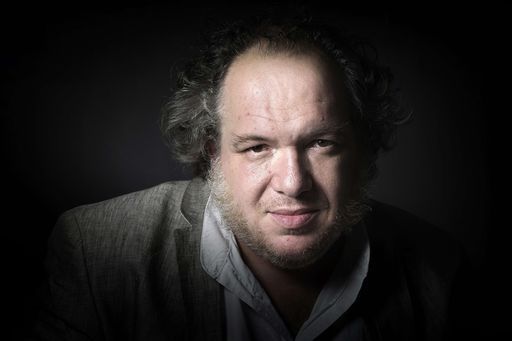
Dec 022011
 

Capture

Keith Lee Morris has been compared to Richard Ford and Raymond Carver. He explores the world of bars and racetracks, of working class men on the edge and families struggling to stay afloat. In the dark corners of small-town taverns, his writing unhinges us. It takes us to places that are so familiar yet so startlingly strange in their portrayal, that it’s easy to forget you are actually reading a story and not sitting in the bar and watching it unfold. This is not to say that his work is entirely in the realist tradition. His more experimental work deals with the story in uncanny ways, and pushes back against strict verisimilitude. And his writing blends the best of both styles into a narrative that is at once compelling, sad, funny and utterly honest. To read Morris is to journey into the dark places of existence, to open your heart to sadness, to root for the underdog even when he doesn’t stand a chance. But you feel comfortable taking that journey because Morris is such a certain guide.

We spoke over the phone. Morris was in his office in South Carolina. His answers were sharp and enthusiastic. He spoke of writing, of teaching, of growing up in Idaho. For much of the interview, it felt more like we were sitting in a bar and having this conversation.

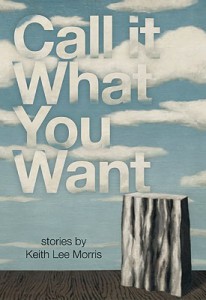
Morris teaches writing at Clemson University. He has published two novels, The Greyhound God (University of Nevada Press, 2003) and The Dart League King (Tin House Press, 2008), and two collections of stories, The Best Seats in the House and Other Stories (University of Nevada Press, 2004) and his most recent work, Call it What You Want (Tin House Press, 2010).

–Richard Farrell

/

Richard Farrell (RJF): The Paris Review once asked William Maxwell this question: Do your best sentences come from the air or as a product of much working and reworking?

Keith Lee Morris (KLM): (Laughs, then answers without much pause.) I’ll say both. Or maybe I’ll say they come from the air more often. When the writing just seems to happen on its own, that’s when I feel I’m at my best.  But maybe it has to do with the fact that if you write enough, over and over, it becomes more automatic.  In that sense, it’s the product of hard work.  I suppose it’s like playing football. Tom Brady has thrown thousands of passes, so that it looks like it’s happening with ease.  But it’s because he’s done it so many times that it looks so easy. When I’m writing well, it’s like being in that zone, where I’m not conscious of what I’m doing. It’s the bad sentences that I go back and rework.  And maybe by working on them over and over that they get better.

I have whole stories that I almost don’t remember writing. I’m inside the scene itself, and the characters are talking and I’m not aware of it, I’m just trying to keep up. And when you’ve done this so many times, it just happens.

RJF: I once read an essay (sadly I can’t remember the title or the author) that said in short stories, a character doesn’t necessarily go through change like the traditional method says. But rather, something happens in the life of the character after which nothing can ever be the same. So even if the character hasn’t come to something like an epiphany, even if the character isn’t yet aware of change, the life of the character is forever affected. Noting can be the same. Do you agree with this?

KLM: Most rules don’t make sense in writing fiction. If someone tells me a rule to follow, it just goads me into trying to break it. So I disagree that a story has to contain a change by which the character is forever changed in order for the story to be effective. The reader has to feel the possibility of change.

Look at The Great Gatsby. One of the arguments goes, Who is the main character? Is it Gatsby? If you buy into the argument of necessary change, then Gatsby can’t be the main character, because he is fixed. He doesn’t change at all. Daisy, Daisy, Daisy—he’s like a broken record. If it was really Gatsby’s story, the novel wouldn’t work. Even after he is shot and killed, the reader has the sense that change was never going to occur. But up until that point, you think it might. So I think that change matters, whether it’s internal or external, and it might not happen in the story, but it exists as a possibility. Part of what makes the novel work, too, of course, is that Nick Carroway does change significantly.

RJF: Much of your writing explores the motif of heterosexual male relationships. Specifically, the friendships between men. I think this is a rare thing to write about. Hemingway did this, of course, but you explore this territory with a more overt emotional compass. What is it about this male dynamic that is so interesting to you?

KLM: That’s interesting. I’ve never been asked that before. I’d say that some of it comes from my own experience. I’ve had the same set of half a dozen male friends since middle school. After I get off the phone, I’m calling one of them. We’ve been friends since I was, I guess, thirteen. His wife was just recently diagnosed with breast cancer. I call him every week to check in. So I guess this comes through in my writing from this sort of personal experience and this strong group of friends. And we all make the trek back home every year, to our small town in Idaho. I have guy friends that are writers, too. Steve Almond, Brock Clarke. So I guess, on reflection, that those kinds of long-term close friendships are important and they make their way into my writing.

RJF: Following up on this topic: What rituals exist for the contemporary male? You write a lot about bars, dart games, dog races, etc. Your male characters have this ‘lovable loser’ quality—they’re always getting drunk and stoned and getting into trouble, but you test them, too. Do you think that men today have lost some sense of the sacred ritual or the passage from boyhood to manhood?

KLM: Like the Hemingway thing, bullfights and war? Hunting, fishing, sports, sexual encounters? Those are the kind of standard coming of age rituals, I suppose. But I think my characters tend not to participate in rituals. Take Luke Rivers (the protagonist in The Greyhound God). When he was young, he went through a lot—the death of family members, a psychological breakdown, being in a mental hospital. So at a time when he would have been experiencing the traditional coming of age rituals, he was experiencing other things. He has this close bond with his wife, and while he goes through the ‘buddy stuff’ in the bars and at the track, his experiences are not typical. Even his friendships are atypical. He’s exploring his identity in the novel.

Typically characters I identify with have difficulty with rituals. They don’t see themselves as going through the traditional rites of passage.

Another example would be the character Deeder in my short story “Ayudame.” He was based on a friend of mine I grew up with, a working class, blue collar guy, but I crosscut him with another friend who had always dreamed of opening a record shop. And I wondered what it would be like for this character who never stopped dreaming of that record shop, who still felt that he should have been born in the 1960s. I guess I think about the different ways to create male characters who don’t go through the typical “coming of age” scenarios.

You called them ‘lovable losers.’ I grew up in northern Idaho. I went to school in the second-lowest funded district in the second lowest-funded state in the country at the time. A lot of those guys I knew didn’t even make it into high school. They just dropped out after eighth grade and disappeared. So I’m writing about people that are familiar to me. I’m actually uncomfortable around writers a lot of the time, you know? Guys with PhD’s and professors. It’s just not where I came from.

And I’ve been lucky. A lot of my friends have embraced my writing. Even if they aren’t readers or if normally they’d be reading books I’d hate, they still read all of my stories and books.

RJF: In your story collection, Call it What you Want, you refer to two types of stories. You have your traditional, realist stories and a type you call “dream stories.” Do these two types of writing inform each other as you go?

KLM: They do inform one another. Even in the ‘dream stories’ you’ll find the same types of characters at the center. And I think, because of my immersion in the dream stories, my realist stories aim at a language that is different. If you look at the end of “Ayudame” you’ll see that. The sentences become long and lyrical. So maybe the dream stories are a way of getting at the more lyrical writing. Something about me wanting to write those types of sentences.

RJF: I’m going to quote you back to yourself here. In The Greyhound God, you write this about fathers: “A father is anyone with answers to the questions that keep you awake at night.” Do you think this is the writer’s task, to answer the questions that keep us awake at night?

KLM: (Laughs) Well, it’s a lofty ambition. I meet a lot of writers who don’t want any meaning at all attributed to their stories. Maybe this is a result of the post-modern era. Authors won’t take ownership of their message. There’s a sense that, as a group, we don’t have that kind of influence anymore. If you take the most    famous writer in America, if Stephen King died tomorrow, they wouldn’t turn out in the streets like they did in Paris when Victor Hugo died. So things have changed.

But I do mean something when I write. I’m trying to get across an idea, even if I’m sometimes not entirely sure what that idea is. I’m exploring, too, while I’m telling a story. I’m certainly looking to find answers for myself when I write, so if I happen to answer some questions for someone else, then great. Part of the process is sharing ideas. Some writers think of a story as art. Like a story is the same thing as a painting. For me, a book is a form of communication. It’s a conversation.

RJF: Someone once asked Graham Swift what the essence of storytelling was. He replied that a story is “the relation of something strange.” He talked about overhearing a guy in a bar tell a story and that guy’s urge to relate the strange. He said he wanted to remember that guy in the bar when he wrote stories, that he wanted to be in that bar, too. Here’s the longer part of his response: “It begins with strangeness, it takes us out of ourselves but back to ourselves. It offers compassion.” Since so many of your stories are bar stories, I’m wondering how you think about Swift’s answer.

KLM: I hadn’t thought about stories that way before. But bars are fascinating. There’s nowhere else where you get people from all different walks of life coming together. And everyone’s there for the same reason, to have a drink and maybe to talk. So a lot of my stories are set in bars because the possibilities between people are so fascinating. But I think, even in the opening stages of a story, familiarity is just as important as strangeness. Think about it, if a total stranger walks up to you and starts talking, you’ll probably go the other way. If someone sits down with a strange story, you need to be interested in the person before you’ll be interested in his story

There has to be something familiar in a story. Until something is familiar in a character, we probably don’t want to hear what they have to say. We don’t want someone’s back-story until we are interested in him. So the element of the familiar matters. The strangeness has to come out of the familiar first for it to matter. I’d say it goes from familiarity to strangeness and then back again.

RJF: Here’s a more personal question. When did you first realize that you were going to be a writer?

KLM: It was later for me. I was in my twenties and I’d dropped out of college. I thought about acting for a while. I acted in some community theater, but I realized I sucked as an actor. I was acting in some locally written plays, and some of them were pretty bad, and I started thinking, damn, I could do as well as that. So I first started by writing plays. And I started reading more fiction, but I was well into my twenties. Back in middle school and high school, my teachers always told me I had talent as a writer, but I didn’t get serious about it until I was much older.

RJF: Was there an important person who influenced you to pursue it more seriously?

KLM: I suppose it was my parents first, who instilled in me the notion that I was responsible to do something, to not just be a bum. And I was well on my way to being a bum for a while.

The usual suspects, of course—my professors and writing teachers at The University of Idaho and UNC-Greensboro. But I can think of some less obvious examples, too. There was a guy in New Orleans who owned a bookstore. It was just a hole-in-the-wall shop, with books stacked from the floor to the ceiling. All these great books, literature, history, philosophy. I’d walk in and ask him what to read and he’d point me to a bunch of books, then I’d go back and tell him what I liked and didn’t like, and he’d suggest more. So I read a lot of good books because of him.

One person for sure had a big influence. I was dating a girl at the University of Idaho and I was writing short stories. I wasn’t in college then, but she took some of the stories to her English professor to read without me knowing it. He asked her to bring me in, to come and see him. He told me I needed to get back in school and get some formal guidance. He didn’t have to do that. I was nobody to him, and he took the time to call me in off the street. Walter Hesford. I’ll always be grateful to him. And as a professor now, it really taught me that you can’t ignore anybody. You never know who’s out there.

RJF: This is a weird question but I’m going to ask it anyway. Are there places you won’t go in your writing? Are there topics, for one reason or another, that you won’t touch?

KLM: I know I’m supposed to say, ‘no,’ right? But I’ll try to answer this.

I’m really reluctant to write about people that will be hurt if they recognized themselves. I’ll radically alter plots and characters to avoid that. So I shy away from material if it’s too close to someone. Other than that, probably not.

I do feel like I’ll write a story then go back and look at it and if I don’t like a character or a situation, I won’t send it out. I don’t always know where a story’s going when I’m writing it, so when it’s finished, I’ll sometimes decide that what comes out is too negative, that there’s absolutely nothing hopeful that the story has to offer, and for that reason I’ll dismiss it. If I can’t see anything in there that I would want to read about, I don’t want to force anyone else to read it.

RJF: My editor here at Numéro Cinq, Douglas Glover, was also my advisor in grad school. His nickname was “The Shredder” and he was insistent that his students think deeply in terms of structure. He said a lot of new writers, even in an MFA program, don’t understand structure. So it’s for him that I ask you this: How do you think structure in writing?

KLM: I had a professor like that in grad school, too. Michael Parker. He really focused on structure and the integrity of language, the integrity of the story as a whole. He forced me to recognize things that I hadn’t been thinking about. To this day, I have this little Michael Parker running around in my head, making me pay attention to structure, both at the sentence and the story level.

But to be honest, I couldn’t care less about structure. Yet of course I’m aware of it. When I wrote The Dart League King, I was experimenting a lot with structure. And as a writing teacher, I force my students to pay attention to it. Paying attention to structure is important, but it’s not structure that I’m interested in.. It’s a precursor to or a byproduct of what I write. In itself, it’s not what I’m interested in. Writers write for different reasons, and I think all writers have parts of the process that they submit to grudgingly.

I know a lot of writers who just love writing sentences, and they have to be forced to think in terms of plot. But I want to write stories—I’m interested primarily in narrative and the ideas contained in narrative. You have to consider structure as part of how to create a story, though—and if structure is one of your weaknesses as a writer, it’s your responsibility to shore up the weaknesses in order to get the material out there.

—Richard Farrell & Keith Lee Morris

/

Richard Farrell is a Contributing Editor at Numéro Cinq where he has published memoir, craft essays and book reviews. He is the Non-Fiction Editor at upstreet. His essay “Accidental Pugilism” appeared in the most recent Hunger Mountain Menagerie and has been nominated for a Puschcart Prize. He lives in San Diego, CA and is currently at work on a collection of short stories.

/
/

Dec 022011
 

Keith Lee Morris’ short story “Ayudame” is a tale of friendship, failed dreams, and possibly a sliver of salvation. Morris has written two novels, The Greyhound God and The Dart League King, as well as two collections of short stories.  “Ayudame” comes from his collection Call It What You Want, available from Tin House Books. The story originally appeared in Third Coast magazine.  Morris teaches writing at Clemson University. (Read an interview with Keith Lee Morris on Numéro Cinq. )

—Richard Farrell

Ayudame

By Keith Lee Morris


Douglas “Deeder” Mumphrey was wakened from a dream of the record shop in Haight-Ashbury by his ten-year-old daughter, Grace, who was, surprisingly enough, standing by the side of the bed dressed and ready for school. It was Deeder’s turn, not his wife’s, to get Grace ready for her car pool ride, that much seemed sure, based on the fact that Grace stood by his side of the bed, not Theresa’s, and based on her serious and rather tired expression, which said several things to Deeder, such as “Dad’s lazy,” and “Dad’s forgetful,” and “Dad had too many beers last night,” and “I had to make my own breakfast,” all of which were true, more or less, not to say that the various truths contained in the expression didn’t annoy the hell out of Deeder, because they did, because why the hell should a ten-year-old girl be right about so many things when he himself, Deeder, a forty-one-year-old man, was rarely right about anything.

Deeder glanced over at his wife, her hair in the band she wore to keep it out of her face while she slept, soft snores coming from her puffed-out lips, and he was reminded of the argument they’d had the night before and he wondered how she could sometimes look like such a peaceful, easygoing person, and then he whispered “Sorry” to Grace and dragged himself out of bed, still smelling somewhere in the back of his head the incense he burned in his record store, the one he never had, back there in the Summer of Love when he was just born.

In the kitchen he brewed a pot of coffee and ran through a couple of spelling words with Grace to see if she was ready for her test, which she semi-was, not for lack of effort, but Grace wasn’t much of a speller. Rapture, censure, preacher, adventure–three out of four. Her forte was personal grooming–he marveled now at the way she’d managed to pick out the blouse, the pants, the matching socks all by herself, the way she looked so neat, her straight blond hair brushed just so.

There was Mrs. Adkins, pulling into the drive. He waved out the window, hoping she couldn’t see he was in his boxers. He made Grace give him a kiss on the cheek. “You stink, Dad,” she said. He watched her set her pack carefully in the back of the Adkins’ Aerostar, watched her climb in, smoothing her pant legs under her to keep them from wrinkling. Monterey Pop, the family’s black Lab, was lying with his head on his paws over by the sofa, wagging his tail slightly. Deeder poured some more food in his bowl and watched him come over and eat.

Continue reading »

Oct 192011
 

Donald Breckenridge has a story to tell you: He’s a failed-actor-turned-fiction-writer, playwright, literary activist/editor, and wine-seller who’s carving out a life for himself in New York City. Though I’ve never met Donald Breckenridge in the flesh, he’s the guy I’d like to meet for a beer. After reading his brand new novel, This Young Girl Passing (imminent from Autonomedia—see the Publishers Weekly review here; read an excerpt on NC here), it was clear to me that Breckenridge has a self-consciously intentional approach to crafting fiction, and this interview/conversation reiterates the thoughtfulness behind his work. If you haven’t met Donald Breckenridge already, it’s my pleasure to introduce you to him and his work in some small way.

Donald Breckenridge is the author of more than a dozen plays as well as the novella Rockaway Wherein (Red dust, 1998) and the novels 6/2/95 and You Are Here (Starcherone Books, 2009). In addition, he is the fiction editor of The Brooklyn Rail, co-editor of the InTranslation website and editor of the The Brooklyn Rail Fiction Anthology (Hanging Loose Press, 2006). He is working on his fourth novel.

Here is what NC Editor Douglas Glover wrote about This Young Girl Passing:

This Young Girl Passing is a deceptively short, dense, ferociously poignant novel of sexual betrayal and despair set in impoverished upstate New York, a Raymond Carver-ish milieu of never-weres and left-behinds. Breckenridge is a pointillist, constructing scene after scene with precise details of dialogue and gesture, each tiny in itself but accumulating astonishing power and bleak complexity. The novel’s triumph though is in its architecture, its skillfully fractured chronology and the deft back and forth between the two main plot lines, two desperate, sad affairs twenty years apart and the hollow echoes in the blast zone of life around them.

—Mary Stein

.

Our Endless Past: An Interview with Donald Breckenridge

By Mary Stein

.

.

MCS: Why don’t we start off with a little personal backstory: from thought to fruition, could you describe the gestation period of writing This Young Girl Passing? How did it compare with some of your other works?

DB: I discovered the article that this book is based on in March of ’00. It was a Saturday and I was waiting on the downtown platform at the 77st 6 train station. It was early afternoon and I was going home from my part-time wine shop job in Yorkville. I didn’t have a novel with me and there was a day-old copy of the Times on the bench. I was skimming through the NY section and I was taken immediately. The actual article is only four brief paragraphs but I knew right away that I wanted to write about it.

At the time I was writing my first novel, 6/2/95, which was a year away from being finished, so I cut out the article and put it in a drawer. I thought at the time I would turn it into a play but that didn’t happen for a host of reasons. After finishing, 6/2/95, I took a few months, March of ’01 till July of ’01, approximately, to work myself into an place that I thought would be a good beginning. I really wanted to write a book about child abuse that wasn’t autobiographical, so that’s where I began with Sarah, from her reaction to a shitty home life which is my how and why she became involved with Bill. I have never been even remotely interested in telling the real story of the actual participants in the article, that is absolutely none of my business, the truth really only belongs to the people involved. The article in the Times was simply a sketch and I let my imagination roll out from that point of departure. I began writing the first chapter that August, while my now wife, Johannah Rodgers, and I were staying in Door County, Wisconsin. We were there for 7 weeks and I’d wake up early every morning and work on this conversation that Sarah was having with Robert in the woods and in his father’s car.

All of my books begin in dialog, with a simple conversation between two people, and once that is recorded all the other information, vital or otherwise, is piled on top of that dialog. The novels all begin with dialog and all of them incorporate found news items. The gestation here was very deliberate, in that I wasn’t telling a story that was autobiographical, so I was separating myself from the story while at the same time grounding what was to become Sarah in this wounded and romantic landscape.

MCS: It doesn’t surprise me that you considered making the story into a play. In the novel, dialogue and physical descriptions (which read like stage directions at times) are braided together to create the sentence-level foundation of the novel’s structure. How do you feel your background as a playwright influenced this novel’s form? 

DB: I’m a failed actor, I came to NYC in ’89 to study acting and was thrown out of school after the first semester, however I did meet quite a few truly talented actors in school and a year or so later I founded a theater company with a handful of them, The Open Window Theater, and at first we worked out of a storefront Co-op art gallery, Brand Name Damages, in South Williamsburg where I wrote and mounted my first plays, later we moved to a converted paint factory beneath the Williamsburg Bridge where we continued putting on plays, hosting readings and bands, there was a gallery upstairs as well where local artists would show—Williamsburg was a very different place then. After doing that for a few years I left the company and slowly, really glacially, I began attempting to write fiction, because it became prohibitively expensive for me to mount my plays and I had lost my cast. My earliest attempts were published as the novella, Rockaway Wherein (Red Dust 98) but to answer your question, I’ve always tried to capture the immediacy of watching a performance on the page. That immediacy where the reader is in the moment with the present, as if the reader was watching the characters performing on stage. For an actor all his lines in a script contain cues—when A is to stand up while speaking and how A is to then cross the room with a sullen expression while proclaiming his love for B who is sitting in a chair by the window overlooking the crowded street and is secretly waiting for her lover to emerge from the subway entrance at the end of the block—the actors playing A and B need to internalize all of their objectives and to thoroughly understand what their character’s psychological motives are beneath the lines, what the real motivations are, what moves them across the room and has them proclaiming and or hiding their love. This is of course a very simple example of what Method Acting is, and by making the psychological motives visible in the dialog, and by laying out the surroundings in the dialog as well—which is obviously equally important—I think I’ve brought a heightened present, or at least more urgency, to the page..

MCS: You accomplish a lot with such economical prose. The point of view is prismatic in the sense that the reader is made to understand the motivations and desires of multiple characters—oftentimes simultaneously. It seems that most writers find it challenging enough to convey the motivations of even just one character without compromising the complexity of another. How did you manage this?  

DB: I try to be thorough and I’ve learned to be very careful, and although it has taken a long time, I’ve finally learned how to write slowly and for myself. That was my take-away from This Young Girl Passing; you have absolutely no reason to rush writing, ideally the work will last much longer than the time it took to create, so why rush? The hordes aren’t clamoring at my door. This book took forever and way too many drafts before it became an actual book, and although at times the wait and the rejections were incredibly frustrating—in the end I’m really grateful for the struggle, as clichéd as that sounds. I spend a long time on a single page, they often take weeks to write, and then I’ll go back a few dozen times and spend twice as much time as I really should compressing text and then reintroducing the lines. Also, I tend to get bored with all the tedium that is involved with writing everyday so I’ll introduce new narrative threads within the existing lines, this resuscitates the everyday exploration of what writing a novel should be and enables me to create that prismatic point of view that you mentioned. I’ll then build out of the gaps once I remove the obvious lines and attempt to formulate a stronger foundation for the characters in the scene once the redundant has been purged and purged again.

MCS: Your approach to time and historical context is met with a similar sense of refinement and narrative necessity. One of the defining characteristics of This Young Girl Passing is its back-and-forth movement between a post-Vietnam 1970’s and the late 90‘s (and your earlier novel, You Are Here, also moves through time within the 9/11 era). Yet it manages to avoid the entrapments of sensationalism that threaten to derail narrative. How did you inhabit both these eras in This Young Girl Passing?

DB: When writing out the dialog for chapters I always reach a point when I need to consult the newspaper and check the weather; so I get the light right, so the moon is full or gone on the right night, to make sure it actually snowed enough to be a nuisance, and knowing what the weather was like also helps me dress the characters. I’ll go to the library and check the weather for the day before the chapter, the day of the chapter and the day after, just to be sure. At times the headlines from those dates leak in as well and that helps inform the characters dialog—sometimes it’s necessary but I’m really careful with how I use it—and it also provides the reader with a skeletal time line. However, the people I write about aren’t on the cusp of breaking news, ever, with the exception of Stefanie in You Are Here, who is last seen entering the WTC on the morning of 9/11, my characters are all very marginal and quite content to be so, they might talk about current events but only in passing—like Bill and Sarah in the hotel room talking about Hale Bopp and Heaven’s Gate—headlines are always on the peripheral.

I’m very much into the music and culture of the 70’s, so for me, who was a teenager in the 80’s that decade represents an almost mythical time in America, and my father served in Vietnam so that war was and still is a very real part of my personal history.

MCS: I spied on your Goodreads account, and when it comes to reading, you certainly don’t mire yourself in one literary tradition. You’re the fiction editor of Brooklyn Rail and the co-editor of its InTranslation publication which gives exposure to English translations of new international voices that might otherwise go unrecognized. How does your involvement with Brooklyn Rail impact your writing? 

DB: I’ve always been a ferocious reader since I was very young, and one of the happiest times in my life was when I read a novel a day for a 9-month period of deliberate and blissful unemployment during my mid-twenties. That was just before I began my attempts at fiction. What I’ve found with writing novels is that I cannot read them as avidly as I once did. What the Rail has allowed me to do is to ingest lots of current writing and to support it in a very public way. The work I do on behalf of the Rail and InTranslation doesn’t pay but I see it as a form of literary activism, which is a very nice way to go about doing something that you love.  My work as an editor takes considerable time away from my own writing, obviously, which is at times problematic because I need to work harder at making money in order to survive in NYC, which also takes time away from my own writing, but my work as an editor has given me a greater perspective as to where my writing may or may not fit in this current publishing climate and it has enabled me work with some truly dynamic authors and publishers whom I might never have been in contact with if I’d simply stayed at my desk and toiled away in solitude.

.

Where Donald Breckenridge toils away in solitude

.

MCS: How do you manage to survive as a writer and literary activist in NYC? What does a “typical day” look like for you (if there is such a thing)? 

DB: No, no such thing as a typical day. If I can get 5 hours in a day on the novel, I know I’ll be able to face the rest of the day, and that no matter what happens it will be a good day. And if I can stay at home and write all day then it has been a fantastic day. I’ll wake up at 5 or 6 and write till 11 or noon and then get started on money work—I sell wine for a small yet prestigious wine importer. The reading and editing I do for the Rail and InTranslation takes place in the late afternoon and into the evening.

MCS: Going back to your voracious reading habits—which writer(s) do you feel have most impacted your craft and/or your approach to writing? Who are you reading now? 

DB: The two most important authors would be the French novelists Claude Simon and Emmanuel Bove. Simon for the multiple layers and textures he brings to the page that make reading his novels (Histoire, The Flanders Road, Conducting Bodies) a nearly visceral, always urgent and wonderfully lucid experience. And Bove (My Friends, A Winter’s Journal, A Man Who Knows) for his precision, emotional honesty and pristine imagery. Also the Japanese novelists Kawabata and Soseki. And the German author, Arno Schmidt who is a tremendous writer, everyone on the planet should read Schmidt! Dalkey Archive just released a really handsome four volume set of collected works that John E Woods has translated over the years, and if you are unfamiliar with Schmidt’s work, Nobodaddy’s Children, which collects three of his early novels is an ideal place to start. And also the Brooklyn-born, Gilbert Sorrentino who is by far my favorite American author. I recently read and really enjoyed Chris Turner’s translation of Pascal Quignard’s The Roving Shadows that is a truly outstanding book and out from Seagull this month. I am currently reading Hans Fallada’s Wolf Among Wolves that Melville House published last year, also, Ahmet Hamid Tanpinar’s A Mind at Peace, one of the most elegant books that I’ve read in years, Archipelago published that a few years ago and I’m eyeing Ursula Meany Scott’s translation of Wert and the Life Without End by Claude Ollier which was just published by Dalkey Archive.

MCS: Earlier you mentioned thwarting the tedium of writing everyday by introducing narrative threads. Friday, December 19, 1997, is a distinct passage because of its absence of dialogue. Each sentence swivels back and forth between POV to capture the (almost) simultaneous but separate experiences of Mary and Bill. Yet, the reader is rooted in the text largely due to the very idea of “pristine imagery” you just mentioned, and the movement between scenes sustains the momentum of dialogue. While crafting This Young Girl Passing, did you consciously engage with an aesthetic that would interrupt the everyday tedium of writing?

DB: The line by line shifts in that chapter, as it finally exists are so different from a few drafts ago. Initially they had been alternating 4 to 6 sentence long scene blocks containing dramatic dialog that I stripped down in a few drafts. It was this half-formed, cathartic nonsense that I somehow felt obligated to write into the book—it was really terrible, like I was trying to wreck the novel. It works for me now because I dumped all of the false notes, everything shrill and moralistic, and all of that sentimental shit. Creating collages out of my imagery (I hesitate to call it pristine, although I try—perhaps too hard at times) on the page keeps the momentum going and at times it can suspend or stall a reader’s sense of disbelief. I wrote this book to music from the era, watched most of the films advertised in the newspapers from the days the chapters were taken while writing those chapters, studied the history of the era, so not really, other than editing the fiction in the Rail on a monthly basis, putting together the fiction anthology that Hanging Loose published in ’06  and curating a monthly reading series at the Central Branch of the Brooklyn Public Library from ’02-’08, my head was always in this book. That is until I couldn’t find a home for it, almost lost my mind, and then wrote You Are Here . This Young Girl Passing didn’t have a publisher until July of 2007, I was shopping around You Are Here, having just finished that. Both books got picked up that summer, which was a huge relief, because I was really dreading having two unpublished novels.

MCS: People who saw me reading your book in public asked me about its title, and I would respond with an imprudent amount of speculative gibberish. I swore that I would never ask this question for an interview, but I’m compelled to ask for this novel in particular—how did you settle on the title This Young Girl Passing? Would you be willing to share any working titles you rejected? 

DB: The title is from the epigraph which is taken from Eugene Ionesco’s Present Past Past Present. Eugene Ionesco is one of my favorite authors. Each one of my novels and the novella, Rockaway Wherein, contains an epigraph from that book. What I tried to say with This Young Girl Passing, ultimately, is that the past we’ve accumulated, and cultivated is the same past we will into our present. We are predetermined to live in a present where the past resonates around us endlessly, and I learned that from reading Eugene Ionesco. The working title for the novel and the title that I shopped around for a few years when this book was a disaster was Arabesques for Sauquoit as I thought that spoke to the way it was written and the location, Sauquoit, where the novel takes place.

MCS: What’s next? 

DB: I’m currently working on my fourth novel. I started it in the winter of ’09 and I have about a 100 manuscript pages that might be ok. It’s been slow as You Are Here came out while I was writing it and that was very distracting. My father got really sick in the spring of ’10 and then he died that September which was really brutal as we were very close. Incidentally, he is buried near the farm where he was raised which is in the same county where This Young Girl Passing takes place. Getting this book ready for publication was also incredibly distracting, in a good way, and that kept me away from the new novel, but now, finally, I can begin again in earnest!

— by Mary Stein and Donald Breckenridge

Oct 052011
 

0

Mucking Up the Landscape: Poetic Tendencies in Prose

by Mary Stein

.

There’s a certain trend I’ve noticed among some essays and craft books on writing fiction: It hints at the idea of a beleaguered prose writer, imprisoned at her desk—a person who narrates rather than directly experiences life for the sake of fiction, a person held hostage by the endless pursuit of the right-hand margin. It’s an idea of the prose writer as sacrificial lamb for the god that is verisimilitude. Prose and its process can be intoned with a sense of drudgery—particularly in comparison to poetry. In “Rhyming Action,” Charles Baxter jokes, “Prose writers have to spend hours and hours in chairs, facing paper, adding one brick to another brick, piling on the great heap of endless observations, going through the addled inventory of all the items they’ve laboriously paid attention to, and it makes them surly—all this dawn-until-dusk sitting for the sake of substantial books that you could prop open a door with … Fiction writers get resentful, watching poets calling it quits at 9:30am.”

Now of course I don’t agree with the literal assessment of this statement—I know poets who work at least until 10:00, maybe 10:30 in the morning. (Poets must forgive me, I have to believe this farce exists, otherwise I’ll never have anything to aspire to.) But there’s something about the spirit behind the statement, the implicit (or, I suppose, explicit) idea of drudgery inherent to the prose-writing process leading to an implicit drudgery of prose itself—an idea that the reader is led through a corridor of scenes, narratives, backstory, interior and summary to get somewhere. In an interview with Lydia Davis, Sara Manguso asks, “How do you know a story’s a story?” Davis says, “I would say a story has to have a bit of narrative, if only ‘she says,’ and then enough of a creation of a different time and place to transport the reader. But, of course, it is not a narrative poem. It is flatter, rhythmically different from a poem, and less elliptical.” This is interesting coming from Lydia Davis considering her prose often slants toward all these poetic tendencies—elliptical movement, a poetic attention to rhythm, and a use of language that certainly doesn’t flatline by any means. In fact, many of Davis’s stories exemplify how poetic attention to syntax creates resonant effects in prose.

.

.

Eileen Myles is one example of a poet crossover. Her self proclaimed “poet’s novel,” Inferno, explores the confluence of poetry and prose. In her critical essay on novel writing, “Long and Social,” Myles says, “Poets should write novels en masse and reinvent the form and really muck up the landscape.” Although I don’t intend to discuss murky genre distinctions, if genres paralyze or constrict your writing process, I’d say forget about them or invent your own—at least while you’re writing.

I want to consider how these same poetic elements might help the reader engage with the text: regardless of genre, the manipulation of or play with syntax can demand a reader to become conscious of his or her interaction with the work. I want to examine how some fiction writers use syntax to amplify image patterns and create rhythm in order to motivate narrative movement—to muck up the landscape of prose.

Continue reading »

Oct 012011
 

Carrie Cogan

.

Set in New Orleans “The Filthiest of Shiny Things” is a gorgeous excerpt from a novel-in-progress by Carrie Cogan who lives on Salt Spring Island, off the coast of British Columbia, with her husband and two small sons. Carrie earlier contributed a “What It’s Like Living Here” essay to Numéro Cinq. The two photos of New Orleans architectural details were snapped by Sarah Gadola Campbell, her old friend and long ago co-worker at Aunt Sally’s Praline Shop in Jackson Square. Everything Carrie writes is a treat. “The Filthiest of Shiny Things” is also a bit of a tease, not only because of the amazing title, but also because after reading this bit, you’ll want to read the whole thing.

dg

.

AS ROSE GETS OLDER she gets more stunted. Shorter, and skittish. Her eyes dart around so much that by afternoon a blink will feel so good she’ll draw it out, stop short on a sidewalk or halfway across the kitchen floor with her lids down, settling into the dark. If pressed–and she moves around enough no one knows what she started as, to ask how she slipped–she’ll trace her deterioration to the years she spent living alone on dry, deserted land, in a shed just bigger than a closet. But she knows she probably wouldn’t have chosen to live there, if she wasn’t stunted already. In that parched isolation she followed lots of bugs, and unlearned some grammar.

Now she’s in a city–the one they call The Crescent City, The City that Never Sleeps–and she speaks properly. She hardly speaks. But when she watches people, she can tell the ones who are chasing or being chased from the ones who are just sitting peacefully inside themselves, settled to the ground like musk beetles to a leaf. Some people, they are flat on their backs flailing in panic, and she can spot this even as they glide along fine.

.
She tries tricks–the little ones she can manage–to give her appearance the illusion of moisture. Something called Face Dew, with a bright pink applicator brush. As she spreads the shiny, heavy blots of Face Dew into her cheeks, she envisions a snail inching forward and recoiling across her face. She buys hand cream made for horse hooves, and lip gloss infused with silver glitter.

Down at the Walgreen’s on Canal Street, Rose watches a young black girl reach for a hair gel on the shelves while a kinky strand of her hair, seemingly electric, crackles free from a barrette. Now Rose uses the same product–it is thick as shellac, and smells like a stick of clove doused in gasoline. When she works it through her hair the strands fall heavy and damp, like drenched wool socks dipping a clothesline. She has noticed more than once, upon walking into a store, the way people glance worriedly from her gelled hair to the windowpane, expecting splatters of raindrops on the glass.

All these efforts to look moist–in the city with the wettest air. But Rose still appears on the outside how she feels underneath. Something like rust on a corroded battery. She suspects the landscape where she’d isolated herself–cacti, bones, flint and rusty barbed-wire–was the one that marked her.

People always look surprised when she says her name is Rose.

.
Rose has washed dishes all over the country. It whets her appetite. The plates here get filthier than any she’s seen–tourists like their creme brulees creamy and their jambalayas thick. She doesn’t make friends with the cooks, because it feels like she’s changing their diapers. Rose once caught a waitress named Junie picking at a piece of cornbread on a plate waiting to be washed. She’ll say say Hi to Junie. Otherwise she keeps her eyes on the dishes, or–while in transit to the sink–on the water and bits of food speckling the rubber tips of her sneakers into an abstract painting.

A large man, so black he sometimes looks purple, shucks oysters on Sundays, and Rose will step away from the sink to watch that. It’s no safer than juggling swords. His hand never slips and he lays the shells apart as smooth and easy as stepping one leg away from another. Sometimes when she’s watching him she pictures him shucking oysters inside a giant oyster, the shells parted just a slit. In that dark only his eyes, teeth, and the diamond shooting off the knife blade show. He whistles through his teeth and the whistle ricochets off the walls of the shell, becoming in its pearly hollows a cold, spinning wind.

After work her old red motorcycle boots, scuffed grey in places, hit the pavement chuck chuck chuck. And as she tromps she schemes, arranging and re-arranging the delicate details of abduction. But it’s easy to be distracted. Whole blocks go by with her half-drugged on the sights and smells. The wavering flames of gas-lamps, snapping without sound. A carriage horse’s hoof thudding softly into the shit left by some other carriage horse. The beads and vomit decorating naked chests; the unreachable gardens and fountains, framed in wrought iron shadows.

Some people paint their bodies silver, even their eyelashes, and stand comatose on pedestals. For that stillness Rose gives up her coins. One girl is solid white with golden hair and wings, an angel. And when she breaks her perfect freeze to bow she manages to make the bow look stiller than her stillness. People set flowers and 20 dollar bills at her feet. Rose bets she’s an old lady under all that. Still, she drops what change she has. She doesn’t give to the stilted Uncle Sam, or to the escape artist with a megaphone, or to the man who walks barefoot across broken glass, hefting the biggest person from the crowd on his shoulders.

.
She wasn’t completely isolated back in the desert. And it wasn’t just the landscape that dried her up into nothing. She blames a boy. He wasn’t technically a boy but he had giant dark eyes that never seemed to blink and a fresh take on things, like he had just arrived in the world. He drove a truck with a bullet-hole in the hub-cap, and tore open her bra with his teeth. So, man. Boy, man. Ghost. When one day his truck wheels failed to crackle the gravel leading to her shed, when one day the silence hollered and kept on getting louder, Rose became one of those people haunted by a living ghost. She despises such people. Crying into their drinks, re-playing the same moldy scenes on an endless loop. Pitiful people, pinned by cobweb shackles. For fifteen years she’s been mute, rather than talk the lovesick crap screaming inside her.

Now her ghost resides seven miles south-west of her apartment, and the air is full of music. Some guy in a red lumber-jack coat sitting on the corner of Dauphine and Ursulines wails a blues song like he’s sliding a knife from his wool picket, setting a heart out on the curb, and stabbing it ruthlessly. He’s just singing. But Rose, she doesn’t collapse. She doesn’t think of the way that boy made perfect sprinkler sounds beside her ear, to cool her off. Or the bits of smashed orange bicycle reflector he stuffed into his pocket. Grubby treasure, he called it, and strung some of it into a mobile he tied above her bed. Rose doesn’t care. I’ve been places way over the sea, the musician cries. She doesn’t falter or flinch. That’s how I know you’ve done forgotten about me. If anything, Rose’s step quickens. The blues pulse her forward with the force of a battle hymn.

.
If not for the constant machine sounds and traffic barreling by, Rose might think–by the smell of her apartment–that she lives beside the ocean. She rents a second story in the Bywater, beside a fish factory. The toilet is broken, and that constant gushing inside the bowl could be shoreline. Also the floorboards are rotting, and they give under her feet like sand. One of the workers at the fish factory sings, but the machinery there is so loud it took Rose two weeks to figure out he was singing in French. When she walks out her door each morning, she stops short with her face tilted down, admiring how the pavement sparkles with scales and guts.

She has a time-tested theory about moving into an apartment: unless you drag in a good piece of furniture that first day, or have a good meal, good drug trip, or good fuck in it within that first twenty-four hours, it’s destined to be a miserable space. When she got the keys to this one, she shook all the clothes out of her pack, into the middle of the empty floor, and fell asleep on them. It was light when she went to sleep and light when she awoke, but a day had passed. So she knows there’s no hope for this place.

In the first weeks she draped some of the beads she’d found along the gutters–dice, camels and fleur-de-lis–around the nails in the walls. But they looked too pathetically hopeful–like lawn ornaments in dead grass. She is grateful to whoever left the nails behind, because depending on the light they flash or give a dot of tar black in the familiar places and her eyes automatically travel to them, as they would to paintings.

.
Inside the Quarter, behind a fence of wire diamonds, looms a large brick elementary school: Bishop Acadamy. If she’s in the area Rose consults her watch–an old Mickey Mouse one repaired, in the split leather strap, with silver duct tape. The children spill out into the schoolyard for recess at 12:20. If she arrives even a minute early, she gets to witness the transformation of the absolutely still asphalt bombarded by flailing limbs and screeches. The students remind Rose of ocean: they spill out the door fast and roaring, then seem to slow and murmur as they spread out to the far reaches of the yard. They sizzle quietly in the peripheries, like sea-foam. She lifts one hand above her eyes against the glare, scanning through the heads of hair, searching.

After passing so many half-naked people in the Quarter, the student uniform of plaid skirts or shorts, white shirts, and black neckties lend a surreal feel to the scene, like Rose has stumbled into an Opera.

One afternoon a short man with bleached hair and mirrored sunglasses sidles up to her. An undercover cop? A parent? Or a plotting child-snatcher, like her? He curls one hand around the fence, the other around a go-cup.

“Which one is yours?” she says curtly. When he turns to her she spots a shrunken image of herself in his lenses. Leering at him with her frazzled hair. A wolf.

“None,” he says. It takes just one word to reveal a southern drawl. His lips stretch out, impossibly slowly, into a smile. “I was just trying to remember what that was like.”

“Oh,” says Rose. “Recess, you mean?”

“Yes Ma’am,” he says. He takes a sip from his cup, which could be water but for the swizzle stick and lime wedge floating in it. “I figure it’s something you either like or don’t, and I was just trying to remember if I did.”

“My son doesn’t, usually,” Rose says. “Or he doesn’t like the idea of it. I think he actually has a good time during recess.”

The man takes his hand from the fence and pushes his sunglasses to the top of his head. Rose takes this to be a gallant and old-fashioned gesture, this show of eyes to prove that he’s listening. They gleam blue, a little wetter than they should, which makes Rose wonder if he’s lying and does remember his childhood after all. The possibility makes her like him ferociously.

“He’s kind of a loner, see, so he stresses over group games.” She gushes. “But on the other hand, once he’s out there’s much more space between him and other people.”

“Which one is he?”

Rose was hoping he would ask.

“Just there,” she says. He’s the whitest in the crowd–almost pale-blue. He’s over in the corner on one knee, sorting through gravel. They can’t see his freckles from here. His hair is sticking up where it shouldn’t, styled like only the wind would’ve done it. Alexander, he’s called. She’s pretty sure never Alex or Zander. If he got glasses, Rose thinks, by the next day the kids wouldn’t be able to remember him without glasses. He would be difficult to lure away. Harder than Ryder, the one Rose is going to take. Rose hasn’t seen Ryder in his schoolyard yet, but she assumes he talks to all sorts of people. Still, she suspects she’d have a better time with Alexander. She’d want to keep a tally of what he said.

“He looks like you.” The stranger, her new best friend, the confidant she’ll never see again, says.

“Really?” Rose is smiling, her lips up close to the fence.

“Yeah. You’ve both got that really smart look, like you just woke up.”

.
Rose remembers all kinds of crazy things from her childhood as she’s washing dishes. It’s not like tea leaf readings, not that the soap suds drift and bond into visible images. Maybe it’s the sloshing of her hands repeatedly into the warm water, dipping her right back into the womb, into baby baths. Or the flashes hypnotize her–the light bouncing off of soap suds, silverware, spanning bellies of plates in the drying rack. As a toddler she hoarded the filthiest of shiny things, mistaking them for treasure. She remembers her mother feeding this fervor, carefully twisting off the tabs from her beer cans or gingerly handing over the cellophane from inside her cigarette packs. You be very, very careful with this. On the other hand, her mother once handed Rose a thick envelope with a small sparkling seal embedded into it. The square flashed silver from a distance, but up close revealed a spectrum of colors, pale blue green yellow and pink–all those you’d see in a dragonfly wing. It’s a hollowgram, Rose murmured. Her mother laughed and said sweepstakes were for suckers.

.
A few times weekly Rose takes the streetcar uptown, and walks two blocks to her ghost’s house. A towering three-story white house beside a cemetery that would stand out as monstrous were it not sandwiched between similar houses. It has gables and wrought iron balconies–and from the faint, constant whirring she suspects it also has an elevator, or a pool.

The boy Rose loved lived in a trailer and tacked polaroid photographs to the walls with chewing gum. Now he’s married to a famous pop star: skinny, with long shiny yellow hair and a white smile. Rose isn’t sure the radio would play her if she were homely. She’s right in tune, but her songs repeat the chorus at least three more times than they should, and always end on it. Her lyrics sometimes allude to being haunted, but her voice stays smooth and so never seems to agree.

The lyrics in his wife’s songs are nothing like the perfect sentences the boy had scrawled in his letters. Now those were songs. Astounding details of the every day noted in a crazy mix of capital and little letters Most of the pages he sent were penciled faintly, so that even as she clutched them, freshly-salvaged from the tin jaws of the mailbox, Rose would sense her letters–they were hers! They had her name at the top of them!–disappearing. Reading those letters felt like looking into a mirror and seeing, beyond your face, a faraway bird dipping and soaring and somersaulting end over end through gaudy blue sky. There is so much beauty in the world, his letters said without saying. And you’re facing it. You’re it the most. Because you see it.

.
Rose perches in the cemetery, at the fence-line, where she can see his house from a part in the hedges. The hedges are otherwise packed tightly together; just this one break, where a child or a spirit or a mourner mad with grief broke through. No one ever sits on the front porch chairs, or on the ones on the higher balcony. They’re just there for parades, Rose supposes. All the empty porches and balconies in the neighborhood seem strange coming from the Bywater, where bodies lounges on every stoop, stair, or plot of sidewalk.

The house is so still. Rose has no way of knowing, by staring at the house, if anyone is inside. They might have been out of town for weeks. How boring is architecture? She thinks. So private and unmoving. So unlike the human face that has me standing here, staring at a house. Even the memory of a face is like dancing, dancing on fire, compared to this line of still white houses. Rose sighs, and turns around. The tombs too are massive, impenetrable. The head of a flower–pink, with crispy brown edges, as though it has been set in an oven and timed just so–lies quivering atop one, impossibly fragile.

.
Sundays, the restaurant spills outside to a patio with tower-high bloody marys and oysters on the half-shell. Rose is on her break, sipping the dregs of the kitchen coffee. Chewing on the grinds. And watching the oyster shells fly. She knows customers don’t like seeing the person who has to wash up after them–it’s like being told goodbye before they’ve even ordered. So she stays over to the side, in the shadows.

The oyster shucker pauses, raises a bottle of orange pop to his lips. The lump in his neck bounces five times on one sip. Crush, the bottle says. In big puffy letters, more inflated than crushed.

“Hey,” says a voice beside her, “You don’t have a light, do you?” Rose is dismayed she didn’t see Junie coming, in her bright green-and-white checkered waitress uniform with the starched white half apron in the middle. She shakes her head.

Junie sighs. “I guess it’d be bad policy to ask him,” she says, nodding towards the oyster shucker. “Seeing as his hands are busy.”

She slouches back against the wall and holds the cigarette up, squinting at the tip of it. Rose can’t tell if Junie’s honey-colored hair is dry or greasy because she always has it in braids. Today the braids are pinned up into curls on either side of her head, Princess Leia style. Her lips are pillows of bright red, the kind of brightest red that makes you think before she approached you were watching a black-and-white world without knowing it. She probably puts powder on her lips first, so the lipstick will stay. Rose read about that in a magazine.

“Those bloody marys have whole salad bars in them,” Junie says. “But I guess you know that.”

Rose shakes her head again. “Most of the bloody mary glasses come back empty.” They are slippery to wash: long diamonds with many sides and thin bases.

“Well, let’s see. They have olives, and celery, and artichoke hearts, and marinated mushrooms, and dilly beans, and those tiny corn-on the-cobs that don’t taste like corn.”

“All that?” Rose says.

Junie nods. “I have to constantly reassure people they’re not lacking vodka.”

Junie lifts the cigarette to her mouth, inhales as though it were lit. When she pulls it away the end blazes crimson. She is pretty, Rose realizes suddenly. If you look past the plaid uniform, past the clumsy and distracted way Junie moves. She remembers thinking once, as she saw Junie stepping across the restaurant with a tray of dishes, in that jerky and spacey way: She looks like someone who is bird-watching. Someone who might trip over her own feet and bust the binoculars around her neck. But now, up close, Junie looks regal, like someone who should glide. She has good cheekbones–twin diagonal pillows that add gleam and shadow and dale, a whole landscape, to her face. And perfect skin, like she drinks twelve cups of water every day. If this were the movies, Rose thinks. Junie would pull out a cigarette and five different men would appear out of nowhere to light it. Why are you working here, she wonders. But it’s not a question Rose would ask, since it’s a question she would hate to be asked.

“So ends my break,” Junie says. She reaches into a pocket beneath her apron and pulls out a cigarette box, carefully feeding in this one with the stained tip. “I’m trying to quit anyway.”

“Good luck there,” Rose says. She saw how delicately Junie treated that unlit cigarette.

“New Orleans is the shits for trying to quit things. Do you find that?”

Rose gulps, and looks down. Beside her shoe is a stray oyster, naked and leaking. So much of the litter on these streets looks like it’s alive, she thinks. Alive, or newly dissected out of someone.

“I do,” she manages.

.
Rose knows if she spends a couple hours with his son–the youngest one, who looked almost Three in the internet photo–she will get over her ghost. The boy has his father’s huge dark eyes and his mother’s silk-yellow hair. They will eat sundaes at the ice cream parlor she passes on her way to work, their long spoons clinking against the deep tear-drop dishes she sees dangling in a long line above the counter (sparkling, because all dishes look well-washed if you hang them high). Dada this, he will say, between mouthfuls of ice cream, Mama this. Dada Mama do this, Dada Mama say this. Brother Other Brother Sister Dada Mama Doggie together in House. Rose feels certain, hearing this toddler talk about his family, that she will get it then. She will suddenly and thoroughly understand, in a way she can’t seem to otherwise, that the boy from her past is gone from her. She can finally put the past in the past.

If only his family lived in the suburbs somewhere, in a simple house without a fence or alarms. Maybe she wouldn’t have to borrow the boy. She could peek into their yellow-lit windows one dinner hour, watching them all interact around a table, and have the same yearned-for epiphany. Your locks and alarms, your shutters and massive square footage, she whispers. They’ve made your house dangerous.

.
The daiquiri shops are a skewed sort of laundry-mat. Pitch dark laundry-mats, so you can never see if your clothes got clean. Laundry-mats with frozen drinks instead of clothes spinning in the line of silver dryers. And the background radio music suddenly shifts to loud metal in the later hours, to distract potential re-orderers within from the fact that they’re drunk.

Rose wouldn’t mind working in one. The new people, the tourists–some from places where you have to drive a long ways to get bottles of alcohol you can’t open in public–they can’t hide their glee. They think they’re dreaming. Here you go, she might shout, over the music, and wave her hand down the line of whirring colors. Dispensing the dream. Here is a 180 proof drink resembling the Icee of your childhood, as big around as a trash can, in so many more flavors than cherry and cola. Take it out into the heat with you. Walk with it. Meet the cop’s eyes as you take a long draw on the straw.

Initially Rose tried all the flavors, but she found the High-Octane made stuff that wasn’t moving dance real pretty, and froze all the pretty people she saw dancing to slow-mo. So she sticks with that. As a bonus it gives her lips a nice application of dark red.

Junie orders the Blue Hawaiian. She turns at the register and says something Rose can’t hear, smiles. She reminds Rose of Day of the Dead decor: big white skeletal teeth sandwiched between cheekbones, which are sandwiched between braids.

“You got the small,” Junie says, when they are back on the street.

Rose has to be careful. She wouldn’t want to moan heartbreak. Or boast revenge. She doesn’t want Junie to have a single glimpse into her. And yet, and yet. She wouldn’t mind a friend like Junie. Junie’s the kind of bug who could lug an entire dead rat away, millimeter by millimeter.

“I’ve broken my wrist a few times,” she lies. She nods at Junie’s cup. “That size could snap it.”

.
When Rose collapses down on her single mattress, in the triangle of floor cast white by street-light, she weakens. Her mother made her pray before she fell asleep, and Rose still hears her voice, prompting. What are you thankful for? What did you do that you’re sorry for? The mere memory of her mother’s voice dissolves her plotting warrior and she writhes, flopping, twisting the tail of her long white undershirt. It was her ghost’s shirt once, so it almost reaches her knees. The hole just beneath the left armpit has spread enough she sometimes wakes up with her elbow, caught inside it.

She worries into the dark that when she snatches his son after school, and takes him for ice cream, he’ll order pistachio. And just because his dad always did, as stupid as that–Rose will fall in love with him. She worries time will go all funny when they’re together, the way it had when she was with his dad, so that the minutes won’t slide into each other but stand apart in magical chunks, unrelated. She worries this boy will already have the same slanted take on things his dad did, which made everyone afterwards sound so sickeningly predictably. Then she’ll have to keep him. Just to stop his beautiful observations from that day repeating in She’ll have to keep him so her ghost can know what it is to be haunted.

And what if? Humans walk by her window all night, laughing and singing, cursing or vomiting, and Rose begs silently for their sounds to carry her firmly into the present, into this room in this city. She focuses sharply on the geometry of the window-frame, then of the perfect shadow it casts, but her worry seeps everything blurry and yanks her backwards through time into this one what if.

What if this boy is somehow the living re-incarnation of the child she aborted when they were together?

(The baby-that-never-was is sleeping deeply, drawing her down with it. She closes her eyes to better see it. Tiny, damp and stunned, snatching breaths so big they make its translucent red chest bubble out and in, out and in, like the throat of a frog.)

With her eyelids lowered Rose practices saying the name out-loud, so it will sound casual. It has to sound like she just now heard it. Ryder, she says. Hi Ryder, she says. I’m Rose.

—Carrie Cogan

Sep 032011
 

.
Numéro Cinq marks the 10th anniversary of the destruction of the World Trade Center with the publication of this achingly poignant, sweetly human story by Philip Graham. In the year following the 9/11 attacks, Philip, as is his nature, twice traveled from his home in Illinois to New York to work as a volunteer near Ground Zero, in a part of the city that had always been shadowed by those mighty towers. Now there is only a shadow of a shadow, the city skyline permanently characterized by the absent profile, those absent lives. Out of that volunteer experience, this text evolved. Philip is a poet of ordinary life, the heroic quotidian of work, family, relationship and memory that is our common lot, and so his homage to 9/11 is built by the accretion of  over-lapping points of view, all leading inexorably to 8:46 a.m. on September 11, 2001, when the first jet struck the towers. Naturally, the people he writes about are not thinking about tragedy and death. They are thinking mostly about ordinary problems—and loved ones and beauty. And the last sentence ends without a period, consciousness interrupted by what the reader always knows is coming.

Philip Graham and I have been friends for nearly 20 years. He is also a colleague at the Vermont College of Fine Arts. He is the author of seven books of fiction and nonfiction, his latest being The Moon, Come to Earth: Dispatches from Lisbon.  In the fall of 2012 Braided Worlds, the second volume of a memoir of Africa (co-written with Alma Gottlieb) will be published by the University of Chicago Press.  He is a co-founder of the literary/arts journal Ninth Letter and currently serves as the nonfiction editor.  He teaches creative writing at the University of Illinois, Urbana-Champaign, and at the Vermont College of Fine Arts.  “8:46,” an excerpt from a novella-in-progress, was originally published in 2007 in the Los Angeles Review (issue #4). His continuing series of short essays on the craft of writing can be read at www.philipgraham.net.

dg

.

8:46

By Philip Graham

.

7:16  Jian keeps a steady pace along the Brooklyn Bridge walkway, taking in a morning sky that couldn’t be clearer, bluer, and as always she loves how the filigree of the bridge’s cable wires divides the New York skyline into little segments that change as she walks. At this rate, she’ll make it to her office near the top of the South Tower in no time, maybe thirty-five minutes. On a day like today, the views will be glorious.

She can feel the vibrations of the cars cruising along the roadway beneath her and the hum of their passing fills her ears—the bridge seems alive. Jian still can’t get over this route she takes each morning from her one-bedroom walkup to work, because the first time she’d really noticed the World Trade Center was during that party her mother and father had dragged her to, for the 100th anniversary of the Brooklyn Bridge. Nearly twenty years ago.

They had rented a boat with some neighborhood friends for a floating party on the East River, the ideal spot to take in the promised fireworks display, but even so Jian didn’t want to be there. The whole outing was just one half of the same old pattern—one month, a visit to the Buddhist temple on Mott Street; the next, a trip to the Statue of Liberty. After this latest American Family Experience, Jian hoped the following Chinese Family Experience would at least be a Sunday feast of dim sum.

Jian hadn’t cared for the light rocking of the boat or the long long wait for the fireworks. “Hey, give us a smile,” her mother insisted, offering a wide grin as an example. Jian did her best to comply; after all, there was another adopted Chinese girl on the boat, the one with an American name. Stacy. It didn’t matter that Stacy’d been invited to keep Jian company and it didn’t matter that she wore a party dress as goofy as her name—Stacy was okay. Together they’d be able to weather all the grownup talk until the fireworks started, probably a million years from now.

The sun had set but still the light of day lingered, still no fireworks. Then, a silky whoosh, a burst in the sky, and a barrage began that was more impressive than any 4th of July Jian had ever seen: a roaring blaze of colors and patterns like the images of an enormous, angry kaleidoscope, and all of it echoed in the water as if flames floated on the waves. The same reflected patterns lit the windows of the skyscrapers bordering the river, even the twin towers looming behind them, the pinwheel bursts and flares coursing and scattering across those buildings’ glass facades. Finally, yellow-white filaments of fireworks shot from the length of the bridge’s causeway in an arc over the water—the Brooklyn Bridge had suddenly become a remarkable waterfall of light pouring down into the river, and from all the boats around her Jian could hear cries of awe echoing her own.

Continue reading »

Aug 282011


.

Here’s a terse, direct, almost telegraphic tale of South Africa, race, danger, immaculate whiteness and denial. It’s haunting, disturbing—reminiscent of J. M. Coetzee himself. Dawn Promislow is another hugely promising writer dg discovered when he read her fine first collection Jewels (the collection from which this story is taken) while jurying for the 2011 Danuta Gleed Literary Award. Of this book, Jim Bartley wrote in the Globe and Mail:

At their best, the stories have a compression of description and a simplicity of narrative arc that can indeed be jewel-like in lucidity. The real strength of the collection is its success at bridging the polarities of race and class that so distress its liberal white folks, characters whose pained awareness of the brutally enforced otherness of black lives forms the spine of many stories.

Between and within stories, Promislow shifts us repeatedly from white households to the lives of the servants who do their dull and dirty work. We’re admitted to both worlds, yet the essential otherness of the black world remains intact, never allowing us to forget the entrenched privilege distorting the white viewpoint. The deadlocked society of apartheid is strikingly rendered.

Dawn Promislow was born and raised in South Africa, but has lived in Toronto since 1987. Jewels and Other Stories was published by Tsar Books in 2010. One of the collection’s stories was short-listed for UK-based Wasafiri‘s New Writing Prize 2009, while the title story was anthologized in TOK: Writing the New Toronto, Book 5. Jewels and Other Stories will be launched in South Africa next month (September). It has been long-listed for the Frank O’Connor Short Story Award 2011. You can read an interview with Dawn Promislow here at Open Book Ontario and another one here at Rob McLennan’s Blog. And here is another review of the book.

dg

.

Wan

A Short Story by Dawn Promislow

.

The grapefruit was sharp in my mouth when I read the report. I was on the terrace, the morning sun filtering through the trees – a hot, still day it would be. It was one of those reports we read all the time, back then. Attempted sabotage of power plant. Et cetera. I got tired of it. I turned to the theatre listings – I was to book tickets for a play.

And then I went in to dress. There was my face, wan in the morning light, I remember it, that day.

My husband mentioned it a few days later. He said there was a colleague’s friend who needed somewhere to stay – a few weeks, that was all. Someone involved in the recent attempt. He’d stay in the garden room, there was a bathroom there, we’d not need to see him. Is this necessary Howard, I said. It’s necessary, yes, he said, you know it’s necessary. We had had someone else like this stay once, in that room. My husband was not afraid; I was not either. He thought the police would never touch him. I told the servants a man from Howard’s work would be in the room for a few weeks. They weren’t much interested, of course. I told them not to bother him, he’d take care of the room himself.

A few days later he came home with my husband. He shook my hand. Thank you, thank you, he said. I’ll be moving on soon. It’ll be alright, my husband said, it’ll be fine. The three of us had a drink. It was a strange time, then.

And then I forgot about it. Or I tried to forget about it. I never saw him. Howard said he had books with him. He was a university professor, before. At night, very late, he had visitors, the servants told me that. The visitors came in cars, headlights pooling in the darkness, they let themselves in at the side gate, I never heard them. My husband assured me, again, he’d be gone soon.

I had my own preoccupations. The children, both, finally away at university. I was free. I was working, then, on my series –  the white series. You’ve seen it. It was before then that I  started it.

Continue reading »

Aug 222011


.

Danila Botha was born in Johannesburg and lives in  Toronto. I discovered her while I was reading books for the Danuta Gleed Literary Award earlier this year, specifically her delightful first story collection Got No Secrets. These two stories are brand new, stories written in a gutsy, head-on, colloquial style about love, sex and mis-connection among the urban 20-somethings she knows so well. Her characters are all compulsively themselves, driven, probably always, to make a mess of things, but vulnerable, full of desire, and often touchingly witty.

dg

These stories are part of a collection of short stories, with a little poetry included that is called For All the Men (and Some of the Women) I’ve Known. I had this idea a few years ago to write a collection of stories that focused on the romantic and personal relationships that I, and people I was close to had experienced. I’m only in the process of completing it now, mainly I think because I needed more time to reflect on what I’d been through recently (a divorce, the loss of a friend of many years, a big break up) It’s been genuinely therapeutic to write, and in some ways, more personal than my other two books. I was influenced the most by other short story writers and poets for this collection. Aryn Kyle’s Boys and Girls Like Me and You, Jami Attenberg’s Instant Love, Amy Jones’ What Boys Like, Rebecca Rosenblum’s Once, Lynn Crosbie (I think I reread all of her books) and the South African poet Rene Bohnen (and her book Spoorsny) were probably my biggest influences. I also listened a lot to the singer-songwriters Simon Wilcox and Amy Correia, who describe the ins and outs of relationships in a way that is so very literary and precise. —Danila Botha

.

Two Stories Not-Exactly-About Love

By Danila Botha

.

The Other Other

I ride the streetcar with my headphones on. I pick the loudest stuff on there: Bikini Kill, Ramones live, Metallica. I silently will the blast in my ears to blunt the thoughts in my brain. I will myself to look like a normal passenger, not some fruitcake on the verge of an anxiety attack. I get off the streetcar and navigate my way through a packed Queen East neighborhood. There’s a sidewalk full of people speaking languages I can’t identify. I make my best guesses: Arabic? Punjabi? Turkish? Cantonese? There’s a high rise apartment building that looks a pile of cement blocks. Wet laundry hangs from the balconies, flowered bed sheets and bathroom towels hang in the windows.  There’s a club with a cherry neon sign that says XXX girls. A sign underneath it in gold script reads, Lap Dances: More Bang For Your Buck. There are tv screen-sized photos of the girls in the glass window of the doorway. I find myself studying them as I stand there having a smoke. Blondes and brunettes, one redhead. Three line bios with their names and origins. Yuki is from Japan. Claudia is from Trinidad. They’re wearing lingerie or bikinis, little triangles of lace or cotton, open legs, eyes on the prize. I look closer and see some cellulite, some stretch marks, on Kelly’s (a blonde from Norway) thighs. Striking but reassuringly not perfect. A more streamlined version of some of the girls I’ve seen at university, the kind with rhinestone playboy bunnies dangling off metal studs in their bellybuttons. These girls are the real deal; sex is just a transaction to them.

There’s a 24-hour McDonald’s and a 7-11. A Coffee Crime with homeless types hanging around outside, spare a quarter, miss? I really can’t, I say, I have to take the subway, and I forgot to get a transfer. Like they care what my reason is.

It hits me like a wave: Get a lap dance, drink a Grape Crush Slurpee. Just be normal and have sex. Just do it already.

An ad for Trojans on the subway says Double Her Ecstasy. I wonder if it’ll be as good as everyone says. I chew my cuticles. In two days I bit my nails down to the quick. I knock my flip-flops together. My knees vibrate involuntarily. I try a panic attack prevention technique my therapist taught me. I look around and focus on an object. I describe it slowly in my head. This is a newspaper. It’s grey and black and white. The headline says War on Terrorism. There is a picture of George Bush, debris where the twin towers once stood. The oxygen flows more smoothly into my lungs again. I uncurl my hands from the fists they have formed.

If I decide finally to have sex today, all this worry will be over.

Continue reading »

Aug 202011
 

Here’s a charming romantic comedy that turns on the presence of an eccentric cimbalom player named Lazlo. Julie Marden is a violinist and she writes fiction about musicians, with verve and wry touch of comedy. She’s one of dg’s former students at the Vermont College of Fine Arts, and she has already contributed mightily to Numéro Cinq—see especially her lovely essay on the use of thematic passages in Chekhov’s short stories.

Right now, in addition to performing with various professional orchestras, she teaches chamber music to children at the Tufts Community Music School in Medford, MA, tutors Boston area children in reading and math (through the “No Child Left Behind” program), and teaches academic writing skills at an on-line college.  On the side, she also performs in amateur theater productions: Clytaemnestra in Euripides’ Elektra (in ancient Greek), Puck, Hippolyta, and Snout in Shakespeare’s “A Midsummer Night’s Dream,”  Hermione in Shakespeare’s “The Winter’s Tale,” and Elena in Chekhov’s “Uncle Vanya.”  She lives with her daughter Nora, their dog Gracie and a cat Panther in Concord, Massachusetts and Walpole, New Hampshire.

dg

.

THE CIMBALOM PLAYER

By Julie Marden

.

When Jeff first recognized Nina’s voice, he was relieved he hadn’t answered the phone. He’d just walked into his two-room Washington Heights apartment, carrying a package of unassembled moving boxes. Nina was leaving a message, offering him a weekend job playing principal percussion in a college orchestra in Vermont.

“The piece we need you for is Kodaly’s Hary Janos Suite . . .  rehearsals Thursday and Friday evenings, dress rehearsal Saturday morning and the concert Saturday night . . .  pays three hundred dollars plus hotel room . . . it would be great see you again, Jeff, how are you?  Please let me know right away if you can do this.  The concert’s in ten days. I’ll have to keep calling people if I don’t hear from you soon.”

Jeff leaned the flattened boxes against the wall. He hadn’t seen Nina in over a decade, but her breezy, lyrical voice hadn’t changed.  Fourteen, fifteen years ago, they’d been students at the New England Conservatory of Music.  They’d never so much as made out, but Jeff remembered her thick red hair, sonorous viola playing, and a forwardness that had sometimes puzzled him.

He took a beer from the fridge and brought it to the sofa.  He wouldn’t take the job. Three hundred dollars to drive three hundred miles to play with an amateur, student orchestra.  No wonder he was moving, leaving music altogether.   In his twenties, Jeff had gone to conservatory hoping to win a job in a full-time, first-rate orchestra, like the Boston or Chicago Symphony. But he’d never won a job with any full-time, professional orchestra.  Now, thirty-seven, he lived hand-to-mouth, job-to-job: a club-date here, a recording session there, the occasional freelance gig, a handful of private students. He wasn’t starving, but he’d had enough.  In less than two weeks, he was moving back to Hammond, Indiana to live and work with his widower father, who ran the tool and die company that Jeff’s grandfather had started in 1942.

Jeff finished his beer and set the can on the coffee table, next to his answering machine. The room was dim. The red light on the answering machine was still blinking.  Jeff reached over and erased Nina’s message.
.

By Sunday afternoon, most of the moving boxes were assembled and packed. One remained open, though, parked by the fridge, filling with last minute objects like the fake-copper-rimmed clock Jeff had once found in his parents’ attic and brought to his first apartment in Boston.  He’d just removed it from the wall by the stove and was lowering it into the box, next to a framed, bubble-wrapped photograph of his mother. The phone rang.   Jeff was sure his father was calling. He reached to answer, glancing habitually above the stove, only to see empty air and a circle of clean white paint where the clock had just been. He forgot to speak.

Continue reading »

Aug 182011


.

Ian Colford is an author and librarian (not a bad side occupation for a writer) at Dalhousie University in Halifax, Nova Scotia. He has had stories and commentary published in about 20 different print and online literary journals including “Laurianne’s Choice” in Numéro Cinq. His 2008 story collection, Evidence, was shortlisted for several prizes, among them the Thomas Raddall, the Danuta Gleed and the ReLit. It won the Margaret and John Savage Award for best first book. 

The Crimes of Hector Tomás is a novel the action of which takes place in an unnamed South American country during a period of political turmoil in the 1960s. Hector is fifteen. He has committed an assault, and rather than risk his arrest his parents are sending him away to live with his aunt and uncle on their farm in Envigado. For a number of months his father’s behaviour had aroused Hector’s suspicions, and the assault was motivated by Hector’s jealousy of another boy, Jorge, on whom his father had been lavishing attention. Nadia is Hector’s girlfriend. Hector’s brother Carlos is also mentioned. A few years earlier Carlos became involved with a resistance group. One night he was abducted by armed thugs. He has not been seen since. Parts of the novel were composed at writing retreats in the US (Yaddo) and Scotland (Hawthornden Castle).

dg

.

From The Crimes of Hector Tomás

By Ian Colford

.

The rickety train skirted the mountains, passing villages that were no more than clusters of huts and shanties, occasionally winding its way up into the hills and chugging laboriously across a high plain. There were frequent stops. Hector could hear and see, in the warmth of greetings and in the eyes of children trying to sell plastic Virgin Marys, molasses drops, and dried figs to the passengers, that the train’s arrival was a momentous event for the people who inhabited these parts.

Progress was slow. He had plenty of time to drift from one sweltering compartment to another, to watch the ocean pass by on his right and the mountains on his left.

His belongings filled a single small valise: clothes, toiletries, a deck of cards, a few prized superhero comic books: The Flash, Spiderman. He wore his only pair of shoes, which still bore traces of Jorgé’s blood. The lazy swaying of the train made him restless and he did not like the way his traveling companions looked at him—sullenly, as if he represented all that was troublesome in their lives. The soldiers in particular, of which there were many, seemed annoyed by his presence. He did not trust any of these people and when he roamed from one compartment to another he carried the valise with him. He took it with him to the toilet. He saw how the other passengers watched him and knew they did not trust him either, and for the first time in his life he began to suspect that the black hair and swarthy complexion he had inherited from his mother’s family marked him in some way. The man who examined his ticket did so with a wary frown, as if he could hardly believe there wasn’t some trick being played on him. Sitting by the window half dozing, Hector inadvertently met the glance of a young mother, and at the moment of contact she gathered her baby close to her breast as if to protect her from the evil eye. What did they think? That he was dangerous? A murderer? Many people had black hair and skin darkened by the sun. It did not mean they were murderers. He smiled at the woman with the baby, but she lifted her chin and did not smile back. A few moments later she stood, collected her things, and left the compartment.

The landscape was parched. The sun beat down without mercy and Hector recalled the geography lesson in which his teacher had told the class that certain regions of the country had not seen a drop of rain for a hundred years. In some areas people working the fields paused and stared as if mystified, watching the train pass them by. Hunched and motionless, they seemed like stumps from huge felled trees. Oxen and goats huddled behind sun-flayed wooden fences had a look of doomed resignation about them.

Continue reading »

Jul 272011
 

Photo by Emmanuel Albert

.

In this amazing story, Mark Anthony Jarman tells the tale of Custer’s Last Stand in a way it’s never been told before–surreal, phantasmagoric, funny and horrid all at once. I put this story in Best Canadian Stories when I was editor of that estimable annual collection. And you can also find it in his collection My White Planet. Jarman is a short story writer without peer, heir to a skein of pyrotechnic rhetoric that comes from Joyce and Faulkner and fuels the writing, today, of people like Cormac McCarthy and the late Barry Hannah. He edits fiction for a venerable Canadian magazine called The Fiddlehead which, in the 1970s, published some of my first short stories (and another story is coming out in the summer, 2011, issue). Mark has written a book of poetry, Killing the Swan, a hockey novel, Salvage King Ya!, four story collections, Dancing Nightly in the Tavern, New Orleans is Sinking, 19 Knives, and My White Planet, and nonfiction book about Ireland called Ireland’s Eye. He teaches at the University of New Brunswick and lives in a very large house fronting the Saint John River. His story “The December Astronauts (or Moonbase Horse Code)” appears in Numéro Cinq’s Best of Vol. 1. See also his interview with NC Contributor Mary Stein here.

dg
.

Winter Coat, Winter Count (Assiniboia Death Trip)

By Mark Anthony Jarman

.

Each man is fain to pluck his means, as it were, out of his neighbour’s throat.

—Mourt’s Relation: A Journal of the Pilgrims at Plymouth

.

She buttons up her tiny sweater, not knowing I study her.  She is vanishing like a bridge in fog.  Crow Jane is not a ghost, but I know now she will haunt me.  I want to see her unbutton the same garment for me.  Nothing stays the same in fashions.

.

The bridge vanishes in fog and I discover we are fretful devices wrapped in such thin skin.  Or we are ghosts on river ice.  What’s the difference?  Inside the erect palisades of Fort Robinson Crazy Horse sings his death song; Crazy Horse lies on his red blanket on the floor.  Have you met?

.

My good friend Private Gentles runs Crazy Horse through with a bayonet and now ostrich feathers are in vogue on our ladies hats.

To our hats we also add veilings, side combs, pompadour pins.

.

Her kind sad face by the icy shore, her long wrists.  Does she have any feelings for me?  I think she does, but I cannot be sure.

Did you see me in the bakery? she asks me.

I thought our paths would cross, she says.

.

Louis David Riel swings over the shop’s mannequins.  See the fine glass display cases, our high ceilings of slotted tongue and groove, see the snipers on the high ground, tied into trees like hanged men, and our poor young shop-girl run off her feet.

Hat boxes, invoices. O Miss! O Miss!

The bullet passes my head.  You missed!

Continue reading »

Jul 202011
 

.

When I first met the young Vancouver writer Ben Johnstone, he was a teenage political activist wearing sneakers held together with red duct tape. One of his protest activities was a hunger strike in support of Amnesty International. In recent years Ben’s political engagement includes a study of the ways in which art and entertainment bounce off one another and influence how people think and live. Ben has a B.A. in Film Studies from the University of British Columbia. He is a musician and an aspiring screenwriter. It is my pleasure to introduce Ben to Numéro Cinq. This is his first published story.

— Lynne Quarmby

.

The Plumber’s Dream

by Ben Johnstone

.

“It was weird, everything was flat.”

“Like a desert?”

“No, horizontally flat.  No depth.  But actually, I think at one point I was in a desert.  But the desert also had no depth.”

“OK, continue.”

“And I was me, I think, but I had this big belly.”

“With no depth?”

“Yeah, and it felt like I had a moustache.”

“That would not look good.”

“So anyway, I just appeared there and then I was running along and I kept finding all this money, these huge gold coins.  But as soon as I touched them they would disappear.  But somehow, it still felt good.  So I kept doing it.  And even though I had this big belly and even though I was really short, I could jump pretty high.  And so I was jumping for these coins, even though I didn’t know why I wanted them.  And it was hard to control how high I jumped and sometimes I would hit things with my head and more coins would appear. And even though it really hurt, I would keep hitting my head against these bricks to get the coins.”

“That just disappeared, but made you inexplicably happy.”

Continue reading »

Jul 052011
 

Matthew Stadler

Publication Studio recently released Matthew Stadler’s fifth novel, Chloe Jarren’s La Cucaracha.  With this book Stadler challenges our ideas about authorship. The story is a “cover” of another book (ala rock-and-roll cover songs). In this case, Stadler has shoehorned his own creativity into the tightly defined structure of John LeCarré’s 1962 novel,  A Murder of Quality. It is a stunningly original work riding on a classic tale.

Herewith, Numéro Cinq is pleased to bring you chapter one.

LQ

.

Chloe Jarren’s La Cucaracha

By Matthew Stadler

Chapter 1

The city fills a great bowl in the steep Sierra Madre, the meeting place of three river canyons that the Chichimeca Indians called “the place of the frogs.” There were frogs here, and Chichimeca, for centuries before the arrival of Spanish armies. Today the only frogs are on tee-shirts and the shelves of ticky-tack tourist stands. The Chichimeca have been bred away or simply disappeared into the immensity of the surrounding Mexican countryside. The name survived, altered slightly by the conquerors from “Xuana Huato,” to Guanajuato, a word so serenely Spanish sounding that tour guides must remind the visitor of its Chichimeca origins. It is a mestizo name, a halfbreed, hiding its native blood behind the pleasing sonority of a well-fed Castilian lisp.

The basin holds a colorful patchwork of buildings, all of them forever under construction, four centuries of architecture tossed carelessly together, like so many toys in a spoiled child’s treasure chest. The rim of the canyon is bare, an empty mountainous plain of scrub brush and rock, but below it the city presses up from the depths of the basin, surpassing the busy ring road, the panoramica, to reach the upper limits of the delivery men who hand-carry their heavy canisters of gas and agua into the crowded warrens of houses.

It doesn’t matter what day it is; always, as the late afternoon sun burnishes the ridge of the cerro de Serena to the east, a series of cannon blasts echoes up the steep canyon walls, like rocks skipping on water, plonk plonk plonk plonk, further and further, until with a last dim splash they disappear. Puffs of smoke lift from the houses. It is impossible to tell who is firing the cannon or why, the scene is too closely packed and confusing.

The blasts are followed shortly by the machine gun staccato of hundreds of schoolboys pounding on drums. Dressed in white and green, they’re visible in glimpses as they serpentine their way down the hill into traffic. There is some kind of saint or a dead person laid on a bier with ribbons and candles at the front. Templo de San Francisco’s rough stone towers catch the last sunlight, golden against the blue sky. Birds lift from the plaza, disturbing the trash, and men pulling on long ropes ring the bells of the church. By the entrance to the tunnel, scores of trumpets mew like sick calves as the absent minded boys keep pounding on their drums and traffic pools behind them. It could be any day of the year. There is always a parade, always the fugitive cannon blasts, always the haphazard ranks of boys in their school uniforms raising a holy hell as the day tumbles forward.

Continue reading »

Jun 202011
 

“They come out from behind the barn as though something is going to happen, and then nothing happens.”

— Lydia Davis, The Cows. 

(A claymation video of a line from Lydia Davis’s The Cows, by Electric Literature)

Flaubert and Cows

By Mary Stein

A few weeks ago, I ventured to my local Minneapolis bookstore on one of those rumored “quick stops” where people allegedly “swing by to pick up just one thing.” I was looking for The Cows, a new chapbook by Lydia Davis. Ultimately stymied by genre distinction, I begrudgingly asked a clerk where I could find this coveted gem, having not found it in any of the obvious places. After all, alphabetization couldn’t have become more complicated since the last time I was there, could it? The kind clerk pointed me toward the “Animal” section. The Cows was subcategorized under “Miscellaneous” where I found it wedged into near-oblivion between two door-stopper-sized books (one called Christian Lions and the other an anthology about birds).

The Cows is a fragmented story that meditates on three cows that live across the road from Davis. It was released as a chapbook in March, 2011 by Sarabande—a nonprofit literary press that releases approximately ten titles annually. Not six months earlier, Davis had embarked on an entirely different project. In September, 2010 Lydia Davis’s translation of Flaubert’s Madame Bovary was published courtesy of Viking Penguin. The scope of these two projects seem to exist in entirely different literary realms, and if “opposite” could ever be measured in gradations, Sarabande and Penguin are about as opposite as it comes. But what struck me about each publication was Davis’s search for relevance—not in the oft-overlooked crannies of daily life, but in subjects that stare us in the face: a book translated almost twenty times already; cows.

Continue reading »

Jun 142011
 
Casper Martin & friend.

Casper Martin & friend.

Here are two witty and hilarious short stories by Casper Martin, a student of mine at Vermont College of Fine Arts this semester. It’s a rare student who delights me this much, makes me chuckle and admire, but Casper has an outrageous sense of humour and a slightly pomo aesthetic that puts a premium on reversal and surprise and jokes that make you think. Both these stories were written from an exercise I sometimes give students. If you want to try to look it up, the exercise along with an essay on the short story (“Short Story Structure: Notes and an Exercise”) can be found in my book Attack of the Copula Spiders and Other Essays on Writing (Biblioasis, 2012). It will also be reprinted in a book of my essays coming out next year. In any case, these two stories, brief and stripped down, are elegant in their simplicity and concept. Both stories turn a genre on its head. The kid gunslinger (practicing his chops on the town’s ONLY tree) and the encounter with the Angel of Death. The Angel of Death story is particularly intriguing because it manages to combine a tale about death with a story about sex, seduction, comedy and the spirit of life. I’ve never seen such a positive, lively and unsentimental death bed scene. This is something else.

dg


Gunslinger

.

Ambitious, young Mathew Singleton lusted to be a gun fighter—Kid Matty—but he had never killed a man.  He saw that as an obstacle to his success, an obstacle he had to overcome as quickly as possible, while he was still young and his reflexes were still sharp as needles.

He rolled a forty-five-caliber cartridge between his thumb and forefinger, thinking he wanted to be the one to deal out those round-nosed lead bullets in a time without safety or protection.  The only defense was to shoot faster and hit your target.

Mat didn’t worry about getting killed.  He thought everything would take care of itself if that happened.  When he thought of the possibilities, he understood that he couldn’t kill a drunk or a storekeeper.  He had to kill a gunfighter.  He didn’t want to be known as an assassin of ordinary people.

Young Mat walked into the Still Water Saloon and surveyed the crowd.  His eyes fell upon Davey McBride, a gunfighter so famous he could be found in his own dime novels.  Mat’s heart jumped inside him.  McBride sat at a poker game with his back to the wall.  Young Mat walked over and began staring at McBride.  Mat wondered if this would be the moment of his death.  McBride said, “Take a seat.  This game needs new blood.”

Mat resisted saying he didn’t have the money.  Money hadn’t seemed important until this instant.  He said, “I want to kill you.”  And he almost fell over in fear of what he had said.

McBride looked him over, measuring.  He said, “You get right to the point, don’t you, kid?”  When Mat didn’t answer he said, “Why don’t we play poker instead?  There’s less tears in poker than gun play.”

Mat thought he had gotten around playing poker, but there it was right in his face again.  He still didn’t want to admit he had no money.  Mat almost closed his eyes, but he knew he had to keep his eyes on McBride.  He thought this would be the moment of his death.  He said, “I mean it.  I want to kill you.”

McBride studied the kid.  He said, “Ever body wants to kill me.  Don’t worry about it, kid.  It’s OK as long as you don’t act on that desire.  Come on.  Take a seat.  Play some poker.  You might get to like me.”

Mat thought of drawing and shooting, but now he kind of liked McBride.  McBride was shuffling the cards.  He thought he could kill him right then.  With McBride’s hands above the table and away from his gun Mat knew McBride would be slow on the draw, but Mat wanted to win a fair fight.  Mat decided he couldn’t get out of being broke.  He said, “I don’t have enough money to play poker with you.”

McBride said, “Well then, you should get a job, earn some money and come back and play poker with me.”

Mat heard laughter behind him.  He held his hands out to his sides like he was going to draw his gun and fire.  He said, “Are you making fun of me?”

McBride said, “I don’t make fun of people.  I have enough people who want to kill me.  I’m just giving advice on how to get money so we can play cards.”

Mat was back to not knowing what to say.  He said, “I want to kill you.”  And he walked out between the swinging saloon doors.

Two days later Mat was back at the Still Water.  He sat down at the poker table with McBride.  McBride said, “You took my advice.  I can see it in your eyes.  You got a job, you earned some money and now you want to give it to me.  Very good.  That’s much better than wanting to kill me.”

Mat said, “I took money from the offering plate in church.  If you have fast hands, you can put a little in with one hand and take a lot out with the other and nobody notices a thing.”

McBride said, “I better watch you, kid.  You must have really fast hands.  I don’t like that in people who want to kill me.”  McBride paused.  When Mat didn’t answer, he said, “How much did you get from the church?”

Mat didn’t want to say that he made up the story and still didn’t have money to play poker.  He said, “I don’t think I want to give you the money I stole from church.  I think I better hang onto it and put it back in the offering plate on Sunday.”

McBride smiled at him.  He said, “I think I like you.  You’re an upstanding citizen.  You probably don’t want to kill me.”

Mat didn’t hesitate.  He said, “I want to kill you.”

McBride said, “What you got for a gun?”

Mat said, “A Colt 45 1873 Peacemaker.”

McBride said, “You want to kill me with a Peacemaker?  That just doesn’t sound right.”

Mat said, “Forty grains of black powder moves a 255-grain round-nosed lead bullet right along.  I been practicing on the old elm tree just outside of town.  You should see the holes in it.”

McBride said, “So that’s you who’s killing our tree.  It’s not an elm.  There isn’t an elm in this whole state.  It’s a cottonwood.  Maybe if you kill it, you’ll get a taste for killing, but a tree’s not a man.”  McBride paused.  Mat said nothing.  McBride went on, “I have no passion left in me.  I don’t hardly want to draw a gun, but I will.  Don’t make me do it boy.”

Mat said, “I seen your book, The Merchant Of Death.  I know all your tricks, old man.”

McBride laughed.  He said, “Learn to read.  That book’s not about me.”

Mat said, “Yeah, well I know all the tricks in that book.  That’s all I need for you.”

McBride laughed again.  He said, “That book’s about Whiplash O’Keefe.”  McBride paused and then said, “I killed him.  Are we going to play cards or not?”

Mat walked out of the Still Water through the swinging doors.

The next day, as Mat shot the cottonwood tree, he began to wonder whether killing McBride might be a bad plan.  Mat put a bullet into what looked like a squirrel hole and a dove flopped out dead.  He saw its blood where it fell on the ground.  The sight shocked him.  He wondered how it would feel to kill a man.  He could move his gun hand quickly and his aim was sure, but he wondered about aiming at a man instead of a tree.  He saw McBride’s face in his mind and he nipped a small branch from the cottonwood, catching it precisely where it met the trunk, just where he imagined hitting it.

Mat liked to shoot things, but he didn’t know if he loved it.  He never sighted down the barrel, always shooting from the hip.  He wondered whether that was what he was doing with McBride, shooting from the hip.  Maybe he should take his time and study the situation before going any further, but shooting from the hip seemed to work against the cottonwood.  He sighted down the barrel at a small branch and hit nothing.  He had no idea where the bullet went.

The next day, Mat was back at the Still Water and McBride was sitting at the same poker table.  Mat said, “Do you ever move?  This is the only place I’ve ever seen you.”

McBride said, “I been known to move pretty quick.”

Mat couldn’t see McBride’s hands.  His heart sped up.  He said, “Put your hands where I can see them.”

McBride said, “Why should I?”  When Mat just stood there with his hands out to his sides like he might draw, McBride said, “Don’t be afraid.  I don’t want to kill you.”

Mat said, “Yeah, well, I want to kill you.”

McBride looked like he was getting angry.  He said, “What’d I ever do to you?”

Mat said, “It’s nothing personal.  I just want your job and killing you is the only way I know to get it.”

Clearly angry now, McBride said, “Are you stupid?  Killing a man is as personal as it gets.  You’re taking everything he ever had and everything he’s ever going to have away from him.”

Mat said, “It’s just business.”

McBride said, “What business you in?  It doesn’t pay very well.  You have to steal from the offering plate in church to get money to play poker.  My job’s sitting here playing poker.  How you going to do my job with no money?”

Mat was getting angry.  He thought of pulling his gun right then, but he couldn’t see McBride’s hands.  He suddenly realized that McBride wanted him to pull his gun.  McBride wanted to kill him right then.  Mat said, “So long.”  And he turned to walk out.

McBride called after him, “Don’t go away angry.  I’ll buy you a whisky.”

Mat turned around.  He said, “I never could understand why men drink whisky on a hot day to quench their thirst.”

McBride said, “Thirst’s got nothing to do with it.  Have one.  You’ll see.”

But Mat wasn’t listening.  The desire to live pulled him through the swinging doors.

Mat was back at the cottonwood shooting it again.  Someone in town yelled at him.  “God dammit, stop killing this town’s only tree.”

Mat shouted back, “Fuck you sod buster.”  Then he said quietly, “Or storekeeper, fuck you too.”

Mat understood for the first time that it was the only tree in the whole town.  It wasn’t right in the town, but he couldn’t think of another tree in the area and he was killing it just so he’d be able to kill McBride.  He wondered if he would be able to kill McBride.  He put his Colt 1873 Peacemaker in its holster and then drew and fired as fast as he could.  It felt very fast and he hit the squirrel hole the dove had been in.  He could see splinters come out when the bullet hit.  He did it time after time.  Each time seemed faster than the last and he hit everything he aimed at.  It felt smooth and effortless.  He knew he could do it all day, but then when he went to reload the Peacemaker, he only had two bullets left and no money to buy more.

Mat had to wonder what he was doing.  Why did he want to kill MacBride?  Did he want to be the one sitting at the poker table talking to kids who wanted to kill him?  He only had a vague idea how to play poker.

And did he want to be in a town that only had one tree?  He was ready to pack it in.

As Matt walked back into town, he saw McBride in the street.  He said, “Glad to see you’re not stuck to that poker table.”

McBride said, “You still want to kill me, kid?  Now’s the time.  I heard you say you want to kill me one time too many.”

Mat began to take in the situation.  He was in the middle of the street.  McBride was in the middle to the street.  They were about twenty yards apart, facing each other.  McBride had his hands out at his sides, ready to draw.  Mat had only two bullets in his gun.  He couldn’t help but worry he might need three shots to kill McBride.  He said, “Wait a minute.”

McBride said, “You turning yellow after saying you want to kill me so many times?”

Mat was getting angry.  After the way he had been shooting at the cottonwood, he thought he could probably beat McBride, but he knew many men, including Whiplash O’Keefe, had thought that.  He tried to remember The Merchant of Death.  Maybe it contained a secret that would save him, but his mind emptied.  He said, “Can’t we talk about this?”

McBride said, “I want to kill you, you yellow dog.  And it’s personal.  You understand that now?”

Mat could see the round-nosed lead bullets in McBride’s gun belt.  He wonder whether he feel it when one hit him.  Mat said, “I don’t want to kill you any more.”

McBride said, “Too late.  I want to kill you.  Draw or turn around and walk out of town with nothing but the shirt on your back.”

Mat didn’t know why, but he said, “OK.”  And before he knew it, he saw McBride’s hand going for his gun.  It looked slow, but Mat knew it was fast and without thinking he felt himself going for his gun.

Mat expected to see his bullet hit McBride the way he had seen his bullets hit the cottonwood, but he saw dust kick up in front of McBride and then he saw blue sky.  He watched a dove fly over.

Mat didn’t know what had happened.  Nothing hurt, but he was lying on his back and couldn’t sit up and he had to cough a little.  Then he saw McBride standing above him.  McBride said, “I got you through the lung.  I’m losing my touch.  I was aiming at your heart.”

Mat said, “Why’d you draw on me?  I wasn’t ready.”

McBride said, “The one who draws first wins.  Remember that, kid.”

Mat didn’t say anything.  He thought about shooting McBride.  Mat wanted to put a bullet through McBride’s Adam’s Apple.  He still had one bullet, but he didn’t know where his gun had gone.  McBride said, “What’s your name?  I should know who I kill.”

Mat said, “Call me Kid Matty.

§

The Angel of Death

.

Old Gustavo Kintenilla lay in his deathbed in Holy Family Hospital.  He thought, Jesus, I wish I could get laid one more time.  Maybe if I take Viagra and grab the nurse.  But wait a minute — I don’t have any Viagra and the nurse is stronger than I am.  She lifts me up to bathe me.  That’ll never work.

She bathes me, so she’s seen my naked body and it had no effect on her.  Christ Almighty, the body that used to drive women crazy had no effect.  She could have been doing the laundry.  That’s how exciting she found me.  I might as well be dead.  She sees me as dead, just waiting to be carried off.

Maybe if I could get a boner, if she saw my manhood in its glory, maybe that would change the context from bath to sexual encounter.  He began to fondle his penis, hoping to make something happen, but he got no response.  It felt like something soft and warm that had nothing to do with him.  He thought, Jesus, I wish I had just one Viagra pill.  But then he thought again and wished for two or three, but he began to worry that he would never see even one.

 ♣

At midnight that night, a beautiful apparition appeared in the room with him.  He said, “Are you bringing me my Viagra.  I knew my prayer would be answered.”

She said, “I heard no prayer.  I am the angel of death.  I am here to take you.”

He said, “The grim reaper?  Here for me?”

Hovering above the bed, she said, “You don’t rate the grim reaper.  You’re an ordinary man.  You get an ordinary angel.  Me.”

Gustavo felt some dissatisfaction on the angel’s part.  He said, “Do you love your work?”

She burst into laughter that sounded bitter and said, “I won’t have to do it forever.”

Gustavo worked the bed to get himself into a sitting position.  He felt a touch better.  He said, “How long have you been doing this?”

The angel looked puzzled.  She said, “I can’t remember a time when I wasn’t doing it.  I walk the endless corridors of dead, but that doesn’t matter.  I have to take you now.”

Gustavo thought he heard tears in her voice.  He said, “What’s the rush?  Why not take a little time?  Make your job enjoyable.”

When she didn’t answer him, he said, “You could fuck me and then take me.  You might like it; increase your job satisfaction.”

She hesitated and then said, “Mr. Kintenilla!  We have standards.  I can’t do that.”

He was sitting up, almost leaning forward toward the angel.  He said, “You had to think about it.  I saw you considering it.  Call me Goose.  All my friends call me Goose.”

The angel of death was touching herself in a provocative way.  She said, “You’re not my friend, Mr. Kintenilla.”

He smiled at her.  He said, “No wonder you’re unhappy.  You have no friends.”  He paused.  “You could fuck me if you wanted to.  I know you want to.  I see you touching yourself.  Wouldn’t you like a man to touch you?”

Still touching herself, the angel said, “Who wants to fuck an old man on his death bed?”

He said, “You could restore me and fuck me as the man I used to be.  I was a handsome man.  I know how to pleasure a woman.”  He felt his groin coming to life.  He said, “Look here.” And he pointed to a bulge in the sheets.  He said, “Just talking to you is bringing me back.  I haven’t had a boner in years without Viagra.”

Breathing hard, she said, “I have to go now.  I’ll be back for you, Goose.”

 ♣

The next night at midnight the angel was back.  She looked lovelier than Gustavo remembered, heavenly.  He said, “You look so beautiful.  I could die happily in your arms.”

She said, “You mean in my pussy, don’t you?”

He said, “I think I’m in love.”

She said, “You don’t know what love is.”

He said, “What do you love?”  She looked down and didn’t answer, so he said, “I could rub your shoulders.  They do that for me.  I know how they do it to me.  I could do it to you.”

She hesitated again.  Then said, “No touching allowed.”

He said, “You’re the hesitant angel.  You know what you want.  Why not take it?  The touch of a man’s hands won’t hurt you.”  And he felt himself growing stronger, more in control as she turned her back to him.  He kneaded her shoulders with fingers that hadn’t felt so strong in years.

The angel said, “Oh.  Ooh.  Ooooh.” And pulled away from him.

He pulled her back to him.  He said, “Just a little more.  This is good for me too.  Don’t deny me this.”  He pushed more deeply into her shoulders.  He said, “Too deep?  Does it hurt?”

She said, “I feel no pain.”  And she leaned into him.

He cupped her breast.  He could feel no bra under her robe.  He slipped his hand beneath her robe and caressed the warm roundness of her breast.  His arms felt firm and strong.  He played with her nipple between his thumb and forefinger.

She pulled away and said, “Stop that!  Mr. Kintenilla, I told you, no touching.  Now I have to take you.  Your time is up.”

He said, “Call me Goose.”

She said, “Brace yourself.  This always comes as a shock.”

He moved to embrace her.  She backed up.  He said, “Don’t take me now.  I know you want me.  I felt the passion in you.  Let me make you feel good.”

She said, “Damn you, Goose.”  And she was gone.

 ♣

Goose thought, I am dead already.  This is heaven.  Or is it hell, with a cock-teasing, beautiful angel who let’s me fool around, but will never go all the way?  Lordy, I want her pussy so bad I could cry.  I would love just one more fuck before I die.  But instantly he knew that was a lie.  As he felt his blood moving inside his body for the first time in years, he knew he wanted more than one fuck.  He wanted to go on fucking forever.  But then he thought he might be a delusional old man playing out his last fantasies in his mind, that he might be dreaming all of this.  Then he thought, if it’s a dream, please let me fuck her in my dream.  At least, give me that.

The next night at midnight, she was back.  He said, “Is midnight my time?  Half past is just as good, don’t you think?”

She said, “You’re overdue.  I’m behind schedule.”

He said, “Heaven can wait.”

She looked him in the eyes.  She said, “How do you know you’re going there?”

He felt stronger than ever.  He jumped up and out of the bed as though he were a youth.  He stood behind her with his arms around her, a hand on each breast.  He said, “Hell can wait forever.  Let’s run away together.  Love will provide.”

She scoffed.  “What do you know of love?  You just want to fuck me.”

He said, “You want it too.  You’re restoring me so you can enjoy it.”  He got one hand under the front of her robe and began massaging her pudendum.

She said, “Oh.  Ooh.  Ooooh.”  And she tried to pull away from him, but he pulled her back and pressed his penis up against her buttocks.  He got one finger into her.  He nuzzled her ear lobe and then bit it gently.

He said, “Are you ready for this?”

She jerked away from him, much stronger than he thought.  He knew he could never control her.  She, “I can’t do this.  I am the angel of death.  Damn you, Goose.”  And she was gone.

 ♣

Goose cursed himself for asking.  Why didn’t he just do it?  He could feel her desire, her willing it to happen, but he had to say something and bring her rational mind into it.  How stupid could he be?

He dreamt of her that night.  He said to her, “Your pussy is exquisite.”

She said, “What did you expect?  I’m an angel.”

Then she turned ugly and became death.  He wanted to look away, but he didn’t.  He knew his death was coming.  There was no hiding from it.

Then she became beautiful again and he was a young man pursuing her, wondering if he would ever get her.  He thought he would.  Getting a finger in was a good sign, but then he thought it might just scare her away.  She hadn’t left him on the best of terms, but she did call him Goose.  He felt warm and full of hope.  Then he slept without dreams.

 ♣

The next night at eleven twenty five she was back.  She said, “Your time is midnight.  You’re going tonight.  We have half an hour.”

He said, “I love the word we.  I think that’s thirty-five minutes we have.  Maybe we can do it twice.”

She said, “Gather ye rosebuds, Goose.”

And he did.

The next morning the day nurse who had come to know Gustavo Kintenilla saw his empty bed.  She looked at the framed picture of him as a young man his children had brought in and she said to the night nurse who was leaving, “Goose was a handsome man.”

The night nurse looked at it and said, “He was.  He must have broken some hearts.”

The day nurse said, “Did he go peacefully?”

The night nurse made a face.  She said, “No.  I checked on him just before midnight and he was writhing around the bed.  I couldn’t restrain him.  Who knew he was so strong.  And then at midnight he was gone.  Just like that.”

The day nurse said, “I hope he wasn’t in pain.”

—Casper Martin

.

Retired from software development at Bell Labs, Casper Martin lives in Andover, Massachusetts, with his wife, two dogs and four cats. A binge writer who hesitates to talk about the muse, he tries to understand what it is that moves him or leaves him stagnant as he fails to write on a regular schedule. After he heard the poets read at VCFA, he thought he might be able to fake what they were doing so he embarked on a three-semester jaunt through poetry where he discovered his voice tended to be invective. He now suspects faking it is no easier than producing the genuine article, and hopes to demonstrate the truth of that assertion by producing a real poem some day. Probably the kindest thing that can be said of his writing career (which began in 1973 in a creative writing course at Indiana University) is that he has great stamina. He hopes to graduate from VCFA in January after 7 (yes 7!) semesters.

.
.


May 202011
 

Meet Cyrus Chutt Chutneywala of Baroda, Gujarat, waiting for a friend in the the Factory Tavern on Andy Warhol Square in Pittsburgh. His friend, Romesh, calls the bar to let Chutt know he’ll be late and the waitress inadvertently hits the speaker phone and public address switch and lets the entire clientele know she has a hard time getting past that name, Chutneywala. Thus begins Clark Blaise’s comic story “Waiting For Romesh” from his brand new collection  The Meagre Tarmac, just out from Biblioasis. (See Philip Marchand’s review in the National Post.)

Clark is an old friend (dating back to the early 1980s and dg’s Iowa Writers Workshop experience) who once made the mistake of inviting dg to stay the night. Clark and his wife, Bharati Mukherjee, were sharing an appointment at Skidmore College in Saratoga Springs and living in palatial splendour in a huge house on Circular Street with an octagonal carriage house and mistress apartment in back. DG somehow managed to stretch that night into three months (this was in the days of dg’s impoverished apprenticeship, um, actually, he is still an impoverished apprentice), the walking definition of a Horrific Guest. Clark moved away, dg stayed in the house til it was sold. He wrote his story “Dog Attempts to Drown Man in Saskatoon” in the little glassed in conservatory.

Clark Blaise is brilliant story writer and memoirist, intelligent, cosmopolitan, a master of point of view. He has lived multiple lives and written about all of them, from his impoverished childhood in Florida, Pittsburgh and Winnipeg to his extended sojourns in India and his long and eminent teaching career. He is the author of 20 books of fiction and nonfiction. He has taught writing and literature at Emory, Skidmore, Columbia, NYU, Sir George Williams, UC-Berkeley, SUNY-Stony Brook, and the David Thompson University Centre. He has received a Lifetime Achievement Award from the American Academy of Arts and Letters (2003), and in 2010 was made an Officer of the Order of Canada. Nowadays, he divides his time between New York and San Francisco, where he lives with his wife, Bharati Mukherjee.

dg

.

WAITING FOR ROMESH

By Clark Blaise

.

These are the random thought’s, over a late afternoon and early evening, of a balding man waiting for his friend. What is the evolutionary advantage of thinning hair? Could it be that balding apes sensed heat and rain before their hirsute brethren, knowing to seek shelter, thus having more playtime to pass on their genes?

According to theory, one monkey out of an infinite number working on an infinite bank of typewriters will create a flawless draft of King Lear. It puts a human face on the notion of “infinity.” Two or three might come close, misspelling a word or deleting a comma, which seems somehow even more miraculous, more human, and tragic. It signals a failed intent. Perfection seems just a more refined form of accident.

Higher altitudes are cooler because fewer molecules are available for collision, thus releasing energy. Given infinite time, every molecule in a confined space – even if the molecules represent the world’s population and the confined space is earth itself – makes contact with every other.

All roads lead to Rome. It is said that if one sits long enough at a café on the Via Veneto, everyone he has ever known will eventually pass by. This has not proven to be the case, however, for Cyrus Chutneywala of Baroda, Gujarat, seated this afternoon at The Factory Tavern in Andy Warhol Square, Pittsburgh. Cyrus, called Chutt by his Indian friends and Chuck by his colleagues at the Mellon Bank, has been waiting through a long afternoon, dinnertime and now early evening for his Wharton batch-mate, Romesh Kumar.

“I hope you weren’t offended,” the waitress said half an hour earlier, when she set his third narrow flute of beer – this one on the house – in front of him. She is tall and thin, wearing black jeans and a slack, black cutaway T-shirt. He searches for the proper word: singlet? Camisole? Her dark, krinkly hair is gathered in a ponytail. It was she, standing at the end of the bar, who had received Romesh Kumar’s “please-tell-Mr.-Chutneywala-I’m-late” phone call. She accidentally hit the speakerphone and public address system at the same time, alerting indoor and outdoor customers to a Chutneywala in their presence, and that she thought “Chutneywala” sufficiently amusing to ask for a repeat. Everyone had heard her giggle. They overheard her half of the conversation. “His name is what? Chutneywala? Come on, man. Who shall I say is calling? Everyone also heard “Romesh Kumar.” He had no secrets.

Continue reading »

May 082011
 

Enard

zone

.

The following excerpt is from the seventh chapter of Mathias Énard’s novel, Zone—his first novel translated into English from the French by Charlotte Mandell. Before Zone’s publication by Open Letter Books in December 2010, it won multiple literary awards including Prix du Livre Inter, Prix Décembre, and Prix Initiales. The excerpt finds Zone’s narrator, Francis Servain Mirkovic, amid a journey from Milan to Rome to sell the Vatican information he acquired as a spy for French intelligence. Indicative of the novel in its entirety (you can read an NC book review of Zone here), Mirkovic drifts between stories—stories of his past as a soldier for the Croatian army, stories of former comrades, stories spanning mythological epochs, and stories of lovers. Mirkovic crosses the boundaries between his present reality and the prismatic chaos of his traumatized mind, hoping this trip to sell information from the zone will be his last.

— mcs

§

VII

everything is harder once you reach man’s estate, living shut up inside yourself harried destitute full of memories I’m not taking this trip for nothing, I’m not curling up like a dog on this seat for nothing, I’m going to save something I’m going to save myself despite the world that persists in going forward laboriously at the speed of a handcar operated by a man with one arm, blindly a train at night in a tunnel the dark even denser I had to sleep for a bit, if only I had a watch, I just have a telephone, it’s in my jacket hanging on the hook, but if I take it out I’ll be tempted to see if I have any messages and to send one, always this passion for writing into the distance, sending signs into the ether like smoke signals gestures with no object arms hands stretching out to nothingness, to whom could I send a message, from this prepaid phone that I took care to get a tramp to purchase for me in return for a big tip, as luck would have it he had an identity card and wasn’t too wasted, the seller didn’t cause any trouble, I left my apartment dropped off a few things at my mother’s sold my books in bulk to a bookseller at the Porte de Clignancourt took three or four things, as I was sorting through things I of course came across some photos, I saw Andrija again in his over-sized uniform, Marianne in Venice, Sashka at twenty in Leningrad, La Risiera camp in Trieste, the square chin of Globocnik, Gerbens’s mustache, I took everything, and I can say that everything I own is above me in a slightly scaled-down bag, next to the little briefcase that’s going to the Vatican and that I plan to hand over as soon as I reach Rome, then tonight in my room at the Plaza on the Via del Corso I’ll go drink at the hotel bar until it closes and tomorrow morning I’ll take a bath buy myself a new suit I’ll be another man I’ll call Sashka or I’ll go straight to her place I’ll ring at her door and God knows what will happen, Zeus will decide the fate that’s suitable to allot me the Moirae will bustle about for me in their cave and what will happen will happen we’ll see if war will catch up with me again or if I’ll live to be old watching my children grow up the children of my children hidden away somewhere on an island or a suburban condo what could I possibly be living on, what, like Eduardo Rózsa I could tell the story of my life write books and screenplays for autobiographical films—Rózsa born in Santa

Cruz de la Sierra in Bolivia of a communist Jewish father a resistant in Budapest was the special correspondent for a Spanish paper in Zagreb before he became a commander in the Croatian army, I met him once or twice on the front and later in Iraq, an admirer of Che Guevara and war who founded our international brigade, a group of volunteers who spoke English among themselves Warriors of the Great Free and Independent Croatia who all arrived like me after the first images of the Yugoslav madness, Eduardo was already there, he landed in Croatia in August 1991 one month before me during Osijek and the first clashes, he came from Albania and before that from Budapest and Russia where he trained for espionage for guerilla warfare for comparative literature and philosophy, a poet—today he writes books collections of poems and plays himself in films, maybe Che Guevara would have ended up the same if he hadn’t made Achilles’s choice, if he had been given life he too might have become—weapons put away, life over—an actor, he was so good-looking: like Hemingway Eduardo Rózsa wrote fast, I picture him on an August night on the terrace of the Hotel Intercontinental in Zagreb where all the foreign press stayed, the Vanguardia from Barcelona re­­proached him for describing the fighting too much and for not talking enough about politics, he downed shots as he described the first battles, the Yugoslav tanks against the shabby Croats, his hotel room was transformed into a real War Museum, pieces of shrapnel ammunition the tail-ends of rockets maps relics of all kinds, Eduardo a funny character idealist warrior converted to Islam after having fought for the Catholic crucifix, vice president of the Muslim community of Hungary, formerly press secretary for the first free Iraqi government, men want causes, gods that inspire them, and in that scorching August of 1991 in front of the Intercontinental’s pool his R5 riddled with bullets in the garage his pen in hand he thought about the Bolivian sierra about socialism about Che and his old hole-filled uniform, he had just been shot at by Serbs on the highway from Belgrade, he writes his article, it was the first time he was under fire, the half-open window shattered to pieces, the passenger seat opened up suddenly spitting out its stuffing with hisses and metal clangor, with the speed and distance he probably didn’t hear the explosions, he swerved turned off the headlights instinctively and kept going straight ahead his hands damp clutching the steering wheel sweat in his eyes up to the suburbs of Zagreb, up to the hotel, up to the foreign colleagues the two French photographers who were sharing his room, they see Eduardo arriving dripping with sweat beside himself those two twenty-five-year-old journalists also came to Croatia to get shot at and to run around the countryside with Yugoslav tanks on their tail, to them Eduardo is a master, a man of experience and now he’s arriving trembling and sweating, he says nothing, he takes out his notebook and quietly goes to get drunk on plum brandy by the pool watching the American reporters laughing in the water at their cameraman’s jokes, that’s where it happens, touched by Zeus Eduardo Che Rózsa chose his camp, the next day in Osijek he’ll go see the Croatian officers, he’ll enlist, join the Achaean ranks in a fine rage, a rage against the Serbs: the journalists saw him one fine day in a khaki uniform, a rifle on his shoulder and when I arrived at the end of September he had abandoned the pen to devote himself to war, he would come back decorated medaled honorary citizen of the new Croatia, a hero, godfather of I don’t know how many children, and he would write his exploits himself, play his own role in the film—the first time I saw him it wasn’t on the screen, he was sitting in the middle of the trench in which I was crawling in Osijek, I was scared stiff, absolutely clueless, the shells were raining down in front of us there was the Yugoslav army its tanks and its elite troops, I didn’t know where I was going I climbed up the trench my nose in the autumn smell, in the humus, to escape, to go home, to find again the attic room and Marianne’s caresses, I couldn’t hear anything and I couldn’t see much I had glimpsed my first wounded man fired my first cartridges at a hedge, the uniform of the national guard was just a hunting jacket that didn’t protect much I was shivering trembling like a tree under the explosions Rózsa was sitting there I crawled right onto him he looked at me and smiled, he gently moved the muzzle of my gun away with his foot, had me sit down, he must have said something to me of which I have no memory and when our people began firing he’s the one who propped me up against the parapet with a pat on the back so I’d start shooting too, before he disappeared, Athena comes to breathe courage and ardor into mortals in battle, and I fired calmly, I fired well before jumping out of the trench with the others, fear evaporated, flew away with the shells towards the enemy and the farm we were supposed to take, far from Zagreb, far from the Hotel Intercontinental from its covered pool its terrace and its sauna that I had never seen, far from Paris, Che Rózsa would continue his career, I heard his name many times during the war, heroic and other more mysterious deeds, like the murder of a Swiss journalist accused of espionage for I don’t know whom, some people thought he had come to infiltrate the brigade: he was found dead by strangulation during a patrol, a dozen days before the British photographer Paul Jenks was shot in the back of the head as he was investigating the previous man’s death, heroes are often wreathed in shadows, marked by Hades great eater of warriors, Eduardo as well as others, even though in those days journalists were falling like flies, in Croatia at least, or later on around besieged Sarajevo—in central Bosnia, between Vitez and Travnik, they made themselves much scarcer, aside from a few reporters from the television channel owned by the HDZ, the Croatian party in Bosnia, who had the strange habit of emerging from nowhere, like a jack-in-the-box, of appearing at the unlikeliest times and some British reporters clinging to the white tanks of the nuisances from BRITFOR—those photographers and journalists were plying a strange trade indeed, public spies in a way, professional informers for public opinion, for the majority, we saw them that way, high-end informers who hated us as much as Her Majesty’s soldiers scorned us, frustrated by inaction their hands on the triggers of their 30-millimeter guns, perched on top of their Warriors painted white, ice-cream trucks they were called in Croatia, what possible use could they serve, they collected the corpses and negotiated cease-fires so they could go on leave to Split, where they swam, danced, drank whisky before returning to count the shots in Travnik, through binoculars at their windows, or to jog around the stadium—Eduardo Che Rózsa ex-secret agent ex-journalist ex-commander of one of the best-organized brigades in eastern Slavonia writer poet screenwriter turned Muslim and activist for Iraq and Palestine, in Budapest in his suburban house, is he thinking about the Chetniks he killed, about his first two dead, torn to pieces by a grenade in a barn by the Drava River, about his comrades fallen like mine, is he still thinking about the war, about Croatia, he a Catholic by his mother a communist by his father, a murderer by the grace of God, does he remember the freezing rain of the winter of 1991 in the outskirts of Osijek, Eduardo who grew up in Chile until the coup against Allende, deported to Budapest on a chartered flight of foreign “Reds” who couldn’t be sent to the firing squad or tortured, Eduardo going in the opposite direction from me began in intelligence before he became a journalist, then a volunteer to fight with the Croats, by our side, and re­­turned, enriched with wisdom’s store, to live in Hungary through his remaining years, in poetry screenplays books strange missions, plus everything I don’t know about him probably, Eduardo Che Rózsa who didn’t recognize me when we met in Baghdad by the Tigris not long after the invasion, between a cheap restaurant and a peanut-vendor, during the fleeting euphoria of victory, of dictatorship overthrown, justice restored—the treasures of Troy were still burning, manuscripts, works of art, old men, children, while already the coalition forces were congratulating each other on the river’s shores, not worrying about the first attacks, the signs of a catastrophe of the same caliber as the one in the 1920s, or even worse, Eduardo Rózsa was strolling in the company of a few officials by the eternal Tigris, I was eating a corncob from a street vendor with a guy from the embassy, I had just met Sashka and I didn’t want war or peace or the Zone or to remember Croatia or Bosnia I wanted to go back to Rome even for just twenty-four hours to be with her, and then Commander Rózsa walks by without seeing me, a ghost, was I the ghost or him, I had already begun to disappear I was burying myself little by little in the contents of the suitcase, in Sashka whom I thought I’d seen for the first time in Jerusalem years before, in Iraq the heat was incredible, a damp vapor rising from the slow Tigris bordered with reeds where from time to time corpses and decaying carcasses ran aground like the Sava River in 1942 without perturbing the American patrols who were still strolling about like Thomson and Thompson in Tintin a blissful look on their faces as they observed around them the country they had just conquered which they didn’t know what to do with, Baghdad was drifting, ungovernable like Jerusalem or Algiers, it was de­­composing, an atom bombarded by neutrons, hunger, sickness, ignorance, mourning, pain, despair without really un­derstanding why the gods were persecuting it so, destroyed, sent back into limbo, into prehistory the way the Mongols did in 1258, libraries, museums, universities, ministries, hospitals ravaged, Rózsa and I the ex-warriors come to share the spoils or inhale its re­­mains, as specialists of defeat, of victory, of the New World Order, of the peace of the brave, of weapons of mass destruction that gave the soldiers a good laugh, they slapped each other on the back as they drank their Budweisers like after a good joke, in Basra the British were the same as in Bosnia, very sportsmanlike, professional and indifferent, they unloaded hu­­manitarian aid trucks as I’d seen them do in Travnik, as Rózsa had seen them in Osijek, except this time they were authorized to use their weapons, which they weren’t shy about using: they hunted former Ba’athists the way others hunt deer or rather wild boar in the Ardennes, the English soldiers were returning to Basra, to the same place where their grandfathers had been stationed in 1919, after the Dardanelles, after the Hejaz and Syria, the ex­­hausted Tommies rested their legs in the country of palm trees and dried lemons, by the edge of the swamps and meanderings of the Shatt al-Arab, they stuffed their faces with dates and lambs stolen from native shepherds, wondering how much longer the war would last, it lasts forever, almost a century after Gavrilo Princip’s Balkan gunshot, the referee’s pistol shot in a long-distance race, all the participants are already at the starting line, ready to dash forward into the world of Ares great eater of warriors, hoping to return loaded with treasure and glory: Che Rózsa commander covered in medals from the great patriotic Croatian war, Vlaho or me decorated with the order of the grateful nation, Andrija with a fine black marble tombstone with no corpse, To our brother the Hero, he no longer has a body, Andrija, no bones beneath his slab, no gold pin on his jacket he’s a name a phrase a brother and a hero, I was thinking of him in Baghdad conquered humiliated subjected and pillaged as I passed Rózsa the Hungarian from Bolivia a convert to Islam and to international aid, president of the Muslim community of Budapest, or something like that, after having been a fervent defender of Opus Dei, was he informing for the Hungarians, or the Russians, or the English, were we still colleagues, colleagues of the shadows—in the night of war, of the Zone, of memories of the dead, we were living together, without seeing each other, we were sharing the same life, passing each other by the edge of the Tigris, that Styx like the Tiber like the Jordan the Nile or the Danube like all those deadly rivers running into the sea

—Mathias Énard translated by Charlotte Mandell

.
.

May 082011
 

This Ancient World
A Review of Mathias Énard’s Zone
by Mary Stein

Zone
By Mathias Énard
Translated by Charlotte Mandell
Open Letter Books
ISBN-13: 978-1-934824-9

I am lucky enough to have experienced the horrors of war only indirectly in the form of newspaper articles and television newscasts. I remember small blue-on-black explosions of sparkling shards arching through Iraq’s sky, ticker tape reeling across the bottom of the screen attempting to quantify casualties like stock market quotes. But in 1991 during the First Gulf War, a series of wars began tearing Yugoslavia apart—a nation splitting at cultural and political seams—and in Serbia, Croatia, Bosnia and Montenegro, people were faced with an entirely different wartime experience: Instead of watching dim explosions on the television, they found war erupting in their cities, backyards, homes and bodies.

Translator, Charlotte Mandell

Zone, Mathias Énard’s fourth novel (of five), his first novel translated into English is an attempt to articulate the experience of the Balkan wars from the inside. Charlotte Mandell’s deft translation from French highlights Zone’s lyric quality, conveying the retroactive point of view of a narrator who condenses the personal and cultural impact of the Yugoslav wars along with historical war crimes, genocides and ethnic cleansings dating back to Troy.

Zone’s narrator, Francis Servain Mirkovic, is a French-born Croat, a former soldier who fought “…for a free and independent Croatia, a free and independent Herzegovina and finally for a free and independent Croatian Bosnia…,” thus, in his own mind, straddling the boundary between victim and perpetrator. In the present story of the novel, Mirkovic is a spy for French intelligence collecting stories of war crimes “…like someone who becomes a referee having been a boxer and himself no longer touches the faces that explode beneath fists, he counts the blows…”

Under the influence of alcohol and amphetamines, Mirkovic has just boarded a train from Milan to Rome intending to sell the Vatican another “sad piece of the past in an entirely ordinary plastic suitcase wherein is written the fate of hundreds of men who are dead or on the point of disappearing…” Using the identity of a childhood friend, Yvan Deroy, as a cover, Mirkovic finds himself “lost now with an assumed name between Milan and Rome, in the company of living ghosts.” A bizarre interaction with a stranger further unhinges Mirkovic, inciting a state of post-traumatic stress. As Mirkovic’s train crosses city boundaries, his erratic mind wanders, and he finds himself unable to separate his own trauma-tainted memories from the stories and names of the dead that fill his suitcase.

Continue reading »

May 052011
 

One of dg’s discoveries during the marathon Danuta Gleed Literary Award reading process was a slender first collection of stories by the South African born writer Danila Botha (she lives in Halifax, soon to decamp to northern Ontario). The book is called Got No Secrets. Botha’s great subject is young wild women; her stories are confessions, full of dirty secrets, hangovers, indiscretions, drugs and alcohol, often scabrous or Rabelaisian epics of contemporary city life, clubs and hookups and the grim mornings after (when her heroines drag themselves to jobs that seem somehow beside the point). This is the female version of the Bukowski-Burroughs-Easton-Ellis macho drug romanticism, the romance of going over the cliff with bravado and style. “Jesus Was a Punk Rocker” is reprinted from the book with the author’s permission; it’s a wild ride.

dg

—–


I really have to take a piss.

I have to piss, but I can’t, because I’m lying on my back, legs spread, and I can’t get up.

My bed is collapsing. The planks of wood holding my mattress up have snapped in half one by one. It happened slowly over a few months. I felt the last one break this morning, just before I woke up. That’s what happens when you buy a bed from Ikea. Think like a student, get the back of a geriatric woman.

I reach onto my side table for a cigarette. It hurts to sit up, so I don’t. I look down to find that I’m still wearing my jeans from the night before. I’m glad. It means I have matches in my pocket. I smoke a cigarette staring at the ceiling.

I still have to piss, so I grab the vase next to my bed that once held eighteen long-stemmed red roses. It’s been empty for a while. I undo my fly and peel my jeans off. I manage to take care of business without getting a single drop on my sheets—a small miracle, since it’s a long thin vase, made of glass. I briefly consider sending it to him, with a note: This is what a sincere sentiment looks like, asshole.

I finally get up. It’s 8:35. I’m going to be late.

I step into the shower, turn the water on to the hottest it can get. I use my foot pumice to scrape the stamps off the backs of my hands, the ones that tell me what clubs or bars I went to last night. Apparently I went to the Horseshoe, and the Rivoli. My hair is greasy and stinks of smoke. I douse it in shampoo, wash it twice, then rinse like crazy.

I don’t eat because I can’t. I still have vomit lodged in the back of my throat, between my teeth, under my tongue. No amount of rinsing will get the taste out. I feel like I need to run through a car wash, clean the crevices, the part of me that can’t seem to get clean. I can’t remember anything, which worries me. I need an eternal cleansing of my spotless mind. I need to remember, and then erase.

I have fifteen minutes to get to a place that’s forty-five minutes away. I find my clothes, then my shoes, and race down the street to grab a taxi. My scrubs, as always, are wrinkled, and I’ve lost my name tag.

I get the joke about nurses in porn a lot, so I fucking hate it that the smart-ass taxi driver tells me I’m the kind of good-looking nurse that could be a star. I have no idea what cheesy movies with bleached blondes with fake tits and equally fake moans have to do with work that’s exhausting and not glamorous at all. My job means I’m constantly reassuring people, which makes me feel better about my own life, but only temporarily. A lot of people complain about the hectic pace of Toronto hospitals, but I like it. I like working ten- to eleven-hour days. The busier my hands are, the less likely I am to do something stupid, to over-think, or make a bad decision. I’ve spent ninety-nine percent of my life over-thinking everything. I once had a fight with a friend who said I mull over things until they don’t exist anymore. He was right, that used to be true. I used to consider and discuss everything until I drove everyone away. My mission in life is to not think as much as I do, and I take it very seriously.

I put my headphones on so the taxi driver will stop talking to me. It works for most of the trip. I blast punk, like the Ramones and Black Flag, bands that were my favourites in high school, and, for a minute, it makes me smile. I used to draw their logos in black ink on the insides of my arms until I was old enough to get tattoos. I stare out the window and notice some teenagers skateboarding. It makes me feel like I’m seven years old again, with my nose pressed to the window of a toy store the day before Christmas, knowing I won’t get any presents because my parents are Jews. I mean, how terrible is that? I always hated being Jewish. Chosen people, my ass. Cheap people is more like it. Other kids got dolls and books and bikes, and all I got was mouldy chocolate, wrapped up in gold foil to look like money. My parents never believed in Hanukkah presents either. They were Orthodox. They believed that presents took away from the spirit, turned something Jewish and wonderful into something Christian and terrible. It never made sense to me; it always bothered me, even then.

When I see these carefree kids skating now, it gets to me in the same way, the injustice of it. Three years ago, I could get drunk in parks, make out with strangers in the middle of the day, buy cheap wine that tasted like sunshine in a bottle. Now I have to be responsible. Now I have to think ahead. I hate the financial responsibility that comes with being able to move out of my parents’ house and party as much as I want. I could eat ice cream for breakfast, but I can’t quit the job I hate so much because I’d be out on the street. My parents would rather eat used condoms they found on the sidewalk than help me. I’m the biggest disgrace my family has ever seen. They pray for the day I get married and change my last name, or just get it legally changed, so nobody knows I’m theirs. Sometimes I can understand how they feel. I’m unconventional and strange, and they’re deeply conservative. I’ve embraced my freakishness, while they cower and hide from it.

When I was in high school I was angry all the time. I talked back to teachers, skipped class, and got kicked out when I did go. I was a rebel. When I graduated and went to college, I decided I wanted to try to challenge the system from the inside. I realized that was pointless after I got fired three times. Now I’m just a regular clock-punching employee with sensible black shoes. Most days, when I look at myself I feel sick. I feel like a hypocrite and a jackass. My job is supposed to be fulfilling, but it’s exhausting. I don’t feel like I’m in any position to help people, but I have to act like I am, act like a professional. If they only knew me, if they knew what my life was really like, they’d never trust me to do anything.

People open up to me because I don’t look like a typical nurse. I have six earrings and eight tattoos you can sometimes see, depending on what I’m wearing. My nail polish is always black and chipping. I have nose and labret piercings, but I take them out for work. My boss hates the way I look, I can tell, but patients relate to me better than they do to other nurses. I tell them to call me Mack, instead of Mackenzie, or Ms Moore. I go out of my way to make them feel at home, so that they open up to me, so that they tell me the truth. I can’t help them if I don’t know what’s really going on. I hear a lot of crazy stories. I never tell them anything about me, even when they ask. They wouldn’t want to know, anyway.

When I finally get to the hospital I jump out of the cab and speed up the stairs as fast as I can. Despite the fact that I’m thin, which is another of my serious obsessions, I’m winded by the time I get to the fourth floor. I am totally unfit. The head nurse, my boss, Mary, yells at me for being late. I have patients to see in fifteen minutes and I have no time to review their files. She grabs me by the arm so hard I wince.

I only have five minutes to go to the bathroom. I duck into the stall and role up my sleeves. I take the Swiss Army knife out of the back of my left shoe, where it’s covered by my pants. I don’t remember how old I was the first time I cut myself. I was in my parents’ kitchen, and I was having a really bad day. I wanted to eat ice cream, but we didn’t have any. Plus, it would have made me really sick anyway—I’m allergic to dairy. I decided to be good and started slicing one of those awful, healthy vegetables—I think it was a red pepper. I took a bite and it tasted like shit, so I figured it had to be good for me. I was concentrating on the taste, wondering if I should’ve just taken a multi-vitamin instead, when I accidentally sliced my fucking palm open. It was so gross. I spread my fingers open in front of me. I bled all over and didn’t even feel it. The blood spilled onto the white counter and I stared at it for at least a minute. I ran into the bathroom, grabbed a towel and held it there. I applied pressure to the wound, cleaned it with iodine, and put a couple of Band-Aids over it.

I felt so good—I’d made a mess that I’d managed to clean up. I had taken care of myself and the situation. I didn’t even feel the pain—so I just kept doing it. I have scars up and down my arms now—puffy red lines that poke out of the flesh, scabs that have no desire to heal. I’m young—I bet they’d heal eventually if I just gave them a chance. Maybe one day. My legs look fucked up, too, because I went through a burning phase. I threw hot oil from a frying pan onto my thighs for a couple of months. It hurt like hell so I didn’t do it for long. People used to say my legs were my best feature. I never saw it. But now there’s something beautiful about them—like I decided how they’d look, like I’m in control.

I cut myself every day, sometimes twice or even three times a day if I have a lot of stress. It gives me a release like nothing else. It helps me feel real, brings my anxieties and fears down to earth—it makes me feel like I’m taking all the shit I feel on the inside and putting it in a place I can see it, so I never forget it. If someone hurts me, I never forget it now. If a guy betrays me, even if I try to forget, my body will always have the scar.

I’ve been a wreck ever since the guy I fell in love with decided he didn’t want to be with me anymore. He had these liquid brown eyes that just seemed to melt even more every time he talked to me about something serious. He was so intense and so passionate. He was kind—gave change to the homeless, made small talk with everyone, even strangers. He made me want to be a lot nicer, be a lot more conscious of how I treated people. He challenged me intellectually. He was everything I ever wanted, and even though I hadn’t had a steady boyfriend since I was in grade eleven, I just wanted to be his. I wanted to belong to him more than anything in the world. He thought I was nice, too, just not anything special. I didn’t make his knees weak like he did mine. I didn’t make him want to pen bad poetry, or think about nothing else for hours while he lay in the bath, getting wrinkled fingers. I was just a passing fancy for him.

His last words to me were, “I think you’re a nice girl, but . . .”

I never even heard the rest of the sentence.

I had never tried so hard to be what I thought someone else wanted me to be. For the first time in my life, I really wanted to be good, I wanted to be loved. It’s physical: I want him to love me so much, I can feel it in every part of my body. But there’s nothing I can do about it.

I’ve been trying to sleep with other guys to get over it, but it doesn’t help. It sometimes feels empowering, like I’m starting to get over it, but it usually just makes me hate myself more. I have no idea how many guys I’ve slept with in total now, I lost track after ninety-nine. By which I mean the year, not the number. What scares me is if I counted, I’d find I’ve slept with way more than a hundred guys by now. So I ignore it. I lie to men. I told him the truth, and look where it got me. Most of the time, being myself hurts me more than anything. It’s easier to be what I think, or even know, people want.

Once I get out of the bathroom, the day passes by in a blur. I’m in the ER and then the psych ward. I see addicts and teenagers. I skip lunch and see more mental cases. I scribble notes in pencil and promise myself I’ll rewrite them tomorrow. I even make a list of their files so I can do it the next day. I see a guy who tried to kill himself by swallowing lots of Tylenol 3. His mother looks genuinely distressed and worried. I wish my parents cared that much.

I stop at Wendy’s on my way home. I just want to stuff my face. There’s something about grease, about knowing that I’m doing something bad for me that feels so good sometimes. I mean, I know how bad it is. I paid to see that documentary about that guy who eats nothing but McDonald’s for a month then nearly dies. But, on the other hand, it tastes so good. I can eat and be full for less than five bucks. I had a friend who worked at Taco Bell who said all fast food restaurants use Grade F meat. It makes me wonder if I’m eating a Chihuahua right now. Oh well. At least if I die tomorrow, I successfully beat lung cancer and liver failure, partied a lot, and don’t have to go back to work or pay rent. At least, for once, I actually managed to save money.

I have plans with a friend tonight. It’s a guy I met who’s a little younger, but really into me. Even though I don’t like him like that, it’s good for my ego. It feels really good sometimes to be wanted. Plus, if I remember right, the sex was good. At least I hope so. I go home and put on some tough-looking jewellery and my studded belt. I line my eyes with black and wear a see-through studded mesh top with a black bra underneath. I feel slut-tastic.

We meet at the Reverb at Queen and Bathurst at eleven. An all-ages punk show was his idea, and I thought it might make me feel good. Reconnect me with my past.

The walls are plastered with homemade flyers for bands I’ve never heard of. I feel so old and out of touch. We catch the second-last band and the headliner. They’re ska punk, which I’ve never liked. It’s loud and thrashing. It just sounds like noise to me. I never thought that would happen this soon. I gulp down a Scotch on the rocks and stare at the kids around me. They’re wearing Ramones T-shirts they probably bought at Bluenotes. It’s funny ’cause I see Dead Kennedys T-shirts, skulls, and studded belts, but I feel no connection to these kids.

A fourteen-year-old stops me at the bar and asks me if I can buy her and her friends some drinks. I’m drunk myself so I say sure, why not? I get them some beer—a pint for four little girls—and keep walking. They stop me and ask if I want to share some, and even though it’s crappy draft, I say yes.

I wonder if I was like them at their age. I wonder if I seem like a mom or a dinosaur to them. We sit in their booth and talk. They ask me how old I am, and when I tell them, the blonde says I give them hope. When they’re twenty-seven, she says, they want to be like me. I don’t want to tell them how I’m faking my way through every second of my life, including this conversation. I keep ordering more drinks until none of us know what we’re saying.

“To be punk all you have to do is be a rebel,” one of them says. “Everyone you’ve ever liked is punk,” she continues. “I mean, if you think about it, even Jesus was a punk rocker.”

She is giddy with excitement. I shake my head.

“He was such a blue-collar, working-class hero. He was a badass: drinking a lot, like us, hanging with whores. He took the ultimate hit for standing by his ideals. Everyone must have thought he was insane.”

I tell them it’s time to go. They try to high five me, but I move away so fast I nearly elbow a girl in the face. This religion stuff is starting to freak me out. I need to get the fuck out of here.

My date and I stumble down the street. He puts his arm and around me as I puke all over the sidewalk—booze and water and my burger come up in chunks. I look up and see neon signs and store windows spinning. I see Young Thailand with its purple and yellow lettering and rotting yellow steps. I see the crack house beside it. He walks me to my door, and I puke on his shoes, so he doesn’t ask to come upstairs and I don’t offer. I fall up the first five flights of stairs, then take the elevator up another seven flights. At least for once I’m here alone. My head is pounding like a jackhammer. I lie down and squeeze my temples. I’m going to be hungover tomorrow—again.

When I wake up it’s late and I can’t even walk straight. I take another cab to work. At this rate I’ll be broke by the end of the week—six days before I get my next paycheck. I hate my life.

I have a bunch of patients I forget immediately, until I meet a kid called Jared. He’s nine, and three months ago he lost his sister in a freak accident. His mom took them to an amusement park and they all went on a rollercoaster. Kelly had been sitting in the back, behind them both. Suddenly they heard a crash. His mother starting yelling, begging someone to stop the ride. He assumed she’d dropped her purse. When he and his mom got out they realized Kelly had fallen. They saw the height she’d fallen from. He had to see his sister in a bloody, tangled mess, her glasses smashed, her face smeared and bleeding. He had to live with the fact that if she’d been sitting where he was, she would have been fine. This beautiful nine-year-old boy was blaming himself for his sister’s death.

I can’t stop myself from crying right there, in front of him. I feel so out of my depth. I recommend an art therapist who might be able to help him express his feelings. I feel so helpless, so useless, I just want to make myself hurt. I can’t wait to get home and get into my kitchen. I duck into the staff bathroom with my knife. Just another few quick stabs around the ankle. I pull my pant leg farther down and pull my sock up higher when I’m done. I feel a little more relaxed, and I walk out smiling a little.

When I get home it’s so quiet, that it hits me—I miss him more than anything. I check my messages and—nothing. No email, no calls. A while ago I stopped bothering to keep in touch with friends. I don’t even know who to call. I could call the dude from last night, but I’m embarrassed. I never keep their numbers anyway; what’s the point?

I stare into the mirror behind my bed and decide I want to make a change. I start cutting my hair. I use the scissors on my knife that I use for opening the mail. After a while I’m not even looking. I hate having long hair. I’ve had it this long, past my shoulders, spilling onto my chest, for almost two years. It’s stringy and falls into my eyes. I don’t want to be pretty. It doesn’t help. No matter how good they say I look, guys only want to sleep with me. No one ever wants to be with me; they can sense that I’m trouble and they stay away. I want my outside to reflect my inside. I want to be ugly, messy, undeserving of a second look, never mind love.

I light a cigarette, inhale, and stare at the ceiling. A lot of people say that when they cut themselves they feel more alive. Like their pain makes them feel more real. For me it’s about being honest, showing people how hideous I am.

I’m wildly cutting now, and my hair is building up in piles on the floor. I’m shocked at how disconnected I feel from my body. What’s nice is that when I cut myself I don’t think about anything. I don’t feel sad at all. The scissors come dangerously close to cutting my cheek. I look in the mirror. My cheek is bleeding, but I don’t feel it. It takes the sight of the blood running down my face for me to know it’s happening.

I tell myself that I’m a person of ideas. That I could start a revolution, change the world. I keep telling myself that it’s not too late. But when I feel like being honest with myself, I point out that my disciples have lost interest and the only person who’s ever understood me, the only equal I’ve ever known doesn’t want me around. I wanted to be a renegade and here I am, as misunderstood as I was when I was fifteen. Only now, there’s no excuse for the angst. Now, not only does no one understand, no one really cares.

I crawl under the blankets and close my eyes to keep from crying. Half an hour later I hear my phone ring.

—Danila Botha

___________________________________________________________________

Danila Botha was born in Johannesburg, South Africa, and move to Toronto in her teens. She studied Creative Writing at York University and at Humber College School for writers. Her first book, Got No Secrets, was published by Tightrope Books in Canada, and by Modjaji Books in South Africa in May 2010. Her next book, a novel called Too Much on the Inside, will be published in September 2012. She is currently working on a book of short stories called For All the Men (and Some of the Women) I’ve Known.

Apr 142011
 

Johannah Rodgers is a brilliantly witty, protean experimental author/artist and culture critic. Please take the time to visit her web site (click on her name) and marvel at some of the work on display there. See especially her little book 10 Things You Need To Know About Writing, her drawings of places, her word drawings, and her provocative and idiosyncratic “Highly Subjective Recommended Reading Lists.” Rodgers is the author of the book, sentences, a collection of short stories, essays, and drawings, published by Red Dust, the chapbooks, “The Coop Articles: Dispatches from the Park Slope Food Coop 2004-2007” and “necessary fictions,” published by Sona Books, and numerous short stories, essays, and reviews, which have appeared in Fence, Bookforum, Fiction, CHAIN Arts, Tantalum, Pierogi Press, and The Brooklyn Rail, where she is a contributing editor.  She lives in Brooklyn, NY and teaches writing and literature courses at The City University of New York, where she is an Assistant Professor in English at The New York City College of Technology.

The excerpt here published is from her futuristic, hypertext novel DNA.

dg


from DNA

By Johannah Rodgers

“For does not society modify Man, according to the conditions in which he lives and acts, into men as manifold as the species in Zoology?”

— Honore de Balzac, Introduction to the Comedie Humaine

February __, 2075

I have identified four individuals in a ten block radius with whom I share the same genetic code.  I will begin profiling each based on the information  collected to date, as well as through direct observation to determine which are the best candidates for complete identity theft.

February __, 2075

I can’t say that I completely dislike myself, but there are times when I wonder whether I shouldn’t be something more than I am.  These moments then lead me to speculate that it is not what I’ve done, but who I am that is the problem.  And, based on the statistical overview of those in my common gene pool, i.e., all of those individuals conceived from sperm A51326 and egg C84327, I am, in all five categories of comparison—total net worth, happiness index, number of children, square feet of living space, professional recognition—clearly well below average.  Why this would be when we share 99.9 percent of the same biochemistry can only be attributed to non-biological factors.  In other words, “nurture” issues, i.e., how we were raised, which has led to some slight differential in the various choices that each one of us has made over time, resulting in, ultimately, who we are now.  What all of this means is that it is purely for reasons of chance that I am who I am today, as opposed to, someone else, i.e., one of those who are, to borrow from the clinic-approved language, my “code partners.”

Continue reading »

Apr 072011


Herewith the inaugural instance of a new Numéro Cinq series, the NC Interviews. Our first interviewee is my old friend Mark Anthony Jarman and our first interviewer is contributor Mary Stein. Mark and I knew each other at the Iowa Writers’ Workshop at the beginning of the 1980s. A long friendship with legs—last September, late one night (maybe early morning), Mark and I sat in his backyard with my publisher Susanne Alexander, drinking beer under the stars in Fredericton, New Brunswick, like old times. He edits fiction for a venerable Canadian magazine called The Fiddlehead which, in the 1970s, published some of my first short stories (and another story is coming out in the summer, 2011, issue). Mark has written a book of poetry, Killing the Swan, a hockey novel, Salvage King Ya!, four story collections, Dancing Nightly in the Tavern, New Orleans is Sinking, 19 Knives, and My White Planet, and nonfiction book about Ireland called Ireland’s Eye. He teaches at the University of New Brunswick and lives in a very large house fronting the Saint John River. His story “The December Astronauts (or Moonbase Horse Code)” appears in Numéro Cinq’s Best of Vol. 1.

dg

Mixes and Collisions: A Numéro Cinq Interview with Mark Anthony Jarman

By Mary Stein


MCS: Why don’t you start by telling me a little about your relationship to writing poetry versus writing prose. It seems it’s been decades since you’ve published a collection of poetry. Have you continued to write poetry since Killing the Swan, or does your prose writing satisfy your poetic impulses?

MAJ: After I published Killing the Swan, I had the feeling it had gone into a vacuum, and decided to put the same images and ideas into prose if I could manage.  There are things in poetry you can do that you can’t in an essay or story, but I feel it’s a very good influence on the latter in terms of editing, compression, attention to language, imagery, odd juxtapositions, implication, developing an eye and ear, etc.  I also feel there is too much weak poetry around and I don’t want to add to it; perhaps the government could pay us to not write poetry rather than fund more.  Great poetry is great, I was influenced by Eliot, Richard Hugo, Denis Johnson, Philip Levine, Sharon Olds, and had good teachers, PK Page, Phyllis Webb, but a lot of poetry strikes me as pointless.  Maybe I’ve been to too many bad readings.

MCS: In Burning Down the House, Charles Baxter writes, “Fiction writers get resentful, watching poets calling it quits at 9:30 a.m.” Do you ever lapse into moments of “poet envy” or does the fiction writer’s tireless pursuit of the right-hand margin suit you?


MAJ: I do torment the poets I know, teasing them that they can whip off a poem before breakfast whereas a story rarely happens quickly.

Continue reading »

Mar 292011
 

Having the opportunity to read such an extensive interview with Amy Hempel is akin to a unicorn sighting. My fascination with Hempel’s writing is borderline obsessive, so I stopped in the middle of a packet/packing-to-move bender in order to post this link to Paul Winner’s interview with Amy Hempel on Numéro Cinq … Enjoy!

– Mary Stein

Amy Hempel, The Art of Fiction No. 176

Interviewed by Paul Winner

Amy Hempel does not enjoy interviews. She quotes her friend Patty Marx: “I’m not good at small talk; I’m not good at big talk; and medium talk just doesn’t come up.” Talking about the self is both unseemly and unnerving, she feels, and dissecting her own deliberate process of composition through, in her words, “pointy-headed questions,” tends to provoke her exasperation. This makes for an elusive interview. However, over a humid June weekend at her home last year, Hempel behaved as a polite and gracious host who pointed out the sights and chatted about movies, politics, and theories of pet care, but nonetheless wanted very much to be doing all of it away from the tape recorder. Talking about writing, in particular, meant noticing how Hempel loves to quote, at length, those friends and writers dearest to her—and how much she prefers their words to her own.

(Read the rest of Paul Winner’s Interview with Amy Hempel)

Mar 232011
 

Ann Ireland is an old friend and a brilliant novelist. I knew her novels long before I knew the author. I recall reviewing her first book,  A Certain Mr. Takahashi (winner of the $50,000 Bantam-Seal First Novel Award), a brilliant, comic and poignant tale of two teenage Toronto girls smitten with an exotic, foreign symphony conductor who happens to move into the house across the street. Her second novel, The Instructor, was nominated for Trillium Award and Barnes and Noble’s Discover These New Writers Award, and Exile was shortlisted for a Governor-General’s Literary Award  and the Rogers/Writers Trust Award for fiction. Ann lives most of the time in Toronto (not far from where my brother lives); she is a past president of PEN Canada and coordinates the Writing Workshops at The Chang School of Continuing Education at Ryerson University.

This chapter is taken from a brand new novel called The Blue Guitar. Much of it takes place at an international Classical Guitar Competition where (mostly young) musicians come from around the world to compete for a grand prize and career liftoff. Ireland is interested in examining the reasons why musicians put themselves through this grueling event and how they hold up. Or don’t. This section introduces Lucy Shaker, the oldest competitor, as she does her level best to make time to practice her instrument – despite domestic distractions – in the lead up period to the contest.

dg

A Chapter from The Blue Guitar

A Novel by Ann Ireland

NINE

Mark’s uncle has finally pushed off. Out the door he goes, spry as a bird, tossing his vinyl suitcase down the front steps, not bothering to thank Lucy or Mark for their hospitality, nor to offer a farewell to the boys who’d already left for school. His forehead shines as he smiles; in his mind he’s already disappeared from this sorry excuse of a city. The limo idles curbside, plumes of exhaust meeting autumn air while Uncle Philip’s suit jacket whips in the wind.

He wears no overcoat, having left this bulky item stashed in the cupboard down the hall; it is an unnecessary burden in the torrid climate that he is about to enter. He will return in six months to reclaim it. Mark’s uncle insists on limousine service to Pearson International because he likes plenty of leg room before the arduous flight to Southeast Asia. Of course he was too cheap to pitch in for food or wine when he stayed here, en route.

Lucy feels a faint spasm of guilt on thinking these thoughts for it was Uncle Philip, music lover extraordinaire, who quite unexpectedly mailed her a cheque last year with the note: ‘If you’re going to enter this competition, you’ll need an excellent teacher. I hope this will help.’

Thanks to him, she’s been working with the divine Goran.

Lucy watches the driver fit suitcase into trunk then hold the passenger door open for Uncle Philip who, once settled, rolls down the window and calls out in his sunny voice, ‘Back in the spring, dear.’

As if she’ll be counting the days.

She shuts the front door, twists the lock and breathes clove – scented aftershave mixed with breakfast bacon, a now – familiar brew. With luck, there will be no interruptions until four o’clock when the twins amble home from high school. Her husband, Mark, works as a security guard at the Art Gallery of Ontario and doesn’t get off shift until supper time. It’s his dream job, or so he claims. He loves standing in the 18th century room, surrounded by lacquered paintings by little – known artists, making sure school kids don’t jostle or touch anything, or some jackass doesn’t take a knife to the brittle canvases. He claims to thrive on the long stretches of nothing, punctuated by bursts of activity. It gives him time to think – about what, Lucy has no idea. She pictures him standing guard in front of the portrait of some long – forgotten Cornish merchant whose manicured hand rests on a globe.

Continue reading »

Feb 142011
 

Connie Gault

Here’s an exuberant, little jewel of a love story (for V-Day) by Connie Gault, a friend, not of dg’s youth, but of his early teaching days when he used to migrate from one summer writing program to another across  Canada. For a few lucky summers he taught at the Saskatchewan School of the Arts at an old tuberculosis hospital called Fort San in a dramatic geological trench cut through the Prairie called the Qu’Appelle Valley, which is where he met Connie Gault (long winded sentence). She is a playwright and the author of three books of fiction, including, most recently, Euphoria, which came out in 2009. Chief among this story’s charms are the lightness and quirkiness of its language, its humour, its bold shifts of story line and setting, and its humane generosity of spirit. This is a brand new story, never published elsewhere. DG is very pleased to have it here.

dg

/

Long ago, so long ago I can only picture myself as the girl I was in early photographs, we lived on rue Rouge. And I wore a blue scarf. It was a square of chiffon, a true sky blue, and Mrs. Waring said to me: You look well in blue, I would never have thought so without the evidence of my eyes. Anyone else I knew would have said I looked good, not well, or more likely would have said nothing at all. I loved the phrase, ‘the evidence of my eyes.’ For weeks I strolled the length of rue Rouge and the streets thereabouts, murmuring to myself: the evidence of my eyes. I was half in love with Mrs. Waring, who wore her ample body blithely, proud of all that belonged to her. Silently I berated my mother for being nothing like Mrs. Waring, for being slender and caring about fashion.

How does it happen that a person, after years of simply living with someone and perhaps taking that partner for granted, falls in love again? Becomes a lover again of the same person? I’d done it many times in a long marriage and it was always a mystery to me. In the plane that brought us home from Paris, I thought of Mrs. Waring and rue Rouge. I was cramped into economy class, sitting between two strangers. One of them was my husband. I was remembering that he had taken my hand as we’d set out to cross a busy street at the Place de la Concorde. He’d guided me through the heavy traffic as it streaked past us, every vehicle shifting lanes and honking. What I remembered was the unexpected warmth of his hand, my trust in his competence to steer us, and my body’s response. Sitting beside me on the flight home, he sighed, his fingers went to his forehead, he plucked at his eyebrow, a nervous habit, and I thought: The world will step on him if it sees that weakness. He half-turned and caught my eye and I flushed, full of paradox. I thought: Paris has done this, and something new in him. There was no answer in his eyes.

In the rue Rouge, there was so much. A church, for one thing, where I sang in the choir. It’s true the choir leader asked me to sing quietly; it’s true I was habitually seriously off-key. But her impartial husband, the crabapple-cheeked minister, made up for her. He thought all singing beautiful.

The church looked medieval, what I called medieval. It had been erected in 1929, of brick that took on the colour of the street’s name in our infrequent rains but otherwise was too pale to deserve the appellation. Still, it possessed a richness no other edifice in the city could match: an octagonal tower. Tower is perhaps an overstatement. Turret might more accurately describe the structure, as it appeared more decorative than functional. I was never inside it. The minister’s office was on the ground floor below it. I do not know who was allowed above, who had the privilege of looking out through the turret’s narrow windows onto the hedges and fences and into the yards and gardens of the houses along rue Rouge.

With such a name to it, we should have lived on a lively street, and it was rumoured that a prostitute inhabited the corner house at the end of the block, but I was never aware of much activity in the vicinity. Often, walking along the sidewalk, I could hear the leaves fall. I almost think it was always autumn on rue Rouge. When I clattered through the dry brown leathery elm leaves, kicking up their autumnal smell in the day’s last and brightest light, I brought housewives stepping up to their living room windows to witness my passing. One lamp was shining in each house, back in the corner of the room, imparting a glow to each woman standing in her picture window. Each alone, in her turn, observed my progress along rue Rouge, in my blue chiffon scarf, tied in a manner to be described only as jaunty, a blue chiffon mist over my bouffant hair, known in those days as a hairdo. I have a photograph of myself taken in that scarf, in that hairdo. Somehow, it seems that I spilled hair dye on the photograph. Or it might be something else. Coca Cola. I spilled something on the photograph, which now I think of as hair dye, maybe because, shortly after that picture was taken, I dyed my brown hair red.

Even when I was young, I cast a critical eye on my own fevers, and a cold side-self sneered at my red hair, at my desire for it. At my small giving in, my self-pleasure. As soon as it was done, I saw that I was – following my mother’s example – trying to improve myself.

Although I said there was so much, I can’t think of another thing on rue Rouge besides the church and the leaves that were always falling or about to fall and the housewives in the picture windows. And once, two blocks from our house, on a day when puddles reflected a sodden sky and the cotoneaster hedges flamed and tattered snow edged the sidewalks, a boy reached out and pinched my breast and then walked past as if he hadn’t. Terrible things happened to him, terrible repercussions, because a week later he pinched the breast of a lawyer’s daughter and she told her father. I could not have discussed the incident with either my father or my pretty, fashionable mother. It was necessary to protect them from the ambiguities of the situation, from the knowledge of an event that they would have viewed as confusing. I told no one, took no part in the gossip or the outrage, never sure I should not feel flattered. Chosen. Perhaps it was my red hair that had made me as good a victim as a lawyer’s daughter.

It’s easy now to see why I was half in love with Mrs. Waring. Unlike my parents and certainly unlike me, she knew what she thought about things. Nothing had ever happened that didn’t have reasons clear to her. I related her assuredness to her colouring, her Danish blondness, her bland blue eyes that took what they saw for evidence.

What did we do in Paris? Just strolled through the streets. Oddly, we seemed to be blocked whenever we tried to do any more. The two art galleries we wanted to visit were closed. The entire Georges Pompidou Centre was being renovated. A strike had shut down the Musee d’Orsay. Yes, we walked about, admiring the luminous rosy sky and not mentioning that it might be caused by pollution. We walked along the Seine, stopped on bridges, observed young people kissing. And didn’t speak of them. We visited bistros we’d visited before. I remember almost nothing of our stay. A week in Paris without memories. One night, in the square outside Notre Dame, I said: “I love you,” and he said: “Look at your shoes.” I was wearing runners with night-light strips, or day-glo strips, whatever they call them, and my feet looked like traffic in the rain.

Afterwards I asked him: “Why were we there, in Paris?”

He said, “I think it was a test.”

“But I didn’t know it was a test,” I said.

He said, “Maybe I wanted you to fail.” Then he said: “Us. I’m sorry, I mean maybe I wanted us to fail.”

This conversation took place at home, in the safety of our home, a few minutes after I had not thrown the moveable furniture through the living room window. Having denied myself that satisfaction. Or having decided it was too wild a gesture for one who’d schooled herself in the expected. I so wanted to heave whatever my eyes fell on, lamps and books and chairs and tables, anything I thought I could lift. Pitch it at the window. Shatter the glass. Let the neighbours see our innards on the lawn. It was all I could think of that would lift the grief that sat like all that furniture on my heart. Instead I cried and yelled silly things. One I remember was: “Why couldn’t you have left me years ago when I was still young?”

I don’t remember the name of the boy who pinched my breast. I knew it then, he went to my school. I can still see his stricken face in the days before he disappeared. No one knew where he went, we were all relieved at his leaving. It was embarrassing to witness his devastation. Didn’t he know what he did was a crime? Didn’t he know that at that tender age pity crushed us?

Of course I will be all right. I don’t want pity and there’s no need to find a crime to fit my punishment. We are, each of us, capable of living on our own. If we only look for it, we can see every one of us has everything we need. As we move forward, the past sustains us.

I do not believe I will always have Paris so I’ve given a French name to the street I’ve been remembering. I don’t think, by renaming the street, I’ve made it or my story less real. On the contrary, for me, the place and the memory are enhanced. Something of that rosy glow so often seen in the Parisian sky, that might or might not be caused by pollution, has brightened my old neighbourhood. And I must admit, this voice in which I’m telling you this story, this is an invented voice. It’s a little accented, a bit French – in my head – I don’t know how it sounds to you. It’s a little like one of those melancholy French songs you might hum if you suddenly found yourself in a pretty slip, staring out a window, if you could suddenly find yourself not one of those small French girls, naïve and lovely in the way their every gesture demonstrates trust, but large-limbed and heavy-lidded, elegant and astute. A Simone Signoret. Anyone who saw you would immediately fall half in love. You would look well in that slip.

—Connie Gault

/

Connie Gault is the author of the novel, Euphoria (Coteau Books, 2009), as well as two story collections and numerous plays for stage and radio. Euphoria was awarded the Saskatchewan Book Award for Fiction and was short-listed for the High Plains Fiction award and the Commonwealth Writers’ Prize for best book of Canada and the Caribbean.  She is a former fiction editor of grain magazine. Currently, she is on the faculty of the Wired Writing program at the Banff Centre for the Arts.  She lives in Regina.

/
/

Feb 052011


Here’s a story from Jess Row’s imminent story collection Nobody Ever Gets Lost, a book so imminent, so brand new, that it’s due to be released next week. The book launch will be at McNally Jackson bookstore, 52 Prince St, NYC, on Wednesday, February 16th at 7pm. If you get a cab, you can still make it. Jess is a colleague and friend, a member of the faculty at Vermont College of Fine Arts, a comrade-in-arms in the twice-yearly residency carnival, a prodigious intellect, and a generous teacher.

dg


Lives of the Saints

By Jess Row


It’s because you’re a woman that you don’t want me to die, Tayari says.

On their way home, the 6 train sidling its slow way through the South Bronx, she has her head in his lap, her long gangly legs splayed out over three seats, fingers hooked into his dreadlocks. She likes to feel them brushing her face: to take the cowrie shells between her teeth and threaten to crack them like sunflower seeds. By habit or dramatic instinct he speaks without looking at her, staring down his smoky reflection in the opposite window as it flickers in and out of view, as if hypnotized by the repetition: so many intermittent identical versions of himself.

Fuck you, she says.

No, I’m serious. There’s a whole theory that explains it. Women and men perfectly complement each other. Numerologically. It’s the ideal balance of energies. The difference between prime numbers and all the other numbers.

She nestles her cheek against his sweatshirt and feels the packages crackling underneath. I’m dating the Scarecrow, she thinks: all rustle, no heart. Or was it the Tin Man with the heart, and the Scarecrow with the brain? She could never keep them separate, those two inanimates.

Listen, she says, you got the kind for heavy flow, right?

Baby. It’s not shopping, it’s stealing.

Last time you were pissed when I got regular M&M’s instead of peanut butter.

He gives her a look, as if to say, don’t tell me what matters.

Continue reading »

Dec 152010


Herewith a novella by my old friend Christopher Noel. Chris was teaching at Vermont College when I arrived (eons ago). He was something of a young legend  with a dramatic and melancholy past who could move an audience to tears or laughter when he read. In my mind, he will always be part of that place, especially Noble Lounge, packed with students and faculty, the condensation dripping off the windows, winter outside, and Chris. It’s a pleasure to publish his work here and remind us all of old times.

—dg

/
 

This is my last word on the subject. I guess you could call it a kind of affidavit, if what I witnessed so long ago still falls under the category of crime.

Today is Maggie’s birthday−she’d have been sixty-five−and my daughters have stepped away briefly from their own lives and families to travel here; for the first time in years, it’s just the three of us. We’re having a quiet day, forced inside by rain, eating well, talking about the distant past, trying to conjure their mother, getting distracted by our pleasure in the now. We don’t even look at old photos, because that routine has felt played out long since. To celebrate their arrival last night, I made a vegetable beef stew, very ambitious cooking for me, and now we’re emptying that pot for lunch. Freya and I sip red wine, but Justine, pregnant with her third child, only water.

“So, Dad, you going to jump right on that report this afternoon?” Freya asks me, winking broadly and reaching for a slice of rye bread. “Or should we throw you in the Homework Slammer?” She wears her brown hair clipped short these days, and last spring she and her husband finally went for Lasik surgery, so she looks more different than ever from her twin, who keeps her signature blue-framed glasses and hair halfway down her back.

How constantly surprising they are to me, my girls, and I don’t mean because of their beauty and their gifts, though I confess I’ve never quite gotten used to all that, either, and must hand all credit to one Margaret Ellen Hutchins. I mean instead their immunity to self-pity; I also mean their perfect knowledge of me and the light touch with which they apply it. If I become, for instance, as I often do, maudlin and self-indulgent about my past and my solitary lot in life, one of them will laugh, “Grind it finer, Dad. Grind it finer,” while the other will beam a compassionate silence that lets me hear more clearly my own sorry tone. They’ll both look at me in a way, from a particular angle, that rules out pity at the same time as it takes my troubles more seriously, strikes nearer my center, than pity ever could. They are simply with me, these women, more than anyone else on Earth. More even than Maggie, my once and only wife, who has not merely faded over time, which I expected, but has continued to fade, gaining momentum.

“I know,” I tell Freya, “I did promise myself I’d write the thing today.” And I promised Professor Claude Estes, historian of science and medicine at the University of Oklahoma. How he dug up my name I’ll never know, but for the past seven years he’s been working on a book that argues for the existence of the White Center, a place that the years have elevated—or demoted—to the status of myth. The professor insists my perspective is indispensable, which I do not doubt. The book’s completion, apparently, awaits only my reluctant chronicle.

“And it’s not exactly procrastination weather,” Justine points out, clinking glasses with Freya and me. She double-palms her swelling belly and yawns, the theoretical notion of procrastination leading smoothly into the concrete tug of an afternoon nap.

In the matter of this project, the girls have surprised me once again. I frankly thought they’d recoil when I finally informed them, this morning, about Estes’s exposé. Instead, the news hit them like a kind of external ratification, as if up till now our experience in Honduras might have been a three-way figment. Freya even held up her wrist to show us the small, pearly scar from the spider monkey attack.

Before she waddles off down the hall to the same bedroom she slept in as a girl, Justine clears away the lunch plates and Freya sets my laptop before me, flips it open, turns it on, announces, “Yes, it’s into the Slammer for you now, Dad. Make it happen. Make us famous!” Then they both cruelly absent themselves, Freya borrowing my car keys with a sly smile and roaring off toward town.

Thirty-seven years ago, our first date began with a nervous Italian dinner at which I downed far too much Chianti and pasta pugliese. Maggie and I then made the lucky mistake of attending a film called Daughters of the Dust that featured people living on a South Carolina island who still speak Gullah, an African dialect. They speak it on the beach; they speak it on front porches; they emit lengthy monologues; they speak it on the hoods of old cars. Mostly, it is plaintive women. The movie, as I recall, has no particular plot except for the speaking of Gullah; they often speak it up in trees, at dusk.

After maybe forty minutes, I began to lose consciousness, but when I noticed Maggie’s head bobbing around, too, I got to giggling at her struggle. We hung in there for another ten or fifteen minutes, sort of enjoying the challenge and feeling like a team, but when yet another speech got underway—this time inside a gently swaying dinghy—we agreed to abandon ship. I was nearest the aisle so led the way. The theater was very dark, so I didn’t realize at first what my kneecap had connected with so hard, the head of a sleeping man, pitched backward over his seat. “Ow—Ow…OW!” The gentleman rose to confront me, hand pasted to the back of his skull. I apologized profusely, of course, and, still dazed, he allowed us to slink away.

It was during coffee afterward, as we reminisced already about our Bonnie and Clyde past and then Maggie began to talk about teaching, that I encountered, as though for the first time, the mind/body distinction. As in a parlor trick, her obvious physical qualities receded into an illusory shimmer while her mind took center stage and said, Ta Da! As she spoke, I watched her brown eyes shifting intricately and decided that they formed a dialect the very opposite of Gullah and that they were simply loaded with plot, with consequence. She told me, for example, why she liked to read Greek mythology aloud to her eighth-graders. “If kids hear a three-thousand-year-old story and can point to classmates whose personalities match those of the characters in the story, that’s a giant first step. Or say a girl can recognize her own power over guys in the stare of Medusa, she might be a little less likely to think she just invented it.”

“And get carried away?”

“Exactly right, Stephen. She can possibly get a glimmer of a humbling context, not become so…sort of…drunk on herself, so distracted.”

Speaking of humbling context, I soon lost any confidence I may have accrued during twenty-eight years on the planet. While Maggie picked at a slice of pecan pie, I expanded on some point having to do, I think, with the minimum wage and tried not to notice how the parlor trick now neatly reversed itself—her sweet, distracting contours rushing back into the spotlight. The more I mourned my chances of ever glimpsing, without a telescope, this woman without her clothes, the more I wished I were yammering in Gullah; at least then it wouldn’t be entirely the fault of my mind when, any second, she’d begin again to nod off.

As I described it later to my friend Nathan, I felt I had been struck in the head by a pillowcase filled with concrete and feathers. “Mixed?” he said. “No,” I said, “both simultaneously. Like it’s full of concrete, and then on the other hand it’s full of feathers, the softest down.” “Oh, that’s real logical.” Nathan didn’t feel this way about his girlfriend.

In Maggie’s car that same evening, however, she took mercy. I still have no idea how it could have happened. She leaned in to me and squinted as if assessing some lesser figure from myth. “Oh, I think this one likes to kiss.” “You don’t say,” I answered. “It’s true!” she said, and then she proved it.


Now, through the lens of the professor’s book about the White Center, what I have written suddenly humiliates me.

Grind it finer, Daddy.


The events in question are thirty years past. I will do my best to stick only to the facts as I experienced them. I will try not to get side-tracked by irrelevant material.

It was the stormy spring of 2001, plentiful with water spouts, and I had just received my degree in Business Administration from the University of South Florida. My wife Maggie was pregnant with twins and felt so cooped up by the weather that whenever we could, we took walks along the beach. Often we could observe, far out to sea, those slender cyclones cruising silently back and forth. Maggie once said, “Look, Zeus is stealing from Poseidon,” and so I had to tease her for sounding pretentious. But sometimes the sun would come in at just the right angle and turn a spout silver, and then even I could not help seeing metaphysical significance. We took it personally, accepting the grace of our days.

The day of the suspicious sonogram, however, the world held no such displays, only a low ceiling of gunmetal gray and a surging surf that kept dashing our ankles. We’d just come from the doctor, who informed us that now three objects competed for space inside Maggie’s abdomen, the two fetuses and a dark mass attached to the wall of her stomach. Since she was due to give birth in just five weeks, the decision was made that whatever the results of the biopsy, surgery must be postponed.

The mass turned out to be malignant, my wife was induced ten days early, Freya and Justine arrived flawless and pink, the mass was removed, and for more than four years, cancer became as mythical in our minds as Poseidon, Zeus, and Medusa.

I had taken a job as liaison officer at a large ecotourism concern in downtown Miami. We put together packages to Central and South America, and so I was always winging off to one pristine site or another to reinforce existing good will or to forge new company ties.

Three times already, I’d taken my family to Belize, just a seventy-minute flight southwest, where we’d begun to establish favorite family haunts in the island town of San Pedro, with its streets made of talc-fine dust; emerald water; bulky land crabs everywhere underfoot; iguanas hiding motionless on palm trunks; an open-air arcade that the girls called “The Catch-It Place,” where among other games children could win a prize by tossing a rubber ball to a spider monkey twenty feet away accurately enough for him to catch it, if he was in the mood; and, on our latest visit, a seven-year-old boy named Ernesto who kept a blue heron behind his family’s cinder-block house, the bird standing much taller than himself. Freya asked if she could touch it, Justine hanging back, but the boy shook his head, and pantomimed a broken arm.

When I got the phone call I was in Quito suffering from altitude sickness. Maggie’s voice was twice-muffled, by distance and by my clogged eustachian tubes, and she put the news across flatly. When I stumbled through the door nine hours later, it was her five girlfriends who greeted me, explaining that she’d taken several Ativan and conked out. They cried with me in the kitchen, and this brought my daughters downstairs, blinking and insulted by light. I carried them back to their beds and succeeded in placing the focus on my early homecoming and my pleasure in holding them. Freya asked why I’d been crying, and I said, “Because I’m just so happy to see my girls, that’s why.” Though they are “identical,” her hair is slightly darker than Justine’s—even today, at thirty-five—and she’s got more of her mother’s jaw line, too, sharper, bone nearer the surface, whereas Justine came away with my lower lip, how it curls down a bit, not the whole thing, like a pout, just at the rim between red and non-red skin. “But you never cried before,” Justine pointed out, taking up the baton, “sep when you go ‘way.” And so I had to admit she was absolutely right, that she and her sister had caught me and scored big points. They applauded themselves in the dark.

By the time I returned to the kitchen, Maggie had joined her friends at the table and was picking at a drumstick of cold Kentucky Fried Chicken, face hanging close to the plate. Looking up, she seemed for a moment almost embarrassed to see me, then snapped out of it when I rushed her. Now it was her friends’ turn to feel awkward, and they faded into the living room, Sandra taking the greasy white bucket.

“The doctors know a lot yet, Stephen,” she said when she could get her mouth clear of my chest. It was the same thing she’d told me over the phone, and that during her annual MRI, spots had shown up on her liver. She now specified, “They found six spots on my liver.” Her words were so slurred by the tranquilizers that at first I heard “sex pots.”

“I know, Maggie, I know. We’ll talk more in the morning.”

“Who even really believes they have a liver?” I tried to lead her toward the stairs, but she broke free and wove toward the living room, where Sandra thrust a chicken breast into my hand, a gesture that seemed crass for two seconds and then quite ingenious. The crunchy food tasted like round salvation.


Seven months later, we left our oncologist’s office with nothing at all, nothing but one word, “riddled,” which struck us both, sitting petrified in the car, as appropriate—yes, we’d been handed a riddle, and it boiled down to another single word: “What?”

The previous week, our girls had turned five. “Mommy’s gun be jus’ fine,” Freya had announced, balancing on her head a newly unwrapped model dolphin she’d picked out down in Belize. The group of neighborhood children nodded blankly at her.

Maggie rolled open her window and asked me to drive to the beach. She removed her wig so the breeze could blow dry her fuzzy, sweaty scalp. When we passed by a Dumpster, she asked me to slow down and then tossed the wig into it. Freya had hated the thing because it was lighter than Maggie’s real hair, making Justine instead look more like Mommy.

At the beach, our thinking came back to life by shifting to a more manageable riddle: “How are we going to tell them?” Maggie listed against me, knee-deep in ocean foam, she paler than the foam, and so thin. Advances in chemotherapy had minimized nausea, but still the poisons didn’t exactly spur appetite. She’d lost thirty-eight pounds since starting the megadose treatments the day after Kentucy Fried Chicken. The body I had come to love even more after it produced our daughters, the same one Maggie had blamed for “going south,” for remaining soft in the middle and depriving her of her youth, had winnowed itself down now to that of an anorexic twelve-year-old.

“They’ll never understand it, of course,” I said. “No one would be able to absorb this, not even the wisest old person.”

She squatted into a sheet of incoming water and turned her bone-built face up to me; this meant she had to look almost directly into the sun, but she lacked the energy or heart to squint much; this made her seem to be flinching while trying not to flinch—a sort of default bravery frightening to behold. “Stephen, I can’t believe you said old person.”

“I know, Mag, I know.” I knelt to her level and she sat lower, but the water pulled away abruptly, excavating her sand and sending her lower still. “I knew it as soon as it came out.” I pulled her to her feet and we kept walking in the direction of our usual turn-around spot, a stone jetty about a mile down the beach. But after twenty-five yards she swung us back toward the parking lot. We had no words to fill the journey anyway, even if she’d had physical means. The sky was aggressively blue. Seagulls slid sideways on the air in order to confuse us about the nature of progress, crying out in their hollow burlesque of misery.


When the pilot of the little twin-engine plane unlatched and popped its door at the airstrip in San Pedro, Belize, we let the girls go ahead of us, watching them climb carefully backward down the aluminum steps, then turn to run, arms lifted into the plush afternoon air, through a shortcut they’d learned last time, a brief span of pebbles and sawgrass leading to a sunny side-street. Freya beat Justine by inches to the yellow hibiscus tree. They wore identical cornflower blue sun dresses that they called “our Pedro dress,” the only articles of clothing they permitted to match; Maggie’s new head scarf was the same color, which the girls found hilarious.

I helped my wife down the steps, then went back for her wheelchair, another new development. Unfolded, it held both rider and, in saddlebags, our light provisions. We’d had to get away from the draining sympathies of home, but planned to remain here on the island this time no longer than necessary, maybe a day or two, only until inspiration visited us with right language.

Ernesto’s blue heron was not in the yard anymore. Crushed, Freya and Justine held out hope that the bird was simply indoors, sleeping. The boy, having grown taller in just a few months, emerged from his home with a half-eaten russet mango in his hand and mimicked flight, then told me, “A veces regresa,” which I conveyed to my girls: “Sometimes, he comes back.”

The wheels of Maggie’s chair did poorly in the dust of Asuncion Street. As I pushed and yanked her toward our rented cabaña, land crabs clacked into view, still wary and militant after one hundred million years of survival, eyestalks tensile. In the past, Freya had often enjoyed taunting these creatures, to make them assume battle posture, to make herself feel mighty, to make her sister scream, but in the wake of Ernesto’s news both girls were now shaky and downcast. They’d been talking about the injured heron constantly for months, all through their mother’s diminishment.

There are land crabs in Peru as well, though these are sleeker and prowl the sidewalks in quick, tight battalions. I’d curtailed my travel schedule but could not suspend it. While in Lima recently, I’d learned from a magazine that scientists had unearthed a dinosaur skull high in the Andes that showed unmistakable signs of a brain tumor. An older man sitting nearby in the bar, with coarse gray hair and remarkably gentle eyes, apparently noticed the condition of my own face as I stared at the fossil’s photograph. He came over to join me, introduced himself as Elias San Jimel, a medical doctor, and then listened patiently to my description of Maggie’s illness, drawing information out with highly specific questions. After maybe fifteen minutes, I paused for breath and to finish my beer; he placed a hand on my shoulder and spoke quietly into my ear: “Occasionally, Señor Mills, we must look to nature with fresh eyes, without blinders. Believe me, the truth can go unrecognized for long centuries.” I nodded gravely, envisioning only the poor dinosaur. Then, San Jimel leaned back and invited me to attend a traditional midnight Mass with him in a little wooden church outside of town. I did so gratefully, laying aside for ninety minutes both my misery and my unbelief. I found the Latin liturgy, chanted in the middle of the night, strangely soothing.

A crab rushed Justine, its business claw extended, so I swept her up and she sobbed against me, at which point Maggie, frustrated, stood from her wheelchair and pulled it herself the rest of the way to our cabana, not far but leaving her spent and flat in bed for the rest of the day, in a haze of pills.


First thing in the morning, we reported to our traditional breakfast spot, a little pavilion at the end of a dock with palm-thatched roof and no walls. Everything seemed normal, except for the chair, bumping along the boards. Maria behind the counter was thrilled as ever to see the twins, and she lifted them one by one, plucked them each a banana from a bunch hanging on a hook. The tourists hadn’t discovered “Maria’s” yet, or didn’t like its limited accommodations; one had to perch on a bar stool or else sit at the edge of the dock itself. Occasionally, warm waves would cover our dangling feet and send miniature geysers up through knotholes in the wood around us. Today, though, the Caribbean was tranquil and we took our usual places, Maggie and I book-ending the two girls, all of us holding our paper bowls of egg-ham-and-pineapple jumble.

The water was so calm, in fact, that we could see right down through it to the bottom, maybe twelve feet deep, where scarlet fingerlings pecked at a pale dome of brain coral; a school of neon blue tetras shifted this way and that in unison, their silver bellies glinting at moments; among rocks dressed in swaying green vegetation, pygmy lobsters zipped backward and stopped to spar with each other; and a solitary clownfish—much larger and more poised than the rest, bright yellow with blue polka dots and an elongated, downsloping face that ended in a comically tiny mouth—described a square course, again and again, around an upright frond. Whenever a cloud passed over the sun, all this activity would disappear, and then the puffs of breeze were enough to chill us in our light jackets.

“Freya, Justine,” I said, and they looked up. “We have to tell you something about Mommy.” We’d finally worked out the words in the middle of the night, but Maggie said she couldn’t be the one. “She won’t,” I pronounced, “be able to stay with us much longer.”

They blinked. Freya nodded. Justine checked back with the fish at the bottom and then asked, “She’s gun go home without us?”

“No, see, you have to understand. When a person…” I strangled.

“I’m just too sick now, girls,” Maggie said, in strong voice, draping an arm over their shoulders. “I wish I could tell you something different. The doctors tried everything in the whole world, I promise you, I just didn’t get better, that’s all.”

Justine shrugged free of the arm and dumped her food into the ocean. Fingerlings rose to the surface and gulped grains of rice.

Freya had not stopped nodding. “You have to die,” she said matter-of-factly.

“That’s…yes, everybody has to—”

“Can we still go to The Catch-It Place today?”


That night, after seeing my family finally crumble into sleep, I slipped out and found a quiet nightclub, stationed myself at its dimmest corner table with a glass and a bottle of Jack Daniels. This had been the worst day of my life, worse even than the day last week when Maggie and I had heard “riddled,” because today we’d had to watch this same truth vanish harmlessly and then reappear a thousand times on the faces of our daughters. We’d kept them busy and fielded their questions so deftly and with such equilibrium that I half expected we’d be presented with an award from some anonymous and caring witness. For the first time in Freya’s life, the spider monkey in the arcade caught her throw but then flung the rubber ball back at her, and then the twins melted down, shrieking, sprinting out onto the white-bleached street and into the midst of a band of inebriated tourists laughing in Hawaiian shirts, reflector sunglasses, straw hats with plastic fruit dangling from the brims. When one of them, a girl in her twenties with a noise-maker in her hand, had patted Justine on the head and told her, “Hey, Kiddo, get back to me when you’ve got some real problems,” I understood that we were all alone.

After my third drink I began to feel…what? Not resignation exactly, but something like a sensation of being more firmly seated inside helplessness, as though I could learn eventually to be at home here.

A broody, middle-aged woman had been eyeing me since my arrival, and when she stood, approached, and asked to join me, I thought at first she was up to something slinky, something that, once she knew my circumstances, she’d cancel with mortified contrition. She introduced herself as Sylvina Urbana and I slid a chair out for her, preparing my bombshell with a certain relish. She lit a slim brown cigarette and dropped a bomb of her own, though I didn’t initially recall the name Elias San Jimel, not until she mentioned the midnight Mass in Lima. She herself was not a doctor but “una químico vascular,” a vascular chemist, and a colleague of Doctor San Jimel’s in Honduras. As soon as she stated this, I remembered that indeed the man had told me he was not Peruvian; he’d been in country for some conference.

“Sí, pues” she said, smiling, tweaking the flap of her ear with one hand and adjusting her rimless, oval spectacles with the other, “una clase de conferencia, muy coverta, para compartir información entre personas similares.”

An under-cover conference? I poured myself another drink and asked the woman how she’d found me, “y porqué?”

“Mira,”she said, taking a deep breath and starting to go again for that ear flap, but interrupting the gesture. “The doctor was much moved by your situation,” she continued, still in Spanish, “and we have been following your wife’s progress through our connections. You see, Señor Mills, we never intercede unless a patient is terminal. Our facility is located just three hundred and ten kilometers from here, in Honduras, and we exist for cases precisely like your…like Maggie’s.”

I was more than half drunk now, and her words had begun to take on a dreamlike cast, so I allowed myself to pretend I was in a movie. This was quite a relief. By her leave, I took and lit a cigarette, then, exhaling smoke, delivered a line with a straight face that the real Stephen Mills could never have pulled off—the Spanish equivalent of…“Okay, I’m listening.”

Sylvina didn’t crack a smile either. Our smoke mingled. I sensed that her life consisted of such cloak-and-dagger encounters, when, of course, she was not in pursuit of those pesky enigmas of vascular chemistry.

“You see, Señor Mills, we can cure her.”

The movie projector burned a hole through the celluloid and the film snapped. I pounded both fists on the table, knocking over my glass of whiskey and drawing hooded looks from throughout the club. But without alarm, my stranger-tormenter drew from her bag a cell phone, flipped it open, hit a single button, and handed me the unit, which I accepted because even an angry dog will sniff a sudden treat. The voice on the other end was that of Doctor Elias San Jimel.

Twenty-five minutes later, I snapped the phone shut and returned it to its owner across the table. I did not cry during the ensuing silence between me and Sylvina Urbana; I had already done so three times shamelessly on the line with the doctor, making him wait me out.

Back inside our cabaña, after floating there from the nightclub beneath searing constellations I could swear were fresh experiments, I sat and watched my three loved ones sleeping, trapped still inside the previous world, suffering under its old laws. If everything I’d heard tonight was true—which only meant, after all, that each of the medical procedures must be as feasible as advertised, as straightforward and, frankly, even modest—and if, then, the procedures could be performed in sequence within a world-class operating theater by surgeons who had apparently achieved the desired result so often it had come to seem routine, then as much as I resisted this conclusion out of fear of seduction, there was simply no room for doubt. Maggie could be saved.

As though she were beginning to suspect by osmosis her immanent reversal of fortune, my wife’s breathing sounded robust, heroic, yet against the pillow her head seemed connected to her body by a slender stalk, and her face, after the day we’d seen, after the year she’d been through, resembled that of a seventy-five-year-old, after a life. The skeletal contours of her body, under the sheet, reminded me absurdly of the morning three years earlier when Maggie had noticed in the mirror her first gray hair. “Oh, so it’s me, too,” she said.

Meanwhile, in the other bed, under their sheet, Freya and Justine clung to each other, arms and legs urgently entwined, just as they had for months now, ever since their mother began losing weight and losing hair—since long before they knew that they knew.

I decided not to wake anyone right away, much as I trembled, radiating information, information such as the fact that as soon as the first rogue cell traveled to Maggie’s brain, the treatment would be impossible. In four hours, at dawn, I’d need to rouse them all anyway, so that we could get to the beach in time to meet the helicopter.


I’d had no inkling how extreme were the mountains of northern Honduras, just forty minutes south of flat coastal Belize. Of course, I was always glad to see, anywhere in my travels, that logging and agribusiness, and the North American ecotourism industry (the meal ticket for me and mine), had not yet gotten around to spoiling all vast tracts of land south of the border. Sylvina sat beside me this time, but given the thundering rotor just above our heads, lacked the power of speech. She tapped my knee and jotted “2700 metros” on her clipboard−roughly nine thousand feet—then raised her eyebrows to encourage admiration.

Directly across from me, Maggie’s eyes sparkled at me like a double-dare, her mood revolutionized since our morning talk, her energy so thoroughly restored, that I wanted to call off this whole hideous stunt and schedule another MRI, suspecting spontaneous remission.

The girls were giddy, too—though we’d mentioned nothing of our destination or its purpose—and looked particularly striking today in their Pedro dress, bathed in early sunlight, belted in like the rest of us but bobbing inside their straps, each tugging at one of their mother’s arms and chattering words up at her that were so far from audible she could only laugh and touch their lips like someone discovering life all again.

When we’d hurried to the oceanside at five-thirty, these two were happy enough with the novelty of an early adventure, and to be able to witness a sunrise spread wide with every hue. But when a drab, camouflage-mottled machine dropped without warning through a salmony cloud and proceeded to actually land thirty feet away on the beach, when Sylvina smiled out the side door and beckoned us to climb aboard, they entirely forgot to be afraid, trotting merrily toward the unknown.

Now it seemed too late, somehow, to reconsider, though something in Maggie’s transport failed to take me in. Still queasy from hangover, I ran my fingers through my unwashed hair and returned my eyes to the concave window as we skimmed low over a range of icy peaks, bordered on either side by dense jade jungle.

The alarm clock had murdered me at five. Not only was the world I woke into not the fabulous new and weightless realm I’d entered the night before, it seemed to have lost value even by comparison to our family scene at the dock. At least there, we were all thrown together inside a shared emergency, cloaked in a kind of fateful nobility, whereas here, I was intending to introduce a concept that would strike chaos into our unity, probably hurling us in four different directions of response. Furthermore, the concept itself now sickened me, appearing every bit as repulsive as it had once seemed elegantly divine. In the bathroom, I vomited thickened whiskey.

By the time Maggie joined me, using the doorknob and counter tops for support, mumbling something about catching the first plane back home, I had recovered somewhat. I locked the door, dispensed for her the various powerful medications, which she swallowed, and then helped her to sit down on the toilet. Kneeling before her much as I had, in a supermarket, to propose marriage, I closed my eyes, steadied my breathing, and just plunged ahead, delivering the scientific pitch as convincingly as I was able.

I don’t know what I expected—maybe that she would be insulted?—but I never expected what I got. Maggie let out a gasp at the point when, as they had also with me, the details suddenly gathered to a critical mass and she recognized the startling conceivability of the thing. But it was not the gasp that astounded me, or not this as literal respiratory event; it was that her entire being partook, she gasped forward, lunging for me, bowling me over backward onto the cement floor, because I represented the idea, and the idea represented, well, no less than a chance at…everything again. Embracing her there on the floor, rolling from wall to wall within the bathroom, I felt in her bones only a breathtaking absence of ambivalence. Her decline had been so precipitous, our ordeal such an ungodly whirlwind, who’d had time for any “stages of grief,” for any leisurely arrival at the calm pool of “acceptance”? In retrospect, how could I have doubted that my wife would inhale the rhapsody whole?

As we flew further over the rugged Honduran interior, the girls still flounced in place, Maggie still permitting them, adoring their futures, I suffered disturbing flashbacks. On the Internet, seven years earlier, I’d happened across an underground documentary unearthed from 1971. It chronicled a short-lived experiment in “isolated-brain research.” American scientist Richard White had surgically decapitated a capuchin chimp and kept the head “alive” for fourteen hours atop a rather primitive-looking pump. Appearing before the camera in nerdy black horn-rimmed glasses and red-splattered scrubs, the young doctor explained—in the hurky-jerky manner of on-line video—that for months he’d been syphoning off and storing the monkey’s own blood, and now this is what the apparatus used to “feed” the brain. He then took the viewer through the physiology of the operation by using an anatomical wall chart and wooden pointer. “After all, only two major vessels service the organ,” he’d said, smiling stiffly. “The carotid artery carries oxygen-rich blood to the brain, and the jugular vein conducts the depleted blood back down toward the heart. It is quite a simple matter, actually, to sever the spine of the animal and to connect these vessels to our synthetic tubing, and in fact some day the very same procedure ought to be possible with human beings. The surgery will even be simpler with people,” he concluded, gesturing with an open hand, “because the structures involved are much larger than those of our tiny friend here.”

Mounted on a gray metal box, the head appears both alert and ancient, alert because the eyes keep darting around intelligently, curious about laboratory surroundings, blinking, following Doctor White’s index finger, and ancient because the swollen tongue continually thrusts out through the lips like that of an old man who is off his rocker. Otherwise, the facial muscles are slack beneath dark, leathery skin, forming no expressions, but those round eyes are filled with animation, and blinking. At several moments, Doctor White takes pity on the creature and very gingerly dabs with a tissue at the nostrils and upper lip, to clean away a bit of discharge there, as though generously extending this kindness in case his patient may be experiencing the slightest discomfort or embarrassment.

Shortly after this footage was shot, as the web site text informed me, governmental medical ethics authorities had shut his laboratory down and barred the scientist from further animal research. For years, as well, they had successfully suppressed the film.

The next day, I made my friends watch. Joe cracked, “Hey, yeah, that’s his brain child, get it? His brain child.” Nathan pushed his tongue out again and again, a joke he then reprised, because it spooked me, for weeks. But his girlfriend, Melinda, who had a black mole on her cheek, became very quiet at lunch. “You know, though,” she finally said, “when you really think about it, what’s the huge deal? I mean, we can transplant hearts and livers and lungs and kidneys, etcetera. If you were going to die—like if you had multiple-organ failure?—and they said, ‘Well, come on in and we’ll just replace all those bad parts with healthy ones,’ you’d totally do it, right? So why not—I mean if ya had to?—like transplant your whole body?”

Nathan stopped chewing and stared at her. “Who said anything about transplants, weirdo? That chimp’s just a head.”

She and I fell out of touch after Nathan broke up with her, and I’d forgotten this little speech of hers until my cell phone conversation with Doctor San Jimel at the nightclub; and then, at many low points during our subsequent odyssey in Honduras, thoughts of poor Melinda came to my aid again, she and her mole, thoughtful Melinda, who had died in a fiery car accident. After Nathan called her a weirdo, she’d made an oh-don’t-mind-me gesture with her hands and laughed. “No, I’m just saying.


Our chopper set down in a narrow clearing. Into the peculiar lull after the pilot killed the motor, Sylvina called out, in English, “Welcome to our home! You will, I promise, like it here!” She took Maggie’s hand and the women exchanged a mutually infatuated gaze. Then, beaming at me and my daughters, she tweaked her ear flap again, this time to signify how fuzzy our hearing would be for a while.

We all unbuckled and helped each other out and down onto firm ground. Maggie, who hadn’t even bothered to ask her wheelchair along for the ride, stood without wobble for the first time in weeks, gripping the twins’ hands, sniffing the cool, high-altitude atmosphere and surveying the terrain of her chosen sanctuary. Not far off, looming just inside the jungle shadows, a pyramid commanded our immediate attention. It rose only maybe fifty feet, wrapped in a hatchwork of vines, and looking much the worse for wear, with no clean lines remaining, more like a mound of rocks, its top badly blunted, its descending tiers hardly discernable anymore—a decrepit version of the famous Guatemalan ruins at Tekal, to which my company sent vacationers with a taste for ancient mystery. This monument was flanked by two massive stone heads whose faces peered at us from the gloom with weathered, coarse features; one wore a sort of wistful expression, the other a vengeful sneer.

“Cabezas de los Mayas,” Sylvina said. “Tienen mil quinientos anos.” She leaned toward me confidentially. “Creíamos que señalaron un sitio apropiado, no?” An appropriate site? Well, at least they had a sense of humor, these scientists.

Justine broke down crying and even today’s Maggie couldn’t lift her. “Is it those heads?” I asked her in my arms. She nodded, whispering, “That mean one,” then hid her eyes against my neck. Freya, however, wanted to go check them out, as well as a troupe of spider monkeys that had just appeared among the leaves and branches above the pyramid. She’d pulled her mother several feet already when our pilot, Emanuel, announced that he was going to restart “el pájero,” the bird. Sylvina thanked him warmly, as did Maggie and I, and then she ushered us off through knee-high ferns in a different direction from the ruins. As we marched, and still with Justine draped over me, I assured Freya baselessly that we’d come back to visit the heads very soon. “And the monkeys,” she demanded.

“Ay, no!” Sylvina laughed, nearing the mouth of a pathway that, I could see, twisted downhill through broad-leafed vegetation. “Los monos te encontrarán, y pronto, chiquita!” I translated and Freya skipped ahead, grasping the forefinger of this new best friend and leading the woman into the bush.

And then, we were all enclosed by the shade, the steamy heat, and by the rapturous aromas of loam and nectar. Behind us, the helicopter churned into action again, its stutter quickly swallowed by the sky. Before us, the pathway curved and began its descent. The more our hearing returned, the more the jungle came alive around us, like the soundtrack of stock tropical birdcalls that we played as background music in our Miami office. High above, in the sun-favored canopy, pastels flitted everywhere, and Freya added her own shrill chirp to the chorus when a howler monkey, an infant clinging to her back, leapt across a yawning span between two branches. Blood-seeking insects, though, also appeared and grew thick in our faces, a feature we tended not to promote to clients.

“No es muy lejos,” Sylvina specified over her shoulder, but I noticed that the journey had already been too far for Maggie, who stumbled beside me, tripping over a root. I put my daughter down and took hold of my wife, helping her along as though carrying a rib cage through space.

“I’m sure they can bring a stretcher for you, Mag.”

She brushed the notion aside, huffing rapidly, and even refused my arm. “Not if…not if this is the last for me, this walk.” Justine halted in her tracks and glared up at her mother; after all, yesterday’s disclosure was old news, dubious now, the girl having slept since then. “I mean, Stephen, let’s be honest, right?” This made tears not come to my eyes but instantly be there. Maggie reached and palmed Justine’s back, where it was left bare by the sun dress, then with one good slap killed a trio of mosquitoes on the girl’s too-red shoulder (we’d completely forgotten sun screen), making her yelp. After this, my wife had to stand bent for a while, hands on thighs, finding her breath. Up ahead, Freya and Sylvina waited patiently for us. “Smell this air,” said Maggie, walking on her own again, sweeping her arms before her. “Feel this. I hope it’s miles.”

But it wasn’t miles. The facility’s entrance snuck up on us within five minutes—an anonymous green door partially obscured by foliage and recessed into the side of a hill rising boldly above us. “Señora Mills, Señor Mills, beautiful niñas!” said Doctor Elias San Jimel, opening the door and graciously speaking English, as in Lima. “Please accept my welcome, on behalf of the entire staff, to the White Center!” Dressed in an incongruous dark suit and tie, he embraced my wife and then me, shook my daughters’ hands, charming them almost painfully. Once inside the facility, we felt air conditioning hit us like a glad tiding, and the doctor’s attire made a bit more sense. Maggie relinquished her earlier campaign without a struggle, lowering her light self heavily into a wheelchair presented by a nurse. I took the handles and San Jimel conducted us at a casual pace down a sterile-blank corridor, trading pleasantries with Sylvina, Freya and Justine, assuring the latter that yes, plenty of peanut butter and jelly and chocolate milk was available here, in the cafeteria, and that no, she would not be forced to share her food with monkeys. When Freya asked him point-blank, “What are we doing here?” he glanced back at me, nodding when I shook my head.

The man was still just as likeable as I’d remembered, damn him—warm-eyed, buoyant, with smooth brown skin and an immediate smile; aside from his steel-gray hair, the only mark of advancing years was that one shoulder, when he walked, was hiked slightly higher than the other. I didn’t recall this from Lima; if anything, though, he seemed even more expansively humane than when we sat side by side in that hard chapel pew. Yet I found myself, now and for the next several hours, seeking in him an untrustworthy glint, hitch or inflection, some ready means of alienation that could allow us to quit the place on moral grounds, to escape this “cure” and perhaps somehow, by retroactive extension, the whole grisly cycle of events born of a routine sonogram. Nor could the facility complex itself, built here so impressively into the earthen heart of this remote hillside, quite be described as any mere, and dismissible, chamber of horrors.

On the other hand, the post-operative patients to whom we were introduced certainly did, at first, make our skin crawl. After Sylvina led Freya and Justine away to a playroom with juice and cereal, after a private breakfast with our medical team, an orientation affair at which the doctors became, by dint of professional enthusiasm, enormously specific as to impending procedures, such that Maggie was unable to keep down her mushroom and tomato omelette, and after we were coached not to expect the recovering patients to stir, their mouths to speak, their faces even to twitch, we were conducted to the convalescent ward to meet one Harold Fasulo, from Green Bay, a retired jeweler, and his sullen, tight-lipped daughter Ruth, a woman who would state only, several times and in monotone, “pancreatic cancer, inoperable,” and, “Mom says she won’t stay married to no melon.”

When San Jimel pulled up the blanket, we learned that this pasty-faced Midwesterner was now firmly affixed—by means of fading Frankenstein sutures—to a tawny, well-hewn male body, that of a twenty-four-year-old Mexico City construction worker who’d been beaned by a falling girder. It was strange to see so much of this sad form—clad only in underpants—and to wonder what, in the new order, must become of modesty. The recipient of the body conveyed to his attending nurse via blinks that he did not at the moment wish, with whatever advanced equipment, to communicate with us. Then, he just lay in his bed gazing up at us abstractly, if rather companionably, every now and then rolling his eyes toward and away from his daughter, as if to mean, “Hey, don’t listen to her, she’s never been happy.”

“What’s that?” Maggie indicated a black plastic device, like a drain catch, embedded just above the sternum.

“Permanent esophageal shunt,” said San Jimel, grinning as though this were a joke, though it didn’t sound like one. “It’s where the feeding tube is attached twice a day, for only ten minutes. Believe me, nobody’s getting fat and lazy on this diet.” There it was; his group of colleagues laughed dutifully.

We noted that the man’s chestnut hair had come back in, wispy though it was.

“Oh, yes, yes,” said the anaesthesiologist, Burt Larkin, one of the few Anglos we’d met on staff. “You can expect significant regrowth within five weeks.”

“We call it a fringe benefit,” San Jimel tossed in, colleagues this time merely frowning. “And you’ve got a luxurious full head there, Maggie. I’ve seen pictures.”

“Well, thank you, Doctor,” she said.

“‘Elias,’ please.”

Herald Fasulo began to drool, and his daughter Ruth tended to him with a washcloth.

Of course, I couldn’t help flashing again onto Doctor White’s simian victim, its quick eyes, that endlessly thrusting tongue, the delicate wiping of its nose, although I did find myself placated by the fact that supposedly, at least, this patient here could anticipate many years of thoughtful living.

Rosa Villanueva, the staff psychologist and a dead-ringer for a Latina Sally Field, outlined for us the “re-integration scenario”: when a patient has shown steady metabolic functioning, and then has mastered two challenging skill sets, both governed by the eyeballs— “facilitated speech” and wheelchair manipulation—then she or he is discharged and may simply return to previous life, able to pass in public quite easily, if properly dressed (with tasteful neck scarf), for a standard quadriplegic.

I asked why patients couldn’t speak or move their faces, like Christopher Reeve. “That’s because Chris’s spinal cord was ruptured beneath the seventh vertebra,” Villanueva replied, checking with her boss, who gestured for her to go ahead and field this simple medical query, “whereas we have to make the cut higher, beneath the fifth vertebra, before inserting the titanium rod. This interrupts more of the neuromuscular signals.”

“Esperamos—excuse me…We hope someday to cut lower,” said San Jimel, “but this presents many difficulties from the standpoint of re-attachment.”

Maggie nodded, as though to remind herself she still could. Then, I saw her preventing herself from reaching for her own neck, probably suspecting that this would seem a lowly reaction.

“You will notice,” the Director continued, “that Stephen Hawking cannot use his natural voice, either, or control his facial muscles. His disease has progressed too high. Si levanta más, él nos debe llamar!” Everyone chuckled at what must have been a very old joke around here, the famous astrophysicist as prospective client—everyone except Ruth Fasulo and, of course, her father. We thanked them both and waved awkwardly goodbye. The daughter held my eyes with hers for a beat too long, lifting her lids too high at me; I’d seen plenty of her.

I pushed my wife back out into the hallway, noticing for the twentieth time the lack of natural light in here, and I asked why the facility had to be built underground.

“Absolutely no choice in the matter,” San Jimel said, and then explained that although construction was underwritten by major off-book funding from benefactors in countries where such research was deemed unconscionable, “What we’re doing would cause a world-wide outrage. Militants would find us and demolish the place in a heartbeat, if they could. Even the Honduran government has no idea we’re in here. Stories leak out, of course, but nobody puts much stock in them because we have gotten good at putting out disinformation, making the whole thing sound like science fiction. Not difficult to do on the Internet. For example, last month we stirred up a rumor that a facility has been discovered in Uruguay in which the heads of former Nazis have been sustained for decades on the bodies of Jews.”

Since basic information was up for grabs, I asked why no one had raised the issue of organ rejection.

“Oh, this is a fascinating thing,” Armando Cuello chimed in, bouncing on the balls of his feet. “Really fascinating!” He was a journalist from San Diego, a short young man in casual khakis who’d been till now keeping to his strict role as observer, standing off to one side, hands in pockets. At breakfast, San Jimel had introduced him as the man given sole outside access to the facility and now busy writing the definitive book, to be released when the time was right. The suddenness of the outburst, and then its velocity, made the staff stand aside and give him his daily moment on stage. “The brain, you see, is the only organ that is not susceptible to rejection, as Richard White himself discovered back in the 70s. I recently interviewed him in Philadelphia. He’s seventy-two years old now and not too healthy. But he didn’t seem bitter about having his work suppressed, which I found surprising. He’s visited down here twice, when the place was first getting underway, but that was before I came on board.”

“He was very flattered, believe me,” San Jimel added, “to learn that it would be named after him. I told him that his only mistake was being thirty years ahead of his time.”

“In Philadelphia,” Cuello resumed, “Richard told me that the lightbulb first went on when he was a third-year resident and learned what changes the body goes through during starvation. Do you know about this, Mr. and Mrs. Mills? Would you like to hear?” He asked us, and indeed, by now we were well hooked. “It’s genuinely amazing. The body literally eats itself—first its fat, then its muscle, and then it moves on to the organs, its own vital organs, gradually devouring them for fuel. Every single organ, that is, except for the brain. All of the body’s resources and functions in extremis converge onto one overriding goal, to protect the brain, to keep the blood flowing up there.” He tapped his temple. “Doctor White told me, ‘I suddenly realized that the very design of nature already isolates and privileges the brain above all else. I simply decided to take this truth one step further.’ Isn’t that, um…”—he laughed self-consciously, making eye contact with San Jimel for the first time in a minute—“I mean, isn’t that something pretty terrific?” Cuello raised his palms, dipped his head.

San Jimel said, “Remember what I told you in Lima, Señor Mills. We must look to nature without wearing blinders.”

Down the hall in the next recovery room, we met Jacob Stein, a Massachusetts university administrator who, we heard, had nearly succumbed to prostate cancer before a professor in the medical school slipped him a phone number. When I say “met,” I don’t mean that we actually shook his hand, or rather the hand he had been dealt, that of a woman, a Columbian rancher who’d been kicked in the head by a horse. We waved and spoke our names, conveyed our honor.

Mr. Stein’s eyes rolled toward us in a delayed and approximate manner. After less than two minutes, our attention seemed to weary him and he fell asleep. “Jacob here has been experiencing some depression,” Villanueva informed us, off in the corner and sotto voce, “but only because his family refuses to participate in his recovery, or to take him home.”

“They’re not even down here with him?” I asked her.

“No.”

“Is it because he got a woman’s body?”

She paused. “It was the only donor available at the time.”

My wife relaxed into her role as today’s star student in San Jimel’s traveling teach-in; he even relieved me of wheelchair duties, filling Maggie’s ears from behind, as our group advanced from room to room, with a steady stream of success stories, including follow-ups on patients’ current productive lives six, seven, eight years “out.” I began to take the journalist aside and pump him on other matters. I found out, for instance, that the White Center was linked to an extensive network of hospitals throughout Latin America, and that in fact the reason our pilot Emanuel had lifted off so hastily from the field by the pyramid and stone heads was that a potential donor body had become available this morning in the city of San Salvador—a young man who had run afoul of a drug cartel and been shot through the eye.

It had begun to dawn on me—even on me, not the most politically astute of observers—that all of the benefitting customers seemed to be well-to-do North Americans, while the bodies—employed as portable, organic life-support systems—came from poor countries to the south. I started to recognize, in fact, a certain disconcerting parallel between this plundering of Latin American bodies and my own ongoing qualms regarding ecotourism and mentioned this to Maggie on the sly, but she only rolled her eyes at me—practicing for the rest of our life?—and said she’d be glad to consider this difficulty afterward.

“Families of the brain-dead person,” Cuello explained while we peed in neighboring urinals, “are paid the equivalent of five thousand U.S. dollars in exchange for the body.”

“Ah,” I said, “to help assuage any guilt over the fact that they could save several people in their own country instead of one rich foreigner.”

“Correcto,” he said, zipping up and crossing to the sink. “And any Catholic guilt about desecrating the body. We have a joke that this place isn’t called the White Center for only one reason. Hey, maybe after my book comes out, we’ll be swimming in cash and can get into pro bono work, rescue a brown head for once.”

I joined him at the mirror, recognizing there the self-referential quality of this last comment; his dark eyes were antic, though.

“And think of it this way, the family might be making possible the next Hawking, who incidentally I really want to write the foreword. His people haven’t returned my calls.”

Outside the bathroom, we found an empty corridor, so we had to follow Maggie’s distant laughter, a sound that did not, I noted, thrill me automatically. The hallway looked no different from all the others until we passed a sole exception to bland sterility, one I’d just as soon not have seen; a small table against the white wall held a glass bowl of water, and floating on that water, a great big red bloom, some ripe and sticky jungle flower.

“It’s called a God’s eye,” said Cuello.

The last convalescent on-site, a Susie Stafford, was here with her long-term partner Jessica. Together, they ran a public relations firm in Atlanta. Susie had developed a rare wasting bone disease that had turned her long bones to mush, yet sitting before us now in a flower-decorated wheelchair and Florida Marlins baseball cap, she seemed nothing but reborn, effortlessly and gratefully, thanks to the reliable metabolism of her new host body, that of a chunky Brazilian waitress, dressed smartly in its own former favorite outfit, yellow blouse and clean white skirt, whose own brain had been destroyed by stroke.

Through diligent labor, Susie had learned to control her eye movements precisely, in order to maneuver her chair, scooting around the room, and to produce staccato sentences through voice-synthesizing software, emitted with five- and ten-second delays between the syllables while she located the wanted letters on a keyboard visible only to her through a pair of remarkable spectacles resembling sleek welder’s goggles lit purple from within and cabled to a computer. Jessica, a petite red-head, sat squeezing her hand for moral support. “Good to meet you,” clicked a pleasant female voice; “Care to dance?”; “May I recommend Elias for all your head-transplant needs?”

Though I joined in with the delighted laughter at the bedside, the financial angle struck me. Naturally, the issue hadn’t even occurred to me before now, but needless to say, no insurance policy will cover what does not officially exist, and the costs of the venture started to spiral in my mind. Wheelchair and communications equipment alone must run well into the six figures, and that’s on top of the surgery and medical care here underground. Back in Miami, there would be decades of home nursing care to afford. I wondered aloud whether, if my income weren’t so high, Doctor San Jimel would have pursued our “case” so fervently.

“Oh, probably not,”said Cuello. Within another long, featureless hallway, we lagged again behind the group, noticing, at last, the aromas of lunch. “But then again, as soon as he got back from Peru, I remember him telling us about you and your wife, and I doubt he’d had the chance to check out your finances by then. The man’s no mercenary, he’s committed to his calling. He’s a practicing Catholic, too, extremely serious, which may seem hard to square with this line of work. I’m devoting an entire chapter to the soul.”

And when I raised some of the same concerns to San Jimel himself, he disappointed me yet again by failing to disappoint me. “Claro que si, Señor Mills,” he immediately conceded. We had just entered the bustling cafeteria, I resuming charge of Maggie’s locomotion; her blue-scarfed head, weighted now with so much saving knowledge, swayed back against the soft rest, reminding me fondly of Daughters of the Dust. I spotted Freya and Justine over at the salad bar, where Sylvina was helping them to construct perhaps the world’s first peanut butter and jelly tortillas. Standing on either side of her, they hadn’t seen us yet, and their small matching profiles, upturned, concentrating, tinged with sunburn, made me so frantic with love that I lost all interest in politics and barely heard the doctor’s response, though he said I was right. “Tienes razón. La situación social es intolerable. Encontramos el mundo como encontramos el mundo.” Of course, they find the world as they find the world, how else? “Perfeccionando nuestros métodos en la única forma posible.” No, only this: be perfect with us, preserve this family, this unique form. “Esperamos la igualdad en el futuro. Hola, Sylvina y niñas!”

Spilling dollops of grape jelly onto their mother’s lap, our children stood at the wheels of her chair and leaned against her, chewing, listening politely to our latest news.

“And so Mommy is going to be all right,” Maggie told them. I sat across the narrow table from my family, savoring a cheeseburger with extra slices of pickle. “She’s going to have an operation that will save her life. Do you know what I’m saying?”

“Good,” Justine said, nodding.

“Yeah.” Freya sucked chocolate milk through a straw. “Good.”

I caught myself questioning the sufficiency of their relief until I remembered that by the age of five they could recognize a fairytale when they heard one, like the doozie they’d heard yesterday at the dock.

“But I’ll be a little bit different,” Maggie said, not eating. “I’ll still be me, I just won’t be able to do all the things I used to do. It’s going to be a lot for you girls to get used to. For us all. We’ll have to be very patient.”

Freya said, “We will, Mom. Like I’ve been waiting to go out ‘n’ see the monkeys?”

“Patience, my young friend,” said Sylvina, tweaking Freya’s ear.

After lunch, we were shown to our accommodations; it was about time! They resembled a plain hotel room, with two double beds; better the funding should go into neurology, I supposed, than decor. Maggie took a hard nap while the twins and I watched her and quietly celebrated her survival by flipping through color photos of past survivors, stacked on the bedside table next to a gilt Bible. We sat together on the other bed. I tried to censor on the go, quickly shuffling to the bottom of the pile any shots that revealed too much skin, too much contrast between flesh and flesh, displaying a person sitting in his garden amid flowering bushes, Pekinese on lap, one working at her computer, and another rosy-cheeked old man surrounded by beaming loved ones. All client faces were, of course, stiff masks, which lent even sanguine scenes a similar, desolate cast.

“Oh,” said Justine, despite my editing, “Mommy’s getting a bran-new head?”

“No, no,” I said, scratching hers, “that’s not quite it. See, she’ll keep her same head.”

“So she can talk to us,” said Freya. They nodded at each other, proud of themselves and their mother.

“Well, actually, her voice will be kind of different. A machine will have to talk for her. And like you saw in those pictures, she won’t really be able to smile. But you’ll know she’s smiling and laughing underneath. I’m only telling you this because you need to know and because I know you’re big enough girls to hear it. And look how brave you’re being.” I stroked the sides of their faces with my thumbs. “Just Mommy’s eyes will be able to move, and her eyes will still love you both so much.”

They nodded doubtfully, rearranged their legs on the bed, pulled pillows into their arms. Freya said, “But she can still kiss us, right?”

“Well, you can kiss her.”

In unison, they pooched out their lips, frowning. Justine started to sniffle, which made Freya burst into furious tears; and yes, I swiped their noses with Kleenex.


At four-thirty in the afternoon, Maggie was awakened and wheeled away from us, taken down to the nerve center of the facility, where she was to be put through a lengthy round of diagnostics to confirm terminal status; here was in effect that second opinion we’d somehow failed to seek, too convinced and undone by the first, by those riddled X-ray negatives. Also, her brain had to be found clear of involvement, or at least provisionally clear, even the most sophisticated scans being unable to rule out the presence of a single malignant cell, or a hundred, that would rapidly grow into lethal tumors. This is the reason—as we’d learned only toward the end of today’s crash course—that people with metastasizing cancers were not eligible for full-body transplant without first undergoing a probationary period on mechanical life-support, that is, attachment to a much-advanced edition of Doctor White’s 1971 blood pump, a system capable of re-oxygenating and cycling blood to sustain healthy brain-vessel “perfusion” indefinitely, not just for hours. So, after all, we wouldn’t be getting the young man from San Salvador, killed by drug lords.

Although this new element meant I could defer for a while learning how to cozy up in bed to a strapping male body, I was furious at the deception. The interim bypass pump was a little wrinkle the doctor had skipped over during yesterday’s cell phone talk, and one that had certainly made no appearance during our visit to the convalescent ward.

“Oh, but listen, you’re in excellent company, believe me,” San Jimel had told us. He said that in fact, the majority of the sixty-three patients treated during the ten years of full-capacity work here at the Center had fallen under this same safeguard requirement, all except the occasional severe burn victim and those suffering from degenerative nerve or muscle conditions such as Lou Gehrig’s Disease, Multiple Sclerosis, Muscular Dystrophy.


When the twins and I returned from the cafeteria—spaghetti dinner and strawberry ice cream, during which Sylvina promised to take Freya on a monkey trek first thing tomorrow morning, we found that Maggie had been duly installed, groggy, back in bed. Justine ran over to her but seemed disappointed to discover beneath the blanket nothing but the very same body, pale has-been, that had birthed her. Luckily, this struck her mother quite funny, and Freya giggled, too. “Mommy won’t be able to chase us and catch us!” “Mommy won’t be able to yell at us anymore! Mommy won’t be able to feel if we tickle her.” “Hey yeah, or even if we poke her…like this!” The high-pitched game soon devolved into a venomous spat between the sisters, slapping each other and falling into tears, so I took them through their bedtime routine separately. They dropped off in the same bed without demanding stories. I guess they’d heard enough, thank you.

When my wife and I were finally alone again, we tried to confront monumental reality. We agreed that if everybody turned out like that Susie from Atlanta, this procedure would soon sweep the world of the terminally ill. I scored a gratifying groan for suggesting that Maggie might become even more expressive than Susie if we could program the voice-synthesizer to translate her eye movements into the Gullah language. Her laugh, this time, made me want to rejoice, as though it meant we had already passed clean through the ordeal.

I reminded her what a relief it would be not to have to react to everything facially anymore.

“Well, yeah,” she said, “they say it takes four times as many muscles to frown as it does to smile.”

“And really, smiling’s pretty hard, too.”

“Plus, even better yet,” she said, “I could request the body of a horse. I knew there was a reason I’ve always been drawn to shape-shifters in Greek mythology, it was a premonition. I’ll be the world’s first genuine Centaur.”

“Oh, Honey, we’d never be able to afford that wheelchair.”

“No, they’ll put those titanium rods in my legs and castors on my hoofs, you’ll pull me around by a rope.”

“Then you’ll dare your eighth-graders to lose concentration when you read to them. And our girls can ride you!”

You can ride me, too, sir.”

After checking on their breathing—steady, though still vaguely pissed off from the fight—we tried to make love, but Maggie was too dry, her hands too weak, and then her own breathing betrayed her. She asked me to touch her and touch myself, which I managed to sustain for a couple minutes before she began to cry. She said it was because I was being too cautious, treating her body like it was already gone, so I tried to do better but the way she flinched I could tell the pain was back; it would radiate out from her belly and through her limbs like shock waves, or, she’d said, like the sensation of giant fingernails on a giant blackboard. I jumped up for her pills and a glass of water, then she cried for a while longer, and I held her.

“Don’t go to sleep, Stephen.” She sounded panicky. “Let’s not go to sleep, okay? I want to talk. And touch.”

I had to break the silence that followed. “Maybe we can use the body of that horse that kicked the Columbian woman.”

“No, I’m being serious now. What are you thinking?”

“I have about eighty-five conflicting thoughts.”

“Pick one.”

On the issue of the interim bypass pump, I told her I felt cheated by this late notice, and that I resented even just the term “probationary period”—as though a head mounted on a cold chrome apparatus ought to feel it’s in trouble with the law. She struggled onto her side and took hold of my face. “Listen, probably they don’t make a big deal of that part because if they did, people would bolt, and they’ve got to ease us through. Let’s calm down and think, Stephen. I’ll be doing a lot of that soon, huh?”

She released me in order to execute a grand stretch, arms and legs poling out, suffused with electricity again, but this time benign, her back briefly arching as in sex. I tried to resume that mood until she collapsed onto her back and started kneading circles into her forehead with the knuckles of her first and second fingers. “Okay, let’s go over this again. What’s the difference, really, machine or body? It’s not like I’d feel the new body, either, or be able to move it. The only advantage is what Elias told me. I think you were talking to that newspaper guy when he said it. After the transplant, people sometimes report looking at their reflections and feeling almost whole again.”

Hyperventilating, I felt suddenly claustrophobic inside my own rattletrap system, mobile and still self-connected though it was. I reminded myself that after all in the beginning it was the mind of thisMargaret Ellen Hutchins, very distinct from the body, that I’d fallen for. “I mean, everything about this is so far beyond my imagination, anyway,” I said. “How can we possibly get a grip on it? Just when I think I’ve got it…”

“Remember those water spouts, on the ocean?”

“When you were first pregnant.”

“I mean, just…weren’t they beautiful?”

“Mmm hmm.”

“I keep thinking of those, when the sun would hit them and light them up. I dream about them all the time now.”

I decided what a good idea that was, to dream about them, and I stood on the beach by myself and spotted one way out to sea, a slim tornado standing tall and electric in the sky, flicking its tail like a bright whip on the waves, but Maggie poked me in the ribs. “I said don’t. Stay awake.”

I rubbed her legs and squeezed her feet, each toe.

“You know when you’re sitting in a theater seat and it’s a good movie?” she said. “You get so wrapped up you forget to move for a while? Then you realize your butt and thigh on one side are totally numb, I mean totally.”

“Yeah,” I said, “you feel with your hand and there’s really nothing.”

“It’s like you’re feeling dead flesh, all null and void, and you didn’t even notice it fading away. But the weird thing is it’s okay, not scary, you know?”

“Kind of peaceful.”

“Mostly, when that happens, I just feel interested that my flesh can just check out like that. I don’t panic or really mind the numbness, or even the idea of…what if it were to spread? It’s like I’ve always understood very clearly that my body’s just a thing, anyway, and now here it is proving the point all casually, with no fanfare.”

I rolled her over and scratched Maggie’s back, making sure to cover all the nerve endings. “But still.”

“I know,” she said, stretching again, a minor encore. She was quiet for a minute. “It’s just a tiny bit less impossible to imagine than leaving you three forever.”

The idea of numbness took us down another path, to The Simulation. Here was another step that San Jimel had neglected to cover until the end of the teach-in. Apparently, in the early trials, too many heads had gone insane due to the shock of so much change all at once, and with no opportunity for second thoughts. The day before surgery, the patient is given an injection that paralyzes and anaesthetizes the entire body except for the eyes. The wheelchair is then concealed behind a partition shaped so that the head appears to float by itself, stationed before a mirror and made to confront this picture for a full hour. If the heartbeat remains steady, the eyes calm and responsive, a “conversation” then takes place with Villanueva, consisting mostly of “yes”/ “no” blinks but also including already Lesson One of facilitated communication, the patient fitted with those glasses that can translate the minutest pupil shifts into letters on a keyboard, a virtual image of which the wearer perceives as suspended in space at a comfortable distance.

Maggie’s Simulation was to take place in the morning; only when she’d weathered it would she be allowed to make her final decision. “I’m not sure, Stephen,” she whispered into my ear, her pronunciation wandering with sudden exhaustion. “I really almost wish I couldn’t back out. I keep reminding myself of water spouts and theater seats. For some reason, those two in combination work wonders.”

“I’ll be right there with you,” I said, but Maggie was asleep, one leg bent and hoisted over me. I glanced to the other bed, expecting to see my daughters still combining forces in that fierce embrace of theirs. Instead, Justine slept alone under the blanket while Freya…Freya I located tucked into the far corner of the room, lying in a fetal position on the cool carpeting. I went and transferred her back where she belonged, beside her sister, then rejoined my wife, carefully reinstating her leg on top of me.


I was dreaming of my old friend Melinda—her mole had turned into cancer and spread across her face, yet she was being quite philosophical about the whole thing—when the knock came on the door, timid but persistent. I stumbled out of bed, threw on sweat pants and t-shirt, and opened to a green-bathrobed woman I couldn’t immediately identify. “Ruth,” she whispered, “Ruth Fasulo, from earlier.” Oh yes, daughter of Harold, the jeweler from Green Bay; her pinched face had relaxed some, and she now wore her brown hair loose, kind of a rat’s nest. “I’m sorry, Mr. Mills.” She drew me out into the hall, and I eased the door shut behind me. “I knew if I stopped to get dressed, I’d never make it here. I just ran out of my room. I really do apologize for this, but I have to tell you something.” She’d already uttered far more words more fluently than during twenty minutes in her father’s recovery room, and so in my fog this is what I focused on. I rubbed my eyes and leaned against the wall, trying hard to be polite to a fellow-traveler. “Okay,” she said, “it’s just this. Yeah, right, ‘just.’ My father, who you met?” I nodded. “Well, okay, he’s…blind.”

“What?”

“He never recovered his sight after the operation. And not only that—most of them come out blind. Did you meet Jacob Stein?”

“They said he was depressed.”

“And guess why.”

“His family won’t come down, because he got a woman’s body?”

“Oh, they were here all right. Finally went home last week. They stayed as long as they could stand it, and it didn’t have anything to do with the donor’s gender. They had absolutely no way to communicate with Jacob. Like my dad, he can hear, and sort of points his eyes toward the voice. And yeah, he can blink ‘yes’ and ‘no,’ once for ‘yes,’ twice for ‘no,’ but let me tell you, that gets old real quick. His pancreatic cancer is cured, I guess you could say, but when I ask him if he wants to live, he always blinks twice without hesitation.”

“But why? Why blind?”

That I don’t know for sure. San Jimel assures us it’s merely psychological, ‘hysterical blindness,’ and will go away. He says that so much is riding on vision for these patients that the circuits get temporarily overloaded, though of course he can’t provide any case studies of people recovering their…” Ruth started to cry and I gave her a hug, putting aside for a moment my own limitless outrage. “I mean,” she said, “I’m not sure how big a problem this is, how widespread, you know, but I have a different theory. I think it’s what happens when you go against Nature, when you cut the spinal cord and take off the head, y’know, the goddamn head—it’s just a wild card, or like Pandora’s Box.”

“Shit, I can’t believe this.” I slid to the floor. “Shit, shit.”

She sat beside me, tucking her robe around her. “I know. I hate to be the one to—”

“Wait, though.” I lifted my head again. “That Susie woman, she was—”

“Oh, Susie, sure. She’s like their poster child. Not blind, great attitude, and I bet they took you to her last of all, didn’t they?” I nodded. “Yeah, it’s so you’ll remember her best. Same reason they don’t let you rest till you’ve taken the tour, so your resistence will be low and you’ll be more blown away. Dad and I were. Susie’s been inside here like two years, I’ve found out. She and Jessica make quite a tidy living for themselves. They’re in the public relations business, you know. Must think they’ve died and gone to heaven. When new folks aren’t around, she speaks through the machine like an auctioneer. You know, none of those phony pauses for hunt-and-peck.”

I couldn’t draw a full breath. “So why did you play along before?”

“Dad and me? What choice do we have? It’s not like they’re holding a gun to our heads, but we are under their care and kind of stranded out here in the middle of nowhere and hoping against hope it’s true about ‘hysterical blindness,’ so I mean we just pitch in when they bring a prospective family by the room. Though I guess you noticed I didn’t do such a bang-up job on the promotional front!”

I laughed, and it felt good.

“Mom never said that thing about not staying married to a melon. I tend to ham it up just to annoy the staff, because they have to keep a straight face, except when San Jimel’s got the stage. The last people, I told that Dad was paying me eight dollars an hour to dab his drool. Since he’s been in recovery, going on seven weeks, you’re the third family through here. Oh, I saw your twins in the cafeteria, so beautiful. Mr. and Mrs. Stein and their son were the second, and the first, well, the first was a man who later embolized and died on the bypass pump, waiting to qualify for a donor body. Peter something, I think. But you’re the only person I’ve come to like this. Figured it was high time.”

“But aren’t you kind of, I mean…” I glanced toward the ceiling.

“Oh, like they’re bugging the hallways? I don’t think it’s quite that bad. Strange as it may sound, I think San Jimel’s heart is in the right place. His reach just exceeds his grasp, that’s all. Probably in twenty years he’ll get the Nobel Prize. ‘Course, I might change my tune when I wake up tomorrow morning with a new head. Like your wife’s!”

I toppled onto the floor in grim hysterics, even though Maggie and my twins slept just behind that door. And although I had no way to absorb such an encounter, and zero notion what use I would think to make of these revelations, I thanked Ruth for them nonetheless, and sincerely, gave her a hug, then send her back along the hallway, bathrobe flopping at her ankles, to sleep the sleep of the just.

And then, I went wandering. I had to. I wanted to take concrete measure of the place, this time under no imposed orchestration. Reaching the widest corridor, I quickly determined that this was not some grand labyrinth too intricate for a person to navigate alone. I made tiny scratches with my fingernail in the plaster corners at this corridor’s oblique turns and, when soon I lapped myself, estimated the route to be a simple hexagon maybe a quarter mile in full, with narrower tangents running outward at regular intervals. Not until, however, I’d selected one of these nondescript offshoots, proud of my orienteering prowess and judging, in some jag of exhausted logic, that I’d relocated my own “home” street, did I understand I’d mastered nothing. At the end of the passage, rather than door #21, guarding my family from the rest of the truth, I encountered a staircase proceeding to the left and upward. Like a two-dimensional creature abruptly entering a third, I shuddered in setting foot on the first step, then the second, having somehow assumed that the entire White Center must be laid out on a single plane only. The sound of Latin prayer drew me upward.

Christe, audi nos, Christe, audi nos
Spiritus sancte, Deus, miserere nobis

Hear us, Christ? A striking stained-glass door greeted me at the landing, its panels glowing dark red and in the exact shape of the floating flower I’d seen this morning in the hallway. At the center was a small circle of clear glass, which I leaned to peek through. I found that indeed the room was a modest chapel, ablaze with scores of candles and packed with wheelchairs, twelve of them, different sizes and heights but organized in three rows. The heads were facing front, away from me. Because the words were being sung out in that Roman Catholic style, and echoing richly off the chamber walls, I hadn’t recognized the voice.

Sanguis Christi, in agonia decurrens, in terram, salva nos
Sanguis Christi, sine quo non fit remissio, salva nos

Blood of Christ, in agony something, in the earth, save us? Elias San Jimel stood at a simple pulpit in a pleated maroon robe, arms raised, eyes closed, face bathed in rapturous candlelight.

Sanguis Christi, levamen laborantium, salva nos
Sanguis Christi, pax et dulcedo cordium, salva nos

Blood of Chris, relieve our labors, save us. Peace and sweet heart? The man was conducting midnight Mass for his patients—my watch read 12:17—but the congregation did not exactly participate actively, and perhaps they understood the invocations as sketchily as I did. I heard footsteps approaching along the hallway below but couldn’t stop watching San Jimel’s impassioned delivery. Beside his left hand, when its beseeching palm would open low, stood another glass bowl whose contents I couldn’t identify, unless they were poached eggs.

Spiritus sancte, satura vacuum nobis
Audi noster voce, acceda noster caput
Caput Dei, caput Dei!

Fill our vacuum? I was yanked firmly from the door and hustled downstairs, and then Armando Cuello and I were making tracks back along the hall.

“So will you be putting that in your book, too?” I asked him.

“Between us, you should have been the investigative journalist, Mr. Mills.” He smiled, releasing me to walk on my own. “Okay, so I’ll grant you, our doc’s a bit eccentric. But tell me, what enthusiast would refuse a captive audience? Seriously, though, these folks are stuck here—their families have all cut and run, abandoning them. They live upstairs, away from the other patients and prospectives, and the doctor ministers to them spiritually, too, as best he knows how. Without him, these poor souls would either be dead by now or in great physical agony.”

“They are blind?”

He tossed me an admiring glance.

“I have my sources.”

“Well, in that case, yes, they do all suffer from this one complication, which many loved ones cannot bear. But the patients can hear, they can blink ‘yes’ and ‘no.’ San Jimel is trying to, you know, make a virtue of necessity. Whenever I’ve pressed him, he swears the worship services are voluntary, that faced with the choice whether to attend, they all blink ‘yes.’ Wouldn’t you?”

“Not if I could choose books on tape instead.” We hit the main corridor and hung a left. “Will Jacob Stein, who I assume is Jewish, be taken upstairs too?”

“Not if he blinks ‘no,’ he won’t. Well, strike that—he probably will have to go up if his family stays away. But he won’t be forced to attend Mass. He’ll have nowhere else to go and he’s got to live somewhere. And keep in mind, too, science requires a research pool, a viable opportunity to study any side effects associated with the treatment.”

I noticed one of the scratches I’d made in the wall, but couldn’t remember what it was supposed to signify.

“You’re quite the company man, Mr. Cuello. And do you concur with the diagnosis of ‘hysterical blindness’?”

“Oh, not for a minute. It’s organ rejection, plain and simple.”

“But you—”

“What I said earlier today was that the brain is not susceptible to rejection, and this is true. What I left out of my presentation was that the eyes often are.”

“Aren’t they considered part of the brain?”

“Semantics, Mr. Mills.”

“Doctor White’s chimp was looking around the lab.”

“Yes, and that’s why Jeronimo was chosen for the documentary. One sighted subject out of seventeen, not bad for back then. Today, we’re batting somewhat higher.”

Too boggled for fresh anger, I just ached for the bed containing my wife and tried pathetically to recognize familiar landmarks in this setting blank of landmarks. “So what was the Latin? I couldn’t catch it all in that inflated voice.”

“Oh, you know, it’s usually about the precious blood of Christ…may it bring relief to our suffering, ease our burden, and may He hear even those trapped in profound silence…the ‘still small voice’ and all that. In the last part just now, he’s asking the holy spirit to fill the void within, and may the head of God come near to these afflicted heads. And as for my book, no, I am being extremely selective with what to include.”

“Well, that’s your forte.”

For the first time, I’d apparently made Cuello angry, which gave me pleasure. He shut his eyes and dipped his head for several paces. “How do you think I got this job? We have to pitch the thing at just the right angle, or else we explode.” This image let him breathe easier. “It’s kind of like a rocket trying to enter Earth’s atmosphere.” He glanced at me with some of the old playfulness in his eyes. “I’ll confess, I sure wish I didn’t have any restrictions, there’s so much more to tell. Off the record, San Jimel once told me that next to his medical work, nothing brings him more joy than being priest to all these needful souls, perhaps saving them, yes, but at least imagining that they are gravitating toward God, holding intimate, unknowable conversations with Him, head to Head, you might say.”

“So I’ll bet he actually prefers unbelievers, doesn’t he?”

“Well, he does feel that being radically reduced to a brain and a pair of ears tends to address the problem of pride, yes.” Cuello chuckled at himself. “It reveals to the person a finitude, an absolute dependency, that’s been the case all along but was obscured by what he calls ‘our distracting embodiment.’”

I had nothing to say to this, although it brought up my first date with Maggie, my vivid recognition of the mind/body split. In an unwelcome juxtaposition, I also saw an image of Doctor White as blood-stained deity.

Finally, Cuello delivered me to door #21, where he lowered his voice. “My advice to you, friend, is not to read too much into what you saw up there, not to let your mind become melodramatic, though I agree it’s sort of a turn-off. This is not some dungeon—you’re free to take your family and go home, but then you know what the outcome will be. If you stay here and go through with the surgery Maggie will escape an excruciating death. And she’ll definitely not end up in San Jimel’s flock, either, because you and your daughters would never abandon her.”

“Mr. Cuello,” I whispered, “what was in that bowl up on the pulpit?”

The man had clearly hoped for this question; he licked his lips. “Remember when I told you that Richard White was not too healthy? Well, technically that wasn’t a lie. In fact, he passed away five months ago. Heart trouble. He refused to consider full-body transplant, though of course we offered. But we did receive an interesting package in the mail not long ago—his eyes, which he donated to us as a sort of good luck charm. A morale booster.”

He gave me a brisk handshake, then turned and left me alone.

Inside the room, I couldn’t even begin to piece together the implications of what I’d just learned. I resolved to tell Maggie everything when we woke up. For now, she slept as if compassionately entombed, as if above us lay only dirt, only bugs, rocks, and as if tomorrow meant only resurrection. Freya, though, had returned herself to the corner, curled, thumb in mouth. Never had a grudge between these two lasted so long. When I lifted her from the floor, I realized that no, it was Justine this time.


I slept straight through the morning’s hubbub, and when I returned to consciousness I was alone. Maggie had been rolled off already to her Simulation; she’d left a note on the back of one of the promotional glossies: “Couldn’t wake you, I’m being brave, twins went to jungle with Silveena, join me when you can honey.” Both girls? I learned later that Justine had protested at the idea of being, as always, left behind by her bolder sister, at being called—there was more slapping and scratching in the hallway—a “stupid ‘fraidy,” and so she, too, coached by her mother, had chosen to be brave and venture forth.

After peeing but without brushing my teeth, I stumbled from the room and buttonholed an orderly, who was able to guide me to the correct sector of the complex. In the Simulation Room, my wife’s wheelchair had been fitted around with a beige plastic half-cone, her chin and jaw resting comfortably on its cushioned horseshoe summit. Nurses bustled. Maggie had evidently, by now, received her injection; when we saw each other in the large wall mirror, her features remained frozen and dull, which frightened me terribly despite my expectation that it would frighten me terribly, and in this vacuum I tried to make my own face two-fold livelier. Interposing myself between her and the glass, leaning with hands on knees to meet her level and staring into eyes still filled with vision, where mind and body converged and conversed, I said, “I think this one likes to kiss.” She blinked rapidly, her face blanching of color. “You don’t say,” I said. The old courtship dialogue blared with artificiality, and not the humorous kind, but did I stop? No, I hammed it up. “It’s true!” I recalled an instant too late that she’d be lacking all sensation, and by the time I removed my lips from hers and pulled back, I saw that tears spilled from both eyes, later drops overtaking earlier down her skin, burning flesh-tone trails across sunken tallow.

A nurse handed me a box of tissues and I used them on Maggie, then on myself.

I was grateful when the door swung open, even though it was San Jimel striding in with his wide, healing smile, red flowing robe replaced by white smock. “Well, well, Señor Mills, glad you could make it. ¿Una noche difícil?” I didn’t think Cuello had mentioned anything to him, so instead of acting on my impulse to shatter those bright teeth, I took the hand he offered. “Your wife has tolerated the procedure quite well, though I can see you’ve had an emotional reunion. In fifteen minutes, Rosa will be around to introduce the communications equipment. Then we can find out how Maggie is really getting along inside there.”

“Sounds good, Doctor,” I said, though my voice sounded hollow in my skull. Again, the door popped open, and there stood Sylvina, her hiking clothes torn and muddy, her face scored with scratches, oval glasses kicked to a slant. “Se me perdieron,” she husked. “Se me perdieron.”

“¿Quiénes?” said San Jimel.

“Las gemelas. Ellas se cordierron.”

Maggie didn’t need to understand Spanish; her eyes were wild in the mirror, her dead lips luffing with hard breath.

San Jimel grabbed a syringe off a counter top then turned to me, seeming genuinely shaken. “La Simulación esta terminada.” He filled the syringe with clear fluid. “I will slowly bring her out of paralysis now.”

“Now, Maggie,” I said, going back to her, “you heard the doctor. By the time this next injection takes effect, I’ll be back already with the girls.” My eyes were just inches from hers again, but this time I was in full possession of my words. (Behind my wife’s head, San Jimel had pulled Sylvina into a corner and was giving her a stern lecture: ‘Necesitas encontrarlas inmediatemente. Ellas nos pueden revelar!’) “I love you so much, Mag, and we’ll talk about everything then. You just concentrate on getting your body back. Yes?” Her eyes did calm slightly and she blinked once for ‘yes,’ but flitty, unconvincing. “Good,” I said. I held my index finger up and she followed its motion as I pointed first to my left eye, then to my right. “I’m going to go out and find our daughters now, you understand?” She agreed, with more composure this time. On my way out, though, I made the mistake of glancing back; in the mirror, her tears had returned, the doctor’s needle entering the wasted, hanging flesh of her upper arm.

“¿Sylvina, que pasó? How could they have ‘lost you’?”

Though she sped me along toward the outside door, the woman was too upset to answer me at first. “I looked for them for an hour.”

“What? Why the hell didn’t you come get me?”

“They were fighting like wild peccaries. I kept having to separate them. I didn’t understand what was the problem. They wouldn’t tell me. Y entonces…” Turning a corner, she tugged at her ear flap and tried to straighten her glasses. “Then, they ran off in two completely different directions. I didn’t know which one to chase first. Before I knew it, they had both disappeared.”

I just couldn’t absorb the story she was telling me—Justine choosing to be out there by herself? Past conflicts between the two had always come from some particular flash-point, an object of dispute, like a toy, attention from Mom, a piece of food. I asked Sylvina what they said to each other.

“Nada, nada. Only yelling and hitting,” she said. “Y mordiento. Ninguna palabra.”

No words? Biting each other? Again, I tried to picture the scene but, when we reached the front door and passed through, my picture became immediately obsolete. The jungle itself was so much taller and hotter than I’d remembered, hopelessly intricate, opaque. Being inside for even these twenty-five hours must have atrophied my senses, or my imagination. Now the odors and shrieks of crazed life engulfed me and I couldn’t think how to search, where to turn first. Now I pictured jaguars, lethal snakes.


“And bugs, too. Don’t forget about the bugs, Dad. It’s less dramatic but they totally swarmed us on top on that pyramid, ‘specially those tiny iridescent purple ones. I remember those. That was before the monkeys arrived, of course.” Justine has brought me a tomato and cucumber sandwich, sets the saucer down, then a cup of coffee. She peers over my shoulder at the computer screen, her huge belly brushing and pressing at the slats of my chair.

I twist to look up at her, rubbing my neck. “Thank you, dear. I didn’t even hear you in the kitchen.”

“Looks like you’re almost finished here.”

“Getting to the end. Where’s your sister?”

“Don’t know. She’s not back yet. Wouldn’t even tell me what she was going into town for. Some kind of secret.” Since I haven’t objected, she keeps reading the screen, even reaches and flicks to previous pages. “Why, Dad, you’re being so thorough. This should definitely put the whole business behind us forever—again.”

“Very funny, Jus. I’m at the part I’ve never been able to explain quite right.”

“I know, me neither, but of course I was five when it happened.”

“That always boggles my mind. I think of you guys as filled with wisdom. Except for the hellacious fighting.”

She stands up straight, sighing. “I do remember that. I suddenly couldn’t stand the sight of that girl, wanted to hurt her, and ditto from her side. I have no idea what we’d done to each other to deserve it. Then we found each other in the jungle and huddled together on the pyramid.” Justine lays her hands on my shoulders. “We were starting to believe you’d never find us up there. Those long-armed maniacs had no trouble at all.”

Spider monkeys scampered up the jumbled stones and harassed my daughters mercilessly till even Freya hated them, and lashed out. Besides heavy antibiotics, the bite on her wrist required only five stitches, though the scar has never faded entirely.

“But who’d believe you two would wind up back at the landing site?”

“This is where the bird comes in, Dad.” Justine massages my shoulders. “You weren’t going to forget about him, were you?”

“No, but I’m not going to include that piece, either.” I bite into my crunchy sandwich, take a swallow of coffee.

“What?” She punishes me by abandoning the massage. “Ernesto’s blue heron’s the only reason you’ve got two daughters alive today. Otherwise, we’d have kept wandering farther and farther apart.”

While we searched, shouting the names, getting pricked, stung, rope-burned by vines,

Sylvina tried to win me back with further information. We’d decided not to split up because already a dozen others or more had filed out of the facility right behind us, and it was best to stay in pairs. “We treat the monkeys like royalty around here, always have. Never harmed or used a single specimen.” To me, though, the creatures soon became malicious shape-shifters; everywhere I looked, howler monkeys and spider monkeys, rather than my children, authored the only small-body movement. I couldn’t even remain convinced, moment to moment, that Freya and Justine might not indeed have taken to the trees, and my eye kept tricking me, dressing the animals in blue. “It’s in honor, you know, of all those that were sacrificed in Doctor White’s laboratory.”

Even though I know the answer, it’s been years since we’ve played this game, so I ask Justine, “Now, let me get this straight, you mean to tell me that that heron flew all the way, nearly two hundred miles from the coast of Belize to act as your personal animal guide?”

“If it wasn’t him it was a perfect copy,” she says, taking a seat opposite me at the table, helping herself to the rest of my sandwich in six successive bites. I guard my coffee cup. “Even seemed to have a bad wing, but he led us to the helicopter clearing. If we invented him, it was only because we needed him so much. Either way, there he was. He had to spiral back a few times till we both made it through the woods and found those ruins, then saw each other. We totally forgot what we’d been fighting about. We only knew one thing.”

“I knew it, too, the moment I spotted you,” I say, “perched up there, clinging to each other in your dirty Pedro dress.”

“Oh, yeah, that.” They’ve never worn matching clothes since, except on a lark.

“I didn’t dare admit it to myself, but it was the looks on your faces, like you were going to throw up.”

“We felt so horrible, Dad.” Justine blinks into space. “Not scared by the monkeys anymore. They took off as soon as you showed up. We were sick about what we’d just confessed to each other.

“Yeah,” says Freya, “we think it was the heads that put us over the edge, made us realize. ‘Specially that one, the miserable expression on his face. Before we climbed the pyramid, we stood there in front of it, just staring up.” I’d honestly forgotten this part. “It looked to us like pure torture.”

Back in our underground bunker, Maggie pulled the girls into bed with her and they all rolled and cried and laughed a lot. I felt like the odd man out until they wearied and Maggie resurfaced, gazing up at me from a sudden still place.

“When I was in that Simulation,” she said, “it was like all the worst nightmares of my life all wrapped into one. And that was before Sylvina came in the way she did. Seeing you was terrible, Stephen, terrible, terrible, even though I’d been so hoping you’d come. It was the way you tried to bridge the gap. And then to find out the girls were lost.”

I nodded, letting distance stay strange between us.

Lost, too, was the entire facility, though I didn’t know it until Professor Estes eventually found my phone number many years later. This disappearance is why he wants to chronicle the existence of the White Center; he says he can’t allow the conservatives to write the history of the controversy and shut the claims down as hollow legend. Armando Cuello’s book certainly never hit the shelves; I kept track. Is he still working on it within a relocated facility, still pondering what to include? Apparently, less than two years after our departure, someone blew the whistle—was it Ruth Fasulo?—but the various agencies and bounty hunters that descended on the Honduran jungles came up empty. The region is just too vast, us helicopter-riders lacking specific points of orientation. You might think the pyramid and the heads would make the mission simple, but it turns out the territory is dotted with hundreds of similar structures. And say you could locate the right clearing, what then? I’ve often thought about that front door, green, recessed into the hillside, and I’ve pictured Rosa Villanueva—for some reason it’s always her, the Sally Field of Maggie’s would-be rehabilitation—pulling shut this door onto an echoing, evacuated clinic cave, then concealing it behind simple palm boughs before running to join San Jimel and Sylvina at the clearing, for the last flight out.

We hear my car pull up in the driveway, then nothing. I see Freya’s sitting inside, staring through the windshield. We go out to her. The rain has stopped and the air down here is calm, though a high-altitude gale is tearing the clouds to pieces, revealing blue. We knock on her window, startling her, and she lowers it. Her eyes are bloodshot and sort of ashamed to see us. She closes them and pushes them deep with thumb and forefinger. The scar must be on the other wrist; funny I can forget which.

“See, I had this whole plan for Mom’s birthday. I’d get her a beautiful cake, and we’d put sixty-five candles on it, and light them, and blow them out for her. When I got there, I wanted to say something, you know, to have them write something in icing, something personal, an inside joke, like a little wink at her. But I couldn’t think of what to say. I drew a blank. I can’t even wink at my mother? If we’d convinced her to live, she could wink at me. I kept thinking of you instead, Daddy, if it was your birthday, and like a hundred ideas came to mind. I tried to burrow down deep and really give it my all. I guess I haven’t even tried that in years, haven’t had a reason. I just stood there in the bakery and broke up. People must have thought I was crazy, I’m sure you’ll hear about it. I leaned against the wall and sobbed. How could I bring back a cake with nothing written on it, or with some kind of cliche best wishes? Then, I drove around for hours, past all the old landmarks from our childhood, Jus. And I couldn’t put Mom in any. She wasn’t there now, and she wasn’t there back then.”

“I was off in a different world altogether,” Maggie said from the bed, still holding the twins. “You can’t imagine it. I wasn’t with you, I wasn’t with them.”

I kept reminding myself loudly, mind and body, mind and body, mind and body, as different as two things can be. I kept checking Maggie’s eyes, where I’d first discovered this, and they still confirmed, with their hopping light, Yes it’s true. I said, “But people can learn to get used to any—”

“They learn something, I guess.” She glanced left and right, from one shouldered girl-face to the other: smudged, stung, jungle-marred. “I realized that being…being post-mortem must be better, I hate to tell you. Then at least I might, we don’t know, I might be able to be with you in another way. I might surprise you. Anyway…” She made up more code. “I’m saying that if not for these…living beings, Stephen, I’d never undergo what I’m supposed to.”

There was a long period of silence in the room. Freya stared at her wrist, wrapped in a white gauze bandage, one spot of blood showing through.

“We knew exactly what she was saying, when she told you her feelings.” Justine opens the car door for her sister. “Didn’t we, Freya? It was the same thing we’d told each other in the jungle.” She helps Freya up and out, and we shuffle toward the house empty-handed. I have the ingredients for an Italian feast, all set. And another bottle of wine.

“Actually, Dad,” says Freya, “we’ve always been so grateful she said it, but we didn’t have the right words till she asked us, so we just lay there in her arms.”

“For the longest time,” Justine breathes, opening the front door.

“Till she somehow felt we had something to say and pulled us together on top of her.”

It’s always been like a faithful tape loop in my head, much as I wish it would fade—Maggie asking them straight out, “You want Mommy to get a new body, right?”

They said, “No.” They said, “No.” At the same time, they looked at her and then carefully, as if for a test, they pronounced the word.

“She just held us then,” says Freya, shutting the door behind us. “And you know what, though? She didn’t stay with us after she died. We were ready. She didn’t find any way to come surprise us.”

“Or else,” Justine suggests, “she only surprised us by how well she stayed away, how absolutely away.” She eases herself down onto the couch, catches her breath. “Besides that last trip, I can barely remember her.”

We arrived home in Miami by sunset of that same day.

Thirty-nine days later, at four o’clock in the morning, Maggie’s best friend Sandra called us from sleep, and we reported to the room, to help a woman hurry slowly out of life.

—Christopher Noel

/
/

Dec 102010
 

Barnes

This is a stellar first for Numéro Cinq, a full-length original novella by Toronto writer Mike Barnes. The novella’s heterodox (and liberating) structure includes footnotes and photographs. Mike Barnes is the author of stories, novels, poems and a gorgeous memoir about his own descent into madness and recovery. This novella, too, deals with madness. It is an intricately structured rendering of madness and memory, a mix of hallucination and dense, concrete realism, which only makes the phantasmagoria of illusion all the more poignant. This is an amazing work—supremely intelligent, coolly self-analytical, eerie, melancholy, revelatory and terrifying.

dg

/
Capture

/

Food in dreams appears to be the same as food when awake, but the sleepers are asleep, and receive no nourishment. 

—St. Augustine, Confessions Book III

On a spring afternoon in 2007, I was lying on the couch in my living room reading Simon Schama’s Power of Art. This chapter was an essay on Picasso’s Guernica. As I read Schama’s account of the German planes appearing in the sky over the Spanish town on April 26 1937, something caused me to look up from the book. The objects of the living room, clearly outlined in the spring light, seemed altered somehow, stark yet dubious along their edges. Not quite familiar, either as themselves or as an arrangement of objects. I had a sense of items poised in a museum, absorbing my attention while contriving to escape it utterly. Clear and hunkered as they were, I couldn’t quite see them. I realized the date was April 26 2007. The same day as the Guernica attack, exactly seventy years later.

The bombers had appeared in the sky at 4 p.m. I looked at the homemade wooden clock on the end table. Hand-sawed and painted yellow-green, it has the shape of a tall, slim house with no windows and, at its base, a little red door askew on its hinges. The hour hand had dropped below the eave on the right, two thirds of its way toward the crooked little door. The big hand pointed straight up into the peak of the tall roof. It was 4 p.m.

For a long instant, like the sustained vibrations of a musical chord, past and present collapsed together like the two ends of an accordioned paper figure. Or more than two: the moment thronged with splintery harmonics. Stretched out, the two sequences–the destruction of a town, which became the subject of a famous painting, which became the subject of an essay; and (reversing things) my reading of the essay about the painting about the destroyed town–were separated by the innumerable twists and folds of seven decades. Then somehow, with a speed that gave me vertigo, they shut up tight together, without a wafer of space between them.

They overlaid each other like clear transparencies. That was part of the vertigo. As if the intervening seventy years had suddenly gone sheer and negligible. Like wandering (I was looking at the house-clock again) in a building made of glass. A glass construction polished to such speckless transparency that things that ordinary walls and floors and ceilings would keep at a distance could suddenly loom, merge and blend.

But there was movement in that image. There had to be. In part to account for the lurching, jittery sense I felt lying there. A sense of caged turbulence–wild whirling bounded by absolute stillness–like the frenzy of snowflakes inside a glass-globed paperweight.

A dance, I thought. In a dance you whirl through space without ever leaving the dance. At a given moment someone may be across the ballroom, or right next to you, or in your arms–these positions and others can repeat and alternate. All of these thoughts and comparisons, none of them quite right, none of them completely wrong, could go on without any disruption to the dance itself. Perhaps they were even part of it. A step, a style of stepping, however ungainly, that I could claim and recognize as my own.

For if the pure exhilaration of this kind of dancing has always come with close echoes of apprehensiveness, it is not just because of its weightlessness and the transparency of its figures, those unmoored glassy possibilities that bring havoc just as easily as redemption to the world of solid sense and obscurity. It is because, once finding myself aswirl again, I have never had the slightest clue when or where or how the dance will end.

__________

After that there was nothing for a few days. Then the first transmissions, widely spaced. The number 70. Lines and circles scratched in dirt. My grandfather. These could be core signals or peripheral or preliminary, perhaps to test or clear the line. There was no way to tell at this point. I knew by now to do nothing but wait.

__________

In July 1963, John “Jack” Green, my grandfather on my mom’s side, died suddenly of a heart attack, aged 70. I was seven, almost eight, at the time. Ever since then, his death, as Mom described it to me, has been the model in my mind of a good death. The sort of swift and summing exit not granted to many. He was a gentle, churchgoing man, worn but not broken by working a Saskatchewan wheat farm for fifty years, including the worst years of the Depression. His father had been one of the first eastern settlers to build on the land outside Moose Jaw. On the last day of his life, my grandfather came in from the field to have lunch. He was still vigorous, still active in the pattern of his days.[1] “I feel tired, Maudie,” he said as he settled into his chair. “I’m just going to close my eyes for a bit.” When my grandmother came back from the kitchen, he was gone. Sitting with his eyes still closed, his hands still folded; no signs of pain or panic. As if, having reached his Biblical allotment of threescore and ten, he was permitted to depart peacefully, like a ploughman who has faithfully cut the long furrows back and forth in a vast field and can now, having reached the far corner, leave the implement and slip into some nearby shade for his rest.

But similes, like everything else, depend for their meanings on the frame that bounds them, on how far they’re allowed to go. Meaning is a bonsai operation. If the ploughman image is permitted to extend even slightly, there is, for the one back in the farmhouse, the matter of the abandoned plough, which must be dealt with, and the mystery of the vanished labourer. My grandmother, Maude, whose maiden name of Bastedo reveals her Spanish ancestry, had to wait eighteen years to follow Jack. She sighed sometimes, more often as the years passed, “I’m tired. I want to see Jack again.” Or, “I’m ready to see Jack.” Her hint of exasperation at the length of the vigil she was being taxed with in no way contradicted her legendary Christian faith, cheer, and kindness to others. It made these qualities shine even brighter, as the foil of stoical resignation in which these gems sparkled. She continued shopping and cooking for the sick; volunteering at the church; visiting and telephoning and writing her seven children; sending each of her two dozen grandchildren a card with a note of love and a green dollar bill on our birthdays–these are only a few instances of her charitable heart, which was energetic and constant. Her death was as sudden and in-stride as Jack’s. Literally in-stride in her case, as her heart gave out while she was walking home from church, struck down, as Jack had been, while active, while attending to what she loved and believed in. She had called all of her children on the telephone the night before. The first time since Jack’s death, they realized at the funeral, that she had phoned all seven of them on the same night. Several of them had heard her say, “I’m tired, I miss Jack,” as close to a declaration of impatience as she came. The yoking of “tired” with the certainty of a glad reunion makes of death a falling asleep, but also a waking into the better world that her faith assured her would be waiting. Leaving a muddled waking dream, which, even to someone of Maude’s devotion, the cheerfully executed but repetitive rounds of her long widowhood must have seemed sometimes, to awake in a perfected dream, lucid and permanent.

I remember, on that spring night in 1981, crossing the kitchen to where Mom stood with her back turned after replacing the phone. She faced the corner, her shoulders furled with the start of grief. Then, my only thought was to comfort her as best I could. Now, though, looking back, I think beyond this to the story she would soon begin murmuring, of the closure of her mother’s long vigil, like the dangling end of a long necklace or locket chain that had finally found its clasp. And I think, too, of my own situations in 1963 and 1981, and find differences and parallels, which sometimes switch about and become each other. At almost-eight, in 1963, I was about to enter Grade 3 in a new home in a new city. Eighteen years later, I was living in a small room downtown (I had walked up the escarpment stairs to have dinner that evening), washing pots in a kitchen by day, writing poems by night. I wrote and read and walked much of the night, sometimes skipping sleep to have a last coffee near the kitchen before my shift started at 6 a.m. I wrote on average several poems a night and mailed them to magazines around the world, which in turn mailed almost all of them back. More than happy, I felt awake. Finally awake–as if my whole life before psychosis had been a fever dream I tossed in, a swampy swirl of lulls and jolts which had to accelerate to a climax before the fever could break and my eyes open.

Grandma Green was the last of my grandparents to die; her death closed the clasp of that generation. Grandpa and Grandma Barnes, residents of an Ottawa nursing home, had died, a few months apart, in 1977-78. I was in hospital at the time–often catatonic, I have been told and have no reason to doubt–and remember nothing of their passing. When I was discharged finally, in 1979, those two elderly people I visited as a child were simply not there anymore. The photographs of their gravestones declared an absence without making it real. It was as if, while I was “away,” my grandparents had been abducted by aliens and whisked to another planet. That was the way it would have happened in the sci-fi books I devoured in my early teens. Interplanetary agents might have been left behind to plant evidence explaining the disappearances. Such stories no longer held allure for me. For some years now I had been living a life replete with inexplicable transports and lacunae. The aliens were here, their work was everywhere. Except that I no longer believed in aliens. Or perhaps it is truer to say they no longer interested me. Their myriad crazy doings had exhausted me into indifference. I was drawn now to “realistic” authors, though their realism was for me a risky realm. Authors who wrote of characters whose lives evolved by discoverable cause and effect, linked chains of relationships and events, remembered as a chronological continuity–these authors, who were in the majority as I discovered, wrote tales no less fantastic than those of Heinlein or Philip K. Dick, but for far higher stakes. Those stakes were nothing less than the establishment and maintenance of an order of ordinarily fathomable life. An audacious goal. A hopeful and necessary one, it seemed to me, crucial and heroic. At other times I found it deluded, craven, even obscene. My reactions to realistic fiction were extreme because its stakes, for me, were extreme. They were, in fact, ultimate. I needed to believe, despite overwhelming evidence to the contrary, that my own life followed discernible patterns, that events happened for reasons and that similarly solid people with their own evident trajectories–rather than phantoms whose visitations were random and unknowable–intersected with it. That personality was more than a series of poses or mirages, persuasive and evanescent. My favourite authors gave the devil his due. That is, their fictions allowed for unexplained personal obsessions and drives, random and even magical occurrences, but they incorporated these irruptions into a skein of narrative causality. Knut Hamsun, Brian Moore, J.G. Ballard, Isaac Singer. Emotions like meteor showers; fluctuating spells of death and apparitions of the virgin Mary; the world’s cities sunk in deep lagoons, a car crash love cult; dybbuks and succubi and eunuchs mad by the full moon–but between these marvels, admitting but also denying them implicitly, the linked words and phrases of plausible action, reaction, sentence after sentence, page after page. The world of sense; of linked, constituent parts. A tractable creation. A submitted one.[2]

The pine tree. Chedoke Public School, when I started there in the fall of 1963, first placed me in a Grade 2 classroom instead of Grade 3. We had moved to Hamilton in the summer and perhaps my records from the old school were mixed up or delayed. In any case, what cracks Mom up when she tells the story, which she finds both appalling and hilarious, is the interval of several days during which I kept silent about being in the wrong grade. When I did speak up, I burst into tears, all my throttled misery spilling out at once. But she finds curious the time when I kept stumm about my demotion. Taking my seat in the out-of-date classroom, conscientiously completing last year’s work. She finds that remarkable. I find it typical, and an augur of sorts. I would have kept quiet partly from timidity, but also from a conviction, which dates back as far as I can remember, that all powers are completely arbitrary. Unaccountable and inexplicable, they do with you what they will.

That was certainly the case on the playground, which seemed to me an extreme classroom, its rules warped to multiply thrill and terror. Behind the school stretched a plain, vast to my eyes, of patches of stubbled grass surrounded by hard pale dirt pounded flat by hordes of running feet. “They’re coming!” the cry went up, as we played Red Rover or British Bulldog in the grassiest, softest-for-falling area; and across the plain, as we stood gaping, a dust cloud roiled toward us, like the dust of a prairie stampede. We milled together, like zebras or antelope before a lion attack, and then, just as in the animal documentaries, scattered in all directions as the bullies converged to pick off their targets. I was seldom damaged, except collaterally, when a whole storm of bodies crashed together. I was middle-sized, with a middle expression: neither big nor small, bold nor visibly afraid; not ostentatiously “different” enough to constitute a challenge or an obvious victim.

The most different person was never attacked. Neither by the bullies nor by their whimpering victims, who often, in the aftermath of an assault, turned on one another. Everyone seemed to understand on an intuitive level that extreme difference breeds strange powers and entanglements, magical complications that transcend the laws of physical force. To cross far enough over was to be inviolate, though at the price of utter isolation.

Paul Tamburlaine. What do I really remember of him? I don’t want to stitch him together with imaginary threads. Watery, rather expressionless eyes, pale gray infused with the faintest blue. A wide gash of delight, that split his face at odd moments, for no apparent cause, exposing a wet red mouth and large crooked teeth. Thin arms with large clumsy fingers. A slow, lurching walk. I remember more of him than I thought; he is coming into provisional focus. His most obvious feature, so obvious that after a while you seldom noticed it, was his greatly enlarged head. Bulbed at the forehead and behind, it suggested the shape of a light bulb with his face in the narrowing part. His swollen head, still swelling, was the result of a fall from a tree when he was younger; that was the story that circulated.

Paul sat or stood at the perimeter of things. He seemed content there. His desk was at the back of the Grade 2 classroom, moved a few inches closer to the corner so the teacher could squeeze by when checking the other students’ work. Colouring with a box of crayons is how I remember him spending his time. He was larger than a Grade 2, and perhaps older by a year or two; Grade 2 may have been only a convenient spot to keep him, or perhaps it was the place he’d been when his accident had arrested his progress. Outside, he stood by the sidewalk at the far edge of the playground, scratching, with a stick he’d found, things in the dirt. He watched us at times, that sudden grin baring the lurid mouth, but usually just stood with his head down. He could talk, and reply to simple questions, but he rarely spoke or was spoken to. His voice was unnervingly high-pitched; there was a screeching note, a hint of frenzy, present even when he was speaking quietly. From time to time, a new student would invite him to join a game. By the firm shake of his head, No, it seemed he had been told not to play, perhaps because of further risk to his head. He was often away from school, for medical appointments we were told.

For a time, Paul was my closest companion. Not at school, where such a blurring of categories would have subjected me, not Paul, to violent censure. Paul seemed to understand this, grinning my way only slightly more often than before. But his house was on the way to mine, and I often went to his yard after school. My parents, if they noticed this at all (they were busy, their fifth child on the way, and I was already an expert evader), might have construed it as a way of adjusting to a new milieu. Paul’s mother (I never saw or heard of his father) was more concerned, parting the front curtains to peer out at us. Calling sometimes, “Pa-ul?”, whereupon he would go inside for a few minutes and then rejoin me.

Our minutes together–or hours, since they seemed timeless–were some of the most peaceful I have ever spent, and even to think of that short autumn launches me on a wave of nostalgia. Curiously, since those intervals were almost completely wordless, it is most often while writing that I approach the same borderland of poised stillness, a kind of scooped-out expectancy, that makes me think of Paul. Though his mother may have wondered at my motives in befriending her brain-damaged boy, I was simply drawn to him. I liked his otherness and his quiet occupations. I liked his silences and the occasional grating cries that punctuated them. They meshed with my own most natural inner cycles of revery and happy accident, and many years later they would return to me as early prefigurations of my notion of sanity as a perpetual guerilla action, raids on incoherence.

A big pine tree dominated Paul’s front yard (I assumed it was the tree he had fallen from), its bushy sweeping branches shading half the lot, creating a cosy grassless circle of needles and dirt around its base. Paul would be in there, among the sun-and-shadow patterns, drawing marks with a stick. I stood nearby, watching him. The things he drew were always the same. Or they were meant to be, I think, since his physical awkwardness and the resistance of the dirt sometimes skewed them out of shape. They were the same symbols he drew everywhere. (Except in class, where he crayoned clumsier versions of the generic landscape we had all learned: sun, cloud, grass, tree, house.) He drew a stroke across from left to right, then a longer stroke down starting at the first stroke’s right end. To the right of this first figure, he scratched a circle, concentrating hard to do so without lifting his stick. Of the three strokes, the circle was hardest, often wobbling out of course around a stone or hard clump of dirt. The resulting shapes looked roughly like the number 70. But only roughly, since the angles of the first two strokes and the size and position of the circle were so changeable. They could also look like the number 10, since Paul sometimes dug his stick in hard, grinding it back and forth fiercely, at the bottom of the second stroke.

I’m thinking of Paul’s marks as numbers now, to describe them. I don’t remember doing so at the time. They were just Paul’s marks. They were his voice, really, more focused and more personal than those strangled yelps he emitted. Milling with the other students at recess, before or after the bullies had attacked, I would look across the schoolyard plain and see Paul at the edge, head down, drawing with his stick. It was comforting to know what he was drawing, as if I was there while standing here, and especially, to know that he was drawing. The tasks of school had already thrown the rest of us into an oppositional sloth, an ostentatious indolence to counter our enforced diligence, but Paul had escaped this teeter-totter of rote and recoil. He was always busy in his own world, etching his intentions upon it, like the much younger child the rest of us had already left far behind.

Fights between bullies, which happened once or twice a week, took place against a red brick wall at the back of the school. I almost said were staged, since this wall of bare, chipped brick, its putty darkened with graffiti the janitors couldn’t scrub off, was the perfect backdrop to the spectacle we watched from a crowded semicircle. The combatants were sealed in between the brick and the packed onlookers. Usually it was two of the minor bullies fighting, perhaps to settle a dispute or advance their standing; we knew nothing of the inner workings of the gang. Every so often, though, as the climax of a cycle in which the minor fights were epicycles, the two main bullies fought, a treat that was announced in excited whispers for days beforehand. Moose and Hackney exchanged places regularly as leader of the bullies. The fights were real: flying blood and snot and curses, smashing fists and feet; but their prize seemed more symbolic than real. The one who was not leader afterward was his close subordinate, almost equal in power of command, and was alone in being immune from the leader who had just narrowly defeated him and whom he would soon narrowly defeat…an endless cycle. Endless, at least, until they turned sixteen and could finally leave Grade 8 where they had strutted and fought for years. Moose and Hackney. They were like contrasting types cast for a western, interchangeable as villain and hero, but visually distinct for the viewer’s convenience. Moose short and broad and blond, Hackney tall and skinny and black-haired. Both wore nosepicker cowboy boots, for clicking and kicking.

Standing among the youngest students at the rear, I would look away from the din–from the back it was mostly an auditory event, a tumult of screams and thuds and the special crunches that brought deep-bellied groans of pain and appreciation–and see Paul over on the edge of the playground, his stick dangling from his hand, watching us. Or watching the place where the noise came from; his posture seemed attentive but not curious. His position looked so peaceful. Occasionally a car passed behind him, the only motion on those streets of silent bungalows. At some point–I don’t know when it started or in what terms I conceived of it then–I understood that Paul was the most powerful person in our school. I don’t know if it was a thought, I don’t know if I had thoughts then. Year later, in my sci-fi phase, I might have imagined Paul directing the proceedings, all of us, with thought-beams. It might unfold that way in a Twilight Zone episode, the nobody on the margins who was actually the alien in command. But this was far less conceptualized; it felt like simple recognition. It was also a longing, an intuitive attraction to Paul’s weird and singular privilege. Bullies traded places; Paul kept his. No one bothered him: not students, not teachers, not even the principal. Bullies, I noticed, even Moose and Hackney, slouched past him as if he wasn’t there, feigning obliviousness instead of inflicting it. Sometimes when they passed Paul I caught a confused–almost a lost–look on their faces. Those looks disconcerted, and hinted at something thrilling. Their power fell away from them in an arena in which it had no meaning. I couldn’t begin to understand any of this. At that age all motion, all awareness, was merely magnetic: I never decided to move, only felt myself moving, creeping toward some things, inching away from others. Things and people approaching or receding told me I was moving.

Whatever this dawning revelation was, about Paul and about power at the margins, I knew enough not to tell it to anyone. I kept it close and secret, something to nourish and prove my allegiance to, much as a sorcerer might add each new herb he collects to a bundle tied in a leather purse that he hangs inside his clothes, next to the private heat of his body.

Sometime that fall, Paul left our school. He may have lived at home for a time without going to any school, because I have a few memories of passing his house and seeing him standing near the pine tree with his stick. I didn’t stop anymore, and he didn’t raise his large pale face as if he expected me to. By then, by processes occult to me, I had been absorbed into the normal life of school where I was beginning to excel.

Paul was gone by that late autumn day when a great adult excitement communicated itself to us and we were let out of school early. Everything seemed chaotically off, festively traumatic, like a daytime Halloween. Kids milled around in unusual knots, a goofy boy with red hair ran around at top speed shouting, “The King’s dead! The King’s dead!” We waited for our mothers to pick us up, even those of us who normally walked home. Some of the mothers in the station wagons were crying; two of them got out and hugged each other. Paul is nowhere in the scene, but some essence of him clings to what I recall, blended with my activities as if I had absorbed him, as if we were now one person. Lying on the living-room floor for the next two days in front of the television which was never off. My parents smoking and talking in low voices. They talked mostly about the king with the huge head, and the little man who had killed him. By now, of course, I knew the facts behind the redhead’s leering cry, “The King’s dead! The King’s dead!” But his version, like a peasant’s shout in a fairy tale, still seemed truest. Black horses, one riderless; cannons; the avenue thronged with weeping subjects; the beautiful veiled queen: what were these but the trappings of a dead King? Lying on the floor with my paper and crayons below the hanging smoke, I drew a version of Moose and Hackney, but the colours and proportions were wrong. Plus, I couldn’t draw a gun. Then, at some point, I got another idea from the pictures on TV. The bullets that blew the king’s huge head apart came from high up in a corner, so far away that the little man in the window with his gun couldn’t be seen, a man in a tie had to draw a circle around the spot. And then when the little man himself got killed, again it was by an arm coming out of the corner. My first three months at Chedoke Public School, and Paul in particular, had prepared me to understand this. The adults were always talking about the man in the middle, but all the real power was over at the side, almost out of sight in the corner. That power could blow a king’s head off, snatch a prisoner from the arms of big policemen. From time to time, I glanced up warily at my parents. They seemed utterly absorbed in the TV accounts, never hinting by a look or comment that they doubted them. Didn’t they know the power was at the margins? Or did they know and pretend not to? Both possibilities unnerved me, and I ducked back down into my drawing, shrinking my world to paper and coloured wax. Finally, I found a way to hint at what I was seeing. It didn’t convey my understanding but it gestured toward it. I filled in some patches of gray and white, mixed with bits of beige, in the middle of my page. It looked like a muddle of ragged clouds, a jigsaw fog. Then, over in one corner, I put a long black bar, with a short red bar coming out of it–like a figure in black with a red hand, or gun. I made the red and black lines as strong as I could, pressing over them again and again until they gleamed darkly. I kept redoing the drawing, changing the sizes and configurations of the centre shapes and the corner figure, trying the latter in different corners for instance. I could never get it quite right, but I liked the general effect. It was the kind of thing I wanted to do more of.

ideas-of-reference-page-15

Next I became aware of my watch malfunctioning. By “next” I mean not just the next step in a sequence but the next signal from the same transmission. If you are making your way through a forest, the way may be easy or hard, but neither case is like coming upon a cleared path laid out in a direction that beckons you. And if, a little later, the path breaks down, petering out on rock or becoming choked with deadfall, then pressing forward in what you construe to be the same direction is nothing like the way opening suddenly underfoot and up ahead so that you find yourself on the clear and shining trail again.

My watch was breaking down, but not all at once and not completely, which for a while prevented me from repairing it. I would notice it was running two minutes slow, then an hour later, another minute. Okay, I thought. Would set it to the radio and check it six hours later. Perfect time. Two days later, still perfect. A bit of dust inside the works? The next morning it would be five minutes behind (it was never fast). This was in early May, soon after the Schama/Picasso overlay, and I took it to be part of the same dance with time. It was an instinct that kicked in about certain symmetries coalescing, which led me to issue myself mental reminders: Take note. Stay alert. (“Stay frosty,” a movie marine would have growled.) I started keeping my watch in my pocket, it was less unnerving than having the uncertainty on my wrist. I asked people what time it was. People I was meeting. Then strangers. Most replied politely, but a few gave me sharp looks, this beggar bumming time instead of coins. The results stayed variable. Right on the dot. A minute off. (It was never fast.) A half hour behind–now we’re talking! Dead accurate for the next four days. Always this nagging little drama, this stutter-step from a Beckett notebook: breaking (or?), must break (or?), stagger on (…or?). When I finally took it to a jeweller in a mall, it wasn’t because the watch had definitely died (though what would that mean? it had lain dormant for up to an hour–why not a year?), but because I was sick of the space it was occupying in my mind.

I stared at the glitter of expensive watches under glass while the sales clerk finished with another customer. She frowned when I stated my problem. One of those natural young Mediterranean beauties–big dark eyes, chestnut hair, slim, she would have stopped your heart drying her hair after a shower–who had smothered herself in makeup and floral scent. She limped in her stiletto heels. Why do that? I thought for the thousandth time.

She came back and told me that the battery was fine. I was prepared for that possibility, though still a little surprised. A cleaning? I inquired. No–she gestured at the door behind her; I saw a little man, bald, bent over a cluttered desk–he said it was fine, no dust. I stood there stunned, my not-dead watch in my hand. The hand she laid on the counter had inch-long, curving nails the colour of Wite-out. Did I want to buy a strap?

All the transferring between wrist and pocket had cracked the old strap almost through. Her father–some shared liquidity in the eyes when he turned to her–attached a new brown leather strap to my failing but not failed watch. For a few days it kept perfect time.

__________

The laws of breakdown. Its code. Which you must on no account violate if the breakdown is to be yours (and of what use would another’s be?). Perpetual vigilance is required, the paradox of rigour amid crack-up (which is in fact no paradox but a necessary condition). What you don’t want above all, the worst betrayal–of the process, of yourself, of life even–is a botched breakdown. One of those tape-and-glue stumble-ons that can simulate recovery, functionality, can even, with a protraction that a Torquemada might flinch from inflicting, extend themselves into a slow-motion suicide lasting seventy years or more, “sadly missed.”

No. (That much you know.)

Eventually the watch will stop. Or you will smash it: that seems daily more likely. Beyond a stopped watch will be…no time or new time. But not fractured time. Not these splintered and dissolving minutes.

Beware of watch-repairmen. Tinkerers. Parts-replacers. Let the watch break.

(And yet no way to tell, from the first slip-slidings out of time–or the first noticing of them, for who remarks on a few dropped seconds?–how long it will take a watch to break. Days? Weeks? Years? More time than a lifetime affords?

To smash, crash, stop. And become…time-less, bare-wristed? Or tell time true, anew?

Or be tinkered back to passability? Fiddled with and spit-shined by the old, bald man?

No way, ultimately, to know.)

__________

During my first year at university I dwelt in a kind of twilight state that I called a waking dream. This state was so strange that I assumed it could not last long. Yet it would last another three years and lead not to the death or awakening I expected but only to long-term hospitalization. It wasn’t like a dream, not really, but it wasn’t waking life either. Perhaps “waking dream” is really the best way to describe it. Precisely imprecise.

I had trouble telling the time. Clocks and watches told me one thing, but my eyes told me another. It might be noon but the colours were leaching from things and a grainy veil drawing over them (early on I’d blinked and rubbed my eyes a lot)–as if the world had been sketched with almost-dry markers, then photographed out of focus, then a machine had blown in fine gray specks, sand or soot, that floated and sank–I piled up the scenarios that could conjure the faded, sleazy dregs I was seeing. And it went the other way too. Out walking at 3 a.m.–I took these epic tramps to try to exhaust myself into sleep–I’d pass another night trawler and see features shining in a boom of light, pinned under a glare in a Dali desert. Sometimes despite myself I stopped and gaped, startling the other into a jog, glancing back over their shoulder. And I looked about for the streetlight or passing car responsible for the light-burst. But there was nothing. I was standing on a darkened street, the footsteps pat-pat-pating away.

I tested my eyes in the mirror. Even if something wasn’t seriously wrong with them, maybe I’d developed a tic of staring and then squinting; my own lashes could be those grainy veils I seemed to be peering through. It was only a slim, desperate hope, which I didn’t really believe. Otherwise why did my guts knot as I approached the medicine cabinet’s mirrored door? I’d learned to wash and brush and shave without looking up except in slivers, spotting the part I needed to clip or dry. Now I looked straight on, eyes open. Black. That was the first thing I noticed. My eyes couldn’t be called brown, even dark brown, anymore. Black buttons, with a plasticky gleam; sunk in gray puffy folds. But they were open. And still the light from the forty-watt bulb flickered up and down, like someone twiddling a dimmer switch. The face in the glass frightened me. It was a mask behind which great error was occurring. Sometimes I thought of the error as evil. There was a moral dimension–that somehow I had chosen this–that I couldn’t shake.

For long hours, twisted in the sheets of my roominghouse bed, I lay in a swamp void of volition, twitching my hand or foot to be sure I wasn’t actually paralyzed. I had left my parents’ house abruptly, taking my shaving kit and a few clothes. Not just to be free of them –I was 18–but to find a quiet place where it could happen. I felt a shame about what was coming and for as long as possible I wanted it to happen out of sight. Some animal instinct for the time for crawling away. I never lost the sense, even when the turns got frankly terrible, that there was a knowingness, some cruel wisdom, guiding the process. Something ancient knew all this, perhaps had coded it through millennia, and had procedures even in the midst of chaos. That kind of thinking irritated the interviewers later. They wanted me to say it was all bad, all symptom. Pathology to be chucked while I steered toward health. And I couldn’t, quite. It wasn’t stubbornness, nor courage–I was terrified. Sickened and disgusted and mesmerized by dread. But to give up all glimmers of knowing, of sensing landmarks and direction–where, what, would that leave you? Even in the blackest mangrove swamp, sunk there on a moonless midnight, you had to claw-squelch-flail-inch toward something–you couldn’t just hang there. Why couldn’t they see that? I’d stare at them they must have written), really trying to figure it. But that was all up ahead.

For now I was nothing but symptoms. Such a profusion of them it paints a false, too orderly picture to give these examples. Symptoms like an anthill, boot-strewn: cognitive, affective, behavioural. Physical, metabolic: hair texture, skin tone, digestion–all wacko. A total stone[3].

Except that I didn’t use the word symptoms, not to myself. It wasn’t my word. It was something more like travel, a process unfolding. And so close I didn’t need to name it. A secret knowledge that I grew to call a pregnancy. A pact. An interior pact of tremendous vitality. Vitality and risk, a doomed cellular glamour. Soon, I’d think. We’re almost there. It’s coming, not much longer. It’ll be bad, really atrocious…but then it will be over.

All these steady mantras to get me past the moments.

There were gaps. Blink-outs. There must have been, because I’d find myself somewhere–in a park, on a street, in a room–with no memories of having got there. I’d think back, hard. Like a math problem. Standing in a park. Winter. Snow, stars. Back…the coffee shop. Low light but not dark, more like dusk. Hours ago, then. An hour or two at least. What else? Try! Nothing. A blank spool between then and now. I wasn’t there. Not in my own memory. Where was I then? (Where am I?)[4]

I didn’t invent The Autopilot, I said testily, one of the rare times my voice rose, in one of the offices later. (The pen scratching its evidence, the pissy prim posture.) I simply gave a name, an obvious name, to something that needed one. Someone–Something–was moving me from A to B. A phenomenon. It matters, so you name it. Right?

When it wasn’t rinsed by radiance–the Illuminations were becoming less frequent, something settling down, locking in–the world looked wretchedly dirty. Grime spattering the window glass. Streaking the walls, the floor, the ceiling. Hanging in filthy webs, putrid decaying streamers. Everything was grime. I was grime.

I’d forget to eat for two days and then shovel down a pot of Kraft Dinner at 4 a.m., gobbling it over the filthy stove. Wander along wondering seriously how I could be feeling so cold, whatever happened to the warm blood of youth and could I really have lost all muscle tone that fast, then notice, like a sign posted in the corner of my eye, an icicle, and then another notice, my red T-shirt, bare arm. February, I’d remember. And sometimes burst out laughing at such times, not always crazily, sometimes just a really warm chuckle at how goofy it had all got. What rich meaty veins of antithesis you have, Grandma.

I knew enough to steer clear of people. I moved through McMaster’s campus like a ghost through a fleshed town. I was especially afraid of meeting former classmates, afraid they’d try to talk to the smart affable guy they’d known and we’d both feel weird, so I found a lot of back alleys and unused stairwells, kept my head down. There was a system inside things, I found, a sort of parallel architecture that allowed you to stay invisible and still get where you needed to be, ghost routes so dependable they seemed as planned as washrooms. I assumed I looked awful, a real ratbag out of Dostoevsky’s notebooks, and was shocked sometimes when a normal-looking person gave me a smile or a nod, chatted to me in the coffee line. Was it all invisible? I couldn’t believe it for long. Especially, I worried about the two dimensions meeting, inner and outer, ghost and flesh–I imagined something like the matter/antimatter cataclysm in Star Trek. Even a slight leak could cause a lot of local damage. I think it may have happened once. There was a girl–very intelligent-looking, with kind eyes and a large hooked nose–I kept running into. I’d catch her giving me these sad, strangely pointed looks; searching glances, as if she knew me partway and couldn’t figure out another part. I started seeing her more and more, and the looks became more intense. Meeting them with what I thought was a neutral expression, I would see her jerk away suddenly, as if she had burst into tears or was about to. This went on for a time, the tension of our meetings mounting, and then–I don’t think I called them transmissions yet–some pictures came into my head. She is looking up at me, we are dancing a slow dance, just circling slowly in a crowd, she is smiling, her eyes warm, and I feel the dampness of her blouse where I am holding her. Her name flits near, like a word on a passing radio, and then is gone. And then her face again below me, in shadow, in a bed, she is holding the covers over her breasts and I see the white glow of her chest, a dark flush at the base of her throat. She is frowning slightly. She looks puzzled, angry. She is trying to figure out something that is hurting her. Where am I? I must be beside the bed, from the angle. That was all. But now that I’d seen them, the pictures stayed, strong and consistent. And they made a kind of story that went with her stricken, resentful looks. Had we really met at a pub, gone to her room? And then I’d forgotten the night, forgotten her? How awful. There was real damage here. The gaps so complete, anything between them possible. And no way to tell her, no way to explain. She’d have to be with me, all the way in, sharing our lives. And I was far beyond that (or before it, below it, really). It did flicker in my mind, a flitting hope like her vanished name, which for a short time made our chance meetings even more charged. Stay away from people, I told myself. And then I stopped seeing her, we never met again. I still think about her occasionally, wonder what really happened. Where she is now and what she made of it then. The pictures separate and distinct as ever. Still no name.

I knew I had to quit university, had to make it official, but I still dropped in to classes once in a while, read the odd page. Showed up for exams, handed in papers–I must’ve, because my transcript lists low Bs, the subjects passed. I don’t know whether that proves how little Arts programs were asking even then, in the mid-70s, or how ripped my academic muscles had become by senior high school, so that I could coast for a long time while they turned to flab–both, probably. I recall almost none of it. If interrogators put a gun to my head and ordered me to write down everything I remember from my first two years of university, only true memories no lying, I couldn’t fill a page. Not with school memories: classrooms, teachers, other students. Things I read. They didn’t happen. Not if memories equal events, they didn’t. The coffee I just made happened more.

One note on the page. No date. A philosophy class. The grad student, a tall beard, is trying to impress us with first-year conundrums. The tree in the forest. How do I know I know. When he gets to the one about the Chinese philosopher who dreamed he was a butterfly, and ever afterward wondered which he really was, man dreaming butterfly or butterfly dreaming man, the students chuckle drily, an emission of mild irony. That rouses me. I say something to the effect that obviously they’d never had a sufficiently compelling dream. No other storyline had ever tempted them. Something like that; probably in a rusty, too-loud voice, since the heads jerking around is a sharp image. I must have been slouched in a back corner, the Raskolnikov seat reserved for the shitbird who drifts in once a month to sneer at the proceedings. The beard shoots me a look of appreciation: a baby Nietzsche I can nourish? Then a cold remorse and shame washes over me, like a cup of icewater I’d tried to dash in people’s faces and it had blown back in my own. I feel awake for an instant, really awake, and think, What are you doing here? You don’t belong with any of this. Get out, get out, get out. You’re way past due.

The dream of Liesl Annerkant. 1970. Grade 10. I look back on it as the zenith of my school career, because even though my marks climbed even higher in the next two years, some dispersal must have started too, it seems likely, for it all to fall away so quickly in Grade 13. Yet I know nothing of the timing, and only a little about the process. But a view of something that you know is about to break does not look solid; some awareness of the breakage seeps back into the earlier frames; you have to snip out quite a bit of infected film to get a shot that feels reasonably solid. And so, by subtraction, I arrive at the solidity of grade 10: a compact coherence, packing my bones and spirit tight together. A real good boy, young man. I have two close friends, we play Risk and penny poker. Sip whiskey, trade jokes and insults and sex fantasies. I join the euchre tournament in the cafeteria. Play road hockey behind the Salvation Army. I make the football team, not first string but I get in a few plays. None of my marks is under 80 and I am getting 98 in Math.

Liesl Annerkant, two rows over, is getting 100. She hasn’t made an error yet. Not one decimal out of place. Her perfect string creates a delicious tension in the room: Can she keep it up? Mr. Brieve, who has a sense of drama, draws out the moment when he hands back tests, approaching her desk with a blank face that kills us, not grave, not anything. We squirm. And then he slams down her paper, slaps it like a high-five on wood, face up with the three big perfect numerals circled in red. And a cheer goes up, it breaks out of us: “An’ she can!” The best we have been able to do with her awkward German name. And Liesl, not shy but not a gloater, lowers her head, peers with a frown like factoring at her own perfection, there is nowhere else to look, while two spots of rose glow on the back of her long, slender neck. She is beautiful. I can’t introduce flaws just to keep the picture interesting. Full-breasted, slim-waisted, long-legged; with a stern, straight nose that makes me think of Athena–and wheat-blond hair, long and centre-parted. And nice: not overly friendly, but always patient if someone needs help, smiling when you pass in the hall. Just an achingly good, achingly gifted girl. A perfect girl. Why shy from the word?

And, curiously, nobody seemed to have it in for her. Not even the girls. All the nastiness that ten years had taught us, all the endless petty battlegrounds that were school–something, her sheerness it must have been, lifted Liesl clear of all that. You didn’t hear catty remarks about her. You didn’t hear horny ones either. She was better-looking by far than any of the girls we lusted grimly after, degrading them in our convoluted jokes–but she didn’t enter our minds that way. It would have been like mating with another species. It must have been a kind of loneliness for her. This sphere of spotless admiration and goodwill that she floated in, untouched and untouchable.

In the dream Liesl and I live a long, rich life together. We share a small house. There are no children. My work is bureaucratic, some kind of applied science in an office, but Liesl’s gifts are still leading her to the heights. She is a star of pure mathematics, and a highlight of our days is her describing some exciting new aspect of her research as we make dinner together. Both of us frowning, and then laughing helplessly, as I try, and try, and finally fail, to follow some obscure point. Such talk! Of a depth and richness, a variety and constancy, that I have never imagined in my waking life. Pet jokes, gossip, even boredom, stale topics that bring aggravation, sharp digs. The whole shared life in words. Sex is there, delicious interludes, but even it is secondary to this consuming conversation. The dream’s resources are those of a master of exhaustive realism. No quirk or oddity ever feels imposed upon a scene, but none is overlooked if it is intrinsic to it–everywhere is the enthralling wealth, the minutely observed texture of the life we have together. If that life is so much richer than any I have known, charged with a shining meaning, it is because I am finally in life, draped in its fabric, attentive to every thread. I was conscious of this in the dream, without being conscious I was dreaming: This, this, is it, I thought, with gasping gratitude. This is how you do it. This is how it is. There is pain. Of course there is. Nothing is missing. Illness, heartache, disappointment. Betrayal, bitter words, tears. We even age convincingly, in tandem but differently: my hair thinning but staying mostly dark, Liesl’s going steely gray; me growing paunchy, soft, while she becomes leaner, almost gaunt. I comfort her in those moments, more numerous as she ages, when her confidence falters (“An-she-can!”). She comforts me wordlessly, with a look or touch.

Always, uniting all the multitudinous scenes, is our talk, the guiding current, this river of achieved communion…murmuring in the bedroom’s dusk, rippling and splashing in the yellow kitchen after work, pooling in wide silent bays…carrying, in all its sparkling surfaces and turbid depths, our whole vast history onward toward something unseen….

I awoke and lay very still in my bed. For a few minutes there was nothing but a sense of suspension and well-being, a warm bath of utter contentment. Then, in tiny increments, I began to be aware of other feelings, doubts and confusions like small stinging insects that were dragging me back into another, lesser reality. The dream was so alien to my real circumstances, my life as a 15-year-old boy. Which, in the wake of the dream, did not seem more real, only more threadbare. Like emerging from a long opera to hear some of the same tunes played on a kazoo. My rocketship bank on the bookcase, a gift from an aunt some years ago. The sounds of my parents downstairs. It seemed heartbreaking to be dropped back into this, cruel for the dream even to have shown itself to me.[5]

Questions helped a bit. I could cling to the dream aura a bit longer through them, prevent it from receding too fast. How had a lifetime, two long lives, been compressed into one night? The best answer I could come up with (for the reality of the dream was too absolute to question) was that I was living that life in a parallel universe, where none of the same laws, including those of time, applied. (The aesthetic answer I would hazard now, that the dream director stuffed a scene so convincingly that it summoned others in its train, did not occur to me then.) Perhaps I could return to it. Do my time in this one, quietly, trying not to jar the portal, and slip back through. Perhaps even tonight.

Rain that had frozen during the night had coated the trees outside my window with ice, the trunks inside clear columns, the twig ends hanging in clear glassy bells. Light pulsed back from the crust, like clear shellac, on the snow. Liesl was out there somewhere, dressing in her room. I didn’t know where she lived. Was it possible she had not experienced the same dream? No. Telepathy at a minimum was what we’d shared.

Downstairs my parents were eating their toast, sipping their black coffee. Not talking, which I was grateful for. I got my cereal bowl and took my place. Holding on to the dream’s spell was a fragile effort, more precarious by the minute. But their silence and small noises, clinks and scrapings–they were suspicious, too. They brought back doubts I had had at the time of Paul Tamburlaine. The dream’s momentousness so filled me that I knew I was changed utterly. Could they really be oblivious of that or were they pretending to be? Were they actors or automatons?

I crossed an open field before I reached the streets around the school. The freezing had formed that perfect crust that allowed me, with delicate steps, to walk on top of it, on a film between ground and sky, above a piled fleecy whiteness that my occasional plunges through let me wallow in. In hollows where the water had pooled and the ice was thicker, I took three quick steps and went gliding, sailing, finally quite weightless. The air was still after the storm. Still as the inside of a bell.

In Math class Liesl was bent over her work as usual, giving no sign. The thin mockery of school life had prepared me for the moment, easing, in what seemed a self-betrayal, the pricklings in my stomach. Getting back was going to be more difficult, I saw, more occult. I would have to be vigilant. Who knew when I would return to the Reality Dream? (Never, as it turned out, at least not in the same form.) In the meantime, like a desolated scientist, I noted the differences between the dream and so-called waking life, to the radical disparagement of the latter. The discontinuity of time, moments like beads without a thread to join them. The confusion, the lack of purpose. Like a bunch of lolling, empty-headed actors who, out of sheer boredom, sometimes improvised inept little skits, then fell to dozing again. The adequate, undramatic light. The tinniness. The threadbareness.[6] I tried to summon a knowing cynicism, but when I thought of the dream I felt sick at heart. It faded only very slowly, leaving a residue of longing and bitterness that was acute for a time and fitful for a long time after that.

Curiously, I took less notice of Liesl after that. I had known–would know?–her somewhere else, but things were different here. As a notion that she was a figure from the future crept into me and took silent hold, her present self, a premonitory figment only, dissolved.

Over the next two years I sank, half deliberately, into a dreamy inwardness, a lush romanticism that kept an active gregariousness around it like a hard shell protecting a creamy yolk. Piano playing was the natural art form to express this. For years I had practiced my Conservatory lessons diligently, but now I poured myself into music, composing song after song. Having artistic “leanings” but no proper medium was a problem that had nagged me for a long time,[7] but I felt I’d solved it now. Visual arts had been my first love, but past the colouring stage, my utter lack of talent was prohibitive. With music I had at least manual dexterity, good rhythm, a so-so ear; I thought with the engine of a blinding work ethic I could whip these raw materials into something. I wrote sugary melodies over minor descending chords, often with an arpeggiated introduction that showed off my speed. My pride in them was only occasionally pricked by a suspicion that they resembled other songs; greater musicality would have recognized their progenitors instantly. When I presented one of these songs to my first girlfriend, inscribed in black pen on musical notepaper and played on an accompanying cassette, her birthdate its title, she was moved to tears. My adoration of her intensified, mingled with, inextricable from, a sense of my own omnipotence. Later, after playing it dozens of times to myself, I felt a bit disdainful of us both. Aside from the occasional oddity, such as a mournful and repetitive elegy for Charlotte Corday, my other kind of song was pure noise, waves of crashing discords, that I found particularly inspired and strangely relaxing. No one else enjoyed these, though, and, worse, some people thought I was joking when I played them. When the house was empty, I felt a strange exultation, a kind of energizing alarm, in sending my sugar pops and my clashing tumults billowing in alternating waves that finally cancelled out in exhaustion and a surfeited peace.[8]
ideas-of-reference-page-31

The conference room. (1978?) The murk parts and I see knees, in blue jeans, almost touching larger knees in brown cords. Fog slides, the hole widens.

Slowly, I raise my eyes. Silver sun buckle. Oh, oh. Big gut and chest, in blue checks. Now the face. A huge one, scowling. Walrus moustache, long blond shag. Oh, oh, oh.

38, he says. The name already past, I missed it. He’d been a steelworker, a millwright. Is now a doctor. A psychiatry resident. It is all barked out in a deep, almost-growl. In-my-face, like I bumped him in a prison yard. Do I understand?

I nod, careful to put nothing in my eyes. No matter how much danger I’ve kept time with, he is taking me further back, back to first recognitions. To straight power and the eagerness to use it.

Still–because he’s new?–I ask him about something I saw recently.

“Do you see a ghost now?” He grins, smoker’s teeth. Looks from side to side, puts big knuckly hands up beside his ears, wiggles his fingers. “Hello? Am I Caspar?”

The conference rooms are unbelievably tiny. No more than closets really. Two chairs, a quarter inch between the knees, and the walls right there. Smaller than the smallest elevator. Like a womb you share with another fetus for an hour. Who had thought of it? On occasion, with the right person, the intimacy can be thrilling. To Rose, whose perfume fills the space, I said it was like two soul-moths, the wings grazing. She blushed and said you could say that. More often it is tense, fraught. Both of you talk rapidly to fill the space. And then, not infrequently, there is this. Two animals sewn into a pirate’s sack. I zoom in on the ridges in his cords, the woebegone furrows between them.

“Give me more of that,” he growls, chin angled up.

More of what? We’d been sitting in silence, the soup curdling in. “Hello?” I hear, and throw myself further into it, wading into the tough talk like a surf that will wake or pulverize me. “What about–?” And I ask him about some events over the years, the ones I’d come to call transmissions. Though I don’t use that word with him.

“Ideas of reference,” he says.

Ideas of reverence,”[9] I murmur. Clearly enough that I hear the difference, but not loudly enough for him to catch it. Echolalia and Perseveration are words that appear often in my chart. Pat, a fat nurse who likes to start things, showed me one night.

Now he’s standing, his ass in my face. A juicy fart would be the perfect ending. He turns the doorknob, lets it roll back. Turns. His crotch at my eye, baggy brown pleats. I do a zoom and walk awhile in the furrows, turned earth, up and down. I look up. Moustache ends hanging out of red, hair, ceiling. Sometimes the goop clears when I least want it to.

He gives me a hateful look, a glare that promises he will make me a special project. And I think he must have followed through, because suddenly, very suddenly, like a rip of cold air, he is nowhere near me, ever. I see him standing down the hall, though not with his hands on his hips, not glowering. Not even looking up. As if he’d been yanked off me by someone very stern. Like someone just windmilling into someone on the ground, a teacher hauling him back by the shoulders. Rare, for all the bullying; the two people had to match exactly, like dancers. I don’t know what all might have happened between us.

__________

I answered a knock on the door. Summer, early fall, 2007—afterwards I told myself to write down the date but I forgot to. My hair was greasy, I hadn’t shaved or washed lately. It had been maybe a week since I’d left the apartment. “Good evening,” said an elderly, pleasant-faced man. He didn’t stare; no doubt he met all kinds, knocking on doors. A middle-aged woman stood beside and slightly behind him; she smiled politely. The man said he was from Elections Ontario. He had bright eyes magnifed by thick lenses, and was bald save for a monk’s fringe of short white hair. During my enumeration, he paused when I gave my birthdate: August 15 1955. He looked up from his clipboard with those large bright eyes, and extended his hand. “August 15 1929,” he said. We shook hands warmly.

I watched him walk down the hall with his younger lady companion. Feeling buoyed by the brief encounter, floating in it as in warm saltwater where I need barely move my limbs. I watched them almost to the elevator. They did not knock on any other doors.

I understood him to be an emissary, an angel calling me gently back to myself.

__________

On October 29, a song came into my head insistently. I hadn’t thought of it in years, but now I heard it constantly. It was a song from my early childhood. I heard my mother’s voice, clear and warm, but I couldn’t see her face, she must’ve been behind where I lay.

I had a little nut tree,
Nothing would it bear
But a silver nutmeg,
And a golden pear;
The King of Spain’s daughter
Came to visit me,
And all for the sake
Of my little nut tree.

I wrote down the words–the voice stopped singing then–and pinned them to the black foam board that covers a third of one wall of this room, from near the floor to above my head. The area involved is about 30 square feet. The notes on the transmissions since April covered the black completely, layers deep in places. I had to push the pin hard to make the new one stick. Looking at the mass of cards and pages and Post-Its and magazine photos and newspaper clippings, I felt a mixture of security and mild dread. Like someone who has filled his pantry and fridge with groceries but knows that at some point it will all have to be cooked. It will be big, I thought. Long. It wasn’t so much the number of transmissions as it was the gaps between them. What about that? I wondered. Imagine a flurry of telegrams about an event and an equal number of messages from someone who writes you at long intervals. Which would be harder to describe: the event or the relationship?

I punched “I had a little nut tree” into Google and saw a black-and-white picture of Catherine of Aragon, one of those northern Renaissance portraits I find so frustrating and moving. Their blend of awkwardness and sophistication, as if talent is coming into focus randomly, is what you find in paintings by gifted high school students, which convey an external likeness guilelessly, without any trace of a peculiar inner life. “The characters in the nursery rhyme,” I read, “are believed to refer to the visit of the Royal House of Spain to King Henry VII’s English court in 1506. ‘The King of Spain’s daughter’ could be either Princess Juana or her sister Catherine of Aragon, daughters of King Ferdinand and Queen Isabella. The princess in the nursery rhyme was probably Catherine who was betrothed to Prince Arthur, heir to the English throne. Arthur died and Catherine married his younger brother, King Henry VIII. The first of Henry’s six wives, she was discarded by the King to make way for Anne Boleyn, whom the common English people called ‘The Great Whore’.”

The song had a second verse I hadn’t known. My mom had never sung it.

Her dress was made of crimson,
Jet black was her hair,
She asked me for my nut tree
And my golden pear.
I said, “So fair a princess
Never did I see,
I’ll give you all the fruit
From my little nut tree.”

__________

On November 2, I parked my car on the west side of the grounds of the former Hamilton Psychiatric Hospital. The buildings are being converted to office space for other social services. The work is proceeding from east to west, and the old brick buildings I parked beside, some of the original asylum buildings, are mostly deserted. I seldom run into anyone apart from an occasional dog-walker as I roam the wide grassy grounds. I strolled with my digital camera, looking for the right kind of tree, in sunlight, with dirt around its base. It was mid-afternoon and I kept glancing up at the sun. Waning as autumn advanced, the light was hardly ideal for taking pictures, but I felt myself slowing down, and before the solstice shut-down, which I knew would come early this year, I wanted to shoot some versions of the marks Paul Tamburlaine had made, which had been in my mind every day since April. I found a stick to make my marks, and I found two trees in different areas. A pine tree, with low bushy branches, in moist soil thick with fallen needles. And a maple tree, with no lower branches, in a circle of pale, cracked dirt. Neither was ideal but each had features I liked.

The shut-down started soon after, and went remarkably fast. Inside of a few days I could only read magazines, short articles with pictures, and soon after that nothing at all. I couldn’t follow the words with my eyes let alone understand them. If I got to the end of a sentence and tried it again, it was as if I was encountering it for the first time. Wisps of meaning clung around some words, but then dissolved into jots and squiggles. I stopped trying to read. Took as much time off work as I could. It is so much like that scene in 2001 when HAL’s circuits are pulled one by one. One function less as Dave Bowman moves along the row. The process might be even more radical now, the ruptures in functioning more extreme. All that’s really changed in thirty-five years is my reaction to it. I fight it less. It’s a small, huge change. Still I panic and flail sometimes, lashing out like a disturbed sleeper, especially if I’m asked, or ask myself, to think decisively. (And in those instants of flailing I see how easily, without this modicum of understanding, the panic could transmute to pathology, to diagnosis and treatment, to catatonia or worse.) The best I can manage is to let go and allow myself to sink into this gray, weighted dream, like one of those divers being lowered into the dark, their senses sheathed, looking so cumbersomely languid as they take their slow-motion walks, tottering in dark fluid, giant babies on the ocean floor.

It lasts about six weeks. Thoughts of suicide come and go. I try to watch them calmly–these particularly dark, jagged-edged clouds–and remember that they have passed before. The amnesia is still almost total. But that almost is a giant gain. Dimly I remember that I have been here before. Entered and left. I remember that there was another side, without remembering what it was. I keep the space I wait inside small, tiny as I can. Drinking (too much, which is the enough I need), watching movies I have seen before. The Sopranos are a godsend, 86 hours I can visit and leave at will. The car with music is also good, this womb-corpuscle filled with The Clash, “Spanish Bombs” on Repeat, down Duplex to Chaplin Crescent, travelling slowly up the bloodstream of Avenue Road, very late or very early (they are the same), when no one else, or only the occasional other, is awake.

__________

One reliable source of comedy is to tell people exactly what you remember. True, it can cause suspicion among people not accustomed to considering single frames slashed from a narrative. It’s not something they permit in themselves (or which, by now, is perhaps even possible), and their eyes imply you are holding out on them: You went to Paris and you remember a Coke? An orange table? But for others–sometimes easy to spot, sometimes found by surprise–there is, after a bewildered look, a bark of laughter, which sounds like pure relief, when they find that the main feature has been cancelled, something has overexposed or underexposed all that lavishly mounted celluloid, the projector’s defective lamp has burned it white or left it black, and so you chat in the empty theatre lobby, the scheduled entertainment replaced by a wall sconce casting a muted oval, or the serial number plate of the popcorn machine and a corner of last month’s poster pinned by a staple.

Even so. I’m haunted by the suspicion that I’m only trying to make a virtue of necessity. Don’t most people remember their lives? It’s not a question of elapsed time. My memories of my first trip to Europe, in autumn 1975, were no more abundant or coherent–I don’t remember more abundance or coherence–thirty years ago than they are today. If I stopped relating to people the fragments I recalled, it was because their reactions could no longer distract me from the question behind the fragments: Where was I during my trip to Europe? Was I by then sunk so far into dream that events vanished as soon as they happened, except for a few vivid flashes that jolted me awake and laid down durable traces? Or was it waking life that had become character-less, lacking an executive agent that would preserve tracks firmly? Depression is known to interfere with attention in numerous ways, including this one: perceptions reach the way-station of short-term memory but fail to be committed to long-term storage. Experience penetrates no further than the file clerk’s desk at the end of the day: Everything In Everything Out. Just these few I couldn’t find homes for, boss.

Except–isn’t there another possibility in that image? An overlooked one?

Can’t find a home; not, there is no home. Think of the difference. “Don’t look for a story in symptoms,” one caseworker said. But where else would you look? Piece it out. Over the years, you laugh along with everyone: Four months in Europe and that’s all there is? But maybe that’s all there was. If you keep remembering the same few things, isn’t that the opposite of random? Isn’t it possible that those snippets are what happened? Are at least stepping stones to story. Like the pebbles Hansel dropped when nobody was looking, the ones that lead through the dark forest home.

      • The chess park. Germany. Green grass for the dark squares, the light ones sprayed white. The chessmen stand thigh-high, like milk cans with handles on top to move them. A platform at either end, steps up to it, the player lounging on a chair with armrests. Calling out moves. Men beside the board, smoking, drinking coffee or beer, lift the piece and walk it to its new square. Or carry it off the board. The taken pieces on either side huddle like interested dwarves. A game ends, a lifter takes the loser’s place. I think of Hackney and Moose. I am out in Paul Tamburlaine position, by a shade tree off one corner, watching.
      • Giantism. Frognerpark, Oslo. November: solid gray skies, cold. Wandering among the life work of Gustav Vigeland–The Human Family, says a plaque in English. Huge figures in gray stone, the same gray as the sky, depicting men, women, children, singly and in groups. Massive gray limbs and torsos, simplified faces. Gray. The gorgons’ wasteland. …Here there is a gap, eine Lücke, a fugue state probably, since there is not even fog or the dead-spool sense of elapsed time. It is the next instant, but I am far away. No idea where or how I got here. Panting, chest heaving–from running? Shirt soaked with tears, which are streaming down my face, off my chin. Vast faces blooming in the sky, luscious colours. Weeping harder at the relief of colour. Line of people against a brick wall, the faces blurred. Keep staring up. Recognition comes seeping back: Liz Taylor. Rock Hudson. James Dean. Giant. Film. Another gap, eine vollständige Lücke
      • In a hut at the tip of Sognefjord, a room with bunk beds. Playing cards at a table with three other travellers, a man and two women. At dawn the mail boat will take us up the fjord to the sea. My friends have headed south, to Paris. I am to meet them there in a week. They were reluctant to let me go, after Oslo. I’m all right now, better, I need to get my confidence back, etc. Really it was the instinct to crawl away. I don’t want witnesses for what will happen next. The other man, a balding Ottawan, quips to the plump brunette: “If I told you you had a nice body would you hold it against me?” Her thin blond friend shoots me a look out of robin’s-egg eyes: Can you believe him? From the angle at which I receive her glance, fractionally more acute than it should be, I realize that I have left my body and am positioned ahead and to the left of it. The difference is very slight; perhaps I have not left it completely. The smudge in my peripheral gaze, to my right and just behind me, is myself, my body. I check my position relative to the other players. Everything accords with the new coordinates. The brunette to my left slightly closer, the angle also sharper. The man, directly opposite me before, now slightly oblique, and slightly closer. I watch my hands play cards; they play as usual, though they look different, viewed from an angle never seen except in photographs. Later, in bed, the civil servant and the brunette snoring in tandem, a soft voice from the bunk above asks me to come up and massage her back. No, I tell her. Come up and rub my back, she says. No, I repeat. On the boat the next morning, the three stay in the cabin with the mail sacks. It is bitter cold. I stay outside, pacing the frost-slick deck. Through the window, the blonde shoots me a stricken, wet-eyed look. On the next pass, I see her hunched over, shoulders shaking. Her friend hugging her, consoling. The civil servant gives me a wink. I see my hands unzip a plaid sleeping bag, exposing a long white body, very thin, the hip bones prominent. Is it possible? I have no answer. I am back in my body now. Frightened, I visit the captain in the wheelhouse. I make chattering small talk. He shrugs in his heavy wool sweater, murmurs, “As high above, so deep below.” Gesturing up at the rearing cliffs and down at the icy blue water. The fjord, so narrow, must be immensely deep; though it is 10 a.m. and we are halfway there, the sun has not even cleared the precipices yet.
      • I run, train station. A commotion. People crying outside. Inside. Everyone crying. Wailing, sobbing. Tears streaming down the newswoman’s face. The front page solid black, an old man’s white face in the centre. Hamlet’s father. But the face too undistinguished: bald, puffy-eyed, sag-cheeked…bureaucratic. Franco ha muerto. And in Madrid, everywhere we go, we cross the line that snakes for miles through the city, people inching forward to see the generalissimo in his coffin. Part the human curtain to go inside–bar, hotel, museum–and part it again to step back out.

__________

When my watch breaks down for good, in early May, I find a repairman in the neighbourhood. I wait a few days, I don’t know why. It is not a matter, after all, of waiting to see if it will start again–a process that could be drawn out indefinitely–but of knowing that it is broken. How could I have forgotten that?

Y Phung Watch Repair, on Yonge Street, is one of those cubicles of space behind the small windows you glance up at from the street and wonder what goes on, who lives, behind them. I climb a wide stone staircase with oak handrails, the stairs bowed in their middle from the weight of climbing bodies, thousands of them, over decades.

The repair shop is a tiny model of economy. Like a cell in a hive. The repairman works at a cluttered desk, just enough floor for his swivel stool to move back two widths of itself, wooden shelves and compartments on all four sides stuffed with parts and order slips. A dusty window looks out on the smart shops below, the corner of a blue crane constructing a condo in the distance. How long, tinkering with time, has he seen them come and go?

I hand my watch through the window. The hands have not moved from 2:22. He sits on his stool and I sit on a plastic chair on my side, my knees grazing the partition. After a time I stand up and watch him at work. Through the window over his shoulder dust-blurred views of spring shoppers, faces hurrying in the sunny street.

A feeling of peace suffuses me. As if I am sunk in a warm bath sipping an espresso, the body limp and soothed, the mind alert. I wish I could prolong the moment and imagine paying to watch him work, ostensibly as research for a profile I will write. Recently I did such a profile of a painter friend, a write-up of the month I spent watching him work on a portrait, but in this case it seems too weird. Shyness stops me. (Though this desire, to get close to people as they work, grows ever stronger. I often find myself standing near the silver-haired produce manager at Longo’s as he discusses fruits and vegetables with customers, feeling calmed and utterly absorbed.)

He recommends replacing the works with a Japanese model that is not the original but will work at least as well. I agree and ask unnecessary questions to prolong the encounter.

He writes his guarantee in black pen on the back of his business card. May 17 2008. Citadel. Miyata 2035 replaced. 1 year warranty.

He wears three watches on his left arm, and glances at one or all of them to set mine. He hands it to me. The hands still say 2:22, but the second hand is running again. I stare at it until it ticks over to the next minute.

Down on the street I stand on the pavement in the sunlight. People pass in either direction, walking briskly, intent. Spring again.

Let’s go home.

It is the last transmission, I think. Or know rather, as with the stopped watch. This dance with time has ended.[10]

__________

I came back from Europe in December 1975, sure that it would be over soon. The ruptures were becoming too frequent, too long-lasting. Disjunctions that had been intermittent for years were settling in, like a graft that finally overtakes the shoot, or a tumour that envelops an organ. Metaphor roved constantly to suggest something that eluded words. Slippages, I called them. Windows; then, doors. One day I would reach The Door. The Door would shut behind, or I would wander too far away and not be able to find it again.

It had to be soon. My job, as I saw it, was not to hasten it, since it was coming to meet me on its own schedule, but to avoid unnecessary delays. That thought obsessed me: how to let unfold, how not to impede. This waiting was the most painful and fantastic feature of the process. How was it possible that, for years now, I had been slipping in and out of phase, finding myself in one world then another, or increasingly in a gray milky interzone, while still retaining as much ability to function as I had? I knew that functioning was the enemy, it was the only thing I was sure of. Breakdown, absolute cessation, was needed. But it couldn’t be rushed. It was the culmination of necessary stages; so how–besides this horrible waiting–to arrive at it?

Of what was coming, it, I had not much notion. Like another universe, it couldn’t be imagined from where I was. I assumed it would require my death–a death of some kind. The biography I had known, myself as a person, was approaching a termination. That was all I knew for certain. What, if anything, might begin on the other side of that line was as unknown as the life of an egg and sperm cell approaching each other.[11]

I worked a year at Stelco, in the coke ovens. Surviving so many narrow scrapes underlined what I already knew: accidental death was not what was approaching. The charge car, the prow of a black ship, loomed out of smoke and I dove, so close it clipped my airborne boots. That happened many times. A man was crushed to hot jam between an oven and its huge door. People gave me pills, coloured capsules, and I took them, standing between the billows of purple-green gas and the roaring columns of flame. Inevitability grants immunity. When the destination is unalterable, “digression” loses all meaning.

I smelled a strange, elusive smell, a bit like burning hair. I realized I had smelled it faintly for months, maybe years, but it was stronger now. Showering and showering didn’t remove it. It hid in my nostrils behind the soap. The scent would disappear, then return. A brain tumour? I had heard of such a symptom, I thought. But no, it would not be that.

I switched universities, going to York in Toronto. Maybe it was there. Maybe I had to move around, meet it somewhere. I rented a damp and moldy basement apartment in Willowdale. The Geists, my upstairs landlords, argued incessantly night and day, an opposition so unrelenting it seemed incredible that a couple still in their thirties had achieved it. Hiss to squabble to tirade, a radio tuned to all-hate all-the-time. I made a small plywood table and spray-painted it lime green, my lungs stabbing for days afterward from the fumes in the unventilated space. Dinner was always tuna stirred into Campbell’s cream of mushroom soup, heated and served over Uncle Ben’s rice.

As at McMaster, I attended classes fitfully. I would take my seat in the back, the professor looking up in surprise, then spend the class trying to remember how I’d got there: a bus ride? walking? Nothing. Words ran together, blurring into a gray paste that put me to sleep, but sometimes they popped clear in luminous relief. The Autopilot wrote essays and exams. My seminar leader, a graduate student who resembled a young Ayn Rand, detested me and my work, her grimaces and sarcastic comments making this so clear the other students looked away in embarrassment. She gave me C- and C+ on my two big papers. Put-downs in red ink filled the margins. But those essays had been done, not by The Autopilot, but by myself in a luminous phase, excited and buzzing with ideas. That is what impelled me to do what I had never done in seventeen years of schooling: complain, take it up with the instructor. The professor looked at the papers, frowning. “I’m sorry,” she said. “It’s not right. But we switch sections after Christmas”–she raised her eyebrows–“if you can hang on till then.” She gave me A+ on both essays I wrote for her. After the first, she took me aside to say it had nothing to do with restitution, making up for, she wouldn’t do that; and, after a half-page appreciation at the bottom of the second, on Marvell’s “The Garden,” she broke off to say, “Really I am filled with admiration.”

Annihilating all that’s made
To a green thought in a green shade.

A vista, a prospect, opened up, another way, just for a second, until I remembered the other thing waiting for me. Like conversing with an attractive woman, an interlude in a coffee shop, before remembering you’re late for dinner with Mrs. Geist.

In German class the professor told me I had been nominated for a Goethe Institute scholarship. I could study in the Black Forest for the summer, if I wanted. Considering it for a day or two, I tried to squint inwardly to see The Autopilot, whom I knew only by his actions. Usually I resented him as the master of useless delays who was dragging the process out, inflicting greater pain. But now I had to wonder: Could he be part of it too? He had done the work that won the scholarship, obviously. Could that mean–

Yes, I decided. Maybe….

It will happen in Germany, I thought. Feeling more and more certain.

The blue pool. Blaubeuren, where I stayed in the summer of 1977, is a small town in the Black Forest region of southern Germany, in der Nähe von Ulm, as I learned from locals to situate it. Its chief attraction, the source of its small tourist economy, is the Blautopf (the Blue Pot), a large round pool of deep-blue water fed by a spring that is a relic of the last ice age, when the Danube flowed from Ehingen over Blaubeuren to Ulm. The water is so clear you can see down 20 metres to the bottom, down to where the sides begin to slope like a funnel; it seems you are seeing deep into the earth. A cornucopia of deepest blue. It is the last day of January as I write this, the coldest day of the year so far, and the sky is a pale porcelain echo, thinned and faded over thirty years, of the limpid sapphire I remember. Yet the colour behind my eyes is the same. And I can still hear the gasps and groans wrenched from people seeing it for the first time. Each new visitor would circle the viewing walkway, a rather brutal construction of slatted gray steel, before settling on a spot, always at the maximum distance from anyone else present, to lean on the metal railing and stare into the blue depths.

I checked into a Gasthaus recommended by the Goethe Institute, where several other international students were staying. Frau Kächele, the proprietor, was a crisply pleasant widow whose constant soft humming seemed to emphasize the silent efficiency of her house, like the overhead buzz of a power line in a still summer field. The Autopilot was also working efficiently, and my two months of German studies constituted the most sustained attention I had given to schoolwork in several years. Finally, I felt I understood The Autopilot’s role and my resentment of him vanished. I had overestimated his powers and underestimated his importance. He had a job to do, vital but limited, and almost completed now; he receded in my mind as a cog, about to become an anachronism. His function had always been implicit in his name: he would be switched off when he needed to be. I had blamed him for delays but he had no such powers. Perhaps, like a good clerk, he even facilitated matters above his station, clearing the decks so that the key players could operate. These now stepped forward and announced their names. I was allowed to know some of their functions. More would become clear to me later, during the fall. I had the impression of a (perhaps ironic) play before the play, in which the actors introduce themselves and give précis of their roles, then bow and disappear to wait for their cues.

More dependable lighting helped my studies. Now that the fluctuations in my visual field had eased, I realized how badly they’d hampered my concentration. The light was even now, though a bit too bright. When I awoke at 6 a.m., after a few hours sleep, the light in the room matched the light beyond the window; full and shining, like noon. After classes ended in the afternoon, I took a very long walk, in a different direction each day, trying to tire myself out enough to sleep that night. Whether walking or studying, I felt so tireless that I took breaks at intervals I assigned myself rather than from actual fatigue. This bubbling energy, constant like the Blautopf, was strange but highly pleasurable, even thrilling. I tested it sometimes. Dropping to the floor beside my bed to do fifty pushups, then, after a minute getting my breath back, repeating the set. I had to do many sets before my arms began to wobble. Hitting that wall was hard work, and a bit unnerving, so I stopped trying.

The social life with other students was easy, and problematic. Visiting with them in cafés or their rooms, I was talkative, even ebullient, cracking jokes in the fractured mix of French, German and English that we used. I was aware of contributing more than my share to the comradery. That, too, made a welcome change from recent years. There were slippages, though, as if The Autopilot–if it was The Autopilot–wasn’t as reliably programmed for social encounters. At the morning break, Edwin from the Philippines, or Carlos from Peru would approach me grinning, eager to share a laugh about the night before. And I wouldn’t remember anything about the joke they told again, even though I was often credited with having made it. When I laughed along with them, sometimes catching shards of recollection that could have been half-confabulated, spliced from other meetings, they looked uneasy, perhaps because my face was briefly a complete blank before these routines kicked in. It wasn’t drink; we sipped tea more often than beer, and besides, alcohol had as little effect on me as pushups. After a few weeks, they invited me along less often, and when they did, I begged off on the excuse of studying. Top marks, I said, were a prerequisite for continuing my program back in Canada. They nodded sympathetically; most of them were vacation-students, children of businessmen whose firms had clients or suppliers in Germany.

A fixed part of my routine was multiple daily visits to the Blautopf. Usually I was alone–the students didn’t return after their first day–and this was always true on my first visit in the morning, killing time before Frau Kächele opened her breakfast room at 7. The ends of the metal walkway didn’t quite meet; it was an incomplete circle, like a horseshoe. At one end, under a peaked roof, was a painted diagram of the spring and pool, what we could see above-ground and the aquifer and channels we couldn’t see, below. On a shelf below this were brochures with photos of the blue pool and the town, and a write-up in three languages of the Blautopf and its Urquelle, or secret source. Across from this, at the other end of the walkway, was a shed with a padlocked door; I assumed it contained the controls for the sluice gate on that side, over which the pool brimmed and splashed to form a stream.

One morning, the door to this shed was open, and a little man with a huge head was standing with his back to me, turning a wheel. The proportions of his head and body, and the disproportion between them, were extreme. His head was half again the size of a normal adult head, but his body was the size of a five-year-old’s. He did not look like any dwarf I’d ever seen. A stiffness in his posture suggested age, or injury, but the tiny wrists and hands poking out of his sleeves–the only part of his body I could make out in his baggy clothes–looked smooth and babyish; yet they were turning the wheel, which was fully half his size. He didn’t give any sign he knew I was there, but I was sure that he did. I felt a prickling in my stomach, a spiny tickling. Still, despite my unease, I went about checking for perceptual distortions, as I had been doing for years. I moved to various places on the walkway, but his proportions didn’t change. They weren’t due to any trick of light or perspective I could discover. It was strange how he never paused in his work. His unhurried constancy was one of the queerest aspects of a sight I was finding more and more oppressive.

From a point midway around the walk, I stared down into the blue pool. Its colour changed in three distinct stages, without gradations between them, like the layers in a Jell-O dessert: a swimming pool green near the surface, then a darker aquamarine a couple of metres down, then the deep sapphire of the bottom half of the bowl. When the guidebooks talked about the piercing blue they were really talking about the layer at the bottom. I looked up and saw the tiny man standing beside a tree, looking at me. He was well back from the pool, I couldn’t make out his features. Just the large pale oval of his face next to the tree. He had one of his hands on the tree’s trunk; a pale smudge, like a moth that had landed on the bark. Neither of us moved. I thought of a gnome in a Grimm’s tale. Then I thought, with a gush of nostalgia that brought me to the point of tears, of Paul Tamburlaine. I felt a sudden intense longing not just for Paul but for a time before him, for my earliest childhood, for the years I had a few scattered memories of and for the time before that, the first long blank wave, unknowable to me, that had spent itself at Paul Tamburlaine, he stood like a marker at the end of it.

I turned and walked quickly away. Though I stayed away from the Blautopf a few days, and approached it cautiously the next time, I wasn’t really afraid of seeing The Regulator again. I had a strong sense of the rhythm of occurrences, whether they were likely to be singular or repeating. And though certain events were predominantly visual, they struck me as a kind of proto-language, utterances that were both sufficient in themselves and part of a larger pattern. In this case, he had said his piece.

The course ended in late July and the students dispersed to their home countries. I stayed on in Frau Kächele’s house, sometimes the only guest, but more often with her usual trade of two or three tourists. My walks lengthened prodigiously: 15, 20, 30 kilometres and more. Partly it was to fill the time that school had filled, and partly to try to find the elusive tiredness that would make me sleep. Sleep had shrunk to about two hours a night. One night I miscalculated and walked out too far to make it back before Frau Kächele locked the door at midnight, so I kept walking and entered her breakfast room at 7 a.m., as if just coming downstairs from a refreshing slumber. After that, I stayed out every three nights or so, enjoying the different look of places in the dark, though I avoided the blue pool, from an instinct that The Regulator would not permit a nighttime visit.

Frau Kächele seemed as crisply pleasant as ever, but one afternoon she knocked on my door and asked how long I would be staying. I was lying on my bed with my hands folded on my chest, a half hour daily quiet time I had imposed on myself since I was sleeping so little. I said I wasn’t sure but not past the end of August, since I had to return for school. “Ist mir egal,” she said smiling, but her eyes looked cold. <Mir egal was an expression that puzzled me. Literally, it’s equal to me (either way), it doesn’t matter; but when local people said it, usually in a chirping voice with averted eyes, it sounded more like: I don’t give a shit. Or: Fuck you. She closed the door and walked away, humming. Her humming sounded louder now, perhaps because the house was so quiet.

I planned my trip to Dachau to last three days and to involve as much walking as possible. There would be two huge tramps at either end, with a train ride in between from Ulm to Munich. I had a list of cheap hotels and Fremdenzimmer, but I thought it more likely that I would make do with naps on the train and by the side of the road, which turned out to be the case.

Dachau itself did not make a deep impression on me. The former concentration camp had an air of terrible sadness, but almost worse, it seemed completely evacuated, abandoned despite its visitors, as if history had utterly spent a place, used it up and moved on. I reached it on foot after walking out from Munich and, without intending anything dramatic, I found myself walking along the former train line, its ties and rails half buried by wan, sickly grass. Ahead of me, I saw buses parked and people staring in my direction. I felt self-conscious, and mystified that I was attracting their interest. As I walked around the display, I noticed a woman, pale, with short gray-blond hair that curled in front of her ears like commas. I had seen her before; she was a guest at Frau Kächele’s. Now, she appeared on first one side of me then the other, then right in front of me, her position changing with a suddenness that seemed impossible unless I was gapping out again, going somewhere between her appearances. What’s more, I always saw her face in profile and in a strangely flattened perspective, as if she were the Queen on a playing card. I moved around in my checking way, but her face kept its angle and flatness with respect to me, yet without any apparent movement to counter mine. The faces of the other tourists looked normal, though they blurred if I stared at them. It was like a scene constructed with only one reliable element, the rest ad hoc and liable to dissolve. The lighting was dim too, I noticed now. Far dimmer, that grainy dusk, than even discreet museum lighting should allow.

I went outside to escape it. I walked off the tarmac of the parking lot and sat down by the train tracks I had walked in on. It was a hot August day, the insects buzzing. I opened my notebook and began describing a coffee shop I had been in yesterday. These notebooks had been part of both trips to Europe, a traveller’s accessory, but I wrote in them only sporadically. I had no interest in keeping a diary, and though for years now, since giving up the piano, I had regretted the lack of an art form in my life, I knew that writing could be no substitute for music or, especially, painting. The sentences I took down were like captions, notes in lieu of the scenes I wished I could paint in luscious oils. Sometimes this note-taking had a side benefit, though. Once described, a Vision, as I called the most vividly recurring scenes, would become more muted; its colours softened and I saw it less often. This damping tactic, which I was half ashamed of, seemed regrettable but convenient. Another benefit of the notebook was that it gave days that were very gappy a more solid feel; I could flip back through the pages of blue ink and feel the described scenes connect to each other in a way that made me feel more solid, minimizing the spaces between the entries, which amounted really to most of the time, and privileging these recorded instants. I had always known books to have this property, of course; I had used it very consciously in the last few years. A very tattered week, a mixture of fog and gleams, could be held together by the simple block of Crime and Punishment: the holding of it in your hand, an appreciable chunk, and making your way through it, chapter by chapter. It was just a surprise to find that my own words could serve the same purpose, and do so, I was beginning to suspect, even more efficiently.

The Gray Lady was walking through the field, well away from me and from the tracks. She was wearing a white blouse, untucked. When a breeze filled it briefly it gave the effect of a nightdress. I heard words, and cocked my head to the right to hear them better.

a doll drifts through the high grass
seeking a little girl

I didn’t like the words when I read them back. They didn’t satisfy as description and they didn’t satisfy as poetry. On the other hand, they were what I had heard. I liked that, that connection. It made me feel more of a piece. As if there was more to me. I wondered if such a connection could be honed, sought out. But then the thought bored me, or it discouraged me so deeply that it became boredom. The dream of art had been a long and intense one, a hope I had retired with great difficulty. I didn’t want to reawaken it.

On the way back, after walking for several hours, I stopped by the side of a road and looked out over a wheatfield. With a shock that seized my heart in my chest, I realized I had reached The Door. I was standing right in front of it. It came as a complete shock because I had been walking along dully for hours, listless in mind and spirit. Times over the years when I have tried to describe what followed, it has always come out wrong and has led to unpleasant, sometimes drastic consequences. Depending on the listener, my account has been understood as a mystical vision, a psychotic hallucination, or simply a terribly vivid dream that I mistook for waking reality–each listener has responded differently, though in all cases vehemently, the description has been accurate to that degree. So having erred so often in trying to describe the indescribable, I will say only this this time. Two mistakes I’d made were clarified instantly as I gaped at what was before me. I had worried that I might not recognize The Door when I saw it. What if, with all my gaps and fogs, I missed it somehow? Now I realized there had never been any chance of that. The Door’s singularity precluded it. It was like nothing I had ever seen or imagined–like nothing but what it was. Also, I had always assumed that when I got there it would be terrifying–but its reality was utter, radiant joy. This was not an expulsion, it was pure admittance. (Terror and expulsion, I would learn, were simply the other side of joy, the same radiance bent and scattered.)

Still, for all the pulsing jubilance whirling inside me, there was a moment when permission was asked and granted. I felt it clearly. It was like the moment in a marriage ceremony when the conducting official spells out the meaning of the coming union and the participants must perceive the articulated conditions and consent to them. In some quiet place within a storm of celebration, I was reminded that there could be no return from this point–and reminded that I had long known this, so there could be no question of being duped in a frenzy–and, to the extent that I was still capable of choosing, I chose freely, feeling myself enter.

(Was it a real choice? Even when I have cursed myself for making it, I have had my doubts. I imagine someone stuck in a dim puppet theatre who sees a panel in the wall slide open to reveal the bounty of a city street in sunlight; while he is gaping at the scene, a voice reminds him that he is free to forego the dangers outside, the door can be slid shut and the jerkings of the marionettes in the dusk resume–in what real sense is that a choice?)

At some point I fell down and, it seems, lost consciousness for a time. Throughout the experience my eyes were under great strain, struggling to follow an onrush of rapidly changing colours and forms as well as shifts in scale and depth of field. A flattened, sky-wide frieze of huge geometrical forms, rectangles of electric blue and rhomboids of liquid gold and chocolate brown, would give way abruptly to a close-up of seething molecules, these gold-tan corpuscles like the fat globules in a rich gravy, rushing and jostling under a sheer tubular skin. The only constant was the wide open aperture, as if my pupils were dilated to the maximum, flooding my eyes with light (while keeping all views sharp as an acid etch), until finally–it might have been a minute or an hour later–the electric blue began to tilt sideways, slowly at first and then more rapidly, whorls of dark fur narrowed the visual field in spiral bands, like the sphincter of a shutter closing, I felt myself tipping in the direction of the blue, and felt, in a muffled, distant way, points of my body thump as I blacked out.

When I opened my eyes, I saw fuzzy white-gray shapes and thin green columns. They started next to my eye and went into the distance. Slowly, I realized they were pieces of gravel with grass blades growing between them. It was a relief to see such plain, familiar things. They rested me, and I lay on my side a long time looking at them.

I got up carefully. My shoulder and knee were throbbing where I’d hit, and my right ankle was tender, but nothing seemed broken. I made my way slowly along the side of the road, on a strip of pale dust between the road and the gutter. I felt subdued. A bit stunned, and very sober; aware that, at the moment, I needed some time that was as uneventful as possible to recover. I walked in the direction of Blaubeuren, keeping my head down, watching my feet shuffle forward raising little puffs of dust that settled again.

I was a while realizing I wasn’t alone, and probably hadn’t been since Dachau. Raising my eyes from my feet, I saw that the rustlings and flittings I had taken for birds were in fact the rapid movements of The Gray Lady, appearing on one side of the road then the other. She wasn’t walking or running through the high grasses but rather hovering and flitting just above them, with erratic flutterings reminiscent of a butterfly’s. I took her in in glances, guided by a new sense of economy not to study her too closely. She had the waxy, flattened face, the playing card profile, about the size or just a little smaller than a normal head, with a body of about the same size below it, gray-white and vaguely bird-like, with two stubby appendages that did not look like wings or arms and in any case didn’t move in her dartings. The Gray Lady. There seemed a danger in using names that made all the Players sound like humans, even those who were clearly not. I told myself I should guard against it.

I walked along with my head down, thinking about that. The Gray Lady left for a time. Then she was back, a startling blur right beside my face. Seeming to sense my fright, she moved farther away–her manner of movement weirdly fluid, as if she were sliding on tracks in the air–and keeping pace with me, just visible in the corner of my right eye, she started a conversation, or rather resumed one it seemed we were already having.

Not as you are. It was a woman’s voice, soft and low, but with a buzzy undertone, faintly machine-like.

I can’t wake up.

No.

I can’t get back.

No.

I’m only awake when I’m bored. It sounded odd as I said it, yet it seemed true.

I recounted some instances in support of it, which she listened to without comment.

You can direct this to a degree.

How?

She didn’t answer, and receded from my sight, so that I thought she had gone. Then she was back, sliding up almost parallel again.

By coming back? I asked.

Going back.

From here?

That’s the past already.

We talked in this way a while longer, a cryptic-companionable exchange that relaxed me even as it confused me slightly, and then she dropped back and I knew somehow that she would not appear again on this walk.

I entered Frau Kächele’s house furtively, trying to get past the breakfast room and up the stairs without being seen. On one of my recent walks I had lost my watch, but I knew that it must be after 7, though perhaps not long after. Frau Kächele would rather you missed breakfast by hours than minutes, so there could be no question of your punctuality.

But Frau Kächele herself was sitting at a table, smoking. Smoking was not permitted in her house–signs were posted to that effect–and I had never seen her smoke. Yet she was taking the deep relaxed drags of a habitual smoker, smoke drifting around her head, an ashtray heaped with butts on the table. She motioned, with her usual chilly courtesy, for me to take the seat across from her.

“You’re not–” Suddenly I could not remember the German for “humming,” though it was one of the first words I had looked up in her house.

“Humming and smoking, they’re the same, ja?”

I laughed and said that, though I had never considered it before, that sounded exactly right. I was relaxing in this exchange, relieved to feel the tension I had always felt in my landlady’s presence beginning to dissipate. It went beyond relief to a sense of complete well-being I felt suffusing me, a fellow-feeling I had not known for a long time. A gaiety, bubbling in my chest, at the certainty that human beings, even dissimilar personalities, could always find common channels to flow and mingle in. Frau Kächele was smiling with tightly pressed lips, as if at a joke she could barely suppress.

“Liesl?” I said, in a voice hushed with wonder.

She smiled openly, but did not answer directly the intuition that had flown into my head. “I came to Germany a long time ago. You know that perfectly well,” she said tartly.

It was true, I did seem to remember having heard that. It was one of the million things I had known and then forgotten.[12]

She now caught me up on the missing years, which, she regretted to say, had been consumed mostly with a battle against ill health. Her face, puffily middle-aged and crafty more than intelligent, did not resemble Liesl’s at all, but in one of the amazing scenes in the dream, one I remembered very clearly, we had been sitting side by side on our couch, peering at our pictures in the high school yearbook and marvelling with rueful chuckles at how thoroughly the years had misconstrued our looks. She suffered from a rare medical condition, she explained to me, which complicated her life with a social ineptness she could only manage by means of steretyped routines that limited and made predictable her interactions with people. To put it bluntly, she was missing her amygdala, or rather it was so atrophied as to be useless. The amygdala was the almond-shaped organ in the brain that enabled the recognition of fear and anger in other people’s faces. Without a timely sensing of these negative emotions, a person could not help but step on toes constantly, speaking and behaving inappropriately and driving others away.

I interrupted to say I knew of this condition, I had read of it.

“I know you know of it,” she said with her un-Liesl-like brusqueness. “That is precisely why we are talking now.”

When she had finished her account, including many unsuccessful medical treatments, and her deliberate choice of a lifestyle that would allow for busy interaction without involvement, a kind of hiding in plain sight, I expressed sympathy for all that she had been through, and admiration that she had managed it alone.

“Bestimmt nicht!” she blurted, straightening with affront. “Ohne meinen Mann….”

Following the gaze she flicked to a side table, I had an inkling of what I would see a moment before I saw it. The tiny legs, like sticks in a child’s pants, with miniature workboots at their ends, dangled between the chair edge and the floor. Thankfully, The Regulator’s head was hidden behind the Speisekarte Liesl supplied for those who wanted something more than the continental breakfast that came with their room.

“All he does is eat,” Liesl said fondly, with a drag that burned a third of her cigarette.

Along the counter near The Regulator stood the three wicker baskets of rolls and foil-wrapped cheeses and various jams, none of them looking as if they had been touched. Looking back at his table, I noticed a notebook and pen beside one little hand.

“I don’t want to be a writer,” I said, with rising revulsion.

Liesl shrugged, butting out her cigarette. “Who does?”

A little after that, I reached the trimly typical house, with its white stucco walls, green-trimmed windows hung with flower boxes, the small square of shorn grass enclosed by a low, black, wrought-iron fence. I opened the front door as quietly as I could. The house seemed empty. The breakfast room cleaned up and set for tomorrow’s breakfast.

As deserted as the house seemed, I mounted the stairs carefully, trying not to make the slightest creak. At the turning was a mirror and I took a full look from close up, something I hadn’t dared in years. The front of my T-shirt was streaked with brown and green, ground-in horizontal smears, as if I had been rolling back and forth in the dirt. At my temple and along one cheek were crusts of dried blood and pitted places, from the gravel.

This is it then.

The face in the mirror nodded grimly, then grinned. The expressions, especially the contrast between them, struck me as vile. I spoke sternly, as to a child beyond its depth.

It will be bad. Worse than you can imagine.

The face didn’t respond.

In my room, I sat in the straight-backed wooden chair. The other pieces of furniture were a single bed and a nightstand. I should get home, I thought. It should happen there. My return ticket was still in the front pocket of my green army pack. There were a half dozen objects, plus a change of clothes on the closet shelf, that needed to be put back in it. It would take me five minutes. It seemed like there should be more to do. It didn’t seem right somehow that I could snap my fingers and transplant the operation to another continent. That incongruity bothered me more than any other I had experienced lately.

I closed my eyes, my hands folded in my lap. It had been three days since I’d last slept, discounting catnaps on the train. Yet I felt a peaceful, bubbling energy flowing through me, around me and through me, as though I were immersed in a light electric current, humming like a tuning fork. I felt a fleeting fear of my own lack of fear. A momentary spike of awareness, far too slight to inspire action, that recognized utter lack of apprehension as a very bad state. A very dangerous one. The thought popped like a bubble, subsiding back into the morning’s froth of well-being.

What seems the strangest, most unnatural thing, I thought, studying the perception like an unusually coloured pebble, is that I still don’t feel tired, I can’t get to where that is. Sleep is now a foreign country, and I can’t get there from here.

—Mike Barnes

/
Mike Barnes is the author of Calm Jazz Sea, shortlisted for the Gerald Lampert Memorial Award, Aquarium, winner of the 1999 Danuta Gleed Award for best first book of stories by a Canadian, The Syllabus, a novel, and the short fiction collection Contrary Angel. His stories have appeared twice in Best Canadian Stories, three times in The Journey Prize Anthology, and won the Silver Medal for Fiction at the National Magazine Awards. He lives in Toronto.

/
/
/

Footnotes    (↵ returns to text)

  1. Once he sent me an arrowhead he’d found in a furrow. Busy as he was, he took the time to nestle the artifact in cotton in a little box, and to write a description of how an Indian hunting buffalo might have lost the arrowhead many decades, even centuries, before. It was a perfect arrowhead: notched at the base, whitish as with frosting on one side, semi-translucent on the other. For years it was my most prized possession: kept close in its box on a shelf, where I could observe and fondle it daily. One day it disappeared. Stolen, obviously. Those around me speculated about the small number of suspects who had access to my room. But I, though I mourned the loss, had no interest in the thief. Already I knew that there were holes in the fabric of life through which things slipped unaccountably-reality a sieve whose mesh gaped frequently before compacting  I barely thought of the theft in human terms. When I did, conjecturing who might have robbed me, I felt, more than anger, a kind of queasy cosiness. Certain thefts, like spontaneous gifts, constitute an increase in intimacy, an unasked-for gloss by others on our lives. Ordinary rip-offs and pilferings, even online “identity theft,” are not the activities of the Close Thief, as I came to call the arrowhead stealer. This Thief does not acquire, but proceeds from, intimate knowledge of who you are, what you value most. I have lost three possessions to the Thief: the arrowhead from my grandfather, a beaver skull I found on a beach, and a German edition of the poems of Charles Bukowski that, apart from a tourist brochure of the Blautopf (see below), was my only tangible connection to the time I spent in Germany before going insane. In each case—instances spanning about a dozen years—the Close Thief went for the artifacts I clung to most dependently, vestiges of a vanished natural and personal history.
  2. In those early days out on the street  my writing diet was more omnivorous than my reading one. Mixed in with poems on rivers and rain, scrambled eggs and streetfights over strippers, were more fantastic productions, flowering visions that jolted me awake and were elaborated in rapid scribbles over three or four pages. One I remember described the huge winged creatures (whose name I have forgotten), tentacled like octopi, who raided our dimension to suck the life force from humans through their eyes; the people one encountered on the street, most of us in fact, were the remains of their depredations. Where to send such a poem but to the antipodes, as far from home as was geographically possible? But Poetry Australia, though they had previously accepted a short poem synchronizing the flowering of a hawthorn tree with the life of Heinrich Himmler, returned this one without comment.
  3. Doing drugs brought temporary relief and then a longer sadness. Acid, mescaline, grass, hash: they gave reasons for  things to be altered, though even so the alterations were milder. And others to be altered with—though they would not be altered in the morning. Would just be grumbling about coming down, reaching for the Cheerios. People naturally assumed I was doing  more drugs—at a glance I might have passed as a stoner—but the small relief wasn’t worth the loneliness, and I was doing them less all the time.
  4. Absence seizures, more common in childhood and caused by a mild impairment of the interaction of the thalamus with cortical gray matter, produce a momentary clouding of consciousness, as when one stares at a bonfire or blank wall. They correlate with brief but abnormal patterns of neuronal  firing that may originate in the intralaminar nuclei of the thalamus. But departures on the time scale I experienced them—hours, occasionally days—would have to be called fugue states, I think. Even a series of absence seizures over a short time would presumably leave some fragments of recollection between them.
  5. To this day I wonder whether the dream was a valediction to normalcy, to fitting myself satisfactorily inside the world with other people—or a prediction, a reassurance from some deep source, that that was my home and, after straying very far, I would return to it? A goodbye to, or a promise of, eventual sanity?
  6. The dream as 600-thread-count sheet, which, while not more real than a cheap sheet, may convince one fortunate enough to sleep on it that this, really, is what sleeping is. It wasn’t that life in the dream was better than my life awake; it might have been worse. Petty disagreements, even tearful and cruel quarrels, were frequent in it, as were episodes of sickness and loss, wild barren grief. What made the dream so heartbreaking was its vivid continuity, its sense of a life solid and dimensional—slice into it from any angle and you would find the same stuff, the same rich meat. My sorrow, which amazed me scarcely less at the time than my dream, may have been my intuition, as yet inarticulable, of the chasm opening up between that meaty seamlessness and the ghostly discontinuity, luminous fragments with dead air like test pattern static between them, that life would soon become and must already have begun becoming. The dream was a cry for wholeness, for solid earth from one sinking into quicksand. It was a sumptuous film created to counter a dread of scissored frames.
  7. Facility at mimicry and a persevering work ethic hid for a long time the nature of any individual talent I might possess, and despite my best efforts they still obscure this, especially when I am working too slowly. Working at top speed, for all the problems it causes, is a way of keeping my instincts out ahead of the various learned programs that stand ready to check and supplant them. Having abilities that were slightly above average in several areas made it difficult to find a true direction. Over and over, I found myself too proficient to give up, but not talented enough to  gain real confidence. In a road hockey game, if twelve boys were available for teams, I would be picked fourth or fifth—too early to squelch hope and too late to firmly nourish it. Likewise, many expressed pleasure in my songs, a few marvelled at them; no one asked to hear them.
  8. The musical limitations that prevented me from recognizing my pop songs as derivative, and hearing that my noise was really just loud bad harmonies, were typified by a mistake I made in mathematics, sister of music. Mr. Brieve told us of the unsolved problem of trisecting an angle, a longstanding math conundrum with a prize offered for its solution. With two friends I worked all one heady night solving the problem. We had the solution ready on a side blackboard the next morning. Mr. Brieve, with a smile he quickly suppressed, pointed out that although we had done good work in trisecting the line we had drawn between the angle’s two rays, we had forgotten that an angle comprised, not a line, but the degrees in a circle’s arc. As the leader of the group, I was most embarrassed. I might be  getting 98, but in mathematical terms I had just demonstrated a tin ear. Liesl, passing by on her way to her seat, smiled good-naturedly. Brilliant as she was, she was not even a snob.
  9. A certain class of synchronized movements, more intense than coincidence, has for me the character of  with a stronger and infinitely more accomplished partner. If you accept this stranger’s outstretched hand, and try to follow steps that are fleeter and more subtle than any you know, you may find yourself swept into a ballroom of  opulence, where you catch glimpses of jewels and finery, fantastic faces, that you can hardly believe exist outside of dream. Following such a lead means  the utmost pliability and quickness of response within yourself: it is the willingness to be led, the eager abandonment to command that lends to feet so ardent to mimic grace, grace itself. The dance lasts a second—an eternity. It is only when you find yourself again, breathless, in the seat you once occupied, that you perceive the last wonder of the dance: it took up no span of your life and yet occurred within it; it spun you nowhere yet you are not where you were. A number of such paradoxes are folded tight inside one marvel, which you will carry like a locket at the centre of yourself, the astonishment and rippling curiosity of having danced with Time. Often the first chord of the music, the unknown hand stretched toward your table, resembles mere coincidence. Indeed, if it is regarded as such for more than an instant, the perfumed hand vanishes. Ardency is the first requirement in a partner.
  10. If I ever glimpse the true subject of a piece of  writing it is only a fleeting recognition; in fact, that fleeting glance tells me that I have reached the end of that project. The moment is like the gesture of a mysterious and recurrent partner at the end of a masked hall, who just as he is stepping into the night, face half turned away, lifts his mask for an instant, as if to say, mischievously, This is who you kept sensing nearby, in all that swirl of sound and figures…Are you surprised?—or else to offer some hope of a faster recognition when we meet again.
  11. At times I thought the death approaching would land me in art, the life of an artist I felt destined for but barred from by lack of ability. I had a facility with words, an ability to spin fantasies that made people laugh or wince, but I did not connect verbal production at the poles I practiced it—wildness of talk, tameness of school essays—with literature. The novels I read were controlled hallucinations, not staccato bursts of whimsy or dutifully stitched reports. I had read a bit on lucid dreaming, and I thought that art in that sense might end my confusions. I would not wake up, but like the lucid dreamer, I would develop the ability to enter my own dream with the paradoxical semi-control that is sometimes reported as a voice saying: “This is a dream. You can direct this.” I did not see a prospect of waking once and for all, nor of  ending the confusion between waking and dreaming,  but art might offer a middle way: a way of infiltrating dreaming-waking with enough form that it acquires a richness of meaning irrespective of its ultimate reality. Though I came to discount lucid dreaming and even despised myself for believing in it, I now see that it offered a viable analogy. A rough blueprint that I have spent the last  years stumblingly refining.
  12. A continual surprise in writing is the shaping power of the forgotten, partner of the remembered. Another (the last?) stolen by the Close Thief, forgotten until a late revision of this, was my paternal grandfather’s gold pocketwatch.
Nov 162010
 

Barnes

Mike Barnes and dg met years ago at The New Quarterly WILD WRITERS WE HAVE KNOWN CONFERENCE (see the famous 400-page double issue Volume XXI, Numbers 2 & 3) in Stratford. He appeared twice in Best Canadian Stories during the decade dg was editor (which tells you what dg thinks of his fiction). He is the author of numerous books—novels, story collections, a book of poems and a stunning memoir of his own struggle with psychosis The Lily Pond: A Memoir of Madness, Memory, Myth and Metamorphosis. He writes occasional entries in a blog called 2009 which nowhere mentions his name. But if you go there you can find links to readings and talks he gave based on The Lily Pond, also gorgeous poems and photographs. What dg is printing here are three excerpts from a work-in-progress, a sneak preview of a dystopian future, not to be missed.

dg

These excerpts are from a novel-in-progress, a future-fantasy about an ever-expanding world-hospital, or “medically based consumer imperium” as the resistance movement terms it. The world-hospital is part “real” (e.g. concrete and steel) architecture and part mass consensual hallucination. It is “total architecture.” The novel is a mosaic of dispatches sent by telepathic scribes, assembled by central collators in the aftermath of a disastrous battle between the resistance and the world-hospital. This phase of resistance—what happened? amid the wreckage—thus consists of attempts at accurate polyphonic reportage and archeology. The name in small letters below each dispatch is the moniker, or “scribesign,” of the scribe that submitted it. Sometimes multiple scribes collaborate on a dispatch. Two of the bits (“Mixer” and “Little People”), show the world-hospital’s furthest extension, beyond life itself, and feature the same character, for continuity, and the other (“Blowback”) is a short comic glance at the resistance movement.

—Mike Barnes

/
Mixer

Steve and Randy meet each other at a mixer for the newly dead. They went to the same high school but are a few moments placing each other before they break into grins of startled recognition.

“It’s you!”

“Yo, Steve.”

So much has changed, so many reversals, in the passage across. Randy, a depressive back in the warm world, has taken to the après-vie like nobody’s business and is already doing well for himself. Steve, a doctor’s son who except for an ill-advised romance in his senior year has mostly had a blast, is having trouble finding his footing.

“It’s a whole new ballgame, Stevie,” says Randy, a shy stutterer so recently but now empowered by fluent clichés. “Look at me.” Steve is looking. “I used to have trouble carrying off a change of sweater and a haircut. Here, though. Here I’ve given myself a brand-new name and not one person has laughed. “I’m”—he hesitates a moment, a hiccup of life reflux; it’s little Randall Maggs for Chrissakes talking to SH the football captain—then declares confidently, “I’m Randy Raven.”

Steve doesn’t laugh. Doesn’t even feel like it. At first he heard razor, Randy Razor, and even that seemed possible. Doable. Like any good athlete, Steve is a fast study of the field, and he sees that Randy really can be anything here. He can stop the identity wheel on any slot he likes.

It reminds him of changing schools when none of your friends comes with you. You can carry on as before—the old game in a new location—or you can find yourself holding a brand new hand of cards, getting strange new urges to bluff, bet, fold. It’s not always symmetrical. Losers can win, winners lose, sometimes it’s a yawning steady-on, and there’s every sort of mix and halfway state.

In his new, bullet-spray voice, gaining confidence the way a rocket gains swerve and speed with altitude above the launching pad, Randy Raven disabuses Steve about any myths he may be clinging to about their present circumstances. Not about sin. Punishment. Purgatory. Not reward either. It really is an afterthought, a nowhere zone into which the fastest, sleaziest operators naturally move first and grab hold.

“Your dad. That hospital project with St. Bar-Laz. I’ve seen some pictures of it here.”

Here.”

“Sure. The smart advertiser goes to where the clients will be, not where they are. Be there to greet them. Who knows what kinds of postcards they’ll send back.”

“Send back?” Steve’s head is whirling. All around the room he sees pairs of people in the orientation postures he and Randy have assumed: the leaner-in, the knower, crisp, assured; the dazed recipient, wobbly of stance and expression.

“It’s a two-way street, man.”

As Randy goes on rapping, his eyes lambent with the newfound pleasure of holding forth, Steve tries to distract himself with thoughts of unbuttoning Cathy’s blouse, but the well-worn grooves of erotic revery don’t work so well here, the fantasy feels tackily remote, its old allure now discordant—like memories of a piñata party in solitary—and Randy’s patter keeps breaking through, and by the time he’s unzipping Cathy’s Levi’s Steve is hardly even surprised by the hard-veined icy cock that springs into his hands.

“By the way”—Randy is smirking, the ghost of an Old-World Randall peephole- in-the-girls’-changeroom leer—“telepathy is the rule here. You have to learn to shut it down. I’ve almost nailed it. No one can show you. It’s a knack, like wiggling your ears.”

Randy fills Steve in on the basis of the afterlife as a credit scam and protection racket, a Ponzi/pyramid scheme on a vast scale of interlacing levels.

In a pause, Steve says, “I thought it would be, I don’t know…pure. Or something.” Now it’s his turn to pause as he realizes he had no opinions about the afterlife, he was 18 when he sailed his father’s Buick LeSabre off the mountain brow, the girl, Cathy, with her top off screaming beside him.

“Nothing pure about it, man. It’s the oldest and dirtiest neighborhood there is. No wonder Wardworld set up shop here. Stands to reason. It’s poorly regulated and mostly out of sight. Hell, not even many people believe in it anymore. That’s an added bonus.”

Steve doesn’t get the Wardworld reference, but there’s something else he needs to know first.

“What do I need protection for? I’m dead.”

“Which means you’ve lost your last line of defense. You’re like a snail evicted from its shell. And”—Randy leans close, lowers his voice—“the universe wears big boots.”

“What could happen to me?” The involuntary quaver in his voice used to be in Randall’s all the time.

“What couldn’t? If you can dream it up, it’s probably here. And if you can’t, it definitely is.”

Steve buys a basic protection plan from Randy with the only currency he’s got—time. 10,000 years to start, with a vig of 2% (“for a friend”). He’s soon in way over his head. The pyramid scheme is the usual bucket brigade of downhill pain. A guy tells you you’re on fire and hands you a bucket to put it out. But the bucket is the fire, and the only way to turn it into water is to hand it off to another sucker. On earth it ends with a bottom layer engulfed in flame, roasted alive. But with infinite time the wall of flame expands forever. Steve understands how it works, but can’t rouse himself to find a newbie to pass the bucket to. (Self-immolation from inertia/apathy causes certain local collapses in any downward construction.) He holds on to the pain bucket, staying on his level.

Leaving the mixer, he wanders dispiritedly down streets that are also like corridors, wide spaces that close high overhead, and which with their gradual curves, inclines and declines, give an impression of a vast architecture he’s treading. It’s twilight or it’s dawn, he can’t decide about the pearly gleams. Through gaps between the storefronts, he sees other corridors, semi-opaque tubes, slightly below or slightly above the level he’s on, with dark bars above and behind them which may be yet other passageways. The impression is of a labyrinth, but not a conventional labyrinth, rather a maze that swallowed other mazes, incorporating their twists and turns into its own, the way an engulfing bacterium ingests its prey’s genes, or a colleague’s, which alter and complicate and enlarge its own blueprint. He’s not alone, but he might as well be. The many people he passes, of all types and ages, share a single facial expression of faintly frowning preoccupation. And yet, it’s weird to say, but this face of inescapable concerns looks settled into, almost relaxed. It formulates a resignation verging on peace. As if they’ve finally found their way to a narrow band of tolerable strife, a treadmill of hassle and hustle…but it’s the treadmill they know. All they’ve really lost is the desire to escape it. Could lost without the desire to be found be…found?

Envy is immortal, Steve learns. Just as status is. Steve’s car crash was fiery front-page news, a crater in someone’s lawn and in many hearts; Randy’s pill-and-vodka exit in his room—in June, after graduation, when not even the principal needed to react— was “sadly missed” by elderly parents and a sister in Florida who couldn’t get home for the funeral. But now he’s—Randy the Raven. And I’m….

Steve takes to watching the living, a pastime of only the most insolvent dead. It’s every bit the declaration of bankruptcy that, in life, is signified by sitting around thinking of vanished times and faces, fixing your gaze on the departed.

Glass Union


Blowback

LIn six-foot-high brown letters, spray-painted on an exterior wall of a Gerontology hub:

200 IS THE NEW 90

Local Medcrimes takes the case, which looks an obvious if spectacular instance of patient breach. The lab report identifying the brown paint as human excrement confirms the investigation’s routine progress in the direction of vandalism and/or dementia.

But complications (“wrinkles, ha ha”—Constable Tippett) soon emerge. First is the location of the graffiti on the 22nd floor, a billboard-sized slab of concrete bordered by a few small windows and distant from any doorway. “How would a wacked-out Gero even get up there?” (Constable Warren, Tippett’s senior partner)

A second lab report adds the details that the excrement a) came from at least 27 different bodies, and b) was fired with enough force, perhaps from a high-pressure hose, to fuse it with the concrete by embedding it deeply in every pore and fissure. Effacement is expected to be costly and protracted.

Copies of the reports forwarded to Administration, attention Budgeting and Long Term Planning.

Bill Richards


Little People

LIt feels strange to watch your lover when you’re dead. Not nice, not not-nice, necessarily. It isn’t anything necessarily. Just…strange.

The strangeness comes, Steve thinks, from not knowing or feeling anything you didn’t know or feel before, with one exception: you know and feel you’re dead.

You’ve gained and lost. What you’ve gained is knowing and feeling you’re not alive. What you’ve lost is not knowing and feeling you’re dead.
And it’s that trade or transfer, he thinks—that switch from non to on, on to non—that adds the weight you feel around the dead. A kind of heavy fluid sense of accrued density. Not age, since you no longer exist in organic time, but it feels like old, old age might feel to the living.

That seabottom sort of pressure makes a newly dead fetus twice as old as the oldest ever living person. Without being in any sense wiser. Without being wise at all. The dead fetus doesn’t even know what a nipple is, it never got to find out. Yet it’s ancient.

Passing these wizened pygmies, Steve sometimes thinks with a shudder, That could be my son or daughter for all I know. I had a few girlfriends, we weren’t always careful….

One of them is his child. Something he can’t know because the only person who could tell him is on the other side. On the side of the non-dead.

“You have to size death up, same as any other opportunity,” says Randy Raven. “Sure, some doors close, but others open wide.” Steve relates Randy’s growing tendency to speak in brassy bromides to the shadowy corporate entities he’s seen him talking to (or listening to), dark oily vapors, like congealed smoke, who have given up maintaining organic semblances (which takes an effort of will as well as recall) in favour of drifting in stormcloud congeries down streets and corridors, sometimes massing in a front that hangs in the sky, low and oppressive, curtailing views and moods. These heavy new friends give Steve another reason, besides his mounting unpayable debt, to duck down alleys at the approach of his earthly classmate, who is as gormlessly attracted to power as ever, but who power has now perhaps decided has something to give back.

Since he no more occupies the space of organic life than its time, when he visits it, Steve can assume any vantage point large or small.

One morning he watches Abigail from behind a walnut, chewed on his side by a squirrel, near the park bench she is sitting on. She looks unwell. Listless and without expression. Two canes lean against the bench and she wears braces on her lower legs. A thick white bandage covers her left eye. When he goes through it, he is shocked to find not a damaged eye but no eye. He explores the spongy black socket, touching its cauterized nerves and vessels.

Another time he is stretched across the winter sky. It’s a nice thinned feeling, being everywhere, noplace more than any other. She breathes him in, sucking the cold air through her teeth. Her lungs are pink, but more mucusy than they should be. He’s no doctor—not even a dead one—but from pictures he recalls from his dad’s textbooks, or maybe a health class—the smoking lecture—these bronchial trees have too much gummy fog, some thick drippy liquid, oozing between their branches. Yet he doesn’t smell smoke.

On his next visit, he doesn’t see her smoking, though he stays with her through what a wall clock says are several hours, sitting on the roof of a barn in an ugly oil painting on the wall of the crowded waiting room she is stuck in. Why are doctors so cheap? he wonders, floating out from the barn to take in the tacky farmscape. Two hundred grand a year, and what? Crappy paintings a flunky found at a yard sale. Old Reader’s Digests, again probably brought in by a secretary. Lumpy chairs with torn upholstery. Abigail deserves to wait for their verdict in at least minimal comfort.

It’s like the musty Used Books and $1 Charity Bake Sales at banks. $1. From a bank. Maybe $42 on a busy Friday, the tellers cranking out the Rice Krispie and date squares with curses the night before. Wherever money pools, life dries to a trickle. Even the dead feel it. The dead more than anybody.
Lost in these thoughts, he looks out to find the clinic dark, everyone gone.

This kind of thing happens often. He has a guess why. He’s too attuned to Abigail’s welfare to keep up with her comings and goings, her biography. He thinks that could be why his visits to her skip about so randomly, and seem to come about independent of his will. He’ll want to visit her, but can’t. Then suddenly, he’s there.

She’s in a single bed in a dingy bachelor, fucking a skinny, balding man with a bad tattoo of a leprechaun on his shoulder. The movements of his shoulder blade make the leprechaun kick in a spastic jig. Abigail seems into it, she’s moaning with her eyes pressed shut, but Steve, sitting with his back against the base of the bedside lamp, watching the shadows jerk and tremble on the wall, grows disconsolate.

Abigail has some silver hairs threaded in with her brown. When is this? he starts to wonder, but the question falls like a pebble dropped down a bottomless mine shaft or canyon. No plink or echo.

She doesn’t think she can do any better, he thinks.

Glass Union
Yggdrasil

—Mike Barnes

/
Mike Barnes is the author of Calm Jazz Sea, shortlisted for the Gerald Lampert Memorial Award, Aquarium, winner of the 1999 Danuta Gleed Award for best first book of stories by a Canadian, The Syllabus, a novel, and the short fiction collection Contrary Angel. His stories have appeared twice in Best Canadian Stories, three times in The Journey Prize Anthology, and won the Silver Medal for Fiction at the National Magazine Awards. He lives in Toronto.

/
/

Oct 302010
 

Herewith a startling and idiosyncratically romantic Steven Heighton short story “A Right Like Yours.” Many of you know Steven from previous appearances on the pages of Numéro Cinq, including his lovely poem “Herself, Revised” (very popular here), his novel excerpt from Every Lost Country, his book of essays The Admen Move on Lhasa, which Rich Farrell wrote about here, and his handful of Horace odes in translation, which you really ought to take a second look at for their grace and intricacy. Of these odes, David Helwig wrote to me in an email: “They seem to me technically brilliant. And therefore moving.” (Remind me to ask him if I can quote him.)

dg

A RIGHT LIKE YOURS

By Steven Heighton


He is short but he has shoulders and I think he wears the flattest shoes going, cheap sneakers of some kind, and that is attractive, that he doesn’t try to elevate himself in any way. His look is shy though, maybe cold, with green eyes that don’t meet your eyes but look at your mouth or chin in the same way as, when you’re in the ring, the other girl will stare a little below your eyes. So maybe he does it to practice. Always be in the ring, Webb Renton tells us.

I choose to think he is just somewhat shy.

It started because I was training for my fifth fight and my sparring partner had hurt that ligament in the knee that’s called, I think, cruciate but we just say crucial because that’s what it is. The other girls at the club are either on the little or the huge size and Trav is about the same weight as me, though he is shorter, and toward the end of a workout Webb yelled at him to get in there and give me a couple rounds. Trav’s face then—like someone told him to throw himself on a grenade. People started gathering ringside. Like I said, it was the end of the night, and I would have been interested too. I don’t think the coach had ever put a girl and guy in to spar that way.

Continue reading »

Jun 062010
 

Bruce StoneBruce Stone


Remind me again of the advantages of living?” This I say to my girlfriend Svetlana, who pretends not to hear me at all. She’s far too preoccupied with the task, quite literally, at hand: namely, to bring to some sort of acceptable conclusion the handjob that began under the usual hurried circumstances, in the hall, outside my apartment door. I waited silently, burdened, for Svetlana to work the deadbolt, bracing the trusses of my arms against the groceries, their novel heft, their alien aura, bulging implausibly in polyethylene bags. They swayed and listed above the hardwood like twin worlds, grotesque, misshapen, stalled in a zone of veering space into which, shortly, Svetlana would deposit the keys, my keys, with a noise like breaking glass. As she bent to retrieve them, her shirt ascended and exposed to the air that little sacred band of flesh above her transparent linen pants (she goes around with her ass more or less wrapped in cheesecloth), and then the bags crashed to the floor, ejecting each one of their itemized contents, and I was clawing freely at her shirt.

We negotiated, somehow, the debris field-a shuffling, sloughing dance over tuna cans, yellow onion, solitary units of Jolly Good cream soda, a razor-sharp pineapple with negligible rind-rot-and maneuvered inside where those preliminaries graded into an hour of ineffective coitus on the living room floor (Svetlana’s face gradually taking on that cast of expressive accusation), which then lasted through dinner (I thought she almost had me when she brought out the colander), one and a half games of postprandial chess (I am a sore loser), and the phone call from the unemployment adjudicator who dispassionately informed me that my benefits are running out.

Now it seems we have come full circle.

Anyway, to my knowledge, she doesn’t speak a word of English.

She’s in a crouch, Svetlana, by the lower kitchen cabinets, directing the business end of my flexed equipment toward a saucepan. She does not perform fellatio, and I can’t blame her. From time to time she looks up at me, her face miming what she’s unable to say: “When it finally goes, look out!”

According to Dorland’s Medical Dictionary, I have a condition known as priapism, which, I must admit, has a certain old-Greek venerability to it, a bracing air of Trojan grandeur. But sadly, these heroic connotations bear little relation to the sordid facts of the case, the light of which compels me to refer to this predicament for what it really is: i.e., functional impotence. To all outward appearances, the equipment mostly works. I am erect almost constantly. And I go around dragging this piece of lumber, torquing it out of the way (I’m not a maniac) with the waistband of my boxer briefs-the type of undergarment I prefer because, I don’t know, despite everything they still make me feel athletic and capable. As I say, the equipment mostly works, excepting the gonads, of course, which Svetlana now hefts on her outstretched fingers, eyeing them sadly. No, those gonads are without question on the fritz: swollen, unresponsive, definitely not trucking their weight at all.

Svetlana is a good kid. When I met her, that’s the first thing I thought, and how could I not? Look at that face, pale, long-suffering, chinless, with here and there the inflamed corona of a pimple. What I see in her is complicated: she reminds me daily of that capacity exclusive to Slavic peoples for, shall we say, aesthetic forthrightness, a point impressed upon me a long time ago when I visited a rundown cathedral in an obscure corner of Prague. High on the wall, grainy, light-starved, above a bank of pews gnawed into ruin by devout parish rodents, a muscle-bound Christ was pinned isometrically to the Cross, His face grim, sightless and furrowed as an Easter-Island monolith, a sturdy bolt bisecting each gnarled wrist. Those muscles might have been a put-on, but that wrist business, from a procedural point of view, was pure honesty. Svetlana, perhaps through her very speechlessness, helps me to see things more clearly, perhaps to see things as they really are. With Svetlana, I think, I have become a tourist in my own home.

I do not say this to her, though I might. Her eyes prevent me. She has absolutely nothing going on in the eyes. It occurs to me that those eyes of hers, under the high forehead and the wounded line of bangs (she sheared them herself, in my bathroom, with shaking hand), beneath such tender agonies, the eyes and their wreaths of lashes have the look of blighted forget-me-nots, blackened, irretrievable. I gesture for her to stop, which she does, and when she rises, there’s a pop from her overstressed knees that says pretty much all there is to say. We look over the kitchen-a wreck of Etruscan implements and tomato-paste carnage-she adjusts the binding of her cornsilk ponytail and then saunters, nude, to the sofa where she raises one giraffe-leg and eases over the back, piling into the cushions. She waits, oblivious now to my presence, for the disk to load: I have a PlayStation. Svetlana has discovered a passion for the kart-game Crash Bandicoot. That’s imprecise. Svetlana has transferred a peculiarly Slavic hopeless fixation onto the kart-game Crash Bandicoot. Gravely, without irony, she adopts the guise of her favored avatar, the title character: a psychotic marsupial at the wheel of a souped-up go-kart, bound to race to the death a band of likewise mutant critters across a baroque steampunk landscape. Silently, unblinking, she imbibes the scene, a wash of tailpipe exhaust, the lurid geography (pixelated sand, mud, beached galleons) of the track. I hear her engine throttle, followed almost immediately by a cataclysmic crash. Her ponytail doesn’t flinch.

Sometimes I think this technology is the sole basis for our relationship. There are probably worse arrangements.

*

Living is a habit I have lost, I think, as I cross from the alley shadows into the streetlight glare of Third Avenue. Lampposts, really. Black fluted steel with dual bulbs hanging, a concession to nostalgia, harkening to quainter times as you might expect from a tourist hub. They throw a hell of a lot of light.

The street is active, even at this hour, when most of the shops have closed. But the lights are there, as is the canned music from the place that sells Irish things at a nice margin, and I think, not for the first time, that none of this has anything to do with me. The stragglers come on, with a fluorescent shimmer to their gear, immoderately peeping into storefronts for hypothetical souvenirs: the chance to see themselves reflected among the wares and experience, momentarily, grace. Tonight, it seems all the leggy daughters in their high-cut tennis shorts have been secreted away (I imagine cloistered wings of inaccessible resort facilities where machines shit ice incessantly), so around the sated passers there is an absence of gamboling and only the laundered air is on hand to frisk the shirttails and purse straps, the T-Mobile pouches and rigged-out cargo shorts, the sundry frayed edges of the blessed. At the fire station, the garage door stands open and the guys in their blue jumpsuits are fussing over one of the vehicles, an open-faced rig that could pass for a UPS truck except for the blaze-red paint and the gold-embossed letters that read, in honor of our fair city, SBFD. Above the left front tire there is a conspicuous ding, a hull fracture, really, which I take to be a succinct and pithy reminder of the inattentive driving habits of civil servants.

I thought a walk might help to calm me, but I don’t have the heart for it, not now, so I get no farther than the corner where the town’s only hansom cab (itself a remarkable fact) is stalled in a halogen pool near the stop sign: Eddie at altitude in the cabman’s box, portly and immovable under a black Stetson, presently neglecting the knotted reins to keep company with his folded newspaper.

I worry about Eddie. His ostensible purpose is to capitalize on the season, yet here he sits, on an eligible night, idle. For some reason he is giving me the finger; otherwise, he does not condescend to notice me.

This is the problem, I think, stepping into the gutter across from the BP and the medieval spikes of its lurid green sun, where a lone sedan quietly gorges. The oasis around the pumps is lit up like a reasonable affront to heaven, and still, out over the canal, above the bent girders of the old bridge, all the stars are burning, furious, ridiculously near. I have never gone in for stargazing, which, judging from the blunted glances of the pedestrians, isn’t so much gazing as it is a kind of celestial rubbernecking, an obligatory inspection of local ruins. I took my degree in finance, and am after all a man of commerce, a bottom-liner, and, when it comes right down to it, in my own way, a cheat. But I have what is known as a literary mind, and so it is to be expected that I would resent the inflated reverence commonly afforded to those moronic constellations, their sentimental mythologies and two-dimensional imprecision: their legacy, as I see it, is played out. I want to know that there’s a broader view. If there are apprehensible shapes in the cosmos, I want to feel that their complexity is somehow adequate to this tortured existence, this interminable straining at the yoke, this endless peering through blinders. In short, I want a more expansive consciousness so that I might better understand what I am, I think, already closing in on Eddie’s horse, whose name I never bothered to learn, who any minute now will blast the street with a searing bolt of piss-I have a sense for these things. Eddie thumps his paper irritably, but doesn’t say a word, not even when I lean forward, really feeling like weeping, and take the bit in my hands where it protrudes on either side from Moe’s gums (I call him Moe). The bit is understandably moist. Moe smells of baked mud and scabs. I lower myself in, enfolding and even cradling with my abdomen that length of aggravated cartilage, that blunt piton of thwarted virility, until at last we are brow to muzzle. I feel his coarse hairs on my skin, his wheezing through dilated nostrils, the disconcerted gaze of his runny brown eyes. There is no reassurance whatsoever. It occurs to me that, in human terms, what I am looking for is a plot.

The pain, when Moe nips, is stunning, such that I totter backward and drop onto the sidewalk to get my bearings on the impressive magnitude of this sensation. It is a pain not of the skin, but something deeper, an aching in the bone, which feels bludgeoned, throbbing from the core outward. This has my attention. I would like to tell someone.

Eddie is laughing his ass off, but he never puts down his newspaper.

The firemen have lighted cigarettes on the far side of their machine. I see the smoke rising.

When I get back to the apartment, Svetlana and the PlayStation are gone.

But she’s done this before.

*

“The advantages? Of living?” I say aloud simply because I can. I have retreated to this burrow, beneath the bench, on the third floor of the Fairfield Gallery, and per usual there’s no one else around. Up here they have some of the higher-end merchandise-a few of Giacometti’s striding stickmen, a stilted Modigliani, a Fauvist something or other. Across from me on the wall, there’s an uncharacteristic Magritte, having nothing to do with the bowler-hatted stuffiness of say The Menaced Assassin: something busier, nearly Cubist, a fevered collage reeking of consumerism, with one of those nifty Belgique titles like What the fuck are you looking at?

I grimace now in earnest.

Speaking objectively, every moment is for me a more or less harrowing experience.

I have decided to find employment, and arriving at this momentous decision was itself enough to get me through yesterday-I felt quiescent and resolute-so much so that today, just after lunch and a series of convoluted reflections-I was loitering by the canal, killing time before my rendezvous with the kid at the library-I double-checked the stays on that material nuisance below-decks and ventured into Castle Cove, a recently erected eyesore of sand-colored stone that towers over the timid and, in certain lights, maidenly waters of the harbor. I made a note to admire the facility’s stone battlements, suavely crossed its redundant moat. Inside, among the steamy fumes emanating from its banquet halls, I could distinguish the smells of cabbage and upholstery, or Svetlana emerging from a hard-water shower, toweling her tangled hair. A bartender directed me to the administrative offices on the second floor, where I introduced myself to the appropriate party (whom, I can honestly say, I’d never met before), allowed him to ravage my wounded hand in his grip. My good humor, my chummy grin, never creased. I had on my clean shirt and best sandals. But the whole time I had the feeling that all of this was inconsequential, as if I were on an errand in the subtext of a novel, one of those throwaway characters who has nothing whatsoever to contribute but who nevertheless goes on existing in a peripheral and stunted capacity. For some reason, I had particularly in mind the guy who rents the bicycles in Robbes-Grillet’s The Voyeur (a singularly disappointing work), his role of meaningless facilitation, after which he lapses once more into that unfinished layer of creation where everyone is a tourist against his will and the only common currency is loss. This is what I was thinking in the margins of our chitchat, and I recall nodding sagely as the appropriate party regretted to inform me…. Or words to that effect.

We were on the tail end of a more or less amicable farewell in the hallway when a woman in a beige housekeeping get-up swept past us, pushing a facilities cart in the direction of the elevator. She beamed, as she passed, with the languid self-assurance of her sub-tropical ancestors, turned her head and beamed, offering those sizeable teeth like a sunflower in the manner of all phony and perverted companionable displays. Her cleaning cart smelled of pineapples. At the elevator, she regally popped the call button. I really meant no harm, but in a moment of unchecked ire, I muttered something ambiguous about the openings of certain resort facilities and those of ingratiating, big-titted Tahitians. The usual harmless stuff. When I came to and there was sufficient pain to remind me that I was still in fact alive, a few blazered security attendants were hauling me to the street.

It seems everyone has a hair-trigger these days.

Scruggs, that was his name, Scruggs, bent over as if inspecting his handiwork, said he’d never liked me.

Speaking objectively, I have no reasonable explanation for how I have come to be this way. As I dragged myself through the parking lot, I could see the huge freighters where they mass in the shipyards, congregating like a bunch of fat guys in a bar, and though they did nothing, not so much as listing on their stays, I thought they might as well rear up on their prows, water spouting from their smashed-iron sides, just heave up, trailing tentacles of rigging and chains, and glide on the air for an instant before crashing arbitrarily earthward. I have lost my basic trust in things, I think.

Now that I consider it, yesterday was no different either.

I have missed my rendezvous.

“I know exactly what you mean,” I say to the taller of the Giacomettis, who lumbers woozily in the direction of I don’t know where.

When my father was in Chicago for his criminal prosecution, I took the train down to be present in the event that I should be called upon to corroborate the depositions. I was never called, so while the tax lawyers were zealously divesting my father of his net worth, I was stomping with my hands in my pockets along Michigan Avenue, getting similarly bullied by a pugnacious wind that caused the very street to ripple uncertainly. A guy holding his ground by a coffee cart was zipped up to his ears. I doubted that he would murder me. This was April. At Jackson Park, I watched an SUV crest a portion of hill between two enormous cement monuments where it sleekly descended into an apocalyptic collision-the swift, calamitous bang of metal and burst glass-with an onrushing Beetle. The vehicles, I thought, would have to be torn apart. Of course none of this was helping my agitated condition, and by the time I reached the river bridge, with the tinted-glass skyscrapers veering toward me, and the relentless menace of the traffic, CTA buses grinding their brutish hubs against the curbs, and that Munchian wind too fierce to carry a single smell, just gripping me by the testicles, shaking me furiously, I thought, well this is it then, and I clutched the stone guardrail, peering into the green contortions of the river, waiting for the universal annihilation. But there was no universal annihilation, and I could only shamble back in the direction of my hotel room, wind-tears streaming down my face, searching out my lost equilibrium.

This is how it is more or less all the time.

If Giacometti had walked in my shoes along the river bridge, I doubt he would have sculpted a thing.

He does not corroborate my deposition.

*

How, exactly, is this helping, I want to know. I am at the library. On the sofa. Across from the circulation desk where the librarian is wearing her flowered vest and a big clock on the wall tells me that I have been stood up. This library pacifies me. There is something in its architecture that conveys both aesthetic refinement and maximum functionality, like the high contrast between the dark floorboards and incandescent walls on the third floor of the museum. Here, I feel touches of the subdued poetry of Monticello, a kind of Jeffersonian exposition in the colonnaded entrance and shaved-steel book-drop. The newspapers are free for perusal, if you don’t mind another pair of mitts roughing up your creases, and I am taking full advantage, skimming the classified section with the practiced, clinical eye of a man of commerce, someone who knows what he’s about. On the cushion next to me, I have stowed a slip of paper (a halved portion of an old card-catalog entry-the remaindered book was titled Lime: The Corrosive Agent) and a short pencil, one of those clean amputees, to take down relevant information.

Across the room a bank of computer terminals blinks and simmers, a creepy phalanx of low-flicker-rate monitors and distressed motherboards. The machines siphon off most of the afternoon foot traffic, absorbing the very worst of user misbehavior and making of my abstinence a virtue (I duly honor the lifetime ban meted out to me, however unjustly: the Wikipedia vandalism was a misunderstanding, I maintain, the desultory porn surfing purely medicinal). Amid the sprawling tweens who occupy chairs even in front of the dud terminals, at a spot in the corner, seated in profile, a guy who looks exactly like Richard Gere squints into his browser, as if carefully considering his next move. This is the same man who, very recently, as he swept imperiously through the reference section, had paused, leaned in over my shoulder, and, pointing a hoary finger at my newspaper, suggested I avail myself of the Web classifieds with a simple, neighborly, obnoxiously affable “You know, most of those are online now” (flexing his eyebrows in postscript). He had feathery white hair, streaked with grey, a stubby hooked nose like a can-opener, and twin rows of small even dentures that he bared above a droopy lower lip. His face, I noticed, bore lurid red patches on the nose, cheeks and brow-fractal patterns of burst capillaries on his nostrils-and the skin appeared slick, richly lubricated, intermittently poreless: as if his face had been buffed with sandpaper, some radical therapy for psoriasis.

Now that I think of it, the resemblance is slight, at best.

For a while I breathe shallowly and sit perfectly still in an effort to compose myself, to keep in check a sensation of acute paranoia, but even so, from her post beneath the wall clock the librarian forwards disapproving glances in the general vicinity of my sofa-as if she does not remember at all my gratitude when she helped me to locate the Dorland’s Medical Dictionary, or when she procured for me the Russian/English dictionary with its impossible pronunciations, or when she directed me, that time before all hope was lost, to the men’s room with the bad light on the upper floor.

Anyway, none of this did me any good.

I try to tell myself that I am a miracle of nature occurring for a short period of time, but I’m not buying what I’m selling.

Help wanted, I think.

Time is a corrosive agent.

Svetlana, her disappearances notwithstanding, was never like this, this waiting, this agonistic uncertainty. When I first met her, at the public beach by the pier stanchions where she was sobbing into her hands, she was all present, all access from the start. I had rolled up, coaxing my arthritic Buick over the moguls in the parking lot, really feeling like a wreck: an implacable bone-deep aching, desperate to be rid of this ludicrous erection, which even then was less a figure of unassuageable longing than a serious breach of anatomical contract. By this point, I was, strictly speaking, no longer employed, it grieves me to admit; my father’s winery had already been shut down, owing to fiscal mismanagement, misreported revenues and an ongoing failure to respond to the worried messages from his accountant (Dad’s absenteeism was hopelessly thorough). Before me, I had the beach mix of sand and white stone, the late-season sun, the waveless water-its surface a veneer of chrome and blueberry fanning out toward the far islands like the purposeless expanse afforded by my severance package-and I was thinking that I would swim until I could distinguish, among the sand bars, the contours of my destiny, until things made sense or ceased forever to matter.

I didn’t care which.

I had already stripped down to my boxer briefs and was marching toward the water when I noticed Svetlana, sobbing in Cyrillic, amid the boulders by the pier, her ponytail limp over her shoulder, her lankiness knotted in a heap. She did not look up at me, but I could feel her wanting to look up at me as soon as I took a step in her direction and she shifted over onto one side, defensively, disrupting the spasms of her sobs and revealing in those see-through pants an elliptical stretch of buttock and the ghost of her thong chemise (her wardrobe is pitifully limited): then I knew everything about her all at once. That she was part of the influx of foreign nationals, a source of ready labor imported to ease the convulsions of an overstrained tourist economy. That the language barrier led her to suffer mistreatment at the hands of her Dickensian employers (I imagined her working as a housekeeper for one of these big resorts-a point later confirmed by the rhythms of her absences). And that her spirit was withering in the loveless dormitory erected by the chamber of commerce to house tragic migrants.

I could see that she needed looking after. And immediately we began to trade kindnesses, a slow-motion pantomime of consolation-she, sputtering in damaged Cyrillic, me, with a hand stuffed deep into the gauze recesses of her linen pants, as if to say, “Shhh, Svetlana, Shhh.” And when we rolled apart, sometime after sundown, as it has ever been, anticlimactically, her sniveling ceased, and I felt-I can’t explain this-pocketed somewhere in the root opacity of our conjunction, that life was nearly tolerable.

You can go a surprisingly long way on that slight feeling.

I wonder offhandedly if I should be concerned about this habit I have of narrating myself to myself.

Then she’s here. I did not notice her come in, pass the aluminum drinking fountain, and the tourist brochures in that wall-mounted display, and the double doors to the reading room with its odor of anxiety. I did not notice her trot up the stairs, shoot a meaningful look in my direction, gauging the coordinates of my position and the logistical possibilities it afforded. But I see her now, up there in the balcony-the loft area where the nonfiction holdings are sequestered and a kind of recessed catwalk spans the length from here to there. For a moment I permit myself to confuse her with Svetlana before I concede that her good teeth, her bad perm, her resolute American comportment radiate a special and inimitable charm. She does her best to look nonchalant, she even has me fooled, and I can see the shadows from the spindled guardrail stripe her legs until she stops above my position. She is wearing a cheerleader outfit and sheer underthings. That’s not precise. I can’t tell if she’s wearing sheer underthings or no underthings.

She’s a good kid, but my interest in her is strictly therapeutic.

We have an arrangement.

When I first approached her, she told me she was eighteen and I pretended to believe her.

The outfit, presumably, is for my benefit, but the tinny colors and the coarse material make her look dumpy, even fat. I don’t have the heart to tell her this.

With her back to me, she grips the sturdy banister and makes as if to stretch, straining forward on raised toes. I can see fine. Then, still gripping the handrail, she drops into a crouch, thrusting her rear between two of the steel spindles such that her skirt splays out like a fan.

Cherry Bluff Orchards is looking for day-labor. I entertain a vision of myself shirtless, in ripe orchards, gorging on fruit. I raise the amputated pencil, grit my teeth (figuratively) against the pain of flared nerves, make an apposite notation.

Up there, the kid is fronting the guardrail. She scans left and right with a vague air of gravity, and then she shoots up one leg onto the banister, ballerina-style, and raises her arms over her head, straining sidewise to the knee.

She’s a flexible kid. I should tell her about the ballerina thing.

I make a notation with the amputated pencil.

As a literary conceit, pedophilia is of course ridiculously old hat. But in this world (hardly real) it remains a viable coping strategy.

I’m rattling my paper, and when she doesn’t get the signal, I start making forced, throat-clearing sounds until the librarian at the desk trains her eyes on me. My erection is fine, but I cross my legs anyway.

This is all I have.

*

This is how it happened for me, I think, because I would prefer not to think about what happened yesterday, which is why today the only thing I am good for is standing like this, leaning out the open window, overlooking the midday thoroughfare and its faltering, cinerary traffic as if it had some necessary relation to me. I am naked from the waist down and giving no one in particular the finger.

Without the PlayStation, my store of household technologies is significantly depleted, consisting solely of the portable television (which gets no reception), a universal remote (which communicates with nothing), and the empty case of the lone DVD in my vestigial collection. Said videodisc Svetlana smashed in a fit of pique not long after we got together, the same fit of pique in which she absconded with, and subsequently sold (in her blatnoy black market, I presume), the DVD player that I bought, in another lifetime, on clearance at Wal-Mart.

The film was an old Richard Gere, Laura Linney title, one-hundred-nineteen minutes of oracular nonsense called The Mothman Prophecies. The plot and particulars escape me now, but I remember the thing came into my possession during a routine test of the public library’s security system (the old-fashioned book drop, it turns out, provides a functional point of egress). Hardly a loss.

I don’t know if my condition has worsened-there are blotches now, I think, or maybe there have always been blotches, or maybe the black bruise on my finger, which gives every indication of indelibility, has somehow migrated and metastasized, or maybe it’s just the light. In any case, pants today are out of the question.

Perhaps if I had turned up like this yesterday, things might have gone differently. The orchard keeper might have done something other than what he did, which was to take one look at me and say (he insisted) that the ad had been a misprint. And then I might not have gone for that sentimental traipse through the cherry trees and their cultivated nostalgia, where I encountered the harvest crew performing tense deliberations around the recent hire, critiquing her form up on the ladder. She was a nice-enough-looking gal with the predilection for short skirts, the aversion to underthings and the cracked teeth of a Croatian. Probably she bunked with Svetlana at the dormitory for imported foreign nationals. Probably she knew her. That was really all I wanted to know, but still the ensuing scuffle ended with me on the turf, and the stout veteran Mexican grinding my clenched hand and an anomalous swatch of skirt hem under his boot, asking had I had enough.

I had.

My appetite is gone.

This is how it happened for me, I say to the fire truck, that UPS imposter, which shifts into neutral and luxuriantly throttles its engine at the stop sign where the people are making a big deal over the crosswalk. As if they had never seen vomit before.

This whole landscape is tilted, unreliable, I think.

This is how it happened for me. Because you hear all the time that god is dead, life meaningless, all the usual encouraging clichés, and then one day the truth hits you with an almost biological urgency. I was on the train, southbound, heading to Chicago for the denouement to my father’s criminal proceedings, when I still had no idea that he was going to shoot himself, and I had managed to secure a seat beside a guy in camouflage pants who was penciling cartoon images of a femme fatale and whom the conductor referred to chummily as “Colonel.” Somehow, between his arms, the notepad and his compressed belly, he cradled a sandwich, soggy with tomato, lettuce and cold cuts, which leaked helplessly onto a sheet of waxed paper.

Having secured this seat, I made as if to read King Lear in my Oxford Shakespeare-the Bullen edition from 1938 and it looks it-because by then this was all I could do to discourage people from noticing me (of course, for a long time now I have been off actual reading altogether). And besides, the Bullen promised to create a suitable diversion, dispelling the images that I had (and toward which I was rushing anyway) of my father at a table of grimly polished wood, hounded by attorneys, a haunted, vanquished expression clouding the movie-star good looks on which he had founded his modest empire (the spaniel nose, the boyish grin, a tasteful hint of mullet in his wavy, gray hair-the staff used to say he resembled some Hollywood celebrity whose name escapes me). In my mind, I didn’t see the face of a man on the verge of incarceration, his nest egg vaporized: it was the face of a man who had lost a child.

Perusing those mildewed pages, their gargoyle fonts, gripping that fantastically dry-rotted spine, I found then a kind of respite, a loose psychosocial insularity, within which I entertained the odd minimalist sexual fantasy involving both Regan and Goneril (those vastly underrated sisters) and all of their voluminous skirts. But at some point in the course of these literary peregrinations, my lazy eye happened to fall upon that line in which Gloucester whimpers his pretty analogy to the effect that flies: wanton boys = men: gods. And it occurred to me, not for the first time, that the image was unsatisfactory. As the leading term in the rhetorical figure, the earwig, I thought, would make for a much better choice all around as the earwig is more repulsive, sluggish and malicious, and more stubbornly ineradicable.

But the longer I dwelt upon this unfortunate convergence of sadism and entomology-and what choice did I have really, with the great expanses of marsh ripping by, and the exhausted willows, and the Colonel’s sturdy leg knocking me in time with the swinging car-slowly, with greater force and gravity, the analogy began to reveal deeper and deeper layers of ineptitude until I was experiencing what can only be called epiphanic hyperventilation. Because of course, my earwig substitution was sheer snottiness, but the real crux of the matter was that the insect failed to convey the incomprehensible vastness of the gulf between mortality and immortality. The fly, as it staggers, wingless, has a language to communicate its suffering. The boy knows it suffers. To the hypothetical gods and any putative celestial persecution, we cannot ascribe anything like intentionality or malice. To such gods, I reckoned, we must possess as much personality and agency as, say, a tomato, or some other vegetable byproduct of four billion years of terrestrial confinement-Yes, I thought, this formulation, what it loses in poetry, it gains in precision. Between the here-and-now and the hereafter, we must assume a more radical separation, an evolutionary leap, as it were, which precludes any intelligible communication between states of being. We are destroyed, sure, but there is no way for the gods to know that we know it. In short, I thought, there is no way for the gods to hear us. And although I had absolutely no reason to mope about it, I must admit I felt the full weight of my solitude bearing down on me as if for the first time, as if all of this had just happened to me personally, and I looked mildly in the Colonel’s direction with my face wrenched into a brokenhearted smile, a smile of tolerance and shared purpose, but he had dozed off, mouth open, head collapsed on the seat back, and his pencil, I saw, had slipped into the dregs on the waxed paper.

I wanted to retrieve it for him, but you know how it is.

The water is going in the saucepan. I feel the steam saturating my sinuses, but I dump in the bag of Ramen noodles anyway.

Svetlana’s favorite race track was Hot Air Skyway.

It’s nice to know that I still have food in the house.

The noodles are going in the pan, churning and paling in the roil. I think, but I do not do this, of submerging my hand in the froth. I imagine the skin peeling away, flapping in the current, entwining with the noodles. I think, but I do not do this, of lowering my hand to the bottom, palming the flat blaze of steel. I wonder how long I could stand it.

I wonder if I might profit somehow from this pain.

*

Has it really come to this then? I reflect offhandedly through the filtered light of exertion and the dingy, shadow-burdened light of the bathroom and the abrasive, played-out feel of this advantageless arrangement.

Everything is this crummy, filtered bathroom light.

It’s all I have.

The kid had turned up in a yellow shirt screaming Cheerios, which bore, between the breasts, the imprint of a seat belt, as if implying the existence of a conscientious parent, and when I suggested that we modify our arrangement, stuffing the roll of my last remaining bills into her pocket, she didn’t bother to count the money (which was exactly twenty-four dollars). She just took me by the wrist and led me up here where everything smells of nonfiction, except the urinal cakes, which smell of despair, and when I asked her why the men’s, she merely shrugged as if to say she’d always wanted to see the inside.

If you ask me, it isn’t much to look at.

The shirt is now torqued in a mess under her chin. When she tightens, innocently I think, the grip with her ankles, the balled jeans make a push for total asphyxiation, but I don’t back off because at this point I’ll try anything and I don’t have the heart to let her know that I’m not even close.

She’s a good kid.

She doesn’t seem to be in any hurry, though periodically she steals glances at the door, not as if she expects any sudden intrusion, but solely I think to break up the monotony of the view. So I have plenty of time not to remember what happened to me yesterday when I visited the offices of the tourist bureau, which claimed to be soliciting legitimate applications for employment. I had presented myself, thinking optimistically about what it would be like to thrust my hands into soil, to water copiously, to till. That sort of thing. I had, what’s more, taken considerable preparatory pains, acquiring some of the lingo with the gracious assistance of my librarian friend in the flowered vest that she kept rearranging to conceal her incensed nipples (I figured she was breaking in a new undergarment, and tactfully did not draw attention to her discomposure). She led me through the nonfiction holdings to a tome on husbandry that helped me to distinguish my bulbs from my seeds, explained how to finesse a hydrangea, etc., and I was nearly feeling pretty good about myself until I arrived at the office where I learned 1) that the position had called for a brochure copywriter and not, as I insisted, an experienced groundstender; 2) that they had already hired a leggy Bratislavan who has her own tools and consents to work in a homemade bikini of spaghetti-string straps and Eastern-Bloc Post-Its; and 3) that they had never heard of anyone named Svetlana. Point taken, I thought, conceding, then, the evident redundancy of my placement in this universe, but I didn’t say a word, just lay down on the carpet and waited for the inevitable formality of the coup de grace. Underneath the desk, an invoice or some such had fallen, its letterhead sporting an urgent-looking QUAST, which was supposed to remind me of quest but instead made me think only of an obscure radioactive element mined in the African jungles of an old English novel. Somewhere someone was running a vacuum cleaner. They let me lie like that for a while. Eventually I bedded and seeded and sodded my quap heap and went home.

When I pick up the pace, the tile hardly bothers her at all.

The last time I had contact with something beautiful goes like this: I was on the train, returning from Chicago, where I had made a nuisance of myself in the courthouse, but was otherwise incapable of effecting any alteration in the proceedings against my indicted father. The night before, I had stumbled in the direction of my hotel room, bent at the waist, fighting the whole way a sheering wind and chafing briefs-a classic existential fug which I tried to drown in curaçao at the tavern across the street from my hotel, where I left the bartender a tip to the tune of twenty-four drenched dollars in a heap on the bar (she had a butterfly tattoo on the small of her back and a commiserating air of self-destruction). So I was feeling a little iffy when I arrived at the station the next morning, a condition that persuaded me, on medical grounds, to procure a bottle of pineapple juice from the cooler at the busy and inattentively manned newsstand. This I later had occasion to regret.

But I boarded, and bribed the conductor to leave me alone, which he did after riffling through a ticket with his hole-punch. For some time I sat sipping cautiously from the rank platform air that seeped into the compartment, endured the silent inquisition of an overdressed policeman who braced his fists against the luggage racks and completed a thorough inspection of the vacant balcony seats before heavily disembarking. An oily, evasive period followed, then, with a bang and a lurch, the train creaked out into the sunlight and swung between the high rises and the low brick slaughterhouse tenements, and the city, I must say, looked itself a little green around the gills through the tinted windows. I had the car mostly to myself. When I closed my eyes, I could feel the unsteady jiggering of the wheels bumping over the junctions, and the gentler, steadier subliminal jiggering from side to side, and through the murderous headache and the pineapple-tainted cottonmouth it became clear that I would be sick.

In a state of surprising composure, I ventured on faith, a shambling, weightless gallows walk, to the next car to locate the facilities, into which I shut myself, sliding the battered door on its tracks and throwing the bolt behind me. Simultaneously, a jaundiced interior light came on above the mirror to offer visual corroboration of the pervasive aura of fecal smatterings and urinary drippings and other Dantesquan unpleasantnesses.

In all of this there was a minimum of ceremony.

Almost casually, I bent a little at the knee, folded an arm across my chest and, in a state of truly remarkable composure, retched voluminously and accurately in the direction of the long-suffering toilet, with its cheap flap lid and shallow cavity and the flimsy trapdoor at the bottom. I retched in successive waves, primly and energetically, shouting at the onset of each spasm, discharging tubes of vomit with a surprising geometrical integrity, in the color, for some reason, of crushed plums. The effort forced tears at an impressive rate from my eyeducts, but even weeping as I was, I offered none of those intermediary whimpers that indicate a self-pitying temperament. Time, in a metaphysical sense, became irrelevant. At some point I distinctly heard the door to the vestibule slide open, and the conductor as he passed with measured steps of his black shoes, idly clicking his ticket-punch. After one last roar in the direction of that obedient drain mechanism and the messy business of puffing air through my lips, submitting to full-body tremors, I flooded the bowl with its toxic rinse of blue slime, putting paid, I thought, to the proceedings. But as I continued to feel a shimmering violence around the middle, baroque sequences of expulsive ripples, I negotiated the cramped space, hobbling in a tight circle, and with a foreigner’s hypersensitivity proceeded to unbuckle and lower and rest my haunches on the bowl, training my erection with both hands (which nevertheless spurted wayward spikes of urine as the train swung me back and forth), noisily and helplessly unburdening myself of this secondary colorectal duress.

I felt humbled, purged on a mitochondrial level, thrown clear, as it were, of the blast radius of myself. As if I had finally settled the accounts on a lifetime of error.

I made myself presentable once more, straightening my collar and smoothing my hair, savoring the preternatural stillness that had descended over our steady acceleration. Then I swept open the door, naked as it were before the horror and derision of my fellow passengers, who merely gazed placidly at the retreating city, rocked sedately over columns of unwavering newsprint, continued gravely and serenely to tap keypads, communing sweetly with obsolescing technologies, stenciling the windows of Palm-Pilots and cellphones with earnest, euphonic prayers. I believed that I had gained access to the benevolent region of pure poetry.

The kid makes out as if she understands all of this.

For a split second it occurs to me that I am in love with Svetlana.

And then the kid starts quivering strangely, copacetically, beneath me, and I feel something quickening in the machinery of my loins, a delicate rising sensation, like the immaculate reoccurrence of an extinct organism. It is a sensation that I can only compare to hope as I am inclined to believe that all of this now is headed somewhere. For a few moments, I catch a glimmer, in the radiating swarms of banded light, of my destiny, a benign assurance that it exists somewhere. I think of Svetlana and myself cruising unhurried, contentedly, in a sleek two-seater, along the levitating expanses of Hot Air Skyway-where the smoking wreckages of the past have been cleared away, and there is only the pristine patchwork of the track as it rises and falls between the watercolor dirigibles, the gush of pixels drummed up by their bow-blades, leading us on toward the pastel smoke of high cirrus that reaches far into the measureless horizons-and I believe that life is trembling on the verge of a nearly tangible possibility-until I see the kid moving under me, squirming without inflection, that patient look in her eyes discharging gun-batteries of boredom, and then I understand that I am experiencing what is known as a false positive.

I try for her benefit to simulate orgasm, and when I roll off her, I can see that she’s scarcely disheveled.

A good kid.

Before she goes, she smiles with her eyes closed as if to acknowledge a completed transaction but she does not ask about my hand.

*

I am reasonably sure that this is how it ends. I am sitting on the tarmac under the oasis of the BP in a puddle of lake water and the solitary dribble of gasoline that I was able to squeeze out of the pump before the clerk’s invisible intercession.

The police, he has leaned out the door to inform me, are on their way.

He seems a nice enough sort, this despite having refused me a job application, a book of matches, and a show of human compassion, in that order. He watches from the window through which you can just distinguish the top of his no-doubt impeccably balanced cash register, and he conveys an aura of concern, of nearly paternal solicitude that reminds me of what had always been lacking between me and my father. Perhaps, had I felt this abiding tenderness, things might have gone differently; I might have abetted his criminal prosecution less aggressively, might even have copped to my own modest profiteering-which was negligible, certainly, but I might have saved him some jail time.

In any event, the shot to the chest wasn’t fatal.

I am not suicidal-the matches were really a kind of pick-me-up as I am generally cheered by the smell of sulfur. The gas, I think, is a poor substitute.

Still I am reasonably sure that this is how it ends.

When I returned to my apartment this afternoon, there was a notice of eviction affixed to the door, official-looking in every way excepting the marginalia scrawled in an illegible Cyrillic.

All in all, this has been a disappointing day.

When I reached the site of our putative rendezvous, the kid was not there, nor were her three promised friends.

I had been stood up.

The place I had selected for our assignation was, and still is, called Cave Point, a stretch of shoreline where the water has been occupied for centuries fine-tuning the deep scallops that it is carving into the limestone. After that unfortunate business in the men’s room-the librarian pushing through the door, prematurely outraged, where she discovered me at the sink, splashing tap-water over my tormented equipment, her face then paling and burning by turns, the paisley of genuine outrage-this seemed like a sensible alternative.

But the kid wasn’t there.

Perhaps she had seen through to my basic insolvency or the four of them had found a more lucrative arrangement.

Anyway, it wouldn’t have mattered.

I waited by the water, my toes grasping the limestone, which, on the cusp of dusk, appeared to be the last remaining source of light, as if the rock had stored up remnants of the sun’s irradiation, igniting the sheltered depths, turning them a limpid lozenge-blue color that was liquid in addition to the water being liquid.

It was twice liquid, and very pretty.

I have heard stories to the effect that the water has carved clean through the peninsula, bored underground, creating cavernous transepts that are too dangerous for divers, but which contribute to all sorts of mythologizing possibilities: as if secreted below the surface of this life, there might be a comprehensible and benevolent rationale, a basic cohesion and purpose, a root stratum of ultimate meaning.

The same old dream, but clearer then, more plausible, I think, than ever. I foresaw myself backstroking beneath architraves of glazed stone, drinking in their salaried air and tart snorts of lake water. Hypothetically, as it were, I was already knifing through the tremulous wavelets, the mantle-stink of sulfur, flexing the oarlocks of my shoulders, making good time with a compact and serviceable Australian crawl, but it was no use. If I were to discern, say, by the inconsistent torchlight of my imagination, the arterial patterns of mineral stains or the guano from a race of prehistoric bats, if I were somehow to negotiate the interchanges of those catacombs and emerge, where none had ever emerged, to glimpse the lights of a foreign city across the water, faltering, intermittent, obliterated by steadier vapors, that city, I understood, that other more profitable landscape would itself be forever unattainable: charging away endlessly into the silent collision of earth and sky in the molten dregs of the horizon. No, what we had here was no geological covenant, just the ravages of the timeless and purposeless intercourse of the elements.

I adjusted the disposition of my boxer briefs, measuring the distances before me, concealing my erection as a courtesy to the people who would never arrive.

Where the water slopped into the recesses, the sound was rich with empty promises.

Everywhere the stars were quickening, and I consulted them, stared into the press of their teary declinations before I heaved over the edge and crashed into the water, which, unearthly light notwithstanding, immediately went to work on my bandages.

To be precise, I had cozied my crippled hand into a tube sock smeared with lard.

The water was remarkably fierce on the wounds.

After a while-of scissoring luminous water, enduring the fore and aft shove of the tide surge, diving and groping and straining at the indisplaceable façade of slick, pitted stone-after a while, I gave in to the simple unpoetic truth of the matter.

Shivering-that is, in a state of neurological agitation brought on by the pain, the exertion and the cold, I clambered out of the water, rattling my bones against those blunt escarpments. As I stood, damaged and quaking, on the shelf, no longer contemplating the industry of the waves, the passive fury of the business, it was as if I could see myself reflected there on the air, where the light was disappearing on a molecular level.

Not a pretty sight.

I made an effort to induce vomiting but there was only the existential run-off pooling between my feet.

For a moment I considered the possibility that there had never been any kid, nor for that matter any Svetlana.

Then I could hear them, coming toward me from the path where it breaches the tree-line. The four of them, snorting, yelping from time to time as they struggled with the terrain. Between them, they had three pairs of high-cut tennis shorts, two flashlights and one conspicuous whistle on a long neck-leash, which I imagine was a hedge against their encountering other, unwanted erect personages by the waterside.

The kid herself was nearly unrecognizable in this entrepreneurial context.

I adopted an attitude of conscious disregard for the dripping bas relief of my boxer briefs.

One of the girls asked to see it.

Gingerly, I removed the tube sock.

Concerted and quite unnecessary movements of the flashlights.

“Does it hurt?” the kid asked.

“Yes,” I said. “Everywhere.”

And that was how I left them.

I am prepared to wait now for the inevitable.

It no longer bothers me that there might have been a time before this, when things were different.

There is only this.

From behind the window, the clerk watches me and a limited, though he cranes, portion of the universe.

Across the street, a deep sense of loss emanates from the empty garage at the firehouse. I see Moe, at the curb, standing amid a frothy pool of old urine, hanging his head in agony, and Eddie curling forward, leaning toward the pavement as if in the last throes of infarction. Then I glimpse the nearly recognizable legs through the cab wheels, the capri pants sliced into segments by the spindles, and I am already rising, crossing the tarmac, stepping down into the street where I see the familiar ponytail, the unsteady bangs, the aesthetic honesty in the features. For a moment I am under the impression that I have something to say to Svetlana, something uncertain but pithy and basically communicable, and I am crossing the street, making for them, until I see that she is cradling in her arms the portable television from my impounded apartment, and that Eddie is listening intently to whatever it is she is saying. Then I realize my mistake. This is not Svetlana at all, but some other foreigner with good pidgin English who happens to be holding my television. And I am standing like this in the middle of the street, which telescopes weirdly as if in the direction of someplace I remember. I am trying to commiserate with the ancient tar smell and the deep sense of loss that I feel emanating from the dark interior of the firehouse garage, when an overhead light goes on in the recesses, as if to portend some conclusive epiphany, an in-house singularity, a constellation of one, and it’s not until then that I hear the roar of the CTA engine, which strikes me as odd since we don’t have a transit system and, anyway, I never even see the bus.

–Bruce Stone