Aug 292012
 

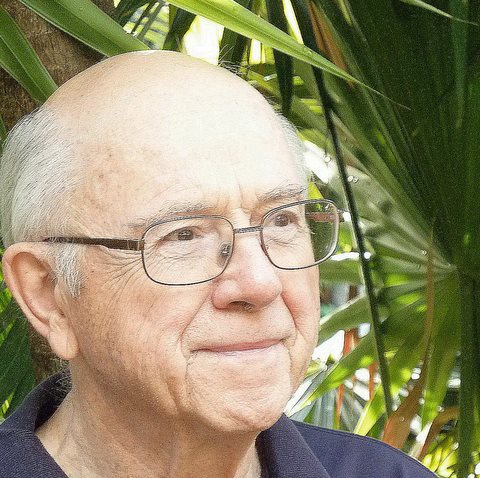
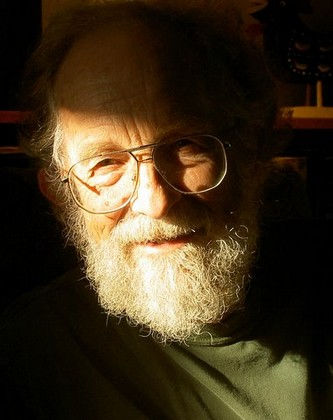
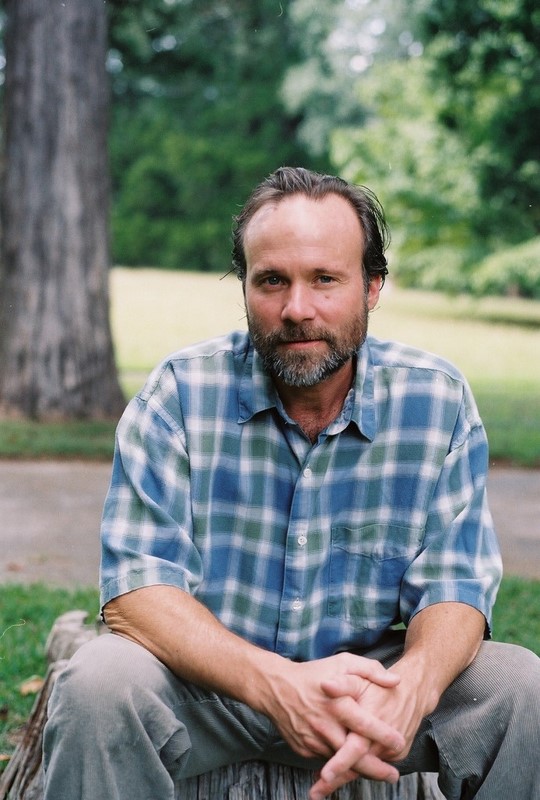
Robert Day is the best teacher I ever encountered, also one of the most amiable of men and author of The Last  Cattle  Drive, a novel I fondly reread every now and then for its rich comedy, its distinctively clipped and forthright voice, its deft and delicate puncturing of the myth of the west, and its humane decency. Bob and I met at the Iowa Writers Workshop in 1981 when I was a student and he was a visiting instructor. The first day of class he walked into the room and wrote across the whole front wall of blackboard REMEMBER TO TELL THEM THE NOVEL IS A POEM. I have written about this in my essay “The Novel as a Poem” in my book Notes Home from a Prodigal Son. I include the opening paragraphs below (and I wrote about him from memory and no doubt reimagined or even fictionalized details for which sin I hope he will forgive me).

The best writing teacher I ever had was a Kansas cowboy named Robert Day who showed up at the Iowa Writers Workshop as a last minute, one-semester replacement for a sick colleague in January, 1981. The first day of classes he strode into the room wearing Fry boots, jeans and a checked shirt. Without saying a word, he picked up a piece of chalk and wrote across the full length of the blackboard in huge looping letters: “Remember to tell them the novel is a poem.”

At the time, Day had only published one novel, a book called The Last Cattle Drive. He was a tenured English professor at Washington College in Maryland. He had been one of the founders of the Associated Writing Programs. As a young man, he had worked at G. P. Putnam in New York and could recall for us the excitement over the publication of Vladimir Nabokov’s Lolita. Summers he went back to western Kansas where friends ran a borderline ranch. He kept a horse there, a horse which at various times had eaten loaves of bread through the kitchen window, or Day’s hat. All summer long he would hang out with his friends, their cattle and his horse.

That semester we read Queneau, Musil, Rulfo, Achebe, Nabokov, Tutuola, Abe and Marquez. Day did not tell us what he meant–“Remember to tell them the novel is a poem.” Maybe he forgot. Half-way through the semester he read the second draft of my novel Precious, three hundred typed pages of plot, dialogue and scene that stubbornly refused to come alive. I still have the notes I made during our conference, fifty-four words. It took less than fifteen minutes. But like a skilled surgeon he had opened the novel up for me and shown me its heart still beating, its bones, nerves and veins.

The bit about AWP needs expansion (and even now I am not sure I have this right). But according to Bob’s friend and colleague Walton Beacham, in 1971 the infant AWP, then being run by its co-founder R. V. Cassill (George Garrett was the other co-founder), was about to go under. Cassill was bowing out and Brown University was withdrawing its support. Bob and Walton arranged a new home and financing for the organization, and Bob made the trip to Providence to retrieve the AWP archives from Cassill. Cassill handed him a shoebox containing some notecards, the full extent of the AWP archives at the time. Bob remained director and/or sometimes president until 1982.

Bob Day and I have not been much in touch since those days in Iowa, a hiatus probably due to the diffidence that exists between a student and an important mentor. But it’s a huge pleasure now to reunite on these pages — one of the best things about publishing Numéro Cinq is the number of friendships it has revived. When he wrote to me a few weeks ago, he reminded me about the last time we were together. “The last time I saw you we were looking a new jeeps as I was to buy one for the ranch where I worked; they had gone up scale and you said:  Bob, they’re toys.  Right you were.”

Now I am deeply pleased to be able to publish a new Robert Day short story, also to applaud his new book of stories coming out in September: Where I Am Now.

The hunting photo above is by Denise Low.

dg

—–

I had not been a good enough high school student to go “East” for college.  My father had hoped for a scholarship to Yale or Harvard: an Ivy League education was to a young man from Kansas as a wealthy marriage was to a young woman. As for my mother, she had discovered that any college in Kansas had to take you if you had graduated from a state high school.

“I think he should stay in our domain,” she’d say, using in context one of the ubiquitous words she was forever trying to teach me out of her dictionary.

“He should go East,” my father would say without–I would learn later–any sense of history or irony: “Go East,” you could hear him say summer evenings in our front yard as he drank a beer in his webbed aluminum lawn chair.

“I think he should stay in our environs,” my mother said through the open kitchen window as she cleaned up. That spring I was accepted at Emporia State Teachers College.

“William Allen White’s town,” my father said.

“Teachers and government workers are never without a job,” my mother said.

The summer before I left for Emporia, I life guarded at the local pool and helped at home: I mowed the lawn, painted the basement walls, cleaned out the attic, ran errands, and hung the laundry on the backyard clothes line. Some days I fixed flats, pumped gas and changed oil at my father’s repair garage and filling station.  I didn’t know what I was going to do with my life, but I didn’t sit around looking into a gold fish tank.

At the swimming pool that summer, I saved a boy out of the deep end bottom but never said anything about it until my father saw it as a news item in the local paper.  I was the kind of kid who did not explain himself.  It seemed natural. The summer after my first year at Emporia I went back to work at the pool.

“Your uncle Conroy writes that he has a fellowship for you,” my mother said. I was home on lunch break from life guarding.  “It pays wages and you get college credit.  You need good grades in science.”

My mother has said this without much enthusiasm.   She was reading the letter a second and third time.

Uncle Conroy was my mother’s older brother, a pediatric researcher of international fame.   In the cultural gulf between our 1950’s linoleum-floor kitchen in Merriam, Kansas and Doctor Conroy Watkins directing a medical research lab in Berkeley, California, circa the mid-sixties, there was a pleasing pride–as if in our small house we had a first edition signed by Clarence Day.

“Let me see,” my father said.  He had closed the garage for lunch and was also home.

“At the University of California at Berkeley,” said my mother handing him the letter.

I have an hour before I have to be back at work.  After closing I am to take Muff LaRue to Winsteads for a Frosty. My plan is to drive back to the pool for a swim.

“That’s what it says,” said my father.  “A fellowship in Conroy’s research lab that could lead to medical school.  He should get there as soon as possible for training.”  My father left the kitchen with the letter in one hand, his meatloaf sandwich in the other, and headed for the front yard to sit in his aluminum lawn chair.

“I don’t know that General Science counts,” said my mother through the kitchen window.

“Two semesters of A’s,” my father said, talking straight ahead.

They were referring to my freshman grades.  I seem to be present only in the third person.

“I’m going to be a doctor,” I said to Muff LaRue as I unlocked the gates to the pool.

Muff dove in fully clothed and swam to the deep end.  When she got there she pulled herself out and said if I’d turn off the lights she’d skinny dip.  I flipped switches.

“I’ve never dated a doctor,” she said.  “What kind of doctor?”

She walked to the end of the low board, took off her summer shorts and tossed them on the deck.  Then she pulled her t-shirt over her head and threw it in the pool.

“A surgeon.  I am going to Cal-Berkeley to be a pediatric surgeon.”

I was treading water beneath her.

“I’m going to Sarah Lawrence to study Classics,” she said as she dove in.

The next day it was agreed I should accept my uncle’s invitation even though Berkeley might have “agitators” –as my father called them, not unlike Dustin Hoffman’s landlord in The Graduate.  On the other hand, my mother feared impertinence among the rich students.   She told me to find the word in the dictionary she had given me when I left for college, along with instructions to learn three words a day: aplomb, domain, environs.

§

It took me a week to quit my job as a lifeguard, say good-bye to Muff, and pack. My uncle met me at the airport.

“So you want to be a doctor?” he said.

“I don’t know,” I said.

We were driving over the Bay Bridge toward the East Bay.  You have to be a young man from a small town in Kansas to understand how astonishing it is to see the San Francisco Bay for the first time.  There is nonchalance about its grandeur.

When I said I didn’t know if I wanted to be a doctor to one of the most famous and accomplished physicians in America, a man who had no doubt made special arrangements to get me a fellowship, it sounds, even at this distance, something Californian-sixties:  Mellow.   Really, man.  Yeah. Wow. Far out.  That’s not what I meant.   Perhaps I thought–as we crossed the Bay Bridge to the East Bay– that if I couldn’t be a doctor like Uncle Conroy, I didn’t want to be a doctor.  I’d like to think that now.

“I don’t mean. . .” I said as we drove up Grove Avenue past the lab where I would be working.

“I understand,” he said. “Don’t worry about your future.  It is always there.”

“Thank you,” I said.

From Grove we drove into the Berkeley Hills behind the Claremont Hotel to my aunt and uncle’s house overlooking the Bay.

My uncle’s laboratory was the Hansen Pediatric Research Center. My first week at work, I had met Hazen:  Hazen Edmond Floren Reynald who was pleased to introduce himself by all or part of his name, just as it pleased him to pick one of his names (including his last) and use it for a week. Or this:

“My name is Hazen Edmond Floren Reynald, and you may pick the name you like and call me that from now on.  I will remember.  But sometimes I won’t.”

I picked ‘Hazen.’  My uncle and his step-father had picked ‘Edmond.’ His mother used Floren. Aunt Lillian picked ‘Howard,’ and no one had told her that was not one of her choices.

“You may change names as I do,” Hazen said.  “This week I am to myself ‘Floren’.  But you may call me ‘Edmond’.  That’s what my step father calls me.”

Hazen grew up on Russian Hill where he still lived with his mother and stepfather, Doctor Milton Reed. He was a large-nosed, black-haired, stout-chested, short guy four or five years older than I was.  He had dropped out of college after his freshman year to travel in Europe: a trust provided him with funds to “poke around the world and among the girls.”

“Hang up medicine unless it can create a Juliet,” he said when I asked him if he was going to be a doctor. “Hang up medicine unless it can create a Juliet,” he’d say as we worked medical experiments for the researchers who used my uncle’s lab.

“Do you have a girl friend back in Kansas?”  Hazen asked me one day.

“Muff LaRue,” I said.

“’Rue’ means ‘street’ in French,” Hazen said.  “My mother is French.  So was my real father.  I understand we are all coming to dinner at your aunt and uncle’s house.  Very formal.  Mother usually brings her favorite hors-d’oeuvres: pâté de canard.”

I must have looked puzzled because Hazen went on, as if to reassure me.

“Just remember, it is impolite to take the last hors-d’oeuvre, which, if you think about it, means you can’t take the second to last piece because you’re being impolite to the poor bastard who is stuck with not being able to take the last piece. And if you think about it from here to eternity, you can’t take anything off the plate.  You just starve.”

My mother’s fear of impertinence had come true.

“Doesn’t he look good, Conroy?” said my Aunt Lillian.  I was wearing a tuxedo borrowed from my uncle. I had seen myself in a mirror before coming out of my room and thought the same thing:  not bad for a rube from Kansas.

“Very good,” said my uncle who, I understood, did not put much stock in the formalities of social life but had come to a routine acceptance of it.

The reason for the dinner party was Hazen’s step father’s Nobel prize for experiments (done a number of years before) in which he had taken the amino acid  “package” off proteins, then put it back on.  At least that is how I understood it at the time.

Aunt Lillian was wearing what my mother would have called “a cocktail dress.”  Not the kind of dress you saw Harriet Nelson wearing on television in those days (and not the kind my mother owned), but the kind that Olivia de Havilland wore in the movies.  It was pale green with tiny gold flecks that seemed to have been woven into the fabric.  I had never seen anything like it. Later in the evening I would notice that her dress matched in a subtle way the dinner plates, goblets, and even a small glass dinner bell that were put out by Bella, my aunt’s maid.

“Now use your forks from the outside in,” said Aunt Lillian, taking me to the table.  “‘Outside’ being the fork all the way to the left.  And do not use the spoon or the fork above the plate until the plate has been changed, and then use the outer one first; in this case that will be the spoon for the sorbet, then the ice- cream cake fork for the ice cream cake that they make at the lovely bakery on Shaddock where they make so many fine things.  When you are finished with your courses, put your knife and fork at four o’clock on your plate.  That way Bella will know you are finished.  And hold your wine glass by the stem, although Howard’s mother takes hers by the bowl and puts her—I must say—rather large nose—into it.  And sniffs quite loudly.”

By this time my uncle had escaped to stand in the driveway to wait for his friend.

“Hazen,” I said.  “His name is Hazen.”

I had never been to a formal dinner party, much less in the presence of a Nobel Prize winner.  And I had never worn a tuxedo.   My brother rented one for the high school prom.  My sister’s boyfriend picked her up in one for the same dance.   I wore a dark suit, went without a date, and stood by the record player and watched Muff LaRue dance to Dean Martin’s Memories are Made of This.

Living with my aunt and uncle when I first got there had its pleasures.  Even after I moved to an apartment on Derby near the University in the fall, I was always welcome.   If they were away (to a medical conference or to a retreat in Mexico in which they owned an interest), I had the run of their house with its splendid view of San Francisco Bay.  I was well fed, and when necessary, could use one of their cars. For this, my uncle asked only that I drive Aunt Lillian to the store and on errands in her large green Cadillac, complete with fins and air conditioner scoops.

“Let him drive,” my uncle would say. “That way he can learn his way around Berkeley.”

When he had me aside he said:

“Lillian is many fine things, but while she can set an excellent table for a dinner party she cannot cook a breakfast egg nor drive a car.”

§

“Your uncle thinks I am a poor driver because I am alert,” my aunt said one day as we left for errands and to drop me off at the lab.

“That is why he wants you to drive.  He has told me more than once I am dangerous, but ask him how many tickets I have gotten?  None.   Or how many accidents I have had that were my fault?  None.  It is just a prejudice he has about women drivers because we are cautious.”

Aunt Lillian had stopped for a green light on Durant because–as she explained amid the honking of horns behind her–men sometimes run red lights.

“You must be defensive in your driving.  Defensive and alert.   Not alarmed.  But alert to what is coming at you from all sides:  front, back, right, left.  I am perched high and straight in my seat and I am always alert and defensive.”

She achieved her “perch” by sitting on a folded pillow so that her head was well above the steering wheel, and not all that far below the car’s headliner.  From there she could see as well as any present day SUV soccer mom.

“You must be careful of rocks rolling off the mountains,” Aunt Lillian said one day when she came to a full stop in the middle of West View Drive, not far from the end of their lane. I looked up the hill at a large rock protruding from underneath a few scrub trees.  It had probably been deposited by an ice age.

“Would you like for me to drive?” I said.

“Not at all.  You think that rock has been there a long time and will not roll down.  That is what Conroy says.  But because it has been there a long time means it is more likely to roll down.  Hills flatten into plains because rocks roll off them and grind themselves to dust.  That is what happened in Kansas.  It can happen in California.  We have earthquakes. There was a famous one years and years ago that started a fire.  They still talk about it.  You must be watchful wherever you are in a car.  On the small roads.  On the highways.  In traffic.  In the hills with rocks on them.  Just because we are very close to the house doesn’t mean an accident can’t happen.  Most car accidents happen close to home.”

“Did she stop at the top of the hill by the rock?” asked my uncle when I told him I had not been able to drive her that day.

“Yes.”

I drove Aunt Lillian very little, and I never understood why some days she was pleased to have me do so, but on most days she was insistent that she drive.  Nor could I determine why she stopped at some green lights (and ran red ones), but not at others.

“Has Lillian pulled off the road when a truck is coming?” asked my uncle on another occasion.

“No,” I said.

“She thinks some trucks are too big for the roads so she’ll drive off the shoulder to let them go by.  Once I had Triple A pull her out of a ditch, and all she would say was that it was better to be in the ditch than  ‘squished like a beetle.’”

A few days later Aunt Lillian veered the Cadillac onto a lawn because a large cement truck was heading our way, very much on its own side of the road.

“Better up on a lawn than squished like a beetle,” she said as we came to a thud of a stop in a well-tended yard. “A wreck involves the police and smashed fenders and a broken windshield and medical bills.  Just because your uncle is a doctor doesn’t mean we get hospital care free. “

Aunt Lillian looped back onto Stuart just ahead of a woman dashing across the lawn shaking a vacuum cleaner attachment like a fist.  At the next green light we made a full stop.  At the next red light we drove through.

§

“When Bella serves a new course,” my aunt continued, “it is polite to change the direction of your conversation.  You will be sitting between Doctor Reed on your left and Madame de Ferney on your right, and if you have been talking to Doctor Reed for the first course, you then talk to Madame de Ferney during the second course, then back to Doctor Reed for the next course.  Madame de Ferney may not converse this way.  She has a habit of talking to whomever she wants.”

Aunt Lillian paused for a moment and looked at the table, first at one chair, then another, slightly nodding at each, as if more than counting.

“At home we just ate,” I said.  I thought I should say something by way of thanking Aunt Lillian for telling me how to behave.

“It is all a bit fussy,” she said.  “Conroy doesn’t much like it.  He says dinner parties are “fork fetish feasts”.  I suppose he’s right, but we women have to keep up standards.  Do you see a young lady in Kansas?”

“Muff LaRue,” I said, thinking I didn’t know the meaning of “fetish”.

“When did you last see her?” said my aunt, now circling the table to make some adjustments in napkins and silverware.

“At the swimming pool where I work.”

“How nice.”

“Yes,” I said.

Aunt Lillian stepped back to look the table over at some distance. “Everything is in its place,” she said, more to herself than to me.

Then: “One more thing.  Madame de Ferney always brings the hors-d’oeuvres.  A duck pâté on toast points.  I will put them on a large plate and we will have them in the living room with some white wine before dinner.”

“I know it is not polite to take the last one,” I said.

“Yes,” said my aunt, and seemed pleased.  Then, looking past the table and around the dinning room and into the living room where Bella was putting out napkins and wine glasses on the coffee table, she said:  “Madame de Ferney has kept her curious name even though she has been married all these years to Doctor Reed, who as you know, is Howard’s father, just as Madame de Ferney is Howard’s mother, even though she doesn’t have the same last name as Doctor Reed.  Or maybe Doctor Reed is Howard’s step-father and Madame de Ferney is his mother.  I think that’s what Conroy once told me.  She came to America when he was very young and brought Howard with her.”

“Hazen,” I said.

“And for some reason I think Howard doesn’t have the same last name as either of them because Madame de Ferney named him for an uncle for whom a French village is named.  Or maybe she is named for the village.  Howard is an only child so I suppose it is easier to do that when you are an only child.  And Madame de Ferney always calls Doctor Reed, “Doctor Reed,” not by Milton as the rest of us do. So we all call her Madame de Ferney and have for so long by now I don’t remember her first name, but I think it’s Mimi.  You should ask Howard.  Very curious.”

§

“Here they are,” said my uncle from the doorway.

“There is something else,” Aunt Lillian continued, but in a lower voice. “Madame de Ferney keeps both her hands on the table, sometimes even her elbows.  She is French. They have peculiar manners. And her English after all these years is still odd.  A bit of French mixed in with English.  Very odd.”

“My mother said I should cut my food with my elbows down, not up.  And that I should bring my food to my mouth and not my mouth to my food,” I said, again trying to reassure my aunt.  But this time she seemed not to hear me and said: “I am thinking maybe I should seat you. . . but no I can’t. . . that would disturb the arrangement.”  I could hear my uncle at the door saying come in, now, come in and they all did.

§

“Is it the case,” Madame de Ferney said as Bella was clearing the table of the second course, “that in Kansas. . .how shall I put it? . . .comment dirais-je?  Je ne sais pas…”

She said something else in French to her husband.  I saw Hazen frown.  I saw Doctor Reed frown.   Doctor Reed said something in French.  Then Madame de Ferney said to me:

“Is it ‘provincial’ in Kansas?  Provincial?”

She pronounced her second  “provincial” with a certain prairie flatness, as if to make sure I understood.  Not that it mattered: It was not a word I had learned from my mother’s dictionary:  Rube. ff.

While it was true that Madame de Ferney had used her forks according to Aunt Lillian’s rules, she had not–as my aunt had predicted—abided by the formalities of conversation; also, her elbows had been on the table repeatedly, and–my mother would have been shocked—Madame de Ferney had removed her bread from the bread-and-butter-plate and put it on the tablecloth where it left crumbs.  And she not only stuck her nose into the wine glass, she swirled it around before holding it to the light and said: It is the first duty of a wine to be red.

“Don’t you agree?” said Madame de Ferney to my Aunt.

“Yes, indeed.”

“And also from what you call the environs.  Is that the right word Floren?”

“Yes,” I said.  Everybody looked at me for a moment and then Madame de Ferney asked me what kind of wine we drank in our environs.

“My mother has a glass of Mogen David as she fixes dinner,” I said.  “My father drinks Coors.  My mother is Polish.  My father Irish.”  In the small silence that followed everyone took a sip of wine.

“I ask about Kansas being provincial,” Madame de Ferney said, “because I am told they were provincial ici in San Francisco before the gros earth cake.  The gros earth cake and the fire did them a great good because the rebel lost their shanties.”

“Rabble, mother,” said Hazen.

Madame de Ferney paused only to mouth the word rabble silently with what seemed to me impatience toward the English language.

“Mother’s ‘gros’ is French for ‘large’,” Hazen said to me.  “The Great Earth Quake.”

“Thank you,” I said.  And to show I was going to learn French I repeated ‘gros’ out loud.

“You’ll need to work on your ‘r’,” Hazen said.  I had no idea what he meant.

At this point Bella came to serve another course, while Madame de Ferney continued:

“The families whose furniture came “around the Horn” began to assende and that gave the city its culture.  Some people who first arrived in San Francisco brought their furniture with them over the prairie ground in wagons.  It must have been very hard on chairs.  Not to mention desks and tables.  All of Doctor Reed’s family furniture came “around the Horn.”  Our chairs are very solid.  Tres solide.”

Madame de Ferney had been speaking to the table at large, but then she turned to me:

“They have no earth cakes in Kansas to make matters better.  C’est tres mal in that regards, don’t we all think so?    Maybe a dust storm or a prairie bison fire could do the same thing. Does your family have the particle?”

“’Quakes’, mother,” said Hazen. This time Madame de Ferney did not mouth the word.

“They have tornadoes,” said my aunt.  “Tell Madame de Reed about the tornadoes. How Dorothy went to see Mr. Oz on the Yellow Brick Road. That  might be just as good as earth quakes.”

I was about to ask “a particle of what?” thinking Madame de Ferney might have wondered if we owned a bit of farm ground when Doctor Reed coughed loudly a number of times to my left and we all looked his way.  My uncle patted him on the back and asked if he was all right?

“I was telling our nephew the other day,” Aunt Lillian said when Doctor Reed’s coughing spell stopped, “about that big rock at the top of the road, and how it might fall down if we had another earth quake like the one Madame de Ferney has mentioned.”  My aunt stopped and seemed befuddled for a moment.

“You were about to say something about the rock, Lillian,” said Doctor Reed.

“Yes!  Well, if it rolled down the hill it would squish that nice bakery on Shaddock where we got the dessert for tonight.”

“Ah oui!” said Madame de Ferney.  “It is a lovely bakery and Doctor Reed always get something from it whenever we are coming to the University.  There is rien like it even in San Francisco.”

“’Rien’ means ‘nothing,’” said Hazen.  I nodded.  “‘Rien,’” I said, this time doing no better with my “r” judging by Hazen’s look.

“’Nada’,” in Spanish, said Doctor Reed.

“’Nada’,” I said, thinking at least there wasn’t an‘r’.  Again a moment of silence while everyone took another sip of wine and Bella bustled.

“And they probably don’t have a bakery in Kansas like the one on Shaddock that we all like so much,” said Aunt Lillian. “Just like they don’t have hills down from which rocks might fall because they already have fallen down and that’s why it’s flat.   And maybe that is why Madame de Ferney has asked about it being provincial.  No quakes.  No hills.  No rocks.  No bakery.”

“Ah oui,” said Madame de Ferney, at which point Aunt Lillian rang the bell for Bella who was standing beside her.

“Maybe I should not have asked about Kansas being provincial,” said Madame de Ferney. “It is of no matter, but sometimes those of us who live la vie de chateau cannot imagine remote places in the United States as being other than provincial.  That is true in France as well.  We have peasants in many places south of Paris.  Some of them harvesting their own ‘poulet.’”

“’Chicken’, mother,” said Hazen.

“I know it is “chicken” in English,” said Madame de Ferney.  “But I prefer the French.  Who can like a word like “chicken” instead of “poulet”?  Or “duck” instead of “canard”?

“It is what we had this evening,” said Aunt Lillian.  “A recipe right from France.  Chicken Cordon Bleu.  Not that we raise chickens or ducks here in Berkeley.  I expect there is some kind of rule against it.  I know there is one about hanging your clothes out to dry, isn’t there Conroy?”

“There is indeed.  It is called a ‘covenant’,” my Uncle said to Doctor Reed who smiled.  “As if good taste were a religion. No rabbits in cages.  No chickens.  Or ducks.  No horses or goats.  It was quite a list they gave us when we moved here.  No clothes line, as Lillian says.”

“In Kansas we have a clothes line,” I said.  “I do the hanging out when I am home.” Uncle Conroy looked at me and smiled. I was about to say the Simms down the road had both chickens and ducks,  as well as pig they fed out but Madame de Ferney said:

“It is our own limitation, I suspect, and I would be pleased to learn otherwise.  How did your parents’ furniture come to Kansas?”

“Here is dessert!” Aunt Lillian said, and once again rang the bell, even though Bella had returned to the table.

The arrival of dessert and the clatter of plates and forks and the general talk about the bakery on Shaddock changed the course of the conversation and as we ate Madam de Ferney turned to Hazen and asked:

“Do you remember when you were an adultlesson and we took you to Paris?”

“‘Adolescent’, mother,” said Hazen.  “It is the same in French.”

“Yes, I suppose it is,” said Madame de Ferney.  “It is just that we were showing you where I was reared—is that the word?  You raise cows but rear children.  Do I have that right?”

“Yes,” said Doctor Reed to Madame de Ferney, and then to the table:   “Edmond was born in Paris as was Mimi, but after her husband died they moved to America and he was reared here.”

“Conroy and I have not reared any children,” said Aunt Lillian. “This is our nephew,” nodding toward me.   Aunt Lillian seemed either to have forgotten my name or was continuing my family’s tradition.

“Ah oui,” said Madame de Ferney to Aunt Lillian.

“Ah oui,” said Aunt Lillian.  “But do tell us about your rearing in Paris.”

“We lived in the Sixth, but below Saint Germain.  The Sixth goes all the way to Boulevard Montparnasse, but my father would not admit that.  For him it only went as far as Saint Germain.  So I was reared in that domain.  Is that the right word?” Madame de Ferney asked me.

“Ah oui,” I said. I saw Hazen smile. “Or you could say ‘environs’,” I said. Madame de Ferney seemed pleased at this information and this time said environs out loud with a peculiar guttural sound on the “r.”

“My father was tres formal and would not even ‘tu’ my mother.  Of course he did not ‘tu’ me or my sister.” Madame de Ferney paused for quite awhile and looked away from the table. The only sound was Bella putting out coffee cups in the living room.

For my part, I imagined Madame de Ferney was thinking of her days growing up in Paris; I imagined this because in between the rocks tumbling down and squishing the Shaddock bakery, the tornadoes that might be as good as earth cakes, covenants against chickens and clothes lines, I had been thinking in bits and pieces about home.  About my father’s webbed aluminum lawn chair and how he took my uncle’s letter and his meatloaf sandwich outside and read the letter while my mother cleaned the kitchen counter where on summer evenings we “just ate”, my mother having her glass of Mogen David wine while she cooked with no idea about the wine’s duty, my father with his beer in a bottle after dinner as he read the paper or, on Fridays, watched boxing on television.

And it wasn’t when Aunt Lillian asked me about a girl friend that I thought of Muff LaRue.  It was when Madame Ferney was talking about chicken and poulet and duck and canard.  How, after both Muff and I got dressed, not having gone “all the way”, we sat in two chairs under my life guard stand and talked into the night about our futures: me to California to become a doctor, she going East to Sarah Lawrence to major in Classics–and I thought then that studying classics at a fancy East Coast college for girls and skinny-dipping in a Kansas municipal pool with the life guard whose father had a car garage didn’t go together.  But I did not say so.  And how later I drove Muff home and we promised we’d meet again over Christmas break—at the swimming pool, cold and snow or not.

§

“Thank you,” my uncle said to Bella as she began clearing the table of dessert plates, all forks now at four o’clock.

My aunt fingered the spoon on the top of her plate.  She picked up her wine glass by the stem and studied the color.  She started to ring for Bella even though Bella had just left.

“Maintenant that you are ici in Berkeley,” said Madame de Ferney, “do you think it provincial in Kansas?”

My uncle was about to speak and so were Hazen and Doctor Reed when I said to Madame de Ferney and, with considerable aplomb, to the rest of the table:

“Sometimes it is, and sometimes it isn’t.”

“Ah oui!” said Aunt Lillian.

§

“Did you miss Kansas?” Muff said to me.  We are sitting in my father’s lawn chairs that I have taken to the pool and put beneath my old lifeguard stand.  It is snowing.  The pool has been drained, but not to the bottom.  There is a skim of ice on what water remains.  “I did not,” said Muff before I could answer.

“I did,” I said.

“Are you going back?” she said.  “To Berkeley to be a doctor?”

“Hang up medicine,” I said. “Unless it can create a Juliet. The guy I worked with at the lab used to say that over and over again.” She seemed not to hear me and said:

“I learned that Socrates took up dancing in old age.  So I’ve started dancing.  Modern dancing.”  She got out of her chair and did a small pirouette in the snow in front of me.

“I’ve never dated a dancer,” I said.

And then there was a long silence between us.  I took a sideways glace at her.  She was looking at the space just in front of us where she had done her pirouette.  The snow was falling faster now and it was filling her footprints. I never knew her well enough to guess what she might be thinking.  But I was thinking I would not see much of her ever again, and I would be right about that.

“You haven’t said if you are going back.”

“In Berkeley,” I said, “you don’t just eat, and you can’t hang your laundry on the line.”   Again she seemed not to hear me and said nothing but got up from her chair and did a second pirouette, this time putting her toes into the same place where they had been before, and in so doing her feet made their marks in the same place where the snow had almost filled in her previous pirouette. And in coming back to her chair she stepped into the same footprints she had made before, and smiled at being able to do so.

§

When I drove her home Muff asked me if it was true I had once saved a boy from the deep end.

“Yes,” I said.

And it was at the door of her house that she told me where Hazen had gotten his saying, and that was not about medicine, but about philosophy and that when Hazen said it over and over it became his mantra–a word I did not know until I came home that night and I looked it up in my mother’s dictionary.

—Robert Day

——————————

Robert Day’s novel The Last Cattle Drive was a Book-of-the-Month Club selection.  His short fiction has won a number of prizes and citations, including two Seaton Prizes, a Pen Faulkner/NEA prize, and Best American Short Story and Pushcart citations. His fiction has been published by Tri-Quarterly, Black Warrior Review, Kansas Quarterly, North Dakota Quarterly, and New Letters among other belles-lettres magazines. He is the author of two novellas, In My Stead, and The Four wheel Drive Quartet, as well as Speaking French in Kansas, a collection of short stories.

His nonfiction has been published in the Washington Post Magazine, Smithsonian Magazine, Forbes FYI,  Modern Maturity, World Literature Today, and American Scholar. As a member of the Prairie Writers Circle his essays have been reprinted in numerous newspapers and journals nationwide, and on such inter-net sites as Counterpunch. Recent book publications include We Should Have Come By Water (poems) and The Committee to Save the World (literary non-fiction).

Among his awards and fellowships are a National Endowment to the Arts Creative Writing Fellowship, Yaddo and McDowell Fellowships, a Maryland Arts Council Award, and the Edgar Wolfe Award for distinguished fiction.  His teaching positions include The Iowa Writers Workshop; The University of Kansas; and the Graduate Faculty at Montaigne College, The University of Bordeaux.

He is past President of the Associated Writing Programs; the founder and former director of the Rose O’Neill Literary House; and founder and publisher of the Literary House Press at Washington College, Chestertown, Maryland where he is an Adjunct Professor of English Literature.

Where I Am Now, a collection of his short fiction, will be published in September, 2012 by BkMk Press.
Jul 192012
 

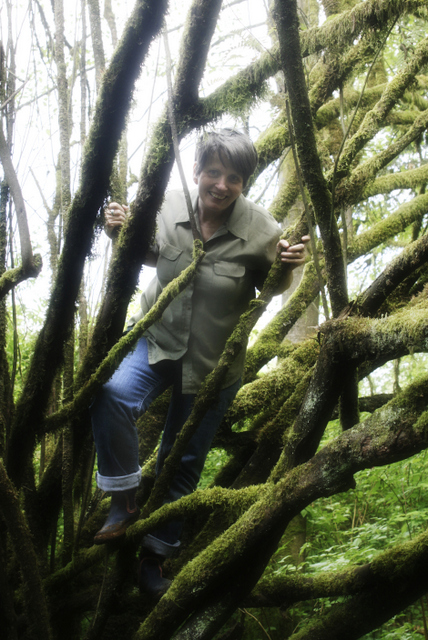
Jane Eaton Hamilton: Photo by Shawna Fletcher

.

HERE IS A STORY.  It is true, but it is also full of lies.  And small axes, the kind that make tiny cross-hatchings on hearts.

1)

A surgeon flayed open my wife’s chest and removed her breast:  stiches and staples. This was several years ago.  While she sleeps her scar unzips (top tape extension, top stop, slider, pull tab), her flesh unfolding like a sleeping bag. Some nights I only see the corset bones that girdle her lungs, gleaming moon slivers in murky red sky, and I say a prayer for them, those pale canoe ribs, those pickup sticks that are all that cinch her in.  I wish I could do that:  I wish I could hold her together.  Some nights I think she may fly away in all directions, north, east, south, west, a huge splatter.  She will go so far so fast I will only be able to watch with my mouth fallen open.  She’ll be gone, and all I’ll have is a big red mess to clean up and a sliver of rib sticking out of my eye.

2) 

Quiver trees are weird enough anyhow, but add a Sociable Weaver nest and you’ve got a real visual pickle. Warty, sponge toffee boils, these bird condos of dry grasses have upwards of 100 different holes for individual families; the nests can house 400 birds.  Interestingly, Sociable Weavers are polyamorous, even, apparently, with barbets and finches.

In Namaqualand, Cape Weavers go it individually.  The males court females by weaving testicular-like sacs, and if a female remains unimpressed, the male builds a second sac under the first, and etcetera, until a wind knocks the whole shebang down.

Bird-land, human-land—it’s all pretty much just jostling to get and keep the girl.

3) 

Some nights when my wife’s incision unzips, a rib extends and on it sits a yellow bird, swaying as if in a great wind, feathers ruffling to lemon combs.  I love birds.  It makes me happy to hear her song, the same way it makes me happy when my wife sings.  (Once when we were fresh, my wife danced naked through our kitchen belting out girl group songs from the 60s.) The little bird warbles and trills, then launches off the rib to fly around our bedroom.  She grabs a mosquito near my ear.  She flits into the corners, around the light fixtures, and carries back bits of yarn pulled from sweaters, spiderwebs, plastic pricetag spears, dust bunnies.  She constructs a nest, shivers down into it, and lays little gelatinous eggs, eggs that I trust, with a simple, guileless trust, will grow up to be lymph nodes for my wife.  These bird nights, I am happy, so happy. On some inchoate level, I know the little yellow bird has our backs, and I drift off to trills of sugary bird song.

4)

I hang out on bird-lover websites, where questions abound:  Why are my lovebirds changing colour?  Aphids–my bird is okay with them, but I’m not? Lovebird feather plucking?

Feather loss, says Avian Web, is a difficult problem to cure when the picking behaviour is already establishedBirds should be presented to Dr Marshall at the first signs of picking.  My wife and I are feather-plucking. We didn’t go to Dr Marshall and maybe that’s our problem. Our relationship has thrush, bacteria, poor nutrition. My wife and I were once lovebirds.  Once, for a nanosecond, We Two Were One.  Then, for years, We Two Were One and A Half.  Eventually, We Two Were Two.  Now, the evidence suggests We Might Be Three.

5)

Birds enchant me.  Once we took our daughter to a free flight aviary, the Lory Loft in Jurong Bird Park, Singapore.  Having a 20-hectare hillside park entirely devoted to birds is guaranteed to make someone like me giddy. Lories look like small parrots, and in the aviaries, as you whoop and wriggle and scream over suspension bridges high in the treetops, they land on you, they cover you.  It’s as if the keepers are up on the rooftop squeezing tubes of oil paint all over you, cadmium orange and cobalt blue and carmine and viridian, screechy territorial colours with a lot of wing flap and pecking.

Ornithologists at the park answer such questions as:  Will an ostrich egg support the weight of an adult human?  I grapple with this one:  Will my human heart support the shifting weight of my wife’s loyalties? 

6)

Foraging:  The Way to Keep Your [Wife] Mentally Stimulated and Happy 

It’s me that forages.  Watch me some nights, thumbing through theatre tickets (Wicked!  The Vagina Monologues!  Avenue Q!  My Year of Magical Thinking!) and museum exhibitions (Dali: Painting and Film; Picasso and Britain; Carr, O’Keeffe, Kahlo: Places of Their Own) and the detritus that falls from her scar, stirring through wind-up rabbits and plastic zombies and voodoo dolls that tumble free, all the secrets and suffering that she hoards deep inside.

What am I looking for?  Something to eat, maybe.  Bird seed.  A steak.

7) 

We met a woman in Namibia who lost most of one breast to a crocodile attack.  She was a member of a polygamous tribe, the Himba, whose women wear only loincloths.  She bent down at the river with her water gourd, breasts hanging as breasts will do after a bunch of kids, and a croc’s teeth snapped closed on the right one.

Who knows what this woman’s husband thinks when he takes her shriveled, croc-mangled right breast into his hand? Does he trace her history with reverence?  Does he spit in disgust and choose another wife?

8)

There are local stories of wives who change in the bathroom, wear bras and prosthetics to bed, and husbands who shun them.  There are stories of marital disintegration, and by that I mean what you probably assume: straight marriage.  I don’t know the stats for queer marriage breakups after breast cancer. I do know that even after twelve years, when my wife or I drive past the Cancer Agency, not even thinking about what happened, on our way to other appointments and sometimes in the midst of great happiness, one or other of us will burst into tears.

9)

Vancouver has murders of crows, and our house is on their flight path. If you go outside in the dawn gloaming, such as when you are going for chemo, they fill a Hitchcockian sky with black shrieks, and if you could count them, you would run out of numbers before you’d run out of birds. Crows are not protected in BC, and their forest roost was recently ripped down to build a Costco; now tens of thousands roost in a tangle of electric wires and pallets of home building supplies.  Their noise is deafening.

10)

Magic realism aside, my wife’s scar is really just a scar, plain, unremarkable, faded with time. (Plain, unremarkable.  I tell you.  Plain and unremarkable.) Here is the pedestrian truth:  she is sort of concave there where her breast once was, a hollowed-out nest.  She opted not to have a reconstruction.  Her one breast is very small and she goes braless without a prosthetic, which is a loud story, actually, the only blaring part of the reality-struck, pedestrian story:  she is obviously one-breasted, especially in t-shirts, and manly anyway, so people stare.  Last week at an art opening, a little boy about seven stopped from a dead run and ran his eyes up and down her, up and down her, up and down her, trying to make her make sense.

(These days, I do the same thing, rake my eyes across her.  The little boy is right: she no longer makes sense.  She is always saying goodbye with her actions while she smiles hello with her lips.)

11)

 My heart is a big old blood pump with places engorged like a balloon (I’ve got a big old cardiomyopathy for you, I tell my wife sometimes, but it’s actually heart failure.)  My heart is giving up, and has necrotic spots like measles, dead bits which have been dead now for 25 years, what an anniversary: let’s have a cake and candles, happy necrosis to me!).  Referring to my circulatory system, a cardiologist once said to me:  The tree of you is dying.  No doubt too many polygamous weavers? How does this feel for you? my therapist asked about our lives (relationship) going—yes—tits up, three tits up I guess, instead of four, and here is the answer, my letter to my pain: It feels exactly like my heart is failing.  Right now it’s stuttering along arrhythmically, but it can’t pump through all these emotions and old, ruptured scars, so it may just keep engorging till I pop like a—

12)

Tumour?

13)       

Once I co-owned a grey cockatiel named Hemingway. Hemingway would hop around my scapula and peck food from my teeth while molting grey feathers onto my breasts. He was a happy bird with a yellow comb, but he never wrote a great story as far as I know.

 14)

At the Cape of Good Hope in South Africa, my wife ran at ostriches while the wild Benguela current tossed waves on the beach. Ostriches have a nail on each of their feet that is capable of slicing a person open as efficiently as any surgeon’s blade.  I was up on my toes with alarm, but the ostriches didn’t fight, they only ran, their stunted wings extended.  Then the male turned and knocked my wife flat.  He danced on her chest until his pea-sized brain got bored.

Just a game, just a game, she assured me afterwards, brushing off, none the worse for wear.  I wasn’t really dead. 

(This is a lie.)

15)

At Okonjima for cheetahs, I was fascinated instead by the hornbills—those bills and casques!  Female hornbills use their droppings to seal themselves into their nests.  I did this too, when my wife was diagnosed, but I used an alarm system instead of poop.  I’m doing it again, now, but I’m using perimeter lighting, as if shining sunbeams into my wife’s shadows will keep my marriage intact.

16)

My wife’s skin is numb, did I mention that?  That’s how her spirit must have healed from all that trauma (PTSD), don’t you think, with a big old numb spot? On the outside of her, cut nerves sometimes go crazy, like a pain orchestra, a violin screech, a flute shrill.  Yowey.  When I lay beside her and trail my finger across her chest, through her armpit, across the skin near her arm on her back, she can’t feel a thing.  Here? I say and she shakes her head.  NothingHere?  Still nothing.  Here?  Nope.  Here? Kinda, sorta, not really.

Does anyone ever really heal after being pushed out of the nest? Things repair, things scar, we go on, but eventually, we find ourselves in free fall anew. Our beaks impale the ground so we’re stuck flapping upside down like cat-lollipops.  All the old wounds break open, the old puncture holes (insect bites, that time we fell off our bikes, the tendonitis, the hernia) ooze. We’re all leaking pain.  We’re all bloody oozers, in the end, aren’t we?

17)

One night as I lie beside my wife, her chest opens and I watch Cirque du Soleil’s Kooza.  The acrobats use my wife’s ribs as tightropes; the contortionists bend double through her ribs and poke their heads back out, like Gumbies.  The acrobat stacks chairs one atop another atop another atop another, and then climbs atop himself, fearless, while the chairs shake.  I laugh aloud in pure childish glee, and my wife awakens, coughs, and resettles as the performer tumbles.

When he’s scurried away, I rest my cheek in my wife’s loss, my sudden weight causing her to panic and sit bolt upright.  She rubs her eyes and peers at me.  You have the imprint of a zipper on your cheek, she mumbles.

I reach up and touch the corrugations.

18)

I am at the “my this hurts” age, where “this” is really any body part you want to interject at random: ear, elbow, knuckle, knee, uterus. What relationship do I have to my pain? I find it hot like a combustion engine.  I find it has very droopy eyes, and shoulders that slope.  It sees me as prey, mostly, I’d guess, and comes at my heart with its little axe, cross-hatch, cross-hatch, like a Kite in the Serengeti dive-bombing to steal a sandwich from an unsuspecting tourist’s hands, talons gashing a cheek.  What relationship do I want to have in the future with my pain? I want to be its gay divorcée.

19) 

My wife drummed for a PSA a few weeks ago with a group of breast cancer survivors.  A murder of breast cancer survivors, they freaked me out with their black feathers and cawing.  I can’t handle what’s coming for them (for my wife). The prognosis for my wife’s breast cancer is good, but the last months she has had pain on swallowing, and the chant arrives in the rhythm of the children’s song: Eyes, ears, mouth and nose! Except for breast cancer mets it’s: Liver, lungs, breast and bone!  I’m not sure what the song for infidelity is….okay, I am, but I can’t sing it here.

20)

Some nights my wife’s scar opens like Monet’s water lilies at L’Orangerie, a long wide strip of art that is all blue meditation and green silence.

Intending…  to…  heal, intones a monk in a saffron robe.

I must sit through my pain and gird my back.  I must go into my pain and through and beyond my pain.

And come out into art.

My own rendition of my wife’s lost breast is sliced into sections and presented like upright pieces of toast, the tumour glowing in phosphorescence across five slides.  Anatomical, direct, confrontational, weeping blood tears.

My Wife’s Breast, by Georgia O’Keefe: a striated red flower full of motion, a rib protruding at the nipple line.  My Wife’s Breast, by Pablo Picasso: a spiral breast sprouting hair, a breast with an eye instead of a nipple, a tumour instead of his model’s head. My Wife’s Breast, by Emily Carr: breast as swirling dark tree, tumour as bird’s nest. My Wife’s Breast, by Savadore Dali: a breast sitting on a rib, melting, a clock face ticking down her remaining days.  My Wife’s Breast, by Frieda Kahlo: my wife and I completely clothed, hand in hand, a large shadow to my wife’s left, our injuries showing through our t-shirts, a long red, swollen gash on my wife’s right side that pumps blood across a thick vein to my over-huge, engorged, arrhythmic heart while it pumps it back–a perfect silver tea service and a lorikeet on a table to one side.

—Jane Eaton Hamilton

.
Jane Eaton Hamilton is the author of Hunger, a 2002 collection of short fiction.  She is also the author of Jessica’s Elevator, Body Rain, Steam-Cleaning Love, and July Nights and Other Stories.  Her books have been shortlisted for the Ferro-Grumley Award for LGBT Fiction, the MIND Book Award, The Pat Lowther Award, The VanCity Award and The Ethel Wilson Prize in the BC Book Prizes.

Short pieces, which have appeared in such places as the New York Times, Maclean’s, Canadian Gardening, Fine Gardening, The Globe and Mail and Seventeen magazine as well as in numerous anthologies, have won the CBC Literary Awards, the Yellow Silk fiction award, the Paragraph fiction award, the Event non-fiction award, the Prism International fiction award (twice), the Belles Lettres essay award, the Grain non-fiction award, the This Magazine fiction award and The Canadian Poetry Chapbook Contest.  Stories have appeared in the Journey Prize Anthology and Best Canadian Short Stories, Tarcher Putnam’s The Spirit of Writing: Classic and Contemporary Essays Celebrating the Writing Life, and The Writer’s Presence (Bedford/St.Martin’s USA).  They have been short-listed for the Pushcart Prize and Best American Short Stories.

Jane blogs at janeeatonhamilton.wordpress.com.

Jul 062012


A widow, an Irish wanderer, a house built on a fault line and a mysterious light form the essential furniture of Gerard Beirne’s fine new story “Fault Lines.” Beirne is an Irish writer and you can hear the fierce rhetoric of the Irish in his opening cadences, the insistent lists and parallel constructions. The story is dark, almost noir in its atmosphere of eroticism and constant menace. Gerard Beirne and I don’t know each other except in our email interchange over this story, but we have tread common paths. Beirne was the Writer in Residence at the University of New Brunswick where I also have been Writer in Residence; he is the fiction editor at The Fiddlehead where I published some of earliest stories, yea, these many years ago; and he just published a poetry collection, Games of Chance: A Gambler’s Manual, with Oberon Press in Ottawa, a publisher with whom I have had a long association including a decade of editing the annual Best Canadian Stories. So he and I exist in almost parallel universes that have somehow flowed together on this page. Read the story.

dg

§

You could look at it this way. You could say I was the one real beneficiary of his death. Not so much the car as the air conditioning, the house as the pool, the cellar as the wine collection, the lady as his wife.

As a lady she brought with her charm, sophistication, impeccable dress sense, a taste for good food. But as his wife she brought with her everything. His fortune, his lifestyle, his foul mouth, and his filthy mind.

* * *

“We’re all so much better off without him,” Maybelle told me on that first night we ended up in bed together. I was drinking his champagne, eating his caviar, lying passively beneath his gyrating wife. “He was cruel. He was fucking cruel. Cruel to all of his previous wives. Cruel to their children. Cruel to himself. And, worst of all, cruel to me. Irrespective of his ability to increase his fortune we are all so much better off without the bastard.”

She tipped over her champagne glass and poured his 1975 Dom Perignon along my chest, then bent over, extended her tongue, and licked that expensive liquid up in one long sweeping motion. And in that prolonged salivating moment, I knew just how wrong she was. How it was I, and not anyone of his close or distant family, who was the better off.

I fed her with his caviar, and she sucked it from my fingers. I appraised her firm body as it pincered me from above, grateful for the multigym he had purchased on its behalf. Then I thought of the swimming pool outside where earlier we had stripped and swam in the moonlike glow of the veranda spotlight. It was the first time we had seen each other’s bodies. The first time I had seen the naked flesh of a widow of barely forty-eight hours. The yellow glare of the spotlight jaundiced her pale skin. A light breeze blew in from the canyon, that large empty gulch that stretched ahead of us, carrying the smell of creosote bushes. The dry desert dust landed softly on the flagstones and tiles, on the surface of the shimmering water lit from below, on our warm flesh lit from we knew not where. We were exposed not just to each other but to the world if the world had cared to look.

The only lights to be seen were those dotted around the property for security, a row of house lights eighty miles to the east, and the stars they could barely be distinguished from. We scarcely glanced across at one another before diving on in. If I could help it, I was determined never to resurface. But resurface we did, together, in a hardened embrace.

Maybelle’s toes curled against the white sheets. She grasped my shoulder blades tightly with her fingers. Her long manicured fingernails scratched across my skin. “Cruelty is the worst sin of all, don’t you think?” she whispered close to my ear. Then she did something with her body that might not have been thought possible. “This was the only way I could hurt him in return.”

I almost screamed with the excruciating mix of pleasure and pain. The white curtains billowed out from the half-open shutters. A solitary star twinkled within my line of vision. Maybelle shuddered violently. Her strong legs gripped my thighs. Her fingers clawed at my torso. The star plummeted through the black sky. Died before my eyes.

Later as Maybelle showered, I stood by the window in his study and looked up, as he had looked up on so many occasions, at the constellations with his telescope. Orion. Pegasus. Ursa Major. What would happen if one of those stars died? I wondered. What sort of hunter would remain, what sort of winged horse, what sort of furrowing instrument? What would become then of the great design? How would we read the night?

I turned the lens towards the darkened desert, the canyon. That other great void. From deep within the canyon I witnessed an uncertain flash of light shooting upwards for which I had no explanation. To the east, the distant houselights flickered. Outside the glare of the security lights reflected against the lens. In the bathroom a flow of water spread in rivulets down Maybelle’s hard body.

How had I come this far?

* * *

Leaving Ireland had been easy. Leaving a small Donegal town. A small landholding I had no interest in. Leaving home.

I was happy to fill a hold all and empty it on the bed of a YMCA on the other side of the world. Happy to be paranoid on the streets of New York. Happy to work the graveyard shift washing dishes in an all-night cafe. Happy to tire of all that and board a Greyhound for Los Angeles.

Happy to get work with a landscape firm cutting lawns and trimming hedges in Santa Monica. Happy to meet Maybelle in one of his holiday homes by the side of his pool in a pastel orange bikini. Happy to peruse her shapely body. Happy to amicably converse. Happy to return to his secluded mansion in the Mojave Desert to replace his Mexican gardener who had flown the coop with immigration on his tail. Happy to inhabit his property. Happy to rise through his ranks. Happy to become, on his request, her personal assistant. Happy to follow her wherever she might go. Happy to assist in his early demise.

* * *

Maybelle pulled at my shoulder, woke me up. She sat up in bed distraught. The moon shed its light through the shuttered window. “Did you feel that?” Her face was pale. She crossed her hands over her chest like a corpse and held on to herself.

“What?” I looked for my watch on the table next to the bed. It was twelve minutes past three.

She turned angrily. “Didn’t you feel it?”

“Feel what?”

“The shaking.”

“No.”

“It was an earthquake.” She pushed her head slightly forward as though listening intently. As if something might be heard that would confirm her suspicion.

“I didn’t feel a thing.” I tried to put my arm around her to comfort her, but she brushed it off. She turned suddenly to the empty champagne bottle on the table beside her. “Look.”

“What is it?”

“It’s vibrating. Can’t you see that?” She got up out of bed, and walked to the window. “We’re on the fault here. Right on the fault. Any moment the Big One could come, and when it does we’ll be swallowed up whole. Doesn’t that mean anything?”

“It was nothing,” I said. “A small tremor at the most.” We had talked about this before, but never at such intimate quarters, never so close to death.

“The bastard. The fucking bastard.” She looked out into the dark. In the breeze the light material of the curtain wrapped itself around her naked body. “That’s why he built it here. Goddamn him! Because it was so fucking cheap. His one great ambition in life — to buy up the fucking fault lines!”

“He’s dead now,” I said. “Everything can be undone.” I held my hand out to her. “Come back to bed.”

“Bed,” she repeated. “The great undoing.” She pulled the shutters closed as if they could somehow protect her. She came back over and got in beside me. The shutters rattled. Maybelle heard them and jumped.

“It’s only the wind.”

She glared at me. “Did we really screw?”

“Yes we did,” I assured her. “Like there was no tomorrow.”

* * *

Maybelle honoured his wishes and had him cremated. A simple ceremony had been arranged. Three of his previous wives showed up and six of his children. Maybelle was unclear how many wives there had been before her and was equally unsure about the number of children. She had none by him that much she knew. He had insisted on that. He told her he did not want her destroying her body like all of the others. That she was his last chance.

“His last chance for what?” I asked.

Maybelle shrugged. “I have no idea.”

She did not speak to any of them, but she assured me they would be as glad to see the back of him as she was. He had treated them all despicably.  “There are no bruises I can show you,” she told me one time sensing some slight doubt of mine. “Not on this body, but up here,” she said pointing to her head. “There’s where the damage lies.” At his cremation I looked at his array of wives and children and considered the cumulative internal injuries.

Afterwards I drove Maybelle and the urn with his ashes home. Keeping the urn with her, Maybelle went up to lie down. She did not reappear until evening. She ate a light dinner and asked me to send the staff away. She said she needed time alone. They would be paid of course. I asked if her dismissal of the staff included me also, and she told me not to be so foolish.

After dinner she asked me to drive her to the canyon. She held the urn in her lap as we drove. The orange dust swirled up from the wheels past the windows. The hot evening air wafted in shimmering waves distorting all that was visible. I looked out at the wavering yellow sneezeweeds and desert trumpet. A Jackrabbit leaped dangerously across the road in front of us clambering for shade. I put my hand on the urn, our fingers touching accidentally. Maybelle appeared not to notice, although she told me later that her heart for a moment ceased to function. The urn and Maybelle’s fingers were cool to the touch, his air-conditioning keeping all of our temperatures low. I felt the cold waves sweep over me, their calming influence, as our fingers parted.

Maybelle drummed on the lid of the urn impatiently. She glared through the front window. “You never talk about Ireland.”  She tightened her lips and brought me under her gaze.

“I’d rather forget it,” I told her. A viscous green and orange sunset soaked through the widening sky.

“Yes,” she agreed pulling the urn in against her stomach, “there are certain things best forgotten.” She glanced through the window at the vast expanse of gleaming desert. “I’m sorry. I’ll never ask you again.”

But Maybelle was right. In the three years I had known her I had never willingly spoken of Ireland. On a few occasions in the beginning she had alluded to it, but I skilfully deflected the conversation. I was living a new life now. Perhaps the first I had ever really lived. At its worst Ireland was a womb, a time pre-birth. At its very best it was a uterine contraction forcing me out into the life I now lived.

A shaft of light speared the road in front of us. I steered his car deliberately towards it. Permitted the light to dissect the metal car, and us within it, like a laser cutting tool. It shone brilliantly through the front windscreen, sparkling on the side of the urn, and leaving a line of gold along Maybelle’s toned body. She shielded her eyes with her hand, stared absently ahead.

“A meteor fell to earth here one time.” I had not heard mention of this before. “Some time in the sixties.”

“A lot of things from outer space were visible in the sixties,” I reminded her.

Maybelle ignored me. “The marks are still visible although the meteor itself was broken up and removed for scientific evaluation. The crater is somewhere around here.” She twisted the lid of the urn in a half-circle. I thought for a moment she was going to take it off to check if he was in there still. “He used to speak about it. He said he wished they had left it where it had fallen. He said he could have made a fucking fortune out of it.” She gritted her teeth as though constraining a further obscenity.

The car bounced on its suspension over a series of ruts in the surface of the road. A plump turkey buzzard swooped low and flew past the front of the car flapping its black wings viciously. We watched it circle the rotting trunk of a lone pinyon tree.

“Vulture.” Maybelle seemed in awe of it. She chewed on the side of her mouth. I looked at her fluffed out hair, her carefully applied eye-shadow, mascara, lipstick, and face powders, her slinky black mourning dress, her high heels. I surveyed the flat expanse of water-starved decay that surrounded us. Maybelle seemed more out of place here than I. More removed. I wondered about her past. She had never spoken openly about that either.

The road turned directly into the blazing sunset. The sky was engulfed in flames before us. We could have been driving into hell itself. A hundred yards or so up ahead a dirt track veered off to the left leading down to the canyon. I slowed down, pulled off the road, and followed along the rough surface until the earth opened up before us.

I got out and opened Maybelle’s door for her. She swung her long shapely legs out, and placed her high heels on the desert soil. I took her arm, and we walked slowly out towards the canyon. Her shoes scuffed on the loose stones. Maybelle twisted on her heel, her left leg buckling beneath her. I supported her weight and helped her to rebalance. Then we walked together right up to the edge. The yellow and red ochre walls of the canyon dropped sharply downwards for thousands of feet. Giant stalagmites of crumbling rock pierced upwards from the canyon sides and floor. Maybelle showed no fear.

“He’s been down there,” Maybelle said. “At least that’s what he told me.”

I steadied myself and looked down into the dry gulch. In all the time I had lived here I had never been this close to the canyon before. Obscure trails wound their way along narrow switchbacks making me feel dizzy.

“He’d stay overnight,” she said kicking some loose soil over the edge. I watched it fall lightly through the air. “He said it felt good to be sleeping in the bowels of the earth. Of course he might have been anywhere fucking any one of his lady fucking friends.”

Maybelle smiled and swiftly drew back her arm with the urn. She swung it through a wide arc and, letting out a grunt like a hammer or discus-thrower, she flung it as hard as she could out into the ravine. The urn soared through the air then dropped swiftly downwards. It struck a ridge a few hundred feet below and bounced outwards.

“MIND YOUR BIG FUCKING HEAD!” Maybelle’s shrill voice echoed through the walls of the canyon before returning to haunt her. She laughed hysterically. The urn fell deeper into the gulch crashing into one of the sharp peaks. A dull thud like broken bone sounded upwards. Pieces of ceramic splintered and showered. Heat hardened clay shattered against the earth it had been raised from. His ashes gusted outwards. A cloud puffed up past our faces and over our heads. A mixture of sobs and laughter bellowed from Maybelle’s open mouth and ricocheted back out of the throat of the canyon. Her make-up was smudged with tears, and her black dress was covered in red dust. She rocked on her high heels. I held onto her fast, afraid she would topple over the edge, and it was then we kissed for the first time, even as his ashes continued to swirl about us. We may have tasted them, him, on our pressed together lips, our pro-offered tongues. I was aroused and repulsed at once. Our mouths separated, and we clung together at the edge of the great divide.

We drove home in the dimming light. Maybelle’s fingers trailed across the back of my neck. The tyres churned over the dirt road. I observed the silhouette of the buzzard atop the decaying tree. I knew that Maybelle had been watching out for it too. I drove on quickly. Miles of road disappeared behind us. We approached the huge outcrop of his mansion. I pressed the remote control and the heavy metal gates opened at my fingertips. Maybelle watched them shut securely behind us in the rear-view mirror. Inside the house she reached immediately for the champagne and brought it out to the pool. She popped open the cork. A gush of champagne spurted into the air. The veranda spotlight switched on automatically. Maybelle filled our glasses. Frantic bubbles spewed over the edges. “To life,” she said raising her glass. We tipped their fragile edges together and drank thirstily washing the dust down. Then Maybelle turned her back to me and instructed me to unzip her dress.

I pulled the zip downwards along the ridge of her spine. I was still in her employment, still serving as her personal assistant. My assistance in his death could even have been construed as a part of my service. Likewise our trip to the canyon. But surely the kiss had changed all that. Unless the provision of comfort and release for a grieving wife was a part of my duty too. For yes, despite her relief at his demise and despite her contribution to it, Maybelle was grieving, grieving for something as yet unclear.

She flicked her shoes off her feet into the swimming pool and slipped her dress off her shoulders. I watched the shoes sink heel-down into the warm water. She cocked a glance at me, and I knew that I was expected to undress too. The low howl of a distant coyote lingered in the dense air. We teetered for a moment unclothed on the edge of the pool, then dived in.

* * *

Until the very end I had little contact with him. He was hardly ever there, always jetting around on one business concern or another. Whenever he was present, I was usually too busy with his wife’s life to intervene in his. We nodded from distances, exchanged casual remarks.

“You take care of her,” he told me early on establishing the nature of our relationship, “like you took care of my gardens. Trimming, pruning, watering. Keep her neat. Keep her beautiful. It’s what she wants. Pay attention to her whims, but be wary. There’s a certain wildness in any good garden that ought to be cultivated but contained.” He held my wrist firmly. “I don’t need to tell you this, you do your job and I’ll pay you well, you don’t, and I’ll kick your fucking ass all the way back to Ireland.”

I took no offence in these latter remarks. He was a business man adopting a sensible economic position. He was paying me good money after all. Incredible money. He had a right to certain expectations, and I was not an unwilling party to all of this. As for comparing his wife to a garden, it could easily be interpreted as the stuff of poetry, love even.

Whatever about the first kiss, or the first glimpse of Maybelle’s naked body, the instance of our coition, I knew, should have represented a moment of catharsis in my life. But just as my departure from Ireland was welcomed but left me none the wiser, this moment too escaped me. Nothing could ever be the same again, and yet beyond the champagne, the caviar, the sex, the selfish indulgences, the difference eluded me.

Our first night together became two, became three, became four. I slept in his bed, I ate his food and drank his drink. And, yes, I fucked his wife.

His phone was disconnected, his staff were excused from their duties, and his guard dogs prowled the perimeters. Maybelle was raucous, crude, and undisciplined. She was burdened with grief. But I, I was free to savour the delights. The champagne, the caviar, the grinding of our bodies. Although I barely knew him, he bequeathed me all of that.

The remaining dispersal of his fortune had still to be determined however. Maybelle was not ready for lawyers just yet she said. Nor the relatives. Not ready to face the swarm that would descend to pick over his bones. She felt certain she would come into the most of it, but the others would surely contest. Apart from his unnumbered previous wives there were any number of women out there who may have borne his children she said. Any number of individuals who would lay claim to his past. For now she didn’t want to have to deal with that. She wanted a few private moments of dignity.

We awoke hot and clammy at four in the morning  after a fiery night of cavorted passion. My limbs ached. Maybelle tossed and turned. Flipped her pillow over, beat it flat. She turned on her back and kicked the remaining sheet off of us.

“He hated nights like this,” she said. “They were somehow my fault.” A trickle of sweat ran down the side swell of her freckled breast. Maybelle started to cry.

“Maybelle.” I reached over and curled up against her. Our bodies meshed stickily. I stroked her tear-stained cheek. The heat between us was unbearable, and yet we clung on. Over her shoulder through the open window, the sky was filled with burning stars. The light breeze swished through the palm leaves. Maybelle convulsed in my arms, sobbing heavily. She began to curse him loudly. All manner of crudities slipped off her tender lips.

“Shh!” I brushed the hair off her forehead. I took her hand and helped her from the bed. I led her into his study and brought her to the telescope by the window. I positioned the eyepiece on Venus. I stood behind Maybelle and clasped my arms about her waist. Her body trembled against me as she leaned in to look.

“It’s startling,” she whispered.

 “Venus, the most brilliant of all.”

 “In all our years together he never once let me look through this instrument.” She swung the telescope through the heavens. Took it all in. Then she lowered it down to the black horizon. “My God! Look!”

I lifted my head from her neck which I had been gently kissing. Even with my naked eye the flame of light was visible flaring brightly upwards. The guard dogs began to whine. The padded beat of their paws as they ran in circles around the compound punctuated the stillness.

She pulled her head back from the telescope. “It’s coming from the canyon,” she said. in that moment it died away. It was the same light I had seen a few nights previous. Maybelle looked at me horrified. “What is it?”

“It could be anything,” I said. “Anything at all.”

I knew she was thinking of the urn arcing through the air, of its body shattering against the rock, and his ashy remains scattering in the winds. The whining of the dogs lowered in pitch and volume until it disappeared, and the rhythmic beat of their paws came to a standstill. Maybelle turned in my arms. She pressed her bristling goose pimpled flesh against me.

We would go back to the bed now I knew, and she would hurt me. Harder than ever before. Doling out her vengeance in the only way she knew how.

The following afternoon we sat out by the pool on the veranda eating a late breakfast. We drank the orange juice I had freshly prepared and ate a mix of dates and figs. A full pot of Colombian coffee waited beside two white cups and saucers. We looked across the flat desert to the canyon. The sun shone down, and a light breeze trickled through the scattered low brush. A green and yellow lizard slipped over the balcony. Maybelle bit lusciously into a fig and spoke as she chewed.

“Do you think we should check the canyon?” She looked at me seriously.

I laughed. “It’s too vast, Maybelle. There would be no point.”

Maybelle stared at me, annoyed by my laughter. She deliberated on something. “The telescope is pointed directly at the spot.” She shrugged. “It was only a thought. It would ease my mind.”

Her response intimidated me. We were not on equal footing yet. An element of authority persisted in her tone. I would have to proceed more cautiously.

She took a drink of orange juice and peered over the balcony. I saw something give way within her. “I was scared last night, that’s all.” She smiled back at me. “The light was unusual, don’t you think?”

“It was curious,” I replied.

“But you’re right,” she said. “It could have been anything. It would be pointless to investigate.”

The empty cups rattled in their saucers. Maybelle looked to them and then to me. The tremor ran through both of our bodies. Maybelle gripped my hand. The water sloshed in the pool, broke in waves against its sides, and splashed over the edge. Then the tremor subsided as quickly as it began.

“It’s alright,” I said. “It has passed.”

Maybelle looked terrified. We sat there waiting for more, for the aftershocks, but nothing more came.  “In all my time here, I’ve never got used to it.”

I looked across the flat country, followed the line of weakness with my eyes. “It’s the earth coming together,” I told her, “not renting apart. That’s its saving feature.”

“It will be the death of us,” she said. “Believe you me.”

The water continued to ebb in the pool. For the first time since his death Maybelle mentioned what had occurred.

“We did no wrong, did we?”

I shook my head. “We administered his medicine, that’s all.” And that was all we had done. I had no regrets about that. “Irrespective of what you thought of him, he was in great pain. We did him a service. A final act of loving generosity.”

In the end all we did was hasten up his dying. People did it all of the time. The dose was greater than the recommended one, but his passage out of this life was eased considerably.

“It was the least we could do. If you had left him in pain, if you had deliberately done that and had taken pleasure from it, that would be something else. That might give you something to trouble your conscience with. And even then who is to say whether you would have been right or wrong?”

Maybelle ran her finger across the table top. She disturbed a light covering of dust. She held out the coated tip of her finger. “A part of him? It has to be possible.”

I didn’t answer. She looked hard at her finger then ever so slowly pushed it into her mouth and sucked on it suggestively.

I looked away as though I had caught her engaged in a personal act. I firmly believed we had done the right thing, but it was true our motives had to be questioned. When Maybelle initially discussed it with me I had felt it a part of my duty. But did I also hope that we would end up together like this? Did I conspire to partake in his fortune? And yet he was going to die anyway within a matter of days or weeks, a month or two at the outside the doctor had said. So what had I altered? But of course what I had altered was the nature of our relationship. Together,  we had plotted the taking of a life. Conspirators. Implicated by each other’s actions.

As for hoping we would end up like this or that I would partake in his fortune, I honestly could not say. I could not remember consciously aspiring to any of that, still can’t, and yet a part of me pleaded guilty on this behalf.

“Depending on how this turns out I intend to sell this property,” she said.

I nodded.

“In some ways I will hate to see it go.” She got up and leaned over the balcony where the lizard had earlier crawled. The bright blue cloudy sky sloped to meet the seared horizon. Maybelle turned to face me. The front of her white silk dressing gown flapped open. Her pale lightly freckled flesh, as if the scorching Californian sun was incapable of touching it, was exposed above and below the knotted belt.

“What do you see?” she asked.

I responded with a puzzled look.

“In me? When you look at me what do you see?”

I poured myself a coffee, tasted it. “A strong woman. Someone capable of surviving out here. Like the odd rare plant that intrudes into the desert, that has no place belonging here, but somehow makes it this far. Survives against the odds. And with a fresh fall of rain blooms magnificently, beautifully, brightening up the dullness in a way unimaginable to the natural habitat.”

Maybelle laughed harshly. “My god! You do have the gift of the gab, no doubt about it. You’re a rare bloom yourself.” She turned back to the dry expanse and spoke quietly, almost to herself. “If I asked you to take me back to Ireland with you, would you? For me, would you return?”

“That would depend,” I said considering my reply, “in which capacity you were asking me to return. As staff or as something else?”

Maybelle brushed out her hair with her fingers. “What would be your choice?” .

“As staff I would return, for a while at least. But I would not remain indefinitely.”

“And as something else?”

“I suppose it would depend on the something else.”

The lower half of her gown had slipped open further and her muscular right thigh was now exposed to the hip. The inner curves of her firm breasts were clearly visible.

“What have you got in mind?”

I took another drink of coffee. Maybelle’s collar bone protruded like a primitive neck adornment. “That is up to you,” I said. “I have no mind of my own.”

Maybelle quickly pulled her gown in around her. “That’s where you are so wrong.” She was agitated, upset. “He did not buy that. He was never able to buy minds. He could bruise them, but he could not own them. That was his mistake. That was always his mistake. He thought he could recognise something flawed, something imperfect that would be available for less, and then work on it, renovate it, pretty it up to be admired by all and make a handsome profit. But the trouble was the flaw would always be there, could not be painted away, and as sure as God the weakness would finally break through to the surface bringing him and everything around him down with it.”

She clutched the lapels of her gown tightly about her chest. The knuckles of her clenched fists showed through as white as weather exposed bone.

“You are right,” I said. “Right about it all except for in one respect. What you say he recognised as flaws were not flaws at all. They were not weaknesses but strengths. Not to be hidden away but to be revealed and revered.”

A sharp wind gusted across the veranda. Maybelle braced herself against it. Out above the horizon the blue sky darkened upwards to grey as a wall of swirling particles rose like a curtain of gauze.

“Dust storm,” I said. “We better get inside quickly.”

Maybelle steadied herself. I reached across, took her arm, and led her indoors.

The storm lasted throughout the afternoon. Maybelle and I watched it from the bedroom window. The pale particles of dust repulsed and attracted one another. We could see nothing outside of ourselves. As though we too were swirling somewhere out in the universe at some point in its infinite existence where something, a planet or a star, some heavenly body, was either being created or destroyed. We held on to one another. From time to time Maybelle wept.

The storm blew over. Lifted like a fog departing. Maybelle kissed me on the cheek as if something had lifted within her also. Something that had caused her to wonder if the storm would ever pass on, if we would not be lost within it forever. She took my hand and we walked outside.

The figs, the dates, the white cups and saucers, the empty jug of orange juice, the table and chairs were covered in a shroud of yellow and red dust. The veranda, the trees, the shrubs, the carefully watered lawns. Particles floated on the pool water, dispersed beneath the surface in a murky haze. Maybelle looked at me, and in a single movement shrugged off her dressing gown. This time we understood each other perfectly. I nodded my assent and undressed. I took her hand and together we jumped into the dust-filled water.

That night Maybelle and I withdrew silently to his study. We stood either side of his telescope watching the night sky. I listened to Maybelle’s heavy breathing, and she listened to mine. The stars flickered on and off. We waited patiently until we finally saw what we had come to see. Like a meteorite burning upwards, returning to bring order to the cosmos. Maybelle bent her head into the telescope where it was trained. She raised her head and nodded her confirmation. The light extinguished. She led me back into the bedroom and made angry love.

* * *

I set out alone the following morning while Maybelle slept. I took his car and drove down to the canyon. The morning haze clung lightly above the desert. The yellow sun had begun its upwards curve. Already the day was hot. I had decided the previous night after our rough lovemaking to go out and take a look at the canyon. To see, for Maybelle’s sake, if I could find anything that would explain the light.

I looked through the telescope before leaving to where it was pointed. I observed the prominences, the distinguishing features that might help identify the exact location later.

As I drove I turned the air-conditioning off and rolled down the side window. The hot air wafted through. The skyline was tinged in pink. The soil all around warmed to an orange gleam. A kangaroo rat hopped out from a clump of sagebrush across the road in front of me. I felt the soft bump of its body beneath the front wheel. I looked back and saw its innards spewed across the road. I recalled the turkey buzzard Maybelle and I had seen the time we had been out here together.

I reached the canyon about three quarters of an hour later. I went over to the edge and looked down into the canyon where Maybelle had previously cast the urn. There was no sign of its fragments anywhere. I glanced along the canyon floor and tried to gauge the location the light had flared from. I looked back to identify the position of his house. Although the house itself was not visible, I recognised the landmarks around it. I turned again to the canyon and took my directions from the features I had observed through the telescope. I estimated that I’d need to travel another two or three miles along the canyon rim.

I drove as far as I could in the car, about another mile and a half, before the track ran out. I pulled in, turned off the engine, and began to walk through the dry dirt and brush. The gouged out gulch fell sharply to my right. The large gaseous sphere of the sun ignited high in the sky. Perspiration broke out from the pores on my forehead and underarms. My throat was already dry. I should have set out earlier. I was crazy to have come without water. It was a basic rule in the desert to always carry an extra two days food and water. The body could lose up to a gallon a day. Even when you are not thirsty you need to keep drinking. I knew this only too well, and yet I ignored this ingrained knowledge. I hadn’t even bothered to take his emergency pack from the car. Flares, first-aid and snakebite kit, matches, compass.

I walked labouriously across the baked earth. I wiped my brow and scanned back across the flat desolation to where Maybelle lay in bed sipping, no doubt, from the remainder of his champagne. We had drunk fourteen bottles between us in the last few days. Maybelle told me she was developing a taste for it, that it was becoming an obvious part of her future.

The sudden buzz of a rattlesnake stopped me dead in my tracks. A number of rocks were scattered out to my left-hand side. It could well have been hiding there in the shade. I listened keenly to trace the sound, but the rattle abruptly stopped. For a while I stayed where I was watching and listening. Then I cautiously pushed on.

I finally made it out to where I believed the light had come from. The muscles in the backs of my legs ached. My shirt sleeves were soaked with sweat. It clung to my back. I wondered if Maybelle could possibly be watching me. Looking, from his study, through the great lens seeking out my human form.

The sun scorched downwards relentlessly from high in the sky. I was exhausted by the energy I had expended walking in its heat. I rested on my hunkers and looked down into the wide gulf where the earth had once been cut through by a surging flow of water. Layer upon layer of rocks receded downwards, through time, to the oldest strata at the dried out river bed. I thought of the flash floods that could sweep through in a moment, higher than a person, careening destructively through the gullies.

I stood up and walked to the rim. I viewed the crags and razor-back ridges eroded by wind, water, and extreme cycles of heat and cold. The sun caught on the phosphorescent tint of mineral deposits and flashed back a myriad of minute glinting rainbows.

I ought to have taken binoculars along to bring the bone-dry gullies and washes closer. To look for anything out of the ordinary. Staring down this distance scared me though. I felt genuinely fearful that I would be drawn over the edge to fall helplessly like the urn which held his ashes.

I walked along the rim for over an hour forcing myself to look between the buttes and ridges, but I could see nothing unusual. I knew I would have to go down. I would have to overcome my fears and find a trail winding over the switchbacks down into the heart of the canyon.

It was approaching noon, and without water it would be reckless to attempt it. And yet I didn’t want to go back to Maybelle without having tried. It would be the death of whatever we had between us to do otherwise. To lie, to pretend I had been down there and had seen nothing that would give any explanation, was not something I would have been capable of doing, was not something she would have believed.

I searched for another fifteen minutes and found the beginnings of a trail along the side of the canyon. It could have been formed by the feet of a past nomadic tribe or by miners seeking out the minerals stored beneath the earth’s surface. It might not even have been a trail at all but the basic lie of the land.

I inhaled steeply and stepped cautiously out onto the pathway. I tried not to look down. I walked as far away from the edge as possible, clinging to the rough canyon wall, shuffling each foot along. My throat contracted with thirst and fear. A gust of wind caused me to teeter momentarily. I leaned in against the canyon wall for protection. My heart pounded deep within my skeletal frame. I felt the hard rock pressing into my spine. No more than five feet away the sheer drop below veered up to meet me. I caught my breath and held it. I stood erect, my body straightening away from the angled wall. I exhaled slowly and began to move again.

I had only come a few hundred yards. The top of the canyon was not far above my head. I had a long way to go. I eased my way along, looking straight ahead of me, until I reached the first switchback. The trail curved steeply through a sharp U-turn, narrowing at the point of curvature to less than three feet. The dry soil and loose fragments of rock scattered beneath the soles of my shoes. The worn grips of my light footwear slid dangerously over them. Particles of grit and dust trickled over the edge. I had come completely unprepared for this. The temperature was rising into the nineties. I had no water, no headwear, no decent footwear, and not enough nerve. I was weak and sweating profusely. I stopped at the curve of the trail and leaned once more against the hard jutting wall. Against my better instincts I looked down. The vast depth of the gulch was fearsome. I felt dizzy and nauseous, parched with thirst. My sense of balance wavered. I could hardly believe how irresponsible I had been. I knew the dangers of desert country as much as anyone.

The sun flashed in my eyes and dazzled me. My body swayed lightly. I tensed with the overwhelming terror of my mortality. The buzz of the rattlesnake shook loudly in my ears. The dark wide span of the vulture’s wings cast its shadow across the whole of the canyon as the vicious trembling began.

The ground shook violently beneath me. It shook its way through the base of my feet up through my spine to my skull. I thought of Maybelle lying in bed gripped with fear. I heard the loud rumble of earth and rock as it loosened and fell away. I watched it shower down around me. Then I closed my eyes, wrapped my arms tightly around myself, and listened to the catastrophe of my quaking body.

* * *

I drove back to Maybelle wondering where it would go from here. Although I could always try again, I knew I wouldn’t. Even with the right equipment, even taking the necessary precautions, I would not descend again into the canyon. His fortune, his air-conditioning, his pool, his wife were not worth that to me. Had I finally reached a moment of catharsis in my life? Had something of magnitude about my existence finally been revealed to me? Would everything be different from here on out?

But deep within me I knew that this was no different from my decision to leave Ireland. That there too I had forsaken a livelihood people would kill for. There too I had forsaken the people closest to me.

I drove along the winding desert road realising that nothing had changed, that my life would go on as it always had done in a way I would never comprehend, that the mysterious flame from the canyon was as deep as any mystery got and that understanding left you nothing but the flat logical explanations.

I looked out my side window at the solitary tree where the buzzard had been, and whether it was a trick of the light, a desert mirage, or not, I believed I saw an enormous crater just beyond it, one I had not noticed before. I would take Maybelle out to that in the early morning, I decided. Before the sun came up. And whether the crater existed or not, we would make love there and watch together the fiery dawning of a new day. I would tell her of my decision to leave and allow her, in her lovemaking, to hurt me as she had never hurt me before. Not by any act of violence, but by an unprovoked act of tenderness. Assuming we were permitted that final grace.

— Gerard Beirne

————

Gerard Beirne is an Irish writer who moved to Norway House, a Cree community in Northern Manitoba, in 1999 where he lived for three years. While living there, he interviewed Elders in the community and edited for publication an anthology of those interviews. He received an MFA in Creative Writing from Eastern Washington University and is a past recipient of The Sunday Tribune/Hennessy New Irish Writer of the Year award. He was appointed Writer-in-Residence at the University of New Brunswick 2008-2009 and is a Fiction Editor with The Fiddlehead.

His novel The Eskimo in the Net (Marion Boyars Publishers, London, 2003) was shortlisted for the Kerry Group Irish Fiction Award 2004 for the best book of Irish fiction and was selected as Book of the Year 2004 by The Daily Express. His most recent novel Turtle was published by Oberon Press, 2009.

His short story “Sightings of Bono” was adapted into a short film featuring Bono (U2) by Parallel Productions, Ireland in 2001 and released on DVD in 2004.

His poetry collection Games of Chance: A Gambler’s Manual has just been published by Oberon Press- Fall 2011. His collection of poetry Digging My Own Grave was published by Dedalus Press, Dublin. An earlier version won second place in the Patrick Kavanagh Poetry Award.

Jun 272012
 

Photo by Dani Werner

It is my great pleasure to introduce Mary François Rockcastle and her fiction to the pages of Numéro Cinq. I met Mary in an airport shuttle, both of us homebound to Minneapolis after the AWP conference in Chicago. Whereas I was completely exhausted and could have passed among the living dead, Mary seemed energetic, friendly and grounded. Chatting with her in Midway terminal was a perfect anodyne for post-AWP fatigue. Later, when I met with Mary in St. Paul to discuss her most recent novel, In Caddis Wood, I wasn’t surprised to learn that she has extended this same amount of energy throughout the renaissance of the Twin Cities’ burgeoning literary community. Indeed, Mary is a pioneer and champion of Minnesota literature: Mary and her colleagues launched Minnesota’s first MFA in Creative Writing program at Hamline University; she founded Hamline’s literary journal, Water Stone Review and remains its executive editor. Mary is the founding dean of Hamline’s Graduate Liberal Studies program as well as its Director of Creative Writing Programs.

But this list of career accomplishments (which is not all-inclusive) is to say nothing of the fact that Mary also writes books. Earlier in her writing career, Mary created a writing refuge in Minneapolis’s Loft Literary Center to make time to write after hours. Her ensuing dedication resulted in two novels—Rainy Lake and In Caddis Wood—both published by Graywolf Press and both nominated for a Minnesota Book Award in 1995 and 2012 respectively. The longer gestation period novels is not surprising. In Caddis Wood is a product of tireless research—a thoughtful study in botany, architecture, medicine and poetry. In Caddis Wood ultimately pays tribute to the midwestern landscapes of urban Minneapolis and the woods of Wisconsin––a place that becomes a fully-formed character in its own complexity and reveals a fragile symbiosis between humans and nature in the novel’s thematic undercurrent. The narrative oscillates between the two distinct points of view and voices of Hallie and Carl, whose storytelling reflects on their long marriage, weaving seamlessly between memory and the present day as they encounter Carl’s quickly-degrading health. In Caddis Wood has received praises from Publisher’s Weekly and the Star Tribune, which hailed Mary Rockcastle’s “remarkable accomplishment to find in [these] everyday occurrences a story of great moment.”

In chapter twelve excerpted below, Carl suffers from advanced stages of Shy Drager Syndrome, finding himself in a semi-lucid state that blurs memory with present day, the living with the dead. The chapter is a convergence of characters: Cory and Bea are Carl and Hallie’s daughters, Joe and Marnie are their neighbors. Among the dead are Tim, Cory’s former partner, and Alice, the former proprietress of Carl and Hallie’s cabin home.

— Mary Stein

 –––


HE CAN hardly speak now, only manages to scribble a few words.  Hallie is good at interpreting his broken sentences and sprawled lines.  He is a book, its pages laid out in front of her, written in a language only she can understand.  She resists the gradual wasting away of his body, insisting on his daily exercises, pouring lotion on his peeling skin, feeding him as if he is a growing child and not a dying man.

Each morning she rolls the hospital bed onto the porch and as close to the window as possible, raising it so he’s in a sitting position and can see out.  She cracks the window open a few inches.  The drama in his head is as vivid as anything he sees on the television or DVD player.  Sounds enter the constantly evolving film in his imagination: part real, part memory, part what happens when the different tracks collide and merge.  He doesn’t know how much is caused by the illness, the cells in his brain ossifying like the rest of his body.  After years of intense industry, his mind and body filling and using each moment, he has become friends with slowness.  He is acutely aware of his surroundings, of each tiny change in his body and in the world he can see and hear.

He hears the pop, pop, bang of frozen trees.  Swelling fibres of wood bursting and cracking.  The rustle of cattails beside the stream, the ruffed grouse striking the white pine’s brittle branches, Hallie making coffee in the kitchen.  He can hear his mother and father talking softly, thinking he’s asleep—one of their happier moments, making plans for Sunday at the beach.  He’s in and out of the arcing waves, waits eagerly for the white froth to rise over his shoulder before he dives forward, bodysurfing the wave in to shore.  Gritty sand against his stomach.

Soft clacking and crunching beneath the pines, snapping brush, skitters across frozen snow.  Loud echo of a snapping branch, which clatters to the ground.  Bittersweet berries flash scarlet on the bank and Bea in her red hat and Cory in her blue are rolling a head for the snowman.  Tim’s curly hair is uncovered.  They wind Lucas’ woolen scarf around the snowman’s neck, put one of Carl’s fishing hats on the head.  Cory throws a snowball and they tumble over each other in the snow.

Sometimes he hears Alice’s voice, which is impossible since she was dead by the time they bought the summer cabin.  But he knows it’s her.  She and Hallie were right about the garden.  All his grand schemes—flowers and shrubs and soil carted in, fertilizer, herbicide, pesticide, fences, screens.  Nature laughing at him.  Now, when spring comes, the meadow will bloom with native prairie grasses and wildflowers.  Shrubbery planted along the edge of the house and meadow will provide food and cover for grouse, birds, the red fox family, woodchucks, and other animals.  Hallie, with Joe’s help, has kept up the vegetable garden, though he suspects she’ll let it go once he’s gone.

He hears other voices, too.  They began as a whisper, more than the sounds and music nature made.  He listened hard, thought his mind was playing tricks or that the disease had entered his brain and was causing auditory synapses to misfire.  The whisper grew and multiplied, became a chorus, until one day the sounds held meaning for him.  Anima antiqua, Alice wrote in her notebook, the spirit that’s lived in a place for a long time.  He hears it beneath the snow, the frozen ground.  He hears it in the creaking branches, inside the whispering stream.

we are out we are inside the house     we were here before     we have our own lives hidden in the dark     we nest inside the walls, beneath the floor     we shudder and pop     tap tap tap     we’re hungry     we sleep     we dig our roots deep we die     we return we listen we love in our own way     we remember     we are born in the dark we reach up toward the light

His mind is a camera, memories sharp as photographs.  The house on that first visit: dull brown linoleum, dusty books, gray husks on sills.  In the closet hung Henry’s parkas, flannel shirts, Alice’s hand-knit sweaters.  Beneath them boots, bathinette, Swedish linens.  Photographs: Alice’s mother against the Baltic Sea, Alice at age twelve—white middy blouse and knickers.  Henry in his waders, Will in his Marine’s uniform.  Hallie peers through the cloudy kitchen window.  When she removes her hat, her hair tumbles like a rain of sugar maple leaves.  He blinks and they are inside the tent and she is tweezing ticks off his body.  In the light of the kerosene lantern against the walls of the tent, she takes off her blouse.  He gazes at her graceful neck, the swing of her hair, her perfect breasts.

Hallie steps up behind him and wraps her arms around him, careful not to hurt him.  For a moment he’s unsure where he is, whether they are here on this porch on a winter morning or there, inside the tent, the house silent in the dark.  The birdfeeder spins and he remembers.

When he was a young man, he thought the body was everything.  He looked at women, even after he was married, and lusted after their bodies.  At night he’d wake and roll toward Hallie and just the feel of her skin or the smell of her hair made him harden with desire.  He’d press against her, helpless to stop it, even though he knew she was sleeping and didn’t want it.  Sometimes his drive was so great he woke her and she turned to him and let him come inside.  Years later he felt the coldness in her back, her anger and his hurt and the loneliness in each of them.  Then she fell in love with someone else, though he didn’t know it, only that he needed to go after her, make her believe in him again.

Now, when he can no longer string sounds into words, when his body is useless, when all sexual desire and function are gone, he reads her love for him in her eyes, feels it in the touch of her hands, the sound of her voice as she reads to him.  He is surprised at how busy she keeps herself, how cheerful she is most days—humming or singing as she cooks or does housework, silent only when she reads or writes or works at the computer.  Was she always this busy and happy in her daily life?  Did the darkness descend only when hewas present?  She does not hover or interrupt his reverie.  After years of simple meals, when she was teaching full time and writing, she enjoys cooking again.  He loves the smells, warmth emanating from the kitchen.  She wraps up what’s left over and takes it to Joe and Marnie’s, freezes it for Cordelia, who visits regularly, gives it to Father O’Neil, the priest from St. Luke’s Church in Spooner who comes once a week to give him Communion.

He hears a cupboard in the kitchen opening and closing, a pot against the stove.  Soon the room fills with the smell of onions, beef, and vegetables.  When the girls were little, he moved their high chairs side by side, pinned bibs around their necks as he fed them creamed carrots from a jar.  Their orange faces stare back at him from the window pane.  Cordelia chortles and spits carrots back at him.  Bea blows hers into bubbles that dribble onto the tray.  They laugh as he swipes at their faces with the washcloth.

Hallie pulls up a chair and a small table where she sets a steaming bowl of soup, plate of bread, and two cotton towels.  One she lays across his upper chest and the other she hangs over her shoulder.  She blows on the surface of the soup.  He sees the tiny puckers in her lower lip, the downy hair on her skin.  When she spills, she lifts the towel from her shoulder and deftly wipes his mouth and chin.

After, she puts on a stack of CDs and bundles up to go out.  Each day she walks to the county road, five miles there and back.  Unless it’s below zero, and then she goes only as far as the red gate.  “Need anything?” she calls.  Seeing by his face that he’s all right, she waves and shuts the door.  He hears the crunch of her boots on the path.  A wing flickers to his left and a rare chickadee lands on the feeder.  tap tap tap     cheer-up cheerily cheer-up cheerily, what-cheer cheer what-cheer cheer

The house shifts and groans.  Beneath the floor the pine snake sleeps in an S-shaped coil.  Eggs lie dormant in the sill between panes of glass.  A red squirrel plucks a berry from the hedge and emits a chipping plaint.  In her closet Alice’s hand-knit sweater slips off a hanger and falls noiselessly to the floor.

A woman appears in the yard, dressed in a brown overcoat.  She glides lightly across the snow and disappears into the trees that line the slope above the swamp garden.  He watches in his mind’s eye as she wends her way along the path.  she knows our voice     many voices not one     she listens    come home Henry come home     she hears the rustling wind     burbling bubbling rising and falling song     trills chirps whistles metallic chips of birds     she slides the pouch with Henry’s ashes inside the wall     some of us die before our time     we do not choose     we feel what is lost but it is not grief     we are in we are out of time

The phone rings and clicks and Cordelia’s voice pierces the quiet.  “Hi, Dad.  I e-mailed you the latest models.  The committee liked your triangulated grid and the wrapped walkways.  They were especially excited about the idea of drawing water up through the piles and distributing it through the landscape trays.  Tell me what you think of the models.  I’ll be out by dinnertime on Friday.  Love you, Dad.”

Cordelia is walking toward the house, something held in her cupped hands:  eggshells crushed by the bird’s weight.  Yellowed leaves falling in the spring, acid in the stream, fish filled with toxins.  He blinks and she is gone.  A movement of white and then another and within minutes the air is filled with snowflakes that blanket the brown grass and melt into the metal-covered stream.  He tries to focus on one flake at a time but they are falling too fast and blur into a confetti of white.  At his grandfather’s window, he knelt as the snow fell on frozen fields.   On Christmas Eve, at their home in Minneapolis, he stood on the back deck, meticulously scarring the new-fallen snow.  The next morning Beatrice and Cordelia knelt at the dining room window peering out at the perfect line of reindeer tracks.  What do you mean there’s no Santa.  How the heck did those reindeer tracks get there?  Tell me that.  Years later Cordelia found the hand-made metal instrument in the garage, the long extender bar, forked ends mimicking the tracks of deer.

He had to wait until the ground had thawed enough to bury his mother.  The local cemetery let him keep her in their vault, which was generous since neither she nor his grandfather was buried in that cemetery.  The orchard was sacred ground for both of them.  Carl dropped two red roses into the newly dug grave, the only black in a blanket of white.

The snow continues to fall and he hopes that Hallie will turn around and come back.  Just the kind of weather they would have snowshoed or hiked in once.  In Oslo, he and Sverre Bergström strolled at midnight through the snow, brainstorming ideas for the town hall.  In the white he sees a figure.  As the form moves closer, he recognizes his father’s telltale walk.  He wills his hand to move, but the limb lies useless on the sheet.  Where have you been?  Tommy is dressed in the same brown corduroy slacks, navy blue sweater, blue Oxford cloth shirt.  His hair and shoulders are flecked with snow.

Tommy stops a few feet from the window and they gaze at one another.  Carl has so much he wants to tell him.  I hear things: human voices, living and dead, sounds of the non-human world.  I hear the creak and groan of the earth, sighs and whistling breaths of hibernating creatures, rasp of roots and silt sifting in the stream.  I hear Cordelia and Beatrice at play.  I hear my mother, your wife, weeping in the bedroom.  I hear music and don’t know who is playing—Beatrice or her.  I hear Frank Rossi calling me from the street, the click of our sticks against the ball, the El rumbling past my window.

When Hallie wakes him, he blinks at the darkened meadow, the untouched surface of the snow.  She lights the lamps and washes his face and hands.  She moves into the kitchen where he hears her preparations for dinner.  Once the casserole is in the oven, she pulls her reading chair close to him, picks up Rilke’s Book of the Hours, and reads:

Summer was like your house: you knew
where each thing stood.
Now you must go out into your heart
as onto a vast plain. Now
the immense loneliness begins.

The days go numb, the wind
sucks the world from your senses like withered leaves. 

He sees the shadowy trees, tips of wind-burned reeds.  Hallie’s voice rises and falls like the tumbling stream.

Through the empty branches the sky remains.
It is what you have.
Be earth now, and evensong.
Be the ground lying under that sky.
Be modest now, like a thing
ripened until it is real,
so that he who began it all
can feel you when he reaches for you. 

He wants to tell her what it is like to be alive like this.  She hides her sadness but he sees the imprint on her face when she returns from her walks.  They await Bea’s next phone call, Cory’s visits, the next chapter of the book she’s reading to him, the way the woods change with each passing day.  She feeds him, washes him, catheterizes him every few hours.  It is just the two of them—her voice rising and falling, her hands tending him, her heat beside him.

 ––– Mary François Rockcastle

––––––––––––––––––––––––––––––––––––

Mary François Rockcastle is the author of Rainy Lake. She is the director of The Creative Writing Programs at Hamline University, and the founding and executive editor of Water~Stone Review. She lives in Minneapolis.


Jun 252012
 

“My Lives Among the Stars” is an excerpt from Lawrence Sutin’s novel-in-progress, a loving and whimsical look at the salad days of Hollywood in the form of the garrulous and comically self-important reminiscences of one Matheson Maysin, a lifelong Hollywood extra, as dictated to a paid hack, Reg Ahem, who is expected to produce a book from their nightly talks.  In the following section, Matheson waxes nostalgic about his inconsequential (but not to him) role in the real 1934 Frederic March/Constance Bennett comedy The Affairs of Cellini. Fay Wray played Angela in the movie, and off the set, according to Matheson, took his youthful virginity. I love this line “… I was there to stay and the best way to do that is to get so lost that you couldn’t possibly find your way out, which I never did.” And the rhythms and sentiments of this: “Then she kissed me on the forehead to say that is enough, is it not, be happy boy and I was.”

Lawrence Sutin is an old friend and colleague from Vermont College of Fine Arts where he is a renowned and gifted lecturer (oh, the miles I have driven without noticing the time go by, listening to Larry talk about writing on car radio).

dg


So I appeared in my first movie, Reg.  There is nothing else like that in your life, not even losing your virginity, and I’ll soon get to how I lost mine.  The movie was The Affairs of Cellini, and by the time it was released in August 1934 I had been in twelve more films in uncredited or extra roles of some sort.  But The Affairs of Cellini was the perfect entrance for me into Hollywood.  Have you seen it, Reg?  You haven’t.  You had better fucking well find a copy and watch it.  You watch especially hard for the final scene in the court of the Duke of Florence when Benvenuto Cellini, do you know who he was, Reg?   You had better fucking Google him before you try to write up my goddamn debut.  The great Cellini creates a stir by openly flirting with the married Duchess.  Look over the left shoulder of the cape of Frederic March just as he’s giving Constance Bennett one of those I-know-you-want-me looks, especially while he’s in tights and doublet and codpiece and blouse and puffy cap, he’s the type to make costumes look nicely tight, he’s pretending to drink wine from a goblet, it’s colored water, and he thinks he looks like he believes that he’s at a Renaissance banquet and that makes him an actor in the long trail of twentieth-century celluloid that spanned the world but kept its beating heart in Hollywood, he’s drinking to the long life of the provider of his wine, the soon-to-be cuckolded Duke played by Frank Morgan, who later nabbed the title role in a little pitchah (as we used to like to say it in the thirties) called The Wizard of Oz.  But it was for his identical dithering performance as the Duke in The Affairs of Cellini that Frank was nominated for a Best Actor Oscar.  No one on the set would have said they had seen that coming.  There was a whole lot more to look at than Frank Morgan.  For me there sure was.

It was the Depression and the theory was that what the people wanted was opulence, to indulge their eyes on the riches and beauties they could not smell or eat or wear or so much as touch.  The theory makes sense to me because the first time I walked on the set that was sure what I wanted to see.  But what struck me, beyond the glamour, was how organized it all was.  The director was Gregory La Cava, a name no one much knows these days which doesn’t much matter to La Cava because he’s dead.  While he was alive and in his prime he knew how to keep things moving on budget on time on a set, which kept him working.  La Cava and I never talked, I was pushed into place for the crowd scenes by his dutiful assistants, but I watched him and he was pulling the strings of his stars, March and Bennett, at least while they were on camera, and as for the crew, he was the walking-talking brain that directed their movements.  La Cava was no great director, but he knew that directing depends upon power, perhaps even more so than upon artistry.   You must make people obey you.  I would find that tiresome.  I like to charm people, I did charm people, but the charm of charm for me was that I won their consent, not their obedience.

Don’t obey me, Reg, fuck don’t bother ever to see the film.  Just believe me when I say that the costumes of even the extras were fluffed and finely stitched and convincingly something like what audience members who can’t spell or pronounce “Renaissance” imagine that period was like.  It’s what I imagine it was like and why shouldn’t I, I was there, like I told you, I was acting, when I was bowing or sipping or clapping or conveying surprise by pretending to gasp I believed that I was there, I lost myself in it.  You may say that being an extra is little enough to lose yourself in, and if you said that, I mean the reader, I know you wouldn’t, Reg, you’ve been around the business yourself, but if some reader thought it whom I shall never meet, I would say in response, first, that extras give long days of their lives laboring on sets, being costumed and made-up, learning their movements and gestures, preparing themselves to be ready when the call of “Action” breaks the pre-scene silence, ready for the sake of their careers each and every take, because if a star like March or Bennett screws up La Cava pats them on the shoulder, tells them a joke, gives them an easy little tip like pretend you are breathing into his or her ear from afar, which would contribute nothing to their performance but would distract them from dwelling on their mistake.  Neither March nor Bennett did their best work in that film. March merely struck vigorous poses, Bennett draped herself in gowns and slid through scenes with her swept blonde hair and bedazzling almost succeeding in distracting from her bored monotone delivery even of passionate lines.  Yet La Cava found no real fault with either of them ever.  But if one of the extras walked in or out of the camera out of sync or raised their goblet before the toast had been finished, then the whole take was ruined and La Cava made sure he got his casting director to explain to him how that extra had ever been allowed on the set.  So I lost myself in it, reader, out of necessity and because I was there to stay and the best way to do that is to get so lost that you couldn’t possibly find your way out, which I never did.

My virginity.  Fay Raye.  The greatest assonantal Hollywood name.    She played the secondary female role in the film, a beautiful peasant too simple of heart to fall deeply for the conniving Cellini.  Fay Raye, you, Reg, know as the blonde beauty who killed the beast as the final line in King Kong has it.  Fay was wearing a blonde wig for that role.  In our film together she was back to her natural brunette hair.  I thought she looked wonderful in either color.  Her eyebrows were her most striking feature to me—they far outspanned her eyes, which were all the more lovely under those delicate and protective angel wings.  Her nose was turned up just a bit, but she could look down it if the part called for hauteur.  Her lips, they were delicate and sweet and that was why she was most often the good girl in her films.  When I met her on the set she was at first kind to me in passing, no more.  I was eleven years younger and a nothing extra, I wouldn’t have dared to talk to her, but she started talking to me.   She said that she could see that I loved being on a movie set just like she did, and that I should continue to love it no matter how many cynics I met, and I could believe her because, and her voice became sad for the only time that I heard it become sad during the shooting, she wasn’t sure how many more movies she would get to make, Constance Bennett was the star of this one, she, Fay, was the second, the third choice for so many parts, soon she would be the last and she hadn’t even hit thirty.  But then she went back to smiling at me, admiring my courtly costume and joking about her own peasant dress and then she wondered, no longer joking, if I would help her rehearse her lines for a scene to come with Frederic March.  In her dressing room.  It was a love scene, March was declaring his passion to her and Fay was too pure to say yes just yet.  It was the exact opposite of the situation between us, which was that Fay wanted to enjoy herself on the movie set in all the ways that one could and I was not yet aware that such things were done.  Speaking March’s lines I began to feel them and once I began to feel them Fay dropped the pretence of practicing her lines and smiled in such away that I felt her lips kiss me before they touched me which they did oh so quickly afterwards.  I will not give any more details, Reg.  Just this.  We both loved being on a movie set, we both understood that anything can happen in the movies, Fay had been held in the massive hand of King Kong atop the Empire State Building, we knew too that the movies are not just what is shown on the screen but everything that goes into the making of them while they last, which in some senses is not very long, a few weeks and the cast and crew wander off to different sets, different studios, return to their marriages as Fay would.  But in some senses it is forever, people who see movies and people who make movies both believe that movies will last forever somehow, transmuted from technology to technology, recolored, redimensioned, but still movies. Fay whispered to me on the final day of shooting that her scenes with March would always be for me no matter what else became of our lives.  Then she kissed me on the forehead to say that is enough, is it not, be happy boy and I was.

— Excerpt from the novel My Lives Among Stars, by Lawrence Sutin, Copyright 2012

——————————

Lawrence Sutin is the author of a novel, When to Go Into the Water (Sarabande 2009), two memoirs, A Postcard Memoir (Graywolf 2000) and Jack and Rochelle: A Holocaust Story of Love and Resistance (Graywolf), two biographies–of Philip K. Dick and Aleister Crowley, and a historical work on the coming of Buddhism to the West.  In addition, his erasure books can be seen at Lawrencesutin.com.  He teaches in the creative writing programs of Hamline University and the Vermont College of Fine Arts.


Jun 172012
 

Here’s a dark, laconic, mesmerizing story of alcohol and infidelity in the expatriate demimonde of Seoul. A kind of free-floating rage drives the story; music on the juke box insists; motifs (music, a lover’s infidelity, smoking, the Seoul sewage system — yes!) recur with a maddening rhythm, the whole thing driving toward a climactic violence. Sybil Baker writes the darker side of betrayal, writes about vengeance and ugliness (on the inside). It’s a gorgeous, tough-minded story. Sybil is a graduate of Vermont College of Fine Arts, teaches creative writing at the University of Tennessee at Chattanooga, edits fiction for Drunken Boat, and is also the author of a new novel — Into This World (Engine Books, 2012). This story originally appeared in print in Prime Mincer, Summer, 2011.

dg

  —-

I was at this bar with Neal trying to remember songs. He sat across from me, just like Steve had those first few months here in Seoul. Outside, the street was gradually darkening. I stared at a blank square of paper on the table and brought the tip of the pen to my lips, hoping that something would to come to me.

The last time I’d been here was six months ago. Steve and I had been sitting in this same booth next to the same window that looked out at the same man tending the fire. That was when I told him I knew about the Korean girl. What was her name, I asked him. Steve said, it didn’t matter, her name. That it was a mistake. That we never should have moved here together. He never should have invited me. And I said, who do you think you are, the fucking president of the country? I don’t need your invitation. I can live wherever the fuck I want. I can go back to Atlanta or move to LA or New Orleans. But guess what, I’d told him, I’m not going to make your life that easy. I’m not going anywhere. And then I poured a full mug of beer from our pitcher and drank it slowly, just to prove it.

Now I took a drink of beer for music inspiration. I wrote down “The Logical Song,” by Super Tramp. Barry Manilow, “Copacabana.” Olivia Newton John, “Have You Never Been Mellow?”

“Where do you come up with those?” Neal lit a cigarette, abandoning his own blank slip of paper. He was British and didn’t get the sad beauty of those songs.

“Steve,” I said. “He was good with that stuff.” I closed my eyes to remember. Then I wrote down a few more songs and creased the paper in half.

“No more Steve. Remember?” Neal blew smoke at the window even though it was closed.

“You asked.” I scooted out of the bench and walked across the bar to give the bartender my requests. Behind him, three shelves of albums were stacked like books, old faded things with fraying spines. I tried to make eye contact with the bartender, a cute guy with shaggy hair and a Jimi Hendrix T-shirt, but he acted busy with the computer. I reached over the counter and put the list in front of him. He smoothed it on the counter and nodded.

Back at our table, Neal had refilled my glass.

“You Brits are so well-mannered,” I said. I batted my eyes at him and turned up the dial on my Southern accent.

“And all you Southern girls are so charming.” He offered me a cigarette but I shook my head. Too early.

Except for the bartender, the only other people there were two young women at the booth behind Neal. Under the bar’s dim lights their hair looked like velvet. The girl whose back was to me wore a fitted turtleneck and butterfly clips in her hair while the other had bangs cut straight across and fistfuls of bracelets on her bare arms. In between sips from their bottled beers, the girls chatted rapidly. Their cell phones were displayed on the wooden table, and every few minutes they pounced on the phones to scrutinize new text messages. Between the cell phones was a white pack of cigarettes decorated with pink butterflies. The two girls inhaled the ultra slim cigarettes at the same time and occasionally waved them dramatically in the air when they wanted to emphasize a point. They reminded me of the girl Steve had left me for.

“Such poseurs,” I said. “Acting like they’re Audrey Hepburn in Breakfast at Tiffany’s.”

Neal didn’t bother turning around. “When I first got here I saw a man slap a woman for smoking in the street,” he said.

“Why?” I asked, although I thought I knew the answer. Ugly. That’s what my mother called women who smoked. Ugly.

Neal tapped his cigarette in the ashtray. “Women weren’t supposed to smoke in public.”

“Remember what you told me about Zen masters?” I said. “How they would strike people meditating with a stick to help them become enlightened? Maybe that’s what he was doing.”

Neal smiled his sexy half smile. “Maybe.” “Riders in the Storm” was playing. “This place is brilliant,” he said. “Why didn’t you show it to me before?”

“You mean like in the whole month we’ve been together?”

Neal shrugged and sang along with Jim Morrison. I looked out the steamed window onto the street. People were coming into the restaurant below, their scarves wrapped around their necks, arms hanging on each other. I felt a pang of hunger and picked a few of the squid-flavored chips out of the basket.

“The other thing that drives me crazy is the bathroom,” I said after I’d chewed my squid ring. “They have this little metal ledge above the roll of toilet paper and a wet folded tissue for women to put their cigarettes out in. I mean they encourage it, smoking in the toilet, just to keep the image of the pure Korean girl. What a joke. After a few drinks they’re running back to the bathroom to sneak a smoke. Pisses me off because I usually have to go really bad, and these women are taking their time puffing away in the stall. Just so they can pretend to be innocent.”

“You’ll see an end to it soon enough,” Neal said. “You Americans started this whole nonsmoking farce.”

“That’s just the beginning,” I said “In Seattle we have strip clubs where you can’t drink.”

“And no trans fat for your chips in New York,” Neal said. “Pardon, French fries.”

“Fried taters.”

“Damn Southerner.”

“Fucking Brit.” I grabbed his hand and smiled stupidly at him.

The Doors had ended, and Neil Young’s “Expecting to Fly,” scratched from the LP player. The song was warped and faded; in other words, perfect.

Four Western guys walked in, taking a table near the skinny cigarette girls but away from the windows. They wore baseball caps that hid most of their buzz cuts, pressed shirts and jeans with bright running shoes. U.S. military, enlisted.  This bar was about thirty minutes away from the closest base, making it easier to dodge the military’s midnight curfew. And here, in a bar like this, they could meet pretty girls.

“Do you know that Alaska has the highest ratio of men to women in the States?” I said.  “Women there have their pick.” I tucked a strand of hair behind my ears, which were large for my face and stuck out. I kept my hair long to hide my them, but sometimes I forgot or didn’t care, and I’d expose my elephant ears to the world. “They sell T-shirts in Anchorage that say ‘Baby when you leave here you’ll be ugly again.’” I paused, waiting until Neal smirked to show he got the joke. “If it weren’t so damn cold there I’d go to Alaska someday, just to see what it feels like to be those military guys at that table,” I said.

“Who cares about them anyway?” Neal closed his eyes. He was handsome in that slightly pale British thespian way. “They’re just generating negative energy, and if you think about them you’ll do the same.”

“Sounds like more of that Buddhist stuff,” I said.

Neal opened his eyes and straightened his back so that he suddenly seemed much taller. “As a matter of fact yes. It’s really helping me.”

“How’s that?” I leaned toward him, hoping that he would meet me across the table and kiss me.

“Well, I’m learning to detach from daily annoyances,” he said. “I’m learning that violence does not solve problems. I’m learning that your irrational, emotional outbursts have nothing to do with me.” He pronounced the words clearly and distinctly, like he was reading a diagnosis from a textbook.

I traced the edge of the ashtray with my index finger. Still too early in the evening to throw it at him. “Well excuse me for feeling,” I said. I slid out of the bench and stomped to the bathroom. On the way, I stopped by the bar and scribbled a hasty request and slipped in a folded five-thousand won note with it to make sure it was played.

The women’s bathroom opened to a bare sink and a single stall door, which was locked. A thin wisp of smoke trailed up to the ceiling above the stall. The toilet flushed and the turtleneck girl emerged. She was wearing tight black pencil pants and spiky heels. She ignored me as she left the room, not even washing her hands. In the stall, a lipstick-ringed cigarette butt in the metal tray glowed its dying embers.

Next to the toilet, the trashcan was empty except for a few wadded tissues. By the end of the night it would be overflowing. Toilet paper clogged the ancient city pipes, so it was forbidden to flush it. While I peed, I perused the graffiti and found my contribution: “Jasmine & Steve TLA” scrawled in the middle of a big heart. I took out the pen in my pocket and tried to scribble over Steve’s name, but the tip wouldn’t write on the concrete wall. So I spat on it.

When I emerged from the bathroom, the turtleneck girl and her friend had transported their cell phones, cigarettes, and bottle beers to the table with the military guys. I sat back down and refused to look at Neal, who was singing, “And so Sally can wait, she knows it’s too late as we’re walking by, her soul slides away, but don’t look back in anger.” Oasis. His request, no doubt.

Outside the city was too bright for stars. On the street below people were walking arm-in-arm, bundled in groups of threes and fours, steaming the air with their laughter. A man on the side of the street was busy bringing the large hot coals from the fire he’d been tending into the bulgogi restaurant. Finally I faced Neal.

“See that girl with the bangs and the bracelets?” I asked.

Neal twisted his head.

“Don’t be too obvious. They were sitting behind us, but they’re with those military guys now.”

“And?”

“I think that’s the girl Steve left me for,” I said.

“So?”

“Well, it pisses me off.”

“Maybe it’s not her,” he said.

“It is.” But I wasn’t sure. I had only seen Steve with the girl once when I’d stumbled upon them one night in another bar down the street from this one. I’d seen bangs, though, and bracelets, before I ran out.

I drained my beer, thinking that there never seemed to be enough in my glass. My request came on then, the one I’d slipped the bill for: “Both Sides Now.” I sang, “It’s love’s illusions I recall, I really don’t know love at all.” Neal just shook his head, wrote something on a piece of paper and went up to the bar. He sat back down across from me, his eyes narrowed. When his song came on, he gave a satisfied smile.

“American Woman, stay away from me, American Woman, mama let me be,” he bellowed out of key. I laughed and joined in, singing even louder than him. When the song was over, I moved to Neal’s side of the table and kissed his neck. He filled my glass, leaving an inch of foam at the top. I felt his knee rub mine, and I wanted to go back to his place and have sex right then.

The bar was getting more crowded. A few tables of Koreans, college-age, thin with glasses were air-guitaring to Bon Jovi. The girls with them were dressed up in heels and held tiny purses in the crook of their arms. They looked like they’d much rather be somewhere not so dark and dingy, a place that served colored cocktails. They were biding their time.

All the tables were full now, which meant the time for me and my song requests was over. We were having territory problems. Cigarettes were borrowed. Neal’s lighter was appropriated. Beers were poured, empty glasses abandoned on our table. More and more people were hovering over our table. Prime real estate.

“Love Shack” was on and the small clearing that passed for the dance floor was packed with revelers grinding under the newly installed strobe lights. The two girls had disappeared, and the Westerner’s table had been taken over by a group of Korean salary men, their ties loosened, their drinking furious. Four Korean girls sat where the original two had, behind Neal. I danced near them so I could watch them. They were scheming. After the song was over, I scooted in next to Neal and waited.

One of the military guys I recognized from earlier, dark skinned, Hispanic probably, shoulders twice the width of Neal’s, sat himself and his beer down  across from us and ground his cigarette out in our ashtray.

“Excuse me, this seat is taken,” Neal said.

“I don’t see anyone here,” the guy said.

“This is our table. Someone is sitting here.”

“Who?” The man turned around dramatically and surveyed the bar. While he wasn’t looking, Neal flicked the ash of his cigarette into the guy’s beer. “I don’t see anyone sitting in this chair except me,” the man said.

“He’s in the loo.” Neal blew smoke in the guy’s direction.

“You’re a very rude guy.” The military man shook his head and took a long swig of his beer. He smiled at me, all fake polite. “What about you? Do you mind if I sit here?” The man’s ears looked like they belonged to an elf.

“Why are you here?” I asked. “It’s twelve thirty. Past military curfew.”

He looked around, shrugged.

“What’s your name?” I asked.

“I’m Ron from New Mexico. There’s nothing there.”

“Ron from New Mexico, how can you justify those wars?” I leaned forward and touched the gold cross he wore on a chain around his neck. “How, Ron, how?”

Ron’s smile disappeared. He looked at the table. “I’m not a bad guy,” he said. Then he stood and left.

“Well done,” Neal said, giving my thigh a squeeze.

It wasn’t over, though. I watched Ron watching me from the other end of the bar. He towered over the Koreans. He lit his cigarette with a Zippo, then began chatting with some nearby girls.

Neal’s back was to me as he was busy lighting the slim delicate cigarettes of the girls behind us. He spoke to them in semi-fluent Korean. The bar had long stopped playing our songs. I had to go to the bathroom again. I held on to the table for support as I stood. Neal didn’t even see me go.

The bathroom door was locked. I sighed and leaned against the wall. The door in the men’s bathroom was open slightly, and no one was waiting so I walked in. Ron from New Mexico was zipping his pants at the urinal.

I backed away slowly into the hall. When he came out he brushed my shoulder. “Can I have a cigarette?” I asked.

Wordlessly he tapped out one of his Marlboro Reds and placed it between my lips. Then he lit it with his Zippo. The girl’s bathroom door was open now. Once inside, I locked the stall door and peed, tossed my used toilet paper into the now overflowing trashcan. After I flushed, I stayed in the stall and smoked next to the tiny window that looked out into the alley. The ashtray was stuffed with half-smoked cigarettes, so I flushed my butt down the toilet. When I came out Ron was still there.

I fell into him. He smelled like one of the boys in my high school I dated a long time ago. “So,” I whispered into his ear. “How dangerous is North Korea? Really?”

He had his hand on the back of my neck so that his lips grazed my earlobe. “I don’t know. I just do what they tell me. I’m not a bad guy. Really.”

“Me neither. Not really,” I said.

We were kissing then, the Marlboro Red fresh on my tongue and the scruff of his military haircut rough on my cheek.

Then there was a hand on my shoulder pulling us apart. Neal’s eyes looked red and tired. His free hand gripped his half-full mug of beer. He dropped his hand from my shoulder, shook his head, and turned away. Then, he spun around and tossed his beer on Ron’s chest. I grabbed for Neal, but my hands came up with air.

Before I ran out the bar, I bummed another Marlboro Red from Ron. After he lit it, he told me to disappear. It was that time of night. Halfway down the stairs, I slipped and tumbled to the bottom. People on the street, drunk themselves, stepped over me, delicately. The fire man walked past, carrying hot coals in his tongs for the groups of people in the restaurant. I stood up, shaking, and brought the cigarette, miraculously still lit and in my hand, to my lips.

Neal appeared from around the corner then, his body coiled tight. He walked straight up to me and slapped me, knocking my cigarette out of my mouth into a puddle on the street. And even though I knew Neal was gone for good, I called his name as he disappeared into the drunken crowds, then Ron’s name, then Steve’s, then all the names I could remember, one after the other, words from a song I still didn’t know.

— Sybil Baker

———————————

Sybil Baker’s latest novel Into This World was recently published by Engine Books. She is also the author of The Life Plan, a comic novel, and a linked short story collection, Talismans. Her essays, reviews, and interviews have appeared or are forthcoming in numerous publications including The Writer’s Chronicle, Prairie Schooner, Glimmer Train, and The Nervous Breakdown. She spent twelve years teaching in South Korea before returning to the States in 2007. She is an Assistant Professor of English (Creative Writing) at the University of Tennessee at Chattanooga, where she serves as the Assistant Director of the Meacham Writers’ Workshop. She is currently on the visiting faculty of the low-residency MFA program at City University of Hong Kong and the Yale Writers’ Conference. Her MFA is from the Vermont College of Fine Arts, and she is the Fiction Editor at Drunken Boat. You can read more about her at www.sybilbaker.com.

Jun 102012


Herewith, a short story about the horror of habits, about the crush of daily life and the way mundane things can multiply into tragedy. Set amongst California  wildfires and searing Santa Ana winds, a young couple struggles to balance love, work and sanity in the swirling aftermath of becoming new parents.  Tammy Greenwood’s “Vee” is a tale of survival, a domestic war story whose battles lines are drawn around sleepless nights, diaper changes and the unflinching demands of the modern American parent. Greenwood’s novels have been called “heartbreaking, thrilling and painfully beautiful” and “Vee” is no exception. The author of seven novels, Greenwood was born in and often writes about Vermont, but now lives and works in San Diego, California. She is a teacher, a mother, and full-time writer and tireless supporter of the arts.  Her most recent novel, Grace, was released this spring by Kensington Books. Read an interview with her here at Numéro Cinq.

—Richard Farrell

§


Backwards. This is how you live your life now. Beginning with that moment (the only one that matters anymore) and moving in reverse. Backtracking, rewinding, tripping and snagging on every single other moment that distracted you, that precipitated this. You are haunted by the neon clothes hanger sign at the dry cleaners, by your cell phone, by the piece of trash on the ground that you could not ignore. The world mocks you with its endless opportunities to avoid this disaster.

You ache.

This is the morning, every morning, that morning. Bleary-eyed a little hung-over from one glass too many after dinner and not enough uninterrupted sleep, you piss and then make your way downstairs. Despite having been up crying most of the night, the baby is wide awake in the high chair. Her face is round, dimpled, dirty. So similar to yours. She ignores you as you make your way to the kitchen to the coffee, preoccupied by her own small hands. Your wife, the one you still love though you can no longer always remember why, is standing at the sink, and her hips are wider. You don’t know this body. Sometimes you’ll be sitting on the couch or in your bed and she’ll move past, and you’ll think, just for a second, Who the hell is that? And then you remember: it’s Rachel. Your wife. And that knock of recognition makes you feel sad. Arrogant. As if you haven’t changed yourself. And then as a reprimand, a reminder, you run your hand across the top of your head, acknowledging for the third time this week that your hair is thinner. Coffee? She hands you a cup, you smell toast and the musty scent of her breath, see the newspaper laid out like a lover on the table. She has already pulled out the Business section and put it on top for you. You know underneath is the Arts section and beneath that is the front page. The toast is buttered, the juice has no pulp and fills three quarters of the glass. She has made sure that your phone is charged.

You are victims of habit.

The baby. There are Cheerios scattered across the smooth white expanse of the high chair tray. You glimpse something brownish-orange congealed on the edge of the plastic, sweet potatoes or apricots from a different meal, and you resist the disgust. You are still learning tolerance to filth. The smells of shit and powder, the presence of curdled spit-up on Rachel’s clothes. The sweet smell of breast milk on everything. It has been seven months, and yet you still get nauseous every time you wake up to the sour smell of milk-soaked sheets. “Vee,” you call the baby. She returns your greeting with a small sucking sort of giggle and you notice there is a Cheerio stuck to her cheek. You feel momentarily embarrassed for her, as if she is a full grown man who has been walking around with his fly down or someone who has been yapping on endlessly unaware of a bit of black pepper between the teeth. And then you think, correcting your thoughts as you so often have to do, she’s a baby. It’s cute. But there is something about her obliviousness that tears at your heart.

Vivian.

This is the name Rachel suggested as if she were really asking your opinion. It makes you think of the woman who lived down the street from your family when you were growing up. The one whose hands reminded you of gnarled roots. The one whose house smelled like vegetables: potatoes, rutabagas, dirt. The one who called you dear and pressed wheat pennies into your reluctant palm, the copper green at the edges. But you failed to make this connection for Rachel, to reveal this to her. Instead, you nodded, distracted by something on TV. That’s nice, you said, shrugging. And suddenly Rachel was ordering blankets embroidered with that old woman’s name. Cooing it to her belly. Vivian, Vivian. And all you could think of was creamed corn in chipped ceramic bowls. Salt-n-Pepper shakers shaped like dogs and accordion lampshades.

It’s too late. Vee.

You were ready for a baby in the way that anyone without children thinks they are ready. Meaning, you were thirty-two. Rachel was thirty and not getting any younger, she said. And when she said it, she didn’t touch you. As if it were your fault and as if you had already said no. Her eyes filled up and she had to look away. But what were you waiting for? Half of the things you thought you’d have by then you didn’t have and probably wouldn’t have any time soon (a house of your own, a career you loved, a car that didn’t have 100,000 miles on it and a piece of shit muffler). And so when you said, Why not? You meant it. And you have to admit that the way Rachel’s face lit up, the way she pressed her body into yours in a way she hadn’t in at least a couple of years, made you feel like this might be the start of something new between you. And, remarkably, a few things did fall into place because of the baby. For one, Rachel’s father gave you the down payment for the house, no questions asked. And because of the house, because of the mortgage, you suddenly found yourself working harder at the office, applying yourself, and because you weren’t being lazy anymore your boss started to notice you. You got a raise. You sold the old car and bought a used version of what you’d always wanted, washed it in the driveway every Saturday morning. And all the while you watched your wife swell. You watched your life swell. You put your hand across Rachel’s stomach and felt a sense of ownership. It was primitive and proprietary. Sometimes at night you dreamed that you swallowed her and the baby whole. Don’t forget, Rachel says from the kitchen. I’ve got a dentist appointment this morning before I go to the office. The daycare says Vivian can come early today. And you nod.

The hole.

There is a tear in your shirt. You don’t notice it until after you are dressed and showered, smelling clean and feeling prickly. It is hot outside, and inside. You deny yourself the luxury of air conditioning, but the Santa Anas have made it almost unbearable lately. There’s a sewing kit in the kitchen drawer, Rachel says. I’ll get Vivian in her car seat. It seems strange not to be leaving them behind at the house, Rachel standing in the doorway with the baby on her hip, waving as you back out of the driveway. Rachel has started to work again, just two afternoons a week. On those days she drops the baby off after lunch at the daycare, the one with the painted sign with Raggedy Ann and Andy out front. The one whose yard is littered with palm fronds and rusty tricycles. You drive past the daycare on your way to work every day and feel badly that you can’t send her someplace better. But childcare is one expense that your father-in-law has not offered to pick up. Rachel’s father doesn’t think she should be working yet. Only you know that it makes her feel good to put on makeup and heels and get away from the house a few hours every week. Only you know that without the job things would be even tighter than they already are, that without this job you might not be able to make that car payment.

You find the sewing kit. The only thread left is purple. Shit. Instead of trying to fix it, you decide it might be easier just to change. Bring the shirt to the dry cleaner to repair; you’ve got some pants to pick up anyway. Love you, she says, as you each get into your cars. And, rolling down the window, she asks, Can you also pick up the challah?

Vivian, asleep, nestled in the car seat. And you envy her.

It is Friday. Shabbat. In your family only your father is Jewish and not a very good Jew at that, but Rachel is. Every Friday night her parents come over fromLa Jolla to your house and your father-in-law leads the blessing, a dreamy artifact of Friday dinners with your grandparents when you were small. You are expected to light the candles, whisper the prayers. You feel as though you are trespassing, but these traditions matter to Rachel. These rituals. They are, she says, what bind a family together.

On Fridays, you have your staff meetings. Today you are going to present your idea for the new website for the client you somehow managed to convince to go with your company instead of that place in LA. You know this may be your last chance to redeem yourself. It may even be your last chance to save your job. Because since the baby came, your work has suffered. You are too tired. Sometimes, the images on the computer blur and spin and all that ambition and drive you had when Rachel was pregnant has been sucked away by the sleepless nights, by the demands. Sometimes you close your office door and put your head down, waking up like a kid caught sleeping in class, a puddle of drool at your cheek and your heart pounding. They have let four of your twenty-five co-workers go in the last three months. There is no reason why they should keep you. This is the other reason you do not sleep.

Asleep.

Some days you drive to work and realize you don’t remember getting there. You heard about this once, this fugue state. The way a body remembers while the brain vacates. Rachel says it happens to her too. She says she’ll get in the car, turn on the radio, and then suddenly realize that she’s in the grocery store parking lot and can’t remember getting there. You share these somnambulant stories. Wonder at how it is you’re still alive.

The phone.

You reach for your cell phone to find out how late the City Deli is open. You hope you can grab the challah after work. If not, you’ll need to go during lunch. But you’ve forgotten your phone at home. You picture it sitting next to the bowl of brown bananas and wrinkled apples, the black umbilical of the recharger crawling across the countertop. Without it, you feel, momentarily, like an amputee. The sense of absence, loss, bigger than it should be. It’s just a phone, you remind yourself. You have a phone at work. But something nags at you, and then you remember the tear in the shirt, and the rest of the dry cleaning that needs to be picked up. And so you take a different route than usual, turn left instead of right at the end of your street. There is a detour: orange cones against so much gray asphalt. It is labyrinthine, this path away from your neighborhood, unfamiliar but familiar at the same time. Each house you pass could be your own.

But finally, you find yourself at the strip mall, the one with the cleaners’. You are running late now, but you stop and run inside and ask the old woman at the counter to mend the hole, exchange the torn shirt for six pairs of your pants swaddled in soft plastic. But just as you are about to toss them into the backseat, you see a candy wrapper someone has discarded on the ground. Litter pisses you off. The arrogance of it. The carelessness. You bend over to pick it up with your free hand and then bump your head hard on the side view mirror when you stand back up. The sting and warm trickle tells you it’s not just a bump but a cut as well. And so you get in the driver’s side, toss the pants on the passenger’s seat, and tilt the rearview mirror toward your face to examine the wound. You dab at the blood, shake your head.

It is so hot.

You start the car, and sweat rolls down your sides in cold beads. Have you forgotten deodorant? You wrack your brain, remember the shower, the sting of aftershave. You try to remember whether or not you opened the medicine cabinet door, try to recollect the smooth roll under your arms. You can’t. Shit. You glance at your watch. The meeting is at 9:00. There isn’t time to go home. You imagine yourself standing before the expectant faces of your boss and his boss. Your co-workers who are all hoping it will be you next instead of them. You touch the tender spot on your head again and are glad it’s stopped bleeding. The air conditioner blows cold air through the vents, numbing your knuckles as they grip the wheel and your way to the freeway.

Windows rolled up.

When you do sleep, your dreams are filled with disasters. You see your fears like bullet points in a Powerpoint presentation. Enumerated and illuminated.

  • A sink hole swallows the house.
  • Elevator cables snap.
  • Brakes fail.
  • You fail.
  • Things catch on fire.

All of the ways that everything can come undone. When you wake up, trembling and sweating, Rachel is sometimes already awake, sitting in the glider by the window, nursing Vee, both of them bathed in blue light. And this pulls you back to reality. Back to the safety of the moment. You feign sleep and watch her, watch them. And it is in these moments that you remember. It is so overwhelming sometimes it feels like falling through an open window.

A pang of guilt hits and you know you should do something to show her that you do still love her. That you love Vee more than you thought possible. That you are a good man. A good husband. A good father.

Vivian. The baby. Vee.

Sometimes when you hold her and she is sleeping, her lips puckered into a pink pout, her black eyelashes kissing the tops of her cheeks, you feel happiness so deep it is almost the same as sorrow. You don’t know how to tell Rachel this without sounding crazy, and so you keep it to yourself.

By the time you get off the freeway and navigate the traffic to the office park, you have cooled off and have mentally prepared for the meeting. You practice your speech in your head. You park the car at the far end of the lot in the shade. You lock the car door.

They are waiting for you. No time to call the deli about the challah, no time to check the messages, though the red light is blinking on your office phone. In the conference room, the men sit around the table with their coffee cups and sarcasm. “Look what the cat dragged in,” they joke at your expense. Then you get started.

By noon when you spill out of the conference room, your boss slapping your back, “Good work,” he says, and you are overwhelmed with relief. Safe for now. The sun is beating in through the one window in your office. You have to adjust your computer monitor to avoid the unfortunate glare. You think about pulling the blinds, but you worry that darkness will only make it harder to stay awake. You glance out the window at the parking lot. This is when you see the Bloodmobile and are suddenly filled with purpose. The wild fires have been raging in the mountains east of here for two weeks. The Santa Anas and this incredible heat are to blame. Your blood type is O-. You are the Red Cross’s dream.

Normally, you bring a lunch. Rachel packs leftovers into Tupperware, throws in a bag of carrots, a bottle of water. But on Fridays you and Logan Jones take your car to a place down the road and get cheese steaks and chicken wings. Sometimes you’ll have a couple of beers too and come back to the office happier than when you left.  But today just as you are about to check your messages and then call the deli, Logan comes in, “Ready?” and you say, “Not today. Giving blood.” The messages can wait. Instead you take the stairs two at a time and open the door to the hottest day of the summer. You loosen your tie and make your way to the Bloodmobile.

In your mind you imagine telling Rachel that you gave blood today. What a good guy, she’ll say. And then you’ll give her the challah and a bouquet of flowers from the flower shop next to the deli. Daisies maybe. Irises in a cloud of baby’s breath. You’ll tell her that you’ll say the blessing tonight at Shabbat. That you’ll get up later when Vee cries.

Paralyzed.

You are paralyzed whenever Vee cries. Powerless. In the first few weeks, sometimes Rachel would look at you, waiting to see what you’d do, challenging you, which made you even more reluctant to respond. And then, exasperated, she’d shove you aside and go to Vee, latching her onto her breast, eyeing you angrily, swaying and whispering secrets into her small ears. You used to worry they were conspiring against you.  But tonight, you will go to her. You will not pretend to be asleep. You will whisper, Shhh, I’ve got it, don’t get up. And you will go to her crib, pick her up. Make her stop crying, hold her until she falls asleep.

You close your eyes as the needle goes in and as the blood drains from your arm, you feel sleep coming on. An undertow of exhaustion. You lean your head back on the crinkly tissue paper, opening your eyes only when the needle slips effortlessly out of your arm and the nurse hands you a plastic cup of orange juice. You glance at your watch, there’s still time to run to the deli. To get the bread. The flowers. Maybe even a bottle of wine to celebrate.

There are waves of heat rising from the pavement. You are light-headed, your knees weak. You go to the car and think maybe you shouldn’t be driving. You put your hand on the hot trunk, to steady yourself. Shake your head, stretch your neck. Look in through the rear window at the back seat.

The car seat.

Paralyzed.

Vivian. The baby. Vee.

Windows rolled up. It is so hot.

The phone.

Asleep.

Vivian, asleep, nestled into the car seat.

And you envy her.

The hole.

Vivian. It’s too late. Vee.

You are victims of habit.

You ache.

Backwards. This is how you live your life now.

— T. Greenwood

———————————

T. Greenwood is the author of seven novels. She has received grants from the Sherwood Anderson Foundation, the Christopher Isherwood Foundation, the National Endowment for the Arts, and, most recently, the Maryland State Arts Council. TWO RIVERS was named Best General Fiction Book at the San Diego Book Awards in 2009. Five of her novels have been BookSense76/IndieBound picks; THIS GLITTERING WORLD was a January 2011 selection, and GRACE is an April 2012 selection. She teaches creative writing at for San Diego Writer’s, Ink. She and her husband, Patrick, live in San Diego, CA with their two daughters. She is also an aspiring photographer.

Jun 032012
 

dee Hobsbawn-Smith is a curious being, poet, chef, chef-author, newspaper columnist (about food), eminent food person, and farm girl from Saskatchewan (she now lives on the family farm outside Saskatoon). Her latest book is called Foodshed: An Edible Alberta Alphabet, just out, yes, and you can read an early and most complimentary review here (I particularly like the Raymond Carver references). But dee also a fiction writer, about to launch herself into an MFA program. And for your delight and delectation, we offer a foretaste (smallish pun) of that new career, a short story about a girl who takes a job as  prep-cook (there is a chef, too) in a ski town to escape a murky past. (NC multiple contributor Dave Margoshes took the photo.)

dg

 §

“I’m lookin’ for work. Know of anything?”

The guy behind the motel counter hands over my key with shaking hands. He looks twice my age, stained skin under hazel eyes, a few grey strands in tangled auburn hair. The sweet reek of stale booze permeates the office. “The ski hill’s always hiring.”

“Can’t ski. How ‘bout supper, then? Is there a restaurant in the motel?”

“It closed last year. Try the lodge up the ski hill. You can’t miss the signs.”

I’m dubious. ‘Can’t miss the signs’ usually means the exact opposite. “Nothing closer?”

“You can get a decent steak or grilled cheese at the Night Hawk, they’re open late.  On the east edge of town.”

“Thanks.” I lug my backpack upstairs and look longingly at the bed. My eyes ache. I’ve been driving through a blizzard since Cranbrook, not many road lights and the pavement hard to see, haven’t eaten since my bitter breakfast in Vancouver. I turn up the thermostat and head back to my car.

Hank Williams is sighing through the sound system at the Night Hawk. The cook grins and says, “Sure, why not?” when the waitress slaps my order through the window. I slide into the back booth and ask for a Johnnie Walker.

I’m halfway through a rare rib-eye when the motel clerk walks in and swings onto a bar stool. His hoarse voice carries above ‘Your Cheatin’ Heart.’ “I sent some girl here. Kinda cute, short black hair.” At the waitress’s jerk of her head, he spins the stool around. “Hey, you made it. Rowena takin’ good care of you?”

I nod, my mouth full of meat.

“Buy you a drink?” The glass lands on my table with a clatter.

“Thanks.”

He talks sporadically to Rowena as she polishes tumblers, but I feel his gaze sliding off me. When I sigh and push my plate away, he pats the stool beside him.

“Andrew James.”

“Constance da Silva. Call me Connie.”

“A drink for my friend Connie, please, Rowena.”

“How long you been in Fernie, Andrew?”

“Forever.”

Up close, crevasses run from his hairline to shaggy eyebrows, from his nose to the corners of his mouth. Under the rubble of whiskers, his cheeks look like crepe paper. The sleeves of a tattered sweater hang over his knuckles, but his fingernails are smooth and clean.

Rowena keeps his glass topped up, and raises her eyebrows at me with each visit to our end of the bar. He catches me studying him and blushes. I’m charmed. What kind of man blushes? “So…who is Andrew Brown?  You single?” He nods. “Why you still here?”

“Got no desire to travel.”

Rowena turns off the stereo as we leave. Andrew holds his car door open. “A drink? I have a room in the motel. Just a drink.”

The narrow slice of sky above me is wheeling much too rapidly. “Long day. Thanks, but no.”

“Welcome to Fernie. See ya ‘round.”

The road is black velvet. I’m grateful to follow his taillights through the falling snow to the motel, and topple onto my bed fully clothed.

§

I land a job at the ski hill as a prep cook, no experience needed. No cooking, even, just peeling potatoes and carrots by the case, chopping sacks of onions. I keep my turtleneck on, wrap the huge white cook’s jacket around me and cut myself within an hour. The chef clucks as he wraps gauze around my thumb. We’re in his office and I concentrate on his tidy desk to counteract the wooziness. He watches my eyes find the photos. Two girls, teenagers, dark as a magpie, one frowning.

“Mes petites filles,” he says proudly as he pulls the tape snug. “Bien sur, Connie, you pay attention, eh? No more hack-cidents.” His silver moustache rises with his grin. “Maybe this keep you off the ski hill, eh?”

“I don’t ski,” I mutter, my face turned away from the seeping blood. “I paint.” The kitchen window is filled with grey clouds.

Merde. Everybody ski here. You learn right quick, you’ll see, young miss like you. Some ‘andsome boy, and you be ‘otshot ski, tres vite. Best you bring him to me first, eh, I tell you if he is good boy.”

Laughing, I go back to work, feeling warmer.

There’s not much to this town. This is Snow Valley— the snow is famous— and everyone skis. There’s not much light either. The valley, almost a gorge, is defined by mountains, the Rockies on one side, the Purcells on the other. The grey rock-faces towering above the valley floor eat what little light there is, and the pale sun vanishes over the horizon by mid-afternoon. The clouds are a weight, leaking dampness that permeates everything.

I work evenings, two ‘til eleven, long hours on my feet, and Chef winces when I drag a chair across the tiles to the counter. “Cooks stand, ma belle,” he says, but he forbears saying anything stronger. There’s no name embroidered on his jacket, just his title. Chef. He pats the shoulders of all the cooks, male and female. No one seems to mind. He likes me, I can tell. He regularly strays past my station with his coffee, watching my hands clutching a knife, and finally says, exasperated, “Voilà, there is a better way, ma fille.” With a few quick motions, he shows me how an onion falls apart under the right strokes.

When he asks for the sixth time what brings a good girl like me so far from the bright city life, I nearly laugh. “A man and a dog,” I say. It’s the truth, but I don’t think he believes me.

Anywhere would have done. Leaving Vancouver was easy— no mortgage, no house, no kid— all those ropes that tie you down rather than guide you. I left a throw-away job as an office temp and an interminable waiting list into art school, my pockets empty, just heaved my easel, my paints and my backpack in my Chevy, and drove out of the rain without looking back. It was impulsive, and I ended up in winter.

To distract Chef, I point through the window, to the cordons on the mountainside, thin nylon ropes strung along a succession of metal spikes. “What’re those, Chef?”

He waves over a redhead whose jeans cling to muscled legs. She looks sixteen. “Sadie fais du ski, she explain, eh, Sadie?”

Sadie looks me up and down. “You the new cook? Rowena said she met you at the Hawk. Ya don’t ski? You’ll learn, there’s nothin’ else to do in this shithole town?” Every second sentence ends on an up-tilt, as if she’s unsure of herself. “Those ropes? They’re s’posed to keep newbies like you safe.”

I’m not reassured. The ropes won’t actually stop a skier, especially if she’s tumbling at any speed. But they give the illusion of safety.

Sadie grins impishly at me. “Where you stayin’?”

§

I drive to the Night Hawk each night after work, hoping to see Andrew. Something about him makes my fingers itch and tingle. I want to stroke the pale skin on his hands and smooth the lines etched in his cheeks. I want to paint the life back into his face. There’s a smart man beneath the sodden exterior. What’s kept him in Fernie?

He’s slumped on a barstool when I arrive. When I slide onto the stool beside him, his back straightens.“Hey, Con.” His hand, lightly brushing my upper arm, is quickly withdrawn.

One night, I recount how I left Vancouver. My lover, drunk, speeding along the tree-lined road past Second Beach. Some faceless woman, out walking her dog, the wet leash slipping though her fingers. Spinning car wheels and rain.

“It was an accident. He’d never kill a dog deliberately. I know that.”

“Wait a minute. That’s why you left? Because your guy had an accident? And killed someone else’s dog?”

“No, not really. We were done already, the accident was just the last straw. I just didn’t know how to let go. Thought I had to leave the city instead of just leaving him.”

He sighs and briefly rests his hand on my shoulder. “Did you forgive the guy?”

“He didn’t mean to. Dunno.”

“But he was drunk. That’s the hard part, hmm?”

When I sniffle, Andrew pulls a tissue from his pocket and offers it, then rubs his forearms, his arms forming a cradle across his chest.

“I’ve never had a dog. I used to want one. Grew up here in the valley, I told you that. My mom married a miner when she was sixteen.”

I have my voice under control again. “So young. A kid, hmm?”

He nods. “Yeah, knocked up. He burnt the place down when he was drunk one night, his cigarette fell outta his hand.”

“Oh no!”

He shrugs. “I was still a baby. We all got out alive. Mighta been better if we hadn’t, though. She died later anyhow, she was twenty-nine. If I’d been there, she mighta had a chance.” He finished his drink. “And my dad, well–” He lifts his hand to waggle two fingers at Rowena.

I’m silenced. Later in the women’s room, Rowena fills in the missing bits. Andrew’s dad died three years after his wife. “Silicosis. Lots of miners buried up behind the old coalmine,” she says, examining me in the mirror. “Did he tell you how his mom died?”

I shake my head, feeling ghoulish. “I don’t want to know.”

Rowena doesn’t pay any attention. “It was a big scandal. Andrew was taken away from them when he was twelve, he was gone for nearly a year. His dad had been beating him. And worse. He’s got burn scars all over his arms.”

“Oh no!” I picture Andrew, his arms embracing each other through his sweater. Rowena passes me a paper towel, then relentlessly continues.

“His mom was tiny, couldn’t have stopped a mouse. While he was away, she died. A broken neck. His dad claimed she fell from the balcony trying to change a light bulb. There was an inquest, but never any charges, the guy was already pretty sick. Andrew’s always blamed himself.” She looks at me sideways in the mirror. “You know, he never talks to anyone. Just drinks. Plays Hank all night. You’re the first one who’s heard him say boo.”

I go back to the bar, pity and revulsion two-stepping in my gut. When we leave at midnight, I try not to gawk at his forearms as he pulls on his gloves. In the parking lot, he brusquely declines my offer of a lift. “No. I need the walk.”

“Andrew, don’t be an ass, it’s twenty below. Just get in, will you?” I drop him at the motel. He reaches out and touches my hair where it juts out under my toque.

“Thanks, Con.” He scrambles out of the Chevy without looking at me.

§

I move my car to the parking lot behind a row of dun-coloured apartments, and leave my easel folded on the back seat. Rowena and Sadie, the two waitresses, adopt me. I’m only three years older than either of them, but they seem like gum-chewing kids, talking nonstop about boys, movies, clothes, but mostly about when they will leave the valley. They’re completely baffled that I left Vancouver and ended up here. A man, I say again, a man and a dog. They look at me disbelievingly.

“No one wants to be here, Connie,” Rowena says over spaghetti and beer. “This place is the armpit of the world.”

I tilt my head, considering. Each day, I drive over the bridge and through downtown Fernie on my way to work. En route, I pass a drug store, a post office, the Night Hawk, a realtor’s office flogging unbuilt condos on the ski hill, and a grocery store. Nothing to disprove Rowena’s claim. Nothing I want to commit to canvas. I shrug. “It’s enough. For now.”

Sadie’s head bobs, her mouth full. Rowena keeps talking. “When I have enough money saved, I’m moving to Calgary. That’s where the real livin’ is… Hey, we’re going skiing tomorrow, why don’t you come? Sadie’s a crackerjack teacher, she’ll get you started, won’t you, Sade?”

“I’m still working evenings,” I say, and nod to Chef as he makes his way to the exit. He grins at me and makes ski-pole-like gestures with his hands.

Sadie wipes her chin. “Perfect? We’ll go at nine? You’ll be off the hill by two. Chef won’t mind if you’re a bit late, he likes you? And those cute lifties from Australia are working on the back slope? We’ll go over there after the bunny hill.” She giggles and glances at the corner table where the lifties are hoisting beer glasses.

Wait a minute. My mouth shapes the words, but I can’t get them past my roommates’ enthusiastic planning. “But what about skis? Boots? Poles? I don’t have any of that stuff.”

“Rent it all at the hill, Connie. Staff rates. No worries.”

The sky is a black ruin when I walk to my car, leaving the other two flirting with the Aussies. The drive down the mountainside unnerves me, two miles, narrow turns like a jackknife. No lights, just the eerie reflection of headlights off the walls of snow. I edge down the ice and brake abruptly when a deer shoots across the road. As my car swerves, all I can focus on is the white flag of the deer’s tail.

By the time my front bumper comes to rest against the hard-packed snow, the deer is nowhere in sight. I get out of my car and peer at my fender.

A car comes around the corner and slides to a shuddering halt at the toes of my boots.

“Jeez, Connie! Are you crazy?” Andrew leans out of the open window.I can barely see his face.This is a terrible spot to stop. What are you doing?”

“I think I hit a deer. There’s blood on my fender.”

“There’s dozens of deer around. You okay?” I’m shaking, but I nod. “Get back in your car before someone broadsides you. Here, I’ll turn around and lead you down.”

We creep down the slope, my hands trembling on the wheel, the nose of my Chevy almost nudging his Dodge so I can benefit from his high beams. At the turn to town, he pulls over, gets out and walks back to me. “Let’s have a drink. It’ll calm you down. Meet me at the motel. I have some rye in my room.”

I’m still shaking. “Yeah.”

§

I’m sprawled on the cold tile floor in Andrew’s cramped bathroom, fully dressed. I hobble to my feet, my head clanging, my mouth lined with spiked fuzz. I wash my face and use my fingers to smear Andrew’s toothpaste over my gums. When I stagger into the bedroom, Andrew is nowhere in sight.

I’m late getting to work. “Sorry, Chef.” His knife blade on the wooden chopping block pounds a tattoo.

Chef watches me for a minute, then tilts his head at the back wall. “Eh, ma fille, aspirin in the cupboard.”

The afternoon drags and clatters. Chef sends me home early. “You better tomorrow, oui? This, this not so good, hmm?”

I grimace and wonder vaguely about his daughters. Surely he’s seen hung-over girls before. “Sorry, Chef.” His knife is making short work of my onions as I swing the door closed.

The morning’s forgotten ski lesson surfaces as I enter the apartment. My roommates look daggers at me. Sadie’s voice is one long exhale. “We waited ‘til nearly noon, we missed half the day, all the gorbies got there before us, the snow was ruined?”

“I hit a deer last night coming down the hill. Andrew invited me for a drink and I slept in.” I surprise myself when I hear what comes out of my mouth–apologizing as if I’m twelve. I haven’t felt so defensive in years. What is it about this valley?

“Andrew. He’s pathetic. Why’d you want to hang out with him?”

“Sadie, how can you say that? You know what he’s–”

She steamrollers me. “You know how old Andrew James is?”

I think briefly of Andrew’s lined face. His dead mother who couldn’t protect him. “Sadie, what does it matter? Thirty-five?”

“Twenty-two.”

§

My knife skills are progressing. No bandages for at least a week. Chef teases me about my long fingernails until I capitulate, trim them short and strip off the nail polish. As reward, he sets a work table beside the window so I can peel carrots in sunlight. But the pale rays don’t help my mood, nor does realizing that no one else seems glum. Line cooks chatter as they flip steaks and burgers, the salad girl flirts with the servers as she chops anchovies for the Caesar dressing, and the baker whistles nonchalantly over the oven’s hum.

A week passes without a sign of Andrew. When I drive to the motel, the day manager is irate. “He hasn’t been around for days. You tell that sod to get his ass back to work, will ya?”

I contemplate asking Chef to help with a search. But Sadie sticks her head into the kitchen during dinner service.

“All right, pouty-face. Let’s try this ski lesson thing again? Tomorrow morning? Get your lift pass from the office.”

The bunny hill is glazed with ice. Sadie, a nimble jack rabbit on her skis, orders me around like a born leader. Up the rope tow, snowplow down the hill, up the rope tow, snowplow down. “Lean forward, Connie! If you can stop, if you can snowplow a turn, you can go anywhere?” I stop counting the falls and try to ignore the bruises coagulating on my left hip. After I make my first decent run without falling, Sadie crows with triumph and leads me to the T-bar.

Side by side in the load-up zone, the T-bar comes up behind us, scary-fast. The lifty steps back, glances at Sadie, still chattering, and winks at me. The knot in my gut loosens a little.

“Squat? Don’t look down!” At the top of the lift — “Lift your toes?” — too late. My ski tips catch and I pitch off the T-bar. I struggle to my feet and my skis immediately slide out from under me. “Snowplow! Point your toes down the hill. Lean forward?”

I’m exhausted when we return to the lodge. My thighs ache, and the bruises feel like bone chips. At work my hands are so shaky that I cut myself again.

Chef, exasperated, sets a slice of chocolate pecan pie beside me and ruffles my hair. “You go ski today? First time? Before you go work? You crazy girl. Next time, eat first.” I don’t have the energy for a rejoinder.

I sprawl my bruised body on the couch after work while Rowena eats popcorn and watches the news. She wakes me to rant. Paul Bernardo has been arrested. “How can a man look like a human being and abuse helpless kids like that?” I have no answer, fall asleep and dream of Andrew’s arms seething, raw with open burns.

§

I hardly make a dent in the endless sacks of onions, but their pungent bite clings to my clothes and follows me home. After more falls on the bunny hill, I collapse on the couch, a glass of scotch balanced on my ribcage. Rowena calls to report Andrew has surfaced.  “He’s been AWOL before, Connie, this isn’t the first time.”

“Why’s he do it? Where does he go?”

“Dunno. But I hear he holed up with a couple old miners, guys who don’t have families.”

“What about work? Will they give him back his job?”

“Yeah. The manager knew his dad. They worked together in the mine.”

§

Sadie meets me at the hill, flat light barely illuminating the morning. “No bunny hill,” she says sternly. “Let’s just get to the T-bar?” I get on and off without mishap, and we start slowly down the slope. “Down there,” she says, pointing with her ski pole, “I’m going on ahead. Follow the green run? It’s nice and level. Keep out of the trees. I’ll meet you at the bottom?”

I nod without looking up, trying to remember my turning mantra. Weight down, turn, shift to other leg, straighten. Or is it reversed? I can’t keep it straight.

Sadie vanishes, a sleek shadow sprinting down the hill. A breath of fog blows across the hillside. I lose my rhythm. Fall. Get up and lock my legs into snowplow, chug down the track.

At the fork, the signs are fallen, fresh ski tracks running in both directions. I hesitate, then choose the flat track to the left. A few hundred yards along, it drops steeply beneath my skis, the trees closing in. I stop, Sadie’s thin voice in my head. Point your skis down the hill, keep your weight forward. Surely not down this monster of a slope. But I can’t see any other way down. Twenty minutes crawl past while I hesitate on the brink, hoping someone will come down the hill behind me. The cold trickles under my jacket where snow has lodged. My toes are numb when I aim my skis across the incline and descend a few feet on the oblique. At the far side, I shift my weight, begin the turn and hesitate, my skis slipping out from under me.

I roll, bump, crash, poles flying loose, skis unhinging. “Damn it!”

When I sit up and wipe the snow from my face, I spot my poles, jammed against a tree trunk, my skis at the bottom of the slope, tangled in the ropes. I grab the poles and slide down the ice on my butt to my skis. I stamp my boots into my bindings and snowplow through the flattened meadow to the lodge, ignoring the lifties at the T-bar when they wave. My gear clatters onto the counter of the rental shop.

I’m in the lounge, on my second hot chocolate and brandy when Sadie shows up, pink-cheeked and bright. I glower at her. “Never again, Sadie. Not after you ditched me like that.”

“All right, sorry? The lifties said you looked pissed off.” She wriggles, puppy-like, but draws back when I shake her hand free of my arm.

“Pissed off? I damn near broke my neck.” I wave at the waitress.

“All right. Be a bitch.”

The light is fading when she returns. “I just took my last run, Connie. I gotta start work. You still mad?”

“Give it up, Sadie.” She snorts and stomps away. Andrew comes in later, his parka dusted with snow.

§

“Hey, Con. It’s late. Rowena told me you hit the hill again.” He appraises my face. “Didn’t go so good, eh?”

“Have a drink with me?”

I lean on him on the way to the parking lot. My keys fall into the snow.

“That Sadie, she ditched me.” I crawl along the ground, find my keys. “Don’t think I’ll—” Find my blue car, find the ignition. “Can I come home with you, Andrew?” He puts an arm around my neck, his cheek tight against me. The steep road falls into the darkness.

§

At noon, I get up and look in Andrew’s mirror. Red-rimmed eyes gaze back at me. Hands shaking, I pull on my turtleneck. Beyond the window, greyness. Bits and flashes surface—Andrew flaccid and limp, his face fallen, kisses that go nowhere and taste of despair. His muttered voice. “Forgive me, Con.”

He’s still sleeping. Halfway through my second cup of coffee, something stirs in my memory. I plunge outside without gloves or hat or jacket. The Chevy sits in the parking lot, its block heater cord dangling loose, the right front fender dented so deeply the wheel is immovable. I have no memory of driving down the mountainside.

I leave Andrew sleeping and walk home. Above me, the sky telegraphs bad weather. The phone jangles as soon as I walk into the apartment. Rowena, on the couch under a quilt, lifts her head. “Get it, will ya, Con. Sadie has whats-his name, Chad, the Aussie—” A languid arm waves at the bedroom down the hall, then vanishes under the covers.

I catch the phone on the fifth ring. “Connie? You work today early. Banquet tonight.”

“I can’t drive, Chef. My car—”

“I pick you up, oui?”

I sit at the kitchen table, head pounding. My stomach heaves. When the door buzzes, I jab the entry button. It buzzes again, and Chef stands in the doorway. His face tightens as he looks around the apartment, taking in my half-empty scotch bottle and its galaxy of glasses on the television. Empty beer cans on every surface, table and sink stacked high with dirty dishes. Heaps of newspapers and takeout boxes. A laundry basket by the kitchen door. Rowena tangled in the quilt, snoring on the couch.

The place looks tawdry. I stare at my feet, too embarrassed to bring up my car’s dented fender.

Chef is silent on the drive to the lodge. In the parking lot, he turns to me. “Connie. What happen, hmm?” His capable hands, palms up. “You one smart cookie. You need help?”

I shake my head, blink away the tears. “No, Chef. No help needed. Thanks.”

On Friday night after work, Andrew is propped on the Night Hawk bar. He won’t look at me and drinks his rye in silence. I buy a mickey of Johnnie Walker and slip back to the apartment.

The clock-face reads noon when I wake in pain, unable to move, my belly shrieking.

“Rowena, wake up, there’s something wrong.”

“What is it?” Her voice fades. “Go back to sleep.”

I grab my remaining safety line and dial the ski hill’s kitchen. “Chef, Chef, I need to go to the hospital.”

§

The bearded young doctor perched on the edge of my bed is unequivocal and kind. “Nothing showed up in the gastroscopy, Constance. Nothing is physically wrong with you. So. What’s going on in your life?”

I mutter answers. Work, yes. Exercise, sporadic. Drink? Uh huh. Every day? Yeah. How much? Hmm. Happy? Silence. Hobbies?

I think of my easel, ignored in my car, shake my head.

He stands up and sighs. “There’s nothing happening in your body that a good dose of sunshine and happiness won’t cure. You need to get yourself a life, Constance. And quit drinking. I’ll check on you later.”

Chef appears, bearing chocolate tarts and thick meaty stew. He pats my hand, rubs his moustache until he finds his voice. “Your car, I fix ‘er. You take better care, ma belle. Oui?” I squint, rub my nose so I won’t cry again.

Sadie and Rowena arrive together. Sadie’s face is pale, her mouth pursed. I hug her. “Sadie, eat this tart, Chef brought too much. Rowena, how’s Andrew?”

Rowena shrugs, her face impassive.

I have lots of time in between the nurses’ coming and going. I’ve never been much for praying, but I try. All I see are grey mountains and grey sky, closing in.

Andrew doesn’t stop by. I make one long distance call, to Vancouver, and wipe away my tears as I hang up.

§

My belongings are jammed into my backpack. I embrace Rowena, then Sadie.

“Here’s my cell number. Call me, both of you, when you’re ready to get outta here, okay?”

In the parking lot, I walk around my car. No dents. Chef has kept his word, and more. He’s found me a job peeling vegetables at a private club in Calgary until I get into art school. At the ski hill, I hug him when he gives me a brown lunch bag.

“Smoke boeuf, remember to eat it!” I peek inside and spot a roll of twenties tucked inside the plastic wrap encasing a clutch of cookies. He scribbles his email on a card. “In case you change your mind, ma belle. Or if the job is no good.”

I stop at the motel. Andrew isn’t at the counter. I make my way down the dim corridor and knock. I don’t waste any time when the door opens.

“I’m packed, Andrew. I’m leaving. You should go too. This place—it’s killing you.”

“Connie, I can’t leave, it’s all I know. And I’d never forgive myself if I drag you down. Sorry. I can’t come.”

“You don’t have to come with me, Andrew. You just have to get out. To anywhere.” He’s wearing a t-shirt, the first time I’ve seen his bare arms in daylight. I stare at the evidence, scars like silver moons on his pale skin, then at his face. “Rowena told me about your dad. None of what happened back then was your fault, you were just a kid. You couldn’t have saved her, and you don’t have to forgive him. But forgive yourself!”

“I can’t, Con.”

I draw in a breath, but my gut still trembles. “I can’t stay.”

“So you’re going back?”

I grimace. “I called him, yeah. I’m not going back. I’m going to Calgary. If I’m lucky, I’ll start at art school in the fall. But I’m leaving—this.”

Andrew gently touches my cheek. “Connie. I’m not much to leave behind.”

I head east through the pass toward the high mountains, the Chevy’s tires whining on the ice. My easel rattles on the back seat. For the first time in months, as a flicker of sun chases across the snow-packed highway, I wonder about how to translate shadows into paint.

—-dee Hobsbawn-Smith

————

dee Hobsbawn-Smith’s poetry, fiction and food writing has appeared in magazines, newspapers, anthologies and literary journals in Canada and the USA. She is an award-winning freelance journalist, a retired chef and culinary educator. After 27 years in Calgary, she now lives in the family farmhouse west of Saskatoon with her partner, the writer and poet Dave Margoshes, and their pets. A four-time alumna of Sage Hill Writing Experience, dee begins studies in September, 2012, in the University of Saskatchewan’s MFA in writing program. Her fifth book, Foodshed: An Edible Alberta Alphabet, has just been published by TouchWood Editions.

May 252012
 

Tess Fragoulis

Herewith a strange and lurid scene from the bar life — gangsters, music, and a quasi-ritual violence — in Piraeus, after the ravaging of Smyrna during the 1922 Greco-Turkish war (one of the many Greco-Turkish wars) in Tess Fragoulis’s brand new novel The Goodtime Girl (Cormorant Books). The scene is foreign, surprising because it lets the reader see, in its details, the mix of cultural history in the land that is often called the cradle of Western civilization while, at the same time, letting us know that gangsters are kind of like gangsters wherever they are — strutting cockerels with a peculiar sense of social harmony — whether they inhabit Isaac Babel’s Odessa or Mario Puzo’s Las Vegas. Tess Fragoulis, the author of two previous books, the novel Ariadne’s Dream and a story collection called Stories to Hide from Your Mother, writes and teaches teaches in Montreal.

dg


10.

You strut up to me
with a double-edged blade
Who’s your business with wise-guy,
what debts must be paid?

It was early evening and the taverna was empty except for a few members of the band escaping their wives, and a gang of codgers who wouldn’t last past eleven. They were playing endless hands of kseri, drinking retsina and reminiscing about the good old days when the taverna was their territory and no one came in without a brick of hashish as an offering. Now they were harmless granddads, coughing with every inhale of the narghile and gossiping about the preening young manghites with as much indulgence as disdain. Kivelli liked the taverna at this time of day, before the atmosphere was choked with grudges and bravado. She sat by herself, drinking coffee and waiting for the air to shift, for the old men to cede their places to the young.

To pass the time, she turned her little white cup onto its saucer and watched the muddy grounds ooze out the side while her future was being etched on the inner walls in lacy patterns. Barba Yannis claimed he could read palms, though everyone knew it was just an excuse to hold women’s hands and make predictions that gave him some sort of advantage. He’d already taken turns with Kiki and Lola, as well as several of the other girls because they liked what he saw in their future. He didn’t read cups, however, which was the territory of old ladies with black dresses and headscarves, their evil eyes usually aimed in his direction. As Kivelli peered into the cup’s miniature abyss at something that might have been a flower or a fallen sun, she sensed someone behind her and looked over her shoulder.

A short, skinny man Kivelli hadn’t seen before stood there, erect as a post, his nervous blinking the only sign he was alive. He wore an impeccable grey serge suit with a burgundy bow tie, and a black fedora pulled down over his forehead and ears, which made him look as if he had something to hide. He smelled familiar, however, of lemon verbena and fine tobacco, like her sleek-haired suitors in Smyrna, though he was nowhere near as handsome with his flaccid skin and thin, pale lips. When his mouth began to move, Kivelli couldn’t hear his words over the din of old men nattering and musicians fooling around with their instruments. She narrowed her eyes and cupped a hand by her ear.

“I am the Smyrniot,” the man repeated testily and paused a moment, waiting for a reaction. So many guys had adopted that nickname since the Catastrophe — whether they’d come from the city or a nearby village — it had become meaningless. Kivelli studied his grim face, but it told her nothing. He wasn’t distinct enough to be remembered. Even now, standing before her, her memory resisted him.

“What can I do for you?” she asked, not impolitely, but not graciously either. He threw her a sharp look that in the past might have frightened her, but now only made her more defiant. She compressed her lips and folded her arms over her chest, her eyes hard as diamonds. If he really wanted trouble, she could call the Cucumber. For a few uncomfortable seconds, they looked each other over with equal doubt. But before either could make a move, Barba Yannis rushed over and slapped the Smyrniot on the back, then shook his hand vigorously. Kivelli had seen that happy dog look on her boss’s face before: he was both impressed and slightly unnerved by the presence of the man he called Panayotis.

“What brings you here, my friend?” he asked Panayotis the Smyrniot, who pulled on the brim of his hat until his eyes all but disappeared. With an almost imperceptible tilt of his chin, he pointed in Kivelli’s direction. Barba Yannis looked as thrilled as Kyria Effie had on the day he’d arrived with his proposition. “You should be very flattered, girlie.” He then winked at the Smyrniot. “Don’t ask about the hole I found her in …” And with that he left, blissfully unaware that his taverna was just a different type of hole.

The Smyrniot looked left and right, as if plotting his escape. He was becoming more agitated by the minute; he fiddled with something in his pocket Kivelli hoped was neither a wedding ring nor a pistol. Barba Yannis was sitting with the old men, whispering and staring and whispering some more. There was a rumble of laughter, and someone began plucking a baglama, yowling between notes.

When the Smyrniot spoke again, he lowered his voice as if he feared being caught in an indiscretion. “Miss Kivelli,” he began, his words tentative, forced. “I have a song for you. Come to my house tomorrow afternoon if you want to try it on for size.” He pulled a piece of paper out of his pocket and handed it to her, then scurried out of the taverna without waiting for her reply, or pulling on the narghile, or talking to anyone else — not even Barba Yannis. His address was outside the neighbourhood, over the bridge and up Castella Hill, in a better part of Piraeus. Kivelli stared at the piece of paper in her hand, then crumpled it and stuffed it in her coffee cup. The place was starting to fill up, and it was time for her to disappear into the storeroom so she could later make her entrance. Barba Yannis hurried over, his eyebrows twitching eagerly.

“What did he say, what did he want from you?” He wiped his forehead with a white handkerchief edged with pink embroidery.

“Who knows … something about a song … to each his own.” Barba Yannis looked at her as if she’d fallen on her head.

“Are you crazy? The Smyrniot wants to give you a song and you flick him off like lice? What’s the matter with you? Don’t you know who he is?” This was the first time he’d ever scolded her, and the strain soaked his handkerchief with sweat.

Kivelli admitted she didn’t know, and she didn’t care either. As far as she was concerned, he was one of a dozen newborn Smyrniots, and nobody to her. Barba Yannis plucked the crumpled, coffee-stained paper out of the cup, smoothed its wrinkles against the table. He held it at arm’s length to read it, then pressed it into her hand. “You go there and apologize, Miss Kivelli, or don’t bother showing up tomorrow night. I have no room here for women who live on the moon.” He then spelled it out for her and walked off to tell the other musicians, who had a good laugh at her expense.

This Smyrniot was Panayotis “The Smyrniot” Doukas, one of the most renowned musicians in Smyrna. Kivelli had heard his name and had danced to his music at balls and private functions where his orchestra played, but had certainly never met him. His were not the circles she travelled in, neither there nor here. The band hardly ever played his songs at the taverna; they weren’t raw or hard enough for the regular crowd, even when the lyrics were about hashish and prison and heartbreak. The music raised a different spirit — too happy, too romantic, even in its melancholy. Kivelli knew a few of his hits — “Maria, Stop Your Nagging,” and “Someone’s Stolen the Wine” — and sang them on request when one of her compatriots who could afford it was in the audience, which was not very often. They had their own clubs where they tried to recreate what they had lost, places named after Smyrna’s richest neighbourhoods — Bella Vista, Cordelio, Bournova. The mere thought of going there made Kivelli as sick as bad wine.

But now that she knew who the Smyrniot was, she was curious to hear what kind of song he thought was cut to her measure, and to find out how he knew, since she’d never seen him at the taverna. Though, admittedly, he could have been lurking in a smoky corner all along, testing and assessing her, or standing right under her nose, unremarkable and easily forgotten.

There was still this night to live through, however, and tomorrow seemed a thousand years away, during which the sun might be extinguished once and for all, if not for her, then for someone else. This had become a given since the Cucumber’s gang had taken up residence at the taverna. Notoriety had to be fed with flesh and blood, or it went somewhere else. So incidents of the kind that were never reported to the police escalated, and it was left to the manghes to sort things out, using their own code, imposing their own sentence.

At around two in the morning, a young swag from the neighbourhood sauntered in, high as Jupiter. Crazy Manos dropped in on most nights to flirt with the girls, exchange barbs with the guys. He was lean-faced and handsome, with dark blond hair and the green eyes of a wildcat, wary and always halfway shut. Rumour had it that he slept with ten women a day and stole from them all, which was how he could afford his fine suits and enough hashish to keep him flying most of the time. He collected his allowance throughout the day in exchange for a kiss on the forehead, and blew it all by dawn. Kivelli hoped it was worth it, but she had her doubts.

Crazy Manos was a bit of a show-off. He strutted around the room, glass of wine in hand, laughing uncontrollably and flashing his new double-edged dagger with the polished deer stag handle. He slid it through his fingers, ran it over the insides of his wrists and hefted it between his hands. He was also throwing his weight around with the girls in the corner, but from their scowls and waving hands, Kivelli could tell they were not enjoying his attentions. Narella left the table and went to speak with Barba Yannis, who consulted a few of his buddies and then called over Mortis, the taverna’s only waiter.

The older manghes had nothing against Crazy Manos. They admired his looks, his luck with the ladies and his fancy blade. They’d all been young and high and crazy once. He was one of them, but there was no bigger anathema than a guy who called attention to himself for no good reason. If you took out your sword, you’d better be ready to use it. They tried to ignore him at first, but this only encouraged his strutting. When Mortis refused to bring him more wine, Crazy Manos stood on a chair and smashed the empty glass on the floor, then began laughing like a maniac. One by one the instruments stopped playing, Kivelli stopped singing, the men stopped talking and even the girls’ gasps were soundless. A group of Barba Yannis’s tightest friends surrounded Crazy Manos, who cursed and spat like the devil as they dragged him outside. Barba Yannis signalled the band to start playing again, but Kivelli could still hear the shouting and swearing through the thick wooden door.

After two or three songs the manghes returned, wiping their hands on their trousers, tucking in their shirttails, looking neither happy nor angry nor proud. They had done what was necessary because they’d been provoked. They took their places at their tables as if nothing had happened, resumed their conversations as if they’d never been interrupted. That was that, Kivelli thought, and after a few more songs she too had forgotten the scuffle, though the broken glass still lay on the floor, twinkling like ice that would never melt.

Then Crazy Manos stumbled back in. Blood running from his nose and mouth stained his white shirt, both his eyes were blackened, swollen, his jacket was ripped and his hat had been crushed. This did not make him look ugly, just wilder. Before anyone could stop him, he ran to the front of the room with his dagger between his teeth and began dancing like a woman, clapping his hands above his head and shimmying his hips. He waggled his tongue at Kivelli as the same group of manghes carried him out again. But within two or three songs, Crazy Manos was back, as defiant as ever, blowing kisses and offering wine to everyone in the house. Those must have been powerful drugs coursing through his body. Corpse-raising drugs. A lesser mangha would have crawled home to die in his mother’s lap.

The rest of the night was punctuated by this back and forth, this in and out and in again. When Crazy Manos did not crawl back on his hands and knees after the final bout, Kivelli was sure they’d killed him, and she felt bad for a moment. He was a young guy trying to have some fun, a handsome mangha, just a little bit reckless.

After the taverna closed and the broken glass was swept up, Kivelli searched for Barba Yannis, but he was nowhere to be found. All she wanted was to get paid so she could go home and consider the Smyrniot’s invitation, the memory of which had been almost entirely wiped out by the night’s main event. If it disappeared by morning, she would be relieved of the decision, though she was not certain how much longer she could bear the brutishness of the taverna. Narella walked over and said she’d seen Barba Yannis leave by himself, and that she too was waiting for him because they had their own bills to settle. “He read my palm and paid me a visit at Kyria Effie’s,” she confessed sheepishly. She’d hoped to make Crazy Manos jealous, to get back at him for his philandering, but things had gone too far. She wiped away a tear. Narella had a soft spot for that little butcher.

Just then Barba Yannis returned. He and Mortis were holding Crazy Manos up by the armpits, helping him to a table near the back. Narella ran to him, threw her arms around his neck. Crazy Manos cursed, but didn’t push her away. He was a sorry sight, his pretty face puffed up like that of a drowned man, his fine threads dark with blood and dirt. But there he sat, holding hands with Narella and drinking the cup of coffee Barba Yannis himself had brought him, while Mortis dusted off his jacket with a white cloth.

 — Tess Fragoulis

——————————-

Tess Fragoulis is the author of Stories to Hide from Your Mother (Arsenal Pulp, 1997), which was nominated for the QWF First Book Prize; Ariadne’s Dream (Thistledown, 2001), which was long-listed for the International IMPAC DUBLIN Literary Award; and is the editor of Musings, an anthology of Greek-Canadian Literature (Vehicule, 2004). Her latest novel, The Goodtime Girl, is published by Cormorant Books in Canada, and will be published in Greek by Psichogios Publications in Greece in 2013. She has also written for newspapers, magazines and television. She lives in Montreal and teaches writing part-time at Concordia University.

See also:

http://robmclennan.blogspot.ca/2009/07/12-or-20-questions-with-tess-fragoulis.html
http://montrealmagazine.ca/MM/content/view/47/
http://www.bellaonline.com/articles/art41481.asp


May 072012
 

I spent the summer of 1968 in Freiburg. Martin Heidegger was still alive, living in a retreat in the Black Forest in an odor of disrepute on account of his Nazi sympathies during the war. I had a fantasy that I would meet him hiking in the woods. I never met him. I did meet Friedrich Von Hayek, the great economist, but he was easy; he had an office at the university and I walked in one day with a mutual acquaintance and shook his hand. My brush with history, my personal relationship with the god of Paul Ryan and the austerity-cats of the  Republican right.

Heidegger is a particularly difficult philosopher to read because he thought he was inventing a new language to talk about the thing he couldn’t talk about. You can’t tell sometimes if he is being mysteriously impenetrable or just impenetrable as in opaque. He had a vast nostalgia for Being which he thought of as something we couldn’t access by perception or thought. This vast nostalgia seems sometimes to have been more felt than reasoned; he was of that generation who still mourned the passing of the Greek gods. He also slept around a lot and had a more or less open marriage with his wife, Elfride. Somehow his nostalgia for a thing you can’t reach and his many love affairs seem comically and humanly self-contradictory. He is ripe for literature.

Enter Leon Rooke.

Leon Rooke is an old and dear friend. He was in my head long before I met him because of his books, Shakespeare’s Dog in particular in those days, a novel that has stuck with me as a license and an inspiration — William Shakespeare as observed by his dog (who is telling the story), a brilliant book, a tour de force of point of view construction, an example of how literature thrives by making things strange. I put Leon in Best Canadian Stories regularly (as often as Alice Munro) over the decade I edited that anthology. I’ve reviewed his books at least a half-dozen times. I wrote an essay about his (also brilliant, eerie, and wonderful) novel, A Good Baby, which you can find in my book of essays, Attack of the Copula Spiders. Rooke was born in North Carolina but lives in Toronto. He has an actor’s voice and presence and is an amazing performer of his own work. He’s also a painter — we have been lucky enough to publish images of four of his paintings on NC.

In “Heidegger, Floss, Elfride, and the Cat” Leon Rooke gives us Heidegger with his pants down (metaphorically), straining to compose the impenetrable prose of Being and Time while shuttling to and from his lover’s house and fending off the jealous and passive-aggressive intrusions of his long-suffering wife (I have inserted photographs of the real Heidegger and Elfride below).  All this is relayed through someone named Floss, another one of those odd point of view inventions Rooke is so good at. In this case, Floss might be a philosophy student reading Being and Time in a library or he might be Heidegger, or rather, I think, Heidegger’s Being (which we might have called his Soul in the old days). Heidegger, of course, can’t know Floss, but Floss knows everything about Heidegger. And when the story is done, Floss trundles home to his wife and kids (being Heidegger’s Being is like a job). And, of course, it’s very late and I might have got this wrong.

As far as I know, no animals were harmed during the composition of this story (despite what happens to the poor cat).

dg


§

Lights that flickered, curtain at a certain pitch in the summoning, the rendezvous with Frau Blochmann now concluded, Heidegger clamps his trouser legs and bicycles home.

Floss withholds opinion on the Master’s affair with the eminent colleague, which he knows will continue another few decades. What he wonders is what Elfride will say when the philosopher king comes through the door. That Jewish bitch again? Or will she say nothing, having just dispatched her doctor friend through that very door. This love business is a bit tiring, is Floss’s thought. Get back to work, he tells Heidegger. Not that such is required. After swallowing a bit of Elfride’s tasty stew Heidegger will be at his desk. Being and Time, thinks Floss, page 355. Quote, Resoluteness, by its ontological essence, is always the resoluteness of some factical Dasein at a particular time.

Floss, in his cramped library carrel, has no argument with that. Well and good. Floss and resoluteness and Heidegger, Floss believes, are one and the same.

They are together, he and the Freiburg sage, working the deep trench.

Heidegger now writes, quote, The essence of Dasein as an entity is its existence.

Without entity, no essence: well and good, remarks Floss to himself. Particles afloat in space, what purpose they?

Quote, The existential indefiniteness of resoluteness never makes itself definite except in a resolution. Page 346.

Here Floss wants to say Hold the phone. Floss wants to put his foot down.

Floss’s mind is rapidly scribbling notes to himself. These notes are scratching like a dog inside Floss’s brain. Hold the phone is but one of the dog’s bones.

Floss’s index finger is rapidly scanning the lines, speed-reading Heidegger as the master composes. Are not he and Heidegger that close?  Are they not twinned with respect to Being and Time? Are they not brothers?

Floss can quote aloud, at any time, Floss can, any one of Heidegger’s current or future thoughts. The text is spread open on the desk for company only.

Photographic. That’s what Floss’s mind is.

Never mind that he has scribbled into his notebook the erroneous page reference. His hand did. Floss’s mind knows the difference.

Not 346. 355. Floss has jumped ahead. He always knows where Heidegger is going; often he arrives at the destination while the King of Thought is still clearing his throat.

Quote, Only by authentically Being-their-Selves in resoluteness can people authentically be with one another.

Ah! Floss thinks. Let’s not get too, you know, personal. Like.

In Floss’s view this statement is another Hold the phone. This is Heidegger fighting a headwind.

That someone has just this moment walked into Heidegger’s study is radiantly clear to Floss. Being with one another is an untypical Heidegger sentiment. The Master has been thwarted in his goals. Ergo, the line’s impurity.

Who is the culprit this time?

Excited, Floss thumps his knees.

Elfride, of course.

This is Heidegger being influenced by Elfride. This is the wife calling the tune. It is Elfride saying, If you are going to be with me, then be…with me.

Floss can see Elfride hovering over the great man’s shoulders. He can see her whisking dandruff from the great man’s shoulder with a tough whisk broom.

—Don’t mind me, Elfride is saying.

Heidegger doesn’t like any of this. Naturally, he doesn’t. Her very presence fills him with distaste. She has destroyed his flow of pure thought. Be with one another? How has that monstrous phrasing got onto his page?

Four a.m.  Heidegger never sleeps, that explains him. But must Elfride do her dusting at this hour?

Floss thinks not. Floss thinks Elfride must have something up her sleeve.

—Dearest soul, the great man says — can’t you go away? Can’t you leave the room and quietly close the door?

—You know what happens if I don’t dust, don’t you? Elfride says.

Heidegger doesn’t know what happens if Elfride doesn’t dust. He is pretty certain Elfride means to tell him.

—Can’t you make a guess. Oh, go ahead. Go out on a limb.

Heidegger is thinking he has always been out on that limb. He was out there first on the limb with the Jesuits when he was a boy, then with Husserl, the so-called father of phenomenology; he was out on the limb with Elfride, then with Hannah, then with Elfride and Hannah jointly. And don’t forget colleague Blochmann. Occasionally the Stray Other. Now he is back on the limb with Elfride. Elfride is dusting the limb.

—I do not intend to engage in your theatrics, dearest soul, he says.  I intend to sit here and work on this passage on page 355 until I get it right.

—It’s right, dear one, Elfride says. I’m here to tell you it is already right.  You get it any righter, then I won’t know what to do with myself.

Floss, hearing this exchange, leans back in his tight carrel chair. He crosses his arms over his chest. He closes his eyes.

“Don’t let me interrupt you,” Floss says.

Heidegger spins his head. Elfride ignores Floss. Floss is a pest; he pops in at inconvenient times; otherwise, he is nothing to Elfride.

—Keep out of this, Floss, she says.

Heidegger sighs. These sighs are magnificent. They express his full contempt of those who would make the philosopher’s already impossible task that much more difficult.

Elfride, normally the most anchored of women, is subject to flights of fancy. Now she’s whisking her broom at vacant air. She has even given that vacancy a name: Time Being. There was a time, Floss recalls, when Elfride was more besotted with Heidegger than some now assert is the case. It is all that Hannah’s work. Months before Elfride and her future husband met Elfride had carried in her pockets notes destined for the magician of Frieburg. Don’t deny it. Yesterday I saw you looking at me. Or: Last week I blocked the doorway and without a word you swept by me. Or: I beseech you. Love me. She still retains these undelivered disintegrating missives under lock and key in a wooden chest buried beneath the floor.  They prove her love.  They prove her love existed prior to his. This makes her proud. Not even the great can be first in every regard. These notes will be published after her death. The instructions are contained in a sealed envelope affixed with her granddaughter’s name. Not in this envelope or in the locked chest is the narrative describing the gypsy fortune teller’s role in their haunted lives. Well, are not all lives haunted, Floss, who has never loved, reminds himself.The gypsy said to Elfride, On the first rainy afternoon, following your economics class, stand beneath the first blooming tree your steps venture upon. The lover meant for you will appear. Cold rain dripped, afterwards she caught a cold that endured through many weeks, and periodically through each wheeling year, this existing as nothing because love’s astonishing light penetrated the drooping boughs and stormed her heart. Heidegger, under a black umbrella, indeed appeared.  Through wet lashes he imagined he saw a dying tree where nothing had stood days before.

—You. What is your name?

—Elfride Petrie.

—Why are you standing in the rain?

—Waiting for you. I am your fate.

Heidegger believed in fate as he did in Plato, with suspicion, particularly with regard to the monumentally salient question What is truth, but he was impressed. She was also pretty, though with rain pouring over her face he would reserve opinion on that. Yet when this schoolgirl fitted her body against his, his heart which was three quarters stone fragmented and certain sounds issued from his mouth never until that moment heard by himself or by any other.  Fortunately only children on a dilapidated school bus, there to witness ancient Marburg splendours, were present, and they were too distracted to absorb any image of the historic coupling. This was because rain had become sleet, sleet had become snow, which in minutes had blanketed the lovers, flakes ascending and descending a second and third time, and then repeatedly, in abstract harmony with their movement.  Floss, who was there and could have sought the better view had he been that kind of person, was mostly concerned with Heidegger’s black umbrella which gusting wind ripped into sundry pieces, the cloth flitting hither and yon like unruly crows, if crows were ever to attempt flight in such weather.

Heidegger has put down his writing pen. He is leaning back in his chair. He is crossing his arms over his chest. He fits his tongue beneath the upper lip; he can see clearly his thick Fuhrer’s moustache. The sighting gives him strength, although he distinctly prefers his own. He is reminded that theirs is a nation-building task. The moustache renews him in the impossible goal.

He sighs anew, leaning further back. He closes his eyes.

His sighs now, however, are obviously feigned. They exist merely as an admonishment to his wife. Feigned, they express his resignation. His disappointment with married–the assailed– life. The sighs are meant to convey to Elfride that he has given up.  How can he work with a loudmouth duster in the room, chattering non-stop?

Gone from his head is that trail he was tracking re resoluteness.

But that quickly does his mind seize again upon the trail. His shoe soles hit the floor. His burden has lifted. The pen flies into his hand. Once more he is at work. He is already scribbling again.

He is scribbling, Floss thinks, quote, The resolution is precisely the disclosive projection and determination of what is factically possible at the time.

Hold the phone, Floss is thinking. The projection is termed disclosive only because the thought has just this second revealed itself to the sage. Ditto, factically.

But Heidegger is breaking his pen’s point underlining this significant line. It is imperative that the line be printed in the italic. If the line is not set in the italic then readers fifty years from now, speedreaders like that dunderhead Floss, will fly right by it. They will be blind to its pertinence, as he himself is blind to the dust, the dandruff–as he would wish to be blind to Elfride’s galling presence.

—That’s good, Martin, Elfride says.  I love that factically possible line. It makes me break out in a cold sweat.

Indeed one of them in the room is sweating, though it isn’t Elfride. Heidegger is sweating because writing a new philosophy, bringing the axe to old traditional philosophical walls — that, mein Fuhrer, is hard work. Plus, there’s the other problem: the window, the cat. How hot and stuffy this room is. If he raises the window, he will be wasting heat. Heat the Volk must not waste. Only a Jew saboteur would waste the nation’s heat. So he is stymied on that front. Yet — and now he is getting to the essence of the situation — yet if he raises the window, the simple solution sans heat, the loathsome cat which always plops itself down on the sill, will come in. Thus, he keeps the window shut. He sweats.

Architects, he thinks, truly are a repellent tribe. They can get nothing right.

Floss swings in his chair. His shoe soles strike the floor. He sees Elfride poised. Resolute Elfride is ever on the job.

—Were you saying something, darling? says Elfride. It isn’t the architects, it’s me. Don’t blame the architects for your stinginess. Blame the war. Or better yet, yes, blame me.

She parades curvaceously around the sage’s desk.

—Although of course, she says, you would be perfectly justified if you blamed the cat.  I’m with you there. I hate that cat.  That cat is the ugliest creature I, for one, have ever seen. Are you for two — if I may phrase the question so? — in thinking that cat is the most frightful creature ever to walk on four legs?

—Three, Heidegger says. If we are to speak of the cat, then let’s speak precisely. The cat has but three legitimate legs. The fourth, as you can distinctly see, is so foreshortened as to scarcely exist.

Foreshortened? says Elfride. Do you mean to say the leg in question existed that way in the womb? Perhaps in the very exchange of seed?  Oh, I think surely not foreshortened, because I clearly remember that leg was perfectly normal until you crushed it when you caught the cat coming through your window.

Heidegger lowers his head. He kneads his brow. He is thinking, I have stayed up all night for this?

He is thinking, Hannah, thank God, was not a chatterbox. Her head was on my chest whenever I spoke.

—Yes, darling, Elfride is saying. As much as I despise the creature, it is criminal what you have done to that cat. You all but pressed that cat flat. Martin, I hardly know what to say. I hardly do. I am speechless, listening to your infirmity on the subject of that cat.

Floss sees the philosopher’s eyes narrowing. He sees him looking with utter hatred at this wholesome, proud, meandering wife. Heidegger’s defence collapses. Elfride has described the scene exactly as it occurred.

—It was an accident, Floss says.

—It was purely accidental, Heidegger says.

Elfride snubs this excuse. She whisks it away with  her broom.

Floss has his attention elsewhere.  He is focusing on the sleeping cat. The cat, to his eyes, has altered itself somehow. That the cat suffers deformity is true enough. But it is no longer the bony, undernourished cat. The cat has been eating. It has found food somewhere. The cat is fat.

As for Heidegger, already he is scribbling again. Quote, When what we call “accidents” befall from the with-world and the environment, they can be-fall only from resoluteness.

Floss forsakes his study of the cat. Hold the phone, he says. Hold the phone. Hello, hello. Bravo, my friend.

But Elfride’s broom is stabbing the air.

—You could kill the cat, Elfride is saying. Yes, my lamb, you could finish the job. Then you could raise your window, if only for a moment. Surely not a great deal of our precious heat would escape if you raised your window for one mere moment. Our war resources would not be sorely depleted.  Fresh air, Martin!  Glorious health!  With the window open, even so little as a tidge, you would not be forced to wrestle there in heavy sweat. You could be comfortable. Surely your work would go better if you were comfortable. Kill the cat, my good soul. With the cat dead, your Being and Time will be concluded in nothing flat.

—Enough, Elfride. Enough!

—Shall I kill the cat for you, Martin? I would be happy to kill the atrocious cat if you tell me you believe I should, and can morally justify my performing the act. Issue the cleansing command.  Think! She is only a cat.

—She? That cat is female?

Oh master, groans Floss.

—Yes, and rather resolute, by the look of her.

Heidegger sinks low into his chair. He hoods his eyes.

—Are you done, Elfride? Dearest soul.

—Done?

—Yes, done. If you are not done, Elfride, then I am leaving my desk. I am leaving my house. I will walk this night all the way to my cabin in Todtnauberg, if that is what it takes to be quit of your tongue.

Floss, at his desk gnawing a fingernail, allows himself a smile. The sage is tempting fate with this mention of the cabin, of Todtnauberg. He has stepped with both feet into Elfride’s trap.

—Todtnauberg? Elfride says. Your cabin?  But, darling, the cabin is mine. True. I gave it to you. But quit my tongue?  Oh, heavens, you can’t mean I have disturbed you. I rattle on, certainly, but only because I know how much my rattling improves your mood. If I did not rattle, you would go about eternally under your famous black cloud. You would never be able to look anyone in the eye. Your students would hardly hang on to your every word. Oh, I think it is fair to say, Martin, that without me and my tongue, and my Nazi boots, and just possibly the cat’s presence at your window, you would never get your work done. You would never write a line. Most assuredly your opus would never be completed. Fame would elude you. Not a person outside Frieburg would ever have the pleasure of hearing your name. You can admit that to yourself and to me, can you not? I’ll not hold it against you. You do not have to prove yourself to me, not ever. Certainly not the way you had to prove yourself to that schoolgirl, Hannah Arendt. And to take her to my cabin in Todtnauberg to prove it, well, my word!

—So that’s it, is it? That’s what this eternal dusting is all about. This mouth disease. So you can harp night and day on my little Hannah fling.

Little, darling?  What would poor Hannah think if I repeated to her what you have just said? Did you not write to her that she was your life?  Did she not reply that you were her every heartbeat? That your paths would haunt each other until the death?  Oh, I think so, darling. I believe those were the two sweethearts’ very words. ‘My homeland of pure joy.’ Was that not your latest encomium?

Floss applies a handkerchief to his eyes. His eyes are wet. They ever get so each time he sees Hannah and Heidegger together in the cabin at Todtnauberg. Strolling together after class under the singing trees. The decades of love to come. How thrilling it must be, Floss thinks, to possess these loves.

Still. Still, Floss altogether shares Jasper’s view when it comes to that Hannah relationship. Resolute, yes, but messy, messy. Cataclysmic love: Hannah defending him at the French de-Nazification committee hearings: scrambling to hawk his manuscripts to Columbia: through the years never one syllable from the master’s mouth as to the beloved’s own work which he read in secret and secretly believed ephemeral if not deliquescent. Her head ever lowered to his chest.

Elfride is thorough.  Not all has been said:

—Or perhaps the precipitation in your eyes has as cause your forthcoming tart Princess Margot of Saxony-Meiningen. Will your rendezvous signal this time be flashing lights or will it be your shades hanging at a certain depth, as was the case with banal Hannah? Which? Will she hand-copy your every hour’s text, as I do?

Floss is astounded. He is giddy with excitement. He has not heretofore perceived that Elfride’s capacity to see into the future matches his own. He sees her now, as one day she doubtlessly will, hands clasped in an unrecognized lap, confused by the vague sense of warfare between aching joints, an old woman of 92 awaiting death in a caretaker home. Will she see her two sons on Russian soil, prisoners of war? Has she yet seen the Delphic oracle rescuing from rubble manuscripts housed in what previously was a Messkirch bank? Hiding them in a cave?

Not at the moment, in any case. At the moment what both Elfride and Floss are seeing is the Master frantically bicycling 16 miles to Todtnauburg, flinging off his clothes, now dressed only in an absurd Tyrolean cap, Elfride, Hannah, the Princess, and scores of other women panting in pursuit, flinging off theirs. For Floss, madness promotes the vision. For Elfride, a confirmation of enduring love.

A thousand letters, cards, over the decades, informing Elfride where his Divineship is, not one suggesting who he is with. What a challenge this marital devotion, these conjugal splits. Send in your party membership, dearest soul, thinks Floss. In resoluteness is strength.

“Get back to the cat,” Floss tells Elfride. Forget Hannah. The cat, after all, has meaning; it is both a real and a symbolic cat. In light of the great man’s post-war silence on the issue of certain atrocities, personal betrayals, I could tolerate additional intimate details re his treatment of the cat.”

—Shoo, shoo, says Elfride. Stop harassing me.

Heidegger is distracted. Once more, Elfride is communicating with vacant air. But perhaps this is good. Perhaps her nasty obsession with Hannah has for the moment exhausted itself.  Elfride, he thinks, with her everlasting can of worms. Essence of spite. Why can’t my two great loves, my sprites, be friends? I must see to that, however imbecilic it may appear.

He looks at the cat, asleep on the window sill. Even curved like that, one can see the leg’s deformity. The crippled spine. The cat should be killed. It is doing that cat no favor to let it live.

He would give Elfride the order. He would say to her, Elfride, kill the cat! Do it now.

But he and she are locked in this struggle. They are irresolute. The cat, if it is to die, must die under Elfride’s own initiative. If he were to give the order, the cat would ever survive intact in his memory. Whereas, if she killed it outright, slicing its throat with a knife from the kitchen or beheading it with the hatchet on a woodblock in the back yard or merely trampling it to death, then the cat would be gone forever. It would disappear totally and entirely from his mind and from the world. Its essence would have been annihilated, its entity denied.

He thinks: what Elfride is hoping is that the weather will get extremely cold this winter — Frieburg under ice, the cat stiff as a rock in the freeze. Certainly there is not the remotest chance that she will allow the cat inside the house.

Unless she does so in punishment of me. Unless she does so out of revenge for my taking Hannah to Todtnauberg. Such a stupid impulse, despite its having led to excruciating reward.

One, it had led Hannah out of drabness. It had transformed her overnight into a bewildered passionate vehicle of sex. Wrought, her mind had unloosened, her brain cells uncoiled.

God forgive me the moments I even have wondered she wasn’t the better thinker than me.

Heidegger is close to tears.  The shame of this.

—Oh, she’s bright, Martin, Elfride says. I have never denied you her brightness. But — she snaps her fingers — she isn’t you.

Floss leans back in his chair. He removes his glasses, polishes them. Elfride’s face is flushed. Always, with that flushed face, any wild remark is apt to burst from her mouth. He wants his glasses clean, that he may see her clean, when next she speaks.

“Tip the scales, Elfride,” Floss says. “Show the great man how bright you are.”

—Martin, darling, Elfride says. She is laughing. —Look what I am doing!

Martin has been cleaning his glasses.

Floss, putting on his glasses, sees Heidegger putting on his.

As for Elfride, Elfride is at the study window. She is poking the cat with a stick. Heidegger keeps the stick there for that very purpose.  Enter a line in Being and Time, then jump up and poke the cat. Enter another, poke the cat.  Day after day, poke the perfectly stupid, ever returning cat. That is how his opus is being written: Elfride’s dusting, Eflride’s interventions — but whenever alone he has been poking the cat.

So Floss figures. Floss has figured it out. Just as he has figured out — flipping the pages, speed-reading the familiar text — the nature of the breeze. He must wipe his fingertips of glycerine, that’s how much speed he needs. He has learned the dark secrets of this book.  Floss knows precisely each line, each phrase, where Heidegger has got up, flung himself across the room, picked up his stick — tortured the cat.

But today, to Floss’s mind, there is something different about this cat.

“A moment, Elfride. Consider. In my view, that’s a pregnant cat.”

But Elfride is in action. Elfride has the stick. She is poking the cat.

-Da!(poke) Da!(poke) Da!(poke) Da!

The cat is squalling; it is meowing, hissing. Clawing the glass. It can’t get in, it can’t get out.

Heidegger, cannot, will not, look. He turns his back to this scene. He claps hands over his ears. Elfride is capable, reliable.  When the deed is done she will dispose of the corpse. He need never be appraised of the how or where. Philosophy need not concern itself with a being’s single specific fate. It has steered fathomless circles since the Greeks established the course. Well done, Greeks. Now those old walls must crumble. With certain exceptions, work to date has been rubbish in the wind. The ground is soggy, diseased, repellent: it releases a fetid odour. Original thought is now required. Already the cat’s presence, Elfride’s resoluteness, is slipping from his mind. The pen flies into his hand; it flies across the page. Quote, ‘Irresoluteness’ merely expresses that phenomenon which we have interpreted as a Being-surrendered to the way in which things have been prevalently interpreted by the “they”. Sweat pours down his cheeks. He pauses.  He wonders if he may permit himself a footnote excluding Plato, Holderlin, Nietzsche from this “they”. Probably so. Why promote their cause?

He works on. He is unaware that Elfride’s Da! Da! Da! has catapulted into shrieks. Something about the cat. Something about something inside the cat. Let her deal with the matter. The cat is a household problem. That’s what marriage is for. For wives to deal with them.

Floss isn’t fooled. He knows Heidegger’s deeper thought: This wife, this hellcat, distorts the providence of being.

“Do you wish to whack the cat, Martin.”  Elfride is whacking with each shriek.

Floss cannot sit still in his chair. His every nerve is shot. He cannot witness any more of this. He is shouting at Elfride, “Put down the stick! Filthy Hun, put down the stick!

Already she has dropped the stick. Blood has splattered on the carpet, on her lovely night-dress. Her hands are covering her face. On the sill the dying cat is wrenching its body one way and another. Gore is leaking from the torn fur. Blood pools on the window sill. A slimy wedge of kitten protrudes beneath the crooked tail.

Never mind. Soon, reaching towards sixty, Heidegger will be out on the hinterlands with young and old, digging trenches to delay the advancing enemy. Floss hurriedly assembles his books. He hitches the backpack over one arm. Rushes down the stairs. The library is exceptionally well lit. Fluorescent tubes quiver and spit. In the entire building no other individual is stirring. The universe is silent. Dawn has arrived, an ascending quilt. His own cat will be crying. His cat will be saying, Why have you not been here to let me purr in your lap? What have you been doing? His wife and children will be in tears. Where have you been? Who are you? (Dearest soul), resolute being, explain yourself.

— Leon Rooke

———————————

Leon Rooke has published more than 30 books, including novels, short story collections, plays, anthologies, and “oddities,” and more than three hundred short stories. Rooke’s many awards include the Governor General’s Award for Fiction (for Shakespeare’s Dog, 1985), the Periodical Association of Canada Award for the English-Language Paperback Novel of the Year (for Fat Woman, 1982), a Pushcart Prize (1988), the North Carolina Award for Literature (1990), and the Canada/Australia Literary Prize in 1981, for his body of work. Also the W. O. Mitchell Literary Award, for his writing and his mentoring, and the ReLit Short Fiction Award. Rooke has taught at more than a dozen Canadian and U.S. universities. He lives in Toronto.


May 032012
 

Here’s a terse, compelling little fictional tour de force by Martha Petersen, her first published story. It starts and ends, with practically no context or backfill, in the super-heated Arizona desert at night in July and stays tightly focused on a man and a woman in the cab of a truck, both runaways, both strangers to one another — the man has a gun. Repressed violence, desperation and an aura of intense (but not explicit) eroticism explode off the page. The dialogue is immaculate — obsessive, repetitive, dramatic and full of implication. Wonderful to read.

dg

.

JONATHAN RAKED HIS FINGERS in the sand, and pushed air out from his chest as hard as he could. He found his t-shirt and wiped his hands off. He stood. The ankle was tender, but he could put a little weight on it. A sprain probably, but there would be no more running tonight.

A pickup shot by him and up the road a little way. The brake lights came on, it screeched to the side off the asphalt, then circled around and came back toward him. Someone inside put on the blinker, crossed the center line and turned back around. The truck skidded to a stop just ahead of him.

Jonathan felt inside his pocket and found his gun. He pulled it out and wrapped his t-shirt around it. He limped toward the pickup, fingers on the gun, ready for anything. The passenger window was down. Accordion music was playing.

“Are you getting in or what?”

Jonathan stopped still. If it had been any other kind of person, he would have climbed right in. But it was a girl’s voice.

He leaned in the window. “Just a phone. You got a phone? I need to make a call.”

“A dead one, that’s it,” she said.

He thought about things for a minute, but there was no other choice. There was no other way to get where he was going. “I’m going to Henderson,” he said. He opened the door and pulled himself into the truck. The ceiling light was dim, but Jonathan could tell that this girl belonged anywhere else but out here in the cactus and dust, at night and in the middle of the Nevada desert. She had light hair pasted to her cheeks, a delicate curve to her jaw and chin, a thin neck. The cap she wore shadowed her eyes and most of her face.

Jonathan placed his t-shirt, with the pistol inside, on the floor between his feet. He was suddenly aware of what he must look like, filthy, smelly, shirtless. He sucked in his stomach. His legs stuck against the vinyl seat. “Too damn hot,” he said.

“It’s July,” the girl said. She let off the clutch and the pickup lurched and then caught, and jerked out onto the highway. Jonathan watched in the rearview mirror at the road behind them. It looked the same as the road ahead. The desert was like that, letting you think you were getting somewhere, when really you were always staying in the same place.

The girl flipped the station from the accordion music, to pop music that had been popular when Jonathan was young, to someone talking in Spanish. She stopped it there. “Nothing on out here,” she said.

“When we get to Henderson, just drop me anywhere,” Jonathan said, over the wind and the radio.

“I’m not going to Henderson,” she said back. “I’m driving by.” She sipped on a Coke through a straw. “Want a drink? You look thirsty.”

Jonathan picked up the cup and pinched the lid to take it off.

“Don’t worry about that,” the girl said. “Drink from the straw. It’s all right. Go ahead.”

He did what she said. He sucked it down. The soda was warm and watery, and it burned his throat, and there was nothing in the world Jonathan wanted more. He pulled off the lid and gulped, spilling some of it on his chest. He emptied it all the way to the bottom, then placed the cup back in the holder.

“Sorry, it’s gone,” he said. “I spilled it.”

The girl had a package of candy worms on the seat next to her. She picked one up and put it between her lips and sucked on it. It slipped into her mouth. “What’s your name anyway?” she said through pieces of gummy worm.

Jonathan shifted in his seat, pushed on his ankle, which made him wince. “I’m Jake. My name’s Jake. Where is it you said you’re going?”

“I’m running away, Jake.” The girl slurped down another worm. She drifted off to the right, then pulled the wheel over and bumped along the center line. When she’d straightened out, she said, “You won’t tell anyone, right?”

Jonathan grabbed onto a handle above his window. “How about letting me drive?”

“It’s all right, Jake. Where I’m from it’s hotter than here. In Wellton it’s more than a hundred degrees at night.”

“I’ve never heard of the place.” Jonathan felt his ankle swelling. He needed ice and a stretchy bandage. His needed to wash his hands, to get the dirt out of the cuts. “You like it there?”

“I guess it’s nice if you like dirt and sweat. That’s about all there is there, that and lettuce farms in the winter. That’s why I’m running away. I don’t like lettuce.”

They were flying by sand hills. The black land spread all around them and the glow off the road looked like slick oil. Both the windows were open, and a hot, dirty breeze blew in. Jonathan wondered what Laurie was doing now, whether she was sleeping or had called the police. She imagined them finding his car on the side of the road, calling it in, coming after him. He had to get to Henderson.

Jonathan twitched the foot that didn’t hurt. “You can drop me at the next gas station. There’s a few coming up soon I think. They’re everywhere. I’m sure there’s one coming up.” Jonathan scanned the road ahead, but there was nothing. The only lights that blinked through the dust were the moon and the stars.

The last sign he’d seen said Henderson 210. That was before his car broke down. By his best guess, they had another 130 miles or so left to go. Less than that for a gas station. The girl kept speeding up, then slowing down, like she hadn’t figured out how to keep her foot steady on the gas pedal. “It’s 55 here,” Jonathan said. “It’s not the interstate here. Over there it’s 75, but not here. Pull over and I’ll drive.”

“That’s all right, Jake. I’ve got it. I’ve got my boyfriend in Reno, and after I get him we’re going to California, all the way down the Pacific Highway.”

The blared Spanish. Three people on there now, and sounds in the background like gongs. “Do you understand this stuff?” Jonathan pointed at the radio.

“What stuff?”

“Spanish.”

“Do I look like I speak Spanish?” One of the girl’s straps slipped down her small and white shoulder. The lights from the dash outlined the curve of her collarbone.

The girl drove to the side, across the line. She braked to a hard stop. “I got to pee,” she said. “Don’t look.” She took the keys with her.

He opened his door and pulled himself out. In the distance he saw, just barely, an orange glow. Henderson. His friend. A place to rest.

“Don’t look!” the girl called from behind a cactus.

Jonathan put a little weight on his ankle. The pain exploded up his leg. He couldn’t drive, even if he got the keys. This stick shift took two feet, which he didn’t have.

She was done, and she walked back to the truck, zipping her shorts.

Jonathan pulled himself back in. “I’ll drive,” he said.

“Aww, Jake, that’s all right. I’m not allowed to let other people drive the truck.” She rattled the keys in her hand. They both sat there, not moving.

Jonathan felt very thirsty. His leg throbbed.

“Did you look?” she asked.

“Let’s go. Please. I’ve got people in Henderson to help me. I need to get to a phone. See, I hurt myself.”

“You wanted to look, didn’t you?” The girl flipped her cap onto the dashboard. The keys were still in her hand.

“What’s your name again?” he asked.

“I can’t tell you, Jake, because then you might tell someone that I’m running away. Back in Wellton, there’s things going on that shouldn’t be. So this morning, I took these keys here, and now I’ve left that place forever.” She brought out some lip balm that smelled like bubble gum. “After I get my boyfriend in Reno, me and him are going to go down the Pacific Highway. Did I say that Jake?  We’ll go down it, then we’ll stop in Chula Vista. Or maybe Tijuana. Want some?” She held out the lip balm.

Jonathan said no thanks.

“You ever been to Tijuana? Where I’m from is pretty close to there, so you’d think I would’ve been. But nope. This is the first time. We’re going to live on the beach. What do you think about that, Jake?”

The girl scooted toward him, turned her face up. The moon was at the top of the sky, and he could see her full face. She was younger than he’d thought. She might have been fourteen years old. She was not attractive. Her eyes were outlined in black, and her face was hawkish, in the way skinny girls’ faces are of that age. The straps of her shirt had slid down both her shoulders. If Jonathan looked, he could’ve seen straight down her chest. She was small and lost, and Jonathan could do whatever he chose with her.

He thought about his wife and what he’d done. His ankle was most likely broken, he was sure of that now, out in the middle of this desert, and he didn’t know what to do. His eyes watered.

“Please,” he said. “Just drive. See up there? That’s where I need to go. And when you drop me off, you need to turn right around and go home.”

She started the truck and they jerked forward, back onto the road. The lights ahead burned the atmosphere. It was because they were getting close that Jonathan decided to put his shirt on. He grabbed his t-shirt from the floor, and the pistol, which he’d nearly forgotten about, dropped in his lap. He snatched it up quickly.

The girl was driving fast, and when she saw the gun, she jerked the wheel and threw both her hands up. She screamed out Jesus’ name. The back of the pickup yanked to the side, pushed itself out in front, and then they were hurtling toward cholla with those needles, which shone like silver hypodermics. He wondered if the police would put it all together once they found the pickup with him inside. They’d tell his wife he was just another one of those guys who’d found a girl to run away with. Just before they rolled the first time, Jonathan watched the lights of Henderson pass across the windshield and thought how beautiful they were, a halo of orange against the blue night.

— Martha Petersen

.

Martha Petersen lives in Tucson with her husband and four children. She graduated from the University of Arizona, Summa Cum Laude, in creative writing and is currently attending Vermont College of Fine Arts as a graduate student in fiction. She plays classical piano and, over the years, has had a series of jobs including graphic artist and accountant and many others. “The Lights of Henderson” is her first publication.

Apr 302012
 

Once there was an ogre who was like all other ogres except in one respect: he was reasonable. He could see more than one point of view, and he liked to argue and discuss. People seldom realized this, however, since he looked like any other ogre, huge and frightening, and he spent his time doing what every other ogre does: grabbing passersby and stuffing them in his mouth. He lived in a cave by a crossroads, where he slept away most of the day; but if he was awake and heard footsteps, he rushed out with a roar and planted himself in the roadway. No matter how loudly the person screamed (they always screamed), he snatched them up in his great hairy hand and ate them in two or three bites, cleaning his teeth afterward with branches he’d torn off trees. — Mike Barnes, The Reasonable Ogre, Tales for the Sick and Well

Mike Barnes is a prolific and startlingly innovative writer of stories, poems, essays, novellas and memoir. “The Jailed Wizards” is yet again a leap into the wild frontier of the imagination, a beautiful, odd, disturbing, bleak, slyly comical, modern fairy tale (that is also about storytelling), written by an author who has encountered all sorts of darkness in his own life — he has written a a stunning memoir of his own struggle with psychosis The Lily Pond: A Memoir of Madness, Memory, Myth and Metamorphosis. “The Jailed Wizards” is from Mike’s forthcoming book The Reasonable Ogre (Biblioasis, 2012), with amazing illustrations by the Toronto artist Segbingway.

A little background: I met Mike Barnes years ago at The New Quarterly WILD WRITERS WE HAVE KNOWN CONFERENCE (see the famous 400-page double issue Volume XXI, Numbers 2 & 3) in Stratford. He appeared twice in Best Canadian Stories during the decade I was editor (which tells you what I think of his fiction).  He has already contributed some excerpts from a novel in progress and a novella — Ideas of Reference — to Numéro Cinq.

dg

The Jailed Wizards

A wizard caught a rival wizard and locked him in a dungeon beneath his castle. First he stripped the captive of all his magical powers. Then he left him in a small, bare room, cold and damp and almost completely dark except for a bit of grayish light that leaked through a tiny barred window high above the floor. The stone walls were so thick that the imprisoned wizards—who were numerous, for the powerful wizard made war on anyone whose magic he felt threatened his own—could not even hear each other’s screams.

“How long will you keep me here?” the prisoner asked before his captor shut the stone door.

“How long does a wizard live?”

“Forever,” said the prisoner.

“That is how long you will remain,” said the powerful wizard. And he closed the massive door with a crash, and sealed it with an unbreakable spell.

Years passed. Twice a day a slot beside the door clanked open. The first time, a dirty hand pushed through a lump of stale bread and a cup of water; later, another dirty hand took back the cup. Nothing else occurred. Until one day the massive door creaked open on its ancient hinges, and the powerful wizard stood before his former rival, now filthy and wretched and listless with despair. “I have decided forever is the wrong sentence for you,” he announced. “There is a crack in the wall that lengthens a little each year. I am sure you have studied it. When it reaches the floor, I will let you go.”

“I thank you,” mumbled the prisoner.

“Don’t,” said the wizard. “This is not mercy. I want you to suffer as much as possible. Those who lose all hope do not suffer like those who still believe their suffering may one day end. That is all. Goodbye.”

Years passed again, but now they passed with the constant measuring of a tiny crack. Many times a day, the jailed wizard reached up and ran his hand over the break in the stone, wondering if it had lengthened by a hair or if he was only imagining that. It did, in fact, grow longer, but it did so with horrible slowness. Once, he did not allow himself to measure the crack for a hundred days—two hundred openings and closings of the slot—and when he measured it again, he was sure it was a finger’s width closer to the floor. Ten years passed in this way. Then twenty years. Then thirty. Now the crack in the wall had reached the level of his eyes. Now, he thought, I know I will get out one day. But when? In five hundred years? A thousand? I mustn’t think of that. One day I’ll leave.

Many long years later, the jailed wizard was standing next to the wall where he spent his days, examining the crack with his eyes and fingers to see if it had changed, when he was startled by a tiny movement just above him. Something very small and dark was moving within the crack. As the wizard watched, an ant stuck its head out of the crack, its tiny antennae moving in the stale air. Tears filled the wizard’s eyes to find his absolute loneliness broken by a visit from another creature, even an ant. Tears of joy and misery ran down his wrinkled face and into his long, dirty beard. Despite his extreme hunger, in the coming days he put little pellets of bread in the crack, and soon he had a line of ants he could watch, coming to get his crumbs and carrying them along the crack and out the window back to their nest. The sight brought joy and endless interest, and it stirred guilty memories.

Long ago, in one of the endless wars that are a wizard’s life, he had defeated a very minor wizard. The defeated wizard had been a storyteller, which is one of the lowest and most common grades of magic. Cruelly, out of sheer contempt, the victorious wizard had taken the defeated wizard’s strength and long life, though he had left him, as a power not worth stealing, his storytelling art. Now the jailed wizard struggled to remember what he had once known of this lesser magic. A story was at least a way of reaching other ears. This, after freedom, was what he longed for most.

Tiny animals, he remembered, were often used to gather stories and return them to the storyteller. Since the animals couldn’t speak our language, people told them things they would tell no other person, secure in the knowledge they could not repeat it. He couldn’t remember exactly how it was done, but even without a wizard’s magic he still had a wizard’s cunning, and he invented a way. He placed a tiny pellet of bread inside his ear and stood with his ear against the crack. Soon he felt the tickle of an ant entering his ear. He turned from the wall and plugged his ear with his finger. He felt the ant touch his finger and then, finding no way out, turn the other way and explore the inner chambers of his ear, walking around the words of the story in his head. When he judged that enough time had passed, he unplugged his ear and stood with his ear against the crack and let the ant find its way out. He watched it carry the pellet of bread and his story away up the crack toward the window high above. Would it carry it to someone who could understand? Would it be crushed under a careless foot? Perhaps he would need to tell a thousand stories to a thousand ants before one would find a listening ear. He could do that. Before his imprisonment he had lived a long, eventful life, each day of which had teemed with stories. Sitting with his back against the stone wall, he began to prepare the next one.

Some weeks later, in the village near the powerful wizard’s castle, an old, sick storyteller was sitting, as he always did, by the window of his hut. A line of bread crumbs and sugar led from his window to a stone covered with black ink, and beyond that to a sheet of clean white paper. The storyteller no longer had the strength to make up stories on his own, and he lived in the shrinking hope that one would come to him by itself. Day by day, ants walked over his trail of sugar crumbs and over his ink and paper. But the marks they made with their tiny inky feet spelled chaos, spelled nonsense—spelled nothing. Still, he had always done all he could do, and all he could do now was wait.

On this day, an ant came in across the window sill, walked down over his ink stone, and across his paper. Around it went in a circle—O—and then down, and up, and across a short curve, and down again—n. O . . . n . . . c . . . e—“Once,” the storyteller murmured with excitement, “once . . . and then?” Gently he sprinkled more sugar crumbs on the page, and waited, while the ant waved its antennae, and continued tracing letters with its feet.

I knew, I knew, I knew, whispered the storyteller. I knew there was no better place to wait than near a castle filled with jailed wizards, souls with endless tales to tell and no one but the ants to tell them to.

—Mike Barnes

—————————-

Mike Barnes is the author of Calm Jazz Sea, shortlisted for the Gerald Lampert Memorial Award, Aquarium, winner of the 1999 Danuta Gleed Award for best first book of stories by a Canadian, The Syllabus, a novel, and the short fiction collection Contrary Angel. His stories have appeared twice in Best Canadian Stories, three times in The Journey Prize Anthology, and won the Silver Medal for Fiction at the National Magazine Awards. He lives in Toronto.
.
Segbingway is an artist who lives in Toronto.
Apr 142012
 

Lindsay Norville was out with her family for Chinese food one night when she snapped open a fortune cookie and read the words “One day you will write a book.” She says she knew she was going to be writer when she was ten. She wrote and self-published her first novel — Cracked Up — when she was thirteen. She’s a woman in a hurry. She is from Albany, NY, just down the road from me, where she has been studying creative writing privately with my friend Gene Garber who brought her work to my attention.  This fall she plans to start in the MFA program at Syracuse University. But the plot thickens, as they say. Lindsay suffers from sickle cell anemia, she’s already had a liver transplant. You can read about this on her web site. I’m not revealing secrets. It makes my heart sore to read about this and yet see that smile on her face (look at her site — she smiles a lot) and to think of the struggle she has been through to get her words out. It’s a deep pleasure to publish her here. “The Artist” is a painfully real story of a child/girl/woman lapped in the doubtful bliss of a nuclear family from hell. The word “artist” is meant to be both true and ironic: the artist is the girl’s father, a musician who murders his wife in a spasm of long accumulated love-hate, a dramatic, intimate dance macabre of obsession. Victim and unwilling co-conspirator, the girl, as is the nature of such children, is a minute observer of her parents’ faults. Her telling is chilling and courageous — in our politically correct era you rarely see a woman’s self-obsessed evil dissected so carefully. We’re in Mommy Dearest country here. But the mother is a dream compared to the father who does his best to enlist his daughter’s sympathy and complicity, undermining her sense of self and reality from the padded cell where he lives, really and metaphorically.

dg

———

When they questioned him, my father only said things like, “The first time I saw her there was a smile in her eyes.” Of course this frustrated the authorities, and later the doctors, but that was how my father talked. He was an artist.

They kept him in seclusion. He had padded white walls with a thin metal cot and a twelve-by-ten floor space to pace hour after hour, day after day. He could only leave to go to the bathroom down the hall, flanked by an attendant the nurses on the ward called Big T.

I smiled a little when I imagined my slim father taking on someone named Big T. My father didn’t even kill insects. He was the gentlest person I knew. “Violence is for animals and the unloved,” he would say whenever he caught me in my room punching pillows and stuffed dolls, picturing the girls at school who made fun of my brown skin and knobby knees.

He never fought them. He let them take him away. He let them lock him up. He never had to be sedated or tied down when they pointed their fingers and made their allegations. The lawyers said my father couldn’t even manage an eye twitch or an agitated tone when responding to the bailiff. It was his perpetual calm, his unwavering refusal to testify, the way he regarded his cuffed wrists and my mother’s weepy relatives with a slightly irritated indifference that convinced the members of the jury he belonged with the criminally insane. In their estimation, only a psychopath could methodically clean his reading glasses while blown-up photographs of my mother’s body were displayed and discussed at length.

During the trial, one of my favorite fantasies involved watching understanding ignite in each juror’s eyes as I stood before the court with my own evidence. I would pass around the blue bow tie my father wore to the spring formal his sophomore year of high school. As a shy and introverted musical prodigy, he disliked school dances, but he took Patricia Himmel that year because she had just lost her father to cancer, she wanted desperately to go, and the fact that she had Down Syndrome discouraged other boys from asking her. He paid for her dress, called her a princess, and didn’t skip out on any slow songs. How could such a gentleman be anything but cooperative and composed when confronting his accusers? He was ashamed when he found out I spit on Nurse Mason, the head attendant of the ward.

Nurse Mason was a massive woman with big, blonde, teased hair and a smile with many meanings behind it. She acted sympathetic toward me at first, patting my shoulders and slipping me cellophane-wrapped sweets from her pockets. She held my hand in the halls so I wouldn’t be afraid of the other prisoners and the bars that clanged shut behind us. Then one day, while she talked to another attendant behind the desk where the medications were kept, I heard her refer to my father as “that ape.” She said it softly and meanly, sliding the words out with disgust. I could tell by her tone that it was something she said often. The next time she came to take me to him she received a mouthful of saliva in thanks.

My father shook his head, looked at his idle hands and said, “Corinne, you are fighting the wrong people.” He never stopped talking in riddles, even when our situation became desperate.

I say “our” situation because I believed then we were one person. Whenever I visited I would find him sitting on the cot, body limp, looking as black as night against the backdrop of his white prison. He would be right where I left him the previous visit. I tried to savor that hour and took in everything about him. I noted the new lines in his face and how much weight he had failed to keep on his already thin frame. I studied the stubble on his chin and the slope of his shoulders when he heaved sighs of resignation. I watched how he absently shifted his wire-rimmed glasses and the way his empty hands shook. He was used to holding a guitar or a saxophone and plunking away on a piano, his fingers moving with such speed and agility my eyeballs grew tired trying to keep up.

When they weren’t making art, his hands had always been busy taking care of me. He practiced perfecting recipes for chicken piccata and beef stroganoff. He carefully shampooed my kinky hair during bath time, lining up his rings on the edge of the tub so they wouldn’t catch in the tangles and make me cry out. He remembered to surround me with pillows to keep away the boogies when he tucked me in at night. He taught me how to strum his favorite acoustic, promising my sore fingertips would harden over time. He used both thumbs to squeeze playground splinters out of my palms, wincing whenever I whimpered.

It was torture for me, watching his fingers twitch from lack of use. My skin felt each tremor and broke out in goose bumps, as if his hands were grazing the sensitive spot on the nape of my neck instead of tapping his knees.

I wondered all the time if musicians could lose their gift. I was too afraid to ask. I didn’t want to remind him. Instead I would go home and touch my lips to his mouthpieces, letting the pulpy taste of his wooden reeds linger on my tongue. I would run my fingers over the black and ivory keys of his ancient upright, memorizing the scars cut into the wooden sides by time and use. I willed him to fly out of the hospital and momentarily possess my body.

He was in everything I did, everything I felt. I talked to him in my head, believing if I concentrated hard enough, the message would reach him. That way he was the first to know my eleventh birthday wish was to kiss Ollie Coulsen on the lips. Even though I couldn’t explain it to the school psychologist, my father knew why I slapped Hannah Malone after her prosecutor father did a presentation in front of the class during career week. When I stuck a tampon in the wrong hole during my first period he was the only person I told. He agreed that I looked best in black or purple in dressing room mirrors, and he didn’t care that I failed freshman biology. I knew he understood when I took a scalpel to dissect the frogs and rats and how the memory of my mother’s smooth sandalwood coffin in the funeral parlor paralyzed me.

I only excluded him from my mind when I thought about my mother. If my father knew how much I thought about her, it would have killed him. When I wasn’t worrying about him in his blanched cell, I remembered the way she would smile at nothing, as if her happiness floated in empty air. If I closed my eyes, images of her dancing in our kitchen filled the spotted darkness. She wore loose linen pants, long skirts, and flowing dresses; anything that billowed out when she moved, giving her a majestic quality. She had the kind of beauty that hurt. The kind that made people stare after her in the street. The kind that is too rare for a daughter to inherit. She kept her cinnamon brown shoulders bare and rolled back. She loved to laugh and did often, even when things were serious. Even when my father caught her slinking in during the quietest hours of the night, his mouth stern, but his eyes melting.

“Don’t be so dramatic, Reginald,” she would say, fluttering her hand in mild annoyance, dispersing faint traces of a stranger’s cologne into the air. Then she would beam at him and saunter over. “Come kiss your wife hello. Or good morning. Whichever you prefer.” And he would. He always obliged.

Standing at the top of the stairs in my cotton nightgown, watching this scene play out over and over, I learned to take my cues from my father and kept my distance, at least as much as a needy child could but, “Come brush Mama’s hair” or, “Watch Mama sew this shawl” were words I craved. Though most of the time she would send me away. “You’re cramping my style, kid.”

One of her favorite games was copycat. “Do like this, Corinne. Watch Mama and be a copycat.” I would be eating breakfast or watching cartoons when suddenly my mother would call me over to perform with her. She would strike some elegant pose from her brief modeling career or break out a complicated move from her childhood dance training. She made it impossible for me to mirror her, but I was never allowed to give up until she was thoroughly amused. She criticized my form and my inflexibility. She pointed out how hard I strained in my clumsy efforts while her movements came naturally. “What an ugly face you’re making. You look constipated, Corinne.”

My mother would assess me with one long finger prodding her pouting bottom lip. “How did I end up with her? Would you guess she’s mine? If there’s a god, I must be on punishment—Ma always said my wild teenage years would come back to bite me in the ass.” She took special pleasure in making my father agree with her comments.

“She’s mostly me,” he would say, keeping his gaze on my mother. “That’s not so bad.”

“And what man wants you?” was a typical response my father couldn’t get around. But he was always there when I dissolved into tears later on, away from her scornful smile. He never explained her behavior or tried to make excuses, but the shoulder I leaned on was solid and the hand that rubbed my back felt sure. I was grateful for these things.

My father’s older sister, my Aunt Flo, moved in right before his arraignment. She took it upon herself to rid the house of my mother’s presence. After the detectives swept through for evidence everything went into cardboard boxes, sealed and stored in the basement. I couldn’t tell Aunt Flo that I longed for just one picture of my mother.

One day, when I should have been fretting over pimples and my first homecoming dance, Aunt Flo showed me an exercise one of the doctors had assigned my father. On a yellow legal pad, his doctor had written “Sacrifices” at the top in ink. Using a blue crayon, my father crossed out the doctor’s title and replaced it with “Tradeoffs.” Directly below it he had scrawled “1.) Freedom.” Number two read, “Sanity.” Then there was a rough sketch of a dancing figure, more a flame than a person.

Aunt Flo shook her head. “He’s delusional.”

I bit back the reply my father would have given: “Love goes with delusion. Love welcomes delusion. It helps make it effective.” Instead I tried to match my aunt’s disgust with indignation. “They could’ve trusted him with a pen.”

But as always Aunt Flo saw through my attempt. I made it clear from the beginning whose side I was on. The day after my mother’s funeral, when my maternal grandparents tried to coax me into a hug, Aunt Flo watched with an open mouth as I pulled away. I said I never wanted to see them again because they looked and sounded just like her. Before that, I had always been Aunt Flo’s Corinne-baby-doll. After, Aunt Flo started to watch me out of the corners of her eyes.

“I’m waiting for his kind of crazy to come out. I know it’s in her. I’ve seen it,” Aunt Flo confessed to a friend over the phone. Aunt Flo thought she was being discreet shut up in the spare bedroom, but I was accustomed to listening through doors.

Once, my mother had pinched my arm until she drew blood, attempting to scare me onto my tip toes to practice pointe with her. My father sat me on the lid of the toilet, my heels not quite touching the floor, and handed me a Band-Aid covered with Big Bird’s face. Sighing into his cupped hands, he frowned at his reflection in the mirror above the bathroom sink.

“She was the first thing I ever really worshipped. She isn’t even human. Your mama’s a…a creature. How can I tame that? How can I muzzle her spirit? I’m just so blessed to be a part of her world.” There was a longing in his voice I mistook for sadness at the time. I wanted to believe he was sorry for our fate—that he knew he cleared the way that led my mother’s path of destruction straight towards us.

“Our first date she asked me how I planned on making her happy—that day and every day after. She said I would need to come up with something new every morning if I wanted to wake up beside her. I was dazzled. We were in a coffee shop and she asked me this. Didn’t even know my last name. Her words were too big for that place. She was too big for everything. Always has been. If we’re snowflakes, Corinne, she’s blizzard. You’ve got to remember that.”

The way she treated my father served as a constant reminder. She called him “my little drummer boy” in front of his students who came to the house for private lessons. Whenever he hosted struggling colleagues for weekend long stays, she would interrupt their jam sessions, drinking too much wine and saying things that made my father cough and clench his teeth. If he was receiving an honor, she was impossible. When they couldn’t find a babysitter, I would become a spectator alongside my father. It would start with my mother leaving me alone, scared and shaking, among strangers while she filled up at the bar. My father would follow the sound of my sobs and come and gather me in his arms. He always knew.

“Don’t cry. Salt is for the sea, not little girls in pretty dresses. Did she leave you again? She must be off misbehaving.”

That’s what he called it: misbehaving. He made it sound so simple, but I was always confused by what ensued. Usually, as my shy and modest father did his best to work the room, my mother would find a man or two to spend the evening with. Pins and needles were in her voice when she told me to wipe my mouth or not to wrinkle my outfit, but her words were syrupy sweet with the men. Suddenly, her feet couldn’t support her. Instead of her usual poise, she swayed into them and clasped their arms. Everything they said was funny. If she wasn’t laughing, she was telling secrets, her mouth dangerously close to their earlobes. My father pretended not to notice, but once we were trapped together inside the walls of our home my mother became, “loose” and “a disgrace” and “a bad influence.”

“Why do you insist on sabotaging our happiness?” he would ask after his short-lived rage melted down to anguish.

“You say it with such feeling, as if our happiness was more than a myth. Cry a little next time and maybe I’ll believe there’s something for me to sabotage.”

Later, he would interrupt a bedtime story to insist her cold response was the effect of alcohol. “She only sounded sober,” he would say as if the Berenstain Bears needed convincing.

She was careless about who called the house when my father was home. If it was a strange man my father would confront her, sometimes with tears in his eyes and sometimes with a raised hand that she confidently ignored. More than once, I witnessed my mother crying and pleading, her lithe body collapsing into him in such a way that he had to hold her in his arms to keep her off the floor. She clutched at his neck and pushed her lips against his collarbone, talking into his shoulder. “I’ll go. Say you don’t love me and I’m not worth it and I’ll go. Say it, Reginald. Say it just once and I’m gone. No more wife for you, no more mother for Corinne. Either you say it or we move on from this right now.”

My mother rewarded my father’s silence by leading him to their bedroom. If he held back or flat-out refused, asking for time and space to think over her latest betrayal, he was irresistible. “Jesus, not in front of Corinne. How can you be thinking about that right now? How can you expect me to with all this sitting in our laps, weighing us down?” As my father scolded, she would start to undress, limbs playful, prancing out of arm’s reach if he attempted to cover her. To preserve my innocence my father ended up in the bedroom before too much skin was revealed.

Everything my mother attempted, she mastered. The first time she picked up a tennis racket she managed to play with the same amount of style and moxie that she put into posing for a picture. Her vintage sewing machine was a Christmas present and by Valentine’s Day of that same season she was putting the finishing touches on my Christening gown. When she decided she wanted to sing, only an award-winning opera singer would do for a vocal coach. My father was in constant awe of my mother’s inclination towards perfection, but she wielded it like a weapon against him. “Golf is not rocket science. I’m the one with the bad shoulder and look at my swing. You’re such an embarrassment, I almost want to tell people you have a defect.”

All the ways in which my mother was superior replaced nursery rhymes and bedtime stories and hand games. Instead of cookie recipes and the secret of where babies come from, my mother shared my father’s shortcomings with me. “Six years of Spanish in high school and college and that’s how he pronounced it! The first time I walked in France, the natives thought I was one of their own. And I picked up the language in the dressing and work rooms of designers.”

Her honey-do lists were usually composed late in the evenings after she had drained her fifth gin and tonic and filled an ashtray with butts. While brushing his teeth in front of the bathroom mirror the next morning, my father faced post-it notes with tasks like “Grow a pair” or “Ditch the nerdy tweeds” written in an angry scrawl.

If he had to travel for performances, my mother suddenly forgot how to take care of herself and a child. “You’re leaving me, again? How can you do this, Reginald? What do I do? What do you expect me to do?” During those trips, neglecting me served as his punishment for choosing to go. My mother didn’t seem to care that she was punishing me as well, but what bothered me more was that my father never ceased to be surprised when he came home to empty pantry shelves and the rank smell that wafted from my unwashed armpits.

If he needed to be alone with her—if he needed just one kind word or glance or touch to get him through the day—she became as frigid and dense as a statue. She pretended not to know how to read his body language or his thoughts. He became a stranger. “Don’t look at me like that, Reginald. You’re like a creepy old man at a dark bus terminal or something. If those are bedroom eyes then I’m the Virgin Mary.”

Everything he was passionate about she found fault with. “Reginald composed a piece the other day. It’s cute, I guess. Kinda long and drawn out.” A shrug and a smirk. “He tries.” This was her small talk when asked about her husband and his life’s work. If someone praised him she would tilt her head to the side and furrow her brow in mild perplexity until the person grew doubtful and trailed off. If they talked about his awards and titles and recognition, she looked away like she was listening to a buzzing in her ear until the subject changed.

Slowly and painfully, my father became as dull as she wanted him to be. The lively jazz compilations he was known for were replaced by somber marches and overtures suited more for high school bands than dance clubs. His friends dwindled and he spent his weekends shuffling through files that didn’t need organizing or using a good portion of the kitchen table for games of solitaire. His jokes became ordinary and obvious and when Aunt Flo came to visit she would say things like, “Are you taking your vitamins, Reginald? You look so flat.”

At the time, I didn’t see any danger in his deliberate retreat. Like an obedient daughter, I followed in his footsteps. We became mundane to make room for my mother’s brilliance. Our lives revolved around my mother and we accepted this. We accepted this because she would dish out her cruelty with a smile and a laugh. She made light of every pain she inflicted on us with a kiss and a broken promise. This was what my father chose for us. She was what he wanted, and I wanted everything he wanted. I would have lived out my life and perished in her shadow, but one day she never came out of her bedroom to make her morning espresso.

Instead, my father shook me awake when the light on my bedroom floor was still gray. As he helped me dress, his gaze kept trailing over to rest on the wall separating my room from the one he shared with my mother. After my sandals were strapped on, we stood by my window, taking turns imitating the early morning birdsong. Our whistles filled the air, replacing the heavy silence of new death. When the sun was higher in the sky my father sent me over to the next-door neighbor’s to play with their dog. The next thing I knew, I was attending my mother’s funeral. I was only nine and she would have been thirty the next month. Now I lie awake in bed at night—guilt strangling the deep breaths I struggle to take—wondering why I chose not to hear the sirens over the wooden fence as I let my hands become sticky with canine kisses.

My first therapist once asked if I missed my mother and I considered my last visit to see my father. I kept probing for details about the progress of his trial that I wasn’t allowed to sit in on. The adults that made the decisions in my life—Aunt Flo and the lawyers—felt it was too traumatizing for a ten year old. All my father wanted to talk about was juror number seven’s habit of smoothing the edges of her hair with the flats of her palms just like she used to. “It’s mesmerizing. I can’t concentrate on anything else.”

“Missing her would be a treat.” I tried to make my voice as deadpan as possible but the therapist told me not to resort to passive aggressiveness in our sessions. Then, remembering my age, she explained what passive aggressive meant. I told her I needed a new therapist.

“Your mother ages me,” he would say whenever she failed to come home in the evening. He was much older than her. At the time of her death he was in his late fifties. Even in my earliest memories, my father’s hair was pepper gray. He preferred expensive Italian loafers over sneakers and shaved with an old fashioned blade.

He was too old to put up with it all. He was too goddamn gentle. Every week I would visit my father. His eyes would lose their fear when they locked on mine. “Hello, cupcake,” he would say with gravel in his voice. It was probably the first thing he uttered on those days. Those two words and those eyes that he softened just for me left me speechless sometimes. I just stared as the unshed tears backed up in my throat. Several visits ended with me straining against the arms of the attendants. I considered myself more useful than the lawyers and so I welcomed the feeling of my muscles growing tired. I measured our success by how many bruises I collected from firm handgrips. On bad days they threatened to have me banned from the ward. I later found out he wouldn’t eat if they didn’t let me come. That was his only rebellion over the years.

I fought for him in so many ways. After he opted out of the appeal process I believed for a while the incident with the fire was a part of our crusade to clear his name. The thing with my wrists was harder to explain to my psychiatrists. When I told them I had to spill enough blood for my father to feel my love for him despite the distance, they suggested time apart. They considered keeping me away from him beneficial to my mental stability, but I saw it as another test.

“I did it, cupcake. I did it and nothing you do can undo it. We are all guilty of something in life and this is my guilt to live with. Stop trying to prove my innocence.”

His voice was even and steady, yet I had to clutch the cold metal of his cell door as the floor pitched beneath me. I couldn’t get over the shock of this contradiction. It distracted me as he searched my face, trying to gauge my reaction, as if it mattered anymore.

I was seventeen by then and my father was becoming frail. Aunt Flo and my doctors had kept us apart for almost a year. In preparation for the time of our reunion I chopped off my hair, using a razor blade so it sat on my head in nappy tufts. I spent hours in the sun, darkening my skin to a burnt black. I skipped meals to keep my hips and chest from filling out to match my mother’s curves, feeding my hunger with sugarless gum and cotton balls. My father would not find any traces of my mother in me.

“I would have believed in you forever,” I said. I would have believed you were innocent until I died,” I whispered, looking at my bandaged wrists. The gauze wasn’t necessary anymore, but I wore it like a name tag. Hello, my name is Reginald’s damaged goods. I forgot who I was without it.

“Well, now you can move on. We can move on.”

I touched the thick sleeve of his hospital robe with my fingertips and resisted the urge to ask him where he thought we could possibly go. I had learned long ago to synchronize my breathing with the hum of the radiator beneath his barred window.

On the long car ride to outpatient therapy later that day, Aunt Flo felt like trying to understand us. Occasionally, she would get homesick for a healthy family. “How did it happen? How did they happen? How did you happen, Corinne?”

I thought puzzling out reasons and searching for meanings was pointless. I still embraced my self-abasement like a swooning lover. Accepting that everything was partially my fault made it easier to bear the weight of his hand covering mine.

I could’ve told Aunt Flo about how my mother and father met. He spotted her in a crowded bar after his set and when he finally approached she gave him a once-over and said around her cigarette, “I’d ruin you.”

My father proposed eight times before she said yes. She was a year and a half into her modeling career and was already tired of the competition. She confessed matrimony was a way to pass time.

“Everybody had high cheekbones,” she used to say. “Everybody had a dancer’s body. Everybody, everybody, everybody—it got so that they were looking for the freaks among us. Who had the twiggy legs, the androgynous face structure, the fish lips? Plain old stunning wasn’t enough for those pricks.”

But maybe that wasn’t true. Maybe it was all in my head. Maybe these intricacies were created by time and for the love of my father.

I was eight and a half the day my mother decided she wanted to color with me. It must have been the middle of winter because more than anything, I remember the sound of her thick wool socks sliding across the wood floors. She ordered me to bring out my markers and crayons and set my father’s newest composition in front of me. It was one he had struggled over for months and his only full copy. My mother gave me her best and brightest smile but I smelled the trap. The excitement that lit up her face had a disturbing sheen to it. I refused and we argued until her sharp reproaches produced tears. Scoffing, she took up a marker and scribbled by herself.

When my mother grew bored with coloring she rooted in my toy chest until she found glitter, glue, and stickers. As the stiff black marks dotting the bars of music disappeared beneath her work, she hummed over the sound of my sniffles. When she had destroyed all fifteen sheets of music she placed them back on the piano bench where my father quickly found them.

She let him scream and rage at me for what seemed like an eternity before stealing into my bedroom and putting her color-stained fingers between me and his fury. “What do you think? Am I the next Matisse? Or maybe it reminds you more of a Picasso?”

My father said nothing. His chest heaved from trying to catch his breath and his eyes rolled everywhere around my room but in her direction. My mother’s presence used to captivate my father so much that watching her had been an occupation that absorbed him completely. Yet that afternoon he couldn’t study her collarbone and her calves to dodge the messy reality she threw in his face. The idea of her no longer served as his own personal oasis.

“Well, Reginald, what’s next? Are you going to punish me? Make me sorry?” She laughed. “You won’t be able to. You can’t make me feel responsible for your hurt feelings. You came to me with your internal weaknesses—batteries not included.”

I knew even then by the way she squared off in front of my father—her shoulders stanch while his sagged—that they had reached someplace beyond the damaged music.

The next week when I went to the hospital, I could tell he wasn’t present. I caught him standing by his window, looking over the grounds.

“I had a dream,” he said, “that your mother forgave me and you were better. You were better and it was beautiful.”

I didn’t respond. The suffering that usually tumbled from his slumped shoulders to sprawl across the space between us was missing.

“They let me out to use the piano in the rec room sometimes. It needs some tuning, but it’ll do. It’s going to get better. We’ll be okay. You’ll see, cupcake.” He smiled her smile—full of broken promises.

I donated his instruments to a local middle school and dumped his Oxford ties at a Goodwill. Now I dream of gangly boys with braces blowing spit into his trumpets and homeless men on corners causing the pedestrians to wonder why someone in designer loafers would need their spare change.

I have learned to converse with myself, think comforting thoughts when I can’t stop tugging at my earlobes, or after I realize I laughed too loud at something that wasn’t funny. When I remember to eat three solid meals a day my therapist smiles and says the equation is working: me + distance from the white cell = progress. But my heart throws up the word progress and grasps the memory of that day when he told me about the piano in the rec room with the same tenderness and need that dripped from his mouth whenever he uttered “cupcake.”

I never went back. I don’t know how to live with his truths. If people ask after him, I say, “My father is dead.” If people who read the papers and followed the news updates ask about what he did, I remember how important it is to look them in the eye as I say, “My father was an artist.”


—Lindsay Norville

——————–

Lindsay Norville received her B.A. from Emerson College with a concentration in Writing, Literature, and Publishing and a psychology minor. She graduated magna cum laude within three years. During her freshman year of undergrad, she self-published a novel entitled Cracked Up with a small local press, The Troy Book Makers. She wrote Cracked Up when she was thirteen. She recently had a short story published in PANK. This fall she will start in the MFA program in fiction at Syracuse University.

Apr 112012
 

Mark Anthony Jarman

Confessional: Years ago, some time in the mid-1990s, I took up hockey again and played for two years in the nascent Saratoga Springs men’s hockey league. At the time this was one step up from pickup games. Mostly we played in an ancient barn-like wooden arena that, as it turns out, had been built on PCB-contaminated land that is now vacant (forever, possibly) and sewn with grass. I got so serious about this, I would drive to Troy once a week for skating lessons  in a tiny private rink (also inside a barn). We would practice edging by skating round and round holding onto a metal hoop anchored at the center, first one way, then they other. One summer I went to a hockey camp run by professional hockey players. Of such things an old man still dreams. Four years ago I went back to the league and played one game. Awful.

Here’s is a Mark Anthony Jarman short story about playing Oldtimers Hockey in  New Brunswick. (Okay, more confession: Once, long, long ago, I won the Canadian Oldtimers Hockey League Sportswriter of the Year Award — the high water mark in my literary career.)  Mark is an old friend dating back to our days at the Iowa Writers’  Workshop. He’s from Alberta, lives next to the Saint John River in Fredericton, New Brunswick, where he teaches at the university. He plays hockey, wrote a hockey novel, has three sons, and was a regular pick when I edited Best Canadian Stories. He is the subject of my essay “How to Read a Mark Jarman Story” which originally appeared in The New Quarterly and can be found in my essay collection Attack of the Copula Spiders. He writes the wildest, most pyrotechnic stories of anyone I know. This particular story appeared earlier in Mark’s story collection My White Planet.

dg

———

Drive the night, driving out to old-timer hockey in January in New Brunswick, new fallen snow and a full moon on Acadian and Loyalist fields, fields beautiful and ice-smooth and curved like old bathtubs.  In this blue light Baptist churches and ordinary farms become cathode, hallucinatory.  Old Indian islands in the wide river and trees up like fingers and the strange shape of the snow-banks.

It’s not my country, but it is my country now, I’m a traveler in a foreign land and I relish that.  The universe above my head may boast vast dragon-red galaxies and shimmering ribbons of green, and the merciless sun may be shining this moment somewhere in Asia, but tonight along the frozen moonlit St. John River the country is a lunatic lunar blue and the arena air smells like fried onions and chicken.  We park by the door, play two 25 minute periods, shake hands, pay the refs, knock back a few in dressing room #5, and drift back from hockey pleasantly tired, silent as integers.  And I am along for the ride.

Why do I enjoy the games so, enjoy the primal shoving and slashing and swearing and serious laughing at it all afterward?  In these games I have taken a concussion, taken a skate blade like an axe between my eyes and I jammed brown paper towels on the cut to staunch the blood.  Stitches, black eyes, and my nose is still broken from a puck running up my stick on its mission.  Might get my nose fixed one of these days.  One opposing player, when younger and wilder, is reported to have bitten another in the meat of the eye!

Today the inside of my thigh is a Jackson Pollock splatter painting: yellow green purple nebulas under the skin, flesh bruised from pucks hitting exactly where there is no padding (the puck has eyes).  At night my right foot pulses and aches where I stopped a slap-shot years ago.  My elbows are sore and they click when I move my arms.  My joints are stiff when I climb the pine stairs, especially now, since yesterday I took the boys skiing and then I played hockey at night.  Rub on extra horse liniment.  My neck won’t move freely and a check wrecked my shoulder last April and for weeks I had to sleep on my back or the pain awoke me.  Never got the shoulder looked at.  I pay money for these injuries, these insults to my spirit.

So why pay, why play the game?  As the Who sing, I Can’t Explain.  Hockey is my slight, perverse addiction.  Certainly I crave the physical side, especially versus working at the desk on 300 e-mails or doodling in a dull meeting. I enjoy the contrast, the animal aspects.  I crave a skate, a fast turn on the blades.

And I play because I am a snoop.  I learn things I would never otherwise know about New Brunswick, receiving a kind of translation, a geography lesson mile by mile, a roadmap, gossip, secrets, an unofficial oral history of this place’s lore and natives.  My team translates and I am along for the ride, a spy in Night-town.

We ride the highway down from Nackawic where we always lose to the Axemen or the Bald Eagles, millworkers on both teams up there.  I’m deep in the backseat of Al’s 4×4, but I spy a deer waiting by the shoulder like a mailbox.  I point it out to Al at the wheel.  The deer is hunched, nose out, poised to run across the busy lanes, its dark eyes inches from my face as our metal box blows past its snout and ears and private insects.

“I seem to hit one of those every two years,” Al says.  “Wrecked more damn vehicles.”  Al, as did his father, works fitting people with artificial limbs.  The passengers in our 4×4 all hold bags of gas station chips and open beer — what we call travelers.  I take up their habits.

Powder the goalie says, “I hit a deer last year and it was stuck across the windshield, this stupid face staring in at me in the damn side window.  Damn deer’s fault, up in grass above, everything hunky-dory, and doesn’t it decide to cross right when I’m there.  I must have drove 200 feet before the deer finally dropped off.”

“You keep it?”

“Didn’t want to get busted.  3 a.m. and I was drinking.”

“That’s when you keep them.  Toss it in your freezer.”

“Ain’t got no freezer.  Had to stop later at the gas station, headlights all pointed every which way.”

People are killed every year hitting moose on the road to Saint John.  Off the highway there’s a moose burial ground where they drag the carcasses and scavengers have their way with the organs and bones.  First they offer the dead moose to the Cherry Bank Zoo for its lions or tigers, I forget which.  The moose the lions don’t eat end up in the pile off the highway.

Dave the RCMP says, “Man, when I was in Saskatchewan I was driving to Yorkton and came across this guy who had hit one cow square on, killed it, and he clipped another and it flew down in the ditch.  It was still alive and I had to dispatch it.  I come back up and this guy is crying about his van, some red Coca Cola van, vintage I guess, front all pushed in, big V pushed in, crushed the grill, and this guy is just fucking crying about it and I said, Mister, I’m here to tell you you’re lucky to be alive.  But my van!  Just fucking crying about his little red Coca Cola van.

Powder the goalie is in possession of beer stolen from the truckload of Spanish Moosehead ale.  I’d like to have one can as an illicit souvenir.

“I’ll bring you some,” he says to me one game.

We do not let Dave the RCMP know this.  Dave, also known as Harry and the Hendersons for his furry back, also known as Velcro for the fur on his back, gets a hat trick one night, four goals the next game.  Velcro works hard.  “Come hard or don’t come at all,” he says.  Bad games he smashes his stick out of frustration, famous for ruining expensive sticks.  Powder’s goalie gear is chewed up by his dog, same dog that ate his rug and his plants and his pet iguana.

After the game in the locker room no lockers, but a cooler full of bottles and ice or if there is no ice then snow from the Zamboni.  My team stocks Propeller Bitter just for me.

“Any pussy drinks there left?” Thirsty the defenceman asks.  “Pass me over a wildberry.”  6 or 7 empty bottles by him.  He’ll drink anything.  Takes a traveler with him for the drive.  He’s not at the wheel; someone else is driving.

Thirsty was at the wheel on the road to Campbellton when his truck nearly went off the highway in a snowstorm, truck going sideways, going in circles on ice, his hands in deft circles on the wheel. They laugh about it now.

Big Billy says, “Thirsty’s arms were going like crazy, he looked like a cat digging in the litter box.”  Both are good rushing defencemen, often way ahead of the forwards.  Coach yells at them to stay back and play D.  Thirsty complains of a lack of fellatio at home, complains that he’s living what he calls a no hummer zone.  Or was that Big Billy the traveling salesman?  They sit side by side and joke and laugh and drink.

“Getting no leather,” they complain, “getting no skin.  Boys I tells yas, a woman gets married and she stops giving hummers.”

My wife says she likes the way I smell after hockey.

Get home late and buzzing and I can’t sleep, try to watch TV:  Ringo says to an overturned rowing scull:  “Come in #7, your time is up.”  I am 50; how long can I keep skating?  An 87 year old still skates for the Stinkhorns team.  I am still waiting for the Oilers to call, say they need a stay at home D man.

Funny that I didn’t really start playing hockey until I was about 30, playing with jazz musicians on Sunday nights in Calgary.  No helmets, few pads.  I was a pylon.  My nickname was Snepts.  Then I played nooners with the Duffer Kings at Oak Bay Rec in Victoria for a dozen years.  More and more pads, a helmet, then a visor.  My nickname was The Professor.  Same name here in NB.  Maybe I should take up a pipe.

Some games are lighthearted, a lark, others are grueling, violent.

Across the river in Nashwaaksis I chase a loose puck behind our goal.  #16 shoves me from behind, shoves me face first into the boards, exactly what players are told over and over not to do.  Neck or back injuries, paralysis, broken teeth, concussions, low self esteem, etc.   I get up yelling and pointing at #16 for a penalty, but it doesn’t matter as our team calmly gathers the puck, takes it down the other way and scores a goal.  The ref points into the net.

In Burtts Corner two of us race to a puck rolling in our end.  Different angles.  If he gets the puck he’s in on net.  I get close, swing my lumber and knock the puck away from their player, #10.  He knocks my stick right out of my hands, yells, accuses me of hacking him.  I played the puck, I know I made a good play.  He’s just pissed off I caught up.  When we’re all shaking hands after the game their goalie tells me, “#10 has gout.  He was owly before the game even started.”  Maybe he thought I was whacking his gouty ankles.  What is gout?  Some games I don’t shake hands.

“What are you doing to them back there?” a forward asks.  “Someone is always after you.”

Ted says, “He gives as good as he gets.”

They all join in.  “Oh he’s hacking and whacking, he’s clutching and grabbing like an octopus back there.”

I am innocent of all charges.

“That’s ok, boys,” says Ted, “that’s how we win games.”

Am I not a gentle soul?  Am I not always on the side of angels?  As Melville says in The Confidence Man, Many Men Have Many Minds.

A mining town.  Some regulars are missing from our team: a wonky knee or sun-tanning in Florida.  We look at the subs and judge our chances.  If we can just keep it close, respectable.

Clean ice and we skate in circles warming up, loosen our legs and bad backs and eyeball the team at the other end as they eyeball us.  Their goalie: is he good with his glove.  Go low? Go high?  Jesus didja see the size of his pads?  I try to find reasons to dislike the other team.  They ran up the score last game, made us look bad, they’re chippy, they probably like Bush, they probably kick orphans, their jerseys are too nice.  The ref blows the whistle and we line up, see what the first shift reveals to us, the mystery of the first two minutes.

The last two minutes tick so slowly when you’re hanging on to a lead; the last two minutes slip past too fast when you’re trying to scrabble for that one goal, to change that arrangements of bulbs glowing inside a scoreboard.

We get mad when Barker’s Point runs up the score on us.  A week later we run up the score on Munn’s Trucking and they get mad at us.  Some nights we’re piss-poor, but some nights our A-team shows up and we’re smooth, raised on a diet of ball bearings and motor oil.

Drive the night, drive the hills and hollows and bridges.  Ancient apple trees descend hills to the river in troop formation; arthritic looking, hunched over and no apples anymore.  As in New England to the south, many pioneer farms are grown over or subdivided into Meadow Lanes and Exit Realty signs, which my bad eyes translate as Exit Reality.

Drive the daylight to a hockey tournament and huge potato barns rise out of the earth, doors into cavernous earth, part of the hill.  JESUS HAS RISEN.  Spavined barns sulk, sun and snow destroying each fissured shake and shingle and hinge, molecule by cedar molecule.

The boys like the tournaments up in Campbellton, the North Shore of New Brunswick.  There they can cross a foggy bridge to take in the peeler shows on the other side of the water, watch what they term the Quebec ballet.  More strippers and neon signs than in bible-belt New Brunswick.  Last year Thirsty the accountant had a few and climbed up on a table and shimmied his own stripper dance, was disturbingly convincing.  He likes a dark dancer, stares and ruminates.  “Brown shutters on a pink cottage,” he says tenderly of her labial vicinities.  “Man she’ll get you going, get you up so a dog can’t bite it and a cat can’t climb it.”

Balmoral, Matapedia:  Scottish names and Acadian names on the highway signs and Franglais spoken in the bars.

A business-minded player on another team queries a woman as to how much money she makes in the Quebec ballet.

“125 a night, and ten of each dance is mine.  I have a pager and a cel and hook for 150 an hour.  I clear 140,000 tax-free in a year.”

One of the strippers writhing at the pole tosses off her leopard-skin g-string and Thirsty at ringside grabs her garment and hides it under his ball cap.  Later she searches the stage for her undies.  Where oh where is my g-string?   He saves this item as a souvenir.  Such behaviour is frowned upon in my other worlds, and this may be why I get a kick out of time lost in this world.

The ice is Olympic-sized, hard on the d-men with all that room to roam. But we don’t want to win too many games, we don’t want to get into the tourney’s final game because we’ll crawl home too late Sunday night. It’s a long drive from the North Shore.  Ted misses an open net.

“Bet you boys were relieved,” he says.  Ted is a tall drink of water, long reach, can corral the wildest passes.  In the city he runs an old family car dealership.  We lose 2-1 and are happy.

A crowded motel room, bodies stretched everywhere, hockey equipment everywhere, hockey on TV.  Thirsty places a ketchup pack at the base of the closed bathroom door and stomps hard on the ketchup pack, trying to spray Big Billy inside the bathroom.  The ketchup sprays all over Thirsty and in a fan up the beige door and wall.

My bottles of Propeller Bitter are gone down my throat.  I steal the last Heinekin from Thirsty.  He sits on a bottle: “Try and get this one,” he says.  The second day we have a very early game at the tournament: some of the guys are already drinking at 7 a.m., bottles beside them as they don gear.  Too early for me.  We stink in that early game, but are giant killers in the afternoon game, knocking out a very good team that planned to roll right over us.  There is no predicting.

Sugarloaf Mountain looms over the town.  The Restigouche River, the Bay of Chaleur, ice-fishing shacks lined up like a little village.  Snowmobiles worth hundreds of thousands of dollars are parked nose to nose outside our motel rooms; an intergalactic gathering, wild plastic colours and sleek nosecones and fins, looking like they’d rocket through space rather than over the old railroad routes that cover the snowy province.  Someone is killed that weekend on a Polaris going 90 miles per.

The lazy joys of beer after we win.  Griping and grousing and the lazy joys of beer after we lose.  I see an eagle on the way home, arcs right over my windshield.

Limekiln, English Settlement Road, Crow Hill, Chipman, Minto, Millville.  Narrow logging streams, dead mill towns.  Elms fit the world, the winding country roads to country arenas, our headlights on the underside of sagging power lines, wires painted by our light.

Coach’s car slides a bit on black ice by the Clark hatcheries where the wind and snow scour the low road.  Coach often gives me and Dave the RCMP a ride to the arena.  Coach is a burly retiree in a ballcap and windbreaker, a former goalie and back catcher, ferociously competitive when he played and he cannot understand those who aren’t the same.

“Jesus I’m sick of it, they show up and don’t have a stick, they don’t have skates.  Before I went out the door I’d make sure I had everything.”  His relatives are buried around here, a graveyard in a cliff.  He is a good driver.

“Been on these roads since I was a young fellow.  Ice in the same places every year.  Water runs off Currie Mountain and then freezes up.”  Coach keeps a supply of mints in his glovebox.  I sit in the back.

We skate our warm-up, Dave the D gazing up into York Arena’s old rafters, soon to be demolished.  Dave is my new partner on D, works for Purolator, not to be confused with Dave the RCMP.  Dave the D seems mild enough, is not imposing, but he is famous to older players as a former berserker.  They talk about how he used to get right out of control fighting in the industrial league.  Played in this arena for years.  Now he skates around and looks about in a contemplative manner.

“Lot of memories?” I ask at the bench.

“A lot of punches to the head,” he says in a quiet voice.

Dave the D gets flattened late in the game.  When he picks himself up I can tell he is calmly considering how to take it, what to do.

“Pick your spot,” I say.

“No, too old.  I’ll get hurt and I’ll hurt someone else.”  He sounds plaintive but smart.

After the game he dresses and leaves.  We think he’s gone home.  He flies back in the door later with a bottle of pop, surprising us, allows he was out in the parking lot.

“Thought I left that foolishness behind.  Guess I didn’t.”

We look at his knuckles; is he kidding?  Did he tune the guy?

“We wrestled a bit,” he says lightly.

I still don’t know what happened in the parking lot.  In the summer Dave tossed his hockey equipment into a dumpster downtown; he decided it was time to stop, his body was telling him to stop, but he worried he’d keep playing just one more winter unless he physically got rid of his gear.

Rough hockey at Burtts Corner two weeks ago.  A series of chippy games really, and I like them, I play better when there’s some turbulence, some contact.  I don’t want to glorify being moronic, but it’s an adrenalin charge, a cheap thrill that makes me interested in what’s underneath the mask, the visor, underneath the charges and swearing and grand gestures.  Is this a meaningless masculine pose; are we wanna-bes?  Or is it what Ken Dryden calls learned rage, what is taught and approved?  Or is it what waits in all of us just below the civilized veneer?  I find it so easy to summon.  It’s masochistic and childish, but I have to admit the threat of imminent violence is alluring (it’s fun until someone gets hurt, some childhood guardian intones inside my head).  Maybe it just beats paperwork.

“You don’t belong in old-timers,” Coach shouts at the player who hacked me.

After the game we tease him.  “Coach, you going out to the parking lot after that guy?”

“I could handle it.  Growing up in Zealand no one’s a pansy, it was a tough life.”

He continues on the drive home.

“I have a cousin three miles up the road, he’s got to be over 70 now, but talk about tough, big big hands and long arms.  Five years ago, so he’d be about 65 then, five years back two young guys from Kingsley were after him in Bird’s General Store, he was at a table, they knew his rep, he kept warning them and they kept after him and finally he gets up and BAM BAM, flattens both of them.  He used to fight every Saturday night at the dance on Stone Ridge.”

Coach stares ahead and talks as he drives and hand out mints.  The white river to our right, stars undulating above, and clusters of mercury vapour lights like coals spread to cool on a snowy hillside.  In the back seat I clear a tiny porthole in the frosted window and feel like a child listening to stories.

Coach says, “When I was a kid my parents would go to the Stone Ridge dance.  We had an old International half-ton and I spent a lot of time in that, sleep on the seat or get up and wander around, maybe the crowd would wake me up rushing out of the dance.  They’d go this way and that way following the fight.  I guess word got around and guys used to come up from Fredericton to fight him.”

It’s hard to imagine Coach as a little kid sleeping in the International at the Stone Ridge dance.  Navigator has known Coach a long time, Navvy has played with some of our players since they were in grade school.  He has horses, sulkies, and a bad back that’s making him miss most games this year.  He works in a halfway house.  Man coming back in the evening sets off a metal detector.  Navigator navigates him to the doctor who will examine him.  The doctor says there is a snub-nose pistol up his rectum.  The doctor says to Navigator, “Want me to pull the trigger and save us all a lot of trouble?”

Navigator tells prison stories, says, “50% of women in jail are lesbians, 50% are dykes, and the rest are just wild!”

Powder the Goalie says a woman who lives down the road calls him up, bit of a burning smell in her trailer, she says.  Powder goes over to see.  The panel is hot, smoking, what to do?  Goalie turns off the breaker, but the lights stay on.

“Oh, oh,” says Mike the insurance agent.

“Don’t call me, call 911.  Three fire-trucks come out, and two hydro trucks.”

“She was a looker in high school,” says Danny.

“Field dressed she’d be about 350 pounds.  Knees like this.”  Powder holds out his hands as if around a fire hydrant.

Mike winces, shakes his head. “Field dressed.”  Mike’s been on the team from way back, a slick skater.  Mike and Ted play well together on a line.  Big Billy calls them The Golden Girls.  “Coach, who’s playing with the Golden Girls tonight?”

Our goalie puts the puck in our own net; he has done so several times.  Bad game.  Mike gives the goalie a dirty look.  Ref skates over, plucks the puck from back of the net for the seventh time, says to our goalie, “Well the beer will still be cold.”

“You sir are correct.”  Laughs.

Coach is not laughing, wants a new goalie.  “He doesn’t have his head in it!”  He’s going to watch other teams, look for a new recruit.

Coach is tossed out of the game in Oromocto.  He stepped on the ice to yell “Fucking homer” at the ref.  A bad ref.  You can swear at the refs, but you can’t step on the ice.  Automatic suspension.  He walks off the ice in his city shoes: “Fucking homer!  Fucking homer!”

The other team is puzzled; most old-timer teams don’t have a coach.  “Who was that?”

Ted says, “You don’t know Scotty Bowman?”

Wheel!  Wheel!  Man on you!

Slow it down.  Make a play.

That guy couldn’t put a puck in the ocean.

Up the boards, up the boards, the glass is your friend.

Don’t put it up the boards; make a play.

Got time!  Got time!

Short passes, guys.

No centre line – hit the long pass.

16 slashed me, I’m going to kill him.

This goalie goes down right away; hang onto it and shoot high.

Shoot low boys, right on the ice.

I have to skate, love to skate, the action, the speed, feel physically uneasy if I don’t get a skate in.  Navigator has to quit his hip is so bad.  Pinky quits, Jerry quits, Mike quits, all the originals.  When will I stop — that moment with your gear poised at the lip of the dumpster.

They don’t know your life, but they know whether you back-check, whether you try, whether you can pass on the tape, whether you paid your beer bill, who is the weak link, who to give the puck to, who has the touch, who is cool under pressure (not me), who has a cannon (not me also), whether you can be relied on.

The group can be superficial, callous, sexist, racist, homophobic, insensitive, but I don’t feel motivated to correct anyone.  The range of our conversation, what is safe, is incredibly narrow and repetitive, i.e. Don’t bend over in the shower.  We don’t discuss the new CD by Arcade Fire, we don’t dissect books or Hamlet’s worries, we don’t display our worries.  There is a kind of censorship, but that is also true of my other worlds.  In the group some may dislike me, but we are intimate, tied up in a camaraderie that is worth something, to shoot the breeze, use stupid nicknames, tell bad jokes, drink cold beer together in boxers, laugh at stupid stories, and delay going back to dress shoes and duplexes.  Laughter is good, the doctors tell us.  And win or lose, I laugh more with these guys, strangers really, than anyone else I know.  When I moved to New Brunswick I wondered if it was a mistake, but I get home from hockey still laughing at some goofy story and think, This is a life, this is doable.

Gord Downie, the singer for The Tragically Hip, is hanging in Fredericton, auditioning for a hockey movie re-enacting the 1972 Canada-Russia series.  He wants to play Ken Dryden or else Eddie Johnston, the backup goalie.  I hope he gets a part.  If I met Einstein at the Taproom I’d likely have little to chat about.  Gord and I could talk hockey; hell, we could even play hockey.  The crews film at Aitkin Centre and Lady Beaverbrook Rink will be the Russian arena.

“They still need Yvan Cournoyer for the movie.  Anyone look like the Roadrunner?  Know any French?”

My TV last year, before the NHL lockout; Vancouver was playing, maybe the playoffs; it all seems so long ago.

“Naslund is open.  The offside forward has to collapse and help out.”

I can collapse.  I can try to help out.  But this is not our language.  Coach just yells “C’mon boys!” over and over in a disgusted voice, an exasperated voice.  This is the extent of our playbook.

“It’s such a simple game,” he moans.  Coach gets mad almost every game, folds his arms over his chest and turns his big back on our game, refuses to run the door.   It’s a simple game and a complex game.

Our cars cruise the Loyalist countryside, Acadian land, Maliseet land, prehistoric land; our cars drive up the river and turn into snowy corvid valleys, over covered bridges, past dark mills and swaybacked railroad stations where no tracks run, the rocky country the Thirteen Colonies dismissed as the tail and hooves of the ox.  Over and over we line up at the circle.  We pay 200 in November, we pay 200 more in January.  We are driven.  It’s like a devotion to winless horses.

Lace them up in an unheated pig barn.  There is no crowd noise, no music.  We play the game in silence except the players yapping at each other or at the refs.  There are no cameras, but we play our parts, hit the marks.  No one watches us, there is no first place, no last place, it all means little, really, but we keep playing.  Our skates glide in silence and noise, we step lightly, fleetly, fall into each other’s airspace until the rink melts into grass.  We don’t watch, we drive to the net.  We drive and we play.

—Mark Anthony Jarman

—————————————–

Mar 262012
 

Herewith an excerpt, a chapter called “The Raid” from Eugene K. Garber’s novel O Amazonas Escuro (Swank Books), an ebullient parody, a philosophical inquiry, and a tale of revenge set in the jungles of the Amazon but written, yes, strangely and beautifully, in legal outline form adapted from Ludwig Wittgenstein’s Tractatus Logico-Philosophicus (which book I studied to an unhealthy degree as a graduate student at the University of Edinburgh, so I feel on familiar ground though I don’t suppose many other people will). Welcome to the eccentric and startling refractions of Gene Garber’s mental/literary universe, an assemblage, as it were, of the author’s obsessions: oral storytelling, myth and Western philosophy. We are here in the literary tradition of Coover, Barthelme, Hawkes and Gass, the four horsemen of American experiment (called variously metafiction, postmodern, & other equally limiting and not altogether helpful epithets). Of his work, Gene has said, “Readers may be interested in my passionate and perhaps curious fascination with the tale (as opposed to the realistic short story) and especially with tales that make metaphysical probes. The crux of the matter is, I suppose, that I am more interested in myth than history, more arrested by archetype than individual—an aesthetic position fraught with terrible dangers.”

Gene Garber is an old friend, a former colleague, even, briefly, I guess, my boss, when I hosted The Book Show at WAMC in Albany, when the show was sponsored by the New York State Writers Institute (this was some time before the last Ice Age, if I recall correctly). He started life in Alabama but  is now a Distinguished Teaching Professor Emeritus of English at the University at Albany, SUNY, and will INSIST on spending his winters in Key West. His 1981 collection, Metaphysical Tales received the Associated Writing Programs Award for Short Fiction. His collection The Historian received the Triquarterly William Goyen Prize. He is also the chief author of Eroica, a fascinating multi-artist hypermedia work in progress.

dg


Prologue

The ethnographer K lives with the Roirúa-peo in their woshana, a circular compound with reed walls and thatched roof, near the east bank of the upper Negro, which joins the Solimões at Manaus in Brazil to form the Amazon. His careful reports have earned him great credit among anthropologists who favor the etic (objective) analysis of culture. Among those who favor the emic (interior) experience of culture the tenacity of K’s claims have earned him the paradoxical position of an invaluable archenemy.

The Raid

1. The world is all that is the case.

1.1 K is an accomplished linguist.

1.2 K has constructed a grammar and lexicon of the language of the Roirúa-peo. Colleagues attest that his phonetic transcriptions are ear perfect. Consequently, his exchanges with tribal members are free of significant distortions. Nevertheless, his dialogues with Korakama are difficult. Korakama is the tribe’s mystery man. The story is that he was born from an anaconda and grew up with monkeys. Then he went downriver among many peo and even non-humans. One day he walked into the woshana. His body had been painted with beautiful designs by Yara, the river goddess. Nobody touched him.

2. The facts in logical space are the world.

2.1 Korakama is a master rhetorician.

2.2 Korakama keeps his arguments near his hammock in cubby holes only he can see. He takes them out carefully, rubs them until they shine and puts them under his tongue. K’s knowledge of rhetoric is limited. He believes in logos, not ethos or pathos; logic, not topoi and commonplaces. Etic. Korakama’s cubby holes constitute a myriad of topoi, each cubby stuffed with luminous propositions, red, green, blue, and many compounds. “You cannot give your dead free to the Mureka-peo,” he tells the Roirúa-peo tribesmen. His words fly to their ears like darts feathered with blue toucan plumes. “The ghosts of Pydora and Rwoto and Sinaw and Mismuo are crying out to be released by payment of blood. Do you not hear them?”

“Eyo cototo! Eyo cototo!”

3. The way a picture attaches itself to reality is by reaching directly into it.

3.1 Korakama has three pots of rhetorical colors—red, green, and blue.

3.2 Korakama mixes the colors and throws them into the ears and eyes of the tribesmen before they can blink and then he paints. “You who pulled the spears out, did you not follow with your eyes the red life running out? Did you not see their ash after the pyre, gray and without life? Did you not see their wives fall down weeping? What kind of men see their brothers’ smoke go up into the sky and lie in their hammocks doing nothing? Soon you will be blind as grubs. You will not see the spear points come over the woshana wall or the Mureka-peo take your wives.” Korakama’s words are even more dazzling than the figures painted on his body.

4. It is said that God cannot create anything contrary to the laws of logic.

4.1 K asks Korakama if the gods have created more than one world.

4.11 “This is a question only a non-human can ask.”

4.12 K understands why he is a non-human among the Roirúa-peo. He is ghastly white. Hair grows on his body as on a monkey’s. His skin stinks. His fecal matter breeds green flies.

4.13 “I must ask the question anyway.”

“There are many worlds, but we do not know them because we live in this one.”

“Have you ever seen another world?”

“Yes.”

“Was it like this one?”

“Yes, only upside down. The river flows to the mountain and the rain falls up.”

“Do you know anybody that lives there?”

“No. They are the ones that walk on their heads.”

“Then the Mureka-peo live with you in this world.”

“Yes, but they kill us. We must kill four of them and take three women.”

“Why do you want women of the men who kill you?”

“The women will not kill us. If they do not work we will rape them and kill them.”

5. An audio tape, the musical idea, the written notes, and the sound-waves all stand to one another in the same relationship that holds between language and the world.

5.1 K tapes all important conversations.

5.11 K listens to the tape of Korakama telling about the other world he has visited. Meanwhile, out in the center of the woshana men are pounding their chests and shouting angrily. Then suddenly they are quiet, struck motionless in various bellicose postures. Bowakawo is in the center of the woshana holding a spear up high. Korakama is standing by his hammock. K understands it is he that has created this tableau vivant of war.

5.12 “Why did you make the men stop still?”

“I did not do it. The spirit did it.”

“What spirit?”

“Listen.” Slowly the tribesmen begin to move one by one. The music of war rises and throws a loud mantel of sound over the woshana—pounding of chests, humming and hunhing, thrashing of spears. Then from its concealment behind Korakama’s back comes a machete. He slaps the flat of the blade against his thigh.

“Where did you get the machete?”

Korakama laughs. His teeth are yellow. “From some non-humans. I traded a woman, good and young.”

6. In order to judge a logical proposition we have to station ourselves outside logic, that is to say, outside the world.

6.1 K goes on the raid with his camcorder.

6.11 K will not carry a spear or kill any Mureka-peo or take any women. K will station himself outside the world of the raid. He will record it. Then he will judge the logic of its propositions. Etic.

6.12 There are twenty men, some armed with spears, some with bows and arrows. Bowakawo leads. Korakama is in the rear just ahead of K and just behind Rosowara the shaman, who brings his hollow reeds and a supply of ebene. When the time comes he will blow it into the noses of the warriors so they can call up Hekura.

Before K begins to record, he looks through the optical zoom of the camcorder at the backs of the warriors as they course the jungle floor. There is a lighted green border that frames the field and defines the world K is not in. Etic.

7. If a god creates a world in which certain propositions are true, then by that very act he creates a world in which all the propositions that follow from them are true. Similarly, he could not create a world in which a proposition was true without creating all of its objects.

7.1 If bloody visits and reprisals are part of an ongoing protein war, as K believes, then they will continue indefinitely unless an abundance of protein is found or the technology for acquiring protein is radically improved or the consumers of protein are vastly reduced by, say, an even more virulent form of malaria than that which regularly afflicts the peoples of the upper Amazon.

7.11 Suddenly there is a shout at the head of the column of warriors, which then veers off into the forest. Bowakawo has spotted a fallen tree now rotted and punky and full of grubs. The warriors, digging with spears and arrows, pluck out the grubs, pull off their heads and entrails, and eat them voraciously.

7.12 Korakama gives a grub to K. “Even a non-human will like grubs.”

K eats the decapitated and eviscerated grub, which is still wriggling. It tastes creamy and sweet, something like a raw oyster. “Very good, Korakama. And now that you have enough to eat, you will not have to kill any Mureka-peo.”

Korakama smiles. “I know that non-humans have Hekura that give them speech that does not mean anything.” He laughs raucously. Milky white grub juice spills from the corners of his mouth and lands precisely in the middle of a coil of red paint that spirals around his navel.

8. Free will consists in the impossibility of knowing actions that still lie in the future, which we could know only if causality were an inner necessity like logic.

8.1 “Will you say to Bowakawo that it is not necessary to kill and kidnap Mureka-peo?”

“No, because this is begun right. If a thing begun right is stopped, your penis dies.” Korakama grimaces. “The penises of non-humans are different. You can go back now and have women in the manioc garden while we are gone, but do not take them into your hammock. That is different.”

K shakes his head. “I do not want women.”

“Now you like boys but you will soon want women. This is the way of non-humans that come to the river.”

“What will the judgment be if one of your warriors is killed?”

“They will say it is a bad raid. But I cannot know that time.”

“Do you think it would be better not to go into a time you do not know?”

8.11 “I will tell you something of time but I do not believe a non-human can know it.”

“Tell me.”

“Once everything was gray. A god that was a woman bled and color came. Then time was a river without banks. You could go anywhere in it without bumping into anything. Then things got divided. Eels and anacondas and men in canoes came and cut the water apart. Time had banks and falls and swiftness. Gray mists came and hid dangers. You could die no matter how fast you ran. That is how it is now. Only Rosowara can go into the old time but not long. He can see it only a little way. You say one of our warriors can be killed. Rosowara can not see that in this time of divided waters. We must do it.”

9. How can all-embracing logic, which mirrors the world, use such peculiar crochets and contrivances? Because they are all connected with one another in an infinitely fine network, the great mirror.

9.1 K knows that the path from the woshana of the Roirúa-peo to the woshana of the Mureka-peo is virtually a straight line, like a well executed argument.

9.11 After the feast of grubs the warriors do not reassemble in a column to resume their march. They burst apart slobbering grub milk, laughing wildly as if they had ebene in their nostrils. They fan out into the forest yelping like dogs. A warrior spots a monkey and gives the call to action. “Eyo cototo! Eyo cototo!” Others come running. A swarm of arrows flies up at the monkey, which falls to the ground dead. The creature is held up triumphantly by the tail. It is the size of a human infant.

9.2 All of this K records in his camcorder, neatly framed in luminous green brackets. When the exultant clamor at last subsides, the warriors gather up their spent arrows from the forest floor. Several are lodged in the tree. A nimble young man climbs up and frees them. Some of the arrows are particularly valuable. They were shot at the moon in eclipse and gathered in the morning, their accuracy guaranteed.

9.21 K will plumb the logical connection between the raid and these seemingly curious diversions, grubs and monkey—no doubt closely related to the logic of protein.

9.22 Before dark they come to a lagoon where a loosely packed school of small piranhas swim in desultory circles. An older warrior pricks his wrist with his spear and drops blood into the water. A sudden alertness electrifies the fish and propels them into an atrocious thrashing. Korakama leaps forward with his machete and slices through the roiled mass. Within moments the water becomes a vortex of cannibalistic red so bright it spills over the green brackets in K’s camcorder.

9.23 K will plumb the logic of these discursions—grub, monkey, and fish.

9.24 Shortly after nightfall the party of warriors reaches the woshana of the Mureka-peo. Quietly they surround the manioc garden and lie in wait. The underbrush is sparse. Each warrior must choose and arrange his cover carefully. Bowakawo inspects each covert, occasionally directing Korakama to cut with his machete some foliage to improve concealment. Then all settle down.

10. If there would be a logic even if there were no world, how then could there be a logic given that there is a world?

10.1 K knows that in a matter of a few hours much blood will be spilled.

10.11 The logic of grubs is protein.

10.12 The logic of the monkey is rehearsal.

10.13 The logic of piranhas is blood.

11. Death is not an event in life: we do not live to experience death. If we take eternity to mean not infinite temporal duration but timelessness, then eternal life belongs to those who live in the present.

11.1 It is not the job of the ethnographer to anticipate but to observe. Etic.

11.11 K looks through the green frame of his camcorder. All is dark, the top of the Mureka-peo woshana a barely perceptible shadow against the black forest. All is quiet, supper inside the woshana done, the people asleep in their hammocks.

11.12 K recoils from blood. When he sees it, the tastes of salt and metal suffuse his mouth.

11.13 K falls into a dream state though it was his intention to stay awake all night. In the dream he climbs toward the future as if the intervening hours were a wall woven of bamboo and palmettos. He tries to pull the passing hour down off the wall by its tail, but its prehensile fingers and toes are too strong for his hands, which are slick with blood. It continues to climb.

12. How things are in the world is a matter of complete indifference for what is higher. God does not reveal himself in the world.

12.1 Just before dawn Rosowara goes quietly around with his hollow reed and blows ebene into the nostrils of all but K, who waves him away.

12.2 The sun slices into the manioc garden.

12.3 The Mureka-peo men and women come to empty their bowels and to complete trysts that are not permitted in their hammocks.

12.4 K looks through the green frame of his camcorder.

12.41 K’s nostrils, all unwilled, betray the impartiality of the recorder.

12.411 The odor of feces is rank and vegetal.

12.412 The odor of semen is rich and pungent.

12.413 The odor of blood is like corroded iron.

12.5 The spears are sharp and draw howls and blood. The arrows are piercing and draw shrieks and blood. But there is nothing in the garden like Korakama’s machete. A head severed from its body does not howl.

12.6 Korakama and Bowakawo are true to the plan. When four men lie dead and three women are chosen to be taken away, the rest are allowed to escape back to the woshana. And then the Roirúa-peo warriors and their captives run like river rapids. The women are struck across the mouth and understand they must run silently.

12.7 The forest floor streams across the green brackets of K’s camcorder like a rampaging river of earth and grass. He turns it off, slings it over his shoulder, and keeps running. Rosowara runs ahead of him. K’s shod feet are clumsy. He cannot keep up with the barefoot coursers. He stumbles and falls to his knees. The odor of decayed vegetation rises immediately and offends his nostrils. A thick welling of salt rises in his mouth. He has bitten his tongue. Far ahead the Roirúa-peo warriors take up their shout of triumph. They have no thought of him. Soon they will pour through the gate of the woshana amid cries of exaltation. Korakama will sever the air with his machete.

K must get up and run. Warriors of the Mureka-peo may be in pursuit. He rises to his feet but staggers, weakened by revulsion. He slogs slowly toward the woshana like a leaden drunk. As he approaches the manioc garden, light lances his eyes. He squints and slogs on. It seems long minutes before the gateway of the woshana opens before him like a carious mouth mumbling reeds and dust. Though he is grimed and stinking he must steady himself and stand erect as though he were human. He will walk with a certain insouciance, as though he has merely stopped by the way to snack on some grubs.

13. It is not how things are in the world that is mystical, but that the world exists.

14. What we cannot speak about we must pass over in silence.

—Eugene Garber

———————————–


Mar 212012
 

Kate Reuther


.

A MAN WALKS INTO A BAR. He orders a beer and tries to pay with a five-dollar bill.

“You can’t use that here,” the bartender says.

“Why not?” the man says.

“Because this is a singles bar.”

“Very funny,” the man says, reaching for the glass.

*

A man walks into a bar.  He sits down next to a blonde with a Pomeranian dog on the next stool.  The man waves at the bartender who keeps polishing the taps.

“Does your dog bite?” the man asks.

“Never,” the blonde answers.

The man reaches out to pet the dog and the dog bites him.  Hard.

“I thought you said your dog doesn’t bite!” the man says, wrapping his hand in a dirty dishtowel.

“He doesn’t,” the blonde replies.  “That isn’t my dog.”

The man kicks the counter so the pint glasses ring.  “Can I get a fucking beer over here?”

*

A man walks into a bar with a slab of asphalt under his arm.  He places the asphalt on the stool beside him and flexes his red, ragged hands.

“What’ll it be?” the bartender says.

“A beer please, and one for the road.”

The bartender’s eyes flick to the clock on the wall.

“What?” the man says.  “You’re not open?”

“I thought you were back at work,” the bartender says.

“I’m on break,” the man says.  “Jesus, you’re worse than my wife.”

“Just take it easy today,” the bartender says, plunking down two frosty bottles.

“Yes, dear,” the man says.

*

A man walks into a bar and orders twelve shots of tequila.

“Go home, man,” the bartender says.  “Your wife’s been calling every fifteen minutes.”

“I said twelve shots!” the man repeats.  “Line ‘em up!”

The bartender starts pouring and the man pounds them as fast as he can.  He doesn’t even taste the tequila anymore, although his eyes begin to water.

“Maybe you should slow down,” the bartender says.  Most days he would argue that a man’s life is his own to do with as he pleases, but in this case there is the crying wife.  Pregnant too.  “Let me call you a cab.”

The man sways and knocks back another shot.  “You’d be drinking too if you had what I have.”

“What’s that?” the bartender asks.  Suffering follows this man like a hungry dog.

The man slurps the twelfth, amber glass.  “Fifty cents.”

*

A man walks into a bar carrying a duck.

“Get that pig out of here!” the bartender shouts.

“It’s not a pig, you idiot!” the man replies.  He staggers a little, although he’s only had two or three.  The problem is the duck, which is surprisingly heavy.

The bartender reaches for the baseball bat under the counter.  “I was talking to the duck.”

“I think we better go,” the duck says.

“I’ve got money today,” the man says, fumbling for his wallet.  He splays it open with his free left hand.  “Twenty bucks.”

The bartender grabs the wallet from the man’s outstretched fingers, extracts the Jackson, and tosses it back empty.  The duck catches it in his beak.

“I’m gonna be nice and say this covers the mess you made last night,” the bartender says.

“But what about now?” the man says.  “Just one beer?”

“Get the fuck out of here, pig,” the bartender says, patting the bat against his palm.

“Did you see that?” the man shouts.  The other bar patrons stare decisively at their coasters.  “He robbed me.  You’re all witnesses!”

“Let’s just go,” the duck says through a mouthful of leather.

*

A man walks into a bar and orders a beer.  It’s early, quiet — the air still smells of fresh Lysol over old piss.

“Nice shirt,” a voice chirps to his right.

The man turns, ready to bark that it’s a uniform, that he has to wear it or the manager will dock his pay, and a man’s got to earn for his wife and future child, even if it requires stuffing his gut into a lime-green Cellular Circus polo, but then he realizes there’s no one else sitting at the bar.  He’s alone with the dishwasher-hot glasses and the fresh bowl of peanuts.

The man takes a long swig from his beer.  He holds the cool bottle against his forehead.

“Nice pants,” the voice says.

The man swivels around on his stool, making the metal shriek.  He looks left and right, behind him, under the seat, in back of the bar, but the only other customer, a giraffe, is busy feeding quarters into the cigarette dispenser.  The man reaches for his beer with a shaking hand.

“Nice shoes,” the voice says.

“Shit,” the man says, knocking over his beer.  The puddle rushes towards the edge of the bar and dribbles onto the man’s shoes, which are, in fact, cheap, imitation-leather penny-loafers, minus the pennies.  When he takes them off at night, his socks are sweat-wet and brown.

“Everything all right?” the bartender says, coming over with a dirty towel.

“There’s this voice,” the man whispers.  “It keeps making comments about my appearance.”

“Oh, that’s the nuts,” the bartender says, gesturing towards the plastic dish.  “They’re complimentary.”

“Shit, if I wanted to talk to nuts, I could do that at home,” the man says.

“We were just trying to be nice,” the nuts say.

“So you were lying?” the man says.  “You don’t like my shirt?”  He grabs a handful from the bowl.  The salt stings the cuts on his palms.

“It’s a very bright green,” the nuts say.

The man raises his fist towards his open mouth.

“Please,” the nuts say.  “Don’t.”

“Say something nice about my teeth,” the man says, crunching the nuts between his molars.  “Tell me about my beautiful tongue.”

*

A man walks into a bar with an alligator under his arm.  Or rather, he tucks the spiky tail under his arm and drags the heavy, gray body behind him.

“Do you. . . .  do you serve lawyers here?” the man asks.  He can’t catch his breath.  He misses the asphalt and the duck which, compared to the alligator, were light, compact, and good conversationalists.  Maybe he can devise a harness for transporting the alligator.  Maybe he can borrow the stroller until the baby is born.

“I’m sorry, man, but you’ll have to leave,” the bartender says.  “Jacket and tie required.”

“Jacket and tie?” the man says.  “Since when?”

“Since always,” the bartender says, hooking a thumb at a party of tuxedoed chickens shooting pool.  A red hen makes a tough bank shot and the chickens cluck appreciatively.

“I’ll be right back,” the man says, heading for the door.

The alligator hisses.

“Hey, you can’t leave that lyin’ there!” the bartender says, but the man is already crossing the road.  He rips open the door of his station wagon and dives into the backseat, hideously festooned with Cellular Circus coupons, empty beer cans, penguins, moldy sandwiches, newts, tinfoil, and ragged pieces of string.  Finally he finds the jumper cables, tangled around the ribcage of a lawyer’s skeleton.

The man walks back into the bar, the jumper cables looped around his neck.  The alligator is lurking underneath the pool table amidst a spray of white feathers.

“Do you serve lawyers here?” the man asks the bartender again.  One of the metal claws on the jumper cables is crusty with battery acid.  The man wonders what would happen if he licked it.

“I’m good,” the alligator mumbles.

“Shut up,” the man says.  “I wasn’t talking to you.”  He was only supposed to stop for one drink, then he could still be home early, like he promised his wife.  Right about now she’ll be setting out the placemats, whisking some sauce with orange peel or capers, sweating and humming and rushing around in their little shit-brown kitchen where none of the cabinets close all the way.  He’ll be late, maybe just a little, but then he’ll trip over the welcome mat, and she’ll start crying.  A Niagara Falls of tears and him in the barrel.  The man will take her in his tired arms and tell her what she wants to hear: that he’s finally got the drinking out of his system, that he’s ready to come home early, to put together the crib, to throw his dirty clothes in the hamper, to help her choose a baby name.  And his wife will sigh and mash her face into his lime-green chest, anointing his shoulder with her slippery snot.  He can bear her weeping but not her forgiveness.

The alligator belches.

The bartender looks the man up and down – his waxy shoes, his bandaged hands, his dirty polo, his neck hung low by dirty cables.  Rumor has it that Cellular Circus finally fired him after he came back from “lunch break” and tried to lick a lesbian Eskimo.

“You can have one drink,” the bartender declares, setting a glass under the tap, “but don’t start anything.”

“Why would you say that?” the man asks.  “I’m one of your best customers.”

The phone behind the bar rings.

“I’m not here,” the man says.  “You haven’t seen me.”

*

A man walks into a bar carrying a goldfish, a parrot, a baby kangaroo, and a fifteen-inch pianist.  The bar is loud and crowded, with a rabbi, a priest, and a nun reenacting the highlights from their softball victory, a party of polar bears blowing their bonuses on top-shelf single malt, and Shakespeare’s here tonight, punching hair-metal songs into the jukebox.

The man shouts, “Can I get a…” but then his feet slip out from under him and he smacks down on his tailbone in an unseen puddle of vomit.  The goldfish, the parrot, the baby kangaroo, and the fifteen-inch pianist go flying.

“Can somebody give me a hand?” the man says, struggling to his knees, but no one moves.  The man is bad luck, they agree, the type who will eventually insult a tribe of hungry cannibals, or leap from a plane wearing a book-bag instead of a parachute, and even if he survives there is the matter of the weeping wife, who still loves him despite the lies and debt and the moldering-liver smell.

“A beer,” the man says, finally heaving himself onto an empty stool.  His soggy pants squelch against the cracked leather.  “Keep ‘em coming.”

The bartender, a pony, coughs and pours.

“Busy tonight?” the man asks, squeezing his trembling hands together as in prayer.

The pony nods his extensive face but does not reply, only stares at the floor with wet eyes.  The man knows he ought to inquire as to the pony’s sadness, but he really isn’t interested, besieged as he is by his own problems, and what’s more, there is a fresh beer sitting before him.  The man drinks.

“Water,” the goldfish gasps from underneath a stool.

Each sip of beer is a reprieve, the jaggedness made smooth, the broken made whole again.  The man wants to be a better man, and three sips into his beer he can see the possibility of change: first thing in the morning, a new résumé, then a new job.  He’ll clean out his car, buy salad greens and yogurt, replace the Brita filter, fix the kitchen cabinet doors.  He’ll even change the way he talks to his wife.  It’s important, when the baby comes, that their voices be soft, tender, with rounded corners.

There is a knock at the door.

The bar patrons look up from their drinks, confused, because the door isn’t locked, is it?

“Honey?” calls a voice from outside.  “Are you in there?”

The man hunches his shoulders and ducks his head, a humiliated gargoyle.

“Sweetheart?” she says again.  “Baby, it’s me.”

The man grinds his teeth on the edge of his glass.  Why is his wife here?  He’s not even late yet, not very.  And now the rabbi, the priest, and the nun have put down their mitts and are staring at him with those sanctimonious eyes.  It’s only a beer.  A man should be allowed to have one beer, to relax a little with his friends.  His wife is so absolutist about everything.  A more reasonable solution would be to cut back, to limit his drinking to one or two a night, except for special occasions.  She can’t really expect him to stop entirely, can she?  With all that he’s carrying?

Knock-knock.

His wife moves away from the bar door and begins pacing in front of the frosted window, shadow arms cradling a shadow basketball-belly.  “Have a little faith in me,” the man always says, and she does, she still does.  She has faith that her husband is going to come striding out of that bar any minute now.  “Just settling my tab,” he’ll say.  “These roses are for you.”

The pony coughs.

“You sick?” the parrot asks, extracting a cigarette from an abandoned pack.

The pony shakes his head.  “No, I’m just….”

Hinge-squeals cut through the bartender’s answer as the door swings open.  The man closes his eyes.  He feels the blood rising in his neck, like hot rain in a clogged gutter.  If only he could stab himself with a fork, cut off his head with a guillotine, anything rather than face this humiliation.

The bar is silent except for someone’s slow jingling steps.

The man opens his eyes.  It is not his wife; it is a cowboy.  The cowboy is so muscular, he cannot rest his arms at his sides; they perch like mug handles above the painful shine of his belt buckle.

“Howdy,” the cowboy says.  But suddenly he is falling, his boots skidding left then right then up, like a newborn colt, and finally the seat of his hard-creased blue jeans lands in the vomit puddle.

“I just did that,” the man says, smiling for once.  His misery may not love company, but it does enjoy her rare moments of attention.

The cowboy stands.  He picks his hat off the floor.  He removes a piece of partially digested carrot from the brim and places the hat back on his head.  Then he grabs the man by his polo collar and tosses him against the side of the pool table.

“No, wait,” the man says, “you got the wrong idea…”

The cowboy does not wait.  He cocks his alligator boot and releases it into the man’s stomach.  The cowboy kicks him carefully, methodically, stepping back between blows to gauge the distance and effect.  The man feels the rotten apple that is his body crumble and break.  It does not hurt.  Not yet.  What bothers him is the bar patrons’ unwillingness to help.  Where are the friends who say, “Break it up, break it up,” who wedge between the fighters like spatulas?

Knock-knock.

Kick.  Kick.

“Have mercy,” the man croaks.  “I’ve got a family.”

The cowboy spits, grabs the man by the ankles, and begins swinging his body in a circle like a hammer.  This room has spun for the man many times before, but never so quickly.  It is beautiful, almost, the kaleidoscope of gold taps, turquoise feathers, white fur, black habit, waxed wood, window shadows, and glass.  The man’s loafers slip off.  The air cools his wet socks.

The cowboy lets go and the man arcs through space, an Olympic record surely, if not for the light bulb above the pool table, which his head shatters, and then the less permeable jukebox.  On impact, it whines, shudders, and begins playing Cinderella’s “Don’t Know What You Got (‘Till It’s Gone).”

“Honey?” his wife says from outside the door.

The man is bloody, shattered, and thirsty.  He cries.  He is a man who walks into bars.  A nothing.  A drunk.

“Hey,” the pony says, “why the long face?”

The bar patrons begin to laugh.  The fifteen-inch pianist gasps and wheezes and clutches his gut.  The cowboy stamps his foot so hard his spurs ring.  Shakespeare pees in his pants a little.  The goldfish, dead, does not laugh.  But the rest of them, once they’ve started, cannot quit their rhythmic, vocalized, expiratory and involuntary actions.

“Stop it,” the man says.

They don’t stop.  They laugh harder.

Twenty-five chuckling Polacks march in from the back room, all carrying a single stepladder.  They approach the broken light bulb.

“Darling, come home,” his wife pleads and pounds.

The baby kangaroo snarfs his beer.

“It’s not funny!” the man cries.  “It’s not funny at all.”

—Kate Reuther

.

Kate Reuther‘s fiction has appeared or is forthcoming in The Madison Review, Brain Child, Salamander, and The Ledge.  She is a graduate of Yale and the Vermont College MFA in Fiction program.  A life-long New Yorker, she lives in Washington Heights with her husband and two boys.

Feb 282012


Over the last decade David Helwig has published a number of books, ranging from novellas  such as The Stand-In and Killing McGee to the longer narratives in his story collection Mystery Stories. All these explore the possibilities of middle length narrative forms. “The Road,” another of these continuing explorations, comes from David’s new book, Simon Says. Simon Says is made up of seven stories in dialogue that take place at moments throughout the life of one man, Simon McAlmond (1935-2010). They present his life through the complex texture of dramatic speech in which nothing is merely told in narrative form, but a great deal is overheard. What is said by Simon, to Simon, and about Simon creates a subtle and complex portrait of a life; the reader is set to learn by observation, to draw conclusions that are never forced.

David is an old friend and an amazingly prolific author of poems, translations, stories, novels and a memoir. In 2007 he won the Writers’ Trust of Canada Matt Cohen Prize for distinguished lifetime achievement. In 2009 he was appointed to the Order of Canada. His book publication list is as long as your arm. He founded the annual Best Canadian Stories which he edited for years. Biblioasis will publish in 2012 a collection of David’s translations of Chekhov stories, one of which appeared on Numéro Cinq. See also his poems on NC here and here and here and here! His new fiction book, Simon Says, from which this story is taken, will be published later this year by Oberon Press.

dg

§


The Road

(1985)

We should go back.

Fuck off, Simon.

This is crazy, Janice. It’s pitch dark. You’ve already fallen down once.

I’ll have a black eye and my face will be covered with bruises, and I’ll tell everyone that you hit me.

Don’t be ridiculous.

And everyone will believe it, Simon.

No they won’t.

You have a reputation.

Not for that.

You have such a reputation. You remember that concert at the university you took me to last year. When I went off to the toilet. I just wanted to be alone. Sometimes it was like that when I was with you. I felt so crazy I couldn’t stand anyone to look at me. And while I was sitting in my little cubical, just letting myself be quiet, two girls came in, you know, chattering, and the one said to the other, ‘So what else are you going to do this year while you’re writing your thesis?’ and the other one said, ‘I’m going to have an affair with Simon McAlmond.’ I started to shiver, like I was freezing. I couldn’t come out until I knew they were gone. Then I thought I should have opened the door, so I could see who she was. Who was going to have an affair with you. I knew ever since then I couldn’t stand it any more.

People talk. It doesn’t mean anything.

They know if anyone gives you a look, you’ll look right back.

Let’s stop this now, my love, and go back to the cottage.

I’m not your love. So just fuck off, Simon. Fuck off, fuck off, fuck off.

You really think we’re going to walk all the way to the city?

Well, the battery on my car is dead, and yours is trapped there in that little narrow driveway, so what else can I do?

You should have remembered to turn the car lights off.

Well I didn’t. Stupid Janice. I had things on my mind. I finally worked up the courage.

In the morning we can get your car started.

Go back if you want. I’m not.

This is crazy, you know. You’re going to trip and break that long elegant neck.

Crazy Janice. Well it’s better than going back to the cottage and letting you get me into bed. I’m never doing that again. It’s over.

Some things are never over.

That’s what you’re going to tell me. Kiss me on the eyes. Run your hands through my hair.

Some stories end and some stories don’t.

You and me I suppose?

That’s right.

Bullshit, Simon.

No.

If you thought that you should have stopped passing your dick around the community.

You said ‘Leave your wife,’ so I left my wife. What else is it you want?

You were with Catherine last week.

We have children. I visit them.

Until three in the morning.

You’re making that up.

No. I have evidence. I have reliable testimony.

You have your own jealous suspicions.

I have spies, Simon. They watch you and report to me.

Private detectives, I suppose.

Very private. And they do it just for me.

I greatly hope all this nonsense isn’t true.

It’s true, Simon Dippydick. I have you watched.

And just who would do this watching and besetting? I suppose they hide behind trees and garbage bins.

Henry.

Who’s Henry?

Cerise’s son. She brings him into the store to move boxes of books and tidy the back room. He adores me.

Who doesn’t? I’m sure that’s why half the customers come to the bookstore. All the men who claim they want you to tell them about the newest John Irving or Tom Wolfe or Margaret Atwood, and they really just want you to talk to them.

Henry’s very loyal, Simon. He’s my little horny robot. I used to notice how he’d bump into me sometimes, sort of by accident, out in the stock room, and I’d just smile and send him out for coffee. I knew what he was doing and I let him, and now he’ll do whatever I want.

You’re trying to convince me that you sent some pathetic juvenile out to dog my footsteps.

He’s very good at it. He makes notes.

And as a reward you permit him to cop a feel now and then in the storeroom.

Don’t be crude. He thinks I’m beautiful.

You are.

Oh you say so. You always say so. It’s part of your technique.

We all think you’re beautiful. Every man you pass on the street.

Except the ones who think I’m ugly.

You just tripped again.

How do you know?

I could hear.

I didn’t fall down.

You could.

So? It’s dark.

Watch your step, and stay in the middle of the road.

Just leave me alone.

This is dangerous, Janice, walking along here in the dark. Apart from being insane. We should go back.

My first boyfriend thought I was kind of ugly. ‘You’ve got a really weird face,’ he used to say.

Why did you bother with him?

He was very popular, and I was this misfit who studied dance and couldn’t talk to anybody. I liked it that he paid attention to me. I thought he was cute. He said the way I wagged my tail when I walked gave him a big hard-on.

All that dance training.

Muscular ass.

What about your husband?

What about him?

Did he think you were beautiful?

For a while. Then he kind of lost interest. That was when I started dance classes again. And then he moved to Dawson City and I didn’t.

I’ve often wondered whether beautiful girls become dancers or whether dancing teaches them how to be beautiful.

So have you had sex with a lot of dancers, Simon Dippydick?

Only you.

So you say.

The truth.

How far is it to the highway?

Another couple of miles.

How far is that in kilometres?

Three and a third.

Do you remember the night we spent in a motel somewhere up here? We didn’t sleep. Hardly at all. When you first got me and you were showing off.

I don’t remember.

You must.

No.

Really?

Dreams are like that.

You think it was a dream? Seems like it now. Long hot night. Do you think this is a dream, the two of us stumbling along on a dark road through the woods, you begging me to forgive you?

I haven’t begged you to forgive me.

Why not?

There’s no reason.

So easy to forget. Oh so easy.

Watch your step, the hill’s getting steeper.

I don’t care if I fall down again. Just more evidence that you abused me. Threw me on the ground and dragged me over the stones.

Why do you say those things?

Because that’s what you do, you abuse me. You can’t keep your eyes off other women. We walk into a room, and it’s like we’re in a brothel, and you’re checking out the selection.  ‘Is she to your taste sir, or would you like something a little more plump and comfy? More heft in the bosom?’ Can’t keep your eyes off them. Or your hands either. ‘What are you going to do this term?’ they all say. ‘Oh, I’m going to have an affair with Simon McAlmond.’

There’s been nobody else for two years.

Except your wife, and probably a couple of late afternoon quickies with obliging undergraduates.

While you’re in the back room letting Henry fondle you.

I don’t let him go that far.

There’s been nobody else.

I’m going to quit the bookstore anyway. I don’t need him anymore.

You’ve been there what? Four years?

I’m tired of working for Cerise.

It’s not a bad job.

I know just what I’m going to do. I’m going back to school and become a dental hygienist. They make good money, you know, and they’re in demand. Everyone is obsessed with perfect teeth. Imagine me bending over some sweet-looking young thing, her mouth’s wide open, and I push aside that dainty pink tongue, to scrape away the gumbo, and whenever I want to, if she makes me mad, looks like some girl you’d like, I scrape a little too hard, so it hurts her. ‘Just another couple of minutes,’ I say, and go back to tormenting her. Poking away at the sensitive places. Or it’s a big guy with tobacco breath and a thick red tongue who thinks he can handle pain, until I find an exposed root and go to work on it. I see the panic in his eyes as he lies flat out in the chair, me safe behind my white mask, my rubber gloves. And I imagine it’s you.

The first time I saw you, I thought to myself, ‘She is so very lovely, but she might be a little strange.’

You couldn’t wait to get me into bed. You thought I’d be so hot.

That’s right.

Simon! What’s that noise?

A bird.

Scared me half to death.

A whip-poor-will.

A what?

Whip-poor-will. That’s the sound they make.

What’s it doing out here in the night?

They’re night birds.

They’re damn loud.

Yes. You don’t hear them all that often.

There he is again. ‘Whip-poor-will.’

They’re members of the goatsucker family.

You’re lying.

No.

Goatsuckers?

Yes.

Go suck a goat, Simon.

They fly above the trees at night, eating insects. Huge open mouths. I suppose that’s how they got the name.

Go suck a goat. Oh ouch, ouch . . . damn.

What?

I twisted my ankle.

We really have to go back.

Far enough now that there’s no point.

It’s not that far.

No, Simon, you reach a certain place and you can’t go back. I learned that when I finally quit dancing.

Maybe.

Your children never liked me, did they?

They don’t really know you.

I’ve been around for quite a while.

But you hardly ever see them.

Kind of spoiled. That’s what I thought the day we went to that movie with them, that Indiana Jones thing. Spoiled brats. Especially Lorna.

As are you, my love. A spoiled brat.

I’m not, and I’m not your love, not any more, Simon. It’s finished.

So you tell me.

I came all the way out here to say it, and I did.

Yes.

And I’m not spoiled. I pay my way. I wanted Henry to spy on you so I let him bump up against me in the back room

Very romantic.

I know what’s fair. And you don’t.

You don’t think I pay my share.

That`s just money. You always pay the bill in restaurants. But that just makes me feel like a whore.

You keep changing your rules. What I’m supposed to do or not supposed to do.

There are no rules.

No?

You think you have rules. You think you have all kinds of rules.

I try to have certain standards.

Standards.

Yes.

What about the sex standard? Am I good?

Yes.

Am I the best you ever had in your life?

Probably.

No other girl gives it like I do.

True.

But you don’t care enough to say so.

I’m sure I have.

No, you just take me to Toronto to nice restaurants and pay the bill, and we shack up in some classy hotel. Or we go to Montreal and you offer me hand-made leather boots. At first I liked being your whore, but now I don’t.

It seems I can’t do anything right.

God, I’d like to have you in the dentist chair. I would put that steel tool so far into the sensitive roots of your teeth that you’d scream and beg and cry like a baby.

Why?

Because you sneak off and screw your wife.

Your friend Henry is a liar. He tells you what he thinks you want to hear.

You never loved me, not once.

So what am I doing out here on this dangerous steep rocky road through the Laurentian Shield in the middle of the night, stumbling along with you while you try to walk all the way back to the city? Which you will never be able to do. And which is insufferably stupid.

So I’m stupid. I was never smart enough for you, was I Simon? Not like those little university geniuses in their lace panties.

I didn’t say you were unintelligent. I said you were being stupid.

And you think I’m a weakling.

No, I just think it’s twenty miles or more and your feet will give out.

What about yours, Simple Simon?

I’m sure they’ll give out too.

Well why don’t you just go back now?

Because I don’t want to drive along here in the morning and find you lying on the road wounded or dead.

You could handle it. You have that boy scout emergency pack in the trunk of your car. You can deal with anything.

That’s for winter.

If we’re talking about stupid, what about that plastic case with the folding shovel and the candle and matches and a chocolate bar.

Prepared on the best advice.

So stupid.

Whatever you say.

Maybe when I get to the highway I’ll hitch-hike.

It’s two o’clock in the morning. There won’t be anybody on the road.

There’s always somebody.

Not somebody you should be accepting a ride with.

You mean it might be some big bad man who expects little Janice to put out in exchange for the ride. Well little Janice is prepared to take down her pants in those emergency circumstances. Better than going to some motel and letting you put the moves on me.

Maybe we should stop talking for a while.

So stop. I don’t care. Turn around and go back to your cottage and settle in there for the winter.

We’re selling the cottage.

Why?

Splitting things up. It seemed simplest.

So where will you take your women?

I’ll take them to Toronto, and we’ll shack up in some classy hotel.

And you’ll give them the whole routine.

Probably.

‘Oh you’re so beautiful, and you’re so unusual  .  .  . take off your clothes’

Perhaps.

Oh fuck you, Simon. Go back to your cottage and jerk off. Phone the next girl on your list. Do whatever you want, but leave me alone.

Out here at night in the dark.

Yes.

I don’t think I can leave you here in the middle of the woods.

Well you have to leave me somewhere. You have to listen to me and understand that. You have to leave me somewhere, even if you truly think I’m the most beautiful woman in the world.

When we get to the village I’ll get two separate units in the motel, and in the morning we’ll find a garage and get your car going.

Don’t be so helpful. Just go.

In the morning.

Oh fuck off, Simon. Just fuck off.

—David Helwig

—————————————————–


Feb 142012
 

Here’s a funny, sad, warm, deft, sweet, generous and human little story, a Valentine’s Day treat about couples and the wars they have to fight together. Not a romantic story, but a story about a couple watching and caring—in the welter of the public sphere and the private when they seek solace and comfort. As I have said before (since this is her second appearance at NC), Connie Gault is an old friend from my early teaching days when I used to migrate from one summer writing program to another across  Canada. For a few lucky summers I taught at the Saskatchewan School of the Arts at an old tuberculosis hospital called Fort San in a dramatic geological trench called the Qu’Appelle Valley cut through the Prairie. That’s where I met Connie Gault. She is a playwright and the author of three books of fiction, including, most recently, Euphoria, which came out in 2009.

dg

One night we dined with an Amateur Thespian. We had cocktails before dinner in front of a fire flanked by floor-to-ceiling windows looking out on the park and the lake. I didn’t have to worry about making conversation because the Amateur Thespian was happy to entertain us, although he said he’d come a long way from his theatre days. He sat in silhouette against the sun that was dipping into the lake, and told us all the things he no longer did. Besides no longer acting, he no longer taught high school drama, he no longer golfed on municipal courses, or skied on crowded runs or (I deduced) paid for his own dinner. The Amateur Thespian had become a Professional Consultant in Human Resources. He told us all about his journey from education, where Human Resources techniques were in vogue, all about the workshops he’d attended as a high school drama teacher, and all about seeing where his talents could take him. Intuitively, he’d appreciated the human desire to simplify and he’d understood that his own proclivity to enjoy a little limelight could work for him. Now, as he sat far back in his comfortable leather chair, his head haloed, he didn’t mind telling us it had been a stroke of genius to sell his vision to people with money, not in the relatively restrained arena of education, but out in the wide-open field of business.

“You could be successful, too,” he said. “Anyone can.” There were three perhaps not easy steps. He knew himself. He believed in himself. And his goals were well-defined.

He’d formed a company. His wife became vice-president.

Besides the Amateur Thespian, we were to dine with my husband’s boss and the boss’s friend. They arrived too late for cocktails, she a little out of breath, both shiny from the shower.

The Amateur Thespian had a name: Ted. The boss had a name: Hank. And she, the beautiful friend with the long, sleek, clean arms and legs, the well-defined cleavage and the honey-coloured hair, was Sophie. Alex, my husband, had met Sophie once before. He’d described her as friendly.

Most of the evening, as dinner progressed through its courses, was spent discussing Initials. Initials were Ted’s way of dividing and conquering people.

“I’m a DI,” Hank told us. “Heavy on the D. Sometimes I hate myself. I’m working on the I.”

Sophie was a DS, he said. Apparently it caused her a good deal of internal conflict, although she barely looked up from her squid to acknowledge this.

 Alex, I was told, scored very high on the I scale; that was why they had moved him from the accounting department to Human Resources. As well as an I, he was an S, an almost unheard-of combination for an accountant. Accountants were supposed to be Cs. Mainly Cs. With only a small bit of another Initial.

 “You should have your profile done,”  Hank told me. The test would take no more than twenty minutes. It had two parts, the adaptive and the natural. In the adaptive part you were to choose, by circling a number, what you were most likely to do in a given situation. In the natural part you were to pick what you would least like to do. The thought occurred to me that if going to dinner with your husband’s boss, his friend, and an Amateur Thespian was listed, I would have to lie.

 At any rate, I didn’t have to take the test. Ted could tell I was a CD.

“Good,” I said. “Alex and I cover all the bases.” There were only four Initials. Sophie looked up at that. She and Hank did not, together, cover all the bases, and for all I knew, that might auger ill for them as a couple. Not a C between them.

Finally, as he’d been waiting to be asked and we hadn’t picked up on the cue (perhaps there should have been a P for perceptive on the scale), the AT revealed that he was a DI. Just like the boss. This meant that I was sitting at a table with four other people, and I held the lone C. I just knew C wasn’t trump.

 Most creative people, Ted declared, are Cs. But C didn’t stand for Creative. C was something like “Careful” or “Cautious” or “Conservative”. I probably looked surprised to hear it. Most creative people were C’s, Ted explained, because it took discipline to create. D was not for disciplined. D was for “Dominant”. That was why bosses were Ds. They’d better be. And Amateur Thespians turned Professional Consultants had better be too. I was for “Influencers”. People persons. S meant “Security”. Or maybe “Stability”. Which you might think would put those folks pretty close to being Cs. But you’d be wrong. The profile was different, subtly different. It took a Professional Consultant to see the difference; it took him days sometimes to make the distinction and to make it look easy. Making it look easy was part of the job. If it looked easy, that was because of all the time and expertise he’d invested and besides, if you’d bought his package, you’d paid for it to look easy.
The conversation went like this:

Sophie:     Could someone please pass the HP sauce?

Hank:     That’s her S there. She can’t eat a steak without HP sauce.

Sophie:    (Objecting when he poured the sauce on her plate) I can do that myself.

Hank:     Oh-oh. D.D.D. Boy, it’s a hard combination. See, she’s assertive but she wants me to look after her. But she doesn’t want me to smother her.

Pause.

Sophie: (Mustering her dinner-party skills)  Honey, I wonder what the janitor of our condo would be. He’s so funny.

Ted:     (Eagerly) What’s he like?

Sophie:     Oh, he’s a very creative person, I think. Friendly. And dedicated, you know? He’s not afraid of doing a good job.

Ted:     CI.

Sophie:    (Beautifully serious.) CI. I bet that’s right.

Hank:     (To me.) We have a lot of fun with this. (To my husband.) Don’t we, guy?

Alex:     Yeah.

Hank:     And I’ve noticed a Huge Improvement in the company since we started on this. A Huge Improvement. (To the AT.) Haven’t you noticed a Huge Improvement?

Ted:     I have. I have noticed a Huge Improvement. Even on the phone. Even the difference in talking to people on the phone.

Hank:     That’s your I talking.

Ted:   We need I.

Hank:     (For my husband, via the AT) That’s where this guy comes in.

Ted:     That’s right. (To my husband.) Isn’t it, guy?

Alex:     Yeah.

We went home finally and I had a large scotch while I got ready for bed. I was pleased with myself. I had not drunk too much at dinner. I had not said too much.

Me:     I did okay, didn’t I?

Alex:    Yeah.

Me:     I didn’t drink too much. Or say too much.

Pause.

Me:    Did I?

Alex:    You were fine.

Me:     That’s not just your I talking?

Alex:     Let’s never speak of this again.

I recognized a disparity between my husband’s adaptive (what he wanted to do or thought he should do) and his natural (what he didn’t want to do) inclinations that might cause him some trouble in the future. But I gave his solution a big S for Sensible, downed my scotch and climbed into the sack beside him.

While we lay there staring at the ceiling side by side, I thought about him working in the human resources environment every day now. At one point during dinner, his boss had leaned across the table and said, “How is he at home?” I answered something like: “Uh, I think he’s… happy.”

Boss:     How do you feel about the new job?

Me:        I think it’s great to have a change. He seems to be enjoying it.

Boss:     He’s flying. I see him flying. It’ll be interesting to watch him. See where he lands.

Me:     (With the straightest face I could muster.) I don’t care where he lands as long as the journey is good.

Lying in bed beside my husband, I thought about him spending hours, days, the rest of his working life in human resources. It seemed to me he might have been better off in accounting where the formulas were with numbers. I wondered how he could survive. I wondered how I’d feel if I had a new job and he didn’t respect what I was doing.

To the ceiling I said, “It’s important work. Seeing that people are employed in the right jobs, that their job descriptions are accurate, their salaries fair, their benefits adequate. All of that is very important to those people.”

He rolled over and pulled me to him. I was going to say I threw Caution to the winds and let him Influence me, but the truth is all my levity had fled and I burrowed into him. I’d have buried myself in him if I could.

 —Connie Gault

————————————————————————-

Connie Gault is the author of the novel, Euphoria (Coteau Books, 2009), as well as two story collections and numerous plays for stage and radio. Euphoria was awarded the Saskatchewan Book Award for Fiction and was short-listed for the High Plains Fiction award and the Commonwealth Writers’ Prize for best book of Canada and the Caribbean.  She is a former fiction editor of grain magazine. She lives in Regina.

Feb 012012
 

“Blue Clouds” deals up predatory males, mothers and daughters, betrayed and doubly betrayed women (an ancient story told with freshness and aplomb with just a hint of perverse eroticism), against an ironic backdrop of political engagement — even more ironic because it’s all told through the eyes of the cleaning help. Cynthia Flood writes like a telegram — terse, elliptical — but creates fictional worlds dense with character, drama and a sudden crimping of emotion. Cynthia Flood’s stories found their way into Best Canadian Stories twice (1997 & 2001) in the decade I edited the book; it’s wonderful to have her on the pages of NC. (The author photos are by Dean Sinnett.)

dg


The pattern often isn’t noticed till a man’s in his thirties, even forties. By then he’s had several — serious relationships, the comrades say. Serial monogamy, they say that too. If his teens were examined there’d be no surprise finding he’d favoured girlfriends with dear little sisters, but here at the hall people mostly arrive in their twenties. Their time before the movement is hidden, except what they pick to tell, and telling is cleaning.

Back up. Such a man, when he falls for a woman she has a daughter. Maybe two. Could be sons also, but he’s not aiming for importance in the life of a small man. It’s the small woman he wants. Oh, not to rape, though maybe a hug she’ll remember on a birthday, or when she’s back from summer camp. No, he wants to implant his image, so if she thinks Man it’s him. He puts his arm round her mother, tongue-kisses, turns to smile. This is how it’s done. Your mum likes it. Seen it, seen it, the offer to babysit. The young mum goes off smiling to her CR group. This guy really wants her to be liberated! He plays with the girl, helps with homework, is fun with her friends, and if she’s in her teens lets her know sideways that boys haven’t much to offer. He and she chat about how immature they are, how the girl deserves better. Then the break-up: he’s charmed by a fresh girl/woman combo. Stale mother, alone again. A child missing him can be comforted but a teen turns sour, specially to revolutionary mum.

Exceptions, yes. Roy’s a carpenter, in his late forties. On him, those years look good. He and Marion and her daughter came to Vancouver from the Calgary branch ten years ago. At the Friday suppers R and M are side by side at the big table. They dance, they picket and poster and go to conventions. Marion’s a lifer at the post office, friendly, considerate. Not much for theory. Jennifer just finished high school. Hasn’t joined the Youth. Comes with the grownups to the Oct Rev and May Day banquets, that’s all. Sullen.

Her father?

“None of your beeswax,” says the old one.

The true sign of no nastiness with Roy is that he and Marion and Jennifer don’t live together. To be under the same roof — the girl-hunters engineer and plot to get there, but this mum and her daughter keep their own place.

Enough chit-chat. The bathrooms at the movement hall are Monday.  After every weekend, vomit’s here and there because the Youth can’t manage booze yet. Not only them, either. The divided bucket: dip mop in cleaning solution on one side, then in water so hot it hurts. Use the side-press wringer. Repeat, repeat. Disinfect the wheezing toilets. Smear abrasive cream on porcelain. Sprinkle deodorizing powder on the floor, sweep it up. The bathrooms won’t ever look like ads, but they’re better than the Cavalier’s. That’s down the street, Monday’s next job. Pub washrooms take twice as long to clean. Shovel, more like. Stinking loops of paper that never reached the bowl, condoms, underpants, butts, coke, bloody pads draped over the pedal-cans, smashed glass, the red crushed wax of lipstick.

§

The problem of the strong women is different.

The old one’s in her sixties. Pushy as hell to survive and support her girl (near forty now) and do the political. Husband? AWOL decades back, couldn’t manage her. Such a life, rebelling through Depression War Cold War, struggling for abortion and birth control, still at it, startled and happy to meet today’s young libbers. Hardworking beyond hardworking. Known to every lefty in the city, admired.

“No point any man sniffing around thank you very much. I like my independence.”

Used to be, her typewriter rattled on for hours. Arthritis now. Hates help.

Her daughter’s the opposite. When she comes round, not often, always for money, the old one’s sad after. Hides in a bathroom to re-braid her hair, the tiara brown still with grey woven in. Out again. Slam. “Jake, you call this sink clean?” Marion sometimes sits with her, talking quietly. A hug round the shoulders.

Back up! Women like the old one don’t mean harm. They’re just big. Breathing normally, they suck out all the oxygen. Beloveds can suffocate.

Enough. Cleaner, that’s the job here at the hall. And handyman.

Why can’t the TU comrades — revolutionary electricians carpenters fishermen longshoremen — shim the filing cabinet, rewire the ceiling light, put a new ribbon in the Remington when the old one’s fingers won’t? Because they’re not here weekdays. They work. Or, in this period of intensifying struggle, they’re on strike. Locked out. A demo, a flying picket, a union meeting.

The men on staff here were mostly students, before. They can’t put a handle on a pencil-sharpener, let alone finesse the old Gestetner. The present Organizer once took twenty minutes by the clock deciding whether to phone Toronto Centre long-distance. (No.) Swivels his chair about, reads, wouldn’t notice a mass uprising at the front door. Recently the old one reamed him out when a still-meaty chicken carcass vanished from the fridge. “There’s petty cash in this hall, too,” shouting. “Typewriters, easy to pawn. Open your eyes, asshole!”

Back up back up back up. Girl-hunters, strong women — these are types. Learning to identify, over two decades of cleaning here. Others too. The too-enthusiastic contact who toils at the hall night and day for months, then gone without a word. “Here on a visit,“ the cdes state.

The misfits, so-called, those with a serious lack, a family it may be, looks, social ease, fluency in English, even a job. They want compensation.

So do those mourning a religion or a love. Mourning a baby, once, but after two years dying of grief she revived and left.

As for the nut-cases, no one here or elsewhere knows what to do. Some cdes, forcibly removed in ambulances, come back to rant and throw furniture.

Back up!

Roy too lives in the old three-storey building near English Bay. The Sandringham. Good construction, not like now. Solid wood doors, brass carpet-rods on the stairs (tricky to clean), small delivery cupboards outside each apartment door. For milk, long ago, by horse-drawn cart no doubt. Roy’s on the top floor. Says Hello. Chats at the mail boxes, or by the laundry next to the small basement suite. In exchange for interior maintenance, reduced rent. A deal. Ideal.

Once Roy wisecracked about the old mole Revolution, underground. Nothing to say occurred. The place in fact is bright.

Most tenants are elderly, female, alone. Some dodder. Not Mrs Wolfe. That Saturday she came over because she’d been away a day or two, on Bowen, lovely weather, and was now afraid for Miss Nugent above her, who did not answer door or phone.

“But I heard a tap on my ceiling.”

To the second floor. In Mrs W’s bare spare kitchen, listening upwards to silence.

Then to the manager’s apartment, but Russell’s almost always sozzled since his wife died. Couldn’t locate a key. What a jeezly mess. Mrs W’s eyebrows up to the hairline.

The stairs with her again, third floor, seeking Roy’s skill and strength. Also he might know locks. Rap, rap.

Mrs W wondered, “That milk cupboard. Could someone get through?”

Broad male shoulders the problem, not only Roy’s.

He said, “I’ll phone Marion. Jennifer might.”

Not long till the two arrived. The girl slender as celery.

Roy broke through Miss N’s milk-door.

Mrs Wolfe’s trill. “Emily! Emily?”

Nothing.

The girl’s arms, head, shoulders into the aperture, Marion lifting legs to help. Jennifer’s bum, compressed, wiggling through. Roy’s gaze. Savouring. A tumble, a scramble. The latch clicking open.

What was expected. Not dead, out cold, one hip at a wrong angle. Ugly breathing. The kitchen floor puddled.  Been there two days anyway, the ambulance guessed.

Miss N gone then, feet first as the saying goes, unlikely to return. Siren fading. Mrs W weepy, Roy and Jennifer slipping out, useless Russell barging in.

Marion. “A cup of tea, Mrs Wolfe? Your place? Best to take your friend’s keys.” Poking through the shabby purse, more tears.

Alone to clean up, also as expected. Floor soon done, but Roy to be all rethought. Marion too. The girl didn’t arrive alone. Not allowed? Separate apartments. What went on in Calgary?

§

Each Monday, the quality of the previous evening’s branch meeting is palpable.

Attacking the bathrooms, even a humble contact — a man who’s never joined, never paid dues, invented a party-name, raised a hand, spoken his word, taken to the streets, held a banner, waved a leaflet, a man who only cleans for statutory hours as he cleans all the rental spaces in this building, offices, storage rooms, cubbies for solo notaries accountants psychics — even that man can smell the night’s doings. Fear sometimes. Anger, agitation.  The tang of power.

To sense.

Long long ago, a so-called friend of the mum whispered she hadn’t wanted this baby. Tried to have it out, failed. Illegal then and still. This whisper heard at thirteen, approx. Why tell? Mean. A child’s word, correct. Rancid with meanness. Much thought given to that whisper.

Life alone with her, scanty hard rough, tempers lost voices raised but never an unwanted feel, not even with the school troubles, abc and xyz and all between. She wasn’t a big person, either, plenty of air. Though large when gone.

Years later, realizing that teller’s envy. Of the mum. With her failure by her side. Warmth ran all the way back through the shared time.

§

Back up back up.

The hall, one morning — like sniffing leftovers from the fridge, Nose declaring On the turn. Irrevocable. Trouble.

At big tables, cdes fold, staple, lick stamps, smoke. From the back room, no printing sounds because the monster’s on the fritz. This week’s forum leaflet is just a ditto. Nobody’s pleased. Waste-paper all over the O’s office, the basket full. His plaid shirt stiff with sweat. What a reek. The worker daily handling dirt grime scum cum dust rot grit mould ooze shit pee grease slime puke scuzz grunge — that one, his body’s clean. Fresh overalls. On such a day, routine sustains. Ammonia. Baking soda. Snaky wet-mop whispers, swirling over lino. The power of bleach. New rubber gloves. Where not pitted, the chrome shines.

Tired.

The old one isn’t talking. Sternly brings coffee. Not enough sugar. After twenty years she should know.

At last, check the stuck Gestetner. Ink can’t be forced through. Roller, drums, something inside, invisible. No time now to take it apart.

Tired. A nap on the fold-out cot? Better to exit this bad air. The Cavalier’s dirt a relief.

§

Late afternoon, going home.

Mrs Wolfe outside the Chinese grocery. Holding a turnip. “Jake, that Jennifer is in the building.”

Clarification. Mrs W has gone up to air out Miss N’s place, launder the lonely tea-towel and undies in the hamper.  Has seen the girl.

“I’ve never liked that man’s looks. Trouble coming.”

In she goes, to pay for her vegetable. So she too has a list of types. If she and the old one met? Scorn, to start. Prim proper, tough coarse sharp. They’d find links though. Care for others, disapproval. Mrs W was once a crack typist.

Looking up at Roy’s windows. That girl in his bed, bum and all. The mother alone.

Telling should have happened then. A word to the old one. To the women’s fraction leader, not that Ms Loose Tits ever notices a cleaner’s work. To the O, even.  Should, should, telling is cleaning, but. But she was under the Sandringham’s roof, night after night. Close by. Wake, sense. Once, up the carpeted stairs. Silence. Stained glass backlit by the moon. The corridor still, by Roy’s. No vibrations.

Some days later, he’s in the laundry room. Cross. Shoving sheets into the dryer.

“Nothing but meddling old women here.”

They find somewhere else. At night, the building’s different.

§

On Wednesday the off-smell at the hall is overlaid by tension, like before a demo, or a bitter forum where all know the TU cdes will haul some yelling sectarian out. What? There’s been no announcement.

Kitchen.

After the big Friday suppers it’s late when cdes clean up, all are tired, the fluorescents cast distorting shadows. Mondays, bathrooms take precedence. Thus, today’s task is to degrease. On counters, sinks, oven racks, shelving, baking pans, soup-kettles, sharp liquids force soft fats to huddle into little orbs while hard ones slide off like scabs. The new spray-can foams penetrate where a soapy rag can’t. Skin itches. Eyes hurt. The old one reads aloud the cans’ contents, but she’s no chemist. Familiar cleansers are harsh anyway. Over time, steel wool blurs fingerprints.

Now all squeaks clean, but the sink won’t drain. A wire hook fishes up carbonized macaroni thick with tapioca cement. Still water won’t rush down. The cut-off valve. A bucket. Hands and knees, to the j-pipe. Wrench. Open. Scrape, but the foul blockage lacks any spoon, bottle-opener, pencil. No obvious blame. Back painful, twisted. The Gestetner can wait.

§

Work socks, cheapest at Army & Navy.  Parcel in hand, out to sunshine, and on the corner a group of women. Not young, not libbers. The light’s hard on used skin, bare arms. A chocolate bar, shared. Laughter in the sun. Downlines by the lips curl way up. The old one’s daughter waves her cigarette in the air, a big circle, more giggles, affection all round. Watching them, a fellow on crutches. Once a logger? Skid row’s full of broken men. Coal dust ground into every old miner’s cheeks, forehead, ears, into the eyelids’ red linings.

§

“Jennifer is eighteen.” The old one speaks through tight teeth. “A woman grown.” Purple eye-bags. “Won’t listen, naturally. Little fool. As for him. . . .”  She goes on scalping potatoes for supper.

The big machine releases the coils of its hose.

To run the vacuum is to be doubly invisible. From room to room the roaring goes without a glance from cdes rolling out paper tablecloth, slinging cutlery, setting up chairs and lectern and the lit table. Fridays aren’t as important as Sundays, but they do matter. Suppers and forums draw contacts.

The cord’s too short to do the whole place in one go, so pull from one outlet, plug into another. The beast snorts up dirt. In the noise-gaps comrades go on talking loudly as they pin up the regular decorations, posters of screaming naked child, screaming kneeling woman, man shot dead in the ear, a president’s snarl, women holding sky.

Someone surprised those two in Stanley Park. Movement behind bushes. Not just someone. Marion. She made a scene at the branch exec.

Jennifer and Roy moved the girl’s stuff to his place, meanwhile. Every single thing.

Jennifer wouldn’t listen to the old one. Laughed at Marion. No, the mother slapped the daughter. True, both.

Roy’s quitting the movement. No, he refused to quit. Cited women’s liberation, the girl’s right to control her own body, choose lovers freely.

At this the mother shouted, “Bullshit! God damn you to hell.” Lots of atheists still curse by God. The women’s fraction mostly on side with the mother. Two leading women against.

The O’s torn. Roy might be expelled. Mightn’t.

As the vacuum noses towards its cave, the old one wades into the hissing gossip. “Shut up, the lot of you! Can’t you see it’s a tragedy?” Throws down her apron, blunders weeping to the door and out into summer rain.

About this work. After the vacuuming, no one says, “Wow, look at the floors!” Cover given by the noise is unnecessary. Stocky, not tall, not authoritative, not admired by any girl. Who’ll observe a toilet’s blanching? An unspotted mirror, shelves unfurred? Young cdes assume  things clean themselves. Telling is cleaning. Without, the inexorable slide from malfunction to breakdown, mess to filth.

Rare, to eat supper at the hall. This evening the tables packed, loud. Who peeled the spuds after the old one left? No matter. Plain food, plentiful. All await, none saying so, the arrival of — Roy? He’d have the nerve. Jennifer? Raging Marion?

None.

Staying to hear the speaker is beyond rare, but to leave feels incomplete. Plus disloyal to the old one, still AWOL.

The draft-dodger at the lectern is black Irish, his family raw from Dublin to New York somewhere in the 19th c. Witty yet dead serious. A vocabulary to stun. Vietnam his theme. His topic, divisions in the anti-war movement over slogans. With vigour he parses Victory to the Vietcong, Bring The Troops Home, Stop Canadian Complicity, U S Out Now, arrives at the right conclusion — and leaps off again, soaring to a prosecutor’s summing up of capitalism’s bellicose crimes. Then a paean to the brave Vietnamese. To the sacrifice and glory of the workers’ movements around the world. Their history. Their future.

When with a startled look the speaker ceases, applause. Spontaneously all rise to sing the Internationale. He blushes. Then the old one’s up the aisle, tiara and clothes damp with rain. She claps him on the back, the first of many.

Not including the old one’s daughter. Snuck in. Nearby. The bleak face hateful, scornful of hall, speaker, song, applause. Oh why tonight, her mother happy? How to get rid? The forum over, everyone in motion. Hand to pocket but too slow. Those two pairs of eyes find each other.

A kind of finish. The day not yet over, though.

To the Cavalier, as a customer. Alone, to consider that young man’s exultation. The old one’s sorrow. Days of blame before she’ll be anything like herself. If hand quicker to pocket, all changed? No. For sure that daughter wants to wound.

Back up. No, no, this isn’t like not telling about the girl. That wasn’t for sure. Might have changed things. Coward. Worse.

A second beer. The daughter’s contempt aims at her mother, but it’s common these days on the call-in radio shows, TV, the talk on buses. Loathing. Fear. But what if no young rebelled? Just grew old? Before departure, a visit to the men’s room. Disgusting, though scrubbed savagely this morning. There’s the answer to What if.

Then the dark hike down to English Bay. Will Roy’s bedroom light be on? No, dirty coward. They’re elsewhere.

§

Sunset.

Here on the beach at English Bay, a sharp curve in the seawall makes good shelter to watch the sky split into gold and orange feathers. People come round that point squinting westward, don’t see someone almost at their feet on the grey sand.

Can that be Roy, hungry, hang-dog?

Be certain!

Up from beach to path, scurry ahead of the pair. Dip down by shrubs.

She’s in view first. Cat got the cream, look at me! Not a glance at that desperate figure by her, starved. Watching a handsome man thus, pure pleasure. Hot tasty spite. Meanness. Typical.

The colours in the sky go on for hours, as they do in summer.

§

Weekly, the Bissell beats as it sweeps as it cleans the carpet-runners on the first floor of The Sandringham, the second, third.

Dust banisters. Dust the sills of the stained-glass windows, nearly colourless by day.

Behind Miss N’s door, silence.

Behind Roy’s too.

Neither he nor Marion appears at the hall, their absence a sore licked by sixty tongues a day. Other cdes take on their assignments. The O studies his documents. For no reason the old one’s arthritis lets up, and at 110 wpm the Remington’s carriage-bell rings madly. Newspaper copy, minutes, letters, drafts of leaflets and pamphlets.

§

The Cavalier’s lino is so scarred and broken that cleaning the floor is ritual only, but the front windows still do respond.

What? The old one’s limping down the street toward the pub. Well-known of course, Red Annie, local character.

Out of the boozy dim, vinegar rag in hand.

“Jake, it’s Jennifer. Get Marion.”

In the struggle towards reading, some words are fireworks. War, for example, even if it comes up as raw, once learned isn’t forgotten. Same with hearing. That name’s a floodlight.

Run.

“Good comrade!” cries the old one.

Seven blocks downtown, hot bright streets, breathless.

At the post office, the mother’s on a break, where? Run upstairs, the cafeteria, panting, not there, down, corridors, where? Doors, counters, asking. At last Marion’s surprise, terror.

“Quick,” she gasps, exiting the PO.

Vinegar rag waves for a taxi.

Arrival. Marion headlong into the hall.

The  cab waits.

From the Gestetner room, the O’s swivel chair emerges. Slumped in it, Jennifer, eyes half-closed. The old one pushes the chair forward, kicks at Roy, elbows him off.

“Mummy?”

“Right here, darling.” An embrace. Marion grabs the chair, heads for the door. Roy trails.

With the old one, a shared stare at the print-room. The Gestetner to be eviscerated. The ditto machine. Folded-out cot. Silkscreen. Splats on the lino.

“Later!” she cries, pulling an arm. “They’ve been in there for weeks. He’d got a hall key somehow.” Passing the O’s office. “Damn fool never noticed.”

Out to the sidewalk.

“Bastard, how could you?” The mother spits.

Roy’s chin drips. “It wasn’t a quack I took her to! I’d never do that, Marion, you know me! I love her.”

“In we get, darling.”

Taxi’s off to Emergency. The not-father-to-be runs after. “Marion, come back!” Slows. Slinks off.

Double-quick, to the Cavalier for a mickey. The swig’s sharp, hot.

Back. Into the kitchen, at the big table by the old one.

She swallows.

Again.

Calmer now.

In a bit she’ll go over to the Remington, won’t notice the bucket’s clank. Cleaning solution this side, pink water that.

“If the cops don’t come down on us for aiding and abetting, we’ll be lucky. Procuring, even. Bloody irresponsible.”  She doesn’t know the half of that. “And you heard, he quote loves her. Typical.” Sighing, she sets the flask aside, smoothes her hair.

§

At the PO, Marion puts in for a transfer and returns to Calgary.

Strong Jennifer moves to Toronto. Bum never seen again.

At the next branch, Roy shoves in to argue his case. TU cdes strong-arm him out. In this the old one doesn’t exactly take pleasure, but she doesn’t not either.

Russell manages to locate the Apt For Rent sign, pens 2 clumsily before Apt.

A day later, a summons from Mrs W.

“Look what that man did before he left.”

The Sandringham’s garbage cans, tossed. Newsprint all over the alley, cat-litter, tins, jars, peels and grounds, bacon-fat, tea-bags. Slimy leavings coat the cans’ insides. After tomorrow’s pickup, scrub. Russell won’t do it. Somebody has to.

“He even threw these out.“ Wet white papers stick to asphalt, drift under parked cars. She holds out a handful. “From when Jennifer was a little girl.”

Artworks, back through elementary. One picture has a strip of green along the bottom, red flower-dots above, a white sky thick with paint. Along the top are plump blue clouds with scalloped edges.

“Poor girl. She got that all wrong too.”

This doesn’t cover the whole situation, yet nothing to say occurs. Mrs W stoops to gather up more refuse.

                                                                                    —————————————————

Cynthia Flood’s latest collection of short fiction is The English Stories (Biblioasis 2009). Her stories have appeared in many Canadian magazines and anthologies and in Best Canadian Stories, and have won the Journey Prize and a National Magazine Gold among other awards. She’s at work on a fourth collection of stories and has published recently at FoundPress.com and Joyland.ca  After decades in a house on Vancouver’s East Side, she now lives in a 7th-floor apartment overlooking Lost Lagoon in Stanley Park. Heaven!

Jan 302012
 

“The Orange Bird,” by Gladys Swan, is a sly, knowing, witty, gorgeous story about a so-so painter becoming a true artist. It’s rare in fiction to find a text that conveys the mystery, torture, befuddlement and absolute joy of the moment of transcendence. I think of passages in Joyce Cary’s The Horse’s Mouth, maybe some bits in Somerset Maugham’s The Moon and Sixpence. Gladys Swan, who is herself both a writer and a painter, is very funny, yet very wise. Even her character doesn’t know what’s happening to him or where he’s going. And, as often is the case with an species of grace, art comes to him from a completely unexpected source.

This story is excerpted from Gladys Swan’s new book The Tiger’s Eye: New & Selected Stories, published by Serving House Books. The author photo above was taken by Harlan Mack at the Vermont Studio Center. Gladys is seated on a Harlan Mack work called “The Aftermath”—the photo was taken in Harlan’s studio during an “Open Studio.”

dg

.

The crate from Spain, long awaited, arrived at the gallery that morning. Mildred was all agog, a kid getting a birthday present, hovering over Mark as he cut the wires and pried up the planks. Carl and Antonia stood by, witnesses of the grand opening. She’d been on pins and needles for months—would the shipment arrive, would Diego come through? This was her baby. She winced as the nails came out, as though Mark might damage something, and it would be hell to pay if he did. He worked loose the lid, took out the packing. A blast of color struck him in the eye. Careful of the baby, he lifted the top canvas and set it up on a chair. The four of them stood back appraising. There it was: a vase of red and yellow flowers like fried eggs, a drape to one side; in the background an amorphous mauve shape next to what could have been a corner of the Alhambra. In front, a lobster, cooked and coral. On the other side, a basket with clusters of grapes spilling out, two apples in the neighborhood, an orange bird behind. As a finishing touch, the surface offered a crackled effect. Breathtakingly awful.

“It’s beyond imagination,” Mildred enthused. “Just look at the color.”

Mark caught Antonia’s eye, but her expression was neutral. “You can certainly see the Spanish touch,” she said. He covered his mouth to avoid some expression of horror, to still the laughter that threatened to double him over. Mildred shot him a glance, dismissed him. If she’d caught his disloyalty, it didn’t matter.

“Well, Diego’s really done me proud,” Mildred said, turning the paintings over to Carl, who did most of the framing. Eleven more lay in the crate, looking as though they’d been cranked out by a machine. “A black frame,” Carl said, “to lock in the color. Or maybe silver.” Carl, expert at measuring and cutting, never had an opinion about anything he was asked to frame. Just so there were no complaints from the customer. Antonia was a different kettle of fish.

“I’m just thrilled,” Mildred said. “It’s so hard to get a still life that’ll go over. People get bored with the same old stuff. I’ve seen too many pumpkins in my time. I’ve got to call the Steens.” She went off to do so at once.

Thrilled. To have hit upon Spanish kitsch instead of the mere domestic species. No doubt offering employment to how many struggling, or maybe not so struggling, Spanish artists.

“Thrilled? She can’t believe that’s art,” Mark said to Antonia after Mildred had left for the bank. It belongs in Wal-mart.”

“Does it matter?” She was a small energetic woman in her fifties, a photographer, who supplemented her income by working part-time in the gallery and by doing weddings. She liked the connection. She and Mildred had been on friendly terms for years. A few prints of her photographs, studies in light and shadow, offering haunting contrasts, hung on the walls, attracting an occasional buyer. To Mark, these were the best work in the gallery. “Believe me, Mildred knows what she’s doing. She’s had to learn the hard way.”

He tried for a title. “‘The Afternoon of the Lobster Quadrille’—how does that grab you?”

“It’s a pretty inert lobster.”

“A more Daliesque approach? ‘The Cornucopia’s Lament.’? ‘Sancho Panza Strikes Again’ or ‘The Persistence of Indigestion’?”

“You haven’t quite caught the essence. It has a certain genius,” Antonia said, cocking her head, as though to capture it more fully. “A genius of badness—that’s hard to come by.”

“I think Mildred’s outdone herself.”

Transcending the typical, the banal, the decorative, this was their bread and butter. Landscapes of houses and trees decked in summer green; seascapes with foam, and sometimes dramatic clouds; the snows of a New England winter—the “yesteryear stuff,” he called it—what would go well in a dining room or over the mantel of a fireplace. Technical skill to the grommet. (”Don’t knock it,” Antonia said. “Considering the way they come out of some of the art schools these days. Can’t draw for shit.”—“I don’t.” he insisted.) Still anybody could have painted them. No character, no signature. Early Motel. Late Professional Building. For the suburban nests of the up and grasping, fine for bank or doctor’s office. It didn’t offend—maybe even convinced people there was a place for art. For artists. For himself—or so he hoped.

He figured he’d hit it lucky when Mildred took him on his first year out of art school. Except for the one or two who’d landed on their feet, who’d somehow gotten connections and were consistently selling their work, most of his buddies had either gone into advertising or some form of computer graphics. A wonderfully talented water colorist was taken on by a greeting-card company. Left to his own devices, he’d managed to cobble together various part-time jobs. For a time, he worked nights in a bakery, after which he threw himself exhausted into bed. Then the gallery job opened up, offering him a glimpse into the art scene and actually allowing him time to paint on his own. For the moment, at least, he felt he was struggling in the right direction. If most of the stuff Mildred sold was nothing he’d ever paint himself, at least he didn’t have to think about it. His work there was varied enough to be interesting: talking to potential buyers, trying to connect them with what they were looking for, whatever it was, or else setting up the shows. These were often the work of artists who combined fabric and flower arrangements, did playful treatments of animals, or water colors of river, lake, and rocky abutment. Occasionally Mildred took in a painter who moved in the direction of abstraction or did something unusual with color. He’d hung a couple of shows that moved toward the pretty good.

So far the only work that genuinely interested him was Antonia’s photographs. When he tried to tell her how good they were, her face reddened, as though he’d discovered a secret that couldn’t bring her any benefit. “I’m very grateful to Mildred,” she’d say, as though her talent was owing to her as well. “She actually has one hanging in her living room.”

Her first years Mildred had taken up young and promising artists and given them shows, even though their work mostly didn’t sell, and more than once she’d been left in the lurch. She hadn’t done that for quite a while, but had subsided into success She had, in fact, hit the jackpot several years back when she’d been the one to handle the contract for the paintings and assorted art objects for a cluster of condominiums going up. A number of artists both in the area and outside had been commissioned to do paintings, even a few sculptures, suitable not only for living and dining rooms, but for bedrooms and hallways. Mildred had made it into a real competition, had worked up a lot of publicity in the papers. Artists had submitted slides for the project, and Mildred had made the selections. They’d filled up the place with beach scenes at sunrise and sunset, flower arrangements, birds in flight. Pinks and peaches, vibrant greens and blues and lavenders going from sultry to misty. The impression apparently, was to make the Midwestern city dweller believe he’d been transported to Florida. “Mildred made a bundle,” Antonia had told him. “Really expanded her collection. You should see that place of hers.”

By all descriptions a real showplace. Expensive woods, stone fireplace. One of the best private art collections she’d seen in the city. Not just prints and ceramics by Matisse and Picasso—the Names—but lithographs by Romare Beardon, paintings by Wayne Thiebault, Alice Neel, Chuck Close, and other notables. Work that took not just money—apparently she had plenty to throw around—but an eye too.

Mildred was a puzzle to him. Her little-kid excitement over the hopelessly bad seesawing with her aim to live with the good stuff. For investment purposes? To show she had class? She knew how to make a buck—you had to give her that. But beyond that? He wanted a way past equivocation, to where their sympathies might join—especially when she said just before the shipment arrived, “Hey, what are you painting these days? I’d like to see your work.”

He was flattered, yet reluctant, at the same time curious to see what her response might be. Actually, he felt pretty good about what he was doing. He hadn’t found an approach that satisfied him; he was still trying to break loose from the school stuff he’d done, mostly abstract expressionist displays with heavy impasto and a lot of surging shapes, work that now struck him as turgid and derivative, whatever praise he might have received. Now he was working into a more figurative mode, trying to use color with more finesse. After a long love affair with the German expressionists, Bonnard had become his idol.

Then she mentioned it again. “When are you going to bring something in? When he did, taking in half a dozen of his recent canvases, Mildred set them up along the wall, regarded them with a critical eye. “You’re working out of the dead stuff,” she told him. “That’s good.” Hardly the enthusiasm that met the Spanish still life, but better than nothing. “Keep moving. Bring some more when you get them done.”

He couldn’t help an occasional fantasy—her giving him a show, inviting him to her house to see her art work . . . . All very unlikely, he told himself.

“Twelve of them,” he said to Antonia. “How in the hell can she sell twelve of those? Impossible.”

“You want to bet on it,” Antonia said, giving a little ironic smile.

“Okay,” he said. “You win, I’ll buy you a beer at Stefanelli’s.”

“If I lose.”

“I’ll buy you a beer anyway.” If he could manage it. Right now he was pressed from all sides—student loans, a car going bad, a nagging weakness in the chest he hadn’t yet taken to a doctor.

She laughed. “You’re on. Only if you win . . . ”

“Trade me one of your photographs for one of my paintings.”

“A deal. You look like you could use some coffee. I’ll make some.” She moved toward the back.

“Thought it was my turn.”

“You can do it next time.”

He was bone tired. He’d stayed up most of the night working on a painting that refused to jell. Tonight he’d take a break, head off to Stefanelli’s and sit around with the old Italian men still in the neighborhood who frequented the place. For some reason he felt more at home with them than with the young guys that hung around. They were no longer trying to prove anything—a relief. Especially if you had everything to prove yourself. It was his only social life, as much as he could afford. As it was, he made barely enough to pay the rent on an apartment in a rundown, blue- collar neighborhood, the living room serving as his studio. He’d rigged up a set of lights so he could work nights after he got home. Usually Mark managed a couple or three hours of painting, but sometimes stayed up till all hours when he really got going. He dared not do it often—he couldn’t risk falling asleep on the job. He lived for his two days off, Sunday and Monday, when he could work uninterruptedly, sleeping late and working all day. He’d lost touch with most of his college friends. When one of them called, he was eager enough to talk on the phone but was vague about future meetings—at least for the time being. To all intents and purposes, he’d gone into hibernation. He had work to do, had to see what was in him.

The first of the Spanish still-lifes sold the next week. It was just what the Steens wanted. He drew a quick sketch of them in the little book he carried in his pocket: a large, hearty woman with graying hair, who wore huge earrings with smiley faces, and her balding mate, who spoke in quick explosive bursts: “Terrific color—light up that north wall come winter, won’t it, hon? Terrific color.”

“I was sure you’d like it,” Mildred said.

Antonia gave him a significant look. Okay, one down. Mildred hung up a second and sold it the same week, this time to a woman who came in with a handsome full-size poodle. The sketches became a series, expanding like a rogues’ gallery. As a preface, he’d written, What do these faces have in common?

After the eleventh had sold, in less than three months, Mark conceded that he owed Antonia a beer. That is, if he could afford it. He’d just gotten his car out of the shop, the eighteen-year-old TransAm he’d taken over from his uncle. Twelve hundred bucks on his credit card, not to mention the interest. The zeros on the bill haunted him. More out of desperation than hope, he decided to ask Mildred if she’d give him a show. His work was taking shape; it had some flashes here and there. If he could sell a few paintings. . . make a small debut. He went back over her responses as though he were counting credits. “Nice color going there.” “The shapes in that one—very organic.” Had anything impressed her?

He approached her at her desk cluttered with catalogs and brochures, the last Spanish still life emphatically occupying the wall just behind. She looked up from a catalog she was examining.

“An exhibit?” he asked.

“Old friend of mine from school,” she said. He drew up to look over her shoulder, while she turned the pages. Mountains, cactus-studded landscapes, horses. Portraits of Hispanics. Nothing new, but genuinely well done. “She’s got something,” he said, leaning forward to read the name. Heather Duncan.

“A lot of talent. She used to do things like you’d see in a dream. I’ve got one in my bedroom. Went out to Santa Fe a few years back. Now they’re selling everything she paints. Yeah,” she said. “She’s finally done it.”

“Some great artists have gone out there to the New Mexico. Such a powerful landscape.”

She didn’t seem to hear him. “All she needs are a few cows’ skulls.”

“You going out for the opening?” he said, feeling some idiotic need to put off what he wanted to ask her.

“Too many things pressing,” she said.

Then she said. “Sit down. There’s something I’ve been thinking about. I just wanted to be sure it was the right moment.”

His heart took a sudden leap, even as the Spanish still life met his eye and the orange bird seemed to stare right through him.

“Can you paint one of these?” she asked him, gesturing toward the painting.

You’ve got to be kidding, he almost blurted out. He was struck dumb. “Nobody’s ever asked me,” he said.

“I’m offering you a chance,” she said. “There are lots of young artists around who could use the money.”

Including himself. “Well, I . . .”

“Of course you can,” she said, suddenly beaming at him. “I know you can—I’ve seen your work. Two hundred apiece,” she said, “plus,” she added indulgently, “an allowance for canvases and paints. I want another twelve of them.”

Enough to get himself out of hock and have a little to float on. Would it be selling his soul? But then, maybe he could actually learn something, improve some of his techniques. Like the apprentices in the old days. The idea was beginning to appeal to him. “I’ll give it a whirl,” he said.

“Good boy,” she said. “I knew you had it in you.”

He spent the next Sunday stretching and gessoing canvases. He’d brought home the still life and hung it up on the wall, where, with the lights on it, it gave off an unholy garish sheen. He planted himself in front of it and tried to figure out the colors. Mix and match. When in doubt, lay on the cadmiums. Orange, red, yellow. After his initial drawing and painting classes, his struggling beginner’s efforts, he hadn’t done any close copying. But he figured he’d go about it the way he’d seen it done in the text books: make a grid, block out the forms, sketch in the details, set up some good background colors. Since this was a production job, he could try laying in the larger areas, moving from one canvas to another. He did the drape, the slab of building, the ambiguous mauve shape, then back to the first, working toward the more challenging objects. The flowers he found monstrously difficult—gaudy, truculent, but somehow elusive, innocent even in their vulgarity. He thought of Mildred. He had to keep the colors clean, pay attention to the parts but not neglect the whole. In its way, it all had to work—flowers, basket, grapes, apples, lobster, bird. As Antonia suggested, there was a certain genius in it. You had to find your way into that, on the terms it demanded. Harder than he thought—more time-consuming than he expected. For when he got through the first, the painting stood inert before his eyes. Still life indeed—nature morte. So what was wrong?

Every night he came home from work and after a quick supper—a sandwich, a can of soup heated up, or a frozen pizza he popped into the oven—he approached the painting with a certain dread, while the rest stood lined up against the wall. For two or three hours he tried to meet it on its own terms. He had to wipe away any trace of a smirk, humble himself; otherwise it wouldn’t yield. Sometimes he wanted to weep with vexation—the damned thing wasn’t worth the effort. Then one night when he’d almost despaired, it all came together. Just like that, as though something had sneaked in when he wasn’t looking. He worked in a frenzy till four in the morning. Then it was finished, sweet Jesus—it was done. He collapsed into bed but couldn’t sleep, fueled awake by a curious sort of excitement, even triumph. When he finally awoke from an exhausted sleep, he had to go immediately to look at the painting. It held, cohered, made a world, out of which the orange bird met his eye with a certain fierce partiality, seemed to follow him around the room, as though he’d somehow claimed it. He couldn’t bear its gaze.

“Perfect,” Mildred said, when he took it in. “Absolutely perfect. Look at this, will you,” she said, calling over Antonia. “I think you’ve even improved on it. Those flowers have a certain subtlety.” She considered. “Maybe with the rest you could give the bird just a few more touches.” He didn’t know whether to laugh or weep.

The subsequent paintings went more quickly. Mildred thought it best that he work from his own copy rather than the original. Let there be a few distinctive touches, so long as the painting had the same impact. He was learning quickly, discovering something from each one. Now that he’d got the colors down, he began to work up a kind of shorthand, laying in some of the areas almost without thinking. He’d got the flowers under control; the grapes had taken on a kind of fullness, as though they might explode into flavor on the palate. The apples, too, more and more appealing, were almost seductive. Now it was the bird that gave him fits. What was it doing there in its orangeness? Was there such a creature? Or a figment of dream caught in a landscape it too found unreal?

Now he painted in his dreams as well as his waking hours, painted endlessly in a kind of Sisyphean labor, so that he was more exhausted when he woke than when he went to sleep. Sometimes he was in an undersea realm, trying to paint a lobster as it disappeared in a mass of undulating bodies and snapping claws. Sometimes he found piles of wormy apples he had to sort through to find the two he needed to paint. And many a night he spent looking for the orange bird, who continually eluded him, at times leaving behind a single glowing feather. The bird challenged him in some uncanny way, and just when he’d given it up, it would appear for an instant, remote and formidable. On one occasion it landed on his shoulder, its voice in his ear, almost a human voice, but so gentle and caressing, it seemed more than human. When he woke, he felt he had gained something of incomparable value, though what he couldn’t have said. When he looked at the painting, the bird confronted him as imperiously as ever, returning only his stare; and could it have uttered a sound, he would have expected a voice harsh as a crow’s. From the finished canvas its eye followed him relentlessly around the room.

He wanted to be rid of its dismaying presence, wanted to be done with the whole ungodly mess. He worked as though under sentence, as though he’d entered a dimension where his dreams were part of the trial. Even as he brought in the canvases one by one, to Mildred’s extravagant praise, he had no sense that he was emerging from his predicament. Then when he brought in the twelfth—they had been selling almost as quickly as he could paint them—she said, “I want a dozen more.”

He broke into a sweat. It’s killing me, he wanted to protest. His mind leapt into consequences and options. She might can him—and anything else he found had the prospect of being worse. “Let me think about it,” he temporized.

“What’s there to think?” she said. “You’ve got it down to a fine science. You don’t have some foolish notion you’re prostituting yourself?” She looked at him in amusement.

What could he say that she’d be willing to hear? That the job had been a stop-gap affair. That he was going stale with the repetition? That he had to give his energy to his own work. “Mildred,” he said, “I’ve done twelve.”

“So you want to bail out, eh? Sick of it—up to the gills with it, eh? Yeah, I’ve seen them, all the little boys and girls who want to do art. Do something original. Burn with a hard gemlike flame—I’ve even given a few of them house room.” She gave a little sniff. “How many go on and do anything worth pissing on? Answer me. One in a thousand, when all’s said and done—maybe one in ten thousand. I know—the rest have their go at it. They paint their little canvases and write their little plays and audition for acting jobs, and scribble out their passionate prose. And you know what? I was among them. Can you feature that? I even won prizes.” For a moment she seemed to dip down into the some memory of herself that brought her to a shrug and a small ironic dismissal.

She looked at him sharply. “And what do you think you’ve got that’s so special? Even if you had the talent, you haven’t got the moxy to . . . ”

“Wait a minute,” he said, blindsided by her attack. What was eating her? “I thought you liked what I was doing.”

“Do you know how many are operating at that level of talent? Dozens. And not a drop more. No, you don’t have it. And if you ever do, it’ll surprise the hell out of both of us.”

“So who the hell are you?”

“I’m trying to do you a favor,” she said. “Save you some grief. Reputations are made in New York,” she said. “How many have got what it takes to hack it there? You may as well paint still lifes. It’ll get you farther than anything else you’ve done.”

It was all he could do to keep from hitting her. Only there was no arguing, no proof to offer. Only the nagging suspicion that she might be right. “Okay,” he said. “I’ll just do that.”

“Twelve more,” she said.

The next week he was fueled by some sort of fever that turned days and nights into one continuous reel of shifting images in his head—all with the intensity of the Spanish still life, but of a reality heightened beyond it. He hardly knew what he was doing. He called in sick, went to bed and slept and sweated for hours. When he woke, wrung out, thirsty beyond belief, he didn’t know day from night. He went to the sink and poured water down his throat until he felt bloated and mopped his face. For a time he sat staring at his hand, as though it were a strange attachment for which he had not yet discovered the use. He felt an overwhelming urge to paint.

He seized a canvas he had primed and set it on the easel. From the wall where the model hung the orange bird hunched as though it were shivering in its feathers. He hardly glanced at it. He could have painted the whole thing from memory. He had grown into habit and laid in the colors he’d used a dozen times before. No sweat. Then as he surveyed the pulsating blobs of color on his palette, he was seized by something equivalent to the fever that had taken him before, and from that point on he painted like a man possessed.

Whatever object he shaped with his brush took on a life its form could hardly contain. From the grapes, a bursting fullness—within each a small universe exploding into being. The apples rolled from their position lethal with temptation as the lobster moved in, straight from the sea, in its claw a wriggling frog with a human face. Beneath his hand, the drape and backdrop turned to rocks and trees, an original garden writhing with copulating human and animal forms. Monkeys swung from the vines. He struggled for order amid the riot of color and movement. Before he collapsed altogether, the eye of the orange bird caught his and wouldn’t release his gaze, as though they had made some sort of pact. It looked ready to take off for some other dimension.

He woke early, for the first time in days breathing easily. It took him a while to remember where he was or to collect any of the pieces of the previous days . He had no idea how long the fever had engulfed him. His head was cool, and he felt as though a sweet breeze was playing around him. He remembered he’d been painting. It was only six, he saw from his watch, of whatever day was dawning. He slipped on his clothes, stepped outside to breathe the air. Then he went back in, turned on the lights and stood in front of the painting. He couldn’t believe it. Someone else had painted it, not himself at all—taking inspiration from some source that lay beyond him. Well, he thought. Well. For all its madcap flourishes, it seemed more real than anything he’d painted before.

When Mildred arrived at the gallery, he was ready for her. As she walked in the door, he stood naked but for a hastily devised loin cloth, his hair matted and falling into his face—holding up the painting.

It required a moment for her to take him in. “What is this, some kind of joke? Look, I’ve got things to do. Are you out of your mind or what?”

“Number thirteen,” he said. “The lucky number.” He danced around the room with it. “I changed a few things.”

Suddenly there were monkeys everywhere, cavorting through the gallery hanging from the fixtures, crapping on the floor, monkeys somersaulting, hanging by their tails. The orange bird had risen from immobility and was flapping around the room. He saw in the middle Mildred’s face forming The Scream, best painted by Munch, the clock melting down the wall, courtesy of Dali, the chair she stood in front of suddenly grabbing her and closing around her ankles, thanks to Remedios Varo. The copulating figures tumbled through the gallery, while the red and yellow flowers grew gigantic as cabbages. “Get out, get out,” she yelled at him. Naked through the gallery he streaked, blowing her a kiss. Naked into the alley, monkeys clamoring around him.

—Gladys Swan

—————————————————————-

Gladys Swan is both a writer and a visual artist.  She has published two novels, Carnival for the Gods in the Vintage Contemporaries Series, and Ghost Dance: A Play of Voices, nominated by LSU Press for the PEN Faulkner and PEN West awards. News from the Volcano, a novella and stories, set mostly in New Mexico, was nominated for the PEN/Faulkner Award and the National Book Critics’ Circle Award.  The Tiger’s Eye: New & Selected Stories is the most recent of her seven collections of short fiction and has been nominated for the PEN/Faulkner Award.  Her stories have been selected for various anthologies, including Best of the West.  Her fiction, poetry, and essays have appeared in the Sewanee Review, Kenyon Review, Virginia Quarterly Review , Chelsea, Ohio Review, New Letters, Southwest Review, Hunger Mountain, Hotel Amerika, and others. Her paintings have been used for the covers of three of her books and for those of other writers and literary magazines.

She has received a Lilly Endowment Open Fellowship and a Fulbright Fellowship to Yugoslavia, as well as a Lawrence Foundation Award for fiction and a Tate Prize for poetry.

Jan 272012


This was only a few years back, snow fell and fell and blinding winds heaped huge drifts around my old house and at night it seemed some furious kingdom of darkness had descended on us, our sedate world overtaken and altered permanently.

The problem is that our old-timer team has a hockey game, a game miles away in a country arena.  Do we go out on a night like this?  The few vehicles visible are spaced out in hesitant convoys, roads looking terrible and blurry and the ditch beckons.

Coach phones with the word, the game is on and he will pick me up at the usual time.  We may be the only old timer team with a coach.

We drive back-roads and loopy hills and hollows where sawmills once buzzed beside rivers and now the mills are gone.  Coach is a good driver and we make it to the old sheet-metal arena that smells of chicken fries and our goalie’s Tiger Balm and, a bonus, we win the game and, another bonus, Darcy invites us afterward to his garage, to his iron stove and beer and deer sausage sizzling.  He played pro for Montreal and Ottawa and has some good stories.  He played pro, but we are bringing him down to our level.  We stay up late and devour all of his victuals as the storm rages.

Continue reading »

Jan 172012
 

We all know the excitement of discovering a hitherto unknown (to us) writer “who dazzles and beguiles.” This happened to Halifax author Ian Colford when he read Jesus Hardwell’s story collection Easy Living. But instead of just looking Hardwell up on the web and leaving it at that, Ian went after the man, tracked him down and interviewed him and wrote this beguiling profile/review/interview (dare I add: detective story). Would that we could all have this level of response to a book.

dg

My Search for Jesus Hardwell

By Ian Colford


It is a still mid-morning, the ides of July, and hot as Hades.  Detective weather, I tell myself, craving a beer. I reconnoiter. There’s not much to see. The house is ordinary: a modest bungalow on a tidy corner lot in a residential section of Guelph, Ontario.  The lawn is healthy, the shrubbery tended with a meticulous hand.  Not a blind pig in sight, not even a hooker.  In other words, not what I expected.  I know, William Burroughs wore a three-piece suit; but this grass looks vacuumed.  Where’s the topiary?  I’m half relieved, half disappointed.

What am I doing here?

It started with a book.

Continue reading »

Jan 132012
 

Anthony Doerr

In his 2007 memoir, Four Seasons in Rome, American writer Anthony Doerr describes his desire to see snow falling through the oculus of the Pantheon. “If it ever begins to snow, we should run to the Pantheon, because to see snowflakes drifting through the hole at the top of the dome is to change your life forever.” At the time, Doerr is living in Rome with his wife and twin boys after winning the Rome Prize, a prestigious award from the American Academy of Arts & Letters. The Academy has provided him with a fully funded year in Rome, a studio, a place in a community of artists, and uninterrupted time to write, travel, read and think. Winter passes without snow and spring arrives in Italy. Doerr’s wife, Shauna, comforts him over the missed opportunity: “Sometimes, she says, the things we don’t see are more beautiful than anything else.”

Those of who have had the good privilege to read Anthony Doerr are fortunate.  Through his words, we have, indeed, seen the snow falling through the ancient dome. Crackling with beauty, intelligence, lyrical prose, heartbreaking characters and a rarefied wisdom, Doerr’s work challenges many of the basic traditions of contemporary fiction. His short stories often run unusually long, brushing up against such uneasy labels as novella. He writes about characters from other cultures, other races, other genders. His prose is dense, filled with science and history and more than an ample supply of the magical powders that make good fiction fly off the page. A reader might find herself in the Liberian civil war, on Caribbean beaches, inside memory (literal memory) stored on a computer disc. But it hardly matters. I’ve yet to begin a sentence of his and find myself disappointed.

I reach Doerr in December of 2011. Like in much of the nation, winter has yet to arrive to the Boise foothills. An uneasy tension seems to hang over the unusually dry, warm season. It is raining and chilly here in San Diego, where I am. We talk about the weather, about raising children, about Santa Claus and about trying to keep kids believing in magic and fat guys delivering gifts through chimneys without directly lying to those we love.

The fact that such an accomplished writer can be such a nice damned guy is very reassuring. Doerr retains the humility of a seeker, of a fellow traveler on the road to discovery, even if he is light years further down the path.

Doerr’s describes his process of writing this way (from Four Seasons In Rome): “…A story—a finished piece of writing—is for its reader; it should help its reader refine, perceive, and process the world—the one particular world of the story, which is an invention, a dream. A writer manufactures a dream. And each draft should present a version of that dream that is more precisely rendered and more consistently sustained than the last.”

Anthony Doerr’s short fiction has won four O. Henry Prizes and has been anthologized in The Best American Short Stories, The Anchor Book of New American Short Stories, and The Scribner Anthology of Contemporary Fiction. He has won the Barnes & Noble Discover Prize, the Rome Prize, the New York Public Library’s Young Lions Fiction Award, a Guggenheim Fellowship, an NEA Fellowship, the National Magazine Award for Fiction, two Pushcart Prizes, the Pacific Northwest Book Award, three Ohioana Book Awards, the Sunday Times EFG Short Story Award and the 2010 Story Prize. His books have twice been a New York Times Notable Book, an American Library Association Book of the Year, and made lots of other year end “Best Of” lists. In 2007, the British literary magazine Granta placed Doerr on its list of 21 Best Young American novelists.

—Richard Farrell

.

Richard Farrell (RF):   The Paris Review once asked John Gardner this question: How do you name your characters? Is this something you think about as you write?

Anthony Doerr (AD): Names comes to me primarily through research. I’ve found last names on a gravestone and written on the back of a photograph and in the works cited at the end of a scientific paper.  And I’ve found first names in the fiction of other writers or overheard them in conversations.  For my short story “Village 113,” for example, I was reading lots of dry U.N. reports about the construction of the Three Gorges Dam, and whenever they would mention an engineer’s name, I would scribble it down. So for Li Qing I ended up simply mixing together two different names.

Right now, I’m writing a novel set in France and Germany during World War II, and am reading, among other things, a book called Voices From the Third Reich.  I’ll pull Uwe from Uwe Köster, who lived through the Hamburg firebombings as a young messenger, and Kühn from Klaus Kühn, who was Hitler Youth flak auxiliary during those same raids—and suddenly I have Uwe Kühn, a new person with at least a remotely plausible name.

That’s got to be a pretty common technique, don’t you think?  Once you have a name and you start spending months with a character, he or she begins to embody the name.  It starts to feel right; it starts to feel as though the character could never have been called anything else.  Like a child, probably.

RF: Can you talk about your earliest influences? Perhaps even the influences before you became a writer, such as the things that drew you toward reading?

AD: Sure. My earliest influence was maybe C.S. Lewis.?  I remember my mother reading The Chronicles of Narnia to me and my brothers; I was probably eight.  And I remember asking her: “How did they make this book?  How did they invent Narnia?”  And she’d always say, “It was just one person who wrote these books.  And he’s dead now.”

Dead!  What?  Dead people could tell stories that still held power over the living?  I had always had a sense that books were like oranges on a tree, that they pre-existed in the world, and humans came along and plucked them.  But now my mother was saying people made them.  One person, one book at a time.  That was a revelation: One weird old guy could use language, the cheapest of materials, and conjure whole worlds with it?  Then he could die and those worlds could still hold sway?

My childhood was very immersive. Very imaginary. I was making up pretty complicated narratives with my toys.  Sometimes I’d write them down. My brothers were older than I was, often doing things without me, and so I learned to make up stories about my Lego guy or G.I. Joe or whatever, and that was probably good training to be a fiction writer.

My kids are seven now, and because they are twins, they very rarely play alone.  Sometimes I worry about that; I feel like one of the best parenting strategies my mother had was to trust me to play by myself with my little toys out in the woods for hours.

I had the usual influences too, like writing for the high school newspaper. I was a history major in college,  and wrote a silly column with a friend for the college paper.  But I always had my eye on the English department. I would write long, lousy stories in notebooks about avalanches and keg parties and dogs that walked across Alaska and show them to nobody.  It felt precocious and impertinent to say to my parents, “I want to be a writer.”  It was hard to even say that to myself.  But that’s what I wanted to do.

RF: You’ve been described by other writers as being ‘scary smart’.  (I’m not naming names!)  How do you balance the intellectual side of writing with the more artistic/emotional parts?

AD: (Laughs) I don’t feel very smart sometimes.  I can feel like a failure all day long. Sometimes writing is like baseball, where you can hit .300 and be considered a good hitter.  What I mean is that I feel lucky if 30% of my sentences end up working out, if 30% of my ideas wind up turning into finished projects, if 30% of my hours can be productive.

When I read, I try to learn as much as I can.  Sure, I also read to escape, to enter other lives, but I also read to learn, and I don’t mean just to learn about extrasolar planets or conditions on slave ships. I mean to learn about the experiences of other people in other years, other eras, other climates.  A book like Moby Dick, for example, is so formally risky because Melville has no problem disrupting his narrative momentum and cramming in whole chapters about the history and techniques of whaling.  Often my students resist those chapters, but I love them: they have that classic duality of good writing: that it both teaches and entertains.

For me, writing fiction is often an excuse to explore curiosities. I get curious about venomous snails or hibernating ladybugs or the construction of dams or orphans during WWII; then I try to pull that information into a human story.

This is probably where I fail the most. I get carried away by the science sometimes, the information, the cool historical stuff, the wonders of the world, and I tend to lose sight of why a reader, in her guts, wants to turn the page: because she wants to learn what will happen next.

RF: I’m thinking of Steven Millhauser. He does this kind of writing, lots of cool, weird facts.  Do you read him?

AD: Oh sure. I haven’t read him much since I was in grad school, but he’s great. I love when he’ll make a story spiral in on itself, building all these crazy, whimsical details until he’s lost sight of narrative altogether, and is just building tiny boxes within tinier boxes.  Love that stuff.

I think of Calvino, too. He’s a writer who sometimes subverts narrative for the sheer glory of invention, playfulness, whimsy.  He was a very important writer to me when I was trying to figure out how to translate my own interests to the page because he seemed to say: yes you can be silly, you could love science and fables at the same time, you can be an intellectual but you can also tell stories.

RF: In “The Caretaker,” which is one of my all-time favorite stories, you build a long story with a very unusual structure.  There are so many distinct parts to it, so many disruptions. You have the Liberian civil war and the long trip to Oregon, the time with the family, the whale hearts, the garden, the survivalist section. I’ve noticed a lot of your stories tend this way.  More than most writers, you blur the line between the short story and the novella.  Sometimes, your work is almost indistinguishably close. Why do you write such long stories? Do you plan it out consciously or does it arise from the inner workings of the story itself.

AD: The latter. They just turn out that way. I probably do too much writing in my stories. Even for shorter stories that I do, I’m writing around a hundred pages, spiraling out long paragraphs that eventually get cut or severely trimmed.  It takes time to learn how much you can get away with not saying. Once you understand what the reader needs to make sense of the story, a lot of the choreography–the “Then they got out of the car and walked up the sidewalk and turned the doorknob and went into the kitchen”—can go.

But the material has to determine the structure.  Take “The Caretaker.” I felt like that section of the journey from Liberia to Oregon could have been a lot longer, and I wondered if the reader would forgive me the shortcuts I had to take, that I basically teleported Joseph to Oregon from Liberia.

One of the things I like to do is to open up spatial tensions in my work. Liberia versus Oregon in “The Caretaker,” for example, or the tension between the palace Joseph is caretaking and his subsistence in the woods around the property.  I played with it a lot in About Grace, in the way I use Alaska and the Caribbean.  The dialectic of those things interest me.  Place a character far away from home and immediately there’s longing implicit in her story.

But it’s not planned that way. I can’t just sit down and write a 9,000 word story for a magazine for $500.  It’s seven months of my life, and  I never quite know how long it will be or what structure it will take.  I guess I could say that I’m drawn to certain lengths, both in reading and writing.  I’m not a big reader of short-short stories, for example, and I agree with Poe who said that undue brevity can fail a reader.  Here’s Poe: “A poem too brief may produce a vivid, but never an intense or enduring impression. Without a certain continuity of effort–without a certain duration or repetition of purpose–the soul is never deeply moved. There must be the dropping of the water upon the rock.”  I feel like, in a short story, I’m not dropping water on the rock unless I’m pushing past some sort of moveable threshold: maybe 3,000 words?  You need time to establish a certain level of repetition, to establish a pattern, and then deviate from it.

RF: In the epigraph of Memory Wall, Luis Buñuel says “Life without memory is no life at all.”  Clearly all of these stories deal with memory, many of them, like the title story, deal with it overtly. But so much of a character’s memory must happen off the page.  How do you go about creating memories for your characters?  Are you ruminating a long time before a character gets on the page or are you writing drafts and finding the memories that way?

AD: The latter.  Characters are made and at the start of their lives they are lumpy and soft pieces of clay.  I form them through trial and error.   I ask myself: what could her life be if this happened in her past?  Should I invent a situation in her past that made her how she is now?  And do I need to present that in scene or summary to my reader?  But you can paralyze yourself with too much of this.  So often, the situation in a story will present the need for a memory, and then you spend a couple days inventing the memory.  And then, more often than not, you realize you don’t need to include it at all.

What I love about reading a short story is that a writer can spend days and weeks and months ruminating on her characters and their places and problems.  Maybe she spends years on it, honing them, trying to invent their pasts, guess at their futures. So a writer spends a year of her life on something and a reader gets to drink it down in an hour or two.  That’s a great gift of concentrated time, the ultimate milkshake.

RF: You were quite successful while still a relatively young writer.  Did you pass through a period of bad writing?  If so, when was it?

AD:  Writing can always be changed, improved, deepened, sharpened; that’s the beauty of what we do.    So when I was first starting out, I don’t know if I was in a period of bad writing; it was more like I just didn’t yet know how to get my writing ready for a stranger to read it.  In the beginning of a person’s attempts to write books, it’s more about learning to recognize what’s weak, what’s relying on false truths, what’s cliche, and repairing it before asking someone to be generous enough to read it.

RF: Another quirk of what I might call Anthony Doerr’s writing style is that you inhabit characters that are wildly different than you are.  I assume from your author photos that you are a white, male American writer, yet your stories are filled with Liberian refugees, Chinese villagers, South African men and women, teenage girls, blind shell collectors.  How did you learn to give yourself permission to be so versatile?

AD: When I get that question I usually ask myself why I read.  I read to enter the life of someone else, to leave myself and enter other selves.  I read to feel less alone–David Foster Wallace said something like that.  So I believe that the human experience can be communicated, can be shared.  I can go read Madame Bovary and in a couple of paragraphs I get to become a randy housewife in 1856.  That’s a miracle, isn’t it?

So I think that some human commonalities are shared. Things like loss, heartbreak, love.  These things happen everywhere. They happen in Iran, Vietnam, Ohio. So yes, it is a risk; I run the risk of not beginning to understand the subjects I’m interested in.  But I’m not going to write about some bald white Idahoan in a supermarket all the time. There are things about being a bald white Idahoan in a supermarket that interest me too, but not all the time. I’m drawn to discovery.

This can often be confusing for a young writer. So often, they’re told to write what they know.  Fundamentally, the things they want to write about they already know all too well: feeling lonely, feeling scared, feeling inadequate.  That doesn’t mean they can’t write about a lonely, scared, inadequate person on a space station in 2641.  The trappings of a person can be researched. If you want to write about a violin maker in 1743, you can do it with a lot of research and care.

RF:  Could you talk about travelling and how it has influenced you as a writer?  You make reference in Four Seasons in Rome to Viktor Shklovsky and the concept of defamiliarizaiton. Does living and writing abroad help you do this?

AD: Ah! Making the stones stony again!  What Shklovsky is talking about is estrangement, right, the way our homes, our lives, become invisible to us over time, and that the role of art is to make those things strange to us again.  When we become encrusted with habit, we stop noticing things.  But art breaks through that encrustation.  That’s what he’s saying, roughly.  That’s why my favorite novels can do things like show me a bald white Idahoan, and show me him in a new way.

So by travelling, I’m forced to see things new again: even very simple things, like how people get water, how they get to work, how they think about ambition.  But travel can also work against what I’m trying to do. I recently went to Ecuador for a New York Times piece I was writing. It was easy to take notes there, to come home and write 3,000 words from those notes. But it disrupted the work I was doing on my novel. In my fiction I was trying to conjure February and mist and gray oceans and hedgerows and instead I’m standing in primary forest in a plastic rain poncho with butterflies flapping past me.  But here’s what I tell myself: it all goes into the pot.  I take journals wherever I go and I fill them with crappy sentences I’ll never show anyone but I can still, maybe, use those sentences—or at least those memories—in the future.  And who knows, maybe someday I’ll go back to them and write about Ecuador. The images will still be there.

RF: How are your twins?

AD: (Laughs) They’re great, Rich.  Thanks for asking. They’re seven now.

(We proceed to talk about kids, Christmas and how fast they grow.  I tell him a story about visiting the Sistine Chapel when my son was two. My wife was pushing him in a stroller and he screamed for the entire time. Doerr and his wife lived in Rome for a year just after their twin boys were born. We talk about Santa Claus.)

AD: Does your daughter still believe in Santa? (She says she does.)  Did you ever have to tell a straight lie to your kids about it? (I answer that I’m not sure.) I love that children retain the power to want to believe.

 RF:  Is writing difficult for you?  Is it hard work?

AD: I have great days sometimes, mornings or evenings when it’s going well. Sometimes when you’re writing well, you look up and it’s noon and your leg is asleep and you’re hungry because you forgot to eat.  Those are great days, days that feel short because you’ve been dreaming all day.

But sure, it’s not easy.  It’s like working out. I know that’s a trite analogy, but it’s effective. Sometimes the last thing you want to do is go outside and run, but then you do it, and you’re a few miles in and it’s snowing but your body is warm and you just feel alive.

RF: Was there a particular writer or artist or teacher who most influenced your writing?

AD: Andrea Barrett, who I didn’t meet until recently. Her collection, Ship Fever, had science and history and good writing, and I thought, “You can do this?”  You can write short stories and novellas and be responsibly accurate about science and history and still be creative?  Rick Bass, too.  I still haven’t met him.  His story collection, The Watch, blended magic and love and setting and the natural world and he got away with it and it rang a bell in my soul because those were all the things I wanted to do.  Alice Munro, too, and how she deals with time; that she could take on time scales much larger than a single day in her stories showed me that I could try that too.  You have to give yourself permission to try these things and when you see older, accomplished, hugely passionate writers doing it, it helps so much.

RF: You say that a writer manufactures dreams. What dreams can we look forward to next?

AD: I’m working a novel that’s seven years in the making. It’s about a German boy and a French girl in World War II and how their lives intersect, though that intersection happens very late in the book. It has to do with radio, too: how radio was employed both as a tool of control and resistance.  Mostly I want to conjure a time when it was a miracle to hear the voice of a stranger in our homes, in our ears.  Nowadays we’re bombarded by electronic messages, of course.  It’s to the point where my house can seem too quiet if my kids are outside and my wife is away; I feel like I have to turn on the radio, just to keep me company.

Anyway, among the thousand challenges this book presents is this: Can I tell the story about how a boy got sucked into the Hitler Youth, made some bad decisions that led to terrible, unforgivable consequences, and still make the boy an empathetic character?

RF:  In Four Seasons in Rome, you describe a writing this way: “But to write a story is to inch backward and forward along a series of planks you are cantilevering out into the darkness, plank by plank, inch by inch, and the best you can hope is that each day you find yourself a little bit farther out over the abyss.” It’s such a nice description.  What gives you the confidence to take the next step?

AD: Some days, it’s not there.  But here’s the thing: when those voices are loudest, those critical voices which are telling you not to do something, often that’s when the story is really about to takeoff. Because that means you’re standing on the edge of something dangerous.

Take “Memory Wall,” for example.  I was writing a long story about whales and Alzheimer’s and it was a mess.  And when McSweeney’s asked for a story set in the near future, I had the idea to put memories on cartridges. That was a ridiculous idea; that’s when the voices started getting loud, saying, “Don’t do that, that’s science fiction, that’s silly, that’s a gimmick.”  Thankfully I had grown up enough to know that that was the sign that said, Try it.

So you have to train yourself to shut out the voices.  Writing is tough. It’s easy to question what it is you’re doing. I have friends with a fair degree of stability in their life, in jobs they’ve had for maybe two decades now, mostly on autopilot, making good money. I have some good friends out on the golf course right now as we speak!  You can get locked into that way of thinking, of worrying about what you don’t have. You have to come back down from that and tell yourself: I am doing what I love to do, I am blessed,  my family is healthy, and I’m healthy, and I need to keep challenging myself because who knows how much time any of us has left on Earth?

—December 2011

.
.

Jan 092012
 

Herewith a gorgeous story from Dave Margoshes, who has contributed already two poems–“Theology” and “Becoming a Writer“–to these pages. I have long admired his work; I put him in Best Canadian Stories when I edited that estimable annual collection (over a decade of editing). “A Bargain” is excerpted from the author’s new collection A Book of Great Worth to be published by Coteau Books in April. A Book of Great Worth is a collection of linked stories based loosely on Dave Margoshes’ father. The title story was actually published in Best Canadian Stories, but in 1996, just before I took over.

Dave Margoshes is a Saskatchewan writer whose work has appeared widely in Canadian literary magazines and anthologies, including six times in the Best Canadian Stories volumes. He was a finalist for the Journey Prize, Canada’s premier short story award, in 2009. He’s published over a dozen books, including Bix’s Trumpet and Other Stories, which was named Saskatchewan Book of the Year in 2007. He’s been fiction editor of the literary magazines Grain and Dandelion, and was literary editor at Coteau Books for several years. He lives on a farm outside Saskatoon.

dg

 A Bargain

by Dave Margoshes


My father used to say that my mother was the one in the family who wore the pants. As he said it, he would invariably be wearing pants himself, either the pants of his suit or one of the Sears catalogue blue jeans my mother ordered for him, and she would be wearing one of her many flower-printed skirts, so the remark was surely meant to be ironic, though at the time, and until I went off to college and learned its delicious meaning, irony was a concept I was unfamiliar with, and what my father said was merely puzzling. The closest my mother ever came to wearing pants was the voluminous denim culottes she put on to tend her garden in the summer. Beyond those, and the one-piece swimsuit she wore when we went to the beach, I never saw her out of a skirt or dress, though she would occasionally walk around the house in her slip for a while after coming home from work. She was never embarrassed to be dressed that way in front of me, and so I in turn was never embarrassed to see her.

I think what my father meant by the remark was that my mother made all the big decisions in their life together. Another of his favourite remarks – again, ironically – was that he made the big decisions, on war and peace, world hunger, the economy and other weighty matters, while my mother contented herself with the small decisions, those related to the family and household, things like spending money, feeding and clothing them and the children, what movie to go to and so on. My father also often said that he and my mother did everything around the house together, with him doing the physical labour and my mother “supervising,” if it was something to do with the outside, and her doing the work and him supervising if it was inside – chores like the dishes and the laundry. All of these comments – conveyed in a joking voice but with a serious undertone – related to my father’s often-expressed grievance that my mother was “bossy.”

It was true that she almost always got her way. But not always. My father liked a drink now and then, meaning several times a day, I don’t know how many. She would have liked him not to drink at all. His concession to her was to rarely drink his preferred rye whisky in her presence – never at home, but he would let his guard down and have one or two at family gatherings where liquor was flowing. “I’m just doing this to be polite,” he would say, a little too loudly but usually with a wink, and the uncles would smile. But he kept a flask in the glove compartment of his car, a bottle in the bottom drawer of his desk at The Day, the Yiddish newspaper where he worked as a reporter and columnist, and during the course of his day he made occasional stops at barrooms where he was a familiar customer. At home, at night, usually seated at the kitchen table in his undershirt, he would have a glass or two of sherry or port, usually the cheapest brands. My mother bought it for him, and that’s what he specified, the cheapest, which, I imagine, also appealed to her own sense of frugality. This was her concession to him, these fortified wines, “a gentleman’s drink,” he would say when he unscrewed the bottle, as if to imply it was no drink at all then, and didn’t count.

Although I was a witness to them all through my growing up, this to-ing and fro-ing, these nuances of their life together, it wasn’t until I was grown and involved in a relationship of my own that I came to understand the delicate balance they had constructed and maintained. Well, not understand, but begin to.

Continue reading »

Dec 202011
 

Here’s a wild and extravagant fictional account of a parallel-Barack Obama, a Barack Obama who never was but exists—as the imaginary biracial Dexter Arjuna—in the fevered imagination of a writer who, like Robert Coover or Thomas Pynchon or Don Delillo, takes contemporary events and re-invents them as satire and myth (and, yes, a teachable moment). Adam Lewis Schroeder was one of my favourites back in the Paleolithic when I edited Best Canadian Stories (his stories appeared in the 1999 and 2004 editions). He had traveled and lived in the Far East, especially Indonesia, and his inspired stories were rich with mystery and cultural observation and the clash of tradition and modernity.

Adam grew up in Vernon, British Columbia, and now lives in Penticton with his wife and kids.  He is the author of the fiction collection Kingdom of Monkeys (2001) and the novels Empress of Asia (2006) and In the Fabled East (2010.) Douglas & McIntyre will publish All-Day Breakfast, an apocalyptic road novel, in Spring 2012.  He teaches Creative Writing at University of British Columbia Okanagan.

dg


The Fairy Tale of Dexter Arjuna, President-Elect

Adam Lewis Schroeder


Since the election on November 4 the fact of Dexter Arjuna’s biracial identity has been extolled even more often than the 2:1 majority with which he dominated the Electoral College, as though those mundane descriptions heard early in the campaign—“the candidate, whose mother was Indonesian” or “the Democratic nominee, who is half-Asian”—could suddenly not do him justice.  The very moment the election was called—11:07 EST, as many will recall—CNN, Fox News, the BBC World Service, Al Jazeera and the regular networks simultaneously took the phrase “the first biracial president-elect” into their mouths like dogs with a particularly meaty bone, as if simply being half-white and half-Indonesian were far too narrow a description for the epicentre of such support from the American electorate.  Because a president-elect who is biracial might be any combination of half-black, half-Latino, half-white, half-Jewish, half-Asian, half-RFK, half-Gandhi or half-MLK.  His heritage is the heritage of the beholder—hybrid vigour indeed.  What’s more (and could the networks have been unaware of this?) biracial seemingly straddles interracial and bisexual so that as Dexter Arjuna delivered his acceptance speech beneath Seattle’s Space Needle he was not just throwing the gauntlet down at the feet of foreign oil, terrorists, corporate bullies, bipartisan whips and extremists of any stripe save those committed to freedom, he appeared as all people to all people while simultaneously having carnal knowledge of all people.  “Yes, we can,” he declared, and a billion viewers world-wide were simultaneously sated and seduced (with the meagre exception of some 40 million American Republicans.)  Such was the power of President-elect Arjuna’s voice; his profile; his dreaming-yet-wrought-in-iron, 1000-yard stare; the untapped power at the corners of his mouth; and his cosmic new label—Biracial!  (Eternal! a hysterical crowd might mouth in the same breath.  Unyielding!)  Yet to side-step the plain fact that he is Indonesian on his mother’s side is to never comprehend the events which truly brought Dexter Arjuna to power.

  Continue reading »

Dec 162011
 

The Irish writer John Banville once said, “Under the artist’s humid scrutiny the object grows warm, it stirs and shies, giving off the blush of verisimilitude; the flash of his relentless gaze strikes and the little monsters rise and walk, their bandages unfurling.”  Brad Watson’s characters come to life thusly, little monsters dreaming through Gulf Coast towns, lazing on the beach, jumping off garage roofs, walking into the path of shotguns, being abducted by aliens or seduced by palm-reading, poolside gypsies. His stories are inhabited by flawed, fascinating and fully realized characters. They come to life in places so heartbreaking and familiar, so thoughtfully imagined, that to read a Brad Watson story is to leave yourself, which is the point, after all.

Watson was born in Meridian, Mississippi in 1955. He now lives in Wyoming and teaches writing and literature at the University of Wyoming. A self-described ‘misanthrope’, Watson was anything but misanthropic over the course of several email exchanges and a phone interview. Warm, affable, funny and blunt, Watson’s personality is a mirror of his writing. What’s most admirable about his stories are their willingness to stare life down, in all of its infinite complexity and messiness. His characters survive, even transcend, the darkest moments of being, and though the journey is often dark, it is also tender, funny and real. They are abundantly human stories,  yet dreamy, wispy things in their rendering.

 Watson has written two collections of short stories. His first, The Last Days of the Dog Men, won the Sue Kaufmann Prize for First Fiction from the American Academy of Arts and Letters. His most recent collection, Aliens in the Prime of Their Lives,  was a finalist for the PEN/Faulkner Prize in Fiction and the St. Francis College Literary Award.  Two of his stories, “Visitation” and “Alamo Plaza,” were selected as PEN/O’Henry Award winners and included in the 2010 and 2011 PEN /O’Henry anthologies respectively. His novel, The Heaven of Mercury, was a finalist for the 2002 National Book Award.

I reach him in his office in Laramie. It is late afternoon, and he has just finished making copies of his students’ theses. Watson speaks softly, with just a hint of a Mississippi drawl, more noticeable in the slow cadence of his words than by any twang in his speech. He asks if can call me back because his son has phoned with a homework problem. His son is a senior in high school and lives in Alabama. Watson apologizes (unnecessarily) for the interruption. We talk for the better part of an hour. At times, I lose track of the fact that I’m trying to takes notes on what he’s saying because I find the conversation so interesting.

—Richard Farrell


Making the Little Monsters Walk: An Interview with Brad Watson

 By Richard Farrell


Richard Farrell (RF): I’d like to start with a question The Paris Review once asked of Arthur Koestler: What do you dislike most of all?

Brad Watson (BW): (laughing) Rules. Rules and the people who follow rules, who are obsessed with keeping them and enforcing them. Assholes who get uptight and yell at you if you cross the street the wrong way. That kind of bullshit. But you can apply it across the board.

RF: You’ve travelled around a lot.  You’ve grew up in Mississippi and you lived and worked in Alabama, Florida, in Los Angeles and Boston. You’ve lived in Wyoming for the last 6 years. And one of the things that struck me about your writing is how deeply important a sense of place is to your work. I wonder if your sensibility about place in your writing evolved out of so much movement in your personal life.

BW: In a sense, yes. My life and imagination are deeply rooted in Mississippi and Alabama, so my stories still seem to arise from that and there. But being away also intensifies that imaginative connection and even frees it up, somewhat. You’re able to be there in your head, unaffected by the present circumstances of actually being there. So in a way it’s more purely imagined.

Continue reading »

Dec 162011
 

Brad Watson’s novella, “Aliens in the Prime of Their Lives,” is like a recursive dream.  You’re never certain about where one dream ends and where reality (or the next dream) begins.  At first glance, it appears to be a simple love story about Will and Olivia, two high school kids living in Mississippi. When Olivia becomes pregnant, they marry, rent a small apartment near a mental hospital and suffer through an oppressive, breezeless summer. Their ambitious love-making disturbs the landlady; their families object to the arrangement; they survive on leftovers and beer. One night, Will wakes and finds a strange couple sitting in his living room. They are familiar yet unnervingly strange. “‘We’re what you might call aliens,’ the woman said.” After this, things change in the story, in dramatic, funny, hopeful and heartbreaking ways.

Watson has re-written the contemporary love story. He challenges the basic assumptions of dreaming and waking states, questioning the idea of destiny and meaning. Part fantasy, part social commentary, part meta-fiction, part Southern Gothic, part autobiography, Watson’s novella bends conventional boundaries in weird and wild ways.  “Young people don’t just drive around, bored, drinking beer and crashing into trees and other vehicles, slashing and flailing away at one another in parking lots and vacant lots out of rage or boredom,” thinks the narrator near the end of Aliens.  Watson makes you wistful for those times.

Watson has written two collections of short stories. His first, The Last Days of the Dog Men, won the Sue Kaufmann Prize for First Fiction from the American Academy of Arts and Letters. His most recent collection, Aliens in the Prime of Their Lives,  was a finalist for the PEN/Faulkner Prize in Fiction and the St. Francis College Literary Award.  Two of his stories, “Visitation” and “Alamo Plaza,” were selected as PEN/O’Henry Award winners and included in the 2010 and 2011 PEN /O’Henry anthologies respectively. His novel, The Heaven of Mercury, was a finalist for the 2002 National Book Award.

Read an interview with Brad Watson here at Numéro Cinq.

—Richard Farrell


From “Aliens in the Prime of Their Lives”

By Brad Watson


In the moment after the couple from the asylum had left us that previous night, when I had begun to construct our little paradise in my mind, Olivia had awakened, dressed quietly, crept from the house, down the steps from the rickety deck, and walked away.

As she walked, and as dawn seeped into the cooled August air, the landscape began to change until she knew she was no longer in our little hometown.  It was as if she didn’t know where she was, or where she wanted to be, and the landscape continually reshaped itself with the beautiful, disorienting whorl of a kaleidoscope turned by an invisible hand.

She put her own hand to her belly as she walked.  It was flat and soft.  Well, that was gone.  That had ceased to exist.  That was not a problem anymore.

Continue reading »

Dec 122011
 

Xu Xi (Photo by W. McGuire)


XU XI is an old friend, and colleague. This short story “Lady Day” is XU XI channeling Charles Dickens, at least to the extent that she originally wrote it for serial publication in the Hong Kong magazine Muse, much as Dickens did with his novels (serial publication, not in Hong Kong–in London–oh, the horror of dangling modifiers!). XU XI used to live in Plattsburgh, NY, and oscillate back and forth to New York. Often she would stop in Saratoga Springs, and she and dg would have coffee at a restaurant called  Scallions. There is less of that now, regrettably, since XU XI spends much more of her time in her native Hong Kong where she also teaches writing. DG misses those visits. But it is some consolation to be able to publish this lovely story, which, besides being in the magazine, also appears in XU XI’s brand new collection Access Thirteen Tales (Signal 8 Press, 2011). See early reviews of the book here http://www.susanbkason.com/2011/11/14/book-of-the-week-access/ and here at The Hindu.

XU XI is a Chinese-Indonesian Hong Kong native and the author of nine books of fiction and essays, including the novel Habit of a Foreign Sky (2010), shortlisted for the Man Asian Literary Prize.  In 2010 she was named Writer-in-Residence at the Department of English, City University of Hong Kong, where she established and directs the first international low-residency MFA in creative writing that focuses on Asia and writing of Asia. “Lady Day” was serialized in a three-part bilingual (Chinese/English) publication in Muse, Hong Kong, Issue 11, 2007 & Issues 12 & 13, 2008.

dg
.

Lady Day

by XU XI

.


It’s the stiff collar—tightly buttoned, covering the entire neck—that draws the eye to the lips. Makeup, high heels, and the walk are second nature; thighs—firm, barely, silkily there—flash through the fitting cheongsam’s side slits. Their glances, discreet or longing, slide up the leg, over the hip, away from the front and round back to where my black hair falls, like some endangered feline’s tail, long enough to sit on. I pass as easily here in Amsterdam as in New York, with less complications.

Medical complications are something else. Outwardly, nothing’s changed, not yet. But inwardly, I feel different, and know that the onset about which I’ve been warned has probably begun. There are things inside you can’t deny, and the best physicians and all the money in the world won’t yield the desired return.

Right now, though, I’ll live these nights, playacting a little longer. Tonight’s the “dynamic duo.” Double jeopardy, double the return. It’s their third transaction this week, the last night of their little “business trip” to the continent. They’re having the time of their life. Those boys obviously like my wares.

What I miss, what I’ll never get back, is the rush of control, the game of being her. Running the whole show on my terms. Many returned. Repeat business; Bernard taught me well.

Waan yuen, as Daddy might have said. Party’s over. No one to blame, not even Hewitt.

But most of all, I’ve missed daylight.

Continue reading »

Dec 072011
 

.
“Arise and Go Now” is an exquisitely written short story, also sad and funny and a beautiful character study. It has a deft exactness, a precise forward progression. Nothing is wasted. The identification of the mother/friend is clear and poignant. And, because dg knows the author, all the more poignant.

Sheridan is an old friend, dating back to the time dg used to teach novel-writing at the New York State Summer Writers Institute at Skidmore College when she charmed him by drawing a map of Australia in the air with her fingers and said it was her heart. She is Australian, he is Canadian—they shared a common background in the colonies.

Sheridan Hay holds an MFA from the Bennington Writing Seminars. Her first novel, The Secret of Lost Things (Doubleday/Anchor), was a Booksense Pick, A Barnes and Noble Discover selection, short listed for the Border’s Original Voices Fiction Prize, and nominated for the International Impac Award. A San Francisco Chronicle bestseller and a New York Times Editor’s Choice, foreign rights have been sold in fourteen countries. Sheridan is currently teaching Moby Dick at The Center for Fiction in Manhattan.

dg

.

Cathleen gave me the money to take on the plane — ten thousand dollars in cash. I was to take it back to New York and give it to the Polish woman who cleaned her studio apartment. She took out bundles of American dollars from a yellow padded postbag, the money so fresh and crisp it looked fake — a prop in a movie, or the haul from a bank heist.

“You shouldn’t have all that money in the house,” I told her. She didn’t lock her door in Clare, and I’d had to ask the neighbor to knock before he wandered in with the newspaper at seven every morning.

“Sure, I’ve no more use for it,” Cathleen said. “I like giving it away.”

She handed me a packet of cash, more than I’d held in my life, and changed the subject.

“That book on Courbet you bought me, love. I know you meant well, but I’ve decided I hate Courbet. The Desperate Man and all that — he’s not authentic.”

“Well, you’d be the one to know all right.”

She smiled.

“I’m more authentic with every passing day,” she said, but a shadow crossed her face, and she lay back on the pillows.

The money was cold in my hand. I pushed the padded envelope, with more than fifty thousand remaining, back under her bed. The ten thousand I wrapped in a crumpled plastic grocery bag and stuffed into my purse.

I would take it home to New York, I would do as she asked, and leave her to herself.

I knew her well for twelve years, but it’s hard to say why we became so close. We met in New York when she was working for the same newspaper as my husband. But Cathleen couldn’t give up Ireland, so she moved, in six-month increments, between Manhattan and a cottage in County Clare. She was at best prickly, but I liked that. And she was brilliant, with a mind I couldn’t always follow. There’s nothing more interesting than not being able to imagine where a person is going. I took her capacity to occasionally insult me as a mark of intimacy, which for her it was. She didn’t bother with anyone she didn’t like. I was familiar with the adamant, with taking things straight, for my own mother had been an acerbic woman.

Cathleen saw me through my mother’s death, a year into our knowing each other. But if I’d known how much our friendship would come to resemble that configuration, I might have been less committed. It’s hard enough to lose one mother.

Cathleen wouldn’t stand for a hedge of any kind. I was either sworn to her or not. To choose her friendship was a sort of pledge, and I took it. In just the same way, she was pledged to me. I had known nothing like it.

We spent a summer weekend in the country at a cabin I have, the same weekend I picked up my young daughter from camp. I made dinner and, after we ate, set about clearing the table and washing up.

“Sure,” Cathleen said, gesturing to my ten-year-old. “She’s young and strong. Why not make her do the washing up?”

“She’s hasn’t been home for a month, Cathleen. Let her be.”

My daughter got up and went over to the couch, as far away as the small cabin allowed. She took up her book and held it in front of her face.

“You’ll get nowhere spoiling her,” Cathleen muttered, as if she knew one single thing on the subject, never having had a child. She despised the word “parenting” and had told me so on more than one occasion. To get her started on the tyranny of American children was to settle in for a jeremiad.

That night, my daughter slept with me, Cathleen took the other bed. The following day, I packed the car installing Cathleen in the back seat — feet up, her cat on her lap — ready to be chauffeured back to the city. My daughter had disappeared, and although I hit the horn once, twice, she didn’t appear.

“She’s just selfish,” Cathleen said of my daughter who had given up her bed for my guest.

“She is not.”

“Well, what do you call it then, leaving us waiting?”

“I call it being a child.”

“Well, tell the child that the adult is ready to leave. And if you didn’t know, it’s adults who are supposed to run the world.”

All the way through security at Shannon airport I waited for a tap on the shoulder, a hand at my elbow, a “Please come this way, Miss.” None came. But the wad of ten thousand dollars turned hot inside the bag on my shoulder, and the heat traveled up my armpit until my shirt grew damp. I kept thinking about that story, The Tell-Tale Heart — how when you’re trying to hide a thing, it declares itself. When I found my seat on the plane I fell into it and lodged the bag between my feet. I called Cathleen to tell her I’d made it.

“Of course you did, love,” she said, her voice breathless. “You’re the most competent of individuals. You could run a small nation.”

“Except I’d never have made a good criminal,” I told her.

“No,” she agreed. “You’re far too upright and vivid.”

These were traits I so hoped to possess, that her naming them left me bare. I hung up so she wouldn’t hear my voice gone thick with tears.

Cathleen’s boyfriend cheated on her three months after my husband cheated on me. I’m sure at some stage the cheating was concurrent, but that’s hardly the point. At our annual Christmas lunch, at the Metropolitan Museum of Art, she told me how she’d handled the discovery.

First, she called her boyfriend’s boss and insisted it was probably illegal, what he had done betraying her with a part-time employee in his office. Only she called her a “temporary woman.” Next, she emailed her boyfriend’s young daughter to tell her that her dad was having a “sexy affair” and that she might not be seeing so much of her as she had been. Then she emailed the woman with whom he had been sleeping – she got the address from her boyfriend’s computer. She told the woman that Cathleen and her boyfriend were as good as married, were registered domestic partners, and that this was the bond that had been transgressed. As if the woman in question cared a fig for Cathleen and her sensibilities. The other woman wrote back proving more than her indifference with a comment along the lines of “he couldn’t keep his hands off me.”

After Cathleen related these three forays into outré conduct, I stood at the Met elevators staring at the blank unopened doors. In part, I was thrilled. I had kicked my erring husband out of the house, but I couldn’t have moved beyond that to incorporate those whom it might peripherally effect to make my case. I was impressed, in an embarrassed sort of way. But when it came to the mistress and the “couldn’t keep his hands off me,” I understood exactly why I hadn’t gone there. Cathleen didn’t just leave herself open to more injury – she invited it.

We were wincing in our respective spaces – she, fiddling with her handbag strap and me, reading every notice posted on the walls around us: The Avant-Garde Is Coming! See Renoir! Enjoy lunch in the café, lower level. Anything but think about hands not being kept off.

“And what did you do after that?” I asked, touching her on the shoulder as it seemed only reasonable to do.

“Well, love,” she said. “After that I went out and had a drink and a good meal. I bought the paper on the way from that newsagent on Broadway.”

“You were all set for an evening out — by yourself?”

“I was glad, if that’s what you mean.” Her chin trembled but her voice was strong. “I was glad I’d made my feelings known. I didn’t just take it, you know?”

I did know. I had taken it, at least compared to her.

We stood staring at the elevator doors waiting for a chance to get in and be lifted up and out of our conversation, out our troubles, whisked away to the calm realm of art. But it didn’t arrive. Lights flickered and we heard the lift carriage pass with a mechanical sigh. We were passed over again, and then again. I pushed and pushed on the elevator button. We were stuck, but together at least, thinking over our predicament.

“But it caught on fire,” Cathleen said.

“What? What caught on fire?”

The Irish Times,” she said. “I was sitting alone at this lovely restaurant, and you know, I’d rather sit with the paper than with just about anything or anybody. I’d got to the opinion page, when the edge caught the little table candle. The next thing the waiter was hitting me with a towel and throwing water and stamping the rest of the paper onto the floor.”

Her expression was one I’d not seen on her face in all the years I knew her — haplessness.

“You set it alight?”

“I did. And everyone was looking …”

I smiled, trying not to laugh.

“You may well smile, love,” she said without enmity. “But that burnt newspaper carried with it the full force of tragedy.”

“I can certainly see why it was the last straw.”

“I had nothing then,” she said. “And I still had to get through the meal, with all the couples arranged about …’

“I do see,” I said, hoping she wouldn’t go on. Now I was ready to weep. This was how it was with Cathleen – comedy and tragedy all at once.

“Ah, well,” she said, in her generous way. “Let’s take the stairs. We could use the exercise. I do have to see Leonardo’s drawings.” She headed for the fire stairs saying, “After all, he’s dead and here we are fully alive …”

In Cathleen’s studio apartment, the Polish cleaning woman fell to her knees when I gave her the money.

“It’s not from me,” I said, trying to pull her up. “It’s from Cathleen. I just bought it back for her because she’s too sick to travel.”

Huge tears ran down the woman’s face. It seemed her tears were red, but it was the crimson of her cheeks made dazzling by the water coursing down them. I’d never seen anything like the raw way she wept and held the money to her bosom. She didn’t stop crying even as she agreed to get up, and she didn’t release my arm after I helped her rise.

“It is a gift from God,” she said, gripping me, her face not more than an inch from mine. “She is God’s angel. She saves my whole family with this money. It is from God.”

Once Cathleen knew she was ill, she wasn’t exactly angelic. She still told me to fuck off when she lost her temper, not that that had ever bothered me. But with her bald head and face swollen from steroids, she did look like a saint or at least a monk.

She took to ducking her head down and looking up into my face with so much trust I’d have to look away; I couldn’t bear the absence of guile, her face peeled of guard. I heard her weeping into the night behind the door of her bedroom in Clare, but she would smile beatifically the next morning. A snatch of music on the radio, fresh chives in the scrambled eggs, the dog favoring her over me — heading straight to her bed to be petted — would bring forth a sublime expression. I saw how literal is the truth that darkness, night, brings despair – but that despair lifts with the coming of another day. I didn’t think witnessing her tiny, fleeting moments of pleasure would be unendurable. After one particularly happy morning I had to get out, and drove to a place called the Rock Shop to buy fossils. Cold and ancient, the stones seemed fitted to my hand. I bought half a dozen of the smaller ones — those I could close within a fist. Fossils, it seems, last forever.

It was impossible to offer comfort; I didn’t try. I made the cottage tidy and clean, and cooked her favorite foods.

“You do a great mash,” she’d say, tucking in.

She was best when I went out and left her alone — briefly happy when I came back, until she grew restless again with fatigue and nausea.

“Can I get anything for you?” I would ask her.

“Ah, now,” she would say. Go on with yourself …”

When Cathleen was in New York – half the year – we met for weekly breakfasts. On that spring morning, instead of breakfast, I took her to the emergency room. She didn’t have a doctor in New York and after she broke up with her boyfriend she’d lost her health insurance. She’d been to exercise class, and was convinced she’d pulled a muscle due to assiduously following the trainer. It was enthusiasm that injured her, she insisted — she was determined to lose weight now that she was once again single.

I waited with her behind a curtain. A young resident questioned her.

“My leg’s not working.”

“When you say, “not working” do you mean you can’t pick up your leg?”

“Of course that’s what I mean,” she told him.

“We’ll need to do a brain scan,” he said, looking at his clipboard.

“But it’s my leg,” she said.

“Why?” I asked. “Why a brain scan?”

“It’s standard,” he said. “Are you her daughter?”

Cathleen huffed. This had happened before and she took the assumption of her age, and our relation, rather hard. I admit it always pleased me. Certainly I didn’t think of her as much older than me, most of the time. But I could have been her daughter – we discussed it once — if she’d had me at twenty.

“I’m her friend,” I told the resident.

“Only family is supposed to be in ER.”

“I’m staying.”

“She’s not leaving.”

He sized the two of us up and left.

We waited. They wheeled Cathleen off for a scan and then brought her back. Three hours passed. I phoned my children to say I’d be late. I no longer had a husband I needed to call.

I’d gone to the bathroom for two minutes and when I came back the same resident had told Cathleen the results of the scan.

“Cancer,” she said, when I sat back on the edge of the gurney.

“You don’t have cancer.”

“They just told me. You weren’t here. Tumors in the brain are making my leg not work.”

I leapt up and went to find the resident.

“What do you mean by telling her she has cancer … how can you know something like that… what are you on about…”

He held up his hand like a crossing guard.

I waited.

“There are tumors in the brain.” He was all business. “She was a smoker. I’ve seen it before. A dragging leg is a sure indication. We’ll have to keep her overnight.”

In the reception area of the ward, on a high floor, we waited for a room to be readied. They took her credit card to make sure she could pay.

We sat in appalled silence.

Cathleen asked me, “When Alice James died, what did she die of?”

“Well, she was neurasthenic – she was bedridden for years without any apparent illness.”

“Yes, love, I know that, but when she did finally die, what was it from?”

“Breast cancer,” I told her. “It was almost as if she was happy then and started keeping her diary. She wrote the whole thing while she was sick.”

“That’s interesting,” Cathleen said. “I won’t be doing any more writing.” I looked at her but she was staring straight ahead. “Do you have the newspaper?”

“I’ll go and get you one.”

She sat up straighter. “I’ll have to get back, you know.”

“I can bring you anything you need.”

“No, love. Ireland. I’ll have to go home now for good.”

“If I’m the best God can do, giving out money, no wonder I never believed in Him,” she said, when I described over the phone the scene in her apartment and her evidently being God’s angel. She was pleased with the effect of the ten thousand, as if the Polish woman’s fresh emotion expressed something for both of us by proxy.

“How does the place look, love? You wanted to stay after she left?”

“I did,” I admitted.

I’d had to recover from the cleaning woman’s gratitude. And I stayed because I’d wanted to pretend that I was waiting for Cathleen to come back from an errand or an appointment. She always hid her key, wrapped in tin foil, under a brick beside the stoop. I could let myself in if I arrived before her, as if Manhattan was a small Irish village and a friend could make tea and wait if they needed. She’d bought the place without having seen it, based on my description. That she loved it was a private triumph. All her things were still about – the cat’s dish, books on the shelves, the silk curtains I knew she was proud of finding. An old press card with her picture lay on the mantle and her expression in the photo was one of astonishment. After surviving her Irish childhood, America often left her astonished.

“And what time is it there, love?”

“About four in the afternoon,” I said, knowing what she would ask me.

“And are you sitting in the brown chair?”

“I am.”

“And is the sun coming in all yellow and warm through the curtains?”

“It is,” I told her.

“And is the tree outside a sort of wavering green with new leaves?”

“It is.”

I listened to her panting breath.

“It’s beautiful in your room,” I said.

“Ah, now,” she said. “Don’t.”

When I arrived in Dublin for the funeral, I got off the airport bus at the wrong stop and walked around St Stephen’s Green looking for a hotel I’d stayed in once before. My feet hurt in impractical heels, working at a blister on my right foot. Now that I was single I seemed to always be buying shoes I couldn’t walk in — sexy shoes that just made everything worse. I’d missed the hotel, after walking the three sides of the Green, so I entered the park to cross it. The wind blew my hair about and although it was warm, I was chilled, then suddenly hot — feverish. Halfway across the Green, I heard Cathleen call to me and turned about with fright, dropping my rolling suitcase on the grass and tripping over it as I tried to set it to right. I fell hard on one knee. I lay flat on the grass then, listening to her voice, uncanny in my ear, as clear and breathy as if she were beside me. I couldn’t make out what she was saying, apart from my name, repeated over and over, just as my mother had done before she died.

At the viewing, Cathleen lay in the casket, a transparent veil of lace over her face. She was covered from the neck down with a shiny fabric, as if tucked in a narrow bed.

How’s that for a metaphor, I thought: it’s not a bed and she’s not sleeping.

Before I knew it a wild sob escaped my throat, and I clapped my hand over my mouth and ran from the room. The last, and only other, dead body I’d seen was my mother’s – likewise veiled and in a casket.

Grief is a great harrowing presentiment, and loving Cathleen had kept me armed against this knowledge, despite my own mother’s death. It was not quite three months since we’d sat in the hospital and she’d asked about Alice James. In that Dublin funeral parlor, I saw that nothing more than a veil separated me from the obdurate example of both women.

They meet in me — my mother and Cathleen. I am daughter to them both and, sooner or later, will follow in their wake.

—Sheridan Hay

.
.