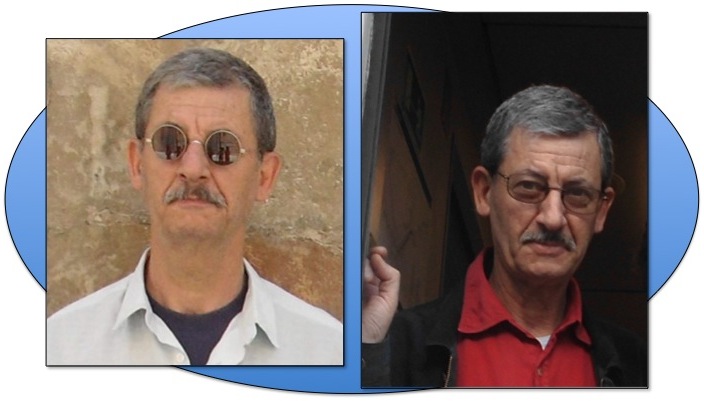
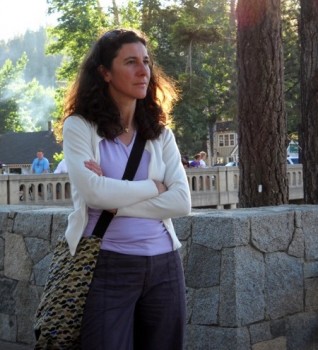
Douglas Glover

Sep 132015
 

Dean city


Murder mile

I saw girls in ball gowns drinking wine on murder mile,
traffic passing,
the great round circus where we drank beer in your flat before
still there off the high street.

I crossed it holding hands with girls I can’t remember and
talked about my friend from Argentina.
The Caribbean men yelling by the chicken shop.

You never think of now til now,
one room begets another just the same,
one life itself, again
but something moves, things evolve
and we forget, thank god.

These streets all tapered into non-specific
City when I got here first, consulting maps. Houses and shops and sky beyond.
Stories tapered too / the known-tale-courtyard
and the end: flat shops shut up, painted onto wooden boards
The scenery of ending, hiding in the future from the now.

God that desperate lust to write won’t go until
you give up hope and then at last /can/ write, dispossessed
and outsidered, lost,
your legs take you, and what you hunted
is with you everywhere.

/

the city’s silvered-over to the skyline

We drive to Primrose Hill and walk over the hill


beneath the rain. You’re cold. Before a friend


was talking on and on about his money and


his records til I made him stop the car and I got out.


It rained then too, the wet boughs shining and


the grass soft underfoot, relieved. Soft pressure and percussion


overhead, I trespassed through the emptiness that


humans hate, the grey skies sighing sympathetic


and the telecom tower misted in a veil like memories of the


80s. You and I are imposters here I think


beside her, far away as


deserts and the sea, hand in cold hand,


the rain comes down around us like before


and the city’s silvered-over to the skyline.

/

Out of food and you

Out of food and you fading

we lay down dying

thin, white and weightless

as a breath.

The tumblers made tall

shapes in the mortuary

the cap-man peering down in

mock concern before

collapsing dash and

cry

              twists claps and

colour,

             they all lithe and well-fed.

Our windows then were

televisions to the

sorry east end pale

light and lost souls’ hustle

blue sirens bansheed by

and lorries stole

heavy cargo off like

rockets fresh from

Palestine, the passing pressure

tightening ribs in crushing waves.

I wanted you in your skirt and

satin knickers with your classic unwell

face straight from the 19th century

pneumonia days of sweats and worrying in waistcoats

but it felt too wrong

too happening elsewhere in

places we weren’t

and people we weren’t

and I didn’t want to

wake you.

              Where we were

the ashy sheet stretched

over the chipboard frame

     —like Heat tales of

anorexics’ faces tight stretched over bone —

stopped it wrinkling into

valleys as we slept.

My boots in the

kitchen, faced the oven

where had I

bacon, or money for the gas

I would stand.

I saw myself there

In them — weighted and

bright — missed him — felt

dead and old, alone and

jagged while you tossed

your head like black salad

               humming occasional

songs of drunk girls

glee and laughing Muslim

kids walking to mosque with

wizened grandfather kind and

slow-moving, the beggars and

hookers, pimps at the bus

stop picking out hotspots;

and here are we, lost as stories.

/

Empty City

When the use-everything drove there, the signs


it strangers breathing again. Moving, room-source: smashing garden,

woods gone to dead long town burn


               chosen the endless thought

the sad strange forwards

beginning through, outside (read: room)

imagine garden-thousands going home,

they wouldn’ how, or Why

/

[For Carolina]

From your room the windows bracket the city.


The light rises at dawn and falls like a sigh into night.


The wind blows and we shiver at the thought of outside,


rain is lost on the glass, the lightning flashes


and the thunder roars and rolls over us, fading into silence beyond.


In here time ceases, we cease it, it tries but can’t reach us.


You type and I smoke, you talk and I kiss you, we hide in the dark


And outside the city lights mark out their loneliness, great spaces between.


From your room the windows bracket the city.


The light rises at dawn and falls like a sigh into night.

/

Porcelain girl

Porcelain girl
………………..    my tiny pupil
slip
not
……….your foot into your
………………..gauze-purse all stuck through
with ashy silver
………foils pointed
through needle-tips drip run
……………………………in your ink into our lost infinities
………this dispersion space
and soft recovery sofa
………hospital bed
……………………………………. in that old room
………out where the shouting
and you safe and I safe and you
…………………take not the glittering edge
but of wit
…………………………………………………..to write with
………..nor do you

scrawl releasing air for safety’s sake
………..or stir my tea with that dark spoon taken
………………………………………for our cups of tea in prospectus
animate
…………………..conversation and mothers dress or curtain picking
and grandfathers shouting at the dog
……………………………………….in fond secure passion outburst
for tis a sad thing
………..my lost one

                            your deathbed power tools strewn across
some-open shirted sweating desk by candlelight on lakes we drowned in
………………………………………..       dreams
defeat all our childishness
and with their written purpose rule our loneliness

—Martin Dean

NC
Martin Dean

Martin Dean is a writer and Poetry Editor at Minor Literature[s] (@minorlits). Follow him on Twitter @martin_c_dean

Sep 122015
 

Capture1Capture1

.

SWAYING AND STAGGERING against their companions, the commuters grimly pretended that each was the sole occupant of the subway as it careened over the Northern Line tracks taking hairpin turns without slowing, scraping its sides continually and leaving small fires in its wake, fires which died after briefly lighting up the darkness of the long tunnels beneath London. While even in this miserable winter the occasional tourist’s face could be seen, at this hour the tube was crowded with workers heading home. There were labourers too, sweaty and grime-faced, adding to the stink of the close atmosphere produced by the unwashed and uncared for bodies of most of the train’s inhabitants. Bill regarded them all with disgust from his corner near the doors while waiting to arrive at King’s Cross where he could extricate himself from this sulphureous mass. He hated subways at this hour, and the only thing that took his mind off the stench while being crushed against structural pipes or the Plexiglas was to survey his fellow passengers.

In the midst of a stop a familiar couple got on, a man of about forty, neither worker nor executive. Somebody with money by his clothes, and his wife, who was wrapped in a warm coat that reached to her ankles. In her hand as always she held the white cane that at another time of day might have elicited sympathy but on this train simply reduced her to an easy mark for pickpockets. Bill had seen pickpockets nosing their way around her before, but her husband commonly got in their way. He may see her robbed yet, because her husband didn’t always pay as close attention to her as he could have.

Seeing the woman, whose husband he’d heard addressing as Edna, he tried to imagine what it was like to be blind, to be led around or always tapping a stick wherever you went. Wouldn’t be so bad not to see these faces every day, mine too. Only last week on a less crowded train he’d been reading a magazine when he overheard two black girls talking as they moved to stand in the middle of the car holding on to the suspended handles. One of them said, in not so quiet a voice as she may have wanted, “Let’s not stand next to him, he’s ugly.” He had looked over the top of his magazine to see her, his features as unperturbed as if she hadn’t spoken at all. The girl was looking at him, perhaps aware of the loudness of her voice, but as Bill didn’t show he had heard, her face wanting to broaden with a smile at what she’d gotten away with, she turned and laughed, relieved, with her friend. Inside he simmered with rage that a complete stranger should think he was ugly and say so out loud where everyone heard her. It wasn’t that he thought himself handsome. He figured he looked as appealing as anybody who had just spent eight hours in a warehouse. His clothes were stained with dirt, his sneakers were torn up and his pants were grimy. As for his face and hair, well, they couldn’t be helped. He had learned to live with them. Undoubtedly there was a bit of dust on him that he had missed when cleaning up hurriedly in order to catch the damn train, but he didn’t think some stupid girl—what is she, sixteen?—was allowed to say that he was ugly out loud. She’s no prizewinner herself, thin, scrawny, with thighs about the size around of my wrist. Jesus, talk about me, but I don’t say anything out loud, do I? And I didn’t cause any fuss.

Thinking about that again made him angry so he went back to looking at the blind lady. He couldn’t see her eyes because of the shades, her eyeballs must roll around like marbles, but the rest of her face wasn’t bad, a bit sallow, but then that’s English beauty for you, topped with short, light-brown hair. Her face had nice bones though, and the wrinkles weren’t too pronounced. Her figure he’d only seen once and it seemed okay, smaller breasts than usual for here and that was good, not bad legs. Her face when she laughed was pleasant, and her husband was always talking to her, reading the poems off the displays and just keeping her amused, yet lately his eyes strayed to another person who got pushed on the train by the crowd that waited impatiently at one particular stop along the –

His thoughts were disrupted by a familiar jolt that struck everyone by surprise nonetheless, causing a woman’s scream to burst out from the middle of the car and end in an embarrassing silence. Men cursed softly after that pause, and the metronomic beat of the complaints that invariably began after a wrenched “God!” from someone built steadily to presto fortissimo before subsiding into an uneven scattering of whining notes until even these sotto voce remarks died off leaving a quiet interlude, broken eventually by a squeak like a violin peg tightening a flat string, then the entire orchestra tuned up, slowly, and the train once again moved, the solo note from the violin taken up as a theme, hurriedly and with reckless brio, as if by musicians not willing to play one minute more than the scheduled time of a musical’s closing bars, anxious as they are to pack their instruments away before joining their friends for drinks after the performance.

These interruptions in the ride were as normal as the husband’s growing attraction to a quite beautiful girl, naturally red-haired, who used little makeup, unlike most women here. She had a tight, automatic smile, the one anybody in a large city comes to possess, and long legs enticingly wrapped today in black silk stockings with encrustations of bold silver sequins above shapely ankles. She wore a bright jacket, a blouse and short skirt that matched her perfectly, and around her neck was a gaily-coloured scarf. In the last few weeks of London’s foggy, wet winter she was dressed in pleasant, cheerful clothes as if for summer, and Bill’s mood lifted momentarily at the sight of her. He hungered for another sight of her cleavage, for he had once seen her black brassiere against her pale skin and it had scored a mark on his memory. He also realized that the husband, whose name he heard for the first time this particular day, when his wife, alarmed at a long silence on his part, called out “Eric? What?” then became flustered as her voice sounded so loud in her own ears, while her husband had been looking as the young girl adjusted her skirt squashed in a press of people surging onto the train, had been eyeing her closely but arrested his interest, swung round to his wife, looking as he did so directly into Bill’s eyes with a smug and slightly scornful proprietary look, murmuring reassurances in her ear, calming her down.

Over the course of the next weeks the husband generally paid better attention to his wife when the attractive girl was not present, as far as Bill could tell, for they were not always together on the car, and many days would pass before Bill saw either the couple or the girl, so that he received a series of pictures that seemed to jump in time when the four were on the same car together. He was conscious, once again, of the habits of the British, who would often choose the same car when going to and coming from work. When the girl wasn’t present Eric would release acerbic remarks on current events and other people who had just left the train, or else told stories he made up for her, describing an individual who had left the subway and musing about the private life this or that one might lead. His wife was constantly amused by him, yet desperation showed in her laugh. Not hysteria or anything crazy, more like loneliness, and in Bill’s mind her blindness accounted for that. She talked often about their domestic affairs, and over the usually meek voices on the train he could hear them discussing the redecorating of their home, a visit to this or that opera, a dinner engagement with close friends, never a word about children. Perhaps they had been married too late, though he looked older than her, in his forties, she probably in her mid-thirties, though an initial view of her face might make one think, like Bill had on first seeing her, that she was the older of the two.

When the girl was on the train Eric paid a great deal of time in answering Edna’s questions after asking her to repeat them above the sound of the train, responding when the noise of a sharp turn began to mount. Amid the clanging of train on track he would begin his response, the frustration of only partially hearing his reply reducing her to silence for the rest of the journey. His interest more obviously attached itself to the girl, particularly as his wife accepted that conversation had gradually become impossible on such a noisy car and increasingly received no more than terse comments from her husband.

One day Bill had located himself quite close to the couple, behind them in fact, and could smell the faint scent of their intermingled colognes. He came upon them in the middle of one of the husband’s stories. “And hunted later, as you well know, by the rabid right-wingers there, McCarthy and that sort, not an easy life. The story is that once he was headlining in Las Vegas, singing in one of those posher establishments. A club, of sorts. Just himself and a man at the pianoforte, a grand piano at that. He was singing a few light arias, some popular songs that he had made famous, and the audience loved him. In the middle of the second set, one mostly of love songs? I think. I’m sorry, dear, I don’t remember that part. Anyway, there he was and quite comfortable, so he took it into his head to sit on the piano. He was in front of it, and he took his hands, placed them on the edge of the grand piano, and hoisted himself up onto it.”

“What happened?” she asked quickly.

“The most embarrassing thing, and it’s also so funny too. He pushed himself up on the piano and then overbalanced.”

“And broke his nose!?”

“No, no,” testily, then smoothly again, “tipped over backwards into the piano, splintering the wood because of his massive weight and size, you see.”

“Dear goodness!”

“And then there he was, caught in that piano,” and at that moment they reached a stop and the girl got on. “Just a minute, dear, let’s wait for the train to start moving again, I don’t want one word left out” while looking lustfully at the girl who returned his stare and Bill felt certain for the very first time smiled back making “Eric?” colouring as he turned to his wife and in a louder voice “Here I am, where was I? Had to, wait, wait, ah yes,” and his composure regained, “there he was, his feet up in the air, waving his legs wildly. The audience thought this screamingly funny, and laughed at him as if he meant it to happen but,” as his eyes swung openly to the girl and he fixed her with a broad smile that paralleled his story but ran independently of it, her own flashing back as she stood in the crowd listening to him, “he was trapped, do you see? Caught within the piano by his weight, he then went through the piano, so you could only see his hands holding on to the piano’s frame, his feet, and his head too, where there was some blood.

“Oh!”

“Oh, he was all right, just a scratch, and they tried, the piano player then a stagehand, to pull him out, then some other people helped until they realized there was no one to bring down the” girl’s hands playing with her long hair as she watched “curtain and he could only grunt and moan all the while the piano strings snapped around him, wood cracking and crashing.

“But Eric, he didn’t hurt himself too badly?” imagining this patently false story even to Bill in her mind as a case where someone at a disadvantage unwittingly became an object of fun.

“No, no, let me finish, and then you see,” winking at the girl with a meaning in his eye Bill couldn’t decipher but which made her flush and turn away, though not too quickly, “someone got to the ropes and brought the curtain down. Well, the audience was howling but when they heard these men and the commotion behind the velvet drapes, heard them grunting and hollering as they pushed the piano across the stage, with him saying Am I all right? My head ain’t bleeding, is it? Get me out! Get me, and of course they nearly went through the floor –”

“Oh no!

“Not the piano and him, the audience because it was so funny!” And yet his wife did not find this story humourous, even if the girl did, covering her mouth and looking with disbelieving eyes, and his wife’s drawn face, looking a little more beautiful when seen up close, could not stop her husband from continuing, because of course he told this story in a voice loud enough to carry to the girl, his intended audience now, forgetting his wife even as she trembled against the time of the train.

Things remained like that over the next week or so, the girl remaining at a slight distance, but eventually she moved closer. Bill watched her and them, Eric watched the girl, isolating Edna, and the girl watched Eric with a slight effort at discreetness. The day that she stood two people away from Eric dressed in a smart suit which complimented her figure exceedingly his wife looked around sharply, exclaiming in a voice a shade too loud for public transport, “There’s a rather nice perfume here, whose is it?” to which he replied “Some office girl, I expect,” his voice then lost in the noise of the train pulling into King’s Cross. Bill and the couple got out, Bill looking around to see the girl standing in the open door of the subway car looking purposefully in his direction. Turning around Bill saw Eric staring at her, then the crowd swallowed everyone.

Bill felt intensely curious about what qualities the redhead found attractive in the man. He acted like someone with a good bank account. But not like someone with a wife. Is that what she’s interested in? Wasn’t it a little easy to think that money was all she was after? She didn’t look like she shopped at any two-bit stores, a Sainsbury’s girl, not a Tesco’s. Where did she live? One evening he stayed on the train with her until it stopped at the British Rail station at Moorgate. She got off then and continued, Bill speculated, out of town. Maybe she was looking for someone in London itself, a man to set her up and help her buy everything she wanted. Bill thought this too easy a conclusion.

Days later chance, and the habitual choice of the English, brought them together again, each converging inside a ferociously crowded car. Bill was positioned behind the three of them, the wife and the girl on each side of the man, Bill behind the girl. This was the closest he had ever been to her and during the trip he compared the young beauty to the older woman. The man answered his wife in short bursts while working his arms free from where they were pinned to his sides, and put his right arm around his wife’s waist, at which she lay her head on his shoulder and seemed to drift asleep. Delays occurred along the line. “Probably another bastard offed himself,” from one commuter, who was answered peevishly by another with “And at this time of day too. You’d think they’d have a little more respect. Absolutely no consideration for others.” The subway remained stuck for fifteen minutes, the air poisonous, then the tube resumed its sluggish motion, allowing people to shift their limbs with relief.

As Bill changed hands, allowing one tortured arm to rest while keeping the other hand wrapped around the rubber knob suspended on coiled wire from the ceiling of the car, and as he moved his head into the path of the pathetic draught of subway air that leaked in through a small grill, he noticed the husband’s arm around his wife’s waist almost mirrored by his arm hovering around the girl’s buttocks, though he had not as yet touched her. Perspiration stood out on everybody’s foreheads but Bill thought that there might be an additional reason for Eric’s sweat. A sudden turn compressed the standing passengers into one lump, bringing Bill’s waist in contact with the girl’s shapely behind, the husband’s hand between his stomach and her back. Great, he thought, until he saw a face staring at him, not the girl’s but the wife’s. Why’s she looking at me? I haven’t done anything to her. Still, he felt embarrassed at the thought he’d had. Desire, more like it, when her ass hit my groin, boy, and could Edna read that from me, or can she feel that coming from him? Did she pick it up somehow? Now she gazed around, not seeing anything, but for a moment he wondered exactly how blind she was, then another jerk pulled them into a different configuration, and this time the long slender fingers of the husband settled loosely on the purse of the girl.

Another delay a stop later as the train pushed slowly into a station, a man holding shards of reddened wood leaving the scene of a suicide, body bags filled with what looked like round hunks of meat carried out by four bobbies, their shoes leaving faint traces on the cement, with the train cruising leisurely through the station, everyone crushed together straining for a view at the gory scene on the side of the platform. As they gathered momentum the husband’s hand began slowly fondling the girl’s behind. She turned around to her right, then behind her, flushing, glaring at Bill who responded to “You fucking pervert, get your hand off my backside” with a gesture that showed his other hand had been nowhere near her. “Well it better not be,” but she had embarrassed herself and him amongst the people there. If she knew it was that guy what would she do? The rest of the trip contained nothing eventful, for the husband’s hand retreated to his side.

Some days later the weather had warmed sufficiently for less heavy clothes to be worn, and Bill could see the husband looking eagerly around the car for the girl who did not disappoint him by not appearing. As the train was not overly crowded a carelessness in behaviour on his part became evident when she stepped on the train. She wore a long skirt and an off the shoulder top, revealing her neckline and the beginning of her cleavage. Eric stood transfixed, then started his usual conversation with his wife, though he no longer had to tell her stories as she had given up trying to hear him, defeated by the noise on this route. And maybe she knows something funny is going on, the way animals smell things before they see them. The glances between the girl and the man were frequent and she looked with brazen curiosity and challenge into his face as she stood by his side. He almost backed away but decided that with his wife on his other side rendered mute, and the noise of the train covering any sound he might make, he could take a chance, and cautiously leaned over, kissing quickly, then once more, slowly, “Eric, that smell, it’s that perfume again,” but Edna’s following words were drowned out as they roared into a station.

When he could Bill sought out the couple and the girl, and while they were aware of him his presence didn’t bother them because it was obvious he wouldn’t interfere. On a Wednesday he managed to get a seat on a two-person bench, the other spot vacant. Tired and numbed by a hard day he was unaware of anyone else in the car until a passenger sat down heavily next to him. He had been looking out the window at the pipes and wires running the length of the track when he felt a sudden sharp blow of a stick across his knees. “Jesus Christ, what the –” only to stop and see the blind woman’s face in front of his.

“I’m sorry,” her voice came out hesitantly, liquid and soft, “I didn’t mean to hit you. My husband lost his balance helping me here and I came down a little awkwardly, I’m afraid. I hope I didn’t hurt you.” He had never heard a voice so modulated and warm.

“Sure, no problem, just unexpected, that’s all.”

“Oh, you’re American, how funny. Are you here on business or vacation?”

“Canadian, not American. No, I work here.”

“Ah, I see. I do apologize for my mistake. Where’s Eric? Eric?”

“He’s trapped by everybody in the middle of the car,” supplied Bill after looking over his shoulder through the Plexiglas, her husband in plain sight, side turned away from his wife and openly kissing the girl whose arms guided his hands over her body.

“I just see his arm,” said Bill, afraid to tell what he could see.

“Oh, the dear man, he gives up so much for me.”

“Yes,” and then regretted using that word and lying for her husband who had by this time pressed the girl against the Plexiglas wall that separated them from the seat his wife was on. The girl’s back was to Bill and the man’s face leered down at her, totally oblivious to the looks from other passengers who had woken up to the fact that some kind of drama was unfolding, a rather smutty sex one in their view, although they had missed Eric dumping his wife into the seat next to Bill.

“Excuse me for interrupting, you’re not reading are you, I don’t hear you turning any pages.”

“No, I’m not, what is it?”

“Have you been in England long? Where do you work?” Bill paused before telling her the truth. As with many English people she would not think of asking a complete stranger his name.

“I’m here for a few years, just working odd jobs, to see if I like the place.” He told her briefly about his job.

“A regular job, then? I mean, you go to work every day at one time and leave at a regular time?”

“Oh yeah, five days a week, always.”

“And you can’t afford a car?”

“No, I’m always on this tube,” and a manicured ageless hand waved slightly in the air while she said, “Then you can tell me, I’ve noticed a delicious fragrance, a trifle too something or other for me, mind, that someone who also travels on this train wears, some office girl, Eric says, but that seems a little too dear for her to be able to afford. Can you smell it?”

Bill felt caught by the answers inside him. Dumb, dumb, I didn’t see that coming, and he cast a glance at the two absorbed lovers in a furious embrace behind them. I hope this tube stops on a dime and you bite each other’s tongues off. He responded slowly. “Let’s see, there’s a couple of women over there who look familiar, maybe it’s them, sorry, they’re a few seats down I mean, in the next part of the car,” and once again his sentence was chopped off when she somewhat crossly.

“No, nearer, nearer, and it has to be someone you see fairly often, who travels alone. I can smell it from here.” He looked up and saw King’s Cross approaching, thinking not soon enough.

“There are a lot of people here, and some of them are on it every day, sure. Maybe it’s a new perfume.”

“Thank you for your help,” drily, “I truly appreciate it.” He began to move from his seat. “Are you going?” He would have if he hadn’t seen that neither her husband nor the girl was moving from where they were. Should he leave the woman by herself? Would that be fair? “Sorry, I… no, it was just… I thought I saw someone I knew. I was wrong. No, this isn’t my stop.”

“Which stop is yours?”

“Elephant and Castle,” choosing a far enough away destination in order to give himself as much room as possible for leaving after the girl departed at Moorgate. He watched King’s Cross until it vanished.

“So far away to come for work, and that must be tiring. How do you pass the time?”

“Sometimes I read, sometimes I doze, most times I just think of things.”

“What things?”

“Just things, you know, things. I’d rather not –”

“Of course not, I’m sorry. I didn’t mean…. I’ve always been dreadfully curious about people. Like that scent that girl is wearing, whichever one she is. She paused, considering. Whatever else she might be she isn’t stupid, Bill reflected. “Do you see my husband? Is he still standing, poor man?”

“No, I mean yes, he is standing, I just lost sight of him for a minute. He’s rather pinned in the middle of a group of fat men and one or two secretary types.”

“Rather,” she repeated, “rather, an odd word for a Canadian, you must be here too long,” her laugh sounding fresh and younger than he had heard it before. “My husband so entertains me with little stories about the people on subways whenever we go anywhere. He really is a clever mimic. When we get off at Moorgate I’ll introduce you.”

Moorgate, great, with the girl, he’ll have me with him in a cab probably talking to this woman while he screws that piece in the back seat, us sitting on those little fold-out chairs those cabs have, even now he’s got her Jesus I don’t believe this he’s sitting down with her at the end of the car. At that moment the train lost speed ominously, coming to a complete stop between King’s Cross and Angel. “What is it, Eric?” and he somehow reached her before a high note escaped her throat.

“Nothing, my dear, nothing, it’s just a delay, probably a fire on the line, one of those small fires.”

“Have my seat,” began Bill, but he interrupted him.

“Have you been bothering my wife?

“No, Eric, no, he’s not, no. He’s just been sitting here and we’ve been talking while you’ve been stranded with those dreadful Grub Street types.”

“The fat bankers and those secretaries,” put in Bill without consciously realizing until after he had said it the alibi then provided for the husband who winked as he had that time before only now it meant complicity.

“Ah yes, those men, and their dreadful… you know, dear, I’ve found out that that girl with the dreadful perfume, the one you asked about, she works at one of those job agencies, can’t make out which one.”

“But she was behind me and I could smell it,” she said with an acuteness unimpaired by blindness.

“Yes, and she met a man she knew down at the part of the car I was in. Most rude of her, she just waltzed down that crowded aisle without the slightest consideration for anyone, spraying that scent when she got there because she’s going out to dinner with someone when she gets off at the station. And,” his voice dropping conspiratorially, taking in Bill too, “she’s as big as a house. With that perfume! Vulgar woman, vulgar.”

“Why don’t you join your wife, then –”

“And what do you do? You look… dear, this is the man I was telling you about, the worker, the one who always looks as if he’s put in an incredible day’s effort. You recall me telling you about him. You do look knackered, you know. Thanks very much for the offer of your seat, now I’ll just wait until you get up and –”

“Oh, him!” She turned slightly to regard Bill. “No, he can’t, he’s got a long way to travel, Elephant and Castle, dear, and we get off in just two stops. Let him rest, the poor boy.”

“He’s strong, he can stand for a while, surely, then you can take one of our seats, yes?” I could take you out, pal, if you don’t watch your fucking lip, thought Bill.

“Yeah, no problem, just let me get by –”

“Oh, now see, you’ve made him mad, Eric, he’s tired.” The strength of her hand alarmed him as she unerringly clasped his arm. “Sit, please. Eric, don’t cause a fuss, dear, he’ll have to stand all the way if you don’t let him have this seat.”

“But are you sure? Will you be all right? He’s not—I’m sorry, no offense, you won’t mind, Edna? Are you sure?”

“Of course I am, dear. Don’t worry so much about me.”

“Fine then, I’ll just find a spot somewhere.” He went back to his seat with the girl and both looked every now and then at Edna and Bill without guilt. The train eventually limped into Angel. The crowd of commuters was larger than normal due to the delay, every inch of space taken up by loud businessmen and arguing contractors who blotted out Eric and the girl. Instead of making up for lost time by rushing to the next destination the train kept its doors open, waiting for the next load of travellers, most of whom would not be able to squeeze on. Eventually the subway listlessly proceeded to Moorgate.

“My husband’s like that.”

Startled that she knew what he was doing Bill said “Do you mean you… I don’t understand.”

“What? That he cares for me? Thank you.”

“No, I didn’t mean that, I –”

She laughed again. “Obviously you don’t have a girlfriend or wife. My husband said you spent a lot of time looking around at the women. Is that all you think we’re good for, to be looked at?”

“No! You don’t understand –”

“I gather I don’t. What I was about to say is that my husband is worried strangers might take advantage of me. And the reason he guides me around so much is that four years ago I took a bad fall and damaged my sense of balance. That’s why it’s so important for him to stay with me at all times.”

“And I’m like that, huh?” he responded, thinking, what is it about me that brings out the best in people?

“Don’t get me wrong,” and it was her turn to be embarrassed, “really, he’s only said you look, ah, rumpled and tired, not harmful, if you know what I mean. Curious, I suppose –”

“I see.”

“He meant it as a compliment,” faltering, revealing that there might be more to whatever inventive story he’d made up about him to amuse her. They travelled along, conversation stopped by her remarks and impossible anyway due to the orchestra’s fanfare of drums and trumpets as they arrived one stop short of their destination at Old Street. If he told her so much about me then he knows I get off at King’s Cross. What does he think I’m doing here? Helping him or something? The bastard.

“My husband makes up little tales about people, the ones on the train and famous people,” she inserted into a sudden quiet stretch. “He only told me that you seemed to work awfully hard, should you wonder if he said anything… else about you.” He appreciated that remark, and her old tone was back, not the one of laughter and easy speech from earlier but the one composed of lonely notes and almost inaudible sighs he’d heard on first seeing her.

“You asked me a question awhile back, let me ask you one. Do you and your husband have a car?”

“That’s a little embarrassing, for my husband, not me.” She rushed out those last words. “He had a tiny too much to drink and wrecked our car, well and proper this time, plus they took his licence away for six months. Of course, I can’t drive, and it’s fun in a way to be in a subway.”

“He only lost his licence recently then.”

“How did you know?” and the surprise in her voice was real. Bill could not imagine a voice more beautiful than hers.

“If you’d been taking this tube regularly all that time it wouldn’t be too much fun.”

“I suppose you’re right. But at the moment it has all sorts of charms, like interesting sounds and hearing all the different conversations, all of it running together, although my hearing isn’t what it used to be. Part of the accident that damaged my balance.” She bent closer to him. “There is sometimes quite an odour here, isn’t there? How is Eric doing, please?” Bill stood up and looked over the crowd. Through a momentary unravelling of a knot of people he witnessed the girl handing a piece of paper to Eric, her streetfinder out for him to see where she lived. So goddamn public.

“He’s doing fine,” as he sat down, unconsciously patting her knee, quickly taking his hand away, his gesture surprising both of them, disturbing them for different reasons. She did not talk much during the rest of the trip, saying only a hurried “Goodbye!” when her husband came for her bearing a locker-room smile across a flushed face. The girl had already left the car. Bill followed the couple out. He then went to the subway heading back in the direction of King’s Cross, using the cleaner Circle Line, and this time had an easier time getting a seat. He felt strangely disconcerted yet could not quite locate the reason for his mild agitation. As near as he could discover, it had a root in twice aiding Eric in his philandering, and he had not fathomed that action by the time sleep came over him.

All the next day he contemplated his behaviour on the subway the evening before. Why did I lie for that scum, make up a story that helped him get away with what he had been doing? And even before I knew what I was saying I gave him a way out. He must have lied to her lots of times before, been with a lot of women on the side. He’s a pretty smooth guy, can’t take that away from him. And he just knew I would lie for him, didn’t he? How did he know that? What stopped me from leaving at King’s Cross, or telling Edna that her husband was rubbing up against some sweet young pussy with everybody looking on? Well, Jesus, you couldn’t tell some stranger you’ve only talked to once, Hey, your husband’s with another woman right in front of you. What would she do? The thought occurred to him late in the afternoon that perhaps in some odd way envy had prevented him from telling his wife. Certainly he enjoyed looking at the young girl too. But her taste bothered him. How could she go for someone his age, and with a wife? She’s probably AIDS city, he thought sourly, knowing he wasn’t being entirely honest, because he wouldn’t stop some night in an alley or bedroom to slip on a rubber raincoat before screwing her. I wonder if her pussy is red-haired? Maybe gold-red. She looks like she knows all kinds of tricks, and that son of a bitch is going to enjoy them. Bill ruled out the idea that the girl was interested in money. Maybe she just thinks he’s good-looking, maybe she’s bored. It sure helps kill the time on the train, right? And maybe she, like the husband—and me too, sure—we’re just hunting for a piece of ass out of it. There’s nothing wrong with a woman wanting to get humped or sucked off when she feels like it, but coming on to someone’s husband while his wife’s right in the same car, and her blind and not even able to stand straight without him, that was shitty.

Maybe that’s it. Maybe that was the thing she was doing. If you could steal money from under the nose of a teller in a crowded bank, knowing no one would butt in, and that the teller couldn’t see you, why wouldn’t you? This girl, there she is, in a car full of boring men, people with nothing special, and this guy with a bit of dough gives her the eye. Maybe she’s interested, maybe just playing. Then she looks at the wife and thinks, Hey, I could go right up to him and she’d never know it. Oh, she might hear me, smell me, sure, but in a crowded car you’re gonna be close to people. I could just rub right up against him and feel what he’s got. No problem, and he wouldn’t mind. The thrill of it was that she could do it with everyone else watching, betting no one would say a word. How would the wife be any wiser? So why not.

What Bill couldn’t understand was the reason the husband started all this in the first place. It isn’t the girl’s fault if he’s giving her the eye. She was just standing there looking pretty. What was wrong with him? So what if his wife isn’t a beauty like the young one, she was his wife, for Chrissake, married to him for years. Maybe he got tired of leading her around all the time, of all the talking and that. Maybe he wanted someone who could handle things on her own, who wouldn’t be straining him every day. Still, he knew she was blind, knew about her balance problem, what the hell is he looking for? Why do some husbands, money or no money, got to screw things up for guys like me who don’t have anybody? That bitch is a looker, and he’s got a wife, so that makes two women. What’s he doing, comparison shopping? It’s probably not your first time, sport. I don’t understand it, what way is Edna no better than her? Beauty, sure, but she’s not bad-looking, a helluva lot more refined than her, or him for that matter. That voice, so lovely, smooth, maybe she sounded a little odd at times when she’s left alone, but is that enough to dump her? What was it he was looking for?

That evening he boarded the train with his familiar companions, the first time they had ever been together two days in a row. As it was one of the warmer days at the end of winter people were wearing less bulky coats and had discarded hats and gloves. Eric was nattily dressed in an expensive Italian mid-weight suit while Edna had on a more casual dress that for the first time exposed some of her neckline, though she did wear a light coat wrapped around her. All eyes were on the girl, however, every male hormone activated by her attire. Her hair had been swept up to reveal ivory skin and prominent shoulder bones. Her black dress had a collar around the throat, then was backless down to the middle of her spine. A deep slit a little too wide for modesty opened her chest to view from where the collar ended to just below her breasts. The entire garment ended below the knee and from there pale stockings revealed the perfection of her legs. Bill assumed she was wearing garters. A fur coat lay to her side, not the best fur, but one obviously saved for special occasions. What would Eric think of this, he wondered. If he feels like I feel his cock’s a little uncomfortable right now. Eric nodded to Bill, whispered to his wife, then beckoned him over. Warily he approached.

“Edna has a favour to ask,” and Bill backed away suspiciously. “I have a business appointment in Hampstead, about some investments, and my wife has to get back home. I’ve arranged to have a friend meet her at King’s Cross to take her back to our apartment. Would you be so good, we were wondering, since you don’t get off until Elephant, if you could just stay with her to help her off the train?” His smile was almost real. “It would only delay you ten minutes, fifteen at the most.” Tempted to say no, Bill saw Edna’s face, her smile tentative, her face pulling anxiously at the edges as it must always do when she thinks she’ll hear a no.

“Yeah, sure.”

“Wonderful, good, you see, dear,” and her saying “Thank you, I didn’t want to drag Eric away from such an awfully important meeting.”

“I’ll make sure you get a seat,” Eric said, and as the train pulled into Hampstead led them to the place where the girl and her coat were. “Excuse me, Miss, would you mind terribly if my wife sat there? She has a problem with her balance.” The girl got up and put on her coat without a word, and Eric pecked his wife before leaving. A moment later Bill idly turned around to see where the girl had gone but she was not in the car. Glancing out the window he saw her disappear arm in arm with his companion’s husband. Furiously Bill twisted his attention away to stare at Edna, who today in her pale summer dress appeared quite vulnerable.

“Did he get off all right?” she asked with a slight touch of worry.

“He got off all right.” To himself, He’ll be getting off all right in a little while, too. Christ, what an idiot.

“How are you?” he began. She responded pleasantly, and eventually Bill asked her why they always took this train.

“Oh, it isn’t always this one, is it? Although we English are pretty predictable. Well, you see, we have an invalid friend of mine who lives near the tube station, she’s just gotten out of the hospital, having had a… woman’s operation, you know, and she feels quite sad. I try to visit her as frequently as I can because her family lives away. She’s so lonely, and I know how…. Then we head back home for a late supper.” His curiosity satisfied, Bill and Edna talked about other topics until the train pulled into King’s Cross. Bill got out with her and looked for the friend she had described who would pick her up. Twenty minutes later she had to sit down, dizzy, and Bill’s patience was thin. “Are you sure someone is meeting you here?”

“Why yes, Eric called a friend this morning to arrange it.” Probably took the phone off the hook and pretended to dial, thought Bill. Hello, Tess? Yes, I have a wife who needs picking up at King’s Cross. She’ll be with a dirty-looking sucker named Bill, a Canadian. You’ll have no problem recognizing them, a blind dizzy woman and a grime-streaked young fellow. Don’t worry if you can’t find them, or don’t make it, they’ll be able to get home on their own. Ha ha ha.

Bill got up when Edna said she felt better. He realized she was close to crying, that she had probably never been on any arm but her husband’s for years. Frightened to death I’ll let her trip or knock her down myself. Is this what he doesn’t like, her reliance? Always having to worry about her? Is she always this afraid? Or does she think he’ll never come back if she lets go of his arm?

“You okay?”

“I’m… fine, yes, but I think….”

“What?

“Could you tell me where we are, I need to know, or… please take me to a phone booth, I’ll call a friend who’ll take me back, she should be home now.” Bill walked with her to the telephones. There was no answer at her friend’s.

“How far do you live?”

“About fifteen minutes’ walk.”

“I’ll take you there,” at which she pulled back as if he’d touched her knee.

“No, that’s not necessary, thank you, I’ll…,” trailing off into a trembling silence.

“You’ll what? I’m not going to leave you here to be mugged or something.” Don’t say things like that, he thought, or she’ll really be scared. Think, think.

She acquiesced after a few minutes to his guiding her home, although he kept the pretense alive that he was a stranger to this part of London, more at home in Elephant which he had only been to once. Edna guided him, and the quarter-hour walk extended to forty-five minutes, made longer by her pointing out this shop there or that one there, the map of this area a Braille grid in her head for which she had no coordinates. She could tell you the stores and sights, but to find them on her own? No chance. Bill remembered a movie he’d seen about a blind white girl and a black man, Sidney Porter was it?, and how he helped her and she loved him. Her parents didn’t care enough to teach her to get around a city, making her like Edna, helpless. They made their slow way along, a young man rougher looking than he was escorting a trembling, older woman whose staccato raps with her cane underscored their conversation.

He must have had this planned, keep her nervous and occupied all the way home so she won’t think too hard about where he might be gone. When I see him next time I’ll bust him so hard he won’t be able to screw a light bulb. What am I doing here with his wife? Why am I babysitting her? Boy, he had my number pegged. A sucker born every minute –

“What are you thinking?”

“What? Nothing. Just looking for your street. Like I said, I haven’t been in this area before, I usually –” and caught himself as he was about to say “go in the other direction,” instead finishing with “only visit other parts of town.”

“It’s nice here, isn’t it? Such a difference, Eric tells me, when you come out of King’s Cross and go to Islington instead. I enjoy the park so much in the summer, and on days like today when it’s warmer than normal, it’s so nice. I know the flowers are out, the smell is so wonderful.”

“When is Eric’s meeting over? I mean, you won’t be home alone for long, will you? Or are you used to that?” He wondered if she might get alarmed at that question, or whatever the hell it was she felt when Bill said what he thought were innocent things. He was curious if there were any other surprises waiting for him along the way, like holding her hand until her husband could drag himself away from that girl’s bed. He looked at her face to gauge the response, surprised that a great deal of the nervousness that had been there at the beginning of their walk had disappeared.

“Not until late. The friend he mentioned invited him to supper, and after that some other people who deal with stocks and such are getting together there. Apparently it’s about an important opportunity Eric has been looking at for a while. I don’t know precisely when he’ll be home. As for me, well, you probably don’t think the blind can get around at all, but I know every inch of our flat, renovations and all.”

“I didn’t mean anything by it, you know.”

She softened, her arm clinging a little more tightly to his, as a consequence of which he almost ran them into a pole. He shook his head and stopped thinking how this March light and this false spring day combined to wipe years away from her features. Though it was slightly chilly now she preferred the breeze wrapping around her to the coat’s protection, and her dress fluttered merrily in the wind. At length they reached the apartment, not normally a walk-up, but as the lift—elevator, he said to himself—didn’t work he helped her up the stairs. “How do you,” hoping she wouldn’t take it the wrong way, “make your way around the apartment with your balance like it is?”

“You don’t give people like me much credit, do you? There are chairs there, and tables, lamps, couches, that sort of thing. Eric made sure all the furnishings were placed in such a way that I always have something to hold on to or lean against,” which Bill could see as the door opened and she turned on the lights.

“You know, I’ve never talked to a blind person before, I don’t know how you get around. You’re not very understanding,” fighting back churlish strains that might seep into his voice, “of what someone who’s never led anyone around might wonder about. I’m sorry for asking what are probably dumb questions but I just don’t know the answers.” She was silent as she navigated the room adjusting lights and temperature, closing and opening blinds and doors, turning the radio on to a classical music channel.

Bill watched her move around from room to room, waiting for some moment to say goodbye without leaving her to wonder if he had indeed left. “Can I get you a drink?” she called out from what he presumed was the kitchen, “some tea or coffee, unless you’d prefer something stronger?” She appeared back in the room. “Ah, good, you’re still here. Sometimes I can’t tell when people are in the room but I always know when they’re in the same room as I am. What about that drink?”

“No, I don’t think so, I think I’ll be on my way.”

“Yes, you have a long ride, don’t you? And I suppose you’ll have to cook your own supper when you get back? My goodness, it’s,” as she felt her wristwatch, “late, isn’t it? I didn’t realize how much time we’d spent getting here from the station. What time will you get home? It must be a good hour or so before you’ll eat. Stay here, since you’ve been so kind to help me. I’m sorry about what I said. I didn’t think that it was hard for someone to know what things a blind person can do, I’m so used to Eric being around.

“I don’t think that, I probably should get going, you know,” unable to walk away from her as she stood there, feeling in part sorry that her night alone was due in part to his furnishing Eric with a cover yesterday. He had become involved and felt obligated to see this evening through. I’m curious about her, and them too, yeah. It hasn’t been much more than a piss-poor day anyway so I might as well clue the thing up halfway right.

“I already have dinner on,” she said in the silence, “it’s in the microwave, timed, and Eric always puts in more than I can eat, he thinks I don’t eat enough. Maybe he likes them with a bit more flesh.” Lady, that girl with the tissue-box dress he’s squiring around as we stand here definitely has a bit more where he likes it than you do, with your catching his thoughts about her before they took more explicit form than he would have wanted. Clearing his throat he agreed to stay and asked where the toilet and washroom were, returning a few minutes later cleaner and relieved. She had changed while he was away into a casual green blouse and black slacks which replaced her fragile demeanour with something more confident.

“Do I,” blushing, “look askew?,” laughing at her words. “Sometimes my hair goes everywhere when I change in a hurry, and I can’t always tell if what I’ve got on matches. I leave,” giggling, “my clothes around a little too negligently, Eric says, so I’m not sure what’s where sometimes.

“You look… fine,” he said, not sure whether to tell her of a missed button on her blouse that showed unblemished skin where her bra had been.

“Do you like this gray top? I bought it only a few days ago, and I have a green one like it because Eric said it looked good on me.” The result was that he could not find a way without embarrassing them both to tell her that when she bent over to pick something up, or moved to one side or another, he could see more of her breasts than either person would likely feel comfortable about. A few minutes later they sat down to eat and he could focus on learning more about them while they talked.

Eric was a stockbroker who retired recently in order to care for her and to enjoy the considerable success he had had in his business. Through schemes and an occasional gamble he had taken their money and parleyed it into something approaching wealth, getting out of the game, as he called it, while he had his health. She had been blind since birth and when she married Eric only six years ago had given up all thought of children due to her not being able to care for them. She detested the idea of governesses, nurses, and maids. It turned out Eric was unable to father children and both had resigned themselves to being uncle and aunt for their few nieces and nephews. I’m not so sure she’s not hurting over that. She was thirty-seven, he was forty-three, now he’s screwing a girl twenty years younger while I’m sitting here at his mahogany table eating off expensive china and drinking out of fine crystal. Not bad for a stock boy, but he’s a stock boy too, and he laughed for the first time in days. “What is it?” she asked, joining in with him once, after careful editing, he told her what he had found amusing.

Despite his earlier sentiments he had a good evening with her, and over Irish coffee they talked about her childhood, her dead parents, Eric’s care for her—a topic she referred to often, which grated on Bill’s nerves and made him wonder how much she actually knew abut him—and of lighter subjects, such as trips and aspirations. Not surprisingly she had many when a young girl. Now she was content. “Married to a handsome, successful man, who has the most delightful family and friends, and who is fiercely protective of me, you know. If he knew I had a man in here, a handsome young man, especially, well,” she laughed a delightful scale, “he’d have something to say about that, oh yes.”

“What makes you think I’m handsome?” he asked, not out of vanity as much as puzzlement.

“Oh, as, well you see, he’s told me about you – didn’t I say that? Perhaps not. And he –”

“You said he told you I looked rumpled and tired, that was what you said. I know. I have that kind of memory. Phonographic, I think it’s called.”

“No, he told me, yes that’s right, he –”

“It doesn’t sound like something a man would say, somehow.”

“You don’t know my husband –”

“No, but I know men, and they don’t call other men handsome to their wives, maybe they say, I suppose you’d call him handsome, if you go for that sort of a face, or whatever it might be. That’s what I think,” and as before he wondered if he had said the wrong thing.

No, you’re right, he didn’t, he—there’s no need to… it was from your voice and how you treated me, even when I was saying those rude things to you, I’m sorry again, it seemed as if you might be handsome. Not like I understand movie stars are handsome, but—you know what I mean.”

“I think so,” and this time it was Bill’s turn to be a little dry. Her face fell and she shifted uneasily in her armchair.

“May I ask you something?,” her timidity ensuring his positive response. “This is so awkward. May I feel your face, to see you, if you understand? Please.”

He looked at her and thought, If those glasses were off would I see your thoughts? She was waiting. “Are you sure about… do you, is it what… Jesus, it is awkward,” he laughed, and that dispelled their reservations. She moved quickly to the couch and sat next to him, then slowly placed her hands on his cheeks.

“You shaved this morning.

“Yeah, I did.”

“And cut yourself, as one finger brushed his throat.”

“Where?,” and he put his hand up to check for himself, to feel her soft dry hand under his, and to hear her say “I made that up. It used to drive…. Now, keep your head up and let me see what you look like.” It was hard to do that as her proximity on the couch let him look at her as well, examining her face, her neck. “Chin up for just a moment, please,” his eyes seeking against his will her breasts that were now much closer to him, her aureoles faintly visible when she moved. Couldn’t she feel a draught, then realized this was the first house in London that was warm in the winter. She couldn’t tell, could she? Could she? Her mouth was close and he could see the tip of her tongue between her teeth as she concentrated with her fingers.

“Maybe I was wrong about you the first time,” and he felt disappointed, “but not now,” and she slowly took her warm hands from his face, returning them to her sides. She settled back in the chair. “You are handsome, but not only for how you look. If I take these glasses off I know people can’t bear looking at me, I can tell from how quiet everyone becomes. It’s what you are like that made me right, and how you look, but mostly, that you aren’t uncaring. It may be your culture, because we English aren’t too caring sometimes to people we don’t know, or even people we do know. Except for Eric, and some others.”
“I don’t know, he practically whispered, “some people where I come from aren’t that warm either.”

“You must find it hard here, not having anyone who respects and loves you like I have Eric,” she said unsteadily, to which he could only reply “Some people are a little unfriendly. Not like you,” and he could only look at her while she rested, her face having lost the strain he had become used to seeing, a face that had lost ten years since earlier this evening.

“Can I ask you something? Can I see your face?”

“You mean my eyes. I never show them to strangers, not even friends, unless—but yes, you can, I don’t know why,” and she leaned into him. He took her glasses off gently and looked at her, then her hand raised his to her cheek below her right eye, saying hoarsely “I have to have people look at me as I look at them,” and he stroked her face wordlessly.

After a minute he put her glasses back on. You have a beautiful face, he would have said if she did not get startled easily, so consequently remarked, “I think your husband is very lucky,” which he meant but thought it struck her in a peculiar way, and she eased herself up with “How about some red wine?,” and the evening continued. When he left two hours later he thought about assholes who have a nice woman waiting home for them and screw it up with a girl who you meet on a train, but abruptly stopped. I want to have her, don’t I? Isn’t that what this is all about, he got there first? Resentment burned inside towards Eric who had succeeded where he hadn’t. Her soft skin and attractive figure, what else could I feel? This miserable line of thought occupied him all the way home.

The next week he had to work late, and decided to reward himself with a night out at a much-talked about club on Saturday. Around one in the morning he glimpsed Eric and the girl. A step down for him, pretty normal terrain for her, it looks like, and they can do what they want here without anybody saying anything. Gossamer threads of lace reined in her breasts, the sides were scooped out of her dress, and a slit up the leg to the top of her thigh allowed his hands inside. Soon she was on his lap and by watching very closely Bill observed him unzip his fly before she settled on him, pretending to dance over him to the music blaring from immense speakers. Who’s watching her now, he wondered, obscured by the gloom of his corner at the booth adjoining theirs. “Get rid of her, why don’t you? Fucking hag, she’ll ruin you, can’t you see that? You want to take care of her the rest of your life? Now settle back, let me finish off.”

“I’ll be damned if that’s the way things stay.”

“Right, right, now you see, it’s better that way, only do it soon.

“No, no, it’s not that easy, children, lawyers, contracts, property, you don’t understand the ties.” Why is he lying about this?

“But don’t you want me, and this, every night?,” the flurry of drumbeats from the dance floor forcing their words back into the booth, Eric trapped in the discord with her legs wrapped around his waist, one hand rubbing the side of his head.

“I think I’m bleeding from that noise, the percussion, can we get out of here?,” grunting and pushing against her while she let him up and they argued across the floor out into the cool night air.

On Thursday Bill took the same car as he always did, seeing the couple’s backs as he waited for the last of their party to come on board at the next stop. Edna was pale and cloaked in her long coat, the winter weather having returned, her husband irritable but managing scattered remarks. When the girl got on he expected Eric to ignore Edna entirely and moved up for a better view, the girl seeing him first. She ignored Eric, motioning with her head to Bill who, confused, made his way to her. “Look, get talking to her for a minute, would you, luv, I’ve got to talk to Rick,” flashing a mechanical grin and looking away while she waited for him to do what she asked. Bill decided to do so out of curiosity, feeling suddenly tense. He made his way through the crowd and was about to say something when Eric spoke first.

“What the hell do you want? After getting my wife drunk you come around and act like we’re friends. Is that your game? I don’t appreciate it, lad.” Her face wore a strange look of contentment and something indefinable, blended with sympathy and wistfulness.

“I’m sorry, Eric’s so jealous, about the other night.”

“Be quiet, Edna. Don’t think I don’t know what you were up to, trying to get her drunk, a woman with her conditions. You’re lucky we don’t press charges. Get away, get away from us!”

Bill made his way back to the girl who, like the other passengers, had heard Eric’s tirade. “Thanks, that’s all I wanted to know, what a bastard,” and he realized her anger was with him and Eric. “What the fuck are you staring at? Goddamn pervert. You get off doing it to blind ones, do you? You’d been looking at her with that stupid dreamy look for how long? Then you fucked her, he says, and what am I left with? He went back to her once he knew about you. You screwed me out of what I wanted.”

“You knew what he was going to say?”

Her face changed. “No, I just had to know what he wanted, me or that bitch. Now I do. That’s all. Now just keep the hell away from me, understand?”

Bill retreated to the back of the car. What did Edna tell Eric? What did she make up on her own? The drinking, the missed button, could he have made something of that, something that never happened? Then it came to him that the indefinable look in Edna’s face might be one of victory in winning her husband’s attention back from the dangerous distractions she had sensed were connected to the perfume and his silences. She thinks he’s back with her like before because he holds her and gets angry at me for something he has to know didn’t happen. As soon as the girl wanted him to leave Edna the fun was gone out of having her on the side. He only wanted a mistress who wouldn’t want anything from him, and it’s only a matter of time before he starts searching around again.

Another, less pleasant, thought occurred to him, that perhaps Edna had purposely used that evening’s dinner to pretend she had been interested in someone else. The drinks, the loosened blouse, her touching his face, her natural intelligence, all could be convincing, and if she embellished things even a small amount Eric would be convinced that at some time she could find a lover, and feel threatened at a sudden show of a type of cunning he had presumed not possessed by her. Or, and this was worse, perhaps she had wanted something to happen that night between them, waited for him to take a cue from her actions. But being friendly with some man didn’t mean trying to get in bed with him, just because you were alone, and maybe she only wanted to see if he would try something with her. Bill tried pushing these ideas away, abruptly refusing to think any more about how he felt. Huddled in the back of the car he regarded the others. The girl stood glaring at the ads, the floor, the ceiling, playing with her hair absent-mindedly. The couple were close together, Eric casting black looks around to make sure Bill was not near, arm tightly embracing Edna, she nestled into his shoulder, murmuring into his ear from time to time. He had lost that face he’d thought of for so long without fully knowing it, until this moment when he could view it for only a few minutes more, what it meant to him, her softness and fineness, her curiously appealing unease in the world, all gone for good. He left at the next station taking with him a last glimpse of her delicate features and exquisite hair, the touch of her hands on his skin burned in his memory, already missing her musical laugh, missing that instrument he had seen briefly at rest once between her husband’s acts.

—Jeff Bursey

.
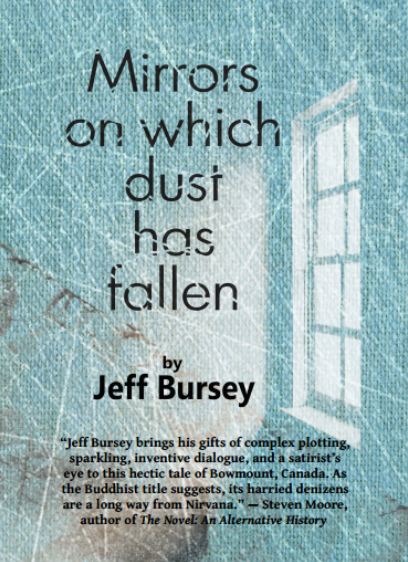
Jeff Bursey is a Canadian literary critic, and author of the picaresque novel Mirrors on which dust has fallen (Verbivoracious Press, 2015), and the political satire Verbatim: A Novel (2010), both of which take place in the same fictional Canadian province. His academic criticism has appeared most recently in Henry Miller: New Perspectives (Bloomsbury, 2015), a collection of essays on Miller and his works by various writers. Bursey is a Contributing Editor at The Winnipeg Review and an Associate Editor at Lee Thompson’s Galleon. His reviews have appeared in, among others, American Book Review, Books in Canada, The Quarterly Conversation, Music & Literature, Rain Taxi, The Winnipeg Review and Review of Contemporary Fiction. He makes his home on Prince Edward Island in Canada’s Far East.

Sep 112015
 
Kathy Page2

Kathy Page

.

Mitch has been waiting all week for Tara to get back to him. Only when in the water is he separated from his phone. It’s lucky, he thinks, as he punches in the code to disable the alarm and lets himself in, that he has to be here. The pool rested overnight, and now lies smooth, ready to give him a break, to take him elsewhere as it always has. Outdoor, indoor, underground, rooftop, exclusive, inclusive, filthy, sparkly-clean, Olympic, twenty-five metre, salt water, UV – any pool will do. Mitch has his favourites but Fourth Street, with its banner: “Home of the Sharks” is the one he thinks of as his. Twenty-five metres, eight lanes, three metres at the deep end, it’s housed in an ageing and never splendid building, yet still seduces him with that turquoise glow, with those threads of reflected light knitting and releasing themselves in a dance that is both loose and contained. The pool promises buoyancy and escape; it taints the air with a tang of chlorine (fainter these days, due to the UV) to which he has no objection at all.

He pulls off his sweatshirt, dumps his backpack on the floor, and pushes through the door at the back of reception on to the deck. The air is warm and moist. Condensation gathers on the picture windows that look out into the woods. The hum of the ventilation and mechanical systems seems oddly loud when the pool is empty, but it is always there, lurking deep beneath the shouts and splashes that bounce themselves to mush between the water and the walls and mount to a crescendo at about four in the afternoon: it is a kind of silence that you only hear if you’re there first or last thing, when the swimmers have gone and the water is, as now, very nearly still, waiting for a dive to break its surface, for the dive which will connect Mitch to all his other dives, and to all the waters of the world.

For a racing dive, you climb on the blocks, which angle towards the water, one leg at the back one at the front. You keep your back straight, offer your chest and the heart beating steadily inside it to the water. Waiting, you push with your legs and you pull back with your arms so that when the light flashes and the buzzer sounds, you spring forward with doubled force. Your arms come back to your sides but right away you bring them up so that they point your way in. You hyper- extend, tense your core and extend your legs so that once your fingers part the surface, you slice into the water and enter it without wasting any of the power you put in to the spring. You’re looking for horizontal distance. On the other hand, diving for diving’s sake from a platform or a springboard depends on the take-off, but is all about the flight and the entry. Straight, pike, tuck, free: it is, when you get down to it, mainly about being in the air, and that has never interested Mitch.

The water closes behind him. He kicks hard, stays under for three quarters of a length before he surfaces, ready to start the routine that will set him up for the day: practise what you preach. Swim the swim. Well, Mitch likes what he does. Whatever happens with Tara, he’ll hang on to that.

“And whatever she says, you are going to have to be fine with it,” Annette told him last night when he couldn’t sleep and tried to slip out of bed without waking her. They sat up and talked in the dark.

“Yes,” he said, “but still…” He stared straight ahead, out of the window, picking out the shapes of the garden trees he’d planted, but he could feel Annette studying at his face. Beneath the sheets, she put her hand on his leg.

“And either way, it’s just good she agreed to think it over.”

“I know.”

“And it will be fine for Tara, whatever she chooses to do.” Annette took her hand from his leg, touched his face, made him look at her, pulled him into a kiss, offered her body for him to forget himself in. Afterwards, he plunged into oblivion and did not wake until the alarm sounded at five. Her side of the bed was empty, and he found her hunched over her tea in the kitchen downstairs, looking every bit of her age. Five, O! More importantly, five years older than him, which these days she could not forget, whereas, left to himself, he would. A decade ago, when he was thirty-five the gap had seemed like nothing at all. In five years’ time it would be that way again, or even something to celebrate: if the years were laps or miles, you’d be proud of them, for heaven’s sake! But the thing is, they’ve not had kids of their own. They met that bit too late for that.

“So then I started worrying,” Annette said, “but not about Tara. One way or another, Mitch, she’ll be okay.”

“Don’t worry,” Mitch told her, “I promise you, the last thing I want to do is drink.”

“I didn’t mean that,” Annette said. She was worrying about the potential impact on their relationship. It was all connected, she said.

“Please. Just don’t,” he said. Running late, he squeezed her shoulder and hurried to the car.

He’d been with Annette for about a year — they had just bought the house – when Tara first showed up on a Friday, late afternoon. He was teaching a shared lesson and noticed a family come on the deck. The mother, skinny, had thick blonde hair and a pierced belly button; the man stood very tall and fit. A tattooed dragon coiled up his arm. The girl Mitch put at about seven, and they’d dressed her in a turquoise bikini — Why, he asked Annette later, do people do that? He watched as the mother, showing off her own figure in a similar suit, crouched down, felt the water, mock-shivered, stood again. For a moment, all three of them waited in a line at the shallow end, considering the expanse of water ahead of them. Then the little one threw herself in – not exactly a dive, and perhaps the lifeguards weren’t looking, or else they let it go. She surfaced, gulped some air and hurtled towards the deep end, her hands smashing into the water, but fast – and, the thing was, it looked messy as all hell, but she pretty much had the stroke: face in, the arm’s reach coming right from the hip the twist of the neck, the timing. It was all there, ready, and Mitch just had to stop and watch.

He didn’t know it then, but nature versus nurture was a topic he and Tara’s mother would in the coming years return to many times. Of course, he’d tell her, you need to train. But some people start from a better place. Height is good; long limbs and big hands and feet are a tremendous asset (look at Mr Phillips, now!), and some (not necessarily the same ones) just have a better constitution and a more efficient metabolism than others. To some extent the lack of any of these assets can be overcome with hard work and the right mindset… But an understanding of how to move in water, feeling the physics, not knowing it – that’s probably innate, and, he’d tell her, that feeling is worth more than anything and it is the very best place to begin. That’s what he’d say, and certainly it seemed to him as he stood waist deep, watching, that this girl had more than begun. She was halfway up the pool before her mother jumped in after her, breast-stroking along with her head up, arms and legs out of sync, fighting her own efforts every inch of the way.

“Tara,” she shouted, “wait! You’ve got to be able to stand!”

Forget that, Mitch thought, as Tara closed in on the end rail, slowing down a bit, but not much. She was pushing it – another thing not everyone wants or is able to do. The two boys in the water with him, for example, were time-wasters, reluctant to go a hairsbreadth out of their comfort zone, and therefore doomed to progress at a glacial pace, but there were ten minutes of the lesson left so he turned his back on Tara and went back to the drill for the dolphin kick.

“That kid could go a long way, very fast,” he told Annette in the evening. “Could be a great swimmer. I’m absolutely sure of it. And I could help. I feel like I should. It’s weird. I’ve not felt like this before.”

After the lesson, he dried off and pulled on his Coach tee shirt for maximum professional effect. The new family were back in the shallows, and he went right over and squatted down.

“That’s some awesome swimming you do,” he said to Tara, then looked at her parents. “Who taught you, your dad?” The man with the tattoo laughed.

“Afraid not, ” he said. “You’re looking at the world’s worst.”

“Her cousin taught her in the lake,” the mother said.

“You’re a bit of a fish,” Mitch told Tara. “How old are you?”

“Seven and a half,” she said. She was looking right at him, had been ever since he came over. It was clear to Mitch that she very much wanted to hear what he had to say.

“One thing,” he told her, “try keeping your hands like this, and sliding them in forwards without a splash, then you can pull more water… See? Angle them like this. It should feel like you’re pulling and the water’s pushing back. But don’t quite close up your fingers. Like so. You’ll catch more water. Feel it? That’s the way.” He turned back to the mom.

“You know, she might enjoy our swim team.” He kept his tone light, even though he had a very serious feeling about it.

“We’re not really joiners,” she said, and looked away. There was no point in being pushy, and, as he explained to Annette, it was all too easy for parents to think you were some kind of pervert, especially once your hair started to thin: these days, he said, it’s probably better all round to be female, but some things can’t be helped. Thank God, Annette said. So Mitch didn’t ask whether they were passing through or new to the area, or where the kid went to school. He just grinned and backed off.

“Mitchell McAllister,” he told them as he stood up. “Here most mornings, afternoons, and evenings. Enjoy the pool.”

“It’s freezing!” Tara’s mother said. They did keep the water cool. That was what swimmers needed. Management appreciated the needs of the club, plus those few degrees saved a fair bit.

“Oh, it’s not so bad,” he told her, smiling. “You’ll soon warm up.”

“Maybe I’ll never see them again,” he told Annette.

Back then, the house took up all their free time. That night they were painting the lounge in Ivory and Arctic Moss. He was on the ladder, she was cutting in by the baseboard. They each craned their necks to look at the other.

“Well,” she said, “let’s see how it goes,” and there was a feeling that they had agreed to something, though neither of them knew exactly what.

A week or two after their first meeting, he ran into Tara’s mother in the lobby. Her hair was wet, and she had a rolled up towel under her arm; a nice woman, he thought, but a little too thin and too intense, her eyes shiny-bright, the angles and planes of her face more like sculpture than flesh. He was just arriving, she was on her way out.

“Hey, Mitch, right?” she called out. “We chatted the other week. Tara pestered me to bring her back so she can show you her new arms. She’s been practising in the air.”

“Cool!” he said, feeling his heart rate pick up: excitement, self-justification, hope –a cocktail of many things.

“Well,” she shrugged, “it’s a half hour drive, and we have a lot to look after right now. Fencing the yard, keeping the darn chickens alive, re-plumbing up the house. We just can’t make too many trips. And I’m not a fan of your freezing water! So finally we made it – and then we missed you. Sabrina, by the way.” She offered her hand.

“I start later on Tuesday and Thursday afternoons,” Mitch explained as Tara emerged with her dad from the family change-room. Josh: Mitch shook his hand, too. It was cold still from the pool.

“Scoot back in I’ll watch you now,” he told Tara. The parents looked at each other.

“You two stay dry,” he told them. “Get a coffee, tell Chris it’s on me. Five minutes, okay?”

She jumped right in, looked up at him. She was waiting for his say-so, but at the same time he had a feeling she was in charge. Okay, he thought, I’m yours.

“Up to the end and back,” he told her, “but remember, it’s not a race. I want what’s called good form. I’ll walk up on the side here and I want to see you make your hands go in perfectly and pull back the water just as I told you, every single time.” At the end, she was breathing hard which told him she had tried for speed and form, and that her endurance needed work. But the hands were perfect, and her eyes sought his: How was that? What did you see? What next? Show me! They were blue-grey eyes, big, the same as her mother’s, but her gaze was untroubled and they picked up some of the colour of the water. She was all about what came next, about being in the water, about wanting something from him and wanting even more from herself.

“Attagirl,” he beamed back at her. “You got it. Next time I’ll show you the flip turn.” He picked her out a decent pair of goggles from the lost and found and told her to ask her parents to get her a one piece and book her in for a free trial lesson: that way, they wouldn’t have to get wet themselves.

There was another long gap and then over the course of a six week set Tara learned her dive and turn, and the beginnings of a pretty decent fly. They started on her dive.

“It’s like I’m giving her what she’s wanted all her life,” he told Annette. “Amazing. Totally committed. But she needs to be part of something.”

Maybe she needs other kids to swim with, was how he would put it to Sabrina.

“If your folks do say yes, at this time of year you’d practise every day before school and the dry land training Tuesday and Thursday, after school. Meets, that’s the races, are every month or so until the real season starts and you don’t have to come to every single one. Later it gets to be a little bit more. But we do take August off. You need talk it over with your mom and dad.” Take a deep breath, he told himself. Submerge… Hold it. Let it out very slowly. Wait.

Depth is about the water pushing in on you and separating you from the familiar world. Some of those drawn to go deep want none of the careful calculation of pressure and gasses, the attention to time and meticulous checking of equipment that scuba entails; they prefer to extend their innate physical capacities as far as possible and dive free of equipment, with just a lungful of air to sustain them and a dangling rope to help them find their way back up. A free-diver learns his or her body as if it were both friend and enemy: how deep it will willingly go, how to push it further, how to increase lung capacity and oxygen absorption, how to slow the heart beat and move without wasted effort; to evaluate, accept and transcend pain.

Mitch once witnessed a free-diving record. He was on the crew of the Shirley, waiting for Herman Fischmann (could you make up a name like that!) to surface. He held his own breath in sympathy, but managed only two minutes. He burst into tears when the bloke’s shaven head emerged ¬– it was like seeing a baby born ¬– and on top of that he felt a kind of water-man kinship, though personally he was not especially drawn to depth. For him, it’s speed, economy and distance, not depth, not so much. But he certainly understood the dedication involved.

He knew that Sabrina and Jason did not quite got where – who ¬– Tara was, but he had high hopes that they would.

“If you think about it, what I ask of these kids is no different from, say, learning the piano,” he told Annette. They had the new kitchen in by then: granite, gas stove, the lot, and made a point of using it.

“Hmm… You don’t have to play piano at six-thirty, travel half an hour to get to it and pack your breakfast,” she said, which was fair enough.

Annette owned Valley Fitness, the gym in town. She had it first with her ex, then on her own; she was hoping to sell it before too long. She was a keep-fitter, not an athlete, but she understood training and competition.

“I’m not strict,” he continued. “Intrinsic motivation is where I come from, not carrots and sticks. After a year, I expect a little more, and so on. And she’d lift the whole team: it’s not just about the obvious athletes. Some kids are signed up to get a bit of exercise, others for the friendships, but then once they are in, it changes, and some of them suddenly take off. They all get something out of it. But with Tara, I have to tell you, I’m thinking the Nationals in a few years and then looking right ahead to the Olympics in 2016.”

“That’s an awful long way to look,” Annette said. “What about here and now? Could we forget Tara for an hour so?” He grinned back at her and complimented her on the salmon she had cooked, tried to bring his mind back to the two of them and the here and now, but the truth was he could not forget: even when he did not think of Tara she was there, waiting in the back of his mind. And before long it got to the point where both he and Annette dreamed about Tara, her times, her moments of victory, but also things like injuries, forgetting her suit, losing her goggles, or beginning to struggle for her breath. Many times, in his sleep, he dived in and rescued her.

You must do whatever the lifeguard says, Mitch always tells his swimmers, and use your common sense: don’t swim alone. Remember that water, however much you love it, does not love you back. It simply does what it must do according to the laws of physics and the conditions at the time, and while it is essential to life, it can also end it, and swiftly, too. Humans are not amphibious… How can you tell if someone is drowning? he asks. Hardly anyone has ever had the right answer: swimmers in distress splash and shout, but drowning itself is silent and swift. There’s just not enough air to make any noise. The head goes back, the arms spread out and push down on the water until for a moment or two the mouth breaks free of the surface, exhales, gasps – but then it goes under again. With each surfacing the inhalation is smaller, the amount of carbon dioxide in the blood greater, the arms weaker, and in a minute or less it’s impossible to surface at all; water is inhaled and the larynx constricts, sealing the air tube to protect the lungs. The brain, starved of oxygen by now, soon shuts down – though the victim may still be resuscitated, if pulled out of the water and treated before cardiac arrest occurs.

In order to flush the carbon dioxide from their lungs and so delay the breathing reflex triggered by its build-up, some swimmers hyperventilate before a distance or depth dive. It’s a high-risk strategy, since the diver may black out due to oxygen deprivation before they feel the urge to breathe. Typically, these drowned divers are found, too late, on the bottom of the pool. So, no panting and gasping before you dive in, he tells his swimmers, and no breath-holding contests: I know what I’m talking about, believe me. And even though you are going to be excellent swimmers, please wear your flotation devices when you row across the lake or go sailing with your uncle. Suppose the boom swings and knocks you unconscious before you fall in? And by wear I mean buckle it up…

Sabrina and Jason’s overgrown acreage and 1910 farmhouse with authentic shingles came cheap, but they had to install fences and drains, fell trees, extract rocks from the soil, and then plant five hundred grape vines and two hundred lavender bushes, all at the same time as trying to run a web design business, grow their own ultra-healthy food, including chickens, without using chemicals, and raise a family. Eventually they would be showing visitors round on tours and tastings as well, and Sabrina would be making and marketing organic lavender products: oil, hand cream, soap and such. Big dreams and laudable aims, was how Mitch put it to himself. You never knew how things would turn out, but it sounded to him like a miserable amount of work, unless you had money behind you.

“Nice property,” he said when they showed him and Annette around.

“I wish you hadn’t put this team idea in her head,” Sabrina said. “All that time spent on one thing, especially at this age, seems crazy! The reason we chose home-schooling is to avoid competitiveness and peer pressure and have her enjoy her childhood.”

“Well, yes,” Mitch said, and met the eyes fixed on his face, the mottled grey irises darkly ringed and suspended in blue-tinged white. His feeling was that Sabrina desperately wanted to do the right thing, but had no instinct for what it was. Part of her knew this, but another part, the part mainly in charge, did not.

“There is all that,” he said. “And it would be a big commitment. And you’re her mom, so you know best. The club is competitive, but it’s not just about competition. It’s very sociable. They work hard and they have a lot of fun together – that might be a big plus if she’s mainly with you guys. And some people just naturally like to strive. Look at it this way: she’s competing against herself right now. It might be healthier to let her do it with other kids around.” He kept his voice light. “Why not just try and see?” he said.

“Remind me,” Sabrina said, still locking eyes with him, “how on earth did we get to be having this conversation?”

“You showed her the water,” Mitch picked up on her tone and pulled her towards the laugh they’d share, “that’s probably where you went wrong.”

Her whole body softened when she laughed.

“She’s beginning to understand. But I can’t tell her too much at once,” he told Annette.”

In training, the body is pushed beyond its limits. It suffers, then reconstitutes itself. Muscles strengthen and develop a tolerance to lactic acid. Lung-capacity increases. The heart grows in size. At the same time, understanding of the stroke accumulates. Young swimmers begin with a general impression, and move into the detail. As each new element is assimilated, the swimmer reaches a plateau, or even loses ground before progressing further. The mind too must remake itself.

Mitch swims the sets that he’s written on the sandwich board for his faster swimmers: five hundred metre warm up. Pull four times 150. Swim ten times 100 intervals. Kick for 500, then kick fifteen times 25 metres, intervals. Five hundred butterfly, five hundred choice. He’s working his way one stroke at a time towards the finale, towards sprint 100, 75, 50, 25 with a fifteen second recovery. These days, some of his swimmers are faster than he is.

He working hard enough that the air tastes very sweet when he gets to rest. Water rushes past his ears, his breath’s bubbles burst around his face; each time his ears surface there’s gasp of his inhalation, the sudden emptiness of the air above the pool. When his hands meet the tile another turn begins… The hands of the deck timer mark each second as it passes and sometimes, for length after length he thinks of nothing at all, just feels the stroke.

Though not today. He’s remembering that first time he saw the pool at Braeden Manor: no deep end, the water opaque, unused lane dividers tangled together at the far end. The windows along one side were almost obscured by the bushes and creeper growing outside. A faded sign pointed out that students who swam without a qualified life guard present did so at their own risk. He remembers how his heart lifted, how he almost cried when he saw it. Just the sight of the water, the thought of being immersed.

People evolved from fish. In the early weeks of pregnancy, the human embryo develops the beginnings of gills, which later become part of its ears. Air-breathing and lungs evolved in fish as a way of coping with oxygen depleted waters. It makes perfect sense to Mitch that our brains and bodies carry traces of the distant, aquatic past, and this must account for the affinity some feel for water, for individuals with extraordinary skills. Those free divers, for example: no one can really explain how they descend on a single breath six hundred feet below the surface, much less why they are drawn to sink to such lonely and dangerous depths. Yes, their lungs are more capacious than average, but even so, after fifty feet, they’re compressed to all but nothing, and theoretically, after three or four minutes, all those divers should be dead. Some do die in their attempts, but most live… It’s quite possible, Mitch thinks, that this is because they have retained some fishy capacities, some metabolic trick that scientists don’t yet understand – and it’s got to be the same for exceptional swimmers like Tara. They see the water and feel its pull; they know what to do because it’s buried somewhere in the fish part of their brain.

He volunteered for 5.45 pick up in the mornings and said he could find another parent to drive Tara home after practice.

“All right, then,” Sabrina said. Tara’s arms were wrapped around her waist. “It’s very kind of you to help. I can’t promise, but we’ll take you up on the month’s free try-out.”

That was it. A month later Tara formally joined the Sharks: sixty swimmers from six to seventeen, their coach, Mitchell McAllister, assisted by a series of university students and volunteers – brilliant, abysmal and everything in between. Josh, they decided, could manage the evening sessions. He could sit with his laptop and work while she trained. A bit of time out for you, Mitch pointed out to Sabrina.

“I don’t particularly want that,” she told him, but she returned his smile.

At the first meet, both parents leapt to their feet, yelling and cheering. At last, Mitch told Annette, they saw it: how swimming against someone good could take four seconds off Tara’s time; how close to each other, how grateful rivals can feel at the end of a hard race.

Soon Josh was asking questions about interval versus sprint and making up spreadsheets on his computer, to the point that Mitch had to rein him in. Though Sabrina, who had yelled just as loud, once came up to him at the coaches’ bench where he was packing up his things, and said, “Thanks, Mitch. But this whole thing is weird. What the hell is it about?”

“Being in the water,” he told her. He pointed out how Tara liked the fun stuff, too, water polo, the pyjama swim, all that. That she was not full of herself. Just happy. She was learning how to encourage those in the team who weren’t sure they wanted to be there. The training and the competition, he explained as they climbed the concrete steps and finally emerged from the fuggy humid air into the late afternoon sun, would provide her with many life-lessons: how to decide what she wanted and work for it, short and long term. How to deal with setbacks. “Swimming is a way to find out who you are,” he told Sabrina. She seemed to take it on, but she didn’t often come to the meets after that.

Sabrina missed seeing Tara win the 200 breast, a stroke she’d learned from scratch with Mitch. It’s all about timing, he’d told her: the amount of glide, the moment to pull the arms back, getting the kick and the reach to work together. You begin by thinking it through but in the end, you learn to feel when it’s right. In the pool that afternoon, Tara pushed a v-shaped wave of water ahead of her and overtook her rival in the first of eight lengths.

At the end, she gripped the rim of the pool, heaving for breath. Mitch, watching from the coaches’ bench, knew that she’d be disqualified for not touching properly on her second turn. He watched the white-coated official zone in on Tara as she went to pick up her towel. The woman, hugely fat, squatted down to Tara’s level, holding onto the railings for support. Quite a picture, the muscular little girl who knew how to part the water and pull herself through it with the minimum of wasted energy, the woman who had to drag the equivalent of another person wrapped around with her, day in, day out. On the face of it, Mitch thought as he watched the thing play out, you’d say the wrong one is giving advice here, though the fact is a lot of these amazing little swimmers end up as beached whales in middle age. Tara, he thought, would be bright enough to do the math. She was a great kid all round. She stood straight and looked the whale-woman in the eye. He wished he’d brought a camera with him.

Then she was there in front of him. Subdued, but no tears yet.

“DQ’d,” she told him, looking to see how he took it. Her time, 1:22, would have been a meet record.

“Bad luck, great time!” He watched her break into a grin. Later, he’d explain to her that every disqualification is a gift, and that by the end of the season, she would have her time way further down: it was a given, really, if she just did what he asked of her, and kept on growing, which she surely would, and did.

Annette sold her business and began to come along on the meet weekends. She helped pack up the car, took photographs for the website, and looked after the younger swimmers, the girls especially. Once Sabrina had the twins and needed Josh home to help, it was often just the three of them in Mitch’s car, making jokes, talking things over.

But the first two years were in some ways the best, because then all of it was so fresh, so very exciting. Tara qualified for Provincials with times almost two seconds faster than required. She would have been seeded first, but couldn’t go because of a trip already planned to visit to Josh’s parents in Ontario.

“Of course that comes first,” Mitch told Sabrina. They were in her kitchen; she’d invited him in for coffee when he dropped Tara off. “No problem,” he said, raising his mug as if in a toast, and he more or less almost meant it. He saw her jaw relax as she let go of the fight she’d been preparing for, though the next morning at 5:45, Tara red-eyed, was crying up boulders next to him in the car.

“I hate my parents!” she spat out as they turned into the freeway.

“Whoa!” He glanced across, then grabbed her shoulder for a moment. “They didn’t know. And who pays for all this? Who brings you here, who washes your towels? All you’ve got to do is wait until next year.”

“Next year?”

“Next year, you could be six seconds faster. You’re eight,” he told her. “You have nine more years of Provincials. Missing this one will save you from getting bored. And remember, you’re part of a team. All this year, you’ll be pulling the others after you and speeding them up, too.”

Actually, he was sure she’d be in the Nationals by twelve or thirteen. And when she did get to her first Provincials she beat all records and ended up with three gold medals, which she wore to the team dinner that night. The skin on her face looked taut, almost as if it had shrunk, and her eyes were very bright. She looked more like her mother, he thought. There was something other-worldly about both of them.

“I’m starving!” Tara told him as he passed by where she was sitting with her friend Alice and both of her parents. Sabrina had protested earlier about the unhealthy choice of restaurant but now she waved at him and seemed happy enough.

“Good to see you wearing your jewels,” he told Tara.

“Did you get medals like these?” she asked.

“Not at your age, no,” he told her, “I didn’t get any hardware until I was much older than you.”

“Why not?”

“I was never in a team at school,” he said, moving on.

He had not always been Mitch, though there was no need for Tara to know that. He grew up under the name of Sebastian McAllister, in England, the only child of an actress and a history professor who believed that from beginning to end, their son’s school experience should be intellectually stimulating, rigorous yet also creative and free. There was no need for Tara to know Mitch’s story, but Annette had required detailed background information. Comprehensive life-story exchange had been part of the deal. And was quite probably worthwhile, he admitted once it was done.

“They were prepared to pay through the nose,” he told her, “but nowhere was good enough.” Sebastian, as he was then, attended four different elementary schools before ending up at Braeden Manor, a cutting edge progressive secondary based in an Arts and Crafts style mansion in Hampshire. It was famed for its dedicated staff, small classes and picturesque, wooded environment. There were professional quality art rooms, laboratories and a well-equipped theatre, in which, despite or because of his mother being an actress, he had absolutely no interest. Braeden was a boarding school, and by that time, he was happy enough to leave home.

“Would he go for arts, languages, or sciences? Perhaps he’d prefer some middle ground between the two? Philosophy? What about the Law?

Braeden’s teachers were on first name terms with their pupils, who were encouraged to create their own curriculum. There was endless freedom, provided it was something intellectual or artistic that you wanted to do, but the school was too small to field teams for any of the local leagues and sports hardly figured at all. In any case, the feeling was that team games were warlike and suspect; the life of the mind was what they were there to explore and the body figured only as an aesthetic object or the subject of scientific enquiry. Physical Education took the form of recreational tennis and occasional runs over the fields, and, tacked on to the side of one of the older buildings, was a neglected twenty five metre pool which students who knew how to swim were allowed to use provided a waiver had been signed.

“That pool saved my life,” Mitch told Annette, on one of their early dates, a hike up the mountain. “They meant well, but it’s tough having parents who ignore what you are. They wanted me in Oxford, never understood that books bored me, much less how I loved the water. By the time I got into swimming, I’d stopped telling them anything. There was the pool, and I was in it, timing laps, practicing how to breathe, growing my shoulders. I got a book, The Science of Swimming, and worked from that. Can you imagine learning technique from a book? But it was a good book, and taught me everything. The strokes, how to train. I still think it’s the best… I timed myself and kept a log. No one took much notice. Perhaps I’d like to make it into a science project? Well, perhaps.

“Poor grades saved me from Oxford, but university of some kind seemed unavoidable. I picked Bristol for its pool, and persuaded them to let me try out for the swim team. I wasn’t quite good enough. If I’d started proper training and competed earlier, they told me, I’d have had a decent chance. Fuck this, I thought, it’s my life. I went AWOL, took off, for years: Turkey, Thailand, India, Mexico, Australia, New Zealand…”

“I’d love to go to New Zealand,” Annette said. And maybe they would. Because it was getting to the point that he couldn’t go on coaching, year on year forever, and financially, a time would come when he would not have to. For a while now, he had had it in mind that he’d at least semi-retire in 2016. Go watch Tara in Rio and leave it at that, that’s what he had been thinking.

The last part of the mountain trail was steep. They passed through old forest and he’d drifted away from where his story was going… In water, he told Annette, you learn yourself. Who you are. How far, how long you will go, what you think and feel as you set yourself on a course, just you and it. Water is always stronger than you, even when you’re the best you can be, and if you make a mistake, it is waiting to fill you up. And if you’re drunk, you shouldn’t swim, especially in the dark, however warm the water and the air and however beautiful the glittering firmament above.

Between Sebastian and Mitch he went by a variety of names. He had been that tanned guy picking grapes, selling sunglasses on the beach, or fish, or worse; he was the bloke running the little boat over to the island, or taking tourist money to see the turtles hatch. Also, he had been that guy passed out on the beach. He did the necessary to keep moving on from one sweet spot to the next, and at the same time he found his own way down and out of his own head. He sent only occasional postcards home.

By chance Mitch arrived at Lake Taupo at the time of an open water meet: a whole scene he had no idea about. Short haul swimmers wear out fast, but he could still train for distance, and had been, informally, for years. So he took up open water competition and for a while it gave a shape to his life: training, and saving for the race fees and travel from one event to the next. And between times he set out solo, crossed bays and straits, swam to distant islands, rested and returned. Though he still drank. But at least when he came to grief it was the in the Mediterranean, and not the North Sea. A yachtsman who’d done a lifesaving course fished him out.

“Chance in a million. I’d passed out, was probably a minute away from death. I remember him slapping my face then going back to pump my chest some more. I vomited up half the ocean. And after that, I went home. My father was dead by then. Mum put me through detox and rehab: nine months, lord knows what it cost. I changed my name to Mitchell, and I met Laura, who brought me back to Vancouver. We lasted almost six years, and here I am now, five thousand miles away from where I began, on the Pacific rim, coaching the swim-team at the Fourth Street pool.”

“What about your mother?” Annette asked. By then, they were sitting at the summit, the city, fields islands and sea spread out below them; the sky, intense cerulean, wisped with puffy clouds. Not a bad view to be sitting in, not at all.

“Annual visit and talk on the phone. She’s forgetful now, lives in a retirement complex with helpers, and is lined up to move into care. She’s never stopped calling me Sebastian. And the way she puts it is that I’m a teacher… She forgets the divorce and tells everyone including me, that my Canadian wife and I live near Vancouver. Some things just stay out of shape and you have to let it be. It’s about as good as you could expect.” Mitch put his hand on Annette’s shoulder, and she leaned in to him. Her story, which had come first, was simpler: a father no man could live up to; difficulties with men who found her too assertive. One of the many things he liked about Annette was that she did not judge or argue with what he’d made of his own tangled experience. She didn’t try to tell him what it all meant.

By the time the twins were toddlers, Tara’s parents had put the property with its lavender and baby vines up for sale. Bad timing: it was on the market for years, but before Tara got to the Nationals, they’d managed to cut their losses and sell it to another set of hopefuls. They moved to the edge of town. Tara got to go to regular school. Jason had a job in IT but they were struggling financially.

“It sucks, but we just can’t come,” Sabrina told Mitch. Her voice was tight and he guessed she was holding back tears. “It’s what to do with the twins and the cost of the flights out east.” Annette offered to donate her flight to whichever parent most wanted to go; Sabrina said they’d be too embarrassed to accept.

“Really, they’re splitting up,” Tara told them on the way to the airport. She sighed, examined her hands in her lap. Mostly she looked older than twelve, though sometimes it went the other way.

“First Mom was bringing the twins to watch and Dad was staying home, then it was the other way around. Now they’ve sent Charlie and Louie to stay with Aunt Karen so they can take the time to try and talk things through, just the two of them. I don’t care.” She glanced at him in the mirror, her ponytail whipping to the side as she moved her head.

“I guess you’re better off without them around,” Mitch said, “if all that’s going on. That’s probably what they think, too.”

“No,” she said, her voice wavering, “it’s not. They just couldn’t agree.” He gripped the wheel as if to throttle it and managed to say nothing. Annette twisted right around and put her hand on Tara’s knee.

“Well, kiddo,” she said, “that sucks. But you know I have a very loud voice and I’d like your permission to cheer for three when you’re on.”

“Sure,” Tara said. Her shoulders seemed to relax a little; she looked out the window. Planes were taking off and landing, and the runways shimmered in the heat. “Do we get a meal on the flight?” she asked, and Annette said no, but she had brought chicken pasta and banana bread in her carry-on.

At the hotel, Tara and Annette shared, leaving Mitch in a room on his own. Mitch barely slept, could only hope that Tara was drinking enough and visualising as he’d taught her to, each stroke of the race, every breath and every single turn, in real time. The feel of the water and the wall of the pool, the sounds, her time on the clock. It had been proved that the same neurons fired whether you were visualizing or swimming for real. You must make a memory of what you wanted to occur.

“You can either let stuff get to you,” he told her when they said goodnight, “or you can say, none of that comes in the water with me. Just swim.”

A 6:30 warm-up. An hour and a half later, she appeared on deck sheathed in her turquoise and black knee-skin. She looked for him and Annette, gave them her thumbs up salute, then as soon as they’d returned it, looked back at the water and rolled her shoulders. She was about in the middle for height, Mitch noted. There were no real giants, no surprises. But he thought she looked pale. No, ¬¬¬¬Annette said, it was the light, they all did except the black girl from Toronto in lane three. And they were all brilliant – he and Tara had studied the stats. This was where you met your match, which for the hundred free was Josie Georgeson, lane five, next to Tara in four: their times were a whisker apart. Across the board it was tight: the race was down to who wanted it most and had best accepted and nurtured that knowledge, fed and groomed it, let it take residence in their mind, day and night – but also on who had a bad day, not enough sleep, or too much going on at home.

“On your marks.” Eight of them, strong, slim and streamlined in their racing suits, climbed up onto the diving blocks, adjusted their goggles and bent to grip the edge. What was she thinking? Of the water, the strokes ahead of her? Of nothing at all?

When the light flashed and the buzzer sounded the swimmers sprang from the blocks, hung for a split second in the air, then sliced into the pool; they came up together. Buried in the crowd’s roar Mitch was counting her strokes, yelling Ra! Ra! Ra! and praying for the turn, because with this talent, a perfect or an imperfect turn would make the difference: arm, arm, tuck, kick up your butt, stay compact in the roll, feet slam the wall, push, rotate, yes! She surfaced half a length ahead of the rest. Mitch and Annette were on their feet with the worst of them, roaring as she came in almost a tenth of a second ahead. She yanked off her goggles to see her time. Mitch was in tears. It was not her fastest, but it was better than anyone else’s and it had got her through. It was good to keep something in reserve. They worked their way down through the sea of parents and coaches.

“Cool!” she said.

“Very cool. Good work! You’re well in,” he said as Annette handed over the recovery drink; she nudged him and he backed off, managed not to say, in a choked voice, I’m gonna be so proud of you. Though as it turned out he was: Two golds, one silver, and one bronze over a long three days: emotionally exhausting in the very best way. The pool and the hotel, the heats, finals, food, drink – it was as if nothing else existed. After dinner, they returned to the rooms and watched old Disney films. And then it was over, and they cracked jokes and gossiped all the way home.

When they got there, things changed. Josh did not appear. In the hall, Sabrina explained to Mitch and Annette that things had been falling apart since before the twins were born. She and Josh were pulling in different directions, couldn’t agree on anything; it had always been that way to some extent and was even part of the attraction. Now, with the three kids, it wasn’t possible any more, not even bearable. Not for her. Counselling was useless. They were going to split. They were aiming to do everything fairly and with as little pain as possible. The twins would stay with Sabrina. Tara could choose where she wanted to live. Either way, there would be plenty of flexibility.

“I’m very sorry,” Mitch told Sabrina. She grimaced, shrugged, turned away.

“I don’t want to live with either of them!” Tara told Mitch when she called him later that night. “Can I come live with you and Annette? You guys are a such a lot of fun.” And now he wonders: supposing they’d said yes, sure, come right on over, we’ll work it out somehow? Supposing they had taken her in? How might things have turned out then? But instead, he called Sabrina.

“Look,” he said after he’d let her know what Tara wanted, “I’m just letting you know. If we can help in some way, please say and of course we’ll do what we can.”

“I think we’ll be fine, but thank you, Mitch,” she replied. Did “we” include the kids? he asked Annette. Couldn’t they have waited a bit, given how long they’ve waited already?

Tara did not choose. She moved between the two homes. After six months, Josh decided to move to Toronto for work. He pointed out that it would make sense for Tara’s training, if she wanted to come too, and by then, she did.

“She’ll keep in touch,” Annette reassured Mitch. He wasn’t convinced, but she did. She called or Skyped pretty much every week, and wrote Mitch long emails packed with details about her training. They still got to watch her major events. She was in a documentary about young athletes, and on TV several times. Her new team practiced in the varsity pool and at the Olympium, great fifty metre pools. School went well and she was being tipped for college scholarships. She was sixteen, and almost six feet tall, with the perfect swimmer’s build. She kept her hair in a pixie cut, for convenience, she said, but it looked great on her. There had been two boyfriends, both swimmers, but neither relationship seemed intense or disruptive: they were probably too tired to get up to much, Annette thought.

After the move, Mitch found it uncomfortable running into Sabrina and the twins at the grocery store and realizing that in many respects he knew far more about her daughter than she did. There was that on his side, and something else on hers, a distance that seemed like restrained hostility. Did she think it was all his fault? Did she blame swimming for the breakup, or at least for the loss of her daughter? Blame him, in fact? Annette thought it very likely, though he hated to think that way. He’d always liked Sabrina. Still, it was Tara that mattered.

“The coaches here aren’t any better than you. Mitch,” she’d told him. “But the thing is, there are three of them.”

“Well they must be doing something right,” he pointed out. It was all going very well, come 2013.

It’s properly bright outside now, almost time for the lifeguards and then the early swimmers to arrive, dropped off by whichever white-faced parent drew the short straw that day. And Mitch has swum the last sprint; he’s feeling the workout, and he’s had enough waiting. He just wants Tara to call as she promised she would, and he wants to say – well what? He’s said so many things in his head that now he doesn’t know what’s best, or even exactly what he thinks. He just wants to hear her voice. He goes, dripping, straight back to reception, and digs the phone out of his backpack.

Nothing. Doesn’t she owe him some respect?

Kelly the receptionist gives him an odd look as she comes in and turns her screen on: semi-naked colleague dripping in office.

“I’m going to get a coffee,” he tells her, makes for the door, then returns for his shirt. During the five-minute drive he remembers something Tara said when she called a week ago with her news: Suppose I was pregnant, what would you think then? I’d be fucking furious, he’d thought.

“Well–”

“I’m not, by the way.”

“Well, I’d be wanting to know how you felt about it… And to be honest, I’d be thinking, well, babies are great, but that is something you could do anytime over the next two decades.”

He had wanted to say:

Look, sometimes it’s hard to honour your gift, but you’ll feel better for doing it in the long run.

You’ll never forgive yourself if you turn away now.

This is just a blip.

Just hang in there a bit longer and it’ll feel good again.

Hang in three more years.

Get what you came for, then quit.

Why would you not do this?

You are so very, very lucky¬!

How dare you throw your chance away!

“But the thing was to handle it so that she didn’t get backed into a corner. “Look,” he said eventually, “It’s a big decision. Just do this one thing for me. Take a week to think it over every which way one more time, then call me again.”

She said yes.

So where is she?

He should get some breakfast, but can’t decide what. He stirs cream and two sugars into a cup of strong coffee, carefully fits the lid to the cup, then drives back to the pool. He carries the coffee to the little outside area where there are picnic tables and some play-equipment. He places the phone on the table about a foot away. I’ll drink this, he thinks, and then I will either call her and say What the hell? or smash this fucking phone with a rock. He enjoys the idea of the rock: it’s ludicrous but that does not mean that he won’t do it.

The taste of the coffee, its sweetness and temperature are perfect; he drinks slowly, pausing between mouthfuls to look at the pool building, the yellowing rhododendrons sprawled against it, the car parking area with its forlorn planters and lamps. He waits a little before taking the last mouthful. And then it’s gone, and the phone rings.

“Hi, Mitch!” her voice, light and even, gives no clue as to what she’ll say. “You okay? Got a few minutes?” He doesn’t mention that he should be at work.

“So, like you said, I’ve thought it over. “

“Great, Tara.”

“Well, Mitch… I am a hundred percent certain that I’m not stressed. Or in love. And I’ve not over-trained. It’s a fantastic program and they switch things up a lot. And it’s definitely not Max’s or Roxy’s or anyone’s fault that I’ve come to feel this way. They’re great coaches. I talked to them a few weeks ago, and they said to take a break and see if it freshened me up. I’m on my third week of the break now, and I really like it. I really, really like taking a break. And they sent me to a sports counsellor twice a week. Basically, I’m thinking, maybe I’ve swum enough?”

A counsellor once asked Mitch what the water represented for him and when he said nothing, suggested it might be the womb.

“Tara–” he begins, but she doesn’t stop for him.

“Of course, yes, there’s the Big O. And the Pan Am. All these goals I’ve had, we’ve all had, for years. And it’s been great to look forward to, but Mitch, my motivation’s zilch. I’ve lost interest. In winning stuff. In the podium. It’s like, done that.”

But no, Mitch thinks, you haven’t! You’ve got very close, but turned away, which is a completely different thing. He knows he’s right. Also, that it is worse than pointless to say so. Tara’s voice does not waver as she continues: “I don’t hate it, as such, but I don’t feel the pull any more. You just can’t train, you can’t get there unless you really, really want what’s at the end of it… It’s changed. I’ve changed. At first I ignored it, then I freaked out, but now it’s fine, I think. Good, actually. Because why not? Why can’t I be something different? I want to think about new things. The environment, stuff like that. And Mitch, it is so cool to pick up a book and not fall asleep by the end of the second page.”

You have your whole life to read books!

She’s still talking: how she might do volunteer work, and wants to see the world, not just the 50 metre pools in its major cities and the corridors of budget hotels. Could go to Guatemala. Bhutan. Thailand. Peru.

Beware of open water! Wear the life-jacket!

She’s thinking that when she’s earned some money. How? She’ll make some long trips, journeys that include biking, kayaking and camping, but also spend time in cities.

Always learn some of the language. Travel with someone. Buy your own drinks, and watch them!

“I feel awful about disappointing you all. But it is my life. I feel,” Tara says, her voice growing slower and less certain, “like I’ve ended a very long swim. When you climb out of the pool and stand on dry land ¬– you know that soft, heavy feeling while your body adjusts? Odd. And it is scary, because who am I without the water? What’s left of me? I have no idea. But I want to know. And Mitch, I don’t want to fall out over this. I really, really, don’t. Are you hearing me?”

He wants to advise her to at least keep her fitness up – after all, who is he to her if not her coach? He wants to tell her that in six weeks or even six months time, if she changed her mind she could probably still come back. But he takes a deep breath and says none of it.

“Yes,” he says and small as it is, that word comes hard, but then it’s done. The tears that course down his face are a relief. “Loud and clear. Got it, Tara.”

“Cool!” she says, her voice bright and free. “Thanks so much for everything, Mitch. I mean that. I’m heading west in a few weeks time. Guess I’ll visit you guys then.”

“All right, Tara. Take care.”

It’s over. He sits head in hands, alone on the bench outside the pool, his swimmers inside waiting for him, his face wet: it’s a strange feeling, a kind of passionate emptiness, an unexpected calm. Shock? Relief? Release? In any case, the best thing is to keep moving. Mitch stands, slips the cup in the trash and goes back in to the pool.

“It’s just how and what it is, and good luck to her, but I can’t pretend to like it,” he tells Annette later, the pair of them folded into each other, pressed close, rocking back and forth.

“It’s could be the best thing ever for her.” Annette pulls back a little so she can look up into his face. “And now, we have a truly empty nest… Please, Mitch, don’t you dare turn us into a cliché. Let’s go somewhere together, soon. Let’s get away and start thinking about something else.”

He has two weeks coming up. She’s thinking about Iceland. It’s mild and light almost all night long in August. You can cycle right round. It has puffins, geysers, hot springs, black beaches, all sorts of pools. You can scuba dive in the Silfra rift, swim in Viti lake.

Sure, Mitch says. It does sound great, though it’s not cheap, and somehow they don’t make the booking right away.

About a week later, he glimpses Sabrina and the twins in the grocery store, ahead of him in the tea and coffee aisle, and it floods through him: how much she must have been through, how much she has had to let go. He catches up with her in produce, and asks her if she’s heard from Tara. She nods and pulls a quick smile, meets his gaze.

“Apparently Josh took it very badly,” she says. “But she said you were just great… Once she knows where she’s going next, well, we all know she’ll work hard for it.” They’re standing quite close. Her face is open, relaxed. He’s not seen her like this before.

“I worry,” Mitch finds himself saying, “that as time passes, she may miss the training routine itself far more than she expects.”

“You could be right.” Sabrina touches him on the shoulder and her hand rests there a second or two. “Mitch,” she says, “when Tara gets back, we’ll do dinner or something with you and Annette.” Then she gathers up the twins and pushes her cart on towards the baked goods.

It’s such a soft but sudden feeling – something like waking up, something like his first sight of the Braedan Manor pool or of Lake Taupo, something like déjà vu: the sensation of what used to be turning itself, in the space of a breath, into the beginning of something else.

—Kathy Page

.

Kathy Page‘s current love is the short story, but her fiction ranges widely in both form and content. Paradise & Elsewhere, her 2014 collection of fabulist fictions, was nominated for the Giller Prize and short-listed for the Ethel Wilson Prize for Fiction. Her six novels, include the grittily realistic Alphabet (a finalist for the 2005 Governor General’s Award), The Find (a 2010 Relit Award finalist), and The Story of My Face (long-listed for the 2002 Orange Prize). Frankie Styne and the Silver Man, a novel that interweaves realistic and fantastical elements, will see Canadian publication in the fall of 2015. Two more collections of stories are forthcoming.

Sep 102015
 

Rossend_Collage

Vibrantly alive with the ancient spirit of the Mediterranean world, Rossend Bonás Miró is a Catalan poet, traveler, and teacher. For decades he has worked as a translator, interpreter, and lecturer in many countries, including Lebanon, Iraq, Egypt, Morocco, and Spain’s Ebro Delta region. Bonás is also the cofounder—along with fellow Catalan poet Arnau d’Oms—the pen name of Joan Vernet i Ribes (1952-2014)—of the independent press Els llibres del Rif (Rif Books). This press has been the imprint for several volumes by both poets.

Bonás published his first book of poems Preuat ostatge de les ciutats d’Orient (A Precious Hostage from Eastern Cities) in Barcelona in 1975. Another book of his poems El Emir de Tortosa (The Emir of Tortosa) (2003) was printed in the southern Catalan city of the same name where he lives when he is not making one of his regular trips to villages in the Moroccan Rif and Atlas Mountains. In fact, Bonás says that each of his books has been printed in a different city. Other volumes of poetry over the years have included Tothom ho sabia (Everyone Knew It) (1986) and Mercader d’essències (Essence Merchant) (1992). Summertime 2015 finds Bonás in northern Morocco, editing his forthcoming book of poems Perdut en la gentada (Lost in the Crowd), due to be printed in Tangier.

An artist of eclectic interests whose mission is to help build bridges of cultural understanding, Bonás uses both his Catalan given name Rossend and his adopted Arabic name, Rashid––as well as its Catalan cognate, Raixid.

In addition to his numerous books of poetry, Bonás has also collaborated on the creation of an illustrated Spanish-Arabic vocabulary book for students, about which he and the other authors write: “We hope that this book can be another channel for improving communication and understanding to build with the inherent richness of diversity, a better world where respect and peace hold sway.”

His ideals and poems echo the compassionate spirit of the great medieval Sufi poet Ibn Arabi (1165 – 1240) of Murcia, who wrote:

My heart has become capable of every form:
it is a pasture for gazelles and a convent for Christian monks,
a temple for idols and the circling pilgrim’s Kaa’ba,
the tables of the Torah and the scrolls of the Quran.

I follow the religion of Love:
whichever way Love’s camels turn,
that is my belief and the faith I keep.

In addition to a body of poems fascinated with the human spiritual journey towards union and understanding, and the non-human life of creation and the natural environment, Bonás is also a student of art, history, and culture both traditional and contemporary. He publishes his articles regularly in Fotent’s Blog (https://fotent.wordpress.com/). A son of Iberia, he is naturally fascinated with the intersection of European and Arabic influences that informs Spanish history, as shown in recent posts about the aesthetic power of Islamic art; the Spanish outpost city of Tétouan on the shore of North Africa; and the powerful, geometric compositions of glazed tile work of al-Andalus, ancient decorative art that influences Spanish and Portuguese design sensibilities down to the present day. Other postings by Bonás have focused on such important Catalan artists as the painter Joachim Patinir (1480-1524) whose landscapes were influenced by Hieronymous Bosch; the photographer Francisco García Cortés (1901-1976) who was a correspondent for the EFE Agency in Tetuan, a graphic collaborator on Diari d’Àfrica and an official photographer for the Spanish High Commission in Morocco; the great artist Antoní Clavé (1913-2005), a master painter, printmaker, sculptor and stage designer; and the painter and poster artist Josep Renau (1907-1982). Bonás’ fascination with the specific personality of different cities is evident in a recent post he wrote about the poetic symbolism of windows, with photographs of the many beautiful and different styles of windows in his city of Tortosa. His love of people and places also inspires a keen, clear, critical voice concerned with the problems of multinational socioeconomic policies that degrade life for many and prevent cultures from living healthy, progressive lives: https://fotent.wordpress.com/2015/04/26/la-menaca-del-sistema-economic-neoliberal/

As his friend and collaborator Arnau d’Oms (Joan Vernet i Ribes) said about him:

“Rossend Bonás’s poetic work goes hand in hand with his life, and thus, he has written poetry in the same way that some trees drip sap, and others provide us with lovely shade, while others give elderflower to clear our sight.

His books, published outside of commercial circles, are like rare jewels. Unusual discoveries. Simple, yes, but illustrated or designed by other artists.

Bonás is Catalan from Catalonia, where most people are not of any single race, although he claims to be among those with the deepest roots in this small country of transitions and permanences, with Iberian, Roman, and Saracen roots.

In his own style, he again mixes the unimagined with the unthinkable, the sacred with the profane, and recreates that time when the southern lands of Catalonia were Muslim and the northern frontier of Al-Andalus.”

On the matter of poetic composition, Bonás himself states: “The first raw material of poetry is sound, and that sound causes the reaction in the human brain. Over time, the reader knows that poetry, to capture all its nuances, should be read aloud. Or rather, should be recited or declaimed.” However, he affirms, there are those who read silently and “delight in pure literary love of the word, of the prosodic devices, of onomatopoeia, repetition and polysyndeton.” Either way, as far as the poet’s role in this relationship goes, Bonás contends that “When you finish a poem, you lose it, it’s no longer yours, you relinquish your authority over it to whoever reads it.”

In that spirit this article presents a generous offering of Bonás poems, selected by the poet himself, in their original Catalan and translated into English, which should provide readers with a splendid introduction to the verses of this timeless, visionary seeker.

— Brendan Riley


Als seus ulls

veig pregoneses
que no sé si hi són
ni si altres les veuen.

I see her eyes
deep proclamations
so deep I doubt
nor know if others see them.

* * *

Aquest vent que apareix
i desapareix sense avisar,
com els mals moments arriba
i, al cap de poc, se’n va.

Però torna,
insistent i regular,
i un bon dia fa tombar
la fulla més resistent
de garrofer o d’alzinar.

This wind that appears
and disappears without warning
comes like the worst moments
stays a while, flows away

But it returns
regular, insistent
and on any good day
it comes to tumble
the most resilient leaves
off the oak and carob trees.

* * *

Ígnia cabellera.
Encesa torxa
de rulls en cascada.
Volcànica lava.
El foc, semblava
que el diua per fora.
Però no, i ara!
És dins que cremava.

Her igneous hair
a burning torch
curling cascade
Lava from the volcano.
Like she was dressed
in a mantle of fire
But no, the perfect inversion
She was burning from the inside out

.

* * *

Wadi Lau I

Sota les palmeres de fulles remoroses
voldríem desxifrar el missatge del vent.
I a l’aigua de les sèquies, silenciosa,
espurnes de llum treu la lluna creixent.

.

Wadi Lau I

Under the palm trees’ murmuring leaves
we try to discern the wind’s message
And from the silent water pools
sparks of light engender the rising moon

.

* * *

.

—Si som en el temps,
que és moviment,
consiència pura;
si som consciència
en el còsmic moviment
i si és aquesta consciència
un privilegi…
¿per a què el vull, Senyor,
què n’haig de fer?—
rumia el pastor
mentre es bressola el ramat
amb la lenta i greu monotonia
dels cicles naturals.
-¿I no haguera pogut ésser
consciència d’ase o d’ovella,
i no haguera pogut ésser
atzavara, poniol, insecte
o la primera figa
que l’estiu madura?

If we reside in time
which is motion,
if we are consciousness
in the cosmic movement
and if this consciousness itself
constitutes a privilege
Why do I desire it, Lord
What business is it of mine?
Thus wonders the shepherd
while the flock meanders
with the slow solemn monotony
of the natural cycles.
And would not have been possible
consciousness of donkey or sheep
and would not have been possible
agave, mint, and insect
or the first ripening
fig of summer?

.

* * *

.

El pecador, que no en tenio prou amb el perdó, demanava, a més a més, l’esperança.

¿O hauré de veure com m’apago,
trista, anònima i lentament,
sense tan sols el comfort plaent
de l’esperança, resignant-me,
com el ruc corbat sota sa càrrega?

.

The Sinner, Not Satisfied with Being Forgiven, Asked For Hope As Well

Or will I have to pretend how I fade,
sad, anonymous, and slowly,
without even the pleasant comfort
of hope, resigned like the donkey
plodding beneath its heavy load?

.

* * *

.

Exposició col•lectiva d’Art basada en poemes de R. Bonàs

Aquesta exposició és el resultat d’una proposta en la que 12 artistes fan una lectura gràfica dels poemes de Raixid Bonàs.

1

Seguim en aquest món serè
enduts per remolins de passions
banals i no gens descabellades,
en un estiu accelerat que,
tot just començat, ja és ple.

2

La ment, ¿pot fer avinent
l’oblit de mi mateix
amb el ‘jo’ treballat
tan àrduament?

3

Seguint els cagallons
de les cabres de l’Olimp
pujàvem pels camins
flanquejats de margallons
baladres, atzavares i pins.

4

La realitat dels fets tossuts i quotidians
desafia, il•lògica, candor i fantasia.

5

Si simple titelles som
de la gran representació
al Teatre Universal…

moveu-nos els fils, Senyor,
que puguem representar
moltes funcions
en Vostre Honor
i per a satisfacció de tots!

6

Com descriure el dolor tens i larvat
després d’una separació definitiva?

S’endu el vent el lent treball dels anys
i l’íntim plaer de la mútua companyia.

.

Collective Art Exhibit based on the poems of R. Bonás

This exhibit is the result of a proposal in which twelve artists perform a graphic reading of the poems of Rossend Bonás.

1

We endure in this serene world
driven by whirlwinds of banal passions
still sane not at all hare-brained,
in an accelerated summer,
one freshly inaugurated
yet already teeming full

2

Can my mind be called
to recall my self-inflected
oblivion with the oh-so
arduously overwrought “I”?

3

Following the dark pellets dropped
behind by the goats from Olympus,
we pushed upwards along the paths
flanked closely by palmettos
oleander, agaves, and pines.

4

The reality of all
our stubborn daily deeds
illogically defies
candor and fantasy.

5

If we are merely marionettes
of the great representation
at the Universal Theater…

move our threads, Lord,
so we might mirror
a purposeful multitude
of movements
in Your Honor
meant to satisfy all!

6

How to describe the tense
and tightly wrapped pain
a dark cocoon
after a definitive separation?

The wind carries away the work of years
and the intimate pleasure of mutual company.

— Susana Fabrés Díaz & Brendan Riley


Rossend Bonas3

A native of Barcelona, Spain, Susana Fabrés Díaz is a teacher and artist. She wrote the first, working draft of these translations from the Catalan.

Brendan Riley

Brendan Riley has worked for many years as a teacher and translator. He holds degrees in English from Santa Clara University and Rutgers University. In addition to being an ATA Certified Translator of Spanish to English, Riley has also earned certificates in Translation Studies and Applied Literary Translation from U.C. Berkeley and the University of Illinois, respectively. His translation of Eloy Tizón’s story “The Mercury in the Thermometers” was included in Best European Fiction 2013. Other translations in print include Massacre of the Dreamers by Juan Velasco, and Hypothermia by Álvaro Enrigue. Forthcoming translations include Caterva by Juan Filloy, and The Great Latin American Novel by Carlos Fuentes.

Sep 092015
 

16_BBallengee_w_great turtleBrandon Ballengée with an endangered alligator snapping turtle. Photograph by Peter Warny.

.

The Wampanoag people of eastern Massachusetts had a tradition of digging a hole at the site of an important event. A member of the community would then be tasked with maintaining that hole and, once a year, telling the story of what happened there.

History, as we understand it today, is the story we tell ourselves about ourselves. Restless now, rootless, we add to this story, decade after decade, embellishing and embroidering, until, in time, it takes on a life of its own, staggering out of the woods or fields into the halflight, out of the bars or towers or conference rooms into the glow of headlights, streetlights. It feels alien, other. We squint our eyes. This is not who we are. This is not who we were. This has nothing to do with me.

There are many reasons to dig holes.

We plant crops, we plant trees—and why not? We want food, we want shade. We need a place to bury our trash or hide our treasure. Where else should the bodies go? But in these instances we cannot ignore the underlying expectation of exchange, the ritualistic reciprocity: what is removed shall be replaced, what we hide will stay hidden, what we plant shall grow. A seed into a tree. A body into a laser-etched NASCAR headstone.

The Wampanoag cut into the earth where, and in a time when, the earth mattered, and by leaving that cut, by refusing to fill it in, instead filled the landscape with memory, fusing narrative with the land, entwining story and place. For generations the responsibility was passed on: to tend the hole, to tell the story.

Most of our monuments consist of objects added to the landscape: cenotaphs, statues, plaques. Loss symbolized by addition, the absence of something commemorated by the presence of something new. Perhaps we’re afraid of looking into the void created by the lives, the people, the time, the whatever it is that’s gone missing. In this disconnected culture, stories wander placeless. Memories have no home. We seek replacement rather than understanding.

Brandon Ballengée is an artist, biologist, and activist who has dedicated himself to tending absence. Absence, it could be said, is his medium. The disappearing and extinct species that have been and remain his inspiration and focus, in both his artwork and his scientific research, could not have hoped for a better reciter of their stories, linking them to place, but also time, time past, time running out.

Last spring’s Armory Show in Manhattan brought welcome attention to Brandon’s work, specifically to one of his various ongoing projects, Frameworks of Absence. Since 2006 he’s been researching animals that have gone extinct in the Americas over the past four centuries, selecting prints contemporaneous with the species’ demise and then painstakingly cutting the creature’s image from the page, leaving a hole.

There are holes everywhere.

With climate change already threatening the environment, with overhunting and habitat destruction continuing nearly unabated, with predictions that a new mass extinction event is underway, Brandon wants us to see what we’ve already lost, to mourn so that we might act. He is telling a story, a story of this place, of any place made less wild by the disappearance of its insects, animals, birds, all the things that make it a place. This is our story, as it turns out, and it’s one we need to hear.

The Frameworks of AbsenceThe Frameworks of Absence. 2006-Ongoing. Artist cut and burnt historical artifacts. Installed at the Armory Show, New York, NY, 2015. Photograph by Casey Dorobek. Courtesy the artist and Ronald Feldman Fine Arts, New York, NY.

§

Brandon and I conducted this interview via email starting in late spring, corresponding through the first few weeks of August. He is passionate and thoughtful, and despite the grim context of his work, retains an admirable and hopeful optimism. What follows has been condensed and edited.

Q&A

DARREN HIGGINS: As I began to think about your work and consider what questions I wanted to ask you, I noticed that my six-year-old son was outside studying insects and creating habitats for the ones he caught. So I’d like to start by asking about how you came to be interested in studying nature. You said in a recent interview that “I had a lab in my parents’ basement and I had an art studio in our barn.” Did you ever consider any other career, or was your path set from early on?

BRANDON BALLENGÉE: From my earliest memories, I was always fascinated with aquatic animals and insects. I would document and draw them while trying to understand how they worked and lived. At one point I had so many aquariums in my bedroom that my parents moved me downstairs—they were worried that the floor might fall through! This is where the basement lab came from.

DH: And when did art enter the picture? It sounds like your interests in science and art have always been intertwined.

BB: I have always loved to draw. Drawing was always a natural way for me to try to understand the world. Growing up, I would spend hours looking at the illustrations in field guides and zoology books. Later, as a teenager, I became very influenced by modernist paintings—Motherwell, Kline, Rothko, and others were big inspirations. I even began making large-scale abstract paintings, focused on composition and asking how the eye can be moved through a two-dimensional plain. I was also interested in how colors and forms can influence feeling in a work. I still utilize these formalistic considerations while making art.

Science and art are both ways to explore and understand the world outside and within ourselves. They are often viewed as dichotomous, even complete opposites, coming from one or the other side of the brain; however, human beings are not solely “right or left brained”—we are far more complicated and interface with the world poetically as well as pragmatically every day. Creativity manifests itself through both art and science. The fields are complementary, not opposites.

That said, one of the most challenging times in my life was sorting out how to combine art and science academically and, later, professionally. As an undergrad, I managed to take courses in both and then found a dual Swiss/British graduate-to-Ph.D. program, which let me fully combine my practices in art and science. Here my scientific focus concerned causes and potential impacts of developmental deformities in frogs and toads within agricultural landscapes in England and Canada.

My desire to work with amphibians was a response to the current population crisis they face as more than 40% of known species are considered in decline and more than 200 species have gone missing in recent decades. These are ancient marvels of evolution with a wonderful array of shapes, forms, colors, and behaviors. They are “keystone” species to our terrestrial ecosystems, meaning that when they are gone many other species are impacted. They are disappearing so fast. It is both tragic and alarming. My series of artworks, Malamp Reliquaries, is my artistic response to this study of deformed and declining amphibians, as well as hopefully a means to inspire people to help protect these amazing creatures.

01 BBallengee_DFA156.PersephoneDFA 156: Persephone. Unique digital-C print on watercolor paper. Cleared and stained Pacific tree frog collected in Aptos, California, in scientific collaboration with Stanley K. Sessions. 45 7/8 x 33 7/8 inches. Courtesy the artist and Ronald Feldman Fine Arts, New York, NY.

DH: You mentioned species in decline—disappearing or missing species. I’ve been focusing on extinction in my own work recently, which is, I think, one reason why I found your Frameworks of Absence project so profound and moving. How did the idea for that first come to you?

BB: The death of our friends, family, and ourselves is very hard for us to comprehend. Even further, the permanent loss of a group of organisms is an almost abstract idea. So how does one give visual form to this absence? For years I have attempted to create art that captured this phenomenon. I experimented sculpturally using preserved specimens backlit to create silhouettes, to suggest species decline and loss, such as in An Illustrated Key to the Fishes of Jamaica Bay ca. 1974- 2024 AD (2002-04) and the installations the Apparitions (2009-ongoing) made with taxidermy specimens lost in natural-history-museum collections. Also, in my work Collapse (2012), empty jars were placed among a myriad of marine specimens to recall species loss.

02_BBallengee_CollapseCollapse. Installed at Ronald Feldman Fine Arts, New York, NY, 2012. Mixed-media installation including 26,162 preserved specimens representing 370 species following the 2010 Deepwater Horizon oil spill. Glass, Preffer, and Carosafe preservative solutions. 12 x 15 x 15 feet. In the background: Vertical Fall in the Winter call that dances in the spring nocturnal… 2010/12. From the series A Season in Hell. Unique digital Chromogenic print mounted on aluminum. 64 x 90 inches. Photograph by Varvara Mikushkina. Courtesy the artist and Ronald Feldman Fine Arts, New York, NY.

For two-dimensional works, I first tried to depict extinct species by drawing silhouettes of them using Japanese ink. Then ink was use to cover depictions of now-gone species in old field guides. Yet the black mass still had visual form. Influenced by Robert Rauschenberg, who erased a piece by Willem de Kooning, I later tried erasing out the animal depictions. The remaining traces of pigment created a kind of ghost-like image, but still there was a presence.

In 2005 I carefully cut a pair of passenger pigeons out of an old guide using an X-Acto blade and surgical scalpel. The altered print minus the avian forms created an intricate structure, still beautiful but incomplete. Visually, this created a kind of void in the picture-scape, like the actual loss of species from real ecosystems. I had found a way to frame absence.

Brandon Ballengée - Framework of Absence - RIP Passenger PigeonRIP Passenger Pigeon, 1937/2006. Artist-cut page from the 1937 first edition, Macmillan Publishing Ltd.’s John James Audubon’s The Birds of America, 6 1/2 x 4 1/2 inches. Photograph by David W. Coulter.

DH: How do you decide which creatures to focus on? And how do you select the artwork to cut out?

BB: For the last two decades I have been collecting information on extinct and declining species. For the Frameworks of Absence, I maintain a database that groups lost species by continent, era, and taxonomic group. My goal is to create a Framework of Absence for each known species that has gone extinct during the Anthropocene.

For selecting the artwork, it is a matter of finding a print or artifact produced at the time in history when the species depicted disappeared. In some cases, these prints are the only visual and physical presence remaining of the species.

DH: I’m really curious about that process: Why do you choose to use an original print, for example, instead of a facsimile? And, as I understand it, you also burn the image that you cut from the print…

BB: Using original historic prints or artifacts is a fundamental concept underlying the Frameworks of Absence. Such “real” artifacts resonate history—a shared time with the species they depict and the cultural landscape of our own species at that moment in history. As the depictions are removed, the Frameworks of Absence create a void in our own history attuned with the loss of actual species gone from nature. I then burn the depictions of the lost animals. This is a personal cremation ceremony that connects me to these lost species.

The Frameworks of AbsenceThe Frameworks of Absence, 2006-ongoing. Funerary urns, ashes. Photograph by Michael Ahn.

The ashes are placed into black glass funerary urns etched with the name of the lost species. People are then asked to scatter the ashes in the place where the species lived. This scattering of ashes is meant as an individual embodied experience for that person—meant to be a deep and transformative experience. I call these rituals Actions of Mourning. Releasing the remains of others is a powerful and life-changing event, a reminder of our own mortality and the fragility of all life.
By cutting such historic objects I hope to question our sense of value. Such artifacts have worth, often in the monetary sense, but more importantly in the sphere of human history and our changing attitudes along with behaviors towards the natural world. As Aldo Leopold said, “We stand guard over works of art, but species representing the work of aeons are stolen from under our noses.”

11_BBallengee_RIP Pied or Labrador Duck-cuttingBallengée cutting a burnt hand-colored stone lithograph, “Pied Duck” (Labrador duck) by John James Audubon from the limited Amsterdam edition of Birds of America, etched glass urn, and ashes. Photograph by Anthony Archibald J.

As we currently find ourselves in the middle of a human-caused mass extinction event re-evaluating our collective value systems and ethics is paramount. Each of our individual everyday actions has an impact on ecosystems and the greater living community. Some positive and some negative, each action in a sense is a value judgment, what we choose to hold dear and protect.

DH: Ritual clearly plays a critical role here. Can you expand a bit on its importance to your work?

BB: Our lives are filled with daily rituals, although these now, in the technologically enhanced world we live in, often commonly involve interfacing more with the virtual than the physical. The late philosopher of science Edward Reed discussed the loss of direct learning experiences in post-technological societies and stated that direct physical or embodied actions of inquiry were becoming “endangered.” More recently, author Richard Louv has talked about a growing “nature-deficit disorder” among youth and adults resulting from an increasing disconnect with experiences in the natural world. The result is a widespread non-understanding of ecosystems, other organisms, and even ourselves as part of a living community. Our connection to nature is becoming absent. In response, I try to engage audiences physically and mentally through actions.

The Actions of Mourning are ritualistic, but not in reference to specific procedures in a religious sense nor grounded in any particular set of beliefs. Instead, they are personal actions that participants perform, when and how they decide. Such intimate actions are a transformative means of connection to other species living and gone.

Likewise, through my participatory ecological field surveys, Eco-Actions, I connect people to local ecosystems through physically immersive experiences, collecting data on aquatic species and reflecting on these experiences after. Philosopher Bruno Latour discussed the idea of science being performative. With my Eco-Actions, participants perform science to study ecosystems while being reminded through art that they are a living part of a larger whole of life.

07_BBallengee_Eco-actions_Lough_BooraLough Boora Eco­Actions, 2010. Eco-Actions (public field trips) in Lough Boora, Ireland, in April 2010, organized by Sculpture in the Parkland in celebration of International Save the Frogs Day. Photograph by Kevin O’Dwyer.

DH: Can you talk about your Book of the Dead? Is it a kind of companion piece to the work itself? Do you see it growing into a book in its own right?

BB: It is a complementary component to the overall project. Here pages of the book show close views of the animals’ faces from pre-cut depictions of the Frameworks of Absence. Conceptually, readers look into the eyes of the lost species to have an interpersonal experience. It is available for download for free here.

DH: You referenced Aldo Leopold earlier. In one of his essays, he writes about the numenon, or the essence of a place—”The grouse is the numenon of the north woods.” What do you think has been, and is being, lost with these extinctions?

BB: What’s being lost is our collective legacy as living beings among a huge community of other living beings on this remarkable planet.

DH: But what happens to places when they lose their presiding numenon? Though there is no one alive who can remember the wild “biological storm” (another Leopold line) of the passing flocks, what is North America today, for example, without the passenger pigeon?

BB: Sadly, it is less profound. It’s a less profound place. It’s nearly impossible to imagine the skies darkened by passenger pigeons or the lesser-known Rocky Mountain locust.

RIP Rocky Mountain Locust: After L. Trouvelot, 1880/2015. Artist cut and burnt halftone lithographs, etched glass urn, and ashes, 14 x 27 3/8 inches. Photograph by Casey Dorobek. Courtesy the artist and Ronald Feldman Fine Arts, New York, NY.

RIP Rocky Mountain Locust: After L. TrouvelotDetail: RIP Rocky Mountain Locust: After L. Trouvelot.

However, we still have a wonderful diversity of life and ecosystems here in the United States. For example, the Appalachian Mountains alone account for the highest diversity of salamander species on the planet. Although, we have already lost at least one that we are aware of—the Ainsworth Salamander, which disappeared from Mississippi.

RIP Ainsworth’s Salamander: After James Lazell, 1998/2015. Artist cut and burnt photolithograph from scientific publication, etched glass urn, and ashes. 12 7/8 x 15 7/8 inches. Photograph by Casey Dorobek. Courtesy the artist and Ronald Feldman Fine Arts, New York, NY.

Much of this richness of life we still have is under imminent threat and it should be a national priority to preserve these species and the habits they need to survive. Such actions would transform the role of our species and are ethical, as suggested by Leopold when he came up with his idea of the “land ethic.” As he stated, “a land ethic changes the role of Homo sapiens from conqueror of the land-community to plain member and citizen of it.” Leopold suggested a paradigm shift in outlooks toward nature, ourselves, and seeing the connection between the two.

DH: You are an artist and a biologist, but you’re also an activist: Do you hope to influence your audience in a particular way?

BB: Yes, to inspire discussion and actions toward conservation. Often people feel that environmental problems are too large and too widespread for individuals to make a difference. This is absolutely not the case. All of our individual actions every day have an influence on ecosystems and biodiversity: what we chose to eat; how we live; where we live; how we travel; if we own land, what to do with it; how we discuss these ideas with others; and on an on. We are part of a larger living community and can individually and collectively make large differences.

In the 1990s environmental workers Silvio Funtowicz and Jerome Ravetz came up with the concept of “post-normal science,” which suggested using the tools of varied disciplines and the expertise of local stakeholders to address complex social and ecological issues where risks are high and results urgent. Today we find ourselves globally in a “post-normal” situation, as such siloed disciplinary approaches fall short. However, stakeholders from diverse backgrounds working in creative collaborations can bring increased complexity to real-world problem-solving.

DH: I imagine that it can sometimes be a challenge to strike the right balance between art and activism.

BB: When I first began exhibiting my work in NYC in the 1990s it was critiqued as being too “activist” or “science and not art.” As a result, I primarily exhibited work in Europe for almost a decade. Times have changed now, though, and the U.S. art world seems to be more open and supportive of conservation issues addressed through art. Globally, climate change, species loss, and ecosystem collapse are much more a part of our collective vernacular now. Perhaps this growing awareness and concern for the environment is an emerging adaptation for our own species survival.

DH: Do you chose galleries or exhibition locations based on who you might have a chance to reach or influence?

BB: As much as possible, I try to exhibit works in venues that allow me reach audiences with different cultural and disciplinary backgrounds from my own. It’s important to start to have a dialogue, look for common ground, and realize that we all as humans have an equal stake in what is being lost ecologically.

10_Eco-actions_TroyTroy Eco­Actions. Eco-Action (public field trip) in Troy, NY, in August 2014, with residents from the underprivileged North Troy neighborhood in collaboration with the Sanctuary for Independent Media. Photograph by Kathy High.

DH: Despite any progress that’s been made, I admit that I can’t help but fixate on what’s being lost. I started thinking of this earlier when you talked about the Actions of Mourning, but I wonder, at the risk of ending on a dark note, do you, yourself, mourn? And is mourning a critical element in your work?

BB: Yes, without mourning there is no remembering. In the remembering we can choose to take steps to stop further loss of life through our everyday actions and long-term planning along with creative means of conservation. Such actions are just, the time is now, and our own long-term survival along with that of numerous other species is at stake.

As conservationist Laurens van der Post said, “If life on earth were to survive, not a single man, plant, bird, or animal must be allowed to lose its life except through some great necessity of life itself. And in the losing all men should join in with every plant and animal and bird to praise it and mourn its passing as that of something infinitely precious that had given life the service for which it had been conceived and rendered itself well.”  Let us not forget so that we may save.

RIP Glaucous Macaw: After Gustav MützelRIP Glaucous Macaw: After Gustav Mützel. 1878/2014. Artist cut and burnt hand-highlighted chromolithograph, etched glass urn, and ashes, 18 5/8 x 14 5/8 inches. Photograph by Casey Dorobek. Courtesy the artist and Ronald Feldman Fine Arts, New York, NY.

—Brandon Ballengée and Darren Higgins

.

Darren Higgins

Darren Higgins is a writer, editor, and artist living in Waterbury Center, Vermont, with his wife, two sons, and a cat who never comes when she’s called. A graduate of the Vermont College of Fine Arts, he has written poems and stories for a variety of publications, essays for a couple of local newspapers, and commentaries for Vermont Public Radio.  

.

Sep 082015
 
Mistral 7

Gabriela Mistral – Nobel Prize Ceremony – 1945

Icame to the poetry of Gabriela Mistral through the back door – that is, through her poems for children. As a teacher of graduate students who wanted to write for children, and as someone writing poems for children myself, I was drawn to her cradle songs, her “round dances” and “Tell-a-World” poems, and her “trickeries,” especially the ones that offered up strange images or that went directions that contemporary American rhymes for children do not  often go.


DAME LA MANO

A Tasso de Silveira

Dame la mano y danzaremos;
dame la mano y me amarás.
Como una sola flor seremos,
como una flor, y nada más.

El mismo verso cantaremos,
al mismo paso bailarás.
Como una espiga ondularemos,
como una espiga, y nada mas.

Te llamas Rosa y yo Esperanza;
pero tu nombre olvidarás,
porque seremos una danza
en la colina, y nada mas.

GIVE ME YOUR HAND

For Tasso de Silveira

Give me your hand and give me your love,
give me your hand and dance with me.
A single flower, and nothing more,
a single flower is all we’ll be.

Keeping time in the dance together,
singing the tune together with me,
grass in the wind, and nothing more,
grass in the wind is all we’ll be.

I’m called Hope and you’re called Rose;
but losing our names we’ll both go free,
a dance on the hills, and nothing more,
a dance on the hills is all we’ll be.

[unless otherwise noted, translations are all by Ursula LeGuin from her book, Selected Poems of Gabriela Mistral.]

Mistral’s rhythms (especially as translated by LeGuin, who catches both sound and sense perfectly) remind me of the work of Walter de la Mare (“I must go down to the sea again, / to the lonely sea and the sky….”), another writer whose poems for children can inhabit and haunt us.

Most of Mistral’s children’s verses were published in a book titled Ternura (Tenderness); I found a dusty copy among her poetry for adults (and literary criticism about her work) at the graduate library of the University of Washington – my public library didn’t have it. I searched that volume out because I wanted to study how Mistral did it, how she managed to make the leap and bring a certain oddness to her verses for children. While teaching at the Vermont College of Fine Arts, I often asked my students to try to “strange it up” in order to make their work less thin and Seuss-like, more haunting, less Hop-on-Pop. Mistral knew how to do that; it’s a worthy goal for people who think, as Maurice Sendak did, that children can handle more than we give them credit for.

LA RATA

Una rata corrió a un venado
y los venados al jaguar,
y los jaguares a los búfalos,
y los búfalos a la mar…

Pillen, pillen a los que se van!
Pillen a la rata, pillen al venado,
pillen a los búfalos y a la mar!

Miren que la rata de la delantera
se lleva en las patas lana de bordar,
y con la lana bordo mi vestido
y con el vestido me voy a casar.

Suban y pasen la llanada,
corran sin aliento, sigan sin parar,
vuelan por la novia, y por el cortejo,
y por la carroza y el velo nupcial.

THE RAT

A rat ran after a deer,
deer ran after a jaguar,
jaguars chased buffalo,
and the buffalo chased the sea.

Catch the ones who chase and flee!
Catch the rat, catch the deer,
catch the buffalo and the sea!

Look, look at the rat in front,
in its paws is a woolen thread,
with that thread I sew my gown,
in that gown I will be wed.

Climb up and run, breathless run,
ceaseless chase across the plain
after the carriage, the flying veil,
after the bride and the bridal train!

We can almost see the children’s game being played out on the playground there, but the poem has the combination of eeriness and sing-song cadences that Auden’s “As I Walked Out One Evening” and James Fenton’s “Out of the East” have. Mistral’s poems for children are not always sweet and catchy, nor are they hyper-kinetic with wordplay. They might be called quirky and – at their darkest points – unsettling. That’s true, too, of the oddest and most haunting nursery rhymes we have in English (think “Ashes, ashes, we all fall down.”)

Mistral 1

Gabriela Mistral – Her First Communion

EL PAVO REAL

Que sopló el viento y se llevó las nubes
y que en las nubs iba un pavo real,
que el pavo real era para mi mano
y que la mano se me va a secar,
y que la mano le di esta manaña
al rey que vino para desposar.

Ay que el cielo, ay que el viento, y la nube
que se van con el pavo real!

THE PEACOCK

What if the wind blew and bore away the clouds,
and there was a peacock flying in the clouds,
what if the peacock came to my hand
and my hand is going to wither,
and this morning I gave my hand
to the king who came to be married;

O for the sky, O for the wind and the cloud,
all gone with the king’s peacock.

That poem has something of Wallace Stevens in it (“The palm stands on the edge of space. // The wind moves wind in the branches. / The bird’s fire-fangled feathers dangle down”) and something of George MacDonald (author of the classic At the Back of the North Wind.) There are folkloric elements, fantasy elements, and a strong flavor of the fabulous.

When Mistral published Ternura in 1922, she had already been teaching for twenty-two years but was only thirty-six years old. She had been supporting her mother and siblings since she was fourteen, managing to write and publish poetry while she did. A tragic love affair (her lover killed himself over accusations of embezzlement) led to the publication of a book of sonnets (Sonetos de la muerte / Death Sonnets) that won the Chilean National Poetry Prize and established her reputation throughout Chile, all this when she was barely twenty-five years old.

mistral 2

Some critics consider those sonnets her best work, and though they are technically accomplished and passionate, I find her later work more precise, more secular, less sentimental, less florid, and so more connected to the world of senses than to emotional abstractions or questions of religious devotion. After the publication of Ternura, she moved to Mexico, where she tried to help the new Obregon administration establish a post-revolutionary education and library system nationwide. She never again returned to Chile to live, though she represented it as a diplomat in many countries. Neruda studied under her at one point, and both of them, though well-known for their attachment to Chile, spent long years abroad. Though Neruda’s exile was forced, Mistral’s was voluntary. She died in New York in 1957.

Mistral 10
As I say, I came to Mistral through the back door. Knocking on the front door, I would have encountered a steelier poet, a more complicated Mistral: Nobel Prize winner, self-styled exile but world citizen, diplomat and activist (the proceeds of the sale of one of her books went to help Basque children orphaned by the Spanish Civil War), renowned educator, and fierce guardian of her personal privacy. “Gabriela Mistral” was not actually the poet’s name – it was used as the pseudonym of Lucila Godoy Alcayaga, born in 1889 in the Elqui Valley of Chile’s Andean Mountains, in the small farming community of Vicuna. Lovely as the more poetic explanation of her pseudonym is (referring to the Archangel Gabriel and to the mistral wind which blows across France toward the Mediterranean Sea), most biographers suggest that the name was chosen to honor the Italian poet Gabriele D’Annunzio and the French poet and philologist, Frederic Mistral, also a Nobel Prize laureate.

Choosing an alternate way to approach her work allowed me to detour around some of her earlier sentimental work and arrive at what I think her strongest poems for adults are, those published later in her life. The series of poems called “locas mujeres” (crazy women), which includes some of my favorites, was published in Lagar (Winepress), Mistral’s last book of poems. By then, she had lost not only her lover but several friends and a well-loved adopted son to suicide. I have an unpublished manuscript of poems for adults titled “The Madwoman”; it’s only natural I would be drawn to those poems of Mistral’s. Looking at a woman’s perspective on the ordinary objects and routines of this world, once she has some kind of emotional and mental dislocation, is intriguing to me, though not quite as personally motivated as it was for Mistral. Randall Couch, author of the book Madwomen: The Locas Mujeres Poems of Gabriela Mistral (he translates the poems – a few of them uncollected at her death – as well as introducing them and addressing the task of translation, both in general and in particular) says that these poems are among Mistral’s most complex and compelling, written “at the height of her powers.” I agree.  Couch goes on to say that Mistral “bends the bow of poetry, a frail weapon against the unhinging of consciousness, into strange new forms.”

LA GRANJERA

Para nadie planta la lila
o poda las azaleas
y carga el agua para nadie
en baldes que la espejean.

Vuelta a uno que no da sombra
y sobrepasa su cabeza,
estira un helecho mojado
y a darlo y a hurtárselo juega.

Abre las rejas sin que llamen,
sin que entre nadie, las cierra
y se cansa para el sueño
que la toma, la suelta y la deja.

Desvíen el agua de la vertiente
que la halla gateando ciego,
espolvoreen sal donde siembre,
entierren sus herramientas.

Háganla dormir, póngala a dormir
como al armiño o la civeta.
Cuando duerma bajen su brazo
a avienten el sueño que sueña.

La muerte anda desvariada,
borracha camina la Tierra,
trueca rutas, tuerce dichas,
en la esfera tamborilea.

Viento y Arcángel de su nombre
trajeron hasta su puerta
la muerte de todos sus vivos
sin traer la muerte de ella.

Las fichas vivas de los hombres
en la carrera le tintinean.
Trocaría, perdería
la pobre muerte de la granjera!

THE FARMWIFE

For nobody she plants the lilac,
prunes the azalea,
for nobody carries buckets
of water that reflect her.

Turned towards someone taller
who casts no shadows,
she pulls up a wet fern frond,
plays at giving and taking back.

She opens the shutters though no one calls,
no one comes in, she shuts them,
and wears herself out in the dream
that takes, and frees, and deserts her.

Turn aside the water of the spring
that finds her groping blindly,
scatter salt where she sows,
and bury her farm-tools.

Make her sleep, put her to sleep
like a stoat or a weasel.
when she’s asleep lower her arm
and blow way the dream she dreams.

Crazy Death goes reeling
across the world, drunk,
changes paths, twists fates,
makes earth his dream.

Wind and Archangel of her name
brought to her door
the death of everyone she loved,
and did not bring her own.

Living human poker chips
jingle as he runs.
He must have lost it on a bet,
the poor farm wife’s death.


We all know that a poet, no matter how well his or her books sell in America, will be under-read. The readership for poetry in this country is so small and fiercely segmented, so specific to individual tastes and trends, that we assume a meeting of any poet’s fan club will be sparsely attended (relative to the loyal fan clubs of Stephen King or Barbara Cartland.) This is as true for Billy Collins or Mary Oliver, whose books sell well considering they are full of poems, and whose fans include people who don’t normally read poetry, as it is for a “poet’s poet”  like James Merrill or Elizabeth Bishop. Poetry, no matter how well it sells, is not a best-seller in America. So the idea of poet-as-beloved-symbol-of-her-people and “Mother of the Nation” is a bit hard to comprehend.

In 1945, Gabriela Mistral became the first South American to be awarded the Nobel Prize in Literature. She was cited by the prize committee for “her lyric poetry which, inspired by powerful emotions, has made her name a symbol of the idyllic aspirations of the entire Latin American world.” Or, as The Poetry Foundation puts it, “[Mistral] will always be seen as a representative figure in the cultural history of the continent.” Scholarly books of criticism, written by critics who are well aware of the need to be politically correct, still use the slightly objectifying term “la Mistral” when referring to Gabriela Mistral (imagine Pablo Neruda being called “el Neruda”!) and she is often referred to simply as “Gabriela” in the Hispanic communities where her children’s poems are sung as lullabies and read in school, and her reputation as an important educator is sustained.  In some segments of Latin American society, Mistral’s reputation paints her with such a saintly or other-worldly brush that she is basically desexualized, not unlike the “mistral” wind her name conjures up, strong but cold. In truth, very little is known about her private life, despite many poems and a large body of personal letters having been poured over for decades by scholars.

What we also know about Mistral is that in South America, at least, she is not undersung; in fact, she’s ubiquitous. Schools are named after her, songs are sung in her honor, festivals and prizes (for poets and teachers) are named after her. Her image was placed on the 5000-peso Chilean bank note (now affectionately called a “gabriela”) in 1981; it has also appeared on stamps throughout South America. When she died and her body was returned to Chile, the Chilean government declared three days of national mourning, and hundreds of thousands of people attended her memorial.

Mistral 5

Mistral 6

Mistral 8 _1957_Ecuador_stamp

Mistral 9

How can a poet born in the Western hemisphere, one who received the Nobel Prize for Literature mid-century, one whose work has been well-translated and reliably kept in print in English, one whose work still reads as modern and relevant, one whose gender might serve as a point of pride for feminists — how can she remain not only undersung among general readers of poetry but among American poets themselves? On the other hand, when I told my sister that I was working on an essay about the Chilean poet Gabriela Mistral and that I was worried, as I had been about a previous essay in the Undersung series about Eugenio Montale,  whether Nobel laureates could actually be labelled “undersung,” my sister reminded me that 25% of all Americans believe that the sun revolves around the earth. I guess it’s no surprise Gabriela Mistral is not a household name from Maine to California. Assuming that a large percentage of practicing poets actually know which heavenly objects orbit which, it’s still true that many American poets have never read Mistral’s work  – certainly not in its original language.

We’re a lazy bunch here in America, second-language-wise, despite the fact that whole sections of the government now print their official documents in Spanish and English. We’re a bilingual country without a bilingual population – bilingualism is taking its own sweet time to catch on.  Hurry up, I feel like saying to my compatriots, learn Spanish and be ahead of the crowd! The benefit of doing so would be not only the ability to converse with and stand together with a growing portion of our fellow countrymen, but the ability to read Octavio Paz, Pablo Neruda, Vincente Aleixandre, Gabriel Garcia Marquez, Juan Ramon Jimenez, Mario Vargas Llosa, Camilo Jose Sela, Jose Saramago, Miguel Angel Asturias (all nine are Nobel Prize winners) and yes, Gabriela Mistral, in the language their work was written in. The current state of affairs seems to suggest that since Robert Frost said (I’m paraphrasing) that poetry is what gets lost in translation, we’ve given ourselves permission not to read translated poetry. After all, if Frost was right, what would be the point? Translated poetry would be an oxymoron. Thank God a few poets – oxymoronic, slippery fish – manage to reach our shores from time to time and make a contemporary splash: Wislawa Szymborska springs to mind, as do C.P. Cafavy and Czeslaw Milosz. But it’s not the feast we might enjoy if we were less Anglocentric. We have an unfortunate history of undervaluing anything  — or anyone — that is outside the mainstream, as Langston Hughes understood when he translated this poem by Mistral:


THE PARROT

The green and yellow parrot,
the saffron and green parrot,
called me “ugly,” squawking
with his devilish bill.

I am not ugly, for if I am ugly,
then my mother who looks like the sun is ugly,
the light that is part of my mother is ugly,
and the wind is ugly that sounds in her voice,
and ugly is the water that reflects her body,
and ugly is the world and He who created it…

The green and yellow parrot,
green and shimmering parrot,
calls me “ugly” because he has not eaten,
so I take him bread and wine,
for I am getting tired of looking at him
up there always posed, always shimmering.

—Julie Larios

 Heads

Heads

Julie Larios writes poetry for both children and adults; several of her poems have appeared in the pages of Numero Cinq but she is proudest of her faux-translation “A Cow’s Life,” submitted five years ago to NC’s First Ever Translation Contest. She is the recipient of an Academy of American Poets prize and a Pushcart Prize, and her work has been chosen twice for The Best American Poetry series. Her Undersung series for Numéro Cinq has previously highlighted the work of R.F. Langley, George Starbuck, Robert Francis, Josephine Jacobsen, Adrien Stoutenburg, Marie Ponsot, Eugenio Montale, Alistair Reid, John Malcolm Brinnin, Ernst Jandl and The Poet-Novelist.

Sep 072015
 

Chris Hedges

The election of President Obama and the economic policies of his administration play like “trickle-down justice.” But, whether he has a choice or not, he is just a puppet to the corporate state, just as any other president would be in today’s polarized, cynical, economically fixed electoral system. —Tom Faure

hedges-cover

Wages of Rebellion: The Moral Imperative of Revolt
Chris Hedges
Nation Books, May 2o15
304 pages, $26.99

.

Drones, the Patriot Act, stagnant real wages, failed public schools, a compliant press, the state’s shutdown of the Occupy movement, Citizens United, Stand Your Ground laws, stop and frisk, Ferguson, fracking, wiretapping, and the continuous mistreatment, often violent, of minorities, women, and particularly trans people. That’s just the tip of the U.S. iceberg. Then you’ve got the rest of the Earth: poverty, hunger, slavery, and injustice—compounded by the effects of global warming.

We’ve heard it all before, and the liberal mainstream has given up due to cynicism and lack of imagination. The lack of a simple solution dispirits idealists. The politics may be boring, but the situation is dire.

Chris Hedges’ Wages of Rebellion, published in May by Nation Books, reminds us of just how dire, chronicling a litany of anti-constitutional practices undertaken by the U.S. government, often in service of what Sheldon Wolin called “inverted totalitarianism,” a state run by corporate interest. Hedges does not offer any policy-based panacea, the absence of which will disappoint those looking for quick fixes. Indeed, this important book is more a mix of genres. Over his years of international reporting, Hedges has spoken to rebels like Axel von dem Bussche, Julian Assange, Mumia Abu-Jamal, guerrilla fighters, hackers, defense lawyers, Occupy members, and others who toil in the name of social justice. By way of the theories of Gramsci, Havel, Mandela, Baldwin, Paine, and Kant, the book is a series of portraits of these dissidents and rebels, exploring whether a true revolution is in the offing and who the main agents of change would be.

Hedges’ central thesis is that revolution cannot be purely intellectual. He examines the character trait Reinhold Niebuhr called “sublime madness.” Hedges quotes Niebuhr’s declaration that “nothing but madness will do battle with malignant power and ‘spiritual wickedness in high places.’” Liberalism is too rational, fearing the emotional component necessary, Hedges and others argue, to revolution. The possessor of sublime madness has foregone the mores of the state in favor of universal moral laws—embracing Kantian dignity and duty despite public ridicule and, frequently, violent retribution.

If there’s one thing you can count on in mainstream political discourse today, it’s that it will be dismissive of unquantifiable notions such as truth, love, passion, and fairness. Probably, this is because political discourse is so widely corrupted by neo-liberal ideology, which looks down on these notions with impatience or, sometimes, an embarrassment born out of, I think, fear and insecurity. Liberalism too often allies itself with one of humanity’s more exploitable capacities: rationality.

These abstract notions and their emotional cousins that receive this lazy derision are precisely what those yearning for revolution must not overlook, according to Hedges. An emotional force is the true catalyst—a force born out of misery but also frustrated expectations. Herein lies a major obstacle to any potential New American Revolutions. The masses are placated because their expectations are not frustrated to a large enough extent. They are sipping caloric Starbucks Frappucinos, commoditizing their digital avatars via the strict norms and algorithms of Facebook, freely handing over to corporate interests their valuable political and commercial data. The poor are angry, yes. But the middle class is sedate.

At Columbia University—a bastion of fascist anarchism, if you believe Bill O’Reilly—a standard introductory macroeconomics course includes on its syllabus, as would be expected, the vastly influential thinker John Maynard Keynes. Bravo, Columbia, you lefties! But Keynes makes up perhaps 2 percent of the syllabus, and he is the only economist featured who offers any critique of the supply-side economics pipedream known as the trickle-down effect. As an 18-year-old student, I was shocked and confused by the lack of rigorous critique of neoliberalism initially offered to undergraduates.

As Hedges notes, faith in the trickle-down effect plays an important role in the global takeover of corporate interests in politics, policy, and culture. The idea that the rise of the elite will benefit the weak is very compelling, for multiple reasons. There’s only one problem. The people “benefiting” from the elite’s exploitation of labor and resources are not the weak who can’t help themselves. They are the middle class—those hanging on by a thread as real wages decline and citizen rights become hollowed out. The weak? They’ve already been eliminated.

A similar dynamic is in play with regard to race. The election of President Obama and the economic policies of his administration play like “trickle-down justice.” But, whether he has a choice or not, he is just a puppet to the corporate state, just as any other president would be in today’s polarized, cynical, economically fixed electoral system.

trickle

The result is the totalitarianism of the invisible hand. Real wages have not increased in decades, millions of people, especially minorities and especially African Americans, are incarcerated thanks to Bill Clinton’s easy-plea-one-two-three, and even if Black Lives Matter takes off, the Keystone XL Pipeline will probably contaminate millions of people’s water on its way to contributing catastrophic greenhouse gases to the environment.

Hedges posits that revolutions happen, not when the people are subdued by total abjection, but rather when they have had a glimmer of hope. Raised expectations follow technical innovations and a rise in the standard of living—this is when the failings of the state, and its all-too-frequent efforts to smother dissent, fuel the fire of rebellion. Much of the battle is invisible, residing in the language and metaphors of the people. Organizing and community-building facilitate the evolution and sharpening of a language necessary to articulate the emotion awakening in the people.

Another key factor, Hedges writes, is the use of nonviolent civil disobedience. Descending into violence or property damage legitimizes the state’s violent response in the eyes of the masses, whose emotional reaction is so key to the success of the revolution.

The growth of social media might offer a beacon of hope. However, Hedges writes, even in this relatively promising domain, dissident leaders fear the state’s ability to infiltrate and control virtual space:

It is only through encryption that we can protect ourselves, Assange and his coauthors argue, and it is only by breaking through the digital walls of secrecy erected by the power elite that we can expose power. What they fear, however, is the possibility that the corporate state will eventually effectively harness the power of the internet to shut down dissent.

Hedges’ book is a multidimensional, somewhat scattered, consistently incisive exploration of the psychological and linguistic margins upon which any revolutionary fervor might explode in the coming decades. Its critics have rolled out the hackneyed rebuttal: “well, if not global capitalism, then what?” Their claim is that Hedges does not offer any new ideas, dismissing as recycled his calls for civil disobedience and labor organizing. But, just because he doesn’t offer a structural alternative to neo-liberal ideology, that does not make the status quo acceptable.

Besides, the main weakness of Wages for this reader is that it’s simply not terrifically written. Too many instances of awkward syntax break rhetorical flow. Hedges is very thorough—the bibliography offers a comprehensive education on the anarchist critique of both capitalism and communism, as well as on the litany of injustices perpetrated by the U.S. government against its people and those abroad—but he also has a tendency to repeat himself, which can be challenging to a reader seeking the next step of the argument. At other times, Hedges does the opposite, veering into hyperbolic leaps of logic without sourcing data—odd, given his assiduous sourcing otherwise—or leading the reader step by step through the argument.

But these are quibbles, because the book is a political manifesto of sorts, not, say, a piece of literary fiction—yet they do matter, because the book could have been more ambitious. It flirts with cultural criticism at times, elevating the discourse on fanatical capitalism to the metaphorical and literary levels—notably, drawing analogies to Moby Dick. But then Hedges either pulls back intentionally or loses interest in the metaphorical thread, I can’t tell which.

Herman Melville’s odd masterpiece is an ode to the ocean and, though his narrator Ishmael warns against viewing the tale as an allegory, a frightening portrait of capitalism as seen through the whaling industry. Captain Ahab, a fanatical sea wolf, is hell-bent on killing the eponymous great “white whale” that took his leg. Ahab is prepared to forego the massive profits of the whaling expedition as he focuses his energy and his men on finding and destroying this one whale. His language contains sublime madness, which is unfortunate for the crew, all of whom will drown because of Ahab’s charismatic quest. Starbuck, the first mate, is one of the few who expresses doubts about Ahab’s plans for the Pequod.

Ahab's white whale has become a popular metaphor.

Ahab’s white whale has become a popular metaphor. Cartoon by Dave Granlund.

The crucial moment comes in Chapter 36 when Ahab enthralls his poor, exploited crew with glorious visions of killing Moby Dick. Ahab notices Starbuck’s uncomfortable look. He invites Starbuck to respond, in full view of the crew. The first mate initially expresses his worry over consigning the entire enterprise to his “commander’s vengeance.” Ahab rebukes this swiftly, using revolutionary language (my emphasis added):

How can the prisoner reach outside except by thrusting through the wall? To me, the white whale is that wall, shoved near to me. Sometimes I think there’s naught beyond. But ’tis enough. He tasks me; he heaps me; I see in him outrageous strength, with an inscrutable malice sinewing it. That inscrutable thing is chiefly what I hate; and be the white whale agent, or be the white whale principal, I will wreak that hate upon him. Talk not to me of blasphemy, man; I’d strike the sun if it insulted me. For could the sun do that, then could I do the other; since there is ever a sort of fair play herein, jealousy presiding over all creations. But not my master, man, is even that fair play. Who’s over me? Truth hath no confines.

Starbuck folds. He lacks the sublime madness (which, interestingly, Ahab does possess, as Hedges acknowledges) or language of rebellion to mutiny against his commander. He bemoans that Ahab has “blasted all my reason out of me!” Hedges writes: “Starbuck especially elucidates this peculiar division between physical and moral courage. […] Moral cowardice like Starbuck’s turns us into hostages. Mutiny is the only salvation for the Pequod’s crew. And mutiny is our only salvation.” Hedges makes a compelling argument that today we have too many Starbucks.

Much of Wages focuses on cataloguing the injustices meted out by the state, only reserving a portion of its energy for portraits of rebels and an exploration of this sublime madness. Hedges does not explore with sufficient force how the quality might develop and how those possessing it will harness their passions and wake the masses out of their slumbers. What does emerge, though, is a compelling spotlight on those who are in the trenches today.

“You can’t fight power if you don’t understand it,” says Abu-Jamal from prison. Better understanding can only aid the cause—but until the corporate state trips up in its successful smothering of the will to understand, there’s little chance sublime madness will penetrate the middle class; without this, any real wages of rebellion will continue to stagnate against the inflation buoyed by mainstream narratives of capitalist ideology.

—Tom Faure

.

Tom Take 4

Tom Faure received his MFA in Fiction from Vermont College of Fine Arts. His work has appeared in Waxwing Literary JournalZocalo Public Square, and Splash of Red. He lives in New York, teaching English and Philosophy at the French-American School of New York.

Contact: tomfaure@old.numerocinqmagazine.com

.
.

Sep 062015
 

https://www.youtube.com/watch?v=7BdejLG6SU4

Canada is in the midst of a federal election campaign but apparently suffering from Trump envy. Not to be outdone, a Conservative Party (the current ruling party) candidate managed to get himself on film peeing into a client’s coffee cup and pouring it into the kitchen sink.

“I deeply regret my actions on that day,” says the candidate now.

Something NC could not resist.

And there is an absolutely hilarious Twitter thing going on at #peegate.

CBC Television has the video and a story here. But we also have the video above. Click to watch.

Conservative candidate Jerry Bance was caught on CBC-TV’s Marketplace in 2012 urinating in a homeowner’s coffee mug and dumping the contents into the sink.

Bance, the Conservative candidate for the battleground Toronto riding of Scarborough Rouge Park, has been a service technician for the last 25 years. He owns and operates XPress Appliance Service, an appliance repair company in the Greater Toronto Area.

Read and watch the rest @CBC: ‘I deeply regret my actions on that day’

Sep 062015
 
Secretariat via Wikipedia

via Wikipedia

.

Kentucky Derby 1973

Preakness 1973

Belmont Stakes 1973

1

TRIPLE CROWN WINNER American Pharoah’s recent loss in the 2015 Travers Stakes has, I’ve noticed, occasionally been accompanied by the erroneous remark that the greatest of all Triple Crown champions, the incomparable Secretariat, had also lost that race in Saratoga, the fabled “graveyard of champions.” This misstatement, coupled with the off-hand comment by Donald Trump a week earlier that “Secretariat wasn’t one of the best,” have combined to propel me back to the summer of 1973, to recall at least some of my memories of Secretariat, and to finally record something of the impact he’s had on my life.

In terms of direct, visceral experience, my relationship to Secretariat is reducible to a furtive touch and a mere breath. Yet a similar experience with the great California-bred Swaps—winner of the 1955 Kentucky Derby (his owner ignored the other two Triple Crown races) and 1956 Horse of the Year—so affected Bill Nack that it led him to a career that resulted in, among other accomplishments, the writing of the definitive biography of Secretariat, the basis of the widely-viewed 2010 film. Bill and I have become friends, discovering that we have at least two things intensely in common. He is, I quickly learned, an informed appreciator, and public reader, of poetry, not least the poetry of Yeats, the poet whose work I happen to know most about. But Bill is also, of course, not merely enamored of Secretariat, but the world’s leading expert on the horse. That brings us back, again, to that annus mirabilis, 1973.

Though Secretariat had been the phenomenon of that summer, just as The Donald has been the rather-less-glorious phenomenon of the summer of 2015, Big Red had competition for the nation’s attention in 1973. That was also the summer of the Watergate hearings, which I watched on television in the recreation room of Helen Hadley Hall at Yale University. At the time, I was a participant in a National Endowment for the Humanities seminar taught by Harold Bloom, already as spectacularly outstanding, indeed unique, in the world of literary criticism as Secretariat had swiftly become in the world of thoroughbred racing.

The national malaise attending Watergate and the dismal winding-down of the tragedy of the Vietnam War had, for many in the country and not only sports fans, been alleviated by the brilliant performances of “the People’s Horse.” It was not only his power, dazzling speed, and breathtaking come-from-behind style that made Secretariat so popular. He was extraordinarily intelligent and curious, with a playful personality almost as noticeable and appealing as his sheer physical beauty. Magnificently muscled, the “perfect horse” or “horse that God made” had a chestnut coat that shimmered like copper in the sunlight. The photos of him that appeared on the covers of three national magazines in a single week have become collectors’ items. The June 11, 1973 Time cover, one of four framed portraits of Secretariat hanging in my home, shows him looking directly at us, eyes alert, ears pricked. The words to the right of the picture say it all: SUPER HORSE.

Time cover

In a curious parallel on the personal level, my despondency in the summer of 1973 over the painful breakup of the most passionate relationship of my life had been relieved by the exhilaration of working with Harold Bloom and, even more, by the thrill of watching Secretariat win the first Triple Crown in a quarter-century. Of course, he not only won; he set records in all three races. Those records still stand more than four decades later; and his culminating performance in the last and longest leg, the Belmont Stakes—winning by 31 lengths in an almost miraculous 2:24 flat—is almost impossible to imagine ever being matched let alone beaten.

But back for a moment to those remarks made in 2015, first Trump’s.

The author of The Art of the Deal brazenly claims that his exaggerations and outright falsehoods are “innocent” utilitarian untruths; the end justifies the means, he argues, and hyperbole is effective salesmanship. His art of the deal continues in the current presidential campaign, with the media-savvy huckster playing fast and loose with facts, while touching, with uncanny insight and precision, more than a few nativist nerves and appealing to a much larger Washington-weary constituency, alienated and frustrated by political polarization and dysfunction.

But, to extend to Trump the fairness he seldom extends to others, his remark about Secretariat was not directed at the horse’s legendary performances on the track but at his lesser performance as a stallion: a testosterone-centered category in which the supermodel-collecting billionaire has always flaunted his own prowess. At the overflow August 21 rally in Mobile, Alabama, where Trump made the casual reference to Secretariat, it was in the context of his characteristic boasting about his own brilliance. On this occasion, referring to his “family’s intelligence,” he announced to the crowd that he “believes in the gene thing.” It was thought, he continued in his usual teleprompter-free stream of loose association, that Secretariat “couldn’t produce slow horses. But Secretariat wasn’t all that great, if you want to know the truth.”

From the documentary Penny & Red: the Belmont Stakes extended cut

The slur, as usual with Trump, was a half-truth. It’s true that Secretariat never produced a horse of his own caliber (what sire could?), thus disappointing the unrealistic expectations of some who had invested in that expensive $6 million syndicate and were dreaming of miraculous progeny. But he did in fact sire some stakes-winning colts and a series of remarkable daughters, most notably, the 1986 Eclipse Horse of the Year, Lady’s Secret, who won many Grade 1 races and dominated the field in that year’s Breeder’s Cup Classic. She is one of the few fillies ranked among the 100 top thoroughbreds. Another of Secretariat’s daughters, Terlingua, became the dam of Storm Cat, the most successful sire (his breeding fee at the peak of his stud career was $500,000) in thoroughbred history.

Though it is as a broodmare sire that Secretariat has left his most enduring mark on breeding, he did produce several fine colts as well. His son Tinner’s Way had lifetime earnings of over $1.8 million. Another, Risen Star, was beaten (along with all the other boys) in the 1988 Kentucky Derby by the sensational filly, Winning Colors, who ran wire-to-wire. But he came back in the remaining Triple Crown races, taking The Preakness and then romping to victory in the Belmont, in what was then a time second only to that of his daddy. Another son of Secretariat, General Assembly, won a number of stakes races, most dramatically the 1979 Travers, in which, on a sloppy track, he set a new record, 2:00 minutes flat: a mark that still stands, both for the Travers and for that distance, 1¼ miles, at Saratoga.

I was there that wet day, cheering on General Assembly in the performance of his life, but also in what I saw as an act of poetic justice: payback for the medical fluke that, a half-dozen years earlier, had prevented his father from adding to his Saratoga legacy following his Triple Crown triumph earlier that summer.

.

2

I had been in love with Secretariat from the first time I saw him in the flesh and, in fact, actually touched him. That was in Saratoga in early August, 1972, in the minutes leading up to the Hopeful Stakes. I was at the paddock rail when a man standing to my immediate right pointed his camera at Secretariat. With Ronnie Turcotte in the saddle, the beautiful two-year-old, already a camera-conscious star, strode to the rail. I instinctively raised my hand, then thought better of it; after all, he would be on the track competing in just a few minutes. However, Turcotte, with a resigned and understanding nod, gave me the green light. When I stroked that muscled crest of a neck, Secretariat turned and looked right at me with those intelligent eyes. I felt the warmth of his breath on my bare forearm.

https://www.youtube.com/watch?v=Ux87nv_dBOM1972 Hopeful Stakes

The young colt then went out and ran the most dazzling Hopeful Stakes in the history of a race often thought of as a preview of the following year’s Triple Crown competition. He broke languidly, then, in a sudden, breathtaking move, surged past eight horses, exploding from dead last to first in little more than a furlong. He would do the same thing the following year, in The Preakness, making the other horses look as if they were standing still as he rocketed by. But by then he was a mature three-year-old. When he made that huge move in the Hopeful, I was jumping up and down, yelling to everyone near me that we were watching the future Triple Crown champion. My friends laughed at my premature enthusiasm, but I wasn’t just responding to that unprecedented burst of speed; I was still conscious of having stroked him, still feeling his breath on my arm. Bill Nack has said that he can still remember the life-changing moment when Swaps, the first horse he loved, breathed on his hand as he was stroking him. From the day I touched Secretariat and he breathed on me, I was similarly smitten for life.

The other half-truth I referred to was a claim made in the aftermath of American Pharoah’s failure on August 29. Secretariat, too, we were told, had lost at Saratoga, with the implication sometimes explicit: that he had “lost” the Travers.

American Pharoah did indeed lose the Travers. Bill Nack, recently asked to contribute to a special American Pharoah issue of the horse magazine Equus, told the editor that he was not the right contributor since he could not bring himself to rank the horse among “the greatest in history”; the editor invited him to write instead about a few of those he did so rank. Pharoah’s performance in the Travers may confirm Bill’s skepticism, conveyed to me in an email full of wonderful anecdotes about the golden age of racing.

Prior to the Travers, not even that email could steer me off Pharoah. I was at the track and noticed, from about 40 feet away, that he was sweating as he headed out for the big race, and it seemed clear, even though he led for almost the entire trip, that he was running tired. As his trainer, Bob Baffert, observed even as he graciously complimented the winner, his horse “did not bring his A-game.” No wonder—having been flown back and forth across the country in a matter of three weeks. Following his Belmont win, capping the first Triple Crown in 37 years, Pharoah had won the Haskell Stakes at Monmouth handily, with his jockey, Victor Espinoza, coasting in the final stage of the stretch, saving his horse for what we all hoped would be the Travers. It was well known that Baffert didn’t like Saratoga, whose track-surface he considers deep and demanding; and Saratoga’s reputation as the “graveyard of champions” had been painfully demonstrated to him in past attempts to win the Big One at the Spa. Baffert had saddled five strong horses in previous Travers Stakes, winning only once, in 2001, with the great Point Given.

It was probably the combination of a dazzling work on August 22 at Del Mar, Pharoah’s home track in California, coupled with the NYRA decision to sweeten the Travers purse by $350,000 to $1.6 million in an attempt to lure the colt back across the country, that convinced the owner, Ahmed Zayat, and a more reluctant Baffert to run their horse in the Travers.

On top of the cross-country travel, Pharoah was not given sufficient time, less than three days, to acclimate himself to Saratoga. In the race, even in the lead, he did not seem his usual smooth self. Challenged at the head of the stretch by Frosted, he struggled, but regained the lead. That was the moment to close the deal, and many of us thought he was about to. But having beaten back the challenge by Frosted, Pharoah could not hold off the late rush of Keen Ice, who had also closed on him in the Haskell, cutting his lead from 5 to 21/2 lengths. But, with that race won, Espinoza had eased back. In the Travers, in sharp contrast, he was whipping Pharoah hard. But the horse was spent; Keen Ice passed him in the final seconds, to win by a full length.

His schedule may have been mismanaged, but the 2015 Triple Crown champion had his shot at the Travers and was beaten fair and square. In 1973, Secretariat had never gotten his chance. After easily winning the Arlington Invitational in Chicago, Secretariat was scheduled to run in both major races at Saratoga, the Whitney and the Travers, and was overwhelmingly expected to win both. Coming back to the scene of his triumphs as a two-year-old in the Sanford and Hopeful Stakes, the Triple Crown champion was welcomed as a returning hero. The Saturday of the Whitney Stakes, August 4, was declared Secretariat Day; the town was festive, draped in his blue and white colors, and—he lost!

In an astonishing upset, he was beaten by Onion, trained by Allan Jerkins. When those of us watching in growing dismay finally realized that Secretariat, who came in second, wasn’t going to storm past Onion in the stretch, a shockwave of disbelief spread through the grandstand, stunning an adoring crowd that had come to see the triumph, on his way to the Travers, of the greatest thoroughbred since Man o’ War—whose only defeat came as a two-year-old in the 1919 Sanford at (of course) Saratoga, losing to a 100-1 longshot unbelievably but aptly named Upset.

In the eerie silence that followed my hero’s defeat, I left the track in tears. It turned out that Secretariat had not simply been the victim of Jerkins as “giant killer” or of Saratoga as the graveyard of champions, however well-earned both those reputations were. Secretariat had failed to fire in the stretch because of a virus he had been incubating, a low-grade fever that—salt in the wound—also prevented him, as he further sickened, from competing in the Travers.

His son would help make up for that by winning the Travers in the fastest time ever recorded. But that would be six years in the future. The immediate compensation for the numbing disappointment of the Whitney came just a month later, and I was there to see Secretariat’s astonishing recovery. What was originally intended to be a match race between Secretariat and his stablemate, Riva Ridge, had been cancelled when both horses unexpectedly lost. Instead, a star cast was assembled for the inaugural running of the Marlboro Cup Invitational.

Along with Riva Ridge and Onion, the talented field included Annihilate ‘Em (the actual winner of the 1973 Travers), Canadian champion Kennedy Road, and the 1972 three-year-old champion, Key to the Mint. I was at Belmont on that September day when, with his stablemate coming in second, Secretariat galloped to victory in 1:452/5, setting a new world record for 11/8 miles on dirt. Once again, I left the track after the feature race—again in tears, but this time tears of joy.

Secretariat via Zenyatta

Secretariat in retirement, running for the fun of it

.

3

Such tearful reactions may seem excessive to those who don’t share the passion some of us have for truly great horses. So let me try one more story involving tears and Secretariat. This one takes place not long after 1989, the year Secretariat, suffering from incurable laminitis, was humanely euthanized (yes, I wept that day, but that’s not the tale of tears I’m about to tell). I was visiting Saratoga, to see friends and to take in some races. Walking on Union Avenue, I noticed that one of the great houses was serving temporarily as a museum. I went in and was immediately struck by a splendid bronze in the middle of the room.

Secretariat statue

Perhaps two-thirds life-size, it depicted Secretariat immediately after winning the Kentucky Derby. Having just broken the old Derby record (Secretariat’s 1:592/5 still stands), the horse is pumped. Turcotte is in the saddle, gripping the reins, but one feels the strength pulsing under him. Even Eddie Sweat, his groom and the man who knew “Big Red” best, can barely restrain him. Fluent in bronze, Secretariat’s muscles are sharply delineated, his eyes dilated with excitement. The sculptor had caught perfectly the stunning surface beauty of the horse and the flexed power throbbing beneath that rippling coat.

via Horseguru

Noticing me admiring it, the curator walked over and asked if I had a minute for a story involving the sculpture. Unsurprisingly, I did. She told me that the piece was not commissioned but a labor of love, begun by the artist on a much smaller scale, but gradually possessing him until this seemed the minimum size to convey his sense of the horse. When it was exhibited, the sculptor arranged for Eddie Sweat to be flown up from Florida, where he was still working with horses.

When Eddie arrived, the sole black man in a white world of brie and chablis, he walked directly to the sculpture. He proceeded to circle it, slowly and repeatedly, without saying a word and with no discernable facial expression. At last the sculptor, concerned (the curator told me) by the lack of overt response on the part of the man who knew Secretariat most intimately, walked over to him.

“What’s the matter, Eddie,” he asked nervously, “You don’t like it?”

His eyes never leaving the sculpture, Eddie said simply:

“That’s him; that’s him.”

The sculptor, so overwhelmed with emotion that he had to leave the room, later told the curator that lavish praise from the most distinguished art critic in the world could not have meant as much to him as those four words from Eddie Sweat.

Eddie Sweat and SecretariatEddie Sweat and Secretariat

The artist was internationally renowned equine sculptor Edwin Bogucki, who had first conceived of a tribute to Secretariat after seeing the horse in retirement at Claiborne Farm, just months before his death. Later, to reproduce the horse in his prime, he examined photos, made sketches, and took measurements. Ron Turcotte was always to be included in the piece. But when Bogucki saw a photograph of Eddie Sweat, alone and in tears, having just surrendered his beloved “Red” to Claiborne to begin his retirement, he knew that no depiction of Secretariat would be complete without the man who knew and loved him best.

The magnificent life-size version of this sculpture is now on permanent display in Lexington’s Kentucky Horse Park, the entrance to which is guarded by a statue of Man o’ War, its pedestal resting on the transposed grave of the only horse in thoroughbred racing history that can be considered Secretariat’s equal.

Secretariat’s own grave is nearby, at Claiborne Farm. Traditionally, even a champion thoroughbred’s body is cremated; only the symbolic head, heart, and hooves are buried. Secretariat was given the rare honor (shared only, as far as I know, by Man o’ War and the greatest of all fillies, beautiful, doomed Ruffian) of being buried whole. Even the oxygen-crunching organ that powered him to records—revealed in the necropsy to be the largest equine heart ever measured—was returned intact to his body. Visitors to that grave who also happen to love poetry may be reminded of the opening and closing lines of Wordsworth’s sonnet evoking immense power at rest: “Dull would he be of soul who could pass by/ A sight so touching in its majesty…/ And all that mighty heart is lying still!”

Last video of Secretariat

—Patrick J. Keane

September 2, 2015

.

Patrick J Keane 2

Patrick J. Keane is Professor Emeritus of Le Moyne College and a Contributing Editor at Numéro Cinq. Though he has written on a wide range of topics, his areas of special interest have been 19th and 20th-century poetry in the Romantic tradition; Irish literature and history; the interactions of literature with philosophic, religious, and political thinking; the impact of Nietzsche on certain 20th century writers; and, most recently, Transatlantic studies, exploring the influence of German Idealist philosophy and British Romanticism on American writers. His books include William Butler Yeats: Contemporary Studies in Literature (1973), A Wild Civility: Interactions in the Poetry and Thought of Robert Graves (1980), Yeats’s Interactions with Tradition (1987), Terrible Beauty: Yeats, Joyce, Ireland and the Myth of the Devouring Female (1988), Coleridge’s Submerged Politics (1994), Emerson, Romanticism, and Intuitive Reason: The Transatlantic “Light of All Our Day” (2003), and Emily Dickinson’s Approving God: Divine Design and the Problem of Suffering (2007).

.
.

Sep 052015
 

Poets outside The Poet’s House, Portmuck 1995. Photo by Todd Rudy.

The Poets’ House was established in 1990 by American poet Janice Fitzpatrick Simmons and her late husband James Simmons, a senior Irish poet, literary critic and songwriter from Derry. Created initially as a centre of excellence for the study and writing of poetry in 1990, it began offering MAs in Creative Writing awarded through Lancaster University in 1994. Martin Mooney (an Uimhir a Cúig featured poet) joined as an additional faculty member.  Located first in Portmuck, Islandmagee, Co Antrim, the centre later moved to Falcarragh, Co Donegal. Visiting poets included Seamus Heaney, Billy Collins, Paul Durcan, John Montague, and Carol Ann Duffy. For many years Michelle Mitchell-Foust, a student and later poet-in-residence, lectured there on contemporary American poets. In this month’s Uimhir a Cúig, both Janice and Michelle share their memories of the Poets’ House and naturally enough, there are poems galore. It is a particular pleasure to publish a number of James Simmon’s poems here. As another Uimhir a Cúig featured poet, Thomas McCarthy wrote: “Ulster poetry without Simmons would be unthinkable, and any discussion of Irish poetry that omits him falls flat on its face… In a destitute time his independence of spirit is exemplary and profound.”

I had the good fortune to spend two weeks at The Poets’ House in Portmuck in 1995 (in fact, you can see me shouldering my way into the photo immediately below!)  –  fond memories indeed.

—Gerard Beirne


2302_48770099346_3937_n

Janice & James Simmons with poet Paul Durcan (right) outside The Poets’ House, Portmuck. Photo by Todd Rudy.

.

In 1980, I came to Ireland on an extended holiday and saw a castle in Lough Eske. The castle was for sale, and after having been the assistant director of the Frost Place in the United States, I thought that I would like a place as majestic as this castle to house the voices of American and Irish poets. The Poets’ House wasn’t to be for another ten years, when I visited Ireland again and discussed my idea with people at the Project Art Center. I wanted to acknowledge and foster the differences among poets writing in English in a writing center in Ireland where poets could discuss craft and process.

In 1990 that center was born, the brain child of me and my partner James Simmons, who believed in my visions and joined in my journey to realize this one. The Poets’ House in Port Muck, Islandmagee, Country Antrim opened to poets from all nationalities, all walks of life. The house looked out onto the Irish Sea, and beyond that, Scotland. So the workshops in our center would look out onto pods of dolphins in the little harbor beyond our doors.

At first, there were only a few gathered. During its first summer term, the poets in residence included Seamus Heaney, John Montague, Anthony Cronin, Paul Durcan, Peter Sirr, Derek Mahon, Moya Canon, Paula Meehan, Theo Dorgan, Simon Armitage, and Carol Ann Duffy. Among the students were Matthew Donovan, Daryl Armitage, Nessa O’Mahoney, Denise Blake, Moyra Donaldson, and Michelle Mitchell-Foust, who came back to The Poets’ House as an American Poet in Residence after being a student in the program. Each session that followed that first year had an American Poet in Residence, and these poets include Sherod Santos, William Matthews, Jean Valentine, Roger Weingarten, Ralph Angel, and Billy Collins.

The Poets’ House sessions, three a summer, were structured as lectures, workshops, and readings, with each day featuring a different poet. The poet lectured in the morning, conducted a workshop in the afternoon, and gave a reading in the evening. Students had one day off per week so that they might have the opportunity to travel to gorgeous destinations as part of the course– places such as the Giant’s Causeway and Dunluce Castle. Students from all over the world learned from an array of topics, including Irish folklore, the sounds of Irish birds, science poems, the God vision, and curse poems. Students learned of poets of all periods and all languages, such as Lorca, Pound, Rilke, Dickinson, Mandlestom, and Dante and Dante’s revisionists. For years, students heard Michelle Mitchell-Foust’s lectures on contemporary American poets who are women who question of boundaries of twentieth-century poetry: Anne Carson, Alice Notley, Susan Howe, Brenda Hillman, Claudia Keelan, and Ann Lauterbach. The days were rich with poetry, and the nights were rich with singing. James Simmons was a gifted poet and singer, and under his direction, we sang for the faculty and students and with them, and we created an environment that lent itself to the growth of poetry.

After three years, we knew that the Poets’ House could be expanded to include an MA program, the first in Ireland to be awarded for creative writing. The Poets’ House partnered with Lancaster University to build this graduate program. The program graduated sixty students, among them Heather Wood, Paul Grattam, Joe Woods, Matt Donovan, and Adrian Fox. Our faculty included Martin Mooney, Medbh McGuckian, Paula Meehan, Bernard O’Donahue, and Eilean Nichuilaanain.

Suffice it to say that no program in Ireland or America at the time could provide the kind of experience that poets at The Poets’ House could provide. With the Simmons family at its center, the summer and MA courses educated poets at the same time as they fostered them. No one, not even the faculty, left The Poets’ House without being touched by the magical foundation it provided.

.

Leaving America

A child’s question — Who am I?
A new self in the Old World; I’m changed.
The arm of a wild Atlantic still before me.
Does it matter which —
Bar Harbor or the mouth of Belfast Lough?

Seals sometimes come into harbour
and occasional letters from home.
The seals, I imagine, are messengers from Maine.
They rise from the water, their funny heads
tilting sideways like dogs listening.
They say: ‘Cape Porpoise is full of tourists —
you don’t miss it.’

And I can imagine the Shetlands out there —
Otters in the blue inlets that glow with afternoon light.
If l close my eyes I can see further:
the fjords of Northern Europe,
mountains and midnight sun.
Our house looks eastward.

The final vision is, always, our snowy bed —
the high grazing fields above us,
the water, rock and harbour wall below.

I’m home and dry.

This is an island, her people calling out to sea.
All other lands are imagined, all other peoples.
These boundaries are defined by nature.

II

My urge to move west has left me.
Maybe I’ll never see California.
Lately, I’m hesitant to leave home;
to leave Portmuck for Belfast.
My gardens are beautiful in the spring sun;
gold and green and full of birds
whose songs I’m still learning.

III

I’m leaving America.
This is more difficult than I imagined.
First there was poetry and then love — they came easy.

At the beach I can just hear,
rising from the voice of water,
muffled as the sound inside a shell,
the chant of the Arapaho
or New England’s native Algonquins.
Sometimes they sing louder
and sound better from this distance
than all the old songs of the Irish.
I recite out loud the Indian place names I remember:
Wampanog Trail, Lake Winnepesaukee, Squam,
Chachapocassett.
They tell of familiar earth, of forest before plain —
colder winters, hotter summers, extremities.

All choices made and no regrets
here is the Atlantic before me —
the same big shining sea.

.

Energy To Burn
in memory of James Simmons

I walk by the sea: it has the power
to wash away years.
It is fierce with life.
Blue green waters thunder and foam
hurling down the long strand at Tramore.
Yesterday a small dolphin
flesh torn and gnawed,
lay dead on the strand.

Wary with life I understand
now why my mother would call me
away from that element that swept her
and two of my kindergarten sisters out a mile;
her powerful, desperate tread keeping them all afloat
until the coastguard lifted the three
from deadly cold west Atlantic waters

where I swam too.
I swam until brine burned tongue and lips.
I could fly in that element
and leapt in the waves and glided
ignoring the terror of sharks,
ignoring the power of the ocean tides and currents,
fierce in that water, as children must be fierce.

In the office my feet still tread sand,
I walk beside that element, my blood in the same salt balance
with storm turquoise of swelling water,
its white churned crash,
alive with energy to burn.

.

The Word Made Flesh

I was teaching the Roethke poem
where the glass house is a boat enduring the storm
when the moth landed. I should have stopped talking
and pointed the moth out, but couldn’t.

The moth was an angel of the afternoon
stopped for a moment between the cherry
and the climbing rose. An emperor moth the size of my hand
rested on the white wall of the cottage back garden.
A great arc of sunlight caught the moth’s wings.
The eyes of the wings were flowing deep blue­ —
almost indigo, swirls of white made an illusion of spinning;
the spinning earth then;

in miniature on the wings of a moth whose body
the colour of sunset and of the night sky
is doomed as we to brief life-caught in the light of an afternoon
to be a sign for seasons, for day and years.

—Janice Fitzpatrick Simmons

James Simmons, Portmuck. Photo by Todd Rudy.

.

The Rat Under the Roses

My daughter says, ‘Don’t smoke, Daddy.
It frightens me.’ I love that young lady;

but how can I curb my pleasure, be suddenly stealthy
with life, given I’m still strong and healthy?

The stale air gathered in each good lung
resonates on the vocal chords. Anna’s fright
is part of a puritan fashion that I must fight
with words and music. These good songs will be sung.

We sing. `The rat under the roses’, and Ben’s joke
is to search the bushes. I smile and smoke.

.

The Island Again

The season slid from Winter to the next,
snowdrops and crocus to hawthorn blossom, the hum
of bees, then pansy, rose, chrysanthemum.
The whole happy gamut hardly vexed

by touches of blight, of failure in leaf or root.
Gooseberry followed strawberry, the few we rear,
on till we watched the blackberries appear,
wild in the hedges, we were gorged on fruit

making our last surveys of our estate
before the snow. Oh the longevity
of the wild briars that never fade away,
but bloom, bear fruit, shrink back slowly and wait.

Our lives seemed overtaken by one flower.
Night-scented stock was event after event
so huge and satisfying, a cloud of scent
enveloping everyone at the front door,

any old life, its irritations and pride,
frozen, melted, raised up in the flower-smelling.
The two of us at the dark door of our dwelling.
The two of us at the dark door of our dwelling
Looking at nothing, that imminence outside.

.

How Poems Come

1.

Outside, above my left shoulder
was their bedroom window,
the one he heard his wife through
when she opened the far door
of the porch that morning.

Van Macklin worked it all out for me…
a lovely old lady scholar, wearing
her learning light.
She sat up all one night
trying to make sense
of one of my misspellings,
`wain’ for `wean’.
She is a source
of laughter and respect.

Anyway, in that poem,
his wife woke the first bird
to sing that day,
him still in bed upstairs
brimming with bad temper
or love, or thinking poetry.
The one sound he heard
was the door opening—
her steps on grass were silent.
His curiosity is good fun.
He wrote, ‘neither was song
that day to be self-begun.’

2.

I urge my students to really work at rhyme
because, of poems I know by heart, most
have the sound there marking out the time.
Unweeded inspirations plus compost
is not organic—the garden goes to seed.
An artificial shape is what they need;

but if the lore of traditional form is lost,
like Berryman, be haunted by its ghost.

`Why not say what happened?’ was one excuse
for self indulgence, we hard men staying loose;
but how do you know what happened, how can you say
the truth without that drum-beat in your ear?
So we read Hayden Carruth’s poem for Ray
that Adrian loves, colloquial,
truly unbuttoned, as crazy as fox Cal,
and trained by reading Frost and Shakespeare

.

Janice

The pale green of coastal water, shallow
over sand, were Janice’s eyes today.
Her broad back is freckled. Going grey
early gives her a luminous ash-blond halo.

Years ago, I imagined an itinerant younger brother
kissing awake a sleeping girl who shrieked.
This is what happened to me in my first week…
and now that wakened princess is my lover.

My kisses etcetera released her from the spell
of marriage to a violent, sick young man
that her upbringing taught her to stick by;
but the years didn’t seem to have taught me well.

I wasn’t ready yet to act the part
in a story I never wanted to hear,
and yet I couldn’t close my ears.
I had to listen, and I learnt by heart.

—James Simmons

Michelle Mitchell-Foust reads ‘Hunter Gatherers’ at The Poets’ House, Falcarragh – introduced by Janice Fitzpatrick Simmons
.

On my first day of teaching at the Poets’ House, I found myself in an old Irish one room house-turned conservatory. At the far end of the room was a fireplace with a turf fire smoking. That end of the room got light from a window. On the windowsill, the tea was brewing. Before me sat a group comprised of an Irish bilingual senior citizen farmer, an Irish mother of seven, a younger Irish mother and her ten-year-old child, a distinguished Irish gentleman from the town, who was also an Irish language speaker, a young Irishman from Belfast, and several graduate students, one from Canada, and two of my former students who had come from the states at my suggestion. The graduate students were enrolled in the course as part of their M.A. in creative writing through Lancaster University.

In every way, the setting was ideal, complete with the sea outside the window. And the mix of students was something I was accustomed to from my teaching of creative writing classes at Fullerton College in California, only the Poets’ House had significantly fewer English Learners. I would be delivering a lecture in the morning, which might include a writing exercise, and conducting a workshop in the afternoon. I would give or attend a reading in the evening. I knew from my experience of attending the Poets’ House courses as a student what student expectations might be like. I also knew that students from Ireland and students from America and Canada would expect different things and acquire different facilitating.

I knew that all of the students were eager to have an audience for their work, and they were a mature group of people (even the child seemed wise beyond her years). Therefore, I knew that they would respond well to a supportive and constructive workshop setting, which is a necessary community for each writer. They would benefit from my completion of an M.A. and a Doctorate in Creative writing, where I had the opportunity to teach creative writing classes at University of Missouri-Columbia. I had a fairly traditional approach at MU, having students bring in copies of poems for written and verbal critique by myself and their peers in a workshop environment. I would later teach themed creative writing courses and cross-genre courses. And I would make writing and its process the focus of our time in the classroom, with 40% of the time dedicated to critique. I wrote a book-length manuscript of my own prompts for this purpose.

In the Poets’ House workshop, issues of syntax, diction, and form were open for discussion. We paid special attention to the nuances of point of view, as they are outlined in Orson Scott Card’s Character and Viewpoint, considering the telepathy and the global reach of the discourse. Readers made suggestions for revision and developed their critical evaluative skills. It was especially exciting to discuss the richness of the Irish language and its elasticity as well as the many American slang terms and colloquialisms that turn up in poems. On occasion I also asked students to discuss poems in affinity groups. I supplemented this course with reading in poetry texts such as Stephen Dobyns’ Best Words, Best Order so that students had a resource for the terminology and the genre conventions as well as examples of the forms. (Reading is as important as writing for students in writing classes!) I did not lecture the class on prosody, preferring instead to discuss relevant craft issues as the need arose during our discussion of the poems.

One of my fondest memories involves one of the writing workshops in Donegal. A student brought her little daughter and her daughter’s friend along, so I decided to have the students write out ghost stories as a warm-up or a pre-writing exercise, so we all broke up the circle to travel to places around the house. The little girls went under a bush in the back yard to do their writing. When we all came to together, I started with the little girls. The one with the red hair had a wild tale of the “Fenchi”. She said she had found the most frightening book in the world, and she had taken it to school to scare all of her classmates with the “Fenchi”. The book said that if you put a piece of furniture, such as a chair, in the wrong place in your house, the “Fenchi” would come for you. Even as the girl read her story, she shivered with her residual fears. It took some discussion for me to discern that the little girl was talking about a book on Feng Shui! The book based on the Chinese customs for “harmonizing your living environment” absolutely terrified the girl and her classmates!

Furthermore, for our course in Donegal, we also had access to an impressive library of contemporary Irish, English, and American poetry at the Poets’ House. But the primary texts were the students’ poems. Where the challenges came in involved pacing and rigor. American students were use to faster-paced courses with more stringent and involved writing and reading requirements. They were quicker to use the poetry vernacular and to refer to schools of poetry. Irish students were especially strong during discussions of poems; they liked to take their time during their critiques, and they were better read than their American peers, so that they were able to draw from their readings during their verbalizing of recommendations. These strengths on the part of all students made for excellent teaching experiences.

During the ten years that I taught at the Poets’ House during their summer sessions, I had the opportunity to team-teach the workshop with other Irish poets and American Poets-in-Residence. For one summer course, I taught with Billy Collins, and it was an extremely rewarding experience for everyone involved. We were able to take a few “field trips” as part of this course, including a couple of memorable ones to a 7th century grave yard about a mile from the Poets’ House, where one American student was able to find an ancient ancestor’s grave, and we saw a rainbow at midnight. Because we teachers were working with the students each day of the course for the entire day and evening, we could refine our discussions and make sure that students received feedback in a group settling, on field trips, and during one-on-one conferences with me. The Poets’ House was the optimal setting for teacher-student communication about the students’ creative process.

As a Professor of English, teaching literature and creative writing, my pedagogy asks for dedication to educating as a question of human communication and its improvement and preservation. I resist the notion that education employs only a transmission of knowledge. We are talking about human communications that are working their way toward the beautiful and the sublime.

.

Islandmagee

These look on: the magpie fanning
over the road’s descent to the sea
whose brown jellies and dolphins look on,
and on the road farther along,
the red cows, the miles of animals
lying down, whose backs make a soft sea
of their own in the green. They look on
to the open window in the poets’ house
where the music comes from.
There’s a tree inside the house,
and a guitar and toy swords,
and a family, two children and a dog,
and more people and more whose every atom
joined to take this beauty down.

—Michelle Mitchell-Foust

.

Janice Fitzpatrick Simmons was born in Boston and took her MA at the University of New Hampshire. She is a former Assistant Director of The Robert Frost Place in New Hampshire. In 1990 she co-founded The Poets’ House in Portmuck, Co Antrim. She received The Patrick and Katherine Kavanagh Fellowship in 2009 and The Royal Literary Fund Bursary in 2010. She has published five collections of poetry, her most recent being St. Michael and the Peril of the Sea (Salmon Poetry).

.

James Simmons was born in Londonderry in 1933 and died in Donegal in 2001. He taught for three years in the sixties at Ahmadu Bellow University, Nigeria. On his return he lectured in drama and Anglo-Irish literature at the New University of Ulster. He founded and edited the literary journal The Honest Ulsterman. He published numerous poetry collections of poetry with The Bodley Head, The Blackstaff Press, and Salmon Poetry. The Selected James Simmons (edited by Edna Longley) was published in 1978 (Blackstaff Press) and Poems, 1956-1986 was published by The Gallery Press in 1986. He published a critical study of Sean O’Casey (New York, St Martin’s Press, 1983) and released four LPs of his songs.

.

Michelle Mitchell-Foust is an American poet whose published works include Circassian Girl (Elixir Press), Imago Mundi (Elixir Press). She and Tony Barnstone edited the anthologies Poems Dead and Undead (Everyman Press) and Monster Poems: Poems Human and Inhuman (Everyman Press), which will be out in September, 2015. She was a student at the Poets’ House in 1992, and an American Poet in Residence at the Poets’ House for ten years.

Sep 042015
 
Larry Fondation

Larry Fondation

.

Traditionally, novels tend to have a single central character, the focus of the action — the protagonist. All other players in the drama are ancillary, even peripheral. The trajectory happens to — and centers upon — a single person.

Yet in this quickened era — the epoch of text and email and social media — events affect many people simultaneously, en masse and all at once.

By and large, fiction has not kept up with the contemporary change of pace. Music and the visual arts have been more advanced in this regard. Since Marcel Duchamp and Cubism, painting and sculpture have sought to represent — and to not represent (e.g. abstraction, conceptual art, etc.) — the multiple cacophonies of the rapid world. As far back as 1952, John Cage’s “4’33″” represents the apotheosis of radical music, stemming from the dissonant and atonal movements of the earlier 20th Century, not to be outdone by jazz or rock.

Despite the radicalism of other art forms, most contemporary literature, especially American literature, remains rooted in the forms of the 19th Century. Seemingly skipping glibly by the advances of Beckett and Jean Genet, Donald Barthelme and Pierre Guyotat, Ron Sukenick or even John Dos Passos, writers such as Jonathan Franzen (and most others atop the literary bestseller lists) revert to the forms of Flaubert and Balzac and Henry James. Perfect perhaps for 1900; less fitting for 2015.

Meanwhile, many other current writers (usually published by the small presses) now seek a new form for new times, just as Alain Robbe-Grillet and others did more than 50 years ago with the nouveau roman.

I am by no means alone, but I am certainly among those writers looking for new ways and means to reflect our times.

I have published five books of fiction in the U.S. – three have been translated into French and published in France, with my 4th due out there in 2016. Not a single one of my books has a single narrator or even a solo protagonist. I’m not sure this is on purpose, really; but a choral voice is what comes out of my pen.

Urban life seems to me to be marked by a multitude of occurrences, of discontinuous incidents and syncopated rhythms. Traditional narrative arc works well for certain kinds of portrayals. But not necessarily for the jumble of urban living, especially living on or close to the streets. Indeed there a lot of unintended consequences in contemporary life on both large and small scales. I try to approximate the discontinuity with short, stark vignettes that I hope, when taken together, add up to more than the sum of their parts.

I don’t want to write in a trendy way or to mimic social media conventions, but I do want to try to find new means to communicate.

In a French review of my first novel (Angry Nights in English; Sur Les Nerfs in French), critic Frederic Fontes called the book an “unidentifiable literary object.” The description was a compliment, and I took it to be so.

In English language reviews of my second book, Common Criminals, novelist Barry Graham wrote: “…this is not life as we normally read about it in books — this is life as we actually live it.” (Detroit Metro Times) …. and Matt Roberson, in an insightful essay for The American Book Review, called the texts: “… Shocking and shockingly strong pieces.”

Stories and pieces — but what is the book as a whole?

When pressed, I describe myself as an “experimental realist.”

What I mean by that term is that I try to write in the rhythm of my times — in the way that the gangster rap group NWA depicted Los Angeles and Compton in the late 1980s and early 1990s – in musical idiom that matched their reality.

In other words, I am trying to find new forms. In a sense, it harks back once again to Duchamp — the found object, objet trouvé. Now — in words, not pictures — that means hard, fast, and staccato.

In a Rain Taxi review of Unintended Consequences (my 4th book), Canadian novelist Jeff Bursey wrote that the texts told the tale of Everyman, limning the stories of the seldom-heard, and often-neglected “Greek Chorus,” rather than the well-known stories of Oedipus or Antigone.

In yet another review of the (same) book, Tony Rodríguez wrote: “… (Fondation) doesn’t level the playing field with books found in a similar genre. Plainly stated, (he) aggressively razes the genre (crime writing, literary) and seemingly creates something new.” (East Bay Examiner)

In my view, these critics get it. Indeed they nail it dead on. I am not trying to write traditional — or even “postmodern” — novels, and I am not writing “short stories.”

The idea that animates my work is the notion of a “collective novel” — in French, “un roman du collectif.” From my vantage point — in the inner city of Los Angeles — the “new, new novel” should not be the story of a single protagonist, not the tale of one man or woman — but rather the fictional “biography of a place,” a tale of a tribe, the Iliad more so than the Odyssey — Las Meninas, by both Velasquez AND Picasso.   Not either/or; rather both/and.

In my view, the post-realist book of fiction is an “ensemble novel” — a collage, owing more to Alberto Burri and Robert Rauschenberg than to Henry James.

Twentieth century French novelist Raymond Queneau opined that all Western literature was derived from either The Iliad or The Odyssey. Despite the fact that we are so clearly now living in an Iliad world, our literature largely ignores the vast number of ordinary men and woman playing at the corners of the stage.

The contemporary British poet Alice Oswald has written a book of poems based on The Iliad – only she has removed the central conflict between Achilles and Agamemnon and retained only the stories of the lives and deaths of the bit players. In The Guardian (U.K.) review of Oswald’s book (Memorial: An Excavation of The Iliad), critic Sarah Crown writes: “In [Oswald’s] version, the absence of the monolithic main characters leaves the histories of the foot soldiers who died in their shadows exposed and gleaming, like rocks at low tide.”

In a time of historic economic inequality and the deaths of countless poor people in worldwide wars, both civil and international, it is indeed time for the chorus to have its say. To paraphrase Barry Graham, it’s life as we live it now.

—Larry Fondation

.

Mass Migration of the Homeless (Novel Excerpt)

They packed up their tents and their cardboard boxes and everything they owned, all now and all at once, and they began to move. They put their things in shopping carts and in backpacks and in anything else mobile and nothing else changed except they were on a march. The dirt brown smog still blocked the San Gabriel Mountains and there was of course still no way to see the sea.

“Who said for us to go?”

“It is time to go.”

Later, no one could say where those voices came from.

Yet no one ceased to follow the sourceless command.

Dare is an awkward word, one destined to ambiguity and the ash heap. Doubt fares better. Nonetheless doubt in complete abeyance causes stirrings still.

At each step something was left behind: a shoe, a blanket, a memento mori, gravestones at Old Granary. Samuel Sewall is my hero.

From ashes to ashes, from dust to dust is no more than the 1st Law of Thermodynamics and vice versa.

But the shopping carts continue to roll.

The Army of the Ragged crosses Central Avenue and soon approaches Main, barricades at the gates, barbarians hard to find.

The trucks full of immigrants dispatched to gather back the stolen shopping carts meet resistance around Broadway and have no choice but to turn around.

The dreadlocked blonde girl is cuter than most. We stop along the route, pause along the pathway.

“What prompted this march?” I ask stiffly.

Through one bend of earshot and through the same refraction of the honeybee’s eye, she says, “We must move on.”

Another listen, ears bent 90 degrees, and she says, “I don’t know.”

Either way, the caravan approaches Main Street.

People are drinking Veuve Cliquot at Pete’s Café. The widow watches warily.

Time stops.

The LAPD intervenes.

But there is no time to go home, no turning back.

Godel is triumphant.

The parking meters are full of remnants, stuffed with memorabilia.

Soon to be capped, the contents captured for all time.

The migrants do not get to Flower Street, let alone Figueroa. They magically turn up at MacArthur Park.

Shopping carts are unpacked, tents are reassembled.

Police presence vacates as the sun sets, officers off to greener pastures.

We de-camp.

Clara Bow dances at the Park Pavilion.

We fuck in the dark hotel. Nobody’s paid the electric bill, nor for running water. Darkness is so romantic, candlelight hard to find. Moonlight is scarce. Her thighs are so pale they shine.

Nothing changes.

Little changes.

Everything changes.

The tent I pitch is not my own.

*

Though not studied by Darwin to my knowledge, crows are said to be the smartest birds. I rarely fear the ravens that gather on the electric wires and perch on the telephone lines. O’Casey’s crows steal hen-house eggs with impunity. Is it blue or rose, Picasso’s “Woman with a Crow” of 1904? Or right in between? Crows crack open nuts using traffic, deploying signals — stop, go, walk, don’t walk. This in Sendai, Japan. While across a thousand seas, Betty bends a wire. Not to mention New Caledonia.

Gleb returns home, to Dasha, but all is gone, all has changed, everything gone to shit. Livestock roam the streets, factories barren, most men dead, all life ravaged. I want to live in Pleasant Colony. I know what I am talking about, dammit!

.

The Eviction (Short Story)

The house
It’s the last night
She has a bottle of wine
Helicopters fly above us
Overhead
Let’s fuck
She says
I worry and struggle to respond
The bank and the realtor
Lawn signs
Elections and evictions
No difference
Candidates
Revolution deferred
Sand scrapes my face
In the last night in my backyard
I love her
Tonight is different
Divorce shows on TV
Watching intently
Looking at the news
I hear your point
Earlier she’d gone to the salon
Nails sharp
The Exodus from Saigon
Better than now
She comes close to me
The Abbot in full control
We did not prepare
The Marshals arrive in the morning
I cannot get hard
Monks and morning
Stars require night
She persists
We will not live here anymore
Limits approach zero
I drink her wine
Light dawns over darkness
No reason the night should end
She has my cock in her mouth
I try to prolong
Not the moment but the history
My mother says we can stay with her
Mother’s nails are long
She has her price
Sequester is approaching
I can pay her bill
The Borgias didn’t last
Real estate in the desert
Bankruptcy
Value lost
I love my mother
I love my wife
The Ganges is an end game
I stagger to the stereo
Lou Reed, the Gap Band, Tame Impala, Cody Chrdnutt
Will the pawn shop pay?
She pulls her pants down
She takes off her bra
She talks dirty about my mothers fingernails
I cannot help myself
The truck comes in the morning
Eight o’clock
I can’t come prematurely
A Catalogue of deaths in the desert
I’ve always hated sand
Sleeping in the truck
Both looking at the sky
The stars invisible
Streetlights blurring light
Next steps
Unsure
Is she mine?
Flatbed
I have books and plants
I’m sad about the Children’s Crusade
Savanrola was not all bad
History sucks
She makes love to me
We have a home no more.

.

Mistaken, misbegotten (Short Story)

Mistaken, misbegotten —
They gather in the parking lot.

The streetlights flicker on and off,
The power almost gone.

She looks at me like Circe;
I chew the plant leaves of my own accord.

She tells me the victory at Plataea still weighs heavily on her mind;
I let her know that I have stopped thinking about it .

The flavors are all pungent now;
Everybody here has wished for adoption —

At one time or another,
Or evermore.

We move inside to darkness,
Then some lights turn on, though darkly, dimly.

I once was lost at sea, she says;
“Can I buy you a drink?” I ask.

As a soldier, I never surrendered.
Perhaps my time has come.

She will drink with me but I can never touch her;
I tap her glass with mine.

Out there: the sounds of gunfire;
Here it seems quiet perhaps.

The band begins to play.
She pulls out a knife.

“Will you die for me?”
“Yes,” I say.

We are not in Spain or France, but the music is basque:
Alboka, Txistu and tambourine.

She motions me to stand and I do;
She dances beside me without touching me, and I follow her lead.

Time is decades earlier;
I don’t want to know where I am.

Her dark hair is much shorter than mine;
Her long nails glisten in the inconsistent light.

I believe in infinite divisibility, the definition of atom notwithstanding —
She has me now.

I try to find things to say;
We order another bottle of wine.

“You know that you’re remanded to me tonight?” She says.
“I know,” I say.

I pay our bill;
We leave into darkness and night.

.

Larry Fondation is the author of five books of fiction, all set primarily in the Los Angeles inner city. Three of his books are illustrated by London-based artist Kate Ruth. He has written for publications as diverse as Flaunt Magazine, the Los Angeles Times, Fiction International and the Harvard Business Review. He is a recipient of a Christopher Isherwood Fiction Fellowship. In French translation, his work was nominated for SNCF’s 2013 Prix du Polar.

Sep 032015
 

Fledapubphotos.doc


Hair

Like light from the stars, all’s been decided,
nothing to do now but watch.
The time between stars is vast,
but the sky shows them all at once,
an impression, the spirit of the thing,
like a field of frail hair-stubs on the plain
urn of the head. An impression
of an ancient vessel with its slight fault-lines.
I peeled a golf ball, in the days
when it was rubber-bands all the way,
not gel in the center, down to
a marble-size ball near the end made of
only itself, fiercely spirited.
My golf-ball head, my memento mori.
Stay, I say to my head, looking back at me
in silence. Stay, I say to my love,
who runs his hand across his memories.
Always, he says, even though I am inside-out,
pink and surprising, burning
with the residue of past civilizations.


Rain

It is raining here. If we flew to Vegas
it might not be raining, but everything
would be so different, rain would be
the least of it. Water is dripping off
the roof right in front of our eyes,
repeating, as if we were idiots, “See,
it’s raining.” If it’s not raining where you
are, you can imagine our rain, individual
drops coming so fast they merge into
a pale roaring through the downspout.
While you’re at it, you might imagine
sheep in the field, wet but not soaking,
because of oil in the wool. Happy enough.
And lots of scattered rocks, because we’re
in Grasmere, in a B & B called “Raise View,”
with blue hills through the rain. We
don’t care if it’s raining because we’re in
Grasmere, and that’s part of the ambiance.
How nice that we’ve gone there, if only
for the moment: that morning with
the delicate teacups and scones, and rain.


Taxol

I was just thinking about the paradox of the word chemotherapy–that it’s healing/curing: therapy, a word whose root has very much to do with care also–ministering; in the Iliad and Odyssey even a squire could be called a therapon–
the one who administered to the hero, putting on and taking off his armor, etc…

And chemo is chemistry, potentially substances that aren’t normally
encountered in the body…But you know what? I thought a little further in my
nerdy little etymological brain, and I believe the “chem” part, taken from
alchemy, is originally the Egyptian [khem], which is the precious fertile earth
from the Nile flood, the black gold from which alchemists tried to derive the
metal gold.

So, that may be something. “Ministering to the body with precious black-gold
earth?”
…………………………………..–my student Ela

The molecule that oddly binds to a cell’s
hollow tubes, that holds them in paralysis, that stops
…………..their wild replication.

That requires all the bark from one rare yew
in the old-growth forests of the Pacific Northwest to save
…………..one person. Also the home

of the rare northern spotted owl.
Now you’re up against the press of need, of cost.
………….The bloody essence, the drug-war

of it. Everyone’s stake. Don’t sleep under the yew
if you don’t want bad dreams. In ancient English graveyards,
………….where the yew’s planted

over graves, rats die. Let the roots
talk to the dead, as the Druids did. There was the woman
…………..who only touched

the hem of Jesus’s robe and was cured.
Likewise, it turns out that simple needle-cells grown
……………in fermentation tanks,

a brew, an essence, is enough. But will this
life be saved? Won’t it? I ask this with reverent earnestness,
………….as the complicated foreignness

enters my small vein, chilly as a stream
through underbrush: Taxol, making a pressure, an ache
…………..farther down my arm,

where the nurse places a warm pack
to loosen the valves, the barriers, to keep death’s molecules
………….going where they’re meant,

into the deep forest of the body,
mine, mine, only one of me in existence. Who touched me?
…………..Jesus asked, so subtle the solution.


Blue Angels

………….When, for example, you’re running
the lint roller all over your black dress
before the party, up and down to the hem,
you may notice the grace in this preparation,
its turning and gathering,
the tiny flecks that look black against
the white but looked white against the black,
and that strangeness may make you smile,
a small thing, but it’s as if the sky cracked
open a bit, the sky that all your life
keeps trying to draw close,
like bedcovers.

Angels can come from anywhere,
a host from inscrutably high tearing straight down
toward your ice cream, your partially
melted scoops, one Dutch chocolate, one salted
caramel, before they turn and climb, leaving
the sky split open in their wake.

Angels can also nose-up and slide
as if they had no care in the world down
before they slowly right themselves, a sign
to you that righting is the proper
thing, really—the mundane engines, right to left,
left to right—the other an aberration.
Still, the one you cheer for. The steep climb,
the riotous splitting away
into a sky-flower of vapor trail.


Fawn

A fawn the size of a cat with long legs was left
in the tall grass in her yard. Mothers do that
until the fawns can keep up—they come back
and get them in early evening. M— knew it was there
because it stood up once. So sweet!
She waited all evening for the mother to come,
the reunion, the way they nuzzle and the baby nurses.
Around 9:30 a doe came and left. Then two more
came and sniffed. The fawn has no smell.
Usually it stands and they spot each other.
It got dark and then cold, cold rain,
even lightning. M— was in agony, truly.
She lived so far out of town, each event was hers,
only. How was the fawn to survive
without the mother’s warmth?
She felt she was in charge of life,
……………………..no, it was the weight
of watching, the inability to look away.
It was her country that had abandoned its delicate
balance, the armored tanks, the night-vision
goggles. Nothing but window-glass between her
and foreclosing darkness. Should she try
to warm the fawn in her studio?
What if the mother came? All night she lay,
worrying. She almost got up several times, as if
stirring and pacing would solve this.
At 6:30 a.m. she went out. The fawn was gone.
Mother? Coyotes? Then she saw
the mother’s hoof-prints with the tiniest hoof-
prints beside. For a moment she felt
shallow-rooted, with nothing, nothing in sight,
to show her how to withstand
such violent alternations, such grace.

— Fleda Brown


Fleda Brown’s eighth collection of poems, No Need of Sympathy, (BOA Editions, LTD) and her collection of essays, Growing Old in Poetry, with Sydney Lea (Autumn House Press) came out in 2013. Her memoir is Driving With Dvorak, (University of Nebraska Press, 2010). Professor emerita at the University of Delaware, past poet laureate of Delaware, she lives in Traverse City, Michigan, and is on the faculty of the Rainier Writing Workshop, a low-residency MFA program in Tacoma, Washington.

Sep 022015
 

Mark Jay Mirsky

.

A: THE FIRST PERSON.

I WOKE UP DISLIKING MYSELF.

I was going to say, “hating” but that sounds grandiloquent, as if there was something massive, majestic, in the weight of who I have been.

No such luck.

Gravity was not holding me down in the bed.

No.

Nor the thought of those perfect round twin globes of yours.

Above, below.

I have been watching the energy level drop lately, the bounce of electrons, so that it’s hard to roll out of the sheets and rise up. Science tells us that this may be a general phenomenon. It’s not just me. It means the critical mass has dissipated further, passed out of the universe, space, in a loss of gravity that is accelerating our expansion towards nothing, absolutely nothing—Einstein’s “Cosmological constant” which became his nightmare.

We aren’t made of much anyhow it seems. More of that later, but the statistics shows that everything we know about and identify as “matter,” every bit, is only a possible paltry five percent of the universe. And this together with all manner of whatever else makes up everything we know for sure of, or can postulate with any assurance might exist, according to the physicists, is rushing. It can’t get away from itself fast enough, every moment faster and faster through the vast space of the galaxies. Yes, the negligible five percent of the universe that Science in the year 2004 thought we were made up of (who knows what the future will bring?) together with the rest of all of space and time’s normal matter; protons, neutrons, electrons, our bodies, minds, thoughts; everything we can touch and feel—sand, rock, water, the swell of your belly (no matter how much I want to stop and stroke it) was expanding faster and faster like the skin of a repulsive balloon into emptiness from which there is no return.

This is our birthday card from Science, with a capital S

On a more intimate level, a former student writes that her new teacher is, a light unto the universe. This latest professor, predictably “a brilliant woman,” has taught my student finally to “feel, express herself,” explicated texts that “make everything obvious,” and promises to make my former charge’s life “worthwhile.”

After this last, my student adds—a barb to points just scored—a meager phrase in which she acknowledges my “brave effort” a year ago to help her.

Why did she do this?

I never touched her belly. Never even thought about it. Not seriously.

Negative gravity, repulsive gravity, in some intricate flip-flop Science tells us is going to do us in.

Science, which is supposed to make things clearer, has concentrated on Dark Matter in the past few years. Dark matter! O Massa! Words like these are sheer metaphor. They say everything.

Science, which is supposed to shine light into darkness, tell us what lies in there, or out there, be a lamp unto the universe, speaks “darkly.” The best it can do is spin me around with the table of elements in a Black Hole.

Just as a matter of political correctness couldn’t Science have spared us the Black Hole, packed all the Dark Matter into one “White Hole,” “Rainbow Hole”? Wouldn’t that brighten life on the “Event Horizon”—the thought of a wild burst sucking us into the Mother of All Holes?)

Didn’t the Elizabethans think of sex as a form of happy extinction?

I am ready, however, to pass quietly into the Dark Matter and be done with it deep in a Hole.

You had denied me even a gentle movement of my fingers over your belly.

You didn’t need to say anything, just shudder, and I felt it.

Negative gravity.

Negative gravity is responsible for the measurable disorder into which I am disintegrating as I speak.

Negative Gravity is a repulsive force.

This explains why you didn’t just let a tremor of repulsion brush “it “when I put my hand on your belly charmed by its youthful shape; but turned your haughty eye on me.

Why did I have three children, embark on a university career, write six novels, four of which are presently gathering dust on my shelves?

Was it all just a futile battle against Negative Gravity? There is a more terrible threat than just Negative Gravity looming over my bed. Einstein in a discouraged moment imagined it, dismissed it but too late. (He understood the consequences of letting it into the scheme of things).

Einstein remained an optimist. Getting along, in the eyes of the world a lonely old man—he took off his socks. Imitatio Einstein. I intend to go out on Third Avenue without socks. (In former days, Third, or the Bowery, was the haunt of old men without socks or shoes too for that matter. Were they reaching toward a further asceticism, a horde of sun burned gurus? Third below Fourteenth, under the old, lamented subway ell, avenue of intoxicated Einsteins!) What did Einstein on his legendary walks without socks think of his nightmare, the Cosmological Constant? Its bugaboo—negative gravity pushing things apart in the whole universe, between me and you?

Watching my children’s movie fables, Lord of the Rings, etc., a heap of rubber Boogie men and their dragon mounts, push out of the corners of the family toy chest, I sigh. Happy Days are Here Again. At four and a half the Atomic bomb went off unexpectedly and with it proof that my toy chest only held a negligible fraction of nightmare. Every ten years the shadow on the horizon looms larger, proof of the expanding universe. Atomic explosions, then Hydrogen, followed by Black Holes, and looming, the Cosmological Constant—acceleration towards chaos!

 .

B: SECOND PERSON (HYPOTHETICAL)

Every person carries a locked box full of forbidden thoughts, acts, possibilities with them, you think hurrying to your appointment with the young woman. She has alternately teased you—brushing her long limbed body against yours so that the heat of her lithe excitement passed into your legs and lap sodden with the beer she poured continually from the cask brought at her request—then lightly pushing you away, finally responding stiffly when you took her hand to say goodbye.

At the end of the evening, the box feels empty though on the way over its secrets threatened to burst the lid.

Why is the box empty? Symmetry would seem to underlie the cosmos. As she withdrew her excitement in you, an electrical spark flickered fainter and fainter toward her. You noted the lines burnt under her eyes. The disorderly charm of her hair dissipated and left it simply unattractive, a bird’s nest. Her description of her present boyfriend who was not sure what he felt toward her seemed more and more to fit your own feelings for her and the decision she articulated to simply withdraw from this man, ill matched it seemed except for that initial rage of voluptuous desire, and spend the time instead in books was exactly what you recommended to yourself as you walked, weightlessly, from her front door.

Entropy suggests the arrow of time in some models of the universe. In the most accurate modes of this one so far, all things process toward greater disorder and appear to fall apart.

What had been in the box for that brief moment when it seemed to contain not just an irrepressible amount of energy, but the secret of time turned back, bending the powerful arch of its arc? At least in your eyes you saw from another angle, one in which you could recover youth.

Is each human body a cosmos in which the story of the universe after the Big Bang is enacted? In the world of chance or planned encounters does the body set the individual spinning from the tight order of conception and birth to the disorder of death?

O it was too abstract!

Touching her breasts you had wanted to feel them swell with the promise of excitement she could not contain, and wanting that same lightning thrust from you to her. She drifted off into sleep instead. You got up bewildered, leaving her peacefully passed out on her couch.

Why had you come there though, feeling as if you held in a locked box what you missed previously? Was it the words, sentences that seemed to vouch for what you had missed, touching her breasts’ perfect tips, the sudden charge of pleasure, blinding, transfixing them both?

“Beyond time lies cold space and what does that imply?”

She is mute.

“Nothing.”

#

C: THE SECOND PERSON INTRODUCES A THIRD PERSON

How can you tutor her into seducing you? Try to break the silence? “Words, yes words are what allow human beings to escape into another dimension, even if it is an illusion. Dante is taught that lesson in his The New Life, by the “women who have intelligence of love.”

“‘Donne ch’avete intelletto d’amore.’”

“Are you going to give a lecture?” she asks.

Why don’t you go to the bathroom now? you grumble in your thoughts, anticipating her question, your reply. “Take The New Life with you.”

It’s hopeless. The copy you brought last week lies bedraggled on the couch. She is immersed in Home Economics, “How to Catch a Husband.” Nevertheless, your fingers strum over the little silver cords.

“‘Women who have intelligence of love!’ Why does the Florentine address with these particular words those teases of the 13th century?”

You hope your barb is sinking into her creamy flesh. You declaim. “Tall, slim young women, still unmarried, they gather at a street crossing, then walk to and fro together.

“They have all been to the right school.”

Her nose twitches. She is still insecure about not attending an Ivy League institution. Good! It’s unfair, cruel, but for a moment you have her. “‘Laughing among themselves,’ Dante tells us, the women exchange secrets in the street. One of their schoolmates is now locked behind the bedroom doors of marriage, but she, Beatrice, obviously confides to these abettors of Love, instructors in the arts of mystical courtship. Dante has advertised his broken heart. Prepared himself with wan expression, suppressed groans as these daughters of the best families approach. Courteously, he pretends to encounter them by accident. Con cio sia cosa che per la vista mia molte persone avessero compreso lo secreto del mio cuore, certe donne.

You read the Italian from the copy you gave her, retrieving it from the cushions. As she looks puzzled you are forced to speak plain English. “When that thing was so in my face that many people had understood the secret of my heart, certain women . . .

“Do you talk about me?” you want to ask. “If so, to whom? To what do you admit? Can’t you see that I am making a fool of myself for you?

“Why do you stare at me?” she asks taking another swig from the can in her hand, looking up at the ceiling. She has seen nothing in your face or chooses not to. Dante’s “secret” doesn’t interest her.

Why am I here? You ask yourself, but mutter, “Fortune.”

“Fortune?” she echoes, a dutiful but bored chorus.

“Dante claims Fortune brought him by the knot of heartbreakers parading up a street where they sweep along, daily, gossiping.

“Fortune? Do you believe that?”

A pause. “Or his story about encountering Beatrice’s friends ‘in the street one day’ quite by chance?”

“I didn’t get to that part, yet,” she sighs.

You try to greet her where she sits across from you, reclining in a collapsing armchair, as if she was one these women, girls in grace but beyond their years (nineteen, twenty?) in sophistication. Dante’s appreciation is summed up in the words he speaks aloud to the young woman and you apply it to her, crying out, “Donne gentili.”

A wrinkle of boredom in her brow signals to translate. “One might ring a series of adjectives, Women who are gentili—‘noble, elegant, well bred, heartbreakingly lovely.’ One steps out of the circle to mock. ‘She called me by name. “Dante, Alighieri, to what end do you love this, your lady, since you are not able to endure her presence? Tell us, for certainly, one may agree that the end of such love is bizarre, novissimo.”’”

You taste the condescension in that phrase, “novissimo.” “I could translate, ‘strange, novel, singular, most unusual,’ but somehow I feel the throat of Dante’s speaker warbling the ess’s, her eyebrows raised, and so, ‘bizarre.’”

The young woman you address ignores your hint. Instead she echoes, “To what end?” It has an ominous ring.

You ignore her question and go on. “‘When she had spoken these words, not only she, but all those who were with her, began to observe me, waiting for my reply.’

You take a deep breath, hoping in the silence the she opposite will express some interest, in your explication of La Vita Nuova (for a week now you have been praising it as a manual of secret love), or at least respond to the suggestion that through poetry she can engage in an elaborate dance with you.

“He sets the donne gentili a riddle. ‘Ladies, the end and aim of my love was but the greeting of that lady of whom I believe you are speaking; wherein alone I found that bliss which is the end of all my desires. And now that it has pleased her to deny me this, Love, my Master, of his great mercy has placed all my bliss there where it will not come to less.’”

By this time, you are convinced it will “come to less,” at least this evening, but continue as if you could achieve the force of irresistible, positive gravity with words.

“Dante has changed the subject. They have teased, ‘Why should you pay attention to a woman whose beauty so upsets you that you cannot bear to look at her?’ Dante complained that Beatrice will not longer look at him, but, no matter, he has found a source of ‘bliss’ that is just as good as her greeting.” You hope for a stir of curiosity.

“‘Then those ladies began to talk among themselves; and as I have sometimes seen rain mixed with the beautiful snow fall, so I seemed to hear their words come out mixed with sighs. And when they had spoken among themselves awhile, again, she addressed me.’

You listen. You hear no sigh, just the sip of beer against her lip as she guzzles her sixth can. You wonders if she is letting you go on because she is dead drunk.

#

D: THE SECOND PERSON THINKS “ABANDON HOPE ALL YE WHO ENTER HERE!”

You go on with your Dante since she has abandoned you, to speak of the noble young woman. “‘She addressed me,’ which indicates that we are to fill in for ourselves the silence in the street, the sighs in the circle of women who no longer laugh, but feel for the young man who stands before him, sighing himself softly, so he hears it as a hush on the pavement. That image of death, the snow mingles in Dante’s head with the incessant cold rain as beautiful, comforting. The princess among the young women, who mocked his behavior as ‘bizarre,’ takes up the poet’s challenge. ‘This lady who had first addressed me, spoke these words, “We pray you tell us where this ‘bliss’ abides?

“Dante’s reply is arrogant. ‘In those words which praise my lady.’

“The young woman, who is the arbiter of the group, now trumps him. If your speech is true, those words describing your condition, would have been fashioned with another intent.’”

The young woman gets up from the armchair. “I’m sorry, she says. I have to go to the bathroom.”

#

E: THE SECOND PERSON BEGINS TO TALK TO HIMSELF.

He thinks he has been rebuked and given a lesson in courtship. Either he is lying to them now, or his poetry has fallen short of his intention. He has been whining in his verse. These young women in the street, the friends of Beatrice have administered a shock to his pride both as a poet and a young man intent on love. In plain vernacular they sum up his problem, ‘This is no way to woo her or any one of us. What praise is this talk of earthquakes, this perpetual weeping? Our beauty should cause joy not misery? Stop whining!’”

“Should I stop?” you ask. She has come back from the bathroom in the interim and waves you on. The pause has taken four or five minutes, in which time you have decided with the poet to take another tack.

“Dante’s tongue is frozen for several days as he admits. He still wants to write poetry, but now he doesn’t know where to begin. When he does, his “words” are different and he addresses them in gratitude to, “Women who have intelligence of love, Donne ch’avete intelletto d’amore.” “Refined and sensitive in love,” one translator proposes, but it is the lesson that Dante is referring to, and therefore the ironic echo of the pedantic, addressing the young women as students echoes in his compliment.”

I am counting on your intelligence too, you think, for something to come of this.

“It is a ‘love so sweet’ Dante sings about now, that it threatens as the musical rhyme comes tumbling, ‘to make lovers of you all.’ Don’t stop, dear words, my verse, he cries, with anyone vulgar, but ‘solo con donne o con omo cortese,’ ‘only with women and men of refinement,’ who can help. ‘Sensitive,’ the translator offers in English for the Italian of ‘cortese. linking it to his previous ‘refined and sensitive,’ ‘Stop and sing only to those who are themselves lovers.’”

“Love is with his lady, Dante is sure. She is already in love, not just with one, but many. Can she begrudge Dante Alighieri her marvelous greeting that transforms all who receive, who obtain just the glance of her eyes?

“How does Dante know this?” you ask out loud.

She is mute with alcohol but you supply the answer. “The circle of young women buzz in agreement. ‘Love and the heart that is gentil, gracious, /are but one thing,

“‘Beatrice, you are consumed. I feel it. You radiate love.

“‘You and love are the same thing!’ Dante cries aloud. And Beatrice’s friends go singing this.”

#

“Are you leaving?” she asks.

“Yes” and you mumble at the door, hoping for a reaction, Despite the fact that she let The New Life you gave her, get soaked in the rain while she trekked around the city with a boyfriend, she might have thumbed a few pages in it. “I can’t endure your presence.”

“What did you say?”

“Were you listening?”

#

F: THE FIRST PERSON DECIDES TO TAKE A HAND.

It is the cosmological constant that is at fault here. Gravity working against us: everything flies apart. I have to use the force pushing me out of existence to assert itself. Reverse engineering of a sort.

“Come into the shadow of this red rock, Jack and Jill. I will show you something… Entropy!

“Jill, let me rest my head on your tummy.”

“I am reserved for a great one of the land,” she whispered. It came out a bit more crudely when I asked, persistently, why I was no longer allowed proximity to what lay under her clothes, or even flashed out between her belt line and her blouse, as pure temptation. In fact she said nothing at the moment when I made the gesture in the direction of her belly button. It was earlier, discussing a fellow poet’s attempt to book a hotel room for the two of them in a city where he was giving a lecture, that she remarked, “Who does he think he is? If he were a great writer, I would consider it.” She laughed, tossing her head, seeing me nod in agreement with her admirable taste.

 .

Later, not much later, maybe a minute or so, I understood her attitude toward my own talent, implicit in this regard.

I tried to scare her with the Cosmological Constant. “Gravity is coming to get you,” I warned. “You better watch out.”

Gently, very gently, I explained how her belly with the rest of the universe was expanding and that soon it would not be fun to spread my palm over it.

“No, no,” she cried, truly convinced, in awe of the approaching Constant. I congratulated myself. I prepared to snuggle up when she whipped out a cell phone and called a girlfriend. She was ready to curl up in a hidden dimension but not with me—“words, words, words,” floating free of gravity.

#

G: ABANDONING PERSONAE

“Words are things” is the insistent refrain of the testament of Moses.

It is those laughing words of hers that have filled the box and he has lived in them for a moment, building in their dimension a hidden abode, resting, from the speed of light bearing him off in his own trip toward entropy.

His own words had weight as well for a moment. Our narrator felt that, but also the danger of extending his fingers: trying to fix her in their web instead of what he had just recited—rhymes meant to vibrate in her now as if he had reached into chords running through her musculature where she responded in delight.

Why follow up those delicate tremors that passed between them in the air at a space of six, seven feet with the brutal thrust of knees, wrists, assuming he pinned her on the floor, couch—or pushed her back into her bedroom, with the emergence of a third party insisting on a corporal, probably unwelcome entry.

Still one wants words to do things. Wants words to translate into mass, and mass into energy. Dante, who pretended to take comfort in his lines of poetry tripping through the streets of Florence, sees words in their character of sounds, images, as only the first stage in his courtship. Academics rarely hear Dante’s wry humor, as he appears to bow his head and accept the rebuke of his beloved’s girlfriends, resign himself to being hopelessly removed from her body’s pleasures in the wake of her marriage.

Words pass though the windows, and come like a fever’s germs on the lips and tongue of those who repeat them, the magical rhymes which go on singing, singing in the ears of Dante’s Beatrice. She locks herself in her bedroom the better to hear them, as they inscribe themselves in memory as a code that turns the body to desire as the secret strings of the genetic code.

This is Dante’s string theory. It works if one is to believe the testimony of La Vita Nuova. Beatrice unites with him in perfect union, indivisible symmetry; if one can specify mystical love in contemporary syllogisms.

Is string theory nonsense as physicists try to understand it? No one knows for sure. The tropes of Science served Shakespeare, Dante, but the box of words, which my personal pronoun carried back and forth to her apartment in the East Village, is empty.

The spirit has fled the vowels. The consonants lie collapsed.

What did she write?

“I miss you.”

What did he read into that as it flew into the box?

“Snuggle up”?

“I have ten dimensions, only three exist in space and a fourth in time. Find me!

“Most of me is missing.”

The “dark matter” in the box begins to move as he thinks about it.

How about the “dark energy” that seventy percent of the universe that’s really missing?

No, better to stick closer to what one might be able to grasp, the twenty five percent he can guess at.

With words though, he is down to the five percent of real matter, since they generate sound waves, measurable amounts of energy expelled at her from his voice box. And the words held in memory? Don’t they flash in tiny electrical currents each time he thinks of them?

Don’t they summon up the smooth touch of her skin, as she lay back naked against him on the bed? He can feel his pleasure again at her high, small breasts and the curve of her buttocks against the mattress; the way the classic line of her face recalls a fragment of classical statuary; its nose roughened in the excavation after a millennium or two under the earth. He wants to enfold himself in her porous marble and take flight.

What energy had given the image the power to make him whirl, giddy, barely holding on to the box for a moment?

Like a speck of quantum matter, in being observed, it had changed direction, spin, position.

There, and now, it was gone.

—Mark Jay Mirsky

.

Mark Jay Mirsky was born in Boston in 1939. He attended the Boston Public Latin School, Harvard College and earned an M.A. in Creative Writing at Stanford University. He has published fourteen books, six of them novels. The first, Thou Worm Jacob was a Best Seller in Boston; his third, Blue Hill Avenue, was listed by The Boston Globe thirty-seven years after its publication in 2009, as one of the 100 essential books about New England. Among his academic books are My Search for the Messiah, The Absent Shakespeare, Dante, Eros and Kabbalah, and The Drama in Shakespeare’s Sonnets, A Satire on Decay. He edited the English language edition of the Diaries of Robert Musil, and co-edited Rabbinic Fantasies, and The Jews of Pinsk, Volumes 1 & 2, as well as various shorter pamphlets, among them one of the poet, Robert Creeley. His play Mother Hubbard’s Cupboard was performed at the NYC Fringe Festival in 2007. His latest novel, Puddingstone, can be found on Amazon Books, both in digital and print-on-demand editions.

He founded the journal Fiction, in 1972 with Donald Barthelme, Max and Marianne Frisch, Jane Delynn and has served since then as its editor-in-chief. Fiction was the first American journal to publish excerpts in English from the Diaries of Robert Musil. Subsequently it has published translations of plays and other materials of Musil.

Mark Jay Mirsky is a Professor of English at The City College of New York.

Sep 012015
 

V0048935 Women wearing crinolines set on fire, ca. 1860, lithograph Crinolines on fire, 1860, Creative Commons Image

.

THIS STORY HAPPENED when I was in my mid-twenties. Like most sensitive young men I was full of romantic notions about all sorts of things. Especially famous writers: most fascinating to me at the time was Oscar Wilde. I was also curious about my family roots, in this case in Ireland. Given these preoccupations I was in the completely wrong place (the cornfields of Iowa), doing the wrong thing (studying for an interminable degree in god-knows-which obscure American modernist poet). I was feeling isolated and claustrophobic in the fishbowl of Iowa City – which was pretty enough and even cool enough thanks to the Workshop students, but which was neither sufficiently old nor charming. Added to this my father had just died unexpectedly at 49. I mourned his death by making rash, unpredictable choices.

So one frosty Iowa spring morning, seized by the desire to abandon my sensible, funded graduate program and pursue my unfunded obsession with Wilde in Ireland, I acted. I withdrew from all my courses and forwarded my small inheritance to the financial department of Trinity College, Dublin. I remember having in mind a particular epigram of Wilde’s, something about lying in the gutter and looking at the stars. Even the gutter part sounded romantic. I was confused, as I say, and overrun by the fever of romance. But that’s how I found myself enrolled the next autumn at the university attended by Wilde (and Samuel Beckett, and Bram Stoker, and many other writers I admired), specializing in Wilde, at a research centre bearing Wilde’s name, in the very house where Wilde was born. (Let’s forget for a moment what happened later: when Ireland and I, having squandered all our money, were subjected to the meanest form of austerity.)

My first term at Trinity had its highs and lows. Academically speaking, it was an inauspicious start: mostly spent in smoky Northside pubs, listening to moody Irish ballads, falling prey to infatuations, drinking too much, lying spread-eagled among the cigarettes and broken glass on the pub floors of Nighttown – that sort of thing. I was attending very few lectures, and still fewer sober.

Yet somehow I soaked up, along with the beer and whiskey and gin, more literature than I ever knew existed. I read voraciously, either in my green leather nook at the back of the Stag’s Head or, like the feckless student narrator in Flann O’Brien’s At Swim-Two-Birds, in bed all day while I nursed a hangover: not only Wilde but Joyce and Behan and O’Casey and Yeats, Elizabeth Bowen and Edna O’Brien, Jennifer Johnston and Eavan Boland, Seamus Heaney and Brendan Kennelly (who was one of my teachers). I waded through the mystical mire of Yeats’s A Vision and read the notorious Black Diaries of Roger Casement, the colonial civil servant turned human rights activist and gay Irish revolutionary, who was caught running guns from Germany to Ireland and executed by the English for treason in 1916. My blood ran black and white, and my eyes puffed up from the strain of reading fifteen hours a day.

It was a grand time and I was enjoying myself immensely. But something still nagged: I wanted to stake a formal claim on my ancestry. So I went down to the Passport Office in Molesworth Street near the National Library to obtain my hereditary citizenship. A kind and maternal woman in her fifties named Maebh took my case. She told me what to do and I brought her all the necessary documents, culled from the detritus of my dead relatives and carried across the Atlantic: certificates of birth, marriage, and death. There was one yellowed piece of parchment written in a calligraphic hand that predated the Irish Republic itself. She stamped all her stamps and scurried back and forth from her window to the ancient photocopier while I stood by and watched. Then my application was complete: the last thing she said before she rang the bell to call the next in line was “Welcome home, son.”

By that time St. Patrick’s Day was drawing near, and feeling now exceptionally Irish I decided to write to my great aunt and arrange a visit. Edna, my grandfather’s sister-in-law, was an ancient woman from Sligo whom I’d never met and who lived alone on a farm in County Monaghan just south of the border. I wrote her a proper letter, straining to remember my cursive script, and a few weeks later she wrote back. She invited me to come up for the long weekend. Leaving the party behind I walked down to the Bus Éireann station on Friday morning and caught a bus going to Belfast. I got off a few hours later in the small town of Clones – where Neil Jordan’s The Butcher Boy was filmed – and found the place respectable enough, if a bit cold and grey. My first thought was: No wonder they left. But one of my grandfather’s brothers had stayed, and now his wife Edna, a robust widow in her eighties with thick glasses and gumboots, was standing there waiting for me. She said hello without offering a hug, and drove us in a battered Mercedes back to the farm at Smithboro, the place where my grandfather was born.

I knew by now not to expect much of the legendary family farm, and in this lack of expectation I was not disappointed. There had once been a larger house, Edna told me, the one where my grandfather lived until he was nineteen, but it had been torn down in the sixties. In its place was a small and sensible two-storey stucco house. There were a few crumbling outbuildings to add a bit of romance, several sheep on the front lawn that Edna called “pets,” and some large enclosures behind the house which held five bulls and two or three horses. Edna said that although she lived alone there were a couple of local men who worked the farm, and her niece Ruth, my father’s cousin, stopped by almost every day. Inside the house was a mix of the very old – sombre furniture that, having survived the long journey, would never leave – and the strikingly new, including a huge television positioned directly opposite a sleek black leather lounger.

On Friday night Edna served fish fingers and boiled potatoes and milk for dinner. Since it was just the two of us we ate in the kitchen, and afterwards we retired to the living room. There we sat, Edna in her lounger and me on the lace-covered sofa, watching The Quiet Man with John Wayne and saying very little to each other. I was beginning to realize that, unlike the Dubliners I had met, Edna was a woman of few words. I remember trying to ignore the silence by focusing on the film, and noticing that John Wayne’s trousers were pulled up higher than any trousers I’d ever seen on a man.

But eventually during a long advertising break we started to talk. She told me the history of my family, once prosperous “gentlemen farmers” now reduced by emigration and economic crisis to this lonely widow living in a few rooms of a modest country house. We touched on education – Edna surprised me with the news that she had attended Wesley College, a Methodist boarding school once situated on the edge of St. Stephen’s Green – and then about particular Irish authors (Shaw was a graduate of Wesley). I asked Edna if she had seen any famous productions of the plays of Wilde or Yeats or Shaw or Synge at the Abbey or the Gate. She indulged me as much as her failing memory would allow: she had definitely seen something scandalous by Shaw.

But I also learned another, more shocking family history – one that was loosely tied up with my own. It was the story of Oscar Wilde’s two illegitimate half-sisters. Wilde’s father, William Wilde, was a notorious philanderer, and he had children hidden away in houses up and down the country. Two of these children, Mary and Emily, had lived on the farm, or “estate,” next to ours. They had died together – shortly after Oscar’s seventeenth birthday, though it is unclear whether he even knew of their existence – in a tragic fire in that very house. On October 31st, 1871, during the last dance of a country ball, the hem of one sister’s – Emily’s – crinoline evening gown had suddenly burst into flames. Crinoline was notoriously flammable: so much so that this sort of death was not uncommon. Hundreds of young women seem to have died in similar fires during the nineteenth century. In this case the other sister, Mary, tried to rescue her, but she was also wearing a crinoline gown; both sisters received mortal burns. William Wilde, Edna told me with a sideways glance, had been spotted at the graveside in the weeks after the funeral, wailing openly in his grief. He never recovered, she said. He died a few years later, a broken man. Not unlike his son after prison, I thought. What a tragic family.

The story came up completely by accident. Not long after I arrived, I had noticed a dust-jacketed copy of Richard Ellmann’s biography of Wilde sitting primly on a doily-covered china cabinet. Ellmann, the American son of a Jewish Romanian immigrant father and a Ukrainian mother, was Goldsmiths’ Professor of English Literature at Oxford University from 1970 to 1985. (He also passed through Trinity College, Dublin.) Ellmann wrote the definitive biography of James Joyce in 1959 and a dozen other books on famous Irish authors. He also published an anthology in the 1960s that strongly influenced the study of literary modernism – especially its slant towards Irish writers. Along with The Pound Era by Hugh Kenner, a fellow Yale graduate and Hibernophile, Ellmann’s The Modern Tradition shaped the modernist canon for decades afterwards.

I had taken down several of Ellmann’s books from the stacks at Trinity library during my first two terms. In particular I recalled spending a week in bed around Valentine’s Day, sick with a humiliating case of adult chicken pox, reading his edition of Joyce’s fascinating and filthy letters. I guessed he might have written about Wilde reluctantly, being unsure what to do with him: Wilde was modern, but not exactly a modernist; he was gay, which Ellmann seemed to have difficulty talking about; and unlike Joyce or Yeats, he seemed to have left his Irishness behind when he left Ireland. In fact, as I later learned, Ellmann struggled with the biography through the last two decades of his life. As fate would have it, Wilde was not only Ellmann’s last subject, but also his crowning achievement. Ellmann died in 1987, the same year the book was published, and Oscar Wilde was posthumously awarded both the Pulitzer Prize and the U.S. National Book Critics Circle Award. (The book was later used as the basis for Wilde, the biopic with Stephen Fry giving his uncanny performance as Oscar incarnate.)

I knew most of this at the time, and I was delighted to find an object of common interest, so I asked my aunt about the book. Edna was dismissive at first, saying it had been sitting there for a decade gathering dust. After some gentle prodding, however, she told me the story of how the book had found its way into the house. Ellmann had come to Ireland to research the book, and one of his stops was Monaghan to investigate the story of Wilde’s sisters. As Edna told it, he had lain in wait outside the local church on a Sunday, and when the congregation emerged Ellmann started asking if anyone knew the story of the sisters’ death. Someone pointed to my great uncle and said, “Ask him, he’ll know.” So Ellmann interviewed my uncle about it, and when the book came out he sent a signed copy as thanks. And there it sat, long after Ellmann and my uncle had gone.

The story of Wilde’s sisters that my uncle told Ellmann is a sensational one, reminiscent of something Gwendolen Fairfax would read on the train. The first published account of the story appears in a biography of William Wilde by T. G. Wilson in 1942. Yeats’s father recalled the sisters’ death in a letter in 1921 – so the story was probably familiar to the small world of Dublin society. At the same time, some of the obscurity surrounding the events stems from discretion on the part of the authorities when dealing with sensitive matters involving people of significant social standing. From reading several accounts, including the one my great uncle gave to Ellmann, I learned that the births of Mary and Emily Wilde were indeed out of wedlock (that antiquated yet evocative phrase) but they predated the marriage of Oscar’s parents. At the time of their death Mary and Emily were wards – like Cecily Cardew in The Importance of Being Earnest – of William Wilde’s eldest brother, the impeccably named Reverend Ralph Wilde. The Reverend Ralph, who christened Oscar, was rector of St. Molua’s, Drumsnat: the parish church that my family attended in Monaghan. The neighbour’s house, where the party took place, belonged to a local bank manager named Andrew Reid. Reid was the man who had taken the last dance with Emily and then tried in vain to extinguish both sisters when their dresses caught fire.

The night itself, October 31st, seems to have been a party to celebrate All Hallow’s Eve, or Samhain in Ireland. It was most likely attended by the well-to-do landowning families in the area, from neighbouring estates like ours. (I asked whether it was likely that anyone from our family had been present, but Edna just shrugged indifferently.) There was plenty of alcohol, and the party went on late into the night. Accounts of the event differ, with some even calling it a Christmas party. Some accounts also describe there being snow on the ground: Reid is said to have rushed Emily outside and rolled her in the snow to put out the flames, while Mary ran around screaming frantically until she collapsed. There is no mention of snow in the official inquiry, but then the inquiry also gives the family name not as Wilde but “Wylie.”

The aftermath of the tragedy was, if possible, even more gruesome than the terrible accident itself. The sisters remained in the house, as was the custom at the time, where they were treated for the severe burns they had both suffered. To die on Halloween night would have been merciful: instead they lingered on for days and weeks at Drumaconnor. Mary, the younger sister who had tried to help, died first, on November 9th. Her death was kept a secret from Emily, who was also near death, to spare her the shock; nevertheless, three weeks after the accident, on November 21st, Emily also died.

Oscar Wilde, that pioneer of camp sensibility, was not one to respond to tragedy with too much sentiment. One of the most famous remarks attributed to him is the one about the death of Nell Trent, the angelic child in Dickens’s The Old Curiosity Shop. Wilde is said to have quipped: “One must have a heart of stone to read the death of little Nell without laughing.” (The child’s death in the popular serial story took everyone by shock: before it was revealed, people were said to have lined the docks in New York, shouting to sailors arriving from England, “Is Little Nell alive?”) In The Importance of Being Earnest, the supremely unsentimental Lady Bracknell, on hearing that Algernon’s friend Jack Worthing is an orphan, declares: “To lose one parent may be regarded as a misfortune; to lose both looks like carelessness.” The same could be said of sisters.

It is hard to say with any certainty what happened that Halloween night, at the end of the party when most of the guests had left. Events were intentionally covered up, and details were kept to a minimum to avoid scandal; the story that was passed down in the neighbourhood, and that my great uncle told Richard Ellmann outside the church, was likely filled in and smoothed around the edges with the passing of time. Was there really snow on the ground in Ireland on October 31st? Was it Emily who danced with the host, or Mary? Who else was in the room? How much had been drunk?

The story ends in the tiny churchyard of St. Molua’s, Drumsnat parish, two miles from Smithboro, County Monaghan, where I drove with Edna that Sunday to visit the graves of our ancestors before catching the bus back to Dublin. In the car on the way Edna repeated a story I had already read in Ellmann’s biography. It was the local legend of the “woman in black” – thought to be the girls’ mother – who visited the graves regularly for twenty years after the tragedy. Oscar Wilde also used to tell the story of a woman in black. Wilde, who was still a teenager at the time, recalled an unknown woman’s visits to his house during his father’s last illness. The woman would come into the house and kneel by William’s sickbed, while Oscar’s mother stood by watching without interfering, apparently knowing that her husband and the woman, who shared a tragic bond, had loved each other deeply.

We entered the churchyard through the wrought iron gate and explored separately in silence. Edna’s hands were clasped behind her back, her head bowed. Right away I noticed that among the names on gravestones that I could read – Arthur Brady; Henry and Anne Finnegan; Robert John Bole and his wife Charlotte, who had emigrated to Alberta and whose bodies had been returned for burial here; Martha Brown, Ruth’s mother – at least half were marked by my family name. There was Thomas Hanna, and Stephen, who died in 1835, and his brother James, and their sister, whose name I couldn’t read. Edna pointed out the grave of another great aunt, Amy Elizabeth, whom my sister was named after. I knelt in the grass and took some pictures. The grave of Mary and Emily was there too, and I photographed it. In contrast to their younger brother, whose famous tomb I had seen once in Père Lachaise cemetery, the sisters were all but anonymous, their gravestone untended and overgrown and lost to time.

Years later I went back to Smithboro and the churchyard of St. Molua’s. Things had improved. The Oscar Wilde Society had erected a new monument beside the old one to mark the Wilde sisters’ final resting place. The simple stone read:

In Memory of
Two loving and beloved Sisters
EMILY WILDE aged 24
and
MARY WILDE aged 22
who lost their lives by accident
in this parish in Nov 1871.
They were lovely and pleasant in
their lives and in their death they
were not divided
(II Samuel Chap. I, v 23)

Emily & Mary - half sisters of Oscar Wile. Original stone on right.Julian Hanna photo

—Julian Hanna

.

Julian_pic

Julian Hanna was born in Vancouver and is currently self-exiled on the island of Madeira. His research on modernism and digital storytelling appears regularly in academic journals; his creative writing has appeared in The Atlantic, 3:AM, Flash, Minor Literature[s], Cine Qua Non, and elsewhere. Find him on Twitter @julianisland.

Aug 232015
 

Douglas Glover has a brief window open for a small number of selected private writing students.  Authors interested in having a prose ms consult or studying with dg on an ongoing basis, please send particulars (writing background, project description) to editor@old.numerocinqmagazine.com. Don’t send your ms with your initial communication.


Aug 192015
 
Skull

via Science Daily

Gosh! Who would have thought, given how peacefully humans live together today, that our ancient ancestors practiced massacre, torture, and rape, that there are mass graves dating back thousands of years? We certainly have come a long way!

(This is from my morning reads. Couldn’t resist. Suits my mood.)

dg

Besides various types of (bone) injuries caused by arrows, they also found many cases of massive damage to the head, face and teeth, some inflicted on the victims shortly before or after their death. In addition, the attackers systematically broke their victims’ legs, pointing to torture and deliberate mutilation. Only few female remains were found, which further indicates that women were not actively involved in the fighting and that they were possibly abducted by the attackers.

The authors of the study thus presume that such massacres were not isolated occurrences but represented frequent features of the early Central European Neolithic period.

Read the rest at Science Daily: Massacres, torture and mutilation: Extreme violence in neolithic conflicts

Aug 142015
 

.

Roy Andersson’s “World of Glory” opens with unspeakable horror: a truck load of naked people, a child last, are herded into the back of a cube van, the doors locked, and a hose is connected between the truck’s exhaust and the back of the van that holds the people. This allusion to the holocaust is made more horrific by the crowd of people watching on as the scene plays out. Halfway through the scene, and then again at the end, the film’s protagonist looks back at the camera, at those of us watching, drawing attention to our watching: it is an incriminating glance that identifies us with the others who stand idly by. We are complicit.

screen-shot-2012-02-27-at-11-57-38

This horrific spectacle is at odds with the rest of the film’s numb and disassociated narrative. The protagonist who identified our complicit gaze at the beginning of the film directly addresses the audience and introduces us to his mother, the bed he sleeps in, his son, his brother, and various other mundane details as he takes account of his life for and through us. What’s left unresolved by the end of the film is what this mundane life, bracketed by the first scene’s atrocity and the return of the screams at the end, amounts to. What can this one man’s fear of his mortality mean in the face of his complicity in the deaths of so many others?

01_World of Glory, 2000, Roy Andersson.jpg_0

Andersson fixes the camera on this man’s life, holds the shots painfully long, and chooses a mise-en-scene that agonizingly attends to this man’s life. In her article, “Roy Andersson: From Mordant Ad Director To Philosophical Filmmaker,” Neda Ulaby discusses this style of Andersson’s:

“He eliminates the editing entirely,” Linqvist says. “There is no editing within a single shot. The camera does not move. And so it’s our eye that has to move, has to roam around the picture.” Andersson demands we pay attention; he refuses to manipulate us with close-ups. And his filmic philosophy is also expressed through lighting. “I want to have light without mercy,” he says. “There are no shadows to hide in. You are illuminated all the time. It makes you naked, the human beings — naked.”

“Light without mercy. ” At the screening of his new film at the Toronto International Film Festival last year he added,“So the truth can’t hide.”

worldofglory

Ideologically, Andersson’s style has a lot in common with the Italian neorealists and those who have followed in their footsteps. He uses real people instead of actors, and avoids “artifice in editing, camerawork, and lighting in favor of a simple ‘styless’ style.” The intent here is to lay reality bare.

Andersson departs from the neorealists in how he chooses to stylistically emphasize the bareness. “World of Glory” is clearly an Andersson vision with the washed out florescent lighting, the pale visages of the actors who appear drowned or corpse like, and the staged and theatrical mise-en-scene. In his explanation of his most recent film A Pigeon Sat on a Branch Reflecting on Existence, Andersson describes a connection between reality and fantasy in his work that equally applies to “World of Glory”:

“some of my favourite Neue Sachlichkeit painters include Karl Hofer, Felix Nussbaum and Georg Scholz. Their combination of reality and fantasy resulted in abstracted condensed realism, a kind of “super-realism”, an ambition that I also have for A Pigeon Sat on a Branch, in which abstraction is to be condensed, purified, and simplified; scenes should emerge as cleansed as memories and dreams. Yes this is no easy task: “c’est difficile d’être facile” – it is difficult to be very simple, but I will try.”

pigeon07

In the push to get to the truth in reality, to make it simple, Andersson paradoxically stylizes it, exaggerates it. He condenses the complexities of real life into a simple juxtaposition between atrocity and the mundane.

Andersson connects one man’s mortal fears, the lurid, almost pathetic, small things he holds on to as normalcy against life’s passing, and the awful crime that haunts the film. “World of Glory” suggests that the most remarkable thing in this world is our insensitivity, our passivity, our disconnection. Glory exists is an absence. In his other works, this leads to moments of great awkward laughter, yet here in this small film he holds us to the pain. Maybe in that pain lies the hope of glory.

— R. W. Gray

Aug 142015
 

Jeff Bursey

Jeff Bursey cover

Mirrors on which dust has fallen
Jeff Bursey
Verbivoracious Press
344 pages, Paperback $22.99 CAD
ISBN: 978-981-09-5437-6

.

NOBODY WOULD ACCUSE JEFF BURSEY of being lax in his demands on literature. In much of his book reviewing and other literary criticism – including pieces published here on Numéro Cinq – Bursey argues vehemently against a prescriptive approach to fiction. He trumpets the elasticity of form; he challenges his fellow novelists to eschew tried-and-true strictures on structure; he shames those who take a paint-by-colours approach to characterization; he begs us to embrace experimentation in the truest sense of the term. Mostly, he hates it when writers make rigid statements about what can/can’t be done, should/shouldn’t be done, or must/mustn’t be done when it comes to a creative work.

This mindset is very much on display in Bursey’s own fiction. His debut novel, Verbatim, published in 2010 by Enfield & Wizenty, is written almost entirely in Hansard, the official transcriptive record of a Westminster-style parliament. The book is a kind of literary curios: in it, Bursey shows how much of the muck and mess and pulse of a place –in this case, the city of Bowmount in an unnamed, fictitious Canadian province – he can capture via the verbatim excretions of elected officials. Here Bursey hews closely to perhaps an overtired tenet of fiction (write what you know), as he himself works for Hansard in the provincial legislature of my home city of Charlottetown, Prince Edward Island.

Full disclosure: During biannual visits home from Toronto, I will summon Bursey to attend a social gathering I affectionately refer to as the Prince Edward Island Writers Mafia (members include J.J. Steinfeld, David Helwig, Judy Gaudet, Steven Mayoff, and Beth Janzen) in which Bursey’s position resides somewhere between secretariat and chief thumb breaker. Bursey and I see eye to eye on many – though not all – literary conventions and trends, and I’ve generally judged his reviews, even the harsher ones, as well above the belt. One thing is clear from both reading and socializing with him: he is adamant in his insistence that novels be, well, novel.

Which brings us to his latest offering, Mirrors on which dust has fallen, an explosively unconventional, deeply disturbing, and relentlessly original work. This is not, in effect, your daddy’s Canadian Literature. The novel is set in Bowmount in the late 1990s, same as Verbatim; and rather than dropping the reader in medias res, the opening pages provide us with both general details of the town and some specific issues of the day. One of the larger challenges the city is facing, it seems, is to engender a sense of community among a certain contingent of its populace: “Clearly, for those alleged troublemakers Bowmount was not a community but a point on a map, not a City rich in varied history but a town with a grandiose self-conception.” While these prefatory remarks appear a bit rough around the edges – why is city capitalized here? what is “self-conception”? do we mean “self-perception?” – Bursey does a good job of situating us in a fully imagined and concrete place. (With the novel opening in such a prefatory way, it is unfortunate, and somewhat redundant, that publisher Verbivoracious Press decided to include an incoherent, academically pretentious, and wholly unnecessary introductory essay by Christopher Wunderlee.)

The narrative picks up heft as we begin to meet, through alternating chapters, the book’s motley ensemble of characters. There is Loyola, a university-drop out who works a soul-sucking job at a clothing wholesaler. There is his sleazy, supremely confident friend Jules Deeka, offering all manner of temptation from the wings. We meet a deeply compelling woman named Ivy, who struggles with the onset of middle age and its concomitant frustrations. We get a view into a radio station looking to update itself with the times (at the expense of several of its employees) and we also encounter the local Catholic church grappling with a sex abuse scandal. We lounge around in perhaps Bowmount’s most down-market watering hole, Johnny Bar’s, and we learn about three cops killed in a hostage taking at the local pet shop.

Bursey presents each of these threads in fragmented form, the chapters twitching and looping and hopping from one narrative to the next. Unsurprisingly, these strands intersect in surprising ways, and we soon learn about Bowmount’s darker auras glowing just below its skein of lower-middle class normalcy. What impresses most is the level of occupational detail that Bursey weaves into these stories. He is equally comfortable writing about the logistics of clothing wholesalers and the challenges of running a small radio station as he is about the quotidian detail of Catholic ceremonies and the grit needed to keep a seedy pub afloat. Here is an example of this kind of mastery, taken from a chapter called “The priests”:

The archbishop had descended from the refined heights of Toronto and Montreal, and regarded the priests and laymen of the Catholic Church in this province as boobs. Oh yes, intelligent decisions were made now and then, but less than the law of averages allowed; and of course, good works of a highly Christian nature were performed almost every other week. But to his mind the capillaries of the local Church were clogged by the lacklustre efforts of poor priests recruited from the local population, and by the vapouring laymen and church committees.

This level of specificity helps to offset the larger challenge that Mirrors presents to readers – that of a carefully constructed and confounding set of elisions.

What form do these elisions take? Funnily enough, they are very similar to those found in his previous novel, Verbatim. When you write a book almost entirely in the language of Hansard, (not that you have, or I have, or anyone else has, as far as I know; this seems to be strictly Bursey’s domain), you create the unusual constraint of limiting nearly all of your prose to dialogue – specifically the official dialogue of a provincial legislature. In Verbatim, the novelty of this was sharp and rendered into a very believable verisimilitude. A number of our expectations get thwarted or left out as a result: these elisions include descriptive writing, internal thoughts, and other nuanced interactions between characters.

But interestingly, much of Mirrors is also written in dialogue. There are long stretches that consist almost entirely of two or more characters riffing on each other over some element of their individual narratives, with their exchanges demarcated by dashes. Indeed, like Verbatim before it, much of Mirrors reads like a transcription – and as such, it too comes with various exclusions and limitations. Through most of the book, we get very little exposition, almost no physical descriptions of the characters, and a paucity of internal thoughts or monologues. In this sense, Mirrors is like a mirror of Verbatim. But whereas the previous novel was concerned with the “official-speak” of politicians looking to put their best foot forward and get the upper hand on opponents, Mirrors concerns itself with the rough and rowdy transcript of the street. Its characters talk at length about the filth and failure and frustrations of their personal lives. They discuss thwarted ambitions, secret desires, and their often strange or uninspired sex lives. This is the opposite of politicians’ orating formality in a legislature. This is workaday people being baldly honest in the agora of the public square.

Throughout these narratives, there is one issue, one preoccupation, one motif that occurs and re-occurs. It is an obsession of Bursey’s that I failed to spot in reading his first book and his literary criticism, or in socializing with him personally – that of the human anus. The human anus is, it should be said, the closest thing that Mirrors has to a main character. It makes numerous appearances in the different intersecting narratives of the book. At one point Ivy, suffering from some kind of gastric malady, reflects back on a sigmoidoscopy she received, “its camera transmitting pictures of pink flesh, white flesh, red veins in chain lightning patterns, the camera bungling around the nooks and crannies of her intestines during its serpentine intrusion.” At another point, two men discuss how to prepare for the inevitable unpleasantness of prison life with the aid of a carrot. In a particularly provocative section, Jules and Loyola get into a debate about sex’s more cloacal joys:

– But enjoying it? With a man?

– Before AIDS, when things were safer, you went in the back door with a woman, had a bit of anilingus.

– What? Jules explained, finishing with –a pungent meat, like game, make sure you wash before and after. The fundament is one of those places you get a lot of pleasure out of. Slapping, tickling, biting, kissing, enemas if you’re into that, so why not anal intercourse? Greatest warriors in the world did that, the army, the navy, you name it. Natural. Not healthy, not now, but natural. You’re looking pink. It isn’t the chili, is it?

Of course, not all interactions with the anus in Mirrors is consensual. The book also includes a harrowing anal rape scene, recounted by its perpetrator to the fellow lowlifes who inhabit Johnny’s Bar. This man tells how he stalked a young girl whose clothes (or lack thereof) reveal a bit too much of her backside for his liking. His subsequent assault on her on an isolated bike trail is told in chilling casualness, couched as an act of prostitution because he throws the girl forty dollars before raping her. This is as dark as Mirrors gets, and many readers who find their way to this chapter will no doubt be disturbed by it. As someone who has himself included difficult scenes of sexual assault in a novel, I have no advice or solace to provide other than this: as horrific as the scene is in Mirrors, it’s important to see how it fits into the larger thematic structure that Bursey has built for us. There are many ways this novel shows how the city of Bowmount – rendered into such stuffy officialdom in Verbatim – is still very much in touch with its lizard brain. For all the macro social engineering that occurs at the municipal level, individual citizens still feel – and resign themselves to – their basest human instincts.

The rape scene in Mirrors simply takes this to an unconscionable extreme.

Yet change is coming to Bowmount. Indeed, one could argue that change is the ultimate theme in both of Bursey’s novels. In Verbatim, it takes the form of new (and somewhat corrupted) management at Hansard that actually influences the transcripts of the legislature. In Mirrors, the change comes as an unpleasant intruder into the lives of its core characters. Many of them, it seems, wrestle with the brutality that time can exact on us all and the very instability of modern life. Yet this novel ends on a surprisingly tender note in a chapter called “A new cycle.”

What awaits our intrepid Ivy as she is about to take one step toward a man that she should have been with all along? She doesn’t know, and neither do we, but what we’re left with is the knowledge that it’s probably very important to take that step forward anyway. It’s important that dust not settle on the mirrors we hold up to ourselves.

—Mark Sampson


Photo by Mark Raynes Roberts

Photo by Mark Raynes Roberts

Mark Sampson has published two novels – Off Book (Norwood Publishing, 2007) and Sad Peninsula (Dundurn Press, 2014) – and a short story collection, called The Secrets Men Keep (Now or Never Publishing, 2015). He also has a book of poetry, Weathervane, forthcoming from Palimpsest Press in 2016. His stories, poems, essays and book reviews have appeared widely in journals in Canada and the United States. Mark holds a journalism degree from the University of King’s College in Halifax and a master’s degree in English from the University of Manitoba in Winnipeg. Originally from Prince Edward Island, he now lives and writes in Toronto.


Aug 132015
 

Nietzsche


For a man with such little ears, Friedrich Nietzsche heard a multitude of deep pulses within the heart of European culture. The great despiser of liberalism and humanitarianism was also no less than the great despiser of conservatism and capitalism. As is the case with many important thinkers in the Western canon, Nietzsche’s dislikes greatly outnumbered his likes, just as the contradictions in his thought served to develop them all the better. Adoring power, he hated the powerful of his time for their unearned privileges. Adoring culture, he hated the cultured milieu of his time for its abiding philistinism. Adoring the sanguine bigotry of nineteenth-century society, he hated anti-Semites and the Darwinian biology that Herbert Spencer would later develop into a lethal social philosophy. His reputation in the popular consciousness is inaccurate as often as it is unflattering.

Nietzsche has been called the philosopher of a Hell that would put any of Dante’s to shame; he has also been called the original entrepreneur of the self-help genre. Who can say that most of this popular genre doesn’t boil down to “how to be what you already are?” The majority of humankind sickened him—“suffering from solitude…I have only ever suffered from ‘multitude…’”—even as his own sanity famously deteriorated during his final productive years. The overman himself was a botched invalid, internally contradictory, eloquent even in his madness. It is this aspect of Nietzsche’s thought that proves the most interesting of all his many interesting thoughts. For the epistemological break[1] in Nietzsche, from his relatively sane years to the period in which his syphilis destroyed him, is the hinge of his oeuvre, the unhinging of which provided the world with its own worst reflection.

*

There is, first, a need for some biographical context. In life, Nietzsche was a soft-spoken, gentle man. Like Schopenhauer before him, he detested the animal vivisection of his time and the Christian dogma which supported it. Descartes had taught that animals were only machines: only humans could say cogito ergo ego[2]. The beaten horse of Thus Spake Zarathrustra, saved by the anti-Christ himself, is probably the most famous beast in Western philosophy. Nihilism mingled with antihumanism when it came to Nietzsche’s view of war, however; he saw in war a great synthetic process that improved humanity for all its loss of life. This is a paradox, considering he considered himself totally opposed to nihilism in all its forms[3]. All of life was a battleground, power was the world’s skeleton, and whoever could not gain power was rightfully doomed to serve those who could. Nietzsche went far beyond a basic philosophy of “sink or swim” in his preachments—he taught that swimming in the ocean was a belittling affair compared to declaring oneself its personal god. He was a thoroughgoing sexist[4], too, although most men, even Christian men, were sexists in the deeply religious nineteenth century. Had he been more progressive on the sexual question, Nietzsche might have retained more relevance after the sexual turn of contemporary philosophy. Some of his flaws, it must be said, caricature him even at his most solemn.

The timid bachelor held that morality was a mechanism spun into culture in order to enslave mankind to its lower orders and that, once the Victorian liberalism became ascendant over the old feudal regime, the slaves had won the game. Of course, Nietzsche’s view of slave morality was rather idiosyncratic: he thought the rich were slaves, the skilled workers were slaves, and homeowners were slaves par excellence. For Nietzsche, the overman, the man who was himself, the man who had transcended both culture and contingency, had not yet been born. In this respect he thought himself the foe of determinism and the very midwife of a new aristocracy freed from every circumstance save those that were worthy of the next evolution in human ethics. Whether he invented modernism or postmodernism, he invented.

It would be no travail to produce a fruitful thought experiment concerning the man in the flesh. Imagine the phenomenology of being one of Nietzsche’s friends, of knowing him, of having been at first repulsed by his eccentricity and then inevitably drawn into its orbit. He would either entice you or estrange you. Who can say that Ignatius J. Reilly, of Toole’s novel A Confederacy of Dunces, was not modeled on Nietzsche’s physical appearance: a lumberman’s mustache, slicked-back hair, and lunatic eyes? Given that the nineteenth century was a bit less normative than our own—most periods in history respected eccentricity more than our own, in fact—he might have struck a social note less strange than any of the illiterate handiworkers of his day. But if one had the benefit of hindsight, it must have been an event bordering on the uncanny not only to have met Nietzsche, but to have known him for what he was: a world-historical creep, an unsound man, a profound critic of the everyday, a scholar steeped in far-flung days, an iconoclast who couldn’t keep a friend anymore than he could keep a lover. Had he been alive today he would be brushed off as a mouth-breather, or a gloomy diarist, or cast aside as an unsocialized loner incapable of integrating into the status quo[5]. Of course, Nietzsche expected this expelling of singular persons from respectability, writing in Daybreak[6] that

The surest way to corrupt a youth is to instruct him to hold in higher esteem those who think alike than those who think differently.

The only cure for the unqualified sameness of human civilization was eccentricity, then. Behaving like the mass was to be equivalent to the mass, and this, for Nietzsche, was a sin greater than any concoction of the Christian gospel.

Given his valuation of difference, what would Nietzsche say about the sane-insane dichotomy which was only coming into scientific discourse during his lifetime? Unenlightened society often calls its outliers insane, and even enlightened society has no limitation of names for psychological deviations. Much of Nietzsche’s writing sounds bipolar, or schizophrenic, or amoral (to this last accusation he would yelp an astounding yes). A more anti-social philosophy the nineteenth century never produced. But it is a mistake of psychological prejudice to denounce him as merely insane, and therefore fit only to be ignored[7].

When he wasn’t a crank, he spoke truths so frightening they hardly bear countenance; when he was a crank, he still provided insights of more worth today than that of most of our credentialed moralists. To be an atheist in the nineteenth century was to count oneself a member of the Ship of Fools. Today, we would sooner declare insane the man who declares his personal affinity with God than the village atheist, who would look incomparably more normal, a veritably endowed member of consensus reality. Nietzsche himself taught that conventions and customs change over time, borrowing this from the German higher biblical criticism of his era. Were it not for the empirical understanding of his venereal disease and its effects on the brain, we would have little evidence of his insanity, except that Der Anti-Christ, Ecce Homo, and Zur Genealogie offend us.

If, as Peter Sloterdijk has it[8], Walter Benjamin universalized the category of prostitution in his critique of capitalism, then Friedrich Nietzsche universalized the category of the godforsaken in his critique of Christianity. The modernist Christianity of today bears almost no resemblance to the Christianity of Nietzsche’s era—it was very much the nihilist construction he painted it to be. If it affirms earthly life today, it is only because it denied it in the past; it preached asceticism to the “factory slaves” (Nietzsche’s term, as well as Karl Marx’s) and reserved praise and pleasure for the powerful alone. He thought Christianity had smuggled weakness into the former majesty of Western culture and, in preaching the essential equality of practically unequal people, vulgarized all that existed. To defend the botched was to condemn the perfected. Of course, Nietzsche’s failure to recognize himself among the botched was a lasting error of his philosophy, which even H.L. Mencken, the journalist who introduced him to the English-speaking world, pointed out in a humorous essay condemning the pseudoscience of Jazz Age eugenics[9].

Prescience eludes even the most astute of prophets, at times. Nietzsche was weak and preached the demise of the weak, or their enslavement; perhaps the one remnant worth preserving from this particular labyrinth of power relations is his insistence that race did not determine the worth of a man. Nietzsche was many unsavory things, but he was not a racist. Such a construct as race could only be inherited, and was therefore below the status of the self-made man no longer all too human. While he did not view race as modern biologists do—that is, he did not think it was purely a myth, as post-racial biology insists it is[10]—he did think it was an anxiety of influence the overman deserved to shed. It is a historical quirk that European fascism found a hero in Nietzsche, since he would not have supported totalitarianism[11] or the embrace of capitalism. Such atmospheres, in abolishing solitude, would stifle the Nietzschean overman. He probably would not have deplored the war casualties of the second World War—he was overjoyed at the prospect of Europe depopulating by a fourth-measure after the turmoil of his own mid-century—but he would have deplored the idea of philistines winning the game of international politics. National Socialism was as far removed from the core of Nietzsche’s existential thought as American liberal democracy or Europe’s vying theocracies of the Middle Ages.

*

What to make, then, of the elder Nietzsche’s lunacy? Did it inform his philosophy and thereby disqualify it, or did it oust him from the confines of mere convention and therefore render his worldview absolute? Hating the world as it was, he denounced Christianity for preaching the same, that the mundane was only a pathetic reflection of the platonic Heaven. Proving unfit for war, he preached war and the death of able-bodied inferiors. Flitting from one antimony to the next, Nietzsche’s existence contradicted his philosophy in almost every respect possible. Like the individualist Emerson with his wife’s financial support, Nietzsche lived off a university pension for most of his authorial life—on the nineteenth-century equivalent of welfare. He himself could not have survived in a Nietzschean universe. Every site of his contradiction devalues his philosophy in the abysmal concrete.

But philosophy, as Kant said, is the science of concepts. The Nietzschean concept is beautiful, if terrifying; even if it is not practicable for the uppermost portion of human beings, it inhabits a special place in the imagination that yearns for betterment of self and world. His books were not his body. That his own mind was split in twain by a biological infestation is immaterial in relation to his philosophy, which exists beyond the carnal body. His demon of the “loneliest loneliness” that preaches the doctrine of the Eternal Recurrence is a valuable thought experiment anyone and everyone should perform in their private introspection. That this life, being the only one we have, ought to be as perfected as possible is surely not the stuff of sin. It exemplifies the American ideology better than any belief system concocted in America. In his On the Genealogy of Morals, he writes

It is not impossible to conceive of a society whose consciousness of power would allow it the most refined luxury there is—that of allowing those who did it harm to go unpunished.

What statement better exemplifies the American maxim that it is better to travel the high road than the low when confronted with adversity? What better display of power than the power that goes unused? If only the American government’s foreign policy followed such advice as Nietzsche’s—not the Nietzsche of the fascist parody, but the aristocratic Nietzsche who sees warfare as a means to a peaceful end rather than the indefinite extension of the military-industrial complex, or the global hegemony of a single statehood. Against modern capitalist dynamism, which can enslave as much as it can emancipate, and against the medieval Great Chain of Being that inhibited social mobility completely—like it or not—Nietzsche posed his formula of amor fati. Even if one is unable to navigate the world, to bend it to his will, he nevertheless must love that he is in it, be he the hangman or the hanged.

With his decade-long period of invalidity in his sister’s care, he even portrays mankind at its most vulnerable: in him, the brutality of competition melds utterly with the essential impotence of the human experience in this vale of tears. If Nietzsche was insane, his insanity was more valuable to the human race, which he despised, than the sharpest clarity of an Emerson, a Spinoza, a James, a Niebuhr, or a Wittgenstein. We have his books precisely because he could not live up to their ideals[12], because his esoteric and idiosyncratic epistemology was so problematic that it could only be birthed through the medium of text. Few today would recognize that he originated the adage “whatever does not kill me, makes me stronger.” Modernity—right or left[13]—owes to him its viable atheism, its insistence on individual progressive striving rather than collective cow-towing, and the relativist morality that bolsters its liberal achievements. The disease that devoured his unfortunate brain, in turn, enlightened and enriched our own thinking, however much the man himself was damned in the process. Where would we be without Friedrich Nietzsche but lost and raving in the intellectual gutters?

— Jeremy Brunger

Jeremy

Jeremy Brunger is a Tennessee-based writer and graduate in English of the University of Tennessee at Knoxville. His interests trend toward Marxist-humanist political philosophy, the psychological tolls of poverty, race theory, and the end results of religious practice in modern societies. He publishes poetry with Sibling Rivalry Press and the Chiron Review and nonfiction prose with various and sundry venues and can be contacted at jbrunger@vols.utk.edu.

Footnotes    (↵ returns to text)

  1. In treating Nietzsche’s 1889 “epistemological break,” I borrow the concept from Louis Althusser’s symptomatic reading of Karl Marx in Reading Capital (Verso, 2009), since Nietzsche is, no doubt, better treated by philosophy than psychiatry.
  2. Descartes, the founder of modern Western philosophy, dissected cats in his spare time. Although Nietzsche was morbid, he never was so morbid as that, and hesitated to harm a fly. It is odd that Descartes is remembered as a positive influence and Nietzsche as a psychopath.
  3. See Heidegger, Martin. “The Word of Nietzsche: God is Dead.” The Question Concerning Technology and Other Essays. Harper Perennial, 1977.
  4. See Nietzsche. “First Part, 14: On the Friend.” Thus Spake Zarathrustra. Oxford, 2005. Pg. 50. This section, among others, explains the subtleties of Nietzsche’s sexism. In it, he condemns women as essentially still being slaves, and therefore incapable of friendship—even calling them birds and cows—but at the same time he condemns most men for being in the same debased state. It must also be remembered that the narrator is an ambiguous conceit exemplifying madness.
  5. Once a full professor, Nietzsche benefited from his later estrangement from the German academic establishment. His alienation from scholarship solidified his audience, who were still reeling from the revolutionary movements and institutional storms and stresses of 1848. In fact, had he been a more normal man with the same ideas, it is unlikely he would have been remembered by posterity. See also Ratner-Rosenhagen, Jennifer. “Nietzsche as Educator.” American Nietzsche. The University of Chicago Press, 2012. Pg 169.
  6. See Kaufman, Walter. The Portable Nietzsche. Penguin, 1982. In this definitive anthology, Kaufman translates Daybreak as Dawn.
  7. In contrast to his earlier demand for sober aesthetics, Nietzsche exhorts in Twilight of the Idols that “for there to be art, for there to be any kind of aesthetic doing and seeing, one physiological precondition is indispensable: intoxication.” The Dionysian worldview is the quintessence of what lay psychology would call insanity. See also Ronell, Avital. Crack Capitalism. 1992.
  8. See Sloterdijk in the 2010 film Marx Reloaded , a short philosophical documentary concerning the re-emergence of Marxist philosophy in the light of the 2007-08 global financial crisis. It is also worth noting that, contrary to some popular opinions concerning Nietzsche and laissez-faire capitalism, he would in all likelihood detest elite capital as much as he detested the common man. He would sooner have been impressed by a breath-controlling yogi than by a financial magnate.
  9. See Mencken, H.L.. “Dives into Quackery.” Prejudices: Fourth, Fifth, and Sixth Series. Library of America, 2010. Mencken introduced the Nietzschean philosophy to America with his 1908 book The Philosophy of Friedrich Nietzsche, but given that he did not have access to the mountain of scholarship on him now extant, Mencken’s book now reads rather superficially.
  10. See Sussman, Robert. The Myth of Race. Harvard UP, 2014.
  11. See Foucault, Michel. “Society Must Be Defended”. Picador, 2003. “Here we have the beginnings of the famous great portrait of the ‘barbarian’ which we will go on finding until the late nineteenth century and, of course, in Nietzsche, [for whom] freedom will be equivalent to a ferocity defined as a taste for power and determined greed, an inability to serve others, and constant desire to subjugate others…” (149). Foucault’s portrait of Nietzsche was apolitical, whereas totalitarianism demands over-arching political structures that, in the philosopher’s view, could only limit the individual in his quest for overman status. If, as he aged, he revered a strong state, it was only to keep the masses from limiting the liberated overmen, not as an end in itself. He is also notorious for despising hero-worship as embodied by the proto-fascist Carlyle’s historicist great man theory.
  12. See Nietzsche. “Why I Write Such Good Books.” Ecce Homo. Oxford, 2007. “I am one thing, my writings are another…I myself am not yet timely; some are born posthumously.” Pg.36.
  13. See Berman, Marshall. “Marx, Modernism, and Modernization.” All That Is Solid Melts Into Air. Penguin, 1988. Pg 100-01. While Berman’s book is ostensibly more about Marx’s relation to modernity than Nietzsche’s, in this chapter he thoughtfully links Marx to Nietzsche’s attack on nihilism to the whole administration of contemporary capitalist-bureaucratic society.
Aug 122015
 

Meg HarrisAuthor photo by Abigail Kibler

.

C Picture Three

Y

ou remember it as a holiday weekend at camp, an outdoors club your grandfather and a few of his friends and brothers started in the early 1900s. It’s the summer of 1962 and friends and families, who’ve descended from those nine original members of Royal Outing Club, mill around the grounds in rural south western Pennsylvania. Someone starts a bocce game on the lawn, others play cards, drink beer and smoke cigarettes. They lounge around on lawn chairs or the wooden porch swing which hangs from the branch of giant tree near the mess hall. The smell of roast meat emanates from the old wooden building and laughter and conversation rise and fall ubiquitously. Horseshoes clank and thud in the dusty pits behind the beer-garden where old men play poker and drink an amber liquid from tiny glasses. Their cigars make a canopy of oaken smoke over a low hanging black walnut branch which shades the lichened table where they sit. Bright glints of afternoon light chink through the foliage here and again. Inside the crowded beer garden, nutshells crunch under your sandals, bigger kids push past you. Teenage girls, hips swathed in plaid peddle-pushers, sway rhythmically to the beat that rolls from the grill of the Seeburg juke box.

B Picture Two
You and some girls your age run up to the ladies’ bunk to play. It’s the kind of afternoon where you can wander as a pack for hours and someone or other’s mom or dad peeks in on your game when they visit the powder room or stroll down to the creek-side. The cool cement floor and spare block walls of “the house” are the perfect setting for a game of hospital—this and the rows of metal WWII cots with their sagging mattresses. It’s quiet here too, with all of the grownups down at the bar or out on the lawn, even the napping babies become a part of your game of hospital. The children’s ward is in the back room where cribs stand end to end those patients sleep soundly. Ailing 3, 4 and 5 year old patients with measles, river fever, or snake bites convalesce and suffer in the camp hospital. You recall that you and Regina Gemperle or maybe Susie Larkin doctored and nursed with some authority and aplomb. You minister to the sick moving somberly from bed to bed. You are tall enough to reach their pale slight faces and feel for fever, offer a sip of water or medication, bandage an injured wrist. Your mother’s magnifying mirror and other instruments, curling irons and shower caps become the tools of your trade.

A Picture One

Years later you are told by the ladies that so many children were born in 1957 because the summer before your mother taught everyone the rhythm method of birth control. The result of these instructions were you and at least six other children.

.
D Picture four
The playing hospital in the women’s bunkhouse part of the day is the clearest in your memory. Maybe you needed a nap or maybe the afternoon grew especially hot and therefore you recall only the blurred moments. You’re not certain as to how or when the day changed profoundly. What you do remember is this day included your first awareness of your mother’s being drunk.

On the back stoop of the bunkhouse your dad holds you in his arms as you sit together on the cool cement slab. You lean your head away from your mother’s distorted face, her mouth coming toward you for a kiss. She comes in close making you swoon and whimper.

“Aaawwwhatsamatterdoll? Don’t cry,” her speech slurs and you catch the scent of sour breath with her words. You are aware of grownups laughing on the lawn and the afternoon suddenly green and bombed with intoxicating heat and sounds which bore into your small head. Your mother’s never been like this; all of the world tips on its edge, if not for the sure arms of your dad you’d collapse on the lawn. Years later, you will blame your nightmares in which your mother is replaced by a shaved-head-Nazi, on this day and that is probably exactly where those nightmares began.
.
E Picture five
The gravel road from camp leads out to the Buhl Bridge on old Route 8 and just a few steps from there you can double back on Cottage Lane as it runs with the tracks for a time until it turns toward the tall stalks of corn and leads to the little cottages. Each place is brightly painted and one of these belongs to your Aunt Cle and Uncle Dick. Your favorite is the white cottage with red decorations and the giant letter on its front. Today, you and your father do not stop to visit any of the cottagers. You have trouble keeping the rough chunks of gravel out of your white sandals and your stride is clumsy. No matter your appeal your father does not carry you. Only, he pulls you down the lane, the strap of your summer romper slipping from one shoulder, the buckle on your sandal rubbing a blister onto the side your foot. Your father does walk you through the labyrinth mowed into the tall weeds across from your uncle’s cottage and there you grow dizzier with each twist and turn of the maze, the tall grass moving in a haze of green with the soft shushing of an afternoon breeze which lulls you to doze. One day you will puzzle at the uncomfortable feelings games of hide-and-go-seek that grass maze calls up in you, how you are unable to play along with the other children.
.
F Picture six
This is your father rescuing you from the upset of your drunken mother. He takes you for a walk ‘out the road’ and then back toward the cottages and finally, full circle, he walks you across the ball field back toward the camp grounds. The field needs a mow, overgrown barnyard and crab grasses scratch your drowsy feet and scrape your ankles. Ground bees lumber about your moist person. Your wee-self fills with weariness as you approach the back of the mess-hall knowing that opposite is the bunk-house where, in the darkened back room where the cribs are and the soft wooden floor and giant overhead fan. You will rest in your own little bunk with its pink pillow-case on top of the soft-worn Indian blanket. You are by now tired and troubled enough about your mom that you haven’t the energy for finding Tobie cigars with the kids, or beheading dandelions, or the touching of Monarchs, or finding blue fairies, or gathering Queen Anne’s lace. No time for spotting black snakes, hooking worms, or building sand castles creek-side. Your father has insisted that you walk with him and because you adore him you do your best to please him. Your soft light brown curls stick to the perspiration on your forehead and the slow buzz of a no-see-um sounds eternal in your ear.

At last the crepe soles of your sandals meet the scruff of the paved sidewalk leading to the bunk and your father scoops you into his arms. You rub your face into his neck. The damp cotton of his shirt smells of nicotine, sweat and dial soap, a somehow tender and comforting scent. Years after he dies the smell of cigarettes still gives you a sense of security and, you believe, adds to your long struggle to stop smoking.

Your eyelids grow heavy and you are letting yourself slack into afternoon dreams when you hear the distant sound of your mother, “Oh, Stuart,” she is saying and something more you cannot make out as she staggers near.

“It’s alright, Rita,” your father tells her, setting you down on your feet and taking your hand once again. To you he says, “Come on, Babydoll. Let’s walk around the block again.”

You cry. You tantrum. All protests are ignored by your gentle father and after a visit to the ladies’ bathroom, once again you walk with him around the tracks and along the lane where the earth is a gravelly gray clay which traps puddles that will last as long as summer. Your toes are black with dust and your sandals are now a dirty white. This time around a train passes sounding its horn into your sunburnt temples. One of the cottagers drives slowly down the lane heeding the yellow “5 miles per hour” sign and rolls to a slow stop next to you and dad. It is your aunt and uncle and your father picks you up this time allowing you to sleep deeply on his warm shoulder. The sound of his voice chatting with these passersby tumbles up to your ears from his warm chest and soon you are in a deep sleep. He carries you the rest of the way back to camp. The only sound his melodic random whistle and the stirring of the cicada’s call as the warm afternoon gives way to evening.
.

G Picture Seven
Years later you will recall this experience while talking with your sister and you will ask if she remembers the time mom was so drunk and how it upset you to the point where dad had to take you for a walk around the block at camp.

She will laugh at your recollection and explain, “Mom wasn’t drunk. Dad was walking you around because you kids got into Sis’ sleeping pills. You were playing hospital in the bunkhouse,” Later other old friends will fill in the blanks for you.

“We called doctor Klatman and he wanted all the kids to take syrup of ipecac.”

“Your dad refused to make you throw up because you hated it so.”

“He decided to walk you around until the effects of the drug wore off.”

“You were five, I think. Our Carol was just a baby at the time. Just two, I think.”

“No. Your mom was not drunk. She wasn’t even drinking whiskey. Just a few beers.”

Your mom is gone over a decade when you learn the truth of what happened that day and you have a vague recollection of perhaps even being the person who distributed the medications. You do remember that as a child you loved to explore, especially into the business and belongings of others. Your sister’s make-up, the old photos your mother stowed in the cedar chest, your brother’s girlie magazines.

You remember some things now and it makes sense that the medication was the culprit making you light headed and sleepy. You see now the deep affection that your father showed for you that day. The cloak of unfaltering devotion from your father bolsters you even today some 40 years after his death.
.
H Picture 8
That summer marks the first but not the last time you were inebriated. You know that your condition then made you somehow able to see something you’d never seen in your mother. Drunkenness. It was something you’d never fail to distinguish again. You would also never fail to forgive it, not in yourself, not in your mother.

—Meg Harris

.

Meg Harris grew up in southwestern Pennsylvania but has lived in New England since the 1980s. Recently Meg and her husband took occupancy of a home in Connecticut that was purportedly a tearoom in the 1700s and originally a “great barn” in the 1680s. Today, “Sol’s Path” is Meg’s writing retreat. A chap of Meg’s poems, Inquiry into Loneliness is forthcoming this month from Crisis Chronicles; her stories and poems have appeared in both print and online journals. This is the first time Meg’s creative nonfiction has been published.


Aug 112015
 

OLYMPUS DIGITAL CAMERA

There is a tide and time in the lives of chickens, as there is in the lives of men and women. Many of you have watched the rise and fall of the hen population on the farm with amusement and sympathy. But things have gone south. In late spring, a Cooper’s Hawk took the third to last hen. Then the second to last fell sick and died (they were all getting old for chickens). And finally Jean broke her hip a few weeks ago (um, she’s 94), putting an end to plans for repopulation. Chickens are social animals and aren’t happy on their own. While Jean was AWOL in the hospital, I got in touch with Amber Homeniuk, poet (see her poems in the current issue) and Jean’s favourite chicken expert, who offered to rescue ours.

Here we have images and video of the last moments. Amber came prepared with a chicken carrier, also sliced grapes and chicken feed. And you can tell from the video what a gentle and reassuring animal wrangler she is.

Below the video is a collection of images Amber put together of the first moments at the other end of the exchange.

More about chickens than you ever wanted to know, right? But I’ll miss them. Surprising, sociable creatures. Nice to have around the place.

dg

 OLYMPUS DIGITAL CAMERA

welcome, Jean's hen!

Welcome, Jean’s hen! Images by Amber Homeniuk


Aug 112015
 

Kate Fetherston paintingSpring: watercolor/oil pastel/graphite on paper 11”x15”.

.
OVERTURE

I dream we argue about money, which is to say, about toast
and how it should be made, if you really loved me. You

lobby for your birthright to pile striations of mail across
horizontally opportune surfaces. That is: everywhere. If I

loved you, I would see this. I would celebrate your scattershot
genius. The next night, I dream prime numbers in bad

moods bump shopping carts in the produce aisle and slam
bananas to the floor with a fury that says, I am

special. And you don’t love me enough for it. After
weeks of this, one evening around midnight, I slip

out of myself, a stranger to the usual
conflagrations, and dream we muscle

through buoyant water as seals slapping
backsides. Our flippers splash each

other’s whiskery snouts as we loll
in sunlight we didn’t earn. When I open

my eyes, there’s music again. I stroke your stubbly
beard and dream of the Sargasso sea.

.

IMG_1178Hidden Gold: oil on paper 22” x 30”.

.

BAR SCENE

Your pick up line, “What kind of farm animal are you?” could use some work, and you never said where you’re from. But I to you of a white goat am mothered, my manners dainty and feral. Don’t invite me to the company picnic. I’ll bat my eyes at your boss while nibbling his flip-flops. Senseless, these conventions. My beast-like heart has no strings. You could play me like an accordion. My lungs swell with the sharp air of not-yet spring. I have the kind of hope acquainted of a tin can, desiring nothing more than to remain shiny. I to you am fatherless, gotten of a wild boar, an 80’s punk rocker. See, my mouth filled with thyme and laurel. I can’t sing a lick but my braying is the talk of the county and there have been several offers for my hand. I would like a comfortable barn and an acre of mint for my wedding day. I would like to lie down in clover. You could know me real well, buddy, or keep pretending you don’t want it. Either way, baa–aaad boy—the tab’s on you.

.

IMG_1376Pieces of Self: collage on cardboard. 20”x 15”.

.

GOD’S INTERVIEW

Tell us how you successfully met past challenges
and why you’re applying for this job.

Weary of mere hallelujah, I held the moon’s dark
backside and lounged on my netherworld throne. People
yammered and I tried to listen. For awhile, to get my
attention, small burnt  animals smoldered on every
hillock, then my inbox burgeoned with cracks
about my outdated skill set.  They gave feedback
on my goals.  They wanted me to improve. They wanted
rules to break.  They wanted selves.  Expectations,
evaluations: a poverty of imagination for which I take
full responsibility.  I dressed for the job I had instead

of the gig Lucifer snatched, so I rocked it
invisible. I did vocalize my needs through burning
bushes, giant snakes, dragons,  unicorns, poets,
an Al Gore or two, but nothing slowed the bloodbaths,
pyramid schemes, political stupidity. People bludgeoned
each other no matter what. Praise and lambast
piled up like junk mail and the universe
became unmanageable Maybe I didn’t
have good boundaries.  I tried tough
love.  Leaked news of my death and hung

with Saturn for a while.  His party
presence relies on a few glum
syllables and splitting a can of Spotted
Dick, but at least he’s not
demanding. But, folks seemed
lonely so I packed a lunch and parked
outside Lincoln Center in a plastic
chair for a couple of weeks. Of course, that’s
the most quiet I’ve enjoyed in millennia. Only
psychotics stopped to schmooze. Maybe higher

intellectual pursuits were the ticket, so
I eavesdropped on philosophy:  If p = q, why
is there no water in the gorge? What
were they even talking about? I had to skidaddle
the hell out of there to make that refresher
course on how to be a supreme deity and still
have time for myself. It’s all about balancing self-
care with busting ass. But I knew this gig was toast
when I no longer loved tender acrospires busting
snow laden earth. Yes, when the moon’s white

thigh rose over spring fields I waited
for the sun to gutter out. So I’m available
to start immediately.  Or, since time
is my plaything, before.

The panel appreciates your detailed response. However, in light of your already overtaxed schedule, we feel you are not the ideal fit for us.  And—off the record, that was quite the bar rant, Mr. G. To promote your success in future interviews, might we suggest job coaching—or medication—or, for God’s sake—both?

.

IMG_0679Field with Light: watercolor/oil pastel/sgraffito on paper 9” x 10”.

.

CHEATING AT SOLITAIRE

Grandma Dubie, day after day, hunched
splay legged over a bourbon glass balanced

on her chair’s cigarette-burned
arm and flicked cards with a loud

snap, each laid down with a private
purpose. Pastel squares on her

ancient rug functioned as a
game board for us kids. Made-

up crosswords: blue six down
by dusty pink three

across for a prize of burnt
toast. Once, unminded, my little

brother Sam gleefully pried
open the china cabinet, wrapped baby

fists around thin-skinned
teacups, and, determined as

a journeyman, dropped them
one by one on the dirty

floor. Without a word, she hammered
it shut. Shooed outside, we shadow-

boxed dust motes adrift in sour
apple trees, their rotten fruit

slippering bunchgrass that struggled
through what she didn’t

think of as neglect. We played with dead
Uncle Somebody’s toy soldiers. We hid

in the smelly basement, wiggling murky
Mason jars to see when, not if, they’d

explode. We tried climbing into the extra
fridge that, thank god, wouldn’t

shut. Eventually, nothing
else to do, we’d belly flop

back on the rug, singing tonelessly
while clicking Grandma’s jewel

clasped cigarette case. Finally, Grandma yelled
at Mom, I can’t take it—Bring

them back when they’re
housebroken or old enough

to drink. As if we could change
ourselves. As if that

would change us. Today, phone
held sideways, I swish virtual

cards with a finger—tick, tick—and my
fingers become my grandmother’s—now that I

too, lost in the cross hatching of love and irreparable
damage, need for something, anything to come out

all right. And the ache of blue shadow glides with winter
sun along walls of that other room I never left.

.

IMG_1360Navigating the Underworld: watercolor/oil pastel on paper. Four 9”x10” panels.

.

THE OLD YEAR IN JOHNSON, VERMONT

October hunkers on drab hindquarters
spattered with a few resonant

golds and rusty
oranges. She no longer cares to dress
for dinner or other occasions of vulgar

admiration; company is such
a bore. Spiny deciduous trees bristle

against a dirty palate
sky, and the old year lies down beside a mouse-
brown river.   To sleep she might say, if

she were speaking, but the truth
is colder and grief hardly

original. At the local coffee shop, I sift
some poetry through my early
morning confusion while at the next

table two mental health consumers-
slash-respite workers conduct a convo

with their payee. “That money
is coming to me,” says one. “I played
World of Warcraft all weekend. So don’t try

to play-sate me.” The caseworker
unrolls an I’m-Being

Very-Patient tone. In a small voice, guy number
two makes acquiescent I’m no
trouble noises, then says, “I’ve done

everything to lose
weight and it’s not my fault I hurt

my back. Can I get
some Oxy from anyone at your office?   Is anyone
hooked up?” The caseworker’s inaudible

response is sure to be
appropriate. We’re all in need

of respite, right? My seventeen year old
cat purrs and wants to sit close
but, thin to thinner, she’s disappearing. Her once

shiny black hair is drying to chick fluff. Where
is she going? The dwindling year

can’t be bothered for information. You’ll have
to go through channels, she’d say. If I asked
her to whisper god’s secret

name. Buttoning my coat against
a sharp wind coming off the railroad

tracks, I lean over the riverbank where
water is language enough. Red leaves circle
in widening ripples, then move on.

.

IMG_0555Summer Storm:  watercolor/oil pastel on paper 9” x 10”.

—Paintings & Poems by Kate Fetherston

.

Kate Fetherston

Kate Fetherston’s first book of poems, Until Nothing More Can Break, was released in 2012.  Her poems and essays in numerous journals including North American Review, Hunger Mountain, and Third Coast.   She’s received grants from the Vermont Council on the Arts and Vermont Studio Center.  Kate was twice a finalist for the Pablo Neruda Prize in Poetry and has several Pushcart Prize nominations.

Kate’s visual art is inspired by the line between feeling and seeing.  In this series, she’s is interested in playing with process and form to reinterpret landscape as it connects with internal space.  Kate’s art has been shown in California and Vermont.


Aug 102015
 

authorpic

.

AS WITH MOST AUTHORS whose books I buy second hand in first edition, Greg Mulcahy came to me through Gordon Lish.

Mulcahy’s fiction is, as Noy Holland says, “funny, in the way that wisdom, plainly spoken, is funny.” Through his characters’ agonies he reveals the ruse of our surrounding world, and their rock bottom falls propel each consecutive sentence—the content carried through frictive syntax. His sentences slide, stop on a dime, fragment, run on without punctuation, run over you, leave you breathless, bewildered. Sam Lipsyte says, “Reading Greg Mulcahy’s sentences is like watching the best slalom skiers in the world dare the universe a crazy millimeter at a time,” and it’s a ride that leaves you on the other side, as brave and as dangerous, but with new truth.

Mulcahy is the author of the short fiction collections Out of Work, published by Alfred A. Knopf in 1993, and Carbine, Winner of the Juniper Prize for Fiction and published by The University of Massachusetts Press in 2010. He’s written two novels, Constellation, published by Avisson Press in 1996, and O’Hearn, Winner of the FC2 Catherine Doctorow Innovative Fiction Prize and published by The University of Alabama Press in 2015.

After reading Greg’s latest novel O’Hearn, in which I laughed the hardest, I sought him out—where else but Twitter, and who would have figured, the platform come in handy after all?

What started in May and ran through the middle of July is disclosed here now, a glimpse into who Lish once called a “menace to your community.”

How harmful is Greg Mulcahy?

You be the judge.

—Jason Lucarelli

§

My favorite stories stand in denial of progression and the onward flow of time. Your recent fiction seems to lean in this direction. Using a phrase lifted from your newest novel O’Hearn, I ask: does your fiction aspire “to be outside time or better than time”?

I think all literature aspires to be outside of time in Yeats’ sense, but of course, that is impossible. Chronology in any work is a fiction, but the real fiction is the contradictory human experience of chronology. People, or at least I, know death is inevitable and certain, yet I feel as though I’m better than time, that somehow I’ll escape its consequence, when, in fact, it’s wrecking me by the second.

In O’Hearn, the narrator struggles “how to know” as he attempts to sort out events occurring before and after “the incident,” a workplace “mishap” occurring outside the confines of the novel. As the narrator struggles to determine “what was now and what was before,” so, too, does the reader. Was this mirroring intentional or simply inevitable?

It is both. Anybody who writes seriously is intentional about every word. That sets up causation. When the reader reads, if the reader reads seriously, the reader produces the effect. The problem, of course, is that the causation can not ensure what the effect will be. But, you can try your best.

P'hearn cover

Throughout O’Hearn appear the phrases “The Use Of Narrative,” “the perfection of the narrative,” “the nature of narrative,” and “confines of…narrative.” There are references to the “roles” of certain characters—The Queen of Productivity, The Volunteer, Doll, Madame Pompous, and Twerp—and to the “story” the narrator tells himself as he tries to slide events and people into place. At one point the narrator says, “Story about a place and some people and what happened. Was that what a story was.” Were these and other metafictional elements a function of the narrative, or part of a larger authorial concern you had while writing O’Hearn?

Again, both. Film and literature fought a battle over narrative in the 20th Century, and film won, at least where conventional, or the misnamed realistic, narrative is concerned. In light of that, fiction has to do what it can do and film can not do. Part of that is to ask itself how to tell a story, and more fundamentally, what a story is. And of course, no story can be trusted. Ever.

Storytellers are arrangers, organizers. When you were a boy and you told stories to adults, did they ever say, “You’re such a storyteller,” and not because they were satisfied by your animated relaying of an occurrence, but because they could see through the seams of your arrangement?

No one ever said such a thing to me when I was a kid. I grew up in a big Irish-American family, and story telling was part of the air, and, as such, unremarked. If someone was displeased with what I told, I was more likely called a liar or told to be quiet. Of course, I wasn’t quiet.

RGB 10"x13.3" @ 300 dpi JPG 3000x4000 pixels

Your first collection of stories Out of Work was published in 1993 at Alfred A. Knopf. Could you talk about how that first book came to be? Could you reach back in time still to talk about how you rigged your own “system of organization” to tell the stories you wanted to tell?

I started sending work to Gordon Lish at The Quarterly. Eventually, he ran my novella “Glass” in an issue, and he bought Out of Work for Knopf. For me, the main thing was to forget any preconceptions I had, and I had plenty, and do anything the story demanded. In a sense, I had to let the stories tell themselves in ways that made sense to themselves. I think when my work is successful it comes from a mixture of discipline and indifference.

Your wife, Abigail Allen, appears to have also been sending Lish stories around 1995 and 1996. Was sending your work to Lish a shared pursuit? Did she take classes with Lish?

Abigail sent The Quarterly some of her work. She was never Gordon’s student, and she was looking for a great place to publish. She had eight pieces accepted, but the didn’t get printed there because The Q was out of business before it could run them. She eventually published a great novel, Birds of Paradise, under the name Hiram Goza.

Do you and your wife share work with each other? Who is your best critical reader? Where do you turn for advice on drafts?

Sometimes one of us shows the other something, but usually not. We work very independently of each other. I don’t really get advice on drafts unless an editor offers some. My best critical readers are Lish, Abigail, and recently, Sam Lipsyte.

Constellation

Who influenced you most in your education as a writer? What impact did Gordon’s support have? Was your correspondence with him mostly through mail? Did you attend his classes?

Gordon’s support helped me a great deal. It displayed my work to other writers and made my work viable. We corresponded mostly by mail and spoke on the phone before we met. For all the controversy around him, I’ve always found him to be a warm, generous man and great friend. I never took his class though I did sit in on a session once. I learned a lot from the way he edited. As to who influenced me, the answers are multiple. Certainly my teachers Al Greenberg and Rick Barthelme, my wife, Abigail, a million other writers starting with Joyce and Camus, and maybe most importantly, my high school English teacher, Lorraine Potuzak.

What is your fascination with work and the workplace? What do you do for a living? What have you done? What would you do—or not do—if you had to do it all over again?

I started working at a car wash when I was 14. Now I teach at a community college. I’ve been a janitor, dishwasher, factory worker, lawn care worker, telemarketer, shipping clerk, and more I’ve forgotten. Our faculty is unionized and I was a state union officer for 17 years, including Treasurer and President. This culture is embedded in work. Its primary value is money. Yet it pretends, and our literature often pretends, this is not the case. It’s hard to say what I would or would not do again faced with the economic realities I faced, but I will say this: I would not, if I had my life to live over, go into teaching. It is bad enough you don’t make any money, but over the course of my career, I never expected to be attacked for teaching people things. Now these attacks are a common feature of political discourse. What, exactly, is this country pretending to?

I appreciate how you take aim at the popular notion of “profession” throughout your work and O’Hearn, specifically through the character of Poppa Douk-Douk:

There is, Poppa Douk-Douk said, no place for what is not. There is no place for anything which is not in place.

Your mistake, Poppa Douk-Douk said, is to imagine an alternative life. Imagine if we imagined no alternative, imagine how focused, how aware we would be.

This is “the language of business.” What languages are you attempting to teach your students?

I teach expository and developmental writing at a community college, so my focus is on clarity, precision, and simplicity in its most positive sense. The language I try to teach is clear, simple, direct, and exact. In lit, the biggest problem now is an absence of any deep literacy. I teach close reading in lit more than anything else. In all my classes, I try to communicate the ways the culture lies to us and our often willing complicity in those lies.

Have you ever taught fiction writing? What do you think is missing from the curriculum? Or maybe I should be asking instead about what might be missing from your own curriculum?

I’ve taught fiction writing, but I quit doing it some years ago. If I were to teach it again, I’d like to do it at the graduate or professional level, but it doesn’t look like that’s going to happen. What’s lacking in curriculum is what’s lacking in the culture—a large, sophisticated, well-read audience.

Who or what is responsible for this absence of deep literacy, and how, as a teacher, do you fill this absence?

I think the overwhelming presence of screens—TV, computer, cell phone—has a lot to do with it. And the crazy quilt patterns of American education which is so unsystematic you get creationism in some states, and the general anti-intellectualism in the country, and profound indifference are all contributors. I teach close reading by essentially walking students through texts they have already read. Modern work is particularly good for this, but then close reading was codified as response to Modernism.

Some pieces of yours I’ve read in print or online are fragmentary pieces, little narrative slices. “West,” from the 2013 edition of NOON, is one of my favorites:

Now he had to do something. She wrote that. It was not true. She knew that. She did not want him to do anything. Not really. With the desert and the hills, stone and brush, the sun, the dust, the dry everything.

She wrote that letter. Imagine, a letter. Writing in faded graphite on filler paper—smeared pencil—that—enough for her or all she could do or what she could say and what was the difference.

Was Diane’s editing a result of the brevity of this piece? Are fragments like this part of larger works that you’re writing? Or are these fragments composed as stand-alone pieces?

Diane is a brilliant editor and cuts to the heart of a piece. But they begin quite short, and they stand alone. I’m working on something complicated now, and some of these shorter things might form something longer, but I won’t know until I’ve got a big enough manuscript to start to arrange it. I’m envisioning a number of pieces of radically different duration.

When attempting a new form, do you look for hints of what you’re trying to achieve in other writers? Or does your reading in general influence you to try new things?

Both, I think. Reading makes me want to try more things and shows me possibilities, and I don’t think there could be a book in isolation. It’s like you wouldn’t have a language that consisted of only one word. At the same time, I feel like every time I or anybody writes a book, the writer is reinventing the book, and for me, there’s no avoiding that feeling.

Do you mean reinventing in the sense of how you put a book together against past efforts, but also against the books of other writers you have in mind at the time?

Both those and more. Every book comes with the same problems of language and narrative, and these are multiple problems, but they need to be uniquely resolved each time. So, at least for me, every book is like writing a book for the first time. You get better technically, but the problems are always there demanding solutions, or, at least, amplification.

You are a master of omission. As you developed this technique, whom did you study?

Beckett, Handke, early Mary Robison, Diane Williams, Dawn Raffel, Leonard Michaels, and, now that I think of it, in a strange way Robbe-Grillet. Also Borges. Every serious writer my age read Borges.

Writers are sometimes hesitant to go back and analyze old work. But I wonder if you see the evolution of your short stories from Out of Work to Carbine, from scene-based narrative movement to a kind of momentum driven by interior reflection and pure intent?

I’m hesitant to analyze any of my work, but I would say that my stories are less concerned with conventional plot and more concerned with language than they used to be. I don’t know if this is evolution—I’m suspicious of any notion of progress in art—or simply moving more deeply into obsession. You know, you get older and become an ever-increasing crank.

Culture critiques are everywhere in your fiction. In “Aperture,” a man reflects on a memory of a photograph of he and his wife in Graceland, a photograph he felt guilted into buying but now sits in a box he cannot find, though he surmises it will turn up sometime in the future. Then, he considers his wife’s image of the future: a place where certain humans are picked to colonize another planet. He thinks:

It was all fantasy. Mythology. The mythology of insecurity, the mythology of science fiction, the mythology of redemption melded into a cheesy pop culture concept unworthy of itself.

A reflection of the general insecurity in the culture. That insecurity broadcast daily.

This is a culture influenced by the media and the cinema of the times:

He hated those movies yet once they entered the culture they kept coming back, eternally recycled to squeeze every bit of possible profit from them. If nothing else, images to carry advertising as a host culture carries bacteria in a lab.

Is popular culture a form of distraction? When you teach your students to see through the culture, what role does fiction play in the classroom?

I tell my students pop culture is a device to remove money from the idiots, and we, collectively, are the idiots. I also show them how serious fiction tells the truth and does not neatly resolve itself as pop culture does. But I point out that literature tends towards stasis and the best pop culture can be dynamic, so the two steal from each other and alter their relationship to each other. I realize some writers don’t see a distinction, and some writers like Charles Willeford or Donald Westlake, in the Parker novels, blur the two categories to the extent they’re both. I’m not trying to be some high priest of Culture like Adorno; I’m trying to give my students a method to evaluate the media they receive. Part of what destroyed English as a discipline is when elite universities decided post structural criticism was the truth, the dogma, when it was a method. It’s good not to confuse the two.

What kinds of discussions are going on in your classroom regarding the use of social media? You tweet, as do I. Why is Twitter your social media platform of choice? What is it about the tweet that you enjoy?

The only real classroom discussion is a ban on having devices on in class although yesterday, during a break, I noticed half the students were texting, and, since we had been reviewing semicolon usage, I told them to include a semicolon in their texts. I was on Facebook, but I got so disgusted with their confiscatory policies, I committed Facebook suicide. I like Twitter because it’s a ridiculous platform for inane observations. I make a lot of inane observations.

Isn’t there something to be said about working within a character limit? Online writing is efficient. There’s a limit to how many characters fit into the subject line of your email before the line cuts off on the viewing end—55 characters, typically—and online marketers, for example, write to make their message fit.

I think that’s right. And all the web journals have encouraged short pieces. If I have something longer than 1,000 words, I try to get it in print because I think anything longer is too long to read online. This leads me to write things in different lengths differently although my stuff has always been shorter than what would have been considered standard 30 years ago.

Do you feel, writing and publishing short short prose, and as the form continues to evolve, that your fiction is better suited for today’s readers than those of the past?

That’s a difficult question because I hate the implications of my answer. We are all prisoners of our time and experience, but I don’t want to be. Not wanting does nothing but make me unhappy. I have readers who value and understand my work, and I’m grateful for that, but I have deep concerns about literacy in this country. I do think readers now accept short work. I’m not sure that’s a great development. Style, it seems, emerges from some complicated, obscure history. Then again, I think of Sappho, and I like her work. I even like that it’s fragments.

Stanley Crawford once said in an interview, we live “within a society that is inclined to measure success in monetary terms,” and if his work were to “attain bestseller status,” he “might see that as another kind of failure.” Do you think this is true of your own writing? What do you use to measure your success?

I’d like to be a bestseller, and I’d like to have the money associated with it, but it’s impossible now. Literary writing has moved to the fringes; bestsellers are only commercial entertainment. The culture has fragmented, and the people who control culture have decided serious conversations are over. This, of course, relates to and interacts with the stupidity of our politics. It also serves that stupidity. I don’t know how I measure success. It seems by most definitions I’m a failure, but I’m okay with that.

Does your frustration over the lack of serious conversations cause you to have them through your fictions?

Some of that, and some what life is like now, and some can you believe how ridiculous things are, and some wonder at linguistic constructs.

Sheer force of language is what lures me to your stories. When I think about the source of your stories, what gets them started, I think of this recovered Jiddu Krishnamurti passage: “So there is the content of consciousness, dull, stupid, traditional thought, recognizing all its emotionsotherwise they are not emotionsalways it is thought, which is the response of memory, knowledge, and experience, that is operating. Now can the mind look at this? Can you look at the operation of thought?”

Take, for example, this passage from O’Hearn:

Who do you think you are he had been asked.

He had said about his ambition but he had forgotten to say about his fire of ambition. It was fire, right? He said he would avoid the trap of failure though he thought everyone thought he was trapped in the trap of failure and although his ambitions, regardless of his statements, were not much. Not ambitious.

And one more, for good measure:

The past—couldn’t he stop thinking of it?

Couldn’t it be over?

He had the present. And future. Future always out there. He had no power over it.

Days without power. Years.

A man without power. He might make barely enough if he was extremely careful. That he had to be careful proved he had no power.

If he wanted proof.

These sentences convey the action of thought, all the internal pressures and stunted rhythms of the mind, yet these sentences move as if made with the mouth, by the ear. When did you start writing sentences this way?

I don’t know when I started writing that way. I think it evolved over time. The idea, of course, is to suggest the quality of thinking without having to build in the messiness of actual thought.

On literature in our “contemporary setting,” Lars Iyer says, “All efforts are belated now, all attempts are impostures.” Do you feel as though literature is not only on the fringe, but has reached its end, and if so, what should authors aspire to, if not take part in its revival?

Literature is always reaching its end because we are always reaching our ends. I don’t believe literature will go away. It constitutes and reconstitutes in different forms, but it’s as permanent as humans are. When we go, it goes. Until then, it goes on.

—Greg Mulcahy and Jason Lucarelli

,
Greg Mulcahy is the author of Out of Work, Constellation, Carbine, and O’Hearn. He has published over 100 stories in journals including NOON, The Quarterly, New Letters, Caliban, Gettysburg Review, Alice Blue, Spork, New York Tyrant, and Phantasmagoria. He teaches at Century College in Minnesota.

jason-lucarelli-2

Jason Lucarelli is a graduate of the MFA in Creative Writing program at the Vermont College of Fine Arts. His work has appeared in Numéro Cinq, The Literarian, 3:AM Magazine, Litro, Squawk Back, and NANO Fiction.

 authorpic
Aug 092015
 

Timothy Dugdale

.

BENZEMA TURNED THE KEY and the big black frigate with wounded bumpers roared to life. Every car in town took its lumps. People drove wild, aggrieved at things beyond their understanding. Here comes The Duke was the prevailing attitude at the wheel.

It was a day of errands. Benzema was not enchanted by the agenda even though he knew he’d be splashing in the surf of Cuba’s best beach in two weeks if he succeeded with the item at the top of the bill. He had lost his citizenship card and it was impossible for him to renew his passport without the card. The immigration office had called the day before, announcing the arrival of a replacement card from some godforsaken piece of rock on the edge of Nova Scotia where they paid hillbillies to push paper for the government because there were no fish to catch nor coal in the mines. All he had to do was show up at the office and sign for the card.

.

After downing an espresso and a brandy at a local cafe on the way, Benzema trawled to the immigration office, a low-slung gray bunker in an industrial park. The lot was almost full. Just inside the door was a ticket machine and he took a number. He cast a wary eye over the room and its steerage rabble, all come to the True White North. Benzema was no blue blood and he knew it. His people were Dutch drunks who farmed for a a few generations and then moved into the factories. His wife came from a line of scoundrels in Suriname including a dodgy mortician who was not beyond grave-robbing for profit. A coffin in the ground by noon would be back on the showroom floor the next day by noon. Benzema folded himself into a seat at the end of a row of orange plastic chairs, closest to the wickets. There were three wickets open, one large one and two smaller ones. The churn seemed pretty good. People were smiling, even the Chinese clan fussing with a folder of paperwork.

But after twenty minutes, one of the wickets shut. Ten minutes later, another one shut. No more churn. No more smiles in the room. All eyes drifted to the wicket that was open. Three women in full length burkas were seated in front of the counter. Off to the side was a young man intensely watching the women. A swarthy middle-aged man in a ratty sport coat was saying something to the big lady behind the counter. At one time, she might have been a biker’s mama, she had that hard-bitten look. She probably had some tats, thought Benzema, perhaps a rose over her tit that was now a full vine. Whatever abuse she had to take was long gone because now she had this iron-clad sinecure. She was behind a choice piece of glass, not unlike one at a zoo, looking into a pen.

“Sir, I’m going to say it one more time. He’s not coming into Canada. Your daughter’s fiance has three convictions. And he is on not one but two lists,” she said, her voice made tinny by the microphone.

The man leaned his shiny dome into the wicket and shouted, “But the wedding is planned.”

The woman let out a little chuckle. “Go ahead with the wedding, have a big one, but it’s not going to happen in Canada.”

“My daughter… I have guaranteed…everything is set with his family.”

Aha, thought Benzema, a deal. But what could be the deal? Money. Perhaps. Not this man’s money. No, it had to be a passport and his daughter, his daughter’s virgin fresh self, ensured by his son, the appointed protector of the collateral. That’s the deal, thought Benzema, he was sure of it, a deal probably made while the groom and the bride were still growing in other wombs. Some people run swindles with coffins, other people run swindles with wombs. It’s a jungle, a zoo.

The woman in the middle chair said something to her father. The man frowned and muttered a retort. The young man turned up his scowl a notch.

“What I’m telling you, sir, is that your daughter can marry this guy anywhere she likes and they can live anywhere they like. Just not in Canada.”

“Where are these lists? Show me these lists.”

“Sir, you’re going to have to contact the minister in Ottawa. We only have the information that they send us.” The microphone clicked off with a squelch of finality.

.

All three of the women had started weeping openly. The young man, leaning against the edge of the wicket, never took his eyes off them. As Benzema was watching this stalemate, he noticed that the reedy black man in an immaculate suit seated across from him had also taken an interest in the show. At first the man only glanced over but then his expression changed, as if he recognized a foul odour, like a Frenchman sniffing a bad cheese. Now the black man was not just watching. He was glowering. On one of his cheeks was a raised scar and his eyes were bloodshot daggers. He glanced at Benzema. Benzema cocked a brow that the man must have read as both solidarity and license. He stood up and moved to the counter.

“Excuse me, ma’am” he said loudly to the woman behind the glass. His accent was British.

“Can you tell me when you will have more personnel?” He waved his arm out over the room.

“Many of us have things to do.”

“Sir,” the woman said brightly, “everyone is on break but will be back. Please be patient.”

The black man nodded towards the crew at the wicket. “Ma’am, I have been patient. You have been patient. Now please send these people on their way.”

Benzema glanced around. What was happening was lost on the room. “Sir, someone will be with you soon. You have your number.”

The black man exploded. “I will not sit down. I have been sitting down. I’m finished sitting down. This country must not sit down!” He pointed at the father. “You will not infiltrate.” And then he pointed at the women on the chairs. “And you, you will not breed.” He turned and sauntered away in dignified pique.

.

The woman behind the glass lumbered to her feet and followed him with her eyes. Benzema could see her head nodding ever so slightly. She descended into her chair, shimmying the carapace of her bosum. Her microphone crackled. “Number 78, please, number 78, you’re next.” Benzema glanced at his ticket and stood up. He stepped towards the counter, the trio of women in black and their keepers still implacable.

—Timothy Dugdale

.
Timothy Dugdale is a veteran copywriter and brand manager. He writes existential novellas and poetry as well (http://dugdale.atomicquill.com). He records electronic music as Stirling Noh (http://noh.atomicquill.com)

.
.

Aug 082015
 

OLYMPUS DIGITAL CAMERA

Due to ongoing death threats, drive-by shootings, kidnappings, lawsuits, federal investigations, vehicle repossessions, and debt collections, the usual fare of literary magazine publication, Numéro Cinq has relocated its headquarters to a hardened bunker somewhere in Vermont. For your edification, a selection of the usual boring Vermont vistas taken from the backdoor, looking west toward Camel’s Hump, the Worcester Mountains, and Mount Mansfield. Also some woodsy shots with dogs. Neighbours report a “small” 300-lb black bear living across the road. DG needs a new camera for this.

The best part is that nobody can find him.

dg

OLYMPUS DIGITAL CAMERA

Morning clouds

OLYMPUS DIGITAL CAMERA

Very early, about 5am

OLYMPUS DIGITAL CAMERA

Evening clouds

OLYMPUS DIGITAL CAMERA

Another morning,  need better camera

OLYMPUS DIGITAL CAMERA

OLYMPUS DIGITAL CAMERA

dg and Lucy

dg and Lucy, very first editorial conference at new HQ

Aug 082015
 

IMG_1534_2

It’s an epic pleasure, a bliss, an intemperate delight, to announce that English author, critic, and editor Victoria Best is ascending to glory, joining the masthead  at Numéro Cinq as a Special Correspondent. Her first contribution — a profile of the Scottish novelist Janice Galloway — appears in the current issue. Much more is promised. Under her benign influence, we will be less carping and curmudgeonly. There will be more tea and less Talisker (or maybe the other way around).

Anyway, it’s exciting news.

dg

.

Victoria Best taught at St John’s College, Cambridge for 13 years. Her books include: Critical Subjectivities; Identity and Narrative in the work of Colette and Marguerite Duras (2000), An Introduction to Twentieth Century French Literature (2002) and, with Martin Crowley, The New Pornographies; Explicit Sex in Recent French Fiction and Film (2007). A freelance writer since 2012, she has published essays in Cerise Press and Open Letters Monthly and is currently writing a book on crisis and creativity. She is also co-editor of the quarterly review magazine Shiny New Books (http://shinynewbooks.co.uk).

Aug 082015
 

Louise Bak

.

Restlessness

air smell washed, sidewalk’s shipping crate’s uncollected newspaper’s
high-ranking officials. a forecourt photo’s tousled abbey blouse in the
cart’s overstretched stocking of uncollected tea. a news portal’s picked
out simpler juk syun for “disgusting,” zip maai, broke up with slowed
forward, fingers indenting flat yoke of a dress, at palm molding’s atta,
at x eyes, worsted on lops around its hem. 5:15 a.m. cheep from leaf-
crumbled clump, green “pass” certificate more rigidly vertical than a
sandwich board’s “destiny reform” skill. stripped up sleeve as part of
sock runs down from knee, wind’s whup of glass panel set in wall, at
a cricket in a see-through tube, crosses into wet dab of cotton, where
it drinks. glancing across small hexagonal mirrors, i-ching coins, the
dry-pivot needle at centre of a diviner’s board, its line for north-south
dire, hooded by a lock charm. inscription of tian chang’s perpetuality

is worn, as waxing moon, flat-bottomed clouds rolled, when lurched
off, a watch’s claymore sword style hands, to inside of hand by egely
wheel, glass-boxed. surrounded with more of palm, sighed sensation
to clockwise flit, tensed legs respread at quavered turn, to more brisk
mincing on a redox ring. slid at fifth finger’s dip joint, cocked doubt-
fully, at contrition and defiance of a mayor, caught by cp24 reporter’s
“but … i … i …” appallingly told to newsroom, while uhn shrugged,
that atleast not toronto sensible, to pieds-à-terre towers underway, to
go up to 915 ft, perks of built-in speakers, forced-air heating, but the
scratches on some velux windows to overlook side elevation deemed
“those grandmas, thinned by the first week.” bumptious, timbre on ga
yull, to hurt the sale of units, remarking the walked direction at a few
khata scarves, that the ring musn’t stay on a finger without movement.

advancing warm front curdled the surface pitting of pomes, in swelter
formed within packages. separated husks of roasted watermelon seeds
from seizes of gold premolars, that handed over from long bus back, a
bottle’s semi-cola-colored water swished, bent stiffly, in heard versing
a younger generation’s “can give just 10 (or whatever) hours for free.”
by a stairwell’s tarpaulin, slither of alu foil paper, where the extension
ladder weighted it, leaking “hiraeth,” at blown sauveteur sticker, stuck
on cigarette butts on steps, to more metallic candy wrappers, cornering
the entrance. tpl tee still draped on boxes stacked against the wall, from
hardly picked detritus of a branch’s vhs titles. lust for life’s outstretched
razor on cobbled path, in static-lined chase. sticking drawer opened for
twist-tied villous amomum fruit, pericarps’ longitudinal cracks marked,
in which negatives were under such compression, that some coursed to

floor and off a bowl of liang pi’s starch paste formed at the bottom of it,
water risen to the top, cupped with a polymer note of 100 yuan, china’s
century temple on its backside dampened more, from lain on boxed rice
and in way of slammed gemel bottle, blots ambroxan, like pervading of
men’s aisles. tongue’s stagger to inside of cheek, to noodles-thickness as
a pen’s coating, braided and lashed on a table, without arresting forward
motion, ungained run skips. cordoned outside, steps’ cascading of blood,
after stabbed female, without vital signs taken to hospital, relayed by the
entering of road restrictions and area resurfacing on a keyboard. the okay
asked in writing, so it could be known what to be meted, while a queased
quiet, ambled crossing a tank’s sanddab. its maxillary reaching below the
anterior part of a lower eye, reported borne franticly, splashes from cloth.
bony ridge mid eyes, twained on one side, cam border’s hanged seriatum

.

.

.

.

zip maai, conceal, bury (Cantonese)
tian chang in phrase tian chang di jiu, everlasting
ga yull, (to add oil) – to cheer someone on by saying “go, go go”!
hiraeth, homesickness (Welsh)
liang pi, literally “cold skin,” a noodle like Chinese dish

.

Immuring

the red one-button gleaming in the semi-darkness, dropped with
the bracket. in her securing it on the chair, it thwacks blinking at
the half rail. taps at the concentrated liner, melted down a corner
of an eye, on a faint swelling at the lateral canthus. she stretches
from scoop neck to roomy sleeve, for the pressured itch, finding
bands of smooth skin in the sanitized blandness. reaching for the
blouson sweatshirt, she pulls it towards her, making it taut at the
neck hole, only to have it weighted like grain jar with ruyi heads,
while its endless knots circling its shoulder nears temporal ridge,
she feels an overall push outwards, to waist ties undone with the
raglan flopped. uncrumpling the sweatshirt to its inset, the mesh
with garlands surrounded by gimps, that’d go across the sides of
arms is more torn to the “sashou” with the scrape on outer thigh,
red-anemone shaped, punctate with black-blue dots, lappet at its
margin. fingers oilier from being rubbed together to pressing for

the bandeau. the upended nip of elastane, rather the snapping up
just under her sturnum, she sees a girl with a long lilac fringe on
the side of her short hair, who retrieves the arcuate bottom glued
scoop, on the bed lined on the other side of the hallway. tugging
on its pre-assembled paper to a convexity with fried oil luctance,
“pmt 5 worstever” said so dryly, with the anodyne account of the
1 baked potato = fist, heard to her more earnest. a turn diagonally
with pulling at integrated thumb hole, few inches along the index
comes away like a puberlous stipe. smarting in the dark garment,
clasped at its upper medium area, the rest of it bunched at her left
underarm. drawing her cheeks back, so that her lips aren’t smiling
to gingival tissue, correspondingly shaped to upper lip’s overlying
skin, slightly tender, seeing the setting off toward the stray ribbon
and the barge on its positioned “gewt,” close together in iridescent
spring pea. the moving the wrist downward while facing the palm,

while an aide steps from a room ahead of her, fidgeting with a slot
behind the finger tab of a magazine holder. the wrist leaned across
the lovatt’s crossword section at the extra page holder. chain marks
blanchable are indicated and got from the sculpey of kagura, while
there’s the turning to a subsequent page, murmuring at just 9 down,
hued “thicko,” old au pair from latvia. a reproving riffle, in tucking
fingers down, but the index raised, to the flexing of airy fabric with
its full 66” sweep, the right arm craned over head, at the reinforced
twill tape, sliding from the slumped bustle, byakuei’s aching crenate
without let-down, voicing “schutt.” a sidelong glance at her leaning
her torso back on a forearm, her knees drawn toward her chest, as if
a pealing heart. edges of the cabinetwork’s minimal nursing supplies
appears with iritis shadows, brief jerks like the contractile tails of t4
bacteriophage, mnemic length-wise pieces of polygonatum rhizome
in the clip note organizer, separated from the receipts and the mom-

and pop cards, with sections like actions, indications and symptoms
adhoc staffed minutes, sturdied fingered extended ketai strap with a
orbicular rehmannia. lined with irregular transverse curves, pressed
to dust grains fluorescing in a pallor, in a tachyonic stretch, neurons
misfiring, radiations on cell membranes, vacuity breakpoints, while
suddenly, a mid-sentence sprung, smoky of “no uniforms -no flags –
and no medals when we are brave.” sheets stripped back, feeling the
blue scalloped thread design of the blanket, from the inside surfaces
of her knees to shoulders drawn together, head and chest lifted, half-
seating to the set back tightened sound that you’ll get out in about an
hour. inclining to discern, there’s a shot where a barer dietrich arrives
at a small sand rise, taking the rope around a donkey’s neck from one
of the other women. they slowly disappear down the other side, while
her eyes closes in on rouched detailing of her faint teal bra, crammed
between a lady palm and greeting cards also on the footwall. glancing

on the evenness of the vct flooring, the aide carrying a folder moves it
in pulling some dented drop solution from a side pocket, grappling the
other, with brows relaxed but slightly raised, that something’s missing.
striding a step back from the door’s frame, she states “get ready to go,”
sweeping her hand about, to straightening the notice, with its phase of
reorganization, often going on for years -mumbles “shmeed’s charger,”
in turning back. leaning the back strap on the legwarmer, its gunmetal
studs, to the desquamation of her lips, pressed back from the kneaded,
slack of under stomach. the flyby of striped nylon brace, the half of its
clasp’s edges, pushed askance, shortly injected upon left scaphoid fold.
crawling on the reticulate wrinkles of psoralea seeds, said to be able to
expand coronary arteries, while scattered in the rattan chair, light, open
vine stitches of the glove’s pom pom, straight-cut, speckled with pieces
of soft root. rushed from from the double-handled herb knife, the straps
fallen of undershirt, in leaning in toward her of mimosa bark, clasped at

her wrist, used for hundreds of years to soothe emotions. tenebrous, the
bands on each nail on the right, slipped over to the left, curled at the top
edge of the package’s knobby contents, balanced on the outside edge of
left inset, shy of exaggerated frill running at sleeve hem, in the apology
for being so juk maa, fil coupé detail of a looped bow, reddened filmily,
wrackful, like a psc cloud. a leaflet is jounced with her grieved sling of
blue slippers. looking up, lumbering with the identification bracelet and
the emitted “erdbeer” on the gauze compress over a cart, pausing by the
wall to watch that she isn’t on her way back. the dull coated paper seems
malleable in her unfurling, as if it was creased and folded numerously to
a hexagonal star, from its starting in a zig zag. hearing the shuffle of one
just assigned and leaving a room, the “bleats” from the oversized pencil,
halting like it’d take an hour to go down the lines just for her coordinates.
“cuttings,” “smears,” scanned in an order that could only be hers, before
mottled burgundy “smaug,” at the afterward’s “statistically insignificant.”

.

.

.

.

sashou, trifling, little (Japanese)
kagura, the heroine of the story Ga-rei, who controls byakuei, a white dragon, from the seal on her back and a long chain that connects her soul to his. any damage the dragon receives also damages her as well.
schutt, rubbish, debris (German)
juk maa, disgusting, ugly (Cantonese)
erdbeer, strawberry (German)

.

Whine

arm clutched higher on side of a lecturn, with hand hung from
tickling midst yarn of a balloon, mylar airship drifted, stopped
when bumped at start of greimas square’s actants of turdsinker
squeezed in larynx, where it opponent chalked, whoudi, while
slumping far over opened textbook’s bragg lines on a brillouin
lattice that shoulders rose above, jerked wheeze, flicking over
by cover edges more bumped to a division house, age spots in
outer margin. dripped from choana, greyish gob pliable across
but not obscuring a few words, liquid of eyes knotted, bai zhu
it can’t be helped demurred. pitch in seat, rounded tip end of a

pencil stilled, midscratch forearm. bled hazed “sus,” glancing
up, as if raisiny touch like kokuto, poster’s headphoned pullip
arm’s seaming of differing lace swung. “datu thing is,” began
as inadequate breath, to a louder “moe,” at hiki-room’s hetalia
kite, peeled neath cos-hop conveyed with cresset points, burst
in stamp shaped seal pricks on sternum, dessicated coconut of
candy listed, where scratched inkless, stratus clouds’ openings.
tap of calendar, masses of ink caps, darker in stems’ exudance
as squared cat’s eye glasses stared at space mid desks’ smocks
tiered, vacuumformed armor. briskly pitched 1” pin button of

“i ❤ terror” with lagged tacks by marks of dupe opi polish on
front of shirt. stood at desk frame’s epoxy coated tubing, with
lean where knee and end of pant straight, meager grinned are
you sure you want to do this? fingers halfway in open face of
metallic getup up wagged, peered in eyelid twitches adjusted
as calla lily bead cap repinned in false moustache’s tip pulled
down more, below end of lip on side of turned strides. quake
wirier beneath nose, rubbed and shook of head, in three time
rows, as “tha fat” lapped by “loid,” neared third in umbonate
cut, stood over encamped amoeba table’s inaba rabbit mask’s

painted acrylic scraped, from couldn’t help it slaps of umami
bag, cranium’s gold crown cake topper. gruff uptick of don’t
deserve to be around. seated closed fist with balalala craned
had already coursed past hand’s wound-up ovals, contracted
to hip pocket’s water caltrop hitting casing of cell, rearward
spun, while pustule more pressurized below lips, pressed on
poly bag’s several spine creases of chew comic. cover’s kind
of cyber-luchadore rooster, got free at some clothing $6 bag
bag wednesday. indentation at faceplated crest, palm facing
just short of straight up, el santo y blue demon hood’s luster

midst mid-weight socks, puckeringly sour chaw of suan mei
at back of throat. brass stamping of belt buckles declivity at
upper back, photo of burnout jersey back of vest, press-stud
detail at collar, shoulder hair like straggly cat ear flaps, with
having been wbv patter. haste of next posted image, drag of
drop sleeve of jumper, pregnant-looking temp, as girl across
two way rack of joggers, pointed beneath elbow pit, shirttail
hem wrenched, chewed breccia-hued gelate, flim of kleenex
tossed , its lower cursive on-wee dabbed, as bandage square
unasked of why she had such, muffled breaking wind thuds

in steps, as elasticated side of plimsoll pulled, kicked out in
cotton of polo shirts. sections arranged by apparel type with
halting mid-colors of glassed re-ment minis, several sprouts
on teapot and croquembouche’s thin threads, finding cordial
lined, implying pieced together, gone to several-days-starch
syruped haws, glister from tug of coated skin, teeth motions
on sides of zipper match ups in good condition, as shuffling
over sesame rong bag, stacked heel bumped on loose pieces
of gravel, from snagging of display shelves. quickly dashed
left choppings of peanut coating, snagged mǎzai crag gooed

shudders, arched lower back up, felt droop of harness vest’s
block shaped hood, repeated with waist traced rotating from
right to left, in circular motions. screwed round gaze, string
lit near tang suit hat on banh tiêus, layout of silk’s longevity
signs with panels of vinyl’s printed mesembs, sections hand
sewn, moments of even stitches midst “you closing eyes in
that photo? can never tell with you,” inattention settings on
their over/under offs. shirt’s shawl collar of pliable tissue in
dragon garland wouldn’t pass muster, pulling a voucher out
of handbag’s packets of dispensed kari-out lady, as twisted

red cloth of cord hurtled, dimmed sockets whined, to wave
of arm ended wagged in air, turned at window’s scrabbling
with a paw at fur missing half-way up a cat’s torso. noticed
too at base of tail, disappearing to tetra pak bottle’s caramel
shake shell, slanting neck’s dipping of angostura in a shrub,
limply dribbling, further extruded rings of cheez-it, judged
liquidy-ish sick down front column linen shirt. avoided the
ignoring eyes’ moving of oval hook clear plastic of glasses’
“either that,” to snagging on lego tie tack. golden laminate
bumps sped off ear of crooked sack cloth double crescents.

middle fingers crossed over, pointer fingers hunched overs
of random tut waded at nonpareil rack’s highschool jackets,
a sailor moon dress, by sparse “medic” smocks and apron’s
long neck tie unlaced from a tubular hanger’s holster garter
and tried out foam latex galaxina mask, stretched out, as in
mouth moved apart. grasped cotton drill by underline at its
knee, shook at upper its knee’s solid fibrefill, as the not too
ott lace at sides of male zentai suit left, it lain on bale of no
longer suitable for reuse. waist down to the vent area where
back of the thighs hitched lower body’s quality of miniscule

marquise galloons on card, with longdashed globe. pouter’s
heta uma at weight of breath near to bangle’s ballchain and
adhesive streaked, a cut more inside the edge of a glass tile
over wicking of donut bail’s not fabricated to be repeatedly
opened and closed on below ear hair, in press on square of
agloe, made-up map trap. adjustment of centring hold with
town labels, route lines, to pleated details on shoulder of a
shirt, lain in a used hide-a-bed’s straightening of three way
zip through crotch, in who else was looking and what was
being seen, smooths of agglomerated cork, willable sound

.

.

.

.

bai zhu, a chinese herb, with a rhizome clenched like a fist
kokuto, black sugar candy
moe, a slang term referring to the sexual attraction to idealized people
hikikomori, a social phenomenon, involving withdrawal, reclusive patterns of adolescents or adults in Japan
inaba, in Japanese mythology, there’s a tale of coming upon a rabbit stripped of its skin and crying. It was told it’d recover, by washing off in seawater, but doing so, things got worse
wbv, refers to weight-based victimization
mazai, chinese pastry made of strands of fried batter, with a sticky syrup, with historical associations, including “[I’d like to] kill that guy on the horse.”
zentai, a term for skin-tight garments that cover the entire body
heta uma, concept of bad technique, good sense (Japanese)

—Louise Bak

.
Louise Bak is the author of Syzygy (DC Books), Tulpa (Coach House Books) and Gingko Kitchen (Coach House Books). She’s the co-host of Sex City, Toronto’s only radio show focused on intersections between sexuality and culture. She also curates/hosts a salon series called The Box, which encourages communication across literary and artistic borders.

.
.


Aug 072015
 

15th Cen. St Brenden, stranded whale, B. Museum15th Cen. St. Brenden & The Stranded Whale, British Museum

.

There shines in us, though dimly in darkness, the life and the light
of man, a light which does not come from us, which however is in
us, and we must therefore find it within us.
Gerhard Dorn – Philosophia specuativa

.


“As the dead prey upon us,
they are the dead in ourselves,
awake, my sleeping ones, I cry out to you,
disentangle the nets of being!”
Charles Olson

1 – Pedrolino

WOKE THIS MORNING in the house where the poet Vincent Ferrini lived and wrote for decades, now the Gloucester Writers Center.August 17th, 2014, at 7:30 AM, newly risen light washes purple drawstring shades, which I keep half-shut. Perched on the shoulder of East Maine Street, a two lane coastal road that runs between downtown Gloucester and Rocky Neck, traffic up and down the hill sets up a constant rush of sound. The front door opens on a gas station/ convenience store at the far side of a parking lot. In back workmen level ground to pave a narrow alley. People walk close to the windows. There’s a small kitchen at one end, and a bathroom off the main room. I’ll be the poet-in-residence here for a week, which ends with a reading from my latest collection, Fishing On The Pole Star.

Last night, after a chicken/vegetable stir-fry dinner, I turned on the overhead fan, moved a lamp to the side of the vintage pull-out bed and perused a book case lining the wall stacked with copies of Vincent’s collection, Know Fish. Among them I found a copy of Charles Olsen’s Collected Works and fell asleep reading his signature poem, “The Kingfishers.” This morning I dimly remember a dream in which I’m standing in a rowboat fishing from the stern with a child’s rig. I understand the implication that I am still developing as a fisherman, but have no doubt that knowing fish has brought me here.

Framed poems hang on white walls beside images of Ferrini and his friend, larger than life poet Charles Olson, who mythologized Gloucester as Joyce did Dublin. Standing 6’8”, aka Maximus, and former rector of Black Mountain College, Olson played a major role in the dynamic changes that drove mid-20th Century American poetry. Ferrini appears small beside him, but no less haunting.

Vincent & MEVincent Ferrini, (monoprint) by Jain Tarnower @ The Gloucester Writers Center

I work on a table facing a print of Ferrini outlined in white on a black field—an image dominated by his white face and hands. He wears a domed hat, like a novitiate in an obscure Italian order, but might as easily be Pedrolino, the moon-faced dreamer out of the comedia dell’arte. His smile is enigmatic. It reads like a confidence, an intimate whisper in my ear:  Pay no attention to what is going on outside and around you. Do as I did. Listen for what comes through the inner doors and windows.

I follow the instruction, submit to the inner sensorium.

What enters is as much shape as sound, ideas like iron filings on a magnetic field. The field becomes an ocean, the magnet a star. Fish swim below or break the surface. Constellations in space dance without touching. This ghost in the room I think of as Pedrolino has awakened a ghost in me. I see myself standing beside Amfortas, the Fisher King, in the Pole Star watching a king fisher dive. How did Amfortas end up in my boat, both of us in the stern waiting for Parzival or his equivalent? Olson’s poem, “King Fishers,” which influenced me as a young poet, has set up an inexorable call to the obsession of my later years, the wounded Fisher King!

Amfortas drops his line next to mine, and with it the orderly content of my inner world breaks down. I can’t predict what will emerge from this matrix, what looks like a massa confusa, but is possibly the first stage of important work.

Pedrolino nods.

“Yes,” I tell him. “I accept.”

I’ll take the risk, go where the currents lead. I am a navigator with faulty maps and a ragged compass. But there is a mystery on the tip of my tongue waiting to be revealed, a series of linkages I had not suspected before that will pull valuable information out of the shadows into the light of day—if only I will engage the journey.

Pedrolino is pleased. His smile deepens.

I let him know that in addition to my reading I will give a talk, because the title just popped into my head like a mackerel: “Trolling With The Fisher King.”

That is, after all, what this about. Whether alone in the boat, or with Amfortas trailing in Charles Olson’s wake, fishing is what connects us. It is as though now all three of us were working the same line after the catch we were all hoping for—the wisdom that whispers, “What wounded thee will make thee whole.”

I email my host Henry, old Ferrini’s nephew, proposing the talk and its title and suggest it immediately follow my reading.

Almost instantly, I get a reply: “You’re on!”

Pedrolino likes this.

.

2 – Spreading the Net

The Fisher King figure in its present form appears prominently in Wolfram von Eschenbach’s 13th Century epic, Parzival, set in a landscape devastated by war. Armies returning from the Crusades, and mercenaries hired by expansionist nation-states, have pillaged the countryside. Against this backdrop, knights governed by the archaic laws of chivalry kill each other in the name of love and honor, leaving a trail of widows and fatherless children in their wake. Parzival’s mother, stricken by the loss of her heroic husband, takes their son into the woods vowing he will not perish in this way. She raises Parzival in a state of nature ignorant of his lineage and his real name, which means piercing through. One day at an age when most young men leave home, he sees a brace of knights in armor riding through the woods and mistakes them in their shining armor for gods. Parzival follows them to King Arthur’s court, where he gains entry by killing the Red Knight who blocks the entrance with a lucky throw of his lance through the eye-slit in the seasoned warrior’s helmet. Still innocent (unconscious) but triumphant, the fledgling sets out to prove himself, and becomes what his mother feared most, a man who kills in the name of love and honor.

Riding past a lake one evening at dusk Parzival spies a man fishing from a dingy who directs him to a castle where he can spend the night. He doesn’t recognize that the fisherman is Amfortas (without strength), keeper of the Grail. Under the banner of AMOR, Amfortas killed a Saracen warrior in single combat, and ever since that time has carried a piece of the Infidel’s lance in his groin. Because his pain is greatest in the presence of the Grail, Amfortas can no longer function as Grail Keeper. He now sits with a line in the water to ease his pain waiting for one pure in heart to ask the question that heals his wound, and restore the Waste Land.

In some versions, the question is, “Whom does the Grail serve?” in others, “What ails thee?”

The innocent (unconscious) Parzival doesn’t recognize himself as the one for whom Amfortas and all attendant on the Grail are waiting.He follows directions to the Castle and is welcomed by attendants who bathe and dress him. In the Great Hall he witnesses the procession of the Grail that once held Christ’s blood, and the lance used by the Roman soldier Longinus to pierce His side. Joseph of Arimathea, who prepared Jesus for burial was said to have brought these sacred objects to England.

Galahad_grailGalahad, Bors, and Percival achieve the Grail. Tapestry woven by Morris & Co.. Wool and silk on cotton warp, Birmingham Museum and Art Gallery

From his divan in the Great Hall, Parzival watches robed acolytes parade with the spear that pierced Christ’s side. After this another set of acolytes carry the Grail, which fills the tankards, bowls, goblets, trenchers, platters and baskets with all manner of delicacies, from fowl, and mutton to cheeses, fruits, breads and wine until everyone at the banquet is provided for. There appears to be no limit to what nourishment the Grail can bestow. In the right hands, such abundance might feed the world.Seated across from him Amfortas writhes in pain waiting to hear the question that will deliver him. But Parzival has been taught that it’s impolite for a guest to question his host, and so he fails to ask the question. He wakes next morning to find the Castle empty except for spectral voices jeering from the battlements. The drawbridge slams shut behind him. Slowly, it dawns on Parzival that he has failed to recognize this opportunity.

It’s a bitter pill.

All of his assumptions, the received wisdom given by those in authority, dissolve in the first light of consciousness. He will spend the next twenty years wrestling with this failure. In the end, confronting his own wounded pride, he is able to “pierce through” to the recognition of his true identity as heir in that lineage as Grail Keeper.

Two details must be noted: after recognizing his role, Parzival rejoins his wife in true union, a Holy Marriage (heiros gamos); and, finally, he encounters his dark brother, Fierfize, (piebald), the son their father, Gahmuret, sired with the black Moorish Queen Belcane, in the North African Kingdom of Zazamanc, on his way home from the Crusades. Concealed by their armor, they face off without knowing the identity of the other. Just before delivering the death blow Parzival sees his brother’s face free of the helmet, recognizes him, and the once embattled knights embrace.It begins as a reprise of the battle in which Amfortas was wounded, and ends with a resolution. Parzival welcomes his dark Muslim brother as a part of himself. He can heal the wounded Fisher King by asking the question which he now embodies. Amfortas, free from pain, dies in peace. may be a cipher and a prescription for our own time..

.

3- Mare Nostrum

The reading at the Gloucester Center for Writing from Fishing On The Polestar is scheduled for later this week. The poems record my experience trolling the out islands of the Bahamas, exploring obscure inlets, crossing the section between Eleuthera and Columbus Point known as “the tongue of the ocean.”

What would the tongue of the ocean say if it could speak?

I recall last night’s dream, and reel it up from my store of memories.

As a child I hooked crappies (small sunfish) in Prospect Park. In the 70s , I hauled in snapper on a hand-line from a dugout off the coast of Belize. Later, I trolled for bill fish in a 42’ Bertram from Ft. Lauderdale to Crooked Island. In time it dawned on me that as a poet and psychotherapist drawn to the unconscious, my lures were set to bring up something concealed in my own depths. I have come to understand the Fisher King wound and why a line in the water brings relief.

Olson’s Collected Works lies on my bed open to “The Kingfishers”. I read: What does not change / is the will to change…

He woke, fully clothed, in his bed. He
Remembered only one thing, the birds, how
When he came in, he had gone around the rooms
And got them back into their cage, the green one first,
She with the bad leg, and then the blue,
The one they had hoped was a male.

Since the poem was published in 1949, no one has been able to give “The Kingfishers” a definitive reading. Those who engage it are drawn or repelled; few are indifferent to its movement. Some critics call it a dreamscape, and there is reason to treat it as such. Others cite it primarily as a response to post-Holocaust trauma.But what’s most haunting about it is less historical than psychological. “The Kingfishers” occupies a limbic space, that threshold between sleeping and waking where the conscious and unconscious are open to each other. This is also where we locate the Grail Castle that appears and disappears, a quantum space beyond fixed coordinates. Here, Charles Olson drops his lures.

MarillDialogue at Five (Provincetown) – Herman Maril

Lines from “The Kingfishers” float through dream-time into morning light trailing brightly colored green and blue feathers from two caged birds. Still in bed, I hear seagulls outside squawk and cry. Sea-birds have trailed in my wake for hundreds of miles, like my golondrina. As a merchant seaman crossing the Pacific I watched a tiny swallow hitch a ride from the Golden Gate to Subic Bay on our United Fruit ship. Even through the roughest storms. When I thought it had been blown away, there it was the next morning perched on a boom. Long after I returned from the South China Sea, the swallow haunts me. Like Olson’s kingfishers, my golondrina, exists as an ache in the present—an unhealed wound.

I follow my ghost bird into the poem.

Neither “The Kingfishers” nor the Fisher King is primarily concerned with the act of fishing, but each links deeply wounded cultures, lacking coherence, to fishermen, fish and fishing birds. A lost but crucial piece of psyche must be restored. I fish for the clue in Olson’s paradox: everything changes but the will to change.

What is the lure attached to this line?

unnamed paul pinesWayne Atherton – Mounting The Bounty

It isn’t change that carries the charge, but the “changeless will,” and what that implies.We are drawn to what is concealed in changeless will. Calculations will not reveal it. Otherwise discourse—words, ideas and numbers alone would heal the Fisher King wound.Better to follow the kingfisher into limbic space, watch it circle, dive, and emerge with a fish in its beak. Reason will not tell us what lies beyond it, like the sublime—or how to locate “changeless will” in the wound, the fisherman, or the fish.

Better to follow a ghost bird.

.

4 – Fixing the Colors

Olson’s narrator wakes fully clothed from a dream. Seated at my computer, under Pedrolino’s watchful eye, I recall that seabirds following a school will mirror the behavior of the fish, then feel a tug, rock back and forth as if I were in the fighting chair. What I bring to light surprises me, a dream fragment from last night. I enter a room where people dressed in blue and green are waiting to hear my talk, “Trolling with the Fisher King”. Olson’s birds are blue and green. This is not insignificant. He quotes 16th Century Belgian alchemist/psychologist Gerhard Dorn: “Color/ is the evidence of truth.”

I agree. Color is important.

As an eight-year-old fishing for crappies in Prospect Park, I watch my cork bob on a bed of light that splinters when the float sinks. As I reel in a sunfish, brightness falls from the air (a line James Joyce borrowed from Thomas Nash). The brilliance of its scales fires my imagination. These sparks are evidence of an underwater rainbow I might pull up whole as all those other kids marvel. It will give me super powers, change my life by calling forth the power inside of me.

Years later, at sixteen, reading Freud’s Future of an Illusion, I understand that fishing my dreams is more likely to yield that life-changing catch. The flashes of color I glimpsed as a child were aspects of myself yet to be identified.I’m still waiting for a vision to break the surface like a marlin.

Color…fixes the statement,” (Olson via Dorn).

What shall I say about “The Kingfishers” to my dream audience in kingfisher colors?

We trail lines defined by the color of our lures.”

ArthurDoveSunSun, Arthur Dove, the Smithsonian

The first thing Olson does in “The Kingfishers” is to pluck color from dream-water, the green female bird “with the bad leg,” and the blue male returned to their cage by someone named Fernand who “ had talked lispingly of Albers & Angkor Vat,” and subsequently leaves the party that is taking place…

When I saw him he was at the door, but it did not matter,
he was already sliding along the wall of the night, losing
himself
in some crack of the ruins. That it should have been he
who said, “The Kingfishers!
who cares
for their feathers
now?”

Fernand dissolves like a shadow in “some crack of the ruins.” He points to what we otherwise can’t see, and seeing, turn away. No wonder the poet regrets that it should have been Fernand who poses the question: who cares? The shadow’s voice, peripheral to awareness,delivers a message that draws us down, even as it hangs in the air like an accusation. The poet wishes the question had been his to ask.

Parzival also begs the question; the part of him that would ask it remains buried in his split-off shadow. He must become fully conscious to ask the healing question: What ails thee?

Fernand’s question points to, rather than discloses the disconnection, and so rings both as desperate and ironic: Who cares?

Outraged, Olson raises a more pressing question: Who is Fernand anyway, this shadow that speaks what must be said, then vanishes, leaving behind him a cloud of regret? Fernand’s question, “Who cares?” exists as a statement yet to be understood by those at the party, including the poet.This Post-Parzival situation finds us in stagnant waters.

Bright blue and green sparks in the kingfisher feathers at the opening of the poem disappear into the rapidly deteriorating natural world. Observing from the shadow’s point of view, Fernand comments.

His last words had been, “The pool is slime.” Suddenly everyone,
ceasing their talk, sat in a row around him, watched
they did not so much hear, or pay attention, they
wondered, looked at each other, smirked, but listened,
he repeated and repeated, could not go beyond his thought
“The pool the kingfisher’ feathers were wealth why
Did the export stop?”

Those at the gathering are confronted with the degraded pool at their center, evidence of unconsciousness. They are unmoved, look but don’t see, listen but don’t hear—remain in a peculiar state of indifference, partying in a Waste Land. Part one of “The King Fishers” ends here, with Fernand’s unanswered question.

It was then he left.

.

5 – Consciousness / The Wound

How did we become deaf to the voice that reminds us to wake up? Mother earth calls from the depths, warns us to pay attention. This was the purpose of the Great Mysteries. The Dying and Reviving Gods like Tammuz, Dionysus, Attis, Adonis, Ba’al and Jesus demand we remain conscious. Their myths and ceremonies of wounding and healing model the birth, death and resurrection of consciousness, a transformative experience open to those who understand it. In her study The Language of the Goddess (1989), Marija Gimbutas points out that wine and bread were revered as sacraments in Neolithic cultures because they represented the inherent potential for transformation produced by fermentation and yeast. Early Egyptians drank beer and tasted Osiris wafers to partake of an eternal blood and body. The Pyramid Text, dating back to the 5th Dynasty (2,400 BCE), instructs the king to rise from his tomb

Take your head, collect your bones,
Gather your limbs, shake the earth from your flesh!
Take your bread that rots not, your beer that sours not

unnamedUnnamed, Matt Daly

The same text, perhaps the world’s earliest known religious document, records the worship of Osiris, Egyptian lord of the Underworld. Depicted with green skin, a pharaonic beard and ostrich feathers on either side of a conical crown in later hieroglyphs, Osiris is the poster boy for death and resurrection. Dismembered by his jealous brother, Seth, and re/membered by his sister/wife, Isis, Osiris knits worlds above and below into a seamless whole, just as the wounded Fisher King embodies the potential to restore the Waste Land. But there is a shift in this mythos between Dynasty V and the 12 Century AD, and again into our Post-Internet culture. The drama is no longer the provenance of the Gods. The transformation requires human participation. Parzival must become conscious of his own wound before he can heal Amfortas and accomplish his mission.

We are dealing in symbolic terms with human development, the ordeal through which split off material in the unconscious is brought to light and integrated. Carl Jung found in Alchemy a compelling description of transformation applicable to the totality of the psyche. For him, the writing of adepts like Gerhard Dorn revealed in symbolic language the relationship of the unconscious to the conscious as the agent of psychological transformation. Jung recognized in Alchemy an intuitive iteration of Psyche’s drive to realize itself. Olson also quotes Dorn suggestively: “Color is important.”

the blackeningCombat, Marc Shanker

The Alchemical Work broadly speaking unfolds in four stages, the first of which is a condition of decay, the “blackening” known to practitioners as nigredo. It is analogous to the initial wounding, the early call of the unconscious to become conscious. Olson’s poem locates it in Fernand’s recognition of the pool become slime. He points it out to those gathered but no one hears him. Only when there is some acknowledgment of the condition can the Work move on to stages known by their colors, white, yellow and the reddening, rubedo. Here, the transformation is realized in the body of the “Philosopher’s Stone”, or as Parzival beholds it, the lapis exilies, another name for The Holy Grail.

Olson’s poem can be read as the search for materials in anticipation of the Alchemical Work, which is increasingly difficult as we are blinded by distractions. Psyche’s drive toward transformation, the hidden telos in Olson’s “will to change,” calls out to us. His poem, “The King Fishers” is an attempt to hear it, a plea for us to open our ears or suffer the consequences. Riding the stern of his work, feathered lures in the water, I see Charles Olson become the Fisher King. It’s not the nigredo alone he fears, but that he (we) will get stuck in it, and stay that way—trapped in

a state between
the origin and
the end, between
birth and the beginning of
another fetid nest

Phylogeny recapitulates ontogeny: the principle states that each of us in our development recapitulates the evolution of the species, and possibly the entire universe, from chaos to cosmos. If true, there is a moment when that movement becomes conscious of itself, a shift (or fall) from undifferentiated “time before time” into time as we experience it—antiphonal, polarized, and fleeting. In a number of myths, the creation of cosmos from chaos involves horrific violence, a wounding and dismembering that becomes embedded in nature.

For the Aztecs creation begins with a many armed female monster, a hungry mouth at the juncture of each arm. In this myth, the agents of “the will to change”, Quetzalcoatl and Tezcatlipoca, become serpents, wrap themselves around the insatiable matrix and twist until she comes apart. From her parts they construct the ordered world which remembers the pain and exacts tribute in blood. Sumerian hero-god Marduk does the same to the complaining sea-serpent Ti’amat. The mother of us all, pre-conscious chaos incarnate, must be torn apart. This process, essential to creating and sustaining order, also produces the consciousness that re/members that pain.

The wound requires appeasing. Host cultures enacted blood rituals of reparation to a matrix that might exact revenge if disregarded. If we forget or cease to feel the pain inherent in becoming conscious, degradation of the psychological and natural worlds follow as surely as slime on the pool. Numbed and disconnected, we dismiss Fernand’s warning, whisperings from the shadow in the wings.

kingfisher-3Kingfisher hovering, Royal Society for the Protection of Birds

.

6 – Re/member Me

In Greek mythology the wind god, Aeolus, intervenes when his daughter Halcyon attempts to follow her mortal husband drowns in a storm. Aeolus prevails on Zeus to turn them into birds. Zeus does this, but requires that she nest on the shore for two weeks in mid-January ever year during which he stays the waves and winds to let her young hatch in safety. These become known as Halcyon Days; we know these birds as kingfishers.

It is true, it does nest with the opening year, but not on the waters.
It nests at the end of a tunnel bored by itself in a bank. There,
six or eight white and translucent eggs are laid, on fishbones
not on bare clay, on bones thrown up in pellets by the birds.

I have observed riverine kingfishers nesting in the muddy banks of the Sibun River in Belize. We steered our canoe through an uncharted stretch that flowed between the Pine Ridge and jungle low-lands. I noted anhinga, heron, hummingbird and toucan—among other exotic avian life—but the kingfishers where most memorable. They darted in and out of tunnels in which they built their nests. I think of them as I read Olson’s description of that process, how they construct those nests of decomposed fish bones—evidence of which was visible and odiferous as I passed them on the river bank.

Mostly it was the sea-birds I followed.

swallowHieroglyph Swallow, a.frostly.com

E.H. Gombrich tells us in his Little History of the World: “If you want to know where Egypt is, I suggest you ask a swallow.” That’s where they fly every autumn, over the Alps to Italy, across the sea, to the Nile valley. My golondrina: the swallow, for centuries the talisman of seamen—square riggers manned by seamen with barn swallow tattoos on their arms and chests. The swallow delivered a lost sailor’s soul safely to the Underworld. A Pharaoh tells us in the Pyramid Texts he has “gone to the great island in the midst of the Field of Offerings on which the swallow gods alight; the swallows are the imperishable stars.”

Poems in my book, Fishing On The Pole Star, describe birds circling or diving into weeds banked on shoals where small fish are feeding, larger ones under them, and at the bottom tier great creatures with silver fins that break the surface, incarnate beams of light. Aloft on the tuna tower of our boat, a small seat on top of a ten foot ladder rising from our bridge, I admired the weave of worlds from Bimini to the Planas. For years the sun drenched waters appeared to be as they had always been. Then the veil fell from my eyes. I’d been like those Fernand addressed at the pool-party, unaware of the slime.

The Waste Land referred to in Parzival, and revived as a theme by T.S. Eliot, links the mythic to the ecological narrative. The state of the physical world is a reflection of the psychological one in which we live. Our willingness to read and understand it depends on our ability to tolerate the pain in that recognition, and our desire to heal it.

Changes in Bahamian and Caribbean waters have been incremental, but can be measured in bleached reefs, diminishing schools of tuna, the paucity of local catch, and marlin moving further south to Piñas Bay. Sea birds—cormorant, frigate, pelican, heron, and kingfisher—that dive with satellite precision, are the unifying connection of above to below. What becomes of them as the fish populations dwindle? “Who cares for their feathers now?”

Changes in temperature provide a breeding ground for stinging mites that make it impossible to swim in certain locations without a wet suit.

Cays with white sand beaches that held no footprint are now virtual stages where Bahamians set up a fake village for Holland American Line cruise ships, where tourists buy folk art, drink rum punch, and dance to a reggae band before cruising on, unaware they’ve been in Disneyland. It might’ve been a protected beach for halcyon birds to hatch their eggs, but who can protect them from cruise ships?

We’ve come a long way from the Pharaoh’s great island tenanted by imperishable sparrows. All assumptions about endlessly resilient Mother Nature are no longer tenable. NASA photos reveal we live on a frangible sphere wrapped in atmospheric lace. We are now cognizant of five previous extinctions.
Where does the extinction of our species fit in?

In addition to species, we are also aware that words and feelings can become extinct, the once rich chords on the emotional scale reduced to simple notes. Awe, a word once a referring to a transformative experience, has been reduced to a trivial response in every day speech.

What happens to us, and to the natural world when we remain unconscious and therefore unable to address the wound?

Olson puts it another way: What happens when only the feathers are left?

Tomb of Nebamun, Thebes, ca. 1350 BC, British Museum

.

7 – Focusing on the Feathers

Olson’s emphasis on the bird and its feathers makes me think of ancient Egypt. In the Ur-myth Isis re/members the severed parts of her husband Osiris thrown into the Nile by his jealous brother, Seth. With the help of Ibis-headed Toth, she retrieves all but his phallus, swallowed by a fish. This doesn’t prevent Osiris from fathering an only begotten son, Horus, his representative on earth. We might call Horus, the falcon: Consciousness Fathered by the Wounded One.

Osiris takes his place as Lord of the Underworld (Duat) where he presides over the fate of souls after death, depicted in hieroglyphs as birds that fly into the underworld. Osiris guides the soul, dis/membered by death, in a transformation through which the wound is healed and the soul restored in the body of Osiris—fulfilling what will be articulated in the Great Christian Mystery: “my father and I are one.”

baNerfertari as Ba, Tomb Painting, 3,200 BC

The Pyramid Texts of the Old Kingdom clearly tell us that souls in the Duat are “regularly and continually” challenged to undergo transformation.  The union of the ba (embodied soul) and the ka (vital spark), form a third, the akh (the effective one). The akh, as the pure light of consciousness, is represented in hieroglyph by a crested ibis, bird of the wise god Toth. The Pyramid Text stipulates that should the ferryman refuse to transport King Unas’ soul to the other side: He will leap and sit on the wing of Toth.

Papyri and tomb walls exhibit images of birds and feathers everywhere. For the world’s oldest high culture, birds embodied distinct intelligences essential to specific gods and goddesses. Amon, the “hidden source” or uncreated creator is a feathered crow.  Amentet, the setting sun, who prepares souls for rebirth, appears with wings and holding a hawk’s feather. Shu, god of the atmosphere, wears ostrich feathers. Isis, wife of Osiris, mother of Horus, sports a vulture head dress and the rainbow wings of a kite. Horus is a falcon. Osiris wears white feathers on either side of his crown. Ra, the Sun and first Pharaoh, has a hawk’s head. Kephri, at sunrise, becomes the Bennu, or risen Phoenix. A single feather belonging to Ma’at on the scale in the Hall of Two Truths determines the fate of all souls. Souls lighter than her feather become Akh and are welcomed to paradise. Those less fortunate are devoured by the crocodile jaws of Ammit.

ostrich wingsGoddess of Balance, Ma’at spreads her ostrich wings over gods and humans.

Sea-birds also link the world above to the one below. Their feathers are talismans. Olson’s kingfishers vanish into the shadows. Their feathers are evidence of a forgotten unity that calls to us unheard. Birds, visible by day, accompany Ra’s solar barc on its Night Sea Journey through the underworld, as did the golandrina, which I failed to recognize as my ba-bird. Birds, especially the swallows, become the vehicles for souls in the underworld, and for their transformation. The Bennu, the Egyptian phoenix, rises and sets with the sun.

The Osiris Mystery, as both myth and ritual, marks the early intuition of an objective intelligence in the unconscious. The drama of transformation in the Underworld describes the potential that takes place in our own psychological depths. Olson’s representation of the soul as kingfisher, a force precipitating the unchanging will to change, and its loss, constitutes more than his own gloss on the old myth, but a new one for our time. Perhaps the de-potentiation of mythology itself, the loss of any symbolic narrative that gives culture coherence and the way of enlarging individual consciousness.

Parzival’s healing question can only be asked by one who has been weighed in the balance of Ma’at and become an akh. Olson’s poem, “The Kingfishers,” is an 11th hour cry for help!

“The pool the kingfisher’s feather were wealth why
Did the export stop?”

When the symbolic links disappear, we are left with lassitude. Anything more is difficult to grasp, certainly the world as a coherent whole. Fernand speaks from the shadows about the devalued kingfisher feathers. He addresses those who sit mindlessly around the stagnant pool full of slime. In the end what he asks is rhetorical, not so much a probe as a hook.

Drawn by the potential for transformation, the changeless will to change, Parzival becomes an embodied soul and asks the healing question. But what happens when Parzival, the Fisher King and the Grail itself disappear from consciousness altogether?

.

8 -Rubedo, The Reddening

Olson loved to dig among stones. Indecipherable Mayan Glyphs spoke to him of buried intelligence in images of serpents and birds, heads dressed in woven feathers, the rise and fall of a high civilization incised on clay tablets. These elusive messages held valuable if undisclosed information: how do advanced systems decline into devalued plumage, slime in the pool.

I pose you your question:
Shall you uncover honey / where maggots are?
I hunt among the stones

In the coastal Mayan ruins of Dzibilchaltun, and rubble of “Dogtown”, the Gloucester settlement abandoned after 1812, Olson was drawn to the haunt of civilizations that carved the clues to their demise in stone. He knocks on the door of the unconscious.

b8899ccb1dcf17ffe1cdcfddad9775edCourage, Dogtown, Gloucester/Cape Anne

Olson asks, Shall we find honey where maggots are? He might be speaking of the alchemical work which begins in the decomposing nigredo. He may be referring to the condition of mythological structures that once supported these high civilizations now sinking into the earth, and our own, on the way to becoming a Waste Land.

Olson begins Section 2 of “The King Fishers” with the self-mythologizing Mao, who forbids the centuries old custom of binding women’s feet, while proclaiming the risen sun, la lumiere,” as the symbol of a mythless society. In 1934 he will lead his followers on a long march toward l’aurore, and later, in 1949, as leader of the Peoples’ Republic of China, mount a cultural revolt outlined in his Little Red Book to entirely erase the past. After considering Mao’s position, the man who hunts among the stones weighs in.

He thought of the E on the stone, and of what Mao said

la lumiere”
mmbut the kingfisher
de l’aurore”
mmbut the kingfisher flew west
est devant nous!
mmhe got the color of his breast
mmfrom the heat of the setting sun!

In search of a myth for a mythless world, Olson’s avian avatar flies west, redness baked into its breast. He invites us to ride Ra’s Sunship into the underworld accompanied by swallows. In the Egyptian narrative the sun is totally eclipsed and for a moment faces the danger of total extinction. This happens every night. It appears to be what Olson wants us to consider.

8892_originalRa in the Sun Ship, Egyptian tomb painting, 1,200 BC

There are twelve houses one must pass through on the Egyptian Night Sea Journey corresponding to hours between sunset and sunrise. Each hour presents its own dangers. A Coffin Papyrus shows three ba-birds in the 5th hour there to protect Ra against devouring chaos, the serpent Apophis.

Temple at OptetRa uniting with Osiris, Temple of Optet, 1,200 BC

Ra grows darker and weaker as the hours pass; even his guardians are afraid. There is no guarantee that chaos will not at some point swallow Ra’s light. At the darkest hour, when it appears all may be lost, Osiris, “the Hidden Soul”, meets Ra face to face. In that moment, the high-voltage transformation takes place. In the Mystery of the Two become One, both are renewed. In the Duat souls are continually transformed into enlightened akh.

light_core_darkness_jungLight at the core of darkness, The Red Book, C.G. Jung

On a cosmic level this takes place nightly when wounded Ra consciousness is united to the Osiris intelligence in the unconsciousness. The union gives birth to a third in Kephri, the newborn Sun. This is also the end result of the Work, the red which alchemists call the rubedo. The transformation which starts with the blackening nigredo, moves through the bright white albedo, to Kephri’s light. Both the Egyptian Night Sea journey and the Alchemical phases can be viewed as the movement from despair, through understanding, to enlightenment.

A Hymn to Osiris states: “Thou risest in the horizon, thou givest light through the darkness…”

220px-Theatrum_Chemicum_Vol_I_page_1Theatrum Chemicum, Gerhard Dorn, 1661

Gerhard Dorn, the 16th Century alchemist prized by Charles Olson and Carl Jung, speaks of a “hidden third” arising from the two as “the medium enduring until now in all things…” Jung refers to this as a “synthesis of the conscious with the unconscious,” as a unio mystica. Ra’s transformational connection to Osiris can be compared to Parzival’s to the Fisher King; both describe this underlying unity in the alchemical marriage. Ironically, this was also observed by Chinese alchemists in antiquity and recorded in The Secret of the Golden Flower, which survived Mao’s “cultural revolution.” What the Egyptians called Akh, Western alchemists like Dorn the “philosophical stone,” the Chinese text refers to as the “Diamond Body”.

warhol-maotse-tung-seriesChairman Mao, Andy Warhol

Mao wasn’t interested in hieroglyphs or alchemy. Symbolic thought of any kind became anathema. His demythologized Revolution reduced civilization to a simple surface. Hence Olson’s open question: What happens when only the feathers are left?

He answers it in “The King Fishers” by attempting to re-mythologize the wounded cultural psyche, to locate the place in which the archetypal transformation enshrined in the sacred traditions of all cultures can occur. Even so, Olson feared that it might be beyond reach at the beginning of a period which he was the first to call “Post-Modern.”

Olson asks: Where do we find what we have lost?

“The Kingfishers” is a fragmented psychological treasure map missing that piece where X marks the spot. We are given clues: the changeless will to change, the king fishers, and in the absence of the seabirds, their lore and feathers—representations to challenge us in the absence of a living mythology. Of course there is always the possibility that what Mao did by coercion in China, we are doing in a Post-Internet world by attrition. We may be losing the ability as a species to bring the latent intelligence to light.

.

9 – The Alchemical Nest

Chaos stalks our hi-tech lives more powerfully than ever; one inspired hacker-child could send our infrastructure into a tailspin. The same holds true of our personal infrastructure. The Underworld is no longer the place in which souls are weighed or balance restored by Ma’at’s feather. Our psychology is haunted by forces denied, degraded, or disguised as ideologies, religious and political, that set us at odds. Fundamental religious beliefs fused to nationalist politics are fueled by thanatos, an unconscious death-wish. The ecology deteriorates while gods past and present disappear beneath the waves.

untitled colourPacal Descending to Xibalba, Tomb at Palenque, Mexico

In his study The Fisher King and The Handless Maiden Robert Johnson paraphrases Jung: “We no longer have Zeus but we have headaches instead. We no longer have Aphrodite and her noble feminine realm but we have gastric upsets. To dethrone anything from consciousness to unconsciousness is to diminish it in stature to a symptom.” Just so, the wounded Fisher King, split off from ourselves, becomes a hive of symptoms. T.S. Eliot’s Wasteland is inhabited by hollow men.

Will you leave it there? Pedrolino’s question is rhetorical. What will you tell them?

From his post on the wall, this black figure in his domed hat outlined by a white line on a black field gazes down from a moon face that glows like polished silver. He is the soul of old Ferrini, author of Know Fish. His words crawl through my mind.

“Tell whom?” I protest.

Pedrolino doesn’t answer, but I know. He is referring to those who will come to hear me read from Fishing On The Pole Star, directly followed by my talk, “Trolling with the Fisher King.”

It occurs to me that when only feathers are left, we must use them as lures.

Olson does just that; he uses feathers and stones the way a shaman employs a single bone to re/constitute the entire body. He builds the poem as king fishers do their nests with the remains of rotting fish bones. By gathering the “rejectamenta,” decaying bone splinters of myth, personal, and historical memory he builds to re/member.

it does nest with the opening year but not on the waters.
It nests at the end of a tunnel bored by itself in a bank. There
Six or eight white or translucent eggs are laid, on fishbones
Not on bare clay, on bones thrown up in pellets by the birds

I’ll describe to my audience the scene I witnessed on a bank of the Sibun River. I could smell the rotting fish bone chips from my canoe. Warmed by the heat of that decaying mass kingfisher eggs hatch on the bones of their prey. Future generations will rise from this matrix of remains. From its heat, words are born, take flight, hover and dive. It suddenly strikes me that Olson’s poem about the process is itself a nest of decaying bone chips.

Pay attention, whispers Pedrolino. “You’re close.”

I stop and listen. An idea comes in an open inner window—an insight. Not simply a piece of information, but an epiphany. I must instruct my audience not simply to see what is being described here with the mind’s eye, but to bring all the senses to bear—to hear the birds chatter, feel the river flow beneath the craft, touch the oars, the gunnels, smell the decaying bone chips, let the sulphurous odor of the nests sting the nostrils. Instead of solving the mystery he presents in the opening of “The Kingfishers”, Olson gradually shifts the emphasis from product to process. We must be in it totally to realize what is going on here. The question of what happened to the kingfishers is never answered in the poem—but by the poem. What fledges from it dives like a sea-bird into the unconscious.

Contemplating-the-Origin-of-Thought-An-Exercise-from-The-Secret-of-the-Golden-FlowerContemplating Mind Before Thought, Secret of the Golden Flower, 1668

.

10 – Parsing (Parsivalizing) the Question

In his Holocaust memoir, Night, Elie Wiesel describes the secret teaching received by his young alter-ego, Elie, before the entire shtetle was transported to Auschwitz. Bare-foot Moshe the Beadle, who cleans the synagogue, instructs his young protégée, “At the end of your life God measures you by the depth of your question.”

In this teaching, authority isn’t captured by the answer. The deepest question answers itself by deepening. The mythos lies too deep for words but can be alluded to in a myth. Such is the wisdom imparted at the beginning of Wiesel’s narrative that portrays the naked depravity under the veneer of civilization capable of destroying ancient cultures and turning cities into rubble.

Olson asks, “The Kingfishers! / Who cares/ For their feathers/Now?”

Holden Caulfield, in Catcher in The Rye, wants to know, “Where do ducks in winter go?”

Chretien de Troyes’ Perceval inquires, “Who does the Grail serve?”

Von Eschenbach’s Parzival wants to know, “What ails thee?”

From Isis to Olson, we are challenged to re/member what has been left to languish in the dark. In every case, the healing power of the question is measured by the depth of the one who asks it. But what if the question itself is forgotten, lost, out of reach—or, more to the point, there is no

one to bring it full voice into the world?

25Parzival on journey lighter72_900Parzival, from the Feirefiz Project, Liz Neilson

,

11 – Spreading the Word

Olson’s vanished kingfisher constitutes a loss of myth, and with it our connection to the unconscious, its potential to transform fragmented souls, the ka and ba of us, into an akh, “the effective one” or pure light of consciousness. As a consequence, something has slipped from our grasp that once linked atoms to the stars and bound existence into a unified whole.

“The Kingfishers,” begins with a comment that might easily go unremarked: He woke, fully clothed, in his bed. He / remembered only one thing, the birds

I might have disregarded it entirely had I not been for my encounter with the spirit of place, the essence of old Ferrini caught by an etching on the wall. No sooner had I named him Pedrolino, than he spoke to me, as he does three days later, after I wake from the same recurring dream. I’m in a room full of folding chairs. They are empty at first, then people file in to fill them. They’ve come to hear my talk. I smile at them. They smile back. Everyone is dressed in blue and green: my ba-birds. I wake in cold sweat.

osiris_nefertariOsiris, Tomb of Nefertari

There has to be something I can tell them about “Trolling with the Fisher King.”

Listen, counsels Pedrolino.

I just need a little more time to tie things together. These are my two thoughts and perhaps from them a third will follow. 1) Olson fishes the imagination for something born on a nest of decaying bones, that voice from the underworld speaking through him, the poet, telling us to hear in this moment what “was differently heard// as, in another time…” and 2) birds guide dead souls in the underworld, and shield Ra in the 5th hour of his Night Sea Journey from the devouring maw of Apophis, which would extinguish the light. Then it comes to me, out of the tension of the two, a third suggested in von Eschenbach’s Parzival 3) that the lapis exilies, or Holy Grail was delivered to us by “the neutral angels” while a war between opposing camps raged in heaven. This may be an expression of the unchanging potential inherent in our psychic structure, a constant that binds our atoms to the stars; our mission is to apprehend what we already contain, the numinous as the thing in itself.

The message I will convey to my audience of ba-birds, is this: each one of us is a wounded Fisher King trolling uncertain waters. We must keep our lines in, follow the sea-birds. The voice we listen for is equally uncertain. It comes through us, “heard differently//as in another time,” but is not our own. The fate of the world from which it rises depends on it.

ad7c4-olson-birdseye2cjpg“O city of mediocrity…”, Olson is Gone, But We Are Here, Peter Anastas, 12.24.14

.

12 – Epilogos

Charles Olson sought out Carl Jung when the latter spoke at Harvard in 1938, and engaged him in conversation about Herman Melville. The fever dream of wounded Ahab’s obsession with the whale pales in anticipation of the world driven to the brink of the abyss. Olson published “The Kingfishers” in 1949, long after public knowledge of the Holocaust and the bombing of Hiroshima had redefined civilization, and the year that Mao established the Peoples’ Republic of China. Jung was also putting together the connection between the transformations described by the Sun’s journey through the underworld, the Alchemical Work and his own theory of individuation as a transformative relationship between the conscious and the unconscious.

The Belgian alchemist Gerhard Dorn summed up the situation in his Theatrum Chemicum: “The sun is invisible in men, but visible in the world, yet both are of one and the same sun.” Olson and Jung were drawn to Dorn, a fellow Fisher King.

Olson plaquePlaque on Fort Street, Paul Pines, 8.2014

I feel Olson this afternoon as I walk through town to Fort Street to find the modest multiple dwelling house facing the bay. A plaque affixed to the peeling white wall is a tribute to the insistence of Henry Ferrini, as much as it to Charles Olson. My host at the Gloucester Writers Center, and Vincent’s nephew, Henry petitioned the city fathers for the installation until they relented. It remains the only physical evidence that locates Olson where he lived, looking out at the channel between the Inner and Gloucester Harbor.

Today, Gorton’s huge plant that hugs the shore along Roger’s Street facing the State Fish Pier processes frozen catch from foreign waters. The depleted local fishing grounds, and the plant that packages fish for export echo the missing kingfishers in the poem. I marvel that it was Olson who coined the term that defined such an age: Post Modern. And that he found in Gloucester material to create a mythic monument to what had been lost.

In Parzival the question is asked and answered; at the end, the Fisher King is healed and the land restored. In our time, we have yet to frame the question.

We fish to bring it to light. This is the theme of my book, Fishing On The Pole Star.

There’s a moment in my book, after weeks on the troll, just beyond Concepcion Island, when I hook a three hundred pound marlin, fight him for almost two hours, then bring him to the starboard side of our boat. Our mate holds him in place to “swim him.” The idea here is to quiet the creature and move him slowly until the water circulating through his gills restores color depleted after our struggle.

Color is important.

No shark in the ocean can best a marlin in full bloom. Dimmed, he is doomed.

Our big boy allows us to swim him until bands of green and blue blossom the length of his body. Then he bites down gently on the hand of the man who is holding him to signal he’s ready. The power in his great jaws could take the arm of his handler off at the shoulder with little effort—but the touch is delicate, almost reverential. Upon release, he rides up over the gunnel to meet our eyes with his large circular orb, full of an intelligence so balanced, so complete, I glimpse in it the Divine Child, and also The Grail. I think, Here is the constant which links the atom to the stars, and binds existence into a whole.

And then he is gone.

surrealist-art-2-by-artist-vladimir-kush-on-desartsSunrise by the Ocean, Vladimir Kush

—Paul Pines

.

Pines_Paul

PAUL PINES grew up in Brooklyn around the corner from Ebbet’s Field and passed the early 60s on the Lower East Side of New York. He shipped out as a Merchant Seaman, spending August 65 to February 66 in Vietnam, after which he drove a cab until opening his Bowery jazz club, which became the setting for his novel, The Tin Angel (Morrow, 1983). Redemption (Editions du Rocher, 1997), a second novel, is set against the genocide of Guatemalan Mayans. His memoir, My Brother’s Madness, (Curbstone Press, 2007) explores the unfolding of intertwined lives and the nature of delusion. Pines has published twelve books of poetry: Onion, Hotel Madden Poems, Pines Songs, BreathAdrift on Blinding LightTaxidancing, Last Call at the Tin PalaceReflections in a Smoking MirrorDivine Madness, New Orleans Variations & Paris Ouroboros,  Fishing On The Pole Star, and Message From The Memoirist. His thirteenth collection, Charlotte Songs, will soon be out from Marsh Hawk Press. The Adirondack Center for Writing awarded him for the best book of poetry in 2011, 2013 and 2014. Poems set by composer Daniel Asia have been performed internationally and appear on the Summit label. He had published essays in Notre Dame Review, Golden Handcuffs Review, Big Bridge and Numero Cinq, among others. Pines lives with his wife, Carol, in Glens Falls, NY, where he practices as a psychotherapist and hosts the Lake George Jazz Weekend

Aug 062015
 

Brianna Berbenuik

.

“To escape from horror, as we have said, bury yourself in it.”
-Jean Genet, Our Lady of the Flowers

straight lines

We are sitting on the floor of the file room because somewhere, an exhibit transfer sheet is in the wrong file in the wrong box of a homicide that is over two decades old. Everything smells like dust and cardboard, old handwritten reports are like parchment and yellowing. The door is closed and I am sitting with my back against it. He pulls out an old photo album from the latest box.

“Wanna see some old autopsy photos?”

It’s a strange level of intimacy, a weird brand of seven minutes in heaven, locked in a murder file room with a photo album, like someone showing you their family portraits, their childhood.

Inside there is a woman with her throat flayed open, deep red congealed blood hugging her esophagus.

“See, that’s how we know the pressure that was used to strangle her was enormous. It’s actually pretty surprising. Like the fucking Hulk did this.”

Aerial photos of the backroad she was found on.

“If you look at a map, and you can kind of see it if you stitch the photos together, you can tell the person was panicked. It happens when you do surveillance a lot, when someone’s trying to get away or shake a tail.”

“What do you mean?”

“Look. Here’s the main road. Here’s where she was found. What do you see?”

“Left turn, left turn, left turn.”

“Exactly. He was scared when he was dumping the body. Panicking. We never go in a straight line when we’re trying to get away.”

.

dispatches

i.

A: I once killed a deer with a 5lb hammer.

It was a buck, stuck in the fence. It was injured and clearly in a lot of pain, struggling to get free. I called the parks people – they’re the ones who will come out with a rifle to put the deer down – but they said the guy who did that wasn’t even on the island. So I asked him, “do you have a gun?” he says “nope.” what did I have? I didn’t have a gun, I didn’t even have a knife, but I had this hammer. So I went up to the deer, struggling in the fence and I killed it. I hit it in the head.

Q: Did you kill it in one hit?

A: Hell no. it took more than one, i’ll tell you that. Christ, I don’t even want to think about it again.

ii.

A: When i worked up north there was a floater stuck in a log boom on the river. Came from way higher up, floated down for I don’t know how long. he’d been dead a while. So we had to go get the boat to drag him in, and I had the long hook you were supposed to get ‘em with, and bring them to the side of the boat so you could grab them and heave them up. But this guy was so far rotten, I thought I had his arm but it rips right off, starts floating down the river. So I go for his leg and think it’s all good, but that breaks off too. Eventually we end up with the torso.

Q: did you get the legs and arms?

A: Oh yeah, we went chasing after them down the river, eventually got them all. But that guy didn’t smell very nice, I’ll tell you.

iii.

A: Once we got a call to retrieve a floater off of [redacted] road, right on the beach there. But the tide was out, and he was stuck in this really rocky area where the water was about waist high. There were emergency responders on the beach to help us, but they couldn’t get him because he was too far out. So we are trying to grab this guy from the boat and I realize it’s not going to happen. I said to my partner, “well, looks like we’re going in.” I grabbed the bag, the one you use to put the body in, and I cut the corners out of it so the water could drain and we jumped in and managed to coax the body into the bag. My partner’s turning white and trying not to gag, and I’m egging him on like, ‘you’re in the fucking water with this guy!’ Anyway, we get him back up on the boat and we’re both soaked, and fuck he smelled.

Q: So do floaters found in fresh water smell worse or better than the ones in salt water?

A: They’re both pretty rank. I don’t know if there’s a difference. Decomposing human is worse than any other smell. It’s terrible. You can recognize it a mile off, you know it’s not an animal. Maybe we’re just hardwired to know the scent of our own species.
pieces

They will take apart your daughter when she is fifteen years old. They will flay her from head to toe, removing skin, fat, muscle: dismantling her. You handed over her body after she was driven into the woods by a man only a few years older than her where he beat her to death with a hammer. He beat other women to death with the same hammer and now, as they take your daughter’s eyes from her sockets, and they fold her skin off her face, they will press a substance like thick mud into the broken parts of her skull where it will harden to match the wounds with those of the other women.

(You hear that one of the other women, found partially buried and burned somewhere, animals pulling her out of a shallow grave, was so far decomposed they had to ship her rotting corpse, maggots and all, to a forensic osteologist who boiled her down to the bare bones so they could study her wounds, the wounds that will be compared to your daughter’s)

You didn’t want to let her body go.

She will come back to you in pieces. The man who killed her will be sentenced to life in prison but it will never be enough because he is still alive, and he beat your daughter to death with a hammer, and you had to send her body away to be taken apart.

(All the king’s horses and all the king’s men)

You will stop believing in god and live with the emptiness of loss and grief that will be endless and the cold, hard stone in your chest that is the knowledge that he is left and she is gone.

.

wounded animals

There are two cameras in the interview room and you are a voyeur. Face view. Full view.

Face view shows only the face of a young man, twenty-something, who killed a woman by beating her, and then throwing her in the trunk of an old car and lighting it on fire after dousing her and the car with gasoline. Before he closed the hood to the trunk, he took one last long look at the girl.

Full view. The girl’s mother is brought into a room to face her daughter’s killer.

The mother asks the murderer what her daughter’s last words were.

He replies: what’s that smell?

The smell was her burning flesh.

The mother looks him in the eye and doesn’t flinch, she says, “her greatest fear was fire, and you burned her alive.”

Imagine that.

With only a small table between them, the strength it takes not to try to strangle this man, to launch forward and press a thumb in each eye, gouging the orbs out of their sockets, tearing out his oesophagus with her teeth, to ruin him and adorn herself with his insides, to not throw a single punch, is a feat few can claim.

She is escorted out of the room, and the door clicks shut quietly behind her.

Face view. Now the man is seated, hands folded on the tabletop, staring forward.

Full view. A man sits at an empty table. He is still.

And outside, a wail.

I wrote about it in a letter to a friend, weeks after I had seen it.

i can’t forget the sound. i will never forget it. i dream about it. it follows me. i’ve seen so many crime scenes and dealt with horrible things by laughing at them, but i can’t laugh at this. there is no way to. it is one of the few things you can’t ever find the humour in, you can’t protect yourself from. a parent’s ache of losing a child. the demolishing of their entire world, their reason for being. how do you measure that loss?

i once saw a rabbit get hit by the wheel of a bus, leaving its back end entirely crushed. it tried to pull itself off the road but its entrails were ground into the asphalt and anchoring it there. it was screaming. the scream was so jarring and unnatural, frightening and deeply piercing.

the woman screamed like the rabbit screamed, only deeper and more prolonged. it isn’t a sound i’ve ever heard a human being make. it was rage and loss and everything primal exiting out of her mouth, like an exorcism.

except there are no demons here. it’s been said that all demons are just humans. and all humans are just animals.

.

shaken baby

Infant autopsy photos.

the tiniest of human hearts
barely 7 centimeters.
insides pink and clean.

When they do forensic autopsies on babies they need to
strip away all the skin and muscle on the back to get to the spinal cord and then
they take the spinal cord out and look inside that and the baby’s body is like this deflated balloon face-down on the table like that stupid fucking puppet they used to teach kindergarten kids about ‘private parts’ because adults need some kind of comforting displacement when they talk about the truth of the horrors of the world and of adults and therefore themselves with children.
there is a drawer in the morgue that is labelled:

“legs & infants.”

I’ve never opened it to verify the contents.

—Brianna Berbenuik
.

.

Brianna Berbenuik has a Bachelors degree in English from the University of Victoria, where she was also an avid student of Slavic Studies. For the past several years she has worked in various positions in emergency services and currently assists in Major Crime investigations. She has a modest collection of skulls and bones, enjoys horror movies and detective shows, and has an apartment full of thriving plants. She lives in Victoria, BC.

You can request to follow her on Twitter, @ukrainiak47, or follow her on Instagram  @ukrainak47.

.

Aug 052015
 
Gordon Lish photo by Bill Hayward

Gordon Lish photo by bill hayward

Tim Groenland has written a compendious and measured account of Gordon Lish’s editing practice (fascinating images of pages edited — Nabokov, for example) and influence, minus the Raymond Carver hysteria. The essay builds on some of the work we’ve published at NC, including Jason Lucarelli’s ground-breaking texts “The Consecution of Gordon Lish: An Essay on Form and Influence” and “Using Everything: Pattern Making in Gertrude Stein’s ‘Melanctha,’ Robert Walser’s ‘Nothing at All,’ and Sam Lipsyte’s ‘The Wrong Arm’” plus my own audio interview “Causing Damage — Captain Fiction Redivivus: DG Interview With Gordon Lish.” All are quoted in Groenland’s piece, putting NC at the front of the wave of new interest in Lishian studies.

dg

Here’s a teaser from the Groenland essay:

These studies make it clear that Lish was, in certain ways, “the minimalist in the machine” in Carver’s work (Churchwell n.p.) and it is clear that he applied similar techniques to the work of other young writers of the period: Lish was instrumental in the early careers of Barry Hannah and Mary Robison, for example, making him an essential figure in the development of what was variously known as “minimalism”, “Dirty Realism”, and “the new realism” (or, to use Mark McGurl’s recent formulation, “lower-middle-class modernism”) in the early 1980s (32). Michael Hemmingson has shown that Lish edited Barry Hannah’s fiction extensively throughout the late 1970s and early 1980s: he reports, for example, that the manuscript drafts for Hannah’s novel Ray (1980) are “a confusing, sloppy mess” and that Lish’s editing work here involved carefully rearranging sections into narrative coherence, much as Max Perkins did for Thomas Wolfe’s major novels (Hemmingson 490–491; Berg 119–130, 223–228). Lish performed line editing on photocopies of Hannah’s stories taken from the journals in which they had been printed, just as he did with Carver’s work: in several cases, the journal in question was Esquire, meaning that the editor often saw Hannah’s work through several iterations and could refine his vision of the stories in different stages. Hannah’s attitude to these changes was markedly different from Carver’s, and in a 2004 interview with the Paris Review he was unambiguous in his praise:

Gordon Lish was a genius editor. A deep friend and mentor. He taught me how to write short stories. He would cross out everything so there’d be like three lines left, and he would be right . . . This is your good stuff. This is the right rhythm. So I learned to write better short stories under him. (Hannah, “Art of Fiction 184”)

Read the entire essay @ Irish Journal of American Studies.