
Dec 132013
 

NC Logo

End-of-the-year praise for NC from Daniel Davis Wood, who teaches in Switzerland and is the editor of a recent collection of essays by Edward P. Jones. Wood also praises Music & Literature, which is edited by my former student Taylor Davis-Van Atta (also an NC contributor now and then).

dg

Douglas Glover’s Número Cinq, online since 2010, was a wonderful new discovery for me this year…. Most impressive about Número Cinq is the material being collected in its Book of Literary Craft, especially Jason Lucarelli’s two long pieces on the aesthetic legacy of Gordon Lish (one, two) which led to an equally impressive discussion on that subject between Lucarelli, David Winters, and Greg Gerke, available at The Literarian.

via End-of-Year Pleasures and One Disappointment | Infinite Patience.

Nov 102013
 

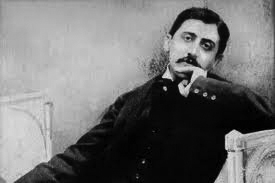
proust

Ah, such lovely words. Though most of my time is spent teaching English, I also coach Varsity Girls basketball, and it was with dismay and wry pleasure that I received this excuse from a player who would be missing practice Sunday:

I can’t make basketball practice because of Proust.

That was it—no elaboration. Not exactly “my dog ate my homework.” Seriously, could there be a better excuse? What has Proust done?! It turns out, some of my students from the French-American School of New York will read during “Swann’s Way: A Nomadic Reading,” a week-long homage to the French writer’s sprawling In Search of Lost Time (a.k.a. A Remembrance of Things Past), published Nov. 14, 1913.

The novel’s long, complex, sinuous sentences will surely challenge the 120 or so readers recruited by the French Consulate to celebrate the centennial. For example, count the commas in this rumination on the tasting of a madeleine:

Mais, quand d’un passé ancien rien ne subsiste, après la mort des êtres, après la destruction des choses, seules, plus frêles mais plus vivaces, plus immatérielles, plus persistantes, plus fidèles, l’odeur et la saveur restent encore longtemps, comme des âmes, à se rappeler, à attendre, à espérer, sur la ruine de tout le reste, à porter sans fléchir, sur leur gouttelette presque impalpable, l’édifice immense du souvenir.

In French, we don’t really have “run-on sentences.” Proust’s dense prose style possesses a poetic rhythm (note the runs of parallel constructions in the passage above, the calmer bits, and then the insistent repetitions). It’s syncopated and jazzy, like Ella Fitzgerald. The kids and other readers will be up for the challenge, provided they’ve practiced!

So if you want to bail on your plans this week, just blame Proust. And yes, there will be madeleines.

—Tom Faure

Sep 182013
 

1. I live in a virtual world outside my real country and in a place where I get my mail addressed to another place entirely. For lack of a literary community, I invented one: the online magazine Numéro Cinq. It started out as a student blog for a class I taught, then it became a literary blog, then it became a magazine. It keeps shedding its skin. It’s a community. I have re-found old friends, formed new friendships, become a patron for new writers, resuscitated the forgotten, changed people’s lives for the better and made myself a very busy person.

Read the rest via Five Things Literary: The Virtual Literary World, with Douglas Glover | Open Book: Ontario.

Aug 132013
 

andrewgallix

We live in a culture at war with itself, and I don’t mean the War on Drugs. I mean the thousand-year war between the rhetoricians and the dialecticians (as McLuhan had it), between the Ciceronian, elaborated style and the plain style of Peter Ramus, between writers who believe in the aesthetic joy of linguistic play over those who think words are just for communication (how dull and, well, Soviet that word can sound). Andrew Gallix offers here a dazzling and provocative note, a report from the front, on literary Modernism and Paul Valéry’s famous sentence “The marquise went out at five” conceived as a critique of the traditional, conventional, realistic, well-made (pick your own epithet) novel, or, really, anything that smacks of the prosiness of prose, of mere communication. Valéry’s line cleaved to the centre of the debate: Would you write a novel or a story or an essay containing a sentence as mundane as “The marquise went out at five”or not? As Gallix points out, the marquise has become a shibboleth in France for a certain kind of traditional (dull) writing. Not so much over here where prose dominates the market place. Something to think about. Andrew Gallix is the brilliant founder of 3:AM Magazine, he teaches at the Sorbonne, he writes for the UK Guardian. It’s a great pleasure to present his work here.

dg

.

How is the marchioness? Still playing Alice in Rubberland?
– Adam and the Ants, “Rubber People”

Surprising as it may seem, “The marquise went out at five” ranks among the most famous quotes in modern French literature. It could have been tossed off by some Gallic Bulwer-Lytton type, and in a manner it was, albeit a fictitious one. These hapless words were first recorded in the 1924 Surrealist Manifesto, midway through a rant against what Barthes would dub the “reality effect“. André Breton recalls the time when Paul Valéry assured him he would never write a novel, adducing his aversion to opening sentences à la “marquise”. Referenced by numerous authors, from André Gide to Nathalie Sarraute through Francis Ponge, the marchioness and her teatime peregrinations, came to embody everything that was wrong with a certain brand of conventional fiction.

It was not just the insipid incipits of well-made novels that Valéry objected to. He believed that writing always betrayed the complexity of human thought. “The more one writes,” he wrote, “the less one thinks.” Valéry’s Monsieur Teste — a close cousin of Melville’s Bartleby and Musil’s Ulrich — is particularly scornful of novels and plays, in which “being is simplified even to stupidity”. Like his character, the reluctant author felt that prose was essentially prosaic — a communication tool as pedestrian as a peripatetic marquise in a potboiler. Poetry, on the other hand, was conversant with the ineffable, and could therefore be regarded as a true art form. The fact that some of the greatest novels of the last century merged prose with poetry, and that some of the greatest poets of our time (Gary Lutz) are fiction writers, seems to invalidate this dubious theory. Nonetheless, Valéry’s quip tapped into a growing sense of disillusionment with the novel, which, despite some very notable exceptions, already seemed to have ossified in its Victorian incarnation. Compared with the avant-garde movements’ attempts to bridge the gap between art and life — chief among them, Breton’s Surrealism — the novel’s “puny exploits” (Beckett) seemed risible.

Above all, Valéry objected to the arbitrary nature of such perfunctory preambles, anticipating Knausgaard‘s recent crisis of faith: “Just the thought of fiction, just the thought of a fabricated character in a fabricated plot made me feel nauseous”. Here, the reader’s willing suspension of disbelief is tested to breaking point by the nagging feeling that the marchioness could just as well have been a duchess on a different timetable, or an alien on another planet. What is lacking, to quote Dylan Nice, is the sense of “a text beyond the writer to which the writer submits”.

The refusal to submit to external constraints was key to the emergence of the novel. Gabriel Josipovici analyses this trend in What Ever Happened to Modernism?: “Genres were the sign of submission to authority and tradition, but the novel, a narrative in prose, was the new form in which the individual could express himself precisely by throwing off the shackles that bound him to his fathers and to tradition”. The flipside of this emancipation of the writer (or privatisation of writing) was, as Walter Benjamin pointed out, isolation. No longer the mouthpiece of the Muses or society, novelists could only derive legitimacy from themselves. It is this crisis of authorial authority that Valéry’s marquise throws into relief.

In Reading WritingJulien Gracq took Valéry to task over the alleged randomness of his imaginary opening sentence. “Everything counts in a novel, just as in a poem,” he argues; it just takes longer for patterns to emerge. Quite. Even at a micro-level, any minor amendment can trigger a butterfly effect. Should the marchioness morph into a princess, for instance, we might suddenly find ourselves slap bang in fairy-tale territory. Should she pop out, say, instead of simply going out, the register, and perhaps even the meaning, would be altered, and so forth. The point, however, is not whether everything counts in a novel, but whether a novel of this kind counts at all.

“The marquise went out at five” parodies all those narratives that aim for verisimilitude whilst inadvertently advertising their fictive status. In so doing, the sentence conjures up a quantum multiverse of alternatives. It haunts itself, begging to be rewritten over and over again, until all possibilities have been exhausted, and it can finally be laid to rest. The most recent example of this repetition compulsion is Jean Charlent’s Variations Valéry (2011) — a series of pastiches of 75 different authors, riffing off the famous phrase (which Claude Mauriac had cheekily used as the title of an early novel). Significantly, the marchioness made an appearance in One Hundred Thousand Billion PoemsRaymond Queneau‘s famous collection of ten sonnets (1961). Composed as an antidote to a bout of writer’s block, it comes in the singular — but fittingly ludic — shape of a flipbook. The fourteen lines on each page are printed on individual strips, so that every line can be replaced by the corresponding line in any of the other poems. By the author’s reckoning, it would take someone 190,258,751 years to go through all possible combinations. Queneau thus succeeded in producing a work that was at once complete, always in the process of becoming (with a little help from the reader) and necessary (on its own combinatorial terms). It was also the founding text of the OuLiPo — Ouvroir de Littérature Potentielle, or Potential Literature Workshop — which Queneau launched with François Le Lionnais, in 1960.

Queneau parted company with the Surrealists over aesthetic, as well as political, differences. He increasingly objected to their experiments in automatic writing, premised on the idea that freedom was “the absence of all control exercised by reason” (Breton). “Inspiration which consists in blind obedience to every impulse is in reality a sort of slavery,” countered Queneau, “The classical playwright who writes his tragedy observing a certain number of familiar rules is freer than the poet who writes that which comes into his head and who is the slave of other rules of which he is ignorant.” Italo Calvino concurred: “What Romantic terminology called genius or talent or inspiration or intuition is nothing other than finding the right road empirically”. It is, paradoxically, through the observance of rules that emancipation takes place. “I set myself rules in order to be totally free,” as Perec put it, echoing Queneau’s earlier definition of Oulipians as “rats who build the labyrinth from which they plan to escape”.

Historically, the importance of the Oulipo is to have provided an escape from the Romantic cul-de-sac of unfettered imagination (or its Surrealist avatar, chance) through the reintroduction of external constraints.

—Andrew Gallix

.

Andrew Gallix teaches at the Sorbonne in Paris, and edits 3:AM Magazine. His work has appeared in publications ranging from The Guardian and Times Literary Supplement to Dazed & Confused. He divides his time between Scylla and Charybdis.

.
.

Feb 132013
 

Sydney Lea

Sydney Lea here attacks head on the dread subject of sex but manages somewhat quixotically to ride away (on a Shetland pony named Warrior Maiden) into utterly charming reminiscences about his youthful passion for Angie Morton (his version of Dulcinea del Toboso) and a shantytown and “Colored Graveyard” he would pass traveling to and from her house. This is an instance where an author makes a virtue out of necessity, doing a masterful job of being entertaining while not writing about what he doesn’t want to write about. As Syd writes, “Before I was able to publish the one and only novel I ever composed, for example, my agent had practically to horsewhip me into juicing up my characters’ erotic encounters.” Here are beautiful, lapidary lines: “Unrequitedness thus became, as I say, an expectation.” And a sweet reflection on the complexity of life which, yes, casts up metaphors that we spend the rest of our days decoding.

This essay, along with two others, “Unskunked” and “Becoming a Poet: A Way to Know,” published earlier on Numéro Cinq, are among Sydney Lea’s contributions to a book he has co-written with fellow poet laureate Fleda Brown. The book is called Growing Old in Poetry: Two Poets, Two Lives and is forthcoming as an e-book in April from Autumn House Books. The pattern of the book is a call-and-response. As Sydney writes, “My friend Fleda Brown, lately poet laureate of Delaware but now escaped to northern Michigan, and I are writing a book together. She writes an essay on a topic (food, sex, clothes, houses, illness, and wild animals); then I write one on the same topic. Then I write one and she follows suit. Etc. It’s fun, though I don’t know who in Hell will publish it.” We have also published here one of  Fleda Brown’s essays from the book, her wonderful meditation on books and reading, “Books Made of Paper.” And in our March issue, we’ll have another. I will be sorry to see this series end for us. (But buy the book.)

dg


growing_old_coverflat

A tricky one for me, this subject. Its once-upon-a-time factor must start at ten years old or so, before I understood sexuality except by some vague surmise, In those days, I habitually rode Warrior Maiden, my fat little Shetland pony, past Angie Morton’s house.  Angie was sixteen, I think, and movie star beautiful, at least in my eyes. She was scarcely taller than I, and would never grow taller, but her figure was simply statuesque.  She had raven hair, almost chalk-white skin, and the most penetrating eyes, ice-blue, almost white themselves, I had ever seen or would ever see after.

My hope, often enough repaid, was to catch her in her yard or, far more exciting, for reasons I must also have dimly surmised, through her bedroom window. No, that’s not accurate:  the compensation for my hope was never adequate. True, I couldn’t conceive what satisfaction might entail, but I knew Angie’s languid wave or, on happier occasions, her desultory word or two of chitchat was not it.

So desperate was my need for this young woman, whatever that need comprised, that I frequently extended my rides just so I could pass her house more than a single time on a single ride. I remember tethering Warrior Maiden to an apple tree and simply sitting under it for as long as I could bear, gorging on the wormy windfalls till I made myself queasy.  At least I thought the fruit was to blame for how I felt.

These delaying maneuvers resulted once in a frightening but thrilling trip home after dark.  In our corner of Montgomery County lay a small settlement of southern-born blacks, who had made the hard trek north in search of better fortunes. Most of them went to work in an asbestos mill in Ambler, though a fair share took jobs on local farms, or, if they were women, they labored as domestics in the more prosperous households. I found their little dwellings fascinating and somehow foreboding: in the warmer months, the front doors seemed always open, but the interiors were kept so dark that I could never quite make out the figures inside. In one tiny house, a harmonica seemed always to be playing, though I couldn’t find the musician. Each shack seemed multi-generational: I could tell that much by the wide variety of human heights among the shadowy occupants.

The shantytown had an aroma of cuisine, exotic, at least to me, pungent, and attractive; but the truly unusual feature of the community was its cemetery, with those knife-thin, tilting headstones, each adorned and surrounded by shards of broken glass, and the bordering trees full of suspended bottles.  To ride by that half-acre graveyard plot after sunset, and after having laid my adoring eyes on Angie; to hear indistinct rustlings of nocturnal animals in the brush; to be forced to rely solely on the pony’s sense of where home lay: this mixture of adventure, reverence, mystery, fear and trespass would come to serve as a kind of under-aura to such sexual experiences as I would have in my adolescent years– and later ones too.

However strangely it strikes me today, I seem somehow to have believed that my life would never amount to anything, that I would never know that obscure condition people called happiness, if I couldn’t be with Angie, even if, as I’ve conceded, I didn’t understand what that sort of “being with” entailed.

The notion was absurd, of course, and yet it didn’t end as I came to maturity, at least of the physical kind.  For too many years, I would spot a woman in some public place– museum, train, airport, restaurant, campus– and would be convinced that if I could not know her in the Biblical sense my entire life would be no better than despair. The inane measures I took to guarantee myself, if not a conversation with her, at least a glimpse of my exalted Angie were paltry compared to the extraordinary lengths I went to in order to put my person in the way of these coveted women. I can’t even describe the sanest of those tactics, so embarrassed do I remain by reflection on them.

The tactics, of course, were almost always met with rebuff, or simple non-recognition. Indeed, such a response was no more than I expected, the expectation itself a carry-over from my horseback days.  Not that Angie ever cruelly rejected me.  I suspect she knew full well the profundity of my crush on her, but she spared me all mockery, let alone recourse to nasty words.  She appeared always to have enough time for a brief exchange of remarks, which I both craved and resented.

None of her acknowledgments was enough. However banal my part in the conversation, I always hoped she could read it allegorically somehow, could know that my commentary on the weather, for example, was freighted with double-entendre.  Alas, she never appeared to decode the allegory, and despite my knowing, even at ten, that her failure to do so owed itself to my own clumsiness and to no defect in her, I was free to regard the failure as a kind of dismissal. Unrequitedness thus became, as I say, an expectation, though being the oldest son of a mother whom I seemed always to disappoint must have factored into all this too. That, however, is another story. Or at least I choose to think so.

I will be forgiven for lacking the temerity as a child to declare my devotion to the paragon Angie. But that I should remain oblique, even prudish to this day when it comes to talking about sex seems an odd thing, so elaborate and ardent were my efforts as a young man to get as much of sex as permitted by such charm as I owned and by 1950s mores, which I felt both thrill and shame to violate when I could. Before I was able to publish the one and only novel I ever composed, for example, my agent had practically to horsewhip me into juicing up my characters’ erotic encounters. Though the first draft referred to those encounters, it stopped leagues short of depicting them. In forty years of teaching, for further instance, I never felt other than acutely uncomfortable when discussing student work that showed significant carnal content.

One problem that has always concerned me, at least in my avatar as prose essayist, is what I call the temptation to closure. That is, I may lay out a series of memories, emotions, and events, and then discover myself hunting for a way to herd them into a narrative corral. I don’t know if that’s what I am doing here. I honestly do not. In any case, I wonder if my unease in talking about sex out loud or on the page may go back to a certain horseback ride after dark, when – full of vague lust, longing, and melancholy– I passed what was then referred to as the Colored Graveyard. The sense, as I lingered under Angie Morton’s window, that I was on the brink of an exciting but forbidden trespass may have been further impressed on body and soul by my traveling on horseback by those darkened cabins, each so full of mystery, then under those suspended bottles, which seemed to betoken a universe I had no right to visit. That, after all, was what made it so scintillating to imagine.

—Sydney Lea

——————————–

SYDNEY LEA is Poet Laureate of Vermont. His selection of literary essays, A Hundred Himalayas, was published by the University of Michigan Press in September, 2012. Skyhorse Publications just brought out A North Country Life: Tales of Woodsmen, Waters and Wildlife, and in April, his eleventh poetry collection, I Was Thinking of Beauty, is due from Four Way Books. His most recent collection of poems is Six Sundays Toward a Seventh: Selected Spiritual Poems, from publishers Wipf and Stock. His 2011 collection is Young of the Year (Four Way Books).

He founded New England Review in 1977 and edited it till 1989. Of his nine previous poetry collections, Pursuit of a Wound (University of Illinois Press, 2000) was one of three finalists for the Pulitzer Prize for poetry. The preceding volume, To the Bone: New and Selected Poems, was co-winner of the 1998 Poets’ Prize. In 1989, Lea also published the novel A Place in Mind with Scribner, and the book is still available in paper from Story Line Press. His 1994 collection of naturalist essays, Hunting the Whole Way Home, was re-issued in paper by the Lyons Press in 2003. Lea has received fellowships from the Rockefeller, Fulbright and Guggenheim Foundations, and has taught at Dartmouth, Yale, Wesleyan, Vermont and Middlebury Colleges, as well as at Franklin College in Switzerland and the National Hungarian University in Budapest. His stories, poems, essays and criticism have appeared in The New Yorker, The Atlantic, The New Republic, The New York Times, Sports Illustrated and many other periodicals, as well as in more than forty anthologies. He lives in Newbury, Vermont, where he is active in statewide literacy and conservation efforts.

Jan 212013
 

Douglas Glover & Sydney Lea

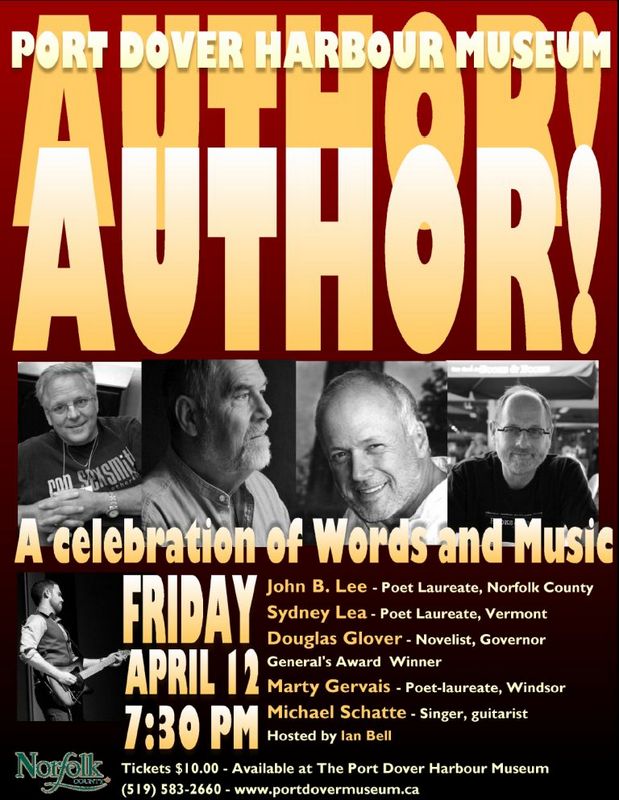
Numéro Cinq‘s own Douglas Glover and Sydney Lea (also Poet Laureate of Vermont)  are on the marquee for a reading EXTRAVAGANZA in Port Dover, Ontario, April 12. (Imagine Port Dover as the Riviera of southern Ontario, sort of.) The reading has been organized by our mutual friend, the poet John B. Lee (who has contributed poems and translations to NC). You should all fly up for the event. Talisker will be flowing in the gutters. It will be epic!


Jan 142013
 

It’s a great pleasure to announce that Canadian novelist Ann Ireland has joined the Numéro Cinq masthead as a Contributing Editor. She has a new novel, The Blue Guitar, just coming out; we published an excerpt from the work in progress last March. She lives in Toronto near my brother which is a great help in case I have to hound her for copy. She is an old friend and a welcome addition to our burgeoning community of artists and writers.

dg

Ann Ireland‘s most recent novel, The Blue Guitar, will be published by Dundurn Press in early 2013. Her first novel, A Certain Mr. Takahashi, won the $50,000 Seal-Bantam First Novel Award and was made into a feature motion picture  called The Pianist in 1991. Her second novel, The Instructor, was nominated for the Trillium Award and the Barnes and Noble’s Discover These New Writers Award, and Exile was shortlisted for the Governor-General’s Award and the Rogers/Writers Trust Award. She is a past president of PEN Canada and coordinates Ryerson University’s Chang School of Continuing Education, Writing Workshops department. She lives most of the time in Toronto and part of the time in Mexico.


Jun 112012
 

Utne Reader, The Best of the Alternative Press, just reprinted Sion Dayson’s excellent essay “Life Lessons in Père Lachaise Cemetery” in its July/August issue. “Life Lessons” was originally published in Numéro Cinq‘s January 2, 2012 issue. This is terrific recognition for Sion’s work and for the magazine. Congratulations all around. Raise a glass of Talisker, everyone.

See all of Sion’s work on NC here.

dg


Jun 272011
 

I first met Katie Vibert a year ago when she sent me an email, out of the blue, about a project some of her students at the CEGEP de Sept-Îles in Quebec had just completed—a series of gorgeous banners depicting North Shore (the north shore of the St. Lawrence) artists and historical figures. There was I, bigger than life, on the college facade (this, of course, is in honour of my novel Elle which is set on the North Shore, even has a scene set on the beach in Sept-Îles). Now Katie has a show of her own work which reflects the both place and history–the North Shore, the Montagnais, new technologies. It’s a startling, vibrant exhibition.

dg

Katie Vibert: ICÔNES NORDIQUES

Sculpture by  Canadian artist, Katie Vibert, on view in Val-d’Or, Quebec from June 3 – July 17, 2011.

Icônes Nordiques Exhibition Installation

Continue reading »

May 082011
 

Enard

zone

.

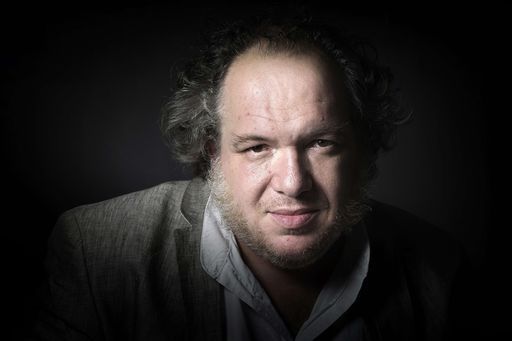
The following excerpt is from the seventh chapter of Mathias Énard’s novel, Zone—his first novel translated into English from the French by Charlotte Mandell. Before Zone’s publication by Open Letter Books in December 2010, it won multiple literary awards including Prix du Livre Inter, Prix Décembre, and Prix Initiales. The excerpt finds Zone’s narrator, Francis Servain Mirkovic, amid a journey from Milan to Rome to sell the Vatican information he acquired as a spy for French intelligence. Indicative of the novel in its entirety (you can read an NC book review of Zone here), Mirkovic drifts between stories—stories of his past as a soldier for the Croatian army, stories of former comrades, stories spanning mythological epochs, and stories of lovers. Mirkovic crosses the boundaries between his present reality and the prismatic chaos of his traumatized mind, hoping this trip to sell information from the zone will be his last.

— mcs

§

VII

everything is harder once you reach man’s estate, living shut up inside yourself harried destitute full of memories I’m not taking this trip for nothing, I’m not curling up like a dog on this seat for nothing, I’m going to save something I’m going to save myself despite the world that persists in going forward laboriously at the speed of a handcar operated by a man with one arm, blindly a train at night in a tunnel the dark even denser I had to sleep for a bit, if only I had a watch, I just have a telephone, it’s in my jacket hanging on the hook, but if I take it out I’ll be tempted to see if I have any messages and to send one, always this passion for writing into the distance, sending signs into the ether like smoke signals gestures with no object arms hands stretching out to nothingness, to whom could I send a message, from this prepaid phone that I took care to get a tramp to purchase for me in return for a big tip, as luck would have it he had an identity card and wasn’t too wasted, the seller didn’t cause any trouble, I left my apartment dropped off a few things at my mother’s sold my books in bulk to a bookseller at the Porte de Clignancourt took three or four things, as I was sorting through things I of course came across some photos, I saw Andrija again in his over-sized uniform, Marianne in Venice, Sashka at twenty in Leningrad, La Risiera camp in Trieste, the square chin of Globocnik, Gerbens’s mustache, I took everything, and I can say that everything I own is above me in a slightly scaled-down bag, next to the little briefcase that’s going to the Vatican and that I plan to hand over as soon as I reach Rome, then tonight in my room at the Plaza on the Via del Corso I’ll go drink at the hotel bar until it closes and tomorrow morning I’ll take a bath buy myself a new suit I’ll be another man I’ll call Sashka or I’ll go straight to her place I’ll ring at her door and God knows what will happen, Zeus will decide the fate that’s suitable to allot me the Moirae will bustle about for me in their cave and what will happen will happen we’ll see if war will catch up with me again or if I’ll live to be old watching my children grow up the children of my children hidden away somewhere on an island or a suburban condo what could I possibly be living on, what, like Eduardo Rózsa I could tell the story of my life write books and screenplays for autobiographical films—Rózsa born in Santa

Cruz de la Sierra in Bolivia of a communist Jewish father a resistant in Budapest was the special correspondent for a Spanish paper in Zagreb before he became a commander in the Croatian army, I met him once or twice on the front and later in Iraq, an admirer of Che Guevara and war who founded our international brigade, a group of volunteers who spoke English among themselves Warriors of the Great Free and Independent Croatia who all arrived like me after the first images of the Yugoslav madness, Eduardo was already there, he landed in Croatia in August 1991 one month before me during Osijek and the first clashes, he came from Albania and before that from Budapest and Russia where he trained for espionage for guerilla warfare for comparative literature and philosophy, a poet—today he writes books collections of poems and plays himself in films, maybe Che Guevara would have ended up the same if he hadn’t made Achilles’s choice, if he had been given life he too might have become—weapons put away, life over—an actor, he was so good-looking: like Hemingway Eduardo Rózsa wrote fast, I picture him on an August night on the terrace of the Hotel Intercontinental in Zagreb where all the foreign press stayed, the Vanguardia from Barcelona re­­proached him for describing the fighting too much and for not talking enough about politics, he downed shots as he described the first battles, the Yugoslav tanks against the shabby Croats, his hotel room was transformed into a real War Museum, pieces of shrapnel ammunition the tail-ends of rockets maps relics of all kinds, Eduardo a funny character idealist warrior converted to Islam after having fought for the Catholic crucifix, vice president of the Muslim community of Hungary, formerly press secretary for the first free Iraqi government, men want causes, gods that inspire them, and in that scorching August of 1991 in front of the Intercontinental’s pool his R5 riddled with bullets in the garage his pen in hand he thought about the Bolivian sierra about socialism about Che and his old hole-filled uniform, he had just been shot at by Serbs on the highway from Belgrade, he writes his article, it was the first time he was under fire, the half-open window shattered to pieces, the passenger seat opened up suddenly spitting out its stuffing with hisses and metal clangor, with the speed and distance he probably didn’t hear the explosions, he swerved turned off the headlights instinctively and kept going straight ahead his hands damp clutching the steering wheel sweat in his eyes up to the suburbs of Zagreb, up to the hotel, up to the foreign colleagues the two French photographers who were sharing his room, they see Eduardo arriving dripping with sweat beside himself those two twenty-five-year-old journalists also came to Croatia to get shot at and to run around the countryside with Yugoslav tanks on their tail, to them Eduardo is a master, a man of experience and now he’s arriving trembling and sweating, he says nothing, he takes out his notebook and quietly goes to get drunk on plum brandy by the pool watching the American reporters laughing in the water at their cameraman’s jokes, that’s where it happens, touched by Zeus Eduardo Che Rózsa chose his camp, the next day in Osijek he’ll go see the Croatian officers, he’ll enlist, join the Achaean ranks in a fine rage, a rage against the Serbs: the journalists saw him one fine day in a khaki uniform, a rifle on his shoulder and when I arrived at the end of September he had abandoned the pen to devote himself to war, he would come back decorated medaled honorary citizen of the new Croatia, a hero, godfather of I don’t know how many children, and he would write his exploits himself, play his own role in the film—the first time I saw him it wasn’t on the screen, he was sitting in the middle of the trench in which I was crawling in Osijek, I was scared stiff, absolutely clueless, the shells were raining down in front of us there was the Yugoslav army its tanks and its elite troops, I didn’t know where I was going I climbed up the trench my nose in the autumn smell, in the humus, to escape, to go home, to find again the attic room and Marianne’s caresses, I couldn’t hear anything and I couldn’t see much I had glimpsed my first wounded man fired my first cartridges at a hedge, the uniform of the national guard was just a hunting jacket that didn’t protect much I was shivering trembling like a tree under the explosions Rózsa was sitting there I crawled right onto him he looked at me and smiled, he gently moved the muzzle of my gun away with his foot, had me sit down, he must have said something to me of which I have no memory and when our people began firing he’s the one who propped me up against the parapet with a pat on the back so I’d start shooting too, before he disappeared, Athena comes to breathe courage and ardor into mortals in battle, and I fired calmly, I fired well before jumping out of the trench with the others, fear evaporated, flew away with the shells towards the enemy and the farm we were supposed to take, far from Zagreb, far from the Hotel Intercontinental from its covered pool its terrace and its sauna that I had never seen, far from Paris, Che Rózsa would continue his career, I heard his name many times during the war, heroic and other more mysterious deeds, like the murder of a Swiss journalist accused of espionage for I don’t know whom, some people thought he had come to infiltrate the brigade: he was found dead by strangulation during a patrol, a dozen days before the British photographer Paul Jenks was shot in the back of the head as he was investigating the previous man’s death, heroes are often wreathed in shadows, marked by Hades great eater of warriors, Eduardo as well as others, even though in those days journalists were falling like flies, in Croatia at least, or later on around besieged Sarajevo—in central Bosnia, between Vitez and Travnik, they made themselves much scarcer, aside from a few reporters from the television channel owned by the HDZ, the Croatian party in Bosnia, who had the strange habit of emerging from nowhere, like a jack-in-the-box, of appearing at the unlikeliest times and some British reporters clinging to the white tanks of the nuisances from BRITFOR—those photographers and journalists were plying a strange trade indeed, public spies in a way, professional informers for public opinion, for the majority, we saw them that way, high-end informers who hated us as much as Her Majesty’s soldiers scorned us, frustrated by inaction their hands on the triggers of their 30-millimeter guns, perched on top of their Warriors painted white, ice-cream trucks they were called in Croatia, what possible use could they serve, they collected the corpses and negotiated cease-fires so they could go on leave to Split, where they swam, danced, drank whisky before returning to count the shots in Travnik, through binoculars at their windows, or to jog around the stadium—Eduardo Che Rózsa ex-secret agent ex-journalist ex-commander of one of the best-organized brigades in eastern Slavonia writer poet screenwriter turned Muslim and activist for Iraq and Palestine, in Budapest in his suburban house, is he thinking about the Chetniks he killed, about his first two dead, torn to pieces by a grenade in a barn by the Drava River, about his comrades fallen like mine, is he still thinking about the war, about Croatia, he a Catholic by his mother a communist by his father, a murderer by the grace of God, does he remember the freezing rain of the winter of 1991 in the outskirts of Osijek, Eduardo who grew up in Chile until the coup against Allende, deported to Budapest on a chartered flight of foreign “Reds” who couldn’t be sent to the firing squad or tortured, Eduardo going in the opposite direction from me began in intelligence before he became a journalist, then a volunteer to fight with the Croats, by our side, and re­­turned, enriched with wisdom’s store, to live in Hungary through his remaining years, in poetry screenplays books strange missions, plus everything I don’t know about him probably, Eduardo Che Rózsa who didn’t recognize me when we met in Baghdad by the Tigris not long after the invasion, between a cheap restaurant and a peanut-vendor, during the fleeting euphoria of victory, of dictatorship overthrown, justice restored—the treasures of Troy were still burning, manuscripts, works of art, old men, children, while already the coalition forces were congratulating each other on the river’s shores, not worrying about the first attacks, the signs of a catastrophe of the same caliber as the one in the 1920s, or even worse, Eduardo Rózsa was strolling in the company of a few officials by the eternal Tigris, I was eating a corncob from a street vendor with a guy from the embassy, I had just met Sashka and I didn’t want war or peace or the Zone or to remember Croatia or Bosnia I wanted to go back to Rome even for just twenty-four hours to be with her, and then Commander Rózsa walks by without seeing me, a ghost, was I the ghost or him, I had already begun to disappear I was burying myself little by little in the contents of the suitcase, in Sashka whom I thought I’d seen for the first time in Jerusalem years before, in Iraq the heat was incredible, a damp vapor rising from the slow Tigris bordered with reeds where from time to time corpses and decaying carcasses ran aground like the Sava River in 1942 without perturbing the American patrols who were still strolling about like Thomson and Thompson in Tintin a blissful look on their faces as they observed around them the country they had just conquered which they didn’t know what to do with, Baghdad was drifting, ungovernable like Jerusalem or Algiers, it was de­­composing, an atom bombarded by neutrons, hunger, sickness, ignorance, mourning, pain, despair without really un­derstanding why the gods were persecuting it so, destroyed, sent back into limbo, into prehistory the way the Mongols did in 1258, libraries, museums, universities, ministries, hospitals ravaged, Rózsa and I the ex-warriors come to share the spoils or inhale its re­­mains, as specialists of defeat, of victory, of the New World Order, of the peace of the brave, of weapons of mass destruction that gave the soldiers a good laugh, they slapped each other on the back as they drank their Budweisers like after a good joke, in Basra the British were the same as in Bosnia, very sportsmanlike, professional and indifferent, they unloaded hu­­manitarian aid trucks as I’d seen them do in Travnik, as Rózsa had seen them in Osijek, except this time they were authorized to use their weapons, which they weren’t shy about using: they hunted former Ba’athists the way others hunt deer or rather wild boar in the Ardennes, the English soldiers were returning to Basra, to the same place where their grandfathers had been stationed in 1919, after the Dardanelles, after the Hejaz and Syria, the ex­­hausted Tommies rested their legs in the country of palm trees and dried lemons, by the edge of the swamps and meanderings of the Shatt al-Arab, they stuffed their faces with dates and lambs stolen from native shepherds, wondering how much longer the war would last, it lasts forever, almost a century after Gavrilo Princip’s Balkan gunshot, the referee’s pistol shot in a long-distance race, all the participants are already at the starting line, ready to dash forward into the world of Ares great eater of warriors, hoping to return loaded with treasure and glory: Che Rózsa commander covered in medals from the great patriotic Croatian war, Vlaho or me decorated with the order of the grateful nation, Andrija with a fine black marble tombstone with no corpse, To our brother the Hero, he no longer has a body, Andrija, no bones beneath his slab, no gold pin on his jacket he’s a name a phrase a brother and a hero, I was thinking of him in Baghdad conquered humiliated subjected and pillaged as I passed Rózsa the Hungarian from Bolivia a convert to Islam and to international aid, president of the Muslim community of Budapest, or something like that, after having been a fervent defender of Opus Dei, was he informing for the Hungarians, or the Russians, or the English, were we still colleagues, colleagues of the shadows—in the night of war, of the Zone, of memories of the dead, we were living together, without seeing each other, we were sharing the same life, passing each other by the edge of the Tigris, that Styx like the Tiber like the Jordan the Nile or the Danube like all those deadly rivers running into the sea

—Mathias Énard translated by Charlotte Mandell

.
.
May 082011
 

This Ancient World
A Review of Mathias Énard’s Zone
by Mary Stein

Zone
By Mathias Énard
Translated by Charlotte Mandell
Open Letter Books
ISBN-13: 978-1-934824-9

I am lucky enough to have experienced the horrors of war only indirectly in the form of newspaper articles and television newscasts. I remember small blue-on-black explosions of sparkling shards arching through Iraq’s sky, ticker tape reeling across the bottom of the screen attempting to quantify casualties like stock market quotes. But in 1991 during the First Gulf War, a series of wars began tearing Yugoslavia apart—a nation splitting at cultural and political seams—and in Serbia, Croatia, Bosnia and Montenegro, people were faced with an entirely different wartime experience: Instead of watching dim explosions on the television, they found war erupting in their cities, backyards, homes and bodies.

Translator, Charlotte Mandell

Zone, Mathias Énard’s fourth novel (of five), his first novel translated into English is an attempt to articulate the experience of the Balkan wars from the inside. Charlotte Mandell’s deft translation from French highlights Zone’s lyric quality, conveying the retroactive point of view of a narrator who condenses the personal and cultural impact of the Yugoslav wars along with historical war crimes, genocides and ethnic cleansings dating back to Troy.

Zone’s narrator, Francis Servain Mirkovic, is a French-born Croat, a former soldier who fought “…for a free and independent Croatia, a free and independent Herzegovina and finally for a free and independent Croatian Bosnia…,” thus, in his own mind, straddling the boundary between victim and perpetrator. In the present story of the novel, Mirkovic is a spy for French intelligence collecting stories of war crimes “…like someone who becomes a referee having been a boxer and himself no longer touches the faces that explode beneath fists, he counts the blows…”

Under the influence of alcohol and amphetamines, Mirkovic has just boarded a train from Milan to Rome intending to sell the Vatican another “sad piece of the past in an entirely ordinary plastic suitcase wherein is written the fate of hundreds of men who are dead or on the point of disappearing…” Using the identity of a childhood friend, Yvan Deroy, as a cover, Mirkovic finds himself “lost now with an assumed name between Milan and Rome, in the company of living ghosts.” A bizarre interaction with a stranger further unhinges Mirkovic, inciting a state of post-traumatic stress. As Mirkovic’s train crosses city boundaries, his erratic mind wanders, and he finds himself unable to separate his own trauma-tainted memories from the stories and names of the dead that fill his suitcase.

Continue reading »

Apr 092011
 

David Rivard is an immensely talented, award-winning poet and another old friend from my early days at Vermont College of Fine Arts. The first time I visited the fabulous Hope Cemetery in Barre, VT, I went along with David Rivard and Francois Camoin, Francois taking book jacket photos amid the extravagant folk art granite headstones (granite cars, soccer balls, lovers). It’s a huge pleasure to use Numéro Cinq to reach back in time and capture those moments. Here are four gorgeous poems from David’s new poetry book Otherwise  Elsewhere, just published a couple of months ago by Graywolf Press. Including Otherwise Elswhere, David is the author of five books of poetry. The others are Sugartown, Bewitched Playground, Wise Poison, winner of the James Laughlin Prize from the Academy of American Poets in 1996 and a finalist for the Los Angeles Times Book Award, and Torque.  His poems and essays appear in the American Poetry Review, TriQuarterly, Ploughshares, Poetry London, and other magazines.  In 2006, he was awarded the O.B. Hardison Jr. Poetry Prize from the Folger Shakespeare Library, in recognition of both his writing and teaching.  Among his other awards are fellowships from the Guggenheim Foundation, the Ranieri Foundation, and the NEA.  He teaches in the University of New Hampshire MFA program.

See also Ron Slate’s review of Otherwise Elsewhere at At the Seawall and Ryan Sanford Smith’s review  at White Walls/Black Ink. Here is a David Rivard interview at Agni and a short David Rivard essay on writing that originally appeared American Poetry  Review.

dg

Four Poems from Otherwise Elsewhere

By David Rivard


Note to Myself

Having survived self-
esteem (both low & high), like
surfacing

out of a to-do
list for civil war
in the heart—

Having
been a back-stabber (when said
back was my own), or

lucky Darwinian
holder of
the Ace of Spades,

in my mind—
Getting to see myself
as a green midge

or
as a pine tree looming like
a fetching samurai

at the edge
of a meadow—I get a little
tired–& strangely

everywhere I go
seems one
step closer to wherever I

thought
I was when I left for
wherever I thought

I wanted to be.
Given the round
ranginess of earth, always

thinking of myself—tho
that’s it for me now. Enough. No
more, thank you. No, really.


Working Black

The part of Stockholm I saw at 22, I saw as an employee & thief
more or less—an American sweating in clogs & kitchen whites—
booster of those clogs from a Gamla Stan stall, a shoplifter
of Icelandic sweaters, book thief—Gravity’s Rainbow, Justine
I worked day-shifts as scullery boy for Claes & Eva at the restaurant
Hos Oss, pot scrubber, peeler of turnips & potatoes, blade sharpener—
“working black” the Swedes said, meaning for most foreigners
off-the-books &untaxed, the welfare state scammed, meaning
for others that you had vanished, you were a Vera or a Paulo
or Damishi who had fled from your home in some southern dictatorship
fearful that you might be “disappeared,” so perhaps you no longer
existed anymore, or didn’t deserve to. “If people believe,”
Berndt had said, “it’s only because they wish for themselves to see,”
tho the chef was speaking of having had the dead appear to him
as bewildering presences, travelers trapped on the blank screen
of his broken television, souls stored in a paranormal peepshow.
Meanwhile I mopped tiles or whisked a bowl of whipped cream
as the middle-management of Gulf Oil drifted over
from a nearby office tower for pea soup & thick pancakes & jam
every Thursday lunch—there was a sad gentility & boredom
sunk deep in the witch-hazel faces of these sober businessmen,
far from the tripping & mobilizations of dumbstruck America
1975. Faces unlike my own bearded & baffled face.
What is the taste of raw potato in a steamy northern kitchen?—
the iron earthiness of your mother & father outgrown, left behind.


It

“Anodyne lingerie” was Amy Dryansky’s
way of describing it. “The sufferers of giganticism
are out in the fog with their mallets,” wrote
David Blair. Meaning what Snyder meant perhaps
by “spring-water in the green creek is clear,”
a crib from Han Shan. Meaning otherwise
“trouble no more,” as sung by Sister Rosetta Tharpe
or “now it’s your turn, mister!”—as any babysitter might say—
even if it is unquestionably true that no one should ever
promise anything so vague & huge—a youngish
woman with a macaroon talking to a toddler,
her voice the galvanic bath it all floats in. It. All of it.
“Solitude, my mother, tell me my life again,”
wrote the uncle of Czeslaw Milosz last time he saw it.
A blissful state of mind, or an anxiety attack. It
has a need to be called by its rightful name
or explained because it can’t see itself clearly,
plus is terribly changeful. In any case, “Grazie” is
still the best way to say goodbye to it. And it wasn’t fooled
when my brother referred to it as a “piece of cake.”
Perhaps the best advice ever given about it can be found
in these lines by a sadly late & formerly high-wattage
earthling: “When you come to something,” he said,
“stop to let it pass, so you can see what else is there.”
“It’s murder,” my doctor likes to say, & it is,
but it still wants you to love it back. My mother
dealt with it by telling the four of us, me, my
brother & two sisters, “go ahead, do whatever
you want.” By which she meant we should do
exactly what she thought best. As if that should
have put it to rest. Thankfully, it did not. Grazie.


What We Call Childhood

What we call childhood isn’t
what a child would call it—
so she doesn’t
speak of how she was the most sensitive girl in the convent school kindergarten
or that the god who was a panhandler
wore a fly’s face
and that whenever he dawdled beneath the striped
awning of the shop selling cut-rate shoes & her class
had to walk by him as it happened
on the way to the public library
she would cling to her teacher then & cry
steered off by the old nun’s fingers, she doesn’t mention
why her bedspread changed to blue
each July, the sky lighter blue, the screen door green,
her stepfather’s beach house having been rehabbed under the influence of sea light,
sea light & contractor kickbacks,
she doesn’t say she was
a girl by the first week of 6th grade summer vacation well-known
as a primitive freelancer whenever she rode her old 3-speed English racer
handless downhill to the anchorage;
none of it gets talked about, certainly
not the angora sweater
and the Chinatown bracelets
or those evenings
3 winters later when she danced in front of her bedroom mirror
with headphones on & always inside of the sight lines
because she was wearing blue mascara
and somehow that
had given her the idea to break into the empty summer cottages
with her rustbelt boyfriend; she doesn’t even
say she liked how her legs got long
in a kick-pleat skirt but hated her dark hair
for curling if it threatened rain—
and likewise
her whole childhood, it’s all kept in play,
so no one will ever feel free to tell her what it was worth,
not even on that autumn moor
where against all odds a narrow sandy road
gleams at midnight.

—David Rivard

Apr 072011


Herewith the inaugural instance of a new Numéro Cinq series, the NC Interviews. Our first interviewee is my old friend Mark Anthony Jarman and our first interviewer is contributor Mary Stein. Mark and I knew each other at the Iowa Writers’ Workshop at the beginning of the 1980s. A long friendship with legs—last September, late one night (maybe early morning), Mark and I sat in his backyard with my publisher Susanne Alexander, drinking beer under the stars in Fredericton, New Brunswick, like old times. He edits fiction for a venerable Canadian magazine called The Fiddlehead which, in the 1970s, published some of my first short stories (and another story is coming out in the summer, 2011, issue). Mark has written a book of poetry, Killing the Swan, a hockey novel, Salvage King Ya!, four story collections, Dancing Nightly in the Tavern, New Orleans is Sinking, 19 Knives, and My White Planet, and nonfiction book about Ireland called Ireland’s Eye. He teaches at the University of New Brunswick and lives in a very large house fronting the Saint John River. His story “The December Astronauts (or Moonbase Horse Code)” appears in Numéro Cinq’s Best of Vol. 1.

dg

Mixes and Collisions: A Numéro Cinq Interview with Mark Anthony Jarman

By Mary Stein


MCS: Why don’t you start by telling me a little about your relationship to writing poetry versus writing prose. It seems it’s been decades since you’ve published a collection of poetry. Have you continued to write poetry since Killing the Swan, or does your prose writing satisfy your poetic impulses?

MAJ: After I published Killing the Swan, I had the feeling it had gone into a vacuum, and decided to put the same images and ideas into prose if I could manage.  There are things in poetry you can do that you can’t in an essay or story, but I feel it’s a very good influence on the latter in terms of editing, compression, attention to language, imagery, odd juxtapositions, implication, developing an eye and ear, etc.  I also feel there is too much weak poetry around and I don’t want to add to it; perhaps the government could pay us to not write poetry rather than fund more.  Great poetry is great, I was influenced by Eliot, Richard Hugo, Denis Johnson, Philip Levine, Sharon Olds, and had good teachers, PK Page, Phyllis Webb, but a lot of poetry strikes me as pointless.  Maybe I’ve been to too many bad readings.

MCS: In Burning Down the House, Charles Baxter writes, “Fiction writers get resentful, watching poets calling it quits at 9:30 a.m.” Do you ever lapse into moments of “poet envy” or does the fiction writer’s tireless pursuit of the right-hand margin suit you?


MAJ: I do torment the poets I know, teasing them that they can whip off a poem before breakfast whereas a story rarely happens quickly.

Continue reading »

Jan 172011
 

The First Annual Numéro Cinq Erasure Contest

Here’s a mini-contest. Not so hard, not as daunting as writing a rondeau or translating from the Dutch without a dictionary. The words have all been written for you. You just have to find the story. This should be a dream for those of us who are imaginatively challenged. The text below is from Monsieur L’Abbat’s Fencing, or, the Use of the Small Sword published in Dublin in 1734 (text and illustrations from Project Gutenberg). Dg is not sure what makes a good erasure text, so this is somewhat experimental. Someone suggested using a passage from the Bible, but that seemed vaguely blasphemous. A sword-fighting instruction book has the advantage of a certain drama in the choice of diction. Conflict is of the essence.

Rules: There are always rules. An erasure is a text created by taking words out of an existing text. In the best of all possible worlds, you’d have been able to submit the original text with words blotted out—this would make for a certain drama of presentation. And dg supposes it would be possible for you to convert the text into a jpeg and then use a photo processing program to effect the erasures and then submit the final jpeg. But somehow the mechanics of this seem anti-inspirational. For the purposes of this contest, you just need to take out the words you don’t want and submit the remaining text. You can’t change the order of the words and you can’t change the capitalization. The words in your new text have to be exactly the same and in the same order as they were in the original. You can insert your own punctuation. Try to make it something sensible–a love story, perhaps. But it doesn’t necessarily have to be a story. It could be a poem or a scene. Let the words take you where they listeth.

Remember: at NC we value wit and arrogance as the paramount literary values.

The contest is open to absolutely anyone. Newcomers and people who cannot speak English are especially welcome. (People with memory loss issues would seem especially adapted to this contest.) Just sign in on the comment box and erase away.

Entries, as usual in these contests, must be submitted in the comment box at the bottom of this post (yes, yes, in the past, some NC members have been deeply confused on this point and entered under completely unrelated posts). Multiple entries are perfectly acceptable.

Entries must be submitted between midnight January 15 and midnight January 31.

There are no other rules except, of course, Gary Garvin will notice a loophole and dg will retroactively have to rewrite the rules. If anything is unclear, please mention it in the comment box.

Munificent prizes will be awarded (come to think of it, we forgot to award prizes at the NC party in Montpelier) as usual. A list of actual prizes will be provided upon request (send your requests to the chair of the Official Judges Panel).

dg

Here is the official contest UR-text

It begins here. When you have for some time used yourself to push and parry at the Wall, according to the Rules that I have laid down, you must, (tho’ ’tis not the Rule of Schools, especially when you push with Strangers,) you must I say, when you push with a Scholar of your own Master, push and parry a Thrust alternately, disengaging, and then do the same Feinting, and sometime after you shou’d make the other Thrusts, telling one another your design, which makes you execute and parry them by Rule, especially if you reflect on the Motions and Postures of the Lunges and Parades. Being a little formed to this method, you may, being warned of the Thrust, parry it, telling the Adversary where you intend your Riposte, which puts him in a condition to avoid it, and gives him room to redouble after his Parade, either strait or by a Feint, at which you are not surprised, expecting by being forewarned the Thrust he is to make, which puts you easily on your Defence and Offence: by this manner of Exercise, you may not only improve faster, but with more art, the Eye and Parts being insensibly disposed to follow the Rule, whereas without this Method, the difference that there is between a lesson of assaulting a Man who forewarns you, helps you, and lets you hit him, and another who endeavours to defend himself and hit you, is, that except the Practice of Lessons be very well taught by long exercise, you fall into a Disorder which is often owing to the want of Art more than to any Defect in Nature. The taking a Lesson well, and the Manner of Pushing and Parrying which I have just described, may be attained to by Practice only, but some other things are necessary to make an Assault well; for besides the Turn of the Body, the Lightness, Suppleness and Vigour which compose the exteriour Part, you must be stout and prudent, qualities so essential, that without them you cannot act with a good Grace, nor to the purpose. If you are apprehensive, besides, that you don’t push home, or justly, fear making you keep back your Thrust, or follow the Blade, the least Motion of the Enemy disorders you, and puts you out of a Condition to hit him, and to avoid his Thrusts. Without Prudence, you cannot take the advantage of the situation, motions designs of the enemy, which changing very often, according to his Capacity and to the Measure, demonstrates that an ill concerted Enterprise exposes more to Danger than it procures Advantage: in order to turn this Quality to an advantage, you are to observe the Enemy’s fort and feeble, whether he attack or defend; if he attack it will be either by plain Thrusts strait, or disengaged, or by Feints or Engagements, which may be opposed by Time, or Ripostes: if he keeps on his Defence, it is either to take the Time or to Riposte. In case of the first; you shou’d, by half Thrusts, oblige him to push in order to take a Counter to his Time, and if he sticks to his Parade you must serve in what Manner, in order to disorder him by Feints, and push where he gives Light. And ends here.

Oct 192010
 

100_0371

Steven Axelrod is a former student, a painter of houses on Nantucket, an inveterate blogger on Open Salon.com. He also won the 2010 Memoir-in-a-Box contest with a gorgeous piece on the demise of a marriage. Herewith another in an infinite series of Numéro Cinq “What it’s like living here” pieces, in this instance, Steve’s elegiac homage to his adoptive hometown.

dg

What it’s like living here

By Steven Axelrod on Nantucket


Closed for the Season

You walk around your island, stunned by the sudden fair weather, the giant wheel shifting the wind from north east to south west, the air like silk against your face,  the town moving into full dress rehearsal mode for the coming summer: painters sprucing up the store fronts, renovations scrambling to completion, pot holes patched, grass cut, hedges trimmed, waiting for the first boats full of Memorial Day tourists, the first surge of Range Rovers and boat trailers as the summer people take their  seats and the curtain goes up.

Ack 2 Go, Whalers!

Your son Tom graduates from high school today, and you feel ambushed by your own emotions. For years it seems you’ve known every possible sentiment ahead of time, shrugging as they trundled towards you: this is going to make you angry, that will be fun; whatever. But this comes at you from too many directions at once. It’s strange and troubling to have a feeling you can’t identify.

You grasp just bits and pieces of it at first. You feel a tug of genuine suspense when your son was crosses the stage to pick up his diploma … as if something might happen to screw it up, as if the diploma itself might be blank. You know other people feel the same way: You make the joke with a few of the parents you know, and see the nervous smile of recognition on their faces. Then comes the relief.

You call your ex-wife and you talk for a while. Later, you say to your Mom, “No one else knows what this feels like.” And she says, “What about me? I’ve been through it, too.” You hug and you find that you’re crying. She says: “For twenty years you’ve been putting yourself last; now you can finally put yourself first. You can finally do what you want. But what is that?” And you really have no idea. But you feel like some huge changes could begin now; as if you had graduated, not your son.

But even that isn’t all. The graduation unplugs you from a whole community that you didn’t even know you cared about. You weren’t really part of it, in any big way: You didn’t volunteer, or chaperone or substitute teach. But you know these kids, and through them their parents and through those families the real life of the island you live on and the town that had somehow, almost against your will, become your home. Now that living connection is gone, too. The next bunch of kids will be strangers to you; the next crazy teacher won’t be your problem. So this rite of passage isolates you. It makes you feel your age. You finished my fiftieth year, your first real novel and your children’s high school careers, all in the same week. That’s a lot of endings.

Continue reading »

Sep 162010
 

Entries for the First Annual Numéro Cinq Novel/Memoir-in-a-Box contest are now closed. At this point, as per usual at NC, the competition splits into two phases. While the venerable judges retire to a secluded mountain top in central New Brunswick to consider their choices, you THE PEOPLE (see photo above) get to choose and discuss your favourites.

The official entry list is here (click on this sentence to see the entries)! All the entries posted here are considered final and official however far they deviated from the norm or ignored contest deadlines.

And as per usual (and for some reason this always confuses people), please cast your vote in a comment beneath this post. You must vote in two categories, fiction and nonfiction. For the purposes of this competition, we shall consider Anna Maria Johnson’s Off The Page entry as the winner in that category.

Everyone is welcome to comment and vote. That means EVERYONE. You needn’t have entered or already be a member of the NC community. Outsiders, strangers, aliens and spectral beings are welcome. Mass voting by bots is welcome.

Voting ends at midnight September 22, 2010.

Mar 262010
 

I’ve been trying so hard not to post! The aphorism contest was particularly difficult to avoid . . . as was the pompeiian graffiti. To me, your blog is the equivalent to literary facebook . . . i’m not sure if that’s a compliment.