Aug 102016
 

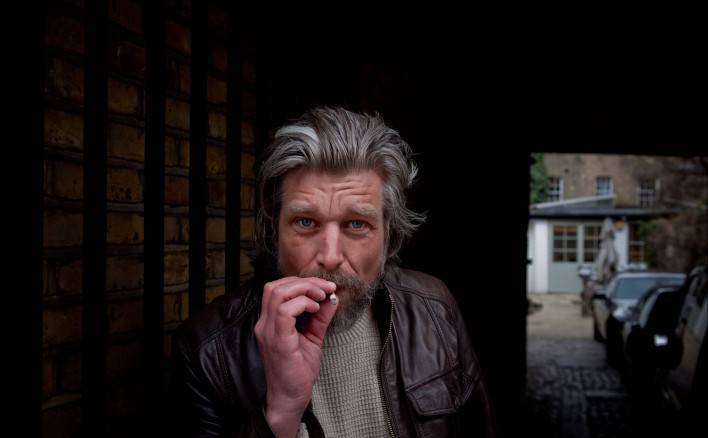
Ben Lerner is seen in Brooklyn, New York on Monday September 14, 2015. Adam Lerner / AP Images for Home Front Communications

“The fatal problem with poetry: poems.” — Ben Lerner

lernerbookshot

The Hatred of Poetry
Ben Lerner
Farrar, Strauss, and Giroux, 2016.
Paperback, 86 pages, $12.

.

Ben Lerner’s monograph, The Hatred of Poetry, is an extended meditation on the nature of poetry (or, Poetry) and its relationship to the reader. Lerner first broached this topic in his 4000-word essay for the London Review of Books in 2015, in which he concludes, “You can only compose poems that, when read with perfect contempt, clear a place for the genuine Poem that never appears.”  While much of The Hatred of Poetry is derived from thoughts shared in this essay, the revised version is subtler, cannier, and ultimately claims, if only in passing, “a place for the genuine.”

The essay can be read as a tribute to Lerner’s teacher, Allen Grossman, the late poet and critic, and Grossman’s influence on this writing is found everywhere. Only a few pages in, Lerner recollects Grossman’s retelling of the story of 1st century Caedmon, the earliest known Anglo-Saxon poet. The illiterate cowherd was, according to the account rendered by the Venerable Bede, transformed through a dream into a poet; the poem with which he awoke, however, was never as good as the one in his dream, “for songs, be they never so well made, cannot be turned of one tongue into another, word for word, without loss to their grace and worthiness.” From Bede’s rendition of Caedmon’s dream comes Grossman’s characterization of the poem as “necessarily a mere echo” of the truer poem, the “virtual poem” existing just out of reach for the poet. “In a dream your verses can defeat time,” Lerner writes, “your words can shake off the history of their usage, you can represent what can’t be represented (e.g., the creation of representation itself), but when you wake, when you rejoin your friends around the fire, you’re back in the human world with its inflexible laws and logic.”

From this apocryphal beginning, Lerner deftly sketches a characterization of poetry as a long-beleaguered medium, wearily defended and just as wearily attacked for millennia. Lerner himself, of course, is a poet, author of three volumes of verse. His first collection, The Lichtenberg Figures, won the Hayden Carruth Prize; his second, Angle of Yaw, was a finalist for the National Book Award. His two novels, both of which feature self-reflexive narrators (the first, Leaving Atocha Station, is told by a successful poet [Adam] abroad on Fellowship money; his second novel, 10:04, is told by Ben, a poet in the wake of a surprisingly successful first novel) have been widely acclaimed. Born in 1979 in Topeka, Kansas, Lerner has already been awarded a Guggenheim and a MacArthur Fellowship. He has every logical reason in the world to rest comfortably, yet his work brims with self-abnegation, a “self-subverting whisper” which persistently threatens to spill over into self-pity, but never actually does.

The Hatred of Poetry may be Lerner’s answer to his own unspoken questions. Of poetry – “I, too, dislike it,“ he asserts in the well-known words of Marianne Moore –Lerner writes, “Sometimes this refrain (which Lerner has made of Moore’s words) has the feel of negative rumination and sometimes a kind of manic, mantric affirmation, as close as I get to unceasing prayer.”

The rest of Moore’s poem, quoted on Lerner’s opening page, reads, in its entirety: “Reading it, however, with a perfect/contempt for it, one discovers in/it, after all, a place for the genuine.” In order to reserve such a place, however, a great deal must be cleared away. In Lerner’s telling – harking back to Grossman’s “virtual poem” – poetry itself is used as a means to provoke negative capability, poetry meaning poetry showing what poetry is not, i.e., words on the page. Whether dissecting the doggerel of William Topaz McGonagall or Emily Dickenson’s broken lines (“a mixture of virtuosity and willed dissonance”), Lerner suggests that poetry makes “a place for the genuine by producing a negative image of the ideal Poem we cannot write in time.”

That negative image of the ideal Poem (that poem that “we cannot write”) is reinforced through poetry critique. From Plato’s provocative (to contemporary readers) banishment of the poet as citizen of the ideal city, through, for example, Mark Edmundson (“The Decline of American Verse) and George Packer (“Presidential Poetry”) who bemoan the current state of poetry as being mired in the particular to the expense of the universal, Lerner’s point is that prose written about poetry upholds the place that poetry provides for the “glimmer of the virtual.” In other words, the “defense itself becomes a kind of virtual poetry – it allows you to describe the virtues of poetry without having to write poems that have succumbed to the bitterness of the actual.”

Lerner closes with a relatively extended meditation upon the virgule, signifying the slash, the virgula or “little twig” used to indicate line breaks when quoting poetry in the context of prose. He observes that Claudia Rankine, in the pre-publication galleys of Citizen: An American Lyric, used the virgule “where it could be read as a typographical representation of verse’s felt unavailability.” In the final copy, however, these virgules were gone, leaving only what Lerner calls “a kind of restraint, verging on flatness, exhaustion, dissociation” behind. Rankine’s Citizen, is named lyric where otherwise that quality would not be likely assumed: the poem is, after all, comprised almost entirely of prose. “What I encounter in Rankine,” he writes, “is the felt unavailability of traditional lyric categories; the instruction to read her writing as poetry — and especially as lyric poetry — catalyzes an experience of their loss, like a sensation in a phantom limb.”

The seeming divide between poetry and prose is a border that Lerner has blurred before: in his first novel, the narrator (a poet) writes, “I tended to find lines of poetry beautiful only when I encountered them quoted in prose (…) where the line breaks were replaced with slashes, so that what was communicated was less a particular poem than the echo of poetic possibility.” He quotes this passage twice in the pages of The Hatred of Poetry, before making a final – and, yes, lyrical – segue towards the essay’s coda. The virgule, he writes,

can be heard in Virgula Divina, the divining rod that locates water or other precious substances underground…(It can be heard) in the name of Virgil. Dante’s guide through Hell. And in the meteorological phenomenon known as “virga”… streaks of water or ice particles trailing from a cloud that evaporate before they reach the ground. It’s a rainfall that never quite closes the gap between heaven and earth, between the dream and fire; it’s a mark for verse that is not yet, or no longer, or not merely actual; they are phenomena whose failure to become or remain fully real allows them to figure something beyond the phenomenal.

Throughout the book, references to Grossman are made, off-stage as it were, including Lerner’s telephoned conversation with poet/critic Aaron Kunin (“also a student, not coincidentally, of Grossman’s”), or recognitions of Grossman’s influence on this or that observation. Then, abruptly, a few pages from the book’s close, Lerner writes: “Today, June 27, 2014, Allen Grossman died.”

In Frank O’Hara’s “Personism: A Manifesto,” the poet writes:

(O)ne of its (personism’s) minimal aspects is to address itself to one person (other than the poet himself), thus evoking overtones of love without destroying love’s life-giving vulgarity, and sustaining the poet’s feelings towards the poem while preventing love from distracting him into feeling about the person. That’s part of personism. It was founded by me after lunch with LeRoi Jones on August 27, 1959, a day in which I was in love with someone (not Roi, by the way, a blond). I went back to work and wrote a poem for this person. While I was writing it I was realizing that if I wanted to I could use the telephone instead of writing the poem, and so Personism was born. It’s a very exciting movement which will undoubtedly have lots of adherents. It puts the poem squarely between the poet and the person, Lucky Pierre style, and the poem is correspondingly gratified. The poem is at last between two persons instead of two pages.

O’Hara’s manifesto is typically read as mocking; Lucky Pierre is a slang term for the middle person in a 3-person sexual encounter. Of course Lerner, with his love for ambivalence, would produce a manifesto of his own, one placed “squarely between the poet and the person.” But which is which? Who is the person, and the poet – is it Lerner? or is it his teacher, Grossman? Who, of course, can no longer be reached by phone.

Not to put too fine a point on it, but I would suggest that perhaps The Hatred of Poetry could be read as a poem “between two persons instead of two pages.” Lerner writes that poetry is, “where relations between people must appear as things.” Its final pages certainly merit such a reading, as it. By the second to the last paragraph, Lerner can assert that poetry “is on the one hand a mundane experience and on the other an experience of the structure behind the mundane, patches of unprimed canvas peeking through the real.” We might not have initially considered the comparison, but Lerner introduces it: “why not speak of it — fucking and getting fucked up was part of it, is, the way sex and substances can liquefy the particulars of perception into an experience of form. The way a person’s stutter can be liquefied by song.” Like sex, like speech itself, poetry is forever seeking purchase in the real, yet exists only in “the glimmer of virtual possibility.”

One of the aspects of Lerner’s writing that I find most compelling is the way he distrusts his own facility with language, his self-conscious working against a fluency that he cannot seem to dismantle (as he writes, in Mean Free Path: “I was tired of my voice, how it stressed / its quality as object with transparent darks / This is a recording.”) If, as he writes, the “closest we can come to hearing the ‘planet-like music of poetry’ is to hear the ugliest earthly music and experience the distance between them,” then the acknowledgment of that distance is itself the truest kind of faith. In The Hatred of Poetry, we find, I think, the truest kind of love.

— Carolyn Ogburn

.
Ogburn

Carolyn Ogburn lives in the mountains of Western North Carolina where she takes on a variety of worldly topics from the quiet comfort of her porch. She’s a contributing writer for Numero Cinq and blogs for Ploughshares. She’s studied at Oberlin (B.Music), UNC-Asheville (MLA) and Vermont College of Fine Arts (MFA). She writes on literature, autism, music, and disability rights and is at work on her first novel.


Mar 022015
 

Tom McCarthy
By allowing us to extend our perception to multiple images simultaneously, the image pattern creates a sense of multiplicity, a feeling of participation in a larger, more complex process than our experience in the present allows. That is one of the great rewards of reading, and when a story is crafted with the care and attention to detail like Satin Island, then sometimes, for brief moments, we might recognize something familiar, yet beyond; something we know is true, yet are unable to express. —Frank Richardson

satin-island-cover

Satin Island
Tom McCarthy
Alfred A. Knopf
Hardcover, $24.00, 192 pages
ISBN: 978-0307593955

.

S

ATIN ISLAND BEGINS, appropriately, with an epigraph from Stéphane Mallarmé’s “Limited Action.” Beyond anticipating themes and motifs, this epigraph is felicitous for two reasons: first, Mallarme’s symbolist poetry prefigures Tom McCarthy’s multilayered, intricately patterned novels, and second, like the French poet, McCarthy is hailed as his generation’s avant-garde. Now in his mid-forties and living in London, Tom McCarthy has been described as inheriting the literary mantle of unconventional authors such as Alain Robbe-Grillet, Maurice Blanchot, and J. G. Ballard.

Author of the acclaimed novels Men in Space, Remainder (winner of the 2007 Believer Book Award), and C (shortlisted for the 2010 Man Booker Prize and Walter Scott Prize), McCarthy has also published a book of literary criticism (Tintin and the Secret of Literature) and numerous essays. In 2001 McCarthy, with friend Simon Critchley founded the International Necronautical Society, a “semi-fictitious” organization of artists, writers, and philosophers that promotes a diverse range of art projects. McCarthy calls the INS “a literary project . . . played out through the art world.” McCarthy’s newest novel, Satin Island, a palimpsest of meditations on life in the twenty-first century, is as ambitious as it is rewarding.

.

The Construct

For now, let’s call the book a novel, the only subtitle not crossed out on the cover of the US edition. Some of the nixed ones? Confession. Treatise. Report. Confession comes closest, for that is the tone that the first-person narrator, known only as U., adopts. U., a 40-something man living in London in contemporary time, an anthropologist by training, works as a corporate ethnographer for “the Company” – the type of business whose least sinister operation might be the personalized pop up ads on your web browser. Consider how U. describes the Company’s Koob-Sassen Project:

It will have had direct effects on you; in fact, there’s probably not a single area of your daily life that it hasn’t, in some way or other, touched on, penetrated, changed; although you probably don’t know this. Not that it was secret. Things like that don’t need to be. They creep under the radar by being boring. (12)

Between U.’s single-initial name and organizations like the Company, the influence of Kafka’s legacy is clear.

Apart from his daily work for the Company, U. has been charged with creating a “Great Report,” a document that will be, in the words of U.’s boss Peyman, “The First and Last Word on our age,” a summary vision of the world, a “brand-new navigation manual.” Flummoxed by his exuberant boss’s request, U. spends most of his time compiling vast dossiers on subjects as diverse as oil spills, parachuting accidents, and the rituals of native Pacific Islanders. Eventually, his research begins to merge with the assignment, and he becomes lost in a quest of anthropological hermeneutics:

What fluid, morphing hybrid could I come up with to be equal to that task? What medium, or media, would it inhabit? Would it tell a story? If so, how, and about what, or whom? If not, how would it all congeal, around what cohere? (71)

U.’s attempt to complete Peyman’s mandate is the nominal plot of the novel. The chronology moves toward a notional present from a moment a few years in the past when U. was stranded in the Turin airport. Except for a few dips into the past, the narrative time is linear. The novel’s form, although of the memoir type, feels scientific, like entries in a lab notebook: fourteen numbered chapters are subdivided into numbered paragraphs designated by decimals (e.g. 1.1, 1.2). There are no other section breaks. The only dialogue is summarized by U. or reported within his paragraphs without quotation marks. As arid as this may seem, it is this very style that McCarthy mines for this novel’s greatest rewards. Like a Chuck Close portrait composed of a thousand painted squares, McCarthy’s mosaic of paragraphs has a gestalt quality – the whole is greater than the sum of its parts.

Chuck Close, Self Portrait, 1997Chuck Close, Self Portrait, 1997

 .

Call me U.

McCarthy said in a 2011 interview (The White Review) that his character Serge in C, like Leopold Bloom in Ulysses or Slothrop in Gravity’s Rainbow, is “a kind of prism.” The same could be said of U. – he filters information. When he introduces himself, McCarthy’s protagonist borrows the form of another famous eyewitness with the sentence “Call me U.” But U.’s occupation forces him beyond mere observation of the world; Peyman expects him to synthesize a meaningful interpretation of it. Inevitably, U. fails at his Great Report, for what could U. achieve that would satisfy Peyman’s requirements? Uncertain how to proceed, U. moves from day to day through a haze of depression and mounting obsessions (a signature characteristic for McCarthy’s protagonists). Besides his boss, U.’s only interactions are with his colleague Daniel, his friend Petr, and his girlfriend Madison. U.’s tone can be terse, clinical, the tone of a scientist. For example, when Peyman texts him the news the Company won the lucrative Koob-Sassen Project, U. replies:

Good, I texted. The answer came more quickly this time: Good? That’s it? I deliberated for a few seconds, then sent back a new message: Very good. (7)

But this isn’t U.’s sole voice, and while he may be a scientist by training, his musings are by turn philosophical:

People need foundation myths, some imprint of year zero, a bolt that secures the scaffolding that in turn holds fast the entire architecture of reality . . . (3)

poetic:

as I slipped into a flecked and grainy sleep, oil seemed to lie around the very cloud-patches the wing-lights were illuminating: to lurk within and boost their volume, as though absorbed by them, and to seep out from them as well, in blobs and globules that hovered on their ledges, sat about their folds and crevasses, like so many blackened cherubs. (11)

and mystical:

That final spur, the one that carried skydivers across the threshold, out into the abyss, was faith: faith that it all—the system, in its boundless and unquantifiable entirety—worked, that they’d be gathered up and saved.[1] (78)

Although haunted by the ghost of Camus’s Meursault, especially in his apathetic interpersonal relationships, U.’s character is buoyed up by sentiments such as these and his genuine desire to find meaning.

.

A Choir of Images

Several of U.’s favorite subjects are present in the quotes above. The subjects and words McCarthy chose are not accidental. Regarding Ulysses, McCarthy said:

Everything becomes this huge network in which any division between outer space and inner space collapses. There’s a total consistency and continuity. And I love that – it’s what life is actually like. It’s what literature should try and somehow produce. (The White Review)

In Satin Island, McCarthy delineates his own network. U. is obsessed with buffer zones and with domains both outer and inner: a parachutist falls from the sky, oil bubbles up from below, and both meet in the present. Between the poles of outer and inner extremes, U. searches for connections, for the networks that link them together. He compiles dossiers and connects literal strings between images pinned to his walls. The question is, will some “this is it” coalesce? This is what Peyman wants for the Great Report. He wants U. to “name what’s taking place right now” (57).

McCarthy is a master weaver of recurring images, and he does so to great effect in Remainder and C. Repetition of words and ideas in a novel creates patterns of images that lend structural coherence to the story and suffuse it with a poetic quality. Satin Island is a tour de force of interwoven image patterns. The central image pattern is of something lying beneath, some mystery that might be revealed. On the first page, U. is shown thinking about the shroud of Turin, and how the image of Christ (or so it was supposed at the time) emerged after people examined photographic negatives. U. tells us that “We see things shroudedly, as through a veil, an over-pixellated screen” – a metaphor that recurs at the end, framing the novel. If the allusion to Corinthians is extended, then U. might hope, despite seeing the world through a glass darkly, to someday see clearly. Indeed, this is his primary conflict: how to make sense of the world, to see it clearly, to reveal the underlying, secret substrata of existence. While working in his basement office U. hears noises through the ventilation, finds patterns in them, and indulges his imagination:

Sometimes these patterns took on visual forms, like those that so enchanted eighteenth-century scientists when they scattered salt on Chladni plates and, exposing these to various acoustic stimuli, observed the intricate designs that ensued – geometric and symmetrical and so generally perfect that they seemed to betray a universal structure lurking beneath nature’s surface . . . (15) [my emphasis]

Stephen Morris, Square Chladni plateStephen Morris, Square Chladni plate

Such musings on underlying structures, on something hidden beneath a surface occur repeatedly throughout the novel. For example, U.’s job is to “lay bare some kind of inner logic” (21); regarding his hero, the anthropologist Claude Lévi-Strauss, U. writes:

Describing sunsets, he saw spun webs of lit-up vapour [sic], a whole architecture of reflective strands that both revealed and hid the source that lay behind them; even landscape seemed to him to withhold, in its layers and strata, some kind of infrastructural master-meaning of which any one layer was a partial, distorted transposition. (28)

Revealed patterns, buried layers, structures hidden beneath – this is the language of McCarthy’s central image pattern. U. imagines giving a presentation on oil spills, claiming “Beneath all these dramas . . . there lies a source code” (103). The oil image repeats often; here in context with Petr’s cancer:

the dark lumps were still pushing up from under the skin’s surface, clouding it . . . . If Petr’s flesh was turning black it was because he’d let the world get right inside him, let it saturate him, until he was so full of it that it was bursting out again . . . (133-134)

All the Company’s actions “creep under the radar,” beneath the perception of the people it affects. Even in rare descriptions of physical movement, McCarthy capitalizes on the pattern: “We pulled into a docking bay beneath this building, parked beneath huge arches and got out” (93). Intersecting with this backbone, this infrastructure, are the recurring images of a different type of mystery, the mystery of faith: parachutists and Vanuatans taking literal leaps of faith; the shroud of Turin; Muslim pilgrims performing the Hajj.

.

Mysteries

From U.’s obsessions McCarthy composes a mosaic of images that forms the backbone of the novel. This harmony of images, more than a conventional plot, gives Satin Island its coherence and its poetry. Direct assaults on the mysterious, the ineffable, rarely yield anything but sentimentality. The image patterns that McCarthy creates are a method of approaching the mysteries of the human condition – what U. tries and fails to tap – indirectly.

By allowing us to extend our perception to multiple images simultaneously, the image pattern creates a sense of multiplicity, a feeling of participation in a larger, more complex process than our experience in the present allows. That is one of the great rewards of reading, and when a story is crafted with the care and attention to detail like Satin Island, then sometimes, for brief moments, we might recognize something familiar, yet beyond; something we know is true, yet are unable to express.

McCarthy has spoken of Remainder, C, and Men in Space in terms of the protagonists’ failed transcendence (Interview Magazine). And so it goes for U. But his loss is our gain, for in the wake of his failure to write the Great Report, comes “this not-Report you’re reading now, this offslew of the real, unwritten manuscript” (114). Where U. fails, McCarthy succeeds in letting image patterns work their peculiar magic. Here we can stretch our sensory perception from oil oozing from a cracked pipeline to the cancerous tissue bubbling up under Petr’s skin; here we can imagine a parachutist plummeting to his death at the same time a Vanuatan plunges off a tower in a jungle clearing; here we begin with the image of Christ emerging from the shroud of Turin and end with the image of a ferryboat crossing the river Styx. Here we might make a connection with the mysterious, with some meaning lying beneath the surface of our lives. McCarthy leaves us, not with a confession, manifesto, treatise, or essay, but “a novel.” He might equally have borrowed another line from Mallarmé’s poem and called this peek behind the curtain “a choir of pages.”

—Frank Richardson


Frank Richardson bio pict 2

Frank Richardson lives in Houston and is pursuing his MFA in Fiction at Vermont College of Fine Arts. His poetry has appeared in Black Heart Magazine, The Montucky Review, and Do Not Look At The Sun.

.
.

Footnotes    (↵ returns to text)

  1. Hear McCarthy reading this excerpt in a clip from a promotional film made by the author in collaboration with Johan Grimonprez.
Oct 152013
 

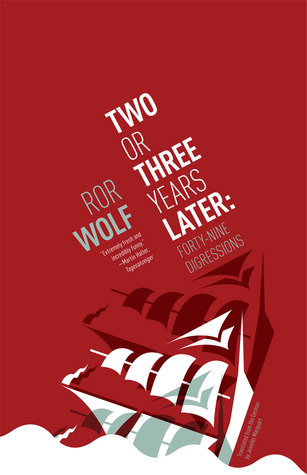
rorwolf

two or three

Two or Three Years Later: Forty-Nine Digressions
Ror Wolf
Translated Jennifer Marquart
Open Letter Books
142 pages, paperback, $14.95

From its opening page, Ror Wolf’s Two or Three Years Later defies expectations. This collection of forty-nine ‘digressions’ (Wolf’s term), translated from German by Jennifer Marquart and published by Open Letter Books, takes the reader on a disorienting journey through a series of fast-hitting, unresolved, and zany stories. Located at the intersection of anti-novel and metafictional farce, Wolf blends his own spare style with absurd setups, half plots and tragic loneliness. We never get inside. We never arrive. Hell, sometimes we never even depart. Instead, we bounce about on a pointed quill of uncertainty and wild merriment.

Of the forty-eight miniature stories in this collection, only three are longer than two-and-a-half pages. Many take up less than a page of text. The last story, “The Forty-Ninth Digression: Twelve Chapters from an Exposed Life,” is forty-nine pages long.  (Wolf does seem to enjoy these little riddles.)

Born in eastern Germany in 1932, Ror Wolf is an award-winning novelist, poet, artist and collagist. Two or Three Years Later is the first of Wolf’s books readily available in English. He emigrated west in 1953, working in a variety of fields before studying with the German philosophers Theodor Adorno and Max Horkheimer, members of the famous Frankfurt School, the source of modern critical theory.

Wolf plucks his stories from the edge of the familiar, so that we recognize some part of the architecture, some cornice or balustrade that hints at a larger design, but the building never materializes. Instead, we are left with only fragments, an incomplete blueprint that distorts assumptions and dismisses significance.

Take the story “Neither in Schleiz, nor Anywhere Else in the World,” in which Wolf announces his ambiguous intention in the title itself, not really a title but the negation of a title. Then the opening lines: “A man who prefers anonymity, a certain X—his name is irrelevant—arrives one day, one morning, one afternoon…It’s all the same in a city whose name we won’t disclose. He does nothing, which is what we wanted to report, since what he does is so insignificant that that’s the only significant thing to say about it.”

Notice how the story races ahead of the reader, all the while undercutting expectations. In a few sentences, Wolf silences character, plot, setting and theme with the cold-blooded efficiency of an assassin. What’s left, the reader reasonably wonders? But don’t expect Wolf to deliver an easy answer. He goes on to further nullify, through a series of parallel non-descriptions, any remaining hope of familiarity: “If he contemplates something, it is without feeling; if he touches something, it is without reason.” He’s erasing the story, rather than inventing it. He tells us nothing, and shows us even less. This story, like most in the collection, becomes almost impossible to summarize because it never arranges itself into any order.

Again and again, through a series of seemingly disconnected anecdotes and halting starts, Wolf declines to assemble. This is more than just post-modernist style. The collection doesn’t drift toward absurdism, it wallows in an almost nihilistic refusal to conform. And yet there’s a sturdy elegance about each of these pieces, a cold, biting quality that binds and spreads, so that what remains is a refreshingly pure, playful examination of stories without meaning (and, by implication, stories that do appear to have meaning).

“In a French Kitchen. In a Swiss Lake. In a Berlin Closet.” is a half-page story that delivers the accounts of three tragic accidents. A man intentionally blows himself up with dynamite. A golfer drowns after throwing his golf bag into a lake. Three seventy-year-old men playing cards burn themselves to death. Wolf relates these incidents without any context, emotion or explanation. “All three burned. This was in Berlin, near Nollendorfplatz.” Thus the story ends.

In “On the Edge of the Atlantic,” Wolf’s turns comically ornery. “A man yelled out in fear. Shortly thereafter, he died. That’s basically what happened, in any case, generally and essentially.” Nothing else happens. No explanation is offered. No narrative details fill in the missing pieces.  In fact, what Wolf supplies in place of the expected is a direct admonishment: “Of course, the reader deserved nothing better than the waves crashing over the man’s body, and the rain rolling in simultaneously, streaming down from above. Maybe he didn’t even deserve that.”

The idea of the reader not deserving the image, the prose that Wolf refused to render, certainly strikes a sinister, hilarious tone.

This roguish antagonism is embroidered in the text—between expectations and outcomes, between narrator and reader. It reveals that the patterns here are non-patterns, or anti-patterns at least. Uncertainty and doubt prevail. The stories rest on conditionality hinged together with the subjunctive mood.

Wolf does offer something of a clue to his aesthetic in the two-and-a-half page story, “At Nightfall.”

Last Monday I began to describe a man, who turned the corner of 82nd Street with a tremendous yawn. I didn’t want to describe his yawn, in any case it’s indescribable, and I didn’t want to describe how he turned the corner, but rather I wanted to describe how this man—or differently, differently. I’ll start over.

Wolf goes on to make nine aborted efforts to describe the simple act of a man turning a corner. “No, that’s weak, and not very good either. Maybe I should begin like this…” Is Wolf showing us the impossibility of language to adequately describe reality? Is he unmasking the fickle power of words to conjure anything? Or is he just having fun? If a story can’t get the simple act of turning a corner right, how can it hope to tackle the larger issues of morality, life, death, meaning? Wolf seems to be reminding us that, sometimes, it’s better not to try.

Artists are always trying to kick down the doors of tradition and form. The artist is always radicalizing his art; testing boundaries, pressing forward. Ror Wolf — with his philosophic roots in the Frankfurt School, famous for its intense critique of reason, the Enlightenment and modernity — appears to be of this ilk. His writing challenges the very notion of meaning and interconnectedness. In the end, the only thread that holds these stories together is no thread.

“I’ve traveled throughout this entire loud, reverberating world,” Wolf writes in “The Power of Song in Nevada, my favorite story in the collection.  “I’ve traveled out of a profound disposition for the echoing sea. I’ve heard ship bands and chamber orchestras, I’ve experienced the howling of the wind and the wild shouts of sailors—but all of that is nothing compared to the men’s choir I heard in Nevada.”

I don’t know what this means, especially when Wolf tells us how awful this choir was. But somewhere in the peregrinations and uncertainty, somewhere in these digressions, these strange and wondrous non-stories, the writer searches for the true note, for the profound disposition. It’s anyone’s guess if he’ll ever find it.

—Richard  Farrell


farrell

Richard Farrell is the Creative Non-Fiction Editor at upstreet and a Senior Editor at Numéro Cinq (in fact, he is one of the original group who helped found the site). A graduate of the U.S. Naval Academy, he has worked as a high school teacher, a defense contractor, and as a Navy pilot. He holds an MFA in Writing from Vermont College of Fine Arts. He is currently at work on a collection of short stories. His work, including fiction, memoir, essays, interviews and book reviews, has appeared in Hunger Mountain, A Year in Ink, upstreet, New Plains Review, Descant (Canada) and Numéro Cinq. He lives in San Diego.


May 132013
 

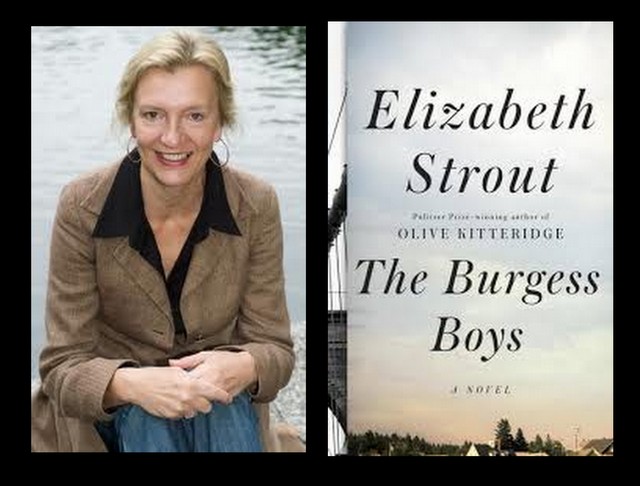
Desktop17-001

The Burgess Boys
Elizabeth Strout
Random House
320 pages, $26.00

Elizabeth Strout, who won the Pulitzer Prize in 2009 for her book of connected short stories Olive Kitteridge, has written an engrossing, strictly realistic, tightly plotted novel replete with family secrets, long-held grudges, and crises of faith and politics. Set in Olive Kitteridge’s home town of Shirley Falls, Maine, the new novel features a diverse cast of meticulously drawn characters who grow and change. The various braided stories in the book resolve with a sense of the past accepted and the future embraced.

In short, it’s everything a doctrinaire Modernist critic might be tempted to dismiss out of hand.

In his book What Ever Happened to Modernism?, Gabriel Josipovici asks the classic novelist,

What gives you the authority to decide that it will be this rather than that? No authority, the classic novelist will reply, but simply the requirements of realism, the requirements of my plot. But do these things have to do with anything other than ensuring your novel is saleable? That of course is a very reasonable requirement, but let us then simply relegate it to the world of consumerism, of fitted kitchens and package holidays.

His point is that the artificial tidiness and contrivance of conventional literary novels create an organized dream where “well-made” stories reach satisfactory conclusions and console us with a sense of ultimate meaning. But the universe is essentially meaningless, and any fiction which disguises this fact trivializes itself and accomplishes little beyond mere escapism.  Life as people really live it moment by moment can only be described and honored by capturing the ongoing rush of consciousness. The attempt to grasp the unknowable, to sing aloud the intricate harmonies playing silently inside your head, is the true purpose of art.

So how does a writer working long after Virginia Woolf and Alain Robbe-Grillet, a writer of best-selling fiction in 2013, reconcile the demands of story-telling with this higher calling, this need to reveal that which stories, by their very nature,  conceal? For Elizabeth Strout, it involves animating the machinery of her plot with moments of pure consciousness from the interior lives of her characters. It’s an uneasy compromise, and it certainly does not address the modernist need to “write against” and comment on the artificial constructions of the novel form. But it works. It lifts her book above the middle-brow pack, and lets the reader take away something surprising and ineffable, beyond the homely satisfactions of a tale well told.

The tale begins when Zachary, the 17-year-old son of Susan Burgess, shocks the town of Shirley Falls, Maine, by rolling a frozen (but thawing) pig’s head down the center aisle of the local mosque. The mosque is the central place of worship for the town’s Somali immigrants and Zachary’s bizarre hate crime casts an unflattering light, not unlike the harsh fluorescent lights in the local department store changing rooms, on the racism and xenophobia of this small northern village.

Both of Susan’s brothers, Bob and Jim, had fled the State of Maine years before to make their careers in New York City. They are both lawyers, Jim considerably more successful than Bob, but Zachary’s arrest brings them, however reluctantly, home.

The abiding narrative between the titular Burgess boys had begun decades before with a moment of horror that left the family splintered and scarred forever.  All three children were left in a car by their father one evening and somehow Bob crawled into the front seat and released the emergency brake. The car rolled downhill, hit their father and killed him. Throughout his childhood Bob carried the guilt of that moment like a backpack bulging with textbooks, and the burden continues to deform him, well into middle age.

As for Jim, he was always the star of the family, football player, class president and eventually nationally prominent defense lawyer, most famous for getting beloved country music star Wall Packer acquitted in a notorious murder trial.

Jim is less successful in his attempts to intervene on Zachary’s behalf. He slights the governor after a rousing speech, and ineptly bullies the prosecutor. Similar errors of judgment contaminate both his personal life and his career. The two overlap disastrously when an affair with one of the paralegals in his office leads to a threatened sexual harassment law suit. Jim gets fired and divorced, humiliated in every way. He winds up using the last of his connections to secure a low-paying teaching job at an upstate college for rich slackers.

Lies have defined his life from the beginning. It turns out that it was in fact Jim who released the emergency brake and killed their father. Even at eight years old he was cunning enough to scramble into the back seat and position Bob up front, behind the wheel, so that his hapless baby brother would take the blame.

This revelation causes a tectonic shift in Bob Burgess’s life. The quake reduces all his assumptions to rubble. The hero and sovereign of his life becomes at a stroke nemesis and grifter, villain and fool, too awful to love, too sad and puny to hate. As for Bob himself, the curse he’s lived with all his life has lifted; he’s free. The liberation extends beyond his immediate family. His first wife Pam, who left him because they couldn’t have children, loses her hold over him as well: “Pam was gone for him. Gone with Jim somehow. The two of them seemed to have fallen into the pocket where the self knows to put dark unpleasant things …”

Pam is a complex interesting character and one of her private moments touches on the struggling modernism of this conventionally structured novel:

So she lay awake at night and at times there was a curious peacefulness to this, the darkness warm as though the deep violet duvet held its color unseen, wrapping around Pam some soothing aspect of her youth, as her  mind wandered over a life that felt puzzlingly long; she experienced a quiet surprise that so many lifetimes could be fit into one. She couldn’t name them so much as feel them, the soccer field of her high school in autumn, her first boyfriend’s thin torso, the innocence unbelievable to her now, and the sexual innocence in some ways being the smallest part of innocence, there was no way to name the slender, true piercing hopes of a young girl in a rural Massachusetts town – then Orono, and the campus and Shirley Falls, and Bob, and Bob, the first infidelity … and then her new marriage and her boys. Her boys. Nothing is what you imagine. Her mind hovered above this simple and alarming thought. The variables were too great, the particularities too distinct, life a flood of translations from the shadow-edged yearnings of the heart to the immutable aspects of the physical world – this violet duvet and her lightly snoring husband.

Finally she arrives at the ultimate modernist conclusion: “Nothing could be told and be accurate.” Elizabeth Strout allows her character this thought, but the only way to ratify its fatalism would be to fall silent and this she refuses to do. She has a story to tell. The story of Bob’s liberation and his budding romance with the local Unitarian minister; the story of Susan Burgess’s struggles as a single mother, dealing with her son’s crime and his flight to Sweden to hide out with his expatriate father, his ultimate return home. And it’s the story of another expatriate, a Somali named Abdikarim Ahmed, separated from his own son, whose compassion for a troubled boy rescues Zachary both from the anger of the Somali community and the machinery of American justice.

Strout shows tremendous compassion for the Somali community and a sharp awareness of the discomfort of the locals as their community is knocked sideways from the comfort of its historically homogenous world into the era of diversity. Susan’s trip to New York City, which she finds almost as alienating as another country, gives her a faint sense of the overwhelming exile the Somali’s endure. But she can’t grasp, and probably wouldn’t want fully understand, the horror from which her new neighbors have fled. Strout allows us a glimpse of that nightmare, through the moments we spend with Abdikarim:

He should have left Mogadishu earlier. He should have put the two worlds of his mind into one. Siad Barre had fled the city and when the resistance group split in two, Abdikarim’s own mind seemed to split in two. When the mind occupies two worlds it cannot see. One world of his mind had said: Abdikarim, send your wife and young daughters away – and he had done that. The other world of his mind had said: I will stay and keep my shop open, with my son.

His son, dark-eyed, looking at his father, terrified and behind him in the street, and the walls becoming upside down, dust and smoke and the boy falling, as though his arms had been pulled one way, he legs another – To shoot was bad enough to last his lifetime and the next, but not bad enough for the depraved men-boys, who had burst through the door, the splintered shelves and tables, who swung their large, American-made guns. For some reason – no reason – one had stayed behind and smashed the end of his gun onto Baashi repeatedly, while Abdikarim crawled to him. In the dream he never reached him.

Ironically, it’s this loss, this raw view of authentic savagery that gives Abdikarim his compassion for Zachary and helps heal his adopted town.

As to Zachary, his motives are never really made clear. The central figure, the instigator of the story, remains a mystery. He mother is at a loss; so are his uncles. It’s doubtful whether even Zachary fully comprehends the impulse that drove him to bowl that pig’s head into a mosque during Ramadan. The feral distrust of the different had something to do with it. Susan expresses it this way: “They don’t want to be here. They’re waiting to go home. They don’t want to become part of our country. They’re just kind of sitting here, but meanwhile they think our way of life is trashy and glitzy and crummy. It hurts my feelings, honestly.”

So Zachary absorbs his mother’s baffled hostility, he feels separate and alienated, judged and invaded, angry and diminished. But at times he insists that it was just a prank, a random moment of perverse mischief, badly timed, horrifically inappropriate, drastically misinterpreted. None of the explanations add up to a coherent motivation, and that may be Strout’s point, the secret kernel of modernist non-meaning at the heart of the book that helps sustain all its tangled narratives.

As Josipovici remarks, discussing mainstream English novelists like Anthony Powell and Iris Murdoch,

They do what they set out to do perfectly and adequately: they help tell a story and create a world and characters to inhabit that world that do not flout the laws of probability. We never doubt what they are telling us … such narratives are easy to read. They are also illustrative in Bacon’s sense: they tell a story, they have no life of their own … the smooth chain of sentences gives us a sense of security, of comfort even, precisely because it denies the openness, the ‘trembling’ of life itself; the very confidence of the narrative gives the lie to our own sense of things being confused, dark, impossible to grasp fully.

And that, finally, is what Elizabeth Strout delivers in this fine novel: the openness, the trembling, of life itself. That she does this in a solid, deftly plotted piece of classical story-telling makes her accomplishment all the greater – and more mysterious.

—Steven Axelrod

—————————————–

Steven Axelrod

Steven Axelrod holds an MFA in writing from Vermont College of the Fine Arts and remains a member of the WGA despite a long absence from Hollywood. In addition to Numéro Cinq, his work has appeared at Salon.com and various magazines with ‘pulp’ in the title, including PulpModern and BigPulp. A father of two, he lives on Nantucket Island, Massachusetts, where he paints houses and writes, often at the same time, much to the annoyance of his customers.


May 072013
 

author top

What ultimately matters is the magnitude of Knausgaard’s investment in his project, the sense that here is a man writing to save himself, writing to survive, writing because these things mean so much to him. Somehow, he is able to make them mean almost as much to us. Like all great art, whatever the genre, one leaves these books with a renewed feeling for what life and art can be.
—Eric Foley
bookcover


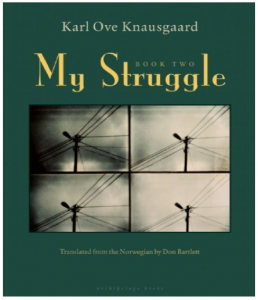
My Struggle: Book Two
A Man in Love
Karl Ove Knausgaard
Translated from the Norwegian by Don Bartlett
Archipelago Books, trade cloth
576 pages, $26.00

A Story of the Struggle to Tell a Story

“Meaning requires content, content requires time, time requires resistance.”
—Karl Ove Knausgaard

The year is 2007. For the past four years, Karl Ove Knausgaard has been trying to write about his troubled relationship with his deceased father. Though the 38-year-old author has two previously acclaimed novels under his belt (Out of the World, 1998, and 2004’s A Time For Everything), this time around the attempt to cast his material into fiction isn’t working:

Wherever you turned you saw fiction. All these millions of paperbacks, hardbacks, DVDs and TV series, they were all about made-up people in a made-up, though realistic, world. And news in the press, TV news and radio news had exactly the same format, documentaries had the same format, they were also stories, and it made no difference whether what they told had actually happened or not. It was a crisis, I felt it in every fiber of my body, something saturating was spreading through my consciousness like lard, not the least because the nucleus of all this fiction, whether true or not, was verisimilitude and the distance it held to reality was constant. In other words, it saw the same. This sameness, which was our world, was being mass-produced . . . I couldn’t write like this, it wouldn’t work, every sentence was met with the thought: but you’re just making this up. It has no value.

Finally, after returning home from a visit to the region of southern Norway where he grew up, Knausgaard stumbles upon a new strategy: to alter the distance between the work and the world by getting “as close as possible to my life.” That evening, after his family has gone to bed, he sits down at his desk and describes what he sees in front of him:

In the window before me I can vaguely see the image of my face. Apart from the eyes, which are shining, and the part directly beneath, which dimly reflects light, the whole of the left side lies in shade. Two deep furrows run down the forehead, one deep furrow runs down each cheek, all filled as it were with darkness, and when the eyes are staring and serious, and the mouth turned down at the corners it is impossible not to think of this face as somber.

What is it that has etched itself into you?

This mini-scene repeats itself in My Struggle. Its first appearance is on page 28 of Book One. There, we read it as a description of the book’s brooding central character, an isolated, conflicted man. In Then, Again: The Art of Time in Memoir, Sven Birkerts writes that the genre “begins not with event but with the intuition of meaning—with the mysterious fact that life can sometimes step free from the chaos of contingency and become story.” 962 pages later, near the end of Book Two, Knausgaard’s mini-scene reappears verbatim. Only at this point do we learn the scene’s greater significance: that it is the turning point in Knausgaard’s attempt to write about his father’s impact on his life, the kernel that contains the six volume autobiographical saga to come.

While the above passage is a good example of how Knausgaard employs repetition across time to build meaning in his work, it also neatly enacts, in miniature, another type of movement the author utilizes in the My Struggle books to powerful effect: a quietly intense attendance to visual phenomenon, always linked to the act of perception/self-perception, with a particular emphasis on the perceiving apparatus (the eyes), will suddenly be followed by a shift to a larger, abstract question. (Indeed, Knausgaard’s epic, relentless attempt to answer the question that ends the passage – “What is it that has etched itself into you? – could rightfully be said to form the true subject of these remarkable books.)

But let’s go back to February, 2007: Knausgaard has just begun his new method. He seeks to “dramatize the inner self” by uncovering his past: first five pages a day, then ten, and near the end as many as twenty pages; he writes as quickly as possible in an attempt to escape his conscious notions of what the form should be, trying to move beyond the desire (amply exhibited in his previous novels) to produce aesthetically beautiful prose. By 2009,  Knausgaard has accumulated 3600 pages. That same year, the first part of his novelistic “autobiography,” entitled Min Kamp (“My Struggle”), appears in Norway to equal amounts of praise and controversy. The controversy is not so much over the title, with its echoes of Hitler’s memoir (Mein Kampf in German, Min Kamp in Norwegian), but has rather to do with the people the author has “exposed.” In a northern European nation that prefers to keep family trauma private, Knausgaard has written directly about the most personal aspects of his family experiences without any attempt to disguise or change the names of his ex-wife, his father, his grandmother, and other friends and family. When the second volume of My Struggle appears, Knausgaard’s mother calls him and begs him to stop. An uncle threatens to sue. Ultimately, author and publisher agree to change a few of the names in subsequent editions, but the media storm grows, first spreading through Scandinavia, and then across Europe. Most agree about the power of the work, but at what cost has it been achieved? The books become a national obsession, selling 450,000 copies in a country of less than five million people. Norway’s culture minister declares the work the “the greatest account of our generation.” On a national radio program, Knausgaard will go on to say that he feels he has made a “pact with the devil.”

Last August, a few weeks before Archipelago Press released Don Bartlett’s excellent translation of My Struggle: Book One in North America, the book received the “James Wood treatment.” Writing in The New Yorker, Wood praised the work as “intense and vital,” stating that it contained “what Walter Benjamin called ‘the epic side of truth, wisdom.” The first volume of My Struggle is indeed a rarity in contemporary literature; part memoir, part unhinged bildungsroman, it ploughs through and ultimately transcends both genres with a driving seriousness of intent, delving more deeply into the human experience than anything I’ve read in a long time. Fixated on the shadow Knausgaard’s father cast over his childhood and teenage years, and ending with the thirty year-old Karl Ove confronting the horrible death of that father from alcoholism, the 430 page book alternates between extended, minutely detailed descriptive passages and essayistic meditations on death. The result is a kind of crackling slow-burn, a fearless examination of, as Carlos Fuentes once said of Frida Kahlo: “internal darkness under midday lights.”

This month, My Struggle: Book Two makes its North American debut. If Book One centered on death (in order to downplay potential controversy over Knausgaard’s Hitlerian title, the work was published as To Die in Germany and A Death in the Family in the U.K.) then Book Two is loosely organized around the concept of love (and has already been published across the pond under its subtitle A Man in Love). While it is possible to read Book Two on its own and still get something out of it, to do so would be like opening up Remembrance of Things Past for the first time at Within a Budding Grove. Much of the power of Proust and Knausgaard’s projects comes from their length and breadth, which allows for a gradual accumulation of patterned detail, as specific themes and moments repeat themselves in subtle and not-so-subtle variations. In both works, repetition is key.

My Struggle: Book Two primarily covers 2003-2008, years when Knausgaard left behind his old life and partner in Norway and moved to Stockholm. For readers of Book One, Knausgaard’s escape to Sweden possesses added significance: it was after Karl Ove’s own father moved away from his family that he began the drinking and isolation that fourteen years later would leave him dead. Knausgaard does plenty of drinking in Stockholm, but rather than fall apart, he falls in love – with the poet Linda Bostrom.
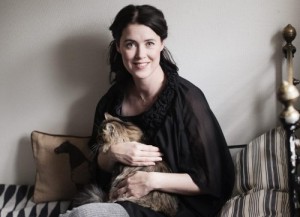

bostromLinda Bostrom

Knausgaard imbues these scenes with the nostalgic power of true love glimpsed in retrospect. He vividly captures the feel of early love, the uncertainty and vulnerability at the beginning, when things could still go either way, as well as the ecstatic heights:

The town sparkled around us as we walked home, Linda in the white jacket I had given her as a present that morning, and walking there, hand in hand with her, in the midst of this beautiful and, for me, still foreign town, sent wave after wave of pleasure through me. We were still full of ardor and desire, for our lives had turned, not just on the breath of a passing wind, but fundamentally. We planned to have children. We had no sense of anything awaiting us except happiness.

Over the course of My Struggle: Book Two, Karl Ove and Linda become parents to three children. One of the pleasures of the work is the associative, non-chronological way Knausgaard unfolds his story, shifting in and out of different periods according to the movement of thought and memory. Because of this, Book Two begins with all three children already born and the early stages of infatuation between Karl Ove and Linda a relic of the distant past.

The first thing one notices about My Struggle: Book Two (other than the fact that it is a hefty 146 pages longer than its predecessor) is a decrease in the level of intensity that filled Book One. With the father figure dead and buried, the sense of dread behind each sentence is palpably lessened. E.M. Forster once remarked that “mystery creates a pocket in time.” Book One utilizes the mystery of Knausgaard’s father (why is he such a cruel, tortured man? How exactly will he meet his end?) to mesmerizing effect. Throughout that first volume, wherever young Karl Ove goes, the father’s shadow follows; there is always the sense of movement towards further revelation. Many of the scenes in Book One possess an aura of somnambulant terror, as if anything could occur at any moment, which provides a momentum that propels the reader through some of the lengthier descriptive passages. A roughly 60-page description of young Karl Ove trying to secure alcohol for New Year’s Eve, for example, unfolds in painfully slow fashion beneath the constant apprehension over whether the father will find out what the son is up to. The tension builds until, at the end of Book One, Karl Ove pays a second visit to his father’s corpse (again, repetition). Here, something opens up in him, and he begins to see the intertwining elements of death, life, and time in a different way:

 . . . there was no longer any difference between what once had been my father and the table he was lying on, or the floor on which the table stood, or the wall socket beneath the window, or the cable running to the lamp beside him. For humans are merely one form among many, which the world produces over and over again, not only in everything that lives but also in everything that does not live, drawn in sand, stone and water. And death, which I have always regarded as the greatest dimension of life, dark, compelling, was no more than a pipe that springs a leak, a branch that cracks in the wind, a jacket that slips off a clothes hanger and falls to the floor.

With this conclusion to My Struggle: Book One, the last two sentences of which rhythmically and thematically echo the final sentences of the first volume of Remembrance of Things Past,[*] the great tension is released. A new point of realization has been reached.

Initially then, Book Two lacks both the momentum and the mystery of Book One. Certainly love can be a mystery, but at the outset of Book Two it seems more like a daily slog, as we are confronted with scenes of Knausgaard’s new family life. Only in the light of what has come before do these scenes gradually accrue a resonant force. The still fearful, still internally isolated Underground Man persona that Knausgaard continues to develop here—picture a 21st century Raskolnikov schlepping a stroller, a diaper bag, and two toddlers up a hill while his wife stands at the top in a foul mood, a third wailing infant in her arms—is understandable precisely because we know what he has come out of. Although the hated father is dead and Karl Ove has escaped to a new country, Knausgaard still struggles to relate his internal and external worlds, and to be around others. Most moving, in these early scenes, is Knausgaard’s depiction of his own quest to be a decent father, as he attempts to raise his young children without duplicating the paternal coldness, cruelty and occasional rage he was treated to during his own upbringing. We come to see that for the adult Karl Ove Knausgaard, love means following through on one’s commitments, regardless of how fucked up one feels inside.

So it goes for 67 pages, with little of what contemporary publishing would call “narrative tension” or “drive.” As with certain sections of Book One, we begin to suspect that the day-in-day-out nature of these scenes, the very mundaneness of their details, is the point; these scenes need to be long for the same reason that the infamous sermon on hell in the third chapter of A Portrait of the Artist as a Young Man needs to be long: to enact, rather than simply describe the interminable, real-time duration of certain life moments. And yet, after a while, we begin to wonder if this is all Book Two has to offer.

Then, on page 68, Knausgaard returns home from the birthday party of one of his young daughter’s friends. He steps out alone onto the balcony, has a smoke, drinks some stale diet coke:

I returned the glass to the table and stubbed out my cigarette. There was nothing left of my feelings for those I had just spent several hours with. The whole crowd of them could have burned in hell for all I cared. This was a rule in my life. When I was with other people I was bound to them, the nearness I felt was immense, the empathy great. Indeed, so great that their well-being was always more important than my own. I subordinated myself, almost to the verge of self-effacement; some uncontrollable internal mechanism caused me to put their thoughts and opinions before mine. But the moment I was alone others meant nothing to me . . . Between these two perspectives there was no halfway point. There was just the small, self-effacing one and the large, distance-creating one. And in between them was where my daily life lay. Perhaps that was why I had such a hard time living it. Everyday life, with its duties and routines, was something I endured, not a thing I enjoyed, nor something that was meaningful or that made me happy. This had nothing to do with a lack of desire to wash floors or change diapers but rather with something more fundamental: the life around me was not meaningful. I always longed to be away from it. So the life I led was not my own. I tried to make it mine, this was my struggle, because of course I wanted it, but I failed, the longing for something else undermined all my efforts.

It is difficult to convey the full force of this passage without also including what preceded it: a forty-plus page description of a middle-class Swedish child’s birthday party, where a Norwegian father remains intensely within himself, unable to connect with the others, even those he likes. This struggle is made more poignant by the fact that we see how Knausgaard’s three-year old daughter Vanya already exhibits these same social tendencies, this same furious need to be accepted by others, coupled with the inability, on a bodily level, to figure out how to join in the other children at play. For Knausgaard and his daughter, a routine social occasion is a source of fear, shame, and longing.

A Few Words About Titles

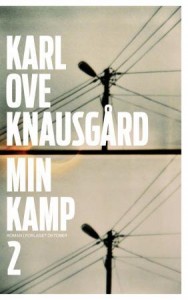
Given that Hitler’s memoir is often published in North America, even in translation, under its original German title, for some the English “My Struggle” will not have the same resonance it does in Norwegian. The above passage from page 68 of Book Two is the first time we get a direct reference to, and partial explication of, the work’s title. Here, the emphasis is on the struggle to balance being in the world for others versus being in the world for oneself—the struggle to exist, on a moment-to-moment basis. In a recent interview, Knausgaard said that he chose the title Min Kamp on something of a lark. He liked the friction it carried between the daily, personal struggles of the individual and the larger structures of ideology and politics that function in opposition to private life. My Struggle: Book Six reportedly contains an essay that delves further into this issue, focusing on a comparison between Knausgaard and Hitler’s books, but English readers will have to wait a few more years for this.
lyktestolper:Layout 1

If nothing else, Knausgaard’s series does foreground, in immense detail, the struggles of everyday life. By placing this struggle in the background, as the UK version does on its cover, the emphasis becomes reversed. Whether this retitling was done in order to avoid controversy or to more easily market the volume-by-volume content of Knausgaard’s work makes little difference; it interposes a too-large distinction between each book in the sextet, as if there were no significant overlap. The throughline of struggle is downplayed, the totality of the whole sacrificed for an emphasis on each volume as an individual marketable product.

For make no mistake, struggle, in conception and reality, runs through everything Karl Ove does, everything he thinks. Happy or sad, in joy or despair, he suffers apart from the rest, alone. In this, he is a true Underground Man.

Notes From Underground
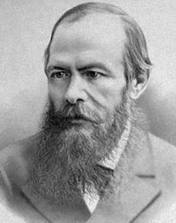
dosFyodor Dostoyevsky

“All the same, if we take into consideration the conditions that have shaped our society, people like the writer not only may, but must, exist inthat society.”
—Fyodor Dostoyevsky

The above words (or rather, their Russian equivalent) were written in 1864 as a description the original Underground Man. Dostoevsky’s name appears 16 times in My Struggle: Book Two. Like Karl Ove in My Struggle, that main character of Notes From Underground is also a writer composing a sort of memoir: “I, however, am writing for myself alone, and let me declare once and for all that if I write as if I were addressing an audience, it is only for show and because it makes it easier for me to write. It is a form, nothing else; I shall never have any readers. I have already made that clear . . .” Interestingly, Knausgaard has said in interviews that he too “didn’t believe that anyone would be interested in this writing, because it’s so personal, so private.” This thought set him free at his desk, to write “for myself, by myself.”

As Dostoyevsky writes in a passage that applies equally to My Struggle’s central character, the Underground Man’s dilemma, “lies in his consciousness of his own deformity . . . the tragedy of the underground [is] made up of suffering, self-torture, the consciousness of what is best and the impossibility of attaining it, and above all else the firm belief of these unhappy creatures that everybody else is the same and that consequently it is not worth while trying to reform.”

While the Underground Man feels isolated from the rest of society, he is also a product of it, and perhaps, in the end, not quite so hideously unique as he imagines. Knausgaard realizes that his is as much a problem of perception as anything else, but does not know how to change:

Oh, fuck. Oh, fuck, fuck, fuck, how stupid I was. I couldn’t find any peace in a café; within a second I had taken in everyone there, and I continued to do so, and every glance that came my way penetrated into my innermost self, jangled about inside me, and every movement I made, even if only flicking through a book, was likewise transmitted outwards to them, as a sign of my stupidity, every movement I made said: “This is an idiot sitting here.” So it was better to walk, for then the looks disappeared one by one, admittedly they were replaced by others, but they never had time to establish themselves, they just glided past, there goes an idiot, there goes an idiot, there goes an idiot.

This paradox of the Underground Man, painfully separate from society, while at the same time yoked to and created by it, is presumably what allows Karl Ove to see himself as outside, different from the rest, and still write “the definitive portrait” of his generation, a work that has resonated so deeply for so many others.

The other reference point for the Underground Man, particularly from a Norwegian perspective, is Knut Hamson’s Hunger. In the course of My Struggle: Book Two, Hamsun’s name is mentioned 11 times. In one scene, a Swedish filmmaker begins jokingly calling Knausgaard “Hamsun,” for his reactionary Norwegian views.
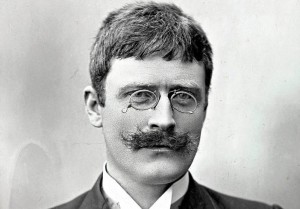
knut-hamsunKnut Hamson

In Hunger, we are again presented with a writer struggling to maintain his dignity in an urban setting. Hamsun’s Underground Man is defined by his extreme refusal to partake in the pleasures of everyday life, to join the crowd by accepting help in the form of food or money. Knausgaard too is interested in refusal. Late in Book Two, Knausgaard’s friend Geir Gullickson informs him that: “Not to strive for a happy life is the provocative thing you can do.” A page or so later, Knausgaard responds: “All I know is that success is not to be trusted. I notice that I get angry just talking about it.”

Style

The prose of Book Two is similar to Book One: the long sentences and paragraphs do not induce anxiety in the way that Thomas Bernhard or László Krasznahorkai’s writing can, but rather project a certain detached calm. A typical Knausgaardian sentence piles independent clause upon independent clause, linking these with comma splices where grammatical convention would seem to call for a period, semicolon or coordinating conjunction. 800 pages into the My Struggle saga, these splices were still tripping me up. I began to wonder if it was a function of the translation; perhaps Norwegian possessed different conventions with regards to sentence structure?

A perusal of Knausgaard’s previous novel, “A Time for Everything,” revealed that the author does indeed know how to “properly” punctuate. A typical passage from that work reads: “Cain felt the gaze of the crowd at his back, but he didn’t turn; in a strange way their exit felt like a victory: it was just the two of them. In a few minutes the festivities would continue, and the wonder would dissipate itself in them.”

47 words in total. The varied punctuation helps to regulate the flow of the two sentences. We stop at the periods. And pause at the semi-colon and colon. Each of the two commas is followed by a coordinating conjunction (but, and). Now, compare this to the writing in My Struggle:

Later that autumn the temperature plummeted, all the water and the canals in Stockholm froze, we walked on the ice from Soder to Stockholm’s Old Town, I hobbled along like the hunchback of Notre Dame, she laughed and took photos of me, I took photos of her, everything was sharp and clear, including my feelings for her.”

One sentence, 57 words: one period, seven commas. My guess is that the run-ons in My Struggle are the result of Knausgaard’s compositional method, and that he decided to leave many of them untouched as a statement about the formal constraints of his project. As he recently told Eleanor Wachtel, length and speed were crucial: “It had to be long, and I had to write very quickly, so I could be ahead of my thoughts all the time.” By consistently eschewing the aesthetics of a properly punctuated sentence, Knausgaard allows data and detail to pile up without the emphasis that more varied punctuation would provide. At one level, the My Struggle books seem to be about getting as much of the world’s content as possible onto the page, rather than arranging this content for artful effect. Knausgaard will sometimes leave a sentence deliberately clunky to enhance this impression. Listen to the repetition of the word “mind” in the final clause here: “The boxer incident, when I hadn’t dared kick in the door, and the boat incident, when I hadn’t dared to ask Arvid to slow down, as well as Linda’s concern about my failure to act, had played on my mind so much that now there was no doubt in my mind.”

Eyes Within a Face

“What is a work of art if not the gaze of another person?”
—Karl Ove Knausgaard, My Struggle: Book Two

Which is not to say that there aren’t still beautiful passages and artful effects, but rather that these are not the point of the work. In particular, Knausgaard has a knack for describing eyes, getting at the essential individuality and emotion they convey. Knausgaard is obsessed, in a conflicting way, with how he sees the world and how others see him. It is little wonder, then, that painting is his favourite art (Book One contains a beautiful passage describing the eyes in a late Rembrandt self-portrait), or that the most frightening creature he can imagine, from a childhood dream, is a lizard-like figure without any eyes.

How Knausgaard perceives his own eyes often provides a clue to his relationship with the world. When he first arrives in Stockholm:

I studied myself in the mirror for a few seconds. My face was pale and slightly bloated, hair unkempt and eye . . . yes, my eyes . . . Staring but not in an active, outward-facing fashion, as though they were looking for something, more as if what they saw was drawn into them, as if they sucked everything in.

Since when had I had such eyes?

There is only one scene in Book Two where Knausgaard’s mother is remotely critical of him: after he moves to Stockholm, she lashes out at how he left his wife and then fell in love again so quickly: “I couldn’t see other people,” Knausgaard summarizes, “I was completely blind. I saw only myself everywhere. Your father, she said, he looked straight into people. He saw immediately who they were. You’ve never done that. No, I said. Maybe I haven’t.”

Later, his love for Linda changes the way he sees by bringing him into closer proximity to reality: “Before, I had always been deep inside myself, observing people from there, like from the back of a garden. Linda brought me out, right to the edge of myself, where everything was near and everything seemed stronger.”

Struggle with Form/Struggle as Form

“ . . . I could counter that Dante, for example, had written just fiction, that Cervantes had written just fiction, and that Melville had written just fiction. It was irrefutable that being human would not be the same if these three works had not existed, So why not just write fiction? . . . Good arguments, but that didn’t help, just the thought of fiction, just the thought of a fabricated character in a fabricated plot made me nauseous, I reacted in a physical way.”
—Karl Ove Knausgaard, My Struggle, Book Two

In Reality Hunger: A Manifesto, David Shields describes being overtaken by a similar feeling: “Every artistic movement from the beginning of time is an attempt to figure out a way to smuggle more of what the artist thinks is reality into the work of art.” It is worth noting that very few of the writers of recent works of reality-based fiction are as wholeheartedly against the traditional novel in the way that Shields can sometimes appear to be (e.g. Sheila Heti’s How Should a Person Be?, Francisco Goldman’s Say Her Name, Ben Lerner’s Leaving the Atocha Station). It is tempting to add My Struggle to the list of contemporary fiction/nonfiction hybrids, the most epic version yet of the novel-from-life.

But somehow Knausgaard’s work displays a less playful attitude towards the division between fiction and reality, as if he is off working in his own mad dimension that paradoxically feels closer to the real. Though Knausgaard’s series was originally published in Norway and other European countries with the word roman on the cover, in Britain and North America it is more often referred to as an epic memoir. In many ways, My Struggle perfectly enact Birkerts’ definition of the genre. While “this really happened is the baseline contention of the memoir,” Birkerts writes, the true “fascination of the work . . . is in tracking the artistic transformation of the actual via the alchemy of psychological insight, pattern recognition, and lyrical evocation in a contained saga.”

Archipelago has wisely decided to publish My Struggle without a genre label. What ultimately matters is the magnitude of Knausgaard’s investment in his project, the sense that here is a man writing to save himself, writing to survive, writing because these things mean so much to him. Somehow, he is able to make them mean almost as much to us. Like all great art, whatever the genre, one leaves these books with a renewed feeling for what life and art can be.

Birkerts also stresses that it is the juxtaposition of multiple timelines, “the now and the then (the many thens) . . . that creates the quasi-spatial illusion most approximating the sensations of lived experience, of recollection merging into the ongoing business of living.” Knausgaard has taken this technique to new heights, returning again and again to his themes, with new insight:

Throughout our childhood and teenage years, we strive to attain the correct distance to objects and phenomena. We read, we learn, we experience, we make adjustments. Then one day we reach the point where all the necessary distances have been set, all the necessary systems have been put in place. That is when time begins to pick up speed. It no longer meets any obstacles, everything is set, time races through our lives, the days pass by in a flash and before we know what is happening we are forty, fifty, sixty . . . Meaning requires content, content requires time, time requires resistance. Knowledge is distance, knowledge is stasis and the enemy of meaning. My picture of my father on that evening in 1976 is, in other words, twofold: on the one hand I see him as I saw him at that time; on the other hand, I see him as a peer through whose life time is blowing and unremittingly sweeping large chunks of meaning along with it.

The overall effect of the first two My Struggle books, despite the seriousness of the subject matter, is both liberating and exhilarating. In any one book, so much has, of necessity, to be pared away. The magnitude of Knausgaard’s project allows him to shine a light on hitherto unknown aspects of being, indulging in immense, 234 page-long digressions into the past. But when we return to the present, it is with a renewed knowledge and understanding of the characters and their situations.

And yet, despite its allegiance to reality, Knausgaard’s art is still an art: it still employs form and illusion. For all its breadth, the writing still only seems to include everything. In reality, it casts its net only over what has come through the author’s mind in the process of writing. Gradually, as Book Two progresses, we move back round to the subjects and questions of Book One: alcoholism, death, paternity. We come to see that death and love are bound up together in myriad ways. But perhaps, with his particular brand of intuitive energy, Knausgaard was setting us up for this all along, right from the very first sentence of Book One:

“For the heart, life is simple: it beats for as long as it can.”

—Eric Foley

——————————————-

ef

Eric Foley holds an Honours BA in English and Literary Studies from the University of Toronto and an MFA from Guelph University. He has been a finalist for the Random House Creative Writing Award, the Hart House Literary Contest, and the winner of Geist Magazine and the White Wall Review’s postcard story contests. His writing can be found online at Numéro Cinq and Influencysalon.ca. He lives in Toronto and divides his time between his writing and teaching at Humber College.


Footnotes    (↵ returns to text)

  1. In the Moncrieff/Kilmartin translation: “The places we have known do not belong only to the world of space on which we map them for our own convenience. None of them was ever more than a thin slice, held between the contiguous impressions that composed our life at that time; the memory of a particular image is but regret for a particular moment; and houses, roads, avenues are as fugitive, alas, as the years.”
Apr 042013
 

lipsyte(Photo: Robert Reynolds)
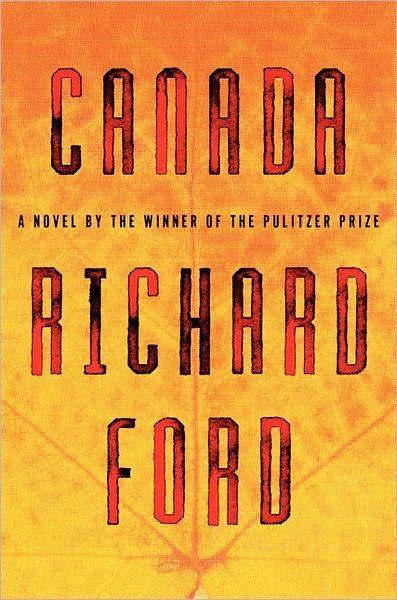
Fun Parts

The Fun Parts
Sam Lipsyte
Farrar, Straus and Giroux
224 Pages, $24.00
ISBN 978-0374298906

About halfway through Sam Lipsyte’s comical, prickly new story collection, The Fun Parts, comes “The Worm in Philly,” a narrative wound around the nameless junkie son of a sportswriter and his desire to pen a children’s book about the middleweight boxer Marvelous Marvin Hagler (“Why Marvelous Marvin Hagler?” he ponders. “Why not?”). The story contains all the Lipsyte standards—absurdity, crudeness, punchy dialogue, and a strange, underlying sweetness. It also weaves two elements of the author’s personal life into the text: the well-known sportswriter/children’s author father (Lipsyte’s dad is Robert Lipsyte), and the moment when the narrator realizes nobody has any interest in pursuing his project:

“What about the book?” I said.
“The book.”
“The advance?”
“The advance,” said Cassandra. “Here’s your advance.”
She pulled bills from her bag, tossed them on the table.

Lipsyte’s first novel, The Subject Steve, suffered from an unfortunate publication date, September 11, 2001, and flopped so badly with the general public that when he completed his follow-up, Home Land, he couldn’t acquire US distribution. And though things eventually worked out—Home Land finally found paperback publication, and the author has since released another novel, 2010’s The Ask—this brush with failure seems apt, in a way, for an author whose stories repeatedly provide toeholds for similar situations. Dating back to his 2000 collection, Venus Drive, Lipsyte’s strong understanding of those existing on the fringe allows his narratives to crackle with an uneasy vigor. As such, the struggles of has-beens and never-weres flood The Fun Parts. Tovah D’Agostino, the part-time preschool assistant in “The Climber Room,” is a failed poet. The male mother’s helper in the witty “Wisdom of the Doulas” finds himself marginalized by his employer to the point where he takes desperate measures to regain his stature. And the namesake of “Ode to Oldcorn,” once a famous shot-putter, now rolls into town to party with a bunch of teenagers, declaring, “I want all the beer in your town … And I want teen poot, if that’s available.”

While the thirteen stories in the collection are not intentionally linked, like in the aforementioned “The Worm in Philly,” most find a thematic spine in their exploration—both closely and peripherally—of family bonds. In these tales, parents often come across as aloof, cruel, or manipulative. Doctor Varelli, the father of the title teenager in “The Dungeon Master,” calls his children “puppies,” and fawns over them as if a fanatic, rather than an authoritarian. Similarly, the parents of an overweight boy in “Snacks” pressure him to lose weight while simultaneously neglecting to help him achieve said goal. And, returning to “The Climber Room,” the character of Randy Gautier, adoptive father to Tovah’s young student, Dezzy, uses his power and money to influence the world around his daughter, controlling the schedules of daycare employees by dangling the carrot of an annual donation in front of their faces.

This parental scheming slinks into the relationships between Lipsyte’s adult characters and their aging progenitors, as well. “Nate’s Pain is Now,” one of the book’s strongest stories, chronicles the day-to-day of a once-popular author of drug memoirs:

I had a good run. Bang the Dope Slowly and its follow-up, I Shoot Horse, Don’t I?, sold big … My old man, the feckless prick, even he broke down and vowed his love. But as a lady at a coffee bar in Phoenix put it, what goes up can’t stay up indefinitely because what’s under it, supporting it, anyway?

Realizing his star has faded, the author bums around the city and finds nourishment in the faxes sent to him by his father, which begin “Dear Disappointment.” This, of course, is often quite funny. Still, at a later visit, the following transpires:

“Why don’t you drink a pint of lye and get it over with?” my father said. “Why don’t you have yourself a nice little lye-and-hantavirus smoothie? That’ll fix you up good, you piece of shit.”

My father flung himself across the table, flapped his hand in my face. It’s true he never hit me. A father need not hit. His coughs, his smirks, are blows. Even a father’s embrace confers a kind of violence. Or so I once pronounced on public radio.

Though clearly aiming for a laugh with the final line in this passage, Lipsyte’s own words argue a truth behind the contrasting ideas of love and violence within family. For even the few healthy relationships within The Fun Parts contain pointed edges. “Deniers,” concerning a recently clean woman, a man looking to escape the prejudices of this past, and her Holocaust-survivor father, presents a man who loves his daughter, yet rarely speaks to her from his nursing home bed. He’s lost in his memories of WWII, his own dementia, and in the middle of a conversation, asks her, “How’s the whoring? You make enough money for the drugs? You let the scvartzers stick it in you?” Though she replies with a clever retort, she looks up at her father’s attendant for “some flicker of solidarity.” A similar reaction occurs in “The Republic of Empathy,” where young Danny, a boy convinced he’s “the narrator of a mediocre young adult novel from the eighties,” waxes poetic during a drive with his father:

I generally want to hand it to him, and then, while he’s absorbed in admiring whatever I’ve handed to him, kick away at his balls. That’s my basic strategy.

Despite the fact that the surface relationships between these characters appear stronger than those in the collection’s other stories, they are still quite fragile. Verbal and physical violence, humorous or not, simmer under a thin façade. Such emotion, like the individuals who possess them, quivers on the fine line that divides success from failure.

This is not to say that The Fun Parts loiters in misery. If anything, the collection finds some of its finest moments laughing at despair. And much of this success comes from Lipsyte’s terrific use of language. A student of Gordon Lish, the author borrows liberally from his mentor’s literary toolbox, frequently employing Lish’s idea of consecution to his writing. As defined by Jason Lucarelli in his essay “The Consecution of Gordon Lish,” consecution is, “about continually coaxing action, conflict, and interest out of prior sentences by bringing out what is implied or suggested in what has already been written.” This technique includes the use of image patterning, alliteration, repetition, and parallel construction, among others, to construct strong, momentum-building narratives.

As an example, “The Climber Room” contains two repeated images: Jesus Christ and penetration. One, in a way, implies the other, and yet they transpire separately within the narrative. The first image echoing Christ occurs when Tovah is at a market checkout counter. “You didn’t die for my sins, lady,” the register employee tells her. “So don’t go building a cross for yourself.” Later, Tovah thinks about a past moment of comfort and equates it to “the way Jesus must have worked.” When she then considers having a child of her own, Jesus returns with the quip: “You couldn’t be pregnant if you hadn’t been laid in three years. A devout Catholic could still hope, but not Tovah.” And, finally, Jesus Christ makes an appearance in a panicked curse, when Randy exclaims, “Jesus fucking Christ.”

Similarly, the image and concept of penetration begins its patterning when Tovah suffers from a stomachache so painful, it is as if “a miniature swordsman flensed her gut with his foil.” In the next paragraph, her fountain pen is said to have “impaled” a pillow. This pattern continues throughout the story, from reference made to a heroin addiction, to “sharp” dollar bills and gold-digging implements “edged enough to carve.” And the ultimate payoff is the story’s final image: that of Randy standing in front of Tovah with his penis exposed, ready for sex, the ultimate penetration.

The two repeated images in “The Climber Room” create a kind of thematic consecution, providing, as defined in Lucarelli’s essay, “a deeper level of coherence and unity to a story with passages that offer insight into story meaning.”

Lipsyte also employs alliteration to add a bouncy depth to his narratives. The pregnant couple in “The Wisdom of the Doulas” is described as the type lost without “their antique Ataris and sarcastic sneakers.” Within the first two pages of “The Climber Room,” parents are called “crypto-creepy,” and Dezzy is complimented on her “sparkly shoes.” Talk of Dezzy’s sparkle shoes then leads to the memory of a home, which is called “dizzying.” Dezzy, sparkly, dizzy. Likewise, Lipsyte finds strong use for parallel construction in these stories. The boy at the beginning of “Snacks,” in considering the perks of losing weight, mentions the possibility of receiving “blow jobs,” “hand jobs,” and “all the jobs” from his sister’s friends. And when Tovah in “The Climber Room” meets an old flame for dinner, the third person narration notes: “The shock about Sean was his shock of white hair.” This playfulness creates action at the base level of sentence, and in turn strengthens the overall work.

In the end, though, what makes The Fun Parts such a joy to read is Lipsyte’s commitment to creating environments and situations that are often left in the shadows of contemporary American literature. In a 2010 interview with Paris Review, the author said, “I write what I want. I try to write what I’d like to read. I think about not wasting a reader’s time, my own included.” This personal enjoyment is evident in his stories, where the losers find a voice, even if they continue to stumble toward obscurity.

Benjamin Woodard

—————————-

Ben_WoodardBenjamin Woodard lives in Connecticut. His reviews have been featured in Numéro Cinq, Drunken Boat, Hunger Mountain, Rain Taxi Review of Books, and other fine publications. His fiction has appeared in Numéro Cinq. You can find him at benjaminjwoodard.com.

Mar 042013
 

Yoko OgawaAuthor Photo via trendy.nikkeibp.co.jp

Revenge cover

Revenge, Eleven Dark Stories
Yoko Ogawa
Translated by Stephen Snyder
Picador, ISBN 978-0312674465
162 Pages, $14.00

The original title of Yoko Ogawa’s surreal novel in eleven stories was Kamoku na shigai, midara na tomurai, which might be translated as Unspeaking Corpse, Unsuitable Interment, a much more appropriate, or at any rate a less distracting, title. Active revenge figures only intermittently in Ms. Ogawa’s book, though it often crosses the minds of her characters.  Even a cursory reading indicates that these stories are connected, with characters, incidents, themes, images and even physical objects recurring and reverberating forward and backward through the linked narratives that make up the collection.

Closer study of the book reveals a more cohesive structure. These eleven stories are really a single harrowing tale, told in one voice, though the eleven protagonists represent various ages and both sexes. The shared flat affect of the unnamed narrators at first seems an oddity or a flaw.  In fact their single voice is the key to the book’s form, and a vital clue to decoding its meaning.

Ogawa leads you through a slightly askew world in these stories, all of them set in the same dream landscape that consists of a town square, a zoo, a resort hotel, a disused post office, a crumbling mansion turned museum, a boarding house with a hill of fruit trees and a field of junked appliances. Her characters move through these designated spaces, following each other’s tracks like the little sculptures that emerge from the clock tower in the town square every hour.

Start with “Afternoon at the Bakery.”  The titular store stands in the town square, with its cuckoo-style clock tower and its straggling figurines: a soldier, a chicken, a skeleton and an angel. Inside, the baker, a tiny woman, cries as she talks on the phone in the kitchen. A customer orders a strawberry shortcake in honor of her dead son. It was his favorite treat, before he trapped himself in the family refrigerator and suffocated, at age six. “He had curled up in an ingenious fashion to fit between the shelves and the egg box, with his legs carefully folded and his face tucked between his knees.”

Later the customer goes home and locks herself inside her refrigerator to try and feel what her son felt. This image, of a body curled between the freezer and the egg tray, opens and closes the book. Along the way, reiterations of it illuminate the path through the other eleven stories like the lighted houses strung along the curve of a beach at night.

In the second story, “Fruit Juice,” a young man is invited to lunch with a schoolmate and the father who abandoned her many years ago. Her mother, dying of cancer, has arranged the meeting. The father is a prominent local politician,  and he sends a  limousine to pick them up. The restaurant is expensive, but the meal is formal and pedestrian. They eat strawberry shortcake for dessert. The old man offers his help. But he’s a stranger.

The friend pauses as they walk through the city streets later, “like a wind-up toy that has run down.”  Later, they find themselves in a closed post office at the foot of a hill planted with fruit trees. The big empty chamber inside is filled with piles of ripe kiwis. The young man watches as his friend gorges herself.  Years later, she studies culinary arts and eventually becomes a baker. When the narrator finds out the politician has died he calls his friend at work to tell her. She is crying on the phone when a woman comes into the shop to order a memorial portion of strawberry shortcake.

“Old Mrs. J”  introduces us to the old woman who owns both the fruit trees and the old post office. Death has marked her life, too. She’s a widow and takes in boarders, including the young tenant who narrates this story. Stray cats make their first appearance here, wrecking her garden. The tenant suggests spreading pine needles to keep them away. In the course of their conversation he tells her he’s a writer, a piece of information she finds oddly disturbing. He watches her harvesting the kiwis and carrying them down the hill in boxes. She also grows carrots. Somehow she has cultivated them into the shape of human hands. When her husband is dug up in the orchard by the police, his hands have been amputated.

“The Little Dustman” features a children’s orchestra playing this Brahms piece on a snowbound train. Both the spring snow storm (the flakes look like blossoms) and the music recur as the book goes on. This narrator is on the train going to “Mama’s” funeral. In fact the woman was his step-mother for just two years, when he was a little boy. She left when he was twelve. He recalls a trip to the zoo during a raging snow storm like the one outside the train window. She was a writer, and the trip was research for a novel about the zoo. At the time of her death, Mama hadn’t written anything in ten years, but she carried a manuscript with her wrapped in a scarf, apparently afraid someone was going to steal it. Finally the stepson reads one of her stories, about a woman who grows carrots in the shape of human hands.

“Lab Coats” concerns two secretaries at the local hospital. They are sorting lab coats for the laundry. One of them is in love with a married doctor, a resident in respiratory medicine. When the doctor goes to reveal the affair to his wife, his train gets stuck in a  springtime snowstorm. The angry secretary doesn’t believe it; her friend reminds her: “Freak snowstorms happen.”  Later they are typing color-coded labels for a medical presentation and the secretary uses color #608, instead of #508. She blames her friend, but #508 is her apartment number. She murdered her doctor boyfriend there. Later sorting out lab coats again, they find his bloody white jacket, with his tongue in the pocket.

“Sewing for the Heart” concerns a bag-maker hired to construct a bag to enclose a woman’s heart, which is located outside her body, just above her left breast.  She is a jazz singer,  at a local nightclub. He goes to hear her perform after examining the beating heart at her house. He’s explains: “I simply wanted to see her heart in the outside world.”

The image of a heart beating unprotected and visible arrives at the book’s midpoint, along with a description of the bag as a work of art that could just easily be about the stories, themselves:  “A bag has no intentions of its own, it embraces every object you ask it to hold.”

He has made all kinds of bags, including one for carrying his pet hamster, which dies in the course of the story. He dumps it into the trash at a hamburger joint. He has no further use for the hamster’s bag, and the singer’s intricate heart-bag winds up on the floor as well, “like a dead animal” when the singer agrees to an operation that will insert her heart back into her chest cavity.

 The thought of his masterpiece going to waste drives the bag-maker mad and he winds up attacking the woman in her bed, as the  hospital PA system pages the missing Dr. Y from respiratory medicine.

He cuts out the heart and carries it away in the sealskin satchel he created.

The woman in “Welcome to the Museum of Torture” is linked to the other characters and situations by many threads. A doctor was murdered in apartment #508 in her building; the policeman interviewing her wonders if there’s any connection to the woman whose heart was cut out in a mysterious attack at the hospital the day before. And she describes the embrace of her boyfriend in a way which by now feels downright ominous: “I have the ability to squeeze into any little space he leaves for me. I fold my legs until they take up almost no room at all, and curl in my shoulders until they’re practically dislocated. Like a mummy in a tomb. And when I get like this, I don’t care if I never get out, or maybe that’s what I hope will happen.”

Thinking she is amused by the murder upstairs, her boyfriend breaks up with her and she winds up wandering through the same city dreamscape the other characters inhabit: through the town square, whose cuckoo clock characters are falling apart –even the angel’s wings are detaching themselves. She finds a dead hamster in the trash. Eventually she winds up at the museum of the title, a stone house on the edge of town. An elderly gentleman shows her around, pointing out various gruesome exhibits, including a torso crusher created by a bag-maker. The old man tells her the bag maker invented this horrific corset to use on himself. Love and torture seem a perfect match to the jilted lover.

“Everything my uncle touched seemed to fall apart at the end,” the narrator of the next story, “The Man Who Sold Braces,” tells us. Of course he wasn’t a real uncle, any more than “Mama” of “The Little Dustman” was an actual mother. All family ties in Ogawa’s world are confused and tenuous.

Uncle brought the boy in the story presents, and made him search through his pocket for them.  Once he helped the boy build a model airplane, which promptly fell apart, losing its wings like the clock angel. Uncle and nephew remained close as the child grew up and the older man launched himself onto a baroque series of failed business endeavors, including a brace that was supposed to help short people grow taller. The uncle winds up as the curator of a museum of torture and the caretaker of the Bengal tiger kept by the twin old women who originally owned the house.  How did he tell the two ancient ladies apart? He couldn’t, and there was no need to: in essence they were the same person, as interchangeable, one can’t help thinking, as the narrators of these eleven stories. The brace he designed winds up in the museum – and falls apart, of course.

The narrator finds his uncle dying in his little apartment, under a collapsed shelf, among a hoarder’s mess of random objects. His uncle tells him the tiger died and gives him a fur coat, which he realizes is stitched together from the animal’s pelt.  He leaves, walking out into a bizarre springtime blizzard. Even as he grasps the nature of his coat, it starts to fall apart, molting off him, scattering its pieces on the snow.

The wife of Dr Y, specialist in respiratory medicine, is driving into town to confront his mistress, as “The Last Hour of the Bengal Tiger” begins. This story seems to takes place before the murder; or perhaps she is just as yet unaware of it. She crosses a bridge covered with spilled tomatoes from a farmer’s overturned truck, driving over them greedily, feeling like she’s crushing human organs with her car wheels. She never gets to apartment #508. Instead she winds up in the backyard of the Museum of Torture, where the old curator is comforting a Bengal tiger in its death throes. Driving home across the bridge, she finds the tomatoes are gone.

The penultimate story in the collection, “Tomatoes and the Full Moon,”  opens with a small woman and her big dog sitting on the protagonist’s hotel bed when he checks into his room.  He convinces her to leave, but she crosses his path often in the days that follow. He sees her trying to sell a load of tomatoes she found scattered a bridge to the hotel chef, and she sits with him the next morning while he eats an omelet engorged with tomatoes and a salad stuffed with them.  He’s a writer, staying at the hotel to review it for a travel magazine. The resort features a dolphin-watching cruise, but the dolphins are dead, from some internal parasite that brings to mind the maggots whose swarming movements made the dead hamster seem alive for a moment to the narrator of “Welcome to the Museum of Torture.”

When the old woman sits next to him on a bench, he remarks, “Her tiny body fit right next to mine,” echoing the dead child in the refrigerator, and the girl from the Museum of Torture, molding herself to her boyfriend. It soon becomes clear that this old lady is “Mama” from the “The Little Dustman.” Of course she had died in that story.

So she is a ghost, or something else, the central consciousness that animates all these tales, the reflected and refracting facets of the gem stone, the blood diamond, she keeps turning and turning in her hands.

She re-tells the story of the snow bound trip to the zoo, but fills in the end. She and her son got lost, and almost died in the blizzard. They were rescued by a man driving a car, so much like the lost father’s car in Fruit Juice. The man who saved them looked exactly like the young journalist. He also reminds her of her son. “I seem to have all the parts in your story,” he says. He asks her about the bundle and she tells him it’s her manuscript. She carries it everywhere for fear of having it stolen. She’s not paranoid. It’s happened before. An old woman stole her work once – her novel Afternoon at the Bakery, about a woman buying a birthday cake for her dead son. The plagiarist had the nerve to say of the book, “It was the product of destroying the world she’d built in her previous works.”

The journalist takes photographs of Mama in the hotel library, recalling the photograph of his own lost son and a picture of Mama with old Mrs. J, holding up hand-shaped carrots for a local newspaper. He finds mama’s book in the library. The dust jacket photo shows old Mrs. J, and claims the author disappeared fifteen years before. She’s gone from the hotel the next day, but he finds her bundled manuscript.

The pages are blank.

In the final story, “Poison Plants,” an elderly painter hears a young man singing “The Little Dustman” in a concert, and is so impressed she offers to help him with his career. She secures a tutor and a music scholarship for him in return for a bi-weekly progress report at her house. The boy’s news doesn’t interest her; all she cares about is hearing his voice. He reads to her, a bizarre (but familiar) story of a hill full of kiwi trees, carrots shaped like hands and a dead cat found in an abandoned post office, under a mountain of fruit.

She had a daughter who died at age nineteen. “My past is full of ghosts,” she tells him. She shows him her paintings, he plays piano for her. She tells him a little more about her life. She met her husband when he hired her to paint the poisonous plants in his garden. By this time in the book, that seems like an entirely reasonable courtship. She throws the tarot for him and sees his girlfriend’s death in the cards, though she doesn’t say so. Their brief friendship comes to an end when she insists he visit on his girlfriend’s birthday. He reads to her on that last visit and the story shifts. Is she hearing it, or living it, remembering it or making it up?

 The events are familiar by now. The old woman scrambles up a hill of fruit trees and then down into a forest, finally out into a field of rusting discarded appliances. She opens the door of a refrigerator and sees her own body: “In this gloomy, cramped box I had eaten poison plants and died, hidden away from prying eyes. Crouching down at the door I wept. For my dead self.”

And the book ends there, a dream of grief, a lesson in life’s revenge on us, for the crime of living. All these characters sound the same because they are the same, one soul caught in the Museum of Torture, lost in the snow, strapped into the brace, watching everything fall apart, even the wings of angels. Her manuscript stolen or made up of blank pages, or both, its metaphors nevertheless persist in her mind, poisoning her like toxic fruit, colonizing her like maggots in the dead hamster, or the intestinal disease that killed the hotel dolphins. The images are surreal: the sealskin bag perfectly fitted to a human heart, the human tongue in a dead man’s lab coat pocket. They serve the highest purpose of surrealism, to enlarge and distort the truth so that we can finally recognize it.

Mama’s child is dead. She’s dead, too. Any parent who has lost a child, or suffered the loss in a nightmare, or lived a moment or two of it in a crowded place when a little boy wandered off, knows the feeling. Has Yoko Ogawa suffered in this way? It’s impossible to tell. Though Ogawa has published more than twenty books since 1988, and won numerous Japanese literary awards, including the Akutagawa prize, she lives a life of absolute privacy, out of the public spotlight, as mysterious as the blank pages of her character’s manuscript.

We may know little about the author, but we do know what those empty pages might have contained: the entwined fever dreams of rage and sorrow that make up this small strange masterpiece.

Like the afflicted jazz singer in “Sewing for the Heart,” Yoko Ogawa wears her heart outside her chest — a remarkable, disturbing, beautiful book.

—Steven Axelrod

——————–

Steven AxelrodSteven Axelrod holds an MFA in writing from Vermont College of the Fine Arts and remains a member of the WGA despite a long absence from Hollywood. In addition to Numéro Cinq, where he has been a contributor and contest winner, his work has appeared at Salon.com and The GoodMen Project, as well various magazines with ‘pulp’ in the title, including PulpModern and BigPulp.  A father of two, he lives on Nantucket Island, Massachusetts, where he paints houses and writes, often at the same time, much to the annoyance of his customers.

Feb 052013
 

800px-Forfatter_Stig_Sæterbakken

Self-Control is a disquieting novel of Beckettian stasis that simmers in that prolonged “state of emergency that answers to the name of Humankind.”  Its narrator, inexplicably possessed by sadistic thoughts, off-putting desires, and weaknesses, lives in a constant state of dissatisfaction in a world that seems to take little notice of him. He is man intoxicated by his own pain, an agony that has dulled him to the point of despair, and throughout the novel we witness his (initial?) efforts to confront his reality only to have them thwarted either by those closest to him or by his own self-control.   —Jason DeYoung

1642

Self-Control
Stig Sæterbakken
Translated by Seán Kinsella
Dalkey Archive Press, 2012
$13.50
154 pages

In response to the question how can we enjoy something sad, Stig Sæterbakken writes in a short essay titled “Why I Always Listen to Such Sad Music”:

I believe disharmony and asymmetry correspond to a disharmony and an asymmetry within us, because we ourselves are not whole, or complete. Because we are never fully and completely ourselves. Because our lacks, our weaknesses, and our fears make up an essential dimension within us. Because our wounds are meant not only for healing, but also the opposite, to be kept open, as part of our receptivity to that which is around us and within us. And because there is also relief in this, not to be healed, not to be cured, melancholia satisfies us by preventing us from reaching satisfaction, it clams us by keeping our anxiety alive, it gives us peace by prolonging the state of emergency, the state of emergency that answers to the name of Humankind.[1]

Self-Control is a disquieting novel of Beckettian stasis that simmers in that prolonged “state of emergency that answers to the name of Humankind.”  Its narrator, inexplicably possessed by sadistic thoughts, off-putting desires, and weaknesses, lives in a constant state of dissatisfaction in a world that seems to take little notice of him. He is man intoxicated by his own pain, an agony that has dulled him to the point of despair, and throughout the novel we witness his (initial?) efforts to confront his reality only to have them thwarted either by those closest to him or by his own self-control.

Influenced by writers such as Poe, Celine, and Georges Bataille, Stig Sæterbakken doesn’t write pretty books nor does he write novels that close with an upstroke of sweetness.  Instead, his novels remind us that there are fates worst than death, namely life—long, horrifically normal life, in which people do not know you and you do not know yourself.  Life in which we cannot find congruence with one another, even though that is what we yearn for the most.

Before he took his own life in 2012, Stig Sæterbakken was renown as one of Norway’s best living novelists—as well as one of its most infamous.  As a writer, Sæterbakken insisted “that literature [be] a free zone, a place where prevailing social morals should not apply…[that] literature exists in a space beyond good and evil where the farthest boundaries of human experience can be explored.” His novels investigate much of what is unflattering about human behavior—evil, which he called “the most human condition of all.” [2]

This exploration of evil bled over into his professional life as the Content Director of the Norwegian Festival of Literature in 2008, when he invited the controversial author and Holocaust denier David Irving to be the keynote speaker for the 2009 festival. The Norwegian press demanded Sæterbakken disinvite Irving and even Norway’s free speech organization Fritt Ord asked that their logo be removed from all of the festival’s publicity. Sæterbakken refused.  He called his colleagues “damned cowards.”  Although reviled by some as a stunt, the David Irving invitation has been seen by others as within keeping with Sæterbakken’s examination of evil.[3]

For all this talk of evil, however, Self-Control is not an evil novel—or I do not perceive it to be—but it does delve into unattractive human behavior, specifically our indifference to the pain of others.  Self-Control is the second novel in Sæterbakken’s S-trilogy, so called because the title of each book starts with an “S”.  The trilogy starts with Siamese, which Dalkey Archive Press published the first English translation of in 2010, and concludes with Sauermugg (not yet available in English). The S-trilogy novels are linked by their exploration of male identity problems, and a “disgusting descent into the hell of human flesh”[4]

Outraged by the complete indifference and self-centered behavior of the people around him, Andreas Felt, the narrator of Self-Control, begins a series of deliberate actions to defy the social norms he sees as the barriers between us. His rampage (of sorts) starts with a lie he tells his daughter that he and her mother are divorcing, a lie that is spontaneous, meant to puncture the “cool…arrogant attitude” his daughter has adopted. Only briefly does his daughter seem touched by this news.

During the second scene of the book, Andreas carries his rampage into his boss’s office.  His boss is a man “five to ten years” his junior, and Andreas thinks to himself that their whole relationship is built upon formalities: “we only need to leave the premises and go to another place…in order to see how ludicrous…how implausible” it all is.  He walks into the office and without provocation calls the man a “little shit” and a “miserable bastard.” He tells him that he is “one of the worst imaginable types of creeps that crawls on the surface of the earth,” reminds him that he got his job through fraud, and that he “probably couldn’t put two words together if someone came up and asked what it is we actually do here.”

Andreas expects dismissal or some sort of reproach.  Instead his boss says simply: “My wife is very ill.”  His boss wants to discuss his wife’s illness, not Andreas’s tantrum.  As with his daughter, Andreas’s expectations are rebuffed, this time by an exchanged of one outpouring of pain for another.  A quick search through this slim novel (154 pages) reveals that the word “expect” shows up fourteen times, and its close cousins “usual” and “usually” appear fourteen times and sixteen times respectively. Self-Control is a novel that shows how our lives are ruled by the “familiar” (a word that appears eleven times), by “habit” (a word that appears eight times), by route and routine (a variation that appears six times).  Granted it is a translated text—but this is a novel of spurned expectations.

What Andreas wants is for our usual, familiar, habitual behavior to go away—a full extirpation of all our hideous decorum. Of a houseguest, Andreas says: “His discretion has always irritated me.”  He imagines leaping upon this man and biting his nose; this thought he says, “cheered me up.” As Georges Bataille writes: “Society is governed by its will to survive…and based on the calculations of interest… it requires [savages] to comply with…reasonable adult conventions which are advantageous to the community.” [5] In Self-Control, characters are govern by social norms, and will not tolerate Andreas.  Where he breaks with custom, others rebuke with conventionality.

Reappearing like a compass heading throughout the novel is the disappearance of a sixteen year-old girl.  The girl goes missing on the same day as the novel begins and lends a sense of imminent tragedy to the narrative.  But the presiding sense of doom in the novel also manifests in Andreas’s almost worshipful attitude toward disaster and catastrophe. When observing his colleague Jens-Olav, who has lost his wife and house and most of his possessions in a recent fire, Andreas thinks: “I didn’t know if it was compassion or envy I felt most. Grief like that…I couldn’t imagine to think of it as anything other than liberation, liberations from all the trivial things that otherwise have such power over you.”  At other times, he lies in bed fantasizing about living through war.  He also desires misfortune on others: “I thought that if I could only mange to find out who [carved an obscene word into the lavatory wall at work] then that person would undergo a transformation, right before my eyes, and it would be a lasting change.”  But his obsession with tragedy is part and parcel with his desire for change. Late in the novel while watching a movie in a theatre for the first time in years, he thinks:

I didn’t want it to end. I wanted a new beginning. Everything over again…fresh and unfamiliar…without any clues as to how it was going to go…what was going to happen…no end. Only beginnings. One after the other. That was the way I wanted it. To know that everything was in front of me. That nothing was decided.

Andreas covets his own sovereignty, but he is fearful of taking real action toward obtaining it. Instead he longingly looks upon tragedy as a source of freedom—“It was as though I was close to exploding with joy over something that in reality was dreadfully sad.”   This promise of tragedy invades his decision making as he put faith into chance occurrences: “if [the traffic light] changes to green while I can still see it then a disaster is going to take place” (page 12); “if a taxi drives by the department store next…then I’ll call [home]” (page 86); “if the next person who goes by the window has a hat on I’ll make the call” (page 90); “if a female newsreader comes on the radio at the top of hour I’ll leave [my wife]” (page 153). When he finally sees someone who has what he wants it is a bum seated a few table over from him, farting:

[T]he power in the eyes of a man who has given up on everything…at least that was what I thought I’d seen in them…one who has nothing left to lose…who has no interest in the workings of the world…and so take people for what they are, not for what he wants them to be… a look so pure and hard and clear that I felt it in the pit of my stomach. Inferior, I felt completely inferior… I felt like a fool, like someone whose development has been at a standstill since his youth and has never been corrected, who’s never been made aware of the grotesque disparity between reality and his perception of reality.

For all his desire to “freshen” life, to be “transformed,” to change the “usual” course of things, Andreas is a man boxed in by self-control, too.  If the reader stops listening to Andreas’s flat, rather monotone torrent of thought for a moment, and thinks about his actions, what we discover is that he is really very similar to those around him.  After he rants to his boss, his boss confesses that his wife is ill.  Andreas can’t show any compassion toward the man, who so clearly desires it, but he does asks “politely” what’s wrong with her, and many of the other “usual” questions one perfunctorily asks when told such news.  During a diner party, Andreas’s guest so plainly wants to enliven the mood. Andreas refuses to play along.  After a meal in a restaurant, where Andreas over tips the waitress, the waitress begins to go on and on about how hard her work is, and she wants to show Andreas the kitchen, which is a terribly confined space, where a sick person, wrapped up like a larva, lingers in a corner.  Again, the social norms are tested—what he seems to want—but our flummoxed narrator retreats.

I’m resisting the urge to spoil Self-Control, because there is a profound silence in it—an important character who doesn’t speak. What I will say is that the final sentence of this novel reveals that one of the worst tragedies that can befall a person has already happened to Andreas, and the end of Self-Control blossoms with complexity only suggested on the previous pages. It is a line that attacks and shakes you from compliancy in Andreas’s nightmare. It is testament of Sæterbakken’s great skill as a writer, too, that he manages to withhold its information for so long and uses it to obliterate our perception of his narrator, to show how insidious Andreas’s stasis is and perhaps how impossible to overcome.

                                                            —Jason DeYoung

——————————————-

Jason DeYoung lives in Atlanta, Georgia.  His fiction has appeared most recently in Corium, The Los Angeles ReviewNuméro Cinq, and The Best American Mystery Stories 2012

Jason


Footnotes    (↵ returns to text)

  1. “Why I Always Listen to Such Sad Music” by Stig Sæterbakken. Literature & Music. Vol. 1, Fall 2012.
  2. “Stig Sæterbakken—Between Good and Evil” by Gabriella Håkansson, Transcript.
  3. I am not trying to defend Sæterbakken’s decision or ethics here, but to give a sense of his character. He does seem to be a person who lived by a code near to Terence’s “I am a human and consider nothing human alien to me.”
  4. “Stig Sæterbakken—Between Good and Evil” by Gabriella Håkansson, Transcript.
  5. Literature and Evil, Georges Bataille. Trans by Alastair Hamilton. Marion Boyars, 1988.
Dec 042012
 

In George Singleton’s new sly collection of short stories, Stray Decorum, strays take human form—from a paranoid gambler to a kinky sociologist, from a braless hippie to a down-on-his-luck basket weaver and other manner of humans in between—especially those we love and fight.  With his fathers and wives, inventors and barflies, Singleton reminds us over and over that not just the lesser animals can be strays, but we too can be just as shiftless and discarded as the wooly mutt digging in the garbage.   —Jason DeYoung

Stray Decorum
George Singleton
171 pages
Dzanc Press, 2012
$15.95

“Your good, heroic characters are mixed-breed, lovable, loyal mutts adopted from The Humane Society. Your antagonists are AKC-registered purebreds with all the quirks, limitations, and personality flaws inherent to such inbreeding.”[1] Such is George Singleton’s aphoristic writing advice. Such are Singleton’s sympathies for strays.

What’s a stray? A domestic animal wandering at large or lost, right?  In George Singleton’s new sly collection of short stories, Stray Decorum, strays take human form—from a paranoid gambler to a kinky sociologist, from a braless hippie to a down-on-his-luck basket weaver and other manner of humans in between—especially those we love and fight.  With his fathers and wives, inventors and barflies, Singleton reminds us over and over that not just the lesser animals can be strays, but we too can be just as shiftless and discarded as the wooly mutt digging in the garbage.  And what of the actual dogs in this collection? They are all strays, beasts without pedigree, sired by men without direction, raised by women of grit.

George Singleton has published a total of eight books—two novels, five collections of stories, and one book of writing advice. While his novels make for outstanding reading and his book on writing is one of the funniest how-tos I’ve read, it’s Singleton’s short fiction that always leaves a mark on me.  Most of the stories in Stray Decorum were originally published in such journals as The Georgia Review, Oxford American, and Ninth Letter. Stray Decorum is the first half of a longer series of short stories, and Dzanc Press plans to publish the second half in 2014 in a book titled No Cover Available.

Although born in Anaheim, California, George Singleton was raised in Greenwood, South Carolina, and he is a Southern writer who understands his rural characters well: “For the record, I would rather be in a bar with a possible gun toter on the loose than with a drifter book critic.”  And his fiction brings to mind the work of Barry Hannah, Tom Franklin, and William Gay.

Singleton graduated from Furman University in Greenville, South Carolina, with a degree in philosophy and attended the University of North Carolina at Greensboro for his MFA.  He currently teaches at the South Carolina Governor’s School for the Arts & Humanities.  In 2009, he was a Guggenheim Fellow, and in 2011 he was awarded the Hillsdale Award for Fiction by The Fellowship of Southern Writers. (By the way, you can go here to hear Singleton tell his Rube-Goldberg-like beginnings as a writer.)

Stray Decorum leads off with a story called “Vaccination.”  Here are the opening few sentences:

My dog Tapeworm Johnson needed legitimate veterinary attention.  It had been two years since she received annual shots. I read somewhere that an older dog can overdose on all these vaccinations, and I have found—I share this information with every dog owner I meet—that if you keep your pet away from rabid foxes, raccoons, skunks, bats, and people whose eyes rotate crazy in their sockets, then the chances of your dog foaming at the mouth diminish drastically. I also believe that dogs don’t need microchips embedded beneath their shoulder blades…

Wry, opinionated, suspicious first person narrators dominate this collection (though there are a few stories in the third person). Within these stories the reader is secluded with a narrator who is convinced of certain concepts or views that are askew from those around him.  Most of the time, their world-view derives from isolation, as in “Vaccination,” the narrator’s only companion is his dog, Tapeworm Johnson.  Of course, the madcap conflict of the story comes from him meeting another isolated, off-kilter person: “What should a divorced basket weaver do when tempted by a microchip-believing hippie woman intent on drinking before noon?”

With his narrative sensibilities grounded in Samuel Becket and the Romanian playwright Eugène Ionesco, many of George Singleton’s stories are predicated on absurd themes and he locates his narrative pathos beneath the humor in human misery. In “Durkheim Looking Down,” a pair of couples try to hide their proclivities and eccentricities from each other, only to have their deepest fears revealed during one drunken night—spoiler, the couple that wear the no-bark collars to bed turn out to be the normal ones. Absurdity takes fuller shape in “The First to Look Away,” when a father conscripts his son’s fifth grade class to dig a moat around the family’s log cabin.  He tells his son’s teacher that the children are there to “dry mine” for rubies. The Mao-quoting school principal cheers the children from the moat’s edge: “‘To link oneself with the masses, one must act in accordance with the needs and wishes of the masses.’”  Digging disinters several of the father’s childhood dogs, and as the father grieves afresh for his losses, his son sees his father’s humanity for the first time.

Excess absurdity gets toned back in some of these stories, and we see Singleton’s talent and sensitivity for writing finely textured works about human misfortune and spirit. In “What Are The Odds?,” the narrator goes out searching for his missing dog sitter who has stolen his social security card and driver’s license.  Unemployed, addicted to playing the lottery, unhappily married the narrator wonders, “What are the odds of someone wanting to steal my life?” And in “Perfect Attendance,” the best story in the collection, a boy who has never missed a day of school his whole life takes a second look at his loser father and the podunk community he grew up in and realizes that perhaps they are not as bad as his mother would have him believe, that always doing “right” and getting your pats on the head aren’t what living is about.

For all of its deadpan humor, non-sequiturs, and oddities, Stray Decorum is overall a collection about feeling that often-overwhelming desire to be accepted and understood.  And the final story in the collection, “Humans Being,” may contain the best paragraph in the whole book that clearly defines the stray’s vision:

I could see, for once, in the future, where I’d drive around in my truck with this great dog who would be loyal and trusting. We’d cruise around the entire country, erasing what young men and women thought necessary to exclaim, or about their territory, or unrequited love. I would tell Tennessee to stay on the bench seat, and she would. We’d go through drive-through windows and I’d buy her hamburgers without onions or condiments, plain hot dogs, the occasional stand of French fires.  I envisioned our taking a vacation together and driving to the coast where she could chase gulls and dig for whatever mollusks relished living underground.

Here, we get the humor and compassion that defines Singleton’s fiction. In this story the narrator’s wife has left him, and he’s living in a house full of his ex-brother-in-law’s stuff.  He is without. Not shelter, per se, but loyal companionship.  In the story, a woman comes to his house under the pretenses of looking for her runaway dog, but she is really there to get something that belongs to her from the boxes filling the narrator’s home.  The dog returns, but it’s clear that she has no strong love for this animal. The narrator sees something of himself in this dog who has the “eyes of a good nun, of a grieving Appalachian widow, of a disappointed vintner.”  He trades the woman her gold panning equipment for this downtrodden pooch.  It’s a symbolic trade—wealth for loyalty.  He fantasizes early in the story something like this could happen between him and the woman, but as she reminds him in a sentence that takes on double meaning—“It’s you and me against the Humans.”  And that is what binds these stories together: the restless need we feel for wanting to be found.  The wisdom of this collection is that we can find a home amongst the strays.

—Jason DeYoung

—————————

Jason DeYoung lives in Atlanta, Georgia.  His fiction has appeared most recently in Corium, The Los Angeles Review, and The Best American Mystery Stories 2012.


Footnotes    (↵ returns to text)

  1. Pep Talks, Warnings & Screeds, George Singleton. Writer’s Digest Books. 2008.
Oct 312012
 

The book is a gentle rhythmic meditation on life, on youth and adulthood, on loneliness and the constant struggle to keep it at bay. Bright, colorful descriptions abound; the reader can almost smell Auckland in the spring, can feel the sky high and cloudless above. If nothing else this novel seduces its reader into the world Perkins builds with words, physical, lonely and yet absolutely beautiful. — Erin Stagg

The Forrests
By Emily Perkins
340 pages, Bloomsbury Circus, $15.00
ISBN 978 1 4088 0923 5

From the first page of The Forrests Emily Perkins immerses the reader in a world overwhelmed with the sensual experience of living. Colors abound. Bodies swell and diminish. The characters are constantly kissing, caressing and rejoicing in physical contact. Even inanimate items such as sidewalks and movie cameras bulge and undulate. Emily Perkins uses this carnal imagery to tie her novel together, creating continuity throughout. But Perkins also uses physical imagery to insulate her main character Dorothy Forrest from the ugliness and difficulty of death, poverty and loss, thus creating tension.

Emily Perkins is a New Zealand writer who spent her youth waiting tables and trying to carve out a career as an actress. In 1993, however, she studied creative writing at The University of Victoria Wellington, and three years later she published her first collection of short stories. Since then she has lived in London, moved back to New Zealand, and won various international awards including the Buddle Findlay Frank Sargeson Fellowship and a Montana Book Award in 2009. The New Zealand Herald has referred to her recently “the darling of New Zealand literature.” She now lives in Auckland where teaches writing and hosts a evening literary TV Program called The Good Word. Since the publication of her earlier novel, Novel About My Wife, Perkins has established herself as one of the most popular writers working currently in New Zealand.

The Forrests recounts the life of Dorothy Forrest from childhood to old age. The novel opens with Dorothy’s father filming her and her siblings as they play in the back garden with a cardboard box. The family has recently moved from New York to Auckland, New Zealand, so that, as their father puts it, “they can live in a cloudless society.” Throughout the novel Dorothy’s family ebbs and flows around her. Her four siblings come and go, moving across the world and coming back to New Zealand again. Her connection to them strengthens and then weakens again. She becomes sexually and emotionally involved with Daniel, a boy who moved in with the family at thirteen and effectively established himself as a sort of adopted sibling. But Daniel leaves to travel the world and Dorothy’s sister Eve follows. Her parents return to New York, taking the youngest sister Ruth with them. Michael distances himself from Dorothy and they lose contact. Eve passes away. And so Dorothy fills the gap, “the love gap,” with babies of her own.

Yet her family continues to come and go from her life. She sees Daniel at a high school reunion but then he disappears again. As part of a therapy program Dorothy gets back in contact Michael and helps him come to terms with his failed company and lonely existence but he moves away to a commune. Her parents die. Her children move away and her husband Andrew divorces her. And so Dorothy is left entirely alone as she dips towards old age. She survives her solitude as she has everything else, by insulating herself with the physicality of the world around her, its smells and colors and tactile pleasures. The novel follows the course of Dorothy’s life chronologically, although spotted with memories that serve as backfill, and is written in the third person point of view, staying mostly close to Dorothy although there are chapters in which Perkins moves the narration to Eve.

Perkins uses references the body to create continuity into the novel. She writes about her characters’ hair, how it is done up and how it changes. Dorothy, for instance, gets gum caught in her hair on her first day of school and her “long blond new-girl American hair” must be cut. Eve cuts hers to match.

Their mother slowly sobered as the haircut progressed. In the small bathroom, Evelyn, still wheezing, watched with solemn interest. When it was done Dot looked like a windblown pixie, and without stopping to study the effect Lee gathered the clippings in a sheet of newspaper and went to make dinner. Eve picked up the scissors from the windowsill, turning their flashing points in the afternoon sun. She bumped Dorothy out of the way of the mirror, lifted a strand of her own hair and began to snip, pausing every now and then to cough. When she’d gone round the front she handed the scissors to Dorothy. ‘Do the back?’ The amount of hair felt alarming in Dot’s hands, but she did it. Eve covered her smile with her palm, and looked at Dot in the mirror, her eyes glazed with croup and anarchy. The room orbited slowly around the scissors. When Eve was well they would go to school together and then look out.

The imagery of hair appears and reappears throughout the novel, tracking and identifying the changes the characters have undergone or are in the process of undergoing. Hair is constantly being cut, clipped, combed, touched, held and dyed pink. When Eve returns from Canada, recently abandoned by Daniel, Dorothy observes her “tawny hair, the energy rising off her like tendrils of smoke, her undeniable fuckability and said, ‘Do you regret coming back?’”

Change is everywhere in this novel. Perkins uses the images of hair, and of the body, to show her characters changing as they live. Dorothy’s ever-changing body grows out of childhood into womanhood and then swells with motherhood, driving the novel forwards.

With the first baby Dorothy had been small enough to fit inside the cot too, to curl up and comfort Grace when she wouldn’t stop crying, and then she got bigger and bigger until now so much of herself pressed against the cot sides while she leaned down that it’s bars creaked and scraped against the wall. A little rubbed line was appearing in the paint.

But these changes are not only physical, in fact the physical change is merely a superficial means of showing the deeper, growing changes that occur within the character’s minds. The changes are the main focus of the tension in this novel, people growing apart and close again, always yearning for someone to keep loneliness away, someone to fill “the love gap.” The only character who welcomes change seems to be Daniel, the wandering, semi-adopted brother who disappears and returns to Dorothy’s life with a tidal consistency.

Nothing out of the ordinary occurs in this novel. Its beauty, perhaps, is that Perkins uncovers the extraordinary in the ordinary. The book is a gentle rhythmic meditation on life, on youth and adulthood, on loneliness and the constant struggle to keep it at bay. Bright, colorful descriptions abound; the reader can almost smell Auckland in the spring, can feel the sky high and cloudless above. If nothing else this novel seduces its reader into the world Perkins builds with words, physical, lonely and yet absolutely beautiful.

—Erin Stagg

—————————————

Erin Stagg is a freshly-minted graduate of the Vermont College of Fine Arts MFA in Writing Program. She grew up in Taos, New Mexico, studied Spanish at Wellesley College in Massachusetts and now lives in New Zealand where she teaches skiing in the winter and works in retail in the summer. She was awarded the 2002 Wellesley College Johanna Mankiewicz Davis Prize for Prose Fiction. Her short fiction has also appeared in The Battered Suitcase.

Oct 182012
 

It’s a novel reminiscent of Don Quixote, some stories in the Christian Bible, and accounts of other eccentrics, but it’s remarkable on its own merits for breaking with narrative orthodoxies while uncovering what is soulful and heartbreaking about its characters. And, yes, it has that hallucinogenic combo of being fucked-up and beautiful.  — Jason DeYoung

Daniel Fights a Hurricane
Shane Jones
209 pages
Penguin USA, 2012
$14.00

“The cry of terror called forth by the unfamiliar becomes its name.”
—Max Horkheimer & Theodor W. Adorno, Dialectic of Enlightenment

“Beauty in novels is important to me,” Shane Jones says in a recent BOMB interview. “I really don’t care for novels that have an agenda, a political statement, a sassy take on contemporary society. Give me something fucked-up and beautiful.”  Wistful yet playful, Shane Jones’s novel Daniel Fights a Hurricane wrings out an unsettling story about madness and suffering for love.  It’s a novel reminiscent of Don Quixote, some stories in the Christian Bible, and accounts of other eccentrics, but it’s remarkable on its own merits for breaking with narrative orthodoxies while uncovering what is soulful and heartbreaking about its characters. And, yes, it has that hallucinogenic combo of being fucked-up and beautiful.

Daniel Fights a Hurricane is Shane Jones’s second novel.  His first novel, Light Boxes (2009), is one of those rare books first published by an indie press (Publishing Genius Press out of Baltimore) and subsequently purchased and reprinted by a “big house” (Penguin Books, in this case). I’ve long admired Penguin for taking chances on gifted writers who don’t fit the mold, and Light Boxes is not standard big publisher fare.  It’s about a town—perhaps imaginary—under siege by February, who might be the author of the novel Light Boxes.  February is punishing the townsfolk for flying hot-air balloons. The townies, along with a group of rogue balloonists known as the Solution, go to war with February. It’s bonkers. But it’s a deeply felt novel about depression and hope, with characters emoting genuine reactions to their odd circumstances.  Along with Light Boxes, Jones has published two other books: A Cake Appeared, a book of poems; and The Failure Six, a novella

While Daniel Fights a Hurricane (Daniel) shares some spirited similarities with Light Boxes, it is a more fleshed-out novel. Daniel tells the story of a husband and a wife—Daniel and Karen—and it splits narratively between two different worlds.  One is the “real” world, a reality where Daniel works on an oil pipeline. The other is Daniel’s imagination, an imaginary world slowly taking over, perhaps because he wants it to, as he says, “[it] is haunting, but so beautiful that I want to live [it].”  When Daniel is fired from his job, his imagination grows larger, and he further removes himself from reality by living in a tipi in the woods.

Shane Jones says this about Daniel’s structure:

[O]ne part of the book, containing the sections with Daniel, is a tree. The tree is growing straight up into the sky. In this part, I can do whatever I want, I have total freedom in creation. The tree is uncontrollable and just insanely growing. The other part of the book—the one with Karen—is based on reality, and is like vines growing around the tree. The vines and the tree are separate but every once in a while, they cut into each other, and you have this intersection of the parts with Daniel and the parts with Karen.

So let’s start first with that uncontrollable imagination, which become more like hallucinations as the novel progresses.

In his dreamscape, Daniel is assembling a different sort of pipeline from the one he’s hired to build in reality. The fantasy pipeline is meant to go to the ocean to provide water for his imaginary town. Daniel is “responsible for the pipeline” and the town is thirsty; just the other day a baby died. True, you can’t survive on seawater, so one doesn’t know how this is going to help those parched children, so it’s best not to question Daniel’s dreamscape too much. Though sequence and consequence exists, his realm of pure imagination runs primarily on free association and self-suggestion.

Within his dreamscape a number of misfit characters help to build this pipeline. There is Iamso, a poet man-child, who writes poems to tell Daniel how he feels.  There is the Two-Second Dreamer, who sleeps for two seconds and dreams for anyone who needs a new dream.  There is the Man with the Tattoos, who is covered in tats of Daniel’s imagined town.  And then there is Peter, who is also known as the World’s Most Beautiful Man with the World’s Worst Teeth.  These characters beg for a Freudian or Jungian reading, especially with Iamso’s eventual take over.  (I am so. Get it?)  But, in fact, Daniel has this intoxicating feel of endlessness to it, and the novel as a whole contains such a mysterious arrangement of metaphor and contrast that it’s ripe for many readings and interpretations.

Pipeline construction, however, is just an impediment to Daniel’s search for his imaginary wife, the novel’s primary thrust.  In the real world, Karen Suppleton is Daniel’s estranged wife, who after years of dealing with his mental breaks from reality, has had enough, and has recently left him.  But, in the dreamscape, Helena is Daniel’s wife, and she has inexpiably disappeared.

Throughout the novel, Daniel has near misses with Helena, while other characters see her and point him in her direction. Daniel’s psychosis will not allow him to be happy.  In an effort perhaps to regain some dominance over his dream, Daniel decides to “take” a new Helena, yet his imaginary friends (side kicks? minions? gremlins?) concoct a ceremony in which Daniel closes his eyes, they spin him twice, whereupon he opens his eyes and the new Helena is gone: “Go and find her… She’s somewhere around the mountain,” says Iamso.  This doesn’t just make for a good way to nudge the plot along, but gets to something at Daniel’s core.  If his strongest desire is to live in his fantasy world—a world he finds so beguiling—then he has to remain unfulfilled. As Norwegian novelist Stig Sæterbakken once wrote: “We want to hold onto our strongest desires. We want to remain unfulfilled. We want to be alive.”[*]

Along with this cast of friends, what also keeps Daniel unfulfilled is the Hurricane. Even at the slightest hint of a breeze Daniel begins to worry. What is the Hurricane? “It’s my fear. It’s the fear,” Daniel says. Since childhood, the Hurricane has churned his madness.  But it isn’t a storm as we might think of it (though an actual hurricane does appears late in the novel). The Hurricane of Daniel’s imagination morphs, taking on different incarnations. At times it’s a garbage collector, a pack of wild children, a sky beast with claws, a faceless storm that “scream[s] ocean” and breaks “the sky in odd angles”—but no one knows.  Mid-way through the novel, one of Daniel’s imaginary friends creates more confusion by writing a list of what the Hurricane might be—“black magic, Godlike spirit, the horizon moving, everyone’s vision of death combined, optical-illusion hologram, mountain growing.” Whatever it is, it is usually a manifestation of something primal and terrifying.

Admittedly, I’m writing about the imagination section in broad strokes.  It’s a dream, a hallucination, a fantasy and its velocity is as such, turbulent, moving fast, taking odd turns, sometimes lighthearted, sometimes dark.  And it’s quite astounding how much adventure Jones packs into such a slim novel, taking his reader on a frenzied ride through Daniel’s imagination, which includes battles with the Hurricane, searches for lost loves, the invention of graffiti, identity switches, menacing spinsters, a man who calls himself a villain, and on and on, ever surprising:

“My skin sprouted dogs that ran from the beach.”

“The Hurricane throws a handful of mashed-together birds past the bedroom window.”

“I stayed up all night thinking about what’s real and what isn’t. Sometimes I can’t tell the difference.”

As the tree of Daniel’s imagination reaches greater heights, the vine of Karen’s story coils the tree. Karen broods through much of the novel.  She sees their estrangement as her betrayal, and she is as tormented by her disloyalty as Daniel is by the Hurricane.  She searches within herself for the strength to go find Daniel, to save him from fantasy. As the novel progresses, her plot and Daniel’s become essentially the same. While Daniel is in his dreamscape looking for his lost wife, Helena, Karen is in reality searching for her lost husband, Daniel.  It gives the novel a finely tuned double-arced symmetry.

Not just the plots mirror, but imagery reverberates, too. When Karen goes to the grocery, she experiences the marketing spectacle of boom and mist as the spray system in the produce department freshens the vegetables.  During one of her soul-searching scenes, she meditates on the bubbles in spring water, while in the dream Daniel nearly drowns in seawater fighting the Hurricane.  Even their mental states echo, as they both share moments where they try to grasp their identities:

“My name is Karen Suppleton. And my ex-husband, mind [is] unraveling somewhere in a forest…”

Later:

“My name is Daniel. My wife is missing…”

These statements work two ways.  First they are a reminder to the reader of the individual plots, but they also give the two plots a kind of cohesion.  They are heartbreaking moments, when Karen and Daniel are separately trying to steady themselves within the chaos.

When the two finally reunite, they do not recognize each other.  Daniel has been living in his tipi in the woods for some time, hallucinating his heroic quest to find Helena.  When Karen approaches him, he sees her though the gauzy fever-dream of a starved man.   It’s a story that can’t end happily, and moments later the only “real” hurricane in the book hits and pulls them apart once again. As Daniel has done repeatedly in his imagination, Karen now has to fight to survive the hurricane, ironically named Hurricane Daniel.

For as complex as this novel is the prose and storytelling are sparklingly clear.  Jones weaves skillfully between the two worlds, keeping the logic and sense of both.  A different writer might have opted for odd or tortured sentence constructions to tell this story, but Jones has wisely chosen to keep things straightforward and unadorned:

I see the Hurricane as a monster who walks on water and bumps his head on the sky. He stops and unhinges his jaw. Underwater villagers put ladders up to his mouth. They climb up with burlap bags of salt slung over their shoulders and empty the knife-cut bags onto his tongue. When he’s had enough, the Hurricane walks again. The ladders fall away, and the villagers dive, splash, into the ocean. Clouds of salt dust fill the air that the Hurricane runs to gobble up, his feet smashing against the ocean in steel-drum echoes.

But Jones doesn’t mind tinkering with font size and presentation.  Lists and poems appear throughout the book along with glyph-like drawing which accompany the text. During one of the search party scenes near the end of the novel, an entire page is given over to the word DANIEL which appears six times, each in a different size font, each with a different letter repeated to denote the elongated intonations of Karen’s calls. On the other hand, the font might decrease a few picas when characters whisper.  In such an expressionistic novel as Daniel, these visual tweaks never feel gratuitous or strained.  Instead, they’re used to great effect as a pianist might play keys softly or righteously bang out a note. Additionally, Jones proves the notion of sticking to a singular point-of-view bogus by collaging first and third person with agility.

As in Light Boxes, there’s something extravagant about Daniel with its unabashed mythmaking, fantastic imagery, and whimsical plot turns. Daniel’s imagination is an electrifying and vast place, filled with exotic animals and pipelines, origami and strange weapons; it’s a place of curious freedom to indulge everything quixotic.  Daniel’s story is rich with odd yet sympathetic characters, too, which makes for engrossing reading and doesn’t diminish the fact that it’s imaginary.  Though paradoxically it’s all a work of the imagination. The densely twined dreamscape vs. reality puts the story of its “real” people—Daniel and Karen—in sharp relief.  Their story—about a man who doesn’t get the help he needs, and his wife’s betrayal and search for redemption—is quite different.  Daniel Fights a Hurricane is a trying and conflicting novel, at once beautiful and fun in its construction and storytelling, yet an astonishingly serious and sad story at its core.

[*] Stig Sæterbakken, “Why I Always Listen to Such Sad Music.” Music & Literature. Issue 1, Fall 2012. Tran. by Stokes Schwartz.

—Jason DeYoung

—————————

Jason DeYoung lives in Atlanta, Georgia.  His fiction has appeared most recently in Corium, The Los Angeles Review, Numéro Cinq, and The Best American Mystery Stories 2012.

Sep 282012
 

Ford has concocted a remarkable, controlled tale from the many themes on which he has based his career. The novel is one that feels, like the yarn Dell shares, meditated upon for years and years, perfected in a way that only comes with age and experience. When Dell cops, “I am blessed with memory,” late in his story, one can’t help but believe the same can be said for his literary creator. — Ben Woodard

Canada
Richard Ford
Ecco ($27.99)

(Author photo: Laura Wilson)

Richard Ford has made a healthy living dealing tragic narrative blows to the residents of Great Falls, Montana. In his brilliant story collection Rock Springs (1987), as well as the short novel Wildlife (1990), fathers brawl and kill, mothers sleep around, and families dissolve amongst the city’s flat panorama. To Ford, Great Falls is a place where bad things happen to regular people, where children are left to fend for themselves, and where the line between good and evil ever trembles. Canada, the author’s latest Montana venture, finds the author comfortably exercising these principles while simultaneously dazzling the reader with detailed, rich prose. A story of desperate parents and the consequences of their poor judgment, the novel is heartbreaking, calculated, and nothing short of a masterpiece.

Canada unfurls through the mouth of Dell Parsons, a retired English teacher looking back to the spring of 1960, when he is fifteen-years-old and living with his parents and fraternal twin sister, Berner, in Great Falls. Dell speaks in a confessional tone and wastes no time in divulging the crux of his narrative, declaring:

First, I’ll tell you about the robbery our parents committed. Then about the murders, which happened later. The robbery is the more important part, since it served to set my and my sister’s lives on the courses they eventually followed. (3)

This announcement is reminiscent of Ford’s story “Optimists,” from Rock Springs, which opens with a similar flair:

All of this that I am about to tell you happened when I was only fifteen years old, in 1959, the year my parents were divorced, the year when my father killed a man and went to prison for it, the year I left home and school, told a lie about my age to fool the Army, and then did not come back. (Rock Springs, 157)

Yet while young Dell initially seems analogous to that of Frank Brinson, the narrator of “Optimists”—he’s friendless, concerned about school, and coping with an unstable family—the forty years of careful introspection provided by Dell’s older voice adds a dramatic heft that separates the character from his less seasoned literary cousin. As Dell speaks, one senses both nostalgia and experience alive on his tongue. While mapping out the elder Parsons’ foray into lawlessness—his father Bev’s involvement in a flawed stolen meat scam leaves the clan owing $2,000 to a group of Cree Indians—Dell frequently pauses to consider his family’s fate. “It seems possible, I suppose, to look back at our small family as being doomed, as waiting to sink below the churning waves, and being destined for corruption and failure,” he muses early in the novel. “But I cannot truly portray us that way, or the time as a bad or unhappy time, in spite of it being far out of the ordinary.” (31-32) His is not merely a recounting of events, but rather a chronicle that reads as if meditated upon for decades.

This contemplation continues once the elder Parsons are captured for their crime. Berner runs away from home and Dell finds himself jettisoned to Saskatchewan in an attempt to escape the clutches of social services. Left in the care of Arthur Remlinger, a hotelier and the brother of a family friend, the boy is assured safety from the troubles lingering in Montana. But within days of his arrival, Dell wonders if Remlinger and his right hand man, the uneasy Charley Quarters, pose to him an even greater threat. “… Arthur Remlinger had seemed like a different person each time I made contact with him—which naturally confused me and made me feel even more alone than I would’ve otherwise,” the aged Dell recalls. (309) And as Remlinger slowly incorporates Dell into his business and personal life, the discomfort between the two grows. Sitting at a café, Dell listens in befuddlement as Remlinger rambles on about Canada, Tolstoy, and the Bronze Age before finding himself locked in the following exchange:

“Do you think you have a clear mind, Dell?”

I didn’t understand what that meant. Possibly a clear mind was the opposite of unsteady. I wanted to have one. “Yes, sir,” I said. I’d ordered a hamburger and had begun to eat it.

He nodded and moved his tongue around behind his lips, then cleared his throat. “Living out here produces a fantasy of great certainty.” He smiled again, but the smile slowly faded as he looked at me. “People do crazy things out of despair when their certainty fades. You’re not inclined to do that, I guess. You’re not in despair, are you?”

“No, sir.” The word made me think of my mother in her jail cell—smiling and helpless. She’d been in despair.

Arthur took a sip of his coffee, holding the cup around its rim—not by its little curved handle—blowing on the surface before he sipped. “That’s settled then. Despair’s out.” He smiled again. (312-13)

This chat, a sort of test on the part of Remlinger, pulls Dell closer to the underhanded dealings of his keeper (as well as the “murders” mentioned in Dell’s opening monologue), yet it also illustrates Ford’s masterful understanding of the power of conversation. In this moment and throughout Canada, the author’s sporadic employment of dialogue—most of the novel’s exchanges are told in summary—works wonders. These scenes are lean and spare, filled with indirect, seemingly distracted comments that, upon hindsight and context, speak volumes and drive the narrative to a higher level of excellence. They leap from the page and leave the reader spellbound by how much can be said in so few words. And as the story chugs toward its spiraling finale, the muscle of these conversations hang in the air like ghostly informants, warnings that tried their best to prime Dell and his cohorts for the horrors that wait for them in the cold Saskatchewan night.

In a recently published interview with The Daily Beast, Richard Ford was asked about his return to Great Falls as setting in Canada, and after touching on the city’s “dramatic landscape” and how he initially “just liked the name Great Falls,” Ford turned reflective, much like his character Dell. “I’m—I guess—by nature a writer who returns to subjects,” Ford said. “It must be I think that each time [I] write about something (Montana, New Jersey, real estate, families in distress) I open opportunities for later, even fuller consideration.” This “fuller consideration” is evident in Canada, for here Ford has concocted a remarkable, controlled tale from the many themes on which he has based his career. The novel is one that feels, like the yarn Dell shares, meditated upon for years and years, perfected in a way that only comes with age and experience. When Dell cops, “I am blessed with memory,” late in his story (416), one can’t help but believe the same can be said for his literary creator.

— Benjamin Woodard

———————————————–

Benjamin Woodard lives in Connecticut. His reviews have been featured in Drunken Boat, Hunger Mountain, Rain Taxi Review of Books, and other fine publications. His fiction has appeared in Numéro Cinq. You can find him at benjaminjwoodard.com.


Sep 202012
 

It is as if something bubbling under the murk is about to erupt [in Jon McGregor’s stories]. The bullies in “Looking Up Vagina,” the little bastard firebug, the dad with an injunction on him to keep away from his family in “Keeping Watch Over the Sheep,”…the collection as a whole is disquieting – rather like listening to the dark albums of one of McGregor’s favourite bands, Pulp. — Debra Martens

This Isn’t The Sort Of Thing That Happens To Someone Like You
Stories by Jon McGregor
Bloomsbury 2012, hardcover, 258 pages. U.S. paperback $16.00

I heard U.K. writer Jon McGregor read from his latest book, the collection of short stories This isn’t the Sort of Thing that Happens to Someone Like You, at the Bloomsbury Institute in London last April during an event for their Year of the Short Story. This was just two months before lightning struck and he won the prestigious International IMPAC Dublin Literary Award for his novel Even the Dogs, published two years before.

That night the soft-spoken McGregor read a couple of short shorts, including “She Was Looking for this Coat,” which represents his work in several ways. The story speaks in the voice of a first person narrator (a clerk at the public transport office in Lincoln), talks about an unnamed character “she”, and builds the story with an accretion of visual detail (“Herringbone was a word she used.”). The narrator hints “she” is suffering an anxiety beyond the loss of her father’s coat: “The way she was talking, I felt like asking her if she needed to sit down.”

In his first novel, If Nobody Speaks of Remarkable Things, the characters are not identified by name but by the tag of a physical description: “Next door, at number eighteen, the young man with the blinking eyes leans out of his window and takes some final photographs of the street….” Half of the novel is told through this kind of description, through short passages that focus on inhabitants of a street by using both the scene frame and the zoom lens. The other half of the novel is told through the first person voice of a young pregnant woman, who is thinking back to that last day of summer while also moving forward into a new relationship. “And sitting here now, waiting, trying to be calm, all these things are rattling around inside my head, like coins set loose in a tumbledryer.” This novel is so good that I can’t believe it is his first.

McGregor continues to experiment in his second novel, So Many Ways to Begin. He builds the story through a catalogue of artifacts that are important to David, a museum curator – a brilliant blend of form and character. This accretion of story through short scenes is again used in his powerful third novel, Even the Dogs. In it, McGregor uses short sections within a section with great effect, giving us the various points of view and disjointed thoughts of those who knew Robert before his death. In all three novels, then, McGregor uses detail to open up a scene, and he prefers to keep his scenes short.

Of the 30 stories in This Isn’t The Sort Of Thing That Happens To Someone Like You, half are under 1,000 words, and of those, six are under 500 words. The collection includes nine stories at the other end of the spectrum, from 3,000 to 9,000 words. The shortest story is “Fleeing Complexity” and it goes: “The fire spread quicker than the little bastard was expecting.” This story is more complex than its length suggests. There is the situation, worrying us into wondering if the fire burns down a house or… There is the tough guy voice talking about “the little bastard.” What does the owner of that voice do to the little bastard? There is the title, which in turn was used as the name of a Granta competition for one-line stories, judged by none other than McGregor, who explains “what I’m looking for in a piece of fiction as short as this is something that gestures very simply towards a much larger story.” (Click here for his winning pick.)

What I look for in the short short story is the delivery of the Dave Eggers/McSweeney style punch. Like the opening story, “That Colour,” a two pager that conveys years of marriage in a bit of dialogue, and turns on the words that a character doesn’t say. She chatters about the autumn leaves; he asks her why she is surprised by something that happens every year. She says “It’s just lovely, they’re lovely, that’s all, you don’t have to.” And that is when the he of the story stops washing the dishes and comes to her, looks at the leaves and holds her hand. This is the same hopeful note that ended McGregor’s second novel, So Many Ways to Begin, the note that sounds our human imperfections and accepts them.

At the other extreme, the longest story (approximately 8,700 words) is also told in the voice of a tough guy. “I’ll Buy You a Shovel,” set in Marshchapel, is about two ex-cons who have been hired by a woman called Jackie to provide on-site security and maintenance. What they are working on, or not working on, is a ditch to improve a murky pond that its owners call a fishing lake. Beyond their caravan and ditch, there are two major events unfolding: a wedding celebration at the Stewart house and garden, and the preparations for war as shown by the increase of bombs being dropped on the Sands by the Tornados flying overhead.

The short sections in this long story cut between the present (the two guys going over to crash the wedding) and their pasts. The narrator talks about Jackie’s son Mark dying at war in a desert, that he and Ray knew Mark when they were young, when they were starting to do jobs that involved “the thing with the wires,” about the death of the narrator’s mother while he was in jail. As the wedding progresses and the Tornado bombings escalate, as the two men sit by a fire and drink while waiting for the right moment to crash the wedding, their anger bubbles up to the surface. There is a flatness to the narrative voice, that at once parallels the flat landscape (“Whoever called it Hilltop Farm must have had some sense of humour, round here.”) and mirrors the men’s emotions. It is as if they are cut off from the world and from themselves and the only emotion they know, can feel and express, is anger. Here is the narrator, finishing up his little story about his mother being buried in the wrong place.

Ray thought it was funny. The idea of moving someone like that, once they were dead. The idea of anyone giving a shit where they were buried once they were dead, was what he said. What he said as well was he’d buy me a shovel himself. That was when I told him to shut up. He said I will I’ll buy you a shovel. I said Ray, leave it. He said don’t worry about fucking legal process, I’ll buy you a shovel and you can dig up your mam. I said Ray fucking leave it, and I put him on his back and he stopped laughing then. p. 241

It is this flat narrative that puts a chill into such sentences as “Ray made sure he knew not to tell anyone.” Or when the narrator repeatedly says, on the wedding day, “Just the drinks, I say. Nothing else.”

I’ve been puzzling over why this story comes at the end of the collection. Each story is subtitled with a place in Lincolnshire and environs, on the southeast coast of England. Some of the stories take place in the fens, or marshlands that have been drained for agricultural use, a landscape cross-hatched by raised roads and ditches, by names like Sixteen Foot Drain. So, for example, the first long story in the collection, “In Winter the Sky,” features ditches and the use of a shovel by a man who is so unlike Ray and his friend that it hardly seems fair that his life is so affected by one wrong night. In this story, the wife’s poem runs on one side opposite the narrative, emphasizing the flatness of the landscape. An earlier version of “In Winter the Sky” was published in Granta as “What the Sky Sees.”

Apart from the obvious similarities, however, the collection as a whole is disquieting – rather like listening to the dark albums of one of McGregor’s favourite bands, Pulp. (He talks about his influences on his blog and in this Guardian article.)

It is as if something bubbling under the murk is about to erupt. The bullies in “Looking Up Vagina,” the little bastard firebug, the dad with an injunction on him to keep away from his family in “Keeping Watch Over the Sheep,” who is unable to understand that he is the one causing his daughter to look “pretty tearful and scared and what have you.” The angry neighbour in “What Happened to Mr Davison,” who does not regret what he did but admits “Clearly the eventual outcome of the resulting chain of events was tragically disproportionate.”

Nor is it only the men who simmer. The wife in “Which Reminded Her, Later” and “Years of This, Now” is angry with her vicar husband for years, because he doesn’t listen to her, because he is married to his work, and her eruption is all the more surprising. Because of this distancing anger, you cannot read “Wires” without feeling you are being mildly electrocuted. At face value, this is a simple story about Emily Wilkinson thinking she is about to die as a sugar beet comes through her car windshield. You read and you chuckle with her thoughts. And then it turns. She pulls over to the side of the road and two men come to her aid. Except that these two men could well be Ray and his friend. According to McGregor’s blog, the story borrows the title of a Philip Larkin poem about electric wires teaching cattle not to stray.

But the book is not only about angry people roaming around. There are other elements at work – such as rain. In “If it Keeps on Raining,” a modern day Noah prepares for the flood, while at the same time nursing his resentful thoughts at being separated from his children. “Supplementary Notes” is about refugees and “The Last Ditch” (playing on ditches of the fens and a last ditch effort) is a copy of civilian plans for disaster with commentary by the military. Finally, the last story is called “Memorial Stone,” and is a list of place names – perhaps those that will be flooded by the rising waters of climate change. Or as the narrator in “Shovel” puts it, “National emergency crisis or whatever…” And what he is telling us is that if we wear our anger at world inaction over climate change as a heavy coat that muffles our emotions, and take inappropriate action too late, then we could end up like Ray, burning our future for the stupidest of reasons.

§

Read more about Jon McGregor’s life and work on the British Council website. Here is coverage of the Impac prize.

Here him reading from his collection here or here.

—Debra Martens

—————————————–

Debra Martens writes at Canadian Writers Abroad. Her story publications include “A Change in the Current” in The New Quarterly (2006) and “The End of Things” in Grain, a winner of the 2002 Postcard Story Prize. Her story, “Waitress,” is forthcoming in Room. She lives in London.


Sep 102012
 

Each poem in The Children is alternately spare and dense, delicate and obsessive as filigree or tatted lace. “The heart / breaks its crochet,” she writes in “Snowy River Visions,” alluding to the intricate psychological fabric—handiwork or “white threads / like bandages”—painstakingly made and painfully undone in the course of each poem. — Emily Pulfer-Terino

The Children
by Paula Bohince
Sarabande Books
Paperback. 72 pages. $14.95

In a culture infatuated with irony, Paula Bohince’s poetry distinguishes itself for its subtlety and its acute attention to a world at once beautiful and ravaged. Four years after the release of her stunning debut collection, Incident at the Edge of Bayonette Woods, published by Sarabande Books, The Children, (also by Sarabande), explores nostalgia and the ache of the lucid present in a rural landscape reminiscent of the Pennsylvania countryside where Bohince grew up. Where attention to multiplicity and contradiction could manifest in wry evasion, off-the-cuff colloquialism, and hyper-intellectualism, the imagination in these poems works delicately and relentlessly to make sense of the rift between ideas about the world and the world itself. Bohince tells it slant (to borrow Emily Dickinson’s phrase) only when there is no other way to tell it.

The book is lean and shapely, a collection of forty-two poems divided almost evenly into three sections. Demarcated by Roman numerals, these divisions emphasize thematic links among poems and lend the volume an implied chronology. While these poems are lyrics in free verse, a formal sensibility underlies the collection. For their lapidary precision and for the subjective, accessible “I” delivering each poem, this work feels born of the confessional tradition. Still, poems in The Children are fresh and surprising in their conception, paying homage to Bohince’s predecessors while establishing their own set of rhetorical moves and imaginative leaps. Bohince nods to literary, artistic, and historical figures: Mark Rothko, Virginia Woolf, Amy Clampitt, Herman Melville, Emily Dickinson, and even Christ; invoking a sense of shared personal struggle. The Children articulates myriad forms of witness, addressing themes of childhood, fraught family circumstances, marriage, solitude, and decaying rural communities.

Bohince’s allegiance to beauty functions both as a characteristic and as a subject of the work. Each poem in The Children is alternately spare and dense, delicate and obsessive as filigree or tatted lace. “The heart / breaks its crochet,” she writes in “Snowy River Visions,” alluding to the intricate psychological fabric—handiwork or “white threads / like bandages”—painstakingly made and painfully undone in the course of each poem. Later, in “Froth of the Tides and Further Out,” she claims, “beauty rescues,” then wonders “Is that true?” This work asks what the function of the aesthetic can be in a world marked by loss. The first poem in the collection, “Pussy Willow”, begins:

Faint as flame-in-wind,
I was born, cupped inside a fist
and carried everywhere

even to the formidable river
so that I may see the stones
of the riverbed.

Introducing the essential act of attention at the core of this work, it concludes with a meditation, “Virus in my heart. Branches / salted with buds, soft- / eyed on the sill,” invoking, too, the repose and tenderness to follow. Later in the book, in dazzling strokes, bees are discussed in terms of “the shantung / of them: breathless forms / shuttling through sunlight.” A robin’s egg is “bejeweled on all sides / by goldenrod.” Yellow leaves “become portraits/of fecundity: watercolor / of wanton // against discriminate.” Effulgent phrases offer a complex, excruciating beauty, acting as abrasion and salve at once.

In the title poem, rural, post-rave melancholy is elevated to lyric emblem where “ecstasy lowered to ache” hums at the core of each stanza. Pithy, Anglo-Saxon diction drives a series of propositions and ruminations towards a conclusion equally satisfying and irresolute.

If the wind had been less gutsy
in its unbindings, we’d know them better,
the children

or the afterimage of them,
the teenage couple rapt inside the field
after the rave has died

and dispersed into corn, into cars, into
the trashed curfew.
We’d know them, the two who lay here,

ecstasy lowered to ache
and dull grin, glow sticks faded against
colorless weeds.

If the wind had been less federal,
sweeping anew the corn dust, and the clouds
that kept them starry for hours,

now passive against the noon sky:
if only they’d lasted.
If we’d been given more distinct evidence

beyond the condom listing against milk-
weed, the fox prints, the warmth
of glow sticks in our hands—

neutral again, broken of their magic.
Those dirty pacifiers we suck. Their whistles
we put to mouth and sound.

Plain idiom interacts with decisive formal gestures, lending the subject a surprising elegance and a sonorous elegiac quality. Tercets composed almost entirely of enjambed lines contribute a sense of momentum and also of containment, establishing the writer’s concern for the poem as crafted object while mimicking the energy with which the speaker bares witness to the scene. While none of the lines is end-rhymed and the internal rhymes are subtle as those inherent in colloquial speech, the language is rife with assonance and alliteration. Even in the first sentence, “couple,” “rapt,” “corn,” “cars,” “trashed,” and “curfew” establish a sonically arresting pattern of hard consonants and internal slant-rhymes that continues into the next sentence with “ecstasy lowered to ache.” The poem is built essentially of three propositions: “If the wind had been less gutsy”, “If the wind had been less federal”, “If we’d been given more distinct evidence”. Only the first resolves in a complete sentence; the following are fragments, expressive of incompletion and futility. The “we” who would know them better is literally suggestive of the community from which they are alienated. At the same time, the speaker and the reader are the “we” who know the “afterimage” of the children only through a set of lyric gestures. The poem is itself the afterimage, ghostly and particulate. Here distinctions among the man-made and the natural, the young and the dead, the beatific and the pathetic, collapse in quiet spectacle, acutely observed. The teenagers’ final whistling, which reads as half-habit, half-outcry, lends the poem the luster of ars poetica as writer herself scans the ruin, turning it into song.  This work is as much about the ordinary world as it is about our efforts to withstand it.

Bohince unabashedly exalts the quotidian, exposing and even, at times, announcing her ambition.  In “The Peacock,” for example, “Dreams feather the pillow and make bearable / the day…” in which dailiness—children’s’ aimless play, a working father’s depression—are juxtaposed with the bird’s “gorgeous body.” The poem turns its attention to the peacock until peachicks flock around the bird and, in a bold flourish, Bohince writes:

The day is finding its Breughel moment—
wine and sapphire and verdigris. His black hair
with sunlight on it.

A miracle. Something to recall
as beautiful, in the future. As the sewer was
in summer. Little childhood river.

Through the poem’s shift of attention from the pedestrian to high art to the sewer, dailiness is transformed, (or the poet announces her desire to transform it), wrought and iridescent. The world in this poem is as much imagined as it is observed, affirming one of the book’s central concerns: the relationship between perception and invention. As is the case with Elizabeth Bishop’s sublime, overwhelmingly lyrical passages are expressive of both affliction and delight.

An acute ambivalence characterizes the collection. In several poems, a subject is both itself and another, tilting and transforming. Beavers damming a stream are conflated with the rope-swinging teenaged boys the speaker used to marvel at. A mother’s frenzied consciousness is likened to birds, a “tonic of quail,” the mind “a cloud of quail…huge / as buckshot / when it balloons down, / scribbling earth/with its landings.” A hornet’s hive is a “collapsing universe” in which the speaker recognizes her own loneliness and collapse. An owl is “embodied psychosis,” “homeless, forever.” A rabbit in a winter field is discussed in the same terms as the speaker’s mother is.

A profound poem of leave taking, “Hare In Snow” responds to Mark Rothko’s vibrant, juxtaposing planes of color and his pulsing nuances. Built of two solid strophes whose rhetorical unfolding is almost identical, the poem reads as a kind of diptych imbued with the symmetry of reflection and of palindrome.

She sits in stately dress; she is all White. Slur of landscape.
In the birches’ breach, she waits: recompense for January’s deadly
beauty; rapid heart beating the downy body. Flaw
in the opal of field. Not-yet blood festival. To be as still
is to protest. Don’t go, I think, half-dozing at the window, when
she goes. Her shaming wakefulness. The poise of long feet
come to use. The adults look babyish all their lives.
It’s Nature’s trick, to feign innocence. Any intelligent thing
rejects the unhappy present. The thought of her alone would be
pretty, were she not true. And cruel as the feminine mind. Gone,
the mist she releases I interpret as Mother’s Hairspray.

She wears her fur, my mother. Pink-cheeked, she is
the landscape. Its cold eternal sunrise. Young and handsome
as my birth month. How rapidly we rushed toward each other
then. How we are the flaw in the other. Her blood slows
down. To be as quiet is to protest. Don’t go, I think, waving
goodbye from my car window. I go, and her waving
shames me. Though she bends, in mirror, in her sweeping,
she will always be younger than I am. It’s a mother’s trick,
to be loved as a lifelong daughter. The thought of her alone
will not do. She is pretty, and true. And cruelty flies into wind-
borne snow. Into the mist my mouth drinks now as milk.

Each dense stanza is built of a series of statements, sentences and sentence fragments, which addresses its subject with alternately literal and imaginative attention. The rabbit in the first strophe arrests the speaker where she sits, drowsy by a window, thinking, “don’t go” as the creature disappears into woods. But the speaker considers the animal’s presence before it runs away, making incisive claims about the natural world that read as philosophical and socio-political as well: “The adults look babyish all their lives. / It’s Nature’s trick, to feign / innocence. Any intelligent thing / rejects the unhappy present.” The poem hinges on this inventing mind, on the speaker’s consciousness that analyzes “any intelligent thing” and that “interpret(s)” the mist of snow as her “Mother’s hairspray,” again juxtaposing the natural and the artificial, the current and the recollected.

The introduction of the speaker’s mother at the hare’s escape prompts further consideration of “Nature’s trick.” Now the mother occupies the space, imagined and actual, that the hare had. She “wears her fur.” She is “young and handsome/as my birth month. How rapidly we rushed toward each other / then,” considers the speaker in a tone redolent with loss, “how we are the flaw in the other.” Again she thinks, “don’t go”, this time as she herself drives away, shamed by the image of her mother waving in the rearview mirror. “It’s the mother’s trick, / to be loved as the lifelong daughter,” she asserts, yoking safety and shame, love and anger, nurturance and dependence, in a set of relationships that throb like Rothko’s planes of color. Mother and daughter are both indistinguishable and achingly separate. The “cruelty” that “flies into wind- / borne snow,” then, is both the speaker’s and the mother’s; it is the pain inherent in parting and reunion.  The form—two stanzas rhetorically similar but imaginatively divergent—amplifies the marked and expressive ambivalence informing the poem and so much of this book.

Paula Bohince’s poems delight and hurt. In spite of, or perhaps because of, the complex and palpable struggle informing this collection, The Children is an intricate and distinct pleasure. Shapely and plainspoken, austere and effulgent, this work rewards repeated reading with subtly inventive language and an earnestness that feels unaccustomed and even bold in contemporary poetry.  The intellect and the heart are inextricable in this writing that promises to be enduring and influential.

—Emily Pulfer-Terino

————————————————

Emily Pulfer-Terino grew up in Western Massachusetts, where she lives and teaches English at Miss Hall’s School, a boarding school for girls. She holds a BA from Sarah Lawrence College and an MFA in Creative Writing from Syracuse University. More of her work is published or forthcoming in Hunger Mountain, Numéro Cinq, The Southeast Review, Poetry Northwest, Stone Canoe, The Louisville Review, The Alembic, Oberon, and other journals and anthologies.

Sep 032012
 

With a Heighton story, only the essential is conjured. There’s an efficiency in his writing, along with a sign posted at the door: No shaggy dogs allowed. But to call a writer efficient these days might imply some mechanical coldness—the latest anointed hipster, brimming with pocketfuls of detached irony and urbane wit. Heighton’s efficiency, however, is anything but sparing. His prose is lush, melodic and carefully cadenced. —Richard Farrell

The Dead Are More Visible (Stories)
By Steven Heighton
Alfred A. Knopf, Canada
ISBN 978-0-307-39741-6

“The virtue of good prose,” writes Steven Heighton in Workbook: memos & dispatches on writing, his meditative collection of aphorisms and memos on art and writing published in 2011, “lies mainly in this dishabituation: it triggers conceptual stammers in the mind, momentarily rerouting hard-set neural circuits, even laying the ground for new ones.” These conceptual stammers, echoes of what the Russian Formalist critic Viktor Shklovsky called defamiliarizaton, lie at the center of Heighton’s latest collection of stories, The Dead Are More Visible.

From wrathful lesbians to lonely widows, from aging track stars to angsty teen-agers, Heighton pulls off a literary hat trick: he tells spellbinding stories in aching, melodic voices that demand to be read again and again. A female boxer falls in love with her sparring partner; a heroic fireman rushes back into a burning building to rescue a bag of snakes; a recovering drug addict wanders the Sonoran Desert pursued by a mythical, oxycontin peddling hallucination; these are just some of the stammering citizens of Heighton’s fictional universe.

Heighton is a prolific novelist, essayist and poet. With a dozen books already published, it should come as no surprise that his short stories resist easy labels. In his fiction, Heighton interrogates the liminal borderlands of prose and poetry, walking the fine line between lyrical richness and good old-fashioned yarns. Yet never do the intricate textures of his language get in the way of clear-minded, narrative straight-forwardness, a linearity born not of simplistic formulas but out of a long and careful examination of form and structure.

The Dead Are More Visible contains sad stories with happy endings, simple stories with complex themes, and ineffable mysteries of being told from the perspective and language of common folk.

One of the more heartbreaking stories in this collection is “Heart & Arrow,” a twenty-four page, third person story that hinges on the fallibility of memory. On the occasion of his sister’s fortieth birthday party, Merrick thinks back to when he was ten and he would drink alone in his parents’ long-neglected basement bar. He remembers the loneliness of that bar with its “kidney-shaped counter of faux marble with a brown buttoned vinyl fronting, set at the head of a low, half-finished rec room.” His parents drink upstairs and his sister, Laurel, is almost always out with her friends. Desperately isolated, Merrick tries to act grown up by mimicking them. He wants to recreate an imaginary social life with booze and stale mixers. Instead, he creates his own personal hell.

And now he reminds her of that ironic reversal, to encourage her, he thinks, to cheer her up. Or is it to punish her instead? And what is it that’s pushing him to guide her back down that long-demolished stairway into their childhood rec room, the basement bar where he first tried to drown his childhood self and play the hardened, hard-drinking grown-up, while she already seemed set to inherit the only earth that mattered then: a feral frontier of contraband mickeys and smokes, death’s head roach clips, classes skipped with a shrug, creatively varied expletives, first lays in junior high. Stoners, they were called, nobody sure if that honorific referred to the state they were always said to be in or to the flooded limestone quarry where they hung out and smoked up and chugged beer and threw themselves naked off the cliffs.

Condensed into a series of tangible objects imperfectly recalled, this paragraph works like a narrative map. Every image counts. The rec room and dope, the cliffs and quarry, the drinking, sex, and partying—none of these are throwaways. Neither is the reliability of memory itself. Like Chekhov’s gun, each image carries weight. All repeat again and again throughout the pages that follow, forming rich and complex visual and acoustic layers which grow and harmonize as the story progresses. Heighton is thrumming along, patterning images and splintering them off only to bring them back. And the reader is lost in a wonderful miasma of sight and sound, fully captivated and awake.

With a Heighton story, only the essential is conjured. There’s an efficiency in his writing, along with a sign posted at the door: No shaggy dogs allowed. But to call a writer efficient these days might imply some mechanical coldness—the latest anointed hipster, brimming with pocketfuls of detached irony and urbane wit. Heighton’s efficiency, however, is anything but sparing. His prose is lush, melodic and carefully cadenced. Note the alliteration in the above passage, the internal rhymes and the precise pacing of Merrick’s memory of his sister’s social life: “a feral frontier of contraband mickeys and smokes, death’s head roach clips, classes skipped with a shrug, creatively varied expletives, first lays in junior high.” Yet the musical quality of the words balances with abundant, honest and empathetic characters. The stories in The Dead Are More Visible operate with the efficiency of nature, like the recycling of energy and matter in ecosystems, a churning, vital antidote to the sleek, mechanistic packaging of our entertainment culture.

She came from a side of town where most women thickened dramatically in their thirties and before long outweighed their men. The men thinned to sinew, their faces got a wrinkled, redly scoured look as if the skin had been worked with sandpaper, their eyes grew raw and haunted. Ellen had been spared the puffy moon face of her older sisters, only to see her features grow meaty and masculine while her body consolidated, almost doubling itself, like a hard-working farm wife of another era.

In “The Dead Are More Visible,” the lonely Ellen works the night shift, flooding a local park in order to form an ice skating rink. Nearby, a deranged man stares at a twenty-five foot obelisk and channels the dead—once buried there but moved to make way for the park. One night, a menacing group of three men approach. “They had the Grim Reaper look—slumpy, faceless, in layers of dark, baggy hooded sweatshirts.” The men begin to harass, first the deranged man, then Ellen. One of them, Shane, is strikingly handsome, something that Ellen notices in spite of the danger. He casts insults and threats, but she stands her ground. They want to rob her, possibly rape her, and she knows it, but she continues to provoke them. When Shane lunges at her with ice picks, Ellen defends herself with the only weapon available, the hose head in her hand, “a half foot of steel tapered to a flanged hole an inch and a half in diameter.” Ellen impales Shane with the hose head, and rips out his eye. The rest of the story becomes a farcical search for the de-socketed eyeball on the ice rink.

But what happens after such a violent set up is quite remarkable, and I’ll not spoil the ending, except to say that a simple compassion returns to offset the gore. Along the way, Heighton reveals the hardscrabble reality of life in a modern big city, invites the reader to experience a lonely woman’s heroic stance, and, just for good measure, he treats us to the strange, quasi-mystical figure of the deranged man and the obelisk.

It is this deranged man, a seemingly irrelevant character (he has no agency, really, on the page) who serves as the story’s deeper consciousness. “The dead are more visible than we are,” the deranged man tells Ellen, referring not just to the literal dead—the displaced graves once buried below the park—but also to our own existences run down by mortality, progress and the inevitable sweep of time. His voice provides the story its chilling resonance. The reader perceives that this story is about more than just violence and a lonely woman flooding an ice rink. In Workbook, Heighton describes this layering effect as vertical resonance.
Vertical resonance means a downward echoing, the potential for soundings into a textual subconscious, the swimmer’s thrilling sense, when crossing a mountain lake, of unmeasured depths in the dark below the thermocline.

Like the swimmer crossing the lake, we feel only the forward narrative movement, the stroke-and-kick, what-happens-next stimulus of plot. But what differentiates literature from schlock is precisely this deeper, textual subconsciousness. We read along and enjoy the surface story, but something else is happening. The reader slowly becomes aware of a chilling depth, an awareness of the gap between the habituated, day-to-day routines and the deeper, more meaningful qualities of life. The well written story bewitches us this way, deriving power from its ability to wake us up, to shake us out of an automated existence. Or, as Shklovsky once wrote, it makes the stones feel stony again. When it works, and it works quite often within Heighton’s stories, we submit to what John Gardner described as the vivid continuous dream, that phantasmagorical wonder that is reading a well made book. Plot becomes story. Metaphor becomes meaning. We become, in Heighton’s own words, more intensely alive.

Perhaps Heighton’s greatest gift as a writer is a relentless commitment to variety. His readers need never fear boredom. In the collection’s eleven stories, Heighton employs first, second and third person points of view. He has female and male narrators, old and young, innocent and experienced. From sprawling, almost-novella length tales to compact, twelve page stories, Heighton shifts often. Don’t look for thematic unity here. Don’t look for simple structures or stereotypes. Instead, expect to be pulled and pushed in ways that will baffle and befuddle but never fail to satisfy.

The last story in the book, “Swallow,” swells to almost 50 pages, yet it reads—thanks to tight pacing and careful construction—like a story half that length. A Greek-Canadian woman, Roddy, breaks up with her boyfriend, loses her waitressing job and refuses to move home again. To earn money, she signs up for a weeklong human drug trial. The drug she will be taking is an unnamed sedative.

The clinic is a hangar-like structure, cinderblocks and green corrugated siding, on the edge of an industrial park in the wind-scavenged steppes of outer Scarborough. At the park’s entrance the bus drops you along with two women in matching peach parkas over grey sweats. A sunny sub-arctic afternoon. No sidewalks. Snowless lawns hard as Astroturf. Up the middle of the road the matched pals tow dark, wheeled suitcases as big as wolfhounds. You have only a daypack, yet they edge ahead, their trainers flashing, heads down, shoulders high and tight—the slapstick, puffin shuffle of Canadians in winter. You don’t mind the wind’s bee-sting assault on your skin. You haven’t felt so awake in weeks. Neither do you mind the industrial park, finding something here that mirrors your inert inner world, so that for now—for a change—you don’t feel out of place.

Suburban Ontario transforms into a kind of wasteland, yet somehow stays homey too. The puffin shuffle, peach parkas, the wheeled suitcases like wolfhounds, these details accrete. What should be cold and arresting becomes an object of curiosity. The reader, while filled with trepidation, is also called forward.

Bleak and dismal, with drug trials and female subjects locked inside a forbidding building, it’s reasonable to expect Solzhenitsyn, or at least some sort of Orwellian dystopia. But in “Swallow” the mood remains more tantalizing than terrifying. Through a series of drug-induced scenes, we grow closer to Roddy. (The use of a second person narrator is rarely done this well.) We come to feel a community forming between the other women and the providers in this strange place. A sort of humanity arises despite the setting and the fact that these women are being poked and prodded and filled with poisons.

Once again, the conceptual stammers begin to fire. Heighton plays against the expected. Rather than sedating, the experimental sedatives become portals into Roddy’s world. The grim setting and the unusual concept create opportunities for a rich, meaningful experience. It is, in many ways, a sort of cockeyed celebration, a party of misfits who seem somehow enlarged by their very entanglement. This is not what the reader might expect.

But then each of the eleven stories in this collection surprises and delights. Heighton blends structural complexities with a linguistic opulence into a dazzling array of styles. The Dead Are More Visible is a master performance of art and storytelling from a significant writer who has honed his skills to a sharp edge. “[A] yen for transcendence,” Heighton advises himself in Workbook, calling upon the younger writer he once was (and, perhaps, by extension, other writers and readers) “to surmount one’s inborn pettiness and laziness, to be worthy of life’s wonder and better able to frame it in the right words, rightly arranged.” Thankfully, he follows his own advice. The dead are indeed more visible here. The right words are rightly arranged. With neural circuits rewired, habitual concepts stammered, deep lakes crossed and soundings taken, the reader surmounts pettiness and gazes anew at life’s wonder.

—Richard Farrell

——————————————————————

Richard Farrell is  the Creative Non-Fiction Editor at upstreet and a Senior Editor at Numéro Cinq (in fact, he is one of the original group who helped found the site). A graduate of the U.S. Naval Academy, he has worked as a high school teacher, a defense contractor, and as a Navy pilot. He is a graduate from the MFA in Writing Program at Vermont College of Fine Arts. He is currently at work on a collection of short stories. His work, including fiction, memoir, craft essays, and book reviews, has been published at Hunger Mountain, Numéro Cinq, and A Year in Ink anthology. His essay “Accidental Pugilism” (which first appeared on Numéro Cinq in a slightly different form) was nominated for a Pushcart Prize.  He lives in San Diego with his wife and children.

Jul 262012
 

The novel begins exactly where it will end: with Miss Frost. Miss Frost is the moral core of the novel. She lives as a woman though she has a penis and breasts. She is sexually and romantically attracted to men but does not have a lover. In a world in which almost everybody is either hiding or unaware of his sexual eccentricities, Miss Frost is confident and stable as herself.

.

In One Person
By John Irving
Simon & Schuster.
425 pages. $28.

.

John Irving’s new novel, In One Person, is about the life of a bisexual man from his early teens till his middle-age. It’s not so much a coming-out or a coming-of-age story but the story of coming home. The hero/narrator Billy Abbot begins his sexual life confused and feeling alone, but he finds himself, at the end of the novel, surrounded by people who love him as he is and are willing to defend him as he is.

The novel begins exactly where it will end: with Miss Frost. Miss Frost is the moral core of the novel. She lives as a woman though she has a penis and breasts. She is sexually and romantically attracted to men but does not have a lover. In a world in which almost everybody is either hiding or unaware of his sexual eccentricities, Miss Frost is confident and stable as herself. Billy says of her: “At the time, Miss Frost struck me as the most genuine person I knew.”

In One Person divides into three parts: high school, life after high school before AIDS, and the AIDS epidemic and assorted deaths. In boarding school Billy has a friend named Elaine who will stay his friend his whole life. Billy and Elaine share a crush on Jacques Kittredge who is the quintessential jock-bully. (In the ultimate moment of poetic justice, Kittredge grows up and has sex-change surgery — it turns out he was probably abused by his mother). Kittredge gets Elaine pregnant and harasses Billy about being effeminate. The reader also learns that Billy’s father was probably gay but not out of the closet. After Billy’s birth he ran off with a man he’d met in the Navy. But his whereabouts are unknown.

Billy’s stepfather, Richard, directs Shakespeare plays at the boarding school, and Billy is in most of them, along with Kittredge. Shakespeare becomes a grand motif throughout the novel. The novel’s title itself is from a line in Richard II: “Thus play I in one person many people/and none contented.” The idea of living as yourself as opposed to acting for the world is important throughout the novel. And the parallels between the plays and the characters in the novel rarely go unremarked. Consider that Richard casts Billy as Ariel in The Tempest with Elaine as Miranda and Kittredge as Ferdinand. Irving often treats us to mini-essays about the literary works he mentions. Richard, for example, talks about the way he understands the “the continuum from Caliban through Prospero to Ariel — a kind of spiritual evolution.”

During this period, Billy has intercrural (between thighs) sex with Miss Frost. Just before Billy graduates Miss Frost reveals that she earlier attended the same high school under the name Albert Frost, or Big Al, one of the best wrestlers the school ever had.  Though they only spend a couple of nights together and Miss Frost never explicitly reciprocates the emotion, Billy will love Miss Frost with the most romantic fervor of anyone in his life.

After high school Billy spends the summer in Europe with his first boyfriend, Tom Atkins, but the two are not meant for one another, and they drift apart. Billy moves to New York City to study German before spending a year in Vienna at the Insitut Für Europӓische Studien. In Vienna he hooks up with his first girlfriend, Esmeralda, an American and an aspiring opera singer, and Lawrence Upton, a lover and one of his lifelong friends. Larry is a poet who teaches at the institute. Like the Shakespearean director, Richard, Larry is one of the novel’s commentators, a voice of literary evaluation or criticism. Both play a paternal part in Billy’s life though, in Larry’s case, only after he and Billy are no longer lovers.

After college, Billy moves to L.A. with a woman, breaks up and moves back to New York to be with Elaine and Larry who are both living in the city. His mother and aunt die in a car accident, and Elaine and Billy return to their hometown of Second Sister, Vermont, for the funeral where Billy’s uncle, who is terribly intoxicated, lets slip that Billy’s father is living in Spain.  (Ironically, the father and his lover seem to have the most stable romantic relationship in the novel.)

We move now into the death and AIDS section of the novel. This part includes some of the most poignant scenes. Irving describes the dying men with a chilling accuracy. But he tamps down the melodrama by including a lot of medical jargon. Tom Atkins, the young man with whom Billy traveled in Europe after high school, ends up married with children. But like many of the characters in the novel, Atkins has kept his homosexuality a secret and contracts AIDS during an affair. Larry’s lover dies of AIDS in his arms. Billy’s Grandpa Harry shoots himself in the bathtub. (Grandpa Harry is a wonderful character. He participates in many of the local plays and almost always takes the role of a woman. It’s unclear if Grandpa Harry is gay, but it’s probable that he is just a straight man who likes to dress in women’s clothing. He is among the kindest and sweetest people Billy knows.) Larry eventually dies cradled in Elaine’s and Billy’s arms. Miss Frost is beaten to death by a group of rowdy sailors at a bar — but not before sending several of them to the hospital. Kittredge dies of natural causes at fifty-four, but, as Billy says, “What ‘natural causes’ can kill you when you’re fifty-four?.”

Billy moves back to Second Sister and into the house he grew up in. He becomes a teacher at the high school where he went as a boy. It is now co-ed and there is a large LGBT community. Billy’s books are all about sexual identity and confusion, and he begins to mentor a young student who is a boy becoming a girl. Billy assumes the role of teaching and directing Shakespeare. The book ends when Kittredge’s son comes to the school to confront Billy. The scene is slightly ridiculous but somehow apt. The boy accuses of Billy of contributing to his father’s gender issues by publicly trying to normalize alternate sexualities. More importantly, he tries to categorize Billy by calling him bisexual. Billy retorts by quoting Miss Frost and thus encases the novel in her morality.

The skeletal story structure which I just described is in chronological order; this is the major narrative arc of the book. But the novel is not set up in chronological sequence. Irving uses a reminiscent first person narrator which means this novel is a memory being fleshed out not a story being told toward an ending.  This is an important distinction. The ending, though crucial, is not the point of the novel because the ending is just another moment in Billy’s life. The ending of the novel isn’t even the end of Billy’s life; there’s actually more to the story. What is going on here then? What drives this novel?

Irving does not drive his narrative toward a conclusion. He bobs and weaves his way through a web of thematic and semantic memory association (loosely guided by linear movement of time but not constrained to it) until he lands at a moment in which we have come full circle. The novel begins with Billy saying he is going to tell the reader about Miss Frost and ends with him quoting something she once said to him. “My dear boy, please don’t put a label on me—don’t make me a category before you get to know me!” This ending is not so much circular as a constant presence. The novel itself has a constant awareness of the ending. In fact, the narrator (Billy) says to the reader very early in the novel: “But I’m getting ahead of myself; alas it’s what a writer who knows the end of the story tends to do.”

Thus we have a Billy-of-the-main-narrative, who is unaware of the ending, and the Billy-as-the-narrator, who is wholly aware of the ending, and the way Irving constructs the novel leaves the reader in between the two.

One of the temporal disruption techniques Irving uses is what I call the side-story. He inserts little side-stories throughout the novel which interrupt the main narrative and are always out of their chronological place. Usually the stories are future events (that is future relative to the present of the main narrative). Billy uses something from the main narrative as an associative link or springboard and then launches into the side-story after which he settles back into the main narrative as if nothing had happened. These side-stories serve to give the readers glimpses of the future which the Billy-of-the-main-narrative doesn’t know about yet. They create tension between the three perspectives, the three levels of knowledge at work; Young Billy knows the least and the reader knows more than Billy does but less than the narrator.

The chapter “Leaving Esmeralda” is a good example of the side-story technique. The chapter begins in 1960 with Billy in high school. A few pages in, Billy is talking to a woman whom he feels is rather dominant, but he likes that. Then there is a line a break, and Irving jumps ahead to when Billy and Larry are lovers and living together. Irving ties these two sections together with thematic material about Billy being dominant or submissive in relationships. As in, the first time Larry picks Billy up he shocks him with the question: “Are you a top or bottom, beautiful Bill?” Irving floats forward in time to the seventies in New York to another conversation between Billy and Larry “still seeing each other but no longer living together” which is followed by a flashback to rehearsal for The Tempest when there was a conversation about Ariel’s gender and then a time reference bringing us back to Billy in high school.

Irving makes an interesting move now. There is a line break and then Billy calls himself out: “It’s revealing how I have skipped ahead to my junior year abroad in Vienna, choosing to begin that interlude in my future life by telling you about Larry.” The narrative here is conscious of its erratic movement but only in an analytical way. Billy remarks that he probably skipped ahead and didn’t start with the story of his first girlfriend because he wanted to tell the readers that it is hard to come out as a teenager. Either way, what follows is a miniature essay about being bisexual and dealing with confusing feelings. Right after that there is another line break and then we get the story of Esmeralda which is also the story of Billy’s year abroad. Keep in mind, the main narrative is paused somewhere in high school while Irving wanders down this detour of the future.

But let’s examine more closely the movement here. What we should notice is the intersecting themes, i.e. the way these disparate parts relate to one another. This is all outside the plot, the chronological narrative arc, of the story, but it has to do with Billy’s eventual coming-to-terms with his sexuality. So the chapter begins with the dominant/ submissive dyad; then we have Larry who mistypes Billy for a bottom (submissive) when he is a top; and then Billy remarks on the difficulty of coming out. The paragraph before the Esmeralda story is about Billy not feeling ashamed of being bisexual, of being attracted to women, but he notices that many of his gay friends find this “suspicious.” These thoughts and sentiments are all playing on the theme of a man trying to understand his sexuality, i.e. what he likes; what he doesn’t like; how what he likes makes him and others feel.

This progression of self-analysis is logical and Irving tracks it by telling stories which relate to each step in the analysis until landing on the longer story of Billy’s time with Esmeralda. Curiously, though the chapter is mostly about being with Esmeralda, the title of the chapter is about leaving her. It is interesting that before we are even aware who Esmeralda is, we know that Billy will leave her. The ending of the chapter is in its title. It is as if the ending of this chapter or story is the story itself.

What stands out is that Irving structures the narrative as of Billy were working through memories based on association. Billy is looking back on his life (reminiscing) and picking out idea lines and following them until they lead back the story of his life. The side-story is not meant to press the plot forward but to take a break from the progression. The side-story exemplifies through experience and memory the idea is Billy is thinking about, i.e. when he thinks about being attracted to women he tells the story of his first girlfriend. In this instance, the narrative progresses thematically rather than along a plot line or time line. It creates a novel founded more on the organic nature of thought and memory than the strict linear movement of cause and effect or chronology.

Irving plays with time in other ways besides using side-stories. He quotes snippets of dialogue from disparate times in the novel thus further squishing together the two time-perspectives. For example: “Miss Frost was always making me move to a chair or a couch or a table where there was better light. ‘Don’t ruin your eyes, William. You’ll need your eyes for the rest of your life, if you’re going to be a reader’” (42). This is an interesting example because not only is Irving quoting dialogue that never occurs in a scene in the book, he also implies a number of scenes that did take place. The reader’s understanding of Billy and Miss Frost’s relationship is exponentially richer, deeper and quicker than if Irving had tried to deliver whole scenes.

Irving uses the imperfect tense here which means that the action was never completed, i.e. never perfected. There is this sense then that Miss Frost is always and continuously looking out for Billy. In this off-hand description of an imperfect scene that “always” happened, there is the implication that Miss Frost said these words multiple times and that she will continue to say them.

Sometimes there is no lead-in to the implied scene. Irving drops a quote into the text as its own paragraph. On page 57 there is an example of this:

“Nymph,” Kittredge’s nickname for me, would stick. I had two years to go at Favorite River Academy; a Nymph I would be.

“It doesn’t matter what costume and makeup do to you, Nymph,” Kittredge had said to me privately. “You’ll never be as hot as your mother.”

I was conscious that my mom was pretty and—at seventeen— I was increasingly conscious of how other students at an all boys’ academy like Favorite River regarded her.

These dropped-in-quotes imply scenes that must have happened without giving full descriptions of them. Thus, like the earlier example and like the side-stories, they create a more complete picture of Billy’s life without delving into each specific moment. Interestingly, we don’t arrive at these quotations in a sequential way but the connection is always associative, like memory.

Irving’s use of the reminiscent narrator offers up an interesting way to explore how memory can drive a novel. The reminiscent narrator is not a new structure, but the way Irving leaps from moment to moment semantically (i.e. relating events out of chronological order through ideas) is closer to a memory than just a simple re-telling. We store memories in webs of idea-relationships. And the reminiscent narrative Irving uses to tell the story of Billy Abbot coming to terms with himself is an unwrapping of the idea that is Miss Frost. Miss Frost is an ideal; the person in the novel most at home with herself. Irving begins with her as the kernel idea and then the rest of the book is meant to unpack her, that is: what it means to be her.

We finally land, at the end of the novel, back where we started, and Billy repeats something Miss Frost had said to him, the line: “My dear boy, please don’t put a label on me—don’t make me a category before you get to know me!” We have come full circle and Billy now understands more clearly who Miss Frost was and what she had meant by this line. In One Person is about remembering and understanding. Irving jumps from one time to another taking advantage of the fact that memory has a fluidity in association that breeches temporal boundaries. While remembering we are not constrained by chronological ordering. We have, as the author does, the entire story in front of us at every turn.

— Jacob Glover

.

Jacob Glover is a Philosophy & Classics student at the University of King’s College in Halifax, Nova Scotia. He is a frequent NC contributor of essays, reviews and poems.

.
.
.

Jul 112012
 

The come-and-go as you please nature of the text, which allows for any entry point, equalizes the information.  There is a sense that it’s all happening at once, and that knowing when Levé hears the English word “god” he thinks of the French word for dildo (godemiché) is as important as his druthers to “paint chewing gum up close than Versailles from far away.” — Jason DeYoung

Autoportrait
Edouard Levé
Translated by Lorin Stein
Dalkey Archive, 2012
117 pages, $12.95

Edouard Levé took his own life ten days after delivering his final novel Suicide to his publisher. Assembled pointillisticly, Suicide is without much narrative, but Levé holds your attention through insights regarding the act of suicide and his patient rendering of a man who takes his own life at the beginning of the book.  There is a lot of guesswork on the part of the author in Suicide, but Levé manages to give a poignant depiction of this young man, his personality, eccentricities, and motivations.  Autoportrait and Suicide resemble each other in style, except the former is about Levé himself, and Autoportrait is without the latter’s lucidity, which is in keeping with Levé’s philosophy, as he writes: “Only the living seem incoherent. Death closes the series of events that constitutes their lives. So we resign ourselves to finding a meaning for them.”  When it was written, Autoportrait was about a living person.

Before Suicide, Levé was better known as a conceptual photographer than a writer.  His photographs were often composed scenes that were not as transparent as their titles would suggest, as in his collection Pornography in which models, fully clothed, contort into sexual positions, or his collection Rugby, a series of photographs of men in business attire playing the titular sport. In both, the photos represent an action but are not the real thing.  As Jan Steyn points out in the Afterward to Suicide: “We cannot see such images and naively believe in the objective realism to which photography all too easily lays claim: we no longer take such photos to show the truth.”

Levé background also includes a degree from the ESSEC, a prestigious Parisian business school, and for several years he painted before giving it up during a trip to India. His writing owes a self-acknowledged debt George Perec, a founding member of the Oulipo, short for Ouvroir de littérature potentielle—”workshop of potential literature”—and Levé authored two other books: Oeuvres (2002), an imaginary list of more than 500 books by the author, and Journal (2004), a collection of faux journalism.

As a book, Autoportrait is a radical act of communication, eschewing the complexity of organized thought for the chaos of raw fact.  Written exclusively in declarative sentences, Autoportrait gives an unflinching self-portrait of its author.  In one unadorned assertion after another, Levé creates something personal and individualistic that hints at the multitudes within, while abstaining from narrative (and its attendant techniques): “On the train, facing backward, I don’t see things coming, only going. I am not saving for my retirement. I consider the best part of the sock to be the hole.” Levé own description of “picking marbles out of a bag” aptly describes the apparent order of sentences as they appear over the 117-page, single-paragraph Autoportrait.

If on first encounter Autoportrait seems to be about self-knowledge, it’s not an Apollonian know yourself, find strength within type, but a ridged self-unpacking, brusque and inexplicable.  Page-after-page Levé makes stochastic announcement regarding his life—we find out that he is “happy to be happy,” he likes John Coltrane, and could never “conceive of being altruistic.” Yet, as readers, we are left wondering if these facts get close to self-knowledge, or a complete self-knowledge.  There is no reading into these facts by the author, interpretation being something that bubbles up from the bowels of opinion, which can be rendered untrue. Though precisely written and hewed rigorously to its form, in the end Levé is still oblique, only a phantom of a person has emerged. Levé knows it; he knows his project is a failure of completeness, and throughout the book he drops hints:

“Everything I write is true, but so what?”

“I write fragments.”

“I know how much I’m seen, but not how much I’m understood.”

“Often I think I know nothing about myself.”

“To describe my life precisely would take longer than to live it.”

Not that he trusts writing anyway: “When I read the descriptions in a guidebook, I compare them to the reality, I’m often disappointed since they are fulsome, otherwise they wouldn’t be there.”

So if the author thinks writing is flawed, why read the book? One reason is for the interests in the formal experiment of its style. Levé has dropped the illusion of narrative to write a frenzy of sentences utterly transparent, crystal-rim-tap clear, yet sentences that do not seem to add up to anything other than lists—likes, dislikes, experiences, wishes, complaints, thoughts, et cetera.  A type of graffiti: I am here, such-and-such date, expletive! Existence proven. But without the typical author manipulation afoot, the experience of reading Autoportrait is profound, the way gazing upon a sobbing nude man walking into church during Sunday service might be profound. Asking what does it mean cannot be helped.  And the lack of connecting tissues creates its own tension—each sentences something wholly new. What bit of sexual exploit will he confess next, what tidbits of triviality will he express, who else bores him, what other banality will he mention—“My fingernails grow for no reason.”  Yes, a genial, yet mordant, whimsy lurks in these sentences.

By taking the book’s title and Levé’s photography into consideration, there is another way to read this book. The come-and-go as you please nature of the text, which allows for any entry point, equalizes the information.  There is a sense that it’s all happening at once, and that knowing when Levé hears the English word “god” he thinks of the French word for dildo (godemiché) is as important as his druthers to “paint chewing gum up close than Versailles from far away.”  Reading it this way makes me wonder if his intention wasn’t a book that gave a complete picture—how could it really?—but that each sentence be a portrait unto itself, as a camera on “auto” would rapidly shoot pictures.  Each sentence a glimpse of a Levé in fixed space and time, a portrait album in sentence form.  Thus the visual appearance of a single paragraph book acts as a kind of compression device to create intriguing relationships. But the relationships are so many or so diffuse that Autoportrait becomes a book without a single solution, and in some ways there’s something to relish in its resistance to interpretation, a kind of aesthetic of incomprehensibly in which Levé escapes a tyranny of meaning or acknowledges the absences thereof. As in his photography, these sentences represent their author, but are not the real thing.

As Levé dabs off facts we see there are common ruminations and patterns, however, to his life that revel depth and elicit emotion. And as a wandering mind often does, the book at times comes together for what could be perceived as sustained thought, as in this passage about Levé’s brother:

My brother had two childhood friends, they were all about five year old, and he met them again when he was forty-five in Nice, where all three of them now live. I have no friends from my childhood.  When I was a child, then a teenager, I had one best friend for two or three years, then another, and so on, I never kept a best friend more than four years, I was almost twenty before I had the friends who lasted longer, and almost thirty before I met the friends I have now. I have been more faithful in friendship than in love, which isn’t to say that I cheated on the women I was with, but that my relations with them lasted a shorter time than relations with my friends.  In every friend I am looking for a brother. I have not found a friend in my brother, but I have not, alas, made the effort to look. My brother was too old for us to be friends.  My brother and I are like night and day, and I may be the night. I have often thought that education had little influence over individuals, since my brother and I had the same education and have pursued divergent paths.  I like my brother, this is probably reciprocal, I write “probably” because of my brother we have never discussed it. It moves me to see photos of my brother when he was little, I see that we have the same complexion, the same eyes, the same hair, but I know these similar envelopes contain minds that have never come into contact.  At night it reassures me to hear a few quiet footfalls on the floor of the apartment above.

This is perhaps my favorite part of the book, since in his comparison with his brother, we glimpse a Levé that isn’t somehow held fast in cool prose, we get something like emotion when he writes, “in every friend I am looking for a brother,” with a second meaning of brother emerging. Levé expresses a desire for reconnection and wholeness. He is “moved” to see pictures of his brother. He wants this relationship.  And, for me, that final sentence is the kicker.  Though it could be seen as a return to the normal course of the book—one unconnected sentence after another—there’s something haunting there with the footfall, the acknowledge, “reassuring” presence of the another.  It heightens the pathos felt in his desire for finding the “aleph of the other” (Suicide).  Yet Levé will not let his desire for oneness overpower his art.  Autoportrait is fragmentary after all. It’s not a machine for producing a so-called reality.  Wholeness, at this point, would be fantasy, and the very next sentence after this passages reads: “I do not eat candy, it makes me sick.”

Dodie Bellamy writes in her Barf Manifesto: “Sophistication is conformist, deadening. Let’s get rid of it.”  And that’s what Levé has done here, and that’s what makes Autoportrait extraordinary. Levé has opened himself up to kind of psychological vivisection to show us the mess of his living innards.  Yes, some of Levé is exotic—he is an individual after all—but there’s plenty of loneliness and small-heartedness, biases and loves to commiserate with, too. Reading Autoportrait with the same criteria as reading a standard novel built out of plot, character, and setting won’t do.  It has to be approached as innovative art: its subject is one person and its form is just as unique.

— Jason DeYoung

————————————–

Jason DeYoung, a regular contributor to these pages, lives in Atlanta, Georgia. His work has recently appeared in Corium, The Los Angeles Review, The Fiddleback, New Orleans Review, and Numéro Cinq.

Jun 062012


1.

I have always been drawn to stories of escape; not just simple escapism but actual escape. At the age of ten, I obsessed over World War II prisoner of war literature. I may have been the only sixth-grader in the audience for The Great Escape, John Sturges’ stirring adaptation of Paul Brickhill’s memoir of the break-out from Stalag Luft Three, who sat squinting critically at the screen making an inventory of trivial inaccuracies: The living conditions were worse than the film portrayed; the ambitions of the escape team, more modest. And the POW camp, intended to gather all the allied escape artists in one place, was actually Colditz Castle, a one-time mental institution in the town of Colditz, near Leipzig.

The claustrophobic tunnel digger was not the heroic Pole played by Charles Bronson but Paul Brickhill himself, and unlike Bronson’s Danny, he was ultimately banned from participating in the escape, which may have saved his life.

I’ve seen The Great Escape many times since that rainy afternoon in 1963, first in revival theaters and when it became possible I purchased it on every known format: Betamax, VHS, RCA video disk, DVD, Blu-ray, and finally, the digital download. I watch it to the end whenever I chance upon it, clicking through the channels on my TV.  I’ve even rented it on Netflix.

The thing that keeps drawing me back is the way the film expands in the final third, from the airless prison stockades and dark tunnels into the open rolling fields, quaint towns and snow-capped mountains of Bavaria.

Richard Attenborough fleeing across the roofs of a sleepy village; Charles Bronson floating down a placid river to the sea on a stolen rowboat; James Coburn following a French Resistance fighter into the sun-dappled foothills of the Pyrenees, heading for Spain; and of course, most of all, best of all, Steve McQueen tearing across an alpine meadow on a hi-jacked Nazi motorcycle, finally attempting to leap a wall of crossed timbers and barbed wire in an exuberant, gloriously futile bid for freedom. Those images captured everything I longed for as a child.

But why should that be? I was a cheerful, cherubic little boy living a pampered life in a great city. I had a loving mother, a glamorous father, my own dog, my own record player, my own room. And yet I loved to imagine that the six-foot, ornate dark wood-framed mirror hanging in that room was in fact a secret door to – where? Someplace more exciting, more mysterious, more free.

I happily followed the Pevensie children through that wardrobe into Narnia and could have jumped directly into the television every Easter when we watched the annual showing of The Wizard of Oz on CBS. It didn’t matter that all we had was a black-and-white TV.

I provided the color.

Looking back, I realize I was frightened most of the time growing up, afraid of looking foolish or clumsy, cowering at the thought of bullies at school and on my block at home, trying to avoid stern teachers and arrogant camp counselors. The city itself made me nervous. I never explored it until I returned as an adult, after college. I never even visited Greenwich Village until tenth grade when I found a friend who happened to live there. I attended one of the best high schools in the Western Hemisphere, but I was too intimidated to take the most interesting classes Dalton offered. I still regret missing Donald Barr’s Shakespeare seminar and the great Jane Bendetson’s “The Bible as Literature” elective.

The Los Angeles side of my own family frankly terrified me but with good reason: drug addled, bizarrely seductive half-sister, sociopathic step-brother (did he really try to drown me in the swimming pool that day? Or was he just ‘fooling around?’), authentically demonic step-mother (“I would gladly see all of you LAYED OUT DEAD if it meant helping your father IN ANY WAY.”) and of course my brilliant, troubled, phobic, mercurial, unknowable father.

Fear itself is corrosive. My father understood that as well as FDR did, and I knew it, too. That’s why I spent so much time in my early adulthood confronting mean people, flying kamikaze seductions at women far out of my league and surfing waves too big for me. I got defeated, dumped and nearly drowned. I won an argument or two, went on some wild dates, caught some extraordinary waves. But none of that changed anything.

I still wanted to escape — to the Yellow Brick Road with a motley crew of impaired friends, to the city of Helium under the hurtling moons of Barsoom with Dejah Thoris; down the Mississippi on a raft with Nigger Jim. Maybe I just wanted to stake my freehold in the unclaimed territories of the imagination. I’ve always felt more comfortable with stories than with real life, anyway – they’re so much better organized.

My adult reading remains tinged with that longing for other lives and alternate worlds, from Mann’s Zauberberg to Hemingway’s Pamplona, From Michael Chabon’s Sitka, Alaska to (perversely, I know) George Orwell’s Airstrip One.

That path led me through the guilty pleasures of crime fiction to the imaginary upstate New York town of Deganawida and the extraordinary half-Seneca Indian ‘guide’, Jane Whitefield. Author Thomas Perry’s seventh novel featuring Jane – Poison Flower – was released in March.

2.

Perry’s first novel, The Butcher’s Boy, came out in 1982 and won the Edgar Award for Best First Novel a year later. He hasn’t made much of a splash since then, partly because his books have never been made into films. He advanced a theory about why this might be during a 2003 exchange with Roger Birnbaum:

TP: In a way I don’t really think about it much anymore. My first book, The Butcher’s Boy, was in option continuously for 18 years. It was never out of option. There are studios that don’t exist anymore that had these things. At some point every working screenwriter in Hollywood has a bad script for one or another of my books. Which is why they all hate me. So, I don’t know.

RB: I’m not seeing the connection. They write bad scripts and they hate you?

TP: These are people who have written good movies. And they are hired to write a script of one of my books and it just doesn’t work out. It’s partly an obvious problem. Most of my main characters spend most of their time alone. And when they are not alone, whatever they say aloud is a lie. So, it’s confusing and very difficult to make a movie out of that. You have to invent some bogus character who is going to be the interlocutor. That’s one thing. And very often you have to soften the protagonist because he is amoral or something. Or has some other minor drawback.

I’m convinced there’s a different explanation.

Perry’s books resist adaptation for the same reason that many books do: their literary quality is simply not translatable to the medium of film. Thomas Perry writes escapist fiction. I’m sure he’d be amused to hear me accuse him of making literature. And yet, in his small and particular way, that is precisely what he does. The one thing that all the books I take seriously have in common is a feeling in the text of the author’s personality and point of view, his unique slant on the events he’s describing his sensibility.

That ought to be the explanation, at least, since the books move through one extraordinary cinematic set-piece after another. The chase across the roofs in The Face Changers, the escape through deep woods in Shadow Woman where Jane uses every trick from her Seneca heritage to hide her trail, not knowing that a pair of dogs are trampling her cunning diversions guided by her scent alone. When she stumbles into a clearing, exhausted and  hopeless, and finds herself face to face with a giant brown bear she turns this final calamity into her salvation. She distracts the huge beast with the last of her food and lets the dogs rush headlong into the bear in an improvised Darwinian ambush that covers her escape. I’d watch that in a movie: relentless pursuit foiled by improvisation and ingenuity.

Of course you know Jane will always win, whether she’s leading a trio of murderous sociopaths through the bowels of a deserted rust-belt factory or ambushing a platoon of killers in a deserted country house in the North Woods. That’s the brown savory crust on the macaroni and cheese of this narrative comfort food, the thing people both love and despise about genre fiction in general: Kenzie and Gennaro, Elvis Cole and Spenser will always figure things out; Bubba Rugowski, Joe Pike and Hawk will always get there in the nick of time.

And somehow, the phrase “nick of time” will always be apposite.

So, yes, Jane will always ferry her charges to safety but this sets her apart from the other heroes and heroines on the thriller shelf. She’s not trying to steal anything or solve anything; she’s just trying to help.

Plus she’s cool. She can run forever and she knows where to get false documents. She can tell you that a second floor apartment is best for fugitives (you can see people coming but still climb down to the street); she can teach you to memorize the escape routes from any town and how to destroy the fingerprints and DNA evidence in a car with a fire extinguisher.

Also, she’s fearless. At one point in the 6th book, Runner, she spins her car 180 degrees and drives straight at her pursuers, running them off the road. “You can’t play chicken like that!” her panicky passenger screams. But her bravado is based on ruthless calculation: They’re running for their lives – the mercenaries in the other car are chasing them for cash, and no one’s going to die for a dollar.

Dance for the Dead, perhaps the best of the books, opens with Jane fighting her way into a Los Angeles Court House with nine-year-old Timothy Phillips so that the boy can prove he’s alive before the sinister financial holding company Hoffen-Bayne can declare him dead and take control of his inherited fortune. After a dramatic scene in the courtroom, the judge asks to see Jane in his chambers. “I hear you’re one of those people who could kill me with a pencil,” he says. Jane answers simply: “If I am, I wouldn’t need a pencil.”

To give a better sense of who Jane is and why I find her so compelling, I’m going to turn over some page space to her and present the revealing final moments of her talk with Judge Kramer.

Wrapping up their post-mortem, Jane says:

“ … I can’t prove any of it. I only saw the police putting handcuffs on four of the men in the courthouse, and there won’t be anything on paper that connects them with Hoffen-Bayne or anybody else. I know I never saw them before, so I can’t have been the one they recognized. They saw Timmy.” She took a step toward the door. “Keep him safe.”

The Judge said, “Then there’s you.” He watched her stop and face him. “Who are you?”

“Jane Whitefield.”

“I mean what’s your interest in this?”

“Dennis Morgan asked me to keep Timmy alive. I did that. We all did that.”

“What are you? A private detective? A bodyguard?”

“I’m a guide.”

“What kind of guide?”

“I show people how to go from places where someone is trying to kill them to other places where nobody is.”

“What sort of pay do you get for that?”

“Sometimes they give me presents. I declare the presents on my income taxes. There’s a line for that.”

“Did somebody give you a present for this job?”

“If you fail, there’s nobody around to be grateful. My clients are dead.” After a second she added, “I don‘t take money from kids, even rich kids.”

“Have you served in your capacity as ‘guide’ for Dennis Morgan before?”

“Never met him until he called. He was a friend of a friend.”

“You – all three of you – went into this knowing that whoever was near that little boy might be murdered.”

She looked at him as though she were trying to decide whether he was intelligent or not. Finally, she said, “An innocent little boy is going to die. You’re either somebody who will help him or somebody who won’t. For the rest of your life you’ll be somebody who did help him or somebody who didn’t.”

So that’s Jane Whitefield: one-woman witness-protection agency. As she concludes about Pete Hatcher, a client on the run from mobsters who own the gambling casino where he works, “The way he would defeat his enemies was to outlast them. While they were staring at computer screens or loitering late at night in airport baggage areas or sitting in cars outside hotels at check-out time studying each male who came out the door, he had to be somewhere, living a normal, reasonably contented life. If he could do that for long enough, they would give up.” (Shadow Woman)

Perry weaves Jane’s Indian heritage into the fabric of every story, as in this moment as she is about to go to the aid of a small orphan boy in mortal danger from criminal financial predators trying to steal his inherited fortune. Jane has just received a ‘present’ from a previous client named Rhonda Eckerly –  Jane never accepts formal payment for her work. The two hundred thousand dollars will come in handy for the task ahead:

As she locked her door and took a last look at her house, she thought about the old days, when Senecas went out regularly to raid the tribes in the south and west in parties as small as three or four warriors. After a fight they would run back along the trail through the great forest, sometimes not stopping for two days and nights.

When they made it back to Nundawaonoga, they would approach their village and give a special shout to the people to tell them what it was they would be celebrating. (Dance for the Dead)

As Perry said in an interview several years ago,

…one of the things that having a Seneca as my heroine does is give me a way to show the area in several dimensions: the modern place we see, the historical place where armies clashed in deep forests, the mythical place, where deities and supernatural creatures live. The roads in that part of the country are simply Iroquois trails paved over, or short-cuts made by the British Army to connect their forts.

Despite her Ivy League education and upper middle class lifestyle, Jane remains a Long House Seneca at heart. But she is caught between two worlds and the binary nature of reality figures prominently in Seneca lore, as well. Two brothers, Hawenneyu the creator and Hanegoategeh the destroyer, struggle over the world, fighting each other at every turn:

Hawenneyu makes a little boy. Hanegoategeh gives him a virus. Hawenneyu strengthens his body to give him immunity, and Hanegoategeh makes the virus mutate and sends the boy off to kill eighty thousand people. Hawenneyu has made sure that one of the eighty thousand is a man who would have started a war and killed eighty million. (Blood Money)

Jane is exigent and unsentimental, ruthlessly clear in her judgments, sharply articulate in expressing them … rather like Perry himself. The astringent perceptions speckle the books and touch you as you read like summer rain on your face. Of a silent woman in a county lock-up he remarks, “She never spoke to anyone, having long ago lost interest in what other people gained from listening, and having gotten used to whatever they expelled by talking.” (Dance for the Dead) Hiding out at the University of Michigan, the 28-year-old guide makes this unflinching assessment of herself: “There were places where she could still pass as a college girl, but college was not one of them.” (Dance for the Dead) Of her own husband, a successful surgeon, she notes, “Carey was very good at constructing fair, logical solutions to other people’s problems.” (The Face Changers)  Of the three urban gang-bangers she entices to help her follow an escaping villain, Jane thinks, “The part about killing seemed to have raised their level of interest considerably. She had forgotten for a moment about seventeen year old boys. There had never been a moment in human history when anybody hadn’t been able to recruit enough of them for a war.” (Dance for the Dead)

3.

In Poison Flower, Jane Whitefield confronts some of the logical consequences of her Quixotic profession: these windmills fight back. Every person she has rescued over the years has someone still hunting for them, and these hunters are ruthless persistent criminals, organized or not. Jane has always known she might be captured by one of them and tortured to reveal a location of the victims she’s rescued. Like the Seneca scouts left behind to assure the escape of a raiding party, she has always been willing to sacrifice herself for her tribe.

Poison Flower puts this determination to the test.

Jane helps a man named named James Shelby escape from jail in Los Angeles. Shelby’s sister had found Jane in Deganawida and convinced her that Shelby had been framed for murder. No one else was willing or able to help.

Jane gets the man out of jail but she is shot and captured in the process. Her captors begin what our government calls “enhanced interrogation” (unless some other government is doing it) but stop hastily when they realize Jane has more to offer than the location of a single runner. A little research identifies her as a valuable commodity, and soon she’s on the auction block, with every abusive husband, sociopath and career criminal she ever defeated bidding for the right to extract her secrets.

She escapes – the thugs are more worried about someone stealing her before the auction and make the blunder of underestimating a slim, unarmed, badly wounded woman.

With no identification, no money and no cell-phone, some stolen clothes, a thug’s gun and a pair of bolt cutters that were meant to be used on her own fingers and toes, Jane steals a van and winds up several hundred miles away, at a battered women’s shelter in Las Vegas. She knows the staff there will help a woman in her condition with no questions, judgments or demands.

It’s typical of Jane that she acquires a runner, even as she is on the run herself, protecting one of the women at the shelter from the abusive husband who has tracked her down. The last thing he expects, when he breaks into the place, is a moment like this:

Jane swung her good leg to the floor, stood up beside the bed and aimed her gun at him with both hands. “I know you can probably scare her into saying something she doesn’t want to. Now I want you to take a long, careful look at me. If you think I haven’t fired a gun into a man before, or that I even have a slight reluctance to do it again right now, then go ahead. Try to get to me.”

He does, and she shoots him. But it’s not a fatal shot, and as Jane flees the shelter, the hunted wife begs to join her. The woman knows that as long as her husband is alive he’ll keep trying to find her. This is not a request Jane is constructed to refuse.

Once she connects with Shelby the next concern is getting his sister to safety. She’s the obvious next victim. They’re almost too late in attempting to rescue her, and Jane is captured again. The auction is on. Once more she escapes, aided in part by the razor blade taped to her instep but mainly by the greedy ruthless violence of the bidders themselves. They all bring cash to the auction and the temptation of those sacks of money proves too great. The civilized Sotheby’s façade soon disintegrates into total warfare and Jane spirits Shelby’s sister away in the firefight.

With her charges safe, the task should be complete, but now a lifetime’s worth of very bad people are hunting her, so Jane takes the initiative and goes to war. Of course the outcome is preordained, predictable as the next Godiva chocolate. One might say, as nutritious as the next Godiva chocolate as well, and this installment — more violent and plot-driven than any of the others –makes you hungry for the steamed fish and arugula salad of a more demanding literature. As such it may be the perfect book to ease yourself out of Jane Whitefield’s world into Jane Austen’s, or Jhumpa Lahiri’s.

Of course, Perry isn’t the equal of those women. But he has something in common with them that his colleagues can’t claim: he makes a particular sound, he owns a particular tone of voice, and you keep the compassionate asperity of that voice with you long after the details of chase and pursuit are forgotten.

4.

So if it’s my own stubborn fears that draw me to Jane Whitefield, the question persists: where do those fears come from? That’s what I’ve been wondering since I finished Poison Flower.

It might be genetic – my father was a quivering mass of phobias: narrow spaces, open spaces, enclosed spaces … space in general terrified him. In his later years he refused to fly because of a toxic Long Island iced tea of debilitating terrors: agoraphobia, claustrophobia, vertigo – too anxious to fly without a stiff drink and too shy to ask for one. That’s the “Nature” side of the debate; on the Nurture side we have the fact of his leaving my mother when I was six months old. Of course I was too young to register his absence, but reliable sources tell me that my mother was a broken-hearted unstable mess for more than a year after his departure. That could throw a good scare into the average toddler. And that’s the main reason I didn’t leave for California when I got the offer of agency representation and a career writing television sitcoms. My son Nick was nine years old and teetering a little at that point. His father lighting out for the territories would have knocked him over decisively.

So I didn’t follow the fantasy and I didn’t escape my life. I stayed home and raised my kids instead. I may have settled the nature-nurture debate, at least within my own family, since both kids are cheerfully indomitable and fearless. Tellingly. Nick has never shown the slightest interest in works of fantasy. He prefers history; he reads Robert A. Caro, not Robert A. Heinlein, and his “Glory Road” was I-95 South. He’s living in Washington D.C. now, working for the World Wildlife Fund.

He loves The Great Escape though, especially that iconic image of Steve McQueen in flight, leaping for freedom, knowing he’s going to land defeated in a tangle of barbed wire and eternally not giving a shit. And perhaps it’s just because of him and his sister Caity, fighting on the barricades of bureaucracy struggling to help the infected and the afflicted in the halfway houses of Boston, that I have found a rare contentment on this tiny island thirty miles off the coast of Massachusetts. I don’t require the skill and ingenuity of a Jane Whitefield, I no longer yearn to vanish, jump the boat and drive off into a new life.

But I still love Jane Whitefield, and I still feel the delinquent thrill when a new book of her adventures comes out. Like many of her old clients, settled in their new lives, far from danger or pursuit, I might not need Jane Whitefield any more. But it’s nice to know she’s there.

—Steven Axelrod

————————————————–

Steven Axelrod holds an MFA in writing from Vermont College of the Fine Arts and remains a member of the WGA despite a long absence from Hollywood. In addition to Numéro Cinq, where he has been a contributor and contest winner, his work has appeared at Salon.com and The GoodMen Project, as well various magazines with ‘pulp’ in the title, including PulpModern and BigPulp.  He hopes to make it  full sweep, with an article in the Tropicana corporate newsletter. A father of two, he lives on Nantucket Island, Massachusetts, where he paints houses and writes novels, often at the same time, much to the annoyance of his customers.


May 292012
 

“There’s only genre—the novel. It took years to discover this. There’s only three things in literature: perception, language, and form. Literature gives form, through language, to specific perceptions. And that’s it. The only possible form is narration, because the substance of perception is time.” – Juan José Saer

Scars
Juan José Saer
Translated by Steve Dolph
Open Letter Books
ISBN-13-978-1-934824-22-1

A good novel does much more than communicate the events of a story. A good novel also reflects on itself. It dabbles a bit in theory, considers genre and rediscovers form. The well-written book, what John Gardner once called the ‘serious novel,’ borrows from the traditions of the past and gestures toward the future, often in destabilizing ways. A good novel refuses simplistic labeling because it relentlessly stalks the nature of things and, in so doing, it helps resuscitate the very reason we read (and write) in the first place: to render some insight into the ineffable, to close the gap between perception and thought, to diminish the emptiness between the world we experience and the world we feel.

Though built with the bricks and mortar of fiction—point of view, plot, character, theme, etc. — the very best novels are always interrogating themselves.  They challenge. They provoke. They unsettle and confound. They ask questions about meaning rather than answering them. The reader willing to accept such books will often finish in a state of uncertainty, perplexed about what has just happened, about what has been read, about what it all means. But a door has opened in the reader’s mind, a nagging doubt exists that can only relieved over time, if at all, because the best books are always inviting us back, demanding to be reread, to be experienced again and again.

Juan José Saer’s novel Scars might well qualify as such as work. Set in the city of Santa Fe, Argentina, the novel is divided into four long sections, each narrated by a different character. Holding these disparate parts together are the events of May 1, Workers Day, a day when Luis Fiore, his wife and young daughter go duck hunting. It’s almost wintertime in the southern hemisphere, and a steady cool rain makes the hunting trip more dread than delight. Fiore and his wife argue all day, but Fiore bags two ducks anyway. He drives back into town, drops his daughter off at home and then stops in at a local pub with his wife. Inside the dingy bar, the ongoing argument between Fiore and his wife — an unnamed character with the mildly derogatory moniker Gringa—escalates. Fiore steps outside, points his shotgun in his wife’s face and pulls the trigger.

Part bildungsroman, part murder mystery, part Robbe-Grillet existentialist romp through a South American landscape, Scars refuses to be any one thing. The easiest comparison of its structure is with the game of Chinese Whispers (also known as Telephone). In the game, as in the novel, a single event is recounted by various witnesses, each with his own version. As the game and the novel unfold, the various perceptions skew the seemingly objective facts. What has been witnessed changes. As Joyce does with his theory of parallax, Saer shakes the reader’s sense of certainty. What is true? What really happened? It all depends on the position and inclination of the observer.

The novel’s opening section, titled “February, March, April, May, June,” introduces Angel, a young reporter for La Region, the local newspaper. Angel’s main responsibility is writing the weather headlines, a job he performs without actually checking the meteorology reports. “No Change in Sight,” he writes day after day. (Saer’s dry and subtle sense of humor peeks out often in the novel.) Angel lives with his young mother, a woman who struts around their small apartment in various stages of undress, more roommate than matriarch. While she goes out dancing, Angel rummages through her underwear drawer then masturbates in his room. Oedipal conflicts aside, Angel and his mother primarily argue over gin. In a brutal yet comedic scene, Angel beats the woman ruthlessly for polishing off his last bottle and not replacing it. “It’s my bottle. You drank my bottle,” he says, and then he proceeds to knock her senseless. This is truly one of the great dysfunctional relationships in literature.

But Angel is no mere brute. He reads Faulkner, Kafka, Raymond Chandler, Thomas Mann and Ian Fleming. A street-kid, raised by that promiscuous, alcoholic excuse for a mother, he survives by possessing an indomitable spirit and wit. You can’t help but root for him, out there in that big bad world. And at times, Saer’s world is both big and bad. The misery, layered thick in this novel, can make for a grim ambience. But Saer also works hard to tease out the inconsistencies, baffling us with magnificent bursts of light amidst such darkness.

Though sexually attracted to women, Angel is also the occasional lover of a ruthless judge named Ernesto (more on him below.)  After the murder and Fiore’s suicide (spoiler alert: at the inquest, Fiore jumps from the window of the courthouse in front of Angel and the judge), Saer provides one last spellbinding twist in this opening section, a twist pulled straight out of nineteenth century St. Petersburg. Angel falls into a feverish fugue state, reminiscent of Raskolnikov’s post-homicidal fever in Crime and Punishment. Wandering around the streets of Santa Fe, Angel runs into his double, a man alike in appearance, dress and action. In a lovely passage, Saer describes the moment of recognition.

It was a young man, wearing a raincoat that looked familiar. It was exactly like mine. He was coming right at me, and we stopped a half meter apart, directly under the streetlight. I tried not to look him in the face, because I had already guessed who it was. Finally I looked up and met his eyes. I saw my own face. He looked so much like me that I started wondering whether I myself was there, facing him, my flesh and bones really holding together the weak gaze I had fixed on him. Our circles had never overlapped so much, and I realized there was no reason to worry that he was living a life forbidden to me, a richer, more exalted life. Whatever his circle—that space set aside for him, which his consciousness drifted through like a wandering, flickering light—it wasn’t so different from mine that he could help but look at me through the May rain with a terrified face, marked by the fresh scars from the first wounds of disbelief and recognition.

So much for the opening act.

§

“The singular aspect of the game is its complexity,” Sergio Escalante says, describing the game of baccarat in the book’s second section. Conjuring another character from Dostoevsky — this time Alexi Ivanovich from The Gambler — Sergio is an inveterate gambler. He gambles and wins, gambles and loses, gambles and gets arrested. He gambles away his money, his friends’ money, his fourteen-year-old housecleaner’s money. Sergio gambles with a monomaniacal passion. The forays into philosophy on baccarat make up the richest writing in the book. Sergio is the consciousness of the novel. Saer’s ruminations about the game are thoughtful, elegant and unsettling. Though the subject appears to be baccarat, he might as well be talking about the novel, or about life itself.  “It (baccarat) precludes all rational behavior, and I’m forced to move through its internal confines with the groping, blind lurch of my imagination and my emotion, where the only perception available to me passes before my eyes in a quick flash, when it’s no longer useful because I’ve already had to bet blind, and then disappears.”

If Sergio is the consciousness of the novel, then the judge, Ernesto, is the book’s demonic soul. He suffers from metastatic misanthropy. Ernesto appears in the third section, and though he represents the system of justice, he hates people — all people, good and bad, guilty and innocent. He shows up late for work, shuffles his schedule around to suit his whims, and refers to other people as gorillas. There’s almost nothing human left in him. He would be utterly vile except for one thing: Ernesto is translating Oscar Wilde’s The Picture of Dorian Gray. From within the rubble of his miserable existence rises Ernesto’s work. The translation of Wilde beats like a thready pulse, barely circulating his humanity. It’s not much to go on, but the translation sections complicate the reader’s reaction.

This raises an interesting question: Is Saer evangelizing some form of literary salvation? Is he saying that even the worst among us might be saved by books? Consider that the only character who is not literary in taste or inclination is Fiore, who kills his wife, jumps out a window and orphans his only daughter. Maybe he should have read more?

Saer did much of his writing in Parisian exile. He renders his homeland with precise details and images as only an estranged citizen could, at times producing a landscape so precise, so accurate, that the technique becomes, well, awkward, in, yes,  that Robbe-Grillet sort of way. A reader (like me) unfamiliar with the city of Santa Fe and the Littoral region of Argentina is left to wonder why he writes multiple passages in the Ernesto section with the monotonous certainty of a GPS navigation system. “I cross the intersection of still on 25 de Mayo to the south, and everything is left behind. On the next corner I turn right, travel a block, then turn left onto San Martin to the south.” The exile yearns for home, so he recreates the world he left behind even in the most mundane details, in the left and right turns of his characters as they travel from one place to another. Saer is remaking the map of his home.

The novel closes with thirty-three pages from Fiore’s point of view. This section covers only the span of one day, the day of the hunting trip and the murder.  We don’t travel too deeply inside the murderer’s consciousness. He mostly narrates the events in a detached dramatic soliloquy. But we feel his agony. We see the pressure mounting.  All day his wife badgers him, relentless in her infliction of misery, to the point of  literally shining a flashlight in his eyes as she berates him over and over again.

— Turn off that flashlight right now, I say

— Turn off that flashlight, Gringa, or I’m going to shoot you, I say.

She laughs. I cock back the hammer, ready to pull the trigger—the metallic sound is heard clearly over her laughter, which for its part is the only other sound in the total silence—and the light turns off. But the laughter continues. It turns into a cough. And then into her clear voice, which echoes in the darkness.

— Help me pick up all this dogshit, she says.

Life has indeed become a pile of dog shit for Fiore. By the time he pulls the trigger, we are simply relieved to be done with this menacing woman. And yet Fiore loves his wife. She is not without her charms. Her pain and extreme anxiety emanate like the beams of the flashlight which she uses to torment her husband. “And I realize I’ve only erased part of it,” Fiore says at the end of the book, “not everything, and there’s still something left to erase so it’s all erased forever.”

The wounds in this novel run deep. Each character is scarred in his or her own way, and the novel ends without any indication that they may ever heal. The haunting image of Fiore’s orphaned daughter lingers long after the final page. In one brutal act, the little girl lost both her parents. What world awaits her? What horrible scars have been inflicted upon her?  “In this respect, all the bets in baccarat are bets of desperation,” Sergio says. “Hope is an edifying but useless accessory.” A sobering truth, perhaps, but it’s an earned one, a conclusion that resists simple formulas and summary. There are no easy answers in Scars. There aren’t even easy questions.

—Richard Farrell

——————————–

Richard Farrell is  the Creative Non-Fiction Editor at upstreet and a Senior Editor at Numéro Cinq (in fact, he is one of the original group who helped found the site). A graduate of the U.S. Naval Academy, he has worked as a high school teacher, a defense contractor, and as a Navy pilot. He is a graduate from the MFA in Writing Program at Vermont College of Fine Arts. He is currently at work on a collection of short stories. His work, including fiction, memoir, craft essays, and book reviews, has been published at Hunger Mountain, Numéro Cinq, and A Year in Ink anthology. His essay “Accidental Pugilism” (which first appeared on Numéro Cinq in a slightly different form) was nominated for a Pushcart Prize.  He lives in San Diego with his wife and children.

See also Richard Farrell’s review of Saer’s The Sixty-Five Years of Washington and an excerpt from that novel here.

May 142012
 

Part of the genius of Zona is Dyer’s skill at taking art and turning it on himself and his reader to reveal the exquisite longing of the heart. Dyer does what all great writers do: he makes you interested in his subject matter, he makes you excited to learn more.          — Jason DeYoung

Geoff Dyer
Zona
Pantheon, 2012
$24.00, 228 pages

Geoff Dyer is a British-born essayist and novelist. While he has written a number of smart novels—probably his best being Jeff in Venice, Death in Varanasi—his nonfiction (written mostly as book-length essays) is thought of as especially original and brilliant. Dyer’s broad intelligence and charm make the work addictive. He has a gift for putting oddly diverse cultural touchstones—Hakim Bey to Wordsworth, Thievery Corporation to Miguel De Unamuno—together with his own offbeat insights to create keys to contemporary culture (and personal understanding).

In a recent Bookforum interview Dyer was asked if was fair to say that his work is written in part “against clichés of genre, clichés of convention.” Here’s what he said:

Oh, indeed. Absolutely. That’s one of the reasons why I’ve drifted away from fiction as a reader as well as a writer…[S]ome novels can actually be conceived at the level of cliché. The whole idea of what we want from a novel sometimes is for it to conform to a very familiar set of conventions.

Dyer’s nonfiction often falls within two categories. While he has written books on serious subjects such as The Missing of the Somme (about World War I) and the Ongoing Moment (about documentary photography), he also has a cannon of playful and irreverent books such as Yoga for People Who Can’t Be Bothered to Do It (a collection of travel writings) and Out of Sheer Rage (a quasi-memoir devoted to Dyer’s own desire to write a “sober academic study” of D. H. Lawrence —he never does; he just writes one about wanting to write one).

Zona­—a book devoted to writing a gloss on Stalker, a ’70 Russian art-house film—seems to belong somewhere in that whimsical column. With his trademark wit and whine, Dyer humorously summarizes the rather humorless Stalker, lovingly interpreting it through a combination of autobiography, literary theory, and cultural criticism, opening up a rather difficult film so that even non-cinéastes can find pleasure and meaning in it.

Stalker, released in 1979, is Andrei Tarkovsky’s sixth full-length movie, and it’s loosely based on Roadside Picnic, a science fiction novel written by Arkady and Boris Strugatsky.  As the opening caption of Stalker sets things up: something has happened—a meteorite crash or alien visitation(?)—which has led to the creation of the Zone, a place “troops where sent in and never returned.” The boundaries of the Zone are now outlined with barbed wire and cinderblock walls and militarized.  The movie depicts an illegal expedition lead by the eponymous Stalker who guides two characters simply known as Writer and Professor into the Zone.

Somewhere within the Zone there is a room that that will fulfill your most deeply held wish. The Writer and the Professor want to go to this room.  The Professor and Writer both want something like greatness. Writer, in particular, wants inspiration, and Dyer can’t help but identify with him:

[Writer] is washed up. Finished. Maybe by going to the Zone he’ll be rejuvenated. Man, I know how he feels.  I could do with a piece of that action myself. I mean, do you think I would be spending my time summarizing the action of a film almost devoid of action—not frame by frame, perhaps, but certainly take by take—if I was capable of writing anything else? In my way I’m going to the Room—following these three to the Room—to save myself

Reading Zona is not unlike being with a friend who talks excitedly over movies. The actual pages are often halved with the top half occupied by Dyer’s “take by take” summary and with the bottom occupied with an abundance of footnotes—which cannot be dismissed and have equal prominence. In Zona, Dyer keeps hitting the metaphorical pause button to tell about his childhood, the movie, his insights into it, its history, Tarkovsky himself, or share bits of cinematic-lore, such as how Mick Jagger remarked that Godard was such a “fucking twat,” speaking of the experience with the filmmaker on the documentary Sympathy for the Devil.  It’s all very noteworthy and compelling.  As Dyer writes: “In a sense this book is a catalogue or compendium of proposals for potentially interesting studies.”

After a journey through a landscape that is “completely weird and completely ordinary,” the three characters arrive at the Room’s door. At the entrance, Stalker tells Writer and Professor to think back over their entire life. Writer seems to be the one who’ll enter first.  But he stops.  He cannot go.  Why?  Donno. Even Tarkovsky confesses in a 1980 interview that he didn’t know why*. In fact, neither Writer nor Professor can enter the room. (Note: I’m not spoiling the movie here.)

For Tarkovsky the existence of the Room “serves solely as pretext to revealing the personalities of the three protagonists.” And as a person who is following these three characters in the movie, Dyer stands at the door, too.  Unable to make a decision whether to enter, Dyer meditates on desire, faith and belief: “Is one’s deepest desire always the same as one’s greatest regret?”  Is this why Writer and Professor cannot enter the Room, since they will have to face their true selves? As Tarkovsky puts it: the Room fulfills “a hidden vision lying deep within the heart of each person” because they don’t ask the Room for what they want, the Room will just know.  At the Room’s threshold, Dyer bares his own desires and begins to question their validity.

There is such sincerity and allure in Dyer’s prose that the reader ends up following him to the Room as well, and his interpretation of the film leaves a lasting impact. As the author questions his wants, you can’t help but to question the faith you have in your own desires, and if obtaining them will make you happy. And this is part of the genius of Zona, Dyer’s skill at taking art and turning it on himself and his reader to reveal the exquisite longing of the heart.

Dyer does what all great writers do: he makes you interested in his subject matter, he makes you excited to learn more.  Tarkovsky is a difficult filmmaker—in pacing and in image—and his films demand thoughtful viewing and patience, something that’s becoming increasingly more difficult—even for Dyer—because of our diminishing attention span. But he laments, “a lot of what’s being shown on the world’s screens—television, cinemas, computers—is fit only for morons.” I cannot say whether it’s a good idea to see Stalker first or read Zona first.  I saw the movie before reading Zona, and it helped me to hold the thread of Dyer’s synopsis while reading the footnotes.  But I wonder what it would be like to experience the book without knowing the movie, experiencing Zona as “book” instead of something like companion piece, because there’s something so dreamy in how Dyer describes his personal vision and experience of watching Stalker, and entering his Zone, a “place of refuge and sanctuary. A sanctuary…from cliché.”

— Review by Jason DeYoung

——————————–

Jason DeYoung lives in Atlanta, Georgia. His work has recently appeared in Corium, The Los Angeles Review, The Fiddleback, New Orleans Review, and Numéro Cinq.

*All quotations by Andre Tarkovsky come from Andre Tarkovsky: Interviews, ed. by John Gianvito, University Press of Mississippi, 2006.


Apr 222012
 

“There’ll be no plot,” Andrzej Stasiuk writes in Dukla, “with its promise of a beginning and hope of an end. A plot is the remission of sins, the mother of fools, but it melts away in the rising light of day. Darkness or blindness give things meaning, when the mind has to seek out a way in the shadows, providing its own light.”

Andrzej Stasiuk
Dukla, $13.95
Dalkey Archive, 2011
184 pages
Translated by Bill Johnston

“There’ll be no plot,” Andrzej Stasiuk writes in Dukla, “with its promise of a beginning and hope of an end. A plot is the remission of sins, the mother of fools, but it melts away in the rising light of day. Darkness or blindness give things meaning, when the mind has to seek out a way in the shadows, providing its own light.” Rigorous and striving in his efforts to communicate a personal and complex vision, Stasiuk’s doesn’t dither with plots in the traditional sense. Read slowly and taken intimately, however, Dukla teaches one how to see. With delicate and precise prose, Stasiuk’s narrator seeks a “resurrection” of his experiences, experiences that at once seem universal but all take place on a small stage—in a small town, in a creek bed, in a roadside ditch.  With a narrator drawn to light and with just about every paragraph brimming with glowing descriptions of things high and low, I often thought of Allen Ginsburg’s “Footnote to Howl” while reading Dukla and wondered if its narrator knew it—“Holy… everything is holy.”

One of Poland most acclaimed writers and winner of the NIKE, Poland’s most prestigious literary prize, Andrzej Stasiuk is best known for his travel essays, but he has also written fiction, literary criticism, and journalism. After Stasiuk was dismissed from secondary school, he got involved with a pacifist movement and then spent time in the Polish military, from which he deserted.  For leaving his military post, Stasiuk spent one and a half years in prison, where he wrote his first book The Walls of Hebron (1992), a collection of short stories. Dukla was published in Poland in 1997, and Dalkey Archive Press published Bill Johnson’s translation of it in 2011.

Dukla is broken into three sections.  The first is a ten-page, predawn travelogue across central Poland; second is the title novella; and the third is a collection of eighteen sketches related predominately to nature. Because of its genre-defying mixture and lingering, lyrical prose which edges often into poetry, Dukla reminds me of William Vollmann’s The Atlas or Péter Nádas’s Fire & Knowledge.  The title novella, Dukla, is one part modern travel piece to Dukla, a small Polish resort town on the Hel Peninsula of the Carpathians, describing its sights and its people.  The other parts are cobbled philosophical and metaphysical insights regarding the workings of the mind, time and space; and the narrator’s memoir of childhood experiences in Dukla.  The narrator seems particularly driven to revisit his past—as it relates to a first love he had in Dukla—and to visit the tomb of Maria Amalia, an eighteenth-century ruler of Poland, perhaps because it’s Dukla’s centerpiece of culture.

As in the quotation I open with, Dukla’s makes no effort at standard narrative structure. Stasiuk reconfirms multiple times that “there won’t be any plot.” For Stasiuk common plot is for the middle mind, terror given a name, it “offers protection from madness.”  His writing seeks perception without artificiality, which in turn creates the delight in reading Dukla. He as thrown off the artifices that protects from madness, and in achingly sincere and hyper-lucid prose Stasiuk’s lays bare his thoughts and perceptions.  The guiding structure in Dukla rests with his metaphysical ideas, repeated insights, and a desire to write, notably about light:

I always wanted to write a book about light. I never could find anything else more reminiscent of eternity. I never was able to imagine things that don’t exist. That always seemed a waste of time to me, just like the stubborn search for the Unknown, when only ever ends up looking like an assemblage of old, familiar things in slightly souped-up form. Events and objects either come to an end, or perish, or collapse under their own weight, and if I observe them and describe them it’s only because they refract the brightness, shape it, and give it a form that we’re capable of comprehending.

The narrator never explicitly says that Dukla is the book he “always wanted to write,” but given the attentiveness to light and darkness throughout the book, one can guess that writing about light is what he’s doing.

The tension in Dukla is between the narrator’s imagination and reality.  Reality is very messy for the narrator, which leads him to want to write about light, as he says elsewhere in the book:

For a long time now it’s seemed to me that the only thing worth describing is light, its variations and its eternal nature. Actions interest me to a much lesser degree.  I don’t remember them very well.  They arrange themselves in random sequences that break off without reason and begin without cause, only to snap unexpectedly once again. The mind is skilled at patching up, tacking, putting things in order, but I’m not the smartest guy in the world and I don’t trust the mind, just like a country bumpkin doesn’t trust city folks, because for them everything always arranges itself in neat, deft, illusory series of deductions and proofs.  So, light.

He derides the imagination saying that “the imagination is incapable of inventing anything,” it’s “powerless,” and “doesn’t actually exist.”  Yet there is an unresolved contradiction in the book.  As the narrator lets slip early on: “Light can’t be described, all that can be done is to keep imagining it afresh.”  This tension between Stasiuk perceived reality and imagination textures the book, distorting the text into a fata morgana of the narrator’s devotion to the image—that is, of what he actually sees—and the spiritual imagining of what he experiences.  An example of this is best captured in the novella’s most memorable scene, a moment when “the imagined mingled with the real.” The narrator remembers when he was a child visiting Dukla in the summertime and falling in love with a very tan girl.   At a party he watches her dance and then begins to “feel” himself entering her:

I felt myself entering into her body, not in the banal, sexual sense, but literally slipping into her taut brown skin; my hands filled her arms all the say to the fingertips, which I wiggled as if putting on gloves, and my face moved in the warmth of her smooth insides and became her face, and eventually my tongue became the inside of her tongue, and the same happened with everything else, with the red kingdom of tendons and muscles and white strips of fat, and in the end she was entirely pulled over me, and I was wearing her to the furthest recesses of fingernails and hair.

Another important instant such as this occurs toward the end of the novella, in which the narrator imagines a resurrection of Maria Amalia from her tomb only to have this vision vanish as another woman (a real person, not a phantom) enters the church. These magical, imagined(?) events are then put into juxtaposition with the clear observations of reality, sights which seem remarkable in their fidelity, as in his observation of this family:

In the dark shelter that resembled a ruined arcade there was a family sitting and waiting for their bus. No one was talking.  The children copied the stoical gravity of their parents.  The only thing moving were the little girl’s legs, which swung rhythmically above the ground in their white stockings and shiny red shoes with golden buckles.  In the emptiness of the Sunday afternoon, in the stillness of the bus station, this motion brought to mind the helpless pendulum of a toy clock unable to cope with the burden of time. The girl had slipped her hands under her thighs and was sitting on the. The glistening red weights of her feet were rocking in an absolute vacuum.  Nothing was added or taken away by the swinging.  It was pure movement in an ideal, purified space.  Her mother was staring emptily ahead. A yellow frill bubbled under her dark blue top. The father was leaning forward, his arms resting on his spread knees, and he too was peering into the depths of the day, toward the meeting point of all human gazes that have encountered no resistance on their path.  The woman straightened her hands where they lay in her lap and said, “Sit still.”  The girl froze immediately.  Now all of them were gazing into the navel of the afternoon emptiness, and it was all I could do to tear myself from that motionless slumber.

Dukla’s meditative quality lends itself to quoting large chunks, and I want to share another favorite image from the book.  Here the narrator, now a 36-year-old man, has found the shower he watched the tan girl bathe in twenty years before when he was a child:

I went into the last stall and closed the plastic shower curtain behind me.  Just like before, the sun was shining through the narrow horizontal window. The cracked tiles gleamed like semitransparent gold. It looked as though something lay behind them, that another world began there.  The place smelled of wet wall and of the sadness of somewhere where so many strangers had stood naked….Greasy water had pooled in the drain, with a white flake of soap and a clump of hair.

One of the gifts of Dukla is that it contains multitudes—often times you start to wonder what it is you’re actually reading—and this review could have been easily crafted to highlight its philosophical aspects or its lyricism or the narrator’s obsession with time—“the present is weakest of all, it spoils and disintegrates faster than anything.”  But Stasiuk’s precise use of images and sensory details, his eye for “clumps” of hair in the drain, these specific and well-defined observations for the things in the world, and how he makes them glow with their “own light,” is what seems strongest in the collection. Read slowly, his prose gives measured respect to space and genuine witness.  He allocates as much attention to the image of the tanned girl—who “among the famer’s daughters [of Dukla] this barefoot vagabond looked like the child of kings”—as to the detritus in the public bathroom—“dust, cobwebs, scraps of newspaper, broken glass, disintegrating red oddments of iron, rubble, and dried shit.”  Isn’t what we value almost as interesting as what we throw away? Stasuik thinks so. Holy. Everything is holy.

As with the novella, the eighteen sketches that conclude the book overflow with a preponderance of captivating images. These sketches, however, take a clear-eyed view of nature both its allure and—most often—its moments of cruelty.  Stasiuk always makes note of the kind of light and the time of day or year that illuminates these “landscapes [that] breath death.” In the “Rite of Spring,” Stasiuk narrates the epic struggle of spawning frogs—a sign spring has arrived.  In “Crayfish,” Stasiuk and his friend save crayfish from a drying creek-bed under a sky that had “burned itself a mirror.” Moving them is in vain because later the second stream eventually dries up, too.  And in my favorite of these short pieces, “Green Lacewings,” Stasiuk describes “gold-bugs,” which “in the evening, when we lit candles, these scarcely visible [bugs] would flutter from dark corners, from crevices in the wooden walls, and speed toward the flames, till in a final flare even their outline was lost.”  Taken together these short pieces written in radiant prose tally a zero sum, silhouetting the pointlessness to life, that even we (humans) cannot escape nature. A dusky point of view to be sure, but somehow Stasiuk conveys beauty, whether it’s in the pale hue of an upturn frog’s belly—its choked-up guts “unraveling” from its mouth; or the “luciferous shimmer” of frost. (And now I hear Wordsworth’s admonition about “getting and spending.”)

Dukla is a communion. Throughout the book there is a theme of the narrator trying to enter things, or become part of something, whether it’s ingesting sand or entering the flesh of another person or stumbling into an area where wolves killed a doe.  Over and over we read that the narrator is trying to reconcile and become one with his world through words. As the narrator says while walking though Dukla, “I decided to describe everything.”  The resort town of Dukla and the ditch where the frogs are spawning and the early morning drive through Poland is everything, and “everything suggests that the soul is a fiction of the mind, which is trying to use it to equal the visible world.”  The word dukla in Polish means an exploratory mineshaft, and Stasiuk has gone deep into his own thoughts and memories, and tried to communicate what is real in light and dark. It is a wondrous and mysterious vision, and represents one author’s serious effort to enter his world—hallowed, real and imagined.

–Jason DeYoung

——————————————

Jason DeYoung lives in Atlanta, Georgia. His work has recently appeared or is forthcoming in Corium, The Los Angles Review, The Fiddleback, and New Orleans Review. His story “The Funeral Bill” will appear in the 2012 edition of Houghton Mifflin Harcourt’s Best American Mystery Stories. He is an assistant fiction editor for upstreet.

Mar 192012
 

The Cyclist Conspiracy is a defiantly unique and adventurous creation whose roots cannot be so easily traced. The novel is a collection of found texts—memoirs, manifestos, scholarly papers, historical archives, tales, poems, lists, maps, drawings—dedicated to the secret of the Evangelical Bicyclists of the Rose Cross, a mystical sect whose members gather in their dreams and spend their waking lives riding bicycles, smashing clocks, creating havoc, and meditating on the form of the velocipede. —Taylor Davis-Van Atta


The Cyclist Conspiracy
(Fama o biciklistima by Prosveta, 1988)
Open Letter Books, 2012
Translated from the Serbian by Randall A. Major

Chinese Letter
(Kinesko Pismo by Vidici, 1984)
Dalkey Archive Press, 2004
Translated from the Serbian by Ana Lučič

Svetislav Basara belongs to a tradition of modernist writers out of Serbia and the former Yugoslavia that includes Danilo Kiš, Dubravka Ugrešić, Oskar Davičo, and Ivo Andrić. The enfant terrible of contemporary Serbian literature and culture, Basara has won every major Serbian literary award, including the NIN Prize for his novel Uspon i pad Parkinsonove bolesti (The Rise and Fall of Parkinson’s Disease), yet he is little-known outside of Serbia and to date only two of his twenty-plus works have been translated into English—the novel Chinese Letter and, just published by Open Letter Books, The Cyclist Conspiracy.

Politically and socially active (he has worked within the marginalized Christian Democratic Party of Serbia and has served as Serbian ambassador to Cyprus), Basara holds no pretensions of adhering to real world activities in his fiction, yet he manages to write exclusively about the anxieties of the modern age with inventiveness, conviction, and a playful touch. “It’s the same with people as with money,” he once said in an interview, “the more of something there is, the less valuable it is. Hyperinflation of humanity. Fatigue. The crisis of meaning…. Nothing exists except for selling and buying.” This may seem a grim, if justified, outlook, even coming from a man who describes himself as “feeling averagely awful,” but Basara carries a lighthearted comic touch to his fiction that echoes the likes of Flann O’Brien, Beckett, and Queneau: against a backdrop of permanent pessimism, Basara, like his characters, seeks solace in the absurd, laughter amid the despair. Pausing for a moment, Basara added to the above statement: “But none of this is so bad.”

Basara does not consider himself a part of any national or international literary movement, but his literary influences are obvious—Kafka, Beckett, Borges, Ionesco, Queneau—and he routinely makes explicit reference to their work in his novels: it is not unusual for a Basara narrator to break from a scene—or what passes for a “scene” in his novels, which can be read as collections of pathological monologues—to pay sudden and undue homage to an oblique literary reference. Nearing a paranoiac fever pitch toward the end of Chinese Letter, the narrator Fritz breaks his own line of thought to proclaim, “This coffee is conspiring against me! I have a box of coffee on which it says FRANCK KAKA. Quite an ordinary box. But this is a perfidious anagram: FRANCK KAFA. It means—‘The Trial.’ Why quotes? It’s enough to say the trial. I hope it’s clear to me what I wanted to say.” Far from an anomalous passage, these lines exhibit not only the manic temperament and intense kinetic energy that is typical of Basara’s writing, but also the explicit referencing and stylistic mimicry that feed the mania. Such passages hold no narrative or structural purpose; their only purpose is to introduce to the surrounding text, apropos of nothing, textual moments of literary history so the two, like the meeting of creatures from different geologic eras that nonetheless share genealogic roots, may hold a brief and bizarre bit of dialog with one another. Basara’s prose writhes with literary history and his characters tend to have obsessive relationships with a certain literary heritage. As one might imagine, much is lost in Basara’s self-referential fictive worlds and it is not always clear to anyone what is trying to be said, but this is all quite fitting within the context Basara’s grappling with modern psychological anxieties and (mis)communication.

In Chinese Letter, the narrator—a man who calls himself Fritz but is sometimes Salajdin Bejs or something else entirely—is given the task by two anonymous thugs to write “100 pages or so” of his “story,” a task that serves no purpose and, if not completed, holds no certain consequences. “Nobody told me what I should write about,” Fritz says, “but they gave me a deadline. They said: ‘We’ll be back soon.’” The account Fritz produces of his attempt to complete this statement is, of course, the novel itself, which runs a lean 100 or so pages. The utter senselessness of the imposition forces Fritz to confront the existential absurdity of what it means to be a witness to one’s own behavior and existence. Chinese Letter is an existential novel that directly and unapologetically traces over Kafka and Ionesco, a book not distinctly inventive in terms of its major conceit, but acutely attuned to its own genealogic history.

Ostensibly an account of Fritz’s daily activities—his “story”—the novel quickly becomes an act of psychological self-assessment. Like a Thomas Bernhard novel, it’s not the reportage (the activities, observations, epiphanies, etc.) that matters so much as the digressions, leaps, and discursive prose: it’s through our observation of the telling of Fritz’s story that we come to a deeper understanding of the structure of his mind and a stronger appreciation of his emotional state. His observations about the world around him are quite unimportant (even when Fritz stresses their importance): they are merely information collected by his outward senses, while the truest expression of his self is revealed only in the direction, often circuitous, of his maundering, which is unknowable to his outward senses and, seemingly, to his conscious self.

With nothing much happening in his life (and thus nothing to write about), Fritz arrives in the novel paranoid, afraid of the consequences of not completing his statement. He turns inward, immediately running into a most discomforting thought, his fear of death and—even more frightening—the prospect of living amid the constant certainty of death. “There is no use beating around the bush. I have to face an unpleasant fact. I will soon die,” Fritz writes very early on. “Death is standing next to me, always ready, and I’m afraid. My life is nothing but a fear of death and finding the ways of making this fear less unbearable. And one more thing: my life is a constant digression from the subject. My job is not to die but to write.” Here Basara is telling the reader, in black and white, how to read the book, and what immediately follows this passage is the first in a series of digressions that help form the structure of the novel, each digression also serving to heighten Fritz’s pathology as he scrambles to avoid the most unavoidable truth. For Fritz—as is typical for the self-observant observer (see: Bernhard)—laughter and despair are intractably linked. His digressions are typically very funny. (His first is a pathological discussion of the conspiracy of cancers, cirrhosis, tuberculosis, and billions of bacteria to stop the functioning of his organs.) They are often singular chunks of prose in which an idea or word is isolated and chewed at, murdered out of all meaning, Basara’s obsessive repetition pushed so far that the idea/word/image in question takes on new meaning that is completely divorced from its “real world” connotation, becoming at once funny and disturbing. This relentless repetition also brings us closer and closer to Fritz’s state of high anxiety as we experience him losing his language and thereby losing his mind.

As the novel progresses, Fritz, who must return and return again to his desk to complete his statement, writes increasingly bizarre digressive texts in his effort to fill up the pages and finish his task: one night at a bar he meets—or, more likely, invents—a girl not named Luna (or at least in all likelihood her name is not Luna) whom he decides is his savior; then his neighbor (her name is probably Moira) cuts her veins open in an attempt to gain his attention and affection; his sister marries, then divorces, a man he calls “the mongoloid”; finally, his mother is kidnapped by white slave merchants, only to be returned safely home later that afternoon. These texts hold no common narrative links; they are merely stations on Fritz’s cyclical mental route and they look stranger and more disturbing every time we pass by. It is these serial digressions and Basara’s repetition of language that help the novel take on the form of the fugue: variations on the theme of Fritz’s obsession. The structure of the novel is the structure of Fritz’s pathology. Yes, Fritz’s writings (the novel) are clearly pathological but they also seem to shield him from a larger pathology. Forced to write this statement, his writings bring him into a tango with death from which he cannot extract himself. He cannot stop writing since it is the act of writing that is keeping him alive, his only guard against absolute apathy and monotony, which is to say, a state of living death. His mental wanderings (not what he says, but how he tells it) betray his humanity, reveal him as a thin fleshy strip marking the boundary, as he puts it, “between ‘I’ and ‘Nothingness.’ ” In this way, the account he produces—the novel we hold in our hands, in all its fractured madness—becomes a most earnest and, at times, touching statement for being.

Fritz’s absurdist ramblings echo with perfect pitch those that have come before. It is a bold undertaking to write in such naked homage to the likes of Ionesco. Basara not only does this, but then draws attention to what he is doing. (Not only is Fritz a self-observant observer, the novel itself is conscious of its self-consciousness.) Back home from his psychiatrist’s office, trying to fill up pages and avoid death in all its forms, Fritz writes, “I lay down on the bed, without taking my coat off, and decided to read. I read backwards the whole of Don Quixote because this seemed a more human way of reading this book. First Don Quixote dies, and then Sancho Panza’s adventures follow, and then people in the book read the chapters that are coming… and only at the very end he is reading the dusty books that inspired him to perform heroic deeds for which he died a long time ago.” Directly following this passage, Fritz begins writing his own story in reverse (away, away from death!), his attempt to subvert history, searching, like a nostalgic Quixote, for meaning and salvation in the past.

There are moments in Basara of such stark and inexorable loneliness. By the end of Chinese Letter, we have a mad narrator similar to that in Krasznahorkai’s great novel War & War, a man who exclaims: “Believe me when I say, as I said before, he said, that the whole thing is unreadable, insane!!!” Such is Fritz’s statement (the novel): an unbeautiful, broken, intensely personal missive meant for nobody in particular. By the end, we can confirm what we may have suspected from the start: that the anonymous forces charging Fritz with his task have emerged, seemingly without reason or purpose, from within our narrator himself and that his “statement” is a madman’s transcendent vision of existence in an intolerably senseless world.

Chinese Letter, which is Basara’s first novel, charges forever forward, headlong, packed with delightful language and playful prose. A heightened focus on the sentence imbues Basara’s prose with affirmations and negations of existence—his sentences writhe, breathe, which, makes rare moments of boilerplate (lifeless) existentialism all the more glaring. With Chinese Letter Basara has tapped into the most powerful fictional engine: a self-observing observer who is riddled by doubt. But unlike a Kafka or Bernhard narrator, Fritz is created not by his situation but by the author himself, which is to say that the self-consciousness of the novel is not always put to best use. Fritz’s task is self-imposed, not an inherent flaw of the novel, but it does at times limit Basara’s ability to transcend now-tired tropes of the existentialist novel.

The Cyclist Conspiracy, on the other hand, is a defiantly unique and adventurous creation whose roots cannot be so easily traced. The novel is a collection of found texts—memoirs, manifestos, scholarly papers, historical archives, tales, poems, lists, maps, drawings—dedicated to the secret of the Evangelical Bicyclists of the Rose Cross, a mystical sect whose members gather in their dreams and spend their waking lives riding bicycles, smashing clocks, creating havoc, and meditating on the form of the velocipede. With one “S.B.” as the “editor” of this collection, the apocryphal texts span several centuries and detail the exploits of these mystics, who are deployed to various, often pivotal, moments in human history to exert their considerable influence over human affairs and subvert psychological, philosophical, political, and theological systems. Considered by many Serbian critics to be Basara’s best work—and one of the ten best Serbian novels to be written in the past quarter century—The Cyclist Conspiracy is definitely a more ambitious novel than his debut.

The book is ostensibly an anthology tracing the Evangelical Bicyclists’ influence on human history, and the exploits of these anarchists bring a sense of play to the surface text, but the really interesting thing is Basara’s endlessly inventive use of a single, commonplace concept (the bicycle), which is the organizing principle behind the work. With nearly every text, Basara reimagines the bicycle (it is presented as a constellation, as the shape of a woman’s soul, as the Holy Spirit (if viewed from above); now it’s dissected and presented as an assemblage of ancient symbols) and with each successive text (each recurrence of the image) a mythology builds until, somewhere mid-novel, the Bicycle stands amid a slew of contradictory texts: an unknowable, baffling centerpiece that has had all its previous meaning torn away, an old invention made new, like the novel form itself in Basara’s hands. Not the relentless linguistic progression of Chinese Letter, The Cyclist Conspiracy is nonetheless highly structured and highly stylized.

The organizing principle of Conspiracy is somewhat similar to that of Chinese Letter, but instead of a series of digressions that implicate a central concern, The Cyclist Conspiracy places the image at the heart, around which Barasa constructs a variety of texts, each a different form, always returning to the idea of the velocipede in bizarre ways and meanwhile having created space in which to show off his stylistic dexterity. The novel, in fact, is all artifice. As members of the Order traipse about history on their bikes making a mess of things (“We wanted to prove that a logical system can be built into any sort of nonsense,” boasts one member), so Basara proves it possible to subvert the “conventional” novel form in order to create a complex work that is beautiful in its meaningless madness.

Included in the Order of the Evangelical Bicyclists of the Rose Cross are many famous figures, including Sigmund Freud (he also makes a cameo in Chinese Letter), Eugène Ionesco, Jozef Škvorecki, Bohumil Hrabal, George W. Bush, and Steven Hawking, among many others whose lives are all falsified to fit the needs of the novel—and most are further still altered as the novel evolves and progresses. Their histories are often not even consistent with their falsified versions posited by Basara earlier in the novel! Historical events are likewise exaggerated or totally fabricated. Anything with a “real world” equivalent is intentionally misrepresented in the novel; history is rewritten to serve a higher cause. “This chronicle should be accepted by the reader as a mystification,” reports one member, “because the reason for the existence of our Order is indeed the spreading of mystifications and the causing of disturbances.” Basara mocks our need to seek out cause-and-effect rationales that explain our collective narrative, our history—rationales that are logical, digestible, easily retained, and that are almost always false to one degree or another. (The act of creating and repeating such stories is another kind of system.) Basara has no interest in portraying history as it happened or positing any new version of events, but rather in subverting the method we use for telling and retelling it. There is a larger truth conveyed in his work: the novel ends with a series of documents that outline the Order’s master plan to build a Grand Insane Asylum that will house 20 million people (some of them characters in the novel). The absurd idea, meticulously spelled out for us by one of Basara’s madmen, step by step, is a hilarious capstone to the novel that perfectly captures the modern despair and madness that underlies such a plan and makes this one unsettlingly familiar, if not conceivable.

Given our modern age of bad information, willful deceit and ignorance of those in power (and would-be power), there is solace in being reminded that this is not a new contagion. It seems it is a natural impulse of us to misinform, corrupt, and sicken our collective being. (We’re reminded of Basara “feeling averagely awful.”) When challenged, those who spread the sickness call their challengers blasphemous heretics, and they populate Basara’s fictive world as well. For Basara’s characters, even their names—convenient marks of identity—are fickle, deceitful, ultimately useless. What is great about Basara’s fiction is that, like any truly new advent, it arrives as if detached from any world outside its own, yet simultaneously it proves an organic outgrowth from the most hidden recesses of our reality.

These are introductory notes to an author who is a major force in contemporary European literature. Thanks to a small number of English-language presses doing the heavy lifting, we will hopefully hear more from him in the near future.

—Taylor Davis-Van Atta

——————————————

Taylor Davis-Van Atta is the founder and editor of Music & Literature, a brand new arts magazine dedicated to publishing critical literature on neglected composers and writers from around the world. The magazine debuts in print May 2012. Issue One features Hubert Selby, Jr., Micheline Aharonian Marcom, and the Estonian composer Arvo Pärt, and includes previously unpublished work by these featured artists as well as Stig Sæterbakken, Paul Vangelisti, Shushan Avagyan and many others.

Mar 092012
 

When I was a child, I always dreamed of being taken away by an ambulance, and when there was one nearby, I’d cross my fingers and whisper: “Let it be me, let it be me,” but it never was me, the ambulances were always moving away from me, I could tell by the sirens. Now I hear ambulance sirens in the distance again, they should be coming to get me because I’m wearing clean underwear and will be dying soon. But no, there’s someone else in the ambulance instead, someone who is no longer responsible for their destiny. — The Faster I Walk, The Smaller I Am, Kjersti Skomsvold

The Faster I Walk, The Smaller I Am
Kjersti Skomsvold
Translated by Kerri A. Pierce
Dalkey Archive Press
$17.95

And maybe all we want in life is a sorrow so big that it forces us to become ourselves before we die.

                                                                        –– Kjersti A. Skomsvold

Norwegian writer, Kjersti Skomsvold, is no stranger to solitude. Skomsvold sequestered herself in her parents’ basement, recovering from an illness that removed her from the comforts of the daily routine of university life, abandoning her plans to become a computer engineer. During her two-year stint of solitude, Skomsvold endeavored to write fiction for the first time, crafting what became the complex and refined interior landscape of her aging protagonist and quiet heroine, Mathea Martinsen. Mathea’s first person account of her own journey through solitude became Skomsvold’s debut novel, The Faster I Walk, The Smaller I Am.

Frankly, the success of Kjersti Skomsvold’s debut novel gives any writer who has ever toiled away at fiction another reason to cry in her beer: The Faster I Walk was not only Skomsvold’s first attempt at fiction (let alone a novel), but also received Norway’s Tarjei Vesaas First Book Prize. The novel was originally published in Norwegian in 2009; Dalkey Archive Press released Kerri Pierce’s English translation in the fall of 2011.

The novel introduces its reader to Mathea floundering in the aftermath of the death of her husband, Epsilon (a nickname used more often than his given name, Niels). Epsilon was the only person who seemed to know Mathea existed; to the rest of the world, she is all but invisible. “[Epsilon] must’ve been born with some superhuman power that made it possible to notice me. The fact that we ended up together is thanks to him rather than me.” To say Mathea leads a quiet existence is an epic understatement––-she has spent almost her entire life waiting for Epsilon to retire. “When Epsilon was at work and I was alone in the house, I didn’t do much of anything … now that I think about it, I didn’t do nearly enough, and nothing mattered anyway.”

But the quiet exterior life is deceptive. Mathea’s voice is nothing short of a combustion engine. Each of Skomsvold’s sentences is electric, rejecting the role of a mind at peace in solitude. The humor and vitality of Mathea’s voice propels the narrative, repelling any automatic sympathies. Mathea is intelligent, death-obsessed, and neurotic and her voice reflects as much.

I remember reading somewhere that the total number of people alive on earth today is greater than the total number of people who have died throughout all time, and I wonder when the opposite will be true, when there will be more dead people than living, because if that were the case, then at least I could be helping to tip the scale in favor of the dead. It would be nice to make a difference.

Mathea’s solitude is rooted in social anxiety and agoraphobia. Confined in her apartment and within her own thoughts, Mathea spends the majority of her time knitting ear warmers, baking meringues or buns and obsessing over social interactions. Now, without Epsilon’s attention, Mathea’s solitude becomes even more oppressive, and she decides to wrench herself away from the self-imposed hermitage of solitude in attempt to leave her mark in the world, hoping somehow to reconcile herself with her own invisibility before she dies. “I’m wishing I could save what little I have left of my life until I know exactly what to do with it.”

A rash of inept and slyly comic social failures ensues. She buries a time capsule at night so no one will see her, but it’s unearthed in order to plant a flag for her housing co-op; she braces herself against going to the store to buy jam, but the clerk doesn’t notice her anyway; she plans to attend a cleaning party with her co-op but loses the courage; she attends a gathering at a senior social center but remains unseen as the hostess accidentally raffles off Mathea’s coat.

But the heart of the story exists within memory where Mathea’s storytelling cracks open to reveal themes of death, pain and obsession. As Mathea rifles through an inventory of memories of her life with Epsilon, she reveals a quiet–-–almost evasive–-–tension between the two of them. Their early affection slowly unravels in part due to their shared sorrow over their inability to have a child, a situation exacerbated when a couple with a baby moves next door. And there are hints that Mathea’s reclusiveness had infected Epsilon, inciting his own despondency. “One day, Epsilon didn’t come home after work. From the kitchen window I’d seen him enter the building, and I’d counted the number of steps he had to take to get to the fourth floor. Finally, I went to the peephole. He was standing right between our door and June’s mother’s, just staring at the stairs.” Skomsvold employs great narrative restraint, artfully revealing the immensity of Mathea’s sorrow without Mathea ever directly acknowledging it herself.

The energy of Skomsvold’s prose compensates for the deceptive languor of Mathea’s remarkably unremarkable life. While she continues to fail at making any impact on her exterior environment, her thoughts, at times erratic, at times endearing, are always probing, intelligent and searching. Skomsvold laces Mathea’s narration with epigrams and self-conscious rhymes—as though the narrator is trying to keep herself entertained. “Every joyful hour in life is paid for with strife. Despite its depressing sentiment, at least this one rhymes” or “I don’t know any better, I’m almost a hundred, just a stone’s throw away, but acting like I was born yesterday. That sort of rhymes.”

Skomsvold uses Mathea’s macabre anticipation of her own death to motivate and intensify her use of this device, especially in the embedded drafts of Mathea’s comic self-obituary (she is writing this through the novel). “‘MATHEA MARTINESEN -–– deeply loved, dearly missed’ I write at the top of a page and underline it. ‘You were always loving, gentle, and kind, you departed this work before your time, with future achievements waiting in line.’”

The simplicity of Skomsvold’s prose veneers Mathea’s stratified consciousness. Apparently minor details are always resurfacing as signs and metaphors of the inner ferment. In one scene, Mathea’s neighbor comes over unannounced and spackles mysterious fork holes in a wall. The fork holes are perplexing. Only later does Mathea reveal their significance, as evidence of an old argument with Epsilon. “Then I walked up to him, grabbed the fork out of his hands, and threw it as hard as I could against the wall. I just couldn’t throw it hard enough.”

In another passage, Mathea is mysteriously drawn to a stranger randomly holding a banana. “… I’m afraid anything I say will ruin the moment. I whistle a bit and try to ignore the banana he’s holding in one hand.” Later, the banana burgeons hilariously into a psycho-spiritual symbol:

It says that even though the banana plant looks like a tree, it’s really just a big plant that has flowers without sex organs and fruit without seeds. Therefore, the banana doesn’t undergo fertilization and plays no role in the plants formation, and when the banana plant has lot its fruit, it dies. It was the meaninglessness of this cycle that made Buddha love the banana plant, which he believed symbolized the hopelessness of all earthly endeavors. … and wasn’t it the Buddha who also said that everything is suffering, and I think that if I’d been religious, I would’ve been a Buddhist, and if I’d been a fruit, I would’ve been a banana.

In yet another passage, Mathea references the tongue as a symbol of attachment. “… I always kiss kiss with [my tongue] because then I know it’s there, the only muscle in the body that’s just attached at one end, a fact I don’t like to think about. It reminds me of everything I’ve lost.” It doesn’t end there -–– throughout Mathea’s narration the existential underpinnings of her solitude begin resurface again and again as she attempts to make meaning of her life.

Mathea’s laconic voice is laced with absurdity and humor, buoying the ironic gravitas of her existential ruminations. The tonal dissonance is the pillar of the novel’s complexity. Skomsvold threads Mathea’s narrative with spiritual, philosophical and mathematical concepts of major thinkers from Schopenhauer, Descartes, HC Andersen, and the Buddha to the Norwegian novelist (one of Skomsvold’s literary forerunners) Knut Hamsun. The title itself is a reference to Einstein’s theory of relativity. But despite the litany of reference, The Faster I Walk self-presents with disarming humility and wry deprecation. As Mathea says, “But sometimes you have to give meaning to meaningless things. That’s usually how it is.”

Eventually Mathea reconciles herself to her solitude without fanfare, but her presence is incandescent. She remains invisible in Skomsvold’s fictional universe––but in no way does Mathea remain invisible in the minds of her readers. Long after the story ends the language continues to coalesce the voice of solitude.

—Mary Stein

——————————————

Minnesota native, Mary Stein, currently lives and writes in Minneapolis. She’s a contributor to Numéro Cinq and her fiction has appeared in Caketrain.

Feb 222012
 

Sexual life belongs almost entirely to that “invisible part” of our existence—I’d say it constitutes our “third life,” along with the daily, conscious one, and with the one we conduct in our dreams. So, what particularly tantalized me while working on the book was to examine precisely how that massive, dark, and powerful mainstream of history affects, quite surreptitiously, people’s most unconscious behavior, words and gestures produced in bed. — Oksana Zabuzhko

Oksana Zabuzhko
Fieldwork in Ukrainian Sex
Translated by Halyna Hyrn
AmazonCrossing, 2011
164pp; $13.95

Since the it was first published in 1996, Fieldwork in Ukrainian Sex has become one of the most controversial and best-selling novels in Ukraine in the last twenty years. Oksana Zabuzhko is a poetic genius (and she is foremost a poet), and Fieldwork reads as if it were one long poem.  The novel is not divided into conventional chapters. Instead serpentine, run-on sentences fluidly slide into side-thoughts contained in brackets and small passages of verse, so the reader enters and re-enters the book in an endless series of apparently chaotic yet somehow seamless stream-of-consciousness thoughts.

Fieldwork, finally published in English last year by AmazonCrossing, Amazon’s new in-house translation imprint, has largely been heralded as an autobiographical novel by critics, though Zabuzhko maintains it is anything but autobiography.  The protagonist, a clever, highly talented and nameless poet, does echo Zabuzhko herself (for example, the poet narrator travels from Ukraine to America as Zabuzhko has done), but that’s where the similarities end.  On the surface, the plot is very simple: the narrator tells the story of her recently ended relationship with a Ukrainian artist.  However the text becomes more complex, swells and spreads like a bruise, as the poet delves into the abuse she suffered as well as the love she felt during the relationship. She struggles to come to terms with her complex grief, and as she does so she begins to unravel also the intricacies of her Ukrainian identity. The history of the affair is mapped out in the context of the history of the Ukraine, and the cartography of cultural influence and identity is perhaps more clearly revealed than the successes and failings of the relationship itself.

Zabuzhko blends the art of writing a novel with the art of poetry in a manner reminiscent of Michael Ondaatje’s also poetic novel Coming Through Slaughter. The unconventional form of the poetic novel may turn off some readers as it is more intensely intimate, difficult, captivating and implicating than the popular conventionally realistic novel. Experiencing Fieldwork is not an exercise in reading for entertainment but rather reading for discovery, reading for a sensual feeling of pain and proximity, and reading to learn about and hold the immediacy of contemporary Ukrainian culture and language and its historic burdens.

Zabuzhko has said, “…poets are and will always remain the guardians of a language, which every society tries to contaminate with lies of its own. Unlike novelists, who may be pigeonholed as opinion-makers, poets are seldom interviewed by media on political and moral issues, yet in the end it’s they who remain responsible for the very human capacity to opine. They keep our language alive.”

Fieldwork in Ukrainian Sex is about keeping a language and culture alive — one the narrator desperately tries to revive, to heal as if it is a diseased body.  The ramifications of the state of Ukrainian culture play out on the narrator’s body, a fractured body – pieces of her immediate self are referred to in the third person; her own body, read as metaphor for her country, is like a strange, alien “other” that she must try to revive over and over despite the history and trauma that encroach on her and try to consume her.

To read Zabuzhko’s Fieldwork in Ukrainian Sex is to be constricted and devoured by a serpent.  Beautiful, shining scales and the soft, rippling muscle of the snake surround you, slide against your skin, light refracting like off gasoline on water, and suddenly the crushing weight of remembered cultural history is upon you and unbearable, and you can feel yourself collapsing into it, devoured by it, and truly becoming a part of it — Ukrainian history and cultural identity eats you alive, because after all, “Ukrainian choice is a choice between nonexistence and an existence that kills you.”

Ukraine has a long history of being divided and re-united again and again. Parts of modern-day Ukraine were once considered, by turns, Russian and Polish and German. Ukrainian language after the demise of Soviet rule was nearly dead — a complication for many when, after independence, it was suddenly made the official language once more. Ukraine has been called “the bloodlands,” the slaughterfield between Hitler and Stalin in WWII. More recently it has become known as a radiated wasteland after the Chernobyl disaster in 1986.

As a woman born into a Soviet-ruled Ukraine and who watched the fall of the USSR and the birth of Ukrainian independence, Zabuzhko’s undertaking in analyzing what it means to be Ukrainian through her novel is both excruciating and stunning. The analysis is largely accomplished via metaphor; the narrator’s overriding concern is her tumultuous, passionate and abusive relationship and her final escape from her Ukrainian male lover. Her narrative style is unconventional — Zabuzhko slides between first, second and third person narratives throughout, a tactic that echoes the fragmented self and fragmented identity of every Ukrainian. The three points of view also mirror the id, ego, and superego of Freudian psychology — and this is a psychological novel.

Zabuzhko is highly aware of this psychological aspect, the dark and repressed parts of Ukrainian history and identity, and yet she is equally aware of a the transformative potential.  Culture, after all, is always subject to change even when burdened with the weight of a past.  In an interview with Ruth O’Callaghan in Poetry Review, Zabuzhko said :

I argue that telling the truth — bringing to the spotlight of people’s consciousness what’s been previously in shadow, whatever it may be — has been, and will always be, a risky job, for as long as human society exists: if only because, in pronouncing certain truths for the first time, you inevitably attack the whole set of psychological, mental, and verbal stereotypes which were disguising it.

Of course, many Ukrainian critics have vilified Zabuzhko for her assault on the subconscious dark side of Ukrainian identity, but others all but canonized her. Fieldwork has been called a Ukrainain Feminist Bible (Zabuzkho has been called the Ukrainain Sylvia Plath). But Zabuzhko herself has said she prefers to not differentiate her readers along gender lines.  Her approach in the novel, although undeniably from the perspective of a woman and certainly bleeding with feminist thought, is broader in scope. “What I attacked,” she once said, “was, basically, a system of social lies extending to the point of mental rape, and affecting both men and women.”

The narrator’s abusive love affair reflects the abusive nature of historical cultural norms and imposed values in Ukraine. It symbolizes a generation’s struggle to free itself from the past, to forge its own identity, and yet hold onto the best parts of the former identity, the traditions and historical moments that made independence worth fighting for despite years of being suspended between wars, languages, identities, and hostile neighbours that would crush, assimilate or extinguish them. Thus the narrator reflects on the tenderness and love that was present in her relationship as much as the painful parts, the destructive parts, and the unbearable and everlasting scars that remain.

So much of the novel is frantically looking for an exit, some way to escape a collective cultural past by turns shameful and exhilarating. Zabuzhko’s narrator, like the reader, ultimately discovers a home in her culture and language despite its lethality:

…obviously her mother tongue was the most nutritious, most healing to the senses: velvety marigold, or no, cherry (juice on lips)? strawberry blond (smell of hair)? …it’s always like that, the minute you peer more closely the whole thing disintegrates into tiny pieces and there’s no putting it back together; she hungered for her language terribly, physically, like a thirsty man for water, just to hear it — living  and full-bodied with that ringing intonation like a babbling brook at at distance…

The way language is described here — as sensual nourishment, as healing, and yet fragmented and longed for — is typical of the novel as a whole. The longing for something loved and dangerous is at the book’s core. And yet are not all cultural identities like this?  Do they not all have their destructive, oppressive and damaging histories that we must embrace and attempt to transform?

Fieldword opens a wound within the reader.  Suddenly, the historical trauma passed down from generation to generation becomes clear and inescapable.  Although the word “Gulag” is only used twice, in one of the small snippets of poetry peppered throughout the novel, the vast system of Stalinist concentration camps is present, quiet and ghost-like, throughout the narrative.

We are all from the camps.  That heritage will be with us for a hundred years.

And, though the crux of the novel is Ukrainian identity, the book is not exclusively about being Ukrainian. It’s about being on your knees under the weight of any culture.  The narrator wryly observes the same struggle in America. “… the Great American Depression from which it seems that about 70 percent of the population suffers, running to psychiatrists, gulping down Prozac, each nation goes crazy in its own way…”

This is a novel that digests its reader; you feel as if you are becoming fluid — dissolved into something at once more complete and yet more disjointed. The novel consumes you until it is fat with you, until you become subsumed in its pain and sensuality and it is about to burst with you (and not the other way around) — because it is rich with poetry and consciousness and what it means to be human. The effect is not pleasant completely, it is intense, a half-surrender to something, a journey or a quest for a meaning you can’t find and don’t understand.

—Brianna Berbenuik

See also Oksana Zabuzhko in an interview with Halyna Hryn for AGNI Online.

——————————————-

Brianna Berbenuik is a 20-something misanthropist and student of Slavic Studies at the University of Victoria in British Columbia. She is an avid fan of kitschy pop-culture, terrible Nic Cage movies, the philosophy of Slavoj Zizek, and Freud. You can find her at Love & Darkness & My Side-Arm on her twitter account where she goes by ukrainiak47. She wishes to express her gratitude to the poet Olga Pressitch and Serhy Yekelchyk, who both teach at the University of Victoria in the Department of Slavic Studies. for their tutelage and passion about Ukrainian history, language and culture. “Without their courses I wouldn’t have a grip on half of what I do when it came to this particular review, and Olga is the reason I wanted to read the novel in the first place.”  Also the book you see in the photo, the bottom one, called Ukraine, is a comprehensive history written by Serhy.

Born in the Western Ukrainian city of Lutsk in 1960, into a Ukraine under the rule of the USSR, Oksana Zabuzhko grew up Kyiv and went on to study philosophy at Shevchenko University, graduating in 1992 (a year after the collapse of the Soviet Union).  She spent time in America teaching at Penn State University and won a Fulbright Scholarship in 1994.  She has lectured in the United States on Ukrainian culture at Harvard and the University of Pittsburg.

Halyna Hryn is a lecturer in Ukrainain Culture and Language at Yale University since 1996.

Jan 172012
 

We all know the excitement of discovering a hitherto unknown (to us) writer “who dazzles and beguiles.” This happened to Halifax author Ian Colford when he read Jesus Hardwell’s story collection Easy Living. But instead of just looking Hardwell up on the web and leaving it at that, Ian went after the man, tracked him down and interviewed him and wrote this beguiling profile/review/interview (dare I add: detective story). Would that we could all have this level of response to a book.

dg

My Search for Jesus Hardwell

By Ian Colford


It is a still mid-morning, the ides of July, and hot as Hades.  Detective weather, I tell myself, craving a beer. I reconnoiter. There’s not much to see. The house is ordinary: a modest bungalow on a tidy corner lot in a residential section of Guelph, Ontario.  The lawn is healthy, the shrubbery tended with a meticulous hand.  Not a blind pig in sight, not even a hooker.  In other words, not what I expected.  I know, William Burroughs wore a three-piece suit; but this grass looks vacuumed.  Where’s the topiary?  I’m half relieved, half disappointed.

What am I doing here?

It started with a book.

Continue reading »

Dec 232011


Everything Starts With Language: Gary Lutz’s divorcer

A Review by Jason DeYoung


Gary Lutz
divorcer
Calamari Press, 2011
117 Pages, $13.00

Gary Lutz’s seven stories in divorcer are preposterous—in the best possible way. They disobey logic, scorn common storytelling technique, and frolic with destabilizing off-plot descriptions that are at once powerful and confounding. Yet Lutz never loses sight of his character’s emotions and how they squirm to “get around to” their lives.  He respects his characters—despite the grim maze of humiliations he puts them through—by giving them some of the best writing out there to take breath in. Built from an intense, ferocious vocabulary, Lutz’s fiction decries the mere functionality of language. Each unnerving story uproots expectations and delights with showing the reader the sun of a new approach in sentences that range from the overgrown to the monosyllabic to the fill-in-the-blank.

divorcer is Gary Lutz’s third full-length collection of stories (Stories in the Worst Way from Calamari Press and I Looked Alive from The Brooklyn Rail/Black Square are the two others, and A Partial List of People to Bleach is fourth collection, which was published as a pamphlet from Future Tense Books).  Lutz lists Barry Hannah, Sam Lipsyte, Christine Schutt, and F. Scott Fizgerald as influences, and he is a former student of Gordon Lish, who published many of Lutz’s early stories in the legendary The Quarterly, the avant-garde journal Lish ran between 1987 and 1995 (publishing (and introducing) such writers as Don Delillo, Nancy Lemann, Thomas Lynch, Tim O’Brien and Numéro Cinq’s Capo di tutti capi Douglas Glover).

Continue reading »

Dec 132011
 

Kazushi Hosaka ©Yomiuri Shimbun
.

The In-Between Generation

A Review of Kazushi Hosaka’s Novel Plainsong

By Brianna Berbenuik

.

Plainsong
Kazushi Hosaka
Translated by Paul Warham
Dalkey Archive Press
176 pages; $17.95

Kazuchi Hosaka’s first novel Plainsong is full of characters who read like Japanese versions of Bret Easton Ellis’s narcissistic, directionless young Americans.

They seem trapped in limbo, on an aimless pursuit while an older generation overtakes them. They suffer from what you might call premature nostalgia, a Quixotic expectation, an empty yearning for something that doesn’t exist for their generation but was ever-present for generations before.

Hosaka’s characters are like ghosts; they are never quite fully fleshed out and remain incomplete – an eerie transience, in a sense trapped in the plight of their generation. None of the characters is particularly rebellious, though perhaps the more eccentric ones, like the jobless and outwardly childish Akira, think of themselves as rebels.  They are, after all, an “in between” generation.

Hosaka was born 1956 within the same decade as two better-known Japanese authors: Haruki Murakami (IQ84 and Kafka on the Shore) and Ryu Murakami (Almost Transparent Blue and Coin Locker Babies). Haruki Murakami established himself as a literary giant with a distinctive style often aligned with magic realism (in Plainsong the nameless protagonist mentions that he once wrote an article about Haruki Murakami); Ryu Murakami writes about sex, drugs and the disenfranchised youth of Japan; Kazushi Hosaka, in contrast, has taken on the subtle and quiet themes of everyday people, exploring relationships with a delicacy and sensitivity that gives his writing a “naked” feel without being too revealing.

Hosaka’s prose is sparse and minimalist. His slender novel is a meandering journey, almost dream-like despite the plain, everyday details.  The action takes place in 1986 (when Hosaka would have been thirty). The nameless narrator’s girlfriend has just left him; he suddenly finds himself accumulating a steady stream of strange house guests.  The novel allows you to watch the characters through the eyes of the narrator, but does not allow you intimate access to their thoughts or feelings.  They are passing acquaintances; simple, transient people entering and exiting the reader’s field of view in the course of the novel.  At the end, they are easy to let go.  Like a passing satellite view – you’re there, then you’re gone and over different terrain.

Continue reading »

Nov 252011


.

Peering over the Precipice

A Review of Fall Higher by Dean Young

By A. Anupama

.

Fall Higher
By Dean Young
Copper Canyon Press
96 pages; $22
ISBN-13: 9781556593116
.
Trying not to be one to judge a book by its cover, I opened Fall Higher to skim the table of contents and immediately laughed. The title of the first poem in the collection is “Lucifer,” which struck me as the opposite direction I was expecting the collection to take, given its title. This first moment, its instant detonation of my assumptions, was a good preface to the rest of the experience of reading this newest collection by Dean Young.

This particular concoction of poetry manifesto, imaginative integration of tradition, and lyric exploration exposes Young’s passion for the art of poetry and his technical skill in this, his ninth collection. But amazingly and tellingly, just days before the book’s publication, Young underwent heart transplant surgery, which was a triumph for the poet after over ten years with a life-threatening degenerative heart condition. Many of the poems in Fall Higher peer over the precipice of that struggle. In the poem “Winged Purposes,” for example, he describes falling higher as “voices hurtling into outer space, Whitman / out past Neptune, Dickinson retreating / yet getting brighter.”

Young is among the very accomplished in contemporary American poetry: he currently serves as the William Livingston Chair of Poetry at the University of Texas at Austin, and his collection Elegy on Toy Piano (2005) was a finalist for the Pulitzer Prize. He has been awarded Guggenheim and NEA fellowships, among other honors. Young was born in Columbia, Pennsylvania, in 1955, and received his MFA from Indiana University. His poetics are self-described as being influenced by the New York School and the French surrealists, and in this most recent collection the influences come from many other corners of the poetic tradition.

Young’s engagement with the themes, devices, and specific works of the Western canon are rendered as a kind of dispersed ode running through the collection. He plays with rhyme in some poems, sometimes embedding them deep within the lines instead of at the ends.

Since the book begins with Lucifer, evoking the traitors of Dante’s Inferno, my first guess was that betrayal would be a major theme in Young’s lyric. This guess, at least, was right on. The poem “Elemental,” is one of those heartbreakers. Young leans toward the pantoum with characteristic four-line stanzas and a heavy dose of repetition, but within the lines and every which way. So the form is evoked for beauty, but the emotion has its willful way within the poem, refusing to acknowledge the form’s rules of repetition:

Walked into the burning woods and burning
walked into me. One day we’ll wade
into the sea and see. Your coming
won’t summarize your leaving

nor waking sleep, sleep our dreams,
fireflies over wet grass, ice
settling in an abandoned glass. Winter
can’t summarize that summer, your body

in my hands won’t summarized be
by your body far from me.
Already you’re in the air
and my hands are nowhere,

my dreams mostly water.
This end won’t summarize our forever.
Some things can be fixed by fire,
some not. Dearheart, already we’re air.

In the poem “Madrigal” Young uses end-rhymed lines throughout, saying

You feel like something fallen from its shelf,
a yo-yo with a busted string, chipped ceramic elf
because all you can think about is not there,
the eyes not there, not there’s hair.

Here, the poem cops an attitude of disregard for contemporary poetry’s aversion to rhyme. But, at the end of the poem, Young pulls the form away and leaves us the unrhymed fragment “detonating with laughter.”

With the poem “Non-Apologia” Young makes a deliberate gesture of defying the craft of poetry by writing a poem about it. He begins “Maybe poetry is all just artifice, / devices, hoax, blood only there / to rhyme with mud.” He goes on to defend the way that meaning and symbol keep escaping back into words, he defends metaphor and the way that poetry offers delight. He ends by saying “Soon shadows are all that’s left, / that’s why poetry is about death.” He’s broken the secret rule about not saying what poetry is about. He’s broken the standard rule of creative writing instructors: “show, don’t tell.” The arc of contradictoriness instead of conclusions, however, makes the poet’s point by showing the way.

In the poem “The Decoration Committee” from the collection Strike Anywhere, Young has this to say about lyric poetry:

I know of no studies concerning and in how many cases
the lyric poem eases heartache by initiating 1.
the beloved’s return, the door flies open,
the bra unstrapped, the moose dappled
with dew and/or 2. a getting-over-it
happiness at just having written/read the poem
which is about misery in the old way
but also in a new way and then noticing
the pretty barmaid…

Young is tracking something more than relief from heartache in his lyric. The odes in Fall Higher have a lyric sensibility in them, especially “Infinitive Ode,” but Young seems to use these poems to explore the disjunctions in the human experience of time and space. “Irrevocable Ode” presents a litany of images of moments that can’t be repaired or taken back and the resulting experience of regret. The poem concludes lyrically, referring to careless betrayers, “maybe you’ll search and petition / and wander until you’re heard from no more.” “Omen Ode” gives the opposite perspective of everything connected: “Maybe a million strings connect / tomorrow to now.” In “Infinitive Ode” the cleverness of using the infinitive itself as the object of praise is immediately tempered by the dark superimposition of imagery: “To see the pile of skulls Cezanne sketched / as practice for his painting of hovering peaches” and “To see in the pantomime of invalids / the corps de ballet.” Theories break down, and the end of the poem illuminates the inquiry:

To preserve the dream under the tongue
all day, not garbling a word. To wash
with cold water. All the way to the ground
the sky comes, just lying down we’re flying.

In Young’s recent book on the craft of poetry, The Art of Recklessness (Graywolf Press, 2011), he writes, “The poet is like one of those cartoon characters who has stepped off the cliff only to remain suspended. But while the cartoon character’s realization of his irrational predicament brings about its fall, for the poet imagination sustains this reckless position over the abyss; it is what extends the view. As readers, we are charmed by the postponement of our plummeting even as we are made aware of its inevitability.” Fall Higher does exactly this, vastly opening up the view.

–A. Anupama

Nov 172011
 

.

Book of Raunch

A Review of Nicholson Baker’s House of Holes

By Steven Axelrod

.

House of Holes
A Book of Raunch
By Nicholson Baker
262 pages; Simon & Schuster; $25.

House of Holes, Nicholson Baker’s new “Book of Raunch,” as he calls it, is an impish, jaunty circus of sex,  a porn film directed by Jacques Tati, a Broadway extravaganza devised by Kenneth Tynan and Julia Taymor – with puppets!

In a world where sex is either furtive, tracked along the deleted search histories of internet porn,  crudely commodified in the  sterile ardor of  beer commercials, or  simply forbidden and demonized (abstinence education in school), or else lost in the dray horse drudgery of daily life; where even commercials for sex performance drugs show couples in separate bathtubs, or men alone solving other intractable problems (broken sailboats and mud-locked horse trailers), this book has a revolutionary message: sex is fun, sex is funny, sex is the essence of living and we spurn it at our peril.

Slithering through pin holes and the back of industrial washing machines and any other orifice the physical world provides, the characters in Baker’s book travel from the chilly world of dating and day jobs where sex is rarely even discussed to The House of Holes,  a bizarre carnival world where no one talks about anything else. Even the tradesmen are sexual: the ass-infused wooden bowl makers and collectors of wet dream memories

Continue reading »

Oct 112011
 

The Perplexing Other

A Review of Dorianne Laux’s The Book of Men

by A. Anupama


The Book of Men
By Dorianne Laux
W. W. Norton
96 pages, $24.95
ISBN 978-0-393-07955-5

“It was the title. I admit, I thought that maybe Dorianne Laux was giving us the answer key right here in her new collection of poetry, The Book of Men. I ran to get a copy. Well, I didn’t actually. I downloaded mine on a reading tablet, I admit, which I don’t like to do with poetry books, but I was in a hurry to take a look. Luckily, Laux’s book isn’t the sort of visual poetry that loses some of its elegance in the tablet. Even so, I dislike the way mine breaks a poem on the screen or shifts to landscape when I shift the tablet to the side, as when I lie on the couch to read. It is different, something to get used to, and it reveals my own expectations of the experience of reading as I adjust settings so that it annoys me less, or contemplate upgrading to a newer model. It just added to my experience of Laux’s theme—the struggle to read our perplexing others, to reveal to ourselves our expectations of love and life.

I was pleasantly surprised to find that this wasn’t the “answers” book I had imagined, but rather a place for Laux’s questions to flourish, seeding our own questionings. Some of the poems are personal ones, about past lovers and friends. She also picks out a few of the “gods” of the Sixties, men whose art defined her generation: Bob Dylan, the Beatles, Mick Jagger. She takes her attention to them, with questions, requests, awe, and dismay. Her personal reactions and observations are rendered with humor and vulnerable honesty.

In the poem titled “Bob Dylan,” the epigraph is taken from his song “Father of Night,” which is a stark contrast to Laux’s poem. Dylan’s song lyrics are almost hymn-like in their tone of reverence to the Father. Laux’s poem’s Father is asleep on a bench somewhere; he is someone who has abandoned the speaker of the poem, a speaker who says things like “I knew there was no mercy but me.” The image of the ant in the middle of the poem is Laux’s portrait of Dylan:

one, without a leg, limped
in circles, sent two front legs out to stroke
a crooked antenna, a gesture
that looked to me like prayer. I knew
it wasn’t true.

Her doubt sends her “on with my empty plate, / like everyone else, calling, calling.” I considered too, that Laux might have meant the poem to be read as a persona poem, in which case, the ant would be one of the regular folks of Dylan’s songs, and the old man is the Father of that song, but changed into a vagrant “his sack of clothes beneath his matted head.” What a change from the Father in the Dylan song, who builds rainbows, teaches birds to fly. This one is “twitching in dream. One hand clutching / the bald earth, the other waving me down.” It is strange and ambiguous. I wondered when I read this–is this a good thing?  The birds in this poem are not flying. The ants are not praying. But the speaker has gotten down on knees and has noticed the dreaming old man’s waving, beckoning.

The question “is this a good thing?” came up again for me at the end of the poem “The Beatles.” Laux lambasts them with her sarcastic hypothesizing on why the band broke up. Was it love? Was it greed? Was it a damaged sense of reality? Laux’s last stanza suggests an answer:

Maybe they arrived
at a place where nothing seemed real. A field
bigger than love or greed or jealousy.
An open space
where nothing is enough.

If nothing itself could be enough, that’s the answer isn’t it? If nothing is enough, then desire itself is frustrated to the point of annihilating itself—isn’t that a good thing? Or, is desire the only eternal thing for our cultural gods who, by singing from the heart, have gorged themselves with wealth and fame by creating insatiable desire—Beatlemania and the reverence of fans even today? The multiplicity of meanings in Laux’s one-line punch is remarkable for the cascade of new questions it sets off. I found myself examining the post-Beatles activities of its members, mulling over the possibilities of what the answer could be. It brought me up short at the present, with McCartney writing a romantic opera for the New York City Ballet and Starr’s official website displaying a photo of him in a gesture of two fingers up for peace and love. I couldn’t really place a value on the merits or sincerity of these projects. And that seems to be Laux’s brilliant point. Her sarcastic tone evaporates into uncertainty, seeding questions.

The poem “Men” is a deliberately crafted statement, but a statement with subtle lies in it. So the questioning starts again. Laux begins with

It’s tough being a guy, having to be gruff
and buff, the strong silent type, having to laugh
it off—pain, loss, sorrow, betrayal—or leave in a huff

Every line of the poem ends in the “f” sound, except the penultimate line.

Son, brother, husband, lover, father, they are different
from us, except when they fall or stand alone on a wharf.

The word “different” frustrates the pattern of the poem, emphasizing its presence in a way that sets off questions again. There is this doubt. If one were to reverse all the adjectives and metaphors in this poem to make it “easy being a girl,” would the poem say the same thing? And what about the word “lover” in the middle of that same penultimate line? Every other word in the line can only be used to refer to men. The placement makes “they are different” seem ever so slightly like a lie. The final image stating that men and women only seem alike when in suffering or solitude seems ambiguous after that. The question again–is that a good thing?

Interestingly, in the second section of the book, Laux questions her mother, her mother’s friend, her niece, a pregnant mare, Cher, a female neighbor, a female friend, Emily Dickinson–a lot of people who are not men! And there’s a poem about a dog howling at the moon who “has one blind eye, the other one’s looking up.” A poem about gardening, “pulling stones like tumors up,” and another about gold, “Color of JCPenney’s jewelry, trinket / in a Cracker Jack box…” Laux’s collection makes a meandering progress from questioning the gods, to questioning her companions, to questioning the animals and the inanimate objects in our lives. She arrives at the last poem, which is a meditation on trees overlooking water, essentially a nature poem. Here she compacts the questions, so elegantly, in the stark comparison between the pine tree leaning from a cliff over the ocean and the “blossoming cherry growing up over / the shed’s flat roof,” dropping petals into a pond. In this poem, she embraces the passion and desire in human experience at the beginning, and at the end gives us a haunting image of our mortality:

and a few bright petals settle
onto the black pond. They float only a moment
before the moon-colored carp finds them
with his hairy ancient lips, and one by one
carries them down.

The Book of Men as a whole does this, and this final poem mirrors the brilliant movement of the collection from its beginning to end.

Charles Harper Webb’s article about Laux’s poetry in the most recent issue of The Writer’s Chronicle (October/November 2011) focuses of the power of her work. Webb offers some insight into technical elements in her poems, but he concludes that the success of her poetry comes from her willingness to allow her personality to blaze strongly in a way that is accessible to the typical reader. The result is that the enduring quality of human emotions illuminates her poetry. I agree, and I would add that she has let her wisdom blaze here in The Book of Men with her willingness to enter into her own questions unwaveringly.

—A. Anupama