May 062013
 

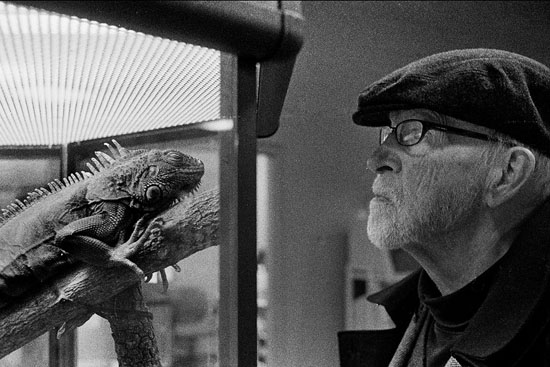
David Ferry with iguanaDavid Ferry, Photo by Stephen Ferry

Herewith the definitive interview with David Ferry, winner of the 2012 National Book Award for his collection Bewilderment: New Poems and Translations. It’s an interview that will surprise you, teach you and maybe change your life, especially if you are a poet. It is replete with compositional and technical information invested with passion and deep reading. Ferry will say things such as  “In that line, for the first time in the poem,  in the third foot, there’s an anapestic variation, and that felt so much like a kind of a panic in the way it is said, as if the voice saying that the line is experiencing this act that’s happening “Once by the Pacific.”  That way of thinking about lines:  what happens in the lines coming as a surprise to the reader, and coming as a surprise, in a way, to the poem, itself––I knew I wanted to talk about this stuff for the rest of my life…” Our interviewer, Peter Mishler, is the perfect interlocutor, the perfect seeker, curious, engaged, literate.

dg

Can you tell me a little bit about where you grew up?

I grew up in Maplewood, New Jersey.  It’s an upper-middle class suburb near New York City.  My father’s office was in New York City––so that’s my home city, and always has been.  I feel like a New Yorker in some way––and all the more so because my wife grew up on East 92nd Street, and my daughter went to Columbia and my son lives in New York.  I went up to Amherst and Harvard and taught at Wellesley for most of my career and lived in Cambridge for all of my career.  So Boston I guess is my main city, but New York still feels like it.


What poems first caught your attention when you were growing up?

Whitman most of all, in high school: so big-hearted and sexually waked-up and freeing; and the big rhythmical repetitions of those long lines, with so much room in them for variety and syntactical surprise––there’s lots going on inside the lines.  And the nationalism, the sadness in Lilacs Last.  Lots of other stuff, of course, just reading around in an anthology we had, the Oxford Book of American Verse.  The Shakespeare lines encountered in high school classes –-– “books in running brooks, sermons in stones” –-– but I wasn’t in any sense a prodigal reader of poetry, as opposed to other reading.

Nor was I a big time reader, by comparison.  I was a reasonably smart high school kid, and had no idea of becoming a poet. Or becoming anything.  Well, that’s not quite so.  If I had to guess, at that time, I’d have guessed that I’d become a teacher of literature.  These were the classes I liked best in middle school and high school.  But I didn’t get hooked on poetry until I went to Amherst, then got drafted, and returned to Amherst.  It was the teaching of Reuben Brower and C.L.  Barber that did it to me and for me, vocationally.  And, of course, Frost and Stevens.


You mention in another interview that your teaching and writing were shaped by your early reading of specific lines from Frost.  Could you elaborate on why the discovery of that writing was so important to you?

I wrote a particular paper about a Frost poem, which now feels to me, in retrospect, like it was a big vocational experience.  I actually remember saying to myself, inside my head, “This is what I want to do for good and all––teaching––and teaching about how things like this happen inside the lines of poems.”  The poem was Once By the Pacific, which begins:

The shattered water made a misty din.
Great waves looked over others coming in,
And thought of doing something to the shore
That water never did to land before.

The thing that really came home to me in those iambic pentameter lines was the way that second line was an iambic pentameter line, but “great” was so strong for the so-called weaker syllable in the first foot, and then “looked” was, too; and what was happening in those waves rising up and about to break was happening in the line itself.  And then another instance in the poem, a little later:

                     The shore was lucky in being backed by cliff

In that line, for the first time in the poem,  in the third foot, there’s an anapestic variation, and that felt so much like a kind of a panic in the way it is said, as if the voice saying that the line is experiencing this act that’s happening “Once by the Pacific.”  That way of thinking about lines:  what happens in the lines coming as a surprise to the reader, and coming as a surprise, in a way, to the poem, itself––I knew I wanted to talk about this stuff for the rest of my life as a teacher.   I wasn’t even thinking about being a poet or I never had that intention, anyway.  At the beginning, I hadn’t started to write any poems.  And as a teacher, I kept thinking at that time about the grammar of Frost’s great essay “The Figure a Poem Makes.”  The grammar of that title in a sense suggests that the figure isn’t something laid down on a poem; the poem makes a figure and the poem is made by what happens––things that are unexpected by the intention at the beginning of the poem and unexpected by the poem itself.

.

I read somewhere that you had corresponded with Wallace Stevens when you were an undergraduate.  I’m really curious to hear about your exchange.

“Corresponded,” no.  Stevens, along with Frost, were my two biggest experiences, experiences for my listening ear at Amherst.  I wrote my senior thesis about Stevens and I was elated about having done so.  I wrote him a letter asking him about Whitman, even though I knew the answer, because I knew his lines about him.  He wrote back and said something like, “Walt Whitman was the only writer back then whose writing wasn’t a book.”  That is, he was what Stevens called “the latest freed man.”  I wish I had the letter, but I lost it.  I keep hearing all those lines of his that are entranced and entrancing: “Keep you, keep you, I am gone, O keep you as / My memory, is the mother of us all.”

.

Do you remember when you first started writing poems?

The first poem I ever wrote was “Embarkation to Cythera,” about Watteau’s great painting.   And I can’t remember if before that I’d thought about writing poems or had tried it.  Writing that poem was a lot of fun, trying to work out the lines, and I sent the poem off to the Kenyon Review which I’d been reading a lot––everybody was in those days––because the leading critics of the time wrote often for that magazine, and because I was admiring many of the poems of John Crowe Ransom. And he took the poem.  So I guess I thought I was starting out as a poet because of that poem.  It was also true that at that time I was reading a lot of Pound, and the way he was writing about poems, and I think maybe I was thinking about those things not as a student but as somebody who was getting started writing.

.

Can you walk me through the process of how you compose a poem?

The process of composing a poem for me comes from writing something in a journal or as lines of poetry, and trying to understand the possibilities of the insides of the lines of that poem.  There’s a poem in Of No Country I Know, called“Of Rhyme.”  That poem tells more of what I think about how a poem gets produced:  ”… the way each step of the way brings in / To play with one another in the game / Considerations hitherto unknown, / New differences discovering the same…”  I don’t mean that I necessarily rhyme––I do in that poem––but starting and finding out how the form is being developed and learning from your attempts to write further inside the poems and seeing them become something with a shape and an identity. I don’t start from a concept or a proposed subject, though of course, because of things I’ve been concerned with in my mind or my situation, the poem as it develops does usually show that it has––the language of the poem has––a subject or a conceptual concern, and it’s likely to have relationships with other poems I’ve been working on, the translations I’ve been working, say, or things that have been happening to me.

.

AR Ammons has those great lines “I look for the forms/things want to come as.”

That’s a wonderful pair of lines, and I love the language of it: “to come as”––the unwilled nature of it, leaving it up to the poem as it finds its way to having a form.  Ammons wrote mainly in a free verse, I guess, and, at least in recent years, and maybe always, I write mainly in iambic pentameter, so I wasn’t leaving the form up to what he calls in that poem “black wells of possibility.”  I don’t know whether Ammons would automatically exclude metrical poems, which might seem to him to impose on the poem forms the poem didn’t want to come as, but I regard metrical schemes as explorative, trying to find out what form, the completed poem, things want to come as.

.

So you are highly attentive to the line when you are composing a poem.

That, you might say, is all that I’m conscious of.  That’s who I am: somebody who writes lines of verse, mainly in familiar iambic metrical schemes.  Writing in a fixed meter––iambic pentameter mainly––with a highly conscious sense of the line ending, defines your experience of the line and defines your sense of the degrees of varying pressure on the weak and strong syllables and their relationship to each other.  The way that those things happen in relation to the basic iambic pentameter music of the line is something that you observe when you’re writing the line and taking some pleasure in doing it, but it also means that there are times when you want to manipulate that line inside itself to make it sound even better.  So that modifies the way I was just talking about how so much that happens in the poem is a surprise to the writer.  A surprise? Yes and no.  In a way, that’s all the writing verse means, to me: attention to what happens inside the lines and to the line-endings and the consequences of the line-endings.

.

The iambic pentameter in your work is masterful.  How did you get so good with this?

I’m too shy to say how I got “so good” at iambic pentameter, but it is true that I have a lot of experience writing in that meter.  But I’m not a meter freak. I don’t have a police badge.  I write free verse poems. But for me the meter I use most often is iambic pentameter, a line long enough to make room for many syntactical events, many different pressures of strong and weak.  And its so natural.  You call it “masterful” but the fragments my poems begin from are often prospective iambic pentameter lines, because that meter is so natural.  We speak mainly in iambs and anapests, occasional trochees.   You just said, “How did you get so good with this.”  The first two syllables are trochaic (How did), the rest are iambic (you get so good with this).  Natural, mainly iambic speech.  The same is true in verse, except that the pentameter sets the music going, and governs it, and the regularity of that is part of the pleasure.   The iambic pentameter music is playing all the while, and within that regularity we hear all the variations, the subtle differences of pressure and tone, and the activities of grammar, syntax and emotion, that make our speech so rich.


I want to know more of the particulars about how you make a poem.  Do you write by hand? 

I don’t write by hand at all.  And almost never did.  I write stuff down on the computer or sometimes in a journal.  I might have some expression that I’ve written down, and I go back to it and read it and see if something happens. And I think.

.

Do you share your drafts with anyone?

I work and send drafts back and forth with a number of people.  Boston is a wonderful working environment in that sense.  I have lots of dear friends whom I do that with, especially in my work as a translator because I show passages to my Latinist mentors, classicists, and so on.  Even with my wife, Anne, though I guess I didn’t very often show the very beginnings of what I was doing.  I think I showed scraps to her when I thought something was beginning to develop, but sometimes only when something was pretty far along.

.

There are some significant gaps between the collections that you’ve published.  Is there an aesthetic reason for this slowness?

I guess an aesthetic reason is in my poem to William Moran called “Brunswick, Maine, Early Winter, 2000.” I quote a wonderful quote that he sent to me from Nietzsche:

“It is a connoisseurship of the word;
Philology is that venerable art
That asks one thing above all other things:
Read slowly, slowly.  It is a goldsmith’s art,
Looking before and after, cautiously;
Considering; reconsidering;
Studying with delicate eyes and fingers.
It does not easily get anything done.”

It’s the same thing as if he’d said “write slowly” because writing is a form of reading.  Not only is one’s reading going into the writing, but the way you read your experience as you’re trying to write it down, and more particularly as you’re reading your own language in the lines as your developing.  That’s a slow business because it takes a lot of considering, reconsidering, altering, re-altering.  I don’t know how to make it faster, at all.

.

I think of Marianne Moore’s work with quotation when I read your poems––and I know you like her work.  What do you admire about it?

I think it’s the incredible skill with which she invents forms, often syllabics.  She’s the only consistently good writer of syllabics that I know of in the sense of the organization of whole poems.  And she invents forms in which she includes, like she says in her poem “Poetry,” anything, including prose.  She brilliantly gets away with that.  She incorporates other material in the poems with amazingly, scandalously, with wonderful success; incorporating them and making a form that will include taking along prose sentences from somewhere else, making it a part of a new poem that is also making a new form––it’s just an amazing example.


Would you cite her as an influence?

I haven’t thought of it exactly that way.   In the poem for Bill Moran I just mentioned,I quote from Nietzsche because he had sent that passage to me, and part of our relationship was the excited way that we talked about reading.  Bill was a great Babylonist at Harvard.  I shared with him so many of the values that were implied in that quotation.  It became very personal to the poem that I should get that in because it describes not only a way of thinking about reading and writing that I think is profoundly true, but it is also extremely personal and expressive of my relationship to him and to his work and to his wife.

My collection Bewilderment also includes an extended quotation from Goethe in the poem “The Intention of Things.”  I had translated some poems of Goethe’s, and I happened to come upon this particular quotation.  It was so helpful in what it did for what that poem was trying to say.  And the pleasure of trying to make that extended sentence work in the metered lines, as I hope it does, without really changing a word of the quotation was part of the pleasure.

.

You mentioned reading Pound at the time when you started thinking of yourself as a poet. You must have also been interested in him as a translator then?

I was very interested in his translations, yes, but I had very few translations that early on.   There is only one translation in my first book, On the Way to the Island: Ronsard’s sonnet that begins “Quand vous serez bien vieille.”  And the next book, Strangers, was published twenty-three years later.  And I was thinking of myself very much so as a poet during those years, though I was writing a poem a year, or at the most two or three.  But in the second book there are three translations, and then the next book Dwelling Places is almost half-and-half poems and translations, and then I really began to give myself that way.  But mainly I did not have a big time ambition to be “a translator.”  I happened to be finding poems in other languages that were related to some of the situations I was writing poems about in that period of my life.

.

How did your career in translation develop after this?

I have in Dwelling Places, and my two subsequent books, poems that are about marginal people, street people in distressed and distressing conditions or situations, and I found or was directed to some wonderful poems that I translated:  Rilke’s “Song of the Drunkard” and his “Song of the Dwarf”; Baudelaire’s “Blind People”; a really marvelous 13th century poem I call “When We Were Children.”  Such poems and the poems “of my own” that I was writing about such situations, fed each other.   In the end I was surprised that such a high percentage of Dwelling Places was half poems and half translations.  But I really felt, and still feel, that these translations are also poems of my own, because of the use I’ve made of them, what they became in my book, and because I wrote the lines in English, my lines became readings of those lines.  The activity of writing those lines was not different in kind from writing lines in English, though the foreign texts supplied more data and data arranged more coherently than the undeveloped and often scrappy data of experience with which poems of my own began and which had less assistance in their development.

The new poems in my next book, Of No Country I Know: New and Selected Poems, also had a high percentage of translations related to my own poems, often about such situations. And also, around the time of Dwelling Places I began to be a translator (or something like it) in another sense.  Bill Moran, whom I mentioned earlier, assigned me his word-for-word translation of several passages from the Gilgamesh epic, to versify.  I did this and got hooked and, under his guidance, working from other scholarly word-for-word translations, made a verse poem of the Gilgamesh material. People liked it a lot, and I loved it.     And then I really did want to translate big time and I got into the Odes of Horace under the guidance of Donald Carne-Ross, a great classicist at Boston University.   Then I had the ambition to translate all of Horace which I haven’t finished yet.  I translated all the Epistles and I am working on the Satires of Horace.  I’m not a classicist or Latinist but I’ve been working under the guidance of several mentors at Harvard, especially Wendell Clausen and Richard Thomas and with lots of help from others, including Michael Putnam.  The Horace work led to my translating the Eclogues of Virgil and, several years ago, the Georgics of Virgil.  Now I’m at work on the Aeneid.  Huge, huge experiences, line by line.

.

What are your thoughts on modernized translations––translations that incorporate a contemporary idiom, etc. into an older poem?

I don’t have many thoughts about this, because I don’t read much in other verse translations. I gather that there are translations which egregiously want to sound up to date. I don’t have such a motive.  But you can’t avoid incorporating a contemporary idiom into your translation, because your translation is speaking English, and your English inevitably uses such idioms, without wanting too aggressively to sound “modern.”  Of course there are places where, in my opinion, to get the tone right and characterize the feeling right, you have to take emergency action.  For example, in my translation of Rilke’s “Song of the Drunkard,” the drunkard, in a bar room scene recounts his experience of drinking and says, “Ich Narr,” “I Fool” or “I’m a fool.”  I can’t hear in “I’m a fool,” the force of the self-disgust which I hear in “Ich Narr”, the very sound of it, but I do hear an equivalent when I translate it as “Asshole!,” and I think of that as a literal translation, true to the tone of self-disgust that the poem demands. But that’s not part of a general motive to “modernize.” It’s always an issue, though.  You want your language to be alive but you don’t want it to cheapen things by being too ambitiously up to date.

.

Is there an ethics of translation that you believe in?

I think the responsibility of the translator is to convey as much as possible his passionate and close reading of the meanings of the lines that he is translating, and (as much as it is possible for him in his language) to register his understanding of the sense, the tonalities of the original, the tone of voice; and to understand as much as possible about the implications of the particular figures of speech because he is using another language.  And in my opinion, it’s not a part of the responsibility to reproduce––in most cases––as exactly as possible the meters of the translations, the demands of the two languages being so different.  My translations of the Epistles, the Eclogues, the Georgics, and (what I’ve done so far) the Aeneid are all in iambic pentameter, which is a capacious line––a lot can happen inside of it, as is true of dactylic hexameter, the prevailing cadence in the Latin text.

.

Right now you are translating the Aeneid.  I remember reading the Robert Fitzgerald translation in high school.  Is there something new about your translation that you want to point out that I might want to revisit?

I’ve only read a few passages of Fitzgerald, and I see why they’re admirable.  What’s new about my translation is that it’s mine, all of it, my reading of the great original, and the lines have never been written quite that way before.  This is true of all translations, good bad, and indifferent. True also of all “original” poems which are so often, maybe always, like translations of earlier poems. That’s how we keep alive.


Perhaps you will be able to say more when you are finished with the entire poem?

The question implies that I’d know with some confidence what the poem is “about,” what the encapsulated summary meaning of it is; for example, “a triumphalist celebration of the establishment of Rome.”  Certainly there’s that in it.  But to say that radically simplifies the poem, thins it out, and so does every other summary reading, behaving like take-home pay.  I don’t know what’s “new” in my reading of the poem, which is my translation of it. Maybe what comes up in my translation so far comes up in all the others. I’m sure it does, though I haven’t read them much.  How do bodies hurt when they’re atrociously violated; how do wives die; how vulnerable all cultures are and how it’s their fault and not; how the gods don’t get it and we don’t get it about the gods; how sons die.  I think summarizing tends to kill the experience of reading the lines one after another.  And what I think the poem is really about is the lines one after another––the experience that he gives to the reader and to the translator.  There are many summary things one could say, but I don’t want to say them with any confidence.  In my reading of these poems, though, I keep responding to the signs of vulnerability––individual and cultural––the tears of things.  But that’s not all.


How do you convey these small discoveries to the reader?

It is the ambition of every little writer to be as good a reader as possible, as a translator reading the great text and reading his own developing experience of writing the lines.  All you can do is to try to do as well as you can; and as you’re drafting a translation of it, find things that surprise you about what’s turning up in your own language, and then ask yourself if you are anywhere close to representing some of the effects of the original.  And the answer is always, “No, of course not.”  Every talk I’ve ever given on translation has been titled “What I Couldn’t Get” or “Getting it Wrong.”  What I really like in my translation are also clear instances of what I didn’t get in the translation.  But they came in the effort of getting it as right as possible.

.

Do you ever look at other translations when you are translating?

Occasionally I go to other translations when I am particularly puzzled by some narrative event, and occasionally I check myself out in order to get scared by how good the translation is, or to sneer at it in a superior manner––and both of those are mean-spirited kinds of experiences, so I don’t look very often.  I have read in Dryden’s Aeneid.  It is great.  But it is in the 17th century idiom which is so different so I am not really affected by it or threatened by it.  I’m told, and from what I’ve read it’s true, his emphasis is more admiringly imperialistic than what I think I am reading in the Aeneid.


How much of your reading of Virgil is colored by your own experience?

There’s no question that Virgil––he says so many times––is celebrating the regime, and that he is very close to the Emperor, as Horace is too.  And in this “Cowboys and Indians” war, he is certainly on the side of the “Cowboys.”  But he’s so full of eloquent distress about the vulnerability of the “Indians,” so to speak, and the precariousness of it all for everybody and the wrong motives everybody’s acting out of all the time along with the right motives.  I think of that famous passage in Book One, “the tears of things”––“lacrimae rerum.”  You keep seeing Virgil lamenting the cause of being human, and how to maintain a culture, and that the tears of things are everywhere.  But stating that this is what the Aeneid is about kills your experience of the lines.  You do learn something, but you keep on learning it in the condition of your sentences.  I mean, in the ways we’re “writing” when we’re talking right now are full of indecisions, and changes of stress and emotion and self-puzzlement are going on all the time.  And for me, that’s what’s so very alive in everybody’s writing.  But Virgil is so good at that.  I’m so struck by how big-hearted he is and how he sees everybody’s trouble.  Experiencing that in the sentences of the poem is just wonderful.


I’d love to know more about how your translations converse with your own poems.

The biggest event since my last selected poems Of No Country I Know––the biggest, worst, event for me and my family––was the death of my wife.  It is perfectly true that when she became ill, it was at the time I was translating the Georgics of Virgil, and when I came to Virgil’s account of Orpheus and Eurydice, the relation of that poem to some of the ways that I was writing that had to do with that event in my life were very, very direct and were directly referred to in that poem.  Virgil’s Orpheus and Eurydice is referenced in the poem “Lake Water,” and quoted at the end of the poem about my father called “Resemblance.”

And in other ways, there is a very conscious relationship.  There is a poem called “That Now are Wild and Do Not Remember”and its title comes from the Wyatt poem I was talking about earlier.  And it talks about that poem as if it were a sexual and romantic bereavement, in a sense.  And that poem also uses a passage from Book Six of the Aeneid––about the unburied dead seeking across the river.  I don’t want to say that those connections were planned in any sense, but I just sporadically kept a kind of journal; those connections emerged, and it’s no surprise.  When I was working on Bewilderment I was writing poems that related to earlier poems of my own, just because it’s me.  I am the same person who was writing those poems, and they relate to these events in my life in this period––and among those events was the death of my wife, but also the fact that my experience is full of translating Horace and Virgil.  So it isn’t exactly an intention to use the one kind of material for the other, but the poems find out that they have had that intention.

,

I noticed that you re-included two of the poems from your first collection in Bewilderment.  Why?

I included “At a Bar” because I like it a lot.  And because I had several other bar room poems, because I wanted to include the great Horace “Ode to Varus” which is a kind of barroom poem, and because it sort of helps to make a relation between the poems in Bewilderment and some of the poems in Of No Country I Know and Going Places about people in distress. And there are lines in “At a Bar” like “What is my name and nature?” which are very much like lines that I’ve found myself writing in much more recent poems.  “What is your name that I can call you by?” and so on, so it’s a poem I wanted to include.  Barroom situations are good for singing the blues.

I have another book that has just been published in England by the Waywiser Press and it’s almost a complete poems, On This Side of the River.  In that book I didn’t just want to arrange material chronologically from my first book to the latest one, but rather put poems together by their affinity to one another.  And so it’s no surprise that in this other book which I was bringing out at the same time, I was doing quite a lot of putting poems written in 1960 and before with poems written in the 1980s and 1990s and 2012, so it’s not a surprise that I did that in Bewilderment as well.

.

When you were looking back on earlier work did you notice that there are particular things that you’ve tried to move away from over the years?

I’ve left out some poems from my first book, usually because they showed signs of trying to be charming, in a period sort of way.  And revised others a bit. What else is new?  I’ve kept everything else, and if that’s wrong it’s not for me to judge.

.

Were you and your wife artistic collaborators?

She gave me the title for all of my books.  She wrote several lines of mine.  For example there is a poem of mine in Of No Country I Know called “Rereading Old Writing.”  She wrote the line “Something not to be understood.”  She was a terrific example for me about how to read poems.   We read poems together very intensively––my poems and other people’s poems.  Her writing, for example, in  her last book, By Design: Intention in Poetry, published by Stanford after her death about the differences between Sydney’s way of rhyming in his sonnets and Shakespeare’s is just astonishing. She teaches everybody how to read, how the writer, or, you could say, the poem itself makes the telling decisions.

She worked in one part of our house in Cambridge on the 3rd floor, and I worked in a big study on the second floor in the back.  And I’d bring a poem upstairs, and we would come up with a solution. In that sense it was a working relationship.


Did your wife see any of the poems from Bewilderment?

That book is post-1999, and she died in 2006.  I think she knew all of my translations of the Georgics which included the story of Orpheus and Eurydice, and that book was published in 2005.  By that time she would not have known the last stages of the work in that book, and she certainly would not know of the use I made of the story of Orpheus and Eurydice in the poems about her.    I am not sure if she knew any of the passages from the Aeneid that I put in Bewilderment.  There are some other poems like “Willoughby Spit” that she certainly knew.

Before she died we were editing the wonderful collection of her essays, By Design,and she participated in the editing up to a point, so it was partial.  But it was certainly a big part of our relationship that we worked together.  That was not all there was to it, but it was terrific.  She was an amazing teacher.

.

You have other artists in the family?

I do.  My son is a wonderful photojournalist and an artist.  My daughter writes books and she’s an extremely good anthropologist, and they are both wonderful readers of poetry.  My father was a good organist and moonlighted in the Depression as a pianist, and I learned to play the piano because he played the piano.  We thought at one time of doing a family website called The Cottage Industry––we’re not all poets, but we’re all writers.  It’s terrific.  My daughter and my son, as we speak, have been in Columbia, where he’s been mainly working in the last three years, collaborating on a story or maybe a little book about the gold rush in Columbia.  He’s done a lot of photographing there, and she’s just been down there doing her anthropological work.  Both of their first books were about mining in Latin America.  And so there they are making something beautiful out of it.  And there’s a photograph by my son on the cover of Bewilderment.  Terrific.

.

I’m thinking about the title of this collection.  Can you talk more about how mystery, misunderstanding, or the inability to know has played a role in your work? 

It turns out in my writing, witnessedin the title of this book, that I keep finding out things about myself that I’m surprised at and that I can’t come to fixed conclusions about––that I live in this state of bewilderment. You do too.  I discovered that something like that keeps coming up in my poems.  It is not that I start out with some kind of subject matter or some intention to write on a topic.  I let them write themselves.  I’ve got a poem of one-liners at the beginning of Bewilderment that I made sure, when it was published, was four words and not three: “Playing with My Self.” It’s what our language does all the time.  I think every writer’s most recent book is some variant of that.  And I don’t know whether I’m trying to find out more about myself.  I don’t know if I’ve gotten anywhere in finding out more about myself.  I don’t think I’ve got any further in that regard than when I wrote those lines.

.

What are the big mysteries for you?  What are the things you continue to be baffled or confused by?

I think I’m just like everybody else, including you, I’m sure.  I’m sort of baffled a lot.  And I don’t have any expectation that there are going to be answers to what I’m baffled about.  It’s like that poem in this last book called “Ancestral Lines”:  my father says, “‘He called the piece Warum?’” He didn’t know, Schumann didn’t know, my father didn’t know.  And I say in that poem “What are the wild waves saying? I don’t know.”  But bewilderment isn’t my ‘subject.’  It isn’t a topic; the word just seems appropriate for things that keep coming up in the poems.


Is reading other poets a way of finding comfort?

I read other poems for what I find in them, for the experience of reading them.  I get a lot in the experience of reading poems that I think are wonderful, but I’m not sure that comfort is a word that would describe it.


I ask because if we find ourselves baffled or bewildered often, is writing or reading a place where one can seek comfort?

I don’t find that there is a therapeutic value in stuff that I read.  And the better the stuff that I read the less that it delivers in a sort of one-on-one way, because it seems so full of conflicting attitudes, so it’s just itself.  And in the act of reading when you read, say, Tolstoy’s The Death of Ivan Ilych––all that pain––it’s such a pleasure, and so painful.  Now I am beginning to sound sort of fancy.  I don’t mean to sound highfalutin about this stuff.  You just get sort of troubled by what the lines are saying and I guess there is something that is sort of comforting because somebody else said them.  But there is also such a pleasure that the lines are taking in themselves.  Wordsworth said that the main thing that poetry does is to give pleasure.  Some of the poems in Bewilderment are expressions of grief to be sure but there is also the exuberance of the writing that I think everyone experiences who is a writer.

I’m sure you know in your own writing that there’s a sense, even when you are writing about something intensely painful, there is terrific pleasure in the act of writing.  I do think it’s therapeutic as long as one doesn’t think it provides easy answers to taking away the pain.  A poem about a real life painful situation is therapeutic because it actually intensifies the pain by confronting it directly, but talks about it by, so to speak, singing about it, and therefore the pain is presented to oneself and to others as a kind of pleasure, not happy pleasure, but often a lamenting pleasure, often very dark, but transformed into art.  And then it also somehow makes connections in song, with all the songs that have been sung about bereavement and death in the past. This is true for good and bad poems, but it becomes exaltedly true in the great bereavement songs of the past, in liturgy, in folk music, country music, Bob Dylan, Henry King’s great “Exequy” for his wife.  There’s comfort for the writer in that, but it’s the comfort of proving an alternative value.  But it doesn’t really substitute for or compensate for the raw experience of somebody’s illness and death.


Was there a poem in Bewilderment where you had that experience of lamenting pleasure?

That’s everybody’s experience–people talking about themselves or writing poems about their situations.  There is a pleasure in trying to make the feelings articulate that is always there, whether the poems are good or bad.  But when you feel in a particular poem that you value the way you did it, as I do in Bewilderment, there’s that experience of pleasure in writing.

When I go back to Frost’s essay “The Figure a Poem Makes,” he talks in many ways about how your own language brings surprises to you.  It doesn’t answer any questions that you have, but it is about the experience of getting it said.  And it’s the experience of watching what’s happening in the lines as the experience of the sounds and rhythms and the experience of emotions and knowledge that’s gained.  Of course, there’s the knowledge that you didn’t know you had, and that the poem line by line is sort of finding out itself.

.

Frost says that a poem “begins in delight and ends in wisdom.”  What you are saying, I think, is the kind of wisdom he is talking about.

I think I’m not even sure whether he ought to have said “wisdom” there, because it confuses people about what that essay is really saying.  I don’t think he is saying that the poem delivers big time comfort, as if you’d gone to the top of mountaintop and said, “What is life?” and there is some sage up there, and the sage says, “Life is a river” or something like that.  Frost means that we end up knowing something more in a particular poem, or in a particular sentence that one says to one another in conversation, by the articulation of it––by the rhythm, stress and emphasis of what is said.

And to return to the Aeneid, the experience of working on that poem is the terrific pleasure of writing iambic pentameter lines and trying to get it right; it’s the experience itself of the activity of writing.  There are big things to learn from that great poem in the line by line activity––things I can give of myself as a writer of lines, and not as a thinker about larger concepts.

—David Ferry & Peter Mishler

 ———————

David Ferry is the Sophie Chantal Hart Professor Emeritus of English at Wellesley College and also teaches at Suffolk University.  In 2011, he received the prestigious Ruth Lilly Poetry Prize for his lifetime accomplishments.  In 2012, he won the National Book Award for Bewilderment: New Poems and TranslationsOn This Side of the River: Selected Poems has recently been published by The Waywiser Press.  He is currently at work on a translation of Virgil’s Aeneid.
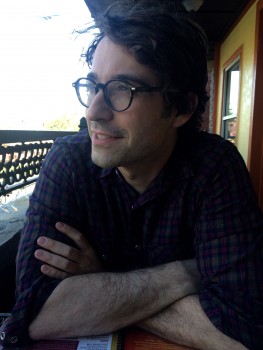
Peter Mishler

Peter Mishler was educated at Emerson College and Syracuse University.  He currently teaches English and Creative Writing at a high school in the Syracuse area.  His poems have appeared in The Antioch Review, Crazyhorse, Black Warrior Review, Ninth Letter, LIT, New Ohio Review, Numéro Cinq, and Open Letters Monthly among other journals.

Apr 022013
 

Sheila Heti Photo by Lee Towndrow -Sheila Heti: Photo by Lee Towndrow

Sheila Heti is a Toronto writer whose 2012 novel How Should a Person Be? created a trans-Atlantic sensation. It was a 2012 New York Times Notable Book of the Year and it has just made the long list for the prestigious The Women’s Prize for Fiction (formerly the Orange Prize) in the UK. David Haglund in The New York Times Book Review wrote: “Funny…odd, original, and nearly unclassifiable…Sheila Heti does know something about how many of us, right now, experience the world, and she has gotten that knowledge down on paper, in a form unlike any other novel I can think of.” The Economist‘s reviewer said: “Ms. Heti’s deadpan, naked voice is what makes Sheila’s journey so engaging… [Her] mordant take on modernity encourages introspection. It is easy to see why a book on the anxiety of celebrity has turned the author into one herself.” And in The New Yorker, no less a critic than James Wood opined: “[Sheila Heti] has an appealing restlessness, a curiosity about new forms, and an attractive freedom from pretentiousness or cant…How Should a Person Be? offers a vital and funny picture of the excitements and longueurs of trying to be a young creator in a free, late-capitalist Western City…This talented writer may well have identified a central dialectic of twenty-first-century postmodern being.”

It’s a delight to publish here what might be the definitive Sheila Heti interview, a lengthy, intimate, wide-ranging conversation with Jill Margo as interlocutor. Margo probes and nudges most gracefully and does not limit the topics to the purely literary.  Her interview has the aura of something overheard, and what you overhear are two intelligent women talking about art and the writing life. It’s a treat.

dg

 §

I interviewed Sheila Heti at her home in July of 2012 on one of those disgustingly hot and humid Toronto days that—to swipe a phrase from Billie Livingston—felt like “being under a dog’s tongue.” Sheila, as it turned out, lives not far from me on the top floor of a house on a corner lot that I’d walked by several times before. I’d always admired the place because of its gothically romantic and overgrown garden that disappears the tall fence and nearly obscures the house.

When Sheila came to the door, she looked cool (literally) and put together. She was even wearing nice, proper shoes instead of flip flops or bare feet. I’m not sure if I would’ve thought to put shoes on if I was being interviewed in my own home—especially in that heat. I couldn’t decide if it was a gesture of fashion, professionalism, or maybe even a kind of guardedness.

I had met Sheila twice before. The first time was around 2001 when she read from her debut book, a story collection called The Middle Stories, at a reading series I hosted in Victoria, BC. The second time was nearly ten years later, in 2011, when I hosted her reading at the Robson Reading Series in Vancouver. That was the year after her fifth and most recent book, How Should a Person Be? had been released by Anansi in Canada. It was published the following year in the U.S. by Henry Holt & Company and has since been featured on many Best Books of 2012 lists, including in The New Yorker, The New York Times, Salon, Flavorpill, The New Republic, and The New York Observer.

How Should a Person Be? is subtitled “a novel from life” and is described as “part literary novel, part self-help manual, and part bawdy confessional.” It exists in ambiguity between the real and the fictional. Its characters are based on Heti and her friends and, for the most part, appear to have their same names. There are emails and transcribed conversations throughout the book that could be considered real documentation. The book is structurally and thematically compelling and I’ve recommended it to many of my friends and colleagues because it’s well-written and occupies such an interesting space in the zeitgeist.

In the years between the two times I hosted her for readings, Heti has published three other books, including a novel, Ticknor, (2005); and an illustrated book for children, We Need a Horse, (2011), featuring art by Clare Rojas; and with Misha Glouberman, a book of “conversational philosophy” called The Chairs Are Where the People Go, which The New Yorker chose as one of its Best Books of 2011.

Heti also works as Interviews Editor at The Believer and has contributed many interviews with writers and artists to the magazine. It’s also of note that in 2001, she created the ever-popular Trampoline Hall lecture series (hosted by Misha Glouberman), at which three people deliver lectures on subjects outside their areas of expertise, then take questions from the audience.

It was a pleasure to talk to Sheila and to be reminded how a writer should be along the way.

— Jill Margo

 §

THE BEGINNING

JM:  Let’s start at the beginning. Your first book was The Middle Stories. It was published when you were twenty-four. Tell me a little bit about where you were at when you wrote that book.

SH:  I was studying art history and philosophy at U of T and it was around the time I was twenty-one or so. I was trying to teach myself how to write. The last writing I’d done before that was at the National Theatre School where I was studying playwrighting, but that didn’t really end up working out for me. So I started to write stories. I was writing a lot and I was writing very quickly and all I really wanted to do was get to the end of each story. I’d sit down and write five or six in a row. In the actual collection, the stories are pretty much as they were written and were only very lightly edited. Mainly, the editing was me selecting the good ones from the hundreds of stories that were just nothing—that didn’t have any spark in them or anything.

JM:  Did you always want to be a writer?

SH:  It was one of the things I always wanted to be since I was a kid, and I also wanted to do other things. Like a lot of artistic kids, you just sort of want to do everything— you want to act, and you want to direct plays, and you want to write, and you want to draw. But writing always fit in there.

JM:  What about the family you grew up with—did they support your artistic endeavors?

SH:  I think my mom didn’t necessarily want this for me, but my dad supported anything I did. He didn’t have preset ideas of what his daughter should be like, or what his daughter should do. He supported me when I wanted to act, he supported me when I wanted to write. He was always very encouraging.

JM:  What do you think is the best thing you ever did for yourself as a writer?

SH:  Probably moving out when I was seventeen, and supporting myself since then. I think it gives you some confidence and a lack of fear to know that you can support yourself from a young age. I’ve never had to support myself in ways that hurt my ability to write so that gave me confidence that I could perhaps write and support myself over many years.

I think maybe the worst thing I could have done would’ve been to get a well-paying job at a young age that I then got locked into because I got used to a higher standard of living. I think moving out at seventeen and living on so little meant I got used to a low standard of living and I know if I had to, I could always go back to that.

JM:  What other kinds of jobs have you had?

SH:  I worked as an editor at this magazine called Shift, which doesn’t exist anymore. It was a technology and culture magazine in Toronto. I’ve done temping and I’ve worked in restaurants and just the usual kind of makeshift things.

JM:  Do you feel like you’ve had to be quite strategic with your writing career?

SH:  No, I’ve had a lot of good luck. I’ve never been afraid of sending my stuff out so that’s allowed for good luck to happen because I haven’t just been on an island. I sent my stories to McSweeney’s, but if I didn’t send them, they never would have published them, so I think that’s paired with good luck. I don’t think I’ve had a strategy; I’ve had a desire to be in the world.

m

PROCESS & PATIENCE

JM:  Technically, how do you write—when and where and with what?

SH:  I use my computer. I’ve always used a computer. I usually write in this middle room in the place where I live. I always usually just write in whatever apartment I’m living in. I don’t write in cafés or anything like that. I can’t imagine it. I don’t write with music on. I don’t like having people around. That’s pretty typical.

And then I just write whenever I want to. I don’t really have a schedule. I used to worry a lot about that. I used to think that you had to have a schedule but I realized that I don’t need one. I like writing enough and I want to write enough that I do write enough. I don’t have to beat myself with a stick.

Every day is completely different. I feel different every day when I wake up, and what I want to do every day is different. By this point in my life I have so many different projects that I’m working on, like editing interviews for The Believer and various collaborations, that there’s always something I most want to do. I figured that out a few years ago. I used to think that you could only work on one thing at a time but I realized that it’s better to work on lots of different things because that way there’s always something that you’re in the mood to work on.

JM:  Was it much of a struggle to just let yourself work organically like that?

SH:  It took probably ten years or so for me to accept my way working, and to believe that work was going to get done. But when I was writing The Middle Stories, even then my only discipline was that when I felt like writing I had to write. You can’t miss those times. That was the foundation of discipline for me. I really tried to be sensitive to those moments. Sometimes I’d leave class and go home to write. Now, I don’t just wait for those moments of, let’s say, inspiration, but I still try to always write when I have that feeling. If I don’t—if I have the feeling, but instead watch a movie, or read a book, or go on the Internet or email—then I feel really bad and like I’ve let myself down. It’s like something wanted to be expressed in that moment and I missed it and I’ll never get it back.

JM:  Do you know the late poet Ruth Stone? She said that when a poem came barreling across the fields where she was working she had to stop what she was doing and run and catch it. If she had to, she’d grab it by the tail and pull it back towards her. I’ve always loved that image. You’re basically saying the same thing—that you have to capture the moments and trust that the writing is going to get done.

SH:  I have to trust that it’s going to get done and that that’s just me and that’s just my process and there’s nothing to really worry about. And if it doesn’t get done, also, who cares?  If it doesn’t get done, it doesn’t get done. The world doesn’t need your books. So it seems silly to force yourself to write if there’s nothing to write.

JM:  “The world doesn’t need your books” is an interesting statement coming from a writer. Can you talk about that a bit more?

SH:  Well, the world isn’t sitting around waiting for your books. The world is taking care of children and making money to pay the rent and eating dinner. If you don’t write your books, pretty much who cares? There are already more than enough good books for any reading person. You do it because you want to, not because the world is begging you.

JM:  Earlier, you said that the stories in The Middle Stories weren’t really edited and that the ones without spark were just thrown out. That’s unusual. Can you talk about your editing process—or lack of it—then vs. now?

SH:  It’s something I’ve learned to do over the years. I’m not sure what I thought in the beginning. I guess I must have thought that everything I did was perfect. Now I see all the ways the things I’ve written can be better and better, almost to infinity. I don’t think it’s because my standards have changed, but my imagination for what writing can do has expanded. I used to only think about writing in terms of the sentence, but now I think that a piece of writing can be a game that a readers uses to play with the world, a book can be so many things. So all new kinds of calibration are needed.

JM:  Do you have any superstitions or rituals around writing or do you take a strictly pragmatic approach?

SH:  I don’t have any superstitions or rituals around it. No… no, I can’t think of any.

It’s just work. It’s a certain kind of work, but it still is work. You have to put in a lot of time, but I don’t think superstition comes into it. I don’t think magic comes into it, apart from the magic that comes into it when you work. That’s magic—when things happen that you weren’t trying to make happen, but sort of happen on their own. It’s like, if you work for a number of years on something, then there are just layers to it that give it more meaning than you could give it if you just spent a week or a month on it. I think that’s the most interesting thing about writing—working on something over five or six years. I’ve learned to really love that. I guess Ticknor was my first experience of that. You’d think that you’d get bored, but there are so many different angles on something and there’s a whole world that you’re looking at and so I think the text becomes more intelligent the more time you spend on it.

JM:  I think so, too.

SH:  I don’t think two years is enough.

JM:  I wonder what Joyce Carol Oates would say?

SH:  [Laughs.] For me, I think you need five years. That so far seems like the right amount of time to spend on a book. Maybe seven years is even better. That’s one full cycle they say, right?

JM:  Do you always feel that patient with the process?

SH:  Mm-hmm. Yeah.

JM:  So you’re really, truly enjoying the process?

SH:  I mean, what’s the rush? You want to make something good.


OTHER PEOPLE’S VOICES

JM:  What do you consider your best or favourite piece of writing—and not necessarily a whole book?

SH:  I don’t have that, but I really like doing the interviews that I do for The Believer. I like—I love editing them. I think that it’s really fun. I find that the most enjoyable work—I don’t know if it’s the best work, but it’s probably the most enjoyable work that I’m doing these days.

JM:  What do you like about it?

SH:  I like other people’s voices and I like how other people think and I like how other people express things and I think editing an interview is really fun. I think it’s some suppressed playwrighting urge. I move things around a lot. I change people’s sentences sometimes. I cut things out. I really edit it a lot. I try to edit it in such a way that when I send it back to the person I interviewed they don’t think I’ve done anything to it because it still seems like them and feels like them.

JM:  Trampoline Hall, which you started, is also about curated voices and it’s hosted by Misha Glouberman, whose words you transcribed for The Chairs Are Where the People Go. So other people’s voices really are a thing for you. I wonder how much of that has to do with the writer wanting to get out from behind her desk and engage with the world?

SH:  That’s part of it. Part of it is just—I know what I think, what I feel. My biggest fantasy is always being inside someone else’s body, their experience of the world. Sure, I can imagine that from behind my desk, but I can also approach it more directly, but actually talking to people.

JM:  What writers, past and present, do you feel closest to?

SH:  I love Kierkeggard. I love Jane Bowles. I love C.S. Lewis. I guess those are the first ones that come to mind. In the present [scans the bookshelves in the room], I like Helen DeWitt a lot. I love Ben Lerner’s recent book, Leaving the Atocha Station and Sarah Manguso’s memoir about her illness. Leanne Shapton’s work I really like a lot…

A lot of those are people I know, but with the exception of Leanne, who I met through a friend when we were quite a bit younger, I know them because I like their work. I want to know the writers who are alive today whose work I like. I want to talk to them.

JM:  You have an amazing multi-disciplinary artistic community yourself. How does your community—having a network—support you as a writer in your life?

SH:  It’s everything. I don’t think you can exist professionally—not to mention as a human—apart from the support of other people. I think people put a lot of emphasis on being published, but I don’t think being published is exactly what matters. I do think you need people that think you’re great and that think your work is meaningful. They don’t have to be people that can publish you, but that have to be people who believe in you and can be critical of you.

I’ve always had people to show my work to and I’ve managed to find supporters. I feel like the work doesn’t really exist in the absence of somebody else engaging with it. I think one often shows their work hoping it’s done and hoping that somebody else will say it’s done, but really the deeper hope is that they’ll say it’s not done. It feel like it’s important to hear that things are not done, that things are not ready. With Ticknor, one of the most important things my editor, Martha Sharpe, said to me when I handed in the book was that it wasn’t done. She didn’t even say why. Margaux said the same thing when I showed her How Should a Person Be? I guess athletes have coaches, but for a writer it’s someone who says “it’s not done.” You always know what needs to be done though… no one needs to tell you that.

JM:  Do you have the same first readers?

SH:  They changes slowly over time, just like one’s friends change over time.


STRUCTURE, AUTHENTICITY & PSYCHO-ANALYSIS

JM:  Let’s talk about How Should a Person Be? It’s been called “odd” by The New York Times Book Review and “weird” by Margaret Atwood and Geist Magazine and none of them meant it in a bad way. I think it is probably meant in terms of structure, but I’m not sure because I personally don’t find the book “odd” or “weird”. Do you think it is?

SH:  I don’t know. I think that maybe it is in comparison to a straight-forward, realistic narrative of the kind that you tend to see, but I don’t think it’s odd in itself. I think it makes a lot of sense.

JM:  What do you think they meant? I’ve puzzled over this myself.

SH:  I have no idea. It doesn’t really matter to me. People just use the words that they have. They’re trying to communicate to their reader that it’s unusual.

JM:  How did the unusual structure evolve?

SH:  Just really gradually over the years. I had a lot of different sections that were unrelated on the surface. Only I could see their relation, but I had to bring the relation between them out so I think the book became more narrative and became more of a story. Things that were just so far outside the world of the book fell away and I made Margaux and Sheila and their friendship more the focus over the years. I think it was more intellectual earlier on and more philosophical. It was more about ideas than the people.

JM:  How or why did it become less about ideas?

SH:  I just felt some of that stuff was perhaps not as interesting. It’s better to put the philosophy into the action of the characters and the form itself, as opposed to just stating what you’re thinking. I think if you put it into the bodies then it sticks around in the reader’s memory longer. It’s more emotional and more visual.

JM:  Philosophy is part of your background and education. Psychology seems to play a part in the book as well—

SH:  With the Jungian analyst—

JM:  Otto Rank is mentioned as well.

SH:  Psychoanalysis was the 20th century’s great new field, wasn’t it? It affected all the artistic work that has been done in the last hundred years and it really changed the way we see sex and sexuality. It’s huge. It’s hard not to think about what Freud has done to us. One of the things I wanted to do with this book early on was to write a history of art. I just couldn’t because I’m not a historian, but I think some of that fascination with art’s development and change over time, and the influence of psychoanalysis upon it recently, has remained.

JM:  I wonder about “authenticity” too. There seems to be a never-ending search for it these days. Does the book critique that or participate in it?

SH:  I don’t know. I wasn’t thinking that word a lot.

JM:  No?

SH:  I don’t really understand what you’re being authentic to. The idea of authenticity is that there’s a fixed, certain central self that you can move closer to or further away from. I don’t know that I believe that—that there’s this one fixed self that you’re betraying or being loyal to depending on how you behave.

JM:  I think the notion of authenticity is very much a product of our time and the market. David Shields’ book, Reality Hunger, argues for authenticity and I know Shields gave your book a positive blurb so he must have seen something that furthered his argument. Is the book consciously attacking the ideas of what fiction should be though?

SH:  I don’t see the book as an attack, it’s just not interested in a lot of the conventions because I just found them really boring. I just find a lot of fiction boring. I have all my life.

JM:  The book is subtitled “A novel from life”, so that to me means that it blends fiction with autobiography. So, is that hybrid what you find most exciting? Can you talk a bit about that?

SH:  No, I’m not interested in that in itself. If you tell me that someone has written a “hybrid” book I wouldn’t by that fact be excited to read it. I like when writers do what they have to do. I had to write the book in this way because I wanted to think about what we owe to other people, and what the artist owes to the people around them, and I thought the only way to do that would be to put it to the test—to engage and write about my friends and in the process answer some of these questions for myself. I couldn’t have moved forward in any other way. There were some questions I needed answers for, and fiction was the only way to answer them, and so was talking to my friends.


REAL PEOPLE

JM:  Did you have a personal code of ethics—dos and don’ts—for using real people, like Margaux Williamson, as characters in the book?

SH:  I would have never used somebody’s name if I hadn’t got them to read the manuscript many times and received their approval. I have very rarely written about real people without them knowing it. Mostly it’s a matter of consent and I’d say consent was about 90 percent there.

JM:  So you asked the people before or as you were writing about them?

SH:  As it was happening. I had a friend who didn’t want to be taped or written about, so I didn’t tape or write about him. I kind of gauged who was interested in being part of it and who wasn’t.

JM: Was there anything off limits that came up?

SH:  Yeah, of course. You make all sorts of decisions about that and the sensitivity of the people around you.

JM:  Was there any backlash to any of that or did you come out relatively unscathed?

SH:  No, no backlash. I don’t know what you really mean by backlash but my friends are still my friends and everything is okay. People are usually more upset about not being in something you’ve written.

JM:  You found that?

SH:  I’ve found that all along from my whole time writing.

JM:  I read somewhere that you can’t imagine working with completely fictional characters again since writing How Should a Person Be? Is that true now, and if so, why?

SH:  I’ve never said that and it’s not true. Right after finishing that book I wrote, in a week, an entirely new book made up of fictional characters in fictional scenarios. There was some part of me that was longing to do that, I think. It’s so much easier to follow your imagination than to deal with other people and try to follow your imagination at the same time.

,

IN THE DESERT

JM:  There are several references to sand in the book. For example, Sheila blows a speck of it off of the spine of a book and she brushes it off a seat on a bus. What’s up with the sand?

SH:  It’s because they’re in the desert. I wanted to suggest that it is still the desert. There is this echo of the desert or this residual desert tying all my characters to the Jews and the exodus and wandering and trying to find—I mean, the Jews in the desert got The Ten Commandments, you know, to try and figure out how to live, and they wanted the answers and the rules. I evoke Moses a lot in the book and so the sand relates to all of that.

JM:  I figured it was part of the underlying Jewish narrative—the forty years in the desert. To what extent does Sheila the character and Sheila the writer tap into that metaphor and make it her own?

SH:  It’s in the book. I can’t really explain it more than that. Sheila the character wants to answer the question about how to be and she wants to be a great person.

JM:  But what about Sheila, the writer—you—do you want those things too? Or, would you rather we, the readers, not think about that?

SH:  I don’t think anyone wants to be a lousy person.

JM:  What about Israel’s name being Israel? Is there any significance to that?

SH:  There’s lots, but I don’t want to get into it. I don’t want to say point by point what I was thinking, mainly because I can’t remember. Also, I was thinking so many things Of course there are so many connotations to the kind of place Israel actually is and ideally is, and how Sheila feels about how her lover actually is and ideally could be.

m

ISRAEL’S COCK & THE FEMALE GAZE

JM:  When people talk about this book they inevitably talk about the sex. In some ways, that makes me want to not talk about the sex, because there are a lot of other things going on in the book. At the same time it’s something I, as a reader, am still trying to make sense of. The sex scenes are tonally different than the rest of the book and float apart from the main narrative involving Margaux. How did you intend the sex scenes to work—what’s their function?

SH:  Their function was sex. Their function was the body and the uncontrollable force. The thing that takes you over, despite yourself. I think that the writing is different because it’s different to be in sex than it is to be in conversation. Also, Israel is not a boyfriend, he’s a lover. Sex with a reliable boyfriend would be portrayed differently.

JM:  The blow job is presented more as an art form than a sex act. There is a point when Sheila talks about perfecting the blow job that made me think of Martha Stewart. I say this with tongue in cheek, but it’s that same sense of obsession, dedication and perfectionism that she has. Martha also turns what could be considered—in stereotypical and heteronormative terms— banal, ‘women’s work’ into art too. Why blow jobs?

SH: I feel like it’s kind of a joke.

JM:  Mm-hmm.

SH:  I was also thinking about Internet porn. Would we have become so interested in Paris Hilton if it wasn’t for her sex video and all these goddamn sex videos?  The blow jobs also related to the work of art that isn’t an object—the work of art that is an act, which Sheila is so obsessed with after reading Otto Rank. It’s just—I mean, it’s silly and it’s awful and it’s terrible to think about, and it’s funny and it’s degrading and it says something about—well, what are we more interested in? Seeing women make their paintings or seeing women perform blow jobs? Obviously the second. That’s the age we’re in. Maybe that’s always been the age. Maybe history has always been in that age but only now do we have the Internet with all its porn, and men and women can see so much of it, and do.

JM:  There’s a real satirical element to it.

SH:  It’s pathetic. But maybe it’s not pathetic. Maybe there’s something there. I don’t know.

JM:  I’m thinking about some of the men I’ve talked to about this book. There were a few confessions—when pressed—that reading the sex scenes made them feel insecure. In other words, women are used to being objectified but men aren’t. Was there any element of payback?

SH:  How could it be payback? People watch porn that’s all about worshipping the cock. How could it be so different to read about it than to see a video about it? Why should the words make them so much more uncomfortable than the image? Is it just weird to be inside of the woman’s head instead of inside the man’s head when you watch porn?

JM:  Yes, that’s exactly it, I think. It’s the female gaze, as opposed to the usual male gaze. If women write about sex, people talk about it. Even if a female author only mentions sex on three pages of a whole book, especially if it’s explicit, it’ll get talked about. There’s something to that.

SH:  Why does it make men feel insecure?

JM:  Mm-hm.

SH:  No, I’m asking you. You’ve talked to them.

JM:  If the female gaze is worshipping a cock, I think men want to know how they measure up.

SH:  Really? That’s interesting. Like, I’m not as good a lover as that character… or no one’s worshipped my cock… or I don’t have a big cock… or what?

JM:  All of the above, maybe. Just like how women measure themselves up to the women depicted through the male gaze. Also, I think men are surprised to find out that women think about cocks that much.

SH:   I don’t know if women do. It was just that piece of writing.

JM:  I think it plants a seed—

SH:  I’ve had more men respond to, “He’s just another man who wants to teach me something.” There’s a friend of mine who I asked for some advice about a work thing and he was like, “Well I have an opinion about it but I don’t want to be another man who’s trying to teach you something.” And I’m like, “Look you’re my friend, my colleague, and I’m asking you for your advice.” That’s the thing that gets back to me, not the sex stuff.

JM:  I only talked to a small sample of men, so who knows how representative they were, but your book made them, at least, think about their own sexuality and whether they measured up.

SH:  It wasn’t what I was going for.

JM:  It’d be great though if your book made James Wood think about his… wood.

m

THE SO-CALLED GIRLY NARRATIVE

JM:  At one point in the book, Sheila says she has to take a “massive shit”; she repeatedly objectifies Israel’s cock; she is ambitious, and; at the core of the book is Sheila’s friendship with Margaux, which revolves around dialogue on art rather than on men. These things don’t scream “girly narrative” to me and yet, that is what some of the media have deemed it to be. How offensive do you find that to be?

SH:  I don’t care. I don’t care what anyone says about the book. It doesn’t touch me. I read what people write about it because I’m really curious but I don’t really feel like my doing this is right, or wrong, or good for the book, or bad for the book. Anyway, this is just a first wave of responses and I don’t think the verdict of any book is determined by the first wave of responses.

JM:  But you didn’t sit down to write a girly narrative.

SH:  No, but I don’t care if someone says that. You put something in the world because you want people to having feelings and thoughts about it.

JM:  Has it made you notice anything about the world and people who are still treating women a certain way?

SH:  I’ve always known that women writers and male writers are looked at through different lenses, but so are male athletes and female athletes, and so are mothers and fathers. On a certain level, I think we’ll always have that, unless gender stuff gets so fucked up in the future that male and female become so small.

JM:  I think that the sex scenes and supposed girly narrative are not the most interesting things to talk about when talking about this book, yet the responses are interesting to me.

SH:  It’s fun to see that stuff going on in America. In Canada, nobody was talking about the book in that way, so it’s cool to see it being used as a prop in peoples’ arguments. It’s funny. It’s interesting to hear.


OH, CANADA

JM:  The book was first published in Canada in 2010 and is now having a second life having been published in the States, with revisions, this June. Though you had dedicated readers and admirers here in Canada when the book first came out, I still found the response to be underwhelming. The book, sadly, wasn’t even considered for any of Canada’s major literary prizes. The response in the U.S., however, could be described as overwhelming—including major coverage in The New Yorker. Why do you think that is?

SH:  I’ve experienced that difference from the very beginning of my career. I could not get published in Canada. I sent my stories to every literary journal in the country for years. I sent four stories to McSweeney’s and they published them.

I think America just has a completely different aesthetic than Canada and it’s a less conservative place. America likes to fight and I think people are more open there. Canadians pretend to be very open but I don’t really think that’s true. I know a lot of Canadians who, as individuals, are open, but I think as a culture we’re not.

Canada is a very ‘pay your dues’ kind of place. The perfect title for a Canadian book is Alice Munro’s Who Do You Think You Are. That’s the problem with Canada in terms of being an artist here. There’s great financial support, but there isn’t a lot of cultural support and I think a lot of writers would agree with me. We do have some great people writing about books and we do have great readers, but it’s not a mass, it’s just these dots of light.

JM:  Do you feel a sense of rejection from the literary powers that be? As a reader, I feel that you should be on more lists and that you’re not the only one in Canada that’s been looked over.

SH:  I had no expectation that I’d be on any of those lists.

JM:  Do you feel let down by that at all?

SH:  No, it’s not my stomping ground, you know? I don’t get invited to the Griffins or the Gillers. I’ve never been invited to read at Harbourfront. I just don’t get those invitations.

JM:  I hear you when you say that’s expected because it’s happened since day one, but no outrage for that?

SH:  Certainly not outrage. I mean, I kind of figured out my place when The Middle Stories came out and was so weirdly received, and when my stories weren’t being published here. You quickly get used to that kind of rejection so it becomes the norm. Then I think, maybe this is actually better because I live here and I have a nice life here and I write here and I have all my friends here who I make art with, and my family. Then, in America, that’s where I publish and it’s like when you go downtown to your office and do your work there and then you go back home. So in some ways it’s nice to have those things separate.

Most of the money I make is from being published in American magazines, from my job at The Believer and publishing my books with American publishers. At this point in my life, I’m happy to have them separate and I don’t crave anything from Canada. I’ve had support here from Anansi, who has published all my books. Martha Sharpe is hugely important to me because she’s supported me from the beginning, but she’s no longer at Anansi. I have other supporters like Stephen Osborne at Geist and Drawn and Quarterly Bookstore in Montreal. Like I say, there are these little points of light and that’s good enough for me.

JM:  That’s a healthy way to look at it. I can tell you though that when I think about the Sheila Heti story from my point of view, there is something really pernicious about the prize cultures and the upper canon and how many people don’t fit in here. I also find it to be a heart-sinking feeling that we’re not always claiming our own in Canada.

SH:  America just has feelings about things much more easily as a culture than Canada. If you have a culture that doesn’t have feelings about art then you don’t have an artistic culture. I look at Shary Boyle, I look at people in the other arts—artists who I think are great—and I don’t see the culture having a lot of feelings for their work. I’m sure Shary has her supporters. I know tons of people who love her work. Despite her show at the AGO, you still don’t feel like there’s this feeling in Canada that we have a great artist here and that we want to make her greater. I suppose she’s representing Canada at the Venice Biennale, but there’s got to be more than that.

JM:  So you feel for her what I feel for you. Again, I maintain that there is something embarrassing about your own country not recognizing its artists as it should. What is there to learn from this?

SH:  I don’t know if there is anything to learn. I don’t know if Canada wants to learn. Do you think Canada wants to learn to be different in this regard?

JM:  I think Canada does recognize some amazingly talented people, but there needs to be a greater range of recognition.

SH:  They give you your grants. It’s almost like, here’s your money and leave us alone—or, we’re going to leave you alone. There’s just this weird—

JM:  Administrative approach.

SH:  Maybe, yeah. There’s just no emotion in it. The last sort of scandal I remember was when the National Gallery bought Voice of Fire. Do you remember this? It was like fifteen years ago. People were like, “It’s just red with a black stripe.” People got so angry about it. Has there even been a painting in the paper since then?

JM:  There was Sniffy the Rat. The artist Rick Gibson was going to crush the rat between two canvasses in downtown Vancouver, but was sabotaged and then chased by animal rights activists. That was the same year though.

SH:  Right. So our conversation is then about cruelty to animals or ‘I’m a taxpayer and I don’t want to spend all this money on a painting my kid could do.’

JM:  You must be grateful for the States.

SH:  Like I said, I’ve had a good career so far. I know a lot of people for whom it is incredibly depressing though. You can’t make a living in Canada as an artist in any satisfying way.

JM:  Would you ever leave Toronto?

SH:  I don’t know. Maybe. I’m not planning on leaving. I love Toronto. I love living here and I most want to live here. Who knows though? I’d also move if I had reason to.


CODA

JM:  Do you like talking about your current projects?

SH:  No.

JM:  Earlier you said that you have a “nice life.” Can you describe what makes your life nice—give us a little peek into the woman behind the writer?

SH:  I’m not sure what to say. I have a wonderful boyfriend, my brother lives nearby and so do Margaux and Misha. I recently got a little studio so now I don’t have dirty dishes calling to me when I’m working. I have a lot of books on my shelves that I can’t wait to read. The apartment we live in is very charming with a nice lawn. What else?

JM:  How should a writer be?

SH:  Oh. Well, I think you have to write whatever you want to write and not worry about how you’re going to come off or how you’re going to appear. You have to put your ego aside and not think, ‘People are going to look at me a certain way if I write this way.’ It matters zero. All that matters is the book, so you have to be willing to sacrifice some kind of decency, or appearance of decency, or else you’re going to come up against so many things that you won’t let yourself do. I think people are often afraid of the thing they most want to do and I think that’s the thing you should do. If all you want to do is write about red trucks and you think ‘that’s so childish’ and ‘who wants to read about red trucks’ then you just have to do it. You have to do that on every level and in every sentence.

I don’t think there’s anything interesting about a writer who isn’t doing radically what they want to do. I feel like there’s no other realm in life in which you can be free. You can’t be free in a relationship, you can’t be free as a mother, you can’t be free as a daughter, you can’t be free as a citizen, and you can’t be free in any realm of life. The only person who can be free is the artist through their work. They can’t be free as a human but the work can be free—they can be free with their work. I think that’s why we go to art, to see what the human is when they’re free.

If you’re not free, because you’re afraid you’re going to look weird to people or something like that, then I don’t see what there is to get out of the work or where the pleasure is for the reader. The thing one hopes for in a work of art is for it to be an example of freedom—and by freedom I think I mean totality—the totality of what a human is. Then people can experience every part of themselves. Going through life, you usually can’t experience every part of yourself on a day-to-day basis, but art should be a reminder of all the different parts of yourself and should light those up.

—Sheila Heti & Jill Margo

——————————————

Jill Margo

Jill Margo’s work has been published in literary magazines and newspapers. She has been a finalist for both a Western Magazine Award and for The Malahat Review Long Poem Prize. She is also a former executive director of the Victoria School of Writing and a former artistic director/host of two reading series (Sundays at the JBI and the Robson Reading Series). Originally from British Columbia, she moved to Toronto in the summer of 2011 to attend the University of Guelph’s MFA program. Her mentor through the program is Francisco Goldman. You can read a sample of her work online at Geist Magazine.


Feb 112013
 

Alexander MacLeod

The son of author Alistair MacLeod, Alexander MacLeod’s debut story collection, Light Lifting, was published by Biblioasis in 2010, though it wasn’t released in the United States until 2011. A sharp, poignant volume of wonder and nostalgia, the book went on to collect a laundry list of accolades. It was a finalist for the Scotiabank Giller Prize, the Frank O’Connor award, and was named “Book of the Year” by the American Library Association, The Globe and Mail, The Irish Times, Quill and Quire, The Coast, and Amazon.ca.

I’ve been a fan of MacLeod’s since first reading his story, “Miracle Mile,” which follows two elite runners as they compete for a spot on the Canadian national team. Being a runner myself, the story felt real, alive, almost as if MacLeod was reporting rather than conjuring. I reviewed Light Lifting for Rain Taxi Review of Books, and now feel fortunate to have spent some time talking with such a gifted young writer.

We spoke via Skype on a lazy Sunday afternoon in mid-January. I was home in Connecticut, while Alexander, fresh from constructing a Lego ghost ship with his children, checked in from Nova Scotia.

— Benjamin Woodard

 —

Benjamin Woodard (BW): I want to start by asking you to speak about the physicality found in your writing. Most of the stories in Light Lifting involve either athletics or some sort of corporeal task, from bicycle delivery to bricklaying to walking long distances down the highway. Was this a conscious decision on your part when constructing the collection?

Alexander MacLeod (AM): I was very interested in the stories I was trying not to write. So I didn’t want a story that could take place in an entirely psychological way, something that could just be how events were interpreted internally. I wanted to see a story—both in terms of the characters and the narrative—that could actually work in a presentation of physical scenes, scenes that had a physical dimension, so readers could come up to a moment where there would be a physical juxtaposition.

One that I always think of from a narrative point of view is the boy [in “The Loop”] who comes up to the threshold of the house and has to step across and perform mouth to mouth. There is a whole sequence of events that unfold here that would be different if he stays on the other side. I was interested in seeing not just character decisions, but narrative decisions taking on a physical dimension, so that if an action took place, then the action was going to be unambiguous: you were either on this side or that side.

Sometimes physicality is an alternative to ambiguity, sort of a clarifying function. For the runners [in “Miracle Mile”], that’s very clear—for runners it’s very clear that [a time of] 3:36 is different than 3:39. So I wanted to have the psychological stuff going on, all those good internal emotions, but I also wanted to have physical manifestations so that, when those emotions arrived, they wouldn’t be ambiguous.

Light Lifting

BW: As a reader, it feels as if research is a vital part of your storytelling, as all of your narratives are filled with intricate facts. I’m thinking of caravan engine construction in “The Number Three” and head lice in “Wonder About Parents.” What kind of role does research play when you write? And how do you create balance so that your research doesn’t overtake the creativity of the narrative?

AM: I actually didn’t do very much research at all, and I’m kind of strategic about not knowing things on purpose. I try to see the research in “Wonder About Parents” as totally embedded in the character. The character reads that book, and the character doesn’t know anything about lice, he just picks up this absurd book. And the absurdity of the book was very shocking to me when I read it. I thought, “Wow, this book is itself a kind of stunning.” It would be classified under epidemiology. Hans Zinsser wrote that book.

The other stuff wasn’t really researched. It was just things in the air. The caravan in “The Number Three,” yeah, I did ask some guys who work in the van plant. I have cousins who work in that plant, so I was interested in those different chassis. And it turns out I was more interested in it than lots of readers. They always find that stuff boring.

I did want to be right on those details because I thought that, though literary people don’t care about it, I knew that people would be reading the story who did know what was right and wrong. I had to have the horsepower right. You couldn’t say that the problem with the Dodge caravan was that it had no guts and that they gave it some guts. I didn’t want to be totally wrong as far as they were concerned. So I was definitely thinking about those people. I don’t know if that’s research as much as it is peer pressure.

BW: I want to follow up by asking you about your use of layering in the collection. You often inject asides in your narratives, little tidbits that provide contextual information about your protagonists: “Wonder About Parents” contains a scene where characters talk about basketball nicknames; “The Loop” features all those small scenes between the delivery boy and his elderly customers. I’m curious if these tiny moments are things you’ve collected over the years for this purpose of fleshing out a character’s history, or if they organically grow from the narrative as you’re writing?

AM: Anne Enright has a great line about description, where she says description is not passive, it’s active; it’s your stance on the world. When you’re describing something, you’re taking the world in and kind of spinning it back out. So there are lots of scenes that people think are descriptive, those side moments that aren’t really essential to the plot, or they’re not critical scenes. But to me, when I’m building this story, they are essential. Like that scene with the Pistons: I was really keen to get Vinnie Johnson into that story, because they called him “The Microwave” because he’d heat up in a hurry. I found those Pistons interesting; they fit into my story well.

And the old ladies fit in completely the same way. I often come back to those old ladies in “The Loop” as, perhaps, the most physical people in the whole book. Everybody thinks it’s about the runners or the guys laying bricks or the kid riding the bike, but the old ladies who are shoveling the snow, who have made that decision, are interesting. When you’re 76 and your children are going to try to boot you out of the house, your physical being takes on this really important level of significance. So I wanted to make every aside part of the center. Those old ladies who might seem peripheral were essential to how you think about the story. If you had them in a scene, the old lady who just peeks through the cracks of her door, or the lady who always carves the pumpkins, those are two different ways to be in the world, and I was trying to bring them closer to bigger concerns of the whole book.

Alexander_MacLeod_cre_HeatherCrosby

BW: How do you construct your stories? Do they start with an image, or do you come up with a broad concept and try to build from there?

AM: I try to approach them like poems, a little bit. I’m interested in images, and I try to imagine an image that will hold the whole story. So in “Adult Beginner I,” I pictured that girl jumping off the Holiday Inn in the dark, and I saw her body in the black sky, with the black water underneath. And then I thought the whole story would answer, “How did she get there, and what are the consequences of that action?”

If you can just plant the image in the reader, even if they can’t remember the name of the character or the consequences, if they just have that image, then the whole story is sitting there. Same with the runners or, again, the kid stepping across the threshold. When I build them, I might have 2 or 3 images that I really want to get right. I want to put the image in a scene. Kind of build a scene from an image and then build a story out of four or five of those. Something happens, or you imagine how something happens, in an image, then a scene, and then a story. That’s how I work.

BW: You’re a runner, right?

AM: Yes.

BW: Does running help facilitate your writing?

AM: Definitely. I’m kind of hurt right now. I have a bad Achilles tendon right now. And I find that when I can’t get out and can’t be alone like that for an hour or an hour and a half every day—is it freezing in Connecticut?

BW: No, actually it’s warm right now. I was running this morning in just a shirt and pants. We’re in a heat wave in the middle of January.

AM: Well, we have these Halifax cycles, where we get 40 cm of snow, then this horrible melt/freeze combo, so when you get a horrible footing, there’s no place you can go. And I was running in that and I screwed up my Achilles, and it has been a week of compromise.

I like whatever it is about running, or “old man running,” I suppose: just putting in time and committing to a process with no idea of what it’s worth. It’s not really worth anything anymore. It’s very personal. I think that running and writing have an awful lot in common. You kind of have to give yourself over to it and you have to think it matters before anyone else will think it matters, and you have to kind of be doing it in a way that’s separate from yourself.

If you watch running, you say, “Well, what is it this David Rudisha doing?” Well, this is a guy who’s going to go to the Olympics and he’s going to win the 800mm. To me, there’s something very pure and outside of subjectivity when you get to that level of talent. I always say I’m more interested in good writing than I am in good writers. When you judge a contest, all the names are gone and you don’t know who this person is, where they come from. You just read paragraph, paragraph, paragraph. And it’s amazing how writing can get beyond the person and just be the thing itself, like running. I don’t know. It could just be that I’m a runner who writes. There are lots of us out there.

BW: While on the subject of running, the story “Miracle Mile” features the following passage about balance: “You have to make choices: you can’t run and be an astronaut. Can’t run and have a full-time job. Can’t run and have a girlfriend who doesn’t run. When I stopped going to church or coming home for the holidays, my mother used to worry that I was losing my balance, but I never met a balanced guy who ever got anything done … You have to sign the same deal if you want to be good—I mean truly good—at anything.” This philosophy seems to fit into what you’re saying about the writing life.

AM: It’s this idea that every activity is kind of artistic. I do believe that and I was trying to hit on this in the book, with the guys who put down the brick [in “Light Lifting”], or the guys who work on the line. Everybody sorts his or her life out according to a principle. And to be really good at anything requires something from you more than it does something from the thing that is out there.

I have friends who are neurosurgeons. They try to get grants for cancer research and whatever it is they work on. And we maybe all go out on a Thursday, and when they talk about whatever the big thing is for them, I can sense from their emotion what they’re saying is a big deal, but I don’t really speak their language. In the same way, they don’t speak my language about 3:34 or 3:36. So I’m interested in how any great achievement has to really become, not antisocial, but something that can’t be shared with everybody.

Eventually, we do get down to the algorithm, or eventually we do get down to just some gene, and that’s not something you can talk to your Aunt Frida about. It requires so much knowledge just to get to the point of significance that a person would need to know a lot before they can see the importance of the little. And that’s what I guess the “Miracle Mile” characters are interested in. If you’ve ever gone to watch a big marathon, there are all kinds of heartily disappointed 2:11 runners. Tons of people come across the line at 2:11 and they’re weeping and angry and cursing. Someone’s trying to hug them and they’re pushing them away. And then they’re all kinds of people coming in at 4:20 with looks of pure (he thrusts his arms in the air and laughs).

BW: Absolutely.

AM: And they’re looking for the camera and they’re posing. So I was interested very much in how something like that shows you the personal index of success and failure versus this other thing. And the other thing is, you know, whatever is happening to those 2:05 runners. I have a friend who was a 2:20 marathoner. He was at a party and someone said, “Oh, you run marathons. What’s your best time?” “Oh, 2:20.” And they were shocked. “I’ve never seen anybody who can run 2:20!” And he said, “Well, I’ll be the fastest person you’ll ever meet, because people who run 2:11 can’t go to parties.” I’m interested in people who sign over their own signifying power, who say, “This is what’s going to matter to me.” Either if it’s model cars, or stamp collecting, or vinyl collections. I’m interested in how they’re doing this more than what they’re doing.

BW: There was a big hoopla here in the US this past election concerning Vice Presidential candidate Paul Ryan’s phantom marathon time.

AM: He underestimated how much people have to put in to run a 3-hour marathon. He said, “around 3 hours.” He thought that that might work for the general public-

BW: Which it probably did, but not with the running community.

AM: Well, not even the serious running community. There are people who, in their offices, their whole personality and healthy lifestyle are wrapped up in being “a marathoner.” So when this guy says he runs around 3 hours, they want that confirmed. And when it’s not, it is, to them, very revealing of character.

BW: As a writer who is also a runner, do people read a story like “Miracle Mile” and assume it comes from real experiences, that you really ran the train tunnels?

AM: They always ask. The thing with the tunnel is that people can’t believe that it’s really there. It really is just like that. I find the tunnel is something that’s more interesting to them than the running. And the tunnel is amazing, because, like so many things, it is this totally threatening thing only if you choose to see it as a threatening thing. Otherwise, it’s just banal, something that has sat there forever. But it is there and there’s no fence around it, and you can still go and run into it today. So, I think the reader is shocked both by the story of it and by the fact that it is real. It seems like it should be more threatening than it really is, I guess.

BW: Could you talk about how do you approach scenes of action and tension? You seem to have a gift for slowing time in these situations to great effect. I’m thinking of Mikey and Burner’s race, Stace’s near drowning in “Adult Beginner I,” or even the very brief shark encounter in “Everything Underneath,” which you wrote for the Canada Writes series.

AM: That’s the first time anyone’s asked me that. I’m interested in slow reflection on fast happenings. The happenings are fast, but their significances are slow, and I’m interested in how they would be registered and reported to the reader. Probably when you’re panicked, you’re not thinking like that. When you’re running, everyone thinks it’s super-physical, but your brain is the problem when you’re running. Little significances are coming through you all the time. You can feel a little tight somewhere, and then your brain makes it much worse. Swimming is like that, and I was interested in that [in “Everything Underneath”]: a quick thing happening that fires your whole brain, where your brain realizes this fast thing may be the most significant thing to ever happen to you.

We spend all our time thinking out plots in which we are the main character, or that we’re in control of these actions, and then, boom, the real significant event comes from over here. You don’t have any way to prepare for it; all you can do is respond. And things do slow down when you are responding to an acute event that comes out of nowhere.

BW: “Everything Underneath” came out this past summer. What other writing are you currently working on?

AM: I wrote one story last year that isn’t quite done, but I also have another one coming along that, I don’t know, my stories are always long and this is one of those things that’s on the border of something. I’m definitely not working on a giant project. I don’t know if I’m working on a novel right now (chuckles). I have this story and it may be bigger than I thought it was. But I’ve only written, in the past year, a story and a half and then this monster. That’s what I’m doing right now.

I’m not locked into anybody, which was the same thing that happened with the stories before. I just start working on them, and then when I feel good enough about them, or feel like they’re ready to go, I’ll show them to someone. But I’m not tied into anybody, where they say they need 260 pages by May 1. I haven’t ever done that, and I don’t know if that’s wise or stupid.

BW: How long does it take you to complete a story?

AM: Sometimes that come really quick, and sometimes it takes a while. But never really that long when I know exactly what I’m doing. I spend probably 90% of the time thinking it through, trying to see what the images are—what the first one, middle one, and end one are. I don’t write drafts. Pretty much by the time I get to the end, then I’m 90% done that first time through.

If I was doing it full time, I could probably finish a story in a month, but it’s never full time. I work very quickly when I’m on them, but sometimes there’s older stuff that you just need time away from. That’s what sort of happened with “The Number Three.” That was one that I had to get away from and come back to a couple times. I had that last image of the guy walking, but I didn’t know what the daughter’s role was in that. It took me a while to figure out how to use her. I knew the image better than the characters. So sometimes you need time away to fix things like that.

BW: We’ll finish up with a couple of lighter questions. What are you reading now?

AM: Right now I’m reading Pélagie-la-Charrette, an Acadian book by Antonine Maillet. It’s one of the great, great works of Canadian literature, but hardly anybody knows about it, or they don’t pay attention to it. It’s written in Acadian French and is an amazing book.

As is often the case with my job, sometimes I’m teaching a course and I get to reread stuff in order to teach it or to write about it for an article. I often go back to older stuff. I’m not totally caught up in what the latest thing is, not too much 2012.

BW: What or who inspires you as a writer?

AM: I’m definitely inspired by my dad, mostly for the way he took care of his craft and the way he fit his craft around our lives. I was totally impressed, and still am, at how Dad just does his work. He doesn’t really care, or doesn’t concern himself, with whatever happens to it afterwards. And so I try to do that. I try to keep up with the Lego, keep up with the running. I don’t do much literati stuff. But when I go to work on the literati stuff, I try to go at it like you probably do with your running: absolutely no one cares how fast your Ks are being done except for you. So I do try to be sincere. I know that I have whatever limitations everyone else has, so I try to be sincere. It’s not ironic. I try to be honest with myself when I write, so that I can actually hand it out there and say, “That’s about as good as I can be. I did what I could with it, and that’s what I could do.” So I find my dad really inspiring.

I also find the kids really inspiring. It’s a great privilege to hang out with my kids and their friends and get to that pure moment when people aren’t really self-aware yet. My kids are still young enough, but I can see it dawning on them: who’s the nerd and who’s cool and who’s pretty. But I do really enjoy trying to keep that sincerity. They’re not too hip yet.

— Alexander MacLeod & Benjamin Woodard

————————–

Alexander MacLeod lives in Dartmouth, Nova Scotia, and teaches at Saint Mary’s University. His first book, a collection of stories called Light Lifting was published in 2010 by Biblioasis. It was named a “Book of the Year” by the American Library Association, The Globe and Mail, The Irish Times, Quill and Quire, The Coast, and Amazon.ca.

Ben_Woodard

Benjamin Woodard lives in Connecticut. His reviews have been featured in Numéro Cinq, Drunken Boat, Hunger Mountain, Rain Taxi Review of Books, and other fine publications. His fiction has appeared in Numéro Cinq. You can find him at benjaminjwoodard.com.

Nov 122012
 

Numéro Cinq is honoured to publish here a wonderfully informal yet riveting and eminently astute (also frank and even funny — that orgasm/musk ox thing) interview with the poet and former Poet Laureate of the United States Donald Hall. The subect matter leaps from sexuality to ageing to metrics to ambition and old friends now gone — just what you might expect from an elderly but seriously ALIVE poet. Anne Loecher is a wonderful interviewer — she holds a poetry MFA from Vermont College of Fine Arts and lives not so far away, so she still drops in now and then at residencies which is always a delight. She also knows how to shape an interview, give it an emotional plot, a rare thing.

dg

On an early afternoon in early May I arrived at Eagle Pond Farm in Wilmot, New Hampshire to interview Donald Hall. Hall, born in 1928 in New Haven, Connecticut and raised in suburban Hamden, summers at Eagle Pond, home of his maternal grandparents and place of his mother’s upbringing.  Eagle Pond operated as a farm for generations, up until his grandparents’ time. Rows of bright daffodils lined the driveway, planted there by Hall’s late wife, the poet Jane Kenyon, daffodils being among her favorites.

Hall published his first poem at age sixteen, graduated from Harvard in 1951 and earned a B. Litt. degree from the University of Oxford in 1953. He subsequently served fellowships at Stanford and Harvard, and in 1958 began his teaching career at the University of Michigan, where he met Kenyon, who was a student of his.

In 1975, Hall left his tenured position at Michigan with Kenyon so both could dedicate themselves to writing fulltime. After nearly twenty years together on the farm, Kenyon was diagnosed with leukemia, and died in 1995. Hall has remained at Eagle Pond since, continuing to write.

Across his writing career, Hall has published numerous books of poetry, prose, literary essays, sportswriting, and children’s fiction,  and amassed a lengthy list of honors and awards including the Lamont Poetry Prize, the Edna St Vincent Millay Award, two Guggenheim Fellowships (1963–64, 1972–73), the Caldecott Award (1980), the Sarah Josepha Hale Award (1983), Poet Laureate of New Hampshire (1984-89), the Lenore Marshall Poetry Prize (1987), the National Book Critics Circle Award for Poetry (1988), the National Book Critics Circle Award (1989), the Los Angeles Times Book Prize in poetry (1989), and the Poetry Society of America’s Robert Frost Silver Medal (1990). He has been nominated for the National Book Award on three separate occasions (1956, 1979 and 1993), the Ruth Lilly Poetry Prize for lifetime achievement (1994) and appointed U.S. Library of Congress’ Poet Laureate (2006). Most recently, Hall was awarded the National Medal of Arts by President Barack Obama in 2010.  Writing in a pre-interview email that he might tire out during our chat “If there is one thing I’m constantly aware of – it is that I am old!” – Hall was energetic and animated as we discussed the topics of posterity, reputation, and the conclusion of his poetry writing career.

—Anne Loecher

———

INT:   I’ve been considering the careers of several poets who have drifted in and out of popularity. I wanted to ask you about posterity, obscurity, popularity, and how you feel about it with regard to your own work and reputation.

DH: I have seen so many people become famous, and disappear. If I live to be 300, I’ll see some of them come back. I mentioned Archie MacLeish, who was my teacher. I have doubt that Archie will come back, although he won three Pulitzers.

There were famous young poets when I was at college – Wilbur, Lowell and Roethke. Dick Wilbur is alive at 91, and in January he had a wonderful poem in The New Yorker.

I wrote Dick about the prosody of his poem. The second line has a caesura, after two syllables, the second after four syllables, then after six syllables, after eight syllables. I asked how many people would recognize that metric.

But, there’s William J. Smith, who is older than Dick and lives in the same town as Dick. Back around 1950, Smith was famous as a poet. I don’t think I’ve heard his name out loud since 1970.

Have you ever looked in the list of Pulitzer winners? I think they begin in 1932 or so. See how many names you recognize. There are many I don’t recognize, and you won’t recognize because of your youth.

INT: I’m not so youthful!

DH: Reputations go up and down.

INT:  You’ve talked about The Back Chamber being your last collection of poetry. Did you know it would be, as you were writing it?

DH: Toward the end of the volume, the last two poems that I started for it both began in 2008. I did well over a hundred drafts, and I realized that this was the end. I felt it coming.

INT:  The Back Chamber does not hold back from addressing sexuality, alongside ageing.

DH:  Poetry is sex. And the engine of poetry is the mouth. Not the eye, not the ear. The ear and the eye are perfectly fine, but poetry originates in the mouth. Obviously the mouth is used in sex, beginning with the kiss.

The spirit that infuses me in reading a poet of beautiful sounds, like Keats, is sexual feeling. My poems had a lot of personal sexual feeling well into my seventies, but then I think the testosterone diminished. I felt the horniness going away, for two or three years. I rubbed testosterone into my chest, and it came back for awhile. That’s when I worked on later poems. But the cream diminished in its powers so I stopped.

There was an early poem that Janey (Kenyon) always liked — “The Long River.” I wrote it when she was eight years old. It’s the first poem I ever wrote which began without any notion of where it was going to go.

The Long River

The musk ox smells
in his long head
my boat coming. When
I feel him there,
intent, heavy,

the oars make wings
in the white night,
and deep woods are close
on either side
where trees darken.

I rode past towns
in their black sleep
to come here. I passed
the northern grass
and cold mountains.

The musk ox moves
when the boat stops,
in hard thickets. Now
the wood is dark
with old pleasures.

It’s about orgasm. It’s not about a musk ox. But musk ox is there because it is “SK, KS”. Actually, there’s a kind of meter to this poem, which I’ve never used elsewhere. In English verse, you’re counting volume when you’re talking about stress, or you’re talking about greater volume. “Con-tent” is iambic, and “con-tent” is trochaic. But in English, rather than Greek verse, which the Latins learned to imitate, it was the length of the vowel, not the length of the syllable you counted. In this one, it’s – short, long, long, long/ short, short, long, long/ short, long, long, short, long/ and, short, long, short, long/ and then  short, long, long short.

There are a few lines when it doesn’t really work. I first had “the musk ox in his long head” and I was captivated, and kept going. And toward the end, working on it, or even after I’d finished it, I figured out what it was about. People have not used a sexual word to describe it, but found it sensual.

INT: Was that the first experience you had of moving through a poem without knowing what it was really going to be about?

DH:  When I wrote a poem in my early twenties, I had to know what I was writing about before I started. Stupid: one of the poems from that time came from a definite idea, and it’s there. What the poem’s really about is something I never understood for years. Five years after I wrote it, somebody wrote an article about me, and explained to me what I really meant. It’s called “The Sleeping Giant,” which is the name of a hill, near where I grew up in Connecticut. I had the thought, that if a little kid believed it really was a sleeping giant, it would be pretty scary. Then he’d grow up and know it wasn’t. It was a poem, I thought in my head, about illusion and reality.

The Sleeping Giant (A Hill, so Named, in Hamden, Connecticut)

The whole day long, under the walking sun
That poised an eye on me from its high floor,
Holding my toy beside the clapboard house
I looked for him, the summer I was four.

I was afraid the waking arm would break
From the loose earth and rub against his eyes
A fist of trees, and the whole country tremble
In the exultant labor of his rise;

Then he with giant steps in the small streets
Would stagger, cutting off the sky, to seize
The roofs from house and home because we had
Covered his shape with dirt and planted trees;

And then kneel down and rip with fingernails
A trench to pour the enemy Atlantic
Into our basin, and the water rush,
With the streets full and all the voices frantic.

That was the summer I expected him.
Later the high and watchful sun instead
Walked low behind the house, and school began,
And winter pulled a sheet over his head.

People reading the poem in the New Yorker liked it best among my poems.  I was jealous for my other poems. Then someone wrote an essay, saying that I had written many poems about fathers and sons, but the best one was “The Sleeping Giant.”  It had not occurred to me. It was classically Freudian. When you are a baby, an enormous figure stands over you, not handing you a breast. It’s scary because it’s big. When I read the essay, I was stunned, and I agreed. I hadn’t known what I was writing about. I think that the people who preferred it to other poems didn’t know what it was about any more than I did. It communicated. It’s mysterious, how you can communicate by images, to another person. You can’t do it on purpose.

But, on purpose, you can write something in which you don’t know what’s happening. You can always cross out and throw it away. But that part of poetry – the part where you write things down, that feel right, but you don’t know why they’re right – left me as I got older. I was about eighty. As I said, it’s testosterone. (I tell that to a lot of people, and they want to look away.

INT: I understand that. I write about loss, but I wonder, as I say that, what I would find within my poems if I looked more closely?

DH: A great deal of poetry is about loss, love and death. Death is loss. My poetry has been called elegiac. I can be praising the old farm life, but then something is gone. The praise is love, the elegy is less, in the same poem.

INT: Regarding the issue of posterity, again, in your new poem “Poetry and Ambition” from The Back Chamber there’s a line “…If no one will ever read him again, what the fuck?”’

DH: Nobody will ever know about future reputation.  I began writing very young, with ambition. I certainly wanted to be a great poet. In my day, or my generation, there were so many of us. At Harvard, weirdly enough, I knew Adrienne Rich. We double dated. We got to be good friends, later, not at that time. Robert Bly, John Ashbery, Frank O’Hara, Kenneth Koch; I’m missing some. We had the notion – and I wrote of it in an essay called “Poetry and Ambition” – that there was no point in writing unless you were going to be a great poet. It took me some time before I realized that nobody ever knows how they will seem in the future.

Ambition begins when you want to publish a poem in a magazine. Well, I did that when I was sixteen. And then, you wish that you could be published in the New Yorker. Then, you want a book. Then you want a second book, then you want a selected poems. It could certainly all be called ‘careerism. It can also be called ambition, and an eagerness to get better.

My father was the elder son of a self-made man who went only through the fifth grade, and worked for ten cents an hour, then was successful with his dairy business. And my father, being the elder son, could never do anything right. He was beaten down his whole life, which was short. He could never do anything right, and he was discouraged.

My mother came from this place – New Hampshire, where I live. In rural places, women worked as many hours a day as men did. Good God, my grandmother made soap. She churned butter. There was Monday washing, Tuesday drying, Wednesday baking. And at night time – do you see there, in the middle of the ceiling? In every room, there are lights in the middle of the ceiling. Do you know why?  There would be a table in the middle of the room, and a great, big kerosene lamp, and the whole family would be around it at night, the single source of light. My grandfather would read books, not good ones, but books. And as the women talked; they were darning socks, they were tatting, or knitting. They never stopped. That was the way people lived.

So my mother then moved in 1927 to the Connecticut suburbs, where women didn’t work. No married woman was allowed to work. She wanted to ‘pass’. Her New Hampshire accent stayed with her – she said ‘Coker Coler’. She wanted to be a suburban wife, like everybody else, she grew up the oldest sister of three girls. She was the oldest sister to the universe. She was full of ambition. None of it had anywhere to go. So it went to me.

I was an only child. She was ambitious for me, and always pushing. When I started sending poems to magazines at fourteen, they would come back with printed slips. My mother would say, “Oh, there’s a rejection today, Donnie,”   That was the beginning of my career.

When my first book came out, it was reviewed everywhere, instantly, reviews that praised it. And it’s no good. There are two poems in that book, one called “My Son, My Executioner” and “The Sleeping Giant” which I told you about. After the first reviews of praise, there was a second wave, responding to the first wave, that tended to be negative. Some of the negative reviews were certainly right, and they had me walking up and down.

All through my life I have written and published poems which I thought were good and which turned out to be terrible. And it’s hard to believe why I thought they were good at all. Some have held up for me.

INT: Is it possible that it’s a matter of your tastes having changed?

DH:  Oh, it’s also being dumb about your stuff! There was one time I remember sending poems to Alice Quinn, who was the editor at the New Yorker. I had one poem that I was afraid was no good, and I almost did not send it to her. I decided at the last minute – what did I know? It’s called “Affirmation.”  She took it, and published it about a week later. And people all over the country wrote me about it and told me they’d cut it out and put in on their refrigerators, and so on.

INT: What do you think of that poem now?

DH: I was kind of shocked, and convinced that it must be some good. I think that there are two opinions about the ending of it. I thought that one direction was obvious. And then most people took it the opposite of what I thought I’d said. And so many people took it the opposite of what I thought, that I decided it must have been one of those occasions where I was writing with the wrong idea of what I was writing. It begins:

“To grow old is to lose everything.”

I don’t think I was seventy when I wrote that. I’m eighty-three! It’s funny to read. What did I know?

Affirmation

To grow old is to lose everything.
Aging, everybody knows it.
Even when we are young,
we glimpse it sometimes, and nod our heads
when a grandfather dies.
Then we row for years on the midsummer
pond, ignorant and content. But a marriage,
that began without harm, scatters
into debris on the shore,
and a friend from school drops
cold on a rocky strand.
If a new love carries us
past middle age, our wife will die
at her strongest and most beautiful.
New women come and go. All go.
The pretty lover who announces
that she is temporary
is temporary. The bold woman,
middle-aged against our old age,
sinks under an anxiety she cannot withstand.
Another friend of decades estranges himself
in words that pollute thirty years.
Let us stifle under mud at the pond’s edge
and affirm that it is fitting
and delicious to lose everything.

When I wrote it, I thought when I said, “it is fitting and delicious to lose everything” that my sarcasm was obvious, and that it was all in the one direction, of a lamentation. And then I discovered that people took the word “affirm” as a positive, the reversal of what I thought I had said.

INT:  That’s how I understood it. I didn’t understand it as sarcastic at all. So, if you can never know, does it also mean you can never know if your poem is good?

DH: I guess I’m saying so. A friend to wrote me about it, believing “affirmation” as positive, and telling me I was all wrong, I was sentimental, to be affirmative, because really, only the negative was true. That’s really what I thought I was writing, and that’s why I thought it wasn’t good. Who knows?

INT:  You make some pretty striking points about ageing in your recent essay “Out the Window.”

DH:  In almost any poem that I care for, there has to be a contradiction. If there’s ‘north’ in the poem, there has to be ‘south’ in the poem, or it’s no good. Oppositions. This was a snowy winter, and I kept sitting in this chair, looking out at the birds. I was writing about looking, thinking ahead to spring and the flowers, and it was all very lyrical. I thought: this essay doesn’t have any counter-motion in it, any north to go with its south. Then I went to Washington, and that fucker said, “Did we have a nice din-din?”  I’m so grateful to the idiot. It’s what I needed. That condescension is totally other than the pleasant lyricism of looking out the window. And I think it  made the essay. People say – did you bop him? I didn’t get mad. I was grateful. To Linda he says “Did you have a good lunch?” and he leans down to me and says “Did we have a nice din-din?”

INT: Are you working on more essays now?

DH:  I’m going to do a book of essays. I’ve got a wonderful one I’ve just finished, I think, which is about smoking, when everybody quit. Playboy bought it.

The first essay in the book will be “Out the Window” which was all about being old. The others all will include aging. There’s another one I’m trying to write about poetry readings, where I find it hard to climb up to the stage. I have to sit down when I read now.

INT: When I was driving up here, I noticed the stone fence, and the cemetery down the road. So beautiful. Are there any family members buried there?

DH: No. It is beautiful, this is Wilmot. That graveyard was the beginning of East Wilmot. They were going to build a church – I think it was Methodist – and they started their graveyard before they had built the church. But New Hampshire shrunk. The population was at its greatest about 1855. It went way down, and it’s up again, but it’s all southern commuters to Boston. Early, it was single farms, every quarter of a mile, and pasture land up the mountain. The population dwindled, and East Wilmot never happened. About a mile farther down, there’s another graveyard, and on the right, there’s another church, the South Danbury church. In the South Danbury graveyard, I have a great grandfather and great grandmother. He fought in the Civil War and died in 1927.

When Jane and I were first here, we loved our place so much that we knew we’d stay here forever and that’s why we bought a graveyard plot. It was a positive, not a negative – love and death, this is where we’ll be. She died right in there (motioning to the back bedroom), and I will die in the same bed. My kids and doctor know that.

Five miles the other way, there is another old cemetery right next to the road, where I have great-great-greats. A little farther there’s a big cemetery, begun early in the nineteenth century, holding my great grandparents as well as Jane. There’s Jane Kenyon, 1947 – 1995, and then Donald Hall, 1928 – _,  in a plot at the edge of the cemetery with the great trees above it.

———————–

Anne Loecher is a former Creative Director and copywriter who fled Madison Avenue advertising to work in non-profit communications. Having recently completed her MFA in poetry from Vermont College of Fine Arts, she is currently revising her poetry manuscript and writing her first screenplay. She lives in Maple Corner, Vermont (yes, that’s really the name of the town) with her husband, teenage daughter, her OCD beagle and ADD cat.


Sep 052012
 

“I simply wrote stories whenever I got bushwhacked by inspiration and kept my fingers crossed in hopes that in the end they would somehow cohere…” — Steven Heighton

——-

“The writing life, like life in general, has a sacramental and a secretarial side,” Steven Heighton writes.  “As years pass and debts and duties accrue, the secretarial, clerical mode spreads like a lymphoma and starts to squeeze life from the sacramental, creative side.” Heighton’s own writing stands in defiance of this clerical mode. Prolific and diverse, he has published more than a dozen books, inlcuding collections of poetry, short stories and essays as well as four novels. He is a writer hell-bent on summoning the sacramental in his ever-expanding body of work, yet one dedicated and disciplined enough to sustain a steady output of consistently superior writing.

Heighton works and lives in Kingston, Ontario. His most recent book is a collection of short stories, The Dead Are More Visible (read my review at Numéro Cinq). In 2011, Heighton released Workbook: memos & dispatches on writing, a lively, eclectic gathering of aphorisms and memos about writing and art. I first encountered his work in the essay “The Admen Move on Lhasa”  (from a collection of essays with the same title). This essay remains one of the finest I’ve read on writing and the process of making art.

We exchanged a series of emails over the course of several weeks in preparation for this interview.  I confess to some initial nervousness. How often do we get to talk with the people whose work we truly admire?  But Heighton was both generous with his time and personable in our exchanges. He asked me about San Diego, about my family and my writing.  He confessed to a ‘minor’ bike accident which he described using the term cheese-grater in reference to the skin on right side of his body.  He talked about camping with his daughter, about finding a way to earn a living as a writer, about the blazing summer heat and the long, uncertain process of books being optioned to films. (Two of his novels have been optioned recently, Afterlands and Every Lost Country).

This sort of informal formality bleeds over into his writing as well. His stories are accessible but carefully crafted. They are filled with recognizable, often working class characters but written with a meticulous detail for language—a poet’s ear for melody combined with a prose writer’s eye for drama, a sort of genre-bending, cross-pollination of  W.S. Merwin and Raymond Carver, Ann Carson and Alice Munro.

Talking to Heighton, I feel myself in the presence of an affable high priest, a hardworking visionary whose polite chit chat is really just clearing the way for what he does best, which turns out to be two distinct things: both writing and talking about writing. The former is obvious; but the latter—the ability to articulate the process, to demystify the act of creativity, is a much rarer thing. Not every succesful and talented writer is able or willing to do this. At times, and especially in Workbook, it feels as if Heighton is lowering a rope ladder down from the Elysian fields and inviting others up. He offers no schmaltzy shortcuts, no write-your-novel-in-a-weekend workshops here. “Interest is never enough. If it doesn’t haunt you, you’ll never write it well. What haunts and obsesses you into writing may, with luck and labour, interest your readers. What merely interests you is sure to bore them.”  Haunted is a good word to describe his stories, poems and essays. To read Heighton is to intuit the effort that goes into the creation of something important and lasting. It is to “gape and loiter” in the sacramental, and all the while wonder what it means.

—Richard Farrell

 ————-

Richard Farrell: Your latest collection of short stories, The Dead Are More Visible, contains eleven stories. Can you talk a bit about how long it took you to gather that collection?

Steven Heigthon: I wrote the eleven stories over a period of six years—2006 to the end of 2011—but during that time I also worked on other things: a novel, a book of poems, and a book of aphorisms & fragmentary essays.  I wrote a few other stories as well—stories that my editor, Amanda Lewis, suggested we cull from The Dead Are More Visible on the grounds that they didn’t fit the book tonally.  In the end I agreed with her.  I’m hoping those orphaned stories will fit into some future collection.

RF: Does making a collection of stories influence the way you write the individual stories? In other words, do you have a thematic sense of where the collection is going before you start, or do you cobble together the book after the stories are written?

SH: In the ’90s I published a book called Flight Paths of the Emperor—a collection of linked stories that use Japan as a point of thematic reference and departure.  At a certain point in that book’s making, I did start writing stories with a view to filling in thematic gaps, filling out a larger project.  Not so with The Dead Are More Visible.  I simply wrote stories whenever I got bushwhacked by inspiration and kept my fingers crossed in hopes that in the end they would somehow cohere, not in an overtly “linked” fashion but through loose tonal kinships imposed by my voice, my angle of vision, the particular mannerisms and mechanisms of my writing.

RF: In “A Right Like Yours,” a female boxer falls in love with her sparring partner.  I daresay it’s a love story with a happy ending.  I might make an argument that a few other stories in the book have happy endings, or at least resolutions that favor the protagonists. Are happy endings harder to write?

SH: Like any romantic, I have to keep an eye on myself.  I want to avoid lapsing into sentiment, avoid poeticizing or aestheticizing the world.  So I’ve trained myself to avoid positive endings, or at least prettified endings.  With “A Right Like Yours” I took a different approach.  I decided to tune out my captious, critical faculty and allow myself to end on a slightly sentimental note.  I’m glad I did.  It felt like a reprieve, a remission, for me as much as for the main character.  There’s a simple sweetness to her voice and I decided not to mute or undercut it at the end.

RF: By contrast, “Journeyman” and “Heart & Arrow” strike me both as particularly sad stories. I’m wondering if the process is different for you.

SH: The female boxer in “A Right Like Yours” is very young.  Like anyone, she has experienced a certain amount of loss, but not nearly to the extent that a middle-aged person has.  The protagonists of “Journeyman” and “Heart & Arrow” are, respectively, in late and early middle-age—and the tone and point of view of those stories are, in contrast to “A Right Like Yours,” retrospective, elegiac.  They’re stories about loss and how we decide what to do with it.  But does the writing process differ—is writing a comedy (“comedy” in the classical sense: a story that ends with a wedding instead of a funeral) fundamentally different from writing tragedy?  It’s a good question.  I guess I’d have to say the process doesn’t differ, if only because the technical demands of writing a story are always the same: keeping it tight, choosing the right words so that each word resounds forward and backward through the text, nailing each physical detail, somehow defibrillating those characters who won’t come to life.

But on second thought: in a “comedy” you can get away with caricatured secondary characters, which makes the process of creation a touch less demanding, and maybe you can also have a bit more fun in writing certain scenes, certain passages of dialogue.  But it’s still going to be hard to get the thing right and fictionally true.

RF: Do you ever abandon stories?  If so, do those stories haunt you or do you let them go?

SH: I do abandon stories.  Do they haunt me after the fact?  Rarely.  They failed because their material didn’t haunt and obsess me enough during the process of composition.  They failed because they lacked the power to haunt in the first place.  So I move on to new work and forget them.

But the essence of one jettisoned story stayed with me for years.  Around 1992 I started something I called “Nearing the Sea, Superior” and over several drafts it bloated up to thirty pages, and I kept adding more, trying to make it work—like an engineer trying to fix a flying machine that’s too heavy to fly by adding more and more heavy parts.  In the end I threw up my hands.  Then, a few years ago, I thought I’d take another run at the basic narrative concept—or what I remembered of it.  So I searched for a print-out of the original version.  Couldn’t find it, and I believe that was a lucky break, because if I’d read that original I might have mined it for a few good details, or lazily used the whole story as a platform for the new version and its protagonist.  Instead, I had to take a fresh run at the whole thing.  It’s just ten pages long now and, published in The Dead Are More Visible, I think it finally works.

RF: You write novels, stories, poems, essays, and reviews.  Do you write all these forms during the same period or do you compartmentalize your writing brains?

SH: During the same period, yes, but usually not on the same day.  If the things I’m working on are alive, molten, inclined to flow toward their natural culmination, I can walk away and write something different for a week—say, a review for which I have a deadline—then return to the abandoned thing and, within an hour or two, be back inside the vortex.  Partly it’s a matter of sheer curiosity.  I never know how my poems or stories will end—I want to write toward my endings with the same interest and excitement I hope readers will feel, reading toward them—so my curiosity about where things will end up helps draw me back into whatever I’m writing.

RF: I recently completed your novel Afterlands, which was terrific. In many ways, it felt like a 400 page poem, yet it was fully articulated as a dramatic story too. Are you a poet who writes novels or a novelist who writes poems? 

SH: I think of myself as a writer who channels his narrative impulses into fiction and lyrical impulses into poetry—I don’t write typical “poet’s novels” and I don’t write narrative poetry—but there’s definitely some spillover on the level of language.  The thing is, poets like me who also write fiction are saddled with a sensitivity to verbal acoustics.  They can’t help lugging their poet’s tool belt into the atelier where they build their stories.  So, unlike pure fiction writers, who work stylistically at the level of the sentence, the poet/fiction writer works at the level of the word, even the syllableWorse, they habitually, helplessly use poetry’s staple technique, re-enactive writing (i.e., the orchestration of verbal rhythm, sound, level of diction, punctuation etc. so that the writing embodies and becomes the action or sensation being described).  Bummer.  There are ten thousand syllables in the average story and a few hundred thousand in the average novel.

Come to think of it, one of the reasons I’m more and more drawn to narratives that involve physical action and overt dramatic momentum—as with Afterlands—is because I’m hoping those traits will balance the prosodic density of the writing.  I don’t want to create 400-page blocks of static, preeningly poetic prose.  I’m not writing “re-enactively” to show off—I’m just trying to make my narratives more vivid and vital.  So, yes, the poetry is there, but in service to the narrative and the characters.

RF: Is there a style (genre) of writing that feels most natural to you? 

SH: Depends on the day.  Honestly.  Some days I’m a poet, pure and simple.  Other days I want to tell a story.

RF: A friend of mine recently told me that she often tries to quietly do ‘beautiful things as an act of defiance.”  You quote a Buddhist teacher, Thich Nhat Hahn, who says, “Don’t just do something, sit there.” You’ve indicated that you see the making of art as a defiant or subversive act. Could you expound a bit on this?

SH: Making something slowly and conscientiously, the way you have to build a poem, story or novel, is subversive in the context of a hyperkinetic culture that promotes haste and speciousness—speed and loudness over slowness and quiet, surface over substance.  On the other hand, as that second quote suggests, Nhat Hahn extols the importance of sometimes doing no work at all—or at least no material, external work.  He too wants people to defy our culture’s manic forward momentum, but by simply sitting, breathing and smiling—“being”—rather than getting too caught up in doing and achieving.

RF: In Workbook you write, “If it doesn’t haunt you, you’ll never write it well.”  Do you remember the moment when you first felt haunted? 

SH: The truth is I can’t remember a time when I didn’t feel haunted—haunted in the sense of inspired to try to make meaningful things: first drawings and paintings, then poems and stories, and for a while, in my last year of high school and throughout my twenties, songs.

An interesting point about the songwriting.  I’ve probably written about a hundred songs and they’re all bad or mediocre except for one, which is pretty good.  One good song in three decades.  At this rate I’ll have a solid album in about three hundred years.

RF: You bang the drum loudly for the purity of art, for art as a haven apart from the corrupting influences of capitalism and advertising, schlock. But how do you encourage a young writer starting out, who has to pay the bills and feed the kids? How do you advise her or him to stay true to this calling?

SH: Cultivate low material aspirations; you’re going to need them.  Remember you can live on a lot less money than consumer culture would have you believe.  Abolish all bourgeois vanities about the source and branding of your clothes and other stuff; you can dress yourself decently at a thrift store.  Try to find jobs that leave you time to write, real time, three to five hours a day (waiting on tables at night is perfect: decent and quick money, good exercise, and your days stay free).  Don’t marry anyone who cares a lot about material comforts and possessions, or who has high ambitions for you.  Never marry anyone who doesn’t see your calling as worth a lifetime of effort—and deep down, you know how he or she feels.

[Sheepish addendum: If you have a strong enough constitution, you can produce a stream of books by writing, say, from five to eight every morning before going out to earn a conventional nine-to-five living.  I doubt I could do it—manage a tandem twelve-fourteen hour workday on five or six hours’ sleep a night, and with no idling time—but there are people who can.  Famously, Laurence Durrell wrote The Alexandria Quartet on the small-hours shift (and I mean small hours—he got up and started writing at three a.m.) before going off to teach schoolchildren.  He also managed to make time in that crushing schedule for committed boozing.  Stephen Henighan (people are always mixing up our names) is a tenured academic and works on his fiction and non-fiction books in the very early morning, every morning, before going off to teach at the University of Guelph.  So that approach is an option for the athletic, the heroic, or persons of Paleolithic toughness.]

RF: I’ve been travelling a bit this summer, and I pay attention to what people are reading.  And people are still reading, but sadly, it seems like many people are reading the same few books.  (This summer, in particular, it seems the majority of people I’ve seen buried in a book were reading Fifty Shades of Gray.)  In Workbook you call lazy readers narcissists.  Do you suppose there’s any redeeming value in such group think?  From reading anything as opposed to just watching television?

SH: It’s a great question.  I guess I’ll say that reading is always different, less passive than TV, more interactive, collaborative, even if you’re reading trafe.  And who can blame people for reading trafe?  We’re all stressed and scared, one way or another.  I fully understand why most readers would prefer an unchallenging, escapist book to The Golden Bowl.  (Actually, I think I might find the Shades of Gray series an enormous challenge—which is my way of admitting I haven’t read a word and shouldn’t be commenting on it.)

To get back to that quotation from Workbook.  It was part of a three-part “memo” in a section called “On Reading.”  I argued in the first part that “Lazy readers are unwilling or unable to empathize with characters different from themselves.  Seeking some kind of personal corroboration, they want to read about versions of themselves.”  I added that lazy readers are unable to love a work of fiction—or even respect it—if they don’t love the protagonist.  Hence my charge of narcissism.  I could as easily have accused lazy readers of a failure of empathy, a narrowness of sympathy.

In your question I think you’re addressing a different kind of laziness: the simple need for escape and diversion, which we all share to some extent.  Frankly, escapist readers don’t bother me compared to those readers who think of themselves as literary but nevertheless read in the narcissistic way I describe in Workbook.  They want to have it both ways.  They want to associate themselves with books that look and smellliterary—just as they want to have jazz records, modern paintings, and a decent wine cellar in their home—but they don’t want to read things that actually confront, wobble, even upend their tidy haute-bourgeois vision.

RF: I would use the word prolific to describe you as a writer and the oeuvre of your work.  Could you talk about diligence and persistence in terms of your success as a writer?

SH: The prospect of the poorhouse—of failing to support myself and my daughter, then ending up in a rooming house eating Puss ‘n Boots—is a potent creative motivator.  I simply lack the luxury of suffering from writer’s block.

RF: In “Heart & Arrow” (which is an absolutely heartbreaking story, lovely, true, haunted), you play with memory as a structural device in the story. The themes of faulty memory appear in Afterlands as well. How important are your memories, both of the real and of the literary variety?

SH: Flannery O’Connor once said (roughly: I’m going on memory here, speaking of memory) that anyone who has reached the age of twelve has enough material to fuel a lifetime of writing.  I doubt I was nearly as attentive a child as O’Connor, so probably I didn’t hit that threshold until twenty or so, but I think the point is essentially right.  I know that if I concentrate now and revisit some part of my life I haven’t thought of for a while, I’ll quickly locate riches—not because my life has been exceptionally rich in experience or adventure, but because significant stuff is happening to all of us, all the time.

A key thing about the memories we draw on is that time and compound mental revisions have corrupted them—and that’s a good thing for a fiction writer.  I travelled through Tibet in 1986 but didn’t start writing about it till twenty years later (in my novel Every Lost Country).  Friends asked if I planned to go back, revisit the country, do some on-site research, and I told them no, I couldn’t bear to see how the Chinese occupation had changed Tibet.  My rationale was only true to a point.  Mainly, I didn’t want my contaminated memories of the place and people to be jarred, readjusted by reality.  I was embarking on a novel, not a non-fiction project, and for better or worse the Tibet of my book had to be my version and vision of the place.

RF: You are going to be marooned for the rest of your life on a desert island. You can only take 1 book.  What will you take?

SH: You’re not going to let me take a big fat anthology, right?  Or the collected works of Shakespeare?  Or Proust’s magnum opus, which is really a number of books, a roman fleuve?  Fair enough.  You want to make it hard for me.  I get just one book.  So let me spend the next year or two pinning down an answer, because that’s how long it’s going to take me to narrow my longlist of seventy or eighty favourites.

RF: What are you working on now?

SH: For the past year I’ve been working on new poems and stories.  Last month I finally got started on a novel, as I have to, since realistically the novel is the only form that can put bread on the table.  I think I’ve just finished the first chapter.  Now I’ll turn my back on it and work on other things for a few days.  When I return to that opening it will either hook me, haul me in and surprise me, in a good way, or leave me cold.  If I detect no vital signs, I won’t go on tinkering endlessly the way I used to—a process I now compare to doing chest compressions on an Inca mummy. Nowadays, I just tag the toe and start over.

Thanks for your careful reading and your questions.

— Steven Heighton & Richard Farrell

 ——————

Steven Heighton is the author of the novel Afterlands, which has appeared in six countries; was a New York Times Book Review Editors’ Choice and a best book of the year selection in ten publications in Canada, the US, and the UK; and has been optioned for film.  His first novel, The Shadow Boxer, was a Canadian bestseller and a Publishers’ Weekly book of the year for 2002.  Heighton’s fiction and poetry are translated into ten languages; have appeared in London Review of Books, Poetry, Tin House, Brick, London Magazine, TLR, Agni, Numéro Cinq, and Revue Europe; have been internationally anthologised (Best English Stories, Best American Poetry, The Minerva Book of Short Stories, Best Canadian Stories, Modern Canadian Poets); and have been nominated for the Governor General’s Award, the Trillium Award, and Britain’s W.H. Smith Award.  He has received the Gerald Lampert Prize, the P.K. Page Award, and four gold National Magazine Awards for fiction.  He writes occasional  reviews for the New York Times Book Review and in 2013 will be the Mordecai Richler Writer-in-Residence at McGill University.

*Author photo credits: Mary Huggard & Michale Lea


Jul 172012
 

A Partial History of Lost Causes (Dial Press, 2012), Jennifer duBoishighly praised debut novel, is the story of Aleksandr Bezetov, a Russian chess prodigy who comes of age in the late stages of the Brezhnev era and rises to prominence as a world champion before taking up the doomed cause of opposition to Vladimir Putin’s political machine. But Bezetov’s story is braided in with the story of Irina Ellison, a young American woman, doomed to a certain and early death, who has come to Russia trying, for one last time, to find meaning in her truncated existence.

Chess informs this story, not so much directly in its playing, but as a kind of metaphor for the complex and layered relationships and shifting dimensions of the real and the possible her characters, and through them, the readers, experience. The remarkable clarity of duBois’ writing — at all times, the reader is aware of all the pieces in play and their constantly changing situations — further strengthens this connection to the game. And yet, for all the ways in which she makes clear the architectural conception of her story, she still manages to infuse the gritty realities she depicts of Bezetov’s life in St. Petersburg in the late stages of the Soviet Union — the kommunulka with its shared kitchens and its black-clad prostitutes banging on the building super’s door, the furtive dissidents Aleksandr comes to share vodka and plot with in the bar called Saigon – with a luminosity that can fairly be described as magical.

Read my review of the novel at the Washington Independent Review of Books. Author photo by Ilana Panich-Linsman.

—Rimas Blekaitas

§

Q: Vladimir Putin and his political machine figures prominently in the second half of your book. How do you go about including an active and controversial world figure into the fictive logic of your novel? What potential drawbacks did you think you wrestled with in doing this?

A: In my first draft of the book, I didn’t use Putin’s name, even though that was clearly who the character was meant to be, and some people thought this compromised the novel’s universe—the book is located very firmly in the realities of Russian politics and history, so it was pretty jarring for readers to suddenly enter an alternate world where some fictional creation succeeded Yeltsin. What was tricky about using Putin’s actual name is that Irina and Aleksandr basically manage to prove a conspiracy theory about him—a theory that in real life is widely held but absolutely unverified. So that whole plot line is a strange blend of pretty meticulously researched and faithfully reported information about real suspicions surrounding Putin, and then a wholly invented episode in which the characters confirm those suspicions. My worry wasn’t that I would be slandering Putin—it’s a work of fiction and he’s a public figure—but I did worry that some readers might come away from the book with a sense that Putin’s involvement in those bombings was far more certain than it actually is. But I think most readers kind of intuitively make a distinction between a political and historical landscape that’s grounded in reality and the fictional actions of made-up people, or even real people, within that landscape—for example, I’m reading Don DeLillo’s Libra right now, which is partly told from the point of view of Lee Harvey Oswald, and that difference is pretty easy to feel.

Q: There are many ways in which you, in keeping with your characters sensibilities, bring chess into the text. Here is one passage that beautifully brings several of your themes together:

“Walking along the river, he is struck again by the nearness of the future. It’s just beyond his vision, but it is there…He can sense it, like the sketched suggestion of an undiscovered country emerging in the mist, or the shape of an endgame materializing somewhere deep in his psyche.”

Although chess is important in your novel, little of the text goes into actual matches or chess situations. Did you, at one point or in earlier drafts, consider including more actual chess action?

A: I wanted very much to write about chess in a way that would feel convincing to a serious chess player but would still be interesting to a non-chess player, so I tried to narrate in detail only those matches that had a lot of emotional resonance for the characters. The match that makes Aleksandr a world champion gets a lot of attention, for example, as does his loss to the Deep Blue computer game; the moves in those games are described carefully, but you don’t need to be following them to understand the enormous amount that’s at stake for Aleksandr in those moments. I also tried to include a few details and in-jokes here and there that only serious chess enthusiasts would really enjoy—incorporating the actual moves from Kasparov’s matches versus Deep Blue and Karpov, putting important turns from other famous games elsewhere in the story (as when Aleksandr beats his instructor at the chess academy)—and I hoped that doing that would provide a layer of subtext for those people without making everyone else run away screaming.

Q: At your website, reader’s groups are invited to explore how your novel is structured like a chess match. In his preface to his own chess novel, “The Defense,” Nabokov calls the reader’s attention to certain moves he makes as an author. Do you find yourself feeling, as an author, that you are engaged in a chess match of sorts with your readers? How might this be true in your novel?

A: I don’t feel like I’m engaged in a chess match with readers, but I do think chess informs the book’s structure. Aleksandr and Irina’s relationship to the Putin regime is adversarial, of course, and there are moments when they make moves—and, at the end, sacrifices—that have a certain chess logic to them. The chapters alternate between Aleksandr and Irina’s points of view, which is a bit like a chess match; I realized after drafting the book that the characters are often doing things that are in some way thematically reactive or responsive to what the other one did in the previous chapter, even before they meet. Hopefully the plot’s unspooling feels like a chess game in that the events are unpredictable and at the same time firmly grounded within the logical parameters of what’s come before. Flannery O’Connor said that the best story endings are both surprising and inevitable, and it occurs to me now that the best chess moves probably are, too.

Q: What is it about chess, or any deeply absorbing and imaginative activity like it, that made you, as a writer, want to hang out with these chess playing characters of yours for the duration of a novel project?

A: I suppose there are some similarities between writing and playing chess—they’re both very solitary pursuits where you just kind of sit there consumed with something that’s essentially not real and anyone watching you would think you’re insane and/or inert—so maybe that’s something that drew me to Aleksandr, or that I understood about him, even though I’m not much of a chess player myself. There’s also something so interesting to me (and to everyone, I think) about people who are truly brilliant at what they do, and brilliant chess players are especially interesting because they often seem marked for brilliance in this way that’s very hard to understand—they often come to it as small children and then shape their rest of their lives around it. Gary Kasparov, for example, saw a chess problem in a newspaper at age four and somehow solved it, and that was it—chess was going to be his life. To me, this is so much weirder than some general athletic or verbal or mathematic aptitude that a child might grow up to develop in a variety of ways. Great chess players don’t just fall in love with the game—they somehow seem to already recognize it when they find it. Which is absolutely fascinating, in part because it makes no sense.

Q: One of the protagonists in your novel, the young American woman Irina, is also a member of a special club of sorts, the club of people who, having been given a diagnosis of an incurable and degenerative disease, know how, and roughly when, they are going to die. This knowledge has rendered her seemingly incapable of committing to deep friendship or love back home in America, even as she is searching for a way to grab some meaning for her life.

In the end, she does commit herself by self-consciously making herself into a sort of piece in a larger political game. In doing this, she is able to preserve, for the most part, her emotional remove.

There is this particularly powerful passage after she has made her big move in the game of Aleksandr’s politics and after she, herself has begun to show unmistakable signs of the onset of her disease:

“I lean back in my seat, and I feel the hoisting of the plane, its resilience against, the whirring cold, the forbidding blue. The pilot banks to the side, and we are casting an improbably detailed shadow on the countryside; we look like the approach of a mythical bird or an avenging god. Beneath us there must by the rifling of grass against soil, the frenzied roiling of pale-edged leaves. But we can’t see those things anymore.

“I think, although I am not sure, that my hands are shaking more than usual, beginning to thread forward of their own account ever more audaciously. I watch. I put my hand on the pullout tray, and they tremble and jump.

“But then again, maybe it’s not pathological. It could just be reverential. It could just be the beauty of the sky and the clouds-the miracle of morning, the heresy of aviation.”

The passage of course is made all the more poignant by what we already feel will inevitably happen to that flight. She has made herself into a chess piece in an endgame, an abstraction and that seems to be her way of mattering in this world. And yet, she does make a connection to another character near the end. Throughout the novel, you seem to play with moving between the real and direct and the abstract. Do you see this movement as one of the thematic elements in this novel?

A: When we meet Irina, she’s unable to find meaning in her life since she knows she’s positive for Huntington’s disease, and your formulation about the tension between the abstract and the concrete is a really great way to frame this problem. Death is a certainty for everyone and yet it’s also this really abstract thing that no one can actually wrap their heads around—really, we’re all just taking everyone’s word for it that this will happen to us. For Irina, this looming abstraction becomes much realer to her than the concrete elements of her actual life. She has terrible difficulty finding emotional connection in anything transitory (or perhaps it’s more accurate to say that she is too afraid and too stubborn to try)—and since everything is transitory for everyone, not just Irina, she’s got a real problem. But I actually see Irina’s ending as a rejection, or reversal, of this way of thinking; I don’t think she’s throwing herself into the abstract or the theoretical at all. Instead, I see it her actions at the end as her finally wholly investing in, and giving herself completely to, something that is very real, even though it’s nearly certain that what she’s trying to do won’t work (and it’s absolutely certain that, even if it does, she won’t be around to know it). To me, the ending is where Irina stops seeing everything in such abstract terms; the paragraph that you quoted is a moment where she is fully in the world and, finally, fully in her life.

—Rimas Blekaitis & Jennifer duBois

 ——————

Rimas Blekaitis recently completed his MFA in Writing at the Vermont College of Fine Arts. He works as a software engineer and lives in Washington, DC. Rimas writes poetry and fiction and is currently working on his first novel.

Jennifer duBois, born in 1983, earned an M.F.A. in fiction from the Iowa Writer’s Workshop after having completed an undergraduate degree in political science and philosophy from Tufts University. She was awarded a Stegner Fellowship at Stanford which she has recently completed, staying on at the university as the Nancy Packer Lecturer in Continuing Studies. Her fiction has been, or soon will be, published in Playboy, The Missouri Review, The Kenyon Review, The Florida Review, The Northwest Review, Narrative, ZYZZYVA, and FiveChapters.

Jun 042012
 

Nick Arvin

Nick Arvin is a writer and an engineer. The characters in his stories are befuddled by the mechanics of a technologically complicated world.  Whether this technology is as novel as the first can opener or as complexly dangerous as a Ford Fairlane (sans airbags), Arvin’s stories frame such technology, including the alternating current Edison once used to electrocute an elephant (see video below), from the perspectives of characters who can’t even imagine how these gadgets and gizmos will simplify their lives and simultaneously pull their lives apart.

Arvin’s emphasis on the disillusion of technology subverts the expectations of both his characters and his readers.  In the title story to his short story collection, In the Electric Eden, the narrator recounts his grandfather’s story of witnessing Topsy the Elephant stampede his uncle at Coney Island.  Later, the grandfather describes how he still felt guilty for condemning the elephant to a death that was as much about Edison’s war with Tesla as it was a blatant display of technological might.

In The Reconstructionist, Arvin’s most recent novel, his main character Ellis Barstow recreates the car accident of his brother’s death by crashing in the same dangerous intersection.  Even though the re-staged crash almost kills Ellis, the experience irrevocably alters his understanding of the impermanence of his own life.  Arvin’s first novel Articles of War, which was inspired by the World War II execution of Pvt. Eddie Slovik for cowardice, tells the story of an eighteen year old soldier (nicknamed “Heck”) who struggles with the mechanics of war—both as a cog on the front lines of the war machine and as a kid barely in control of his own cowardice and fear.

(Author photo credit: Jennifer Richard)

— Jacqueline Kharouf

§

Jacqueline Kharouf: In an interview you gave for your engineering company newsletter (the interview was posted on your blog), you explained that your most recent novel, The Reconstructionist, took you six years to write, that your first novel, Articles of War, took three years, and that you will sometimes spend years perfecting a short story.  Can you describe your drafting and revision process?

Nick Arvin: I’ve never been able to start a piece at the beginning and just write it through. I’ll have some vague idea and I’ll start writing fragments around the idea to try to get into it somehow.  I try to come up with characters and situations.  I write these little pieces—sometimes it’s just a line or two and sometimes I go on for pages—and explore the idea, and try to figure out a story around it.  And I’ll keep doing that—just throwing down these little fragments—until they start to add up and I start to have a pretty clear picture in my mind of what the story is, or at least a good section of the story.

Then I get out the computer and I type in the fragments that fit in the story that I have in mind.  These fragments aren’t necessarily connected very well, so then I spend a lot of time trying to work out transitions.  I tend to do more creative process stuff by hand, so I’ll go back to writing by hand when I’m trying to figure out new material.  Once I have a complete story, I’ll print that out and mark that up by hand.  Maybe I’ll realize I need new material or there’s a scene that’s not working and I’ll rewrite it again.  I’ll do that in the notebook and then go back and put it in the computer.  I’ll show it to some friends and get some feedback and that’ll crystalize some new ideas. I’ll go through that process again and again.  With most stories, I go through about 10 drafts on average.

JK: With that drafting and revision process, does your process change when you’re starting a novel or starting a shorter piece?  How do you identify if it’s going to be a novel or if it’s just going to stay a short story?

NA: When I started writing Articles of War I was trying to write a short story, but it quickly became a novella.  I was at the University of Iowa at that time, at the Writer’s Workshop.  I workshopped that novella and everybody told me that it needed to be longer.  Turning it into a novel, in hindsight, went relatively quickly for me because it was a matter of fleshing out what I’d written in this shorter version.  I had kind of a framework to work with. So it, you know, only took three years.

With The Reconstructionist, I had all this great material from working in the field of forensic engineering and accident reconstruction.  And I knew from the beginning that thematically and, in terms of just the amount of material that I had to work with, I wanted to do something that would have to be a novel.  I couldn’t capture what I wanted to do in a story.  But, I think it took six or seven years to write because it took such a long time to figure out a narrative framework that captured those themes and used the material that I wanted to work with in a way that hopefully enlarges it and gives it context and makes it more than just a series of anecdotes.

JK: George Saunders, who studied geophysical engineering at the Colorado School of Mines and later turned to writing, spoke to Ben Marcus in a conversation printed in the The Believer Book of Writers Talking to Writers. When Marcus asked Saunders if he differentiates between fantastic or realistic writing, Saunders explained that he doesn’t differentiate. “What I find exciting is the idea that no work of fiction will ever, ever come close to ‘documenting’ life.  So then, the purpose of it must be otherwise.  It’s supposed to do something to us to make it easier (or more fun, or less painful) for us to live.  Then all questions of form and so on become subjugated to this higher thing.  We’re not slaves any more to ideas of ‘the real’ or, for that matter, to ideas of ‘the experimental’—we’re just trying to make something happen to the reader in his or her deepest places.”  Even though you and Saunders both share a background in engineering, your work seems to focus on a very specific and detailed reality.  And it’s not that I’m implying all engineer-authors should write in the same way, but it seems that the worlds you write about are heavily controlled—realistic within the results of Newtonian equations, vectors, or even the conformities and expectations of soldiers at war.  Do you consider your work to be fairly realistic?  (And if so, is this part of your intention as a writer?)  Or, do you write simply to “make something happen to the reader in his or her deepest places”?

NA: That’s a complicated question.  I do consider my work realistic, for the most part.  I published a story recently in a journal called Midwestern Gothic that was clearly not realistic.  And, I’m actually trying to get started now on a novel that would have elements of science fiction.  So I’m interested in that kind of thing.  Mostly I just try to be true to the story itself.  I don’t want to write a story that doesn’t come out as honest and true because I’m hung up internally on writing only realistic stuff or nonrealistic stuff.  You can write fiction where everything that happens is realistic and yet still feels somehow a little outside or displaced from the real world.  Kazuo Ishiguro does that in some of his novels, like The Remains of the Day.  He’s writing in a realistic mode but there’s something about it that makes it feel like he’s describing a world that’s a little bit different from our world.  I admire that.

I’ve been thinking about this a little bit because when Articles of War came out, there was somebody who described it as “surrealistic,” which really surprised me.  I felt like that book was very much grounded in reality.  But perhaps what that reader was reacting to is the way that the reality that the book is describing is so extreme and terrible and tense because of the nature of the experience of war, that it feels outside of our reality.  War itself is surrealistic.

I feel like there’s something of that too in The Reconstructionist.  Another interviewer asked me about my intentions, because he said that to him The Reconstructionist felt like it was not realism.  I told him, “Well, to me, it’s realistic.  Everything is rooted in reality.”  But I think he was really asking about how The Reconstructionist is wound very tightly around certain thematic elements.  For example, there’s a moment in the book where Ellis, the main character, is feeling like he’s had all these car crashes in his life, it’s overwhelming and bizarre to him.  But because he’s an engineer he’s doing the math in a sort of statistical way, and he asks himself what are the odds of this happening to someone.  And he realizes that only a couple accidents have actually impinged on his life, and then through his work he has chosen to bring a lot of other accidents into his life.

If you haven’t been involved in a car accident yourself, you certainly know somebody who has.  These car accidents are a huge feature of American life, but we don’t talk about them very much. That was something that I wanted to bring out in the book and force people to look at it.  I feel like people, in a way, would rather ignore it.  Me, too, sometimes. I’m going to get out of this interview and I’m going to get in my car and drive home—I don’t really want to be forced to think very hard about the fact that it’s entirely possible I could die on the way.

And with the George Saunders quote…I like what he’s saying there.  What he’s responding to is the question: what’s fiction for?  When I think of that question, I tend to come back to an essay that Marilynne Robinson wrote a few years ago.  The title* of it was something like: “You Don’t Need to Doubt What I’m Saying Because It Is Not True.” [Laughs] If I remember right, she was saying that this was something the Greek chorus would chant at the beginning of a play.  Robinson’s idea was that one of the most important aspects of fiction is that we create a context where we can begin by telling you now: it’s all made up.  A lot of times in our daily lives, we get hung up on the question: “Is this true, is that true?”  If you’re reading a piece of nonfiction on some level you’re constantly trying to assess is the story that this person is telling me really true, or is it a James Frey thing?  Fiction allows you to let go of all that and not worry about truth in a “did it actually happen” sense.  That frees you up to deal with stuff that touches on the heart, or stuff that touches on—for lack of a better word—philosophy.

*The title of Marilynne Robinson’s essay is “You Need Not Doubt What I Say Because It Is Not True.”  It was printed in A Public Space, Issue 1.

JK: In your first novel, Articles of War, which takes place in World War II, war artifacts or articles serve as metaphors for the destruction and disruption of life in times of war and often link back to the main character’s traumatic flashbacks and imagery.  Is this focus—the small, often lost items of war—part of the reason for the title?

NA: It’s a funny story about that title. When I was working on the manuscript, the working title for the book was “Yours for Victory,” which is how Eddie Slovik signed off his letters.  And it just seemed like such an extraordinarily tragic phrase for him, of all people, to use.  When my agent was shopping the book around for me, we had a very hard time finding a buyer.  It came down to this one editor who was interested, but I had to make some changes before he would commit to it.  And the title was the last thing that he didn’t like.  At that point I was so relieved to place the book with a publisher that I was just like fine, no problem, we’ll find a new title.

But then we spent months trying to find a title.  My agent threw some ideas out, the editor threw some out, I threw some out, but nobody was able to offer anything that didn’t suck.  And then, it was coming down towards the deadline and my editor threw out this title that came from Shakespeare.  He was really excited about it, but I hated it.  I can’t remember what it was now, but it sounded to me like a horror movie title. [Laughs] But my editor was really excited about it, he was like, “This is it.”  I called my agent and I said, “I hate this title.”  My agent said, “Yeah, I don’t like it either,” so he called the editor and argued with him about it.  Eventually, the editor said, “Fine, but we need a title.  What are we going to do?”  My agent said, “Well I don’t know, we could find some documentation related to the war to look through for phrases, stuff like the Articles of War.”  And the editor said, “That’s it! ‘Articles of War’!”  They both called me, they were both so excited.  I was excited too.  It was clearly the best title we could come up with.  Looking back on it now I actually think I would go back to “Yours for Victory.”  However, I did like “Articles of War” because the Articles of War, as a legal document, relate to what happened to Eddie Slovik, and the place that Heck (the main character) finds himself.  And I think there’s a way that war objectifies people who are involved in it, makes them into things, articles.

JK: I want to ask you about how you created both this very close and very broad perspective throughout the novel.  At times, we were very close inside Heck’s head and at others you constructed this wide perspective of the war.  You state it very beautifully (and succinctly) towards the end of the novel: “It was a curious thing, that in the time between the shots and the echo of the shots a man could die, that so monumental an event could occur in so trivial a passage.”  How did you work to balance both this vertical perspective into the character and a horizontal scope that described the action and movement of war?

NA: When I was working on Articles of War I had a voice in mind that included some of that “vertical” and ten-thousand-foot view that gives you some perspective on things.  I really admire a novella by Jim Harrison called Legends of the Fall which has those elements of perspective.  I felt like it was important to give some larger context to events.  If you just describe a war in terms of these small details I think you would lose some of the human feeling of it, because there’s something so inhuman about war itself.  It’s almost like you need that larger voice to come in once and a while to remind yourself of the people involved, that they’re involved in this inhuman endeavor and yet they are human.

JK: And then what was your thought process for choosing when to move inside the characters and create a close, internal perspective?

NA: In that case, I think I was really trying to pull inside as much as possible in the critical moments of the action of being a soldier.  One of the things I was thinking about as I started on the book was that there haven’t been very many books that do a good job of getting inside just how fucking scary it would be to be in combat.  I really wanted to try and bring that out as much as possible, and give the reader that experience as much as I could.  I wanted to sit in those moments where you, as a soldier, would feel yourself totally lacking control of your life and your fate, the moments when there’s a very good chance you could die at any moment and how terrifying that would be.  Those were the moments I really wanted to zoom in and focus on the interior feeling.

JK: In his introduction to your reading at the Tattered Cover, David Wroblewski, the author of The Story of Edgar Sawtelle, said that your book The Reconstructionist centers on the idea that what a person does with their life changes their focus on the world.  As someone who is doing two things with his life—writing and engineering—how do these things, these very different activities, change your focus on the world?

NA: That’s an interesting question.  One of the things that I like about doing both of those things is that I feel like they are very different ways of looking at the world.  It’s a relief sometimes to go from one to the other and have a different perspective, to use a different part of your brain to try and figure things out.  There are a lot of similarities too.

Writing and engineering are both processes of taking little things and putting them together to make some sort of larger system.  In writing, it’s words; for me in engineering, it’s putting pieces of steel together.  If you do it well you get some larger thing that uses all those little pieces in a harmonious way and creates something that’s larger and more pleasing and more useful.  Maybe it’s Moby Dick, or maybe it’s a cruise ship.

But the difference I find myself thinking about has to do with ambiguity.  As an engineer you hate ambiguity.  When there are questions that you don’t know the answer to, it’s your job to find the answer to those questions.  If I’m designing something in a power plant and if I don’t know how something is going to respond in a certain situation, or if this pump fails what’s going to happen, I have to figure it all out because if there’s a question you forgot to ask or a question that you blew off, people can die.

As a writer, you have some of that too.  As I’m working out a sentence, I don’t want there to be ambiguity about what that sentence means.  I want the sentence to be clear in itself.  But a lot of what you’re doing at a larger level is structuring things around ambiguity.  As a writer, you will actually look for questions that don’t have answers.  The process of writing is a process of framing those questions and even exaggerating them to make them dramatic.  Questions like how do you know who you are, questions that have no answer.  It’s pleasing for me to be able to go between those kind of modes. I like finding answers to things and engineering gives you tools for doing that, but I wouldn’t know how to live without the writing to give me a structure for exploring questions that don’t have answers.

For more on the topic of ambiguity, see Arvin’s essay, “An Engineer’s Blueprints For Writing,” which he published April 16, 2012 in the Wall Street Journal.

JK: You mentioned, at your Tattered Cover reading, that you worked as a forensic engineer (or reconstructionist) like Ellis Barstow, the main character of the novel.  What is a reconstructionist?

NA: A reconstructionist is a person who looks at an accident and examines the evidence left by that accident and tries to figure out how did the accident happen, what were the causes.  In my case, I worked on car crashes, so we would look at marks on the roadway left by tires, we would look at the shape of the damage to vehicles and any other physical evidence that was left by the accident.  Then we would use that evidence to build a story about how this accident had occurred and to help develop answers to questions about who was at fault, because a reconstructionist typically works for either an attorney or maybe an insurance agent.  We built that story using physics.  Often you start at the end and work backwards from there to figure out ultimately how fast vehicles were going, whether they turned this way or that, hit their brakes, or whatever they may have done.

JK: Other than inspiring an idea for a novel, was this work fruitful to your work as a writer?

NA: That’s an interesting question too.  I don’t know.  I would have to think about that.  I always thought the work itself was really interesting and interesting to people.  I wanted to bring that out in the writing.  Then the stories of the people involved in these accidents are also very interesting and tragic.  So, the work handed me all this great material, but I haven’t really thought that much about how the work itself might have fed the writing process.

When I was saying before that a reconstructionist creates a story, that’s not language that most reconstructionists would use.  They wouldn’t call it a story; they would call it a re-creation, or something.  But, as a writer, I found myself very aware that what we were doing was creating stories.  We were creating a little narrative based on the evidence and so there was a kind of overlap between what I was doing as a writer and what I was doing as a reconstructionist.

I’m moving on to other stuff—I’m not writing about car crashes any more—but I’ve found that since I’ve finished The Reconstructionist I occasionally do find myself thinking about that process of reconstruction.  It may be in part because of the process that I use, that I was telling you about, having all these little fragments that I piece together.  There’s something like reconstruction there, where you’ve got little pieces of evidence, and you’re trying to create a story around them.

JK: As I was reading the novel, I wondered if this “reconstruction” was part of your process for teaching yourself the story.  The characters crash together—both in cars and in life—and I wondered if you began with the moment of that “crash” or “accident” and then worked your way backwards to reconstruct what brought the characters to that cataclysmic moment.

NA: Again, because I work in these sort of fragments that I then have to piece together, I often begin by putting my characters in an interesting place and then the writing process is a process of trying to figure out how they got there and what it says about them as a character.  It’s a process of making the character real.  Articles of War actually was kind of a long version of that because I started with the execution of Eddie Slovik at the end of the book.  I had this little vignette that I’d written from the perspective of a soldier who was in the firing squad.  That was all it was.  Then I needed to figure out what am I going to do with that, and the question was, well, how did he get into that circumstance?

JK: Your third-person point of view, which focuses on the main character Ellis, tends to slip into these analytical observations of what’s happening in the story.  As the story progresses and events escalate, these analytical rants seem to become even more exaggerated, as though Ellis is unsure of his grip on what he’s doing, or supposed to be doing.  Like Ellis, did you obsessively analyze the events of the story, the situations, relationships, characters, the risks and end goals, in a way to teach yourself the steps of the story as it accelerated?

NA: That’s another way that I feel like writing and engineering are similar.  I mean, people think of writing as a very creative process and engineering as a very analytical process, but they both start with a creative aspect.  What I do now is design work for power plants and gas facilities.  You start with a blank piece of paper and you steal ideas from here and there and assemble a system hopefully that works for whatever the particular problem is.  In that way, engineering is just like writing.  You start with a blank piece of paper and you’ve got some idea of what you want to do, but you’re not sure, at the beginning, how to do it.  You steal some ideas from other books you’ve read, get a draft down, clean it up, and then you show it to somebody.  That process in writing of cleaning things up is very analytical.  It’s a process of saying this part of the story doesn’t work and trying to analyze why doesn’t it work and then creating a solution and trying to plug that in.  You do the same thing in engineering.  It’s a process of determining why this part of my system isn’t going to work.

Ellis, for me, is a guy who’s trained himself too well in that and it’s become his only way of understanding and processing the world.  It detaches him from other parts of himself.  So, as the book progresses, like you said, his life is coming apart and the only way he knows how to try and understand that is to try and apply that process of analysis.

JK: The title story of your short story collection, In the Electric Eden, is set in the early part of the twentieth century.  You also wrote “Armistice Day,” a short story for an anthology titled Dozens on Denver, which is also set in the early twentieth century.  I wonder if you could speak to the research aspect of those historical fiction stories.  Did you do a lot of research and was that part of the inspiration for these pieces?

NA: “In the Electric Eden” was the first historical story that I wrote.  It started because a friend mentioned this story about Edison electrocuting an elephant as a part of Edison’s war with Tesla.  Edison’s technology was direct current, and Tesla had alternating current.  Edison was telling people that alternating current is dangerous, that you shouldn’t let it into your house.  To prove that, he did a couple of things.  First, he invented the electric chair and used alternating current in the electric chair.  And second, he had this traveling road show where they would electrocute cats and dogs to show people how dangerous it was.

Then this opportunity came up where these guys on Coney Island had an elephant that had killed a guy and they saw an opportunity, with Edison, to use this new electrocution technique on the elephant.  Edison filmed it so that he could include it in his roadshow.  I didn’t know all that, but a friend had mentioned that he’d heard this story about Edison electrocuting an elephant.  This would have been 12 years ago, but they did have Google then. [Laughs] So I got on Google and I found this mpeg online of the film that Edison had made.

It was just so stunningly strange to me that this event that was tied to the early days of electricity was now on my computer screen 100 years later, being fed by alternating current.  There’s a couple layers of irony there.  It was fascinating to me and I wondered if I could write a story around it, so that drove me to start researching what had happened and why the elephant had been electrocuted.  It was a front page article in the New York Times, the day after the electrocution.  There were great details in that article, and it was really fun to write. One of things that I liked about it is that it was kind of a relief on the creative process.  When you’re just creating stuff from your own head, it’s like you’re squeezing these things out.  It’s such a strain sometimes.  When I was working with this story that was built out of historical details, I could pluck these details out that I knew were interesting, or little anecdotes or whatever, and find ways to work them into the story.  It was just really fun.  So, I went from there to doing several other stories that are historical, and then Articles of War.

JK: Do you think you’ll do a collection of historical fiction?

NA: Maybe, someday.  The problem with it, for me, at this point in my life, is the historical research is pretty time consuming and I just don’t have the time right now to do the research and get writing done and read.  I really need to read fiction just to feed my process.  I feel lucky that I have other elements of my life that are interesting that can feed my fiction.  But I’d like to get back to it someday.

JK: I also found it interesting how in both “In the Electric Eden” and “Armistice Day,” you begin the story movement with an initial and unusual visual sight and reframe that image by creating moments within moments.  In both of these stories the visual imagery reveals the narrative conflict.  Is this visual imagery indicative of how you begin to write about these historical moments?  In other words, even though you’re describing moments beyond your personal experience, does the imagery help you understand the emotional root of the conflict?

NA: My stories often start with an image and then everything else ends up developing, flowering, around that image.  Certainly, “In the Electric Eden” started with that film.  That’s a moving image.  I’m trying to remember the origins of “Armistice Day.”  That story was written for the Rocky Mountain News, may it rest in peace. [Laughs] They had this wonderful project.  They got a dozen writers who live in the Denver area to write a series of stories set in Denver.  They asked each writer to set their story in a different decade.  I disputed with them for a while over my contract for this thing, as a result of which everyone else had picked their decade by the time we worked out the contract issue.  The 1910’s were all that was left.  So I just sort of went into it with an attitude of, well, I don’t know anything about Denver in the 1910s, I’ll dig around and see what’s interesting.  I was looking through old newspapers on microfilm and looking through some history books, and the thing that really struck me was an article, or maybe a couple of articles, about Armistice Day.  I remember they talked about these “bombs,” they called them “bombs”—I assume that what they really mean, in our terminology, is fireworks.  The news of the armistice was wired in and got into Denver in the middle of the night, so the newspapers immediately started printing special editions, and they fired off these “bombs” to let people know there was big news and everybody should come get their newspaper because there was no other way to get news.  So there were these quote-unquote “bombs” going off and people pouring into downtown in the middle of the night.  A huge spontaneous party erupted and they partied through the next day.  I loved that image of people being beckoned into downtown in the middle of the night by these fireworks and everybody kind of going crazy, so I wanted to build something around that.

JK: What are you working on next?

NA: I have a collection of stories that I hope I’m done with.  It’s with my agent now and he likes it and we’ll see whether a publisher will pick it up.  It’s hard to sell a collection of stories.  It’s at the “cross your fingers” stage, but the working title is An Index of Human Properties.  It’s a collection of stories about engineers and technically minded people.  In it, I pursue some themes similar to the themes in The Reconstructionist, especially in terms of how these people tend to approach life in a very rational way, or want to approach it that way, but then they come into circumstances that are not readily solved in that kind of way.

I found myself writing about it because it’s what I know, to an extent.  I mean, these are the people that I work with everyday and that I spend most of my working hours with.  But I also wanted to write about it because everyone’s very aware of how quickly our world now is changing in a technological sense.  Particularly now with the things that are developing quickly on the internet—social media—these technologies are more and more affecting the way that people interact with each other.  Even older technologies have a huge effect on how people live their lives, what their expectations of life are, and their expectations of each other and how we deal with each other.  So, these engineers and computer programmers and scientists are creating this new world, and yet there’s hardly anyone writing about them.  Who are these people that are creating this world that we’re living in?  That’s what I wanted to try and bring out.

Only two of the stories have been published so far.  One, “Along the Highways,” was in The New Yorker.  The other one, the one I mentioned earlier that has a fantastical element, is called “The Beauty Engine” and it was in Midwestern Gothic, issue 1.

JK: What are you reading now?

NA: I’m reading this amazing book by Thomas Savage.  It’s called The Power of the Dog and it was published in 1967, I think.  I’d never heard of it before, I’d never heard of the writer before.  He died a few years ago, but he published at least 10 books, I think, in his life.  It’s about a couple of ranchers in Montana in the 1920s. I picked it up just because a friend recommended it.  It’s beautifully written, and it has this character “Phil” who’s incredibly complicated and kind of evil, really interesting.  He’s at the heart of it.  It’s got a fine eye for human character and how people interact.  It’s great.  I recommend it.

——————

Nick Arvin is a Denver-based author and engineer who has written three books In the Electric Eden, Articles of War, and The Reconstructionist.  Arvin earned his MFA from the Iowa Writers’ Workshop and also holds degrees in mechanical engineering from the University of Michigan and Stanford.  His first book, In the Electric Eden, is a collection of short stories about people whose lives are complicated by the science and technology of everyday life.  His first novel, Articles of War, was a book of the year by Esquire Magazine, won the Rosenthal Foundation award from the American Academy of Arts and Letters, won the Boyd Award from the American Library Association, won the Colorado Book Award, and, in 2007, it was selected for One Book, One Denver, a citywide book club supported by the Denver Office of Cultural Affairs.  The Reconstructionist, Arvin’s latest novel, was published in March (in the US) and was named an Amazon Best Book of the Month for March 2012.  Arvin’s work has appeared in The New Yorker, the New York Times, the Wall Street Journal, Salon, Rocky Mountain News, 52 Stories, Midwestern Gothic, 5 Chapters, and 5280.

Hear him read at the Tattered Cover in Denver.

Jacqueline Kharouf is currently studying for her MFA in creative writing, fiction, at the Vermont College of Fine Arts.  A native of Rapid City, SD, Jacqueline lives, writes, and maintains daytime employment in Denver, CO.  In 2009, she earned an honorable mention for the Denver Woman’s Press Club Unknown Writer’s Contest, and in 2010 she earned third place for that contest.  Her first published story, “The Undiscoverable Higgs Boson,” was published in issue 4 of Otis Nebula, an online literary journal.  Last year, Jacqueline won third place in H.O.W. Journal’s 2011 Fiction contest (judged by Mary Gaitskill) for her story “Seeing Makes Them Happy.”  This story is currently available online and will be published in H.O.W. Journal’s Issue 9 sometime in the fall/winter of 2012.  Jacqueline blogs at: jacquelinekharouf.wordpress.com; tweets holiday appropriate well-wishes and crazy awesome sentences here: @writejacqueline; and will perform a small jig if you like her Facebook professional page at: Jacqueline Kharouf, writer.

May 302012
 

Steve Dolph is the translator of Juan José Saer‘s novels The Sixty-Five Years of Washington and Scars, both published by Open Letter Books. He is currently at work on a translation of Saer’s posthumously published novel, La Grande. Dolph is a scholar in the highest sense of the word. His passion and dedication to his work are contagious. Saer (1937-2005) was a celebrated Argentine novelist and writer. He moved to Paris in 1968 and became a lecturer at the University of Rennes. He wrote numerous novels and short story collections as well as critical studies on literature. Dolph’s grasp of Saer’s work is expansive, and his passion for the preservation of world literature through translation is, in  a word, noble.  Our conversations opened a window for me into the gruelling, precise and often unacknowledged work of translators, men and women who toil away like monks locked in an abbey, preserving and passing along the gift that is the world’s collection of stories. It was a rare privilege to have spent time talking with Steve Dolph, and it is a distinct pleasure to introduce him to Numéro Cínq.

See also the NC reviews of Scars and The Sixty-Five Years of Washington; also an excerpt from The Sixty-Five Years of Washington and an excerpt from Scars.

—Richard Farrell

§

Richard Farrell:  How did you come to work on literary translations? Was this something you sought out or did it just happen through the course of your studies?

Steven Dolph: During my master’s program in creative writing at Temple, I took a translation class with Lawrence Venuti, the translator and scholar. That class was incredibly energizing and inspiring. It was a half a dozen students from various disciplines, no one focused exclusively on translation, if I remember correctly. We read a good amount of canonical translation theory, then workshopped translations-in-progress, not only from a formalistic perspective typical of creative writing workshops, but also based out of the theory we were reading. We read the translations, in fact, as theory, an approach that was at first shocking. Like most writing students, I think, I had always understood theory and literature to be distinct practices, and overlapping them seemed pretty scandalous. Frankly, I was less than prepared to read and write in that way, and I did pretty poorly in the class. But it was my first real exposure to comparative literature, and it stuck in a big way. After that class, I couldn’t really do anything else. It was at that time that I started working on the poetry of Néstor Perlongher, a project I stuck with for quite a while.

RF: It seems like most of the translators I know are poets, though I don’t know why that is. Are you a poet?

SD:  I’m not a poet. I studied fiction at Temple.

RF: Are you still writing fiction?

SD: I stopped writing. I never felt the enthusiasm for writing that I felt for translation. I’m back in grad school now, at the University of Pennsylvania. I’m getting a Ph.D. in Hispanic studies.  It’s a five year program. I hope to write about translation of Latin American literature. I’ve always thought of translation as a critical practice, and I’m trying to develop that sensibility.

RF:  Your work with translating Saer’s novels must be intensely time consuming. Could you walk us through a typical ‘day in the life’ of working on the translation of a novel?

SD: On a good day I’ll spend six to eight hours at the computer. It’s hard to measure production by the day or the week, because I’ve always squeezed it in, early in the morning before work or class, or on the weekend. In any case, the farther along, the slower it goes. Sometimes I’ll spend an entire morning on a single paragraph, or less. That has to do not only with the nature of Saer’s prose, which is difficult, but also the nature of the work in general. I’m always thinking in terms of capturing equivalences between Spanish and English, and if I’m translating a passage on, say, the description of a river, I may spend an entire morning reading sections of Huck Finn just to remind myself what writing the river sounds like in English.

RF: Do you work directly with the original works? I know that some translators use native speakers to do an initial translation, a literal translation, before going in and turning the ‘rough’ translation into something with more nuanced (poetic) language.

SD: I do translate directly from the original. That said, I rely on the help of informants— friends who either know Saer’s work better than I do, or who have a deep fluency in Spanish, which I don’t have, or who have a particular familiarity with some aspect of the English vocabulary: doctors, lawyers, mothers, scientists, horsemen, and so on. I’d be lost without these people.

RF: I wonder if you might expand a bit on who your ‘informants’ are.

SD:  Sure. One is Sergio Chejfec, who is a contemporary Argentine novelist and a professor of writing at NYU.  He’s a big fan of Saer, and he reached out to me and offered to help .  It helps to have other people who know the work, who really know the work as it was first written.

With Saer especially, there is a certain style, a certain sensibility that his prose follows. There’s a lot of parataxis in his writing, and a certain openness of meaning in his lines, or double meaning, inversions, and so on. Some of these things can be lost on me when I first read through it. A lot of the humor is there.  The Sixty-Five Years of Washington, for example, plays with a lot paraphrase and hearsay. So I would check on sentences that I couldn’t quite get a handle on. It helped to have people who were more familiar with his language to guide me.

 RF:  How did you come to work with Saer’s novels. I imagine you must be under contract before you begin. Perhaps not?

SD: The Saer translations, a three-book contract, were offered to me by Open Letter after I submitted a sample. This was back in 2008. I should mention, while we’re talking about the press, the amazing editorial work of E. J. Van Lanen, the editor at Open Letter. He’s been so fantastic to work with, and some of the real gems have come from his suggestions. In fact, many of the passages that have been quoted in reviews have been directly inspired by if not literally copied verbatim from his suggestions.

 RF:  How much contextual/historical research do you have to do with a writer’s work in order to render the best translation?

SD: For me, lots. Lots and lots. Before translating the first Saer book, The Sixty-Five Years of Washington, I read quite a bit of Argentine history, especially the history of the Peronist regime, the coup, and the military dictatorship that followed: from 1940 to 1990, basically. I also read some of the literature that was being made at that time. That period, though, was one of the most productive, in terms of the novel, in the history of Latin America, and arguably anywhere, so I barely scratched the surface. I’m trying to focus some more attention on that these days. I also read a bit of what Saer was reading as he wrote the first book, in particular the French nouveau roman, Robbe-Grillet and so on. Finally, for tone and affect, I read some history of rhetoric, and narration theory. The Sixty-Five Years is concerned, primarily, with the nature of storytelling, and Saer slides between close, colloquial speech and detached, critical prose. I tried to recreate that balance. I also read The Chicago Manual of Style like a novel, and had the idea of a parody of that style always close in mind. All that said, I don’t know if my research made the translation better in any way. After I started working, I read everything of Saer’s that had already been translated, mostly by Margaret Jull Costa and Helen Lane, to get a sense of what Saer already sounded like in English. I read a few interviews on line.

I came to see The Sixty-Five Years of Washington as a novel about storytelling, about Argentina’s Dirty War and about the memory of trauma.  The more I read the book, the more I came to appreciate it. Saer was so intent on rendering the Santa Fe region of Argentina, the region around the Paraná River.  So a lot of the early research involved gathering a sense of the history, of the language, and referring to the previous translations.  I tried to look at how those translations handled his idiosyncratic use of the language.

 RF: I know that you founded a literary journal on translation. Could you talk about that journal and how it works?

SD: As I was finishing the master’s program in writing, I got the naïve idea that I wanted to start a journal of literature in translation, focusing primarily on the voice of the translator. We would publish brief translation excerpts alongside the originals and translator introductions. Brandon Holmquest, who’s an editor at Asymptote now, said he would edit the thing with me, and it ran in print and online for three years and five issues. We wanted, basically, to publish a journal in which literature and criticism held equal footing, and where translators could speak more than just anecdotally about their craft.

RF: How does translation affect your appreciation of language and literature?

SD: The effect has really been profound. I tend to see all writing in terms of translation, either linguistic or cultural, and have less trust in concepts like national literatures or genealogies among writers. Even the idea of a unified language in itself seems deeply suspect and ideologically motivated to me. I’ve also become much more conscious of translation’s connection to linguistic colonialism, and the political role that translation plays between national groups and between individuals. I see novels, and narration in general, as less closed or finished, and rather more open than I used to, more a confluence of many, many voices than the product of a single voice. Along with that, the idea of authorship, and the distinction between fist-order and second-order artistic products seems more and more like a fiction to me. At the most basic level, though, I’m compelled to see translation—and, by extension, all reading, of text or of the world—as essentially hermeneutic rather than empirical. Which is to say: meaning is not inherent to writing or to language as such; meaning is a product of interpretation, which is never disinterested or absolute, but always, always informed and circumscribed by the cultural position that the reader occupies.

RF: Could you expand a bit on this idea of ‘first order’ and ‘second order’ production with respect to translating literary works?

SD:  The idea of a clear transfer from a first order to a second order production is really recent, and has more to do with the 19th-century development of copyright than with what actually happens between texts, and involved the codification of the limits of artistic work and influence.  It’s certainly useful from a legal standpoint, but from a reader’s perspective, I don’t see it as very useful. A book is a confluence of many different voices and ideas. For the translator, it’s a whole other set of voices and ideas. The process just feels more open to me. Our ideas about originality and authority, these codes, are informed by an ideology of the role of arts and the artist that translation has always worked to destabilize.

RF: You mentioned linguistic colonialism. Is this about dominant languages and how this affects the work of translators?

SD: Are you asking, is the translation of a literary text a neutral agent?  A good portion of translators might not want to think about that question too much.

Translations are always informed by the ideologies that are implicit in the language community, from the way language is used, to its ideological undercurrents. Translators can be aware of or ignore these relationships. A translator has to find ways to address this issue, especially when these dominant languages move in to displace minority languages.

 RF:  I’m imaging that to translate a novel-length work, you must enter into a very deep relationship with the book. I’m also imagining that this could have negative effects, too. You must reach a point of exhaustion after a while. Do you ever just get sick of the pace of it?

SD: Never sick of it, no. Nor exhausted, really. A negative effect, though, is that with such an intense focus on producing a good structure, rhythm, and sound for individual sentences, it’s often easy to lose sight of the forest for all the trees. Then again, this focus has made my reading of other books that much more enjoyable. I pay much more attention than in the past to the ways that rhythm and syntax in prose are employed to create effect. I’m also now constantly on the lookout for interesting or startling language use in the world around me. I think the positive effects offset the negative ones, definitely.

RF: There must be work that is still in need of translation or in need of fresh translations. Who do you want to see brought back to life?

SD: That list is infinite. Something I’d really like to work on, and which has been neglected here for the most part, would be the black novels—hard core pulp detective writing—from Argentina since the 60s. Borges had his hands all the way in that mess. And Ricardo Piglia, more recently, has been working out of that tradition. What’s between those two writers needs a second look.

RF:  What projects are you working on now?

SD: Right now I’m working through the last of three books for Open Letter Books, Saer’s posthumous novel La Grande, which should be out next year.

RF: I know this is beyond the scope of strict translation, but in Scars, the character of the judge is translating into Spanish Oscar Wilde’s The Picture of Dorian Gray. This must have been a fun moment for you while translating!

SD: Not to sound sentimental, but that was the most heartwarming part to translate. That section was a metaphor for the way practices are invisible, how the product stands at the front and the producer is behind a screen.  Despite his cynicism, despite his nihilistic view of society, his relationship to the work shows a deep care and attention, though he understood the futility of the work—the novel had been translated  so many times.

Then you read The Picture of Dorian Gray, and you see the way the book discusses appearances and the aesthetic practice and how the book calls this into question. And the content of what the Judge was translating, it made him seem so alive.  We only get a little bit at a time, but the moments when he is working, that is the person he is when he’s most alive.

Steve Dolph is currently a doctoral student in Hispanic Studies at the University of Pennsylvania.  He previously translated Juan José Saer’s novel, The Sixty-Five Years of Washington, part of a three-book contract with Open Letter Books. He founded the journal Calque, which focuses on literature in translation. He lives in Philadelphia, PA.

Jan 172012
 

We all know the excitement of discovering a hitherto unknown (to us) writer “who dazzles and beguiles.” This happened to Halifax author Ian Colford when he read Jesus Hardwell’s story collection Easy Living. But instead of just looking Hardwell up on the web and leaving it at that, Ian went after the man, tracked him down and interviewed him and wrote this beguiling profile/review/interview (dare I add: detective story). Would that we could all have this level of response to a book.

dg

My Search for Jesus Hardwell

By Ian Colford


It is a still mid-morning, the ides of July, and hot as Hades.  Detective weather, I tell myself, craving a beer. I reconnoiter. There’s not much to see. The house is ordinary: a modest bungalow on a tidy corner lot in a residential section of Guelph, Ontario.  The lawn is healthy, the shrubbery tended with a meticulous hand.  Not a blind pig in sight, not even a hooker.  In other words, not what I expected.  I know, William Burroughs wore a three-piece suit; but this grass looks vacuumed.  Where’s the topiary?  I’m half relieved, half disappointed.

What am I doing here?

It started with a book.

Continue reading »

Dec 162011
 

The Irish writer John Banville once said, “Under the artist’s humid scrutiny the object grows warm, it stirs and shies, giving off the blush of verisimilitude; the flash of his relentless gaze strikes and the little monsters rise and walk, their bandages unfurling.”  Brad Watson’s characters come to life thusly, little monsters dreaming through Gulf Coast towns, lazing on the beach, jumping off garage roofs, walking into the path of shotguns, being abducted by aliens or seduced by palm-reading, poolside gypsies. His stories are inhabited by flawed, fascinating and fully realized characters. They come to life in places so heartbreaking and familiar, so thoughtfully imagined, that to read a Brad Watson story is to leave yourself, which is the point, after all.

Watson was born in Meridian, Mississippi in 1955. He now lives in Wyoming and teaches writing and literature at the University of Wyoming. A self-described ‘misanthrope’, Watson was anything but misanthropic over the course of several email exchanges and a phone interview. Warm, affable, funny and blunt, Watson’s personality is a mirror of his writing. What’s most admirable about his stories are their willingness to stare life down, in all of its infinite complexity and messiness. His characters survive, even transcend, the darkest moments of being, and though the journey is often dark, it is also tender, funny and real. They are abundantly human stories,  yet dreamy, wispy things in their rendering.

 Watson has written two collections of short stories. His first, The Last Days of the Dog Men, won the Sue Kaufmann Prize for First Fiction from the American Academy of Arts and Letters. His most recent collection, Aliens in the Prime of Their Lives,  was a finalist for the PEN/Faulkner Prize in Fiction and the St. Francis College Literary Award.  Two of his stories, “Visitation” and “Alamo Plaza,” were selected as PEN/O’Henry Award winners and included in the 2010 and 2011 PEN /O’Henry anthologies respectively. His novel, The Heaven of Mercury, was a finalist for the 2002 National Book Award.

I reach him in his office in Laramie. It is late afternoon, and he has just finished making copies of his students’ theses. Watson speaks softly, with just a hint of a Mississippi drawl, more noticeable in the slow cadence of his words than by any twang in his speech. He asks if can call me back because his son has phoned with a homework problem. His son is a senior in high school and lives in Alabama. Watson apologizes (unnecessarily) for the interruption. We talk for the better part of an hour. At times, I lose track of the fact that I’m trying to takes notes on what he’s saying because I find the conversation so interesting.

—Richard Farrell


Making the Little Monsters Walk: An Interview with Brad Watson

 By Richard Farrell


Richard Farrell (RF): I’d like to start with a question The Paris Review once asked of Arthur Koestler: What do you dislike most of all?

Brad Watson (BW): (laughing) Rules. Rules and the people who follow rules, who are obsessed with keeping them and enforcing them. Assholes who get uptight and yell at you if you cross the street the wrong way. That kind of bullshit. But you can apply it across the board.

RF: You’ve travelled around a lot.  You’ve grew up in Mississippi and you lived and worked in Alabama, Florida, in Los Angeles and Boston. You’ve lived in Wyoming for the last 6 years. And one of the things that struck me about your writing is how deeply important a sense of place is to your work. I wonder if your sensibility about place in your writing evolved out of so much movement in your personal life.

BW: In a sense, yes. My life and imagination are deeply rooted in Mississippi and Alabama, so my stories still seem to arise from that and there. But being away also intensifies that imaginative connection and even frees it up, somewhat. You’re able to be there in your head, unaffected by the present circumstances of actually being there. So in a way it’s more purely imagined.

Continue reading »

Dec 022011
 

Capture

Keith Lee Morris has been compared to Richard Ford and Raymond Carver. He explores the world of bars and racetracks, of working class men on the edge and families struggling to stay afloat. In the dark corners of small-town taverns, his writing unhinges us. It takes us to places that are so familiar yet so startlingly strange in their portrayal, that it’s easy to forget you are actually reading a story and not sitting in the bar and watching it unfold. This is not to say that his work is entirely in the realist tradition. His more experimental work deals with the story in uncanny ways, and pushes back against strict verisimilitude. And his writing blends the best of both styles into a narrative that is at once compelling, sad, funny and utterly honest. To read Morris is to journey into the dark places of existence, to open your heart to sadness, to root for the underdog even when he doesn’t stand a chance. But you feel comfortable taking that journey because Morris is such a certain guide.

We spoke over the phone. Morris was in his office in South Carolina. His answers were sharp and enthusiastic. He spoke of writing, of teaching, of growing up in Idaho. For much of the interview, it felt more like we were sitting in a bar and having this conversation.

Morris teaches writing at Clemson University. He has published two novels, The Greyhound God (University of Nevada Press, 2003) and The Dart League King (Tin House Press, 2008), and two collections of stories, The Best Seats in the House and Other Stories (University of Nevada Press, 2004) and his most recent work, Call it What You Want (Tin House Press, 2010).

–Richard Farrell

/

Richard Farrell (RJF): The Paris Review once asked William Maxwell this question: Do your best sentences come from the air or as a product of much working and reworking?

Keith Lee Morris (KLM): (Laughs, then answers without much pause.) I’ll say both. Or maybe I’ll say they come from the air more often. When the writing just seems to happen on its own, that’s when I feel I’m at my best.  But maybe it has to do with the fact that if you write enough, over and over, it becomes more automatic.  In that sense, it’s the product of hard work.  I suppose it’s like playing football. Tom Brady has thrown thousands of passes, so that it looks like it’s happening with ease.  But it’s because he’s done it so many times that it looks so easy. When I’m writing well, it’s like being in that zone, where I’m not conscious of what I’m doing. It’s the bad sentences that I go back and rework.  And maybe by working on them over and over that they get better.

I have whole stories that I almost don’t remember writing. I’m inside the scene itself, and the characters are talking and I’m not aware of it, I’m just trying to keep up. And when you’ve done this so many times, it just happens.

RJF: I once read an essay (sadly I can’t remember the title or the author) that said in short stories, a character doesn’t necessarily go through change like the traditional method says. But rather, something happens in the life of the character after which nothing can ever be the same. So even if the character hasn’t come to something like an epiphany, even if the character isn’t yet aware of change, the life of the character is forever affected. Noting can be the same. Do you agree with this?

KLM: Most rules don’t make sense in writing fiction. If someone tells me a rule to follow, it just goads me into trying to break it. So I disagree that a story has to contain a change by which the character is forever changed in order for the story to be effective. The reader has to feel the possibility of change.
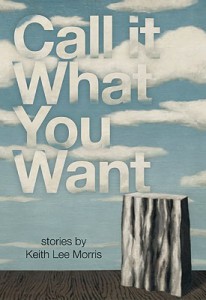
Look at The Great Gatsby. One of the arguments goes, Who is the main character? Is it Gatsby? If you buy into the argument of necessary change, then Gatsby can’t be the main character, because he is fixed. He doesn’t change at all. Daisy, Daisy, Daisy—he’s like a broken record. If it was really Gatsby’s story, the novel wouldn’t work. Even after he is shot and killed, the reader has the sense that change was never going to occur. But up until that point, you think it might. So I think that change matters, whether it’s internal or external, and it might not happen in the story, but it exists as a possibility. Part of what makes the novel work, too, of course, is that Nick Carroway does change significantly.

RJF: Much of your writing explores the motif of heterosexual male relationships. Specifically, the friendships between men. I think this is a rare thing to write about. Hemingway did this, of course, but you explore this territory with a more overt emotional compass. What is it about this male dynamic that is so interesting to you?

KLM: That’s interesting. I’ve never been asked that before. I’d say that some of it comes from my own experience. I’ve had the same set of half a dozen male friends since middle school. After I get off the phone, I’m calling one of them. We’ve been friends since I was, I guess, thirteen. His wife was just recently diagnosed with breast cancer. I call him every week to check in. So I guess this comes through in my writing from this sort of personal experience and this strong group of friends. And we all make the trek back home every year, to our small town in Idaho. I have guy friends that are writers, too. Steve Almond, Brock Clarke. So I guess, on reflection, that those kinds of long-term close friendships are important and they make their way into my writing.

RJF: Following up on this topic: What rituals exist for the contemporary male? You write a lot about bars, dart games, dog races, etc. Your male characters have this ‘lovable loser’ quality—they’re always getting drunk and stoned and getting into trouble, but you test them, too. Do you think that men today have lost some sense of the sacred ritual or the passage from boyhood to manhood?

KLM: Like the Hemingway thing, bullfights and war? Hunting, fishing, sports, sexual encounters? Those are the kind of standard coming of age rituals, I suppose. But I think my characters tend not to participate in rituals. Take Luke Rivers (the protagonist in The Greyhound God). When he was young, he went through a lot—the death of family members, a psychological breakdown, being in a mental hospital. So at a time when he would have been experiencing the traditional coming of age rituals, he was experiencing other things. He has this close bond with his wife, and while he goes through the ‘buddy stuff’ in the bars and at the track, his experiences are not typical. Even his friendships are atypical. He’s exploring his identity in the novel.

Typically characters I identify with have difficulty with rituals. They don’t see themselves as going through the traditional rites of passage.

Another example would be the character Deeder in my short story “Ayudame.” He was based on a friend of mine I grew up with, a working class, blue collar guy, but I crosscut him with another friend who had always dreamed of opening a record shop. And I wondered what it would be like for this character who never stopped dreaming of that record shop, who still felt that he should have been born in the 1960s. I guess I think about the different ways to create male characters who don’t go through the typical “coming of age” scenarios.

You called them ‘lovable losers.’ I grew up in northern Idaho. I went to school in the second-lowest funded district in the second lowest-funded state in the country at the time. A lot of those guys I knew didn’t even make it into high school. They just dropped out after eighth grade and disappeared. So I’m writing about people that are familiar to me. I’m actually uncomfortable around writers a lot of the time, you know? Guys with PhD’s and professors. It’s just not where I came from.

And I’ve been lucky. A lot of my friends have embraced my writing. Even if they aren’t readers or if normally they’d be reading books I’d hate, they still read all of my stories and books.

RJF: In your story collection, Call it What you Want, you refer to two types of stories. You have your traditional, realist stories and a type you call “dream stories.” Do these two types of writing inform each other as you go?

KLM: They do inform one another. Even in the ‘dream stories’ you’ll find the same types of characters at the center. And I think, because of my immersion in the dream stories, my realist stories aim at a language that is different. If you look at the end of “Ayudame” you’ll see that. The sentences become long and lyrical. So maybe the dream stories are a way of getting at the more lyrical writing. Something about me wanting to write those types of sentences.

RJF: I’m going to quote you back to yourself here. In The Greyhound God, you write this about fathers: “A father is anyone with answers to the questions that keep you awake at night.” Do you think this is the writer’s task, to answer the questions that keep us awake at night?

KLM: (Laughs) Well, it’s a lofty ambition. I meet a lot of writers who don’t want any meaning at all attributed to their stories. Maybe this is a result of the post-modern era. Authors won’t take ownership of their message. There’s a sense that, as a group, we don’t have that kind of influence anymore. If you take the most    famous writer in America, if Stephen King died tomorrow, they wouldn’t turn out in the streets like they did in Paris when Victor Hugo died. So things have changed.

But I do mean something when I write. I’m trying to get across an idea, even if I’m sometimes not entirely sure what that idea is. I’m exploring, too, while I’m telling a story. I’m certainly looking to find answers for myself when I write, so if I happen to answer some questions for someone else, then great. Part of the process is sharing ideas. Some writers think of a story as art. Like a story is the same thing as a painting. For me, a book is a form of communication. It’s a conversation.

RJF: Someone once asked Graham Swift what the essence of storytelling was. He replied that a story is “the relation of something strange.” He talked about overhearing a guy in a bar tell a story and that guy’s urge to relate the strange. He said he wanted to remember that guy in the bar when he wrote stories, that he wanted to be in that bar, too. Here’s the longer part of his response: “It begins with strangeness, it takes us out of ourselves but back to ourselves. It offers compassion.” Since so many of your stories are bar stories, I’m wondering how you think about Swift’s answer.

KLM: I hadn’t thought about stories that way before. But bars are fascinating. There’s nowhere else where you get people from all different walks of life coming together. And everyone’s there for the same reason, to have a drink and maybe to talk. So a lot of my stories are set in bars because the possibilities between people are so fascinating. But I think, even in the opening stages of a story, familiarity is just as important as strangeness. Think about it, if a total stranger walks up to you and starts talking, you’ll probably go the other way. If someone sits down with a strange story, you need to be interested in the person before you’ll be interested in his story

There has to be something familiar in a story. Until something is familiar in a character, we probably don’t want to hear what they have to say. We don’t want someone’s back-story until we are interested in him. So the element of the familiar matters. The strangeness has to come out of the familiar first for it to matter. I’d say it goes from familiarity to strangeness and then back again.

RJF: Here’s a more personal question. When did you first realize that you were going to be a writer?

KLM: It was later for me. I was in my twenties and I’d dropped out of college. I thought about acting for a while. I acted in some community theater, but I realized I sucked as an actor. I was acting in some locally written plays, and some of them were pretty bad, and I started thinking, damn, I could do as well as that. So I first started by writing plays. And I started reading more fiction, but I was well into my twenties. Back in middle school and high school, my teachers always told me I had talent as a writer, but I didn’t get serious about it until I was much older.

RJF: Was there an important person who influenced you to pursue it more seriously?

KLM: I suppose it was my parents first, who instilled in me the notion that I was responsible to do something, to not just be a bum. And I was well on my way to being a bum for a while.

The usual suspects, of course—my professors and writing teachers at The University of Idaho and UNC-Greensboro. But I can think of some less obvious examples, too. There was a guy in New Orleans who owned a bookstore. It was just a hole-in-the-wall shop, with books stacked from the floor to the ceiling. All these great books, literature, history, philosophy. I’d walk in and ask him what to read and he’d point me to a bunch of books, then I’d go back and tell him what I liked and didn’t like, and he’d suggest more. So I read a lot of good books because of him.

One person for sure had a big influence. I was dating a girl at the University of Idaho and I was writing short stories. I wasn’t in college then, but she took some of the stories to her English professor to read without me knowing it. He asked her to bring me in, to come and see him. He told me I needed to get back in school and get some formal guidance. He didn’t have to do that. I was nobody to him, and he took the time to call me in off the street. Walter Hesford. I’ll always be grateful to him. And as a professor now, it really taught me that you can’t ignore anybody. You never know who’s out there.

RJF: This is a weird question but I’m going to ask it anyway. Are there places you won’t go in your writing? Are there topics, for one reason or another, that you won’t touch?

KLM: I know I’m supposed to say, ‘no,’ right? But I’ll try to answer this.

I’m really reluctant to write about people that will be hurt if they recognized themselves. I’ll radically alter plots and characters to avoid that. So I shy away from material if it’s too close to someone. Other than that, probably not.

I do feel like I’ll write a story then go back and look at it and if I don’t like a character or a situation, I won’t send it out. I don’t always know where a story’s going when I’m writing it, so when it’s finished, I’ll sometimes decide that what comes out is too negative, that there’s absolutely nothing hopeful that the story has to offer, and for that reason I’ll dismiss it. If I can’t see anything in there that I would want to read about, I don’t want to force anyone else to read it.

RJF: My editor here at Numéro Cinq, Douglas Glover, was also my advisor in grad school. His nickname was “The Shredder” and he was insistent that his students think deeply in terms of structure. He said a lot of new writers, even in an MFA program, don’t understand structure. So it’s for him that I ask you this: How do you think structure in writing?

KLM: I had a professor like that in grad school, too. Michael Parker. He really focused on structure and the integrity of language, the integrity of the story as a whole. He forced me to recognize things that I hadn’t been thinking about. To this day, I have this little Michael Parker running around in my head, making me pay attention to structure, both at the sentence and the story level.

But to be honest, I couldn’t care less about structure. Yet of course I’m aware of it. When I wrote The Dart League King, I was experimenting a lot with structure. And as a writing teacher, I force my students to pay attention to it. Paying attention to structure is important, but it’s not structure that I’m interested in.. It’s a precursor to or a byproduct of what I write. In itself, it’s not what I’m interested in. Writers write for different reasons, and I think all writers have parts of the process that they submit to grudgingly.

I know a lot of writers who just love writing sentences, and they have to be forced to think in terms of plot. But I want to write stories—I’m interested primarily in narrative and the ideas contained in narrative. You have to consider structure as part of how to create a story, though—and if structure is one of your weaknesses as a writer, it’s your responsibility to shore up the weaknesses in order to get the material out there.

—Richard Farrell & Keith Lee Morris

/

Richard Farrell is a Contributing Editor at Numéro Cinq where he has published memoir, craft essays and book reviews. He is the Non-Fiction Editor at upstreet. His essay “Accidental Pugilism” appeared in the most recent Hunger Mountain Menagerie and has been nominated for a Puschcart Prize. He lives in San Diego, CA and is currently at work on a collection of short stories.

/
/

Oct 192011
 

Donald Breckenridge has a story to tell you: He’s a failed-actor-turned-fiction-writer, playwright, literary activist/editor, and wine-seller who’s carving out a life for himself in New York City. Though I’ve never met Donald Breckenridge in the flesh, he’s the guy I’d like to meet for a beer. After reading his brand new novel, This Young Girl Passing (imminent from Autonomedia—see the Publishers Weekly review here; read an excerpt on NC here), it was clear to me that Breckenridge has a self-consciously intentional approach to crafting fiction, and this interview/conversation reiterates the thoughtfulness behind his work. If you haven’t met Donald Breckenridge already, it’s my pleasure to introduce you to him and his work in some small way.

Donald Breckenridge is the author of more than a dozen plays as well as the novella Rockaway Wherein (Red dust, 1998) and the novels 6/2/95 and You Are Here (Starcherone Books, 2009). In addition, he is the fiction editor of The Brooklyn Rail, co-editor of the InTranslation website and editor of the The Brooklyn Rail Fiction Anthology (Hanging Loose Press, 2006). He is working on his fourth novel.

Here is what NC Editor Douglas Glover wrote about This Young Girl Passing:

This Young Girl Passing is a deceptively short, dense, ferociously poignant novel of sexual betrayal and despair set in impoverished upstate New York, a Raymond Carver-ish milieu of never-weres and left-behinds. Breckenridge is a pointillist, constructing scene after scene with precise details of dialogue and gesture, each tiny in itself but accumulating astonishing power and bleak complexity. The novel’s triumph though is in its architecture, its skillfully fractured chronology and the deft back and forth between the two main plot lines, two desperate, sad affairs twenty years apart and the hollow echoes in the blast zone of life around them.

—Mary Stein

.

Our Endless Past: An Interview with Donald Breckenridge

By Mary Stein

.

.

MCS: Why don’t we start off with a little personal backstory: from thought to fruition, could you describe the gestation period of writing This Young Girl Passing? How did it compare with some of your other works?

DB: I discovered the article that this book is based on in March of ’00. It was a Saturday and I was waiting on the downtown platform at the 77st 6 train station. It was early afternoon and I was going home from my part-time wine shop job in Yorkville. I didn’t have a novel with me and there was a day-old copy of the Times on the bench. I was skimming through the NY section and I was taken immediately. The actual article is only four brief paragraphs but I knew right away that I wanted to write about it.

At the time I was writing my first novel, 6/2/95, which was a year away from being finished, so I cut out the article and put it in a drawer. I thought at the time I would turn it into a play but that didn’t happen for a host of reasons. After finishing, 6/2/95, I took a few months, March of ’01 till July of ’01, approximately, to work myself into an place that I thought would be a good beginning. I really wanted to write a book about child abuse that wasn’t autobiographical, so that’s where I began with Sarah, from her reaction to a shitty home life which is my how and why she became involved with Bill. I have never been even remotely interested in telling the real story of the actual participants in the article, that is absolutely none of my business, the truth really only belongs to the people involved. The article in the Times was simply a sketch and I let my imagination roll out from that point of departure. I began writing the first chapter that August, while my now wife, Johannah Rodgers, and I were staying in Door County, Wisconsin. We were there for 7 weeks and I’d wake up early every morning and work on this conversation that Sarah was having with Robert in the woods and in his father’s car.

All of my books begin in dialog, with a simple conversation between two people, and once that is recorded all the other information, vital or otherwise, is piled on top of that dialog. The novels all begin with dialog and all of them incorporate found news items. The gestation here was very deliberate, in that I wasn’t telling a story that was autobiographical, so I was separating myself from the story while at the same time grounding what was to become Sarah in this wounded and romantic landscape.

MCS: It doesn’t surprise me that you considered making the story into a play. In the novel, dialogue and physical descriptions (which read like stage directions at times) are braided together to create the sentence-level foundation of the novel’s structure. How do you feel your background as a playwright influenced this novel’s form? 

DB: I’m a failed actor, I came to NYC in ’89 to study acting and was thrown out of school after the first semester, however I did meet quite a few truly talented actors in school and a year or so later I founded a theater company with a handful of them, The Open Window Theater, and at first we worked out of a storefront Co-op art gallery, Brand Name Damages, in South Williamsburg where I wrote and mounted my first plays, later we moved to a converted paint factory beneath the Williamsburg Bridge where we continued putting on plays, hosting readings and bands, there was a gallery upstairs as well where local artists would show—Williamsburg was a very different place then. After doing that for a few years I left the company and slowly, really glacially, I began attempting to write fiction, because it became prohibitively expensive for me to mount my plays and I had lost my cast. My earliest attempts were published as the novella, Rockaway Wherein (Red Dust 98) but to answer your question, I’ve always tried to capture the immediacy of watching a performance on the page. That immediacy where the reader is in the moment with the present, as if the reader was watching the characters performing on stage. For an actor all his lines in a script contain cues—when A is to stand up while speaking and how A is to then cross the room with a sullen expression while proclaiming his love for B who is sitting in a chair by the window overlooking the crowded street and is secretly waiting for her lover to emerge from the subway entrance at the end of the block—the actors playing A and B need to internalize all of their objectives and to thoroughly understand what their character’s psychological motives are beneath the lines, what the real motivations are, what moves them across the room and has them proclaiming and or hiding their love. This is of course a very simple example of what Method Acting is, and by making the psychological motives visible in the dialog, and by laying out the surroundings in the dialog as well—which is obviously equally important—I think I’ve brought a heightened present, or at least more urgency, to the page..

MCS: You accomplish a lot with such economical prose. The point of view is prismatic in the sense that the reader is made to understand the motivations and desires of multiple characters—oftentimes simultaneously. It seems that most writers find it challenging enough to convey the motivations of even just one character without compromising the complexity of another. How did you manage this?  

DB: I try to be thorough and I’ve learned to be very careful, and although it has taken a long time, I’ve finally learned how to write slowly and for myself. That was my take-away from This Young Girl Passing; you have absolutely no reason to rush writing, ideally the work will last much longer than the time it took to create, so why rush? The hordes aren’t clamoring at my door. This book took forever and way too many drafts before it became an actual book, and although at times the wait and the rejections were incredibly frustrating—in the end I’m really grateful for the struggle, as clichéd as that sounds. I spend a long time on a single page, they often take weeks to write, and then I’ll go back a few dozen times and spend twice as much time as I really should compressing text and then reintroducing the lines. Also, I tend to get bored with all the tedium that is involved with writing everyday so I’ll introduce new narrative threads within the existing lines, this resuscitates the everyday exploration of what writing a novel should be and enables me to create that prismatic point of view that you mentioned. I’ll then build out of the gaps once I remove the obvious lines and attempt to formulate a stronger foundation for the characters in the scene once the redundant has been purged and purged again.

MCS: Your approach to time and historical context is met with a similar sense of refinement and narrative necessity. One of the defining characteristics of This Young Girl Passing is its back-and-forth movement between a post-Vietnam 1970’s and the late 90‘s (and your earlier novel, You Are Here, also moves through time within the 9/11 era). Yet it manages to avoid the entrapments of sensationalism that threaten to derail narrative. How did you inhabit both these eras in This Young Girl Passing?

DB: When writing out the dialog for chapters I always reach a point when I need to consult the newspaper and check the weather; so I get the light right, so the moon is full or gone on the right night, to make sure it actually snowed enough to be a nuisance, and knowing what the weather was like also helps me dress the characters. I’ll go to the library and check the weather for the day before the chapter, the day of the chapter and the day after, just to be sure. At times the headlines from those dates leak in as well and that helps inform the characters dialog—sometimes it’s necessary but I’m really careful with how I use it—and it also provides the reader with a skeletal time line. However, the people I write about aren’t on the cusp of breaking news, ever, with the exception of Stefanie in You Are Here, who is last seen entering the WTC on the morning of 9/11, my characters are all very marginal and quite content to be so, they might talk about current events but only in passing—like Bill and Sarah in the hotel room talking about Hale Bopp and Heaven’s Gate—headlines are always on the peripheral.

I’m very much into the music and culture of the 70’s, so for me, who was a teenager in the 80’s that decade represents an almost mythical time in America, and my father served in Vietnam so that war was and still is a very real part of my personal history.

MCS: I spied on your Goodreads account, and when it comes to reading, you certainly don’t mire yourself in one literary tradition. You’re the fiction editor of Brooklyn Rail and the co-editor of its InTranslation publication which gives exposure to English translations of new international voices that might otherwise go unrecognized. How does your involvement with Brooklyn Rail impact your writing? 

DB: I’ve always been a ferocious reader since I was very young, and one of the happiest times in my life was when I read a novel a day for a 9-month period of deliberate and blissful unemployment during my mid-twenties. That was just before I began my attempts at fiction. What I’ve found with writing novels is that I cannot read them as avidly as I once did. What the Rail has allowed me to do is to ingest lots of current writing and to support it in a very public way. The work I do on behalf of the Rail and InTranslation doesn’t pay but I see it as a form of literary activism, which is a very nice way to go about doing something that you love.  My work as an editor takes considerable time away from my own writing, obviously, which is at times problematic because I need to work harder at making money in order to survive in NYC, which also takes time away from my own writing, but my work as an editor has given me a greater perspective as to where my writing may or may not fit in this current publishing climate and it has enabled me work with some truly dynamic authors and publishers whom I might never have been in contact with if I’d simply stayed at my desk and toiled away in solitude.

.

Where Donald Breckenridge toils away in solitude

.

MCS: How do you manage to survive as a writer and literary activist in NYC? What does a “typical day” look like for you (if there is such a thing)? 

DB: No, no such thing as a typical day. If I can get 5 hours in a day on the novel, I know I’ll be able to face the rest of the day, and that no matter what happens it will be a good day. And if I can stay at home and write all day then it has been a fantastic day. I’ll wake up at 5 or 6 and write till 11 or noon and then get started on money work—I sell wine for a small yet prestigious wine importer. The reading and editing I do for the Rail and InTranslation takes place in the late afternoon and into the evening.

MCS: Going back to your voracious reading habits—which writer(s) do you feel have most impacted your craft and/or your approach to writing? Who are you reading now? 

DB: The two most important authors would be the French novelists Claude Simon and Emmanuel Bove. Simon for the multiple layers and textures he brings to the page that make reading his novels (Histoire, The Flanders Road, Conducting Bodies) a nearly visceral, always urgent and wonderfully lucid experience. And Bove (My Friends, A Winter’s Journal, A Man Who Knows) for his precision, emotional honesty and pristine imagery. Also the Japanese novelists Kawabata and Soseki. And the German author, Arno Schmidt who is a tremendous writer, everyone on the planet should read Schmidt! Dalkey Archive just released a really handsome four volume set of collected works that John E Woods has translated over the years, and if you are unfamiliar with Schmidt’s work, Nobodaddy’s Children, which collects three of his early novels is an ideal place to start. And also the Brooklyn-born, Gilbert Sorrentino who is by far my favorite American author. I recently read and really enjoyed Chris Turner’s translation of Pascal Quignard’s The Roving Shadows that is a truly outstanding book and out from Seagull this month. I am currently reading Hans Fallada’s Wolf Among Wolves that Melville House published last year, also, Ahmet Hamid Tanpinar’s A Mind at Peace, one of the most elegant books that I’ve read in years, Archipelago published that a few years ago and I’m eyeing Ursula Meany Scott’s translation of Wert and the Life Without End by Claude Ollier which was just published by Dalkey Archive.

MCS: Earlier you mentioned thwarting the tedium of writing everyday by introducing narrative threads. Friday, December 19, 1997, is a distinct passage because of its absence of dialogue. Each sentence swivels back and forth between POV to capture the (almost) simultaneous but separate experiences of Mary and Bill. Yet, the reader is rooted in the text largely due to the very idea of “pristine imagery” you just mentioned, and the movement between scenes sustains the momentum of dialogue. While crafting This Young Girl Passing, did you consciously engage with an aesthetic that would interrupt the everyday tedium of writing?

DB: The line by line shifts in that chapter, as it finally exists are so different from a few drafts ago. Initially they had been alternating 4 to 6 sentence long scene blocks containing dramatic dialog that I stripped down in a few drafts. It was this half-formed, cathartic nonsense that I somehow felt obligated to write into the book—it was really terrible, like I was trying to wreck the novel. It works for me now because I dumped all of the false notes, everything shrill and moralistic, and all of that sentimental shit. Creating collages out of my imagery (I hesitate to call it pristine, although I try—perhaps too hard at times) on the page keeps the momentum going and at times it can suspend or stall a reader’s sense of disbelief. I wrote this book to music from the era, watched most of the films advertised in the newspapers from the days the chapters were taken while writing those chapters, studied the history of the era, so not really, other than editing the fiction in the Rail on a monthly basis, putting together the fiction anthology that Hanging Loose published in ’06  and curating a monthly reading series at the Central Branch of the Brooklyn Public Library from ’02-’08, my head was always in this book. That is until I couldn’t find a home for it, almost lost my mind, and then wrote You Are Here . This Young Girl Passing didn’t have a publisher until July of 2007, I was shopping around You Are Here, having just finished that. Both books got picked up that summer, which was a huge relief, because I was really dreading having two unpublished novels.

MCS: People who saw me reading your book in public asked me about its title, and I would respond with an imprudent amount of speculative gibberish. I swore that I would never ask this question for an interview, but I’m compelled to ask for this novel in particular—how did you settle on the title This Young Girl Passing? Would you be willing to share any working titles you rejected? 

DB: The title is from the epigraph which is taken from Eugene Ionesco’s Present Past Past Present. Eugene Ionesco is one of my favorite authors. Each one of my novels and the novella, Rockaway Wherein, contains an epigraph from that book. What I tried to say with This Young Girl Passing, ultimately, is that the past we’ve accumulated, and cultivated is the same past we will into our present. We are predetermined to live in a present where the past resonates around us endlessly, and I learned that from reading Eugene Ionesco. The working title for the novel and the title that I shopped around for a few years when this book was a disaster was Arabesques for Sauquoit as I thought that spoke to the way it was written and the location, Sauquoit, where the novel takes place.

MCS: What’s next? 

DB: I’m currently working on my fourth novel. I started it in the winter of ’09 and I have about a 100 manuscript pages that might be ok. It’s been slow as You Are Here came out while I was writing it and that was very distracting. My father got really sick in the spring of ’10 and then he died that September which was really brutal as we were very close. Incidentally, he is buried near the farm where he was raised which is in the same county where This Young Girl Passing takes place. Getting this book ready for publication was also incredibly distracting, in a good way, and that kept me away from the new novel, but now, finally, I can begin again in earnest!

— by Mary Stein and Donald Breckenridge

Jul 292011
 

.

Steven Church is the author of The Guinness Book of Me, Theoretical Killings, and most recently The Day After The Day After: My Atomic Angst. His essays have been published widely and his piece, “Auscultation” was selected for the forthcoming 2011 Best American Essays.

His latest work of memoir/criticism/personal essay (we’ll get to the issue of genre in the interview), The Day After The Day After, delves deeply into Kansas culture, Cold War paranoia, and Church’s own psyche, primarily using the mostly-forgotten Eighties scare-flick The Day After, which was filmed in our shared hometown, Lawrence, Kansas.

We went to the same high school in Kansas – I was a sophomore when Church was a senior – but didn’t know each other. I later met Church through his writing when Patrick Madden introduced me to his work. I’d written my own piece that mentioned my own memories of The Day After, and Madden must have wondered what kind of hold this film had on an entire generation of Kansans.

The movie’s effects on the youth of Lawrence at the time were intense and twofold. First, anyone who remembers seeing the film will remember the sheer dread of watching the fictional town of Lawrence blown to smithereens and permanently irradiated in the movie. But second, the reality of the movie’s filming left a permanent impression on an entire generation of Lawrencians, as the entire town was involved. Children were dressed up as radiation victims, the downtown was temporarily “demolished,” and a college town that considers itself a shining light of progressive values in the nation’s most conservative state was asked by the film crew to act as downhome and traditional as possible to fit the fiction of the movie’s narrative.

The Day After The Day After is a meditation on this confluence of fiction and nonfiction, giving fictional characters from the film an almost mythical significance in his own understanding of the world. I began my interview with Church with this thin line between fiction and nonfiction in mind.

– John Proctor

.

The Day After the Memoir: An Interview with Steven Church

By John Proctor

.

JP – One paragraph from The Day After The Day After in particular gave me a deeper understanding of my relationship to Kansas and my relationship to my own work as a nonfiction writer:

“The Kansas I know is like a long novel I finished years ago, a novel of which I remember every word. It was a great story, filled with wonderful characters and compelling plotlines, but it was epic and psychologically cumbersome and, in many ways, mostly fiction.” (180)

SC – Glad you liked that. It took me a while to reach that understanding of home. I think those lines came pretty late in the writing/revision process. It probably took writing the book to realize what I wanted to say about Kansas. Some people in Lawrence didn’t appreciate my “negative” view of home, even questioning whether I’d made up stuff about the Days of Rage,  firebombings, etc. Thing is, I don’t see it as negative, just honest. Lawrence has an underbelly and if it’s going to be a character in my book, I have to make it a well-rounded character, have to expose that belly.

.


.

JP – To me, at least if we’re speaking of the book on a macro level, Danny Dahlberg  seems a logical starting point, as his ghost permeates all four parts of the book, most notably in the “Dahlberg Variations” that serve as interludes from the main narrative and allow you to do some things outside the limitations of your own point of view and story. Perhaps I’ll allow you to describe who Danny Dahlberg is, and how you used him in the text.

SC – Interestingly enough those were some of the first sections I wrote for the book, long ago, mostly just playing around. He is, obviously, a significant character in the film, if only because of the metaphorical significance of his being blinded by the blast [Which can be seen at the 1:10 mark of the nuclear attack scene below – JP]. And he becomes for me both a kind of blind oracle, a Tiresias figure, and an alternate self. I used him initially as a kind of experiment, a fictional device designed to allow me to explore the extreme edges of one’s reactions to the film. And I guess that’s a big part of my process, at least in my first three books, that use of fiction to essay or explore certain ideas. Probably some of that comes from my training in fiction writing.

.

http://www.youtube.com/watch?v=G2H1E02iMHg
Continue reading »

Jun 152011
 

.

Here’s a fascinating interview with the great Canadian ex-pat (she lives in Paris) short story writer Mavis Gallant. Gallant’s stories used to appear regularly in the New Yorker; she was one of those blessed few (like her fellow Canadian Alice Munro) to be “on retainer.”  This splendid addition to NC’s growing collection of interviews comes courtesy of Jason DeYoung—it was originally published in Writer’s Carousel, May/June, 2004. It’s a pleasure to be able to make it widely available. (Find Gallant’s books here.)

dg

.

Knowing What Happens: an Interview with Mavis Gallant

Interview by Jason DeYoung

.

Jason DeYoung (JD):  How did Paris Stories and Varieties of Exile come about?  What was the thought behind getting those books together since both books contain mostly stories you’ve published in previous collections?

Mavis Gallant (MG): I didn’t have anything to do with it.  They were edited.  One was edited by Michael Ondaatje [Paris Stories] and the other by Russell Banks [Varieties of Exile].  They are published by the New York Review of Books.  They publish books, you know, as well as putting out the journal. And, they asked if I would be interested, that Michael Ondaatje would write the introduction and choose the stories. I said yes.  I had nothing to do with it or complain about.

The second book was to be called “Montreal Stories,” but that doesn’t work in the United States because people won’t read anything that has Canada in the title.  With any suggestion that it’s Canadian they’re allergic to it.  So in the US they chose the title [Varieties of Exile]; in the Canadian edition—because there’s a Canadian publisher, too—they used the title I wanted.  I wanted “Paris Stories” and “Montreal Stories” because they seemed to go well.

I was the one who suggested Russell Banks because with something about Canada in the United States you have to be very careful.  I knew that he had Canadian connections.  He has three Canadian grandparents.  I wanted an American whose work I admired, which is the case with Russell Banks, and who knew something about Canadian writers and Canadians.

JD:  As an American, I had no idea that there was such an “allergy” to Canadian writers.

MG:  Well, the Canadians have the reputation in America of being very dull.  If people know my name at all, they know I’m a writer—and that’s forgivable. (Laughs)  But when I used to say I’m Canadian, people would look trapped.  And there’s that feeling that they’re very dull and that Canada is a very dull place.   Actually it was true years ago, but it’s not true now, so they haven’t kept up.

JD: In your short story, “Varieties of Exile,” Linette says that “anything I could not decipher I turned into fiction, which was my way of untangling knots.”  How autobiographical is this line?

Continue reading »

May 272011
 

I first met Tammy Greenwood seven years ago. She was teaching a creative writing class at UCSD Extensions in San Diego and  I was living in the Mojave Desert.  This meant I drove 3 hours each way to attend her class.  I can think of few better testimonials to her as a teacher.

Tammy is the author of six novels and has a seventh novel in the works with Kensington.  (I’ve had the distinct pleasure of reading drafts of the new book, and it’s going to be a good one!) She has won numerous awards and grants for her writing and has taught in various universities and workshops.  I could go into specifics, but suffice to say, she’s living the dream!

Tammy combines a keen eye for details with a capacious heart, and yet somehow manages to push her stories into the gloomiest of places.   Her novels examine the tragedies of contemporary American life, with memorable characters who suffer from the curse of loving too much and being wounded by the flaws of desire and destiny.  Kids die in her novels; trains crash, families grieve over lost love and commit adultery; there are hoarders and cancer survivors and shoplifters.  Tammy’s characters hold a mirror up to the darkest corners of their being, and they never flinch from going deeper.

I’ve been fortunate to work closely with Tammy and another fine San Diego writer, Jim Ruland, in an intimate writing group we affectionately call “The Dub Club” (Dub standing for the letter ‘W’ and not the former president.)  It’s my pleasure to interview Tammy here on Numéro Cinq.

The Confluence of Rivers: An Interview with Tammy Greenwood

 by Richard Farrell


RJF: Place seems to matter a lot to you.  You’ve invented towns in Vermont in your novels.  Places you’ve lived seem to appear frequently in your work.  Could you talk about how you think about place, about landscapes, as you outline your writing?

Tammy Greenwood: I have described my work in the past as “auto-geographical.” What I mean by that, is that setting (for me) comes from a true place. I feel like that in order to create authentic characters, they must first inhabit an authentic world. Setting is one of the first decisions I make, sometimes even before character.

I grew up in rural Vermont, and (especially as a teenager), I was always trying to escape it. I think it’s funny, because now it is with tremendous longing that I return to Vermont again and again in my fiction.

Continue reading »

Apr 072011


Herewith the inaugural instance of a new Numéro Cinq series, the NC Interviews. Our first interviewee is my old friend Mark Anthony Jarman and our first interviewer is contributor Mary Stein. Mark and I knew each other at the Iowa Writers’ Workshop at the beginning of the 1980s. A long friendship with legs—last September, late one night (maybe early morning), Mark and I sat in his backyard with my publisher Susanne Alexander, drinking beer under the stars in Fredericton, New Brunswick, like old times. He edits fiction for a venerable Canadian magazine called The Fiddlehead which, in the 1970s, published some of my first short stories (and another story is coming out in the summer, 2011, issue). Mark has written a book of poetry, Killing the Swan, a hockey novel, Salvage King Ya!, four story collections, Dancing Nightly in the Tavern, New Orleans is Sinking, 19 Knives, and My White Planet, and nonfiction book about Ireland called Ireland’s Eye. He teaches at the University of New Brunswick and lives in a very large house fronting the Saint John River. His story “The December Astronauts (or Moonbase Horse Code)” appears in Numéro Cinq’s Best of Vol. 1.

dg

Mixes and Collisions: A Numéro Cinq Interview with Mark Anthony Jarman

By Mary Stein


MCS: Why don’t you start by telling me a little about your relationship to writing poetry versus writing prose. It seems it’s been decades since you’ve published a collection of poetry. Have you continued to write poetry since Killing the Swan, or does your prose writing satisfy your poetic impulses?

MAJ: After I published Killing the Swan, I had the feeling it had gone into a vacuum, and decided to put the same images and ideas into prose if I could manage.  There are things in poetry you can do that you can’t in an essay or story, but I feel it’s a very good influence on the latter in terms of editing, compression, attention to language, imagery, odd juxtapositions, implication, developing an eye and ear, etc.  I also feel there is too much weak poetry around and I don’t want to add to it; perhaps the government could pay us to not write poetry rather than fund more.  Great poetry is great, I was influenced by Eliot, Richard Hugo, Denis Johnson, Philip Levine, Sharon Olds, and had good teachers, PK Page, Phyllis Webb, but a lot of poetry strikes me as pointless.  Maybe I’ve been to too many bad readings.

MCS: In Burning Down the House, Charles Baxter writes, “Fiction writers get resentful, watching poets calling it quits at 9:30 a.m.” Do you ever lapse into moments of “poet envy” or does the fiction writer’s tireless pursuit of the right-hand margin suit you?


MAJ: I do torment the poets I know, teasing them that they can whip off a poem before breakfast whereas a story rarely happens quickly.

Continue reading »