Sep 042013
 

0 Valentin TrukhanenkoValentin Trukhanenko

Herewith a lovely, lively, astonishing, revelatory photo essay by the Russian photographer Valentin Trukhanenko. We have these images courtesy of Russell Working who curated and introduced the post as an accompaniment to his terrific essay “The Roommate: Vladivostok and the Ghost of Mandelstam” also published in this issue. The two pieces for a diptych, wonderful to have.

dg

Vladivostok is so distant from Moscow, when Anton Chekhov visited in 1890, he decided to return by ship via the Suez Canal rather than face the 6,000 mile journey home on land.

Yet today it is largely ethnic Russian, a European city in a region flanked by China, North Korea, and the Sea of Japan. It is linked to the heart of the country by the Trans-Siberian Railway.

The homes are largely Soviet-style prefab concrete, and Russian traditions endure—such as children taking flowers to the teacher on the first day of school. Stalin saw to it that the Asian minority was exiled to Kazakhstan and elsewhere in Soviet Central Asia, but some have returned in recent years.

While Russia has had a Pacific outpost in Okhotsk since 1639, the port of Vladivostok –“Rule the East”—was only founded in 1860. The city’s main bay, Zolotoi Rog or Golden Horn, was named for its similarity to the Turkish waterway.

Throughout the Soviet era, Vladivostok was closed to foreigners, yet its citizens had black market access to jeans and rock ’n’ roll tapes thanks to sailors who traveled abroad. My mother-in-law even read a copy of Orwell’s 1984 that had found its way into the city in the 1970s. A friend lent it to her overnight.

—Russell Working

01 Zolotoi Rog Funicular

HORN OF PLENTY

Founded in 1860 on the site of an indigenous fishing village, Vladivostok’s Zolotoi Rog (Golden Horn) Bay is Russia’s largest Pacific seaport. It was closed to foreigners throughout the Soviet era. © 2013 Valentin Trukhanenko
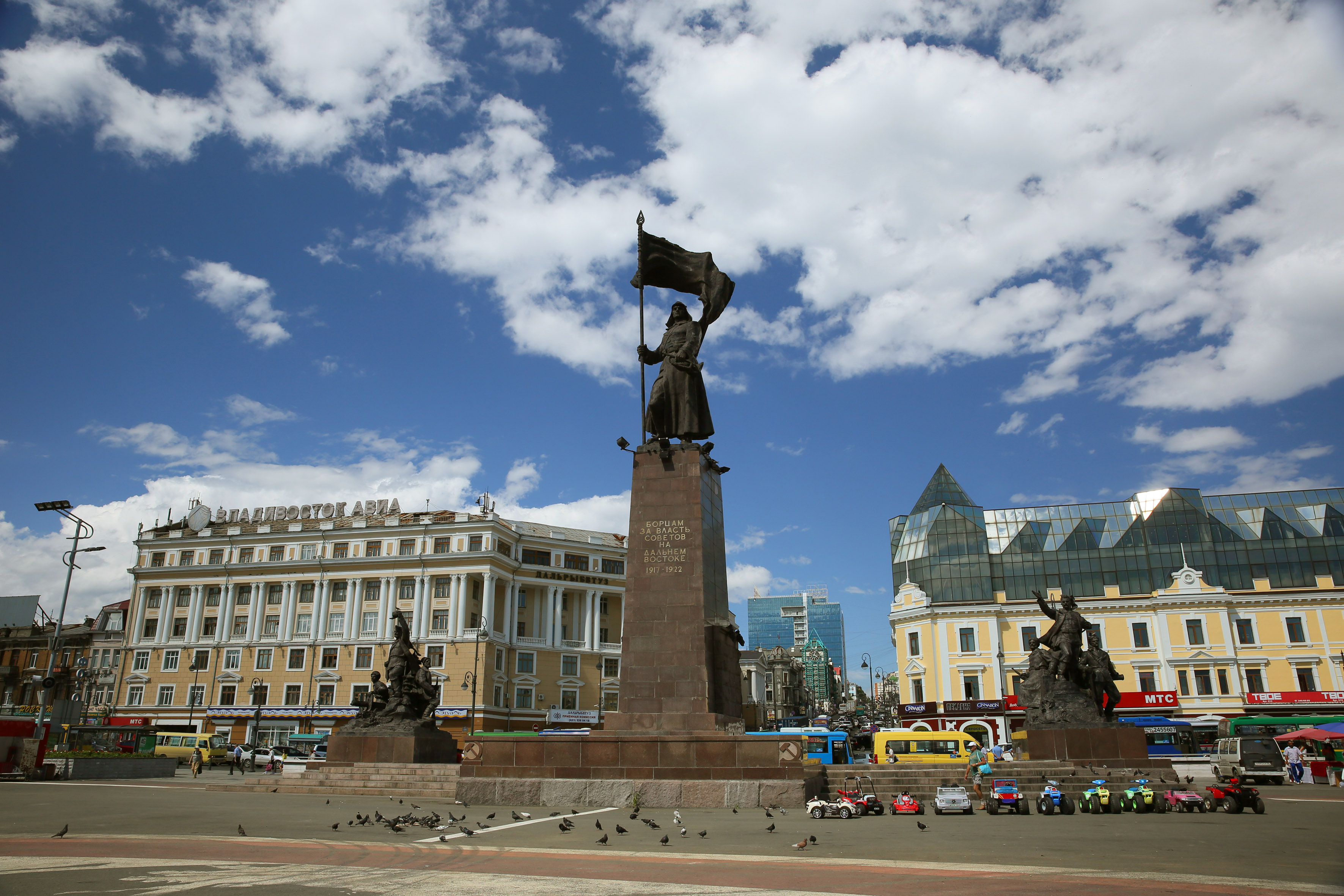
 

02 Monument to Soviet Fighters in FE

BANNER YEAR

A Monument to Soviet Fighters in the Far East, who captured the city in 1922, dominates the central square. © 2013 Valentin Trukhanenko


03 Market carrots

EAT YOUR VEGGIES

A woman sells vegetables at a Saturday market in the central square. © 2013 Valentin Trukhanenko


04 Market abacus

FREE TRADE ZONE

Traders still use abacuses to tally their sales. © 2013 Valentin Trukhanenko


05 Dacha

NINE BEAN-ROWS WILL I HAVE THERE

A woman works in her dacha, a plot of land and, sometimes, a rough cottage where Russians escape on the weekends. © 2013 Valentin Trukhanenko


06 Beach Kids

SUMMER DAYS

Children enjoy the beach on a warm day. Although Vladivostok lies at roughly the latitude of Marseilles, France, the continental climate makes summers brief. © 2013 Valentin Trukhanenko
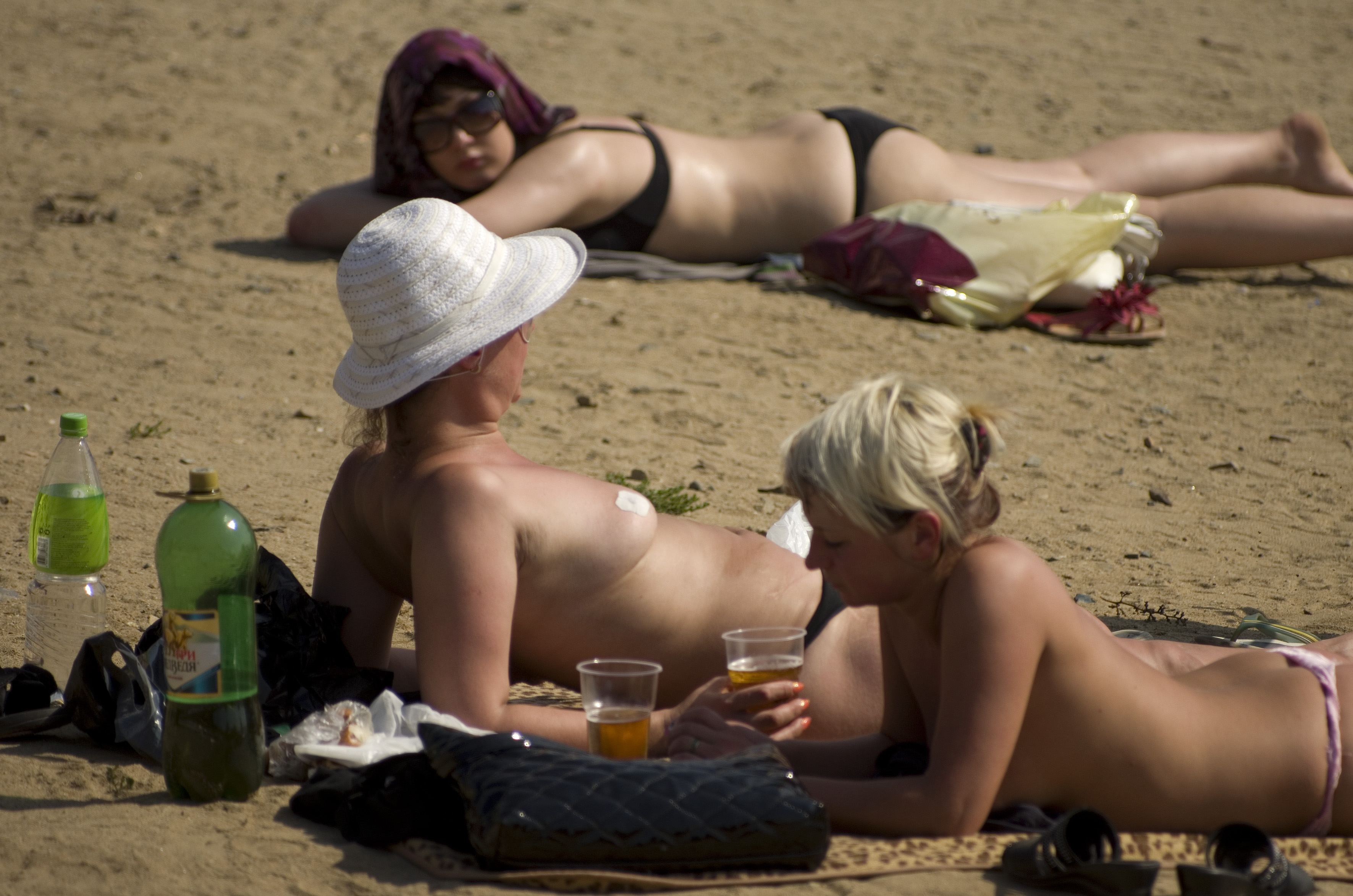
 

07 Devushki

BEACH BABY

Women sunbathe and sip beer on a beach on along the Sea of Japan. © 2013 Valentin Trukhanenko
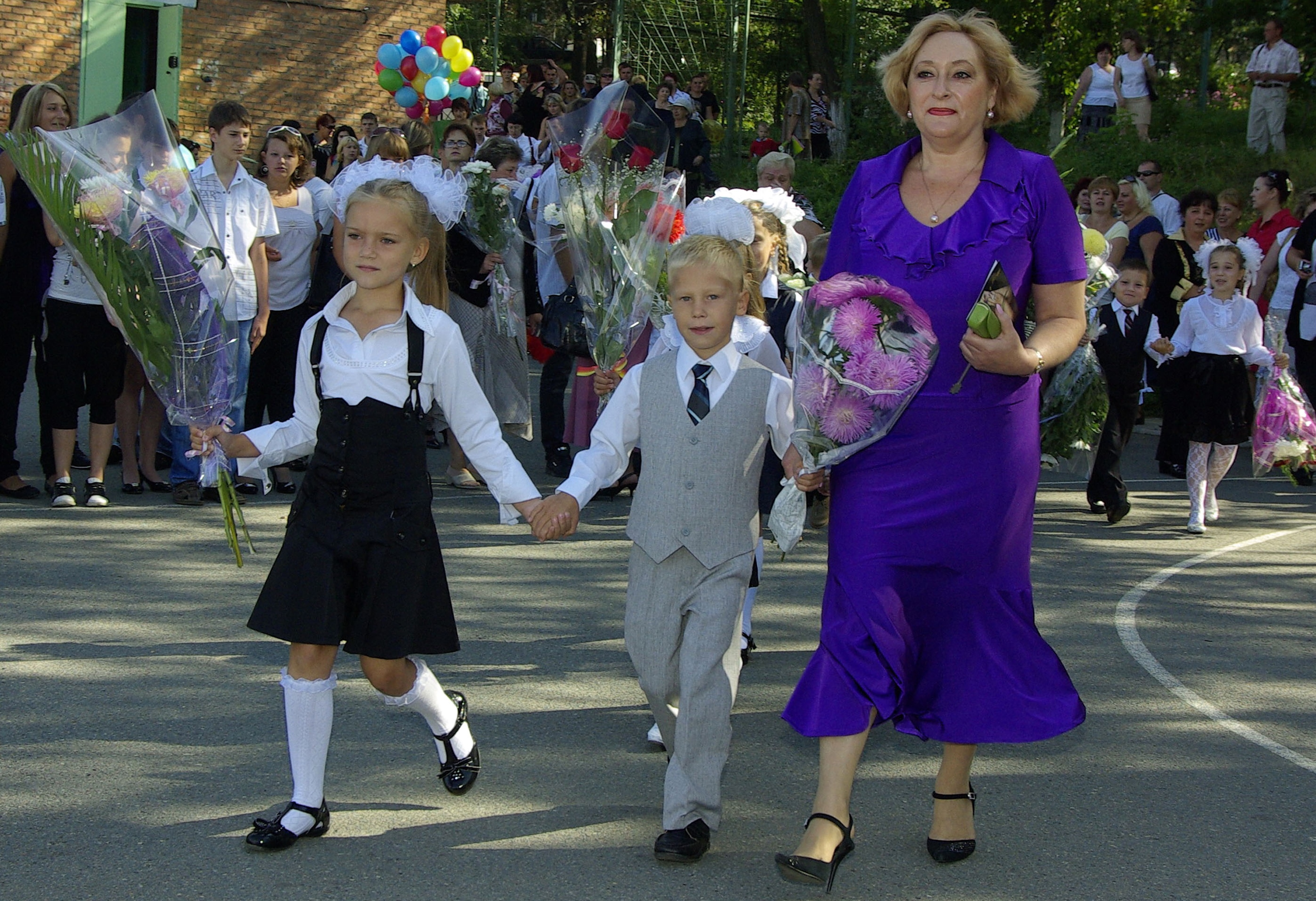
 

08 Back to School

BACK TO SCHOOL

Children dress up and bring flowers for their teacher on the first day of school. © 2012 Valentin Trukhanenko
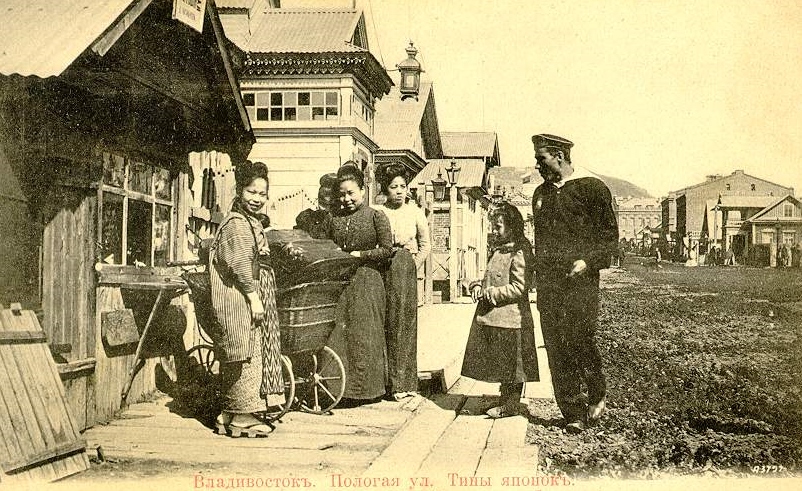
 

09 Japanese

EAST MEETS WEST

A Russian sailor talks to Japanese women on Pologaya Street in prerevolutionary times. Stalin exiled tens of thousands of Vladivostok’s Japanese, Koreans, and Chinese to Kazakhstan and elsewhere in Central Asia.


WAR & CONFLICT BOOK ERA:  SIBERIA & NORTH RUSSIA

OVER THERE!

Doughboys from the American Expeditionary Force Siberia joined Japanese, French, British, and Canadian troops in occupying Vladivostok in 1918 during the chaos of the Russian Civil War. One major goal was to aid 40,000 Czechoslovakian soldiers—allies of the Western powers—who had become stranded by the Revolution and were fighting their way east along the Trans-Siberian Railroad.
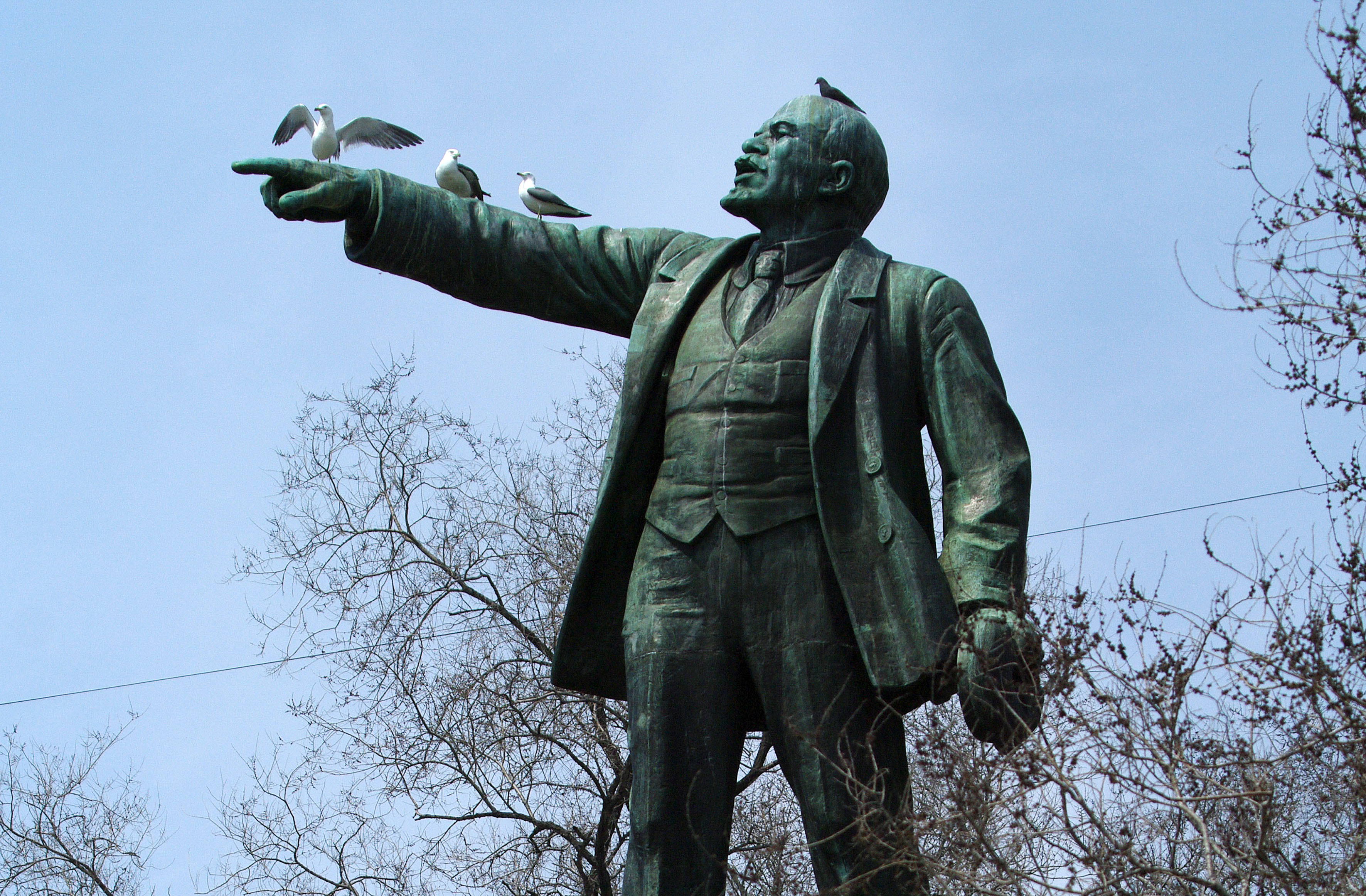
 

11 Lenin

BIRD MAN

A monument to Lenin still stands near the train station downtown. © 2013 Valentin Trukhanenko


12 Cold Cop

COLD CASE

A traffic cop braves a blizzard. Winter temperatures drop to minus 35 Fahrenheit. © 2013 Valentin Trukhanenko


13 Hot water pipes

HOT ENOUGH FOR YOU?

Central boiler houses heat water, which is then pumped aboveground to apartment buildings and offices. © 2013 Valentin Trukhanenko


14 Clearing snow

RESCUE CREW

Firefighters and other city workers clear snow on a bitter day. © 2013 Valentin Trukhanenko


15 Climbing over the ice-1

CLIMB EVERY MOUNTAIN

A woman scales a mound of snow in downtown Vladivostok. © 2013 Valentin Trukhanenko


16 Ice Fishermen

PATIENCE

Bundled up for the cold, ice fisherman wait for a bite on Amursky Bay off the Sea of Japan. © 2013 Valentin Trukhanenko


17 Ice Fisherman Solo

GIMME SHELTER

An ice fisherman drops his line behind a nylon shelter out on Amursky Bay. © 2013 Valentin Trukhanenko


18 Sub in ice

UNDER THE SEA

A Russian submarine docked in the winter slush. Vladivostok is home to Russia’s Pacific Fleet. © 2013 Valentin Trukhanenko


19 New Church

ORTHODOX

The Bolsheviks destroyed many of Vladivostok’s churches and Buddhist temples, in the post-Soviet era new ones have taken the place of some. © 2013 Valentin Trukhanenko


— photos by Valentin Trukhanenko & captions by Russell Working

——————————————————————————————————

Valentin Trukhanenko was born 1947 in the Tver region of central Russia, north of Moscow. A retired Russian Navy captain, first rank, he is a photographer with the newspaper Dalnivostochnye Vedomosti. He has been a laureate and participant in Russian and international photography exhibitions. His work has appeared internationally in Reuters, AP, the San Francisco ChronicleThe Japan Times, and other newspapers and magazines. Trukhanenko was named the best sports photographer in Russia’s far eastern Primorye region for three straight years, starting in 2005.

Russell Working is a journalist and short story writer whose work has appeared in publications such as The New York Times, The Atlantic Monthly, The Paris Review, The TriQuarterly Review, Zoetrope: All-Story, and dozens of other newspapers and magazines around the world. He is the author of two collections of short fiction: The Irish Martyr (University of Notre Dame Press) and Resurrectionists (University of Iowa Press). He lives in suburban Chicago and is a writer/editor at Ragan Communications, which publishes PR Daily. He lived for five years in Vladivostok, Russia. He and his wife, Nonna, have two sons.


Jun 022011
 

Something self-indulgent about dg publishing these lovely Nicole Dixon photos because they reference a brooding, romantic, Heathcliff streak in him, the part of him that likes the idea of climbing Signal Hill in St. John’s, staring into the fog, and knowing there is nothing between the rock he’s standing on and Europe to the east except the vast, surging, very cold Atlantic. (Just behind you is Deadman’s Pond and just in front of you is Cuckold’s Cove—they have a way with names in Newfoundland.) There is also something satisfyingly uterine about St. John’s Harbour—ships go in and out through a narrow passage called, um, The Narrows (which you can see at the bottom of Signal Hill) while the harbour itself is, well, it all looks like an anatomy diagram dg remembers from when he was 12. DG has many writer friends in St. John’s who sometimes call him up late at night from the bars. It is also the home of the Burning Rock writing collective, an amazingly vibrant literary community with the best name ever. (Sometimes it seems St. John’s must have more writers per capita than any other place in the world.) On a personal note (as if talking about anatomy diagrams wasn’t personal enough), dg’s mother was stationed in St. John’s as a radio operator with the Royal Canadian Air Force during World War II. He has photographs of her marching through the streets as part of the VE-Day celebrations (also pictures of the massive victory party after). She used to like to go out to Cape Spear, just south of St. John’s and the eastern-most tip of North American, and look out into the Atlantic, too.

Nicole Dixon is an estimable fiction writer, with a first story collection coming out next year (see bio below). She  took these photos on a recent trip to St. John’s to attend the Atlantic Provinces Library Association conference, where she co-presented a paper on Sea Stacks (seastacks.ca), a web-resource she built to promote and disseminate information about Atlantic Canadian authors and books for children and teens. Much appreciated.

dg

.


IMG_0297

Continue reading »

May 012011
 

NC has a whole hybrid art theme, understated but insistent—Nance Van Winckel’s photoems, graffiti art, Domenic Stansberry’s graphic novel, and Nance’s off-the-page workshop video. We also like our art seasoned with a dash of wit and arrogance. So on this slow, droll Sunday, NC offers for your delectation a spritely, deadly comic photo essay by photographer Melissa Fisher who recently spent an afternoon in Whitehall, NY, (where the United States Navy was founded, mysteriously far from any ocean front, and a place noted for its Big Foot sightings—there is a Big Foot Liquor Store). Melissa has, in fact, a lot of affection for Whitehall where once she says, her car broke down and the local mechanic was sweet and persistently helpful as was the guy at the Sunoco station where she got a slice of pizza. She also, being from Vermont, has an affection for the backwoods, forgotten places, vestiges of older times, and the quirky things you find when you get off the main street. Whitehall proved to be a goldmine of comic signage, poignant in its juxtaposition with a kind of upstate economic decline. Her work has been published in Vermont Life and Hunger Mountain, and she has had an exhibition at After Image Studio in Montpelier.

dg


Continue reading »

Feb 022011
 

photo by Eliza Grace Johnson

Here’s a gorgeous “What it’s like living here” essay from NC contributor Anna Maria Johnson and her husband, the photographer Steven David Johnson. Anna Maria Johnson is a writer, Vermont College of Fine Arts MFA student, and a lovely artist in her own right. She was a co-winner of  the NC Rondeau Writing Contest last year, and who can ever forget her amazing Novel-in-a-Box Contest entry? This essay is Anna Maria’s first post on Numéro Cinq as an official Contributor—we hope for many more like it. And it’s also the first time we’ve had a husband and wife team work together. It’s a wonderful addition to the growing Numéro Cinq “What it’s like living here” series.

dg

What It’s Like Living Here–Cootes Store, Virginia

Text by Anna Maria Johnson, photos by Steven David Johnson

(Author’s Note: The locals pronounce this place “Cootes’s Store,” though the green road sign omits the possessive.)


At home on the Shenandoah River, North Fork

Home.  What’s it mean?   By age twenty-one, I’d lived in twenty-one places and thought home was a place I’d never find.

John Denver’s song “Country Roads” refers to western Virginia’s Blue Ridge Mountains and Shenandoah River.  This northwest corner of Virginia is where I now live, along the river’s North Fork, which runs parallel to Route 259, my road.  When I travel alone, I sing the old folksong, “O Shenandoah,” and ache to be home.

Home, for me, is family: a husband and two daughters.  But increasingly, “home” is becoming a specific 2.3-acre plot of land with dilapidated sheds, gardens, woods, meadow, and a white farmhouse with a front porch.

Our farmhouse. Its wood plank bedroom ceilings, steep stairs, foot-thick walls, and hand-made plank doors with old-fashioned latches hint at the log cabin our house used to be—and still is, beneath its vinyl-sided exterior and dry-walled interior.  The bathroom, an aging plumber told us, was installed only in the late 1960s or 70s; he remembers doing it.  The back kitchen was probably added then.

My husband, Steven, wanders down to the river nearly every day to photograph his friends—mink, herons, deer, cattle, water snakes, starlings, swallows, kingfisher, and once, three otters.

Continue reading »

Jan 252011
 
Barrett Olson-Glover 1

Journey’s end, back-country in British Columbia

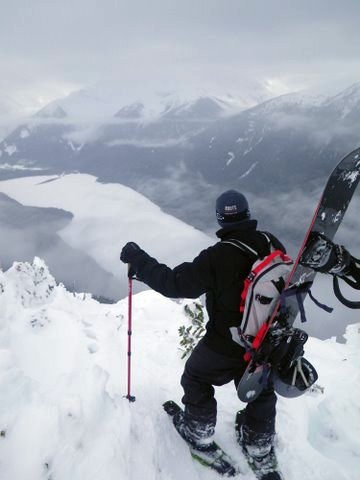
It is an undoubted fact that in the heart of every young Canadian there lurks the impulse to pack up and drive across the country at least once. The road itself, the Trans-Canada Highway, and the immense distances beckon you. DG’s nephew, Barrett Olson-Glover, left Oakville, Ontario, just after Christmas and arrived in Vancouver New Year’s Eve. He was supposed to drive with friends, but his friends lacked the true adventurous spirit of the breed, and they abandoned him. Hence he had to take his trip photos while driving one-handed.  There is just something visceral, no matter how gray, cold and alien the outlook, in photographs of the empty land. Lake Superior is mythic, the Prairies are lunar, and the mountains  exude an air of being party girls who know how good they look (and yes their sheer immensity, catching the light, seems also inhuman). The back-country photos of Barrett (top and bottom of the post) in British Columbia were taken by his boarding friend Dan Robertson.

dg

Heading north to go west over the Great Lakes

First glimpse of Lake Superior

Continue reading »