Jan 112015
 

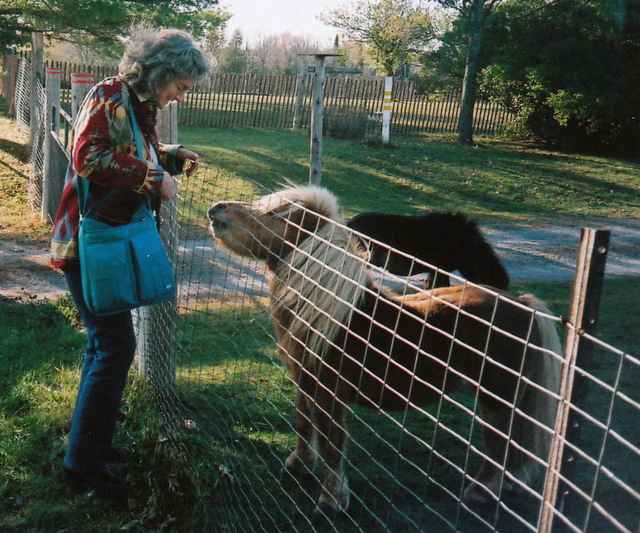
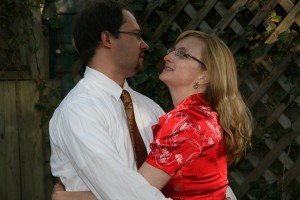
IMG_0002Michael and Kate


PART I (June 2014)

Two years ago I wrote an essay on returning to reading following the death of my wife. She was forty-four. We’d been married four years and nine months. She had breast cancer for twenty-one months. She left me with two kids (eight and eleven) and an ex-husband to negotiate. More accurately, she left her ex-husband with two kids and a second husband and step-parent to negotiate.

I intended to follow up my essay a year later with another on reading through grief, but I couldn’t manage it. The flow of grief left me unsettled to the extent that I never felt secure enough to speak. Never felt grounded, is what I mean. How could I write an essay on anything when every time I tried to put my thoughts together they shifted? Also, I had wanted to write how, one year later, I had “read through” grief, and about how I was now on the other side looking back. Except I wasn’t on the other side. Not only did I feel nowhere near the other side, I felt increasingly in ever deeper, ever more tumultuous water. For eighteen months, I felt concussed. And when those symptoms relieved, I felt something worse.

The grieved get used to people asking, “How’s it going? Better?” Things are supposed to get better. We have clichés for that. Time heals all wounds. We all know about the stages of grief. Denial. Anger. Sadness. Acceptance. As a grieved person, you are granted a certain leeway to be crazy. Emotionally overloaded. Out there. Behaving irrationally, unpredictably, outside the norm. And then you are supposed to “get over” all of that. You are supposed to acknowledge that folks have “allowed” you this period of disrupted expectations. You are supposed to be grateful how everyone has been “there for you,” which they have been, on the whole, even if it really seems that all anyone has really done is try to wait you out. Wait for you to declare, “I’m back.”

Early on I decided I was never going back. In my wife’s final months, I read The Five Ways We Grieve by Susan A. Berger and I’d absorbed the message that grief was transformative. You may respond to it in any number of ways, but you will not remain unchanged. After my wife died, I read Healing Through the Dark Emotions by Miriam Greenspan, a book recommended to me by one of my wife’s friends who’d lost her only son at age four to cancer. The transformation message was reprised there and to it was added a second: feel your feelings. Do not fear the darkness. Open your heart and mind and let the grief process carry you on its current. Healing will come in stages, and you will experience unexpected gifts.

I did experience unexpected gifts. Many involved suffering a rainbow of unremitting pain. All the better to teach you resiliency, my dear. Off in the distance a witch cackles. Ah haha. That I can write this now shows that I am released from this spell, which as I said was concussion-like. After my wife died, I chose to read Waiting for Godot by Samuel Beckett and Mrs. Dalloway by Virginia Woolf. Woolf was my wife’s favorite author, and Mrs. Dalloway was her favorite book. I’d never read it, and I chose it to honour her. Waiting for Godot called to me. I felt I was caught in an absurd, Beckettian situation. I had spent so many hours sitting in hospital waiting rooms with my wife (waiting! rooms), so many months waiting for the disease to progress or not, so many weeks, then days, then suddenly minutes at the end, waiting for death. I felt I had confronted the void, and I felt I needed Beckett. Woolf, too. (And I did.) But what next?
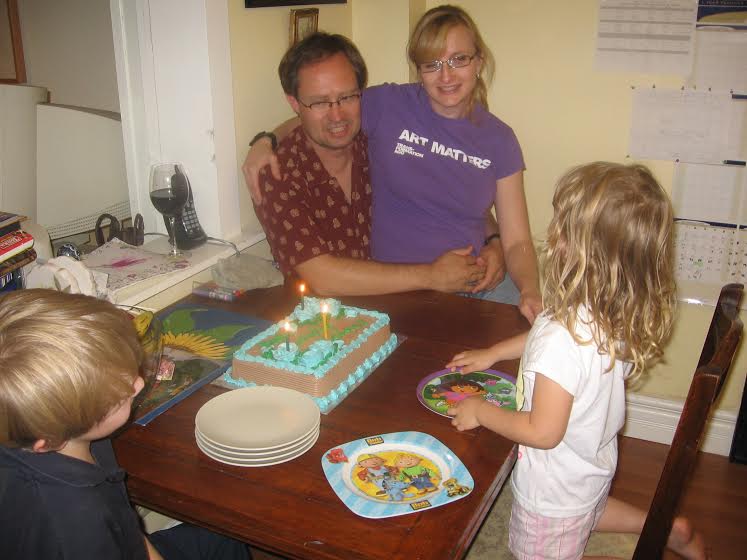
Michael

I once made a list of the ten to twelve books I read that first year. It’s still around the house somewhere, but I’m not going to search for it. There were as many books, likely more, I started and set aside. I fell into no rhythm, felt no progression, struggled against despair. I believed in prescribing myself books. I felt I could self-medicate with literature and get through my hard times, but while some books clicked, in general I felt myself slipping downward. Of course, downward is a literary journey, too, but I decided against attempting Dante. Early on I tried Hamlet, a tale of grief and madness, and I thought it fantastic. I read it about the same period of time after my wife’s death as the period of time between the death of Hamlet’s father and the re-marriage of his mother. Too soon! Holy smokes! I also re-read T.S. Eliot’s essay on Hamlet and thought (again) that he was full of it. The capture of Hamlet by chaos and his urgent need for sense, pattern and meaning gripped me as perfectly sensible. Order had been overthrown, and what was it now?

In my own life, I had lost my role as husband and my role as a step-father became severely ambiguous. The children continue to spend time with me, but half what they spent before. The three of us were the ones closest to their mother, and we have a bond that has been forged in fire and is unbreakable, and my separation from them terrified me. If we can make it through seven more years, and get the youngest one out of high school, then we will have achieved something remarkable. It once seemed barely plausible. Now it seems more likely.
Levi

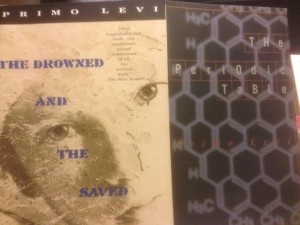
I decided to read Primo Levi. I started with The Periodic Table. I loved it. I wanted to stay with him forever. I thought, “This is what you do when you confront the void. You turn it into something like this.” Years earlier I had read Philip Roth’s interview with Levi. That was my only previous exposure to him. One of my wife’s friends had also told us a story about professional advice she’d received to help her deal with a toxic work environment. The advice was: read Holocaust literature. The premise was: it will make your toxic work environment seem less severe. At least that was her interpretation. I said, “Maybe it means your work is comparable to a concentration camp.” Except, of course, no mass murder. I had both interpretations in my mind when I started reading Levi. I had found the cancer period Beckettian, and the death administration equally so. Again and again I was confronted with the absurdities of our bureaucratic modernism. Trying to deal with my wife’s estate, I tried to process a cheque through the bank, but they wouldn’t do it. I complained to customer service, and got a lecture on the phone from a woman who explained to me that bank policy trumped the law. “We need to protect our customers,” she said. I explained to her that her customer was dead, and I was her husband and executor and that I WAS THE ONE who was responsible for protecting her, and the she was in fact thwarting her customer’s interests. No dice. I lost. I had to find another way of cashing the cheque.

Now that, it’s clear, isn’t a concentration type problem. No. Never. But the gift of Levi is his incredible ability to classify behaviours and identify sub-strata of groups within groups. Even in this darkest of dark environments, the concentration camp, the lager, Levi shows how meaning can be made and maintained, and how victims can create victims. As he notes, the survivors survived because often they were the ones who were able to find an advantage. An extra bowl of soup. An extra piece of bread. Avoiding beatings. Levi himself survived because of his chemistry training. He was put to work in a lab, and even then barely made it out alive. The Periodic Table is framed around chemistry. Each chapter is named after an element. It tells the story of his early life, his chemistry training, the rising anti-Jewish restrictions in Italy, his budding romances, his radicalization, capture and transport to the camp. The camp itself, and later liberation, his return to professional chemistry, and his interactions with Germans, both through his work at a paint factory and through his writings. What a profound life. What a profound contribution to humanity.

After reading The Periodic Table, I read The Drowned and the Saved, which I also found moving, but not as brilliant as The Periodic Table. I started to read Survival in Auschwitz, but put it down after a couple of dozen pages. My interest had shifted. I felt that Levi had given me as much as I could get from him at that time. I reflected on the horrible bureaucracy of the camps, the savage efficiency they implemented, and the homicidal logic they represented. Going through the healthcare system with my wife, we had often remarked, “You’re just a number.” When sit in the waiting (!) room, anticipating your five minutes with the world class specialist, lining up your questions, and wondering what koan he’s going to drop on you for the next week or three until you see him again, you remind yourself that he doesn’t know you. He doesn’t know your life, your ambitions, your dreams, or anything more about you than the list of numbers he sees on your chart, your blood work results, your hormone levels, your this and that and you don’t even know what because they won’t tell you. In the camps, though, you literally were a number, and it was tattooed on your arm, and the purpose of the camp was to kill you, while the purpose of the hospital is to save you. Except for many, they don’t. For my wife, they didn’t. After her mastectomy, back in her hospital room, she said, “I wonder where my breast is now,” and I said, “I know where it is. It’s in the lab.” Because that’s where the doctor had said it would be, to analyze the cells, and include the results in their database and research project. They had asked her permission to do this, of course, but that didn’t make her any less a statistic and a research subject. Catch-22. As a patient you want the benefit of that research, but as a patient you also want your doctor to see you as a human being. Sometimes this happened, and other times, not so much.

For eighteen months I felt concussed, but when that lifted, I felt worse. What was going on? Emotionally over-whelmed. Exhausted. I had survived the cancer period with the help of anti-depressants, anti-anxiety pills, sedatives, blood pressure meds, extra strength Tylenol, beer, wine, gin of increasing proportions. Little by little, I let go of those. The anti-depressants first, then the blood pressure meds. The need for Tylenol diminished. I cut the sedative dose in half. I tried to cut back on the drinking. I kept the anti-anxiety pills in reserve. I went to grief counselling. “Remember you have a body,” the counsellor said. You can’t think your way out of this. Like Miriam Greenspan said, feel your feelings. I wrote a blog throughout this period. I tried to chart my changing emotions. I felt I was getting better. I’m not sure I was getting better, only changing. I couldn’t convince myself that my wife was gone. I knew she was dead, but she felt present. I cried daily, often in sharp painful jags. They were just about the only thing that offered any relief.

What was going on? I had absorbed a blow so powerful, the bruise was taking months and months to work its way out. My head was a cloudy mess. I couldn’t anticipate a future. I tried to write new fiction, but I couldn’t. I could barely read, and often I couldn’t. Television struck me as trivial and dull. The news attracted me not at all. In her final months, my wife had spent a lot of time playing Scrabble on the ipad. I couldn’t even open that application, but I sat most evenings and weekends (when the kids weren’t here) plugging away at various online strategy games. And then I downloaded Candy Crush Saga. The distance between The Periodic Table and Candy Crush Saga, I’m here to tell you, isn’t as vast as it first seems. The attraction, in fact, was similar. At least in my case. Each both excited and calmed my mind, took the random and chaotic and led it into patterns, filled up the time on the clock. Time heals all wounds, the cliché says. Not so, but wounds do need time to heal. Some lots of time, months, even years. As I am relieved from one wound, I seem to confront yet another and then another. Through the cancer period, we looked only forward, never back, and it was a horrible time that we filled with much joy (because we were alive and together and it was our mission), and at first I thought my wound was her death, but after eighteen months I realized that it was also the way she had died. Just the other day, while I was at work in the office, I found myself asking: “Dear God, Why? If you had wanted to take her, why didn’t you just take her? Why did she need to suffer so first?” Thinking like this, makes me think the comparison to the concentration camps isn’t so misplaced. Except one is an act of God, and the other an act of Man.

In March 2014, I felt violent palpitations remembering her mastectomy surgery in March 2011. The memories came upon me suddenly, unexpectedly. I tried to puzzle out why. I had violent images of her scar and “drainage tubes” and her pain and struggle to overcome the loss of muscle under her arm also removed. At the time, we had remained calm, focused, constructive, forward-looking. In 2012, we hadn’t been looking back. Things for her we so much worse. In 2013, I had only been thinking about 2012, her last months, the process of her dying. In 2014, my memory took me back to 2011. I felt ill. I took a couple of days off work. I felt violently shaken with disbelief that they had cut her breast off. Oh my fucking God! What savagery is that!? And we had just let it happen. We had been glad that it happened. We had praised the good work of the surgeon. What a clean, beautiful scar line! All of this seemed impossible to me now. No way. How horrible all of that was. How abnormal. How perverse. What knots we tied ourselves in to make it all seem permissible. No. It was brutal and horrible and a lasting terror. And then, as quickly as they had come, those dark feelings lifted.

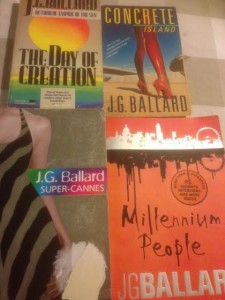
I read three J.G. Ballard novels in the first year after my wife died, and one more in the second. First three: Concrete Island, The Day of Creation, Super-Cannes. The forth: Millennium People. I had read Cocaine Nights previously, and some of his short stories. I had a sense that Ballard would be good to read, and he was. Why?

.

PART II (Nov 2014)

It is now over four months since I wrote the first part of this essay, and I have not written a word towards answering that one word question. Life intervened, and also writing the first part of this essay exhausted me. Reading it recently, I was surprised by the anger it contains. I remembered it as “cool” and “dispassionate,” but it is nothing of the sort. I had written about my wife, Kate, without naming her, a distancing strategy. Coming to terms with grief requires a distancing strategy. It is a distancing strategy. Letting go of the past. Trying to get up some momentum for the future.

In September I attended a three-day “Camp Widow” conference in Toronto. Organized by Soaring Spirits International, a California-based grief support organization, this event brought together 120 widowed individuals (110 women, 10 men) and offered a variety of workshops, seminars and peer support opportunities. I wasn’t sure I would like it. I wasn’t sure I would get anything out of it. But I did like it, and I did get a renewed sense of vigor and momentum out of it. Primarily, it helped me realign my heart and my head, accept that I am a widower now, and a widower forever, and understand, perhaps for the first time, that moving on does not require letting go.

I mean, I knew that. I was living that. But this is where the peer support was so important. In my life, I have no peers. I know no one my age who has lost a spouse. People my age tell me things like, “Divorce is like a death.” And they tell me how horrible it was to lose a parent. These events are horrible, and painful, but these people are not my peers. I go to work day after day and try to be a productive person, but my sense of belonging in my life is shattered. Everyone wants me to get “back to normal,” but there is no normal to go back to. If I have a new normal, it will be something I need to build out of the shattered remains of my former life. “Camp Widow” made that crystal clear.

J.G. Ballard was a widower. His wife died in 1964, suddenly from pneumonia, leaving him to raise three children. Of course, he had also spent part of his childhood in a prisoner of war camp in Shanghai. His novels chart the shattered remains of the (post-)modern world. Life after the catastrophe. If Levi was life within (and after) the catastrophe, Ballard is also charting “after the end.” I felt at home in these novels, which are more often read as pre-apocalyptic visions, but I think that’s a misreading. One paraphrase I read in a book on grief noted Heidegger said it was best to live as if the end had already come. This is exactly how I felt after Kate died. Where was I? How could she suddenly be gone? How could we be separated? That wasn’t supposed to happen. What was this place, without her? It wasn’t the world I had known. It was a place “after the end.” I felt pain, but I also felt free in a way I had never felt before. I could do anything, anything at all, and yet all I wanted to do was nothing. Just sit in front of a fire in the woods and poke at it with a stick.

I told these thoughts to a friend, and he told me about Walter Benjamin and his Angel of History:

A Klee drawing named “Angelus Novus” shows an angel looking as though he is about to move away from something he is fixedly contemplating. His eyes are staring, his mouth is open, his wings are spread. This is how one pictures the angel of history. His face is turned toward the past. Where we perceive a chain of events, he sees one single catastrophe that keeps piling ruin upon ruin and hurls it in front of his feet. The angel would like to stay, awaken the dead, and make whole what has been smashed. But a storm is blowing from Paradise; it has got caught in his wings with such violence that the angel can no longer close them. The storm irresistibly propels him into the future to which his back is turned, while the pile of debris before him grows skyward. This storm is what we call progress.

I believe I had said to my friend that Kate’s death had freed me into a land of infinite choice, and yet I felt powerless. The world rumbled on, and I watched it in horror, wondering why it was full of shit. Violence. Madness. Degradation of such variety it was impossible to keep up. None of this was necessary, and yet none of it could be stopped. I seemed to have a front row seat and an awareness heightened beyond anything I had ever experienced. Propelled backwards into the future, we go. Fuck ya.
Ballard

Concrete Island (1973) is a retelling of Robinson Crusoe, except the island is a traffic island lost in a sea of traffic lanes and overpasses. It’s a slim book, and if I wasn’t specifically interested in Ballard I don’t think I would have picked it up, but it gripped me. A middle-aged man on his way home from a rendez vous with his mistress goes over the barrier in his fancy car, rolls down a hill and is trapped in an odd parallel universe, which is within reality and also outside of it. He discovers the island has other denizens, a self-supporting ecosystem, and no way to escape. His expectations of life are fundamentally and suddenly altered, and he must adjust, or die. I identified with that.

The Day of Creation (1987) is also an “after the end” novel. The action takes place in Central Africa, a parched and desert-like place. An Englishman, Doctor Mallory, goes on a Heart of Darkness-type quest after a mysterious river is suddenly sprung free from the earth. In a chaotic world, ruled by paramilitaries, bureaucrats and a freelance television crew, Mallory brakes free and leads all and sundry upriver, seeking its source. There’s some high adventure in this one, but also lots about a world under stress from capitalism, militarism, technological expansion and, let’s just say it, men. The mystery of the natural world is set against all of this. The power of women and girls, too. The new great river. The land mass of the African continent. A wild, post-pubescent, silent girl, who enters carrying a gun, and is equally terrifying and heartbreaking. The novel quickly reveals the foolhardiness of those who think they “know” anything about anything. Propelled backwards into the future, we go. Fuck ya.

Super-Cannes (2000) takes us into a world of ultra-capitalism and a different kind of desert, a kind of intentional community, though it is built for Forbes 500 companies, not 1960s back of the landers. It is also a post-catastrophe novel, in this case a murder rampage which had disturbed the perfectly controlled, micro-managed village just before the arrival of the protagonists, a husband and wife. She is the new doctor (replacing the doctor turned mass murderer), and her husband is the narrator, who has a lot of free time to investigate the goings on of his new surroundings. The genre explored here is whodunit? Or more precisely, whydunit? The plot thickens and thickens, as our hero is introduced to the reigning psychiatrist, who explains the theory and practice of the super village. It is designed to take care of its residents’ every need, so that they can be as productive as possible, and rake in the dough for the multinationals who are paying all of the bills. Taking care of everyone’s needs leads to an unexpected result. Folks are bored. All work and no play, it turns out, isn’t healthy, and the dark side of the soul needs to be exercised. So the folks organize under-the-cover-of-darkness vandalism brigades. Plus much more. I didn’t identify with the plot here, not in a “post-grief” way. But the undercurrent of swirling chaos felt very real. It made me think of the cancer period. It made me think of the dark truths hidden by systems.

Millennium People (2003) continues down this path. The action is set in contemporary England. A bomb has gone off at Heathrow, in the arrivals luggage area. The protagonist is a senior psychologist and his ex-wife is among those killed by the bomb. Through his job, he becomes involved in the investigation, but he begins his own independent research as well, getting drawn deeper and deeper into a shadowy world of domestic terrorism and anti-capitalist rebellion. The book contains an enlarged critique of big money and the faux surface “realities” of consumer culture and mass media. As with Super-Cannes, the plot plays with the idea that violence leads to a truer engagement with life, an idea that Ballard has returned to for decades. See, for example, Crash (1973), where characters stage car accidents for sexual pleasure. I found Millennium People to be the least satisfying of the four Ballard novels I read in this sequence. Some of the ideas felt recycled. The protagonists were starting to blur together. But the insights about an outer shell of mass media images obscuring and inner crust of essential “being” expressed what I felt to be intuitively true in my post-grief blurriness.

Being in a “liminal” world, is something Kate spoke about, as she lived with terminal cancer. Liminal = in between, life and death, here and there, fear and hope. And so on. I often felt in that space, too. Outside the main flow of life. And as I watched her die I felt as close as you can get to the other side without slipping into the void. Kate had spoken to a friend about the writing of Stephen Jenkinson, a palliative care specialist. She seemed to like what he had to say, but we didn’t talk about it much. She didn’t like to talk about dying, at least with me. She wanted us to just life, stay in our groove. But one of the things Jenkinson focuses on is fear, confronting fear, specifically. One story he tells is how most people when they confront death, aren’t actually confronting death; they’re too lost in the fear. He says that meeting death is like meeting love. You meet a new lover and at first you confront feelings of anxiety and uncertainty. Is this going to work out? Can I actually connect with that person? And you go through those emotions, and then you connect with love. Connecting with death is the same, he says. And that describes what I felt, waiting, watching Kate get sicker, knowing that death would come soon, but never really sure when. Months, then weeks, then days. Imminently.

Five days before she died we were at the hospital for the last time, and her bloodwork was terrible. The numbers were not good, and she knew what that meant. She said, “I guess this is it.” Later, she asked me what my biggest fear was. I said it wasn’t that she was going to die. I wasn’t afraid about that. Now, reflecting on then, I’m stunned. We were there with death and we were both, “Oh, well. I guess it’s really going to happen.” The fears I had were about what would happen after she died. I told her that, but I also told her that I knew she didn’t want to discuss any of that with me. She didn’t. We sat in the sun outside the hospital, and I told her I wished we could just stay there forever. It wasn’t the disease that was the problem; it was time. We said some other things to each other also. It was really beautiful. Then we had to go home and re-enter reality and play the drama out. Three days later she was no longer speaking. She died two days after that.

Have I made it clear how Ballard’s multiple levels of reality felt just right to me? I hope so.

Just recently I recounted Jenkinson’s story about going through fear to get to death to my psychologist. I wanted to make the point to him that nobody told me I would have to go back through the ring of fear to get back into ordinary life. For a long time, I didn’t want anything to do with ordinary life. I liked being in the liminal space. I wanted to just stay there. It was a place full of insight, and a level of quiet peace that was sustaining, even if not fully real. But you can’t stay there. At least, I couldn’t. It’s that infernal engine of time again (another of Ballard’s obsessions, also; there’s some fantastic short stories that attack time savagely, but that’s for another…well…). Time wouldn’t let me drift in a void-like space for long, and getting back to a sense of normalcy was very, very painful. Ballard didn’t help with that. Levi, not so much, either.

I didn’t seek out novels about grief. I tried to read Murakami’s nonfiction about the sarin gas attack. I couldn’t get into it. I thought I would feel an “after the end” connection to it, but I didn’t.

On the first Valentine’s Day after Kate’s death, I bought Dave Eggers’s A Heartbreaking Work of Staggering Genius (2000). God, I hated this book when it came out. Everyone who told me about it made it sound horrible. I found the title unforgiveable. I had tried to read a number of different Eggers titles and found them unwelcoming to my tastes. But Kate liked his stuff. And this was a novel about grief and moving through it and past it, and in a moment of perversity I bought it, then devoured it quickly. I then put it on the shelf with Kate’s other Eggers titles (her books are still separate from mine). I felt, in a way, that I had read it for her. I know that sounds weird. There was more than a little magical thinking going on. I really hated the “Dave” character, pretty much all the way through, but I also got what he was doing, and I knew that I only got it because I was going through something so, so similar. I felt that I was in a place that only I could understand, and I was having visions that were like x-rays, but I knew none of this was because of genius, and also that it was heartbreaking in a quotidian way. It was pretty simple. My wife had died when I was 43. I had been 38 when we married. Eggers was in his early twenties when both of his parents had died from cancer in short succession, leaving him with custody of his much younger brother. Holy fuck, I thought. Now that’s a raw deal. And the novel is often raw, and sometimes it’s just plain stupid, but it is a song of pain that is staggering, heartbreaking, and even, yes, at times, genius. But it still left me trapped in Jenkinson’s wall of fear.
levels-of-life

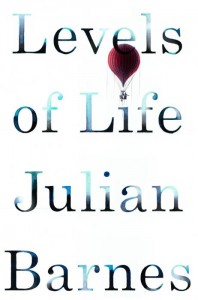
Julian Barnes lost is wife in 2008, suddenly to cancer. In 2013, he published Levels of Life, a memoir of his grief. In 2011, he published The Sense of an Ending, a novel deeply reflective of the mysteries that haunt our lives. I read both of these books in close succession in the past year, and they are each remarkable and each marked, I believe, with the sharp pain and clarity of vision that grief can bring. Levels of Life is specifically about Barnes’ own grief and he tells of hard, hurting moments, but he also gives us a magical story about balloons. It’s really amazing, how he grounds the reader with enormous weight, and also makes us feel lighter than air. This is an incredible book, and it lifted my heart. The Sense of an Ending is also an incredible book, and now that I think about it it has grief at its core also. The protagonist is an older man, reflecting on the death of a close friend when he was young. Recent events draw him back into the past, and he discovers that things he thought were so, weren’t at all. He wonders if he has made a mess of his life, but he is not without opportunities to correct it, at least partly. I bought this book at Heathrow on a visit to London, and read it in the lounge and on the plane, completing it before landing in Toronto. Both of these Barnes titles are about transition, and in the past two-and-a-half years that has been my life, over and over. Will this bloody transition ever end?

I was already feeling a new sense of something when I went to “Camp Widow,” but that experience broke open emotions I hadn’t felt in a long time. It made me realize and articulate, finally, that Kate would never leave me and that I would also move on past her, and that these two facts weren’t in contradiction. She will always be with me, but I can’t stay here, in the now, which is the past. What is that thing, that sense of an ending? Is it a different level of life? I will have my own, new future, and she will be part of it, but she also won’t be part of it. Is that what happens when you get old? You realize that the past is always with you, and nothing ever really ends?

I said to my psychologist, “Returning to ordinary life is fucking horrible. Ordinary life is fucking horrible.” I meant this in an Angel of History way, but also just: my magical powers are fading. Grief is an extraordinary emotion, and living deep in grief is an extraordinary experience. At “Camp Widow” I heard of others who had contemplated suicide, others who had succeeded. Going back through the ring of fear and re-entering ordinary life is a risky period of “time.” To let go of the magic of the grief: hard. To let go of the dreams of being with the loved one: hard. To accept the new reality of here/not here: hard. Some don’t make it. Eggers’s older sister didn’t make it. Barnes muses about suicide as an option. Levi either killed himself or died in an accidental fall. Ballard’s vision includes violence as a kind of release. I was never suicidal, but one question pounded in centre of my mind: why should I go on? Why, without her? As I have gone on, I’ve realized again and again that I’m not without her. I don’t know how to explain that, except I have a glowing certainty that it’s so. And my PTSD pain, the memories of her suffering, etc., fades, too. The soul is lighter than air, it rises like a balloon.

.

CODA

Okay, the PTSD pain. Yes, it fades, but it also comes and goes. The concept of “trigger warnings” is growing in common usage, and I was initially skeptical. I’m naturally skeptical. But the first week of November, the date I’m writing this, is the week Kate had her first chemotherapy. I’m self-conscious of anniversaries, and careful. Better to anticipate feeling crappy than to have it sneak up on you. Well, this week snuck up on me. Yesterday I felt like utter crap. Not as bad as I have often in the past, but worse than I’ve felt in a while. What happened at this time? I asked myself, and then I knew.

Here’s the thing about that first chemotherapy. We took a video camera. I have about a dozen video files of Kate from that day after various stages of the process. I had forgotten that entirely and then a while back found these files. We must have been crazy. We were crazy. Kate was adamant, however, that the disease wasn’t going to change her. She is seen plugged up to the machine and laughing. She is seen at home in bed, towel on her head, complaining of a headache and laughing. In one video she has the camera and she points it at me. I make a funny face. Looking at her doesn’t automatically make me sad any more. Looking at myself, was shocking.

I want to be that guy again, but I cannot. Nor can I tell him, buddy, hold on. You are in for a wild ride. If there was one thing I could tell him (me), it would be that the strategy of laughing your way through cancer will fall apart. You may think, dude, that cancer was bad; and it was; but losing her, this will be worse. (You will not laugh your way through grief, though your step-daughter will expect it of you. So like her mother, she will say, “I don’t like to see you cry.”) To put it in terms of this essay, I read and wrote through the cancer period. I clung to my reading (as did Kate) like a life raft. I read in many hospital waiting rooms. I wrote a book review weeks before she died. All of that fell apart in the tunnel of grief. This essay has been about putting my reading life back together. I have piles of books scattered all over the house, as I did before she died. I am reading widely and randomly, as I have always liked to do. On this good news, I will end.

— Michael Bryson [1]

Link to Kate’s Photos: http://kateorourkephotos.blogspot.ca/


.

Michael Bryson has been reviewing books for twenty years and publishing short stories almost as long. His latest publication is a story “Survival” at Found Press. In 2011, he published an e-version of his novella Only A Lower Paradise: A Story About Fallen Angels and Confusion on Planet Earth. His other books are Thirteen Shades of Black and White (1999), The Lizard (2009) and How Many Girlfriends (2010). In 1999, he founded the online literary magazine, The Danforth Review, and published 26 issues of fiction, etcetera, before taking a break in 2009. TDR resumed publication in 2011. He blogs at the Underground Book Club.

/
/

Footnotes    (↵ returns to text)

  1. Here’s a short list of some books I’ve read recently that I’m enthusiastic about:
    Mad Hope, Heather Birrell
    How Should a Person Be?, Sheila Heti
    Why Be Happy When You Could be Normal?, Jeanette Winterson
    Nothing Looks Familiar, Shawn Syms
    Interference, Michelle Berry
    Polyamorous Love Song, Jacab Wren
    Bourgeois Empire, Evie Christie
    The Desperates, Greg Kearney
    You Must Work Harder to Write Poetry of Excellence, Donato Mancini
    The Lone Ranger and Tonto Fist Fight in Heaven, Sherman Alexi
    Conversations with a Dead Man: The Legacy of Duncan Cambell Scott, Mark Abley

    Here’s some books I hope to get to soon:
    Inherent Vice, Thomas Pynchon
    What Would Lynne Tillman Do?, Lynne Tillman
    Come Back, Sky Gilbert
    Stories in a New Skin, Keavy Martin
    All the Broken Things, Kathryn Kuitenbrouwer
    I know you are but what am I?, Heather Birrell
    Ellen in Pieces, Caroline Adderson
    The Outer Harbour, Wayne Compton
    Girl Runner, Carrie Snyder
    Life is about losing everything, Lynn Crosbie
    Sad Peninsula, Mark Sampson
    Gender Failure, Rae Spoon and Ivan E. Coyote
    In the Language of Love, Diane Schoemperlen
    Housekeeping, Marilynne Robinson
    Boundary Problems, Greg Bechtel
    All My Puny Sorrows, Miriam Toews
    The Incomparables, Alexandra Leggat
    Revenge Fantasies of the Politically Dispossessed, Jacob Wren
    Professor Borges, Borges
    Rap, Race, and Reality, Chuck D
    The Collected Stories of Stephan Zweig
    Tobacco Wars
    , Paul Seesequasis
    Voluptuous Pleasure, Marianne Apostolides
    Sophrosyne, Marianne Apostolides
    Consumed, David Cronenberg

    Read on.

Jul 142014
 

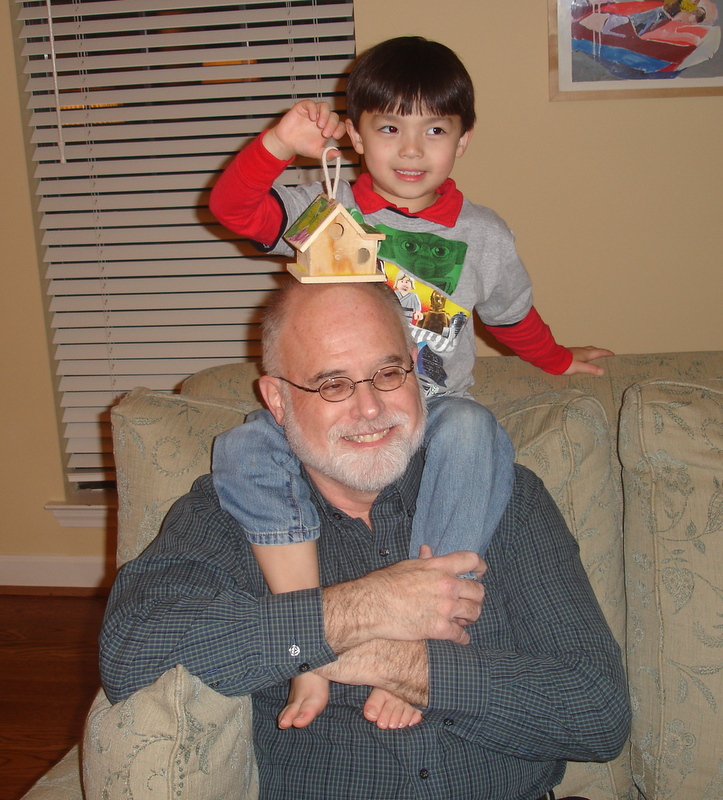
photo(7)Michael Bryson & friend


There was the matter of the orgasm. Years later he suddenly remembered. She hadn’t been the first, but she was the first on a regular basis. She wanted him, and he wanted her, and they did it almost every day. He was thirty-one and his sexual self-esteem had crashed harder than the Leafs in the playoffs. Woody Allen had called masturbation “sex with someone you love,” and Barry had long lost any shame associated with being alone. Then he met Sherry, and she would unzip him almost before he’d closed the door to her apartment. She would fondle his penis when they went to the movies. One time he was watching the news and she told him to relax. Unzip. Ping. She went down on him as Peter Mansbridge went out of focus. But she almost never came.

That was a long time ago now. Thirteen years ago. He was with Sherry two years, and their second Christmas together he knew she was angling for a proposition. Knew it very late. He thinks now the thought crystallized on Christmas Eve at her sister’s house. Sherry had made mashed potatoes and fretted over them. She had told him how the dinner would go. Everyone was making a different dish. A certain standard had to be upheld. The potatoes had to be creamy without being milky, spiced with a hint of garlic but not rot full. The food would be served, places taken, minor words of religiously neutral thankfulness spoken. Dig in. Dished out. That’s nice, oh, that’s nice, oh, that’s nice. And that’s exactly how it happened.

You learn something in every relationship, and what he learned from Sherry is that two years isn’t long enough to get to know anybody, but then again maybe they were just at that age when they were still changing. They were in their thirties and unmarried, childless, living out an extended youth. He knew she wanted four children. He’d said he was okay with that. He’d thought about marrying her, but he wasn’t going to propose over Christmas, and he wasn’t going to do it at New Year’s either. Then he suddenly caught the hint that she was expecting it. Who had given her that idea? Certainly not him. Her mother, probably, or her sister, or some girlfriend. Some girly conspiracy had indicted him in a test case. They were watching. He would fail.

Getting through Christmas, having fun, sharing laughs about the silly family stuff, these were his tests. In the first week of January, would they still be friends? Could he imagine himself with these people, her people, twenty years hence? Would they show any interest in him? Any empathy? Any common cause? Sherry had already warned him repeatedly about her father. Mid-way through dinner he would go off. “Just duck,” she said. “Let him blow it off.” And he did, J. Edgar Hoover style. Barry was good at nodding. Listening, noncommittal. Something similar had happened at Thanksgiving. This was 2001. The American’s hadn’t yet attacked Afghanistan. The towers were still smoking. “It’s terrible how they treat women,” Sherry’s mother had said. She was prepared to go to war for that.

He remembered walking home through the park after that October dinner, Sherry raging at her parents’ stupidity. She had a Master’s degree in Public Administration. They weren’t interested in her opinion on any subject. She worked for a major polling firm as a senior manager. Her title was Vice President. In her spare time, she painted. She wanted to paint more. She was tired of statistics and politics, but she knew she was good at statistics and politics, and it paid the bills. Barry was the antithesis of her parents. He encouraged her art. He affirmed her social analysis. He got hard for her every night, but he couldn’t make her come. Sometimes she came close. She would squeeze tight and the friction on the head of his penis would make him explode.

He didn’t propose, and she got mad at him, and on New Year’s Eve she didn’t want to touch him. “I want to be alone,” she said, so he went back to his place. Two days later she called him. “I want to see you.” They were all over each other in the hallway. Her roommate was away. They went into the roommate’s bedroom, and she came, the best ever. “Why can’t we do that every time?” He didn’t know. He hadn’t done anything different. When he thinks of her now, he remembers her easy smile and her soft tongue, the struggle of her personality to find peace in the world. She was tall and beautiful. Sweet and large-breasted. Smart and confused. Talented and lost.

Weeks turned into months, the new year progressed, her unhappiness worsened. “So quit your job if you want to,” he said. “Let’s move in together.” It wasn’t marriage, but it was something. He still needed to know they could be happy together, not just compatible. She quit her job and became more unhappy. Barry became more concerned and suggested that she see her doctor. “I think you’re depressed,” he said. He went to work and came home and she said she hadn’t done anything all day except watch TV. “Don’t tell my parents, okay?” She hadn’t told them she’d quit her job or that they were moving in together. They practically lived together anyway, just he still had his place, which he was giving up. He’d given notice.

Then one morning she woke up with a dead zone look in her eyes. “I don’t feel well,” she said, “and we didn’t even have sex last night.” Barry said, “Yes, we did.” He straightened up and touched her face. Whatever this was, it wasn’t depression. This was a separation from reality. He told her to lay down and went to fetch a glass of water. What else? What to do? Buy time. She sipped the water and laughed. “I feel strange,” she said. “Strange how?” he asked. She said, “Just strange.” He considered calling his mother. No, this was his to deal with. He couldn’t leave her like this. Something had to be done. “Do you want me to take you to the hospital?” he asked. “Do you want me to call your sister?” Sherry indicated she wasn’t sure, then she was. “Sister. Call my sister.”

Her sister came, and by then Sherry’s confusion had multiplied. She asked the same questions every ten minutes, not remembering she’d asked them before. The sister decided to take her to her shrink, the one Sherry had ridiculed for the weak marriage counseling the sister and brother-in-law had sleep walked through. “She told them they don’t have any issues! They just need to talk more!” Well, that day she spent an hour with Sherry and then told everyone that they needed to back off. Everyone was putting too much pressure on Sherry, and she needed to be able to make her own decisions in her own time. Then she sent Sherry home with Barry, but this time they went to his place.

He tried to feed her, but she wasn’t interested in eating, and a day later they hopped in a cab back to the shrink because Sherry felt crazy sick again. Then they went back to her place, and she called her parents. “I need to go home with them,” she said. “I need them to look after me.” Okay, he’d said, but he should have taken her to the hospital. Fuck your parents, he should have said. You’re coming with me. But he wasn’t that kind of a person, not then. He wasn’t that kind of a hero. A month later, though, he knew what he should have done, but then maybe she wouldn’t have let him. When her parents finally did take her to the hospital, it didn’t take the doctors long. Her brain was ringed with lesions. Her sister told him Sherry had a brain of a 70-year-old. Multiple Sclerosis, significantly progressed.

When he visited her in the hospital, she was happy. What she had had a name! She wasn’t going crazy! Holy shit! When he visited her in the hospital, her father was sitting in her room and he wouldn’t leave. They made small talk until he got the hint. She had an IV on a poll, and she took him on a stroll around the ward. The woman across the hall was a couple of years older. She had a six-year-old and a husband, and she came to the hospital about once a year for treatment. Steroids. To calm the inflammation. It was a quick, brutal and effective intervention, best administered as soon as possible. Barry thought about that month-long wait and knew he would never forgive himself.

They went into a room full of exercise equipment and closed the door behind them. He leaned in for a kiss and put his hand under her shirt. “I missed you,” he said. “I missed you, too,” she said. They wandered back into the corridor and around a corner where they came to a dead end and encountered a man with half a face. “Oh,” she said, “I thought this went somewhere.” She looked at the half-face man and asked, “How are you?” He smiled at her and went back into his room. Barry loved her then, more than at any moment before or since, her uncomplicated compassion on magnificent display.

He was concealing on that visit the encounter he’d had with her father shortly after her parents had spirited her away a month earlier. “If I find out you’ve given her drugs,” her father had confronted him, “I’ll fucking kill you.” “I haven’t given her anything.” “We’ll see.” It was unbelievable! Him! A drug pusher! Of all people, no, no, never! And what a crime noir fantasy anyway. A ludicrous cliché. But Sherry had warned him, hadn’t she? Those were her parents, ludicrous clichés. Her father a hardened GM executive, her mother a neurotic housewife turned late-life real estate agent. They had separate bedrooms and would never divorce, Sherry had told him. Her father couldn’t get it up.

“How do you know this?”

“My mother told me.”

He went to visit his own doctor, who advised him to break off the relationship and prescribed him anti-anxiety pills to help him sleep. Oh, what crazy stress. He started smoking. He stopped eating. He had to move out of his apartment because he’d given notice. There was no way he was going to move into her apartment, so he had to scramble to find a new place. One weekend he came home from work on Friday and went to bed at 6:00 pm. He got up the next day at noon, then went back to bed at 6:00 pm. Then did that again on Sunday. No, he thought now. I was never going to marry into that family.

He didn’t follow his doctors orders immediately. He tried to stay friends with Sherry, who moved back in with her parents after leaving the hospital. He spoke to her on the phone and she was getting bored. She wanted to get away. He suggested he book a hotel and take her away for a night. Dinner and dancing. He picked her up, and she was in a foul mood. “I don’t want to talk about it.” They drove in silence. He tried to make small talk. Finally she said, “My father said something that made me mad at him. I don’t want to tell you what.” Barry said, “Okay.” By this point, he didn’t want to talk about it either. He just wanted to forget about it, forget about her father, forget about everything that had happened and try to pretend that they were together like they had been before. They had had good times. They had been happy. Was that all they were going to get? Was there more?

The dinner was okay, the hotel room standard. They were tentative with each other as they undressed, washed, brushed, slipped between the sheets. He reached for her, but she was unresponsive. She rolled towards him and kissed him, but she was cold.

He said, “I know what he said.”

“Who?”

“Your father.”

“What did he say.”

“He said, ‘Barry only wants sex.'”

She nodded. “How did you know?”

“I can’t believe it,” Barry said. “I can’t believe he actually said that. Like we were teenagers. Like you weren’t thirty-one. Like we need his permission.”

“I didn’t want to tell you,” she said. But you did, he didn’t say.

And then they had sex, but it was dry and uncomfortable, and very, very bad.

A month later, she visited his apartment for the last time, and they fucked every which way, but she didn’t come, and then she said, “We probably shouldn’t see each other any more,” and he said, “You’re probably right.” A week later, she called him, she wanted to see him, and he said he would see her, but he had to say this first. “I’m not going to sleep with you. That’s over.” So they got together and talked, and she said she guessed she would never have children, but he said she shouldn’t think like that. “You would be a great mom,” he said, and she cried, and he kept smoking nine months after that. Four years later, he met Jessie and her two kids and proposed inside six months. Three years after the wedding, she was diagnosed with breast cancer. Twenty-one months later, she was dead.

—Michael Bryson

.

Michael Bryson tweets @buzithecat. He is interested in how things fall apart and what’s left after that. In 1999, he founded the online literary journal, The Danforth Review, http://www.danforthreview.com/, which has just published its 51st issue of new short fiction. He blogs at http://www.michaelbryson.com/ and posts the odd book review at The Underground Book Club, http://thenewcanlit.blogspot.com/.


Feb 142014
 

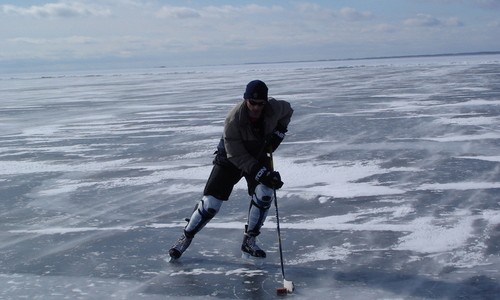
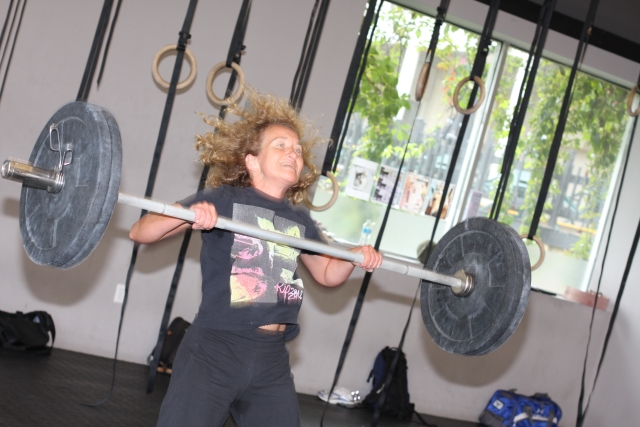
I am always trying to push the envelope in regard to author artist/photos. I loathe the refined, posed, airbrushed glamor head-and-shoulders shots publishers seem to prefer. The author as inhuman, noble object of adulation. NC has always had a subversive edge. And I have been thinking for a while of honouring some of our more adventurous and outlandish spirits for their efforts toward having a bit of personality in their images. I don’t know if I have all the best ones here. If you have a favourite that you remember, remind me in the comments.

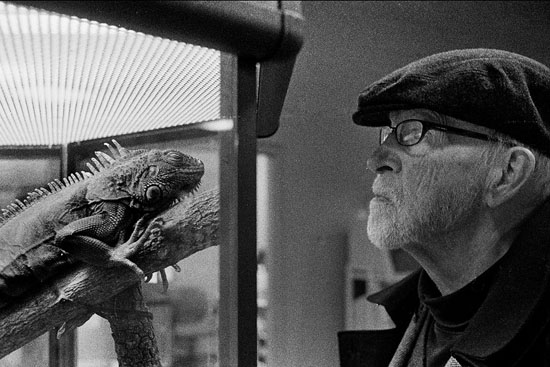
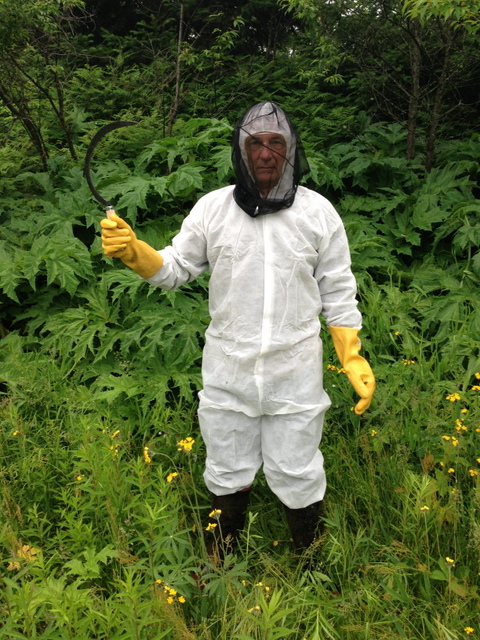
I cheated a little bit. bill hayward’s photo of Gordon Lish wasn’t taken especially for NC, but bill has invented a brilliant style of artist/author portrait and we did get to show the photo on NC. But check out bill’s wonderful book of images Bad Behavior for inspiration. Also Jonah’s photo wasn’t his author photo; it’s a self-portrait of sorts. Sometimes I tell authors to at least get a child or a dog in the photo. Horses and goats will do…  André Marois went for bees.

dg

ferryiguana_h_0David Ferry

Steven HeightonSteven Heighton

Andre MaroisAndré Marois

IMG_6257Sharon McCartney

sl, bird dog pete and sharptail, MontanaSydney Lea

IMGP2885Phil Hall

Amber HomeniukAmber Homeniuk

Betsy book pics 2013 - 236Betsy Sholl

Julie Bruck3Julie Bruck

DW-Ark_CodexDerek White

BRiannaBrianna Berbenuik

Michael BrysonMichael Bryson

Julie LariosJulie Larios

Steven AxelrodSteven Axelrod

Gordon-LishGordon Lish photographed by bill hayward

The AuthorJonah Glover

Taiaiake-001Taiaiake Alfred & Sons

Alexander MacLeodAlexander MacLeod

Diane Schoemperlen

Diane Schoemperlen

David Jauss and grandson GalenDavid Jauss & Grandson Galen

Oct 222013
 

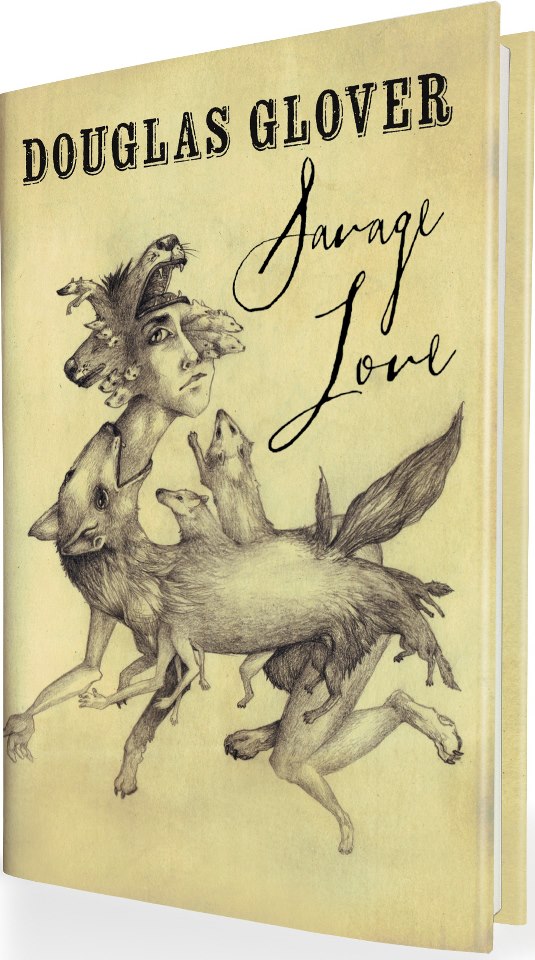
Savage Love Cover

In this book, Glover takes us far, far out into a vast sea of imaginative possibilities, shadows, violence, and twisted logic. There is a persistent questioning of the real consistent with his post-modern precursors, but there is also a disappearance into myth and mystery, which isn’t a denial of the world in a swirl of signifiers, but an embracing of its ultimate instability. It is a world that is knowable in fragments; it’s just that the fragments keep falling apart. Glover has always embraced the absurd, but he’s more grounded in facts than Kafka—witness the unlikely and extremely intriguing title of an earlier short story, “Dog Attempts to Drown Man in Saskatoon.” Glover’s catalogue of opening sentences would nearly make a book on its own. He is a master at setting up the awkward and the curious, often romantic, situation that demands explication. The frisson of desired transcendence lost in repeated failure veers seemingly inevitably toward catastrophe. Carol Shields used to say that Alice Munro’s stories don’t end, they swerve into mystery. Glover’s stories enter mystery early and never leave. Readers are drawn along for the journey on slipstreams of luminescent prose.

Read the rest at Savage Love | Music & Literature.

Jul 242012
 

My friend (and long time NC contributor) Michael Bryson’s wife, Kate, died of cancer in May, after a brief, sweet marriage. Words fail.

But words were their common ground and meeting place, their sign of courage. Both Kate and Michael knew you’re not a victim if you keep talking, writing, thinking, questioning and defying. All through her treatment, Kate blogged with immense intelligence, grace, wit and courage at her site Auntie Cake’s Shop. When she no longer had the strength, Michael took over for her. Along the way, Michael wrote a gorgeous essay called “My Wife’s Hair” and a “Dear Kate Letter” and fugitive, poignant observations such as “Breast Cancer Can Put You in a Wheelchair.” I place all these links here, along with Michael’s essay, as a memorial to their life together.

dg


§

In the weeks before and after breast cancer ended my wife’s life on May 23, 2012, I was unable to read.

Surprising? No. But for me, a life-long reader, an existential risk.

I read, therefore I am. Books, engagement with literature, the pleasure of the text, whatever you want to call it, the continuity of my life is sustained by reading.

I use the present tense (“is” instead of “has been”) because I believe in that continuity, even though I am suffering (another self-conscious word choice) a break, a gap, a malfunction.

I’ve stopped reading. I’ve stopped being myself.

I’m grieving. I’m in the process of becoming someone new.

First, there was only the stress of the disease. Then, there was only the stress of her absence.

But there is also continuity (I believe, though I also disbelieve it). I’m still here (somehow; it seems miraculous). And so are her two kids (eight and twelve). My role as patriarch sustains me most days. My identity as a reading person has paused, but my identity as (step-)daddy remains abundantly active.

I want my reading identity back. I need my reading identity back. (My reading identity will crack the code for the next phase of my mysterious future I believe, though again without knowing why; without being able to articulate the slightest reason.)

So, then, how? Or rather, what?

Waiting for Godot by Samuel Beckett. Mrs. Dalloway by Virginia Woolf.

I couldn’t have predicted this, but this pair is what I want, need, to read right now. This is the ONLY pair that I CAN read right now.

My attention span for reading is travelling along a narrow band. Or perhaps I should say that the signal has only recently returned and it remains faint. I can only hear certain frequencies.

Why is it that I can hear Beckett and Woolf?

What are they saying that resonates with my current dilemma?

*

“I can’t go on, I’ll go on” (Beckett, The Unnameables).

Kate is buried in the cemetery that is half-a-block from my house. When Naomi was three, she used to yell at the cemetery as we drove past: “Hello, dead people!”

I reminded her of that recently, and she didn’t remember.

So much is transitory.

I go to the cemetery regularly to say hello to Kate. A planter with flowers serves as the headstone at the moment, and I go water it.

Sometimes I cry. Sometimes I don’t. The earth over the grave is still sand. They haven’t re-sodded it. I’ve written “KO” in that place. Someone told me they were wandering in the graveyard and thought, “Ah, that must be Kate’s place.”

I walk away from the grave thinking, “I can’t go on, I’ll go on.”

Why should I go on without her? There are, of course, a multitude of reasons; the kids chief among them. But I find it most convincing to say simply, I will go on, because I will.

Derek Weiler, the editor of Quill & Quire when he passed away in 2009, had “I can’t go on, I’ll go on” as a tattoo. He had a life-long heart condition that slowed him down and eventually stopped him. That’s where I first heard the phrase, but now it’s part of my linguistic DNA.

Waiting for Godot riffs on a related theme. Not about “going on;” instead, “waiting.”

The play begins:

ESTRAGON: [giving up again] Nothing to be done.

VLADIMIR: [advancing with short, stiff strides, legs wide apart] I’m beginning to come to come round to that opinion.

Or as one meditation teacher of mine (and Kate’s) said, repeatedly: “Nowhere to go, nothing to do.”

We ended up in meditation as a result of a book called Full Catastrophe Living by John Kabat-Zinn. Kate’s GP recommended it, to help with the anxiety of the disease. And so we discovered the field of psychiatric oncology. The book is based on a meditation workshop. We asked if there were not such workshops in Toronto, and soon we were signed up for one.

We were not in a hurry to go anywhere, because we knew the only place the disease had to go was somewhere worse. We were content to wait. To remain in “the present” perpetually. Putting off thoughts about tomorrow as long as possible. (While also acknowledging what was happening.)

We found ourselves at the hospital often, waiting. On one occasion, Kate had an appointment with her oncologist for 3:30 in the afternoon; we finally saw the doctor at 9:30 that evening. When we left, the entire hospital wing was empty.

Kate said, simply, “Thank you for seeing me.” Pushing away anxieties and letting go of the things that we couldn’t control had become by then a central element of her life, her way of living, her way of being.

*

Liminality is another word from this period.

Merriam Webster gives the definition of “liminal” as:

1. of or relating to a sensory threshold

2. barely perceptible

3. of, relating to, or being an intermediate state, phase, or condition.

Kate wrote on her blog a number of times about being in this “in between” space, also contemplating the Buddhist term “bardo.”

After her death, I found the following in one of her notebooks:

Liminal space –

space between transition
between living and dying
– have a dual awareness
* awareness of both living and dying

bottom line:
waiting
noisy
but not real sound
a pot to boil
taxi to come
a friend to arrive
a plane to catch
liminal surprises

mail, books, letters
from afar
show tunes in a cab
time to sort your thoughts –
so long as there’s no missed deadline

liminal as missing something
amiss/a miss
rather than liminal as space
entity – distinct entity
or something lost

nowhere to go – nothing to do
nothing to do but breathe

air
gas bubble
coursing through
dark region
surfacing
breath, required
necessary, but not
aware of it – life
we cease when we
stop
but we don’t know when it is
happening
we are only aware of
our stopping when the catch in our
throats hitches onto
an idea but gets
caught in a wad of
tangled breath
catch it in time

The word “waiting” jumped out at me.

*

What is this state of waiting? Why did Beckett call to me after Kate’s death?

This “in between” consciousness is an awareness, as Kate’s notes indicate, of being both here and not-here. Leaving one place and not yet arriving at another.

For Kate, it was a state between life and death. For me, it is a state between with-Kate and without-Kate.

I have found that I was ready for Kate to die. She was beyond ill for a significant period of time. The doctors kept hoping to stabilize her, but in the final months didn’t.

I knew she was going to die, and I was emotionally ready for the final act.

I was not ready, however, for her to be gone. Forever gone. Emotionally, I can only state that it is impossible. I cannot register that belief.

Like Estragon and Vladimir wait for Godot, I wait for Kate.

I can only believe that I will see her again, and this is an experience different from my expectation.

Perhaps this is a form of magical thinking, as Joan Didion made widely famous. But I don’t think so. Didion kept her closets full of her late-husband’s clothes because “he’ll need them when he comes back.”

I don’t have that kind of expectation. I have relieved my closet of much of Kate’s clothes.

My expectation is existential, and I don’t think it will ever go away.

I am, I live, within a Beckettean structure. Perpetually waiting.

And I’m okay with that. The mysteries, and opportunities, it seems to be, are boundless.

*

I have now finished reading Waiting for Godot and Mrs. Dalloway. I would hesitate to say that they have anything in common except a strong uneasiness with certainty.

Beckett’s character wait and employ various strategies, mostly verbal, to fill the void of waiting. The plot of Mrs. Dalloway contrasts the planning and hosting of a party (held for no reason other than it be held) against a suicide.

Beckett’s characters also contemplate suicide, and they seem ready to follow through with the act, but they want for rope.

Kate, I want to be clear, had no desire for death. No desire to let go of her life. The suicide option explored by Beckett and Woolf is a rhetorical option.

To live or not live. To choose to turn into life or turn away from it.

Kate chose always to turn into it. To have parties for no reason. This also meant, however, that she grasped the deep details of her life, and she knew it was ending.

Her approach, however, drove her not to attempt to summarize her life; or to turn her thoughts obsessively to the past; instead she focused determinedly on the meaning of every moment. Making new meaning out of every future moment.

Or in the words of a title of a book that became important to her: Enjoy Every Sandwich (by Lee Lipsenthal).

I often think of her in the title of a short story (about a woman dying of breast cancer) by Thom Jones: “I want to live!”

An example. As Kate lay dying in the back room of our house, where she died, I noticed that the poppies had bloomed in our front yard. More precisely, one poppy had bloomed, our first. I picked it and brought it to her. She smiled. Her face formed an, Oh!

It was the last pleasure I was able to give her. She died three days later.

Let the poppy represent the party. Life is to be lived; therefore, enjoyed. One waits for the mystery of what is going to happen next.

*

But let’s also talk about the absurdity of waiting.

On May 18, 2012, the Friday before Kate died (on Wednesday, May 23), she had two appointments at the Sunnybrook Medical Centre. The medical team had helpfully booked both procedures on the same day, so she wouldn’t have to go back and forth from home. However, one was booked for 8:30 in the morning, the other at 3:00 in the afternoon.

Which meant we would be at the hospital all day, especially since the procedure in the afternoon (chemotherapy) was sure to be delayed, which it was (by about 90 minutes).

On top of that, Kate could no longer walk. She could shuffle a few feet, but she could not climb stairs, and there are two dozen stairs between the sidewalk and our front door. So we had to hire a private ambulance company to carry her down the stairs and take her to the hospital. Then at the end of the day, we had to call them to pick us up, bring us home, and carry Kate back up the stairs.

Ultimately, this meant we left home at 7:30 in the morning and didn’t return until 7:30 at night.

Which meant we spent 12 hours together, mostly waiting.

I remember that time fondly, as it was our opportunity to say good-bye, and much else, and we were never alone again after that.

We were waiting for procedures, but more simply we were “being together,” and I told her that I wished that that moment would last forever.

I wished that time would simply stop.

I could wait for Godot forever. I needed nothing else to be complete.

When we saw the results of her blood work that afternoon, we knew there was going to be no recovery. She said, “I guess this is it.”

I want to go on, I can’t go on.

She asked me what I feared most. “Chaos,” I said. I was afraid that my life would spin out of control. Events would happen that would be beyond my ability to manage.

Of course, chaos did happen. Absurd things happened. I control them by calling them absurd, instead of allowing them to send me into a tornado of rage.

The day after Kate’s funeral, I made contact with the pay and benefits clerk at Kate’s employer to begin the death administration. She would be pleased to help me, she said. She just needed to get Kate’s personnel file before she could begin. A week later, I called back and she hadn’t located the file. A week later, I called back and she hadn’t located the file. A week later, I called back and she hadn’t located the file, so I escalated the issue to a manager and within 20 minutes they had located the file.

The private ambulance had cost $190 one way and $380 return, which I paid in advance by credit card. A week after Kate’s death, I called asking for my receipt. They patched me through to the accounting department, who told me a receipt would be sent. Two weeks later, no receipt, I called back and again they told me a receipt would be issues. Two weeks later, no receipt, I called back and they remembered me. We will send a receipt, they said, and a couple of days later it arrived.

“Waiting is the hardest part,” is a lyric from Tom Petty.

“Waiting for a superman,” is a song by the Flaming Lips.

The administrators of Kate’s pension sent me a letter offering condolences at the loss of my spouse. They also enclosed a form that I was apparently required to complete and get notarized by a lawyer, proving that I was indeed her spouse. Directions for the form included the statement: “Check I WAS MARRIED TO THE DECEASED if you were legally married to the deceased.”

You can’t make shit like this up. I don’t know how lawyers sleep at night.

It hadn’t occurred to me that the chaos that would follow Kate’s death would be the absurdity of administration. Yet, I am caught, enmeshed in it.

As Kate was dying, the doctors tried to get more nursing care to come to our home. But in order to get “shift nursing,” one must first file a claim through any insurance you have. I filled out the paperwork, and the doctor signed and faxed it in. A week after she died, Kate received a letter from the insurance company that she didn’t qualify for nursing care.

These are not even all of the stories I have. They are a sampling.

Here’s one more. A week before Kate died, I knew she was dying. I knew it in my bones, although there was a minor hope that she would get a “chemo bounce,” and some extension of time. I didn’t expect it, and I busied myself rallying the healthcare team to step up their care of Kate in the home and pay more attention to her decline, which was changing daily.

Then the day before she died, the palliative doctor gave me a handout that listed “what to expect when someone is dying.” It listed a dozen bodily changes, most of which had already happened to Kate. The doctor then said he wouldn’t be surprised if Kate died that day. She lived for 24 hours.

I was told that the palliative doctors would manage her death. No one needs to be in pain, they said. But they failed to manage her death. A week before she died, I promised her I would leave no card unplayed. “It’s time to be all-in.” And I was, and I did. Because the health care team was unable to respond appropriately — in the time she had left.

Is “respond appropriately” the right phrase? Could it be “respond meaningfully”? Did they give her a meaningful death? I have to answer, no. Some individuals were helpful. I kept my promise to her; I did everything I could. The system, overall, however, failed; it produced absurd results.

For the final six weeks of her life, Kate received hydromorphine through a pump that she carried on a belt around her waist. The pump fed the drug, seven times more powerful than morphine, through a tube and a needle that was implanted in her abdomen. The needle needed to be moved to a new site every couple of days.

At the end of April, Kate spent five nights in the hospital. She checked herself in because she wanted more investigation of her pain. The pump that she used had been installed by the community care nurse that visited her at home daily. Once in hospital, she had to have the home-care pump removed, and a similar (but different) hospital pump installed. Not too big a deal, except when it came time to go home.

She was addicted to a powerful painkiller, and the hospital would not re-install the home-care pump. So she couldn’t be discharged until a home-care nurse could be secured to meet us at home. The first nurse suggested we wait overnight until the morning nurse made the arrangements. No, we said. She wants to go home. She’s been here five nights already. So I called the home-care line, and (long story short) three hours later we grabbed a taxi and met the nurse on our doorstep and had the drug line re-inserted.

I remind you. Canada. Single-payer health care. Two pumps. One patient.

When the doctor signed Kate’s death certificate, under “cause of death” she wrote two words: “breast cancer.” The truth is, it was so much more, and beyond description.

So have parties for no reason, and make of life your own meaning, because the bureaucracies of the modern world are going to do nothing but frustrate you. Grind your signifiers to dust.

*

About a month before Kate died, I wrote on a piece of scrap paper: “What we know? What we don’t know?”

I can see now that we were, then, in a period of waiting. Waiting for the treatment(s) to stabilize her. Waiting for the disease to return. We had been told it would. She had triple-negative breast cancer. It had already metastasized from the breast to the liver to the bone.

Her disease was incurable, and the medical goal was to hold it off as long as possible.

What we knew: it would come back.

What we didn’t know: when it would come back. Also, what would happen in the meantime.

When I scribbled those questions on that scrap paper, my heart ached for knowledge and stung with ignorance. I felt up against the void. Looking off-stage for Godot. Where is he? Is he coming? Tomorrow?

I scribbled those questions because I wanted to capture something of what it felt to be in that place.

Kate blogged about her experience with cancer from beginning to end. The experience enriched her soul even as it attacked her body. She wrote marvelous personal essays about topics of immense diversity. She wrote about what it was to be infected with a terminal disease, to live up against the void.

We repeated our catchphrases: enjoy every sandwich, live for the moment, nowhere to go, nothing to do.

We repeated that death comes for all of us, and none of us knows when. So why not approach every day with joy and anticipation?

Always have hope. Always laugh. Always take cream in your coffee.

To say we lived deeply is an understatement. To say not everyone was able to follow us on the path is also true. Some found Kate’s blog too much. Some found her honesty in confronting the void overpowering. Some turned away because life is really, really busy, after all. Really busy.

One of the questions that has repeated in my mind since her death is the difference between figurative and literal language. I am a person of metaphor. It comes easily to me, and I enjoy it, and it is a nurturing part of my personality.

Kate’s death put my metaphorical language under immense stress. Which is shocking to me. Because how else to express the profundity of the experience, except through metaphor.

However, the child psychologists advise talking to children about death in literal terms. The heart has stopped. The body has ceased to function. Don’t say she’s gone to sleep, because they the children may fear sleep. Don’t say she’s gone to a better place, because then the children may want to go there, too.

Then there is the overwhelming amount of logistics that I became responsible for. Not just the managing of the health care team, but the managing of the post-death rituals: the visitation, the funeral, the burial, the reception. Child care for the funeral and reception, is something someone else tried to insist I provide, but I said no. Enough already.

For the two weeks prior to Kate’s death and the two weeks afterwards, my life was overwhelmed with action: do, do, do. There was no time to reflect. No time to contemplate. Literal language provides the closest distance between two points, and I felt like Michael Corleone in Godfather II, giving direction because I could — and it was needed.

I mentioned this odd sensation to my psychiatrist, and he said: “He didn’t want the job either.”

A-ha! There is someone who understands the basis of a good joke.

And Kate would have got it, too. And that’s what I think is the basis of this cycling question in my mind about the figurative versus the literal.

What is real? And what is not? What do we know? What do we not know?

Someone who lost a child to cancer told me that she cannot read fiction any more. I said, I cannot believe in non-fiction any more. All that I see to believe in is language. I see no basis to believe in anything else.

Virginia Woolf’s famous subjectivity swims all through Mrs. Dalloway and it seemed perfectly sensible to me. The “realist” alternative is one exemplified by the form from the pension administrators. Sorry for your loss, but get a lawyer to prove that you deserve it.

Horrendous! Outrageous!

But it will all be better when Godot gets here. Don’t you think?

(Life is a tale of sound and fury, told by an idiot, signifying nothing.)

*

“Hope is the thing with feathers.” – Emily Dickinson

This is where Kate would want me to end, with hope, not pessimism.

Also, with feminism.

Too many -isms!

I have a stack of Kate’s books that I’ve promised to give Naomi, Kate’s daughter, when she turns 16. Gloria Steinem titles dominate.

But there’s also Kate’s MA thesis: “Labours and Love: Issues of Domesticity and Marginalization in the Works of Paraskeva Clark” (Condordia, 1995).

And Framing Our Past: Canadian Women’s History in the Twentieth Century (McGill-Queen’s, 2001), edited by Kate along with Sharon Anne Cook and Lorna R. McLean.

Domesticity and marginalization, I would write a tome on that, and Kate knew it. I married her and her kids in 2006, and my writing all but stopped.

Caring for her through cancer did stop it.

As caring for an ill child stopped Clark’s artistic production.

Writing this essay is part of the process of reclaiming literature and a mind reflective enough to write. It’s about moving out of the literal, opening my mind again to metaphor.

Kate would appreciate all of this, but she would also say: Don’t whine, do.

Get on with it. Being. Doing. Living.

Don’t miss what is right in front of you because you’re too anxious about something happening at some point in the future. Tomorrow.

When I was younger (really younger), I struggled with what was more important: life or art. In her memoir Dancing on the Earth, Margaret Laurence choose life. Oscar Wilde chose art.

Now, I couldn’t tell you what the conflict is about. Everything is integrated. How can art exist without the context of life? How can life exist without art?

Art as meaning, even if it’s a communication of the absurd.

I resist mysticism, but I must be honest. Kate was curious about death. She thought she was going somewhere. She thought there would be other dead people there. She hoped so. There were some people she’d lost and wanted to see again. I told her that I would see her again. That was a new thought for me. I felt it with a conviction that it must be true.

“That’s why we’re married,” she said.

For Kate, meaning was in connection with others. Like Mrs. Dalloway. Like the quest for Godot. Meaning was in connection with the other. What it was, though, was unknown and possibly unknowable. But it was something that must always be quested for.

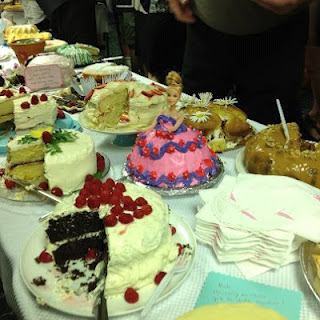
For her memorial service, I asked people to bake and bring cakes. I had no idea how many would come. I didn’t know if we would have too little or too much.

I wanted to put out the challenge and live with risk.

What happened was the miracle of the cakes. Sixty-five cakes! All individually baked and decorated.

A party. The arrival of Godot.

*

Post-script

Two weeks after Kate died, I went to my local bank branch to cancel her bank card and VISA. I had to bring a copy of the proof of death and her will. Six weeks later my VISA statement arrived and Kate was still on it. I called VISA and they said that her account was still active. I cancelled it, I said. I went to the bank, and they cut her card in half and I signed a form. (A form! Is that itself not proof enough?!) The branch can’t cancel her account, the VISA lady said. Her account is still active. Do you want to cancel it? Do you have her card? No, I replied. They cut it in half six weeks ago when I cancelled her account. Her account is still active, she said. Do you want to cancel it? Yes, I said. Do you want to cancel yours, too? No, I said. You just give in, don’t you? You just give in to the literal and do whatever is required. Kate is dead, I wanted to say, to provide the conversation its context — and I, as far as I know, am still waiting for that release.

I’m heading to the book shelf now to pull down Flann O’Brien’s The Third Policeman.

I’m tempted to ask for the rope, but the hope imperative intervenes.

The question is, To be or not to be….

Whether ’tis nobler in the mind to suffer
The slings and arrows of outrageous fortune
Or to take arms against a sea of troubles
And by opposing end them. To die, to sleep–
No more–and by a sleep to say we end
The heartache, and the thousand natural shocks
That flesh is heir to. ‘Tis a consummation
Devoutly to be wished. To die, to sleep–
To sleep–perchance to dream: ay, there’s the rub,
For in that sleep of death what dreams may come
When we have shuffled off this mortal coil,
Must give us pause. There’s the respect
That makes calamity of so long life.
For who would bear the whips and scorns of time,
Th’ oppressor’s wrong, the proud man’s contumely
The pangs of despised love, the law’s delay,
The insolence of office, and the spurns
That patient merit of th’ unworthy takes,
When he himself might his quietus make
With a bare bodkin? Who would fardels bear,
To grunt and sweat under a weary life,
But that the dread of something after death,
The undiscovered country, from whose bourn
No traveller returns, puzzles the will,
And makes us rather bear those ills we have
Than fly to others that we know not of?
Thus conscience does make cowards of us all,
And thus the native hue of resolution
Is sicklied o’er with the pale cast of thought,
And enterprise of great pitch and moment
With this regard their currents turn awry
And lose the name of action.

—Michael Bryson

————

Michael Bryson, a frequent NC contributor, has been reviewing books for twenty years and publishing short stories almost as long. His latest publication is a story “Survival” at Found Press. Last fall he published an e-version of his novella Only A Lower Paradise: A Story About Fallen Angels and Confusion on Planet Earth. His other books are Thirteen Shades of Black and White (1999), The Lizard (2009) and How Many Girlfriends (2010). In 1999, he founded the online literary magazine, The Danforth Review, and published 26 issues of fiction, etcetera, before taking a break in 2009. TDR resumed publication last fall and is once again be accepting fiction submissions. He blogs at the Underground Book Club.

See also “Kate’s Song” written by Brooke Sturzenegger and Kate’s flikr albums.

And for the close, here is Warren Zevon’s appearance on Letterman where he said “enjoy every sandwich” —

 
Aug 012011


Photo credit: Kate O’Rourke


Here’s a timely (always timely) essay (exhortation) on the art of reviewing from Michael Bryson who has already contributed mightily to these pages (see his stories “Niagara” and “My Life in Television“). Taking Pauline Kael (the late, great New Yorker movie critic) and Susan Sontag (the late, great novelist, memoirist and critic) as his models, he makes a case for articulate, argumentative, critical criticism, the cut and thrust of literary debate, and the healthy expression of superior literary taste (READ: criticism as demolition) as a corrective to the marketplace. For several years Michael edited the magazine The Danforth Review, a lively, inventive online short story journal that went into mothballs in 2009. He is restarting the magazine this fall, getting ready to take submissions (see full bio and details below the post).

dg

.

Sontag & Kael: Criticism is demolition?

By Michael Bryson

.
For years I’ve wanted to write an essay about criticism: what is good criticism, what is poor criticism, what frustrates me about criticism, what makes me go, yes, yes, yes.

Increasingly I suspect this essay will never get written.

My mind is unsettled. Sometimes I want critics to be harsher: stop waffling! Sometimes I want critics to be more judicious: stop rushing towards unfounded conclusions! Sometimes I abhor mis-readings; sometimes I’m pleased to be shown an unexpected side of a work. Sometimes I’m keen to read a gender-based analysis; sometimes I just can’t take any more; enough already.

Yes, I’m finicky. I’m not the ideal, consistent reader. I don’t have a still point upon which to ground direction to others about how criticism ought to be done.

As I’ve said before, I write reviews. In my reviews I engage the work; I try to provide evidence-based analysis; I try to recognize that interpretation is dialogic (it’s part of a larger give-and-take process). Reviews need to be able to stand alone, be a unit of communication, transmitting meaning.

But I don’t believe in still point truths, or monologues. But, then, sometimes I do. Every once in a blue moon I enjoy a good polemic blasting.

Craig Seligman’s Sontag & Kael: Opposites Attract Me (Counterpoint, 2004), a brilliant compare-and-contrast essay on the work of Susan Sontag and Pauline Kael, has returned me to my unsettled thoughts about criticism.

T.S. Eliot said: “Between the real and the ideal falls the shadow.”

Seligman could be paraphrased: Between provocation and judiciousness lies the graveyard of failed criticism.

Okay, the parallelism is rough. Here’s some real Seligman:

You can’t be a great critic–you can’t even be an interesting critic– without a talent for provocation. An imp of the perverse perches on the shoulder of the critic as she formulates her sentences, a still, small voice will warn her, “Caution! A statement like that is bound to land you in hot water!” And if she’s a genuine critic, her imp will throttle that voice. The aim is to make people think; the means is, much of the time, to make them mad. Judiciousness may be central to all criticism, but judiciousness without provocation of some kind is like nutrition without flavour. Who cares if a boiled turnip is good for you? Through angry responses to something you’ve written can be unpleasant, they’re not nearly so demoralizing as no response. At least they’re evidence–sometimes the only evidence–that the audience has listened (95-6).

Argument is how we learn; argument is how we think (166).

Ninety percent of everything, as Theodore Sturgeon observed, is shit; in criticism, the percentage must be ninety-nine (167).

[Adler] just can’t stand [Kael]. And that’s where criticism begins. Call it sensibility or call it taste, we embrace what we love and trash what we loathe; but the response–the recoil–comes first. In articulating her loathing, Adler gives me a better handle on my love. That makes her a real critic (168).

[Kael] and Sontag were magnificently uncompromised, but their work isn’t bursting with “sympathy and understanding.” Those who can have a moral obligation toward those who can’t, the obligation that Henry James articulated so beautifully when he counseled, “Three things in human life are important. The first is to be kind. The second is to be kind. And the third is to be kind.” But criticism–unfortunately for the criticized–isn’t human life. Notwithstanding their many enthusiasms and their palpable delight in praising, Sontag and Kael don’t deserve any rewards for kindness. And that’s as it should be. Niceness, in criticism, is a form of bad faith (186-7).

We’ve all read hatchet jobs by critics who are scandalously inferior to the artists they’re judging. … I’m talking about geniuses, though, not nitwits, and geniuses, almost necessarily, are monsters. There’s something monstrous in the titanic will it takes to produce a world-class oeuvre, not to mention the coldness it takes to pronounce somebody else’s work wanting (187).

Demolition is probably the primary critical task; to be the bad conscience of one’s time, as Nietzsche charged the philosopher, has now become the critic’s responsibility. In any age, and especially in an age driven by hype and wholly given over to, in Sontag’s phrase, “mercantile values,” somebody has to say no (188).

It’s a measure of [Kael’s and Sontag’s] greatness that what we take away from their work isn’t the no but the yes. They fret, they recoil, they prophesy–but their enthusiasms sweep them away. No one can write great criticism without bringing so much passion to the task that she risks making a fool of herself (189).

Passion. Provocation. Demolition. Titanic wills and monstrous somethings. Argument is how we learn, how we think. The bottom line: how to be a great critic.

Seligman doesn’t waffle. He’s not finicky.


He clearly loves his two subjects, but he rages frequently at Sontag and finds numerous occasions to wish Kael had written something different, something better.

Here’s more Seligman:

I hope you don’t think that because I’m crazy about her writing I bought all of her opinions. “Infallible taste is inconceivable,” she wrote; “what could it be measured against?” If Sontag’s taste seems less controversial, surely that’s because she’s allotted most of her criticism to Olympian work. This determination to play the admirer is what, in her view, justifies her claiming she’s not a critic: “I really do think an important job of the critic is to savage this, to say this is garbage, this is terrible, this is pernicious.” So do I, but her distaste for that side of the job doesn’t free her from the mantle of criticism; it just makes her a critic who doesn’t do half her job. … For a critic to address only what she loves is as skewed as it is for her to confront only what she hates (187-8).

I savoured this book. I didn’t want it to end. I wish I could say one of my well-read friends recommended it to me, but the truth is, I picked it up off a used book table at a sale my employer was having to raise funds for charity.

Chance, in other words, introduced me to Seligman (and a Google search has pointed me–grateful–to more of his work). Kael and Sontag, of course, I was somewhat familiar with. My bookshelf includes Kael’s collected movie columns, For Keeps: Thirty Years at the Movies (1996), and Sontag’s canonical Against Interpretation (1966) and Reborn: Journals and Notebooks, 1947-1963 (2008).

Here’s part of the entry of December 19, 1948, the year Sontag turned 15:

There are so many books and plays and stories I have to read–Here are just a few:

The Counterfeiters – Gide
The Immortalist – Gide
Laccadio’s Adventures – Gide
Corydon – Gide
Tar – Sherwood Anderson
The Island Within – Ludwig Lewisohn
Sanctuary – William Faulkner
Ester Waters – George Moore
Diary of a Writer – Dostoyevsky
Against the Gran – Huysmans
The Disciple – Paul Bourget
Sanin – Mikhail Artsybashev
Johnny Got His Gun – Dalton Trombo
The Forsyte Saga – Galsworthy
The Egoist – George Meredith
Diana of the Crossways – George Meridith
The Ordeal of Richard Feverel – George Meridith

poems of Dante, Ariosto, Tasso, Tibullus, Heinie, Pushkin, Rimbaud, Verlaine, Apollinaire plays of Synge, O’Neill, Calderon, Shaw, Hellman… [This list goes on for another five pages, and more than a hundred titles are mentioned.]

… Poetry must be: exact, intense, concrete, significant, rhythmical, formal, complex

… Art, then, is thus always striving to be independent of the mere intelligence …

… Language is not only an instrument but an end in itself …

Kael is not so easily quoted. Let’s just note that her selected/collected weighs in at 1291 pages.

Both of these women, Seligman notes, were lightning rods for adversaries. Both also became major critics before the late-1960s expansion of feminism.

Titanic wills? Here’s the quotation chosen for the back cover of Reborn: “I intend to do everything… to have one way of evaluating experience–does it cause me pleasure or pain, and I shall be very cautious about rejecting the painful–I shall anticipate pleasure everywhere and find it, too, for it is everywhere! I shall involve myself wholly…everything matters!”

Nothing was going to hold Sontag back, and nothing did. What Seligman finds in her criticism, however, are swells of contradiction and intense sophistication to both hide and reveal herself. She was gay, but for a long time didn’t say so. She identified with the North Vietnamese, but then broke with the ideological left in the 1980s.

On February 6, 1982, Sontag gave a speech at a Town Hall in Manhattan at what was supposed to be an evening of left-wing solidarity. She said:

Imagine, if you will, someone who read only the Reader’s Digest between 1950 and 1970, and someone in the same period who ready only The Nation or the New Statesman. Which reader would have been better informed about the realities of Communism? The answer, I think, should give us pause. Can it be that our enemies were right?

Over boos and catcalls, she neared the end of her speech:

Communism is fascism–successful fascism, if you will. … I repeat: not only is fascism (and overt military rule) the probable destiny of all Communist societies–especially when their populations are moved to revolt–but Communism is in itself a variant, the most successful variant, of fascism. Fascism with a human face.

Uproar. Accusations of betrayal. Surprise from Sontag that the reaction was so vocal.

Seligman uses the example to reinforce that this is what great critics do; they get our attention and make us think. He asks:

Would Sontag’s detractors have been happier if she’d gazed with fiery eyes into the crowd of the Town Hall and declared, ‘Communism resembles fascism’? Oh, God, some of them probably would have. But Sontag has too much pride in her craft to let her language turn into mush (95).

A similar example from Kael, from a 1992 interview with The Oxford American:

OA: I’ve heard a few people say that they have stopped reading you because you have made them feel stupid at times for liking something they shouldn’t. Have you ever–

Kael: Tough (140).

Yes, tough. Good answer. But what I didn’t find in Seligman was a way to separate the geniuses from the nitwits.

If the geniuses are “monstrous,” what are the nitwits? Evil?

If 99% of criticism is shit, what are 99% of critics? Pigs?

And what of the process of reviewing, criticizing, and dialoguing? What of give-and-take? What of that thing superficially called the literary community?

If demolition is “probably the primary critical task,” what of community building? And how much weight should be give that “probably”?

The further I get from the book, the more my finickiness returns.

Yes, demolition is a legitimate PART of the critical process, but the primary task? Isn’t the primary task to know thyself and to be aware of your own biases? And to present a strong (not mushy!) argument (evience-based) that acknowledges the biases? And always, I’ll say it again, to acknowledge that argument is dialogic? That no single argument can dominate and end the debate?

In December 2010, the New York Times ran a series on “Why Criticism Matters.”

The Times introduced the series as follows:

We live in the age of opinion — offered instantly, effusively and in increasingly strident tones. Much of it goes by the name of criticism, and in the most superficial sense this is accurate. We do not lack for contentious assertion — of “love it” or “hate it,” of “wet kisses” and “takedowns,” of flattery versus snark, and assorted other verbal equivalents of the thumb held up or pointed down. This “conversation” is often lively. Sometimes it is fun. Occasionally it is informed by genuine understanding as opposed to ideological presumption.

 But where does it leave the serious critic, one not interested, say, in tabulating the number of “Brooklyn novelists” who receive attention each year in publications like this one (data possibly more useful to real estate agents and sociologists than to readers)? Where does it leave the critic interested in larger implications — aesthetic, cultural, moral?

At the time, I started to make notes to provide my own response to this series, but I couldn’t complete it. My wife, then, was in the middle of four months of chemotherapy to treat her breast cancer. While thinking through questions about literature is part of what sustains me (I have my own titanic will and youthful journals, though they’re nowhere near as intense as Sontag’s), my life-energy was needed elsewhere.

Life/art: it’s a separation rife with unintended consequences.

Anger, Seligman notes, can be a source of great criticism. I distrust my anger. I have written out of anger and later regretted it, though even in reflection I usually think my impulse was true. And the result, pace Seligman, if often more interesting.

I was angry at the Times series. It didn’t go deep enough, I thought. It didn’t provide me with what I felt I needed out of it. Which was what, exactly? I can’t recreate that now. I was in a unique situation then, one what swelled with fear and an intense need to live simply one day at a time.

The situation reinforced my natural impatience for stupidity.

I wanted to write an essay: “Why I hate social media.” But I don’t hate social media. I hate that people post banalities. I don’t care that you’ve just crossed the street, brushed your teeth, or are meeting your friends at the art gallery.

I’m okay with receiving links to YouTube videos, sharing one of your favourite songs from the 1990s, but, please, not twenty times a day.

What I wish more people did, is write reviews, write commentary, write analysis. Don’t just send witticisms about Toronto’s Ford brothers (yes, you’re clever; and Atwood may well make a good mayor), provide argument.

Argument, as Seligman says, is how we learn. Argument is thought.

Go deeper. Compare and contrast. Risk being wrong. Risk contradicting yourself. Risk offending someone.

Risk alienating your friends.

It will make you more interesting.

Please. Please. Pretty please.

Thank you.

—Michael Bryson

——————————————————

Michael Bryson has been reviewing books for twenty years and publishing short stories almost as long. His latest publication is an e-version of his novella Only A Lower Paradise: A Story About Fallen Angels and Confusion on Planet Earth. It’s a book about, well, angels and shit. His other books are Thirteen Shades of Black and White (1999), The Lizard (2009) and How Many Girlfriends (2010). In 1999, he founded the online literary magazine, The Danforth Review and published 26 issues of fiction, etcetera, before taking a break in 2009. In fall, 2011 TDR will once again be accepting fiction submissions. He blogs at the Underground Book Club. He has new fiction forthcoming in The New Quarterly (Fall 2011) and new fiction (“The Places You’ll Go”) recently online at Urban Graffiti. He co-parents a daughter and a son. His wife was diagnosed with breast cancer 11 months ago. She has survived the disease, the treatment, and a lot else besides.

Jan 132011
 

Don’t forget to check in on Kate’s treatment blog. She is facing down the Other, as we all must. And finding words in the torment.

dg

Jung once said “if people can be educated to see the lowly side of their own natures it may be hoped that they will also learn to understand and to learn their fellow men (sic) better”. I know that people do try – because we face down and sometimes embrace those lesser selves – in order to help our friends and family who are sick. Sometimes even for strangers too. The entire oncological world does it everyday. Because of it, a world of love and care, beauty, kindness, and strength has grown constant around me. I in turn, will try to spread it around too. But I battle with my own lesser self – bald, bloated, unable to parse, cranky, sometimes a horror-comic of terrible thoughts. And I am sure we all do when we look and see imperfections, craziness, or lunacy. We try to spread the good stuff around.

via Auntie Cake’s Shop.

Dec 072010
 

Kate O’Rourke (“Auntie Cake”) is married to the Canadian writer Michael Bryson, a friend of mine whose story “My Life in Television” was published in Numéro Cinq earlier this year. In September, Kate was diagnosed with cancer. In response, she began this blog. It will break your heart, it will make you stand up and cheer.

dg

Fighting is my job now – I must often retreat to the core of myself to garner what strength is required to regain citizenship in the kingdom of the well. Usually, that means, to bed, or to rest on a soft surface somewhere. Sometimes it means escape in a Swedish series of books about a crazy lady, or writing this blog, lunching with friends, wrapping Christmas presents to Ella’s Swingin’ Christmas at Volume 11. It also means plugging into machines and swallowing poison, assisting with all manner of broken spirit, and crying. A LOT of crying. Fountains and rivers of liquid salt. It is a job you are not prepared for, in fact, dread. Worse than any mundane task or other related duty as assigned. But life, that unbending and strong coursing river, keeps you moving along. Really, there is no choice. Kind of like blood through your veins.

via Auntie Cake’s Shop.

Jun 122010
 

IMG_0431

.

Here is a story by my friend Michael Bryson from his 2010 collection How Many Girlfriends. For several years Michael published a terrific online magazine in Toronto called The Danforth Review, which is sadly defunct although the pages now reside in the Library and Archives Canada and can still be accessed there. This was before online magazines had much legitimacy; Michael was ahead of his time, and his magazine was a useful lens on what was new and coming in the Canadian literary world while it lasted. He also writes. I put one of his stories in Best Canadian Stories (2005). And he publishes a blog called Underground Book Club.

dg

When I was sixteen, a man spoke to my parents. A week later, he bought me a new set of clothes and I flew with him to California. His name (and I’m not making this up) was Sly. Maybe my story starts with the arrival of Sly. My parents will tell you straight out he’s an evil bastard, which is true enough, but Sly’s character was nothing if not Byzantine. He looked a bit like Santa Claus, an fact he exploited with the young and the old. It took me a long time to see the bits of him that I can claim to know, because for a long time I couldn’t see over his wake. I would look at him and see just the crest of his wave. He was my substitute father, my mentor, my guide in the world of glitter he had brought me to, and I was his servant. I was his paycheque, too, but it took me a long time to figure that out. I’m trying hard not to cloud my judgement about Sly here. I’m trying to tell you things that are simple and real. I would like to say things about Sly that even Sly would agree with, if he were here to agree with them, which he isn’t, since he’s dead.

Maybe that’s where we should start.IMG_0220

It was a dark and stormy night in New Hampshire (I’m not making this up). I was in L.A. with Lily (more on her later). Sly was in New Hampshire. I was trying desperately to get him on the phone. In recent days, we had argued. I had been in a professional slump. At the time, I blamed Sly. “Patience,” he counseled. In my condo on the outskirts of the city, Lily laid out the last of our drugs. It was approaching nightfall. Lily was still wearing her bathrobe. Beneath her robe she wore only her bikini bra. She was seventeen. I was twenty-one.

“Sly, you fucker!” I screamed into the phone. I kept getting his answering machine. He had gone to New Hampshire to meet a new client. A potential new client, anyway. I was afraid that I would lose his attention. Before he had left for the East Coast, he had been reassuring.

“I have a script on my desk right now. It’s perfect for you. The producers want you. It’s a role that could really make you.”

“Well, shit! Send it over!”

“When I get back,” he promised.

The circus was his favorite metaphor. “Life’s the Big Top, kid,” he would say. “Don’t ever forget that.”

After he died, I kept hearing his voice over and over. “Life’s the Big Top, kid. The Big Top, kid. Don’t ever forget that.”

Let me tell you one thing clear and true: I haven’t forgotten that. Life is a carnival. The carnival is the centre and source of all life. Sly taught me that, and now I’m telling it to you.

Continue reading »