Douglas Glover

Apr 032015
 

Maura Kennedy and B. D. LoveMaura Kennedy & B. D. Love

.

.

“I Cried to Dream Again” Lyrics by B.D. Love, Bonificence Music, ASCAP/Music by Maura Kennedy, Parade of Echoes Publishing, BMI. The song will be included in the album, Villanelle: The Songs of Maura Kennedy and B.D. Love by Maura Kennedy on the Varese Sarabande label (4/28/15).

§

I RECENTLY VISITED THE NOTTINGHAM, an assisted-living facility in Syracuse, to see a dear friend and former Le Moyne colleague, Gordon Boudreau, the author of a splendid book on Thoreau. Gordon’s daughter, Maura, and her husband, Pete (professionally, “The Kennedys”) happened to be there. They had just performed in Syracuse, and were now putting on, for a large and enthusiastic audience of residents, a concert that turned out to be quite wonderful. I liked everything on their playlist, all their own music, except for two pieces: Willy Nelson’s “Crazy,” on which Maura sounded every bit as good as Patsy Cline, and Gershwin’s “Rhapsody in Blue,” which Pete, a terrific guitarist, played beautifully—on a tiny ukelele!

But the highlight for me was a song titled “I Cried to Dream Again.” Maura wrote the music, to accompany lyrics by a poet-friend, B. D. Love. As the title indicates, Mr. Love is playing off one of the most beautiful, and utterly unexpected, passages in Shakespeare: lines spoken by Caliban in Act II, Scene ii of The Tempest. When the fools Stefano and Trinculo are frightened by the music created by the invisible Ariel, Caliban responds:

Be not afeard; the isle is full of noises,
Sounds and sweet airs, that give delight, and hurt not.
Sometimes a thousand twangling instruments
Will hum about mine ears; and sometimes voices,
That, if I then had wak’d after long sleep,
Will make me sleep again; and then, in dreaming,
The clouds methought would open, and show riches
Ready to drop upon me; that, when I wak’d,
I cried to dream again.

Those last lines, the ones that supplied the song’s title, are an exquisite conclusion to a beautiful set-piece. What makes the lines even more extraordinary is that they are spoken by the half-human, half-bestial Caliban, whose normal vocabulary consists of brutish gabble and cursing. Even the illogical sequence of tenses in this passage is intentional on the part of Shakespeare, who retains all the beauty of the speech, while suggesting that Caliban is not quite a master of grammar. More intriguingly, the shifts back and forth among past, present, and future tenses create what Robert Graves praised in The White Goddess as “a perfect suspension of time.”

I didn’t go into all this in talking with Maura after the performance. Nor did I babble on about the lyrics alluding to the Brunhilde-Sigurd myth. But I did tell her, honestly, that I thought the song “worthy” of this astonishing passage:  even higher praise than saying that her performance of “Crazy” was as good as the great Patsy Cline’s.

I liked “I Cried to Dream Again” so much that Maura was gracious enough to send me an MP3 of the song prior to its release on their upcoming CD. In writing to thank her, I told her I liked it even more after playing it a couple of times.

The lovely imagery of moonlight, starlight, and mist may or may not be consciously Shelleyan, but the lines, “I dreamed/ I was circumscribed by flame/ when I heard you call my name,” seemed a clear allusion to the Valkyrie Brunhilde, punished by being put in a spell and surrounded by fire. That ring of fire is, of course, penetrated by the hero Sigurd, who rides through the flames, kisses and awakens her…and then leaves her.

That trajectory suits a song about love and loss, ecstasy and abandonment: “I never cried/ until you walked on by/ without one word, a nod, or sigh.” Whether it was a fully conscious allusion or not doesn’t matter; as D. H. Lawrence insisted, “trust the tale, and not the teller.” Whatever Mr. Love’s intention, this mythic imagery is there, in the song. So now, that Brunhilde-Sigurd myth joins the haunting final line of Caliban’s speech on the island’s music, becoming, at least for me, an integral part of the song.

The music Maura wrote for it verges on the magical, and the poignant word “bittersweet,” crucially placed and held beautifully by Maura in a long and rising note, evoked for me the love poems written by W. B. Yeats for his enchantress and muse, Maud Gonne. Spectacularly beautiful and never fully attainable, Maud fascinated the poet, broke his heart, and inspired some of the most beautiful and (a favorite Yeats adjective) “bittersweet” poetry in the English language.

Coincidentally or not, Maura had included in her email recent photos she and her husband had taken of themselves at the gravestone in Drumcliff churchyard in Sligo, where Yeats is buried “under bare Ben Bulben’s head,” and beneath one of the most famously cryptic epitaphs in history. This year is the 150th anniversary of Yeats’s birth. On April 9, in the Le Moyne Library, I’ll be reciting a selection of Yeats’s poems of unrequited love, many of which I have by heart (a wonderful phrase, when one thinks about it). When I do, it will be with “I Cried to Dream Again” playing, perhaps as background music, certainly in my imagination.

—Patrick J. Keane

.

B.D. Love grew up in a small town in Southeastern Michigan, along the banks of a murky and probably toxic body of water called — presumably for its color — the River Raisin. His first poem, a prayer to the Virgin Mary composed when he was in the third grade, inspired his homeroom nun to accuse him of plagiarism. He did not write again for many years, until the death of his grandmother prompted his return to verse. His poetry and short fiction have appeared in numerous journals, and he’s had several books published. His lyric writing and collaboration with musician Maura Kennedy has resulted in a full-length album titled, “Villanelle: The Songs Of Maura Kennedy And B.D. Love” due to be released April 28, 2015 on the Varèse Sarabande record label. An avid dog-lover, he now resides along the banks of the murky and occasionally toxic Los Angeles River.

Read more about him @www.bdlove.org.

§

Maura Kennedy The daughter of a professor of English, and the ”musical one” of seven children, Maura Kennedy carved out her moments of teenage creative solitude sequestered in a closet, blasting Queen and Kate Bush on headphones, while she read C.S. Lewis and Stephen R. Donaldson. Not given to the hermitic life, she made nocturnal escapes, crawling out of her bedroom window and across the roof of her family’s suburban split-level home, to hit the streets of post-industrial Syracuse, New York, in search of crunching power chords and soaring pop hooks.

She found them—and was always the first on the dance floor—in small clubs where R.E.M. and Squeeze were scrounging gas money for the road, and especially at a dusty used record shop, where she got a job just to spin vinyl all day. She soaked up the Kinks, the Hollies, the Raspberries, and leavened the sweetness with a strong dose of Thompson/Denny era Fairport Convention. In the stainless steel splendor of the Little Gem Diner, the Ramones autographed her Social Security Card. At college, she pawned her meal tickets to buy an amp and lived off of her bandmate’s doggie bags. She cracked a couple of ribs in the mosh pit at a Clash show and finally got the music degree. After spending the night in an upstate Greyhound station when she missed the last bus following a Cheap Trick concert, she and some like-minded friends formed a combo and blazed a trail through the Syracuse club scene. And with the breeze off Onondaga Lake at her back, she took off for Austin.

It was there that she hooked up with Nanci Griffith, and toured the US and the British Isles behind Nanci’s Grammy-winning Other Voices, Other Rooms. Working the road in the acoustic format of roots-pop mavens The Kennedys, her songwriting blossomed, as she began drawing from novels, poetry, and especially from her own dreams.

Maura’s love of both music and literature was the basis for her most recent collaboration with writer B.D. Love, and the resulting album, “Villanelle: The Songs of Maura Kennedy and B.D. Love,” Maura’s second solo album, is slated for an April 2015 release on Varèse Sarabande records.

Read more about her @www.maurakennedy.com.

§

Patrick J Keane smaller

Numéro Cinq Contributing Editor Patrick J. Keane is Professor Emeritus of Le Moyne College. Though he has written on a wide range of topics, his areas of special interest have been 19th and 20th-century poetry in the Romantic tradition; Irish literature and history; the interactions of literature with philosophic, religious, and political thinking; the impact of Nietzsche on certain 20th century writers; and, most recently, Transatlantic studies, exploring the influence of German Idealist philosophy and British Romanticism on American writers. His books include William Butler Yeats: Contemporary Studies in Literature (1973), A Wild Civility: Interactions in the Poetry and Thought of Robert Graves (1980), Yeats’s Interactions with Tradition (1987), Terrible Beauty: Yeats, Joyce, Ireland and the Myth of the Devouring Female (1988), Coleridge’s Submerged Politics (1994), Emerson, Romanticism, and Intuitive Reason: The Transatlantic “Light of All Our Day” (2003), and Emily Dickinson’s Approving God: Divine Design and the Problem of Suffering (2007).

.
.


Apr 022015
 

Toni Marques

.

“WHERE’S IT?”

The question sounds as if he’s chewing a living centipede, and she thinks about Daisy and that thought almost makes her cry because Daisy wasn’t a bad centipede at all, she was just doing the stuff centipedes are supposed to do, for instance when she bit that little boy the other day while he was sleeping or something. God rest Daisy’s soul. By the way, sometimes Mrs. Kidder can be very annoying. She said she had no idea whether Daisy indeed got a soul. How come, Mrs. Kidder? Mrs. Kidder and all the gang are supposed to know everything about anything, right? However, Mrs. Kidder sometimes can be very dumb. The Daisy thing is a good example. If that favela has so many centipedes, how could you be sure Daisy is really the Daisy? Mrs. Kidder once had asked. Simple answer: Daisy used to be the largest centipede around. And how did she know Daisy was a female centipede? Mrs. Kidder had insisted. Because Daisy used to live with the girl’s family and never bit anyone inside the house, and there was that day, Mrs. Kidder said she didn’t remember it, when the girl found the little eggs. More than that, many times the girl saw how Daisy curled its body to protect its brood, right? She showed it to Mrs. Kidder, right? But, yes, no baby centipede was ever spotted in the house, just the eggs, Mrs. Kidder was right on that. Mrs. Kidder can be very dumb but also can be very cruel, because then Mrs. Kidder said that probably Daisy had eaten all the eggs. Or the babies. Mrs. Kidder is also very funny. The girl knows Daisy was no stranger to Mrs. Kidder. The truth is Mrs. Kidder enjoys playing games. But the girl enjoys playing games too. Mrs. Kidder is the best friend a girl can have.

“What did you do to my bong, you little fucker?” the man says, his voice now sounding as if his mouth is a little dark bucket full of dried saliva, a toothless bucket, of course, because neither buckets nor his mouth have teeth.

“You should ask her,” the girl says. “She is impossible.”

The girl had already finished her homework and there is nothing else to be done at night. They have no TV set, computer, anything. They just have each other, but she also has Mrs. Kidder. It’s not her problem if he refuses to be friends with Mrs. Kidder, a very distinguished lady who came all way down to Rio de Janeiro just to spread kindness and love.

“Mrs. Kidder hid your bong somewhere. Why don’t you try to find it? You can walk, can’t you?”

“You don’t play games with me, you little sucker, or I’ll sell you to The Madame. I mean it.”

The girl is now playing with her dolls. The dolls yell at each other, and the fight saddens the girl, but what can she do? They are pretty old dolls, tired pretty old dolls who are not tired of fighting, though. They argue about anything. Mrs. Kidder doesn’t like to play with the dolls, not because Mrs. Kidder is not a child anymore, but because, the girl thinks, Mrs. Kidder gets jealous when the dolls are around.

“Gee, The Madame is in jail now, you should know it,” the girl says. “The new drug lord is someone else, I don’t know his name. I don’t think Mrs. Kidder knows his name either, otherwise she would have told me, you know. Mrs. Kidder tells me everything.”

“How many stones do you think The Madame will offer me if I sell you to her?”

“I don’t know. But you can visit her in jail and ask her.”

Now the dolls are friends again. They are very complicated dolls.

“What’s the new guy’s name?” the man says.

“I told you a million times I don’t know. You should know his name. You are his client.”

“I’m gonna ask him if he wants you. Unless you give me back my bong. Where’s the goddam bong?”

The man’s voice now sounds like his tongue is made of melted rubber. Words are so beautiful, even ugly words are beautiful, you can’t talk like that. Words are very precious, that’s the reason she doesn’t like to talk when she’s at the school.

Tourist Nº1 takes his headphones off and says:

“Poor guy. He looks like an anorexic elephant, if that’s possible”.

“Very authentic stuff,” says José, the Tour Guide.

José the Tour Guide never knows the tourists’ names. Instead, he assigns mental numbers to each one. His job doesn’t make him happy.

“The stench is even more authentic, I should say,” Tourist Nº 2 says. “This plexiglas can’t hold it. We should have had those creams medical examiners spread under the nose.”

“Not all coroners use it,” says Tourist Nº 3. “They are used to it, you know.”

“Well, I’m not a doctor. I hope the next sight-seeing activity is a nose-friendly one,” Tourist Nº 2 says. “Wait a minute. There’s a woman over there.”

“Yes, there is,” the Tour Guide says. “It’s her mother’s corpse. I mean, not a real corpse. A prop one, you know what I’m saying?”

“The stench could be hers, don’t you think?” Tourist Nº 1 says. “She looks real, very real.”

“No, no. It’s a prop corpse. They’d really spent some days living with the corpse here, until city hall people were warned by neighbors and came over and removed it. Crack-cocaine overdoses or something like that, I don’t know, had just killed her. It took a while until they’d noticed it, I mean, the family.”

“There’s a lot of things you don’t know,” Tourist Nº 3 says. “The programme says this kind of tour started in…”

“2014,” the Tour Guide says.

“Ok. Still, 20 years later, a tour guide does not know what’s being shown? I want my money back.”

“Wait a minute,” Tourist Nº 1 says. “If you guys have a doll representing whoever here…”

“The girl’s mother,” the Tour Guide says.

“The girl’s mother, ok. If you have that, what else here is, like, fake? This ain’t a reality tour.”

“I want my money back,” Tourist Nº3 says again.

“Shhh,” the Tour Guide says. “You are missing their exchange. Put the headphones back on.”

“You should be more polite, you know?” the girl says. “Mrs. Kidder appreciates good manners. She’s British, you know. No, you don’t know. Forget it.”

Now the dolls have become boring, and she decides to kill them. Before killing them, though, she explains very carefully that there’s nothing to worry about, sooner or later they will be alive again.

There’s something she doesn’t like about the dolls: they used to be afraid when Daisy was around. The dolls feared being bitten by Daisy. No one in this world can imagine a centipede biting a plastic doll or any kind of doll. Poor dolls. Dolls can have soft hearts, that’s correct, but their bodies can handle almost any dangerous situation, with the exception of the heat. Rio de Janeiro is very, very warm. So the girl would like to have a job so she could buy a refrigerator so the dolls could be feel safe from the heat and from the favela’s centipedes.

“They have another woman running business here? Fuck,” the man says.

She finds it funny, the time lapse between what she says and the man’s response. Sometimes he needs a couple of days until he can find an answer to one of her questions. She laughs when she remembers that day when she asked how old he was. He couldn’t remember. When she’d already forgotten the question, he’d remembered to answer it. A wrong answer, but that doesn’t matter. He never delays the answers to Mrs. Kidder questions, though. Now he is pretending he doesn’t know who Mrs. Kidder is. He does that very often. Of course he knows Mrs. Kidder. The other day he tried to punch Mrs. Kidder on the face when she swore at him. It was a pretty funny moment, the furious but tiny, frail, toddling man speaking in tongues and throwing his fists at random because he couldn’t control them nor could he stare at her, his usually frozen eyes floating on his face like a pair of dead seagulls on the surf. The girl knew that Mrs. Kidder was a big woman and, despite not being young anymore, Mrs. Kidder was able to defend herself against him or anybody else, for that matter. That day Mrs. Kidder threw out one more stone and, more than that, she kicked everybody out the house, all his stupid crack-head buddies, a bunch of living skeletons who got so scared that they never came back. Good job, Mrs. Kidder.

Now the man is crying. He’s able to cry without shedding tears, something the girl finds remarkable because the dolls do that too.

“Give me a drink”, he says, like an old baby.

He stands up from the ground where he spends most of his time at home and looks for things they don’t have at home: drinking glasses, a refrigerator, things that he himself had exchanged for money, and the money, for crack-cocaine stones. So she knows he will go out, and out he goes.

“I understand the addicted population…,” Tourist Nº 2 says.

“City Hall supplies a regular amount of stones on a weekly basis,” the Tour Guide says. “Haven’t you read the e-brochure?”

“I have. There’s no word on alcohol, though.”

“They don’t get alcohol.”

“What about food?”

“Her school provides all her meals, on-site. He receives food stamps, which he probably exchanges for stones.”

“Then the old lady must be starving,” Tourist Nº 1 says. “That’s interesting.”

“There’s no solution to the crack-cocaine epidemics,” Tourist Nº 3 says. “That’s Rio’s solution.”

“In the beginning, part of the money the city gets from you tourists was funneled to the public health care system that handled the crack-head population. After a while the city gave up. Those people can’t be treated.”

Now she can play host to all her friends. They don’t like to come when the man is at home. That’s why she likes Mrs. Kidder more than anyone. But she understands the reason they avoid visiting her when he’s around. Whenever she can, she visits them as well. They live nearby and they’re a very nice gang.

“Mrs. Kidder!” she says when Mrs. Kidder comes in.

“Who is this Mrs. Kidder she’s always talking about?” Tourist Nº 4 asks.

“An imaginary friend, I guess,” the Tour Guide says. “The family briefing I have here says nothing about eventual family’s relatives or acquaintances. The State Tour Company selects stuff you guys can understand immediately. With a little help from the interpreting software, that is.”

“This girl does not speak English, does she?” Tourist Nº 1 says. “Or is Kidder a common Brazilian surname? She says ‘Kidder’, right?”

“I think so,” says Tourist Nº 2. “Excuse me. I have a question.”

“Yes?” the Tour Guide says.

“Why can’t we talk to the subjects? This is a stupid rule, I should say,” Tourist Nº 2 says. “Let’s talk to her.”

“Why are you laughing?” Tourist Nº 3 asks the Tour Guide.

“Forgive me. Brazil and more specifically Rio de Janeiro needed centuries and centuries to get a sense of establishing and following rules, and now an American asks to bypass the rules. It’s just plain funny. I’m sorry.”

“The girl is obviously suffering,” Tourist Nº 1 says. “This is not just a matter of curiosity, you know?”

“She is suffering indeed. She and hundreds of thousands in the same situation all over the city, all over Brazil,” Tourist Nº 2 says. “That’s precisely why we are here. Next time you try a reality tour in Finland or something.”

“Anyway, it seems to me that probably the interpreters must know whether the girl does speak English or not,” Tourist Nº 1 says.

“I’ve told you this is machine-translated,” the Tour Guide says.

“Does she speak English?” Tourist Nº 4 says. “She’s the cutest girl ever.”

“And one of the dirtiest,” Tourist Nº 1 says.

“’Neglected’ would be the proper word,” Tourist Nº 3 says. “Is she available for international adoption?”

“I don’t think so,” the Tour Guide says. “She’s available to reality tours, therefore neglected she must remain.”

“I see.”

“I don’t think she does speak English,” the Tour Guide says. “They don’t teach English in public schools anymore. And she has no access to the Internet. She’s too young, you know.”

“But you have an Internet café over here, I saw it,” Tourist Nº 2 says. “Maybe she’s been learning it online.”

“I can see some books,” Tourist Nº 1 said. “Books and textbooks, I guess”.

“That’s right,” the Tour Guide said. “None of them in English.”

“What if that Mrs. …”

“Mrs. Kidder,” the Tour Guide says.

“Thank you. What if she is a representative, a field officer with a foreign NGO and is teaching English around?” Tourist Nº says.

“No foreign NGOs are allowed in the reality tour zones,” the Tour Guide says. “Otherwise there wouldn’t be poverty shows for your enjoyment, right? So let’s enjoy it while it lasts.”

“Are there expats living here? I mean, we’ve seen Americans and Chinese people, lots of them, side by side, on that big favela, how’s it called again?” Tourist Nº1 asks.

“Rocinha,” the Tour Guide says. “Don’t forget the Brits. They’re here in throngs. The gentrification thing has happened in the South Zone favelas, where they have the best view. Here, downtown, we have no foreigners. Rio has like what? Over two thousand favelas? The gringos moved into the fanciest ones. Actually there’s no reason to call those places favelas anymore. Here in Morro da Providência we have some South Americans, you know, Bolivians and Venezuelans and Argentinians… Our amigos can’t afford the South Zone favelas.”

Valeriy the poet showed up as soon as the man left the house. A very sensible and funny man.

Valeriy asked the woman if she needed something.

“Wait a minute!” Tourist Nº 3 says. “The lady, she’s not a doll. She’s alive.”

“I don’t think so,” the Tour Guide says.

“Is she a talking doll?”

“Nope.”

“Then she’s definitely not a doll, because she’s talking or trying to talk. See her mouth? It’s moving.”

“You’re right,” Tourist Nº 4 says. “And our guide here has no clue on what he’s supposed to show us!”

“It’s not my fault, ok?” the Tour Guide says. “This is my first time with that family and my briefing says we have a doll.”

“I thought you’d referred to Brazil as an organized country,” Tourist Nº 2 says.

“You wouldn’t believe if told you how messy we used to be. Anyway, let’s see it from the bright side, my fellow tourists. That’s what crack-cocaine does, alright? It destroys a person to the point that you don’t know if a person is really a person or if a person is a corpse or if a person is a doll. I assume you all know that, but wait until we visit Downtown Crack-o-land. You’d wish they were dolls, the fucking zombies.”

The woman tells Valeriy she just needs some of his poetry. Valeriy’s poetry is a gay man’s poetry, and she likes it, despite not knowing the Russian language. She enjoys the effect of his words hammering her head. The poetry reciting sessions make Valeriy happy. He feels like a doctor managing a drug substitution therapy: crack-cocaine out, Russian poetry in.

Valeriy starts to recite his poems, but the girl can’t pay attention to him. She’s busy playing with Francis the Sailor. Francis the Sailor enjoys playing hide and seek. It’s very difficult to play hide and seek with him or anyone else because of the furniture: there are two mattresses, the man’s and the one she shares with the woman, there are the makeshift shelves where the TV set used to be and where her few books and textbooks are. But she can hide beneath the stacked clothes or in the bathroom or even outside the house, at the neighbor’s place.

“Where is the little mermaid?” Francis the Sailor asks, while Valeriy recites a poem. The woman shakes her head as if it were punched by several pairs of colorful sponge fists, and the girl is somewhere trying to keep her mouth shut, something very difficult to achieve due to the thrilling joy that overwhelms her.

“I’m here!” the girl says. “Francis the Sailor will never find where the little mermaid is!”

“Francis the Sailor?” Tourist Nº 4 asks.

“Don’t look at me like that,” the Tour Guide says. “I have no answers, alright? Let’s watch and have fun.”

“But your company should have briefed you about what you’re dealing with,” Tourist Nº 1 says.

“We’re Brazilians, ok? We should do this, we should do that, but we don’t do anything because we are Brazilians, period. Nowhere else in the world can you get something like this tour. Yes, this is something totally new. Yes, we need to improve lots of stuff. But, hey, you’re in Rio’s oldest favela watching a typical day of a crack-cocaine torn family. It’s a crack-o-rama if you will. Anything can happen to a crack-cocaine favela family, what else can I say? You see the girl running around like crazy? Perhaps right now she’s high, you know.”

“Crack-heads don’t run like that,” Tourist Nº 1 says.

“Whatever,” the Tour Guide says.

Now Petty Officer Bradley has joined the play. He tells Francis the Sailor to look for the girl outside. Francis the Sailor is not a smart man. He’s still looking for the girl in the empty house.

“Ordinary Seaman Bell!” Petty Officer Bradley says.

“Yes sir!” Francis the Sailor says.

“How many times have you two played hide and seek here?”

“We’ve played it many times, sir!”

“And how many times have you found her hiding outdoors?”

“About every time, sir!”

She loves Petty Officer Bradley’s imposing manners. Petty Officer Bradley never hesitates. Petty Officer Bradley just hesitates when Mrs. Kidder is around. Mrs. Kidder’s imposing manners can be very intimidating, even if you’re a Royal Navy Petty Officer.

“So you better find that girl outdoors right now,” Petty Officer Bradley says. “Unless you think the gallows are your destiny, Ordinary Seaman Bell!”

“No, they are not, sir!” Francis the Sailor says, before leaving the room.

The Tour Guide is feeling weirder by the minute. Nothing is happening, the girl is out of sight, and the tourists are clearly feeling weird too. They don’t want to stay here anymore.

Now they’re arguing. The Tour Guide shuts his ears down. He doesn’t want to know what’s going on. He wishes he wasn’t here. In his mind, he belongs to a happy place, full of the stuff Rio dreams are made of: laidback clients, beachfront cocktails, bikini-clad women, men in thongs, booze-fueled tips, raining yuans. No tourists searching for “culture”. No guilt-driven European and American sensitive scavengers looking for “authentic” stuff.

“I think I’ve had enough,” Tourist Nº2 says. “I want to get back to the hotel.”

“Me too,” Tourist Nº 3 says.

“I’ll go with you,” Tourist Nº 4 says.

“You?” the Tour Guide asks Tourist Nº 1.

“Yes, let’s go,” Tourist Nº 1 says.

“Praise the Lord,” the Tour Guide says in Portuguese.

“Tomorrow we have the favela extra-judicial killing sight-seeing, is that correct?” Tourist Nº 2 says.

“What?” the Tour Guide says.

“Just kidding,” Tourist Nº 2 says.

Valeriy gets worried when the woman stops shaking her head. He checks her out. Then he calls the girl.

“Dearest, where are you?”

“I can’t find her,” Francis the Sailor says.

“We need her right here, right now,” Valeriy says.

“I can sense something,” Petty Officer Bradley says.

“You can sense what?” Valeriy says.

“I am feeling weak,” Petty Officer Bradley says.

“So what?” Valeriy says.

“I don’t know,” Petty Officer Bradley says. “Never mind. Let’s find her.”

Valeriy and Petty Officer Bradley join Francis the Sailor to look for the girl.

“Where’s Mrs. Kidder? She can be useful,” Valeriy says when they leave the house.

“The old witch… Who needs her?” Francis the Sailor says.

This is the girl’s happiest moment. For the first time it takes more than an hour for her to be found. She knows it because she carefully listens to the TV soap opera someone is watching nearby. When she had found the perfect hideout, the soap opera hadn’t started. Now the neighbor’s TV is on the news show.

Tourist Nº 1 couldn’t help coming back to Morro da Providência as soon as the Tour Guide left the hotel.

Morro da Providência is a safe place, tourist-wise, so he had no problem reaching it. He gets disturbed when he arrives at the family’s place. The observation deck is closed, and it takes quite a while until he finds a safe spot where he can see what’s going on inside the house without being disturbed. He’s not sure what to do, actually. He wants to talk to the girl, yet he fears the possible outcomes of interacting with her.

The man is not in the house. The girl is sitting right beside the woman’s body. He can’t understand what the girl says. The real-time translation service is off. The few Portuguese words he knows are not enough. They should have developed a smartphone app for this, but they haven’t.

“Mrs. Kidder, have you seen him?” the girl says. “We need to tell him.”

“No, but I am afraid he will ever come back,” Mrs. Kidder says.

Mrs. Kidder feels very sad.

“You will need to be even stronger from now on,” Mrs. Kidder says.

The girl looks at Mrs. Kidder wondering how Mrs. Kidder knows the man won’t come back. But then she asks something else.

“Mrs. Kidder! What’s wrong with you?”

“The end is near,” Mrs. Kidder says.

“What do you mean?”

“Look, there’s something I want to give to you before leaving.”

“You can’t leave, Mrs. Kidder! You are my only real friend!”

The girl’s little arms reach Mrs. Kidder legs, and she dumps her face on Mrs. Kidder long, dark skirt and starts to cry. But suddenly Mrs. Kidder’s legs become softer than ice cream, and Mrs. Kidder slides away from the girl.

“This book belonged to me. Now I want you to have it, please. See, this is my name here.”

The girl holds the book, opens the first page and reads the name out loud: “Cynthia Harriet Russell Kidder. It’s the most beautiful name in the whole world.”

Tourist Nº 1 grabs his smartphone, opens one of its mobile browsers and types the name. The first web link triggers a shock wave that makes him babble and after babbling he feels suffocated and after suffocating he babbles again and after babbling again he cries. His trembling hands refuse to click further on the smartphone, and then his tongue sticks out and it’s the tongue itself that does the job his hands can’t do, and now his eyes shut, his tongue can’t do the job, he needs another part of his body to become his eyes’ burglar, and he fears his hand, if let loose, will break into his eyes and throw them away, what now?

   His head still seems to function like any head is supposed to function, so he bangs it against a tree several times until he gets his eyes open, and if the head is functioning his brain can order his mouth to bite his hands until they obey him, and that’s what he does, and now his eyes can finally read again the web address brought by the name search, findagrave.com, and his hands can tell his fingers to click on it:

Birth:

Nov., 1817
Salisbury
Litchfield County
Connecticut, USA

Death:

Apr. 16, 1840
Rio de Janeiro, Brazil

Cynthia Harriet (Russell) Kidder was the daughter of William P. and Eleanor (Dutcher) Russell. She was the 1st wife of Rev. Dr. Daniel Parish Kidder. They were married Wednesday evening, November 9, 1837, at Salisbury, Conn. by Rev. O. V. Ammerman. Rev Kidder was a minister in the Genesee Conference, New Jersey Conference, Newark Conference and Rock River Conference of the Methodist Episcopal Church.

Methodist Episcopal Church
Missionary Society
The Gospel In All Lands, Vol. 21, c1900, Page 87

Rev. Daniel Parish Kidder and Cynthia arrived in Brazil, South America, January 8, 1838. Mrs. Kidder died in Rio de Janeiro April 16, 1840. Mr. Kidder left for New York in April, where he arrived in June 1840. He died in Evanston, Illinois July 29, 1891.

Family links:

Parents:

William P Russell (1788 – 1865)
Eleanor RusselL (1789 – 1856)

Spouse:

Rev Dr Daniel Parish Kidder (1815 – 1891)

Inscription:

“Sacred to the Memory
of Mrs. Cynthia Harriet
wife of Rev. Daniel P. Kidder
American Missionary
Died April 16, 1840
Aged 22 years and 6 months”

Burial:

Gamboa British Cemetery
Rio de Janeiro, Brazil

He needs to pay attention to what’s going on with the girl, but now his hands look for other names on the web site, and there they are: Valeriy Frantzevich, dead on October 7th 1992, Francis Norman Bell, dead on November 22nd 1917, B Bradley, dead on June 23rd 1917. Where are they? Where is this Gamboa British Cemetery? He needs to click more and he needs to click fast. Right there, he finds out, now his whole body working in a terrified harmony, right behind Morro da Providência, Rio’s oldest cemetery.

The terrified harmony of his body makes him storm the house. He doesn’t know what else he can do.

Now the girl is crying, and there’s a book on the floor. The girl doesn’t notice him. He talks to her, but she doesn’t answer. She doesn’t even look at him.

He then carefully picks up the book. It’s a very old book, and there’s the full name of Mrs. Kidder on the title page, beautifully handwritten, and the title page says more: it’s a Bible by the American Bible Society, 1837 edition.

Tourist Nº 1 sees himself being buried in the Gamboa British Cemetery of Rio de Janeiro. And collapses to the floor.

—Toni Marques

.
Toni Marques was born in 1964 in Rio de Janeiro. A journalist, he is a former NYC correspondent of O Globo newspaper and currently is a story editor with Globo TV’s “Fantástico,” a leading weekly news show. He has published three books and is the co-editor of The Book of Rio (Comma Press, UK, 2014). His short stories have been translated to Spanish, French and Arabic. This year HBO Brasil will air the series “Magnífica 70,” based on his original screenplay. He was the curator of the first two editions of FLUPP, the first and only international literary festival hosted by shanty towns in Brazil.

.
.

Apr 012015
 
john connell author

Photo by John Minihan

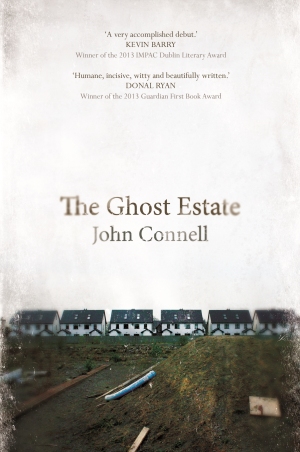
Born in County Longford, where his debut novel is set, John Connell like many Irish before him emigrated to Australia. The success of his short story The Little Black brought him to the attention of Picador Australia publisher of The Ghost Estate. Set during the Celtic Tiger, the novel explores the psychological and emotional “boom and bust” of those reckless times:

“Gerard McQuaid has been waiting for his start in life: his house, his girl, his land. And with rural Ireland being swept up by the Celtic Tiger and villages becoming towns, the electrician’s moment has finally arrived. With the chance to run a big job, McQuaid finds himself on Birchview Manor, a decrepit estate where the dreams of modern Ireland crash up against the weight of history. As McQuaid gets further into the restoration, he falls deeper into the story of the estate’s previous owner, Lord Henry Lefoyle, whose fate begins to loom ghost-like over McQuaid’s own.”


Gerard Beirne (GB): John, your debut novel, Ghost Estate, somewhat unusually for an Irish writer is being published in Australia (Picador). How did that come about? Are their plans for it to be published in Ireland or England?

John Connell (JC): Yes it is quite unusual. I was an Irish emigrant living and studying in Australia and wrote a short story which was included in two short story anthologies in the country and happily for me it received quite a bit of attention and a few different publishers approached me with book offers. I decided to go with Picador as they said I could write about whatever I wanted so that was a really great gift. I have just engaged an agent at the moment who is looking to see about publishing the book in UK/Irl and other regions. So hopefully 2015 will see the Ghost Estate get an Irish release.

GB: Tens of thousands of Irish have move to Australia in the last decade with many staying on to become permanent residents or citizens? Why did you move there and do you intend on staying?

JC: I went to Australia as an exchange student studying journalism, I was then offered to finish my degree there and did my final degree project on the aboriginal communities in remote Australia and produced an investigative radio documentary, That piece won a journalism award and secured me work with ABC the national broadcaster. I had only ever intended on being in Australia for 6 months which later turned into four and a half years before moving to Canada.

GB: Many of those who have emigrated have done so because of Australia’s “booming” economy – having written a novel about the boom and bust in Ireland, do you see any similarities there, any concerns, warning signs?

JC: Ah yes of course, Australia is in a boom and the refugees of the Tiger are driving that boom in so many sectors. In my few years in Australia I saw the price of living increase, the price of houses, the proliferation of money and its wasting, all the hallmarks of a country running away with itself. Australia unlike Ireland has mineral wealth that won’t run out any time soon, but it is dependent on its trade relationship with China, its number one trade partner. In my opinion, Australia won’t crash like Ireland, but it will slow down (and it has started to slow down- I have Irish friends who work on rigs and mines that have been let go with that same slow down). The greed is fairly pronounced there at the moment sadly.

GB: Where was the book written? If Australia, did this make a difference to the writing of the book? If Ireland, was it necessary to go back to Ireland to write it? If both, was this a necessary part of the process and why? 

JC: The book was wrote in Ireland in a portacabin in a field in Longford. It was necessary to write the book in Ireland (I even did the rewrites here). I needed to be in the atmosphere of the place and listening to the local people talk, and I also gained so many stories from local people that ultimately found their way in some form into the book. It would not be the same book if it had been written in Australia. I just actually can’t imagine what it would have been. Ireland was the canvas and the book was the paint if you’ll pardon that bad analogy.

GB: How does the literary world in Australia compare to that in Ireland? — The literary community, the publishing scene, the literature itself? Is there an Irish literary community there?

JC: The literary scene in Australia is quite small compared to Ireland. There are lots of publications and publishing houses but not the sheer volume of writers as we have in Ireland. However, there are wonderful Australian writers with a unique Australian voice. It was only in living in Australia and Canada that I realized the tremendous output of Ireland in world literature. Thomas Keneally author of Schindlers’ List is Irish-Australian and would be the one stop shop for Irish literary scene to my opinion though other writers such as David Malouf have wrote books on Ireland or Irish-Australian subject manner.  Ireland and Irishness is part of the history and story of Australia and many Australians have Irish heritage so I suppose we are part of the Australian story in many respects. I mean Ned Kelly was Irish after all. Peter Carey would not have got his Booker without us convicts!

GB: The novel is set in Longford where you grew up – how did the Celtic Tiger and its aftermath affect your home and community? Depression plays a central role in the novel. We know that suicide rates increased due to the recession particularly amongst those in the property business. What has been the psychological impact of the “bust”?

JC: The Celtic Tiger and its death had a huge impact on Longford and other rural communities. Longford was a very quiet place as a child, but it gradually became very busy during the boom years, and in the death of the tiger a ghost county as opposed to a Ghost Estate. Suicide was sadly all too common and still is. We have 10 suicides a week in Ireland. 8 of those are men. Many young men who had known nothing but success in the boom years suddenly found themselves in debt, unemployed and caught; and sadly far too many remained silent, suffered quietly and took their lives. It is a sad, sad truth but one that has yet to be fully talked about. For many, it was either emigrate to Australia and now Canada or face the quiet lonely Longford nights and the dole queue.

GB: You grew up on a farm — how has that played a role in your life? How has farming been impacted by the Celtic Tiger years and how have the changes affected rural communities?

JC: I enjoy the countryside and I’m proud of my rural roots but that’s about it. The Celtic Tiger changed everything in Ireland even farming; farmers were builders and developers too.  Thankfully that has calmed down now and people are returning to the land in a more healing and respectful manner.

GB: On a final note, you mentioned that you know Yanis Varoufakis the current Greek Finance Minister. What is your connection to him and does it have any relevance to the book?

JC: Yanis and I talked a number of times after I heard a lecture he gave on the GFC. I was on the rewrite of my book at the time and Yanis’s ideas combined with those of Tony Judt whom I met before he passed away, really cemented some of my economic thinking on why things got as bad as they did. Yanis had offered for me to study with him in Texas, but I had a wedding to plan and he a country to run. Maybe in time we might get to reconnect on that one!

—John Connell & Gerard Beirne

.

Listen to John Connell read an excerpt.


cover

Excerpt: Kane – a short chapter about the developer

John Kane balanced the car keys and mug of tea in his hands as he opened the sleek black door of his new Landrover. It was a bright if somewhat cold morning. He let the engine warm before he turned the ignition. One, two, three. He sipped from his mug quietly, as the window slowly defrosted.

He was used to this morning routine now. The Landrover moved smoothly along the country roads. He could hear the scrape of briars and overgrown branches against the vehicle as the lanes narrowed towards the cottage.

How many times had he come up this lane? It was beyond measure now. The house was still the same, had been since Noel had lived there. Old Noel, his distant cousin, the bachelor, the man who had left him everything in his will.

But wasn’t that what he had wanted, he reminded himself, all those visits, the shopping trips to Longford, the dinner in the Landmark. Had it all been for the hunger, the want of land, those twenty acres and the plot of turf in Kelleher bog? Yes, he admitted, and no. He and Noel had shared a friendship, and while it was not a surprise that one day the man asked to be brought to the solicitors in town, some part of him felt that he was entitled to it. It was in a way a gift. Though Noel’s niece had never seen it in that light. Not at the funeral when he had taken the front pew reserved for immediate family, nor at the reading of the will when she had received nothing, despite nursing him in those last few months.

Friendship had a price and that was not his fault.

He rolled to the door and beeped the horn. The vehicle hummed quietly as he waited on the cracked concrete. The house was old. Sheds dotted here and there around the yard were filled with turf and old creamery cans. The turf was never burned any more. The house ran on oil.

The Poles emerged with their shaved heads and plastic bags full of sandwiches. Odd they never seemed to have a lunchbox, not one between them, Kane thought to himself.

They had lived here for over two years. He’d done little with the house: put in some bunk beds, a lick of paint and that cheap oil burner instead of the range. The walls were still damp on cold winter mornings. They had probably brought on Noel’s bad chest and would, in time, would make the Poles sick too. But they were young and hardy.

‘Good morning lads,’ Kane said as Jans and the others began slowly to climb into the vehicle.

‘Morning boss,’ said Jans quietly.

‘We’re all well I hope?’ asked Kane, looking in the rear-view mirror towards the others.

‘We well, yes,’ they agreed sullenly.

Each morning was the same. A talk, a half-hearted chat that petered out. There existed in the car two different worlds with many incomprehensions.

‘I drop you at the manor today, okay?’ he said.

The group nodded.

‘Jans, can you come with me to the office? I need you to give me a hand.’

The Polish had arrived with the boom, come like a wind indeed. The country had woken up to find new names and faces that spoke of towns and villages no one had ever heard of. They were good workers and in so many ways were what the Irish had once been, Kane thought. Strong-backed, fond of a drink and, yes, ignorant. They were in search of a better life in another land and yet dreamed only of returning home.

Jans, who spoke the best English, had been a teacher of sorts, but there was more money to be made lifting blocks than teaching children. He, like all the others, had made that Ryanair migration across Europe and somehow, somehow, ended up in Longford.

It still puzzled Kane, Longford being multicultural, and was there not enough trouble between the two native groups that lived here already, not to mention the travellers? How were they ever to come to terms with foreigners when they had yet to come to terms with themselves?

But there was work to be done, and these men, these Poles, were ready to do it.

They never complained, they never questioned, they simply shrugged and worked. They had become serfs in a way; a man’s success could be measured by how many Poles he had working for him.

Kane drove toward the estate. Big Jack would be waiting for them. It was the same routine each morning. And they would be set to work on some menial task around the sites, something a contractor would refuse to do. They were the workhorses of this boom and when it ended, whenever that might be, they would be sent away like all old nags.

On Fridays after work he would bring them to town to wire their wages back to Poland, back to their families. It was perhaps paternalistic but he knew the minds of young men well. If they had the money, they would spend it, and an arsehole pub in the middle of Ireland was no place to waste a week’s work. He would give them their pay slips and drive them to the Western Union branch and the rest was their own choice.

It was not really a life, Kane often thought, to work and save and never be able to fully communicate your thoughts and fears for the lack of words. It was little wonder the men took to the cheap bottles of vodka at the weekend.

They were not so different, not so very different at all, Kane thought. A picture of Poland instead of Ireland on the cheap bedroom walls and a set of rosary beads under each man’s pillow. Poverty had a way of repeating its motifs.

‘Come on, Jans,’ he said as Lech and the others packed out of the Landrover. ‘The gutters in the office need a good clean. They’re full of fucking weeds.’

‘Yes, boss,’ Jans said simply, and returned to silence.

Was it better than teaching, Kane thought. It must be. It must be.

—John Connell


John Connell was born in 1986. He grew up in County Longford, Ireland. An award-winning investigative journalist, playwright and producer, The Ghost Estate (Picador Australia) is his first novel.

.
.

Mar 312015
 

Jen Bervin


J

EN BERVIN IS AN ARTIST and maker of poems without boundary or limit. Her poetry is a poetry of connections, threads, weaving, words born of sound and image, of history, text from textile, textile from text. Her poetry emerges in art venues, artists’ books, public performance, silk film, and it is fabricated with typewriters, sequins, thread, ink and, soon, nanotechnology.

I will not forget the first time I saw her Dickinson Fascicles, large-scale, wall-size embroideries of the punctuation and markings found in the hand-stitched booklets that Emily Dickinson made for her poems. I leaned in close to the fabric on the wall, my eyes riding the twitching rhythm of the marks across the batting, but also the minuscule rising and diving within each mark, stitch by stitch. I raised my hand instinctively, perhaps as a conductor would before a score, and paused, imagining the texture of the text on the tips of my fingers. Then I traced in the air those gaps and spans where there was nothing at all.

Jen Bervin

But there’s always something. Even white space, Bervin has said, citing John Cage, is musically scored. In Nets, her book of erasures of Shakespeare’s sonnets, she wrote, “When we write poems, the history of poetry is with us, pre-inscribed in the white of the page; when we read or write poems, we do it with or against this palimpsest.” Her work—at the intersection of writing and weaving, text and textile, song and silence—makes luminous that which we hadn’t noticed or, until she showed us, been able to see.

Her current—and most ambitious—project, the Silk Poems, is an experimental book (if “book” is defined loosely) that takes silk, in Bervin’s words, “as its subject and form, exploring the cultural, scientific, and linguistic complexities of silk, mending, and the body through text and images nanoimprinted on transparent silk film.” If you were to hold up a piece of this translucent material, what would it look like? What might you see? Very little at all—until you shine fiber-optic light through it. Then the words and pictures would jump up, projected into bloom. Here too, embedded within the high technology, history pulses: 5000 years of culture, art, and writing, of poets, traders, emperors, laborers. The history and the silk itself almost invisible, until illuminated.

While most of us think of silk as something we might wear, scientists regard it as much more than that. They’ve recently begun unlocking its remarkable properties, some of which could eventually have widespread high-tech and biomedical uses. Bervin believes that poetry has work to do in the world. With silk film, that work travels beyond the library or classroom, beyond books and academia, and into laboratories—even, potentially, into our own bodies. Bervin’s work shows us that every trace, every thread matters, every mark, every last letter, everything we hide and everything we reveal, that art and poetry are made of our intentions, and that we are too.

In Souls of the Labadie Tract, Susan Howe describes how, two hundred and fifty years ago, the theologian, pastor, and writer Jonathan Edwards traveled between parishes in Western Massachusetts by horseback, writing as he rode and pinning those notes— scraps of paper fashioned from silk or other some other salvaged fabric—to his clothing, “fixing in his mind an association between the location of the paper and a particular insight.” He would arrive at his destination dressed in words. Today words needn’t only clothe us; they may quite literally enter and become a part of us. With the right light, poetry rises through and from the page, rises to the walls, and signals and shines beneath our skin.

* * * *

Although her Silk Poems research has her traveling widely and often, Jen Bervin and I were able to talk at length on the phone in early January 2015, which is where the bulk of the interview below has its origins. We continued editing, revising, and refining over a series of follow-up emails. I have known her for about four years now, and no matter the medium—online, on the phone, or in person—Jen is unfailingly generous, kind, engaging, and gracious. She laughed often throughout our conversation and conveyed an infectious enthusiasm about her work and writing/making art in general.

Jen Bervin (JB): Earlier you asked me about where I was and whether I was writing poems for the Silk Poems project already.

Darren Higgins (DH): Yes.

JB: Right now I am thinking more about content and forms—really the overall structure. But one of the things that I have been doing as I research is trying to realize when components of the research get too big and should be diverted into their own thing. That has amounted to some very exciting thinking.

I knew that the research would lead me in some wild directions, but one of the treasures that I came across in Suzhou, China, was a woven replica of a poem composed in the fourth century B.C.E. by a Chinese woman poet, Su Hui. It is written in a reversible form she invented—a 29 x 29 character grid that can be read in any direction, yielding thousands of possible poems. Moreover, she wrote it in five colors and embroidered the poem in silk.

Jen Bervin Su Hui Suzhou
There is very little written about the poem in English. David Hinton translated one quadrant of it under the title “Star Gauge” and has a useful essay on it, “Welling Out of Silence.” The best work on this poem I’ve been able to find is by the French poet, Michèle Métail, who wrote a whole book on it: Le vol des oies sauvages. So I was trying to read about the poem in French, which is pretty slow going.

Jen Bervin
When I was in Italy on the Bogliasco Fellowship this past fall, I started hashing out a rough translation of it with substantial help from the dancer in residence, Mei-yin Ng. I was spending a lot of time looking up definitions of words but, seriously, you come across single characters that have up to 70 meanings.

DH: How many?

JB: Seventy, seven-zero.

DH: My god.

JB: You can imagine, as a non-native speaker of Chinese, the translation problems it starts to pose. To add to the mess, the poem was written in complex Chinese characters and now it’s typically presented in simplified Chinese characters, which are slightly different, so that’s when I lost it in Italy. I thought, “Oh my God, I’m translating it from the simplified Chinese. I’m not even translating from the right alphabet yet.”

DH: Must have been incredibly frustrating…

JB: I’d been at it for quite a while. Not to mention the fact that a Chinese character can act as any part of speech, depending on context, and the meaning of the character changes according to the character next to it. If you’re coming to that character from all different directions, the meanings are very much in flux. It’s an infinite poem, essentially. I felt both so thrilled and daunted by it and also somewhat appalled that there was just so little written about it. That there was this treasure written by a woman so early on, the complexity of which we really haven’t matched today, and it’s not a well-known thing!? That was shocking to me.

DH: Hard to believe.

JB: Like with any big, delicious problem I started to think about what could be done. And like with any big, delicious problem in art I took a lot of wrong tacks looking for something that works, but what it has come down to now is really beyond thrilling—some real progress. I think that Jody Gladding is going to translate the Michèle Métail book, so that whole book could, in some form, be available in English to English-speaking audiences. The book goes into not only the complexity of the reading patterns and how you might structurally read it but also the celestial maps that influence the structure of the poem, and it talks about a lot of poems that came out of Su Hui’s work and were influenced by it.

Now we’re just figuring out where it might go publication-wise. Hopefully we can lure David Hinton back into trying to translate the rest of the poem. You can imagine that it’s quite a task—a task that could be done thousands of times over with different results!

DH: Unending possibilities.

JB: Right. But the thing that seemed most exciting to me was to have the experience of time in that poem, and to keep the textile aspect of it in the foreground. I can’t read Chinese, so I thought, well, for me to embroider it would be a craft, not a reading experience. This is when something very special that I encountered on my research trip, in the same city where I encountered the facsimile of that poem for the first time, came back to me—the Suzhou Embroidery Research Institute.

This is a place where highly, highly trained embroiderers make these double-sided works that can be viewed from either side, so it’s essentially a reversible image. These embroideries take a couple of years to make and I thought that it would be really exciting for me to commission embroideries of this poem, after first building a relationship with a few embroiderers at the institute who have an interest in reading poetry. And then, through conversations, writing, and film, we would track the experience of the embroiderers—of their relationship to the poem—and let that be its translation too.

DH: Adding another layer of translation (and meaning). In this case, a translation of experience as well.

JB: Yes. The important part of that work is the experience of the embroiderers’ journey with that poem. That’s what is exciting to me.

DH: You’ve been working on this Silk Poems project for a while now. When did this new plan start to come together?

JB: Well, none of it would have happened without the Creative Capital Grant in 2013—I’ll never cease being thankful for that one. We visited China around the beginning of November 2013, and I’ve been talking about that Su Hui poem non-stop ever since. The whole solution came slowly, first with begging Jody to translate the Métail book. I was just trying to read the book in French for awhile. I soon realized that it was becoming a question of what I need for my research vs. what I would hope would be available to a lot of other people.

DH: That seems like a crucial distinction. Can you talk more about that last point?

JB: I think that’s where a lot of these decisions were coming from—I could spend a lot of time in this Su Hui poem trying to translate it, but I don’t feel confident (given that I’m not a Chinese translator and this is one of the most difficult translation projects imaginable) that I could bring that experience to other people in a way that’s as meaningful as the idea to collaborate with an embroider at the research institute. I could point to that collaboration as a kind of solution to get other people interested in working on it again.

I’m a big fan of the joyful solution and that really feels like one…so that happened within the last month or two.

DH: This poem has an interesting back story: Su Hui’s husband, a government official, took a concubine, which infuriated Su Hui. He soon after left for a distant post with this mistress. Su Hui refused to go, but it’s said that she grew to miss him and composed the poem to win him back and call him home. According to the story, it worked. He dismissed the concubine and rejoined Su Hui.

JB: The story is quite compelling, and it is mostly what gets discussed—the story of the poem. That she sent this poem as a letter obviously has a lot of resonance for me with the Dickinson envelope poems. Su Hui’s intended audience for the poem, and her intended purpose as well, is quite singular and yet the poem everything but—it’s infinite. It’s easy to fall into the trap of speculating about a writer’s life instead of focusing on her work, and this is too often the case with women artists and writers. When a lot of translations of the poem exist and Su Hui’s work is getting tons of attention, I won’t need to have this redirecting bent. I look forward to that.

DH: There is so much here. It’s the kind of project you could play with for the rest of your life, essentially.

JB: Yes. But I think that for the sake of the Silk Poems, the nano-imprinted silk film, to simply reproduce the Su Hui poem is enough. You lose the five colors because it’s not a color format. But simply to have it present and to allow its structure of reading to help me think about how other things appear or inform how they are read—that idea of reversibility, which was already in the silk poem, coming out of the DNA structures and writing forms related to the structures—has already done its work.

DH: Hearing you talk about reversibility makes me think of how you’ve always paid attention not merely to the front of a piece, the part we might most readily see, but the flipside as well, as in The Desert. That play between the seen and unseen, the possible and the revealed… it comes up again and again, now that I think about it. In Nets, your words float to the surface in pools of Shakespeare’s sonnets. In the Dickinson Fascicles, you highlight markings, symbols, twitches. In the Gorgeous Nothings, you and Marta Werner bring scraps and torn envelopes and variations to the fore. Do you see this interest playing out in the Silk Poems? Perhaps in how you want to record the experience of the embroiderer as another form of translation?

Jen Bervin Desert_1open

JB: Absolutely. Just as you said.

DH: So, what has all this new thinking done to your original concept for the project?

JB: If anything it’s just a huge relief. I feel like in our practice one of the most difficult things is coming to the right framing of something that’s really exciting to everyone, and once that’s in place, the work becomes very easy and fluid. It’s when you’re stuck in that purgatory I was in with that poem that things are complicated.

I think of myself as a giant digesting machine for all of this, and I’m just so relieved when something becomes that clear.

DH: You don’t seem to panic, or at least not outwardly, when you are having doubts or collecting endless amounts of information without a sense of where it’ll lead.

JB: The thing is I panic but I’m talking with everyone about that panic. One of the things that I really wanted with the Silk Poems in particular was exactly that aspect, that I couldn’t figure out almost any of it alone, and that it was something that I was going to have to keep talking about with lots and lots and lots and lots and lots of people to get anywhere interesting, both in the research and in the development of the project.

I really love that idea that you can’t make a work alone. I question the idea of single authorship in general, but especially in a work that has and draws from such a complex history and such a complex presence in a sense.

With all the scientific development in this work, the historic wealth of information about silk, and art and literature that draw from silk, the too-muchness of it was a known problem to begin with.

DH: So it was built in from the start that you’d interact and collaborate with people from different disciplines, different industries even, across the world?

JB: Yes. I think also I wanted to get much more comfortable feeling out of my element in every way.

DH: How so?

JB: If you walk into a bioengineering lab where they are developing new uses for silk, you pretty much don’t know anything. You just have to enjoy the place of asking a ton of questions about it and continuing to ask those, and not being embarrassed about having to race up to speed every time you enter.

DH: What’s appealing or exciting about that to you?

JB: I’ve always felt like it’s a trap in the arts to get comfortable in your work. I think naturally we revert to ways of thinking pretty readily. I’m guilty of that, but I think if you choose things that make doing that pretty impossible, then it puts you in some good spaces to learn and explore. I am excited about making something that doesn’t look like anything else I have made and has a process that doesn’t resemble any other process I have worked with before.

DH: When did you first realize that this is the way that you enjoyed working?

JB: I didn’t say I enjoyed it! I said that I wanted to work that way. I think by nature I am very shy and I’m also very curious, so that’s something I have to live with in the world. It’s not necessarily comfortable to go about things this way, but it certainly is interesting. Does that make sense to you?

DH: It does. I know, from being an inherently shy person myself, that there’s a certain jolt in saying yes to an idea or proposal that makes me uncomfortable. It’s frightening but thrilling. There’s productive energy in that discomfort.

JB: I would say I’ve been super-lucky in that Charlotte Lagarde, my partner, was willing to work and travel with me and to photograph and film places we went for research—not with the aim to make a film about the Silk Poems but to give me a way to keep growing from the research after the fact, because you can’t re-do a lab visit on the other side of the world. You might only get that access once, so to have a record of what people are saying and how they are saying it and what they are showing you in real time is indispensable. That was a huge shift. I had never thought about working on a poem that way. I’ve never needed photo and video, for years throughout a process, to research something. It’s been humbling to try to communicate what you need to someone else when you’re generally very private about it.

Jen Bervin Soochow UniversityHuang Haisu and Dr. Tieling Xing with Jen Bervin at Soochow University

DH: How do you keep yourself from being overwhelmed by all the information and everything you’re taking in?

JB: I think I try not to have too many expectations about what I’m going to experience or understand. I guess I could compare it to going to a library in search for a particular book and then finding one in that same row that you needed far more and wouldn’t have found on your own. It’s often that thing to the side of the thing that I’m actually looking for that turns out to be meaningful. Getting too fixated on coming away with a particular thing or looking for a particular thing doesn’t help me be aware of what the potentials are in the moment.

It’s important to be able to admit defeat and keep looking around, do you know what I mean?

DH: That’s true of writing itself, isn’t it? Seems like whenever I start a poem or essay with an idea of what I think I mean or want to say, I wind up, by the time I’m done, in a completely unexpected place, with completely unexpected words on the page. I love that. Discovery and surprise. What a rush—it’s almost magical. The poem finds and determines itself.

Part of it must be opening yourself up, exposing yourself. You let go of intention, which leads to things you wouldn’t have figured out had you held strictly to your plan…and leads to these discoveries that couldn’t have happened otherwise.

JB: Absolutely. I think your essays read that way.

DH: I certainly experience them that way. I find out a lot of what I actually think by going through the process of writing.

JB: I think that’s why it’s so enjoyable to read them.

DH: That’s kind of you to say…

JB: I also love that this work is leading to collaboration with people that I deeply, deeply admire. This matters to me—and has for a long time. It’s just becoming more and more overt.

DH: Did Charlotte’s recording of your travels, your research, play at all into your idea of documenting the embroiderers’ experience with the poem?

JB: Yeah, absolutely, because I have been looking at the videos she made at the embroidery institute in Suzhou for two years now. It’s just so exciting to watch the technique—and the environment in which people are embroidering is quite special. The workshop itself is beautiful and full of light. I love how layered the work sites are. You have a skull-and-crossbones cloth where someone might put their elbow and a cell phone a little farther down and then particular ways each embroiderer organizes their thread color palette and their work area, you have tea on the window sill. It’s a joy to be in that space. I was taken through it on a tour during which I was rushed along and still I have that sense of the richness of slow time there.

DH: That’s beautiful: “the richness of slow time.” Has that sense always been with you? Maybe you can talk about how you came to work with textiles in the first place, and how that intersects with your poetry.

JB: I grew up in a family of women who sew. My mother sewed clothes for us, my grandmother sewed clothes for her family, and I learned pretty early on. My mom was great about teaching me how to do a lot of different things, how to do some basic sewing and how to work with pattern and that kind of thing. Before I even really got underway in the visual arts I was already involved in sewing and the culinary arts for sure. Those things developed in step with reading. I don’t think I really would have considered myself a writer until I was pretty far along in my 20s even, late 20s to early 30s.

I came to writing from the visual arts. I was feeling uncertain about what art could do and how it could do it in the art world, along with a desire to really learn how to articulate complex thoughts in the medium of language, which is what I think poetry does best. I didn’t know how to do that yet. As I was finishing up my degree at the School of the Art Institute of Chicago it became really important to me to slow down and make work that I wanted to live with.

It’s a lot like this translation tangle I got myself into. A lot of great things in the arts come out of a sense of discontent or disgust or failure or inadequacy, so it’s a such useful feeling in the arts, if you let it be useful.

DH: That could take some practice though, letting it be useful.
JB: Yeah. I think that I was really lucky to have a family that left me alone. It gives you privacy about your failures. Because you have time to just be comfortable with them.

DH: There’s a bumper sticker: “More parents should just leave their kids alone…”!

JB: Yeah, that’s not a popular parenting recommendation…

DH: No.

JB: And I’m in no position to recommend, but I really appreciated that.

DH: To have your own space to work through what you needed to work through?

JB: Yeah, and just to…I don’t know. I think it fostered a confidence in myself that early on made me comfortable in discomfort. Maybe too comfortable in discomfort, I don’t know.

DH: I guess that’s a danger. I hadn’t thought of that…

JB: The jury is still out. I’m just so pleased that I’ve become more of a social animal as I’ve aged. I didn’t see that coming. I was a little worried I’d be more of an Agnes Martin loner type, so that’s been a nice surprise.

DH: What do you think is responsible for this evolution?

JB: I guess I had had enough time alone. When I was at that juncture between art and writing, I worked as a fire lookout and that’s pretty isolated work. I think for some people it sounds really awful but to me it was just heaven. I was learning Latin, reading, embroidering, writing, hiking, etc.—with a view to die for and some wonderfully amusing chatter on the Forest Service radio to monitor. As a lookout, you spend all day reading landscape—and I love that landscape: the Sonoran Desert. I kept a keen eye out for fires or “smokes,” as they call them, and had plenty to report, but the work of the lookout is mostly map-based—conveying very precise map work accurately.

I moved to the desert with a real intention to slow down and figure things out, and that willingness to be alone and to be lonely and to be uncertain for a long time gave me a grounding that never left. I just waited. I waited and I read and I wrote and I tried to figure things out.

Then when I came back to graduate school for writing and was combining the two, art and writing, it was with a very different sense.

DH: I said earlier that you never seemed to panic but I realize now that it’s more about what you just mentioned: your patience, your willingness to wait (to be on the lookout, so to speak), and yet with an underlying confidence that the answer will arrive, that you’ll find it, however long it takes.

JB: One thing I encounter a lot in conversations about interdisciplinary work, especially with writers, is the inter-genre question. I guess I’m grateful that for me it was never a hang-up. I never felt that I had to explain to anyone what I was doing. I just had to show them what I meant. I feel like anyone who encounters my work can understand what I’m doing if the work is good—and it’s not always good, but I try. If you give people the opportunity and you show them what you mean by that intersection, anyone can meet you there, but to put the genre ahead of the work often makes that seem more impossible than it actually is.

DH: And what drew you to silk? Why silk?

JB: A friend, Amanda Schaffer, wrote a really wonderful piece for Slate magazine. She was researching many different aspects of this new silk boom that resulted from David Kaplan’s discovery in 2009 of how to liquefy the silk cocoon. Once Amanda finished writing the article she was still so engaged with the ideas that she got in touch to ask if I might want to collaborate on something visual and verbal. She sought me out because she knew I was already working with text and textile and the intersection of the two. Even though the research didn’t look like other things I did, it was the same area of interest.

So it really started in the spirit of collaboration. Amanda got very busy with other projects, including a pregnancy (her second child), and as much as I tried to lure her back into the project, she’s really held her ground. But she is generous with conversations from time to time—asking the right questions, or telling me what to ask, and explaining intensely complex things to me.

I think going into the Silk Lab at Tufts with her to meet Fio Omenetto and David Kaplan in the very beginning was a real gift. Because if you walk into one lab, you get this idea that you can walk into another, so visiting the Stanford Nanofabrication Facility just feels like something I might be able to do after all, or at least like something to propose. I’m a big fan of just letting people say no, but always asking, always asking.

Jen Bervin at Stanford NanolabStanford Nanolab

DH: I’m interested in the relationship of silk to the body. What role does that play in the project?

JB: That aspect of it is really important. Silk is universally biocompatible. Every single body on earth will accept it in any context, which is why the liquefaction discovery was such a big deal. It opens up a huge range of new possibilities. The bioactive silk sensor—the thing I’m working with as an imagined context—is still in the research phase.

I just want to stop the clock for a minute to say, Wow! That’s an amazing context—silk inscribed nanoscale inside the body as a visual sensor, something that would act as a harbinger, something that will alert someone, in a medical way, to a change that has occurred in the body. Obviously, it’s not a neutral thing to have an inscribed piece of silk inside of you that is showing you something potentially very bad or hopefully normal about what is most likely a really precarious health situation. So I have been interested all along in imagining how this sensor affects someone’s conception of their own health—how it affects their imagination, how what is inscribed there is affecting on other levels, deeper levels in the psyche and spirit.

That seemed like a territory that a poem could handle—and has handled—in meaningful ways. I think that in many times and kinds of difficulty we turn to poetry, and yet most of the time we act like it’s superfluous. I really believe that poems have jobs to do. Not set job descriptions, but I think we need them more than we let on.

DH: In what sense do we not admit to that, do you think, or do we fail to see the work of poetry?

JB: I’m not so focused on pointing to failures. I’m more interested in pointing to poetry and saying it’s a wellspring, because I believe that.

The poem (and by “poem” I mean visual and images I’m thinking through right now) probably isn’t going to be inside of a body. It’s going to be a silk film outside the body. Something that you can project and read with fiber-optic light as a projection on a wall. It’s content comes from the assumed context as a bioactive sensor, one that may become real and may not, but I guess the viability, so to speak, of the thing that I make (that is, whether it becomes part of a real sensor inside someone) is really not up to me.

I’ll definitely offer anything I do back to the researchers who inspired it and hope it will open up new possibilities for collaboration. What I can do is offer up a context in which a poem can be an important component of a medical development.

DH: So where do you envision the Silk Poems living, ultimately? Will they be “published” in a traditional sense?

JB: The object was always the easiest part because that’s already a given—to nanoimprint silk film—that’s been fairly straightforward, and to know in advance that it’s something one would read as a projection with light. That’s a lot of knowns for a work of art. I don’t usually start knowing what the thing I’ll make in the end is. I don’t know how many need to exist. Maybe just one. And I’ve been calling it “Poems,” which suggests a book, but I’ve imagined something more like microfiche there. I’m guessing that a reading situation for this is probably a room, not a folio. It will show me, I guess. Or other people will suggest things and show me. That’s most likely what will happen. Or the materials will suggest things.

DH: I was curious about that, how much the material or context determines the content—how much the textile determines the text.

JB: The silk film has to be nanopatterned to work as a sensor, so the scale of the writing, the surface material, the way in which it can be read, and the imagined context were all already there when I started.

DH: Right, but does silk demand a particular kind of poetry? Are there things that shouldn’t be said on the silk or things that should be said?

JB: I think there are things that I feel responsible to in a structural way, like the development of the card loom, for example. The first binary system, the first computer, so to speak. The structure of the silk itself. And the process and the forms that are involved in sericulture. All that seems very fundamental to get in the poem. I feel like there’s a danger of falling into the traps that historical novels can fall into. You can get so overwhelmed by the factual material you want to convey that the book itself suffers. I guess that’s where that sitting and waiting and standing back and seeing what things are indispensable to the work comes in.

In traveling the world to research silk—China, Japan, France, Italy, Turkey, Georgia (and more to come: India, Spain, Egypt, etc.)—what becomes increasingly difficult is how to address that kind of multilingual context well in the finished work. I mean, you can’t just bring it all into English—it’s wrongheaded. I’ve imagined translating at the very least the project description into every language that affects the project. I also hope to return to sites where I researched to share the finished work.

DH: I love that the poem will be read with light.

JB: I’m really happy with that because the way silk reflects light is one of its remarkable properties. I was just reading about how the smoothness of the fiber made it a superior embroidery material and how it really brought the craft of embroidery to Egypt and replaced wool permanently. That the material itself can change the course of what is made in a given culture, it’s quite astounding to me.

DH: We have this ancient fiber, used in so many cultures for thousands of years, and yet even today we’re still discovering its properties and finding new ways to use it. It’s remarkable.

JB: It really is.

—Jen Bervin & Darren Higgins

.
Based in Brooklyn, poet and visual artist Jen Bervin brings together text and textile in a practice that encompasses poetry, archival research, artist books and visual art. Her works involve strong conceptual elements with a minimalist’s eye for the poetic and essential. Recent books include Draft Notations (Granary Books 2014) and Emily Dickinson: The Gorgeous Nothings (Christine Burgin/New Directions) co-edited with Marta Werner, a finalist for The Poetry Foundation’s 2014 Pegasus Award for Criticism, and a Best Book of the Year from Times Literary Supplement, Hyperallergic, and The New Yorker. Her works have been shown at the Walker Art Center, The Eli and Edythe Broad Art Museum and elsewhere, and are held in more than thirty collections including the J. Paul Getty Museum. Bervin’s honors include a Creative Capital Grant, a NYFA Fellowship, and residencies from The Josef and Anni Albers Foundation, MacDowell Colony, The Camargo Foundation, The Bogliasco Foundation, and the Rauschenberg Foundation. She has taught at Poets House, University of Denver, New York University, Pratt Institute, Vermont College of Fine Arts, Harvard University, Yale University, and will be a Fitt Artist in Residence at Brown University in 2015.

Darren Higgins

Darren Higgins is a writer, editor, and artist living in Waterbury Center, Vermont, with his wife, two sons, and a cat who never comes when she’s called. A graduate of the Vermont College of Fine Arts, he has written poems and stories for a variety of publications, essays for a couple of local newspapers, and commentaries for Vermont Public Radio.  

.
.FL

Mar 272015
 

Windsor Review2

A new little story of mine, a jeu d’esprit, a micro-story (a three-pager), called “A Noir Romance” has just come out in the fall issue 2014 (yes, a bit late) of the Windsor Review, a special Alice Munro issue. This is a print magazine, so you’ll have to go buy a copy to read the whole story. This issue of WR is blessed with work from several other Numéro Cinq bad girls and boys, including Marty Gervais, Karen Mulhallen, John B. Lee, and Amber Homeniuk.

Here’s a bit from the story, the opening lines.

“The short one, you say?”

“Yes. I believe that’s him. He had a mask. It was dark in my bedroom.”

“He had a mask.”

“Yes, sir.”

“But it was definitely the short one, you say?”

“He had a mask, but he was short just like the one in the middle.”

“The short one.”

“He had that look, you know. Short. I was wearing my nightie and putting cold cream on.”

“In the dark.”

“Yes. I’m really rather sure it’s the short one. He looks like a man who would steal up on women in their bedrooms.”

“Because?”

“Well, he has that look. Short. Shortness. Like the one in my bedroom.”

“Ma’am, the short one is an officer from the precinct. He picked you up and drove you here.”

“No. I would have recognized him.”

“He’s a police officer.”

“No, sir. It’s the man in my bedroom.”

“Because he’s short.”

—from “A Noir Romance” by Douglas Glover @ the Windsor Review

Mar 222015
 

Foucault

Some time back we ran a couple of introductory lectures on the philosophy of Michel Foucault and here we are presenting one of his lectures, on the nature of the human self, with a lengthy question and answer period after. Something dark and revealing here about the nature of the self.  We are used to talking about power relations and seeing ourselves as either perpetrators or victims in the struggle for priority. Foucault problematizes the self (itself) by suggesting that we internalize the power relations and are subdued by them. What is a poor self to do when it has internalized the structure of its own enslavement? Makes you think. Who am I anyway?

dg

Here’s helpful bit of context from the European Graduate School biography of Foucault to situate you going into the lecture.

During the later years of his professorship at the Collège de France he started writing The History of Sexuality, a major project he would never finish because of his untimely death. The first volume of the work was published in 1976 in French and the English version would follow two years later, entitled The History of Sexuality Volume I: An Introduction. However, the French title was much more indicative of what Foucault was after: “Histoire de la sexualité, tome 1 : La Volonté de savoir”, which translates as The History of Sexuality Volume I: The Will to Knowledge (a newer edition is simply named The Will to Knowledge). It is an amazingly prominent work, maybe even his most influential. The main thesis of the work is to be found in part two of the book called “The Repressive Hypothesis” where Foucault articulately explains that in spite of the generally accepted belief that we have been sexually repressed, the notion of sexual repression cannot be separated from the concomitant imperative for us to talk about sex more than ever before. Indeed, according to Foucault it follows in the name of liberating so-called innate tendencies, certain behaviors are actually produced. With the contention that modern power operates to produce the very behaviors it targets, Foucault attacks here again the notion of power as repression of something that is already in place. Such new notion of power has been and continues to be incredibly influential in various fields.

His last two books, the second and third volumes of the history of sexuality research, entitled The Uses of Pleasure and The Care of the Self respectively, both relate the Western subject’s understanding of ourselves as sexual beings to our moral and ethical lives. He traces the history of the construction of subjectivity through the analyses of ancient texts. In The Uses of Pleasure he looks at pleasure in the Greek social system as a play of power in social relations; pleasure is derived from the social position realized through sexuality. Later, in Christianity, pleasure was to become linked with illicit conduct and transgression. In The Care of the Self, Foucault looks at the Greeks’ systems of rules that were applied to sexual and other forms of social conduct. He analyses how the rules of self-control allow access to pleasure and to truth. In this structure of a subject’s life dominated by the care for the self, excess becomes the danger, rather than the Christian deviance.

What Foucault made from delving into these ancient texts, is the notion of an ethics to do with one’s relation to one’s self. Indeed the constitution of the self is the overarching question for Foucault at the end of his life. Yet the point for him was not to present a new ethics. Rather, it was the possibility for new analyses that focused on subjectivity itself. Foucault became very interested in the way subjectivity is constructed and especially how subjects produce themselves vis-à-vis truth.

Mar 202015
 

I was noodling around in my favourite links sites (check out our links page for some of the best sites on the Internet) and discovered these excerpts from Charles Henri Ford‘s diary, Water From A Bucket: A Diary 1948-1957, in This Recording. First I noticed that Lynne Tillman had edited the book and then I read the excerpt and then I ordered the book and have been happily reading through it, restraining myself from racing right through it, vaguely depressed that there isn’t more. I haven’t had this much fun since reading Witold Gombrowicz’s diaries. But Ford is sexually frank in ways that Gombrowicz was not (you had to read between the lines) and one is delighted and liberated in his audacity. His style is precise, aphoristic, chiselled. You can dwell on sentences. Ford knew everyone in the 40s and 50s and before. He was Djuna Barnes’ friend, knew Gertrude Stein who advised him on his love life. The Russian painter Pavel Tchelitchew was his lifelong love (but that didn’t stop him from chasing shepherds, delivery boys, US Navy personnel, men in the restrooms of Paris, etc.). And he knew Lynne Tillman who did him the service of helping to bring this book into print.

dg

On arrival in Weston Friday before tea, Bert jumped into his Levis, looking more sexy than ever, and we three took a walk. Vorisoff, our neighbor, came to dinner. Shortly after dinner Bert and I went upstairs, he wanted to look at the pornographic playcards and since there was nothing else to do he suggested we go to bed so I went back downstairs and said goodnight to Vorisoff and Pavlik. Bert was going to spend the night in my bed. “Fuck me between the legs,” he said and hollered when I hit the piles which seem to be practically out because the next afternoon even my tongue hurt them (I had taken him in his bathrobe downstairs and washed his ass for him.) So after we had both come (I sucked him after shooting between his legs I can see him now in bed lifting one leg to wipe the come off his crotch with the towel I tossed him), he said he was hungry so we had scrambled eggs, then he said he felt “jumpy,” that he wanted to take a walk and wanted me to get dressed and go with him. We had had Scotch after we got back. I shall make a list of “What’s beautiful about Bert.” Not now it’s too long.

+

Last evening before bedtime Pavlik had another of his crises, in which he unloaded his feelings about our relationship. The most terrible thing he said was that he had the feeling I was waiting for him to die and that when he did die I wouldn’t shed a tear: “Americans are the hardest people in the world…”

He said that when I was away from the apartment, then he “bloomed,” that there were other people who “calmed” him when he was nervous, but that I drained him “I feel your pulling, pulling all the time, that’s why you look so young, you age me, if you were to stay away from me one year you wouldn’t look like you do now, like your portrait, just look in the mirror after one year, you’ll see!”

I told him, “If we are only staying together out of convenience and cowardice, then it’s pathetic, a break should be made…”

+

The voice of Leonor over phone – soft, and low pitched, very seductive.

I like the idea of liking girls and going to bed with them but I’m afraid I’m much too conditioned by boy-loving. On the boat, in the group Tanny-Bobby-Betty (latter a dark skinned ballerina traveling with Tanny), it was always Bobby who set off the sparks and whom I liked to look at, touch, listen to I’m made that way, that’s all.

via In Which We Are Going To Love Living In Paris – Home – This Recording.

Ford cover

Mar 152015
 

RW-with-trout (1)

In truth, there is no accounting for Robert Wrigley.  No explanation necessary. The mark of all true great poets. His poems account for themselves. I was thrilled to include him recently in Numéro Cinq — he was generous enough to share some new poems. Well, if you are like me, that was not enough; and so I am adding a few links to other recent poems and an interview. No, really, no need to thank me. Thank Mr. Wrigley instead and the wonderful publications that, against the odds, somehow survive (catch and release) and continue to promote great literature.

Split Magazine

Terrain

Bark  lovechild of Willow Springs

—Gerard Beirne

Mar 132015
 

Okay, so I got a little obsessed with the trees and shadow patterns. These were taken yesterday, again along the Hudson. Cold after two warm days, the trail chopped up and icy. When you look carefully you see the trees, the shadows and the columns of light between the shadows. The snow simplifies the scene, makes it an abstraction. The trees are more or less straight and sharp-edged, but the shadows follow the contours of the snow, which, in turn is following the contours of the rocks, gullies, stumps, and down trees underneath. And then you start to notice the angle at which the light is hitting the trees, going across the frame or coming toward you (with a focal point at the sun). So you get a very complex and layered images. Then I started looking at the birch trees!

dg (Ask him what he is supposed to be doing instead of this.)

.
.

Mar 122015
 

.

In the short animated film “The Approximate Present,” Filippo Baraccani juxtaposes journeys across impressionistic landscapes with an etch-a-sketch rendering of chaos and its patterns. The impressionistic landscapes appear in a repeated visual narrative where we pass over them on a sunny day and then with stormy weather, illustrating how weather alters our emotional and psychological experience. This intense personal experience of landscapes stands in stark contrast to the measured, diagrammatic, and decidedly non-impressionistic illustration of the patterns of chaos as it unfolds in black and white. As the lines progress, it is as if NASA with all its scientific authority has mapped the trajectory of our emotions. Despite this authority and clarity, the graph ultimately cannot triumph over the beauty of the landscapes. Like the man who dies from beauty at the beginning of Paulo Sorrentino’s The Grand Beauty, Baraccani positions the short film’s spectator to swoon at the limits of the self, troubled between the self and beauteous landscapes, gripped by something akin to awe or wonder.

492408395_640

For this short, Baraccani chooses a simple, retro animation. As he notes, “I knew from the outset that I wanted it to be stylized, minimal and solid (for lack of a better term), somewhat reminiscent of early flight simulators. At the same time, I strived to convey a certain sense of place and emotion, drawing inspiration from my own experiences of various weather phenomena.” This might seem counter-intuitive, choosing low resolution graphics resembling something as utilitarian as a flight simulator to render landscapes, let alone to present them as an experiment in the kind of emotional landscapes Baraccani seeks. Yet here the blocky animation renders emotional what would have, in a calendar-like photo realism, been beautiful but perhaps not moving.

He himself compares the light and emotional effects he goes for here to the paintings of J. M. W. Turner, the 19th century English landscape painter.

j-m-w-turner-ulysses

In his article “The Paintings of Turner and the Dynamic Sublime,” George P. Landow points to how “in place of the static composition, rational and controlled, that implies a conception of the scene-as-object, Turner created a dynamic composition that involved the spectator in a subjective relation to the storm.”

turner 1

Thus, one of the things that distinguishes Turner’s work as sublime is this sense of dynamic composition. In similar fashion, “The Approximate Present” uses a perpetually moving camera and constantly changing perspectives to maintain a dynamism between the viewer and the images. The film instructs us through this movement and these perspective jumps that our perspective is limited: if we are moving past the landscape, if we have many perspectives and are always moving to the next one, our time with these landscapes is fleeting.

Fleeting, yet recurring, as the film in coda like fashion repeats and we revisit the landscapes and the perspectives; the second time, however, they are altered by weather systems: repetition, but with a difference. We can return but our return is bittersweet, as the landscapes we return to are altered.

Approximate

Landow’s analysis is part of a long tradition of artists and art critics seeking to account for this dynamism in landscape art: a tradition of the sublime. As Christine Riding and Nigel Llewellyn define it, in their article “British Art and the Sublime,”

‘the sublime’ is many things: a judgement, a feeling, a state of mind and a kind of response to art or nature. The origins of the word in English are curious. It derives from a conjunction of two Latin terms, the preposition sub, meaning below or up to and the noun limen, meaning limit, boundary or threshold. Limen is also the word for ‘lintel’, the heavy wooden or stone beam that holds the weight of a wall up above a doorway or a window. This sense of striving or pushing upwards against an overbearing force is an important connotation for the word sublime . . . By the seventeenth century, the word in English was in use both as an adjective and as a noun (the sublime) with many shades of meaning but invariably referring to things that are raised aloft, set high up and exalted, whether they be buildings, ideas, people, language, style or other aspects of or responses to art and nature.

Up to the limit, or, in other words, at the border, at the threshold of experience. Yet there is also this sense of a force they describe, here a beauty that exceeds words or even realist photography, sending hipsters everywhere scrambling to add instagram filters to approximate aesthetically what photorealism fumbles and drops at its feet. To be human is to take luckluster photographs of wondrous sunsets and glorious fireworks, these photographic failures each reminders that we can’t take it with us — the moment — that perhaps the most beautiful and experiential moments cannot be carried into the future with us, that, truly, you had to be there.

The-Approximate-Present3

The sublime is vista, is landscape, but rendered in a way that is meant to challenge or engage the self and its aching, pleasurable sense of its own limits, but the sublime representation must also maintain the tension of that limit. To understand this, we need only look at a grotesque and excessive example of the sublime limit transgressed: the viral and eternally mocked and quoted “double rainbow.” You could argue that part of its viral force was due to its relatability, how words fail us when we are faced with the sublime. That the man gushes over the double rainbow does not maintain the tense limit of appreciation throws the sublime moment into the comic grotesque. The obviously high man on the brink of a possible triple rainbow makes a fool of him and what could have been a sublime moment.

This sublime tension, not to be exceeded, is wrought from two forces: a sense of melancholy failure, and the opposing and enduring hope of holding onto beauty and the experience of beauty. So it falls to artists to imagine how this might be possible. As Riding and Llewellyn point out, “It was at this point in the history of the word sublime [during the Enlightenment] that visual artists became deeply intrigued by the challenge of representing it, asking how can an artist paint the sensation that we experience when words fail or when we find ourselves beyond the limits of reason.”

app3.preview

In “The Approximate Present,” the absence of words means that the film can avoid the traps of pathetic fallacy, or worse, the trap of double rainbow blather, as it resists locating the vistas in one troubled or amorous psychology. No one tells us why we are looking at these landscapes, why we are traveling by plane, train, and car, or who we are in all this. There is no character referent, no avatar in the film standing in, interpreting or defining meaning for us. In addition, the repetition of the landscape with and without the weather locates contrasting emotional states, of wonder and more melancholy awe. These are inescapably our landscapes and there can be no singular awe.

Baraccani’s film, unlike the sublime Turner paintings he says inspired his lighting techniques, leaves human images out of the landscapes. The airplane appears as a condensation trail or the edge of a window that frames the view of the clouds, similarly the train appears as a line in the distance, and the shots from the train and the car are also framed by window edges, traces of the real world that barely edge the impressionistic landscape. Cars, buildings, and other human effects when they do appear are more impressionistic in “The Approximate Present,” where in Turner’s paintings the emotional landscapes are almost grounded by more realistic images like the ship in the painting above.

As a result, “The Approximate Present” is a consistently impressionistic and emotional landscape, and the absence of realist markers means we can’t look back at ourselves, can’t locate ourselves in any way that is not emotional. We are at sea, at sky, at landscape, inescapably.

the_approximate_present_04_fubiz66-640x360

The only break away from this impressionism are the animations of chaos’s patterns. These patterns play out an oddly narrative frame for the weather: The lines drawing themselves, weaving around previous lines, even doubling back, define trajectories and demonstrate the past, where previous lines of weather have gone. As lines of chaos go, these seem oddly soothing and consolatory, signifying a logic or magnificent design, some sort of meaning behind the chaos. This, too, layers the weather and the landscape with significance, makes us see chaos as part of a larger pattern. For this reason, perhaps we are reassured, we are not wrong to feel these landscapes. They are significant, though we don’t know how.

Baraccani’s  retro-animated shapes, constant camera movements, perspective shifts, and images of chaos cartography, combine to create a sublime landscape that avoids the had-to-be-there trap of landscape photography, creating animation that shares more with painting than film. “Approximate Present” creates a weather and chaos simulator that ultimately engages us in a game with our own emotions via vistas of our own experience of beauty in a virtual and always almost present.

—R. W. Gray

Mar 122015
 

Cordelia Strube

Ten novels in twenty years. Cordelia Strube is no slouch, and bear in mind that she is also a long-time dedicated creative writing teacher at Ryerson’s Chang School of Continuing Education. I’ve always been deeply impressed by the mix of heart and smart contained in her novels, and when you add a steely sharp writing style and dialogue that feels overheard rather than written – well, don’t take my word for it. In the section below you have a chance to read a chapter from a novel not yet published. On The Shores of Darkness, There is Light will be published in the spring of 2016 by ECW Press.

 Along the way in her career, Cordelia has been nominated for most of the Canadian national literary awards such as: The Governor General’s award for literature; The Giller Prize (long listed); the Re-Lit Award; Books in Canada/W.H. Smith Award for best first novel – and she has won the CBC Literary Competition.

—Ann Ireland


.

THERE’S A BABY STUCK in a car.” Harriet waves anxiously at the crowd of parents watching T-Ball. They don’t notice. She runs back to the SUV, across grass turned to straw. It hasn’t rained in six weeks. Smog chokes the city.

The baby, mottled pink, purplish around the eyes and mouth, is strapped to the car seat. Wailing, she jerks her chubby arms and legs, her cries muted by the latest technology in road noise reduction. She looks like the baby Harriet pictured when her mother told her she was pregnant; a cute baby with a normal head and curly blonde locks. Harriet presses her nose against the window, causing the cute baby to stare at her as though she is the one who has trapped her. “Don’t blame me,” Harriet mutters. “When in doubt, blame Harriet.”

Just this morning her mother blamed her for losing the plastic pitcher for bagged milk. “Why can’t you put things back in their place?” When it turned out Harriet’s little brother used the pitcher to shower his plastic animals, her mother didn’t apologize to Harriet. Or scold Irwin. There’s no doubt in Harriet’s mind she’d be better off without her little brother. She should have snuffed him when she had the chance, after they took him out of the incubator and handed him to her, all red and wrinkled, with his stretched head, and veins pulsing weakly under his see-through skin.

“Say hi to your brother,” her mother said. She no longer looked like her mother because she’d stopped eating and sleeping when Irwin was cut out of her. The furry-lipped nurse, who’d helped Harriet put on the sterile gloves, said, “Your brother is a miracle baby.” Harriet didn’t see why. The other preemies in incubators looked like fat turkeys compared to Irwin.

The cute baby trapped in the car seat has stopped wiggling and isn’t pink and purple anymore, just pale. Harriet tries the doors again before scrambling back to the crowd of parents. She pushes her way to the front of the pack where her mother and her boyfriend coach Irwin as he swings wildly at the ball balanced on the T.

“Keep your eye on the ball, champ,” her mother’s boyfriend says, bending over, revealing his butt crack above his track pants. Gennedy claims he was a jock in high school and consequently unable to kick the track pants habit. He has a shred of Kleenex stuck to his chin from a shaving cut. Harriet considered telling him about it this morning but decided to see how long it would take to drop off.

Harriet’s mother, in short shorts because, according to Gennedy, she’s still got the gams, fans her face with her hand and says, “Try again, peanut, you can do it.” The other parents pretend they don’t mind Irwin getting extra turns because he’s developmentally challenged. They order their unchallenged kids to be nice to him, and Irwin thinks people are nice because everybody acts nice around him, they just don’t invite him for play-dates, so he is in Harriet’s face 24/7. Harry, check on your brother. Harry, help your bother with his buttons. Harry, be a sweetheart and wipe your brother’s nose.

She squeezed toothpaste into his slippers this morning but he went barefoot.

“Good swing, champ,” Gennedy calls.

What Harriet knows about adults is that they say one thing while thinking something completely different. For this reason she doesn’t believe a word any of them say. She won’t have to deal with them anymore when she gets to Algonquin Park. She has two-hundred and forty-eight dollars in her bank account, but because she’s only eleven, her daily withdrawal limit is twenty dollars. Emptying her account requires thirteen withdrawals, and she’s worried the ladies at the bank might rat on her because Harriet’s mother worked there before Irwin was born. She’d often pick Harriet up from daycare and take her to the bank to finish up paperwork. As the doors were closed to the public at six, Harriet was allowed to sit at a big desk and draw with an assortment of pens. After Irwin was born, Lynne quit working at the bank and lived at the hospital. She came home on weekends to do laundry. Trent, Harriet’s father, sat in the dark absently plucking his eyebrows, until he started going to farmers’ markets and met Uma.
Harriet tugs on her mother’s arm.

“Bunny, please don’t do that, you’re not a two year-old.”

“There’s a baby stuck in a car.”

When Harriet’s parents divorced, her mother went back to work at the bank until her breakdown. Harriet loved the bank and plans to work in one when she grows up. She craves the quiet, and the soft sound of bills being counted, the clicking and sliding of metal drawers, the tapping of keyboards, the dependability of safety deposit boxes, the finality of stamp pads. Everybody’s polite at the bank and nobody shouts or swears. She tugs on her mother’s arm again. “Somebody’s forgotten their baby.”

“I’m sure that’s not true. The baby’s probably just napping.”

“It’s not.”

Irwin bats the ball and it bounces feebly to the side. “Way to go, champ!” Gennedy shouts. “That was awesome!” Other parents jerk into phoney smiles while Irwin chortles, bobbling his big head.

Harriet sewed some rags together to make a voodoo doll of Gennedy that she sticks pins into daily. Last Christmas she asked her mother why he moved into The Shangrila with them. “You wouldn’t understand,” her mother said but Harriet insisted she would. She pestered her mother until Lynne slumped on a kitchen chair, fiddled with a busted angel decoration and said, “Because when he says he won’t leave me, he means it.” Harriet understood then that she was doomed to co-habit with Gennedy, the shouter and swearer, who says she’s negative, and can’t even cook a decent tuna casserole. When her mother’s at the hospital, Harriet lives on Lucky Charms.

“The baby isn’t sleeping,” Harriet repeats, more loudly this time even though her mother hates it when she’s loud.

“Harry, it’s none of your business. I’m sure the parents are here somewhere and keeping an eye on the car.”

“They’re not.”

“What’s the problem here?” Gennedy asks, wiping sweat off his nose. The Kleenex is still stuck to his chin.

“No problem,” Lynne says, swigging on a water bottle.

“There is a problem,” Harriet says. “There’s a baby stuck in a car.”

Irwin stumbles towards them. Gennedy grabs him and swings him up in the air. “How ‘bout some burgers, big guy?”

“Wowee, wowee, burgers with cheeeezze!” Irwin squeals, causing other parents to stare and jerk into phoney smiles again.

“There’s a baby stuck in a car!” Harriet shouts.

“Harriet.” Her mother grips her arm but Harriet jerks it away and shouts even louder, “There’s a baby stuck in a car! Right over there.” She pushes through the crowd and points at the SUV.

“Oh my god,” a rumpled man in a Blue Jays cap cries before charging to the SUV. He gropes frantically in his pockets for his remote, repeating, “Jesus fucking Christ” and “Fucking hell.” His T-ball player son chases after him, hooting and flapping his arms. Finally the man unlocks the car. “Tessy,” he croons in a baby voice as he ducks in and frees the listless infant.

*

“Whassup?” Darcy asks, lying on her tummy on the couch painting her fingernails black.

“Did you shoplift that polish?” Harriet asks.

“Damn fucking straight. No way I’m paying eight bucks for this shit.” She flashes her fingers at Harriet, “Like it? Black is the dope, dude,” and sucks the straw on a can of diet Sprite. “I’m going on a date later. I am single and ready to mingle.” Darcy moved into The Shangrila a month ago. She’s twelve and knows how to give blowjobs, suck on bongs and inhale fatties. Harriet has no interest in blowjobs, bongs or fatties, but she feels flattered that an older girl wants to be her friend—although, in her experience, friendships don’t last. Eventually the new friend finds out Harriet has no other friends, can’t text because she doesn’t have a cell, or an iPod, or an allowance, plus a freak for a brother. Darcy’s mother rips ladies’ hair off with wax. She doesn’t shout or swear and lets Darcy eat junk food, go on Facebook, Twitter and Tumblr and watch whatever she wants on YouTube. Gennedy only allows Harriet an hour of computer time per day, and he’s constantly looking over her shoulder to make sure she isn’t frittering away her time absorbing useless pop culture. He shouted at her when he caught her watching the Brazilian cab driver singing Thriller just like Michael Jackson. Harriet didn’t know anything about Michael Jackson, except that he died a long time ago and looked creepy. But Darcy showed her the Thriller video and Harriet was impressed by his moonwalk. Gennedy caught her practicing it while watching the cab driver from Brazil singing Thriller. “How is this improving your mind?” he shouted. According to Harriet’s mother, Gennedy is the only criminal lawyer in history that’s broke. If he works at all it’s legal aid, defending drug addicts, thieves and vandals. Lynne could have done better than Gennedy, Harriet thinks, because she’s hot. Men have always ogled her mother. Construction workers and loiterers all whistle and snicker Nice ass, Come to papa, or Whatever you need, I’ll give it to you, baby. When Harriet was little she’d turn on these pervballs and shout, “Stop looking at my mother! Leave my mother alone!” She doesn’t defend her mother from pervballs anymore because she can see her mother likes the attention, especially now that she’s older and has had two kids.

Darcy flaps her hands to dry the polish. “The Shangrila is a downer, dude. How can you stand living here? It’s, like, seven floors of seniors, a freakin’ old people farm. My mom says the carpets haven’t been replaced since man wiped his dirty feet on the moon. She says they’re moon carpets and she’s going to split her head open tripping over a crater.” She sniffs the polish in the bottle before screwing the lid back on. “Want to go to Shoppers World?”

Harriet sits in the armchair Darcy’s mother keeps covered in plastic to protect it from cat hairs. “You just said you had a date.”

“Before that.”

“Not really.”

“Don’t be such a douche bag.”

“Do you even know what a douche bag is?”

“It’s a bag, duh, to put douches in.”

“Do you know what a douche is?”

Darcy pulls on the cat’s tail, causing it to dart across the moon carpet. She hates the cat because she has to feed it and clean its litter box.

“You don’t even know what a douche is,” Harriet says, “so why are you always calling people douche bags?”

“LOL, so what is it then, Miss Super Brain?”

“It’s a nozzle women shove up their snatches to clean them out. The douche bag has water in it, and other stuff.When you squeeze the bag, the stuff quirts up.”

“Cool story.”

“It’s true. My dad’s girlfriend squirts herbs up her hoo-ha to make her mucous friendlier to my dad’s sperm.”

“FML, would you shut up, that is so gross. That is like … nobody does that. That’s sick.”

“I just think you should know what a douche bag is before you call people douche bags.”

“Okay, fine, thank you, Einstein. OMG I was just joking around.”

Darcy moved into The Shangrila because her parents got divorced. Her mother, Nina, is being fucked over by her ex, Buck. “Buck’s fucking me over,” she often says, or, “Fucking Buck is fucking me over.” Harriet has adopted this phrase and consoles herself, when alone, by muttering that … fill in the blank … fucked her over. Lynne doesn’t say Trent is fucking her over although, since he cut back on child support to pay for Uma’s expensive infertility treatments, Lynne has been referring to him as the asshole.

“I wish my dad was here,” Darcy grumbles. “He’d take us to the DQ.” Harriet likes Buck because he calls her The Lone Ranger and drove them to Canada’s Wonderland in his MAC truck, bought them candy floss and ride tickets. But, according to Nina, Buck’s a pothead and thinks with his dick. This is why she divorced him. Lynne doesn’t say Trent’s a pothead and thinks with his dick. Harriet’s not sure why her parents divorced other than her dad freaking over Irwin, and meeting Uma and deciding she had a brilliant mind. He wouldn’t have met Uma if Irwin hadn’t had a seizure at the farmers’ market.

“You reek,” Darcy says. “Have you been dumpster diving again?”

“I found some wood, not warped or anything.” Harriet paints on primed plywood or stiff cardboard because she can’t afford canvas. It consoles her that Tom Thomson sketched on wood. Uma, when she first started dating Trent, took Harriet to a Group of Seven show. The painters’ worn wooden paint boxes and palettes fascinated Harriet. Tom Thomson’s box was small, just a rectangular box. Frederick Varley’s was fancier, with compartments. Even though Tom Thomson died too young to be officially part of the Group of Seven, Harriet thinks of him as her favourite Group of Seven painter. She was mesmerized by his small, simple box, imagining him hiking through Algonquin with the box stuffed in his rucksack, entranced by a piece of sky or water or a tree and sitting down to paint them. She imagined him taking out the box, balancing it on his lap, rubbing his hands together to warm them, and resting his wooden sketch board against the box’s lid. She yearned to watch him pick and mix his colours, and make his first stroke, touching his brush to the board. She felt if she could sit quietly behind him, he wouldn’t mind. He was so handsome, even though he smoked, and she loved it that he never went to art school. “Harriet,” Uma huffed, “we’re here to look at the paintings, not the paint boxes.” Harriet memorized the colours on Tom’s palette, determining to recreate them at home. It seemed as though the lights dimmed when she moved away from his paint box, and the studio paintings held none of the vibrancy of the sketches he made in the wilderness. She couldn’t feel him in the studio paintings the way she felt him in the paint box, palette and the sketches. She wanted to understand why he died at Canoe Lake, why he let that happen when he could paint like that. She couldn’t imagine letting herself drown if she could paint like that. In her room, she tried mixing the colours but they were lifeless on the board and it occurred to her that maybe Tom Thomson let himself drown because he could no longer paint like that.

“One of these days,” Darcy warns, “you’ll get the flesh-eating disease from a dumpster and die.”

Harriet searches the capybara on YouTube again.

“OMG, quit looking at that giant hamster,” Darcy says.

“It’s the world’s largest rodent.”

“Who gives a fuck?”

“They don’t bark. My mother won’t let me have a dog because it barks and might scare my brother.”

“You hate dogs anyway.”

“Just Mrs. Schidt’s.” Mrs. Schidt is eighty-one, lives down the hall in 709 and pays Harriet fourteen dollars a week to walk her skinny white dog with yellow eyes. She’s been paying Harriet fourteen dollars a week for three years and always has to scrabble around in bowls and drawers for toonies and loonies to make the fourteen.

“I bet giant hamsters shit bus loads,” Darcy says. “You’d spend all day stooping and scooping giant hamster turds.”

“You can house train them, and you don’t have to walk them.” Harriet avoids dog people because all they talk about is dogs, and they act snarky when you don’t let their dogs jump on you, lick your hand and sniff your crotch.

The capybara’s lady owner holds a green Popsicle and the capybara nibbles it. The lady lifts the Popsicle just out of the capybara’s reach. The world’s largest rodent taps the lady’s shoulder gently with its paw to signal it wants some more. Repeatedly the capybara and the lady exchange pats for nibbles on the green Popsicle. This looks like so much fun to Harriet.

“What kind of name is Harriet anyway?” Darcy asks. “I mean, it’s like, an old lady name.”

“It’s my father’s mother’s name. And my grandfather’s name is Irwin. My parents named us after them thinking it would make them forgive them for eloping. They’re rich and my parents keep hoping they’ll give them money, or drop dead and leave them money. But they’ll never die.”

“Everybody dies.”

“Not mean and cheap people, they live till a hundred. Look at Mrs. Butts.” Mrs. Butts lives next door in 702 and sends Harriet on errands for a quarter. She’s fat, eighty-two, humpbacked and addicted to pain-killers and sleeping pills. When she wants Harriet to do something she smiles and puts on a nice little old lady voice, but if Harriet brings back Minute Maid orange juice with, instead of without, pulp, or beef, instead of chicken flavoured Temptations for her cats, Mrs. Butts turns into a mean junky.

The word among the seniors at The Shangrila is that Harriet will go down to Hung Best Convenience for a quarter. Mr. Shotlander in 406 has her picking up the paper on Fridays for the TV listings, and Harriet suspects she’s under-priced herself, but at least the errands get her away from Gennedy.

What she can’t understand about her mother shacking up with Gennedy is why Lynne has to be with somebody in the first place. Harriet prefers to be by herself than with anybody. Around people she feels bound in one of Gran’s pressure stockings. She also doesn’t understand why Gran is nice to her but mean to her mother, even though Lynne cleared the junk out of her house when Gran was evicted for health violations after Grandpa died. Lynne furnished Gran’s new place with nice things from IKEA, but still Gran complains about her, Where’d that know-it-all mother of yours put my muffin tins? Where’d that high-and-mighty mother of yours put my electric frying pan?

It seems to Harriet people are better off by themselves and not caged together in apartments and houses. When she escapes to the ranger cabin she won’t have to talk to anybody. Lost Coin Lake is isolated from road and canoe routes, and the marshy shoreline is unsuitable for swimming. Nobody goes there. This makes it perfect.

—Cordelia Strube

©   All Rights Reserved  Cordelia Strube  2014

.

strube 1

Interview

Ann Ireland (AI): The new novel features a brainy, observant, original sort of girl as narrator. This isn’t the first time you’ve used such a main character to tell the story, I’m thinking of your novel, LEMON. Obviously there is something about entering this kind of character that feels natural to you, that attracts you. Care to comment?

Cordelia Strube (CS): There are 2 narrators in On the Shores of Darkness There is Light (you wouldn’t know this from the first chapter)–the story is told in two movements. The Before segment is told from Harriet’s 11-year-old POV. The second segment, After, is told from the POV of her younger brother, Irwin, 7 years later, when he is 14. Writing a 338 page novel through the eyes of children was risky. My biggest fear was sounding twee, or being forced to use a limited vocabulary, but both Harriet and Irwin are so uniquely sighted, I stopped worrying. Harriet’s voice came at me forcefully, but Irwin’s required more patience. She is a comet, he is the Milky Way. Spending time inside the head of a developmentally-challenged, hormonal boy isn’t everybody’s idea of a good time. It took me many walks and thinks to figure out how to approach his side of the narrative. After is a completely different rhythm than Before.

Lemon, the narrator in Lemon, is 16 and already jaded and pissed off. I used her as a reference point because she is an avid reader and I could counterpoint her 21st century sensibility with that of 19th century fiction where the psychological novel took off thanks to Ms. Austen, the Georges, the Brontes, Sam Richardson etc. My objective in Lemon was to say to the reader, “Look at what we’ve done, are you okay with this?”

There’s a massive divide between the mind set of a 16 year-old and an 11 year-old. Harriet is free of conditioned responses to things. She has no filter. This informs on the art she produces, and her interactions with the self-absorbed adults around her. Societal expectations, peer pressure and pop culture overload can beat the originality out of us. Harriet, at 11, has nothing to lose because she has lost so much already and is consequently fearless; unsettling for the reader who fears for her. Peril keeps us reading.

AI: Darcy and Harriet scene: lots of current slang. How did you manage that? Eavesdropping? And what about slang dating; do you worry about that, that by the time the novel is published no one will be saying OMG?

CS: I eavesdrop whenever possible; hard to do with all the ambient noise. I never worry about “dating” my fiction. I use the current world as the backdrop for my novels. We live in interesting times. Part of my job is to document them. Before takes place post recession, after Kate and Will’s wedding. I use the wedding (and what was current in People Magazine: hashtag, Jennifer Anniston, and Obama) to date it because After takes place 7 years later. The 2008 recession had a devastating impact on Harriet; her father was laid off, her parents divorced and lost their house, her brother was hospitalized, her mother took up with a deadbeat who tried to control Harriet. We are the result of what happens to us.

AI: Your sentences always have pop and energy. You have been teaching creative writing for many years now; do you think it is possible to teach how to write ‘live sentences’?

CS: Listening, I believe, is what creates good dialogue. We can’t write down word for word a conversation we hear because that would be boring, but we can use fragments and build from there; reveal the essence of a character through their phrasing and word choices.

AI: You are prolific and I know you rewrite a good deal. What is the nature of your work discipline or routine?

CS: I am prolific because I don’t stop. Without a novel to swim around in, I sink, but I don’t write for hours a day, don’t push myself to produce a particular number of pages. Some days I write nothing new, just revise. Rarely does a first run at a sentence work for me. I rewrite constantly, especially at the start of a novel when I’m trying to figure out the voice.

AI: It’s been noted that your characters live in a dangerous world where bad things happen, sometimes really bad things. We all know that the world is a perilous place and that no one lives without suffering. What do you make of the current ‘Happiness’ fad? So many books written about how to achieve happiness.

CS: The title of this novel is a line from a Keats poem:

Aye on the shores of darkness there is light,
And precipices show untrodden green,
There is budding morrow in midnight,
There is triple sight in blindness keen.

This poem is full of light and hope while acknowledging the dark. We can’t see the light unless we’ve been in the dark. Shadows, as Harriet points out, are produced by light. Imagining that your life should be free of suffering is debilitating. Suffering adds perspective and makes joy vibrant. It’s when we become immobilized by pain–physical, emotional or psychological–that we need help. That’s when I reach for a book written by a mad man, or woman, like Mr. Blake or Ms. Dickinson. It makes me feel less alone, stranded in our “think positive” culture. Happiness isn’t a constant state for me. It’s a piece of sky, a brief human interaction, a glance at a painting, a scrap of prose or poetry, a child’s expression, the feel of a loved one’s hand, a good cup of coffee.

AI: Do you see yourself as having an ongoing Project in your writing? Is there something you seek to do in all your books? Something you continue to explore?

CS: My ongoing project is not to go completely mad like Mr. Blake. A critic once described my novels as “exceedingly well-written pleas for awareness.” I don’t have answers, just many questions. Above all I aim to entertain my readers, keep them turning the page while laughing and crying. I hope also to provoke thought about how we’re managing things (or not) during our time on this miraculous planet. Fiction allows us to fly straight into truths, both ugly and beautiful. We don’t need to be careful when we’re making it all up.

strube 1

All photos by Carson Linnéa Healey.

.

Ann Ireland

Ann Ireland‘s most recent novel, The Blue Guitar, was published by Dundurn Press in early 2013. Her first novel, A Certain Mr. Takahashi, won the $50,000 Seal-Bantam First Novel Award and was made into a feature motion picture  called The Pianist in 1991. Her second novel, The Instructor, recently reprinted by Dundurn Press, was nominated for the Trillium Award and the Barnes and Noble’s Discover These New Writers Award, and Exile was shortlisted for the Governor-General’s Award and the Rogers/Writers Trust Award. She is a past president of PEN Canada and coordinates Ryerson University’s Chang School of Continuing Education, Writing Workshops department. She lives most of the time in Toronto and part of the time in Mexico.

Mar 112015
 

AVT_Edouard-Leve_8970

Few proper names appear in the book. No dateline attends the stories. Locations generally unspecified. It’s a newspaper, sans columns, a readymade novel, one event follows another. And like any daily newspaper, Newspaper can be riveting reading, and at other times dry (deliberately so) to the point of numbing.
—Jason DeYoung

Newspaper

Newspaper
Edouard Levé
Translated by Jan Steyn & Caite Dolan-Leach
Dalkey Archive Press, 2015
$13.95

.

“Approximately twenty people have died in a suicide bombing at a seaside resort hotel.”

“Two young people, ages sixteen and eighteen, are being investigate for the rape and murder of a sixty-night year old grandmother.”

“High-speed trains are once again running late.”

“A simulated airplane crash has gone badly wrong.”

“Internet site seeks numerologists and astrologists. Work from home, flexible hours. Urgent.”

“The rains that have been sweeping over the west since early this morning are moving across the region.”

Such is the news in Edouard Levé’s Newspaper, a 124-page fictional newspaper packaged as a book. Organized into eleven sections—International, Society, Economics, Science & Technology, Classifieds, Weather, Sports, Arts & Culture, etc.—each part is comprised of individual news stories or items of interest. Few proper names appear in the book. No dateline attends the stories. Locations generally unspecified. It’s a newspaper, sans columns, a readymade novel, one event follows another. And like any daily newspaper, Newspaper can be riveting reading, and at other times dry (deliberately so)  to the point of numbing.

Newspaper is Edouard Levé’s second ‘novel’ but his fourth book to be translated into English and published by Dalkey Archive Press. The first book was Suicide in 2008, followed by Autoportrait in 2012 (which I reviewed for Numéro Cinq) and Works in 2014. Owing a self-acknowledged debt to George Perec, a founding member of the Oulipo (short for Ouvroir de littérature potentielle—”workshop of potential literature”) Levé’s work is often formal experiments that reframe reality and bring into focus the fragmentary nature of memory. In his books Suicide and Autoportrait, he writes pointillisticly, without the traditional patterns and techniques of fiction, and the sentences seem written down at random. Works is a catalogue of 533 ideas for future art works—some he completed, most he didn’t (Levé committed suicide in 2007). What these singular books explore is a kind of aesthetics of the incomprehensible as it acknowledges the multiplicities within its author and his world.

As a book, Newspaper plays with some of these same ideas, and stands as an intriguing testament of life in the early aughts (it was first published in France in 2004). Themes of power and death and terrorism dominate the international news. Suicide, murder, rape, pedophilia, robbery, white-collar crime fill out the local news. The economic report is all about interest rates and household consumption, worker strikes and worker rights, money laundering and a downturn in the market. Science & Technology fills us in on meningitis scares and radiation exposures, experiments with human cloning and risings in average yearly temperature. And so on, with the banality of good and bad weather, triumphs and letdowns in sports, the weirdness of the classifieds ads, births and deaths, the smallness of arts and culture reporting. Finally the book peters out with its Entertainment Guide and Television listings. How do you want to spend your time? Naval sculptures in the morning, a film about parallel universes in the afternoon, and tonight we can check our lottery number at 8:25 before getting to the sports update and then falling to sleep while watching the nine o’clock movie. What’s it about? A woman who is “a member of a narcotics agency, [who] picks up a little extra money serving as bate for the vice squad.” I hear she’ll be scantily clad and heavily made up.

It could easily be today’s paper.

Like most of Levé work, Newspaper leads to speculation about how to read it: it is one thing that pretends to be another after all, and the mind wants to resolve this discrepancy. Before the publication of his novels, Levé was better known as a conceptual photographer. His photographs were often composed scenes that were not as transparent as their titles would suggest, as in his collection Pornography in which models, fully clothed, contort into sexual positions, or his collection Rugby, a series of photographs of men in business attire playing the titular sport. In both, the photos represent an action but are not the real thing. As Jan Steyn points out in the Afterward to Suicide: “We cannot see such images and naively believe in the objective realism to which photography all too easily lays claim: we no longer take such photos to show the truth.”

eEdouard-levésperet1Edouard Levé, Pornography

The college-like, frame-by-frame structure of a newspaper surely appealed to Levé’s sensibilities. In Autoportrait he says his own memory is like a disco ball, and in Suicide he goes a bit further in explaining his understanding of perception:

A dictionary resembles the world more than a novel does, because the world is not a coherent sequence of actions but a constellation of things perceived. It is looked at, unrelated things congregate, and geographic proximity gives them meaning. If event follow each other, they are believed to be a story. But in a dictionary time doesn’t exist: ABC is neither more or less chronological than BCA.

As with a dictionary, the daily newspaper is a fragmented view; instead of the potentialities of words, however, it’s a portrait of worldly and local events. Just as with his photography, Newspaper rejects “objective realism,” ironically by posing as something we often consider (perhaps incorrectly) to be the realest of the real. But the map isn’t the territory. Newspaper is an artifact that represents the on-goings of the world… as determined by whom?  In many ways, Newspaper reminds me of Alfredo Jaar’s Newsweek.

As a formal experiment, Newspaper is worth reading. Unlike common novels, its impartial and unadorned prose evades interpretation, while still revealing a human comedy. Here are two examples:

…The former dictator is coming back into style. The municipality, in agreement with the hotel-owner’s union, is promoting this image, hoping that this ‘fashionable’ dictator will attract tourists to the area. The leader’s former residence, which was commandeered from a rich family whose son committed suicide rather than collaborate with the regime, has been transformed into a five-start hotel wherein delighted tourists pay the equivalent of one month’s salary to spend one night in the ‘big man’s’ bedroom suite. The national poet responsible for writing all the dictator’s speeches lived nearby; his former chateau welcomes two hundred thousand visitors each year.

The government has stepped down from the power and the departing prime minister has formed a new cabinet. This new government, in which the prime minister is also the minister of defense, no longer includes any deputy prime minister. The ministers of home affairs and of foreign affairs have switched roles. The ambassador to an important nation has become the new head of diplomacy, and the home affairs minister’s chief of staff is now himself the minister.

Yes, there’s humor here, yet it doesn’t come with a gentle touch, but as an unsteady a last resort. By removing the context from these stories (and removing himself as a narrator) Levé shows a kind of stark gory truth about people—their avarice, chicanery, vice. There are very few stories here about kindness or selflessness. But the daily newspaper doesn’t report that anyway. Conflict, hopefully bloody, is what readers want, right? All the same, words like terrorist, minister, dictator are tossed around, but we are not made privy to who decided upon these terms, and the lack of history and understanding puts us at odds with what we’re reading. Ambiguity turns this world on its head. One of the things Newspaper seems to ask is do we really have understanding of our world or just a craving for spectacle.

In a small essay called “Approaches to What?” George Perec writes: “Has the newspaper told us anything except: not to worry, as you can see life exists, with its ups and its downs, things happen, as you can see.” Perec had a scornful view of daily newspapers, and I wondered while I read Newspaper if Levé didn’t feel similarly. The ‘novel’ didn’t move me in any way except toward the bigness of life and its confusion and its ultimate banality. What Newspaper provides is an oblique view of a ghostly and incomplete world. We all know more goes on that what is reported. What’s been left out? I cannot say whether I liked Newspaper. It’s not that kind of book. Like and dislike don’t really seem to matter, just as with a regular newspaper—generally criticized for its coverage and less as an entertainment.

—Jason DeYoung

NC

jason

Jason DeYoung lives in Atlanta, Georgia. His work has appeared or is forthcoming in numerous publications, including Booth, REAL: Regarding Arts & Letters, Corium, The Austin Review (web), The Los Angeles Review, New Orleans Review, Monkeybicycle, Music & Literature (web), and Houghton Mifflin Harcourt’s Best American Mystery Stories 2012. He is a Senior Editor at Numéro Cinq Magazine.

.
.

Mar 112015
 

r f langley 2 copyR. F. Langley 1938-2011

“By the end of my time spent with Langley’s work that afternoon in the library, I was smitten. Here was a poet whose poems combined so many of the qualities I search for: precise attention to details of the physical world, control of rhythm, love of language, large-heartedness, confidant risk-taking, and an ability to balance ideas with images and sounds. Contemplative, yes, but not confessional. Both serious and seriously playful. Neither undemanding nor obtuse. Big plus: a modern, original, identifiable voice.” —Julie Larios


.

LIKE SEVERAL OF THE POETS I’ve written about for Undersung, Roger Francis Langley (known as R. F. Langley) was seriously unprolific. Seventeen poems were gathered together for one book, twenty-one poems for another. Apparently eight other poems appeared uncollected in The London Review of Books and PN Review. But unlike most other poets I’ve written about, Langley has not been a secret favorite of mine for years. In fact, I just heard about his work this January, when a friend mentioned a memoir titled H is for Hawk by the British writer Helen Macdonald. Macdonald, whose book recently won both the Costa Book Award for Biography and the Samuel Johnson Award for Non-Fiction, mentioned in an interview for The Guardian that, among a few other influential books which “opened her eyes to nature,” she had enjoyed a collection of diary entries by a poet I’d never heard of: R. F. Langley. Her description of that book, titled simply Journal, hooked me:

“These journals, Langley wrote, are concerned with ‘what Ruskin advocated as the prime necessity, that of seeing’, and pay ‘intense attention to the particular’. They speak of wasps, of thrips, grass moths, stained glass, nightjars, pub lunches and church monuments, everything deeply informed by etymology, history, psychology and aesthetic theory. The prose is compressed and fierce, and its narrative movement is concerned with mapping the processes of thought, the working out of things. It is founded on careful, close observation of things that typically pass unnoticed through our world.”

Being a fan of all things which pass unnoticed (or rarely noticed) I figured Langley’s journal might be worth looking through. Macdonald’s list of subjects (from thrips –thrips? – to pub lunches) intrigued me, and I was betting that Langley’s attention might be both focused and digressive, a combination that often produces fine essays. First, though, I had to see what kind of poetry he wrote.

I don’t own any of Langley’s books, and I couldn’t find individual poems anthologized in anything on my shelves. His work is not in my public library, and a search of databases produces not much more than basic biographical material (born in Warwickshire, England, 1938, educated at Cambridge, studied with poet Donald Davie, taught high school, retired to Suffolk, died 2011) and obituaries in major newspapers. Reviews and articles are few and far between, most of them simply remembrances. The obituaries warn that Langley did not produce a large body of work, having only begun to publish seriously in his sixties when he retired from forty years of teaching literature and art history to high school students.

There are only a few links to his poems online. Over at Amazon, his earlier out-of-print books/chapbooks are listed as “Unavailable at this time.” Later books listed there “may require extra time for shipping” which is code for any book that takes weeks to arrive from the U.K. and is obscure, published probably by a small European press. Luckily, I found two of Langley’s books (Collected Poems – 2002 – and The Face of It – 2007 – both still in print, published by Carcanet) at the university library near me and spent a slow afternoon reading them. The 2002 edition of Collected Poems (nominated for a Whitbread Book Award) contains only seventeen poems. It would be better titled Selected Poems; fortunately, a new edition is forthcoming from Carcanet in September of this year, and it is the definitive collection. It contains everything from the 2002 edition plus previously uncollected poems and supplementary material — I believe the total number of poems is 48.)

By the end of my reading that afternoon in the library, I was smitten. Here was a poet whose poems combined so many of the qualities I search for: precise attention to details of the physical world, control of rhythm, love of language, large-heartedness, confidant risk-taking, and an ability to balance ideas with images and sounds. Contemplative, yes, but not confessional. Both serious and seriously playful. Neither undemanding nor obtuse. Big plus: a modern, original, identifiable voice. Langley’s poem “To a Nightingale” was awarded the 2011 Forward Prize for Best Single Poem:

To a Nightingale

Nothing along the road. But
petals, maybe. Pink behind
and white inside. Nothing but
the coping of a bridge. Mutes
on the bricks, hard as putty,
then, in the sun, as metal.
Burls of Grimmia, hairy,
hoary, with their seed-capsules
uncurling. Red mites bowling
about on the baked lichen
and what look like casual
landings, striped flies, Helina,
Phaonia, could they be?
This month the lemon, I’ll say
primrose-coloured, moths, which flinch
along the hedge then turn in
to hide, are Yellow Shells not
Shaded Broad-bars. Lines waver.
Camptogramma. Heat off the
road and the nick-nack of names.
Scotopteryx. Darkwing. The
flutter. Doubles and blurs the
margin. Fuscous and white. Stop
at nothing. To stop here at
nothing, as a chaffinch sings
interminably, all day.
A chiff-chaff. Purring of two
turtle doves. Voices, and some
vibrate with tenderness. I
say none of this for love. It
is anyone’s giff-gaff. It
is anyone’s quelque chose.
No business of mine. Mites which
ramble. Caterpillars which
curl up as question marks. Then
one note, five times, louder each
time, followed, after a fraught
pause, by a soft cuckle of
wet pebbles, which I could call
a glottal rattle. I am
empty, stopped at nothing, as
I wait for this song to shoot.
The road is rising as it
passes the apple tree and
makes its approach to the bridge.

In this poem, Langley opens directly onto the physical world, minimizing the human presence, unlike “Ode to a Nightingale” by John Keats, where the speaker (all agony, in the Romantic mode) dominates the first forty lines of the poem. Nature is somewhere out there in Keats’s poem; his speaker says, “I cannot see what flowers are at my feet,” though he’s willing to take a few guesses. Langley’s poem, on the other hand, goes down to the ground immediately and sees clearly the non-human world: petals, burls, mites, lichen, flies, lemons, moths. The speaker of Langley’s poem is present only in his desire to name correctly what he sees and hears (a flower, “Helina / Phaonia, could they be?’ and a color “I’ll say / primrose-coloured” and  a sound “which I could call a glottal rattle.”) Human involvement in the scene comes quietly:

               Voices, and some
vibrate with tenderness. I
say none of this for love. It
is anyone’s giff-gaff. It
is anyone’s quelque chose.
No business of mine.

He does not romanticize nature, as Keats does when he compares the bird’s “full-throated ease” to a man’s being half in love with Death. Instead, Langley celebrates what is mysterious and even nervous about the natural world (“Caterpillars which / curl up as question marks” and the “fraught pause” of the nightingale, the bird finally making its appearance at the very end of the poem. The man in the scene stands still , but nature is in motion; for Langley, the speaker’s role is that of a careful observer of an active, natural world.  William Wordsworth’s “Ode to a Nightingale” also begins with a man on a bridge and involves a nightingale’s song in the distance (no coincidence there – Langley is surely building on the English tradition of ornithological poems) but the center of that poem is also, as with Keats’s poem, clearly Man, not nature. Langley’s hidden subject might turn out to be the same upon careful observation, but his poetic trick is indirection. Langley, like many good poets, uses the tools of a good magician.

Look, too, at the subtler technical details of Langley’s poem, beyond the large idea it offers. It starts by saying “Nothing on the road.” Then, structurally, the poet unfolds his long list of everything that is actually there. He slows down after the opening four words and takes another look. And the poem come back structurally to that “nothing” by the end; the design of the poem is curvilinear, almost like the little caterpillar’s question mark.

                                          I am
empty, stopped at nothing, as
I wait for this song to shoot.
The road is rising as it
passes the apple tree and
makes its approach to the bridge.

Like many of Marianne Moore’s poems (and like the quantitative verse of ancient Greece) this poem is built on counted syllables, with seven syllables per line, but without the lines feeling unnaturally stunted. Langley’s inspiration for this attention to the syllable was Charles Olson’s essay on “Projective Verse,” in which Olson says, “It comes to this: the use of a man, by himself and thus by others, lies in how he conceives his relation to nature, that force to which he owes his somewhat small existence. If he sprawl, he shall find little to sing but himself, and shall sing, nature has such paradoxical ways, by way of artificial forms outside himself. But if he stays inside himself, if he is contained within his nature as he is participant in the larger force, he will be able to listen, and his hearing through himself will give him secrets [that] objects share.” Olson goes on to say that the syllable is “king and pin of versification” and describes what syllables do as a dance. “It is by their syllables that words juxtapose in beauty, by these particles of sound as clearly as by the sense of the words which they compose.”

Counted syllables are not in and of themselves what a poet wants a reader to be aware of – the counting is simply part of the puzzle-making challenge the poet sets himself in order to see what kind of words will fill the particular vessel of the poem. Peter Turchi discusses a poet’s delight in this kind of challenge in his book A Muse and a Maze: Writing as Puzzle, Mystery and Magic, reviewed in the January issue of Numero Cinq. Turchi also talks about nursery rhymes in that book; several of Langley’s poems involve nursery-rhyme rhythms:

You grig. You hob. You Tom, and what not,
with your moans! Your bones are rubber. Get back
out and do it all again. For all the
world an ape! For all the world Tom poke, Tom
tickle and Tom joke!

(excerpt from “Man Jack”)

Meter established by syllable count is not the only technical tool used in the poem; there is also a generous amount of internal rhyme:

To stop here at
nothing, as a chaffinch sings
interminably, all day.
A chiff-chaff. Purring of two
turtle doves. Voices, and some
vibrate with tenderness. I
say none of this for love. It
is anyone’s giff-gaff.

A light touch with alliteration also plays its part in the appeal of the poem: petals/pink, hairy/hoary, bridge/burls/bowling/baked, shells/shaded, nick-nack of names…alliteration runs through the poem, as does near-rhyme (“the soft cuckle/ of wet pebbles….”) With such a tight syllabic count, the choice of words that manage to chime off each other like that is especially difficult.

Then there’s the specificity of the Latin names, countered with the goofy sound of giff-gaff and chiff-chaff (which is actually a type of bird.) Langley had a naturalist’s command of information, a linguist’s command of etymology, plus good comedic timing and a modern voice in the style of Wallace Stevens. Some of his phrases in this poem seem non-sensical on first reading, until you look up the less-familiar meaning of a familiar word – the “coping of a bridge,” for example, refers to the architectural detail of its capped wall; “mutes on the bridge, hard as putty” are bird droppings.

Retired in 1999 at the age of 61 and able — finally — to turn his full attention to writing, Langley might have anticipated two decades to do so. But “To a Nightingale,” which appeared in the London Review of Books in November of 2010, was his last published poem; he died in January of 2011. As Jeremy Noel-Tod wrote in his remembrance of Langley for the Cambridge Literary Review, Langley managed to personify Keats’s notion of “negative capability,” that is, the state of “being in uncertainties, Mysteries, doubts, without any irritable reaching after fact and reason.” In one poem about a medieval church in the moonlight, Langley says, “There are no / maps of moonlight. We find / peace in the room and don’t /ask what won’t be answered.” In “To a Nightingale,” there are no blunt answers, no overt message, nor is there any clear metaphor-making to draw lines between speaker and scene, yet we feel the mystery and melancholy in both, and we understand Langley’s play on the double-entendre of the word “coping” as it relates to both man and bridge, and the slight rise (of hope?) for both road and man as the poem ends. Daniel Eltringham summarized Langley’s skill in his article “‘The idea of the bird’: Bird Books, the Problem of Taxonomy, and Some Poems by R.F. Langley,” when he said, “Roger Langley’s writing lies between two worlds: the certainty desired by the amateur naturalist and its implications for artistic and taxonomic records, poised against the uncertain, plural, deferred, evasive character of an experimental artist. But poised without explicit tension: he is not a tense writer, more curious and exploratory, content to allow contradictions to remain contrary.”

Here is one more poem, offered up without commentary, other than to mention the character of Jack, who makes his appearance (like John Berryman’s Henry) in many later poems. There is also a noticeable use of end rhyme in this poem in addition to the internal rhyme, and the use of counted syllables (ten to the line.)  You’ll see the same sensibility at play, the same fine control of sound, the barrage of images, the refusal to straighten it all out and over-explain. Some of the work, Langley seemed to believe, belongs to the poem’s readers.

Jack’s Pigeon

The coffee bowl called Part of Poland bursts
on the kitchen tiles like twenty thousand
souls. It means that much. By the betting shop,
Ophelia, the pigeon squab, thuds to
the gutter in convulsions, gaping for
forty thousand brothers. So much is such.
Jack leans on the wall. He says it’s true or
not; decides that right on nine is time for
the blue bee to come to the senna bush,
what hope was ever for a bowl so round,
so complete, in an afternoon’s best light,
and even where the pigeon went, after
she finished whispering goodnight. Meanwhile,
a screw or two of bloody paper towel
and one dead fledgling fallen from its nest
lie on Sweet Lady Street, and sharp white shards
of Arcopal, swept up with fluff and bits
of breadcrust, do for charitable prayers.
The bee came early. Must have done. It jumped
the gun. Jill and the children hadn’t come.

How hard things are. Jack sips his vinegar
and sniffs the sour dregs in each bottle in
the skip. Some, as he dumps them, jump back with
a shout of ‘Crack!’ He tests wrapping paper
and finds crocodiles. The bird stretched up its
head and nodded, opening its beak. It
tried to speak. I hope it’s dead. Bystanders
glanced, then neatly changed the name of every
street. Once this was Heaven’s Hill, but now the
clever devils nudge each other on the
pavement by the betting shop. Jill hurried
the children off their feet. Jack stood and shook.
He thought it clenched and maybe moved itself
an inch. No more. Not much. He couldn’t bring
himself to touch. And then he too had gone.
He’s just another one who saw, the man
who stopped outside the door, then shrugged, and checked
his scratchcard, and moved on. Nothing about
the yellow senna flowers when we get home.
No Jack. No bee. We leave it well alone.

Jack built himself a house to hide in and
take stock. This is his property in France.
First, in the middle of the table at
midday, the bowl. Firm, he would say, as rock.
The perfect circle on the solid block.
Second, somewhere, there is an empty sack.
Third, a particular angry dormouse,
in the comer of a broken shutter,
waiting a chance to run, before the owl
can get her. The kick of the hind legs of
his cat, left on the top step of a prance.
The bark of other peoples’ dogs, far off,
appropriately. Or a stranger’s cough.
His cows’ white eyelashes. Flies settled at
the roots of tails. What is it never fails?
Jack finds them, the young couple dressed in black,
and, sitting at the front, they both look up.
Her thin brown wrist twists her half open hand
to indicate the whole show overhead.
Rotating fingernails are painted red.

Who is the quiet guard with his elbow
braced against the pillar, thinking his thoughts
close to the stone? He is hard to make out,
and easy for shadows to take away.
Half gone in la nef lumineuse et rose.
A scarlet cardinal, Jack rather hoped.
A tired cyclist in a vermillion
anorak. Could anyone ever know?
Sit down awhile. Jill reads the posy in
her ring and then she smiles. The farmer owns
old cockerels which peck dirt. But he is
standing where he feels the swallows’ wings flirt
past him as they cut through the shed to reach
the sunlit yard, bringing a distant blue
into the comfortable gold. How much
can all this hold? To lie and eat. To kill
and worry. To toss and milk and kiss and
marry. To wake. To keep. To sow. Jack meets
me and we go to see what we must do.
The bird has turned round once, and now it’s still.

There’s no more to be done. No more be done.
And what there was, was what we didn’t do.
It needed two of us to move as one,
to shake hands with a hand that’s shaking, if
tint were to be tant, and breaking making.
Now, on the terrace, huddled in my chair,
we start to mend a bird that isn’t there,
fanning out feathers that had never grown
with clever fingers that are not our own:
stroking the lilac into the dove grey,
hearing the croodle that she couldn’t say.
Night wind gives a cool hoot in the neck of
Jack’s beer bottle, open on the table.
Triggered by this, the dormouse shoots along
the sill, illuminated well enough
for us to see her safely drop down through
the wriggling of the walnut tree to find
some parings of the fruit we ate today,
set out on the white concrete, under the
full presentation of the Milky Way.

Though Langley’s work is new to me, I want to put his name in front of readers here at Numero Cinq and to recommend that we all make the effort to find his work and read it. I’ve purchased his Journal and now wait for it to wing its way across the Atlantic and into my mailbox. If your library responds to World Cat requests, you might find copies of his books through that resource. Meanwhile, listen to the wonderful audio recordings he made for The Poetry Archive – he has a perfect reading voice, not melodramatic but full of feeling, which is no small accomplishment. There are two recordings available: first, the odd and interesting “Cook Ting” and then his compelling “Blues for Titania, ” which you can read along with as he reads it – it’s a complicated and masterly poem, four stanzas long, nineteen lines each stanza, eleven syllables per line, and swoon-worthy.

—Julie Larios


With Jackson at Mo's 2

Julie Larios’s Undersung essays for Numéro Cinq have highlighted the work of George Starbuck, Robert Francis, Josephine Jacobsen, Adrien Stoutenburg, Marie Ponsot, Eugenio Montale, Alistair Reid and The Poet-Novelist; her own poems have been featured in our pages as well. She is the recipient of an Academy of American Poets prize and a Pushcart Prize, and her work has been chosen twice for The Best American Poetry series.

.
.

Mar 102015
 

First day it was warm enough to take the old dog on a longish hike, so we went to the Palmerston Range,  Adirondack outliers cut through by the southern branch of the Hudson River. Actually, we went out a couple of days before, too, but it was positively Antarctic on the exposed shoulder near the top and the trail was drifted over, and it was not so much fun. Saw a female pileated woodpecker and a barred owl (last week I saw a snowy owl while I was snowshoeing in the ravine behind NC HQ — you can see I am working hard on something or other, right?). We also scared up a flock of turkeys, exploding out of the treetops as we came down from the ridge. This about cured my SAD for this year.

dg

LucyDog of the North

OLYMPUS DIGITAL CAMERA

OLYMPUS DIGITAL CAMERA

OLYMPUS DIGITAL CAMERALooking down to the Hudson River where we started

OLYMPUS DIGITAL CAMERAClimbing

OLYMPUS DIGITAL CAMERACrossing the ridge

OLYMPUS DIGITAL CAMERAA little birch grove

OLYMPUS DIGITAL CAMERA

OLYMPUS DIGITAL CAMERA

OLYMPUS DIGITAL CAMERA

OLYMPUS DIGITAL CAMERA Barred owl (okay, I am not a photographer; it was far away)

Mar 082015
 

Pamela PetroPamela Petro (Photo: Thomas Sayers Ellis)

Sometimes we meet people through the strangest of connections. Almost two years ago, a dear friend of mine introduced me to the poetry of John Weiners, a Boston College (high school and university) classmate of his. In researching this lesser-known but no-less-great Beat poet, I came across Pamela Petro’s article on Weiners, “The Hipster of Joy Street,” initially published in the Boston College magazine and reprinted in Jacket 2 soon after Weiners death in 2002. I was so moved by Petro’s writing, I sent her an email. She responded and we’ve been exchanging letters since.

Living in Northampton, Massachusetts, Petro is a writer and an artist, and prefers to be both simultaneously, but that doesn’t happen very often, she says.

She has written a handful of books including “Sitting Up with the Dead: A Storied Journey Through the American South” and “The Slow Breath of Stone: A Romanesque Love Story.” Central to her current work is the concept of hiraeth, a slightly untranslatable Welsh word that means longing or yearning, missing something or someone absent. At the moment, she is working on a memoir called “The Slant Space: A Memoir of Wales and the Presence of Absence,” a book about an idea, using the hiraeth of the foreigner—someone who loves Wales but can never really be Welsh—as the way into the subject.

On the artist side, Petro posted on her blog, The Petrograph Gallery, moved-camera images taken at dusk. The idea behind what she calls “The Dusk Series” is an effort to deconstruct conventional landscapes. And that makes sense as many of the images resemble the aurora borealis although technically the Latin word aurora means sunrise or the Roman goddess of dawn. From this work, she hopes to create a new word-and-image book (read simultaneously artist and writer) called Invisible Landscapes inspired by Calvino’s “Invisible Cities.” Here, Petro says she will investigate hiraeth as an ecological “keyword” as Raymond Williams used the term. She explains:

“I like the idea of “documenting” nature with an ostensibly objective tool like a camera to create, rather than recognizable landscapes, images in a state of spatial and temporal mutability. The dusk photos aren’t petrographs, but they investigate the same territory: the liminal spaces between seen and intuited, light and dark, day and night. Because they focus on transition instead of stability, they blur the boundaries between what we see and what we expect, hopefully making us reexamine our relationship to landscape and redefine what we call ecology.”

Earlier this year, Petro launched “AfterShadows: A Grand Canyon Narrative” at the Lesley Creative Writing Residency in Cambridge. This book came out of her Artist’s Residency at the Canyon in 2011. It looks at the hiraeth of deep time and geology, paired with the loss of both her father and her dog in 2012.

With a B.A. from Brown University (Independent Honors Concentration in Writing and Illustration) and a M.A. from the University of Wales, Petro teaches creative writing at Smith College and in Lesley University’s MFA in Creative Writing Program.

—JC Olsthoorn

/

JC Olsthoorn (JCO): In your book Sitting Up with the Dead one passage in particular struck me:

“A story’s only half the equation,” he said. “The context you tell it in makes all the difference, twists the meaning. Ignore the context and you’re being irresponsible…. The context,” reiterated Akbar Imhotep, . . . “is everything.”

How important is context for you?

Pamela Petro (PP): I’m in complete agreement with Akbar. The only reason Sitting up with the Dead works—assuming it does work!—is because the Southern storytellers whom I asked to tell me tales didn’t tell them in a vacuum. They told stories to me; I told stories about them. What they looked like, where we met, where they were from, what they did for a living, what generation they belonged to. All of this mattered immensely. It mattered that Orville Hicks told me a centuries-old Jack tale, out of medieval England, at the Blowing Rock Recycling Center, where he holds court, and that Kwame Dawes told me an equally ancient African tale, The Girl and the Fish, in his office at the University of South Carolina.

I find context probably the most important part of any attempt at communication. In fact, I do a warm-up exercise with my writing students where I give them a premise—say, a couple about to kiss—and then flash up different contextual images, from a beach to a bedroom to an office to a gallows. Context tells more than half the story, often contradicting expectations.

JCO: That makes a lot of sense for storytelling. What about with art? Todd Bartel in the comments section of a NC interview addressed a question of context for viewers and an artist’s intentions saying:

“Because I am all too keenly aware that people, myself included, bring whatever they experience with them when looking at art, or experiencing any creative expression for that matter, I tend to select things that have several meanings, that can become springs boards for more than one lineage of thought, association or feeling. … I spend a lot of time looking for things before I ever set out to make something. I search for objects/images that have specific meaning for me on the one hand and general references to larger topics on the other hand. I look for things that can spark double meanings. That way, I am assured of at least a couple of readings I intend, while also allowing for others, I cannot yet imagine.”

PP: Yes, I utterly agree with Bartel that the finest works—words, images, performances, you name it—are those which spark the most multifaceted meanings. In fact, that’s why I’m so drawn to the concept of hiraeth. It is a distinctly Welsh idea, deriving from the historical, linguistic, economic, religious, and cultural experience of Wales. But it truly is, also, a universal experience, and the most useful, memorable ideas are both specific and universal at once.

JCO: What is hiraeth and is a Welsh context important to understand it?

PP: Hiraeth refers to the “presence of absence.” Call it a yearning for something or someone irretrievable, beyond place or time, lost to the wars we can never win: the ones against time, mortality, and injustice. It is what we seek in the past, yearn for in the future, and invent in the present to placate our absences. As to whether a Welsh context is important in understanding it: Yes and no.

As Robin Chapman, a British linguist, says about hiraeth, “…it denotes, paradoxically, both an enduring human feeling and something essentially Welsh.” So it depends on which side of that paradox concerns you. The moment a Welsh person starts to describe hiraeth, the rest of us invariably say, “Oh! Yes! I know what you mean! Is that what it’s called?” So you can say No, a Welsh context isn’t important—it is a universal human experience.

On the other hand, we can’t neglect to ask why Wales and its language made room for this word when all but one other of the world’s 7000+ languages—Portuguese, with its lovely word, saudade—didn’t. So, a knowledge of Wales is indeed critical in understanding hiraeth; or, to put it another way, a knowledge of hiraeth is critical in understanding Wales. But that’s just the first step: it opens up to encompass all human experience.

JCO: It is no accident you hear so many of the Portuguese Fado singers singing about saudade. The word itself is peppered in many of the mournful fado songs.

Saudades de Coimbra | José Afonso ao vivo no Coliseu

Your installation from late 2013 using gravestone carvings is related to your work with petrographs—silver gelatin photographs printed on stone, especially, but also on other natural detritus like leaves, logs, and bark, as well as concrete sidewalks and, in this case, glass windows. It seems that the marks we make on stone, from scratches to engravings to petrographs, are a part of our primordial humanity. You mention on your website that “petrographs exist in the gap between human consciousness and the world around us”. It almost sounds like that is where hiraeth resides.

PP: I’d long been wanting to work with old 18th century New England gravestone carvings—not to mention the hiraeth inherent in cemeteries. That longing turned into the interactive installation you just mentioned, Hiraeth in Northampton: An Exploration of Longing, from which I derived the “graphic script” I’m working on right now called Under Paradise Valley: A Play for Epitaphs.

On my website there’s an explanation of the project, including a video in which I describe it all, how I derived the graphic script, the images are of the cover, and the cast of characters.

Video of the installation Hiraeth in Northampton: An Exploration of Longing with Pamela Petro explaining its context.

List of the cast of characters in Petro’s upcoming “graphic script”
entitled Under Paradise Valley: A Play for Epitaphs

JCO: Having the context of Hiraeth in Northampton: An Exploration of Longing, especially watching the video, helped me better understand what it is you want to do in Under Paradise Valley. Both of them give different, nuanced meanings to hiraeth. You seem to be making personal (for the people involved in the installation) connections between very disconnected things, 18th century gravestone carvings, 21st century living beings, words new and old, and the mix of technology, photography, print, old windows and glass, bringing them all together, using disparate pieces to create a narrative.

Petro-PB087887

PP: The idea is simple enough, in some ways. You know the feeling you get when you walk through very old cemeteries? A kind of frustration that you can’t ever know these people, even though testaments to their lives are right there before you. Truly, a “long field” separates you and your time from them and their time. In old Welsh hiraeth actually means “long field”.

So, I wanted to find a way to connect with them—and that’s the brilliance of hiraeth. Longing for the impossible inspires creative connections rather than simply despair. It’s why, I think, Wales is such a creative place, full of tales and poetry and music and art.

The windows I used in the installation made an ideal metaphor for peering across time. And by virtually “wearing” the gravestone images and borrowing their owner’s epitaphs, we—the contemporary NoHo’ers—added our choices to theirs. It’s a way of communicating across the centuries. All I did was string the images and captions together into a kind of “found” surrealistic narrative.

JCO: You write in the Introduction to Under Paradise Valley that you forced yourself to work within a strict set of limitations in creating the “found” text of the graphic script from the interactive component of the installation. What did those limitations entail, and did you entertain easing the limitations at any point? Or did you feel bound by them?

PP: I loved working within the strict set of limitations—it was like a playful puzzle, stringing those captions together. Because I asked viewers at the installation to have their photos taken through the windows of their choice, with the captions of their choice, I wanted to honor their selections. So for the graphic script, I assigned the characters represented by each window ONLY lines taken from the texts that viewers chose for their windows. For instance, if four viewers selected the phrase “I go cheerfully”—one of the epitaph excerpts—and chose to stand behind Phebe Pomeroy’s window holding that caption, Phebe has to utter the phrase “I go cheerfully” four times in the script.

I had so much fun working this way! And I also felt less pressure than I normally do when I write, I think because it felt so wonderfully collaborative: I was working with the words of 18th century epitaph writers (mostly) and the choices of the gallery-goers. It felt like we were assembling a puzzle together. I’d love to do it again.
Petro-unknown2

As I strung the words together, a bizarre and funny story emerged: One of the dead, Phebe Pomeroy, is bored by eternity and wants to kill herself, which her friends try to explain is impossible as she’s already dead. But then a graffiti artist comes along and changes the name on her gravestone to Pheben, and she decides to spend the rest of eternity as a male. Chaos ensues, along with a same-sex relationship. Very Northampton, very funny, and yet poignant at the same time.

JCO: What context, then, needs to exist in these word-and-image pairings, or are they self-contextual, the words and the images, separately? Together?

PP: I’d hazard a rash statement that most word and image pairings—if they’re successful—are self-contextualizing. I don’t need to know more about Alison Bechdel or her family to understand her superb graphic novel, Fun Home. But no blanket statement covers everything.

Petro-unknown1

It’s definitely richer to know the background in the particular case of Under Paradise Valley than to read the script cold; but then, I provide background information in an Introduction, so hopefully that provides the context.

It matters to me that the death’s heads and soul effigies in the 18th century gravestone carvings derive from Puritan religious imagery; but you don’t need to know that for the exhibition or graphic script to carry a wallop. A young man I just met associated them with contemporary video games, yet still understood that we overcome a “long field”—the gap implied by hiraeth—between what the images represent and our own experience when we marry those images and our choices of captions. He understood that, coming from a completely different perspective. That made me very happy.
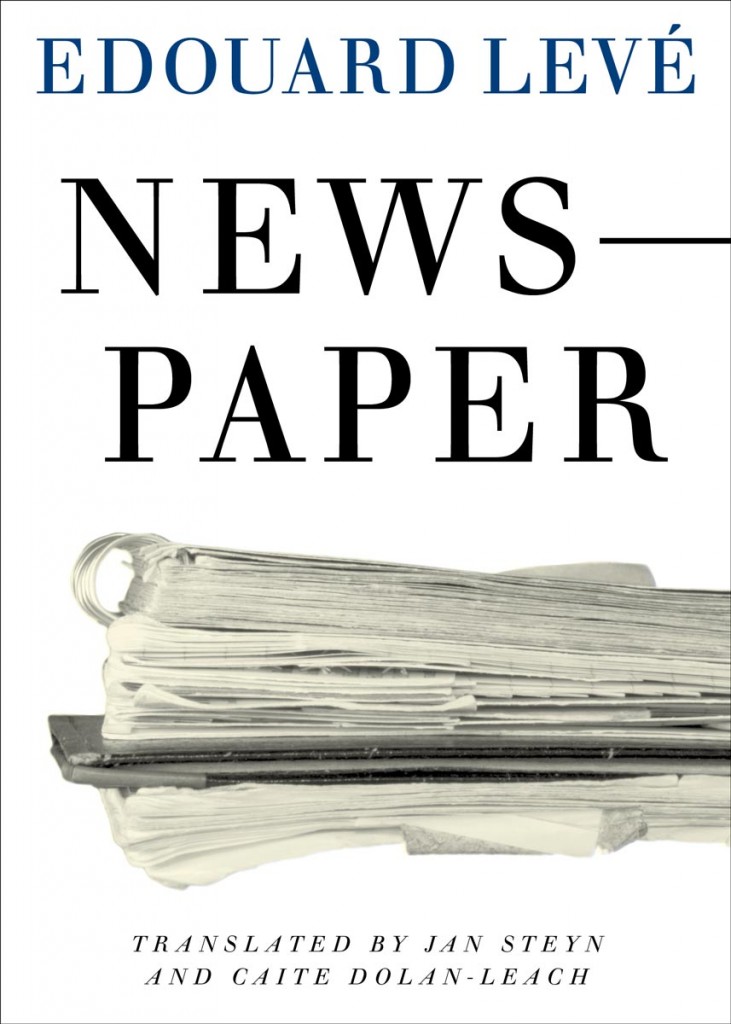
JCO: When are you planning to release Under Paradise Valley and what form will it take?

PP: I don’t have a release date yet. I’ve just put together a template, and now have to decide if I want to keep it local—and look for a Northampton publisher—or if it can transcend it’s setting and make sense beyond a local context. There you go—context again! It always matters. Dylan Thomas wrote “Under Milk Wood” about a small town in Wales, yet when we hear it in North America, it makes sense to us and we picture our own communities. Hopefully that will be the case for Under Paradise Valley as well.

JCO: I was wondering about the relationship of our North American concept of nostalgia to hiraeth? We yearn for “back when…” or “in the old days…” or “when I was young(er)…” clearly something we cannot have. Does the cultural context differentiate hiraeth and nostalgia?

PP: North American hiraeth and nostalgia form a real web, hard to tease apart. When I was discussing this once, someone said, “Well, hiraeth is really creative nostalgia, right?” He was on to something. We all look back at what we’ve left behind—childhood, old timey holidays that we miss, people we miss, simpler lives. I think of that as nostalgia. It becomes hiraeth when there’s an element of imagination added—or that’s how I see it, anyway.

The grandfather of a friend grew up in Italy and came to the States. He spent years telling stories about his village outside of Naples. Stories that mutated and changed over the years—became more about his longing than the place itself—but were nonetheless true for him. The Italy his family came to know is a make-believe place, not just because of his errant memory and heart, but because it’s utterly changed—his village is a suburb of Naples now. Yet his Italy is the one my friend and her family still long to visit.

There’s always an element of the self—a collaboration of memory and desire that makes something new—in hiraeth that makes it more creative than simple nostalgia.

We mutts of the Americas ALL experience it—longing for places we can’t go to and can never know—yet we don’t have a word for it in English.

—JC Olsthoorn & Pamela Petro


Pamela Petro is an artist and writer based in Northampton, Massachusetts. She has written three books of place-based creative nonfiction—about traveling around the world to learn Welsh, storytellers in the American South, and the relationship between geology, stonecarving, and photography in Southwest France—and she also teaches creative writing at Smith College and on Lesley University’s MFA in Creative Writing Program. Her artwork derives from environmental installations of petrographs, and has been shown throughout New England and at the Grand Canyon, where she was an Artist in Residency in 2011. Pamela’s latest artwork is the artist book AfterShadows: A Grand Canyon Narrative, which was launched in January 2015.

§

JC Olsthoorn (Photo: Lois Siegel)

JC Olsthoorn spends time at the Domaine Marée Estate near Otter Lake, Quebec, writing raw poetry, creating coarse art, and cooking scratch food. His poems have been published in a chapbook, “as hush as us” and have appeared in literary magazines. JC’s artwork has been exhibited and has appeared in several publications. He is a curator at the Arbor Gallery – Centre for Contemporary Art in Vankleek Hill, Ontario.

/
/

Mar 082015
 

Ellena SavagePhoto via ellenasavage.com

Here’s a teaser from an essay on, yes, the personal essay by a delightful Australian writer and editor Ellena Savage, an essay that takes a critical theory view of the position of the personal essay as it is structured within the culture, a step back, as it were, from the usual shallow debates about “truth” and self expression, etc. that cloud the current N. American workshoppy atmosphere. The essay originally appeared in the magazine The Lifted Brow and now resides on Savage’s own site where you will find many other delightful texts.

We acknowledge the personal essay as an ideologically conflicted genre; that as genre, it necessarily deals in the ideograms of dominant culture; and that the genre, born of Enlightenment conditions, is interested in the maintenance of democracy and the valorisation of the individual. The personal essay is an attempt to transpose personal histories over collective ones.

This conflict we speak of arises from the historically instructive nature of the personal essay; that while valorising the individual, is culturally embedded in what Frederic Jameson names the linguistic representation of the dialectical process. It is a catalogue of a collective identity. To understand the personal essay, we are forced to read it within its cultural history.

via The Architecture of Me: Ideology and the Personal Essay | Ellena Savage.

Mar 082015
 

.

The cuckoo flower.

“Oh, that one’s bad luck if you take it into the house,” my mother said, so we left it where it showed four pink petals and a greeny yellow heart.

The devil’s bit scabious.

“No,” my mother said, examining the bluish purple blossom.  “I don’t know what it’s called either.”

I learned cowslip, white clover, oat-grass, creeping buttercup, meadow barley, meadowsweet and – floating at the tranquil edges of the croaking, churning quagmire – watercress and forget-me-not. When it came to the rarest Callows flower, bell-shaped and creamy white and hidden among the prevailing browns and greens, I would have to wait, as with the devil’s bit scabious, until a book identified the “summer snowflake”.

I hungered for books but books were scarce in our house.  Though my mother appreciated the value of books, money was often too short to afford them and the nearest library an inconvenient eight miles away, in Loughrea.  I made do for a long time with a huge tome called Flaming Flamingos that my uncle Mattie had brought.  All of nature seemed contained in that book.  The Camargue, Lake Nakuru, the Orinoco, that book whetted my hunger.  It widened my thought even if I often got stuck in the mud of its ornithological intent.  Over time it grew shabby and dog-eared and its spine broke.  Finally someone must have fecked it into the fire while I wasn’t looking.  But still it lingered even as I walked the Callows with my mother and the flamingos lit up those river meadows in my imagination.

The Callows was big when I was small.  It flooded or was supposed to flood in spring and autumn.  Flooding is too strong a word.  It stayed dry on higher areas and even in winter offered more a splashy sheet of wetness than a flood.  It held marshy tracts as well but we and the handful of neighbours who shared it always called it Callows and this, together with its four rivers, made it one.  I’m certain that the further back I go into my childhood, the slobbier, wetter, more unstable the Callows becomes.

Callows 1

It was entirely treeless apart from a few diminutive blackthorn bushes nibbled by the wind as much as by any grazing animal.  Its rivers, too small to carry names, trickled beyond their banks in some places but in others made me gawp at the force of the fresh current that linked them to the main river flowing across Foxhall Little and away outside the reach of my thoughts.

Several harsh-throated, drab-plumed birds depended on the Callows.  Greenland geese flying in V shape made weary-sounding, high-pitched cries and the creaking of their wings – together with their feral smell – filled my head.  Shyer than my mother’s geese, they wheeled their large white-fronted bodies about and chose to land well away from where I stood.  Whooper swans stuck out their black and yellow beaks, hissing a warning as I skirted the turlough.  Golden plovers, more white than gold, reeled in flocks, resembling miniature pieces of flickering litter as their bodies caught the sunlight.  Wild ducks, the males with their vivid plumage, dipped and dabbled.  The corncrake broadcast his arrival in late spring by “serenading” the world night after night, his voice harsher than two rusty nails being scraped together.

Some birds stayed all year.  The curlew rose almost straight up and made me feel melancholy by the way he called his own name as he glided back to earth.  The sound of the snipe’s drumming tail-feathers always stopped me in my tracks, and his zigzag flight easily deceived my eye.  The skylark dwindled to a heavenly dot, singing as he rose.

“Closer, closer,” the quagmire croaked when my mother let me go alone.  I would step and thrill and step until my wellingtons got stuck.  More than once I had to scramble back or even to step out of them in order to escape.  I gave up this game the day one wellington slowly filled with mud and sank without trace.

Callows 3

The Callows became a kind of outback to which I could escape and go walkabout.  I never felt less lonely than when alone there.  Often I felt sad as a child, the sadness of disappointment.  I wondered what the disappointment was.  Maybe, I told myself, it involved the waiting that had to happen before I could do the ‘great thing’ for which I had been born and would be remembered.  Maybe it included the worry of being responsible for this great achievement, the nature of which I had not the least inkling.

Mostly I tried to coax the sadness to behave itself the way I might Jack, our jet-black pony, a kicker and a biter.  Everyone must carry the disappointment that is part of them, I decided.  But in the Callows the disappointing mope in my heart would shrink and I’d find exhilaration by sprinting barefoot and fast.  A salt taste tanged my mouth and heat rose behind my ears; sometimes a stitch jabbed at my heart.  Later, a similar abandon erupted in fights with other boys – the thrill of landing a telling blow, of ending a pent-up frustration.  In my teens the drumbeat and the squawking of an electric guitar across the darkness from the dance carnival at Mullagh Cross also tapped into this sensation as powerful and primal and worth bringing on.

The Callows let me live in the moment and the moment could run and run until I completely forgot myself or, for that matter, other people’s opinions of me.  I was in my own manner “forgetting human words”, as W. B. Yeats said of Synge.  I see now that I didn’t have even the most basic sense of how to care for myself.  I went without a coat in rain or frost no matter how often my mother might advise me to wear one.  The cold and the wet and the pain served as balm against the sadness I felt.  They couldn’t stop me from exulting each time I sprinted and turned and sprinted again.

Years later, when I was a young teacher, I worked with boys who reminded me of myself as a child.  They, too, went without.  Some, unlike me, lived in utter poverty or wilful neglect.  Others suffered a lack of physical affection similar to my own.  Cold and hunger were second nature to them.  They had far more genuine excuses for being difficult or disruptive than I ever had – but I still recognise the boy I was, the boy who thought himself king of the Callows and who would happily have thrown away the blanket of mist and the cold kiss of a frog for the touch of human warmth that wasn’t given – not out of any meanness on the part of my parents, for they didn’t have a scrap of meanness in them, but because in the way of that time such things just weren’t done.

My need deepened as I grew older.  At first I cycled to and from St. Brendan’s College in Loughrea.  Cycling meant breezes and drenchings, but I refused to wear an overcoat.  Cycling also meant avoidance of talk, especially with girls.  And when the bus took the place of the bike, the driver – lamp-headed, incandescently so – said go up the road to Castlenancy or I won’t stop for you.  There they were – the girls, their long hair shining and the shape of their breasts and thighs suggested behind the ruck and pucker of convent uniforms.  I stole looks at them, racked my brain trying to think of something smart to say.  If I could only speak the first sentence… but no, I looked away again, stayed dumb for five years, give or take, and the girls stayed dumb with me.

“Look down,” the wet meadow whispered.

Black oily goo oozed from a wound in one place, while in another a seepage of glorious rusty orange happened.  I saw feathers scattered where a fox or hawk had struck, and a crow standing on a dead sheep’s head, trying to lever out its eye.  I didn’t wonder about ugliness or beauty, cruelty or compassion, or if I did the Callows wasn’t bothered.

Nor was it bothered when one spring a group of about twenty men arrived with nets – an extensive network of nets – and used thin rods to set them in place in the shape of a huge, open-mouthed pen.  The men spread out along the perimeter of the Callows and beat the vegetation, shooing and hallooing.  Hares rose and ran ahead of them until eventually there was a drove of maybe a hundred hares.  These were flocked into the pen, where they frantically scrabbled against the netting even as it closed on them.  They would be used at coursing events in various country towns where most, if not all of them, would be torn asunder by competing hounds.

I felt powerless.  The big world couldn’t be kept away.  Its entertainments were the same as its hungers: they required to be fed.  A small dread started in me there.  The future would happen, changing everything, including myself.  I understood at some basic level that I would have to leave when the future came.  My only solution was to immerse myself ever more deeply in the Callows.

Callows 5

At each visit I would lift the large flat stone that lay at the Callows’ edge.  There I might find a slug the colour of a lemon drop, a centipede that resembled a frazzled piece of twine, or a harvestman taking slow, articulated steps as if he were a flimsy wound-up toy.  They couldn’t stand the light of day and maybe that’s why I loved them – they were shyer even than me.

Then I would enter the cold, queasy pottage of what I would later describe in a poem as “land aspiring to be water; water wanting to be land”.  It had the raw look of a place still beginning.  It didn’t hold out much hope of anything remarkable.  But if you leaned into it, if you stayed quiet enough for long enough, its creatures would forget you and make free.  So I heard the pheasant hiccoughing as though drunk with sunset, and I found the eels – collectively if implausibly known as “a fry” – slithering their way across the waterland.

One evening I dug below the dank mat of roots and soil and clutched up a fistful of white dripping clay.  It was marl, but I didn’t know that then.  Slowly I crumpled its gritty sponge and found isolated on my palm three small egg-shaped shells.  Smooth and whorled and beautiful to my eye but, after holding onto them for a day or two, I gave them to my mother.  She could hardly have looked happier if I had given her a pearl necklace.

“Maybe the Callows was a lake,” she suggested.  “Maybe water snails lived there long ago.”

“But when was that?”

“Oh, not since Adam was a boy.”

She let the shells drop into the torn pocket of her apron where she assured me they would be safe, and I have no recollection of her ever mentioning them beyond that.

Callows 4

The Callows stayed with me long after I’d grown up and “become sensible”.  Its landscape turned into thought.  I wanted to preserve its sights and sounds and smells the way I tried to restrain three pheasants in a furze clump once, “flocking” them with my hands for several minutes until finally they burst upwards past my chest and face to escape.  Nearly four decades later I recalled

the marl excavations: white, with small
tell-tale shells remembering a lake
where the Callows found its first
foothold – and where your heart’s pangs
are shallow waves, breaking still.

My mother had become old and enfeebled now, laid up in Portiuncula Hospital after yet another stroke, one more sweeping of the ground from under her.  I had drawn the bed curtain across, sat with her through the night.  I stayed awake listening to her breath, her scraping restlessness, and staring at the Callows meadow scene painted on the curtain itself.  Flowers aplenty there, patches of water, tall grasses.

Towards dawn I held her wrist while the doctor clumsily took blood.  Some blood squirted from his syringe onto the curtain where it formed a black flower among the lightening colours of the wetland meadow – one more beauty to add to the forty plus species per square metre that river meadows are capable of supporting.  I thought of the many walks she and I had taken together.  And I found myself wishing for the shells back, or maybe for the moment of offering them to her again.

—Patrick Deeley

.
patrick-deeleyPatrick Deeley via Five Glens Arts Festival

Patrick Deeley was born in Loughrea, Co. Galway in 1953, and currently lives in Dublin.  His poetry collections published by Dedalus Press include Intimate Strangers (1986), Names For Love (1990), Turane: the Hidden Village (1995), Decoding Samara (2001), The Bones of Creation (2008) and Groundswell: New and Selected Poems (2013).  He is the recipient of a number of bursaries and poetry prizes, and translations of his work to French and Italian have come from Alidades Press and Kolibris Edizione respectively. “A Callows Childhood” is an extract from a memoir, The Hurley-Maker’s Son. His personal website is here.
.
.

Mar 072015
 

Ralph-Maud-via-commonground.caRalph Maud via www.commonground.ca

A mappamundi of values is what we are after, / the satisfaction we need before we die. / It’s why older people, even dying people, / read the paper avidly. / Shall we revise the prayer?

.

Ralph Maud, an old friend of novelist Keith Maillard and his wife, Mary Maillard, died on December 8, 2014. Ralph is best remembered as a scholar ahead of his time — an authority on Charles Olson, expert on Dylan Thomas, a Welsh Nationalist, a collector of northwest aboriginal mythology, and documentary film maker — but he also, as he was approaching death, considered that topic in a purely personal way, leaving behind an eight-page monograph entitled “Make My Way Plain.” In the found poem that follows, Mary Maillard has attempted to distill the essence of Ralph’s thoughts. Every word is Ralph’s.

Poetry and AudiencePoetry and Audience, edited by Ralph Maud

Hereford Mappa Mundi c.1285Hereford Mappa Mundi c.1285

.

Ralph Maud’s Prayer: Distilled

1.

Is this the way?
The complexities of being human
on the edge of chaos?
Faced with an edge-of-chaos problem,
I found a way out.

Is this the way?
My father’s innate reticence,
my mother’s Celtic duplicity,
that spark of camaraderie and laughter
in the most dire circumstances?

Is this the way?
Minted in the molecules,
repeated throughout our life,
we are always the next step.
Given matter, the rest follows.

Is this the way?
In a materialistic world we get a sense
of making decisions for ourselves.
Hang onto that feeling;
it’s where value lies.

We can be self-satisfied in our originality,
as we are modest before the fact of determinism:
creatures of medical science, laboratory animals,
we are deluded to think
that we can be known.

2.

My subject is a prayer:
“Make my way plain.”
To whom am I addressing this plea?
As an atheist, I have to say
that I have nobody in mind.

I find myself saying, “Thank you, Lord,”
once a day. After a successful bowel movement –
“Thank you, Lord.”
Breathing is, of course, quite as important,
so perhaps later I will bless my breaths.

Who will make my way plain, then?
Why, Jiminy Cricket, of course.
The mechanism for self examination and guidance
seems common to all humans.
I have seen stubbornness avoid such consultation,

rage obliterate conscience.
I have lived a sheltered life.
I have seen the wholly bad as an exception,
the stony face of unreason: “And if you disagree, you die.”
I made my escape as soon as I could.

3.

A mappamundi of values is what we are after,
the satisfaction we need before we die.
It’s why older people, even dying people,
read the paper avidly.
Shall we revise the prayer?

“Make my way complicated?”
The mappamundi seems to be such
when we consult the abacus of the heart,
that tool for pinning down value,
our excitement is immense and rewarding.

Add goodwill and time to complexities –
that’s what we mean by “making plain.”
One works on one’s own map
and contributes to the world map.
No, we haven’t time to settle things properly.

4.

Down in this eternity of the moment,
we have in us the vestiges of hope for heaven.
Our end in perfect blackness, materialistic determinism –
most of us cannot let in that kind of hopelessness.
We just can’t.

“We just can’t.” There is the rock,
in spite of all our pathologies,
the rock on which we build.
We go on with our lives.
We can’t do otherwise.

We would find our place in Zion.
We would make our own destiny.
We could not do otherwise.
I lived the archetype of the immigrant.
The implication is that one can escape.

5.

William Saroyan’s words still sing for me:
“If I have any desire at all, it is to show the brotherhood of man.”
If there is a solution to “make my way plain,”
it will have something to do with
“the brotherhood of man.”

6.

The pilgrimage now reaches its end.
I am entangled in the end game.
Make my end plain.
I’m not quite there or I could not be writing.
What can I say hurriedly, for us, the dying?

The only sensible thing – when the line is crossed,
the nightmare should be short.
Joking and sociable to the end: I do not think so.
I am breathing with anxiety.
Make my end plain.

One wants to get out of life “with dignity,”
not waiting until life is unbearable.
One should be able to choose when enough is enough.
In principle, the way is perfectly plain
but the practicalities are elusive.

7.

As one puts in the bookmark and turns out the light,
there is the feeling that at least tomorrow is assured,
since the world would not, surely, deny one the solution
to come with the next day’s reading. There’s also the fellow feeling
as we get used to the idea of death.

 Ralph-Maud

Lines distilled by Mary Maillard, January 3, 2015, from Ralph Maud, “Make My Way Plain,” privately distributed, Vancouver, February, 2013.


Mary-Maillard-Photo-

Mary Maillard is an independent scholar and documentary editor from Vancouver, British Columbia. Her primary interests are in 19th century southern women and mixed race studies. She is the editor of the Skinner Family Papers and has written a monograph introducing three collections of southern antebellum coming-of-age letters, A Map of Time and Blood: An Introduction to the Skinner Family Papers 1826-1850 (2014). Her article, “‘Faithfully Drawn from Real Life:’ Autobiographical Elements in Frank J. Webb’s The Garies and Their Friends,” appeared in the July 2013 issue of the Pennsylvania Magazine of History and Biography, and, in 2013/2014, she received an Albert M. Greenfield Foundation Fellowship in African American History from the Library Company of Philadelphia for her research on the letters of Louisa Jacobs and Annie Purvis to Eugenie Webb, 1879-1911. Mary has contributed biographical entries to blackpast.org, including Frank J. Webb, Julia Chinn, George Lowther, and Pierre and Juliette Toussaint.

.
.

Mar 062015
 

tunnelweb

.

AT 9:00 AM ON A SUNNY MORNING, while your teenage son sleeps, make plans with your husband to visit the city of Briançon and the stronghold of Mont-Dauphin. Just over the Italian border in France, these are World UNESCO sites where the military engineer, Sébastien Le Prestre Vauban (1633-1707), designed forts and walls for the Sun King, Louis XIV.

Wake your son. Don’t tell him about the history trip ahead. You know he’s always hated history—facts have always proved slippery, elusive, dull. Instead, tell him you want to take him to France for a crêpe. When he hops out of bed without a complaint, hand him an espresso. While he’s in the shower, charge your camera batteries. Pack chocolate.

Smile when your husband says, surprised, “That was easy.”

At 10:30 am, let your son sit in the front seat next to you while you drive west. Hand him your camera. Direct him to take pictures of the road slicing through granite and slate. Remind him of Hannibal the Carthaginian and his elephants, of the Romans who fought the Gauls, of the Duke of Savoy who fought the Sun King. Tell him that armies have always climbed through the Alps first one way, then the other, shifting boundaries first one way, then the other.

Inhale when he nods.

RoadBrianconweb

Pull into a scenic lookout when he says “Stop.” Climb out and gaze at the rock scantily clad with snow while he takes pictures.

Agree when he says, “This road is tough, but without the asphalt and tunnels it was tougher.”

GatewayCityViewBrianconweb

Where Italian and then French flags blow, at the top of the pass at the Col du Montgenèvre, say to your husband and son, “Bienvenus en France, mes chers.” Then, since you’ve forgotten your son’s ID, panic when you see gendarmes at the booth ahead scrutinizing arriving traffic. Look at the police straight on though, and smile when they wave you through.

Agree when your husband says, “Borders are porous these days.”

buildingcliffbriancon

fortandrooftops

At 11:30, stop at the old walled city of Briançon that Vauban fortified after the Duke of Savoy pillaged the surrounding countryside in 1692. Park your car. Wind down steep streets to the main square. Buy a guidebook in a bookstore. Find a café. Order crêpes and pommes frites. Point to the fort on the crest looming above. Say, “Those rocks are a reminder of the past.”

TunnelBrianconChurchTowersweb

Agree when your son says, between mouthfuls of buttery food, “These mountains are tough, but the men were tougher.”

BoySoldiersMoatBrianconweb

At 2:30 suggest getting ice cream down the road. Drive south for thirty minutes, alongside the Écrins National Park. Admire the winsome villages with spiky churches and red geraniums. At picturesque Eygliers turn left. Note that your son’s breath catches at the sight of Mont-Dauphin, Vauban’s citadel that crowns the Millaures plateau which means ‘at the cross of the winds’ in Occitan.

Ask what he’s thinking.

Nod when he says, “Those towers above are a cliff full of mystery.”
ViewMontDauphinBridgeweb

Together climb over grass-clad ramparts. Cross the bridge that fords the empty moat. Explain how Vauban began building this citadel in 1693 but that it came to a halt with the Treaty of Utrecht in 1713 when the border was pushed elsewhere. Listen when your son reads aloud from the guidebook: “No actual battle ever took place here.” Shake your head when he adds, “too bad these walls went to waste.”

Buy ice cream. Lick the drips.

iciserepose

Circle clockwise. Photograph the church that was never completed. Photograph the remaining wing of the Arsenal where guns and ammunition were kept. Listen when your son reports, “the flanking wing was destroyed in World War II when Italians flew over and bombed it.” Agree when he adds, “So this place saw some action after all but it was only one brief blaze.”

Visit the cemetery. Look at the rusting crosses and dates. See how they’re relatively recent.

ChurchmontDauphinweb

Arsenalsideviewsunshineweb

EntireArsenaleSunshineweb

Photograph the main street where officers once lived. Together imagine how they waited for war that never materialized. Tighten your scarf around your neck again and again when the wind—the incessant wind—blows through. Notice how some places are boarded up and others are for sale.

GlacierBluweb

Nod when your son observes, “This has always been a ghost town even when the soldiers were here.”

Yellowshuttersignweb

At 7:00 pm, climb in the car, head back down the hill, turn right onto the highway. Drive north along the Écrins National Park toward Briançon and the Alps. Honk at a camper hogging the road. Swerve left when a stream of bicyclists in black nylon and silver helmets encroach on your lane.

Agree when your son, who is now in the back seat, says, “Look, these are today’s road warriors.”

lookoutweb

Ask your son his impressions of his day in France. When he says he liked the crêpe and the ice cream, sigh, but say “Good, I’m glad.” When he says, “I know it was a ruse to get me to come,” deny it. But smile broadly when he says, “The best part was walking where the armies had been. We should do this more often. Can I see the guidebook again?”

Don’t remind him you’ve always done it. Don’t list the museums and sites you’ve gone to together.

Vaubanweb

Shake your head when your husband says, “That was easy.”

Then hand over the book, pull out the chocolate you packed, and share it.

  —Natalia Sarkissian

.

Natalia Sarkissian

Natalia Sarkissian has an MFA in Writing from Vermont College of Fine Arts and has been an editor and contributor at Numéro Cinq since 2010. Natalia divides her time between Italy and the United States.

.
.

Mar 062015
 

StaffordWilliam Stafford via the Poetry Foundation and others


At the library of Congress in 1994 there was a memorial tribute to William Stafford, the brilliant American poet who, in 1970, had been what is now called the Poet Laureate of the United States.

There were the usual accolades: Bill Stafford was a poet whose plain language fitted his flatland Kansas sensibility. He was a man who thought peace (Stafford was a conscientious objector during World War Two) was good; war was wrong. There were other kind words. About the self-evident and the oblique stories in his poems. About those poem’s gifted reticence. Then something extraordinary was said. One of his children, his daughter Kit I think, told us of her father’s repeated advice to them as they were growing up: “Talk to strangers.”

By chance I was Bill Stafford’s student in the sense that I learned from him about writing and life: Do it all and do it all now. The threshold is never so high as you imagine. The beginning may not be the beginning. The end may not be the end. These aphorisms applied not only to his craft and mine, but to the way we lived. And there was a sense in what I learned from Bill Stafford that the two might not be easily separated.

Not far where I live in Kansas (and about the same distance from where Bill Stafford grew up) there is a high school in a town of roughly a thousand that has a video security system of which they are especially proud. I had been asked to be part of a literary program there (my talk was on Bill Stafford), and came to know about the surveillance cameras because I saw one posted in the room where I was speaking. Later, I saw the black and white glow of the monitors in the school’s office. I watched as the system projected pictures of the gymnasium (empty on this autumn Saturday); various hallways (also empty); our meeting room (adults milling around drinking coffee and eating donuts); and finally a shot outside the school: the wide Kansas prairie as background, a small Kansas town in the foreground.

One of the school’s officials and a parent stopped to say that you couldn’t be too careful these days, what with Columbine and Amber alert. Bad things happen in schools. And out of schools. Better to be vigilant than be sorry. When they left, I could see them on the monitors as they walked across the buffalo grass lawn to where they were parked. They talked for a moment over the bed of a pickup truck, and then drove off, safe, I suppose, in the knowledge that someone might have been watching them.

Over the years Bill Stafford and I wrote back and forth: letters, post cards, copies of our work sent to one another with inscriptions. As he was one of the most prolific poets of the 20th century, I got plenty more of the latter than did he. But no matter how far apart we were, Bill in Oregon and me in Kansas or in Europe, he would sign off with something like “Adios” or “Cheers”, and then, as if we were just across the pasture, he’d note: “And stop on by.” My sense now is that when I’d get to him, windblown and dusty from the walk over, he’d want to know if I’d met any strangers on the way, and what stories they had to tell.

Have we become an America where it is stupid to give the same advice to our children that Bill Stafford gave his, and where stop on by means please don’t? Have we come to believe that surveillance cameras in the high schools of tiny prairie towns will teach our students the eternal vigilance they’ll need to live in towns beyond their own? Or in their own? What with Columbine and Amber alert. Or is the answer from Bill Stafford’s poem Holcomb, Kansas?

Now the wide country has gone sober again.
The river talks all through the night, proving
its gravel. The valley climbs back into its hammock
below the mountain and becomes again only what
it is: night lights on farms make little blue domes
above them, bring pools for the stars; again
people can visit each other, talk easily,
deal with real killers only when they come.

Or are we all real killers?

There may be no reclaiming Bill Stafford’s vision of America, but once upon a time, in his plain voice, didn’t he speak for you?

— Robert Day


Robert Day

Robert Day is a frequent NC contributor. His most recent book is Where I Am Now, a collection of short fiction published by the University of Missouri-Kansas City BookMark Press. Booklist wrote: “Day’s smart and lovely writing effortlessly animates his characters, hinting at their secrets and coyly dangling a glimpse of rich and story-filled lives in front of his readers.” And Publisher’s Weekly observed: “Day’s prose feels fresh and compelling making for warmly appealing stories.”

.
.

Mar 042015
 

perec

Meaningless, nothingness, lack of understanding, and events sans repercussions. As translator David Bellos makes clear, this novel captures more than a taste for graphic death. It reflects a substantial debate, summed up in a work on authenticity and inauthenticity by Jean-Paul Sartre titled (in English) Anti-Semite and Jew. –Jeff Bursey

il condottiere

Portrait of a Man Known as Il Condottiere
Georges Perec
Trans. David Bellos
University of Chicago Press
Cloth, 144 pp., $20.00
ISBN: 9780226054254

.

1. OVER THE LAST number of years small presses have been addressing gaps in the knowledge of English-language readers when it comes to the shorter works of the acclaimed French writer Georges Perec (1936-1982), best known for his novel Life A User’s Manual (1978; translated into English in 1987), by issuing An Attempt at Exhausting a Place in Paris (2010), The Art of Asking Your Boss for a Raise (2011), La Boutique Obscure: 124 Dreams (2013), and I Remember (2014). Now we have his first novel, Portrait of a Man. In 1960 it was rewritten for the publishing house Gallimard, who had issued a contract and paid royalties ahead of receiving the completed work. According to David Bellos, when Perec finished revising it he affixed these words to the typescript: “YOU’LL HAVE TO PAY ME LOADS IF YOU WANT ME TO START IT OVER AGAIN.” Even after that effort the manuscript failed to succeed, and it gradually fell out of sight until rediscovered by Bellos while he wrote Georges Perec: A Life in Words (1993; rev. 1995). In 1960 Perec predicted that his first novel would experience one of two fates: either he would revisit it in later years and turn it into a “‘masterpiece’” or he would “‘wait in my grave until one of my faithful exegetes comes across it in an old trunk… and brings it out.’” There’s no word on if the former approach was tried, but as Bellos says, “it’s not like anything else that he wrote,” and perhaps there was no way for the Perec we are more familiar with to venture back to that earlier version of his writer self. (What goes unexplained is why it took until 2012 for the novel to appear in French.)

The plot of the book is simple. Gaspard Winckler, a forger of painters, works for a group run by the shadowy Anatole Madera. After 12 years in this occupation, preceded by four as an apprentice to Jérôme, an older forger who also works for Madera, Winckler chooses, as his next task, to create a painting supposedly by Antonella da Messina, based on the latter’s Portrait of a Man known as Il Condottiere (1475). This new work would have to come from Winckler’s soul and not be a technical exercise, yet having inhabited for years the habits and work of other painters, it is not going to be easy for him to find out who he really is. In addition to burying himself in studies of the esoteric natures of painting, wood, and visual perspectives over the ages, Winckler has been cut off from people and world events since he started his career as a posturer in 1947. What he runs into is a blunt fact: masterpieces can’t be willed into existence, and originality doesn’t emerge based on wishes. The failure of his attempt leads him—or rather, it may be one of the reasons—to rebel against his employer, and to do that he must commit an act that irrevocably cuts him off from his former life. He kills Madera, and then flees the isolated house that contained his laboratory.

Portrait of a Man is divided into two parts: the first describes Gaspard’s attempt to escape from his past; the second is comprised of a set of chapters where he tries to describe, to an inquisitive friend named Streten who is sheltering him, what he had done and why, how he entered into a lucrative career, and what propelled him out of it. Part I is filled with action and pell-mell sentences, and for a while it seems like this novel will fall into a pattern found in the “detective novels” Winckler reads now and then for mental release from the pressures of work. (This puts in mind We Always Treat Women Too Well [1947] by Raymond Queneau, written under a pseudonym, Sally Mara. Apart from being set in Dublin in the mid-1910s and using names found in James Joyce’s Ulysses, this novel ramped up, in protest and with deliberate irony, the violence and sex present in gangster novels then popular in France. Perec and Queneau were friends and members of Oulipo.) The opening lines of Portrait of a Man are startling for their pulpiness:

Madera was heavy. I grabbed him by the armpits and went backwards down the stairs to the laboratory. His feet bounced from tread to tread in a staccato rhythm that matched my own unsteady descent, thumping and banging around the narrow stairwell. Our shadows danced on the walls. Blood was still flowing, all sticky, seeping from the soaking wet towel, rapidly forming drips on the silk lapels, then disappearing into the folds of the jacket, like trails of slightly glinting snot side-racked by the slightest roughness in the fabric, sometimes accumulating into drops that fell to the floor and exploded into star-shaped stains. I let him slump at the bottom of the stairs, right next to the laboratory door, and then went back up to fetch the razor and to mop up the bloodstains before Otto returned.

On the novel’s cover a cascade of crimson obscures the top half of the Antonella painting that gives the novel its title; and that passage, with its shadows, the descent, and that dance, brings to mind the fondness the French have for murder mysteries and Edgar Allan Poe.

2.

As Bellos makes clear, this novel captures more than a taste for graphic death. It reflects a substantial debate, summed up in a work on authenticity and inauthenticity by Jean-Paul Sartre titled (in English) Anti-Semite and Jew. The figure of the forger bundles that thorny topic together with Perec’s “extensive learning” in art history, the controversy in 1945 surrounding the arrested Dutch art dealer and forger Han van Meegeren (readers of William Gaddis’ The Recognitions [1955] will recall that name and his importance in the creation of that novel), and, to my mind, looks directly at uncomfortable historical events: in the 16 years covered by Winckler’s training and output to his abrupt retirement—so, beginning in 1943—France endured, among other things, the Occupation, collaboration with Nazi Germany, the role of its citizens in sending Jews to death camps, the Resistance, and the violence of the Algerian War (1954-1962). In these atrocities, state scandals, and actions some Frenchmen led false lives. Also, during the Second World War Perec’s father was killed in battle and his mother died either in Auschwitz or on the way to it. It’s impossible to read this book, which in the second half turns into a confession-cum-self-exculpation, without wondering, in a cautious and limited way, how Winckler’s half-life symbolizes an absence within Perec (what he might have been like if his parents had lived) and within the soul of his country.

Unlike the bloody events and fevered prose of Part I, the second part is hesitant and revolves around a set of intellectual and emotional questions. Asked by Streten why he killed Madera, Winckler replies: “‘But I had to wake up one day … It didn’t matter when or where … It happened, it had to. It happened because of Mila [a girl he had some interest in], but it could have happened because of something else. It doesn’t matter.’” Further along Winckler will say: “‘My own story written down once and for all, in a closed circle, with no way out other than dying ten or twenty or thirty years on. Needing to go on to the end without meaning, without necessity …’” Streten, in his search for precise answers—he comes off as a character who has been placed in the wrong novel—pursues what he sees as a vital question:

“Why did you kill Madera?”

“I don’t know … If I knew, I wouldn’t be here … If I’d known, I suppose I wouldn’t have done it … You think it’s easy … You commit an act … You don’t know … you can’t know … you don’t want to know … But after a while it’s behind you … You know you did it … and then …”

“Then what?”

“Then nothing.”

“Why do you say ‘you’?”

“No reason … It doesn’t matter … I killed Madera … And then? It doesn’t make things any simpler … A last act, the least act of all …”
“Just to see …”

“As you say … Just to see what would happen …”

“And what did happen?”

“You can see for yourself … Nothing yet … Perhaps one day something will happen … Something worthwhile …”

Meaningless, nothingness, lack of understanding, and events sans repercussions (Bellos points out that Winckler reappears in Life A User’s Manual)—these are themes returned to, with variations, particularly in Part II. Streten insists this or that “‘doesn’t make sense,’” acutely observes that Winckler “‘pretend[s] to be a victim,’” and repeatedly demands that there be explanations for why his friend behaved as he did, which Winckler argues against: “‘You’d like there to be a solid point of departure, a sudden insight […] There wasn’t any turning point in my existence … There wasn’t a story … There wasn’t even an existence … Of course, if things had been logical […]’”

(As an aside, Perec uses ellipsis to slow the momentum of the second part of Portrait of a Man, and it’s worth noting how the same device, in the hands of Louis-Ferdinand Céline, achieves the complete opposite: in his books those three dots act like stones that trip you down an endless set of stairs at breakneck pace, leaving you breathless, dizzy, and bruised at the fall of the last line.)

Inside the “false world… a world without sense…” occupied by Winckler, where there are no narrative arcs, where he is cocooned from national and world events, where other countries exist as study locations (galleries, libraries, museums) or vacation resorts, where nothing is connected, where the insignificant and the significant weigh the same, and where fate is first invoked and then denied, the forger fitfully dreams of the possibility of a cohesive existence: “To be at long last, in your own right, the captain of your soul and the world in an irrefutable ascent, a single movement towards unity.” Winckler believes he can achieve those aims by painting a new Antonello, with its subject a man who is kin to the Condottiere—a figure who “…has nothing to lose: no friends, no enemies. He is brute force.”—yet who is sufficiently distinct so that experts will accept the forgery. How the painting turns out is not predictable (like so much else in a novel that relies on the words logical, perhaps, nothing, and so on), and the result shows Winckler what he needs to know about himself:

I looked at myself in the mirror in the middle of the night. That was me. That was my face, and my year of struggle and sleepless nights, that oak board and that steel easel, that was my face too, and so were those pots and those hundreds of brushes and the rags and the spots. My story. My fate. A fine caricature of a fate. That was me: anxious and greedy, cruel and mean, with the eyes of a rat. Looking like I thought I was a warlord.

It might be this revelation that is the impetus for the murder and the escape, but as Winckler states numerous times, it could be any reason, or simply something that just happens; even the notion of fate, shaky though it is, could be why his life went along as it did. No final justification or motive will be found, and that debate is a sizeable portion of the content. What is easier to conclude is that in this novel Perec, via Winckler, tends to explain everything (while answering little), leaving less of the pleasurable ambiguity readers might prefer. As Bellos observes: “This is a novel, not an essay. Almost.” The action of the first part is replaced by rambling talk in the second, yet nevertheless, Portrait of a Man is at times an engrossing read, with early hallmarks of the later author—a fascination with exactitude, on painting techniques and on numbers, an intellectual apparatus that undermines the structure of the novel—as well as unusual features that Georges Perec fans will want to encounter for themselves.

—Jeff Bursey


Excerpt from Portrait of a Man Known as Il Condottiere
/
/

Bellos makes clear that Perec started educating himself in visual art in the mid-1950s, and proceeded from there. He “visited exhibitions and galleries in Paris and made a trip to Berne to see a large collection of works by Paul Klee,” studied general and scholarly works and catalogues, and engaged in discussion with “Yugoslav art historians he had befriended in Paris…” Using these sources and his imaginative powers, he invested Gaspard Winckler with the language and thought processes that get across the practical, physical, and mental aspects that lie underneath the act of painting, as this extract shows.

—Jeff Bursey

The hardest part obviously was that celebrated tautness in the jaw. It was impossible to pastiche without creating a double, and there was no sense in that. In the end I settled for using Memling’s portrait as my model: a very thick and powerful neck, with the first minute signs of a double chin, very deep eyes, a line on each side of the nose and a fairly thick mouth. I would put the strength into the neck, into the articulation of the head, in the very high and straight way it was held, and in the lips. It was all fine on the drafts. On the trial paintings in gouache it even turned out rather splendidly: a complex melange of Memling and Antonello sufficiently corrected, with a very pure look in the eyes, immediate contours that yielded easily at first and then thickened, became impermeable, turning hard and merciless. No cruelty, no weakness. What I wanted. Pretty much exactly what I was after . . . It was another month before I started really painting. I had to get my pots, brushes and rags ready. I took three days’ rest. I began to paint sitting in the armchair, with my palette within easy reach, and the panel set on the easel with its four corners wrapped in cotton wool and rags so that the metal angles that held it in place would leave no mark. I had an elbow support and a crutch to keep my hand steady, a huge visor to keep the glare of the spots off my eyes, and wore magnifying goggles. An extraordinary set of safety devices. I would paint for twenty minutes and then stop for two hours. I sweated so much I had to change three or four times a day. From then on fear never left me. I don’t know why but I had no confidence at all, I never managed to have a clear vision of what I was trying to do, I couldn’t say what my panel would be like when I’d finished painting it; I wasn’t able to guarantee that it would look like any of the dozens of more or less completed drafts lying around the room. I didn’t understand some of my own details, I was unable to get a grip on the overall project, to recognise it in the smallest touch, to feel it taking shape. I was stumbling onwards, despite the innumerable safeguards I’d set up. Previously, I’d been able to paint any Renaissance picture in a couple of months, but now, after four months’ work, in mid- September, I still had the whole face to do . . .

Reprinted with permission from Portrait of a Man Known as Il Condottiere by Georges Perec. Published by the University of Chicago ©. © 2012 by Éditions du Seuil Introduction and English translation © 2015 by David Bellos. All rights reserved. Published 2015.

.
NC
jeff again (3)

Jeff Bursey is a Canadian literary critic and author of the political satire Verbatim: A Novel (2010). He is a Contributing Editor at The Winnipeg Review and an Associate Editor at Lee Thompson’s Galleon. His reviews have appeared in, among others, American Book Review, Books in Canada, The Quarterly Conversation, Music & Literature, Rain Taxi, The Winnipeg Review and Review of Contemporary Fiction. He makes his home on Prince Edward Island in Canada’s Far East.

.
.

Mar 032015
 

Julie2 (1) - Version 2

.

HER MOTHER WOULD give her lovely teeth. Pale slabs designed for wide smiles in long afternoons, for precise first kisses with elder boys. She’d never see crookedness or the tang of blood swirling in a porcelain basin. She’d never need to mute her grin or remember it in photos as lukewarm, a twitchy ordeal. Hers would be tough things, tougher than sticks and stones and the growing pains that would grip her peers.

Her mother had planned for this. She’d grown up poor in the West of Ireland where there were no orthodontists. Like the rest of the kids in her village she’d walked miles barefoot to school in summer. During the wet months, she was taken out of lessons to help her family plough fields. In the evenings she’d stare up at framed photos of her American cousins, fixated on their plumpness and neat teeth.

At sixteen, she got the boat over and moved in with relatives with hearty laughs. She took a job cleaning a church in Chicago, sweeping dust from its steps and nave. She was lonely but didn’t mind. She’d make up great romances, their melodies pinballing the sides of her skull.

Her Aunt Nancy and cousins never stopped talking when she got in when all she wanted was peace and a sit down or to write a letter to mammy about the things she’d seen. It was true — everything was bigger over here. They were a more evolved people compared to the Irish who’d crawled from a peat bog, squinting at each day’s new sun.

Aunt Nancy was not a strict sort and encouraged Brenda to go out to dances, to enjoy herself after a hard week’s slog. Brenda and her cousins would get ready together, cinching and spritzing themselves for excitement in the dark. She could not stop staring at their tanned fullness, their scarless feet. These were girls who had never gone hungry, who’d never stooped in fields, whimpering from the weight of toil and equipment cutting into their young hands. There was no sadness lurking heavy in their flirting. She was jealous of their exuberant smiles. Her own teeth were fighting bread queues too aware of their humiliation.

More than brains and beauty and a reliable father figure, she wanted perfect teeth for her daughter. Hard confidence you couldn’t argue with or underplay. It’s what people saw first, what said the most about you without speech. A dream that wouldn’t fade long after the sag of age that curdled faces and the parts underneath. People noticed careful maintenance — American girls wouldn’t get far with a lippy grin. Never mind that the girl was shy or struggled with fractions and ran across roads to escape oncoming dogs. She’d be known for her smile.

Brenda moved up the job ladder into a country club in the suburbs, backed by gentle sweeps of land and manicured lawns out front. She worked as a kitchen porter, wiping surfaces and loading plates into a dishwasher, her face a blur in vast steel. They were heavy days, but every hour stood closer to straight slabs for the girl. When waitresses called in sick, Brenda would volunteer to help deliver meals and drinks. She’d pour generous measures while chatting to golfers about what it was like back home, the differences between Ireland and America, the relatives and funerals she missed, what Irish kids had to go without. Despite mixing up their orders, they enjoyed her stories, her lilting accent, her soft pear body leaning toward the more expensive bottles. They listened with slow nods, imagining her Jaysuses as they stabbed her flesh in rapid spurts.

Sometimes, they’d offer to drive her back to her home in the city. “You can’t wait out in the cold for the bus, Brend” they’d say, their eyes milky with drink. “Oh, don’t worry about this tough old girl”, she’d reply while polishing the last glasses, the light dusting of fur on her top lip lit by a chandelier at its brightest.

He walked her to the car with cowboy legs — all loose, gossipy. She waited at the passenger side, counting, not sure for what and how long it would take. For how quickly to get into the warmth? For when was too late to say no, she preferred to get the bus back? He unlocked the car on his second attempt. She sat down on the leather seat which squeaked. “What’s that?” she asked, looking straight ahead. “Sorry, that’s Finley’s toy.” In the rear-view mirror sat a dog showing off its fat bacon tongue. The sky dropped as they pulled out of the drive. The man seemed to have his eyes closed a lot. There were no other cars. She toyed with the radio dial, hoping to find a song she liked, remembered, an intimate voice in the dark. “Sorry, it doesn’t work doll”, he drawled. Trees both sides of the road were scant, tight-fisted. “I couldn’t live out here”, she said. The road disappeared under them and kept making itself anew.

The man rubbed her thigh like a tide keen to break free from the moon. His nails were too short. She wasn’t sure she’d finished her period. They sky was turning dusty pink but held onto its cotton. The dog’s tongue went nowhere in the mirror.

The man parked the car cleanly, overlooking the town. “Come on Finley”, he said as he led the dog out by its collar. Street lights winked at them below.

The dog spindled among grass gone blonde at its stubby lengths, immersed in scent. In the car, Brenda’s face fused with glass as she watched the oblivious animal. Cats have barbed cunts don’t they. She breathed a pale O. The dog disappeared.

The man groaned behind her, willing his thumbs round her waist to kiss. Each pulse into her made her face move further up the window. This must be how you get to heaven. Her smudged eyes clocked the dog again, a rabbit twitching in its mouth.

“Oh god, oh god, ohhhhh I’m sorry I can’t help it.” He groaned again then inspected the condom, offering its contents to the last of the light. “Sorry that was a bit fast. The old chap had one too many whiskies.” “It’s fine,” she said, pulling her knickers out of her stockings, looking for the dog outside. “Did you?” “Yep.” “I can never tell with you, Brend.”

The dog jumped up and scratched at her window with the rabbit still in its mouth. The rabbit’s bloody head was connected by a strip of fur to the rest of its body.

“Leave it! Finley! Finley! That fucking dog.” The man got out of the car, tossing the condom into dark.

“Here’s just fine.” He pulled the car over into a bus-stop. A pruned woman in a rain hood glared at the car. The man leaned his head against Brenda’s. “You’re so special.” His breath stank of dead animal. “The babysitter will be waiting”, she said, rubbing mascara from under her eyes.

“She’s asleep”, said the woman removing the chain from the door. “I’m really sorry. I had to cover at work again”. “You need to give me a bit more warning. Shoes off, if you don’t mind.”

The child’s mouth was ajar and spelling slow breath, the kind reserved for last words and hexes. The metal across her face was a cold spider. Brenda sat down on the bed, bathed by the night light. “Maaaauuuuuuuuugh! I thor you wurrr a monnnshta.” “Shhhhhhh, sleepyhead. Let’s take this thing off.”

—Julie Reverb

.

Julie Reverb is a London, UK-based writer whose fiction has appeared in publications including The Quietus, 3:AM magazine and Gorse journal. Her début novel – NO MOON – explores language, grief and a family-run porn cinema. It will be published by Calamari Archive in Summer 2015. Find her at www.juliereverb.com and @juliereverb on Twitter.

.
.

Mar 022015
 

Tom McCarthy
By allowing us to extend our perception to multiple images simultaneously, the image pattern creates a sense of multiplicity, a feeling of participation in a larger, more complex process than our experience in the present allows. That is one of the great rewards of reading, and when a story is crafted with the care and attention to detail like Satin Island, then sometimes, for brief moments, we might recognize something familiar, yet beyond; something we know is true, yet are unable to express. —Frank Richardson

satin-island-cover

Satin Island
Tom McCarthy
Alfred A. Knopf
Hardcover, $24.00, 192 pages
ISBN: 978-0307593955

.

S

ATIN ISLAND BEGINS, appropriately, with an epigraph from Stéphane Mallarmé’s “Limited Action.” Beyond anticipating themes and motifs, this epigraph is felicitous for two reasons: first, Mallarme’s symbolist poetry prefigures Tom McCarthy’s multilayered, intricately patterned novels, and second, like the French poet, McCarthy is hailed as his generation’s avant-garde. Now in his mid-forties and living in London, Tom McCarthy has been described as inheriting the literary mantle of unconventional authors such as Alain Robbe-Grillet, Maurice Blanchot, and J. G. Ballard.

Author of the acclaimed novels Men in Space, Remainder (winner of the 2007 Believer Book Award), and C (shortlisted for the 2010 Man Booker Prize and Walter Scott Prize), McCarthy has also published a book of literary criticism (Tintin and the Secret of Literature) and numerous essays. In 2001 McCarthy, with friend Simon Critchley founded the International Necronautical Society, a “semi-fictitious” organization of artists, writers, and philosophers that promotes a diverse range of art projects. McCarthy calls the INS “a literary project . . . played out through the art world.” McCarthy’s newest novel, Satin Island, a palimpsest of meditations on life in the twenty-first century, is as ambitious as it is rewarding.

.

The Construct

For now, let’s call the book a novel, the only subtitle not crossed out on the cover of the US edition. Some of the nixed ones? Confession. Treatise. Report. Confession comes closest, for that is the tone that the first-person narrator, known only as U., adopts. U., a 40-something man living in London in contemporary time, an anthropologist by training, works as a corporate ethnographer for “the Company” – the type of business whose least sinister operation might be the personalized pop up ads on your web browser. Consider how U. describes the Company’s Koob-Sassen Project:

It will have had direct effects on you; in fact, there’s probably not a single area of your daily life that it hasn’t, in some way or other, touched on, penetrated, changed; although you probably don’t know this. Not that it was secret. Things like that don’t need to be. They creep under the radar by being boring. (12)

Between U.’s single-initial name and organizations like the Company, the influence of Kafka’s legacy is clear.

Apart from his daily work for the Company, U. has been charged with creating a “Great Report,” a document that will be, in the words of U.’s boss Peyman, “The First and Last Word on our age,” a summary vision of the world, a “brand-new navigation manual.” Flummoxed by his exuberant boss’s request, U. spends most of his time compiling vast dossiers on subjects as diverse as oil spills, parachuting accidents, and the rituals of native Pacific Islanders. Eventually, his research begins to merge with the assignment, and he becomes lost in a quest of anthropological hermeneutics:

What fluid, morphing hybrid could I come up with to be equal to that task? What medium, or media, would it inhabit? Would it tell a story? If so, how, and about what, or whom? If not, how would it all congeal, around what cohere? (71)

U.’s attempt to complete Peyman’s mandate is the nominal plot of the novel. The chronology moves toward a notional present from a moment a few years in the past when U. was stranded in the Turin airport. Except for a few dips into the past, the narrative time is linear. The novel’s form, although of the memoir type, feels scientific, like entries in a lab notebook: fourteen numbered chapters are subdivided into numbered paragraphs designated by decimals (e.g. 1.1, 1.2). There are no other section breaks. The only dialogue is summarized by U. or reported within his paragraphs without quotation marks. As arid as this may seem, it is this very style that McCarthy mines for this novel’s greatest rewards. Like a Chuck Close portrait composed of a thousand painted squares, McCarthy’s mosaic of paragraphs has a gestalt quality – the whole is greater than the sum of its parts.

Chuck Close, Self Portrait, 1997Chuck Close, Self Portrait, 1997

 .

Call me U.

McCarthy said in a 2011 interview (The White Review) that his character Serge in C, like Leopold Bloom in Ulysses or Slothrop in Gravity’s Rainbow, is “a kind of prism.” The same could be said of U. – he filters information. When he introduces himself, McCarthy’s protagonist borrows the form of another famous eyewitness with the sentence “Call me U.” But U.’s occupation forces him beyond mere observation of the world; Peyman expects him to synthesize a meaningful interpretation of it. Inevitably, U. fails at his Great Report, for what could U. achieve that would satisfy Peyman’s requirements? Uncertain how to proceed, U. moves from day to day through a haze of depression and mounting obsessions (a signature characteristic for McCarthy’s protagonists). Besides his boss, U.’s only interactions are with his colleague Daniel, his friend Petr, and his girlfriend Madison. U.’s tone can be terse, clinical, the tone of a scientist. For example, when Peyman texts him the news the Company won the lucrative Koob-Sassen Project, U. replies:

Good, I texted. The answer came more quickly this time: Good? That’s it? I deliberated for a few seconds, then sent back a new message: Very good. (7)

But this isn’t U.’s sole voice, and while he may be a scientist by training, his musings are by turn philosophical:

People need foundation myths, some imprint of year zero, a bolt that secures the scaffolding that in turn holds fast the entire architecture of reality . . . (3)

poetic:

as I slipped into a flecked and grainy sleep, oil seemed to lie around the very cloud-patches the wing-lights were illuminating: to lurk within and boost their volume, as though absorbed by them, and to seep out from them as well, in blobs and globules that hovered on their ledges, sat about their folds and crevasses, like so many blackened cherubs. (11)

and mystical:

That final spur, the one that carried skydivers across the threshold, out into the abyss, was faith: faith that it all—the system, in its boundless and unquantifiable entirety—worked, that they’d be gathered up and saved.[1] (78)

Although haunted by the ghost of Camus’s Meursault, especially in his apathetic interpersonal relationships, U.’s character is buoyed up by sentiments such as these and his genuine desire to find meaning.

.

A Choir of Images

Several of U.’s favorite subjects are present in the quotes above. The subjects and words McCarthy chose are not accidental. Regarding Ulysses, McCarthy said:

Everything becomes this huge network in which any division between outer space and inner space collapses. There’s a total consistency and continuity. And I love that – it’s what life is actually like. It’s what literature should try and somehow produce. (The White Review)

In Satin Island, McCarthy delineates his own network. U. is obsessed with buffer zones and with domains both outer and inner: a parachutist falls from the sky, oil bubbles up from below, and both meet in the present. Between the poles of outer and inner extremes, U. searches for connections, for the networks that link them together. He compiles dossiers and connects literal strings between images pinned to his walls. The question is, will some “this is it” coalesce? This is what Peyman wants for the Great Report. He wants U. to “name what’s taking place right now” (57).

McCarthy is a master weaver of recurring images, and he does so to great effect in Remainder and C. Repetition of words and ideas in a novel creates patterns of images that lend structural coherence to the story and suffuse it with a poetic quality. Satin Island is a tour de force of interwoven image patterns. The central image pattern is of something lying beneath, some mystery that might be revealed. On the first page, U. is shown thinking about the shroud of Turin, and how the image of Christ (or so it was supposed at the time) emerged after people examined photographic negatives. U. tells us that “We see things shroudedly, as through a veil, an over-pixellated screen” – a metaphor that recurs at the end, framing the novel. If the allusion to Corinthians is extended, then U. might hope, despite seeing the world through a glass darkly, to someday see clearly. Indeed, this is his primary conflict: how to make sense of the world, to see it clearly, to reveal the underlying, secret substrata of existence. While working in his basement office U. hears noises through the ventilation, finds patterns in them, and indulges his imagination:

Sometimes these patterns took on visual forms, like those that so enchanted eighteenth-century scientists when they scattered salt on Chladni plates and, exposing these to various acoustic stimuli, observed the intricate designs that ensued – geometric and symmetrical and so generally perfect that they seemed to betray a universal structure lurking beneath nature’s surface . . . (15) [my emphasis]

Stephen Morris, Square Chladni plateStephen Morris, Square Chladni plate

Such musings on underlying structures, on something hidden beneath a surface occur repeatedly throughout the novel. For example, U.’s job is to “lay bare some kind of inner logic” (21); regarding his hero, the anthropologist Claude Lévi-Strauss, U. writes:

Describing sunsets, he saw spun webs of lit-up vapour [sic], a whole architecture of reflective strands that both revealed and hid the source that lay behind them; even landscape seemed to him to withhold, in its layers and strata, some kind of infrastructural master-meaning of which any one layer was a partial, distorted transposition. (28)

Revealed patterns, buried layers, structures hidden beneath – this is the language of McCarthy’s central image pattern. U. imagines giving a presentation on oil spills, claiming “Beneath all these dramas . . . there lies a source code” (103). The oil image repeats often; here in context with Petr’s cancer:

the dark lumps were still pushing up from under the skin’s surface, clouding it . . . . If Petr’s flesh was turning black it was because he’d let the world get right inside him, let it saturate him, until he was so full of it that it was bursting out again . . . (133-134)

All the Company’s actions “creep under the radar,” beneath the perception of the people it affects. Even in rare descriptions of physical movement, McCarthy capitalizes on the pattern: “We pulled into a docking bay beneath this building, parked beneath huge arches and got out” (93). Intersecting with this backbone, this infrastructure, are the recurring images of a different type of mystery, the mystery of faith: parachutists and Vanuatans taking literal leaps of faith; the shroud of Turin; Muslim pilgrims performing the Hajj.

.

Mysteries

From U.’s obsessions McCarthy composes a mosaic of images that forms the backbone of the novel. This harmony of images, more than a conventional plot, gives Satin Island its coherence and its poetry. Direct assaults on the mysterious, the ineffable, rarely yield anything but sentimentality. The image patterns that McCarthy creates are a method of approaching the mysteries of the human condition – what U. tries and fails to tap – indirectly.

By allowing us to extend our perception to multiple images simultaneously, the image pattern creates a sense of multiplicity, a feeling of participation in a larger, more complex process than our experience in the present allows. That is one of the great rewards of reading, and when a story is crafted with the care and attention to detail like Satin Island, then sometimes, for brief moments, we might recognize something familiar, yet beyond; something we know is true, yet are unable to express.

McCarthy has spoken of Remainder, C, and Men in Space in terms of the protagonists’ failed transcendence (Interview Magazine). And so it goes for U. But his loss is our gain, for in the wake of his failure to write the Great Report, comes “this not-Report you’re reading now, this offslew of the real, unwritten manuscript” (114). Where U. fails, McCarthy succeeds in letting image patterns work their peculiar magic. Here we can stretch our sensory perception from oil oozing from a cracked pipeline to the cancerous tissue bubbling up under Petr’s skin; here we can imagine a parachutist plummeting to his death at the same time a Vanuatan plunges off a tower in a jungle clearing; here we begin with the image of Christ emerging from the shroud of Turin and end with the image of a ferryboat crossing the river Styx. Here we might make a connection with the mysterious, with some meaning lying beneath the surface of our lives. McCarthy leaves us, not with a confession, manifesto, treatise, or essay, but “a novel.” He might equally have borrowed another line from Mallarmé’s poem and called this peek behind the curtain “a choir of pages.”

—Frank Richardson


Frank Richardson bio pict 2

Frank Richardson lives in Houston and is pursuing his MFA in Fiction at Vermont College of Fine Arts. His poetry has appeared in Black Heart Magazine, The Montucky Review, and Do Not Look At The Sun.

.
.

Footnotes    (↵ returns to text)

  1. Hear McCarthy reading this excerpt in a clip from a promotional film made by the author in collaboration with Johan Grimonprez.
Mar 012015
 

diane-williamsDiane Williams photo by bill hayward

Diane Williams studied with Gordon Lish between 1985 and 1986. “I recall his saying that my work was so other? out-there? eccentric? that if he attempted to publish it at Knopf, he might not get any of his other books through,” she says. Lish would eventually get his hands on The Stupefaction, a collection of stories and a novella, and publish it at Alfred A. Knopf in 1996, but not before Grove Weidenfeld published Diane’s first collection, This Is About the Body, the Mind, the Soul, the World, Time, and Fate, in 1989, and a second, Some Sexual Success Stories Plus Other Stories in Which God Might Choose to Appear, in 1992. She published two more story collections containing novellas: Romancer Erector with Dalkey Archive Press in 2001, and It Was Like My Trying to Have a Tender-Hearted Nature with FC2 in 2007. Vicky Swanky Is a Beauty, a collection of stories, was published by McSweeney’s in 2012, and a seventh collection – its title and publisher revealed by Diane at the conclusion of our interview – is due out next year.

In a review of The Stupefaction, Ben Marcus writes, “These are stories in which every sentence is potentially a revelation, a devastating summation, an entire story smashed together into the confines of a line, a sentence, a paragraph.” Diane’s prose pieces are the briefest of fictions, yet each one covers major ground. Reading her is like being hit on the head. Fundamental requirements of the text are coded, revoked, or absent completely. When reading a Diane Williams story, I am instantly trying to orient myself, locate the contextual connective tissue I need to continue reading. But Diane goes where she pleases, often without warning. She shows us what’s possible on the page, and that to classify her work in any genre would be a futile pursuit.

Diane and I spoke through email in November and December. The following is the result of our exchange.

—Jason Lucarelli

.

In the novella “Romancer Erector” the narrator says, “I have storyish ideas but no story in me.” Has the real Diane Williams ever said anything slightly resembling this?

Diane Williams (DW): I don’t think I said it. I think Ben Marcus told me this years and years ago. Not one hundred percent sure. We could ask him. Of course, in his case, it certainly isn’t true. It’s crazy brave to say so. I couldn’t bear to say so.

Jason Lucarelli (JL): The genre of short short fiction has been called “a vehicle for expressing all those scraps of experience that are fascinating but too thin for a traditional “rising-conflict-to-resolution” story” by Charles Johnson; “neither poetic prose nor prosy verse, but the energy and clarity typical of prose coincident in the scope and rhythm of the poem” by Robert Kelly; and “a structure of words that consumes itself as it unfolds” by Joyce Carol Oates. Could you take a stab at defining this ephemeral story form?

DW: I admit that the definition of a literary genre doesn’t interest me. Language gathered into a composition is vivid and consequential or it isn’t.

JL: How do you see this type of fiction functioning differently from one that sustains itself for more than a few pages?

DW: Examples of prose fiction (from every or any era) as displayed in nearly identically-sized, squat stacks of text will vary so fundamentally in ambition and quality—topic, music, engineering and structure that their similar height and width are irrelevant tools by which to classify them. Would anyone create a genre for small paintings?—and a special technical term for these? How about giving a Robert Ryman, all white painting (9 ½ inches X 10 inches), Paul Klee’s Ancient Sound, Abstract on Black (15 inches X 15 inches) and Albrecht Durer’s Young Hare (10 inches X 9 inches) the same designation? Further, would you want to ask how these small paintings function differently from Rembrandt’s Man in Oriental Costume (5 feet X 3 1/2 feet) or from one of Cy Twombly’s vast paintings in the Bacchus series (10 feet X 15 feet)?

KleePaul Klee, Ancient Sound, Abstract on Black

JL: It takes me a good while to read through any collection of your “deceptively simple stories.” As I imagine all readers of Diane Williams do, I am constantly re-doing re-read-throughs. Sometimes I feel more barred by these “indigestible remnants” than others. Do you see these barriers yourself, or, how do you see them?

DW: I hope to see these barriers as you describe them—otherwise I’d be stirred up once by the story, but never again. How unlifelike to understand perfectly.

JL: Is uncovering what feels new important to you?

DW: Yes, uncovering what feels new is very important to me. I’ve been advised that boredom is healthful. It defeats me.

The Stupefaction

JL: Reviewing The Stupefaction Ben Marcus writes, “One does infrequently sense that the brevity of a particular piece enacts unfortunate injustice to the world it has started to invoke. At these rare times the length is itself a genre that Williams adheres to over the deeper demands of the story at hand.” I think this appears as a common critique of stunted prose pieces. Two parts: What is your defense? How do you know when a piece is finished?

DW: I don’t have any defense to offer in the face of Ben’s criticism. If, as he says, my stories, in rare instances, fail—likely they do. I celebrate his words “at these rare times.” If such criticism were leveled at all of my work, I’d be extremely disappointed.

Anyone’s short fictions may succeed or fail. We’d need to review specific stories.

How do I know when my story is finished? This is as difficult for me to answer as: how do I know if it began advantageously—or, how do I know if it was carried forward into its most promising direction? These are the ferocious challenges. Which ending to choose is particularly vexing.

I’ve read about a chimpanzee named Congo who loved to paint, and if anyone tried to take a painting away from him too soon, he’d have a tantrum. If, however, he considered the painting completed, no amount of coaxing could persuade him to continue with it. I only pray I’ve inherited the same or similar trait that is of use here.

JL: Many authors I love stick to writing stories. Yet your novellas—composed of hyper-precise shorts—The Stupefaction, Romancer Erector, and On Sexual Strength seem to elongate the “latitude of implication” of your “miniature fictions.” The condensed leanness of the novella seems suited for Diane Williams. Is the novella an underrated form? What are a few of your favorite novellas?

DW: Hmm…a great maxim, poem, story, novella, novel, essay—the great ones—they’re all great. The Pilgrim Hawk—a novella by Glenway Wescott—is a favorite.

JL: When we talk about fiction we sometimes talk about authors who lack plot and authors who lean on plot. If an author lacks plot, what replaces plot? Sam Lipsyte says, “You need motion, of course, always motion, always momentum, motion or the semblance of motion…” What’s your stance?

DW: A splendid plot cannot rescue a project spoiled by deficient language. And, of course, Sam is correct. A reader needs a compelling reason to move forward word to word—some would say even phoneme to phoneme—sentence to sentence.

Tender Heart

JL: After the completion of your first and second books—This Is About the Body, the Mind, the Soul, the World, Time, and Fate in 1989 and Some Sexual Success Stories Plus Other Stories in Which God Might Choose to Appear in 1992—you said you saw an “end to a sort of personal evolution” and “certain obstacles…overcome.” Later, your collections Romancer Erector in 2001 and It Was Like My Trying To Have A Tender-Hearted Nature in 2007 seemed like two different artistic feats, with It Was Like My Trying To Have A Tender-Hearted Nature representing a real leap in your story construction in terms of how much you might successfully leave off the page. Do you see an evolution between those books now? What obstacles are recently in your way as a writer?

DW: I looked at the titles you refer to so that I could answer your question with good will and yet am unable to give you my reflections on any artistic evolutions. I don’t proceed with abstract goals and I do not enjoy my own analysis of my work. When I once referred to “obstacles overcome”—I likely meant life challenges.

What obstacles are in my way as a writer? That’s easy to answer. Everything that has ever stood in my way still stands there—insufficient character, confidence, intellect, ingenuity.

JL: As you wrote during your early years at the University of Pennsylvania and later when you studied under Gordon Lish, what authors did you turn to who aligned with your concern for brevity, the least of all the literary devices you leverage? Who do you turn to now?

DW: I’ve never searched out particular writers aligned with my concern for brevity. I have no special concern for brevity. I’d rather view the shape and size of my results as the fruit of the tree. Somebody—perhaps Maillol?—said, “I am like a pear tree. I make pears.” I’d be equally delighted to announce that I am an acorn. At Penn, I read with fascination Chaucer, Cheever, Kafka, Flaubert, James, Shakespeare, Philip Roth, and, god, I am leaving out all of the poets here and an avalanche of other author names—many anonymous. Such a list has always seemed to me impossible and certainly misleading. Early on, yes, when I was writing my first books, I was overjoyed to discover Sharon Olds, Kawabata, Freud, Jung, Davis, and Lish. My taste in literature has always been eclectic. I do love Murdoch, Singer, Anderson, and Brookner. Of course, I am infatuated with every author we publish in NOON and am equally eager to read works of history, anthropology, philosophy, literary criticism, psychology…and so on.

JL: Yet brevity shapes, structures. My fascination with your work is partly because of how much you accomplish in such a short space, and when I think of short short fiction, I think of something Rusty Barnes says: “Somewhere between the linear narrative and the post-postmodern fracturing of narrative there might be a third way, dependent on its brevity as its primary descriptor.” On the other hand, a favorite musician of mine, Ryan Adams, commenting on his 1984 7-inch, says, “The brevity of those songs…is irrelevant to the structure and the content.” And so I ask you: how can this be so?

DW: Perhaps it remains a mystery why—but brevity is impactful.

NOON4

JL: I understand you were trained as an editor at Doubleday and went on to Scott Foresman. You co-edited StoryQuarterly and are the founding editor of NOON. Who are some of the great editors you have learned from over the years? Who helped hone, specifically, your editorial eye for fiction?

DW: My early assignments often involved radical editing. I worked in educational publishing at J. G. Ferguson (a subsidiary of Doubleday that produced career guidance texts, cookbooks, encyclopedias and dictionaries) and I can’t recall much guidance. At Scott Foresman I created primary reading materials and discovered my affinity for what the company defined as the immature mind. Research at the time proved that children under the age of nine could not manage abstract concepts and we were, therefore, directed to keep our language concrete. This meant we avoided history altogether! I have no idea if this theory is still current. In addition, I worked for several years at SRA (Science Research Associates, then a subsidiary of IBM) where I also developed elementary educational materials.

The great editors I have known? Well, of course, Gordon Lish was my teacher and the editor of my fiction for many years. I have often spoken of the cardinal importance of his influence on my writing and editing life.

And who forgets her first published story? Nearly ten years before I studied with Gordon—it was Dan Curley who first edited my fiction—the esteemed editor of Ascent. He informed me that I had managed to interest him in a thoroughly repugnant woman (I had thought she was hapless, but still appealing) and that if I’d make the recommended changes, he would publish the story. He attached several pages of single-spaced line edits.

Nowadays, I am very fortunate when Christine Schutt reads and comments on my new work.

JL: Your work with education materials and the concrete language of your target audience, did this influence your writing then, and was this effect lasting?

DW: I did not write my own stories during this period, so I can’t say.

JL: Can you talk about the importance of frequent contributors to NOON’s success? What do you make of the success NOON brings its frequent contributors?

DW: I am not sure I understand the question. NOON’s purpose is to feature singular fiction. If Deb Olin Unferth, for example, is generous enough to keep sending her fiction to us, then we are eager to keep publishing it. We are equally keen to discover new, distinguished voices. NOON 2015 introduces the first published work of Susan Laier and Mary South. And 2015 includes five first-time contributors: Darrell Kinsey; R.O. Kwon; Erin Osborne; Kevin Thomas; and Kristof Kintera. We continuously celebrate the success of NOON contributors.

JL: I’m excited for the new issue. My question comes from the feeling of opening a new issue of NOON and seeing these familiar contributors. To name only a few of my favorites (because every author in NOON is worth mentioning): Anya Yurchyshyn, Greg Mulcahy, Chiara Barzini. NOON authors share something special. What is it they have in common?

DW: Consummate artistry, courage, ambition.

Vicky-Swanky2

JL: Are there plans for teaching in the near future? When might a meager me, say, make his way to New York for a class instructed by Diane Williams?

DW: Hardly a meager you! I don’t have any plans for teaching at present, but if enough interested parties were to come forward, I might consider this in the future.

JL: You have a new collection due out soon. Is there anything you’d like to tell us about it?

DW: Fine, Fine, Fine, Fine, Fine is due out from McSweeney’s early next January, 2016.

—Diane Williams & Jason Lucarelli

NC jason-lucarelli-2

Jason Lucarelli is a graduate of the MFA in Creative Writing program at the Vermont College of Fine Arts. His work has appeared in Numéro Cinq, The Literarian, 3:AM Magazine, Litro, Squawk Back, and NANO Fiction.

.
.

Feb 272015
 

Missed the Oscar awards (also missed the Super Bowl, am also boycotting AWP — go figure), so I was a little slow in putting two and two together. Wes Anderson’s movie The Grand Hotel Budapest was nominated for Best Picture but only managed to win the Costume Design, Make-Up, Production Design and Music categories. The “only managed to win” is meant ironically because, of course, most of us would imagine life complete with an Oscar in Costume Design (okay, well maybe that’s hyperbole).

In any case, what is cool is that our inimitable movie guy, Rob Gray, did a lovely little piece two years ago on Wes Anderson’s short film “Hotel Chevalier,” which, when you watch the opening, bears an uncanny resemblance to the front desk scenes in The Grand Hotel Budapest. As Rob observed at the time, all Anderson’s films come from the same palate. Fascinating to see and think about.

Wes Anderson’s short film “Hotel Chevalier” is a lean, bruised and naked tale in a Paris hotel room. Anderson shot the short with his own funds (and the actors, Natalie Portman and Jason Schwartzman, donated their time) two years prior to his feature The Darjeeling Limited but it was often screened at the same time and is referred to by many as a prologue to that feature film that followed it (as mentioned in this previous NC at the Movies entry). The two are aesthetically consistent, but that’s not surprising as most of Anderson’s films belong to the same visual palate and characters seem descended from the same family tree.

Click here to watch the movie and read the rest at NC at the Movies.

Feb 252015
 

George Szirtes is a prolific poet and translator, a prize-winning poet, also a wit and a deft hand at Twitter. Born in Hungary, he moved to England in 1956, after the uprising in Budapest (probably not something many of you remember, though when I was growing up and going to university in Canada, I knew several Hungarians in diaspora dating from 1956).

We have some of his poems coming in the April issue, a truly special event. But I wanted to whet your appetites and also display this lovely essay he published in Poetry. It’s a defense of rhyme, an apologia for form, not a rant, not a call to arms, but a gentle and passionate reminder of the beauty of traditional rhythms and the human touch. Very smart, and applies to more than just poetry, if you extrapolate.

Rhyme can be unexpected salvation, the paper nurse that somehow, against all the odds, helps us stick the world together while all the time drawing attention to its own fabricated nature. Knowing that rhyme might become part of the field of poetic expectation, we strive to make its arrival as unexpected and therefore as angelic as possible, and, in so doing, we discover more than we knew. Rhyme can be an aid to invention rather than a bar to it. It is an aid because it forces us into corners where we have to act and take the best available course out. In the process of seeking it, we bump up against possibilities we would not have chosen were we in control of the process.

via Formal Wear: Notes on Rhyme, Meter, Stanza & Pattern by George Szirtes.

Feb 212015
 

1-Salgado-Preparations-underway-for-Storytelling-Preparations under way for STORYTELLING

The video documentary on UK-based Canadian painter Andrew Salgado is now on Vimeo. During the same time frame it was being filmed (June-October 2014), I had the honour and pleasure to interview Andrew for Numéro Cinq magazine. My curated NC interview of Salgado compliments quite nicely what you see and hear of him in the film, all in his own words. Both pieces together help provide a deeper understanding of and insight into this fabulous artist, his creative thoughts and artistic processes.

Trailer of documentary on Salgado during STORYTELLING preparations.

You can view the 42 minute documentary film directed by Adam Fletcher and Cassidy Uggla here:
https://vimeo.com/120142633
The password is “ripplesinapond”

Enjoy!

—JC Olsthoorn

Feb 182015
 

Capture

Another in a long list of zombie book reviews revived from my old days when you could actually make a little extra money writing reviews (and learn a lot about writing on the side). This one appeared in a magazine called Books in Canada in 1990. I quite like it because I managed, despite my tender years and experience, not to be awed by the aura of greatness. For example:

His long-awaited new novel, Vineland, his first since Gravity`s Rainbow (a book about V-2 rockets and coprophilia, I think) in 1973, reads like the mutant offspring of Henry James-turned-northern-California-mall-rat and Marshall McLuhan in the paranoid grip of a bad acid trip, with a little Joseph Campbellish mytho-delirium thrown in for colour.

dg

Capture
Vineland
Thomas Pynchon
Little, Brown (1990)

.

THOMAS PYNCHON IS a mysterious and reclusive cult figure in the United States, a kind of highbrow J. D. Salinger, a grey eminence of the American Post Mod movement, and one of the four horsemen of the New Writing of the `60s and `70s, along with John Barth, Robert Coover, and William Gass. His long-awaited new novel, Vineland, his first since Gravity`s Rainbow (a book about V-2 rockets and coprophilia, I think) in 1973, reads like the mutant offspring of Henry James-turned-northern-California-mall-rat and Marshall McLuhan in the paranoid grip of a bad acid trip, with a little Joseph Campbellish mytho-delirium thrown in for colour. Part political allegory and part metaphysical fantasy, Vineland seeks to answer those perennial questions: What happened to the `60s? Who betrayed the Woodstock nation? It`s also about TV, the trivialization of violence, and America`s loss of innocence (yes, yes, that again —America, the eternal virgin) during the Nixon-Reagan presidencies.

Pynchon puts the blame for the steamrolling of Hippiedom squarely on the Tube, the Man (DOJ, DEA, FBI, CIA), and certain dark forces — “… the unrelenting forces that leaned ever after … into Time`s wind, impassive in pursuit, usually gaining, the faceless predators… [which] had simply persisted, stone-humourless, beyond cause and effect, rejecting all attempts to bargain and accommodate, following through pools of night where nothing else moved wrongs forgotten by all but the direly possessed, continuing as a body to refuse to be bought off for any but the full price, which they had never named.”

Bleak? Heck, yes. But Pynchon tempers his bleakness with a stoned sense of burnout that runs the gamut from sly literary in-jokes — e.g. a “Carpenter Gothic outhouse” — to full-scale satirical set pieces and running gags. A character named Zoyd Wheeler lives on government disability cheques he earns by jumping through plate-glass windows once a year in front of a battery of Live Action Cams and TV reporters. Zoyd`s daughter, Prairie, makes a hit as a cook at an Esalen-like martial-arts retreat serving up such yummy items as baked Spam with grape jam garnish, which she discovered on the recipe page of the local TV magazine section. Zoyd`s nemesis, Detective Hector Zuniga, is being treated for “tubal abuse” and tries to have his ex-wife charged with murder for shooting the family television set.

The plot of Vineland is a flimsy, cardboard thing (as you would expect in allegory), a frame for the jazz riffs of Pynchon`s manic-mythic reconstruction of American history. It has something to do with the obsessive, sleazoid relationship between Brock Vond, an evil Department of justice operative intent on subverting everything good in the U.S. of A. from the radical left to marginal marijuana farmers, and Frenesi Gates (blonde, blue eyes, anagram for “sin free”), Zoyd’s wife and the daughter of a couple of pinko Hollywood black listees from the McCarthy era.

At the counter-culture`s apogee, Brock “turns” Frenesi into a snitch and a stool pigeon. She betrays Weed Atman, the Christ-like leader of a rock and roll “republic” on the California coast, then sets him up to be murdered. Frenesi spends the next 14 years in the government`s Witness Protection Program, traveling from one trouble-spot to the next as a freelance traitor. Then in 1984, deficit-driven cutbacks force the WPP to drop Frenesi and her fellow stoolies from the program. She and her file disappear, and Brock goes hunting for her with an army of SWAT teams and black helicopters that pluck people from the ground in a black-comedy version of the “rapture.”

Everyone converges on Vineland, an imaginary county north of San Francisco where the hippies, rad lefties, the Thanatoids (a community of the living dead waiting for “karmic readjustment”), and Zoyd and Prairie have taken refuge from Yuppiedom. At the climactic moment, another round of cutbacks pulls the plug on Brock`s very own program. His choppers grounded, he simply dies away, or at least finds himself being led down an earthen trench to the mythic Yurok underworld where an ancient spirit couple sucks the bones from his body.

What all this seems to mean is that TV has sapped the moral fibre of what Pynchon calls “Midol America,” paving the way for the triumph of the cynical, rich, and sun-tanned retro-fascists of San Clemente and Santa Barbara. Yet, in the long run, these malign forces of modern commercial capitalism will strangle on their own deficits and the ancient Red Indian gods of the North American earth will reassert their hegemony.

This is goofy political day-dreaming and a middle-class, male, whitebread version of American history (what ever happened to women`s lib and the civil rights movement?). This is thinking big on the level of Doonesbury and Oprah Winfrey. Some of the ideas in this book are so downright trite they’re embarrassing (e.g. pistols and stick shifts are penis substitutes). And yet, and yet, beyond the run-on jokes, the jumbled mythologies, the errant orthography, and the relentless folksiness of the dialogue, there is something compelling about Vineland. It’s a book that sticks in your mind, seems increasingly hilarious in retrospect, and fairly seethes with a spooky sort of Quixotic, half-wit wisdom. There is something about the foolishness of it all that may be next door to greatness.

Douglas Glover

(Books in Canada, April, 1990)

.
.

Feb 162015
 

jason-lucarelli-2

Jason Lucarelli is a brilliant literary commentator with a special bent toward literary Modernism and, specifically, Gordon Lish, Lishian studies, and Lishian influences. He’s already written two substantial essays and an interview (with Victoria Redel, a Lish protegé early in her career). And he has a lengthy interview with Diane Williams coming out in the March issue. It’s a pleasure to announce that he’s consented to make his relationship with the magazine official, public, and above-board by joining us as a Special Correspondent.

dg

Jason Lucarelli is a graduate of the MFA in Creative Writing program at the Vermont College of Fine Arts. His work has appeared in Numéro Cinq, The Literarian, 3:AM Magazine, Litro, Squawk Back, and NANO Fiction.

And here is the Jason Lucarelli NC  Archive Page with his previous contributions to the magazine.


Feb 142015
 

BenhamHans Sebald Beham Engraving “Death and Three Nude Women” circa-1520-50 via Hans Sebald Beham.com

This is the end of the February death issue, but to keep you on your toes (and because I am in that sort of mood) I want to add one parting shot and introduce you to the engravings of Hans Sebald Beham (1500-1550) who covered a lot of subjects (look him up), including some lovely 16th century urban-scapes with crowds of people doing 16th century things. But he had an especially delectable inspiration toward luscious nudes and Death figures (so voluptuous women and skeletons) or sexual images and Death, an especially poignant and pointed juxtaposition of the energy (and pleasures) of life and the lugubrious prospect of our common end. Besides the Wikipedia article linked to his name in this paragraph, you can read a good essay about him here.

dg

Adam_and_Eve“Adam and Eve” by Hans Sebald Beham – Private collection. Licensed under Public Domain via Wikimedia Commons

Death_and_the_Standing_Nude“Death and the Standing Nude” by Hans Sebald Beham – Private collection. Scan by Yellow Lion, 2006.. Licensed under Public Domain via Wikimedia Commons

HANS SEBALD BEHAM Death and the Indecent Pair 1529 Engraving 150Hans Sebald Beham “Death and the Indecent Pair” Engraving via Frozen Warnings

Death and the Sleeping WomanHans Sebald Beham “Death and the Sleeping Woman” Engraving (1548) via Live Journal