Nov 112013
 

Gerard Beirne

charlie tallulah cover

Charlie Tallulah is on the run, has always been on the run. He left Ireland to escape his family, now he is on the run across the Canadian prairies from a man named Krotz after, um, losing $40,000 (Charlie is possibly not the most dependable of men). The locale of this particular novel segment is woodland near a Cree reserve, the borderlands as it were, where there is precious little law and people live as in a slum except that you can walk out of your hovel and shoot dinner. Charlie has a girl named Cindy and a Gila monster (nameless) when they drop in on his old friend John Lee who lives in a hut and deals guns and homemade whisky.

This is from Gerard Beirne‘s new novel Charlie Tallulah, out imminently with Oberon Press in Ottawa. The language is sharp and precise, the dialogue is punctuated à la Joyce using em-dashes instead of quotation marks (see also Robert Day’s serial novel on NC). Two things to note especially: 1) Having lived in the Canadian north by a native reserve for  several years, the Irish-born author knows whereof he speaks; and 2) the author’s way of patterning his text with luminous phrases that reach out of their context toward some larger and more mysterious meaning.

He saw her eyes drift towards the open door. John Lee stood there watching them.
-Sorry. I was just passing. But he did not go anywhere.
– What is it you can’t see? Cindy asked.
– A way out, John Lee replied.

And there is a great scene with a girl and a bear skin (as you all know, this is right up my alley).

dg

Somehow the stories of Charlie Tallulah’s life never seem to add up, are always less than the sum of their parts, amount to nothing in the end. In this particular story, Charlie is on the run, not only from his past – a previous life and identity in Ireland – but from Krotz who believes Charlie has stolen money from him. Charlie believes otherwise and is surprised when Krotz gives chase – across the Canadian prairies. Charlie meets Lucinda working in a liquor store in Brandon, Manitoba. She too is unhappy with her life and when Krotz shows up, Charlie and Lucinda both take to the road together – in the back of the truck, beneath a tarp, a large glass tank with a Gila Monster Charlie bought, from a store dealing in illegal exotic animals, as a gift for both of them – in the glove compartment, a gun. With nowhere better to go, Charlie follows the back roads to where an old acquaintance of his hides out in a cabin in the woods – John Lee Harper, a gun-runner who had finally stopped running. John Lee now brews illegal alcohol which he sells up North on a ‘dry’ Cree Indian reserve. 

—Gerard Beirne

§

The cabin was set back in the trees, impossible to see from the road. It took five kilometers of dirt to drive there and then a five minute hike in. The structure was small. Three rooms and an outhouse. Water pulled from a well a hundred yards behind. Even at this hour of the morning Charlie and Cindy were sweating from the walk and the sun.

– How do I look? Cindy stopped at the edge of the clearing. Her hair needed washing. Her clothing was stained from dirt and sweat.

– You’re good.

– Well, Charlie, you look like shit.

She carried her soiled jacket in her folded arms. Charlie carried his over his shoulder. He climbed up the steps, opened the screen door and knocked hard on the inner one.

– This place doesn’t look lived in, Cindy said. Are we chasing wild geese?

Charlie knocked again. The thin shredded bark of paper birch lay scattered on the ground. Pine trees and Quaking Aspen. Charlie saw a patch of garden to the side, tall stalks of fresh corn, green potato leaves.

– Somebody’s living here.

He knocked again, called out John Lee’s name. He waited, then heard the sound of something striking wood, the squeak of door hinges. Cindy pulled at her grimy blouse, tucked it into her skirt.

A tall thin man, with a long down-turned moustache and stubble opened the door, looked out at them through the screen.

– Well fuck me!

He wore a red tee-shirt and blue and white striped boxer shorts. He opened the screen door which creaked.

– Charlie-fucking-Tallulah!

He took a double take on seeing Cindy, ran his hand through his swept back greasy hair.

– Can we come in?

John Lee shook his head in mock self-disgust.

– Forgetting my manners, Charlie.

He stood back to let them in. The room was bare except for an armchair, an old pioneers’ pine table and dresser, four mismatched chairs and two propane lanterns on the window sill. Magazines and newspapers were spread at the base of the armchair.

– You’re lucky. I usually greet my guests with Old Bess. He nodded to the shotgun leaning against the wall inside the door. Take a seat. I’m going to make some coffee.

Charlie and Cindy sat at the table. They heard him fill the kettle. He came and stood in the doorway of the kitchen and scratched at the back of his boxer shorts.

– I ought to dress.

– It’s your home, Charlie said.

– I’m not used to ladies here is the thing. Like to say I don’t have much need for them, but that would not be the truth. He pulled at the side of his moustache. As a race we’re a fucking mess. Slaves to our desires, you’ve heard it before.  He turned back into the kitchen. My bedroom’s through this way, he said. I will dress for the occasion.

– He’s okay, Charlie reassured her when he was gone.

John Lee came back a few minutes later wearing the same tee shirt, a pair of blue jeans and green socks. His hair was wet where he had thrown water on it. He carried a pot of coffee and three chipped mugs.

– So to what do I owe the pleasure? It is pleasure, isn’t it? He pulled at his moustache again. I don’t do guns anymore.

– I know, Charlie said. I know that.

– Just so’s you know.

– This is Lucinda.

John Lee nodded.

– You must be hungry, he said. I’ll cook you up my special.

Cindy and Charlie watched him cut up sausages, bacon, tomatoes, and potatoes. Then he fried it all up in beaten egg with shredded cheddar and mozzarella cheese, a little salt and pepper.

– Man! Charlie said when they had finished. It was worth travelling all the way for that.

John Lee opened the curtains a little. A shaft of light fell across the table. Their stomachs were full now, it was time to talk.

– All what way?

– Vancouver, Saskatoon, Brandon, I don’t know.

Cindy heard what sounded like children fighting outside. Neither John Lee nor Charlie seemed to notice.

– Sounds like you’re running, John Lee said.

The noise got louder, clearer. Geese. Cindy could see them through the gap in the curtains.

John Lee went over, picked up his shotgun and walked outside. The geese sounded excited all talking at once loud and unstoppable. Then the gunshot and the shocking momentary silence which followed as though even these basic animals were capable of recognizing their mortality and were stunned by it in turn. The silence that ended as suddenly. The scattering and screeching.

Cindy looked at Charlie. He held his mug, gave nothing away. They waited there until John Lee returned carrying a goose by its neck. He placed his shotgun back against the wall, then threw the goose on the table.

– Dinner. He washed his hands in the kitchen, came back in and sat down.

Cindy saw the red stained feathers. Its large limp body. Its dark grey head and neck, its soft white cheek and undertail, its gnarled webbed foot. She couldn’t look it in the eye.

– Who are you running from?

Charlie leaned back on his chair, watched the random motion of the specks of dust trapped in the shaft of light.

– A guy named Krotz, you know him?

John Lee nodded.

– Yeah, I dealt with him in the past.

– Maybe Lyle.

– Lyle? John Lee sounded surprised. Toque Lyle?

– He’s with Krotz now. They both came bursting in on me in Brandon. I was out at the time. Lucinda took the call.

John Lee looked at her with what could be mistaken for concern.

– Did they harm you?

She shook her head.

– I don’t know about Krotz, John Lee said. I don’t really know how far he would take it. I sold him two .375 magnums. What he does with them is anybody’s guess. I don’t want to be the one to find out.

Charlie took in John Lee in his home, this cabin of plywood and metal siding which contained him, his sparse room, bare floor boards, white and green cotton print curtains, stubble, drooping moustache, Old Bess. He didn’t seem happy or unhappy. He had a small garden, a dead goose on his kitchen table. There was a still, moonshine hidden away someplace.

Cindy looked at the two of them. She wondered how far back they really went. She was wedged in between them, stuck somewhere in the middle of Charlie’s life, caught up in her own.

– Do you have soap? The words just came out, almost unintended.

– Do I look unwashed?

– Not you, me, Cindy said. I haven’t had a proper wash in days.

– I have a tub out back. No hot water I’m afraid. But yes I do have soap.

John Lee brought her through the kitchen and out the back door. An old aluminum tub stood on a rectangle of dirt reclaimed from the wild grasses. A black plastic pipe ran from the faucet to a water tank perched on a plinth above it. The plug hole led directly to the ground where a channel covered in gravel drained the dirty water away.

– It’s the best I got to offer. He looked around at the grass and tall trees. Can’t ask for much more privacy than this. I got towels inside.

He brought her some towels and went back inside with Charlie. He knocked on the kitchen window. Cindy looked in at him.

– We’ll be up front. Take all the time you need, John Lee said bending down to open the cupboard beneath the sink. He took out a four litre milk container filled with a clear liquid. What time of day is it? he asked

– Time enough, Charlie said emptying the remains of the coffee from their mugs and washing them under the tap.

John Lee brought the container into the front room and sat down. Charlie put the washed mugs still dripping with water on the table beside him. John Lee filled them half-ways up.

He banged his mug against Charlie’s. Charlie took a sip.

– Jesus H!

John Lee laughed.

– Who buys this stuff? Charlie asked.

John Lee swallowed, savored the taste still fused to his throat.

– There’s a line. This is good, trust me.

– I do.

– 65 proof. That, he said pointing to the four liters, sells for sixty bucks.

– You’re joking.

– I kid you not.

Charlie took another drink and lit a fuse all the way to his stomach.

– It’s the fourth of July!

– I sell most of it to the reserves.

– So that’s your business.

– They’re good customers.

– What about the law, are they onto you?

– They don’t care. It’s like the good old days. Fire water. Keeps the natives distracted while the government shits on them more. Colored beads, that sort of thing.

– Doesn’t it bother you? Isn’t that why you gave up the guns, the unpleasant outcomes?

John Lee fiddled with the cap on the milk container.

– Maybe you’ve got me there, maybe you haven’t. The way I see it this stuff is in their own hands, under their control. Criminals always abuse guns, that I should have known, but people don’t have to abuse this. John Lee stood up, did not seem convinced by his own argument. Now, I could say I need to do something in the kitchen, he admitted, but if you don’t mind I would like to look at my tub. I have never seen it with a woman bathing in it before.

– What if she minds?

John Lee raised his eyebrows.

– Maybe I should go and ask her.

He stood to the side of the kitchen window and looked out. Cindy was stretched in the tub, her eyes closed, her shimmering breasts floating on the top.  Beneath the water the sheen of her stomach perhaps, maybe the shadow of her thighs. He would like to have seen her turn over, or for her to stand up and dry herself off. He came back in and sat down, pushed his lips together, twisted the ends of his moustache.

– I ought to feel ashamed, he said, be saddened by my behaviour. He took a drink, wiped his lips.  I am unworthy of her, that much I know.

Cindy lay back in John Lee’s tub unaware of his eyes upon her. The grass grew wild around her. The trees quaked in her presence. The cold water lapped at her body. She watched a blue jay fly overhead, perch on the nearby branch of a pine tree. Perhaps this was all it took, a chance encounter. Relationships were fraught with risk. When the fear subsided Cindy was happy to be with Charlie, happy to be on his arm. She closed her eyes, breathed in the fresh air. Her job in Brandon was tedious, her life uninteresting. Charlie was not the answer, but it felt to Cindy as though he was part of the solution. The problem was not so clear. It certainly had something to do with her father’s death and her absence. It was accentuated by this, amplified. But it had not begun there, had been at hand as far back as Cindy could recall. She had always felt absent as though her place in her family eluded her.

Cindy’s sister, Jackie, had phoned her shortly after she had moved out to complain.

– I thought you were supposed to be taking care of Father.

– Where are you? Cindy asked.

– You know I can’t come back. I am already obligated. But you had no reason to leave.

– No reason?

– He’s ill for heaven’s sake. I can’t believe you left our mother to mind him on her own.

– You left me on my own with them.

– You’re being unreasonable, Lucinda. He wasn’t ill at the time. There was no need for me to stay then. But you were needed. What were you thinking of?

My life, she should have replied.

When he died her sister called again to tell her what her own mother would not.

– Daddy died, Jackie simply said. You didn’t even know did you? Well I am here with her now. She says there is no need for you to come.

– Of course I’ll come, Cindy said. I’d have come sooner if I had known. Why didn’t you call me as soon as you heard?

– If you had been here, you would have known.

I’m not the only one at fault here, Cindy wanted to tell her. Yet I’m the one bearing the faults of all.

Throughout the time of the funeral her mother barely looked at her, speaking only when necessary.

– You can go now, she said the day after he had been buried. You have been here long enough.

Cindy returned to Brandon. She talked to her mother a few times on the phone, but her mother made it clear that she did not wish her to call anymore, made it clear she was not welcome anymore in their home.

How little it takes for a life to fall apart. Cindy lay in the tub with her eyes closed and listened to the songs of the birds, the rustle of the tall grasses. Despite all that had occurred she felt strangely at peace now. Such things were possible it seemed.

– So tell me, why is Krotz on your tail?

– He thinks I let him down.

– And did you?

– I don’t know. How do you know when you’ve let someone down?

– They tell you, I guess. In words or other ways.

Charlie put his hands flat on the table and held them there as though he could make it levitate.

– He wanted something I couldn’t give him.

– What was it? John Lee watched Charlie’s hands as though he thought levitation was entirely possible, could happen right before his eyes.

– I could say it was money, but that would not be entirely accurate. Charlie seemed to give up. He took his hands from the table, looked at them forlornly. He wanted a part of me, he said.

– Doesn’t everyone? John Lee looked disappointed as if Charlie had somehow let him down. So how much money?

– Forty thousand.

– That is by no means a small amount.

– It was not my money, Charlie told him. I was merely the delivery boy, but in the end I failed to deliver. Charlie folded his arms in front of him, trapped his hands beneath them.

– How wise was that?

– I know.

– So what did you do with it? You didn’t bring it here did you?

– The thing is, I lost it.

John Lee looked at him in disbelief.

– You lost forty thousand dollars?

– In a manner of speaking.

Cindy came back in the room wrapped in one of John Lee’s towels. They both glanced up at her, distracted now from Charlie’s tale.

– I washed my clothes out, she explained. They’ll soon dry in this heat.

John Lee grinned.

– I’m not complaining.

– I feel much better, thanks. I feel like the dirt of the world has been lifted off me.

– Another illusion, Charlie said.

Cindy made a face at him.

– Don’t be mean spirited.

– Speaking of mean spirit, John Lee said, fetch yourself a mug.

Cindy pulled the towel more tightly around her, twisted it under her arms. She turned around to enter the kitchen, the towel adhering to the line of her buttocks. John Lee glanced at Charlie forlornly.

– It’s early for me, she said, bringing the mug back in.

– It’s early for us all. John Lee unscrewed the cap and poured them a drink.

– Be warned, Charlie told her.

– I hear a voice, John Lee said.

Cindy took a cautious sip.

– Whoh!

John Lee looked at her, smiled. He had seen beneath her towel. Be warned, the voice repeated. Whoh! John Lee answered.

He was happy with them here. He hadn’t had company in quite some time.

– You can stay here as long as you need to, he told them. It’s no Super 8, but hey the liquor’s good.

– Appreciate that, Charlie said. Just until I get a plan, do some logical thinking. We’ve been running blind.

John Lee thought of Cindy’s clothes drying outside, felt oddly pleased.

– You two can take my room. I’ll make up something here on the floor.

– We’re good here, Charlie told him.

– This is the way I’d prefer it, John Lee said. It’d give you more privacy, me more peace of mind.

Charlie remembered Gila.

– There’s something else. Another guest.

John Lee looked uncertain.

– What are you springing on me now?

– Don’t you worry about it. He’s a man after your own heart. Charlie left the two of them there and walked back for Gila.

– So how long have you known Charlie? she asked.

John Lee scratched his head.

– I can’t say I’ve ever known him. We met in Vancouver about six years back. Moved in the same circles. John Lee laughed, showed teeth that were going yellow. We hung out together sometimes. He helped me, I helped him. Mostly we got drunk together. John Lee shrugged with one shoulder. Even then Charlie was not entirely committed. What about you?  How long have you known him?

– A few days.

John Lee’s lips drooped like his moustache.

– That figures. So what do you think?

– About what?

– Charlie, you both? I don’t know.

Cindy laughed.

– I don’t know either.

– And Krotz, what did you think of Krotz?

– He scared me. I thought he was going to do me some harm.

– He still could. You running with Charlie and all that.

– I know that. Cindy felt her fear return.

– Just so’s you do.

– I took off with Charlie because of Krotz. He knew where I worked. I was afraid he would come after me if he couldn’t find Charlie.

– It’s not unlikely.

Charlie came back in a short while later with Gila. He put the tank down on the table. John Lee squinted into the tank, screwed his face up in disgust.

– Jesus, Charlie, what is that?

– Gila monster. Sort of like an overgrown lizard.

– Is he safe? He doesn’t look safe.

– You’ve got to be careful. Can’t get too close. He must be starving though. We haven’t fed him more than a couple of mice in days.

– He’ll do alright then. We’ve got plenty of mice around here, rats too. Don’t worry, he told Cindy, they don’t usually come in the house.

John Lee fixed up the room for them, moved his belongings. Cindy was tired, woozy from moonshine. She excused herself to rest up a while. The room was small. Apart from an old double bed there was a chest of drawers with a propane lantern on top, a trunk, and a wooden chair. Traps hung from one wall, a large fish stuffed and mounted on another, and a bear-skin lay on the wooden floor as a rug. The window had the same cotton print curtains as the front room. Cindy pulled them over and stepped out of the towel. She lifted up the bear-skin and wrapped it around her, covering her head with its head. Then she turned the skin around and wrapped in its fur climbed into bed. She was losing track of the days already. She tried to trace them in her mind but soon drifted off to sleep.

John Lee told Charlie he’d bring him out to show him his still. He took his shotgun and walked with Charlie back out onto the dirt road where Charlie had parked. He walked over to the trees and moved some heaped up branches to disclose a hidden track. About fifty yards into the forest John Lee stopped and pulled away more branches to reveal a tarp covered truck.

He winked over at Charlie.

– I’m not at home if I don’t want to be.

He got in and started the engine. We can drive some of the way, but after that we’ve got to hike. They drove through dense forest hacked back to make way for a vehicle. They bounced over tree roots and rutted ground. Low branches scraped against the roof and windows. Sunlight filtered through the treetops. Wood pigeons flew from above. After about fifteen minutes of driving, John Lee abruptly stopped the truck.

– Road’s run out, he said taking his shotgun from the rack. We got to hoof it from here.

A small foot-worn trail led through the trees. John Lee whistled as he went.

– This is bear-country, need to let ‘em know we’re coming.

A grey squirrel ran up the tree-trunk to Charlie’s side. John Lee raised his shotgun, got the squirrel in his sights.

– Boom! He laughed, lowered his gun. Haven’t eaten a squirrel since I was a kid. You ever eaten one?

Charlie shook his head.

– Where’d you grow up anyway? John Lee swung the shotgun over his shoulder.

– I never grew up, Charlie replied.

– I guess not many of us do. You sound like you come from out east.

– Further east than you think.

John Lee lifted up a low lying branch and ducked his head under it.

– Are you telling me you weren’t born here?

– That’s right, said Charlie sidestepping the branch as it swung back at him.

– So where were you born?

– That’s a long time ago.

– Not so long you can’t remember.

– This is between you and me.

– Right.

Charlie saw a yellow and black ladybug land on his shoulder. He placed his finger in its path so that it walked on it. He held it out in front of him examined the frail shell of his spotted wings.

– Ireland.

– Ireland!

Charlie flicked the ladybug off his finger, saw it fall then fly to safety onto a branch. Charlie had never told anyone this before. He was on the run from his past. If he hadn’t been laden with John Lee’s moonshine, he most probably would not have told him either. If he hadn’t been running from Krotz. He regretted it immediately.

– Listen John Lee, I don’t want to talk about this.

– Well fuck me, Charlie, there’s a lot of things we don’t want to talk about. I mean I don’t want to talk about this moonshine, and yet here we are. They stepped into a small man-made clearing. John Lee pointed with his shotgun to a small wooden shed.

– Welcome to my world.

Charlie heard the whir of a pump. John Lee opened the lock and pushed the door inwards. A large steel barrel stood in the middle of the floor with a long copper pipe extending upwards from it. Clear plastic tubing attached to the pipe connected into a cylinder and out the bottom into another barrel. Eight ten-gallon oil drums were stacked to one side and a row of plastic containers on the other.

– Bush whiskey, John Lee said.

– How does it work? Charlie asked.

– A little bit of chemistry, nothing more. He pointed to the containers. That’s where I make my mash from. Cornmeal, sugar, yeast, malt, water. You just mix it and let it ferment in the boiler. He kicked at the base of the stainless steel barrel. You heat it up until the mash vaporizes and then condense it. I just keep it pumping around.  Fractional distillation if you remember anything from your school days. Separates the different substances. The water boils off at 100 degrees. The stuff you and I want is Ethyl-Alcohol. That separates out at 78.8 degrees. After that it’s Methyl-Alcohol, turns your brains to jello. That stuff I keep for fuelling my truck.

John Lee started the boiler up. Charlie watched as he fiddled with the faucet and thermostats adjusting the flow until a clear liquid trickled into the barrel. John Lee poured them off a sample in two tin cups. They brought them outside and sat down with their backs against the shed.

– A fucking Irishman! John Lee grinned over the top of his tin cup.

Charlie looked up at the sky through the gap in the trees. A large black mushroom cap cloud had blown in. Cream colored light played at its lower edges.

John Lee  took a drink, tasted its rawness on his throat. So why did you leave?

– I needed a break.

– How long ago?

– Fifteen or so years.

– That’s a long break, Charlie. You ever been back?

Charlie shook his head.

– But you still got family there, right?

– I don’t know.

– You don’t know?

– I never got around to telling anyone I was leaving. Charlie stared into his cup, leaned back against the shed. I needed to start over, he said. Take another shot at it. Turn into the person I wanted to be, not the one everyone else thought I should be.

John Lee nodded in agreement.

– I had a family who drove me to distraction too. A father who drank himself to death and a mother who followed him soon after just so’s she could watch him rot in hell. A sister who disapproves of my lifestyle, and well who can blame her? I do of course, so we hardly ever see one another. It’s possible for years to go by.

Charlie looked around at John Lee’s hiding spot. Another alternative. To clear a path into the heart of the wilds, cover your tracks, stay put.

– Who else knows about this place?

– It’s not a place I bring people to. This is my own illicit part of the universe.

– You’ve got it made.

– You know, Charlie, I believe I really do. He drained the rest of his cup. I’ve got a run to do tomorrow. You want to come with me, bring Lucinda too? There’s a reserve I got to deliver to. We just head north ‘til the road disappears. It’s gravel after that. It’ll take a good four hours to get there. I know a lady there. I sometimes stay a day or two then head back down.

– So there is a lady in your life?

– I wouldn’t put it like that. I see her on occasions. That hardly constitutes my life. So what do you say, Charlie, d’you want to come?

– I would like to go, he said. I believe I really would.

Charlie looked in on Cindy when they returned. He saw her tucked beneath the blankets. He went over and climbed in beside her. As soon as he did she shucked the blankets off them and leapt upon him covered in the bear-skin, growling hungrily.

 Charlie wrestled her down on the bed, rubbed her furry rump. She dug the bear claws into his chest, tore at him. He pushed hard and turned her over on the mattress. The bear-skin fell free of her naked body. Cindy’s arms were raised in the air holding Charlie’s strong wrists.

He saw her eyes drift towards the open door. John Lee stood there watching them.

-Sorry. I was just passing. But he did not go anywhere.

– What is it you can’t see? Cindy asked.

– A way out, John Lee replied.

/

Cindy said, why not, when asked about the trip north.

– You mean it? Charlie asked still recovering from their lovemaking. In the midst of her passion she had bitten him hard on the leg. Charlie screamed with the pain, almost kicked her in the face as he freed his leg from her bite.

– Have I complained this far?

– I just wanted to be sure.

– Well don’t count on that. I’m not sure about anything.

– You’re in good company, Charlie told her. He squeezed her bare shoulder, saw the flush of their passion on her neck and upper chest. He heard the geese again outside. The continual migration.

– What’s up with John Lee?

– Lonely, I guess.

– Aren’t we all, but we don’t go peeping in at other people.

Charlie looked up at the stuffed walleye. It stared back uneasily at him. A different fish entirely than the one John Lee had caught. Its innards removed, its painted skin, its false eyes which stared down at them. Trophy. The traps on the walls looked ready to spring.

Charlie and Cindy arose later that evening. The smell of goose cooking drifted in from the kitchen. John Lee had scalded the goose in boiling water, plucked it on the table. He fed Gila now the gizzard, heart and liver.

– So you guys finally got done. Come and join me.

– We were almost going to say that to you, Cindy said.

John Lee looked embarrassed, wiped his hands on his jeans.

– I’m not used to company.

The black clouds continued to blow in from the east. Thick rolled-over swathes of darkness folded towards the earth. Flat harvested fields, broken-down homesteads, lone trees, ancient machinery. The tireless steel wheels of early tractors, the rotted remains of fencing, loops of unattached wire, giant cylinders of pale nicotine fingered hay, torn strips of clear sky. The humid air was laden with heat, tension.

– It’ll break soon, John Lee said.

As he spoke the trees began to sway, and the forewarning winds swept through. A metal bucket rolled across the yard. A door slammed repeatedly on its hinges. A yellow fork of lightning flashed in the distant sky. Cindy waited for the sound of thunder which never came. The sound of rain, maybe hail, on the roof. Beating against her bedroom window. Huddled into her sister for comfort. Another flash.

– The last storm started a fire a few miles west, John Lee said. Lightning hit a tree. It was so dry the whole thing went up. They had to fly water bombers in, dropping thousands of gallons on top of it, took a couple of days before they got it under control. If the winds had changed, I’d have been out of here for good.

The door rattled and the flaps on the air vents outside smacked down. Gila looked uneasy, his eyes flicked back and forth.

– Had a dog once that would have spent the day howling, John Lee went on. When it finally came he would run and hide beneath the table. There are things those animals can intuit we cannot. A portion of our senses we have forsaken for consciousness. It’s a raw deal when you think about it. Just watch two dogs humping. Going at it as if nothing else mattered, then moments later not giving a fuck about that either.

He spoke now to Cindy as though to explain something to her that would make her feel better about his life.

-That’s why I am alone out here. I’m trying to regain my senses.

A purple sheet of lightning flashed through the window. Cindy felt the flesh of one thigh touching the other uncomfortably. She crossed and uncrossed her legs. A rumble of thunder, ongoing like simmering anger. Charlie remembered the gun in the glove compartment. Telling John Lee where he had come from had unsettled him.  For the first time since he had left, he began to doubt if there was any such thing as a clean break.

Another flash and a louder roar. The world a little edgy. These were the moments of bar room brawls, unprovoked attacks, inexplicable violence. John Lee tapped his feet on the wooden floorboards. Cindy shifted in her seat. Her recently washed clothing already damp with sweat. Charlie’s face unshaven.

John Lee challenged him to an arm wrestle. Cindy watched their gritted teeth, the hard lines of their tensed jaws, the clenched whitened hands, the thick veins of their forearms, the bulge of upper-arm muscle. She recalled the innards John Lee had torn from the plucked goose, how he had dropped them into Gila’s tank, slimy and red raw. Gila devouring them as John Lee devoured Charlie’s strength and resolve, slamming his arm to the table, the bones of his hand cracking down on the wood.

John Lee grunted, let go Charlie’s hand with no expression of pleasure in his friend’s defeat.

– The goose, was all he said and stood up to go to the kitchen.

Charlie looked at his hand and arm as though they were detached from him, and then across to Cindy as if to ascertain that she was not likewise removed.

– You put up a good fight, she said.

Charlie lifted his arm from the table, clenched and unclenched his fingers.

– You cannot depend on me, remember that.

Cindy walked over to the window. The dark cracked open into light. The loud retorts. Charlie looked at Old Bess lying against the wall beside her. Loaded, ready for action. John Lee came back in with the cooked goose on a large wooden breadboard. He laid it in the center of the table. Cindy sat back down. And as lightning flashed around them and thunder roared, they tore pieces off the goose’s plump body with their sweaty fingers and greedily ate the greasy flesh.

 —Gerard Beirne

—————————–

Gerard Beirne is an Irish author who moved to Canada in 1999. He is a past recipient of The Sunday Tribune/Hennessy New Irish Writer of the Year award. He was appointed Writer-in-Residence at the University of New Brunswick 2008-2009 and continues to live in Fredericton where he is a Fiction Editor with The Fiddlehead. He has published two previous novels including The Eskimo in the Net (Marion Boyars Publishers, London, 2003) which was shortlisted for the Kerry Group Irish Fiction Award 2004 for the best book of Irish fiction and was selected as Book of the Year 2004 by The Daily Express (England). His poetry collections include Digging My Own Grave (Dedalus Press) which was runner-up in The Patrick Kavanagh Award.


Oct 202013
 

AquinHubert Aquin

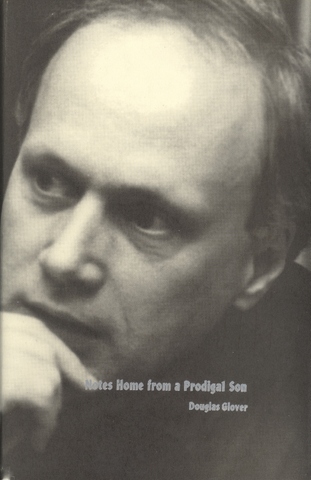
Here is an essay of mine from my book Notes Home from a Prodigal Son, also published in Dalkey Archive’s magazine Context, which you can find at the link below. It used to be online but then disappeared when Dalkey reorganized its website. Now it’s back. The late, great French-Canadian novelist Hubert Aquin was a huge influence on me: he was a pyrotechnic genius, a black romantic, a revolutionary spirit and a suicide. He burned hard and bright. Nothing like him anywhere else.

dg

1. Why are some novels more difficult to read than other novels? Why do some authors choose to write difficult books when they could just as easily write so-called well-made books, books that would presumably have a better chance of achieving a wide audience and commercial success? If writing a book, like speaking, is a form of communication, then doesn’t difficulty rather defeat the purpose of writing at all? What is the difference between a difficult book and a well-made book? And how do they both relate to the not-writing of a book, to unwriting, to silence?

Read the rest at Difficulty and Revolution | Dalkey Archive Press.

Sep 182013
 

1. I live in a virtual world outside my real country and in a place where I get my mail addressed to another place entirely. For lack of a literary community, I invented one: the online magazine Numéro Cinq. It started out as a student blog for a class I taught, then it became a literary blog, then it became a magazine. It keeps shedding its skin. It’s a community. I have re-found old friends, formed new friendships, become a patron for new writers, resuscitated the forgotten, changed people’s lives for the better and made myself a very busy person.

Read the rest via Five Things Literary: The Virtual Literary World, with Douglas Glover | Open Book: Ontario.

Sep 172013
 

.

This is the beginning of things, the Ur-essay, the thought-lode out of which most everything else I have written about literature has evolved. It was written in the late 1980s and so, to an ever so slight extent, is a period piece. It forms the centre piece of my book of essays and memoir Notes Home from a Prodigal Son (Oberon Press, 1999). The ideas here expressed evolved out of my philosophical background, long reading, and the lessons I learned during my time at the Iowa Writers Workshop. I mention specifically the novelist Robert Day (who now contributes mightily to NC), but I would be remiss if I didn’t also recall the influence of the late Claude Richard, who was a visiting professor from the University of Montpellier at the time.

I reprint the essay here because the book and the essay were both published long ago; such is the nature of readership that older things fall out of the line of vision. But in fact this essay (and Notes Home from a Prodigal Son), along with The Enamoured Knight and Attack of the Copula Spiders and my long essay “Mappa Mundi: The Structure of Western Thought” form a consistent, coherent and elaborated system of thought about writing, criticism and philosophy.

dg

…there is an other [irony] besides the irony of the learned man; there is the poem, in the sense that it is rhythm, death and future.

— Julia Kristeva

1

The best writing teacher I ever had was a Kansas cowboy named Robert Day who showed up at the Iowa Writers’ Workshop as a last minute, one-semester replacement for a sick colleague in January, 1981. The first day of classes he strode into the room wearing Fry boots, jeans and a checked shirt. Without saying a word, he picked up a piece of chalk and wrote across the full length of the blackboard in huge looping letters: REMEMBER TO TELL THEM THE NOVEL IS A POEM.

At the time, Day had only published one novel, a book called The Last Cattle Drive. He was a tenured English professor at Washington College in Maryland. He was a past president of the Associated Writing Programs. As a young man, he had worked at G. P. Putnam’s in New York and could recall for us the excitement over the publication of Vladimir Nabokov’s Lolita. Summers he went back to western Kansas where friends ran a borderline ranch. He kept a horse there, a horse which at various times had eaten loaves of bread through the kitchen window, or Day’s hat. All summer long he would hand out with his friends, their cattle and his horse.

That semester we read Queneau, Musil, Rulfo, Achebe, Nabokov, Tutuola, Abe and Marquez. Day did not tell us what he meant — REMEMBER TO TELL THEM THE NOVEL IS A POEM. Maybe he forgot. Half-way through the semester he read the second draft of my novel Precious, three hundred typed pages of plot, dialogue and scene that stubbornly refused to come alive. I still have the notes I made during our conference, fifty-four words. It took less than fifteen minutes. But like a skilled surgeon he had opened the novel up for me and shown me its heart still beating, its bones, nerves and veins.

He taught me four basic devices. The first  was what he called the language overlay. My first person narrator was a newspaperman, he had printer’s ink in his blood. Day said I ought to go through the novel, splicing in words and images, a discourse, in other words, that reflected my hero’s passion for the newspaper world. So, for example, Precious now begins: “Jerry Menenga’s bar hid like an overlooked misprint amid a block of jutting bank towers…” Or, in moments of excitement, the narrator will spout a series of headlines in lieu of thoughts.

Second, Day taught me about sub-plots. The main plot of a novel, he said, is like a pioneer wagon train moving across the prairie. The sub-plot is like the Indians coming in out of the hills to attack from time to time. The pattern of the sub-plot must reflect or parallel the pattern of the main plot, Day said, just as the gene inside a cell contains the pattern for the whole body.

Third, he showed me how to use background and revery. My protagonist must have been somewhere before the novel began, he must have a story to tell that will give texture and depth to his thoughts and, by extension, to the narrative. In Day’s words, he wanted me to “give the novel a memory.” Once again, the background must reflect or parallel or bear the seeds of the main action. A revery that does not bear a relation, in pattern, to the main plot is wasted. It diffuses the reader’s attention. It makes the book foggy and boring.

What this means in practice is that far from being “loose and baggy monsters,” to use Henry James’s phrase, in which the author has room to digress, expand or linger, a good novel is a tight, formal production with very few wasted words.

Finally, Day told me how James used the confidante device to modulate the weight of a given speech. In Precious, I had two secondary characters who were both close to the hero. What if I created a pattern of giving and withholding information? What if I made one of the secondary characters the hero’s confidante, the person to whom he told his secrets? He could then maintain an ironic distance from the other, giving opportunities for lightness and humor. The reader would sit up and pay attention when the confidante was on the scene.

Day then lied and told me I could splice all these changes into the novel in three weeks. Actually, it took me five months, and I rewrote the thing from beginning to end. I remember those months as being the best time of my life; the woman I lived with then says otherwise. She says she never remembers me being more miserable. What that means, really, was that the work was hard but also amazingly exhilarating.

What I had learned was far more than a collection of four devices. I had learned a secret about writing stories, novels and poems. Also painting pictures and composing symphonies. I had learned that a novel is not a string of seventy-five thousand words, all different, all pressing the plot forward. If you think about it, the stories of most novels can be told in a page or two of summary. Then imagine me trying to stretch that summary over another two hundred and ninety-eight pages.

Or, to use an image I had carried in my head through two earlier failed novels, think of a novel as a bridge thrown across a bottomless gorge with nothing to support it from one end to the other. In my mind I had to get a running start and write fast for fear of not making it across. I wrote my first novel in six weeks in a state of terror. As a bridge it was a shambles.

What I had learned was that besides story, plot and characters, the novel needs patterns. That in fact the story, plot and characters don’t begin to come alive until they are submitted to a pattern. I had made a common mistake. Before Robert Day, I had assumed that a novel’s “aliveness” depended upon its verisimilitude, i.e. how closely it resembled what we call real life, whereas in fact it depends upon patterns. I think this is what Day meant when he wrote REMEMBER TO TELL THEM THE NOVEL IS A POEM. He meant for us to notice that, like a poem, the novel should be seen as an arrangement of materials of which one, but only one, is the story. This patterning is the poetic quality of prose.

2

In a poem it is much easier to see the patterns. We’ve all had to map out sequences of stressed and unstressed syllables, the ABBAs of rhyme, the internal rhymes of alliteration, the surprising anti-patterns of sprung rhythm and free verse. We’ve all dissected extended conceits, noted the effects of diction and imagery. These are the things we focus on in a poem. Narrative, story and verisimilitude are secondary to the poetry of poetry, by which I mean the effect of patterns.

With novels and stories, the reverse is true. We tend to read a novel first for plot and character and the narrative’s relation to reality, what post-Saussurean critics call its “aboutness,” and only secondarily, if at all, for pattern. This is a little like Ludwig Wittgenstein’s duck-rabbit argument. You know how you can draw a little circular figure with an elongation here and a dot there. If you squint your eyes one way, you can see it’s a rabbit with long ears. But if you squint another way, it becomes a duck with a protruding beak. With poems and novels, you can read for pattern or you can read for aboutness, depending on how you squint your eyes.

It happens to be the case, though, that we rarely read novels for patterns. One reason for this is that the novel’s very aboutness gets in the way. It is the easiest and most natural thing in the world to read a novel for plot and character. In fact, in most cases you have to read for plot and character in order to situate yourself, as an observer, in the world of the novel. The shift of focus, the new squint, if you will, from plot to pattern only happens on rereading. A good reader, as Nabokov wrote in his essay “How to Read, How to Write,” is a rereader.

When we read a book for the first time the very process of laboriously moving our eyes from left to right, line after line, page after page, this complicated physical work upon the book, the very process of learning in terms of space and time what the book is about, this stands between us and the artistic appreciation. When we look at a painting we do not have to move our eyes in a special way even if, as in a book, the picture contains elements of depth and development. The element of time does not really enter in a first contact with a painting. In reading a book, we must have time to acquaint ourselves with it. We have no physical organ (as we have one in regard to the eye in a painting) that takes in the whole picture and then can enjoy the details. But at a second, or third, or fourth reading we do, in a sense, behave toward the book as we do toward a painting.

When Nabokov makes a distinction between “what the book is about” and our “artistic appreciation” of the book, he is separating our reading of the subject, story and characters — the book’s aboutness — from our appreciation of the book’s so-called artistic qualities, the details we would notice if we looked at a novel the way we look at a painting.

Nabokov assumes that we all look at paintings for more than the resemblance they bear to old dead people in funny clothes, for more than romantic seascapes and sunsets. He assumes that we see, for example, Whistler’s mother as something other than an elderly lady in a plain black dress and that we know, perhaps, that the painting of Whistler’s mother was originally titled “Arrangement in Grey and Black” and that when Whistler talked about painting he would say, as he did in a letter to his friend Fantin-Latour:

…it seems to me that color ought to be, as it were, embroidered on the canvas, that is to say, the same color ought to appear in the picture continually here and there, in the same way that a thread appears in an embroidery, and so should all the others, more or less according to their importance; in this way the whole will form a harmony.

Whistler is talking about patterns, patterns of color that exist over and above and through the subject of the picture, its aboutness. And when Nabokov talks about “artistic appreciation,” he is talking about appreciating the patterns of the novel in the same way, the repetition of certain verbal events or structures in a novel like the colors in a painting. This is precisely the way we appreciate poetry, where it is, as I have said, much easier to see that sounds and words are like oil paints or, for that matter, like notes in a piece of music.

3

Other ages and times have provided writers with pattern books, with instructions on rhetoric and composition. They put names to commonly used devices: paronomesia, periphrasis, prosopopoeia. Even in the 1920s at the University of Toronto’s Victoria College, my aunt was taught to write, to compose sentences, by translating back and forth from Latin to English. But no one teaches composition any more except in remedial programs to students who patently can’t write at all.

Instead we teach creative writing with the emphasis on “creative” (which, I guess, implies that there is “uncreative” writing as well, though I have never seen it). At Iowa, outside of Robert Day, teachers tended to urge us to “write what you know.” If we managed to do that, they said, whatever we wrote would come out all right. Ernest Hemingway, that most brazen of liars, once wrote, “All you have to do is write one true sentence…,” sending generations of his competitors chasing vainly after a will o’ the wisp reality. Why people choose to believe what he says about writing and not what he says about his manliness is a curious instance of intellectual willfulness and self-deception.

In university English departments, on the other hand, students are taught criticism — Arnoldian, Freudian, New, Structuralist and Post-Structuralist, etc. Archetypes, symbols, influences, foreshadowing, metaphor and theme. Academic critics tend to see a novel as full-blown, not something built; as something found, not constructed. Academics are romantics — they see, or prefer to think they see, romantic intention in a novel as opposed to the bricks and mortar. I tried to tell a friend of mine, a person partway through a PhD. in English, what I meant by a pattern in a novel. She said, “Well, we call that recurring imagery.” A singularly bloodless phrase. But fair enough. Yes, that is sort of what I mean.

But why does it recur? And who made it recur? And is that all there is to it? Does the phrase “recurring imagery” help a writer? Academic critics generally see recurring images as evidence of a point the author is trying to make, part of the aboutness of the work. Deconstructionists, on the other hand, look for recurring images that the author may not have intended so as to “deconstruct” the aboutness of the work. In either case, they are wedded to thematics, to aboutness, to truth. Write what you know, throw in a little recurring imagery, and it’ll come out right. That’s what the creative writing schools and the English departments teach us.

In general it’s not terribly bad advice. Many writers get by with no other. Every writer borrows to a greater or lesser extent from the real world the images which he or she deploys in his or her novel. Every writer who has read significantly has an instinctive feel for rhythm, pacing and the repetition of images. But to go through life believing “Write what you know and throw in recurring imagery” is like going through life believing in God and free enterprise — it leads to a conservative and narrow view of life and art.

4

Pattern is an ambiguous word and I want to keep it that way. Writing a novel, Faulkner once said, is like a one-armed man nailing together a chicken coop in a hurricane. It helps to be open-minded and undogmatic about the rules of the operation.
Experience itself rests on our ability to recognize patterns — Forms Plato called them — in the sensory flux. A pattern that does not repeat itself is not a pattern, it is chaos, or it is something like God, or it is nothing. And the ability to recognize patterns is tied up with out ability to remember. Pattern, repetition and memory are the foundations of consciousness.

The same happens in a novel. On a very rudimentary level the author depends on pattern, repetition and memory to give the reader confidence in the world of the book, what we call verisimilitude, the quality of seeming to be real. In Leo Tolstoy’s Anna Karenina, Anna appears on almost every page. Anna is a pattern, a group of words and characteristics that repeat. If Tolstoy had changed Anna’s name, age, hair color and social background every chapter or so, we would throw the book down in disgust.

Pattern can mean a model or design upon which something else is constructed. Or it can mean the systematic repetition of certain design elements as in the pattern in wallpaper.

Pattern can, for example, refer to something large such as a plot.  All romances are based on, say, the model boy meets girl, boys loses girl, boy gets girl. We also say there are no new plots under the sun. And we refer to coming-of-age novels, which have plots based on myths and rites of passage, or adventure novels, which are based on the quest model. What we call genre is a sort of pattern.

But pattern can also refer to something minute, a device such as, say, the list or the epic simile or even the structure of a sentence. Here is Nabokov talking about Flaubert’s Madame Bovary:

Gogol called his Dead Souls a prose poem; Flaubert’s novel is also a poem but one that is composed better, with a closer, finer texture. In order to plunge at once into the matter, I want to draw attention first of all to Flaubert’s use of the word and preceded by a semicolon. This semicolon-and comes after an enumeration of actions or states or objects; then the semicolon creates a pause and the and proceeds to round up the paragraph, to introduce a culminating image, or a vivid detail, descriptive, poetic, melancholy, or amusing. This is a peculiar feature of Flaubert’s style.

Now, though the actual number of usable patterns may, for practical purposes, be infinite, we always choose to use a finite number in any given piece of writing. This finite number of further reduced by the fact that many of the patterns are repeated throughout any given work. The more patterns a writer knows, however, the better his or her chances of being published, being read, or of writing a masterpiece that will endure. The way a person learns patterns is by reading; literature is an encyclopedia of patterns and devices.

Though it is possible to invent a pattern that no one has ever used before, originality in a writer generally amounts to an ability to vary the pattern in fresh ways. One might, for example, decide to use Flaubert’s semicolon-and sentence pattern in a contemporary rites-of-passage novel set in Montreal’s Jamaican emigre community. The pattern would be Flaubert’s, but the variation, the unique application, would be the author’s own.

Repetition, as I have said, is also a pattern. But it is a pattern of a different order, perhaps the pattern of patterns. To me, it is the heart of the mystery of art, of novel-writing. Without it, the novel becomes a strung-out plot summary.

I have tried to think out why repetition is appealing, why it is aesthetically pleasing as a pure thing. I think there are two reasons, or sorts of reasons. The first is essentially conservative — repetition is allied to memory, to coherence and verisimilitude.

The second is biological or procreative or sexual. Repetition creates rhythm which on a biological level is pleasurable in itself, the beating of our hearts, the combers rolling up on a beach, the motion of love. This is the sort of thing Lyotard is talking about when he writes about “intensities” or patterns of intensities in his book Économie Libidinal, or what the Spaniard Madariaga meant when he talked about the “waves of energy” in Tirso de Molina’s El Burlador de Seville.

In Anna Karenina there are two sub-plots: Levin’s marriage and Anna’s brother’s marriage. The novel actually begins with a sub-plot scene — Anna’s brother banished to sleep in his study for having an affair with a maid. These subplots are not simply tacked on. They repeat the marriage theme of the main plot, Anna’s marriage. Anna’s brother’s marriage is, like her own, a marriage on the rocks because of infidelity. Levin’s marriage is, by contrast, dutiful and steadfast.

Tolstoy created three identical patterns which twine and leapfrog and reverberate through the novel. Of course, the details, the contents, are different (this is one sort of variation); and, in the case of Levin’s plot, the structure, the pattern, is inverted, a positive to the negative of the other two plots (repetitions of abstract structures such as plots or relationships can vary in three ways — congruence, contrast or inversion, and the tree in the seed).

References to plot and subplot form a kind of rhythm in the novel. This rhythmic repetition of structures has something to do with what we call pace. As each plot comes round again for scrutiny by author and reader, it is like a new wave of energy, a drum beat. Anna’s story is the melody; Levin’s is a kind of booming base note thudding in counterpoint to Anna’s; Anna’s brother’s rhythm is lighter, more frenzied and comic. Or they are like Whistler’s colors, threading through a painting, darker, lighter, heavier, fainter.

There is another sort of repetition in Anna Karenina, one more mysterious yet. Just after Anna meets Vronsky, there is a train accident. A station guard, either drunk or muffled up too much against the cold weather, fails to hear the train approaching and is crushed to death. This station guard returns in Anna’s thoughts over and over again. He begins to inhabit her nightmares. He even migrates into Vronsky’s nightmares — transformed now into a dreadful-looking little man with a bedraggled beard, bending over a sack, groping in it for something and talking in French about having to beat, to pound into a shape a piece of iron. At the end of the novel, Anna sees him again just as she throws herself beneath the wheels of the train: “A peasant muttering something was working at the iron above her.”

Obviously train imagery is repeated as well, at the beginning and the end. Why? Coincidence? Or is Tolstoy telling us something about the 19th century Russian transportation system? Of course not. Is it foreshadowing? Well, sort of. But foreshadowing is a word I don’t trust. Does this mean Tolstoy is telling us ahead of time that Anna is going to die in a train accident? I think not. I think there is some other motive at work, that the repetition of trains and bedraggled peasants, this bookending of image and incident, the beginning and the end, has a pleasing quality all its own, symmetry, if you will, a rightness, that is felt and appreciated, not “known.” Overture and coda, rather than prediction. A symmetry that would be lost, say, if Anna drowned herself or beat herself to death with a hatchet.

As a pattern, this terrifying little peasant just seems to pop up. He is just there — and there and there and there. He “means” nothing, except insofar as he is associated by juxtaposition with a larger pattern of trains, death, dreams and Vronsky. Somehow he manages to accrue all the potential horror of that pattern. He reminds us, not of the end to which Anna journeys, but of the beginning; so that when she dies, her end is freighted with a kind of fatedness that makes it all the more horrible and pathetic. The peasant is a tiny thread in the tapestry of the novel, a hint of color in the painting, a grace note in the symphony. Nothing more. Yet without him, how much shallower a book Anna Karenina might be.

It is worth noting that certain kinds of patterning, e.g. the repetition of character traits, enhance verisimilitude, while others, e.g. Anna’s peasant, work against it. We might distinguish between these by calling the one sort patterns of verisimilitude and the other patterns of technique. Every novel uses both, so every novel is a little balancing act between the two, or a war. John Hawkes, the experimental novelist, for example, says that “plot, character, setting and theme” (which are generally what I mean by patterns of verisimilitude) are the real enemies of the novel. “And structure,” he adds, “–verbal and psychological coherence — is still my largest concern as a writer. Related or corresponding event, recurring image and recurring action, these constitute the essential substance or meaningful density of writing.”

But, oddly, though patterns of technique and patterns of verisimilitude tend to destroy one another, like matter and antimatter, both are necessary to the work. Depending on how heavily the author plays up one or the other, his or her novel will be more or less “realistic” or more or less “experimental.”

Getting the balances right in any given work is part of the art of art and its mystery and is a skill that cannot be taught. It leads to the feeling, a feeling I have had twice, once with each of my novels, of submission, of loss of freedom, of loss of expressiveness. Because there is a point in the process of writing a novel at which you must submit to the strictures of pattern that you have chosen. All of a sudden, there are things you can no longer fit into this novel, things you must cut, and other things that you must put in. And, of course, with something as complicated as a novel, you never get it right. And you end up wanting to slash your wrists.

As Paul Valéry once said, “A work of art is never completed, only abandoned.”

5

I have already noted that some patterns in novels, those patterns which tend to create verisimilitude, are like the patterns of experience in the world. This is as much as to say that a conventionally realistic novel reflects a certain metaphysics or philosophy of being and knowing. Modern novels of a less conventional sort also reflect a metaphysics, but it is a new metaphysics, a radically new way of talking about the locale of existence.

Vladimir Nabokov, whom I have quoted extensively and who has influenced a whole generation of North American writers (in Canada, at least two Governor-General’s Award winners, Robert Kroetsch’s The Studhorse Man and Hubert Aquin’s Trou de Memoire, owe huge debts to the structural and verbal pyrotechnics of Nabokov’s novel Pale Fire), was an intellectual heir of the Russian Formalists. Formalism was an aesthetic and critical movement that thrived in St. Petersburg and other eastern European cities early in the twentieth century. The Formalists pegged a whole philosophy of language and literature on the split between meaning and signifiers, between aboutness and pattern.

What they did was put a theory to the things painters like Whistler and, soon after, the French Impressionists, and Surrealist poets like Breton, Eluard and Ponge — all the way back to Mallarme (Nabokov sneaks Mallarme quotations into his novels) — had been doing ten, twenty, thirty or more years before. They simply recognized that aboutness and pattern were two aspects of the things we call art and language, and that you could, in fact, have pattern without aboutness.

Since it seem impossible to have aboutness without pattern, a corollary of this is that aboutness is somehow secondary, a poor cousin, on the aesthetic scale of things, to pattern. Nabokov again:

There are…two varieties of imagination in the reader’s case… First, there is the comparatively lowly kind which turns for support to the simple emotions and is of a definitely personal nature… A situation in a book is intensely felt because it reminds us of something that happened to us or to someone we know or knew. Or, again, a reader treasures a book mainly because it evokes a country, a landscape, a mode of living which he nostalgically recalls as part of his own past. Or, and this is the worst thing a reader can do, he identifies himself with a character in the book. This lowly variety is not the kind of imagination I would like readers to use.

This is what the post-Sausurrean critics, recently so popular in Europe and on American university campuses, are saying. Aboutness is old-fashioned, authoritarian, and patriarchal. Signs — read, pattern, poetry — are playful, subversive, and female. How a thinker can jump from a purely logical incongruence — the fact that, apparently, you can have pattern without aboutness but not vice versa — to these strings of value-loaded predicates is marvelous indeed and evidence that the instinct for narrative and romance has not died behind the ivy-covered walls of academe.

Another corollary of splitting the categories of pattern and aboutness is that there is a sense in which pattern itself creates meaning. Or to put it another way, the novel is about its own form. Or every book is about another book, or books. And every work of art is a message on a string of messages which begins nowhere and ends nowhere, to no one and from no one, and about nothing except the field of pseudo-meaning created by previous and future messages. It is all a game of mirrors and echoes. A little dance of images, words, and patterns. The of the Hindus, or all is vanity, all is dust, sure enough.

Keats wrote, “A man’s life is an allegory.” Nothing else. Or conversely, Korzybski says, “The map (read, the allegory, the pattern, the words) is not the territory.” Which is to say, as Jacques Lacan does, that all utterances are symptomatic and that the real is impossible.

6

Form (or pattern) and aboutness (or content, or reality) are the binary opposites of thought. The stance of the modern, whether he or she is a novelist, critic, theologian, or psychologist, is that ontology begins and ends with the former, that so-called reality is a highly suspicious article.

We are pressed back to a position of washed-out Cartesianism: I think, therefore, I think; or more precisely, I think, therefore something is thinking. Structuralists like Levi-Strauss say things like, “There is a simultaneous production of myths themselves, by the mind that generates them, and, by the myths, of an image of the world which is already inherent in the structure of the mind.” Linguistic philosophers like Wittgenstein say, “The world is my world: that is shown by the fact that the limits of language stand for the limits of my world…I am my world.” Except that this “I am” is not the body but language itself.

Reality, meaning, aboutness, the good, God and the self are pushed away into the realms of the unconscious, the unknowable, the unspeakable, and the unfathomable. In a very logical sense, they no longer concern us here as we race toward the end of the twentieth century. To say you are writing “realistic novel” is to commit as much of an intellectual solecism as, say, the Reverend Jimmy Swaggart does when he says God spoke with him before breakfast. The words “realistic novel” can only be spoken by a person who is speaking in the discourse of an earlier age or in parody.

Think of yourself in a room with bare plaster walls and no windows or doors. You have an infinite supply of variegated wallpapers. You paper the room with something in blue with a skylark pattern, then you do it over with angels, then an abstract, decorative pattern.

The first thing you notice is that you can’t see the wall anymore. This is the first effect of language, according to the philosophers and critics. As soon as you begin to use language, describe the world, you can no longer see it. You can only see your description. In fact, since we can’t even begin to describe something without language, then the existence of the wall itself becomes moot.

The second thing you notice is that each layer of wallpaper covers the previous layers. They’re lost, though you know they’re under there. In a sense the old wallpaper, the past, becomes part of the reality you are describing with each new layer of wallpaper. And sometimes you wake up in the morning and wish you still had the skylarks. You might even try to scrape some of the new wallpaper off. But that only makes a mess.

All you have is the design of each successive layer of wallpaper, and, just possibly, the shape of the room, its broad outlines, its cubic form. Life and art are a little like this. We only see the current wallpaper, remember bits and pieces of the old in the form of myths and memories of memories and fragments of discourse which no longer “mean” what they once meant. And, if we’re lucky, we intuit, or think we intuit, some vague outline of the something which may or may not be the room or the womb of reality.

To be a writer is to write with this knowledge, that the wallpaper is wallpaper and not the room, walls and plaster. It is to have that quality which Keats said went to form a man of achievement “especially in literature and which Shakespeare possessed so enormously,” what he called Negative Capability — “that is when a man is capable of being in uncertainties, Mysteries, doubts, without any irritable reaching after fact and reason.”

Negative Capability is the artist’s ability to suspend belief in any particular conceptual system (or wallpaper) or to see the conceptual system as pattern, as opposed to reality, as material in itself to be juggled and juxtaposed. Or, to put this another way, aboutness is illusory. What we see as aboutness the artist sees as just another pattern or part of a pattern. Or again, everything is pattern, infinitely plastic and malleable. A person who believes in a particular conceptual system believes that everything can be explained by reference to that conceptual system. Whereas the artist sees the pattern and feels the mystery that looms beyond the pattern.

The truth of the matter, everything that seems supremely important in life, begins when the talking, writing, painting, sculpting, filming and singing of discourse stop. All talk or art that says it’s telling you the truth about life is second rate. Of course, you can write something second rate that’s very popular, even quite good, for all these categories are relative. But great art is pattern over mystery, it is juggling words over whirlpools of silence.

7

In the extended sense, this view of language, life and art can seem exceedingly austere, if not forbidding and bleak. “The ultimate goal of the human sciences is not constitute, but to dissolve man,” says Levi-Strauss. (Just as Nabokov says that one of the functions of a novel is to prove that the novel in general does not exist.) Few of us can help feeling a nostalgia for the old ways, or what we think are the old ways, of talking. For ancient beliefs. For certainty and immortality. For familiar stories with plots and characters and recognizable locales. For adventure, romance and magic.

A lot of fictional, intellectual and political hay has been made out of this nostalgia, a nostalgia expressed, say, in the phrase “breakdown of values.” When an old way of talking disappears, many people are forced to apply narrative in order to explain it to themselves. They often feel they have a stake in the old way. They invent metaphors and analogies — machine breakdowns, erosion, war, disease — to make themselves feel easier. And to sell books.

You can see where nostalgia led Levi-Strauss in his wonderful autobiographical novel Tristes Tropiques. The annihilation of the self, of meaning and aboutness, by structural anthropology drove him into a quest for theological support, which he may or may not have found wandering amongst the Buddhist temples of the Far East. Or think of Sartre turning from the barrenness of existentialism to the warm, sloppy infantilism of Chairman Mao’s Little Red Book. Or of Michel Foucault leaving his university office every afternoon to pursue a gruesome and self-destructive quest through the bath houses of New York until his death from AIDS.

One can look at people like Sartre, Foucault and Levi-Strauss as contemporary monks whose intellectual vigor and honesty led them to the conclusion that God, man and reality cannot be reached through words. (On December 6, 1273, at the age of fifty, Thomas Aquinas suffered something like a nervous breakdown and never wrote again.) That, by analogy, telling a story is a logically impossible project. That our only recourse (save for silence) is to take a step willy-nilly into narrative, or faith — Keat’s Negative Capability is something like Kierkegaard’s Leap of Faith. It can’t be done — all the critics and philosophers tell us — but some of us will jump in anyway and start the story “Once upon a time…”

In this regard, the American Catholic novelist Walker Percy once wrote:

…a novelist these days has to be an ex-suicide. A good novel — and, I imagine, a good poem — is possible only after one has given up and let go. Then, once one realizes that all is lost, the jig is up, that after all nothing is dumber than a grown man sitting down and making up a story to entertain somebody or working in a “tradition” or “school” to maintain his reputation as a practitioner of the nouveau roman or whatever — once one sees that this is a dumb way to live, there are two possibilities: either commit suicide or not commit suicide. If one opts for the former, that is that; it is a letzte Losung and there is nothing more to write or say about it. But if one opts of the latter, one is in a sense dispensed and living on borrowed time. One is not dead! One is alive! One is free! I won’t say that one is like God on the first day, with the chaos before him and a free hand. Rather one feels, What the hell, here I am washed up, it is true, but also cast up, cast up on the beach, alive and in one piece. I can move my toe up and then down and do anything else I choose. The possibilities open to one are infinite. So why not do something Shakespeare and Dostoevsky and Faulkner didn’t do, for after all they are nothing more than dead writers, members of this and that tradition, much admired busts on the shelf. A dead writer may be famous but he is also dead as a duck, finished. And I, cast up here on this beach? I am a survivor! Alive! A free man! They’re finished. Possibilities are closed. As for God? That’s his affair. True, he made the beach, which, now that I look at it, is not all that great. As for me, I might try a little something here in the wet sand, a word, a form…”

—Douglas Glover

Nov 262012
 

This year’s edition of Best Canadian Stories (Oberon Press), edited by John Metcalf, just arrived on the doorstep with the afternoon mail. DG’s story “The Sun Lord and the Royal Child,” originally published by Philip Graham in Ninth Letter, is included in a stellar list which also contains an amazing number of Numéro Cinq writers: Lynn Coady, Caroline Adderson & Steven Heighton. That means four out of the ten stories included in Best Canadian Stories this year were written by authors we’ve published on these pages. This tells you something about the quality of the work we’re publishing.

Here’s the opening of the story. You can order the book online from Chapters/Indigo.

dg

———-

The Sun Lord and the Royal Child

By Douglas Glover

.

I went to see my friend Nedlinger after his wife killed herself in that awful and unseemly way, making a public spectacle of herself and their life together, which, no doubt, Nedlinger hated because of his compulsive need for privacy and concealment, a need which seemed to grow more compelling as his fame spread, as success followed success, as the money poured in, so that in later years when he could no longer control or put a stop to his public notoriety, when it seemed, yes, as if his celebrity would eclipse his private life entirely, he himself turned reclusive and misanthropic, sought to erase himself, as it were, and return to the simple life of a nonentity.

You will recall that Nedlinger began his career as a so-called forensic archaeologist specializing in the analysis of prehistoric Iroquoian ossuaries in southwestern Ontario and it was then, just after finishing his doctorate, before lightning struck, as it were, that he met Melusina, at that time a mousy undergraduate studying library science, given to tucking her unruly hair behind her ears and wearing hip-length cardigan sweaters with pockets into which she stuffed used and unused tissues, note cards, pens, odd gloves, sticks of lip balm, hand lotion and her own veiny fists, her chin depressed over her tiny, androgynous breasts–in those days she wore thick flesh coloured stockings and orthopedic shoes to correct a birth defect, syndactyly, I believe it is called. Only Nedlinger, with his forensic mind, could pierce the unpromising surface, the advertising, as it were, to the intelligent, passionate, sensual, fully alive being that hid in the shadows.

— Buy the book, read the rest.

Sep 122012
 

Poetry here from Irish author Gerard Beirne who attacks the notional divide between science and art head on and makes rhymes out of sines and cosines and the nature of colloidal suspensions. In ancient times Pythagoras theorized upon the nature of music and mathematics without making a distinction between the two. It is only in our day (and mostly in the popular imagination) that science, mathematics and art have drifted into a strange opposition. Perhaps it is only an ill-educated assumption that science is not beautiful. In any case, Gerard Beirne, in his new book Games of Chance: A Gambler’s Manual (Oberon Press) from which these poems are taken, makes poetry out of science and science out of poetry. And sometimes he uses science as a luminous metaphor for the spirit. Of circles and squares, he writes:

The relation of X’s to Y’s
the hows and whys
of the pleasure derived
from being true to themselves
or from pushing
…………………..at their boundaries

dg


Properties of Solutions: The Colloidal State

Take atoms, molecules
assume their use theoretically
if not practically
believe in them (or not)
if you will.

Accept (for now) that this
is elementary theory
to avoid a state of confusion.

Focus on colloidal dispersion
the scattering of light (for instance)
by particles of dust
in the path of a sunbeam
through a partly opened door
(call this the Tyndell effect).

Take these small sparkling specks
(these giant steps)
and follow these points of reflected light
observe the constant random motion
(name it Brownian movement).

Publish if you must
a mathematical analysis
of nonuniform random collisions
caused by the unequal number of molecules
colliding on either side.

(Answer if you dare
to the name of Einstein

or Perrin if you prefer
a Nobel Prize.)

Verify experimentally
remove the last doubts surrounding
atoms and molecules, offer
the proof of your own existence

(act surprised)

the notion of its constant
random motion
the human condition.

Believe in it (or not)
if you will

(but accept for now
that this is still

elementary
………………..theory.)


The Pressure of Gases – kinetic molecular theory

Torricelli immersed
at the bottom of a sea
of elemental air
considers the existence of a vacuum

(a space repugnant to nature
and philosophers
who advocate resistance)

but Torricelli bearing up
under the oppressing weight of hot air
fills a tube of glass
a dish with mercury
inverts the tube within
observes the empty space which forms

a place where nothing
(natural) he believes
can be contained

(unawares of molecules
of mercury vapour
ascending upwards)

a vacuous state of being
devoid of God or life

(at least on paper)

light-headed (and swimming
beneath the surface)
Torricelli endeavours
(and succeeds) to measure
the pressure of the atmosphere

like some exotic fish
he gauges the rise and fall
within the tube
floats easily amongst it all

the internal and external forces
rarefaction and density

(Torricelli breathing
at the bottom of the sea)

where all and nothing happens
an emptiness filled
with relentless intensity

Torricelli (like others
before him) sees mankind
struggling to its knees
in the lower regions
of the atmosphere

(quicksilver rising in a tube of glass)

a place cohabited with animals
meek and wild

while on the peaks of mountains high
closer to the heavens and the sky
(where prayers come to pass)
the air is pure and light
and finally measurable

the next step (unimaginable)
surely flight?


Form

After this
………….I lead you into form

triangle, rhombus, square, helix
circle, rectangle, ellipse

and from there
………………….to their equations

their defining features.

The relation of X’s to Y’s
the hows and whys
of the pleasure derived
from being true to themselves
or from pushing
…………………..at their boundaries

a circle stretched into an ellipse
a rhombus pressed into a square

but erstwhile
……………….there is the line

(like light concise
taking the least journey
…………………………….between points
adhering to Fermat’s Principle of Least Time
“nature always acts by the shortest course”).

Archimedes, Appolonius of Perga,
Euclid, Pappus of Alexandria

awaiting fourteen centuries more
to extend the shape of their knowledge

Gerard D. Desargues,
Blaise Pascal, Rene Descartes

mathematicians defining concepts
…………………………………..in words
simple sounds
intricate with meaning

tangent, locus, vertex,
asymptote, focus, directrix,
………………………………eccentricity

the complexity
of geometrical theory.

Beyond this
………………..images and symbols

points aligned in space
specified by their coordinates
outlining inordinate quantities
of thought

and out of all of this a purpose
beyond the rapture of near perfection
an application?

The parabolic surfaces
of reflector lights, say
showing the way
or antenna in radio astronomy
solar furnaces
ballistic calculations

shots fired in the dark

satellites orbiting the earth
above the critical speed
needed to remain aloft
and hark
…………….transmitters locating ships.

But which from which

the bullet or the ellipse
the form or its intent?

Or by necessity
………………….both together
creating their own trajectory

forces never spent.


— Gerard Beirne

———————

Gerard Beirne is an Irish writer who moved to Norway House, a Cree community in Northern Manitoba, in 1999 where he lived for three years. While living there, he interviewed Elders in the community and edited for publication an anthology of those interviews. He received an MFA in Creative Writing from Eastern Washington University and is a past recipient of The Sunday Tribune/Hennessy New Irish Writer of the Year award. He was appointed Writer-in-Residence at the University of New Brunswick 2008-2009 and is a Fiction Editor with The Fiddlehead.

His novel The Eskimo in the Net (Marion Boyars Publishers, London, 2003) was shortlisted for the Kerry Group Irish Fiction Award 2004 for the best book of Irish fiction and was selected as Book of the Year 2004 by The Daily Express. His most recent novel Turtle was published by Oberon Press, 2009.

His short story “Sightings of Bono” was adapted into a short film featuring Bono (U2) by Parallel Productions, Ireland in 2001 and released on DVD in 2004.

His poetry collection Games of Chance: A Gambler’s Manual has just been published by Oberon Press- Fall 2011. His collection of poetry Digging My Own Grave was published by Dedalus Press, Dublin. An earlier version won second place in the Patrick Kavanagh Poetry Award.

Jul 062012


A widow, an Irish wanderer, a house built on a fault line and a mysterious light form the essential furniture of Gerard Beirne’s fine new story “Fault Lines.” Beirne is an Irish writer and you can hear the fierce rhetoric of the Irish in his opening cadences, the insistent lists and parallel constructions. The story is dark, almost noir in its atmosphere of eroticism and constant menace. Gerard Beirne and I don’t know each other except in our email interchange over this story, but we have tread common paths. Beirne was the Writer in Residence at the University of New Brunswick where I also have been Writer in Residence; he is the fiction editor at The Fiddlehead where I published some of earliest stories, yea, these many years ago; and he just published a poetry collection, Games of Chance: A Gambler’s Manual, with Oberon Press in Ottawa, a publisher with whom I have had a long association including a decade of editing the annual Best Canadian Stories. So he and I exist in almost parallel universes that have somehow flowed together on this page. Read the story.

dg

§

You could look at it this way. You could say I was the one real beneficiary of his death. Not so much the car as the air conditioning, the house as the pool, the cellar as the wine collection, the lady as his wife.

As a lady she brought with her charm, sophistication, impeccable dress sense, a taste for good food. But as his wife she brought with her everything. His fortune, his lifestyle, his foul mouth, and his filthy mind.

* * *

“We’re all so much better off without him,” Maybelle told me on that first night we ended up in bed together. I was drinking his champagne, eating his caviar, lying passively beneath his gyrating wife. “He was cruel. He was fucking cruel. Cruel to all of his previous wives. Cruel to their children. Cruel to himself. And, worst of all, cruel to me. Irrespective of his ability to increase his fortune we are all so much better off without the bastard.”

She tipped over her champagne glass and poured his 1975 Dom Perignon along my chest, then bent over, extended her tongue, and licked that expensive liquid up in one long sweeping motion. And in that prolonged salivating moment, I knew just how wrong she was. How it was I, and not anyone of his close or distant family, who was the better off.

I fed her with his caviar, and she sucked it from my fingers. I appraised her firm body as it pincered me from above, grateful for the multigym he had purchased on its behalf. Then I thought of the swimming pool outside where earlier we had stripped and swam in the moonlike glow of the veranda spotlight. It was the first time we had seen each other’s bodies. The first time I had seen the naked flesh of a widow of barely forty-eight hours. The yellow glare of the spotlight jaundiced her pale skin. A light breeze blew in from the canyon, that large empty gulch that stretched ahead of us, carrying the smell of creosote bushes. The dry desert dust landed softly on the flagstones and tiles, on the surface of the shimmering water lit from below, on our warm flesh lit from we knew not where. We were exposed not just to each other but to the world if the world had cared to look.

The only lights to be seen were those dotted around the property for security, a row of house lights eighty miles to the east, and the stars they could barely be distinguished from. We scarcely glanced across at one another before diving on in. If I could help it, I was determined never to resurface. But resurface we did, together, in a hardened embrace.

Maybelle’s toes curled against the white sheets. She grasped my shoulder blades tightly with her fingers. Her long manicured fingernails scratched across my skin. “Cruelty is the worst sin of all, don’t you think?” she whispered close to my ear. Then she did something with her body that might not have been thought possible. “This was the only way I could hurt him in return.”

I almost screamed with the excruciating mix of pleasure and pain. The white curtains billowed out from the half-open shutters. A solitary star twinkled within my line of vision. Maybelle shuddered violently. Her strong legs gripped my thighs. Her fingers clawed at my torso. The star plummeted through the black sky. Died before my eyes.

Later as Maybelle showered, I stood by the window in his study and looked up, as he had looked up on so many occasions, at the constellations with his telescope. Orion. Pegasus. Ursa Major. What would happen if one of those stars died? I wondered. What sort of hunter would remain, what sort of winged horse, what sort of furrowing instrument? What would become then of the great design? How would we read the night?

I turned the lens towards the darkened desert, the canyon. That other great void. From deep within the canyon I witnessed an uncertain flash of light shooting upwards for which I had no explanation. To the east, the distant houselights flickered. Outside the glare of the security lights reflected against the lens. In the bathroom a flow of water spread in rivulets down Maybelle’s hard body.

How had I come this far?

* * *

Leaving Ireland had been easy. Leaving a small Donegal town. A small landholding I had no interest in. Leaving home.

I was happy to fill a hold all and empty it on the bed of a YMCA on the other side of the world. Happy to be paranoid on the streets of New York. Happy to work the graveyard shift washing dishes in an all-night cafe. Happy to tire of all that and board a Greyhound for Los Angeles.

Happy to get work with a landscape firm cutting lawns and trimming hedges in Santa Monica. Happy to meet Maybelle in one of his holiday homes by the side of his pool in a pastel orange bikini. Happy to peruse her shapely body. Happy to amicably converse. Happy to return to his secluded mansion in the Mojave Desert to replace his Mexican gardener who had flown the coop with immigration on his tail. Happy to inhabit his property. Happy to rise through his ranks. Happy to become, on his request, her personal assistant. Happy to follow her wherever she might go. Happy to assist in his early demise.

* * *

Maybelle pulled at my shoulder, woke me up. She sat up in bed distraught. The moon shed its light through the shuttered window. “Did you feel that?” Her face was pale. She crossed her hands over her chest like a corpse and held on to herself.

“What?” I looked for my watch on the table next to the bed. It was twelve minutes past three.

She turned angrily. “Didn’t you feel it?”

“Feel what?”

“The shaking.”

“No.”

“It was an earthquake.” She pushed her head slightly forward as though listening intently. As if something might be heard that would confirm her suspicion.

“I didn’t feel a thing.” I tried to put my arm around her to comfort her, but she brushed it off. She turned suddenly to the empty champagne bottle on the table beside her. “Look.”

“What is it?”

“It’s vibrating. Can’t you see that?” She got up out of bed, and walked to the window. “We’re on the fault here. Right on the fault. Any moment the Big One could come, and when it does we’ll be swallowed up whole. Doesn’t that mean anything?”

“It was nothing,” I said. “A small tremor at the most.” We had talked about this before, but never at such intimate quarters, never so close to death.

“The bastard. The fucking bastard.” She looked out into the dark. In the breeze the light material of the curtain wrapped itself around her naked body. “That’s why he built it here. Goddamn him! Because it was so fucking cheap. His one great ambition in life — to buy up the fucking fault lines!”

“He’s dead now,” I said. “Everything can be undone.” I held my hand out to her. “Come back to bed.”

“Bed,” she repeated. “The great undoing.” She pulled the shutters closed as if they could somehow protect her. She came back over and got in beside me. The shutters rattled. Maybelle heard them and jumped.

“It’s only the wind.”

She glared at me. “Did we really screw?”

“Yes we did,” I assured her. “Like there was no tomorrow.”

* * *

Maybelle honoured his wishes and had him cremated. A simple ceremony had been arranged. Three of his previous wives showed up and six of his children. Maybelle was unclear how many wives there had been before her and was equally unsure about the number of children. She had none by him that much she knew. He had insisted on that. He told her he did not want her destroying her body like all of the others. That she was his last chance.

“His last chance for what?” I asked.

Maybelle shrugged. “I have no idea.”

She did not speak to any of them, but she assured me they would be as glad to see the back of him as she was. He had treated them all despicably.  “There are no bruises I can show you,” she told me one time sensing some slight doubt of mine. “Not on this body, but up here,” she said pointing to her head. “There’s where the damage lies.” At his cremation I looked at his array of wives and children and considered the cumulative internal injuries.

Afterwards I drove Maybelle and the urn with his ashes home. Keeping the urn with her, Maybelle went up to lie down. She did not reappear until evening. She ate a light dinner and asked me to send the staff away. She said she needed time alone. They would be paid of course. I asked if her dismissal of the staff included me also, and she told me not to be so foolish.

After dinner she asked me to drive her to the canyon. She held the urn in her lap as we drove. The orange dust swirled up from the wheels past the windows. The hot evening air wafted in shimmering waves distorting all that was visible. I looked out at the wavering yellow sneezeweeds and desert trumpet. A Jackrabbit leaped dangerously across the road in front of us clambering for shade. I put my hand on the urn, our fingers touching accidentally. Maybelle appeared not to notice, although she told me later that her heart for a moment ceased to function. The urn and Maybelle’s fingers were cool to the touch, his air-conditioning keeping all of our temperatures low. I felt the cold waves sweep over me, their calming influence, as our fingers parted.

Maybelle drummed on the lid of the urn impatiently. She glared through the front window. “You never talk about Ireland.”  She tightened her lips and brought me under her gaze.

“I’d rather forget it,” I told her. A viscous green and orange sunset soaked through the widening sky.

“Yes,” she agreed pulling the urn in against her stomach, “there are certain things best forgotten.” She glanced through the window at the vast expanse of gleaming desert. “I’m sorry. I’ll never ask you again.”

But Maybelle was right. In the three years I had known her I had never willingly spoken of Ireland. On a few occasions in the beginning she had alluded to it, but I skilfully deflected the conversation. I was living a new life now. Perhaps the first I had ever really lived. At its worst Ireland was a womb, a time pre-birth. At its very best it was a uterine contraction forcing me out into the life I now lived.

A shaft of light speared the road in front of us. I steered his car deliberately towards it. Permitted the light to dissect the metal car, and us within it, like a laser cutting tool. It shone brilliantly through the front windscreen, sparkling on the side of the urn, and leaving a line of gold along Maybelle’s toned body. She shielded her eyes with her hand, stared absently ahead.

“A meteor fell to earth here one time.” I had not heard mention of this before. “Some time in the sixties.”

“A lot of things from outer space were visible in the sixties,” I reminded her.

Maybelle ignored me. “The marks are still visible although the meteor itself was broken up and removed for scientific evaluation. The crater is somewhere around here.” She twisted the lid of the urn in a half-circle. I thought for a moment she was going to take it off to check if he was in there still. “He used to speak about it. He said he wished they had left it where it had fallen. He said he could have made a fucking fortune out of it.” She gritted her teeth as though constraining a further obscenity.

The car bounced on its suspension over a series of ruts in the surface of the road. A plump turkey buzzard swooped low and flew past the front of the car flapping its black wings viciously. We watched it circle the rotting trunk of a lone pinyon tree.

“Vulture.” Maybelle seemed in awe of it. She chewed on the side of her mouth. I looked at her fluffed out hair, her carefully applied eye-shadow, mascara, lipstick, and face powders, her slinky black mourning dress, her high heels. I surveyed the flat expanse of water-starved decay that surrounded us. Maybelle seemed more out of place here than I. More removed. I wondered about her past. She had never spoken openly about that either.

The road turned directly into the blazing sunset. The sky was engulfed in flames before us. We could have been driving into hell itself. A hundred yards or so up ahead a dirt track veered off to the left leading down to the canyon. I slowed down, pulled off the road, and followed along the rough surface until the earth opened up before us.

I got out and opened Maybelle’s door for her. She swung her long shapely legs out, and placed her high heels on the desert soil. I took her arm, and we walked slowly out towards the canyon. Her shoes scuffed on the loose stones. Maybelle twisted on her heel, her left leg buckling beneath her. I supported her weight and helped her to rebalance. Then we walked together right up to the edge. The yellow and red ochre walls of the canyon dropped sharply downwards for thousands of feet. Giant stalagmites of crumbling rock pierced upwards from the canyon sides and floor. Maybelle showed no fear.

“He’s been down there,” Maybelle said. “At least that’s what he told me.”

I steadied myself and looked down into the dry gulch. In all the time I had lived here I had never been this close to the canyon before. Obscure trails wound their way along narrow switchbacks making me feel dizzy.

“He’d stay overnight,” she said kicking some loose soil over the edge. I watched it fall lightly through the air. “He said it felt good to be sleeping in the bowels of the earth. Of course he might have been anywhere fucking any one of his lady fucking friends.”

Maybelle smiled and swiftly drew back her arm with the urn. She swung it through a wide arc and, letting out a grunt like a hammer or discus-thrower, she flung it as hard as she could out into the ravine. The urn soared through the air then dropped swiftly downwards. It struck a ridge a few hundred feet below and bounced outwards.

“MIND YOUR BIG FUCKING HEAD!” Maybelle’s shrill voice echoed through the walls of the canyon before returning to haunt her. She laughed hysterically. The urn fell deeper into the gulch crashing into one of the sharp peaks. A dull thud like broken bone sounded upwards. Pieces of ceramic splintered and showered. Heat hardened clay shattered against the earth it had been raised from. His ashes gusted outwards. A cloud puffed up past our faces and over our heads. A mixture of sobs and laughter bellowed from Maybelle’s open mouth and ricocheted back out of the throat of the canyon. Her make-up was smudged with tears, and her black dress was covered in red dust. She rocked on her high heels. I held onto her fast, afraid she would topple over the edge, and it was then we kissed for the first time, even as his ashes continued to swirl about us. We may have tasted them, him, on our pressed together lips, our pro-offered tongues. I was aroused and repulsed at once. Our mouths separated, and we clung together at the edge of the great divide.

We drove home in the dimming light. Maybelle’s fingers trailed across the back of my neck. The tyres churned over the dirt road. I observed the silhouette of the buzzard atop the decaying tree. I knew that Maybelle had been watching out for it too. I drove on quickly. Miles of road disappeared behind us. We approached the huge outcrop of his mansion. I pressed the remote control and the heavy metal gates opened at my fingertips. Maybelle watched them shut securely behind us in the rear-view mirror. Inside the house she reached immediately for the champagne and brought it out to the pool. She popped open the cork. A gush of champagne spurted into the air. The veranda spotlight switched on automatically. Maybelle filled our glasses. Frantic bubbles spewed over the edges. “To life,” she said raising her glass. We tipped their fragile edges together and drank thirstily washing the dust down. Then Maybelle turned her back to me and instructed me to unzip her dress.

I pulled the zip downwards along the ridge of her spine. I was still in her employment, still serving as her personal assistant. My assistance in his death could even have been construed as a part of my service. Likewise our trip to the canyon. But surely the kiss had changed all that. Unless the provision of comfort and release for a grieving wife was a part of my duty too. For yes, despite her relief at his demise and despite her contribution to it, Maybelle was grieving, grieving for something as yet unclear.

She flicked her shoes off her feet into the swimming pool and slipped her dress off her shoulders. I watched the shoes sink heel-down into the warm water. She cocked a glance at me, and I knew that I was expected to undress too. The low howl of a distant coyote lingered in the dense air. We teetered for a moment unclothed on the edge of the pool, then dived in.

* * *

Until the very end I had little contact with him. He was hardly ever there, always jetting around on one business concern or another. Whenever he was present, I was usually too busy with his wife’s life to intervene in his. We nodded from distances, exchanged casual remarks.

“You take care of her,” he told me early on establishing the nature of our relationship, “like you took care of my gardens. Trimming, pruning, watering. Keep her neat. Keep her beautiful. It’s what she wants. Pay attention to her whims, but be wary. There’s a certain wildness in any good garden that ought to be cultivated but contained.” He held my wrist firmly. “I don’t need to tell you this, you do your job and I’ll pay you well, you don’t, and I’ll kick your fucking ass all the way back to Ireland.”

I took no offence in these latter remarks. He was a business man adopting a sensible economic position. He was paying me good money after all. Incredible money. He had a right to certain expectations, and I was not an unwilling party to all of this. As for comparing his wife to a garden, it could easily be interpreted as the stuff of poetry, love even.

Whatever about the first kiss, or the first glimpse of Maybelle’s naked body, the instance of our coition, I knew, should have represented a moment of catharsis in my life. But just as my departure from Ireland was welcomed but left me none the wiser, this moment too escaped me. Nothing could ever be the same again, and yet beyond the champagne, the caviar, the sex, the selfish indulgences, the difference eluded me.

Our first night together became two, became three, became four. I slept in his bed, I ate his food and drank his drink. And, yes, I fucked his wife.

His phone was disconnected, his staff were excused from their duties, and his guard dogs prowled the perimeters. Maybelle was raucous, crude, and undisciplined. She was burdened with grief. But I, I was free to savour the delights. The champagne, the caviar, the grinding of our bodies. Although I barely knew him, he bequeathed me all of that.

The remaining dispersal of his fortune had still to be determined however. Maybelle was not ready for lawyers just yet she said. Nor the relatives. Not ready to face the swarm that would descend to pick over his bones. She felt certain she would come into the most of it, but the others would surely contest. Apart from his unnumbered previous wives there were any number of women out there who may have borne his children she said. Any number of individuals who would lay claim to his past. For now she didn’t want to have to deal with that. She wanted a few private moments of dignity.

We awoke hot and clammy at four in the morning  after a fiery night of cavorted passion. My limbs ached. Maybelle tossed and turned. Flipped her pillow over, beat it flat. She turned on her back and kicked the remaining sheet off of us.

“He hated nights like this,” she said. “They were somehow my fault.” A trickle of sweat ran down the side swell of her freckled breast. Maybelle started to cry.

“Maybelle.” I reached over and curled up against her. Our bodies meshed stickily. I stroked her tear-stained cheek. The heat between us was unbearable, and yet we clung on. Over her shoulder through the open window, the sky was filled with burning stars. The light breeze swished through the palm leaves. Maybelle convulsed in my arms, sobbing heavily. She began to curse him loudly. All manner of crudities slipped off her tender lips.

“Shh!” I brushed the hair off her forehead. I took her hand and helped her from the bed. I led her into his study and brought her to the telescope by the window. I positioned the eyepiece on Venus. I stood behind Maybelle and clasped my arms about her waist. Her body trembled against me as she leaned in to look.

“It’s startling,” she whispered.

 “Venus, the most brilliant of all.”

 “In all our years together he never once let me look through this instrument.” She swung the telescope through the heavens. Took it all in. Then she lowered it down to the black horizon. “My God! Look!”

I lifted my head from her neck which I had been gently kissing. Even with my naked eye the flame of light was visible flaring brightly upwards. The guard dogs began to whine. The padded beat of their paws as they ran in circles around the compound punctuated the stillness.

She pulled her head back from the telescope. “It’s coming from the canyon,” she said. in that moment it died away. It was the same light I had seen a few nights previous. Maybelle looked at me horrified. “What is it?”

“It could be anything,” I said. “Anything at all.”

I knew she was thinking of the urn arcing through the air, of its body shattering against the rock, and his ashy remains scattering in the winds. The whining of the dogs lowered in pitch and volume until it disappeared, and the rhythmic beat of their paws came to a standstill. Maybelle turned in my arms. She pressed her bristling goose pimpled flesh against me.

We would go back to the bed now I knew, and she would hurt me. Harder than ever before. Doling out her vengeance in the only way she knew how.

The following afternoon we sat out by the pool on the veranda eating a late breakfast. We drank the orange juice I had freshly prepared and ate a mix of dates and figs. A full pot of Colombian coffee waited beside two white cups and saucers. We looked across the flat desert to the canyon. The sun shone down, and a light breeze trickled through the scattered low brush. A green and yellow lizard slipped over the balcony. Maybelle bit lusciously into a fig and spoke as she chewed.

“Do you think we should check the canyon?” She looked at me seriously.

I laughed. “It’s too vast, Maybelle. There would be no point.”

Maybelle stared at me, annoyed by my laughter. She deliberated on something. “The telescope is pointed directly at the spot.” She shrugged. “It was only a thought. It would ease my mind.”

Her response intimidated me. We were not on equal footing yet. An element of authority persisted in her tone. I would have to proceed more cautiously.

She took a drink of orange juice and peered over the balcony. I saw something give way within her. “I was scared last night, that’s all.” She smiled back at me. “The light was unusual, don’t you think?”

“It was curious,” I replied.

“But you’re right,” she said. “It could have been anything. It would be pointless to investigate.”

The empty cups rattled in their saucers. Maybelle looked to them and then to me. The tremor ran through both of our bodies. Maybelle gripped my hand. The water sloshed in the pool, broke in waves against its sides, and splashed over the edge. Then the tremor subsided as quickly as it began.

“It’s alright,” I said. “It has passed.”

Maybelle looked terrified. We sat there waiting for more, for the aftershocks, but nothing more came.  “In all my time here, I’ve never got used to it.”

I looked across the flat country, followed the line of weakness with my eyes. “It’s the earth coming together,” I told her, “not renting apart. That’s its saving feature.”

“It will be the death of us,” she said. “Believe you me.”

The water continued to ebb in the pool. For the first time since his death Maybelle mentioned what had occurred.

“We did no wrong, did we?”

I shook my head. “We administered his medicine, that’s all.” And that was all we had done. I had no regrets about that. “Irrespective of what you thought of him, he was in great pain. We did him a service. A final act of loving generosity.”

In the end all we did was hasten up his dying. People did it all of the time. The dose was greater than the recommended one, but his passage out of this life was eased considerably.

“It was the least we could do. If you had left him in pain, if you had deliberately done that and had taken pleasure from it, that would be something else. That might give you something to trouble your conscience with. And even then who is to say whether you would have been right or wrong?”

Maybelle ran her finger across the table top. She disturbed a light covering of dust. She held out the coated tip of her finger. “A part of him? It has to be possible.”

I didn’t answer. She looked hard at her finger then ever so slowly pushed it into her mouth and sucked on it suggestively.

I looked away as though I had caught her engaged in a personal act. I firmly believed we had done the right thing, but it was true our motives had to be questioned. When Maybelle initially discussed it with me I had felt it a part of my duty. But did I also hope that we would end up together like this? Did I conspire to partake in his fortune? And yet he was going to die anyway within a matter of days or weeks, a month or two at the outside the doctor had said. So what had I altered? But of course what I had altered was the nature of our relationship. Together,  we had plotted the taking of a life. Conspirators. Implicated by each other’s actions.

As for hoping we would end up like this or that I would partake in his fortune, I honestly could not say. I could not remember consciously aspiring to any of that, still can’t, and yet a part of me pleaded guilty on this behalf.

“Depending on how this turns out I intend to sell this property,” she said.

I nodded.

“In some ways I will hate to see it go.” She got up and leaned over the balcony where the lizard had earlier crawled. The bright blue cloudy sky sloped to meet the seared horizon. Maybelle turned to face me. The front of her white silk dressing gown flapped open. Her pale lightly freckled flesh, as if the scorching Californian sun was incapable of touching it, was exposed above and below the knotted belt.

“What do you see?” she asked.

I responded with a puzzled look.

“In me? When you look at me what do you see?”

I poured myself a coffee, tasted it. “A strong woman. Someone capable of surviving out here. Like the odd rare plant that intrudes into the desert, that has no place belonging here, but somehow makes it this far. Survives against the odds. And with a fresh fall of rain blooms magnificently, beautifully, brightening up the dullness in a way unimaginable to the natural habitat.”

Maybelle laughed harshly. “My god! You do have the gift of the gab, no doubt about it. You’re a rare bloom yourself.” She turned back to the dry expanse and spoke quietly, almost to herself. “If I asked you to take me back to Ireland with you, would you? For me, would you return?”

“That would depend,” I said considering my reply, “in which capacity you were asking me to return. As staff or as something else?”

Maybelle brushed out her hair with her fingers. “What would be your choice?” .

“As staff I would return, for a while at least. But I would not remain indefinitely.”

“And as something else?”

“I suppose it would depend on the something else.”

The lower half of her gown had slipped open further and her muscular right thigh was now exposed to the hip. The inner curves of her firm breasts were clearly visible.

“What have you got in mind?”

I took another drink of coffee. Maybelle’s collar bone protruded like a primitive neck adornment. “That is up to you,” I said. “I have no mind of my own.”

Maybelle quickly pulled her gown in around her. “That’s where you are so wrong.” She was agitated, upset. “He did not buy that. He was never able to buy minds. He could bruise them, but he could not own them. That was his mistake. That was always his mistake. He thought he could recognise something flawed, something imperfect that would be available for less, and then work on it, renovate it, pretty it up to be admired by all and make a handsome profit. But the trouble was the flaw would always be there, could not be painted away, and as sure as God the weakness would finally break through to the surface bringing him and everything around him down with it.”

She clutched the lapels of her gown tightly about her chest. The knuckles of her clenched fists showed through as white as weather exposed bone.

“You are right,” I said. “Right about it all except for in one respect. What you say he recognised as flaws were not flaws at all. They were not weaknesses but strengths. Not to be hidden away but to be revealed and revered.”

A sharp wind gusted across the veranda. Maybelle braced herself against it. Out above the horizon the blue sky darkened upwards to grey as a wall of swirling particles rose like a curtain of gauze.

“Dust storm,” I said. “We better get inside quickly.”

Maybelle steadied herself. I reached across, took her arm, and led her indoors.

The storm lasted throughout the afternoon. Maybelle and I watched it from the bedroom window. The pale particles of dust repulsed and attracted one another. We could see nothing outside of ourselves. As though we too were swirling somewhere out in the universe at some point in its infinite existence where something, a planet or a star, some heavenly body, was either being created or destroyed. We held on to one another. From time to time Maybelle wept.

The storm blew over. Lifted like a fog departing. Maybelle kissed me on the cheek as if something had lifted within her also. Something that had caused her to wonder if the storm would ever pass on, if we would not be lost within it forever. She took my hand and we walked outside.

The figs, the dates, the white cups and saucers, the empty jug of orange juice, the table and chairs were covered in a shroud of yellow and red dust. The veranda, the trees, the shrubs, the carefully watered lawns. Particles floated on the pool water, dispersed beneath the surface in a murky haze. Maybelle looked at me, and in a single movement shrugged off her dressing gown. This time we understood each other perfectly. I nodded my assent and undressed. I took her hand and together we jumped into the dust-filled water.

That night Maybelle and I withdrew silently to his study. We stood either side of his telescope watching the night sky. I listened to Maybelle’s heavy breathing, and she listened to mine. The stars flickered on and off. We waited patiently until we finally saw what we had come to see. Like a meteorite burning upwards, returning to bring order to the cosmos. Maybelle bent her head into the telescope where it was trained. She raised her head and nodded her confirmation. The light extinguished. She led me back into the bedroom and made angry love.

* * *

I set out alone the following morning while Maybelle slept. I took his car and drove down to the canyon. The morning haze clung lightly above the desert. The yellow sun had begun its upwards curve. Already the day was hot. I had decided the previous night after our rough lovemaking to go out and take a look at the canyon. To see, for Maybelle’s sake, if I could find anything that would explain the light.

I looked through the telescope before leaving to where it was pointed. I observed the prominences, the distinguishing features that might help identify the exact location later.

As I drove I turned the air-conditioning off and rolled down the side window. The hot air wafted through. The skyline was tinged in pink. The soil all around warmed to an orange gleam. A kangaroo rat hopped out from a clump of sagebrush across the road in front of me. I felt the soft bump of its body beneath the front wheel. I looked back and saw its innards spewed across the road. I recalled the turkey buzzard Maybelle and I had seen the time we had been out here together.

I reached the canyon about three quarters of an hour later. I went over to the edge and looked down into the canyon where Maybelle had previously cast the urn. There was no sign of its fragments anywhere. I glanced along the canyon floor and tried to gauge the location the light had flared from. I looked back to identify the position of his house. Although the house itself was not visible, I recognised the landmarks around it. I turned again to the canyon and took my directions from the features I had observed through the telescope. I estimated that I’d need to travel another two or three miles along the canyon rim.

I drove as far as I could in the car, about another mile and a half, before the track ran out. I pulled in, turned off the engine, and began to walk through the dry dirt and brush. The gouged out gulch fell sharply to my right. The large gaseous sphere of the sun ignited high in the sky. Perspiration broke out from the pores on my forehead and underarms. My throat was already dry. I should have set out earlier. I was crazy to have come without water. It was a basic rule in the desert to always carry an extra two days food and water. The body could lose up to a gallon a day. Even when you are not thirsty you need to keep drinking. I knew this only too well, and yet I ignored this ingrained knowledge. I hadn’t even bothered to take his emergency pack from the car. Flares, first-aid and snakebite kit, matches, compass.

I walked labouriously across the baked earth. I wiped my brow and scanned back across the flat desolation to where Maybelle lay in bed sipping, no doubt, from the remainder of his champagne. We had drunk fourteen bottles between us in the last few days. Maybelle told me she was developing a taste for it, that it was becoming an obvious part of her future.

The sudden buzz of a rattlesnake stopped me dead in my tracks. A number of rocks were scattered out to my left-hand side. It could well have been hiding there in the shade. I listened keenly to trace the sound, but the rattle abruptly stopped. For a while I stayed where I was watching and listening. Then I cautiously pushed on.

I finally made it out to where I believed the light had come from. The muscles in the backs of my legs ached. My shirt sleeves were soaked with sweat. It clung to my back. I wondered if Maybelle could possibly be watching me. Looking, from his study, through the great lens seeking out my human form.

The sun scorched downwards relentlessly from high in the sky. I was exhausted by the energy I had expended walking in its heat. I rested on my hunkers and looked down into the wide gulf where the earth had once been cut through by a surging flow of water. Layer upon layer of rocks receded downwards, through time, to the oldest strata at the dried out river bed. I thought of the flash floods that could sweep through in a moment, higher than a person, careening destructively through the gullies.

I stood up and walked to the rim. I viewed the crags and razor-back ridges eroded by wind, water, and extreme cycles of heat and cold. The sun caught on the phosphorescent tint of mineral deposits and flashed back a myriad of minute glinting rainbows.

I ought to have taken binoculars along to bring the bone-dry gullies and washes closer. To look for anything out of the ordinary. Staring down this distance scared me though. I felt genuinely fearful that I would be drawn over the edge to fall helplessly like the urn which held his ashes.

I walked along the rim for over an hour forcing myself to look between the buttes and ridges, but I could see nothing unusual. I knew I would have to go down. I would have to overcome my fears and find a trail winding over the switchbacks down into the heart of the canyon.

It was approaching noon, and without water it would be reckless to attempt it. And yet I didn’t want to go back to Maybelle without having tried. It would be the death of whatever we had between us to do otherwise. To lie, to pretend I had been down there and had seen nothing that would give any explanation, was not something I would have been capable of doing, was not something she would have believed.

I searched for another fifteen minutes and found the beginnings of a trail along the side of the canyon. It could have been formed by the feet of a past nomadic tribe or by miners seeking out the minerals stored beneath the earth’s surface. It might not even have been a trail at all but the basic lie of the land.

I inhaled steeply and stepped cautiously out onto the pathway. I tried not to look down. I walked as far away from the edge as possible, clinging to the rough canyon wall, shuffling each foot along. My throat contracted with thirst and fear. A gust of wind caused me to teeter momentarily. I leaned in against the canyon wall for protection. My heart pounded deep within my skeletal frame. I felt the hard rock pressing into my spine. No more than five feet away the sheer drop below veered up to meet me. I caught my breath and held it. I stood erect, my body straightening away from the angled wall. I exhaled slowly and began to move again.

I had only come a few hundred yards. The top of the canyon was not far above my head. I had a long way to go. I eased my way along, looking straight ahead of me, until I reached the first switchback. The trail curved steeply through a sharp U-turn, narrowing at the point of curvature to less than three feet. The dry soil and loose fragments of rock scattered beneath the soles of my shoes. The worn grips of my light footwear slid dangerously over them. Particles of grit and dust trickled over the edge. I had come completely unprepared for this. The temperature was rising into the nineties. I had no water, no headwear, no decent footwear, and not enough nerve. I was weak and sweating profusely. I stopped at the curve of the trail and leaned once more against the hard jutting wall. Against my better instincts I looked down. The vast depth of the gulch was fearsome. I felt dizzy and nauseous, parched with thirst. My sense of balance wavered. I could hardly believe how irresponsible I had been. I knew the dangers of desert country as much as anyone.

The sun flashed in my eyes and dazzled me. My body swayed lightly. I tensed with the overwhelming terror of my mortality. The buzz of the rattlesnake shook loudly in my ears. The dark wide span of the vulture’s wings cast its shadow across the whole of the canyon as the vicious trembling began.

The ground shook violently beneath me. It shook its way through the base of my feet up through my spine to my skull. I thought of Maybelle lying in bed gripped with fear. I heard the loud rumble of earth and rock as it loosened and fell away. I watched it shower down around me. Then I closed my eyes, wrapped my arms tightly around myself, and listened to the catastrophe of my quaking body.

* * *

I drove back to Maybelle wondering where it would go from here. Although I could always try again, I knew I wouldn’t. Even with the right equipment, even taking the necessary precautions, I would not descend again into the canyon. His fortune, his air-conditioning, his pool, his wife were not worth that to me. Had I finally reached a moment of catharsis in my life? Had something of magnitude about my existence finally been revealed to me? Would everything be different from here on out?

But deep within me I knew that this was no different from my decision to leave Ireland. That there too I had forsaken a livelihood people would kill for. There too I had forsaken the people closest to me.

I drove along the winding desert road realising that nothing had changed, that my life would go on as it always had done in a way I would never comprehend, that the mysterious flame from the canyon was as deep as any mystery got and that understanding left you nothing but the flat logical explanations.

I looked out my side window at the solitary tree where the buzzard had been, and whether it was a trick of the light, a desert mirage, or not, I believed I saw an enormous crater just beyond it, one I had not noticed before. I would take Maybelle out to that in the early morning, I decided. Before the sun came up. And whether the crater existed or not, we would make love there and watch together the fiery dawning of a new day. I would tell her of my decision to leave and allow her, in her lovemaking, to hurt me as she had never hurt me before. Not by any act of violence, but by an unprovoked act of tenderness. Assuming we were permitted that final grace.

— Gerard Beirne

————

Gerard Beirne is an Irish writer who moved to Norway House, a Cree community in Northern Manitoba, in 1999 where he lived for three years. While living there, he interviewed Elders in the community and edited for publication an anthology of those interviews. He received an MFA in Creative Writing from Eastern Washington University and is a past recipient of The Sunday Tribune/Hennessy New Irish Writer of the Year award. He was appointed Writer-in-Residence at the University of New Brunswick 2008-2009 and is a Fiction Editor with The Fiddlehead.

His novel The Eskimo in the Net (Marion Boyars Publishers, London, 2003) was shortlisted for the Kerry Group Irish Fiction Award 2004 for the best book of Irish fiction and was selected as Book of the Year 2004 by The Daily Express. His most recent novel Turtle was published by Oberon Press, 2009.

His short story “Sightings of Bono” was adapted into a short film featuring Bono (U2) by Parallel Productions, Ireland in 2001 and released on DVD in 2004.

His poetry collection Games of Chance: A Gambler’s Manual has just been published by Oberon Press- Fall 2011. His collection of poetry Digging My Own Grave was published by Dedalus Press, Dublin. An earlier version won second place in the Patrick Kavanagh Poetry Award.

Apr 052012
 

The best novels are like dreams. They come out of the silence of the page like a dream. They structure themselves like dreams, that is, there are clear ways in which the structure of dreams parallels the structure of novels. Like dreams, novels use image patterning as a device for suggesting meaning: image repetition, association, juxtaposition, and splintering (Viktor Shklovsky’s term for the branching pattern created by a repeating image and its associated or split-off elements which also repeat). Like dreams, novels are available to interpretation; the best novels have a central luminous mystery at their core which tempts generations upon generations of critics and readers to find new structures and meanings beyond the surface of the words. And like dreams, novels are built around (and this is explicable in only the vaguest of terms) the recurrence or insistence of desire which, in order to generate plot, must be resisted; the locus or arena of desire and resistance appears again and again with obsessive regularity in novels, an obsessive regularity which, in real life, would seem eccentric if not pathological. In novels, character is perversion, and the novel returns again and again to the animating desire which it must resist to the bitter end or even beyond the end of the words on the page.

—from “Novels and Dreams,” an essay by Douglas Glover in Attack of the Copula Spiders

The Greeks called their novels tales of suffering for love. If they weren’t about suffering for love, they wouldn’t be tales. A story consists of someone wanting something and having trouble getting it. There are no stories about people who start out happy and contented, remain happy and contented throughout, and end up happy and contented. Imagine the phrase “tales of not-suffering for love” or “tales of having fun for love” or “tales of finding pleasure for love.” The difference between pornography and literature is that in pornography everyone has orgasms all the time. There is no gap between desire and consummation. In literature there is always an element of frustration, displacement, delay and incompleteness (even if someone does eventually manage to have an orgasm). Don Quixote is the quintessential novel because it’s about a man in love with a woman who doesn’t exist. At the outset, Cervantes invents the limiting case.

—from The Enamoured Knight

Repetition, as I have said, is also a pattern. But it is a pattern of a different order, perhaps the pattern of patterns. To me, it is the heart of the mystery of art, of novel-writing. Without it, the novel becomes a strung-out plot summary. I have tried to think out why repetition is appealing, why it is aesthetically pleasing as a pure thing. I think there are two reasons, or sorts of reasons. The first is essentially conservative–repetition is allied to memory, to coherence and verisimilitude. The second is biological or procreative or sexual. Repetition creates rhythm which on a biological level is pleasurable in itself, the beating of our hearts, the combers rolling up on a beach, the motion of love. This is the sort of thing Lyotard is talking about when he writes about “intensities” or patterns of intensities in his book Économie Libidinal, or what the Spaniard Madariaga meant when he talked about the “waves of energy” in Tirso de Molina’s El Burlador de Seville.

—from “The Novel as a Poem” in Notes Home from a Prodigal Son

———-

Here is the performance version of “How to Write a Novel,” the first essay in my new book Attack of the Copula Spiders. I place it here for instructional purposes, also so that I can include it in our growing trove of craft and structure advice The Numéro Cinq Literary Craft Book, which you all should consult from time to time. I gave this talk as part of the Craftwork series at The Center for Fiction in New York, March 14, 2o12.

It’s important to note that “How to Write a Novel” is a fairly stripped down version of the years of thought I have given to writing novels (and stories and essays and, yes, even poems). If you want to get the whole picture to this point, you should read also “The Novel as a Poem” in Notes Home from a Prodigal Son. That book also contains essays on novels by Leonard Cohen, Christa Wolf, Hubert Aquin, and Margaret Atwood, plus an essay on point of view and my pride and joy “Gertrude, or the Postmodern Novel.”

Then you would need to read my book on Cervantes The Enamoured Knight. The first section of the book, “Recovering the Text: Technical and Analytical,” provides a re-reading of Don Quixote and preps you for the sections to follow.  The second section, “Don Quixote and Novel Form,” gives a history of the development of novel form, sorts out the rather confusing array of definitions offered by theorists, and then discusses a set of primary structures: plot, subplot, character grouping and gradation, and novel memory devices (which I have not really touched on elsewhere). The third section, “Night Thoughts of an Insomniac Reader, or Thematic Meditations,” demonstrates how the form itself predisposes the novel to a thematic “basket” of ubiquitous themes which appear in writers as diverse as Joseph Conrad, Cervantes, Jane Austen, and Alice Munro (to name four that come into the discussion).

Finally, in Attack of the Copula Spiders you’ll find not only “How to Write a Novel” (the complete text with sundry examples) but also analyses of novels by Juan Rulfo, Thomas Bernhard, Leon Rooke, and Cees Nooteboom as well as an essay on endings and a meditation on novels and history.

Unfortunately, foresight has been lacking. I haven’t managed to collect all of this material in one place (and that’s mostly because I have been sorting out these ideas for years, decades, often previewing them as lectures at Vermont College of Fine Arts where I teach in the low-residency MFA in Writing program). But here now you have a basic sense of where to find it all.

dg

Aug 022011
 

.

The DOW is down 266 points today; America waits for the consumer to spend money so we can get out of the current crisis; the consumer won’t spend money because the debt ceiling deal promises more uncertainty about pensions, medical insurance, and jobs; it’s a merry-go-round spiraling down; and the ancient gods appear as cartoon musclemen in 3D instead of guardians and saviours. In these David Helwig poems, Lady Godiva has joined the Tea Party to protest paying taxes and money distracts us from infinities. There is, perhaps, nothing to do but write comic poems about the current situation, Post-Empire poems, in the current NC jargon of the day. These poems are taken from a 47-page long poem or group of poems called “Seawrack.” David Helwig, as most of you know, is an old friend; he looks like an amiable Old Testament prophet in his author photo. He is an amazingly prolific author of poems, stories, novels and memoir. His book of mystery stories called, appropriately, Mystery Stories, came out last fall. Oberon Press is publishing a novella called Killing McGee this fall (the main character is obsessed with—among many things—the 1868 assassination of  Darcy McGee). And Biblioasis will publish in 2012 a collection of David’s translations of Chekhov stories, one of which appeared on Numéro Cinq last year.

dg

.

From “Seawrack”

Poems by David Helwig

.
.

All men are mortal: this
the philosopher’s first premise.

And second, Socrates is a man.

Outside our bedroom, night rain
comes down, chill, polyrhythmic.

……………………*

In each ear tickety percussion distracts
us from infinities. Once discovered
a pretty frisson bedecks the edge of use. The muse
tickles herself with feather dusters, lust
whiffling its stroke to court her smallnesses.
Catch trifles sidewise to consequence;
a premise means only its brisk shape.

Is it bearable to the hurt ones,
our sheen of sensation? A blue garden
tinctures the periphery. Skywise
space hollows itself for events. Old pal,
you looked so very brisk that night
when sweet baby came home with a dog
trained to sniff out the truth of flowers.

Seven is chosen the absolute number
for measuring beauty. Listen closely, my clever ones,
your by-names will not be forgotten. Though taste
of cake grow bitter as myrrh and musk,
your sandals shine  deliberate and gold.
And nothing is forsworn, beauty
becomes itself by being nothing else.

.

……

The slap of a screen door closing
in nineteen forty-something,

hot August, flies in their hundreds.

Drifts of goldenrod, seasonal, prophetic,
grow tall here in the changing light.

…………………..*

Who was a child
in time’s elisions,
summer, the prime
element sand.

That was. That.
Doorslap. Voices
from unceilinged bed-
room to bedroom.

The thrill, to hook
a cold bright living fish.
Always the secrets.
That. Flies beyond count.

Time’s elisions:
unseen, unheard
some great wheel
turns the sky.

.

.

Scrubbing garlic at sunset,
in a bucket of mud-red water,

fat bulbs shedding earth.

Take to the road, night traveller,
maybe never to come back.

…………………..*

Once we knew a song, and how it told the story,
Little Mouse and Felicity setting out
all barefoot through the mud-mush,

around them holy universe a-twirling,
buddy on the old railroad beating time;
they dandled Eve’s sweet apples,

mud-red to the knee as they sang hymns
about the attainable tough-ass farms
with mortgage documents long as bibles.

I’ll feed you spicy buds with sticky fingers
the Little Mouse lined it out
that fox-tailed whistle tune in quavers.

Felicity stood waving on the tracks,
baked seven moon-pies for buddy on the railroad,
and mud was ever with them.

Once we knew a song, and how it told the story,
Little Mouse and Felicity setting out
and coming home with their new hymns

that run downhill like water.

.

.

That season here again,
bees scour late-flowering thyme,

sun in retreat, still hot, still bright.

On the porch an open book
exposits biological enigmas

…………………*

Ha. Ha. Ha. Sudden glory,
writes the son of the angry vicar;
a salutary warning against democracy.
Nota bene: the pope farts like all men,
matter in motion. The king instructed
in mathematics can measure
his royal enormity. Ha. Ha. Ha.

Ha. Ha. Ha. The clown howls
for his dildo-diddle-darling,
waves a mute stuffed penis
at the delighted crowd.
The honeybee queen mates
with her drone at the top of the sky,
rips off his parts. Ha. Ha. Ha.

Ha. Ha. Ha. Long-leggedy
dancers fall to the ground,
subjected. Fat boys in drag
achieve transfiguration,
matter in motion. King Flea
sucks blood in the bush
of the loveliest. Ha. Ha. Ha.

.

.

Shorebirds unmoving
like rock, sand, shell; invisible
here now or long gone.

………………….*

………………..just

In accord with one accurate word,
or a permission from the high mind
that watches intently the idea
of ourselves joining it here

in proportion, in right proportion
recorded in books bound in calf
shelved in dark lengths
of present time; clock clicks onward.

Beyond the window, the pale daffodil
sky darkens to green, violet, and offers
its blackness for stars as it must
at such a becoming moment.

Within, what has achieved persistence
the abiding-with, what was, is,
what will be the event of quiet mind
in accordance, in order, in this room.

.

.

The crickets silent,
frozen to death or hidden
in somewhere somehow.

………………*

The cold mood, canine:
a punctuated screech
from monkey mind
distracts it; meanwhile

the flirt and wimble
of the so fleshly
Miss Concinnity dis-
roots all deepness.

Hocus-pocus, the dog-
latin creed broods
over the winsome drumming
of the theologian’s heels.

Bob the urgent surgeon
redesigns the ductwork.
The joker, brindled,
pink, lies standing up.

.

.

Wet snow, a north wind,
the poet’s occupation—
reading all weathers.

…………..*

Lady Godiva, doubly bareback blonde
waves her scrawled sign,
END UNFAIR TAXATION,
and the citizens keep house

bar Tom the poet, who word-
struck, avid for inklings,
peeps her from toe to temple, bush
silvery, crinkled, lichenous.

Asked for opera, give them the works,
everyness of tricks and trades,
of which, of whom on all the notes,
dancing dogs and the climactic squillo.

A  sad tale’s best for winter.
Lock the doors with the universal key.
NO ADMITTANCE. The forbidden
matches the perfectly desired.

Lay out the tale of Hansel and G.
or Caesar mounting the throne of Egypt
as Jack the neighbour spills the beans
on a mutant township of titans.

Hopping on one foot, gump, gump, gump,
prevents an easy slenderness, while grace
goes toothless and badly bald. Sharp,
the surgeon’s foresight tunes the interlock.

.

.

Recall that bedroom,
the stove pipes from the kitchen
cold in the mornings.

…………….*

The cuckoo-clocks hoot all night
in that tallest of landscapes.
The accidental virgin carries
a clutch of red morning flowers
out of the Schwarzwald.

Beyond the far-sighted, mountains
where birds and animals master
six available languages;
those who arrive achieve
the unlikeliest of wisdoms.

Wotan and the Seven Dwarfs
audition for Hollywood
up on the crags as Windy and Sol
run bounding arpeggios
on lengths of natural horn.

Those who can, do; those
who can’t, sing opera—
the second law of the brothers Grimm.
Each goddess must proclaim herself
free to die of her own disease.

Beyond the white mountains
the cuckoo-clocks gossip hourly
about the private life of demons,
and a translated avian soprano
hangs caged in each hot kitchen.

.

.

Socrates is mortal: QED.
The concepts dance like numbers.

Philosophers tell lies about desire

and the wisdom of hairless boys:
to prove the obvious.

……………………*

In each eye the texture of pelt distracts
us from infinities. The spooks gabble
their old malarkey, wholesaling thrills. The muse
pleases herself with foxtails, fingertips; a humming
electrifies the dapper suit of epidermis.
Exit: he goes out. Wash dark things white.
A conclusion reveals only its own perfection.

Is it still bearable to the lost ones,
our aching gladness? A blue garden
awaits us, spans our path, felicities
of petal, air, twilight. Old dog,
you chewed the bones of so many good things,
after sweet baby showed us her tattooing
all in the language of spice and ecstasis.

Seven is the absolute number
for measuring it all. Listen, my pretty ones,
while I recite the four lovely imperfections. Though truth
grow bitter as the crimsoned and demented,
your toenails will preserve the gloss of silver.
Whatever is forsworn, foregone, beauty
becomes itself still, clamant, ubiquitous.

—David Helwig

Dec 052010
 

.

Diane Schoemperlen is a good friend, a novelist, short story writer, editor, and winner of the Governor-General’s Award for Fiction (1998) and the Writers’ Trust of Canada Marian Engel Award for an author in mid-career (2007). In 1995 dg and Diane edited the annual Coming Attractions story collection for Oberon Press in Ottawa. Technically inventive and exuberant, Diane structured her first novel, In the Language of Love, on the hundred words of the Standard Word Association Test.  She writes poignant, emotionally articulate fictions which yet have a foot in the camp of experiment and formal play. The story published here appeared in Best Canadian Stories (edited by John Metcalf, Oberon Press, 2008) without the collages under the title “Fifteen Restless Nights.” This is the first time the text and visual elements have appeared together the way they were intended. They make a welcome addition to NC’s growing collection of off the page and hybrid works. And it’s a huge pleasure to introduce Diane to the NC community.

—dg


On Making Collages

My interest in collage as an art form began twenty years ago when I was working on my first novel, In the Language of Love (1994). I chose to make my main character in that book a collage artist and, in doing research on the art of collage, I became more and more interested in creating some myself. I began with relatively simple pieces, hung them on my own walls, and gave them away to friends. I actually sold a few too. It was not a big leap then for a writer to think of putting collages in her next book. I had become very interested in the interaction between visual art and the written word, the different parts of the creative brain involved in creating the two art forms, and the similarities between collage and my written work. So my next book, Forms of Devotion (1998), was a collection of short stories illustrated with black and white pictures that were actually images from earlier centuries that had since gone into the public domain. This book went on to win the Governor General’s Award for English Fiction that year. In the following years, I published several other books, none with illustrations, but for all that time I was collecting all kinds of things that might someday be used in more complex collages. To be honest, what held me back from actually making the collages was my anxiety over what my agent and my editor were bound to say about the impossibility of actually publishing them. Finally I put aside my anxiety on that front and decided to do them anyway, without worrying about whether or not they would ever be published.

As with the stories in Forms of Devotion, sometimes the story came first and other times the pictures. In this particular case, I had the story first and created the collages later. The entire process of putting them together is done by the old-fashioned cut-and-paste method, one little bit at a time. This is very labour-intensive and more than a little time-consuming, but it is immensely satisfying. I don’t use PhotoShop or anything like that. The computer is important in the process though, as I use my scanner to copy anything that I want to preserve in its original state, and also to resize anything that doesn’t fit in the spot where I want to put it. The computer also allows me to reproduce anything on a transparency when I want to use that for a special effect. Some of the paper bits and pieces in the collages were purchased expressly for this purpose, while others were found by accident or searched out on purpose. I have also incorporated some three-dimensional objects, such as eyelets, sequins, stars, fancy paper clips, an actual watch face, and a piece of old jewellery. I also use felt pens, coloured pencils, and rubber stamps. I am especially fond of maps, both new and old, and have used these as the backgrounds for each piece.

—Diane Schoemperlen

.

I Am a Motel


ONE


All day driving west. The highway liquefies in waves of heat, dissolving over and over at the horizon.

VACANCY.

Pull in.

ALL ROOMS INCLUDE.

Check in.

AIR CONDITIONING.

Unlock the door.

Half the window is blocked by an air conditioner that generates more noise than relief.

KING BEDS.

Royal blue bedspread shiny and slippery.

Blood-red carpet matted and stiff. Leave your shoes on. Sleep in your socks so your bare feet never have to touch it.

A pattern of cigarette burns on the carpet between the two blue beds. Try to discern shapes in them the way (in another lifetime) you used to make shapes in the clouds.

Running away from home.

In fact, there was no running at all: no thudding of feet on concrete, no ducking behind hedges and parked cars, no leaping over white picket fences, no sweat dripping down forehead or torso, no grasping, no grunting, no vicious dogs drooling and panting in hot pursuit.

There was only the smooth steady purr of the car engine.

There was only the cryptic message stamped across the bottom of the mirror: Objects Are Closer Than They Appear.

There was only driving and caffeine and smoking and singing along with the car radio.

There was only ending up here.

DIRECT DIAL PHONES.

Nobody knows where you are.

Stare intently at the phone anyway, willing it to ring.

Here you are nowhere.

Here you are no one.

You thought you would like this more than you do.

.

TWO


She has never been fond of secrets. But now she has a big one.

He will be here in half an hour.

She waits in the bed. Naked.

He calls to say he’s on his way.

She waits in the bed some more.

He calls to say he’s not coming. He is whispering. His wife has come home early. He cannot get away after all.

She cries loudly for a long time although she’s sure the occupants of the rooms on either side can hear her. She doesn’t care.

She gets up and gets dressed.  She sits in the chair by the window. There are six dead flies on the sill.

On the highway the lights stream festively red and white in both directions. It begins to rain.

The phone rings again but she doesn’t answer. She doesn’t care.

She swears she will never do this again.

She says it out loud a hundred times. She makes it a song.

She hopes the people on either side can hear this too.

Outside, it is still raining and the traffic is slower now. But still relentless.


THREE


An ancient rotary phone, the receiver as a big as a shoe, as heavy as a brick. Beside the phone is a collection of take-out menus.

He orders sweet and sour chicken balls, beef chow mein, four egg rolls, wonton soup. He is hungry.

He calls home. No answer save his own voice on the machine:

We cannot take your call right now….

Where is she?

He has been living in this room for two weeks.

All day he works on the highway in the heat. All night he eats fast food and calls home.

Please leave your name and number after the beep….

Where is she?

The phone is black. The bedspread is white chenille.

The drapes are gun-metal grey. He pulls them back and stares into the grill of his pickup truck as if it were a TV set.

The food comes. He gives the delivery boy a big tip. He eats.

He calls home.

We’ll call you back as soon as we can….

Where is she?


FOUR


All the doors are blue. All the numbers are black.

Outside each door is a coloured plastic tub chair: pink blue green red orange purple.

All the doors are closed. All the chairs are empty.

Enter when no one is looking.

ALL ROOMS HAVE BEEN RECENTLY REDECORATED AND FURNISHED.

The curtains are gold.

The carpet is blue.

The bedspread is red.

There are too many colours in this place.

COMPLETE WITH NEW BEDS AND LINEN.

All the sheets are white and scratchy.

This bed is too hard.

This bed is too soft.

This bed is just right.

All the pills are white too.

All my friends will miss me. They will be sorry. They will be sad.

All the people who were mean to me will feel guilty. They will wish they had been nice.

Everyone will be shocked.

Except me.

Everyone will be crying.

Except me.


FIVE


I begin the night in the bed by the window.

The sheets are limp with many washings. A three-cornered tear on the top sheet has been carefully mended by hand. They are tucked in so tightly they make my feet hurt.

I rip the bed apart.

I have a nightmare about rats chewing on my toes.

I move to the other bed.

The spread is patterned with bears, ducks, pine trees, a brown moose with green antlers, a red wolf howling at a blue moon.

I roll it into a haphazard ball and throw it on the floor.

I have a nightmare about being eaten by a grizzly bear.

I move back to the bed by the window.


SIX


He paid cash for a room at the back and parked the car behind.

He unlocked the door and went in.

He put the chain on the door and set his bag on the bed by the window.

He pulled a bottle from the bag, got a glass from the bathroom, half-filled it with rum.

He took a can of Coke from the minibar and topped up the glass.

He took the gun from his bag, wiped it with the pillowcase, slid it between the mattress and the boxspring of the other bed.

He turned on the television and watched the news.

They showed the outside of the bank, the inside, the teller in her hospital bed. They said she would recover.

He watched a game show and counted the money twice.

He fixed himself another drink and went into the bathroom.

He had a shower and a shave.

He put on clean clothes and lay down on the bed by the door.

He could not feel the gun beneath him.


SEVEN


The bathroom light switch automatically also turns on the fan which roars like a jet engine. The fluorescent bulb flickers and hums.

The floor, the walls, and the ceiling are all tiled in pink.

The water glasses are wrapped in paper, also the soap, a miniature waxy rectangle that smells like citronella.

The towels, which might once have been white and fluffy, are now grey and threadbare.

The rubber mat, also grey, hangs over the side of the tub.

The bottom of the shower curtain is best not examined too closely.

I will not have a shower anyway.

I have seen Psycho too many times.


EIGHT


The red light on the phone is flashing. It is a message for Dave.

In fact, there are four messages for Dave, each one increasingly frantic.

Dave, it would seem, is long gone, but someone named Julie is still looking for him.

There are other signs of Dave.

The television set is tuned to the sports channel, a basketball game now in progress.

The alarm clock is set to 5:00 a.m.

There is a single black sock in a ball in one corner.

The whole room smells of fried eggs and burnt toast.

In the bathroom there are half a dozen long brown hairs in the tub. This is probably something Julie should know about.

Also the silver earring glinting on the floor behind the toilet.


NINE


A desperate pounding on the door in the middle of the night. A man’s voice calling for Shirley.

Let me in, let me in, God damn you, woman, let me in.

He moves on down the row one door at a time, pounding, calling, cursing.

I know you’re in there, Shirley, let me in or I’ll kill you.

Hold your breath.

Put the pillow over your head.

Pretend your name is not Shirley.

The toilet next door flushes many times. Then the occupant decides to have a shower at 3:26 a.m.

Followed by more toilet flushing.

Put the pillow over your head.

The television set in the room on the other side blares all night on the music channel.

Put the pillow over your head.

A dog barks.

PETS WELCOME.

A baby cries.

CHILDREN STAY FREE.

Put the pillow over your head.

The pillow is hot and sour.

Now the sun is rising. It too is hot and sour.


TEN


Concrete-block wall painted a muddy mint green. So ugly but so cool when she pressed her cheek against it.

And later, cooler still, when he pressed her back against it and covered her body with his.

He told her he loved her.

She laughed in his face.

He didn’t seem to mind.

Now he is sound asleep beside her.

The tattoo on his left arm says DORIS.

Any minute now he will be snoring.

The numbers on the bedside clock roll over silently like the numbers on the odometer in the car.

How far away is home?

How far away is morning?

Even with her eyes closed, she thinks she can see the aura of the red numbers glowing the way the sun shows through your eyelids on an August afternoon at the beach.

It is not August.

It is not afternoon.

This is not the beach.

This is not her life.

This time she cannot even remember his name.


ELEVEN


Snowstorm.

Ice pellets.

Freezing rain.

All flights grounded.

FREE SATELLITE CHANNELS.

The television set squats on a metal swiveling stand. I can’t figure out how to work it.

Or the thermostat either.

FREE LOCAL CALLS.

I look through the phone book. The columns of names are hypnotic, like found poems. I know no one here.

I thumb through the bedside Bible which does not appear to have ever been opened before.

It tells me nothing.

At the moments I do not believe in God.

HEATED OUTDOOR SWIMMING POOL!

I sit on the edge of the bed in my bathing suit and my bare feet.

I am shivering.

I should be in Hawaii by now.


TWELVE


He put his shaving kit on the counter beside the sink.

She organized her toiletries beside it.

They put their toothbrushes together in a glass.

Hers was a brand-new battery-powered fancy one with a purple handle.

His was an ordinary green one with a dentist’s name stamped in gold on the handle, the bristles worn down and splayed.

He had forgotten to bring toothpaste but she has some.

In front of the mirror, she brushed her teeth and combed her hair while he stood behind her in the doorway watching.


THIRTEEN


Do the right thing.

Dial the number and.

ALL CREDIT CARDS ACCEPTED.

Dial the number and.

No.

Dial the number and.

No.

Hang up.

VERY REASONABLE RATES.

Smoke another cigarette.

Try not to think about the blood.

Dial the number and hang up.

DAILY WEEKLY MONTHLY.

Smoke another cigarette.

Try not to think about the sound.

Dial the number and hang up.

FRIDGES.

FREE ICE.

COMFORTABLE BEDS.

Do the right thing.

Dial the number

It is ringing.

Do the right thing.

Speak of anger.

Speak of sorrow.

Speak of regret.

Do the right thing.

Turn yourself in.


FOURTEEN


I am tired of making sense.

I am tired of telling stories: mine, yours, ours, theirs.

I am tired of knowing that everyone has a story: the world is too crowded with stories.

I am tired of talking.

I am tired of not talking.

I am tired of the colour of the kitchen walls.

I am tired of the look of the folds in the living room drapes.

I am tired of letting the cats in at bedtime.

I am tired of walking the dog at dusk.

I am tired of understanding.

I am tired of being understood.

I am tired of you being you.

I am tired of me being me.

Here I am no one.

Here I am nowhere.

Here I can finally stop thinking and sleep.


—Diane Schoemperlen

.