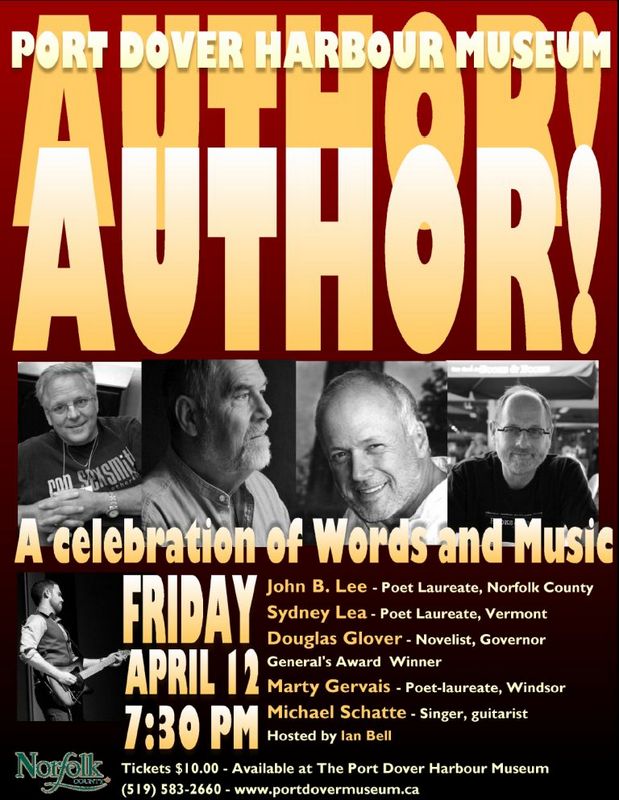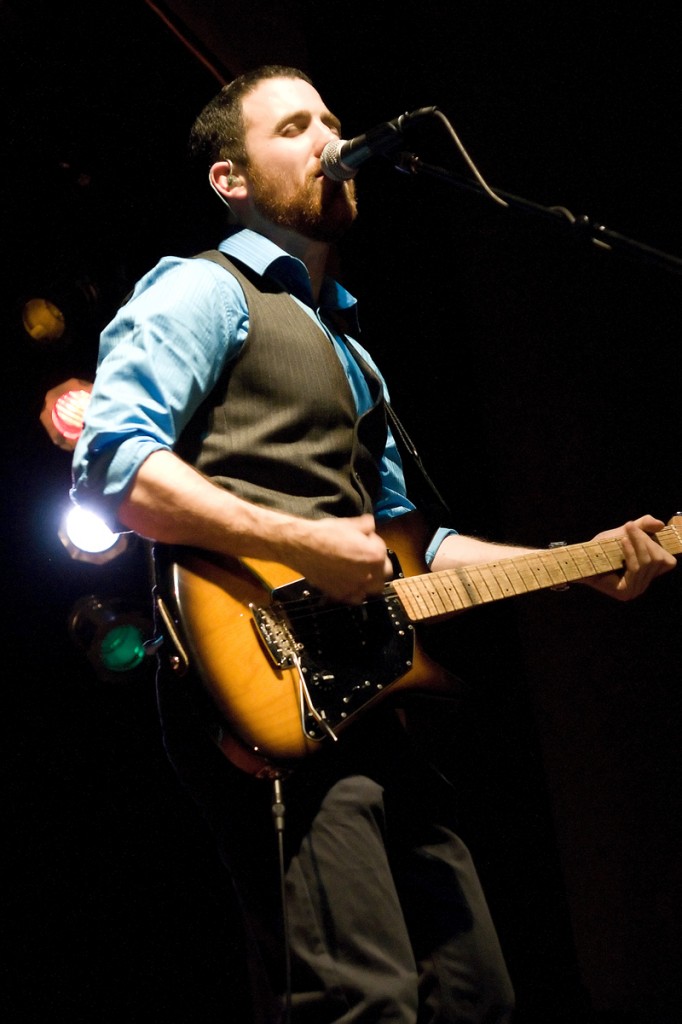
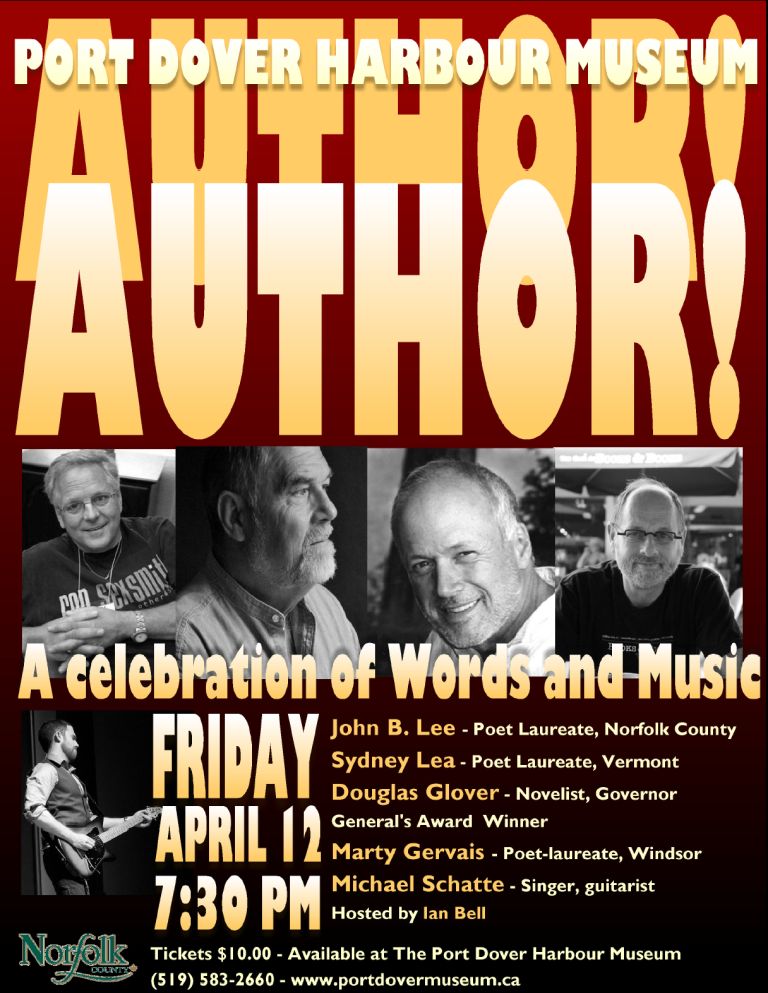
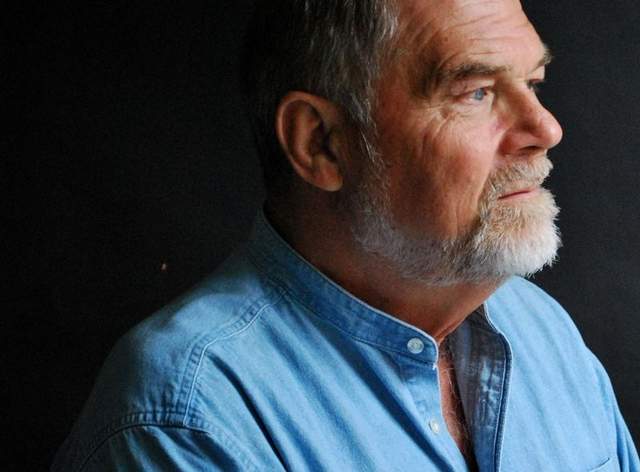
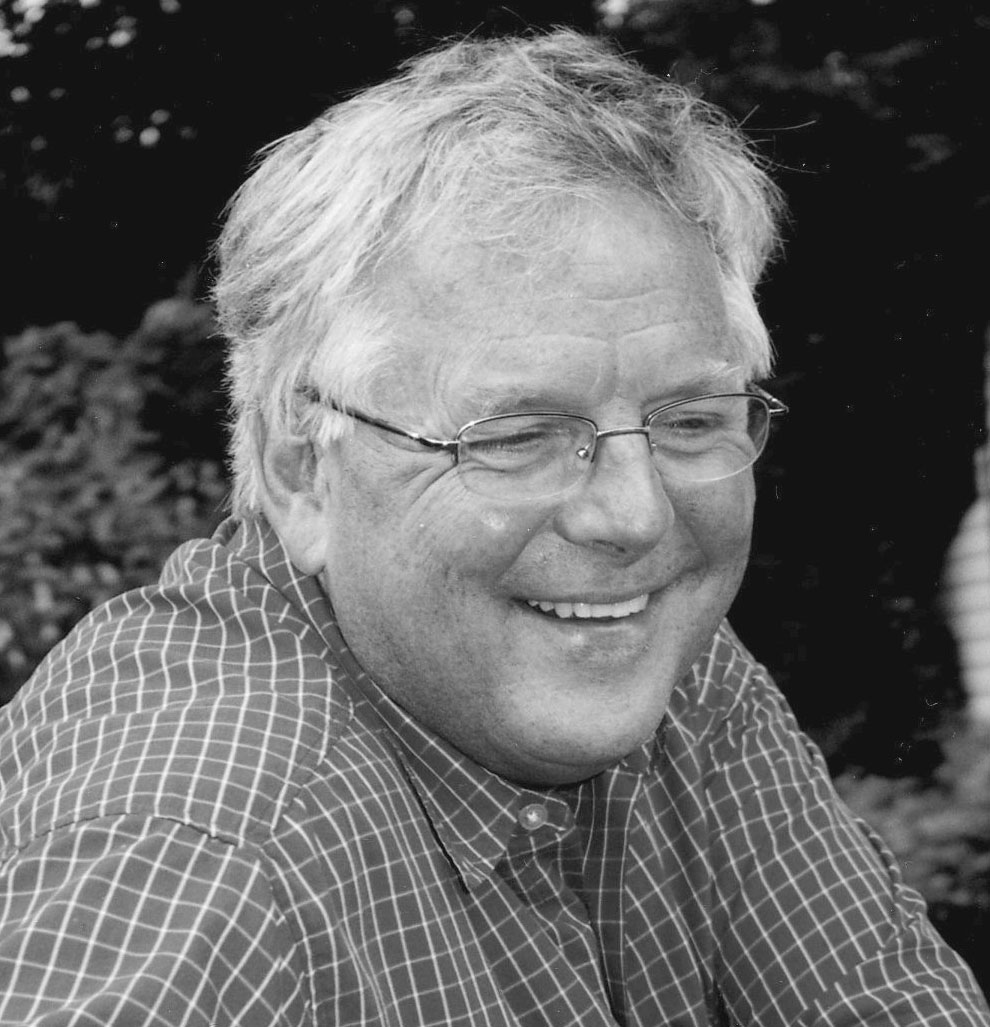
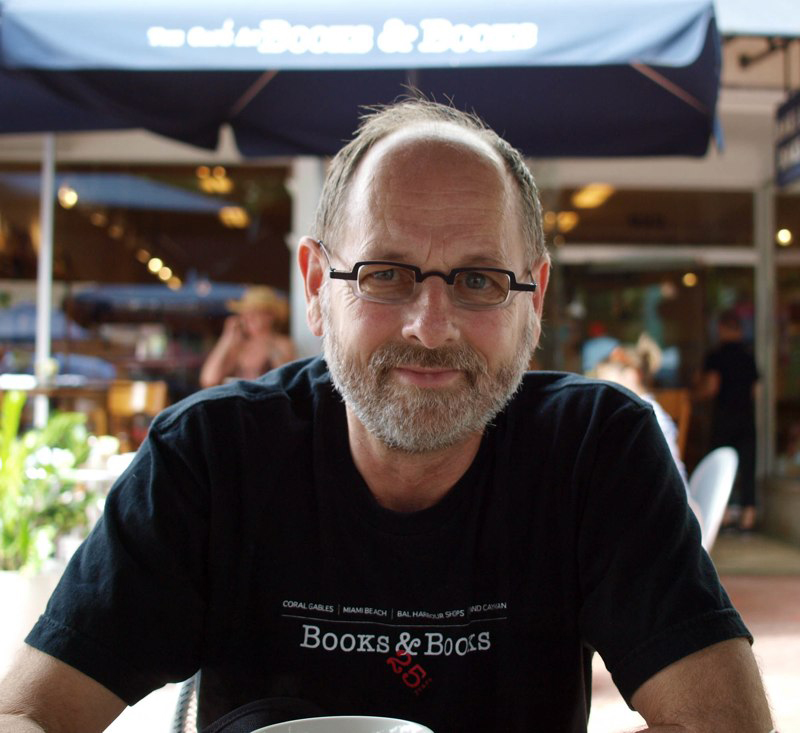
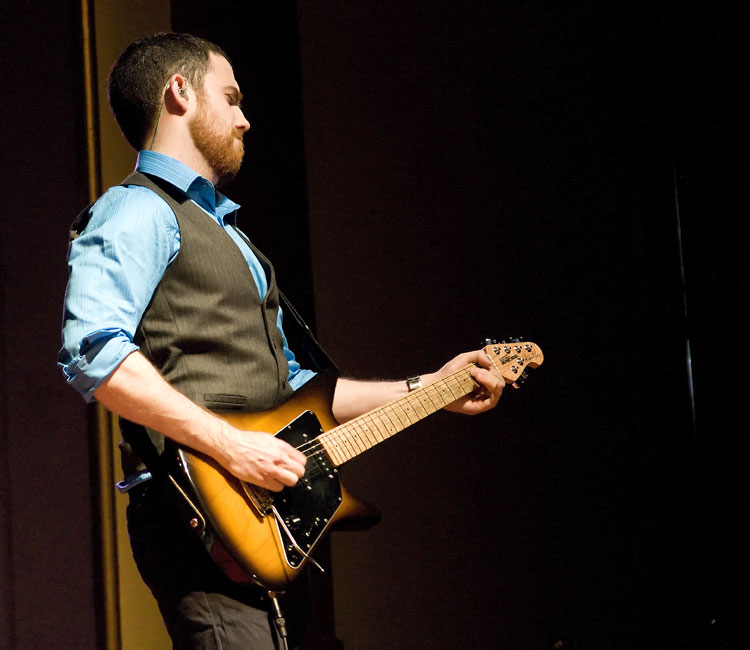
Last April, Sydney Lea, John B. Lee, Marty Gervais and I combined for the epic Reading by the Lake mini-tour of southwestern Ontario (along the Lake Erie shore, shoreline of Fate and Fable). We had musicians, too, Ian Bell and the incomparable Michael Schatte, who now contributes a brand new, unreleased song, premiering on NC, and a knowing and literate essay on the art and craft of song-writing, which essay includes advice from Vladimir Nabokov, Martin Amis and, yes, Nick Lowe. Michael is a dream of a guitar player, a dashing performer, but also a thoughtful and self-conscious artist. His advice and wisdom, his methods, can cross-pollinate to any other art; he works with words and sounds and rhythms while others ply different media, but the work is always work. And he is so damned quotable. “The most ubiquitous trope in songwriting has nothing to do with good songs, and everything to do with good songs unwritten.”
dg
.
Our Sun Sets Early
by Michael Schatte
Falling on down like a rotten old tree
Can’t you see, can’t you see, can’t you see?
Yes we’re sapped and the poison is trapped
From the foot to the canopy
Oh you say “we’ll live another day”
Can it be, can it be, can it be?
The last I checked the future was wrecked
And the past is the place to be
Come with me
The gates they look so pearly
Come with me
Our sun sets early
Listen here brother when I tell you what I tell you
‘Bout the sea, ’bout the sea, ’bout the sea
Your smug little chuckle’s gonna meet my knuckle
If you cry conspiracy
The water’s gonna boil over fires from hell
Oh the heat, oh the heat, oh the heat!
Pantheon judges holding ancient grudges
And Apollo plays a war beat
Where’s that voice, where’s that voice, where’s that voice I hear?
Whispering words of a doomsday ditty gonna take us all out of here
Follow me brother I’m the one receiver
Don’t you see, don’t you see, don’t you see?
The time has come, I’m the chosen one
To lead us through the prophecy
© Michael Schatte, 2013.
I recently had the pleasure of being asked to teach a four-part songwriting course in my hometown of Chatham, Ontario. The intention was to have me instruct participants on how to write songs, but then I said something to the program coordinator which I suspect at once disqualified and qualified me for the challenge. I declared in no uncertain terms that a person cannot be taught to write a great song. Instead, a person with musical ambition can be enlightened as to the creative tools which can aid the process, as well as taught to develop the protective panoply required to filter bad ideas and channel good ones. But even this was stretching it, I suppose, because the panoply I had in mind is entirely unique to the ear of the writer, being as we are at the mercy of our own taste, history of musical absorption, and innate ability to weave rhythm, melody, and lyrical poetry into something original and, in only the most successful cases, satisfying to the preponderance of people who hear it.
Despite my best attempts to sabotage this compelling opportunity, the songwriting course materialized with me in the instructor role, and it was a delightful experience. I tell this tale because the following text echoes the notion that it is impossible to teach someone how to write a song. It attempts the equally silly task of communicating a songwriting methodology and philosophy that I often cannot even explain to myself, and which therefore might only be of interest as a kind of untouchable curiosity akin to those behind glass in a low-budget 19th century traveling exhibition.
In an attempt to add tangibility to the intangible, I have included herein a brand new studio recording of a previously unreleased song of mine. By way of its lyrics and accompanying audio, I hope Our Sun Sets Early will serve as something of a case study illustrating the ideas I present briefly before you. Regardless of whether the song tickles your own musico-sensory receptors, I hope that at the very least my explanation of the conception, birth, and growth of this piece will prove interesting, if not instructive to your own creative endeavours, musical or otherwise.
‘Office Hours’
The most ubiquitous trope in songwriting has nothing to do with good songs, and everything to do with good songs unwritten. I refer to the classic creative ‘dry spell,’ or state of artistic doldrums in which creative people seem to find themselves for interminable lengths of time. While this may be a very real phenomenon for some, I refuse to credit it. Indeed, for the sake of my own productivity, I reject it outright. The concept of writer’s block is simply too seductive, too easy an excuse for bad song craft, or far worse, periods of no song craft whatsoever.
The approach I take is what I’ve heard described as a rusty tap metaphor: sometimes the water must be turned on for a time to clear the detritus from the pipes before the pure goodness of ingestible substance arrives. That is to say, by keeping songwriting ‘office hours’ during which I simply must write – lack of imminent brilliance notwithstanding – I prime the mind for the eventual arrival of the mental goods that will become musical works deserving of capture. This is not to say that great ideas do not often arrive outside of these scheduled hours, it is simply that the regimenting of my time with songwriting in mind more readily facilitates their timely appearance.
Working in this way involves a constant battle for confidence, because there is nothing as undermining to a creative person’s self-worth than a conspicuous lack of actionable ideas. Nabokov, like most great authors, established a daily routine of composition which featured early morning writing followed by a taking of the air wherever he found himself. A head-clearing walk has worked for me on many occasions, and often I’ve found that the rhythm of my steps inspires ideas for drum patterns. You can imagine how terribly normal I must look strolling down the street hands a-flailing, banging my chest tribally to the groove in my poor head. Nabokov’s scheduled approach reminds one that productivity requires a business-like discipline, and that we mustn’t take the work of creative geniuses for granted. As the producer Brian Eno opined, people have a tendency to attribute the output of a talent like Beethoven’s to his genius and not to his hard work. It is tempting to assume a mind that produced such glorious music did so effortlessly, discounting entirely that the real genius lies in the consistent ability to channel brilliance through hard work and persistence. There are many among us who would like to join the ranks of the prolific, but very few with the discipline to do so.
Seemingly Trivial Tools
When I sit down to write a song, I seem to spend an inordinate amount of time ensuring that the conditions are correct for creativity. In a pinch I’ve written useable lyric ideas on the side of a bathroom Kleenex box, but I much prefer to have a familiar and conducive surrounding if I’m spending several concerted hours at it. This means little or no fluorescent light (for me, the cozy glow of an incandescent bulb is vastly superior), no computer screens in sight (was there ever a more tyrannical attention stealer?), a large scrap book for writing in (cream coloured pages without lines encourage the free flow of ideas), and finally, a gel ink pen that can keep up with the frantic pace at which I scratch across the page. I share these banal details because I’ve found them to be essential to my system, though they collectively place a distant second behind the one tool I simply must have present to create my music.
If you listen to Our Sun Sets Early, the dominant role of the guitar should leave no question as to why I require that instrument by my side while composing. I’m occasionally asked whether I write words or music first, and I answer that it is almost always the music, and almost always a guitar riff or chord progression that ignites the process. Indeed, on Sun Sets, the electric guitar was so inextricably linked to the plot and energy of the song that I began to hear the lead guitar as directly representative of the tumultuous nature of the cult leader’s twisted thinking. Thus, in the instrumental outro we hear the whammy bar (a device used to bend the pitch of the guitar in unique and, if the stars align, Hendrixian ways) undulating the pitch while my voice descends into a dissonant, groaning cacophony of reverb. I included this effect to give the impression of the cult leader falling away from the world. But are these final notes and rhythmic gasps indicative of the entire world’s end or simply the demise of a mad man? Not for me to say, of course. I leave final interpretation to the listener.
Germination
It was during one of my Nabokov-inspired songwriting days that the audio available herein was conceived. Where the jolly idea to write a song from the perspective of a doomsday cult leader came from I know not, but clearly I found it interesting enough to devote some four hours of my time to the writing of a tune around it. Our Sun Sets Early speaks to the danger of proselytization of all stripes, illustrated here in the protagonist’s invocation of apocalyptic prophecy. At the time of its composition, I had recently released an E.P. whose title (Four Songs, One Apocalypse) and lead track (Final Night) toyed with the notion of the end of days, so writing this song was a natural extension of the same chipper, Top 40 radio conquering theme.
The writing proceeded quickly. I was excited by the concept’s potential for a brand of lively wordplay that is too seldom heard on mainstream music channels. The Greek pantheon is mentioned, for instance, with Apollo himself expected to lead the charge against the corrupt, rotting humanity the narrator invites us to escape from. You’ll notice that I avoid explaining things too overtly; instead of mentioning suicide directly – could there be a less musical sounding word? — I allude in the chorus only to sun sets and pearly gates. Not hard to guess what I am driving at I suspect, though you would be amazed at the misinterpretations of some of my lyrics I’ve been privy to. I love such wild misses, as they remind me of the wonderfully unique way each person hears a piece of music, and therefore the constant potential for a singular connection between musician and listener. In order to nurture that connection, I don’t often employ lyrics so abstract that meaning is completely uninterpretable, hoping instead to find a middle ground that rewards careful listening but does not require studying the constellations to divine my intent.
.
Cliché and Poetry
A few words on words: I find myself bristling every time I hear a cliché-laden song on the radio, which is to say I bristle daily. When this happens, echoes of Martin Amis’ War on Cliché ring loudly within my bulbous cranium. And yet, I think the songwriter must occasionally peddle oft-heard words and phrases, if only to create the occasional opportunity for the listener to know what one is about to sing before it is sung. There isn’t much of this dealing with the stylistic devil in Our Sun Sets Early, though perhaps I could have come up with fresher means of communicating ‘the place to be’ (verse 1) and ‘the chosen one’ (verse 3). I hope I made up for those predictable phrases with punchy alliterations like ‘doomsday ditty’ (verse 3) and ruthless rhyming a la ‘Pantheon judges holding ancient grudges’ (verse 2), both being word combinations I have never before heard uttered in song or seen in print.
I often sit staring at my raw lyrics and wonder whether they can be considered poetry. I tend to think not, as their construction is so dependent on the musical rhythm and melody of the piece, two things that cannot be communicated by the words on their own. It is akin to extracting the liquid paint from a Picasso and throwing it down on a different surface: the entire framework is lost, and the context destroyed despite all the same colours and substances being present. When I write songs, I tend to envision the lyrics bound in holy matrimony to the chords, the completed song welded to the recording process, and the final output bonded tightly to the packaging of the album itself. In other words, every step in the process is linked to what came before and will come after, and to pull any element from this context renders it impotent as far as the art is concerned.
Production and Completion
It is for this reason that I now find myself in the increasingly common position of being my own recording engineer and producer. For those not in the know, the former executes the technical capture and mixing of the song while the latter, often a non-engineer, is responsible for keeping the big sonic and economic picture in mind whilst hopefully nursing the production to a critical and commercial success. I have readily found both joy and frustration in the tackling of these roles myself. But as long as I continue to regard the capture and presentation of my songs as of near-equal importance to the song itself, I do not foresee relinquishing much of that control while I can still manage it. Hence, I’m able to write from conception with the sonic pandemonium of Our Sun Sets Early in mind, and create the loud, violent ending of the mix with my original intent firmly wed to the sonic manipulation that came of it. Whether this connectivity to all facets of the production truly benefits my music is perhaps not for me to say, but one can rest assured that the various stages of the process form a circle of inspiration that at the very least keeps my pen returning to the page, ready to drop the ink of the next song.
That being said, I often find it difficult to start a new composition if there is a potentially good song in a state of incompletion. Knowing when the thing is finished is possibly the most difficult aspect of the entire process, and there have been many works in progress lost to a kind of creative purgatory. This is probably for the best, as the finest songs seem to have a way of writing themselves, and quickly at that. In these cases I am left breathless at the end of the writing session, marveling that so much was done in such short order when there were occasionally entire days of aborted ideas and lyrical dead ends that preceded it. How do I know when the song needs no further effort? I cling strongly to British songwriter Nick Lowe’s imperishable litmus test: the song is finished when it sounds as though someone else wrote it. I will leave you now, as I ponder the psychological implications of that statement.
—Michael Schatte
Michael Schatte is an acclaimed Canadian guitarist, singer, and songwriter based in Toronto. He has released several albums under his own name, including his latest, Four Songs, One Apocalypse. Michael will release a new double album in late 2014, on which Our Sun Sets Early will no doubt reside. For more information including live performance footage and album audio visit www.michaelschatte.com.
/
/


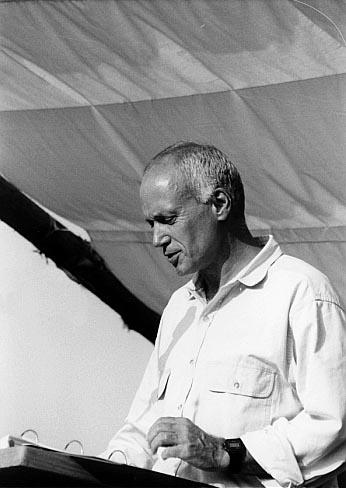 Douglas Glover, photo by Danielle Schaub
 Sydney Lea
 John B. Lee
 Marty Gervais
 Michael Schatte