May 252013
 

A gorgeous, sad poem that’s been on my mind, plus the poet’s own introduction, a bit about the provenance of the poem, the lonely struggle of existence…

I love that line, “I was much too far out all my life.”

Stevie Smith is great eccentric poet, very dry, melancholy and funny (sometimes). Even this poem exhibits a note of bizarre black humour. You should also take a look at her Novel Written on Yellow Paper.

dg

https://www.youtube.com/watch?v=4mlC1Mafp2U

Not Waving but Drowning

Nobody heard him, the dead man,
But still he lay moaning:
I was much further out than you thought
And not waving but drowning.

Poor chap, he always loved larking
And now he’s dead
It must have been too cold for him his heart gave way,
They said.

Oh, no no no, it was too cold always
(Still the dead one lay moaning)
I was much too far out all my life
And not waving but drowning.

May 222013
 

DSM revisions are always an excellent inspiration to self-reflection. Of the new batch of disorders, for sure I have this one. What about you?

Does this mean I can write off my cleaning person as a medical expense?

“persistent difficulty discarding or parting with possessions due to a perceived need to save the items and distress associated with discarding them,”

via 15 new mental illnesses in the DSM-5 – Slide Show – MarketWatch.

May 212013
 

1 Introduction: Why Study the New Testament?

2. From Stories to Canon

3 The Greco-Roman World

4 Judaism in the First Century

5 The New Testament as History

6 The Gospel of Mark

7 The Gospel of Matthew

7

8 The Gospel of Thomas

9 The Gospel of Luke

10 The Acts of the Apostles

11 Johannine Christianity: The Gospel

12 Johannine Christianity: The Letters

12

13 The Historical Jesus

14 Paul as Missionary

15 Paul as Pastor

16 Paul as Jewish Theologian

17 Paul’s Disciples

18 Arguing with Paul?

19 The “Household” Paul: The Pastorals

19

20 The “Anti-household” Paul: Thecla

21 Interpreting Scripture: Hebrews

22 Interpreting Scripture: Medieval Interpretations

23 Apocalyptic and Resistance

24 Apocalyptic and Accommodation

25 Ecclesiastical Institutions: Unity, Martyrs, and Bishops

26 The “Afterlife” of the New Testament and Postmodern Interpretation

May 202013
 

Yale University offers some amazing free courses online, not the least of which is this one on the Old Testament. I’m adding this to the NC Necessary Books page (which, megalomaniac that I am, I am considering turning into a treasure trove of literary and cultural history). In any case, this lecture series is a brilliant introduction to the Old Testament. Christine Hayes, the lecturer, is the kind of person you could listen to all day and long into the night, sharp, amiable, clear and engaging. What she teaches is just surprise after surprise.

If you want to, you can also go to the Open Yale site and download audio files of all the lectures.

dg

1 The Parts of the Whole

2 The Hebrew Bible in Its Ancient Near Eastern Setting: Biblical Religion in Context

3 The Hebrew Bible in Its Ancient Near Eastern Setting: Genesis 1-4 in Context

4 Doublets and Contradictions, Seams and Sources: Genesis 5-11 and the Historical-Critical Method

5 Critical Approaches to the Bible: Introduction to Genesis 12-50

6 Biblical Narrative: The Stories of the Patriarchs (Genesis 12-36)

7 Israel in Egypt: Moses and the Beginning of Yahwism (Genesis 37- Exodus 4)

8 Exodus: From Egypt to Sinai (Exodus 5-24, 32; Numbers)

9 The Priestly Legacy: Cult and Sacrifice, Purity and Holiness in Leviticus and Numbers

10 Biblical Law: The Three Legal Corpora of JE (Exodus), P (Leviticus and Numbers) and D (Deuteronomy)

11 On the Steps of Moab: Deuteronomy

12 The Deuteronomistic History: Life in the Land (Joshua and Judges)

13 The Deuteronomistic History: Prophets and Kings (1 and 2 Samuel)

14 The Deuteronomistic History: Response to Catastrophe (1 and 2 Kings)

15 Hebrew Prophecy: The Non-Literary Prophets

16 Literary Prophecy: Amos

17 Literary Prophecy: Hosea and Isaiah

18 Literary Prophecy: Micah, Zephaniah, Nahum and Habbakuk

19 Literary Prophecy: Perspectives on the Exile (Jeremiah, Ezekiel and 2nd Isaiah)

20 Responses to Suffering and Evil: Lamentations and Wisdom Literature

21 Biblical Poetry: Psalms and Song of Songs

22 The Restoration: 1 and 2 Chronicles, Ezra and Nehemiah

23 Visions of the End: Daniel and Apocalyptic Literature

24 Alternative Visions: Esther, Ruth, and Jonah

May 192013
 

Since Descartes (whose Radical Doubt long preceded Nietzsche’s God is Dead moment), Western philosophy has been dominated by a nostalgia for lost Being, for the sacred cosmos that made our lives an epic drama of  interaction with the gods. The 20th century was dominated by Ludwig Wittgenstein, who turned mostly away from the problem and thought about how language constitutes the world we live in, and Martin Heidegger, who seems to have maintained the possibility of a romantic semi-mystical phenomenological intuition (for want of a better word) of Being.

When I was an undergraduate and graduate student at Edinburgh, the problem of lost Being did obsess me (probably more than was healthy); my solution was to throw myself into the study of Kant, who turned out not to have solved the problem. My son Jacob has inherited the family obsession, and, willy-nilly, has thrown himself into the study of Heidegger (and his student Gadamer). It’s a fascinating family dynamic; I only grasped it the other day walking the dog, who is a Cynic.[1]

Wes Cecil is, as I have said before, a remarkable, funny, passionate lecturer, a massively helpful Virgil in the Land of the Philosophical Shades.

dg


Footnotes    (↵ returns to text)

  1. I fear only Jacob will get this joke. The word “cynic” comes from the Greek kunikos, which means dog-like.
May 192013
 

Grim. Very grim. And they all probably have student loans as well.

Just 56 percent of college students complete four-year degrees within six years, according to a 2011 Harvard Graduate School of Education study. Among the 18 developed countries in the OECD, the U.S. was dead last for the percentage of students who completed college once they started it ― even behind Slovakia.

via 11 Public Universities with the Worst Graduation Rates.

May 182013
 

NC is endorsing Rob Ford for mayor. Wait! He already is mayor. Well we endorse him anyway. All politicians should be this interesting and hang with Somali drug dealers.

Many Americans awoke this morning to discover that (a) the mayor of Toronto is a guy named Rob Ford, and (b) Rob Ford smokes crack. Gawker reported last night that a cell-phone video clearly showing Ford lighting up a crack pipe — which was supposedly filmed within the last six months, while he was mayor — was being shopped around for six figures. Gawker’s John Cook saw the video in person with his own two eyes, as did two reporters from the Toronto Star. Ford’s lawyer calls the video “false and defamatory” and asks, hilariously, “How can you indicate what the person is actually doing or smoking?”

via 20 Things Worth Knowing About Rob Ford — Daily Intelligencer.

May 182013
 

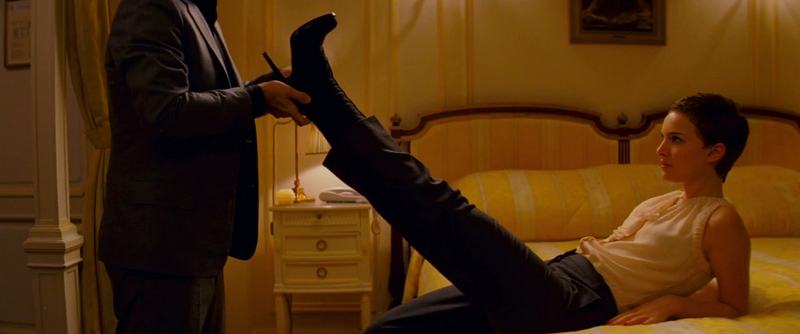
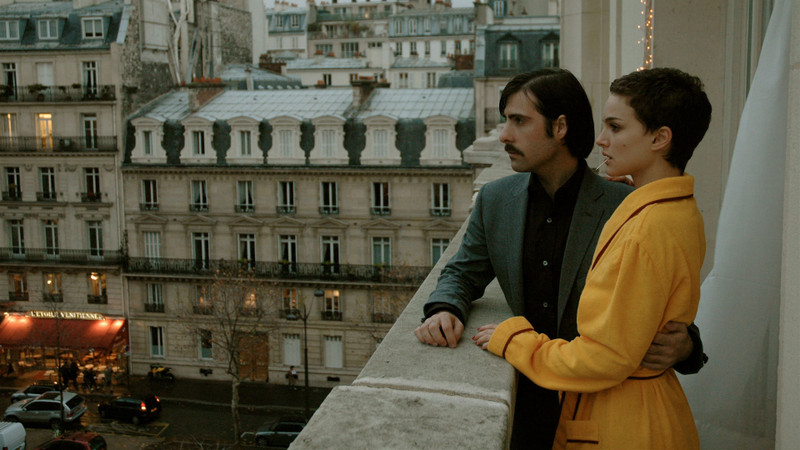
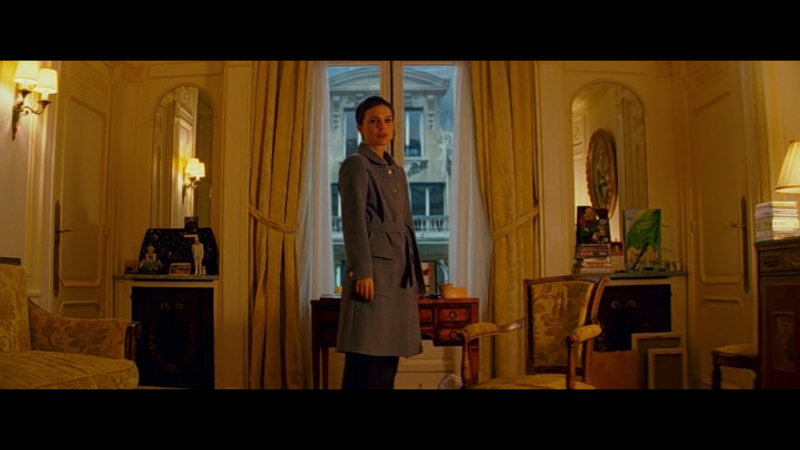
Wes Anderson’s short film “Hotel Chevalier” is a lean, bruised and naked tale in a Paris hotel room. Anderson shot the short with his own funds (and the actors, Natalie Portman and Jason Schwartzman, donated their time) two years prior to his feature The Darjeeling Limited but it was often screened at the same time and is referred to by many as a prologue to that feature film that followed it (as mentioned in this previous NC at the Movies entry). The two are aesthetically consistent, but that’s not surprising as most of Anderson’s films belong to the same visual palate and characters seem descended from the same family tree.

the-darjeeling-limited

Though they were conceived separately, Anderson brought the short and feature together through their common character of Jack Whitmore.  Whitmore is precious, careful and, in his manicured construction of his hotel room a bit compulsive. In contrast, his beloved shows up with her fierce toothpick-in-mouth machismo, her velociraptor-attack dialogue (“What the fuck is going on?”), and her sudden bruised nakedness.

5

It is an uncomfortable film on several levels: visually there are the awkward, stagey wide shots of the room, the contrasting dolly shots and camera pans, the manicured way Jack has designed the room for his beloved’s arrival (complete with soundtrack queue on the ipod and a freshly painted painting): has he created the perfect setting for their reunion or a well designed bunker to defend himself against her impending assault? And does it matter since either would be in vain?

Then there is greater discomfort as Portman’s character arrives, asks almost mockingly “What’s this music?” and then touches all the carefully laid details of the room with further ridicule, even touching the wet painting, all as if to throw aside any attempts he had to set decorate or defend himself.

00000011

Does he love her or hate her? At this late stage they’re post woodchipper and it seems futile to sort through the bits of each. We’re given next to no back story except that she says to him “I never hurt you on purpose” and that he escaped her and seems clear when he says to her, “I will never be your friend. Ever.”

m4K5FLo5X9PR0vTrEweXujxN3JE

We don’t need to know more. This is the story of a man who fled, waits, then with gentle bath robe in hand shows her his view of Paris and offers her back her toothpick.  She’s only there for the night after all. It’s a perfect condensation of past and present with no future.

— R. W. Gray

May 172013
 

 Desktop18

Whether you write fiction or nonfiction, here’s a practical look at the utility and felicities of  research from a former journalist and Pushcart Prize-winning fiction writer, Russell Working. I met Russell years ago when he was staying the Yaddo, the art residency in Saratoga Springs. I wasn’t at Yaddo, but I live about six minutes away and am always going over there to visit (or rescue) friends. Russell won the Iowa Short Fiction Award for his first book The Resurrectionists and then spent six years as a freelance reporter in the Russian Far East and the Middle East. His fiction and humor have appeared in The Atlantic Monthly, The Paris Review, TriQuarterly Review, Zoetrope and Narrative. Of his 2006 collection The Irish Martyr (the title story won a Pushcart Prize) I wrote: The Irish Martyr is a powerful, brave and dangerous book that takes us to the borderlands where religion and geopolitics rip apart the lives of ordinary people. These are stories about torture, decapitation, rape, kidnapping and trafficking in women and babies. They are about men and women caught in the meat-grinder of history, caught between trying to survive as human beings and the vicious tools of dogma, ideology and greed. Russell Working knows the dark corners of the world, he knows the personal underside of the news stories we have become all too accustomed to seeing on our TV screens. He writes straight from the heart, with a moral indignation that is palpable.

dg

Many years ago, I was working on a novel that involves a husband who is searching for his missing wife. In it my protagonist, Paul, goes into a morgue with a cop and a coroner to identify a body that might be hers. The question was, how to describe the morgue? No problem! I knew all about that. I had never been in a morgue, but I had seen them on TV and the movies. Good enough.

Plus, I am a fiction writer. That means I can just use my imagination, right? And unlike in journalism, nobody gets to demand a correction. So I wrote it just like on TV, the walls were lined with stainless steel drawers. The coroner pulls one open. And there’s the body, covered by a sheet.

But wait a minute. Dead bodies: it must smell bad. So I had my coroner light up a cigar to cover the odor. He offers cigars to the detective and poor Paul, who thinks he is about to see the corpse of his murdered wife.

“Smoke, gentlemen?” the coroner says.

“He smokes the good stuff,” the detective says. “Cuban seed.”

*

Needless to say, I never sold that novel. And as for that scene, it bogged down in the writing. It was lifeless. I was stuck. I fought my way through it, but the description never stopped smelling dead. The trouble was, I needed to report my story, in the way that a journalist might, to pick up the phone, make an appointment with a coroner, and head out to the morgue with a notebook in hand.

I needed to go to take in the sounds and smells. To interview a staff. To investigate. To research. Scribble notes. Record the interview. Look around the crypt where the bodies are kept. Did it have a high vaulted ceiling or a low one? Were there bare light bulbs or phosphorescent track lighting? Were the walls tile or plaster? Then take it all back to my computer, throw out the dross, and turn the key elements into fiction.

I was a newspaper reporter, yet I had never taken that basic step, at least for this particular scene.

Now, wait a minute, you may say. Why do we need to do this? If we’re fiction writers, don’t we get to make things up? And if the fiction is autobiographical, can’t we just rely on our own memories? We lived it, after all. What if we’re magical realists? What if my protagonist is a centaur or a flying squirrel who thinks he’s Batman? And as for creative nonfiction, aren’t many of us writing memoirs, which means the topic is subjective? Who needs research, to say nothing of shoe-leather reporting?

Well, when we write a scene, whether it is magical realism or a noir tale of murder, we strive to imagine a narrative world that is vivid and believable within the rules it agrees to play by. In one way or another, we seek to establish a sense of verisimilitude. Beyond that, we want our construction of events to seem plausible within the universe of writing. We wish to speak with authority. Reporting and hands-on research will inspire stories and suggest images and characters and the plotline itself.

When a reader takes up a book, he and the author are engaged in a joint act of creation, and he must reconstruct that world in his mind based on the details the author presents in words.

Think of the reader as Hellen Keller: she is blind and deaf and, for that matter, let us imagine that she doesn’t even have a sense of smell. All she relies on is touch: the touch of our words. We sign into her palm, telling her what is out there. She must trust us. We as authors are all she has to experience this created world. She clings to our arm, eager to know what we see and hear, forming pictures of her own within her mind. Thus she, too, participates in a joint creative act by envisioning the scenes and the characters that we sketch with words.

But when we hit a false note, Ms. Keller perceives the author behind the artifice of fiction, dressed in sweats, unshaven, unshowered, slouching in a chair with a cup of microwaved coffee, trying to think of some event to move the story along.

There are days when we all may feel we’re staring at a screen going nowhere. Perhaps these, most of all, are the days that could stand the help of reporting. The writer who thinks his job is confined to his desk at home is much more likely to trip up readers with phony descriptions or outlandish turns of plot. He yanks Ms. Keller out of the joint act of dreaming and thrusts her into the role of skeptic.

In 1989, Harpers Magazine published an essay by Tom Wolfe titled, “Stalking the Billion-Footed Beast,” a manifesto that was as bombastic and full of itself as its title. Wolfe quoted his own fiction approvingly and at length, and took it upon himself to denounce many of his contemporaries, who were angered and bewildered by his tone. The New Yorker described him as crashing a cocktail party and throwing writers around like a professional wrestler. A literary brawl ensued (always a fun thing), with some of America’s leading writers weighing in in the letters to the editor. But amid the uproar, Wolfe outlined some important lessons for writers, and I would argue that these apply both to fiction and creative non-fiction. He stated:

[The] task, as I see it, inevitably involves reporting, which I regard as the most valuable and least understood resource available to any writer with exalted ambitions, whether the medium is print, film, tape, or the stage.

He goes on:

Dickens, Dostoyevsky, Balzac, and Sinclair Lewis assumed that the novelist had to go beyond his personal experience and head out into society as a reporter. Zola called it documentation, and his documenting expeditions to the slums, the coal mines, the races, the folies, department stores, wholesale food markets, newspaper offices, barnyards, railroad yards, and engine decks, notebook and pen in hand, became legendary. To write Elmer Gantry, the great portrait of … a corrupt evangelist … Lewis left his home in New England and moved to Kansas City. He organized Bible study groups for clergymen, delivered sermons from the pulpits of preachers on summer vacation, attended tent meetings and Chatauqua lectures and church conferences and classes at the seminaries, all the while doggedly taking notes on five-by-eight cards.

Fine, you may say. That was Tom Wolfe, the guy in the white suits and high-collared shirts. The showman. Sure, he writes novels, such as Bonfire of the Vanities, but he cut his teeth on nonfiction like The Right Stuff. Of course he would recommend playing the reporter.

And as for me, I am a newspaper reporter by profession. Of course I am going to plug the skills of my dying medium, which is going the way of the town crier.

So how about a literary figure who is more in tune with the spirit of our times?

As it happens, not everyone agrees with Wolfe. Consider Jonathan Franzen, author, Freedom, which propelled him onto the cover of Time magazine. He argues that these days research doesn’t matter much—including, presumably, the reporting, notebook in hand, that I recommend.

In February he was asked to contribute a list of rules of writing to the Guardian. Number 5 was this: “When information becomes free and universally accessible, voluminous research for a novel is devalued along with it.” Likewise, in an interview, he says, “I avoid [research] as much as possible. It gets in the way of invention.”

So is Wolfe wrong, or embarrassingly passé? Are we at our best when we discipline ourselves to remain at the desk and just pound the words out, unleashing the magical forces of our creativity?

In the age of Google, are we just wasting our time when we go out and scribble notes about the slaughtered lambs hanging in a halal butcher shop or the Chicago ex-cons selling jars of organic honey at a farmers market? If we are out jotting impressions in notebooks, aren’t guys like Franzen racing ahead by sitting at his desk and applying himself to the actual writing of books?

Time magazine hailed Franzen as “A Great American Novelist,” and nobody has called me up to sit for a cover portrait. No doubt his greatness contains such multitudes that he could write just as well from a padded cell. Perhaps only we hacks need to actually look at the things we are describing, the way minor artists like Michelangelo and Da Vinci looked at live models when they drew the human form.

But I shall let you in on a secret: even Franzen doesn’t really believe what he is telling you. It strikes me as so unhelpful, I almost wonder if he is trying to winnow the competition by sending young writers up the wrong path.

Ha! They believed me, the suckers!

Here is why I know he isn’t being entirely straight with us. In the very next sentence of that interview I just cited, he admits that he traveled to West Virginia for four days to investigate coal mining communities for Freedom. He also said he had the help of others in researching Minneapolis neighborhoods, even though he himself is from Minnesota.

The research shows. He writes of the “matchstick Appalachian woods and the mining-ravaged districts.” He describes an hourglass-shaped vein of coal that lies under the mountains, at the center of which lives a clan headed by a man named Coyle Mathis, who is refusing to sell his ancestral home to a company that plans to remove the mountaintop, mine the coal, and create a nature reserve. When Mathis receives an offer to buy his property, Franzen writes, he “didn’t even wait to hear the details. He said, ‘No, N-O,’ and added that he intended to be buried in the family cemetery and no one was going to stop him.” When Mathis threatens to sick his dogs on the man making the offer, even shoot him, the scene has an authenticity that surely owes something to Franzen’s reporting in West Virginia.

So how do we use research and reporting to enhance, rather than obstruct, creativity? Here are some recommendations:


1. Get out.

As writers, we tend to feel that the only work that matters is that spent in front of the computer, pushing up the word count displayed at the bottom of the page. But simply getting up and getting out into the world can make the words flow afterwards, whether we’re heading to an A&P, like John Updike, or a scrap metal yard or a foreign country.

In Michelle Huneven’s novel Blame, an alcoholic history professor with a wild streak, Patsy MacLemoore, wakes up in jail after blackout. Patsy’s story begins thus:

Patsy MacLemoore came to on a concrete shelf in a cell in the basement of the Altadena Sheriff’s department. Her hair had woken her up. It stank.

She had said she would rather die than come back here. She’d said that both times she’d been here before.

The little jail had no windows. Fluorescent tubes quivered night and day. A fan clattered, off-kilter. Each of the three connected cells contained a seatless stainless-steel toilet and a tiny, one-faucet sink.

Lurching to the undersized sink, she drank from it sideways, cheek anchored against the greasy spout. The dribble was tepid and tasted of mold. In the next cell over, June’s haughty face loomed. Did she fuckin live here? Every time Patsy’d been in, she was, too. June’s top lip was like two paisleys touching. What’d you do this time, Professor? said the lips.

Don’t know, Patsy said. …

Not what I heard, June said. And lookit your face.

Patsy’s fingers went to a ridge of scab crystallizing along her cheekbone. No wonder her head hurt.

Returning to the shelf, she noted the itchy rasp of the prison gown. Lead-blue, unrippable, it was made of 45 percent stainless-steel, according to the label. She was naked beneath, not even panties.

I hear you’re in deep shit, Professor, [June said].

It is not until Patsy is sitting opposite two cops and her own lawyer does she begin to comprehend what she has done. She is tossing out flippant remarks—“We have to stop meeting like this”—when she sees a file in front of the detective. On it is written, HOMICIDE.

She learns she has been accused of running over and killing a mother and daughter while driving drunk. Her whole life as she knew it is over and she is heading for prison.

In an email, I asked Huneven how she was able to portray so convincingly the events including Patsy’s time in jail and a prison firefighting camp. Her discussion of how she researches illustrates my point. Huneven interviewed widely. She talked to everyone she knew, male and female, who had been in prison or jail. She unearthed subplots and storylines in real life.

She wrote me, “One woman in particular—she’s essentially Gloria in the book—talked to me at length; she’d been sober forever, but was manic depressive. With twenty years sober, she got off her meds, stole a hundred thousand bucks from her boss and drove across country delivering it to poor people she met at McDonalds and the like. She was sentenced to 4 years, served two, part of it in fire camp. For the firefighting details I interviewed a young woman I know who recently spent two summers fighting fires in the Sierra.”

Equally important, she visited the scene. Lacking Franzen’s mystical abilities as a seer, she was forced to trudge on down to a courtroom in person and spend a day observing what went on.

She writes:

“I interviewed prosecutors, who in turn did research for me about how much time a drunk driving/ criminal negligence charge would get you in the early 1980’s. I was momentarily stumped when I found out that they couldn’t prosecute for drunk driving because the accident happened on [private] property, but that ended being up a rather interesting part of the narrative, I thought. I interviewed a probation officer, I actually made my husband, who is a lawyer, write the declaration that frees Patsy from responsibility in the end. He gave me SUCH a dull document my agent made me slice it back to the few salient sentences.”

In my own writing, getting out of the office has inspired some of my best-received stories. I used to live in the Russian Far East, and I made five reporting trips to China. On one trip I encountered a couple whose lives would inspire a short story in my collection, The Irish Martyr.

In China when a freelance reporter such as myself asks around in a hotel for an interpreter, an uncomfortably friendly middle-aged man with hair dyed shoe-polish-black will show up in a white sedan with a soldier at the wheel and red flags flapping from the bumpers. Because I usually did business reporting, this never was a problem.

But on one visit I wanted to write about a highly sensitive topic, North Korean refugees. I couldn’t rely on the official story. Through friends I found an interpreter, and by sheer luck he knew of a refugee.

She had escaped North Korean, her hair thinning from malnutrition, and was sold as a wife to a Chinese peasant. In my story, “Dear Leader,” I described the day she is taken to meet her new husband. Let me do a Tom Wolfe and approvingly quote my own fiction:

An ethnic Korean marriage broker named Bong-il drove her to her new home near Yanji, rasping dire warnings all the way in the back seat of his smoky Land Cruiser while his driver adjusted the music on the stereo. “If you run away, we will find you, understand? He is paying good money for you, and we are men of our word. We will return you, and you’ll discover what an angry husband can do to a girl. I know this one guy, he chained his wife to the bed and gouged her eyes out the third time she tried to run away. If we don’t find you, the police will, and you know what that means: back to North Korea. Stay put. Even if he beats you, you’ll be fed, unlike in Hongwan, right? You will live. Seems like a fair bargain.” He threw his cigarette butt out the window and asked, “Are you listening?” She was. “Good,” he said, “because I’m not trying to scare you, I hope you’re happy, I truly do, you are such a pretty girl, or you will be when you fatten up and your hair grows back. … Incidentally, it’s his prerogative to resell you if he wishes. Maybe that isn’t so bad. Think of it this way: if you don’t get along, maybe you’ll end up with someone more compatible.”

This monologue was inspired by the refugee’s description of the conditions under which she arrived. In fact her very predicament is drawn from my interviews with the real-life refugee woman and the husband who had bought her.

We mere scribblers cannot invent such situations. We go out and sift through the infinite range of stories the world offers us. And it amazes us.


2. Find a Guide.

Dante had Virgil to guide him in his pilgrimage through hell, purgatory, and heaven. If you are overwhelmed in an unfamiliar area or topic, find a guide.

By way of example let us consider George Packer, a reporter for the New Yorker. In a 2007 nonfiction piece, Packer described meeting two young Iraqis in Baghdad. Othman was Sunni, Laith was Shiite.

Packer met them at the Palestine Hotel, where, two years earlier, a suicide bomber driving a cement mixer had triggered an explosion that nearly brought down the hotel’s eighteen-story tower. He writes:

It had taken Othman three days to get to the hotel from his house, in western Baghdad. On the way, he was trapped for two nights at his sister’s house, which was in an ethnically mixed neighborhood: gun battles had broken out between Sunni and Shiite militiamen. Othman watched the home of his sister’s neighbor, a Sunni, burn to the ground. Shiite militiamen scrawled the words “Leave or else” on the doors of Sunni houses. Othman was able to leave the house only because his sister’s husband—a Shiite, who was known to the local Shia militias—escorted him out. Othman took a taxi to the house of Laith’s grandfather; from there, he and Laith went to the Palestine, where they enjoyed their first hot water in several weeks.

These two men became his guides. Packer says in an interview with the Poynter Institute that this is his general practice. “I need someone who can provide me with the introduction to the place and give me sense of the landscape,” he says.

For a story on the U.S. Senate, Packer relied on the insights of beat reporters who knew the ins and outs of the institution, along with the staffers familiar with its obscure rules. When he decided to investigate the roots of the financial meltdown, he chose Tampa in part because a friend there could show him around. The two canvassed the Tampa Bay area, driving through subdivisions and taking to people randomly. What he learned in those interviews became the core of the story.

“Once I get there, I’m constantly saying, ‘Who else should I talk to?’ ‘Do you know anyone in this situation?’ ” Packer says. “And people tend to be quite generous with that information, and most people want to tell their story.”

Fiction writers also may find a guide helpful in unfamiliar territory. In interviews, Colum McCann has talked about how he lived with homeless people in the subway tunnels and traveled to Russia to research another novel. But the book I wish to discuss is Zoli, is about a Roma, or Gypsy, singer and poet born in Slovakia in the 1930s during the height of fascist power in Europe.

In it, the six-year-old Zoli, who will become an acclaimed singer and poet, learns from her grandfather that fascist militiamen have driven her clan and its wagons and horses out onto the winter ice and encircled the shore with fires. The ice collapses and the people drown. Zoli tells us, “My mother was gone, my father, my brothers, my sister and cousins, too.”

The book has been praised for its realistic portrayal of the life of Roma, a society that has long been persecuted and also closed to outsiders. Its descriptions struck me as deeply authentic. Consider this description of a visitor enters a Roma settlement:

Doorframes used as tables. Sackcloth for curtains. Empty çuçu bottles strung up as wind chimes. At his feet, bits of wood and porridge containers, lollipop sticks and shattered glass, the ground-down bones of some dead animal. He catches glimpses of babies hammocked from ceilings, flies buzzing around them as they sleep. He reaches for his camera but is pushed on in the swell of children. Open doorways are quickly closed. Bare bulbs switched off. He notices carpets on the walls, and pictures of Christ, and pictures of Lenin, and pictures of Mary Magdalene, and pictures of Saint Jude lit by small red candles high above empty shelves. From everywhere comes the swell of music, no accordions, no harps, no violins, but every shack with a TV or a radio on full volume, an endless thump. …

He is led around a sharp corner to the largest shanty of all. A satellite dish sits new and shiny on the roof. He knocks on the plywood door. It swings open a little further with each knuckle rap. Inside there is a contingent of eight, nine, maybe ten men. They raise their heads like a parliament of ravens. A few of them nod, but they continue their hand, and he knows the game is nonchalance—he has played it himself in other parts of the country, the flats of Bratislava, the ghettos of Presov, the slums of Letanovce.

In an interview McCann discusses his research methods. He says his guides, Martin and Laco, introduced him to writers, musicians, ethnographers, sociologists and Roma activists. He went to the most notorious Slovakian settlements to see the conditions of life there: the mud and wattle huts, the poverty, the desolation. No electricity, he says. No running water. He sang old Irish songs, hung out and watched what they did. He was an outsider, dependent on others to show him around, but he showed empathy and tried not to intrude.

He adds:

[O]ne day I was in Svinia … [and] a big group of kids and I went down to the local soccer pitch to play football together. We were playing away happily, quietly. But then these “white” women started shouting at us from a distance. Before we knew it we were hounded out by the mayor and the local policemen who called us “fucking Gypsies.” Except they were a bit puzzled by me. They kept staring at me. As if to say, Who’s the white boy? … We got kicked out. They locked the gates behind us. I tried to protest in English and apparently they were calling me another bleeding heart, another European sentimentalist. We walked away, back to the settlement. A half-mile along this country road. Quietly. No fuss. No fights. There was lots of broken glass at the field near the settlement. That’s why we couldn’t play there and had to go to town.

But therein lies the dilemma. I could make this a story about being treated terribly by the local authorities. That’s true, but it’s also true that nobody smashed glass on that field other than the Roma themselves. The kids had ruined their own field. That’s the heartbreak. That’s the contradiction that fiction, too, has to find.

Moments like that are hard to create from an office chair in front of your laptop.

;

3. Talk to sources who have lived the life you’re writing about.

Interview taxi drivers, garbage men, street preachers, beauticians, aldermen, astrophysicists, the homeless Poles who sleep in dumpsters in Chicago—whomever you’re writing about.

In November 1959, two ex-cons entered a farmhouse in Holcomb, Kansas, and murdered the owner, his wife, and their two children. It was a horrific, senseless, random crime of the sort that makes headlines nationwide and then vanishes into the criminal system. But Truman Capote saw behind the headlines a powerful story worthy of a great writer’s attention, and he decided to pursue it for his so-called “non-fiction novel,” In Cold Blood. He and his assistant, Harper Lee, traveled to Kansas. At the courthouse they tracked down the Kansas Bureau of Investigation agents who were handling the case.

In 1997 George Plimpton wrote an oral history on the writing of the book for the New Yorker.  He recounts how Capote left a singular impression with the people he spoke to.

One agent tells Plimpton, “Al Dewey [a KBI agent], invited me to come up and meet this gentleman who’d come to town to write a book. So the four of us, KBI agents, went up to his room that evening after dinner. And here [Truman] is in kind of a new pink negligee, silk with lace, and he’s strutting across the floor with his hands on his hips telling us all about how he’s going to write this book.”

My point is not that we all need to wear pink negligees when we’re interviewing cops. Rather, is that Capote, a gay New Yorker, was bold enough to go into an alien milieu, that of homicide detectives, and win their cooperation, despite some outrageous behavior. He obtained extensive interviews with nearly every major person in the book, including the murderers themselves.

KBI agent Alvin Dewey said, “He got information nobody else got, not even us.”

(Truman’s breach of ethics in achieving this scoop are a matter of discussion for another day.)

*

Last year I dug up that old novel of mine—the one with the cigar-smoking coroner—and I blushed when I read some of the scenes. But still, I thought it was worth another go, and after a revision, so did my agent.

When I first dove into the manuscript again, I decided to research every major element of the plot. I interviewed cops and day laborers and a guy who paints houses for a living. I found two University of Chicago surgeons who treat bullet wounds, and I  sat in on the class of an Aikido instructor.

A cult plays a central role in the novel so I interviewed a woman who had spent two decades in Tony Alamo Christian Ministries; its leader is now serving a 175-year sentence in federal penitentiary for taking girls as young as nine across state lines to have sex with them. I listened to sermons by the Rev. Jim Jones, who led 900 of his followers to their deaths. I interviewed the CEO of a nonprofit dedicated to the rescue of big cats such as lions and tigers.

Since writing the original draft I had visited a morgue in Russia, but I still sought out an investigator at the coroner’s office in Los Angeles. That, after all, was where the book was set. She agreed to talk to me, but she said we could not under any circumstances, see the crypt—the area where they store the bodies—or the rooms where the autopsies are done. All we could do is meet in her office.

I was a little disappointed, but it was better than nothing.

We looked at all kinds of grisly photos. As I described the situation in my novel, she would show me pictures. She saw that I wasn’t going to throw up on her desk when we saw the grim images. When I asked about the layout of the crypt, she said, “Oh, hell. Let’s just go look at it.”

And suddenly we were trotting downstairs, donning surgeon’s masks—which kind of hindered our cigar-smoking—and marching in to see the room where several hundred bodies were stored.

Now, I’m not going to give away all my hard-earned research to other writers. Needless to say that in this particular morgue, at least, was nothing like what you see on TV.

There is no substitute for seeking out sources. If your character is a high school football coach, call one up and ask if you can drop by practice some afternoon. If she is a lawyer or a foot masseuse or a Ukrainian baker, go find one to talk to. If you want to write about a journalist, talk to one.

If you are writing a memoir, be willing to interview your family or friends or others who lived the experience you are writing about.

All right, but how do you reach the people you need to talk to? Admittedly, it is harder for a fiction writer than a newspaper reporter, but it is not impossible.

For the LA County Coroner’s Office, I dug up a story that quoted a woman extensively, and called her directly. I simply told her I am a writer working on a novel, and I wanted to get things right. She seemed pleased at my diligence. To talk to a cop, I called the LAPD public affairs office. The spokeswoman told me she doubted any detective would talk to me, but she said she would ask. It turned out the head of the department was intrigued by my project and was willing to help.

If the official sources say no, try a back door. Talk to friends and put out feelers to reach people.

Record your interviews. Interestingly, Capote didn’t do this, but he claimed to have had near perfect recall. He said that when he was a boy, he would memorize pages of the New York telephone book. Then he would have somebody quiz him: “On line so-and-so, what’s the name there and what’s the telephone number.” He didn’t even take notes; he and Lee would return to their rooms and write down their recollections of conversations afterwards.

For mere mortals, a good recorder is essential. In writing Executioner’s Song, Norman Mailer and his collaborator Lawrence Schiller said they recorded hundreds of hours of interviews amounting to thousands of pages of transcripts. This is why the voice so closely parallels those of the characters whose lives it recounts. I have a little Sony digital recorder that you can plug it into your computer when you get home, so you can download the audio file and transcribe it later. As you do, this will help you accurately recall what they said. It gives you a sense of your source’s voice, character, thought patterns, and manerisms.

Once you have talked to your sources, something interesting happens. They become a Council of the Wise whom you can consult with further questions. Ask them for their email address. You need to use them judiciously, but they are great for checking out details. Don’t send lists of 20 questions or they won’t reply, but use them.

I did this with the coroner’s investigator. The missing persons detective had told me a rather amazing story about how a cadaver dog sniffed up a homicide victim. But I needed to know who would respond to a scene where a body is found in a backyard. I emailed my source in the coroner’s department, asking how many personnel would show up, and she sent me a long email in reply. Here is just a small part:

Shallow Grave in a backyard: Personnel present: Police Department Homicide Detectives & Photographer, Coroner Special Operations response team (Handling Investigator, Criminalist, Forensic Anthropolgist, Photographer and Cadaver Dog & Handler -remaining team members consisting of other Investigators, Forensic Attendants and Criminalists).

.

4. Do your homework.

Fine, but how do we know what sources to seek out? Of course, this is often plain from the work itself. But it also helps to do your homework. Before McCann traveled to Europe to research the Roma, he spent a year in the New York Public Library. Huneven had done a major investigative piece on the California Youth Authority years ago, and she drew off of the contacts she made them.

Doug Glover has a novel named Elle, about a lusty young French girl whose shipmates abandon her on an island in the Gulf of St. Lawrence during an early expedition to colonize Canada. She is found by a native hunter, who becomes her lover and helps her survive, and she is drawn into what has been called “a bear-haunted dream world.” She even shape-shifts into a bear.

The novel makes heavy use of aboriginal mythology and magic. And yet what also interested me was the vivid realism in its portrayal of 16th century France and native life in its newly established colonies. It feels grounded in reality. The myths it describes are convincing. In his acknowledgments Doug, says he plundered many books to come up with a compelling vision of life that era. But he also tells me that in researching the novel, he talked to a librarian at a reservation who had archived tapes of interviews with old Indians.

Doug also hunts through bibliographies looking for papers published in journals, especially old ones. He would find a paper, and from its bibliography and get even more sources.

“The key to research is that you’re looking for the fact that is not commonly known,” he told me. “It infuses your writing with authenticity, if it’s real yet somewhat surprising.”

He also offers a hint for those who are uncomfortable with the idea of interviewing. Doug says he would never go up to an Indian and ask him about anything directly. But if you hang around, you start to get a feel for things such as way they name and nickname people and the kind of humor they have.

Thus he gives his characters names like Comes Winter, an Indian girl who was kidnapped and taken to France and is dying of consumption. One little boy is named Old Man, while an old man is named Gets Close to Caribou.

Gets Close to Caribou earned his name one winter when a panicky caribou spooked in the wrong direction and almost trampled him to death. Gets Close was unconscious for a week—he dreamed the caribou lifted him in its mouth and carried him to Caribou Mountain, north of the Land of Nothing. He stayed with the king of the caribou, a former hunter who had fallen in love with a caribou-woman. All present-day caribou are descended from this hunter and his caribou girlfriend.

In my own case, in reporting for my fiction, I have gone to the federal courthouse in Chicago and pulled records on an ongoing Russian mafia trial, including indictments and transcripts of FBI wiretaps. This gave me the chance to read about the father-son team of money launderers Lev and Boris Stratievsky. The father was nicknamed Dollar, the son Half-Dollar. Great names! I didn’t use those in my fiction, but they set my imagination running.

The two were laundering millions of dollars as a part of a broader criminal network of Eastern Europeans. They were shipping stolen cars and heavy machinery abroad, peddling drugs and guns to Chicago street gangs, committing mortgage fraud, and trafficking in young women. These reports provided a rich background that allowed me to think more expansively about the mobster at the center of my story. For one thing, I moved my mobster out of a Chicago two-flat into a mansion on Lake Michigan.

Think creatively. You can also request military records to find out if that veteran you are writing about is telling the truth about the Navy Cross he claims he won or whether he even was in Vietnam, let alone butchered all those women and children he butchered there.

You are all familiar with the Internet, but I will say two things.

1. It can be a marvelous research tool for original documents, even if you don’t have access to legal databases. For example, there is a web site that has extensive documentation, including original court records, on American jihadists who have been convicted on terror charges.

Elsewhere, you can find FBI transcripts of Jim Jones urging his followers to commit suicide in Guyana, and one woman arguing, futilely, that the children should be spared.

2. But the Internet can be a deadly trap. It keeps you at your desk, rather than getting you out into the world. It’s tempting to check out Google street view rather than drive to that neighborhood with a notebook in hand. It is also a distraction. Franzen warns about this with his usual hyperbole: “It’s doubtful that anyone with an internet connection at his workplace is writing good fiction.”

§

Let me conclude by returning to Tom Wolfe. His point is not merely that on-scene research and reporting create verisimilitude and make a novel gripping or absorbing, although these are important. Rather, he states, this kind of reporting is essential for the very greatest effects literature can achieve. Wolf writes:

In 1884 Zola went down into the mines at Anzin to do the documentation for what was to become the novel Germinal. Posing as a secretary for a member of the French Chamber of Deputies, he descended into the pits wearing his city clothes, his frock coat, high stiff collar, and high stiff hat … and carrying a notebook and pen. One day Zola and the miners who were serving as his guides were 150 feet below the ground when Zola noticed an enormous workhorse … pulling a sled piled with coal through a tunnel. Zola asked, “How do you get that animal in and out of the mine every day?” At first the miners thought he was joking. Then they realized he was serious, and one of them said, “Mr. Zola, don’t you understand? That horse comes down here once, when he’s a colt, barely more than a foal, and still able to fit into the buckets that bring us down here. That horse grows up down here. He grows blind down here after a year or two, from the lack of light. He hauls coal down here until he can’t haul it anymore, and then he dies down here, and his bones are buried down here.” When Zola transfers this revelation from the pages of his documentation notebook to the pages of Germinal, it makes the hair on your arms stand on end. You realize, without the need of amplification, that the horse is the miners themselves, who descend below the face of the earth as children and dig coal down in the pit until they can dig no more and then are buried, often literally, down there.

The moment of The Horse in Germinal is one of the supreme moments in French literature—and it would have been impossible without that peculiar drudgery that Zola called documentation.

— Russell Working

——————————-

Russell Working is the Pushcart Prize-winning author of two collections of short fiction: Resurrectionists, which won the Iowa Short Fiction Award, and The Irish Martyr, winner of the University of Notre Dame’s Sullivan Award. His stories and humor have appeared in publications including The Atlantic Monthly, The Paris Review, TriQuarterly Review, Narrative, and Zoetrope: All-Story.  A writer living in Oak Park, Ill., he spent five years as a reporter at the Chicago Tribune.  His byline has appeared in the New York Times, BusinessWeek, the Boston Globe, the Los Angeles Times, the South China Morning Post,the Japan Times, and dozens of other newspapers and magazines around the world.



May 162013
 

Jacob Glover

Just a nice piece of news to share with everyone. NC Contributor Jacob Glover graduated with a BA in Combined Honours in Contemporary Studies and Classics from the University of King’s College, Halifax, Nova Scotia, this afternoon. The ceremony took place in the Great Hall of All Saints Cathedral (Anglican) and concluded with the singing of “God Save the Queen” as is surely fitting on all such occasions. It is safe to say that the young man’s father was proud; he had a lump the size of a wheelbarrow in his throat.  Jacob is working on a new piece for NC (though probably not tonight.)

dg

May 162013
 

Desktop 

Like Paul Curtis, as a young writer I was enthralled by Lawrence Durrell’s four astounding novels — Justine, Balthazar, Mountolive & Clea — together known as The Alexandria Quartet. I can’t count the vivid snippets of scene and dialogue that still float up in my mind: especially the end of Clea when the painter’s wounded hand can suddenly “paint” as here healthy hand had never been able to do or the moment when the feckless journalist (a minor character throughout) returns from war in the desert, a tan, golden warrior who has suddenly found his place in existence. Yes, I love the transformations at the end of the quartet, when time suddenly moves forward. I loved the mysterious and ineffably sad hand prints on the brothel walls, Justine’s mad search for her stolen child, and Pursewarden’s epigrams (I began to learn to write epigrams reading The Alexandria Quartet). There are so many things I tried to copy here as a beginning writer (the faux Einsteinian structure and the Pursewarden endnotes, for example), so many ideals inhaled and transformed to my own uses.

I met Paul M. Curtis during my East Coast reading tour last November and we discovered a bond over beer at the Tide & Boar in Moncton, a bond that included dogs and Durrell. He offers here an all too brief glance backward at the novel of his youth. He began the project half afraid that what he had remembered so passionately might not hold up in the years of wisdom. But his essay sent me back, and when I went to my bookshelves to get the book, I realized my copy was gone, a gift to one of my sons in whom I hope it ignites the same conflagration it did in my heart. And I hope this essay sends our readers to the Quartet as well, an experience you should not miss, the brilliant, elaborate structure, the explosive lava flow of language, the stark view of modern love, the redemption of art.

dg

TheAlexandriaQuartetImage via Wikipedia

.
durrell_2012_posterbig_thumb13

At the time when we knew [Pursewarden] he was reading hardly anything but science.  This for some reason annoyed Justine who took him to task for wasting his time in these studies.  He defended himself by saying that the Relativity proposition was directly responsible for abstract painting, atonal music, and formless (or at any rate cyclic forms in) literature.  Once it was grasped they were understood, too.  He added: “In the Space and Time marriage we have the greatest Boy meets Girl story of the age.”  (B, 142)[1]

— you might try a four-card trick in the form of  a novel, passing a common axis through four stories, say, and dedicating each to one of the four winds of heaven. A continuum, forsooth, embodying not a temps retrouvé but a temps délivré.

Pursewarden to “Brother Ass” (C, 135)


The year 2012 was the centenary of the birth of Lawrence George Durrell, and the event was celebrated with The Guardian’s online reading group of The Alexandria Quartet (1957-60), the publication by Faber of a new edition of the Quartet (with a specially commissioned intro by Jan Morris) and an important conference in London sponsored by the International Lawrence Durrell Society. Durrell was born in Jullundur in the Punjab, India, 27 February 1912, the son of Anglo-Indian parents who had never been to England. The circumstances of Durrell’s birth, while distant from the mother country, pluralized his identity as Anglo-Indian-Irish (Irish on his Mother’s side). Born into colonial exile, the religious and political ideologies of Edwardian England, “Home of the eccentric and the sexually disabled” (M, 85), haunted the young Durrell through his first three novels: Pied Piper of Lovers (1935), Panic Spring (1937) and the The Black Book (1938).[2]  Since one is haunted only by what the senses cannot perceive, Durrell had to turn upon his inner self and to exorcise much of his Englishness in order to become an artist. Through the creation of his symbolist künstlerroman, The Black Book, he “first heard the sound of [his] own voice” (Preface, The Black Book, 1960, 13).[3] As a young bohemian in the London of the late 1920’s, Durrell was polymathic in his ambition, a lover of Elizabethan literature, an alluring presence with a powerful sexuality. Yet, he grew into a man of contradictions, best summarized by Marc Alyn:

Here is a recluse who loves being surrounded by people; a hedonist whose great pleasure is asceticism; a lazy man who never stops working; a man who finds joy in despair; a traveller who enjoys nothing more than quiet contemplation; a dandy truly at his ease in the company of tramps and vagrants; a novelist whose major preoccupation is poetry; an enemy of literature who gives the best of himself to his work.[4]

PaniccovIn celebration of the centenary I had the good fortune to embark upon a fresh reading of The Alexandria Quartet with several upper-year undergrads at l’Université de Moncton, and we were joined by several members of Moncton’s very vibrant and bilingual community of readers. Celebration aside, the objective of the reading was to determine if the Quartet still had ‘it’ – the power to hold today’s reader in an intimate and potentially redemptive connection with the work. I remember clearly thirty-two years ago when I read the Quartet, my first contact with Durrell. I spent one uninterrupted week in a glut of reading Justine, Balthazar, Mountolive and Clea. The set pieces are unforgettable: the hunt on Lake Mareotis, the Carnival in all its excess, or the Sitna Damiana celebration and the slaughter of the camels in the desert encampment. In the wake of the reading I remember feeling as if I were held in a cocoon of sensation generated by the exoticism of the setting – in particular Alexandria, “the great winepress of love,” “the capital of Memory” (J 14, 188), “the cradle of all our scientific ideas,”[5] “the Alexandria of the human estate” (C, 223) – and being moved equally by the literary ambition of the series. Rarely have I had such an intense reading experience, and I was aware at the time that the originality of the Quartet’s form had marked me as a reader. I was not aware to what extent, however. With the help of our Moncton reader/critics I wanted to determine, in the wake of the Egyptian Spring, if the Quartet would produce a similar effect on first-time readers, and, secondly, to test if the seductions of Durrell’s prose would leave me vulnerable and critically lame as they had the first encounter. As our reading proceeded, the effect on the first-timers was strong and positive, and this in spite of the apparent devaluation of Durrell’s reputation as a late Modernist writer since his death, a confirmed Buddhist, 7 November 1990. From a personal perspective, I came to realize that the Quartet had been my aesthetic standard for the novelistic treatments of time and love, and, even more destabilizing to realize, that this standard had been in silent, unconscious but continuous operation since my first reading. No small claim for one whose job is professing ‘objectively’. Then again, if the Quartet’s  “Relativity proposition” holds true, the starting point for every reader, amateur or professional alike, partakes of a relativity particular to each and whose dictates determine each reading.

Justine1The scope of the novel is grand with various settings in Alexandria, Cairo and an unnamed island in the Cyclades. The novel begins with the Englishman Darley’s arrival in Alexandria in 1933 and concludes in 1945 after his second stay there through the war.[6] The grandness of the setting, however, is little compared to Durrell’s ambitions for the form of his novel. Durrell, a poet, novelist, playwright, painter (as ‘Oscar Epfs’) and a playful philosopher (an Epfsistentialist!), is everywhere concerned with form. As laid out in his important Preface to Balthazar, the second volume, he wanted to write “a four-decker novel whose form is based on the relativity proposition.” Durrell later called this ambition pompous presumably because the link to early Twentieth-Century physics is tenuous. I remember one waggish critic commenting that surely one couldn’t fly to Mars after reading the Quartet. Durrell later explained that he wanted to create a bridge between Einstein and Freud, whom he cites in the first epigraph to Justine. The young and aspiring writer Darley is the first-person narrator of the eponymous Justine. The narrative point of view is crucial here because Darley narrates his love affairs first with Melissa, a tubercular dance-hall girl of serene resiliency, and then concurrently with Justine, the deeply flawed mythical figure who is also a powerful and power-hungry Alexandrian Jewess. “When it comes to men who genuinely like women,” Durrell once observed, “each of them is quite simply a mythical being” (Conversations, 30). Melissa is described as “washed up like a half-drowned bird … with her sex broken” (J, 24). However powerless Melissa might be over her life and lovers, the acceptance of her solitude transforms her into a powerful force of agape.[7] Justine’s mythical being, by contrast, is aligned with beauty and a death-dealing political power. She has “the austere mindless primitive face of Aphrodite” (J, 109) — divine beauty, yes, but beauty unblemished by a conscience. Whereas Melissa’s presence is positive and loving, Justine’s influence is “death-propelled” (M, 197), hence thanatic. “[Justine] was not really human – nobody wholly dedicated to the ego is” (J, 203).

Balthazar1At the conclusion of the first volume, Justine disappears and Darley retreats to an island in the Cyclades to lick his love wounds. Once there, he writes an MS which becomes, metafictionally, the novel Justine, the first novel of the Quartet. The Balthazar of the second volume is a homosexual Alexandrian doctor and cabalist who lives and works at the centre of the novel’s ex-pat society. In Balthazar, related again from Darley’s point of view, Durrell creates the device of the “great interlinear” (B, 21), a massive and detailed commentary written by Balthazar on what must be Darley’s MS of Justine. The genius of Durrell’s technique is to relativize – or, better still, recreate — the events of the first novel through the device of Balthazar’s interlinear. Balthazar has an eye for association and the logic of continuum over that of sequence: “But I love to feel events overlapping each other, crawling over one another like wet crabs in a basket” (B, 125). From Balthazar’s interlinear the reader infers that her task is doubled: one should read between the lines of both Balthazar and the Justine it destabilizes. As Darley comes to realize that Justine has used him for political ends and that she loves the other older writer Ludwig Pursewarden, the reader shares his deception with an ontological frisson.

mountolive1But the relativism continues with Mountolive. The third novel is remarkable for the political overlay it provides to the previous two, and especially because its apparently banal naturalistic technique is held in sharp contrast to the inventiveness of its content. Durrell called Mountolive the “clou[8] of the series, and in it he re-shuffles the “four-decker” yet again. Within the omniscient third-person narrative technique, Darley becomes an objective character, much as he thought the others had been from his first-person perspective in Justine and Balthazar. Pursewarden, the political officer serving Ambassador David Mountolive, gets caught in the knot of plot and takes his own life, but not before he has revealed the cause of his deception by writing a message on a mirror. The message is the political and symbolic crux of the novel: politically, because it reveals Pursewarden’s unwitting self-deception with regard to Justine’s “Faustian compact” (M, 201) on behalf of the nascent Jewish state; symbolically, because the surface of this mirror reveals for once its depths that have been hidden in plain sight. As implied within Keats’ famous epitaph, “Here lies One / Whose Name was writ in Water,” the careful reader has a momentary and awful glimpse of the depths below the surface of reality that, to the more casual, has always seemed to be everywhere intact, constant, reliable. As we read very early on in Justine, “Our common actions in reality are simply the sackcloth covering which hides the cloth-of-gold — the meaning of the pattern.” Once we catch a glimpse of this meaning, we behold what Durrell has called the Heraldic Universe, the natural home of the imagination from where it makes “‘sudden raids on the inarticulate’” (Conversations, 136).

The first three novels are “siblings,” as Durrell explains in the note to Balthazar, “and are not linked in a serial form. They interlap, interweave, in a purely spatial relation. Time is stayed. The fourth part alone will represent time and be a true sequel.”

You see, Justine is written by Darley. It’s his autobiography. The second volume, Balthazar, is Darley’s autobiography corrected or revised by Balthazar. In Mountolive, written by me, Darley is an object in the outside world. Clea would be the new autobiography of Darley some years later, in Alexandria once again (Conversations, 41).

Clea1In Clea, the maturer Darley returns to Alexandria now engulfed by the Second World War. The Vichy frigates, “symbolising the western consciousness” (B, 105), lie under arrest at anchor in the harbour; the crew members, however, have the permission to carry small arms. The blonde blue-eyed painter Clea, modelled after Durrell’s third wife, the Alexandrian Claude-Marie Forde, has a significant presence in all three previous novels. Like Darley, she too is an artist evermore about to be, and she paints the portraits of several characters including that of Justine, with whom she had an affair. The tetralogy holds forth the promise of redemption by means of Clea’s transformation into the artist at the novel’s conclusion. Only art has the power to free humanity from its own perversions, eminently the case in Alexandria before a world run riot with fascist ego. In Clea’s apartment, defenceless against a night-time bombing raid, she and Darley become lovers. However genuine their love might be, it comes from a mismatched readiness and founders temporarily.  Their love succeeds ultimately, however, through Darley’s newfound “willpower of desirelessness” (Conversations, 119), the Taoist posture from which one respects, contemplates and yet engages Nature.

When you read Clea I hope you will feel that Darley was necessarily as he was in Justine because the whole business of the four books, apart from other things, shows the way an artist grows up…. I wanted to show, in the floundering Darley, how an artist may have first-class equipment and still not be one.[9]

Before Clea realizes herself as an artist at the novel’s conclusion, Durrell creates a remarkable parable of rebirth. The scene takes place in an underwater gallery off the legendary islet of Timonium, where, in the ruins of their world well lost, Antony and Cleopatra fled after Actium (C, 227). Clea’s right wrist, her brush hand, is pinned underwater accidentally.  Darley must deform the hand to release her and to regain the surface. In a life-saving act of resuscitation that is the simulacrum of love-making, the forces of eros and thanatos are held in momentary equilibrium over the unconscious Clea before she splutters back to consciousness and, subsequently, to her new life as artist.

lawrence-durrell

The second epigraph to this essay occurs in the second chapter of the second Book of Clea,[10] and appears in Pursewarden’s diary entitled “My Conversation with Brother Ass.” His imagined interlocutor is Darley. In addition to being the Quartet’s foremost novelist, Pursewarden serves as Durrell’s artistic consciousness of the series. On Pursewarden as character, Durrell observes teasingly, “You must become a Knowbody before you become a Sunbody” (Conversations, 73). Pursewarden knows the difficult lessons of love, even incestuous love, and his ribald wit shines through the entire novel. The reader’s reflex is to give weight to everything he says since he, in effect, compels it.  “We live,” he declaims early on in Balthazar, “lives based upon selected fictions. Our view of reality is conditioned by our position in space and time – not by our personalities as we like to think” (B, 14). Pursewarden is the first to articulate the fiction of personality and, in particular, the danger posed by the ego. “My Conversation” is the greatest concentration of Pursewardian apothegms that “litter” the novel,[11] and it’s addressed to the Darley of his imagination, or “Brother Ass,” the aspiring author in the Quartet and the ‘author’ of the first-person ‘autobiographies’ Justine, Balthazar and Clea. Darley reads the conversation in the MS after Pursewarden has taken his own life, ostensibly for a diplomatic gaffe with international reverb. With a wink at the forthcoming literary post-modernism, Pursewarden describes neatly the sprawling structure of the Quartet from within its fourth and final volume. Such a metafictional irony enhances Durrell’s interest in the relativity proposition as he set out in the forward to Balthazar. Unwise as it is to trust any author’s self-evaluation, the four-decker novel is the Quartet’s principle conceit, and it arranges across the four novels, as we shall, see several “moments of connected recollection.”[12] Darley’s attempt at reading the past in order to understand his love for Justine and Melissa is ‘true’, however subjectively. What Darley doesn’t realize in the first two novels is that he cannot escape his own subjectivity in a multi-dimensional universe. By the time the reader has reached the fourth volume, she has been trained to read retroactively, that is to say, with a forward view of the plot at hand as well as simultaneously of its prior layerings. The overall effect is to hold before the reader’s mind a valence of several stories. More to the point, the book teaches us to look forward to looking back. The overall effect of these alternant plots is to make the reader, this reader at least, think about the Quartet less as a sequence and more as a “word-continuum”(Author’s Note to Clea).[13] The reading experience is quite unlike any other series of novels. As we shall see, each narrative layer contains a purposeful misconception on Durrell’s part. And as each layer dissolves with the information supplied by each succeeding volume, the reader experiences a sudden awareness that is compelling because an event first interpreted innocently must be reinterpreted through the powerful catalysis of each narrative development. Each event in the story is dynamic as if it has a life of its own, the plot of which we discover as we proceed. Each, therefore, has the potential to become an opening into time rather than a reified point in some Freytagian progression. Let us turn to one such example of narrative layering that will serve to illustrate Durrell’s finesse with form.

The first example depends upon the agency of a telescope. The scene occurs in Justine at the summer house of Nessim and Justine Hosnani, and I cite the excerpt at length in the hope that the reader will sense the planes of emotion Durrell evokes and superimposes as the passage proceeds. Darley is anxious that Justine’s infidelity has been discovered by her husband Nessim who is also Darley’s close friend.

This further warning was given point for me by an incident which occurred very shortly afterwards when, in search of a sheet of notepaper on which to write to Melissa, I strayed into Nessim’s little observatory and rummaged about on his desk for when I needed.  I happened to notice that the telescope barrel had been canted downwards so that it no longer pointed at the sky but across the dunes towards where the city slumbered in its misty reaches of pearl cloud.  This was not unusual, for trying to catch glimpses of the highest minarets as the airs condensed and shifted was a favourite pastime.  I sat on the three-legged stool and placed my eye to the eye-piece, to allow the faintly trembling and vibrating image of the landscape to assemble for me.  Despite the firm stone base on which the tripod stood the high magnification of the lens and the heat haze between them contributed a feathery vibration to the image which gave the landscape the appearance of breathing softly and irregularly.  I was astonished to see – quivering and jumping, yet pin-point clear – the little reed hut where not an hour since Justine and I had been lying in each other’s arms, talking of Pursewarden.  A brilliant yellow patch on the dune showed up the cover of a pocket King Lear which I had taken out with me and forgotten to bring back; had the image not trembled so I do not doubt but that I should have been able to read the title on the cover.  I stared at this image breathlessly for a long moment and became afraid.  It was as if, all of a sudden, in a dark but familiar room one believed was empty a hand had suddenly reached out and placed itself on one’s shoulder.  I tiptoed from the observatory with the writing pad and pencil and sat in the armchair looking out at the sea, wondering what I could say to Melissa (J, 168-9).

The passage begins by establishing an earthbound perspective as the perspective descends from sky to minaret to hut, and the agency of the telescope serves to conflate the vision of Nessim and Darley. The telescope’s magnification brings to Darley’s eye the precise scene that it had previously brought to Nessim’s, and with an eerie irony Darley becomes an eyewitness to his own adultery as he rummages about in his host’s private quarters. The lovely personification of the breathing landscape in contrast to Darley’s breathlessness brings to bear the weighty hauntedness of the scene. Seeing through Nessim’s eyes magnifies, of course, Darley’s own blindness vis-à-vis the affair. Such shifting of visual perspectives is the Quartet’s primary motif, and the characters often encounter each other through the beguiling surface of a mirror, at one remove from unmediated vision.[14]  Darley’s ostensible reason for his presence in the observatory is for paper to write Melissa, his other lover; but one can’t help but wonder how sincere Darley’s motivation to write her might be if he pursues it in the wake of a beach-hut encounter with Justine. The copy of King Lear is a clever device developed with increasing effectiveness by Durrell in his first three novels. Shakespeare’s play resonates powerfully in this scene more from an ambiguity of symbolic reference than through precise allusion. Does Darley’s revelatory moment of telescopic vision imply Gloucester’s blindness and fall to another beach? Or is the reference more general still, about the power of a genuine love unperceived, as is Cordelia’s by Lear and Melissa’s by Darley? The example is one of Durrell’s painterly touches where an image creates a plane of emotion that haunts a scene rather than appearing in full outline.

The telescope returns in the fourth volume, Clea, but with purposeful differences. The Egyptians have begun to expropriate Nessim’s things in punishment for his political adventurism, and his friends defend him in the interim by buying his possessions. Now Mountolive’s, the telescope re-emerges on the verandah of the British summer legation overlooking the Corniche.  Clea, “with time to kill,” sees Mountolive and Liza Pursewarden, the dead writer’s sister (and former lover), opposite the legation walking along the Stanley Bay front:

As I had time to kill I started to fool with the telescope, and idly trained it on the far corner of the bay.  It was a blowy day, with high seas running, and the black flags out which signalled dangerous bathing.  There were only a few cars about in that end of the town, and hardly anyone on foot.  Quite soon I saw the Embassy car come round the corner and stop on the seafront.  Liza and David got down and began to walk away from it towards the beach end.  It was amazing how clearly I could see them; I had the impression that I could touch them by just putting out a hand.  They were arguing furiously, and she had an expression of grief and pain on her face.  I increased the magnification until I discovered with a shock that I could literally lip-read their remarks!  It was startling, indeed a little frightening.  I could not ‘hear’ him because his face was half turned aside, but Liza was looking into my telescope like a giant image on a cinema screen.  The wind was blowing her dark hair back in a shock from her temples, and with her sightless eyes she looked like some strange Greek statue come to life (C, 117).

Undoubtedly, Durrell wants the reader to telescope the two scenes across the four-decker novel, and in so doing to see the one through the other. Whereas Darley in Justine is haunted as if by a hand on his shoulder, Clea, in her mind’s eye, extends her hand as if to touch the lovers on the beach. Darley’s ‘blind’ love for Justine re-emerges as Liza’s physical blindness; but, whereas the blind Liza has insight into love, Darley must earn his insight through trial and experience. Such a compression of formal symmetries works with a crisp logic. If Darley can be the eyewitness to his own love affair in Justine, Clea’s view of lovers on another beach seals her own love Darley since, with a curious “optical democracy,”[15] she becomes Darley’s specular and, therefore, full partner. The extension of a telescope from volume one to four promotes the effect of looking forward to looking back and creates the illusion of the suspension of time, what Durrell calls disparagingly, the “Western deity.”[16] It’s as if each of these local smaller stories has a life that takes form within the larger narrative of the Quartet. As Darley considers Balthazar’s interlinear: “It was cross-hatched, crabbed, starred with questions and answers in different-coloured inks, in typescript. It seemed to me then to be somehow symbolic of the very reality we had shared – a palimpsest upon which each of us had left his or individual traces, layer by layer” (B, 21-2). Each reader might enjoy the layers singly or in their shifting ensemble.

durrell1

If one reads the interviews with Durrell about the time of the publication of the Quartet, Durrell raises constantly the question of form. It must have taken considerable daring or confidence and financial need for Durrell to publish the novels separately since the form of the tetralogy was unalterable once the first came to light.

I suppose (writes Balthazar) that if you wished somehow to incorporate all I am telling you into your own Justine manuscript now, you would find yourself with a curious sort of book — the story would be told, so to speak, in layers.  Unwittingly I may have supplied you with a form, something out of the way!  Not unlike Pursewarden’s idea of a series of novels with “sliding panels” as he called them.  Or else, perhaps, like some medieval palimpsest where different sorts of truth are thrown down one upon the other, the one obliterating or perhaps supplementing another.  Industrious monks scraping away an elegy to make room for a verse of Holy Writ (B, 183)!

When one attempts to account for form in a novel, the necessary phrase ‘narrative technique’ might sound commonplace to the ear, especially after the metafictional ironies of Ackroyd, Calvino, Don Coles, and David Foster Wallace, to name but a few. Narrative technique is everywhere apparent in the Quartet because of the overlay of diary, letter, novel within novel, commonplace book, and the “great interlinear” which informs much of Balthazar and Justine. The characters as well have a bit of the artist about them: Clea, Nessim and Pursewarden are painters – the first professional, the latter two amateur. Pursewarden, Arnauti, and Darley are writers – again, the first two professional, the latter coming into being through the story of Quartet. Durrell was very conscious of the difficulties of writing a ‘great’ book in the wake of Proust and Joyce. He chose not to write a novel of temps retrouvé or a roman fleuve. Each novel in the Quartet is a “sibling” hence genetically kin rather than related through, say, religion, philosophy or the logic of cause and effect. The principal beauty of Durrell’s narrative technique lies in its enactment of relativity rather than an invocation of it at one remove by means of description. In a manifestly complicated novel, people and events occupy a single time, often a single moment. Each occupation of the moment creates considerable narrative momentum since we see the same moment repeatedly, but differently with each repetition, the familiar made fresh. As Durrell overlays narrative bits in the Quartet, each bit accrues about it its own story, such as Scobie’s apotheosis from a cross-dressing transvestite and alcoholic to the saintly El Scob with his annual feast day. Each overlay aligns planes of emotion that produce a greater impact in their ensemble than might any incident taken singly. Like Balthazar’s “wet crabs” each incident has a narrative ‘life’ as it expressed through the contact with or awareness of another incident. Examples come to mind such as that of Balthazar’s gold ankh (J, 94), a key he uses to wind his pocket watch and the loss and discovery of which triggers its own narrative. Justine has an eburnine ring (B, 200). During the masked Carnival, when rings or wedding bands serve as signs of identity, Justine gives her ring to a minor character, Toto de Bunuel, so that she might pursue an unknown mission anonymously.  Toto, mistaken for Justine, is murdered that very night with her ring on his finger. Upon his return to Alexandria, Darley glimpses Clea for the first time “by chance, not design:”

My heart heeled half-seas over for a moment, for she was sitting where once (that first day) Melissa had been sitting, gazing at a coffee cup with a wry reflective air of amusement, with her hands supporting her chin.  The exact station in place and time where I had once found Melissa, and with such difficulty mustered enough courage at last to enter the place and speak to her.  It gave me a strange sense of unreality to repeat this forgotten action at such a great remove of time, like unlocking a door which had remained closed and bolted for a generation.  Yet it was in truth Clea and not Melissa, and her blonde head was bent with an air of childish concentration over her coffee cup.  She was in the act of shaking the dregs three times and emptying them into the saucer to study them as they dried into the contours from which fortune-tellers ‘skry’ — a familiar gesture (C, 76-7).

As Darley’s and the reader’s consciousness of the overlay grow, so does the potential for meaning. The story of Balthazar’s ankh – so redolent with suggestions of time — winds the time of its loss and discovery into a recursive loop.  Justine’s ring, exhumed from an ancient tomb, partakes of death and confers it, however unintentionally. Darley’s vision of Clea superimposed upon the memory of Melissa “refund[s] an old love in a new” (C, 112). Melissa is the most vulnerable, marginalized and yet the strongest female in the Quartet, and Clea must be reborn before assuming her nature as artist. As Darley remarks to himself, as if speaking of a grammar of the heart, “And in my own life … the three women who also arranged themselves as if to represent the moods of the great verb, Love: Melissa, Justine and Clea” (C, 177). Enacting the relativity proposition across episodes, then, has everything to do with form. As Balthazar comments, “To intercalate realities is the only way to be faithful to time” (B, 226). Or, in Durrell’s own words:

The root [of the mirror game] is relatively banal like an Agatha Christie novel; but by changing the lighting the reality of the thing is changed. My primary game was to write a Tibetan novel rather than a European novel. I attempted to bring together the four Greek dimensions, which are the basis of our mathematics and the five skandas of Chinese Buddhism. For us the individual consciousness of each person is filtered through five perceptions and notions. I wanted to observe what would become an ordinary novel if one changed the lighting and if individuality became blurred. What seems stable in Mountolive in the Quartet is simply the collection of states that are always in agitation. In Chinese philosophy destiny is not limited to a single life; it is well known that you don’t learn anything in one life (Conversations, 197-8).

 durrell2

An essay such as this is can offer but a glimpse of the Quartet because the novel lends itself to multiple types of reading. We can read it for the exoticism of its setting, for its treatment of modern love and for Durrell’s skills as a literary innovator, “An assassin of polish.”[17] As Durrell himself remarked:

The thing was, I wanted to produce something that would be readable on a superficial level, while at the same time giving he reader—to the extent that he was touched by the more enigmatic aspects—the opportunity to attempt the second layer, and so on …Just like a house-painter; he puts on three, four coats. And then it starts to rain, and you see the second coat coming through. A sort of palimpsest (BS, 66).

Durrell noted often and brilliantly that the English language had only one word for love. “The richest of human experiences is also the most limited in its range of expression. Words kill love as they kill everything else” (M, 48). One paradox of Durrell’s treatment of “modern love” is its power to convince Darley of his own objectivity while he is in the midst of the purest egotism. “For observation throws down a field about the observed person or object” (M, 160). His reading of events, however sincere as a seeker of ‘truth’, is still bound unwittingly by the emotional perspective of the loving, and aching, ‘self’. [18] We learn as we read in Justine, “Egotism is a fortress in which the conscience de soi-même, like a corrosive, eats away everything. True pleasure is in giving surely” (53). The notion of the “impossible ego” (Conversations, 214), moreover, is the thematic bridge between the investigation into modern love with the birth of Darley and Clea as artists. Darley discovers his truer expanded self by letting go of his ego and by letting go of Clea and his love for her at the end of the fourth volume. The letting go of his love, and Clea’s intuitive acceptance of the gesture, serves in part to transform both Darley and Clea into artists. Such a pleasure in loving without attachment is the novel’s concluding redemptive moment.

In the investigation, the selfishness of modern love is so necessary, because through the narcissism one comes to the poetic realization and at the end they (Clea and Darley) are both fit to marry each other, so to speak. They have evaluated sexuality and attachment as its true function and they use it in the most spiritual way possible, because it’s information, it’s the algebra of love they’ve discovered” (Conversations, 243).

Durrell’s insistence on the spirituality of their love explains his choice of De Sade for the epigraphs of each novel. De Sade is as “infantile as modern man is: cruel, hysterical, stupid, and destructive – just like us all. [De Sade] is our spiritual malady personified.” [19] In order to release the love and the art within, one must conquer the ego in a Taoist sense. Another contemporary novelist obsessed with form is David Foster Wallace. In reference to the writer’s attitude to her work, he once commented, “The obvious fact that the kids [young writers of the 1990’s] don’t Want to Write so much as Want to Be Writers makes their letters so depressing.”[20] The phrase ‘Want to Be Writers’, in effect, erects statues in honour of and submission to the demands of the ego. The second ‘Want to Write’ presupposes an ‘I’ who creates from beyond the bounds of ego, as did Blake, so as not to be enslaved by the creations of another man. The Quartet concludes in a position of spiritual equilibrium. Clea and Darley are in love but are not together. Their love exists all the more powerfully in the egoless plenitude of its possibility. The “nudge” from the universe felt by Darley at the novel’s last page prompts him to begin a story with the words “Once upon a time.” The time has come for Darley to write from a posture of serenity, of actionless action. To those few artists who can perceive with the Taoist smile in their mind’s eye, such a cosmic nudge is nevertheless the most furtive and yet the most enduring.

 To the lucky now who have lovers or friends,
Who move to their sweet undiscovered ends,
Or whom the great conspiracy deceives,
I wish these whirling autumn leaves:
Promontories splashed by the salty sea,
Groaned on in darkness by the tram
To horizons of love or good luck or more love –
As for me now I move
Through many negatives to what I am.[21]


—Paul M. Curtis

  ——

Bibliography

Alyn, Marc. The Big Supposer: A Dialogue with Marc Alyn. Trans. Francine Barker. London: Abelard-Scuman, 1973.

Durrell, Lawrence. A Smile in the Mind’s Eye. London: Wildwood House, 1980.

_______________. The Alexandria Quartet. 4 vols. New York: E. P. Dutton & Co., Inc., 1961.

_______________. Collected Poems: 1931-1974. Ed. James A. Brigham. New York: Viking Press, 1980.

Haag, Michael. “Only the City Is Real: Lawrence Durrell’s Journey to Alexandria.” Alif: Journal of Comparative Poetics, No. 26, Wanderlust: Travel Literature of Egypt and the Middle East(2006): 39-47.

Hitchens, Christopher. Arguably. Signal/McClelland & Stewart, 2011.

Ingersoll, Earl G. Ed. Conversations. Madison: Fairleigh Dickinson University Press, 1998.

Kaczvinsky, Donald P. “When Was Darley in Alexandria? A Chronology for The Alexandria Quartet.” Journal of Modern Literature Vol. 17 No. 4 (Spring, 1991): 591-594.

MacNiven, Ian A. “Lawrence George Durrell.” Oxford Dictionary of National Biography. Online (http://www.oxforddnb.com/view/article/39830). 11 July 2012.

______________. Lawrence Durrell: A Biography. London: Faber & Faber, 1998.

Max, D. T. Every Love Story is a Ghost Story: A Life of David Foster Wallace.  New York: Viking, 2012.

McCarthy, Cormac. Blood Meridian or The Evening Redness in the West. New York: Vintage International, 1992.

Morrison, Ray. A Smile in his Mind’s Eye: A Study of the Early Works of Lawrence Durrell (Toronto: University of Toronto Press, 2005.

____________. “Mirrors and the Heraldic Universe in Lawrence Durrell’s The Alexandria Quartet.” Twentieth Century Literature Vol. 33 No. 4 (Winter, 1987): 499-514.

Wedin, Warren. “The Artist as Narrator in The Alexandria Quartet.” Twentieth Century Literature Vol. 18 No. 3 (July, 1972): 175-180.

Wood, Michael. “Sink or Skim.” London Review of Books Vol. 31 No 1, 1 January 2009. http://www.lrb.co.uk/v31/n01/michael-wood/sink-or-skim


Paul M. Curtis

Paul M. Curtis is Director of the English Department at l’Université de Moncton, New Brunswick, Canada, where he has taught English Language and Literature since 1990. He has published numerous articles on the poetry and prose of Lord Byron. Professor Curtis is preparing the first digital scholarly edition of Byron’s correspondence.

 m

 m

m

Footnotes    (↵ returns to text)

  1. All citations are from The Alexandria Quartet, 4 vols. (New York: E. P. Dutton & Co., Inc., 1961) and are indicated by the initial of the volume: J, B, M, C and page number.
  2. Thanks to ECW Press at the University of Victoria, the first two novels have been recently republished. In the The Black Book, the protagonist Lawrence Lucifer transforms himself into an artist by liberating himself from the mind-forg’d manacles of England’s manufacture. Ray Morrison, in his A Smile in his Mind’s Eye: A Study of the Early Works of Lawrence Durrell (Toronto: U of T Press, 2005), is the only critic who has come to terms with the LGD’s debt to Taoism.
  3. Quoted in Ian MacNiven’s biographical article in the ODNB: http://www.oxforddnb.com/templates/article.jsp?articleid=39830
  4. The Big Supposer: A Dialogue with Marc Alyn, trans. Francine Barker (London: Abelard-Scuman, 1973) 11.
  5. Conversations, ed. Earl G. Ingersoll (Madison: Fairleigh Dickinson University Press, 1998) 207. Hereafter Conversations followed by page number. This collection of interviews is essential reading.
  6. On the chronology of the novel see, Donald P. Kaczvinsky’s “When Was Darley in Alexandria? A Chronology for The Alexandria Quartet,” Journal of Modern Literature Vol. 17 No. 4 (Spring, 1991): 591-594.
  7. Monsieur, je suis devenue la solitude même. ”Melissa to Pursewarden as they dance (M, 168).
  8. Ian A. MacNiven, Lawrence Durrell: A Biography (London: Faber & Faber, 1998) 466.
  9. Quoted in Warren Wedin, “The Artist as Narrator in The Alexandria Quartet,” Twentieth Century Literature Vol. 18 No. 3 (July, 1972): 175.
  10. My attention to the detail of narrative divisions in the AQ is out of respect to LGD’s formal intentions. If one were to cast her eye over the entire tetralogy and divide each novel into its sub-headings of numerical division, book or chapter number, and then calculate the number of pages contained in each book’s smallest division, the reader would begin to get the impression of the formal (a)symmetries and narrative rhythms that LGD exploits.
  11. Michael Wood, “Sink or Skim,” London Review of Books Vol. 31 No 1, 1 January 2009. http://www.lrb.co.uk/v31/n01/michael-wood/sink-or-skim
  12. To pilfer one of Christopher Hitchens’ phrases, see the essay “Rebecca West: Things worth Fighting For,” [2007] in his collection, Arguably (Signal/McClelland & Stewart, 2011) 194.
  13. See Conversations, “If you remember scenes or characters and can’t quite remember which book they come in, it proves that the four are one work tightly woven, doesn’t it? The joiner is the reader, the continuum is his private property. One dimension in light of the other.” (71).
  14. As Ray Morrison informs us, mirrors occur 120 times in the AQ. “Mirrors and the Heraldic Universe in Lawrence Durrell’s The Alexandria Quartet,” Twentieth Century Literature Vol. 33 No. 4 (Winter, 1987): 499-514.
  15. This brilliant phrase is original to Cormac McCarthy in his Blood Meridian or The Evening Redness in the West (New York: Vintage International, 1992) 247.
  16. Durrell’s notebook “A Cosmography of the Womb, London Jan 1939,” is quoted in Michael Haag’s “Only the City Is Real: Lawrence Durrell’s Journey to Alexandria,” Alif: Journal of Comparative Poetics, No. 26, Wanderlust: Travel Literature of Egypt and the Middle East(2006): 42.
  17. “Style,” Collected Poems: 1931-1974, ed. James A. Brigham (New York: Viking Press, 1980) 243-4.
  18. “Then in the relativity field you get the relation of subject and object completely changed. In other words you can’t look at a field without influencing it. A very singular thing” (Conversations, 121).
  19. MacNiven, Lawrence Durrell, 433.
  20. See the first full-length biography on DFW by D. T. Max, Every Love Story is a Ghost Story (New York: Viking, 2012) 178.
  21. “Alexandria,” Collected Poems, 154, lines 1-9.
May 152013
 

Herewith Betsy Sholl’s diffident, respectful and intensely thoughtful essay on Osip Mandelstam, his life, poetry, and translations. Betsy is a dear friend and colleague at Vermont College of Fine Arts where she teaches poetry and I teach prose and we meet and catch up every six months at the residencies in Montpelier. At once an essay about poetry and about the art of translation, “The Dark Speech of Silence Laboring” plays on the oscillation between intimacy and distance involved in reading poems in translation and ends by celebrating that distance. She writes: “Maybe the sense of lifting one veil only to find another describes all reading, describes our human condition.”

dg

When I ask myself why, for the last several years, I have gone back to the work Osip Mandelstam more than any other poet, the answer seems to involve some combination of the man and his work, or perhaps the man in his work.  There is an  intimacy in his voice that carries a quality of purity, as if the poems welled up from within and were first whispered to himself as provisional stays against the chaos around him.  The words are like boulders allowing him to cross a difficult river, one bank being his own interior life, the other the outside world of Soviet life.  Even in translation the intensity of his language comes through, a sense of the physicality of his words, an almost palpable voice.  His genius for metaphor is clear: in the rapidity of association images have that quality of transformability or convertibility, which he admires in Dante, whose  “similes that are,” he says, “never descriptive, that is, purely representational.  They always pursue the concrete goal of giving the inner image of the structure or the force… (Conversation about Dante).”  To suggest something of the original quality of his mind, here is a prose description from Journey to Armenia:

I managed to observe the clouds performing their devotions to Ararat.

It was the descending and ascending motion of cream when it is poured into a glass of ruddy tea and roils in all directions like cumulous tubers.

The sky in the land of Ararat gives little pleasure, however, to the Lord of Sabaoth; it was dreamed by the blue titmouse in the spirit of the most ancient atheism.

There is in the passage, of course, the delicious metaphor of clouds like cream in tea.  But there is so much more.  Ararat is the mountain where Noah’s Ark is said to have landed, which suggests a world in dubious straits—some element of survival surrounded by vast destruction. If the Jewish God is one of justice and order, then the roiling clouds suggest a kind of airily chaotic movement in contrast to the rest commanded by the “Lord of Sabaoth.”  I don’t fully understand the blue titmouse, but it seems that this resting place, this starting place for the new order of life is still in tension with something older, wilder, not to be easily subdued.  Clouds like tubers, descending and ascending, atheism and the blue titmouse—God seems hardly able to control the world he has been trying to get right!

Though Mandelstam conveys a kind of interior landscape that can seem very private, nevertheless the poems are deeply engaged with culture and history, registering the rapid changes in the world around him.   The poems work with interior images, like much lyric poetry of our current time, but Mandelstam does not merely depict his own sensibility; he takes all the resources of lyricism and uses them to address the world around him.

osip-mandelstam5

For several reasons the poems can be difficult.  Some have to do with our ignorance of Russian culture and history: we miss the lines of other poets embedded in his own, and many subtle allusions a Russian reader would recognize.  Other references and associative leaps come from such a deeply personal place, the best we can do is catch the resonance, the dust flying off his boot soles. His widow Nadezhda Mandelstam sometimes argues against accepted interpretations of certain poems, as though even Russian scholars have missed private allusions. In his “Conversation about Dante,” Mandelstam himself compares the rapidity of poetic association to running across a river, “jammed with mobile Chinese junks sailing at various directions.”  He continues, “This is how the meaning of poetic speech is created.   Its route cannot be reconstructed by interviewing the boatmen: they will not tell how and why we were leaping from junk to junk.”   So we make our way, leaping, stumbling.  Despite the difficulties and the problems of translation, Mandelstam’s emotional openness and vulnerability clearly come across.

HopeAnd that brings me to the life.  Mandelstam was born in 1891, and came of age during the revolution with its various conflicting parties, its terrorism and deprivations.  I won’t spend time here on biography or Russian history—those things are easy enough to find.  Suffice it to say the aftermath of revolution was chaotic with various leaders in and out of power, endless atrocities.  In the mid ‘20s Stalin rose to the top.  By 1930 he had published a letter announcing that “nothing should be published that was at variance with the official point of view.”  In 1933, as if silent acquiescence had become intolerable, Mandelstam composed his famous “Stalin Epigram” and read it to at least two different gatherings, clearly aware someone would probably turn him in.   Nadezhda Mandelstam, in her memoir Hope Against Hope, says in doing this, he was “choosing his manner of death.”  Perhaps the real crime, and for Mandelstam the real necessity, was what she calls “the usurpation of the right to words and thoughts that the ruling powers reserved exclusively for themselves….”   At any rate, it was like signing his own death sentence, which Mandelstam himself suggested in a kind of recklessly sanguine moment when he said to her, “Why do you complain?  Poetry is respected only in this country—people kill for it. There’s no place where more people are killed for it.”  In Mandelstam’s case, he was jailed, interrogated and eventually exiled for three years, from 1934 to May of 1937, then arrested again in May of 1938, and sentenced to hard labor.  He died in a transit camp in Eastern Siberia that December.  Here’s the poem in Merwin’s translation:

THE STALIN EPIGRAM

Our lives no longer feel ground under them.
At ten paces you can’t hear our words.

But whenever there’s a snatch of talk
it turns to the Kremlin mountaineer,

the ten thick worms of his fingers,
his words like measures of weight,

the huge laughing cockroaches on his top lip,
the glitter of his boot-rims.

Ringed with a scum of chicken-necked bosses
he toys with the tributes of half-men.

One whistles, another meows, a third snivels.
He pokes out his finger and he alone goes boom.

He forges decrees in a line like horseshoes,
one for the groin, one the forehead, temple, eye.

He rolls the executions on his tongue like berries.
He wishes he could hug them like big friends from home.

[November, 1933]

WSMerwin

W.S. Merwin

This poem is more accessible than most of Mandelstam’s poems, which suggests he felt his fate closing in, and wanted to make his position clear, leaving nothing to ambiguity.  Certain lines of Merwin’s version are burned into my mind, and I hate to even look at other versions: “the huge laughing cockroaches on his top lip,”  “Ringed with a scum of chicken-necked bosses,” “He pokes out his finger and he alone goes boom.”  However, if we look at the Hayward translation, which is the one printed in Hope Against Hope, there is “the broad-chested Ossette,”  and that reference is clearly in the original.  Apparently there was some question about whether Stalin was actually from Georgian or Ossetia, the small republic next door.  Ossetians were viewed as less refined and more violent, so Stalin officially claimed to be Georgian.   It’s telling to consider that even as Mandelstam recited the poem, knowing the dangers, he was concerned with its artistic quality, and said he wanted to get rid of those last lines, they were no good. Perhaps Merwin was wise to avoid a reference the poet himself questioned, and that wouldn’t mean much to English readers anyway.  The “berries” in Merwin are raspberries in the original, which apparently is gangster-speak for the criminal underworld.   It is clear from just these little points how compacted a Mandelstam poem is, even one of his most accessible.  Joseph Brodsky has said that this “overloaded” quality of his verse is what makes Mandelstam unique.   (For the most part he worked in traditional forms—rhyme and iambic meter.)

brodsky_i

Joseph Brodsky

Given our experience in America, where poems, cartoons, rants on just about everything go into the blogosphere with no repercussions, it may be good to stop a moment and realize the nature of Soviet life.  The closest parallel in our times might be the fundamentalist extremism of certain theocracies.  In Soviet Russia the state controlled everything—work, housing, food.  Arrests, sentences of hard labor or exile, executions were ongoing.  Currying favor was basically the only way to have any kind of bearable life—a place to stay, enough work to survive, ration books for food.  Many intellectuals and artists caved, turned in fellow writers, wrote what would get them the few benefits available, or else they sat out the terror in silence.  So, what made it possible for Mandelstam to speak out?  He chose to respond to Stalin as a poet, in a poem read to other poets, so I wonder if there is something in his concept of poetry that contributed to his ability to resist what Nadezhda calls “a rationalist program of social change [that] demanded blind faith and obedience to authority.”  Of course there are many factors separate from poetry involving background, education, character, a whole complex belief system.  But there must have been something in his understanding of poetry and its place in the world that contributed as well.

For one thing, with his fellow Acmeists he rejected the Russian Symbolist emphasis on a form of subjectivity that considered the poet a superior being, whose poem was significant only in so far as it was the vehicle for the poet’s statements.  For the more extreme Symbolists, the world was insignificant and the spirit all; they were happy to mix and match spiritual doctrines for their own ends.  That kind of individualism and subjectivity can easily lead to an emphasis on self-preservation at any cost, a willingness to reinvent one’s frame of reference to suit that end.  In contrast, the Acmeists valued craft, the poem in itself, and they valued the phenomenal world.  Mandelstam once defined Acmeism as “nostalgia for world culture.”  Nadezhda says, it was “also an affirmation of life on earth and social concern.”  In “The Morning of Acmeism,” Mandelstam says, “The earth is not an encumbrance or an unfortunate accident, but a God-given palace.”   That implies attention and awe, and also a belief system that looks beyond the utilitarian.  As to nostalgia for world culture, that implies an awareness of history, the classical world, a larger frame of reference and sensibility than his own moment.   Along with this was his personal sense of identification with his fellow humans, among whom he lived and shared a fate, and his sense of not speaking for them, but with them.
Because Mandelstam valued craft, attended to the roots and origins of words, to tradition, nothing in his understanding of himself or poetry would allow him to write propaganda.  Identifying with the people, with the earth, and a larger world perhaps reinforced his own innate sense of responsibility.  As a Jew in Tsarist Russia, he was used to being on the edge of admission, which may have helped him remain clear eyed and skeptical of mass indoctrination.

osip-mandelstam

Finally, there was his sense of poetry as a calling, not a profession.  He once pushed a fellow poet down the stairs for complaining about not getting published, and shouted at him, “What Jesus Christ published?”  He lived a literary life, writing essays while traveling by boxcar and crashing at various places.   But he didn’t will poems into being.  Either they came or they didn’t.  When they came, they often began physically as a ringing in the ears before the formation of words, a process he described as “the recollection of something that has never before been said, and the search for lost words….”  He didn’t sit at a desk.  He paced, or walked through the streets, muttering, concentrating so hard, sometimes he’d get lost.  He never wrote down the “Stalin Epigram.”  Whoever turned him in remembered it well enough to recite it for the police to write down.  If Mandelstam had been less overwhelmed by his interrogator, he’d have known from the version shown him, which reading his betrayer had attended.  At any rate, such a view of art and such a mode of composition suggest that poetry was too essential to his very being to be transgressed.  The one time he composed at a desk it was his “Ode to Stalin,” written in the hope of gaining his freedom, but written with such contradictions embedded in the language, it couldn’t possibly have worked.  He simply couldn’t conceal his attitude toward tyranny, murder, blind obedience and self-interest.

I used to think Mandelstam was harassed for being a personal poet, for maintaining belief in the individual spirit, in independence and privacy, against the tyranny of the collective.  You might see that in this poem, “Leningrad,” as translated by Merwin.

I’ve come back to my city. These are my own old tears,
my own little veins, the swollen glands of childhood.

So you’re back.  Open wide.  Swallow
the fish-oil from the river lamps of Leningrad.

Open your eyes.  Do you know this December day,
the egg-yolk with the deadly tar beaten into it?

Petersburg!  I don’t want to die yet!
You know my telephone numbers.

Petersburg!  I’ve still got the addresses:
I can look up dead voices.

I live on back stairs, and the bell,
torn out nerves and all, jangles in my temples.

And I wait till morning for guests that I love,
and rattle the door in its chains.

Leningrad, née St. Petersburg, is where Mandelstam grew up.  And where like Dante he was never able to live again.  This was composed in 1930, during Mandelstam’s final unsuccessful attempt to settle in Leningrad. I love the way he evokes childhood in the first couplet, and then moves from the swollen glands to the second couplet, which seems to superimpose onto that childhood with its fish-oil tonic the darker experience.  “Open wide.  Swallow,” a mother or doctor might say to a child.  But now he is swallowing the new city of Leningrad, no longer Petersburg, no longer the capital or the most Western city in Russia.  Now he is swallowing the oily river.  “Open your eyes” the speaker says to himself, and raises the question of “this December day,” the deadly tar in the egg—as if everything now is dangerous.  December evokes the Petersburg worker strikes, which could be called the start of the revolution in 1904.
“Petersburg!” he cries out, addressing the old life. “Petersburg!”—the city where his friend and Akhmatova’s husband Nicolai Gumilev was executed,  the city that evokes his desire to live and his fear of dying.  Tapped wires, death threats, the old addresses of those who have been arrested or killed.  Apartments split up so people live in just one room, or less.  Internal and external disharmony—the bell’s torn wires, the frayed nerves.  And the speaker waits all night for “the guests that I love,” some remaining fragment of humanity, perhaps.  He rattles his own door, as if it’s been locked from outside—an image of the individual trying to break out of the imposed restriction.


But is this what Mandelstam wrote?  Bernard Meares’ translation, apparently approved by Joseph Brodsky, ends with these two couplets:

I live on the backstairs and the doorbell buzz
Strikes me in the temple and tears at my flesh.

And all night long I await those dear guests of yours,
Rattling, like manacles, the chains on the doors.

Osipbook1“Dear guests,” according to Meares, is a euphemism for the political police. Tony Brinkley, who also translates Mandelstam, says that “gostei dorogikh (‘dear guests’) might also be translated as ‘special visitors.’  Dorogik apparently means ‘dear’ as in expensive, i.e. you pay dearly.  Gostei can also mean ‘visitors’.  In any case these guests, I think, are the Cheka, the GPU, the political police.”  So in Meares’ version, it’s the speaker who has chained the door, though the need for those chains makes them feel like manacles, and also suggests a fear of future imprisonment.  But the guests clearly are not loved ones; those “dear guests of yours” suggests the beloved city is now in collusion with the police, the old city of his childhood, the cultural capital, is gone, and the place now is associated with danger, betrayal, arrest

Meares gives us a different poem, maybe even a different poet from Merwin’s, and a significant filling in of our understanding. Still, the Merwin to my mind is a better poem.   Compare the first 3 couplets:

I’ve come back to my city. These are my own old tears,
my own little veins, the swollen glands of childhood.

So you’re back.  Open wide.  Swallow
the fish-oil from the river lamps of Leningrad.

Open your eyes.  Do you know this December day,
the egg-yolk with the deadly tar beaten into it?

to Meares:

I returned to my city, familiar as tears,
As veins, as mumps from childhood years.

You’ve returned here, so swallow as quick as you can
The cod-liver oil of Leningrad’s riverside lamps.

Recognize when you can December’s brief day:
Egg yolk folded into its ominous tar.

The Meares has little of Merwin’s fluidity, Merwin’s music, swollen glands to swallow, the use of “Open wide” and “Swallow” to evoke childhood, which then shifts to the poet’s self injunction to be to open his own eyes, a move from the old nurture to the current need for vigilance.   Merwin in general is more concrete and more colloquial.

Osipbook2But did Merwin read a softer, less political Mandelstam, one for whom nostalgia was stronger than anxiety, one less willing to define the nature of experience in Soviet Russia?

The Meares translation in particular suggests that for Mandelstam the political and the personal were never separate, that he responded to the world around him with all of his interior resources.  Here is a poem (Merwin translation) written during the last six months of his exile in Voronezh, # 355:

Now I’m in the spider-web of light.
The people with all the shadows of their hair
need light and the pale blue air
and bread, and snow from the peak of Elbrus.

And there’s no one I can ask about it.
Alone, where would I look?
These clear stones weeping themselves
come from no mountains of ours.

The people need poetry that will be their own secret
to keep them awake forever,
and bathe them in the bright-haired wave
of its breathing.

Osipbook4Richard and Elizabeth McKane say, “The people need a poem that is both mysterious and familiar.”  I guess we can see this poem as a model—the spider web of light, the shadow of hair, juxtaposed with Mount Elbrus, the highest mountain in the Caucasus.  There’s something mysterious in those images, at least to my mind.  What does it mean to be in the “spider-web of light?”  Is the poet caught, a fly entangled in the web?  Yes.  But it’s a web of light, and the people need light.   So perhaps it’s not only an image of entrapment, but also one of being at the center of an act of making.   There’s an old myth that has Prometheus shackled to Mt. Elbrus, so perhaps Mandelstam is imagining a new Prometheus who would meet his people’s needs, not stealing fire, but language from the gods of the state.

Then there’s the poet’s isolation.  As the McKanes have it, “There’s no one to give me advice, and I don’t think I can work it out on my own.”   Mandelstam is literally isolated, having set out on a course of resistance.   Beyond that, questions of what the people need, what the poet can give, what the light exposes, are bigger than anyone can fully answer. There’s both vulnerability and resolve in these lines.  The weeping stones—perhaps in snow melt, or a stream from that mountain—also combine something hard with something vulnerable, a lament perhaps for the distance the current age has moved from its cultural heights.  The poem itself is a mix of strength and weakness, assertion and secrecy.   Poetry becomes a means of awakening, but secret, as opposed to corrupted by public speech.   Whatever translation we look to for the end, we see that quality of transformability that Mandelstam praises in Dante, as poetry in its cleansing power becomes water, wind, voice and breath.  In the McKane’s translation the connection to earth is more prominent, but in either case there’s an immersion, poetry as a form of cleansing.

Late Mandelstam poems are very compressed, and often combine a sense of pleasure or beauty with a sense of doom.   Here’s a short poem from March 1937, not too divergent in its translations,  Merwin’s translation of “Winejug”:

Bad debtor to an endless thirst,
wise pander of wine and water,
the young goats jump up around you
and the fruits are swelling to music.

The flutes shrill, they rail and shriek
because the black and red all around you
tell of ruin to come
and no one there to change it.

In a museum in Voronezh Mandelstam had seen a Greek urn on which satyrs are playing flutes, and apparently angry at the chipped condition of the jug.  But of course we can’t help reading as well the state of the country, and situation of the Mandelstams in particular.   I think of Mandelstam visiting the museum in Voronezh, and no matter what pressure he is under—broke, spied upon, unable to get work, having to change apartments constantly—still he celebrates these artifacts of world culture—celebrates and mourns.   In the same month he writes “The Last Supper”:

The heaven of the supper fell in love with the wall.
It filled it with cracks.  It fills them with light.
It fell into the wall.  It shines out there
in the form of thirteen heads.

And that’s my night sky, before me,
and I’m the child standing under it,
my back getting cold, an ache in my eyes,
and the wall-battering heaven battering me.

At every blow of the battering ram
stars without eyes rain down,
new wounds in the last supper,
the unfinished mist on the wall.

[Merwin’s translation]

We begin with a sort of allegory.  The heaven of the supper fell in love with the wall.  The intensity of heaven both cracks the weak vessel of the wall and fills it with light, which suggests an incarnation, the divine breaking into the human, and also perhaps something about how inspiration works.  We’re looking at Da Vinci’s painting, of course, so this light manifests itself through the thirteen heads of the disciples and Christ—as if illumination needs concrete vessels.  Thoughts of the painting move him to recognize another form of illumination, the night sky, before which he becomes a child—in memory and in the experience of awe.  But if he feels the awe of a child, under the whole night sky, there is also a chill—the cold is at his back, the ache in his eyes.  This heaven has something of violence in it—wall-battering and battering him.  A more positive reading of this image suggests the way any spiritual or aesthetic experience breaks down walls, knocks us out of our habitual slumber, out of the familiar and into the strange ache of revelation.

But then the poem turns to a different kind of battering for sure: the battering ram, stars without eyes—headless stars, the McKanes say—whatever they are, they are no longer the disciples bearing a message of forgiveness and peace.  New wounds in the last supper, suggest new betrayals, new deaths.  Christ on the cross said, “It is finished,” but here nothing is finished, the battering goes on.   I don’t know what that “mist” is about.  The McKanes translate that as “the gloom of an unfinished eternity…,” so maybe it alludes to the mist and chaos at the beginning of creation.  The painting Mandelstam would have seen in was severely damaged in the 17th and 18th centuries.   In the last verse, according to the McKanes, the word “ram” in Russian is “tarana,” one vowel away from “tirana,” which means tyrant.

Here’s one more poem, this one from Mandelstam’s  early days in Voronezh.   It’s the second poem recorded in the notebooks he kept there.   From Voronezh, April, 1935:

Manured, blackened, worked to a fine tilth, combed
like a stallion’s mane, stroked under the wide air,
all the loosened ridges cast up in a single choir,
the damp crumbs of my earth and my freedom!

In the first days of plowing it’s so black it looks blue.
Here the labor without tools begins.
A thousand mounds of rumor plowed open—I see
the limits of this have no limits.

Yet the earth’s a mistake, the back of an axe;
fall at her feet, she won’t notice.
She pricks up our ears with her rotting flute,
freezes them with the wood-winds of her morning.

How good the fat earth feels on the plowshare.
How still the steppe, turned up to April.
Salutations, black earth.  Courage.  Keep the eye wide.
Be the dark speech of silence laboring.

Merwin gives the suggestion of a horse more emphasis than other translators, who just say “well groomed,” or “everything groomed withers.”   I’d like to think Merwin here is closer to the way Mandelstam works, with the same convertibility or transformability of Dante.  There is an associative logic in going from manured earth, to that “fine tilth combed like a horse’s mane,” and then to let the horse move on pulling its plough, while the speaker remains looking at the turned-up earth like rows in a choir loft.   Already a connection between earth and language is suggested, as well as earth and freedom, as if there is liberty in being grounded, in earth as a physical counter-weight to abstraction and deceit, the entire Bolshevik collective machinery.   Merwin’s “labor without tools” suggests the earth’s own work of germination, separate from what its workers might will.  While other translators speak of “unwarlike labor” or render the phrase as “ploughing is pacifist work,”  Merwin’s “the labor without tools” hints more at Mandelstam’s way of composition—the labor of language beginning to emerge first without language.   I don’t know what Russian word “rumor “ is translating, but it’s interesting that the Latin root of our “rumor” means “noise.”  We tend to read it as pejorative, but it could also hint at something else, the incipient word coming from a distance (literal or psychic), not yet fully heard or realized.  In “The Word and Culture” Mandelstam writes “Poetry is a plough, turning up time so that its deep layers, its black earth appear on top.”  Clearly, earth and language are intimately connected here.  And yet earth is a mistake.   Is it a mistake to the Soviets who can’t control it they way they can control human beings?   Or is it a mistake for us to expect consolation from the earth?   No answered prayers, no protection in nature.   But there is a kind of music that is mixed with its own demise, its own vulnerability.  Earth pricks our ears with her rotting flute, or her mildewed flute, she sharpens our hearing with her dying flute.   What moves, what quickens us in the natural world is its very temporal nature.   Our ears are ploughed (in Greene) or frozen—big difference—with morning sounds: the wood-winds of morning, a chilly morning clarinet.   The music is not permanent, but it sharpens or whets our hearing.  How clearly Merwin goes for the more physical: “pricks up our ears,” which hints at the horse in those opening lines.

There’s a celebration in the final quatrain.  The silence is fruitful, a germination.

Salutations, black earth.  Courage.  Keep the eye wide.
Be the dark speech of silence laboring.

I love Merwin’s continuation of the direct address, a kind of simpatico here, a little shared and benign conspiracy.   The McKanes break that sense with,  “There is a fertile black silence in work.” Greene: “A black-voiced silence is at work.”    In any case, the silence is fruitful, there’s a germination going on, something stirring—perhaps Mandelstam’s hope that there in Voronezh language will come back to him, an unwarlike work.  But the place isn’t without danger.  He is still under surveillance.  Even the earth needs courage, needs to keep the eye wide, and the speech that comes may be dark.  Later, in fact, he will write a darker poem, which reduces the earth to the size of his grave:

You took away all the oceans and all the room.
You gave me my shoe-size in earth with bars around it.
Where did it get you?  Nowhere.
You left me my lips, and they shape words, even in silence.

Mandelstam found other things left to him, even in exile.  “You’re still alive,” he tells himself, and lists those great oxymorons: “Opulent poverty, regal indigence!”  If we ask how a poet can survive under deprivation and oppression, perhaps the ability to live in contradictions, to accept paradox has something to do with it.  Mandelstam uses the word “blessed,” and speaks of his work as innocent, “the labor’s singing sweetness,” or in the McKane, “the sweet-voiced work…without sin.”   So, his own integrity is a comfort.

Perhaps no better example of that integrity comes from the translation work of Tony Brinkley and Raina Kostova.   Here is their translation of the fourth section of “Lines on the Unknown Soldier,” complete with some Russian words left in the text to illustrate their point:

An Arabian medley, muddled, tangled, crumbling,
World-light of velocities, ground to a beam—
On my retina the beam pauses
In my eye on squinted feet.

Millions of dead men cheaply killed
Have walked a path through emptiness—
Good night!  Best wishes to them all!
From the façade, the face of these earth-fortresses.

Sky of the trenches, incorruptible,
The sky of mass, of wholesale deaths,
Beyond, behind—away from you—entirely—
I am moving with my lips in darkness.

Beyond the craters, the voronki, behind embankments,
Scree, osypi—where he lingered, darkened,
Overturning—gloomy, pockmarked, ospennyi
The unsettled graves’ belittled genius.

In the final stanza the translators show us how carefully Mandelstam worked, nesting words within words, drawing on roots and origins, using echo and innuendo—much as Dante does, whom Mandelstam read in the original Italian.  Brinkley and Kostova include some of the Russian words here, along with notes to explain the way meanings are embedded.   They point out that voronki means “craters,” but also names Voronezh, and more than that it is also the name for the “ ‘little ravens,’ the black vans that roamed city streets at night and that the police used to transport prisoners.”   Mandelstam’s name, Osip, appears in osypi (scree) and ospennyi (pockmarked), but those words also suggest Stalin’s pockmarked face and his given name, which is also Joseph or Osip.  Just this brief excerpt shows us how carefully Mandelstam worked, his ear always to the language, hearing echoes, roots, reverberations.  Language was something almost sacred, it seems, far beyond a tool for manipulation.    The language becomes co-creator with the poet, suggesting a little more concretely what Mandelstam means when he describes his process as “the recollection of something that has never before been said, and the search for lost words…”—words lost within words, or buried there.

*

I was reluctant to write about Mandelstam for fear of a kind of desecration, my words dimming, rather than illuminating his work.  I am equally reluctant to conclude, perhaps for a similar reason.   One realization I’ve come to is that it would be an error to mistake intimacy with a translation for intimacy with the original.  But I would actually like to celebrate that distance.  When I first read Mandelstam’s “Conversation about Dante,” it was in winter.  I was sitting in the window with the whole vast black night behind me, and on my lap? –an English translation of that twentieth century post-revolution Russian writer discussing his reading of a medieval poet in the original Italian.  It seemed miraculous to be there, holding such vast distances in my hands. Perhaps the enormous gap in time, language, history, culture makes what we have all the more precious. Still, that gap is certainly real: between the text and what we can absorb, between Mandelstam and us, us and Dante, you and me.  Maybe the sense of lifting one veil only to find another describes all reading, describes our human condition.

Osip4

A final reflection for me has to do with how we translate from Mandelstam’s life into our own.  Perhaps in any age artists face the possibility of corruption, involving self-preservation, careerism, lesser ambitions, attitudes of superiority to fellow citizens. Perhaps it’s always hard to see our own temptations. For me, across the distance of time and culture and extremity, Mandelstam becomes a model of integrity, a reminder of a larger world culture, perhaps now many world cultures; he challenges me to sharpen my craft, to both broaden my engagement with the world and be more interior—and not to assume there’s a divide between the two.   However limited our own audiences might be, those who find us still need a poetry that is “both mysterious and familiar,” that will be a shared secret to keep us awake: because even one reader counts in a world where nobody is expendable, which is the world Mandelstam loved and died for.

—Betsy Sholl

WORKS CITED

Brinkley, Tony and Kostova, Raina, “ ‘The Road to Stalin’: Mandelstam’s Ode to Stalin and ‘Lines on the Unknown Soldier,’’ Shofar, Summer 2003, Vol 21, N0. 4.

Mandelatam, Nadezhda,  Hope Against Hope:  A Memoir, trans. Max Hayward (New York: The Modern Library,1999).

Mandelstam, Osip, The Selected Poems of Osip Mandelstam, trans. Clarence Brown and W. S. Merwin (New York: New York Review of Books, 2004).

Mandelstam, Osip. Selected Poems, trans. James Greene (London: Penguin, 2004).

Mandelstam, Osip, The Voronezh Notebooks, trans. Richard and Elizabeth McKane,(Newcastle Upon Tyne: Bloodaxe Books, Ltd., 1996).

Mandelstam, Osip. 50 Poems, trans. Bernard Meares (New York: Persea Books, 1977).

Mandelstam, Osip,  Complete Critical Prose,  trans. Jane Gary Harris and Constance Link (Dana Point, California: Ardis, 1997).

Mandelstam, Osip, The Noise of Time, trans. Clarence Brown (New York:  Penguin Books, 1985).

—————————-

Betsy Sholl served as Poet Laureate of Maine from 2006 to 2011.  She is the author of seven books of poetry, most recently Rough Cradle (Alice James Books), Late Psalm, Don’t Explain,and The Red Line.  A new book is forthcoming from the University of Wisconsin Press.   Her awards include the AWP Prize for Poetry, the Felix Pollak Prize, a National Endowment for the Arts Fellowship, and two Maine Individual Artists Grants.  Recent poems have appeared in Ploughshares, Image, Field, Brilliant Corners, Best American Poetry, 2009, Best Spiritual Writing, 2012.  She teaches at the University of Southern Maine and in the MFA Program of Vermont College of Fine Arts.


May 142013
 

Hilary, girl writer. Photo credit: Bill Hayward.Hilary Mullins, girl writer. Photo credit: bill hayward.

“Elephants Can Remember” is a sweet, all too brief memoir of a grandmother and a childhood from Hilary Mullins, a Vermont writer I have known since she was a student at Vermont College of Fine Arts, yea, these many years ago. Hilary was never my student but she has the gift of making friends, and she used to hang out in Francois Camoin’s room across from me in Noble Hall where a group of us would be drinking wine and talking late into the night. In this essay, Hilary writes about her beloved grandmother, nicknamed Germ, who was a force of nature, a tank, as one of her children called her, and a puzzle. One of the puzzles is how much she loved puzzles and mystery novels, especially the novels of Agatha Christie. This is Hilary’s fourth contribution to NC; she has previously published two sermons and a piece on Hurricane Irene in Bethel, VT. And it’s a gorgeous addition to our growing list of Childhood essays.

As an added perk we also have photographs of the girl writer by the renowned New York photographer bill hayward who happens to be Hilary’s uncle and who took the epic Gordon Lish photos we published a couple of issues ago. In an email, Hilary wrote: “For the record, the black and whites from my childhood were taken by Bill–check out that cowboy hat, eh? He gave it to me for my 5th birthday as I recall, and oh what a big deal it was. When I was 10 and he lived in Vermont too, I really couldn’t think of anything to do that was more exciting than going to visit my uncle Bill.”

dg

—-

One late summer day this year, I went up to the attic of the old house where I grew up, climbing the steep and narrow stairs to the open, slanted space, a familiar musty smell of aged wood and bat dung thick in my nose. Turning right, I walked along the top of the west ell of the house, threading between two long, chest-high mounds made by the sheets my father draped over shelves and boxes long ago to protect them from bat droppings. Though the bats are all but gone now—those little mummies wrapped in wrinkled sackcloth hanging upside down in clusters along the joists like dark seed pods everywhere–the sheets are still here, a sign of hope for their resurrection left so long I’ve forgotten what lies buried below.

But I’ve not forgotten what’s down to the right of the small, spidery window at the end of the ell: my grandmother’s things, boxes of pots and pans and chotzkes. Germie’s corner is how I think of that spot, and my guess is all of us in the family think of it that way: her stuff has been here twenty-five years, since she died one night in January  of ‘87, when I was just twenty-five myself.

Of course not everything my grandmother, whose name was Ethel, had is still here: five years ago, for instance, around the time of the anniversary of her passing, my dad and stepmother brought out a couple boxes of her jewelry, each of us at the dinner table choosing a few things, laughing as we picked through the baubles, fingering clip-on earrings, shaking our heads as we remembered the woman one of her sons, now gone himself, used to refer to as “my mother the Russian tank.”

elephants

So I knew the jewelry was gone. But that wasn’t what I was after: it never was. I was coming at last for the books. I had decided to write a mystery. Never mind I’ve never been a mystery reader myself: my grandmother was, most emphatically, and I thought I might take a clue from her. So pulling away the thin and dusty sheets, ashy attic grime smearing onto my fingers, I began to dig through the boxes until I found what I’d come for:  a book by Agatha Christie, the one writer I could remember for sure my grandmother had loved. And this particular book, called Elephants Can Remember, I even vaguely recognized, a hardcover book clad in an off-white cover, an outline image on the front of an elephant made up of puzzle pieces with one missing, a skull-shaped hole gaping just below his neck, the skull itself floating eerily just above, a bit of levitated, mock ghastliness I dimly remembered, the elephant and the skull and the book itself sitting on the shelf in her place, the top of which I could catch a glimpse of even now through the window in the attic, my grandmother’s two little kitchen windows below.

There in the little apartment fashioned out of the first floor of what once was a barn-slash-woodshed, a place we called, after her own joking suggestion, Ethel’s Luncheonette, she had read this book and done her crossword puzzles, my grandmother the Russian tank, a first-generation German born just after the turn of the last century, a stout woman with big feet and hands and a tissue stuck under the strap of her bra, a working class woman who liked her fancy clothes when occasion called for it, but usually wore colorful sweatshirts and polyester pants. Which, in my mind’s eye, she’s wearing still, enthroned in her large, wood-framed easy chair, sneakers propped on an overstuffed orange plastic hassock before her, cigarette adding its idle punctuation to her nonstop talk, that perennial bit of smoke drifting up from her fingers.

Germ in 1986, shortly before she died in this chair. Photo credit: Janet Hayward Burnham & Bill Hayward

Germ in 1986, shortly before she died in this chair. Photo credit: Janet Hayward Burnham & bill hayward

So, too, at night when Johnny Carson was over and we’d all gone to bed, she was in that chair, sipping her rum and Cokes, smoking her Pall Malls, drifting with her puzzles and er books long and late into the night, immersed in the word.

I, too, already, was immersed in the word back then, was famous—or infamous depending I suppose—for churning out book reports as steadily as our hot-air popper spewed out popcorn, reading books in bed, in trees, in class behind my Junior High English text book. And I was writing. Badly, childishly, but still. Writing. And as I got older and went away to boarding school, my stuff got darker.

My grandmother did not approve. “Why do you always have to write about sad things?” she’d chide me. “Write about something happy. People don’t want to read sad stories.” What did I say to her? I don’t know. All I remember is a little smoke between the ears, that particular keen-edged resentment young people can feel towards their all-knowing elders when they haven’t yet figured out how to articulate their own dissenting sense of a thing. Now, all these years later, it occurs to me we perhaps were after all, the same but different, going to books for analogous causes but in search of different balms. I wanted to find some expression, however transmuted, of the quiet disasters I was enduring. But my grandmother, I’d guess, went in order to think of different things altogether. And for that I cannot blame her.

Ethel Weippert Mullins had grown up poor in a large immigrant family, the oldest daughter of a violent German father who, I’ve been given the impression, would knock you across the room soon as talk to you, a policeman so infamously brutal that African Americans in Newark would cross the street rather than walk in front of his house. Though in the end my grandmother herself was a proud survivor, far as I can make out, life in her family was a series of catastrophes, her brothers drowning themselves in their bottles, one of her sisters becoming a drug addict, later murdered in the bathtub by her husband.

1975 Germ with her remaining siblings. Two--a brother and a sister--have already died (sister's murder is mentioned in essay).

1975 Germ with her remaining siblings. Two–a brother and a sister–have already died (one of her sisters was murdered). Photo credit: Janet Hayward Burnham & bill hayward

No wonder then my grandmother ran off just as soon as she could, fleeing with a handsome Canadian Irish man named Bernard who did not drink but gambled with the same reckless abandon her brothers had all taken to booze. For a while she lived with him in Montreal, doubtless hoping for a new and better life, but three little boys later, in the midst of the Depression, when that better life was not coming to pass, she left him, still so very young herself, and fled again back to the States to live with her mother in Connecticut, raising her sons on the rough side of Danbury and never marrying again.

Germ and her three boys in October of 1934. My father is on the left.

Germ and her three boys in October of 1934. My father is on the left.

So my grandmother, who’d had her fill of sad, quite understandably had no wish to go to books for more. Instead, I imagine her during those long nights alone, savoring her books and crossword puzzles like sweets, using their plots and grids to chart her way across the vast hours of darkness.

Because my grandmother stayed up so late, she also slept in, sometimes till as late as eleven, snoring so loudly that in the summer when we were little, we could hear her through the open window and catch scandalized glimpses of a high lump under the covers where we knew she was sleeping with no clothes on. But she was not to be wakened, a boundary she always reinforced by last thing at night locking her door, a Dutch-style door with an upper and lower half. Many a morning I gave that door a careful, quiet tug to see if it was still latched from the inside, but many a morning, it would not budge. Finally a half hour later, maybe a whole hour, you would hear it, the characteristic iron-striking-iron sound that door made when she popped the deadbolt open and threw back the cast iron swivel-arm that held the two halves together.

Then you were glad: the door was open and you went romping in, hoping for the spaghetti she would fry up with peppers and onions and eggs, hoping for her chipped beef, hoping for a hundred things. Because my grandmother gave continually, putting before us not just breakfast but dinner too some nights, and in between, brownies and chocolate puddings and games of cards, clearing her table to spread out another hand of Go Fish or Kings in the Corner. Summers she took us swimming, stowing a cooler in the trunk of her old Rambler which skittered up and down the dirt roads like an oversized Pepsi can. Then, at the lake, at a place where you could park all day for $3, we kids immersed ourselves like pollywogs in the miraculously clean water while she presided from the little beach in her lawn chair, the kind with aluminum pole legs and colorful plastic webbing, one leg crossed over the other, her big red painted toenails prominent even from out in the water. Finally, at some point she would always heft herself up and come in too, wading her bulk in, letting my little sister and me shimmy underwater through her legs a few times before she headed out for her own swim, using a stroke I still like to use myself from time to time, a combination of side and breast stroke, a strolling way through the water. Or she would roll over and rest there on the surface like a pontoon, placid and still. Her ability to do this mystified me. When I tried, I sank like a little barrel filled with sand. But she floated without even effort, imperturbable, content with her portion of water and sky.

1969, My brothers, sister and me

1969. My brothers, sister and me. Photo credit: Janet Hayward Burnham & bill hayward

Given all this, it was only natural we were keen in the mornings for our grandmother to wake. True, like any Russian tank, she might run us over from time to time—but never with malice, for though she was, to put it bluntly, bossy, she was not unkind. The only way any of us I think ever felt truly flattened by her was through her talk, which at times had a kind of stunning endlessness to it, a tendency which became more pronounced as she got older, the way she would neglect to finish the end of one sentence before taking off on another, fumbling for that tissue under her bra strap to wipe the sides of her mouth and yet still scarcely pausing, her words endlessly surging at you, as if you were trapped beneath a falls, the water coming constantly, bombarding you senseless.

Looking back, it seems to me some of this barrage must have found its springs in her loneliness—to come with us in the late sixties to rural Vermont, with its farmers and fields, our grandmother had left behind the rest of her family and friends back in Danbury, a move that had worked well when we were little, but to a large extent left her stranded as we got older and began to scatter and my parents’ marriage broke up too, leaving her alone for days on end three miles out from town on a back road, a situation that understandably made her not only angry but overly chatty.

Be that as it may however, much of my grandmother’s talk was more than chatter in overdrive: it was conversation, for she was a woman who had things she wanted you to know. And yet, for all her intense need to convey this or that or the next hundred things, there was also a way I began to understand she was not exactly communicating, at least not in the hopeful sense of the word. For that was the other thing: when it came to my grandmother and her talk, I often had this sense of her standing back behind the flood of words as if behind a tree at a river, calculating what she intended, peering out from her shelter to gauge your response. She had a way of leaving a key piece out, of hinting around it to see what you might know or think yourself, as if trying to flush you out first, rather than hazarding a clear statement of her own to begin with. She was always holding something back.

Of course I know now this is, more or less, the way the whole world talks. Always we too are leaving a key thing out, too afraid, too defended, or just too insensible, mis-trained as it were, to clearly say what we see and feel and think. I do it myself. And yet my grandmother did it more, feinting and dodging, retreating behind her words, where, in spite of all she said, she would not declare herself.  And that made her, as my sister-in-law commented recently, “hard to understand, that’s for sure.”

But let me be fair.  There were things plenty easy to understand about her, even when I was little. If I close my eyes for instance, I can still feel her hug, the way she would draw me close in, smushing me right up into her big mamma bear body, her large arms wrapping warmth around me. Truth is to be loved by my grandmother was to have a place in the world and be anchored there.

And so she held us, and so the years went on. And so too, even as we grew older, we still tugged at that door in the morning, and we waited, and we tried again.  And we also saw she was getting older herself, a fact which began to give her locked door another significance: I doubt I was the only one who began to regard it with some misgiving, dreading the morning that door would not open.

Don't know date--my sister and I

My sister and me. Photo credit: bill hayward

As it turned out, when that morning came, I was not there. My sister was though, home from college, with one of my brothers, the two of them finally resorting in the early afternoon to pushing open one of the small windows over Germie’s sink from the outside, my brother boosting my sister up so she could clamber in, crawl across the sink, and lower herself carefully down.  And when she came around the corner to the little sitting room, she found our grandmother still in her chair, crossword puzzle in her lap, already gone.

No more puzzles then, no more books either for our grandmother, just a poem I read at her funeral a few days later, a poem about a child and her kite, a poem that closed with the kite doing what it wants most, what the soul perhaps wants most of all in the end, to burst past night and rise through haze/ of radiance to a sky beyond these skies/where brighter beings float free of earth’s ties.

Was that really what we all believed? I don’t know: everyone has their own ideas about these things. In the end, the only thing we knew for sure was like the kite, she was gone: all we had left was a canister of ashes kept in the cupboard by the fireplace. But we knew they were not ours to keep either. Finally, two and a half years later, on a late summer morning, we took a row boat out into the lake she’d taken us to so many times  and sowed her ashes to the waters, watching the strange trails those powdery shards made across the surface, windings garnished with the wild flowers my sister had cut that morning from a field, a bright yellow profusion strewed out behind us.

1971

1971 Photo Credit: bill hayward

Twenty-five years now it’s been, and I miss her still, not with that stunning acuteness of first loss, but with a kind of keen wistfulness. Because of course I want her back. More than anything that was what brought me up to the attic to find her old Agatha Christie books. Fifty now, gaining on the age my grandmother was when I first knew her, I thought I might get a better sense of her through her treasures, even if those treasures seemed to me a little gaudy, a little cheap, the literary equivalent of her old costume jewelry. But that was ok: I was ready to be wrong about that. I wanted to like Christie. I was looking forward to digging into her pages, to casting around in her passages for some echo of my grandmother, of how she thought about things. Really, to be frank, I would say I was looking for a little philosophy, a little love.

But half a dozen Christie books later, all I can really say I’ve found are puzzles. True, they are most often well-wrought puzzles, wrapped in a requisite amount of deft characterization and dialogue, but it’s a comic world my grandmother’s favorite writer conjures up, not a place of depth. Where I look for meaning, Agatha Christie is producing clues. And yet that must be the key, I figure, when it comes to my grandmother. She loved her crosswords just as much as she loved Christie, probably because both are built on clues, and because the pleasure involved, I suppose, is what you construct in your mind with those clues as you read–along with the completed perfection of the thing at the end when Bingo! all the pieces connect.

Still, for someone with a poetic, even scholarly bent, this is not much to show for my efforts. So what if I’ve discovered my grandmother enjoyed putting clues together? And so the world is round, they say, and goes about the sun. And tomorrow is another day.

But let me temper myself. My disappointment is making me sell them both short. Christie may have thought of herself, for instance, as merely clever, but at her best, she does have a kind of mad genius for these puzzles of hers, especially in her inexhaustible churning out of those clues. For as limited as the settings in her books tend to be—a little clutch of characters in a teacup—Christie’s clues come in stupefying superabundance, the tart Miss Marple or the smug M. Poirot amassing bewildering thickets of them. In Elephants Can Remember, the book for instance, I found in my grandmother’s things, the murder is a dated one, but the same pattern holds, Poirot and his confidante, Mrs. Ariadne Oliver, a mystery writer of all things, flushing out aging clues from aging characters, many of whom make cameo appearances just long enough to contribute their little clue.

And yet even with this potentially slow-as-syrup scenario, Christie keeps the clues coming like a pitching machine gone haywire. And these clues have energy: they direct your attention. One tugs your nose one way, the next yanks you in another, and meanwhile, ten more are coming straight on at you, a blur in succession, a blizzard in your headlights.

Did my grandmother hang on through all this? I wish I could joke with her about it because I certainly didn’t. I just got buried, barely hanging on as chapter by chapter M. Poirot or Miss Marple navigated the way with lanterns, lead explorers in a cave at last clicking on the light, banishing darkness at book’s end to reveal a marvelously intricate design on the walls.

So yes, I can see the pleasure in all this. And yet my grandmother was right when she did not try to share her books with me, the way she did with my mother and sister-in-law, eagerly passing her favorites on. I think even if she did not approve of my tastes—and I’m afraid she didn’t, thinking of me as arrogant–she understood I did not go to books for Bingo, that I was not interested in that delicious moment when the chips all line up–a fact time has not changed. For we are different readers still, my grandmother and me. The only puzzles I really care about are the ones we cannot solve. And she was one of them.

Me the next fall, age 25, after she died in '87. This photo I just had scanned not cause I think it should really go in but because I like it. But it is about the age I was in the scene I describe at the end of the essay.

Me, age 25, the fall after Germ died in ’87. Photo credit: Kristen Mullins

A couple of years after I graduated from college, my grandmother asked me to drive her up to visit her sister-in-law Bernice in Toronto. I remember specially the drive north, the particular pleasure she took in that autumn day, a day that in my recollection is filled with an abundance of light, light on the glittering waters around the Champlain Islands, on the glowing swaths of the still green fields, light suffused in the richly brilliant reds and yellows of the maples.

Then we arrived at Bernice’s. Though she’d left Bernice’s brother so many years before, having nothing to do with him afterwards, I knew my grandmother had always stayed close with Bernice herself. I also knew she had once been a great beauty, but it was hard to discern even faded glory in this nice but shrunken old woman who hosted us, this continual smoker who seemed not so much caved in but hollowed out, as if the gods had sucked at her bones like straws, leaving her skin dry as old paper. She seemed to blink often and never once went out the whole time we were there, never once changed out of her bathrobe, slowly making her way around that small, smoky, always darkened apartment, a cave I was glad to escape from once or twice a day for the long weekend we were there, walking up to the wide open grounds of a local school to breathe and feel my legs again.

Meanwhile, back in the den as it were, my grandmother and Bernice were having their great visit, their last one in fact, something they both must have known was likely. One night they got into their cups and, stationed at one end of Bernice’s bed, which took up nearly the whole of the room, commenced to spin out some story, the two of them made merry and wise by drink, each adding bits to their patchwork of recollection, chuckling and chucking their chins, as people who have known each other for years will do, nodding sadly in one spot, smirking in another.

Because there was nowhere else to go in that stuffy, tiny place, I was in the room too, reading at the other end of the bed but made privy to their talk, the realization gradually dawning on me as their words filled my ears that for the first time, I was seeing someone who wasn’t just my grandmother, but a woman in her own right, a woman like me with an entire life teeming full of friends and work, heart-felt things, dramas, things I was suddenly keen to know about.

So as they sat there, mildly tittering over another thing somebody once had done, I asked a question about it, aware I might be trespassing, but feeling somehow that my motivation was good. Unfortunately my execution probably wasn’t. I think I went about it stumbling, the way a child does on skates the first time, awkwardly stiff, lofting my words self-consciously—or at least that’s how it feels in my guilty recall.

Because no grace came of it. Instead my grandmother turned on me as she never had before, rearing back with a snarl. “You might want to know, but you never will—you will never know the truth about my life!”

Think of a bear that smacks its young with claws out. Without moving from where she was the other side of the room, she landed a direct blow, one that even seemed sharpened with the pleasure she took in her ability to withhold herself from me, some spite in it surging across the years now as clearly as it did then, dazing me even yet because I still don’t understand it, why she reacted that way. And standing alongside her, Bernice in her bathrobe seemed to be wondering at it too, blinking, shifting her weight to another foot, looking away. I retreated.

The next morning I was back outside, walking the windy grounds behind the school up the block. Overhead, the dark sky was thickly blanketed in gray, a color that seemed to be overtaking everything–the field I was walking in and the trees that bordered it, their branches stripped, thrashing in the gusts that now and again tore across the exposed landscape. It was a Saturday or a Sunday, no children in sight, and I had no particular endpoint in mind either. I was just walking, chin tucked into my jacket as I crossed the gradual slope.

Then I saw it, though at first I did not understand what it was, some strange flurry of white in motion that only gradually came into focus: an old dictionary, sprawled on the ground in pieces, as if some defiant student had just ripped through it, shredding out the innards and heaving the covers aside. But rather than being destroyed, the words now were liberated, the pages everywhere, each one intensely peopled with words, and now in the wind they were scattering across the hillside like big bright leaves, they were swirling like a thrumming, eager flock, a gust lifting them at last in an eruption of wings, my baffled heart lifting with them.

August 1950, Germ working as an operator for Southern Bell. Note the bare feet!

August 1950, Germ working as an operator for Southern Bell. Note the bare feet!

The morning our grandmother’s door did not open came a few months after this, on the coldest night of that next winter, my sister finding her in her big wooden chair, the pen she’d been writing with still in her fingers but her spirit flown, her big friendly body uninhabited, an empty place all of us came home to circle around and grieve. And yet, now, even after all these years, we find it’s us she inhabits, secured behind a lock she will not throw back, but dwelling all the same deep within the marrow of our bones and brains, floating in us word on word, our grandmother, exquisitely puzzling, like the line of flowers and ashes she left behind, a bright and silent trail I am following still.

–Hilary Mullins

————————

Hilary Mullins lives in Vermont. She supports her writing habit by teaching college and cleaning windows and has been writing sermons for area churches since 2000. Besides her sermons and essays in NC and Vermont’s Seven Days, she has published a YA novel called The Cat Came Back.

May 132013
 

I’ve read his stories, his diaries, and the novel Cosmos (over and over, essay on that coming eventually); the erotic events are mostly elided in the diaries.

dg

The new book lays out Gombrowicz’s meticulous monthly tabulation of concerns – his erotic ventures as lists of partners’ first names, and his health and lack thereof, are the carnal, corporeal priorities. Finances, travel, meetings, invitations, exchanges of gifts and letters are listed. Code words are pointed out in footnotes: “commisariat” when his influential cousin or embassy contacts got him out of Argentine jails, likely for soliciting sex; “Durant” for the Buenos Aires hospital where he received injections to treat syphilis. In finding a form for his unrelenting self analysis, the new book gives the writer something of a last word on his life.

via Kronos – the Strange New Case of Gombrowicz – Calendar of Events – Polish Arts and Culture around the World – Culture.pl – Culture.pl.

May 132013
 

At the beginning of American history, there was a slave class, not African-born but English, Scottish or Irish indentured servants who either sold themselves or had themselves sold for debt. They were called indentured servants.

According to the Federal Reserve Bank of New York, almost 13 percent of student-loan borrowers of all ages owe more than $50,000, and nearly 4 percent owe more than $100,000. These debts are beyond students’ ability to repay, (especially in our nearly jobless recovery); this is demonstrated by the fact that delinquency and default rates are soaring. Some 17 percent of student-loan borrowers were 90 days or more behind in payments at the end of 2012.

via Student Debt and the Crushing of the American Dream – NYTimes.com.

May 132013
 

Desktop17-001

The Burgess Boys
Elizabeth Strout
Random House
320 pages, $26.00

Elizabeth Strout, who won the Pulitzer Prize in 2009 for her book of connected short stories Olive Kitteridge, has written an engrossing, strictly realistic, tightly plotted novel replete with family secrets, long-held grudges, and crises of faith and politics. Set in Olive Kitteridge’s home town of Shirley Falls, Maine, the new novel features a diverse cast of meticulously drawn characters who grow and change. The various braided stories in the book resolve with a sense of the past accepted and the future embraced.

In short, it’s everything a doctrinaire Modernist critic might be tempted to dismiss out of hand.

In his book What Ever Happened to Modernism?, Gabriel Josipovici asks the classic novelist,

What gives you the authority to decide that it will be this rather than that? No authority, the classic novelist will reply, but simply the requirements of realism, the requirements of my plot. But do these things have to do with anything other than ensuring your novel is saleable? That of course is a very reasonable requirement, but let us then simply relegate it to the world of consumerism, of fitted kitchens and package holidays.

His point is that the artificial tidiness and contrivance of conventional literary novels create an organized dream where “well-made” stories reach satisfactory conclusions and console us with a sense of ultimate meaning. But the universe is essentially meaningless, and any fiction which disguises this fact trivializes itself and accomplishes little beyond mere escapism.  Life as people really live it moment by moment can only be described and honored by capturing the ongoing rush of consciousness. The attempt to grasp the unknowable, to sing aloud the intricate harmonies playing silently inside your head, is the true purpose of art.

So how does a writer working long after Virginia Woolf and Alain Robbe-Grillet, a writer of best-selling fiction in 2013, reconcile the demands of story-telling with this higher calling, this need to reveal that which stories, by their very nature,  conceal? For Elizabeth Strout, it involves animating the machinery of her plot with moments of pure consciousness from the interior lives of her characters. It’s an uneasy compromise, and it certainly does not address the modernist need to “write against” and comment on the artificial constructions of the novel form. But it works. It lifts her book above the middle-brow pack, and lets the reader take away something surprising and ineffable, beyond the homely satisfactions of a tale well told.

The tale begins when Zachary, the 17-year-old son of Susan Burgess, shocks the town of Shirley Falls, Maine, by rolling a frozen (but thawing) pig’s head down the center aisle of the local mosque. The mosque is the central place of worship for the town’s Somali immigrants and Zachary’s bizarre hate crime casts an unflattering light, not unlike the harsh fluorescent lights in the local department store changing rooms, on the racism and xenophobia of this small northern village.

Both of Susan’s brothers, Bob and Jim, had fled the State of Maine years before to make their careers in New York City. They are both lawyers, Jim considerably more successful than Bob, but Zachary’s arrest brings them, however reluctantly, home.

The abiding narrative between the titular Burgess boys had begun decades before with a moment of horror that left the family splintered and scarred forever.  All three children were left in a car by their father one evening and somehow Bob crawled into the front seat and released the emergency brake. The car rolled downhill, hit their father and killed him. Throughout his childhood Bob carried the guilt of that moment like a backpack bulging with textbooks, and the burden continues to deform him, well into middle age.

As for Jim, he was always the star of the family, football player, class president and eventually nationally prominent defense lawyer, most famous for getting beloved country music star Wall Packer acquitted in a notorious murder trial.

Jim is less successful in his attempts to intervene on Zachary’s behalf. He slights the governor after a rousing speech, and ineptly bullies the prosecutor. Similar errors of judgment contaminate both his personal life and his career. The two overlap disastrously when an affair with one of the paralegals in his office leads to a threatened sexual harassment law suit. Jim gets fired and divorced, humiliated in every way. He winds up using the last of his connections to secure a low-paying teaching job at an upstate college for rich slackers.

Lies have defined his life from the beginning. It turns out that it was in fact Jim who released the emergency brake and killed their father. Even at eight years old he was cunning enough to scramble into the back seat and position Bob up front, behind the wheel, so that his hapless baby brother would take the blame.

This revelation causes a tectonic shift in Bob Burgess’s life. The quake reduces all his assumptions to rubble. The hero and sovereign of his life becomes at a stroke nemesis and grifter, villain and fool, too awful to love, too sad and puny to hate. As for Bob himself, the curse he’s lived with all his life has lifted; he’s free. The liberation extends beyond his immediate family. His first wife Pam, who left him because they couldn’t have children, loses her hold over him as well: “Pam was gone for him. Gone with Jim somehow. The two of them seemed to have fallen into the pocket where the self knows to put dark unpleasant things …”

Pam is a complex interesting character and one of her private moments touches on the struggling modernism of this conventionally structured novel:

So she lay awake at night and at times there was a curious peacefulness to this, the darkness warm as though the deep violet duvet held its color unseen, wrapping around Pam some soothing aspect of her youth, as her  mind wandered over a life that felt puzzlingly long; she experienced a quiet surprise that so many lifetimes could be fit into one. She couldn’t name them so much as feel them, the soccer field of her high school in autumn, her first boyfriend’s thin torso, the innocence unbelievable to her now, and the sexual innocence in some ways being the smallest part of innocence, there was no way to name the slender, true piercing hopes of a young girl in a rural Massachusetts town – then Orono, and the campus and Shirley Falls, and Bob, and Bob, the first infidelity … and then her new marriage and her boys. Her boys. Nothing is what you imagine. Her mind hovered above this simple and alarming thought. The variables were too great, the particularities too distinct, life a flood of translations from the shadow-edged yearnings of the heart to the immutable aspects of the physical world – this violet duvet and her lightly snoring husband.

Finally she arrives at the ultimate modernist conclusion: “Nothing could be told and be accurate.” Elizabeth Strout allows her character this thought, but the only way to ratify its fatalism would be to fall silent and this she refuses to do. She has a story to tell. The story of Bob’s liberation and his budding romance with the local Unitarian minister; the story of Susan Burgess’s struggles as a single mother, dealing with her son’s crime and his flight to Sweden to hide out with his expatriate father, his ultimate return home. And it’s the story of another expatriate, a Somali named Abdikarim Ahmed, separated from his own son, whose compassion for a troubled boy rescues Zachary both from the anger of the Somali community and the machinery of American justice.

Strout shows tremendous compassion for the Somali community and a sharp awareness of the discomfort of the locals as their community is knocked sideways from the comfort of its historically homogenous world into the era of diversity. Susan’s trip to New York City, which she finds almost as alienating as another country, gives her a faint sense of the overwhelming exile the Somali’s endure. But she can’t grasp, and probably wouldn’t want fully understand, the horror from which her new neighbors have fled. Strout allows us a glimpse of that nightmare, through the moments we spend with Abdikarim:

He should have left Mogadishu earlier. He should have put the two worlds of his mind into one. Siad Barre had fled the city and when the resistance group split in two, Abdikarim’s own mind seemed to split in two. When the mind occupies two worlds it cannot see. One world of his mind had said: Abdikarim, send your wife and young daughters away – and he had done that. The other world of his mind had said: I will stay and keep my shop open, with my son.

His son, dark-eyed, looking at his father, terrified and behind him in the street, and the walls becoming upside down, dust and smoke and the boy falling, as though his arms had been pulled one way, he legs another – To shoot was bad enough to last his lifetime and the next, but not bad enough for the depraved men-boys, who had burst through the door, the splintered shelves and tables, who swung their large, American-made guns. For some reason – no reason – one had stayed behind and smashed the end of his gun onto Baashi repeatedly, while Abdikarim crawled to him. In the dream he never reached him.

Ironically, it’s this loss, this raw view of authentic savagery that gives Abdikarim his compassion for Zachary and helps heal his adopted town.

As to Zachary, his motives are never really made clear. The central figure, the instigator of the story, remains a mystery. He mother is at a loss; so are his uncles. It’s doubtful whether even Zachary fully comprehends the impulse that drove him to bowl that pig’s head into a mosque during Ramadan. The feral distrust of the different had something to do with it. Susan expresses it this way: “They don’t want to be here. They’re waiting to go home. They don’t want to become part of our country. They’re just kind of sitting here, but meanwhile they think our way of life is trashy and glitzy and crummy. It hurts my feelings, honestly.”

So Zachary absorbs his mother’s baffled hostility, he feels separate and alienated, judged and invaded, angry and diminished. But at times he insists that it was just a prank, a random moment of perverse mischief, badly timed, horrifically inappropriate, drastically misinterpreted. None of the explanations add up to a coherent motivation, and that may be Strout’s point, the secret kernel of modernist non-meaning at the heart of the book that helps sustain all its tangled narratives.

As Josipovici remarks, discussing mainstream English novelists like Anthony Powell and Iris Murdoch,

They do what they set out to do perfectly and adequately: they help tell a story and create a world and characters to inhabit that world that do not flout the laws of probability. We never doubt what they are telling us … such narratives are easy to read. They are also illustrative in Bacon’s sense: they tell a story, they have no life of their own … the smooth chain of sentences gives us a sense of security, of comfort even, precisely because it denies the openness, the ‘trembling’ of life itself; the very confidence of the narrative gives the lie to our own sense of things being confused, dark, impossible to grasp fully.

And that, finally, is what Elizabeth Strout delivers in this fine novel: the openness, the trembling, of life itself. That she does this in a solid, deftly plotted piece of classical story-telling makes her accomplishment all the greater – and more mysterious.

—Steven Axelrod

—————————————–

Steven Axelrod

Steven Axelrod holds an MFA in writing from Vermont College of the Fine Arts and remains a member of the WGA despite a long absence from Hollywood. In addition to Numéro Cinq, his work has appeared at Salon.com and various magazines with ‘pulp’ in the title, including PulpModern and BigPulp. A father of two, he lives on Nantucket Island, Massachusetts, where he paints houses and writes, often at the same time, much to the annoyance of his customers.


May 122013
 

robert_day_baby


MY MOTHER ALWAYS WANTED to live in a French Provincial house–but the house she imagined was in Fairway Manor, Kansas not in rural France.  And her idea of “French Provincial” was not a southwest peasant Perigord but a Midwest suburban ranch.  A shake shingle roof, wide soffits, and something called “weeping mortar” could turn a Frank Lloyd Wright Prairie House  into a domesticated Mansard.  Decorate the inside in late fifties chartreuse drapes and upholstery, put identical lamps on identical tables on either side of a three cushion couch (with a matching “coffee table” in front–on which you never had coffee, and in a living room in which you did not live), and you were in my mother’s Midi.

“I don’t know why you have to leave America,” my mother said when I told her I planned to settle in France.  “How am I going to call you if I need you?”  We are sitting (for once) at my mother’s coffee table.  I have come on a surprise visit over a May weekend that has lifted the ban on the living room.

“I’ll write out all the numbers.”

“They’ll be in French,” my mother said.

“French numbers and America numbers are the same,” I said.

“You’re talking,” she said.  My mother had a way of teasing me that I was never sure about.

“I’ll call you,” I said.

“I’ll be here,” my mother had said.  “But write me as well. You can’t reread a phone call.”

“Yes, mother.”

“Do you speak French?”

“Un petit peu.”

“What does that mean?”

“ ‘A little bit,’” I said.

“You can tell me other French words when you call.”

“Five a phone call and after a year you’ll be speaking French,” I said.

“I should live so long.”

My mother was suspicious of Europe, especially of France.  Not that she was ignorant of foreign countries.  Because my father had worked for TWA, we traveled when I was growing up:  Paris.  Rome.  Venice.  London. And a few car trips as well.  I remember a long drive from Athens to Paris along the peaceful Adriatic coast of Tito’s Yugoslavia, complete with a two-day stop in Joyce’s Trieste.

And not that my mother was the “Ugly American” of those days.  She traveled with patience and modesty, and with the understanding that if she did not always appreciate the local customs that was more her problem than others.  Still, it did not suit her in Paris to eat hard rolls in the mornings, nor to drink wine at lunch, nor for the stores to be closed from noon to two–nor for dinner to be served at eight in the evening.

“It is bad for the digestion,” she would say.  “You’ll just get fat and lazy eating so much at night and then going to sleep on a full stomach.  And the lunches they have!   With wine.  And corks in the bottles. No wonder they have to take a nap.”  It was my mother who insisted that we book reservations at our Paris hotel restaurant for six.  We ate in lonely splendor.  And then took a long walk along the Seine afterwards.

“That’s better,” she had said.  “Look at Notre Dame.  The name means ‘Our Lady.’  The French are Catholic. Tomorrow we go home.”  Home was Fairway Manor, Kansas.  Weeping mortar.  A privet hedge.  Anne Page bread from which she made “French Toast” on Sundays.  And dinner at six, with wine–my mother drank Mogen David.  No corks.  My father had a Jim Beam before dinner.  A Coors afterwards. On Fridays two Coors while he watched the fights.

But even given her relative patience with foreign travel, my mother was still wary of it.  There was the water problem.   The money was difficult to figure. Venice had an odor about it.  In Athens they spoke Greek.  In Paris it rained.    There were menus to read and misunderstand  (in northern Italy she once ordered what appeared to me then–and even now in my mind’s eye–to be the stuffed intestine of a small mammal). The traffic was impossible.  Especially in cities where her assignment was to be the navigator to my captain father.

“We are at via Vicenza and Polizia,” said my mother as we wound our way in and around Rome one day in desperate search of our hotel.  We had just come back from a two-day trip down the Almafie drive.

“That can’t be,” said my father.

“Now we are at Via Vicenza and Gelato,” said my mother.

“’Gelato’ means ice cream,” I said from the back seat.

“’Polizia’ probably means ‘police’,” my father said from his Captain’s seat.  When under pressure my father would resort to understatement.

“There’s the train station,” my mother said.  “Does that help?”

“We’re looking for Piazza Navona,” my father said.  “Our hotel is just off the Piazza Navona.”

“We’re at Piazza Maggiore,” said my mother, looking up from her map, then down, then up.  “Take the first left.”  Which my father did, going a number of blocks the wrong way up a one-way street against a full orchestra of Italian horns.

“I don’t think this right,” said my father.

“Oh dear,” said my mother.   “Now we’re at Via de Serpenti and Gelato.” In Rome all roads lead to ice cream.  Or to the Polizia–who stopped us just as we exited into Roman sunshine of some fountained circle–and then waved us on when they saw that my mother was an American housewife lost in her map.

“Oh dear.”

“When we get to the hotel may I get an ice cream cone?”

“Just what are you going to do in France?” my mother had asked that May Sunday.

“Live,” I said.   How else to explain to her what I was not sure I could explain to myself.

“Not like the French, I hope,” she said.  “Promise me you won’t eat late.  You’ll just get fat and lazy.  Or drink wine for lunch.  And tell the truth when you write me, not like those stories of yours.  The things you make up.”

“I won’t promise,” I said.  “But by this time next year, you can come and see for yourself.  I’ll pick you up at the airport. You’ll be speaking French.”

“I should live so long,” she said.  “Now where is it you are you going to be?”

“Southwestern France,” I said.  “Far from Paris.”

“Do they still have those hard rolls?” she said.  “And what about the water?”

“The water is fine,” I said.  “And yes they still have the hard rolls.  But I eat pain au chocolate for breakfasts.”

“What’s that?”

“You don’t want to know.”

“You must eat cereal for breakfast,” she said.  “Even in France.  And remember cheese constipates.  Eat salads with dinner. Prunes will help.”

“Yes mother.”

“I don’t see the sense in it,” she said.  “Show me on a map exactly where you’re going to live so I know where to call when I need you.”

“Yes, mother.”

I got out the map of France and southern Europe I had brought along for her to see where Bordeaux was, and where St. Emilion and Castillion were, and where the tiny village of St. Michel de Montaigne was–for it was in St. Michel and on the former Montaigne estate that I had made arrangements with Armel, a friend of mine, to restore an old farm house in exchange for living there.  Until the basic work was done I would be staying in Armel’s guest house in the village itself.

“Have we ever been there?” said my mother as she looked at the map, and the place on the map I had circled.  “Did we go there with your father?”

“No,” I said.  “I have been there, but you haven’t.   However the three of us drove up through Austria from Athens, then on to Paris.”  And I showed her the route we had taken.

“Where did I order the inside of the possum?”  she asked.  “You remember the time I ordered the inside of the possum?”

“I do,” I said.  And I pointed to northern Italy.

“Do you remember the time in Rome when I kept telling your father we were at the corner of Via whatever and ice cream,” she said.

“I do indeed,” I said.

“Those were good times,” she said.  “And do you remember how your father took us to Alfrado’s after we finally found the hotel, and that Alfrado served me the pasta in his own bowl with those golden spoons.”

“Yes.”

“And when the violinist came to our table your father asked him to play Come back to Sorrento, because that was the day we came back from Sorrento and how scared I was of the road.”  She is looking at the map and with her finger finding these places on it.

“I remember that as well,” I said.

“Your father was very patient with me,” said my mother.  “Now tell me again, why are you going to France?”

“It is a doctor for you from American on the phone,” Armel says. It is the middle of the night.  He has come over to the guesthouse to wake me.

Over the summer I had made it my habit to call my mother every Sunday.  In this way I have told her of my life in France: How the water is safe to drink; that I have named the swallows nesting at the farm house I am restoring; and about Hooter, a Dame Blanche that flies out of attic each evening at dusk.  I have not told her that I drink wine with corks in the bottles.

She wants to know about the weather and if I am eating my cereal.  And salads.  And prunes.  I tell her about the trips I make with Armel in his Deux Chevaux, and that its name means “two horses,” and that the French word for ice cream is glace, and the word for street is rue.  I have written her as well, but not as often as I should have.  You can’t reread a phone call echoes in my head after all these years.

As summer faded and September came on, I tell my mother about the grape harvest, and how I am helping at the Montaigne estate pick the grapes that will be made into wine, and that I will have the owner sign a bottle for her that will be her present when she visits me next May.  I tell her that we will use Armel’s Deux Chevaux and ride to Castillion and have lunch at the Hotel des Voyageurs and drink wine from a bottle that had a cork in it–and afterward, we will have glace from a pastry shop I know down the rue were the ice cream is rich and smooth.

I should live so long, she had said on the phone the Sunday before Armel came to the guest room to wake me.

 —Robert Day

.

Robert DayRobert Days most recent books are Where I Am Now, a collection of short stories published by the University of Missouri-Kansas City BookMark Press, Speaking French in Kansas (short stories) and The Committee to Save the World (literary non-fiction) can be obtained through Western Books.  His 1977 novel The Last Cattle Drive was a Book-of-the-Month Club selection and has seen multiple reprintings. Day is past president of the Associated Writing Programs and Adjunct Professor at Washington College in Maryland.

.
.

May 112013
 

David Helwig

David Helwig, author of over 35 books, who has contributed translations, poems, and fiction to NC over the years, an insistent and constant recidivist in other words, herewith changes genre and turns photographer, offering a collection of graffiti art he has discovered, mostly in Canada but as far away as China and Venice. Graffiti art is folk art, hybrid art, amateur art, uneasy art — rebellious, dramatic, inappropriate (often), underground, illegal (sometimes), piratical, dangerous (how do they do those highway overpasses?), a sign of life.

dg

Venice12 040Venice 2012

Trip OttTor 020Gatineau 2011

Trip OttTor 019Gatineau 2010

  Toronto Wall art 09-04-2010 11-34-38 AMSan Francisco 2010

Toronto Wall art 09-04-2010 11-06-18 AMSan Francisco 2010

TO 067Toronto 2011

SnaFran 014-2San Francisco 2010

87210015Toronto 2009

87190006Toronto 2011

55120086Montreal 1993

55120062Montreal 1993

53040102Montreal 1994

53040021Montreal 1993

15490008China 1987

2010-12-45Toronto 2010

2010-12-34Toronto 2010

 —David Helwig

—————————————–

David Helwig is the author of more than 35 books of poetry, fiction, and non-fiction including, most recently, About Love, 3 Stories by Chekhov (Biblioasis) and The Year One (Gaspereau Press), Duet and his autobiography The Name of Things (Porcupine’s Quill). The founder of the Best Canadian Short Story Series, he has edited more than 25 books for Oberon Press. His avocation, however, is not writing but vocal music. After abandoning this for some years, he returned to it in his forties and has sung with a number of choirs in Kingston, Montreal and Charlottetown. He has appeared as bass soloist in Handel’s Messiah, Bach’s St Matthew Passion, and Mozart’s Requiem. He currently lives in an old house in the village of Eldon in Prince Edward Island.

May 102013
 

Stephen Henighan

A little parable about race, narrow opinions, false assumptions and having your head so far up your own ass you can’t see the woods for the trees (to mix my clichés). Stephen Henighan is a world traveler, translator, activist, scholar and fiction writer extraordinaire. I put him in Best Canadian Stories when I used to edit that estimable annual volume. The characters here are mostly low end manual labour doing the traditional low end Canadian job of pulling young trees for replanting. Grading is the act of evaluating, of deciding which trees to keep and which to leave behind. Ah, yes, but in life, with people, we are always deciding which to keep and which to leave behind — it’s an ugly aspect of human society; mostly we congratulate ourselves on not being too obvious (this is called being polite). In his fiction, Stephen Henighan has an awkward (brutally honest) habit of poking holes in that facade of politeness, culture and sophistication.

dg

And me spit out by the city and slung down on my knees in the cold dirt. I thought I’d done everything right: got some education, learned some French – the whole nine yards. But no matter how  tightly you latch  yourself into the city, you can always end up back  in the countryside you came from, pulling trees for quick cash.

They pay us fifteen dollars for a thousand trees. The cedar I’m pulling has roots matted tighter than the threads of my grandma’s old  wool blanket.  You have to rip and tear to  get  each  tree loose. The grading—deciding which trees you keep for your bundle and which ones you toss—is supposed to go quickly since  cedars are nearly impossible to kill. But by the time you’ve yanked the tree clear of its woven carpet of roots and checked for hockey-stick  trunk, half the morning’s gone past. To top it  off,  they did  a shitty job lifting the flats. The old bugger driving  the International 84 Hydro shook each long flap of earth like he was knocking  dust  out of a blanket. The moment you  walk  into  the field, you see the white flashes of split  roots  and  slashed trunks. With that much grade in the furrows, you can forget about making good money.

There’s no escaping grade around here. I don’t know where they find these guys. Local high school drop-outs wearing  baseball caps  that  say I Live for Chev; lads whose only basis for  judging another member of  the community is: “What’s  he  drive?”   And girls,  too. Gert, the roving-eyed young woman next to  me,  complains all day about the boyfriend who jilted her for a loose little  hoo-er  he  met at the village’s new video arcade.  The wedding is next month. Gert plans to get cut,  swing  into the church and puke on the bride’s wedding dress.

Don’t  get me wrong, I’m not making fun of these folks. A  few short years ago I used to hang out with people like this. Then  I moved into Ottawa and got a job and a modern efficiency apartment with garbage disposal and central vac.  The people at the office came from all over the world, and on Fridays we all went out for drinks together after work. When the job  disappeared, so did the apartment. Now I’m country-poor, still the  proud owner of  a Chevrolet, but boxed up in a spare  room over the old fire hall that my uncle got me for free. I work in lowlife jobs. What I can’t get over is how I feel centuries away from my own home town.  From a financial point of view, I’m no better off than anybody else in this field; but an invisible shield separates me from the grade.  I’m not alone in this. There are women here paying the family mortgage, students saving for university. We all show up regularly and earn good money. The others put in a few days’ work, get smashed  on  their  first pay cheques and  never come back.  Every Monday a fresh gang ambles in. The ten or twelve of us who are regulars run a jaundiced eye over them to pick out the one or two who might still be here at the end of the week.

“Too much grade!”  the crew boss yells, closing the fingers of her work gloves around some of the white-slashed shit that  the lads are dumping on the tables.

I  bend forward, pulling like a piston. The odour of soil  and fertilizer blends in my nostrils. You’re never  so  close  to shifts in weather as when you’re hunkered down against the ground. It’s the beginning of April and we’ve worked in snow, in rain, in stinking heat that makes you peel off your shirt. The cold is the worst. It penetrates and paralyzes. Sitting on my knees,  ripping apart  trees at waist height, I spill cold soil down my legs  and shiver  as  it trickles over my workpants. If I don’t  brush  the soil away, my teeth begin to chatter. Some days my toes freeze up in  the  early morning and stay cold and numb inside  my  boots until  I  get home, no matter how hard the  afternoon  sun  beats down.

The  cedar pulls like molasses: the totals the tallyman  reads out  are pathetic. On a good day I can make  over a hundred bucks, but today I’m going to be lucky to hit sixty.  The crew boss, a Forestry woman with ruddy cheeks, tightly  curled  blond hair and a hoarse, cackling voice, tries to calm the punters  by promising that tomorrow we will be pulling white spruce.

“Yeah!”  I  say. But Gert, alongside me, groans. White spruce are tall trees, with short roots that grip the earth like  leeches.  A  guy with big hands can whip them out of  the ground as fast as picking up sticks. But for a woman, unless her hands are unusually large, white spruce hardly pulls any quicker than  cedar.   Red  pine is the woman’s tree.  It’s  prickly and twisted  and shelters close to the earth; the  long roots fall together like horse hair when you clasp ten trees into a  bundle. A  woman with nimble fingers can pull eight thousand red  pine  a day.

“Tomorrow,” the crew boss shouts, “new pullers will be coming out from the city. Looks like we used up all the grade  around here.”

Pullers  from the city! The announcement  combs  through  the crouched hordes like a ripple of unwelcome wind. What will  these new pullers be like?

Next morning we see what they’re like: they’re black.  Or at least two of them are. Husky young guys with an easygoing,  jokey manner.  The burlier, friendlier lad is called Reg; his thinner, quieter friend is Deon. Having been away from the  country for a couple of years, I can’t believe the reaction they get.  In this stretch of eastern Ontario you can drive forty klicks without meeting anybody who isn’t Scots-Irish or French-Canadian or maybe Dutch or German. For the first two hours  the  flats  are silent.  Only  the croak of the tallyman and the honk  of  Canada geese  winging home overhead break the scuffle and grunt  of  men and big-handed women feasting on the fast cash offered by a field of white spruce.

The spruce grows amid knee-high grass that ruffles like  water when the wind kicks up. As the breeze reaches the edge  of  the clearing,  it unveils the light undersides of the leaves in the groves of mature poplar and maple. There are moments when you can feel happy to be working outside. Glancing up, I catch the  glint of  Gert’s dark eyes seeking out mine. I turn away,  exchanging grimaces with Reg. Gert has been sending too many long looks in my direction.  I  try to figure out how, without hurting her, I can make her see the differences between us. I’m not the same guy I used to be.  When I was working in Ottawa I had a girlfriend, a big-city girl who screwed me purple for ten months without ever breathing the word marriage.  Since I came home, the girls seem like grandmas in training, the wedding dress the main thing on their mind. Gert can’t be more than twenty; and even when I was growing up around here, would  I have given a hoot about a girl who hung out in arcades?

Gert, meanwhile, is busy ignoring an admirer of her own.  Kev is a lanky, long-jawed, red-haired lad who talks even more like a farmer than most of the people working here. He’s been smitten by Gert’s pushiness. The more mouthy she gets with him, the more he acts like her slave. He fetches her water bottle, he lobs spare  trees in  her direction; he’s even offered to carry her bundles to  the table. I had Kev pegged  as grade, expecting him to  vanish after a week; but love has transformed him into a hard worker. He arrives at the crack of seven each morning, his watery blue  eyes scanning the furrows for Gert.

We  pick  our way forward in closed  formation,  swabbing  the field clean with hungry hands. The crew boss’s yells clang in our ears; her bright, laundered blue jeans glint in the corner of  my eye.  Gert and I lead the pack of pullers. Kev is closing in  on Gert from the right; Reg and Deon head up the next row.

By mid-afternoon the silence is making me sick.  I figure it’s time to set an example by acting naturally. I go back  to teasing  Gert.  “I  bet you’re getting  thirsty,  Gert,”  I  say. “What’ll you do if you need your water bottle?”

“If I need my water bottle,” she says, with a savage  sidelong glance at Kev, “I’ll get my nigger to bring it to me.”

For  five  seconds not a single tree gets pulled.  Everybody stares at Reg and Deon. Reg and Deon look  at each other. In the distance, I hear Canada geese honking.

“That was a pretty ignorant thing to say, Gert,” I tell her.

“You  go fuck yourself. You just think you’re hot shit ’cause you  lived someplace else.”  She bows her head into the chest  of her jeans jacket, her cheeks shaking.

“Move  it!”   the crew boss shouts.  “Anybody who  doesn’t  pull forty-five hundred today is outa here.”

I veer away from Gert and almost run into Reg. He and Deon are putting a broad patch of white spruce between themselves  and the  rest  of  us. As everybody else sinks into a silence even sicker than it was before, Reg and Deon can’t stop talking. They pull  like fury, exchanging stories in a jargon we can scarcely follow. Within thirty minutes a wheel of clean-picked dark  brown earth  has opened up around them. Trussed bundles lie  heaped  at their heels. They pull barehanded, the only workers in the  field not wearing gloves.

I glance across at Gert. She ignores me. Kev, put off  either by Gert’s rudeness or her tears, has drifted away to the  fringes of the field.

“Whoah!” the crew boss shouts. “You’re gettin’ way too  spread out. You’re missing good trees–  And you two,” she says, turning to  glare  down the laughing West Indians, “do you plan to shut your traps when I’m speaking?”

“No,  we  don’t,  ma’am,” Reg says. “We work  better when we talk.”

“You’re fired, mister,” she says. “It’s your fault this crew’s got screwed up today.” She plants her right hand on her hip  and gestures  with  her left for them to quit the field.  Red  blush-points break out high up on her cheeks.

The two men shrug their shoulders and saunter away towards the poplar grove.

“You’ll  be  paid for the work you’ve done,” she  hurls  after them. “Now the rest of yous get back to work or you’re next.”

Silence  splinters the crew. Nobody talks; nobody works  close to  anybody else. After more than a month of  pulling  trees  six days  a week, my body is aching all over. My joints creak and  my kneecaps click when I walk. My tiredness has outrun my ability to sleep  it off. At the end of the afternoon I stumble away  to  my Chev  without saying goodbye to Gert. Kev has  disappeared.  The sight of Gert kicking across the field, her head lowered and  her work gloves  dangling  from her fingers, tugs at my chest.  But  I recognize  the  tug  as guilt, not love. I turn the  key  in  the ignition.

My Chev rumbles over two kilometres of rutted dirt road winding between the fir plantations. When I turn onto the  highway, Reg  and Deon are standing holding their thumbs  out.  Reckoning that they must have been there for almost three hours,  I pull over onto the shoulder.

“I’m  only going ten minutes up the road,” I say, “but I’d  be happy to give you a lift.”

“Thanks,  but we need a ride into the city.”   Big Reg has slipped a woollen hat onto his head. Behind him, Deon issues  me a shy smile.

“I thought what she did to you was really shitty,” I say.  I take a breath. “Actually, I thought it was racist.”

“Aw,  we  knew we were rubbing that lady the wrong way,”  Reg says.  “If we’d really wanted the job, we would have  acted  more docile.  We just came out here today for fun.”

“Fun?”  I say.  “Don’t you need the work?”

For the first time Reg looks shy.  “We’re grad students in biology in Ottawa. We’ve got internships at a lab but it don’t start until two weeks from now and we were kind of bored.”

“We’d never seen the countryside,” Deon offers. “We always lived in cities.”

“I can’t believe how lazy people are out here,” Reg says. “Don’t they care about making something of themselves?”

The two of them stare down at me with the stare you save for a furrow full of slashed roots. Deon shakes his head.

“No offence to you,” Reg says.

“None  taken,” I reply.  “I know who I am.”   I roll up the window and  shift  my Chev into gear.

 —Stephen Henighan

——————————–

Stephen Henighan was born in Germany and grew up in rural eastern Ontario. He is the author of three novels, three short story collections and half a dozen books of non-fiction. His forthcoming titles include A Green Reef: The Impact of Climate Change (Linda Leith Publishing, 2013), Sandino’s Nation: Ernesto Cardenal and Sergio Ramírez Writing Nicaragua, 1940-2012 (McGill-Queen’s UP, 2014) and the English translation of Ondjaki’s Granma Nineteen and the Soviet’s Secret (Biblioasis, 2014).

m

m

m

m

May 092013
 

Reading through Andrew Gallix‘s online opus, I found this fascinating bit on René Girard’s Deceit, Desire and the Novel,  book that has endlessly influenced what I write and think. Read Gallix; then read Girard.

dg

Discovering Deceit, Desire and the Novel is like putting on a pair of glasses and seeing the world come into focus. At its heart is an idea so simple, and yet so fundamental, that it seems incredible that no one had articulated it before. Girard’s premise is the Romantic myth of “divine autonomy”, according to which our desires are freely chosen expressions of our individuality. Don Quixote, for instance, aspires to a chivalric lifestyle. Nothing seems more straightforward but, besides the subject (Don Quixote) and object (chivalry), Girard highlights the vital presence of a model he calls the mediator (Amadis of Gaul in this instance). Don Quixote wants to lead the life of a knight errant because he has read the romances of Amadis of Gaul: far from being spontaneous, his desire stems from, and is mediated through, a third party. Metaphysical desire — as opposed to simple needs or appetites — is triangular, not linear. You can always trust a Frenchman to view the world as a ménage à trois.

via In Theory: Mimetic Desire | ANDREW GALLIX.

May 092013
 

Jordan Smith 1

I’ll say it once: read these poems. Sombre, eloquent beauty marching by the words, line after line. I have known Jordan Smith since we were students at the Iowa Writers Workshop together, yea, these thirty or more years ago. He has only gotten better (can’t say the same for myself). Just look at “Brevity” which in one long sentence seems to compass life and mystery and the dwindling of self  (“…we disciples of friction, know how each little slip/ Undoes becoming, becomes undoing…”) and the flight of wisdom (“that great, awkward/ (Scrawled in the margins) auk”). Beautiful poems. Nothing more to be said.

dg


2 Movies, 3 Transgressions
— for DSJ

Brideshead. The Dreamers. There is a great house,
An unexpected arrangement; a moment, a manner of meeting.
Brother, sister, friend of my youth. Instructions
For lovers (not yet), a protocol for seeing, for memory,
For the accidental, which is also the most practiced. There is a veil,
But we are allowed this glimpse, and so the first
Transgression is nearly the second: the wish to see
Becomes the sight, becomes only what remains
Of nobility: its willfulness, its audience. Not the dress
Circle dozing through Pelleas and the long diminuendo,
Not indifference, or all its commonplace misapprehensions,
Nor the familiar, shrugged hope that it will all end badly enough.
It is sentiment we’re left with, as if all those scandals
Were only a means to linger in the presence of something
Like pleasure, something, like salvation we were called
To witness, nodding assent to its poor tangled (gone,
And none too soon) shadows until the lights came on.


A Glass of Finger Lakes Red
Winifred  Smith, 1917-2011

Summer 1964,
Ten years old, drowsy, bored
In the catspaws on Canandaigua Lake,
I could hear the halyards shake,
See the telltales flutter, shift
As wind freshened off the shale cliffs
Of the Bristol Hills. The mainsail slacked
Then filled, the hull heeled as we tacked.
I held the jib.  Dad, smoking, perched
On the foredeck, half on watch
To see I kept things trim. Mom
Had the tiller. It was her calm
Pleasure I remember best,
Repeating the words for me, the mast
And gunwales, the centerboard shackle,
The frayed wire stays, the boom’s worn tackle,
Names for the boat, the lake, the weather.
In memory, love and naming tethered;
She’s in the low sun, bow splash, rope
On the palm, waves’ pitch and slope,
A few high cumulus barely looming.
He arm rests on the cockpit coaming.
And sunset is a local wine
Like this one, sweet and full, entwined
With shale and silt, the long, thin lake,
A sailboat, a mother, and their wake.
Sleepy, the boy lets the jib sheet fall,
The canvas luff, feels the hull stall
Until she takes both sails in hand,
Course set, no hurry, back towards land.


A Little Macbeth

Goes a long way. On the Saturday broadcast
On the way home from the grocery store, the witches—
Not three voices, but three choruses, the announcer says,
And trained to screech, swarm from the woods
To preach lies (sort of) to power. And I might be tempted too,
To sit in the driveway, to listen to how it all comes to light,
Jung’s collective unconscious, but so singular in how
We bear it, bear it forth. Until, of course, Verdi
Hams it up—he can’t resist those pizzicatos, those
Piccolos, those you’ve-got-to-hum-it melodies—
And though the voice over’s back, telling us how
In the third act all apparitions, mute or lyric
Will be revealed, here’s this astounding early spring
Heat wave, a shimmer of new buds, and as welcome
As simple prophecy: the space between bare trees
Dwindles, and is it just the summer or are they moving
Towards us, into the emptiness some king has left,
And not to crown the oak or bristling pine,
But only because the same chorus I can’t see anywhere
Has fallen silent to summon them.


Brevity

Is the soul of it, so easily worn, worn away, to keep
The foot from the path, and although the mystics say the two
Are one, we disciples of friction, know how each little slip
Undoes becoming, becomes undoing, and to speak of it
Requires that we have less and less to say, which is all
I seem to have left, now that wisdom, that great, awkward
(Scrawled in the margins) auk has simply shown itself, flightless
And gone, a kind of sermon, and the kind I like best
Since it’s over quickly, so quickly I startle in the pew
As from a dream of brevity that meant just to go on and on.


The Dream of the Quarry

The night I knew my mother would be dying
I dreamed the dream again, but differently.
A small town square, cobbled streets, close houses,
A labyrinth of lanes, and mews, and closes,
The kind of doorways you might see in Dublin,
But this was on a height above the Hudson..
This time I was no tourist, drawn to the windows
Of shops or down streets where the vista dwindled
Beyond the dream’s permission. I wanted home,
Somewhere beyond the river’s cliffs: homecoming.
The fog was thick. The road I took led upward,
Past rising shale, dead-ending in a quarry.
There was one door, a hall of seated children
Silent in rose red robes, in meditation.
(The night before I’d dreamed of a temple carved
Of rock that color, elaborate, barbaric,
A place of sacrifice, panic, assassins,
But this was worse, so calm,as if redemption
Meant letting go at last of all we’d loved,
Meant admitting the world was stone, unmoving.)
I left, more lost, climbed a wooden scaffold
Near the wall’s top. On the river below, a gaff-rigged
Sloop was tacking upstream, upwind, and heeling.
Remember how for Christ the world unreeled
Below him as the tempter offered thrones,
Powers, dominions, the conclusion half-foregone,
Half balanced like a foot on a ladder’s rung,
No place to put it right that wasn’t wrong.

—Jordan Smith

——————————————-

Jordan Smith‘s sixth full-length collection, The Light in the Film, recently appeared from the University of Tampa Press. His story, “A Morning,” is forthcoming issue of Big Fiction. He lives in eastern New York and teaches at Union College.