Douglas Glover

Sep 162011
 

.

.

Five years ago today Sion Dayson moved to Paris, the last move, so far, in a peripatetic existence. This essay is Sion’s contribution to Numéro Cinq‘s What It’s Like Living Here series, a vivid, intelligent meditation not so much on place but on the deeper implications of belonging, of identity and strangeness.

Sion Dayson is an American writer living in Paris, France. Her work has appeared in The Wall Street Journal, Smokelong Quarterly, Six Sentences (Volume 3) and the anthologies Sounds of this House and Strangers in Paris: New Writing Inspired by the City of Light. In 2007 she won a Barbara Deming Award for Fiction. She holds an MFA from Vermont College of Fine Arts and is currently putting the finishing touches on her first novel. It recently placed as a Semifinalist in the William Faulkner – William Wisdom Creative Writing Competition (novel-in-progress category). You can read more of her experiences in Paris at her blog, paris (im)perfect, and find out about all of her work at siondayson.com.

dg

.

An Alien Feeling

By Sion Dayson

.

When I was a baby, I had a nanny named Josephine who came from the Dominican Republic. My family lived in New York then – the mythic New York of the ‘70s that I would love to have known.

Josephine spoke to me in Spanish, long before I could understand or form words. There’s no doubt, however, that this early exposure stayed with me. When I started studying Spanish formally in junior high school, the language came easily, my accent hardly noticeable. Vocabulary stuck like scotch tape.
.


.

Cara K., my best friend, took French classes and I teased her endlessly for it.

“What good will French ever do you?” I ridiculed.

In fact, I charged anyone who chose not to learn Spanish as elitist. By that point we lived in North Carolina where the Latino population was exploding. Spanish was not only useful, but to me, completely beautiful.

.
Continue reading »

Sep 142011
 

Read this as a lament, a keen. It was written, to start with, for Numéro Cinq’s series of “Childhood” essays. But this is no island idyll. It’s not even poignant; that’s too mild a word.  It is sad beyond sad. It is a trip to the heart of darkness. It is also beautiful and rich and generous to that which deserves generosity. In places it makes for nearly unbearable reading. And yet it demands to be read. Years ago, I took a chance on an unknown writer and included one of Kim’s stories in the annual anthology Best Canadian Stories which I edited at the time. In the intervening years she has proved out my intuition, growing deeper, more complex, more heartbreakingly open.

Kim lives in Saskatoon, Saskatchewan (she chronicled her move there from Toronto for NC with two lovely “What it’s like living here” pieces).  She is a writer and artist who grew up in Bermuda and earned an MFA in Writing from Vermont College of Fine Arts. Her watercolours have been exhibited in galleries, and her writing has appeared in Best Canadian Stories, The New Quarterly, Room, Event, upstreet and other journals. She recently completed a memoir, The Girl in the Blue Leotard. She is a Founding Member and Editor of Red Claw Press and leads an annual retreat to Bermuda for writers and artists. 

dg

.

I was born and grew up in Bermuda where my father was born and grew up, and a few generations of Aubreys before him. Photos show me as a baby, sitting in a laundry basket full of oranges, fruit as bright, round and juicy as the world must have seemed back then.

Next to the plump oranges, I looked pale and thin. My parents worried I wasn’t gaining enough weight. My father bought me goat’s milk and fussed over me, helping me to sleep by bouncing me in his arms every evening when he returned home from selling jewellery in his shop on Queen Street.

Kim in the orange grove

As a toddler, I was so slight that my mother had to cross the straps of my overalls twice—first on my back, then across my chest. When a big wind rushed in from the Atlantic, she held onto me so I wouldn’t blow away. I loved how the wind pushed against my face, pressing my mouth open, promising to take me someplace new. But I loved the island too—the oranges dangling from their leafy ceiling, the crabgrass tickling my feet, the warm Bermuda earth, red-orange with iron.

When I was six or seven, my parents rented “Rocky Ridge,” a blue bungalow on a cliff overlooking Harrington Sound, where my mother taught me and my brothers, E.R. and Mark, how to swim. We’d run across our backyard to the grey limestone steps, which led down to the sea through a hollowed-out cave, its sandy walls the colour of cream. We’d rub our fingers against the crumbling limestone, stare at the small holes that seemed drilled into it, looking for the creatures that had burrowed there. Sunlight filtered through the cave, cast arcing shadows over its bright surface, enticing us to follow it out into a world of light and water.

Aubrey house with the orange trees

The cave opened onto a long narrow dock stretching out over the blue-green sound. If you stared down from the end of the dock, you might see bright fish or dark sea rays. If you looked out across the sound, you’d notice that it was encircled by land, sheltered, enclosed. But we seldom looked out; we ran for the steps leading down into the clear water where purple sea urchins raised their spikes from the sandy bottom, and shiny sea cucumbers lay waiting for us to squeeze the water out of them.

My mother taught my father to swim too, even though he’d spent his whole life on an island surrounded by water and she’d grown up in a small town in Maine at least an hour from the coast. She’d learned to swim in the cool waters of Great Pond where her aunt and uncle had built a log cabin, while my father had avoided the beach, afraid of the bullying surf that could send you sprawling under, push water up your nose and salt into your eyes.

South Shore Bermuda

The sound could be calm and glassy, or gentle waves could hold you floating. Only in a storm did the water leap up and fly against the limestone cliff, swamping the dock and filling the cave, washing away more sand from its soft walls. Sometimes, the waves would blast up over our house, and once we found a trumpet fish stranded on the driveway out front. My mother flung it over the cliff, back into the water before it could begin to stink.

Trumpet fish are long and thin. They camouflage themselves by standing on their noses amongst strands of like-coloured coral, or swimming with schools of like-coloured smaller fish on which they prey.

Sometimes, my brothers and I fished off the dock. Once I caught a squirrelfish—orange-red with a big dark eye. Squirrelfish usually hide in the reef, emerging at night, protecting themselves by raising the spines on their backs and croaking when threatened. I don’t remember if my squirrelfish made any noise. I kept it in a pail of water for a while, then dumped it back into the sea.

On Good Friday, we flew kites. My father taught us to make them out of tissue paper and oleander or fennel sticks, starting with the traditional diamond shape formed from a cross of two sticks, its flight meant to reflect Christ’s rise to heaven. We nicked slots in the ends of the sticks with a penknife, and threaded twine through the nicks, pulling it tight and knotting it, then covered this skeleton of stick and twine with different shades of tissue paper. One year, my mother could find only white paper, so to brighten my kite, I pasted on oleander petals and cherry leaves. They fell off when the wind stole the kite into the sky.

The whole island flew kites. Good Friday afternoon, the sky filled with their bright shapes and colours. Every March, a radio and TV ad campaign reminded kite flyers about the dangers of power lines, and every Easter on our way to church, my brothers and I would lean out the car windows and laugh to see all the kites stuck in the lines, or on the branches of trees.

In our backyard with its fence marking the edge of the cliff, my father would hold up the kite while I clutched its ball of twine, waiting for the wind from the sound to rustle the taut tissue paper bound within its frame of sticks and string. “Now,” he’d call, and I’d rush forward across the lawn, my kite rising into the air behind me as I hurried to let out more string, the ball of twine flipping in my hand, the kite straining against its narrow lead. Its tail, made from torn-off bits of rag my mother had knotted together, gave it ballast, weighting the kite so the wind wouldn’t toss it around and crush it. I stopped running as the wind lifted the kite higher. Its tail streamed out behind, anchoring it to the clouds.

On Guy Fawkes’ night in November, my father and his younger brothers, Dennis and Peter, set off fireworks on our back lawn near the cliff’s edge. Rockets and fountains burst and shrieked into the night sky. My brothers and I ran around in circles laughing and shouting. When our uncles lit the Catherine’s Wheel, we stopped and clung to our mother, watching the great circle of fire spin and hiss, flinging sparks into the cool damp air.

In the distance, other people’s fireworks cast brief bright shapes against the dark as we waited for Dennis to bring out the Guy. It was made from an old jacket and pants stuffed with newspaper, its head a brown paper bag, also stuffed, topped with a straw hat. I stared at its face, drawn with black marker. Its slit eyes and wide grin leered back at me like a malicious Frankenstein’s monster. I half hoped half feared the fire might spark it into life.

My father, Dennis and Peter built a small bonfire from dry sticks and crumpled paper, lit with several matches. Once the fire caught, spreading through the kindling, they mounted the Guy on top, and we watched the flames burst out from inside his dark pants and shiny jacket, consume his mean face and feed on his crackling hat. Soon the guy was one enormous flame eating away at the dark, launching flakes of ash into the sky.

One night in September, I’d learned that my mind could float free of my body, flying up like a kite or a piece of ash. My parents had gone out to dinner to celebrate my mother’s birthday, leaving my brothers and me with our teen-aged uncle, Peter. Outside, the wind tapped tree branches against the living-room window. Inside, I practiced the pliés I’d learned in ballet class that afternoon, holding my back straight, bending my knees, then rising onto my toes. The reflection of my head bobbed up and down in the darkening window. I was not yet eight and had only begun learning ballet a couple of weeks ago. E.R. was six, and Mark, who had just started nursery school, was four.

For the past year, Peter had been molesting us in the basement of his house where our parents sent us to play on Sunday afternoons, while they sat and drank tea with our grandparents. In that shadowy basement, Peter terrified and shamed us into secrecy, keeping our parents ignorant of what was happening.

If they’d told us he would be baby-sitting, I’d probably have spent the day chewing my fingernails and getting a stomachache, even though I hadn’t believed that he would hurt us in our own house. The familiar ordinariness of the wood-encased TV set, the living-room carpet we sat on to watch cartoons, the purple couch where my parents usually relaxed in the evening seemed to offer a protective spell. Besides, a summer spent visiting our New England grandparents, swimming in cool dark lakes, and picking blueberries in the woods of Maine had already begun to wash out my memories of that basement, making them less vivid, as if those things had happened to three other children.

When Peter yelled, “Stop that jumping!” and lunged after me, I froze at first, then dashed towards the hallway where the bathroom door had a lock. The TV shouted ads from its corner, the wind rattled the windows, and the walls seemed to blur as if suddenly plunged under water. Peter grabbed my arm, clamped my legs between his, pushed my face against his belly. The fibers of his shirt scratched my eyelids. I tried to scream, tried to bite him through his shirt. He gripped my mouth with one hand, forcing me to breathe through my nose, while his other hand crept up my bare leg and into the bottom of my leotard. At first, his fingers tickled, making me feel warm and shivery, then they jabbed into my flesh, sending a sharp pain up through my whole body and into my head. I tried to scream again, tried to bite his hand, but it was pressed too tightly against my mouth. My head felt light and spinny, throat dry and empty.

I learned how to run while standing still, to run until I lifted from the ground and the wind carried me up, a ballast of fear anchoring me to the ceiling. I learned how to pretend something shameful wasn’t happening, and how to clean up the evidence afterwards. Sitting in the bathtub behind a locked door, I washed streaks of blood from my thighs, learned to let the water run until all the pink had swirled away.

The next day, my brothers told my mother that Peter had shown us his penis. I told her I didn’t want him to babysit ever again. I had no words for what had happened. When we visited our grandparents, my mother and father no longer sent us to the basement to play with Peter. My brothers and I forgot what he had done to us. Memory swirled away like a pink stain in water.

Every Good Friday, we flew kites, making them as bright and beautiful as we could, multi-hued hexagons or octagons, borrowing their colours from the hibiscus, the oranges, the cherry leaves, and the clear waters of the sound. We flew kites, cheered when we managed to launch them and they didn’t get caught on a shrub, or drag our spirits to the ground. We flew kites, watching them rise unblemished into the blue, their spokes like outstretched arms, watching them shrink into distant sparks of light, longing to follow, to lift off from the red earth and climb the sky.

—Kim Aubrey

Sep 122011
 

A Anupama2

A. Anupama contributes five poems translated from the anthology of classical Tamil poems known as the Kuruntokai (pro-nounced Kurundohay), gorgeously symbolic love poems that work within a strict formal structure. Strange and beautiful they are, a revelation of an ancient culture and tradition to which we have as a guide, also, a lovely essay by the translator who uses, yes, Ludwig Wittgenstein as an entry point into her own considerable cultural heritage. The essay is a delight, not the least because it lays bare some of the structures of the poems and thus does what good criticism should always do–help us read more deeply.

dg

.

On Translating from Kuruntokai

.

Wittgenstein wrote “the limits of my language mean the limits of my world.” This wasn’t exactly the reason I set about learning and translating Tamil, the language of my south Indian heritage, but I admit that I liked the idea of pushing back the limits.  In my work of distilling English in my poetry, I had begun to notice my many refusals to use foreign words and syntactic differences, which often correspond to my thoughts stemming from Indian philosophy. I turned to learning my mother tongue and attempting translations with the hope of finding a door through which I might reconcile these two movements in my own writing.

I didn’t have to look hard to find a compelling doorway. A.K. Ramanujan’s translations of Kuruntokai, an anthology of love poems from the Cankam era of Tamil poetry, illuminate the beauty of both languages. Reading this work was not only an opportunity for me to walk into Tamil with a brilliant guide, it represented a chance to roam in the genius of a community of poets and scholars in ancient India.

Cankam (pronounced “Sangam”) means community, and the poems in Kuruntokai are a formal genre called akam written by many different poets based on a common poetic language of five landscapes, with corresponding symbolism in the specific plants, animals, bodies of water, occupations, seasons, and more in each. These poems revolve around a love affair with a cast of five speakers: the heroine (in Tamil, talaivi) and hero (talaivan), her friend, her mother, and his mistress.  Each poem is a short monologue or half of a dialogue, part of an unfolding drama, but is self-contained, a glistening snapshot of a particular moment.

The simplicity of the verses in the translations is deceptive. I was amazed to find allusions and symmetry working together to create a trapdoor in each poem. As I worked on my own translations from the original Tamil, I found poetic devices like parallel feet in symmetric opposition representing the dichotomy of the senses and the mind. An example of this is verse 237, where the hero speaks about his heart setting out boldly to embrace his lover at the start of the second line of the poem and then speaks of his mind as hardly daring to think at the end of line 7. These are set symmetrically around the center of the poem: the image of the dark ocean and the words referring to the obstacle between the two lovers. Symmetry presents a different meaning from the literal sense of the hero’s monologue, in which it is the distance and the forests that are the obstacles. The symmetry suggests more than the literal sense of the words, creating a superimposition of meanings so that the reader’s understanding can shift away from the expected storyline, the bold heart and distracted mind, and see something more. Another set of parallels occurs even closer to the center of this poem, amplifying the effect: the image of arms clasping is set opposite the word for circling or echoing. In both cases, the references are ambiguous. The first one suggests that the heart, lacking arms, can’t embrace his lover. The other one could refer to the waves of the ocean or to the deadly tigers. The effect demonstrates the futility of trying to comprehend this sort of circling inward with one’s head-on logic. (I’m grateful, or I might have spent a lot more time trying to figure out the Tamil metrics looking for more clues.)

Sometimes the image or word in the geometric center of the poem is a hinge point or a clue. In verse 36, the central foot of the poem is about the inseparable intimacy of the two lovers. Interestingly, this word is a partial rhyme for mÀõai and for the usual Tamil word for elephant, which is not used in this poem. The effect here is that the conscious statement of the heroine is contradicted by the very way she is making her statement. The elephant is in the room, even though she denies it by her words. On another level, the deeper intelligence, sleeping under the surface, is the point here.

Sometimes the poem seems to flow backwards, with images at the beginning of the poem only making sense at the end. Throwing the reader back to the beginning of the poem seems to be one of the reasons for this device, as in verse 46. The original doesn’t begin with any mention of the lover. Ramanujan reordered this poem in his translation (and I followed him in mine) so that the heroine’s suggestion wouldn’t be lost in the poem in English. The original poem unfolds from the opening image of the wings like faded waterlilies and ends with the statement that her lover has left for another land. When the reader skips back to the beginning, automatically because of the surprise of the revelation at the end, the image of those limp brown wings suggests that no one is really going anywhere. This device superimposes that suggestion over the heroine’s suggestion that her lover will return to her, as the sparrows return to their nests, because he can’t escape the loneliness of life without her. This sort of set up, with no escape through the ends of the poem, forces the reader to circumambulate the center of the poem, where the image of the sparrows playing in the dust of dried cow dung is the trapdoor’s hinge. In traditional Indian villages, dried cow dung is used as fuel.

The mysteriousness of these love poems is even more striking because they were compiled during the legendary gatherings of Tamil poets and scholars roughly a thousand years ago. I wondered, why love poems? Why landscapes and flowers? I went to philosophy texts for those answers. (Thanks Wittgenstein!) The commentary in Edwin F. Bryant’s translation of The Yoga Sutras of Patañjali explains: “The senses can grasp only sense objects, but not vice versa; the mind can perceive the senses, but not vice versa; and the purusa [soul] can perceive the mind, but not vice versa.” So one conclusion is that the love poetry of Kuruntokai and the other akam poems of the Cankam era mean to stand firmly among the sense objects of the world and point absolutely in the direction of the soul, transcending the limits of this world.

A.K. Ramanujan’s books Poems of Love and War and The Interior Landscape offer a fascinating discussion of Tamil akam poetry. I also consulted Robert Butler’s translation, which includes informative footnotes on the language, flora and fauna, and traditional commentaries on the verses. I’m grateful to B. Jeyaganesh and my mother, who offered literal translations and discussion. None of us are scholars on these poems or on ancient Tamil, so I can only claim that these translations are my attempt to make guideposts, in contemporary American poetry-ese, pointing to the sublime trapdoors embedded in these poems. These guideposts have helped me to find my own poems, too, by inspiring a sequence based on the landscapes and poetic devices of akam poetry. Pushing away the limits of my language has expanded my world a bit; thanks, Wittgenstein.

—A. Anupama

.

Translations from Kuruntokai, Ancient Indian Love Poetry

.

Poem from the purple-flowered hills

Talaivi says to her friend—

He swore “my heart is true.
I’ll never leave you.”

My lover from the hills,
where the manai creepers
sometimes mount the shoulders of elephants
asleep among the boulders,
promised this on that day
when he embraced my shoulders, making love to me.

Why cry, my dear friend?

Paranar
Kuruntokai, verse 36

.

Poem from the fertile fields and fragrant trees

Talaivi says—

Don’t you think they have sparrows
wherever he has gone, with wings like faded water lilies,
bathing in the dung dust in the village streets
before pecking grain from the yards
and returning to their chicks in the eaves,
common as evening loneliness?

Mamalatan
Kuruntokai, verse 46

.

Poem from the jasmine-filled woods

Talaivi says—

The rains have come and gone.
The millet grew and now is stubble
nibbled by stags while jasmine blossoms flourish
alongside, their buds unfolding to show white petals
like a wildcat’s smile.
Evening comes, scented with jasmine
bringing bees to the buds,
but see, he hasn’t come,
he who left for other riches.

Okkur Macatti
Kuruntokai, verse 220

.

Poem from the blue lotus seashore

Talaivi says to her friend—

My heart aches, my heart aches!
My eyelids burn from holding back these hot tears.
My love, who alone comforts me, is called unworthy
by even the moon. My heart aches.

Kamancer Kulattar
Kuruntokai, verse 4

.

Poem from the desert road

Talaivan says—

Fearlessly, my heart has departed
to embrace my beloved.
If its arms are too slack to hold her
what use is it?
The distances between us stretch long.
Must I think of the many forests
where deadly tigers rise up roaring
like the waves of the dark ocean
standing between us? I don’t dare.

Allur Nanmulla
Kuruntokai, verse 237

.

—Translated by A. Anupama

.

A. Anupama holds an MFA from Vermont College of Fine Arts. Her career has spanned molecular biology, legal publishing, and orthopedic surgery textbooks in her search for beauty, truth, and the marrow of life. Her book Kali Sutra: Poems was a semi-finalist for Tupelo Press’s 2011 First or Second Book of Poetry Award. She lives in Nyack, New York.

Sep 112011
 

To write false novels

Whoever you may be, if the spirit moves you burn a few laurel leaves and, without wishing to tend this meager fire, you will begin to write a novel. Surrealism will allow you to: all you have to do is set the needle marked “fair” at “action,” and the rest will follow naturally. Here are some characters rather different in appearance; their names in your handwriting are a question of capital letters, and they will conduct themselves with the same ease with respect to active verbs as does the impersonal pronoun “it” with respect to words such as “is raining,” “is,” “must,” etc. They will command them, so to speak, and wherever observation, reflection, and the faculty of generalization prove to be of no help to you, you may rest assured that they will credit you with a thousand intentions you never had. Thus endowed with a tiny number of physical and moral characteristics, these beings who in truth owe you so little will thereafter deviate not one iota from a certain line of conduct about which you need not concern yourself any further. Out of this will result a plot more or less clever in appearance, justifying point by point this moving or comforting denouement about which you couldn’t care less. Your false novel will simulate to a marvelous degree a real novel; you will be rich, and everyone will agree that “you’ve really got a lot of guts,” since it’s also in this region that this something is located.

Of course, by an analogous method, and provided you ignore what you are reviewing, you can successfully devote yourself to false literary criticism.

via Manifesto of Surrealism.

Sep 092011
 

Here’s an essay on hauntology (word derived from one of Jacques Derrida’s puns). I place it here as a addendum to my essay on the history of philosophy just published. Haunting, hauntology, the ghostly feeling of immateriality–new metaphors for the way we feel today, what is also called nostalgia, or nostalgia for being. Philosophers are really poets of Being. They are always thinking up new metaphors for the relationship between Self and Other. Today it is haunting. We are haunted by Being. In this case, the idea is not so new, as the author points out.  This essay is by Andrew Gallix and it first appeared in the UK Guardian.

dg

Today, hauntology inspires many fields of investigation, from the visual arts to philosophy through electronic music, politics, fiction and literary criticism. At its most basic level, it ties in with the popularity of faux-vintage photography, abandoned spaces and TV series like Life on Mars. Mark Fisher — whose forthcoming Ghosts of My Life (Zer0 Books) focuses primarily on hauntology as the manifestation of a specific “cultural moment” — acknowledges that “There’s a hauntological dimension to many different aspects of culture; in fact, in Moses and Monotheism, Freud practically argues that society as such is founded on a hauntological basis: the voice of the dead father”. When you come to think of it, all forms of representation are ghostly. Works of art are haunted, not only by the ideal forms of which they are imperfect instantiations, but also by what escapes representation. See, for instance, Borges‘s longing to capture in verse the “other tiger, that which is not in verse”.

via ANDREW GALLIX.

Sep 082011
 

Erika Dreifus and her favourite reader

….
In keeping with the memories of dark times we share this week, here is a thoughtful and thought-provoking essay on writing stories after 9/11. Erika Dreifus casts an intelligently inquiring eye over the issues of politics in writing, political correctness, what used to be called the ethics of appropriation—in general the swirl of thoughts and inhibitions that somehow got in the way of writing about massive public tragedy in America. This essay was written just two years after that sunny September day. One wonders if things have changed, if these concerns still roil the conscience of young writers trying to grapple with the unspeakable or if they have learned to hear Albert Camus’ stern admonition, quoted by Erika below, “to forge themselves an art of living in times of catastrophe in order to be born a second time and to fight openly against the instinct of death at work in our history.”

Erika Dreifus has published stories with connections to 9/11 in The Healing Muse, Midstream, and Mississippi Review Online, among others. Her story collection, Quiet Americans, was published by Last Light Studio in 2011. Erika is a contributing editor for The Writer magazine and Fiction Writers Review, and she serves on the editorial advisory board of J Journal: New Writing on Justice. She also publishes her own amazing online writing resource site, Practicing  Writing.This essay is a revised version of a paper presented at the “Why Write?” Conference held at Columbia University in New York City, 28-29 March 2003. The essay was published originally in Queen’s Quarterly 111/1 (Spring 2004). DG is grateful to Philip Graham for drawing his attention to Erika’s work.

dg

Having previously earned a PhD in Modern French history, I was in my first semester of a low-residency MFA program in creative writing in September 2001. Before I left for work on Tuesday, September 11 (I was teaching at Harvard at the time, and I had a full day of interviewing freshmen interested in my seminar on historical fiction slated), I submitted a new short story for my online workshop (2 other students) and instructor’s review. So fiction-writing will, for me, remain inextricably linked with the events of that day.

I was born in Brooklyn, and although I’d been living in Massachusetts for many years, most of my nearest and dearest were in the metropolitan NYC area that day. The following semester, I found that 9/11 was creeping into several of the stories I was submitting to my workshop. I was shocked by some of the reactions that this work received, and I was flummoxed further by discussions I found elsewhere. I welcomed any and every opportunity to explore all of this. Hence, my interest in calls for papers and conferences, and my need to think through all of these issues in writing.

—Erika Dreifus

……..

KEEPING SILENT? WRITING FICTION AFTER SEPTEMBER 11

 By Erika Dreifus

……..

I noticed an announcement in the Chronicle of Higher Education. It publicized a forthcoming panel at St Edward ‘s University in Austin, Texas, that would examine “Artistic Response to the September 11th Terrorist Attacks.” The announcement provided contact information. I sent e-mails to St Edward’s University. I could not attend the panel. But I wanted to know more.

I wanted to know more because “artistic response” to crisis in the public sphere – especially literary response to national and global trauma – has long fascinated me. From my undergraduate explorations of the intellectuel engagé to my own current work writing fiction I have not escaped the precedents, predicaments, and larger purposes surrounding “response.”

After September 11, 2001, these issues resonated in theory and practice. Sometimes it has seemed that I’ve spent nearly equal time, since then, writing fiction and arguing about it.

I’ve argued with colleagues and teachers, who objected to even the most carefully crafted allusions to the attacks in my fiction. Most surprising were the comments of one workshop classmate. Responding to one story I’d written six months after September 11, he wrote that while he, a Southerner, probably couldn’t understand “how you Northerners are dealing with [September 11], it really did have an effect on everyone. And personally, I am not ready to read short stories referring to [itl yet.”

After I’d recovered from seeing myself and my subject – rather than the actual work – faulted, I continued reading: “I feel like there should be some sort of grace period before it is ok to use that in fiction. It just doesn’t feel right. Like you’re trying to capitalize on that emotion … “

Continue reading »

Sep 062011
 

Herewith a link to dg’s distillation of 30,000 years (give or take) of Western philosophy. The idea for this essay came from reading Witold Gombrowicz’s wonderful little book A Guide to Philosophy in Six Hours and Fifteen Minutes. DG thought six hours seemed a little long and tedious and that he could condense all the important points into about fifty minutes. This essay is a version of the lecture dg gave at Vermont College of Fine Arts last January (in the event, he was not able to get ALL of philosophy into the time slot), including his own incredibly helpful diagrams and sidebar comments which clear up the complicated points.

dg

Plato was right when he said that we can only know what we know already, that knowledge works by identity. What we cannot know, cannot access, we also cannot experience, and yet this unknowable is all around us, lies inscrutable and threatening behind everything we do know, crouches even within our hearts in a place Freud called the Unconscious. Mostly we cannot escape the feeling that it is watching us, waiting to trip us up, or sometimes bless us. At the end of the Tractatus Logico-Philosophicus, Wittgenstein threw up his hands and wrote that we must remain silent about the things whereof we cannot speak, by which he meant a long list of absolutes including God, the Good, Beauty, etc. But that sort of realism has never stopped humans whose imagination is prolific in inventing dream meetings with the Other. The history of our philosophies has been a history of such dreams.

via Mappa Mundi: The Structure of Western Thought – The Brooklyn Rail.

Sep 062011
 

.

At the Duomo with the Giraffes

.

Siena’s Palio: A Medieval Horserace Turns Viral

Text and Photographs by Natalia Sarkissian

.

Twice a year, on July 2nd and August 16th, after a three-hour parade in Renaissance costume has unfolded, jockeys representing ten of Siena’s seventeen factions challenge each other in the Piazza del Campo. They race for a handmade banner—a palio—and for the honor its possession confers. This is the Palio, Siena’s famous horserace, dating from the Middle Ages.

.

Rai Television films the event

.

Piazza del Campo, August 2011

.

At each bi-annual showing, a hundred thousand bystanders from around the globe jam bleachers, balconies, rooftops, windows and the center of the shell-shaped piazza, cheering one faction or another.
.

Behind the 400 Euro Seats on the Piazza del Campo

.

.

Watching from the Piazza

.

Jockeys line their skittish horses between two ropes stretched across the track. When the rincorsa–the last horse–enters, the rope drops the racers tear away.

.

http://www.youtube.com/watch?v=DvGMFLEaMsA

.

The jockeys careen around the Piazza perimeter three times at break-neck speed. Frequently horses crash into mattress-covered barriers at the right-hand curves of San Martino or the Casato.

.

Continue reading »

Sep 052011
 

As a riposte to the doom and gloom about writing these days, the End of Times sentiment let loose by the marketing people of the world who sense, yes, alas, that the current spasmodic writhings of capitalism bode ill for the bottom line, here’s an interview with Tom McCarthy in the magazine The Days of Yore. McCarthy is ever cheerful, smart, well-read and positive–for someone who makes a living dwelling on failure. You might say he has made a success of failure–read the McCarthy interview in the context this Zadie Smith essay in The New York Review of Books in which she contrasts the “successful” well-made middle-brow novel with McCarthy’s novel Remainder, which, as Smith says, rather “gleefully” tears apart everything we’ve come to expect from a good novel.

These aren’t particularly healthy times. A breed of lyrical Realism has had the freedom of the highway for some time now, with most other exits blocked. For Netherland, our receptive pathways are so solidly established that to read this novel is to feel a powerful, somewhat dispiriting sense of recognition. It seems perfectly done—in a sense that’s the problem. It’s so precisely the image of what we have been taught to value in fiction that it throws that image into a kind of existential crisis, as the photograph gifts a nervous breakdown to the painted portrait.

via Two Paths for the Novel by Zadie Smith | The New York Review of Books.

dg

That’s some good advice. Any other advice for young writers?

I remember seeing an interview where William Burroughs was asked this question and he said, “Learn to type.” Anything I could say would be totally bland. Read a lot. See? That’s totally bland. But that would be the best.

Go smoke hashish on a bed?

[Laughs.] Go smoke hashish on a bed in Paris! No, I don’t know. Read. Read, read, read. That would be the thing. Because, ultimately, it’s not about having something to say. It’s what Kafka said, “I write in order to affirm and re-affirm that I have nothing to say.” Writing is not about having something to say. It’s about an intense relationship with the symbolic. Which means being completely immersed in literature, which means in other literature, but also in the world and all its mediations. So, maybe that would be the advice: Go and get immersed.

Everyone is grumbling about the end of the book. What do you have to say about that?

People who proclaim the end of the book just haven’t read their literary history. I mean, the first novel, Don Quixote, is about the end of the book. That is the premise of literature.

via Tom McCarthy « Visual Artists « The Days of Yore.

Sep 032011
 

.
Numéro Cinq marks the 10th anniversary of the destruction of the World Trade Center with the publication of this achingly poignant, sweetly human story by Philip Graham. In the year following the 9/11 attacks, Philip, as is his nature, twice traveled from his home in Illinois to New York to work as a volunteer near Ground Zero, in a part of the city that had always been shadowed by those mighty towers. Now there is only a shadow of a shadow, the city skyline permanently characterized by the absent profile, those absent lives. Out of that volunteer experience, this text evolved. Philip is a poet of ordinary life, the heroic quotidian of work, family, relationship and memory that is our common lot, and so his homage to 9/11 is built by the accretion of  over-lapping points of view, all leading inexorably to 8:46 a.m. on September 11, 2001, when the first jet struck the towers. Naturally, the people he writes about are not thinking about tragedy and death. They are thinking mostly about ordinary problems—and loved ones and beauty. And the last sentence ends without a period, consciousness interrupted by what the reader always knows is coming.

Philip Graham and I have been friends for nearly 20 years. He is also a colleague at the Vermont College of Fine Arts. He is the author of seven books of fiction and nonfiction, his latest being The Moon, Come to Earth: Dispatches from Lisbon.  In the fall of 2012 Braided Worlds, the second volume of a memoir of Africa (co-written with Alma Gottlieb) will be published by the University of Chicago Press.  He is a co-founder of the literary/arts journal Ninth Letter and currently serves as the nonfiction editor.  He teaches creative writing at the University of Illinois, Urbana-Champaign, and at the Vermont College of Fine Arts.  “8:46,” an excerpt from a novella-in-progress, was originally published in 2007 in the Los Angeles Review (issue #4). His continuing series of short essays on the craft of writing can be read at www.philipgraham.net.

dg

.

8:46

By Philip Graham

.

7:16  Jian keeps a steady pace along the Brooklyn Bridge walkway, taking in a morning sky that couldn’t be clearer, bluer, and as always she loves how the filigree of the bridge’s cable wires divides the New York skyline into little segments that change as she walks. At this rate, she’ll make it to her office near the top of the South Tower in no time, maybe thirty-five minutes. On a day like today, the views will be glorious.

She can feel the vibrations of the cars cruising along the roadway beneath her and the hum of their passing fills her ears—the bridge seems alive. Jian still can’t get over this route she takes each morning from her one-bedroom walkup to work, because the first time she’d really noticed the World Trade Center was during that party her mother and father had dragged her to, for the 100th anniversary of the Brooklyn Bridge. Nearly twenty years ago.

They had rented a boat with some neighborhood friends for a floating party on the East River, the ideal spot to take in the promised fireworks display, but even so Jian didn’t want to be there. The whole outing was just one half of the same old pattern—one month, a visit to the Buddhist temple on Mott Street; the next, a trip to the Statue of Liberty. After this latest American Family Experience, Jian hoped the following Chinese Family Experience would at least be a Sunday feast of dim sum.

Jian hadn’t cared for the light rocking of the boat or the long long wait for the fireworks. “Hey, give us a smile,” her mother insisted, offering a wide grin as an example. Jian did her best to comply; after all, there was another adopted Chinese girl on the boat, the one with an American name. Stacy. It didn’t matter that Stacy’d been invited to keep Jian company and it didn’t matter that she wore a party dress as goofy as her name—Stacy was okay. Together they’d be able to weather all the grownup talk until the fireworks started, probably a million years from now.

The sun had set but still the light of day lingered, still no fireworks. Then, a silky whoosh, a burst in the sky, and a barrage began that was more impressive than any 4th of July Jian had ever seen: a roaring blaze of colors and patterns like the images of an enormous, angry kaleidoscope, and all of it echoed in the water as if flames floated on the waves. The same reflected patterns lit the windows of the skyscrapers bordering the river, even the twin towers looming behind them, the pinwheel bursts and flares coursing and scattering across those buildings’ glass facades. Finally, yellow-white filaments of fireworks shot from the length of the bridge’s causeway in an arc over the water—the Brooklyn Bridge had suddenly become a remarkable waterfall of light pouring down into the river, and from all the boats around her Jian could hear cries of awe echoing her own.

Continue reading »

Aug 282011


.

Here’s a terse, direct, almost telegraphic tale of South Africa, race, danger, immaculate whiteness and denial. It’s haunting, disturbing—reminiscent of J. M. Coetzee himself. Dawn Promislow is another hugely promising writer dg discovered when he read her fine first collection Jewels (the collection from which this story is taken) while jurying for the 2011 Danuta Gleed Literary Award. Of this book, Jim Bartley wrote in the Globe and Mail:

At their best, the stories have a compression of description and a simplicity of narrative arc that can indeed be jewel-like in lucidity. The real strength of the collection is its success at bridging the polarities of race and class that so distress its liberal white folks, characters whose pained awareness of the brutally enforced otherness of black lives forms the spine of many stories.

Between and within stories, Promislow shifts us repeatedly from white households to the lives of the servants who do their dull and dirty work. We’re admitted to both worlds, yet the essential otherness of the black world remains intact, never allowing us to forget the entrenched privilege distorting the white viewpoint. The deadlocked society of apartheid is strikingly rendered.

Dawn Promislow was born and raised in South Africa, but has lived in Toronto since 1987. Jewels and Other Stories was published by Tsar Books in 2010. One of the collection’s stories was short-listed for UK-based Wasafiri‘s New Writing Prize 2009, while the title story was anthologized in TOK: Writing the New Toronto, Book 5. Jewels and Other Stories will be launched in South Africa next month (September). It has been long-listed for the Frank O’Connor Short Story Award 2011. You can read an interview with Dawn Promislow here at Open Book Ontario and another one here at Rob McLennan’s Blog. And here is another review of the book.

dg

.

Wan

A Short Story by Dawn Promislow

.

The grapefruit was sharp in my mouth when I read the report. I was on the terrace, the morning sun filtering through the trees – a hot, still day it would be. It was one of those reports we read all the time, back then. Attempted sabotage of power plant. Et cetera. I got tired of it. I turned to the theatre listings – I was to book tickets for a play.

And then I went in to dress. There was my face, wan in the morning light, I remember it, that day.

My husband mentioned it a few days later. He said there was a colleague’s friend who needed somewhere to stay – a few weeks, that was all. Someone involved in the recent attempt. He’d stay in the garden room, there was a bathroom there, we’d not need to see him. Is this necessary Howard, I said. It’s necessary, yes, he said, you know it’s necessary. We had had someone else like this stay once, in that room. My husband was not afraid; I was not either. He thought the police would never touch him. I told the servants a man from Howard’s work would be in the room for a few weeks. They weren’t much interested, of course. I told them not to bother him, he’d take care of the room himself.

A few days later he came home with my husband. He shook my hand. Thank you, thank you, he said. I’ll be moving on soon. It’ll be alright, my husband said, it’ll be fine. The three of us had a drink. It was a strange time, then.

And then I forgot about it. Or I tried to forget about it. I never saw him. Howard said he had books with him. He was a university professor, before. At night, very late, he had visitors, the servants told me that. The visitors came in cars, headlights pooling in the darkness, they let themselves in at the side gate, I never heard them. My husband assured me, again, he’d be gone soon.

I had my own preoccupations. The children, both, finally away at university. I was free. I was working, then, on my series –  the white series. You’ve seen it. It was before then that I  started it.

Continue reading »

Aug 262011
 

Here’s a deeply alarming story from BBC News: Algorithms are taking over our thought processes! Run for your lives.

Actually, this is funny, even hilarious. Journalists, always on the lookout for a new cultural catastrophes, have lately latched onto the word “algorithm” to symbolize machine (computer) control of the human environment. “Algorithm” sounds mysterious, technological, inhuman. Algorithms are going to think for themselves, take over the world, and eventually push humans and human thought out. Does this sound familiar? “Algorithm” and the fear thereof is just another moment in the long fantasy of automatons turning into humans, of machines learning to think and feel, or, in reverse, humans becoming machines (de la Mettrie and Deleuze have two ends of this stick).

The flaw in this terrifying scenario is that algorithms are nothing more than sets or sequences of procedures (rules, logical functions) WRITTEN BY HUMAN BEINGS. For example, Amazon.com might have an algorithm that says something like: if dg buys a book by Leo Tolstoy, then our computer will offer him a list of five other Leo Tolstoy titles. That’s a marketing algorithm. It’s not mysterious or weird or even complex–and it’s not a mathematical enigma. And the actual programming (which must be pretty dull) is done by a human. Except on some very simple-minded level, algorithms can’t write themselves. So the idea that algorithms control humans is idiotic.

Google uses algorithms to place those little ads you get next to your emails. But even here they can’t be astonishingly complex. If I right the phrase “Jonah’s erector set” in an email, I will find ads for Viagra and erectile dysfunction next to my email thread. Of course, this gets tricky when, say, Google Search tries to use algorithms (which, as per the examples above, are often pretty simple-minded) to predict the sort of answers I might want in my searches. I might get, to my mind, distorted search results. But that would end up making Google a less and less helpful service and I would go elsewhere. Same goes for that deeply comic little algorithm Google uses to auto-complete search terms (I turn off this function and the Google search history function).

The fear of algorithms reflects an oddly human suspicion of science (and, basically, fear of science these days means fear of the unknown as fewer and fewer people find themselves educated enough to keep up with scientific discovery–um, yes, think: intelligent design). Actually, people should be wary of other people first.

dg

If you were expecting some kind warning when computers finally get smarter than us, then think again.

There will be no soothing HAL 9000-type voice informing us that our human services are now surplus to requirements.

In reality, our electronic overlords are already taking control, and they are doing it in a far more subtle way than science fiction would have us believe.

Their weapon of choice – the algorithm.

Behind every smart web service is some even smarter web code. From the web retailers – calculating what books and films we might be interested in, to Facebook’s friend finding and image tagging services, to the search engines that guide us around the net.

It is these invisible computations that increasingly control how we interact with our electronic world.

At last month’s TEDGlobal conference, algorithm expert Kevin Slavin delivered one of the tech show’s most “sit up and take notice” speeches where he warned that the “maths that computers use to decide stuff” was infiltrating every aspect of our lives.

via BBC News – When algorithms control the world.

Aug 262011
 

Ben Evans is the executive editor of the arts review Fogged Clarity and a contributing writer for The Huffington Post’s Arts Section. A fascinating real-time study in new media, Fogged Clarity’s editorial vision showcases emotionally forward poetry, fiction, art, music, and interviews to thousands of monthly visitors.

So it’s no surprise that Ben’s own poems scrutinize experience, perception, and consciousness with resonate undertones of vulnerability and the all too human need to seek. There is an omnipresent “now” in his poems, suggestive perhaps of that perpetually slipping vantage point many of us attempt to understand through writing.

Ben’s work has appeared in Sugar House Review, Gargoyle, and Illya’s Honey, among other journals and newspapers.  He is currently studying poetry under Garrett Hongo at the University of Oregon. We are excited to feature his poems here on Numéro Cinq.

—Martin Balgach

.

“Couplets (in Meditation of Self-Defeat)” and “Western Tenet”

Poems by Benjamin Evans

.

Couplets (in Meditation of Self-Defeat)

A pitch through time zones
this gambit made for a home

that edified panic and hard hours
as some lesson or encased flower

to be smelled on that rare occasion
of freedom, that 10-minute kingdom

I could crack when my mind resigned
its clumsy adherence to myths and signs.

That is what one longs for: bondage?
More headaches unsoothed by coffee mug adages?

Yes. The passion dance shakes curated frailty,
sweet haven of doubt.  Earth, the ailing,

will have.  Fold in on oneself and wait
for sanction. Breathe air of those not sated.

Where the heart is: home.  Take it on the road,
hide it in bars and tins and bottles and float

the same streets you faltered.  Never get up;
never, never get up.  Self-inflict the glorified glut,

that was your first and only haunt.  Chant the doggerels
of life everlasting where want is a tempestuous curl

stretched and springing, always springing, back
to the tight coil of madness—night and its bluest black.

.

Western Tenet

Across the echo stretch of Omaha a copper hook
of moon floods the scarce wonder of my middle country.

The absent thrill of periphery, the fusing of pairs
for substance, are things I was never taught.

Close the windows, flick the radio, keep going.
Joni trumpets the pitch, billows in the lyric of night.

Music, its spastic thrall, embers in Wyoming
but the morning has a pale and clinical hum.

I carry quiet in blurred sight, but carry nonetheless,
widowed from phantom and the most harrowing charges.

Sleep is the name that burns white in Cheyenne, but this
is not travel, it is intent—A yawned song so that they may

speak my son’s name.  Lazy turbines churn above small
rivers where I pause to swim in tiny reclamations of

purchase.  Until, finally a desert, where I am
allowed soft thrashes beneath a moon, now whole.

…………………………………***

Hear the tenured moan of the philistine, learning hard amidst
strength and excuse.  Listen to cellos played and cracked clean

on a sore I-80 numbed by twilight—that wraith, that diamond,
that twisting distillation that precedes a cold glean of utterances.

Stitching great gaps in the black line behind, there is nothing left
to be cleansed but the tailor himself.  The frivolous absolution needed to

close the windows, flick the radio, keep going.

—Benjamin Evans

Read an interview with Ben Evans in the Sonora Review

Aug 252011
 

.

Apparel chain Old Navy is reprinting thousands of college T-shirts to correct an embarrassing error.

The shirts debuted this month, featuring the names and mascots of dozens of schools including USC and UCLA. Printed at the top of each shirt are the words “Lets Go!!”

The problem is that “lets” is missing its apostrophe, which is necessary to create the intended contraction of “Let us go.” Without the apostrophe, “lets go” means to release something.

via Old Navy reprinting erroneous school T-shirts – latimes.com

.

.

Aug 252011
 

Dan Wilcox is an Albany, New York, poet, photographer and social activist. That’s him in the photo above (with the sign) at a pro-union rally in February. This the second set of author photos Dan Wilcox has published on Numéro Cinq (see the first flight here). The Arts Center of the Capital District will have an exhibit “From the World’s Largest Collection of Photos of Unknown Poets” by Dan Wilcox from September 10 thru October 15. The exhibit, all black & white prints from film, will include photos of Albany poets Tom Nattell, Mary Panza, & others, as well as Allen Ginsberg, William Kennedy, Anne Waldman & Lawrence Ferlinghetti. The Arts Center is at 265 River St. in Troy, NY, should any of you happen to be in the vicinity.

Dan has just released a new chapbook called Poeming the Prompt using poems he wrote last November in response to the Poem-a-Day challenge on Writer’s Digest Poetic Asides Blog. This little book, including his “Top Tips for Anxiety-Free Writing from Prompts,” is published by Dan’s own imprint, A.P.D. (albany’s poetic device, another pleasant day, another poeming day, etc.). He is the host of the Third Thursday Poetry Night at the Social Justice Center in Albany and a member of the poetry performance group “3 Guys from Albany.” He has been a featured reader at all the important poetry venues in the Capital District & throughout the Hudson Valley and is an active member of Veterans for Peace. His poems have been published in Out of the Catskills, Post Traumatic Press 2007, Chronogram, Poetica and in numerous small press journals and anthologies, on the internet, as broadsides & in self-published chapbooks.t, A.P.D. (albany’s poetic device, another pleasant day, etc.). .
dg

.

Jean Valentine, Jayne Cortez, Gary Soto, Amiri Baraka, Ed Sanders & More

Photos by Dan Wilcox

.

Jean Valentine, with Edward Schwarzchild & Tomas Urayoan Noel, New York State Writers Institute, Albany, NY  — November, 2010

.

Jayne Cortez with Denardo Coleman, Sanctuary for Independent Media, Troy, NY  — October, 2010

Continue reading »

Aug 242011
 

The ascendant, cheerful, dapper Canadian leftist politician Jack Layton died at 61 Monday morning. He died just months after taking his party, the New Democratic Party of Canada, to amazing heights in the last federal election. The New Democrats—always the bridesmaid, never the bride—thrashed the separatist Parti Quebecois in Quebec, left the once powerful Liberal Party a rump in the rest of the country, and earned the right to form what we call the Official Opposition to Stephen Harper’s Conservative government. Now he is being eulogized (mostly) in the press, a state funeral is in order, and, in many ways, his memory is already being co-opted by people who once dismissed him, derided him or even hated him.

Here’s a link to a smart little essay by Noah Gataveckas (published in the online magazine The Mass Ornament) that seeks to insert some logic and realism into the tangle of emotion and pop journalistic burbling and political re-remembering that is, yes, not just a characteristic of Canadian politics.

dg

It is important to remember the past, compare today to yesterday, if one wishes to gain an understanding into any (historical-material) situation. This holds true for the Canadian political landscape.

Various newspapers and ideologues are now posthumously celebrating noble Jack Layton as a hero of humanity, who “More than anything else, stood for Canada”. Yesterday, these same papers otherwise portrayed him as a socialist traitor who had “an almost pathological hostility to the corporate sector [that] would quickly turn Canada into a North American Zimbabwe”. Or: a “champion of elite privilege”. Or: a “Shameless Socialist Opportunist”.

Now that his legacy is up for grabs, Layton is being spun into some kind of watered-down New Liberal. While in the past he was portrayed as the Leftist Enemy (under the spooky banner of ‘socialism’), now he is being sold as a ‘good guy’ with “always a twinkle in his eyes”. The message here is: forget about who he was, what he did, and his politics, celebrate the mere ‘person’ of Jack once he has been abstracted from all the (real, living) political content that made him who he actually was (i.e. what he fought for, what “he gave his life for”). In other words, we are encouraged to celebrate a fiction of Jack Layton instead of his truth.

via The Mass Ornament | The politics of culture.

Aug 242011
 

Larios

It’s a pleasure to herald the return to these pages of Julie Larios, a friend and colleague at Vermont College of Fine Arts, also part of the NC community from way back (not that NC really goes that far back, of course). These poems have a dark even macabre edge to them; the felicity of  line and phrase creates a tension with the darkness; as in life, the darkness sneaks up on you. The first poem, “A Diminished Thing,” is also a kind of structural pun. Each line “diminishes” the last word in the line above it (recommended, commended, mended, mend, men, me….).  The title is a nod to a phrase in Robert Frost’s “The Oven Bird.” This is Julie’s second appearance at Numéro Cinq—see “On Reading the Poems of Someone Buried in Poet’s Corner.

Julie Larios has had poems appear in The Atlantic, Ploughshares, The Threepenny Review, the Georgia Review, Field, and Margie, among others. Her libretto for a penny opera titled All Three Acts of a Sad Play Performed Entirely in Bed was recently performed as part of the VOX series by the New York City Opera. She has published four poetry picture books for children, and she teaches at the Vermont  College of Fine Arts in the Writing for Children and Young Adults program.

dg


A Diminished Thing

It was easy. Many recommended
me. I was praised, I was commended
for my durability, that is, I mended
fast and often. To mend
is a fine skill, all the broken men
told me.

.

Pincushion Doll

That matte skin
is what bothers people most —

she’s like a ghost
with no shine, all bisque,

in need of a brisk walk
to bring the peaches to her cheeks.

But since she has no legs,
that begs the question.

Below the waist
she’s chaste, all ballast,

filled with sawdust, not a model
for anybody’s body.

The striped fan in her hands
meant to be elegant

is simply sad. Half a woman
is a bad idea.

Girl, you better tremble.
You better pray

you’ll find a way to walk,
you better have hip sockets,

knees that bend,
a bottom half at bedtime.

Otherwise, someone
will stick a pin in

and there’ll be nothing.
No cry. You’ll become

a shy lady with buttons
in a basket on your head,

a pocket for a bodkin,
a thimble, scissors,

a spool of dark thread
fastened to your back.

—Julie Larios

/
/

Aug 232011
 

.

Here’s a fierce and pyrotechnic little diversion on the subjects of capitalism, masculinity, violence, movies, Space Monkeys, Tyler Durden, and Fight Club, movie and novel, from Brianna Berbenuik, a 20-something misanthropist and student of Slavic Studies at the University of Victoria in British Columbia. Brianna is an avid fan of kitschy pop-culture, terrible Nic Cage movies, the philosophy of Slavoj Zizek, and Freud. You can find her at Love & Darkness & My Side-Arm. She is no mean hand with an AK47, and her last contribution to Numéro Cinq went viral, as they say, when Bret Easton Ellis read it, liked it and tweeted it around the world (it was about, um, Bret Easton Ellis).

dg

.

We’re the All-Singing, All-Dancing Crap of the World, or:

You’re Doing It Wrong – The Fight Club Identity Crisis

By Brianna Berbenuik

.

Missing the point is pretty standard fare in life. People tend to get so pumped up about Fight Club that they miss a lot about the movie. Mainly that the “Space Monkeys” are the worst fucking part.

(Although I will admit that watching Jared Leto get his face beat to pulp is kind of excellent. Maybe even better than watching Christian Bale axe him to death in the film adaptation of American Psycho.)

Fight Club is one of those movies that pretty much everyone in the Western world has seen, and a novel that most people have read (and claimed to have read prior to the film — PRO TIP: Fight Club the novel is exactly like the movie, except for alterations to like, two scenes. So no, having “read the novel” doesn’t give you any fucking cred).

So most people think that is what is being criticized, and overlook the inherent satire within the bounds of Fight Club and Project Mayhem – it is set up within the film to look like a legitimate alternative to the capitalist machine, but it is being skewered just as much as capitalism is.

Thing is, people get really fixated on the ideology of the movie, and fail to distinguish that there are two separate things going on:

1) The obvious critique and satirization of a Capitalist society, and how it is inherently repressive and one must find solace ‘outside the system’ and

2) The satirization of masculinity, and critique of masculine violence as a “positive” venue or positive manifestation of nihilist philosophy.

There are a lot of people who genuinely believe that starting violent all-male “clubs” and committing acts of terrorism are actually being touted as a solution in the Fight Club world. A hell of a lot of fight clubs began springing up after the release of the movie – a cult phenomenon. Cult is a descriptor here for a reason. The “inside joke” about Fight Club is that if you worship the general philosophy and take it legitimately seriously, you’ve entirely bypassed the point and become exactly what the movie is satirizing. Quoting Fight Club excessively does not make you edgy or intelligent (“Sticking feathers up your ass does not make you a chicken”), it just proves that you’ll fall for anything that seems remotely cool and anti-establishment. Plus, Fight Club quotes are so quippy and simple – they really elucidate nothing deeper. Durden’s one-liners (and they are abundant) are like easy-to-digest commandments that everyone clings to as profound. Funny thing about profound stuff – once it saturates the mainstream, it tends to lose its kick.

Continue reading »

Aug 222011


.

Danila Botha was born in Johannesburg and lives in  Toronto. I discovered her while I was reading books for the Danuta Gleed Literary Award earlier this year, specifically her delightful first story collection Got No Secrets. These two stories are brand new, stories written in a gutsy, head-on, colloquial style about love, sex and mis-connection among the urban 20-somethings she knows so well. Her characters are all compulsively themselves, driven, probably always, to make a mess of things, but vulnerable, full of desire, and often touchingly witty.

dg

These stories are part of a collection of short stories, with a little poetry included that is called For All the Men (and Some of the Women) I’ve Known. I had this idea a few years ago to write a collection of stories that focused on the romantic and personal relationships that I, and people I was close to had experienced. I’m only in the process of completing it now, mainly I think because I needed more time to reflect on what I’d been through recently (a divorce, the loss of a friend of many years, a big break up) It’s been genuinely therapeutic to write, and in some ways, more personal than my other two books. I was influenced the most by other short story writers and poets for this collection. Aryn Kyle’s Boys and Girls Like Me and You, Jami Attenberg’s Instant Love, Amy Jones’ What Boys Like, Rebecca Rosenblum’s Once, Lynn Crosbie (I think I reread all of her books) and the South African poet Rene Bohnen (and her book Spoorsny) were probably my biggest influences. I also listened a lot to the singer-songwriters Simon Wilcox and Amy Correia, who describe the ins and outs of relationships in a way that is so very literary and precise. —Danila Botha

.

Two Stories Not-Exactly-About Love

By Danila Botha

.

The Other Other

I ride the streetcar with my headphones on. I pick the loudest stuff on there: Bikini Kill, Ramones live, Metallica. I silently will the blast in my ears to blunt the thoughts in my brain. I will myself to look like a normal passenger, not some fruitcake on the verge of an anxiety attack. I get off the streetcar and navigate my way through a packed Queen East neighborhood. There’s a sidewalk full of people speaking languages I can’t identify. I make my best guesses: Arabic? Punjabi? Turkish? Cantonese? There’s a high rise apartment building that looks a pile of cement blocks. Wet laundry hangs from the balconies, flowered bed sheets and bathroom towels hang in the windows.  There’s a club with a cherry neon sign that says XXX girls. A sign underneath it in gold script reads, Lap Dances: More Bang For Your Buck. There are tv screen-sized photos of the girls in the glass window of the doorway. I find myself studying them as I stand there having a smoke. Blondes and brunettes, one redhead. Three line bios with their names and origins. Yuki is from Japan. Claudia is from Trinidad. They’re wearing lingerie or bikinis, little triangles of lace or cotton, open legs, eyes on the prize. I look closer and see some cellulite, some stretch marks, on Kelly’s (a blonde from Norway) thighs. Striking but reassuringly not perfect. A more streamlined version of some of the girls I’ve seen at university, the kind with rhinestone playboy bunnies dangling off metal studs in their bellybuttons. These girls are the real deal; sex is just a transaction to them.

There’s a 24-hour McDonald’s and a 7-11. A Coffee Crime with homeless types hanging around outside, spare a quarter, miss? I really can’t, I say, I have to take the subway, and I forgot to get a transfer. Like they care what my reason is.

It hits me like a wave: Get a lap dance, drink a Grape Crush Slurpee. Just be normal and have sex. Just do it already.

An ad for Trojans on the subway says Double Her Ecstasy. I wonder if it’ll be as good as everyone says. I chew my cuticles. In two days I bit my nails down to the quick. I knock my flip-flops together. My knees vibrate involuntarily. I try a panic attack prevention technique my therapist taught me. I look around and focus on an object. I describe it slowly in my head. This is a newspaper. It’s grey and black and white. The headline says War on Terrorism. There is a picture of George Bush, debris where the twin towers once stood. The oxygen flows more smoothly into my lungs again. I uncurl my hands from the fists they have formed.

If I decide finally to have sex today, all this worry will be over.

Continue reading »

Aug 202011
 

1976-montreal-star-deskThis is the copyediting desk (the rim) at the Montreal Star in 1976, probably just before 8 a.m., the paper has been put to bed and we’re just hanging around. I am across the desk on the left. Peter Leney with the long hair is next to me, The gray-haired gent is Walter Christopherson, the copy boss. Barry Johnson would normally be seated on my right, but most of the sub-editors appear to have momentarily disappeared.

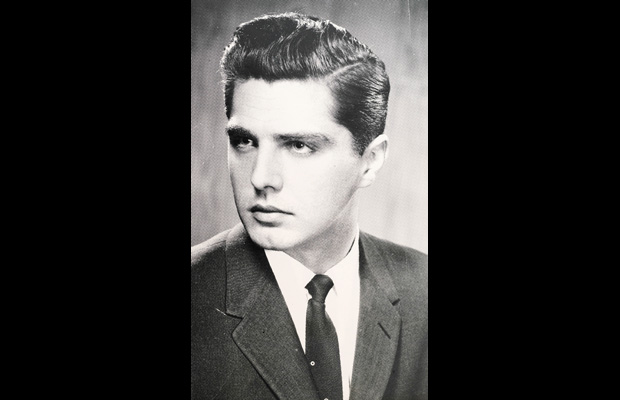
I just discovered this obituary from the Vancouver Province. I worked as a copyeditor (we called them sub-editors) at the Montreal Star in 1975 and 1976. We worked the graveyard shift, midnight to 8 a.m., putting the paper to bed around 6 or so, then often adjourning to a bar across the street for a morning drink. Barry Johnson, a handsome, florid-faced old-hand, usually sat to my right on the rim, no doubt placed there to keep the new boy out of trouble. He had been trained as an air force pilot, but he knew his grammar and punctuation inside out and could amalgamate a dozen wire-service reports into a gorgeous 10-para story with nothing but a steel ruler, a ballpoint pen and a gluepot (these were the old days, let me tell you). He had stories to tell: how he got his nickname Precious, his career as a foreign correspondent, his sideline in the movies (spaghetti Westerns in Italy, a part in a TV mini-series on Casanova in France), his rather hasty escape from Greece in obscure and unseemly circumstances. Barry was a legend, a man bigger than life, but his star was falling, age was creeping on him. Sitting next to him as the newspaper technology changed around us (we were dinosaurs of several varieties), I was always in a spin, in awe and yet aware of the ache of loss, time moving on. I soaked up his stories, while at the same time incubating an idea for my first (published) novel Precious.

Years later, the Star shut down and Barry went through a bad patch. He ended up in Toronto, unemployed, scrambling. My book was out. I didn’t know if Barry knew how much he had influenced me. An old friend from my newspaper days (we worked at the Peterborough Examiner and the Montreal Star together), Mal Aird, arranged for us to meet at the Spadina Tavern. It was a stirring thing, handing Barry a copy of the book. It meant a lot to me; clearly it meant a lot to him. Now both he and Mal are dead. Time eats her children.

dg
.

barry-johnson

Former Province reporter and copy editor Barry Johnson died peacefully in hospital after a long illness Saturday night, with his wife and sister at his side.

He was 74.

Johnson, who was known as “Precious” to his many friends, had a long career in Canadian newspapers, with stops at the Montreal Gazette, Montreal Star, Globe and Mail and Calgary Herald.

The former jet pilot jumped into journalism in the 1950s after a stint with the Royal Canadian Air Force. His writing career also took him to London, Greece and Rome.

“He’s been everywhere,” his sister Patricia Holland recalled Sunday.

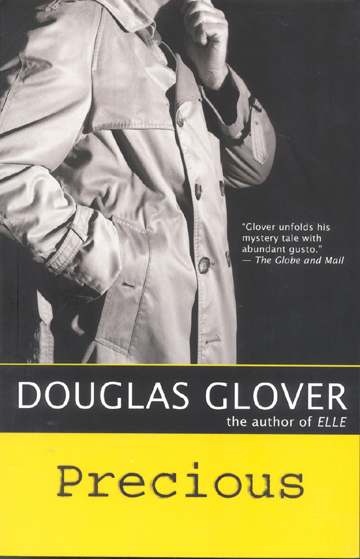
Regarded by many as a lovable scoundrel, Johnson inspired Douglas Glover’s 1984 murder mystery Precious, the tale of “a boozy, burned-out reporter with an embarrassing nickname and a penchant for getting into trouble,” according to Glover’s website.

via Barry Johnson: A precious one gone.

But see also Barry Johnson obituary with more life details here.

precious2

From Precious:

I stayed where I was a few minutes longer to see the hands lock down the last plates, hear the warning bells, and watch the freshly folded newspapers flooding off the line. Twenty years had fled. I hadn’t listened to Uncle Dorsey. When I got out of the air force, I had my wings and a ticket to a gold mine. In the early sixties airlines were offering a million bucks, fifty grand a year, to ex-servicemen who wanted to fly passenger jets. But the thought of turning into a glorified bus driver at the age of twenty-five chilled me. And somehow I thought the money would always be there.

On a whim I took a job covering the police beat for a small city daily not unlike the Star-Leader. Inside of a month I was hooked on the steady rhythmic surge of the deadline, dropping Dexedrine tablets and working eighty-hour weeks, drifting through my free Sundays in the company of chain-smoking, liverish veterans, their hoarse endless talk echoing in my ears and dreams. I got married; I got divorced. The years accumulated like spent butts in an ashtray. When I finally pulled my nose out of the rat race long enough to grasp the situation, when I finally realized Dorsey had been right all along, it was too late to change and too late to kick.

Twenty years.

But, as the French say, even the most beautiful woman cannot give more than she has.

Aug 202011
 

Here’s a charming romantic comedy that turns on the presence of an eccentric cimbalom player named Lazlo. Julie Marden is a violinist and she writes fiction about musicians, with verve and wry touch of comedy. She’s one of dg’s former students at the Vermont College of Fine Arts, and she has already contributed mightily to Numéro Cinq—see especially her lovely essay on the use of thematic passages in Chekhov’s short stories.

Right now, in addition to performing with various professional orchestras, she teaches chamber music to children at the Tufts Community Music School in Medford, MA, tutors Boston area children in reading and math (through the “No Child Left Behind” program), and teaches academic writing skills at an on-line college.  On the side, she also performs in amateur theater productions: Clytaemnestra in Euripides’ Elektra (in ancient Greek), Puck, Hippolyta, and Snout in Shakespeare’s “A Midsummer Night’s Dream,”  Hermione in Shakespeare’s “The Winter’s Tale,” and Elena in Chekhov’s “Uncle Vanya.”  She lives with her daughter Nora, their dog Gracie and a cat Panther in Concord, Massachusetts and Walpole, New Hampshire.

dg

.

THE CIMBALOM PLAYER

By Julie Marden

.

When Jeff first recognized Nina’s voice, he was relieved he hadn’t answered the phone. He’d just walked into his two-room Washington Heights apartment, carrying a package of unassembled moving boxes. Nina was leaving a message, offering him a weekend job playing principal percussion in a college orchestra in Vermont.

“The piece we need you for is Kodaly’s Hary Janos Suite . . .  rehearsals Thursday and Friday evenings, dress rehearsal Saturday morning and the concert Saturday night . . .  pays three hundred dollars plus hotel room . . . it would be great see you again, Jeff, how are you?  Please let me know right away if you can do this.  The concert’s in ten days. I’ll have to keep calling people if I don’t hear from you soon.”

Jeff leaned the flattened boxes against the wall. He hadn’t seen Nina in over a decade, but her breezy, lyrical voice hadn’t changed.  Fourteen, fifteen years ago, they’d been students at the New England Conservatory of Music.  They’d never so much as made out, but Jeff remembered her thick red hair, sonorous viola playing, and a forwardness that had sometimes puzzled him.

He took a beer from the fridge and brought it to the sofa.  He wouldn’t take the job. Three hundred dollars to drive three hundred miles to play with an amateur, student orchestra.  No wonder he was moving, leaving music altogether.   In his twenties, Jeff had gone to conservatory hoping to win a job in a full-time, first-rate orchestra, like the Boston or Chicago Symphony. But he’d never won a job with any full-time, professional orchestra.  Now, thirty-seven, he lived hand-to-mouth, job-to-job: a club-date here, a recording session there, the occasional freelance gig, a handful of private students. He wasn’t starving, but he’d had enough.  In less than two weeks, he was moving back to Hammond, Indiana to live and work with his widower father, who ran the tool and die company that Jeff’s grandfather had started in 1942.

Jeff finished his beer and set the can on the coffee table, next to his answering machine. The room was dim. The red light on the answering machine was still blinking.  Jeff reached over and erased Nina’s message.
.

By Sunday afternoon, most of the moving boxes were assembled and packed. One remained open, though, parked by the fridge, filling with last minute objects like the fake-copper-rimmed clock Jeff had once found in his parents’ attic and brought to his first apartment in Boston.  He’d just removed it from the wall by the stove and was lowering it into the box, next to a framed, bubble-wrapped photograph of his mother. The phone rang.   Jeff was sure his father was calling. He reached to answer, glancing habitually above the stove, only to see empty air and a circle of clean white paint where the clock had just been. He forgot to speak.

Continue reading »

Aug 192011
 

There is a mystery, nature’s shadow, that haunts our relationship with our pets. So often they are the reservoirs of the love, pity and dreams of connection for which we are not allowed an outlet in our ordinary lives. The fierce intensity of this relationship is easy fodder for satire, but the utter strangeness of the attachment subverts easy criticism. There is something exceedingly human about our love for small, furry non-humans. Human beings use language, make art and keep pets. Go figure.

Karen Mulhallen is an old and dear friend. DG and his sons have stayed at the cottage in Irondale and the house on Markham Street. We knew Lucy (pictured with Karen in the accompanying photograph; NB dg’s dog is named Lucy, too) and Starlight and Dawn and Dusk, the whole menagerie and their successors. So these poems have a special, personal importance. Karen has published 16 books (and numerous articles), including anthologies, a travel-fiction memoir, poetry and criticism. She has edited more than 100 issues of Descant magazine. She is a Blake scholar and a professor of English at Ryerson University in Toronto. DG edited and wrote an introduction for her book of selected poems Acquainted With Absence. Her most recent collection, The Pillow Books, will be published by Black Moss Press this fall (see cover at the bottom of this post; see also three poems from this book published on NC in February).

The current poems published below are from an even newer book, Domestic Love, of which Karen writes: “It is about our relationship to domestic animals, cats dogs etc. The history of visual art is so rich in human interactions with their pets. And there are some wonderful prose and poetry books which also explore this. I thought, having written so many things which include pets it was time to devote an entire book to our relationship with these creatures with whom we are so privileged to share our lives.”

dg

.

Poems from Domestic Love

By Karen Muhallen

.

Irondale,
May on the Haliburton Road Number 23
No Exit

Carpet:
A fallen bird’s egg, broken blue
white stars of snow drops
masses of trilliums dog-toothed yellow
violets pendulous bells, the deep yellow fuzz of dandelions
moss, spikes and fur, acid green softness
violets deep
forget-me-knots
myrtle light
sky blue cumulus puffs
a few threads of cirrus
beaver pond a blue eye trees at far shore
waterlily pads in the morning gold
dried pods of rushes ellipse of pond
milk weed
verticals and horizontals of fallen trees
wind, hardwood
scrub with elder flower pods
white birch
lake caught from elevation

Road:
No Exit Road
hump, rise and fall and then fall no more.
Over the quiet a bird calls,
a plane leaves a stream a double wake,
alone on the lake one power boat
time and it passage
from light to dark.
The fox crosses as the sun rises from right to left
taking gold on his tale

Woman:
Six in the morning and no one on the lake,
gold spreads
shore approaches shore
bird calls and calls again,
chorus begins.
The birch tree is white, luminous white against the even
morning light which spreads
down the hill to the eastern shore.
Every sapling, every green branch
distinct.

Gold becomes greener, hill becomes
clearer, bird song
sweeter.

I lift my eyes to the hills whence
cometh my peace, comforts do increase,
gold moves off from shore becomes
dark mirror moves toward
the south. North becomes day
gold takes the lake, silver
birches spread their limbs, tall
white. Birdsong becomes even, continuous
No exit from Road 23.

The fox crosses down as the sun rises right to left
taking the gold on his tail
road and trees are dark, the black top smooth
then the city spires arise
on the road a small mound of dead fox.
One option, no exit,
out out brief candle.

Once there was a carpet,
..there was a road,
..there was a woman;
..and nobody loved as much as she,
..but me I loved him more…

 .

Spitz of the Cimelia

It was a misty early morning when the boy first saw the shadow
move from the stand of willows behind the burnt red of the
dogwoods near the pond’s edge across the grass toward his
bedroom window.

Not yet nine o’clock and not a school day and he blinked the sleep
from his eyes and looked again
but there was nothing there.

The mist never lifted that morning, the sky was an even light grey,
and the trees, black willows
arms stood dark but blurry in the density of the watery air.

All night the sound of the rain had entered his dreams,
and this morning there was still a drip drip drip from the trees
and the roofs of the farm buildings lying low on the land,

not far from the quaking bog.
The birds began their commotion despite the grey of the morning,
and one of the farm cats, a male, the large orange tabby

began to yowl near the back door.
All early winter they would leave their wet mittens
and soaked boots on the small side porch.

Gradually a boot or a mitten would disappear from the heap, and
throughout that early winter morning departures for school would
become moments of crisis, one child or another

hopping on mismatched footgear down the lane to the school bus.
He was only seven, going on eight, his brother was five and in
kindergarten, one older sister, only a year older,

and at home a little sister, a toddler.

One late spring day, when the day lilies were just in bloom, we
were out in the woods playing and stopped to eat our lunches,
peanut butter sandwiches. Out of the brush streaked a comet of
white fluff

and the sandwich was gone. He was ready.
After that we went to the woods to see him, and we always
took him his own lunch of peanut butter sandwiches.

And we were not afraid, though he was a wild dog.
A wolverine, perchance.
A good dog, as Beowulf might say.

As the bog flowers began to appear, pitchers opening to swallow
the first insects of summer, he led us deeper and deeper into the
woods and one day showed us his cache,

his cimelia
of all the lost boots and mittens.
He was aerialist, master of the woods and grasses,
leaping in the air to catch a field mouse,

all summer he was our companion in the woods and the vly
but  each day with us he moved closer and closer to the house
and then he began to sleep out on the porch until winter came.

As cold deepened he moved inside
usually slept next to my bed, the lower bunk.
He would not be in the same room as my father,

nor any other person over six feet tall
even though my father fed him most of the time.
Table scraps, never dog food.

He refused dog food.

We were four, but he hung out with me most of the time
because I did the most  things a feral dog would be interested in-—
woodsy things.

His name was Duffy, but I don’t remember how he got it.
He was a whitish spitz, sort of a cross between a Finnish spitz
and the yappy cotton candy dogs you see.

Canis pomeranus,  according to Linnaeus, not nearly so big
as a Siberian husky, or one of those Asian Chow-Chows
but his tail curled up and he had a thick coat and small ears.

Spitze are wolves of course, but he never barked like a wolf.
And if he were in touch with his ancestors he wouldn’t say.
He did not like cats, but he was otherwise purely virtuous.

The quaking bogs were our playgrounds.
The one nearest to Oneonata is completely closed over by moss,
with no trees until you get right to the edge.

In the middle it’s like being on the sea on a huge underinflated
air mattress. Its border is all cattails, large sausage spikes rising up
nine feet, rushes with their rounded stems and small yellow

flowers. Thick mats of sedges in circular mounds moving out from
the shore of the bog, their sharp edges cut us as we played, and the
bulrushes protruded from the watery bits of the bog.

The part I didn’t tell is the one instance a dog ever talked to me.
I was ten, just about to turn eleven, and out by a stream
on our farm, the sky was a very deep blue above the cumulus

clouds but their bottom edges were slate grey and threatening,
suddenly I thought he was there with me, saying goodbye.
Though neither his presence nor his talking was finite

or organical, as Blake would say.
And I never saw nor heard of him again.

.

Elegy for Starlight

Like a flight of geese you came through a February blizzard
A small black white and bronze mass of carapace
with bright blue eyes

I warmed you by the fire as they departed.
Home, home at last.

If I were to write the chronicle of your life
staving off the maw of Father Time

devouring always his young hostages to fortune
it would be to begin now, one year after your passing

while grief is fresh, but tears
have ceased, or so I would believe.

This morning the far western shore
replicates, duplicates itself

in the glass of water.
You are my Pangaea;
I your Gondwanaland.

And now to put an end
to all my journeying

open the window
let the warm love in.

This morning at last
the lake is glass on the far side
ripples nearby, light mist rising.

This Sunday morning
just before departure

the lake at last gave back
that quiet I had sought

the mist had gone;
it was now sheer glass

so smooth a passing motorboat
made scarce a mark  or sound

to the west someone was gently
tapping, hanging perhaps a

picture of the mind or of the
thumbnail fawn toad

that hopped across my path
as I ascended to depart.

.

A Delight of Pigs
Overcomes Household Stigma

Singularity being the Mark of Cain in human society,
the only solution is the acquisition of a household of warm fur

Markham Street Household of large-haired warm females
language not confined but defined by barking growling hissing
chattering whistling and cooing.

Steady diets of fish and organic vegetables for Miss Lucy.
Steady diets of organic greens, melons and good books
for all other inhabitants.

Collage being the ultimate post-modern art form, democratic
and encouraging of viewer participation invites you to enter
Markham Street interactive space and play with the pigs
Dawn and Dusk

who being toupees on eight feet are easily distinguished
by colouring, Dawn of course having an orange face
and her sister a puff of smoke as light falls.

To bury one’s face in a guinea pig’s back is to smell
a meadow of wild flowers on a warm summer day

The story of how Dawn and Dusk came to live in a corner
of the dining room will have to wait for another episode of
How the House Turns

but it should be stated that Dawn and Dusk, aka the Little Girls,
prefer the corner of the dining room to the great outdoors,
to their antique carved wood Rajasthan dovecote in the garden,

to the kitchen and the living room, and might
even prefer the dining room to the grasslands of Peru
where their ancestors roamed free and mucky
for most of their organic filled green grass lives.

For Dawn and Dusk, the fly in the proverbial ointment
is the giant: ‘Pssst, Sis here comes the Giant’.
The giant like the pigs is warm blooded with immense

circular green and yellow hands off which tumble lettuces, alfalfa sprouts, melons, green peppers, apples, sliced green grapes,
coriander, swiss chard, and in spring and in summer

the sweetest of fresh grasses, lemon balm and parsley.
Before Dawn and Dusk came to live in their two-storey palace condominium, it was the home of Starlight.

Starlight had blue eyes, huge testicles, and a little penis
which only appeared when his belly was gently pressed.
Starlight took tea regularly with the giant,

and the giant white fuzzy called Miss Lucy.
In the evening, he lay on the white sofa with the giants
and he smiled, and sometimes contently pooed and peed

on whomever he lay upon. The white sofa
was Starlight’s favourite corner of the universe
because it also came with a big book

which the giant of the large hands held up conveniently
for him to chew. His favourite book was The History of Reading,
though he also had a nibble on Through The Looking Glass Wood.

Alas, Starlight passed over, much to the sorrow
and the continuing depression of the giants,
but the chewed corner of his favourite book remains.

—Karen Mulhallen

Aug 182011
 

.

.

One of the great pleasures of my childhood was reading Classics Comics versions of great books. The proper name is Classics Illustrated. I once had a collection, gone to dust. But I just found this site, Tom’s Place, which has some of the issues online, a treasure trove. Going through the complete list, I am not surprised to think how my reading of certain books is completely coloured by these comic illustrations: The Last of the Mohicans, With Fire and Sword (my favourite), Oliver Twist, A Tale of Two Cities, The Time Machine.

dg

Aug 182011


.

Ian Colford is an author and librarian (not a bad side occupation for a writer) at Dalhousie University in Halifax, Nova Scotia. He has had stories and commentary published in about 20 different print and online literary journals including “Laurianne’s Choice” in Numéro Cinq. His 2008 story collection, Evidence, was shortlisted for several prizes, among them the Thomas Raddall, the Danuta Gleed and the ReLit. It won the Margaret and John Savage Award for best first book. 

The Crimes of Hector Tomás is a novel the action of which takes place in an unnamed South American country during a period of political turmoil in the 1960s. Hector is fifteen. He has committed an assault, and rather than risk his arrest his parents are sending him away to live with his aunt and uncle on their farm in Envigado. For a number of months his father’s behaviour had aroused Hector’s suspicions, and the assault was motivated by Hector’s jealousy of another boy, Jorge, on whom his father had been lavishing attention. Nadia is Hector’s girlfriend. Hector’s brother Carlos is also mentioned. A few years earlier Carlos became involved with a resistance group. One night he was abducted by armed thugs. He has not been seen since. Parts of the novel were composed at writing retreats in the US (Yaddo) and Scotland (Hawthornden Castle).

dg

.

From The Crimes of Hector Tomás

By Ian Colford

.

The rickety train skirted the mountains, passing villages that were no more than clusters of huts and shanties, occasionally winding its way up into the hills and chugging laboriously across a high plain. There were frequent stops. Hector could hear and see, in the warmth of greetings and in the eyes of children trying to sell plastic Virgin Marys, molasses drops, and dried figs to the passengers, that the train’s arrival was a momentous event for the people who inhabited these parts.

Progress was slow. He had plenty of time to drift from one sweltering compartment to another, to watch the ocean pass by on his right and the mountains on his left.

His belongings filled a single small valise: clothes, toiletries, a deck of cards, a few prized superhero comic books: The Flash, Spiderman. He wore his only pair of shoes, which still bore traces of Jorgé’s blood. The lazy swaying of the train made him restless and he did not like the way his traveling companions looked at him—sullenly, as if he represented all that was troublesome in their lives. The soldiers in particular, of which there were many, seemed annoyed by his presence. He did not trust any of these people and when he roamed from one compartment to another he carried the valise with him. He took it with him to the toilet. He saw how the other passengers watched him and knew they did not trust him either, and for the first time in his life he began to suspect that the black hair and swarthy complexion he had inherited from his mother’s family marked him in some way. The man who examined his ticket did so with a wary frown, as if he could hardly believe there wasn’t some trick being played on him. Sitting by the window half dozing, Hector inadvertently met the glance of a young mother, and at the moment of contact she gathered her baby close to her breast as if to protect her from the evil eye. What did they think? That he was dangerous? A murderer? Many people had black hair and skin darkened by the sun. It did not mean they were murderers. He smiled at the woman with the baby, but she lifted her chin and did not smile back. A few moments later she stood, collected her things, and left the compartment.

The landscape was parched. The sun beat down without mercy and Hector recalled the geography lesson in which his teacher had told the class that certain regions of the country had not seen a drop of rain for a hundred years. In some areas people working the fields paused and stared as if mystified, watching the train pass them by. Hunched and motionless, they seemed like stumps from huge felled trees. Oxen and goats huddled behind sun-flayed wooden fences had a look of doomed resignation about them.

Continue reading »

Aug 122011
 

.

.

What It’s Like Living Here,

by Allison Kaufman in Connecticut

.
Living by the Numbers 

Seven days.  You check your watch constantly.  You live and die by the ping of the calendar on your phone.  Realize that there is slight irony in the fact that you are writing of this place with only seven days left before there are seven states between you and this desk.  Seven being the magic number, not in the lucky sort of way.  Seven being the number of days that you work twenty-four hours.  Seven being the number of blocks there are in the daily schedule.
It’s only been three years.  You’ve done everything you can.  You repeat this mantra.

You’ve been a parent now for three years.  Not biologically, but in dorms.  You sleep in an apartment that is likely larger than any you will ever own.  There are 10-foot ceilings, a handrail that snakes around the living room, and a kitchen whose appliances and cabinetry are older than you are.  You install pendant lighting.  You paint (Nantucket Grey).

.

.

Your charges in your first year were 16 junior and senior girls.  Your toughest disciplinary issue was dealing with a girl who left a douchebag (literally) with a bow on it in front of a neighbor’s room.  You fought laughter while scolding the seventeen-year-olds.  You noted that there were only 4 years separating you from them.  You wished you had thought of the douchebag gift your senior year of college; a roommate of yours, the one you and your friends called Sandy Vagina, could have used a wakeup call.
Continue reading »

Aug 082011
 

.

Sheryl Luna’s poems are brimming with sincerity—and they seem to elucidate the actual while reveling in the cosmic. Her work offers a palpable humanity, stemming in part from her multi-cultural heritage that she simultaneously strives to reconcile and illuminate. Having known Sheryl over the years, I remain impressed by her unwavering self-examination and emotional tenacity.

Widely accomplished as a poet, critic, and teacher, her credentials are also noteworthy: Sheryl Luna won the inaugural Andres Montoya Poetry Prize for emerging Latino/a poets, and her first collection Pity the Drowned Horses was published by University of Notre Dame Press. She has received fellowships at Ragdale, Yaddo and the Anderson Center. She also received the 2008 Alfredo del Moral Foundation award, funded by Sandra Cisneros. Poems have appeared in Georgia Review, Prairie Schooner, Poetry Northwest, Amherst Review and others. She is also a Canto Mundo fellow. She blogs at Dialectical Migrations and writes a review column for the El Paso Times.

It is certainly a pleasure to have Sheryl’s work here on Numéro Cinq.

—Martin Balgach

.

Four Poems
By Sheryl Luna

.

Equus

.

If you try to ruin me,
saddle me with man-made
doubt, I’ll gallop past large pines.

Aspen will bleed fall as I run
forgotten trails, seeking
a sunlit path.

My sway back will sweat slick.

Arctic and blazing,
I’ll grow wild,
rear up and kick.

If you try to break me,
remember, I’m a maverick
on a mad run.

Corral me?
Herd me?

A lasso burns my thick neck.
I thump, trot, and kick.

Use me like property?
Cage me and blame me?

I’m hard-hoofed, snickered trouble.

Just when you think you’ve won,
I’ll buck.

.

Continue reading »

Aug 072011
 

Illustration by Frank Fiorentino

.

My Owls

Essay by Kathryn Kuitenbrouwer

.
In the stories I’ve been writing lately, all set in and around my neighbourhood, a great many animals have arrived as if in the Eden of my mind, they are a necessity. They are not always kindly creatures. And they are there in the created neighbourhood of my stories even when they are not necessarily in my actual neighbourhood. And even when they are something like the animals that can be found in my actual neighbourhood, they are certainly not real in the way they enter the space of the stories, which can be both violent and inexplicable.

Yet, there are animals in my neighbourhood.

Over the May 24th weekend — a sacred Canadian long weekend — a Screech Owl was spotted in a Linden tree on my street.

It was neighbour # 82 who noticed the owl in his front yard tree and told me about it — actually, stupidly showed me the owl in his tree. He can be forgiven, as he did not know what havoc my imagination would play with this knowledge. The story should start here but this was, in fact, the second central problem, now I see, in retrospect.

Continue reading »

Aug 032011
 

LineUP1905

Line Up

Tahrir Square, August 2011

Photographs by Natalia Sarkissian

.
Since the last time I wrote about Egypt after the Revolution, just a month ago, the atmosphere has changed. The military police are back in Tahrir Square after several recent protests became violent. Tanks have once again been deployed. And in the side streets, vans and more police sit, at the ready. It’s Ramadan, and according to local newspapers, “this year it will be more political than previous ones.”

Today, August 3, history is being made. Today Hosni Mubarak has been flown in from Sharm el Sheikh. His trial is set to begin. Today, armed with my camera and accompanied by my driver and my husband, I went to Tahrir Square. In addition to the police, we found others there, like us, gathering, waiting. Wondering what is to be.

LionGateBridge1971

Bridge over the Nile at dawn

DrivingwithMo2094

On our way with Mohammed

Continue reading »

Aug 022011
 

.

The DOW is down 266 points today; America waits for the consumer to spend money so we can get out of the current crisis; the consumer won’t spend money because the debt ceiling deal promises more uncertainty about pensions, medical insurance, and jobs; it’s a merry-go-round spiraling down; and the ancient gods appear as cartoon musclemen in 3D instead of guardians and saviours. In these David Helwig poems, Lady Godiva has joined the Tea Party to protest paying taxes and money distracts us from infinities. There is, perhaps, nothing to do but write comic poems about the current situation, Post-Empire poems, in the current NC jargon of the day. These poems are taken from a 47-page long poem or group of poems called “Seawrack.” David Helwig, as most of you know, is an old friend; he looks like an amiable Old Testament prophet in his author photo. He is an amazingly prolific author of poems, stories, novels and memoir. His book of mystery stories called, appropriately, Mystery Stories, came out last fall. Oberon Press is publishing a novella called Killing McGee this fall (the main character is obsessed with—among many things—the 1868 assassination of  Darcy McGee). And Biblioasis will publish in 2012 a collection of David’s translations of Chekhov stories, one of which appeared on Numéro Cinq last year.

dg

.

From “Seawrack”

Poems by David Helwig

.
.

All men are mortal: this
the philosopher’s first premise.

And second, Socrates is a man.

Outside our bedroom, night rain
comes down, chill, polyrhythmic.

……………………*

In each ear tickety percussion distracts
us from infinities. Once discovered
a pretty frisson bedecks the edge of use. The muse
tickles herself with feather dusters, lust
whiffling its stroke to court her smallnesses.
Catch trifles sidewise to consequence;
a premise means only its brisk shape.

Is it bearable to the hurt ones,
our sheen of sensation? A blue garden
tinctures the periphery. Skywise
space hollows itself for events. Old pal,
you looked so very brisk that night
when sweet baby came home with a dog
trained to sniff out the truth of flowers.

Seven is chosen the absolute number
for measuring beauty. Listen closely, my clever ones,
your by-names will not be forgotten. Though taste
of cake grow bitter as myrrh and musk,
your sandals shine  deliberate and gold.
And nothing is forsworn, beauty
becomes itself by being nothing else.

.

……

The slap of a screen door closing
in nineteen forty-something,

hot August, flies in their hundreds.

Drifts of goldenrod, seasonal, prophetic,
grow tall here in the changing light.

…………………..*

Who was a child
in time’s elisions,
summer, the prime
element sand.

That was. That.
Doorslap. Voices
from unceilinged bed-
room to bedroom.

The thrill, to hook
a cold bright living fish.
Always the secrets.
That. Flies beyond count.

Time’s elisions:
unseen, unheard
some great wheel
turns the sky.

.

.

Scrubbing garlic at sunset,
in a bucket of mud-red water,

fat bulbs shedding earth.

Take to the road, night traveller,
maybe never to come back.

…………………..*

Once we knew a song, and how it told the story,
Little Mouse and Felicity setting out
all barefoot through the mud-mush,

around them holy universe a-twirling,
buddy on the old railroad beating time;
they dandled Eve’s sweet apples,

mud-red to the knee as they sang hymns
about the attainable tough-ass farms
with mortgage documents long as bibles.

I’ll feed you spicy buds with sticky fingers
the Little Mouse lined it out
that fox-tailed whistle tune in quavers.

Felicity stood waving on the tracks,
baked seven moon-pies for buddy on the railroad,
and mud was ever with them.

Once we knew a song, and how it told the story,
Little Mouse and Felicity setting out
and coming home with their new hymns

that run downhill like water.

.

.

That season here again,
bees scour late-flowering thyme,

sun in retreat, still hot, still bright.

On the porch an open book
exposits biological enigmas

…………………*

Ha. Ha. Ha. Sudden glory,
writes the son of the angry vicar;
a salutary warning against democracy.
Nota bene: the pope farts like all men,
matter in motion. The king instructed
in mathematics can measure
his royal enormity. Ha. Ha. Ha.

Ha. Ha. Ha. The clown howls
for his dildo-diddle-darling,
waves a mute stuffed penis
at the delighted crowd.
The honeybee queen mates
with her drone at the top of the sky,
rips off his parts. Ha. Ha. Ha.

Ha. Ha. Ha. Long-leggedy
dancers fall to the ground,
subjected. Fat boys in drag
achieve transfiguration,
matter in motion. King Flea
sucks blood in the bush
of the loveliest. Ha. Ha. Ha.

.

.

Shorebirds unmoving
like rock, sand, shell; invisible
here now or long gone.

………………….*

………………..just

In accord with one accurate word,
or a permission from the high mind
that watches intently the idea
of ourselves joining it here

in proportion, in right proportion
recorded in books bound in calf
shelved in dark lengths
of present time; clock clicks onward.

Beyond the window, the pale daffodil
sky darkens to green, violet, and offers
its blackness for stars as it must
at such a becoming moment.

Within, what has achieved persistence
the abiding-with, what was, is,
what will be the event of quiet mind
in accordance, in order, in this room.

.

.

The crickets silent,
frozen to death or hidden
in somewhere somehow.

………………*

The cold mood, canine:
a punctuated screech
from monkey mind
distracts it; meanwhile

the flirt and wimble
of the so fleshly
Miss Concinnity dis-
roots all deepness.

Hocus-pocus, the dog-
latin creed broods
over the winsome drumming
of the theologian’s heels.

Bob the urgent surgeon
redesigns the ductwork.
The joker, brindled,
pink, lies standing up.

.

.

Wet snow, a north wind,
the poet’s occupation—
reading all weathers.

…………..*

Lady Godiva, doubly bareback blonde
waves her scrawled sign,
END UNFAIR TAXATION,
and the citizens keep house

bar Tom the poet, who word-
struck, avid for inklings,
peeps her from toe to temple, bush
silvery, crinkled, lichenous.

Asked for opera, give them the works,
everyness of tricks and trades,
of which, of whom on all the notes,
dancing dogs and the climactic squillo.

A  sad tale’s best for winter.
Lock the doors with the universal key.
NO ADMITTANCE. The forbidden
matches the perfectly desired.

Lay out the tale of Hansel and G.
or Caesar mounting the throne of Egypt
as Jack the neighbour spills the beans
on a mutant township of titans.

Hopping on one foot, gump, gump, gump,
prevents an easy slenderness, while grace
goes toothless and badly bald. Sharp,
the surgeon’s foresight tunes the interlock.

.

.

Recall that bedroom,
the stove pipes from the kitchen
cold in the mornings.

…………….*

The cuckoo-clocks hoot all night
in that tallest of landscapes.
The accidental virgin carries
a clutch of red morning flowers
out of the Schwarzwald.

Beyond the far-sighted, mountains
where birds and animals master
six available languages;
those who arrive achieve
the unlikeliest of wisdoms.

Wotan and the Seven Dwarfs
audition for Hollywood
up on the crags as Windy and Sol
run bounding arpeggios
on lengths of natural horn.

Those who can, do; those
who can’t, sing opera—
the second law of the brothers Grimm.
Each goddess must proclaim herself
free to die of her own disease.

Beyond the white mountains
the cuckoo-clocks gossip hourly
about the private life of demons,
and a translated avian soprano
hangs caged in each hot kitchen.

.

.

Socrates is mortal: QED.
The concepts dance like numbers.

Philosophers tell lies about desire

and the wisdom of hairless boys:
to prove the obvious.

……………………*

In each eye the texture of pelt distracts
us from infinities. The spooks gabble
their old malarkey, wholesaling thrills. The muse
pleases herself with foxtails, fingertips; a humming
electrifies the dapper suit of epidermis.
Exit: he goes out. Wash dark things white.
A conclusion reveals only its own perfection.

Is it still bearable to the lost ones,
our aching gladness? A blue garden
awaits us, spans our path, felicities
of petal, air, twilight. Old dog,
you chewed the bones of so many good things,
after sweet baby showed us her tattooing
all in the language of spice and ecstasis.

Seven is the absolute number
for measuring it all. Listen, my pretty ones,
while I recite the four lovely imperfections. Though truth
grow bitter as the crimsoned and demented,
your toenails will preserve the gloss of silver.
Whatever is forsworn, foregone, beauty
becomes itself still, clamant, ubiquitous.

—David Helwig

Aug 022011


.

Here are new poems from Melinda Thomsen, a freshly minted MFA from Vermont College of Fine Arts, but already dazzling and prolific. Melinda Thomsen’s poetry and book reviews have been published or are forthcoming in journals such as Poetry East, Big City Lit, New York Quarterly, Home Planet News, Elysian Fields Quarterly, Alimentum, Heliotrope, and The Same.  Anthologies include Blues for Bill: A Tribute to William Matthews and Spring from Gatehouse Press, Great Britain. Finishing Line Press published her chapbook Naming Rights in June 2008. These poems are from her next collection, Field Rations, to be published in October 2011.

dg

.

From Field Rations

Poems by Melinda Thomsen

.


.

.
Suppertime, December 28, 1944

.

Every night his mind ticked on
at 1:00 AM while she was fixing supper.
Was it like last time? Biscuits, fried chicken

and bean salad they saved from noon.
She’s sculling water through some peas.
He felt cool air running around his hands

and his stomach pressed against the sink.
Movements of her fingers echoed in his.
His tongue moved around on its own

but what was it saying? His hand drifted
up her leg and across her back, over
and over like the touch of butterflies

that seemed to land on her shoulders.
He was kissing her when the pulsing caress
of her lips answered his, was she there?

Was she stopping to close her eyes?

.
Read the rest of this entry