Jun 162017
 

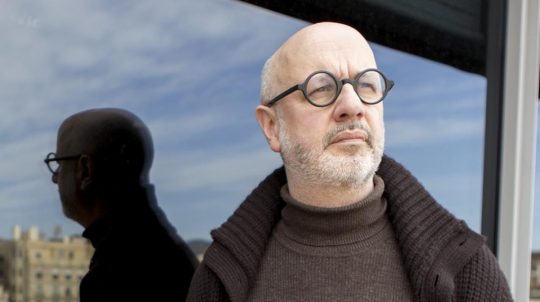
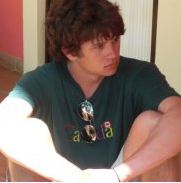
Photo by César Cid

Rodrigo Fresán’s The Invented Part is a wild ride of a novel that takes on many different forms. The following excerpt comes from early in the book, and concerns two young documentary filmmakers who are working to put together a project on the novel’s nameless protagonist, a writer who recently threw himself into the Hadron Collider and merged with the God Particle.

As they piece together footage at the writer’s home, they also gather quotes and passages said by the writer in various interviews throughout his career. These are frequently hilarious and insightful, and they stretch over many pages. Presented here are just a few of the quotes collected by the filmmakers, which give the reader a sense of author Fresán’s playful approach to storytelling. Note: all bracketed ellipses are part of the novel’s text.

The Invented Part is translated from the Spanish by Will Vanderhyden.

— Benjamin Woodard

.

*A recommendation of Pink Floyd’s Wish You Were Here and Bach’s Goldberg Variations by Glen Gould (his second version, almost a farewell) as “an ideal soundtrack for sitting down and remaining seated and writing. [. . .] Perfect music for trying to attain that thing Fitzgerald said, that thing about how ‘all good writing is like swimming under water and holding your breath.’” And “Big Sky” by The Kinks as “the best way to kick-start every workday. [. . .] A kind of supplication. An Our Father who is, indeed, in heaven because he is the heavens. And also a way to remember that, while a good part of the writers of my generation wanted to be U2, it’s not bad at all, better in fact, to want to be The Kinks. True, the tours would be more uncomfortable and less spectacular. And the loneliness of the backstage hallway before the instant glory of those hundred meters. But better to be like Harry Nilsson than like Bono. Do any of you have even the slightest idea who Harry Nilsson was or is? Or Warren Zevon? And, just to be clear, I’m not talking about their dissonant and clever self-destructive epics but about their constructive intimacy in the moment of composing subtle and perfect songs. The exquisite way they assemble and disassemble verses and choruses and bridges so their poetry can cross over to the other side where you’re waiting for it. So, that’s how I think about the writing of stories and novels. A particular balance of feelings and sound and phrasings and word games. And the Greek Choir holding hands and singing ‘He goes around saying he’d rather be a rocker than writer, doo do doo, doo do doo, doo do, do doo do doo, doo do, doo do . . .’ In the end . . . Where was I? Ah, yes, I’ll find an easy example: better to be like Ray Davies than like Bono, I think. And I’m repeating myself. I insist. The Kinks. The ones of ‘You Really Got Me,’ Right? But I think more about a song like ‘Big Sky.’ In ‘Big Sky’—like Harry Nilsson in ‘Good Old Desk’ singing to his divine desk; or Warren Zevon in ‘Desperados Under the Eaves,’ feeling down and listening to the sound of the air conditioner, which suddenly inspires a final and majestic crescendo—Ray Davies invokes, without getting too anxious, a sort of unknown deity who doesn’t care much about us. Bono, on the other hand, time and again desperately kneels down in intense prayer to someone he knows well—to himself [. . .]. Staying on topic—and band—I can’t think of a better song than ‘Days,’ also by The Kinks, as background music for lowering the blinds at the end of a workday. But it might be better to listen to Elvis Costello’s crepuscular version and not The Kinks’ original . . . Ray Davies. Thank you . . . All of a sudden I remember that once, a long time ago, Ray Davies rescued me from a University lost among the Iowa cornfields and made it possible for me to go to New York, to hear him sing ‘Days.’ I was there, as a sort of guest writer in an academic B-movie. And I couldn’t leave that place. I was held captive by the bureaucratic spell of a special visa that didn’t allow you to travel around the United States unless someone took responsibility for you. So I found out that Ray Davies was going to play in Manhattan. And I’d never heard or seen him live and in person. And I needed to see him and to hear him. So I tracked down the number of the hotel where he was staying, I was able to get them to put me through to his room and he answered and I explained the situation. He had to talk to the Dean so they would let me leave, so I could go to his concert. Of course at first Ray Davies thought it was a prank being played by some malicious friend, and then, to verify that I was an authentic fan, he made me sing several of his songs over the telephone. Not the easiest ones. No hits. Songs like ‘Polly’ or ‘Too Much on My Mind’ (one of my all-time favorites) or ‘People Take Pictures of Each Other’ or ‘Art Lover’ or ‘Scattered.’ And I knew all of them. But pretty soon he got tired and hung up. A few days later, thanks to a message he sent to the Dean, I left heading east. Ray Davies invited me to have tea with him; he gave me a ticket, and said, ‘This is as far as we go and we’re never going to see each other again, right?’ A true gentleman, yes. An artist who merely raised an eyebrow above the Darjeeling-perfumed steam that rose from his cup and smiled somewhere between amused and sad when I mentioned, indignant, the gall with which, at that time, Blur and Oasis and Pulp stole and falsified his style and songs, reveling in money and fame and barely acknowledging his genius and tutelage and mastery. There are no writers, no writers of books like that. And if there are, I’m not aware of them. There are no fans of writers like that either. Fans of musicians are happy to know their songs and to howl them at concerts or inside rooms with doors shut tight. Fans of writers, on the other hand, are more dangerous: fans of writers want to write, to write something of their own and, with their own writing, to rewrite the other and what the other has written.”

* Something that John Banville said to him once, as they walked around the outside of Martello Tower in Sandycove, about how “style goes on ahead giving triumphal leaps while the plot follows along behind dragging its feet.” Later he wondered whether it might not be possible for the style to go back a few steps and lovingly lift the plot up in its arms, as if it were a brilliant and complicated child, and turn it into something new, different: into a stylized plot, into the most well-plotted of styles. It was Nabokov, and he almost always agreed with Nabokov, who postulated that the best part of a writer’s biography didn’t pass through the record of his adventures, but through the history of his style. Style as an adventure and adventure as style, yes.

* Something he once told someone, while they walked around the outside of who knows where: “The gods of one religion frequently become the devils of the religion that follows it. Something similar happens with writers, with the writers of a prior generation when they are evaluated by the writers of the generation that follows them.”

* Answer: “What would I like as an epitaph on my gravestone? Easy: my name, the word ‘Reader,’ and the years 1963-1,000,000,000 and increasing. And it’s not that I want to live that long; but, warning, the code for the impossible second number passes through the word ‘Reader.’ Which is to say: more time, all time, to be able not to continue writing but to continue reading . . . When I was very young and still concerned with things like my photo on the jacket flap of my books, I once posed wearing a black T-shirt where, written in white letters, it read ‘So many books . . . so little time!’ . . . I bought it in a New York bookstore that no longer exists. The T-shirt no longer exists in my closet either. It disappeared along with those other T-shirts: one with the legend ‘Likes Like/Like Likes’ and another with a reproduction of the cover of Sgt. Pepper’s Lonely Hearts Club Band, where a friend who designed album covers had inserted my face next to that of William S. Burroughs. But the thing from the first T-shirt—I still think that. It’s extremely unfair that, clearly, neither I, nor anyone else, has the time, all-the-time-in-the-world, to read everything you need to read first in order to write later. To write the best that anyone can write . . . Faulkner, without going any further. I have him here, all the Library of America tomes, waiting. I read him a little and poorly in my adolescence, in deficient translations (which, also, might bring me to all the time I lack to reread, which is like a glorified version of reading) and there he remains, waiting for me. To read? Or not to read? Now? In summer or winter? Is it better that the climate and temperature of the external landscape correspond to Faulkner’s South? Or just the opposite? Next year? Is my writer DNA ready to receive such an explosion and, maybe, find itself changed forever? Who knows? Faulkner is there and there Faulkner stays, howling, like one of those dangerous wolves with one foot tied to a chain whose exact length is unknown. So how close can you safely get without him jumping on you and eating your face? Or, unbeknownst to you, chewing through his own foot and lying there, waiting for you? A lone wolf. Never forget how Faulkner responded to Hemingway suggesting that writers unite and make themselves strong, like doctors and lawyers and wolves. Faulkner mistrusted writers who came together and formed groups and generations, saying they were doomed to disappear, like wolves who are only wolves in packs, but are nothing but docile and harmless dogs on their own, dogs that are all bark and no bite.”

— Rodrigo Fresán, Translated from the Spanish by Will Vanderhyden

Published with permission from Open Letter Books

.

Rodrigo Fresán is the author of nine novels, including Kensington GardensMantra, and The Bottom of the Sky. His works incorporate many elements from science-fiction (Philip K. Dick in particular) alongside pop culture and literary references.

§

Will Vanderhyden received an MA in Literary Translation from the University of Rochester. He has translated fiction from Carlos Labbé, Edgardo Cozarinsky, Alfredo Bryce Echenique, Juan Marsé, Rafael Sánchez Ferlosio, Rodrigo Fresán, and Elvio Gandolfo.

.

.

Jun 162017
 

Rodrigo Fresán elegantly balances the strange with the common.
— Benjamin Woodard

The Invented Part
Rodrigo Fresán
Translated from the Spanish by Will Vanderhyden
Open Letter, 2017
$18.95, 552 pages

.

The opening of Rodrigo Fresán’s ingenious, postmodern page-turner, The Invented Part, feels something like a soft focused cinematic dream that gradually sharpens. Movie buffs, of which Fresán is a longstanding ally, may conjure an early scene from Frank Capra’s It’s A Wonderful Life here: Joseph tells fellow guardian angel Clarence to examine the town of Bedford Falls, but because Clarence hasn’t received his angel’s wings, everything he sees is a blur. It’s only after Joseph assists (“Oh, I forgot. You haven’t got your wings yet”) that shapes emerge, lines taper. Now, imagine that same visual, only textually: a haze of words, a series of threads—on the ideas of beginnings, punctuation marks, and novel construction—that feel unconnected, but which slowly tie together with extraordinary verbal dexterity, seducing the reader into Fresán’s world. Passages like:

To breathe like this: the way they breathed back then, opening and stepping inside one of those books that have the scent of book and not, as noted, the scent of machine and electric engine, of speed and lightness and short sentences, not for the wise power of synthesis but on the crass basis of abbreviation. To breathe differently, slowly and deep down inside. To breathe in books that readers, with any luck if they’re lucky, will come to enjoy like the pure oxygen of a green forest after a long time lost in the black depths of a carbon mine.

create not only a bewitching rhythm via word repetition, but also relay narrative intention: Fresán is interested in stepping both in and out of what we consider linear fiction, of jostling expectations while tunneling deep within scientific and emotional philosophies. And as these intentions comingle, Fresán reveals a scene on a beach, where a young boy (referred to as The Boy) frolics in the water while his parents bicker and read separate copies of Fitzgerald’s Tender Is the Night. This boy, “a restless child,” who nearly drowns at that beach, is Fresán’s protagonist, and he grows up to become a respected author—in addition to being The Boy, he is also credited as The Writer, The Lonely Man, and X in various chapters—who, now in his fifties, decides to throw his body into the Hadron Collider in Geneva, Switzerland, and become one with the God particle, existing in everything, throughout history, at all time, space, and place.

Why does The Writer/The Boy/X/The Lonely Man decide to do this? He’s depressed. Specifically, he’s fed up with the technological world, of 140 character missives, of seeking answers online rather than asking questions:

“But everything I’m telling you, if you’re so intrigued, you could’ve found out in a matter of seconds via Google…Why didn’t you just do that?”

And the Lonely Man doesn’t have the strength to tell him that, if that’d been the case, they’d never have had that conversation.

He does not feel at home in the world, and so he figures that becoming omnipresent may allow him to adjust history to his liking. Not that The Invented Part doles this information out in a remotely traditionally narrative style. Broken into three sections and seven chapters, the novel spends as much time with its protagonist as it does without, leaping—like a being at one with the universe, perhaps—throughout time and from characters to explain itself in a piecemeal fashion. For example, after the long setup and scene on the beach, Fresán shifts to the present, introducing two young filmmakers (credited as The Young Man and The Young Woman, naturally) constructing a documentary on The Writer, who has recently gone missing. From here, Fresán transitions into a nearly unbroken 100-plus-page block of text that recounts the story of The Writer’s sister’s strange marriage to a man from a clandestine secret society, before again returning to The Young Man and The Young Woman. Such fractures continue until the novel’s final page, and it’s enough to make one think that, due to its pell-mell construction, the book can be consumed in any order. After all, for another chunk of the book, Fresán’s hero discusses Chinese bijis, a genre of literature that roughly translates to “notebook.” Filled with lists, anecdotes, and other curiosities:

… it’s possible to read them not according to any order, opening a path for ourselves, starting at any point and jumping back and forth or up and down or side to side. Beginning at the end and ending at the beginning. The idea is that, one way or another, each reader ends up discovering a story as unique as her reading.

Yet as The Invented Part continues, Fresán’s seemingly scattershot unveiling of detail, while often fulfilling a biji’s requirement of inventories and anecdotes, reveals itself to be extremely controlled, filled with image patterns and references that make the novel impossible to read in any other configuration. This arrangement also lends itself to hours of flipping back through the text, hunting for scenes that overlap, or objects that provide key emotional transformations further down the road, like the wind-up tin toy first found by The Young Man in The Writer’s home, which reappears later (and, in the timeline, earlier) in the hands of a boy at a hospital. The tin man shows up a third time when it is spied in a shop window by a friend of The Writer, Tom, who is told by his young son that the toy should be placed on the cover of his next novel. When Tom reminds his son he’s not a writer, but a musician, his son replies, “That’s here, Papi; but in another of the many space-time wrinkles, you’re a writer.” (It should be noted that both the English and the original Spanish edition of the novel do, in fact, feature renditions of the tin man on their covers.) The toy returns even later, too, but to reveal its significance in these final scenes would be like explaining the prestige of a magic trick. Mentioning that the toy carries a suitcase, however, may be enough of a hint.

In addition to the wind-up traveler, multiple appearances from William S. Burroughs, 2001: A Space Odyssey, The Kinks’ Ray Davies, Bob Dylan, The Beatles’ “A Day in the Life,” Pink Floyd’s Wish You Were Here, and F. Scott Fitzgerald and his novel, Tender Is the Night, pockmark the text. This last object not only serves as the favorite book of The Writer’s parents, but also is subject to a lengthy dissection, linking the novel to the parents—famous models who die in a politically-charged hostage situation—through the story of Gerald and Sara Murphy, Fitzgerald’s real-life inspirations, while simultaneously provoking potential critics of Fresán’s novel-in-progress by noting that initial reviews of Tender Is the Night “question[ed] its structure with the long central flashback. And they consider[ed] the decadence and fall of Dick Diver as excessively melodramatic and implausible.” Coincidentally, by this point in the novel, The Invented Part has featured several long diversions (including the analysis of Tender Is the Night), and has done little to explain the “fall” of The Writer. Though these similarities are hardly faults (I’d argue that they make for a more compelling read), Fresán’s self-awareness in these passages is witty and daring, practically taunting potential criticism of his style by beating it to the punch.

This kind of self-awareness materializes many times in The Invented Part, but it never feels precious or hokey. If anything, it merges reader and author, and Fresán’s metacommentary keeps everyone moving toward the same goal. Perhaps this is best achieved when The Writer speaks about his definition of “irrealism,” saying, “If magical realism is realism with irreal retails, then logical irrealism is its twin opposite: irreality with realistic details…And yet, is there anything as irreal as so-called realism?” This idea ties into what the protagonist also sees as “the invented part” of life, described as:

…the part that actually makes something that merely happened into something that should have happened. Something (everything to come, the rest of his life, will spring from that there and then, from that exact moment) more authentic and valuable and pure than the simple and banal and often unsubtle and sloppy truth.

The Invented Part thrives on its ability to construct something out of nothing, making a day at the beach a life-changing event, or placing The Writer/Lonely Man in a hospital, waiting to hear lab results, and letting his mind wander to construct a series of story sketches for a new collection. Rodrigo Fresán elegantly balances the strange with the common, the experimental with the traditional, and the result is one of the most satisfying postmodern novels in recent memory.

— Benjamin Woodard

.

Woodard

Benjamin Woodard lives in Connecticut. His recent fiction has appeared in HobartNew South, and Cog. In addition to Numéro Cinq, his criticism and nonfiction has been featured in The Kenyon Review OnlineGeorgia ReviewElectric Literature, and other fine publications. He also helps run Atlas and Alice Literary Magazine. You can find him at benjaminjwoodard.com and on Twitter.

.

Jun 062015
 

Georgi Gospodinov

Even if, as G [the narrator] writes, “the classical narrative is an annulling of the possibilities that rain down on you from all sides,” Gospodinov reminds us that there are other ways to construct a story, and we are devising new blue prints all the time. — Geeda Searfoorce

Physics_of_Sorrow_Cover_2

The Physics of Sorrow
Georgi Gospodinov
Translated from the Bulgarian by Angela Rodel
Open Letter Books
275 pp; $14.95
ISBN: 978-1-940953-09-0

.

B y interlacing Greek myth, autobiographical and ancestral stories, and reflections on growing up in Bulgaria during the latter part of the twentieth century, Georgi Gospodinov constructs The Physics of Sorrow, a novel of fragments that reads like a playful hybrid between a frenetic roman à clef and a collection of diary entries untethered by chronology. The book’s unifying image—the halfling Minotaur imprisoned in a labyrinth—underscores the protagonist’s struggle with acute melancholy and provokes the reader to consider how individuals struggle in the wake of larger political transformations. And its structure—replete with interruptions, digressions, visual imagery, and anecdotes—is necessarily labyrinthine in order to immerse the reader in its protagonist’s experience of attempting, through fits and starts, to simultaneously escape and return to his homeland and in the process rediscover himself.

One of Bulgaria’s most translated authors since the country’s shift to post-communism in 1989, Gospodinov has won critical acclaim for his work, which includes four poetry books, his first novel, Natural Novel (published in English by Dalkey Archive Press, 2005), a collection of stories titled And Other Stories (published in English by Northwestern University Press, 2007), two plays, several screenplays, and a graphic novel. His skill working between genres is evident from the beginning of The Physics of Sorrow, first published in 2011 and newly translated from the Bulgarian by Angela Rodel, and several of the nine—yes, nine—epigraphs alert the reader to abandon any previously held preconceived notions of the constrictions of form.

What follows—in nine chapters bookended by eight prologues and eight epilogues—is a nonlinear recounting of various tales by a narrator, named Georgi Gospodinov (sometimes referred to as “G”). After embarking on an extensive period of travel to attempt to moderate his profound mid-life melancholy after his grandfather’s death, his father’s dementia, and his divorce, G returns for an extended visit to his boyhood hometown, staying in one of the many basement apartments his family inhabited during his youth as they worked toward a more solvent financial future which never materialized. He takes up residence in a “gloomy birthright of a basement,” wanders the town, encounters an old classmate, now working in a dilapidated “kitsch emporium” filled with tzotchkes that once enchanted G’s childhood imagination, and gazes at the “sullen, tired, and expressionless” people who are struggling in a Bulgaria that has been transformed during the last two decades of the twentieth century and at the dawn of the twenty-first.

G devotes himself to compiling his grandfather’s stories, along with the tangible records of his life thus far—myriad lists, newspaper clippings, a gasmask “filled with the exhausting fear of atomic and neutron bombs, of air raid sirens being tested,” an excerpt from a sex scene in Mario Puzo’s The Godfather, a sharp retelling of Little Red Riding Hood in which old age is the wolf that devours the grandmother, and books with their “old socialist price tags”—and other memories and ephemera from his childhood and young adult life that would disappear if it were not for his doggedness. He wants to create a time capsule for posterity and fill it with everything and everyone he has ever known. The implication is that this time capsule will forestall annihilation, a fear that has plagued G from an early age.

“Some books need to be equipped with Ariadne’s thread,” G writes, referring to the tool Theseus used, in the Greek myth, to navigate his way through the labyrinth to kill the Minotaur and restore peace to Crete. Gospodinov offers a few strands to guide the reader through the labyrinth of his novel. The first thread is the notion of story itself—its vital importance in G’s life and its necessity throughout history. Even if, as G writes, “the classical narrative is an annulling of the possibilities that rain down on you from all sides,” Gospodinov reminds us that there are other ways to construct a story, and we are devising new blueprints all the time. Materials are forever being tested and retested and combined in new ways. Midway through the novel Gospodinov offers a primer for how the reader can enter it. In Chapter IV “Time Bomb (To Be Opened After the End of the World),” G writes:

Since other capsules depicted the world like a postcard—kind, pretty, dancing, endlessly inventing various trinkets—the capsule in my basement had to contain the signs and warnings, the unwritten stories, such as “The History of Boredom in the 1980s,” or “A Brief History of the Ephemeral,” or “An Introduction to the Provincial Sorrow of Late Socialism,” “A Catalogue of the Signs We Never Noticed,” “An Incomplete List of Fears During 2010,” or…my grandfather, the abandoned boy, the stories of all those coming of the void and going into the void, nameless, ephemeral, left out of the frame, the eternally silent ones, a General History of That Which Never Happened…. I imagine a book containing every kind and genre. From monologue through Socratic dialogue to epos in hexameter, from fairytales through treatises to lists. From high antiquity to slaughterhouse instructions. Everything can be gathered up and transported in such a book…. (140)

Lists and catalogs populate the novel to form another thread. With them Gospodinov displays G’s predilection for conflating world events with personal history—the engine upon which the book builds its momentum, albeit fitfully:

First kiss (with a girl).
Brezhnev dies.
Second kiss (different girl).
Cherenkov dies.
Third kiss…
Andropov dies.
Am I killing them?
First fumbling sex in the park.
Chernobyl.
A long half-life of exponential decay ensues. (103-4)

The backdrop for G’s “half-life” is modern-day Bulgaria, a country he deems is running on a “physical and metaphysical deficit” and which he describes through images of darkness, rust, and concrete even as it draws him back from his travels abroad. In Chapter VII “Global Autumn,” an annotated list of places G travels is preceded by a statistic: “Eighty percent of Bulgarians had not left their native country before 1989.” A startling observation, but no less so than the fact that in just fifteen years after the collapse of communism over one million mostly young people left because of the economic crisis that enveloped the country still in transition.

Gospodinov, who lives in Sofia, Bulgaria, has witnessed firsthand the tumult of his native country during the years following Bulgarian Socialist Party leader Todor Zhikov’s resignation in 1989 after thirty-five years. Democratic reform since the Autumn of Nations has led to widespread corruption and a stagnant economy that have caused a wide swath of the population to feel caught in a system that seems to be perpetually teetering on the brink of ruin.

The principal organizing image for The Physics of Sorrow—the famed Minotaur of Greek myth—is a creature with the body of a human male and the head of a bull. “I have not found any compassion for the Minotaur in all of the classics,” G tells us. “No departure from the established facts.” G begs the readers’ empathy for the Minotaur and, as the labyrinth of the story unfolds, it becomes apparent that the human/animal is not only G’s psychological doppelganger, whose salvation may ensure G’s ability to emerge from the labyrinth of his misery, but also a stand-in for Bulgaria.

Even as G’s misery threatens to overtake him, Gospodinov’s humor is at play throughout the book, often amidst passages recounting brutality or injustice. In Greek mythology, the author notes in the second chapter, children “insofar as they exist…are most often devoured by their fathers. Any left undevoured will devour their fathers.” This observation is followed by a section titled “Devoured Children in Greek Mythology (An Incomplete Catalogue)” and a “P.S.” that depicts a “wacky echo in modern times” of a staged photo of a baby jokingly posed on a baking pan about to enter an oven, exposing the link between this classical motif and a modern family endearment (“You’re so sweet, I’m going to eat you up with rice.”). The chapter then ends with a fragment of “The Minotaur’s Speech in His Own Defense”—an alternately quirky and dire polemic, written in hexameter, during which the ostracized human/animal asserts his humanity (“I’m kin to all you all”) before King Minos orders his son locked up again.

Gospodinov employs repetition and ellipses to create an elegiac rendering of G’s past. Through these devices, Gospodinov asks the reader to consider not only images but the idea of language as an incantation, meant to simultaneously conjure G’s memory and release him from it. But the sheer number of memories conjured in the book are at odds with the desire to linger that the language creates. In one section, recalling his youth spent as a latch-key kid of socialism, awaiting his mother’s return from work and studying survival manuals in preparation for the atomic annihilation that racked him with fear as a child of the Cold War, G repeats the line, “We bang around like Mintoaurs in these basements…” Rather than unraveling the implications this metaphor carries with it, G decides it should be included in his “catalogue of epiphanies” and tucked into the capsule along with all the detritus he has stockpiled and saved for posterity and the reader is led toward another fragment.

The strongest thread is comprised of a handful of fragments scattered throughout the book describing G’s daughter Aya in beautifully simple language as a source of joy amidst his melancholy. He writes, “While I’m writing about the world’s sorrow’s, Portuguese saudade, Turkish huzun, about the Swiss illness—nostalgia…she comes to me, at two and a half, and suddenly snatches away my pen.” (177)

By interweaving all these threads Gospodinov offers G the possibility of deliverance from the sorrow gripping him, along with reminders that he can always duck down a side corridor for respite or if he’s worried that he’s lost his way. Because ultimately the “stories coming out of the void and going into the void” are what will lead him and Bulgaria—and the reader—through a maze dense with memories to a new idea of what it means to return home.

— Geeda Searfoorce


Searfoorce small pic

Geeda Searfoorce is a graduate of the MFA in Writing program at the Vermont College of Fine Arts. She writes fiction and plays and teaches through the Vermont Young Playwrights program. Her work is forthcoming in Short Fiction in Theory and Practice.

Sep 102014
 

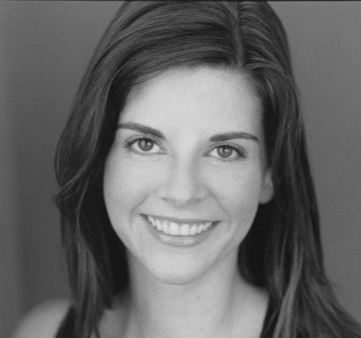
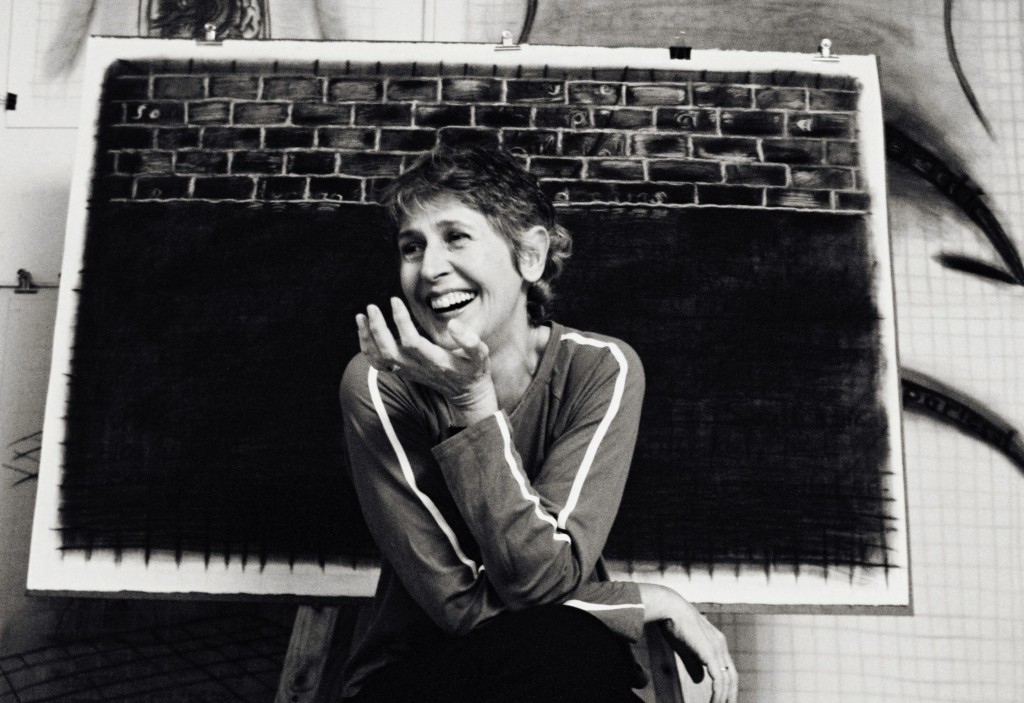
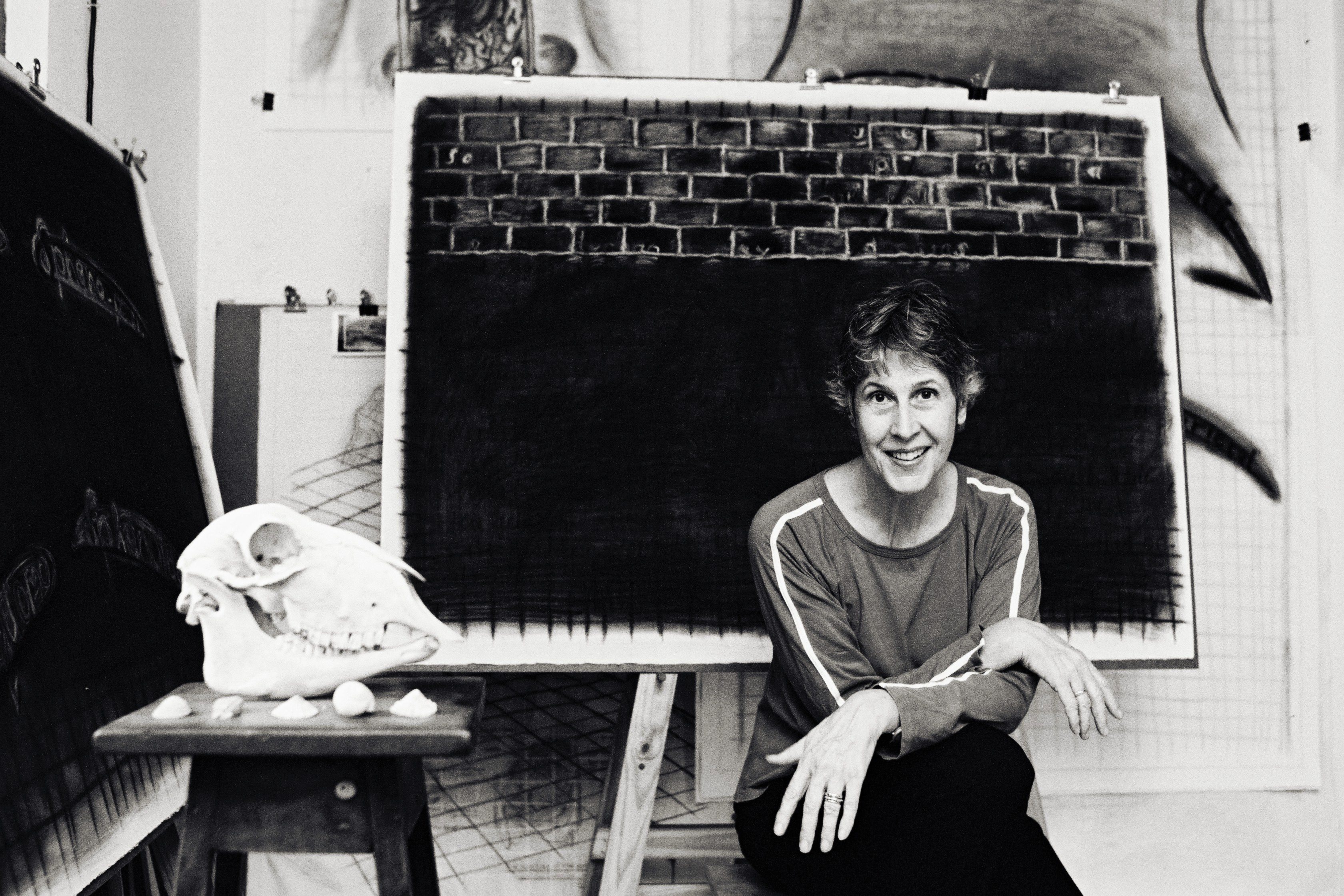
WInterbach by Leanne StanderAuthor Photo: Leanne Stander

The building goes up in flames, causing the protesters to scatter, and turning the attempt at damnation, at justice, into a bloodbath consuming not just those involved, but several innocent bystanders, as well. The scene eerily echoes recent, similar real-life protests in places like Ferguson, Missouri, and though Winterbach does ultimately bring righteousness down upon the villains of The Elusive Moth, she does so at the expense of the justice-seekers, as well, calling into question the true value of their efforts. — Benjamin Woodard

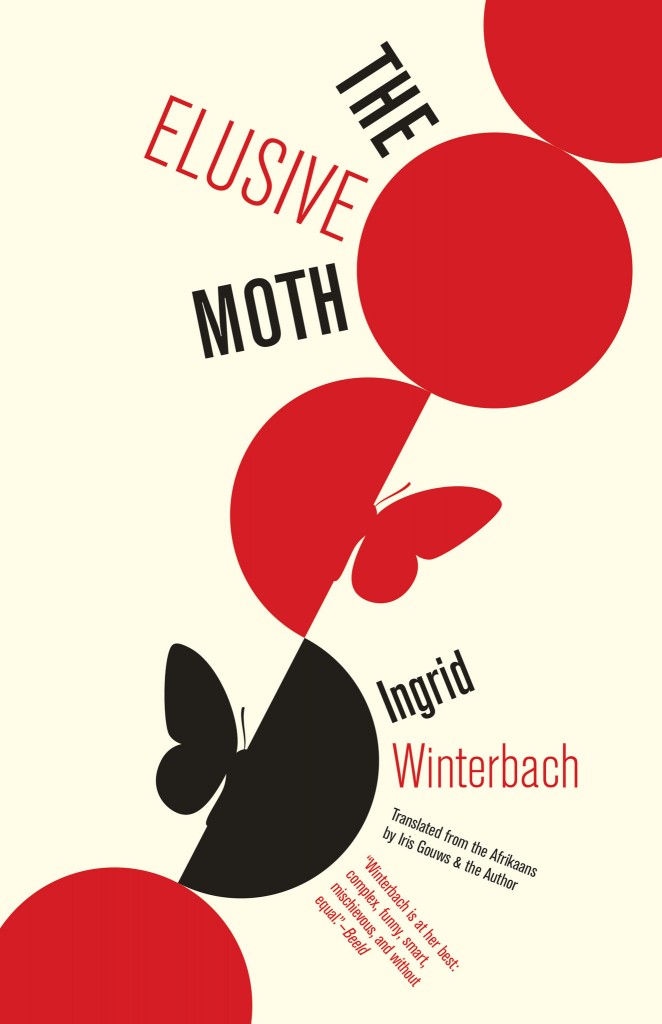
Elusive_Moth_cvr

The Elusive Moth
Ingrid Winterbach
Translated from the Afrikaans by Iris Gouws and Ingrid Winterbach
Open Letter
198 pages ($14.95)
ISBN: 978-1-934824-77-1


Often, we travel for the same reasons we read stories: escape, insight, knowledge, adventure. Stepping off of an airplane in a new environment offers the same opportunity for internal charge (or recharge) as the mental submersion provided by a great narrative. In both cases, home is far away—if only sometimes in the reader’s mind—and endless opportunities await engagement. So it’s no surprise that Ingrid Winterbach’s The Elusive Moth, originally published in 1994 but now translated for English-speaking audiences, succeeds as both a novel and literary expedition, for as Winterbach ushers her protagonist, lepidopterist Karolina Ferreira, from her urban home to the small community of Voorspoed in the Free State—a town full of singing lawyers, seductive economists, and corrupt officials—so too does the reader feel the pull of investigation. This land functions as setting and as a character, with its intense heat and unpaved roads, providing an ideal stomping grounds for Karolina and her associates. And while the novel lingers in a period two decades removed from our own, never does it read as a dated volume of yesteryear. Rather, Winterbach’s clever, fascinating meditation on gender and power echoes societal flaws still present around the world, making the volume vital and timely.

As The Elusive Moth opens, Karolina spends her days in the veldt outside Voorspoed with Basil, a part-time resident of the town who she picked up during her travels. Here, she studies moths, specifically the “distribution and breeding patterns of the moth species Hebdomophruda crenilinea,” while Basil, himself a pupil under a local herbalist, scours the land for unusual vegetation and natural remedies. In the evenings, back with society, the duo loiters at the nearby hotel bar, playing games of snooker, drinking whiskey, and observing the locals. As in the scrub fields, their critical eyes work overtime in town to separate the wheat from the chaff, finding focus on those that make the community’s ecosystem function. They make fun of some, like the sullen magistrate, or the lawyer Pol, and question the political tactics of others, particularly Lieutenant Kieliemann, who sexually harasses Karolina nightly, pressing against her until she forces him off, and his boss, Captain Gert Els. There are also the many fleeting groups that interact with Karolina and Basil: a theatre troupe secretly organizing the residents to rise against the town’s authorities, a man trying to escape his captors, and a pair of travelers who befriend Karolina while passing through the area. As these characters and engagements slowly stack up, Karolina devotes far more time to the community of Voorspoed than its desolate outskirts, dancing on Saturday evenings, striking up a romance with a man named Jess, looking for a pair of mysterious lovers in the cemetery, and investigating the men who run the small town with inordinate amounts of power. Her research shifts from moths to men.

And yet, much like the long, lazy days that it paints on every page, The Elusive Moth refuses to latch onto Karolina’s suspicions in the same way a lesser novel would. Instead of using her wariness to sprint forward in a series of action set pieces, Winterbach lets her characters meander. While Karolina supposes Gert Els of nefarious doings, she never acts quickly to call in the cavalry. Instead, she goes on long walks with Jess, or picnics with Basil. And this is one reason the novel works so well: it establishes a firm rhythm for Karolina early—some combination of research, drinking, snooker, investigation, repeat—and then rarely strays from this framework. As such, there’s an authenticity, not to mention a relatability, to this routine and the way Karolina approaches her actions. Instead of molding the generic Hollywood heroine who instantly transforms into a superhero the moment she doubts an individual, the author constructs characters that experience life as it comes, fitting in cries disbelief between rounds of snooker. Karolina does not see herself as the hero, therefore, she does not act as the leader to right wrongs.

This is not to say that Winterbach crafts a novel of little consequence. Far from it, for nestled firmly within The Elusive Moth’s brisk 198 pages are several shrewd musings on gender and power. For example, there is a certain reasoning argued by Winterbach for Karolina’s lack of heroics. Throughout the novel, Karolina’s interactions with the opposite sex tend to materialize in two forms: from those who view her as an intellectual equal; and from those who view her as a sexual conquest, complete with lustful, unwanted advances. These second encounters frequently come from men of certain high regard in the township and help reinforce Karolina’s distrust of authority. And though she never finds a way to articulate the feeling of this emotion and confusion verbally, an artist friend composes a strong definition in a letter written to Karolina, which appears about halfway through the novel:

“In her paintings she was trying to portray herself as a hero, but it seemed it was not easy for women to be heroes, she said. One could not portray a woman in the heroic style in the same way as one could a man. Anything experienced by a man—however deviant—is immediately regarded as an extension of human experience, whereas the experience of a woman remained deviant, eccentric, idiosyncratic.”

When examining The Elusive Moth with these words in mind, Karolina’s languid advancement toward the evil of Voorspoed reads less like a conscious decision of the character and more as a commentary on South African culture in the early 1990s, one filtered through the pen of a wise female, South African author. There is a suppression and degradation of women at play, one, in other words, that makes it difficult for Karolina to be taken seriously by most, and even harder to lead the charge, even within her own story, a hindrance that continues to bare its teeth in many corners of the world today.

In addition, Winterbach uses these same ideas to speak of peaceful protest in the face of abusive power. Eventually, the power hungry are confronted, and though Karolina does not head the group of townsfolk who bind together in an effort to remove Gert Els from command, she is present for their final confrontation:

“’We have come once more to bring the charge that the captain would not receive this morning,’ the man said calmly.

‘I am not accepting it,’ Els said. (His tongue heavy and cold.)

Philemon Mhlambi stepped forward suddenly. ‘You have to accept it!’ he said, and held out a piece of paper to Gert Els.

Els stepped forward too, and slapped Mhlambi’s face with the side of his hand, causing him to stagger to one side and fall down.”

The confrontation quickly heightens in intensity: Els trains his pistol on the unarmed group, and as he threatens their lives, Karolina hears an explosion from the snooker room nearby. The building goes up in flames, causing the protesters to scatter, and turning the attempt at damnation, at justice, into a bloodbath consuming not just those involved, but several innocent bystanders, as well. The scene eerily echoes recent, similar real-life protests in places like Ferguson, Missouri, and though Winterbach does ultimately bring righteousness down upon the villains of The Elusive Moth, she does so at the expense of the justice-seekers, as well, calling into question the true value of their efforts, perhaps, and placing the virtuous in a camp similar to that of women in South African culture: Regardless of effort, of desire, the truly powerful will always find a way to strike, even when facing the ultimate downfall.

In the end, The Elusive Moth succeeds thanks to Ingrid Winterbach’s fearlessness, both in penning a work unafraid to relish in the minutiae of life as well as one willing to speak to the abuse of societal power found in South Africa. The novel is wise, funny, and playful, and through its slow amble toward an enlightened conclusion, the reader is able to see reflections of today in a world twenty years old.

— Benjamin Woodard


Woodard

Benjamin Woodard lives in Connecticut. His recent fiction has appeared in, or is forthcoming from, Cheap PopdecomP magazinE, and Cleaver Magazine. In addition to Numéro Cinq, his reviews have been featured in Necessary Fiction, Publishers WeeklyRain Taxi Review of Books, and other fine publications. You can find him at benjaminjwoodard.com and on Twitter.

Nov 132013
 

Everything Happens Cover

“Night Vigils” comes in the middle of Albena Stambolova’s new novel, Everything Happens as It Does (Open Letter Books). This chapter is a sample of Stambolova’s idea-rich and scintillating prose. The reader doesn’t need to know much context to make this chapter complete, save that Margarita and her father have not seen a lot of each other lately, and, for the most part, she is a rather odd young woman. I think my favorite aspect of this chapter is the way Stambolova can write about such commonplace scenarios and make them sound surprising and intimate (perhaps even intrusive). Through the eyes of Margarita, Stambolova manages to convey the authentic nature of experience as a surprising and unsettling encounter with otherness.

— Jacob Glover (see NC’s review of the novel here)

25.

Night Vigils

Margarita tiptoed between tangled legs and arms, tilted lamps, overturned glasses and all kinds of remnants from hours of sitting, smoking, talking and listening to music. She saw a couple kissing, their lips sunk into each other with such riveting force that she could not take her eyes off them. Worn-out desperate things had a strange effect on her. A threadbare blanket, for example, or this hopeless kiss, beautiful like a dead rose’s petals dripping with their scent of hysteria. She decided to walk around them, bumped into a sleeping body and the solid surface of an armchair, finally reached an emptier space with enough room for both her feet and managed to steady her step. Where could she have left her coat, her oversized, long black coat and her gigantic bag? They must be here somewhere. The figure of a man holding a candle appeared out of nowhere. Nothing ever happened the way one anticipated it. Come to think of it, even tonight, earlier in the evening, she had tried to explain that she didn’t have the time, but it turned out that she did have the time, she had lots of time. And what birthday were they talking about, no one had a birthday. At least she couldn’t see anyone who had a birthday.

For the first hour or so, it had been only the three of them—the boy who had brought her and who seemed to know her very well, and the girl she had assumed was the hostess, as she had changed into different clothes at least twice. They had all been sitting around a low coffee table when the girl had stood up and walked away, and just when they had almost forgotten about her, she reappeared wearing something like a transparent nightgown over her naked body. She looked beautiful in the dim light. Then more people came and Margarita lost sight of the girl, only to see her later in a different outfit, which made her doubt for a moment that it was the same person.

Now she was looking for her coat and her bag, and she was starving. Finally she stepped into a room with piles of coats thrown on a bed, and she buried her hands to search for hers. She recognized it by the touch of her fingers, like a blind person, and pulled it out, overcoming the resistance of the soft mass of clothes around it. Her bag was on the floor and she almost tripped over it. She flung it on her shoulder, continuing to tread carefully toward the exit.

Once outside, she could see only machines; there were people, but the people were all inside machines—trams, buses, and cars. She didn’t feel like going home, and decided instead to visit her father. The trams’ jangle and dazzling threaded lights did not seem inviting, so she headed there on foot, her heavy bag on her shoulder.

Walking gave her the satisfaction of work well done. Work that was pleasant and amusing, squeak-squeak-squeaking feet on the snow. Gliding, slaloming between the parked cars, stopping at traffic lights, standing upright like a soldier.

At night the city looked like a picture. Spaces look indistinct, the houses are surprising. At night the city lets you be; it lets you in, in all of its places, which, you then realize, belong to the city and not to you, a passerby. If you are brave enough, it will let you in even deeper, to places invisible in daylight no matter how hard you look for them. Night people in the city know this, they belong to the city, and that’s why they are scary and others are frightened by them.

Margarita was not thinking about these things. She never thought about anything at all. Thinking for her was like floating down a babbling stream, gently propelled by the drift of her unusual perceptions, until someone broke the spell by speaking or asking for something. No one had ever heard Margarita herself ask for anything. If she happened to feel like “asking,” what other people would call “asking,” she just let her feet take her to a place where whatever she needed simply happened to her. If she ever felt scared by something, she would run away and no one could stop her. She had thus gone through a number of schools, special schools and ordinary ones, she had started many classes and abandoned many, until one day Maria decided that she deserved some peace. Margarita read books, children’s stories and other books, she went out with people, to the cinema or elsewhere, but how far her knowledge of things extended was a mystery. She did not seem depressed about not fitting into a normal category, and the doctor, Mr. T., whom she was seeing about once a month, had himself come to a standstill in observing her perpetual state. Valentin would sometimes drag her with him for weekends or holidays with friends, and Margarita would blend in, in her own dazed way. At the same time, she never forgot faces or people in general. Her memory, free as it was from all other things, recorded words, faces, situations—gathering an endlessly abundant material that would make quite a few film directors happy.

Now she strolled about the city and registered no signs of danger. Every once in a while she felt the weight of her bag and moved it to her other shoulder. What was in that bag, only she knew, whatever to know meant for Margarita.

The window of her father’s apartment gleamed like a beacon. He answered the door almost immediately, dumbfounded to see her. So much so, that for a moment he did not invite her to come in, but let the smell of something burning reach her nose in wafts through the open door.

Are you alright?

Margarita smiled at him happily and he stepped back. He knew that she perceived things differently, but all the same he felt uncomfortable that she could see the remains of his lonely midnight dinner in the black frying pan. He chased away the thought of Maria’s ability to prepare something tasty out of anything, her oven turning out unbelievable dishes as if by itself.

Margarita looked at the piano, but her father waved his hand—not now, people are sleeping.

I’m hungry, dad.

Straight away he put a plate and some bread on the table, poured her a soda drink and took a salad out of the fridge. Margarita began to chew heartily, while her father wondered how he could possibly tell her that he was worried about her.

He asked about Valentin, but quickly hit some barrier and concluded that he needed to find out what was happening at his wife’s house.

Margarita finished eating, suddenly looking sad. He shouldn’t have spoken to her about Valentin. He took a sip of his beer and asked her about the baby. Margarita’s reaction was calmer, her mother and the baby were fine. And dear Boris? She hadn’t seen him for a while.

Her father felt anxious, the way he did every time he received news from Maria’s house. Margarita stirred from her seat like a restless bird before a storm. She wanted to go to bed and her father drove her home. He kissed her goodnight, lightly, as if this was something he did every night.

When she climbed into her enormous boat of a bed, her grandmother’s lamp was still lit. She couldn’t tell if there was anyone in the house.

—————————————————-

StambolovaExcerpted from Everything Happens as it Does by Albena Stambolova

Trans. Olga Nikolova from Bulgarian

Pubished by permission of Open Letter Books

Nov 122013
 

Stambolova

Everything_Happens_as_It_Does


Everything Happens As It Does
Albena Stambolova
Translated by Olga Nikolova from Bulgarian
Open Letter Books
120 Pages, $10.16
ISBN 978-1934824849

.

Everything Happens As It Does by Albena Stambolova is a 120-page novel broken into 54 short, individually-titled chapters. The title of the novel comes from a quotation from Wittgenstein that Stambolova uses as an epigraph: “All propositions are of equal value. The sense of the world must lie outside the world. In the world everything is as it is, and everything happens as it does: in it no value exists—and if it did exist, it would have no value” (Tractatus Logico-Philosophicus, 6.41). Though the novel is not simply an exploration of this utterly Wittgensteinian sentiment, we ought to take note of this idea as we dive into this rich and intellectually dense world Stambolova has created.

In a way, Stambolova invites us to begin her novel by not ascribing value to anything, or by ascribing equal value to everything. She suggests: “This story considers itself the story of everyone… It is simply the story of women and men who are mothers and fathers, sisters and brothers, loved ones and friends… or, in a nutshell, of people who are tigers and lions, oranges and lemons. This story is neither funny, nor sad. It is simply a story that takes place somewhere on the border between the world we know and the world we are no longer very sure about”

Most importantly, this novel is a story. Structurally speaking Stambolova has no less than eight major characters from whose perspective we get a glimpse of the world. Or, put differently: she presents us with eight different worlds contained by individual, yet occasionally overlapping, perspectives. The story of the novel seems to exist somewhere in the midst of these eight characters. In a way, the meat of this story or narrative comes out of the concatenated life-worlds Stambolova presents us with. I’m tempted to use the word weave here, but really the suggestion that Stambolova “wove X with Y” detracts from the real artistry of her play with presence. She is presenting us with these lives, which happen, as any two or three lives will do, to be mingled, mixed, or articulated together. The narrative begotten out of this articulation renders but a snapshot of these lives proper, yet it is only within the articulated whole that we find our story.

Now: What story? We begin and end with Boris, but Boris is by no means the main character or the protagonist. He is a strange child with a predilection toward what smacks of existentialism but often comes out as boredom. We stay with Boris until he is a young adult just delving into the world of computers. Then, Stambolova switches gears and introduces Philip, Maria and their twins Margarita and Valentin. We get a glimpse of this family for a few chapters until Philip leaves, and Valentin begins to date Raya and gets her pregnant. Then Valentin gets himself kicked out of Raya’s house. He goes back to his mother Maria’s home only to find Boris there and Maria pregnant with Boris’ baby. It turns out that Maria is getting divorced—from Philip. The lawyer is named Mr. V., and we now begin to follow his life and meet his family. Fanny is his wife’s daughter, but not necessarily his daughter.

By the time we meet Mr. V’s family, all of the characters have been introduced. What follows is a series of descriptions of the same Christmas Eve from different perspectives (all third-person limited). It is possible to say this series of descriptions constitute the climax of the narrative, however it would be a slippery argument because it is only in retrospect that this appellation would make sense. We get a description of three or four or five even Christmas Eves—depending on how you count them. Fanny, Valentin, and Margarita are all together, but Mr. V joins them. Boris is unaccounted for. Philip is depressed and drinking. Maria and her baby are driving to Boris’ parents’ home in the country. And Mrs. V is home alone waiting for Mr. V. These Christmas Eve scenes are quite beautiful and, I think, set out important ideas in the novel. They are about human interaction and the way we live together.

Fanny’s kitchen was busting with life. The spell was lifted from the appliances, pots and pans chittered on the hot stove, cabbage was being chopped on thick wooden boards and sprinkled with paprika, platters were being arranged with pickles and dips, glasses were being passed hand to hand, drinks were being poured generously. All guests, feeling truly welcome, had an air of devotion, regardless if their work was contributing to the common good.

After Christmas Eve, there is a lull of sorts, but we are aware that something has happened to Maria. Christmas morning she walks into the woods in the deep snow, but we are not sure if she makes it back. By New Year’s Eve forces have assembled, and it is confirmed within a couple of days that Maria is dead. This death which just barely happens on-screen is the climactic point of the novel.

The rest of the novel seems to resolve in some way after Maria dies, but it is important that we notice how much of the resolution is not directly related to Maria dying. Valentin, Fanny, Mr. V and Mrs. V, Philip, and Boris all in some way have a resolution prior to the discovery of Maria’s death. But in the chapter Philip tells Valentin that Maria is dead, we get this exquisite passage:

While [Maria] was still with them, her absence, which kept everyone at a distance and made her different, used to scare them.

Now, when she was no longer with them, they had to somehow domesticate her absence. Now the three of them had to make it — Maria’s life.

And maybe there were other lives to make, too.

So Valentin and Margarita and the baby have to learn to live without the oddness of Maria, which somehow grounded their worlds for them. Stambolova plays with this Derridean idea of presence and absence more than just in relation to Maria’s death. And it seems telling that Maria is often emotionally inaccessible, yet she remains defined fully in her presence or in her absence. There is a sense in which Stambolova’s novel is an experiment in presence vs. cognition/conceptualization. Even objects remain mysterious and enigmatic, e.g. Boris’ tapes, Margarita’s bag, even the baby.

Maria is somehow central, but she is also the character we know least. One is tempted to compare Maria to God. Possibly this is ingenuous or reductive or both, but Maria is intentionally complex, and her similarities to the divine are narratologically relevant. And this characterization of the divine Maria over-flows with a beautiful sort of mystico-biblical reference.

It was impossible to say “no” to this voice, which was now calling to him [Philip] from the receiver. Why him, and not someone else, he never understood. Here I am, Lord.

We first meet Maria on the day of Boris’ christening, though we don’t really know it’s her til later. Boris walks into the chapel as a young boy and sees “a tiny woman in black, whose eyes he was to meet again years later.” This is a fascinating moment for us as readers because it is explicit foreshadowing. But of what? Maria’s eyes, her gaze, become a motif throughout the novel. Boris doesn’t encounter Maria in the chapel as a person but as her awareness of him; he encounters her only as her gaze upon him. This image comes up again later when we read Philip’s first encounter with Maria:

Philip met Maria at a friend’s house. Although he never liked to admit it, he failed to notice her at first. She had been sitting in some part of the room, watching him. He had felt her gaze, though without being able to identify where it came from.

Maria’s name, of course, echoes both the mother of Jesus and the temptress-turned-apostle Mary Magdalene. And, in the language of the novel, she seems to conceive the twins immaculately: “She became pregnant almost by magic.” Her very presence seems to explode experience and stop time.

But [Philip] could remember situations in which her presence or her voice obliterated everything else.

And:

[Philip] proposed to her almost immediately, not knowing what he was doing. He knew only that he could not have done otherwise. [Maria] nodded, as if she had foreseen long ago that this was bound to happen.

And yet again:

The woman, having emerged from the numbing cold, sleeping baby in her arms, simply sat next to [Mr. V] as if her place had always been there. [Maria’s] presence, impossible to reference or classify, transfixed him.

Maria resists worldly definition because her presence is only determined in her absence. That is, only after Maria dies do we clearly see just how she wove meaning and cohesiveness into the stories of the other characters. In the chapter of Maria’s death, the only chapter from her perspective (again, third person limited), we get this revealing line: “Maria was not thinking about it, she was watching it. She was watching the world, and it was watching her.” Maria represents a way of relating to the world that neither assigns value nor conceptualizes (thinks), a way perceiving that simply happens without the distinction of subject and object (and thus, in the discourse of religion, is an analogue of the divine).

Everything Happens as It Does is a novel which operates under the maxim: “The world allows descriptions. And resists thought.” We should remember that in this world of happenings, we are part of that happening; we occur alongside every other occurrence; and our value and significance only comes out of these happy moments when on Christmas Eve, for example, we happen to be happening together.

 —Jacob Glover

.

Jacob Glover

Jacob Glover is a pursuing an MA in Classics at Dalhousie University in Halifax, Nova Scotia.

.
.
.

Oct 162013
 

Ror-Wolf

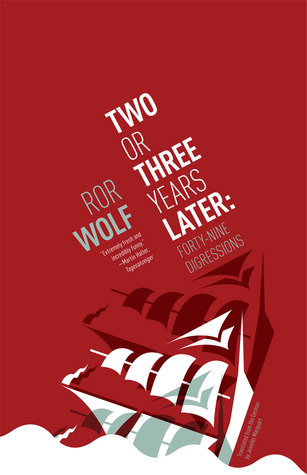
Herewith, a delightful micro-story from Ror Wolf’s latest collection, Two or Three Years Later: Forty-Nine Digressions (published by Open Letter Books and translated by Jennifer Marquart ). Wolf was born in East Germany in 1932. He is an award-winning novelist, poet, artist and collagist. He emigrated West Germany in 1953, where he studied with Theodor Adorno and Max Horkheimer, members of the famous Frankfurt School, the source of modern critical theory. As you might expect of a writer with such a background, Wolf merrily refuses to create a conventional story line. Rather he works in fragments and asides and wordplay, always shadowed by the IDEA of a conventional story that might come into existence but doesn’t.  A first person narrator is asked a question. “What prompted your remark?” But Wolf’s narrator dashes and evades. “I didn’t make a remark,” the narrator says. And from there, we are off and running. Notice how Wolf shifts from past tense to present tense. Notice how he describes a cast of characters that aren’t really part of the main action. Suddenly the story fills with a variety of men sprawled out like disfigured shapes in a Goya painting.  What’s real? What’s it about? And Wolf leads us only further into the mystery, into the facts that never materialize. Like Robert Walser, like Gertrude Stein, like Thomas Bernhard, Wolf invents new possibilities for the story.

—Richard Farrell

two or three


Excuse me, what prompted your remark, said a man as I approached the reception desk at the train station hotel on October 21st 1999, and I said: I didn’t make a remark. I can’t even guess if the next man who shows up in line will make a remark. I also don’t know if my abilities are sufficient enough to describe this showing up, or to at least prove my competence for such a description here, in front of my readers. Anyway, I have doubts about my competence regarding the problem that surrounds and seems to occupy this man, and from which he is trying to momentarily step away in order to get my attention. Before I give any thought to this, I’ll turn my attention to another man, who’s lying crumpled under the table with only his feet visible. Without an extra explanation, no one would figure out why two identical-looking men are behaving so differently; and yet the explanation is very simple. You shouldn’t wait for an explanation from me because I just decided to turn my attention to another man. This man is resting his head on the table, as we can see, but in reality it only looks like that, and has no bearing on the continuation of this story. I am also not really interested in this man, but will only compare him to the man I wanted to discuss at the beginning and who is standing beside him—not directly next to him, but at a little bit of a distance. If I were to hear that the man I mentioned opened a door and disappeared, it would live up to my expectations and wishes entirely, enabling me to easily turn my attention towards several other men. They are men with a purpose, coming in as if they invented their purposes in the moment they entered, and they are in reality only meaningless purposes. Incidentally, all of these men wear their hats on their heads, and, between you and me, that seems somewhat boring, but I won’t dwell on it. Instead, I exhibit a certain interest in listening to a man whom I don’t see, but can hear quite well. Excuse me, what prompted your remark, this man said, as I approached the reception desk at the train station hotel on October 21st. And I said: I didn’t make any remark. That was ’99, a rather shitty year for men—men who went to the brink of tolerability, the end of their strengths, men with hats firmly adhered to their heads, shoes firmly attached to their feet, men who did not have a solid grasp on what could happen to them in a train station hotel. And that’s not nearly all. I’m refraining from describing what came next. I’ll do everything to avoid confusing you with more words, I said that time in ’99. I stood up. Where are you going? someone asked, some man asked: Where are you going? But I didn’t pay attention to the question, I left, and refrained from describing the further development.

—Ror Wolf

——————————–

Ror Wolf is an artist, an author of prose and poetry, and a writer of radio plays and “radio collages.” Born in the East German city of Saalfeld, Wolf left the GDR for West Germany at the age of 31. His writing has earned him many awards, including Radio Play of the Year (2007), the Kassel Literature Prize for Grotesque Humor (2004) and the Literature Award of the Bavarian Academy of Fine Arts in 2003. Wolf’s work has been translated into over 12 languages.

Jennifer Marquart studied German and translation at the University of Rochester. She has lived, continued her studies and taught in Cologne and Berlin. Two or Three Years Later: Forty-Nine Digressions by Ror Wolf is her first book-length translation.


Oct 152013
 

rorwolf

two or three

Two or Three Years Later: Forty-Nine Digressions
Ror Wolf
Translated Jennifer Marquart
Open Letter Books
142 pages, paperback, $14.95

From its opening page, Ror Wolf’s Two or Three Years Later defies expectations. This collection of forty-nine ‘digressions’ (Wolf’s term), translated from German by Jennifer Marquart and published by Open Letter Books, takes the reader on a disorienting journey through a series of fast-hitting, unresolved, and zany stories. Located at the intersection of anti-novel and metafictional farce, Wolf blends his own spare style with absurd setups, half plots and tragic loneliness. We never get inside. We never arrive. Hell, sometimes we never even depart. Instead, we bounce about on a pointed quill of uncertainty and wild merriment.

Of the forty-eight miniature stories in this collection, only three are longer than two-and-a-half pages. Many take up less than a page of text. The last story, “The Forty-Ninth Digression: Twelve Chapters from an Exposed Life,” is forty-nine pages long.  (Wolf does seem to enjoy these little riddles.)

Born in eastern Germany in 1932, Ror Wolf is an award-winning novelist, poet, artist and collagist. Two or Three Years Later is the first of Wolf’s books readily available in English. He emigrated west in 1953, working in a variety of fields before studying with the German philosophers Theodor Adorno and Max Horkheimer, members of the famous Frankfurt School, the source of modern critical theory.

Wolf plucks his stories from the edge of the familiar, so that we recognize some part of the architecture, some cornice or balustrade that hints at a larger design, but the building never materializes. Instead, we are left with only fragments, an incomplete blueprint that distorts assumptions and dismisses significance.

Take the story “Neither in Schleiz, nor Anywhere Else in the World,” in which Wolf announces his ambiguous intention in the title itself, not really a title but the negation of a title. Then the opening lines: “A man who prefers anonymity, a certain X—his name is irrelevant—arrives one day, one morning, one afternoon…It’s all the same in a city whose name we won’t disclose. He does nothing, which is what we wanted to report, since what he does is so insignificant that that’s the only significant thing to say about it.”

Notice how the story races ahead of the reader, all the while undercutting expectations. In a few sentences, Wolf silences character, plot, setting and theme with the cold-blooded efficiency of an assassin. What’s left, the reader reasonably wonders? But don’t expect Wolf to deliver an easy answer. He goes on to further nullify, through a series of parallel non-descriptions, any remaining hope of familiarity: “If he contemplates something, it is without feeling; if he touches something, it is without reason.” He’s erasing the story, rather than inventing it. He tells us nothing, and shows us even less. This story, like most in the collection, becomes almost impossible to summarize because it never arranges itself into any order.

Again and again, through a series of seemingly disconnected anecdotes and halting starts, Wolf declines to assemble. This is more than just post-modernist style. The collection doesn’t drift toward absurdism, it wallows in an almost nihilistic refusal to conform. And yet there’s a sturdy elegance about each of these pieces, a cold, biting quality that binds and spreads, so that what remains is a refreshingly pure, playful examination of stories without meaning (and, by implication, stories that do appear to have meaning).

“In a French Kitchen. In a Swiss Lake. In a Berlin Closet.” is a half-page story that delivers the accounts of three tragic accidents. A man intentionally blows himself up with dynamite. A golfer drowns after throwing his golf bag into a lake. Three seventy-year-old men playing cards burn themselves to death. Wolf relates these incidents without any context, emotion or explanation. “All three burned. This was in Berlin, near Nollendorfplatz.” Thus the story ends.

In “On the Edge of the Atlantic,” Wolf’s turns comically ornery. “A man yelled out in fear. Shortly thereafter, he died. That’s basically what happened, in any case, generally and essentially.” Nothing else happens. No explanation is offered. No narrative details fill in the missing pieces.  In fact, what Wolf supplies in place of the expected is a direct admonishment: “Of course, the reader deserved nothing better than the waves crashing over the man’s body, and the rain rolling in simultaneously, streaming down from above. Maybe he didn’t even deserve that.”

The idea of the reader not deserving the image, the prose that Wolf refused to render, certainly strikes a sinister, hilarious tone.

This roguish antagonism is embroidered in the text—between expectations and outcomes, between narrator and reader. It reveals that the patterns here are non-patterns, or anti-patterns at least. Uncertainty and doubt prevail. The stories rest on conditionality hinged together with the subjunctive mood.

Wolf does offer something of a clue to his aesthetic in the two-and-a-half page story, “At Nightfall.”

Last Monday I began to describe a man, who turned the corner of 82nd Street with a tremendous yawn. I didn’t want to describe his yawn, in any case it’s indescribable, and I didn’t want to describe how he turned the corner, but rather I wanted to describe how this man—or differently, differently. I’ll start over.

Wolf goes on to make nine aborted efforts to describe the simple act of a man turning a corner. “No, that’s weak, and not very good either. Maybe I should begin like this…” Is Wolf showing us the impossibility of language to adequately describe reality? Is he unmasking the fickle power of words to conjure anything? Or is he just having fun? If a story can’t get the simple act of turning a corner right, how can it hope to tackle the larger issues of morality, life, death, meaning? Wolf seems to be reminding us that, sometimes, it’s better not to try.

Artists are always trying to kick down the doors of tradition and form. The artist is always radicalizing his art; testing boundaries, pressing forward. Ror Wolf — with his philosophic roots in the Frankfurt School, famous for its intense critique of reason, the Enlightenment and modernity — appears to be of this ilk. His writing challenges the very notion of meaning and interconnectedness. In the end, the only thread that holds these stories together is no thread.

“I’ve traveled throughout this entire loud, reverberating world,” Wolf writes in “The Power of Song in Nevada, my favorite story in the collection.  “I’ve traveled out of a profound disposition for the echoing sea. I’ve heard ship bands and chamber orchestras, I’ve experienced the howling of the wind and the wild shouts of sailors—but all of that is nothing compared to the men’s choir I heard in Nevada.”

I don’t know what this means, especially when Wolf tells us how awful this choir was. But somewhere in the peregrinations and uncertainty, somewhere in these digressions, these strange and wondrous non-stories, the writer searches for the true note, for the profound disposition. It’s anyone’s guess if he’ll ever find it.

—Richard  Farrell


farrell

Richard Farrell is the Creative Non-Fiction Editor at upstreet and a Senior Editor at Numéro Cinq (in fact, he is one of the original group who helped found the site). A graduate of the U.S. Naval Academy, he has worked as a high school teacher, a defense contractor, and as a Navy pilot. He holds an MFA in Writing from Vermont College of Fine Arts. He is currently at work on a collection of short stories. His work, including fiction, memoir, essays, interviews and book reviews, has appeared in Hunger Mountain, A Year in Ink, upstreet, New Plains Review, Descant (Canada) and Numéro Cinq. He lives in San Diego.


Jul 182013
 

Angel Igov via www.programata,bg

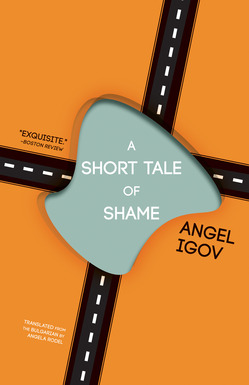
Angel Igov’s A Short Tale of Shame, translated from the Bulgarian by Angela Rodel and published by Open Letter Books, is an ambitious, lyrical novel that succeeds in part by transplanting its story to a semi-fictitious version of the Balkan region. Igov experiments with setting and with an explosive style reminiscent of the Beats’ lyricism combined with Virginia Woolf’s free indirect discourse. His pages-long paragraphs build beyond bite-sized slices consumer readers favor—the reward is a sentential tension that delivers scene, exposition, and character thought all in one.

The following excerpt, taken from the end of the first chapter, captures the distinctive nature of both Igov’s setting and style. When asked via e-mail about the novel’s discomfiting mock-Balkan setting, he wrote:

“The main purpose in establishing this mock-Balkan background is precisely political irony, directed both ways: at Balkan nations, for making their history so crucial to their identity, and at the “West”, for being so eager to use ready-made stereotypes of the region. The Balkans in my novel resemble very much the ones we know from stereotypes even though the ethnonyms are different and history has gone some alternative way.

The mock-Balkan layer also has the idea to introduce some estrangement or alienation from the main story, in a somewhat Brechtian sense.

But I certainly didn’t try to establish a whole fictional world with its clearly cut geography and history. So I don’t expect readers anywhere to draw for themselves a clearer picture than the one I had in mind. The game of hints and ironies is purposefully vague, and it’s vague enough for Bulgarian readers too. As long as it holds and you are partially (but beneficially) lost, that’s good for you.”

—Tom Faure

See Tom Faure’s review of the novel here.

large_Short_Tale-front

Actually, it suddenly popped into Krustev’s mind, aren’t these three in college? It’s the middle of May, shouldn’t they be going to lectures right now? He received a full-on lecture in reply. All three of us are taking time off, Maya explained. At the end of sophomore year, lots of people begin doubting whether their major is really for them, they had, too. The three of them had gotten together at the end of last summer and decided that they would give themselves a year to clear things up, then they would decide whether to keep the same majors or to change, interesting, Krustev said, do the three of you always decide what to do as a group? Pretty often, the girl again gave her nervous laugh. It’s been like that since the beginning of high school, always the three of us together. In the beginning everybody thought it was weird, Spartacus cut in, then little by little they got used to it, at the end of the day there are people with much stranger relationships. Krustev couldn’t disagree with that, he himself handled strange relationships well, significantly more successfully than normal ones, take me, for example, Spartacus continued, I’m in law school. Sirma jokes that that’s why I’m such a chatterbox. Right now, I can’t say that I don’t want to study law anymore. It’s just that I need a year off to think things over and figure out whether I really want to go into law or if I’d rather do something else, and now’s the time, because afterwards it will be too late . . . Sirma wanted to know what Krustev’s major had been. Me? He had studied management. Only it was different then, he shrugged, I never really had the college experience, because of music I started my BA a lot later, after the Euphoria guys and I had ditched our instruments and decided to go into business. And I was in a hurry to graduate, even though I’m sure it would’ve been the same, even without a diploma. While they were teaching me how to run a company, I was already running three. He suddenly thought this sounded too arrogant and added that in those years, that happened a lot, it still does now, too, Maya said.

The road rushed on ahead and took the curves fast, narrow, but nice, repaved recently with the Union’s money, traffic was light, few drivers chose to pass through the heart of the Rhodopes on their way to the sea, and Krustev felt a fleeting, hesitant delight in the freedom to drive freely, without getting furious over the trucks and junkers blocking traffic. Below them, to the left, was the river, high since all the snow had already melted, running its course with a cold and no-nonsense determination; beyond it rippled the newly greened hills. They passed through several villages, long and narrow, built along the river, with two-story houses, their black wooden timbers sternly crossed over whitewashed walls. Since few cars passed, people were walking along the highway here and there, sinewy grandfathers and ancient grandmothers, some even leading goats and from the backseat Sirma for no rhyme or reason announced that she had dreamed of being a goat her whole life, but didn’t manage to expand on her argument, seemingly having dozed off again. Krustev put on some music, Maya and Spartacus, perhaps to make him happy, or perhaps completely spontaneously, sang along quietly and swayed in rhythm such that in their interpretation, the careless rock, designed for Saturday night and chicks in leather jackets, sounded and looked like some mystical Indian mantra. Krustev kept silent, he drove slowly through the villages and looked at the people. They spontaneously reminded him of his grandfather, a strange, scowling person, who always looked angry before you started talking to him, then it turned out that he gladly gave himself over to shooting the breeze and telling stories, mostly amusing tales, one, however, the most recent story, was swollen with darkness and violence, and Krustev thought of it from time to time. His grandfather’s village lay on the border of the Ludogorie region, the only Slavic village around, and his house was on the very edge of the village, near the river, a quiet village, pleasant, albeit a lost cause, the communists had forgotten it in their general industrialization, occupied as they were with the more densely Slavic regions, after the fall of communism the state had left the Slavs in peace once and for all, but back then it was the Dacians’ turn, they had moved into erstwhile Thracian towns, and, of course, in the end they fought, the Thracians called it “The Three Months of Unrest,” while everyone else called it the Civil War of ’73. Before the war, everyone from my grandfather’s village figured that the quarrels between the Thracians and the Dacians weren’t their business, they even joked about how the names of the two peoples rhymed, people for whom they felt equally little love lost, the civil war in the Ludogorie, however, made the hostility their business, too. The battles began, the Dacian militias defended their cities street by street and building by building against the army, who rolled in with tanks, but the tanks didn’t do much good in a war in which you couldn’t see your enemy. Everything really had lasted only three months and Krustev, no matter how young he had been then, could confirm that beyond the region and even in the capital, people were hardly aware of the unrest in practice, his father and mother said the same thing, his grandfather’s village, however, was a whole different story. For three days they heard machine gun fire from the direction of the city, all the radios were turned on in hopes of picking up some news, but they only played cheerful Thracian music around the clock. On the third day, the shooting ceased. A rumor spread that the army had taken the city and that the Dacian fighters had scattered, every man trying to save his own skin however he could. The village mayor warned them not to take any Dacians into their homes, should they arrive. Only five years had passed since the Slavic events in Moesia and everyone was afraid of what might happen if Thracian soldiers came to search the village and found hidden enemy fighters. That evening, my grandfather went out to feed his animals and when he opened the door of the barn, he saw two human eyes. It was a young man, no older than twenty, with dirty, matted hair, a gashed forehead and blood stains on his ragged striped shirt, like the shirts the Dacian militias had worn, he hadn’t even managed to take it off. He was severely wounded and feverish, wheezing, rolling his eyes from the cow to the mule and back again, he didn’t say anything. What could Krustev’s grandfather do? All alone in the very last house, just as his village was all alone between the hammer and the anvil of this war, which was not its own. Perhaps the boy would die before the soldiers came, but perhaps not. He left the barn, grabbed his hoe, went back in and brought it down on the boy’s head with all the geezerly strength left in him. He loaded him on the mule somehow or other and threw him into the river. The neighbors kept quiet. The next day a Thracian regiment really did arrive in the village, searched a few houses, sniffed around suspiciously, doled out slaps to a few young men whose looks they didn’t like, and went on their way. The river carried the corpse away and no one in the village mentioned it, his grandfather, however, for some unclear reason was sure that the neighbors had seen everything, he crossed himself surreptitiously, like under communism, and kept repeating, a terrible sin, a terrible sin, a terrible sin, but what else could I do? He lived a long life. He had told Krustev this story the same year that Elena was born and several months before he died. Much time had already passed, he had taken a second wife, a widow from the village, and he had continued living in the last house by the river. Senility was already getting the best of him and Krustev had even wondered whether he hadn’t made the whole story up, because who, really, who could imagine his grandfather killing someone in cold blood with a hoe? Yes, indeed, he had lived in a different time, he had fought in two wars and had won medals for bravery, so that means he surely had killed people, but not with a hoe and not in his very own barn, although do the place and the method really change anything, Krustev grunted and tried to keep his mind on the road.

Sirma announced her latest awakening with a powerful yawn and a quick commentary on her friends’ mantra-like chanting, and for the next half hour they all talked over one another, including Krustev. The asphalt was much better than on the last road. Maya, for her part, had never come this way. They argued for some time about whether she really hadn’t. Krustev asked them whether they hitchhiked often. Not very often, they had done it more in high school. Surely his daughter had tagged along with them as well, but in any case, his observations about the decline of hitchhiking were confirmed. The three of them generally tried to hitch together, sometimes they tried other combinations, but it never went as well. Spartacus had once hitched with three other guys and only a Gypsy horse cart had deigned to drive them between two villages, after which they split up, otherwise it was never going to work. Sirma, for her part, had hitched alone a couple times. Didn’t you ever run into any trouble? No, only once, when a woman had picked her up. Everyone laughed at that, even Krustev. He was feeling better and better, he was tempted to say more normal, but he was no longer sure whether this was normal or whether, on the contrary, the scowling pre-dawn, semi-twilight he had inhabited for such a long time was. There had been flashes during the winter, too, but then Elena had left and he had collapsed again, only he didn’t turn on the television, but read instead, first he read the books he had been given on various occasions in recent years, then the ones Elena had left in her room, after that he went to an online bookstore and ordered a whole series of contemporary titles in translation, they were delivered by van, an astonished young man unloaded two full cardboard boxes in his hallway and left, shaking his head pensively, Krustev read them, some were good, others not so good, but once he had closed the last one—a novel by a Dutch writer about a malicious, blind cellist—he decided that he wouldn’t read anymore and that he had to get out of the house. Maya said that she thought she had forgotten her bathing suit. As if we haven’t seen you without your bathing suit on, Spartacus replied, then realized that they weren’t alone and fell silent, embarrassed. The three of them seemed to spend so much time together that when they found themselves with other people, they quickly forgot about the others’ presence. With the involuntary habit of the male imagination, Krustev envisioned the girl sitting next to him without her bathing suit for an instant and felt uncomfortable about it, as if he had made her an indecent proposal. She was his daughter’s age. Sirma preferred Samothrace to Thasos. Samo-thrace, only Thracians, Krustev joked, without knowing whether they spoke Slavic, but at least Sirma seemed to get it and repeated in delight: Only Thracians, how cool is that! Thasos and Samothrace, the two islands the new state had managed to save when the Macedonian legacy was divvied up. Like many other Slavs, Krustev, with a nostalgia instilled by foreign books, sometimes dreamed of Macedonian times, when the Slavs were merely one of the dozens of people who had inhabited the empire and were in no case so special that they should be subjected to attempts at assimilation, but still, things were clearly changing. Twenty years ago, Thracian kids wouldn’t have taken a ride from a Slav. Twenty years ago, there weren’t many Slavs with their own cars and even fewer of them would have dared to drive straight through the Rhodopes. Had they been to any other Aegean islands? Last year the three of them had made it to Lemnos, while Maya had gone to Santorini with her father. We also want to go to Lesbos, Sirma announced. You two go right on ahead to Lesbos, Spartacus said, that island doesn’t interest me a bit, they all burst out laughing. Krustev was impressed, however. So now that’s possible, he said. We’re all part of the Union and the borders are open. Do you know how hard it was to get a Phrygian visa back in the day? Especially for me, Sirma suddenly blurted out, seeing as how my grandfather is Lydian. But she had never set foot in Lydia. Spartacus and Maya looked extremely surprised, apparently not so much at her parentage, rather at the fact that there was something about her that they didn’t know. The mood crashed for a whole five minutes, at which point Spartacus started talking about Euphoria’s first album again, asking Krustev whether he had it with him in the car and insisting on putting it on. Later, Krustev replied, because in disbelieving gratitude for this kind-hearted twist of fate, he felt himself wanting to sleep, the curves ahead were giving off warm sleep, and when on the outskirts of the next village he saw a shabby roadside dive, he stopped immediately to drink a coffee.

—Angel Igov


Jul 162013
 

Angel Igov

 …the story is not only about fleeing one’s shame and insecurities but also about articulating one’s identity in the face of a larger, confusing society that never ceases to change. The stand-out moments of A Short Tale of Shame lie not in the resolution of the friend-love triangle, but in the characters’ semi-mythical experience of the journey. —Tom Faure

large_Short_Tale-front

A Short Tale of Shame 
Angel Igov, translated by Angela Rodel
Open Letter Books, May 2013
145 pages, $13.95

Angel Igov’s A Short Tale of Shame, translated from the Bulgarian by Angela Rodel, is a fine novel that explores how we attempt to escape grief and humiliation, often literally by fleeing through travel.

In some respects Igov has crafted a classic road story. After the death of his wife, middle-aged former musician Boril Krustev has thrown a few belongings into his shiny red car and taken off, vaguely heading south. Tellingly, he does not bring with him a guitar—has not played in months. The story opens after he picks up hitchhikers Maya, Sirma, and Spartacus. They soon recognize him as the father of their childhood friend Elena. Surprisingly, they invite him to join them for the rest of their journey. Krustev tentatively agrees, without fully knowing why—he questions at times whether to leave the younger, liberal youths to their own adventures. Elena is at the heart of each character’s shame, and her libidinous involvement with the hitchhikers is revealed gradually and with artfully-controlled pace. Her awkward inclusion into and subsequent expulsion from the students’ friend-love triangle, all referenced obliquely through their reminiscences, ultimately produces much of the tension of the novel.

Born in Sofia in 1981, Igov studied at Sofia University and was a Fulbright visiting researcher at the University of California, Berkeley. He is currently working toward a PhD in European Literature and has been nominated for awards not only for his fiction but also for his criticism and translation. He has published two short story collections and won the Southern Spring award for debuts in fiction. A Short Tale of Shame was the co-winner of the Contemporary Bulgarian Writers Contest.

 Igov’s novel is ambitious and experimental on two fronts: in its setting and in its style.

Some foreign readers will not immediately realize we are in “a country that geographically and culturally resembles Bulgaria, yet its history and ethnography seem to have gone some alternative way.”[1] This semi-fictitious “Thracian-dominated state” resembles what is known today as the historical region of Thrace—South East Bulgaria, North East Greece, and North West Turkey—a swath of land that has been invaded by everyone from the Huns to the Celts to the Romans. The setting informs an intriguing secondary theme: questions or crises of identity permeate the novel.

Today, Bulgaria’s population of 7.5 million includes ethnic Turks, Pomaks, Jews, Roma, Russians, Armenians and more. As the English-language Bulgarian magazine Vagabond puts it, “Its long history of local wars, migrations and – in later times – constant changes of national borders has complicated the picture further, turning what is now called Bulgaria into a place where a significant number of diverse minority groups live. Distinguishing between them is sometimes a strenuous task. Some of them are ethnic, others – religious. . . . The origins of most are obscure and often disputed.”[2]

Recently become a member of the European Union (in 2007), Krustev realizes he can drive around the continent at his ease. He has boldly decided to cut through the slightly sketchy Rhodope Mountains to reach the Aegean Sea. We learn more about the history of the region, fraught with ethnic and territorial feuding. Krustev is of the Slavic minority but he muses that this “was no worse than being an Illyrian or Paeonian, and it was definitely much better than being a Dacian.” The history of Balkan upheaval mirrors his anxiety about his ethnicity and his music career. The hitchhikers, who have taken a semester off from college, also experience confusion about who they are and what their futures have in store.

Igov enhances the semi-mythological setting by invoking the story of Croesus and waxing lyrical about the tragic idea of hubris—which also reinforces the compelling themes of mixed traditions and confused identity.

The road formula has offered a long list of heroes, from Gilgamesh to Hunter Thompson, various forms of escape and salvation, but A Short Tale of Shame does not suffer too greatly from treading across worn paths. It is indeed a short tale but one rich with psychological intensity, a story unraveling through reminiscence and rumination. Along with the intriguing setting, Igov’s spare yet expansive writing is what really stands out:

So Sirma was of Lydian descent. Maya couldn’t have been more surprised . . . The absurd fact that Sirma hadn’t talked about it during all the years they had known one another, not only known one another, but had become a common organism, the three of them with Spartacus. It’s like your right leg blurting out to your left hand something it had never suspected, hmm, maybe that isn’t the best comparison, but given that it was something that wasn’t important in the least, why hadn’t she mentioned it until now? . . . To keep quiet about something that didn’t matter, that wasn’t OK, because it puts you in a privileged position and Maya was taken aback by the whole pointlessness of the miscarried secret.

Those consumer readers who are growing more and more used to computer-optimized, bite-size text blocks may have difficulty with Igov’s style of unremitting paragraphs—frequently lasting five or six pages—that flit from past to present and from character to character.

It’s not that Igov is obscurantist—far from it. Rather, he approaches clarity the same way our minds do: by wandering, emotionally sometimes, open to possibility and non-linearity, much like a road tripper might be. The careless reader misses out on what I find to be the main reward of longer, lyrical paragraphs: an energy that builds and amplifies the further the writer goes, building a tension within very sentences and even clauses that in some cases better mimics the madness of the itinerant mind:

As they came out of the water together, Sirma was still shaking from fury and relief, even though, she told herself, the three of them were not supposed to be here at all, and if everything had gone according to plan they wouldn’t be here, then this whole scene would never have happened, but in that case every moment and every action gave rise to and at the same time ruled out countless possibilities, tiny grains of sand, indistinguishable from one another they all dried off with the same towel which Krustev had prudently brought along, how had the thought that he would go and drown himself ever crossed her mind, given that the man had brought a towel, and they sat down on the ground.

The book’s ten chapters interchange close third-person narrators (for the most part switching between them as seamlessly as Virginia Woolf does in Mrs. Dalloway), and perhaps it is the nature of the automobile that helps preserve the pace and flow: all four characters, borne out in an aimless jaunt in this car, are equal protagonists escaping from various troubles, each given equal value in the rhetorical structure of the novel.

Even so, Igov’s curious form of free indirect discourse can be jarring—especially when it delivers exposition that risks feeling too condensed:

But perhaps every time was strange—wasn’t it strange that he was now riding with Elena’s father, the Beautiful Elena, she was surely the only person who had seriously threatened the unity of their trinity. Maya had brought her to them. She had introduced her ecstatically as her best friend from grade school. Damn, said Sirma. Elena was pretty, artistic, and a half-Slav. Her father had once been the guitarist in Euphoria, and now he was really rich.

Though omitting explicit references to On The Road or other obvious classic road stories, Igov’s novel does allude by name to The Catcher in the Rye[3]. This is apt; in their transformative journey the characters resemble Holden Caufield rather than Sal Paradise, and the traveling at hand is not for kicks so much as to escape phonies and figure out who they are.

“. . . The established eighth graders were just eighth graders, while the new eighth graders, who really should have been preparatory. . . . Sirma had told her one day some time at the end of the fall. You know what the older kids call us? Fakes. Why fakes, Maya didn’t get it. . . . I’m not trying to fake anybody out, Maya said, and I don’t get it at all, it’s not like we decided what they’d call our classes. . . . Maya didn’t know any of the upperclassmen and had nothing to say to any of them, but she was indignant nonetheless. Why the hell fakes?”

Again, the story is not only about fleeing one’s shame and insecurities but also about articulating one’s identity in the face of a larger, confusing society that never ceases to change. The stand-out moments of A Short Tale of Shame lie not in the resolution of the friend-love triangle, but in the characters’ semi-mythical experience of the journey. The novel ends by leaving the reader with a simple image—one that, unlike the complex ethnic history of the region, is more permanent: the characters gathered on the beach, Krustev deciding to pick up a guitar, the group discussing when to head back home.

 —Tom Faure

————————————

Tom Faure

Tom Faure is an MFA in Fiction student at Vermont College of Fine Arts. His work has appeared in Zocalo Public Square, Splash of Red, and a few undergraduate magazines at Columbia University. He lives in New York, teaching English and Philosophy at the French-American School of New York.


Footnotes    (↵ returns to text)

  1. From Bulgarian Elizabeth Kostova Foundation for Creative Writing, a co-publisher of the original edition of A Short Tale of Shame.
  2. http://www.vagabond.bg/high-beam/2022-diverse-bulgaria/2022-diverse-bulgaria.html
  3. Granted, one could argue Salinger’s novel is also a “road story.”
May 302012
 

Steve Dolph is the translator of Juan José Saer‘s novels The Sixty-Five Years of Washington and Scars, both published by Open Letter Books. He is currently at work on a translation of Saer’s posthumously published novel, La Grande. Dolph is a scholar in the highest sense of the word. His passion and dedication to his work are contagious. Saer (1937-2005) was a celebrated Argentine novelist and writer. He moved to Paris in 1968 and became a lecturer at the University of Rennes. He wrote numerous novels and short story collections as well as critical studies on literature. Dolph’s grasp of Saer’s work is expansive, and his passion for the preservation of world literature through translation is, in  a word, noble.  Our conversations opened a window for me into the gruelling, precise and often unacknowledged work of translators, men and women who toil away like monks locked in an abbey, preserving and passing along the gift that is the world’s collection of stories. It was a rare privilege to have spent time talking with Steve Dolph, and it is a distinct pleasure to introduce him to Numéro Cínq.

See also the NC reviews of Scars and The Sixty-Five Years of Washington; also an excerpt from The Sixty-Five Years of Washington and an excerpt from Scars.

—Richard Farrell

§

Richard Farrell:  How did you come to work on literary translations? Was this something you sought out or did it just happen through the course of your studies?

Steven Dolph: During my master’s program in creative writing at Temple, I took a translation class with Lawrence Venuti, the translator and scholar. That class was incredibly energizing and inspiring. It was a half a dozen students from various disciplines, no one focused exclusively on translation, if I remember correctly. We read a good amount of canonical translation theory, then workshopped translations-in-progress, not only from a formalistic perspective typical of creative writing workshops, but also based out of the theory we were reading. We read the translations, in fact, as theory, an approach that was at first shocking. Like most writing students, I think, I had always understood theory and literature to be distinct practices, and overlapping them seemed pretty scandalous. Frankly, I was less than prepared to read and write in that way, and I did pretty poorly in the class. But it was my first real exposure to comparative literature, and it stuck in a big way. After that class, I couldn’t really do anything else. It was at that time that I started working on the poetry of Néstor Perlongher, a project I stuck with for quite a while.

RF: It seems like most of the translators I know are poets, though I don’t know why that is. Are you a poet?

SD:  I’m not a poet. I studied fiction at Temple.

RF: Are you still writing fiction?

SD: I stopped writing. I never felt the enthusiasm for writing that I felt for translation. I’m back in grad school now, at the University of Pennsylvania. I’m getting a Ph.D. in Hispanic studies.  It’s a five year program. I hope to write about translation of Latin American literature. I’ve always thought of translation as a critical practice, and I’m trying to develop that sensibility.

RF:  Your work with translating Saer’s novels must be intensely time consuming. Could you walk us through a typical ‘day in the life’ of working on the translation of a novel?

SD: On a good day I’ll spend six to eight hours at the computer. It’s hard to measure production by the day or the week, because I’ve always squeezed it in, early in the morning before work or class, or on the weekend. In any case, the farther along, the slower it goes. Sometimes I’ll spend an entire morning on a single paragraph, or less. That has to do not only with the nature of Saer’s prose, which is difficult, but also the nature of the work in general. I’m always thinking in terms of capturing equivalences between Spanish and English, and if I’m translating a passage on, say, the description of a river, I may spend an entire morning reading sections of Huck Finn just to remind myself what writing the river sounds like in English.

RF: Do you work directly with the original works? I know that some translators use native speakers to do an initial translation, a literal translation, before going in and turning the ‘rough’ translation into something with more nuanced (poetic) language.

SD: I do translate directly from the original. That said, I rely on the help of informants— friends who either know Saer’s work better than I do, or who have a deep fluency in Spanish, which I don’t have, or who have a particular familiarity with some aspect of the English vocabulary: doctors, lawyers, mothers, scientists, horsemen, and so on. I’d be lost without these people.

RF: I wonder if you might expand a bit on who your ‘informants’ are.

SD:  Sure. One is Sergio Chejfec, who is a contemporary Argentine novelist and a professor of writing at NYU.  He’s a big fan of Saer, and he reached out to me and offered to help .  It helps to have other people who know the work, who really know the work as it was first written.

With Saer especially, there is a certain style, a certain sensibility that his prose follows. There’s a lot of parataxis in his writing, and a certain openness of meaning in his lines, or double meaning, inversions, and so on. Some of these things can be lost on me when I first read through it. A lot of the humor is there.  The Sixty-Five Years of Washington, for example, plays with a lot paraphrase and hearsay. So I would check on sentences that I couldn’t quite get a handle on. It helped to have people who were more familiar with his language to guide me.

 RF:  How did you come to work with Saer’s novels. I imagine you must be under contract before you begin. Perhaps not?

SD: The Saer translations, a three-book contract, were offered to me by Open Letter after I submitted a sample. This was back in 2008. I should mention, while we’re talking about the press, the amazing editorial work of E. J. Van Lanen, the editor at Open Letter. He’s been so fantastic to work with, and some of the real gems have come from his suggestions. In fact, many of the passages that have been quoted in reviews have been directly inspired by if not literally copied verbatim from his suggestions.

 RF:  How much contextual/historical research do you have to do with a writer’s work in order to render the best translation?

SD: For me, lots. Lots and lots. Before translating the first Saer book, The Sixty-Five Years of Washington, I read quite a bit of Argentine history, especially the history of the Peronist regime, the coup, and the military dictatorship that followed: from 1940 to 1990, basically. I also read some of the literature that was being made at that time. That period, though, was one of the most productive, in terms of the novel, in the history of Latin America, and arguably anywhere, so I barely scratched the surface. I’m trying to focus some more attention on that these days. I also read a bit of what Saer was reading as he wrote the first book, in particular the French nouveau roman, Robbe-Grillet and so on. Finally, for tone and affect, I read some history of rhetoric, and narration theory. The Sixty-Five Years is concerned, primarily, with the nature of storytelling, and Saer slides between close, colloquial speech and detached, critical prose. I tried to recreate that balance. I also read The Chicago Manual of Style like a novel, and had the idea of a parody of that style always close in mind. All that said, I don’t know if my research made the translation better in any way. After I started working, I read everything of Saer’s that had already been translated, mostly by Margaret Jull Costa and Helen Lane, to get a sense of what Saer already sounded like in English. I read a few interviews on line.

I came to see The Sixty-Five Years of Washington as a novel about storytelling, about Argentina’s Dirty War and about the memory of trauma.  The more I read the book, the more I came to appreciate it. Saer was so intent on rendering the Santa Fe region of Argentina, the region around the Paraná River.  So a lot of the early research involved gathering a sense of the history, of the language, and referring to the previous translations.  I tried to look at how those translations handled his idiosyncratic use of the language.

 RF: I know that you founded a literary journal on translation. Could you talk about that journal and how it works?

SD: As I was finishing the master’s program in writing, I got the naïve idea that I wanted to start a journal of literature in translation, focusing primarily on the voice of the translator. We would publish brief translation excerpts alongside the originals and translator introductions. Brandon Holmquest, who’s an editor at Asymptote now, said he would edit the thing with me, and it ran in print and online for three years and five issues. We wanted, basically, to publish a journal in which literature and criticism held equal footing, and where translators could speak more than just anecdotally about their craft.

RF: How does translation affect your appreciation of language and literature?

SD: The effect has really been profound. I tend to see all writing in terms of translation, either linguistic or cultural, and have less trust in concepts like national literatures or genealogies among writers. Even the idea of a unified language in itself seems deeply suspect and ideologically motivated to me. I’ve also become much more conscious of translation’s connection to linguistic colonialism, and the political role that translation plays between national groups and between individuals. I see novels, and narration in general, as less closed or finished, and rather more open than I used to, more a confluence of many, many voices than the product of a single voice. Along with that, the idea of authorship, and the distinction between fist-order and second-order artistic products seems more and more like a fiction to me. At the most basic level, though, I’m compelled to see translation—and, by extension, all reading, of text or of the world—as essentially hermeneutic rather than empirical. Which is to say: meaning is not inherent to writing or to language as such; meaning is a product of interpretation, which is never disinterested or absolute, but always, always informed and circumscribed by the cultural position that the reader occupies.

RF: Could you expand a bit on this idea of ‘first order’ and ‘second order’ production with respect to translating literary works?

SD:  The idea of a clear transfer from a first order to a second order production is really recent, and has more to do with the 19th-century development of copyright than with what actually happens between texts, and involved the codification of the limits of artistic work and influence.  It’s certainly useful from a legal standpoint, but from a reader’s perspective, I don’t see it as very useful. A book is a confluence of many different voices and ideas. For the translator, it’s a whole other set of voices and ideas. The process just feels more open to me. Our ideas about originality and authority, these codes, are informed by an ideology of the role of arts and the artist that translation has always worked to destabilize.

RF: You mentioned linguistic colonialism. Is this about dominant languages and how this affects the work of translators?

SD: Are you asking, is the translation of a literary text a neutral agent?  A good portion of translators might not want to think about that question too much.

Translations are always informed by the ideologies that are implicit in the language community, from the way language is used, to its ideological undercurrents. Translators can be aware of or ignore these relationships. A translator has to find ways to address this issue, especially when these dominant languages move in to displace minority languages.

 RF:  I’m imaging that to translate a novel-length work, you must enter into a very deep relationship with the book. I’m also imagining that this could have negative effects, too. You must reach a point of exhaustion after a while. Do you ever just get sick of the pace of it?

SD: Never sick of it, no. Nor exhausted, really. A negative effect, though, is that with such an intense focus on producing a good structure, rhythm, and sound for individual sentences, it’s often easy to lose sight of the forest for all the trees. Then again, this focus has made my reading of other books that much more enjoyable. I pay much more attention than in the past to the ways that rhythm and syntax in prose are employed to create effect. I’m also now constantly on the lookout for interesting or startling language use in the world around me. I think the positive effects offset the negative ones, definitely.

RF: There must be work that is still in need of translation or in need of fresh translations. Who do you want to see brought back to life?

SD: That list is infinite. Something I’d really like to work on, and which has been neglected here for the most part, would be the black novels—hard core pulp detective writing—from Argentina since the 60s. Borges had his hands all the way in that mess. And Ricardo Piglia, more recently, has been working out of that tradition. What’s between those two writers needs a second look.

RF:  What projects are you working on now?

SD: Right now I’m working through the last of three books for Open Letter Books, Saer’s posthumous novel La Grande, which should be out next year.

RF: I know this is beyond the scope of strict translation, but in Scars, the character of the judge is translating into Spanish Oscar Wilde’s The Picture of Dorian Gray. This must have been a fun moment for you while translating!

SD: Not to sound sentimental, but that was the most heartwarming part to translate. That section was a metaphor for the way practices are invisible, how the product stands at the front and the producer is behind a screen.  Despite his cynicism, despite his nihilistic view of society, his relationship to the work shows a deep care and attention, though he understood the futility of the work—the novel had been translated  so many times.

Then you read The Picture of Dorian Gray, and you see the way the book discusses appearances and the aesthetic practice and how the book calls this into question. And the content of what the Judge was translating, it made him seem so alive.  We only get a little bit at a time, but the moments when he is working, that is the person he is when he’s most alive.

Steve Dolph is currently a doctoral student in Hispanic Studies at the University of Pennsylvania.  He previously translated Juan José Saer’s novel, The Sixty-Five Years of Washington, part of a three-book contract with Open Letter Books. He founded the journal Calque, which focuses on literature in translation. He lives in Philadelphia, PA.

Mar 192012
 

Basara_Svetislav

.

The following excerpt is from Svetislav Basara’s novel, The Cyclist Conspiracy, his second to be made available in English. The novel is translated from the Serbian by Randall A. Major and published by Open Letter Books. Basara has published more than 20 works and has earned every major Serbian literary award, including the prestigious NIN Prize. The Cyclist Conspiracy is a collection of apocryphal texts dedicated to the secret of the Evangelical Bicyclists of the Rose Cross, a mystical sect whose members gather in their dreams and spend their waking lives riding bicycles, creating havoc, altering the course of human events, and meditating on the form of the bicycle. This excerpt follows one unwitting member, L. Loentze, as he is initiated into the Order and introduced to his new post as the chief architect of the Evangelical’s Grand Insane Asylum.

—Taylor Davis-Van Atta

§


L. Loentze: The Madness of Architecture–The Architecture of Madness

1.

When, huffing and puffing, the messenger of the Grand Master delivered the orders for me to write a paper dedicated to the study of space, I remembered a few details of a letter which I was sent many years ago by Dr. Çulaba Çulabi. In spite of that, I found myself in a dilemma. I knew that a generalized, practically undefined topic does not demand exactness or credibility, that the goal of research is purely subjective and that it will lead me in quite a different direction, revealing things to me that I do not want to find out, just as the appearance of Dr. Çulabi sent my life in a direction I was not expecting, at a time when I still ran a very profitable engineering office, had a lovely house, and respectable friends with whom I played tennis on Sundays. Dr. Çulabi showed up one day in my studio. He said that he, Çulabi, was a representative of the IMPEX COMMERCE Company; he had heard praises of my work and wanted to hire me for a big job that his company had taken over. If I thought his name was strange, the job he proposed to me was even stranger. Namely, with a deadline of ten months, I was to draw up the plans for a Circular Psychoanalytic Center with 15,000 offices; then the plans for the interior of Napoleon’s study (in 450 copies), and finally a plan for the torture chamber of the Holy Inquisition, complete with the devices for torture. I said that it was a really big job and that I had to think about it. Çulabi had nothing against it. His rather strange appearance did not fill me with confidence. I checked the business records of the IMPEX Company and I found out that it was reputable, and also that Çulabi was indeed a representative of the company.

The next time Çulabi visited me, I told him that I would accept the job. I offered him some cognac (which he refused) and coffee (which he accepted), and then we got down to signing the contracts. That was the last time I saw Dr. Çulabi in the waking world. But that same evening when I fell asleep, I dreamed of him in an unfamiliar town; he was standing under the eaves in front of a dilapidated house, and he was obviously waiting for someone because he kept glancing at his watch. When I approached him, he said that I was late. He took me into an empty tavern (I remember that it said EVROPA in peeling black letters above the door), he offered me a seat, and then he talked to me for a long time about Byzantium, bicycles, real and false eternity, and I remember that I was horribly bored in my dream. He also told me that the contract we signed in reality was really important, but that I had been hired because of a much more important job, for the repair of a cathedral that had been damaged during the war by some Nazi commandos. Then he told me that, from that night onward, I was a member of a certain sect, the Evangelical Bicyclists of the Rose Cross. I argued with him and said that no one recognizes contracts made in dreams, and that I had no intention whatsoever of being a member of any kind of sect. Çulabi smiled mysteriously. “It isn’t up to you,” he said. “You don’t choose, you’re chosen. But you just don’t get it, I see. So, tomorrow you’ll break two timepieces.”

When I awoke, I remembered the dream in detail and laughed: a dream is just a dream. Still, I was upset, and I could not figure out why. In front of my office, I looked at my watch. It had stopped. I tore it off my hand and – beside myself with anger – slammed it down on the sidewalk, remembering Çulabi’s threat in my dream at that very instant. I went into a nearby bar, drank two cognacs, gathered my thoughts and went to my office. For a while everything was all right. Concentrating on my work, I forgot all about the dream and the broken watch. However, the wall clock began to chime twelve. Seven, eight, nine . . . I counted silently, attempting to overcome the rage that was growing in me. I did not manage; I grabbed an ashtray from the desk and flung it. The glass on the clock broke, the pendulum stopped swinging. My fellow workers looked at me like I was a madman, which I was to some extent. I mumbled a few words of apology, said that I was not feeling well, that I was nervous and exhausted, and I left the office. Later, when I had come to my senses, I called my doctor on the telephone, described what had happened to me (saying nothing of the dream), and he recommended a certain Dr. Schtürner to me, a reputable psychiatrist, a student of Carl Gustav Jung. He also told me not to worry, that my spiritual health was all right, and that the whole thing was most likely the consequence of psychological exhaustion.

The next day, I did not go to my office. I had an appointment with Dr. Schtürner at eleven in the morning. I was rather upset because that night I dreamed Çulabi in that same town; he was leaning against a linden tree (in full bloom), laughing out loud and saying nothing. I thought that, regardless of the financial consequences, I should break the contract with IMPEX COMMERCE, but I changed my mind: that would be a sure sign that I had gone completely mad; I cannot break contracts with customers just be­­cause I am dreaming their representatives. But I decided to tell Dr. Schtürner everything.

“Yes,” Dr. Schtürner told me a while later in his office, “such things do happen. However, there is no cause for alarm. Dreams are a practically unstudied area. The unconscious knows much more than the conscious. For the unconscious, temporal-spatial limitations do not play any kind of role. And you see, preoccupied by work and social obligations, you have very little time for yourself, and that is being expressed in your unconscious processes. Your dream, as I interpret it, is a warning. The nervous tension that forced you to behave uncontrollably has been reduced by the very fact that you faced it, because you, if I may say so, dulled its edge by thinking about the dream.”

Dr. Schtürner asked me to tell him one of my typical dreams, a dream that I had often and which remained most clearly in my mind. I told him that I do not have such dreams, but the doctor insisted; everybody, he said, has such a dream, you just have to relax and you will remember. Lying on the couch in Dr. Schtürner’s office, I tried to remember such a dream and in the end I did, but that was a dream that I had not had in years:

In the company of a woman I don’t know, I am walking down a village road. For some reason, her company makes me feel uncomfortable, like the unpleasant company of unfamiliar people. I look at her from the corner of my eye to check, and become certain that I have never seen her before. I try as hard as I can to get rid of her. I turn left and right, but she follows in my footsteps. Then I come up with an excuse – I’ve forgotten something – and go back the way we came. I arrive in a village which, obviously, rests on a cliff above the sea which I cannot see, but I hear the murmur of the waves. And there, in the narrow village square, I see an older woman whom I recognize to be the elderly figure of my mother. She has her back turned to the sea and she is crying. I approach her, and the voices of people who I cannot see are saying that “she was thrown out of her home in her old age” and that “no one takes care of her.” At that moment, not far from me, I see that unfamiliar woman who I tricked. She is watching me, more in pity than as an accusation, but I am overcome with anger and I say: Get out her out of here. Then I shout: Get out her out of here!

Doctor Schtürner carefully noted down the dream, with the comment that it was interesting; he recommended that I not go to work for a while and made an appointment for the next day at the same time. But that night, I dreamt Çulabi again. “Loentze, Loentze, it will do you no good to resist. You’re working against yourself. Because you’re not listening to me.” I jumped up out of my sleep all covered in sweat, overwhelmed by an undefined fear. Then I comforted myself with Doctor Schtürner’s remarks. I’m just exhausted, I thought, my unconscious is warning me, I will get some rest and everything will be all right. I took two pills to calm my nerves, read for a little while and quickly sank into a dream with no one in it.

“You see,” Dr. Schtürner told me the next day, “your dream is completely clear and is full of unambiguous symbols. You say the area is by the sea, but that you cannot see the sea. You hear the murmur of the waves. The sea is, you might know this, a symbol of the unconscious. You don’t dare to look at the sea (into the unconscious), but you are still aware that it exists. Beside you is a woman you don’t know. Are you sure that you have really never seen her in real life?”

“Quite sure,” I said.

“An unknown woman in a dream, that is a symbol of the anima. It represents your soul which you are obviously neglecting. As I mentioned yesterday, you are too busy in the waking world and therefore your internal world is disturbed. The anima is trying to get closer to you, but you don’t want it to. And why you don’t want it to becomes clear in the next episode of the dream: the one where you encounter your mother in her ripe old age.”

I wondered how all of that was related.

“You don’t have a father?” Dr. Schtürner asked with a lot of tactfulness in his voice.

“No,” I said. “I was born out of wedlock. My mother never told me anything about my father, and I never dared to ask.”

“There you have it. By nature, you have an affinity for mysticism; if I may so, you are poetically inclined. However, the fact that you grew up without a father caused you to choose an extroverted, almost exact profession in which you have affirmed yourself as a successful man. In other words: you had to be both father and son for yourself. That is the explanation of your dream: an unresolved Oedipus complex. You don’t have a father. The day when you confronted the Sphinx, when you symbolically came to the conflict between your corporality and spirituality, you wanted to marry your mother. But the myth is incomplete: you don’t have a father and you don’t know who you should kill. So, your tragedy – symbolically, of course – is not complete, it has not been lived through to the end, you have been left without catharsis. This can be interpreted from the fact that your mother, very old, is standing with her back turned to the sea. She is no longer expecting anyone.”

I hardly managed to say anything out of my amazement.

“And what should I do?” I asked.

“Listen to what Çulabi is telling you. Your problem can be solved only in dreams.”


 2.

 At the time, of course, I could not have guessed that Dr. Schtürner was also a member of the Order of Evangelical Bicyclists of the Rose Cross and that the whole thing had been prepared even before I was born. That night, I was not afraid of my dreams. I fell asleep fairly early; Çulabi still had not come. I waited for him in the gloomy tavern, this time it was full of people talking in a language I did not recognize, probably a Slavic one. When Çulabi arrived, I told him to tell me about my father. Who is he? Where is he? How can I find him?

“Your father died recently,” Çulabi told me. “For reasons which would not be clear to you now, we won’t talk about why he never came to see you. But you should know this: your father was an exceptional man. You can be proud of him. His name is Joseph Kowalsky.”

“Kowalsky?”

“Yes,” said Çulabi. “Kowalsky is your father. In a way, I am sort of replacing him, so I will always be around at the beginning. And you really will need help, just as I did and many others before me. Because some things are just hard to understand . . .”

That it really was like that, I found out the next night when Çulabi, via indescribable nightmares, led me close to the Cathedral of the Holy Spirit. The shining astral structure was damaged by emanations of the nasty thoughts of the members of the Traumeinsatz, a unit formed by the Third Reich with the goal of destroying the Order of the Evangelical Bicyclists. As if hypnotized, I stared at the building, a magnificent house of worship which is not built like earthly churches of brick and stone (of which the Tower of Babylon was also built) but of the yearning for unification with the primordial light, a yearning that itself became light.

“This is why you studied architecture,” Çulabi told me. “Your task is to repair the Cathedral and, fulfilling your age-old dream, to make it even more beautiful. But before that . . . Before that you have to finish one more job, up there, in the waking world . . .”

The task was banal. Senseless. At least I thought so in the be­­ginning. To Bajina Bašta, a nondescript town in the heart of the Balkans, I was supposed to take two small documents, A Tale of My Kingdom and A History of Two-Wheelers; further, I was to hide those documents in a pile of magazines where they would await their future finder and reader. However, residing in that little town during that foggy autumn, I realized that I had gotten onto the trail of my task: I was not supposed to do any kind of study of space; I was to write a paper on the organization of a space in which, in one place, all of the evil of this world could be gathered so that it could be systematized and systematically destroyed. After three months of work, I made the Outline for the Project of the Universal Insane Asylum.

On the pages which follow, I present the results of my work.

—Svetislav Basara

.
.

Mar 192012
 

The Cyclist Conspiracy is a defiantly unique and adventurous creation whose roots cannot be so easily traced. The novel is a collection of found texts—memoirs, manifestos, scholarly papers, historical archives, tales, poems, lists, maps, drawings—dedicated to the secret of the Evangelical Bicyclists of the Rose Cross, a mystical sect whose members gather in their dreams and spend their waking lives riding bicycles, smashing clocks, creating havoc, and meditating on the form of the velocipede. —Taylor Davis-Van Atta


The Cyclist Conspiracy
(Fama o biciklistima by Prosveta, 1988)
Open Letter Books, 2012
Translated from the Serbian by Randall A. Major

Chinese Letter
(Kinesko Pismo by Vidici, 1984)
Dalkey Archive Press, 2004
Translated from the Serbian by Ana Lučič

Svetislav Basara belongs to a tradition of modernist writers out of Serbia and the former Yugoslavia that includes Danilo Kiš, Dubravka Ugrešić, Oskar Davičo, and Ivo Andrić. The enfant terrible of contemporary Serbian literature and culture, Basara has won every major Serbian literary award, including the NIN Prize for his novel Uspon i pad Parkinsonove bolesti (The Rise and Fall of Parkinson’s Disease), yet he is little-known outside of Serbia and to date only two of his twenty-plus works have been translated into English—the novel Chinese Letter and, just published by Open Letter Books, The Cyclist Conspiracy.

Politically and socially active (he has worked within the marginalized Christian Democratic Party of Serbia and has served as Serbian ambassador to Cyprus), Basara holds no pretensions of adhering to real world activities in his fiction, yet he manages to write exclusively about the anxieties of the modern age with inventiveness, conviction, and a playful touch. “It’s the same with people as with money,” he once said in an interview, “the more of something there is, the less valuable it is. Hyperinflation of humanity. Fatigue. The crisis of meaning…. Nothing exists except for selling and buying.” This may seem a grim, if justified, outlook, even coming from a man who describes himself as “feeling averagely awful,” but Basara carries a lighthearted comic touch to his fiction that echoes the likes of Flann O’Brien, Beckett, and Queneau: against a backdrop of permanent pessimism, Basara, like his characters, seeks solace in the absurd, laughter amid the despair. Pausing for a moment, Basara added to the above statement: “But none of this is so bad.”

Basara does not consider himself a part of any national or international literary movement, but his literary influences are obvious—Kafka, Beckett, Borges, Ionesco, Queneau—and he routinely makes explicit reference to their work in his novels: it is not unusual for a Basara narrator to break from a scene—or what passes for a “scene” in his novels, which can be read as collections of pathological monologues—to pay sudden and undue homage to an oblique literary reference. Nearing a paranoiac fever pitch toward the end of Chinese Letter, the narrator Fritz breaks his own line of thought to proclaim, “This coffee is conspiring against me! I have a box of coffee on which it says FRANCK KAKA. Quite an ordinary box. But this is a perfidious anagram: FRANCK KAFA. It means—‘The Trial.’ Why quotes? It’s enough to say the trial. I hope it’s clear to me what I wanted to say.” Far from an anomalous passage, these lines exhibit not only the manic temperament and intense kinetic energy that is typical of Basara’s writing, but also the explicit referencing and stylistic mimicry that feed the mania. Such passages hold no narrative or structural purpose; their only purpose is to introduce to the surrounding text, apropos of nothing, textual moments of literary history so the two, like the meeting of creatures from different geologic eras that nonetheless share genealogic roots, may hold a brief and bizarre bit of dialog with one another. Basara’s prose writhes with literary history and his characters tend to have obsessive relationships with a certain literary heritage. As one might imagine, much is lost in Basara’s self-referential fictive worlds and it is not always clear to anyone what is trying to be said, but this is all quite fitting within the context Basara’s grappling with modern psychological anxieties and (mis)communication.

In Chinese Letter, the narrator—a man who calls himself Fritz but is sometimes Salajdin Bejs or something else entirely—is given the task by two anonymous thugs to write “100 pages or so” of his “story,” a task that serves no purpose and, if not completed, holds no certain consequences. “Nobody told me what I should write about,” Fritz says, “but they gave me a deadline. They said: ‘We’ll be back soon.’” The account Fritz produces of his attempt to complete this statement is, of course, the novel itself, which runs a lean 100 or so pages. The utter senselessness of the imposition forces Fritz to confront the existential absurdity of what it means to be a witness to one’s own behavior and existence. Chinese Letter is an existential novel that directly and unapologetically traces over Kafka and Ionesco, a book not distinctly inventive in terms of its major conceit, but acutely attuned to its own genealogic history.

Ostensibly an account of Fritz’s daily activities—his “story”—the novel quickly becomes an act of psychological self-assessment. Like a Thomas Bernhard novel, it’s not the reportage (the activities, observations, epiphanies, etc.) that matters so much as the digressions, leaps, and discursive prose: it’s through our observation of the telling of Fritz’s story that we come to a deeper understanding of the structure of his mind and a stronger appreciation of his emotional state. His observations about the world around him are quite unimportant (even when Fritz stresses their importance): they are merely information collected by his outward senses, while the truest expression of his self is revealed only in the direction, often circuitous, of his maundering, which is unknowable to his outward senses and, seemingly, to his conscious self.

With nothing much happening in his life (and thus nothing to write about), Fritz arrives in the novel paranoid, afraid of the consequences of not completing his statement. He turns inward, immediately running into a most discomforting thought, his fear of death and—even more frightening—the prospect of living amid the constant certainty of death. “There is no use beating around the bush. I have to face an unpleasant fact. I will soon die,” Fritz writes very early on. “Death is standing next to me, always ready, and I’m afraid. My life is nothing but a fear of death and finding the ways of making this fear less unbearable. And one more thing: my life is a constant digression from the subject. My job is not to die but to write.” Here Basara is telling the reader, in black and white, how to read the book, and what immediately follows this passage is the first in a series of digressions that help form the structure of the novel, each digression also serving to heighten Fritz’s pathology as he scrambles to avoid the most unavoidable truth. For Fritz—as is typical for the self-observant observer (see: Bernhard)—laughter and despair are intractably linked. His digressions are typically very funny. (His first is a pathological discussion of the conspiracy of cancers, cirrhosis, tuberculosis, and billions of bacteria to stop the functioning of his organs.) They are often singular chunks of prose in which an idea or word is isolated and chewed at, murdered out of all meaning, Basara’s obsessive repetition pushed so far that the idea/word/image in question takes on new meaning that is completely divorced from its “real world” connotation, becoming at once funny and disturbing. This relentless repetition also brings us closer and closer to Fritz’s state of high anxiety as we experience him losing his language and thereby losing his mind.

As the novel progresses, Fritz, who must return and return again to his desk to complete his statement, writes increasingly bizarre digressive texts in his effort to fill up the pages and finish his task: one night at a bar he meets—or, more likely, invents—a girl not named Luna (or at least in all likelihood her name is not Luna) whom he decides is his savior; then his neighbor (her name is probably Moira) cuts her veins open in an attempt to gain his attention and affection; his sister marries, then divorces, a man he calls “the mongoloid”; finally, his mother is kidnapped by white slave merchants, only to be returned safely home later that afternoon. These texts hold no common narrative links; they are merely stations on Fritz’s cyclical mental route and they look stranger and more disturbing every time we pass by. It is these serial digressions and Basara’s repetition of language that help the novel take on the form of the fugue: variations on the theme of Fritz’s obsession. The structure of the novel is the structure of Fritz’s pathology. Yes, Fritz’s writings (the novel) are clearly pathological but they also seem to shield him from a larger pathology. Forced to write this statement, his writings bring him into a tango with death from which he cannot extract himself. He cannot stop writing since it is the act of writing that is keeping him alive, his only guard against absolute apathy and monotony, which is to say, a state of living death. His mental wanderings (not what he says, but how he tells it) betray his humanity, reveal him as a thin fleshy strip marking the boundary, as he puts it, “between ‘I’ and ‘Nothingness.’ ” In this way, the account he produces—the novel we hold in our hands, in all its fractured madness—becomes a most earnest and, at times, touching statement for being.

Fritz’s absurdist ramblings echo with perfect pitch those that have come before. It is a bold undertaking to write in such naked homage to the likes of Ionesco. Basara not only does this, but then draws attention to what he is doing. (Not only is Fritz a self-observant observer, the novel itself is conscious of its self-consciousness.) Back home from his psychiatrist’s office, trying to fill up pages and avoid death in all its forms, Fritz writes, “I lay down on the bed, without taking my coat off, and decided to read. I read backwards the whole of Don Quixote because this seemed a more human way of reading this book. First Don Quixote dies, and then Sancho Panza’s adventures follow, and then people in the book read the chapters that are coming… and only at the very end he is reading the dusty books that inspired him to perform heroic deeds for which he died a long time ago.” Directly following this passage, Fritz begins writing his own story in reverse (away, away from death!), his attempt to subvert history, searching, like a nostalgic Quixote, for meaning and salvation in the past.

There are moments in Basara of such stark and inexorable loneliness. By the end of Chinese Letter, we have a mad narrator similar to that in Krasznahorkai’s great novel War & War, a man who exclaims: “Believe me when I say, as I said before, he said, that the whole thing is unreadable, insane!!!” Such is Fritz’s statement (the novel): an unbeautiful, broken, intensely personal missive meant for nobody in particular. By the end, we can confirm what we may have suspected from the start: that the anonymous forces charging Fritz with his task have emerged, seemingly without reason or purpose, from within our narrator himself and that his “statement” is a madman’s transcendent vision of existence in an intolerably senseless world.

Chinese Letter, which is Basara’s first novel, charges forever forward, headlong, packed with delightful language and playful prose. A heightened focus on the sentence imbues Basara’s prose with affirmations and negations of existence—his sentences writhe, breathe, which, makes rare moments of boilerplate (lifeless) existentialism all the more glaring. With Chinese Letter Basara has tapped into the most powerful fictional engine: a self-observing observer who is riddled by doubt. But unlike a Kafka or Bernhard narrator, Fritz is created not by his situation but by the author himself, which is to say that the self-consciousness of the novel is not always put to best use. Fritz’s task is self-imposed, not an inherent flaw of the novel, but it does at times limit Basara’s ability to transcend now-tired tropes of the existentialist novel.

The Cyclist Conspiracy, on the other hand, is a defiantly unique and adventurous creation whose roots cannot be so easily traced. The novel is a collection of found texts—memoirs, manifestos, scholarly papers, historical archives, tales, poems, lists, maps, drawings—dedicated to the secret of the Evangelical Bicyclists of the Rose Cross, a mystical sect whose members gather in their dreams and spend their waking lives riding bicycles, smashing clocks, creating havoc, and meditating on the form of the velocipede. With one “S.B.” as the “editor” of this collection, the apocryphal texts span several centuries and detail the exploits of these mystics, who are deployed to various, often pivotal, moments in human history to exert their considerable influence over human affairs and subvert psychological, philosophical, political, and theological systems. Considered by many Serbian critics to be Basara’s best work—and one of the ten best Serbian novels to be written in the past quarter century—The Cyclist Conspiracy is definitely a more ambitious novel than his debut.

The book is ostensibly an anthology tracing the Evangelical Bicyclists’ influence on human history, and the exploits of these anarchists bring a sense of play to the surface text, but the really interesting thing is Basara’s endlessly inventive use of a single, commonplace concept (the bicycle), which is the organizing principle behind the work. With nearly every text, Basara reimagines the bicycle (it is presented as a constellation, as the shape of a woman’s soul, as the Holy Spirit (if viewed from above); now it’s dissected and presented as an assemblage of ancient symbols) and with each successive text (each recurrence of the image) a mythology builds until, somewhere mid-novel, the Bicycle stands amid a slew of contradictory texts: an unknowable, baffling centerpiece that has had all its previous meaning torn away, an old invention made new, like the novel form itself in Basara’s hands. Not the relentless linguistic progression of Chinese Letter, The Cyclist Conspiracy is nonetheless highly structured and highly stylized.

The organizing principle of Conspiracy is somewhat similar to that of Chinese Letter, but instead of a series of digressions that implicate a central concern, The Cyclist Conspiracy places the image at the heart, around which Barasa constructs a variety of texts, each a different form, always returning to the idea of the velocipede in bizarre ways and meanwhile having created space in which to show off his stylistic dexterity. The novel, in fact, is all artifice. As members of the Order traipse about history on their bikes making a mess of things (“We wanted to prove that a logical system can be built into any sort of nonsense,” boasts one member), so Basara proves it possible to subvert the “conventional” novel form in order to create a complex work that is beautiful in its meaningless madness.

Included in the Order of the Evangelical Bicyclists of the Rose Cross are many famous figures, including Sigmund Freud (he also makes a cameo in Chinese Letter), Eugène Ionesco, Jozef Škvorecki, Bohumil Hrabal, George W. Bush, and Steven Hawking, among many others whose lives are all falsified to fit the needs of the novel—and most are further still altered as the novel evolves and progresses. Their histories are often not even consistent with their falsified versions posited by Basara earlier in the novel! Historical events are likewise exaggerated or totally fabricated. Anything with a “real world” equivalent is intentionally misrepresented in the novel; history is rewritten to serve a higher cause. “This chronicle should be accepted by the reader as a mystification,” reports one member, “because the reason for the existence of our Order is indeed the spreading of mystifications and the causing of disturbances.” Basara mocks our need to seek out cause-and-effect rationales that explain our collective narrative, our history—rationales that are logical, digestible, easily retained, and that are almost always false to one degree or another. (The act of creating and repeating such stories is another kind of system.) Basara has no interest in portraying history as it happened or positing any new version of events, but rather in subverting the method we use for telling and retelling it. There is a larger truth conveyed in his work: the novel ends with a series of documents that outline the Order’s master plan to build a Grand Insane Asylum that will house 20 million people (some of them characters in the novel). The absurd idea, meticulously spelled out for us by one of Basara’s madmen, step by step, is a hilarious capstone to the novel that perfectly captures the modern despair and madness that underlies such a plan and makes this one unsettlingly familiar, if not conceivable.

Given our modern age of bad information, willful deceit and ignorance of those in power (and would-be power), there is solace in being reminded that this is not a new contagion. It seems it is a natural impulse of us to misinform, corrupt, and sicken our collective being. (We’re reminded of Basara “feeling averagely awful.”) When challenged, those who spread the sickness call their challengers blasphemous heretics, and they populate Basara’s fictive world as well. For Basara’s characters, even their names—convenient marks of identity—are fickle, deceitful, ultimately useless. What is great about Basara’s fiction is that, like any truly new advent, it arrives as if detached from any world outside its own, yet simultaneously it proves an organic outgrowth from the most hidden recesses of our reality.

These are introductory notes to an author who is a major force in contemporary European literature. Thanks to a small number of English-language presses doing the heavy lifting, we will hopefully hear more from him in the near future.

—Taylor Davis-Van Atta

——————————————

Taylor Davis-Van Atta is the founder and editor of Music & Literature, a brand new arts magazine dedicated to publishing critical literature on neglected composers and writers from around the world. The magazine debuts in print May 2012. Issue One features Hubert Selby, Jr., Micheline Aharonian Marcom, and the Estonian composer Arvo Pärt, and includes previously unpublished work by these featured artists as well as Stig Sæterbakken, Paul Vangelisti, Shushan Avagyan and many others.

Jul 282011
 

In Search of the Author, Barthes Be Damned: A Review of The Selected Stories of Mercé Rodoreda,

by Richard Farrell

The Selected Stories of Mercé Rodoreda
Mercé Rodoreda
Translated from the Catalan by Martha Tennent
Open Letter
ISBN: 978-1-934824-31-3

I have a confession to make: Until I began reading The Selected Stories of Mercé Rodoreda, I’d never heard of her. I knew nothing of her literary reputation, was unaware of her most celebrated novel (The Time of the Doves), and had read little (if any) Catalan literature before. This left me feeling both ignorant and eager. It reminded me again of the narrow and somewhat xenophobic breadth of my reading. How much time had I wasted watching television instead of studying world literature? But I was excited, too. It felt like standing on the edge of a literary terra incognita, encountering an unknown writer from a far-flung corner of Spain without any notions of style, taste or theme. This is something of a rare treat in an over-marketed, hyper-publicized world where books and writers are pre-determined for success and sales. Some of the best writing simply can’t be found on the shelves at Barnes and Noble. And here I was, poised to encounter a writer without context, without anything to influence me beyond words printed on the page.

I wondered how many of the thirty stories in this collection I could read this way. Could I trust only what was written? Could I render a fair judgment solely based on my reading? How long would it take before I went scrambling to figure out who Mercé Rodoreda was?

I’ll spare you the suspense. It took exactly four. Four stories before I went searching for more. Four stories before I leaned back on biography, criticism, and that missing context of someone else’s conclusions. Four stories before I reconstructed the narrative of the author. If you listen closely, you can hear Roland Barthes rolling over in his grave.

My need for context—historical, cultural, biographical—says much more about me as a reader than it does about Rodoreda’s work. It highlights the wobbly and tenuous integrity of my own mind. And this worries me. To have become so addicted to someone else’s opinion, to rely blindly on the vetting process of culture, to turn the meaning structure over to the ‘experts’, these are most troubling signs. But I’m a product of a post-literate, ADHD world, a mainlining junkie of shortcuts, useless data and recycled opinions. Someone else judges which writers are worthy of my time, which books I should read, which thoughts I should think.

Barthes, in his famous essay “Death of the Author,” objected to this type of thinking, calling it “the epitome and culmination of capitalist ideology, which has attached the greatest importance to the ‘person’ of the author.”(1) Guilty as charged. I could beat myself up all day, but here’s the thing: In this case, the context really did help.

When I went back and read those first four stories a second time, then continued reading the rest, armed with some background about Rodoreda and about why her work mattered, I appreciated them more. It forced me to read her differently, with a keener sensitivity to what was happening in these stories. Context helped.

Born in Barcelona in 1908, Rodoreda’s literary light flared early. She established a promising writing career in the male dominated Spanish literary scene of the 1930’s. Before the war, she published novels and stories and was a member of a prominent literary circle in Barcelona (The Sabadell Group). But history quickly extinguished that flickering light of her early fame. As the brutal Spanish Civil War swept across the country in 1936, Rodoreda worked briefly for the Catalan government before the Fascists’ oppression of non-Castilian culture forced her to flee. She moved to Paris, but it wasn’t long before another war encroached. As the Nazis marched toward the city in the late spring of 1942, Rodoreda found herself again on the run. In what must have seemed a cruel joke of history, she evacuated, this time south toward the city of Orleans under booming German artillery shells. (One of the stories in this collection, “Orleans, Three Kilometers” is a fictional account of this evacuation.) Eventually, she ended up in Geneva where she settled safely within the shelter of Swiss neutrality, but utterly cut off from her language and culture. She remained in Switzerland until the mid 1960’s, when she returned to Spain and stayed until her death in 1983.

Picasso’s “Guernica”

>Geraldine Cleary Nichols, in “Exile, Gender, and Mercé  Rodoreda,”(2) describes Rodoreda as a ‘double outsider,’ cast out because she was both a female writer in a dominantly male world and a Catalan writer exiled to places where her native language was exotic. Nichols compares Rodoreda with Rosa Chacel, another exiled Spanish writer but one who wrote in traditional (Castilian) Spanish. Chacel also left Spain during the Civil War but went to South America where she was able to keep writing and publishing. Rodoreda’s exile stopped her writing altogether for almost twenty years. Nichols described it this way: “As a Catalan outside of Spain, Rodoreda was cut off from her language and her audience in way that Chacel was not.”  Even in exile, a Spanish language writer (no less an English language writer: Joyce, Hemmingway, Eliot, et. al.) retained a broad audience; almost half the world speaks the language. But to write in Catalan, in that beautiful amalgam of French and Spanish, was to be a rare thing. Separated entirely from her community, she shut down.

Rodoreda explained her exile this way: “Writing Catalan in a foreign country is the same as hoping for flowers to bloom at the North Pole.”(3)

The stories in this collection were all published long after the war and after the two decade long silence which marked the time she spent away from her native soil. They are quiet and subtle, socio-psychological tales short on verbal pyrotechnics and long on character development. They sketch images of brooding lives, the outsider, the downtrodden, often living far from home. They hark back to the spirit of the great Russian writers of a century before her, Gogol and Dostoevsky. The word modest comes to mind. Not modest in scope or ambition, but modest in the rendering. Modest in the old-fashion sense of the word: humble, thoughtful, stories which seem to beg your pardon for taking the time to read them. These are stories best read on a Sunday afternoon train ride through the rolling Spanish hill country, a café con leche steaming next to you as white villages pass your window. They whisper about the horrors of the war but eschew bloodshed and scenes of battle. They offer poverty and crushing despair by presenting characters filled with hopes and dreams. They break your heart by making your root for the underdog who doesn’t stand a chance in hell.

One of the first stories in the collection, “Threaded Needle,” tells of a seamstress, Maria Lluïsa, who stitches a bridal gown for a fat bride-to-be that she’ll never meet. It will take her thirty-six hours to complete the gown, but Maria Lluïsa will charge for forty-two. She mocks the bride-to-be’s taste and dress size. “I wonder what she’s like? Blond? Brunette? She only knew the woman’s size: forty-eight. She must look like a sack of potatoes.”  There’s humor here, a cutting tongue and a street-savvy sensibility, traits which helped ensure survival during the ruthless Civil War. (The war is only mentioned once in this story, understatement being a frequently deployed technique.). But there’s also sadness and dreams of a better life. “She loved her job for many reasons; it allowed her a glimpse of a world of luxury, and because her hands worked mechanically, she could dream.”  Maria Lluïsa imagines starting her own company, one where she will actually meet the brides, where she will be the boss and treat her employees fairly.

In addition to her work, Maria Lluïsa tends to her sick old cousin, a priest who has promised her his fortune after he dies. (The priest never actually appears in scene, but only in Maria Lluïsa’s thoughts and memories.) They were childhood friends, and she once dreamed of marrying him, but now she fantasizes about poisoning him. “He wouldn’t suffer at all. It would really be for his own good.”  Rodoreda juxtaposes the images of murder and love and ties them together in the object of the wedding dress. At the climactic moment in the story, Maria Lluïsa holds the dress up in front of her:

She glanced down at the bridal nightgown. I wonder how it would look on me. She stood in front of the mirror on the wardrobe and tried it on. She was thin, and the nightgown was much too large for her. She tied it at the waist, held out the skirt with both hands, and spun around.

>If I had married my cousin, I would have made myself a white, white nightgown. Just like this one.

Notice the subtle tones, the muted images, the controlled pacing. Most of the emotion in this small scene comes from the repetition of the word ‘white.’ For Rodoreda, this is equivalent to a scream. A murderous fantasy, crushing poverty, and the humiliation of dreaming of a better life coalesce into image of the wedding dress she sews for the fat bride, beautiful and profane, elegant and sad.

Throughout this book, we are given little hint of a better life awaiting the characters. Instead, only the warming light of Rodoreda’s having noticed them shines. She sanctifies their dreary destinies by writing down their stories.

The most remarkable thing about Rodoreda’s biography, apart from the altogether mundane madness that was universal across Europe during the war years, is that for two decades, her writing went dark. A twenty year hiatus from writing splits her career right in its prime. What should have been, by all rights, her most productive years is shrouded in a mysterious silence.

It’s not surprising, then, that the characters which populate her stories are like echoes of that time, voices crying out across that mute chasm of war, exile and isolation. Meager lives shackled to powerful forces and grander destinies. They wander landscapes like lost souls, with their ineffable longings, powerless against the mighty forces of politics and power which repressed.

One of the longest stories (and my personal favorite) in the collection is “Carnival.” It tells of a chance encounter and unrequited love in the streets of Barcelona the night after a huge festival. Titania is heading home after and encounters Pere, a boy who immediately and hopelessly falls in love with her. He becomes her knight-errant, determined to see her safely home through rain, muggers and the drunks of Barcelona. But in pure Quixotic fashion, everything he does turns out wrong.

“The wind’s bringing us the scent of gardenia, isn’t it?” Titania says to Pere. She spots her favorite flowers in a nearby yard. “If I could have just one,” she says. Pere, of course, climbs over a fence to retrieve gardenias for her. He snags flowers out of the garden but a dog barks and chases him. As he scrambles back over the fence, he rips his trousers. He presents the gift to his beloved but is forced to admit that the costume he has just torn is rented. “These aren’t gardenias” Titania says to him. “They have no scent at all.”

Pere tells her that he dreams of becoming a poet, of leaving the city and travelling the world. Titania tells him she has a married lover and that she is moving to Paris in the morning. Later, she tells him that these things aren’t true. For her this courtship is a game, but for Pere, it matters on a much more existential level, a glimpse of a better life he will never have. Rain falls and their costumes begin to disintegrate. Two men rob them in the street, shoving Pere to the ground and taking Titania away from him. His one chance for a memorable evening is being crushed by the universe. They begin to shed their masks and tell each other the truth: that he is no longer studying and that he supports his family. “‘I wanted to make this evening…I don’t know how to explain…a night like this! I wanted a memory, something I could cling to, to keep for the future. Because I will never take any trips, or write poetry.’”

With undertones of Joyce’s “Araby,” these young characters wander through the dizzying, nighttime city streets, trapped by love and shattered desires and the mystery of the life that awaits them. The story ends when Titania closes the door to her house, Pere left on the street to ponder the meaning of it all.

The boy stood for a moment before the house, hesitating, suddenly feeling restored to the night, the street, to his most naked reality, as if the sound of the door banging had cut him off from another world. He had nothing left, only that silken touch on his fingertips, perhaps a bit of golden dust, the kind butterflies leave. I’ve fallen madly in love, he thought. Slowly he began walking beneath the trees. A gust of wind stirred the leaves around him. He felt the cold nipping the back of his thighs and instinctively felt for the rip. He started to walk faster.

“What will they say when I return the costume?”

A stray dog spotted him from a distance, ran over, and started following him. An alarm clock rang on the opposite side of the street, disconsolate, as if trying to awaken a corpse.

*

Open Letter Books has produced an expansive collection of Rodoreda’s stories here. The first twenty are pulled from her earliest collection, Twenty-Two Stories, published from Geneva in 1958. (One wonders why only two stories were omitted.) The remaining ten come from two later collections and express a wider range of style. She leaves behind the strict realism of the early work and flirts with different techniques and structures. In “Paralysis,” an unreliable narrator recounts a trip to the doctor in a vertiginous stream of consciousness style. “It Seemed Like Silk” tells of a woman who visits a local cemetery. Since she can’t afford the train fare to visit the actual grave of her dead lover, she picks a gravestone at random and imagines it to be his. An angel descends and takes her inside his wings. In the Kafkaesque “Salamander,” an adulterous woman is burned at the stake, but as the flames begin to singe her body, she transforms into a salamander. The salamander/narrator spends the rest of the story wandering around in the village and spying on her accusers. The collection is ambitious and comprehensive. It provides the reader with an extensive sampling of Rodoreda’s short fiction with a vast array of styles and themes.

Barthes said that writing begins when “the author enters into his own death.”  I’m not going to argue with many of the wonderful points that he makes in his criticism. His post-structuralist line of reasoning that says story should reign, not biography, and this makes sense. Yet reading a collection such as this, some half a century after the stories in it were penned, leaves a contemporary reader at a disadvantage. Maybe some writers do benefit from context. Even if this means that as a reader, I’ve lost the ability to wander in the wilderness without only my wits to guide me.  These stories mattered more once I understood where they came from.

In 1983, Gabriel Garcia Marquez published an essay in El País titled: “Do You Know Who Mercé Rodoreda Was?”(4) Marquez wrote the essay a week after Rodoreda died in Girona, Spain. He was saddened to find that such an important writer’s death was barely mentioned in the Spanish press and was ignored entirely by the international community. He implied (maybe even implored) that if we understood who she was and why her work mattered, we’d return to appreciate her work anew. In spite of widespread critical acclaim, she was often forgotten in her homeland. “Apparently few people outside of Catalonia,” Marquez wrote, “know just who this invisible woman was who wrote some wonderful and enduring novels in a splendid Catalan rarely found in contemporary literature.” Her anonymity puzzled Marquez because he believed Mercé  Rodoreda to be one of Spain’s most important writers.

That it took nearly forty years after the death of the Spanish dictator, Francisco Franco, for Rodoreda’s work to be recognized by a wider audience reminds us how minority cultures and voices are continuously shaped by the echoes of great violence and repression. It also reminds that Rodoreda’s reemergence is a tentative thing. It begs the question: how many other unknown, marginalized writers have been squelched? Without context, without the author resurrected, these marginalized voices may remain silenced and these stories lost for good.

—Richard Farrell

Notes:

1. Barthes, Roland. “The Death of the Author.”  http://www.deathoftheauthor.com/

2. Nichols, Geraldine Cleary. “Exile, Gender, and Merce Rodoreda.” MLN, Vol 101, No. 2. March, 1986, (pp. 405-416).

3. ibid, p. 417

4. Marquez, Gabriel Garcia. “Do You Know Who Merce Rodoreda Was?” Trans. by David Draper Clark. World Literature Today, Vol. 81, No. 3, May-Jun 2007.

Jun 172011
 

Winterbach
Of The Book of Happenstance, a novel from the award-winning South African author Ingrid Winterbach, our reviewer wrote: “The Book of Happenstance is about memory and death, yet paradoxically so, for the novel is ebulliently alive, ironic and smart. The characters seem hyper-linked to Google and Wikipedia; the book is full of spontaneous eruptions of intelligence, and that is fun to read.” Here’s a delightful excerpt from a new translation hot off the presses at Open Letter Books. Read the whole Numéro Cinq review here.

dg

Capture


The dead move along their own orbits, like planets. Like celestial bodies they encircle me in their elliptical courses. My mother, not urgently present in my thoughts for a long time, now appears in my dreams night after night. Her soft, elliptical path is at its point of closest proximity to me, and each of her appearances ushers in a great sadness. I see her lying in a small room, with only a bed and a tiny window. She is sleeping. She is abandoned, she is sick or dying. There is something indescribably desolate about her sleeping form under the blanket. There is something about the blanket which lends it an unbearable emphasis. I cannot hold on to the dream to reflect on it. Even worse is when I know that I have dreamt of her, but cannot remember the dream.

If Marthinus Maritz should describe an orbital course, it would be that of a distant, cold planet. Would he be one of the outer planets? Neptune with its howling winds? Uranus with its aeons of darkness, where time gets infinitely extended? Saturn, so light that it could float on an enormous lake? Or Pluto, the smallest, coldest, darkest, and most distant—the only solid outer planet, with its surface of ice and methane, a frozen rock?

Sof phones again late one night, shortly after we had sat in the car looking out over the sea in the manner of Mrs. C and Vercueil. At least this time I am not asleep. I am still immersed in my unravelling, in my laborious journey through evolutionary and geological history. I am still trying to make sense of the magma ocean, of iron pools, of the cooling earth crust, of the crystallising of the earth’s mantle. (How in God’s name should I conceive of all these processes?) My eyes are burning. Much more than a therapist (and here I have to differ from my lover), I need a geologist to guide me step by step through this inaccessible and treacherous terrain.

“Am I disturbing you?” Sof asks.

“No,” I say.

“I’m thinking of taking a lover,” she says and clears her throat slightly.

What can I say to this? Have you anyone particular in mind? Who is the lucky man, or woman? Nowadays anything is possible, and I am not yet familiar with the ambit of Sof’s sexual preferences.

“Who is it, Sof?” I ask.

“It is my children’s paediatrician,” she says, and gives an exculpatory little cough.

“I see. What does he look like? She? What kind of person is this—a kindred spirit, a concordant fellow being? Is there a future in it for the two of you?” I am tired, the nightly acquisition of complex knowledge is taking up much of my energy.

“He’s a cripple. I think he had polio as a child. He has reddish hair. He has heavy eyelids that flutter slightly when he speaks, as if he can open his eyes only with great effort,” she says with the unmistakeable tremor of erotic excitement in her voice.

“That has to be irresistible,” I say.

I know the type; I am familiar with the erotic persuasiveness of a russet complexion. (Perhaps I should never have terminated the relationship with Felix du Randt.) As regards the other afflictions, I do not need much convincing, since I have been beguiled by a variety of aberrations and deviancies—physical as well as psychological—myself. Consider the bony brow and the blunt death’s-nose. I should have re–mained true to Felix du Randt. He would have been a good man for me. He would have kept me on the straight path, the virtuous way. I would have been less exposed to temptation and spared many woes. My impressionable spirit would have been less contaminated. I am suddenly under the impression of the lifelong burden of emotional sullying (from the French souiller, to soil, Theo would have pointed out).

“It is!” Sof says. “It was the fluttering, half-mast eyelids that finally did the trick.”

“When was the deal clinched, so to speak?”

“This afternoon.”

“What is the next step? Where will you meet? Will you go dancing? No, sorry, I guess that’s not an option.”

“I’m meeting him in his consulting room on Friday afternoon after five. We will take it from there.”

“Sof,” I say, “this is unexpected. I don’t know what to say to you. I wish you luck. Happiness, ecstasy if needs be.”

(If I had the choice now between the bitter excitement of a drawn-out erotic intrigue and the grind and risk of writing—to which Becket refers as the “bitter folly”—which would I choose?)

“I’ve just read an interesting article,” Sof says with a little cough. She is embarrassed; she wants to change the topic. “All writers are actually pursuing a single ideal, namely the universal.”

“I’ve always thought the universal to be suspect.”

“It is,” she says, “but it does not make the striving of writers less valid. All writers intuitively know this—the one who gets a grip on the so-called universal attains the upper hand. The trump card. Whatever. I thought it would interest you.”

During this time Theo sometimes leaves the office in the afternoon for an hour or two to attend auctions. He returns with a feverish glint in his eye. In this state of heightened excitement he listens to Schubert’s piano sonatas to calm himself down. He breathes deeply, closes his eyes, and surrenders himself to the music. Only then can he resume his work.

Did you see lovely things? I ask cautiously. (What is the ironic undertone doing in my voice?) Beautiful, he says, but does not elaborate.

Enamoured of something? His heart set on objects of beauty? With that I am well acquainted.

His hands are not small, but well-formed, like his wrists. His nails are somewhat fan-shaped, the way I like them. He is no longer a young man. The well-defined, youthful male form has begun to soften. The eyelid is softer, it looks more vulnerable, as does the skin of the neck—I know how desirable I find that in my lover. The hair on his chest (what is visible of it) is beginning to turn grey. All these things appeal to me. I am here to assist him. The documentation of words no longer commonly used, that is our shared purpose.

I return to the cards. Eindera, regional term for eintlik—actually. Eindjie—archaic form of entjie—a little way (stap ’n eindjie met my saam, my lief—walk a little way with me, my love). Einste, originally eienste—decidedly the same. Eindtyd—the end of time, end of the earthly dispensation. Êit!—restraining exclamation: êit, kêrel, nie so onverskillig nie—easy, lad, not so reckless! Elkedaags and elkedags—outdated variants of everyday. Elkelike—regional term de-noting regularity. Elkaar and elkander (each other); elkend-een (everyone); elkendeur or elkensdeur (time and again); elkenkeer or elkenmaal (every time)—all of them outdated forms. Ellend (variant of ellende—misery).

Die ellende staan blou in die blom,” I say. (Misery stands blue in the bud.) “A lovely expression. What would be the origin of ellende? Of the word, I mean.”

Theo explains that the Dutch ellende is derived from the Middle Dutch ellende,which means another country, or exile, also a disastrous condition, grinding poverty, and privation. This may be compared to the Old Dutch elelendi from the tenth century, the Old Saxon elilendi, and the Old High German elilenti, of which the el was abbreviated from elders, alja, and lende, landa—which literally means land elsewhere, that is to say, sojourn in a foreign country, exile, and its accompanying feelings of uprootedness.

“Thank you,” I say. “Now I understand that our earthly existence is essentially wretched.”

Theo smiles, but will not take the bait. I wonder how often I am mistaken about him.

We often listen to Schubert during this time. When Theo is relaxed, he sometimes whistles softly to the music.

A day or two later he shows me a ring that he has bought at an auction. It is an antique Indian ring, white gold, inlaid with countless small amethyst stones. He must have paid a fabulous sum for it.

“Is it a gift for someone?” I ask (cautiously).

“Yes,” he says.

“For your wife, perhaps?”

“Yes,” Theo says, “yes. It’s a present for my wife.”

“Then she is a lucky woman,” I say.

“Do you think so?” he says, and looks at me searchingly for a moment.

He holds the ring in his left hand with the tips of four fingers and a thumb. I notice that his fingers are trembling slightly. He is under the impression of the beauty, of the costliness of the ring, his face suffused with blood, his eyes gleaming with gratification. I can see that it gave him plea-sure to buy it. He turns the ring ever so slightly for the stones to catch the light. He slips it on the little finger of his left hand and spreads his fingers. He looks at it as a woman would look at it. I have seldom seen him so pleased, elated even.

At the end of July we have completed the letter D. From doodbabbel (babble to death), to deurween (to thoroughly bewail). From dadedrang (the urge to act, to do the deed), to dabbeljasgras (edible grass, on which the man from Am-ster-dam survives in the riddle). From diepborstig (deep-chested) to donkerbloedig (dark-blooded—with or from blood of a non-white, sic). From droeflik (a sorrow-filled state), to duiwel,sometimes duwel: the devil incarnate and carnal, the real, the one and only, undisguised and palpable, Beelzebub and Belial, the Foul Fiend, old Nick, old Scratch and Harry, the Evil One, lord of the evil kingdom and underminer of the salvation of our soul. All his folk names we have written up: Asmannetjie and Bokbaard (Ash Goblin and Goatbeard); Bokhoringkies and Bokspoot (Little Goat’s Horns and Goat’s Hoof); Broesa, Damoen, Drietoon (Three-toe); Gratebene (Fishbone Legs); Herrie, Horrelpoot (Club-foot), and Hans Jas (Hans with the Coat). Jasbok, Jonkers, Joos, Josie. Kantvoet (Lacefoot)and Klamhandjies (Little Damphands). Knakstert (Snaptail); Kopertoon (Coppertoe); Oortjies (Small-ears); Oupa langoor (Grandpa Longear); Ou Vale (Old Grey); Penkop (Peghead); Pikhakskene (Tarheels); Pylstert (Arrow-tail); Stofjas (Dustcoat); Swart Piet (Black Piet); Vaaljas (Old Drabcoat); Vaalkaros (Greykaross); Vaal-toon (Greytoe); Veins-aard (Trickster); Vuilbaard (Dirt-beard); and Woltone (Wool-toes). All the devil combinations we have written up.

Duiwelsnaaigare?” I ask. Devil’s serving thread. Also called monniksbaard (monk’s beard), nooienshaar (maidenhair), perdeslaai (horse salad), or duiwelstou (devil’s rope), Theo Verwey explains. Duiwelsloënaar (devil’s denier), and duiwelsprenteboek (devil’s picture book). Duiwelstuig (devil’s instrument), and duiwelstoejaer (jack of all trades—my role as Theo’s sidekick and factotum).

The endless death combinations have been rounded off and written up. The cards have been alphabetised, brought up to date, catalogued. We move on, the devil and death and all the possible names and combinations we leave behind us. Too long we have tarried there.

—Ingrid Winterbach, translated from Afrikaans by Ingrid Winterback & Dirk Winterbach

.
.

Jun 172011
 

WinterbachAuthor Photo by Val Adamson

book_happenstance_large

The Book of Happenstance
Ingrid Winterbach
Open Letter Books
Paperback, 254 pages, $11.95
978-1-934824-33-7

.

Though Ingrid Winterbach sets her novel, The Book of Happenstance, in contemporary South Africa, a country dominated by a history of racial oppression, the book is not about race or the inheritance of Apartheid. The Book of Happenstance is about memory and death, yet paradoxically so, for the novel is ebulliently alive, ironic and smart. The characters seem hyper-linked to Google and Wikipedia; the book is full of spontaneous eruptions of intelligence, and that is fun to read.

Winterbach (who wrote earlier works under the pseudonym Lettie Viljoen) lives in South Africa with her husband and two daughters. She has a degree in Afrikaans—one of the main characters of the novel is an expert in Afrikaans. She is also a visual artist and has won all kinds of awards for her work in her native land including the W. A. Hofmeyr Prize, the M-Net Book Prize (for the book in hand), the University of Johannesburg Award, and the Hertzog Prize. The new English version of The Book of Happenstance, just out with Open Letter Books, was co-translated by Winterbach herself and Dirk Winterbach (I checked but was unable to pin down the relationship).

The novel is about a middle-aged woman, Helena Verbloem, hired on a research grant to help compile a dictionary with the scholar Theo Verwey. One night thieves break into Helena’s house, steal her sentimentally priceless sea shell collection, and shit on the floor. When the police appear uninterested in helping her recover the shells, Helena starts investigating the robbery herself. Some of the missing shells have turned up at the feet of a recent suicide, a man who killed himself by hanging.

The shell investigation trajectory involves two visits to a town a day’s drive away where the suicide (and his family) lived. Helen and her girlfriend Sof meet the locals in bars, disguise themselves as members of a Bible group delivering pamphlets, take pictures of the suicide house, question family and friends and come up with precisely nothing. In fact, what they learn is that the shells are gone, who knows where, and that her house had been broken into by accident by men looking for drugs. At one point Sof quotes the opening lines of Kafka’s The Castle: K has just arrived, the Castle is hidden in mist and fog, the village shrouded in snow, gazes up into “seeming emptiness.” Of course, the passage is even more enigmatic because it’s quoted in Afrikaans.

The shell plot is comic and Kafkaesque and ends in apparent inconsequence. The novel’s parallel plot belongs to Theo and Helena in the museum—less action than the quasi-investigation plot but many delightful scenes. The work scenes go like this: Theo and Helena sit in an office organizing words into alphabetical order, Helena fantasizes, talks about books, sometimes she asks Theo about a word and he—a human dictionary—answers with comic completeness in little essays like entries in an etymological database. Helena is obviously attracted to Theo, but the attraction is an intellectual crush not so much a romantic longing and certainly not lust.

Slotted between the interwoven main plots are a series of recurring but unplotted scenes in a tea room, more often than not Helen and another museum friend drinking, yes, tea and discussing the origin of life and evolution. These scenes are comic, exasperating—Helena’s naïve and ingenuous questions prompting lengthy, erudite answers which she seems to ignore half the time (inserting lengthy parenthetical scene commentary in the middle of the explanations). Helena’s interest in life no doubt evolves out of the context of death that surrounds her. Already, as novel begins, Helena’s parents and sister are dead, her brother estranged, she herself is divorced, her daughter is out of touch.

The novel is written in the first-person present tense. The present tense conveys immediacy and a kind of spontaneous propulsion that more conventional past tense Freitag-ular narratives don’t. In other words, Winterbach’s novel didn’t happen it keeps happening, throwing itself forward with a kind of whimsical blind hopefulness, a summoning of eternity.

In the first two sentences Winterbach announces the time frame of the novel: March to October—in March Helena starts working on the Afrikans dictionary with Theo Verwey, and by October Theo is dead. At the outset, we know the parameters, we know the course of the novel; Winterbach seems to splice the story out of the larger reel of time and in the same act warrant its significance, as Walter Benjamin suggests in his essay “The Storyteller.” “Death is the sanction of everything that the storyteller can tell. He has borrowed his authority from death.”

Much of the novel consists of memories and reflections. When writing the memories Winterbach steps in and makes a stylistic choice. She writes a number of the memories in the past tense and some in the present and, a few times, seems to mix the two. The weaving of tenses together seems to add to the eternal bracket around the novel. Winterbach wants Happenstance to break out of linear time and rest securely in the present. Therefore, even the memories, past events, occasionally happen in the present. There is, I think, an ironized search for the eternal in the novel. The shells in their way seems to represent something beyond time to Helena, considering “their beauty restored [her] trust in all of creation” (59). At one point Helena’s friend Sof  says, “I’ve just read and interesting article… All writers are actually pursuing a single ideal, namely the universal.” To which Helena replies dryly, “I’ve always thought the universal to be suspect.” (130). But her denial rings with irony.

Happenstance is a terrific read. It is consciously intellectual without being pretentious or didactic. It is smart and knows it but the irony runs deep. Against the etymology, we have Helena obsessing over the shit on her carpet; she associates the lingering smell of aftershave in her apartment with crime, so that she qualifies every clean-shaven man with the thought: Could he have shat on my rug and stolen my shells? And then there is the whole Sof/husband subplot: Sof’s hatred for her husband and her desire to have an affair with a crippled pediatrician. Even Theo’s funeral has a comic aspect: a member of the museum staff, nicknamed Sailor, shows up drunk, wearing a natty white suit, and tries to jump into the grave with the coffin.

Finally: Why happenstance? The title of the English translation seems to refer the coincidental nature of the crime, the shell-robbery, perhaps the Kafkaesque and coincidental nature of all life. The novel forces the death of Theo Verwey and the loss of Helena’s shells together, but their juncture is conditional, fleeting and evanescent, means almost nothing except in the pleasurable connection of words, obsession, human affection, and our ultimate end (itself likely to be comic). It is all happenstance.

(Read an excerpt from the novel here.)

—Jacob Glover

.

Jacob Glover1

Jacob Glover is studying Classics & Philosophy at the University of King’s College in Halifax, Nova Scotia. His work has been published previously on Numéro Cinq: essays (on Kierkegard, Montaigne, and Spinoza), translations, and poems.

.
.
.

May 082011
 

This Ancient World
A Review of Mathias Énard’s Zone
by Mary Stein

Zone
By Mathias Énard
Translated by Charlotte Mandell
Open Letter Books
ISBN-13: 978-1-934824-9

I am lucky enough to have experienced the horrors of war only indirectly in the form of newspaper articles and television newscasts. I remember small blue-on-black explosions of sparkling shards arching through Iraq’s sky, ticker tape reeling across the bottom of the screen attempting to quantify casualties like stock market quotes. But in 1991 during the First Gulf War, a series of wars began tearing Yugoslavia apart—a nation splitting at cultural and political seams—and in Serbia, Croatia, Bosnia and Montenegro, people were faced with an entirely different wartime experience: Instead of watching dim explosions on the television, they found war erupting in their cities, backyards, homes and bodies.

Translator, Charlotte Mandell

Zone, Mathias Énard’s fourth novel (of five), his first novel translated into English is an attempt to articulate the experience of the Balkan wars from the inside. Charlotte Mandell’s deft translation from French highlights Zone’s lyric quality, conveying the retroactive point of view of a narrator who condenses the personal and cultural impact of the Yugoslav wars along with historical war crimes, genocides and ethnic cleansings dating back to Troy.

Zone’s narrator, Francis Servain Mirkovic, is a French-born Croat, a former soldier who fought “…for a free and independent Croatia, a free and independent Herzegovina and finally for a free and independent Croatian Bosnia…,” thus, in his own mind, straddling the boundary between victim and perpetrator. In the present story of the novel, Mirkovic is a spy for French intelligence collecting stories of war crimes “…like someone who becomes a referee having been a boxer and himself no longer touches the faces that explode beneath fists, he counts the blows…”

Under the influence of alcohol and amphetamines, Mirkovic has just boarded a train from Milan to Rome intending to sell the Vatican another “sad piece of the past in an entirely ordinary plastic suitcase wherein is written the fate of hundreds of men who are dead or on the point of disappearing…” Using the identity of a childhood friend, Yvan Deroy, as a cover, Mirkovic finds himself “lost now with an assumed name between Milan and Rome, in the company of living ghosts.” A bizarre interaction with a stranger further unhinges Mirkovic, inciting a state of post-traumatic stress. As Mirkovic’s train crosses city boundaries, his erratic mind wanders, and he finds himself unable to separate his own trauma-tainted memories from the stories and names of the dead that fill his suitcase.

Continue reading »

Apr 152011


Herewith an excerpt from Juan José Saer‘s novel The Sixty-Five Years of Washington translated by Steve Dolph and recently published by Open Letter Books.  Two friends walk stroll an Argentine city, relishing tales of a wild party neither of them attended (one cannot escape the allegorical parallel with Latin American colonial self-deprecation). They reminisce about the past, expose their anxieties, jump proleptically into a future filled with repressive violence. (See Richard Farrell’s review here.) In this flashback scene, the main character, Angel Leto, has gone away to the countryside with his mother. Leto is returning home on a Sunday evening to discover his father’s body. In their absence, Leto’s father has committed suicide.

dg

from The Sixty-Five Years of Washington

By Juan José Saer

Translated by Steve Dolph

They’ve left behind the wide, residential section of the street and are now walking down a narrow, treeless sidewalk where more and more frequently the windows and doors of businesses sit open. Bringing the stem of the unlit pipe to his lips, the Mathematician distractedly starts stroking them with the tip, its bowl hidden in his closed hand. He doesn’t say anything now. Above his eyebrows, on his smooth forehead, his skin wrinkles a little, into horizontal furrows, and be–tween the two little blonde brushes appear two oblique fissures, forming a vertex at the bridge of his nose. Leto, meanwhile, remembers: Isabel, the past year, Lopecito, the wake, the closed casket, etc.—and five days before all that, that is, before the wake, Lopecito, etc. no?—as we were, or rather I, yours truly, no?, was saying: green wheat, already so tall, from the bus window. He has left Rosario Norte an hour before, with his mother. They’re on their way to Andino, to his maternal grandparents’ house, to spend the weekend. It’s a Friday in late spring. They left Rosario at 1:00. When they leave behind the San Lorenzo industrial complex, the land fills with tall green wheat, fields of flax, and, sometimes, yellow sunflowers right up to the shoulders of the road. Every once in a while they pass a farmhouse, with its windmill and eucalyptus, which interrupts, as they say, the fields, the same way stations divide the scant towns in two like a river or a railroad would in other places in the world. A parallel dirt path separates, in the country, the geometrical grains from the road—and on that path, every once in a while, a solitary carriage travels, hardworking and unreal, which the bus, as slow as it is, leaves behind with ease. He, helpful and enthusiastic, went along to the station. That man who, ever since Leto has had use of his reason, has always been silent, distant, shut away with his unsuspected chimeras in his radio workshop, for the last month or so seems to have broken the bell jar that separated him from the outside world, and has come with them, seeming euphoric, close, warm, and open. Leto observes him at a distance, incredulous. At first the change was so sudden that, in his skepticism, he was sure it was some kind of joke, or a tactical transformation, but his persistence and his conviction to the role were so intense that Leto’s initial incredulity was replaced with doubt—is he? would he?—all that, no?, telling himself at the same time, but from then on without concrete ideas or words and almost without realizing it, though not only his mind but also his whole body are for some reason saturated with those senses that more and more resemble the shudder or the silent beating or the contraction of nerves, temples, veins, muscles, telling himself, he would say, but in that way, no?, that if it was a comedy the intended audience was Leto himself, because for Isabel, Lopecito, and the rest, who were convinced in advance, no persuasion was necessary—he, Leto no?—the only one who suspected that the man had something up his sleeve, that the man had realized—and decided I was the last obstacle to demolish before his magical circle could finally close, the straggler he had to force in before sealing, hermetically, from the inside, the capsule, and launching it into the interstellar space of his own delirium, Leto thinks, this time with clear and well-formed thoughts, walking, next to the Mathematician, always to the south, on the shady sidewalk, where, more and more frequently, the windows and doors of businesses are open. On a bright, warm, and calm November afternoon, the bus drives past rectangles of blue flax, of yellow sunflowers and green wheat, leaving behind, slow and regular, the repetitive uprights of the telegraph poles, while Leto, sitting next to the window, candidly observes Isabel who, in the seat ahead of him, calmly and serenely flips through the latest issue of Ms & Mrs. The comedy that Leto, after several weeks, has convinced himself is real, produces a tranquilizing and at the same time euphoric effect in Isabel, inasmuch as her old phantasms of marital bliss, upward mobility, sexual satisfaction, economic stability, familial harmony, religious tranquility, and physical well-being have seemed, in recent weeks, to have found their long-awaited substantiation, de–spite the resistance of a hostile world. Isabel’s attention, detached from the intense perfection of the land, is fixed on the page—a weight-loss plan? the horoscope? an interesting recipe? the opinions of a movie star? sentimental correspondence? Leto doesn’t wonder anymore, feeling nonetheless, indifferently, definitively perhaps, the abyss that separates them. The magazine, elevated almost to her chest, lets him see the belly which, under a modest skirt, ends at the vertex that the crossing muscles form with the pubis—he was in there, for nine months, and then funneled out, fell into the world. What should he feel? First of all, the ubiquitous mother, the amazing plain, fascinates him just then more than his own; the vast world, so indifferent, nevertheless seems more familiar than the one he was raised in at home. His coldness isn’t quite hatred—still, the censure he himself ignores, buried for a long time, feeling now that it’s too late to want them to have been different, makes him see his own feelings as though they were controlled remotely by others, an older and distinct species—not hatred, no, but instead a sort of quiet and curious outrage that makes him observe them constantly to see how far they’ll go, with the wild hope that, after so much time, with laughter and a shift in pose, they will finally say: Okay, that’s enough, show’s over, time to start being our real selves. He, the kind and helpful man, has gone with them to the bus station, in Rosario Norte, has given the impression, for the last month, of being something else, not his real self, but still very different—his concentrated detachment has become lightheartedness; his distracted indifference, friendly attention; his limp and depressive inertia regarding his family and work, enthusiasm and projects. The day before, he came out of the workshop with his eyes tired from connecting so many thin cables and adjusting so many tiny screws, and while he helped Isabel get dinner ready and set the table, he told Leto that next week, when they came back home, they would go fishing together; they would cross the river on a canoe with Lopecito and camp on the island for a couple of days. He even rang up Lopecito who, of course, sounded excited. And in Rosario Norte, just as they were getting on the bus, he, that man, reminded him: on Wednesday, at the latest, because Lopecito was busy Monday and Tuesday, they would row to the island. In fact, Leto has to put effort into showing that he finds the outing as attractive as Lopecito and his father seem to, but the slightly irked, wary curiosity these altered people inspire allows him to give himself over, to persist, with the same affected detachment one would use to observe the behavior of a colony of laboratory mushrooms, in acting out the different scenes of the comedy, hoping to finally unravel the heart of the plot and its characters. Many years later he will understand, from the overwhelming evidence, that the so-called human soul never had, or will ever have, what they call substance or essence, that what they call character, style, personality, are nothing but senseless replications, and that their own subject—the body where they manifest—is the one most starved of their nature, that what others call life is a series of a posteriori recognitions of the places where a blind, in–comprehensible, ceaseless drift deposits, in spite of themselves, the eminent individuals who, after having been dragged through it, begin to elaborate systems that pretend to explain it; but for now, having just turned twenty, he still believes that problems have solutions, situations outcomes, individuals personality, and actions logic. Leto observes, with some pleasure, the countryside through the window. Every ten or fifteen kilometers the bus stops at a station for a few minutes to drop off or pick up bags of mail, travelers, the ticket taker, the shopkeepers returning from their restocking trips to Rosario, the packets of newspapers and magazines, the passengers going from one town to another, few compared to those coming from Rosario, as though contact among those towns were prohibited and it was only possible for them to connect by way of the abstract and distant city, those towns on the plains, squared off like the country, regularly and strictly consisting of two rows of houses, most of unplastered brick, four blocks long, one on each side of the highway and separated—each row of houses, no?—from the bus station by a wire fence, a windmill, and a wide dirt street—and on the ends of the four blocks, two lateral streets that close the quadrilateral and rise slightly at the shoulder, towns that are, to put it one way, like a miserly concession from the plains to roughen, at brief and regular intervals, its simplistic, monotonous geometry. To Leto those towns are childhood—that is, in his case, the coming and going by train or by bus, the vacations, in winter or summer, at his grandparents’ house, his grandfather’s general store with its big, dark shelves, the colored fabrics, patterned with flowers, stripes, polka dots, blocks, or with little black and white flowers, stacked on top of each other and lined up diagonally in the cases, the carefully situated yellow bags of sod, the logo and the letters of the brand repeated on several rows, the pyramids of identical cans of preserves, piled up at the back of the store, the bins of caramels, the rows of cigarette packs organized by brand, the ones with blonde tobacco on the left side of the case, with black tobacco in the middle, toscanos, toscanitos, matches, loose tobacco, and rolling paper on the right, the big bins of sugar, of lentils, of garbanzos, of noodles, the rows of dried cod, stiff and covered with rock salt, the harvesting bags smelling of leather and oil, the bottles of wine, by type, by brand, by size, the glass cases with toiletries, the cooler, the scales, the wood countertop, smooth, dark, and weathered, the calendars and the cardboard advertisements with pictures of movie stars, of soccer teams, funny or artistic drawings, the shoeboxes, the kerosene cans and cooking alcohol in the storeroom, next to rows of detergent, flour, salt, oil, and above all, the boxes of Quaker Oats with the drawing of a man holding a smaller box of Quaker Oats with a smaller man holding an even smaller box of Quaker Oats with an even smaller man holding, no?, an even smaller, no?, to infinity, no?, like . . . no?, childhood, we were saying, or rather yours truly was saying, or rather, that is to say, no?, childhood: internal construction and external wandering, convalescence of nothing, corporeal truth versus social fiction, hope of pleasure versus generalized deception, just like that thing on Sundays, the pursuit, torture, and murder of grasshoppers and frogs between the trees in the back yard, the terrifying nights under the crucifix hanging on the headboard with dried olive branches from the last Palm Sunday, the white nightgowns of his aunts, cousins, grandmother, his uncles drinking cold beer under the trees, the afternoon, the whistles of the express passing through town and filling it with fear, the childhood Leto is already starting to tell himself, without words or concepts—not even with images or representations, no?—Isn’t what I had expected. It’s still not what I think it should be like. This can’t be all there is.

Ultimately, as they say, and to say it a second time, though it’s always the Same, no?, every thing. He even rang up the man he calls his best friend, Lopecito, to suggest going fishing on the island the following week. And Leto, on the bus, is willing to let himself be carried along, with a somewhat uneasy sense of calm, through those warm and beautiful spring days, to the following Wednesday, on the island near Rosario. That anticipation saturates the entire weekend: arriving in the town, crossing the streets and the bus station, passing the windmill, arriving at his grandparents’ house, the dinner, the evening walk through the town, the croaking of the frogs, the intermittent song of the crickets that has always attended, and no doubt preceded, the human night, the intermittent, phosphorescent glow of the fireflies, the smell of the paradise trees, the family gathering on Saturday with the relatives who have been arriving from nearby towns in cars or on the bus, the organized abundance, formed by identical objects repeated over and over in the store, the night spent under the crucifix, the mass, the cookout at noon on Sunday, the women’s flower-patterned dresses, the walk around the station with the cousins, and more than anything else, the perfect hour on the plains, the afternoon, and also, every once in a while, in little outbursts to someone in the family, Isabel’s foolish declarations of her marital bliss, her upward mobility, her sexual satisfaction, her economic stability, her familial harmony, her religious tranquility, her physical well-being, which he lets run on like background noise whose fictitiousness intrigues him less than its obstinate and emphatic repetition. That insistence betrays her uncertainty, the same way that, on Sunday night when the bus arrives at Rosario Norte, the thing she murmurs, slightly distracted, Hopefully he hasn’t made anything for dinner because I could pop after everything we ate in Andino,could be translated, Leto thinks, into a way of saying the opposite, because the fact of him waiting with a warm dinner would help dispel the uncertainty that’s working on her and which is of such a curious nature—when it manifests itself externally, it always appears to be the opposite.

The man is not at the station, It’s good he didn’t come, murmurs Isabel, after scrutinizing the walkway and the entrance. It’s good he didn’t come because anyway we don’t have suitcases and the train leaves us a block away. Leto, who after so many years has become an expert in the art of pretending he hasn’t heard anything, or of responding, almost inaudibly, with vague monosyllables, to every irrational, or, as he refers to them privately, false bottom argument laid out by Isabel, turns the conversation to fresh eggs, their bouquet of flowers, the greasy chorizos just made at the farm stand and plied on them in the town.

Slowly they leave the train, walking away from the palm trees lining the avenue to enter the dark, tree-lined block that separates them from their house. Isabel isn’t, Leto thinks, in any hurry to get there, as if through some physical inertia her body, contrary to her reason, were trying to express things more truthfully. Twice in a single block she stops for several minutes to talk with neighbors who, sitting in folding chairs on the sidewalk near their front doors, or leaning out a window, have come out to enjoy the cool night, while Leto, keeping a polite distance, with the basket of eggs and chorizo in one hand and an unlit cigarette in the other hand, asks himself if she isn’t trying to gain time so that he, who she supposes innocent of machinations and exempted from her intuition, will overtake her and get home first—and all of this in spite of the fact that, to the outside world, they are just a mother and son, a silent twenty-year-old young man, coming back, respectable, straightforward, and a little tired, from a weekend in the country, neighborhood people, apparently the husband is an electrician who works on televisions and doesn’t mix much with the neighbors, the boy studies accounting, and she’s still pretty even though she’s around forty, the men more or less silent and withdrawn, while she sometimes maybe has the habit of talking too much, like she can’t stop, or she’s trying to hide, to cover up, with words, deep dark fissures which her words, despite her intentions, open at their multiple, secret edges. But she doesn’t give up. Leto waits, patiently, or a little callously, rather, at every stop, and when they get to the house, which is dark, silent, and lifeless, and he slides the key in the lock, and turns it, he feels again, coming through the door, the trail of the snake, the indefinite but distinct presence of the scorpion, whose signs, weakened in the previous weeks, have returned, unequivocal and palpable. When he turns on the light, this presence draws him, sucks him, slowly, toward the bedroom, and when he sees the man sprawled on the floor, his skull shattered by the gunshot, the revolver still in his hand, the floor, walls, and furniture splattered with blood, with chunks of brain, hair, bone shards, he says to himself, calmly and coldly, So that’s what this was. Specifically, this meaning the days, the nights, the time, the body, the world, the thick beating life, how the man, in his little electrical workshop, had dismantled them, detaching and separating them into separate pieces, colored cables, copper wires, gold screws, spreading them over the table to inspect them one at a time, neutral and merciless, limiting himself to reaching what he no doubt considered objective conclusions, and later, during uniform and meticulous hours, putting everything back together according to the indisputable logic of his delirium. To achieve his goals he had to construct the comedy, setting a stage, the visible universe, and making all of his so-called loved ones take part, modifying the plot sometimes to convince the most reticent, as had been happening for the previous weeks with Leto, whose mistrust had forced him to make appearances outside his “workshop,” transforming his personality slightly and preparing, with Lopecito’s unconditional support, when he swallowed whole the supposed week of fishing on the island, for Leto, his reticence becoming hope, to fall, on his return from the country Sunday night, from an even higher rung. Put briefly, and by the man himself, no doubt to himself, and no doubt without words as well, more or less like this: When I say dance, everyone dances. No excuses.

Two or three days later the autopsy reveals that he shot himself on Friday at around 2:00 or 3:00 in the afternoon, meaning that he said goodbye with a grin at the station, reminding him before he left that on Wednesday they would cross to the island with Lopecito, then, still grinning, boarded the train back to their neighborhood, walked the block between the train stop and the house at a calm and regular pace, and no doubt without losing his grin entered the house, crossed the hallway, shut himself in the bedroom, and without hesitating or losing the fixed, vindictive grin, blew his brains out.

—I call that an insolent suicide, said César Rey, a few months later, at the bar Montecarlo, in the city, while they watched the sun, through the window, rising into a cold autumn dawn. And Rey can speak with authority because the day before, in fact, he had gotten a hotel room, intending to slit his wrists, but at the decisive moment he had suddenly changed his mind, and after leaving the hotel, he had run into Leto at the arcade’s bar, where they proceeded to go on a bender.

—The insolent suicide, says Leto, shaking his head. Isabel and Lo–pecito were left stupefied by the event—in the director’s absence they no longer knew exactly what role they played in the comedy—but Leto himself thinks he has known how to conserve enough cold blood to keep him from the path of the gunshot, though the suspicion of having been the primary target for the last few weeks could be, without his realizing it, proof of the opposite.

The insolent suicide, he thinks, discreetly watching the Mathematician, whose eyebrows indicate a laborious reflection that Leto cannot know, and is not interested in knowing, but which is more or less the following: Where does instinct come from? Does it belong to the individual or the species? Is there continuity between individuals? Does the latter individual take over the instinct from the point where the former left it or does he reconstruct, from zero, the whole process from the start? Is it substance, energy, reflex? What is our idea of instinct? How was it first formed? By whom? Where? As opposed to what? What, in a living thing, isn’t instinct? And then, forgetting Noca, Noca’s horse, instinct, the images he has built up thanks to Botón’s story on the ferry, the previous Saturday, on the upper deck, images of Washington’s birthday at Basso’s ranch, which he didn’t attend but will remember for the rest of his life, the other questions, always stirring, underground, and sometimes rising to the surface, suddenly, that follow us, form us, lead us, allow us to be, the old questions first brought up in the African dawn, heard in Babylon and asked again in Thebes, in Asia Minor, on the banks of the Yellow River, which sparkled in the Scandinavian snows, the solilo–quy in Arabia, in New Guinea, in Königsberg, in Mato Grosso, and in Tenochtitlán, questions whose response is exaltation, is death, suffering, insanity, and which stir in every blink, every heartbeat, every premonition—who planted the seed of the world? what are the internal and the external? what are birth and death? is there a single object or many? what is the I? what is the general and the particular? what is repetition? what am I doing here?—that is to say, no?—the Mathematician, or someone else, somewhere else or at some other time, again, though there is only one, only one, which is always the same Place, and always, as we were saying, once and for all, the same Time.

—Juan José Saer; translated by Steve Dolph
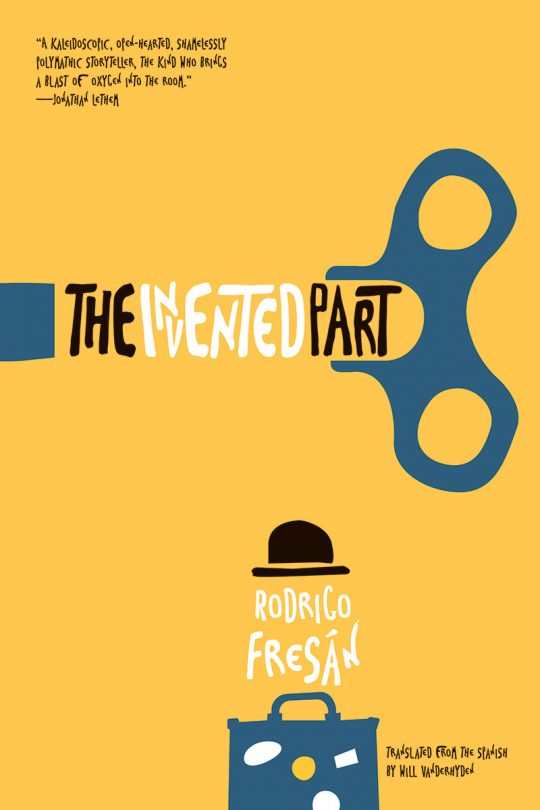
Apr 152011
 

Elegant Uncertainty

A review of Juan Jose Saer’s The Sixty-Five Years of Washington

By Richard Farrell


The Sixty-Five Years of Washington
By Juan José Saer
Translated by Steve Dolph

Open Letter Books
ISBN-13:978-1-934824-20-7

To be clear: the soul, as they call it, is not translucent, it seems, but murky.
—Juan José Saer

WHEN IS THE LAST TIME you went on a good walk with a friend? Cell phones off, eyes fixed on the path in front, minds alert and the conversation buzzing?  A good walk opens the ears and the heart to storytelling, creating a sacred space in between two individuals as they make their way.  Juan José Saer invites us on such a walk in The Sixty-Five Years of Washington.  But, reader be warned: this is no ordinary stroll and this is no ordinary novel.

The Sixty-Five Years of Washington follows Angel Leto and “the Mathematician” as they walk through the city center of Santa Fe, Argentina. “Suppose it’s October,” the narrator begins, “October or November, let’s say, in 1960 or 1961, October, maybe the fourteenth or sixteenth, or the twenty-second or twenty-third—the twenty-third of October in 1961 let’s say—what’s the difference.”  This uncertain narrator interrupts frequently and becomes a third protagonist in the novel as he narrates the journey, conversation and thoughts of the characters and supplies ongoing, humorous commentary.  The conversation quickly turns to the sixty-fifth birthday party for Jorge Washington Noriega, a party which neither man attended.  Washington is an elusive character; we don’t know much about him.  He writes lectures on the Colastine Indians (“Location, Lineage, Langauge & Logic”); he was arrested once, and avoided prison by going to a mental hospital; he throws wild birthday parties for his younger friends. The Mathematician heard his version of the party a week earlier from one of the attendees, Botón, as the two men rode a ferry.  Leto hears his version from the Mathematician.  The reader, of course, hears all of these accounts from the narrator. The party attracted les enfants terribles of Argentina, young artists, poets and political activists ready to disrobe, fight and snort coke into the wee hours of the morning. You want to be at this party, but, like Leto and the Mathematician, you can’t attend, so you must be willing to accept a re-telling (hyphenated emphasis intended throughout) of the event as the men stroll through the city.

This device of re-telling is crucial. By not going directly at the events the way a traditional narrative might, Saer creates distance between the characters in the novel and the dramatic action.  This recursive structure forces us to question the very idea of what happened at this party, and, on a deeper level, what is happening in the novel. Saer challenges the notions of verisimilitude and truth.  And with this technique, the re-telling of the events at the party mimics our reading of the novel itself (of any novel, really), by recreating a version of reality through the description of events not directly experienced by the characters or the reader.  Saer seems to be jack-hammering at the foundations of storytelling.

Continue reading »

Mar 052011
 

Here is a twisted, black comic reversal of Kafka’s “Metamorphosis,” which, yes, is already a twisted, black comic reversal story. So that “Gregor,” by the wonderful Catalan author Quim Monzó is a double dose of twisted and black, or maybe twisted and black squared. This story is from Monzó’s collection Guadalajara, translated into English by Peter Bush, and forthcoming this summer from Open Letter Books. Watch for the book—it’s amazing. Like “Gregor,” many of the stories work on the principles of literary reference and inversion: Ulysses gets trapped inside the Trojan Horse, Robin Hood steals so much that the rich are impoverished and the poor become wealthy, a famous prophet can’t remember any prophecies. Monzó’s influences are often postmodern (Coover, Barthelme, etc.) or surrealist (Raymond Queneau). He was born in Barcelona in 1952. He has been awarded the National Award, the City of Barcelona Award, the Prudenci Bertrana Award, the El Temps Award, the Lletra d’Or Prize for the best book of the year, and the Catalan Writers’ Award; he has been awarded Serra d’Or magazine’s prestigious Critics’ Award four times. He has also translated numerous authors into Catalan, including Truman Capote, J.D. Salinger, and Ernest Hemingway.

dg


When the beetle emerged from his larval state one morning, he found he had been transformed into a fat boy. He was lying on his back, which was surprisingly soft and vulnerable, and if he raised his head slightly, he could see his pale, swollen belly. His extremities had been drastically reduced in number, and the few he could feel (he counted four eventually) were painfully tender and fleshy and so thick and heavy he couldn’t possibly move them around.

What had happened? The room seemed really tiny and the smell much less mildewy than before. There were hooks on the wall to hang a broom and mop on. In one corner, two buckets. Along another wall, a shelf with sacks, boxes, pots, a vacuum cleaner, and, propped against that, the ironing board. How small all those things seemed now—he’d hardly been able to take them in at a glance before. He moved his head. He tried twisting to the right, but his gigantic body weighed too much and he couldn’t. He tried a second time, and a third. In the end he was so exhausted that he was forced to rest.

He opened his eyes again in dismay. What about his family? He twisted his head to the left and saw them, an unimaginable distance away, motionless, observing him, in horror and in fear. He was sorry they felt frightened: if at all possible, he would have apologized for the distress he was causing. Every fresh attempt he made to budge and move towards them was more grotesque. He found it particularly difficult to drag himself along on his back. His instinct told him that if he twisted on to his front he might find it easier to move; although with only four (very stiff) extremities, he didn’t see how he could possibly travel very far. Fortunately, he couldn’t hear any noise and that suggested no humans were about. The room had one window and one door. He heard raindrops splashing on the zinc window sill. He hesitated, unsure whether to head towards the door or the window before finally deciding on the window—from there he could see exactly where he was, although he didn’t know what good that would do him. He tried to twist around with all his might. He had some strength, but it was evident he didn’t know how to channel it, and each movement he made was disconnected, aimless, and unrelated to any other. When he’d learned to use his extremities, things would improve considerably, and he would be able to leave with his family in tow. He suddenly realized that he was thinking, and that flash of insight made him wonder if he’d ever thought in his previous incarnation. He was inclined to think he had, but very feebly compared to his present potential.

After numerous attempts he finally managed to hoist his right arm on top of his torso; he thus shifted his weight to the left, making one last effort, twisted his body around, and fell heavily, face down. His family warily beat a retreat; they halted a good long way away, in case he made another sudden movement and squashed them. He felt sorry for them, put his left cheek to the ground, and stayed still. His family moved within millimeters of his eyes. He saw their antennae waving, their jaws set in a rictus of dismay. He was afraid he might lose them. What if they rejected him? As if she’d read his thoughts, his mother caressed his eyelashes with her antennae. Obviously, he thought, she must think I’m the one most like her. He felt very emotional (a tear rolled down his cheek and formed a puddle round the legs of his sister), and, wanting to respond to her caress, he tried to move his right arm, which he lifted but was unable to control; it crashed down, scattering his family, who sought refuge behind a container of liquid softener. His father moved and gingerly stuck his head out. Of course they understood he didn’t want to hurt them, that all those dangerous movements he was making were simply the consequence of his lack of expertise in controlling his monstrous body. He confirmed the latter when they approached him again. How small they seemed! Small and (though he was reluctant to accept this) remote, as if their lives were about to fork down irrevocably different paths. He’d have liked to tell them not to leave him, not to go until he could go with them, but he didn’t know how. He’d have liked to be able to stroke their antennae without destroying them, but as he’d seen, his clumsy movements brought real danger. He began the journey to the window on his front. Using his extremities, he gradually pulled himself across the room (his family remained vigilant) until he reached the window. But the window was very high up, and he didn’t see how he could climb that far. He longed for his previous body, so small, nimble, hard, and full of legs; it would have allowed him to move easily and quickly, and another tear rolled down, now prompted by his sense of powerlessness.

As the minutes passed, he slowly learned how to move his extremities, coordinate them, and apply the requisite strength to each arm. He learned how to move his fingers and gripped the windowsill. Seconds later he finally succeeded in raising his torso. He thought that was a real victory. He was now sitting down, legs crossed, with his left shoulder leaning on the section of wall under the window. His family stared at him from one corner of the room with a mixture of admiration and panic. He finally pulled himself on to his knees, gripped the sill with his hands, so he wouldn’t fall, and looked out of the window. Part of the building on the other side of the street stood out clearly. It was a very long, dark building, with symmetrical windows that broke up the monotony of the façade. It was still raining: big drops of rain that were easy to spot individually and hit the ground separately. He made one last effort and pulled himself up and stood erect. He marveled at being so vertical, yet felt uncomfortable at the same time, even queasy, and had to lean on the wall so as not to fall down: his legs soon went weak, and he gently eased himself down until he was back on his knees. He crawled towards the door. It was ajar. He had to push it to open it wide, and he pushed so energetically (he found it difficult to estimate the effort strictly necessary for each gesture he made) that he slammed it against the wall and it swung back and almost shut. He repeated the movement, less brusquely this time. Once he’d managed to open the door, he went out into the passageway, still on his knees.

Could humans be somewhere in the house? Probably, but (he im­­agined) if he did find any, they wouldn’t hurt him; he looked like them now. The idea fascinated him. He’d no longer have to run away for fear they’d crush him underfoot! It was the first good thing about his transformation. He saw only one drawback: they would want to speak to him, and he wouldn’t know how to reply. Once he was in the passage, he pulled himself up again with the help of his arms. He didn’t feel so queasy now. He walked along slowly (his legs bore his weight better now) and every step forward he took became easier. There was a door at the end of the passage. He opened it. The bathroom. A toilet, bidet, bathtub, and two washbasins under their respective mirrors. He had never looked at himself before and now saw immediately what he was like: naked, fat, and flabby. From his height in the mirror he deduced he wasn’t yet an adult. Was he a child? An adolescent? He was upset to see himself naked; he didn’t understand why—nudity had never bothered him before. Was it the misshapen body, the pounds of flesh, the chubby, acne-ridden face? Who was he? What was he all about? He walked through the house, gaining in stability all the time. He opened the door to the bedroom that was next to the bathroom. There were some skates next to the bed. And lots of pennants on the walls. There was also a desk, exercise books, reading books. And a shelf full of comics, a football, and some photos. A photo of himself (he recognized himself straightaway, just like in the bathroom: fat, spotty, and dressed as if for indoor football, in a blue jersey with a white stripe on each sleeve). He found clothes in the cupboard: underpants, a T-shirt, a polo, tracksuit bottoms, socks, and sneakers. He got dressed.

He looked through the spy-hole in the front door. Outside he could see a landing and three more front doors. He went back to the living room, ran his finger along the spines of the few books on the shelves. He caressed a china mug. Turned on the radio. Music blared out, but he couldn’t understand the words:

. . . unforgettable doves,
unforgettable like the afternoons
when the rain from the sierra
stopped us going to Zapoopan . . .

He switched it off. Silence. Sat down on the sofa. Picked up the channel-changer. Turned on the TV. Changed channels; brightened the colors as much as he could, turned the volume all the way up. Turned it all the way down. It was so easy. There was a book open on the sofa. He picked it up, convinced he would understand nothing, but the second he looked at the page, he read almost fluently: “I’ve moved. I used to live in the Duke Hotel, on the corner of Washington Square. My family has lived there for generations, and when I say generations I mean at least two-hundred or three-hundred generations.” He closed the book, and when he’d put it back where he’d found it, he remembered he’d found it open and not shut. He picked it up again, and while he was looking for the page it had been open to, he heard the sound of keys turning in a lock. A man and a wo­­man appeared; they were clearly adults. The man said, “Hello.” The wom­an walked over, kissed him on the cheek, looked him up and down, and asked: “How come you’ve put your pants on backwards?” He looked at his tracksuit bottoms. How was he to know they were back to front? He shrugged his shoulders. “Have you done your homework?” the man asked. Oh, no, not homework! He imagined (as if he could remember) an earlier time, when homework and backward pants didn’t exist. “Get on with it then!” It was the woman’s turn. Before going to his bedroom and getting on with it, he went into the kitchen, opened the fridge, took out a can of Diet Coke, that he struggled to open (still being clumsy with his hands), and spilled half on the floor. Before they could scold him, he went to the junk room, and as he unhooked the mop, he spotted three beetles huddling against the wall; after freezing for a moment, they tried to escape. He felt disgusted, put his right foot on them, and pressed down until he could feel them squashing.

—Quim Monzó, translated by Peter Bush

.

Peter Bush is an award-winning literary translator who was born in Spalding, Lincolnshire, UK, and now lives in Barcelona. Previously he was Professor of Literary Translation at the University of East Anglia, where he directed the British Centre for Literary Translation.He has been active in defence of the rights of literary translators as Vice-President of the International Translators Federation and was founding editor of the literary translators’ journal, In Other Words. His recent translations from Spanish include Níjar Country and Exiled From Almost Everywhere by Juan Goytisolo and Celestina by Fernando de Rojas; from Catalan A Shortcut to Paradise by Teresa Solana and The Last Patriarch by Najat El Hachmi. He is now finishing Tirano Banderas by Ramón del Valle-Inclán, the classic novel on the theme of dictatorship in Latin America and L’Éloge de l’Amour, a philosophical dialogue between Alain Badiou and Nicolas Truong. He has also translated the novel, The Enormity of the Tragedy, by Quim Monzó.

.
.