Apr 072013
 

McCabe phot (2)

For your Sunday morning delectation, over coffee and bagels or eggs and bacon or hominy and grits and the New York Times or the Sunday Star or the London Sunday Times, preferably while you’re still in bed, here is Marilyn McCabe singing Leconte de Lisle‘s “Les Roses d’Ispahan” put to music by Gabriel Fauré. Marilyn’s popular translation and performance pieces have a very special place at Numéro Cinq; she’s done a bunch and I have to say it’s a treat I keep returning to, just to switch onto NC, find Marilyn and shut my eyes listening to her voice. So I’ve collected all her the contributions onto one page to make this easier for readers. Just click on her name in this paragraph to be taken to The Marilyn McCabe NC Archive Page. For each of these pieces, Marilyn also provides a deft translation of the original poem.

dg

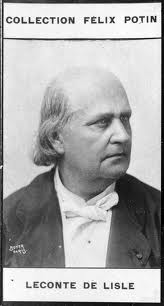
In keeping with the West’s long love affair with the idea of the East, Leconte de Lisle (1818-1894) invokes the mystery and seduction of Iran, its aromas and flora. He plays with formal constructions, limiting himself to four end words in French poetry’s traditional alexandrine or twelve-syllable lines.  When he put the poem to music, Gabriel Fauré dropped two of the original stanzas, but breathed something into the lines that the text does not quite offer. Translator/traitor indeed, my pale rendering into English fails the poem’s romance. The original’s oo’s and oi’s naturally purse the lips to a murmur, toward a kiss.
Marilyn McCabe

Leconte de Lisle

.
Click on the PLAY arrow and listen to Marilyn McCabe.

Les Roses d’Ispahan

Les roses d’Ispahan dans leur gaîne de mousse,
Les jasmines de Moussoul, les fleurs de l’oranger
Ont un parfum moins frais, ont une odeur moins douce,
O blanche Leïla! que ton souffle léger.

Ta lèvre est de corail, et ton rire léger
Sonne mieux que l’eau vive et d’une voix plus douce,
Mieux que le vent joyeux qui berce l’oranger,
Mieux que l’oiseau qui chante au bord d’un nid de mousse.

O Leïlah, depuis que de leur vol léger
Tous les baisers ont fui de ta lèvre si douce,
Il n’est plus de parfum dans le pale oranger,
Ni de céleste arôme aux roses dans leur mousse.

Oh que ton jeune amour, ce papillon léger,
Revienne vers mon coeur d’une aile prompte et douce,
Et qu’il parfume encore la fleur de l’oranger,
Les roses d’Ispahan dans leur gaîne de mousse.

—Leconte de Lisle


The Roses of Ispahan

The roses of Ispahan, their sheath of moss,
the jasmines of Moussoul, their orange blossoms,
send forth a perfume less fresh, a scent less soft,
O pale Leila, than your breath, so light.

Your lips are of coral and your light
filled laugh more lovely than swift water, your voice more soft;
more joyful than the wind that shivers the orange blossoms,
than the bird that sings beside its nest of moss.

O Leilah, since all the kisses have fled light-
ly your lips, there is no soft
perfume in the pale orange blossoms,
nor scent of roses in their moss.

Oh, that it would return on light
wings, your love, that butterfly, quick and soft,
and perfume again rise from the orange blossoms,
the roses in their sheath of moss.

—Translation & Performance by Marilyn McCabe

———————————

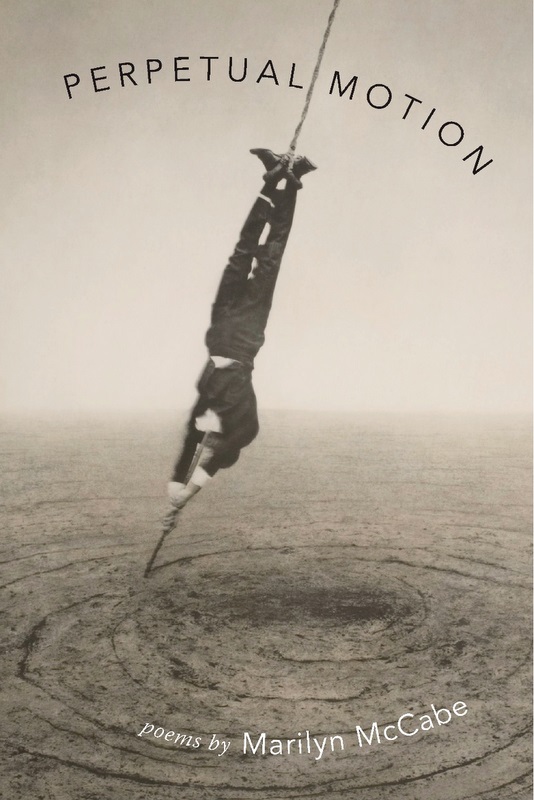
Marilyn McCabe’s poem “On Hearing the Call to Prayer Over the Marcellus Shale on Easter Morning” was awarded A Room of Her Own Foundation’s Orlando Prize, fall 2012, and is forthcoming in the Los Angeles Review. Her book of poetry Perpetual Motion was published by The Word Works in 2012 as the winner of the Hilary Tham Capitol Collection contest.


Jul 012012


Heiress to a French seed company fortune, Louise Lévêque de Vilmorin (1902 -1969) was a whirlwind of affaires du coeur as well as publications. Among her amorous conquests: Antoine de Saint-Exupéry, Orson Welles, Prince Ali Khan, a Hungarian count, Duff Cooper (British ambassador to France after World War II) and André Malraux. While setting the social world on fire she also managed to write fifteen novels, five books of poetry and ghost-authored the memoirs of Coco Chanel.  Her most famous novel was Madame de, which was made into a movie by Max Ophuls called The Earrings of Madame de…, starring Charles Boyer.

Here are several bitter little poems and my translations.

— Marilyn McCabe


Fiancée

Fiancée aux mille détours
Que cachez-vous dans votre manche ?
Est-ce la carte d’un séjour
Où le rêve en gestes s’épanche ?
Est-ce le plan de vos revanches
Sur le vol d’un baiser vautour ?

(from L’alphabet des aveux, 1954)

Fiancée

Fiancée of a million deviations
what do you hide up your sleeve?
Is it a postcard
from the place where dreams are discarded?
Is it your revenge plan:
a vulture’s kiss: stolen and flown?


Fleurs

Fleurs promises, fleurs tenues dans tes bras,
Fleurs sorties des parenthèses d’un pas,
Qui t’apportait ces fleurs l’hiver
Saupoudrées du sable des mers ?
Sable de tes baisers, fleurs des amours fanées
Les beaux yeux sont de cendre et dans la cheminée
Un cœur enrubanné de plaintes
Brûle avec ses images saintes.

(from Fiançailles pour rire, 1939)

Flowers

Flowers of promises, bouquet in your arms,
flowers fallen like the parenthesis of a footprint, no
one knows who brought the flowers winter
scattered on the shore?
Sands of your kisses, flowers of faded ardor,
their beautiful eyes are cinders and on the hearth
a heart enribboned with cries
burns with holy fire.


Adieux

Les mots sont dits, les jeux sont faits
Toutes couleurs toutes mesures,
Le danger cueille son bouquet,
Aux falaises de l’aventure
Je ne reviendrai plus jamais.

Adieu chapeau de Capitaine
Adieu gais écheveaux du vent,
Astre du Nord, étoile vaine,
Un baiser est au firmament
Des jardins où je me promène.

Adieu bateaux au jour défaits,
L’heure attendue est bien venue,
L’amour me choisit mes secrets.
À la tour des peines perdues
Je ne monterai plus jamais.

(from Le Sable du sablier, 1945)

Goodbyes

The words were said, the plays were made,
all colors, all measures,
danger picked its wild bouquet.
To the cliffs of this adventure
I will never return.

Goodbye captain’s hat.
Goodbye gay skeins of wind,
north star, vain éclat,
your kiss is in the heaven
over the garden I am lost in.

Goodbye ships of defeated days,
the waited hour is well come;
love chose me my pains.
To that widow’s-walk of sweet affliction
I will never climb again.

 — Translations by Marilyn McCabe

————————————

Marilyn McCabe’s book of poetry Perpetual Motion was chosen by judge Gray Jacobik to be published as part of the Hilary Tham Capital Collection by The Word Works in 2012, and her chapbook Rugged Means of Grace was published by Finishing Line Press, 2011. She is a regular contributor of poetry book reviews for Connotation Press, and her poetry has appeared in print and online in such magazines as Nimrod, Painted Bride Quarterly, Numéro Cinq, and the Cortland Review. She has twice been awarded New York State Council on the Arts Individual Artist grants, most recently in 2012 for the development of a video-poem.


Apr 032012
 

Marilyn McCabe herein presents trenchant meditations on the mysterious and heart-rending duality (good and evil) of the human soul (think: Proust/Idi Amin). Marilyn is an old friend, a poet, translator, singer, and cross-country skier from Saratoga Springs. She is pretty much a regular contributor to these pages. See especially her translations of Rilke, Éluard, Silvestre, and Apollinaire (the last three put to music—sung in this instance by the uber-talented Ms. McCabe). These poems come from Marilyn’s brand new book Perpetual Motion, just out with The Word Works (2012).

dg


Found

There’s a baby
in the crisped litter
of a roadside wood today, made pale
and lovely by an October snow.
Then even the skin is brittle.

It’s never the big thing
but the fine and permeative that destroys
often beautifully. How are we a thing that hates
and is so hard to hate?

There’s a boy
tucks a note into the pocket
of a coat he’s sending a stranger, saying
“Have a good winter. Please write back.”

A branch breaks, a lamp flickers,
the dog digs at a flash of something
paler than snow. A boy uncrinkles a note.
What happens next?


Lost

In the zoo’s amphibious tanks’ blueglowcurved
half hidden things dark dim dark dim

Kierkegaard said that we are two
selves divided, one divine, one sullied
by its reflection in the group;

I look up no one I recognizeI am
eight years old and my group has disappeared

to try to see the self in others
is despair, but despair is the beginning
of the shadowed path toward God.

Run to the open doors run through the bucking storm
where’s my group I cry no one no self to find myself

And who are we without each other,
sweat smelling, shuffling,
God so far away and flickering?
dark dim dark dim dark


Wasp Nest   
after Vallejo

Professor of nesting, teach us to adhere,
to mongrel, to creep in purpose, to suspend
with aplomb and be the center of desirous flying,
the center of love.

Rector of eaves, teach us to look down backwards
at the angry citizens always wanting entry, to refuse
the attentions of sky by hiding well
and shouldering the cloak of architecture.

Technician of wonder, teach us to travel by mud,
to house in humility, hum
without sound. We make you from our bodies
but you are more than we will ever be.
You build us to build you to build us to build you
in buildings you may outlast.

Professor of such little beauty.
Rector of refusal.
Technician of this short time.

—Marilyn McCabe

————————————————–

Marilyn McCabe’s book of poetry Perpetual Motion was chosen by judge Gray Jacobik to be published as part of the Hilary Tham Capital Collection by The Word Works in 2012, and her chapbook Rugged Means of Grace was published by Finishing Line Press, 2011. She is a regular contributor of poetry book reviews for Connotation Press, and her poetry has appeared in print and online in such magazines as Nimrod, Painted Bride Quarterly, Numéro Cinq, and the Cortland Review.

Nov 082011


Marilyn McCabe is a singer/poet/essayist/friend. She has already appeared on NC with her own poetry, translations, and in song–which makes her a kind of regular, an old  favourite, at least an old favourite of mine. Herewith we offer a poem by the 19th century French poet Paul-Armand Silvestre with a Marilyn McCabe translation and Marilyn McCabe singing the French version put to music by Gabriel Fauré. This is gorgeous to hear, especially to listen to while you gaze at the screen reading the poem (or maybe you’ll just shut your eyes and listen). Marilyn’s poetry manuscript Perpetual Motion was chosen by judge Gray Jacobik for the Hilary Tham Capital Collection by The Word Works, and will be released in January 2012. Her chapbook Rugged Means of Grace was published by Finishing Line Press, 2011.  She earned an MFA in poetry at New England College.

dg

Paul-Armand Silvestre’s “Le Secret”

Translated & Performed

By Marilyn McCabe


.

Click the button to hear Marilyn McCabe singing “Le Secret.”
.

Le Secret

Je veux que le matin l’ignore
Le nom que j’ai dit à la nuit,
Et qu’au vent de l’aube, sans bruit,
Comme une larme il s’évapore.

Je veux que le jour le proclame
L’amour qu’au matin j’ai caché
Et sur mon coeur ouvert penché
Comme un grain d’encens, il l’enflamme.

 Je veux que le couchant l’oublie
Le secret que j’ai dit au jour,
Et l’emporte avec mon amour
Aux plis de sa robe pâlie.

—Paul-Armand Silvestre


The Secret

I want the morning to ignore
the name I spoke to the night,
and let it, with the dawn’s breeze,
silently, as a tear, evaporate.

I want the day to proclaim
the love I asked morning to hide
and make it in my open heart,
like a grain of incense, ignite.

I want the sunset to forget
the secret I told the day,
and sweep it, with my love,
in the folds of its pale robes.

—Translated by Marilyn McCabe

Jun 252011
 

.

Another Numéro Cinq first: This time Marilyn McCabe sings and translates a poem by the turn-of-the-century French poet Guillaume Apollinaire but not simultaneously. Marilyn is an old friend (we last ran into each other helping to pour concrete at a friend’s house in Porter Corners, NY, a couple of weeks ago), a poet, translator and essayist who has already appeared twice on NC. But now you get to hear her sing! It’s a treat, eerie and beautiful.

dg

It became something of a tradition for French composers in the late 19th and early 20th centuries to set lyric poems by their poetry contemporaries to mélodies for solo voice and piano. Inspired by the poetry of the likes of Verlaine and Baudelaire, composers from Berlioz to Saint-Saens created these musical settings, attempting to “translate,” in a way, the lyric into a musical format that created a form greater than the two elements.

I’m preparing a concert of some these art songs, and as part of my preparation, I’m doing translations of the poems. Here is a funny little poem by Guillaume Apollinaire (1880-1918) set to music by Francis Poulenc (1899-1963).

—Marilyn McCabe

.

L’hotel by Guillaume Apollinaire, Music by Poulenc

Performed (& Translated) by Marilyn McCabe

.

Click the button to play Marilyn McCabe singing “L’hotel.”

.

L’hotel

Ma chambre a la forme d’une cage,
Le soleil passe son bras par la fenêtre.
Mais moi qui veux fumer pour faire des mirages,
J’allume au feu du jour ma cigarette,
Je ne veux pas travailler — je veux fumer.

.

The Hotel

My room is like a cage.
The sun hangs its arms through the bars.
But I, I want to smoke,
to curl shapes in the air;
I light my cigarette
on the day’s fire.
I do not want to work —
I want to smoke.

—Guillaume Apollinaire, translated by Marilyn McCabe

——————————–

Marilyn McCabe’s poetry chapbook Rugged Means of Grace is due out from Finishing Line Press any minute now. Her poetry has appeared in magazines such as Painted Bride Quarterly, Nimrod, Beloit Poetry Journal, and Numéro Cinq. Her recent collaborative poetry chapbook with Elaine Handley and Mary Sanders Shartle won the Adirondack Center for Writing’s Best Poetry Book award for 2010. A Marilyn McCabe essay appeared in Hunger Mountain. She took classical voice lessons for ten years and performs classical or jazz concerts whenever the mood strikes.

Feb 202011
 
http://www.youtube.com/watch?v=xdCrZfTkG1c

Click to play for appropriate soundtrack during your reading of the post.

After an inexcusable delay, here are the finalists for the OFFICIAL 2011 Numéro Cinq Erasure Contest. The management wishes to apologize for the tardiness of this post. One can only blame the indolent and refractory judges who, for reasons known only to themselves, decided to strike in sympathy with protesters against autocratic regimes in Tunisia, Egypt, Bahrain, Iraq, Yemen, and Wisconsin.

Just to be clear: newcomers should realize that all NC contests have a double trajectory. There is a People’s Choice Winner and then an Official Winner chosen by a panel of anonymous, highly paid, drunken, dissolute, rebellious, puerile, ill-read layabouts. Thus the Official NC Winner is something like the Booker Prize. The list of OFFICIAL ENTRIES for this year’s contest is here. And the PEOPLE’S CHOICE winner is here.

Aside from malcontent judges, there were many difficulties involved in coming up with a short list, chief among them the huge number of highly creative and even surprising entries including Anna Maria Johnson’s “wall” entry with its gorgeous visual pun and Meg Harris’s blog entry which you had to follow a link to read. In the end the judges decided to decide by strictly applying the two signal virtues recognized on NC: WIT & ARROGANCE—above all else. This meant that the best entries had to carve out a sentiment that was somehow entirely DIFFERENT from the one intended in the original piece and add some twist of irony or grammar that also gave it ZING, EXCITEMENT, AFFLATUS, or HUMOUR.

Thus we ended up with a list that included Vivian Dorsel’s text, tumescent with double entendres, Lynne Quarmby’s “scholar” entry, which very slyly reads like a fortune cookie, Marilyn McCabe’s extremely witty double entry that manages to repeat the same thought in two radically different modes, Adam Arvidson’s whatever-it-is with its thudding parallel constructions and final turn, Sarah Braud’s hilarious list of rules, and then, yes, Lynne Quarmby AGAIN for her little doublet about two people named Grace and Prudence.

It is thought by the judges that these entries embody the values that we at Numéro Cinq hold dear.

Continue reading »

Feb 152011
 

Here are three poems by three friends, Elaine Handley, Marilyn McCabe, & Mary Shartle, all three part of “the Greenfield Crowd,” a disparate and rowdy group of writers, painters, cellists and cross-country skiers loosely based in Greenfield, NY (though Marilyn McCabe actually lives in Saratoga Springs). Laura Von Rosk and Naton Leslie, who have both appeared on these pages, are part of the group. These three women in particular have combined their talents since 1998 and have produced multiple chapbooks of poetry together, including Notes from the Fire Tower: Three Poets in the  Adirondacks and Glacial Erratica: Three Poets in the Adirondacks, Part Two which won the Adirondack Center for Writing best poetry book award two years in a row. These poems come from their new collection Winterberry, Pine (30 Acre Woods Publications, 2010).

Marilyn McCabe is already familiar to NC readers. We published her Rilke translations earlier on these pages. She has published work in, among others, Nimrod, Beloit Poetry Journal, and Hunger Mountain. Elaine Handley has published in, among others, Dos Passos Review and Connecticut River Review. And Mary Shartle has appeared in Blueline and Sow’s Ear Poetry Review.

dg


A Poem by Elaine Handley


GroundHog Day


Demeter sits at the kitchen window
chain smoking, staring at empty maple and birch.
She imagines the smoke as rage leaving her body.

Outside all that moves are chickadees at the feeder,
only color, winterberries like splatters of fresh blood
in the snarl of grapevines by the shed.

Her husband’s abandoned chamois shirt—frayed
at the cuffs, a hole in one elbow—
provides an odd, familiar comfort these days
so much like the last, the next,
full of his cold emptiness.

It’s been months since Persephone ran off,
stolen by a charming woodchuck, full of pipe
dreams, and she suspects, cruel ways.
“My queen” he called her daughter.
No email, no call, not even a text.  The house
so quiet she can hear the little murmurs
of the sleeping cat.

Some like it hot, she tells herself, thinking
of her daughter, and then the cat,
who inexplicably sleeps under the sizzling woodstove.

On the Today Show that morning, Punxsutawney Phil
was paraded out, fussed over. “What an ass!”
she’d said out loud.  What groundhog comes out
of hibernation early?  Who would willingly give up
the sweet coma of sleep–and for what?
Food hard to find, too much snow, constant cold,
the loneliness.

She pours a bourbon, neat.  It’s her third this morning.
She stubs out the cigarette butt, lights another.
The scald in her throat feels right.
A little blaze flares up in her chest.
For a moment, it almost feels like love.


—Elaine Handley


Continue reading »

Dec 092010
 

In the last years of his life, Rilke wrote hundreds of poems in French. Not widely translated, they continue his meditations on and imaginings about the things of the world but in the fresh expression of this adopted language. Marilyn McCabe is poet and essayist and an old friend, part of “the Greenfield Crowd,” a disparate and rowdy group of writers, painters, cellists and cross-country skiers loosely based in Greenfield, NY (though Marilyn actually lives in Saratoga Springs). Laura Von Rosk and Naton Leslie, who have both appeared on these pages, are part of the group. Marilyn has published widely, including an essay in VCFA’s own magazine Hunger Mountain. With Elaine Handley and Mary Shartle (two more members of the Greenfield Crowd), she published a collection called Three Poets on Themes of Love, Death, and Sex. It’s a great pleasure to be able to introduce her here.


from Vergers (Orchards)

Poems by Rainer Maria Rilke

Translated from French by Marilyn McCabe


1

Ce soir mon coeur fait chanter
des anges qui se souviennent….
Une voix, presque mienne,
par trop de silence tentée,

monte et se decide
à ne plus revenir;
tender et intrépide,
à quoi va-t-elle s’unir?


Tonight my heart makes sing
the angels who are remembering….
A voice, close to mine,
lured by too much silence,

rises and decides
to never return;
intrepid and tender,
with what will it unite?

Continue reading »