Apr 042014
 

lorrie-moore3

What lengths will we go to in order to avoid being alone? Why are we so hell-bent on love? These are age-old questions, ones that philosophers, poets and priests have been unable to answer. Moore’s rendering of scenes, her dramatization of the beginnings and endings of love, is nothing short of a profound examination of the quintessence of the human condition. Why do we love? Why do we tell stories or create art? We are trying to close the gap, between self and other, between idea and reality, between life and death. –Richard Farrell
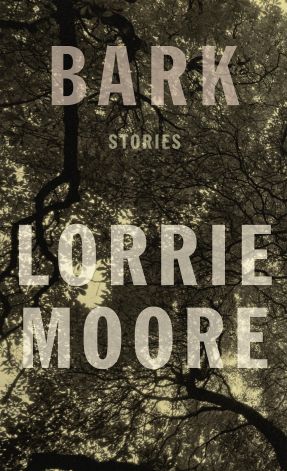
bark

Bark
Lorrie Moore
Alfred A. Knopf
Hardcover, 192 pages, $24.95
ISBN: 978-0-307-59413-6


The landscape of love, booby-trapped with the broken-hearted and littered with deteriorating destinies, is familiar territory for Lorrie Moore. Moore’s latest collection of stories, Bark, explores the underbelly of Eros with wit, wisdom and unflinching honesty. Each of the eight stories in Bark, her first story collection since the wildly successful Birds of America, contends with romantic relationships, most in some state of decline, a few in outright freefall. But lest this all sound too heavy, it’s important to remember that we’re talking about Lorrie Moore here, a writer who delights in the uncanny juxtapositions of humor and pathos to tug a story along. Her verbal pyrotechnics and structural harmonies can always make you smile, even amidst the bleakest affair of the heart.

“I can’t live without love in my life,” says Ira—the protagonist in the opening story, “Debarking.” Ira, recently divorced, has reached an existential conclusion: even bad love is better than no love at all. A middle-aged Jewish man thrust back into the dating scene, Ira skips Passover Seder in order to meet a woman at a Lenten dinner with his Christian friends. To mask his nervousness, Ira cracks resurrection jokes. “Then he began milling around again, apologizing for the Crucifixion. ‘We really didn’t intend it,’ he murmured, ‘not really, not the killing part? We just kind of got carried away’” Ira seems hell-bent on his own comic demise until he meets Zora, another divorcee, who laughs at his oddball jokes, sparking off their bizarre coupling.

Over the course of this 46-page story (the first of two very long stories in Bark), Ira and Zora contend with families, dating rituals and sex, and in most cases, without much success. After the aforementioned dinner, Ira sends Zora a short note and his phone number on a postcard with a picture of “newlyweds dragging empty Spam cans from the bumper of their car.” Moore makes the vivid image of this postcard resonate with irony and meaning. The postcard is funny, but also loaded. Are the newlyweds destined for unhappiness? Is all love like a string of empty Spam cans? And why a postcard? For Ira, the hapless and hopeless romantic, a postcard represents the “geometric halfway point between stalker and Rip Van Winkle.” Desperate but cautious, Ira tries to make all the right moves. But Moore wants us to remember that there is nothing rational about human desire, and she constantly pricks at every attempt to make it so.

A few days later, Zora replies in kind, also sending Ira a postcard, but her message copies the very words he wrote. “Wasn’t that precisely, word for word, what he had written to her? There was no too, no emphasized you, just the exact same words thrown back at him like some lunatic postal Ping-Pong. Either she was crazy or stupid or he was being too hard on her.”

Zora’s strange mimicry hints at what might be a profound emptiness behind the ritual. Maybe all the moves a lover makes are for naught. Maybe the palace is only a façade. Moore’s exploration of zany relationships (few are zanier than Ira and Zora’s) reveals much confusion about the nature of love. What’s happening here? Why is everyone acting, playing a part in a carefully orchestrated dance without music or steps? To mix the metaphor a bit, if love is a mirror, a reflection of the lover cast back upon himself, then the expected response is one of the familiar, some ting of recognition. But Moore’s mirrors belong in funhouses. The reflections they send back distort, and the images are grotesque parodies of any romantic ideal. Rather than recognition, Ira finds perversions, warped emotions, and confusion. Nowhere is this more evident than in the wonderful scene when Ira finally calls Zora to ask her out on a date.

He phoned Zora four days later, so as not to seem discouragingly eager. He summoned up his most confident acting. ‘Hi, Zora?’ This is Ira,’ and then waited—narcissistically perhaps, but what else was there to say?—for her response.
‘Ira?’
‘Yes. Ira Milkins.’
‘I’m sorry,’ she said. “I don’t know who you are.’

In this story about acting, about seeming, about playing games with the heart, misapprehension shatters hope. This reversal, Zora’s failure to recognize Ira, underscores not only the narcissism of falling in love (don’t we all expect to be loved back?) but also the more desperate need to be noticed, to be seen and heard by another human being. We can’t be loved without first being visible, but if all we present is a mask, then when are we ever truly seen?

Moore takes the idea of invisibility to a much higher level in “Paper Losses,” a shorter story (at 12 pages) than “Debarking,” and one that deals with the end of love, rather than its beginning. Kit and Rafe are a married couple in the process of splitting up. They’ve stopped having sex, stopped talking, and even stopped caring about these things. Rafe descends nightly into the family basement to assemble model rockets, and the lonely house fills up with fumes of paint and glue.

She seldom saw him anymore when he got up in the morning and left for his office. And when he came home from work, he would disappear down the basement stairs. Nightly, in the anxious conjugal dusk that was now their only life together, after the kids went to bed, the house would fill up with fumes. When she called down to him about this he never answered. He seemed to have turned into some sort of space alien. Of course later she would understand that all this meant he was involved with another woman, but at the time, protecting her own vanity and sanity, she was working with two hypotheses only: brain tumor or space alien.

The epitome of dissolution is not fighting. When couples argue, they are still holding on to something. But when silence prevails, when a person stops answering, when muted apathy fills the home, there isn’t much to be done. The lover turns into a space alien, a creature so utterly foreign as to be unrecognizable.

Rafe serves Kit with divorce papers while he’s still living in their home. “‘Honey,’ she said trembling, ‘something very interesting came in the mail today.’” But before Kit and Rafe can call it quits, they must decide what to do about a previously-planned family vacation. Kit decides she wants to go. “What bimbo did he want to give her ticket to? (Only later would she find out.)” This is vintage Lorrie Moore. Circumstance beats down her characters, but never defeats them.

The vacation, naturally, is a disaster. Kit loses her luggage and must wear gift shop clothes. Rafe continues to ignore her, even in the bright sunshine of the Caribbean. With characteristic humor, Moore takes a few shots at the notion of the idyllic family vacation: “They all slept in the same room, in separate beds, and saw other families squalling and squabbling, so that, by comparison theirs—a family about to break apart for ever—didn’t look so bad.” This subversion—the divorced family appearing more normal than the happy family—reiterates the theme: love is a confusing mess.

At one point, Kit thinks, “This at last was what all those high school drama classes had been for: acting.” Appearances can be contradictory at best, outright lies at worst. And everything about their vacation (no less their marriage) involves keeping up appearances, about pretending, even at the bitter end. Miserable families pretend to be happy and disintegrating families pretend to be intact.

When they left La Caribe, its crab claws of land extending into the blue bay, she was glad. Staying there she had begun to hate the world. In the airports and on the planes home, she did not even try to act natural; natural was a felony. She spoke to her children calmly, from a script, with dialogue and stage directions of utter neutrality. Back home in Beersboro she unpacked the condoms and candles, her little love sack, completely unused, and threw it all in the trash. What had she been thinking? Later, when she learned to tell this story, as a story, she would construct a final lovemaking scene of sentimental vengeance that would contain the inviolable center of their love, the sweet animal safety of night after night, the still-beating tender heart of marriage. But for now she would become like her unruinable daughters, and even her son, who as he aged stoically and carried on regardless would come scarcely to recall—was it past even imagining—that she and Rafe had been together at all.

If natural was a felony, it’s no wonder that Kit began to hate the world. She will invent a story to contain the mystery, the inviolable center of love. Perhaps this is the best we can do, but Moore shows us that it’s nowhere near good enough. Love, ever elusive, can only be glimpsed in our messy, fumbling pursuits of it, or in the way we ruin it.

What remains, then, is a high-stakes quest for companionship. Kit, Ira, maybe the rest of us too, are all trying to stave off the cold loneliness of the world. What lengths will we go to in order to avoid being alone? Why do we continue to seek out love? These are age-old questions, ones that philosophers, poets and priests have been unable to answer. Moore’s rendering of scenes, her dramatization of the beginnings and endings of love, is nothing short of a profound examination of the quintessence of the human condition. Why do we love? Why do we tell stories or create art? We are trying to close the gap, between self and other, between idea and reality, between life and death. In Bark, the closer the characters get to the unbridgeable chasm, the more desperately they chase, and the more certain their own isolation becomes. Love proves almost impossible, so everyone wears a mask, which defeats the very purpose, in almost solipsistic logic. The manifestation of the act—the eventual coupling between Ira and Zora, the decoupling of Kit and Rafe—verges on the farcical. Luggage is lost, empty Spam cans are tied to bumpers. Lovers remain forever strangers.

Still, it would be an over-simplification to say that all of the stories are strictly love stories. Moore is too sharp a writer to be so easily categorized. In “Foes” and “Subject to Search,” Moore dabbles overtly in contemporary politics. In “Juniper Tree,” she summons her inner Dickens and tells a delightful ghost story. “Wings,” the other novella-length story in the book, is about a washed-up musician who befriends an elderly philosopher. It is probably my favorite in the book. Of course, the friendship goes wrong when the geezer philosopher tries to stick his tongue down the woman’s throat. We just can’t seem to get this stuff right.

Bark contains heartbreaking, hilarious, and honest stories. It is a wise meditation on the human struggle for affection, for identity, and for meaning. Less transcendent than Whitman’s barbaric yawp, more restrained than Ginsburg’s howl, Moore’s bark sounds a weary note. Like a dog tied to a tree, we bark, hoping only to be heard, to be released from the ties that bind. Or perhaps bark refers to the tree itself, to the hard outer core which protects the inner pulp, the life force flowing through each of us, so fragile, so hidden beneath an impenetrable shell. “The end of love was one big zombie movie,” Moore writes. Perhaps. But in every zombie movie, a human or two always survives, someone to wander through the chaos and squalor, seeking, holding out, carrying on. Whatever holds us back, whatever constrains us, also reminds us that there is something more out there, something worthwhile beyond the chain, inside the bark. Despite the misery, despite the empty-Spam-can destiny that surely awaits the seeker, the pursuit continues unabated. We bark, or we die. Moore puts it more eloquently, if not a bit more bleakly:

Living did not mean joy piled upon another. It was merely the hope for less pain, hope played like a playing card upon another hope, a wish for kindnesses and mercies to emerge like kings and queens in an unexpected change of the game. One could hold the cards for oneself or not: they would land the same regardless. Tenderness did not enter except in a damaged way and by luck.

—Richard Farrell

Rich Gun-001

Richard Farrell is the Creative Non-Fiction Editor at upstreet and a Senior Editor at Numéro Cinq (in fact, he is one of the original group of students who helped found the site). A graduate of the U.S. Naval Academy, he has worked as a high school teacher, a defense contractor, and as a Navy pilot. He is a graduate from the MFA in Writing Program at Vermont College of Fine Arts. His work, including fiction, memoir, essays, interviews and book reviews, has appeared in Hunger Mountain, New Plains Review, upstreet, Descant, and Numéro Cinq. He teaches at Words Alive and the River Pretty Writers Retreat in the Ozarks. He lives in San Diego.


Jan 022012
 

To begin the New Year at Numéro Cinq, here’s a terrific addition to our growing collection of literary craft essays from Erin Stagg. In “The Mind’s Eye—Character Thought in Fiction,” Erin gives a terse, clear explanation of some of the basic techniques of character thought using a gorgeous Lorrie Moore short story as her example quarry.

Erin Stagg is a freshly-minted graduate of the Vermont College of Fine Arts MFA in Writing Program. She grew up in Taos, New Mexico, studied Spanish at Wellesley College in Massachusetts and now lives in New Zealand where she teaches skiing in the winter and works in retail in the summer. She was awarded the 2002 Wellesley College Johanna Mankiewicz Davis Prize for Prose Fiction. Her short fiction has also appeared in The Battered Suitcase.

dg


The Mind’s Eye – Character Thought in Fiction

By Erin Stagg


Character thought is text in the story that tells the reader what is going on inside the character’s mind. When I started looking for it in other writers’ work I suddenly realized that good writers are constantly weaving their characters’ consciousness into their stories. They write it into their stories using the techniques of narrative inscription, direct indication, free indirect discourse and imaginative reconstruction, all of which we will look at in depth. We will also look at how character thought functions in fiction as backfill, motive and thematic interpretation.

I was astounded at the sheer volume and density of character thought as well as a bit embarrassed that I had never really noticed it before. It’s everywhere. Flannery O’Connor begins “A Good Man is Hard to Find” inside her main character’s mind, telling the reader what that character wants: “The grandmother didn’t want to go to Florida. She wanted to visit some of her connections in east Tennessee and she was seizing at every chance to change Bailey’s mind.” (O’Connor, 9) Jane Austen’s Emma is constantly thinking her way through what happens in the novel Emma and reflecting upon it:

Her own conduct, as well as her own heart, was before her in the same few minutes. She saw it all with a clearness which had never blessed her before. How improperly had she been acting by Harriet! How inconsiderate, how indelicate, how irrational, how unfeeling had been her conduct! What blindness, what madness, had led her on! It struck her with dreadful force, and she was ready to give it every bad name in the world.

James Joyce uses it in “The Dead.” Here is a section from the final scene. The character thought is in bold.

The air of the room chilled his shoulders. He stretched himself cautiously along under the sheets and lay down beside his wife. One by one, they were all becoming shades. Better pass boldly into that other world, in full glory of some passion, than fade and wither dismally with age. He thought of how she who lay beside him had locked in her heart for so many years that image of her lover’s eyes when he had told her that he did not wish to live. (Joyce, 160)

 Good writers insert character thought into every story and novel – characters think their way through stories. And it’s important here to realize, because I know some of you are thinking that character thought is telling and we should not tell, that character thought is not telling at all. In his essay “Notes on Novel Structure” Doug Glover writes, “Thought is action.” (75) Thinking is something characters do. Not only that, but it drives a story forward by giving every action and reaction a motive. Writers use it to give their characters a past, an imagination and the ability to interpret what is happening to them. In other words good writers use character thought to flesh out the bare bones of the plot and fill their characters with the semblance of life.

Continue reading »

Apr 132010
 

CaptureLorrie Moore

Birds-of-America

/

Dancing Amidst Despair: From Cosmology to Counterpointed Characterization

We begin adrift, as an idea hovering above a blank page, as two cells floating in the miasma of fallopian tubes.  Our stories and our lives begin as little-things, as truly, almost nothing.  And from the void emerges a word, a unified cell; and thus begins the story, begins the life.  How much does an idea weigh?  Certainly even less than a single cell, if such weights were quantifiable, yet all things are built upon these foundations of lightness.  A creation begins with the merest thing.  The idea, like the cell, must gain by accretion.  It lives only with connections to other ideas—without those connections, it vanishes.  And with variability, with diversity, with contrast, the stories and characters become rich and layered.

Pattiann Rogers opens her essay, Twentieth-Century Cosmology and the Soul’s Habitation, with this thought: “I’m very curious about the grid upon which we mentally place ourselves in time and space.  There must be a grid of some kind there for each of us, a visual scaffolding, for balance, for orientation.”  I think of that grid as a story, as the details which define the particular world of imagined lives captured on a page.  I think of that grid as the small, Pennsylvania college town where Lorrie Moore’s unnamed narrator has gone for an evening to meet up with her old friend, Cal, in the short story “Dance In America.”  I’d like to dwell on that grid awhile, to see if it can provide some clue what it’s all about.

Moore opens with an evocative, almost lyrical passage about dance.  Yet absent in this opening is character.  The unnamed narrator speaks in abstractions to an undefined audience, albeit with carefully crafted words.

I tell them dance begins when a moment of hurt combines with a moment of boredom.  I tell them it’s the body’s reaching, bringing air into itself.  I tell them it’s the heart’s triumph, the victory speech of the feet, the refinement of animal lunge and flight, the purest metaphor of tribe and self.  It is life flipping death the bird.

I make this stuff up.

Despite the power of the language, the story suffers because we don’t have a grid yet, we don’t have a context for what’s happening, until the second paragraph, that is.  Until the narrator bursts in and says, “I make this stuff up.”  That short sentence brings life in.  It opens up the story so that a character speaks honestly about herself.  It reveals instantly a penetrating and close narrative voice.  The rest is slight by comparison—beautiful phrases destined for posters hanging in a dance studio.  Without the dancer, the words mean almost nothing.  Character must be present to contextualize the abstraction.

Later, the narrator and Cal are out walking his dog, and talking about the past.  “He’d been exaggerating his interest in dance.  ‘I didn’t get it,’ he admitted.  ‘I kept trying to figure out the story.’” Dance continues to remain abstract here, a concept not yet alive.  Cal as much as tells us this.  There is also a distinct coolness between these two old friends so far.  “I’m determined to be agreeable,” the narrator says at one point; “I must be nice,” she says just a paragraph later.  They talk about paint colors and trade witticisms about Snickerdoodles, but all of this is surface clutter.  There is not enough contrast or conflict between the narrator and Cal.  At one point on the walk, they even think the same thoughts.  “Up in the sky, Venus and the thinnest pairing of sickle moon, like a cup and saucer, like a nose and mouth, have made the Turkish flag in the sky,” thinks the narrator.  “‘Wow,’ Cal says.  ‘The Turkish flag.’”  Were this to continue, I would argue that these two characters would not generate much dramatic spark.  Such energy-providing contrast comes from what Charles Baxter calls counterpointed characterization.  This will come in a minute, but first, back to the cosmos.

Rogers quotes Bertrand Russell when she says, “The point of departure must be ‘unyielding despair.’  We start from the recognition of that point to build the soul’s habitation.”  This despair emerges from a modern cosmology, a historically recent understanding of the universe and our almost imperceptible presence in it.  Rogers says:

The Sun is tiny compared to the size of the solar system, the solar system to the size of the Milky Way galaxy, the Milky Way to the size of the Andromeda galaxy, which is twice as big, containing 400 billion stars.  And yet the Andromeda galaxy is tiny compared to the universe, which contains billions of other galaxies.  All of that, up there, going on at this moment.

The point of departure Rogers refers to is the act of creation within the vast coldness of an indifferent cosmos.  In the past, such creation had a single source and a single destination: the divine and it’s manifestation of a destiny—a revealed plan for man.  For a long time in the West, art, history, politics and society served and glorified God, with a capital G.   Modern thinking, however, must contend with a much different perception of reality.  Rogers says: “As a result of this cosmology all of us, I would venture to say, have seen ourselves at some moment or other as ‘mankind aimlessly adrift in a meaningless universe.’”  We begin adrift. This awareness of our diminished role in the cosmos leads directly to a sense of unyielding despair.  What can we do, specks of dust on a piece of rock floating in an unfathomable, endless universe? How can we create something of value in a universe devoid of meaning?  Rogers turns not to science’s reductive approach of cutting and measuring (which she also defends and respects) but by seeking an artistic interconnectedness in things.  “The creative person, whether scientist or artist,…is that person who imagines new, different connections, broadening our conception of the universe and its interconnectedness as a whole.”   Charles Baxter echoes this too, although more narrowly, when he talks of the “incompatibility of passion and gentility” in James Joyce’s short story “The Dead.”  The artist seeks to illuminate the human condition in the darkness of an unfathomable universe.  Creation, in its highest forms, begins as an act of passion.  “Passion knocks decency right off the stage,” Baxter says.  The soul’s habitation is constructed on this grid, against this backdrop of cold, endless despair, filled with quotidian formality, gentility, struggles and structures, but in the hearth, a fire surely burns.

In order to render such passion in fiction, characters must be brought into contrast.  Baxter says, “Plot often develops out of the tension between characters, and in order to get that tension, a writer sometimes has to be something of a matchmaker, creating characters who counterpoint one another.”  Baxter says that characters are designed to rub up against each other, to create friction of sort, or even warmth, but that it is the connections between the characters that make the story.  “Certain kinds of people are pushed together, people who bring out a crucial response in each other.  A latent energy rises to the surface.”  It can’t be done with beautiful prose alone, at least not in a sustainable way.  Without the characters, the prose energy cools quickly. With counterpointed characters, the energy levels rise even more quickly.  In “Dance In America,” Lorrie Moore works to heat up her story with the introduction of a seven year-old boy named Eugene.

Eugene, the son of Cal and his wife, Simone, has cystic fibrosis and his “whole life is a race with medical research.”  Moore never says so directly, but we gather that the boy is dying.  “Already, Cal says, Eugene has degenerated, grown worse, too much liquid in his lungs.  ‘Stickiness,’ he calls it. ‘If he were three instead of seven, there’d be more hope.’”  Enter the backdrop of despair. Yet in spite of his condition, a condition which makes him labor for breath, Eugene steals this story, crashing into it with life and verve.  Notice the verbs Moore uses with respect to Eugene:  shouts, slides, chases, races, grabs, and smiles.  Eugene roars with life, overcoming his parents, the narrator and even our own despair.  Before he even enters the story directly, his presence pulsates with energy.  Talking to the narrator, Cal says:

‘It’s not that I’m not for the arts’, says Cal.  ‘You’re here; money for the arts brought you here.  That’s wonderful.  It’s wonderful to see you after all these years.  It’s wonderful to fund the arts.  The arts are so nice and wonderful.  But really: I say, let’s give all the money, every last fucking dime, to science.’

Notice the contrast here.  The repetitive use of wonderful and the clichéd language in relationship to abstract things, and in relation to the narrator’s visit, builds to an almost ecstatic outpouring for Eugene, who has yet to appear but whose illness has been introduced.  Moore uses the word fuck two times in this story, and both times (I will examine the second use below) the energy and force of that most un-genteel word strike exactly the right tone.  There is no vulgarity here, only passion.  The last sentence of this paragraph works like a prayer, like a devotion to the modern god, Science, driven by the most desperate yearning of the human spirit.

Eugene works as the counterpointed character to the adults in the story.  With only Cal, Simone and the narrator, the story would fall flat.  Eugene reminds the other characters what life is supposed to be about.  In talking about counterpointed characters, Baxter says:

A third element is born when these characters meet.  This element is not just drama, the force of conflicting desires.  It is a kind of invisible presence whose identity is generated by the proximity of these…characters, and this presence in not moral or simple.

Eugene shakes up this story when he arrives.  The adult lives are turned completely around.  The story becomes exciting during Eugene’s time on stage.  Notice the changes in the voice of the narrator especially—gone is the cynicism and ironic detachment from her voice.  “He huddles close, cold in the drafty house, and I extend my long sweater around him like a shawl.”  “He watches, rapt.  His brown hair hangs in strings in his face, and he chews it.”  With Eugene present, the narrator is dancing for the first time.  Through his suffering, Eugene teaches the narrator (and presumably, hopefully, the reader) to celebrate life. After dinner, they actually go and dance in Cal’s living room.  The narrator takes the hand of the “amazing Eugene” and loses herself to the music of Kenny Loggins.  “We make a phalanx and march, strut, slide to the music.  We crouch, move backward, then burst forward again.  We’re aiming to create the mildew, resinous sweat smell of dance.”

This story works with no real direct conflict in it, other than the unyielding despair of an indifferent universe that would besiege a seven year-old boy with cystic fibrosis.  What drives this story is the contrast between the adult word of sophistication and social codes and the free, more open world of Eugene.   It’s Baxter’s passion knocking decency off the stage again.  “Counterpointing substitutes for conflict, or displaces it,” Baxter says.  Were Eugene not present, some other motive force would have to drive this story forward.  Instead, Eugene’s vibrancy works to shake the characters loose of their doldrums.  It’s managed carefully, however.  Moore is hardly preaching and hardly providing a caricature of morality.  In one telling scene, Eugene practically begs the narrator to visit his classroom the next day, when she stops by his school to conduct a dance workshop for older kids.  “‘Sure,’ I say, not knowing that, in a rush, I will forget, and that I’ll be on a plane home already, leafing through some inane airline magazine before I remember that I forgot to do it.”  Moore uses prolepsis here to underscore this scene’s importance, and she shows us how easy it is to forget the sublime in place of the mundane.  The use of the airline magazine works to underscore this point.  Just because Eugene’s presence shines like a beacon in this story, Moore is a careful enough artist to render reality’s often cold indifference to the light.

Yet, in spite of the pain and suffering, we press forward.   Rogers puts it this way:  “And here’s a miracle that must be constantly celebrated: In spite of the moments of the soul’s desperation, we do proceed.”  Moore paints this picture vividly in the story, again using the sharp contrasts between Eugene and the adults.   After he is called to dinner, Eugene must take a regimen of pills for his illness.  Notice the verbs and how they contrast between the characters.

‘Coming!’ shouts Eugene, and he leaps off the couch and slides into the dining room, falling sideways into her chair.  ‘Whoo,’ he says, out of breath.  ‘I almost didn’t make it.’

‘Here,’ says Cal.  He places a goblet of pills at Eugene’s place setting.

Eugene makes a face, but in the chair, he gets up on his knees, leans forward, glass of water in one hand, and begins the arduous activity of taking all the pills.

I sit in the chair opposite him and place my napkin in my lap.

In this short example, we have despair and miraculous procession.  The illness hovers always over Eugene.  Like the universe, it is a dark, relentless presence that cannot be escaped.  Yet Eugene perseveres, undaunted by the magnitude of it.  Notice also the counterpointing to create this effect: Cal, placing the pills, the narrator placing the napkin, while Eugene shouts, leaps, slides and falls into his chair.  And though out of breath, he finds the strength to speak while the adults watch in near silence.  As readers, we feel the emotional weight of Eugene through the adult consciousness of the story, but it is Eugene, not the adults, who instructs us how to live under the cold universe.  Rogers says that “we continue to build the soul’s habitation” by “expressing the awe and thrill and gratitude we feel at the mystery and beauty of the universe.”

The final scene in “Dance in America” seems to capture this feeling of awe perfectly.  The characters are dancing in the living room but Eugene tires due to his illness. He is “determined not to cough until the end,” and the narrator then goes to him.  Notice the change in language from the opening.

I am thinking of the dancing body’s magnificent and ostentatious scorn.  This is how we offer ourselves, enter heaven, enter speaking: we say with motion, in space, This is what life’s done so far down here; this is all and what and everything it’s managed—this body, these bodies, that body—so what do you think, Heaven?  What do you fucking think?

This passage is the narrator’s direct answer to the cosmos; it’s her defiant answer to the question, What’s it all about, down here?  In spite of the flaws and terrible fates awaiting them, these characters are dancing.  They are staring into the unfathomable emptiness of infinity and “flipping death the bird.”   Moore’s narrator has reclaimed the language of her opening, by rubbing up against Eugene, and has taken the “latent energy ris(ing) to the surface” and burst it over the top.  By achieving a harmonious balance between very different characters, Moore has crafted both a simple story and a profoundly moving one, one that seeks to find a grid, a location to construct the human soul’s rightful habitation in the universe.

—Richard Farrell

Works Cited

Baxter, Charles.  Burning Down the House.  (Saint Paul, MN: Graywolf Press, 1997)

Moore, Lorrie.  “Dance in America.”  In Birds of America. (London: Faber and Faber, 1998)

Rogers, Pattiann.  “Twentieth-Century Cosmology and the Soul’s Habitation.”  In Writing it Down for James, edited by Kurt Brown.  (Boston: Beacon Press, 1995)

/
/