.
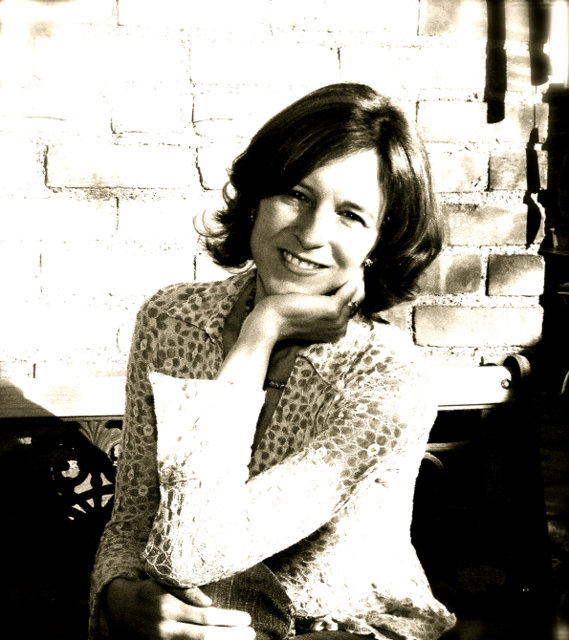
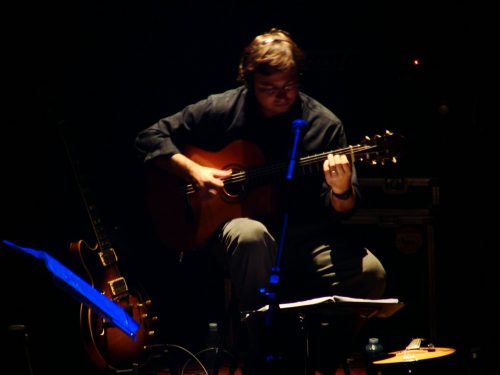
Camilo Carrara (1968) is a musician based in Sao Paulo, Brazil whose work refuses to be categorized. His recordings range from classical to popular and jazz, and anywhere in between. Though he’s often described – accurately – as a guitarist, he plays, arranges and composes for many instruments, including 12-string guitar, mandolin, electric guitar, and other strummed instruments. He is also a teacher and a Sound Branding Consultant. He has done more than sixty solo and ensemble recordings, and his performance career spans three continents. He’s played concerts in Italy, Portugal, Switzerland, USA, Argentina, Uruguay, Chile, Venezuela, and throughout Brazil. He teaches guitar at the annual National Music Festival in Maryland, and has been the guest artist and soloist with orchestras throughout Brazil and worldwide.
Carrara also works as a producer, particularly in his long-time work with the HSBC Christmas Concert, one of the largest holiday events in Brazil. Since 2011, he has been the arranger and producer of this concert. At the heart of this event is a children’s choir, 160 children who are the victims of violence or who are orphaned. Carrara has a degree in classical guitar from the University of São Paulo, and is finishing a Masters Degree in Strategic Marketing Management at the São Paulo University School of Economics and Management. He teaches at Faculty Cantareira in São Paulo, and at the Music in the Mountains Festival, in Poços de Caldas, Minas Gerais.
One of the most interesting things about this conversation for me was Carrara’s commitment to creating music that communicates to a broad listenership, and the limitations of a single identity. This is based in part on his background growing up in Brazil where his father was imprisoned and tortured as a result of his political convictions. Carrara spent nine months of 1989 traveling and busking throughout Europe, and was present in Berlin when the wall between East and West Germany was torn down. His career seems to suggest that the walls between traditionally separate musical traditions may not be as permanent as they may seem.

Carolyn Ogburn: As I learned more about you for this interview, I was struck by how many interests you have. It seems to me that in general people – professionals of the music field or any other manner of profession – are required to be specialists these days. But your career has blended popular and classical performance (on guitar, mandolin, and other stringed instruments) as well as teaching, composing and producing, and you’re studying for a graduate degree in marketing. How do you answer the question, “What do you do?”
Camilo Carrara: Carolyn, how interesting you start our conversation with this question. In fact, after studying strategic marketing management for over 2 years, this is an issue for me. After all, it is part of the strategic marketing technique to define well what is the focus of your business and what products you sell. For anyone who is an artist and only moves in the world of arts, sometimes talk about product and market gets to be a heresy. But it doesn’t need to be so.
In fact, I consider myself all that you listed above and depending on the situation, on the context, I respond differently. Sometimes I say that I am a musician. Sometimes I stand as a solo guitarist. But I am also a multi-instrumentalist (mandolin, electric guitar, 12-string guitar, cavaquinho — typical Brazilian instrument used in choro and samba), composer, arranger, improviser, teacher, and music producer. I also work as a music expert on causes court involving copyright and as Sound Branding consultant – the discipline that creates and manages the sonic identity of the brands.
I usually feel good doing many things, despite knowing that this can be risky, professionally speaking. Doing many things have a price and returning to the issue of strategic marketing, I know that my challenge is to communicate all these multiple skills to the public without it look like I’m an imposter (exaggerating a bit), or it seems that I do not know how to do anything well done. The issue of communication is one of my biggest challenges today.
I consider myself very fortunate to have had a very consistent musical training and at the same time I know many of my limitations. All I do is the result of hard study and work and it is very gratifying to be recognized by my peers and also by the general public. In fact, I think it was because of this sort of “more general profile” that I was invited to participate in the National Music Festival in Maryland, in the last five years.
What should be a very short and quick response …
CO: (laughing) I think many artists can relate to your answer…we do many things, I think. Though not always with as much expertise! Do you think there is a push these days to be more diversified as a musician? And – since you’ve been at this for a while, have you noticed any changes in that since your early years as a musician?
CC: I found it curious that to reflect on what it means to be a diverse musician, it reminded me of a great Brazilian literature professor, Alfredo Bosi, with whom I had classes at the university, at the time I was a linguistic student. He spoke a few times about the phenomenon of “repetition” and “novelty.” And this is very interesting and beautiful. According to him, the repetition causes the sensation of comfort as the novelty causes alert feeling. That is, learning to dose these two phenomena is a matter of life. We need both to live. Thinking specifically within the framework of creation, in the framework of the creative world, this is a central issue for composers, writers, painters, etc. But it is also a very useful way to think about demand and understand how the market works: almost everything we do is in order to fulfill the wishes and needs.
I have the feeling that diversity is linked to the concept of the novelty. If contemporary classical composers are looking for other solutions to attract public, for example, it means that they feel that the public is starved for news. Or that they are tired of repeating. In this sense, I see the resemblance to my student days. There has always been this kind of movement: the musicians seek to know what are the interests of the public or the public demand for what is interesting musically.
CC: This event attracts thousands of people every year and was created 25 years ago. It is especially beautiful because the center of attention is a children’s choir. These are children who receive special attention or because they were abandoned or victims of some type of violence. It is a work done with great care throughout the year. Musically speaking the concept is orchestral. It was developed by the conductor of the choir Dulce Primo. She is an amazing person and brought a lot of sophistication for a considered popular presentation. The interesting thing is that she managed to mix very well the influences of classical music with what is richer in Brazilian popular music. It is the meeting of polyphony and the richness of Brazilian rhythms.
My role in this event is to be arranger and producer. It’s a big challenge. I write the orchestral arrangements, record instruments and edit the audio. I take care of all the steps to (record and create) a CD. Several months of preparation to (be heard by) an average of twenty thousand people a day. They estimate that four hundred thousand people attend the show every year. I also study this event from the point of view of the impact of marketing. The concert is sponsored by a major bank and can be considered one of the largest brand content event in the world. It is an amazing way for brands to create emotional connections with their customers and the general public.

CO: Many of us outside Brazil have been watching your country with great interest as we read news stories of political and economic turmoil. (Outside the Olympics, of course!) I read with interest an article from the Guardian that you’d shared titled “The End of Capitalism.” Artists, of course, have a unique responsibility – that is, quite literally, the “ability to respond” – to social upheaval like that we are experiencing today. I guess my question is, how do you see the role of the musician in times of social unrest?
CC: I think that when artists manifest themselves politically they have the advantage of hearing. These are people who have more access to the public and it can make a difference in practical terms. The common people, especially in poor countries, are heavily influenced by artists. It is an important question of responsibility and should be considered.
The other big issue is related to the quality of political positioning. Not every artist thinks critically about politics. It should be, but is not. It is very common to see artists talking a lot of nonsense. Of course, there are the “privileged heads,” the artists who are very well prepared intellectually and politically. These figures can make an important difference in the course of history. If I’m not mistaken, this article you refer to “The End of Capitalism” came against what I was studying at the time. (It) deals with the shared economy, a subject that interests me especially. I do not think we are seeing the end of capitalism, but a transformation. It is no longer possible that in the twenty-first century, (there) still exists misery. This has to end quickly.
CO: Speaking of social unrest…Whenever I read your bio, the year of 1989 which you spent traveling the world is almost always mentioned. This must have been a very important year for you, and it certainly was important globally, as the Berlin Wall fell, and the cold war drew to an end. Do you want to talk some about how this year affected your growth as a musician?
CC: It was a very special year in my life and coincided with some very important events historically. In 1989 I was an itinerant musician, traveling for nine months throughout Europe. I had the luck and privilege of celebrating the Bicentenary of the French Revolution in Paris and witnessing first-hand the fall of the Berlin Wall. I was also in Budapest, near the Romanian Revolution, when the people overthrew the Communist regime of Nicolae Ceauşescu. I could feel the energy of transformation, but without the historical dimension that I have today. I was 21 and had been raised in a left-wing political environment. My father is a communist and was imprisoned and tortured during the dictatorship. I went to Berlin thinking to know the Eastern part. I was very curious to see firsthand how it worked a communist country. And I got to spend a whole day in the eastern part. Of course, it was very little time to form an opinion. But I remember that I felt the contrasting atmosphere, the simplicity of the people. Culturally, in just one day I could go to an amazing concert at the Berlin Staatskapelle and also bought an incredible amount of sheet music, something unimaginable in Brazil at that time. It was very striking and exciting.
A few days later I was surprised by my German friends who came home elated with the news of the fall of the wall. We went to the street and spent many hours in the crowd. A pity I could not speak German. I felt I was losing the details. But some things impressed me a lot to see. I remember it was very shocking to see long lines of East Germans enter the big brand stores such as BMW, Mercedes, or even sexy shops. It was very impressive. At that time West Berlin was stunning and shiny. The city shone. I had the feeling of seeing those pure people being contaminated by lust. It was really crazy!
CC: Thinking about it, that kind of transformation started with the change of the socialist paradigm may even be associated with this new model of capitalism in which rethinks the limits of profit, especially in terms of sustainability. We can not admit the misery nor admit the destruction of natural resources. Nowadays any revolution is possible because of technology. The connectivity already enables it. Ultimately we are talking about a social pact on important issues for everyone. No wonder that the great fortunes of the world are collaborating (regarding) key issues such as hunger and education. See Bill Gates and Warren Buffett. The Brazilian billionaire Jorge Paulo Lemann, richest man in the country, is revolutionizing education in the country. These are just a few examples.
CO: When many Americans think of Brazilian classical music, we might be limited to a few well-known figures, such as Villa-Lobos, or Laurindo Almeida. Who are we missing?
CC: We have an interesting musical history as the formation of a Brazilian musical identity, which could be defined as the synthesis between European, African and indigenous cultures. Villa-Lobos (1887-1959), is undoubtedly the great Brazilian composer of all time. (He) can be considered the inventor of a Brazilian sound. If the country has a unique sound, Villa-Lobos was responsible for it. The amazing thing is how his work is so little known, even here.
It is unfair to leave to point other very important composers, but I think for a first survey of Brazilian composers, I would highlight, in chronological order, composers with symphonic approach:
Carlos Gomes (1836-1896)
Henrique Oswald (1852-1931)
Alberto Nepomuceno (1864-1920)
Francisco Mignone (1897-1986)
Radamés Gnatalli (1906-1988)
Camargo Guarnieri (1907-1993)
César Guerra Peixe (1914-1993)
Hans Joachim Koellreutter (1915-2005)
Gilberto Mendes (1922-2016)
Willy Correia de Oliveira (1938)
Marlos Nobre (1939)
(And in) popular music:
Chiquinha Gozaga (1847-1935)
Ernesto Nazareth (1863-1934)
Pixinguinha (1897-1973)
Tom Jobim (1927-1994)
Laurindo Almeida, who made his career in the US, (was) part of our team of guitarists/composers who transited between choro and samba (bossa nova). Just name a few: João Pernambuco (1883-1947), Dilermando Reis (1916-1977), Garoto (1915-1945), Bola Sete (1923-1987), Baden Powell (1937-2000), Guinga (1950).
Which of course makes me want to ask – who were your primary influences, as a young musician?
At first, I was very influenced by my father’s musical universe. In spite of being a communist, (he) was a creative director in advertising and a poet. At home, we listened (to) jazz, classical music and Brazilian popular music (Tom Jobim, Chico Buarque, Caetano Veloso, Gilberto Gil, Milton Nascimento, Jacob’s Mandolin, Pixinguinha, Ernesto Nazareth).
I started studying classical guitar at the age of 10 and through college, I was very influenced by my main teachers of the instrument: Celia Trettel, Paulo Porto Alegre, and Edelton Gloeden. From a young age, I wanted to be a concert guitarist. My musical roots (were) very focused on interpretation, in the study of interpretation. In the search for refinement of sound, the articulation of voices (polyphony), understanding of the musical text: phrases, musical form, etc. I knew well the most significant repertoire for the instrument. I played and listened to many composers who are better known within the guitar universe. Just to name a few: Alonso Mudarra, Fernando Sor, Francisco Tárrega, and Leo Brouwer.
In addition to composers, I was greatly influenced by the great interpreters. At that time, I remember my idols were Julian Bream, John Williams, Manuel Barrueco, Assad Brothers and Brothers Abreu, for example. I heard very (many other) instrumentalists, like Glenn Gould, Jean-Pierre Rampal, James Galway, Nelson Freire, Martha Argerich, Daniel Barenboim, Mstislav Rostropovich. I could say that these were my musical roots.
— Camilo Carrara and Carolyn Ogburn
.
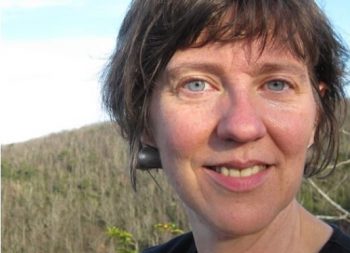
Carolyn Ogburn lives in the mountains of Western North Carolina where she takes on a variety of worldly topics from the quiet comfort of her porch. She’s a contributing writer for Numero Cinq and blogs for Ploughshares. A graduate of Oberlin Conservatory, UNC-Asheville, and UNC School of the Arts, she recently finished her MFA at Vermont College of Fine Arts and is currently seeking representation for her first novel.