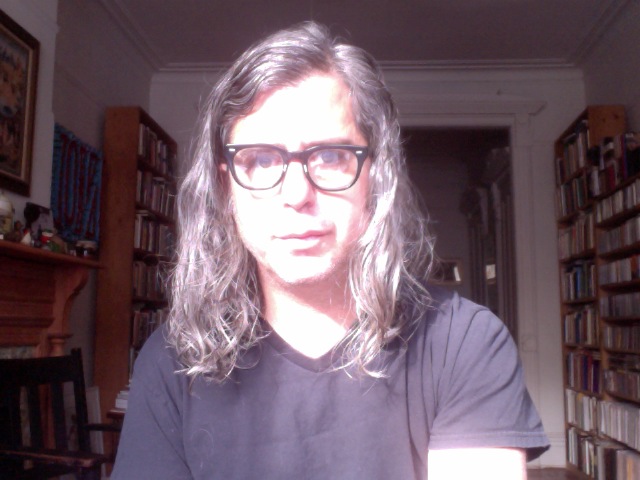
This is Donald Breckenridge’s brutal, sad memoir of his father dying. Stark and beautiful and full of our common humanity; pity, love, kindness, stubbornness, squalor and valor. The language is matter of fact, the only apparent artfulness is in the unconventional punctuation and, sometimes, the way the dialogue breaks up the sentences. There are two narratives: one works back and forth over the story of a life, two lives, father and son, and the father’s declining days; the other, more mysterious, follows Breckenridge to a diner, the subway, the train station. We get detailed accounts of conversations with the diner owner. We oscillate between donuts and staph infections, but by the genius of construction and understatement, horror and hopelessness accumulate. The word “love” isn’t thrown around, but the son patiently bandaging dabbing medication on those awful sores tells you more than words. You are fascinated, cannot turn away.
This is from a memoir/novel in progress, a new book (please read the NC interview with Breckenridge and two earlier pieces of fiction we’ve published here — links at the bottom of the piece), equal parts fiction and autobiography. This is the first autobiographical section.
dg
I asked the waitress for a chocolate donut and told her that I didn’t need a bag. She handed me the donut with a serrated sheet of wax paper folded over it, “That will be ninety cents,” and two napkins. I removed a dollar from my wallet and gave it to her. She rang up my purchase then handed me a dime. When I thanked her she told me to have a nice day. I pocketed the dime, pushed open the door and ate the donut while walking to the corner. I wiped my mouth with the napkins then dropped them and the wax paper into a trashcan before descending the stairs at the subway station entrance.
I was washing the dishes when the phone rang. “Can you get that?” A cigarette was burning between his fingers, “It’s not for me,” another one smoldered in the ashtray. Poker chips, two soft packs of Marlboro 100’s, wallet, magnifying glass, notepad, checkbook, beige coffee mug filled with ballpoint pens, and a worn deck of cards were crowding his end of the table. Three chairs, “Of course it’s for you,” with the brown vinyl cushions torn open, “it’s your birthday,” that leaked powdery chunks of yellow foam all over the floor. “So?” December sunlight filled the broad row of casement windows in the living room, “Why would they be calling here,” facing the tall trees, “if it wasn’t for you?” Brown paper grocery bags, empty cigarette cartons, five or six months worth of the Washington Post, beige plastic shopping bags overflowing with the blue plastic bags the Post was delivered in, glossy color circulars for Christmas, Thanksgiving, Halloween, Labor Day, Back to School, July 4th were piled on the floor. He tried sounding resolute, “You get it.” Pizza boxes stacked atop the microwave. My hands were submerged in warm water, “I’m busy.” Blackened chunks of rotten countertop surrounding the sink held puddles of suds. My sister hired a maid service to come and clean his townhouse twice a month but they quit a few years ago. My father got up, “It’s a robot,” and made his way into the kitchen. I turned to him while saying, “You can’t know that until you pick it up.” He was wearing flip flops and tube socks, jeans that were baggy at the knees and stained with urine from the crotch to the waist, an oversized grey cable-knit wool sweater pocked with cigarette burns, long wispy grey beard, an eye patch coated with dried mucus, and a Band-Aid that covered most of the large open sore near his right temple. “Someone is trying to sell me something.” I saw him, “You shouldn’t be getting those calls anymore,” once and sometimes twice a month during the last few years of his life. He cleared his throat, “They still call.” I washed the dishes and did his laundry, bought groceries, vacuumed the carpet, and occasionally cleaned the bathroom. “A hundred dollars says it’s not a robot.” Coffee grounds, dropped food, ashes, spilled milk, strands of pasta glued to the splintered linoleum floor. He had a distinctive smokers croak, “You’re sure about that,” that I still hear while recalling this conversation. I would open the window above the kitchen sink to get some air and frequently lingered there—especially in winter. “Absolutely.” The window overlooked a well-tended lawn, clusters of bushes and trees, a park bench at the foot of a towering Sweet Gum tree, and rows of two-story red brick townhouses constructed during the Second World War. A high-rise dominated the skyline and the faint drone of traffic from 395 always accompanied the view. Despite his grumbling, “We’ll see about that,” there was no mistaking the anticipation in his voice. He picked up the phone and said hello. I turned off the faucet then dried my hands with a paper towel. He told the caller that he had, muttered thanks and hung up. Tomato sauce was smeared on my elbow. “And?” He walked through the kitchen, “The phone company was asking about the yellow pages,” returned to his chair. “What?” He picked up the cards, “They wanted to know if I got the new one,” and began to shuffle them. I stood in the doorway and said, “Those assholes.” He turned to me with a deflated smile, “You owe me a hundred dollars.” I balled up the paper towel and tossed it in the trash. The garbage disposal was still working. Filmy water vibrated in the sink before being sucked down the drain.
I encountered the owner of the diner and an elderly waitress standing behind the counter. They were discussing the best place to display the sign for a new online delivery service. The owner greeted me like a long lost friend while handing me the sign, “You can order what you want on there.” I recognized the logo, “I’ve seen this advertised on the subway,” placed it on the counter and asked the waitress for a coconut donut then added that I didn’t need a bag. The owner proclaimed, “You can now order that on your computer through the internet.” I was taken by his enthusiasm, “That’s really great,” although I’ve never purchased anything, “I hope you get more customers that way,” except the donuts, “Your donuts are really great,” the food has never looked appetizing, “the best in the neighborhood.” Bleached color enlargements lining the walls above the counter are backlit by dim fluorescents and feature dozens of greasy dishes undoubtedly made with the cheapest ingredients available. The waitress handed me the donut with a serrated sheet of wax paper folded over it, “That will be ninety cents,” and two napkins. I removed the dollar from my wallet and handed it over while wondering if a purchase this small would make the minimum for free delivery. If I asked the owner that, even if he knew I was joking, it would only prolong our conversation. He proclaimed, “This will change the way my customers order food.” The waitress rang up my purchase then handed me a dime. When I thanked her she told me to have a nice day. I pocketed the dime then congratulated the owner while pushing the door open.
I removed the metrocard from my wallet and swiped it at the turnstile. A woman picked up her baby in the stroller and hoisted it over a turnstile. Another woman was pushing an old man in a wheelchair. They were headed toward the stairs leading to the Manhattan bound trains. A rowdy group of high school kids were on the platform yelling at each other and clearly enjoying the aggravation they were causing around them. All of the seats on the bench were taken—the West Indian homecare attendant eating a bag of BBQ potato chips, two old Asian women talking quietly, a teenage boy dressed in black with techno leaking out of his earbuds and two teenage girls in Catholic school uniforms engrossed in their cell phones.
In 1968 (the same year I was born and adopted) the doctors removed a small growth from the tear duct of my father’s left eye. Further tests revealed a massive brain tumor behind his nose. After being told of his condition, he overheard a group of doctors in the next room discussing his x-rays, and one doctor expressed surprise he was still alive, all of them doubted he would live more than a few years. He was 31. My father underwent a number of invasive brain surgeries over the next decade to remove those tumors. My brother and sister were born in ’76 and ’77; having two biological children with my mother while fighting for his life gave him the strength needed to defeat cancer. In the early 80’s he took part in an experimental neutron procedure to rid his brain of the tumors. The operations of the previous decade had taken an awful toll on him and the doctors were out of options on how to approach his cancer. At the time only three patients were willing to undergo this experimental procedure, of those three, he was the only one who survived.
When the donut was gone I wiped off the corners of my mouth with the napkins then dropped them and the wax paper into a trashcan before descending the stairs at the subway station. I removed the metrocard from my wallet and swiped it at the turnstile. The train arrived and the doors opened. It had been a long day and I was (finally) on my way home. I took a seat. I was going uptown to my job on 207th street. I was going to the Port Authority to catch a bus. I was on my way to JFK. Our flight to Athens was in three hours. I had to catch a train at Penn Station. The Chinatown bus left for DC every other hour. I was meeting my publisher for drinks at Grand Central. My corduroy jacket was too thin and I left my scarf at the office. They couldn’t start the reading without me. The subway ride to the bus that went to Laguardia would take an hour. I had to meet with the bank manager before 5 o’clock. The library book was overdue. I promised to mail all of these documents yesterday. I needed to take a piss so hopefully the train wouldn’t be delayed. I was late for my next appointment across-town and hadn’t called ahead. I should have brought a book. It was a warm spring evening growing dark and I wouldn’t get to Alexandria until early in the morning.
I would dab at the sores on his forehead with a paper towel that was soaked in rubbing alcohol before covering them with an over the counter ointment for Staph infections. “That hurts.” After searching the Internet I’d concluded that it was a Staph infection. The puss-filled lesions were black around the edges and gradually tearing through his broad forehead already scarred by repeated brain surgeries. “Does it burn?” The most familiar looking images of Staph infections that I found were from photographs of corpses. The sweet smell of rotting skin is stronger than cigarette smoke. He looked up at me with obvious discomfort, “It tingles.” In the summer of ’04, a horn-like bump appeared on his forehead, instead of consulting a doctor and getting it removed, he simply cut it off with a pair of scissors.
Seated across from me were two teenage boys in blue tracksuits and running shoes, an Orthodox Jew with poor eyesight reading the Talmud, an old woman staring vacantly at the subway floor.
Cigarette smoke effectively mutes your sense of smell and it’s only hours after leaving a smoke filled environment that it returns. My sense of smell would come back on the bus, usually a few miles before we pulled into the Baltimore Travel Plaza, and although I knew what to expect, the stench of nicotine on my hair and clothes always embarrassed me.
When you sleep time no longer exists. Sleep is the best relief for pain. Death is better but you cannot will yourself to death. The sores gradually burrowing into his forehead began as an ugly thumb-size wound that appeared above his right temple in the late spring of ’08. He refused to see a doctor, and the infection gradually spread from there. My father passed two kidney stones in the summer of ’08, alone and lying on a couch in his sweltering living room, with a broken air conditioner, no fan, and the windows closed. When I saw him that August, I begged him to go to the hospital, pleaded with him, cursed him, and ultimately failed to convince him to get any medical attention. A few years earlier my siblings and I attempted an intervention—to get him to give up his car, sell the townhouse and move into an assisted care facility—we only succeeded in hurting his feelings. “I think that means that it’s working.” He was tired of living and wanted to die but dying is hard work. “How would you know?” Understanding why someone you love wants to die isn’t the same thing as accepting that decision. “I don’t.” Standing by as my father continuously refused medical care while living in absolute squalor was one of the hardest things I have ever experienced. “Why don’t you go and see a doctor?” If you can go through your life without entering into this kind of agony, you may be short on experience, but you are very fortunate. “I’ve had enough doctors.” We were nearing the end of our very long thread. “Then tingles means it’s working.” I stood above him and applied band-aids to what became the lethal skull infection that killed him ten months later. I was completely helpless and tremendously grateful for all of the time we had together. My father lived far beyond everyone’s expectations. I was so afraid that he would die at any time, and my only regret, now that he is gone, was not lingering after saying goodbye. I never rushed out the front door but leaving him in that filthy townhouse after we embraced always made me feel unkind.
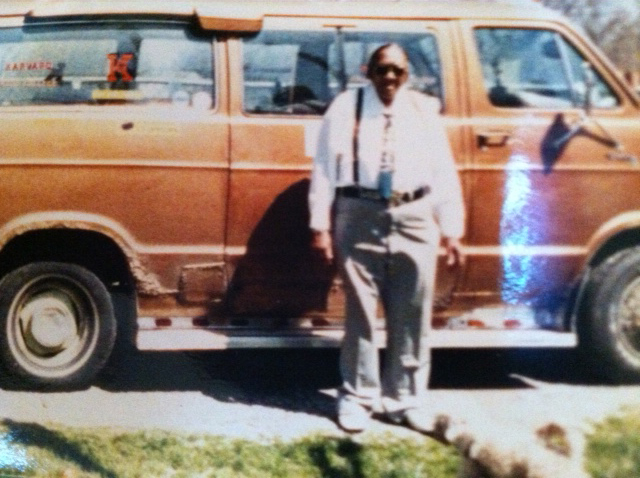
He would go weeks without answering the phone. I would call the fire department and ask them to check up on him and tell them to tell him to call me. I got so fed up with being unable to reach him, after the third or fourth time of having the fire department check in on him, that I took a Chinatown bus down to DC and woke him up long after midnight. The ringer was off because answering the constant barrage of telemarketing calls was a pain in the ass and he simply forgot to turn it back on. Getting those calls to stop was as simple as putting him on a do not call list. Surviving could have been as simple as making an appointment and taking a cab ride to a doctor’s office. His insurance offered fairly good coverage but getting him to care about his health was impossible. “Ok, doctor.” He was still smoking three or four packs of cigarettes a day depending on how many hours he slept. He would only leave the house to go to the supermarket. “It’s almost finished.” The ancient looking man with grey hair and a scraggly beard, eye patch, glasses with heavy black frames, brown windbreaker, white dress shirt, worn at the knees blue jeans, canvas sneakers dyed beige from nicotine slowly pushing a shopping cart through the Giant on South Glebe Road once a week. That was my father. Maybe you saw him there? He always paid with a check. His diet consisted of waffles drowned in syrup, black coffee, tall glasses of milk, candy bars, ice cream, occasionally canned vegetables, bananas, sometimes pasta, mashed potatoes, and grilled meat that would frequently begin to rot in the fridge before he got around to cooking it—unless one of his children found the souring Styrofoam packages first and threw them away.
The West Indian nanny feeding grapes to an unhappy child strapped in a stroller, the young Mexican mother with her two daughters wearing identical pink dresses and haircuts although one was a few years older and taller than the other, the West Africans standing around the metal pole having an animated conversation in French, a scowling Haitian teenager texting someone, the Dominican boy playing with a Spiderman action figure, an attractive brunette reading a paperback and showing plenty of thigh, two young black boys jumping on their seats antagonizing their distracted and clearly exhausted mother, an old drunk with his eyes closed and head resting on the window, the Chinese man slowly walked by playing something that sounded vaguely like Mozart on a bamboo flute and there was a lull in the noise as everyone took in his waltz-like refrain.
The neutron procedure worked and my father beat cancer although he lost an eye and his ability to smell. His marriage ended soon after, my mother had stood by him through some of the most difficult years of his life, but now found him changed physically and mentally to the point where she could no longer live with him. They split-up in ’83 and he moved from Virginia Beach to Alexandria for work. I joined him in his townhouse two years later, attended high school and lingered under his roof for another year before moving to New York City. My father never remarried, never dated, after being downsized in the early ’90s he never held another job, and rarely left his townhouse.
I grabbed a few pairs of socks and some underwear. Monday was our laundry day so my options were limited. A few clean T-shirts, a dress shirt, a pair of jeans, toothbrush, and the phone charger went into the backpack. A paperback copy of Théophile Gautier’s My Phantoms got tossed into the backpack—although I doubted I’d be able to read on the train.
Born and raised on a dairy farm in Oneida County, New York, my father was the third of six children. Photos from his teens reveal a very handsome and ambitious young man. He was the high school senior class president and the only one in his family to finish college. He earned a masters degree in mechanical engineering from the US Naval Postgraduate School in Monterey, California. He commanded a Swift Boat in Danang, Vietnam in ’69 -’70 and saw combat although he never talked about it. He was the cool sailor in dress whites and the decorated officer with a storied and distinguished career. He was a plainspoken dairy farmer. He possessed an intrinsic sense of decency and extraordinary tenacity in the face of impossible odds. He was an epic procrastinator. He had a terrific sense of humor. He never locked the front door to his townhouse. He was incredibly stubborn–pigheaded to the point of being a public menace. It was only after plowing into a DC Metrobus and totaling his car while driving legally blind on an expired license that he started taking a cab to the supermarket. My father wasn’t vain, and although he rarely acknowledged it, the drastic alterations to his physical appearance were extremely difficult for him to accept. Every look in the mirror—regardless of how diminished his sight or filthy the reflection—was a reminder of what cancer had taken from him.
I tried calling after purchasing the ticket—thinking he would be able to get off the couch, walk across the living room and answer the phone. Or maybe the phone was on the coffee table and he would be able to reach it. I wanted to tell him that I was on my way. I would be there as soon as possible. It rang and rang as I crossed Penn Station then the line went dead. I tried again and finally gave up after a recording informed me that the person I was calling was unavailable, that I should try calling later. The TGIF was nearly empty. I ordered and downed a shot of Jameson but didn’t have time for another because the train to Washington was boarding.
Wake up around 8, have coffee and waffles, read the funnies, do the crossword, play a few games of Solitaire, Sudoku, then nap until lunch, nap after lunch, watch television, more Solitaire or left hand vs. right hand Scrabble, have dinner, watch the local and national news, Wheel of Fortune, Jeopardy, sports or sitcoms then fall asleep on the couch around 10—nearly everyday for two decades. I walked to the supermarket while he napped and picked up a steak, some potatoes, and a container of mixed greens. I brought down a strawberry cheesecake from Juniors and a bottle of red wine. We always drank good wine together. If I’d known this was going to be his last birthday I would’ve bought more wine. Why hadn’t I forced him to go to the hospital? I could have just picked him up, tossed him into the back of an ambulance—strapped him onto the gurney and away we go. I could have prolonged his life. Everyone who loved my father tried to convince him to take better care of himself and now he is gone. A few bites of steak and half a helping of mashed potatoes, he barely touched his salad after drowning it in Ranch dressing and only drank half a glass of wine—it was a Saint-Chinian—but managed to eat a sizeable wedge of strawberry cheesecake and washed that down with a tall glass of milk. I finished off the wine and smoked his cigarettes with the filters torn off while we sat at the table talking and playing poker. My brother called while we were watching How I Met Your Mother to wish him happy birthday. He was 72.
Four months later he took a cab to the supermarket and fainted in an aisle. He told me later that he was simply tired and needed to lie down. The manager called an ambulance. He spent three days in the hospital before he was released, took a cab home, made it up the stairs and collapsed on the floor. He lay on the carpet for two or maybe three days before a neighbor called to tell me that the newspapers were piling up on the porch, that he wasn’t answering the door, or the phone. Should she call an ambulance? Would it be okay to check on him? I told her to go in and that I would stay on the line. Instead she promised to call me back when she knew what was happening. I spoke to him after she got him onto the couch and he assured me that there was nothing to worry about, that I shouldn’t come down, everything was going to be okay.
I was lulled to sleep after Newark and woke up just as the train pulled into Baltimore. I could have been the only person in the car. The weirdly glowing vegetation that clung to the rocky embankments surrounding the empty platform and my reflection in the window gradually superimposed over a warehouse. We crawled by deserted loading docks, a staggered sequence of orange lights as the train curved through a tunnel, slipping by blocks of desolate row houses, theatrically lit graffiti adorning brick walls, running along a tall chain link fence topped with razor wire, a billboard glaring defiantly into the darkness, carried above empty intersections, through swaths of dark green, long white lights and patches of trees, flashes of suburban lawns, parking lots, illuminated vegetation glistening beneath streetlights, prefabricated condos, darkened strip malls just off the highway now adjacent to the tracks, red taillights vanishing into headlights casting onto rain-slicked roads, gas stations like small islands awash in cold fluorescents, empty intersections, darkened houses, churches, restaurants and racing over a large body of water while watching for a sign that never arrived.
When hailing a cab outside of Union Station I learned that drivers pick up two or three passengers going in approximately the same direction before leaving the station. Since the Metro closes at midnight and there is a shortage of cabs I shared the ride with a chubby Delta Airlines pilot who had been stranded at BWI due to a thunderstorm and a sleep deprived Army officer just back from Afghanistan. The officer, seated on my left, remained silent throughout the ride to Crystal City. The pilot was seated beside the driver and never stopped talking about how he had been inconvenienced by the weather. His car was in the long-term parking lot furthest away from the arrivals building at Reagan National. He drunkenly apologized for parking so far out of the way, had he known that the storm was going to cause his flight to be diverted, had he known that he was going to take the train down from BWI in the middle of the night, had he known that he would have to take this ridiculous cab ride, had he known all of that he would have parked much closer to the airport. He wouldn’t shut the fuck up and when we finally reached his car he couldn’t get out of the cab fast enough. I was relishing the thought of kicking his ass until I realized that would have only prolonged this unbelievable delay. I asked the driver stop at the 7/11 closest to my father’s place so I could get cash out of the ATM to pay for the ride. It was two-thirty in the morning when I finally pushed open the door and climbed the stairs. My father was lying on his back between the couch and the coffee table. He had fallen while attempting to answer the phone. He was soaked in piss and shit. I picked him up and got him onto the couch, assuring him that I was there, and that everything was going to be okay. Would he like a glass of water? Yes. A cigarette? No. Would he like to take a shower and change his clothes? No.
—Donald Breckenridge
Donald Breckenridge is the Fiction Editor of The Brooklyn Rail, co-editor of InTranslation, Editor of The Brooklyn Rail Fiction Anthology (2006) and The Brooklyn Rail Fiction Anthology 2 (2013), and the managing editor of Red Dust Books. In addition, he is the author of more than a dozen plays, the novella Rockaway Wherein, and the novels 6/2/95, You Are Here, and This Young Girl Passing. He recently completed his fourth novel, And Then, and he is currently working on a new book and a one-act play.