In Justin Anderson’s “Jumper,” a mid-century modern styled family is taunted and tempted by a naked stranger who troubles everything that lies beneath their well-mannered dinner. The film pays homage both to Pier Paolo Passolini’s Teruma and David Hockney’s swimming pool paintings while it more specifically pays tribute to British fashion designer Jonathan Saunders on the 10th anniversary of his label. This melange of fashion, painting, and film is characteristic of most of Anderson’s work, but in this short in particular his play between texts works perfectly with the film’s themes of repression and beautiful surfaces.

The film starts with a pool sequence that pays homage to almost every painting about a pool David Hockney ever made. Hockney’s pool paintings reveal his excitement and celebration of what he found in 70’s Hollywood when he moved there from England: an expressive, carnal, sun-bronzed eden. This creative time and the life of Hockney and his friends was captured in the documentary A Bigger Splash (1973). The Hockneyesque pool is both something that inspires the man to strip naked and, when he climbs out on the other side, is the place where he is transformed from naked man into a profound messenger for the woman waiting.
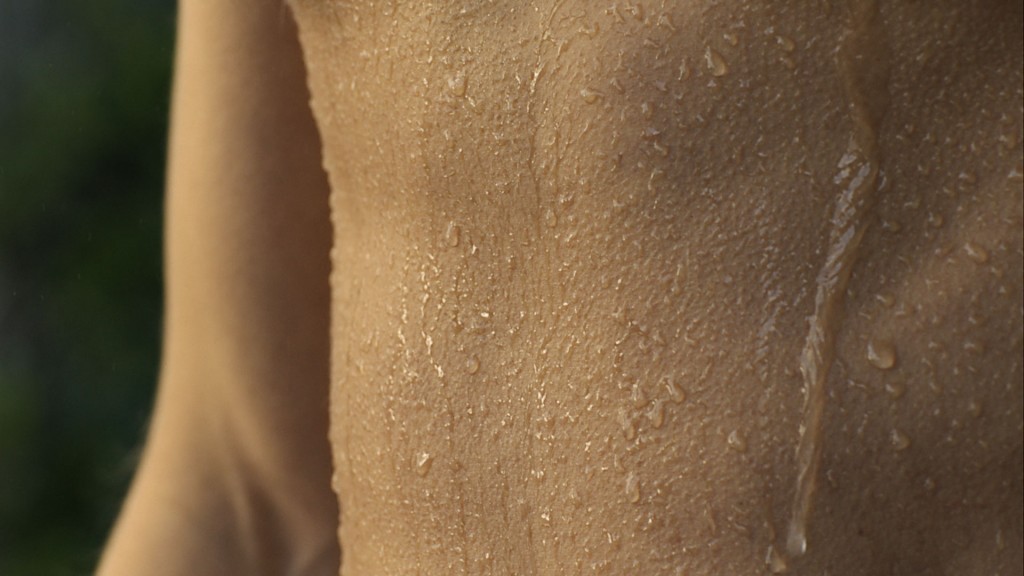
The house wife the naked man finds on the other side of the pool stands with a pained, pleased expression, her mouth parted, as water trickles down his chest. She responds to this rupture in her life, to the excitement he provokes in her by turning away, walking back into the house, and carrying a plate of pasta to the dinner table. She walks away from her desire and in a sense all the desires and corruptions that follow stem from her walking away from this naked man. Perhaps if she had given over to her appetite, he would not have loomed over their meal, their lives, tempting them one by one. Perhaps she could have consumed him, but now he will consume them.
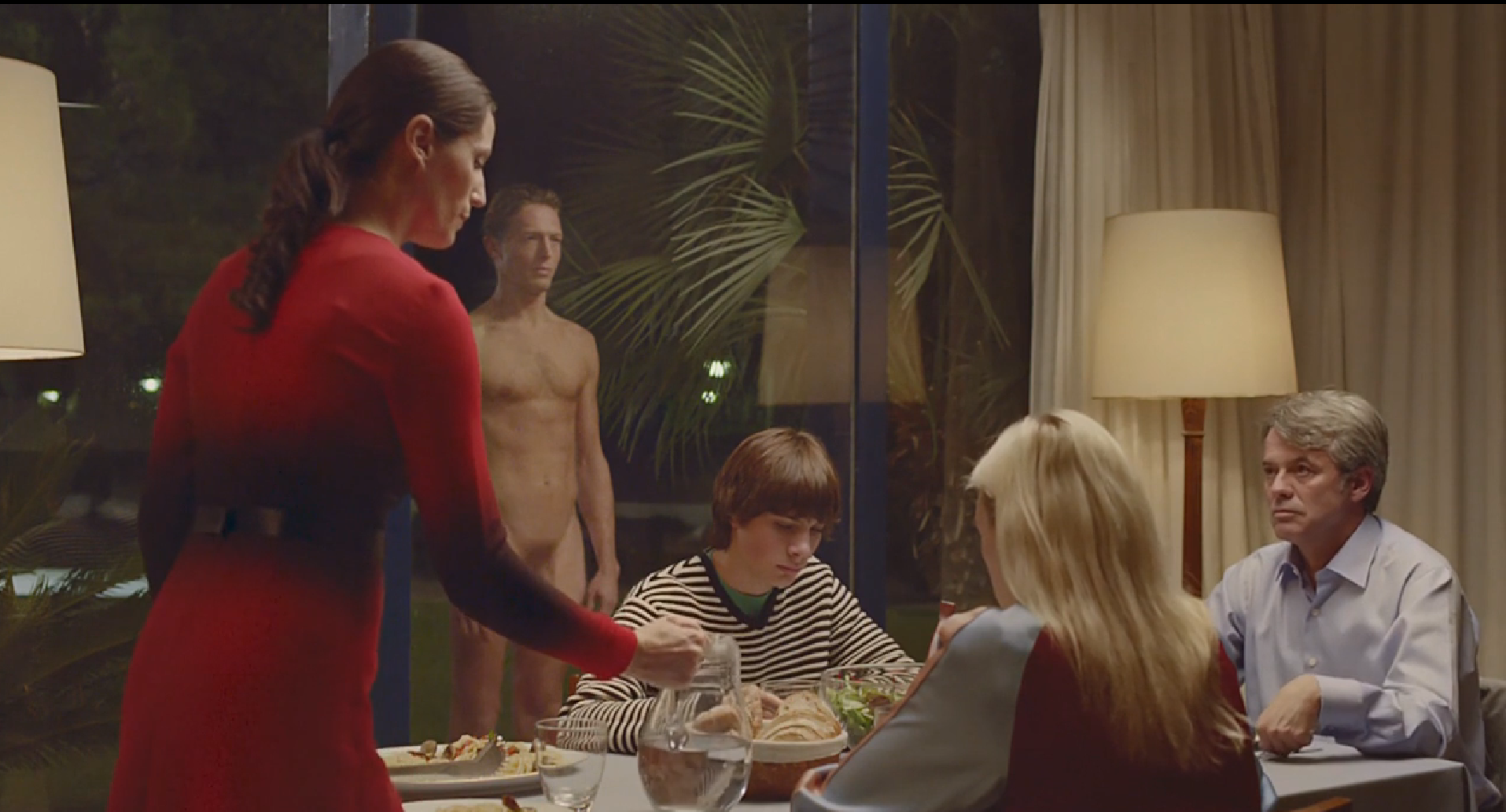
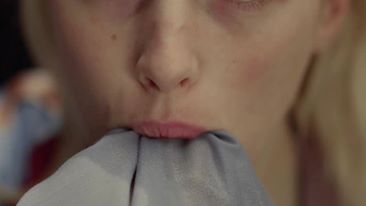
Anderson’s work leans into the absurd, focuses on awkward details that seem conscious of themselves as symbols while they contradictorily resist their symbolization. Water is a key example here: it is the pool he swims through; it drips off his torso, distorts how we see the dinner through the water jug, overflows on the table; the daughter sucks it from the soaked napkin and the father penetrates the jug of it with his hand and wedding finger. Water means so many things that it becomes either numinous or an empty symbol, impossible to be fixed, just like the naked man’s influence over the family.
The troubling stranger in films is both a perverse and sometimes queer trope. In the aforementioned Teorema, a man sleeps with all the members of a family and the maid, in the Argentinian Apartment Zero, a mysterious James Dean sort of figure has all the denizens of an apartment complex fall in love with him, particularly his roommate (Colin Firth), and in Holy Motors, the enigmatic and mercurial figure who traverses a cornucopia of little worlds full of confusion and excess. There’s a masters’ thesis here.

In “Jumper,” though, the film seems less about stirring up trouble than it does the sort of tenderness and beauty that can come from connecting with this stranger, connections that seem impossible in the context of the family, even between husband and wife. Certainly Anderson employs a fetishistic camera that troubles the eye, confuses and overwhelms, but the effect I think is not horrific, but alienating, so that the moments of tenderness when they surface look like life preservers.
Anderson’s other works also marry art and fashion and he’s more recently been hired by the likes of Italian Vogue. His short “Fleurs du Mal” flirts or cruises the line between the beauty and violence of lingerie. Though his work is definitely more sexualized, there are some interesting similarities between the fashion / horror elements in some of Anderson’s films and the fashion short films made by Argentinian director Lucrecia Martel, her works (“Muta,” “Fish“) previously featured and written about here on Numero Cinq by Sophie Lavoie. Fashion and film seem to share a similar love for where the beauteous and the disturbing meet.
–R.W. Gray


