Jul 172013
 

Seawrack paper cover full

Two years ago we published a set of poems from “Seawrack,” a longer poem by the prolific Canadian poet and novelist David Helwig. Now the book is out, just published by the estimable Frog Hollow Press in British Columbia as part of its Contemporary Canadian Poetry series. The cover is a gorgeous George Loewen painting. Here is what I wrote at the time about the poems we published:

The DOW is down 266 points today; America waits for the consumer to spend money so we can get out of the current crisis; the consumer won’t spend money because the debt ceiling deal promises more uncertainty about pensions, medical insurance, and jobs; it’s a merry-go-round spiraling down; and the ancient gods appear as cartoon musclemen in 3D instead of guardians and saviours. In these David Helwig poems, Lady Godiva has joined the Tea Party to protest paying taxes and money distracts us from infinities. There is, perhaps, nothing to do but write comic poems about the current situation, Post-Empire poems, in the current NC jargon of the day. These poems are taken from a 47-page long poem or group of poems called “Seawrack.”

dg

David Helwig

Seawrack
Contemporary Canadian Poetry, volume 7
Poetry by David Helwig
Cover painting by George Loewen

David Helwig has written two-handed poetry: a lyrical seasonal record appears in series with a strange, discomfiting, valedictory narrative. The seasonal record is short and tight, the odd narrative explosive in subject and in emotion. Helwig has already found acclaim as a poet but this book will surprise his devoted readers and should attract new ones.

Offered in two bindings, both printed on 80 lb. Mohawk Superfine Text. Covers printer with K3 pigment inks. Typeface: Sabon, designed by Jan Tschichold. 108 pp.

Deluxe Edition: (HC) An edition of 30 numbered case-bound books, cloth-over-board; handmade Nepalese endpapers; headband.
ISBN 978-1-926948-09-6. Price $60.00.

Regular Edition: (PB) An edition of 80 numbered Smyth-sewn books with a St-Armand white cotton cover and Nepalese Lokta flyleafs.
ISBN 978-1-926948-10-2. Price $28.00.

May 112013
 

David Helwig

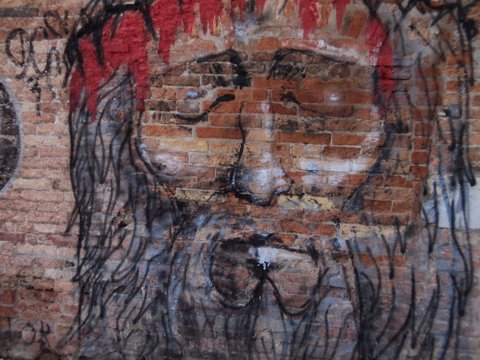
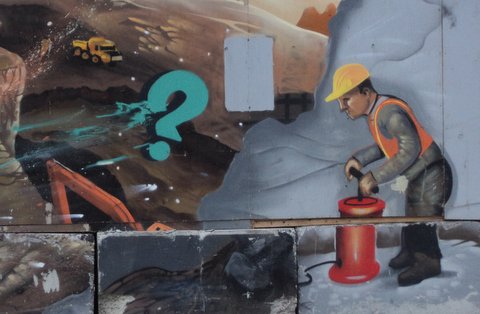
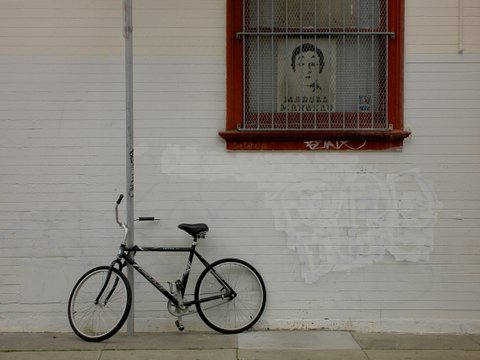
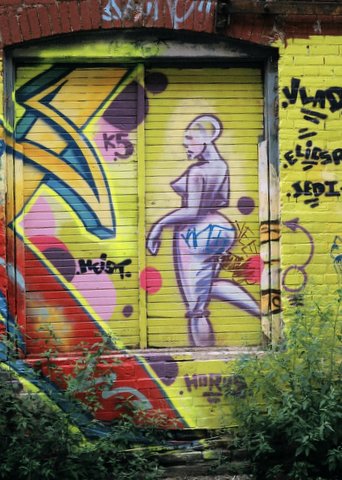
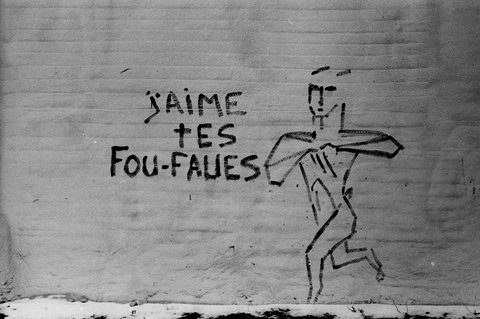
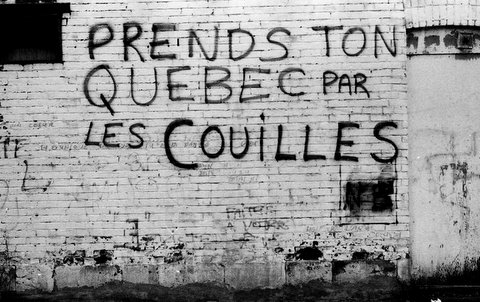
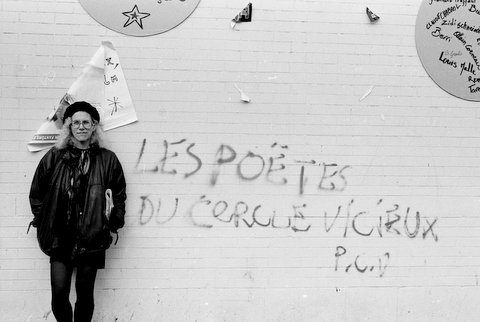
David Helwig, author of over 35 books, who has contributed translations, poems, and fiction to NC over the years, an insistent and constant recidivist in other words, herewith changes genre and turns photographer, offering a collection of graffiti art he has discovered, mostly in Canada but as far away as China and Venice. Graffiti art is folk art, hybrid art, amateur art, uneasy art — rebellious, dramatic, inappropriate (often), underground, illegal (sometimes), piratical, dangerous (how do they do those highway overpasses?), a sign of life.

dg

Venice12 040Venice 2012

Trip OttTor 020Gatineau 2011

Trip OttTor 019Gatineau 2010

  Toronto Wall art 09-04-2010 11-34-38 AMSan Francisco 2010

Toronto Wall art 09-04-2010 11-06-18 AMSan Francisco 2010

TO 067Toronto 2011

SnaFran 014-2San Francisco 2010

87210015Toronto 2009

87190006Toronto 2011

55120086Montreal 1993

55120062Montreal 1993

53040102Montreal 1994

53040021Montreal 1993

15490008China 1987

2010-12-45Toronto 2010

2010-12-34Toronto 2010

 —David Helwig

—————————————–

David Helwig is the author of more than 35 books of poetry, fiction, and non-fiction including, most recently, About Love, 3 Stories by Chekhov (Biblioasis) and The Year One (Gaspereau Press), Duet and his autobiography The Name of Things (Porcupine’s Quill). The founder of the Best Canadian Short Story Series, he has edited more than 25 books for Oberon Press. His avocation, however, is not writing but vocal music. After abandoning this for some years, he returned to it in his forties and has sung with a number of choirs in Kingston, Montreal and Charlottetown. He has appeared as bass soloist in Handel’s Messiah, Bach’s St Matthew Passion, and Mozart’s Requiem. He currently lives in an old house in the village of Eldon in Prince Edward Island.

Oct 192012


Biblioasis has just published David Helwig‘s book of Chekhov translations About Love. Numéro Cinq was  privileged to publish the title story very early in its life as a magazine.

Here is a terrific CBC radio interview with David and Seth, the illustrator. It includes some very intelligent asides on the art of literary translation, Chekhov’s life, and a beautiful reading from the book. Many of you have been following David’s contributions to the magazine over the years; this is a great chance for you to hear him in person.

CBC Radio Interview with David Helwig on About Love.


dg

Oct 022012
 

David Helwig here reminds us that poetry is a kind of divine tomfoolery, a playful messaging that oscillates between meaning everything and meaning nothing, that never means but momentarily and then the meaning shimmers away like a leaf blowing in the wind, catching here and there and moving on. He sent this to me calling it poetry. Actually what he said was more like he couldn’t figure out what it was so he called it poetry. On some level it enacts a messianic parody; it gives the year 2051 a mysterious significance; I like the stenographer drawn in a cart by a Newfoundland dog; I like the Four Lads and all the words beginning with Q; it lifts one’s heart.

David is an old friend and an amazingly prolific author of poems, translations, stories, novels and a memoir. In 2007 he won the Writers’ Trust of Canada Matt Cohen Prize for distinguished lifetime achievement. In 2009 he was appointed to the Order of Canada. His book publication list is as long as your arm. He founded the annual Best Canadian Stories which he edited for years. Biblioasis is on the cusp of a collection of David’s magnificent translations of Chekhov stories, the title story “About Love” originally on Numéro Cinq. See also his poems on NC here and here and here and here!

dg

§

You’d see them by the shore on those greenest of green days, Himself in conversation with Quigley, adding newly minted sayings, in the distance one of the fishers wading barefoot, steady in one place as his bare feet step gently up and down in search of the lump in the mud, the hard shell of the quahog, bending to lift each small edible bivalve out of the sludge, drop it in the floating container he dragged behind him, like a ghost towing his hard fate. Further out an oysterman probed the bottom with a set of tongs. And beyond that yet the tiny image of a lobsterman pulling traps on the shimmer of water, silver under the light-infused clouds and on in a hint of forever to the line of horizon. In the air the fine metallic flex and curl of birdsong, the tiny musicians hidden in the green reeds or the tall grass or the thick accumulation of succulent new leaves.

Himself would be bent a little forward, walking ten steps one way, then ten steps the other, intent, speaking his words, and Quigley staring at him while he went on, the big Q, so he said, remembrancing every word of it, so later to scratch it all down and share it with the Four Lads, in the years when the entirety of them westered into the secret underground, and were known only by the initials, Q for Quigley, though many said it was for some Latin or foreign word, Q not for Quigley at all, though he was called that in the farmyards and on the highways, and among the high lines of travel, while the Lads were known by their initials M and M and L and I, MMLI adding up to 2051 in the ancient numeration, and it was prepared that in the year two thousand and fifty one, some Final Secret would be told, Himself achieving his place at last. Never such demand for Last Things, and Big Quigley had a whole bundle of prophecies of the Third Coming and the Fourth, always more, like a couple, adulterous or even not, who have just at last caught the pace of it and climb the holy mountain at all hours.

At low tide the radioactive seals, flopping out of the ocean like fat mermaids, gather on a rock shoal not far from shore, grunt and boom and snarl.  No one could remember the name of the arctic goddess who once reigned in the icy waters, and governed their lives.

Nearby, observing, silent, is a tall hard man with a shaven skull. He never speaks. Then Mad Mary, in an opalescent shirt full of flesh, tiny shorts defining white thighs, strides out of a tent in the long green ferns where she has passed the time with whomever, contributions to the fund, all her big mad teeth in a grin as she goes aboard the school bus, with its beds and galley and chemical toilet and with a bending and shifting of her bare long legs and heft of muscular arms she lifts and places cardboard boxes, sweeps up, and the holy scrolls filed once more in their rack, she sets to packing up dehydrated veg and salt fish, with fresh water for the next voyage, a hip canted to one side as she lugs the buckets.

Big Quigley watches her. Whatever his claims to holiness, he is not to be trusted, of course, who would try to cheat the shell-fisher of his catch, or anyone else of any manner of thing, better conceal him as the letter, Q for quaestio, a seeking or searching, Q for quies, rest, Q for questus, complaint, Q for quisquiliae, rubbish. And his ways of remembering served to augment confusions in what was said of what was done, each of the Four Lads recording what each believed he knew, late at night debating the matters and sharing out their stories. His record, the spoken and claimed and imagined basis of it all, would finally be vanished forever, so that nothing was left but an image of an image, Mad Mary’s bright eyes and heavy sunlit hair caught in the mirror of a puddle, where she glimpsed herself with all her devils gone off, Himself seen over her shoulder in the water, come up on her from behind. Himself must use the tools at hand, what is in the world is in the world. She will read the Parmenides scroll to him in the shade late some afternoon.

Now, the packing and preparation done, she comes out of the bus with a wooden bowl in her hands, down to the water to fill, then goes to the firepit, where there is a faint trace of smoke winding up into the air, and Himself arrives to her and sits in the old upholstered seat taken out of the bus each time they set up camp, and she takes off his summer sandals and kneels, sun glittering on the waterdrops as she washes his feet, and as she bends toward him, he put his fingers through her thick hair with its metallic highlights.

They will march down a main street for the final parade, some of the willing natives gathered by the wayside, some watching on their eyeglass screens, and when she has washed his feet, Himself tells her a mystery while she combs out his hair and beard, making him handsome for the public presentation. Big Quigley studies it all. He is standing in the long green ferns, and down by the jetties, he sees two women climb from a rowboat and walk to a waiting air-bicycle, and he stares them so hard that they grow naked to his eyes, and in his way he possesses them both entirely.

The sunlight catches the thin smoke and the wisps thicken to clouds until the firepit is all whirling whiteness. Himself and Mad Mary vanish from sight, and the two of them gone, the Four Lads appear on the scene in their royal T-shirts each with his letter – TWO-ZERO-FIVE-ONE – as they sing out their stories in plainchant, then the unison dissolves into the chords of a march, and out of the vast smoke rolls the schoolbus, Mad Mary at the wheel, her bare arms exposing shifting tattoos, big hands gripping the wheel. Himself stands on the roof beating time, and all around it marches a phalanx of drum majorettes, in white satin skirts, tall boots, and red satin shirts.

Big Quigley, riding behind in a horse drawn carriage, has a notebook in his hands, and he is scribbling in it as fast as he can, but he can’t keep up, so he turns on his eyeglass phone and begins to dictate into it. Behind him, in a cart drawn by a tremendous black Newfoundland dog, sits a stenographer receiving his dictation and putting it down in shorthand. Behind the orange schoolbus, marching with their knees high, come male and female cheerleaders in silver bikinis, two of them holding a banner with the words EAT FRESH SEA FOOD. With the fingers of both hands Quigley forms the letter Q, and the cheerleaders wave to him and some of them make the same digital gesture. Each observer’s portable device records their progress into the city.

Then the bus vanishes with its smoke and noise, the long street is empty.

A van is parked in front of a snack bar, and a young man climbs out, who wears a Boy Scout hat, holding a stick ending in a nail in his right hand, a canvas bag in his left, and he strolls along the boulevard picking up the chocolate bar wrappers and chip bags and popcorn boxes.

 — David Helwig

————————–


Feb 282012


Over the last decade David Helwig has published a number of books, ranging from novellas  such as The Stand-In and Killing McGee to the longer narratives in his story collection Mystery Stories. All these explore the possibilities of middle length narrative forms. “The Road,” another of these continuing explorations, comes from David’s new book, Simon Says. Simon Says is made up of seven stories in dialogue that take place at moments throughout the life of one man, Simon McAlmond (1935-2010). They present his life through the complex texture of dramatic speech in which nothing is merely told in narrative form, but a great deal is overheard. What is said by Simon, to Simon, and about Simon creates a subtle and complex portrait of a life; the reader is set to learn by observation, to draw conclusions that are never forced.

David is an old friend and an amazingly prolific author of poems, translations, stories, novels and a memoir. In 2007 he won the Writers’ Trust of Canada Matt Cohen Prize for distinguished lifetime achievement. In 2009 he was appointed to the Order of Canada. His book publication list is as long as your arm. He founded the annual Best Canadian Stories which he edited for years. Biblioasis will publish in 2012 a collection of David’s translations of Chekhov stories, one of which appeared on Numéro Cinq. See also his poems on NC here and here and here and here! His new fiction book, Simon Says, from which this story is taken, will be published later this year by Oberon Press.

dg

§


The Road

(1985)

We should go back.

Fuck off, Simon.

This is crazy, Janice. It’s pitch dark. You’ve already fallen down once.

I’ll have a black eye and my face will be covered with bruises, and I’ll tell everyone that you hit me.

Don’t be ridiculous.

And everyone will believe it, Simon.

No they won’t.

You have a reputation.

Not for that.

You have such a reputation. You remember that concert at the university you took me to last year. When I went off to the toilet. I just wanted to be alone. Sometimes it was like that when I was with you. I felt so crazy I couldn’t stand anyone to look at me. And while I was sitting in my little cubical, just letting myself be quiet, two girls came in, you know, chattering, and the one said to the other, ‘So what else are you going to do this year while you’re writing your thesis?’ and the other one said, ‘I’m going to have an affair with Simon McAlmond.’ I started to shiver, like I was freezing. I couldn’t come out until I knew they were gone. Then I thought I should have opened the door, so I could see who she was. Who was going to have an affair with you. I knew ever since then I couldn’t stand it any more.

People talk. It doesn’t mean anything.

They know if anyone gives you a look, you’ll look right back.

Let’s stop this now, my love, and go back to the cottage.

I’m not your love. So just fuck off, Simon. Fuck off, fuck off, fuck off.

You really think we’re going to walk all the way to the city?

Well, the battery on my car is dead, and yours is trapped there in that little narrow driveway, so what else can I do?

You should have remembered to turn the car lights off.

Well I didn’t. Stupid Janice. I had things on my mind. I finally worked up the courage.

In the morning we can get your car started.

Go back if you want. I’m not.

This is crazy, you know. You’re going to trip and break that long elegant neck.

Crazy Janice. Well it’s better than going back to the cottage and letting you get me into bed. I’m never doing that again. It’s over.

Some things are never over.

That’s what you’re going to tell me. Kiss me on the eyes. Run your hands through my hair.

Some stories end and some stories don’t.

You and me I suppose?

That’s right.

Bullshit, Simon.

No.

If you thought that you should have stopped passing your dick around the community.

You said ‘Leave your wife,’ so I left my wife. What else is it you want?

You were with Catherine last week.

We have children. I visit them.

Until three in the morning.

You’re making that up.

No. I have evidence. I have reliable testimony.

You have your own jealous suspicions.

I have spies, Simon. They watch you and report to me.

Private detectives, I suppose.

Very private. And they do it just for me.

I greatly hope all this nonsense isn’t true.

It’s true, Simon Dippydick. I have you watched.

And just who would do this watching and besetting? I suppose they hide behind trees and garbage bins.

Henry.

Who’s Henry?

Cerise’s son. She brings him into the store to move boxes of books and tidy the back room. He adores me.

Who doesn’t? I’m sure that’s why half the customers come to the bookstore. All the men who claim they want you to tell them about the newest John Irving or Tom Wolfe or Margaret Atwood, and they really just want you to talk to them.

Henry’s very loyal, Simon. He’s my little horny robot. I used to notice how he’d bump into me sometimes, sort of by accident, out in the stock room, and I’d just smile and send him out for coffee. I knew what he was doing and I let him, and now he’ll do whatever I want.

You’re trying to convince me that you sent some pathetic juvenile out to dog my footsteps.

He’s very good at it. He makes notes.

And as a reward you permit him to cop a feel now and then in the storeroom.

Don’t be crude. He thinks I’m beautiful.

You are.

Oh you say so. You always say so. It’s part of your technique.

We all think you’re beautiful. Every man you pass on the street.

Except the ones who think I’m ugly.

You just tripped again.

How do you know?

I could hear.

I didn’t fall down.

You could.

So? It’s dark.

Watch your step, and stay in the middle of the road.

Just leave me alone.

This is dangerous, Janice, walking along here in the dark. Apart from being insane. We should go back.

My first boyfriend thought I was kind of ugly. ‘You’ve got a really weird face,’ he used to say.

Why did you bother with him?

He was very popular, and I was this misfit who studied dance and couldn’t talk to anybody. I liked it that he paid attention to me. I thought he was cute. He said the way I wagged my tail when I walked gave him a big hard-on.

All that dance training.

Muscular ass.

What about your husband?

What about him?

Did he think you were beautiful?

For a while. Then he kind of lost interest. That was when I started dance classes again. And then he moved to Dawson City and I didn’t.

I’ve often wondered whether beautiful girls become dancers or whether dancing teaches them how to be beautiful.

So have you had sex with a lot of dancers, Simon Dippydick?

Only you.

So you say.

The truth.

How far is it to the highway?

Another couple of miles.

How far is that in kilometres?

Three and a third.

Do you remember the night we spent in a motel somewhere up here? We didn’t sleep. Hardly at all. When you first got me and you were showing off.

I don’t remember.

You must.

No.

Really?

Dreams are like that.

You think it was a dream? Seems like it now. Long hot night. Do you think this is a dream, the two of us stumbling along on a dark road through the woods, you begging me to forgive you?

I haven’t begged you to forgive me.

Why not?

There’s no reason.

So easy to forget. Oh so easy.

Watch your step, the hill’s getting steeper.

I don’t care if I fall down again. Just more evidence that you abused me. Threw me on the ground and dragged me over the stones.

Why do you say those things?

Because that’s what you do, you abuse me. You can’t keep your eyes off other women. We walk into a room, and it’s like we’re in a brothel, and you’re checking out the selection.  ‘Is she to your taste sir, or would you like something a little more plump and comfy? More heft in the bosom?’ Can’t keep your eyes off them. Or your hands either. ‘What are you going to do this term?’ they all say. ‘Oh, I’m going to have an affair with Simon McAlmond.’

There’s been nobody else for two years.

Except your wife, and probably a couple of late afternoon quickies with obliging undergraduates.

While you’re in the back room letting Henry fondle you.

I don’t let him go that far.

There’s been nobody else.

I’m going to quit the bookstore anyway. I don’t need him anymore.

You’ve been there what? Four years?

I’m tired of working for Cerise.

It’s not a bad job.

I know just what I’m going to do. I’m going back to school and become a dental hygienist. They make good money, you know, and they’re in demand. Everyone is obsessed with perfect teeth. Imagine me bending over some sweet-looking young thing, her mouth’s wide open, and I push aside that dainty pink tongue, to scrape away the gumbo, and whenever I want to, if she makes me mad, looks like some girl you’d like, I scrape a little too hard, so it hurts her. ‘Just another couple of minutes,’ I say, and go back to tormenting her. Poking away at the sensitive places. Or it’s a big guy with tobacco breath and a thick red tongue who thinks he can handle pain, until I find an exposed root and go to work on it. I see the panic in his eyes as he lies flat out in the chair, me safe behind my white mask, my rubber gloves. And I imagine it’s you.

The first time I saw you, I thought to myself, ‘She is so very lovely, but she might be a little strange.’

You couldn’t wait to get me into bed. You thought I’d be so hot.

That’s right.

Simon! What’s that noise?

A bird.

Scared me half to death.

A whip-poor-will.

A what?

Whip-poor-will. That’s the sound they make.

What’s it doing out here in the night?

They’re night birds.

They’re damn loud.

Yes. You don’t hear them all that often.

There he is again. ‘Whip-poor-will.’

They’re members of the goatsucker family.

You’re lying.

No.

Goatsuckers?

Yes.

Go suck a goat, Simon.

They fly above the trees at night, eating insects. Huge open mouths. I suppose that’s how they got the name.

Go suck a goat. Oh ouch, ouch . . . damn.

What?

I twisted my ankle.

We really have to go back.

Far enough now that there’s no point.

It’s not that far.

No, Simon, you reach a certain place and you can’t go back. I learned that when I finally quit dancing.

Maybe.

Your children never liked me, did they?

They don’t really know you.

I’ve been around for quite a while.

But you hardly ever see them.

Kind of spoiled. That’s what I thought the day we went to that movie with them, that Indiana Jones thing. Spoiled brats. Especially Lorna.

As are you, my love. A spoiled brat.

I’m not, and I’m not your love, not any more, Simon. It’s finished.

So you tell me.

I came all the way out here to say it, and I did.

Yes.

And I’m not spoiled. I pay my way. I wanted Henry to spy on you so I let him bump up against me in the back room

Very romantic.

I know what’s fair. And you don’t.

You don’t think I pay my share.

That`s just money. You always pay the bill in restaurants. But that just makes me feel like a whore.

You keep changing your rules. What I’m supposed to do or not supposed to do.

There are no rules.

No?

You think you have rules. You think you have all kinds of rules.

I try to have certain standards.

Standards.

Yes.

What about the sex standard? Am I good?

Yes.

Am I the best you ever had in your life?

Probably.

No other girl gives it like I do.

True.

But you don’t care enough to say so.

I’m sure I have.

No, you just take me to Toronto to nice restaurants and pay the bill, and we shack up in some classy hotel. Or we go to Montreal and you offer me hand-made leather boots. At first I liked being your whore, but now I don’t.

It seems I can’t do anything right.

God, I’d like to have you in the dentist chair. I would put that steel tool so far into the sensitive roots of your teeth that you’d scream and beg and cry like a baby.

Why?

Because you sneak off and screw your wife.

Your friend Henry is a liar. He tells you what he thinks you want to hear.

You never loved me, not once.

So what am I doing out here on this dangerous steep rocky road through the Laurentian Shield in the middle of the night, stumbling along with you while you try to walk all the way back to the city? Which you will never be able to do. And which is insufferably stupid.

So I’m stupid. I was never smart enough for you, was I Simon? Not like those little university geniuses in their lace panties.

I didn’t say you were unintelligent. I said you were being stupid.

And you think I’m a weakling.

No, I just think it’s twenty miles or more and your feet will give out.

What about yours, Simple Simon?

I’m sure they’ll give out too.

Well why don’t you just go back now?

Because I don’t want to drive along here in the morning and find you lying on the road wounded or dead.

You could handle it. You have that boy scout emergency pack in the trunk of your car. You can deal with anything.

That’s for winter.

If we’re talking about stupid, what about that plastic case with the folding shovel and the candle and matches and a chocolate bar.

Prepared on the best advice.

So stupid.

Whatever you say.

Maybe when I get to the highway I’ll hitch-hike.

It’s two o’clock in the morning. There won’t be anybody on the road.

There’s always somebody.

Not somebody you should be accepting a ride with.

You mean it might be some big bad man who expects little Janice to put out in exchange for the ride. Well little Janice is prepared to take down her pants in those emergency circumstances. Better than going to some motel and letting you put the moves on me.

Maybe we should stop talking for a while.

So stop. I don’t care. Turn around and go back to your cottage and settle in there for the winter.

We’re selling the cottage.

Why?

Splitting things up. It seemed simplest.

So where will you take your women?

I’ll take them to Toronto, and we’ll shack up in some classy hotel.

And you’ll give them the whole routine.

Probably.

‘Oh you’re so beautiful, and you’re so unusual  .  .  . take off your clothes’

Perhaps.

Oh fuck you, Simon. Go back to your cottage and jerk off. Phone the next girl on your list. Do whatever you want, but leave me alone.

Out here at night in the dark.

Yes.

I don’t think I can leave you here in the middle of the woods.

Well you have to leave me somewhere. You have to listen to me and understand that. You have to leave me somewhere, even if you truly think I’m the most beautiful woman in the world.

When we get to the village I’ll get two separate units in the motel, and in the morning we’ll find a garage and get your car going.

Don’t be so helpful. Just go.

In the morning.

Oh fuck off, Simon. Just fuck off.

—David Helwig

—————————————————–


Aug 242011
 

The ascendant, cheerful, dapper Canadian leftist politician Jack Layton died at 61 Monday morning. He died just months after taking his party, the New Democratic Party of Canada, to amazing heights in the last federal election. The New Democrats—always the bridesmaid, never the bride—thrashed the separatist Parti Quebecois in Quebec, left the once powerful Liberal Party a rump in the rest of the country, and earned the right to form what we call the Official Opposition to Stephen Harper’s Conservative government. Now he is being eulogized (mostly) in the press, a state funeral is in order, and, in many ways, his memory is already being co-opted by people who once dismissed him, derided him or even hated him.

Here’s a link to a smart little essay by Noah Gataveckas (published in the online magazine The Mass Ornament) that seeks to insert some logic and realism into the tangle of emotion and pop journalistic burbling and political re-remembering that is, yes, not just a characteristic of Canadian politics.

dg

It is important to remember the past, compare today to yesterday, if one wishes to gain an understanding into any (historical-material) situation. This holds true for the Canadian political landscape.

Various newspapers and ideologues are now posthumously celebrating noble Jack Layton as a hero of humanity, who “More than anything else, stood for Canada”. Yesterday, these same papers otherwise portrayed him as a socialist traitor who had “an almost pathological hostility to the corporate sector [that] would quickly turn Canada into a North American Zimbabwe”. Or: a “champion of elite privilege”. Or: a “Shameless Socialist Opportunist”.

Now that his legacy is up for grabs, Layton is being spun into some kind of watered-down New Liberal. While in the past he was portrayed as the Leftist Enemy (under the spooky banner of ‘socialism’), now he is being sold as a ‘good guy’ with “always a twinkle in his eyes”. The message here is: forget about who he was, what he did, and his politics, celebrate the mere ‘person’ of Jack once he has been abstracted from all the (real, living) political content that made him who he actually was (i.e. what he fought for, what “he gave his life for”). In other words, we are encouraged to celebrate a fiction of Jack Layton instead of his truth.

via The Mass Ornament | The politics of culture.

Aug 022011
 

.

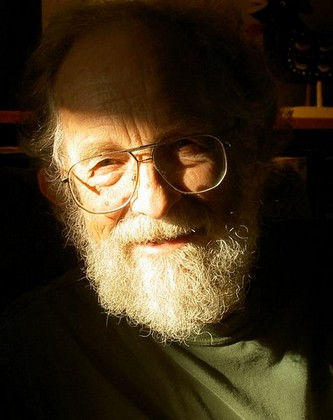
The DOW is down 266 points today; America waits for the consumer to spend money so we can get out of the current crisis; the consumer won’t spend money because the debt ceiling deal promises more uncertainty about pensions, medical insurance, and jobs; it’s a merry-go-round spiraling down; and the ancient gods appear as cartoon musclemen in 3D instead of guardians and saviours. In these David Helwig poems, Lady Godiva has joined the Tea Party to protest paying taxes and money distracts us from infinities. There is, perhaps, nothing to do but write comic poems about the current situation, Post-Empire poems, in the current NC jargon of the day. These poems are taken from a 47-page long poem or group of poems called “Seawrack.” David Helwig, as most of you know, is an old friend; he looks like an amiable Old Testament prophet in his author photo. He is an amazingly prolific author of poems, stories, novels and memoir. His book of mystery stories called, appropriately, Mystery Stories, came out last fall. Oberon Press is publishing a novella called Killing McGee this fall (the main character is obsessed with—among many things—the 1868 assassination of  Darcy McGee). And Biblioasis will publish in 2012 a collection of David’s translations of Chekhov stories, one of which appeared on Numéro Cinq last year.

dg

.

From “Seawrack”

Poems by David Helwig

.
.

All men are mortal: this
the philosopher’s first premise.

And second, Socrates is a man.

Outside our bedroom, night rain
comes down, chill, polyrhythmic.

……………………*

In each ear tickety percussion distracts
us from infinities. Once discovered
a pretty frisson bedecks the edge of use. The muse
tickles herself with feather dusters, lust
whiffling its stroke to court her smallnesses.
Catch trifles sidewise to consequence;
a premise means only its brisk shape.

Is it bearable to the hurt ones,
our sheen of sensation? A blue garden
tinctures the periphery. Skywise
space hollows itself for events. Old pal,
you looked so very brisk that night
when sweet baby came home with a dog
trained to sniff out the truth of flowers.

Seven is chosen the absolute number
for measuring beauty. Listen closely, my clever ones,
your by-names will not be forgotten. Though taste
of cake grow bitter as myrrh and musk,
your sandals shine  deliberate and gold.
And nothing is forsworn, beauty
becomes itself by being nothing else.

.

……

The slap of a screen door closing
in nineteen forty-something,

hot August, flies in their hundreds.

Drifts of goldenrod, seasonal, prophetic,
grow tall here in the changing light.

…………………..*

Who was a child
in time’s elisions,
summer, the prime
element sand.

That was. That.
Doorslap. Voices
from unceilinged bed-
room to bedroom.

The thrill, to hook
a cold bright living fish.
Always the secrets.
That. Flies beyond count.

Time’s elisions:
unseen, unheard
some great wheel
turns the sky.

.

.

Scrubbing garlic at sunset,
in a bucket of mud-red water,

fat bulbs shedding earth.

Take to the road, night traveller,
maybe never to come back.

…………………..*

Once we knew a song, and how it told the story,
Little Mouse and Felicity setting out
all barefoot through the mud-mush,

around them holy universe a-twirling,
buddy on the old railroad beating time;
they dandled Eve’s sweet apples,

mud-red to the knee as they sang hymns
about the attainable tough-ass farms
with mortgage documents long as bibles.

I’ll feed you spicy buds with sticky fingers
the Little Mouse lined it out
that fox-tailed whistle tune in quavers.

Felicity stood waving on the tracks,
baked seven moon-pies for buddy on the railroad,
and mud was ever with them.

Once we knew a song, and how it told the story,
Little Mouse and Felicity setting out
and coming home with their new hymns

that run downhill like water.

.

.

That season here again,
bees scour late-flowering thyme,

sun in retreat, still hot, still bright.

On the porch an open book
exposits biological enigmas

…………………*

Ha. Ha. Ha. Sudden glory,
writes the son of the angry vicar;
a salutary warning against democracy.
Nota bene: the pope farts like all men,
matter in motion. The king instructed
in mathematics can measure
his royal enormity. Ha. Ha. Ha.

Ha. Ha. Ha. The clown howls
for his dildo-diddle-darling,
waves a mute stuffed penis
at the delighted crowd.
The honeybee queen mates
with her drone at the top of the sky,
rips off his parts. Ha. Ha. Ha.

Ha. Ha. Ha. Long-leggedy
dancers fall to the ground,
subjected. Fat boys in drag
achieve transfiguration,
matter in motion. King Flea
sucks blood in the bush
of the loveliest. Ha. Ha. Ha.

.

.

Shorebirds unmoving
like rock, sand, shell; invisible
here now or long gone.

………………….*

………………..just

In accord with one accurate word,
or a permission from the high mind
that watches intently the idea
of ourselves joining it here

in proportion, in right proportion
recorded in books bound in calf
shelved in dark lengths
of present time; clock clicks onward.

Beyond the window, the pale daffodil
sky darkens to green, violet, and offers
its blackness for stars as it must
at such a becoming moment.

Within, what has achieved persistence
the abiding-with, what was, is,
what will be the event of quiet mind
in accordance, in order, in this room.

.

.

The crickets silent,
frozen to death or hidden
in somewhere somehow.

………………*

The cold mood, canine:
a punctuated screech
from monkey mind
distracts it; meanwhile

the flirt and wimble
of the so fleshly
Miss Concinnity dis-
roots all deepness.

Hocus-pocus, the dog-
latin creed broods
over the winsome drumming
of the theologian’s heels.

Bob the urgent surgeon
redesigns the ductwork.
The joker, brindled,
pink, lies standing up.

.

.

Wet snow, a north wind,
the poet’s occupation—
reading all weathers.

…………..*

Lady Godiva, doubly bareback blonde
waves her scrawled sign,
END UNFAIR TAXATION,
and the citizens keep house

bar Tom the poet, who word-
struck, avid for inklings,
peeps her from toe to temple, bush
silvery, crinkled, lichenous.

Asked for opera, give them the works,
everyness of tricks and trades,
of which, of whom on all the notes,
dancing dogs and the climactic squillo.

A  sad tale’s best for winter.
Lock the doors with the universal key.
NO ADMITTANCE. The forbidden
matches the perfectly desired.

Lay out the tale of Hansel and G.
or Caesar mounting the throne of Egypt
as Jack the neighbour spills the beans
on a mutant township of titans.

Hopping on one foot, gump, gump, gump,
prevents an easy slenderness, while grace
goes toothless and badly bald. Sharp,
the surgeon’s foresight tunes the interlock.

.

.

Recall that bedroom,
the stove pipes from the kitchen
cold in the mornings.

…………….*

The cuckoo-clocks hoot all night
in that tallest of landscapes.
The accidental virgin carries
a clutch of red morning flowers
out of the Schwarzwald.

Beyond the far-sighted, mountains
where birds and animals master
six available languages;
those who arrive achieve
the unlikeliest of wisdoms.

Wotan and the Seven Dwarfs
audition for Hollywood
up on the crags as Windy and Sol
run bounding arpeggios
on lengths of natural horn.

Those who can, do; those
who can’t, sing opera—
the second law of the brothers Grimm.
Each goddess must proclaim herself
free to die of her own disease.

Beyond the white mountains
the cuckoo-clocks gossip hourly
about the private life of demons,
and a translated avian soprano
hangs caged in each hot kitchen.

.

.

Socrates is mortal: QED.
The concepts dance like numbers.

Philosophers tell lies about desire

and the wisdom of hairless boys:
to prove the obvious.

……………………*

In each eye the texture of pelt distracts
us from infinities. The spooks gabble
their old malarkey, wholesaling thrills. The muse
pleases herself with foxtails, fingertips; a humming
electrifies the dapper suit of epidermis.
Exit: he goes out. Wash dark things white.
A conclusion reveals only its own perfection.

Is it still bearable to the lost ones,
our aching gladness? A blue garden
awaits us, spans our path, felicities
of petal, air, twilight. Old dog,
you chewed the bones of so many good things,
after sweet baby showed us her tattooing
all in the language of spice and ecstasis.

Seven is the absolute number
for measuring it all. Listen, my pretty ones,
while I recite the four lovely imperfections. Though truth
grow bitter as the crimsoned and demented,
your toenails will preserve the gloss of silver.
Whatever is forsworn, foregone, beauty
becomes itself still, clamant, ubiquitous.

—David Helwig

Dec 312010
 

helwig1

Here, yes, oh yes, two New Year’s poems by David Helwig, lines from which should be repeated at midnight and can/should be burned into your minds henceforth: “…every one of the dead lived, and every instant of their time rang like this, ours, now.”

David’s work has graced these pages from nearly the beginning (nigh on a year now–the NC first anniversary is January 11), including his poems “La Rentrée” and “Stars” and his lovely translation of Chekhov’s short story “About Love.” I am never sure whether or not to reintroduce people here again and again. Many of you know who David is–old friend, prolific writer of everything, Order of Canada, founding editor of Best Canadian Stories, new dog owner, generous contributor to Numéro Cinq. The rest of you read the new poems and look at his earlier pieces. These poems happen to coincide with the very recent arrival in my mail box of David’s latest book, a collection called Mystery Stories.

Happy New Year!

dg

/

Impromptus for the New Year: December 2010

1

In a brilliant patchwork of greens, moss, lichen, leaf
shed brightness on the damply haunted winter day.
Thin black twigs prick the dimly opalescent sky
over a gloom of woods where the roaming black dog

yips and flushes a snowshoe hare, white in phase with
the cycle of the year’s darkening, useless pale
winter fur in desperate flight across the un-
seasonable snowless landscape, grey trunks, branches,

conifers hung with grey-green strands of old man’s beard.
A sodden winter too is an incarnation,
where tremors of time occur, scant, slack, offering
what is least likely to burn, a flame in damp wood.

All vision shivers in the accidental gaps
of early twilight on this narrow long path,
as the black dog races out of sight. Silence, like
a pause in music, offers stillness and resolve.

We have posed calendars against infinity,
the major and minor scales and counterpoint,
that law of two remaining two, being one.
It is said that the wise travel to map their return.

Detail defies the approach of incoherence,
like our numbering of days. Moss, trees, lichen
recite a winter creed: every one of the dead lived,
and every instant of their time rang like this, ours, now.

2

Morning sunlight falls on the eventual snow,
and the dog stirs, black upon white, in the maze
of thin spruce, the path tracked and retracked by the night’s
dance of hares, and my old legs climb over a fallen trunk.

How many generations long is a long life?
Do we count by decades or some definition
of attitude? Has love a new way of being?
You are, she said, better at questions than answers.

Blown snow and bright ice, the young trees bend low
under the weight of it. A fox has left fresh tracks.
To be wild is to be hungry, short-lived, cold, wet,
breeding desperately to salvage the species.

Ask the young to explain. The lively black puppy
leads me through the new snow of her world, obeys,
though she can outrun me on any footing.
The cold wind sings in the bright air all around us.

—David Helwig

/
/

Oct 302010
 

Herewith a startling and idiosyncratically romantic Steven Heighton short story “A Right Like Yours.” Many of you know Steven from previous appearances on the pages of Numéro Cinq, including his lovely poem “Herself, Revised” (very popular here), his novel excerpt from Every Lost Country, his book of essays The Admen Move on Lhasa, which Rich Farrell wrote about here, and his handful of Horace odes in translation, which you really ought to take a second look at for their grace and intricacy. Of these odes, David Helwig wrote to me in an email: “They seem to me technically brilliant. And therefore moving.” (Remind me to ask him if I can quote him.)

dg

A RIGHT LIKE YOURS

By Steven Heighton


He is short but he has shoulders and I think he wears the flattest shoes going, cheap sneakers of some kind, and that is attractive, that he doesn’t try to elevate himself in any way. His look is shy though, maybe cold, with green eyes that don’t meet your eyes but look at your mouth or chin in the same way as, when you’re in the ring, the other girl will stare a little below your eyes. So maybe he does it to practice. Always be in the ring, Webb Renton tells us.

I choose to think he is just somewhat shy.

It started because I was training for my fifth fight and my sparring partner had hurt that ligament in the knee that’s called, I think, cruciate but we just say crucial because that’s what it is. The other girls at the club are either on the little or the huge size and Trav is about the same weight as me, though he is shorter, and toward the end of a workout Webb yelled at him to get in there and give me a couple rounds. Trav’s face then—like someone told him to throw himself on a grenade. People started gathering ringside. Like I said, it was the end of the night, and I would have been interested too. I don’t think the coach had ever put a girl and guy in to spar that way.

Continue reading »

Oct 242010
 
For your edification and delight (while I do packets), here is a lovely new poem by David Helwig (um, who apparently has a new dog). I have introduced David before on Numéro Cinq so I won’t go on about our long friendship, his incredibly prolific career, his honours and acclaim. He has already published a translation of Chekhov’s story “About Love” and “La Rentrée,” a poem, on these pages.
dg


Stars

By David Helwig


The puppy stares through the log corral at the tall
companionable horses ambling to the fence;
the hair of her ruff bristles, fear of these giants
stirring her, though the abrupt newness holds her gaze.

Her brain all imbrued with the complex perspectives
of perfumery and stench, she studies these odd
grand beings who interrupt our evening walk
while the air cools and the blazing October sun

sets beyond the toy farm on the empty road
of the toy village, time falling away from us
over the old graveyard as the black dog watches
with careful eyes these creature of the distances,

attendant to night’s stubborn bestial wisdom,
the galactic white blaze on her chest retracing
a sign out of some far genetic wilderness;
she is hearing wild dogs in the whine of the wind.

We read the graves, small histories inscribed on stone.
What more is to be said about them, the lost ones,
who are recalled tonight while all-stars-that-are come
in white fire to the observers? Morning will bring

starfish, oysters on the beach, the glitter of light,
in the house of love, new confusions of friendship.
The horses now stand sleeping under this tall sky,
the dog dreaming fear beneath the bright evening star.

—David Helwig

Apr 242010
 

ENTRIES ARE OFFICIALLY CLOSED. COMMENTS STILL WELCOME.

Herewith the first ever (annual) Numéro Cinq villanelle writing contest. I am announcing it early so that you can work on your entries. Entries will be accepted between May 1 and May 15. Entries, as with the aphorism contest, should be posted as comments on this page. Entries are open to anyone in the world, but only if they are written in  English, French, Latin, or classical Greek (the only languages anyone can speak in this house). As with the aphorism contest, I encourage you to familiarize yourselves with the form. See the craft and technique page for help. Roughly speaking, we’re talking about a 19-line poem written in tercets (except for the last stanza which has four lines). The first and last line of the first stanza become the last lines of the following stanzas and also turn into a couplet at the end of the last stanza. These are fun to write and can actually turn out surprisingly well if you arm yourselves with strong refrain lines (think: panache, drama, obsession, schizophrenia). You need not be a poet to enter. And it’s always a good thing for prose writers to extend themselves; it makes their prose more interesting. One lesson to be drawn from writing a poem like this is the way form drives content instead of the other way around.

Continue reading »

Apr 132010
 

I can do no better than repeat what I said when I introduced David’s translation of the Chekhov story “About Love,” published earlier on these pages. David Helwig is an old friend, a prolific novelist, story writer, translator, and poet, and a mighty gray eminence on the Canadian literary scene. In 2007 he won the Writers’ Trust of Canada Matt Cohen Prize for distinguished lifetime achievement. In 2009 he was appointed to the Order of Canada. His book publication list is as long as your arm. He founded the annual Best Canadian Stories which he edited for years. He is also a very graceful human being as evidenced by his comments on Numéro Cinq.

I had my choice of new Helwig poems to post here, but I picked this one because I really like it. The last stanza alone is worth the trip. It’s a rare poet who can make you feel the fever and mystery of  life in as few words.

Unfortunately, the poem is written in Canadian, so I’ll have to translate a few of the words for my American and Mexican readers. Lower Canada College is a venerable Montreal private school, Lower Canada being the former name for what became the province of Quebec. There is an Upper Canada College in Toronto, another venerable private school (not a college in the American sense, a grade school and high school). Upper Canada is what we used to call Ontario. Upper Canada and Lower Canada as designations don’t make a lot of sense intuitively to Americans since they are actually east-west neighbours. But in the days when the St. Lawrence River was the major highway east and west, Ontario was upriver and Quebec was downriver.

Hugh MacLennan was a great Canadian novelist, whose book Two Solitudes invented the myth or metaphor that, for decades, defined the way we thought about relations between the French and English sides of the nation. His other fine novel, Barometer Rising, about the Halifax Explosion of 1917 I gave to my son Jacob when I took him to Halifax for his freshman year at the University of King’s College last September. MacLennan taught at Lower Canada College and later McGill University.

The rest you can figure out for yourselves.

dg

La Rentréé

The dignity of a considered rhythm: today
the school year begins. Across the dappled green lawn
of Lower Canada College children of privilege
kick a soccer ball, foregather in little groups;

by the fence a red-head and her friend exchange news.
The ghost of Hugh MacLennan in his teaching days
observes from the shade of a tall tree. He can hear
the plock of tennis balls from further up the street,

the sacred precincts of the Monkland Tennis Club.
A seasonable invention, all these memorable
hours, a cherishing of slowness, as eyes might observe
the infinite seconds of fine craftsmanship,

afforded to some in their best bargain with time,
the finely grained and cut and carved, its artifice
emulating the splendour of the eternal,
the existential calm of the elegiac.

Then turn the wrong corner. A house has disappeared.
As if entrapped in the suicide’s murderous mistake
or the muddle and depletion of dementia,
you come upon maddened wasps in all the cities,

sea giants, monsters, dragon, roc, sphinx, mermaid,
a phoenix tattoo paints resurrection on a pale skin.
Retrace your steps toward the pragmatics of freedom
in the grace of the familiar, that shape of our being,

the chosen hour of the chosen day, though the lost
slip from the slender thread of their living, yet first
and last the taut and shining wire vibrates
with tunefulness, proposes such fine music.

–David Helwig

Mar 242010
 

The world of literary translation knows no boundaries. David Helwig sent me the following, a piece of graffiti found on the wall of a brothel in Pompeii.

Arphocras hic cum Drauca bene futuit denario.

I looked it up on the web. The more or less accepted translation goes like this: Here Harpocras has had a good fuck with Drauca for a denarius.

But I sent the line to Jacob to see what he thought. He wrote back: Something along the lines of…Here Arphocras laid well with Drauca (my dictionary says this means sodomite, but it is a capital D so I made it a name. I think it is a pun.) for a silver coin. Basically… “Arphocras fucked the shit out of some male hooker right here for like no money.”

Then I looked up the quotation in Craig A. Williams Roman Homosexuality. Apparently, the price paid to Drauca was eight times the going rate (according to other notations on the wall).

The plot thickens.

dg

Mar 172010
 

helwig1David Helwig

It’s a great honour to unveil on these e-pages David Helwig‘s new translation of Anton Chekhov’s story “About Love.” David Helwig is an old friend, a prolific author and translator, and a mighty gray eminence on the Canadian literary scene. In 2007 he won the Writers’ Trust of Canada Matt Cohen Prize for distinguished lifetime achievement. In 2009 he was appointed to the Order of Canada. His book publication list is as long as your arm. He founded the annual Best Canadian Stories which he edited for years. He is the author of an earlier book of translations, Last Stories of Anton Chekhov.

This post includes Helwig’s introduction to his new book of Chekhov stories and the story “About Love.”

dg

/

Anton Chekhov spent the winter of 1897-98 in France, most of it in Nice on the Côte d’Azur. He was avoiding the cold and damp of the Russian winter. In March of 1897 he had suffered a severe haemorrhage and was told that both his lungs were tubercular. Though he himself was a doctor he had for the previous ten years succeeded in ignoring the symptoms of his disease. Now he could no longer evade the medical facts.

That winter Chekhov read extensively in French and was much impressed by  Émile Zola’s public intervention in the Dreyfus scandal. (One suspects that the little anecdote in ‘About Love’ concerning the supposed Jewish gangsters might have its origins in this.) Chekhov improved his knowledge of the French language—he was interviewed about the Dreyfus affair in French—but he did only a limited amount of writing. In May of 1998 he returned to his estate at Melikhovo, and in July and August he published in the magazine Russian Thought the three connected stories translated here. A year later he described them as a series still far from complete, but he never returned to them, and they remain his only experiment in linking his stories.

Within an overall narrative about the travels in the Russian countryside of the veterinarian Ivan Ivanych and the teacher Burkin, Chekhov presents three framed tales, the first a kind of grotesque comedy of the sort associated with Gogol, the second not dissimilar but with a more explicit and impassioned response from its narrator, the third a poignant little story of failed love that may evoke for the reader Chekhov’s most famous story, “The Lady with a Little Dog.” Emotion grows more personal as we move from one to the next. In the first story Burkin tells a tale about an acquaintance. In the second Ivan Ivanych tells about his brother. In the third their friend Alyokin tells a story about his own life.

While the framed tales provide the dramatic core of each story, the framing narrative offers a vivid evocation of the Russian countryside, with a sense of history and geography complementing and containing the urgency of the tales. In ‘Gooseberries’ an extraordinary passage describes the aging veterinarian Ivan Ivanych swimming in a cold mill pond, unwilling to stop, in the grip of some inexplicable joy; then at a paragraph break the story modulates in a single line to a quiet sitting room where the framed portraits of soldiers and fine ladies evoke a past gentility, and Ivan Ivanych begins to talk about his brother’s life, its obsession, the crude and joyless littleness of his achievement.

A passage from the conclusion of the first story lifts our gaze from the events we’ve just been told about. “When, on a moonlit night, you see a wide village street with its peasant houses, haystacks, sleeping willows, tranquillity enters the soul; in this calm, wrapped in the shade of night, free from struggle, anxiety and passion, everything is gentle, wistful, beautiful, and it seems that the stars are watching over it tenderly and with love, and that this is taking place somewhere unearthly, and that all is well.”

The point of view in Chekhov’s stories can be slippery. The “you”  of this passage is unidentified but the verb is in the second person singular; it speaks intimately from some detached narrative intelligence to each single reader. The passage gives the sense of a benign universe surrounding the events.

Yet just a few lines earlier we have read Burkin’s harsh conclusion to the tale he has been recounting. “We came back from the cemetery in a good mood. But that went on no more than a week, and life flowed by just as before, harsh, dull, stupid life, nothing to stop it going round and round, everything unresolved; things didn’t get better.”

Such a counterpoint of one voice with another, one mood with another, their contradiction, suggests a subtle ironic interplay not altogether unlike the form of Chekhov’s plays. Always, in Chekhov, there is a sense that the events evoke other possibilities, offstage or after the narrative ends. The very last line of ‘About Love’, the third of these stories, offers a grim hint at what might be still to come.

In 1991 Oberon Press published Last Stories, my translations of the final six stories of Anton Chekhov’s career, including two or three of his finest and best known works. It seems appropriate to repeat here what I said in the introduction to that book, that while there are a great many translators whose Russian is better than mine, there are not so many who have had a long experience of writing narrative prose. These narratives are my personal versions of Chekhov’s stories; they are also as close as I can make them to the precision and suggestiveness of the originals.

–David Helwig


About Love

By Anton Chekhov

Translated by David Helwig


The next day for lunch they were served delicious meat turnovers, crayfish, and lamb cutlets, and while they were eating, Nikanor the cook came upstairs to ask what the guests wanted for dinner. He was a man of middling height with a pudgy face and little eyes, clean shaven, with whiskers that looked not so much shaved as plucked out.

Alyokhin told them that the beautiful Pelageya was in love with this cook. Since he was a drinker with a violent temper, she didn’t want to marry him, but offered to live with him all the same. But he was very pious, and his religious principles wouldn’t allow him to live like that. He insisted that she marry him—he would have nothing else—and when he was drinking he berated her, even hit her. When he was drinking she hid upstairs, sobbing, and then Alyokhin and his servant wouldn’t leave the house, so they could defend her if necessary.

They began to talk about love.

“How love comes into being,” Alyokhin said, “why Pelageya didn’t fall in love with some other man more suitable for her, with her inner and outward qualities, but instead chose to love that mug Nikanor”—everyone called him the ugly mug— “since what matters in love is personal happiness, it’s beyond all knowing, say what you like about it.  Up till now we have only this irrefutable truth about love—‘It’s a sheer, utter mystery,’— every other single thing that has been said or written about it is not an answer but a reframing of the question—which remains unresolved. The explanation which would seem to be suitable in one case won’t suit in ten others, so what’s much the best, in my judgment, is to explain each case separately, not attempting to generalize. What we need, as the doctors say, is to individualize each separate case.”

“Absolutely right,” Burkin agreed.

“We respectable Russians nourish a predilection for these questions, but we have no answers. Usually love is poeticized, adorned with roses and nightingales, but we Russians have to dress up our love with fatal questions, and chances are we’ll pick out the most uninteresting. In Moscow when I was still a student I had a girl in my life, sweet, ladylike, but every time I took her in my arms, she thought about what monthly allowance I’d give her and what a pound of suet cost that day. Really! And when we’re in love we don’t stop asking ourselves these questions: sincere or insincere, wise or foolish, what our love is revealing, and so on and on. Whether this is good or bad I don’t know, what it gets in the way of, fails to satisfy, irritates, I just don’t know.”

It was like this when he had something he wanted to talk about. With people living alone there was always some such thing in their thoughts, something they were eager to talk about. In the city bachelors went to the baths or the restaurants on purpose just so they could chat or sometimes tell their so-interesting stories to the attendants or the waiters, and then in the country they habitually poured out their thoughts to their guests. At that moment what you could see outside the window was a grey sky and trees wet with rain; in this weather there was no place to go and nothing remained but to tell stories and listen to them.

“I’ve been living at Sophina and busy with the farm for a long time now,” began Alyokhin, “ever since I finished university. By education I’m a gentleman, by inclination a thinking man, but when I arrived here at the estate, it carried a big debt, since my father had borrowed money, partly because he spent a lot on my education, so I decided not to leave here, but to work until I paid off the debt. I made the decision and started in to work, not, I confess, without a certain repugnance. The land here doesn’t produce much, and for agriculture not to be a losing proposition it’s necessary to profit by  the labour of serfs—or hired hands which is about the same thing—or to farm in the peasant way, which means working in the fields yourself alongside your family. There’s no middle way here. But I didn’t shilly-shally. I didn’t leave a scrap of land untouched. I dragged in every peasant man and woman from the neighbouring villages; work here was always at a raging boil. Myself, I ploughed, sowed, cut the grain; when I grew bored I wrinkled up my face like a farm cat who’s eaten cucumber from the vegetable garden. My body ached and I slept on my feet. At the beginning it seemed to me that I could easily reconcile this labouring life with my educated habits—all that counts, I thought, is to behave with a certain outward order. I settled upstairs here in the splendid reception rooms, and I curtained them off so that after lunch or dinner I was served coffee and liqueurs, and at night while I was lying down to sleep I read the European Herald. But one day our priest arrived, Father Ivan, and he drank all the liqueurs at one go, and the European Herald went to the priest’s daughters. In summer, especially during hay-making, I didn’t have time to get to my own bed, I’d take cover in a shed, on a stone boat, or somewhere in a forester’s hut—but why go on about it? Little by little I moved downstairs, I began to eat the servants’ kitchen; all that remained to me from our former luxury was those servants who had worked for my father, and to discharge them would have been painful.

In those first years here I was chosen honourary justice of the peace. Whenever I had occasion to go into the city, I’d take part in the session of the district law court; it was a diversion for me. When you go on here without a break for two or three months, especially in the winter, in the end you get to pining for your black frock coat. And at the district court there were frock coats, full dress coats and tail coats, and there were lawyers, men who’d received the usual education: I’d get into conversation with them. After sleeping on a stone boat, after sitting in a chair in the servants’ kitchen, to be in clean linen, light boots, with a chain on my breast—this was real luxury!

In the city they received me amicably. I was ready to make acquaintances, and out of them all, the soundest, and to tell the truth the most pleasant for me, was a friendly connection with Luganovich, the cordial Chairman of the district court. An attractive personality: you both know him. This was right after the famous affair of the arsonists; the trial lasted two days, we were tired out. Luganovich looked at me and said, ‘You know what? You should come to dinner.’

This was unexpected since beside Luganovich I was of little significance, just some functionary, and I had never been at his home. I stopped off in my room for just a moment  to change my clothes, and we set off for dinner. And there the opportunity presented itself to make the acquaintaince of Anna Alexeyevna, Luganovich’s wife. She was still very young then, not more than 22 years old, and half a year later she was to have her first child. The past is past, and right now I’d find it difficult to define exactly what it was about her that was unusual, what it was in her I liked so much, but over dinner everything was irresistably fine. I was seeing a young woman, beautiful, good, cultured, charming, a woman I’d never met, and right away I felt a sensation of familiarity, as if I’d seen her before—that face, those clever, friendly eyes—in an album that lay on my mother’s dresser.

In the arson case we’d prosecuted four Jews, supposed to be a criminal gang, but as far as I could see, quite groundlessly. At dinner, I was very worked up, finding it all painful, I don’t remember now what I said, only when I spoke Anna Alexeyevna turned her head and said to her husband, ‘What is all this, Dmitri?’

Luganovich, that good soul, was one of those ingenuous men who hold firmly to the opinion that if a man is brought to court it means he’s guilty, and that to question the rightness of a sentence may only be done by legitimate procedures on paper and certainly not over dinner and in a private conversation.

‘We weren’t on hand with them to set the fire,’ he said softly, ‘and we’re not in court here to see them sentenced to prison.’

And both of them, husband and wife, did their best to get me to eat and drink a little more.  By small things—this, for example, that they made coffee together, and this, how they understood each other in a flash—I could grasp that they lived comfortably, in harmony, and that they were glad to have a guest. After dinner they played piano four hands, then later on it grew dark and I set off home. That was at the beginning of spring. Subsequently I passed the whole summer at Sophina, without a break, and there was not a moment for a passing thought about the city, but the memory of the well-proportioned, fair-haired woman stayed with me all day; I didn’t think about her, but truly, her sweet shadow lay on my soul.

In the late fall there was a charity performance in the city. I entered the governor’s loge—I was invited there during the intermission—and I saw, down the row with the governor’s party, Anna Alexeyevna—once again, irresistably, the intense impression of beauty, and the sweet, tender eyes, once again the sense of closeness.

We were seated side by side, then we started out to the foyer.

‘You’re losing weight,’ she said, ‘are you sick?’

‘Yes. I’ve caught a chill in my shoulder, and in the rainy weather I have trouble sleeping.’

‘You have a dull look about you. In the spring when you came to dinner, you were younger, more cheerful. In those days you were enthusiastic, always talking, and you were very interesting, and I confess I was even a tiny bit taken with you. Often as the year went by you came to mind for some reason, and today when I was getting ready for the theatre it seemed to me that I’d see you.’

And she laughed.

‘But today you have that dull look,’ she repeated. ‘It ages you.”

The next day I had lunch at the Luganovichs’. After lunch they left the house to go out to their summer place to put things in order for the winter, and I with them. And with them I returned to the city, and at midnight I drank tea in the quietness of their house, those domestic surroundings, as the fireplace burned, and the young mother kept going out of the room to see if her daughter was asleep. And after that with each arrival I was, without fail, at the Luganovich house. They expected it of me, and it was my habit. Usually I entered without being announced, like someone who lived there.

‘Who is it?’ I heard from a distant room the drawling voice that seemed to me so beautiful.

‘It’s Pavel Konstantinich,’ answered the housemaid or the nurse.

Anna Alexeyevna came out to me with a worried look, and every time she asked, ‘Why have you been away so long? Has something happened?’

Her glance, the fine, graceful hands which she reached out to me, her everyday clothes, the way she did her hair, the voice, her step, each time all of this produced an impression of something new, extraordinary in my life, and important. We talked for hours and we were silent for hours, each thinking our own thoughts, or she played the piano for me. If no one was at home, I stayed on and waited, chatted with the nurse, played with the baby, or I lay in the study on the Turkish divan and read the newspaper, and when Anna Alexeyevna returned, I greeted her as she came in, took from her all her shopping, and for some reason, each time I took the shopping it was with as much love and exultation as a young boy.

There is a proverb: if an old woman has no problems, she’ll buy a piglet. The Luganovichs had no problems so they made a friend out of me. If I didn’t go to town for a while, that meant I was sick or something had happened to me, and both of them grew terribly anxious. They worried that I, an educated person who knew languages, lived in the country instead of occupying myself with science or serious literary work, went round like a squirrel in a cage, worked a lot but never had a penny. To them it seemed that I must be suffering, and if I chatted, appeared confident, ate well, it must be in an attempt at concealing my suffering, and even in happy moments, when everything was fine with me, I had the sense of their searching looks. They were especially full of concern when I was actually having a hard time of it, when one creditor or another oppressed me or when money was insufficient for the payments demanded; husband and wife whispered together by the window, and in a while he’d come up to me and say, with a serious look, ‘Pavel Konstantanich, if at present you should be in need of money, then my wife and I beg you not to feel shy, but to apply to us.’

And his ears grew red with embarrassment. That’s just how it would happen, the whispering by the window and he would come toward me with red ears and say, ‘My wife and I beg you earnestly to accept this present from us.’

Then he gave me some cufflinks, a cigarette case, or a lamp; and in response to this I would send from the country a dressed fowl, butter, flowers. It is to the point to say that both of them were well to do. From the first I had borrowed money and wasn’t especially fastidious, borrowed where I could, but no power on earth  would make me borrow from the Luganovichs. That’s all there is to be said about that!

I was wretched. At home in the field or in a shed I thought about her, and I tried to see through the mystery of this young, beautiful, intelligent woman married to an uninteresting man, almost old—the husband was over forty—and bearing his children. How to understand the mystery of this uninteresting man, a good soul, a simple heart, who deliberated with such boring sobriety at balls and evening parties, took his place among reliable people, listless, superfluous, with a humble, apathetic expression, as if they might have brought him there for sale, who all the same believed in his right to be contented, to have children with her, and I struggled to understand why she was his and not mine, and why it must be that such a terrible mistake ruled our lives.

Arriving in the city, I saw in her eyes each time that she had been waiting for me; she herself confessed to me that whenever she perceived something unusual outside her window she guessed that I was arriving. We talked for hours or were silent, but we didn’t confess to each other that we were in love, but shyly, jealously, we dissembled. We were afraid of anything that might reveal our secret, even to ourselves. I loved her tenderly, deeply, but I debated, questioned myself about what our love might lead to if our strength wasn’t sufficient for the battle against it; it seemed to me incredible that this calm melancholy love of mine might suddenly tear apart the happy, pleasing course of life of her husband and children, of everything in that home, where they loved and trusted me so. Was this a decent thing to do? She would come to me, but where? Where could I take her away? It would be another thing altogether if mine were a pleasant, interesting life, if for example I were struggling to emancipate my native land, were a famous scholar, artist, painter, but no, I would carry her out of an ordinary, dull condition to another much the same, or to something even more humdrum. And how long would our happiness last? What would happen to her in case of my illness, death, or if we should simply stop loving each other?

And she, apparently was having the same thoughts. She considered her husband, her children, her mother who loved the husband like a son. If she should give herself up to her feelings, then she would have to tell lies about her state or to speak the truth, and either one would be awkward and horrible. And this question tormented her: should she offer me happiness, her love, or not complicate my life, already difficult, full of every kind of unhappiness? It seemed to her that she was already insufficiently youthful for me, insufficiently industrious and energetic to start a new life; she often talked to her husband about it—how I needed to marry a clever, worthy girl who would be a good housewife, a helper—and at once added that in the whole city such a girl was hardly to be found.

Meanwhile the years passed. Anna Alexeyevna now had two children. When I arrived at the Luganovichs’ the maid smiled pleasantly, the children shouted that Uncle Pavel Konstantinich had arrived and wrapped their arms round my neck, and everyone was glad. They didn’t understand what was going on in my soul, and they thought that I too was glad. They all saw in me a noble being. Both the adults and the children believed that some noble being had entered the room and this induced in them an attitude of particular delight with me, as if in my presence their life was finer and more pleasant.  Anna Alexeyevna and I went to the theatre together, always on foot; we sat in the row of chairs with our shoulders touching. In silence I took from her hand the opera glasses, and at that moment I sensed her closeness to me, that she was mine, and each of us was nothing without the other—yet by some strange misunderstanding, leaving the theatre we would each time say farewell and separate like strangers. What people in the city said about us, God knows, but in all they said there was not one word of the truth.

In the following years Anna Alexeyevna began to go away more often to visit her mother or her sister; bad moods came over her, a sense that her life was wrong, tainted, and then she didn’t want to see either her husband or her children. She was by now receiving treatment for a nervous disorder.

We were silent, everyone was silent, but in the presence of strangers she experienced some odd irritation with me; whatever I spoke about she would disagree with me, and if I raised a question she would take the side of my opponent. When I dropped something she would say coldly, ‘Congratulations.’

If, having gone to the theatre with her, I forgot to take the opera glasses, she would say, ‘I knew you’d forget.’

Fortunately or unfortunately, nothing happens in our lives that doesn’t end sooner or later. The time of separation ensued, since Luganovich was appointed Chairman in one of the western provinces. They had to sell furniture, horses, the summer place. When they went out to the cottage and back, looked around for a final time, looked at the garden, the green roof, it was sad for everyone, and I remembered that the time had come to say goodbye, and not just to the cottage. It was decided that at the end of August we would see off Anna Alexeyevna to the Crimea, where her doctors were sending her, and a little later Luganovich would leave with the children for his western province.

We sent Anna Alexeyevna off in a great crowd. When she had said goodbye to her husband and children, and there remained only an instant before the third bell, I came running toward her in her compartment in order to set on a shelf something from her work basket that she had almost forgotten; and we had to say goodbye. When our glances met, there in the compartment, strength of mind abandoned us both, I held her in my arms, she pressed her face to my chest, and tears flowed from her eyes; I kissed her face, shoulders, hands, all wet with tears—oh how unhappy we were about it! I confessed my love for her, and with a burning pain in my heart I understood how superfluous and small and illusory everything was that prevented us from loving. I understood that when you love, when you ponder this love, you must proceed from something higher, of more importance than happiness or unhappiness, sin or virtue in the commonplace sense; or you shouldn’t think at all.

I kissed her for the last time, shook her hand, and we separated—forever. The train was already moving. I sat in the neighbouring compartment—it was empty—and until the first village I sat there and cried. Then I went on foot to my place at Sophina  .  .  .”

While Alyokhin was telling his story the rain had ended, and the sun came out. Burkin and Ivan Ivanych went out on the balcony; from it, there was an attractive view of the garden and the stretch of river, which now shone in the sun like a mirror. They feasted their eyes and at that moment felt sorry that the man with kind, wise eyes who talked to them with such candour, who really did go round and round on this huge estate like a squirrel in a cage, wasn’t occupied with science or some such thing which would make his life more pleasant; and they thought how sad her face must have been, the young lady, when he said goodbye to her in that compartment and kissed her face and shoulders. Both of them had run across her in the city, and Burkin had already made her acquaintance and found her attractive.

—Anton Chekhov, Translated by David Helwig

/
/
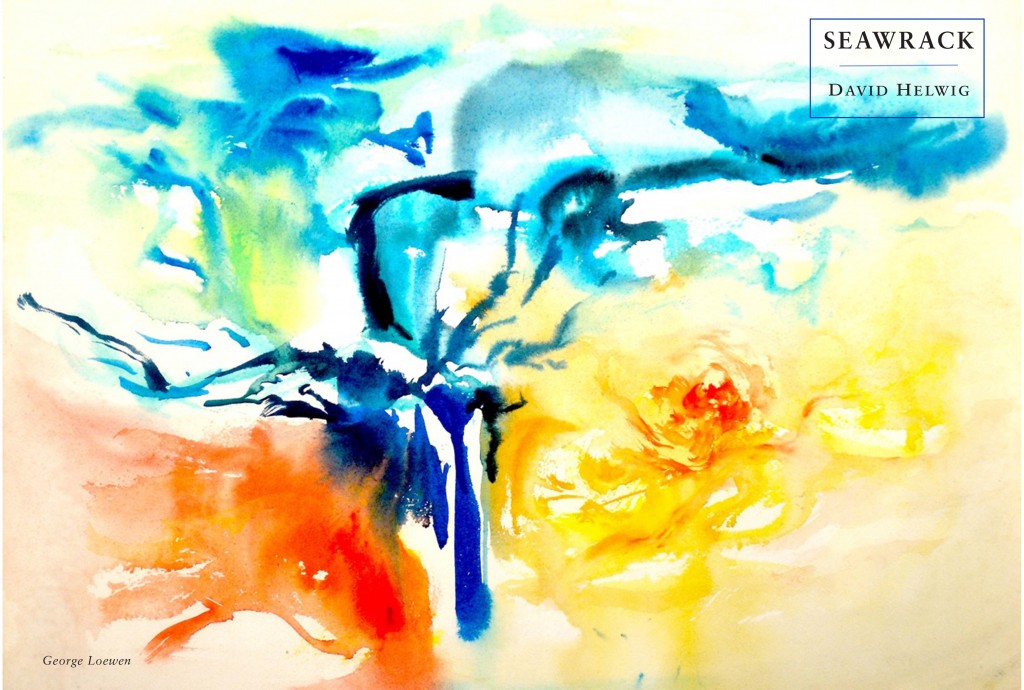
Mar 152010
 

THE FIRST EVER NUMÉRO CINQ APHORISM CONTEST

Submissions March 15-31, 2010

Submit by commenting on this post

Submissions must be no more than 150 words in length

Do not enter a submission unless you have figured out what an aphorism is first

Wit and arrogance appreciated

Contest open to everyone including employees of Numéro Cinq, their significant others, children, and small pets

First Prize — Instant Worldwide (e)Publication w/ commentary

Plus honours & laurels