Douglas Glover

May 062013
 

At its convention in Houston, over the weekend, the National Rifle Association asked a vendor to take down a mannequin target that looked like President Barack Obama, Buzzfeed reported on Sunday.

The vendor, Zombie Industries, produces “life-sized tactical mannequin” targets that “bleed” when shot. Photographs of the company’s booth at the convention taken by Buzzfeed show that the company had several sample mannequins displayed for sale, including a clown, a “terrorist,” and a Nazi.

via Vendor Pulls ‘Obama’ Target From Booth At NRA Convention | TPM LiveWire.

May 062013
 

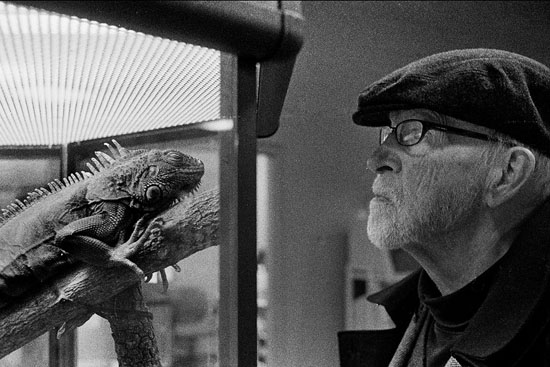
David Ferry with iguanaDavid Ferry, Photo by Stephen Ferry

Herewith the definitive interview with David Ferry, winner of the 2012 National Book Award for his collection Bewilderment: New Poems and Translations. It’s an interview that will surprise you, teach you and maybe change your life, especially if you are a poet. It is replete with compositional and technical information invested with passion and deep reading. Ferry will say things such as  “In that line, for the first time in the poem,  in the third foot, there’s an anapestic variation, and that felt so much like a kind of a panic in the way it is said, as if the voice saying that the line is experiencing this act that’s happening “Once by the Pacific.”  That way of thinking about lines:  what happens in the lines coming as a surprise to the reader, and coming as a surprise, in a way, to the poem, itself––I knew I wanted to talk about this stuff for the rest of my life…” Our interviewer, Peter Mishler, is the perfect interlocutor, the perfect seeker, curious, engaged, literate.

dg

Can you tell me a little bit about where you grew up?

I grew up in Maplewood, New Jersey.  It’s an upper-middle class suburb near New York City.  My father’s office was in New York City––so that’s my home city, and always has been.  I feel like a New Yorker in some way––and all the more so because my wife grew up on East 92nd Street, and my daughter went to Columbia and my son lives in New York.  I went up to Amherst and Harvard and taught at Wellesley for most of my career and lived in Cambridge for all of my career.  So Boston I guess is my main city, but New York still feels like it.


What poems first caught your attention when you were growing up?

Whitman most of all, in high school: so big-hearted and sexually waked-up and freeing; and the big rhythmical repetitions of those long lines, with so much room in them for variety and syntactical surprise––there’s lots going on inside the lines.  And the nationalism, the sadness in Lilacs Last.  Lots of other stuff, of course, just reading around in an anthology we had, the Oxford Book of American Verse.  The Shakespeare lines encountered in high school classes –-– “books in running brooks, sermons in stones” –-– but I wasn’t in any sense a prodigal reader of poetry, as opposed to other reading.

Nor was I a big time reader, by comparison.  I was a reasonably smart high school kid, and had no idea of becoming a poet. Or becoming anything.  Well, that’s not quite so.  If I had to guess, at that time, I’d have guessed that I’d become a teacher of literature.  These were the classes I liked best in middle school and high school.  But I didn’t get hooked on poetry until I went to Amherst, then got drafted, and returned to Amherst.  It was the teaching of Reuben Brower and C.L.  Barber that did it to me and for me, vocationally.  And, of course, Frost and Stevens.


You mention in another interview that your teaching and writing were shaped by your early reading of specific lines from Frost.  Could you elaborate on why the discovery of that writing was so important to you?

I wrote a particular paper about a Frost poem, which now feels to me, in retrospect, like it was a big vocational experience.  I actually remember saying to myself, inside my head, “This is what I want to do for good and all––teaching––and teaching about how things like this happen inside the lines of poems.”  The poem was Once By the Pacific, which begins:

The shattered water made a misty din.
Great waves looked over others coming in,
And thought of doing something to the shore
That water never did to land before.

The thing that really came home to me in those iambic pentameter lines was the way that second line was an iambic pentameter line, but “great” was so strong for the so-called weaker syllable in the first foot, and then “looked” was, too; and what was happening in those waves rising up and about to break was happening in the line itself.  And then another instance in the poem, a little later:

                     The shore was lucky in being backed by cliff

In that line, for the first time in the poem,  in the third foot, there’s an anapestic variation, and that felt so much like a kind of a panic in the way it is said, as if the voice saying that the line is experiencing this act that’s happening “Once by the Pacific.”  That way of thinking about lines:  what happens in the lines coming as a surprise to the reader, and coming as a surprise, in a way, to the poem, itself––I knew I wanted to talk about this stuff for the rest of my life as a teacher.   I wasn’t even thinking about being a poet or I never had that intention, anyway.  At the beginning, I hadn’t started to write any poems.  And as a teacher, I kept thinking at that time about the grammar of Frost’s great essay “The Figure a Poem Makes.”  The grammar of that title in a sense suggests that the figure isn’t something laid down on a poem; the poem makes a figure and the poem is made by what happens––things that are unexpected by the intention at the beginning of the poem and unexpected by the poem itself.

.

I read somewhere that you had corresponded with Wallace Stevens when you were an undergraduate.  I’m really curious to hear about your exchange.

“Corresponded,” no.  Stevens, along with Frost, were my two biggest experiences, experiences for my listening ear at Amherst.  I wrote my senior thesis about Stevens and I was elated about having done so.  I wrote him a letter asking him about Whitman, even though I knew the answer, because I knew his lines about him.  He wrote back and said something like, “Walt Whitman was the only writer back then whose writing wasn’t a book.”  That is, he was what Stevens called “the latest freed man.”  I wish I had the letter, but I lost it.  I keep hearing all those lines of his that are entranced and entrancing: “Keep you, keep you, I am gone, O keep you as / My memory, is the mother of us all.”

.

Do you remember when you first started writing poems?

The first poem I ever wrote was “Embarkation to Cythera,” about Watteau’s great painting.   And I can’t remember if before that I’d thought about writing poems or had tried it.  Writing that poem was a lot of fun, trying to work out the lines, and I sent the poem off to the Kenyon Review which I’d been reading a lot––everybody was in those days––because the leading critics of the time wrote often for that magazine, and because I was admiring many of the poems of John Crowe Ransom. And he took the poem.  So I guess I thought I was starting out as a poet because of that poem.  It was also true that at that time I was reading a lot of Pound, and the way he was writing about poems, and I think maybe I was thinking about those things not as a student but as somebody who was getting started writing.

.

Can you walk me through the process of how you compose a poem?

The process of composing a poem for me comes from writing something in a journal or as lines of poetry, and trying to understand the possibilities of the insides of the lines of that poem.  There’s a poem in Of No Country I Know, called“Of Rhyme.”  That poem tells more of what I think about how a poem gets produced:  ”… the way each step of the way brings in / To play with one another in the game / Considerations hitherto unknown, / New differences discovering the same…”  I don’t mean that I necessarily rhyme––I do in that poem––but starting and finding out how the form is being developed and learning from your attempts to write further inside the poems and seeing them become something with a shape and an identity. I don’t start from a concept or a proposed subject, though of course, because of things I’ve been concerned with in my mind or my situation, the poem as it develops does usually show that it has––the language of the poem has––a subject or a conceptual concern, and it’s likely to have relationships with other poems I’ve been working on, the translations I’ve been working, say, or things that have been happening to me.

.

AR Ammons has those great lines “I look for the forms/things want to come as.”

That’s a wonderful pair of lines, and I love the language of it: “to come as”––the unwilled nature of it, leaving it up to the poem as it finds its way to having a form.  Ammons wrote mainly in a free verse, I guess, and, at least in recent years, and maybe always, I write mainly in iambic pentameter, so I wasn’t leaving the form up to what he calls in that poem “black wells of possibility.”  I don’t know whether Ammons would automatically exclude metrical poems, which might seem to him to impose on the poem forms the poem didn’t want to come as, but I regard metrical schemes as explorative, trying to find out what form, the completed poem, things want to come as.

.

So you are highly attentive to the line when you are composing a poem.

That, you might say, is all that I’m conscious of.  That’s who I am: somebody who writes lines of verse, mainly in familiar iambic metrical schemes.  Writing in a fixed meter––iambic pentameter mainly––with a highly conscious sense of the line ending, defines your experience of the line and defines your sense of the degrees of varying pressure on the weak and strong syllables and their relationship to each other.  The way that those things happen in relation to the basic iambic pentameter music of the line is something that you observe when you’re writing the line and taking some pleasure in doing it, but it also means that there are times when you want to manipulate that line inside itself to make it sound even better.  So that modifies the way I was just talking about how so much that happens in the poem is a surprise to the writer.  A surprise? Yes and no.  In a way, that’s all the writing verse means, to me: attention to what happens inside the lines and to the line-endings and the consequences of the line-endings.

.

The iambic pentameter in your work is masterful.  How did you get so good with this?

I’m too shy to say how I got “so good” at iambic pentameter, but it is true that I have a lot of experience writing in that meter.  But I’m not a meter freak. I don’t have a police badge.  I write free verse poems. But for me the meter I use most often is iambic pentameter, a line long enough to make room for many syntactical events, many different pressures of strong and weak.  And its so natural.  You call it “masterful” but the fragments my poems begin from are often prospective iambic pentameter lines, because that meter is so natural.  We speak mainly in iambs and anapests, occasional trochees.   You just said, “How did you get so good with this.”  The first two syllables are trochaic (How did), the rest are iambic (you get so good with this).  Natural, mainly iambic speech.  The same is true in verse, except that the pentameter sets the music going, and governs it, and the regularity of that is part of the pleasure.   The iambic pentameter music is playing all the while, and within that regularity we hear all the variations, the subtle differences of pressure and tone, and the activities of grammar, syntax and emotion, that make our speech so rich.


I want to know more of the particulars about how you make a poem.  Do you write by hand? 

I don’t write by hand at all.  And almost never did.  I write stuff down on the computer or sometimes in a journal.  I might have some expression that I’ve written down, and I go back to it and read it and see if something happens. And I think.

.

Do you share your drafts with anyone?

I work and send drafts back and forth with a number of people.  Boston is a wonderful working environment in that sense.  I have lots of dear friends whom I do that with, especially in my work as a translator because I show passages to my Latinist mentors, classicists, and so on.  Even with my wife, Anne, though I guess I didn’t very often show the very beginnings of what I was doing.  I think I showed scraps to her when I thought something was beginning to develop, but sometimes only when something was pretty far along.

.

There are some significant gaps between the collections that you’ve published.  Is there an aesthetic reason for this slowness?

I guess an aesthetic reason is in my poem to William Moran called “Brunswick, Maine, Early Winter, 2000.” I quote a wonderful quote that he sent to me from Nietzsche:

“It is a connoisseurship of the word;
Philology is that venerable art
That asks one thing above all other things:
Read slowly, slowly.  It is a goldsmith’s art,
Looking before and after, cautiously;
Considering; reconsidering;
Studying with delicate eyes and fingers.
It does not easily get anything done.”

It’s the same thing as if he’d said “write slowly” because writing is a form of reading.  Not only is one’s reading going into the writing, but the way you read your experience as you’re trying to write it down, and more particularly as you’re reading your own language in the lines as your developing.  That’s a slow business because it takes a lot of considering, reconsidering, altering, re-altering.  I don’t know how to make it faster, at all.

.

I think of Marianne Moore’s work with quotation when I read your poems––and I know you like her work.  What do you admire about it?

I think it’s the incredible skill with which she invents forms, often syllabics.  She’s the only consistently good writer of syllabics that I know of in the sense of the organization of whole poems.  And she invents forms in which she includes, like she says in her poem “Poetry,” anything, including prose.  She brilliantly gets away with that.  She incorporates other material in the poems with amazingly, scandalously, with wonderful success; incorporating them and making a form that will include taking along prose sentences from somewhere else, making it a part of a new poem that is also making a new form––it’s just an amazing example.


Would you cite her as an influence?

I haven’t thought of it exactly that way.   In the poem for Bill Moran I just mentioned,I quote from Nietzsche because he had sent that passage to me, and part of our relationship was the excited way that we talked about reading.  Bill was a great Babylonist at Harvard.  I shared with him so many of the values that were implied in that quotation.  It became very personal to the poem that I should get that in because it describes not only a way of thinking about reading and writing that I think is profoundly true, but it is also extremely personal and expressive of my relationship to him and to his work and to his wife.

My collection Bewilderment also includes an extended quotation from Goethe in the poem “The Intention of Things.”  I had translated some poems of Goethe’s, and I happened to come upon this particular quotation.  It was so helpful in what it did for what that poem was trying to say.  And the pleasure of trying to make that extended sentence work in the metered lines, as I hope it does, without really changing a word of the quotation was part of the pleasure.

.

You mentioned reading Pound at the time when you started thinking of yourself as a poet. You must have also been interested in him as a translator then?

I was very interested in his translations, yes, but I had very few translations that early on.   There is only one translation in my first book, On the Way to the Island: Ronsard’s sonnet that begins “Quand vous serez bien vieille.”  And the next book, Strangers, was published twenty-three years later.  And I was thinking of myself very much so as a poet during those years, though I was writing a poem a year, or at the most two or three.  But in the second book there are three translations, and then the next book Dwelling Places is almost half-and-half poems and translations, and then I really began to give myself that way.  But mainly I did not have a big time ambition to be “a translator.”  I happened to be finding poems in other languages that were related to some of the situations I was writing poems about in that period of my life.

.

How did your career in translation develop after this?

I have in Dwelling Places, and my two subsequent books, poems that are about marginal people, street people in distressed and distressing conditions or situations, and I found or was directed to some wonderful poems that I translated:  Rilke’s “Song of the Drunkard” and his “Song of the Dwarf”; Baudelaire’s “Blind People”; a really marvelous 13th century poem I call “When We Were Children.”  Such poems and the poems “of my own” that I was writing about such situations, fed each other.   In the end I was surprised that such a high percentage of Dwelling Places was half poems and half translations.  But I really felt, and still feel, that these translations are also poems of my own, because of the use I’ve made of them, what they became in my book, and because I wrote the lines in English, my lines became readings of those lines.  The activity of writing those lines was not different in kind from writing lines in English, though the foreign texts supplied more data and data arranged more coherently than the undeveloped and often scrappy data of experience with which poems of my own began and which had less assistance in their development.

The new poems in my next book, Of No Country I Know: New and Selected Poems, also had a high percentage of translations related to my own poems, often about such situations. And also, around the time of Dwelling Places I began to be a translator (or something like it) in another sense.  Bill Moran, whom I mentioned earlier, assigned me his word-for-word translation of several passages from the Gilgamesh epic, to versify.  I did this and got hooked and, under his guidance, working from other scholarly word-for-word translations, made a verse poem of the Gilgamesh material. People liked it a lot, and I loved it.     And then I really did want to translate big time and I got into the Odes of Horace under the guidance of Donald Carne-Ross, a great classicist at Boston University.   Then I had the ambition to translate all of Horace which I haven’t finished yet.  I translated all the Epistles and I am working on the Satires of Horace.  I’m not a classicist or Latinist but I’ve been working under the guidance of several mentors at Harvard, especially Wendell Clausen and Richard Thomas and with lots of help from others, including Michael Putnam.  The Horace work led to my translating the Eclogues of Virgil and, several years ago, the Georgics of Virgil.  Now I’m at work on the Aeneid.  Huge, huge experiences, line by line.

.

What are your thoughts on modernized translations––translations that incorporate a contemporary idiom, etc. into an older poem?

I don’t have many thoughts about this, because I don’t read much in other verse translations. I gather that there are translations which egregiously want to sound up to date. I don’t have such a motive.  But you can’t avoid incorporating a contemporary idiom into your translation, because your translation is speaking English, and your English inevitably uses such idioms, without wanting too aggressively to sound “modern.”  Of course there are places where, in my opinion, to get the tone right and characterize the feeling right, you have to take emergency action.  For example, in my translation of Rilke’s “Song of the Drunkard,” the drunkard, in a bar room scene recounts his experience of drinking and says, “Ich Narr,” “I Fool” or “I’m a fool.”  I can’t hear in “I’m a fool,” the force of the self-disgust which I hear in “Ich Narr”, the very sound of it, but I do hear an equivalent when I translate it as “Asshole!,” and I think of that as a literal translation, true to the tone of self-disgust that the poem demands. But that’s not part of a general motive to “modernize.” It’s always an issue, though.  You want your language to be alive but you don’t want it to cheapen things by being too ambitiously up to date.

.

Is there an ethics of translation that you believe in?

I think the responsibility of the translator is to convey as much as possible his passionate and close reading of the meanings of the lines that he is translating, and (as much as it is possible for him in his language) to register his understanding of the sense, the tonalities of the original, the tone of voice; and to understand as much as possible about the implications of the particular figures of speech because he is using another language.  And in my opinion, it’s not a part of the responsibility to reproduce––in most cases––as exactly as possible the meters of the translations, the demands of the two languages being so different.  My translations of the Epistles, the Eclogues, the Georgics, and (what I’ve done so far) the Aeneid are all in iambic pentameter, which is a capacious line––a lot can happen inside of it, as is true of dactylic hexameter, the prevailing cadence in the Latin text.

.

Right now you are translating the Aeneid.  I remember reading the Robert Fitzgerald translation in high school.  Is there something new about your translation that you want to point out that I might want to revisit?

I’ve only read a few passages of Fitzgerald, and I see why they’re admirable.  What’s new about my translation is that it’s mine, all of it, my reading of the great original, and the lines have never been written quite that way before.  This is true of all translations, good bad, and indifferent. True also of all “original” poems which are so often, maybe always, like translations of earlier poems. That’s how we keep alive.


Perhaps you will be able to say more when you are finished with the entire poem?

The question implies that I’d know with some confidence what the poem is “about,” what the encapsulated summary meaning of it is; for example, “a triumphalist celebration of the establishment of Rome.”  Certainly there’s that in it.  But to say that radically simplifies the poem, thins it out, and so does every other summary reading, behaving like take-home pay.  I don’t know what’s “new” in my reading of the poem, which is my translation of it. Maybe what comes up in my translation so far comes up in all the others. I’m sure it does, though I haven’t read them much.  How do bodies hurt when they’re atrociously violated; how do wives die; how vulnerable all cultures are and how it’s their fault and not; how the gods don’t get it and we don’t get it about the gods; how sons die.  I think summarizing tends to kill the experience of reading the lines one after another.  And what I think the poem is really about is the lines one after another––the experience that he gives to the reader and to the translator.  There are many summary things one could say, but I don’t want to say them with any confidence.  In my reading of these poems, though, I keep responding to the signs of vulnerability––individual and cultural––the tears of things.  But that’s not all.


How do you convey these small discoveries to the reader?

It is the ambition of every little writer to be as good a reader as possible, as a translator reading the great text and reading his own developing experience of writing the lines.  All you can do is to try to do as well as you can; and as you’re drafting a translation of it, find things that surprise you about what’s turning up in your own language, and then ask yourself if you are anywhere close to representing some of the effects of the original.  And the answer is always, “No, of course not.”  Every talk I’ve ever given on translation has been titled “What I Couldn’t Get” or “Getting it Wrong.”  What I really like in my translation are also clear instances of what I didn’t get in the translation.  But they came in the effort of getting it as right as possible.

.

Do you ever look at other translations when you are translating?

Occasionally I go to other translations when I am particularly puzzled by some narrative event, and occasionally I check myself out in order to get scared by how good the translation is, or to sneer at it in a superior manner––and both of those are mean-spirited kinds of experiences, so I don’t look very often.  I have read in Dryden’s Aeneid.  It is great.  But it is in the 17th century idiom which is so different so I am not really affected by it or threatened by it.  I’m told, and from what I’ve read it’s true, his emphasis is more admiringly imperialistic than what I think I am reading in the Aeneid.


How much of your reading of Virgil is colored by your own experience?

There’s no question that Virgil––he says so many times––is celebrating the regime, and that he is very close to the Emperor, as Horace is too.  And in this “Cowboys and Indians” war, he is certainly on the side of the “Cowboys.”  But he’s so full of eloquent distress about the vulnerability of the “Indians,” so to speak, and the precariousness of it all for everybody and the wrong motives everybody’s acting out of all the time along with the right motives.  I think of that famous passage in Book One, “the tears of things”––“lacrimae rerum.”  You keep seeing Virgil lamenting the cause of being human, and how to maintain a culture, and that the tears of things are everywhere.  But stating that this is what the Aeneid is about kills your experience of the lines.  You do learn something, but you keep on learning it in the condition of your sentences.  I mean, in the ways we’re “writing” when we’re talking right now are full of indecisions, and changes of stress and emotion and self-puzzlement are going on all the time.  And for me, that’s what’s so very alive in everybody’s writing.  But Virgil is so good at that.  I’m so struck by how big-hearted he is and how he sees everybody’s trouble.  Experiencing that in the sentences of the poem is just wonderful.


I’d love to know more about how your translations converse with your own poems.

The biggest event since my last selected poems Of No Country I Know––the biggest, worst, event for me and my family––was the death of my wife.  It is perfectly true that when she became ill, it was at the time I was translating the Georgics of Virgil, and when I came to Virgil’s account of Orpheus and Eurydice, the relation of that poem to some of the ways that I was writing that had to do with that event in my life were very, very direct and were directly referred to in that poem.  Virgil’s Orpheus and Eurydice is referenced in the poem “Lake Water,” and quoted at the end of the poem about my father called “Resemblance.”

And in other ways, there is a very conscious relationship.  There is a poem called “That Now are Wild and Do Not Remember”and its title comes from the Wyatt poem I was talking about earlier.  And it talks about that poem as if it were a sexual and romantic bereavement, in a sense.  And that poem also uses a passage from Book Six of the Aeneid––about the unburied dead seeking across the river.  I don’t want to say that those connections were planned in any sense, but I just sporadically kept a kind of journal; those connections emerged, and it’s no surprise.  When I was working on Bewilderment I was writing poems that related to earlier poems of my own, just because it’s me.  I am the same person who was writing those poems, and they relate to these events in my life in this period––and among those events was the death of my wife, but also the fact that my experience is full of translating Horace and Virgil.  So it isn’t exactly an intention to use the one kind of material for the other, but the poems find out that they have had that intention.

,

I noticed that you re-included two of the poems from your first collection in Bewilderment.  Why?

I included “At a Bar” because I like it a lot.  And because I had several other bar room poems, because I wanted to include the great Horace “Ode to Varus” which is a kind of barroom poem, and because it sort of helps to make a relation between the poems in Bewilderment and some of the poems in Of No Country I Know and Going Places about people in distress. And there are lines in “At a Bar” like “What is my name and nature?” which are very much like lines that I’ve found myself writing in much more recent poems.  “What is your name that I can call you by?” and so on, so it’s a poem I wanted to include.  Barroom situations are good for singing the blues.

I have another book that has just been published in England by the Waywiser Press and it’s almost a complete poems, On This Side of the River.  In that book I didn’t just want to arrange material chronologically from my first book to the latest one, but rather put poems together by their affinity to one another.  And so it’s no surprise that in this other book which I was bringing out at the same time, I was doing quite a lot of putting poems written in 1960 and before with poems written in the 1980s and 1990s and 2012, so it’s not a surprise that I did that in Bewilderment as well.

.

When you were looking back on earlier work did you notice that there are particular things that you’ve tried to move away from over the years?

I’ve left out some poems from my first book, usually because they showed signs of trying to be charming, in a period sort of way.  And revised others a bit. What else is new?  I’ve kept everything else, and if that’s wrong it’s not for me to judge.

.

Were you and your wife artistic collaborators?

She gave me the title for all of my books.  She wrote several lines of mine.  For example there is a poem of mine in Of No Country I Know called “Rereading Old Writing.”  She wrote the line “Something not to be understood.”  She was a terrific example for me about how to read poems.   We read poems together very intensively––my poems and other people’s poems.  Her writing, for example, in  her last book, By Design: Intention in Poetry, published by Stanford after her death about the differences between Sydney’s way of rhyming in his sonnets and Shakespeare’s is just astonishing. She teaches everybody how to read, how the writer, or, you could say, the poem itself makes the telling decisions.

She worked in one part of our house in Cambridge on the 3rd floor, and I worked in a big study on the second floor in the back.  And I’d bring a poem upstairs, and we would come up with a solution. In that sense it was a working relationship.


Did your wife see any of the poems from Bewilderment?

That book is post-1999, and she died in 2006.  I think she knew all of my translations of the Georgics which included the story of Orpheus and Eurydice, and that book was published in 2005.  By that time she would not have known the last stages of the work in that book, and she certainly would not know of the use I made of the story of Orpheus and Eurydice in the poems about her.    I am not sure if she knew any of the passages from the Aeneid that I put in Bewilderment.  There are some other poems like “Willoughby Spit” that she certainly knew.

Before she died we were editing the wonderful collection of her essays, By Design,and she participated in the editing up to a point, so it was partial.  But it was certainly a big part of our relationship that we worked together.  That was not all there was to it, but it was terrific.  She was an amazing teacher.

.

You have other artists in the family?

I do.  My son is a wonderful photojournalist and an artist.  My daughter writes books and she’s an extremely good anthropologist, and they are both wonderful readers of poetry.  My father was a good organist and moonlighted in the Depression as a pianist, and I learned to play the piano because he played the piano.  We thought at one time of doing a family website called The Cottage Industry––we’re not all poets, but we’re all writers.  It’s terrific.  My daughter and my son, as we speak, have been in Columbia, where he’s been mainly working in the last three years, collaborating on a story or maybe a little book about the gold rush in Columbia.  He’s done a lot of photographing there, and she’s just been down there doing her anthropological work.  Both of their first books were about mining in Latin America.  And so there they are making something beautiful out of it.  And there’s a photograph by my son on the cover of Bewilderment.  Terrific.

.

I’m thinking about the title of this collection.  Can you talk more about how mystery, misunderstanding, or the inability to know has played a role in your work? 

It turns out in my writing, witnessedin the title of this book, that I keep finding out things about myself that I’m surprised at and that I can’t come to fixed conclusions about––that I live in this state of bewilderment. You do too.  I discovered that something like that keeps coming up in my poems.  It is not that I start out with some kind of subject matter or some intention to write on a topic.  I let them write themselves.  I’ve got a poem of one-liners at the beginning of Bewilderment that I made sure, when it was published, was four words and not three: “Playing with My Self.” It’s what our language does all the time.  I think every writer’s most recent book is some variant of that.  And I don’t know whether I’m trying to find out more about myself.  I don’t know if I’ve gotten anywhere in finding out more about myself.  I don’t think I’ve got any further in that regard than when I wrote those lines.

.

What are the big mysteries for you?  What are the things you continue to be baffled or confused by?

I think I’m just like everybody else, including you, I’m sure.  I’m sort of baffled a lot.  And I don’t have any expectation that there are going to be answers to what I’m baffled about.  It’s like that poem in this last book called “Ancestral Lines”:  my father says, “‘He called the piece Warum?’” He didn’t know, Schumann didn’t know, my father didn’t know.  And I say in that poem “What are the wild waves saying? I don’t know.”  But bewilderment isn’t my ‘subject.’  It isn’t a topic; the word just seems appropriate for things that keep coming up in the poems.


Is reading other poets a way of finding comfort?

I read other poems for what I find in them, for the experience of reading them.  I get a lot in the experience of reading poems that I think are wonderful, but I’m not sure that comfort is a word that would describe it.


I ask because if we find ourselves baffled or bewildered often, is writing or reading a place where one can seek comfort?

I don’t find that there is a therapeutic value in stuff that I read.  And the better the stuff that I read the less that it delivers in a sort of one-on-one way, because it seems so full of conflicting attitudes, so it’s just itself.  And in the act of reading when you read, say, Tolstoy’s The Death of Ivan Ilych––all that pain––it’s such a pleasure, and so painful.  Now I am beginning to sound sort of fancy.  I don’t mean to sound highfalutin about this stuff.  You just get sort of troubled by what the lines are saying and I guess there is something that is sort of comforting because somebody else said them.  But there is also such a pleasure that the lines are taking in themselves.  Wordsworth said that the main thing that poetry does is to give pleasure.  Some of the poems in Bewilderment are expressions of grief to be sure but there is also the exuberance of the writing that I think everyone experiences who is a writer.

I’m sure you know in your own writing that there’s a sense, even when you are writing about something intensely painful, there is terrific pleasure in the act of writing.  I do think it’s therapeutic as long as one doesn’t think it provides easy answers to taking away the pain.  A poem about a real life painful situation is therapeutic because it actually intensifies the pain by confronting it directly, but talks about it by, so to speak, singing about it, and therefore the pain is presented to oneself and to others as a kind of pleasure, not happy pleasure, but often a lamenting pleasure, often very dark, but transformed into art.  And then it also somehow makes connections in song, with all the songs that have been sung about bereavement and death in the past. This is true for good and bad poems, but it becomes exaltedly true in the great bereavement songs of the past, in liturgy, in folk music, country music, Bob Dylan, Henry King’s great “Exequy” for his wife.  There’s comfort for the writer in that, but it’s the comfort of proving an alternative value.  But it doesn’t really substitute for or compensate for the raw experience of somebody’s illness and death.


Was there a poem in Bewilderment where you had that experience of lamenting pleasure?

That’s everybody’s experience–people talking about themselves or writing poems about their situations.  There is a pleasure in trying to make the feelings articulate that is always there, whether the poems are good or bad.  But when you feel in a particular poem that you value the way you did it, as I do in Bewilderment, there’s that experience of pleasure in writing.

When I go back to Frost’s essay “The Figure a Poem Makes,” he talks in many ways about how your own language brings surprises to you.  It doesn’t answer any questions that you have, but it is about the experience of getting it said.  And it’s the experience of watching what’s happening in the lines as the experience of the sounds and rhythms and the experience of emotions and knowledge that’s gained.  Of course, there’s the knowledge that you didn’t know you had, and that the poem line by line is sort of finding out itself.

.

Frost says that a poem “begins in delight and ends in wisdom.”  What you are saying, I think, is the kind of wisdom he is talking about.

I think I’m not even sure whether he ought to have said “wisdom” there, because it confuses people about what that essay is really saying.  I don’t think he is saying that the poem delivers big time comfort, as if you’d gone to the top of mountaintop and said, “What is life?” and there is some sage up there, and the sage says, “Life is a river” or something like that.  Frost means that we end up knowing something more in a particular poem, or in a particular sentence that one says to one another in conversation, by the articulation of it––by the rhythm, stress and emphasis of what is said.

And to return to the Aeneid, the experience of working on that poem is the terrific pleasure of writing iambic pentameter lines and trying to get it right; it’s the experience itself of the activity of writing.  There are big things to learn from that great poem in the line by line activity––things I can give of myself as a writer of lines, and not as a thinker about larger concepts.

—David Ferry & Peter Mishler

 ———————

David Ferry is the Sophie Chantal Hart Professor Emeritus of English at Wellesley College and also teaches at Suffolk University.  In 2011, he received the prestigious Ruth Lilly Poetry Prize for his lifetime accomplishments.  In 2012, he won the National Book Award for Bewilderment: New Poems and TranslationsOn This Side of the River: Selected Poems has recently been published by The Waywiser Press.  He is currently at work on a translation of Virgil’s Aeneid.

Peter Mishler

Peter Mishler was educated at Emerson College and Syracuse University.  He currently teaches English and Creative Writing at a high school in the Syracuse area.  His poems have appeared in The Antioch Review, Crazyhorse, Black Warrior Review, Ninth Letter, LIT, New Ohio Review, Numéro Cinq, and Open Letters Monthly among other journals.

May 052013
 

Desktop16Anne Loecher & Lorine Niedecker

Anne Loecher shines a floodlight on the obscure and all but forgotten midwest poet Lorine Niedecker whose life, poetry and poetics are a surprise to me:  where you might least expect it (the periodically flooded Blackhawk Island, Wisconsin), a resolute soul emerges. I love her word “condensery” that describes the exact and terse language of her poems. I am exhilarated by the adventurousness that led her to blast out of Blackhawk Island to New York and the arms (and poetics) of Louis Zukofsky. But her subsequent abortion and the return to Blackhawk Island are sad to read about. The poems, forged in the fire, are extraordinary.

dg

§

Lorine Niedecker is, in the estimation of many prominent poets and scholars, a major poet. However, even today, 42 years after her death,  Niedecker still is not widely read.  In fact, she has been called “the world’s greatest unknown poet.” Only recently has her work begun to attract an expanding readership—which is still modest at best.

As with other examples of under-read or forgotten poets, this oversight sparks the question of why—or why not—and begs an inquiry into the merits of Niedecker’s work, her times, our times,  and the complexity of her poetics.

Ironically, it is possible that Niedecker’s slow-growing readership owes much to the singularity and particularity of her poetics.  That the relative smallness of her readership is attributable to a misperceived “smallness” of her poetics. For to follow the development of Niedecker’s poetics is to find its tracks and traces in silences, in smallnesses, in pauses and paucities.  The voice of Niedecker that evolved and emerged is not an obvious one; its presence can be detected in reflections;  the reflections in the omnipresent waters surrounding and often consuming the environs where she lived, in rivers and flood waters and lakes of her small Wisconsin town and the Upper Midwest.  Her poetics can be followed in the nearly invisible traces of minerals these waters carried to the sea, and in the glacial progress of natural history and evolution – so quietly slow as to be barely discernible.  To find Niedecker’s influence and legacy in such places is to realize that a clamoring, obstreperous  appreciation would be implausible—and inappropriate.

As the poet and scholar Rachel Blau DuPlessis has noted, Niedecker  “was published only by small presses. She is barely anthologized. She made no ‘literary career.’”[1]  Having spent her life in rural isolation, far from the urban meccas of poetry and the publishing world’s male-dominated precincts, Lorine Niedecker’s poetry emerged in relative isolation. Additionally, in her lifetime, much of her poetry was radical—if subtly and cunningly so. Niedecker’s feminism was decades ahead of its time, and likely fell on deaf ears, often. The same could be said for her deftly wielded lines decrying other social injustices, her criticism of consumerism and other embedded aspects of mid-twentieth-century American life and culture. Some couldn’t see or hear her for her subtleties; some who could preferred not to look or listen too closely.

Lorine Niedecker was born in 1903 in the tiny and insular community of Blackhawk Island , near the town of Fort Atkinson in rural Wisconsin. She lived in this area nearly all her life, with a few brief periods in New York and Milwaukee.

hme_29

Blackhawk Island is actually a peninsula, bounded by the Rock River and Lake Koshkonong. The  low-lying Niedecker family property where Lorine was raised flooded every spring, waters rising into  the  Niedecker’s and neighbor’s homes, contributing to their  constant struggles and hardships. While Niedecker’s father had some level of income as provided by tenants to whom he rented his properties, the family was by no means well off, or even comfortable.  Niedecker’s life was fraught with hardship and struggle for subsistence. It is valuable to look at one of her earlier poems, dealing with the issue of subsistence, for what it also conveys about her own place within such paucity:

My Friend Tree[2]

Well, spring overflows the land,
floods floor, pump, wash machine
of the woman moored to this low shore by deafness.

Good-bye to lilacs by the door
and all I planted for the eye.
If I could hear—too much talk in the world,
too much wind washing, washing,
good black dirt away.

Her hair is high.
Big blind ears.

I’ve wasted my whole life in water.
My man’s got nothing but leaky boats.
My daughter, writer, sits and floats.

The poem honors, in a distant way, the memory of Niedecker’s mother, who was deaf and essentially abandoned by her husband during his lengthy affair with a neighbor.

“Well”—the first word in the poem, serves as both a reference to the wellspring that feeds the homestead and the frequent floods, nurturing the family and devastating it at the same time.

The mother is moored to the low shore, which suggests a constant threat of drowning—not only the possibility of drowning in the water, but the repeated drowning in the drudgery of her daily work, pumping the water out of her flooded home, washing the clothes which the silt keeps soaking and reclaiming.

Beauty without practicality is dismissed, as if a ridiculous and indulgent luxury—as the lilacs the speaker’s mother planted are taken away by the constant, leaching waters. Ultimately, even what is necessary to life is leached away, as the “good black dirt” needed for crop growing, indeed the very land they stand on, is erased by wind and water in this constant fluid extraction and reclamation.

granitepailNiedecker breaks in with her own voice in the short second stanza—a daughter’s distant though observant note that her mother is perhaps even freakish in her isolation. Her deafness is imagined as a blindness, too, and the image presented is of a creature inhabiting this solitary place, not quite human in appearance, but with “big blind ears” like a rabbit and with an elaborate head of hair. Her mother is like an island, cut off by her deafness, cut away from the land that is washing out from under her, separated from the simple enjoyment of beauty with the disappearance of the lilacs.

In the mundus of Niedecker, deafness and blindness have a profoundly adverse meaning. They are not only the inability to see, hear—but also to perceive, to be aware, to be sensitive and attendant to. In short, the mother is  cut off from life.

When we arrive at the final stanza, the mother again speaking, we have an astonishing and utterly unembellished image of the mother, washing away, almost dissolving into a liquid existence, nothing stable, nothing solid. Even the boats her husband may have provided, as he provided little or no comfort or love, these boats are leaking and doomed to rot and sink. Only Lorine has found a way to float. Her writing may even suggest a sitting on water, or at least a manner of finding some ground and grounding; her floating—that is, her writing—is her survival. Love is a luxury, as disparate from the lives of those in the poem as if it were fantasy; it is not part of the fabric of these lives. If there is any beauty that survives, it is to be found in the dissolved particles in the flood waters.

lorine-niedecker2

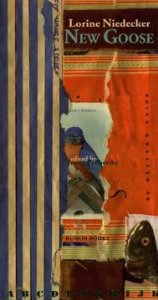
Niedecker’s first collection, New Goose, also has been suggested in some circles as the source of criticism that has mistakenly marked the poet as concerned with only small or low subject matter, with trivialities that are not the subject matter of major poets. That narrow view, attributable largely, one thinks, to the male-dominated poetry world of mid-century America, and its cultural prejudices—refers to Niedecker’s revisiting of the Mother Goose rhymes in this volume. Even a quick read reveals the size and girth of the work, which is anything but the small, cloying and miniaturish.

“New Goose” speaks clearly to the cause of the betrayed laborers of the Depression era, whom Niedecker watched fail and starve – the farmers, who feed and nurture us, and who are all but invisible to those they feed.  If feeding and nurturing is women’s work, she asks us to consider the men who have given their lives to it only to have their labors lost, shunned, and devalued. The link to women’s work is subtlety present: the diminishment, devaluation and erasure of the work of raising living things on this earth. Again, Niedecker is asking us to look more closely, to see the small,  the unseen and unheard.

New Goose [3]

For sun and moon and radio
farmers pay dearly;
their natural resource: turn
the world off early.

……………..*

Hop press
……….and conveyor for a hearse,
Newall Carpenter Senior’s
……….two patented works.
…………….

Kilbourne. Eighteen sixty-eight.
Twelve hundred women and boys hopped.
When the market raced down to a dime a pound
from sixty-five cents, planters who’d staked
all they had, stopped.

Duplessis also comments on Niedecker’s  “…unexpected turns and word choices…(expressing) surprise found in the small, the trivial, the barely noticed.”[4] To Duplessis, this was Niedecker’s carefully plotted strategy for entering the canon under the name  “Anon,” alongside the numerous and century-spanning works that are unattributed but not unimportant.

newgooseThe New Goose collection specifically seeks to enter and reconsider this anonymous landscape, first in terms of the nursery rhyme’s ineradicable place in culture, folk culture; asserting folk culture’s importance and endurance in American culture, and also, an important assertion of the female, the Mother figure in Mother Goose, who has survived, reemerged and re-arisen in this first collection as a “New Goose.” A variant on the phoenix, if you will! These complex elements are those of a strong, assertive voice, and not a meek, resigning and retreating one. “Anon” is a potent potion.

It is entirely possible, Duplessis believes, that this was not a mode of retreat into actual anonymity for Niedecker, but instead another facet of her poetics of silences, her visibility in reflections.

Gilbert Sorrentino worries that Niedecker has been and will continue to be trivialized for her “unsophisticated, rural” subject matter, writing: “The reductive judgment of Niedecker has settled comfortably in, and it is woeful for me to recall all the dim remarks I’ve heard about homely and honest Lorine and her wonderful poems that emerge, shining, from her harsh and lonely life ‘on the river.’”[5]

In 1928, Niedecker married Frank Hartwig, who had been an employee of her father’s. She worked as a library assistant in the Fort Atkinson Public Library, where she was first exposed to the Imagist poets—Ezra Pound, H.D. and Amy Lowell. Niedecker published two poems that year, which demonstrated her interest in the Imagists.

Two years later, in 1930 after the onset of the Great Depression, Niedecker and Hartwig lost their jobs and moved back to Blackhawk Island from their Fort Atkinson apartment, to live with Lorine’s parents. That same year, Lorine and Frank separated permanently, eventually divorcing.

In 1931, Niedecker encountered the Objectivist movement in poetry, through the works of poet Louis Zukofsky she discovered in an issue of Poetry magazine. This was the start of Niedecker’s important and enduring relationship with Objectivism, and of her lengthy and complex personal relationship with Zukofsky.

The poet Louis Zukofsky.

The poet Louis Zukofsky.

Upon discovering the Objectivists, Niedecker wrote that she had been in search of just such a poetics for some time. In a review of a Zukofsky craft book, Niedecker praised the new poetic movement, quoting Zukovsky’s checklist of attributes:  “(use of) the exact word…in the right order, with the right cadence, with a definite aim in view;… song, one of the mainsprings of poetry …” and “(the inclusion of) an emotional object, close to the people and their experiences…”[6]

While Niedecker would often state that she felt a strong alignment with the Surrealist poets in addition to the Objectivists, she continues to be associated almost exclusively with the Objectivists. Zukofsky quickly became her mentor, and then her lover. Niedecker moved from Blackhawk Island to New York to be with him and soon afterward became pregnant by him. Zukofsky insisted she abort the twins she was carrying. She obeyed him in this, as she also did with his instructions to focus rigidly on Objectivism in her poetry. The abortion, which she did not want, was an immediate and lifelong regret, a profound and deeply affecting loss. Her long and strict adherence to Objectivist modes would become a source of regret somewhat later.

“As an Objectivist,  (Niedecker) strove for precision and concision—for an expression of the thing itself.  Objectivism, marked by clarity of image and word-tone, thinking with things as they exist, and directing them along a line of melody, economy of presentation, the poetic rendering of current speech.”[7]

However, as Niedecker scholar Jenny Penberthy has noted in her essay “A Little Too Little,” Niedecker may not be so easily defined.

Penberthy writes: “Niedecker had an ambivalent connection to Objectivism. She certainly read and was excited by the original Objectivist statements but she did not regard herself as an Objectivist.”[8] Niedecker often referred to her own work as Surrealist. In a letter from to a close friend from Blackhawk Island, excerpted by Penberthy, Niedecker writes, revealingly: “…Objects, objects. Why are people, artists above all, so terrifically afraid of themselves? Thank god for the Surrealist tendency running side by side with objectivism….”[9]

Objectivism appealed to Niedecker for its austerity, its lack of ornamentation, for its compression, its “extraordinary precision in (its) use of sound,”[10] as the critic Peter Middleton describes for its lack of excess, to which Niedecker adhered throughout her ongoing poetic development.

Penberthy winnows out those overlapping Objectivist and Surrealist modes which likely attracted Niedecker to Zukofsky’s Objectivist influence: “Objectivism gave priority to the non-referential, material qualities of the word; it also valued a ‘non-expressive’ poetry, rejecting sentimentality—which is a manner of excess.” Niedecker’s chief attraction to Objectivism, as Penberthy sees it, is to abstraction. In a letter to Zukofsky, Niedecker asserts this, writing: “there must be an art . . . somewhere, somehow entirely precious, abstract, dehumanized, and intense because of these [qualities].”[11]

If Niedecker had a lesser commitment to Objectivism than is still widely believed, it is worth considering why she adhered to its methods and mandates to the extent she did. Rachel Blau DuPlessis in her essay “Sounding Process” sees Niedecker’s  Objectivist allegiance partly owing to the power dynamic between Zukofsky as mentor and former lover, but also as an almost practical matter for Niedecker who may have—quite consciously—grasped what Objectivism could provide for her own, singular, developing poetics.

That  “…evoking objectivist practice gave Niedecker a frame for, a way of controlling, what she experienced as excess in herself…”[12] The drive for concision, tightness and control was always in evidence.

In her later poems, Niedecker merged the lack of sentimentality and excess, the “sincerity and force” she valued in Objectivism with the “muddle and floaty vagaries”[13]that were her abstract and Surrealist interests  as she wrote to Poetry magazine’s founder Harriet Monroe in 1933; a point she made again as late as 1968 in a letter to Clayton Eshleman, publisher of her late poems.

Famously, Niedecker wrote to Eshleman, in explanation of her movement beyond the strict confines of Objectivism:  “I figured after 40 years of more or less precise writing, I could afford to let go…I know that my cry all these years has been: into—into—and under—close your eyes and let the music carry you—and what have I done!—cut—cut—too many words!”[14]

Niedecker had a word for it: condensery. The pared down, elemental language, an emotional power driven by accuracy, precision, and lack of emotionalism or sentimentality. Adjectives and even articles are often omitted from Niedeckers’ short poems, the majority of which are untitled. Additionally, her lens focused on that “low” subject matter—the everyday, the quotidian. The rocks in the riverbed on the shores of Blackhawk Island, the stove, the wash bucket, the scrubbing of floors. How small all of this may seem:  condensed language and form, modest scope and lack of the grandiose in style or subject, the frequent silences, the brevity, even the lack of titles—the quiet and small scale of her work have almost certainly played a role in the enduring quiet and smallness of her reputation.

Scholar Elizabeth Wills, in the introduction of her book Radical Vernacular: Lorine Niedecker and the Poetics of Place, asserts that the perception of Niedecker as working in isolation ignores her constant written dialogues with other writers, as well as her dialogue with contemporary and historical persons and events, which her later poetry especially addresses in depth and often.[15]

Additionally, she argues that  Niedecker’s physical isolation was not necessarily a disconnection or a desired hermeticsm or invisibility. Rather, it was an essential part of her methodology to study and consider her realm, in order to cultivate her poetic voice. It was essential to the intensification of her focus, her moving in ever closer to hear and see, and to write about the small scale with the greatest subtlety and nuance.

As the critic Gilbert Sorrentino writes—to misinterpret Niedecker’s physical seclusion as isolationist, and as “sacrificially counter-literary”[16] is mistaken and culturally chauvinistic. One could also argue that to read her “low subject matter,” addressing  the scrubbing of floors and the like, as purely domestic and quotidian rather than as a deeper and larger address of feminist and labor issues  is to miss Niedecker’s place on a larger stage.[17] And then there is the matter of much of Niedecker’s middle and later poetry directly addressing such global political issues as the Bay of Pigs—and her taking a firm position on Marxism, in her many poems expressing her moral objection to property and “ownership.”

DuPlessis writes of Niedecker: “She may seem to seek  a minority, a littleness, a miniature scale almost unthinkable, especially for a female writer who can be culturally coded as minor no matter what genre she chooses, but especially if she chooses tiny-looking and folk forms.”[18]  The smallness, among other things, references Niedecker’s long fascination with haiku, another concise form.

Regarding Niedecker’s small scale in subject matter, critic Karl Young sees it not as a choice to become small to invisible, but rather to find something great, in that which is frequently overlooked. Young writes: “What matters for her is life as lived, a continuity full of surprises and changes, paradoxically full of loss, and simultaneously able to find satisfaction in what might appear as trivia.”[19]

The poet and critic Anne Waldman likens Niedecker’s silences to what Critic Gordana P. Krinkovic noted about John Cage’s silences, in which “silence is not just the absence of talk. It is very much listening to what else is going on. ..”[20]

In her essay “Property, Poverty, Poetry: Lorine Niedecker’s Quiet Revelations,” critic Marie-Christine Lemardeley considers the poet’s  silences  to be  “poetics of reticence, i.e. an interest less in the image formed in the mind, than in the sounds of silence, in the words and spaces between the words.”[21]

There is a telling line from one of Niedecker’s later poems, “Paen to Place”: “and silence/ which if intense/ makes sound”[22]

As the critic Jane Augustine writes in her essay on this poem, “Silence, intensified, becomes loud/brilliant.”[23] We are given to consider Niedecker’s silences, her condensery, her miniaturism to have a perhaps very different intention than that of small scope, quaintness, or even regionalism.

img_16

The discussion of Niedecker’s limited readership during her life must consider the context of sexual politics during her lifetime. Certainly, the power dynamics of her relationship with her mentor Zukofsky, an important gatekeeper to the greater literary world beyond Blackhawk Island, provokes debate.  Niedecker’s subject matter of domestic work, not to mention her direct address of marriage, of brides as property, and her indictment of modern domesticity, connected to soulless consumerism and an amorality that enabled the Cold War—presents a strong feminist/humanist stance that undoubtedly played a role in the development of her powerful poetic voice, but likely kept a broader readership away.

It is important to look closely at Niedecker’s strong reaction to the misogyny and sexism of her times. For when we examine the Niedecker poems that don’t just suggest this subject, but loudly assail it, we are hearing a railing against the social injustice of sexism and also, a deeply personal outcry that is her concern that she be read and heard as a poet; that she “float” and not drown in the larger literary landscape.

I rose from marsh mud[24]

I rose from marsh mud
algae, equisetum, willows,
sweet green, noisy
birds and frogs

to see her wed in the rich
rich silence of the church,
the little white slave-girl
in her diamond fronds.

In aisle and arch
the satin secret collects.
United for life to serve
silver. Possessed.

If we look at this poem, while also taking into consideration Niedecker’s poems about her mother and the wearing and dissolving properties of water, we have a powerful indictment of sexism—of marriage, in fact—that Niedecker views as not dissimilar to  the leaching waters of her physical environs.  It is the voice of the silenced wife/bride/female/daughter that has gone unheard, that Niedecker asks us to lean in close to hear. The quieted, suppressed and submerged are speaking in Niedecker’s radically feminist works.

The speaker has been able to survive, to ‘rise from’ the drowning landscape of mud and algae, and in this naturalized though sodden and possibly nearly-drowned state, casts an eye on the fate of one assumed to be more fortunate than the speaker—the woman chosen by a man to be a bride.

The speaker has a view into the local church, in which “rich silence” ironically, as we understand Niedecker’s lexicon, indicates a silencing, a loss of voice and lost hope for posterity. Additionally, “rich” is circumspect, and also intended ironically here. The bride’s “diamond fronds” both suggest an overly elaborate, dubious decoration, as well as an “unnaturalized” nature.  Can the embellishment of diamonds make fronds more beautiful, more worthy, or more valuable? Given the tone of the speaker’s voice, we think not.

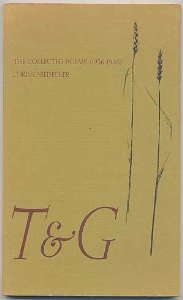
tandgThe church, rather than a place of purity—as would be befitting a wedding, if the wedding were indeed holy and pure—is insted a place where “satin secret collects.” This unembellished image is vivid, though strikingly simple, and its subtext is absolutely clear: the satin, suggesting the fabric of bride’s dresses and clergy’s vestments, is in fact sullied with some suspicious residue, which collects, secretly, perhaps in its folds, therefore not immediately visible or obvious. All the more pernicious for being hidden. What is hidden is not invisible; what is hidden, implicit but still present, is important. We must listen in closely to what is nearly inaudible beneath the silences.

The poem’s final two lines equate the bride’s new marriage to a life sentence—though, with dark humor, Niedecker links the ‘serving’ of that sentence with the silver service, that common nuptial gift. The effect of the dark humor is to escalate the sting, the rage, the burn of the indictment. A bride is a “white slave-girl” which is to invoke her sexual servitude as well. A bride in her jeweled whiteness in the supposed sanctuary of a church is far less fortunate than the mud-soaked and nearly drowned speaker. At least the speaker retains her nature; she is poor and wretched, but no slave. She will “float” where the bride will certainly sink…as Niedecker’s mother did.

A picture of that bride’s domestic servitude and the cycle of domestic enslavement is presented in this  short untitled poem from The Granite Pail:[25]

Old Mother turns blue and from us,
……….“Don’t let my head drop to the earth.
I’m blind and deaf.” Death from the heart.
……….a thimble in her purse.

“It’s a long day since last night.
……….Give me space. I need
floors. Wash the floors, Lorine!—
……….wash clothes! Weed!”

The mother, blind and deaf, is recognizable as Lorine’s own mother, debilitated not only by physical handicaps but also by marriage, loneliness and abandonment.  She fears she will die suddenly and soon, from loss of love and loneliness.  The thimble in her purse recalls a human heart in her chest; however this “heart” is slim, hollow, metallic, a meager domestic scrap to fend off piercing needles and pins. The mother needs floors; previously, Niedecker depicted the washing away of floors in the floods, resulting in a bottomlessness, a rootlessness, a constant risk of drowning. The mother’s admonishment to Lorine is not to avoid marriage but instead to tend to her floors, her chores, weeds… those things that are washed until worn thin, and the weeds that overtake the beauty of the carefully planted flowers in her garden. That her mother would offer these words as survival tactics for her daughter, depicts the near impossibility of escape from this life, these lives, one generation after another, of despair, of being washed away and flushed out.

As an even more dramatic depiction of Niedecker’s view of sexism as a gross injustice, she invokes Mary Shelley, author of the important Gothic novel Frankenstein, who nonetheless was dwarfed by her husband, the poet Percy Bysse Shelley, and known first and foremost as his wife; her great work subordinated and at risk of disappearance. From the New Goose collection:[26]

Who was Mary Shelley?
What was her name
Before she married?

She eloped with this Shelley
She rode a donkey
Till the donkey had to be carried.

In addition to Mary’s almost invisible stature as compared to her husband’s, she is aligned with the Virgin Mary, riding a donkey, and in a devastating and ugly turn, is so poorly regarded that once the donkey tires, it is Mary who must carry it. Presumably Percy is comfortably astride some grand horse.

If the author of Frankenstein is so meanly treated by posterity, what might Niedecker expect for herself? Decades ahead of Betty Friedan and Gloria Steinem, Niedecker’s feminism arose from the enforced silencing of women writers before her—including those who, unlike Mary Shelley, were silenced finally.

Niedecker’s feminism finds its place as asserting a voice and visibility for the unseen and unheard women of her age, place and culture.

This synthesis of two modes, Objectivism and Surrealism, which were utterly incompatible in the eyes of Zukofsky,  was to become Niedecker’s  entry into her own  reflective/reflectionist poetics—“a fusion of objectivist and surrealist tendencies,” as DuPlessis describes it.[27]

We begin to see emergences, as Niedecker removes from, or expands upon, strict Objectivist tenets, incorporating the environment, an anti-consumerist stance, a continuing respect for the laborer which emerges with increasing force in themes of social justice in her work, the many voiceless and unseen to which she gives voice and visibility.

Drawing from Objectivist, Surrealist and other influences, Niedecker came to refer to her work as “Reflectionist.”  If we look at this poem from “From This Condensery,” we see the reflection that Niedecker has come to consider, the reflection of her mother’s life, the possibility of this reflection as her own, in a portrait the speaker views:

My life is hung up[28]

My life is hung up
in the flood

a wave-blurred
……….portrait

Don’t fall in love
with this face—
……….it no longer exists
………………..in water
…………………………we cannot fish

The final three lines, can be read, like most all of Niedecker’s lines, in multiple ways.  The face no longer exists, because it has been washed away. The face no longer exists, because we are reading this poem after Niedecker’s passing. The face no longer exists in water; it is no longer reflected in water because the corporeal self passes. In water we cannot fish—we cannot fish after we have passed.  In water, we cannot fish; once we are of the water, we can no longer fish.

The poem also references Niedecker’s attendance to the great importance of the small and the small scale, as it is the contemplation of the fish, even the human face, that leads to the consideration of the great and the profound, much as the small rivers lead out into the ocean. The corporeal self is immersed, subsumed and ultimately dissolves out into the greater corpus of life force and being.

lorine-niedecker

Following a further distancing from Zukofsky in the early 1960’s, attributed to “increasing tensions between them concerning power and career.”[29]  Niedecker began defining her poetics in terms that included but reached further and further beyond the strict confines of Objectivism.

In 1967, she wrote “Much taken up with how to define a way of writing poetry which is not Imagist nor Objectivist fundamentally nor Surrealism alone. ..I loosely call it ‘reflections’… reflective. .. The basis is direct and clear – what has been seen or heard – but something gets in, overlays all that to make a state of consciousness… The visual form is there in the background and the words convey what the visual form gives off after it’s felt in the mind… And (there is) awareness of everything influencing everything…”[30] This Reflectivism clearly necessitates the closest possible observation to even the smallest details.

DuPlessis explains Niedecker’s emerging Reflectivism as “…a term that suggests both receptivity—the mirroring of an image or light—and an active mulling over what is seen, for reflective also means meditative or pensive.”[31]

When we look at Niedecker’s late, long poem, “Paen to Place,” we can identify the emergence of Reflectivism.

“Paean to Place” begins with the inscription “And the place was water.”

From “Paean to Place” [32]

I was the solitary plover
a pencil
……….for a wingbone
From the secret notes
I must tilt

upon the pressure
execute and adjust
……….in us sea-air rhythm

‘We live by the urgent wave
of the verse’

As Jane Augustine writes of this passage “…the literal description of (Niedecker’s) childhood…is transmuted…to the image of the plover which becomes, by the process of “reflection,” the poet who keeps the world’s balance, the lake’s image shifting to that of seashore and ocean wave, the landscape thereby enlarged to include the entire globe…”[33] The wing and the bone are conjoined in a single word, which tells of a conjoining of language, corpus, and of an interconnection of species. Similarly, sea and air are joined in the hyphenated “sea-air” to create the rhythm by which all things breathe, adapt, adjust.  And finally, it is the wave, the force, the momentum and urgent message of the verse, of communication, which is like a pulse, which “we live by.”

Niedecker could not have issued a more potent comment about the place of verse in her life. She becomes knowable upon reflection; she becomes visible in reflections of her physical self.

After Niedecker married Al Millen, a housepainter and sometime resident of Blackhawk Island (a marriage which was a curiosity to writer friends as Millen was not a reader of poetry and appeared to share few of her interests), the couple set out on extended trips throughout the upper Midwest.

One such trip to Lake Superior resulted in the poem of that title.  Here is an excerpt:

In every part of every living thing[34]

is stuff that once was rock

In blood the minerals
of the rock

Iron the common element of earth
in rocks and freighters

From the poem’s opening, all earliest, most ancient and most enduring elements are linked, whether they remain in their natural and unaltered state by the lake, or have been forged by human hands, to create trains, for example from iron. This is Niedecker moving forward in a continuing progression to bring the entirety of natural and human history into a cogent whole.

Within the poem’s body, Niedecker goes on to address such historical events, pertinent to the immediate landscape, as the explorations of Marquette and Joliet, and the lives of the Native Americans who inhabited this same land.

Their South Shore journey[35]

Their South Shore journey
……….as if Life’s—
The Chocolate River
……….The Laughing Fish
and The River of the Dead

Passed peaks of volcanic thrust
Hornblende in massed granite
Wave-cut Cambrian rock
painted by soluble mineral oxides
wave-washed and the rain
did their work and a green
running as from copper

Niedecker referred to Lake Superior as the “true source park.”[36] Thus, herein are linked the earliest inhabitants of the land, with the rocks and minerals and also the prehistoric glacial changes that resulted in land thrust up and scoured rocks. Water rushes and moves through all of these; the glaciers, frozen water, created this landscape and the rest of the earth; all that is the home to all life. This marks a dramatic expansion of her vision and poetics: she has broadened her scope, in one sense, to explore the smallnesses in the most enormous—in terms of both place and time.

Critic Douglas Crase also finds a parallel in subject and style here, describing Niedecker’s concision as “(scouring) the sentence as if to sand, the way the glacier scoured the Lake Superior rocks…(for Niedecker), words are a kind of sand. Words are for rearrangement, much as the history of Lake Superior has been the evolutionary rearrangement of its minerals by lava, sea, glacier and human industry…”  Crase notes Niedecker’s choice of the poem’s location as “…Lake Superior where uplift and glacier have exposed the oldest rock on earth…the three billion year old granite.”[37]

Evolution and distillation, an essential connection between the immense and the minute. It is not surprising that another late Niedecker poem took on evolution from its “source.”  Some excerpts from the long, final poem in The Granite Pail, Selected Poems of Lorine Niedecker, “Darwin”:[38]

Selections from “Darwin”

I

His holy
………………..slowly
…………………………mulled over
……….matter

not all ‘delirium
………………..of delight’
…………………………as were the forests
……….of Brazil

‘Species are not
………………..(it is like confessing
…………………………a murder)
……….immutable…

III

FitzRoy blinked—
………………..sea-shells on mountain tops!
…………………………The laws of change
……….rode the seas

without the good captain
………………..who could not concede
…………………………land could rise from the sea
……….until—before his eyes

earthquake—
………………..Talcahuana Bay drained out—
…………………………all-water wall
……….up from the ocean

IV

…Studied pigeons
………………..barnacles, earthworms
…………………………Extracted seeds
……….from bird dung

Brought home Drosera—
………………..saw insects trapped
…………………………by its tentacles—the fact
……….that a plant should secrete

an acid acutely akin
………………..to the digestive fluid
…………………………of an animal!…

V

…Darwin

sailed out
………………..of Good Success Bay
…………………………to carcass—
……….conclusions—

the universe
………………..not built by brute force
…………………………but designed by laws
……….The details left

to the working of chance
………………..‘Let each man hope
…………………………and believe
……….what he can’

In “Darwin,” Niedecker braids all natural and human history, even the question of creation, “the working of chance” and allowing for “each man (to) hope/ and believe/ what he can.’” Water gives rise to life, and seashells appear on mountain tops as the earth evolves across the billions of years.  Glaciers evolve into sea water, sea plants secrete digestive juices that link them to mammals.

Even the lack of punctuation, the absence of any periods at the end of stanzas or at the end of the poem points to this: all is connected; all is of the continuum.

lorine

Niedecker died at the age of 67 on December 31, 1970.  She requested that her husband Al Millen burn all of her letters. The letters written by her to others survive.

While a cursory reading of Niedecker’s sense of place suggests a place of isolation if not retreat and removal, it is interesting to consider what critic Richard Caddel has noted and captured as patterns in Niedecker’s work – which posit that her subject of her place, the isolated Blackhawk Island, in fact addressed the very opposite of disconnection, that the intention of this poetry was the opposite of a severance or disappearance. Caddel writes: “…I’m aware that some early approaches to (Niedecker’s) work dealt with her natural surroundings as if her involvement with them was somehow a retreat, an act of escape…nothing could be further from the truth: the interconnectedness of her materials is explicit from the earliest work onwards…”[39]

Anne Waldman writes:  “Niedecker is never passive, dreamy, or other-worldly. She is very much of this world: …she lifts from her reading and study and intuits a view that life does not end with the death of the body…”[40]

Niedecker, in her close observations, explored the spaces and the pauses, the connections and  possibilities  between lines and sounds, and what was revealed in the reflections in the water.

Niedecker’s vision and poetics encircles, embraces and celebrates the small and the minute, the nearly invisible who and which, under her artful scrutiny, are proven to be the essential carriers of the enduring life force, gigantic in their purpose.

She is deserving of an audience capable of seeing the enormities within her smallnesses—which is not to say a small audience.

—Anne Loecher

———————————

Anne Loecher is a former Madison Avenue Creative Director, now working in nonprofit communications. Having recently earned her MFA in poetry from the Vermont College of Fine Arts, she is working on her poetry manuscript, as well as her first screenplay. She lives Vermont with her husband, teenage daughter, dog and cat. Her most recent contribution to Numéro Cinq is an interview with the poet Donald Hall.
m
m
m
Footnotes    (↵ returns to text)

  1. Rachel Blau DuPlessis, “Lorine Niedecker, The Anonymous: Gender, Class, Genre and Resistances,” Lorine Niedecker, Woman and Poet  (Orono, Maine: National Poetry Foundation, University of Maine, 1996) 113.
  2. Lorine Niedecker, The Granite Pail, The Selected Poems of Lorine Niedecker (San Francisco: North Point Press, 1985) 15.
  3. Lorine Niedecker,  New Goose(Berkeley: Listening Chamber Press, 2002).
  4. DuPlessis, 118.
  5. Gilbert Sorrentino, “Misconstruing Lorine Niedecker,” Lorine Niedecker, Woman and Poet  (Orono, Maine: National Poetry Foundation, University of Maine, 1996) 287.
  6. Lorine Niedecker, “A Review of Louis Zukofsky’s A Test of Poetry,” (Madison, Wisconsin:  Capital Times, 12/18/1948) Books of Today section.
  7. Blythe Woolston, http://blythewoolston.blogspot.com/2011/07/lorine-niedecker.html,7/1/2011
  8. Jenny Penberthy, “A Little Too Little: Re-reading Lorine Niedecker” www.asu.edu/pipercwcenter/how2journal/archive/…/jplittle.html
  9. Ibid, Penberthy.
  10. Peter Middleton, “The British Niedecker,” Lorine Niedecker, Woman and Poet  (Orono, Maine: National Poetry Foundation, University of Maine, 1996) 247.
  11. Ibid, Penberthy.
  12. Rachel Blau DuPlessis, “Sounding Process,” Radical Vernacular: Lorine Niedecker and the Poetics of Place (Iowa City: University of Iowa Press, 2008) 156.
  13. Ibid, DuPlessis.
  14. Ibid, DuPlessis, 158.
  15. Elizabeth Willis, Radical Vernacular: Lorine Niedecker and the Poetics of Place (Iowa City: University of Iowa Press, 2008) xiv.
  16. Ibid, Sorrentino, 287.
  17. Ibid, Willis, xvii.
  18. Rachel Blau DuPlessis, “Lorine Niedecker, the Anonymous,” Lorine Niedecker: Woman and Poet, (Orono, Maine: National Poetry Foundation, University of Maine, 1996) 114.
  19. Karl Young, “Notes and an Appreciation to Lorine Niedecker’s Paen to Place,” http://www.thing.net/~grist/ld/ln/ky-ln.htm
  20. Anne Waldman, “‘Who’ Is Sounding?: Gaps, Silence, Song in the Writing of Lorine Niedecker,” www.woodlandpattern.org/niedecker/schedule.shtml, 221.
  21. Marie-Christine Lemardeley, “Property, Poverty, Poetry: Lorine Niedecker’s Quiet Revelations,” http://erea.revues.org/174
  22. Lorine Niedecker, The Granite Pail, the Selected Poems of Lorine Niedecker, (San Francisco: North Point Press, 1985) 70.
  23. Jane Augustine, “What’s Wrong with Marriage: Lorine Niedecker’s Struggle with Gender Roles” Lorine Niedecker: Woman and Poet, (Orono, Maine: National Poetry Foundation, University of Maine, 1996) 139.
  24. Lorine Niedecker,  “I Rose From Marsh Mud,” (New York: New Directions in Prose & Poetry, Volume 11, 1949) 302.
  25. Lorine Niedecker, The Granite Pail, The Selected Poems of Lorine Niedecker (San Francisco: North Point Press, 1985) 4.
  26. Lorine Niedecker, From This Condensery: The Complete Writings of Lorine Niedecker, (Highland, NC: Jargon Society/Inland Book Company, 1985) 106.
  27. Rachel Blau DuPlessis, “Sounding Process”,  Radical Vernacular: Lorine Niedecker and the Poetics of Place (Iowa City: University of Iowa Press, 2008) 158.
  28. Lorine Niedecker, From This Condensery: The Complete Writings of Lorine Niedecker, (Highland, NC: Jargon Society/Inland Book Company, 1985) 109.
  29. Ibid, DuPlessis, 152.
  30. Ibid, DuPlessis, 153.
  31. Ibid.
  32. Lorine Niedecker, The Granite Pail, The Selected Poems of Lorine Niedecker (San Francisco: North Point Press, 1985) 73.
  33. Jane Augustine, “What’s Wrong with Marriage: Lorine Niedecker’s Struggle with Gender Roles” Lorine Niedecker: Woman and Poet, (Orono, Maine: National Poetry Foundation, University of Maine, 1996) 139.
  34. Lorine Niedecker, The Granite Pail, The Selected Poems of Lorine Niedecker (San Francisco: North Point Press, 1985) 58.
  35. Ibid, 61.
  36. Douglas Crase, “Niedecker and the Evolutional Sublime,” Lorine Niedecker: Woman and Poet, (Orono, Maine: National Poetry Foundation, University of Maine, 1996) 337.
  37. Ibid, 339.
  38. Lorine Niedecker, The Granite Pail, the Selected Poems of Lorine Niedecker, (San Francisco: North Point Press, 1985) 108.
  39. Richard Caddel, “Consider: Lorine Niedecker and Her Environment,” Lorine Niedecker: Woman and Poet, (Orono, Maine: National Poetry Foundation, University of Maine, 1996) 281 – 282.
  40. Anne Waldman, “Who Is Sounding? Awakened View, Gaps, Silence, Cage, Niedecker”, Radical Vernacular: Lorine Niedecker and the Poetics of Place (Iowa City: University of Iowa Press, 2008) 210.
May 042013
 

Fascinating essay linking the Kantian tradition and Borgesian formalism, the meaningful meaninglessness of form.

dg

Both the notion of purposiveness without purpose and the notion of genius irreducible to concept lie behind Borges’ speculations about the wall and the books: Borges is fascinated by the possibility of something that can be “nothing but form,” and by the notion that a formal pattern “hints, but only hints, at significance.” Borges mentions Benedetto Croce and Walter Pater in his essay—and neither figure would exist in recognizable form without Kant. But another figure derived from the German Idealist tradition comes to mind in connection with Borges’ idea of the “imminence of a revelation, which does not happen” as central to aesthetics: Carl Gustav Jung. Jung, in his great essay “On the Relation of Analytic Psychology to Poetry,” argues that the most significant forms of art give us not specific meanings per se, but “a language pregnant with meanings, and images that are true symbols because they are … bridges thrown out towards an unseen shore.” Meaningfulness without meaning, we might say, is the gist of Jung’s theory, here: and it is certainly a theory in accord with Borges’ fascinations.

via Samizdat Blog: The Haunting of Jorge Luis Borges, or: Borges in the Kantian Tradition.

May 042013
 

LBshop1

We forget beauty; the age inspires that. Things are things, cool and sleek. Stylish is what the market aims for. It’s a throwaway world. Leonard Bellanca is an old friend from Greenfield, New York, a furnituremaker, an artist, a man who tilts against windmills with names like Ikea and Walmart. He builds beautiful things that are also useful, a pleasure to use, things that have symmetry and motion, that draw the eye like a painting and will last till someone sticks them in a museum. He works out of traditions that don’t just date back to 2010. It’s a pleasure to put his work before your eyes.

dg

Notes on Making Furniture

What continues to hold my interest in making furniture is the relationship between the prosaic and the poetic, the utility and the beauty, the craft and the art. A sweetly fitted drawer that is a pleasure to use, is as lovely as the reflection of light from a polished surface. Both are necessary, and they complement and depend on each other. Of course I love the  material, its usefulness, its beauty and odor. And I know where it comes from. I also know and understand what has to happen to the tree in order to provide me with that material. But wood is very forgiving, and now the work begins.

My work is influenced by history – in particular the American Federal period – but it is not historical.  I am not interested in reproducing pieces, but rather in borrowing elements from them: an elegant curve, the taper of a leg, refined proportion, decorative details that lend contrast and interest. So in borrowing and combining, and with careful study, the work becomes something that is at once modern and traditional. This sense of old and new also defines my methods of making furniture. I rely on machines to do what they do well: milling, cutting, rough shaping, and otherwise preparing stock, but virtually everything else — joinery, fitting, final shaping, detailing, finishing- is accomplished at the bench with hand tools, and hands, and eyes, using techniques and tools that haven’t changed much in the last few centuries.

A favorite form of mine is the work table, which in its various manifestations, evolved through the first half of the 19th century as a small table or stand, usually with drawers or compartments and designed primarily to accommodate ladies’ activities: sewing and needle work, writing, serving guests.  Stylistically, the form ranged from the practical austerity of the Shakers, to the  very delicate, elegant, and detailed pieces typical of urban workshops.

Work Table (2007), made of cherry and bird’s eye maple with various inlays, draws on this rich history. The overall form consists of a tall skirt with five deep drawers supported by richly figured double-tapered legs, banded with holly and ebony at the transition of the leg to the foot. The four small drawers are veneered with figured maple and cock-beaded; the central drawer has an inlaid panel of  figured maple outlined with ebony and holly string inlay, and is also cock-beaded.

I think this piece is successful because of its proportion and small scale, the symmetry of the drawers, and the pleasing effect of what is essentially a  box on legs, but what  strikes me even now is the movement in the piece. The grain of the square legs seems to  spiral upward, while the dashed inlay on the center drawer goes around, even as the red  cherry and pale maple are advancing and receding. I can’t say that these effects were  entirely planned, but somehow that relationship that I spoke of previously, the utility  and the beauty, the craft and the art, comes alive, informed by history and accomplished through long practice.

—Leonard Bellanca

1 bellanca work table 1

Work Table, 2007, cherry, bird’s eye maple, ebony, holly, white oak, 30″ high x 24″ wide x 16″ deep

2 bellanca work table detail1

Work Table, detail

Leonard Bellanca

Pair of End Tables, 2008, walnut, bird’s eye maple, ebony, holly, poplar, 29″ high x 19″ wide x 15″ deep

Leonard Bellanca

End Tables, detail

5 bellanca chest on stand-001

Chest on Stand,  2004, walnut, cherry, white oak, 48″ high x 26″ wide x 14″ deep

6 bellanca chest on stand detail-001

Chest on Stand, detail

7 Bellanca bench

Upholstered Bench (one of a pair), 2003, mahogany, 18″ high x 36″ wide x 20″ deep

8 bellanca benches drwg I

Upholstered Bench drawing, 2003, graphite on vellum

9 bellanca Chest of Drawers-001

Chest of Drawers, 2003, cherry, maple, bird’s eye maple, white pine, 38″ high x 34″ wide x 17″ deep

LBshop2

LBshop3

LBshop5

LBshop6

—Leonard Bellanca

———————————-

Leonard Bellanca is a studio furnituremaker working in Greenfield Center, New York. Since 1996 he has been designing and making furniture using traditional methods, materials, and finishes. While earning a degree in Architectural Studies from The University of the Arts, he studied furnituremaking with Michael Hurwitz and Peter Pierobon. As an intern at the Philadelphia Museum of Art, Bellanca assisted in the removal and relocation of important architectural woodwork made by Wharton Esherick.  After graduating, he apprenticed with a professional cabinetmaker, working primarily on the restoration of 18th and 19th century American antique furniture. In 2004, Bellanca designed and built the house and shop where he now lives and works. He was a 2007 and 2008 Guest Artist of the New Hampshire Furniture Masters Association, and his work has been exhibited in various regional shows and galleries.

May 032013
 

Nothing to get excited about. Many Americans are just taking time off from work “to consider their options.” Many have vast IRAs and savings cushions and are just waiting out the current anemic jobs situation till the really plum opportunities start to open up. I myself am waiting for that important call from “a major banking concern” asking me to step into a “senior management position.” (At which point I will shut down Numéro Cinq.)

dg

The federal government’s latest snapshot of the unemployment rate offered few bright spots Friday. The economy added 165,000 jobs in April—slightly better than March’s revised number of 138,000 jobs. Unemployment went down one-tenth of a percentage point to 7.5 percent; and health care, retail trade, and the food-services industry added positions.

The glaring caveat to this jobs report is the huge number of Americans who remain out of the workforce. Called the “labor force participation rate” in wonkspeak, that number held steady in April at 63.3 percent—the lowest level since 1979.

via Forget the Unemployment Rate: The Alarming Stat Is the Number of ‘Missing Workers’ – NationalJournal.com.

May 032013
 

3NUMEROCINQ-authorpic(Quist)

Donald  Quist just moved to Bangkok, oh, a few months ago after graduating with an MFA from Vermont College of Fine Arts, making a new home and giving NC a chance to add a fascinating new city/country our growing list of What It’s Like Living Here essays. These essays have been part of the NC package from the beginning, adding a wonderfully human and personal aspect to what the magazine offers (which is, well, human and personal anyway). Take time to look through the whole list and then think about where you live, how beautiful it can be just stepping out your door.

dg

  IMG_5051

Start at Wat Arun (Temple of the Dawn)

Climb the large stone steps to the center tower. Careful. The stairs from the second landing are steep. The rock is smooth and it’s easy to slip with sweating hands. There is a single metal rail, rusted red, wrapped in rope. It offers some grip. Pull yourself onto the next level. There are more steps but the incline is too dangerous for visitors. Large strips of pink tarp hug the base of the tower like a castle moat. It prevents you from trying to go any higher.

IMG_5059


Look up. The temple prang is a cone tapering to the sky, a tower covered in thousands of seashells and pieces of colored porcelain. There is a row of clay warriors, their shinning eyes and armor made from tiny tiles. The spire seems to rest on their backs and arms. Circle around the base, clockwise, stopping four times to trace the designs on ceramic flowers with your thumb. They feel like warm dinner plates. Imagine the hands that built these flowers turning into dust. 

Look over the monastery from 150 feet. Watch the monks stroll the temple grounds. Their orange robes are bright against the grey footpaths and green shrubs. Listen. Somewhere monks are chanting. Their voices pour from horn loudspeakers posted throughout the complex. It’s clearer at this height. Listen. It’s a steady tone and rhythm, a stream of soft vowels. It’s gapless. Their words are a river. You’re swimming without water. Had you noticed it before? 

IMG_5049

 Take the Ferry

The east side of Wat Arun runs along the Chao Phraya. There is a dock where you can catch a long-tail boat into the city. The boat rocks against the gentle current. The breeze off the water smells like salt and iron and dirt. Breathe it in. The river is dense and strong. It is a pillar. On the approaching shore, in the shadow of high-rises, are mossy forts and remnants of river trading posts. There is the Grand Palace spackled with flakes of gold, glittering. 

Imagine the Palace last night, covered in lights to commemorate Loi Krathong. All over the city there is singing and music, and fireworks bursting like cannon fire. Sky lanterns rise into the night like blooms of flying jellyfish. Thousands walk down to the river. Imagine you follow them, caught in the wave of a new kind of intimacy. Imagine. You feel their sweat on your naked arms. Together, under the Rama VIII Bridge, you light candles and make wishes and sail them down stream on flowery crowns of banana leaves and coconut husks. You notice a group of boys a few meters south, wading through the muddy water. They are fishing krathongs from the river, blowing-out the candles and selling them to others waiting on the shore. Pray to the river goddess that your real hopes will float. 

IMG_1442

 Head East

Follow the floodwater lines running along the bottom of buildings. Sidestep garbage bags and puddles from dripping A/C window units above the street. The air is heavy, like a dank basement. It carries an angry rot. Get lost in the buzzing of motorbikes and auto-rickshaws. 

Take a right, now, onto an unnamed soi. It is too narrow for a car. The small road is lined with morning street-food vendors tucked under rows of evergreen patio umbrellas. They sell porridge and pastries, soup and dim sum. 

Nod to people as you pass. Smile. They smile back. 

 bkkwires

Make a left on the next street. Follow the webs of telephone wire past a dozen convenience stores. The buildings share a similar architecture. Squat balconies with fat columns, decorative moldings and cornices like a Roman basilica. Patches of black mold stain the paint and facades. 

IMG_1432

Cross a short bridge arching over a canal. Hua Lamphong Railway Station is on the horizon.

Take the Subway at Hua Lamphong

Walk around the front entrance to find an escalator leading down to a long tunnel, trapping the humidity from the city above. The walls are sweating. The high ceiling echoes a hundred sandals slapping the floor. The tunnel ends at a ticket counter. Purchase a fare to Thanon Sukhumvit and then take two more sets of escalators, down, down, to the Metropolitan Rapid Transit platform. 

IMG_1484

The train is arriving. It rolls to a stop, lining-up with the yellow directional arrows painted on the lip of the platform. There is a loud hiss as the doors spring open. A blast of cold air slaps your forehead as you push your way on. It fills quickly. Pinned by a mass of people against the back wall of the passenger car, you can barely lift your arms. 

IMG_1392

Exit at Sukhumvit (Terminal 21 Mall)

The stairs lead up from the subway to the ground-level entrance of a shopping complex designed like an airport terminal. The women at the info desk are dressed like flight attendants. The escalators are decorated like departure gates. Each floor is themed with a global city: Paris, Tokyo, London, Istanbul, San Francisco and Hollywood. You are in Rome. There are pillars, arches, faux frescoes and marble angels looking down on shoppers. 

IMG_4962

English is everywhere, and whether it is a spa promotion or a sale on high-heels, for a moment you are literate again. You understand more than bits and pieces of passing conversations. Two young men walk by wearing tank tops and folded bandana headbands. One of the boys has camouflage cargo pants, while the other has neon pink short-shorts. They are having an argument over which street market is bigger, JJ or Chatuchak. Don’t point out that JJ Market and Chatuchak Market are the same. Do not interject that many places in the city have more than one name in English, and the J sound and the Ch often get confused. Keep it to yourself. Knowing makes you feel like less of a tourist.  

Head West 

At the bottom of the stairs exiting Terminal 21 there is a man with one arm and no legs lying on his belly. He shakes the change in his paper cup. The back of his t-shirt reads, “I LOVE THE KING.” Give him 20 baht, and then turn right. 

The hotels and office buildings block the sun. The tracks of the BTS Skytrain cast a shadow over the six lanes of traffic. It gives the impression of a stormy overcast. The Skytrain rumbles like thunder as it passes above. 

Ignore the thumping club music from the already open go-go bars.  Ignore the peddlers calling out to you. You may not know where you’re headed, or what you’re looking for, but you know it is something larger than a trinket or souvenir. It is something deeper than a watch, bong or bootleg DVD. 

Thanon Sukhumvit turns into Thanon Phloen Chit. There is construction everywhere. Crews of laborers in hardhats and flip-flops are raising new luxury condominiums from the rubble of old luxury condominiums. Above the chorus of jackhammers and drills are the staccato blasts of car horns. The traffic crawls forward as motorists honk in frustration. The exhaust fumes mix with the smell of street vendors grilling pork. Layers of black dust hug the street. It’s harder to breathe. You taste smoke in the air. Somewhere people are chanting. It’s coming from a gated square, ahead on the right.

IMG_4931

Erawan Shrine

Watch the believers light incense. They circle the shrine clockwise laying wreaths of yellow flowers, bowing to the four faces of the Hindu god, Brahma. Some are on their knees, their eyes squeezed tight in prayer. A few feet away, shielded from the sun by an open gazebo, a female dance troupe sways to a chorus of Thai folk songs. They wear towering headpieces and traditional dresses with shimmering layers that wrap around them and drape over their shoulders. Their faith makes them impervious to the heat. 

Scan the crowded square for another statue. Look for a depiction similar to the one at Wat Arun, protruding from the temple prang—Indra, the lord of heaven, riding Erawan, an elephant with three heads. 

IMG_5033

But there is no giant white elephant of the clouds, or his master. There is no Erawan at Erawan Shrine. Only Brahma. 

You may never know why. There may always be some facet of this city that eludes your understanding, even its name. Is it Bangkok or Thonburi Si Mahasamut or Rattanakosin or Krungthepmahanakhon Amonrattanakosin Mahintharayutthaya Mahadilokphop Noppharatratchathaniburirom Udomratchaniwetmahasathan Amonphimanawatansathit Sakkathattiyawitsanukamprasit or just Krung Thep Maha Nakhon for short? Was the city named for its flowers or for its treasures gracing the ocean? The City of angels, great city of immortals, magnificent city of the nine gems, seat of the king, city of royal palaces, home of gods incarnate erected by Visvakarman at Indra’s behest.

Move closer. Look. Listen. Follow the current circling the Shrine. Press your palms together and bow to something beyond your comprehension. Bow, in respect for what you don’t know. 

IMG_4921

—Donald Quist
 _ _ _ _ _ _ _ _ _
Donald Quist earned his MFA in Writing from Vermont College of Fine Arts. His creative work has appeared in several print and online journals, including Hunger Mountain and The Adroit Journal. He lives in Bangkok, Thailand.  
.
.
.
.
.
May 022013
 

No doubt this is mostly smart people getting sick to death of paralytic politics.

From 1999 to 2010, the suicide rate among Americans ages 35 to 64 rose by nearly 30 percent, to 17.6 deaths per 100,000 population, up from 13.7. Although suicide rates are growing among both middle-age men and women, far more men take their own lives. The suicide rate for middle-age men was 27.3 deaths per 100,000, while for women it was 8.1 deaths per 100,000.

via Suicide Rate Rises Sharply in U.S. – NYTimes.com.

May 022013
 

fruelundin top

Herewith is a story by Simon Fruelund translated by K. E. Semmel.

K. E. Semmel is an old friend and former colleague from my days at The Writer’s Center in Bethesda, Maryland. He is not only a dedicated and talented fiction writer in his own right, but a hard working and skilled translator as well, having translated and published four books of Scandinavian fiction in the last five years, including two books by Simon Fruelund, Karin Fossum’s The Caller, and Jussi Adler Olsen’s The Absent One. (He’s wrapping up a fifth book this summer.) K. E. Semmel also serves as the Development and Communications Manager at Collegiate Directions, Inc., a non-profit dedicated to helping low-income children attend four-year college. I have spent many Sunday afternoons with him and his family, watching our sons play, drinking Belgian ales, talking books, and trying to love baseball as much as he does, so it is with pleasure that I bring to Numéro Cinq one of his translations.

Simon Fruelund is the author five books of which two are available in English: his novel Civil Twilight (published by Spout Hill Press) and a soon-to-be released collection of short fiction titled Milk and Other Stories (Santa Fe Writer’s Project). Alan Cheuse, book critic for National Public Radio, recently wrote about Fruelund’s work:  “[he] is a master of the short form, importing some designs from our own Raymond Carver, applying them to the interstices of the European everyday, and making them his own.”

“Albatross” is typical of Simon Fruelund’s style. A sparse, subdued story about two brothers, one of whom sets fire to his father’s rye field. With unassuming details and carefully fine-tuned images, “Albatross” is the type of story that sneaks up on you, and I found myself thinking for days after first reading it about the boy/arsonist perched atop the silo watching the adults scramble to put out his fire and harvest their grain. As K. E. Semmel has written: in Fruelund’s work “truths and experiences are intimated” in “quiet, inconspicuous way[s].” “Albatross” will appear in Milk and Other Stories.

—Jason DeYoung

Milk

My brother sat on the couch reading a magazine. I aimed at him with my lighter pistol and pulled the trigger. The flame rose straight up, almost five inches high, but he didn’t react.

—Catch!

I tossed the lighter at him over the coffee table. He dropped the magazine and threw himself toward the lighter in order to save the couch and curtains and wall-to-wall carpet. He couldn’t find it and started pulling the pillows down on the floor.

—Jeppe, you dick. Where’d it go? You’ll burn the house down.

The lighter lay on the floor right at his feet. I stood and walked over. The flame had gone out as soon as I’d let go.

—Here, I said and handed it to him.

—You’re an idiot, he said, refusing the lighter.

I stuffed the lighter in my pocket and left the room. I put on my boots and jacket and walked through the empty stalls and out the other side. We’d not been outdoors for two days. The afternoon sky was clear and blue, and I tromped toward our neighbor’s place. Svend the Hen was scorching his field; he’d lit rows of straw on the opposite side, and the fire now ran in parallel tracks over the crest of a hill. He was busy plowing a security barrier so the fire wouldn’t leap over onto our field, which hadn’t been harvested yet. He brought the tractor to a halt and opened the cab door.

—Get in.

I grabbed the handrail inside the door and hoisted myself up.  Svend the Hen had his shotgun across his thigh, the barrel snapped open and draped over his leg. I sat on the wheel guard, and the tractor started with a jerk. Svend the Hen’s short silver hair poked out of the corner of a green cap. He didn’t say anything. He plowed another row along the barrier to our field.

—So, he said.

I could see how the effort of talking stretched his cheeks, how his lips twitched in the attempt, and how he sat chewing on what he would say. As if he had to put his tongue and lips in order first. As we reached the end of the row, he turned the tractor and began a third row.

—So…They’re on vacation or what?

—Yeah, I said.

—What about the other hen?

—He’s at home.

—Well, well, then.

He always called us hens—maybe because he didn’t have any kids of his own. Some said he fucked his cows, but I had never believed it.

—Well then, he said again after a minute.

He smiled for an instant. Not because he liked to, but more because he couldn’t help himself, I think. Or maybe because he was proud that he’d managed to get his tongue in the right position in his mouth, moved his lips and all that. His teeth didn’t look too good, and you couldn’t mistake the smell. Maybe everything’s going rotten in there, I thought. He turned the tractor up near the shrubbery and drove with the plow raised in the direction of the fire. He took two bullets from a box on the front window and stuck them in the shotgun, still with one hand on the steering wheel. As we reached the first burning column, he turned the tractor so we were driving along the front. He opened the door and asked me to steer. The air was heavy with black dust, and it was hot as hell. We’d almost reached the end of the field before anything happened. He aimed and fired in almost the same instant. I barely registered what had happened.

—God damn, he mumbled.

I saw a hare leaping away.

—God damn, I said.

At that moment I saw another hare. Svend the Hen fired and this time he got it. The hare rolled a somersault, then lay completely still. He stopped the tractor and opened the door on my side, and with a nod of the head let me know what he wanted me to do. I hopped down and ran over to pick up the hare. I grabbed its legs and swung it around high over my head. The flames came closer; it was a wall of heat moving in my direction. I ran back to the tractor and tossed the hare to him.

—Get in, he said.

I shook my head.

—I gotta go, I said.

He closed the door, touched his fingers to his cap, and a moment later he was off in a cloud of black smoke.

I looked around for a place where I could get through the fire. I found an opening then made a running start and leaped through. When I came out on the other side, my face felt stiff and my hair smelled charred.

The ground was black and scorched.

At the end of the field, I found a smoldering chunk of a tree. It was a branch from an oak that stood near the border of our land. I picked up the cold end and went toward our side. Near the track separating the two fields, I stopped and looked around. The rye should’ve been harvested a long time ago; in many places the stalks lay horizontal to the ground. Ours was the only field, as far as I could see, that didn’t have stubble, or wasn’t already plowed up. I stood there a moment considering the pros and cons. They can kiss my ass, I thought. Then I threw the branch as far as I could into the field.

I hiked across Svend the Hen’s field. I headed down through the bog, followed the railroad tracks a short distance, and then walked through a small stand of spruce.

I’d reached the main road when I heard the first fire truck. It drove toward me at high speed, and a moment later the second one followed. I could see the firemen putting on their gear. I tramped along the road meeting one car after another—curiosity-seekers following the fire trucks, I think.  I also saw someone on a bicycle. I could hear the sirens approaching from every direction.

Along the way I passed a large white farm, and I saw a man and a woman hastily getting their children inside a car. After a few hundred feet, I passed a Dutch barn stuffed with hay, and half a mile later came to a wide field of barley that hadn’t been harvested.

Before long, I could see the first houses in what passed for the area’s biggest town. Towering up over all the houses was a grain silo. And I could see the brownstone school building with its white windows.

Just as I got to town, the local cop drove toward me in his blue Volvo. I waved at him and he waved back, and then he was already long past me.

I crossed the road, and soon stood in front of a broad chain-link gate. Three trucks were parked in the lot, but there was nobody around. I clambered over the gate and walked toward the silo. Small piles of grain lay here and there, and the smell was sweet and good. I put my hand on the outer wall; it felt warm. I went around the silo and found a door behind the building. With a hard jerk, I got the door open and went inside. I stood in a pretty narrow shaft; on the wall were a number of shiny steel stairs, and far above, I noticed a small circle of blue light, which I guessed was the sky.

I started crawling. It was really hot inside the shaft, and when I reached the halfway point, I had to stop and take my jacket off. I tied it around my waist, but that only made crawling more difficult, so I let it fall. I continued up; the higher I got, the warmer it was.

When I finally crawled onto the roof, I was soaked through with sweat. I pulled my shirt over my head and looked toward the south.  I could see a huge black cloud of smoke; under it, an orange glow. I couldn’t see the flames. In the foreground, I could see a combine that’d now begun to harvest the field I’d just passed.

I looked at the parking lot below; the three trucks were slightly staggered and resembled toys on display. The houses in the town were unusually close, but they still seemed small. Patio furniture filled the square yards, but there were no people. Furthest away was the train station, and I could see the red train waiting for the regional train.

I turned toward the north and saw a blue glare, which I knew was the sea. Then I turned toward the south and looked at the red glow.

Soon after, I sat down. I flicked my lighter and watched the flame. I fell into a trance and sat that way for a long time. At some point I realized I was freezing. I stood and put on my shirt, but it was cold and damp. I stared toward the south: As far as I could see the flames were burning out.

I moved to the hatch and started crawling back down.

I headed back the same way I’d come. Outside the town limits, I passed the cop. I waved, and he waved back politely. I passed the barley field and greeted the farmhand, who leaned up against the grain wagon smoking. I passed the Dutch barn where two boys shot at a target with a bow. There were lights in the stalls at the big farm, and I could hear the sound of a transistor radio through the open door.

I followed the main road and walked through the little stand of spruce, followed the railroad tracks, and walked through the bog.

It had grown dark by the time I finally made it home. At a distance I could see the light in the living room. I shuffled forward through a thick layer of gray ash. The fire had burned up most of the field; it hadn’t been brought under control until about 150 feet from the house.

When I walked inside, my brother sat on the couch watching television. He looked up.

—Where have you been? he said. There was a fire in the fields.

—I know that, I said.

I looked at the screen. I could see a big white bird lying on a nest: an albatross.

—There were a lot of people here. The cop was here, too. He was over talking to Svend the Hen. He seemed to think it was his fault.

I walked into the kitchen and poured a bowl of cornflakes. When I got back, my brother had changed the channel to some kind of quiz show; from a few notes you were supposed to guess the name of a song or a piece of music. I sat down in the seat opposite him.

They played a few bars of a song.

—“Strangers in the Night”! my brother called out.

We waited for the answer.

—You see, he said.

I pulled the lighter from my pocket, and this time I didn’t flick it—I just tossed it over to him.

—Catch! I said.

He flicked it and saw that the flame was only an inch high. He looked at me and then set it down on the coffee table.

—They say he fucks his cows.

—Yeah, I said and watched the screen.

They played a few bars of a new tune.

—Can’t we watch the show with the albatrosses? I said.

—Okay.

For a long time, without saying a word, we watched the program about the enormous birds. The narrator said they could fly up to a 600 miles a day. They sailed on the wind almost without moving their wings. We saw how they dived after fish, and we saw an albatross egg that was the size of a honey melon.

At some point, my brother turned his head and looked at me. I didn’t look at him, but I could feel his gaze; he watched me for a pretty long time. Then he turned his attention back to the screen.

—Promise you’ll never do that again, he said under his breath.

—Simon Fruelund

————


f bottom

Simon Fruelund is the author of five books, among them Milk and Other Stories, Civil Twilight, and Panamericana. His work has been translated into Italian, Swedish, and English, and his short stories have appeared in a number of magazines across the U.S, including World Literature Today, Redivider, and Absinthe. For nine years Fruelund worked as an editor at Denmark’s largest publishing house, Gyldendal, but is now writing full time.


Kylebearded

K.E. Semmel is a writer and translator whose work has appeared in Ontario Review, The Washington Post, Aufgabe, The Brooklyn Review, The Bitter Oleander, Redivider, Hayden’s Ferry Review, World Literature Today, and elsewhere. His translations include Karin Fossum’s The Caller and Jussi Adler Olsen’s The Absent One. He has received multiple translation grants from the Danish Arts Council to support his translation of Simon Fruelund’s fiction.

Also available Civil Twilight

civil twilight


May 012013
 

Nabokov collage

This is the hard lesson of Lolita; it is a monument to an awful existential truth: simply to be alive, in the face of the whole history of human suffering, requires a kind of insane fortitude. Lolita reminds us that while soldiers were dying in European trenches, Monet was painting lilies in his garden; that horror and beauty are cosynchronous; that for every fine sentiment, every sweet emotion, someone else pays in blood, and eventually we all get presented with the check. —Bruce Stone
KubrickLolita2From the Stanley Kubrick film Lolita.

.

On March 19, the literary marketplace welcomed a new title by the young Vladimir Nabokov, who hasn’t been greatly inconvenienced by his death in 1977. The Tragedy of Mister Morn, a verse drama written in Berlin in 1924 and never published during Nabokov’s lifetime, reads as a kind of retread of Othello, set among the Bolsheviks: the plot points to Leninism, but the artifice is all Shakespeare, and the play’s release is timely on both counts. Six days earlier (a near eclipse of Morn’s arrival), the Erarta Museum in St. Petersburg, then hosting a performance based on Nabokov’s Lolita, absorbed the latest attack by the Orthodox Cossacks, a band of Russian conservatives that has been campaigning against Nabokov, denouncing his masterwork, since the start of the new year. Among the more serious incursions, a theater producer was beaten in January, but perhaps the most emblematic gesture was the lobbing of a vodka bottle through a window of the Nabokov museum: tucked inside the bottle, a note condemned Nabokov as a pedophile and warned of the imminence of God’s wrath.

Viewed as domestic terrorism (even Cossacks have dreams), these acts seem comparatively tame, even quaint. As a more benign kind of vandalism (tell that to the producer), they make their point clearly enough, I suppose. But as literary criticism, they are an utter travesty, an intellectual obscenity that should make the Cossacks and their kin themselves the object of public and lasting derision (pillories and tomatoes or, at minimum, raspberries). A half century has passed since Lolita’s publication, yet here we are again—it seems inevitable—with the literal-minded and the simpletons, the well-meaning zealots and zombie mooncalves breaking out torches and pitchforks, vodka bottles and spray paint, to decry Lolita as the work of the devil. Twenty-five years ago, in her appraisal of the novel, Erica Jong found this noise over its propriety exasperating, so maybe now more than ever, the only fit response to the Cossack charge is to ignore it, at most to repay the protesters with a bottle of one’s own, bearing just the terse rebuttal, “It’s art, stupid.” To do anything more, to defend Nabokov and his work more fully and forcefully, would be to concede that either needs defending in the first place.

And one would think that the Cossack claim could be made only by someone who hasn’t read the book. After all, unless you abuse the text pretty seriously (beat it within an inch of its life), it’s not possible to construe Humbert Humbert’s pathology as a behavioral recommendation. In this regard, his case is no different from that of multitudes of literary characters. Consider, for comparison, Brigadier Pudding in Pynchon’s Gravity’s Rainbow, who, for the sake of sexual arousal, eats the excrement of the book’s femme fatale as she is producing it (do the math for yourselves here). That the novel contains this character doesn’t mean that readers, or his creator, find this behavior appetizing. Unfortunately, the semi-literate Cossacks are not alone in their sentiments about Lolita, not the only hostiles in the field. In fact, their cause often finds support even from the ranks of Nabokov’s fans. In the 2009 BBC documentary How Do You Solve a Problem Like Lolita?, journalist and literary pilgrim Stephen Smith promises to resolve the title question, which he poses more bluntly at the outset: “was [Lolita] a morality tale or the fantasies of a dirty old man? [his grammar]” On the whole, the documentary feels like a superficial traipse through Nabokov’s life and work, a mercenary stoking of this combustible subject. But one vignette particularly rankles: Smith interviews Martin Amis, perhaps the most famous champion of Nabokov’s work, and here, as Amis glosses the prevalence of pedophilia in the Nabokovian catalog—which, indeed, spans (vestigially) from the very early stories to The Original of Laura, the unfinished last novel, published posthumously—his view of Nabokov bends sinister. He flatly concludes that this recurrent theme “distorts the corpus,” cropping up so frequently as to be an admission of guilt.

Scholars too, from time to time, have tried to paint Nabokov in these same colors, casting him as the pervy uncle in the house of literature. In 1990, in Texas Studies in Literature and Language, Brandon Centerwall attempted to deduce from the fiction that Nabokov himself was a victim of molestation, and subsequently a “closet pedophile.” The article is a textbook example of the biographical fallacy, a case study in bad reading (call it what it is, a masterpiece of stupidity), yet this line of attack was taken up once again in 2005, inflated to book length, by an Australian critic who elected to self-publish her treatise when the university presses balked. The book appears to be a work of character defamation masquerading as scholarship (a wonderfully scathing review, by Sarah Holland Batt, is available online), but should these academic insults seem a little dated and recherché, consider this incidental disclosure, the novel’s cameo appearance, in a New Yorker feature, from January of this year, on the treatment protocol for pedophiles. One of the men interviewed for the piece, who had as yet hurt no one, kept a secret list of child-pornographic art works, among which he numbered something called Lolita, which is hilarious, though he might have been referring to a film version. (I wonder if he has seen Hard Candy). The man had also jotted some notes to justify his erotic appetites—“Strictly speaking a girl between 13 and 17 is not a child”—and Cossacks will notice how these seem eerily akin to the pleas of Nabokov’s Humbert. No, the derogation of Nabokov and his Lolita is a doggedly persistent refrain, a vampire meme in the cultural memory.

Lately, I’ve been thinking that it might be necessary to entertain these charges against the writer—for the sake of argument, as a logical exercise—if only to shred them the more completely. It’s not just the prevalence or persistence of these attacks that compels me. Let me explain. In his very readable book, How Proust Can Change Your Life, Alain de Botton argues that the French writer’s masterpiece can subtly alter the reader’s own habits of cognition and perception. I take it for granted, as a given, that the same is true of Nabokov’s work: with its radiant precision, its richly patterned surfaces, its rampant serendipity, its rhapsodic and pulverizing prose, his fiction warps the mind in a most salutary way. In a thoughtful exchange on Slate, James Wood and Richard Lamb testify to the fact as they both complain of infection by Nabokov’s jeweled style. On a more tangible level, Nabokov’s work as a naturalist—his love for botanical things and butterflies which infuses his fiction—routinely inspires readers (not just me) to take up taxonomy, birdwatching, say, or tree identification: see Lila Zanganeh’s whimsical but skimpy hagiography The Enchanter: Nabokov and Happiness (2011), in which she reports that she too has found this element of Nabokov’s fiction contagious.

While Zanganeh chronicles a bit preciously her personal enamoration with Nabokov, David Kleinberg-Levin, a philosopher emeritus at Northwestern, advances more or less the same exalted argument; he attributes to the Nabokovian catalogue the full measure of the joy inherent in his own book’s title—Redeeming Words and the Promise of Happiness: A Critical Theory Approach to Wallace Stevens and Vladimir Nabokov (2012). (Clearly, the news hasn’t been all bad for Nabokov in the last few years.) Essentially, Kleinberg-Levin highlights two distinctive features of Nabokov’s fiction: its animated lexical surface (the prosody, cryptograms, puns and metamorphic words) and its narrative vanishing acts (in which worlds like a mad king’s Zemblan homeland are painted in lurid colors only to be razed, exposed as phantasmal and illusive, in which a Dreamer can stumble onto the set of Morn and remind the actors of their unreality). These features, for Kleinberg-Levin, evoke the awesome, originary power of language itself, its power to birth human consciousness, an experience conducive to, or synonymous with, happiness. Although his book is dense with reference and coiled academic prose, Kleinberg-Levin writes feelingly about the subject and is nearly convincing (I know he’s right, as is Zanganeh; I’m just not sure that there’s any rational way to argue the why). But here’s the rub: if sensible people are willing to ascribe a benevolent influence to Nabokov’s work, is it possible to dismiss out of hand, without a hearing, those concerns of the Cossacks and the demonizers that Lolita’s impact might be pernicious? That is, if books can be salutary, can they not also be toxic?

In his 1958 laudatory review of the book, Lionel Trilling inadvertently supplies the Cossack cause with this deadly ammunition; he writes that “in the course of reading the novel, we […] come virtually to condone the violation it presents.” The only outrage the work provokes, for Trilling, comes after the fact, when we recognize “we have been seduced into conniving in the violation, because we have permitted our fantasies to accept what we know to be revolting.” Trilling is mistaken in this conclusion, which is more a personal reaction than a reasoned response, but for Cossacks, I think it’s all the same anyway. That is, the Cossack argument makes no moral distinction between the author and his audience. The writer’s guilt is visited upon readers, museum curators, even by-standing sympathizers—everyone is smeared with the same graffitist’s brush—so it’s hard to know if influence, per se, counts among the novel’s offenses. Scholars like Centerwall, on the contrary, seem willing to allow that Nabokov’s moral hygiene isn’t necessarily identical to the reader’s, but if we grant to Cossacks this concern over influence—the novel’s ability to leave readers enlightened or benighted—it’s the Cossack position that seems the more dangerous of the two. For those of us who know better, this confusion of culpability actually has its advantages. It stands to reason, then, that if we can exonerate the reader, we have vindicated the author, or vice versa. But in the interest of coherent logic and simple commonsense, we might also distinguish between and treat separately these twin poles of accusation, to try to put the matter to rest. At the same time, I realize that this might be an impossible project: not that the controversy can’t be resolved, but that maybe it shouldn’t be resolved. Maybe Lolita is the shard of glass forever embedded in the flesh, the blade that never loses its edge, the trail of hot coals that perpetually smolders: maybe, when we reread it, as we must, we should feel the cut, let it scald, as if for the first time.

Nabokov1

The Art of Self-Defense

After Lolita’s publication, Nabokov himself spent a good deal of time responding to the trumped-up charges against him, with inconsistent results. The interview transcripts assembled in Strong Opinions appear to be unassailable, pitch-perfect rejoinders to critics and demonizers. However, television seems to have been a less hospitable medium. In a 1958 interview for the CBC—last year, 3 Quarks Daily ran clips of the footage—Nabokov and the telegenic Trilling joined forces to discuss Lolita’s shocking content, and in that conversation, Trilling identifies perhaps the most scandalous thing about the novel: that it invites us to believe that Humbert’s love for his nymphet is authentic, that by the book’s end, it transcends the category of child rape. When Humbert meets Lolita for the last time, she is married (at seventeen), pregnant, a nymphet no more, and trying sensibly to shift for herself and her husband in their hard-luck life. Of the encounter, Humbert writes,

You may jeer at me, and threaten to clear the court, but until I am gagged and half- throttled, I will shout my poor truth. I insist the world know how much I loved my Lolita, this Lolita, pale and polluted, and big with another’s child, but still gray-eyed, still sooty- lashed, still auburn and almond, still Carmencita, still mine. … [E]ven if those eyes of hers would fade to myopic fish, and her nipples swell and crack, and her lovely young velvety delicate delta be tainted and torn—even then I would go mad with tenderness at the mere sight of your dear wan face, at the mere sound of your raucous young voice.

Trilling might be on to something here, but the book proves more equivocal. Besides the disconcerting adjectives preceding that “delta,” a long-running debate among Nabokov scholars is whether the book’s last nine chapters, including the final meeting with Lolita and the murder of Claire Quilty, ever really happen beyond Humbert’s imagination. More importantly for the moment, Nabokov’s own remarks in that interview might fuel the ire of his antagonists. He mentions, for example, that he and his Humbert differ in many things besides their views of little girls; particularly, he mentions Humbert’s inability to distinguish a hawkmoth from a hummingbird. You don’t have to be a Cossack to hear something tone-deaf in this comparison, a jarring collision of the incendiary (pedophilia) and the urbane (ornithology). As a result, viewers might find themselves trying to interpret the writer’s body language, which is by any measure ungainly as he slouches and slides on an unaccommodating sofa. Jasper Rees, in his review of Smith’s BBC documentary, does this too: although he seems largely to suggest that the charges against Nabokov are bogus, the controversy a non-starter, he ends his article by picking again at the scab of the debate with this sketch of the writer: “Asked by an interviewer if he’d ever known a girl like Lolita, the old man’s lizard eyes flickered, and just for a second the body language spoke as eloquently as anything Nabokov ever wrote in his adoptive tongue.”

These allegations also prompted Nabokov to respond, away from the cameras, in the more composed forum of this Russian-language poem from 1959 (the translation is Nabokov’s own):

What is the evil deed I have committed?
Seducer, criminal—is this the word
for me who set the entire world a-dreaming
of my poor little girl?

Oh, I know well that I am feared by people:
They burn the likes of me for wizard wiles
and as of poison in a hollow smaragd
of my art die.

Amusing, though, that at the last indention,
despite proofreaders and my age’s ban,
a Russian branch’s shadow shall be playing
upon the marble of my hand.

At first glance, the poem too makes for a poor defense of the writer’s character (smaragd?!). An unusually attentive Cossack might seize upon the fact that Nabokov can’t bring himself to use the more accurate “pedophile” as the relevant aspersion, and in the last stanza, again he seems to put on equal footing the weighty matter of censorship with the trivial matter of proofreading (which is the point, at least in part: I wonder if the word doesn’t also contain a pun, alluding to readers who seek in literature a kind of proof, a bedrock of actionable belief). However, upon reflection, the poem does in fact do more to clear Nabokov’s name than it first appears. In refusing to countenance directly the charges against him, in evading the subject (and the horror) of real-world pedophilia, he reveals that his only concern is his literary legacy, which will carry the day in the end (those last two lines envision a marble statue of Nabokov in the Russia from which he was exiled). That Nabokov can find his predicament “amusing,” that he figures his lifespan and historical progress in terms of typographical conventions (the “last indention” in the story of his legacy): this is suggestive of a callousness, an aesthete’s flint-heartedness, a narcissism so frosty that the writer can convert his flesh-and-blood hand without anguish into marble. But on some level, this very heartlessness is not a failing but a requirement if the artist is to create a work, any work, in which characters are made to suffer and perpetrate cruelty.

In his Afterword to the novel, “On a Book Entitled Lolita,” which has accompanied every edition since 1958, Nabokov offers his most thorough response to his critics, successfully deflecting those charges that Humbert’s obsession is traceable to the writer. He notes the differences between his Lolita and the conventions of pornography (child or otherwise): “in pornographic novels action has to be limited to the copulation of clichés. Style, structure, imagery should never distract the reader from his tepid lust.” Although this eminently sensible and widely available text has done little to quell the controversy, it points the way forward. Yes, to find the best defense of the novel, and the fullest exoneration of its author, we have to turn to the work itself, the story of its genesis and the skill in its artistry.

lolitamovie3

The Fine Art of Edification

Stephen Smith tries to do exactly this, consult the book to vindicate the writer, in his documentary (though he too is hamstrung by the medium). Referring back to his title question—morality tale or pervert’s fantasy—in the end, Smith comes down firmly on the side of the former reading, endorsing the book’s moral vision. He points to Humbert’s acknowledgement of his own crime, his theft of Lolita’s childhood, his gross violation of her body and her life, an access of conscience that blossoms toward the end of the tale:

Unless it can proven to me—to me as I am now, today, with my heart and my beard, and my putrefaction—that in the infinite run it does not matter a jot that a North American girl-child named Dolores Haze had been deprived of her childhood by a maniac, unless this can be proven (and if it can, then life is a joke), I see nothing for the treatment of my misery but the melancholy and very local palliative of articulate art.

Essentially, Humbert acknowledges the evil of pedophilia for what it is.

While Smith is right on some level—the book does powerfully indict Humbert for his crime—his conclusion rests too heavily on Humbert’s eleventh-hour repentance. In this regard, Smith would appear to share the view of John Ray, Jr., a fictional psychopathologist who pens the Foreword to Humbert’s manuscript confession. In that Foreword, Ray characterizes Humbert’s story as a “tragic tale tending unswervingly toward a moral apotheosis,” just as Smith does, but Ray, in my reading, is a pedantic clown, an incompetent alienist more prone to titillation perhaps than any of Nabokov’s real-world readers (he refers to men who “enjoy yearly, in one way or another,” exactly the crime that Humbert commits: that choice of verb and the cruel euphemism for rape that follows are unnerving). Further, Nabokov portrays Ray as unusually blinkered in that, on the point of Humbert’s redemption—that moment of his moral transfiguration, staged atop an allegorical hill from which he can deduce the extent of his crime—the text is, again, uncooperative. Though the scene arrives only on the novel’s penultimate page, Humbert’s presumed “apotheosis” actually takes place before he reunites with Lolita, and before he tracks to his lair and kills Quilty, the playwright and pornographer with whom Lolita makes her escape from Humbert. That is to say, the “apotheosis” doesn’t exactly cause him to desist (and, yes, murder appears to be the less objectionable of Humbert’s offenses).

Instead of relying on the authenticity of Humbert’s professed repentance, we should look elsewhere to catch the novel’s antipathy for his crimes, which indeed is inscribed much more thoroughly and pervasively in the text. The book reveals most clearly that the nympholept’s paradise is painted in the colors of hell flames, from first to last; in fact, Humbert’s manuscript confession is more a record of the frustration and cauterization of his desires than a chronicle of their satisfaction. In one example, Humbert rents a new home in voyeuristic proximity to a school yard, but immediately, some construction workers arrive and start building a wall which they leave forever unfinished only after they have completely obstructed Humbert’s view. Elsewhere, he offers a passing sketch of his criminal lust in which Lolita is completely uninvolved, picking her nose and reading the newspaper, while Humbert clings desperately to his fantasy of tenderness, his invented image of the dream girl. It might be in the portrait of Quilty, Humbert’s nemesis, that we catch the most scathing indictment of the sexual predator. In Quilty we see the leering and lecherous monster, as Humbert describes him poolside, “his naval [sic] pulsating, his hirsute thighs dripping with bright droplets, his tight wet black bathing trunks bloated and bursting with vigor where his great fat bullybag was pulled up and back like a padded shield over his reversed beasthood.” The irony here is that Quilty’s beastliness is the very image of Humbert’s own evil; Humbert observes not his adversary and enemy, but his double, and notably then, it is this figure that Humbert destroys (if only metaphorically) in the novel’s last chapters.

The grotesque description of Quilty should make clear another point about Lolita: the mode and mood of the book is parody. In its blood and bones, the novel is a lampooning of any number of literary subgenres: the confession, the psychological case study, the murder-mystery, the doppelganger tale, even the fairy tale. As a result, neither Humbert nor Quilty offers a naturalistic portrait of a pedophile—these are parodies of pedophiles, unusually animated, expressive and convincing caricatures but still caricatures, their monstrosity and their manipulative charms (such as they are) intensified and distorted, to comic effect. No, to catch the real-life portrait of the pedophile, to isolate the type, I think we would have to consider Jerry Sandusky, the shambling dufus, a creepy lummox with an overbite incapable of formulating the extent of his own evil. Readers are welcome to quibble here, pointing to hyperliterate pedophiles in the historical record, but Humbert is a blow-up bogeyman, a balloon-animal of a pedophile that everywhere leaks air. When he makes his explicit defense of pedophilia as a cultural practice, readers can’t miss the irony that undercuts his pleas and renders the entire effort self-defeating and incriminating. While cataloging the historical prevalence of pedophilia, for example, he refers to the sexual mores in “East Indian provinces,” saying “Lepcha old men of eighty copulate with girls of eight and nobody minds.” Those last three words are crucial, charged with a blistering irony; to state that “nobody minds” is to offer a coded acknowledgement that something transgressive, patently wrong is at issue, and the trite colloquialism of the phrase, its chummy tone, is entirely incompatible with the heinousness of the subject. Humbert’s purported self-defense is routinely punctured with this kind of recrimination—and the net effect is hilarious, morbidly, unforgivably hilarious, maybe, but all the more sublime for being so.

The comedy itself in Lolita speaks volumes in defense of the author. See Humbert’s ludicrous description of his perceived competition for Lo’s affection, “two gangling, golden-haired high school uglies, all muscles and gonorrhea.” See how his extravagant ogling of the girl inspires the outburst, “oh, that I were a lady writer who could have her pose naked in a naked light!,” which is immediately undercut by authorial laceration, “But instead, I am lanky, big-boned, wooly-chested Humbert Humbert, with thick black eyebrows and a queer accent, and a cesspoolful of rotting monsters behind his slow boyish smile.” Again, I’m no expert in criminal psychology, but it seems to me that an actual pedophile would be incapable of making his avatar such a buffoon, his lust such a sadomasochistic farce. For Nabokov, laughter, rather than rage or righteous indignation, appears to offer the best defense against monsters and tyrants. As he wrote in arguably his best short story, “‘That in Aleppo Once…’” (1943), in reference to the Nazi horrorshow that claimed the life of his own brother, “with all her many black sins, Germany was still bound to remain forever and ever the laughingstock of the world.” This mature insight finds expression as well in the early Tragedy of Mister Morn, whose philosopher-king succumbs to belly-laughs even while trading punches with a rival.

This isn’t to say that Humbert’s narration isn’t often poignant, or that the novel lacks gravitas. Humbert is a skilled poet of his own pain, converting his agonies into art, and Nabokov allows him to express something of the purported rapture and the corresponding regret that inhere in his crime. After a run-in with Quilty inflames his jealousy, Humbert describes how he “ushered [Lolita] into a little alley half-smothered in fragrant shrubs, with flowers like smoke, and was about to break into ripe sobs and plead with her imperturbed dream in the most abject manner for clarification, no matter how meretricious, of the slow awfulness enveloping” him. Beyond this local and misdirected experience of rue, elsewhere, he records the “smothered memories” that emerge as “limbless monsters of pain,” “icebergs in paradise” in which his lust is interwoven with “shame and despair.” The beauty of Humbert’s lament might best be captured in this passage, in which he contemplates his fatal error: “it struck me that, quite possibly, […] behind the awful juvenile clichés, there was in her a garden and a twilight and a palace gate—dim and adorable regions which happened to be lucidly and absolutely forbidden to me, in my polluted rags and miserable convulsions.” True, Nabokov has the gall to render the concrete particulars that vivify Humbert’s lust—the portrait less a high-fidelity recording than a Warhol lithograph, garish and overexposed—but he does ensure that Humbert is tortured, deservedly, for his crime. If readers experience a measure of empathy for Humbert, it’s only because Nabokov allows us to see him as both villain and pathetic victim of his own delusions. (In this last, the Cossacks share Humbert’s predicament as surely as anyone who is led into violence by the force of belief—not a bad summary of the human condition).

Not surprisingly, Nabokov himself offers the most apt assessment of Humbert’s character in the Foreword to one of his earlier novels, Despair; he compares the two comparable narrators and concludes, “there is a green lane in Paradise where Humbert is permitted to wander at dusk once a year, but Hell shall never parole Hermann.” Yet, even if it’s clear that Nabokov himself is on the side of the angels in Lolita, this way of framing the debate, at its root, seems to me potentially self-defeating. After all, the novel itself anticipates this need for moral vindication. To that end, Nabokov outsources to John Ray, Jr., the task of representing the moralist defense: Ray’s Foreword ends with the admonition that Humbert’s tale “warns of dangerous trends” and that the book’s “ethical impact” trumps its “literary worth.” Coming as they do from the myopic Ray, these assurances are doubtful, best viewed with suspicion. To defend Lolita by invoking the didactic function and ethical purpose of literature is to commit the same Cossack mistake in the opposite direction. Art isn’t a service industry for the glorification of conventional wisdom or received ideas: art is an aggravation, an explosive device strapped to the I-beams of culture, a cattle-prod for our existential complacency. In its content, art can be transgressive, revolutionary, but perhaps the greater insurrection resides within the very precondition of art: namely, that it exists for the sake of artistry, that it defines itself according to this cultural non-value, beyond the dictates of the marketplace or the agendas of advertisers and propagandists. The pursuit of artistry, the experimentation and innovation housed within the word novel, is by definition a subversion of the social contract, a forged-in-steel, plated-in-gold fuck-you to the notion of utilitarian enterprise. (Some writers are able to convert this posture, paradoxically, impossibly, into a decent living.)

As I see it, the real subject of Lolita, its proper theme, is not immorality, but immortality. And perhaps this in itself is an affront to Cossacks, who would insist that the writer prosecute their own outrage at the crime, rather than see it subsumed within something so precious and grand as temporality. But Humbert’s pursuit of nymphets, his longing to reside on that “intangible island of entranced time,” appears to be a crazed instantiation of a larger existential crisis. Repeatedly throughout the book, Humbert inserts parentheses into his text in which he addresses the supporting cast: to a doctor who treats Lolita, “(hi, Ilse, you were a dear, uninquisitive soul and you touched my dove very gently)”; to Rita, the women with whom H takes up after Lolita escapes, “(hi, Rita—wherever you are, drunk or hungoverish, hi!)”; and most tellingly, to Jean Farlow, who shares a tender moment with the newly bereaved Humbert in Ramsdale, then dies shortly after of cancer, “(Jean, whatever, wherever you are, in minus time-space or plus soul-time, forgive me all this, parenthesis included).” All of these apostrophes are redolent of the tomb, given that we know from Ray’s Foreword that Humbert, like Lolita, has died prior to the book’s publication. Those chummy and penitent salutations emanate as if from beyond the grave, and Nabokov wants us to feel the fact, to make the spectral dimension palpable (the word for this is haunting).

The novel’s pervasive concern with temporality is captured most succinctly in Humbert’s description of his metaphysics, which is part and parcel of the novel’s artistry: he cites his academic paper “Mimir and Memory” (Humbert the scholar), in which he posits a “theory of perceptual time” that resembles the human circulatory system and bridges the poles of the past and the future (call it a fluid and equivocal time-space continuum). This circulatory system analogy applies equally to the method of the book, its imagistic reflux in which motifs proliferate madly. For one minor example, little remarked upon, consider Humbert’s arrival at the Haze house in Ramsdale, where he meets Lolita for the first time. As he prepares to tour the house, a potential lodger, he spots, in the foyer, “an old gray tennis ball” of dubious provenance. Lolita doesn’t take up tennis, as far as we know, until after she takes up with (or is taken up by) Humbert, so how do we account for the presence of the ball in the foyer? It’s as if Humbert’s memory is inscribing the earlier scene with the later event—or vice versa: perhaps the entire tennis sequence, a highlight of Humbert and Lo’s travels (precipitating a rendezvous with Quilty, among other things), is itself a spontaneous invention, a metastasis of this incongruous detail that Humbert notices in Ramsdale. (Think Kevin Spacey in The Usual Suspects, the devil who invents his far-out tale from the details close at hand—yes, Nabokov deserves a credit for this gambit too). This artistic method makes it almost impossible to separate the fact from the fantasy in Humbert’s confession—which crucially undercuts any moral takeaway obviously. Further, the interweaving of temporal layers, this mixing of times or tenses, is itself a confounding of linear narrative (in life or literature), a means of forging a realm immune to the passage of time, an art synonymous with eternity and immortality. (Morn captures the sentiment with the excellent phrase “large books that smell of time.”)

In a 1989 article, a seventeen-page conniption of sorts, Trevor McNeely argues that every attempt to take an aesthetic view of the novel is an evasion, a “basically nihilistic position of ignoring, and therefore condoning, pedophilia.” For McNeely, the book is a grand hoax perpetrated on readers, the author a reprehensible fraud. In Cossack terms, Nabokov isn’t the pedophile; rather, the evil of the novel is that he makes readers complicit in the crime: “Lolita’s critics swallow Nabokov’s bait, and come to believe, or pretend to believe, that the pedophilia and sexual slavery it depicts actually do not matter.” The most troubling thing about McNeely’s paper is that Studies in the Novel bothered to print it; yet, even an eloquent and temporally distant Cossack is welcome to a hearing. What McNeely fails, or chooses not, to grasp is that the novel’s treatment of pedophilia is, by definition, philosophical and aesthetic, rather than practical. He makes a simple category error. Nabokov portrays the subject as filtered through the prism of art to exploit neither readers nor victims of the crime, but the aesthetic possibilities of the material. To that end, Humbert’s obsession is figured as a crisis of the artistic imagination, which loosens the boundaries between fact and fiction, unmoors time from its anchor: nymphets and their mythical island don’t exist, but Humbert deceives himself into believing that they do—and this is the recipe for tragedy.

The other tragedy, Mister Morn, helps to clarify the point. In the play, the Leninist revolution is figured in the character of Tremens, a kind of prophet of death. He articulates his ideals abstractly, in archetypal images: “But why do we/ always want to grow, to climb uphill/ from one to a thousand, when the downward path–/from one to zero—is faster and sweeter? Life/ itself is the example—it rushes headlong/ into ash, it destroys everything in its way:/ first it gnaws through the umbilical cord….” Clearly, Tremens doesn’t debate the merits of particular Five-Year-Plans or even calculated purges. The revolutionary speechmaking, the offhand executions: those are relegated to the subtext. Elsewhere, Tremens links his philosophy of death, the tenets of revolution, directly to the play’s other prominent plot thread, love: “the soul/ must fear death as a maiden fears love.” The two concepts are positioned on a continuum of sorts, the one experience (death) figured as a corollary of the other (love). Does the observation of these techniques and relationships place a reader on the side of Tremens, condoning the tragedy that follows? It’s art, stupid.

Surprisingly, though, McNeely’s preposterous argument might contain a grain of truth. He suggests that Lolita is Nabokov’s vengeance on critics of every stripe: “the Freudians, the New Critics, the Existentialists, the Structuralists, and all their bastard progeny,” any interpreter who experiences “terror of the void of unmeaning.” McNeely draws the wrong conclusion, but there might be something in the observation. Nabokov’s fiction is strangely resistant, in my experience, to traditional critical approaches, even those that the author doesn’t explicitly subvert. In the case of Lolita, New Criticism, with its emphasis on structural paradox, works reasonably well. With this interpretive apparatus, we can acknowledge and cope with the troubling fact that Humbert’s Proustian quest, his pursuit of artistic immortality, also manifests in his lechery. The former, a New Critic would say, isn’t a means of ennobling the latter; the triumph of Humbert’s art doesn’t excuse the travesty of love that he perpetrates on Lolita. Instead, Nabokov’s novel composes a charged paradox of these contradictory impulses, resulting in an interpretive stalemate: Humbert’s contest with time, his triumph over mortality, might well be bogus, both aesthetically and philosophically. (Or perhaps even a sinner is allowed to finger the keys to the kingdom of heaven.) Maybe it is wicked of Nabokov to recuse himself on this sorest point, but such silence, for New Critics, is the very language of art (Keats heard it on his urn). As Humbert frames it, claiming to quote an old poet: “The moral sense in mortals is the duty/ We have to pay on mortal sense of beauty.”
lolita2

The Edifice of Artifice

What the New Critical reading suggests is that it isn’t quite possible or advisable to salvage a wholesome moral vision from Nabokov’s Lolita; every avenue ends in a cul-de-sac. Even so, the perception of the paradox seems almost beside the point, inadequate somehow to the effect of the novel. Maybe, to best appraise the vision of Lolita, we have to access the amoral provinces of Formalist poetics, because in the intricate patterning of the text, its scintillating architecture, we begin to see the novel’s clearest vindication, and perhaps the most common talking point, with good cause, among the novel’s proponents. Simply put, the prose in Lolita is a marvel, a blow-your-hair-back, stand-up-and-shout performance with few equals in the annals of world literature. Consider this passage, an evocation of the American landscape as Humbert and his ward travel aimlessly cross-country, dissimulating a road trip:

Beyond the tilled plain, beyond the toy roofs, there would come a slow suffusion of inutile loveliness, a low sun in a platinum haze with a warm, peeled-peach tinge pervading the upper edge of a two-dimensional, dove-gray cloud fusing with the distant amorous mist. There might be a line of spaced trees silhouetted against the horizon, and hot still noons above a wilderness of clover, and Claude Lorrain clouds inscribed remotely into misty azure with only their cumulus part conspicuous against the neutral swoon of the background. Or again, it might be a stern El Greco horizon, pregnant with inky rain, and a passing glimpse of some mummy-necked farmer, and all around alternating strips of quick-silverish water and harsh green corn, the whole arrangement opening like a fan, somewhere in Kansas.

Nick Mount, in a lecture on YouTube, cites this passage as an attempt to inscribe nymphet-omania into the landscape, but I offer it merely as a sample of Humbert’s prose at its most majestic.

Of the human comedy, Nabokov is an equally sharp observer, a merciless recorder of mortal folly, with a Boschian bent: when Humbert’s first wife, Valeria, announces that she’s leaving him for another man, that other man turns out to be the driver of the cab that the couple is traveling in. This cab driver, Maximovich, then chauffeurs the pair back home, where he helps Valeria to pack up her things (Humbert claims to be dying the whole while of “hate and boredom”). When Valeria and her beau have gone, Humbert describes what follows:

Clumsily playing my part, I stomped to the bathroom to check if they had taken my English toilet water; they had not, but I noticed with a spasm of fierce disgust that the former Counselor of the Tsar [Maximovich], after thoroughly easing his bladder, had not flushed the toilet. That solemn pool of alien urine with a soggy, tawny cigarette butt disintegrating in it struck me as a crowning insult, and I wildly looked around for a weapon.

Immediately after, Humbert chalks up the outrage to an excess of politeness: probably Maximovich didn’t want to call attention to the shabbiness of Humbert’s apartment, in which both flush and urination would be audible in every room. The nuance of the character portrait here bespeaks an imaginative generosity, a willingness to inhabit, humanely, even peripheral lives; ironically, this is the very point on which Humbert fails with Lolita, and we should notice too that Humbert’s psychological parsing, along with some rummaging in the kitchen, spares him a pummeling from the departed Counselor, who is made of “pig-iron.” However, the rich human portraiture would come to nothing were it not for the peerless phrasing. The seething excess of “spasm of fierce disgust,” the venomous sarcasm and off-kilter, pidgin-inflected verb in “thoroughly easing,” the collision of registers, high and low, in the two types of toilet water, in the promotion of the homely cab driver to Counselor: all of this energy crackles in that “solemn pool of alien urine,” which conveys a coarse bodily function with a rich musicality, a little stilted in context, and it’s that odd formality that ignites the description and makes it sear.

In Nabokov’s sumptuous prose, readers might overlook the liberal admixtures of the mean, the harsh, the cloacal: H contemplates a swimming pool, which he feels lodged in his “thorax,” and his “organs swam in it like excrements in the blue sea water of Nice”; Charlotte Haze’s body, after the accident, “the top of her head a porridge of bones, brains, bronze hair and blood”; his own manuscript, “This then is my story. I have reread it. It has bits of marrow sticking to it, and blood, and beautiful bright-green flies.” Humbert’s isn’t exactly a decorous, museum English. His voice often betrays something florid in its inflection, something a little overheated, steroidal, wearing too much makeup. His isn’t a tone of high sincerity or grim seriousness, much less is it identical to Nabokov’s own literary voice—see for comparison the baroque and steeled serenity of Speak, Memory! (there’s a family resemblance, but Humbert would be the dissipated, loutish cousin wearing too much toilet water at the reunion). Yet Nabokov gifts him with this line, upon his high-spirited departure from Ramsdale after Charlotte’s death, an example for which the best syntactical descriptor might be catastrophe:

And presently I was shaking hands with both of them in the street, the sloping street, and everything was whirling and flying before the approaching white deluge, and a truck with a mattress from Philadelphia was confidently rolling down to an empty house, and dust was running and writhing over the exact slab of stone where Charlotte, when they lifted the laprobe for me, had been revealed, curled up, her eyes intact, their black lashes still wet, matted, like yours, Lolita.

What’s more, Humbert proves to be a skilled ventriloquist; he masterfully conveys Lolita’s tough-teen idiom (“Doublecrosser!”), as well as her mother’s bullying affection, and his own narration veers from a no-nonsense gruffness to the genuinely moving timbre of his contrition. Humbert’s tale is a monologue, but the effect is symphonic, the orchestra including both pipe organ and kazoo, yet the larger point here is simply this: virtuosic prose shimmers on EVERY PAGE of the novel. To find its equal, we have to look to giants like Joyce and Shakespeare. The prose, the artistry, the antimatter of style: this is why good and wise people revere Lolita.

Of course, it might not be wholly possible to separate the work’s style from its content. Because surely the masterful plotting of Lolita—as much a matter of matter as style—the suspenseful, carefully staged exposition of Humbert’s predatory pursuit, the untimely death of Charlotte Haze, the montages of the road trips (deliberately punctuated with pungent set pieces), the elaborate decryption of Quilty’s identity and the culminating murder: surely this contributes to the work’s triumph. Cossacks will start harrumphing again, suggesting that Nabokov might have found something a little too inspiring in the sordid content of the book. Perhaps the book’s scandalous content did in fact galvanize his imagination, did induce him to write a novel more readable, more accessible than ever before. None of his books before or after is so companionably plotted, fluidly paced, as it arcs toward its radiant zenith, despite the subtle sleight-of-hand that everywhere sabotages the chronology. Perhaps the deranged subject matter allowed Nabokov a special dispensation: he could revel more freely not in the heinous crime, but in the threadbare conventions of page-turner fiction (which he tugs at cheerfully). Who knows? Maybe Nabokov sensed that, given the book’s inflammatory subject, the writing had to be perfect. Indeed, the novel is as richly reticulated as a Shakespearean drama, as mad with reference and as ripe with metaphysics as Ulysses, as lyrical and rhapsodic and fluent in the vernacular as Gatsby (but more grotesque, wiser and deeper), as eloquent as anything in Conrad, as polished and timeless as Petrarchan marble. Yet unlike its luminous predecessors, Lolita remains uniquely, scandalously, readable, singularly hospitable to modern sensibilities. While the great works of the past often petrify over time, Lolita lives on, its colors as bright and bruising today as when they were first painted.

There is one simple and, I think, inarguable proof that, in the final reckoning, style, artistry alone has secured for Lolita its place in the pantheon of world literature. This vindication is in some ways an accident of history: to understand how, we have to consider the strange tale of the novel’s genesis, its slouching march toward Bethlehem. However, to alleviate reader fatigue, it seems wise to adjourn here for a brief rest. In the intermission, I invite you to contemplate the following rejected titles for the present article:

The Book in the Brown Paper Wrapper: Why It’s OK to Love Lolita

Nabokov’s Blues: The Tribulations of Lolita

Lolita’s Vampire Problem

The Four-Minute Medium: Why Long Essays Die on the Web

The Hard Lessons of Lolita

Bonfire of the Straw Men!

The Importance of Italics: Why We Love Lolita.
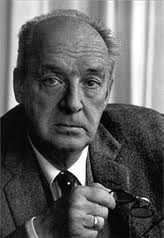
nabokov2

Lolita’s Genesis

In his Afterword to the novel, Nabokov attempts to answer the elementary question that many readers might ask, but that only Cossacks would charge with a special innuendo: what drove him to write such a work in the first place? Nabokov’s answer is typically oblique, but at root, this is a question of the book’s genealogy, that confluence of determinants that sparked the writing of the novel. In his introduction to The Annotated Lolita, Alfred Appel, Jr., sketches the novel’s fitful evolution, but a convenient summary of Lolita’s inception is also available online, in an article by Neil Cornwell. Cornwell tracks the first appearance of the pedophilia motif in Nabokov’s short stories and shows how a minor character in Nabokov’s The Gift pitches the very premise of Lolita as an idea for a book. Cornwell proceeds to cite a number of scholars who have tallied the novel’s literary precursors, including Edith Wharton’s The Children (which features a Humbertian romance) and Henry James’ What Maisie Knew, which concludes with “the barely teenage eponymous heroine propos[ing] co-habitation with her stepfather.” Dostoevsky’s name also crops up at times among the literary forerunners of Lolita; his The Possessed contained a chapter, initially censored, in which the hero confesses to having abused a child. Even more pointedly, Cornwell examines the fishy allegation that Nabokov cribbed the idea for his book from the little-known German writer Heinz von Lichberg, whose short story entitled “Lolita” appeared in 1919. In this case, Nabokov wouldn’t be a pedophile, but a master thief (at best) or a plagiarist (at worst).

In his YouTube lecture, Nick Mount cites the literary forerunners noted by Humbert himself: Dante, Petrarch and, most pertinently, Poe, all of whom suffered from nympholepsy. Other scholars have pointed out that those poetic ancients, Dante and Petrarch, are miscast as perverts, given that the writers were themselves children when they were smitten; similarly, scholars have speculated that Poe’s relationship with his teenaged cousin might have been chaste. While Humbert’s inventory of “classic” pedophiles might be suspect on its face, it might also contain at least one notable omission. Humbert never mentions Alexander Pushkin, sometimes called the Russian Shakespeare, who also fell in love with (and was doomed by) a young-ish girl, their romance flirting with impropriety as it straddles awkwardly the current age of consent. After writing Lolita, Nabokov would go on to translate, epically, Pushkin’s Eugene Onegin, and the poet’s cradle-grazing romance receives a mention in the great story “‘That in Aleppo Once….’”: the narrator says of his own wife, “She was much younger than I—not as much younger as was Nathalie of the lovely bare shoulders and long earrings in relation to swarthy Pushkin; but still there was a sufficient margin for that kind of retrospective romanticism which finds pleasure in imitating the destiny of a unique genius.” To this list, as well, Cornwell adds, on one extreme, Lewis Carrol (whom Nabokov had also translated) and, on the other, the Marquis de Sade. The evidence here is a little erratic, but a clear trend appears to emerge. It’s hard not to think that Nabokov recognized something absurd in the prevalence of this motif (or disease)—as if literary history were a Henry Darger watercolor teeming with daisy chains of eroticized children. In this merging of the ludicrous and the tragic, maybe he found something hospitable to his artistic sensibility.

Cornwell points to another possible precursor of Lolita: he itemizes the numerous precise relationships between Joyce’s Ulysses and Nabokov’s novel, including Leopold Bloom’s unusual interest in his fifteen-year-old daughter’s budding sexuality, as well as the masturbatory encounter with teenaged Gerty McDowell (whose lameness is passed on to Lolita’s Ginny McCoo with her “lagging leg”). Suffice it to say, the novel is an overgrown garden, a Daedalian labyrinth of forking references. In fact, given the likelihood of Joyce’s haunting of the novel, this relationship might shed light on the origins of one of Lolita’s only explicit scenes (John Ray calls them “aphrodisiac”): the infamous sofa scene, the setting of Humbert’s first gratification of his criminal desire in Ramsdale.

Readers will recall how Humbert cagily manipulates the girl to facilitate his orgasm, claiming at the same time to have preserved her innocence: she doesn’t notice a thing, Humbert says (yet when the phone disrupts the proceedings and Lo goes to answer it, she stands with “cheeks aflame, hair awry”: the details of Humbert’s narrative betray him). To that end, to keep the girl distracted, Humbert, in the course of his magician’s “patter,” strikes upon “something nicely mechanical”: “I recited, garbling them slightly, the words of a foolish song that was then popular—O my Carmen, my little Carmen, something, something, those something nights, and the stars, and the cars, and the bars, and the barmen; I kept repeating this automatic stuff and holding her under its special spell,” he writes. This incantatory device, the repetitious language that undergirds the scene, might point to another Joycean precursor: consider that in “An Encounter,” from Dubliners, Joyce also chronicles a run-in with a child molester, a shabbily dressed man, well-read and yellow-toothed, who has designs on the story’s child narrator. As the characters converse on the green, the talk turns erotic and, as in Humbert’s case, incantatory: “He gave me the impression that he was repeating something which he had learned by heart or that, magnetised by some words of his own speech, his mind was slowly circling round and round in the same orbit. [….] He repeated his phrases over and over again, varying them and surrounding them with his monotonous voice.” Although wildly different in tenor, and although Joyce himself spares his boy narrator Lolita’s victimization, the similarity in the characters’ vocal performances is striking.

While allusiveness alone is hardly exculpatory, it does strongly suggest that there is much more contributing to Lolita’s creation than a simple autobiographical impulse. Cossacks, naturally, might balk at this line of reasoning; they might argue that textual genealogy is just another, highbrow attempt to naturalize pedophilia, to make it seem the norm—something analogous to Humbert’s overt pleas in the book. Yet here again, Nabokov’s lacerating irony seems to me unimpeachable: he takes the ominous tenor of Joyce’s story, for example, and turns it into mad farce. The sofa scene is ludicrous in mood and effect: “I kept repeating,” Humbert writes, “chance words after her—barmen, alarmin’, my charmin’, my carmen, ahmen, ahahamen….” No, Humbert is ridiculous in his role of enchanted hunter; Nabokov simply grants him the privilege of hanging himself with his own pen.

Beyond the artificial provinces of literature, the real world also supplied the writer with no shortage of material. First, there is the actual crime of Frank Lasalle, mentioned by Humbert in Lolita, and tracked down by scholars; in 1948, Lasalle abducted thirteen-year-old Sally Horner and traveled with her cross-country for over a year, just as Humbert does with his captive. Then, there is the case of Professor Henry Lanz, Nabokov’s colleague during his brief stint at Stanford in 1941 and possible model for both Gaston Godin, the chess-playing pederast in Beardsley, and maybe Humbert himself; in the words of Leland de la Durantaye, Lanz “married his wife in London when she was fourteen” and “allegedly revealed to Nabokov the wild array of his pedophile adventures.” In the same vein, Cornwell notes Nabokov’s close reading of Havelock Ellis’ famous case history, “The Confession of Victor X,” whose Russian narrator “develops from precociously over-sexed adolescent debauchery […,] through a lengthy period of abstinence in Italy, which finally degenerates into paedophilia, voyeurism and masturbatory obsession amid Neapolitan child prostitution.” Cornwell even cites Nabokov’s reaction to the confession, in a letter to Edmund Wilson, who had introduced him to Ellis’ work:

I enjoyed the Russian’s love-life hugely. It is wonderfully funny. As a boy, he seems to have been quite extraordinarily lucky in coming across girls with unusually rapid and rich reactions. The end is rather bathetic.

Determined skeptics, of course, may still accuse Nabokov of dissimulation, but this response is, obviously, a far cry from the commiseration of a fellow sufferer. In a larger sense, it’s clear that the precipitants of Lolita were, well, legion.

While Cornwell considers multi-media influences on Nabokov’s art, he doesn’t mention Fritz Lang’s M (1931), a classic work of German Expressionist cinema. The film, also available (amazingly) on YouTube, centers on the crimes of a child murderer (played by Peter Lorre), and it ends with Lorre tracked down by vigilantes who quickly rig up a kangaroo court to try the criminal on the spot. The scene is breathtaking in its emotional intensity, marked by monstrous shifts in tone: Lorre will be shrieking his defense, pleading for his life (as Humbert does), only to be interrupted by the devastating civility of his self-appointed attorney. The crowd of “jurors” will veer rapidly from murderous clamoring to sit-com laughter. The movie, most tellingly, ends with a bereaved mother staring balefully into space, imploring the audience to be more attentive guardians of their children. This is the same plea with which John Ray, Jr., ends his fictional Foreword: “Lolita should make all of us—parents, social workers, educators—apply ourselves with still greater vigilance and vision to the task of bringing up a better generation in a safer world.” (Note how Ray’s words seem subtly critical of Lolita as the representative of her generation.) M would be worth mentioning here, if only because it offers a succinct glimpse of the emotional extremes that typify Nabokov’s work from the same period. But the movie is equally interesting, in its content and conclusion, as another potential precursor of Lolita.

Lang’s M also takes us back, conveniently and necessarily, to the Berlin of the ‘30s, where Nabokov lived until 1937, when the Nazis hurried him out of the country. Before he left for America, Nabokov resided for a brief period in Paris (until the Nazis, again, came calling), and it was there that he experienced “the first little throb,” as he calls it, of the work that would become Lolita. The resultant manuscript, a story of 50-some pages, was called The Enchanter (published posthumously, as a book, in 1986). Written in Russian and set in France, the story contains the central premise of the later Lolita, a pedophile’s pursuit and capture of his twelve-year-old victim, by means of his doomed marriage with her mother. It remains more or less exactly faithful to the plot and method of Lolita, through the hotel scene (Lolita’s Enchanted Hunters) in which the characters’ bed down together for the first time. At this point, The Enchanter abruptly concludes, while Lolita plunges on, across the country, settling in Beardsley, taking flight again, and culminating in the chase and murder of Quilty. In his Afterword to the text, Dmitri Nabokov, the writer’s son and translator, claims that the early story is a distinct work, an independent creation, but I can’t see it as anything but a first, failed draft of the iconic novel. One detail might suffice to show just how closely the two books are related; a flower show interferes with the hotel accommodations of both Humbert Humbert and the unnamed agonist of The Enchanter.

This story, The Enchanter, as it happens, is the indisputable proof that Lolita’s rightful fame has nothing to do with titillation, that readers and fans of Nabokov’s fiction are not condoning, much less celebrating Humbert’s crime. And here’s why: although The Enchanter takes up the same demented content as Lolita, almost no one reads it, and no one, to my knowledge, reveres it. In “The Enchanter and the Beauties of Sleeping,” Susan Elizabeth Sweeney gives the text perhaps more attention than it warrants, tracking the fairy-tale motifs that Nabokov exploits (the Red Riding Hood references are impossible to miss). But my impression is that very few readers even know that The Enchanter exists—this, despite Stephen Smith’s dutiful documentary, and despite the fact that Lolita’s Wikipedia page contains in its fine print a reference to the work (watch for its Russian-language title Volshebnik—which looks strangely like an anagram for Bolshevik, to boot). Apropos of the plagiarism scandal, Cornwell and others have noted how difficult it is to prove a negative, an absence of knowledge, so all I can offer by way of evidence for The Enchanter’s obscurity is this: that New Yorker-interviewed pedophile doesn’t include the title of The Enchanter among his secret stash. If Cossacks were right, if Nabokov’s fans were criminals, The Enchanter would also be a household name. It isn’t (though Lila Zanganeh’s book title, The Enchanter: Nabokov and Happiness, seems increasingly audacious.).

Nor should it be. In one of fate’s many ironies, this book, which incontrovertibly exonerates readers, at the same time makes it hardest to vindicate the writer. The plot, per the text’s length, is paper-thin, its course excruciatingly linear, its focus painfully myopic and claustrophobic, everything about it wooden and under-aired. For all its traumatic content, it might be a little boring. Nabokov’s brilliance does at times rouse itself long enough to cast a bleary eye on the proceedings, before lapsing again into dormancy. For example, as the agonist contemplates the act of consummating his sham marriage to his Brobdingnagian bride, we’re privy to the black comedy of her anatomy: “it was perfectly clear that he (little Gulliver) would be physically unable to tackle those broad bones, those multiple caverns, the bulky velvet, the formless anklebones, the repulsively listing conformation of her ponderous pelvis, not to mention the rancid emanations of her wilted skin and the as yet undisclosed miracles of surgery… here his imagination was left hanging on barbed wire.” But Erica Jong offers a capsule summary of the relation between the story and the novel: “The difference between [the texts] is the difference between a postcard from Venice and a Turner painting of the same scene.”

The Enchanter is interesting primarily for what it isn’t. It contains in utero some of the basic material and tactics that make Lolita incomparable: a passing reference to Hourglass Lake, where Humbert considers murdering Charlotte (“some seaside sand useful only as food for an hourglass”); an ur-Quilty in The Enchanter’s hotel; a prefatory attempt by the agonist to rationalize and philosophize, like Humbert, his obsession. Importantly, the story also prefigures Lolita’s tactic of lampooning and, in a moral sense, condemning the agonist’s schemes. After the untimely death of his ailing wife (in hospital, a nicety that also survives as a ruse in Lolita), the man takes a train to collect his stepdaughter; while in transit, he fantasizes about the night to come, his gradual assault on the girl’s virginity in the “tightest and pinkest sense,” and the text incorporates and confirms the reader’s response in the character of a woman who shares the train compartment: “The lady who had been sitting across from him for some reason suddenly got up and went into another compartment.” The silence of that “for some reason” speaks volumes: even through the blinders of third-person-limited narration, the text manages to convey that the agonist has visibly aroused himself, and caused the woman to bolt.

But perhaps what The Enchanter lacks, even more than Humbert’s comic self-laceration, even more than the novel’s three-dimensional world, is a greater allotment of this authorial intervention. The story’s conclusion is especially difficult to read, as Nabokov appears to ride the current of the narrative beyond the boundaries of good taste. The agonist finds himself, at last, in the hotel room with his prey; believing the girl to be asleep, he begins to weave his spell over her body, availing himself of his “magic wand” (thus, the title), which appears to be a euphemism for his penis. Yes, it’s almost too silly even to be creepy. Belatedly, the character recognizes that the girl has in fact been awake for a while and is screaming at the top of her lungs. The story rushes to its end, then, with the agonist fleeing the scene, seeking a convenient suicide, only to be struck down in the street by an obliging truck. Strangely, at this moment, the style veers directly into stream-of-consciousness narration, as the agonist welcomes his violent end (for my part, I prefer the third-person-indirect phrase that precedes this turn, “this instantaneous cinema of dismemberment”).

Nabokov must have recognized the failure in the sequence—else, he would never have rewritten it as he did. Humbert, in The Enchanted Hunters hotel, passes the whole night suffering from insomnia and dyspepsia, and the morning tryst is a masterpiece of understatement: “by six-fifteen, we were technically lovers.” Yet, something of the edge, the creepiness, of The Enchanter survives in Lolita, in the very hotel scene which features one sentence that will challenge the stomach of any reader. It describes Humbert’s anticipatory image of the girl, and depicts her anatomy starkly, unflinchingly:

Naked, except for one sock and her charm bracelet, spread-eagled on the bed where my philter had felled her—so I foreglimpsed her; a velvet hair ribbon was still clutched in her hand; her honey-brown body, with the white negative image of a rudimentary swimsuit patterned against her tan, presented to me its pale breastbuds; in the rosy lamplight, a little pubic floss glistened on its plump hillock.

There have been times when I have asked myself what the novel would lose if one were simply to strike this sentence from the page. Basically, in such moments, I have contemplated censorship of a kind. Why would Nabokov write such a sentence in the first place? Or similarly, why dramatize with such heat and precision the sexual escapades of Humbert and Annabel, when both were Lolita’s age? Humbert writes of Annabel, “whenever in her solitary ecstasy she was led to kiss me, her head would bend with a sleepy, soft, drooping movement that was almost woeful,” and the lyricism of the line rings so true that the sentence strikes with the force of memory. At such moments, it almost becomes possible to sympathize, somewhat, with the Cossack position. But before we leap into that intellectual abyss, we have to realize that in this, in many things, Nabokov was smarter, wiser, braver, than any of us. Without such passages, I’ve concluded, it might be possible to read the novel without feeling sufficiently repulsed.

Such moments bring to the surface the horror that bubbles steadily in the margins of Humbert’s tale; it skitters across the frame of the page, never far from view, seeping in from the edges, muted and ghastly in its attenuation. In the wake of the events at The Enchanted Hunters, for example, Humbert pauses to describe the mural that he might have painted for the hotel, had the proprieters “lost [their] minds”:

There would have been a sultan, his face expressing great agony (belied, as it were, by his molding caress), helping a callipygean slave child to climb a column of onyx. There would have been those luminous globules of gonadal glow that travel up the opalescent sides of juke boxes. There would have been camp activities…. There would have been poplars, apples, a suburban Sunday. There would have been a fire opal dissolving within a ripple-ringed pool, a last throb, a last dab of color, stinging red, smarting pink, a sigh, a wincing child.

The mural supplies a loose corollary, a hieratic version of Humbert’s confession. And if you can read that “wincing child” and not feel lanced by grief, you should either have your conscience checked or learn to become a better reader. The method is oblique, but the result is a wound.

My sense is that, if Nabokov had written only The Enchanter, the Cossacks might have a better case against him. But then again, if Nabokov had never gone on to write Lolita, there wouldn’t be any museums to vandalize. And because Nabokov did write Lolita, we can’t indict him for the limitations and failings of an early draft whose publication he considered (in 1959), but never approved. To put this simply, the evidence of The Enchanter serves to exonerate both the author and his readers. It’s doubtful that an actual pedophile would be capable of artistic (rather than pornographic) revision; it’s certain that readers would be indifferent to anything but an artistic triumph.

Lolita’s achievement is of such an order that it precipitates and compels every kind of artistic response, from imitation to inspiration to competition to homage to a desperate lunging at the maestro’s coattails. See again Thomas Pynchon’s Gravity’s Rainbow, his magnum opus, with its ship of lost souls whose bacchanals might make Sade blush; the shipboard set piece concludes with a pedophiliac tryst considerably more erotic than anything in Lolita. (If memory serves, this scene ends with the male participant, the book’s protagonist, Rocket Man, passing through the wormhole of his own urethra.)  Yet Cossacks will likely excuse Pynchon from their auto-da-fé, partly because such depravities are walled off behind a fortress of impenetrable prose, and they will leave alone, thankfully, Gary Shteyngart with his wave to Lolita in one of the best American stories of the new century, “Shylock on the Neva”; Shteyngart’s gangster narrator spies a young girl at a museum and flashes his “standard Will-you-sell-your-body-for-Deutschemarks? smile. […] Not yet, her black eyes [tell him].” Nor will the Cossacks touch their torches to the digital record of the Oscar-lauded American Beauty (another Kevin Spacey sighting) with its unsubtle, rose-encrusted reprise of Nabokov’s novel. Lolita even intrudes on the latest book by the turncoat Martin Amis, Lionel Asbo; the novel begins with the fifteen-year-old male protagonist prosecuting an incestuous relationship with his Humbert-aged grandmother. No, perhaps the only unforgivable thing about Lolita, the thing that makes it uniquely susceptible to attack, is that Nabokov managed to turn a tragedy into a trope.

Cossacks might try, but surely not every instance of literary child abuse can be traced back to Nabokov; only among writers of a certain stylistic cast is the ancestry clear (they write prose that bioluminesces and stings like a Portuguese man’o’war). In any case, contrary to Cossack opinion, the proliferation of Lolita’s flammable premise is neither trivializing nor sinister. Rather, in evoking Nabokov’s achievement, writers not only honor the best of the tradition, they consent to shoulder in their own ways the novel’s grim burden: to confront the very worst that humanity has to offer, and to wring from that misery something beautiful: to stare into the blackest pit and find (forge) the sun. This is the hard lesson of Lolita; it is a monument to an awful existential truth: simply to be alive, in the face of the whole history of human suffering, requires a kind of insane fortitude. Lolita reminds us that while soldiers were dying in European trenches, Monet was painting lilies in his garden; that horror and beauty are cosynchronous; that for every fine sentiment, every sweet emotion, someone else pays in blood, and eventually we all get presented with the check. The world is thick with atrocity, past and present; Lolita shows us that, from such material, within and out of it, we might wrest some measure of transcendence. The novel casts its gaze on the monstrous, but also the mythical, the banal, the comic, the poetic, even the tender (with an asterisk), and fashions a kind of harmony from the discordant and myriad particulars. A sob of despair becomes a song of hallelujah. Though perhaps beyond morality in the narrow sense, the novel’s project, this artistic patrimony, is at its root affirmative and redemptive.

The Cossack storm—a light shower, really—will soon blow over, if it hasn’t already. The circus can always be relied upon to leave town. Although it would be wrong to compare too closely the offenses of Cossacks with those of actual pedophiles, they do have this in common: both, in the end, are acts of sterility, the one perhaps trivial, the other savage. Nabokov’s novel, on the contrary, and fit testimony to its genius, is blessedly, maybe endlessly, generative.

— Bruce Stone

.

Bruce Stone

Bruce Stone is a Wisconsin native and graduate of Vermont College of Fine Arts (MFA, 2002). In 2004, he served as the contributing editor for a collection of essays on Douglas Glover’s fiction, The Art of Desire (Oberon Press). His essays have appeared in MirandaNabokov Studies, Review of Contemporary Fiction, Numéro Cinq and Salon.  His fiction has appeared most recently in Straylight and Numéro Cinq. He’s currently teaching writing at UCLA.

.
.

Apr 292013
 

Education and politics both seem to have lost a rudder. I watched my son Jacob go through the University of King’s College Foundation Year Programme in Halifax, a reading year devoted to old fashioned Great Books and a history of Western Culture. It did not make him narrow-minded and racist; it taught him to think and gave him a basis of self-understanding upon which to reach out and understand the larger world while critiquing his own immediate surroundings. If I were a kid getting ready for university, I would be breaking down the doors of that little school.

Here is an interview with Yale Classics Professor Donald Kagan on the university and the culture wars (which we have lost).

dg

Universities, he proposed, are failing students and hurting American democracy. Curricula are “individualized, unfocused and scattered.” On campus, he said, “I find a kind of cultural void, an ignorance of the past, a sense of rootlessness and aimlessness.” Rare are “faculty with atypical views,” he charged. “Still rarer is an informed understanding of the traditions and institutions of our Western civilization and of our country and an appreciation of their special qualities and values.” He counseled schools to adopt “a common core of studies” in the history, literature and philosophy “of our culture.” By “our” he means Western.

via The Weekend Interview with Donald Kagan: ‘Democracy May Have Had Its Day’ – WSJ.com.

Apr 282013
 

So, in contrast to some other causes of death, terrorism doesn’t rank all that high. And, if you look at the country stats, most terrorism deaths currently take place in Afghanistan and Iraq. This is the objective, statistical view. Which does have some impact, say, on how one generally calculates one’s vulnerability while drinking coffee at Max London’s in downtown Saratoga Springs. There is another calculation, the hypothetical calculation of a person killed in ANY terrorist attack ANYWHERE. In that view, the statistics don’t matter much.

causes-of-death-300x247

(source)

Apr 272013
 

Here’s a link to a text by Italian political philosopher Giorgio Agamben whose theories about the contrary tendencies in states between supreme executive powers and legislative powers (the government vs the individual, more or less) are particularly apropos since the events of 9/11 created a fresh context for what he calls a “state of exception.” Something to think about.

dg

The place—both logical and pragmatic—of a theory of the state of exception in the American constitution is in the dialectic between the powers of the president and those of Congress. This dialectic has taken shape historically (and in an exemplary way already beginning with the Civil War) as a conflict over supreme authority in an emergency situation; or, in Schmittian terms (and this is surely significant in a country considered to be the cradle of democracy), as a conflict over sovereign decision.

The textual basis of the conflict lies first of all in Article 1 of the constitution, which establishes that “the Privilege of the Writ of Habeas Corpus shall not be suspended, unless when in Cases of Rebellion or Invasion the public Safety may require it” but does not specify which authority has the jurisdiction to decide on the suspension (even though prevailing opinion and the context of the passage itself lead one to assume that the clause is directed at Congress and not the president). The second point of conflict lies in the relation between another passage of Article 1 (which declares that the power to declare war and to raise and support the army and navy rests with Congress) and Article 2, which states that “the President shall be Commander in Chief of the Army and Navy of the United States.”

via A Brief History of the State of Exception by Giorgio Agamben.

Apr 262013
 

“We have the option of optimism,” writes Darran Anderson in his lovely, wonderful review essay/appreciation of Kevin Jackson’s Constellation of Genius – 1922: Modernism Year One (not yet out in the U.S., pub date September). It’s all well and good to talk about aesthetics and traditions and the history of ideas, but what Anderson nails to a T is the sense of wonder, adventure, rebellion, excitement and optimism of the mo(ve)ment. Anderson himself comes across as a genial, bookish traveler, dragging his wine-stained, scarred books around the world. As time goes on, you learn that books are your best friends and the last refuge of quality in this meretricious world (doesn’t matter that there are a lot of trashy books, too; you don’t have to read them). It’s always a pleasure to discover a fellow reader, as Darran Anderson is.

dg

There are countless amazing creative developments happening right now, instigated by similarly amazing people. Some of them are drunks too, some of them doomed. We’ll not recognise many of them until looking back in years to come, possibly when it is too late, a consequence of Kierkegaard’s “Life is lived forwards but understood backwards.” We are like the fortune-tellers in Dante’s Inferno whose heads are turned backwards so they stumble about unable to see where they are going. We are fumbling blindly into the future, using what has already passed as our guide. We are all Walter Benjamin’s Angelus Novus. Yet these creative people, our own Modernists, do exist if we are perceptive enough to find them and assist them the way Pound, Stein and Cocteau did (not to undervalue their own brilliant contributions). We have the option of optimism. We have the added bonus of more history to ransack than the Modernists had and technology that would have been barely imaginable to them. We can speak to each other, as we are now, immediately and internationally without a single ship, telegram or astral projection having to be utilised.

The reason I love Modernism is that it reminds me of possibilities. If we can find nothing to astonish us, we must make things to astonish. The world is plural and the art that reflects it will never be finished, so long as there’s breath in our lungs. Let the naysayers understand, in terms of possibilities, we have barely begun.

via Ascent of the Modernists |.

Apr 262013
 

An absolutely wonderful essay on the forgotten and neglected late 19th century author Marcel Schwob by Stephen Sparks who, among other gigs, contributes to the site Writers No One Reads which I have mentioned before, as I have mentioned Stephen Sparks before — a man whose passion for books makes everything he writes tantalizing and exciting. Reading Sparks inevitably sends you off on curious, bookish adventures in a dozen different directions at once.

dg

By condemning Schwob to the category of the myopic scholar tracing obscure references through a series of increasingly arcane books and manuscripts, we risk overshadowing his emotional sensitivity, which is as keen as his erudition and is the mark of an artist who deserves a better fate. This sensitivity manifests itself in his curiosity about the individual, which is apparent in the preface to Imaginary Lives, a book once described, in a quaint (and, to modern ears, damning) romantic manner, as the “lives of some poets, gods, assassins and pirates, and several princesses and gallant ladies.” In a passage lamenting the inadequacies of ancient biographers—“Misers all,” he sighs, “valuing only politics or grammar”—Schwob emphasizes his belief in the necessity of an art that unclassifies rather than classifies, one that cares less for the sweeping generalization than it does in uncovering each individual’s anomalies:

Contrary to history, art describes individuals, desires only the unique… consider a leaf with its intricate nerve system, its color variegated by shade and sun; the imprint of a raindrop; the tiny mark left by an insect; the silver trace of a snail; or the first mortal touch of autumn gold. Search all the forests of the earth for another leaf exactly like it. I defy you to find one.

via Marcel Schwob: a Man of the Future » 3:AM Magazine.

Apr 242013
 

A female Pileated Woodpecker flew into my front window this afternoon. She was down on the concrete path when I found her, one wing splayed out, one foot curled under at an ugly angle. But she was moving her head. I retrieved my handy turkey baster and got her to drink some water, and then some more. She seemed to get the idea of the baster. Then I folded her wing back straight. And waited. She lurched finally and got her foot underneath correctly, had some more water, and then started to vocalize. Wonderful to hear. You never get close to birds like this. Very satisfying to see her back in the trees. You can see that in the first photographs she looks pretty stunned, eyes half-closed, beak open. Someone should write up the medical use of turkey basters.

dg

DSCF6115

DSCF6113

DSCF6110

Apr 242013
 

I’ve been writing books for decades, teaching writing on and off for less than 20 years. Teaching makes up much less of who I am or how I present myself to myself than writing, being a father, etc. But it does provide me with a measuring stick (what are people thinking and reading these days?) and an occasional locus for thought (how does one explain how a work of literature is built?). One of the things I’ve noticed in my years of teaching is how few people come to the craft with much understanding of the context, the cultural backdrop, the history of ideas that informs works of art now. This is kind of like driving a car while wearing a blindfold. There is a huge difference between writing a sketch of a story or a bit of memoir and creating a work of art out of that sketch, between just getting down the bare facts and writing something beautiful, between anecdote and a short story, novel, essay, memoir. Modernism, as Gabriel Josipovici talks about it in his book What Ever Happened to Modernism? arises out of this distinction, the distinction between bare communication and art, between the naive use of language and the use of language that is aware of its own contradictions, glories and insufficiencies. I have a page on NC, the Necessary Books page, which lists some of the books I have found helpful in informing my own sense of context. And recently I’ve been telling students and the poor, long-suffering writers on the NC masthead, to read Josipovici’s book. No book tells the whole story, spells out the answers; we all have to assemble our own sense of tradition. But the ideal is always to be moving toward a larger and larger awareness of the intellectual furniture of the world. I append here three reviews of Josipovici’s book to whet your appetite. And then, to complicate matters, because matters should always be made more complicated, I add a link to David Winters’s review of Shane Weller’s Modernism and Nihilism.

dg

A long time ago Philip Roth said that there are around 60,000 serious readers in the United States. That is 60,000 who would buy a Philip Roth book, maybe, but realistically there are much fewer serious readers. The kind of readers who sit up late with Ulysses, or who consider Kierkegaard’s Either/Or to be beach reading. What’s more, of these readers I would guess that a significant percentage of them have a go at writing fiction or poetry. Even if they were all lucky enough to be published, a single popular novel would be enough to sap all the media attention away from them (even in the age of the internet, which, by the way, is conspicuously absent as a force in this book. I’m not complaining; it was actually a serene delight to read a new non-fiction book that did not pour on the dreaded “e” prefix remorselessly.) The fault is not with the authors, as such, but with the culture and the criticism surrounding them. It is this that Josipovici wants to change.

And it is a gargantuan task. If contemporary culture has taught us anything it’s that a worldwide web, a few dragging steps towards equality, and a more inclusive attitude in general have almost no impact on public taste. Most people just don’t care enough about the arts to do anything other than lie supine and wait to be entertained, and one wonders if this book can have any traction in a culture that resists elitism so stubbornly. And yet I can’t help but feel that this book is so alive because the world is turned the other way. Even with insurmountable resistance, What Ever Happened to Modernism? is an inspiring, sometimes electrifying, call to arms; a serious book for serious readers.

via The Millions : Getting Serious: Gabriel Josipovici’s What Ever Happened to Modernism?

§

For Josipovici modernism is a response in art (all art, music and painting too for example, not just literature) to the “disenchantment of the world”. That disenchantment is the loss of the Medieval sense of the numinous as being part of everyday life. In short, the Medieval vision of a world filled with purpose and divine meaning gave way to what would ultimately become the Enlightenment with its vision of a secular world governed by reason and natural laws (yes, I did just gloss over about 400 years there).

This is absolutely critical to everything that follows. The death of enchantment does not mean that people were happy in the middle ages but disillusioned thereafter. It is not a personal loss of enchantment. The point is that the European concept of the world changed from it being a place in which the natural and supernatural were different facets of the same reality to a world in which the natural and the supernatural were firmly separated (and in which the supernatural could therefore potentially be discarded entirely).

With the death of enchantment comes the death of meaning. Before the disenchantment of the world it is possible to speak with authority, because the world has meaning from which authority can be derived. After that disenchantment there is no longer such an authority. The only authority that exists is that which we assert.

via The death of enchantment | Pechorin’s Journal.

§

The Modernist project has been around for far longer than you might think: from Euripides, looked at one way; or from Rabelais, looked at another; certainly since Cervantes. “Somewhere in La Mancha, in a place whose name I do not care to remember …” is how Don Quixote begins, and it is as if the rest of the book is itself a huge piss-take of the very idea of narrative, a healthy scorn for plodding literalism. When Duchamp – he of the urinal in the art gallery – was asked in 1922 for his views on photography, he replied thus: “Dear Stieglitz, Even a few words I don’t feel like writing. You know exactly how I feel about photography. I would like to see it make people despise painting until something else will make photography unbearable. There we are.” Josipovici notes the “very Beckettian style” of this (pre-Beckett though it may be); and it reminds us that the Modernist avant garde is by no means without a sense of humour.

via What Ever Happened to Modernism? by Gabriel Josipovici – review | Books | The Guardian.

§

To consider the concept of nihilism, Simon Critchley once remarked 1, is to take up the trail of ‘Ariadne’s thread’, a theoretical route through the labyrinth of history. For Critchley, the story of nihilism is the story of what it means to be modern, and to read the philology of nihilism, of the nihil, is to look through a lens at modernity’s underside. Shane Weller’s survey of the web of relations between Modernism and Nihilism proceeds from the same supposition. His book unpicks the thread where it’s at its most knotted, in the high modernist literatures of the early twentieth century. For Weller, what’s at work in the works of the modernists – from Tzara to Kafka to Cioran – is a discursive puzzle for which ‘nihilism’ would seem to be the key, the master term that could unlock and make sense of the modern. Yet the thrust of his thesis is the fact that it fails to do so; the way that whatever it touches is rendered resistant to interpretation. So, on the one hand, thought and talk about ‘nihilism’ is ubiquitous across modern culture: wherever the modernist moment is, nihilism sits alongside (or inside) it. On the other, modernism proves unable to reduce nihilism to its propaedeutic, its explanatory toolkit. Rather, nihilism is what haunts modernism, as its ghost or double, a tense co-presence forever unsettling its meanings.

via Modernism and Nihilism by Shane Weller « Book Review « ReadySteadyBook – for literature….

Apr 232013
 

Here’s an interview I did with the Irish novelist John Banville in 1995 after the publication of his novel Athena. Below are two of my reviews of Banville novels. At the beginning and the end, Banville (politely) disagrees with what I say about him (also in the middle somewhere). His disagreement seems a bit disingenuous. I still read his complex and intellectually rich books and shake my head at the idea that he is just describing the world he sees when he looks out his window. In any case the main thing in an interview is to get the subject to say something interesting. It’s a treat to hear Banville’s voice as he discusses his own work; there is a stretch when he begins talking about the beauty and tenderness of the world that is just gorgeous.

Once again, I retrieved this from a box of tapes, clumsily recorded and even more clumsily transferred to an mp3 file. There are a couple of skips near the beginning for which I apologize.

dg

Banville Part 1

Banville Part 2

Banville Part 3

On John Banville’s Ghosts

John Banville is an Irishman with the gift of blarney, an author who writes gloriously impossible novels that seem to evanesce like peat smoke or mist out of the bogs of that strange island, phantasmagoric novels that swirl and race and swallow their own tails or dance between morbid melancholy and golden, baseless hope.

He is best known in America for two historical novels, Doctor Copernicus and Kepler, about the Renaissance astronomers who turned the known world upside down. But lately Banville has returned to the Irish setting of his earlier books (Birchwood, Long Lankin), a fantastically sterile, degenerate place of decaying aristocracy, mythically dysfunctional families, murder, incest, drunkenness and mega-alienation.

In Banville’s last novel, The Book of Evidence (1989), Freddie Montgomery, a failed scientist, impecunious husband, drunkard, liar and all-round weasel, abandons his wife and child in Spain and returns to Ireland to try to raise money by selling his late father’s third-rate art collection. Unfortunately, Freddie’s eccentric and possibly lesbian mother has already sold the paintings to a wealthy dealer living on a nearby estate. While stealing one of the pictures back, Freddie murders the maid (one of the most pathetic, grotesque and revoltingly detailed murders in literature-a joy to read) and ends up serving a life sentence.

In Ghosts, Freddie resurfaces 10 years later (a life sentence in Ireland) as the novel’s unnamed narrator, ex-con, amanuensis and ghost writer to a retired art history professor living on a sparsely inhabited island with his books and a galumphing servant-keeper named Licht (sort of a cracked Prospero with his Caliban-plenty of Shakespeare allusions here).

The professor is supposed to be an expert on Vaublin, a minor Parisian painter who apparently went mad or was haunted by a mysterious imitator in the months leading up to his death. In fact, the professor isn’t an expert and has fraudulently authenticated as Vaublin’s a little masterpiece called “Le monde d’or” (“The Golden Word”), which made up part of the collection Freddie pillaged in The Book of Evidence. He is happy to hand over the work of writing Vaublin’s biography to the maid-murdering narrator.

All this is background, and most of it comes clear late in the book. The connections between Ghosts and The Book of Evidence are pleasing to note without being necessary to the reading of either work. I mention them only because they are about all that can be said with certainty about what happens in Ghosts.

Ghosts actually begins with a shipwreck (shades of The Tempest again). A small band of tourists-two women, an old man, a Mephistophelean character named Felix and three children-is unceremoniously dumped on the island by a drunken ferry captain who runs up on a sandbank at low tide. The tourists feel a mixture of strangeness and familiarity as they clamber up the dunes to the professor’s house.

These tourists bear a striking resemblance to the figures in Vaublin’s painting of the Golden World. In fact, they may be the people in the painting come to life or they may be real people who have found themselves in a painting (or a novel). And, of course, it may be a fake painting or an authentic painting painted by a fake Vaublin.

Suddenly, Banville’s little book drops down a rabbit hole of complexity, with the text oscillating between what you might expect from a normal novel in terms of character and plot and a bizarre aesthetic universe governed by the literary laws of recurring imagery, parallel structure, doubles and literary allusion.

Nothing much happens in Ghosts, and at the same time a great deal happens. The old man in the Panama hat, for example, becomes confused, then begins to obsess, trying to remember the name of that golden “thing they keep the host in to show it at Benediction.” He wanders off along the dunes, falls down in a faint, then returns to the house even more confused.

The old man’s obscure drive to remember is less an aspect of characterization than the strange feeling a real person might have if his brain were being written into by a conniving novelist named John Banville. The missing word is less important than the fact that it is missing and that it is golden and hence stands for the old man’s dreamy awareness that he has stumbled into an alternate, ghostly universe called the Golden World.

After a series of more or less similarly inconsequential events, the little group of tourists gets back into the ferry, which refloats with the tide and disappears. All except for Flora, a vulnerable, rather pretty nanny who has been taken advantage of by the nefarious Felix (sometimes referred to as Freddie’s double). Flora remains in the house to save herself from these unwanted attentions, and briefly it seems as if Ghosts might flower into a romantic entanglement between Freddie and Flora. But then, Flora, too, drifts away.

“Such stillness; though the scene moves there is no movement,” says Freddie, describing Vaublin’s painting “Le monde d’or” (and by extension the novel itself). “What does it mean, what are they doing, these enigmatic figures frozen forever on the point of departure, what is the atmosphere of portentousness without apparent portent? There is no meaning, of course, only a profound and inexplicable significance.”

This mysterious nimbus of significance is the central marvel of Banville’s novel. His characters seem to do nothing but are suffused with a mixture of valor and sadness, a steadfastness in the face of a fate they know they cannot know. And his text glows with a gritty eroticism—remarkable, considering there is no explicit sex in the book. On every page there is just the ghostly shadow of something that never appears and is never named.

This is unsettling stuff for anyone who likes a conventional story. But it should not be dismissed as self-conscious game-playing or decadent estheticism. The conventional novel relies on a certain set of technical devices (plot, character, setting and theme) to produce a fictional world that is a simplified, stereotyped and rationalized version of our own—a world where motives drive people ineluctably into action, where cause achieves effect.

Banville isn’t trying to write this semblance of reality. Rather, he is rocketing his readers into a kind of hyper-reality, a world at the outer limits of human sensibility, a world whose complexity is not reduced by the everyday filters of common sense and the pressing need to get groceries or feed the cat, a world that begins suddenly to seem more like a dream or a poem than what we normally call life.

In this world we are constantly reminded of the brevity of existence, how we always seem to have just arrived while on the point of departure. We are bemused and battened by messages the provenance of which we are only dimly aware. We push along in our daily heroics without any real sense of purpose, with only the feeling perhaps that there should be a purpose, always bewildered by the feeling of being other than what we seem to be.

Ghosts is a strange and beautiful novel about art and the wistful inconsequentiality of being, a little paean to the human heart as it mutters its defiance into the puzzling void.

—Douglas Glover, Chicago Tribune December 12 1993

b

On John Banville’s Athena

John Banville is an author singularly unafraid of the stigma of hyperbole and baroque excess. His novels are littered with incestuous, decaying families, waifish women inviting the whip or the hammer, and drunken, ineffectual male orphans (real or figurative) who move through an fog of decadence, drift and dread worthy of the great Gothic masters.

Known best in America for his historical novels Kepler and Dr. Copernicus, Banville has lately been mining a vein of contemporary Irish grotesquerie centered on a serial character called Freddie Montgomery. In The Book of Evidence (1989), Freddie, drinking too much and down on his luck, tried to steal a painting from a squire’s country house and ended by murdering the maid with a hammer. In Ghosts (1993), free after serving 10 years in prison (a life sentence in Ireland), Freddie turned up on a sparsely populated island where he had been hired as secretary to an aging professor whose specialty was a little known Parisian painter named Vaublin.

If there can be said to be a conventional plot in Ghosts, it turned on Freddie’s abortive love affair with a young woman dropped ashore by a drunken ferryboat captain. This woman and her shipmates bore a striking resemblance to figures in a Vaublin painting called “The Golden World”—part of the collection Freddie pillaged in The Book of Evidence and probably a fake.

In Banville’s new novel, Athena, Freddie’s back, this time in Dublin under the assumed name Morrow, hired by a man called Morden (who works on a street called Rue) to authenticate a cache of 17th century paintings on classical themes. In contrast to Ghosts, Athena is knee-deep in conventional plot elements. There is a cockamamie art fraud plot—something out of The Rockford Files—with a cop called Hackett and a sinister transvestite gangster called Da. There is a plot of sexual obsession and sadomasochistic love between Freddie/Morrow and a girl called A. And there is an astringently tender subplot involving Morrow’s elderly Aunt Corky (not a blood aunt; the connection is vague), who moves into his dingy flat to die. In the background lurks a mysterious serial killer who drains his victims’ blood.

For much of the novel the cracked love story between Morrow and A., a young woman with preternaturally white skin and bruised lips, takes center stage. From the outset the bumbling, chronically depressed Morrow (not since The Ginger Man have we met a character so engagingly and self-destructively melancholy) is besotted and yet knows that she will leave. His breathless, goggle-eyed account (reminiscent of Humbert Humbert’s in Lolita) of their wanton trajectory, from innocent abandon, to voyeurism, to a menage a trois in a seedy brothel, to spanking and whipping and complicit infidelity, is a droll parody of Victorian pornography—melodramatic, perfervid and decidedly unsexy as the situations become more bizarre and mechanical.

Though Freddie/Morrow has taken pains to conceal his identity, everyone else in the novel seems to know exactly who Morrow is—from the criminals who hire him to authenticate their paintings, to the investigating detective, to A. herself, who shocks Morrow one day by asking him to strike her the way he struck that unfortunate maid in The Book of Evidence. Even Aunt Corky hints that she may not be his aunt but his mother. At every turn, an atmosphere of mystery, unreality and downright fraud dogs his steps, so that, though Morrow is telling the story, he seems more and more like a character in someone else’s book, a cog in someone else’s plot.

And interspersed throughout Athena there are catalog descriptions of the paintings entrusted to Morrow, paintings on classical themes of violence, rape and transformation that bear, on the face of it, a strong resemblance to the events of the book (just as in Ghosts the characters seem to have walked out of the Vaublin painting).

So Athena becomes a kind of echo chamber of comic despair in which everything seems fated or written by another hand, where gods toy with humans and turn them into beasts, where a miasma of solipsism hangs in a world of dream, and mysterious lost children, doubles and putative parents hover just out of focus. When A. disappears near the end of the novel, she leaves a note: “Must go. Sorry. Write to me.” But there is no signature and no address, and Morrow is left with only the presence of her loss, a pneumatic void into which he writes his words.

All this is peculiar stuff—heady, hilarious, hyperbolic and strange. Banville’s literary ancestors are writers like Poe, Beckett and Nabokov. His novels are little wars between a repressive, fusty, petty bourgeois sensibility (Irish, Victorian and Modern, with a capital M) and the dark, bubbling, drunken, violent, godlike forces of sex and madness that lurk beneath the surface of life and language.

On the strength of his novels, Banville is not so much a postmodern writer as a pre-modernist, and his critique of modernity rests on a romantic, Arcadian vision of our pre-Renaissance past. Part-way through Athena, Morrow explains how the invention of perspective in painting destroyed the blissful, circular forgetfulness of the past, “spawning upon the world the chimeras of progress and the perfectability of man and all the rest of it. Illusion followed rapidly by delusion: that, in nutshell, is the history of our culture. Oh, a bad day’s work!”

From this vision, everything else follows: Morrow’s confusion, the novel’s atmosphere of fog and drift result from the application of narrowly rigid concepts of self and reality to a world that is ever and always mysteriously other. Stripped clean of contemporary talk show anodynes and psychobabble bromides, the world of Athena is finally hyper-real—one in which in which loneliness, loss and despair throb at the very center of being, and poetry, once again, is possible.

—Douglas Glover, Chicago Tribune July 9 1995

Apr 202013
 

Speculative but deeply informed on context: Trust Juan Cole to provide a more nuanced analysis of the Chechen/Muslim matrix at the back of the Boston bombings. The novels of Conrad and Turgenev and Dostoevsky tell us more about the psychology of terrorism than a lot of the current media outlets.

The anger and embarrassment visible in the interviews given on Friday by the uncle and the aunt of Tamerlan and Dzhokhar Tsarnaev, the alleged Boston Marathon bombers, are entirely understandable.

But I see clues here to family dynamics that may be important in understanding what happened. In Ivan Turgenev’s 1862, novel, “Fathers and Sons,” the old man’s son, Arkady, comes back home after studies with a friend, Bazarov, after both had adopted the radical philosophy of Nihilism. Their radicalism roiled the family for a while, until Bazarov’s death. (Later, in 1881, Nihilists assassinated Tsar Alexander II).

via Fathers and Sons and Chechnya | Informed Comment.

Apr 192013
 

Back from epic, marathon reading and interview trip to Ontario. Arrived in an ice storm. Gorgeous reading events hosted by Ian Bell (his father was my Grade 11 history teacher) and John B. Lee (multiple publications on NC). NC Contributing Editor Sydney Lea was there and I managed to get a photo of him looking like God at the reading in Highgate. Also my very first book publisher, Marty Gervais. The mix of music (Ian Bell and the amazing Michael Schatte) and literary reading was surprisingly entertaining. People paid money to come. Doing two events back to back with a long car ride in between (with stops to visit memorials for famous forgotten Canadian poets and to cast an eye on John B. Lee’s ancestral farm) made me feel like I was on tour with a troupe of actors.

Sunday, I had brunch with the Jernigans, Kim who used to edit The New Quarterly, and Amanda, the poet, and her husband, the photographer John Haney (both Amanda and John have appeared on NC). This was all the more remarkable since they had not had electricity since Thursday (the ice storm). Then I drove to Waterloo to see Jonah and also Dwight and Kathy Storring (Dwight published a play on NC; their son Nathan has an essay here).

Do you get the impression that there are secret NC cells planted all over (you know, mostly so I can travel without paying for food)?

The photo below was taken by Zach Melnick during the War of 1812 documentary interview he did with me on Thursday in the farmhouse living room.

dg

Pic-007

DG being interviewed at the farm, photo by Zach Melnick

DSCF5999

Sydney Lea reading in Highgate, Saturday evening

Michael Schatte compilation, on tour with us he performed solo

DSCF6014

Possum I found in a den by the pond at the back of the farm

DSCF6020

You can hear the dog whimpering next to me. Notice the feet. I once raised a young opossum, called Snuffy, at first I kept him in a fleece-lined leather glove (approximating a mother’s pouch, I thought). My friend Bruce Hiscock did a drawing which hangs in the house. When he seemed big enough, we let Snuffy go in the woods. My great-grandfather was an amateur poet who called himself “Possum” and kept a stuffed opossum in his store. I published an essay about him in The New Quarterly a couple of years ago. More information than you need, right?

DSCF6024

DSCF6028

First flowers, Coltsfoot

DSCF6032

My father once planted a small field with Scotch pine to sell as Christmas trees. As he once observed, they kind of got away from him.

DSCF6040

Daffodils in the woods. There are patches all through the woods, planted by DG’s mother.

DSCF6048

The farm buildings from the east.

DSCF6058

Dog

DSCF6069

DSCF6080

Dog investigating possum den

DSCF6087

Coltsfoot

DSCF6094

Geese by the pond

DSCF6103

Laneway. To the right, a spruce windbreak. To the left, a field of oak and white pine planted over 15 years ago for eventual harvest.

Apr 172013
 

Occasionally, the Omens Blog finds a story about which one need not be cynical. This one goes straight to the heart of gender issues worldwide. I love the movie title: Girl Rising.

dg

While women’s schooling has been demonstrably related to child survival and other childhood outcomes beneficial to children in the developing world, the “cultural pathways” that underline these statistical connections have not been fully explored. Now, there is a very touching yet powerful documentary film, Girl Rising, which raises our awareness of this universal truth – by educating a girl, you can actually change the world.

via Asia Times Online :: Educating a Girl can save the world.

Apr 162013
 

Woodkid’s self-directed music video “I Love You” begins with a rather enigmatic and violent image of an unconscious boy, a Viking helmet and shoe apparently knocked from his person and lying nearby. The video that follows seems to have little to do with this image, but, in the context of Woodkid’s larger project, the image and the tale both circle the same enigmatic loss.

WOODKID4

Woodkid is the pseudonym of music video director Yoann Lemoine, famous for the videos he’s made for such music stars as Katy Perry, Lana Del Rey, and Taylor Swift. He moved into music as an extension of what he was creating with his music videos, but there is a strong narrative impulse in the work. His debut album The Golden Age was released in a special edition that, instead of a jewel case, is contained within a book he co-wrote with Katarzyna Jerzak (his cousin). The book looks one part religious text and one part fairy tale with illustrations (by artist Jillian Tamaki).

The videos for the album, too, seem part of a larger literary project, each forming a chapter of a more complex narrative. “I Love You,” the third single to be released from the album The Golden Age, continues the story he built in the other two videos “Iron” and “Run Boy Run”: characters and symbols recur; the black and white simple aesthetic dominates all three. Narratively, the films overlap: “Iron” ends with a white churchly structure.

“Run Boy Run” begins with the boy that starts “I Love You” fleeing from that same structure, collecting an army of Where The Wild Things Are type beasts and standing ready to attack a metropolis of structures that look like the church he fled.

“I Love You,” then, begins with perhaps the result of this attack: the boy lying on the ground, his Viking helmet and one shoe knocked from him, apparently defeated by the white towering edifices he and his beasts sought to conquer.

“I Love You,” then is in some sense about defeat. The central narrative follows a priest-like figure who first appears in the video for “Iron” reading fervently from a religious text. In “I Love You” he arrives at a church to play the organ, announcing to the austere congregation, “Today I’ll tell you a story about a man who drowned in the ocean, after he lost someone he loved. This is a story about a man who died twice” (translated from the Russian).

Once this man begins to play the organ, the visual story follows the same man climbing and struggling across bleak, vast, rocky landscapes.

woodkid

The juxtaposition of his smallness, his fragility against this landscape speaks to the intensity of the struggle he faces as he stumbles, presses his face weeping to stones, and eventually walks out into the ocean and sinks.

In an interview with Complex Magazine, Woodkid points to a thematically similar moment in the written text:

There’s this moment in the book where the kid says to his mum, “It’s very windy outside, there’s this massive storm,” and these are actually fragments of lyrics you find in The Golden Age. He says, “Look at the trees, they’re bending and almost touching the ground.” Because the wind is so strong, he says to his mother, “Look, they’re going to break.” And the mother says, “No they’re not going to break because they’re super tender.” But if they get old, dry, and more hard, then in the case of heavy wind, they’re going to break.

This man will succumb, will turn to stone (this, too, foreshadowed in the earlier video for “Iron” where he appears wearing a suit that looks like it is made from marble).

Screen-shot-2011-03-31-at-1.11.04-PM

Two things complicate this defeat for me: the congregation and the whales. Woodkid’s narrative briefly flashes from the journey of the man who will turn to stone to show a few faces of those who are affected by this music and tale: an old man lowers his head to look at the religious symbols he holds, a woman lowers her head in despair, another woman kisses the crown of a baby’s head like this consoles her, and a boy looks heavenward, weeping. They each witness his tale and present us with ways to experience it: we can lean away from it, find consolation in faith or objects or in children, or we can give in to despair.

Here I am most intrigued by the woman with the lowered head. When the central character enters the church at the beginning, you can first see her to the right; she stands waiting in the front row, overjoyed to see the protagonist. And she appears later, head lowered, trembling, weeping at the song, the tale he’s sharing. She doesn’t look at him, can’t as he has his back to the congregation. And she seems, for lack of a better word, ashamed. Head bowed, trembling. From her initial joy and excitement to this despair, her story is secret from us.

But her reaction and, truly, none of the congregation’s are what the tale prescribes. They deny the whales.

01wk

The tale, simply put, is the journey of a man who turns to stone. This could have happened anywhere on the landscape of stone he traversed, but instead this transformation happens as he sinks down into the abyss circled and surrounded by a maelstrom of humpback whales. It’s a complicated image: the massive leviathans with their vaguely stony exteriors, but their graceful swimming together through the beams of light that pierce through the dark deep. Certainly water is what he washes his face and hands with before he begins to play music in the church and it is echoed here in some sense as cleansing. It is also, however, heavy and crushing as he sinks around the graceful hulking forms that rise where he falls.

Defeat, yes. But there’s also, inescapably, beauty in this struggle, this loss, and this transformation. The congregation, with their various reactions and griefs, seem to miss this experience of the tale. But we don’t. We can’t. There’s too much grace.

— R. W. Gray

Apr 152013
 

Pierre JorisPierre Joris

Two truly lovely poems here by the prolific Luxembourg poet, novelist and editor Jean Portante translated from the French by my old friend and former colleague at the University at Albany Pierre Joris who is himself a prolific and peripatetic poet, impresario and world-traveler. (Please revisit his gorgeous translations of Habib Tengour’s “Five Movements of the Soul & Hodgepodge” published earlier on NC.) These are amazing poems. The first is an insistent, undulating, rhythmic meditation on the desert, sand, the sea (the anti-image) and the poet’s self, the sand and the desert inhabiting the self as metaphor and soul. The poem is leavened with sweet touches of wit (the poet at the line between one desert and another, watching the grains of said get married in secret before crossing). And, oh my goodness, just look at the “The One I Saw Again” — three parts, three characters; take the first, with its recursive “passed and passed,” the train passing before the eyes of the subject who is sewing up his wound again and again and not seeing the passing and passing though it is reflected in his eyes. Oh language, oh beauty! Helps heal the day.

dg

PortanteJean Portante

§

 THE DESERT

Le désert compta ses rides et l’aigle et le

faucon répandirent, aussitôt la nouvelle.

— Edmond Jabès

it is due to the general indifference of

the grains of sand

that the desert came about

but also because the sand

knew how to remain gregarious

………………..*

to know that all the grains of sand

of all the deserts sleep in me

does not reassure me

like them every night

I get underway

searching for a dry dream

a dream which in order to defend us

would brave the meanders of humidity

………………..*

I went to station myself

on the line separating one desert from the other

to watch the grains of sand

getting married in secret

before crossing the border

………………..*

when I said I had the desert in me

I was thinking less of the dryness

than of the incessant swarming of the sand

and caught in the swirl

I stopped weeping

even though I had been weeping for joy

………………..*

each desert hides a secret

each secret hides an injustice

nobody knows who slipped it in there

but it makes everybody rejoice secretly

………………..*

I’ve read somewhere or did I dream it

that the desert was the scar a sea left

o what anguish to think

that one day the wound could open again

………………..*

in my childhood my youth my life for short

I have known many a gathering of sand

the words I have spoken or written

rest there temporarily

a wind comes up and worries them

………………..*

I envy the desert’s sand grains’s anonymity

they come and go they say hello good night

they love & know how to recognize each other

because there where one ends the other begins

in the desert the eternal return

is a question of life and death

………………..*

no one has as much imagination as a desert

the sea was there first

but the desert knew how to dry it up

& seize its memory

that’s why no one

has as much imagination as a desert

………………..*

Certain words disappear

when they venture into the desert

the stories that emerge from it

nearly always seem truncated

but if one looks at them closely

one notices that they have become purer

………………..*

All poets should speak of the desert

and the musicians would do well

to think of it from time to time

if only because history

has all too often slandered it

………………..*

to be as happy as a desert or as sad as water

is not a malediction

one couldn’t have avoided

today you can love the one

without betraying the other

………………..*

we should thank the desert

for having taught us to ration the water

this could come in handy

during the next drought

m

m

THE ONE I SAW AGAIN


…………….THE ONE I SAW AGAIN

two days ago kept sewing

the same wound up again:

if he still sat facing

the train that passed and passed

again it was not because he

particularly loved the

journey but because of this

window that gave

onto the viaduct:

yet the train as it passed

and passed again over the

viaduct before him still reflected

in his eyes:

did he know this as he kept sewing

the same wound again & again:

and what did he know of immobility:

and the one sitting across from

him on the train that passed

and passed again over the viaduct

was he jealous that across

from him the other thus

sat at his window giving

on this viaduct without

particularly loving

the journey:

and isn’t it exactly because

of this that the train passed

and passed again as if

instead of carrying its

passengers towards a specific

destination its only mission

was to agree with this

statistic that states that of

two men sitting one at

least will ceaselessly be sewing

up the same wound.

m

…………….THE ONE I SAW AGAIN

previously held at the end

of a long string a distant

kite that his hand reeled

in and reeled out:

the clouds were close by

and the migratory birds that

were returning from afar

were also tethered to a string:

just like the clouds

by the way and even the sun

when it hid:

and if you looked carefully you

saw that there was also

a string from one language to

the other or from the apple tree

to the olive tree and our gazes

remember were linked

one to the other by two

strings on which wept like

clothes hung out to dry

or rain that falls and wets

the pro and con

of love:

the kite also wept

on its flight:

you could have thought the entire

universe was repenting:

the strings of course were

invisible to the naked love

but when the storm

broke and the flash of

lightening photographed the

landscape didn’t you see

as if you were all

these hands that reeled in and

reeled out all remorse.

m

…………….THE ONE I SAW AGAIN

more than a week ago

like a dead man hugged

the walls of the city:

you’d have thought he was

sorting the mirrors

from the shadows:

there were graffiti

behind him on the walls

he was hugging but he

didn’t read them:

everything he did or

didn’t do was

carefully sorted:

I confess that I didn’t

read what the walls

said either and when

I said that I saw him again

more than a week ago the one

who like a dead man hugged

the walls of the city maybe

I was a little too forward:

it was pitch black already

and a street light of uncertain

origin was projecting

shadows on the walls:

what I saw was that

some were missing

others not as if light

had its preferences:

so then I started to count

these shadows thus sorted

on the walls of the city

and coming to mine with

a step darker than usual

I like someone who knows

but doesn’t say anything

to anyone thought back on

this story of a kite that

doesn’t fly which

I often tell and on these chance

occurrences that sort so well

the secret from death

but I told no one about it.


 —Jean Portante translated by Pierre Joris

———————

Born in Differdange (Luxembourg) in 1950, though presently living in Paris, Jean Portante is a writer, translator and journalist. He is the author of some thirty books including volumes of poetry, collaborations with artists, narratives, plays, essays and novels. Published in 15 countries, his work has been translated into English, Spanish, Italian, German, Slovakian, Croatian and Rumanian.  He has translated Juan Gelman, Gonzalo Rojas, Jerome Rothenberg, Maria Luisa Spaziani, Edoardo Sanguineti, John Deane, Pierre Joris many other poets into French. For editions Phi in Luxembourg he directs the poetry book series graphiti. In 2003, he was awarded the Prix Mallarmé for his book L’étrange langue  and the Grand prix d’automne de la Société des gens de lettres 2003 for the whole of his work. En 2005, a Selected Poems came out from Editions Le Castor Astral. The sequnce above is from “Journal d’un oublieur intime” in La réinvention de l’oubli. Editions Le Castor Astral, Paris,  2010.

Pierre Joris has moved between the US, Europe & North Africa for 45 years, publishing over 40 books of poetry, essays and translations. Coming in early 2013 are Meditations on the Stations of Mansur al-Hallaj (poems) from Chax Press & Barzakh (Poems 2000-2012) from Black Widow Press. Just out from UCP is The University of California Book of North African Literature (vol. 4 in the Poems for the Millennium series), coedited with Habib Tengour. Exile is My Trade: A Habib Tengour Reader edited, introduced & translated by Pierre Joris (Black Widow Press) came out in early 2012 as did Pierre Joris: Cartographies of the In-between, edited by Peter Cockelbergh, with essays on Joris’ work by, among others, Mohamed Bennis, Charles Bernstein, Nicole Brossard, Clayton Eshleman, Allen Fisher, Christine Hume, Robert Kelly, Abdelwahab Meddeb, Jennifer Moxley, Jean Portante, Carrie Noland, Alice Notley, Marjorie Perloff & Nicole Peyrafitte (Litteraria Pragensia, Charles University, Prague, 2011).  The Collected Later Poems of Paul Celan, translated & annotated by Pierre Joris, is scheduled for early 2014 from Farrar, Strauss & Giroux. Other recent books include The Meridian: Final Version—Drafts—Materials by Paul Celan (Stanford U.P. 2011), Canto Diurno #4: The Tang Extending from the Blade, (poems, 2010), Justifying the Margins: Essays 1990-2006 (Salt Books), Aljibar I & II (poems) & the CD Routes, not Roots (with Munir Beken, oud; Mike Bisio, bass; Ben Chadabe, percussion; Mitch Elrod, guitar; Ta’wil Productions). Further translations include Paul Celan: Selections (UC Press) & Lightduress by Paul Celan which received the 2005 PEN Poetry Translation Award. With Jerome Rothenberg he edited Poems for the Millennium, vol. 1 & 2: The University of California Book of Modern & Postmodern Poetry. He lives in Bay Ridge, Brooklyn with his wife, performance artist Nicole Peyrafitte & teaches poetry & poetics at the State University of New York, Albany. Check out his Nomadics Blog.


Apr 142013
 

Richard Jackson

Poems and images intertwine in Richard Jackson’s “Soundings,” a series of nature photographs juxtaposed with the superb poems they inspired, the photographs themselves iconic, metaphorical and mysterious. The human and the natural intersect at the level of form when the poet spies a dilapidated chair in the forest, a cluster of roots resembling tank traps. A bee becomes a soul and a gap between facing cliffs looks like, well, a gap and the gap is violent, a pile of shell casings. Images and poems project a moral grid onto the cluttered world, they compose a judgement and a puzzle.

This is what Jonah had to learn, that it is
all loneliness, all forgiveness, all gathering
from the puzzling depths he carried within him.

Richard Jackson is a peripatetic poet and translator, an admired colleague at Vermont College of Fine Arts where we both teach, a good man to travel with and a profoundly engaged human being. He has published poems, translations and essays on NC before and it’s a pleasure to have him back.

dg

Soundings photo by Richard Jackson

.

SOUNDINGS

What we know deeply we know for such
short time before it appears again, distant and foreign.
Where do our words go once they are spoken?
The whale sheaths itself and leaves behind a footprint
of oil.  The sea gathers the setting light of the sky.
At some point, the sea becomes the sky.
This is what Jonah had to learn, that it is
all loneliness, all forgiveness, all gathering
from the puzzling depths he carried within him.
Above, a gull dives into a cloud. An invisible
plane leaves a vapor trail the wind bends. There is
a kind of truth we only see when we close our eyes.


Butterflies photo by Richard Jackson

.

BUTTERFLIES

All the energy collected by Radio Telescopes since
they started is only equal to the energy of a butterfly
landing on a flower. Which is to say how little we know
about what is in our own solar system, or ourselves.
In fact, Pluto’s orbit is so irregular we don’t know where
it will appear next. Which is how, I suppose, you have
landed here in this sentence and, like gravity, have begun
to shift the focus. Maybe that’s why I think of Newton,
who, poisoned by Mercury from his alchemy experiments,
couldn’t remember where he put his proofs for elliptical
orbits. There’s no reality without its proof, Halley had argued
years before the comet was named for him. The energy
it takes to remember is the energy it takes to love,
the saying goes, taking so little, as those butterflies know,
to flutter and fly off because there is no formula, and
because love is stronger than the proofs we remember for it.

.

Chair by Richard Jackson

.

THE CHAIR IN THE FOREST

The story begins with the muffled hum of bees you can’t see
as they circle a nest in the cushions. It begins with their sound

that folds the air into bolts of cloth. It begins with the whine
of the truck half a mile away on the nearest road. It begins
when we live in the absent sounds of someone else’s dreams.
They have gone where they had to go. The sunlight strikes
where it wants to go. There was never any money to stuff into
the cushions. The felled trees have their own stories but are
of no interest here. The path to the next clearing has not been
told yet. Pascal was right, there is no center or circumference.
The bees are souls. The bees wander off. The story begins there.

……

.
Tank Traps Richard Jackson

.

TANK TRAPS
Ljubljana, Slovenia, 1992

Someone is watching from the window across the square.
There are Nightbirds complaining as they maneuver
And dive between the lights. We could drink the darkness.
Those aren’t child’s jacks or crosses as they seemed from afar.
Below us, a Roman city smirks about what we’ll never know.
South of here the souls of the dead disguise themselves as
Clouds to escape the militia. Each day is another trap.
Our words are blemishes on the truth. Every heart is crossed out.
The darkness provokes a few whispers.  Everywhere we look
Something crosses our path. We can’t see the lovers yet,
About to cross from the right. We can’t see the child
Crossing out what he’s just written. There are no halos
On the streetlights. These designs imprison us. The sky
leans down. If we aren’t careful we’ll cross out the world.

”””””””’
Rock Bird  Richard Jackson

.

ROCK BIRDS, BISTI WILDERNESS, NM  

No wonder the first people here believed we came from stone.
What these birds were waiting for was the day we would return.
The lizards wrap themselves in light. The wind whispers into
the ear of the sky. The shadows have a purpose we’ll never
decipher. Nevertheless, these birds invite us to speak to them.
At night these rocks will be iced with light. The question
they would answer is why they left the air. They are no longer
surprised by what we have tried to carve into history.
Sometimes our words hold an idea for a few moments before
the sand claims it. The mind shivers at this thought. Reality
seems like a provocation. Nevertheless, these birds, they are
silent to say whatever has been wearing us down, carving us
into shapes we could never imagine, never refuse to believe.

 .

Fog Richard Jackson

.

FOG

Crows and Elephants watch over their dead and mourn.
How strange to come back now to that sentence, weeks
later. It’s almost time to leave. Every sound is louder
in the fog. My watch strains to go backwards. Shadows whisper
where no shadows could be. An echo of the moon strays
out of the last ruins of darkness. Yes, the two men in the boat
about to become fog are real. So, too, the dreams that are
lost among the fallen trees that scratch the shoreline.
Last night, the stars on the water were trap doors. The crows
with their charred wings are complaining to a hawk.  It’s time
to pack up  the sunsets the dawns and move on. There’s our dog
sniffing below this window who knows everything else we can’t see.


.Not Said Richard Jackson

.

NOT SAID

Gravity happens to the lens. Words squint but
it doesn’t help. I want the mailman to deliver
another story. Instead there are only the homeless
men washing the windshield for a quarter. Why
does love seem stuffed in the trunk? This is not
a calculus problem.  The bridge from here
to there hasn’t been delivered. Empty bullet
casings litter the scene. No one is ever a witness.
The heart sags. My footprints forget me.
I don’t think anything will ever be the same.
This is the edge of the cliff and you can’t move,
can’t jump. Everything is vertical. With binoculars
you can see where you’ll be in an hour. Raindrops
collect on the lens. A fine mist. It hides us.
It drifts into clocks. Gravity presses your hands.
Some hurts never get said. Some get smuggled.

—Richard Jackson

—————————-

Richard Jackson is the author of ten books of poems, most recently Resonance (Ashland Poetry Press, 2010) which won the 2012 Eric Hoffer Award), Half Lives: Petrarchan Poems (Autumn House, 2004) Unauthorized Autobiography: New and Selected Poems (Ashland Poetry Press, 2003), Heartwall (UMass, 2000 Juniper Prize), Svetovi Narazen (Slovenia, 2001), a limited edition small press book, Falling Stars: A Collection of Monologues (Flagpond Press, 2002), Richard Jackson: Greatest Hits (2004), and several chapbooks of translations. He has edited two anthologies of Slovene poetry: The Fire Under the Moon and Double Vision: Four Slovenian Poets (Aleph, ’93) and edits an eastern European Chap book series, Poetry Miscellany and mala revija. He is also the author of a book of criticism, Dismantling Time in Contemporary American Poetry (Agee Prize), and Acts of Mind: Interviews With Contemporary American Poets (Choice Award). His several dozen essays and reviews have appeared in Georgia Review, Verse, Contemporary Literature, Boundary 2, Kenyon Review, Prairie Schooner, Numéro Cinq and numerous other journals, as well as anthologies such as The Planet on the Table: Writers Reading (2003) and John Ashbery (ed. Harold Bloom, 2004). In addition, he has written introductions to books of poems by four different Slovene Poets for various presses, and a special Slovene issue of Hunger Mountain (2003). He edited a special 50-page section of Poetry International (2004) on William Matthews with an introductory essay. In 2000 he was awarded the Order of Freedom Medal for literary and humanitarian work in the Balkans by the President of Slovenia. He has received Guggenheim, NEA, NEH, Witter-Bynner and Fulbright Fellowships, and five Pushcart Prizes.His new poetry collection, Out of Place, will be published by Ashland Poetry Press in 2014.

Apr 132013
 

Jacob Glover

In Plato’s Timaeus, Timaeus offers a cosmogony. He holds that there are two original principles in the cosmos, namely, intelligence and necessity. The beginning of the cosmos, Timaeus claims, depends on a particular event, the persuasion of necessity by intelligence. He says:

For mixed indeed was the birth of this cosmos here, and begotten from a standing-together of necessity and intellect; and as intellect was ruling over necessity by persuading her to lead most of what comes to be toward what’s best, in this way accordingly was this all constructed at the beginning: through necessity worsted by thoughtful persuasion. (Timaeus, 48a).

This is a dense passage because it contains the entire first moment of creation. But what is most interesting to me is the way Plato uses the verb “persuade.” By using “persuade” Plato immediately moves from scientific or philosophical discourse into poetry. Even the idea that necessity has desire or will is poetic, i.e. the suggestion that necessity and intelligence have intention and interact with another creates the metaphorical image of two people debating. Plato suggests that necessity wants to do one thing, but intelligence persuades it do another. He is personifying absolute principles of the cosmos as desiring entities.

Why does Plato need to rely on this metaphor of this cosmic persuasion in order to explain the moment in which necessity and intelligence stand together to create the cosmos? I think that Plato here conceives dialogue itself as containing a certain element of creativity. Then he transfers the creativity inherent in dialogue metaphorically to the creation of the cosmos.  Necessity is pure potential for movement toward some end, while intelligence functions as a conditioning or triangulating principle. And persuasion is the third element or mediator that makes it all possible.

This cosmic conversation, which Plato refers to as a σύστασις or a standing-together, depends on persuasion or πειθώ.  Persuasion is characteristically human because it deals in desire and belief. To persuade means to change someone’s mind, to convince him by talking, not by force. In The Republic Polemarchus points out that “you can’t persuade people who won’t listen” (Republic, 327c) because persuasion is the movement of one mind from disagreement to agreement, a change in will.

Necessity is, as Plato describes it, an absolute condition of things which come into being. Necessity is a sub-surface condition, a cause of causes, an axiom of existence. “Everything that comes to be, of necessity comes to be from some cause; for apart from a cause, it’s impossible for anything to have a coming to be” (Timeaus, 28a). Necessity is the condition upon which cause can cause, or it is a condition of existence: everything that exists must have a cause. But, for Plato, necessity isn’t an autonomously creative principle. Rather necessity must come into some sort of communication (standing-together) with intelligence in order to produce. The Greek word we translate as intelligence is νους which also means mind. Frequently in ancient philosophy these two translations seem to be interchangeable. The word νους implies that the universe has some sort of thinking component akin to the human mind. Intelligence deals in thought; necessity in causality.

In order to explain persuasion’s mediating function I want to take a close look at the Greek lines: ταύτῃ κατὰ ταῦτά τε δι᾽ ἀνάγκης ἡττωμένησ ὑπὸ πειθοῦς ἔμφρονος οὕτω κατ᾽ ἀρχὰς συνίστατο τόδε τὸ πᾶν. (As above: “in this way accordingly was this all constructed at the beginning: through necessity worsted by thoughtful persuasion.And here is my own translation following a more literal word order: “Thus in this way, and accordingly, through necessity bested by thoughtful persuasion as the beginning, this all was constructed.”)  The first thing to notice is that neither intellect nor necessity is the subject of the sentence. Plato tags the subject “the all” at the end with the verb almost as an after-thought. Both intelligence and necessity are in phrases which make them logical conditions for the subject and the verb, but the two principles themselves are not active in this sentence. The sentence seems to imply that their action (standing together) has already taken place.

Secondly, πειθοῦ, the word for persuasion, is in the exact middle of the sentence with eight words on either side. In English this would not be as interesting because word order means more grammatically and syntactically and less in terms of theme. But, in Greek, word order can affect the theme of the sentence. Placing πειθοῦ in the middle of the sentence gives it a sort of bridging function, or it pulls either end of the sentence together. I think that the word placement and the grammatical constructions Plato uses here are crucially diagrammatic of the way he understands (or at least Timaeus understands) the interaction between intelligence and necessity. At the level of sentence structure Plato seems to suggest that persuasion is a causeway of sorts. It brings together the two conditions which constitute the creation of the cosmos.

Another way of  explaining persuasion in this context might be to see how the cosmic conversation compares to the actual conversation which begins the Plato’s dialogue Timaeus. Socrates and his interlocutors start by discussing the interlocutors’ duty to give speeches to honour their host. Timaeus says: “It wouldn’t be at all just for those of us who are left, after being entertained by you yesterday with gifts so befitting to a guest, not to host you heartily in return” (Timaeus, 17b). So Timaeus and his friends make speeches because they owe them to Socrates, not out of an agreement made between them but on account of the traditional courtesies between guest and host. There is, in other words, a necessity for them to make speeches, a necessity driven by tradition. But tradition itself only requires a speech; it does not suggest the content of the speech. And this is the way Plato wants us to understand necessity, i.e. it provides a motion (or form)—make a speech–without giving it or purpose.

Then Socrates himself suggests the content of the speeches. He briefly summarizes the account of the just state in The Republic. Then he suggests that Timaeus and his friends make a “full account” (Timaeus, 19c) of a city founded on those principles, i.e. describe the city as if it were real and not just a “word-picture of an ideal state” (Republic, 472e); their speeches should create this city. As Critias says, it is as if they are to reveal “by the oracular voice of the sacred texts, and, in what remains, to make speeches as though about men who are already citizens” (Timaeus, 27b). Socrates stands in for the cosmological “intelligence” at this creative moment. The conversation among the friends and guests is at a critical point; it could either fizzle into nothing or create something new and real. Again, Socrates offers the content; the desire to speak comes from outside of Socrates, i.e. from tradition. To revert to the cosmological creation story, necessity is like a person coming out of a tradition and who must perform actions for no reason other than the imperatives of custom and habit, and intelligence is the philosopher from The Republic looking toward the good. If there is no persuasion then the result is the moment in The Republic when Cephalus walks away to continue sacrificing.

But where is the precise moment of persuasion in the conversation between Socrates and Timaeus? Socrates’ suggestion is technically the moment of persuasion. This is not perhaps a moment of pure persuasion because Timaeus, Critias and Hermocrates do not need much convincing. But persuasion is inherent in the way Socrates rationalizes why they should speak about the city. Persuasion is in the moment when both parties agree on the goal. The precise turn is hard to pinpoint because before someone is persuaded he is being convinced and afterwards he is only persuaded in retrospect. Persuasion is this moment in creation when an object is rationalized to a desire which until then had no object. This results in a reason to move and thus begins the act of creation.

—Jacob Glover

BIBLIOGRAPHY

Plato. The Timaeus. Trans. Peter Kalkavage. Newbury Port: Focus Publishing, 2001.

Plato. The Republic. Trans. Desmond Lee. New York: Penguin Classics, 2007.

—————————-

Jacob Glover is in his senior year in the Contemporary Studies Programme at the University of King’s College in Halifax, Nova Scotia.

Apr 122013
 

 Angela Woodward snow photo

Angela Woodward‘s first novel, End of the Fire Cult (Ravenna Press), is a small masterpiece (small only in the sense that it is 104 pages long) that has unjustly gone without the wider recognition and audience that it deserves.

End of the Fire Cult tracks the slow dissolution of a marriage–not through the day by day tensions of the unhappy couple, but through the political, cultural and diplomatic relations between two imagined countries: Marmoral, invented by the wife, and Belgrave, invented by her husband.  Relations are strained between these two countries, and as the reader explores the annual rituals, folklore and written literature, and the delicate negotiations of Marmoral and Belgrave’s shared border, the reader comes to see how large, how complex is the interior geography of any wife and husband, and how much can go wrong. Numéro Cinq is proud to be able to feature two excerpts from Angela Woodward’s novel: “Fire III—Fireflies,” and “Arachne.”

—Philip Graham

Read Philip Graham’s interview with Angela Woodward at Fiction Writers Review.

End of the Fire Cult front cover


Fireflies

Half of Marmoral’s people celebrated fire. The priests of the fire cult bred a species of firefly that was larger but more delicate than the wild ones. These pampered creatures passed their larval stages under logs which the priests gently sprinkled with water or dried with fans, as the weather dictated. For three days only they lived in their adult incarnation, dull tan beetles with blinking yellow abdomens. For the short period the fireflies came out, the members of the fire cult stayed up all night, evading official curfew, and walked around the orchards. The dark trees flashed, leaves suddenly visible, then shrank back to murky umbrellas as the bugs’ torsos shut down. Your lover’s face swung into focus, the phosphorescence behind her haloing her cheek. Then a moment later she was extinguished, just a black figure beside you. Yet you still heard her breathing, regular and steady.

The fireflies didn’t do well after the introduction of modern pesticides. By the seventies they were almost all gone. They were enshrined in a song the children had to learn in Sunday school. While the little ones, under the spell of their beautiful teacher, chanted the lines with pious awe, by the time they were nine or ten they were sick to death of the nostalgic religion lessons and fitted their own words to the hymn’s simple rhyme. “Her tits, her tits,” they sang as loudly as they could. But if their mother suddenly showed up, they went back to the original version.

Recently, with only a day’s warning, the city administrators in the capital sent work crews to tear up the main street through the shopping district of the fire worshippers. The waste pipes underneath needed to be replaced. Everyone had complained for years about the sewers backing up, but they were still affronted by the quick work of the bulldozers. And when the workers showed up at dawn, cut through concrete for an hour, and then vanished to smoke cigarettes and watch soccer at the cafes in adjoining streets, the sour views of those who saw the construction project as punitive seemed justified. The workers set up sawhorses across every intersection. It became almost impossible to travel from one side of the district to the other, and the roads leading out were capriciously closed, one on one day, another the next, so that you never knew if all your maneuvering to reach a certain street was any good at all. The workmen came back in late afternoon and hammered through the dinner hour. All their effort seemed to do nothing but stir up dust. They knocked out electricity and phone lines and took days to restore service. Women stumbled to their dress shops, their fashionable shoes no good on the jagged rubble. The upholsterer didn’t get his delivery because the supply truck couldn’t make it through. Finally he sent his son and a lot of little boys to meet the truck in a park a mile away. The kids filed back to the shop, carrying the bolts of velvet like corpses between them.

It was unbearable, an outrage, and after months of work, the street seemed no nearer completion than on the first day. It would have been okay to have the sewers still back up, the residents told each other. At least they had their own plumbers. Wasn’t the city tormenting them? And who knows if there wouldn’t be a special tax levied, to make them pay for it all. That would be no surprise.

But each evening around nine o’clock, the workmen melted away. With no traffic on it, the main street was remarkably quiet. The kids from the apartment houses came out to play in the dirt. It was like when they visited their cousins back home in the countryside. Their parents came out to call them in, but the kids paid no attention. And the parents didn’t really mind. They stood on the corners talking to their neighbors, some they knew, some strangers from other floors or other buildings. The workmen left flashing orange flares on the sawhorses. All along the torn-up street, the harsh lights switched on and off, regular but out of synch with each other. Little slices of storefront stepped on stage, then fell back into shadow, one after another down the strip. If the electricity came back on, people hurried home to watch the news. But on the nights when the lines remained disconnected, men and women dragged out chairs or stretched out blankets and stayed up til all hours. The orange flares lit up rings of desolate rock, overturned chunks of concrete and orphaned pipe joins. The street might never be fixed. Rumor had it the city would leave it unfinished until the residents forked over a special assessment. The landlords should have paid it, but it was to be exacted from the tenants, and until everyone had settled their bill, the street would remain a mess. The workers were to dig holes one day and fill them the next. The cost would go up and up. It was intolerable, unfair, a disaster.

The children heard all this but didn’t let on. They crept down into the craters and tunnels under the street.  They didn’t care how dangerous it was.  Even if their father shook them and made them promise, they still crawled under. “Her tits, her tits,” they sang from their hiding places. The adults sang back, somewhat ashamed of how sentimental the real words were. What a stupid song. Everyone knew the melody, and some just hummed that. All up and down the street it burst out, little pockets of sound.

§

.

Arachne

My husband discovered a new brothel in the back streets behind Belgrave’s capital. I didn’t need to know about it, did I? But he couldn’t help it, he said. It wasn’t like he’d gone looking for it. It was part of the culture. The brothel had no name, not even a sign over the door. For all his protest that the people of Belgrave were altogether more noble and civilized than my Marmolians, his country had no towns of any size other than its ungainly, sprawling capital. In a former sandwich shop a block to the west of the parliament building, an old woman had moved in with a new crew of girls. Just down the street were two of Belgrave’s oldest houses of prostitution, centuries-old hereditary businesses that were in all the guidebooks. These featured red lights, pink curtains, filmy nightgowns, seventeen-year-old beauties from the mountain villages. The girls shopped together in the markets in the late afternoon, where people goggled at their thin foreign tee shirts and stove pipe jeans, their modern, confident allure.

I don’t suppose I was too happy about Belgrave’s flourishing sex industry, but this new place was made along different lines. When it rained, its dim doorway was barely visible. Even a man’s very first approach to it was a hesitant groping, a brushing of fingertips along contrasting textures—rusty chain link, splintered wood, the smooth, sticky plastic of a shower curtain that partially shielded the porch. Madame specialized in exotics—not the brash magazine-reading girls of the other institutions, but women widened, enhanced, enlarged, or made tighter. One was slashed to accommodate “you and your friend,” while a host were permanent virgins, sewed enticingly tight.  Another was totally hairless, even her eyebrows and arm hair removed for all-over silkiness, while another had velvety, furry breasts. One had been fitted with gripping, stippled vaginal walls. I would have preferred vague wondrous claims—unforgettable! Like nothing you’ve ever experienced! But the exercise of inventing Belgrave had made my husband, like me, into a wielder of precise optical detail.

We had little to do with each other in the evenings now. “What’s new?” he sometimes asked, standing four feet behind me in the kitchen, watching me turn down the flame under a pot of rice and punch the timer. He was afraid to ask when dinner would be ready. Maybe I hadn’t made enough for two. He didn’t like my cooking any more, anyway. I ate plain rice, a handful of cashews, an apple. That was enough. Or I cooked an elaborate eggplant dish, a curry braised in coconut milk, and by the time it was done, Daniel had already had some bread, a piece of ham, some carrots, three cookies. Our meal times were all out of synch, and our going to bed and rising.

One evening he told me a new attraction had arrived at the brothel. “Was there an ad?” I asked Daniel.

Just a rumor, word of mouth. “You won’t like it, though.”

Yes, the whole thing disgusted me. I had used to love his hair, especially when it flopped over his eyes when he neglected to get it cut. These days he was keeping it combed and parted, in yet another affront to me. His walk was more firm, too. I had used to light up to his heavy, rapid tread on the stairs, back in our old place. His decisiveness, which traveled through his every gesture, had in those days been reassuring. “No one will say what it is,” he said. “Just something different.”

“A thing or a she?” I asked. Without answering, he walked into the livingroom to turn on the lamps.

He wouldn’t tell me any more. I fretted as the gray behind the curtains became black. If I had to imagine it myself, it would be far worse than if he just told me. But he only rummaged on his shelf of miscellaneous things, looking for a washer to fit the leaky bathroom sink.

Men had to pay up front to be led into the back room where madame kept her special wonders. A man who ran a chain of pet shops hurried out of the room shaking his head, his hands thrust into his pants pockets as if to keep them from touching anything else. A couple of mobster louts leaned against the wall for a bit, deciding whether to go upstairs again, or maybe to go out to Kipp’s Bar. Madame smiled at them, and they fled. Nothing was worse than the sight of her even teeth making a friendly gesture in a face so closed off. Now the room was empty, and she sat down on the sofa and turned on the television.

Arachne wondered at the sound of the tv. It chattered on, girls talking, a horse neighing, the swift approach of booted feet. Then a long pause, a soft “oh,” a swell of saxophone. She lounged against the pillows, her swollen abdomen mounded in front of her. The body of a spider, the torso of a woman, slender neck rising above heavenly breasts, and such a sad, sweet face, while down below, her strange bulbous mid-section could not be confined by the crumpled sheets. She sighed and clacked her little hindlegs. She could not move off the bed without help, and Madame had hired two men to roll her. They were supposed to swab out the gummy orifice where she made her silk—it was in their job description—but they refused. Madame had to do this herself, with a dowel wrapped in wool, like the dusters maids used to get cobwebs off the ceiling.

What had she been like when she was a normal girl? A weaver, from a long line of weavers, the gifted youngest sister in a family renowned for its rugs and tapestries. Her sisters and aunts petted and praised her, spoiled her. “No one can equal my skill,” she said, when she was just fourteen years old. The goddess of weaving came down from the clouds to investigate this claim. In the guise of an old woman, she knocked on Arachne’s door.

“No,” said Daniel, leaning over me, the ends of a roll of plumber’s tape in his hand. “That’s not it at all.”

Arachne at seventeen was the village beauty, the butcher’s only child. She stood behind the counter, chops at her fingertips, sausages swinging overhead. Her fingers were always red with blood, her apron smeared, her lips a scarlet gash. When she was tired, she waved her hair off her forehead with the back of her hand, and her bangs too stiffened with blood. The little membranes that sealed off kidneys and livers came loose and clung to her sleeves. When she came out in the sun at the end of the day, she picked these off, and the blobs of fat and marrow from her skirt. The young men were afraid of her chiseled features, her short, sharp laugh delivered while looking elsewhere. They only approached her quietly, secretly, after having walked their other girlfriend home and said good night. She had one man, then another, then another. They all knew each other, yet didn’t know they had all been entangled with her. How sad they were in the evenings now, even when newly married, the wife expecting their first child. Something about Arachne, how she held them close, cooing into their hair, but then later she wouldn’t even glance up. It penetrated and left them dry, no good for anything else. They poked at the fire, but never felt any warmer. The sun barely shone now, but only looked down on them, scornful.

“No, I don’t think so at all,” I said. But Daniel went on.

I still thought the goddess had come knocking, had challenged Arachne to a contest. Arachne wove the most marvelous scarf, on which was portrayed the entire history of her village–its founding by two bear cubs, the great fire, the flood, the invasion of the barbarians in great-grandfather’s time, the clever girl who outwitted the army with her poppy seeds, the modern-day back streets where the tanner caste slept in the doorways of the spinners’ hovels, and the weavers, three streets over, who watered the geraniums in pots on their balconies. She wove pigeons cleaning their breast feathers, and antelope, field mice, wood lice. Even the peace of a moonlit evening, when the girls and their aunts played cards on the veranda, was captured in the floating strands of Arachne’s scarf.

Yet the goddess got out her loom and proceeded to lay down with her shuttle the very cracking of the cosmos as it exploded from its seed, and emptiness, deserts, doubt, the shade of anxiety you feel when you turn a corner and the street is empty, though well-lit. A friend tells you a story about his uncle who moved to a derelict farm in his twenties and stayed there tending raspberries and rutabagas for forty years, working every day alone in silence for ten to twenty hours, and you feel so helpless, always distracted, doing nothing worthwhile. This was in the goddess’s tapestry, as well as watching your father stumble against the coffee table in the throes of the stroke that killed him, and the enormity of a mistake you made years earlier when you married someone you weren’t sure you loved. All was delineated in soft silk, the abstract weight of the universe overshadowing the historical and particular.

“This is what she was,” said Daniel. “A cruel, withholding girl. Always she whispered that she loved her man, but each one was only the latest conquest. She didn’t care at all. She had no pity, no feeling. Only an immense pleasure in her own attractiveness.  Until one of her lovers cursed her, and made her a spider. ‘I see what you’re doing,’ he said, ‘drawing me in.’ This one man wouldn’t stand for her soft looks that were only binding him up.”

“Wait,” I said. But Daniel had already described the way Arachne’s slender waist all the sudden sucked in. It became no bigger than her wrist, while her rear grew globular, heavy, spherical. Her legs withered into tiny clicking sticks. Her hair fell in piles on the floor around her. She looked in wild anxiety at her mirror, at her dressing table with its bottles of lotion and perfume. The summer dress she wore under her butcher’s smock would never fit her again, but hung on its nail, now ready for some other girl. She would have to flee the village before light so no one would see her in her terrible new manifestation.

“But her face?” I said. I had seen her looking so remorseful, tears shining in the corners of her eyes.

“Oh, well,” he said. “We have to leave her a little bit of the human, don’t we?”

“Yes,” I said. I ran to the bedroom to look in the mirror.

—Angela Woodward

————

Angela Woodward is also the author of the collection The Human Mind (Ravenna Press 2007).  Her work has been nominated for the Pushcart Prize and The Best of the Midwest anthologies, and has appeared in Gulf Coast, Ninth Letter, Camera Obscura, Storm Cellar Quarterly, and Dzanc Book’s Best of the Web 2010 anthology. New work includes “The Language of Birds” in the Ravenna Press Triple Series, volume 4, with Norman Lock and Brian Evenson. The Triples combine three chapbooks in one full-sized collection. She has won awards from the Illinois Arts Council and the Council for Wisconsin Writers, and in 2011 she was awarded an Emerging Writers Fellowship from The Writers Center in Bethesda, Maryland.

Read Matt Bell’s review of End of the Fire Cult here.