Oct 202013
 

AquinHubert Aquin

Here is an essay of mine from my book Notes Home from a Prodigal Son, also published in Dalkey Archive’s magazine Context, which you can find at the link below. It used to be online but then disappeared when Dalkey reorganized its website. Now it’s back. The late, great French-Canadian novelist Hubert Aquin was a huge influence on me: he was a pyrotechnic genius, a black romantic, a revolutionary spirit and a suicide. He burned hard and bright. Nothing like him anywhere else.

dg

1. Why are some novels more difficult to read than other novels? Why do some authors choose to write difficult books when they could just as easily write so-called well-made books, books that would presumably have a better chance of achieving a wide audience and commercial success? If writing a book, like speaking, is a form of communication, then doesn’t difficulty rather defeat the purpose of writing at all? What is the difference between a difficult book and a well-made book? And how do they both relate to the not-writing of a book, to unwriting, to silence?

Read the rest at Difficulty and Revolution | Dalkey Archive Press.

Sep 172013
 

.

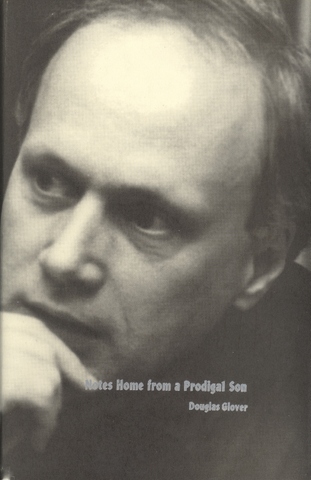
This is the beginning of things, the Ur-essay, the thought-lode out of which most everything else I have written about literature has evolved. It was written in the late 1980s and so, to an ever so slight extent, is a period piece. It forms the centre piece of my book of essays and memoir Notes Home from a Prodigal Son (Oberon Press, 1999). The ideas here expressed evolved out of my philosophical background, long reading, and the lessons I learned during my time at the Iowa Writers Workshop. I mention specifically the novelist Robert Day (who now contributes mightily to NC), but I would be remiss if I didn’t also recall the influence of the late Claude Richard, who was a visiting professor from the University of Montpellier at the time.

I reprint the essay here because the book and the essay were both published long ago; such is the nature of readership that older things fall out of the line of vision. But in fact this essay (and Notes Home from a Prodigal Son), along with The Enamoured Knight and Attack of the Copula Spiders and my long essay “Mappa Mundi: The Structure of Western Thought” form a consistent, coherent and elaborated system of thought about writing, criticism and philosophy.

dg

…there is an other [irony] besides the irony of the learned man; there is the poem, in the sense that it is rhythm, death and future.

— Julia Kristeva

1

The best writing teacher I ever had was a Kansas cowboy named Robert Day who showed up at the Iowa Writers’ Workshop as a last minute, one-semester replacement for a sick colleague in January, 1981. The first day of classes he strode into the room wearing Fry boots, jeans and a checked shirt. Without saying a word, he picked up a piece of chalk and wrote across the full length of the blackboard in huge looping letters: REMEMBER TO TELL THEM THE NOVEL IS A POEM.

At the time, Day had only published one novel, a book called The Last Cattle Drive. He was a tenured English professor at Washington College in Maryland. He was a past president of the Associated Writing Programs. As a young man, he had worked at G. P. Putnam’s in New York and could recall for us the excitement over the publication of Vladimir Nabokov’s Lolita. Summers he went back to western Kansas where friends ran a borderline ranch. He kept a horse there, a horse which at various times had eaten loaves of bread through the kitchen window, or Day’s hat. All summer long he would hand out with his friends, their cattle and his horse.

That semester we read Queneau, Musil, Rulfo, Achebe, Nabokov, Tutuola, Abe and Marquez. Day did not tell us what he meant — REMEMBER TO TELL THEM THE NOVEL IS A POEM. Maybe he forgot. Half-way through the semester he read the second draft of my novel Precious, three hundred typed pages of plot, dialogue and scene that stubbornly refused to come alive. I still have the notes I made during our conference, fifty-four words. It took less than fifteen minutes. But like a skilled surgeon he had opened the novel up for me and shown me its heart still beating, its bones, nerves and veins.

He taught me four basic devices. The first  was what he called the language overlay. My first person narrator was a newspaperman, he had printer’s ink in his blood. Day said I ought to go through the novel, splicing in words and images, a discourse, in other words, that reflected my hero’s passion for the newspaper world. So, for example, Precious now begins: “Jerry Menenga’s bar hid like an overlooked misprint amid a block of jutting bank towers…” Or, in moments of excitement, the narrator will spout a series of headlines in lieu of thoughts.

Second, Day taught me about sub-plots. The main plot of a novel, he said, is like a pioneer wagon train moving across the prairie. The sub-plot is like the Indians coming in out of the hills to attack from time to time. The pattern of the sub-plot must reflect or parallel the pattern of the main plot, Day said, just as the gene inside a cell contains the pattern for the whole body.

Third, he showed me how to use background and revery. My protagonist must have been somewhere before the novel began, he must have a story to tell that will give texture and depth to his thoughts and, by extension, to the narrative. In Day’s words, he wanted me to “give the novel a memory.” Once again, the background must reflect or parallel or bear the seeds of the main action. A revery that does not bear a relation, in pattern, to the main plot is wasted. It diffuses the reader’s attention. It makes the book foggy and boring.

What this means in practice is that far from being “loose and baggy monsters,” to use Henry James’s phrase, in which the author has room to digress, expand or linger, a good novel is a tight, formal production with very few wasted words.

Finally, Day told me how James used the confidante device to modulate the weight of a given speech. In Precious, I had two secondary characters who were both close to the hero. What if I created a pattern of giving and withholding information? What if I made one of the secondary characters the hero’s confidante, the person to whom he told his secrets? He could then maintain an ironic distance from the other, giving opportunities for lightness and humor. The reader would sit up and pay attention when the confidante was on the scene.

Day then lied and told me I could splice all these changes into the novel in three weeks. Actually, it took me five months, and I rewrote the thing from beginning to end. I remember those months as being the best time of my life; the woman I lived with then says otherwise. She says she never remembers me being more miserable. What that means, really, was that the work was hard but also amazingly exhilarating.

What I had learned was far more than a collection of four devices. I had learned a secret about writing stories, novels and poems. Also painting pictures and composing symphonies. I had learned that a novel is not a string of seventy-five thousand words, all different, all pressing the plot forward. If you think about it, the stories of most novels can be told in a page or two of summary. Then imagine me trying to stretch that summary over another two hundred and ninety-eight pages.

Or, to use an image I had carried in my head through two earlier failed novels, think of a novel as a bridge thrown across a bottomless gorge with nothing to support it from one end to the other. In my mind I had to get a running start and write fast for fear of not making it across. I wrote my first novel in six weeks in a state of terror. As a bridge it was a shambles.

What I had learned was that besides story, plot and characters, the novel needs patterns. That in fact the story, plot and characters don’t begin to come alive until they are submitted to a pattern. I had made a common mistake. Before Robert Day, I had assumed that a novel’s “aliveness” depended upon its verisimilitude, i.e. how closely it resembled what we call real life, whereas in fact it depends upon patterns. I think this is what Day meant when he wrote REMEMBER TO TELL THEM THE NOVEL IS A POEM. He meant for us to notice that, like a poem, the novel should be seen as an arrangement of materials of which one, but only one, is the story. This patterning is the poetic quality of prose.

2

In a poem it is much easier to see the patterns. We’ve all had to map out sequences of stressed and unstressed syllables, the ABBAs of rhyme, the internal rhymes of alliteration, the surprising anti-patterns of sprung rhythm and free verse. We’ve all dissected extended conceits, noted the effects of diction and imagery. These are the things we focus on in a poem. Narrative, story and verisimilitude are secondary to the poetry of poetry, by which I mean the effect of patterns.

With novels and stories, the reverse is true. We tend to read a novel first for plot and character and the narrative’s relation to reality, what post-Saussurean critics call its “aboutness,” and only secondarily, if at all, for pattern. This is a little like Ludwig Wittgenstein’s duck-rabbit argument. You know how you can draw a little circular figure with an elongation here and a dot there. If you squint your eyes one way, you can see it’s a rabbit with long ears. But if you squint another way, it becomes a duck with a protruding beak. With poems and novels, you can read for pattern or you can read for aboutness, depending on how you squint your eyes.

It happens to be the case, though, that we rarely read novels for patterns. One reason for this is that the novel’s very aboutness gets in the way. It is the easiest and most natural thing in the world to read a novel for plot and character. In fact, in most cases you have to read for plot and character in order to situate yourself, as an observer, in the world of the novel. The shift of focus, the new squint, if you will, from plot to pattern only happens on rereading. A good reader, as Nabokov wrote in his essay “How to Read, How to Write,” is a rereader.

When we read a book for the first time the very process of laboriously moving our eyes from left to right, line after line, page after page, this complicated physical work upon the book, the very process of learning in terms of space and time what the book is about, this stands between us and the artistic appreciation. When we look at a painting we do not have to move our eyes in a special way even if, as in a book, the picture contains elements of depth and development. The element of time does not really enter in a first contact with a painting. In reading a book, we must have time to acquaint ourselves with it. We have no physical organ (as we have one in regard to the eye in a painting) that takes in the whole picture and then can enjoy the details. But at a second, or third, or fourth reading we do, in a sense, behave toward the book as we do toward a painting.

When Nabokov makes a distinction between “what the book is about” and our “artistic appreciation” of the book, he is separating our reading of the subject, story and characters — the book’s aboutness — from our appreciation of the book’s so-called artistic qualities, the details we would notice if we looked at a novel the way we look at a painting.

Nabokov assumes that we all look at paintings for more than the resemblance they bear to old dead people in funny clothes, for more than romantic seascapes and sunsets. He assumes that we see, for example, Whistler’s mother as something other than an elderly lady in a plain black dress and that we know, perhaps, that the painting of Whistler’s mother was originally titled “Arrangement in Grey and Black” and that when Whistler talked about painting he would say, as he did in a letter to his friend Fantin-Latour:

…it seems to me that color ought to be, as it were, embroidered on the canvas, that is to say, the same color ought to appear in the picture continually here and there, in the same way that a thread appears in an embroidery, and so should all the others, more or less according to their importance; in this way the whole will form a harmony.

Whistler is talking about patterns, patterns of color that exist over and above and through the subject of the picture, its aboutness. And when Nabokov talks about “artistic appreciation,” he is talking about appreciating the patterns of the novel in the same way, the repetition of certain verbal events or structures in a novel like the colors in a painting. This is precisely the way we appreciate poetry, where it is, as I have said, much easier to see that sounds and words are like oil paints or, for that matter, like notes in a piece of music.

3

Other ages and times have provided writers with pattern books, with instructions on rhetoric and composition. They put names to commonly used devices: paronomesia, periphrasis, prosopopoeia. Even in the 1920s at the University of Toronto’s Victoria College, my aunt was taught to write, to compose sentences, by translating back and forth from Latin to English. But no one teaches composition any more except in remedial programs to students who patently can’t write at all.

Instead we teach creative writing with the emphasis on “creative” (which, I guess, implies that there is “uncreative” writing as well, though I have never seen it). At Iowa, outside of Robert Day, teachers tended to urge us to “write what you know.” If we managed to do that, they said, whatever we wrote would come out all right. Ernest Hemingway, that most brazen of liars, once wrote, “All you have to do is write one true sentence…,” sending generations of his competitors chasing vainly after a will o’ the wisp reality. Why people choose to believe what he says about writing and not what he says about his manliness is a curious instance of intellectual willfulness and self-deception.

In university English departments, on the other hand, students are taught criticism — Arnoldian, Freudian, New, Structuralist and Post-Structuralist, etc. Archetypes, symbols, influences, foreshadowing, metaphor and theme. Academic critics tend to see a novel as full-blown, not something built; as something found, not constructed. Academics are romantics — they see, or prefer to think they see, romantic intention in a novel as opposed to the bricks and mortar. I tried to tell a friend of mine, a person partway through a PhD. in English, what I meant by a pattern in a novel. She said, “Well, we call that recurring imagery.” A singularly bloodless phrase. But fair enough. Yes, that is sort of what I mean.

But why does it recur? And who made it recur? And is that all there is to it? Does the phrase “recurring imagery” help a writer? Academic critics generally see recurring images as evidence of a point the author is trying to make, part of the aboutness of the work. Deconstructionists, on the other hand, look for recurring images that the author may not have intended so as to “deconstruct” the aboutness of the work. In either case, they are wedded to thematics, to aboutness, to truth. Write what you know, throw in a little recurring imagery, and it’ll come out right. That’s what the creative writing schools and the English departments teach us.

In general it’s not terribly bad advice. Many writers get by with no other. Every writer borrows to a greater or lesser extent from the real world the images which he or she deploys in his or her novel. Every writer who has read significantly has an instinctive feel for rhythm, pacing and the repetition of images. But to go through life believing “Write what you know and throw in recurring imagery” is like going through life believing in God and free enterprise — it leads to a conservative and narrow view of life and art.

4

Pattern is an ambiguous word and I want to keep it that way. Writing a novel, Faulkner once said, is like a one-armed man nailing together a chicken coop in a hurricane. It helps to be open-minded and undogmatic about the rules of the operation.
Experience itself rests on our ability to recognize patterns — Forms Plato called them — in the sensory flux. A pattern that does not repeat itself is not a pattern, it is chaos, or it is something like God, or it is nothing. And the ability to recognize patterns is tied up with out ability to remember. Pattern, repetition and memory are the foundations of consciousness.

The same happens in a novel. On a very rudimentary level the author depends on pattern, repetition and memory to give the reader confidence in the world of the book, what we call verisimilitude, the quality of seeming to be real. In Leo Tolstoy’s Anna Karenina, Anna appears on almost every page. Anna is a pattern, a group of words and characteristics that repeat. If Tolstoy had changed Anna’s name, age, hair color and social background every chapter or so, we would throw the book down in disgust.

Pattern can mean a model or design upon which something else is constructed. Or it can mean the systematic repetition of certain design elements as in the pattern in wallpaper.

Pattern can, for example, refer to something large such as a plot.  All romances are based on, say, the model boy meets girl, boys loses girl, boy gets girl. We also say there are no new plots under the sun. And we refer to coming-of-age novels, which have plots based on myths and rites of passage, or adventure novels, which are based on the quest model. What we call genre is a sort of pattern.

But pattern can also refer to something minute, a device such as, say, the list or the epic simile or even the structure of a sentence. Here is Nabokov talking about Flaubert’s Madame Bovary:

Gogol called his Dead Souls a prose poem; Flaubert’s novel is also a poem but one that is composed better, with a closer, finer texture. In order to plunge at once into the matter, I want to draw attention first of all to Flaubert’s use of the word and preceded by a semicolon. This semicolon-and comes after an enumeration of actions or states or objects; then the semicolon creates a pause and the and proceeds to round up the paragraph, to introduce a culminating image, or a vivid detail, descriptive, poetic, melancholy, or amusing. This is a peculiar feature of Flaubert’s style.

Now, though the actual number of usable patterns may, for practical purposes, be infinite, we always choose to use a finite number in any given piece of writing. This finite number of further reduced by the fact that many of the patterns are repeated throughout any given work. The more patterns a writer knows, however, the better his or her chances of being published, being read, or of writing a masterpiece that will endure. The way a person learns patterns is by reading; literature is an encyclopedia of patterns and devices.

Though it is possible to invent a pattern that no one has ever used before, originality in a writer generally amounts to an ability to vary the pattern in fresh ways. One might, for example, decide to use Flaubert’s semicolon-and sentence pattern in a contemporary rites-of-passage novel set in Montreal’s Jamaican emigre community. The pattern would be Flaubert’s, but the variation, the unique application, would be the author’s own.

Repetition, as I have said, is also a pattern. But it is a pattern of a different order, perhaps the pattern of patterns. To me, it is the heart of the mystery of art, of novel-writing. Without it, the novel becomes a strung-out plot summary.

I have tried to think out why repetition is appealing, why it is aesthetically pleasing as a pure thing. I think there are two reasons, or sorts of reasons. The first is essentially conservative — repetition is allied to memory, to coherence and verisimilitude.

The second is biological or procreative or sexual. Repetition creates rhythm which on a biological level is pleasurable in itself, the beating of our hearts, the combers rolling up on a beach, the motion of love. This is the sort of thing Lyotard is talking about when he writes about “intensities” or patterns of intensities in his book Économie Libidinal, or what the Spaniard Madariaga meant when he talked about the “waves of energy” in Tirso de Molina’s El Burlador de Seville.

In Anna Karenina there are two sub-plots: Levin’s marriage and Anna’s brother’s marriage. The novel actually begins with a sub-plot scene — Anna’s brother banished to sleep in his study for having an affair with a maid. These subplots are not simply tacked on. They repeat the marriage theme of the main plot, Anna’s marriage. Anna’s brother’s marriage is, like her own, a marriage on the rocks because of infidelity. Levin’s marriage is, by contrast, dutiful and steadfast.

Tolstoy created three identical patterns which twine and leapfrog and reverberate through the novel. Of course, the details, the contents, are different (this is one sort of variation); and, in the case of Levin’s plot, the structure, the pattern, is inverted, a positive to the negative of the other two plots (repetitions of abstract structures such as plots or relationships can vary in three ways — congruence, contrast or inversion, and the tree in the seed).

References to plot and subplot form a kind of rhythm in the novel. This rhythmic repetition of structures has something to do with what we call pace. As each plot comes round again for scrutiny by author and reader, it is like a new wave of energy, a drum beat. Anna’s story is the melody; Levin’s is a kind of booming base note thudding in counterpoint to Anna’s; Anna’s brother’s rhythm is lighter, more frenzied and comic. Or they are like Whistler’s colors, threading through a painting, darker, lighter, heavier, fainter.

There is another sort of repetition in Anna Karenina, one more mysterious yet. Just after Anna meets Vronsky, there is a train accident. A station guard, either drunk or muffled up too much against the cold weather, fails to hear the train approaching and is crushed to death. This station guard returns in Anna’s thoughts over and over again. He begins to inhabit her nightmares. He even migrates into Vronsky’s nightmares — transformed now into a dreadful-looking little man with a bedraggled beard, bending over a sack, groping in it for something and talking in French about having to beat, to pound into a shape a piece of iron. At the end of the novel, Anna sees him again just as she throws herself beneath the wheels of the train: “A peasant muttering something was working at the iron above her.”

Obviously train imagery is repeated as well, at the beginning and the end. Why? Coincidence? Or is Tolstoy telling us something about the 19th century Russian transportation system? Of course not. Is it foreshadowing? Well, sort of. But foreshadowing is a word I don’t trust. Does this mean Tolstoy is telling us ahead of time that Anna is going to die in a train accident? I think not. I think there is some other motive at work, that the repetition of trains and bedraggled peasants, this bookending of image and incident, the beginning and the end, has a pleasing quality all its own, symmetry, if you will, a rightness, that is felt and appreciated, not “known.” Overture and coda, rather than prediction. A symmetry that would be lost, say, if Anna drowned herself or beat herself to death with a hatchet.

As a pattern, this terrifying little peasant just seems to pop up. He is just there — and there and there and there. He “means” nothing, except insofar as he is associated by juxtaposition with a larger pattern of trains, death, dreams and Vronsky. Somehow he manages to accrue all the potential horror of that pattern. He reminds us, not of the end to which Anna journeys, but of the beginning; so that when she dies, her end is freighted with a kind of fatedness that makes it all the more horrible and pathetic. The peasant is a tiny thread in the tapestry of the novel, a hint of color in the painting, a grace note in the symphony. Nothing more. Yet without him, how much shallower a book Anna Karenina might be.

It is worth noting that certain kinds of patterning, e.g. the repetition of character traits, enhance verisimilitude, while others, e.g. Anna’s peasant, work against it. We might distinguish between these by calling the one sort patterns of verisimilitude and the other patterns of technique. Every novel uses both, so every novel is a little balancing act between the two, or a war. John Hawkes, the experimental novelist, for example, says that “plot, character, setting and theme” (which are generally what I mean by patterns of verisimilitude) are the real enemies of the novel. “And structure,” he adds, “–verbal and psychological coherence — is still my largest concern as a writer. Related or corresponding event, recurring image and recurring action, these constitute the essential substance or meaningful density of writing.”

But, oddly, though patterns of technique and patterns of verisimilitude tend to destroy one another, like matter and antimatter, both are necessary to the work. Depending on how heavily the author plays up one or the other, his or her novel will be more or less “realistic” or more or less “experimental.”

Getting the balances right in any given work is part of the art of art and its mystery and is a skill that cannot be taught. It leads to the feeling, a feeling I have had twice, once with each of my novels, of submission, of loss of freedom, of loss of expressiveness. Because there is a point in the process of writing a novel at which you must submit to the strictures of pattern that you have chosen. All of a sudden, there are things you can no longer fit into this novel, things you must cut, and other things that you must put in. And, of course, with something as complicated as a novel, you never get it right. And you end up wanting to slash your wrists.

As Paul Valéry once said, “A work of art is never completed, only abandoned.”

5

I have already noted that some patterns in novels, those patterns which tend to create verisimilitude, are like the patterns of experience in the world. This is as much as to say that a conventionally realistic novel reflects a certain metaphysics or philosophy of being and knowing. Modern novels of a less conventional sort also reflect a metaphysics, but it is a new metaphysics, a radically new way of talking about the locale of existence.

Vladimir Nabokov, whom I have quoted extensively and who has influenced a whole generation of North American writers (in Canada, at least two Governor-General’s Award winners, Robert Kroetsch’s The Studhorse Man and Hubert Aquin’s Trou de Memoire, owe huge debts to the structural and verbal pyrotechnics of Nabokov’s novel Pale Fire), was an intellectual heir of the Russian Formalists. Formalism was an aesthetic and critical movement that thrived in St. Petersburg and other eastern European cities early in the twentieth century. The Formalists pegged a whole philosophy of language and literature on the split between meaning and signifiers, between aboutness and pattern.

What they did was put a theory to the things painters like Whistler and, soon after, the French Impressionists, and Surrealist poets like Breton, Eluard and Ponge — all the way back to Mallarme (Nabokov sneaks Mallarme quotations into his novels) — had been doing ten, twenty, thirty or more years before. They simply recognized that aboutness and pattern were two aspects of the things we call art and language, and that you could, in fact, have pattern without aboutness.

Since it seem impossible to have aboutness without pattern, a corollary of this is that aboutness is somehow secondary, a poor cousin, on the aesthetic scale of things, to pattern. Nabokov again:

There are…two varieties of imagination in the reader’s case… First, there is the comparatively lowly kind which turns for support to the simple emotions and is of a definitely personal nature… A situation in a book is intensely felt because it reminds us of something that happened to us or to someone we know or knew. Or, again, a reader treasures a book mainly because it evokes a country, a landscape, a mode of living which he nostalgically recalls as part of his own past. Or, and this is the worst thing a reader can do, he identifies himself with a character in the book. This lowly variety is not the kind of imagination I would like readers to use.

This is what the post-Sausurrean critics, recently so popular in Europe and on American university campuses, are saying. Aboutness is old-fashioned, authoritarian, and patriarchal. Signs — read, pattern, poetry — are playful, subversive, and female. How a thinker can jump from a purely logical incongruence — the fact that, apparently, you can have pattern without aboutness but not vice versa — to these strings of value-loaded predicates is marvelous indeed and evidence that the instinct for narrative and romance has not died behind the ivy-covered walls of academe.

Another corollary of splitting the categories of pattern and aboutness is that there is a sense in which pattern itself creates meaning. Or to put it another way, the novel is about its own form. Or every book is about another book, or books. And every work of art is a message on a string of messages which begins nowhere and ends nowhere, to no one and from no one, and about nothing except the field of pseudo-meaning created by previous and future messages. It is all a game of mirrors and echoes. A little dance of images, words, and patterns. The of the Hindus, or all is vanity, all is dust, sure enough.

Keats wrote, “A man’s life is an allegory.” Nothing else. Or conversely, Korzybski says, “The map (read, the allegory, the pattern, the words) is not the territory.” Which is to say, as Jacques Lacan does, that all utterances are symptomatic and that the real is impossible.

6

Form (or pattern) and aboutness (or content, or reality) are the binary opposites of thought. The stance of the modern, whether he or she is a novelist, critic, theologian, or psychologist, is that ontology begins and ends with the former, that so-called reality is a highly suspicious article.

We are pressed back to a position of washed-out Cartesianism: I think, therefore, I think; or more precisely, I think, therefore something is thinking. Structuralists like Levi-Strauss say things like, “There is a simultaneous production of myths themselves, by the mind that generates them, and, by the myths, of an image of the world which is already inherent in the structure of the mind.” Linguistic philosophers like Wittgenstein say, “The world is my world: that is shown by the fact that the limits of language stand for the limits of my world…I am my world.” Except that this “I am” is not the body but language itself.

Reality, meaning, aboutness, the good, God and the self are pushed away into the realms of the unconscious, the unknowable, the unspeakable, and the unfathomable. In a very logical sense, they no longer concern us here as we race toward the end of the twentieth century. To say you are writing “realistic novel” is to commit as much of an intellectual solecism as, say, the Reverend Jimmy Swaggart does when he says God spoke with him before breakfast. The words “realistic novel” can only be spoken by a person who is speaking in the discourse of an earlier age or in parody.

Think of yourself in a room with bare plaster walls and no windows or doors. You have an infinite supply of variegated wallpapers. You paper the room with something in blue with a skylark pattern, then you do it over with angels, then an abstract, decorative pattern.

The first thing you notice is that you can’t see the wall anymore. This is the first effect of language, according to the philosophers and critics. As soon as you begin to use language, describe the world, you can no longer see it. You can only see your description. In fact, since we can’t even begin to describe something without language, then the existence of the wall itself becomes moot.

The second thing you notice is that each layer of wallpaper covers the previous layers. They’re lost, though you know they’re under there. In a sense the old wallpaper, the past, becomes part of the reality you are describing with each new layer of wallpaper. And sometimes you wake up in the morning and wish you still had the skylarks. You might even try to scrape some of the new wallpaper off. But that only makes a mess.

All you have is the design of each successive layer of wallpaper, and, just possibly, the shape of the room, its broad outlines, its cubic form. Life and art are a little like this. We only see the current wallpaper, remember bits and pieces of the old in the form of myths and memories of memories and fragments of discourse which no longer “mean” what they once meant. And, if we’re lucky, we intuit, or think we intuit, some vague outline of the something which may or may not be the room or the womb of reality.

To be a writer is to write with this knowledge, that the wallpaper is wallpaper and not the room, walls and plaster. It is to have that quality which Keats said went to form a man of achievement “especially in literature and which Shakespeare possessed so enormously,” what he called Negative Capability — “that is when a man is capable of being in uncertainties, Mysteries, doubts, without any irritable reaching after fact and reason.”

Negative Capability is the artist’s ability to suspend belief in any particular conceptual system (or wallpaper) or to see the conceptual system as pattern, as opposed to reality, as material in itself to be juggled and juxtaposed. Or, to put this another way, aboutness is illusory. What we see as aboutness the artist sees as just another pattern or part of a pattern. Or again, everything is pattern, infinitely plastic and malleable. A person who believes in a particular conceptual system believes that everything can be explained by reference to that conceptual system. Whereas the artist sees the pattern and feels the mystery that looms beyond the pattern.

The truth of the matter, everything that seems supremely important in life, begins when the talking, writing, painting, sculpting, filming and singing of discourse stop. All talk or art that says it’s telling you the truth about life is second rate. Of course, you can write something second rate that’s very popular, even quite good, for all these categories are relative. But great art is pattern over mystery, it is juggling words over whirlpools of silence.

7

In the extended sense, this view of language, life and art can seem exceedingly austere, if not forbidding and bleak. “The ultimate goal of the human sciences is not constitute, but to dissolve man,” says Levi-Strauss. (Just as Nabokov says that one of the functions of a novel is to prove that the novel in general does not exist.) Few of us can help feeling a nostalgia for the old ways, or what we think are the old ways, of talking. For ancient beliefs. For certainty and immortality. For familiar stories with plots and characters and recognizable locales. For adventure, romance and magic.

A lot of fictional, intellectual and political hay has been made out of this nostalgia, a nostalgia expressed, say, in the phrase “breakdown of values.” When an old way of talking disappears, many people are forced to apply narrative in order to explain it to themselves. They often feel they have a stake in the old way. They invent metaphors and analogies — machine breakdowns, erosion, war, disease — to make themselves feel easier. And to sell books.

You can see where nostalgia led Levi-Strauss in his wonderful autobiographical novel Tristes Tropiques. The annihilation of the self, of meaning and aboutness, by structural anthropology drove him into a quest for theological support, which he may or may not have found wandering amongst the Buddhist temples of the Far East. Or think of Sartre turning from the barrenness of existentialism to the warm, sloppy infantilism of Chairman Mao’s Little Red Book. Or of Michel Foucault leaving his university office every afternoon to pursue a gruesome and self-destructive quest through the bath houses of New York until his death from AIDS.

One can look at people like Sartre, Foucault and Levi-Strauss as contemporary monks whose intellectual vigor and honesty led them to the conclusion that God, man and reality cannot be reached through words. (On December 6, 1273, at the age of fifty, Thomas Aquinas suffered something like a nervous breakdown and never wrote again.) That, by analogy, telling a story is a logically impossible project. That our only recourse (save for silence) is to take a step willy-nilly into narrative, or faith — Keat’s Negative Capability is something like Kierkegaard’s Leap of Faith. It can’t be done — all the critics and philosophers tell us — but some of us will jump in anyway and start the story “Once upon a time…”

In this regard, the American Catholic novelist Walker Percy once wrote:

…a novelist these days has to be an ex-suicide. A good novel — and, I imagine, a good poem — is possible only after one has given up and let go. Then, once one realizes that all is lost, the jig is up, that after all nothing is dumber than a grown man sitting down and making up a story to entertain somebody or working in a “tradition” or “school” to maintain his reputation as a practitioner of the nouveau roman or whatever — once one sees that this is a dumb way to live, there are two possibilities: either commit suicide or not commit suicide. If one opts for the former, that is that; it is a letzte Losung and there is nothing more to write or say about it. But if one opts of the latter, one is in a sense dispensed and living on borrowed time. One is not dead! One is alive! One is free! I won’t say that one is like God on the first day, with the chaos before him and a free hand. Rather one feels, What the hell, here I am washed up, it is true, but also cast up, cast up on the beach, alive and in one piece. I can move my toe up and then down and do anything else I choose. The possibilities open to one are infinite. So why not do something Shakespeare and Dostoevsky and Faulkner didn’t do, for after all they are nothing more than dead writers, members of this and that tradition, much admired busts on the shelf. A dead writer may be famous but he is also dead as a duck, finished. And I, cast up here on this beach? I am a survivor! Alive! A free man! They’re finished. Possibilities are closed. As for God? That’s his affair. True, he made the beach, which, now that I look at it, is not all that great. As for me, I might try a little something here in the wet sand, a word, a form…”

—Douglas Glover

Aug 292012
 

Robert Day is the best teacher I ever encountered, also one of the most amiable of men and author of The Last  Cattle  Drive, a novel I fondly reread every now and then for its rich comedy, its distinctively clipped and forthright voice, its deft and delicate puncturing of the myth of the west, and its humane decency. Bob and I met at the Iowa Writers Workshop in 1981 when I was a student and he was a visiting instructor. The first day of class he walked into the room and wrote across the whole front wall of blackboard REMEMBER TO TELL THEM THE NOVEL IS A POEM. I have written about this in my essay “The Novel as a Poem” in my book Notes Home from a Prodigal Son. I include the opening paragraphs below (and I wrote about him from memory and no doubt reimagined or even fictionalized details for which sin I hope he will forgive me).

The best writing teacher I ever had was a Kansas cowboy named Robert Day who showed up at the Iowa Writers Workshop as a last minute, one-semester replacement for a sick colleague in January, 1981. The first day of classes he strode into the room wearing Fry boots, jeans and a checked shirt. Without saying a word, he picked up a piece of chalk and wrote across the full length of the blackboard in huge looping letters: “Remember to tell them the novel is a poem.”

At the time, Day had only published one novel, a book called The Last Cattle Drive. He was a tenured English professor at Washington College in Maryland. He had been one of the founders of the Associated Writing Programs. As a young man, he had worked at G. P. Putnam in New York and could recall for us the excitement over the publication of Vladimir Nabokov’s Lolita. Summers he went back to western Kansas where friends ran a borderline ranch. He kept a horse there, a horse which at various times had eaten loaves of bread through the kitchen window, or Day’s hat. All summer long he would hang out with his friends, their cattle and his horse.

That semester we read Queneau, Musil, Rulfo, Achebe, Nabokov, Tutuola, Abe and Marquez. Day did not tell us what he meant–“Remember to tell them the novel is a poem.” Maybe he forgot. Half-way through the semester he read the second draft of my novel Precious, three hundred typed pages of plot, dialogue and scene that stubbornly refused to come alive. I still have the notes I made during our conference, fifty-four words. It took less than fifteen minutes. But like a skilled surgeon he had opened the novel up for me and shown me its heart still beating, its bones, nerves and veins.

The bit about AWP needs expansion (and even now I am not sure I have this right). But according to Bob’s friend and colleague Walton Beacham, in 1971 the infant AWP, then being run by its co-founder R. V. Cassill (George Garrett was the other co-founder), was about to go under. Cassill was bowing out and Brown University was withdrawing its support. Bob and Walton arranged a new home and financing for the organization, and Bob made the trip to Providence to retrieve the AWP archives from Cassill. Cassill handed him a shoebox containing some notecards, the full extent of the AWP archives at the time. Bob remained director and/or sometimes president until 1982.

Bob Day and I have not been much in touch since those days in Iowa, a hiatus probably due to the diffidence that exists between a student and an important mentor. But it’s a huge pleasure now to reunite on these pages — one of the best things about publishing Numéro Cinq is the number of friendships it has revived. When he wrote to me a few weeks ago, he reminded me about the last time we were together. “The last time I saw you we were looking a new jeeps as I was to buy one for the ranch where I worked; they had gone up scale and you said:  Bob, they’re toys.  Right you were.”

Now I am deeply pleased to be able to publish a new Robert Day short story, also to applaud his new book of stories coming out in September: Where I Am Now.

The hunting photo above is by Denise Low.

dg

—–

I had not been a good enough high school student to go “East” for college.  My father had hoped for a scholarship to Yale or Harvard: an Ivy League education was to a young man from Kansas as a wealthy marriage was to a young woman. As for my mother, she had discovered that any college in Kansas had to take you if you had graduated from a state high school.

“I think he should stay in our domain,” she’d say, using in context one of the ubiquitous words she was forever trying to teach me out of her dictionary.

“He should go East,” my father would say without–I would learn later–any sense of history or irony: “Go East,” you could hear him say summer evenings in our front yard as he drank a beer in his webbed aluminum lawn chair.

“I think he should stay in our environs,” my mother said through the open kitchen window as she cleaned up. That spring I was accepted at Emporia State Teachers College.

“William Allen White’s town,” my father said.

“Teachers and government workers are never without a job,” my mother said.

The summer before I left for Emporia, I life guarded at the local pool and helped at home: I mowed the lawn, painted the basement walls, cleaned out the attic, ran errands, and hung the laundry on the backyard clothes line. Some days I fixed flats, pumped gas and changed oil at my father’s repair garage and filling station.  I didn’t know what I was going to do with my life, but I didn’t sit around looking into a gold fish tank.

At the swimming pool that summer, I saved a boy out of the deep end bottom but never said anything about it until my father saw it as a news item in the local paper.  I was the kind of kid who did not explain himself.  It seemed natural. The summer after my first year at Emporia I went back to work at the pool.

“Your uncle Conroy writes that he has a fellowship for you,” my mother said. I was home on lunch break from life guarding.  “It pays wages and you get college credit.  You need good grades in science.”

My mother has said this without much enthusiasm.   She was reading the letter a second and third time.

Uncle Conroy was my mother’s older brother, a pediatric researcher of international fame.   In the cultural gulf between our 1950’s linoleum-floor kitchen in Merriam, Kansas and Doctor Conroy Watkins directing a medical research lab in Berkeley, California, circa the mid-sixties, there was a pleasing pride–as if in our small house we had a first edition signed by Clarence Day.

“Let me see,” my father said.  He had closed the garage for lunch and was also home.

“At the University of California at Berkeley,” said my mother handing him the letter.

I have an hour before I have to be back at work.  After closing I am to take Muff LaRue to Winsteads for a Frosty. My plan is to drive back to the pool for a swim.

“That’s what it says,” said my father.  “A fellowship in Conroy’s research lab that could lead to medical school.  He should get there as soon as possible for training.”  My father left the kitchen with the letter in one hand, his meatloaf sandwich in the other, and headed for the front yard to sit in his aluminum lawn chair.

“I don’t know that General Science counts,” said my mother through the kitchen window.

“Two semesters of A’s,” my father said, talking straight ahead.

They were referring to my freshman grades.  I seem to be present only in the third person.

“I’m going to be a doctor,” I said to Muff LaRue as I unlocked the gates to the pool.

Muff dove in fully clothed and swam to the deep end.  When she got there she pulled herself out and said if I’d turn off the lights she’d skinny dip.  I flipped switches.

“I’ve never dated a doctor,” she said.  “What kind of doctor?”

She walked to the end of the low board, took off her summer shorts and tossed them on the deck.  Then she pulled her t-shirt over her head and threw it in the pool.

“A surgeon.  I am going to Cal-Berkeley to be a pediatric surgeon.”

I was treading water beneath her.

“I’m going to Sarah Lawrence to study Classics,” she said as she dove in.

The next day it was agreed I should accept my uncle’s invitation even though Berkeley might have “agitators” –as my father called them, not unlike Dustin Hoffman’s landlord in The Graduate.  On the other hand, my mother feared impertinence among the rich students.   She told me to find the word in the dictionary she had given me when I left for college, along with instructions to learn three words a day: aplomb, domain, environs.

§

It took me a week to quit my job as a lifeguard, say good-bye to Muff, and pack. My uncle met me at the airport.

“So you want to be a doctor?” he said.

“I don’t know,” I said.

We were driving over the Bay Bridge toward the East Bay.  You have to be a young man from a small town in Kansas to understand how astonishing it is to see the San Francisco Bay for the first time.  There is nonchalance about its grandeur.

When I said I didn’t know if I wanted to be a doctor to one of the most famous and accomplished physicians in America, a man who had no doubt made special arrangements to get me a fellowship, it sounds, even at this distance, something Californian-sixties:  Mellow.   Really, man.  Yeah. Wow. Far out.  That’s not what I meant.   Perhaps I thought–as we crossed the Bay Bridge to the East Bay– that if I couldn’t be a doctor like Uncle Conroy, I didn’t want to be a doctor.  I’d like to think that now.

“I don’t mean. . .” I said as we drove up Grove Avenue past the lab where I would be working.

“I understand,” he said. “Don’t worry about your future.  It is always there.”

“Thank you,” I said.

From Grove we drove into the Berkeley Hills behind the Claremont Hotel to my aunt and uncle’s house overlooking the Bay.

My uncle’s laboratory was the Hansen Pediatric Research Center. My first week at work, I had met Hazen:  Hazen Edmond Floren Reynald who was pleased to introduce himself by all or part of his name, just as it pleased him to pick one of his names (including his last) and use it for a week. Or this:

“My name is Hazen Edmond Floren Reynald, and you may pick the name you like and call me that from now on.  I will remember.  But sometimes I won’t.”

I picked ‘Hazen.’  My uncle and his step-father had picked ‘Edmond.’ His mother used Floren. Aunt Lillian picked ‘Howard,’ and no one had told her that was not one of her choices.

“You may change names as I do,” Hazen said.  “This week I am to myself ‘Floren’.  But you may call me ‘Edmond’.  That’s what my step father calls me.”

Hazen grew up on Russian Hill where he still lived with his mother and stepfather, Doctor Milton Reed. He was a large-nosed, black-haired, stout-chested, short guy four or five years older than I was.  He had dropped out of college after his freshman year to travel in Europe: a trust provided him with funds to “poke around the world and among the girls.”

“Hang up medicine unless it can create a Juliet,” he said when I asked him if he was going to be a doctor. “Hang up medicine unless it can create a Juliet,” he’d say as we worked medical experiments for the researchers who used my uncle’s lab.

“Do you have a girl friend back in Kansas?”  Hazen asked me one day.

“Muff LaRue,” I said.

“’Rue’ means ‘street’ in French,” Hazen said.  “My mother is French.  So was my real father.  I understand we are all coming to dinner at your aunt and uncle’s house.  Very formal.  Mother usually brings her favorite hors-d’oeuvres: pâté de canard.”

I must have looked puzzled because Hazen went on, as if to reassure me.

“Just remember, it is impolite to take the last hors-d’oeuvre, which, if you think about it, means you can’t take the second to last piece because you’re being impolite to the poor bastard who is stuck with not being able to take the last piece. And if you think about it from here to eternity, you can’t take anything off the plate.  You just starve.”

My mother’s fear of impertinence had come true.

“Doesn’t he look good, Conroy?” said my Aunt Lillian.  I was wearing a tuxedo borrowed from my uncle. I had seen myself in a mirror before coming out of my room and thought the same thing:  not bad for a rube from Kansas.

“Very good,” said my uncle who, I understood, did not put much stock in the formalities of social life but had come to a routine acceptance of it.

The reason for the dinner party was Hazen’s step father’s Nobel prize for experiments (done a number of years before) in which he had taken the amino acid  “package” off proteins, then put it back on.  At least that is how I understood it at the time.

Aunt Lillian was wearing what my mother would have called “a cocktail dress.”  Not the kind of dress you saw Harriet Nelson wearing on television in those days (and not the kind my mother owned), but the kind that Olivia de Havilland wore in the movies.  It was pale green with tiny gold flecks that seemed to have been woven into the fabric.  I had never seen anything like it. Later in the evening I would notice that her dress matched in a subtle way the dinner plates, goblets, and even a small glass dinner bell that were put out by Bella, my aunt’s maid.

“Now use your forks from the outside in,” said Aunt Lillian, taking me to the table.  “‘Outside’ being the fork all the way to the left.  And do not use the spoon or the fork above the plate until the plate has been changed, and then use the outer one first; in this case that will be the spoon for the sorbet, then the ice- cream cake fork for the ice cream cake that they make at the lovely bakery on Shaddock where they make so many fine things.  When you are finished with your courses, put your knife and fork at four o’clock on your plate.  That way Bella will know you are finished.  And hold your wine glass by the stem, although Howard’s mother takes hers by the bowl and puts her—I must say—rather large nose—into it.  And sniffs quite loudly.”

By this time my uncle had escaped to stand in the driveway to wait for his friend.

“Hazen,” I said.  “His name is Hazen.”

I had never been to a formal dinner party, much less in the presence of a Nobel Prize winner.  And I had never worn a tuxedo.   My brother rented one for the high school prom.  My sister’s boyfriend picked her up in one for the same dance.   I wore a dark suit, went without a date, and stood by the record player and watched Muff LaRue dance to Dean Martin’s Memories are Made of This.

Living with my aunt and uncle when I first got there had its pleasures.  Even after I moved to an apartment on Derby near the University in the fall, I was always welcome.   If they were away (to a medical conference or to a retreat in Mexico in which they owned an interest), I had the run of their house with its splendid view of San Francisco Bay.  I was well fed, and when necessary, could use one of their cars. For this, my uncle asked only that I drive Aunt Lillian to the store and on errands in her large green Cadillac, complete with fins and air conditioner scoops.

“Let him drive,” my uncle would say. “That way he can learn his way around Berkeley.”

When he had me aside he said:

“Lillian is many fine things, but while she can set an excellent table for a dinner party she cannot cook a breakfast egg nor drive a car.”

§

“Your uncle thinks I am a poor driver because I am alert,” my aunt said one day as we left for errands and to drop me off at the lab.

“That is why he wants you to drive.  He has told me more than once I am dangerous, but ask him how many tickets I have gotten?  None.   Or how many accidents I have had that were my fault?  None.  It is just a prejudice he has about women drivers because we are cautious.”

Aunt Lillian had stopped for a green light on Durant because–as she explained amid the honking of horns behind her–men sometimes run red lights.

“You must be defensive in your driving.  Defensive and alert.   Not alarmed.  But alert to what is coming at you from all sides:  front, back, right, left.  I am perched high and straight in my seat and I am always alert and defensive.”

She achieved her “perch” by sitting on a folded pillow so that her head was well above the steering wheel, and not all that far below the car’s headliner.  From there she could see as well as any present day SUV soccer mom.

“You must be careful of rocks rolling off the mountains,” Aunt Lillian said one day when she came to a full stop in the middle of West View Drive, not far from the end of their lane. I looked up the hill at a large rock protruding from underneath a few scrub trees.  It had probably been deposited by an ice age.

“Would you like for me to drive?” I said.

“Not at all.  You think that rock has been there a long time and will not roll down.  That is what Conroy says.  But because it has been there a long time means it is more likely to roll down.  Hills flatten into plains because rocks roll off them and grind themselves to dust.  That is what happened in Kansas.  It can happen in California.  We have earthquakes. There was a famous one years and years ago that started a fire.  They still talk about it.  You must be watchful wherever you are in a car.  On the small roads.  On the highways.  In traffic.  In the hills with rocks on them.  Just because we are very close to the house doesn’t mean an accident can’t happen.  Most car accidents happen close to home.”

“Did she stop at the top of the hill by the rock?” asked my uncle when I told him I had not been able to drive her that day.

“Yes.”

I drove Aunt Lillian very little, and I never understood why some days she was pleased to have me do so, but on most days she was insistent that she drive.  Nor could I determine why she stopped at some green lights (and ran red ones), but not at others.

“Has Lillian pulled off the road when a truck is coming?” asked my uncle on another occasion.

“No,” I said.

“She thinks some trucks are too big for the roads so she’ll drive off the shoulder to let them go by.  Once I had Triple A pull her out of a ditch, and all she would say was that it was better to be in the ditch than  ‘squished like a beetle.’”

A few days later Aunt Lillian veered the Cadillac onto a lawn because a large cement truck was heading our way, very much on its own side of the road.

“Better up on a lawn than squished like a beetle,” she said as we came to a thud of a stop in a well-tended yard. “A wreck involves the police and smashed fenders and a broken windshield and medical bills.  Just because your uncle is a doctor doesn’t mean we get hospital care free. “

Aunt Lillian looped back onto Stuart just ahead of a woman dashing across the lawn shaking a vacuum cleaner attachment like a fist.  At the next green light we made a full stop.  At the next red light we drove through.

§

“When Bella serves a new course,” my aunt continued, “it is polite to change the direction of your conversation.  You will be sitting between Doctor Reed on your left and Madame de Ferney on your right, and if you have been talking to Doctor Reed for the first course, you then talk to Madame de Ferney during the second course, then back to Doctor Reed for the next course.  Madame de Ferney may not converse this way.  She has a habit of talking to whomever she wants.”

Aunt Lillian paused for a moment and looked at the table, first at one chair, then another, slightly nodding at each, as if more than counting.

“At home we just ate,” I said.  I thought I should say something by way of thanking Aunt Lillian for telling me how to behave.

“It is all a bit fussy,” she said.  “Conroy doesn’t much like it.  He says dinner parties are “fork fetish feasts”.  I suppose he’s right, but we women have to keep up standards.  Do you see a young lady in Kansas?”

“Muff LaRue,” I said, thinking I didn’t know the meaning of “fetish”.

“When did you last see her?” said my aunt, now circling the table to make some adjustments in napkins and silverware.

“At the swimming pool where I work.”

“How nice.”

“Yes,” I said.

Aunt Lillian stepped back to look the table over at some distance. “Everything is in its place,” she said, more to herself than to me.

Then: “One more thing.  Madame de Ferney always brings the hors-d’oeuvres.  A duck pâté on toast points.  I will put them on a large plate and we will have them in the living room with some white wine before dinner.”

“I know it is not polite to take the last one,” I said.

“Yes,” said my aunt, and seemed pleased.  Then, looking past the table and around the dinning room and into the living room where Bella was putting out napkins and wine glasses on the coffee table, she said:  “Madame de Ferney has kept her curious name even though she has been married all these years to Doctor Reed, who as you know, is Howard’s father, just as Madame de Ferney is Howard’s mother, even though she doesn’t have the same last name as Doctor Reed.  Or maybe Doctor Reed is Howard’s step-father and Madame de Ferney is his mother.  I think that’s what Conroy once told me.  She came to America when he was very young and brought Howard with her.”

“Hazen,” I said.

“And for some reason I think Howard doesn’t have the same last name as either of them because Madame de Ferney named him for an uncle for whom a French village is named.  Or maybe she is named for the village.  Howard is an only child so I suppose it is easier to do that when you are an only child.  And Madame de Ferney always calls Doctor Reed, “Doctor Reed,” not by Milton as the rest of us do. So we all call her Madame de Ferney and have for so long by now I don’t remember her first name, but I think it’s Mimi.  You should ask Howard.  Very curious.”

§

“Here they are,” said my uncle from the doorway.

“There is something else,” Aunt Lillian continued, but in a lower voice. “Madame de Ferney keeps both her hands on the table, sometimes even her elbows.  She is French. They have peculiar manners. And her English after all these years is still odd.  A bit of French mixed in with English.  Very odd.”

“My mother said I should cut my food with my elbows down, not up.  And that I should bring my food to my mouth and not my mouth to my food,” I said, again trying to reassure my aunt.  But this time she seemed not to hear me and said: “I am thinking maybe I should seat you. . . but no I can’t. . . that would disturb the arrangement.”  I could hear my uncle at the door saying come in, now, come in and they all did.

§

“Is it the case,” Madame de Ferney said as Bella was clearing the table of the second course, “that in Kansas. . .how shall I put it? . . .comment dirais-je?  Je ne sais pas…”

She said something else in French to her husband.  I saw Hazen frown.  I saw Doctor Reed frown.   Doctor Reed said something in French.  Then Madame de Ferney said to me:

“Is it ‘provincial’ in Kansas?  Provincial?”

She pronounced her second  “provincial” with a certain prairie flatness, as if to make sure I understood.  Not that it mattered: It was not a word I had learned from my mother’s dictionary:  Rube. ff.

While it was true that Madame de Ferney had used her forks according to Aunt Lillian’s rules, she had not–as my aunt had predicted—abided by the formalities of conversation; also, her elbows had been on the table repeatedly, and–my mother would have been shocked—Madame de Ferney had removed her bread from the bread-and-butter-plate and put it on the tablecloth where it left crumbs.  And she not only stuck her nose into the wine glass, she swirled it around before holding it to the light and said: It is the first duty of a wine to be red.

“Don’t you agree?” said Madame de Ferney to my Aunt.

“Yes, indeed.”

“And also from what you call the environs.  Is that the right word Floren?”

“Yes,” I said.  Everybody looked at me for a moment and then Madame de Ferney asked me what kind of wine we drank in our environs.

“My mother has a glass of Mogen David as she fixes dinner,” I said.  “My father drinks Coors.  My mother is Polish.  My father Irish.”  In the small silence that followed everyone took a sip of wine.

“I ask about Kansas being provincial,” Madame de Ferney said, “because I am told they were provincial ici in San Francisco before the gros earth cake.  The gros earth cake and the fire did them a great good because the rebel lost their shanties.”

“Rabble, mother,” said Hazen.

Madame de Ferney paused only to mouth the word rabble silently with what seemed to me impatience toward the English language.

“Mother’s ‘gros’ is French for ‘large’,” Hazen said to me.  “The Great Earth Quake.”

“Thank you,” I said.  And to show I was going to learn French I repeated ‘gros’ out loud.

“You’ll need to work on your ‘r’,” Hazen said.  I had no idea what he meant.

At this point Bella came to serve another course, while Madame de Ferney continued:

“The families whose furniture came “around the Horn” began to assende and that gave the city its culture.  Some people who first arrived in San Francisco brought their furniture with them over the prairie ground in wagons.  It must have been very hard on chairs.  Not to mention desks and tables.  All of Doctor Reed’s family furniture came “around the Horn.”  Our chairs are very solid.  Tres solide.”

Madame de Ferney had been speaking to the table at large, but then she turned to me:

“They have no earth cakes in Kansas to make matters better.  C’est tres mal in that regards, don’t we all think so?    Maybe a dust storm or a prairie bison fire could do the same thing. Does your family have the particle?”

“’Quakes’, mother,” said Hazen. This time Madame de Ferney did not mouth the word.

“They have tornadoes,” said my aunt.  “Tell Madame de Reed about the tornadoes. How Dorothy went to see Mr. Oz on the Yellow Brick Road. That  might be just as good as earth quakes.”

I was about to ask “a particle of what?” thinking Madame de Ferney might have wondered if we owned a bit of farm ground when Doctor Reed coughed loudly a number of times to my left and we all looked his way.  My uncle patted him on the back and asked if he was all right?

“I was telling our nephew the other day,” Aunt Lillian said when Doctor Reed’s coughing spell stopped, “about that big rock at the top of the road, and how it might fall down if we had another earth quake like the one Madame de Ferney has mentioned.”  My aunt stopped and seemed befuddled for a moment.

“You were about to say something about the rock, Lillian,” said Doctor Reed.

“Yes!  Well, if it rolled down the hill it would squish that nice bakery on Shaddock where we got the dessert for tonight.”

“Ah oui!” said Madame de Ferney.  “It is a lovely bakery and Doctor Reed always get something from it whenever we are coming to the University.  There is rien like it even in San Francisco.”

“’Rien’ means ‘nothing,’” said Hazen.  I nodded.  “‘Rien,’” I said, this time doing no better with my “r” judging by Hazen’s look.

“’Nada’,” in Spanish, said Doctor Reed.

“’Nada’,” I said, thinking at least there wasn’t an‘r’.  Again a moment of silence while everyone took another sip of wine and Bella bustled.

“And they probably don’t have a bakery in Kansas like the one on Shaddock that we all like so much,” said Aunt Lillian. “Just like they don’t have hills down from which rocks might fall because they already have fallen down and that’s why it’s flat.   And maybe that is why Madame de Ferney has asked about it being provincial.  No quakes.  No hills.  No rocks.  No bakery.”

“Ah oui,” said Madame de Ferney, at which point Aunt Lillian rang the bell for Bella who was standing beside her.

“Maybe I should not have asked about Kansas being provincial,” said Madame de Ferney. “It is of no matter, but sometimes those of us who live la vie de chateau cannot imagine remote places in the United States as being other than provincial.  That is true in France as well.  We have peasants in many places south of Paris.  Some of them harvesting their own ‘poulet.’”

“’Chicken’, mother,” said Hazen.

“I know it is “chicken” in English,” said Madame de Ferney.  “But I prefer the French.  Who can like a word like “chicken” instead of “poulet”?  Or “duck” instead of “canard”?

“It is what we had this evening,” said Aunt Lillian.  “A recipe right from France.  Chicken Cordon Bleu.  Not that we raise chickens or ducks here in Berkeley.  I expect there is some kind of rule against it.  I know there is one about hanging your clothes out to dry, isn’t there Conroy?”

“There is indeed.  It is called a ‘covenant’,” my Uncle said to Doctor Reed who smiled.  “As if good taste were a religion. No rabbits in cages.  No chickens.  Or ducks.  No horses or goats.  It was quite a list they gave us when we moved here.  No clothes line, as Lillian says.”

“In Kansas we have a clothes line,” I said.  “I do the hanging out when I am home.” Uncle Conroy looked at me and smiled. I was about to say the Simms down the road had both chickens and ducks,  as well as pig they fed out but Madame de Ferney said:

“It is our own limitation, I suspect, and I would be pleased to learn otherwise.  How did your parents’ furniture come to Kansas?”

“Here is dessert!” Aunt Lillian said, and once again rang the bell, even though Bella had returned to the table.

The arrival of dessert and the clatter of plates and forks and the general talk about the bakery on Shaddock changed the course of the conversation and as we ate Madam de Ferney turned to Hazen and asked:

“Do you remember when you were an adultlesson and we took you to Paris?”

“‘Adolescent’, mother,” said Hazen.  “It is the same in French.”

“Yes, I suppose it is,” said Madame de Ferney.  “It is just that we were showing you where I was reared—is that the word?  You raise cows but rear children.  Do I have that right?”

“Yes,” said Doctor Reed to Madame de Ferney, and then to the table:   “Edmond was born in Paris as was Mimi, but after her husband died they moved to America and he was reared here.”

“Conroy and I have not reared any children,” said Aunt Lillian. “This is our nephew,” nodding toward me.   Aunt Lillian seemed either to have forgotten my name or was continuing my family’s tradition.

“Ah oui,” said Madame de Ferney to Aunt Lillian.

“Ah oui,” said Aunt Lillian.  “But do tell us about your rearing in Paris.”

“We lived in the Sixth, but below Saint Germain.  The Sixth goes all the way to Boulevard Montparnasse, but my father would not admit that.  For him it only went as far as Saint Germain.  So I was reared in that domain.  Is that the right word?” Madame de Ferney asked me.

“Ah oui,” I said. I saw Hazen smile. “Or you could say ‘environs’,” I said. Madame de Ferney seemed pleased at this information and this time said environs out loud with a peculiar guttural sound on the “r.”

“My father was tres formal and would not even ‘tu’ my mother.  Of course he did not ‘tu’ me or my sister.” Madame de Ferney paused for quite awhile and looked away from the table. The only sound was Bella putting out coffee cups in the living room.

For my part, I imagined Madame de Ferney was thinking of her days growing up in Paris; I imagined this because in between the rocks tumbling down and squishing the Shaddock bakery, the tornadoes that might be as good as earth cakes, covenants against chickens and clothes lines, I had been thinking in bits and pieces about home.  About my father’s webbed aluminum lawn chair and how he took my uncle’s letter and his meatloaf sandwich outside and read the letter while my mother cleaned the kitchen counter where on summer evenings we “just ate”, my mother having her glass of Mogen David wine while she cooked with no idea about the wine’s duty, my father with his beer in a bottle after dinner as he read the paper or, on Fridays, watched boxing on television.

And it wasn’t when Aunt Lillian asked me about a girl friend that I thought of Muff LaRue.  It was when Madame Ferney was talking about chicken and poulet and duck and canard.  How, after both Muff and I got dressed, not having gone “all the way”, we sat in two chairs under my life guard stand and talked into the night about our futures: me to California to become a doctor, she going East to Sarah Lawrence to major in Classics–and I thought then that studying classics at a fancy East Coast college for girls and skinny-dipping in a Kansas municipal pool with the life guard whose father had a car garage didn’t go together.  But I did not say so.  And how later I drove Muff home and we promised we’d meet again over Christmas break—at the swimming pool, cold and snow or not.

§

“Thank you,” my uncle said to Bella as she began clearing the table of dessert plates, all forks now at four o’clock.

My aunt fingered the spoon on the top of her plate.  She picked up her wine glass by the stem and studied the color.  She started to ring for Bella even though Bella had just left.

“Maintenant that you are ici in Berkeley,” said Madame de Ferney, “do you think it provincial in Kansas?”

My uncle was about to speak and so were Hazen and Doctor Reed when I said to Madame de Ferney and, with considerable aplomb, to the rest of the table:

“Sometimes it is, and sometimes it isn’t.”

“Ah oui!” said Aunt Lillian.

§

“Did you miss Kansas?” Muff said to me.  We are sitting in my father’s lawn chairs that I have taken to the pool and put beneath my old lifeguard stand.  It is snowing.  The pool has been drained, but not to the bottom.  There is a skim of ice on what water remains.  “I did not,” said Muff before I could answer.

“I did,” I said.

“Are you going back?” she said.  “To Berkeley to be a doctor?”

“Hang up medicine,” I said. “Unless it can create a Juliet. The guy I worked with at the lab used to say that over and over again.” She seemed not to hear me and said:

“I learned that Socrates took up dancing in old age.  So I’ve started dancing.  Modern dancing.”  She got out of her chair and did a small pirouette in the snow in front of me.

“I’ve never dated a dancer,” I said.

And then there was a long silence between us.  I took a sideways glace at her.  She was looking at the space just in front of us where she had done her pirouette.  The snow was falling faster now and it was filling her footprints. I never knew her well enough to guess what she might be thinking.  But I was thinking I would not see much of her ever again, and I would be right about that.

“You haven’t said if you are going back.”

“In Berkeley,” I said, “you don’t just eat, and you can’t hang your laundry on the line.”   Again she seemed not to hear me and said nothing but got up from her chair and did a second pirouette, this time putting her toes into the same place where they had been before, and in so doing her feet made their marks in the same place where the snow had almost filled in her previous pirouette. And in coming back to her chair she stepped into the same footprints she had made before, and smiled at being able to do so.

§

When I drove her home Muff asked me if it was true I had once saved a boy from the deep end.

“Yes,” I said.

And it was at the door of her house that she told me where Hazen had gotten his saying, and that was not about medicine, but about philosophy and that when Hazen said it over and over it became his mantra–a word I did not know until I came home that night and I looked it up in my mother’s dictionary.

—Robert Day

——————————

Robert Day’s novel The Last Cattle Drive was a Book-of-the-Month Club selection.  His short fiction has won a number of prizes and citations, including two Seaton Prizes, a Pen Faulkner/NEA prize, and Best American Short Story and Pushcart citations. His fiction has been published by Tri-Quarterly, Black Warrior Review, Kansas Quarterly, North Dakota Quarterly, and New Letters among other belles-lettres magazines. He is the author of two novellas, In My Stead, and The Four wheel Drive Quartet, as well as Speaking French in Kansas, a collection of short stories.

His nonfiction has been published in the Washington Post Magazine, Smithsonian Magazine, Forbes FYI,  Modern Maturity, World Literature Today, and American Scholar. As a member of the Prairie Writers Circle his essays have been reprinted in numerous newspapers and journals nationwide, and on such inter-net sites as Counterpunch. Recent book publications include We Should Have Come By Water (poems) and The Committee to Save the World (literary non-fiction).

Among his awards and fellowships are a National Endowment to the Arts Creative Writing Fellowship, Yaddo and McDowell Fellowships, a Maryland Arts Council Award, and the Edgar Wolfe Award for distinguished fiction.  His teaching positions include The Iowa Writers Workshop; The University of Kansas; and the Graduate Faculty at Montaigne College, The University of Bordeaux.

He is past President of the Associated Writing Programs; the founder and former director of the Rose O’Neill Literary House; and founder and publisher of the Literary House Press at Washington College, Chestertown, Maryland where he is an Adjunct Professor of English Literature.

Where I Am Now, a collection of his short fiction, will be published in September, 2012 by BkMk Press.

Mar 022011


Deforming Forms: Outlier Short Stories and How They Work

By: Richard Farrell


I once spent an entire day at The Art Institute of Chicago, wandering alone for hours through the vast museum.  I began in a gallery filled with artifacts from ancient civilizations and moved chronologically through the collection, passing the pharaohs’ coffins from ancient Egypt, the shards of classical Greece, the religious art of late antiquity, the medieval tapestries, and the Renaissance sculptures.  I marveled at the massive rooms filled with Impressionist paintings, and eventually ended the day in galleries filled with the strange pieces of ‘modern art’, the often abstract objects, difficult to categorize or comprehend.  I never studied art or art history in school—Annapolis tended to ignore the humanities in favor of the art of war—so what I knew of art came mostly from pop culture.  I recognized the famous Seurat painting A Sunday on La Grande Jatte because I had seen it in Ferris Bueller’s Day Off.  Though embarrassed by my ignorance, I began to experience a visceral understanding of the progression of styles as I moved through the collection.  I became aware that these shifting styles related to one another, that classical forms evolved slowly into more modern, abstract expressions. Standing in front of a Kandinsky painting, with its strange geometric shapes, or a Jackson Pollock painting, with its seemingly chaotic splashes of colors, felt very different than standing in front of a painting by Pissarro.  Yet the essence of what I experienced felt connected.   I kept asking myself the question: What makes something a work of art?

Modern abstract art had always seemed inaccessible before this experience.  I was guilty of appreciating works of art for little more than what Douglas Glover calls “the resemblance they bear to old dead people in funny clothes.” (Notes Home from A Prodigal Son)

Standing in the modern gallery that day in Chicago, I learned that the formal aspects of art accomplish more than recreating a sense of reality.  Though I saw connections to historical forms and styles, I had no context for the experience, no intellectual background to support my emotional reaction.  This glaring hole in my intellect (one of many) has continued to gnaw at me ever since.

As I’ve begun to study writing more seriously, my interest has focused on the aesthetic principles that make a story or a novel work.  And just like in the museum, there is a vast continuum of story-types, stories which refuse to follow traditional models.   I’m particularly fascinated by stories which stretch the boundaries of storytelling.  Call them experimental, avant-garde, or ‘outliers,’ but some stories refuse to follow long-standing techniques.  I should say up front that I enjoy stories in the realist tradition.  I enjoy writing that creates a strong sense of verisimilitude and stories that rely on conventional devices.  Well-made, conventional stories are the stories I most often read and try to emulate when I write, but I have to admit, I’ve never asked myself why.  The premise goes unquestioned.  And not questioning convention can lead to bland, unthinking products.  By exploring the unconventional, the outlier in short story form, I hope to arrive at a deeper appreciation of story architecture in all its varied forms, conventional and otherwise.  I hope the following pages will help re-envision the idea of a story and expand the boundaries about what makes a story.


 From the Conventional to the Outlier:

The well-made, conventional short story rests on certain structural foundations, and though there is no strict definition, those foundations typically include point of view, character, plot, setting, and theme.  These devices create a recognizable pattern for the conveyance of meaning to the reader.  Most stories I read employ these devices rigorously, so much so that when I come across an outlier, the effect is startling.  Glover, in Notes Home from a Prodigal Son, talks about these assumptive structures in an essay on a Leonard Cohen novel, Beautiful Losers:  (These same conventions hold true for short stories as well as novels.)

“The conventional view of the novel has it developing out of the late Renaissance picaresques.  It becomes the literary vehicle of the rising middle class in England and elsewhere, and, in the nineteenth century, the novel becomes, for the capitalist bourgeoisie, what the Gothic cathedral was to an earlier version of Western civilization.  The novel expresses, often ironically, the bourgeois ethos with its will to power and its will to love, in short its conflicted and inauthentic soul.  But the bourgeois, conventional novel itself, with its emphasis on plot (a unidirectional series of causally related events), character (based on a common-sense theory of self, the individual and personal identity), setting and theme—on verisimilitude, the quality of seeming to be real—challenged the middle class only ever so slightly.  The assumptions of the novel—in structure and presentation—remained the assumptions of its primary readers.  In other words, the novel is a modern art form and its structure reflects the assumptions of modernity, the individual and bourgeois capitalism.”

Within the conventional story, devices can become so ingrained that they disappear into the background, and a dangerous assumption (one I’ve made) can occur: that these devices, these methods of writing, are mistaken for rules, for ideology instead of methodology.  The devices, “the assumptions of the novel” (or story), once expected, go almost unnoticed, “reflecting the assumptions of modernity,” leading to what the Russian Formalist Viktor Shklovsky in Theory of Prose calls “automatization,” the inability to see what is before us.

“The object passes before us, as if it were prepackaged.  We know that it exists because of its position in space, but we see only its surface.  Gradually, under the influence of this generalizing perception, the object fades away. “

Conventional stories rely on these devices and the reader expects them.  And conventional stories remain a predominant form in fiction.   As these devices gain ascendancy in the creation of conventional stories, they easily fade from our awareness.

At this point, another dangerous assumption can occur (and again, one I’ve been guilty of making): that these devices, these methods of writing fiction have arisen naturally, that they are inextricably linked to the act of writing fiction itself.  Terry Eagleton, in Literary Theory, talks about the dangers of ‘naturalizing’ social realities, which could include things like fictional devices.

“It is one of the functions of ideology to ‘naturalize’ social reality, to make it seem as innocent and unchangeable as Nature itself.  Ideology seeks to convert culture into Nature, and the ‘natural’ sign is one of its weapons.  Saluting a flag, or agreeing that Western democracy represents the true meaning of the word ‘freedom’ become the most obvious, spontaneous responses in the world.  Ideology, in this sense, is a kind of contemporary mythology, a realm which has purged itself of ambiguity and alternative reality.”

Now I do not suggest that there is a sinister conspiracy behind conventional fiction.  I don’t think that the progression from assumptive forms of story construction will lead us to the lockstep mentality of fascism in writing.  But if Harry Potter is a commercial literary phenomenon, the merits of which are highly debatable, it is also a phenomenon that has created a cottage industry of wizardry and magic books around it.  The marketplace demands uniformity, and repetition is the model.  It craves methods that go unnoticed, unquestioned and unchallenged.  Like medieval bishops selling indulgences to raise money for grander and grander cathedrals while the peasants starve, the contemporary publishing industry sells its brand of indulgences in the form of homogenized books, driven by a relentless march toward the bottom line, the capitalist equivalent of Judgment Day.

One function of art must be to resist this automatization and present alternatives to the expected, to fight assumptions and to force the reader to see freshly, leading to what Shklovsky calls a “vision” of the object, rather than a “recognition.”  Shklovsky again:

“And so, in order to return sensation to our limbs, in order to make us feel objects, to make a stone feel stony, man has been given the tool of art. The purpose of art, then, is to lead us to a knowledge of a thing through the organ of sight instead of recognition.  By “estranging” objects and complicating form, the device of art makes perception long and laborious.  The perceptual process in art has a purpose all its own and ought to be extended to the fullest.  Art is a means of experiencing the process of creativity.  The artifact itself is quite unimportant.”

This leads me to the topic of outliers, to stories which might be called experimental or unconventional, where some estrangement of the expected form is at work.  In these stories, the conventional devices of plot, character, setting, point of view and theme are altered, often radically.  Yet these stories still function and meet the expectations of a story, as opposed to a poem or an essay.   In outlier stories, the goal remains to create what Leon Surmelian calls “a coherent account of a significant emotional experience, or a series of related experiences organized into a perfect whole,” but with the conventional forms ‘deformed’ into something that challenges the reader’s understanding of a story.   It requires labor and effort to apprehend.  The outlier story asks the reader to read as if for the first time, as if discovering something entirely new.

Glover, In Notes Home From a Prodigal Son, refers to this deformation of structural devices in his essay on the Canadian writer Hubert Aquin:

The primary devices of the well-made novel—plot, character, setting and theme—are designed to imitate the structures of this so-called reality.  They situate and reassure the reader by promoting verisimilitude, the quality (or illusion) of appearing real.  By emphasizing the difficulty, or even impossibility, of producing meaning over meaning itself, by piling up alternative but equivalent semiological systems, Aquin obliterates these conventional novelistic devices.

Notes Home from a Prodigal Son

The outlier story piles up alternative but equivalent systems to replace the absent devices.  It works against convention, like the construction of a different type of cathedral, using different blueprints, different materials, but with the ultimate goal still the same.  The risk, of course, is that such variance can lead to unstable, unsatisfying, or incomplete stories, a cathedral which collapses under the weight of its own design.  The alternative methods risk making the story so abstracted that it becomes unreadable.  Glover addresses this too:

For Aquin, difficulty resides in substituting the proliferating unsystematic, non-structures of “institutional delirium” for the conventional structures of the well-made novel.  But this does not mean his novels are insane, nonsensical, unstructured or impossible to read.  The phrase “institutional delirium” is itself a trope, a metaphor for the kind of structure Aquin uses to oppose the structures of the conventional, well-made novel.  His novels only appear to be unstructured so long as we apply to them the same criteria for structure as we apply to the well-made novel.  In fact, Aquin’s novels do have plots, characters, settings and themes; it’s just that when Aquin uses a conventional novelistic device, he deliberately and relentlessly deforms it in order to prove that he doesn’t need it.  In the jargon of the Russian Formalists, Aquin makes things strange.

By estranging the conventional device, by bringing attention to it, or by directing attention away from it, the writer creates an equivalent structure that reinvigorates the reader’s awareness of form.   By de-emphasizing conventional devices, by eliminating characters, narrators, settings, conventional plots, the reader is challenged to discover new criteria for the judgment of art and to reexamine the very idea of a story.  If done well, I would argue, the outcomes of the well-made conventional story and the well-made outlier story are the same:  the “perfect whole.”

In the following stories, each author has manipulated conventional devices and attempted to create an alternative version of a story.  With varying degrees of estrangement, playfulness, cleverness and success, each of the following stories reorients the reader’s expectation.  Yet outliers do not indict the conventional story.  They are oppositional, but also complementary.  They force the reader to acknowledge form as different, and hopefully to consider the purpose behind form.  Glover puts it this way in The Enamoured Knight:

What seems to be the case with experimental fiction is that it is always written with other, more conventional books or conventional notions of reality in mind; one of the primary effects of experimental works is the denial of expectation, the surprise the reader feels when form is inverted or twists back on itself or is in some other way subverted.  Most commonly the experimental artist does this simply by drawing attention to the work of art as a work of art.  A painting isn’t about the image it represents; it’s about surface, shape and colour.  A book is a book.  In this way, oddly enough, the experimental novel is tied to the strict realist novel, the same but opposite, like the right and left hand.  They are both committed to a species of honesty, authenticity, or “realism.”  But the larger novel tradition swears allegiance to verisimilitude while the experimental tradition diminishes the importance of illusion and highlights the reality of the work itself, its materials, tools and process.  The goalposts, as I say, have been moved.

Rather than goalposts, I’ll return to the religious metaphor: the pilgrim is asked to look beyond the walls of the Gothic cathedral, past the rituals of the mass, and into the realm of a different church, one that reminds him of the reason for all this prayer and devotion: not the building, but of the great mystery of being which the story tries to understand.  It’s the reason for all the bricks and mortar in the first place.


“In the Fifties” by Leonard Michaels

Leonard Michaels’ six page, first-person short story “In the Fifties” uses an unnamed narrator to recount a list of events that happened during the eponymous decade.  The story is told as a fragmented series of episodes from the narrator’s life, not unlike the structure of a list.  No apparent chronological order exists in recounting this list beyond a loose geographical orientation (he mentions New York, Michigan, Massachusetts, and California as places he lived) plus the assumptive time period of ten years.  Certain patterns repeat throughout the story: women, sex, roommates, an anti-establishment sensibility, language, academics, violence and suicide.  At four points in the retrospective story, the narrator establishes a present narrative time period with the word ‘now’ or with a present tense verb construction, so that the reader knows the story is being told reflectively.

The story opens with the narrator learning to drive a car, studying, attending college, reading, having personal relationships, meeting card sharks and con men, and interacting with women.  When a respected teacher is fired at NYU, the narrator expects an uprising that does not happen.  He moves to Massachusetts and works in a fish-packing plant where he notices old Portuguese men cleaning the fish.  He falls in love (though it is unrequited), becomes an uninspired teaching assistant, is arrested, does drugs, witnesses an abortion and drives a car recklessly through the fog.  After this, the first named character, Julian, appears.  Julian and the narrator spend a period of time as friends.  Then the list resumes, and the narrator remembers playing basketball and shooting a gun.  He then lives with a roommate who ‘suffers’ from life and eventually kills himself.  The narrator then works as a waiter in the Catskills, lives the life of a hipster in Greenwich Village, and moves to California.  After this, the second named character enters, a man named Chicky, who burns his face and wants to kill himself because his girlfriend is ugly.  The story concludes with the narrator going to a demonstration in support of a friend who has been arrested.  He witnesses a large crowd gathering to protest this injustice (the friend has been arrested for wanting to attend the HUAC hearings) and he hears a mother telling her little kid not to unleash a bag of marbles under the police horses.  Within the chronicled ten years, the narrator experiences a range of events, including rigorous study, teaching, passion, despair, death, disillusionment, and maturity.

This story posits a number of difficulties for the reader expecting a traditional, realist story.  The first challenge I’ll examine will be Michaels’ unconventional method of character development. The pattern in a conventional story typically involves two (or more) characters thrown into repeated conflicts, the progression of which gradually reveals more about each character.  Michaels turns this convention around, primarily through an ironic foregrounding and backgrounding of characters.

While the first-person narrator’s presence dominates the pages, other characters exist mostly as un-named figures who weave in and out of the narrator’s awareness.  Only two fictional characters are actually given names, Julian and Chicky, though twenty historical figures are mentioned by name. (A third character, Leo, is mentioned by name by never appears in dramatic action.)  While this story involves a large cast of characters, most remain in the background because the narrator refuses to name them.  They are called variously, “my roommate,” “a fat man,” “a man,” “two girls,” “a sincere Jewish poet,” “three lesbians,” “a friend,” and “a girl from Indiana.”   Even though the narrator says “Personal relationships were more important to me than anything else,” very little about most of the characters in the story appears personal.  Is there anything less personal than refusing to name a character?

Even the narrator remains elusive.  We learn about events that happened to him, not how those events affected him.  We do not know where he is now, how he views these events, nor how these events have shaped his character.  Though present significantly on the page in the form of the pronoun, “I,” he remains hard to define.  Curiously, he is more easily understood by his absence than by his presence.

About halfway through the story, a shift occurs.  One character is given a name, another character is foregrounded, and the narrator begins to recede.  This is first noticeable in a subtle point of view shift that occurs when Julian enters the story.  The relentless first-person singular narration momentarily switches into the plural:

I drank old-fashioneds in the apartment of my friend Julian.  We talked about Worringer and Spengler.  We gossiped about friends.  Then we left to meet our dates.  There was more drinking.  We all climbed trees, crawled in the street, and went to a church.  (Italics mine)

This run of plural pronouns occurs after a string of fifty first-person, singular ‘I’s’.  The effect is striking.  The only other time ‘we’ is used in the story occurs at the story’s end.   I will return to this point below.

The narrator (and the story) appears suddenly conscious of other people besides himself.  Soon after the Julian section, the narrator returns to talking about himself, about his basketball scholarship and his classes, but then another character takes the stage.  His roommate (unnamed) suddenly comes forward for an extended sequence.  There is a run of twenty-three verbs all directly linked to the subject of his roommate.

Though very intelligent, he suffered in school.  He suffered with girls though he was handsome and witty.  He suffered with boys though he was heterosexual.  He slept on three mattresses and used a sunlamp all winter.  He bathed, oiled and perfumed his body daily.

This section ends with the simple statement: “Then he killed himself.”  The entire paragraph centers on this roommate.  The narrative “I” does not appear once.  In a sense, this section operates as an inset story, a brief but complete story on its own and focused away from the narrator.  It would seem that the narrator has slowly become aware of other people, and this trend continues.

One of the most stirring, un-self-conscious passages comes soon after this ‘roommate string’, when the narrator sees Pearl Primus dance.   The images expressed are carefully composed as he watches her dance accompanied by an African drummer:

Pearl Primus

“I saw Pearl Primus dance, in a Village nightclub, in a space two yards square, accompanied by an African drummer about seventy years old.  His hands moved in spasms of mathematical complexity at invisible speed.  People left their tables to press close to Primus and see the expression in her face, the sweat, the muscles, the way her naked feet seized and released the floor.”

Absent from this passage is the narrator’s recurrent narcissism.  Gone again are the “I’s.”  He was captivated by what he saw, and we are captivated by his description of it: the spasms of the drummer, the seizing and releasing feet of the dancer.  These images hearken back to the Portuguese men in the fish factory, as something that affects the narrator more deeply than the rest.

Michaels uses these shifts in narration to reveal the narrator’s character more deeply.  When the narrator comes forward significantly, we learn only facts, nothing of depth.  Though none of the other characters, named or otherwise, compete for the reader’s attention, true development of the narrator’s character occurs by omission.  By repeating the first-person, singular pronoun, ‘I’ over ninety times in this short (maybe 2000 words) story, and by making the narrator appear simply obsessed with himself, especially in the beginning of the story, Michaels generates an effective pattern: when the narrator recedes, the readers understands more.  Character growth occurs.  Michaels makes the first-person narrator such a prominent aspect of the narration that the effect, when ‘I’ is not used, is jarring.  It becomes what Glover calls an “anti-structure,” a structure that works by its absence rather than its presence.

Closely related to the way Michaels manipulates character development is his deformation of point of view.  There are two distinct ways that the point of view shifts.  The first way has to do with time, the second with perspective.

The majority of this story is told in the past tense.  “In the fifties I learned to drive a car.  I was frequently in love.  I had more friends than now.” Michaels signals at the opening that the story is being told from a distance, but this narrative perspective remains vague.  It could be six months or it could be twenty years.  The reader never learns.  The story continues to use this narrative distance until the narrator breaks in from his perspective a few more times in the story.

I knew card sharks and con men.  I liked marginal types because they seemed original and aristocratic, living for an ideal or obliged to live it.  Ordinary types seemed fundamentally unserious.  These distinctions belong to a romantic fop.  I didn’t think that way too much.

The shift in tense here on the verb ‘belong,’ acts again from the narrative present-time.  The sentence works thematically, shedding light on the story.  Are we supposed to think of this narrator as a ‘romantic fop’?   There does seem to be a disowning here, a disavowal of the younger, more isolated self from the perspective of the future narrator, the narrator looking back for purposes of telling this story, but the narrator quickly undercuts the disowning by telling us that he “didn’t think that way too much.”  The use of the present tense also reminds the reader that this narrator is out ahead of this story somewhere, but the narrator remains vague and unclear, almost detached from the story he is telling.  The present-time narrator interrupts the flow of the recollection four times but offers no real commentary or perspective on who he is now, or how this story has affected him.  The effect of this interruption forces the reader to ask a lot of questions that will go unanswered in the story.  We will never learn who this narrator is ‘now.’  We will never learn what effect these chronicled events have on the present narrator.  We will only have questions, but the effectiveness of this story rests more on the questions it raises than those it answers.

Michaels also manipulates point of view with respect to the narrator’s perspective.  Again, the abundant use of the pronoun ‘I’ creates an unusual effect in the story.  There are two points when the narrator’s consciousness seems to merge with the circumstances around him, when the ‘I’ becomes a ‘we,’ and these two instances indicate a significant shift in perspective.  The first, already mentioned, occurs with his friend Julian.  The use of ‘we’ in this small section is underscored by the fact that this is also the first named character in the story (other than the aforementioned historical characters.)  The use of ‘we’ occurs only one other time, in the penultimate sentence of the story, after he has gone down to the courthouse to protest the arrest of a friend.

I expected to see thirty or forty other people like me, carrying hysterical placards around the courthouse until the cops bludgeoned us into the pavement.  About two thousand people were there.  I marched beside a little kid who had a bag of marbles to throw under the hoofs of the horse cops.  His mother kept saying, “Not yet, not yet.”  We marched all day.  That was the end of the fifties.

Michaels’ whole story builds to this tiny point of view shift.  The narrator’s expectations are confounded; instead of forty like-minded people, there are two thousand.  He notices the kid, and for the first time, he uses attributable dialogue, then the shift in narration:  “We marched all day. That was the end of the fifties”  This merging of the narrator’s sensibility with that of the other protesters reflects a structural complexity that, while anti-conventional, works to achieve an important effect.  These narrative ‘wobbles’, whether in tense or number, signify shifts are occurring.  Were this story told without them, its effectiveness would suffer.

The final variation from the conventional story involves plot.   Michaels writes this story as an extended list.  There is no apparent causality, no apparent connection between the events.  What he substitutes for plot steps, however, are thematic repetitions.  There are several examples of this in the story, but social unrest is one of the most important, and I think it works as one of the thematic repetitions that stands in for the absence of a conventional plot.

The fifties were a time of growing social discomfort with the established institutions of American life.  The tension between the old and the new social realities may have exploded in the following decade, but the roots of that social discord reach back deeply into the decade Michaels chooses to examine.   I think this history, though outside the text, is important to the consideration of the thematic repetitions I’m about to examine.

In the second paragraph, the first example of this social-discord occurs, and this example is related to the House Un-American Committee, or HUAC.

I attended the lectures of the excellent E.B. Burgum until Senator McCarthy ended his tenure.  I imagined N.Y.U. would burn.  Miserable students, drifting in the halls, looked at one another.

The narrator expects the campus to explode, but instead, there are only sad looks.  Two curious things occur: the intrusion of the conservative government into the life of the narrator, and the impotence of the response (especially on the part of the narrator.)  Later, the narrator is arrested and photographed, and though the alleged crime is not mentioned, we can surmise that it had to do with his growing social awareness.  He has likely done something subversive, but nothing so bad as to merit the arrest. “In a soundproof room two detectives lectured me on the American way of life, and I was charged with the crime of nothing.”  The soundproof room, the crime of nothing, juxtaposed with the American way of life, point to a growing dissatisfaction, however muted, growing.  The next example involves Malcolm X, and how the narrator no longer had black friends after the black activist became prominent.

In Ann Arbor, a few years before the advent of Malcolm X, a lot of my friends were black.  After Malcolm X, almost all of my friends were white.  They admired John F. Kennedy.

The unstated premise is that the black friends became active and followed their ideals, while the white friends placed their hopes in the system.  Later, the narrator mentions meeting Jack Kerouac, an iconic figure of the counterculture.

The final paragraph though, is most interesting.  A friend is arrested at the HUAC hearings.  He goes to protest this arrest (the second act in a row of supporting a friend) and “expected to see thirty or forty people like me,” but instead finds that “about two thousand people were there.”  Compare this scene to the earlier encounter with the HUAC, when he “imagined NYU would burn.”  By the end of the story, he acts.  And others are acting with him.  He joins the swirling mass of protesters.  He becomes subsumed by them.  The last lines of the story underscore this transformation.  “We marched all day.  That was the end of the fifties.”  After ninety references to “I,” the story and the decade closes with “we.”  His idealism, his expectation to be part of a small (thirty or forty) group, is met with the reality of a huge crowd of people.  Suddenly, the narrator is reduced.  He disappears and is absorbed by the crowd, and perhaps by the decades which follow.  These ‘steps’ are not created through traditional plot devices, but rather through a subtle repetitions of social disharmony, most clearly represented by the two instances where HUAC is mentioned and by the references to counter-culture figures or circumstances.

Michaels radically alters the form of the short story in a number of ways.  By turning conventional devices of character development, point of view and plot into alternative structures, he creates a difficult but emotionally ‘whole’ story.  The specific images are all grounded in realism, but the structural devices of conventional stories are manipulated and deformed to create an anti-story, a story that works off of a list rather than a plot, a story that works without named characters, and by raising many more questions than it answers.


“Axolotl” by Julio Cortázar

“Axolotl” is a seven page short story told primarily by a first-person narrator who visits animals in a Paris zoo until he turns into an axolotl (a neotenic species of Mexican salamander.)  Most of the narration occurs in the past-tense, though at times the story shifts into the present tense and also into the third person.  During these shifts, the narrator-as-axolotl shifts also occur.  There are only two characters in the story, the narrator and a zoo guard.  The primary setting is the aquarium at the Jardin des Plantes in Paris, and except for a short description of the city itself and a brief description of the library, the setting does not shift, though the perspective of that setting does, from outside the tank to inside the tank.  There is only one line of dialogue in the story, spoken by the guard to the narrator.

The story opens with the narrator thinking about the axolotls then stating that he has turned into one.  Then the narrator explains how he came to discover these creatures inside the aquarium at the Paris zoo.  He feels an immediate and deeply personal connection with the axolotls, and he goes to the library and researches them.  He begins to obsessively visit their tank, staring at them through the glass.  His obsession at first seems mysterious, artistic, even resembling a love story.  He visits daily, sometimes twice a day.  The only other character, the zoo guard, coughs, and makes only one comment.  The narrator begins to identify with one axolotl in particular, then, in a strange sequence, the human narrator becomes an axolotl.  After this, a climatic reversal occurs, and the object (the axolotl) becomes the subjective narrator commenting on the new object (the human narrator from the first part of the story).  The story ends with the narrator-as-axolotl looking out from the cage at the narrator-as-human, now transformed.

Cortázar creates a dramatic and narrative metamorphosis with the use of a shifting narrator.  He accomplishes this playful transformation by manipulating the narrative consciousness of the story in very un-conventional ways.  The point of view ‘bounces’ between the narrator-as-human and the narrator-as-axolotl—a transformation that occurs in three distinct steps.  The dramatic, physical metamorphosis, from human to axolotl, parallels the actual physiologic metamorphosis of animals (and it represents an ironical reversal of reality, since the axolotl never undergoes metamorphosis and the creature remains trapped in a juvenile stage of development.)  The narrator’s metamorphosis is dramatized through a sequence of narrative shifts until the transformation is completed.  As the point of view shifts, the character shifts, the subject-object orientation shifts, and reversals of perspective take place.  All these things occur in unconventional ways through the deformation of the point of view, a typically conventional device.

In the beginning, the narrator-as-human appears to be a typical first-person narrator:

There was a time when I thought a great deal about the axolotls.  I went to see them in the aquarium at the Jardin des Plantes and stayed for hours watching them, observing their immobility, their faint movements.  Now I am an axolotl.

Axolotl

From this opening paragraph, the reader might conclude that the narrator could be insane, he could be ironic, or he could be joking.  The reader simply doesn’t know.  What follows this opening statement are seemingly rational statements about the narrator’s growing obsession with the axolotls.  While strange, nothing about his obsession is unconventional, except for the closing sentence of the first paragraph: “Now I am an axolotl.”  This sentence triggers the reader to think that something very unusual is going on, and Cortázar’s decision not to comment on it underscores the weirdness of the story.

The next distinctly odd shift comes in the form of a parenthetical statement amidst a description of the animal cage:  “The axolotls huddled on the wretched narrow (only I can know how narrow and wretched) floor of moss and stone in the tank.” Which ‘I’ is talking?  The narrator-as-human wouldn’t know this fact, but the reader can’t be sure (yet) whether or not the narrator-as-axolotl will appear as a distinct voice.  We’ve begun to see a narrative metamorphosis, the transformation from human narrator to axolotl narrator, but in this stage, both narrators coexist.  Another example of this larval stage occurs when the narrator-as-human is staring into the cage and the perspective flips:

Once in a while, a foot would barely move, I saw the diminutive toes poise mildly on the moss.  It’s that we don’t enjoy moving a lot, and the tank is so cramped—we barely move in any direction and we’re hitting one of the others with our tail or head—difficulties arise, fights, tiredness.  The time feels like it’s less if we stay quietly.

It was their quietness that made me lean toward them fascinated the first time I saw the axolotls.

The first sentence is in the human perspective.  He’s watching the movement from the outside.  Then the divide is crossed and the perception becomes that of the narrator-as-axolotl.  The point of view is now fluidly jumping across the narration divide between human and axolotl but the two narrators remain distinct.   Then he breaks the paragraph and immediately returns to the narrator-as-human point of view.  ‘We’ is replaced with ‘them.’

The final shift occurs near the end of the story.  The narrator says, “So there was nothing strange in what happened,” though the clear irony of this statement makes the next sequence all the more strange.  Once again, the narrator-as-human is staring into the tank of axolotls, his face pressed against the glass, when the final transformation occurs:

“Only one thing was strange: to go on thinking as usual, to know.  To realize that was, for the first moment, like the horror of a man buried alive awaking to his fate.  Outside, my face came close to the glass again, I saw my mouth, the lips compressed with the effort of understanding the axolotls.  I was an axolotl and I knew that no understanding was possible.  He was outside the aquarium, his thinking was a thinking outside the tank.  Recognizing him, being him himself, I was an axolotl and in my world.”

The narrator-as-axolotl now refers to his human self in the third-person construction.   The possessive pronouns shift again, from ‘my face’ to ‘his thinking.’  This metamorphosis completed, the narrator-as-human recedes entirely, becoming the object—the perceived animal—and the narrator-as-axolotl takes over as the subject for the rest of the story.

Cortázar has taken a traditional device, point of view, and deformed it radically.  The narrator shifts occur fluidly, without any real conventional transitions like section breaks, scene shifts or asterisks.  The transitions occur in mid-paragraph or even mid-sentence.  Cortázar deforms the traditional device of consistent point of view and establishes a pattern that parallels dramatically the physical metamorphosis of nature.

But point of view shifts are not the only ‘deformations’ that occur in this story.  Consider what other conventional devices are absent or backgrounded in this story:  1.) Characters.  There are no real characters except for the narrator, and even he shape-shifts early and often.  We know almost nothing about this narrator’s life outside the aquarium and no other people are even mentioned, such as family, friends, or lovers.  2.) Conflict.  No force resists the narrator’s movement.  The guard offers only the slightest resistance but does nothing to intimidate or stop the narrator.  Nothing else (such as reason or science) interferes or prevents this most unusual transformation.  3.)  Time.  While there is forward movement of time in this story, it’s unclear when these events have taken place.  We don’t know where the narrative time grounds itself with respect to the dramatic events presented in the story.  4.)  Plot.  While there is a semi-plot in the conventional sense, (“A unidirectional series of causally related events”:  He obsesses on, then becomes, an axolotl.) the only real action in this story is staring, looking and gazing.  There is very little physical movement, very little in the way of dramatic action.  With so much missing, it becomes important to understand what stands in place of these holes, what works to undergird the missing framework.

Cortázar builds this story by the careful selection of recurring images and by ‘splintering’ those images to create a web of related images that effectively stand in for  character, conflict, time and plot.  Cortázar uses patterns instead of more recognizable devices and Glover, in his essay “Short Story Structure,” says that the patterns can help establish a quality of literariness in a story or novel, which works against verisimilitude.

“Now add to this some sense of how image patterning works: an image is something available to sensory apprehension, or an idea, as in Kundera, which can be inserted into a piece of writing in the form of word or words.  An image pattern is a pattern of words and/or meanings created by the repetition of an image.  The image can be manipulated or “loaded” to extend the pattern by 1) adding a piece of significant history, 2) by association and/or juxtaposition, and 3) by ramifying or “splintering” and “tying-in”.  Splintering means splitting off some secondary image associated with the main or root image and repeating it as well. Tying-in means to write sentences in which you bring the root and the split-off image back together again. “

One pattern we’ve already seen in Cortázar is a point of view shift.  The next pattern will be in the form of a primary image, the eyes, which Cortázar splinters and effectively ties-in repeatedly throughout the story.

“Above all else, their eyes obsessed me,” the narrator says. “‘You eat them alive with your eyes, hey’ the guard said laughing.”  (Notably, this is the only line of dialogue in the entire story.)  The word ‘eye’  repeats seventeen times, then splinters off into a variety of forms, including disc, orb, orifice, brooch, iris, and pupil.  The main image also splinters into images of glass, transparency, color (especially gold, pink and rose) and shape.  The verb ‘to see’ is repeated fifteen times, and splinters into other verbs, including watch, observe, look, peer, notice and gaze.  The narrator’s obsession centrally recurs through images associated with seeing, which, in the end, leads to his metamorphosis.  The earlier point of view shifts also occur through a primarily visual transformation.  The narrator-as-human, which opens the story, observes intently the axolotls in their cage.  The story concludes with the narrator-as-axolotl watching the human through the glass until he disappears.  “The eyes of axolotls have no lids,”  the narrator says at one point, a most fitting image to close out this reversal.

The reader is meant to witness a transformation, to read (visually) a story about a man turning into an axolotl and pronounce a judgment about the story.  This would seem to be, in a thematic parallel, the fate of the fictional axolotl as well:  “The axolotls were like witnesses of something, and at times like horrible judges.  I felt ignoble in front of them; there was such a terrifying purity in those transparent eyes.” (p. 7) Cortázar renders this transformation through a shifting point of view and through repeated and splintered visual images.  He concludes this story with a wonderfully playful passage that reflects back on the strangeness of the story that has been told.  This passage occurs in the narrator-as-axolotl mode:

“I am an axolotl for good now, and if I think like a man it’s only because every axolotl thinks like a man inside his rosy stone semblance.  I believe that all this succeeded in communicating something to him in those first days, when I was still he.  And in this final solitude to which he no longer comes, I console myself by thinking that perhaps he is going to write a story about us, that, believing he’s making up a story, he’s going to write all this about axolotls.”  (p. 9)


Conclusions:

Outlier stories work in defiance of conventional forms.  They operate without the formal architecture and yet still attempt to function with the logic of a story.  They are, after all, not essays, not poems.  For all their deforming variance, the consciousness of the outlier remains a story.   At times they alter conventional devices in strange ways, as both Michaels and Cortázar do with point of view.  At other times, they substitute patterns and repetitions to stand in for conventional forms.  Glover summarizes this well when discussing aspects of the experimental novel in The Enamoured Knight:

Essentially, experimental novelists do what Bakhtin did and flip an aspect of the strict realist definition to make a new definition.  The late American experimentalist John Hawkes once said that “plot, character, setting and theme” are the enemies of the novel, while “structure—verbal and psychological coherence—is still my largest concern as a writer.  Related and corresponding event, recurring image and recurring action, these constitute essential substance and meaningful density of writing.”  Generally speaking, plot, character, setting and theme are the structures that promote verisimilitude in a work of fiction, whereas repetitions, image patterns and subplots, the sorts of repetitions and correspondences Hawkes is referring to, while necessary in a work of art, tend to undermine verisimilitude.  Such structures promote coherence, focus and symmetry in a way that insists on the bookishness of the work rather than concealing the author’s guiding hand.

“Experimental novelists intensify these aesthetic patterns or accentuate literary process and technique or invent anti-structures designed to destroy the structures of verisimilitude.”

These substitutions, deformations and estranged methods can lead to a new way of appreciating the conventional story and can lead to more expansive understanding of the story form itself.

—Richard Farrell

Works Cited

Cortázar, Julio.  Blow Up & Other Stories.  (New York: Pantheon Books, 1985)

Eagleton, Terry.  Literary Theory.  (Minneapolis: The University of Minneapolis Press, 2008)

Glover, Douglas.  The Enamoured Knight.  (Normal, IL: Dalkey Archive, 2005)

Glover, Douglas.  Notes Home from a Prodigal Son.  (Canada: Oberon Press, 1999)

Glover, Douglas.  “Short Story Structure: Notes and an Exercise.”  (The New Quarterly, No. 87, Summer 2003)

Michaels, Leonard.  A Girl with a Monkey.  (San Francisco: Mercury House, 2000)

Shklovsky, Viktor.  Theory of Prose.  (Normal, IL: Dalkey Archive, 1991)

Sumerlian, Leon.  Techniques of Fiction Writing: Measure and Madness. (Garden City, NY: Anchor Books, 1969)

Mar 152010
 

During our packet discussion this weekend, Doug and I had a long conversation on critical thinking as a writer. I also read last night and this morning his essay “The Novel as a Poem” from Notes Home from a Prodigal Son (and also Cynthia Huntington’s “Poetic Technique in Nonfiction Writing” from the VCFA anthology). I think I might have made a breakthrough, or at least found a foothold. In his essay Doug mentions two types of patterns, patterns of verisimilitude (or “aboutness”) and patterns of technique. This distinction is one I think I’ve reacted to a bit emotionally in the last couple of months, and I think I might know why – in my non-fiction work, I think I’ve focused almost exclusively on patterns of verisimilitude. I think this might be because of the form itself. Until the last three or four years, I wrote almost exclusively fiction and poetry. My transition to non-fiction has been one I didn’t necessarily consciously make – people told me I needed to write about my crazy family, and I also was getting more publications in online media for the more journalistic work. Perhaps, in this not-entirely-conscious transition between forms, I made some assumptions, one being that, since non-fiction is about things that actually happened, it was more important to tell them as they happened (or at least how I remember them happening) rather than imposing structural forms on them. I’m starting to think this was a grave error. Two of the people in my writers’ group have said they like my fiction better than my non-fiction, that it just seemed to get to the “heart” of human experience better – I’m starting to think now that they were reacting to the “completeness” of the form, as they also said my fiction “pays off” better. I’m not sure what this says about the direction my non-fiction is heading, but I am now having a bit of a renaissance of formal introspection. It makes writing a bit less fun right now, but as Doug says in the essay:

Getting the balances right in any given work is part of the art of art and its mystery and is a skill that cannot be taught. It leads to a feeling…of submission, of loss of freedom, of loss of expressiveness. But there is a point in the process of writing a novel  [or personal essay – my note] at which you must submit to the strictures of pattern that you have chosen.

—John Proctor

Mar 062010
 

Venice

/

In the dizzying euphoria of the days after packet-submission, I managed to read Thomas Mann’s Death in Venice, in between bouts of endless movie watching, napping and otherwise avoiding anything to do with writing.   Now that I’ve come back from the three day hiatus, and finished Death in Venice, (incidentally, my first time reading it, one of the many holes in my literary education) it seems appropriate to start with a quote from Douglas Glover’s essay “The Familiar Dead”:

To put it simply, the universal plot reads: Life is never what it seems, truth is always other (or the Other).   (Notes Home from a Prodigal Son)

Clearly, one aspect of Mann’s novella is the other, manifest in Aschenbach’s obsession with the young Polish boy, Tadzio.  Aschenbach goes to Venice for a summer holiday, and falls in love—I don’t think that’s over-stated—with this teenage boy.  The saddest part of this story exists in the absolute lack of contact between the old man and the young boy.  We see the story only as an incredible yearning from Aschenbach toward the boy, and the odd glances between the two.  I kept hoping that they would speak, that some contact would be made.  Yet it never happens, and the other in this story remains exactly that.  The line is never crossed.

Inspiration to read Mann’s book came after reading Christopher Merrill’s essay “Regained Detachment: On Thomas Mann, Gabriel Garcia Marquez, and the New World Order.”  Merrill is travelling in Slovenia around the time of the war that ripped the neighboring countries apart.  He is on his way to Venice for an arts festival, and is excited to meet Marquez.  He and a Slovenian friend (a radio journalist who will interview Marquez) pick Marquez up at the hotel, and drive him to the hotel where the conference is being held, the same hotel where Aschenbach fell in love with Tadzio.  But Marquez is insulted by something, by Merrill’s presence it seems, and he jumps out of the car, cancelling the interview, stating, “I hate Americans.  No interview.”

The refusal to make contact again, this time by the grand author, reminds me again how wide the gap can be between self and other.   The essay concludes by Merrill explaining how none of the eminent figures gathered in Venice even discuss the genocide going on just a few hundred miles away.

I think of Aschenbach going to his grave with his love un-stated, with the gap between his self and the other uncrossed.  Is there a sadder thing in life?  It was much less satisfying to me than, say, Cortazar’s story, “Axolotl”, which sees a man turn into a salamander.  The self and the other completely fused.  Maybe that takes it too far…we can’t become salamanders, no matter how much we might want to, but we could, I think, at least make contact.  We could at least reach out.  I am reminded again, of Toni Morrison’s Nobel acceptance speech.  Some young boys approach an old, blind woman with a riddle.  They say they have a bird in their hand, and ask her if it is alive or dead.  Because the woman can’t see, the boys have tricked her.  If the bird is alive, and she says so, they will kill it.   The speech (and the riddle) goes on to play off this paradoxical situation, and the blind woman tries to figure out the trap.  She chooses silence, and we initially sympathize with the blind woman, until one of the boys speaks.  The silence is no solution.  He says:

“Is there no speech,” they ask her, “no words you can give us that helps us break through your dossier of failures? through the education you just given us is no education at all because we are paying close attention to what you have done as well as to what you have said?  to the barrier you have erected between generosity and wisdom?

We have no bird in our hands, living or dead.  We have only you and our important question.  Is the nothing in our hands something  you could not bear to contemplate, to even guess?  Don’t you remember being young, when language was magic without meaning?  When what you could say, would not mean?  When the invisible was what the imagination strove to see?  When questions and demands for answers burned so brightly you trembled with fury at not knowing?…

…Is there no context for our lives?  No song, no literature, no poem full of vitamins, no history connected to experience that you can pass along to help us start strong?  You are an adult.  The old one, the wise one.  Stop thinking about saving your face.  Think of our lives and tell us your particularized world.  Make up a story.  Narrative is radical, creating us at the very moment it is being created….For our sake and yours forget your name in the street; tell us what the world has been to you in the dark places and in the light…Tell us what it is to be a woman so that we may know what it is to be a man.  What moves at the margin.

Aschenbach refused to risk his ‘name in the street’, and refused to cross the line, and his love, his obsession, became a misguided question.  I wish he had spoken to Tadzio, even just once.  Garcia Marquez dismissed Merrill with a stereotype, with a generalized dismissal that spoke to nothing but a dossier of failure.

I guess it’s time to get back to the writing now.

— Richard Farrell

farrell

/
/

Feb 092010
 

My trip to Amsterdam was delayed due to the poor weather in Philadelphia.  My daughter and I are supposed to leave on Thursday now, for a really fast trip.  I spent the suddenly free afternoon reading Notes Home From a Prodigal Son, (author??) and a few more sections of Eagleton.   I wish I had more to offer on the ongoing Theory discussion, but I’m still catching up with my theoretical knowledge.  I also was reading the article Doug posted from Peter Kalkavage titled, “Four Essays on Writing Sentences.”  Kalkavage is (was?) a professor at St. John’s College in Annapolis, MD.,  a small liberal arts college directly across the street from the Naval Academy, but light years away in terms of curriculum.  The “Johnnies” and the Midshipmen were the polar opposites of the academic universe, one studying the “Great Books” with no tests or grades, the other (me) studying naval sciences, electrical engineering and four semesters of calculus (and I was a history major!) with rigid academic standards…”2.0 and go”‘ was our motto, but sadly many of my friends failed to meet that meager standard.  I wonder if two more different schools exist in such geographic proximity.   But the Johnnies and the Mids gathered each spring for the annual croquet match.  Both schools organized a team of elegantly dressed athletes and did battle on the lawns of alternating campuses.  The Johnnies were distinguished by an abundance of piercings and facial hair, and the mids, well, were distinguished by the opposite.  (I never played, though I once received a croquet set for Christmas from my godparents.)  I remember thinking that if I could live another life, I would go back to Annapolis, but go to St. John’s College in my next life.  I think VCFA might be close second, minus the croquet match, so this essay really closed the circle of my karmic desires.  Four years at USNA = 1 English lit course.   My hours not learning electrical engineering could have been better spent reading the canon (if one exists) of Western Lit.  Alas, I’m now victim to The Shredder, and all my weaknesses are exposed.   My only, and fleeting, hope for redemption lies in the distant possibility of a faculty vs. student croquet match this summer.  But damn it, I’m going to Slovenia!  Maybe next winter.

—Richard Farrell