Jun 012013
 

img001

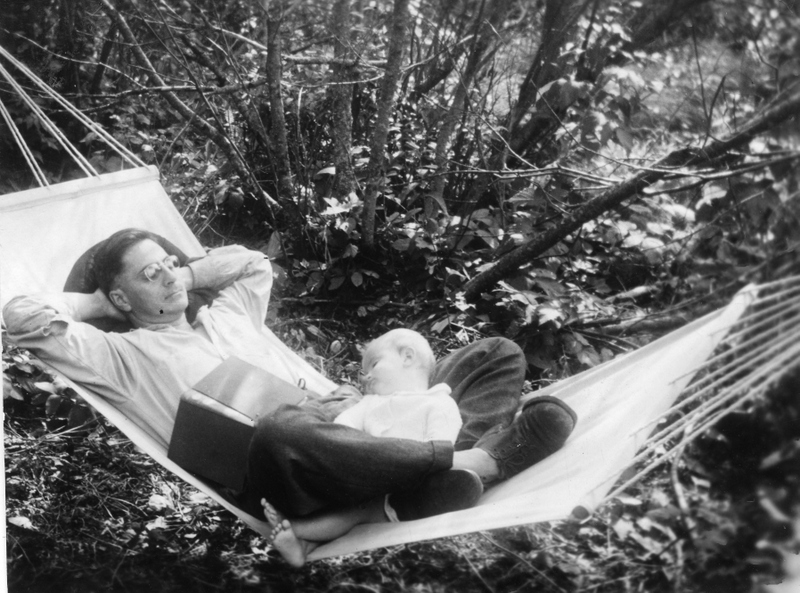
“Love bears the name of our fathers, of their leaving themselves behind,” writes Byrna Barclay in her self-reflection upon this suite of poems upon, yes, her lost father. It’s nearly impossible to go mentally from the sweet photo above — father and daughter in a hammock, a book, the daughter sleeping safely in the cradle of his legs — to the idea that Byrna Barclay never actually knew her father, that he was dead before she was three. Byrna Barclay’s poems are poignant reconstructions of absence, they are like the light from a cosmic event millions of years old, the light filters through the universe but the star is gone.

Byrna Barclay lives in Saskatchewan. She is prolific writer of novels and short stories. She is not exactly an old friend. We shared a car ride from Saskatoon to Regina one summer day in the last century and managed not to keep in touch until Numéro Cinq brought us back into contact. A wonderful thing about the magazine is that it picks up lost threads.

See more work in the NC Fathers Collection here.

dg

It seems to me that every writer has a Robertson Davies’ snowball, a traumatic event in early life after which nothing is ever the same again.  So many spend their writing life avoiding the telling, but that single moment not only informs their work but is the pressure beneath the lines.  It always erupts in imagistic and recurring threads, like dream.  Mine was the death of my father on the day before my third birthday.  That loss punctuates everything I write. 

Sometimes,  in the search for father one must go through the mother to find him.  The absent father.  So shape-changing he disappears at the point of contact.  Yet love bears the name of our fathers, of their leaving themselves behind.

—Byrna Barclay


From the Land of the Dead

I once knew a poet who took three naps a day
then wrote poems about his dreams.  Mine
are wild these nights, with flying
red tea-table chairs from my childhood,
empty closets, bookshelves bereft
of my father’s unfinished stories.

When I wake up I feel as if I’ve been held
by someone who didn’t appear in the dream.
How did that old song go?  Darn that dream.
I can still hear the sugar-sprinkled-on-cream-
of-wheat voice, but can’t recall the singer’s name.
I remember stories but forget the authors,
how between Great Wars a plum burst
in a poet’s mouth.

Tonight my mother takes my children
to the merry-go-round-man
I once wanted her to marry
so I could have all the rides she couldn’t afford.
Too much money spent on story-books treasured
in the linen closet.  I read my self to sleep.  At school

I made up the story.  The King of the Dead Sea
looked like my father & rode a seahorse out of clouds,
twirling a seaweed rope that turned into a ladder
to save trapped in the turret of the castle school
a pigtailed child who looked too much like me.

From the land of the dead my mother
lugs home my teacher father’s scarred desk,
his steamer trunk full of Dime novels,
his portable Royal typewriter, its red ribbon
shredded, even his ink blotter.  A feather pen.
She puts them in all the wrong places.

She brings me his manuscripts:
a radio play, a textbook on how to teach
Drama.  A story about Riel.  Rebellion.  His last
memory about his home in India: Ivory hunters
& elephants long walks, their struggle to die
in ancestral graveyards.

With indelible ink he signed his name.  Letters
squirm like unfolding larva, leap
to a height undreamed of by a moth,
final landing soft.  In my palm:
proof that my father lived, his ivory voice
no longer lost
among elephant bones.


Always, Father

More than I wanted the big kids
to boost me up to the window
so I could kiss Dougie
just back from the sanitorium
I wanted his sloe-eyed father
just back from the War
to marry my widowed mother
so she would stop her nightly fall
down a bottomless well.  Stop
screeching about boys spreading germs.
She made a doctor take pictures of sacs
in my chest the same way
Dougie’s shoe-salesman father
let me see how the bones of my feet fit
inside brand-new Mary Janes
through a magic box that made snow.

More than I wanted to marry Allan
when I grew up, I needed his shoemaker
father who hid red licorice in his leather apron
to marry my mother when his mother died.
In the pockets of his father’s pants
hanging on the line we found matches
and struck them on the stucco house.
His mother screamed and slapped Allan,
and mine warned me about the danger
of playing with fire.  She never knew
how Allan and I practiced for our parents,
he wearing his father’s airforce jacket and cap,
me trailing my mother’s lace curtain veil
in a ceremony fired by loss.

Years later, more than I wanted to marry
a man with the same initials as my father’s
I needed to get away from my mother.


Red is the Colour of Mourning

My father has finally come
not for me, twenty-one years older
than he was when he died,
but for my winter-weary mother.

He waits on the other side
of a window.  Large
so my mother can look out
at a changed world: Sun-grilled
dunes ripple away from scrub
towards a calmed river
as far-reaching as the sky.

Only three when he left,
I never knew him,
yet I’m awed by suddenly remembered
perfection of features clearer
than the line where a lowering sky meets earth.

Humped nose broken three times
on the rugby field.
Eyes as large and mild as a sacred cow’s
in the country of his birth.  He wears a red turban,
an out-of-place scarlet coatee
as if he’s just come from a ghat.

In India red is the colour of mourning.
Here, it’s the deep shade
of my mother’s passion,
of her anger at his leaving her,
of her forgetting his name.

I hear my father’s voice
modulated and muted
as if coming from the bottom of a river.
More than a call to my mother, or a comfort to me,
it’s the knowing: I heard this voice
before I was old enough to remember
riverside
a swaying hammock, his singing
me to sleep and every little wave had its night cap on…

I expect my father to come for my mother
in a winter caboose pulled by Clydesdales,
but he beckons from a refurbished roadster,
the one my mother crashed into a ditch
to avoid hitting the Rainbow
bridge where he carved their initials.
He won’t let her drive now.

Leaving me behind glass,
they’re away, river-bound,
with a salute from him,
a promise to return for me.
img002 

.
Love Stories You Just Can’t Tell

Your widowed mother picked up a stranger
on a train. He wore a suit just like your dead father’s.

She said she’d sub-letted her barn of a house
& you had to stay in a hotel until the renters left.

He said his name was the same as the hotel’s,
only backwards: George King.

When you fell asleep he was taking off
your father’s identical trousers.

.

Among My Father’s Curios

In this chanber of glass
this cabinet of teak carved
with thistles and flights of birds
I find the jaded head of the judge,
my father’s grandfather.

Against the scent of jasmine
against the blowing up of sand
his nose turns down. Brief & jagged
line of lip & curve of jaw
juts above his court tabs
stiff with starch. They say in India
he ordered hung sixteen sepoys
each mutinous day.

One severed lock of his powdered wig
lies safe in a silver snuff box
with monogram: W.L.H.

Here is a photo of my faher,
a sultry turbaned boy
astride a country pony. They say
he spoke only Hindustani. Forbidden
his grandfather’s English tongue
lest he speak improper Cheechee
learned from the servant holding the reins.

On the first shelf
a blue chiffon violet
folds its leaves
into a square of silk.
…………………………………………My first Elizabeth was my first love.
On the second shelf
in a curry dish
a single hook & button of jade
a wooden brooch: cherries
dropping redly
…………………………………………My second Elizabeth was the mother
…………………………………………of my children.
On the third shelf
a shop girl’s bright brass camel,
ivory tusks of her trade. They say
to her he left all his worldly goods,
disinheriting his children. My father.

…………………………………………\My third, Eliza, the delight of my dotage.
Beneath crossed sabers
…………….whips & spurs
I staring stand & dare not
touch the jade(d) head
sitting in judgement
on the skin of a leopard.

.
Did He Dance?

Dorothy told me they buried my father under the ice. She was four whole years older. She took me to her church after supper. The girl with the brilliant hair twirled, flimsy skirt flared. She’s going straight to hell, Dorothy said. The girl’s red mouth opened: she howled. She fell down and her hair hid her face. See? Dorothy said. She gripped my hand. The screen went dark, the lights came on, and Dorothy led me down the rows of bowed heads to the back of the hall. A woman in a blue dress made me kneel on the seat of a chair. The scabs on my knees hurt. Her father died, Dorothy said. They put him in a box lined with satin and buried him under the ice. Was he baptized or christened? the woman said. Did he drink? Did he smoke? Did he dance? Pray for your father’s soul! On the way home, crossing the skating rink, I twirled circles on the ice. I fell down. I brushed away the snow. The ice was clear and blue. I pressed my face into think snow, tried to see my father buried there, his last pale unshaven face, his last dance.

.
How I Want to Remember Them

1. I must forget how I moved
….in…. slow…. motion
through air white as a blank page.
So white. My father’s freckled face,
his raven-wing hair fanned on a pillow.

In my mother’s black photo album
he holds me aloft, as if awed
by his own small reflection.
This is how I know
………………………he knew me.

2. I must forget my mother’s death mask,
the sharp beak of a squab,
her hair cropped albino crow-feathers,
a crone’s toothless mouth agape.

This is how I remember her:
Saturday morning opera from New York.
Jan Peerce’s voice filled with light.
My mother’s let-down braids
the colour of sun’s early song, red
chenille robe whirling, me on her hip,
she dances me
………………….Till doors change places with windows.

3. Only a dream can give memory
to a child too young to remember them
together. I find them mirrored
in the silver tea service tray he gave her.
Every day he brought her breakfast in bed
until he fell ill, and she served him
while in the mountain ash outside
a robin sang of morning.

Picture them in pillowed bliss,
honeyed lips, a bit of döppa, dunking
thin strips of toast in soft-boiled egg
or in coffee made in the Swedish way
just for her. Braided life-
bread, sticky with icing and jam.
He won’t let her lick her fingers,
dipping the tips in a silver bowl,
then dabbing them with starched white serviettes
saved for these mornings reflected
in a silver dream she polished for me.
img003

.
My Father’s Gloves

Found in my mother’s steamer trunk
the suede gloves she saved
have taken the shape of paws
yellow backhair curried
padded underside cracked
& each long finger
the curl of a claw.

I hold palm against palm
smell the dampness
of an old cave
close(d)
into winter sleep.

My hands grow a second skin
yellow fur.

.
My Surrogate Father

I called him Uncle, my mother’s cousin, Karl Mauritz The Moose Millar. When he was thirteen and the eldest of ten, his switchman father died, and his mother left one porkchop on the window sill so the neighbours would think they hae meat for dinner. That night The Moose left home and didn’t return until he found a job as a stockboy for the Buffalo Nut & Bolt Co. He worked his way up to Vice-president, one of the last of the self-made men.

The Moose looked after everyone in the family. Leg braces for sister Maimie. Food for sister Violet when her steel-maker-man boozed away his pay cheque. When he found his first wife in bed with his brother he paid for her care in an asylum. He lost his son Missionary Bob to malarial anger, the chill of grieving too long for an absent mother.

Every week The Moose wrote to me, the Canadian half-orphan, stories about our great-grandmother who swept the streets of Ystad to pay their way to America, how my grandmother looked like the gleaner in The Song of the Lark. His own painting of her granary house failed when he forgot her woodflowers transplanted from the grave of her father to her husband’s beneath our Canadian cold-blue spruce. When I turned thirteen he wrote: Never dance with a kilted man. It all started when our Swedish ancestor, with grog jug in on hand and the hair of his woman in the other, dragged her up the Celtic shores.

The Moose gave me away when I eloped with the son of a Scot, his glasses splashed with old tears.

.

Love Bears the Name

I am the child lifted
onto my father’s heaving chest.
His raven hair sweeps back
into wings.
……………………….What’s going to happen
””””””””””””””””””’to my holy-hecker? His last words
beating through halls turning.
A dark-hooded woman leads me to another room
where stained glass refuses morning.

A box lined with satin
will hold his sleep.
I believe I took away
his last long breath.

He has gone to the War.
He floats under ice.
He has gone to Winnipeg.
I will find him if I reach
for the red sky.

I dream of the men who took my father away
on a bed with straps, away in a wailing car.
Into my hands my mother thrusts
a small red box. A snake
writhes around her fingers. In side the box
her wedding ring sinks into leaves soft as dust.
On a sleigh-shaped bed
my mother slides over ice.
She screams herself awake
from an endless fall.
Morning is the hardest.
Basement cold. Night ashes
in the furnace. No coal.
She struggles to her school,
falls on ice. And stars
stare down: red.

She tells me my father’s dream:
when his father died
he found him boarding a plane.
He couldn’t stop his father
from flying away.

Love bears the name of our fathers,
of their leaving
…………………..themselves
………………………………….behind.

—Byrna Barclay

———————————-
Byrna Barclay

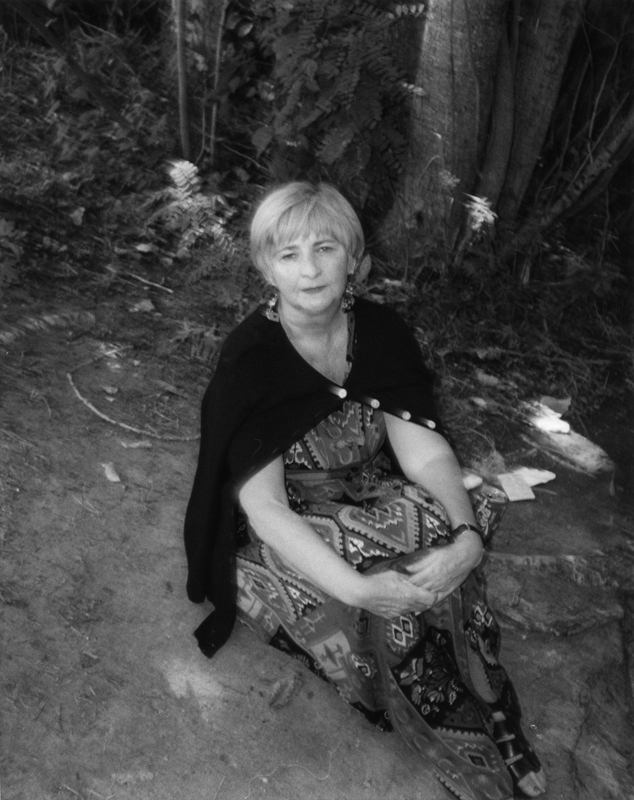
Byrna Barclay has published a series of novels known as The Livelong Quartet, three collections of short stories, the most recent being Girl at the Window, and a hybrid, searching for the nude in the landscape. Her many awards include The Saskatchewan Culture and Youth First Novel Award, SBA Best Fiction Award, and City of Regina Award,  YMCA Woman of the Year, CMHA National Distinguished Service Award, SWG Volunteer Award, Sask. Culture Award, and the Saskatchewan Order of Merit.  In 2010 she published her 9th book, The Forest Horses, which was nominated for Best Fiction for the Saskatchewan Book Awards.  Her poetic drama, The Room With Five Walls: The Trials of Victor Hoffman, an exploration of the Shell Lake Massacre, won the City of Regina Award.  She has been president of SWG twice, President of Sask. Book Awards, and Fiction Editor of GRAIN magazine.  A strong advocate for Mental Health as well as the arts, she served as President of CMHA, Saskatchewan, was the founding Chair of the Minister’s Advisory Council on Mental Health, and for twenty years was the Editor-in-chief of TRANSITION magazine.  Vice-chair of the Saskatchewan Arts Board from 1982-1989, she is currrently the Chair. Mother of actor Julianna Barclay, she lives in Regina.
Apr 052013
 

mcclennan-001

Herewith a short fiction, a short modernist fiction, terse words carved out of the white space of the page, a dramatic meditation on fathers, marriage, and history splashed against a screen of absence, a gem of concision which is yet replete with place (that Ontario landscape reeling by) and literary reference. rob mclennan is a Canadian writer, indefatigable blogger and critic; we are both, coincidentally, in the current issue of Fencea serendipitous conjunction. It’s a great pleasure to introduce him to these pages.

dg

§


 There is no such thing as fiction.

                        Richard Froude, The Passenger


1.

In 1968, my father and mother drive west along Highway 401, towards Upper Canada Village. They have been married less than a year. He wants to show her something.

This happens in real time. They drive.

Both his hands rest on burgundy steering wheel, their cherry-red Ford. For the length of my memory, he owned and drove only Fords: the family car and the truck for the farm, upgrading every half-decade.

The wind through the open driver’s side window. His hair so black it shone metallic blue. It sparkles. A trick of the light.


2.

It begins with a silence, seeking its source. With occasional birdsong, the pant of the dog, a tractor rolling along in the distance, the silence holds deep in its core.

We establish the fixed points: his daily routine, the pair of his and her Fords in the yard, the black Labrador mix.

Much of my childhood was punctuated by silence. Inherited.

The silence remains, holding court amid tenor. At first, you might imagine it is waiting for something to be said, or to happen, but it is not.


3.

Their stretch of Ontario highway a madness of trees, awaiting development. Pitch-perfect birds and occasional deer. They pass farms and villages two centuries set. They drive west, into history. My father cities 1812 facts from half-remembered textbooks, mumbling dates and locations.

No, not awaiting. What’s the word? Dreading.

They are newlyweds, still. My father rests his left arm across the ledge of rolled-down driver’s side window. Air scrapes the length of his forearm.

My mother breathes deep, enjoys smokeless air.

.

4.

This quiet between two is not absence, but slow comprehension. Each suspects what the other might say.

Years later, my mother would translate him, offering: your father is very angry at you for that thing that you did.

But for now, they are still learning. They react to cues, whether real or imaginary. They can’t yet read each other’s thoughts.


5.

We could speak of the father as imagined figure, since he is not yet my father, or anyone’s father, beside she who is not yet anyone’s mother.

We pause, on the obvious: their youth, their half-restrained enthusiasms. One can’t help but compare. Basket of apples and peaches each nestled on the backseat. She has been wanting to replenish their supply of preserves. Applied correctly, wax seals freshness in.

Cellar shelves by the cistern. Fresh cobwebs and field mice.


6.

The seven villages along the St. Lawrence Seaway he witnessed, drowned due to the Long Sault hydroelectric project, as he was mid-teen. Villages shifted, erased and rewritten, for the sake of the water. Buildings broken, and sold for parts.

A shed his father built from a former gas station, additions to the farmhouse made from what once a single family home.

The site of the War of 1812 Battle of Crysler’s Farm, half underwater. Inventing a pioneer village as a place-marker, upon the remains. A shoreline redrawn, by the flood.

They brought in buildings from across the area, including half a dozen from a two-mile radius of my father’s homestead. The cheese factory where his great-great uncle once worked, the one-room schoolhouse his own mother and aunt attended.

We shuffle history around.

The house he was born in, a century old by the time he was new.


7.

A marriage: two merge, inasmuch as they individually change.

From the state of the farmhouse years later, it was as though she married, and left home with only the clothes on her back. Her wedding dress asleep at the back of a closet. She had little to nothing else pre-dating this, from her homestead to his. What did she bring but herself? What might she have left? What might she have meant to bring, but somehow didn’t?

A house sprinkled with archive: his rusted Meccano set, his preschool plush lamb.


8.

In silent 60s-era Super 8, colours are brighter, illuminated. A particular era’s nostalgia in bright hues, glossy light. A quilt, stitching squares of mere minutes. They drive. The highway itself less than two decades old. So close to the lip of St. Lawrence River, a sequence of edited farmland and family estates scalpeled and shaped into two and four lanes.

Their fathers are both still alive. His, living years with cancer treatments, the three hour drive into the city. My father at the wheel, since his mother never learned.

He understands, distance.

He knows what lies across horizons, having been over every one.


9.

Her father, chain-smoking. The entire household. It hovers around family portraits, Super 8 by the lake, where they cottaged. My mother, once married, would never light up again. She later frowned upon my own youthful folly. Looked upon with derision.

Her once-mixed thoughts on the move, shifting city to country mouse. Now she marvels at farmland, the open green stretch.

Rewind. Leaving the farm, the truck kicks up dust from the gravel, two miles to blacktop. She twitches from crunch and the dust cloud, anew. Mixed thoughts, but this, she loved from the offset: a jolt to a small, giddy leap as they start up the laneway. A schoolgirl glee and excitement the city could never provide.


11.

My father, his hands on the steering wheel. The tan we now know as permanent. Melodic stretch of dirt road and gravel, of sonorous blacktop, that defy description.

From the Robert Creeley poem. Drive, she said.

—rob mclennan

———————–

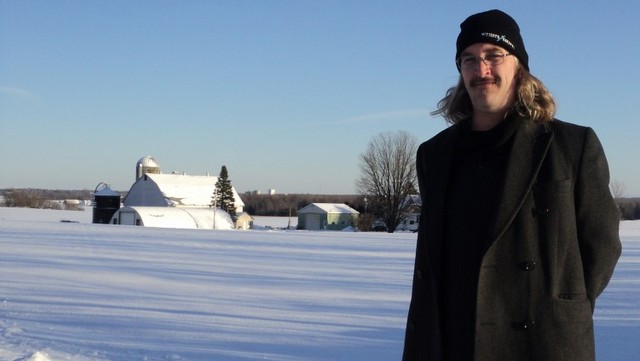
Born in Ottawa, Canada’s glorious capital city, rob mclennan is the author of more than twenty trade books of poetry, fiction and non-fiction, his most recent titles are the poetry collections Songs for little sleep, (Obvious Epiphanies, 2012), grief notes: (BlazeVOX [books], 2012), A (short) history of l. (BuschekBooks, 2011), Glengarry (Talonbooks, 2011) and kate street (Moira, 2011), and a second novel, missing persons (2009). An editor and publisher, he runs above/ground press, Chaudiere Books (with Jennifer Mulligan), The Garneau Review (ottawater.com/garneaureview), seventeen seconds: a journal of poetry and poetics (ottawater.com/seventeenseconds) and the Ottawa poetry pdf annual ottawater (ottawater.com). He spent the 2007-8 academic year in Edmonton as writer-in-residence at the University of Alberta, and regularly posts reviews, essays, interviews and other notices at robmclennan.blogspot.com. He currently lives in his hometown, Ottawa.


Sep 132012
 

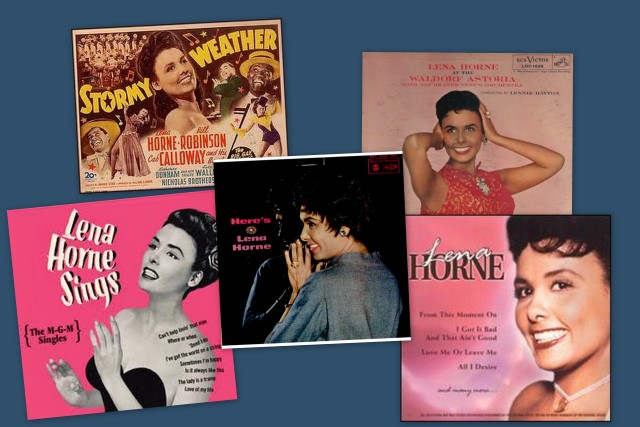
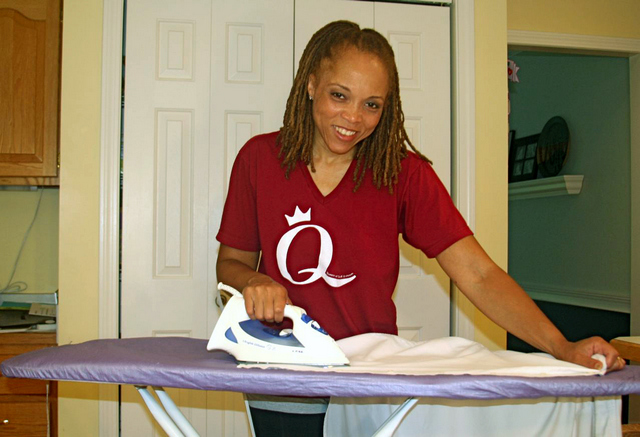
Sophfronia Scott has written a gorgeous yet uncategorizable memoir that is in part a tale of her brush with the celebrity Lena Horne. But that is only the instigation; their conversation lead both Horne and Scott to tears, to memories, to fathers and to white shirts and ironing boards. In capturing her memories of learning to iron and her father’s white shirts, Scott captures a moment in African-American cultural history that is poignant and complex as hell. Father-love, oppression, African-American male pride, daughter-love — all these and more.

Sophfronia Scott is a new friend, as it were, a second-semester student in the Vermont College of Fine Arts MFA program, also a published novelist with, already, a long career as a freelance and woman-of-letters.

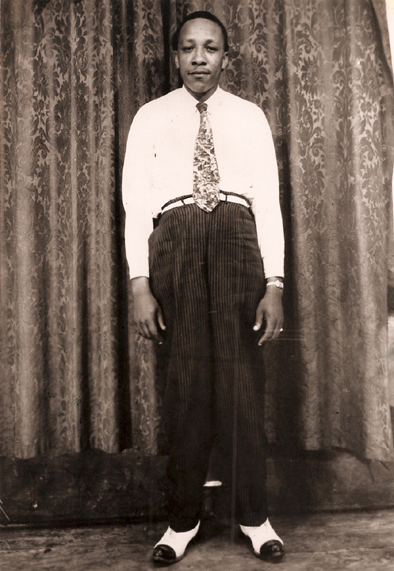
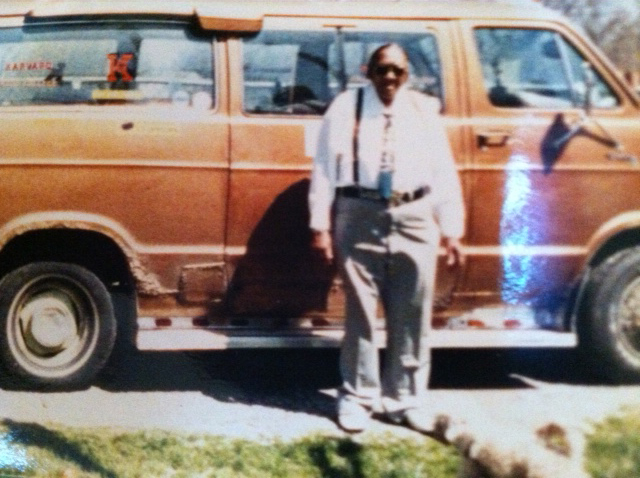
The two photos are of Scott’s father. One was taken in the 1940s, the other somewhere between 1988 and 1990. The author photo at the top is by Tain Gregory, Sophfronia’s son, age eight.

dg

—–

When my friend Jenny answered her cell phone that day she had said, “I’m walking with Jake and Ella and Grandma in Central Park. We’re only a few blocks away, come join us.” Jake was Jenny’s pre-school age son, Ella was her dog and Grandma? Well, Grandma was Lena Horne—singer, actress, icon. I said okay, hung up the phone and kept walking but I was pretty sure I’d left part of my brain back on the corner of East 68th and Fifth Avenue. At that point Jenny and I had been friends, dear friends, for close to two years but I’d never met the legendary Lena. Her public appearances, even at family functions, were few. Our mutual friends spoke of her with hushed awe, wondering if they would ever get the opportunity being presented to me then. They talked about the possibilities of being tongue-tied, not knowing what to say, of coming off as being less than fully charged in the mental department. As I walked toward the park I took on all their anxieties, just assuming they were my own. I felt like the suede jacket I broke out each fall suddenly looked shabby, and the scuff marks on my boots were rising up all white and too obvious.

I found them, stroller, dog, women, taking up most of a footpath near the East 70s. Jenny introduced me and when Lena said my name “Fronie-Fronie,” as I’m known in their family, the fear inside me melted. I recognized the lilt of her voice, but not from her recordings or her movies. She sounded like someone I loved. I heard the tones of my father’s sisters as I heard them in my childhood: slow and elegant and beautiful.

I don’t remember what she wore—unusual for me because at the time I was mad for fashion—but I remember the glow of her skin, the way her chin tilted up to examine my face. Maybe she marveled over my freckles or the reddish brown shade of my dreadlocks.  From the intensity of her gaze, though, I gathered she seemed to be searching not for prettiness but for content. She wanted, I think, to see what was in my brown eyes. I remember bearing her weight as she took my arm and we walked while Jenny pushed Jake in the stroller and supervised the leashed but ever-roaming Ella.

I like to believe she spoke to me as she did then because she had soon realized I was not like her granddaughter’s other friends, urban and modern and lovely, but for her out of reach in terms of connections and references. Lena was born in 1917. My father, by then deceased, had come into the world in 1919 so I had grown up with her language, with her references. Talking to her was not that different from talking to my own father in our living room as he used to sit in his recliner. In fact Lena asked me about “my people” and I told her about my father coming from Mississippi and my mother’s family from Tennessee, and how they merged in Ohio but raised me and my siblings as though no one had ever left either of those southern spaces, right down to my father’s whippings and demeaning words that stung even more than the physical strikes. My sisters and I were taught to cook and clean and iron as if they were the only endeavors that could ensure our survival as women. By the time I was 18 and leaving for college I was so angry I vowed never to return. I didn’t tell Lena that part.

That’s how the ironing talk started. She seemed intrigued that I had learned so young and surprised that I still did it. My husband was, and is, terrible with an iron and it never occurred to me to send the shirts out to be laundered and pressed as every male in New York City, even those who couldn’t afford it, probably did. Lena, I learned, had married young, just 19, and to a man who, much like my father, insisted on his wife producing ironed shirts, fresh biscuits, and perfect needlework, but she had been taught none of it. It had been important to her to try, I could see that as a little frown creased Lena’s brow. Her own father had been absent most of her childhood and she seemed to have wanted the chance to show this kind of diligence for a man she loved. For a moment Lena released my arm and her pale hands, at waist level, swept through the air in front of her. “I used to weep over that man’s shirts,” she said. I nodded and we stood there together at an imaginary ironing board. The yellow leaves over our heads and under our feet provided the light for our work on that overcast day. “And they were all white shirts, right?” I asked. I remembered my father’s own white shirts as I heard Lena answer, “Yes.” We stood there, the shirt large and voluminous in Lena’s small hands, the white cotton hopelessly scorched.

Lena had squeezed my heart and I wanted to cry because I could feel how much she had loved her husband, how much she must have tried. I knew what it was to have such obvious proof of failure. I too had burned my father’s shirt (and coffee and biscuits and collard greens). But I had been able to make adjustments—so many adjustments—until I had eventually mastered most domestic tasks and could present my father with perfect shirts and perfect biscuits. It never occurred to me what it would have been like never to be able to do it, to never be able to show love in this way. Of course I wouldn’t have said that when I was ironing my father’s shirts. But I remembered the complete sense of pleasure and satisfaction when my father pulled on a shirt without making a critical remark.  Maybe I even felt proud of the way he had looked. I wanted to tell Lena right then how to iron that shirt. Years later it still seemed to matter, and I felt Lena would have listened, that she still wanted to know like it was the answer to an essential, but long-elusive riddle.

To this day I have never read any proper instruction for how to iron a shirt. I suppose if I Googled “how to iron a shirt” I would find enough information, with video included, to bring me to the level of the ironing elite. But I feel what I learned from my mother’s hands is old magic—I don’t want to meddle with it.

I can tell you I start with the collar, unbuttoning it if it’s that kind, and laying it as flat as I can on the ironing board. I press it end to end. Ironing the small parts of a shirt is when you’re most likely to get burned. You have to hold the part close to the iron while you press and your fingers are simply in harm’s way. A burn rises quickly, a living red capsule on the surface of your skin. You think it will never heal because that’s how much it hurts when it happens. Ice is better than butter, I’ll tell you that now. Butter and burns is an old wives tale.

Working with steam is a blessing. I didn’t have a steam iron when I was a kid and my arms often ached with the effort of exerting the right pressure to smooth out the fabric. Ironing is so much faster now with steam. (When I got older my father bought us a Press-O-Matic, a smaller version of the huge rectangular ironing machines you see at the dry cleaners, but that’s another story and a different set of burns.) Next I pick up the shirt and lay it on one side of the front with the buttons face down and running horizontally in front of me. I iron that, then the sleeve on that same side. Sleeves are tricky because of their roundness. They don’t lie flat well so I will usually iron a sleeve and turn it over to find a funky crease I didn’t mean to create running like a new slash down the arm. Once I fix that I move to the other side and the other sleeve. Then I lay the back of the shirt out with the neck area fitted as much as possible over the narrow end of the ironing board. I press the back and all the little nooks of the back of the neck. I run the nose of the iron around inside the cuffs and then I’m done.

It takes a lot of love to iron a shirt you will never wear. When I see a man wearing a meticulous shirt I wonder who loves him, who has taken the trouble. Or did he have to send the shirt out because no one does?

Thinking about my father now I tend to focus more on the love and less on the anger. In many ways I have forgiven him. Such forgiveness is possible, I believe, not because he is long dead, but because of these unexpected moments of grace reaching across generations reminding me of this: the reason I hurt so much then was because I cared so much then—and still do. As I look back on that autumn afternoon and how Lena took my arm again as we continued our stroll through Central Park, I can see how in that moment I was in my 30s, Lena was in her 80s, but we were both girls ironing the shirts of the first men we ever cared for, and hoping they could feel our love pressed hard into every crease.

—Sophfronia Scott

—————————————-

When Sophfronia Scott published her first novel, All I Need To Get By, with St. Martin’s Press in 2004, one prominent reviewer referred to her as potentially “one of the best writers of her generation.” Her work has appeared in Time, People, More, Chicken Soup for the African American Woman’s Soul, NewYorkTimes.com and O, The Oprah Magazine. Sophfronia is currently a masters candidate in fiction at the Vermont College of Fine Arts. Her short story, “The Night Viera Kissed Her,” will be in the Fall 2012 issue of Sleetmagazine.com. She blogs at www.Sophfronia.com.