Nov 142011
 

Goateatingweb4245

These are views of Alexandria during one of Islam’s most revered and holy festivals. Together with Eid-al-Fitr (a festival at the end of Ramadan), these feasts represent the completion of two of the five pillars of Islam, through which the devout fulfill their duty and renew their commitment to God.

On Eid-al-Adha the offering of an animal symbolizes the prophet Abraham’s obedience to God and readiness to sacrifice his only son. Today, sacrifice is re-enacted not as a blood offering nor as penance, but in remembrance of Abraham’s submission to God’s will.

Those families that can afford to sacrifice an animal retain one third, give another third to relatives, friends and neighbors and donate the remainder  to the poor and needy. Giving to others, an expression of generosity, is one of the pillars of Islam.

.Sheeptiedtowall4246

Beginning on the 10th day of Dhu’l-Hijja, the last month of the Islamic lunar calendar, sheep and cows and camels fill Alexandria.
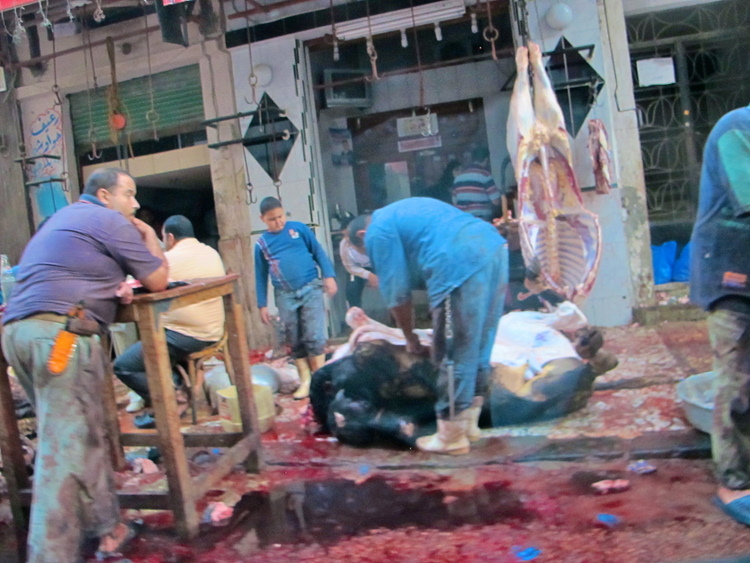
Soon streets & sidewalks in the Anfushi market pool with blood.
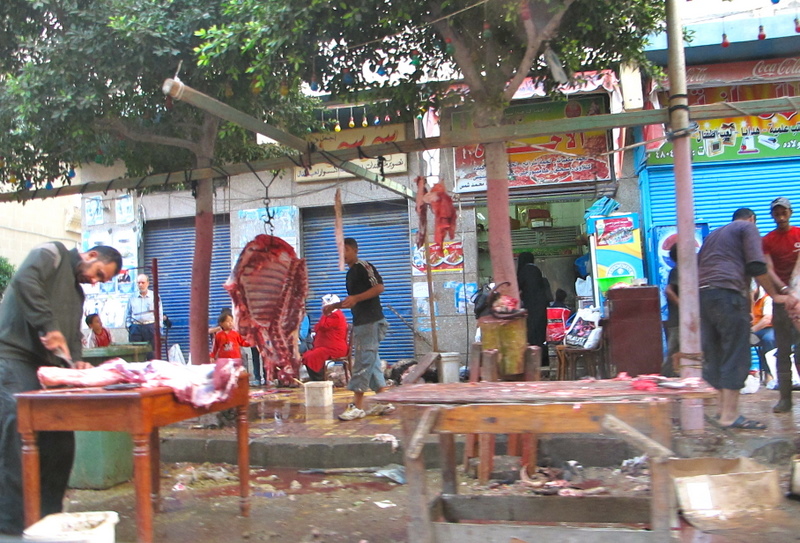
Butchers prepare racks of ram,

.
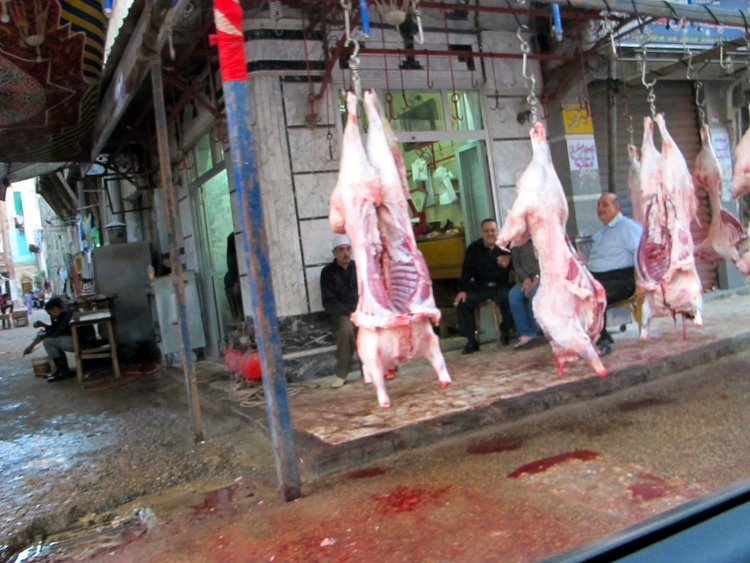
 or beef or goat or camel. .

.ramsheads4241
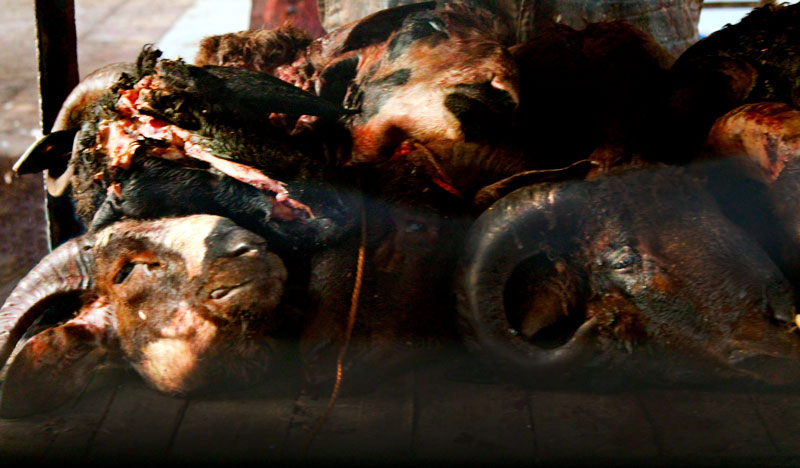
Heads, for soup, and later, to be used as cups for drinking.

.Promenade4041
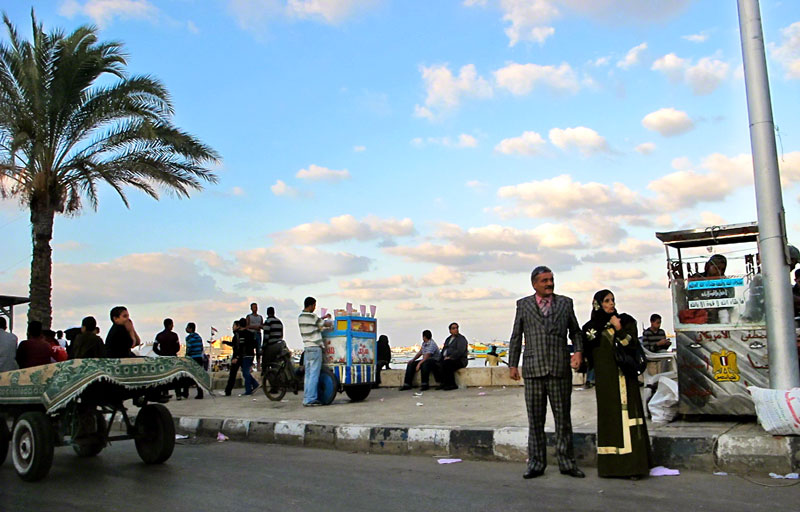
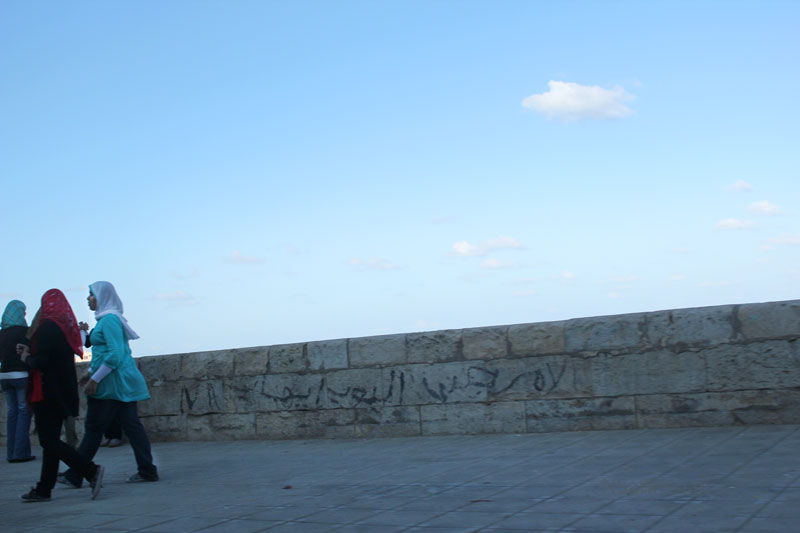
Husband and wife don their finest garb, 

.RamadanladiesIMG_4304
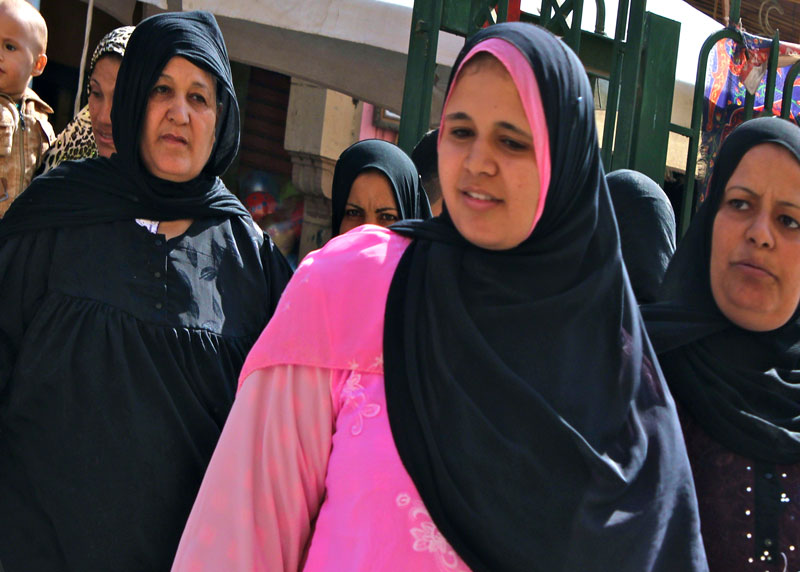
and join those bound for the mosque for special Eid prayers.

.
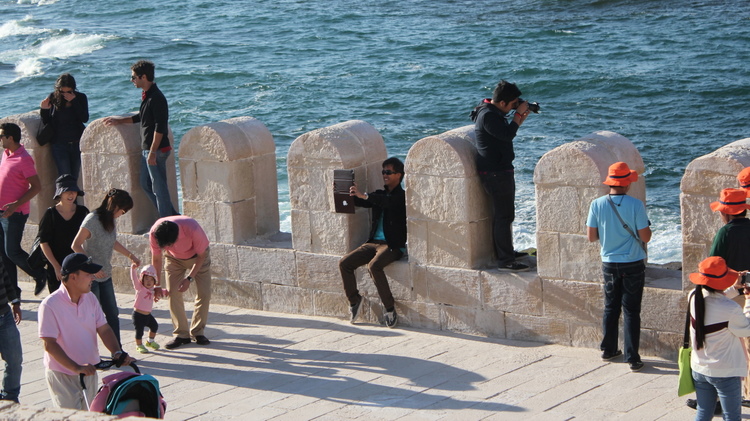
At Qaitbay citadel—which stands on the ruins of the ancient Alexandrian lighthouse, one of the seven wonders of the Ancient world—tourists snap shots with camera or computer, 

.
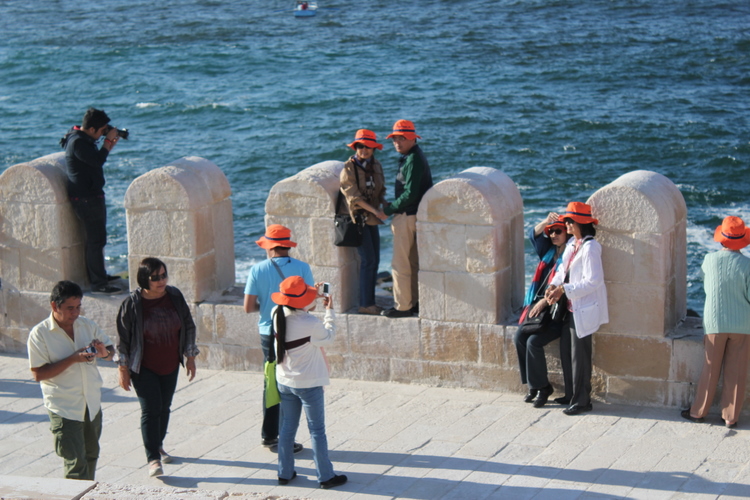
and snap again.

.
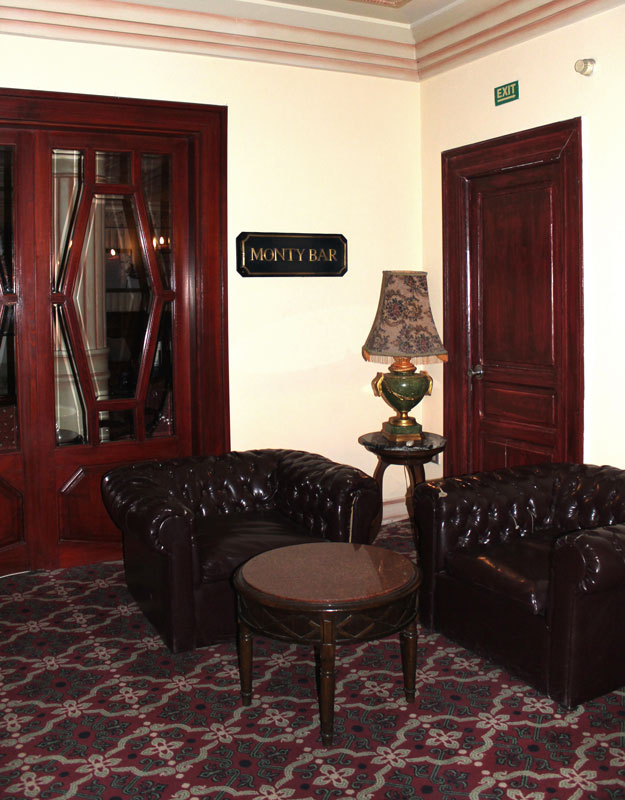
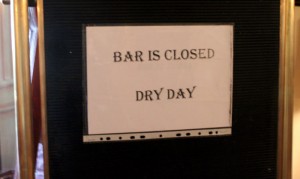
MontyBar4278.

.DryDay3608

.

Meanwhile, Monty bar at the old Hotel Cecil in downtown Alexandria—where Laurence Durrell, Somerset Maugham and EM Forster once drank—stays resolutely dry.

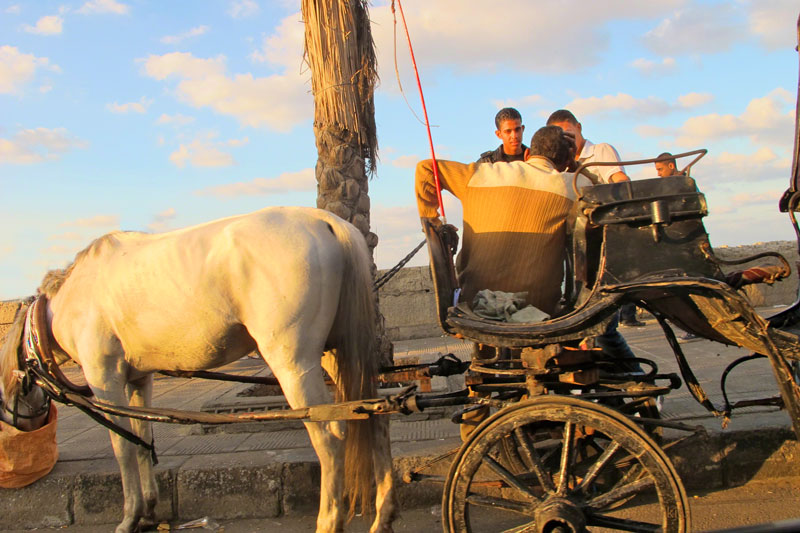
.BoysCart4060
.

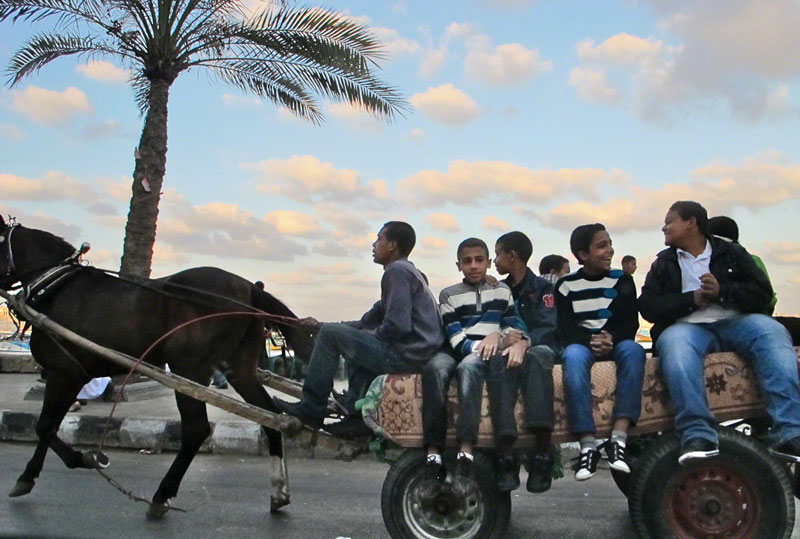
Freed from school, some boys ride carts along the seafront in the afternoon,

.BoysStroll3994
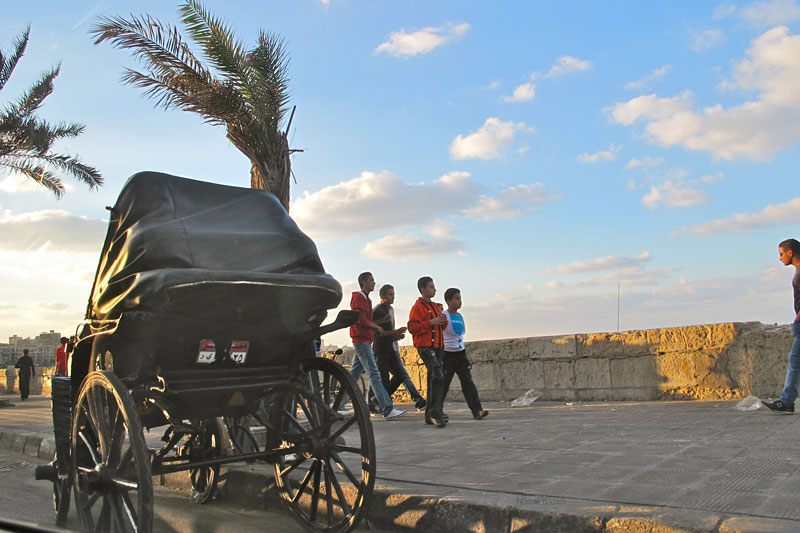
others stroll,

.ManonCartTalking3996

or sit, talking;.

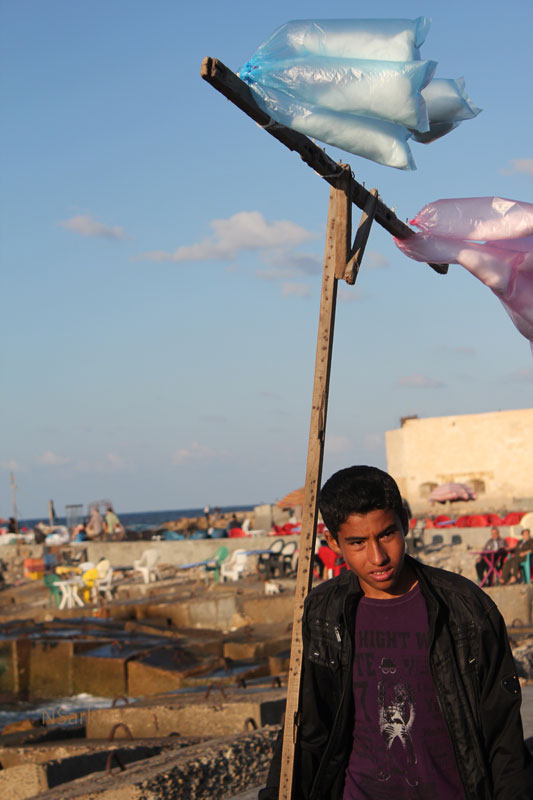
CottonCandy3836

still others sell cotton candy.

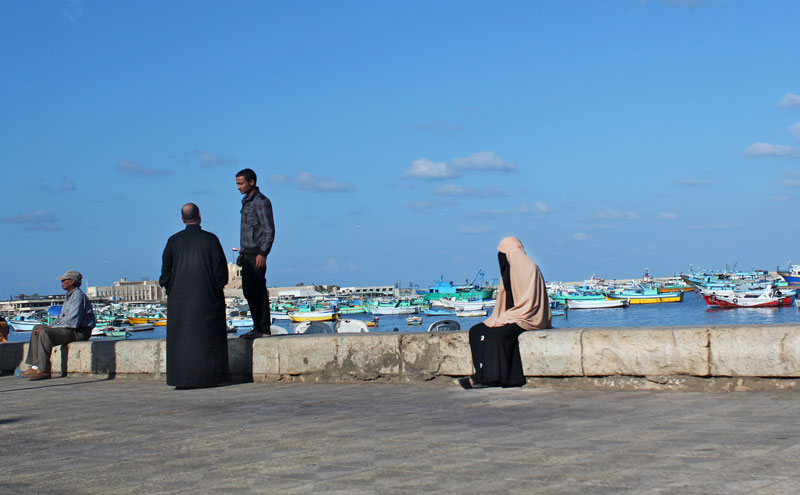
.WomanenjoysMed3655

A woman enjoys the Mediterranean,

.GirlsWhisper3653

girls whisper,

.

men play backgammon,

.
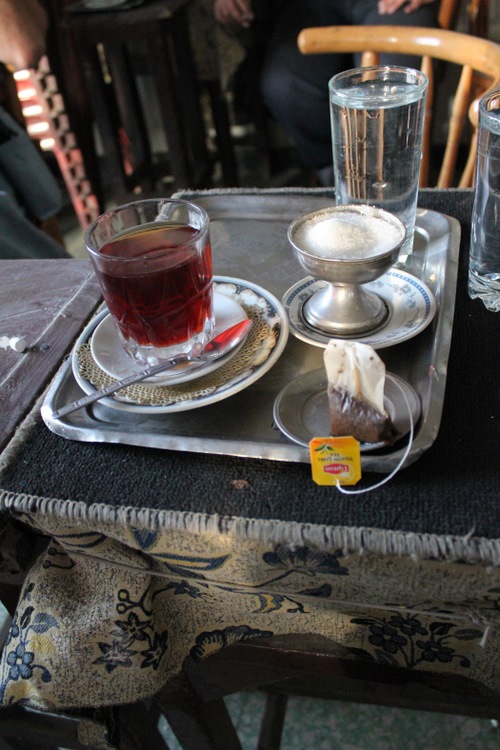
drink tea,

.
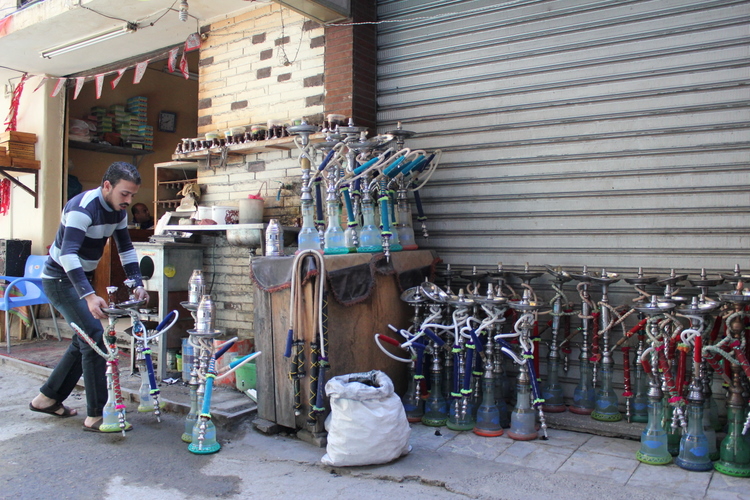
smoke shisha,

.
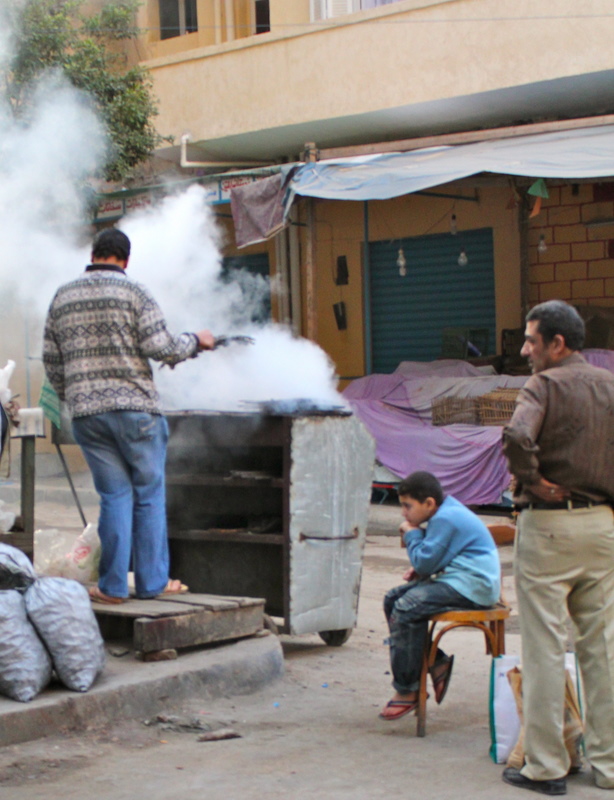
or wait, with their sons, in smoke-filled corners for roasting meat.

.

 .

—Natalia Sarkissian 
Aug 032011
 

LineUP1905

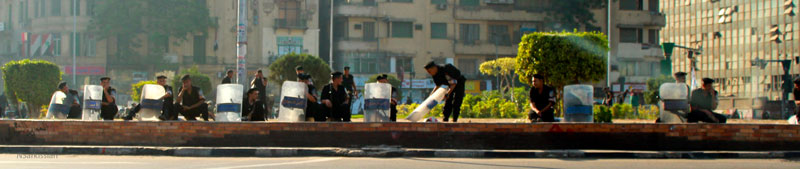
Line Up

Tahrir Square, August 2011

Photographs by Natalia Sarkissian

.
Since the last time I wrote about Egypt after the Revolution, just a month ago, the atmosphere has changed. The military police are back in Tahrir Square after several recent protests became violent. Tanks have once again been deployed. And in the side streets, vans and more police sit, at the ready. It’s Ramadan, and according to local newspapers, “this year it will be more political than previous ones.”

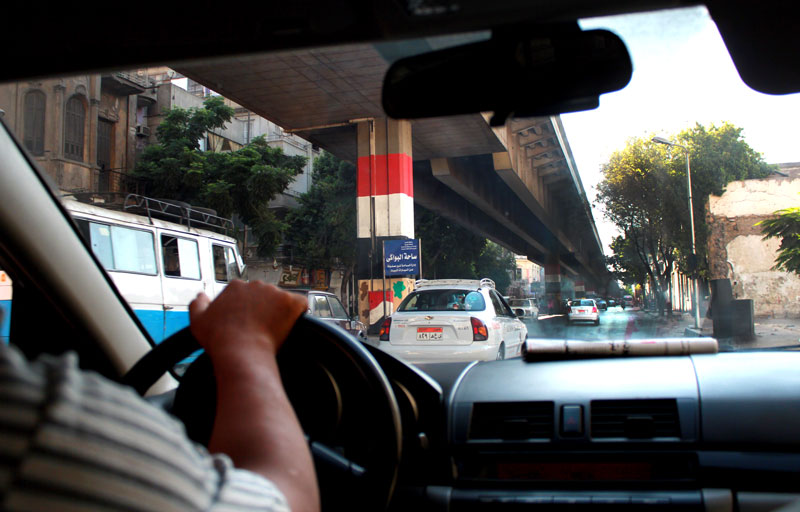
Today, August 3, history is being made. Today Hosni Mubarak has been flown in from Sharm el Sheikh. His trial is set to begin. Today, armed with my camera and accompanied by my driver and my husband, I went to Tahrir Square. In addition to the police, we found others there, like us, gathering, waiting. Wondering what is to be.

LionGateBridge1971

Bridge over the Nile at dawn

DrivingwithMo2094

On our way with Mohammed

Continue reading »

Jun 212011


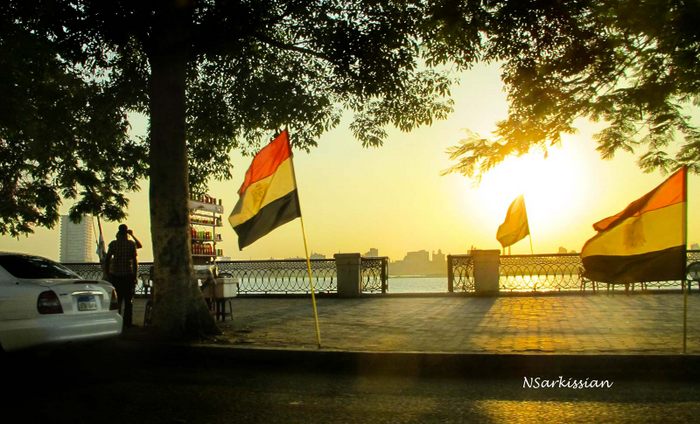
Selling Tea on the Nile

.

Egypt After the Revolution, Part II:

Photographs by Natalia Sarkissian

.

Carrying

.

I’ve just returned from a second trip to Cairo. In the two months since my last visit, the mood  has noticeably lightened. This time, I found no tanks patrolling Tahrir Square; the military had disappeared. Instead, the police force was back on duty. Protests were staged, but these were tiny and orderly. While dissatisfaction with the lack of a significant overhaul exists, for the most part, Egyptians keep it in check. They are waiting for the elections in September. They’re hopeful that with a new President, a new direction will be charted. And, in the meantime, they’re living.

.

Read the rest of this entry

May 022011
 

Apartments

Egypt After the Revolution:

Photographs by Natalia Sarkissian


Recently I flew to Cairo, an exhilarating yet draining trip to that sprawling city that covers 214 square kilometers of desert and teems with 15 million inhabitants. Then to smaller cities along the banks of the Nile, from Assuan to Luxor.

Here are snapshots of Egypt, where amidst the crumbling buildings and poverty and the weight of daily life, hope for a more equitable future grows.

Tahrir Square

Mubarak’s National Democratic Party Headquarters, Tahrir Square

Mosque of El Rifa’i near the Citadel, 19th century

Boy, working Cairo

Boy, working II, Giza

Boy, working III, Assuan

Boy, sightseeing

Getting about

Transporting

Collecting

Touring

Shopping, the souk

At the butcher’s, Assuan

Furniture shop

Vegetable Market

The Mall

Selling Mint, Cairo souk

Selling tea

The drag, with scarves, Assuan

To the ballroom in Heliopolis

Worship

To the sun

–by Natalia Sarkissian