May 182013
 

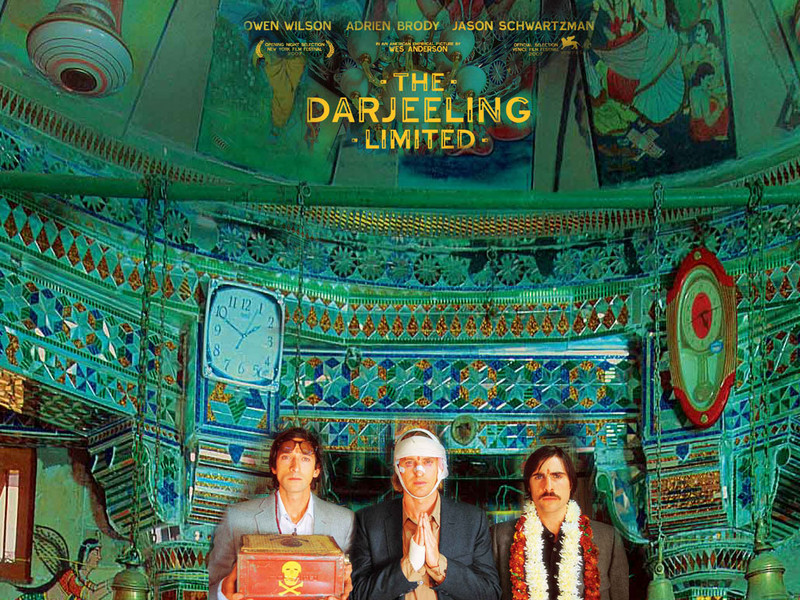
Wes Anderson’s short film “Hotel Chevalier” is a lean, bruised and naked tale in a Paris hotel room. Anderson shot the short with his own funds (and the actors, Natalie Portman and Jason Schwartzman, donated their time) two years prior to his feature The Darjeeling Limited but it was often screened at the same time and is referred to by many as a prologue to that feature film that followed it (as mentioned in this previous NC at the Movies entry). The two are aesthetically consistent, but that’s not surprising as most of Anderson’s films belong to the same visual palate and characters seem descended from the same family tree.
the-darjeeling-limited

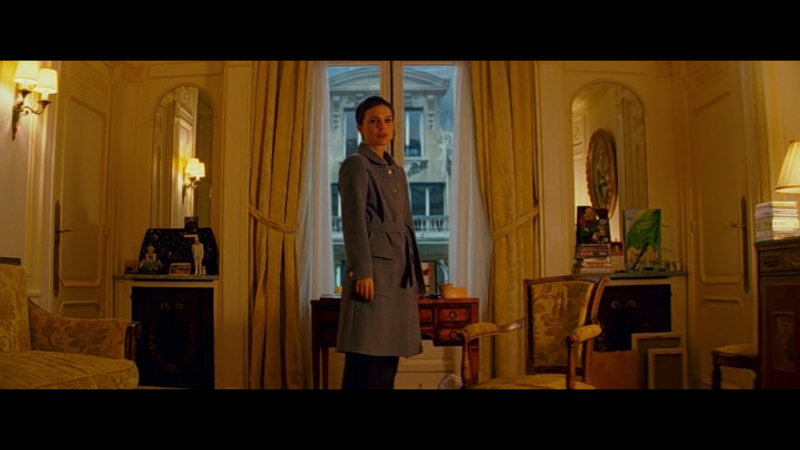
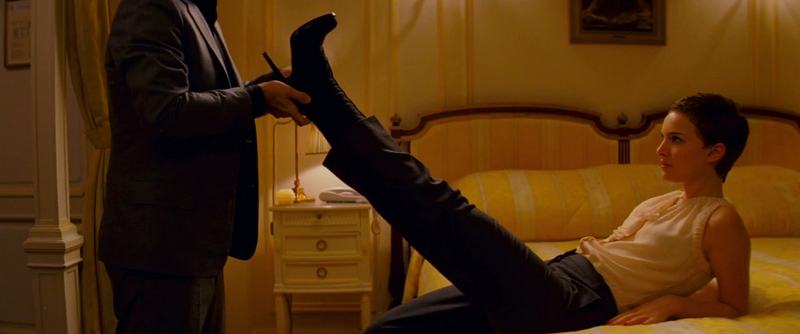
Though they were conceived separately, Anderson brought the short and feature together through their common character of Jack Whitmore.  Whitmore is precious, careful and, in his manicured construction of his hotel room a bit compulsive. In contrast, his beloved shows up with her fierce toothpick-in-mouth machismo, her velociraptor-attack dialogue (“What the fuck is going on?”), and her sudden bruised nakedness.
5

It is an uncomfortable film on several levels: visually there are the awkward, stagey wide shots of the room, the contrasting dolly shots and camera pans, the manicured way Jack has designed the room for his beloved’s arrival (complete with soundtrack queue on the ipod and a freshly painted painting): has he created the perfect setting for their reunion or a well designed bunker to defend himself against her impending assault? And does it matter since either would be in vain?

Then there is greater discomfort as Portman’s character arrives, asks almost mockingly “What’s this music?” and then touches all the carefully laid details of the room with further ridicule, even touching the wet painting, all as if to throw aside any attempts he had to set decorate or defend himself.
00000011

Does he love her or hate her? At this late stage they’re post woodchipper and it seems futile to sort through the bits of each. We’re given next to no back story except that she says to him “I never hurt you on purpose” and that he escaped her and seems clear when he says to her, “I will never be your friend. Ever.”
m4K5FLo5X9PR0vTrEweXujxN3JE

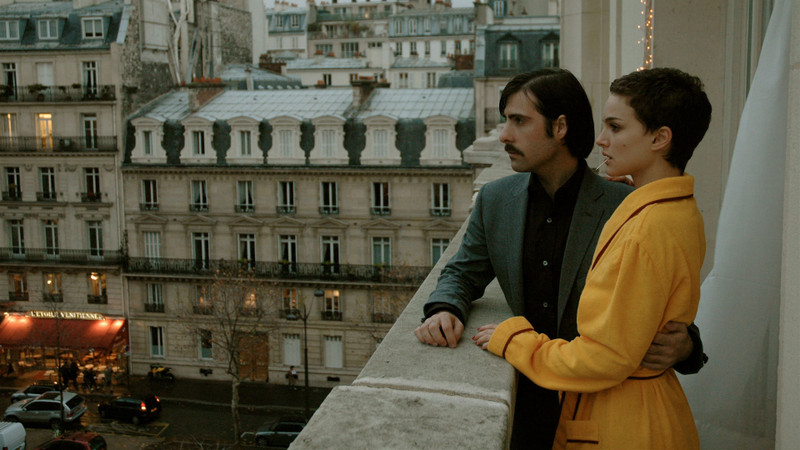
We don’t need to know more. This is the story of a man who fled, waits, then with gentle bath robe in hand shows her his view of Paris and offers her back her toothpick.  She’s only there for the night after all. It’s a perfect condensation of past and present with no future.

— R. W. Gray
Jan 192012
 

.

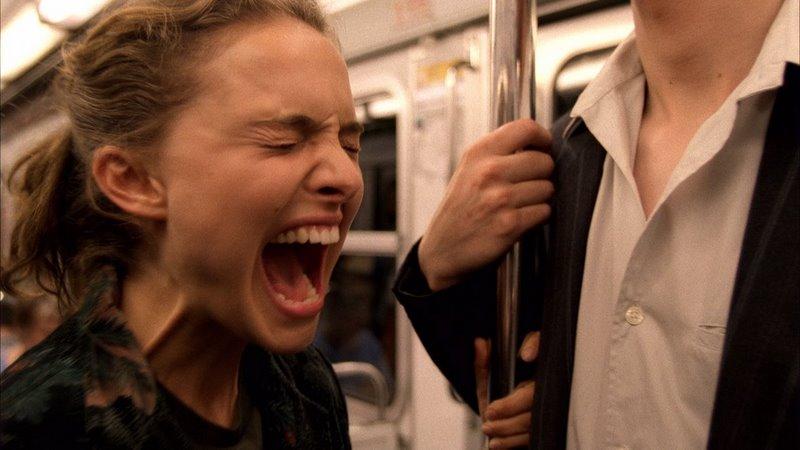
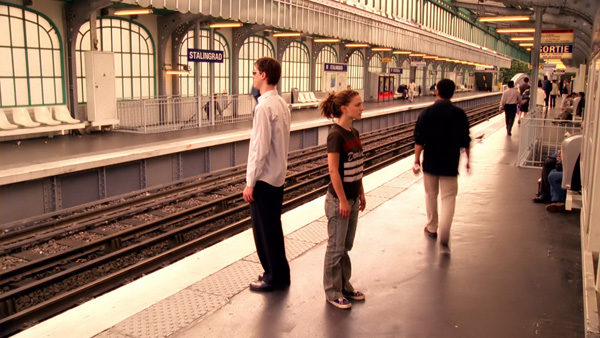
Tom Tykwer’s “Faubourg Saint-Denis” tells the story of a moment of confusion between two lovers, Francine and Thomas (played by Natalie Portman and Melchior Beslon) where, briefly, the man thinks things are over and the relationship flashes before his eyes. The voice-over addresses the beloved in the second person, a love letter the audience intercepts, and the breathless montage recounts the varied history of these two lovers. It’s a love story of all the small moments, the screams, the tears, the laughs, the repetition of days.

It’s an excessive discourse that recalls other excessive expressions of passion: Elizabeth Smart’s By Grand Central Station I Sat Down and Wept. Marguerite Duras’s The Lover. And yet, in its passion and direct address, its lovely claustrophobia, maybe more accurately Pablo Neruda’s Captain’s Verses.

The film is intimate, excessive, and yet made up of an abundance of small moments that on their own might be insignificant. It’s the repetition of these small moments that makes up the pattern of the couple’s days, the accumulation of memories that shapes the intimacy here. As their history flashes by, the repetitions layer like a palimpsest, the images becoming part of a larger passionate body. “I see you,” says Thomas at the end of the film, as though this were only possible through the crisis and remembering he has just experienced.

Such passionate expression requires a talented hand. It’s difficult to distill so much dramatic history down into a short film without lapsing into melodrama or without drama turning into comedy. Tykwer seems to meta-comment on this here with the film within the film, the cheesy pimp and prostitute story that Francine stars in. When she calls Thomas back to figure out why he hung up, Francine asks him, “How are you supposed to say [it]  . . . without sounding completely melodramatic?”

Their story avoids melodrama through montage and the pure adrenalin of the piece. This is in a sense the polar opposite of the Wong Kar Wai offering a few weeks ago: where Wong lingers and hangs all granite gravity on an image in slow motion, Tykwer races past images like a water slide of vodka.

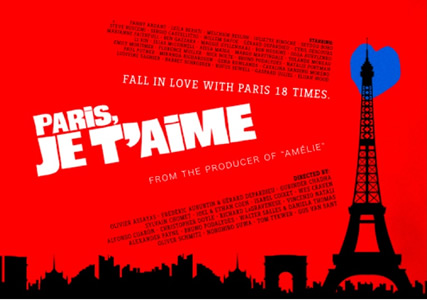
“Faubourg Saint-Denis” is one of the eighteen short films featured in Paris, je t’aime, an anthology of short films by several significant directors, each set in a different arrondissement of Paris. Other directors in the project include Gus Van Sant, Richard LaGravenese, The Cohen Brothers, Alfonso Cuaron, and Alexander Payne.

Tykwer has masterly told passionate tales before, matching star-struck and tortured romances with a sort of fairy tale sensibility: the questions of fate, free will and running in Run Lola Run; the innocence and violence of The Princess and the Warrior; the dark, damaged passion of Perfume: The Story of a Murderer.

Tykwer, with The Matrix’s Wachowskis,  is adapting and directing David Mitchell’s novel Cloud Atlas for the big screen (it’s listed as currently in post production).

—R. W. Gray

.
.