Jul 092017
 

.

Herewith, a fragment of Ricardo Cázares’s long poem entitled . Cázares began writing the poem in 2008 and has, to date, published two volumes of the work (around 500 pages) in Mexico.  is constructed on various strata (personal, historical, mythological, scientific, etc.) with long prose passages, compressed word segments, graphics pushing towards what the poet describes as “an uncertain archaeological and mythological consciousness” that slowly reveals itself. Cázares composes in Spanish and does the English translation himself. He says, “I have been translating poetry into Spanish for 17 years and think of myself not only as a poet but as a translator. However, translating one’s work is a different thing. I don’t think one can ever feel satisfied with the end result, simply because one is perhaps too attached to a certain syntax and rhythm that underscores the original mental and verbal impulse of the writing. There are very few passages that I’ve felt capable of working out in English.  For the present fragment I purposely avoided a literal translation, as I felt that some of the sounds and nuances that one finds in these ‘clusters’ only develop at a very basic, syllable-oriented level. I consider it a sort of ‘writing over’ the surface of the Spanish originals, which obviously breathe differently.”

— Dylan Brennan

.
a fragment from 

PLEASE INSERT COIN

if you wish to continue
insert coin
please
take a coin out of your pocket and
insert on
forehead or
nose

insert on eyelid
slowly til you reach
what touches us
now touch the matter
insert your hand
the coin now in the lobe
proceed with care now
stroke
the left
parietal
lobe

count to 14
thousand million years
insert your hand in
the rock for
a preliminary probe
and touch—that is if
you want it
if you really do want
it
it is possible to score to
scratch the surface of
the source
please insert
a hand
a coin
turn on your drill re-
move the overlying residue
from stratum scrap
outline an excavation plan
the tunnel dam the pass
a pathway will be ready in
5 years

if you wish to continue
insert
if you desire
if desire moves you to
burrow through the bulk
insert
enter now
if you desire you are
certain push
move onward to the
tertiary stratum
5          -7 thousand
million years
now open up
your mouth and
sing
you heard me right
yes sing just
open up your mouth
clear throat line
out just
bring your own mouth closer
to the mouth around the cave
listen for
the undertone inside
your voice your dead
tongue muttering
to matter you presume
at least for
23                    25
thousand years

if you would like to continue
please bore
bury your hand in your skull now
insert
an awl
trepan I tell you
don’t panic
puncture clear
inside the rock
5-6-10 blows
will do don’t
fear
the grinding purr the pain
is temporary it is not
the time yet see
the light
I tell you do
make progress as you can
that it be that it is done
say now
speak now
the road
by force

open up now say aaahhh
say it be done
the light
the form flooding
the tunnel palpate ah
the cavity you
now detect
a feeling
of well-being envelops
your hand envelops
the patina uncovers
the rough surface
of the rock you
let yourself be overrun
by light the memory
divides
your body mens your
mind now
opens up says
voice the voice now
guides you to
your body your lungs whistle
kindly calmly telling you to
breathe            hear here
the vulva opens up the
mater matrix
mother opens up her womb
not earth don’t
let her listen no
no one has any right to
refuse you now
stay calm
breathe in again don’t
get all worked up she don’t have to
that bitch hear me out you
are the keeper
lord and master no
no one
hear now
the way the grinding
of the mechanism brings you
a breath
a breath away
from the realm

— § —

INSERTE una moneda por favor

si desea continuar
inserte una moneda

por favor
saque una moneda del bolsillo
e introdúzcala en su frente
o su nariz
insértela en su párpado
despacio hasta alcanzar
lo que nos toca
toque ahora la materia
introduzca su mano
la moneda en el lóbulo
avance con cuidado roce
ahora el lóbulo parietal izquierdo

cuente hasta 14
mil millones de años
inserte su mano en la piedra
para una exploración preliminar
y toque—bien
si desea
si usted lo desea
de veras
es posible rozar el principio
sólo inserte una mano
una moneda
encienda su taladro ex-
pulse los sobrantes
del estrato trace
ahora un plan de excavación
el paso túnel presa
la vía estará lista en
5 años

si desea continuar inserte
si desea
si el deseo lo mueve
a explorar el cuerpo de la piedra
inserte
entre ahora
si desea está seguro
usted avance al estrato terciario
5          -7 mil
millones de años
ahora escuche abra
su boca
cante
sí le digo
escuchó bien
cante
abra la boca
aclare su garganta cante
acerque su boca
a la boca de la cueva
escuche oiga su voz
hacer eco
oiga su voz su lengua
muerta escuche la materia
usted desde hace al menos
23                                25
miles de años

si desea continuar perfore
hunda la mano
en su cráneo inserte ahora
un punzón
trepane le digo
no tenga miedo
perfore la piedra
dele 5-6-10 golpes
no tema
no le tema al crujido
el dolor es temporal
no es momento vea la luz
le digo
avance como pueda
hágase se haga
diga usted
camino a empujones

abra ahora
diga aaahhh
diga hágase
la luz
la forma inunda
el túnel palpe ah
la cavidad ahora
usted percibe
una sensación
de bienestar recorre
su mano recorre
la pátina descubre
la superficie rugosa
de la piedra usted
se deja invadir
por la luz la memoria
divide su cuerpo
mens su mente ahora
abre dice voz
la voz lo conduce
hacia su cuerpo
su pulmón izquierdo silba
le dice respire con
tranquilidad aquí
se abre la vulva
mater la matriz
la madre abre su seno
no la tierra no
se lo permita escuche
nadie tiene por qué rechazarlo
tranquilo respire otra vez no
se agite no tiene por qué
esa perra oiga usted
es dueño el amo
y señor no nadie escuche
cómo rompe la herramienta
lo acerca a sólo un aliento
del reino

 —Ricardo Cázares

.

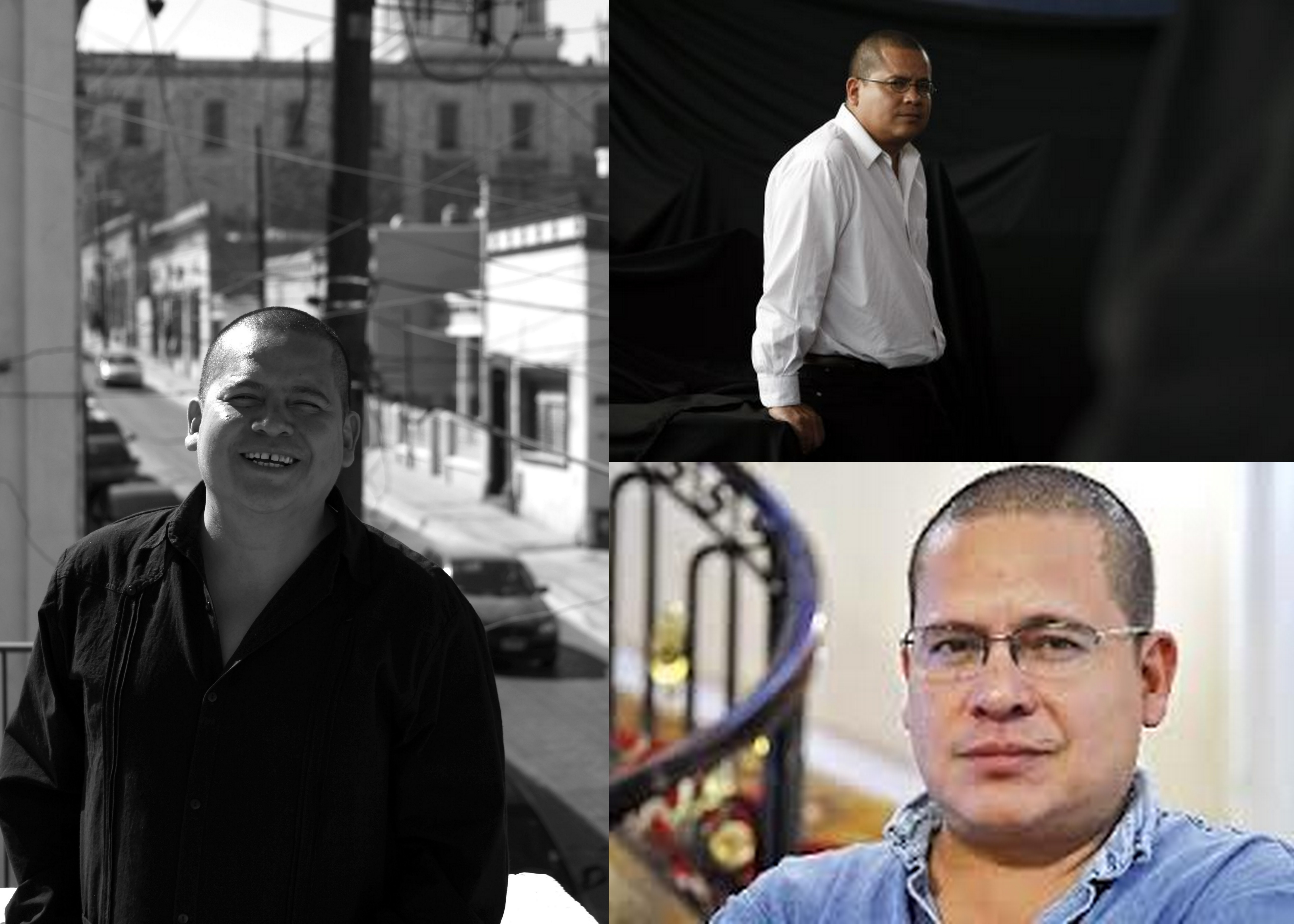
Ricardo Cázares (Mexico City, 1978) is the author of several collections of poetry including Drivethru, Es un decir, and the long poem simply titled . His work as a translator includes the first complete Spanish translation of Charles Olson’s The Maximus Poems, Maleza de luz, Selected Poems of Ronald Johnson, Robert Creeley’s Pieces, John Taggart’s Peace On Earth, Truong Tran’s dust and conscience, James Laughlin’s Remembering William Carlos Williams, and a comprehensive anthology of the British Poetry Revival. He is an editor and founding member of Mangos de Hacha Press, and the editor for the poetry and arts journal Mula Blanca.

§

Dylan Brennan is an Irish writer currently based in Mexico. His poetry, essays and memoirs have been published in a range of international journals, in English and Spanish. His debut poetry collection, Blood Oranges, for which he received the runner-up prize in the Patrick Kavanagh Award, is available now from The Dreadful Press. Twitter: @DylanJBrennan

.

Feb 032017
 

ingrid-valencia-photo-by-pascual-borzelliPhoto by Pascual Borzelli

.

Flesh, destruction, the city at night, ash and fog—at times Ingrid Valencia’s poems hint towards some kind of apocalyptic landscape through which she wanders with a keen eye. However, throughout her prize-winning recent collection, Oscúrame, the destitution is always tempered by the presence of the sensual, the bodily, the physical. In the black city that calls her name she is not really alone. Her dark night of the soul belongs to us all, there is solace to be found. The poems collected here are translated by Jack Little. — Dylan Brennan

.

OF THE FALL

It is not the tremor but the wound
that sinks his eyes
under night’s water
and gives an incandescent voice
to the suburbs of the tongue.

They are the gears of time
those which polish our way
for a life full
of rivers that criss-cross.

It is the dumbness of the show
a manner of speaking,
to give to another, the days.

It is not the flesh but the destruction,
the slight sound of machines
which form circles in the plaza of the body.

We are merely eyelids
which open to the night,
to the endless noise
of urgency.

.

DE LA CAÍDA

No es el temblor sino la herida
la que hunde sus ojos
bajo el agua de la noche
y entrega una voz incandescente
a los suburbios de la lengua.

Son los engranes del tiempo
los que pulen nuestro paso
por una vida repleta
de ríos que se cruzan.

Es la mudez del espectáculo
una forma de hablar,
de entregar a otro los días.

No es la carne sino la destrucción,
el leve sonido de las máquinas
que forma círculos en la plaza del cuerpo.

No somos sino párpados
que se abren a la noche,
al ruido interminable
de la urgencia.

§

IZTACCÍHUATL

This is the volcano
upon a wooded canvas.
This is the same sky
which assembles the dance.
This is the fog
which encloses the forest.
These are the eyes of my parents.
The bodies of children
offered to water
like scorching stones.
This is the ascent to the mountain,
the lightness of these steps
aching
between the highest trunks.
This is the sun appearing
between the hills.
This is the slowness
of humid earth
which spreads.
This is the night
that stains
an aged body.
I charge the lanes of the skin,
the fragility of its bridges,
the act of forgetting, the defeat.
This is life, one afternoon
which folds and traverses
fear, supplication
to return, one day more,
to the alleyways of astonishment

.

IZTACCÍHUATL

Este es el volcán
sobre un lienzo arbolado.
Este es el mismo cielo
que recoge la danza.
Esta es la niebla
que cierra el bosque.
Estos son los ojos de mis padres.
Los cuerpos de los niños
ofrecidos al agua
como piedras ardientes.
Este es el ascenso a la montaña,
la levedad de los pasos
que duelen
entre troncos altísimos.
Este es el sol asomado
entre los cerros.
Esta es la lentitud
de la tierra húmeda
que se esparce.
Esta es la noche
que mancha
un cuerpo envejecido.
Cargo las veredas de la piel,
la fragilidad de sus puentes,
el olvido y la derrota.
Esta es la vida, una tarde
que se pliega y recorre
el temor, la súplica
de volver, un día más,
a los callejones del asombro

§

THE DAYS

I

I look at the dust, the days,
the cage of the streets, the coins, the faces.
I recognise the rain
in this open city,
on this gray bridge,
on a jaunt
of those who lose
their body between ashes.
I am where the wind agitates
and I hear the distance,
the steps of the people,
childhood at the center of a town square
to the centre of a box,
a letter which names me.

II

I am attached to the silence
of trees
when they sway the night.
I walk between eyes
that close,
that return
that inhabit the spectral zones
of a cradle,
images sprout
the eyes light up in horror.
Eyes that forget.
Eyes that deny
the projection of shadows,
of slender trunks
to the bottom of a stage,
of a corridor,
of the prolonged years,
spent.

III

Eyes that stop
in the crevice, in the neck
of afternoons.
Eyes that bury
lights, the marks
the gaps, the flesh.
I look at them in the dust,
in the days,
in the cage of the streets
and I hear the sounds,
the beginning of the journey,
the future of the city
inside mildewed fountains.
They are the eyes, they are the skins
the show, the triumph
of approaching the light,
The look that touches
even what is not,
that which disappears.

.

LOS DÍAS

I

Miro el polvo, los días,
la jaula de las calles, las monedas, los rostros.
Reconozco la lluvia
en esta ciudad abierta,
en este puente gris,
en este andar
de los que pierden
el cuerpo entre cenizas.
Estoy donde se agita el viento
y escucho la distancia,
los pasos de la gente,
la infancia al centro de una plaza
al centro de una caja,
de una carta con mi nombre.

II

Estoy adherida al silencio
de los árboles
cuando mecen la noche.
Camino entre ojos
que se cierran,
que regresan,
que habitan las zonas
espectrales de una cuna,
Las imágenes brotan
Los ojos se iluminan de horror.
Ojos que olvidan.
Ojos que niegan
la proyección de sombras,
de troncos esbeltos
al fondo de un escenario,
de un pasillo,
de los años gastados
que se prolongan.

III

Ojos que se detienen
en la grieta, en el cuello
de las tardes.
Ojos que entierran
las luces, las marcas
los vacíos, la carne.
Yo los miro en el polvo,
en los días,
en la jaula de las calles
y escucho los sonidos,
el comienzo del recorrido,
el futuro de la ciudad
dentro de fuentes enmohecidas.
Son los ojos, son las pieles
el espectáculo, el triunfo
de aproximar la luz,
la mirada que toca
incluso lo que no está,
lo que desaparece.

§

EVERYBODY’S NIGHT

They are our words
that we abandon,
ours, the stars
that bring us closer
to the mire, to the cross, to the circle,
to the chains of humans
who cry and sing.They are yesterday’s trails
those of tomorrow,
the leaves on the trees,
the wind, the mouths, the wheel,
the chair, the staircase,
the swing and the eyes.
They are our languages
which we forget, burials.
Thus we are full of objects,
of seams, of borrowed hands
towards the final day,
everybody’s night.

.

LA NOCHE DE TODOS

Son nuestras las palabras
que abandonamos,
nuestros los astros
que nos acercan
al lodo, a la cruz, al círculo,
a la cadena de humanos
que gritan y cantan.
Son los senderos de ayer,
los de mañana,
las hojas de los árboles,
el viento, las bocas, la rueda,
la silla, la escalera,
el columpio y los ojos.
Son nuestros los lenguajes
que olvidamos, los entierros.
Así vamos llenos de objetos,
de costuras, de manos prestadas
hacia el último día,
la noche de todos.

§

I AM

I am the stone hurled
several hours ago
at the street curb,

in the black city
that calls my name.

.

SOY

Soy la roca lanzada
hace ya varias horas
a la orilla de la calle,

de la ciudad negra
que me nombra.

§

OPENING

I bite at daytime’s notebooks,
I tear out the letters on the clock,

I lose myself in each hand,
in the water that covers me,
in the people who remember,

in the words that open
night’s ashen petals.

.

APERTURA

Muerdo los cuadernos del día,
arranco las letras del reloj,

me pierdo en la mano,
en el agua que me cubre,
en la gente que recuerda,

en las palabras que abren
los pétalos cenizos de la noche.

— Ingrid Valencia, Translated from the Spanish by Jack Little.

.

Ingrid Valencia was born in Mexico City in 1983. She is a poet, editor and arts and cultural manager. She founded and ran the arts journal La Manzana, arte & psique from 2005 to 2010. For the past six years she has acted as coordinating editor for Cuicuilco, revista de ciencias antropológicas for the ENAH (National School of Anthropology and History). She has written six books of poetry including La inacabable sombra [Literalia Editores, 2008], De Nebra [La Ceibita / Conaculta, 2013], One Ticket [French trans. by Odelin Salmeron, La Grenouillère / Literalia Editores, 2015], Taxidermia [Ediciones El Humo / Conaculta, 2015], and Un círculo en otro sol [English trans. by Don Cellini, Ofi Press, 2016]. Her most recent book, Oscúrame [Diputación de Salamanca, España, 2016] won the Premio de Poesía “Pilar Fernández Labrador” prize at Salamanca in 2016.

§

jack-little-picture

Jack Little is a British-Mexican poet, editor and translator based in Mexico City and Palma de Mallorca. In 2015, Jack participated in the International Book Fair in Mexico City, reading his work in the Zócalo of Mexico’s capital. He is the founding editor of The Ofi Press, an online cultural journal with an international focus now in its 51st edition. Jack will publish a series of e-books of young Mexican poets in translation throughout 2016 and 2017, the first three of which are available to download for free from The Ofi Press website, one of which was written by Ingrid Valencia. His first pamphlet ‘Elsewhere’ was published by Eyewear in the summer of 2015 and his most recent work has been published in Periódico de Poesía, Otoliths, Wasafiri, Lighthouse, M56, The Human Journal and Numéro Cinq. Jack was the poet in residence at The Heinrich Böll Cottage on Achill Island in the west of Ireland in July 2016. www.ofipress.com

.


Dec 052016
 

elsa-crossElsa Cross

.

This month’s edition of Numero Cinco finds our newest addition to the NC masthead, Dylan Brennan, speaking with translator Anamaría Crowe Serrano about her work with Mexican poet Elsa Cross. They discuss Serrano’s involvement in bringing Cross’s work to an English audience, as well as the difficult decisions translators must make when doing so. 

After the interview, we have a selection of poems by Cross, both translated from the Spanish by Serrano and in their original language.

— Benjamin Woodard

.

Dylan Brennan (DB): How did you get involved in this project?

Anamaría Crowe Serrano (ACS): I’ve been involved with Shearsman Books for several years, first with a collection of my own, and then with translations of some of Elsa’s poems that were included in a Selected Poems in 2009. The editor, Tony Frazer, publishes several titles in translation every year – as well as collections in English and the Shearsman poetry journal – and at some point he asked if I’d be interested in expanding on the original translations I had done. I didn’t have to think about it twice.

selectedpoems

DB: How much did you know about Elsa Cross beforehand and how much did you have to learn as you went about translating?

ACS: I had met Elsa in London at the launch of her Selected Poems, so I knew a little about her. She teaches philosophy of religion and comparative mythology at the National Autonomous University of Mexico, and has published extensively, but I am always curious about the person behind the biographical note. It’s a bonus when I can make some connection with the poet I’m translating because I like to enter the poet’s world. In some ways translating is a little bit like method acting – for me, anyway – in that I like to absorb the poet and his/her mood if I can, in order to translate the work as faithfully as possible. It means that I adopt a slightly different persona each time I translate a different poet, and it’s one of the reasons why I’m not particularly experimental with the text of the translation itself.

What struck me about Elsa during our conversation in London was that her poetry reflected her personality: gentle, contemplative, self-assured. It seemed that the mysteries and uncertainties inherent in the world around us, which philosophy constantly probes, rather than cause angst, in some paradoxical way provide a source of strength for this poet. I got a sense that she accepts that not everything can be known, and there’s comfort in that place of acceptance. The idea of immersing myself for several months in Elsa’s poetic world and worming my way through her raw material was very appealing. As I’ve said, I had already translated some of the first section of Beyond the Sea, so I was familiar with Elsa’s style as well as the setting for the poems. Her collections are often written against the backdrop of a particular locale which works as an anchor for her thoughts. In Beyond the Sea, we find ourselves in Greece. The sound of waves, cicadas in the afternoon heat, plants stirring in the breeze, wings flapping, ancient ruins, are a constant accompaniment, like a leitmotif, to the philosophical thoughts and questions posed in the poems.

DB: Did you get in contact with Elsa Cross to discuss the poems? If so, how was that? Did she have any role in the translation process?

ACS: Yes, I did. I think all translators have questions about the text, so it’s an advantage to be able to ask the poet directly. In this case Elsa was very generous with her answers, clarifying specific words or images or nuances, such as what kind of “filo” she meant in the first line of poem 5 of “Dithyrambs”. I wasn’t sure if it might be a blade, a trickle of some sort, a thread… It’s wonderful to be able to consult the author because it means that the end result is as close to the intended meaning of the original as it can be; there’s very little guess work on the translator’s part, although individual lexical choices and phrasing are ultimately subjective. In my experience, poets are always happy to collaborate with the translator if they can because a translation can seem quite alien to the poet. Poets get attached to their specific lexical choices and even to the spaces between them. Every word of the original is so charged for the poet that it can be a terrible disappointment to realise that the translator has misinterpreted something that is very meaningful to you as a poet. Having some control over the translation process goes a long way towards assuaging those concerns.

Elsa’s English is excellent, which meant she could make very useful suggestions. The draft translation that was emailed from Dublin to Mexico City and back many times is peppered with comments ranging from uses of the definite article or prepositions or possessive adjectives, to whether the translation should include footnotes for words such as “tezontle”, to what the subject of a particular verb is (given that it’s not always specified in Spanish, which can sometimes allow for ambiguity, whereas it must be specified in English, destroying the ambiguity).

Over the years I’ve come to think of a translation as the child of both the author and the translator. A translation contains the linguistic DNA of each through a process that explores language at a microscopic level. When the translator can work with the author, the symbiosis is more complete: the child resembles both its parents more closely than it might had there been no collaboration between them. In Beyond the Sea, Elsa’s input was so valuable that I suggested the cover should read “translated by Anamaría Crowe Serrano with the author”, but she was too modest to want to claim any credit for the translation.

beyondthesea

DB: Is translating poetry something you find easy or do you find it agonizing at times? What about the Greek elements of the book? Something you had to research or was it all known to you already?

ACS: Sometimes you come across a poem that you can translate quickly; the words just come to you and the result is satisfying. But those occasions are rare. Usually it requires many hours of thought – more than might seem apparent from the length of a poem. The end result that appears in print is just the tip of the iceberg. Beneath that tip lies the bit the reader never sees – the process – which for a collection could be up to a year’s work. But I absolutely love translating. (The only thing I agonize about is the inadequate pay, completely out of line with the hours and skill involved in the process.) Lines or words that are problematic might take several days – or longer – but the process is hugely enjoyable, like trying to solve a difficult brain teaser. The funny thing is that often what seems relatively easy to translate, where the language itself is simple, might turn out to be the hardest thing because you want to avoid using a particular word (if it had been used before), or you want to keep the rhythm of the line nicely balanced and the literal translation won’t work. In the second line of poem I of “Las cigarras” (Cicadas), for example, the line reads: “las cigarras empiezan sus odas lentas” (literally: the cicadas begin their slow odes). There’s nothing complicated about the language here, and “the cicadas begin their slow odes” is acceptable in English except for the fact that I didn’t like the strong vocalic assonance of “slow odes”. If you say it aloud it sounds like you’re trying to say something with an egg in your mouth. I’m conscious of the phonic effect of words, so semantic exactitude doesn’t always satisfy my ear. The problem then is that there are so many synonyms of “slow”. It took me ages to finally settle for “unhurried odes”, which also reflects the lilting, languid rhythm of the original.

There are many references to Greek mythology in the collection, some of which I was familiar with, and some not. A quick online search can clarify that a kouros is a free-standing statue of a young boy, often a representation of Apollo, and while any reading of these poems is richer if you are familiar with the Greek references, from the point of view of translation, once I could find the English equivalent, lack of detailed knowledge about artefacts or gods was not a significant problem.

DB: Any crossover with your own work, similar themes or styles?

ACS: Not really. The work I translate is quite different in theme and style from my own work. That has happened by chance, but I’m not sure I’d like to translate someone’s poetry if it reminded me a lot of my own. It’s nice to take a break from the usual preoccupations and discover other ways of writing, images that would never have occurred to you because they’re very foreign or because they come from a discipline that you don’t often engage with. The process of discovery adds to the pleasure of translating.

DB: I’d love to know of any difficult translation decisions, if there were any for you, what were they, how did you go about resolving them?

ACS: The use of idioms often poses problems for the translator, of course, resulting in the classic case of something being lost in translation. There was one instance of that in this collection with the word “cántaros”, which are clay pitchers or jugs for water or wine. It appears as the title of one section in “The Wine of Things” and is also repeated in several poems in a general way. But it’s also used in the expression “A cántaros”, which means “cats and dogs”, as in “it’s raining cats and dogs”. Clearly, when it’s used in Spanish to mean “cats and dogs”, none of the generic English translations works. It’s a shame because it means that the repetition of the word throughout the entire section is slightly lost. Not only that, “cats and dogs” has a totally different connotation in English compared to the Spanish “cántaros”. Cántaros are receptacles, for a start. The fired earth they’re made from has some echoes of antiquity and domestic labour. In comparison, “cats and dogs” sounds completely trivial at best, and if we take the origin of the phrase to be related to Jonathan Swift’s “A Description of a City Shower”, where cats and dogs drown in the downpour and flow along the flooded streets, then it’s completely disgusting. Either way, it won’t work as a translation. Another option might be “pouring” or “pouring rain”, but you lose the image of the container. In the end, I opted for “Bucketing”, even though the tone is a bit colloquial.

That presented yet another problem. The cántaros of the title should ideally be the same word that is used in the poems. I had opted for “pitchers” as a generic translation, with “bucketing” when referring to rain, but I didn’t like either of these as a section title. I suppose I might have settled for pitchers and been forever dissatisfied with its ambiguity had I not mentioned the problem to Elsa. Her solution – to use the Greek word “kantharos” – seemed perfect. Not only does it encompass all versions of kantharos (jugs, pitchers, buckets), and is in keeping with the Greek setting of the entire collection, it slightly elevates the tone of the more common “cántaros”, making up to some extent for the fact that the idiom is lost in English.

The other translation difficulty that arose was in the Aeolides, Oceanides, and Nictides sections. Here, the poems are of haiku-like brevity, often beginning with a verb conjugated in the third person plural (“they”). The subject is the daughters of the wind, sea or night, depending on the section in question. The fact that Spanish does not require the subject pronoun to be stated – because it is incorporated in the verb conjugation – allows for a profusion of lexical diversity in each poem. Here’s an example from “Eolides, 7”:

Despeinan
…………..al joven eucalipto
hacen caer sus resinas
……………………………..sobre los barandales

Zumban amorosas
como abejorros
………………….en el hueco de las cañas

Llenan la mirada de hormigas amarillas
……………………de la avispa

English, being a language that requires the use of the subject pronoun, would transform each of the verbs (Despeinan, hacen, Zumban, Llenan) into “They uncomb”, “they make”, “They buzz”, “They fill”. Repeating the subject pronoun in each line of such a short poem creates unpoetic monotony compared to the breezy freshness of the Spanish. Avoiding the subject pronoun so often – there are many of these poems in the collection! – was probably the single greatest challenge that required various different solutions. Sometimes I use the subject pronoun once at the beginning but don’t repeat it for the second verb, in the hope that it will be understood to be implied, or I use gerunds for subsequent verbs. That’s what I did in the above example (They uncomb, making, Buzzing, Swarming):

They uncomb
…………………….the young eucalyptus
making its resin drip
…………………….on the handrails

Buzzing, amorous
like bumblebees
…………………….in the hollow stalks of canes

Swarming our gaze with yellow ants

On other occasions I changed the word order and/or the grammatical function from active to passive so as not to begin a line with the subject.

Someten a su ritmo                         (They subject…)
………..las flores encrespadas
………..el lomo de los cerros

Todo lo vuelven piedra lisa                      (They turn everything…)

becomes

Rimpled flowers
and hilltops
………..are subjected to their rhythm

Turned by them to smooth stone

DB: What do you think of the poems? How would you describe the book to someone down the pub? Why should people read this book?

ACS: If you don’t know Elsa Cross’s poetry, this book is as good a place to start as any. It’s a bilingual edition, which is always useful for the reader. Cross is considered one of Mexico’s leading contemporary poets and has been praised by Octavio Paz for her interplay of complex thought and clarity of expression. In my opinion, this is the key element in her work. There’s a strong sense of the poet sitting still, absorbing her surroundings through the senses first of all – sound, sight and touch in particular – as if she were meditating, then very deliberately using these senses as a conduit to something deeper. Small details of nature, or of a Greek statue, have the potential to reveal something worth knowing, but the slightest sound or movement, even too much sunlight, can shatter any meaning that might be contained in the moment (“meaning becomes / an incongruous stroke, / a particle that marries with dust.” Stones, 4). The elusiveness of meaning marries with vivid imagery ever so delicately, even when the poet paradoxically finds the image devoid of meaning. Take, for example, the opening of poem 3 of “Cicadas”:

The night swings
on the call of owls hooting.
Flapping,
words heard in a dream
……………………………take flight
at the sound of the first cicada
now fitfully cutting
……………………the silence of dawn.

Words wanted
……………………beyond what they are—
yet when we try to grasp them
their flight is slowly undone
………………………………like ritual gestures.
They empty of image,
are no more than voice—
……………………gloomy alliterations
……………………in a lower key,
resonance,
……………………the sea’s craving for its creatures.

I love her exploration of the ambiguity of what is real and what isn’t; her allusions to Dionysian indulgence, for which the poet clearly has a preference (“The only instrument is passion”, Cicadas, 4), counter-balanced by Apollonian ideals that are harder for humans to achieve (“You light up everything, / but who sees your shadow?” Offerings, “Paean”); the mysterious absence on occasion of a figure that seems to be central to the poet (“a presence not present”), whose footsteps she follows only to find that they disappear “mid-step”.

The book itself is divided into two sections: Beyond the Sea, and The Wine of Things. In keeping with the Greek theme, the first section is a series of Odes, while The Wine of Things contains dithyrambs that read, among other things, as a contemporary homage to the gods. The multiple layers of striking images, connotation, mythology, and the contemplative quality of these poems makes them endlessly fresh and appealing against the soothing backdrop of the Aegean.

DB: Tell us about yourself and your own work, what you’re working on now and what’s next.

ACS: At the moment I’m going through literary labour, waiting for a few books to be published. A collection of poetry is due out any day with Shearsman and will probably be available by the time this article is in print. It’s called onwords and upwords, and is a collection in which I continue to tease out the technicalities and function of language, and play around with form. I want to find different modes of expression all the time, which is quite hard – for me, anyway.

There’s another collection pending publication that was written with actress and poet Nina Karacosta where we challenge each other on a phonic level, with words in Irish (for Nina) and Greek (for me) to which we have to apply some kind of meaning in poetic form. That was a fun project, partly because we worked very closely together, spending a few weeks of the year deep in discussion, bouncing ideas off each other, developing a pattern of work that suited that particular project.

I’ve had these two collections in the pipeline for a while, along with Elsa’s book, and have found that I can’t think about the next project until I have these out of the way, so I haven’t done much writing recently. But I do have an idea up my sleeve which I might try to work on if I get some time. It should be a move away from poetry, though hopefully it will have poetic elements and, at the very least, I’d like it to be uncategorizable as a genre. I might approach it differently to my usual way of working. I work freelance, so my day is not dictated too much by a routine. I can usually write whenever I feel the need. One thing, though, I hate long hand! I hate the visual mess of text scribbled out, arrows pointing to afterthoughts, not being able to make out my own handwriting the next day… The pc ensures I always have a clean text in front of me. I edit and re-edit every line as I go along so that by the time I’ve written the last line, the poem is pretty much as I want it. I rarely make changes afterwards.

With poetry, I never have an overall vision for a book when I start. I write in response to some unconscious need to address individual issues, although in the process of writing, the form can take precedence over the substance. That’s what I discovered was the unifying element in onwords and upwords – hence the title. However, for the next project, I have a better sense of where it might lead. The reason for that is that, unlike with poetry collections, I have a theme in mind for this next experiment. I’ll put a few ideas together during the summer, a general skeleton. If it has decent limbs and a backbone I might try and flesh it out.

Another project I have to tick off the to-do list is a novel I wrote many years ago. It’s called The Big e, and has been fully edited and ready for publication for a while, very frivolous and fun, and unlikely to have a sequel or to appeal to publishers, so I’ll self-publish it at some point. With that, I was pretty structured in how I wrote, trying to get something on paper every day, usually in the morning. The fact that the writing went on for about three years didn’t really appeal to me, even though it’s fun to live in the parallel universe of your characters for extended periods and see things through their eyes. Overall, I prefer brevity, even when translating. I’ve translated a few novels and have found that the process becomes a bit tedious half way through because you still have another 150 pages left and will have to spend another few months with the same characters.

For translations I have a deadline that I stick to very rigorously. With poetry it’s always a generous deadline because poets and publishers of poetry understand the need for time to allow a text to settle (not so in the case of novels where there are commercial demands that don’t apply to poetry). I work methodically, setting aside the time I will need for a first draft, followed by a few weeks where I put the translation aside and forget about it so as to come to it from a fresh perspective for a full edit. During the first draft I put together whatever queries I have for the poet, incorporating the answers when they come back so that after the full edit I can send the manuscript to the poet for an overview. There are always more queries and comments at that stage. I go through several complete edits before the manuscript is ready for the publisher, and when it comes back for proofing I make additional final changes. Even after publication I wish I could make more changes. The process is never finished for me. I’m rarely fully satisfied with the result but have come to accept that a translation can only be the result of the translator’s reading of the original text at one particular moment in time. Tomorrow, the translator’s world view and state of mind and experience of language will have shifted ever so slightly.

§

cross_ntx_leer

Selections from Beyond the Sea, by Elsa Cross, translated from the Spanish by Anamaría Crowe Serrano.

From Beyond the Sea

WAVES

1

Your face appears.
Sinks into milk,
like the well-begotten Lamb
………………………………………….in the Mysteries.

The fire approaches without touching us.
Blue more intense
than the elation building towards the islands.

Trembling,
as if behind smoke,
…………………………………your face appears.

The conch mixes the sea
with wonder itself
…………………………………in our ear,

waves surging
………….where the mind’s islands navigate,
flashes—
……………………Beyond the sea.

Movements of thigh and hip
tentatively outline
……………………………….a dance.

…………..The sea stretches
…………………………………in unbreaking waves.
Movement—
the last vowel
……………………….reverberates in the ear.
…………..The sea stretches
…………..beyond time
…………..…………..immovable.
A tremble,
…………..…………..an echo of movement—
hushes
and speaks to us
…………..…………..in its other tongue,
like that fire burning within,plays and spreads
until it quietens in a vertical ray.
Omnipresent,
…………..…………..the language of touch without hands.

.

4

A manly sound, that language of the islands.
Strong syllables,
…………..…………..honed vowels
like colours separating the sea from the crags.

Island emerging from nowhere,
place where no one is born
…………..…………..…………..or dies.
Only the course of its ground is followed,
piling its broken signs
…………..…………..…………..…………..on the grass—
stelae
unfold their argument on the waves,
…………..hold it,
…………..…………..bend it, withdraw it
…………..…………..—seduce the eye—
…………..…………..…………..…………..…………..repeat it.

The music of that tongue rises to the retentive ear,
and the ear stays open
…………..…………..…………..in its intoxication—
maybe it translates the tumble
…………..…………..of the wave rushing to die on the sands,
or the delight
…………..…………..of she who is born from the spray.

Is there anything that does not come from the sea?

Names that don’t attract death
…………..…………..…………..but maybe sweeten its arrival:
…………..…………..She of the Delectable Voice
…………..…………..She of Nascent Desire
…………..…………..She Bathed in Light—
…………..…………..…………..…………..She the Inevitable.

.

5

Silent women,
chiselled plaster on the wall
…………..…………..…………..—asymmetries.

From the crest of a moon
olive trees balance
…………..…………..…………..precariously
as evening declines.
Summer carts make their way up
…………..…………..…………..…………..to hillside houses,
and with the setting sun
a bright snake
…………..…………..—a bicycle lamp—
meanders through the vineyards.

Venus and the waning moon
…………..…………..…………..…………..in conjunction
light up the waters.
The island
copies the shape of that half-moon
bending its back
…………..…………..…………..between two ridges—

 remains of its body float
…………..…………..…………..like charred bones.

Thus the sea of dreams joins or devours
fragments of the divided substance.

On the wing of an insect the fabrics of vision:
the city twinkles
…………..…………..through veils of plumbago,
over beaches almost blurred from view.
In enclosed courtyards
the light seems to rise from a hidden well;
desires gleam—
…………..…………..such is the accumulated transparency.
And the memory of a disaster.

Fragments of consciousness
emerge
…………..………….. and submerge
…………..like those islands.

.

CICADAS

5

Jellyfish lesions on skin,
as if each cicada
…………..…………..were stabbing with a hairclip
or armies of ants were leaving burning trails
…………..…………..…………..…………..…………..in their wake.

Pale skies as summer unfolds.
And all that light,
…………..…………..the whiteness of a marriage bed,
those terraces where the night slips in
on a silver thread,
…………..…………..inaudible strumming,

are all still there,
when we’ve been around
the crest of the new moon
…………..…………..…………..at one end of our heart.
And the sea—
at twilight it takes on
the colour of our golden wines.

The wineskins are empty.
The hour bites our temples,
disrupts
…………..the journeys;
what we gave and didn’t give each other
sparkles
…………..under the sun as it moves away.

No sea as blue,
no light
…………..as white,
even though that splendour
may already have held
…………..…………..…………..the caress of darkness.

 .

From The Wine of Things

NICTIDES

9

They are repeated insomnia
a little sting
…………..………….. the flapping
of memories not sheltered
…………..…………..…………..by presence

 .                 

10

They are a white shadow
innocence in the yellow phrases
…………..…………..…………..……….of a dying man
the catastrophe of the voice

.

11
They are vague emotions
…………..…………..…………..in the stillness of the day
hollow bells

mist crouching
…………..…………..in your chest
like a doubt

.

12

They are transversal signs
…………..…………..…………..withered tributes
fragments lifted from the debris

They are hidden diamonds

.

THE WINE-RED SEA
(On the Dionysus Kylix)

…………..…………..…………..…………..for Ursus

O waves so red,
confluent streams
…………..…………..where grapes and dolphins almost meet,
and the vertical mast,
now trunk and branches,
…………..…………..…………..spreads its arms east and west.
And the dolphins freely swim
…………..…………..…………..…………..—old sailors
guarding the vessel.
And the sail bulging white
…………..…………..…………..under lavish grapes,
and the graceful ram at the prow,
what beach are they pointing at?
where will they dock
…………..…………..…………..if the blissful god
neither charts the course nor guides
but merely sips
the pleasant breezes
…………..…………..and the scent of the wine-red sea?

§

De Ultramar

Las Olas

1

Aparece tu rostro.
Se hunde en leche,
como el Cordero bienhallado
…………..…………..…………..en los Misterios.

El fuego se acerca sin tocarnos.
El azul es más intenso
que la ebriedad creciendo hacia las islas.

Tembloroso,
como detrás de humo,
…………..…………..…………..aparece tu rostro.

El caracol mezcla el mar
al propio estupor
…………..…………..en el oído,
oleaje donde navegan
…………..islas de la conciencia,
destellos—
……………Ultramar.

Movimientos del muslo y la cadera
esbozan al tiento
…………..…………..una danza.

…………..El mar se extiende
…………..…………..en olas que no se rompen. 

Movimiento—
la última vocal
…………..…………..reverbera en el oído.

…………..El mar se extiende
…………..más allá del tiempo,
…………..…………..…………..
inamovible. 

Temblor,
…………..…………..eco del movimiento—
calla
y nos habla
…………..en su lengua otra,
parecida a ese incendio de adentro,
juega y se difunde
hasta aquietarse en un rayo vertical.
Omnipresente,
…………….lenguaje del tacto sin manos.

…………..

4

Sonido varonil, ese lenguaje de las islas.
Sílabas contundentes,
…………..…………..vocales definidas
como colores que separan el mar de los peñascos.

Isla salida de la nada,
lugar donde no se nace
…………..…………..…………..ni se muere.
Sólo se sigue el decurso de su suelo,
que apila sobre la hierba
…………..…………..…………..sus signos rotos—
estelas
despliegan en la onda su argumento,
…………..…………..lo sostienen,
…………..…………..…………..lo curvan, lo sustraen
…………..…………..–seducen al ojo—
…………..…………..…………..…………..lo repiten.

La música de esa lengua sube al oído retentivo,
y el oído queda abierto
…………..…………..…….en su embriaguez–
quizá traduce el tumbo,
…………..de la que corre a morir en las arenas,
o el gozo
……………de la que nace de la espuma.

¿Qué cosa no viene del mar?

Nombres que no atraen a la muerte
…………..…………..…………..pero tal vez endulzan su llegada:
…………..La de Voz Deleitosa
…………..La que Despierta el Deseo
…………..La Bañada en Luz—
…………..…………..…………..…………..La Inevitable.

…………..

5

Mujeres taciturnas,
cinceladuras de yeso en la pared
…………..…………..…………..…………..–asimetrías.

Desde una cresta de luna
los olivos se equilibran
…………..…………..…………..precarios
en el declive de la tarde.
Suben las carretas del verano
…………..…………..………………hacia los caseríos altos,
y al ponerse el sol
una serpiente luminosa
…………..…………..…………..–fanal de bicicleta—
ondula en los viñedos.

Venus y la luna menguante
…………..…………..…………..…………..en conjunción
iluminan las aguas.
La isla
copia la forma de esa media luna
quebrando su espinazo
…………..…………..…………..entre dos puntas—
restos de su cuerpo flotan
…………..…………..como huesos calcinados.

Así el mar del sueño junta o devora
fragmentos de la sustancia dividida.

En un ala de insecto los tejidos de la visión:
la ciudad parpadea
…………..…………..en veladuras de plúmbago,
sobre playas que apenas se distinguen.
En los patios cerrados
la luz parece ascender de un pozo oculto;
brillan los deseos–
…………..…………..…………..tanta la transparencia acumulada.
Y una memoria de desastre.

Fragmentos de conciencia
emergen
…………..y se sumergen,
………..como esas islas.

…………..

LAS CIGARRAS

5

Huellas de medusas en la piel,
como si cada cigarra
…………..…………..punzara con una horquilla
o legiones de hormigas dejaran rastros quemantes
…………..…………..…………..…………..…………..de su paso.

Cielos pálidos al transcurrir el verano.
Y toda esa luz,
…………..…………..esa blancura de tálamo,
esas terrazas por donde entra la noche
en un filo plateado,
…………..……………..rasgueo inaudible,
siguen allí,
cuando hemos recorrido
la cresta de la nueva luna
…………..…………..……….en un extremo del corazón.
Y el mar—
toma al crepúsculo
el color de nuestros vinos dorados.

Los odres están vacíos.
El vino muerde ahora la sien,
trastorna
…………..las travesías;
lo que nos dimos y no nos dimos
brilla
…………bajo un sol que se aleja.

Ningún mar tan azul,
ninguna luz
…………..tan blanca,
aunque ese esplendor
ya llevara consigo
…………..…………..la caricia de lo oscuro.

 …………..

De El vino de las cosas

NICTIDES

9.

Son insomnio repetido
un pequeño aguijón
…………..…………..………….. revoloteo
de recuerdos no amparados
…………..…………..…………..…………..en la presencia

…………..

10.

Son sombra blanca
la inocencia en las frases amarillas
…………..…………..…………..…………..del moribundo
la catástrofe de la voz

…………..

11.

Son emociones difusas
…………..……….en lo inmóvil del día
campanas huecas
niebla que se agazapa
…………..…………..en el pecho
como una duda.

………….. 

12.

Son signos transversos
…………..…………..…………..homenajes marchitos
trozos levantados de los escombros

Son diamantes ocultos

…………..

EL MAR COLOR DE VINO
(Sobre el kílix de Exekías) 

Para Ursus

Oh mar tan rojo,
corrientes encontradas
…………..…………..casi juntan racimos y delfines,
y el mástil vertical,
vuelto cepa y sarmientos,
…………..………..abre brazos a oriente y a poniente.

Y van a su albedrío los delfines
…………..…………..…………..………..viejos marinos
custodiando la nave.

Y la vela tan blanca que se abomba
…………..…………..…………..bajo las uvas pródigas
y el espolón gracioso de la proa
¿hacia qué playa apuntan?
¿en dónde atracarán si el dios
…………..…………..…………..……….dichoso
no marca ruta o guía
y solo bebe
los vientos placenteros
…………..…………y el aroma del mar color de vino?

— Elsa Cross, translated from the Spanish by Anamaría Crowe Serrano

.

.

Elsa Cross was born in Mexico City in 1946. The majority of her work has been published in the volume Espirales. Poemas escogidos 1965-1999 (UNAM, 2000), but a new complete edition of her poetry appeared in 2013 from the Fondo de Cultura Económica in Mexico City. Her book El diván de Antar (1990) was awarded the Premio Nacional de Poesía Aguascalientes (1989), and Moira (1993) won the Premio Internacional de Poesía Jaime Sabines (1992), both in Mexico. Jaguar (2002), is inspired by different symbols and places of ancient Mexico. Her more recent books form a trilogy: Los sueños — Elegías, Ultramar — Odas, and El vino de las cosas, Ditirambos.

Her poems have been translated into twelve languages and published in magazines and more than sixty anthologies in different countries. She has also published essays. She has a M.A. and PhD in Philosophy from the National Autonomous University of Mexico (UNAM), where she holds a professorship and teaches Philosophy of Religion and Comparative Mythology.

In 2008, Elsa Cross was awarded the most prestigious poetry prize in Mexico, the Xavier Villarrutia Prize, an award that she shared with Pura López-Colomé.

§

Anamaria Crowe Serrano

Anamaría Crowe Serrano is a poet, translator and teacher born in Ireland to an Irish father and a Spanish mother. She grew up bilingual, straddling cultures. Languages have always fascinated her to the extent that she has never stopped learning or improving her knowledge of them. She enjoys cross-cultural and cross-genre exchanges with artists and poets, the most recent of which is her participation in Robert Sheppard’s EUOIA project and her involvement in the Steven Fowler’s ‘Enemies’ project.

She has published extensively and her work has been widely anthologised in Ireland and abroad. Her publications include Mirabile Dictu (blurb, 2011), one columbus leap (corrupt press, 2011), and Paso Doble, written as a poetic dialogue with the Italian poet Annamaria Ferracosca (Empiria, 2006).

Anamaría has translated some fourteen books, including Elsa Cross’s Beyond the Sea for Shearsman Books.

.

Nov 112016
 

author-photovia UnionHidalgo

 Pho

.

Regardless of the common wisdom that, as Willa Cather said, “Most of the basic material a writer works with is acquired before the age of fifteen,” writers cannot escape being influenced by their environment, at any age. Just so with the Mexican writer Agustín Cadena, Mexican born, raised and educated, who has been living for years in Hungary, returning to México only for the three months of summer. In his recent collection of stories, Las tentaciones de la dicha, (The Temptations of Happiness) 2010, the permeating influence of Eastern Europe can be felt in at least four of the eleven stories. “Maracuyá” is one of these, set in a Black Sea resort town at the height of the season, in a vast club by that passionflower name, where one drinks Becherovka and meets people of a dozen nationalities, including an old Russian with a mysterious briefcase. What makes the story Mexican is its Spanish, the use of words like “cornudo” which fit smoothly in Spanish but seem so awkward when we write “cuckold” in English, and in this story, there’s a different twist on that characterization.  

— Translator Patricia Dubrava

.

WE WENT TO that Black Sea resort because Dasha wanted so much to go back there. She had been once, six years ago, and said it was incredible: every summer, in August, the little fishing town transformed into the biggest tourist attraction of the Crimea. For a week, clubs, bars and restaurants stayed open 24 hours, hosting hundreds of tourists from all the Slavic countries and more distant places. Dasha fondly remembered dawns dancing on the beach among drunks singing in incomprehensible languages and couples who slept in each other’s arms on the sand after making love.

I agreed to go out of curiosity, but also because I wanted Dasha to have a rest. She was sick of working at the Peep Show, exploiting the beauty of her no longer so adolescent body and performing fellatio on fat tourists for twenty Euros.

So we pooled what money we had and, a day later, were on the train crossing the pine forests of the Carpathians, toward the Ukraine lowlands. To save money, we hadn’t wanted to pay for a sleeper, so made the whole trip in a coach compartment; during the day we talked, read, looked at the countryside, had brief conversations with passengers who accompanied us for an hour or two, on their way to some intermediate town. And at night we took turns: one watched so no one stole our backpacks while the other tried to get some sleep in spite of the cold, with our shoes on and wearing all our clothes. If we wanted something to eat, we had crackers.

We arrived tired and hungry, with barely enough energy to put up the tent in a more or less quiet section of the beach. But there was the sea, at last. The sea: a longing to live intensely and forever, escape to a timeless space where one could be eternally young, where love was imperishable. We sat contemplating it a long time, without talking.

We left stuff in the tent and went to town to look for something to eat. It was much as Dasha had described it: an idyllic place full of light, as if from a book of ancient poems. One high, winding street of old houses and shops full of shadows climbed a hill at whose peak stood a church, its twin towers topped with golden onion domes. The glow of polished metal, the sounds, the smells…it seemed as if we were seeing everything through the glass pane that separates reality from dreams.

We were starving, but didn’t want to go to a restaurant; we’d agreed that alcohol and entertainment were top priorities for our money, and we’d keep the minimum for secondary things. We bought four slices of bread, a quarter pound of bologna, another quarter of cheese, some pickles, and ate on a bench from which, in the distance below, the sea was visible.

We drank sweet wine in a small tavern, then went down to the beach to wade in the surf, watch the sunset and as it was getting dark, bathed in a public bathroom. An hour later, we arrived at the biggest nightclub: Maracuyá. They sold admissions for a day, for three days or for the whole week. Dasha wanted to buy the last even though it would take half our money.

“It’s cheaper that way,” she said. “And besides, I don’t intend to miss even one evening.”

The place was decorated as if it were on the Caribbean instead of the Black Sea: hammocks, fishnets, barrels half buried in the sand and live palm trees growing beneath large crystal domes.

We worked our way through the crowd, found a free table and looked over the menu: there was an incredible quantity of liquors, beers and wines from exotic places.

“What is this?” I asked Dasha, almost shouting because of the loud music. At the end of the wine list there was a question mark with a price; below that, two question marks, also with a price; then three, then four, five…

“Those are drugs,” she responded, also shouting. “One question mark is marijuana, two is hashish, three is cocaine; the others, I don’t know. Do you want something?”

“No,” I told her. “Pretty pricey. And you?”

“Get me a Becherovka.”

I went to the bar for the drinks. The place was a zoo. There were strange people of all ages, races and nationalities: old lechers, nymphs, aging women in search of adventure, young men with bare torsos covered in tattoos, Japanese, Scandinavians, Arabs…In the walk from our table to the bar, I overheard random words in unrecognizable languages; my sense of smell was saturated with a mix of sweaty skin, salt water, expensive perfumes, common deodorants…there was a line at the bar; I had to wait until the bartender took care of a six-foot blond and then a gay guy in a pink suit who didn’t know how to ask for silk stockings.

Finally, I returned to my table.

“Thanks, baby,” Dasha said, dancing in her seat to the music.

She took a sip of her drink, smiled at a guy who was giving her the eye from a nearby table and went to dance with him. I thought dancing a primitive display, so we had an understanding: she was free to dance with whomever. And “dance” meant whatever else also. It didn’t bother me. On the contrary: poor Dasha, it was only right that at least once in a while she could sleep with someone she liked. And in reality, she almost never exercised that option.

She didn’t exercise it with that guy. She danced with him a while, then changed partners, then sat to drank a glass with me, danced some more, sat some more…Near dawn, already a little drunk, I left her enjoying herself and went to walk on the beach. With each stride I took, the music of the various discos faded and mixed with the hiss of the waves that came in to break near my feet. Like weary fireflies, the lights of the little town floated in the distance.

We went to sleep in the tent at seven, woke around noon and after polishing off another package of crackers, swam in the sea. Dasha seemed happy: she smiled and hummed a song. She asked me every little while if this wasn’t a marvelous place, if I wasn’t enchanted, if I wouldn’t remember these days forever when we were no longer together.

In town we ate at McDonald’s, the cheapest alternative after bologna sandwiches, and walked through the streets, visited the Orthodox church. In the souvenir booth at its exit we stole a small fake icon. Then we returned to the tent to sleep at least a few hours before the new round of drinking and dancing in Maracuyá.

That night was very like the previous one, with the difference that a gang of 30 or 40 bikers dressed all in leather arrived, and set about making more noise than there already was. Before dawn I saw them on the beach, doing acrobatics with their motorcycles, the moon casting glints of light on the chrome of those enormous machines.

§

Leo appeared the third night. Dasha and I were sitting in the disco drinking Becherovka.

“Look at that!” she suddenly exclaimed. Near our table a man in his sixties, dressed in white, wearing sunglasses and a Panama hat, danced alone. But what was even more odd was that he was dancing without letting go of his briefcase; he had it hugged to his chest as if he was afraid someone would steal it.

“Perhaps it’s full of money?” I asked Dasha.

“Or drugs?” She speculated, amused.

We continued watching him. He didn’t tire of dancing nor of having his arms in that uncomfortable position, because no matter how little the briefcase weighed, anyone would be tired. But he, on the contrary, seemed to be enjoying himself enormously; he danced clumsily and it didn’t matter to him; nor did it bother him not to have a partner. A smile of satisfaction, of an old man realizing a long cherished dream, illuminated his face.

“What a marvel of a man,” Dasha declared. She downed in one swallow what was left in her glass and got up to dance with him.

After a few minutes she came back to the table. “Either he’s dancing with his eyes closed or he’s blind,” she told me, taking a drink from my glass. “He didn’t even notice me.”

“Why don’t you talk to him?”

And that’s exactly what she did, when she saw that he was going to the bar to get a drink. She approached him in English. The man answered her amiably, and by his accent, Dasha understood that he was Russian. She then changed to that language, which was also her mother tongue, and that’s how everything started: his name was Leonid and he was from Novosibirsk. Dasha brought him over and introduced me. The three of us had a drink together and then they went to dance. All this happened without Leo letting go of his briefcase.

At some point he disappeared. He didn’t say goodbye to us; we simply didn’t see him anymore. Dasha was upset.

“Do you think he thought I was an idiot and got bored?” She had that complex; it surfaced every once in a while.

“No. I think he liked you.”

“Why do you think that?”

“Didn’t you see how he looked at you? He even stopped dancing with his eyes closed.”

 “You think so?”

“Yes. Why don’t you have a fling with him? He seems like an interesting person. It would make you feel better.”

Dasha stared at me.

“But he’s gone,” and she twisted her mouth into that bad girl look the Peep Show clients liked so much.

“He’ll be back tomorrow.”

And in fact, the next night, Leo returned to Maracuyá. With his briefcase. Dasha avoided looking at him. If he’d left without saying goodbye, she said, he ought to make the first move now and apologize. “Men always scorn what’s easy,” she explained. That night she was especially seductive, with a black sleeveless dress—the best that she’d put in her backpack—that contrasted in a harmonious way with her tanned skin; a black choker around her long neck and a gold-plated chain on her left ankle.

Confirming the correctness of her theory, Leo came to sit at our table as soon as he saw us and apologized for having left like he did.

“The strange food,” he explained in English out of courtesy to me, without for a moment letting go of his briefcase. “It set off a revolution in my stomach. I was barely able to reach the hotel.”

More relaxed than at our first encounter, he mopped the sweat from his forehead with his handkerchief, bought us a drink and began chatting about how difficult it was to prepare well an apparently simple dish from his country: Shuba, potato salad, carrots and peas with mayonnaise, anchovies and beets.

“Of course, it doesn’t go all mixed together,” he said. “The salad goes inside, like a filling. The beets and the anchovies smother it. That’s why it’s called shuba, which in Russian means “overcoat,” and he continued talking about that and a pasta dish with mushroom sauce that didn’t matter much to us. What we wanted was to ask him about the briefcase, but we didn’t find the right opportunity. Finally he took Dasha out to dance.

It soon became obvious that he wanted to seduce her. And she began plying him with all the tactics learned in her not very long life. “Old men like you to make them believe you’re innocent,” her philosophy went. “Only young men are capable of valuing experience.” But Leonid didn’t look like an idiot: he couldn’t really believe that an inexperienced young woman would be vacationing with her boyfriend at an amoral beach resort, drinking Becherovka in a disco where anything and everything was for sale. Regardless, he seemed to enjoy Dasha’s company.

The night passed, along with her plan and desires. At three a.m. when Leo seemed more lively than ever, the young innocent said goodnight. She wasn’t used to staying up so late, she said, and was already very sleepy.

The next day we spent resting on the beach, walking around town and speculating about the mysterious briefcase.

“I tell you, it has to be money. It has to be the lump sum of his retirement, or pension, or liquidation of his assets or whatever, and he came to spend it here.”

“What if he’s a terrorist? From Chechnya? He doesn’t look like it, but he could be. He could be carrying a bomb, one of those that you make explode with a cell phone.”

Dasha was disposed to uncover the mystery and with that objective, employed the rest of her many charms that evening, with the result that she disappeared with Leo and I didn’t see her until the following morning. About eight, she appeared in the tent. She lay down by me without saying anything and also without saying anything, began to make love to me. It was her custom when she’d had an adventure. She said that was how she rid herself of the other skin.

We woke after eleven.

“O.K.,” I said. “What’s in the briefcase?”

“A book,” she told me, without the slightest sign of disappointment.

“A book?”

“Yes, a manuscript. He wrote it. It took him twenty years to finish it.”

“But, why did he bring it here?”

“Because he came here to throw it into the sea,” Dasha explained with a surprising naturalness, as if she were talking about the most normal thing in the world. “Only before doing it he wants to have a good time. It’s his double farewell.”

“Why double?”

“Leo’s saying goodbye to his book and to his literary career.”

“But, why?”

Dasha shrugged her shoulders.

“I didn’t understand his reasons at first either. But after he told me the whole story I began to get it. He spent twenty years working on that mountain of papers. And you know what for? For nothing. He’s taken it to more publishers than he can remember and all of them told him to go to hell with his book. Some—the least stupid—simply told him no. The others suggested that he change things, cut this or that. But Leo doesn’t want to change anything and I understand that. Why let a bookseller tell him how he ought to write? He got sick of it. If his book is trash, he told me, well then it will go to the trash.”

I didn’t ask her anything else and didn’t want to keep thinking about Leonid and his story. I was hungry. “Let’s get something to eat.”

“Leo invited us to dine at his hotel. He asked me if you would want to and I told him yes.”

“Good,” I said, “but let’s go. I guess we don’t have to take the backpacks?”

“No, leave them here. Only let me get my wallet and cell.”

The lunch was very pleasant. When he wasn’t talking about food, the old Russian was an excellent conversationalist. And the whole time he comported himself with Dasha in a respectfully paternal manner, as if there’d been nothing between them nor would there be. He told us that the next day he was going home.

“Would you read me something from your book before throwing it into the sea?” Dasha asked.

“Are you really interested?” Leo seemed incredulous.

“Of course I am. And I would love to hear it in your voice. That way I’d remember it forever.”

“Well, if you want…” He responded in the tone of a grandfather resigned to complying with the whim of a favorite granddaughter. “We can read something this afternoon.”

After a few minutes, he clarified, looking at me. “The book is in Russian.”

“No problem,” I told him. “Anyway, I can’t join you. I have a date with a friend at Maracuyá.”

It wasn’t true, but I wanted to leave them alone. The role of complicit cuckold isn’t comfortable. But a cuckold who knows himself cuckolded, accepts it and still makes a nuisance of himself is the most pathetic of all.

I spent the remainder of the day on the beach and when I got bored, went to play soccer with the bikers who had arrived two days ago. I made friends with one of the girls—a platinum blonde, thin as a stick—and that night accompanied her to Maracuyá. After a while we went to walk on the beach. We arrived at the end of the jetty, where the music from the discos could barely be heard and sat to look at the moon. Although it wasn’t full, it still looked enormous and orange, hanging quietly over the sea.

In the morning, Dasha arrived to wake us at the tent. She couldn’t even wait until I introduced my friend. “Come on, “ she said. “I want to show you something.” She looked very happy.

“What?” I asked, opening one eye, groggy with sleep.

“I’m going,” said the blonde, who perhaps didn’t want to be an inconvenient presence. And in fact, she dressed rapidly, gave me a kiss and left.

It was very early and somewhat chilly. The tide was still high and the last stars appeared and disappeared as if winking. From somewhere came a scent of roses and gladiolas.

Seeing that the territory had been vacated, Dasha crawled into the tent. “Look,” she was carrying Leonid’s briefcase. “He gave it to me. He gave me his book!”

I’d never seen her so happy, so satisfied.

“Did you read it? Is it a good book?” I asked.

“What does that matter? It took him twenty years to write it, do you realize that? As long as I’ve been alive he’s spent working on it. Something like this is a treasure regardless of what some critic or editor might say.”

She took out the manuscript, bound together with cardboard covers and put it in my hands with great respect.

“He’s gone,” she sighed. His train has to leaving right now.”

Dasha had never been sentimental, but at that moment she seemed on the point of tears. She turned to put the book back in its briefcase, took off her clothes and squeezed herself into the sleeping bag with me.

“What nasty perfume that woman left here,” was all the comment she made before embracing me and falling asleep.

At noon we went to eat in town. Bologna and pickle sandwiches. We told each other everything we’d done. We hugged. We promised that, come what may, we’d always be together.

We walked along the beach holding hands, talking again about Leo. We were happy—even more—we were deliriously happy. Stupidly happy.

When we reached the tent, our joy vanished: someone had robbed us. The backpacks were there, but the briefcase had disappeared. “Money or drugs,” the thief must have thought, who surely had seen it when it was still in Leo’s hands.

—  Agustín Cadena, translated from the Spanish by Patricia Dubrava.

\\

.

Agustín Cadena was born in the desert region of Valle del Mezquital, México, 1963 and currently teaches at the University of Debrecen, Hungary. Essayist, fiction writer, reviewer, poet and translator, he has published over 20 books. His awards include the University of Veracruz Prize for short fiction and essays, in 1992; the National Prize for Children’s Literature, in 1998; the San Luis Potosi National Prize for Short Fiction, in 2004; and the José Agustín National Prize for Short Fiction, in 2005. His works have been translated into English, Italian, and Hungarian, and adapted for radio and TV broadcasting. Cadena blogs at elvinoylahiel.blogspot.com.

§

Patricia

Patricia Dubrava was born in New York and chaired the creative writing program at Denver School of the Arts. She has published two books of poems and one of stories translated from the Spanish. She is an essayist, poet and translator whose recent translation publications include a dozen Cadena stories, most recently in Fiction Attic, Exchanges and Mexico City Lit. A Cadena story was included in NewBorder: An Anthology, in 2013. Dubrava blogs and has more information on her publications at www.patriciadubrava.com.

.

Oct 132016
 

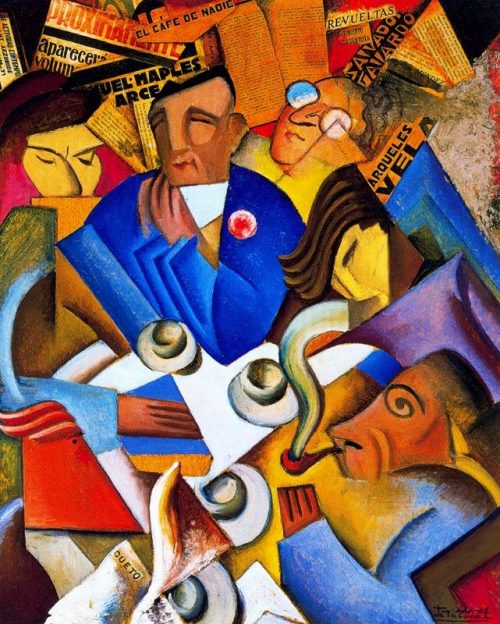
stridentopolis-by-ramon-alva-de-la-canal
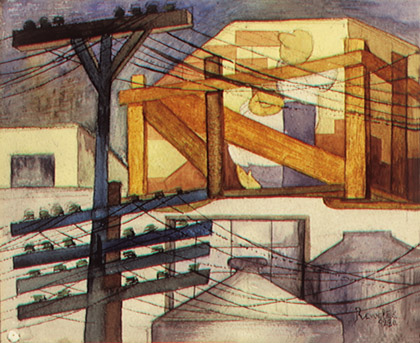
Stridentopolis, by Ramón Alva de la Canal

.

IN ROBERTO BOLAÑO’S The Savage Detectives, the characters Arturo Belano and Ulises Lima head north from Mexico City to Sonora in search of Cesárea Tinajero, a forgotten poet from the 1920s. Loosely associated with the post-revolutionary avant-garde movement known as Stridentism, Tinajero had since become a cult figure for the Visceral Realist group led by the book’s young heroes, who are eager to track down any information they can find on her. Anyone who’s read The Savage Detectives, however, knows that their quest is a distraction—one of the characters even says he believes Belano and Lima invented Cesárea Tinajero to justify their trip to Sonora. It’s perhaps fitting, however, that the Stridentists are largely known for their role as a MacGuffin in a novel written some 70 years after the movement’s demise—in real life, as in the world of the novel, they’re primarily conspicuous by their absence.

Though we’re approaching the centennial of the Stridentist movement, there are few signs that they ever existed. Only a fraction of their texts are available from Mexico City’s main public library, and while Zurich’s Cabaret Voltaire has gone on hosting poetry readings and art exhibitions to this day, its counterpart in Mexico City—Café Europa, once located in Mexico City’s gentrifying Roma Norte neighborhood—is now a hipster bakery. Mexico’s cultural historians have either ignored the Stridentists—Octavio Paz didn’t think to even mention the movement in the chapter of The Labyrinth of Solitude on the post-revolutionary intelligentsia—or they’re brought up simply to be dismissed as a cheap knockoff of the Futurists.

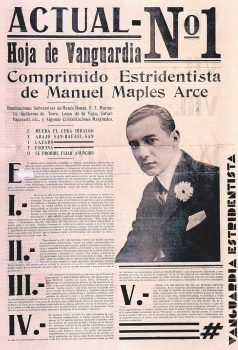
In their heyday, however, the Stridentists were admired across the Americas: their work was praised by a young Jorge Luis Borges and John Dos Passos translated Manuel Maples Arce’s poem Urbe into English in 1929, while the future Nobel laureate Miguel Ángel Asturias led the (potentially fictitious) Guatemalan chapter of the movement. They also had a considerable impact at home, with one contemporary work of criticism comparing Urbe and Arqueles Vela’s short story La Señorita Etc. with Diego Rivera’s murals at Texcoco’s Chapingo Autonomous University, arguing that these three works marked a revolution in Mexican aesthetics—but while the work of Diego Rivera is rightly lionized today, Maples Arce and Vela have largely been forgotten. It’s no wonder that the Stridentists obsessed Roberto Bolaño—researching them, even in the Internet age, is an equally frustrating and rewarding experience, involving a great deal of time in the National Library’s Rare Book Room.

So who were they?

First we should set the scene. By the end of 1921, the armed phase of the Mexican Revolution had definitively ended. Emiliano Zapata had been assassinated; Pancho Villa, though retired and living on a ranch with his last remaining followers, would soon suffer the same fate. The first two revolutionary presidents, Francisco Madero and Venustiano Carranza, had also been killed, the first during a counterrevolutionary coup d’état and the second by a rival group of revolutionaries. Power passed into the hands of a one-armed revolutionary general named Álvaro Obregón, under whose rule Mexico would begin to recover from the ten years of civil war that had left one million dead.

In the view of a young poet named Manuel Maples Arce, however, there was something hollow about this brave new age. “No spiritual agitation accompanied these outward convulsions,” he would later write. “In Russia, the Suprematist poets and painters painfully affirmed the restlessness of the Bolshevik moment. The November Group did the same thing in Germany. But Mexico’s intellectuals remained apathetic. Abroad, they continued to judge us for our endless exportation of literary trifles, sentimental junk and execrable odes sold at laughable prices to publications destined solely for the archives. But the post-revolutionary restlessness, with its proletarian eruptions and tumultuous protests, stimulated our inner agitation. We too could revolt. We too could rebel.”

stridentist-manifesto

A strange manifesto then appeared on the streets of Mexico City, posted between advertisements for plays and bullfights. Opening with a declaration of war on Mexico’s national heroes (Death to Father Hidalgo!) and the Catholic religion (Down with the Archangel Raphael, Down with Lazarus!) and freely quoting F.T. Marinetti (“An automobile in movement is more beautiful than the Victory of Samothrace”), Maples Arce’s manifesto rejected the Symbolist-influenced poetry then popular in Latin America in favor of an art that would embrace the new: “It’s necessary to exalt, in all the strident tones of our propagandistic pipe organ, the contemporary beauty of machines…the industrial system of great throbbing cities, the blue shirts of explosive workers in this electrifying and poignant time: all the beauty of this century.” Despite the undeniably strong influence of Futurism, Maples Arce distanced himself from that movement’s forward-looking focus: “Nothing of retrospection. Nothing of futurism. The entire world, at rest, marvelously illuminated in the stupendous climax of the present minute…always the same and always being renewed. We shall have presentism.” The manifesto concluded with an index of European and Latin American avant-garde figures from a wide variety of schools; here Jorge Luis Borges appeared alongside Jean Cocteau and Diego Rivera alongside Max Ernst. Other names are more obscure. Like the infamous list of experimental musicians included with Nurse with Wound’s debut album, the manifesto utilized the catalog of influences as a statement of purpose.

Using the manifesto and his first book of poems, Interior Scaffold—which Borges praised “for its torrent of images and the mastery of its form”—as a calling card, Maples Arce attracted a small circle of writers that shared his desire to revolutionize Mexican literature. The first to declare his allegiance to Stridentism was Arqueles Vela, a columnist for the Mexico City weekly El Universal Ilustrado, who was soon followed by the Puebla-based poets Germán List Arzubide and Salvador Gallardo—as well as by Kyn Taniya, the son of Mexico’s ambassador to France, who had already established himself as a poet in Paris, rubbing shoulders with Apollonaire and Romain Rolland. They would be joined by a group of visual artists that included Tina Modotti, Edward Weston, Fermín Revueltas, Germán Cueto, Ramón Alva de la Canal and Leopoldo Méndez. Together they launched a short-lived magazine, called Irradiador, which published their work alongside that of their counterparts in Spain’s Ultraist movement.

exterior-scaffolding-by-fermin-revueltas
Exterior Scaffolding, by Fermín Revueltas

Much of their early work was given over to a celebration of the new marvels of the 20th Century (airplanes, radio, jazz, urbanism), capturing Mexico’s post-revolutionary optimism despite themselves. When the country’s first radio station was launched in May 1923, the inaugural broadcast featured the reading of a poem by Maples Arce that celebrated the new technology. Their critics lambasted their embrace of modernity as being derivative of Futurism, but this weakness was in many ways also a strength: while European avant-garde figures such as Marinetti and André Breton spent much of their time exploring the respective meanings of Futurism and Surrealism, leaving behind a large store of theoretical writings, the Stridentists simply wrote. With their disdain for theory and dogma, the Stridentists were able to avoid the cardinal sin of high modernism: difficulty. It’s hard to get through Ezra Pound, for example, without outside guidance, but the work of the Stridentists is much more immediate—Arqueles Vela wrote that Stridentism was a “sincere poetry, one that doesn’t organize emotions, which are always disorganized.” As they sought to capture the new sensations of their time without submitting them to an intellectual scheme that would require extensive interpretation on the part of the reader, their work was often playful and highly accessible, as can be seen in the following poem by Kyn Taniya:[1]

THE LAST BREATHS OF PIGS SLAUGHTERED IN CHICAGO ILLINOIS THE SOUND OF THE NIAGARA ON THE CANADIAN BORDER KREISLER RIZLER D’ANNUNZIO FRANCE ETC. AND THE JAZZ BANDS OF VIRGINIA AND TENNESSEE THE ERUPTION OF POPOCATEPETL OVER THE VALLEY OF AMECAMECA LIKE THE ENGLISH BATTLESHIPS SAILING INTO THE DARDANELLES THE NOCTURNAL GROANS OF THE SPHINX LLOYD GEORGE WILSON AND LENIN THE BELLOWING OF THE PLEISIOSAUR DIPLODOCUS THAT BATHES EACH AFTERNOON IN THE PESTILENT MARSHES OF PATAGONIA GANDHI’S PLEAS IN BAGHDAD THE CACOPHONY OF THE BATTLEFIELD OR THE BRIGHT SANDS OF SEVILLE TIRED OF THE BLOOD AND GUTS OF BEASTS AND MEN BABE RUTH JACK DEMPSEY AND THE CRIES OF THE BRAVE SOCCER PLAYERS WHO KICK EACH OTHER TO DEATH FOR THE BALL

All this for no more than a dollar that’s
right just one hundred cents gets you
electric ears to catch the sounds that sway
in the kilometric hammock of radio waves

………………………………………… EO EEEOOO EO…

The Stridentists spent their days at Mexico City’s Café Europa, which was so desolate that they dubbed it El Café de Nadie—Nobody’s Café. “Nobody cares for it or administers it,” Vela said. “No waiters bother the customers, nor does anybody serve them anything… We are the café’s only customers, the only ones who don’t pervert its spirit.” Vela mythologized the café in his short story El Café de Nadie, which centers on two men—evocations of Maples Arce and Vela himself—who haunt the back tables, watching as a woman named Mabelina takes on a series of different personalities to please her rotating cast of lovers. By the end, she’s left writing her name on the café’s tables to remind herself of her identity. Here the engagement with modernity is much more ambiguous than with the Futurists, to whom they were so often compared: if the anonymity of urban life is liberating, allowing us to reinvent ourselves as we please, the danger is that this very anonymity will remake us in its image.

el-cafe-de-nadie-ramon-alva-de-la-canal
El Cafe de Nadie, by Ramón Alva de la Canal

The Stridentists would take full advantage of the café’s solitude. There they held poetry readings and concerts of “Stridentist music” by Silvestre Revueltas, exhibiting masks by Germán Cueto, photographs by Tina Modotti and Edward Weston, and paintings and engravings by Fermín Revueltas, Ramón Alva de la Canal and Leopoldo Méndez, all hung between advertisements for Moctezuma beer and Buen Tono cigarettes.

It was at one of these exhibitions that Maples Arce debuted Urbe, one of the key texts of Stridentism and the poem that marked the movement’s political turn. The inspiration for Urbe came one May Day, when Maples Arce had to return home on foot as the city’s trolleys had been paralyzed by the day’s strike. As he walked through the city’s streets, he mingled with the proletarian demonstrators and reflected on Mexico’s still shaky political situation: “The dissent of the unions, the political agitations and the threats of civil war loomed over us,” he would later write. “In the Chamber of Deputies, speeches were suddenly interrupted by the thunder of pistols. Those who stood in the way of progress encouraged groups of politicians and military officers to try and seize power while the workers demonstrated their state of alert. I observed these spectacles, reflecting on the circumstances and responsibilities of those men who could influence the nation’s destiny. Under these stimulating influences, when I got home I started writing a canto that trembled with hope and desperation. I saw the clear need to give the revolution an aesthetic agenda, and in Urbe I joined my intimate emotions with the clamor of the people.” It’s easy to see what attracted Dos Passos to this poem and led him to befriend its author during his 1927 trip to Mexico. Like Manhattan Transfer, published the same year, Urbe is both a celebration of urban modernity and a longing to redeem its sins through leftist politics:

Here is my poem,
brutal
and multiple,
to the New City.

……………………….Oh city all tense
……………………….with cables and labor,
……………………….the sound
……………………….of motors and wings.
……………………….The simultaneous explosion
……………………….of new theories,
……………………….further off.
On the higher plane
……………………….of Whitman and of Turner
……………………….and, a little nearer by,
……………………….of Maples Arce.

The lungs of Russia
are blowing towards us
the wind of social revolution.
The literary pantysniffers
won’t understand
this new beauty
born in the century’s sweat,
……………………….and the ripe moons
……………………….that fell, rotting
……………………….are the stench
…………………….that rises
……………………….from the intellectual sewers.

If Urbe was the first sign that the Stridentists had become tired of shocking the bourgeoisie and longed to overthrow them instead, they would get their opportunity in 1925, when General Heriberto Jara became governor of Veracruz. Jara, a former anarchist, had joined the Constitutionalist Army during the Mexican Revolution but maintained his ties to the labor movement. As governor, he promoted the growth of unions, expanded and modernized the state’s infrastructure, and fought the power of the British and American oil companies that treated Mexico’s oil-rich Gulf Coast as their personal property.

Shortly after Jara’s inauguration, Maples Arce, armed with a letter of introduction, traveled to Xalapa and convinced Jara to make him his right-hand man. List Arzubide soon joined him, as did Ramón Alva de la Canal and Leopoldo Méndez. There they edited a new magazine—Horizonte—which, in the place of the avant-garde texts and theoretical articles of Irradiador, ran translations of Tolstoy, H.G. Wells and Rudolf Rocker beside articles on the initiatives of Jara’s government and the political issues of the day. Their new publishing company, Ediciones Horizonte, printed cheap editions of the classics alongside their latest poems, as well as the first mass-market edition of The Underdogs, Mariano Azuela’s classic novel of the revolution. During this time, List Arzubide wrote Zapata: Exaltation, the first book celebrating the now-legendary insurgent leader, who was then seen as little more than a glorified bandit. The Stridentists also involved themselves in the founding of the state university and Xalapa’s proto-brutalist athletic stadium. Thanks to the patronage of Governor Jara, they were able to go beyond eulogizing modernity through poetry to working directly to modernize Mexico: they would turn a sleepy provincial capital into Stridentopolis. “Stridentopolis consummated the truth of Stridentism,” wrote List Arzubide. “An absurd city, disconnected from everyday reality, it corrected the straight lines of monotony by developing the landscape.”

horizonte-cover

This utopian project was not to endure, however. In 1927, Mexico’s post-revolutionary government was facing its worst crisis in ten years. It was fighting on several different fronts—against foreign oil companies, against large landowners and against the Catholic Church, which had been chafing under the restrictions of the 1917 Constitution (article 130 of which placed restrictions on its political rights). Though this last conflict had been festering ever since the constitution was promulgated, the situation worsened in June 1926 when President Plutarco Elías Calles demanded the full application of Article 130. In response, Mexico’s Catholics launched a guerrilla uprising on January 1st, 1927. President Calles needed the support of the United States government in order to win the war, and so Jara—who had been seizing the assets of British and American oil companies that owed taxes—had to be forced from power.

Jara’s fall triggered the disintegration of the Stridentists as a group. The movement’s internal cohesion had already been strained by the move to Xalapa, as not everyone heeded Maples Arce’s call—Arqueles Vela had instead gone to Spain as a correspondent for El Universal Ilustrado, while Kyn Taniya was made Mexico’s ambassador to Guatemala, where he and Miguel Ángel Asturias proclaimed the formation of the Guatemalan chapter of the Stridentist movement, of which no other trace seems to have survived. Salvador Gallardo, in the words of List Arzubide, simply “went out into the provinces and the provinces swallowed him up.” Both Maples Arce and List Arzubide, meanwhile, were encouraged by their experiences working with Heriberto Jara to focus on politics full-time. Maples Arce grew disgusted with Mexico’s political climate after only one term as a federal deputy, however, and left for a short period of self-imposed exile in Paris before reconciling himself with the post-revolutionary state in the mid-1930s. List Arzubide would remain an outsider. He joined the Communist Party and on one occasion narrowly escaped deportation to the infamous Islas Marías prison colony alongside Fermín Revueltas’ younger brother José, who would later write a celebrated novel about his imprisonment. On another, Sandino—then in Mexico to collect money and weapons for his insurgent army—gave him an American flag that his men had captured from the U.S. Marines and emblazoned with the words “This flag was captured from the imperialist Yankee forces. Fatherland or Death. Cesar Augusto Sandino.” When the U.S. Embassy heard that the flag was in Mexico, they demanded that it be returned to them. List Arzubide then smuggled the flag out of the country, traveling first to New York, where he hung it from the balcony of a friend’s apartment, before taking it to the World Anti-Imperialist Congress in Frankfurt.

xalapa-athletic-stadiumXalapa athletic stadium

In the year following Jara’s downfall, Álvaro Obregón was assassinated by a Catholic extremist and the subsequent crackdown on dissidents began Mexico’s slow drift towards a sui generis totalitarianism. This coincided with a period of silence on the part of nearly all the movement’s writers, a period that gave their rivals the opportunity to write them out of Mexico’s literary history. Yet this fate is what allows us to come to their work fresh today—the fact that the movement fell apart when a popular revolutionary was constitutionally but undemocratically removed from power even gives them a certain aura of martyrdom. If it’s now impossible to think of Marinetti without recalling his association with Mussolini, and if Mayakovsky died a “second death”—as Pasternak put it—when he was eulogized by Stalin and taught to Russian schoolchildren, Maples Arce and his comrades still remain untainted. This was undoubtedly partly what attracted Bolaño to the movement, especially at a time when the old rivals of the Stridentists were cheering on the bloody repression of the 1968 student movement, an event that forms the political background to The Savage Detectives.

In a sense, the Stridentists’ ephemerality is a testament to their success: neither looking forward nor back, they sought to capture a given moment in time, and they succeeded. In the first Stridentist manifesto, Maples Arce quoted Walter Conrad Arensberg’s assertion that a true poem shouldn’t live for more than six hours; Stridentism lasted for six years and then disappeared. “As good revolutionaries, we knew that every revolution that isn’t crushed at the right time will become reactionary when it crystalizes and is forced to uphold what it had fought in the immediate past,” List Arzubide reflected after the movement’s end. “We were the only revolutionaries who were willing to sacrifice our struggle for lack of heirs. And now that the movement has been liquidated, we hand our work over to the historians because from here on out we hope to avoid the discussions of the academics from the year 2941 who will measure, weigh, clean and polish what was born precisely, lived completely and died without an echo.” There is no better epitaph.

— Joshua Neuhouser

SUGGESTED READING LIST:

Panchito Chapopote by Xavier Icaza
El Movimiento Estridentista by Germán List Arzubide
Poemas Estridentistas by Germán List Arzubide
Las Semillas del Tiempo by Manuel Maples Arce
El Café de Nadie by Arqueles Vela

Secondary works:

Shadows, Fire, Snow: The Life of Tina Modotti by Patricia Albers
Elevación y Caída del Estridentismo by Evodio Escalante

Mexican Modernity: The Avant-Garde and the Technological Revolution by Rubén Gallo
El Ruido de las Nueces: List Arzubide y el Estridentismo Mexicano by Francisco Javier Mora
El Estridentismo o Una Literatura de Estrategia by Luis Mario Schneider

[1] All poems translated by Grant Cogswell

.

neuhouser

Born in Indiana and raised in Seattle, Joshua Neuhouser has lived in Mexico City since 2010, where he works as a freelance translator. His projects have included Rebellion in Patagonia by Osvaldo Bayer (co-translation with Paul Sharkey, AK Press 2016) and The Iguala 43: The Truth and Challenge of Mexico’s Disappeared Students by Sergio González Rodríguez (Semiotexte, forthcoming). He is currently at work compiling an anthology of the Stridentist writers.

.

Sep 132016
 

MLbuganvilias1 (1)

.
Happiness

IT WASN’T LIKE they’d been invited, but when they saw that house in the distance, they left the highway and took the dirt road that led to it. Nor were they accustomed to dropping in at strangers’ homes, but the fact was the long trek from Belize to Guatemala, the hours it’d taken to cross the border—as if the young couple traveling in a camper with the young man’s father were suspicious—had left them hungry and thirsty. If they drove up to the house it was to ask where they could eat. As they neared the structure of amber wood, evidence of the occupants’ life comforted them: a bicycle tossed on the grass, a tire swing hanging from the branch of a tree, sheets hung on a line. The sound of their motor attracted the attention of the inhabitants. First the children, then two small blond women and then a man with a long beard came onto the porch and smiled as if they had been expecting the visit. The couple and the boy’s father got out of the cab and the latter took the lead, greeted them in a mix of English and Spanish and quickly discovered English was the language to communicate with that friendly family. Rose, Wendy and Bob introduced themselves and gestured at the children, indicating that they were Wayne and Stephanie. The man and the young people also introduced themselves and then explained that they were looking for a place to eat, if they could give them directions, but Rose, Wendy and Bob immediately insisted that they were their guests, they were making lunch and would be delighted to share it with them. They emphasized the words “share it” and among the three exchanged glances as when a husband and wife consent to a decision taken on the fly, without consultation. Rose, who was wearing an overall which exposed her shoulders crossed by the turquoise straps of a bikini, directed the children, by way of giving them the news: we have guests, set three more places at the table. The children, without copying the welcoming smiles of their parents, said, yes, Mamá, and with looks of annoyance went into the house. Wash your hands, Wendy ordered, lost within a shimmering red dress. Yes, Mamá, the children answered without enthusiasm. The young couple exchanged a fleeting look, trying to disguise their discovery without being able to say a word; only confirming their suspicions by squeezing each other’s hands. They’d heard about communes, different ways of living together, thought they knew all about it, thought they owned the word “freedom” (maybe this trip derived from such a conviction) but now they were witnessing a lifestyle that embodied that word. When they were seated at the table, a bowl of salad was passed around, accompanied by rice with carrots, squash, sprouts, beans and eggs, the main course. They were vegetarians, they said, smiling; they were sorry not to be able to offer anything else, but the eggs supplied protein, Wendy said, and the legumes, the lentils and beans they mixed with the rice. The boy’s father, who traveled with a plethora of vitamins and minerals lined up each morning like beads on a string, endorsed Wendy’s nutritional knowledge and said that in addition these were foods rich in lecithin and nobody took lecithin into account.

During the meal, while Wayne and Stephanie opened their mouths and showed the guests their chewed balls of vegetable protein when their three parents weren’t looking, the young pair and the boy’s father learned their hosts had moved to Orange, Belize five years ago. Before the children were born, the three took a trip to Tikal and were convinced that Central America was the place to start a new life, far from the conventions of capitalism and hypocrisy, with the mystic force of the native cultures. They found a bit of land they rented from a British relative of Rose’s stepmother, and as it was very complicated to explain that, they summed it all up. Here they were, they had chickens, they made soy cheese, ground wheat and corn to make bread, grew fruit trees because vegetables were difficult; the climate didn’t permit tomatoes, for example. They said it rained a lot. We have beehives, Rose informed them when she served the dessert, and it was she who took care of the bees; the guests had to try the mango blossom honey. And she passed the pot with its dense aroma so the guests could pour the divine product over the mangos of their orchard.

The young couple kept exchanging glances; they had arrived in a place as sweet and yellow as the flesh of the mango that they lifted to their mouths in juicy bites. They were eighteen and on the point of deciding what to do with their lives. In the light of that golden well-being, their world seemed made of asphalt and motor noise, too much clothing and too many school exams: insipid routine. The boy’s father talked enthusiastically, asking about methods of cultivation, how they made compost, collected water. He’d just sold his automobile wheel factory and had bought the camper to explore his new life. He’d invited the couple to come along on this journey of recovered freedom, if indeed he ever had freedom, he told them when he spoke of his plans. Wanting to be together and on the road, they readily joined the father’s curiosity and imagination, felt an astonished and joyful complicity with that man twenty-five years their senior. They supposed it was his attitude about the trip and adventure that excited them. They didn’t realize that they shared the same question—what was happiness?

When Rose, Wendy and Bob invited them to see the water reservoir which supplied the house, and which they drank after boiling, the three were elated by the goodness of the paradise their hosts had built. One could live isolated, eat well, laugh and love each other, create a home. The young couple walked slowly in the tropical heat, seeking refuge in the shade of trees on the path. The children got on their bikes and sped by, splattering them with mud from the puddles. But all that was fine. Much more than taking the camper through the middle of the city, much more than the parties where they danced and drank, much more even than going to La Marquesa and climbing to Cruz Blanca at nearly 13,000 feet. Here they were more together. The boy said his friend Aldo would be happy to go with them. She understood his meaning: the three of them could be hand in hand and sleep curled up in the same bed of the camper if need be.

As if to demonstrate he was versed in engineering issues, Bob explained how the water drained down the sides of the pond and how it was fed into another lower reservoir from which it was piped into the house. The gradual slope and quantity of rain were ideal. If the reservoir overflowed, the canals they’d designed carried the water as far as the orchard and then the river below. Under that high sun, the children took off their rubber boots and stripped rapidly to throw themselves into the pond. Bob watched them with satisfaction: the water’s fresh and irresistible, he informed the guests as if he were the narrator of an ad. And he also sat on a stone to take off his shoes. Wendy and Rose joined forces to advise the guests to swim: they had to refresh themselves before getting back on the road. The young couple looked at each other again because they’d left bathing suits in the camper, but their hostesses had already taken off the red dress, the overall and blue bikini, and Bob his pants and t-shirt. He didn’t wear boxers. How annoying they are, he said, when he saw that the boy’s father lingered in his briefs before exposing himself completely. The girl looked at her boyfriend, hesitating. They were still protected in their pants and tee shirts, and even worse, lacked the skill to undress quickly and fling themselves into the coolness with the naturalness of their hosts. The boy began: took off his tennies and shirt, and she, without looking at the boy’s father out of modesty, rushed to take off her playera, bra and finally her pants and socks. When she saw the boy going ahead to jump into the water, she tossed her clothing carelessly on the grass. Alone and naked on the shore she felt destitute. Running after him more as a chore than for pleasure, she submerged herself in the water that revealed their bodies. She looked for the boy because she needed his protection, but it was Bob and Wendy who swam to her side and bragged about the benefits of bathing in their crystalline water. Rose emerged naked and round on the shore, the sparse down of her sex dripping, her breasts pink and large, while the boy and the girl, separated, avoided looking at each other. The women shouted to Wayne not to urinate, which he was doing in a sumptuous arc, on the water where everyone was swimming. And Wayne took off running after his sister.

The young couple began to feel comfortable in the water, in front of the others. As Wendy went over to Bob and embraced him sweetly, as Rose hugged Wendy, as Bob kissed them each tenderly, and then gave them a pat on the butt when they moved away, kicking toward the boy’s father, the shame of nudity seemed to abandon them. It was a thing of the past, of the shore minutes earlier. Submerged near the shore the boy’s father needed a little push, Wendy and Rose said, challenging him to a race. Then he, without saying a word, left his reserve and set out swimming, leaving them far behind while the young people looked at his white rear emerging from time to time. The two women revenged his triumph by splashing him, and then warmly embracing him. Rose kissed him on the lips and swam across to Bob, who laughed while Wendy boldly kissed the guest. The young couple got closer together, there in that water, whose muddy bottom they dipped toes in. They didn’t go near the others, although Bob called them to where he and Rose were playing. He cupped water in his hands and let it fall over her breasts. The young couple weren’t prepared to share their nudity with others; it was enough to feel their submerged bodies beating with a pulse that hadn’t ever manifested like this before: in the midst of a liberty without restrictions, a naturalness like mango flesh. They kissed their wet mouths and his erection brushed her thighs. They’d made love before the trip and during it had dared to while the boy’s father slept in the upper bunk, and also when she stretched out in the back bed, because the tight curves had made her carsick.

This time, with the laughter and nearness of the others, they discovered secret, prohibited sex. There was something public and private in that rubbing under the water; their nakedness, no different than that of the others, excited them. They didn’t talk to each other nor let Bob coax them over; there was enough mystery between them to add something new. The children came back asking that one of the parents peel them a green mango and fix it with lime and salt. Rose moved away from Bob, Wendy from the boy’s father, and Bob stopped calling the young couple and started getting out of the water to take care of the kids. No help for it, he said, and invited the others to eat green mango. He’d wait for them on the porch. He walked his naked, hairy body in front of them all and only the girl looked at it openly. The nakedness of men was something recently added to her experience, and she compared the sex of the boy with that of Bob, who had not been circumcised. The pubes of Wendy and Rose, whose rosy bodies passed near them to get dressed and help with the green mango ritual, didn’t provoke the same curiosity in her.

They didn’t notice when the boy’s father got out to get dressed. Now that only they remained, they wanted to stay, oppose themselves to the rest and the children, kiss each other rabidly because they had participated in a definition of happiness they hadn’t known before. They didn’t know if they wanted it for themselves or if the boy’s father would adopt it.

They said goodbye to Bob, Wendy and Rose, and the children Wayne and Stephanie, who ran next to the camper along the dusty stretch of road, throwing dried mango pits, irritated by that world of smiles and living in harmony, of rice with vegetables and pond water, of nakedness and shared bodies, of Papá and Mamá and Mamá and we love you very much, of that way of being happy. The couple looked at the approaching highway. They paid no attention to the sound of pits striking metal, had their hands interlaced as if to protect them from the need to find answers. When they reached the asphalt and the camper slid along smoothly, the boy’s father broke the silence: good people those Dutch. They didn’t respond, only abandoned themselves to the serpentine road in the midst of the luminous green of the countryside.

.

The Textbook Case
……..
for Emilia

HAVE YOU EVER dialed a wrong number? I’m talking about when you’re stressed because you’re not going to get to an appointment on time and then in the car, at a red light, trying to keep the traffic cop from seeing you, you open your day minder, quickly punch in the number of the person you’re going to meet? Since he doesn’t answer, she leaves a message on his cell: “I’ll be there in fifteen minutes, wait for me.” Relieved, she drives to the meeting and there he is with the documents that have to be reviewed so that her paper can be considered for the conference, the first in her anthropology career: “Single mothers in middle class neighborhoods of the city.”

Has it happened that you don’t even realize you’d left a message on a wrong number because the person you had the appointment with doesn’t mention the call and has simply waited the fifteen minutes imposed by familiarity with city traffic? She parks and apologizes before sitting down, but he has no complaints because after all, he’s been comfortably waiting in a café while she’s been the one driving and dodging through traffic, her mind racing like the motor of the car. They begin immediately to review the objectives she had posed for the research: he’s a member of the committee that selects presenters and had been her professor besides. He knows she’s brilliant. During the discussion, her cell vibrates within her jacket pocket; she feels it because she didn’t take the jacket off. She wouldn’t have answered it anyway, because she doesn’t like to be interrupted. She knows when she should take a call and when not to. This isn’t the time. Warming up by her second coffee, she sheds the jacket, so doesn’t feel the insistent vibration–like a dentist’s drill—demanding an answer.

§

She’s back home before she realizes that she has five calls from the same number. The number hasn’t been registered under a name—it would have shown on her screen. There’s a message. “What do you want? Stop bothering me.” The number appears to be similar to her professor’s, which she’d called when she was going to be late. She checks the call and confirms it. But it isn’t her professor’s voice. It’s someone else who answered her call while she was in the café. The voice is unpleasant; she listens to it again. The “what do you want” is loaded with irritation. While she searches for the professor’s number to see what the error was, someone leaves another message. She listens to it: “I told you not to call me.” It’s the same irritated male voice. The insistence angers her and she thinks how absurd it is that an attempted apology set off this series of calls. When she gets a call from someone she doesn’t know, she simply doesn’t bother to answer it. To do this, someone must be very lonely. At best, it’s a message in a bottle washed up from the sea, like in the story she read by some Bernardo Ruiz, where a girl calls numbers at random from prison to see if someone sometime will answer from the outside. And someone does.

§

She fixes dinner: a sincronizada, grilled tortilla sandwich with lots of salsa and beans. She’s happy with the professor’s comments: it’s likely that she’ll be chosen to read her paper at the conference. She feels good, like when she made paper boats with her father and blew on them so they’d sail in the fountain at the park and the boat didn’t fall on its side, but kept going straight. As she sits to eat, the cell phone buzzes. She’d put it on vibrate, and on the table the sound resembles a compulsive cicada. That’s what her mother says: “Answer your compulsive cicada already.” She’d never seen a cicada. Her mother said they were big, ugly, nocturnal insects. That their looks match the disagreeable sound they make. She answers without thinking, and the voice at the other end scolds her: “I told you to never leave me messages.” She thinks about the cicada’s appearance; suspects this man has a wart on his big nose. “Look, mister, I don’t know who you are. I called a wrong number,” she says, liberated and looking at the sincronizada on her plate. “I made a mistake,” she mutters in an exasperated tone after a silence. The cicada seems to have realized he doesn’t know her voice. Another silence; she’s on the point of hanging up but he finishes with: “Then don’t go around making mistakes, stupid,” and hangs up. She returns to her lukewarm dinner. Now on top of feeling guilty for arriving late to her appointment, she’s supposed to feel bad for having dialed a wrong number. She has the urge to call the imbecile back and tell him that surely he’s never made a mistake. He’s never confused a two with a seven, which is what happened to her.

§

Has it ever happened that the mistake you made kept coming back? That once you’ve sighed the relief of confusion clarified and begun to forget the voice of the bothersome, disconcerting cicada, and are in bed reading the novel that lulls you to sleep, the phone rings again and you find that at such an hour (when normally only family or your partying friends would dare to call) the wrong number is calling again? She doesn’t even consider answering. If it wasn’t clear enough and he can’t stand getting an erroneous message, then he should see a shrink, give that a shot, just stop bothering her. She mutes the phone and sleeps. The next morning its red blinking makes her realize there’s a message. She sighs, reluctant to listen to this intrusion. She thinks the word and it seems curious to qualify someone who calls that way, because actually she was the one who inserted herself into a stranger’s life, by bungling a simple courtesy call.

§

While drinking her coffee on the edge of the bed she listens to the message. “Slutty woman, leave my husband alone. Damned whore.” The strange voice is fraught with aggression. It’s astonishing that her misdialing has resulted in all this. She supposes that it’s the old, where there’s smoke…or she fit like a glove in the wrong place at the right time, someone’s tail has been stepped on…She’s upset, making explanations in proverbs like her grandmother. She wants to call the woman and shout at her that she’s done nothing, that they need to leave her alone, that their fights are their problems and if her husband is despicable, they have to deal with it themselves. She clears herself with those words with which she would like to pierce the idiot’s ear. Then she starts thinking about how absurd the situation is and how laughable. What if she calls and says to the man: Look, I already told you I called your number by mistake, straighten things out with your wife but don’t put me in the middle of it? She imagines him explaining: “Sweetheart, honestly, the girl called by mistake. She can tell you herself.” He hands over the phone. She says: “I’m Elsa, an anthropology student, you’ve mistaken me, ma’am, and I’m neither a whore nor do I get mixed up with repulsive cicadas, and even less married ones. If you are not disgusted by your husband I am.” And the wife replying: “Ah, you know him? Don’t think that I’m going to believe you, dead mosquito. It doesn’t matter to me whether you study seals or whistles, don’t students fuck? Or do books inhibit sex?” She wasn’t going to bare her breast for the other woman to unload on. She didn’t want to begin her day that way, fed up to here, or better yet, up to her ass, in the middle of the bed of Mr. & Mrs. X.

§

Haven’t you done the same out of sheer exhaustion? On the tenth message from the wife infuriated by the infidelity of her husband, by her jealousy justified or not, after receiving insult after insult each time more obscene, more grotesque, wouldn’t you opt to put an end to the situation? Of course, she could have shut off the cell, asked for a change of number. But she thought she shouldn’t have to be made the victim of the game and suffer the consequences: having to advise everyone that her number’s changed, especially the professor who should call her in the next few hours. And no way he ought to get that “the number you called is no longer in service” routine. The messages have intensified so drastically that she thinks only confronting the gross, obscene woman will resolve things. So she answers the tenth call in the afternoon and tells the woman they can meet in the Vips on Revolution. Sufficiently far from her house. She will explain who she is and why the woman should leave her in peace. Perhaps the two of them can get a load off their minds.

§

She sits at the table nearest the entrance, as they’d agreed, and orders a coffee. She doesn’t like the coffee in that place but only wants to pass the time and calm her nerves. She doesn’t know how she’ll react when she sees the enemy: what’s the woman like, with her shrieky voice and beside herself? Short? Curly hair? Does she have a big nose? Doesn’t wax her moustache? Dresses in loud colors? By the jealousy, she supposes the wife’s neither very young nor very old. Forty-something, she thinks. Typical case of the husband who betrays her with young women because her fading looks and domestic preoccupations have killed his appetite. Typical case. She, young, nice-looking, tall, a bit plump but acceptable, fell into the middle of a textbook case (so says the professor). If the jealous wife sees her, she won’t doubt that her husband has been having an affair. The thought floors her. She looks at her watch: the fifteen minutes have lapsed. The woman ought to be there already. She looks around: tables with couples, groups of women, two men, a family, various young people. She realizes that she’s the only woman by herself in the place. The cell rings. She recognizes the number and answers cautiously. Nobody speaks on the other end. She looks around thinking that a cell at the ear would allow her to discover the accuser. She feels afraid. Better to go.

§

Wouldn’t you have done the same? Now she doesn’t want to face the person who has not appeared. She’s been naive. The textbook case doesn’t end like this. Go. She leaves quickly after paying and stamping the parking ticket, looking around as if she were guilty of something. Not wanting to run into the woman who was perhaps just calling to say she was late. But the voice didn’t speak. Would she repeat the situation that started this distasteful appointment in the first place? She gets in her car and goes down Revolution, takes Rio Mixcoac to her house: she’ll get home and throw the cell in the trash. She’ll send her professor an email, trying to make sure he doesn’t think it’s just a way of trying to find out the committee’s decision; she’ll say her cell’s not working, that she missed anything if he called or texted her. If there was anything, of course; and then she’d tell him what happened as a result of her appointment, the textbook case…

§

The last two blocks seem interminable; she turns, parks in front of the house and when she starts to get out of the car it hits her. Noticing a car parking behind her, she’s struck by an urgent need for safety. Instead of walking away, she runs to the front door of the house. She goes in and, without lighting the lights, closes herself in her room. Then the cell rings again. She knows that if she looks out the window, a woman will be standing on the sidewalk with a phone to her ear. She moves the curtain and peeks out. The woman’s a tall redhead. And determined. The cell continues to ring. She has no reason to get rid of it now.

— Mónica Lavín, translated from the Spanish by Patricia Dubrava

.

Mónica Lavín is the prolific author of short stories and story collections, including Manual para enamorarse, 2012. Her novels include Yo, la peor, about Sor Juana Inés de la Cruz, which won the Elena Poniatowska Prize, 2010. Lavín has also won the Gilberto Owen National Prize for Literature among other awards. www.monicalavin.com.

§

Patricia

Patricia Dubrava is a writer and translator whose translations from Spanish include stories by Mónica Lavín in Metamorphoses, Reunion: The Dallas Review, K1N, Lunch Ticket, and Norton’s Flash Fiction International, 2015. Most recently, in 2016, Lavín stories have appeared in Aldus Journal of Translation and Mexico City Lit. Dubrava blogs at www.patriciadubrava.com

.

Feb 072014
 

Desktop33-001Julián Herbert

Julián Herbert is a brash, exciting, young Mexican novelist, poet and musician, and it’s a special honour to be able to publish on NC this excerpt from his 2011 novel Canción de Tumba (Song of the Tomb), a fiction based loosely on his childhood, his mother (who died of leukemia in 2008), and their impoverished, wandering life in the 1970s and 80s. As the translator, Brendan Riley, points out, the language here is neither artfully embellished nor romanticized; but the text is packed with story, casual violence, large personalities, and the tragicomedy of life. A terrific read, it wakes you up, does what fiction ought to do, make the world seem vibrant and flash with energy, even the saddest things seem grand.

dg

I find value in Julián Herbert’s words because they feel true, they relate a powerful variety of suffering and marginal behavior without surrendering to melodrama or getting stuck on the sentimental flypaper that makes some pages of Jean Genet, Henry Miller, Nelson Algren, or even, Orwell’s Down and Out in Paris and London, pretty overwrought. To take a more contemporary, and Latin American example, Antonio Ungar’s Tres Ataudes Blancos is a terrifying novel, but it’s also a leering, artful dodger of a book which flexes its literary technique with real panache. With Julián Herbert I feel more like I’m in the pages of something like Bill Buford’s Among the Thugs; with no need for guile, Herbert simply shows us the sad, sordid life he was forced to endure as a prostitute’s child, and this is what gives the story its power.

All writers reassemble the past but there is not a jot here that feels unlikely or necessarily embellished. Life routinely outstrips fiction. By comparison, a highly stylized, smoothly poetic story like Roberto Bolaño’s “Prefiguration of Lalo Cura”, whose narrator recalls the life of his porn actress mother, feels crammed, baroque, and cloying. Maybe therein lies an authentic difference between pornography and real prostitution. Bolaño’s story is comically blue, making fun of the weird toil involved in committing sex to celluloid. “Mama Leukemia” succeeds by way of its hard, simple, realism: the exhausted prostitute taking her boy to the market in the morning, a family having all its belongings repossessed, surviving for three years in a self-constructed cinderblock hut with a cardboard roof.

—Brendan Riley


You only get one mother. And I sure got one.
Armando J. Guerra

1

Mama was born on December 12, 1942 in the city of San Luis Potosí. Predictably, she was named Guadalupe. Guadalupe Chávez Moreno. Nevertheless, she assumed –in part to give herself an aura of mystery, in part because she perceived her existence as a criminal event– an endless number of aliases throughout the years. She changed her name with the same insouciance with which another woman might dye or curl her hair.  Sometimes, when she took her kids to visit her narco friends in Nueva Italia, or her volatile aunts-in-law in Matamoros or Villa de la Paz, or the old señoritas in Irapuato for whom she’d been a maid after she ran away from my grandmother’s house (there’s a photo: she’s fourteen years old, her hair is cropped very short, and she’s wearing a blouse with appliqués which she ironed onto the cloth herself), she’d give us instructions:

“Here my name is Lorena Menchaca; my cousin is the famous karate expert.”

“People in this place call me Vicky.”

“Around here I go by Juana, like your grandma.”

(My grandmother, usually, called her Condenada Maldita –that is, “Goddamned little bitch from hell”– as she gripped her by her hair to drag her across the patio, smashing her face against the flowerpots.) Her most consistent identity was “Marisela Acosta.” That was the name my mother used for decades when she made a living as a prostitute. I don’t know in which moment exactly she became Marisela; that’s how she was known when I met her. She was very beautiful: very small and slender, with her long straight hair falling down to her waist, her well-built body, and some shamelessly lucent indigenous features. She was a little over thirty but looked closer to twenty. Very much the go-go girl: ample hips, nicely rounded buttocks, and a flat stomach all which she used to her advantage, wearing only jeans with a wide scarf crossed over her lean breasts and knotted in the back. Sometimes she pulled her hair back into a ponytail, put on some sunglasses and, taking me by the hand, led me through the dark, squalid streets of Acapulco’s red light district –at seven in the morning, while the last drunks staggered out of La Huerta or Pepe Carioca, and women wrapped in towels leaned out on the metallic sills of tiny rooms to call me “cutie” –to the market stalls along Canal Street. With the spleen and exquisite abandon of a sleepless whore, she would buy me a Chocomilk shake and two coloring books.

All the men eyeing her.

But she was with me.

There, five years old, satisfied, I made the acquaintance of this nightmare: the avarice of being the owner of something that you’ll never manage to comprehend.


2

As a boy I was called Favio Julián Herbert Chávez. Now, however, in the civil registry office in  Chilpancingo, they insist that’s not the case: the official register reads “Flavio”, whether thanks to some wicked mischief of my parents or because of some error by the old or new bureaucrats, I really don’t know: I can’t manage to distinguish (among the tons of crappy government propaganda and the hypocritical “¡Viva la familia!” video clips broadcast by Televisa. What family? The country’s one and only happy Family with roots in Michoacán is a clan of narcotraffickers whose members are experts in decapitation) between one and another. When it came time to renew my passport and my voter registration, I was required to use that name, “Flavio”. Thus all my childhood memories come, fatally, with a misprint. My memory is a hand-lettered cardboard sign posted on the outskirts of a modern airport equipped with Prodigy Mobile, a Sanborns department store, and a Casa de Bolsa bank office: “Welcomb to México”.

I was born on January 20, 1971, in the city and port of Acapulco de Juárez, in the state of Guerrero. At the age of four I met my first corpse: a drowned man. At five, my first guerilla: my godmother Jesu’s younger brother Kito, who was serving time for bank robbery. According to the nomadic conditions which my mother’s profession imposed on our family, I spent my early childhood traveling from one Mexican city to another, from one pimp to the next. Year after year,  armed with a burning patience, I traveled from the deep south until reaching the splendid cities of the north.

I thought that I’d never manage to escape the country. I thought that I’d never not be poor. I’ve worked –and here, with no desire to offend, I paraphrase an illustrious Mexican statesman, a prime example of our sublime national idiosyncrasy– doing things that even blacks would refuse. I’ve had seven wives –Aída, Sonia, Patricia, Ana Sol, Anabel, Lauréline, and Monica– and very few occasional lovers. I’ve fathered two sons: Jorge, who is now almost seventeen (he was born when I was twenty-one), and Arturo, who will soon turn fifteen. I’m going to be a father for the third time in September, exactly one year before the bicentennial: no one can ever accuse me of being unpatriotic. I’ve been a cocaine addict throughout the course of some of the happiest and most atrocious times of my life: I know how it feels to surf upon the shoulders of what Dexter Morgan called “the dark passenger”.

Once I helped to recover a dead body from the highway; I’ve smoked crystal meth using a lightbulb for a pipe; I did a fifteen day tour as a vocalist for a rock group; I attended university and studied literature; I’ve swallowed absinthe until I was blind drunk while making the rounds through the Spandau quarter of Berlin; I smuggled a chunk of opium through customs in Havana, Cuba, by distracting the officer with my t-shirt for the Industriales baseball team; I lost the school learning achievement competition whose prize was getting to meet Miguel de la Madrid Hurtado; I’m left-handed. None of those things prepared me for the news that my mother was dying from leukemia. None of those things reduced the sordidness of the forty days and nights I spent in vigil by her bedside, Noah plowing a flood of blood chemistry, caring for her and hating her, seeing her grow feverish to the point of asphyxiation, watching as she went bald.

I’m the sort who travels, swollen with vertigo, from the south to the north. I’ve followed a return path back from the ruins of the ancient civilization towards the conquest of a Second Coming of the Barbarians: Free Market; u.s.a. ; your motherfucking mother’s dying day.


3

I don’t have much experience with death. I suppose that could eventually present a serious logistical problem. I should have practiced with some junkie cousin of mine or some grandmother with a weak heart. But no. I regret to say that I lack experience. When it happens, I’ll end up making my debut in the Big Leagues: burying Mama.

One day I was playing my guitar when someone knocked on the door. It was the neighbor. She was sobbing.

“We’d like to ask you to stop playing your guitar. Cuquín got run over by a Coca-Cola truck. It killed him. We’ve been holding a vigil for him in the house for sometime now.”

I was fifteen, a useless layabout. I did them the courtesy to stop playing. Instead I slipped on my Walkman and switched on “Born in the USA.”

After a while, someone knocked again, insistently. It was my friend and namesake, the neighbor woman’s son and dead boy’s older brother. He said:

“Come with me to buy some bags of ice.”

I put on a t-shirt –it was summer: in the 117˚ summer in the Coahuila desert, people live inside their houses semi-naked–, I hopped over the fence and walked with him to the beer distributor.

He explained to me:

“He’s starting to smell. But Mama and Papa are pretending not to notice.”

We bought four bags of ice. As we walked back, my namesake stopped on the corner and started to cry. I embraced him. We stayed that way a long time. Then we picked up the bags and I accompanied him to his house. Shouts and cries floated out from inside. I helped him carry the bags to the porch, bid him good afternoon, and I went back to my headphones. I remember that episode today because something similar happened to me the other night: I went out to buy water at the Oxxo convenience store across from the hospital where my mother is a patient. Returning, I noticed a pedestrian having difficulty dodging the traffic in the street. In one moment, just before reaching the spot where I was standing, he stopped between two cars. The car horns flared up blaring instantly. I set my bottles of water down on the sidewalk, went to his side, and I gently pulled him towards the curb. When he felt my hand, he slid both his arms round my neck and began to cry, murmuring something bout his chiquita –his little girl–; I didn’t know if he meant his daughter or his wife. He asked if I could give him a telephone card. I gave it to him. There’ s something repugnant in the embrace of a person crying about death: they hang on to you as if you were a hunk of meat. I don’t know a thing about death. I only know about mortification.

.

4

When I was a little boy I wanted to be a scientist or a doctor. A man in a white coat. Sooner rather than later I discovered my lack of aptitude. It took me years to accept the fact that the Earth is round. Better to say, I wasn’t able to think about the Earth as a sphere. For a long time I only pretended to agree. Once in school –one of many: I attended eight different elementary schools– I stood in front of the class and explained, without stage fright, the movements of transit and rotation. Inspired by the textbook’s diagram, I used an orange decorated with blue crayon, and graphically illustrated these processes by piercing it with a pencil. I tried to memorize the illusory accounts, the hours and the days, the sun’s transit; the segments of each rotation. But, inside, no: I lived with that proud and lucid anguish that brought more than a few heresiarchs to die eviscerated at the hands of Saint Augustine. It was Mama’s fault: we traveled so much that for me the Earth was a gigantic basin circumscribed in all directions by railroad tracks. Curving tracks, straight, circular, elevated, subterranean. Ferrous and floating atmospheres that made one think of a disaster movie with sundering, crashing polar ice. Confines dark and inescapable as a tunnel, celestial as a cliff in Tarahumara, crackling as an alfalfa field upon which the sleeping stamp their feet. Sometimes, atop a rock or killing time atop a cliff along the Avenida Costera Miguel Alemán in Acapulco, I looked towards the sea and seemed to see rattling yellow train cars and diesel engines with the “N de M” emblem, more spectral than the breeze. Sometimes, at night, looking out a small train car window, I imagined that the glowworms under a bridge were those neighboring galaxies my older brother talked about. Sometimes, while I slept next to Mama, stretched out in a metallic hallway or hunched against a hard wooden seat, the whistle warned me that we were on the edge, that we might plunge into hyperspace. One day, while the train stopped in Paredón to change tracks, I reached the conclusion that the planet’s size and shape changed with each passing instant. This all sounds stupid, of course. It fills me with a monstrous sorrow. It makes me feel sorry, most of all, for Mama. Now that I see her completely wasted away in that bed, immobile, surrounded by translucent bottles of VenoPax stained with dry blood. With enormous bruises on both arms, needles, pieces of blue and yellow plastic and tiny BIC pen letters on the adhesive tape: Tempra 1g, Ceftzidime, Citarabine, Anthrcycline, Ciprofloxacin, Doxorubicin, poisonous solutions they shoot into her, mixed in black bags to protect them from the light. Crying because her most beloved and most hated child –the only one who could ever save her from her nightmares, the only one at whom she’s ever shouted “You’re not my son anymore, you bastard, you’re no better than a rabid dog”– has to spoonfeed her, see her withered breasts while changing her robe, carry her dead weight to the bath and listen (and smell, oh, how she hates smells) to how she shits. Without strength. Drunk from three blood transfusions. Walled away behind her surgical mask, waiting for them to remove a bone marrow sample.

I regret not having been, because of her (thanks to her hysterical life of traveling across the whole blessed country in search of a house or a lover or a job or some happiness, none of which ever existed in this Suave Patria––this Gentle Motherland), a model son; one capable of believing in the roundness of the Earth. Scientist or doctor. A man in a white coat who might be able to explain something to her. To recite something to her. To console her with a little bit of experience and wisdom and impressive medical machinery amid this hour in which her body shudders with wheezing and panic in the face of death.


5

In my final year of adolescence, at the age of sixteen, there was a second cadaver in my neighborhood. I didn’t dare to look at its coffin because, even now, I retain the sensation of having formed part of a shady plan for his murder. His name was David Durand Ramírez. He was younger than I was. He died on a September day in 1987, at eight o’clock in the morning, shot with a .22 caliber automatic pistol. His unfortunate death influenced my family to emigrate to Saltillo, and for me to study literature and choose a profession and, eventually, to sit myself down on leukemia’s balcony to narrate the sad and incredible account of my mother’s life. But, in order to explain how David Durand’s passing marked my life, I have to begin several years earlier. All this happened in Ciudad Frontera, a town of some fifteen or twenty thousand people which sprang up around the metalworking industry in Monclova, Coahuila. In that town, my family experienced its years of greatest ease as well as its whole catalog of indignities.

We moved there after the brothels in Lázaro Cárdenas went belly up. Mama took us there in search of sympathetic magic: she thought that with its flourishing iron and steel industry, the bonanza times we enjoyed in Lázaro Cárdenas would return to grace our home, the times before the Dry Law imposed by one of the most conservative PRI politicians of those years: Governor Cuauhtémoc Cárdenas Solórzano.

At first, she wasn’t wrong: in a brothel called Los Magueyes she met Don Ernesto Barajas, an old cattleman from the area. He began to visit her regularly, like any other whore, but as the months went by he began to realize that Mama wasn’t stupid: she read a lot, possessed a rare talent for mathematics, and –however absurd this might sound– she was a woman of unbreakable principles. She was, above all, incorruptible when it came to talking about finances –something that in this country makes a person practically a foreigner.

Don Ernesto hired her to be his eyes and ears in a few business ventures: a different brothel, and the town’s only gas station. He offered her a decent salary and affectionate treatment (which did not prevent him, after four tequilas, from slipping his hand into her pants; advances she had to manage to avoid without losing her composure or her job).

Marisela Acosta was happy. She trained her children to take care of each other so she wouldn’t have to shell out any more money for neurotic nannies. She rented a house with three bedrooms and a small patio. She acquired some furniture and a shoddy, sky-blue Ford. She brought black soil cultivated at a nursery in Lamadrid and with it sowed, at the end of the property, a small plot of carrots that never grew. Our neighborhood sported an ominous name: El Alacrán –the Scorpion. But, however stuffy it might sound, (and it will: what more could be expected from a story set in la Suave Patria?), we lived at the corner of Progreso y Renacimiento –Progress and Renaissance. There, between 1979 and 1981, our childhood unfolded: my mother’s and my own.

Then came the crisis of `82 and, within my childish pantheon, José López Portillo entered the ranks of posterity as (these are my mother’s words) El Gran Hijo de Puta – “The Great Son of a Bitch”. Don Ernesto Barajas gave up on suburban business ventures; he went back to livestock and let Marisela go. We kept the house but once again began to move from place to place: Acapulco, Oaxaca, San Luis, Ciudad Juárez, Sabinas, Laredo, Victoria, Miguel Alemán. Mama tried, for the umpteenth time, to earn a living working as a seamstress in a Teycon clothing factory in Monterrey. But the pay was criminal and they only hired her part time, two or three shifts a week. So she ended up returning to the daytime brothels on Villagrán Street, sordid dives which by mid-morning were overflowing with soldiers and lawyers more interested in the drag-queens than in the women, a fact which gave the competition a violent and miserable air.

Soon it was impossible to keep paying the rent on the house. At the end of `83 they evicted us and repossessed all our personal belongings. Almost all: by express petition the actuary allowed me to keep a few books before the police loaded our junk into the moving truck. I took the two fattest books: the Aguilar edition of The Complete Works of Oscar Wilde, and Volume 13 of the New Thematic Encyclopedia (Literature has always been good to me: if I had to return to that instant knowing what I know now, I’d choose the very same books). We spent three years in absolute misery. Mama had acquired a small bit of property on some disputed communal lands, but we possessed nothing more on that plot of land than dead cacti, a few little sand dunes, enough gravel to fill half a truck, two bags of cement, and three hundred cinder blocks. We built a tiny room about as high as my shoulder, without any foundation, atop which we laid sheets of cardboard for a roof. We had neither water nor drainage nor light. My older brother Jorge quit high school and found work shoveling corn flour in the tortilla factory of an industrial cafeteria. Saíd and I sang on buses for spare change.

After a year, Jorge exploded: he grabbed some clothes and left the house. He was seventeen. We received word from him again on his twenty-third birthday: they’d just named him shift manager in the Vidafel Hotel in Puerto Vallarta. He made it clear in his letter that it was only a temporary job.

“I was born in Mexico by mistake,” he told me once. “But one of these days I’m going to fix that once and for all.”

And he did: before he turned thirty he emigrated to Japan, where he still lives.

I can’t talk about myself nor about my mother without recalling those days: not for the pathos and sadness, but because it’s about our own curious Mexican version of The Dhammapada. Or, better yet and more vulgar, our version of the mystical kung fu film The 36th Chamber of Shaolin. Three years of extreme poverty don’t destroy you. On the contrary: they awaken a certain kind of visceral lucidity. By singing on the intercity buses which transported the workers from the Ahmsa steel company back to the bone-dry archipelago of the neighboring towns (San Buenaventura, Nadadores, Cuatro Ciénegas, Lamadrid, Sacramento) Saíd and I got to know the almost crystalline sand dunes, black and white hills, deep walnut groves, a river called Cariño – which means “darling”–, fossilized pools of water with stromatolites and box turtles with shell patterns like giraffes…. We had our own money. We ate whatever we felt like. As runs the verse with which we concluded all our performances: esto que yo ando haciendo, es porque no quiero robar, which means “I sing for my meals because I’d rather not steal.” We learned to think like artists: we were selling a part of the landscape. Sometimes the howling wind was our Coahuiltecan version of the simoom, blowing so strong that it ripped the cardboard covering right off our shack. Then Saíd and I would go running after our roof spinning and flying away down the middle of the street.

Between 1986 (when Mexico hosted the World Cup) and 1987 (the year when David Durand died), things improved: we rented a house, bought some furniture, and slowly, gradually re-entered the class of “poor but honorable people.” Save that Marisela Acosta, without the majority of the neighbors knowing it, had to spend four nights a week in the brothels in Monterrey, trying to earn enough money so she could send us to school.

I was in my first year of high school and, despite the shame of half the town having known me as a child beggar, I’d managed little by little to make friends with the Durands –a blond family of French descent, without much money but quite popular.

One night Gonzalo Durand asked me to accompany him to La Acequia. He was going to buy a pistol.

Gonzalo was a kind of alpha male for our street corner gang that met at night to smoke marijuana and try to flirt with the junior high school girls. Not only was he the oldest: he was also the best fighter, and the only one who had a good, dependable job: he operated the desulphurization unit in Furnace Five at Ahmsa. He’d just turned nineteen. The age of armed fantasies.

Adrian and I were the ones chosen to share his rite of passage. In an illegal, unregistered `74 Maverick we headed straight over to the next neighborhood. First they offered him a revolver; in a thick pasty voice –surely from being stoned off his ass on cough syrup– the seller called the Smith & Wesson a Mita y Hueso. Then they showed Gonzalo the small automatic pistol. He fell in love with it right away. He bought it.

The next day, Adrián came to see me and he said:

“Something terrible’s happened: Gonzalo fired the gun by accident and killed Güerillo while he was sleeping.”

The first image that came to my head was ominous: Gonzalo, sleepwalking, murdering his family… But no: Gonzalo had come off the third shift and, sleepless and anxious, hurried home, climbed into his bunk, and started to clean his pistol. A bullet had slipped into the chamber. Gonzalo, who didn’t understand weapons, didn’t even notice. At some moment, the pistol slipped out of his hands. Trying to grab it, he accidentally fired. The bullet struck his little brother, who was sleeping in the bunk below, piercing his belly.

David Durand must have been how old? Fourteen? One time he’d run away with his girlfriend. Maybe because he wanted to get married. Both their parents beat the hell out of them.

Adrian and I attended the funeral, but we didn’t have the nerve to go to the wake. We feared that at any moment someone might ask us: “Where did that bastard get himself a pistol?”

Gonzalo was in jail, I think, for a couple months. That was the last I heard about him. Mama said to me, very serious:

“You’ll be sorry if I ever catch you looking at guns or hanging out again with those scumbags.”

The rest of the year went by. One day, shortly before Christmas, Mama came home very early, with alcohol still on her breath. Saíd and I were sleeping in the same bed, clutching each other against the cold. She turned on the light, sat down next to us, and sprinkled a light rain of wrinkled bills down on our heads. Her makeup looked clownish, and a small red wound stood out on her forehead.

She said: “Let’s go.”

And just like that, without packing or taking apart the house, we fled the town of my childhood.

Occasionally I return to Monclova to give a lecture or to attend a book launch. Sometimes we drive along the edge of Ciudad Frontera, on the way to the swimming holes at Cuatro Cienegas, or to pick pomegranates at Mario’s and Mabel’s ranch in Lamadrid.  As we drive along the Carlos Salinas de Gotari beltway, I tell Mónica: “I spent my childhood on the other side of this airport.” She replies: “Let’s go see it.” I tell her no.

What for?


6

I leave the hospital after keeping vigil for 36 hours. Monica comes to get me. The light of day looks harsh, like the air has been sprayed with filthy powdered milk. Monica says that she’s gathering together all the bills to see if they’re tax deductible; that my ex-boss promised to cover, through the Institute of Culture, at least part of the expenses; that Maruca has been behaving herself but that she misses me terribly; that the garden, the kapok tree, and the jacaranda have been freshly watered. I don’t understand what she is saying (I don’t manage to make the connection) but I answer yes to everything. Exhaustion. To sleep fitfully on a chair without armrests you need a rope dancer’s agility and the fury of an off-kilter madman, far from the wall and very close to the reggaeton broadcast on the radio from the nurses’ station: mírala mírala cómo suda y cómo ella se desnuda ella no sabe que a mí se me partió la tuba. – “Look at her look at how she sweats how she strips she don’t know how it made me so hard my horn just split”. A voice inside my head woke me up in the middle of the night. It was saying: “Don’t be afraid. Nothing that might be yours comes from you.” I rubbed my neck and closed my eyes again: I supposed that it must be some greedy peddler’s koan recited by the TV astrologer and medium Mizada Mohamed on the television set in the next room. It’s not reality that makes one cynical; it’s how hard it is to get to sleep in the city.

We make it home. Monica opens the big garage door, parks and locks the Atos inside, and says:

“If you want, after lunch, you can come for a while to the garden to read and just sit in the sun.”

I’d like to tease my wife for saying such prissy things. But I’ve got no strength. Besides, the sun is falling on my face with a palpable bliss. On the freshly watered grass. On the leaves of the jacaranda… I tumble down and lie on the grass. Maruca, our dog, gambols out to say hello to me. I close my eyes. Being cynical requires rhetoric. Sitting in the sunshine doesn’t, no.

–Julián Herbert; Translated from Spanish by Brendan Riley

Translating Mama Leukemia
 

No matter how strong your command of Spanish, translating any piece, especially a literary one where you confront a personal voice, in this case a very personal one, forces you to encounter a variety of challenges.  In addition to the fact that the Hispanic world contains dozens of countries, each one of them contains many different regions with a dizzying variety of idioms and local flavorings. This is well known. All those possible complications are increased when filtered through the mind and voice of an individual writer. But the need for communication provides a kind of governor, in both the source text and the target language. Unless writing for purely personal reasons or constructing some thanatoptic dream language, à la Finnegans Wake, grammar and orthography offer the translator some reassurance that despite whatever difficulties encountered, they are going to encounter meaning, and though there are often no exact matches there must be some meaningful equivalent. Finding that is part of the fun.

Another enjoyable aspect, especially in a memoir like “Mama Leukemia,” is discovering people and places. Reading and translating this text is like spending time in the company of the writer and the character, almost like getting to know them and the places they inhabit. Thanks to Julián Herbert’s precise prose I’m able to revisit Acapulco, where I once spent a beach weekend in 1984, when I was a senior in high school. I remember arriving there on a tour coach from Mexico City and, as I had been in the capital city, shocked by the close proximity of poverty and opulence, vast shanty towns clinging to crumbling hillsides just a short ride from luxurious hotels whose likes I’d never imagined. Julián Herbert’s harrowing experiences with and without his mother make those scenes I glimpsed in passing far more vivid because he populates them and sets them in motion.

 I’m also grateful for having had the chance to correspond with Julián while working on this translation and to receive his generous and thoughtful feedback. He answered each of my questions and also spotted a number of details which needed correction, and he kindly, patiently discussed them and offered feedback. He helped me clarify some locations when I had conflated Acapulco with some of the story’s later locations in north central Mexico. He also helped clarify the term “cigarra” which is literally a “cicada” but also as slang carries the meaning of “layabout” or “loafer”. It’s interesting to see how the noun “go-go girl” can be used in Spanish as an adjective; Julián uses it to describe his prostitute mother when she was young: “Era muy agogó” which literally means, she was as vivacious as a go-go dancer. A very interesting localism appears in the Spanish phrase about a car: “Nos enfilamos en un Maverick 74 chocolate al barrio de junto.” I was working from a Word document I’d made from the PDF. In the PDF the word “chocolate” is italicized, but it didn’t appear that way in Word. Had I noticed that at first I might have paid more attention to it, but I simply took it to mean brown, and produced this sentence: “We got into a chocolate-colored `74 Maverick and drove over to the next neighborhood.” Julián pointed out to me that chocolate (with the Spanish pronunciation), as used here, comes from the word chueco which means “outside the law” and in the story’s context refers to an illegal, unregistered car, imported from the U.S. into Northern Mexico, without paying taxes. A similarly interesting corruption of pronunciation occurs in “Mama Leukemia” when, in this illegal Maverick, (whose real color, he tells me, was green), they go to buy an illegal gun, a Smith and Wesson, which the stoned Mexican seller slurs as “Mita y Hueso”. Interestingly those two words individually mean “myth” and “bone”. 

Julián Herbert was born in Acapulco, Mexico in 1971. In 1989 he settled in Coahuila where he studied literature at university and still lives today. He has worked as an editor, cultural educator, and collaborator on numerous publications. As a writer, he has worked in various genres, including poetry: El nombre de esta casa (1999); La resistencia (2003); Kubla Khan (2005); the short story: Cocaína/Manual de usuario (2006); the novel: Un mundo infiel (2004); as well as translation and literary criticism. His short stories and novels have received many literary prizes in Mexico. “Mama Leukemia” is a chapter from his novel Canción de Tumba (2011).

Photo on 2012-12-09 at 00.03 #5Brendan Riley

Brendan Riley has worked for many years as a teacher and translator. He holds degrees in English from Santa Clara University and Rutgers University. In addition to being an ATA Certified Translator of Spanish to English, Riley has also earned certificates in Translation Studies and Applied Literary Translation from U.C. Berkeley and the University of Illinois, respectively. His translation of Eloy Tizón’s story “The Mercury in the Thermometers” was included in Best European Fiction 2013. Other translations in print include Massacre of the Dreamers by Juan Velasco, and Hypothermia by Álvaro Enrigue. Forthcoming translations include Caterva by Juan Filloy, and The Great Latin American Novel by Carlos Fuentes.


.

.