Jun 272012
 

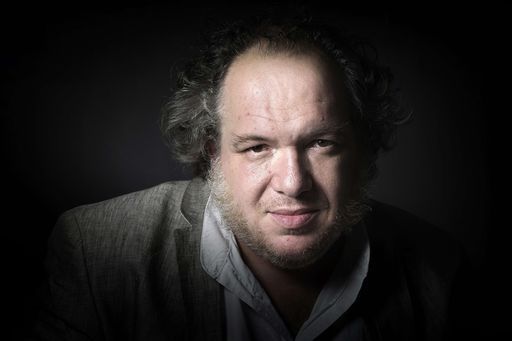
Photo by Dani Werner

It is my great pleasure to introduce Mary François Rockcastle and her fiction to the pages of Numéro Cinq. I met Mary in an airport shuttle, both of us homebound to Minneapolis after the AWP conference in Chicago. Whereas I was completely exhausted and could have passed among the living dead, Mary seemed energetic, friendly and grounded. Chatting with her in Midway terminal was a perfect anodyne for post-AWP fatigue. Later, when I met with Mary in St. Paul to discuss her most recent novel, In Caddis Wood, I wasn’t surprised to learn that she has extended this same amount of energy throughout the renaissance of the Twin Cities’ burgeoning literary community. Indeed, Mary is a pioneer and champion of Minnesota literature: Mary and her colleagues launched Minnesota’s first MFA in Creative Writing program at Hamline University; she founded Hamline’s literary journal, Water Stone Review and remains its executive editor. Mary is the founding dean of Hamline’s Graduate Liberal Studies program as well as its Director of Creative Writing Programs.

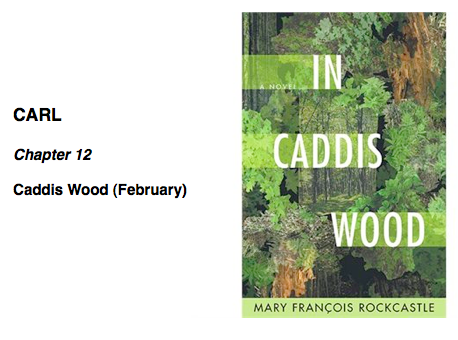
But this list of career accomplishments (which is not all-inclusive) is to say nothing of the fact that Mary also writes books. Earlier in her writing career, Mary created a writing refuge in Minneapolis’s Loft Literary Center to make time to write after hours. Her ensuing dedication resulted in two novels—Rainy Lake and In Caddis Wood—both published by Graywolf Press and both nominated for a Minnesota Book Award in 1995 and 2012 respectively. The longer gestation period novels is not surprising. In Caddis Wood is a product of tireless research—a thoughtful study in botany, architecture, medicine and poetry. In Caddis Wood ultimately pays tribute to the midwestern landscapes of urban Minneapolis and the woods of Wisconsin––a place that becomes a fully-formed character in its own complexity and reveals a fragile symbiosis between humans and nature in the novel’s thematic undercurrent. The narrative oscillates between the two distinct points of view and voices of Hallie and Carl, whose storytelling reflects on their long marriage, weaving seamlessly between memory and the present day as they encounter Carl’s quickly-degrading health. In Caddis Wood has received praises from Publisher’s Weekly and the Star Tribune, which hailed Mary Rockcastle’s “remarkable accomplishment to find in [these] everyday occurrences a story of great moment.”

In chapter twelve excerpted below, Carl suffers from advanced stages of Shy Drager Syndrome, finding himself in a semi-lucid state that blurs memory with present day, the living with the dead. The chapter is a convergence of characters: Cory and Bea are Carl and Hallie’s daughters, Joe and Marnie are their neighbors. Among the dead are Tim, Cory’s former partner, and Alice, the former proprietress of Carl and Hallie’s cabin home.

— Mary Stein

 –––
 

HE CAN hardly speak now, only manages to scribble a few words.  Hallie is good at interpreting his broken sentences and sprawled lines.  He is a book, its pages laid out in front of her, written in a language only she can understand.  She resists the gradual wasting away of his body, insisting on his daily exercises, pouring lotion on his peeling skin, feeding him as if he is a growing child and not a dying man.

Each morning she rolls the hospital bed onto the porch and as close to the window as possible, raising it so he’s in a sitting position and can see out.  She cracks the window open a few inches.  The drama in his head is as vivid as anything he sees on the television or DVD player.  Sounds enter the constantly evolving film in his imagination: part real, part memory, part what happens when the different tracks collide and merge.  He doesn’t know how much is caused by the illness, the cells in his brain ossifying like the rest of his body.  After years of intense industry, his mind and body filling and using each moment, he has become friends with slowness.  He is acutely aware of his surroundings, of each tiny change in his body and in the world he can see and hear.

He hears the pop, pop, bang of frozen trees.  Swelling fibres of wood bursting and cracking.  The rustle of cattails beside the stream, the ruffed grouse striking the white pine’s brittle branches, Hallie making coffee in the kitchen.  He can hear his mother and father talking softly, thinking he’s asleep—one of their happier moments, making plans for Sunday at the beach.  He’s in and out of the arcing waves, waits eagerly for the white froth to rise over his shoulder before he dives forward, bodysurfing the wave in to shore.  Gritty sand against his stomach.

Soft clacking and crunching beneath the pines, snapping brush, skitters across frozen snow.  Loud echo of a snapping branch, which clatters to the ground.  Bittersweet berries flash scarlet on the bank and Bea in her red hat and Cory in her blue are rolling a head for the snowman.  Tim’s curly hair is uncovered.  They wind Lucas’ woolen scarf around the snowman’s neck, put one of Carl’s fishing hats on the head.  Cory throws a snowball and they tumble over each other in the snow.

Sometimes he hears Alice’s voice, which is impossible since she was dead by the time they bought the summer cabin.  But he knows it’s her.  She and Hallie were right about the garden.  All his grand schemes—flowers and shrubs and soil carted in, fertilizer, herbicide, pesticide, fences, screens.  Nature laughing at him.  Now, when spring comes, the meadow will bloom with native prairie grasses and wildflowers.  Shrubbery planted along the edge of the house and meadow will provide food and cover for grouse, birds, the red fox family, woodchucks, and other animals.  Hallie, with Joe’s help, has kept up the vegetable garden, though he suspects she’ll let it go once he’s gone.

He hears other voices, too.  They began as a whisper, more than the sounds and music nature made.  He listened hard, thought his mind was playing tricks or that the disease had entered his brain and was causing auditory synapses to misfire.  The whisper grew and multiplied, became a chorus, until one day the sounds held meaning for him.  Anima antiqua, Alice wrote in her notebook, the spirit that’s lived in a place for a long time.  He hears it beneath the snow, the frozen ground.  He hears it in the creaking branches, inside the whispering stream.

we are out we are inside the house     we were here before     we have our own lives hidden in the dark     we nest inside the walls, beneath the floor     we shudder and pop     tap tap tap     we’re hungry     we sleep     we dig our roots deep we die     we return we listen we love in our own way     we remember     we are born in the dark we reach up toward the light

His mind is a camera, memories sharp as photographs.  The house on that first visit: dull brown linoleum, dusty books, gray husks on sills.  In the closet hung Henry’s parkas, flannel shirts, Alice’s hand-knit sweaters.  Beneath them boots, bathinette, Swedish linens.  Photographs: Alice’s mother against the Baltic Sea, Alice at age twelve—white middy blouse and knickers.  Henry in his waders, Will in his Marine’s uniform.  Hallie peers through the cloudy kitchen window.  When she removes her hat, her hair tumbles like a rain of sugar maple leaves.  He blinks and they are inside the tent and she is tweezing ticks off his body.  In the light of the kerosene lantern against the walls of the tent, she takes off her blouse.  He gazes at her graceful neck, the swing of her hair, her perfect breasts.

Hallie steps up behind him and wraps her arms around him, careful not to hurt him.  For a moment he’s unsure where he is, whether they are here on this porch on a winter morning or there, inside the tent, the house silent in the dark.  The birdfeeder spins and he remembers.

When he was a young man, he thought the body was everything.  He looked at women, even after he was married, and lusted after their bodies.  At night he’d wake and roll toward Hallie and just the feel of her skin or the smell of her hair made him harden with desire.  He’d press against her, helpless to stop it, even though he knew she was sleeping and didn’t want it.  Sometimes his drive was so great he woke her and she turned to him and let him come inside.  Years later he felt the coldness in her back, her anger and his hurt and the loneliness in each of them.  Then she fell in love with someone else, though he didn’t know it, only that he needed to go after her, make her believe in him again.

Now, when he can no longer string sounds into words, when his body is useless, when all sexual desire and function are gone, he reads her love for him in her eyes, feels it in the touch of her hands, the sound of her voice as she reads to him.  He is surprised at how busy she keeps herself, how cheerful she is most days—humming or singing as she cooks or does housework, silent only when she reads or writes or works at the computer.  Was she always this busy and happy in her daily life?  Did the darkness descend only when hewas present?  She does not hover or interrupt his reverie.  After years of simple meals, when she was teaching full time and writing, she enjoys cooking again.  He loves the smells, warmth emanating from the kitchen.  She wraps up what’s left over and takes it to Joe and Marnie’s, freezes it for Cordelia, who visits regularly, gives it to Father O’Neil, the priest from St. Luke’s Church in Spooner who comes once a week to give him Communion.

He hears a cupboard in the kitchen opening and closing, a pot against the stove.  Soon the room fills with the smell of onions, beef, and vegetables.  When the girls were little, he moved their high chairs side by side, pinned bibs around their necks as he fed them creamed carrots from a jar.  Their orange faces stare back at him from the window pane.  Cordelia chortles and spits carrots back at him.  Bea blows hers into bubbles that dribble onto the tray.  They laugh as he swipes at their faces with the washcloth.

Hallie pulls up a chair and a small table where she sets a steaming bowl of soup, plate of bread, and two cotton towels.  One she lays across his upper chest and the other she hangs over her shoulder.  She blows on the surface of the soup.  He sees the tiny puckers in her lower lip, the downy hair on her skin.  When she spills, she lifts the towel from her shoulder and deftly wipes his mouth and chin.

After, she puts on a stack of CDs and bundles up to go out.  Each day she walks to the county road, five miles there and back.  Unless it’s below zero, and then she goes only as far as the red gate.  “Need anything?” she calls.  Seeing by his face that he’s all right, she waves and shuts the door.  He hears the crunch of her boots on the path.  A wing flickers to his left and a rare chickadee lands on the feeder.  tap tap tap     cheer-up cheerily cheer-up cheerily, what-cheer cheer what-cheer cheer

The house shifts and groans.  Beneath the floor the pine snake sleeps in an S-shaped coil.  Eggs lie dormant in the sill between panes of glass.  A red squirrel plucks a berry from the hedge and emits a chipping plaint.  In her closet Alice’s hand-knit sweater slips off a hanger and falls noiselessly to the floor.

A woman appears in the yard, dressed in a brown overcoat.  She glides lightly across the snow and disappears into the trees that line the slope above the swamp garden.  He watches in his mind’s eye as she wends her way along the path.  she knows our voice     many voices not one     she listens    come home Henry come home     she hears the rustling wind     burbling bubbling rising and falling song     trills chirps whistles metallic chips of birds     she slides the pouch with Henry’s ashes inside the wall     some of us die before our time     we do not choose     we feel what is lost but it is not grief     we are in we are out of time

The phone rings and clicks and Cordelia’s voice pierces the quiet.  “Hi, Dad.  I e-mailed you the latest models.  The committee liked your triangulated grid and the wrapped walkways.  They were especially excited about the idea of drawing water up through the piles and distributing it through the landscape trays.  Tell me what you think of the models.  I’ll be out by dinnertime on Friday.  Love you, Dad.”

Cordelia is walking toward the house, something held in her cupped hands:  eggshells crushed by the bird’s weight.  Yellowed leaves falling in the spring, acid in the stream, fish filled with toxins.  He blinks and she is gone.  A movement of white and then another and within minutes the air is filled with snowflakes that blanket the brown grass and melt into the metal-covered stream.  He tries to focus on one flake at a time but they are falling too fast and blur into a confetti of white.  At his grandfather’s window, he knelt as the snow fell on frozen fields.   On Christmas Eve, at their home in Minneapolis, he stood on the back deck, meticulously scarring the new-fallen snow.  The next morning Beatrice and Cordelia knelt at the dining room window peering out at the perfect line of reindeer tracks.  What do you mean there’s no Santa.  How the heck did those reindeer tracks get there?  Tell me that.  Years later Cordelia found the hand-made metal instrument in the garage, the long extender bar, forked ends mimicking the tracks of deer.

He had to wait until the ground had thawed enough to bury his mother.  The local cemetery let him keep her in their vault, which was generous since neither she nor his grandfather was buried in that cemetery.  The orchard was sacred ground for both of them.  Carl dropped two red roses into the newly dug grave, the only black in a blanket of white.

The snow continues to fall and he hopes that Hallie will turn around and come back.  Just the kind of weather they would have snowshoed or hiked in once.  In Oslo, he and Sverre Bergström strolled at midnight through the snow, brainstorming ideas for the town hall.  In the white he sees a figure.  As the form moves closer, he recognizes his father’s telltale walk.  He wills his hand to move, but the limb lies useless on the sheet.  Where have you been?  Tommy is dressed in the same brown corduroy slacks, navy blue sweater, blue Oxford cloth shirt.  His hair and shoulders are flecked with snow.

Tommy stops a few feet from the window and they gaze at one another.  Carl has so much he wants to tell him.  I hear things: human voices, living and dead, sounds of the non-human world.  I hear the creak and groan of the earth, sighs and whistling breaths of hibernating creatures, rasp of roots and silt sifting in the stream.  I hear Cordelia and Beatrice at play.  I hear my mother, your wife, weeping in the bedroom.  I hear music and don’t know who is playing—Beatrice or her.  I hear Frank Rossi calling me from the street, the click of our sticks against the ball, the El rumbling past my window.

When Hallie wakes him, he blinks at the darkened meadow, the untouched surface of the snow.  She lights the lamps and washes his face and hands.  She moves into the kitchen where he hears her preparations for dinner.  Once the casserole is in the oven, she pulls her reading chair close to him, picks up Rilke’s Book of the Hours, and reads:

Summer was like your house: you knew
where each thing stood.
Now you must go out into your heart
as onto a vast plain. Now
the immense loneliness begins.

The days go numb, the wind
sucks the world from your senses like withered leaves. 

He sees the shadowy trees, tips of wind-burned reeds.  Hallie’s voice rises and falls like the tumbling stream.

Through the empty branches the sky remains.
It is what you have.
Be earth now, and evensong.
Be the ground lying under that sky.
Be modest now, like a thing
ripened until it is real,
so that he who began it all
can feel you when he reaches for you. 

He wants to tell her what it is like to be alive like this.  She hides her sadness but he sees the imprint on her face when she returns from her walks.  They await Bea’s next phone call, Cory’s visits, the next chapter of the book she’s reading to him, the way the woods change with each passing day.  She feeds him, washes him, catheterizes him every few hours.  It is just the two of them—her voice rising and falling, her hands tending him, her heat beside him.

 ––– Mary François Rockcastle

––––––––––––––––––––––––––––––––––––

Mary François Rockcastle is the author of Rainy Lake. She is the director of The Creative Writing Programs at Hamline University, and the founding and executive editor of Water~Stone Review. She lives in Minneapolis.



Mar 092012
 

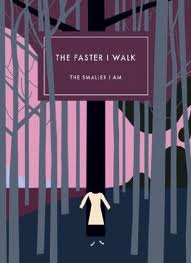
When I was a child, I always dreamed of being taken away by an ambulance, and when there was one nearby, I’d cross my fingers and whisper: “Let it be me, let it be me,” but it never was me, the ambulances were always moving away from me, I could tell by the sirens. Now I hear ambulance sirens in the distance again, they should be coming to get me because I’m wearing clean underwear and will be dying soon. But no, there’s someone else in the ambulance instead, someone who is no longer responsible for their destiny. — The Faster I Walk, The Smaller I Am, Kjersti Skomsvold

The Faster I Walk, The Smaller I Am
Kjersti Skomsvold
Translated by Kerri A. Pierce
Dalkey Archive Press
$17.95

And maybe all we want in life is a sorrow so big that it forces us to become ourselves before we die.

                                                                        –– Kjersti A. Skomsvold

Norwegian writer, Kjersti Skomsvold, is no stranger to solitude. Skomsvold sequestered herself in her parents’ basement, recovering from an illness that removed her from the comforts of the daily routine of university life, abandoning her plans to become a computer engineer. During her two-year stint of solitude, Skomsvold endeavored to write fiction for the first time, crafting what became the complex and refined interior landscape of her aging protagonist and quiet heroine, Mathea Martinsen. Mathea’s first person account of her own journey through solitude became Skomsvold’s debut novel, The Faster I Walk, The Smaller I Am.

Frankly, the success of Kjersti Skomsvold’s debut novel gives any writer who has ever toiled away at fiction another reason to cry in her beer: The Faster I Walk was not only Skomsvold’s first attempt at fiction (let alone a novel), but also received Norway’s Tarjei Vesaas First Book Prize. The novel was originally published in Norwegian in 2009; Dalkey Archive Press released Kerri Pierce’s English translation in the fall of 2011.

The novel introduces its reader to Mathea floundering in the aftermath of the death of her husband, Epsilon (a nickname used more often than his given name, Niels). Epsilon was the only person who seemed to know Mathea existed; to the rest of the world, she is all but invisible. “[Epsilon] must’ve been born with some superhuman power that made it possible to notice me. The fact that we ended up together is thanks to him rather than me.” To say Mathea leads a quiet existence is an epic understatement––-she has spent almost her entire life waiting for Epsilon to retire. “When Epsilon was at work and I was alone in the house, I didn’t do much of anything … now that I think about it, I didn’t do nearly enough, and nothing mattered anyway.”

But the quiet exterior life is deceptive. Mathea’s voice is nothing short of a combustion engine. Each of Skomsvold’s sentences is electric, rejecting the role of a mind at peace in solitude. The humor and vitality of Mathea’s voice propels the narrative, repelling any automatic sympathies. Mathea is intelligent, death-obsessed, and neurotic and her voice reflects as much.

I remember reading somewhere that the total number of people alive on earth today is greater than the total number of people who have died throughout all time, and I wonder when the opposite will be true, when there will be more dead people than living, because if that were the case, then at least I could be helping to tip the scale in favor of the dead. It would be nice to make a difference.

Mathea’s solitude is rooted in social anxiety and agoraphobia. Confined in her apartment and within her own thoughts, Mathea spends the majority of her time knitting ear warmers, baking meringues or buns and obsessing over social interactions. Now, without Epsilon’s attention, Mathea’s solitude becomes even more oppressive, and she decides to wrench herself away from the self-imposed hermitage of solitude in attempt to leave her mark in the world, hoping somehow to reconcile herself with her own invisibility before she dies. “I’m wishing I could save what little I have left of my life until I know exactly what to do with it.”

A rash of inept and slyly comic social failures ensues. She buries a time capsule at night so no one will see her, but it’s unearthed in order to plant a flag for her housing co-op; she braces herself against going to the store to buy jam, but the clerk doesn’t notice her anyway; she plans to attend a cleaning party with her co-op but loses the courage; she attends a gathering at a senior social center but remains unseen as the hostess accidentally raffles off Mathea’s coat.

But the heart of the story exists within memory where Mathea’s storytelling cracks open to reveal themes of death, pain and obsession. As Mathea rifles through an inventory of memories of her life with Epsilon, she reveals a quiet–-–almost evasive–-–tension between the two of them. Their early affection slowly unravels in part due to their shared sorrow over their inability to have a child, a situation exacerbated when a couple with a baby moves next door. And there are hints that Mathea’s reclusiveness had infected Epsilon, inciting his own despondency. “One day, Epsilon didn’t come home after work. From the kitchen window I’d seen him enter the building, and I’d counted the number of steps he had to take to get to the fourth floor. Finally, I went to the peephole. He was standing right between our door and June’s mother’s, just staring at the stairs.” Skomsvold employs great narrative restraint, artfully revealing the immensity of Mathea’s sorrow without Mathea ever directly acknowledging it herself.

The energy of Skomsvold’s prose compensates for the deceptive languor of Mathea’s remarkably unremarkable life. While she continues to fail at making any impact on her exterior environment, her thoughts, at times erratic, at times endearing, are always probing, intelligent and searching. Skomsvold laces Mathea’s narration with epigrams and self-conscious rhymes—as though the narrator is trying to keep herself entertained. “Every joyful hour in life is paid for with strife. Despite its depressing sentiment, at least this one rhymes” or “I don’t know any better, I’m almost a hundred, just a stone’s throw away, but acting like I was born yesterday. That sort of rhymes.”

Skomsvold uses Mathea’s macabre anticipation of her own death to motivate and intensify her use of this device, especially in the embedded drafts of Mathea’s comic self-obituary (she is writing this through the novel). “‘MATHEA MARTINESEN -–– deeply loved, dearly missed’ I write at the top of a page and underline it. ‘You were always loving, gentle, and kind, you departed this work before your time, with future achievements waiting in line.’”

The simplicity of Skomsvold’s prose veneers Mathea’s stratified consciousness. Apparently minor details are always resurfacing as signs and metaphors of the inner ferment. In one scene, Mathea’s neighbor comes over unannounced and spackles mysterious fork holes in a wall. The fork holes are perplexing. Only later does Mathea reveal their significance, as evidence of an old argument with Epsilon. “Then I walked up to him, grabbed the fork out of his hands, and threw it as hard as I could against the wall. I just couldn’t throw it hard enough.”

In another passage, Mathea is mysteriously drawn to a stranger randomly holding a banana. “… I’m afraid anything I say will ruin the moment. I whistle a bit and try to ignore the banana he’s holding in one hand.” Later, the banana burgeons hilariously into a psycho-spiritual symbol:

It says that even though the banana plant looks like a tree, it’s really just a big plant that has flowers without sex organs and fruit without seeds. Therefore, the banana doesn’t undergo fertilization and plays no role in the plants formation, and when the banana plant has lot its fruit, it dies. It was the meaninglessness of this cycle that made Buddha love the banana plant, which he believed symbolized the hopelessness of all earthly endeavors. … and wasn’t it the Buddha who also said that everything is suffering, and I think that if I’d been religious, I would’ve been a Buddhist, and if I’d been a fruit, I would’ve been a banana.

In yet another passage, Mathea references the tongue as a symbol of attachment. “… I always kiss kiss with [my tongue] because then I know it’s there, the only muscle in the body that’s just attached at one end, a fact I don’t like to think about. It reminds me of everything I’ve lost.” It doesn’t end there -–– throughout Mathea’s narration the existential underpinnings of her solitude begin resurface again and again as she attempts to make meaning of her life.

Mathea’s laconic voice is laced with absurdity and humor, buoying the ironic gravitas of her existential ruminations. The tonal dissonance is the pillar of the novel’s complexity. Skomsvold threads Mathea’s narrative with spiritual, philosophical and mathematical concepts of major thinkers from Schopenhauer, Descartes, HC Andersen, and the Buddha to the Norwegian novelist (one of Skomsvold’s literary forerunners) Knut Hamsun. The title itself is a reference to Einstein’s theory of relativity. But despite the litany of reference, The Faster I Walk self-presents with disarming humility and wry deprecation. As Mathea says, “But sometimes you have to give meaning to meaningless things. That’s usually how it is.”

Eventually Mathea reconciles herself to her solitude without fanfare, but her presence is incandescent. She remains invisible in Skomsvold’s fictional universe––but in no way does Mathea remain invisible in the minds of her readers. Long after the story ends the language continues to coalesce the voice of solitude.

—Mary Stein

——————————————

Minnesota native, Mary Stein, currently lives and writes in Minneapolis. She’s a contributor to Numéro Cinq and her fiction has appeared in Caketrain.

Oct 192011
 

Donald Breckenridge has a story to tell you: He’s a failed-actor-turned-fiction-writer, playwright, literary activist/editor, and wine-seller who’s carving out a life for himself in New York City. Though I’ve never met Donald Breckenridge in the flesh, he’s the guy I’d like to meet for a beer. After reading his brand new novel, This Young Girl Passing (imminent from Autonomedia—see the Publishers Weekly review here; read an excerpt on NC here), it was clear to me that Breckenridge has a self-consciously intentional approach to crafting fiction, and this interview/conversation reiterates the thoughtfulness behind his work. If you haven’t met Donald Breckenridge already, it’s my pleasure to introduce you to him and his work in some small way.

Donald Breckenridge is the author of more than a dozen plays as well as the novella Rockaway Wherein (Red dust, 1998) and the novels 6/2/95 and You Are Here (Starcherone Books, 2009). In addition, he is the fiction editor of The Brooklyn Rail, co-editor of the InTranslation website and editor of the The Brooklyn Rail Fiction Anthology (Hanging Loose Press, 2006). He is working on his fourth novel.

Here is what NC Editor Douglas Glover wrote about This Young Girl Passing:

This Young Girl Passing is a deceptively short, dense, ferociously poignant novel of sexual betrayal and despair set in impoverished upstate New York, a Raymond Carver-ish milieu of never-weres and left-behinds. Breckenridge is a pointillist, constructing scene after scene with precise details of dialogue and gesture, each tiny in itself but accumulating astonishing power and bleak complexity. The novel’s triumph though is in its architecture, its skillfully fractured chronology and the deft back and forth between the two main plot lines, two desperate, sad affairs twenty years apart and the hollow echoes in the blast zone of life around them.

—Mary Stein

.

Our Endless Past: An Interview with Donald Breckenridge

By Mary Stein

.

.

MCS: Why don’t we start off with a little personal backstory: from thought to fruition, could you describe the gestation period of writing This Young Girl Passing? How did it compare with some of your other works?

DB: I discovered the article that this book is based on in March of ’00. It was a Saturday and I was waiting on the downtown platform at the 77st 6 train station. It was early afternoon and I was going home from my part-time wine shop job in Yorkville. I didn’t have a novel with me and there was a day-old copy of the Times on the bench. I was skimming through the NY section and I was taken immediately. The actual article is only four brief paragraphs but I knew right away that I wanted to write about it.

At the time I was writing my first novel, 6/2/95, which was a year away from being finished, so I cut out the article and put it in a drawer. I thought at the time I would turn it into a play but that didn’t happen for a host of reasons. After finishing, 6/2/95, I took a few months, March of ’01 till July of ’01, approximately, to work myself into an place that I thought would be a good beginning. I really wanted to write a book about child abuse that wasn’t autobiographical, so that’s where I began with Sarah, from her reaction to a shitty home life which is my how and why she became involved with Bill. I have never been even remotely interested in telling the real story of the actual participants in the article, that is absolutely none of my business, the truth really only belongs to the people involved. The article in the Times was simply a sketch and I let my imagination roll out from that point of departure. I began writing the first chapter that August, while my now wife, Johannah Rodgers, and I were staying in Door County, Wisconsin. We were there for 7 weeks and I’d wake up early every morning and work on this conversation that Sarah was having with Robert in the woods and in his father’s car.

All of my books begin in dialog, with a simple conversation between two people, and once that is recorded all the other information, vital or otherwise, is piled on top of that dialog. The novels all begin with dialog and all of them incorporate found news items. The gestation here was very deliberate, in that I wasn’t telling a story that was autobiographical, so I was separating myself from the story while at the same time grounding what was to become Sarah in this wounded and romantic landscape.

MCS: It doesn’t surprise me that you considered making the story into a play. In the novel, dialogue and physical descriptions (which read like stage directions at times) are braided together to create the sentence-level foundation of the novel’s structure. How do you feel your background as a playwright influenced this novel’s form? 

DB: I’m a failed actor, I came to NYC in ’89 to study acting and was thrown out of school after the first semester, however I did meet quite a few truly talented actors in school and a year or so later I founded a theater company with a handful of them, The Open Window Theater, and at first we worked out of a storefront Co-op art gallery, Brand Name Damages, in South Williamsburg where I wrote and mounted my first plays, later we moved to a converted paint factory beneath the Williamsburg Bridge where we continued putting on plays, hosting readings and bands, there was a gallery upstairs as well where local artists would show—Williamsburg was a very different place then. After doing that for a few years I left the company and slowly, really glacially, I began attempting to write fiction, because it became prohibitively expensive for me to mount my plays and I had lost my cast. My earliest attempts were published as the novella, Rockaway Wherein (Red Dust 98) but to answer your question, I’ve always tried to capture the immediacy of watching a performance on the page. That immediacy where the reader is in the moment with the present, as if the reader was watching the characters performing on stage. For an actor all his lines in a script contain cues—when A is to stand up while speaking and how A is to then cross the room with a sullen expression while proclaiming his love for B who is sitting in a chair by the window overlooking the crowded street and is secretly waiting for her lover to emerge from the subway entrance at the end of the block—the actors playing A and B need to internalize all of their objectives and to thoroughly understand what their character’s psychological motives are beneath the lines, what the real motivations are, what moves them across the room and has them proclaiming and or hiding their love. This is of course a very simple example of what Method Acting is, and by making the psychological motives visible in the dialog, and by laying out the surroundings in the dialog as well—which is obviously equally important—I think I’ve brought a heightened present, or at least more urgency, to the page..

MCS: You accomplish a lot with such economical prose. The point of view is prismatic in the sense that the reader is made to understand the motivations and desires of multiple characters—oftentimes simultaneously. It seems that most writers find it challenging enough to convey the motivations of even just one character without compromising the complexity of another. How did you manage this?  

DB: I try to be thorough and I’ve learned to be very careful, and although it has taken a long time, I’ve finally learned how to write slowly and for myself. That was my take-away from This Young Girl Passing; you have absolutely no reason to rush writing, ideally the work will last much longer than the time it took to create, so why rush? The hordes aren’t clamoring at my door. This book took forever and way too many drafts before it became an actual book, and although at times the wait and the rejections were incredibly frustrating—in the end I’m really grateful for the struggle, as clichéd as that sounds. I spend a long time on a single page, they often take weeks to write, and then I’ll go back a few dozen times and spend twice as much time as I really should compressing text and then reintroducing the lines. Also, I tend to get bored with all the tedium that is involved with writing everyday so I’ll introduce new narrative threads within the existing lines, this resuscitates the everyday exploration of what writing a novel should be and enables me to create that prismatic point of view that you mentioned. I’ll then build out of the gaps once I remove the obvious lines and attempt to formulate a stronger foundation for the characters in the scene once the redundant has been purged and purged again.

MCS: Your approach to time and historical context is met with a similar sense of refinement and narrative necessity. One of the defining characteristics of This Young Girl Passing is its back-and-forth movement between a post-Vietnam 1970’s and the late 90‘s (and your earlier novel, You Are Here, also moves through time within the 9/11 era). Yet it manages to avoid the entrapments of sensationalism that threaten to derail narrative. How did you inhabit both these eras in This Young Girl Passing?

DB: When writing out the dialog for chapters I always reach a point when I need to consult the newspaper and check the weather; so I get the light right, so the moon is full or gone on the right night, to make sure it actually snowed enough to be a nuisance, and knowing what the weather was like also helps me dress the characters. I’ll go to the library and check the weather for the day before the chapter, the day of the chapter and the day after, just to be sure. At times the headlines from those dates leak in as well and that helps inform the characters dialog—sometimes it’s necessary but I’m really careful with how I use it—and it also provides the reader with a skeletal time line. However, the people I write about aren’t on the cusp of breaking news, ever, with the exception of Stefanie in You Are Here, who is last seen entering the WTC on the morning of 9/11, my characters are all very marginal and quite content to be so, they might talk about current events but only in passing—like Bill and Sarah in the hotel room talking about Hale Bopp and Heaven’s Gate—headlines are always on the peripheral.

I’m very much into the music and culture of the 70’s, so for me, who was a teenager in the 80’s that decade represents an almost mythical time in America, and my father served in Vietnam so that war was and still is a very real part of my personal history.

MCS: I spied on your Goodreads account, and when it comes to reading, you certainly don’t mire yourself in one literary tradition. You’re the fiction editor of Brooklyn Rail and the co-editor of its InTranslation publication which gives exposure to English translations of new international voices that might otherwise go unrecognized. How does your involvement with Brooklyn Rail impact your writing? 

DB: I’ve always been a ferocious reader since I was very young, and one of the happiest times in my life was when I read a novel a day for a 9-month period of deliberate and blissful unemployment during my mid-twenties. That was just before I began my attempts at fiction. What I’ve found with writing novels is that I cannot read them as avidly as I once did. What the Rail has allowed me to do is to ingest lots of current writing and to support it in a very public way. The work I do on behalf of the Rail and InTranslation doesn’t pay but I see it as a form of literary activism, which is a very nice way to go about doing something that you love.  My work as an editor takes considerable time away from my own writing, obviously, which is at times problematic because I need to work harder at making money in order to survive in NYC, which also takes time away from my own writing, but my work as an editor has given me a greater perspective as to where my writing may or may not fit in this current publishing climate and it has enabled me work with some truly dynamic authors and publishers whom I might never have been in contact with if I’d simply stayed at my desk and toiled away in solitude.

.

Where Donald Breckenridge toils away in solitude

.

MCS: How do you manage to survive as a writer and literary activist in NYC? What does a “typical day” look like for you (if there is such a thing)? 

DB: No, no such thing as a typical day. If I can get 5 hours in a day on the novel, I know I’ll be able to face the rest of the day, and that no matter what happens it will be a good day. And if I can stay at home and write all day then it has been a fantastic day. I’ll wake up at 5 or 6 and write till 11 or noon and then get started on money work—I sell wine for a small yet prestigious wine importer. The reading and editing I do for the Rail and InTranslation takes place in the late afternoon and into the evening.

MCS: Going back to your voracious reading habits—which writer(s) do you feel have most impacted your craft and/or your approach to writing? Who are you reading now? 

DB: The two most important authors would be the French novelists Claude Simon and Emmanuel Bove. Simon for the multiple layers and textures he brings to the page that make reading his novels (Histoire, The Flanders Road, Conducting Bodies) a nearly visceral, always urgent and wonderfully lucid experience. And Bove (My Friends, A Winter’s Journal, A Man Who Knows) for his precision, emotional honesty and pristine imagery. Also the Japanese novelists Kawabata and Soseki. And the German author, Arno Schmidt who is a tremendous writer, everyone on the planet should read Schmidt! Dalkey Archive just released a really handsome four volume set of collected works that John E Woods has translated over the years, and if you are unfamiliar with Schmidt’s work, Nobodaddy’s Children, which collects three of his early novels is an ideal place to start. And also the Brooklyn-born, Gilbert Sorrentino who is by far my favorite American author. I recently read and really enjoyed Chris Turner’s translation of Pascal Quignard’s The Roving Shadows that is a truly outstanding book and out from Seagull this month. I am currently reading Hans Fallada’s Wolf Among Wolves that Melville House published last year, also, Ahmet Hamid Tanpinar’s A Mind at Peace, one of the most elegant books that I’ve read in years, Archipelago published that a few years ago and I’m eyeing Ursula Meany Scott’s translation of Wert and the Life Without End by Claude Ollier which was just published by Dalkey Archive.

MCS: Earlier you mentioned thwarting the tedium of writing everyday by introducing narrative threads. Friday, December 19, 1997, is a distinct passage because of its absence of dialogue. Each sentence swivels back and forth between POV to capture the (almost) simultaneous but separate experiences of Mary and Bill. Yet, the reader is rooted in the text largely due to the very idea of “pristine imagery” you just mentioned, and the movement between scenes sustains the momentum of dialogue. While crafting This Young Girl Passing, did you consciously engage with an aesthetic that would interrupt the everyday tedium of writing?

DB: The line by line shifts in that chapter, as it finally exists are so different from a few drafts ago. Initially they had been alternating 4 to 6 sentence long scene blocks containing dramatic dialog that I stripped down in a few drafts. It was this half-formed, cathartic nonsense that I somehow felt obligated to write into the book—it was really terrible, like I was trying to wreck the novel. It works for me now because I dumped all of the false notes, everything shrill and moralistic, and all of that sentimental shit. Creating collages out of my imagery (I hesitate to call it pristine, although I try—perhaps too hard at times) on the page keeps the momentum going and at times it can suspend or stall a reader’s sense of disbelief. I wrote this book to music from the era, watched most of the films advertised in the newspapers from the days the chapters were taken while writing those chapters, studied the history of the era, so not really, other than editing the fiction in the Rail on a monthly basis, putting together the fiction anthology that Hanging Loose published in ’06  and curating a monthly reading series at the Central Branch of the Brooklyn Public Library from ’02-’08, my head was always in this book. That is until I couldn’t find a home for it, almost lost my mind, and then wrote You Are Here . This Young Girl Passing didn’t have a publisher until July of 2007, I was shopping around You Are Here, having just finished that. Both books got picked up that summer, which was a huge relief, because I was really dreading having two unpublished novels.

MCS: People who saw me reading your book in public asked me about its title, and I would respond with an imprudent amount of speculative gibberish. I swore that I would never ask this question for an interview, but I’m compelled to ask for this novel in particular—how did you settle on the title This Young Girl Passing? Would you be willing to share any working titles you rejected? 

DB: The title is from the epigraph which is taken from Eugene Ionesco’s Present Past Past Present. Eugene Ionesco is one of my favorite authors. Each one of my novels and the novella, Rockaway Wherein, contains an epigraph from that book. What I tried to say with This Young Girl Passing, ultimately, is that the past we’ve accumulated, and cultivated is the same past we will into our present. We are predetermined to live in a present where the past resonates around us endlessly, and I learned that from reading Eugene Ionesco. The working title for the novel and the title that I shopped around for a few years when this book was a disaster was Arabesques for Sauquoit as I thought that spoke to the way it was written and the location, Sauquoit, where the novel takes place.

MCS: What’s next? 

DB: I’m currently working on my fourth novel. I started it in the winter of ’09 and I have about a 100 manuscript pages that might be ok. It’s been slow as You Are Here came out while I was writing it and that was very distracting. My father got really sick in the spring of ’10 and then he died that September which was really brutal as we were very close. Incidentally, he is buried near the farm where he was raised which is in the same county where This Young Girl Passing takes place. Getting this book ready for publication was also incredibly distracting, in a good way, and that kept me away from the new novel, but now, finally, I can begin again in earnest!

— by Mary Stein and Donald Breckenridge

Oct 052011
 

0

Mucking Up the Landscape: Poetic Tendencies in Prose

by Mary Stein

.

There’s a certain trend I’ve noticed among some essays and craft books on writing fiction: It hints at the idea of a beleaguered prose writer, imprisoned at her desk—a person who narrates rather than directly experiences life for the sake of fiction, a person held hostage by the endless pursuit of the right-hand margin. It’s an idea of the prose writer as sacrificial lamb for the god that is verisimilitude. Prose and its process can be intoned with a sense of drudgery—particularly in comparison to poetry. In “Rhyming Action,” Charles Baxter jokes, “Prose writers have to spend hours and hours in chairs, facing paper, adding one brick to another brick, piling on the great heap of endless observations, going through the addled inventory of all the items they’ve laboriously paid attention to, and it makes them surly—all this dawn-until-dusk sitting for the sake of substantial books that you could prop open a door with … Fiction writers get resentful, watching poets calling it quits at 9:30am.”

Now of course I don’t agree with the literal assessment of this statement—I know poets who work at least until 10:00, maybe 10:30 in the morning. (Poets must forgive me, I have to believe this farce exists, otherwise I’ll never have anything to aspire to.) But there’s something about the spirit behind the statement, the implicit (or, I suppose, explicit) idea of drudgery inherent to the prose-writing process leading to an implicit drudgery of prose itself—an idea that the reader is led through a corridor of scenes, narratives, backstory, interior and summary to get somewhere. In an interview with Lydia Davis, Sara Manguso asks, “How do you know a story’s a story?” Davis says, “I would say a story has to have a bit of narrative, if only ‘she says,’ and then enough of a creation of a different time and place to transport the reader. But, of course, it is not a narrative poem. It is flatter, rhythmically different from a poem, and less elliptical.” This is interesting coming from Lydia Davis considering her prose often slants toward all these poetic tendencies—elliptical movement, a poetic attention to rhythm, and a use of language that certainly doesn’t flatline by any means. In fact, many of Davis’s stories exemplify how poetic attention to syntax creates resonant effects in prose.

.

.

Eileen Myles is one example of a poet crossover. Her self proclaimed “poet’s novel,” Inferno, explores the confluence of poetry and prose. In her critical essay on novel writing, “Long and Social,” Myles says, “Poets should write novels en masse and reinvent the form and really muck up the landscape.” Although I don’t intend to discuss murky genre distinctions, if genres paralyze or constrict your writing process, I’d say forget about them or invent your own—at least while you’re writing.

I want to consider how these same poetic elements might help the reader engage with the text: regardless of genre, the manipulation of or play with syntax can demand a reader to become conscious of his or her interaction with the work. I want to examine how some fiction writers use syntax to amplify image patterns and create rhythm in order to motivate narrative movement—to muck up the landscape of prose.

Continue reading »

Jun 202011
 

“They come out from behind the barn as though something is going to happen, and then nothing happens.”

— Lydia Davis, The Cows. 

(A claymation video of a line from Lydia Davis’s The Cows, by Electric Literature)

Flaubert and Cows

By Mary Stein

A few weeks ago, I ventured to my local Minneapolis bookstore on one of those rumored “quick stops” where people allegedly “swing by to pick up just one thing.” I was looking for The Cows, a new chapbook by Lydia Davis. Ultimately stymied by genre distinction, I begrudgingly asked a clerk where I could find this coveted gem, having not found it in any of the obvious places. After all, alphabetization couldn’t have become more complicated since the last time I was there, could it? The kind clerk pointed me toward the “Animal” section. The Cows was subcategorized under “Miscellaneous” where I found it wedged into near-oblivion between two door-stopper-sized books (one called Christian Lions and the other an anthology about birds).

The Cows is a fragmented story that meditates on three cows that live across the road from Davis. It was released as a chapbook in March, 2011 by Sarabande—a nonprofit literary press that releases approximately ten titles annually. Not six months earlier, Davis had embarked on an entirely different project. In September, 2010 Lydia Davis’s translation of Flaubert’s Madame Bovary was published courtesy of Viking Penguin. The scope of these two projects seem to exist in entirely different literary realms, and if “opposite” could ever be measured in gradations, Sarabande and Penguin are about as opposite as it comes. But what struck me about each publication was Davis’s search for relevance—not in the oft-overlooked crannies of daily life, but in subjects that stare us in the face: a book translated almost twenty times already; cows.

Continue reading »

May 082011
 

Enard

zone

.

The following excerpt is from the seventh chapter of Mathias Énard’s novel, Zone—his first novel translated into English from the French by Charlotte Mandell. Before Zone’s publication by Open Letter Books in December 2010, it won multiple literary awards including Prix du Livre Inter, Prix Décembre, and Prix Initiales. The excerpt finds Zone’s narrator, Francis Servain Mirkovic, amid a journey from Milan to Rome to sell the Vatican information he acquired as a spy for French intelligence. Indicative of the novel in its entirety (you can read an NC book review of Zone here), Mirkovic drifts between stories—stories of his past as a soldier for the Croatian army, stories of former comrades, stories spanning mythological epochs, and stories of lovers. Mirkovic crosses the boundaries between his present reality and the prismatic chaos of his traumatized mind, hoping this trip to sell information from the zone will be his last.

— mcs

§

VII

everything is harder once you reach man’s estate, living shut up inside yourself harried destitute full of memories I’m not taking this trip for nothing, I’m not curling up like a dog on this seat for nothing, I’m going to save something I’m going to save myself despite the world that persists in going forward laboriously at the speed of a handcar operated by a man with one arm, blindly a train at night in a tunnel the dark even denser I had to sleep for a bit, if only I had a watch, I just have a telephone, it’s in my jacket hanging on the hook, but if I take it out I’ll be tempted to see if I have any messages and to send one, always this passion for writing into the distance, sending signs into the ether like smoke signals gestures with no object arms hands stretching out to nothingness, to whom could I send a message, from this prepaid phone that I took care to get a tramp to purchase for me in return for a big tip, as luck would have it he had an identity card and wasn’t too wasted, the seller didn’t cause any trouble, I left my apartment dropped off a few things at my mother’s sold my books in bulk to a bookseller at the Porte de Clignancourt took three or four things, as I was sorting through things I of course came across some photos, I saw Andrija again in his over-sized uniform, Marianne in Venice, Sashka at twenty in Leningrad, La Risiera camp in Trieste, the square chin of Globocnik, Gerbens’s mustache, I took everything, and I can say that everything I own is above me in a slightly scaled-down bag, next to the little briefcase that’s going to the Vatican and that I plan to hand over as soon as I reach Rome, then tonight in my room at the Plaza on the Via del Corso I’ll go drink at the hotel bar until it closes and tomorrow morning I’ll take a bath buy myself a new suit I’ll be another man I’ll call Sashka or I’ll go straight to her place I’ll ring at her door and God knows what will happen, Zeus will decide the fate that’s suitable to allot me the Moirae will bustle about for me in their cave and what will happen will happen we’ll see if war will catch up with me again or if I’ll live to be old watching my children grow up the children of my children hidden away somewhere on an island or a suburban condo what could I possibly be living on, what, like Eduardo Rózsa I could tell the story of my life write books and screenplays for autobiographical films—Rózsa born in Santa

Cruz de la Sierra in Bolivia of a communist Jewish father a resistant in Budapest was the special correspondent for a Spanish paper in Zagreb before he became a commander in the Croatian army, I met him once or twice on the front and later in Iraq, an admirer of Che Guevara and war who founded our international brigade, a group of volunteers who spoke English among themselves Warriors of the Great Free and Independent Croatia who all arrived like me after the first images of the Yugoslav madness, Eduardo was already there, he landed in Croatia in August 1991 one month before me during Osijek and the first clashes, he came from Albania and before that from Budapest and Russia where he trained for espionage for guerilla warfare for comparative literature and philosophy, a poet—today he writes books collections of poems and plays himself in films, maybe Che Guevara would have ended up the same if he hadn’t made Achilles’s choice, if he had been given life he too might have become—weapons put away, life over—an actor, he was so good-looking: like Hemingway Eduardo Rózsa wrote fast, I picture him on an August night on the terrace of the Hotel Intercontinental in Zagreb where all the foreign press stayed, the Vanguardia from Barcelona re­­proached him for describing the fighting too much and for not talking enough about politics, he downed shots as he described the first battles, the Yugoslav tanks against the shabby Croats, his hotel room was transformed into a real War Museum, pieces of shrapnel ammunition the tail-ends of rockets maps relics of all kinds, Eduardo a funny character idealist warrior converted to Islam after having fought for the Catholic crucifix, vice president of the Muslim community of Hungary, formerly press secretary for the first free Iraqi government, men want causes, gods that inspire them, and in that scorching August of 1991 in front of the Intercontinental’s pool his R5 riddled with bullets in the garage his pen in hand he thought about the Bolivian sierra about socialism about Che and his old hole-filled uniform, he had just been shot at by Serbs on the highway from Belgrade, he writes his article, it was the first time he was under fire, the half-open window shattered to pieces, the passenger seat opened up suddenly spitting out its stuffing with hisses and metal clangor, with the speed and distance he probably didn’t hear the explosions, he swerved turned off the headlights instinctively and kept going straight ahead his hands damp clutching the steering wheel sweat in his eyes up to the suburbs of Zagreb, up to the hotel, up to the foreign colleagues the two French photographers who were sharing his room, they see Eduardo arriving dripping with sweat beside himself those two twenty-five-year-old journalists also came to Croatia to get shot at and to run around the countryside with Yugoslav tanks on their tail, to them Eduardo is a master, a man of experience and now he’s arriving trembling and sweating, he says nothing, he takes out his notebook and quietly goes to get drunk on plum brandy by the pool watching the American reporters laughing in the water at their cameraman’s jokes, that’s where it happens, touched by Zeus Eduardo Che Rózsa chose his camp, the next day in Osijek he’ll go see the Croatian officers, he’ll enlist, join the Achaean ranks in a fine rage, a rage against the Serbs: the journalists saw him one fine day in a khaki uniform, a rifle on his shoulder and when I arrived at the end of September he had abandoned the pen to devote himself to war, he would come back decorated medaled honorary citizen of the new Croatia, a hero, godfather of I don’t know how many children, and he would write his exploits himself, play his own role in the film—the first time I saw him it wasn’t on the screen, he was sitting in the middle of the trench in which I was crawling in Osijek, I was scared stiff, absolutely clueless, the shells were raining down in front of us there was the Yugoslav army its tanks and its elite troops, I didn’t know where I was going I climbed up the trench my nose in the autumn smell, in the humus, to escape, to go home, to find again the attic room and Marianne’s caresses, I couldn’t hear anything and I couldn’t see much I had glimpsed my first wounded man fired my first cartridges at a hedge, the uniform of the national guard was just a hunting jacket that didn’t protect much I was shivering trembling like a tree under the explosions Rózsa was sitting there I crawled right onto him he looked at me and smiled, he gently moved the muzzle of my gun away with his foot, had me sit down, he must have said something to me of which I have no memory and when our people began firing he’s the one who propped me up against the parapet with a pat on the back so I’d start shooting too, before he disappeared, Athena comes to breathe courage and ardor into mortals in battle, and I fired calmly, I fired well before jumping out of the trench with the others, fear evaporated, flew away with the shells towards the enemy and the farm we were supposed to take, far from Zagreb, far from the Hotel Intercontinental from its covered pool its terrace and its sauna that I had never seen, far from Paris, Che Rózsa would continue his career, I heard his name many times during the war, heroic and other more mysterious deeds, like the murder of a Swiss journalist accused of espionage for I don’t know whom, some people thought he had come to infiltrate the brigade: he was found dead by strangulation during a patrol, a dozen days before the British photographer Paul Jenks was shot in the back of the head as he was investigating the previous man’s death, heroes are often wreathed in shadows, marked by Hades great eater of warriors, Eduardo as well as others, even though in those days journalists were falling like flies, in Croatia at least, or later on around besieged Sarajevo—in central Bosnia, between Vitez and Travnik, they made themselves much scarcer, aside from a few reporters from the television channel owned by the HDZ, the Croatian party in Bosnia, who had the strange habit of emerging from nowhere, like a jack-in-the-box, of appearing at the unlikeliest times and some British reporters clinging to the white tanks of the nuisances from BRITFOR—those photographers and journalists were plying a strange trade indeed, public spies in a way, professional informers for public opinion, for the majority, we saw them that way, high-end informers who hated us as much as Her Majesty’s soldiers scorned us, frustrated by inaction their hands on the triggers of their 30-millimeter guns, perched on top of their Warriors painted white, ice-cream trucks they were called in Croatia, what possible use could they serve, they collected the corpses and negotiated cease-fires so they could go on leave to Split, where they swam, danced, drank whisky before returning to count the shots in Travnik, through binoculars at their windows, or to jog around the stadium—Eduardo Che Rózsa ex-secret agent ex-journalist ex-commander of one of the best-organized brigades in eastern Slavonia writer poet screenwriter turned Muslim and activist for Iraq and Palestine, in Budapest in his suburban house, is he thinking about the Chetniks he killed, about his first two dead, torn to pieces by a grenade in a barn by the Drava River, about his comrades fallen like mine, is he still thinking about the war, about Croatia, he a Catholic by his mother a communist by his father, a murderer by the grace of God, does he remember the freezing rain of the winter of 1991 in the outskirts of Osijek, Eduardo who grew up in Chile until the coup against Allende, deported to Budapest on a chartered flight of foreign “Reds” who couldn’t be sent to the firing squad or tortured, Eduardo going in the opposite direction from me began in intelligence before he became a journalist, then a volunteer to fight with the Croats, by our side, and re­­turned, enriched with wisdom’s store, to live in Hungary through his remaining years, in poetry screenplays books strange missions, plus everything I don’t know about him probably, Eduardo Che Rózsa who didn’t recognize me when we met in Baghdad by the Tigris not long after the invasion, between a cheap restaurant and a peanut-vendor, during the fleeting euphoria of victory, of dictatorship overthrown, justice restored—the treasures of Troy were still burning, manuscripts, works of art, old men, children, while already the coalition forces were congratulating each other on the river’s shores, not worrying about the first attacks, the signs of a catastrophe of the same caliber as the one in the 1920s, or even worse, Eduardo Rózsa was strolling in the company of a few officials by the eternal Tigris, I was eating a corncob from a street vendor with a guy from the embassy, I had just met Sashka and I didn’t want war or peace or the Zone or to remember Croatia or Bosnia I wanted to go back to Rome even for just twenty-four hours to be with her, and then Commander Rózsa walks by without seeing me, a ghost, was I the ghost or him, I had already begun to disappear I was burying myself little by little in the contents of the suitcase, in Sashka whom I thought I’d seen for the first time in Jerusalem years before, in Iraq the heat was incredible, a damp vapor rising from the slow Tigris bordered with reeds where from time to time corpses and decaying carcasses ran aground like the Sava River in 1942 without perturbing the American patrols who were still strolling about like Thomson and Thompson in Tintin a blissful look on their faces as they observed around them the country they had just conquered which they didn’t know what to do with, Baghdad was drifting, ungovernable like Jerusalem or Algiers, it was de­­composing, an atom bombarded by neutrons, hunger, sickness, ignorance, mourning, pain, despair without really un­derstanding why the gods were persecuting it so, destroyed, sent back into limbo, into prehistory the way the Mongols did in 1258, libraries, museums, universities, ministries, hospitals ravaged, Rózsa and I the ex-warriors come to share the spoils or inhale its re­­mains, as specialists of defeat, of victory, of the New World Order, of the peace of the brave, of weapons of mass destruction that gave the soldiers a good laugh, they slapped each other on the back as they drank their Budweisers like after a good joke, in Basra the British were the same as in Bosnia, very sportsmanlike, professional and indifferent, they unloaded hu­­manitarian aid trucks as I’d seen them do in Travnik, as Rózsa had seen them in Osijek, except this time they were authorized to use their weapons, which they weren’t shy about using: they hunted former Ba’athists the way others hunt deer or rather wild boar in the Ardennes, the English soldiers were returning to Basra, to the same place where their grandfathers had been stationed in 1919, after the Dardanelles, after the Hejaz and Syria, the ex­­hausted Tommies rested their legs in the country of palm trees and dried lemons, by the edge of the swamps and meanderings of the Shatt al-Arab, they stuffed their faces with dates and lambs stolen from native shepherds, wondering how much longer the war would last, it lasts forever, almost a century after Gavrilo Princip’s Balkan gunshot, the referee’s pistol shot in a long-distance race, all the participants are already at the starting line, ready to dash forward into the world of Ares great eater of warriors, hoping to return loaded with treasure and glory: Che Rózsa commander covered in medals from the great patriotic Croatian war, Vlaho or me decorated with the order of the grateful nation, Andrija with a fine black marble tombstone with no corpse, To our brother the Hero, he no longer has a body, Andrija, no bones beneath his slab, no gold pin on his jacket he’s a name a phrase a brother and a hero, I was thinking of him in Baghdad conquered humiliated subjected and pillaged as I passed Rózsa the Hungarian from Bolivia a convert to Islam and to international aid, president of the Muslim community of Budapest, or something like that, after having been a fervent defender of Opus Dei, was he informing for the Hungarians, or the Russians, or the English, were we still colleagues, colleagues of the shadows—in the night of war, of the Zone, of memories of the dead, we were living together, without seeing each other, we were sharing the same life, passing each other by the edge of the Tigris, that Styx like the Tiber like the Jordan the Nile or the Danube like all those deadly rivers running into the sea

—Mathias Énard translated by Charlotte Mandell

.
.

May 082011
 

This Ancient World
A Review of Mathias Énard’s Zone
by Mary Stein

Zone
By Mathias Énard
Translated by Charlotte Mandell
Open Letter Books
ISBN-13: 978-1-934824-9

I am lucky enough to have experienced the horrors of war only indirectly in the form of newspaper articles and television newscasts. I remember small blue-on-black explosions of sparkling shards arching through Iraq’s sky, ticker tape reeling across the bottom of the screen attempting to quantify casualties like stock market quotes. But in 1991 during the First Gulf War, a series of wars began tearing Yugoslavia apart—a nation splitting at cultural and political seams—and in Serbia, Croatia, Bosnia and Montenegro, people were faced with an entirely different wartime experience: Instead of watching dim explosions on the television, they found war erupting in their cities, backyards, homes and bodies.

Translator, Charlotte Mandell

Zone, Mathias Énard’s fourth novel (of five), his first novel translated into English is an attempt to articulate the experience of the Balkan wars from the inside. Charlotte Mandell’s deft translation from French highlights Zone’s lyric quality, conveying the retroactive point of view of a narrator who condenses the personal and cultural impact of the Yugoslav wars along with historical war crimes, genocides and ethnic cleansings dating back to Troy.

Zone’s narrator, Francis Servain Mirkovic, is a French-born Croat, a former soldier who fought “…for a free and independent Croatia, a free and independent Herzegovina and finally for a free and independent Croatian Bosnia…,” thus, in his own mind, straddling the boundary between victim and perpetrator. In the present story of the novel, Mirkovic is a spy for French intelligence collecting stories of war crimes “…like someone who becomes a referee having been a boxer and himself no longer touches the faces that explode beneath fists, he counts the blows…”

Under the influence of alcohol and amphetamines, Mirkovic has just boarded a train from Milan to Rome intending to sell the Vatican another “sad piece of the past in an entirely ordinary plastic suitcase wherein is written the fate of hundreds of men who are dead or on the point of disappearing…” Using the identity of a childhood friend, Yvan Deroy, as a cover, Mirkovic finds himself “lost now with an assumed name between Milan and Rome, in the company of living ghosts.” A bizarre interaction with a stranger further unhinges Mirkovic, inciting a state of post-traumatic stress. As Mirkovic’s train crosses city boundaries, his erratic mind wanders, and he finds himself unable to separate his own trauma-tainted memories from the stories and names of the dead that fill his suitcase.

Continue reading »

Apr 072011


Herewith the inaugural instance of a new Numéro Cinq series, the NC Interviews. Our first interviewee is my old friend Mark Anthony Jarman and our first interviewer is contributor Mary Stein. Mark and I knew each other at the Iowa Writers’ Workshop at the beginning of the 1980s. A long friendship with legs—last September, late one night (maybe early morning), Mark and I sat in his backyard with my publisher Susanne Alexander, drinking beer under the stars in Fredericton, New Brunswick, like old times. He edits fiction for a venerable Canadian magazine called The Fiddlehead which, in the 1970s, published some of my first short stories (and another story is coming out in the summer, 2011, issue). Mark has written a book of poetry, Killing the Swan, a hockey novel, Salvage King Ya!, four story collections, Dancing Nightly in the Tavern, New Orleans is Sinking, 19 Knives, and My White Planet, and nonfiction book about Ireland called Ireland’s Eye. He teaches at the University of New Brunswick and lives in a very large house fronting the Saint John River. His story “The December Astronauts (or Moonbase Horse Code)” appears in Numéro Cinq’s Best of Vol. 1.

dg

Mixes and Collisions: A Numéro Cinq Interview with Mark Anthony Jarman

By Mary Stein


MCS: Why don’t you start by telling me a little about your relationship to writing poetry versus writing prose. It seems it’s been decades since you’ve published a collection of poetry. Have you continued to write poetry since Killing the Swan, or does your prose writing satisfy your poetic impulses?

MAJ: After I published Killing the Swan, I had the feeling it had gone into a vacuum, and decided to put the same images and ideas into prose if I could manage.  There are things in poetry you can do that you can’t in an essay or story, but I feel it’s a very good influence on the latter in terms of editing, compression, attention to language, imagery, odd juxtapositions, implication, developing an eye and ear, etc.  I also feel there is too much weak poetry around and I don’t want to add to it; perhaps the government could pay us to not write poetry rather than fund more.  Great poetry is great, I was influenced by Eliot, Richard Hugo, Denis Johnson, Philip Levine, Sharon Olds, and had good teachers, PK Page, Phyllis Webb, but a lot of poetry strikes me as pointless.  Maybe I’ve been to too many bad readings.

MCS: In Burning Down the House, Charles Baxter writes, “Fiction writers get resentful, watching poets calling it quits at 9:30 a.m.” Do you ever lapse into moments of “poet envy” or does the fiction writer’s tireless pursuit of the right-hand margin suit you?


MAJ: I do torment the poets I know, teasing them that they can whip off a poem before breakfast whereas a story rarely happens quickly.

Continue reading »

Jan 172011
 

The First Annual Numéro Cinq Erasure Contest

Here’s a mini-contest. Not so hard, not as daunting as writing a rondeau or translating from the Dutch without a dictionary. The words have all been written for you. You just have to find the story. This should be a dream for those of us who are imaginatively challenged. The text below is from Monsieur L’Abbat’s Fencing, or, the Use of the Small Sword published in Dublin in 1734 (text and illustrations from Project Gutenberg). Dg is not sure what makes a good erasure text, so this is somewhat experimental. Someone suggested using a passage from the Bible, but that seemed vaguely blasphemous. A sword-fighting instruction book has the advantage of a certain drama in the choice of diction. Conflict is of the essence.

Rules: There are always rules. An erasure is a text created by taking words out of an existing text. In the best of all possible worlds, you’d have been able to submit the original text with words blotted out—this would make for a certain drama of presentation. And dg supposes it would be possible for you to convert the text into a jpeg and then use a photo processing program to effect the erasures and then submit the final jpeg. But somehow the mechanics of this seem anti-inspirational. For the purposes of this contest, you just need to take out the words you don’t want and submit the remaining text. You can’t change the order of the words and you can’t change the capitalization. The words in your new text have to be exactly the same and in the same order as they were in the original. You can insert your own punctuation. Try to make it something sensible–a love story, perhaps. But it doesn’t necessarily have to be a story. It could be a poem or a scene. Let the words take you where they listeth.

Remember: at NC we value wit and arrogance as the paramount literary values.

The contest is open to absolutely anyone. Newcomers and people who cannot speak English are especially welcome. (People with memory loss issues would seem especially adapted to this contest.) Just sign in on the comment box and erase away.

Entries, as usual in these contests, must be submitted in the comment box at the bottom of this post (yes, yes, in the past, some NC members have been deeply confused on this point and entered under completely unrelated posts). Multiple entries are perfectly acceptable.

Entries must be submitted between midnight January 15 and midnight January 31.

There are no other rules except, of course, Gary Garvin will notice a loophole and dg will retroactively have to rewrite the rules. If anything is unclear, please mention it in the comment box.

Munificent prizes will be awarded (come to think of it, we forgot to award prizes at the NC party in Montpelier) as usual. A list of actual prizes will be provided upon request (send your requests to the chair of the Official Judges Panel).

dg

Here is the official contest UR-text

It begins here. When you have for some time used yourself to push and parry at the Wall, according to the Rules that I have laid down, you must, (tho’ ’tis not the Rule of Schools, especially when you push with Strangers,) you must I say, when you push with a Scholar of your own Master, push and parry a Thrust alternately, disengaging, and then do the same Feinting, and sometime after you shou’d make the other Thrusts, telling one another your design, which makes you execute and parry them by Rule, especially if you reflect on the Motions and Postures of the Lunges and Parades. Being a little formed to this method, you may, being warned of the Thrust, parry it, telling the Adversary where you intend your Riposte, which puts him in a condition to avoid it, and gives him room to redouble after his Parade, either strait or by a Feint, at which you are not surprised, expecting by being forewarned the Thrust he is to make, which puts you easily on your Defence and Offence: by this manner of Exercise, you may not only improve faster, but with more art, the Eye and Parts being insensibly disposed to follow the Rule, whereas without this Method, the difference that there is between a lesson of assaulting a Man who forewarns you, helps you, and lets you hit him, and another who endeavours to defend himself and hit you, is, that except the Practice of Lessons be very well taught by long exercise, you fall into a Disorder which is often owing to the want of Art more than to any Defect in Nature. The taking a Lesson well, and the Manner of Pushing and Parrying which I have just described, may be attained to by Practice only, but some other things are necessary to make an Assault well; for besides the Turn of the Body, the Lightness, Suppleness and Vigour which compose the exteriour Part, you must be stout and prudent, qualities so essential, that without them you cannot act with a good Grace, nor to the purpose. If you are apprehensive, besides, that you don’t push home, or justly, fear making you keep back your Thrust, or follow the Blade, the least Motion of the Enemy disorders you, and puts you out of a Condition to hit him, and to avoid his Thrusts. Without Prudence, you cannot take the advantage of the situation, motions designs of the enemy, which changing very often, according to his Capacity and to the Measure, demonstrates that an ill concerted Enterprise exposes more to Danger than it procures Advantage: in order to turn this Quality to an advantage, you are to observe the Enemy’s fort and feeble, whether he attack or defend; if he attack it will be either by plain Thrusts strait, or disengaged, or by Feints or Engagements, which may be opposed by Time, or Ripostes: if he keeps on his Defence, it is either to take the Time or to Riposte. In case of the first; you shou’d, by half Thrusts, oblige him to push in order to take a Counter to his Time, and if he sticks to his Parade you must serve in what Manner, in order to disorder him by Feints, and push where he gives Light. And ends here.

Dec 082010
 

This is Mary Stein’s critical thesis, hot of the press, as she says. It’s part critical essay, part personal essay, one writer’s adventure in the art of reading as much as an exploration of the technique of absence in Amy Hempel’s stories. Would that all readers could be as curious, open, intelligent and humble. Would that we could all have such readers.

dg

This essay was really selfishly motivated––I was basically just trying to figure out why I had been so obsessed with Amy Hempel, and now I have a 30-page half-answer to that question. I also like to think I belong to the “reality” camp, and while writing this, it was clear the essay experienced a crisis of identity, and I had resigned myself to a mildewy fate in the basement in College Hall. More than anything, I just wanted to figure out a thing or two about artful craft and about my own creative process…

—Mary Stein


Another Way to Fill an Empty Room: The Voice of Amy Hempel’s Aesthetic

By Mary Stein


“Here’s a trick I found for how to finally get some sleep. I sleep in my husband’s bed. That way the empty bed I look at is my own.”

(“Nashville Gone to Ashes,” 20)

One may not notice the loneliness of an empty room until you place a small desk and chair in its corner.

Amy Hempel’s words are the desk and chair that sit in the corner of an empty room.

It is no secret that Hempel’s stories rely heavily on aesthetics. For Hempel, construction is of utmost importance: She intends her stories to start from and arrive at a particular destination, approaching each story with knowledge of its final line. In her stories, what is not present becomes just as important––if not more important––as that which shows up on the page.

Return for a moment to the image of a room sparsely populated with furniture: In the emptiness of a room, a reader may view herself in relationship to the space that surrounds her. (I called the room “lonely,” whereas the narrator of Doris Lessing’s story, “To Room Nineteen,” may have called it “salvation”). If that same room is filled with objects and people and pictures and doors to other rooms, a reader will be more likely to view all these objects in relationship to one another. Regardless, the role of the reader in relationship to a story is clearly important as it is with any text. We are entering some Bertolt Brecht territory of the relationship between the roles of the audience (readership) and the art (text)––how a reader becomes an inextricable part of what she observes, diminishing the possibility of pure objectivity. Of course, we don’t read stories in hopes of objectivity. But the risk of using economic prose to write narratives as spacious as Hempel’s is that these stories will more likely foster speculation: There is literally more room for a reader to project his or her own interpretive slant on a story.

Continue reading »