Aug 112017
 

Huck Finn and Jim on the Mississippi drawing

.
For Doug Glover

When Doug wrote to me this morning, to announce that he had “decided to cease publication” of Numéro Cinq, and “find a new life,” he added two points. The first was funny, if self-effacingly untrue: “Maybe I’ll try to become a writer.” As we all know, that attempt has long since been an actual and impressive achievement. The second remark was both truthful and encouraging: “I’m not gloomy or regretful.” Considering what he has accomplished over the past half-dozen years—making available a trove of fiction, poetry, art, and critical commentary, and bringing together a community of writers and artists in this warm place on the web—neither Doug nor the rest of us have reason to be gloomy or regretful. Quite the opposite.

I believe that the cliché that “All good things must come to an end,” has its origin in Chaucer’s great 14th-century narrative poem, Troilus and Criseyde. As it happens, that five-book masterpiece is Chaucer’s only complete long poem, and, for all its tragic love-story, it does not end with either its author or the poem’s hero “gloomy or regretful.” In the finale, at last aware of everything, Troilus ascends to the eighth of the heavenly spheres, from which celestial vantage point he looks down upon the world and “laughs” at all that “cannot last.” But Troilus’s laughter is not merely disdainful; from his observation point in eternity, he sees all in amused perspective, and knows that in his mortal ending there is a new beginning.

Numéro Cinq will survive in its own, secular, version of eternity. As Doug said at the end of his announcement, “All the pieces we’ve published will stay up on the internet.” No new issues will be added, but “the site won’t disappear.” The magazine’s temporal ending coincides with a never-ending beginning, its internet afterlife. By way of valediction, I would like to dedicate to Doug, in admiration, affection, and gratitude, this new essay on beginnings and endings. In truncated form, it was presented, on August 4, as a talk at the eighth Mark Twain Quadrennial Conference in Elmira, where Huckleberry Finn was completed in 1885, precisely five centuries after Chaucer published Troilus and Criseyde.

Pat Keane  July 12, 2017

.

***

.

The beginnings and endings of all human endeavors are untidy…the writing of a novel…and, eminently, the finish of a voyage.

John Galsworthy, Over the River (1933), 9th & final novel in The Forsyte Saga

.
1.

In The Pound Era, Hugh Kenner introduces T. S. Eliot in what may seem an odd way: “Elegant, shy from great sensitivities and great gifts, the youngest of eight children, he came, by way of several Academies, from a birthplace by Twain’s Mississippi in Twain’s lifetime.” As Kenner goes on to note, Eliot’s was “a family of some local prominence, connected, moreover, with the Massachusetts Eliots.” Of course his family also had deep and distinguished roots in England, in East Coker, in Somerset, and, when young Eliot left Boston and Harvard for the continent and then London in 1914, he rapidly became, in manner, dress, and speech, more English than English, certainly more English than American. Just as Sam Clemons of Missouri had reinvented himself as “Mark Twain,” the world-traveler decked out in that iconic white suit, so Tom Eliot of Missouri, the American who, along with Henry James, most thoroughly reinvented himself as an Englishman, became “T. S. Eliot,” an Anglophile who, in 1928, pronounced himself “classicist in literature, royalist in politics, and Anglo-Catholic in religion”; affected a disdainful English accent that caused an annoyed Robert Frost, in that same year, to dismiss him as a “mealy-mouthed snob”;  and took to wearing a white rose on the anniversary of the Battle of Bosworth, in memory of Richard III, whom Eliot, Shakespeare notwithstanding, considered the last true English king.[1]

T. S. Eliot in 1923 via Wikimedia CommonsT. S. Eliot in 1923

Equally worth noting, however, once he was established as a major literary figure with a comfortable income, Eliot made trips back to the United States. After a visit in the late autumn of 1950, these trips were to become part of his routine, “a regular event” in the final decade and a half of his life. There was, as Peter Ackroyd observes in his biography of Eliot, “a sense in which he was returning home.”[2] Eliot was returning in 1950, not to his own St. Louis and Twain’s Missouri but to Boston, where he visited, along with relatives, old friends Emily Hale (who had preceded Eliot’s first wife, Vivien, as a romantic interest and hoped to succeed her) and Djuna Barnes (whose lesbian novel Nightwood Eliot had admired and shepherded, delicately edited, through Faber & Faber in 1936). Novelist and translator Willa Muir, who also saw him at this time, reported: “Tom Eliot is much more human here than in England. He was less cautious, smiling more easily, spontaneous in repartee, enjoying the teasing he was getting from Djuna,” in whose “company he seemed to have shed some English drilling and become more American.”[3]

Eliot may have “become more American,” in part, because he had just written an Introduction to Adventures of Huckleberry Finn.[4] Perhaps like “most of us,” Eliot suggests early in that Introduction, Mark Twain “never became in all respects mature. We might even say that the adult side of him was boyish, and that only the boy in him, that was Huck Finn, was adult” (322). In the transformed Eliot Willa Muir described in 1950, we may have not only a man loosened up by the liberated Barnes, but, as Ackroyd suggests, filled with memories of his own  childhood, “still to be wished for although lost and gone forever” (301-2).

Willa Muir’s observation of the American humanizing of Anglican and priggish Eliot in 1950, her refreshing account of his spontaneity and boyish enjoyment, may indeed remind us of the Huck he had recently been writing about. That relaxed pleasure might also remind us, if we have been rummaging among his unpublished papers in Yale’s Beinecke Library, that Eliot confided to Ezra Pound in 1961 that there had been only two happy periods in his life. The last was during his second marriage, to Valerie. The first, he said, was “during his childhood”: a lost boyhood that may have been glimpsed, in part through the prism of Huck, by the adult and successful Thomas Stearns Eliot (in 1950 almost as world-famous as Mark Twain himself had been), returning to America to lecture and see his sisters.

Young T.S. EliotYoung Tom Eliot

Huck’s impact would have been all the more powerful since, as Eliot tells us in the second paragraph of his Introduction, the novel, deemed “unsuitable” by his strict parents, was kept from him as a boy. Thus it was “only a few years” prior to writing the Introduction that “I read for the first time, and in that order, Tom Sawyer and Huckleberry Finn” (321). Eliot perceptively saw Mark Twain as a “composite” of Tom, applause-seeking, and Huck, “indifferent” to fame and conventional success; and he may have had in mind his own situation as a famous public figure in describing Mark Twain as a man who sought success, approval, and reputation, yet simultaneously “resented their violation of his integrity” (322).

But there are two interrelated problems with this 1950 connection between Huck and Eliot’s inner boy. The first is that the one phrase Ackroyd quotes from Eliot’s Introduction (the impossibility of either Huck or the river having “a beginning or end”) may remind us of Eliot’s defense of the much-disputed ending of the novel. Eliot insists that “all great works of art,” among which he numbers Huckleberry Finn, “mean much more than the author could have been aware of meaning….So what seems to be the rightness, of reverting at the end of the book to the mood of Tom Sawyer, was perhaps unconscious art” (326-27).

One can agree with Eliot that for Huck “neither a tragic nor a happy ending would be suitable” (327), and that no “book ever written ends more certainly with the right words: ‘But I reckon I got to light out for the territory ahead of the rest, because Aunt Sally she’s going to adopt me and sivilize me, and I can’t stand it. I been there before’.” But one resists his repeated insistence on the “rightness” of the novel’s reversion, in the so-called “evasion” chapters, to the mood of Tom Sawyer.

Adventures of Huckleberry Finn cover image

.

2.

Eliot’s final formulation—“it is right that the mood at the end of the book should bring us back to that of the beginning” (326)—seems more appropriate to Eliot, as poet and as man, or to Mark Twain himself, who famously came into the world, and left it, with Halley’s Comet lighting up the sky, than to the conclusion of Twain’s novel. Eliot’s Four Quartets enacts that rondure; and his own ashes rest in the Parish Church of St. Michael’s, East Coker, in Somerset, the place of origin from which, centuries earlier, his ancestors had emigrated to America. Eliot had his memorial tablet circumscribed by the opening and closing lines from “East Coker” (1940), the second of Four Quartets: “In my beginning is my end….in my end is my beginning.” But to apply, as Eliot does, a similar circuitous journey to the Adventures of Huckleberry Finn is to rationalize the flaw in Mark Twain’s masterpiece and to endorse, in Huck’s case, a regression that betrays the boy’s instinctive and gradually more articulate commitment to freedom. For most readers, freedom is the principal theme of the book, even if it takes the limited form of “sliding down the river” on the raft, “free and easy”—Huck’s and Jim’s joyous freedom in harmony with nature, in contrast to corrupt civilization: the societal violence, malice, and vulgarity exhibited in the towns along the shore.

Mark Twain 1882Mark Twain in 1882, two years before publication of Adventures of Huckleberry Finn

The second, and intimately related, problem is that Eliot, who here privileges rondure above almost all else, seems less interested in “freedom”—embodied in, and symbolized by, Huck and, of course, Jim’s ultimate goal (Eliot does mention, as an illustration of the voyage-controlling power of the River, that “it will not let them land at Cairo, where Jim could have reached freedom” [325])—than in literary form, the supposed coming-full-circle structure of the novel. Though, as a non-specialist, I am unfamiliar with details, I am generally aware that—beginning with James M. Cox as early as 1966, followed by two close readings in 1991, by Victor A. Doyno and Richard Hill—there have been many sophisticated post-Eliot defenses of the sustained ending of Huckleberry Finn.[5] “But”—to quote Huck himself rejecting (at the end of Chapter 3) the early fooleries of Tom Sawyer (as I wish he had rejected his later Gothic grotesqueries at Jim’s expense at the Phelps Farm)—“as for me I think different.”

I’m hardly alone. As early as 1932, in Mark Twain’s America, Bernard DeVoto, the scholar-critic whose professionalism made accessible Twain’s scattered papers, said of the ending of Huckleberry Finn: “In the whole reach of the English novel there is no more abrupt or more chilling descent.”[6] The landmark attack on the ending came in 1953, in the wake of the publication of both Eliot’s and Lionel Trilling’s introductions to popular editions of Huckleberry Finn. In an eloquent and immensely influential essay, Leo Marx took issue with both these major critics and men of letters, arguing persuasively that, while “both critics see the problem as one of form,” it is the content, “the discordant farcical tone and the disintegration of the major characters,” that “makes so many readers uneasy because they rightly sense that it jeopardizes the significance of the entire novel.”

This is no minor matter since, as Marx forces us to remember, the ending “comprises almost one-fifth of the text.” For Marx (as for much of the book’s audience, if not for its author, whose experience of slavery made him more realistic about racial matters), the novel has “little or no formal unity independent of the joint purpose of Huck and Jim.” Those yearning for a more affirmative conclusion to Huck’s and Jim’s “joint purpose” are bound to find the ending—in which Huck is again subservient to Tom Sawyer and Jim is reduced, as a result of Tom’s antics, to a caricature of a slave—particularly egregious. The formalist stress of both Trilling and Eliot, in particular their defense of the ending, comes at a considerable human and ultimately aesthetic cost.[7] We register the pressure of historical realism, but, for Marx and many others, myself included, the movement of the novel, however episodic, into a serious moral world is betrayed by the return at the end to buffoonery and cruel slapstick at Jim’s uncomplaining expense.

Eliot should have known better. In his Introduction, singling out as the best illustration of the relationship between Huck and Jim, he chose the conclusion of the chapter (15) in which, after the two have become separated in the fog, Huck in the canoe and Jim on the raft, Huck, “in his impulse of boyish mischief,” persuades Jim for a time that he had dreamt the whole episode. Heartbroken at the “loss” of Huck, and weeping “thankful” tears to see him back again, Jim realizes what has actually happened, the trick Huck has played: “En all you wuz thinkin‘ ’bout wuz how you could make a fool uv ole Jim wid a lie. Dat truck dah is trash; and trash is what people is dat puts dirt on de head er de fren’s en makes ’em ashamed.” It was “fifteen minutes,” Huck tells us, “before I could work myself up to go and humble myself to a nigger—but I done it, and I warn’t ever sorry for it afterwards neither.”

Jim asleep on the raftIllustration by Edward W. Kemble from first ed., via University of Virginia

Aware that the passage had been often quoted, Eliot quotes it again, not only because of the obvious “pathos and dignity of Jim,” which is “moving enough,” but because of something often “overlooked” and even more profound: the “pathos and dignity of the boy, when reminded so humbly and humiliatingly, that his position in the world is not that of other boys, entitled from time to time to a practical joke; but that he must bear, and bear alone, the responsibility of a man” (324). Given that insight, it is all the more painful that Eliot should so glibly accept Huck’s resubmission to Tom Sawyer’s leadership and to the protracted “practical joke” at Jim’s expense in the final chapters, even celebrating those chapters’ “rightness”—all under the aegis of rondure: a reversion at the end to the novel’s beginning, even to the “mood” of Tom Sawyer rather than of Huck’s own book.

 To embrace as “right,” even “inevitable,” the “Evasion” chapters violates the integrity of Huck’s own maturing character, from his instinctive alliance with Jim (“They’re after us”) to his momentous, “awful,” decision, in Chapter 31, to defy the law and contemporary “morality” rather than betray Jim. Having just written a note to Miss Watson, revealing Jim’s capture, Huck, as we all remember, holds the letter in his hand: “I was a trembling, because I’d got to decide, forever, betwixt two things, and I knowed it. I studied a minute, sort of holding my breath, and then says to myself, ‘All right, then, I’ll go to hell’—and tore it up.”

 Whether or not he recalled that Huck had earlier chosen to go to the “bad” rather than the “good” place, providing Tom Sawyer was there, Eliot says not a word about this crucial decision. That seems remarkable since, as epitomized by his reading of the fog episode, Eliot is attuned to the “kinship of mind and the sympathy between the boy outcast and the negro fugitive from the injustice of society.” He even remarks, finely, that Huck would be “incomplete without Jim, who is almost as notable a creation as Huck himself,” and that “they are equal in dignity” (323-24). Earlier, in the context of praising Twain’s pivotal decision to write “in the person of Huck,” Eliot adds that “the style of the book, which is the style of Huck, is what makes it a far more convincing indictment of slavery than the sensationalistic propaganda of Uncle Tom’s Cabin” (322-23). But just as he forgets that, unlike Twain’s, Stowe’s novel was written when slavery was still an issue,[8] Eliot is silent about Huck’s defiant willingness to “go to hell” rather than turn Jim in as a runaway slave. One can imagine the conservatively religious Eliot resisting that last assertion as hyperbole, sympathetic or blasphemous, even saying, in a favorite and recurrent formulation of Huck’s (repeated in Chapters 3, 15, and 34): that was one “too many for me.”

.

3.

Eliot was of course impressed by Huck’s demotic but rhapsodic descriptions of the Mississippi, its majesty and movement. Eliot stresses its power and thematic unifying force: “It is the River that controls the voyage of Huck and Jim,” the River that “separates…and re-unites them….Recurrently, we are reminded of its presence and its power” (325). Eliot had personal experience of the power of the Mississippi. In evoking that power in his Introduction, Eliot refers to “the great Eads Bridge,” the river-spanning steel structure which, unlike earlier bridges, “could resist the floods” (325). Two decades earlier, Eliot had told an interviewer that, as a boy, “the big river” made a “deep impression on me; and it was a great treat to be taken down to the Eads Bridge”—at the time of its 1874 opening the largest ever built—“in flood time.”  It is a useful reminder of Hugh Kenner’s emphasis on Eliot’s “birthplace by Twain’s Mississippi in Twain’s lifetime.”

Eads Bridge between 1873-1909 courtesy New York Public Library Digital Collection_1Eads Bridge, St. Louis, Missouri, between 1873-1909, courtesy New York Public Library Digital Collection

In a much later interview, referring to the “sources” of his poetry, Eliot said that, “in its emotional springs, it comes from America.”  He was referring less to American literature than to American locale, landscape, and language.[9] In 1953, Eliot noted that in Huckleberry Finn, Mark Twain

reveals himself to be one of those writers, of whom there are not a great many in any literature, who have discovered a new way of writing, not only for themselves but for others. I should place him in this respect, even with Dryden and Swift, as one of those rare writers who have brought their language up to date, and in so doing, “purified the dialect of the tribe.”[10]

These linguistic observations had been anticipated in the Huckleberry Finn Introduction. “Repeated readings of the book,” says Eliot, “only confirm and deepen one’s admiration of the consistency and perfect adaptation of the writing. This is a style which at the period, whether in America or in England, was an innovation, a new discovery in the English language.” Other novelists had achieved “natural speech” in relation to particular characters, “but no one else had kept it up through the whole of a book,” and flawlessly: “there is no sentence or phrase to destroy the illusion that these are Huck’s own words” (323).

Mark Twain (Clemens) family around the time Adventures of Huckleberry Finn was publishedTwain with his family around the time Adventures of Huckleberry Finn was published

That last point is, Huck himself might say, a bit of a “stretcher.” Though the history is wonderfully recast in his own terms, the unschooled Huck knows more than seems plausible about British and French royalty, not to mention Hamlet’s soliloquy, as rendered by the rapscallion “Duke.” It might be added that, in terms of Eliot’s own poetry, despite his linguistic insights here, while he may have purified the dialect of the tribe, he seldom varied from his increasingly British-inflected diction; and even there he could not catch the working-class vernacular required for the pub-scene of The Waste Land without the help of his wife, Vivien, her ear attuned to “lower-class” speech. Eliot never approached the vernacular innovation of Mark Twain in Huckleberry Finn. A semblance of that achievement was reserved to William Carlos Williams who, while admiring the brilliance of The Waste Land, deplored and feared its impact. In his Autobiography (1951), written three decades after he registered the shock of The Waste Land, Williams described Eliot’s poem as a “great catastrophe” that “returned us to the classroom just at the moment when I felt we were at the point of escape to…the essence of a new art form” (164). Though it  took years to come out from the shadow of the Eliotic rock, eventually Williams emerged as the pioneer who, fulfilling Whitman and perhaps Twain, achieved a distinctively American poetry employing colloquial speech, and so became, for future generations of American poets, more influential than Eliot.

To return to Twain’s masterpiece:  Eliot had asserted from the outset that in “the writing of Huckleberry Finn Mark Twain had two elements which, when treated with his sensibility and his experience, formed a great book: these two are the Boy and the River” (320). The Boy “is the spirit of the River,” and we “come to understand the River by seeing it through the eyes of the Boy” (325), whose human voice is as much a unifying element as the River. Considerations of style and speech shift attention from the river itself to the life on the raft the river makes possible for that boy and for Jim; and to the language, the dialect, Twain invents for Huck to express his love of the river. The vital center of the novel, early in Chapter 19, precedes the intrusive arrival of the “King” and the “Duke.” The days and nights, Huck tells us, “slid along so quiet and smooth and lovely….you see the mist curl up off the water and the east reddens up, and the river,” and then from across the river, “the nice breeze springs up and comes fanning you, so cool and fresh and sweet to smell, on account of the woods and the flowers,” though “sometimes” there is also the rank smell of dead fish; “and next you’ve got the full day and everything smiling in the sun, and the songbirds just going it!”

Jim and Huck on the raftIllustration by Edward W. Kemble from first ed., via University of Virginia

Two paragraphs later, our attention is turned to the night sky and to some seemingly casual but in fact rather significant cosmological/theological speculation: “It’s lovely to live on a raft. We had the sky up there, all speckled with stars, and we used to lay on our backs and look up at them, and discuss about whether they was made, or only just happened—Jim he allowed they was made, but I allowed they happened; I judged it would have took too long to make so many.” Though far more cheerful than the author of The Mysterious Stranger or Twain’s other late, dark fables, Huck seems as much a skeptic or agnostic as Mark Twain. And he is a loner. His companionship with Jim, however warm, is temporary, ultimately unsustainable. Huck is, as Eliot notes, “alone: there is no more solitary character in fiction” (322). And, as suggested by this passage, stressing chance rather than divine design, Huck—while he believes in providence, heaven and hell—has no god, riverine or celestial. He has, instead, his alert senses and native intelligence, even something of Coleridge’s “shaping spirit of imagination,” made flesh in the incomparable language given to him by Mark Twain.

.

4.

To re-focus on the second of Eliot’s two elements: If it is “Huck who gives the book style,” it is “the River” that gives it “form,” and makes it a “great book.”  Eliot contrasts Twain’s Mississippi to the Congo of Conrad, who, in Heart of Darkness, constantly reminds us of “the power and terror of Nature, and the isolation and feebleness of Man.” But unlike Conrad, who remains always “the European observer of the tropics, the white man’s eye contemplating the Congo and its black gods,” Mark Twain “is a native, and the River God is his God. It is as a native that he accepts the River God, and it is the subjection of Man that gives to Man his dignity. For without some kind of God, Man is not even very interesting”

At this point (325-26), agnostic Huck and agnostic Twain have been pushed offstage to make way for theistic T. S. Eliot, a committed Christian believer, who has, nevertheless, more than a few things to say about animistic River Gods. “The Dry Salvages” (1941) famously begins: “I do not know much about gods; but I think that the river/ Is a strong brown god…” This poem, the third of Four Quartets, is set on the New England Coast, but its opening movement summons up, along with “The River” section of Hart Crane’s The Bridge, Twain’s river, which becomes, as Eliot notes in his Introduction to the novel, “the Mississippi of this book only after its union with the Big Muddy—the Missouri” (327). The specifically “Southern” muddiness of the river in “The Dry Salvages” becomes uncomfortably clear in lines 117-18:  “Time the destroyer is time the preserver,/ Like the river with its cargo of dead negroes, cows and chicken coops.” “Cargo” casually evokes the commercial heritage of slavery, the antebellum world of the Adventures of Huckleberry Finn; and, like the more notorious “spawned” and squatting “jew” in “Gerontian” (elevated, more than forty years later, in 1963, to the uppercase), the dead “negroes,” tossed in with cows and chicken coops, are, if it is not too politically correct to note, subordinated to lowercase status.

This is hardly the place to relitigate Eliot’s anti-Semitism; but we may legitimately wonder if, despite his expressed admiration for Jim as Huck’s equal in “dignity,” the apparent indifference to Jim’s plight implicit in Eliot’s endorsement of Twain’s final chapters has something to do with vestigial racism. We were alerted to Eliot’s early attitude with the publication, in 1997, of notebook poems written when he was in his twenties, especially the scatological and racist doggeral starring “Bolo,” a sexually well-endowed Negro monarch, attended by a “set of blacks,” a “hardy” and “playful lot/ But most disgusting dirty,” and the poem featuring an imaginary interview with Booker T. Washington alternately titled “Up From Possum Stew!” or “How I Set the Niggers Free!”[11] It is unfair to saddle the mature poet and critic with ribald juvenilia never intended to be published; and, as we have seen, there is nothing offensive or racially insensitive, quite the opposite, in what Eliot has to say of Jim in the Introduction to Huckleberry Finn. But readers hostile to Eliot might wonder if it is possible that, in making the case he does for the final Jim-imprisoning chapters of Twain’s novel, Eliot was, as late as 1950, still less than passionately interested in setting Niggers free.

Huck Finn thinkingIllustration by Edward W. Kemble from first ed., via University of Virginia

To return, with relief, to the River: it is always capitalized by Eliot, who personifies and deifies the powerful, all-controlling Mississippi. Like Huck, “the River itself has no beginning or end. In its beginning, it is not yet the River; in its end, it is no longer the River.” Having flowed from many headwaters, it “merely disappears among its deltas.” But, since the people who “live along its shores or who commit themselves to its current” are all subject to its flow, “the River gives the book its form. But for the River, the book might be only a sequence of adventures with a happy ending” (327). In the finale, Jim is revealed as free, Pap as dead, and Huck has $6,000 to fund his next adventure, in the Indian Territory. But Eliot had earlier said that it would be “unsuitable” for Huck to have either “a tragic or a happy ending.” And in the worst reading of the latter, Eliot may have decided that the novel’s Evasion chapters, taken as a whole, not only illustrate rondural “rightness,” but constitute a “happy ending.” If so, he would seem to have adopted the attitude of Tom Sawyer, who thought keeping Jim locked up the “best fun he ever had in his life,” and hoped to delay his escape indefinitely (Chapter 36).

.

5.

Since Huck, like the River, “has no beginning and no end,” he, too, can “only disappear.” And, Eliot adds, crucially and dubiously, “his disappearance can only be accomplished by bringing forward another performer to obscure the disappearance in a cloud of whimsicalities” (327). But the more-than-whimsical torments inflicted on Jim by Tom, following the “rules” of Romantic escape-literature, include snakes, spiders, and rats, a menagerie that kept the terrified prisoner awake since “they never slept at one time, but took turn about” (Chapter 39).  In all of this, though he occasionally offers practical suggestions to counter the more absurd of his friend’s literary fantasies, Huck defers to Tom’s authority.

The only time he is seriously critical comes at the very beginning, when Tom, yet to work out what will become his ever-more-elaborate “escape” plan, agrees to help save Jim. Huck merely wants him “to keep mum and not let on,” but “Tom’s eye lit up, and he says: I’ll help you steal him!” An outlaw at peace with his own decision, Huck is shocked to discover that Tom, a mischief-maker but a “respectable” member of the law-abiding community, is more than willing to help Jim escape. “It was,” says Huck, “the most astonishing speech I ever heard—and I’m bound to say Tom Sawyer fell, considerable, in my estimation. Only I couldn’t believe it. Tom Sawyer a nigger stealer!” (Chapter 33). Only when Tom belatedly reveals that Jim has already been freed in Miss Watson’s will does he regain full respectability in Huck’s eyes!

If, despite his development in the course of the novel, Huck is still of the South, so, and even more obviously, is Tom. Whatever we make of Tom’s behavior, we join Huck in admiring his friend’s fertile imagination as well as his “pluck.” The gunshot leg-wound he received during the escape, welcomed by Tom as a badge of honor, might have proved fatal if not for Jim’s help. And yet an inescapable premise of the prolonged ordeal to which Tom subjected Jim is that its victim was somehow subhuman. The real villain is not Tom, but the society that produced him. “All Europe,” Conrad tells us in Heart of Darkness, “contributed to the making of Kurtz”; so all of the American South—though unnoticed by Conrad-admirer and Missourian T. S. Eliot—contributed to the making of the racially-unenlightened if far more appealing Tom Sawyer. Nor is Huck untainted. [12]

Tom Sawyer, Jim, and Huck Tom, Jim, and Huck — Illustration by Edward W. Kemble from first ed., via University of Virginia

This recalcitrance of history is often lost in our tendency—not unlike the American love affair with the film Casablanca—to lavish affection on a book which for many, especially in the wake of Ernest Hemingway’s encomium in the mid-1930s, is the “great American novel.” Placing Huckleberry Finn in the context of longstanding American cultural debates, historicist critic Jonathan Arac registered the virtues of the novel while also pronouncing it mean-spirited. Writing in 1997, he warned against that overloading of the book with cultural value that had led to feel-good white liberal complacency regarding race. And what he called the “hypercanonization” and “idolatry” of Huckleberry Finn was a flaw-forgiving development contributed to, Arac claimed, by Eliot’s Introduction to the novel.

Four years later, Ann Ryan examined Arac’s view that the now iconic Huckleberry Finn has an undeserved reputation as a novel that somehow resolved the issue of racism. In Ryan’s concise synopsis of Arac’s argument, critics since the 1940s, “self-consciously engaged” in an interpretive process, “equated Huck with tolerance and love, Twain with Huck, and America with Twain.” Reacting to the “self-serving criticism” of the “white literary establishment,” Arac represents Huckleberry Finn, not as healing or resolving, but “as a novel with a mean spirit and Twain as an author with a hard heart.” Countering Arac, Ryan argues that “it is precisely this raw quality, in both the book and its author,” that makes Huckleberry Finn a valuable asset in contemporary discussions of race, in general and in the classroom. She argues persuasively that, while Twain “evades political entanglements,” he “intentionally represents this evasion”; and that while the novel clearly “operates on racist assumptions and privileges,” it “unflinchingly illustrates how both are expressed and defended.”

Finally, there is the matter, troubling to so many critics, of Twain’s sense of humor and penchant for practical jokes. Registering Huck’s empathy even for rascals, Ryan reminds us that, sickened by the final tar-and-feathered plight of the King and Duke, Huck concludes, “It was a dreadful thing to see. Human beings can be awful cruel sometimes” (Chapter 33). Ryan then notes the final ironic twist: that “Twain ends his novel with a grotesque practical joke at the expense of Jim, the most ‘human’ being in the narrative.”  Regarding Twain’s employment of humor as a possible “imaginative response to our racist history,” Ryan concludes: “If Twain imagines that race is a joke, he does not necessarily mean that we should not take it seriously.”[13]

We can appreciate this multilayered irony. And, whether “serious” as opposed to common readers like it or not, there are genuinely funny moments in the final chapters; Twain himself certainly enjoyed trotting out Tom’s shenanigans in his stage performances, and drew the laughter he always sought. Still, it hurts to see Huck subordinate himself to Tom, whose extravagant, ever-proliferating machinations simply go on too long (as virtually every critic, even Eliot and Lionel Trilling acknowledged), sometimes becoming as tedious as they are otiose and cruel. If Jim, reduced to a minstrel character, even emasculated, rigged out in Aunt Sally’s calico dress, doesn’t mind, we do, or should, especially since Tom withholds, even from Huck, the fact that Jim has already been legally freed.

Mark Twain may have been “cheating” at the end, as Hemingway famously charged in nevertheless celebrating the novel as “the source of all modern American literature.”[14] Or Twain may have reverted to his customary cap and bells simply because he remained confused, troubled as he had been from the beginning of his work on the book in 1876, as to how to bring the journey of Jim and Huck to a successful conclusion. Or he may just not have been able to resist a practical joke, even one as strung out and seemingly anticlimactic as Tom’s Great Escape, especially not if, as Ann Ryan suggests, it constitutes a racial joke that Twain “does not necessarily mean we should not take seriously.”

One can understand how, psychologically, back in the shore-world and under the sway of a self-confident leader like Tom Sawyer, an adolescent boy, even one as experienced and practical-minded as Huck, might regress, and the mores of Southern society reassert themselves. But, all joking aside, realism needn’t require farce, sporadically funny but finally dehumanizing. Eliot insists that the chapters detailing Tom’s protracted buffoonery at Jim’s expense (with the painful complicity of Huck, who hasn’t a malicious bone in his body) have the “rightness” of “art,” whether conscious or “unconscious.” I remain unpersuaded.

Like the issue of racism itself, the debate over the final section of Huckleberry Finn—a debate as protracted as Tom’s evolving escape plans—may be ultimately irresolvable. But those on my side of that debate can only regret that T. S. Eliot—given his immense authority circa 1950, as world-famous poet-critic and Nobel laureate—should have put his imprimatur on what seems to us an error. As Eliot had announced in 1928, re-invented, now more English than American, he was not only royalist in politics and Anglo-Catholic in religion; he was a “classicist in literature,” and so, though a modernist poet, still wedded to what he called (in the subtitle of the book in which he made that triple announcement) “style and order.” In the case of the Adventures of Huckleberry Finn, in mounting so eloquent a rondural defense, evoking the venerable symbol of the ouroboros, Eliot in effect validated Mark Twain’s original sin against his own (or Huck’s) book—a book which is not only, as Eliot himself asserted by emphasizing the unifying power of the River, a series of picaresque adventures, but something of a bildungsroman. In defending what many readers continue to find indefensible, the formalist Eliot himself paid too high a critical price in order to have Mark Twain’s novel, to quote one of Eliot’s favorite poets, “end where it begunne.”[15]

Huck striking for the back country_1Illustration by Edward W. Kemble from first ed., via University of Virginia

—Patrick J. Keane

Works Cited

Ackroyd, Peter. T. S. Eliot: A Life. New York: Simon and Schuster, 1984.

American Literature and the American Language. Washington U Studies, New Series Language and Literature, No. 22. St. Louis, 1953.

Arac, Jonathan. Huckleberry Finn as Idol and Target: The Functions of Criticism in Our Time. Madison: U of Wisconsin Press, 1997.

Cox, James M. Mark Twain: The Fate of Humor (1966); excerpt as reprinted in Graff and Phelan, 305-12.

DeVoto, Bernard. Mark Twain’s America. Boston: Little, Brown, 1932.

Doyno, Victor A. Writing “Huck Finn”: Mark Twain’s Creative Process. Philadelphia: U of Pennsylvania Press, 1991.

Eliot, T. S. For Lancelot Andrewes: Essays on Style and Order. London: Faber & Faber, 1928.

________. Four Quartets, in T. S. Eliot: The Complete Poems and Plays. New York: Harcourt, Brace & World, 1952.

________. Inventions of the March Hare, ed. Christopher Ricks. London: Faber, 1997.

________. Introduction to Huckleberry Finn (1950), in Twain, 320-27.

_______. The Letters of T. S. Eliot, ed. Valerie Eliot and John Haffenden, 7 vols. to date. London: Faber & Faber, 2008-2017.

Epstein, Joseph. Narcissus Leaves the Pool. Boston: Houghton Mifflin Harcourt, 1999.

Graff, Gerald, and James Phelan, Eds. Adventures of Huckleberry Finn: A Case Study in Critical Controversy. Boston and New York: Bedford Books of St. Martin’s Press, 1995.

Hemingway, Ernest. Green Hills of Africa. New York: Scribner, 1935.

Hill, Richard. “Overreaching: Critical Agenda and the Ending of Adventures of Huckleberry Finn.” Texas Studies in Literature and Language (Winter 1991); cited as reprinted in Graff and Phelan, 312-34.

Kenner, Hugh. The Pound Era. Berkeley and Los Angeles: U of California Press, 1971.

Marx, Leo. “Mr. Eliot, Mr. Trilling, and Huckleberry Finn.” The American Scholar 22 (1953), 423-40; cited as reprinted in Twain, 328-41.

Moody, David A., ed. The Cambridge Companion to T. S. Eliot. Cambridge: Cambridge U Press, 1994.

Plimpton, George, ed. Writers at Work. New York: Penguin, 1977, 2nd series.

Ryan, Ann. “Black Genes and White Lies: The Romance of Race,” in Trombley and Kiskis, 167-91.

Sigg, Eric. “Eliot as a Product of America,” in Moody, 14-30.

Trombley, Laura E. Skandera, and Michael J. Kiskis, ed. Constructing Mark Twain: New Directions in Scholarship. Columbia and London: U of Missouri Press, 2001.

Twain, Mark. Adventures of Huckleberry Finn. The Norton Critical Edition, ed. Sculley Bradley, Richmond Croom  Beatty, and E. Hudson Long. New York: Norton, 1962.

Williams, W. C. The Autobiography of William Carlos Williams. New York: New Directions, 1951.

x

x
Patrick J Keane smaller

x
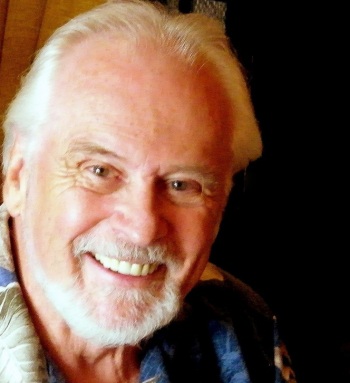
Numéro Cinq Contributing Editor Patrick J. Keane is Professor Emeritus of Le Moyne College. Though he has written on a wide range of topics, his areas of special interest have been 19th and 20th-century poetry in the Romantic tradition; Irish literature and history; the interactions of literature with philosophic, religious, and political thinking; the impact of Nietzsche on certain 20th century writers; and, most recently, Transatlantic studies, exploring the influence of German Idealist philosophy and British Romanticism on American writers. His books include William Butler Yeats: Contemporary Studies in Literature (1973), A Wild Civility: Interactions in the Poetry and Thought of Robert Graves (1980), Yeats’s Interactions with Tradition (1987), Terrible Beauty: Yeats, Joyce, Ireland and the Myth of the Devouring Female (1988), Coleridge’s Submerged Politics(1994), Emerson, Romanticism, and Intuitive Reason: The Transatlantic “Light of All Our Day” (2003), and Emily Dickinson’s Approving God: Divine Design and the Problem of Suffering (2008).

x
x

Footnotes    (↵ returns to text)

  1. On Eliot’s wearing of the white rose, see Joseph Epstein, “Anglophilia, American Style,” in his Narcissus Leaves the Pool, 241. For Frost’s comment, see The Letters of T. S. Eliot, 4:286, n.1. Eliot’s own famous pronouncement about his stance in literature, politics, and religion—a cause of much consternation among modernist literati—occurs in the Preface to his For Lancelot Andrewes: Essays on Style and Order.
  2. Kenner, The Pound Era, 274-75. Ackroyd, T. S. Eliot: A Life, 300-01.
  3. Muir, Belonging: A Memoir (London: Hogarth Press, 1968); as quoted in Ackroyd, 301.
  4. The edition Eliot introduced was published in 1950, by The Cresset Press in London, and Chanticleer Press in New York. It is reprinted in The Norton Critical Edition of the Adventures of Huckleberry Finn. Twain, 320-27. I quote parenthetically from this edition.
  5. In Mark Twain: The Fate of Humor, Cox insists that, since Huck’s journey has never been a “quest,” but an “escape,” a flight “from tyranny, not a flight toward freedom,” his behavior in the final chapters is in character; and that, while we “become uncomfortable when he submits to Tom’s role,” Mark Twain knew what he was doing: “The entire burlesque ending is a revenge upon the moral sentiment which, though it shielded the humor, ultimately threatened Huck’s identity” (312). Two adroit defenses of the ending appeared in 1991, the first by Victor A. Doyno, whose extensive study of the manuscripts of Huckleberry Finn informs his Writing “Huck Finn”: Mark Twain’s Creative Process. In his 10th and final chapter, “Repetition, Cycles, and Structure,” Doyno defends the novel’s unity, including the ending. In arguing that, “in a complex way the ending is aesthetically and thematically appropriate,” he questions both the social and genre-assumptions of those who want a bildungsroman rather than a series of “adventures.” In establishing a strong contrary case against those critics put off by the novel’s final chapters, he notes that, however “severely criticized” it has been, the ending “does resolve several problems,” not least the issue of Jim, who is “decriminalized” (223-27). In his informed and acerbic essay on critical “overreaching” in assaults on the ending of the novel, Richard Hill attacks Leo Marx and the critics who followed his lead. Hill, too, finds Huck in character in the final chapters. “To expect Huck to give up instantly both his ongoing personality and Tom Sawyer is to push the epiphany aspect of his decision to tear up the letter to Miss Watson into the excesses of modern social-agenda fiction.” Nor, he argues, is Jim reduced to a caricature. (320, 323-27)
  6. DeVoto, Mark Twain’s America, 92.
  7. Trilling’s Introduction to the 1948 Rinehart edition was reprinted in 1950 in his The Liberal Imagination. Marx, “Mr. Eliot, Mr. Trilling, and Huckleberry Finn,” 329.
  8. What Jonathan Arac has called the “hypercanonization” of Huckleberry Finn  at the specific expense of Uncle Tom’s Cabin began in the 1920s and has continued—despite praise of Stowe’s novel by Edmund Wilson (Patriotic Gore, 1962), Ellen Moer (Literary Women, 1976), and Arac himself (1997). That Twain’s novel, a “work of art” written well after the Civil War, has been judged a more powerful attack on slavery than Stowe’s novel, which appeared as a book in 1852,  galvanized Arac into writing his reassessment and partial debunking of Twain’s novel. One catalyst was Eliot’s Introduction, which put the prestige of the “mid-century’s leading man of letters” and recent Nobel Prize winner on the side of Twain’s novel rather than the “propagandistic” Uncle Tom’s Cabin as the “far more convincing indictment of slavery.”  This “mythicization of history,” Arac continues, “by which Huckleberry Finn gained the prestige of abolitionism despite its having been written at a time when slavery did not exist and was defended by no one, helped provoke me to this book.” Huckleberry Finn as Idol and Target: The Functions of Criticism in Our Time, 92-93.
  9. Both interviews mentioned in these paragraphs are cited by Eric Sigg, “Eliot as a Product of America,” in Moody, ed., 24, 28. In the first, Eliot is quoted by M. W. Childs, “From a Distinguished Former St. Louisan,” St. Louis Post-Dispatch (15 October 1930), 3B. For the second, see Writers at Work, ed. George Plimpton, 110.
  10. American Literature and the American Language, 16-17. Stéphane Mallarmé’s imperative “to purify the dialect of the tribe” occurs frequently in Eliot, most notably in the nocturnal encounter with the “familiar compound ghost” (mostly Yeats) in Part II of “Little Gidding,” the finest section of the last and best of Four Quartets.
  11. Eliot, Inventions of the March Hare, edited with scholarly thoroughness and annotated, copiously, brilliantly, and protectively, by Christopher Ricks.
  12. We recall the opening exchange (Chapter 32) between Aunt Sally and Huck (pretending to be Tom, and to have experienced an accident on the boat): “Good gracious! Anybody hurt?” “No’m. Killed a nigger.” “Well, it’s lucky,” replies this affectionate woman; “because sometimes people do get hurt.” Though admirers of Huck would rather repress the memory, there is that two-chapter stretch between the running over the raft by a steamboat, with the apparent loss of Jim (toward the end of Chapter 16), and the moment, in Chapter 18, when he is rediscovered by Huck (less emotionally than we would expect, even though Jim weeps with joy). In the interim, Huck, engaged in onshore adventures, has had not one thought of a friend he doesn’t know is dead or alive. This is troubling, whether we attribute the thoughtlessness to a Southern-inflected flaw in Huck’s character; or to Mark Twain, guilty of episodic and careless plotting or to a short memory regarding offstage characters.
  13. Ryan, “Black Genes and White Lies: Twain and the Romance of Race,” 169, 170. For Arac, see  n.8, above.
  14. Hemingway’s hyperbolic but endlessly repeated praise/ criticism of Huckleberry Finn occurs in that half-memoir, half-fictional account of a safari, Green Hills of Africa, 22. H. L Mencken was no less effusive in his celebration of Huckleberry Finn (a book he read annually) as “Himalayan,” a masterpiece that soared in solitary splendor above all other American novels.
  15. John Donne’s “A Valediction: Forbidding Mourning” concludes with his brilliant compass-image—lines addressed to his wife, who remained at home while he was compelled to roam abroad:  “Thy firmnes makes my circle just,/ And makes me end, where I begunne.”
May 082013
 

Patrick J Keane smaller

Patrick J. Keane’s essay on Twain and Nietzsche is a dark and beautiful threnody on the lonely preoccupations of two great thinkers cut off from men and God by their own ruthless logic, their speculative courage and their self-honesty. A dense, thoughtful, lovely piece of writing.

dg

Covers1-001

1

In a May 1899 review of two translations of Nietzsche titled “Giving the Devil His Due,” G. B. Shaw introduced a concept he expanded on the following year in “Diabolonian Ethics,” published as part of his Preface to Three Plays for Puritans. In that essay, Dick Dudgeon, the hero of one of those plays, The Devil’s Disciple, is enlisted in a Diabolonian tradition whose lineage stretches from Prometheus through the Blake of The Marriage of Heaven and Hell to “our newest idol,” the Nietzschean Superman. In his original review, Shaw included Mark Twain in the tradition, though what he gave with one hand he abruptly took away with the other: “Mark Twain emitted some Diabolonian sparks, only to succumb to the overwhelming American atmosphere of chivalry, duty, and gentility.” The patronizing charge, which preceded Twain’s various Satanic fictions, was repeated precisely two decades later by an admirer of Twain, H. L. Mencken, a satirist as aware as Mark Twain was of how a heterodoxy-hating American public, its “pruderies outraged,” could bitterly turn on a dissenter, “even the gaudiest hero, and roll him in the mud.”[1]

Though this brief examination of late Mark Twain will conclude by emphasizing the liberating power that attends an unflinching confrontation of terrible, even appalling truths, the initial focus is on the decision by the gaudiest and best-loved American literary icon to withhold from publication his most vehement attacks, not only on institutional Christianity and collective hypocrisy, but on the Christian God himself. The charge of Shaw and Mencken that Twain had succumbed to pressure was expanded upon and personalized in The Ordeal of Mark Twain (1920) by Van Wyck Brooks, who claimed that a beloved and believing Livy tamed her husband, fueling the notion that Twain’s creativity fell victim to a destructive female dominance. While that may be a myth, Twain’s wife hated his deterministic treatise What is Man? and his daughters, Jean and Clara, disapproved of his essay “Reflections on Religion,” as well as the “Diabolonian” fictions Letters from the Earth and “The Chronicle of Young Satan” (part of the Mysterious Stranger papers). That familial disapproval may have become dramatized in Twain’s notoriously divided self as psychomachia: an internal and infernal dialogue between Blakean angel and devil. Most of these texts remained unpublished during Twain’s life. What is Man? was not released while Livy was alive, and “Letters from the Earth,” Satan’s devastating account of human folly and divine cruelty, written in 1909, the year before Twain’s death, went unpublished until the year of Clara’s death, 1962, when, at the outset of a turbulent decade, it put a suddenly revolutionary and “relevant” Twain on the New York Times best-seller list.

This context of public and familial disapproval illuminates Mark Twain’s most significant self-alliance with, and most guilt-ridden distinction from, the iconoclastic German philosopher who, using his “hammer” not as a brutal sledge but as a philosophic tuning-fork, exposed the hollowness of some of our Christian culture’s most cherished “idols.” Dictating to his secretary Isabel Lyon, who saw her employer and Nietzsche as kindred spirits, Twain observed on 4 September 1907:

Nietzsche published his book and was at once pronounced crazy by the world—by a world which included tens of thousands of bright, sane men who believed exactly as Nietzsche believed, but concealed the fact, and scoffed at Nietzsche. What a coward every man is! And how surely he will find it out if he will just let other people alone and sit down and examine himself. The human race is a race of cowards; and I am not only marching in that procession but carrying a banner.[2]

Though Nietzsche was an enthusiastic reader of the novels of Mark Twain, whose exuberant humor and “fooleries” he embraced as an antidote to Germanic stodginess, Lyon had to push Twain, in August 1906, into listening to and reading passages of Thus Spoke Zarathustra. Despite his resistance and gruff dismissals (“Oh damn Nietzsche!” he shouted on August 8), Twain gradually expressed appreciation of Nietzsche’s irreverence. On August 27, he “slapped his leg hard” and shouted “Hurrah for Nietzsche!” when Lyon reported the philosopher’s description of “acts of God” as “divine kicks”—a  humorous deflation of the punitive Judeo-Christian God that tallies with similar attacks by Mark Twain.[3] The “Letters” Twain’s Satan sends back to Heaven reporting on his visit to Earth—alternately hilarious, racy, and, as the series goes on, increasingly embittered—convey Twain’s satiric j’accuse directed at an unjust and uncaring God:  a charge characteristically complemented by sympathy for God’s theologically misguided but suffering creatures.

Mark_Twain_pondering_at_desk

Whenever tempted to become impatient with the misanthropic pessimism of later Mark Twain, flaunted even before the series of familial tragedies that struck him like a thunderbolt in the final decade and a half of his life, we should remember as well his immense empathy for the innocent who suffer. Many have been able to reconcile the doctrine that we are presided over by a loving deity with the facts on the ground: a long history of natural disaster, human evil, and “divine kicks.” Those able to accommodate themselves to the contradiction include readers of the Bible who choose to ignore unpleasant passages of scripture rather than abandon belief in a benevolent God. There are others, “those to whom the miseries of the world/ Are misery, and will not let them rest.” I’m quoting the Induction to The Fall of Hyperion (I.148-49) by John Keats, a great and deeply empathetic poet who saw, even in his tragically brief life, too much misery in the world, too much gratuitous suffering, especially by the innocent, to justify belief in a providential Design and a benign God. Charles Darwin felt the same way; so did Mark Twain.

His 1907 note strikes several major themes in Twain’s thinking, not least his characteristic sense of guilt, this time for lacking Nietzsche’s courage. Of course, Mark Twain also courageously defied rather than “succumbed” to conformist pressures. Within two years of Shaw’s 1899 review, outraged by the spectacle of his country shouldering the white man’s burden by wading through the blood of 200,000 Filipinos slain in the process of “liberating” them, Twain was emitting more than “sparks,” in fact aiming, in “To the Person Sitting in Darkness,” a satiric flamethrower at an unholy marriage of religion and politics: that noxious American mixture of jingoistic bombast and pious hypocrisy that plagues us still. Given the ferocity of Twain’s anti-imperialist protests against U. S. foreign policy (as well as British, German, and Belgian imperialism), Shaw, like those who greatly exaggerated rumors of Mark Twain’s death, would seem to be premature in depicting his “Diabolonian sparks” as extinguished by that smothering “American atmosphere.”

But there is a distinction between politics and religion when it came to what Twain was willing to reveal and to conceal. Politically, he often spoke out, risking his cherished and long-cultivated reputation with an adoring public by exposing American complacency and hypocrisy. He did so with a potent mixture of satiric wit and relentless honesty: a powerful challenge reminiscent of Jonathan Swift, whose scathing political satire in Gulliver’s Travels he admired and echoed. Excoriating American imperialism cloaked in crawthumping religious piety, Twain stood up courageously and publicly to the powers that be in “To the Person Sitting in Darkness” (1901). Unfortunately, he did acquiesce in a single editorial rejection of his brief but devastating satire, “The War Prayer” (1905)—posthumously published during World War I, appropriately re-situated among the poems of soldiers who, having experienced the gas-attacks, rats, and carnage of trench-warfare, bitterly rejected the old Horatian lie that it is sweet and fitting to die, or to kill, for one’s country.

2

When the targets were God and religious hypocrisy, Twain’s attacks are less Swiftian than Nietzschean. And yet Twain begins his self-contrast with the German philosopher by claiming “I have not read Nietzsche…nor any other philosopher,” choosing to go instead “to the fountainhead,” that is to say, to “the human race.” In a convenient reciprocity, he insists that “Every man is in his person the whole human race,” and that “in myself I find in big or little proportion every quality and every defect that is findable in the mass of the race.” This sounds remarkably like Twain’s fellow American and Nietzsche’s mentor, Ralph Waldo Emerson, on the paradox of originality and the immersion of even the most self-reliant individual in a pool of shared ideas, a literary form of the Transcendentalist “Over-Soul.”  At the same time, it allows Twain to maintain his independence. In fact, in asserting from the outset that he had not “read Nietzsche,” Twain was anticipating a notably defensive Freud, who dubiously insisted that he avoided Nietzsche.[4]

Unlike Freud, Twain was not a covert student of Nietzsche; yet his note displays genuine insight into the philosopher he claimed not to have read: the recognition that Nietzsche had dared to say aloud what many in his age were thinking but refused to acknowledge, most notably the terrifying as well as liberating ramifications of the Death of God. This refusal amounted to an individual and collective act of “bad faith” and “repression” (a concept Nietzsche preceded Freud in delineating). In an act of sanctimonious hypocrisy that disgusted him, people (Nietzsche accused) continued to pay pious lip-service to a creed in which they, consciously or unconsciously, no longer believed. It was a “lie.” “By lie,” he said in The Antichrist, “I mean: wishing not to see something that one does see; wishing not to see something as one sees it.”[5] This modern Great Refusal amounted to a craven repression of the realization, one shared by late Twain, that institutional Christianity was a “slave morality” threatening individual independence, binding “free spirits” and their instincts (a “natural or ‘healthy” morality celebrated by Nietzsche and embodied by Huck Finn)[6] to an authoritarian moral code dominated by a simplistic and guilt-inducing distinction between conventional Good and Evil. That explains why all those “sane” conformists and cowards, who “believed exactly as Nietzsche believed,” concealed the fact, scoffed at Nietzsche, and called him “crazy”—a craven procession in which Twain sheepishly admitted he was not only marching but carrying a banner.

Twain may end with a characteristic final twist of “humor,” yet the passage as a whole is nothing if not serious. In 1907, when he wrote these words, Twain knew all too well what it meant to “sit down and examine himself” and then to courageously stand up to the powers not only of the state but of the church (Livy and his clergyman friend Joe Twichell were particularly  distressed by Twain’s emphasis on the role of Christian missionaries in enabling and cheering on  American and European imperialism). He did so by wielding his chosen weapons of humor and satire, laughing his targets off the stage, but always expressing authentic indignation. He then published the truth as he saw it—or tried to publish, or, yielding to the external or internal resistance he faced in his efforts to tell the truth, elected not to publish at all. Those in his vast audience who had always wanted “their” Mark Twain, rigged out exclusively in cap and bells, were surprised or disappointed when, during his most creative decade, he ventured into still funny but serious territory in Huckleberry Finn (1885), A Connecticut Yankee in King Arthur’s Court (1889), and Pudd’nhead Wilson (1894). But he knew, or was made to know by family and friends, that the public would be unwilling to follow him when, in quest of the truth as he saw it, he emulated his most beloved character by “light[ing] out for the territory.” Determined to break free of those who would “sivilize me,” Huck, at the end of Huckleberry Finn, sets forth to seek freedom beyond the restraints of Christian civilization. But Twain was headed into the heart of darkness itself, in the form of those troubling late “dream”-centered texts he chose not to publish, and was sometimes unable even to finish.

Despite Twain’s final self-deprecating phrase, his note reveals that he is, in spirit, with Nietzsche. To employ a Joycean portmanteau adjective singularly apt when it comes to Mark Twain, he may be “jocoserious” in depicting himself carrying that “banner.” But, hyperbole aside, the self-indictment is genuine. Twain’s skepticism about institutional religion was hardly a secret to readers of some of his irreverent tracts. For the most part, however, he did not stand up publicly regarding his considered verdict on the ultimate Power. When it came to his most vehement assaults on free will, immortality, and the God of Christianity, Mark Twain behaved with something resembling the cowardice he attributed to himself in the comparison with Nietzsche. Though he worked on them for a dozen years (1897-1908), he never put into final form the subversive, literally Diabolonian Mysterious Stranger manuscripts, in which Young Satan and No. 44, both of whom genially but potently ridicule Christian hypocrisy, also pronounce the human race cowards and sheep, especially those who attack in public what they themselves believe in “their secret hearts.”  And he deferred to posthumous publication his Satanic fiction Letters from the Earth as well as his assault on God’s “all-comprehensive malice” in “Reflections on Religion,” written in 1906, the same year he had 250 copies of What is Man? printed “anonymously” and for private circulation among friends.

In fact, in his Prefatory note to the privately-printed What is Man? Twain says of these papers (which he had been brooding over for a quarter-century) that “Every thought in them has been thought (and accepted as unassailable truth) by millions upon millions of men—and concealed, kept private. Why did they not speak out? Because they dreaded (and could not bear) the disapproval of the people around them. Why have I not published? The same reason has restrained me, I think. I can find no other.” Ten years earlier (Notebook, 10 November 1895), finding it strange that the world was “not full of books” scoffing at the “useless universe” and “violent, contemptible human race,” Twain wondered “Why don’t I write such a book? Because I have a family”—a “family” he wished not to outrage, or to injure, and, presumably, to continue to feed by not alienating the vast audience that bought his books. Whatever the role of Livy, and his determination to ease her final years, in this remark, and in the Preface to What is Man?, Twain anticipates the self-censorship he would acknowledge a year later in numbering himself among those who agreed with Nietzsche on religion but concealed the fact. Though he had confided to his wife (and to his close clergymen friend, Joe Twichell), that he did not believe in the divine inspiration of the Bible, described in “Reflections on Religion” as “the most damnatory biography that exists,” Twain did not want to hurt Livy. But she had died in 1904, and he still chose not to publish his most blasphemous attacks.

Nietzsche

In his 1919 Smart Set essay, Mencken concluded that Twain’s dread of disapproval was partly internal since “his own speculations always half-appalled him. He was not only afraid to utter what he believed; he was even a bit timorous about believing what he believed.” This seems to me rather less true of Twain than of Nietzsche, whose relentlessly inquiring spirit led him to the discovery of dark truths he himself believed were “terrible”: truths—as he plaintively remarked in an 1885 letter to his friend Franz Overbeck—he wished in vain “somebody might make…appear incredible to me.”[7] But most of Mencken’s pointed but affectionate judgment seems on target:

Mark knew his countrymen. He knew their intense suspicion of ideas, their blind hatred of heterodoxy, their bitter way of dealing with dissenters. He knew how, their pruderies outraged, they would turn upon even the gaudiest hero and roll him in the mud. And knowing, he was afraid. He [and here Mencken quotes Twain himself from his prefatory note to What is Man?] “dreaded the disapproval of the people around him.” And part of that dread, I suspect, was peculiarly internal. In brief, Mark himself was also an American, and he shared the national horror of the unorthodox.[8]

Though Mencken finds some pusillanimity in Twain’s role in deferring to posthumous publication some of his most shocking documents, I prefer his critical but more empathetic stance to Shaw’s arch dismissal of Twain’s insufficient emission of Diabolonian sparks. If Mencken goes too far in that final phrase about Twain’s alleged timorousness in actually “believing what he believed,” the rest of his charge seems confirmed by Twain’s own admission in the Preface to What is Man? and in his private placing of himself, carrying a banner no less, in that procession of cowards that scoffed at Nietzsche, even though they believed, or disbelieved, more or less as he did.

3

Of course, Nietzsche is not merely an iconoclastic Nay-sayer. For all his bleak determinism, atheism, and existential loneliness, he insisted that his was an essentially affirming spirit. His terrible truths were countered by an exuberant embrace of amor fati, gaya scienza, and what Yeats described, with tonal accuracy, as that “strong enchanter’s…curious astringent joy,” and which he transformed into the “tragic joy” of such late poems as “The Gyres” and “Lapis Lazuli.”[9] For Nietzsche’s Zarathustra, the enemy of the “spirit of gravity” is “laughter.” Twain’s Satan, in the “Chronicle of Young Satan,” recommends the same antidote to contemplating folly with “petrified gravity.” Faced with such examples of “colossal humbug” as papal infallibility, “only Laughter can blow it to rags and atoms at a blast. Against the assault of Laughter nothing can stand.”[10]

But there was of course a more-than-satiric function of elevated spirits and balancing humor. When an interviewer asked him on Thanksgiving Day, 1905, “What is it that strikes a spark of humor from a man?” Twain responded: “It is the effort to throw off, to fight back the burden of grief that is laid on each one of us. In youth we don’t feel it, but as we grow to manhood we find the burden on our shoulders. Humor? It is nature’s effort to harmonize conditions. The further the pendulum swings out over woe the further it is bound to swing back over mirth.”[11] In a passage intended for “The Death of Jean,” but omitted from that moving Christmas Eve 2009 essay, Twain (sounding remarkably like Emerson when his nineteen-year-old wife Ellen died) acknowledged that “My temperament has never allowed my spirits to remain depressed long at a time.”[12]

marktwain

A similar final affirmation can be found in Mark Twain’s conflicting attitudes toward “truth”: at times, as in What is Man?, it is subjected to the most extreme skepticism, elsewhere,  even (or especially) in the much-discussed and disputed finale of The Mysterious Stranger, the hard truth can be seen as liberating us from facile optimism and religious delusion. A number of critics have found light in the cosmic and seemingly nihilistic darkness of the final chapter of The Mysterious Stranger. A particularly perceptive discussion of the ambiguous but potentially positive ramifications of that chapter occurs in Ryan Simmons’s 2010 online essay, “Who Cares Who Wrote The Mysterious Stranger?[13] Simmons poses a philosophic thought experiment. We can imagine that God exists, in which case the world is “meaningful,” though, given human limitations, we are unable to perceive how it is “all part of God’s perfectly coherent and beneficent plan.” Conversely, we may imagine that “those who are honest” conclude that the “God we have assumed, and even worshipped, cannot exist”—the position, though Simmons never mentions him, of Nietzsche. The final chapter of The Mysterious Stranger would seem to urge us to conclude that God either does not exist or is so sadistic that it would be better if he didn’t: a God who “cursed” his human “children with biting miseries and maladies of mind and body”; who “mouths” justice and mercy and yet “invented hell.”[14] If such a God did not exist, has the world, Simmons asks rhetorically, “truly become meaningless in his absence?” Or is it that, in delegating responsibility to God, we have “failed to take responsibility for events ourselves.” It may well be the case that “the meanings of the world are opened up, more available to us, if we remove the putative ‘author’ of the world, God, from the equation.” Rather like Descartes’ “evil demon” (though Simmons fails to note the really striking similarity between the final chapter of The Mysterious Stranger and Descartes’ provisional skepticism in Meditations on the First Philosophy), Twain’s mysterious stranger, by “demonstrating that people’s foundational convictions are in error,” forces us “to acknowledge what, at some level, we must already suspect: that the world is a less just, less orderly, less happy place than we typically pretend,” and that we ourselves are cosmologically “inconsequential.”

But, Simmons argues, The Mysterious Stranger “troubles knowledge not finally in order to advocate a radical skepticism,” but to discover whether such “impoverished abstractions” as the “moral sense” can “be filled with meanings.” Nietzsche, who pronounced the world intrinsically meaningless given the Death of God, also believed that we humans can “create meaning.” The song he sang on the train returning him to Basel after his complete mental breakdown in Turin in January 1889 is interpreted in this spirit by the character Walter Berger in Malraux’s The Walnut Trees of the Altenburg: as a “sublime” revelation as “strong” as life itself, proof that “the greatest mystery is not that we have been flung at random between the profusion of matter and of the stars, but that within this prison we can draw from ourselves images powerful enough to deny our nothingness.”[15]

Consider the final nihilistic vision presented by the mysterious and semi-Satanic No. 44 to August Fendler at the climax of Twain’s final, fragmentary novel: “Nothing exists: all is a dream. God—man—the world,—the sun, the moon, the wilderness of stars: a dream, all a dream, they have no existence. Nothing exists save empty space and you,” with August himself, “flung,” as it were, “at random,” reduced to a Cartesian cogito, a “Thought,” a vagrant, useless thought “wandering forlorn among the empty eternities.” Tonally, this is even more reminiscent of the Nietzschean madman’s famous description of the emptiness of a vertiginous universe bereft of the God we have murdered—“Are we not straying as through an infinite nothing? Do we not feel the breath of empty space? Has it not become colder? Is not night and more night coming on all the while?”—than it is of the literary source actually echoed in the two final chapters of The Mysterious Stranger: Prospero’s beautiful but nihilistic assertion that “we are such stuff/ As dreams are made on,” and that the “great globe itself…shall dissolve/ And like this insubstantial pageant faded,/ Leave not a rack behind.”[16] And yet the Death of God, though devastating to the radically spiritual thinker who felt compelled to announce it, also marks the true advent and liberation of Man; and Prospero, an agent of liberation, is himself “set free”—first by Ariel and, finally, in response to his “Epilogue,” by the prayers and applause of the audience in the theater.

Many, perhaps most, readers understandably see in the finale of The Mysterious Stranger a reflection of Twain’s profound and anguished loneliness in the final years of his life (Tom Quirk has made this point most poignantly), even as a retreat into solipsism. In their essay on “Twain and Nietzsche” in The Jester and the Sages, Gabriel Noah Brahm, Jr., and Forrest G. Robinson note that “Satan [they mean No. 44] is careful to highlight the liberating significance of his message”; and two of the contributors to the 2009 Centenary Reflections on The Mysterious Stranger, David Lionel Smith and John Bird, stress the unflinching affirmation of that existential loneliness and the “imaginative freedom” that ensues. I myself would emphasize the impact of The Tempest, not only Prospero’s speech, but the dominant motif of the play: being “set free.”[17]

I therefore share Simmons’s tentatively positive conclusion. Rather than a retreat into embittered solipsism, this disputed text—in which No. 44 presents August with terrible truths which nevertheless, he claims, have “set you free”— is best seen “as an inquiry into the nature of what is regarded as truth.” The implication is that were truth-seekers to “respond proportionately” to the truths that are available, “a better world would become possible from their acts.” A significant but seldom remarked aspect of The Mysterious Stranger is the “simple possibility that an anti-humanistic message will, ironically, lead to moral and humanistic behavior—that, in distinguishing ourselves from gods, people will remember to act like moral humans.” Recognizing the truth, are we humans capable of altering our lives for the better—“or are we condemned by our very knowledge to accept the inevitability of our own self-annihilation?” In instructing his readers to “Dream other dreams, and better,” the mysterious stranger, does not necessarily “detonate” the world—as Bernard De Voto had claimed Twain had done in order to remove his own personal sense of “guilt and responsibility.” Instead, Simmons concludes, Twain “opens it up radically to new and demanding possibilities, possibilities that deprive us equally of our delusions and of an excuse.”

But the opening of those possibilities demands that “we recognize the truth,” the truth that can set us free. An acknowledgement of proportion, of the place we humans truly occupy in the vastness of space, microscopic as well as cosmic, is at the cognitive, imaginative, moral, and therapeutic heart of Mark Twain’s final fantastic voyages—“The Great Dark,” “Three Thousand Years Among the Microbes,” and, above all, the assertion by No. 44 that “It is all a Dream, a grotesque and foolish dream,” and August a “Vagrant Thought…wandering forlorn” through empty, interstellar space. This is the bleak but somehow bracing vision whose truth August acknowledges in the final sentence of The Mysterious Stranger: “He vanished, and left me appalled for I knew, and realized, that all he had said was true” (405). I will conclude by returning to this question of truth: the courage it takes to face it, however difficult it may be, and the liberation, however limited that may be, that attends an unflinching confrontation of available truths, especially when they are “terrible truths.”

4

In a March 19, 1904 letter to his friend William Dean Howells, Mark Twain acknowledged that no matter how closely he—or an authorized biographer and others in the Family Circle—might monitor the official and flattering story-line, truth would out: “An autobiography is the truest of all books; for while it inevitably consists mainly of extinctions of the truth, shirkings of the truth, partial revealments of the truth, with hardly an instance of plain straight truth, the remorseless truth is there, between the lines, where the author-cat is raking dust upon it which hides from the disinterested spectator neither it nor its smell…—the result being that the reader knows the author in spite of his wily diligences.” Along with Twain’s affectionate observation of the sanitizing and camouflaging efforts of cats, one detects a grudging admiration for the relentlessness of truth. In an earlier, unpublished letter to his brother Orion, written in 1880, precisely between The Adventures of Tom Sawyer and The Adventures of Huckleberry Finn (which Huck kicks off by specifically accusing the author of Tom Sawyer of mixing with the truth some “stretchers”), Twain prophesied: “I perceive that when one deceives as often as I have done, there comes a time when he is not believed when he does tell the truth.”

Increasingly in his final, “dark” years, Twain felt there was a “truth” he had to tell—a hard and lonely truth. Isabel Lyon, reading the “What is Man?” manuscript in 1905, and adopting Twain’s “Gospel” as her own Nietzschean “gospel,” thought that, for at least “some,” it could “put granite foundations under them and show them how to stand alone.” On the morning of August 31, 1905, after she had played the orchestrelle for him, Twain invited her to his upstairs study, where

he read aloud to me a part of his Gospel—his unpublishable Gospel. But Oh, it is wonderful…full of wonderful thoughts—beautiful Thoughts, Terrible Truths—oh such a summing up of human motives—& if it belittles…does it belittle?—every human effort [,] it also has the power to lift you above that effort & make you fierce in your wish to better your own conduct—such poor stuff as your conduct is—[18]

Few of us will find in What is Man? as many wonderful or beautiful thoughts as Isabel Lyon did. True, beneath the rigid determinism that demands to be accepted, lock, stock, and barrel, and the relentless critique of altruism, there is the Old Man’s moral admonition to “train your ideals upward…toward a summit where you will find your chiefest pleasure in conduct which, while contenting you, will be sure to confer benefits upon your neighbors and the community.”[19] It was to this “conduct” that Lyon was probably referring when she said that What is Man? had the potential “power” to “lift you above” yourself in a “fierce” wish to “better your own conduct.” But what she most emphasized were those shared pitiless truths Lyon felt made Nietzsche and Twain kindred spirits—“Terrible Truths,” which could, for some, “put granite foundations under themand show them how to stand alone.”

That seems, consciously or not, an endorsement of Nietzsche’s celebrated insistence, in Twilight of the Idols, that “what does not destroy me makes me stronger”: the prophet who (a point to which the Nietzschean Lyon may be alluding in making Twain’s her own “Gospel”) brought his own “glad tidings,” antithetical to the Christian “gospel.” Few have looked deeper into the nihilistic abyss than Nietzsche, and yet he called himself, in Ecce Homo, a “man of calamity” who remained an affirmer: “I contradict as has never been contradicted before and am nevertheless the opposite of a No-saying spirit. I am a bringer of glad tidings like no one before me.”  This is Nietzsche’s conscious “opposite” to the supposed glad tidings of Christianity—itself, according to Nietzsche, “the opposite of that which he had lived,” he being Jesus, the “evangel” who “died on the cross,” only to have the noble example of his life subverted by his disciples into the “ill tidings” of that “dysangel,” Christianity.As it happens, Twain explicitly agreed with Nietzsche that the last Christian died on the cross. “There has been only one Christian. They caught him and crucified him.” This 1898 entry in Twain’s Notebook seems tantalizingly close to Nietzsche’s more celebrated assertion, published three years earlier: “The very word ‘Christianity’ is a misunderstanding: in truth, there was only one Christian, and he died on the cross.”[20]

In emphasizing the capacity of “truth” to “set us free,” I am not just putting a positive spin on the final chapter of The Mysterious Stranger, in effect joining Albert Paine, who rearranged the text to end on that positive note. I have no desire to ally myself with the man who altered the manuscript of The Mysterious Stranger in 1916 and remained committed for a decade more (as he told his contact at Harper’s in a franchise-protecting letter of 1926), and well beyond that, to guarding and preserving the hagiographic “traditional” image of Mark Twain. My intention, instead, is to stress the paradox of freedom within constraint, and to connect what No. 44’s young interlocutor agreed was appalling but “true,” with the words Jesus spoke to those who came to believe in him, rather than in what Nietzsche and Mark Twain would agree was the falsification that followed: “And you will know the truth, and the truth will set you free” (John 8:32). In turn, that setting free became for Shakespeare the verbal formula of the ultimate “project” of The Tempest—as I think Mark Twain realized in the course of writing the Tempest-influenced finale of The Mysterious Stranger.

mark_twain_cigar

For in his final decade, at the end of his life and tether, this most iconic of public figures, speaking “as Samuel Clemens rather than as Mark Twain,” made, as Hamlin Hill has noted, a rare “attempt at complete honesty.”[21] A desperately lonely truth-seeker often feeling defeated in a world of mendacity, he would have been pleased by Isabel Lyon’s image of him providing, in the form of “Terrible Truths,” “granite foundations” upon which a selective few might “stand alone.” Despite their shared determinism and denial of free will (though not “free choice”), neither Mark Twain nor Nietzsche approaches the sublime pinnacle of lonely thought, the ghostly solitude, of Spinoza, that “precursor” revered by Nietzsche. And yet, Nietzsche (and, at the end, Mark Twain) was even lonelier. Spinoza’s “way of thinking,” Nietzsche told Franz Overbeck in that important 1885 letter, “made solitude bearable,” since he “somehow still had a God for company,” while “what I experience as ‘solitude’ really did not yet exist. My life now consists in the wish that it might be otherwise with all things than I comprehend, and that somebody might make my ‘truths’ appear incredible to me” (in The Portable Nietzsche, 441). No one did. And, in Twain’s case, when it came to his Old Man’s philosophy of mechanistic determinism, he was not even open to counter-argument.

One would like to think that that was not true of self-divided Mark Twain himself. And yet in the very last of his works to be written for publication, the first in a projected series of essays from notable figures asked to identify “The Turning-Point of My Life,” Twain rejected the titular premise and reaffirmed his deterministic philosophy. In his case, he insisted, there was no one pivotal moment that led him to his literary career; every event was a “link” in an inexorable “chain,” not only in his own life, but traceable back to the dawn of history. There was no singular event, nor any willed plan; everything was determined by the combination of external “circumstances” and one’s innate “temperament,” over which one has no control. Writing just a few months before his death, Twain leavened the grim determinism of What is Man? with an entertaining narrative and genuine humor. All would have been changed had there been a different couple in Eden, he concluded his essay. His “disappointment” in Adam and Eve, was “not in them, poor helpless young creatures—afflicted with temperaments made out of butter; which butter was commanded to get into contact with fire and be melted.” But what he “cannot help wishing is, that Adam and Eve had been postponed, and Martin Luther and Joan of Arc put in their place,” that “splendid pair equipped with temperaments not made of butter, but of asbestos. By neither sugary persuasions nor by hellfire could Satan have beguiled them to eat the apple.” Twain concludes: “There would have been results! Indeed, yes. The apple would be intact today; there would be no human race; there would be no you; there would be no me. And the old, creation-dawn scheme of ultimately launching me into the literary guild would have been defeated.[22] “Results,” indeed! In this, Mark Twain’s final display of balancing “humor,” the pendulum, swung out over “woe,” swings back over “mirth.”

A disciple of Nietzsche, W. B. Yeats, basing himself on Kant’s Third Antinomy (thesis: necessity, antithesis: freedom), pronounced himself “predestinate and free,” and Nietzsche’s own mentor, Emerson, deliberately juxtaposed “Fate” and “Power,” the first and second essays in The Conduct of Life.  In reading Yeats and Emerson, and certainly in reading Nietzsche and Mark Twain, we should address rather than evade the profound questions they raised. Rather than sinking into what Yeats called, in his great poetic sequence Nineteen Hundred and Nineteen, “the half deceit of some intoxicant from shallow wits,” we should confront the dark, deterministic regions of the mind they illuminated. We might then, with what Isabel Lyon would call their “Terrible Truths” and “granite foundations” under us, work toward something resembling, if nothing so grand as a new birth of freedom, a series of individual liberations with the potential to set others free as well. Of course, there is no need to repair to Lincoln or Lyon. Twain’s own Mysterious Stranger tells Man, in the immediate form of young August Fendler, that “I your poor servant have revealed you to yourself and set you free”—precisely the role played by Ariel, the liberated servant who goes on to set his master free, triggering Prospero’s renunciation of “vengeance” in favor of “virtue” at the turning point (V.i.14-32) of The Tempest. No. 44 may be speaking, but he is, after all—both in his most dismaying utterances and here, in offering the chapter’s sole glimpse of a possible freedom beyond the solipsistic and nihilistic nothingness—a theatrical mask amplifying the voice of his creator, the self-divided, skeptical, but still truth-seeking Sam Clemens/ Mark Twain. The same is true of divided Nietzsche, who—despite his radical insistence that all “truths” were perspectival, a matter of “optics,” and that there were “no facts, only interpretations”—also burned his candle at the altar of “truth,” and deplored “lies,” a word that appears frequently in his work, especially in The Antichrist.

§

Nietzsche_Olde_07

For all their affinities, and despite the badgering of Isabel Lyon, Twain read little of Nietzsche, while Nietzsche, who loved his American humor, and cant-puncturing “laughter,” devoured every work of Twain on which he could lay his hands, though always cherishing, as his favorite, the novel his mother had read to him, to spare his eyes, in 1879, when he enthusiastically recommended Tom Sawyer to his friend Overbeck (the letter appears in The Portable Nietzsche, 73). In his essentially vegetative life after his complete breakdown a decade later, Nietzsche, now mentally a child, was once again in her care. “On his good days she took him on walks and let him play the piano. Sometimes she read to him, ‘in a soothing monotone,’ from The Adventures of Tom Sawyer.[23] It seems a final instance of rondure. Mark Twain came in and went out with Halley’s comet lighting up the sky, though, at the end, “he had,” as Paine said, “slipped out of life’s realities, except during an occasional moment” of lucidity.[24] In the case of Nietzsche, there was a decade-long mental eclipse with no illumination at all, let alone any final burst of celestial light. All the more reason, therefore, for us to be strangely moved to learn that his early favorite among Mark Twain novels was there again at the end—still being read to him by his mother, but this time to a person sitting in darkness.

— Patrick J. Keane

—————————-

Patrick J. Keane is Professor Emeritus of Le Moyne College. Though he has written on a wide range of topics, his areas of special interest have been 19th and 20th-century poetry in the Romantic tradition; Irish literature and history; the interactions of literature with philosophic, religious, and political thinking; the impact of Nietzsche on certain 20th century writers; and, most recently, Transatlantic studies, exploring the influence of German Idealist philosophy and British Romanticism on American writers. His books include William Butler Yeats: Contemporary Studies in Literature (1973), A Wild Civility: Interactions in the Poetry and Thought of Robert Graves (1980), Yeats’s Interactions with Tradition (1987), Terrible Beauty: Yeats, Joyce, Ireland and the Myth of the Devouring Female (1988), Coleridge’s Submerged Politics (1994), Emerson, Romanticism, and Intuitive Reason: The Transatlantic “Light of All Our Day” (2003), and Emily Dickinson’s Approving God: Divine Design and the Problem of Suffering (2007).


Footnotes    (↵ returns to text)

  1. Shaw, “Giving the Devil His Due,” Saturday Review, LXXXI (May 13, 1899), iii. “Diabolian Ethics,” in Bernard Shaw, Complete Plays with Prefaces, 6 vols. (Dodd, Mead, 1963), 3:xliv-li. Mencken, “Mark Twain,” Smart Set, October 1919, reprinted in H. L. Mencken on American Literature, ed. S. T. Joshi (Ohio University Press, 2002).
  2. Autobiographical Note, in The Mark Twain Papers, Bancroft Library, University of California-Berkeley.
  3. Isabel Lyon Diary, in The Mark Twain Papers, Bancroft Library.
  4. Freud feared cooptation by a psychoanalytically precocious precursor who might leave him with no worlds to conquer. He admitted his anxiety of influence in 1931: “I rejected the study of Nietzsche although—no, because—it was plain that I would find insights in him very similar to psychoanalytic ones.” Quoted by Peter Gay, Freud: A Life for Our Time (Norton, 1988), 46. But Freud’s claimed ignorance is belied by many of his own remarks about Nietzsche, who had, he told his biographer Ernest Jones, “a more penetrating knowledge of himself than any man who ever lived or was likely to live”(Ernest Jones, The Life and Work of Sigmund Freud (Basic Books, 1961), 2:344. Freud’s denial of serious reading of Nietzsche is belied as well by, for example, the traceable impact of Nietzsche’s Genealogy of Morals on his own Civilization and its Discontents.
  5. The Antichrist §55, in The Portable Nietzsche, trans. and ed. Walter Kaufmann (Viking, 1954), 640.
  6. “Every naturalism in morality—that is, every healthy morality—is dominated by an instinct of life…Anti-natural morality—that is, almost every morality which has so far been taught, revered, and preached—turns, conversely, against the instincts of life: it is a condemnation of these instincts….All that is good is instinct—and hence easy, necessary, free.” (Twilight of the Idols, in The Portable Nietzsche, 489-90, 493-94). Huck, who embodies natural or instinctual morality in his own novel, explicitly endorses instinct in Tom Sawyer Abroad: “for all the brag you hear about knowledge being such a wonderful thing, instink is worth forty of it for real unerringness.” In The Adventures of Tom Sawyer, Tom Sawyer Abroad, Tom Sawyer, Detective, ed. John C. Gerber, Paul Baender, and Terry Firkins (University of California Press, 1980), 337.
  7. The Portable Nietzsche, 441. Though this letter (2 July 1885) is not among those in Christopher Middleton’s Selected Letters of Friedrich Nietzsche (University of Chicago Press, 1969), the crucial phrase appears in a footnote (244n57). His translation is almost identical to Kaufmann’s: “My life now consists in wishing that everything may be different from the way in which I understand it, and that someone may make my ‘truths’ incredible to me.”
  8. “Mark Twain,” 31.
  9. The Letters of W. B. Yeats, ed. Allan Wade (Macmillan, 1955), 379. Both poems mentioned are clearly “Nietzschean.”
  10. The Mysterious Stranger Manuscripts, ed. William M. Gibson (University of California Press, 1969), 164-66.
  11. Mark Twain: The Complete Interviews (University of Alabama Press, 2006), ed. Gary Sharnhorst, 522-23.
  12. Cited by Paine, Mark Twain: A Biography, 4: 1552. The passage began, “Shall I ever be cheerful again? Yes, and soon. For I know my temperament. And I know that the temperament is master of the man….A man’s temperament is born in him, and no circumstances can ever change it.” Though Emerson realized that he would “never again be able to connect” the beauty of nature with “the heart & life of an enchanting friend,” his “one first love,” he acknowledged his own “temperament,” one that has made many judge him to be unfeeling. Five days after Ellen’s death, he wrote in his journal: “This miserable apathy, I know, may wear off, I almost fear when it will….I shall go again among my friends with a tranquil countenance. Again I shall be amused, I shall stoop again to little hopes & little fears & forget the graveyard…” Emerson, Journals and Miscellaneous Notebooks, 3:226-27.
  13. Swimming against the tide, Simmons prefers, as does James M. Cox, the 1916 version cobbled together by Albert Bigelow Paine. Paine was faced with three unfinished and partially overlapping manuscripts. However brazen his editing of the material and the emasculation of Twain’s polemic against God as conventionally conceived, he and his collaborator at Harpers, Frederick Duneka, did succeed (as Mark Twain hadn’t) in producing, not only a commercially viable book, but a coherent and readable text, one which, says Simmons, “despite its problematic history, is in my view the most interesting and significant variant for critics to address.” Though he refers almost exclusively to the 1916 text, he is still focusing on the chapter that concludes both the Paine-Duneka version and the manuscripts as presented in William M. Gibson’s scholarly edition, published in 1969 as The Mysterious Stranger Manuscripts.
  14. The Mysterious Stranger Manuscripts, ed. William M. Gibson (University of California Press, 1969), 405.
  15. Malraux, Les Noyers de l’Altenburg (Gallimard, 1948), 99. The song was Nietzsche’s poem “Venice.” In the novel, Walter assists Franz Overbeck in bringing Nietzsche back to Basel.
  16. The Tempest IV.1.146-58, and Epilogue.. Twain, The Mysterious Stranger, 404, 405. Nietzsche, The Gay Science §125.
  17. The references in this paragraph are to three volumes published by the University of Missouri Press: Tom Quirk, Mark Twain and Human Nature (2007), 274; Brahm and Robinson, in The Jester and the Sages: Mark Twain in Conversation with Nietzsche, Freud, and Marx (2011), 22. Smith, “Samuel Clemons, Duality and Time Travel,” and Bird, “Dreams and Metaphors in No. 44, The Mysterious Stranger,” both in Centenary Reflections on Mark Twain’s No. 44, The Mysterious Stranger (2009), 187, 197, 198, 213-15.
  18. Quoted in Laura Trombley, Mark Twain’s Other Woman: The Hidden Story of His Final, Years (Knopf, 2010), 63-64.
  19. Mark Twain: What is Man? and Other Irreverent Essays, ed. S. T. Joshi (Prometheus Books, 2009), 55.
  20. Nietzsche, Ecce Homo, in The Basic Writings of Nietzsche, trans. and ed. Walter Kaufmann (Modern Library, 1968), 783. The Antichrist §39, in The Portable Nietzsche, 612. The statement is often reduced to the even more succinct “The last Christian died on the cross.” The Antichrist was published in 1895, a half-dozen years after Nietzsche’s breakdown.
  21. Hill, Mark Twain: God’s Fool (Harper, 1973), xxiii.
  22. Harper’s Bazaar (February 1910), 118-19; reprinted in 1917, in What is Man? and Other Essays.
  23. Griffin, “ ‘American Laughter’: Nietzsche Reads Tom Sawyer,” The New England Quarterly (March, 2010), 129-41 (141). The internal quotation—the affecting detail about the mother’s “soothing monotone”—is taken, Griffin tells us, from David F. Krell and Donald Bates, The Good European (University of Chicago Press, 1996), 51.
  24. Paine to Mr. and Mrs. William H. Allen, April 25, 1910, quoted in Hill, Mark Twain: God’s Fool, 265.
Jan 052013


.

On the roof of Milan’s Duomo amidst the spires and gargoyles and saints and angels, it’s noon on a late fall day and I’m here shooting. The sun shines over the city that spreads out like a bristling blanket; new skyscrapers and old bell towers puncture the worn brick and stone fabric of the town. At the edges, the Alps gleam, snowy in the distance. Above, the cathedral glows white against the sky. And all around me, friendly Romanian tourists in black jackets and thigh-high boots jostle, vying for vantage points from which to take pictures. They elbow in, admiring, snapping and clicking. Another group—this time from China—bursts from the stairs. Chattering and hopping about like hungry little sparrows, they freeze the landscape and their trip with hundreds of shots.

.

.


.

I retreat from the crush, thinking of Shelley and Tennyson and Henry James and Mark Twain who traveled here, part of their century’s onslaught: the privileged class that toured Italy, its monuments and museums serving as a finishing school. They climbed here too. Equally ecstatic but without cameras, armed with pens. They wrote letters to friends and poems for periodicals and chapters in books praising the Duomo. And of a different opinion, John Ruskin and Oscar Wilde came. They hated what they saw; their words were scathing.

.


.

On the rib of the roof, in the sun but with a brisk breeze stirring, I think of their descriptions and train my lens back on the cathedral, to see what they once saw.

.

.

At last, a forest of graceful needles, shimmering in the amber sunlight, rose slowly above the pygmy housetops, as one sometimes sees, in the far horizon, a gilded and pinnacled mass of cloud lift itself above the waste of waves, at sea—the Cathedral! We knew it in a moment.

Mark Twain, Innocents Abroad, 1869

.

.

This cathedral is a most astonishing work of art. It is built of white marble, and cut into pinnacles of immense height, and the utmost delicacy of workmanship, and loaded with sculpture. The effect of it, piercing the solid blue with those groups of dazzling spires, relieved by the serene depth of this Italian heaven, or by moonlight when the stars seem gathered among those clustered shapes, is beyond any thing I had imagined architecture capable of producing.

PB Shelley, letter to TLP Esquire, 1818

.

.

.

.

We wished to go aloft. The sacristan showed us a marble stairway and told us to go up one hundred and eighty-two steps…. We were tired by the time we got there. This was the roof. Here, springing from its broad marble flagstones, were the long files of spires, looking very tall close at hand, but diminishing in the distance like the pipes of an organ. We could see now that the statue on the top of each was the size of a large man, though they all looked like dolls from the street. We could see, also, that from the inside of each and every one of these hollow spires, from sixteen to thirty-one beautiful marble statues looked out upon the world below.


Mark Twain, Innocents Abroad, 1869

.

.

………………………………….I climb’d the roofs at break of day;
………………………………….Sun-smitten Alps before me lay.
………………………………….I stood among the silent statues,
………………………………….And statued pinnacles, mute as they.

Alfred, Lord Tennyson, “The Daisy,” 1851

.

.

Every face is eloquent with expression, and every attitude is full of grace. Away above, on the lofty roof, rank on rank of carved and fretted spires spring high in the air, and through their rich tracery one sees the sky beyond. In their midst the central steeple towers proudly up like the mainmast of some great Indiaman among a fleet of coasters.

Mark Twain, Innocents Abroad, 1869

.

..

.

The cathedral is a mixture of Perpendicular with  Flamboyant, the latter being peculiarly barbarous and angular, owing to its being engrafted, not on a pure, but a very early penetrative Gothic … The rest of the architecture among which this curious Flamboyant is set is a Perpendicular with horizontal bars across: and with the most detestable crocketing, utterly vile. Not a ray of invention in a single form… Finally the statues all over are of the worst possible common stonemasons’ yard species, and look pinned on for show. The only redeeming character about the whole being the frequent use of the sharp gable … which gives lightness, and the crowding of the spiry pinnacles into the sky.”

John Ruskin, Notebooks, October 17, 1849

.The 

The Cathedral is an awful failure. Outside the design is monstrous and inartistic. The over-elaborated details stuck high up where no one can see them; everything is vile in it; it is, however, imposing and gigantic as a failure, through its great size and elaborate execution.

Oscar Wilde, letter to his mother, 1875

.

While I study the roof, the Romanians finish taking pictures and sun themselves, propped against pinnacles. An hour or so later, they get up and file down the stairs, off perhaps to go Christmas shopping at Rinascente department store across the way. I follow them down but enter the cathedral to take pictures of the interior for this essay. Today’s strong sunlight blazing through the stained glass windows has set the somber interior burning.

.

..

.

The interior, though very sublime, is of a more earthly character, and with its stained glass and massy granite columns overloaded with antique figures, and the silver lamps, that burn forever under the canopy of black cloth beside the brazen altar and the marble fretwork of the dome, give it the aspect of some gorgeous sepulchre. There is one solitary spot among those aisles, behind the altar, where the light of day is dim and yellow under the storied window, which I have chosen to visit, and read Dante there.

PB Shelley, letter to TLP Esquire, 1869

.
.

The guide showed us a coffee-colored piece of sculpture…. The figure was that of a man without a skin; with every vein, artery, muscle, every fiber and tendon and tissue of the human frame represented in minute detail. It was a hideous thing, and yet there was a fascination about it some where. I am very sorry I saw it, because I shall always see it now. I shall dream of it sometimes. I shall dream that it is resting its corded arms on the bed’s head and looking down on me with its dead eyes; I shall dream that it is stretched between the sheets with me and touching me with its exposed muscles and its stringy cold legs.

Mark Twain, Innocents Abroad, 1869

.

.

St. Charles Borromeus lies at his eternal rest in a small but gorgeous sepulchral chapel…and for the modest sum of five francs you may have his shrivelled mortality unveiled and gaze at it with whatever reserves occur to you….  The black mummified corpse of the saint is stretched out in a glass coffin, clad in his mouldering canonicals, mitred, crosiered and gloved, glittering with votive jewels. It is an extraordinary mixture of death and life; the desiccated clay, the ashen rags, the hideous little black mask and skull, and the living, glowing, twinkling splendour of diamonds, emeralds and sapphires.

Henry James,  “A European Summer, VI.”  The Nation, Nov. 21, 1872.

..

They say that the Cathedral of Milan is second only to St. Peter’s at Rome. I cannot understand how it can be second to anything made by human hands.

Mark Twain, Innocents Abroad, 1869

.

As I
 strolled beside its vast indented base one evening, and felt it,
 above me, rear its grey mysteries into the starlight while the 
restless human tide on which I floated rose no higher than the 
first few layers of street-soiled marble, I was tempted to 
believe that beauty in great architecture is almost a secondary
 merit, and that the main point is mass–such mass as may make it 
a supreme embodiment of vigorous effort. Viewed in this way a
 great building is the greatest conceivable work of art. More than 
any other it represents difficulties mastered, resources
 combined, labour, courage and patience. 

 Henry James,  “A European Summer, VI.” The Nation, Nov. 21, 1872.

.

.

At the Duomo, I’ve lost track of time. When I finally squeeze onto the metro I realize I’m going to be late picking up my son to take him to the dentist, but strangely, down here in this dark tunnel, I don’t feel pressured. Words and images of the Duomo swirl in front of me and I’m uplifted.

 ––Natalia Sarkissian

——————————-

Natalia Sarkissian has an MFA in Writing from Vermont College of Fine Arts and has been an editor and contributor at Numéro Cinq since 2010. Natalia divides her time between Italy and the United States.


Feb 272011
 

/

The publication last fall of the first of three volumes of Twain’s Autobiography has not only given University of California Press a bestseller but also stirred interest once more in Twain’s other work, so I decided to give The Adventures of Huckleberry Finn another read. What struck me this time through was how much the world of the novel is filled with narrow pieties and superstitions, with shallow sentiment and prejudice, with lack of resolve and general moral and intellectual torpor—and quick turns to violence. The last is related to the former: these are sides of an equation.

“We ain’t burglars. That ain’t no sort of style. We are highwaymen. We stop stages and carriages on the road, with masks on, and kill the people and take their watches and money.”

“Must we always kill the people?”

“Oh, certainly. It’s best. Some authorities think different, but mostly it’s considered best to kill them—except some that you bring to the cave here, and keep them till they’re ransomed.”

Tom Sawyer, early on, defines appropriate conduct for a gang he’s forming, drawing inspiration from what he’s absorbed from the old world and new, their history and sentimental thrillers. What Sawyer conceives in playful boyish aggression, however, either lies latent in the language of the adults—someone should count the number of times words related to killing are dropped—or is at the threshold of erupting at almost every turn, in knife fights and fist fights, in blood feuds and mob lynchings. I missed this in previous readings, how deeply pessimistic Twain is in Huck Finn.

Then again, perhaps his world is not so unfamiliar. For example:

palin-crosshairs

This picture appeared not long ago on Sarah Palin’s Facebook—just before Rep. Gabrielle Giffords, Democrat, Arizona, was shot.

What I most wanted to look at was the ending, which left me unsatisfied last time through and has been cause for much critical debate over the years. Adam Gopknik recently gave his take in his review of the Autobiography in The New Yorker (November 29, 2010):

One wants to defend the ending (somebody has to, as with O.J. Simpson), but it’s indefensible, callow and dull, and the only explanation is that Twain’s show-biz instincts—Tom Sawyer’s a hit, everyone likes him, that shtick is gold—got the better of him. The ending has the inconsequence of a comedian looking for a way off the stage.

I must confess I’m skeptical of critics who believe they have a better idea of how to write a novel than the author. As for his seemingly objective modern critical standards, I am reminded of Northrup Frye’s remark in Anatomy of Criticism:

Every deliberately constructed hierarchy of values in literature known to me is based on a concealed social, moral, or intellectual analogy.

But the last ten chapters are bizarre. Jim is at last captured and locked up at Aunt Sally’s farm, waiting to be sold, and Tom Sawyer, drawing inspiration from sensational escapes such as that found in The Count of Monte Cristo, plots a complicated scheme to free him that takes weeks to carry out. In the process he subjects Jim to accelerating abuse and throws the farm and town into turmoil, all in the name of “honor.” While Huck and Tom tunnel away, they have Jim create a coat of arms, scratch inscriptions on a rock, and visit him with minor plagues of rats and snakes and spiders, and so on, all for proper effect. Tom even proposes they smuggle in a saw so Jim can cut off his foot to free himself of his shackle when all he needs to do is lift the bedpost and slip off the chain. They could simply have stolen the key to the shed and taken off early on, as Huck suggested. Tom, however, objects:

Work? Why, cert’nly it would work, like rats a-fighting. But it’s too blame’ simple; there ain’t nothing to it. What’s the good of a plan that ain’t no more trouble than that? It’s as mild as goose-milk. Why, Huck, it wouldn’t make no more talk than breaking into a soap factory.”

Honor, apparently, cannot be bought easily. But this time around it occurred to me that Tom gives the answer not only to the odd ending but also explains the whole novel. Difficulty and stirring things up are not only the book’s purpose but also set the principle that determines its construction. It is also a novel about getting people to talk in a world where sensible talk is difficult.

Part of Twain’s problem is that so much of his material is thematically thin. By thin I mean there just isn’t much to think about and little to dramatize convincingly. What moves most characters is petty and mean, however great their pretensions. The Grangerfords and Shepherdons have been fighting a family feud for years, even though they have forgotten the cause of their dispute. There is scant thematic material to explore here and little else to have the characters do but take shots at each other like soldiers in a well-known video game, which is what they do. The only thematic interest in this section comes from the mawkish, morose pictures by dearly departed Emmeline Grangerford, which set the comic undertone that provides the ironic tension the main action needs.

Of course there is the problem of slavery. Huck has his famous crisis of conscience in Chapter XXXI, where he says:

And at last, when it hit me all of a sudden that here was the plain hand of Providence slapping me in the face and letting me know my wickedness was being watched all the time from up there in heaven, whilst I was stealing a poor old woman’s n—-r that hadn’t ever done me no harm, and now was showing me there’s One that’s always on the lookout, and ain’t a-going to allow no such miserable doings to go only just so fur and no further, I most dropped in my tracks I was so scared.

He continues this debate for pages, which is curious because I don’t recall his being that moved elsewhere by matters of church or state. Usually his conscience strikes when someone is about to get hurt. But Twain is only using Huck to stage the debate for us—and there just isn’t much for us to think about. However childish Huck’s thinking, the adult argument he engages is no more sophisticated. I have no idea how this chapter appeared to Reconstruction America, where change was largely nominal, but anyone who has paid much attention to slavery and religion—or any system of values and beliefs—won’t find anything to put the two together. Ultimately, the distance between belief and the practice is so great that it is absurd—and darkly comic. Slavery, or rather our conception of it, is a horribly bad joke, as damning an indictment as any Twain might have made, and the only thing he can do is hammer home that point with repetition until it sinks in, which is what he does in these pages. In lecture halls Twain would repeat a bad joke over and over until the audience finally started laughing.

Something similar happens in the last ten chapters. Jim isn’t being tortured by all of Tom’s abuse, we are. Jim endures it good-naturedly. We are the ones who agonize at Tom’s manipulation of Jim, at the stalls in plot, the twists and inward spirals of his nonsense. We want Jim to be freed and the novel to find moral resolution. Instead we keep getting the fact of Jim’s enslavement thrown at us. But theme is intimately related to plot, and what characters do in a novel’s world depends on its meanings. There has to be a point to climax, some frame of reference for its resolution. Yet slavery does not make moral or intellectual sense, so there’s no coherent way, dramatically or thematically, to wrap the novel up. Incoherence is the concluding thought and resulting climatic effect. Twain gives us the ending the novel requires and leaves us where we need to be.

It is appropriate, I suppose, that the only one who suffers bodily harm is Tom himself, who gets shot in the leg by the pursuing mob once they finally make their escape. But not until the very end does Tom reveal the irony that slaps us all in the face: Jim was freed months ago in Miss Watson’s will. His elaborate scheme was just literary indulgence, maybe some boyish perversion. What are we supposed to make of that? Nothing, except perhaps think about getting slapped and why. What took ten chapters to develop is dismissed in a few quick paragraphs and the novel whisks us away in a “happy ending” where we are not allowed to dwell.

Why should we be?

In so many ways, the main character of Huck Finn is its audience. I can only imagine what kinds of maneuvers Twain had to work with his contemporaries, though the novel gives much indication that they weren’t getting the point. Many modern critics have criticized Twain for demeaning Jim and trivializing slavery—Jane Smiley, for example, in “Say It Ain’t So, Huck: Second Thoughts”—but they have the benefits of a more tolerant audience and the experience of over a century of change and reflection, which Twain did not. How superior modern critics are I will have to leave to them to decide, but I will challenge them to define and defend their grounds. I will not dismiss their arguments, however, because their concerns are serious, vital to the fabric of this country, and constantly need airing out. But let’s not reject books or close off discussions—or force a narrow esthetic on writers that constricts what and how they write. (Smiley prefers Uncle Tom’s Cabin).

What kind of ending do we want? If the fog doesn’t fall that night, if they make the turn at Cairo up the Ohio River and into the free states, what would that have resolved? Perhaps we would have had the satisfaction of seeing Jim freed, though he still would have been separated from his family, but that would leave slavery intact below the Mason Dixon and take it out of sight. And it would deflate, I would argue, the overwhelming absurdity of the horrible joke. Better to torture us than give a satisfactory ending. Such an ending would also have further isolated the South from the national debate, not much more settled in the 1880s than at the time of the Civil War. But also Twain’s subject is not just the South, but all our history and our European inheritance—and the whole damned human race—of which slavery was one part. The life Jim finds in the free states would have been different, but not much better.

Or we could have had a tragic ending, more in keeping with reality and the world of the novel, where the currents of the Mississippi inexorably take them to New Orleans and Jim is sold and we are exposed to what the river sheltered them from, the cruelty and hardships of the plantation. But with the ensuing charge of emotions that would be unleashed in this experience, the absurdity would still be lost or consumed. By distancing us in these chapters and playing with our expectations, Twain keeps his argument alive and us in our seats, though squirming. I’m wondering if Brecht’s distancing effect—Verfremdungseffekt—comes into play here, “which prevents the audience from losing itself passively and completely in the character created by the actor, and which consequently leads the audience to be a consciously critical observer” (from Brecht on Theatre). Also odds are good such a book would not have been published, or if it were, not read, or if read only would have divided the country even more in destructive debate and further isolation.

My point about audience is an esthetic argument, not political. Writing is a matter of pitting one’s stories about the world against those the world tells about itself and seeing what can be figured out.

Everything is fiction. Some of us are just more honest about that fact.

At any rate, Twain would not give up his sense of humor, which not only encourages us to question ourselves but also sustains us, and maybe helps keep us together. Nor would he abandon constructing his novel the way it needed to be written. And maybe he helped lay the groundwork for the novels that eventually followed—read Toni Morrison’s essay “This Amazing, Troubling Book.”

The Freitag triangle

notice twainFrom the front pages of the novel

Actually, what most struck me this time through is how odd the whole book is. There are so many scenes that stall, that could have been compressed, so much that seems merely incidental. Odder than the last chapters is the attention given to who should have been marginal characters, the Duke and King, and they could have been disposed of much sooner. The whole plot does not follow a linear progression built upon character, motive, and social forces, but rests on coincidence and accident—missing the turn at Cairo because of the fog, ending up at Aunt Sally’s after so many weeks rafting down the river—and there are so many scenes that do not connect with others. But plot depends upon a character’s power of action and the coherence of his or her world. In a world where characters have limited range and the world is confused, there can be no clear course of action, no rising climax, and no dramatic resolution. Put differently, if one looks from the distance of Twain’s overarching skepticism, everyone will appear small, their actions inconsequential. In such a novel, such a world, we might as well have a pair of frauds carry us along for the ride and think about what they represent—and make fun of them at our peril.

royalnonesuch

The novel can be explained by a long tradition. Its shallow characters, the satiric cast, the episodic nature of the plot—all of these elements are consistent with the picaresque novel, and Don Quixote is often alluded to, probably an influence. But I still want a principle that explains the logic of its design. I would argue that it is the expectation of a well-made novel faced with its absence that determines Huck Finn‘s construction and sets the tone. It is the ghost of rising climax, hovering everywhere, that gives the novel its form and tension. I also prefer to think of it as a novel looking forward to modern forms and to our condition, the fog of the last hundred years.

Realism is tricky word, subject to interpretation. Much of Huck Finn‘s “realism” comes from ironic deflation of sentimental modes. But it is real in an American sense and it is an American book in its openness and skepticism, in the good nature of characters like Huck and Jim that emerges in spite of all, and most in its love of our language, the dialects which engage and convince us start to finish. And there are moments, even if we can’t relate them to anything or link them together, such as this:

It was a monstrous big river down there—sometimes a mile and a half wide; we run nights, and laid up and hid daytimes; soon as night was most gone we stopped navigating and tied up—nearly always in the dead water under a towhead; and then cut young cottonwoods and willows, and hid the raft with them. Then we set out the lines. Next we slid into the river and had a swim, so as to freshen up and cool off; then we set down on the sandy bottom where the water was about knee deep, and watched the daylight come. Not a sound anywheres—perfectly still—just like the whole world was asleep, only sometimes the bullfrogs a-cluttering, maybe. The first thing to see, looking away over the water, was a kind of dull line—that was the woods on t’other side; you couldn’t make nothing else out; then a pale place in the sky; then more paleness spreading around; then the river softened up away off, and warn’t black any more, but gray; you could see little dark spots drifting along ever so far away—trading scows, and such things; and long black streaks—rafts; sometimes you could hear a sweep screaking; or jumbled up voices, it was so still, and sounds come so far; and by and by you could see a streak on the water which you know by the look of the streak that there’s a snag there in a swift current which breaks on it and makes that streak look that way; and you see the mist curl up off of the water, and the east reddens up, and the river, and you make out a log-cabin in the edge of the woods, away on the bank on t’other side of the river, being a woodyard, likely, and piled by them cheats so you can throw a dog through it anywheres; then the nice breeze springs up, and comes fanning you from over there, so cool and fresh and sweet to smell on account of the woods and the flowers; but sometimes not that way, because they’ve left dead fish laying around, gars and such, and they do get pretty rank; and next you’ve got the full day, and everything smiling in the sun, and the song-birds just going it!

It is not hard to see why Hemingway was so taken by this book or how it influenced him.

The image at the top of this post—as well as the tragedian above—comes from Edward Winsor Kemble’s original illustrations for the novel. The Duke and King have at last been caught, are suitably attired, and are being sensibly escorted out of town.

— Gary Garvin

.

.

Gary

Gary Garvin lives in San Jose, California, where he writes and teaches English. He has written two novels, and his essays and short stories have appeared in Numéro Cinqthe minnesota reviewNew Novel ReviewConfrontationThe New ReviewThe Santa Clara ReviewThe South Carolina Review, The Berkeley Graduate, and The Crescent Review. He is currently at work on a collection of essays and another novel.

.

.