Aug 162012
 

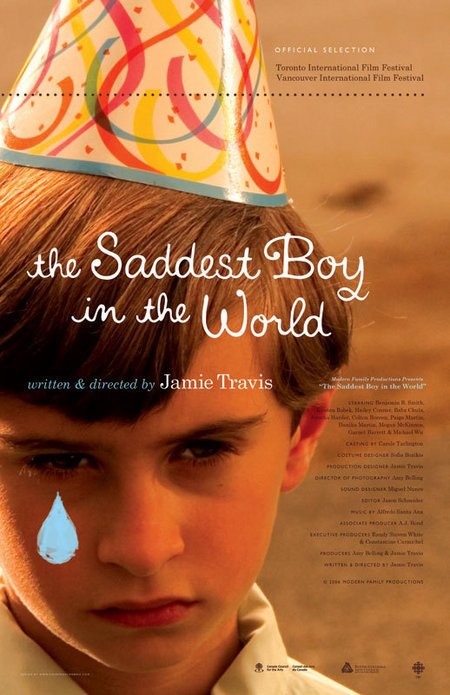
In Jamie Travis‘s “The Saddest Boy in the World,” a nine-year-old boy, smothered by a beautiful but oppressive and overwhelmingly disappointing life, decides to hang himself on his ninth birthday at the suggestion of several inanimate animals who talk to him as a side effect of the medication he is on.

Maybe it’s not for everyone. Fine.

Travis nicely acknowledges this in his note accompanying the film: “If you find this funny, good. If you’re offended, it’s okay—our paths were never meant to cross.” But, to borrow Maggie Smith‘s line (possibly borrowed from Abraham Lincoln) from the film The Prime of Miss Jean Brodie, “For those that like that sort of thing, that is the sort of thing they like.”

Travis’s first feature film For A Good Time Call . . . is coming out this year and he’s decided to release all his previous short films: “I have long been reticent about putting my films online but I recently got over it. Maybe it’s because my 30s have lightened me up or because I have finally accepted the internet is here to stay. Or maybe it’s that my first feature film is coming out and now seems like a good time to get exposure for an underexposed art form—the short film.”

See all his short films on his vimeo site. For more nuanced introductions to his aesthetic and his short works so far, look to the Numero Cinq at the Movies introductions to “The Armoire” and “On Greed.”

And look for his first feature For A Good Time Call . . . in theatres soon.

— R. W. Gray

Mar 222012
 

Two boys get caught in their after school games and one goes missing in Jamie Travis’s dark comedy, thriller, fairy tale short film “The Armoire.”

Style is everything here: comforting and creepy, lurid and glorious, torn out of the pages of a design magazine coveted by the average Stepford Wife. Each room is a peculiar study in a new colour. The clothes in the boy’s armoire are perfectly spaced. The house is a paradigm of cleanliness and tidiness, like an exhibit of a home rather than an actual home. As a result, the world seems made up of surfaces competing to camouflage or cover something. This meticulous set design is coupled with a mise-en-scene that Ion Magazine described as “handled with the meticulousness of a serial killer.” No matter how innocent the protagonist Aaron might seem, his home sweet home is disturbing.

This subtle anxiety means we’re somewhat prepared when 11-year-old Aaron’s friend Tony goes missing during a game of hide-and-seek and only a hypnosis session can jog Aaron’s memory of the twisted events that unraveled after school that day and the real game the two boys played.

The gorgeousness of the film aside, the film might rest a little too (un)easily on the queer friendship between the two boys. Similar to Hitchcock’s Rope and other Hollywood thrillers, “The Armoire” brings together queerness and death and this might be too easy a source for sexual difference and fear. At the same time, there’s an almost earnest truthfulness to this corrupt innocence in the boys, how they play games to slowly unlatch the armoire, the symbolic repository of all that is repressed between them.

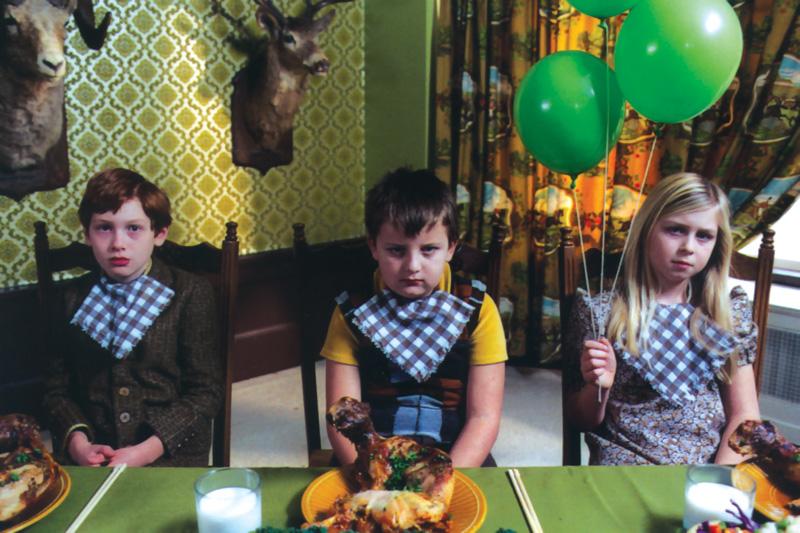
Travis describes “The Armoire” (2009) as the finale of his Saddest Children in the World trilogy that includes his two earlier films “Why the Anderson Children Didn’t Come Home to Dinner” (2003) and “The Saddest Boy in the World” (2006). “Anderson Children” is the first short film in the trilogy and Travis’s website describes it as “The ‘gloriously surreal’ story of three seven year-olds forced to endure their mother’s culinary abuses.” About it, Film Threat writes that “This is the kind of film Tim Burton wishes he could make. Kind of touching, kind of morbid and totally original.”

“Saddest Boy” followed and the Toronto Sun responded by describing Travis as “one of the most original voices in Canadian cinema.” US audiences can see the other two films in the trilogy on Fandor.

In addition to the Saddest Children in the World trilogy, Travis has completed another trio of shorts called The Patterns Trilogy, has directed music videos and commercials and his first feature film For a Good Time, Call . . . comes out this year.

— R. W. Gray