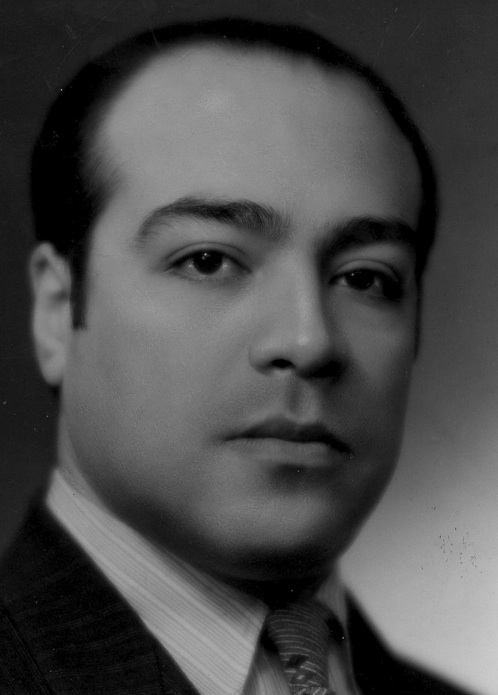
Poems from Jorge Carrera Andrade’s Micrograms
Translated by Joshua Beckman and Alejandro de Acosta
 Newly released from Wave Books, Micrograms, by the Ecuadorian poet Jorge Carrera Andrade, pays meta-homage to the brief yet visceral impact of the microgram. Featuring a meditative body of short works translated by Joshua Beckman and Alejandro de Acosta, the collection also includes Andrade’s hermeneutical “Genealogy” of the microgram that serves as a primer to the form while simultaneously providing a substantive look at Andrade’s innately philosophical consciousness. In Andrade’s words, “The microgram is but the Spanish epigram deprived of its subjective hue. Better: an essentially graphical, pictorial epigram. Through its discovery of the deep reality of the object (its secret attitude) it arrives at a refined emotional style.”
As we learn in the translators’ introduction, Andrade was a world traveler who believed in a universal human solidarity that transcended borders and united him to all men. Evidenced in his introduction and his poetry, Andrade was also a tireless observer of the natural world who remained committed to illuminating the metaphysical through an examination of the miniscule. Micrograms, with Zen-like clarity, offers earthly, object-centric writing that informs our perceptions and emotions with refreshing brevity.
Jorge Carrera Andrade (1902-1978) was born in Quito, Ecuador, and was a diplomat as well as a poet, essayist and journalist. His distinguished literary career comprises a wide range of work, including editing, translation, criticism, and poetry. William Carlos Williams described Carrera Andrade’s images as “so extraordinarily clear, so connected to the primitive I imagine I am … participating in a vision already lost to the world.”
I have included a sampling of Andrade’s poems below along with one of the translators’ reinterpretation of Andrade’s Japanese to Spanish translation of Basho.
WHAT THE SNAIL IS
Snail:
tiny measuring tape
with which God measures the field.