Dec 062014
 

emily_dickinson_daguerreotype_-large-


1

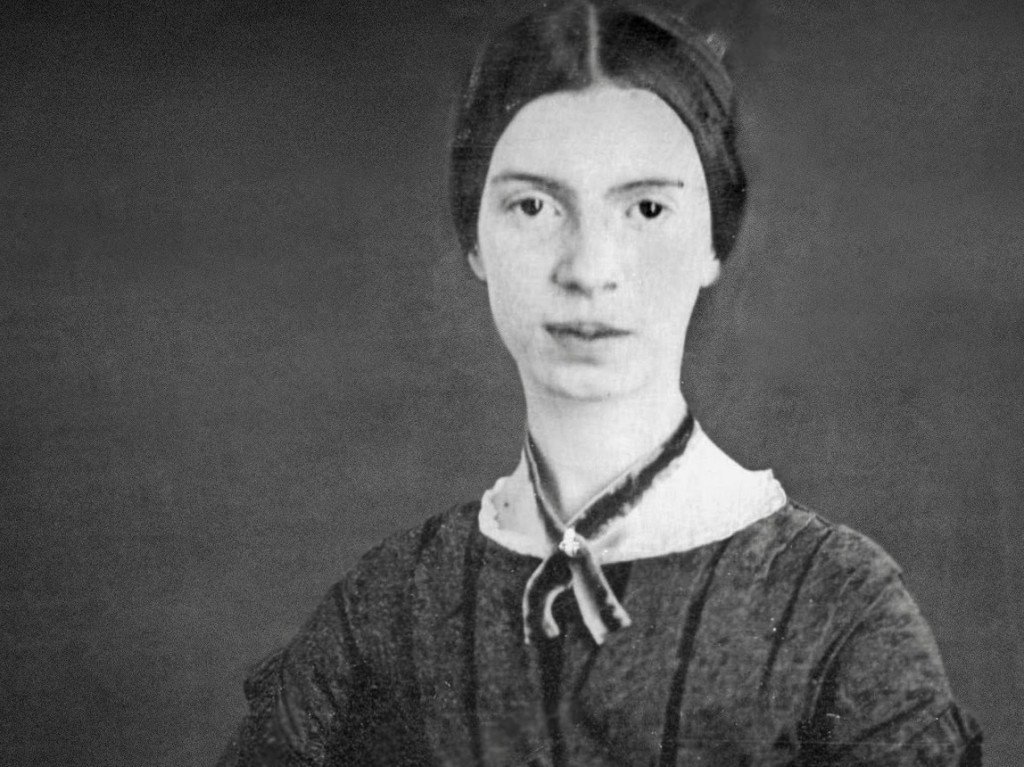
Given the magnitude of her achievement, it is hard to believe that Emily Dickinson’s poetry was not presented in an accurate text until 1955, almost seventy years after her death. And since those poems (almost 1,800 in number) continue to surprise and dazzle us with their linguistic ingenuity and psychological penetration, it is even harder to believe that Emily Dickinson was born 184 years ago!—on December 10, 1830. Famously, she spent much of her later, secluded life in her garden or writing in her room in the family house in Amherst. Yet, on Keatsian “wings of poesy,” she traveled the universe, from the microscopic to the cosmic. Her penchant for privacy far exceeded that of Thoreau, who had augmented Nature, the seminal work of his mentor Emerson, with Walden, the record of a temporary retreat to the woods, to live and write in solitude. Emily Dickinson’s only rivals for creative eminence in later nineteenth-century America were notably expansive: world-famous, globe-trotting Mark Twain, sea-voyaging Herman Melville, and that “kosmos,” Walt Whitman, who spread himself amply, in line-length and in the panorama of his Democratic vistas. In contrast, reclusive Emily Dickinson’s genius was in scrimshaw-like concision, economy, distillation. Yet her reach matched theirs in capaciousness. She took “For Occupation—This—/ The spreading wide my narrow Hands/ To gather Paradise—” (657).

But what did Emily Dickinson think of when she imagined “Heaven” or “Paradise”? More often than not, she clung to Emersonian and Thoreauvian “nature.” Her poems and letters on death and paradise, in which the human and the floral are often conflated by this gardener-poet, provide examples of what Thomas Carlyle, in Sartor Resartus, termed “natural supernaturalism,” a phrase made part of Romantic criticism’s permanent vocabulary with the publication of M. H. Abrams’s landmark study of the secularization of the sacred—Natural Supernaturalism: Tradition and Revolution in Romantic Literature (1971). In an August 1856 letter to her friend Elizabeth Holland, Dickinson’s natural supernaturalism and her pervasive human/floral analogy are explicit, with a fortunate exception: “I’m so glad you are not a blossom, for those in my garden fade, and then ‘a reaper whose name is Death’ has come to get a few to help him make a bouquet for himself.” This follows a passage that assumes the analogy, claiming that this earth would be Paradise enough were it not for frost and that Grim Reaper. This paragraph begins (Dickinson’s letters often combine prose with poetry) in modified ballad meter: “If roses had not faded, and frosts had never come and one had not fallen here and there whom I could not awaken, there were no need of other Heaven than the one below, and if God had been here this summer, and seen the things that I have seen—I guess he would think His Paradise superfluous” (Letters, 329).

The relatively open-minded Christianity of Elizabeth Holland and her husband may have freed Dickinson to confide such thoughts. A few years later, she would put this fusion of Nature and Heaven, of the physical and spiritual senses, into poetry. What we see, hear, and know is Nature: a harmonious Heaven whose simplicity is superior to our supposed wisdom:

“Nature” is what we see—
The Hill—the Afternoon—
Squirrel—Eclipse—the Bumble bee—
Nay—Nature is Heaven—
Nature is what we hear—
The Bobolink—the Sea—
Thunder—the Cricket—
Nay—Nature is Harmony—
Nature is what we know—
Yet have no art to say—
So impotent Our Wisdom is
To her Simplicity. (668)

Dickinson’s Romantic vision of an Earthly Paradise, its minute particulars as cherished as its sublime manifestations and all the more beautiful because it is under the shadow of death, is reminiscent of Wordsworth, before he froze over, and of Dickinson’s beloved Keats, who never froze over. Keats told a religiously conservative friend, Benjamin Bailey, that his own “favorite Speculation” was that “we shall enjoy ourselves here after by having what we called happiness on Earth repeated in a finer tone, and so repeated” (Letters of John Keats, 1:184-86). In one of the most beautiful passages ever written by Emily Brontë, Catherine Earnshaw’s daughter (the second “Cathy” in Wuthering Heights) describes her “most perfect idea of heaven’s happiness.” She would be “rocking” at the heart of the natural world, “in a rustling green tree, with a west wind blowing, and bright, white clouds flitting rapidly above; and not only larks, but throstles, and blackbirds, and linnets, and cuckoos pouring out music on every side,…grass undulating in waves to the breeze; and woods and sounding water, and the whole world awake and wild with joy….I wanted all to sparkle and dance, in a golden jubilee” (Wuthering Heights, Norton Critical Edition, 198-99).
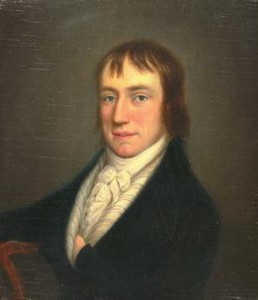
William_WordsworthWilliam Wordsworth

Such passages explain Dickinson’s reverence of “gigantic Emily Brontë” (Letters, 721), one of whose poems (“Last Lines,” also known as “No Coward Soul Was Mine”), a favorite of Emily Dickinson, was appropriately read at her funeral service. Wonderful as it is, Brontë’s description of a naturalized “heaven” or “paradise”—a world in motion, in which the speaker actively and joyfully engages in her surroundings—is both Keatsian and Wordsworthian. The final gathering (waves, breeze, woods, water, the whole world awake and joyous), especially Cathy’s wanting “all to sparkle and dance, in a golden jubilee,” unmistakably recalls Wordsworth’s (and Dorothy’s) “host of golden daffodils,/ Beside the lake, beneath the trees,/ Fluttering and dancing in the breeze.” Those flowers, which outdo “the sparkling waves in glee,” comprise “a jocund company” in whose presence a “poet could not but be gay,” a joy recalled whenever “They flash upon that inward eye/ Which is the bliss of solitude;/ And then my heart with pleasure fills,/ And dances with the daffodils.” (“I Wandered Lonely as a Cloud”)
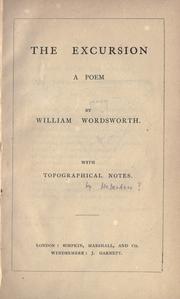
Wordsworth_Excursion

Wordsworth’s head-“tossing” flowers are personified in a delicately pagan manner, their “sprightly dance” allying them with sprights or sprites: elfin supernatural beings. That disciple of Wordsworth and mentor to Emily Dickinson, Ralph Waldo Emerson, was also attuned to the sort of earthly paradise that appealed to both Emilys. He began his famous or infamous 1838 Address to the Harvard Divinity School by fusing the “gladsome pagans” in what was his as well as Keats’s favorite Book of Wordsworth’s epic poem, The Excursion (those pagans who “looked” and “were humbly thankful for the good/ Which the warm sun solicited, and earth/ Bestowed” [4:932-38]), with the “pagan” of “The World is Too Much With Us.” Quoting Wordsworth’s sonnet, Emerson shocked his pious audience from the outset by declaring that he, too, would rather be “A pagan suckled in a creed outworn” than a Christian impoverished by being cut off from a vital, fecund nature sacrificed to both an austere religion and a crass materialism of “getting and spending.” Accordingly, he began the Divinity School Address with his own deeply responsive evocation of nature’s vital, sparkling, floral beauty. In “this refulgent summer,” it has been “a luxury to draw the breath of life. The grass grows, the buds burst, the meadow is spotted with fire and gold” (Essays and Lectures, 75). Those meadows were alive with flowers aglow with the light of Wordsworth’s “golden daffodils,” and sharing the pagan vitality of their “sprightly dance.” Emerson, like early Wordsworth, would have concurred with Emily Dickinson’s speculation in the letter to Elizabeth Holland: Had God “seen the things that I have seen” this summer, he would—Dickinson boldly or blasphemously surmised—“think His Paradise superfluous.”

It seems a shame that Emily Dickinson, who knew and admired Emerson’s essays, stayed in her room when, in 1872, the great man, after a lecture at Amherst College, visited her brother and sister-in-law, living just next-door. With his acute eye, Emerson would surely have recognized genius, just as he did when he first laid eyes on Whitman’s then-unpublished poetry. There are many passages in which Emerson, a peculiarly grounded Transcendentalist, evokes an earthly paradise. In his essay on Swedenborg in Representative Men, Emerson claimed that the only thing “certain” about a possible heaven was that it must “tally with what was best in nature.” It “must not be inferior in tone…agreeing with flowers, with tides, and the rising and setting of autumnal stars.” “Melodious poets” will be inspired “when once the penetrating key-note of nature and spirit is sounded,—the earth-beat, sea-beat, heart-beat, which makes the tune to which the sun rolls, and the globule of blood, and the sap of trees.” (Essays and Lectures, 686-87)
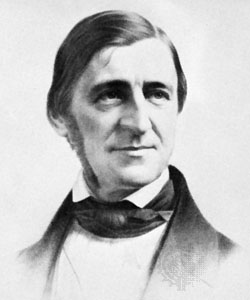
iemersr001p1Ralph Waldo Emerson

Like Keats’s “a finer tone”—descriptive both of the unheard music in the “Ode on a Grecian Urn” and of the repetition of earthly happiness “here after”—Emerson’s “not…inferior in tone,” and stress on key-note, melodiousness, and tune, echoes a text familiar to both Keats and Emerson: Wordsworth’s Excursion, and the Solitary’s reference in Book 2 to “Music in a finer tone” (2:710). Even later Wordsworth, tamed-down and religiously orthodox, never ceased to be a lover “of all that we behold/ From this green earth” (“Tintern Abbey,” lines 104-5), a poet who found his “Paradise, and groves/ Elysian”—provided the human intellect was “wedded to this goodly universe/ In love and holy passion”—to be a “simple produce of the common day” (“Prospectus” to The Recluse,” lines 43-55). Even in revising from a more conservative perspective his account of his early enthusiasm for the French Revolution, Wordsworth never recanted the desire initially expressed, to exercise his skill, “Not in Utopia” or some other ideal place, “Heaven knows where!/ But in the very world, which is the world/ Of all of us,—the place where, in the end,/ We find our happiness, or not at all!” (The Prelude [1850 version]), 11:140-44).

“Oh Matchless Earth,” Emily Dickinson exclaimed in a one-sentence letter, “We underrate the chance to dwell in Thee” (Letters, 478). She was borrowing from the “Prologue” to Wordsworth’s Peter Bell. Having sailed into the heavens in his little boat in the shape of a crescent moon, and having described the constellations and planets, the speaker asks rhetorically, “What are they to that tiny grain,/ That little Earth of ours?” And so he descends: “Then back to Earth, the dear green Earth…See! There she is, the matchless Earth!” (Peter Bell, lines 49-56). Dickinson herself might be “glad” that others believed they were, in the opening exclamation of her early poem, “Going to Heaven!” But, for herself,

I’m glad I don’t believe it
For it would stop my breath—
And I’d like to look a little more
At such a curious Earth! (79)

There is yet another parallel to Emily Dickinson’s thought that “Nature is Heaven,” or that Heaven would be superfluous, if only our earthly Paradise were free of frost and death. In a passage familiar to Wordsworth, Keats, Emerson, and Dickinson, Milton’s archangel Raphael offers a speculative analogy. Explaining to Adam the mysteries of celestial warfare by likening spiritual to corporeal forms, he adds: “Though what if Earth/ Be but the shadow of Heaven, and things therein/ Each to the other like, more than on earth is thought?” (Paradise Lost 5:573-76). Emily Dickinson echoed and altered this passage in an 1852 letter to “Dear Susie” (her soon-to-be sister-in-law, Susan Gilbert). Reversing Raphael’s “therein,” Dickinson locates love “Herein,” and concludes by taking literally the angel’s rhetorical but intriguing question: “But that was Heaven—this is but Earth, Earth so like to heaven that I would hesitate should the true one call away.” (Letters, 195; italics in original). Milton himself may have been open to the idea of Heaven as a projection of earthly happiness complete with a terrestrial landscape. In his fusion of the Classical and Christian in “Lycidas,” the pastoral elegist leaves us free to imagine the risen man as either “saint” in Heaven or as the “genius of the shore,” drowned, but now, through the power “of him that walked the waves,” mounted to a place “Where other groves and other streams along,/ With nectar pure his oozy locks he laves” (lines 172-75).

In a jocoserious, life-affirming poem looking back to Romantic and Emersonian “nature worship” and ahead to the earth-centered female persona of Wallace Steven’s “Sunday Morning,” Dickinson rejects religious ritual, a formal “church,” and an other-worldly Heaven in favor of an earthly paradise, a God immanent rather than transcendent, and salvation as a daily process rather than a static end-state:

Some keep the Sabbath going to Church—
I keep it, staying at Home—
With a Bobolink for a Chorister—
And an Orchard for a Dome—

Some keep the Sabbath in Surplice—
I just wear my Wings—
And instead of rolling the Bell, for Church,
Our little Sexton—sings.

God preaches, a noted Clergyman—
And the sermon is never long,
So instead of getting to Heaven, at last—
I’m going, all along. (324)

In an 1863 letter to Thomas Wentworth Higginson, in which she describes herself as “not reared to prayer,” Dickinson pronounces “the ‘Supernatural’…only the Natural, disclosed” (Letters, 423-24). In a poem written that year or the year before (Johnson dates it 1862, Franklin 1863), dawn and noon seem symbols of what she calls “Heaven.” The skepticism implicit in the setting of “Heaven” in quotation marks is confirmed in the final two stanzas:

The Rapture of a finished Day—
Returning to the West—
All these—remind us of the place
That Men call “Paradise”—

Itself be fairer—we suppose—
But how Ourself, shall be
Adorned, for a Superior Grace—
Not yet, our eyes can see— (575)

In two letters of 1873, Dickinson subverts Paul’s text (“For this corruptible must put on incorruption, and this mortal must put on immortality”) about the dead being raised and changed as a consequence of Christ’s Resurrection (1 Cor. 15:52-53). In the first letter (April 1873), she pronounces the novelist George Eliot (whom she knew to be a woman, Marian Evans) a “mortal” who “has already put on immortality,” adding that “the mysteries of human nature surpass the ‘mysteries of redemption,’ for the infinite we only suppose, while we see the finite” (Letters, 506). Later that year, in a letter to Elizabeth Holland, Emily notes that her sister Lavinia, just back from a visit to the Hollands, had said her hosts “dwell in paradise.” Emily declares: “I have never believed the latter to be a supernatural site”; instead, “Eden, always eligible,” is present in the intimacy of “Meadows” and the noonday “Sun.” If, as Blake said, “Everything that lives is holy,” it is a this-worldly truth of which believers like her sister and father are cheated: “While the Clergyman tells Father and Vinnie that ‘this Corruptible shall put on Incorruption’—it has already done so and they go defrauded” (Letters, 508). In a notably legalistic affirmation of earth, included in an 1877 letter to a lawyer, her increasingly skeptical brother Austin, she goes even further:

The Fact that Earth is Heaven—
Whether Heaven is Heaven or not
If not an Affidavit
Of that specific Spot
Not only must confirm us
That it is not for us
But that it would affront us
To dwell in such a place— (1408)

Wallace Stevens, who, in “Sunday Morning,” imagines his female persona asking if she shall not “find in comforts of the sun,” in any “balm or beauty of the earth/ Things to be cherished like the thought of heaven?” insists elsewhere that “poetry/ Exceeding music must take the place/ Of empty heaven and its hymns” (“The Man with the Blue Guitar,” section 5); that we must live in “a physical world,” the very air “swarming” with the “metaphysical changes that occur,/ Merely in living as and where we live” (“Esthetique du Mal,” section 15). Stevens seems to be recalling Wordsworth’s “Prospectus” and Emerson’s seminal book Nature, along with that ardent disciple of Emerson, Friedrich Nietzsche. He might as well have been thinking of Emily Dickinson, and her audacious, even blasphemous preference for the tangible things of this earth, to be cherished above thoughts of an otherworldly Heaven, an abstract place offensive to our nature. Nietzsche’s Zarathustra’s beseeches us in his Prologue to “remain faithful to the earth, and do not believe those who speak…of otherworldly hopes!” She never accepted the Nietzschean premise, the Death of God, but, when she was only fifteen, Emily confided in her friend Abiah Root that the main reason she was “continually putting off becoming a Christian,” despite the “aching void in my heart,” was her inability to conceive of an existence beyond this earth as anything but horrible: “Does not Eternity appear dreadful to you?….it seems so dark to me that I almost wish there was no Eternity.” Two years later she tells a friend that, while she regrets that she did not seize a past opportunity to “give up and become a Christian,” she won’t: “it is hard for me to give up the world” (Letters, 27-28, 67). She is not referring to that material “world” of getting and spending that is “too much with us,” but to this “matchless Earth” indistinguishable from, and perhaps preferable to, Heaven.

2
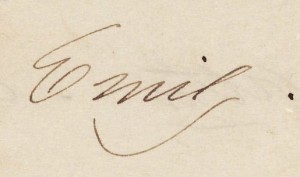
signature

The problem, of course, is that this Earth, however “matchless,” is not free of frost and death, so often almost indistinguishable in Dickinson. The invasive force in her Earthly Paradise was less the worm than the frost. The link between the fading and freezing-by-frost of her flowers on the one hand, and the death of those she cannot waken on the other, becomes a dominant motif. Her cherishing of a Heaven-like Earth is sometimes connected with the pain inflicted from above. In one poem, while noting the “firmest proof” of “Heaven above,” she significantly adds that, “Except for its marauding Hand/ It had been heaven below” (1205; my italics). In another letter to Elizabeth Holland and her husband, Heaven’s “marauding Hand” seems both a grim Reaper and a cruel Leveler. Writing during a period (autumn, 1858) when an epidemic of typhoid fever had struck Amherst, she cries out, not in concluding but in opening the letter: “Good-night! I can’t stay any longer in a world of death. Austin [her brother] is ill of fever. I buried my garden last week—our man, Dick, lost a little girl through scarlet fever….Ah! Democratic Death! Grasping the proudest zinnia from my purple garden,—then deep to his bosom calling the serf’s child” (Letters, 341).
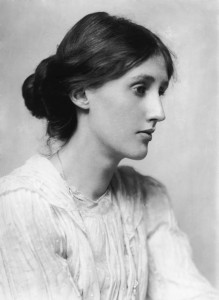
virginia-woolfVirginia Woolf

This letter has become controversial. The admittedly jarring reference to the “serf’s child,” both “politically” and historically incorrect, has been described as insensitive, shocking, an indication of casual snobbishness at best and class-conscious callousness at worst, compounded by (in the phrase of Albert Habegger) her “equating ‘the serf’s child’ with her frost-killed flowers” (My Wars Are Laid Away in Books: The Life of Emily Dickinson [2001], 363). We may be reminded of Virginia Woolf’s Clarissa Dalloway, who imagines people saying of her, “she cared much more for her roses than for” such human but distant “victims of cruelty and injustice” as those who perished in the Armenian genocide (Mrs. Dalloway [Norton Critical Edition], 88). But the best response to the attack on Dickinson’s “callousness” in this letter seems to me that of Judith Farr. After acknowledging the “insensitivity it projects,” she reminds us that “Austin’s [serious] illness and the coming of winter are also equated” in the letter. She then makes her central point, one I would emphasize as well:

To begin with, it is simply the case that Emily Dickinson loved flowers quite as much and as if they were human; her implicit comparison was…not intended to diminish the “little girl,” as she is rather tenderly called….With the cadences of Ecclesiastes and the Elizabethans always vivid in her ear, it was only natural that Dickinson should express the communion and equality of all living forms in death. Indeed, her letter’s zinnia and child commingling in Death’s grasp calls up such lines as Cymbeline’s “Golden Lads, and Girles all must,/ As Chimney-sweepers come to dust.”….Not snobbery, but the power of the aesthetic impulse to which she was subject is chiefly manifested in Dickinson’s much-discussed letter. (The Gardens of Emily Dickinson [2004], 56)

I would add only that Dickinson’s equation, not limited to the influence of Ecclesiastes and Shakespeare, also had Romantic auspices. Between Death’s “grasp” on a proud flower in her royally purple garden and the death of the little child of a servant there is no more gap than we find in “Threnody,” Emerson’s elegy for his little boy, Waldo. Also a victim of scarlet fever, dead at the age of five, that “hyacinthine boy” and “budding man” was never to blossom, though his father prepares for him, in the conclusion of the elegy, an appropriate Heaven: not “adamant… stark and cold,” but a rather Wordsworthian or Keatsian “nest of bending reeds,/ Flowering grass and scented weeds” (“Threnody,” lines 15, 26, 272-75). In a less-discussed but similar letter to Elizabeth Holland, whose child had suffered a crippling injury, Dickinson notes that “to assault so minute a creature seems to me malign, unworthy of Nature—but the frost is no respecter of persons.” In other letters, starting in the 1850s, Dickinson assumes this floral/frost/human analogue, making explicit what is implicit in poems like “Apparently with no surprise,” where “the Frost beheads” the “happy Flower” (1624): namely, her pervasive connection of flowers and frost with human life and death. At times at least, she includes a vision of transcendence for believers, the hope of spiritual resurrection.

Even when “the frost has been severe,” killing off flowers and plants that try in vain “to shield them from the chilly north-east wind,” there can be an imperishable garden. I am quoting from a touching letter of October 1851, anticipating the arrival of Austin. She had “tried to delay the frosts,” detaining the “fading flowers” until he came. But the flowers, like the poor “bewildered” flies trying to warm themselves in the kitchen, “do not understand that there are no summer mornings remaining to them and to me.” But no matter the effect on her flowers and plants of the severe frost brought by the “chilly north-east wind,” she can offer her brother “another” garden impervious to frost. The theme kindles her prose into poetry, minus the line-breaks (in fact, Johnson prints it as a poem, #2). She offers a bright, ever-green garden, “where not a frost has been, in its unfading flowers I hear the bright bee hum; prithee, my Brother, into my garden come!” (Letters, 149). As Judith Farr remarks, such a garden—which “could never exist, except in metaphor”—is “the garden of herself: her imagination, her love, each of which, she says, will outlast time.” As much as any poem in her canon, this early letter-poem, probably written when Dickinson was twenty-one, “discloses the rapt identification she made between herself, her creativity, and her flowers….‘Here is a brighter garden’ instinctively focuses on the garden of her mind, with its loving thoughts that transcend the ‘frost’ of death.” (The Gardens of Emily Dickinson, 56)

A third of a century later, we have a remarkably similar letter in which, at least for her beloved brother, there is an autumnal harbinger of a spiritual as well as a natural spring to come. In this late letter of autumn 1884, the same year she wrote “Apparently with no surprise,” she tells a family friend, Maria Whitney:

…………...Changelessness is Nature’s change. The plants went into camp last night, their tender
armor insufficient for the crafty nights.
……………That is one of the parting acts of the year, and has an emerald pathos—and Austin
hangs bouquets of corn in the piazza’s ceiling, also an omen, for Austin believes.
……………The golden bowl breaks soundlessly, but it will not be whole again till another year.
………………………………………………………………………………………………………………………(Letters, 848)

Anthropomorphizing (as in the 1851 letter, where the flowers try to “shield them[selves]” from the autumn wind), she presents the “tender armor” of her flowers as inadequate to protect them against the autumnal frost. So, alert to their needs, she brings them indoors, into the “camp” of her conservatory. She ends by quoting the admonition from Ecclesiastes, that we are to remember God before the body disintegrates, before “the silver cord be loosed or the golden bowl be broken” (12:6). But Emily differentiates herself from her brother Austin, a closet skeptic who, for the purposes of this letter, “believes”—has faith, that is, not only in the seasonal rebirth of corn from seeds, but in the spiritual resurrection of the body. His sister, adhering to a seasonal form of natural supernaturalism, confines her hope to a natural spring; her “golden bowl” will “not be whole again till another year.”

Two of Emily Dickinson’s most beautiful, and most Keatsian, poems, mark her major seasonal transition, from summer to autumn. In “As imperceptibly as Grief,” summer has “lapsed away,” a beloved season that can’t quite be accused of “Perfidy” since she was always a “Guest, that would be gone.” The poem ends with summer, like Keats’s nightingale, having “made her light escape/ Into the Beautiful,” a Platonic realm beyond us, leaving behind only the memory, which is to be cherished here on earth (1540). In “Further in Summer than the Birds,” which has been described, by Charles R. Anderson, as “her finest poem on the theme of the year going down to death and the relation of this to a belief in immortality” (Emily Dickinson’s Poetry: Stairway to Surprise [1966],169), Dickinson employs liturgical language to commemorate, as in Keats’s “To Autumn,” the insects’ dirge for the dying year. “Pathetic from the Grass,” that “minor Nation celebrates/ Its unobtrusive Mass,” their barely noticeable requiem nevertheless “Enlarging Loneliness.” The music of the crickets, coming later in the summer than the song of birds, is a “spectral Canticle.” Their hymn typifies—in the transition from summer to autumn, with “August burning low”—the winter sleep to come, a “Repose” perhaps implying eternal rest on another level.

In the final stanza, Christian and Hebraic vocabulary yields to pagan. At this moment of seasonal transition, there is, “as yet,” no “Furrow on the Glow” of sunlit, burning August, “Yet a Druidic difference/ Enhances Nature now” (1068). That final religious image, whether we take the Druidic reference as stressing primarily the sacrificial or the animistic element in Celtic nature-worship, powerfully reinforces Dickinson’s own reverence for Nature, its beauty enriched and intensified less, perhaps, by what Anderson calls a “belief in immortality” than—again, as in the ode “To Autumn”—by time’s evanescence and the pathos of mutability, the deeply moving contrast between seasonal return and human transience. That transience extends to all animal life. This poem, written in late 1865 or early 1866, was enclosed in a laconic January 1866 note to her epistolary semi-mentor, Thomas Wentworth Higginson, with whom she had not corresponded for eighteen months. Referring to her beloved dog and constant companion, Emily Dickinson restricted herself to a single statement, and a wry question, less pleading than ironic, perhaps bitter: “Carlo died….Would you instruct me now?” (Letters, 449).
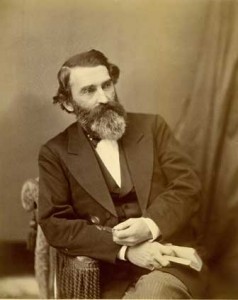
Samuel-BowlesSamuel Bowles

Though of course haunted by the thought of immortality, Dickinson was also dubious. In an 1858 letter to Samuel Bowles, she adopts an ironic, pretension-mocking tone. Distinguishing between nature and “us,” she at once anticipates and deflates modern “species chauvinism,” wondering, tongue-in-cheek, how it is that we mere humans, described by her pastor as a “worm,” should also be the very species singled out for a majestic and special end: a resurrection allegedly obviating any need for mourning, including mourning the death of what would seem to be paradise enough for us: summer with its cherished fields, its bumblebees and birds:

Summer stopped since you were here. Nobody noticed her—that is, no men and women. Doubtless, the fields are rent by petite anguish, and “mourners go about” [Ecclesiastes 12:5] the Woods. But this is not for us. Business enough indeed, our stately Resurrection! A special Courtesy, I judge, from what the Clergy say! To the “natural man,” Bumblebees would seem an improvement, and a spicing of Birds, but far be it from me, to impugn such majestic tastes! Our pastor says we are a “Worm.” How is that reconciled? “Vain, sinful Worm” is possibly of another species. (Letters, 338-39)

By this time, the 1730s’ thunderings of Jonathan Edwards against the moral ills of New England’s sinners in the hands of an angry God had lost some of their resonance, even in Calvinist Amherst. But in his debasement of man as a “worm,” Dickinson’s pastor may (the trope is hardly restricted to Edwards) have been echoing the great Puritan’s description of man as “a vile insect,” a “little, wretched, despicable creature; a worm, a mere nothing, and less than nothing” (The Justice of God in the Damnation of Sinners [1634]). Edwards himself—whose “Martial Hand” of “Conscience” Dickinson presents threatening “wincing” sinners with hellfire, the “Phosphorus of God” (1598)—was echoing Bildad, the second of Job’s false comforters. From the outset, he had advised the innocent sufferer to abase himself. In his final discourse (Job 25:2-6), Bildad wonders if it is even possible for man to “be righteous before God.” To this fear-instilling God of “dominion,” even the moon and stars are unclean; “how much less man, that is a worm? and the son of man, which is a worm!” How indeed, as Emily sardonically inquires, is that abject status reconcilable with our potential for “stately resurrection”?

Man’s biblical genesis and Fall seemed to put that glorious end in doubt. Prior to ejecting guilty Adam and Eve from Eden, the “Lord God” tells them, “dust thou art, and unto dust shalt thou return” (Gen 3:19). For Hamlet, man is “the paragon of animals.., how like a god,” and yet, to him, “what is this quintessence of dust?” (2.2.305-7); Wordsworth, in the opening book of The Prelude, tries to “reconcile” the contradiction: “Dust as we are, the immortal Spirit grows/ Like harmony in music” (1:340-41). Dickinson can engage this tension in the grand tradition, observing that “Death is a Dialogue between/ The Spirit and the Dust,” with Spirit triumphant, “Just laying off for evidence/ An Overcoat of Clay” (976). But she takes a different tack in a couplet-poem she opens by ironically addressing God as “Heavenly Father”:

“Heavenly Father”—take to thee
The supreme iniquity
Fashioned by thy candid Hand
In a moment contraband—
Though to trust us—seem to us
More respectful—“We are Dust”—
We apologize to thee
For thine own Duplicity—(1461)

So much for Bildad-like groveling! Like the image of the worm, that of dust reflects the Calvinist estimate of human worthlessness. But here the “worm” turns, with the “sinful” creature finding fault with the Creator. Despite his seeming straightforwardness, God committed a dubious act (an inconsistency emphasized by the alliterated candid and contraband). In fashioning us as he did, he set up, between dust and immortal spirit, not so much a creative tension as a radical contradiction. He thus stands accused of double-dealing, and any “apology” we make to so duplicitous a God will be less an acknowledgement of our own guilt, or a seeking of pardon, than a self-justifying defense—an apologia in the form of j’accuse directed against a divine adversary. That vindictive God himself supplied the right word. “For I the Lord thy God am a jealous God, visiting the iniquity of the fathers upon the children” (Exodus 20:5). Dickinson, who, like Mark Twain, cherishes the role of lawyer for the plaintiff when it comes to amassing evidence against God’s supposedly benign providence, has the children of Dust visit the charge of injustice upon an anything-but-paternal Heavenly Father, accusing him—blasphemously, though appropriately, given his supreme power—of “the supreme iniquity.”
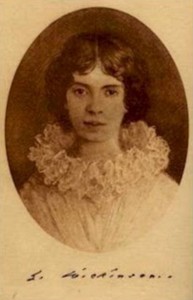
Emily Dickinson 2

If this reading is accurate, our apology to God for his “own Duplicity” allies the poem with the most blasphemous of Omar Khayyám’s quatrains addressed to God, at least as adapted by Edward Fitzgerald in a translation the Victorian world accepted with a shock of recognition:

Oh Thou, who Man of baser Earth didst make,
And ev’n with Paradise devise the Snake:
……….For all the sin wherewith the face of Man
Is blackened—Man’s forgiveness give—and take!

The work of such writers as Carlyle, Tennyson and Arnold, and, later, Hardy and Housman, all responding in their different ways to Darwinian and other scientific and rationalist challenges to religious belief (including Biblical Higher Criticism) places an imprimatur on the judgment that Fitzgerald’s version of the Rubáiyát “reads like the latest and freshest expression of the perplexity and of the doubt of the generation to which we ourselves belong.” That acute observation was made, however, not by a British Victorian but by an American—the scholar and man of letters Charles Eliot Norton, writing in 1869, a decade before Dickinson wrote “‘Heavenly Father’—take to thee.” Not only the “doubt,” but the “perplexity” as well, is reflected in Dickinson’s poem, for the syntax of her opening lines suggests petition even more than protest. James McIntosh (Nimble Believing: Dickinson and the Unknown [2004]), identifying “humankind” as “the supreme iniquity,” takes these lines to mean: “Father, take humans, who are the supreme iniquity, to thee” (47). Perhaps; but what, then, of the poem’s final lines? My own reading is closer to that of Magdalena Zapedowska, in her 2006 American Transcendentalist Quarterly essay, “Wrestling with Silence.” She argues that, in this poem, Dickinson focuses, not on the Fall as original sin,

but on the subsequent expulsion from Paradise, which she blasphemously construes as the original wrong done to humankind by a God who first offered people happiness, then distrustfully put them to the test, and finally doomed them to suffering. Undermining the dogma of God’s benevolence, Dickinson contemplates the terrifying possibility that the metaphysical order is different from Calvinist teaching and that the human individual is left wholly to him/herself, unable to rely on the hostile Deity against the chaos of the universe. (“Wrestling with Silence,” 385)

At such moments, Emily Dickinson sounds like her considerably more public contemporary, Mark Twain, who made no secret of his religious skepticism, but who nevertheless refrained from publishing his most vitriolic attacks on the Judeo-Christian God, a divinity he described, even before his dark final decade, as both duplicitous and cruel. As the examples of Emily Dickinson and Mark Twain illustrate, for all our immortal longings, we are haunted, and angered, by the death implicit in our originating dust—in the case of both Dickinson and Twain, what Byron called “fiery dust.” And if the “Heavenly Father” who presides over this beautiful but doomed world really is an indifferent and “Approving God” (1624), Emily Dickinson seems to care less for him and for a posthumous, perhaps empty Heaven, than for this Earthly Paradise—the perishable beauty that must die, everything she wishes could “transcend the ‘frost’ of death,” but which she strongly suspects will not.

“Man is in love and loves what vanishes,/ What more is there to say?” That haunting question was posed by W. B. Yeats in one of his greatest poems, “Nineteen Hundred and Nineteen.” He was not suggesting anything so trite as that we love things and then they disappear. He was reminding us that we love beautiful transient things because they are mutable, doomed to vanish. That is precisely why we cherish them so, recognizing, as Wordsworth poignantly acknowledged even in the great Ode in which he claimed intimations of immortality, that “nothing can bring back the hour/ Of splendor in the grass, of glory in the flower.” These splendors and glories are part of a “supernaturalism” that is “natural.” That great enemy of otherworldly hopes and cherisher of the earth, Nietzsche, referred in a December 1885 letter to irretrievable beauty. In a floral image that would have appealed to Emily Dickinson, who would die shortly after this letter was written, he spoke of Rosengeruch des Unwiederbringlichen: the faint rose-breath of what can never be brought back.

Of course, with Wordsworth, Keats, and Emerson as her precursors, we do not really need Emerson’s disciple Nietzsche and Nietzsche’s disciple Yeats to explain why Emily Dickinson’s Earthly Paradise is not only beautiful but death-haunted. I quote Yeats and Nietzsche (and Emily would, I think, approve) for the poignant beauty of their language in commemorating the pathos of mutability, what Wordsworth—deeply moved by the humblest “flower” that blossoms and blows in the breeze—called, in the final line of the Intimations Ode, “Thoughts that do often lie too deep for tears.”

— Patrick J. Keane

Author’s Note: Though most Dickinson scholars prefer the three-volume edition of R. W. Franklin (Harvard U.P., 1998), Emily Dickinson’s poems are here cited by number from the one-volume Complete Poems of Emily Dickinson, ed. Thomas H. Johnson (Little, Brown, 1957, and often reprinted). Her letters are cited from the three-volume but continuously-paginated The Letters of Emily Dickinson, ed. Thomas H. Johnson and Theodora Ward (Harvard University Press, 1958). Wordsworth, Keats, and Emerson, are cited from: Wordsworth: The Poems, ed. John O. Hayden, 2 vols. (Yale UP, 1981); The Letters of John Keats, ed. Hyder E. Rollins, 2 vols. (Harvard UP, 1958); Emerson: Essays and Lectures, ed. Joel Porte (Library of America, 1983).

.
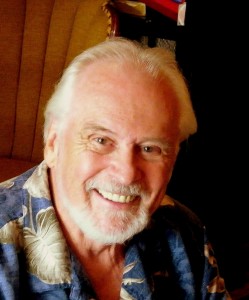
PAT kEANE

Patrick J. Keane is Professor Emeritus of Le Moyne College and a Contributing Editor at Numéro Cinq. Though he has written on a wide range of topics, his areas of special interest have been 19th and 20th-century poetry in the Romantic tradition; Irish literature and history; the interactions of literature with philosophic, religious, and political thinking; the impact of Nietzsche on certain 20th century writers; and, most recently, Transatlantic studies, exploring the influence of German Idealist philosophy and British Romanticism on American writers. His books include William Butler Yeats: Contemporary Studies in Literature (1973), A Wild Civility: Interactions in the Poetry and Thought of Robert Graves(1980), Yeats’s Interactions with Tradition (1987), Terrible Beauty: Yeats, Joyce, Ireland and the Myth of the Devouring Female (1988), Coleridge’s Submerged Politics (1994), Emerson, Romanticism, and Intuitive Reason: The Transatlantic “Light of All Our Day” (2003), and Emily Dickinson’s Approving God: Divine Design and the Problem of Suffering (2007).

s
Nov 162013
 

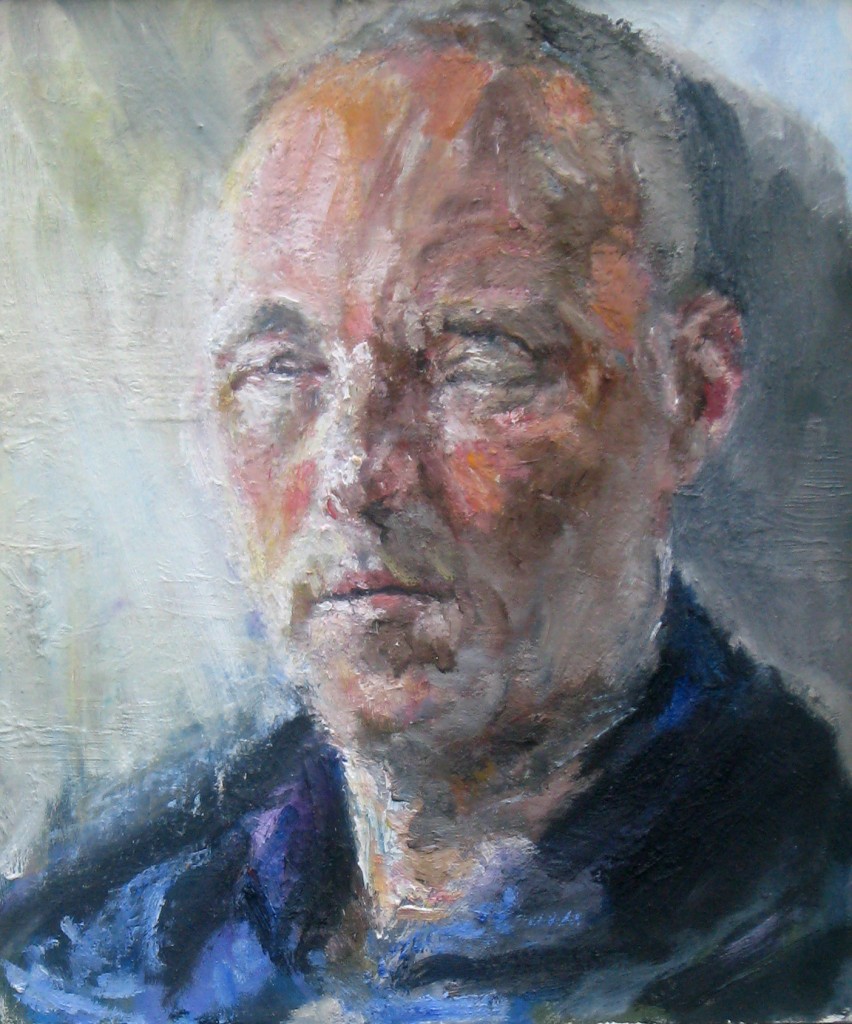
Self Portrait as a Dead Man, 2011, oil on board, 16 x 13.5 in., collection of the artistSelf Portrait as a Dead Man, 2011, oil on board, 16 x 13.5 in., collection of the artist.

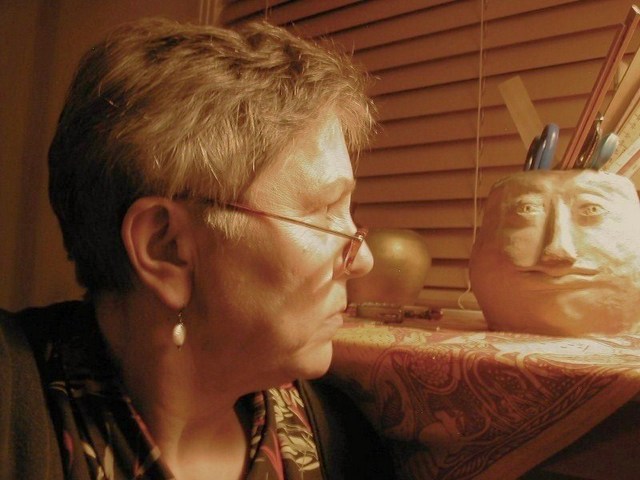
I am always alert to what artists have to say about their work. They are thoughtful, patient people who spend a lot of time by themselves working with their hands (something that always promotes a kind of detachment — you think with your hands and the rest is a kind of meditation). I first met Stephen May 25 years ago when I was writer-in-residence at the University of New Brunswick the first time. Stephen, despite the title of the painting above, is manifestly not dead (see the photo below), but still alive, painting and asseverating. When Stephen writes, he writes with passion and a style that rises here and there to the aphoristic; when he paints, his work shimmers with a kind of classic beauty. Herewith a sample of both, painting and text — the measure of the man and artist.

dg

Stephen May

This is about how inadequate logic, reason, passion, intelligence and imagination are in art. It’s about how reasonable it is to accept that. It’s about how misleading and misguided the word creativity is. This essay is not meant as a spiritual work, but it necessarily enters territory that sounds spiritual.

I want to make good paintings. Sometimes when I’m painting something good happens. I remember not the first time it happened, but the first time I realized what was happening. The words that came into my head were, “Oh, all I have to do is tell the truth!” or “Oh, all I have to do is put down what I see!” (It was a long time ago).

In the late 1800’s a critic named Albert Aurier reviewed an international exhibition of contemporary art in Brussels that included the work of Van Gogh. He singled out Van Gogh as a leader and praised his work in terms of its form, the way he used colour. Van Gogh wrote letters to friends in response. In one of them he wrote, “Aurier’s article would encourage me if I dared to let myself go, and venture even further, dropping reality and making a kind of music of tones with colour, like some Monticellis. But it is so dear to me, this truth, trying to make it true, after all I think, I think, that I would still rather be a shoemaker than a musician in colours.”

Van Gogh loved truth. He is not famous because he cut off his ear. He is famous because his paintings are good. His paintings are good because of his relationship with truth.

What is truth anyway?

I’ve painted good paintings and bad paintings, which is to say beautiful paintings and banal paintings. I’ve reflected on both experiences. I want to understand what it was that seemed right with me when the paintings were beautiful and what seemed wrong with me when they were banal. My experience has brought me to an understanding of the way my art relates to my life and how what is good in art, what is meant by good art, relates to what is good in life in general.

Beauty is just a word. There are many claims on it. Something is happening, though, in the art of Bach, Tolstoy, or Manet, for example, that is unpredictable and mysteriously complex. I use the word beauty to serve that phenomenon.

Artists sometimes say beauty is truth, and people sometimes say God is truth or truth is God. I tend to say those things now. When John Keats and Emily Dickinson equated beauty with truth, and when Gandhi and Simone Weil said truth is God, I don’t think they were using the words as a slogan for an intellectual position. I believe the words occurred to them the same way they occurred to me. And they occurred to me as a revelation but only after many experiences of the difference between true and false, beauty and banality. It is reasonable to be skeptical about the expression beauty is truth, but, ironically, skepticism led me to the expression.

Simone Weil describes prayer as paying attention. I thought I stopped praying when I was a teenager, but now I think perhaps I’ve continued to pray all along.

Painting is an act. Painting is living. The problems of painting — the problem of whether to paint or not, how to paint, what to paint — are the same problems we all face in just being human. They are the problems we have figuring out what to do with our lives, figuring out what’s possible. A person acts, and we find out what’s possible.

L & A's Garden with Neighbour's House, 2010, oil on board, 24 x 24 in, private collection.

L & A’s Garden with Neighbour’s House, 2010, oil on board, 24 x 24 in, private collection.

Shakespeare wrote plays.

Life’s but a walking shadow, a poor player, that struts and frets his hour upon the stage and then is heard no more; it is a tale told by an idiot, full of sound and fury, signifying nothing.

So Shakespeare is possible. How did he do that? We want some explanation for his power and the continued effect it has on us. The only thing we can see and hear is the form, so we look for the secret there. Did Shakespeare have a secret formula? Did Bach and Beethoven? Did Manet and Monet? Did Gandhi and Dr. Martin Luther King Jr.?

What allows some people to leave us better off than we would have been without them? Those who do that sort of work are, invariably, un-secretive, and the infinite variety of the forms their actions (art) take suggests that there is something very un-formulaic at the root of their work. The root of whatever it takes to do something good outside the art world might be the same as within it.

Our ego lives behind our eyes and the world pumps it up to blind us. Our bitter disillusionment (those lines of Macbeth’s) steals upon us concealed behind the blind of illusions created for us, within our ego, behind our eyes.

A beautiful painting is never simple. It’s never just some canvas with colours on it, never just the image, what it may or may not symbolize, never just an artist’s diary or an artist’s taste and opinions, and never just a reflection of the artist’s culture either. We all tend to be distracted by the specifics of our lives, our passions, etc. Socrates is supposed to have said the only true wisdom is knowing you know nothingAnd Einstein once said there are only two ways to look at the world. Either nothing is a miracle or everything is a miracle.

I need to use the word truth. Like the word God, it is a metaphor. I don’t think you can say God without imagining something like lord or father, something understandable. But if you use metaphor it moves mystery in the direction of non-mystery, and you undermine the significance, you undermine the psychic weight of mystery. You undermine the useful purpose of the word.

The thing about being human that makes me need to use the word truth is the hardest thing to put into words and the thing that if I could put it into words, might be the best use I could ever make of words. I am. I know I am because I experience. I know something else exists because I experience it. It’s a circular knowledge. There is no proving anything about myself, no proving anything about what I experience. One defines the other. There is no going outside that circle to see what’s outside it or to look back and see what that I really is, or what experience really is. It’s not even worth saying I know I experience as I can’t define either of the words I or experience other than in terms of the other. All our acts are acts of faith. Lived experience is normally so consistent it allows for a deep faith in nature and science, but as the Buddhists say, all is illusion.

I could ignore Socrates’ or Buddhist wisdom. I could ignore Keats’ revelation (my own) and call what happens within that circle knowledge. But it would be the first selfish act, the first subjective act that sanctions all subsequent selfish acts. It would be the end of wisdom. It would be the end of loving truth. It would be the end of true love. It would be the beginning of cowboys-and-indians. It would be the beginning of the presumption of knowledge and the sanctioning of all acts of relative good. It would be the end of goodness and love. It would be the end of beautiful action. It would be the end of beauty in my life. I wouldn’t paint anymore, or at least I hope I wouldn’t.

Truth is beauty is God. But I can only say that in the sense that I accept that all three words reflect an understanding that we really don’t know anything, that reason is limited. Beauty is mystical. It can’t be made un-mystical by social science or neuroscience (and yet it accepts those sciences). It accepts everything without judgment or fear or contempt. It isn’t fragile so requires no soldiers to protect it, nor rites to keep it holy.

We’re simply invited to fall on our knees. All our assorted lives and deaths lose all their gravity, they melt into air. We’re released from grasping, striving and collecting. Our fists are opened. We accept the ants on the kitchen counter, the dandelions in the lawn, our own nature, too. Poetry begins where separation between what’s solid and what’s mysterious melts away.

In Grace and Gravity, Simone Weil gives us an apt analogy. She describes a space normally filled up with our self, a space filled up with logic, reason, passion, intelligence and imagination. It’s only if we can remove our self from that space that there will be room for beauty or truth or God to arrive (she used the word grace). When we fill up the space again, there’s no longer any room for beauty. Reason and passion etc. are all manifestations of self love and they leave no room for beauty.

The mystical root of beauty and wisdom is in loving truth. Buddhist wisdom, Christian wisdom, and the wisdom of great art begin there. To love truth means knowing you know nothing. It means only accepting and accepting and accepting. It means being without agenda or prejudice. It means being without pride.

Egocentric taste is what is in the eye of the beholder. That’s not what I mean by beauty. I am not strictly speaking a religious man, but there’s no separation for me now between art and religion, painting and prayer, beauty and truth/God. If you consider aesthetics as philosophy of art, then for me aesthetics and ethics have merged.

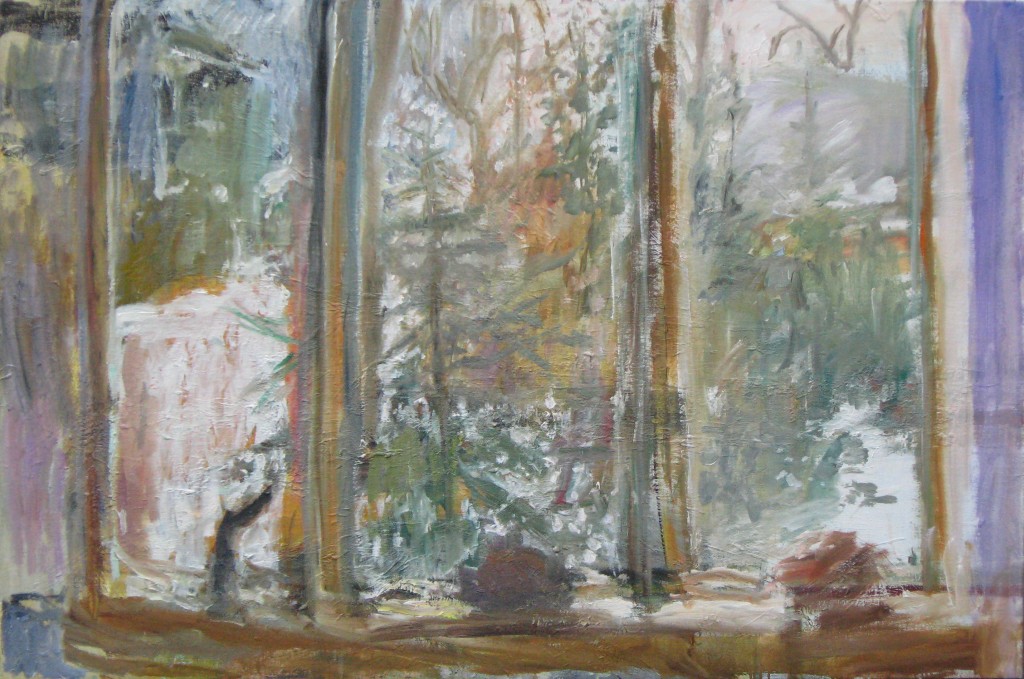
View through the Studio Window, 2013, oil on canvas, 36 x 54 in., collection of the artist

View through the Studio Window, 2013, oil on canvas, 36 x 54 in., collection of the artist

I don’t know

A beautiful painting is not a representation of something you think is beautiful. If you see an image of an attractive and healthy young man or woman, or a sympathetic portrait of a beloved personality, a saint for instance, or an image of some idyllic setting, a place you’d like to be in, you have to be extremely wary. All of us involved in art have to make ourselves aware of the seductive power of imagery. What goes for art often fails to be more than expressions of taste or pandering to taste. Art very often fails to be more than seduction or manipulation.

You see, hear and taste, you feel beauty. How much do we miss though? Two people might be smiling at you, while one wishes you well and the other wishes you ill. Those smiles might look the same but they are different. It is a dangerous misconception that beauty is what something looks like. Beauty is what something is. Ugly, distorted, or plain things reveal themselves to be golden. Glittery things disappoint.

My struggle to come to terms with experience is the same as anyone else’s. We’re raised on illusions and comforted by them.  My moments of disillusionment were unpleasant and life changing. We’re all taught by experience (or should be) the danger of mistaking illusion for truth. Some people wear blinkers their whole lives, loving escapism. Some people get cynical and don intellectual armour. Some love truth.

An old commandment, “Thou shalt make no graven image”, doesn’t make much sense to us at first glance. But if we make images of God from imagination, in words or pictures, and then love those images, it is really ourselves that we love. We create God in our image. We get what we want. We enter the brothel of illustration.

This isn’t new, nor will it ever grow old. It is in establishing whatever relationship is possible with truth that we begin to be beautiful, that our actions begin to be beautiful and the results of our actions, the traces we leave in our wake begin to be beautiful. Without that relationship all form is normal, banal. Within that relationship any form is beautiful.

In the pursuits of science, philosophy, theology, art, and in our everyday lives, truth is beautiful. Artists are prone to getting distracted from this no less than others. When I was young I liked art class best. When it came time to choose a career all I wanted was to play for a living, as opposed to work, so I chose art. It wasn’t too long though before I realized the only worthwhile thing an artist can do is love truth. I believe it’s the same for any career. I wonder what it does to a person’s soul if his career is ugly (spin doctors, etc.). In loving truth, the apparent incompatibility between our pursuits, between science and religion for instance, disappears.

I’m not suggesting we forsake intelligence, but beauty is not a strictly intellectual pursuit. You don’t need to be Plato to be beautiful. Being smart can just as easily get in the way. Maybe you need to be smart to realize that or to be able to put it into words (maybe it’s stupid to try to put it into words). A beautiful intellectual argument would be one free of rhetoric in the sense of persuasion. The rhetoric of persuasion is banal. That banality is an invitation for realities much worse than simply banal. We are attracted to intelligence for its own sake, to rhetoric and sophistry. But is leaves no room for love of truth. The rhetoric of persuasion is dangerous. It’s a truly ugly idea that if you’re better at persuasion than anyone else in the room, you win and truth is yours. Intelligence is for safe guarding ourselves against cleverness, distinguishing the difference between truth and rhetoric.

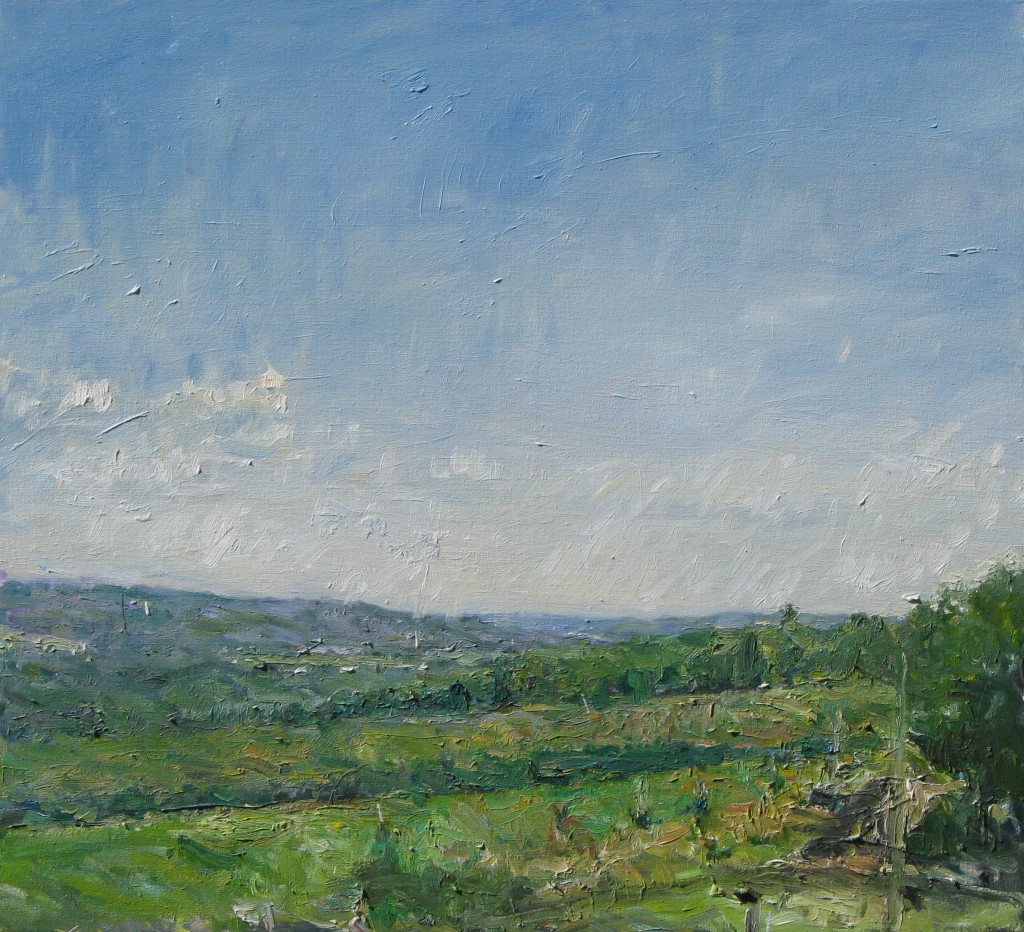
View from Jenn's House, 2007, oil on board, 28 x 31 in., private collection

View from Jenn’s House, 2007, oil on board, 28 x 31 in., private collection

Elements of art

We can’t talk about art without talking about form. Art always takes a form, but the form that art takes isn’t what matters in art. The derogatory term academic art is reserved for art where form matters too much. It matters too much if you’re searching for new forms just as much as if you’re trying to conserve old forms. There is something more crucial than innovation. The painters Manet and Picasso are famous for breaking old forms and inventing new ones. That’s the orthodox story of western art. Really though they are famous because they are good, just like Van Gogh. Rembrandt was no breaker of form. All four of them are good in that they take form out of the precinct of words. Those who find refuge in form, the progressive and conservative alike never escape history, never escape their own time. Oscar Wilde asks us to be kind to fashion because it dies so young. I can’t muster much sympathy.

Manet’s contemporaries were offended by his lack of respect for what they considered to be the serious concerns of art. Things don’t change much. We get so caught up in our moment. Manet’s early paintings were designed as signposts, as if to say, “If you want to understand what I’m doing, just look at Velazquez (for example).” Manet’s painting, far from merely being a precursor to the triumphant art that followed, actually makes most subsequent painting look like window dressing and doodles, just as it made most of the painting of his contemporaries look like huge bags of brownish wind.

Sometimes when a person associates himself with the word realism it is meant to reveal their desire to dismantle false hierarchies. It is meant to express a willingness to accept all that is seen even though it may undermine the romantic/idealist notion that we are individually or collectively somehow the figurative center of the universe. It is meant as an acceptance of the fact that we are not the purpose or goal of existence. There have been many painters willing to put us in our place but none who have done it with such gentle humour, intelligence and kind sympathy as Manet.

Manet understood as well as anyone the potential of looking at something and painting a picture of it. He was reported to have said that a painter can say all he needs to say with fruit or flowers or even clouds. We can be moved generation after generation by paintings of nothing in particular, a glass of water, an empty field…by music without words. Manet’s perfect advice to artists: “If it’s there, it’s there. If not, start over.”

Chardin painted a picture of a brioche. He said you use colours but you paint with feeling. There’s a long list of great painters who looked at things and painted pictures of them, a long list of great paintings done that way. If sophistication prevents anyone from doing it today, there’s something wrong with sophistication. Van Gogh stuck candles to his hat so that he could see what he was doing when he painted outside at night. The French artist Marcel Duchamp called that stupid painting. The question of futility is empty. We are and so we do things. We can draw a moustache on the Mona Lisa or we can paint The Night Café, one or the other. The sublime and the ridiculous are Siamese twins. It’s a bit of good fortune if you don’t mind looking ridiculous.

We can’t talk about art without talking about media. There are practical advantages and disadvantages with respect to each medium, degrees of suppleness, degrees of ease of dissemination, etc. Ultimately though, we are the message. It is ourselves who are being delivered. We must tend to ourselves first. Our instinctual egoism is embodied in any new form and delivered by any new medium as naturally as in and by the old ones. That the delivery is increasingly more efficient is no great comfort.

A new medium is not necessarily a better medium. As a medium or technology becomes more complex, McLuhan’s observation that “the medium is the message” becomes truer. Love and empathy disappear within the complexity. We need to be careful that the increasingly complex media we adopt don’t cause this we that’s being delivered to become we-the-machine.

Painting most likely persists as a medium because of its infinite suppleness. It always bends to the force of the person who paints and makes it impossible for that person to hide. Anything that is good about them is plain to see. It’s almost as simple and obvious as singing or dancing. Less machine means less machine. It’s for those who love a person.

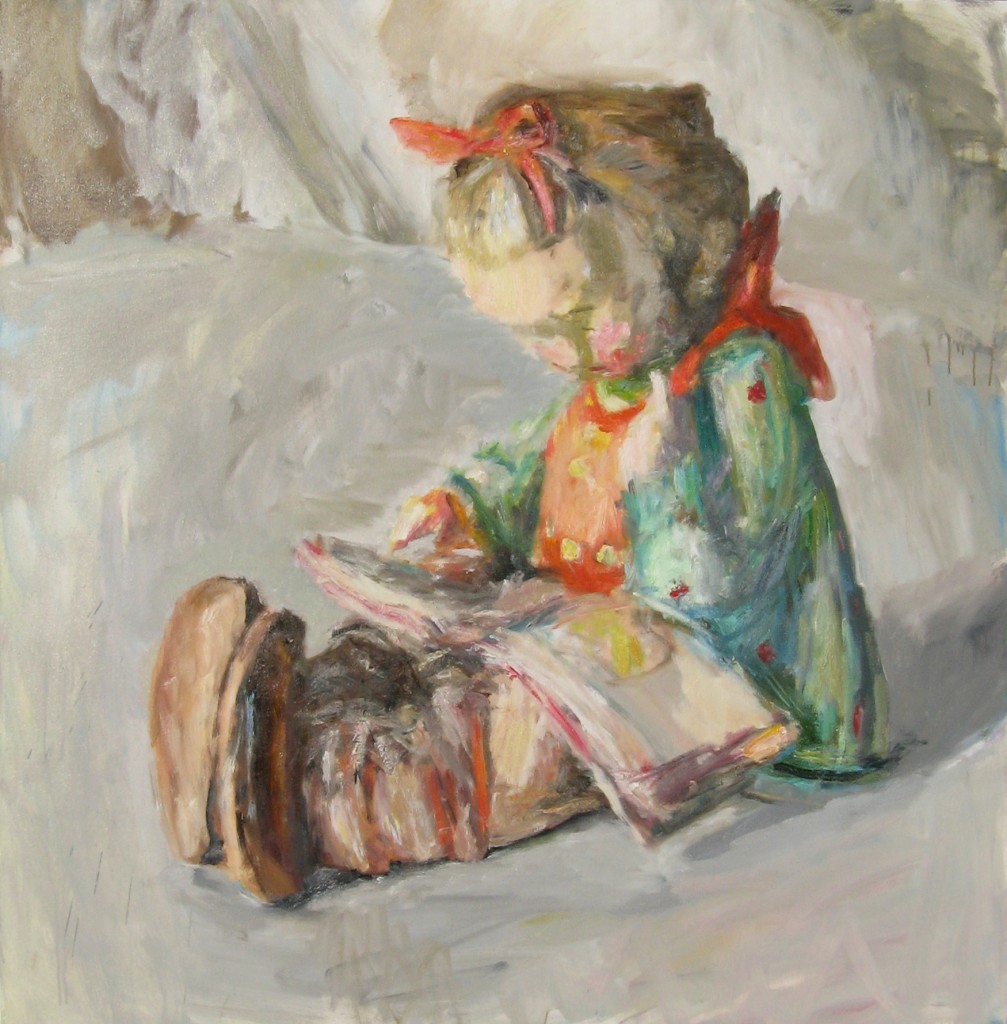
Hummel Figurine, 2011, oil on canvas, 56 x 57 in., private collection

Hummel Figurine, 2011, oil on canvas, 56 x 57 in., private collection

We can’t talk about art without talking about content (or substance). The word content is an acceptable word to stand for what matters in art. Whenever something gets formed (by humans or otherwise) all the causes, the obvious and the mysterious, of its being formed are contained within it. Content might be a word that denotes the limits of our understanding of what is there in the form, the limits of our ability to read it, to perceive it, as in, content is what I see, or content is what I know. Content might also be a word to denote all that is contained in form, independent of our ability to perceive it. When we form something we could define content as what we meant by forming it, or we could define content as what we are, as the force that determines the form. We don’t know what we are. We say intellectual content without knowing exactly what a thought is, what consciousness is.

If it’s true that the universe is in a grain of sand, that the content of a grain of sand is the universe, what then distinguishes a beautiful man-made form from a plain or ugly one, or nature from art? If content is what matters, what is the content in Bach’s form that distinguishes it from all other form in his time or before or since? What constitutes its value to us, if all sound, every sound, any sound holds truth in it? I would say that art is a human affair. A communion occurs. The origins of Bach’s music are mysterious. Bach willingly collects us within this mystery. It’s a kindness, a generosity on his part. When the sun shines, or the rain falls, or the volcano erupts, we can’t be sure it’s a kindness. A grain of sand isn’t kind.

We seek knowledge. We seem to be offered it but beauty takes it away again. We are stripped of the urge to be assertive. Maybe the beautiful thing about beauty is that no one knows how to do it, that no one ever has or ever will. We only know little pieces of a puzzle that keeps expanding in unimaginable dimensions beyond our potential and when we look again at that piece of the puzzle we thought we knew, that we so carefully and assuredly put in its place, it’s no longer what we knew it to be. I don’t know why Bach is so good. I don’t know how he so consistently avoids failing when it’s so easy to fail. I borrowed a Maria Callas CD from the library of her first recording when she was in her early twenties. The person who wrote the commentary for the CD ended with, “Listen to it on your knees.” It’s of crucial significance when one of us fails to fail.

There is a potential for art beyond metaphor. It would be better if people would understand that the value of art comes not from the nature of it being about something crucial and important, but from the nature of it actually being something crucial and important. Its value is not as illustration or documentation or story or metaphor, but as the embodiment of what is valuable. Imagery and symbols come naturally to painting which makes it particularly susceptible to this perceived limitation. 20th century painters abandoned the image to declare an understood kinship to music’s intrinsic abstract qualities. The same is true in modern dance and literature when they abandoned plot. There are no formal safeguards against failing to be beautiful, no formulas, but one understands the motivation.

I’m beginning to get angry at images. They seem to have an innate tyranny to mislead. When you see, when you feel with your eyes it happens in colour patches, in light and dark shapes. We respond to it in all the ways we respond to it ever since we’ve been human, by backing away, by approaching, in fear, in wonderment. But culture turns images into symbols that have meaning. The tyranny of the image is that it distractw one from realizing that the paintings aren’t symbols first, they are art first. They are embodiments of the painter, hopefully embodiments of feeling. For every painter who feels as Rembrandt feels, there are 100,000 painters whose symbols are the same as Rembrandt’s. For every painter who feels as Tom Thomson feels (in his plein-air sketches), there are 100000 painters whose symbols are the same as Thomson’s. This is the tyranny of the image.

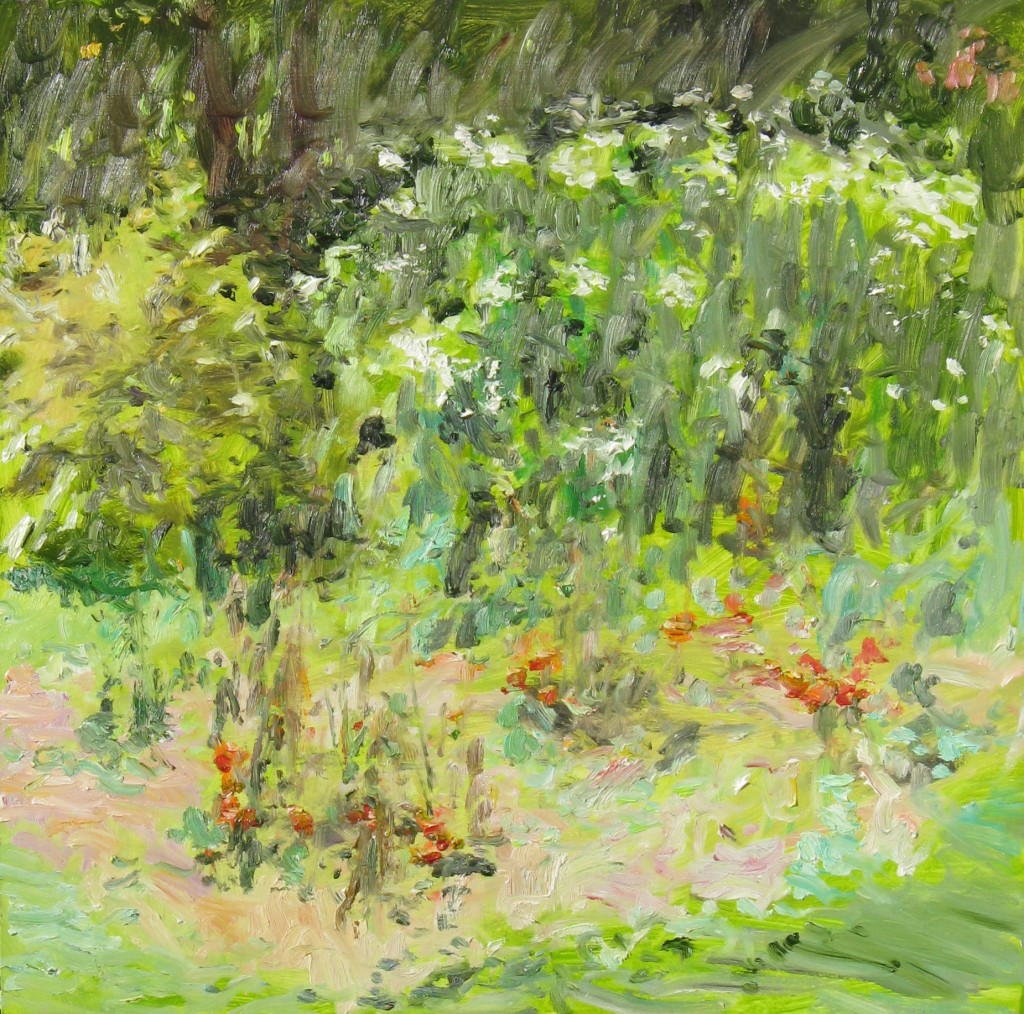
Vegetable Garden and Phlox, 2010, oil on board, 26 x 26 in., private collection

Vegetable Garden and Phlox, 2010, oil on board, 26 x 26 in., private collection

Critical thinking

My best paintings were done by putting dark paint where it looked darkish, light paint where it looked lightish, like some glorified, faulty camera with two eyes instead of one and self-awareness instead of none. Cézanne said of Monet that he was “only an eyeyet what an eye!” I love Monet’s late paintings of the Japanese footbridge, when his eyes were ruined by cataracts and the operations to fix them.

I want so much to trust somebody. All I have is my eyes, ears and time to find out who I can trust, to discriminate between who might care and who might be looking out for themselves first. I think much of what is admired in the world is admired for being great examples of people overpowering other people. It’s taken it as a license to do the same. Hell is other people.

I’m searching for something and am compelled to walk away when it doesn’t appear to be present. If I can separate the good from the not so good, the difference between them becomes much clearer. The success of this phenomenon might be why there are long line-ups to get into the Musée D’Orsay every day.

There is an idea in vogue right now of artist as critical thinker. There is a relationship between art and philosophy, but they aren’t identical. Matisse said if you decide to be a painter you must cut out your tongue, you give up the right to express yourself by any means other than painting. He didn’t cut out his tongue though, and his art didn’t suffer. It’s good to hear it from the horse’s mouth. It would be even better if the horse could be as articulate as the horse experts. One tries.

Marcel Duchamp was a competent painter with interesting ideas. He stopped painting. He eventually ended his involvement with the art world altogether. He probably noticed the difference. Faithless action is impossible for a sincere person to sustain. Dadaism as it is manifested in his art—great art by function of its influence on later artists—reflects a strange cynicism with respect to the possibility of a person doing anything beautiful. Goodness saves each one of us at every turn. Disillusionment is with ideology. To abandon the cynicism that accompanies disillusionment means abandoning ideology. Icons are ideas. Marcel Duchamp has become an icon of iconoclasm. He’s his own mistake. When you destroy something, unless you arrange otherwise, the vacuum will be filled up again with normal things.

You can’t make anti-art. If you make it, it’s art. If you persist after realizing that, then you kind of need to accept that you’re the type of person who likes a joke at another’s expense. Duchamp kept attempting to present an art without value, anti-art, suggesting that the value we place on art is false. Every time he made something though, he realized he failed. The thing became art. By having been done, it inevitably participated in the phenomenon that is art and was valued as such. He realized that the only way this wouldn’t happen was if a thing remained un-done, un-made, that the idea remained unrealized. An unrealized idea, though, isn’t anti-art, but rather the absence of art.

The term conceptual art is a classic oxymoron. Conceptualism was still born. Art-as-idea has evolved from an absurdity to a concept of art reduced once again to illustration and documentation. Research, the collection of facts, has replaced perception, replaced feeling. Duchamp’s cynical act of pointing at a urinal and calling it art has spawned the current fashion of pointing. The art in this situation is not what is pointed at but rather the act of pointing and the implicit declaration. It is more vapid than the more traditional and self-centered pointing at yourself, drawing attention to yourself when you have nothing to offer, no beautiful intentions.

Duchamp was the first artist to gain a history book kind of success because he had nothing good to offer. The root of his powerful influence on today’s art world lies in the hope he gives to so many artists with ambitions for a similar kind of success, who, despite reasonable intelligence, like Duchamp have nothing good to offer. It is a telling fact to consider that some of the greatest paintings ever made were painted by Monet with his coke-bottle glasses in his garden in Giverny years after Duchamp pointed at a urinal. The history of what matters is more like a pulse than a march.

It’s in the nature of institutions to be conservative. Institutions must hold on to the ideas of themselves to exist. As we are in the era of art-as-idea, there is institutionalized sanctioning of cleverness within the contemporary art world that looks suspiciously like the 19th century Academy. It’s what happens when ideas replace feeling. There is a work of conceptual art that consist of a panel that has the words on it (in French) “Art is useless. Go home.” Without beauty, without feeling this is more or less true.

All artists, great and small, make things that aren’t beautiful. Sometimes some of them make things that are. A thing shouldn’t be held sacred just because Leonardo painted it or Mozart composed it. We’re allowed to walk away from art, even great art, if we find we can’t trust it.

Making beautiful things is beyond me. If it was just a matter of sincerity or intelligence or skill the world would be full of beautiful art. If it happens for me I’m never sure where it came from, or why it happened. It has many of the characteristics of accident. I realize I’m not controlling things. Simone Weil talks about waiting for God. All I can do is wait and hope for the beautiful thing to happen.

There was hope the industrial and technological revolutions would give us the opportunity to become our best selves but we sit in cars at drive-thrus and in chairs staring at screens and allow the means to become the end, the medium to become the message. We never seem to be up to our dreams, our utopias. We always imagine things that need us to be better than we are: Camelot, Star Trek, socialism, democracy. Occasionally a person saves us though, for a while, by disappearing, by being disinterested, by being selfless.

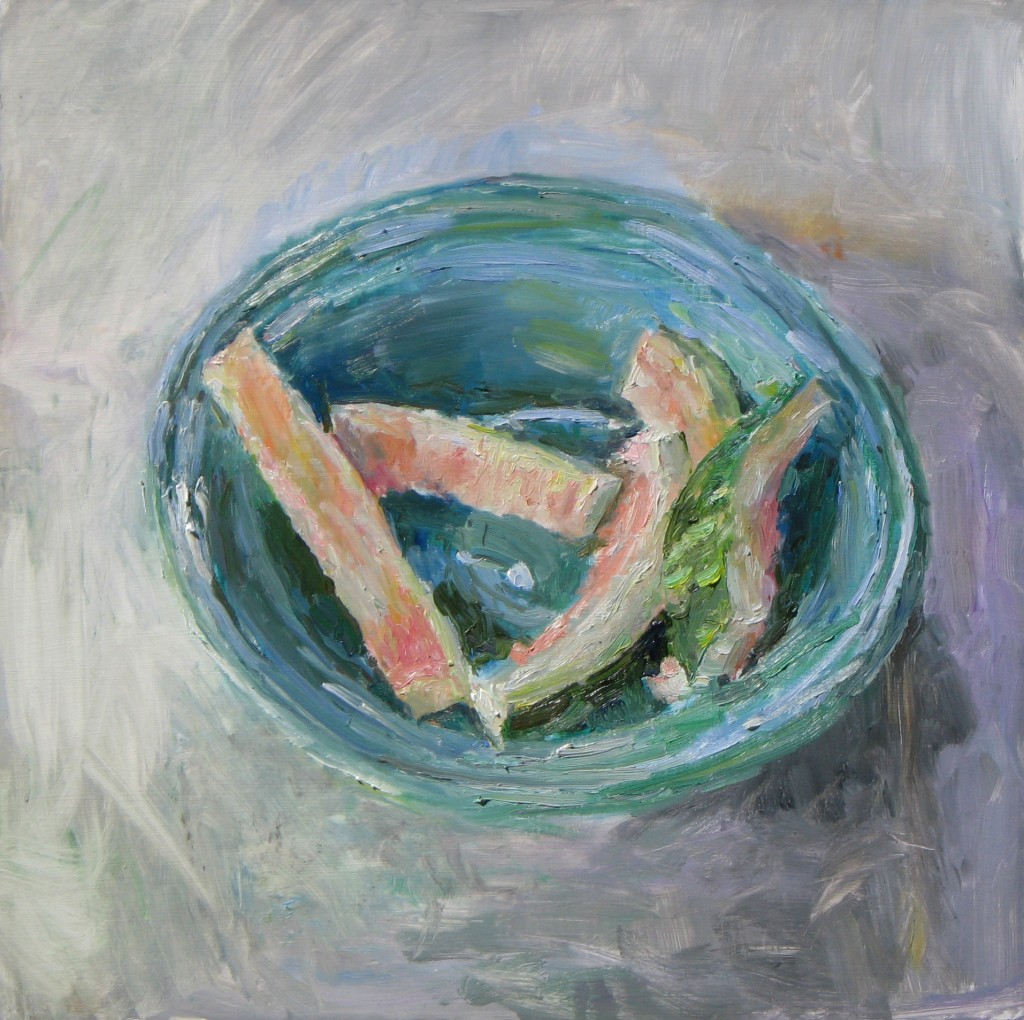
Watermelon Rinds in a Bowl, 2012, oil on board, 19.75 x 20 in., collection of the artist

Watermelon Rinds in a Bowl, 2012, oil on board, 19.75 x 20 in., collection of the artist

I have my moments

William Blake wrote, “If the doors of perception were cleansed, man would see everything as it is, infinite.”

As the best musicians listen, so the best painters look.

I’ve been trying to figure out the word tactile with an artist friend of mine. It’s one of those words, like beauty, used to denote something crucial in art but difficult to define. My daughter is a performance artist, a dancer. She uses the word presence in a way that I think might stand for a manifestation of the same crucial quality of art. When you stand in front of a painting, often you read the image as a few symbols and that’s all that’s there. You run into the end of the art quickly and moving up close to it or remaining with it for hours is fruitless. If a work is tactile, if a work has presence, you are rewarded by any kind of closeness.

When artists look, when that word means something, they can’t avoid seeing themselves there, present in their art action. Our undeniable and mysterious presence is inseparable from our experience (what we’re seeing when we’re painting) and our action (painting). It is one thing and it is the connection. As E.M. Forster said, “Only connect.” The eternal and universal miracle of realness is what connects us. When I paint a picture, if I’m looking, I am the man in the cave scratching on the wall. I see myself living and already being gone.

When I started out as a painter I emulated my heroes in a superficial way. Eventually I realized their paintings all had something in common that couldn’t be attributed to style or technique. The mechanics of painting never change much. We all use our hands and eyes and some painting supplies. Most artists are happy to share their methods. My method is pretty simple. I put green or red where I see green or red, dark or light where I see dark or light and make lots of corrections as I go. The results are predictably ordinary much of the time. The alchemy that occasionally happens has something to do with looking and feeling. Occasionally an image results that wasn’t imagined. A painting becomes that mysterious truth that is infinitely close and at an infinite distance.

Manet, Monet, Van Gogh, Matisse, Cézanne, Picasso, and Lucien Freud all lived in the era of the photograph. The unimagined image is, as are we, embedded in a miracle.

What it feels like when I’m painting is that I’ve gotten into a very small boat by myself and pushed off land out into a vast ocean where there are no fixed points to navigate by and everything’s constantly changing. I’m searching for an island in the middle of that ocean where there’s a spring with regenerative waters. It is only by being quiet that I can see and feel the subtle signs, the quality of the air and light, the push of the currents on the boat in order to sense where the island lies. The clumsiness of a large boat and the distraction of ideas would blind me. I wouldn’t be able to find the island.

I very often fail to find it anyways and return with nothing more than a documentation of facts I encountered on the way (stupid paintings). I can’t take anyone with me and I can only bring a small amount of water back. The only proof that island exists is the water I taste and bring back for others to taste. The water does what it does for those it works on. My responsibility is just to get into the boat and push off away from land and try to be quiet.

But for the water on that island I’d have no reason to get into the boat. I get to taste it too. All I know is how I am different as a result. Once you’ve made a good painting, a beautiful painting you’re driven to do it again. All arguments against beauty carry no weight against experience of it.

My most recent good painting happened this way. I was fearless, which isn’t normal. Usually I’m lucky if I become fearless along the way. Maybe I was fearless because I began by destroying a painting I’d been struggling with for years. I scraped and sanded something mediocre. I had no clue what the new painting would end up being. I didn’t think much about composition, the kinds of marks that I’d make, or the image that would result. I set the easel up facing a window I’ve painted countless times, something handy, and then the painting just sort of fell on to the canvas. I was in a wonderfully submissive state of acceptance of everything. I felt weightless. The ultimate form the painting would take wasn’t my concern. It felt like everything that I did, or might do, would be OK. There were no weighty decisions that were mine to make.

The Oxford dictionary defines grace as (in Christian belief) the unmerited favour of God; a divine saving and strengthening influence. It defines nirvana as perfect bliss and release from karma, attained by the extinction of individuality.

I don’t like to talk about technique. I feel like it would be misleading to talk about technique after realizing that I can make something beautiful with just a fat charcoal stick on a plain piece of paper. Though inferior tools and materials and clumsy and inefficient technique can frustrate an attempt, ultimately we can’t be saved by what colours we have on our palette or what brushes we use.

I have a number of techniques in my bag of tricks, all of them impatient. There are many painting techniques I don’t know, the patient and careful ones. Sometimes I find myself hopping from one technique to another in a short space of time during one painting session. I do that, not because I’m searching for the right one for that particular situation but because I’m trying to trigger the escape from technique. Things aren’t going well. I’m mired in knowledge and I want to get out.

In my bag of tricks there’s only one that matters. It’s not a secret and it’s supremely simple. Stop looking for your voice. Stop trying to distinguish yourself. Give up.

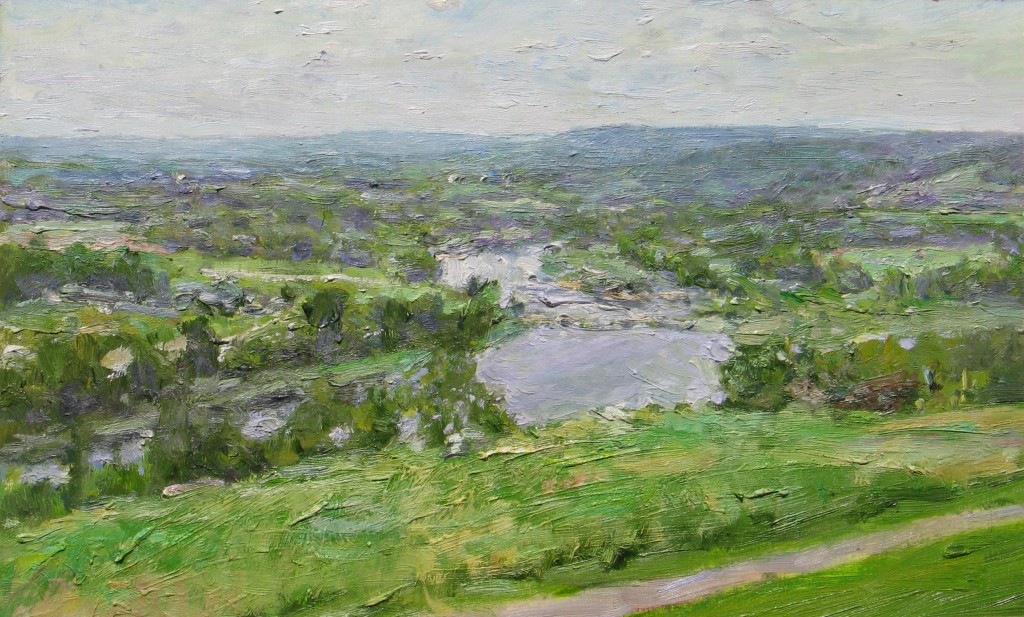
View from Everetts, 2011, oil on board, 12.75 x 21 in. private collection

View from Everetts, 2011, oil on board, 12.75 x 21 in., private collection

It’s simple

There is no substitute for feeling in art. Logic, reason, passion, intelligence, imagination, skill, maybe even what we call talent, are all realities of self. There is no beauty without their surrender. Feeling may not be all that’s required to be an artist, but it’s all that required to be beautiful. If you want art to be worth something, you need to know that it’s only beauty that saves the world, grace our reconciliation with gravity, love our relief from futility.

There’s a relationship between creation and destruction and a point at which the two seem to become one. Or perhaps neither exists except as different perspectives on change. In the fearless state of art, things are constantly being “created” and “destroyed,” constantly changing. Sometimes very good art will be perceived as irreverent and destructive, punk. It wasn’t their intention, but Manet and Van Gogh probably seemed like punks at the time. We trust them now. How do you distinguish between the good people and bad people when both ignore the laws? The question can make a conservative soul feel uncomfortable, mistrustful, angry and at sea. Beauty is found in realizing that we’ve never been anywhere other than at sea.

Great creators realize they are merely instruments. We place them on a pedestals and aspire to be there ourselves. Leonard Cohen once said something to the effect that he didn’t write his songs but he’s really glad we think he did. What’s rare is the understanding that none of us are creators. There are countless artists with Rembrandt’s or Manet’s skill but the skill is almost always wasted on inventions and opinion, on presumptions of knowledge. We’re all guilty of such waste. Rembrandt often was. Rubens was especially.

Their ability to find detachment for short periods of time doesn’t make saints of my painting heroes. Humans are clever, aggressive, territorial animals and are driven for the most part by biochemistry and overpowering social and survival instincts. Selfless detachment is difficult to maintain in the everyday world. I feel like I get to take little vacations from myself. Tolstoy said, “The one thing necessary, in life as in art, is to tell the truth.” In life, though we’re all aware of the risks of telling the truth.

The art history books are filled with art that flatters our species, magnificent follies, conceits of the intellect and imagination…pyramids and urinals, but there is no better reason for making art than being able to do for people what beauty does for people. On a number of occasions I’ve ended up weeping at the experience of beauty. I ask myself why I’m crying. It seems to be from some deep and unexpected sense of relief. I feel delivered from banality, from the sense that no-one cares, or from the sense that people’s concerns are exclusively worldly. It ends some kind of loneliness. It is redemption from narrowness and subjectivity.

Thomas Mann’s novel Death in Venice is a cautionary tale about confusing two types of beauty. At the end of the story he points us in the right direction. Attractiveness-type beauty leaves one with an ache to possess the object, the form. Truth-type beauty is only ever joyful. Whoever owns the object or form is irrelevant as beauty is not the form itself but what is manifested in it. In the experience of beauty, it is yours. It takes possession of you, it breaks your armour, and you expand into it. You participate in the artist’s expansiveness. It is unrestrictedly generous.

I want to do this, I want to make beautiful paintings, but I realize you can’t get there from here. You can’t try and make one. Striving to be great doesn’t help. You just need to do your job and hope for the best. Sometimes, strangely enough in telling yourself you’re going to make a bad work on purpose you can trick yourself into avoiding pretentiousness. The best thing an artist can be is nothing in particular; the best thing an artist can do is disappear. What’s left is infinite.

There’s a category in the thesaurus: artlessness. Under it you find ingenuousness, simpleness, naivety, innocence, unguardedness, unpretentiousness, sincerity, trustfullness, openness… reminds me of that lovely Shaker song.

In Shakespeare’s The Tempest Prospero the usurped Duke/magician has, in his daughter, one gift to bestow. This gift is “plain and holy innocence”. Prospero’s one great fear is that this gift won’t be received with respect. It is a gift that when respected “will outstrip all praise”, a gift that if held at an impossible distance by disrespect will issue nothing but “barren hate, sour-eyed disdain and discord”. Plain and holy innocence is the sine qua non of good art. With The Tempest Shakespeare passes the torch, and includes instructions.

Though we often reject critics and scholars as popes of culture, they often do what they do out of love and they’ve likely seen things we haven’t yet. But to love something does not necessarily mean you have insight into what makes it possible. Northrop Frye seemed to think that what enabled great art and made it special and valuable was what he called imagination. He also confessed to being unable to write a work of fiction.

I think most people assume that a work of art is a product of imagination, that Bach and Shakespeare had great imaginations. This idea implies that the work of art is generated within. Imagination is but a useful tool. But there’s a force to which it must surrender. It can provide situations but must surrender those situations to the infinite which the imagination can never be. Imagination gives us pictures of where we want to be, mythological gardens, things to strive for. We’re never up to our progressive ideas, our dreams. Everywhere we go, there we are. Without beauty life is nasty, brutish and probably too long.

I’ve condemned imagination’s role in the search for beauty. Perhaps others have a broader understanding of the word. Perhaps I should use the word fancy. Yet the root of imagination is the word image. It’s what our minds are limited to. Cézanne said, “I should like to astonish Paris with an apple.” As with Chardin’s and Manet’s, his paintings of apples continue to be astonishing. It doesn’t take much imagination to put an apple in front of you and paint a picture if it. Simone Weill wrote in Gravity and Grace, “The imagination is continually at work filling up all the fissures through which grace might pass.”

We need to acknowledge that our understanding is limited, yet our condition is a consciousness of limitlessness. In loving truth we have to accept paradox. If you acknowledge that agenda, prejudice, preconception and conceit are facts of life and therefore facts of art and then decide that your conceit is an art without agenda, prejudice, preconception and conceit, that’s quite the paradox…sophisticated innocence. No wonder it’s so normal to fail.

Apples in Glass Bowl, 2008,  oil on canvas, 43 x 56 in., private collection

Apples in Glass Bowl, 2008, oil on canvas, 43 x 56 in., private collection

All you need is love

We’re proud of artists like Picasso. Some are even proud of people like Napoleon, all that strutting and fretting we do. The history of humans is the history of the failure of ideas. In studying history we hear the haunting refrain “never again,” “never again,” “never again.” The critical stance we adopt with respect to what we perceive as wrong is born of the conceit that we know better, the same conceit that gets us in to trouble in the first place.

The ambition to be beautiful is really an anti-ambition. It is the ambition to de-create the self, using Simone Weil’s expression.

In his play Antigone, Sophocles warns us to beware of hubris and to always hold the gods in awe. John Keats tells us in “Ode on a Grecian Urn” all we need to know on earth is that beauty is truth. The hardest thing an artist can do, the hardest thing a person can do, is act without self-interest. Once you have come to know that beauty is truth, you realize that any step away from beauty is the greatest danger we face. Perhaps this is what Dostoevsky meant when he said that beauty saves the world.

The last lines of George Eliot’s novel Middlemarch describe the selfless character Dorothea:

But the effect of her being on those around her was incalculably diffusive: for the growing good of the world is partly dependent on unhistoric acts; and that things are not so ill with you and me as they might have been, is half owing to the number who lived faithfully a hidden life, and rest in unvisited tombs.

The absence of beauty in a person is the root of callous indifference. The presence of beauty is the proof of love. The presence of it in what we’ve done is the great value of art.

Nobody can be good all the time, but if I can be good while I’m painting, at least that’s something, a few shining moments.

 —Stephen May

——————————————-

Stephen May’s canvases have been collected by prestigious corporate and private collectors for over three decades and are included in the public collections of the Canada Council Art Bank, the Beaverbrook Art Gallery, the New Brunswick Museum, the New Brunswick Art Bank, the University of New Brunswick, l’Université de Moncton, the New Brunswick Department of Supply and Services and the Department of External Affairs. The Beaverbrook Art Gallery presented a solo exhibition of May’s work entitled Embodiments in 2006 and the following year he won the Miller Brittain Award for Excellence in Visual Art. May graduated from the fine arts program of Mount Allison University in 1983.  He lives in Fredericton.

Nov 112012
 

The riddle is an ancient and persistent literary form. In Bowstring: On the Dissimilarity of the Similar Viktor Shklovksy writes about riddles:

Hegel wrote in his Lectures on Fine Art that “the riddle belongs to conscious symbolism.” What is the riddle’s answer? It is derivation of meaning. According to Hegel, the riddle consists of “individual traits of character and properties drawn from the otherwise known external world and, as in nature and in externality generally, lying there scattered outside one another, they are associated together in a disparate and therefore striking way. As a result they lack a subject embracing them together [as predicates] into a unity . . .” This disparity of signs hinders the immediate solution as to which whole they all belong to.
 In veiling the whole, the riddle forces us to rearrange the signs of a given object, thus showing the possibility of diversity, the possibility to combine the previously irreconcilable in new semantic arrangements.

Herewith we have a shrewd, clever, witty and expansive essay on the riddles and riddle poems in (mostly) Western literature from The Book of Exeter to Harry Potter and J. R. R. Tolkien and Emily Dickinson. It’s partly a highly suggestive craft essay and partly an informal history of ideas, also a refreshing sort of literary criticism, the kind that takes a long and inquisitive look at the words on the page.

Julie Larios is a friend, an esteemed colleague in the Vermont College of Fine Arts MFA in Writing for Children and Young Adults Program and a gifted poet whose work has already graced these pages more than once (here and here). It is always a huge pleasure to have her back.

dg

—–

I’m not much of a “main highway” kind of person when it comes to thinking about the craft of writing.  I go down lots of sides streets, I let my mind wander. Sometimes even a side street feels too wide. And I’ve been thinking lately about a small alley named “Riddles,” a deceptive short cut (sometimes filled with broken bottles and garbage cans) between one street and the next. I have the feeling deception is important. “Most felicitous sayings rely…on a capacity to deceive beforehand…” said Aristotle. “We have even more obviously learned something,” he said, “ if things are the opposite of what we thought they were, and the mind seems to say to itself, ‘How true. I was mistaken.’”

Riddles are all about questioning our own grasp of the world by questioning the nature of things, casting a new light – thereby casting new shadows –  and I believe that thinking in riddle-mode can help us be better writers. After all, don’t riddles follow the pattern of all great works of literature by asking large questions of us like “Who am I?” and “Are things what they appear to be?” and – perhaps the most important question of all – “When is a door not a door?”  Ah, yes, one of the great questions of Western literature.  It has survived the test of time, as has its existential answer – “When it’s ajar.”

I remember the first time I heard this riddle, I was in Mrs. Frizzy’s second-grade class at Booksin Elementary, standing outside the cafeteria in the lunch line.  A boy named Dickie, who was in line in front of me, turned and asked, “When is a door not a door?”

I repeated the riddle out loud. “When is a door not a door?”

Dickie waited as I turned the riddle over and over in my head. Well, I thought, maybe it’s not a door if it’s like a –what do you call it? – one of those swinging things you see in the movies; cowboys push through them when they walk into an old-time saloon, like Gary Cooper did in High Noon, or maybe John Wayne in something?You know, not a door but like shutters on hinges.  I didn’t say that, because it didn’t seem to me like Dickie was waiting for that particular answer.  So I repeated the riddle with more emphasis.

When is a door not a door?”

Dickie looked annoyed, so I gave him what he was waiting for: “I don’t know.”

“When it’s ajar,” Dickie said.

What?” I asked, which is actually a good question the first time you hear a riddle like that.

“When it’s ajar,” Dickie said.

A jar?” I asked.

“Yeah,” said Dickie, snickering.

“I don’t get it,” I said.

“When it’s ajar,” Dickie repeated.

“What do you mean, when it’s a jar?” I asked.

“Ajar,” Dickie said.

I said nothing.

“Ajar,” Dickie said again.

“Oh,” I said, as if I understood. And that was that.

I think it was my father who explained the answer to me. I bet my mother groaned, but my father probably thought it was funny, and I was left at 7 ½ years of age wondering about the world of discomfort and flat-out deception that the English language might inflict on me for years to come.

And that was my introduction to riddles. I didn’t like them. They weren’t funny. They made me feel stupid. I don’t remember ever telling them to my friends. I don’t think I ever checked a riddle book out of the library. Some people groan when they hear punning riddles, other people laugh. For a long time, I didn’t laugh, I groaned.  Now, if I’ve never heard the riddle before, I usually laugh and groan.

“What’s black and white and “red” all over?” Answer, of course, a newspaper – black and white and “read”– r-e-a-d-  all over.  

This category of riddle is also called “Shrewd Questions.” The riddle of the Sphinx is a shrewd question in an answer-this-or-you-die way. Basic shrewd questions and punning riddles are the riddle forms most children are exposed to, and I think it’s fair to say some of these shrewd questions are shrewder than others.

What did one wall say to the other wall? (Meet you in the corner.)

What birds are always unhappy? (Bluebirds.)

How do you make a lemon drop? (Hold a lemon up and let it go.)

If there were no food left in the city, what would you eat? (A traffic jam.)

I particularly like that last one.  It turns the word “jam” so steeply and suddenly on its head that the reader thinks immediately, “Traffic jam – what a strange phrase.” Anything that slows us down and makes us hear language in a fresh way is alright by me, though I didn’t believe that when I was seven.

I do remember liking the following shrewd-question” riddle, even when I was young: What flies but has no wings?  The answer –most of us know this – is Time. That riddle is elegant – it moves away from goofy wordplay and into the territory of poetry. Emily Dickinson, whose poems were sometimes riddles and sometimes what appear to be their opposites – definitions –  knew this when she said, “Hope is the thing with feathers that perches in the soul.” To turn that definition into a riddle, all you do is reverse it – “What has feathers and perches in the soul?” One answer could be Hope. That’s the kind of riddle I’m interested in.

Listen to the lovely beginning of this “riddle” by Ms. Dickinson:

She sweeps with many-colored Brooms—
And leaves the Shreds behind –
Oh, Housewife// in the Evening West –
Come back, and dust the Pond.

Who is the Housewife in the Evening West with her many colored Brooms? She’s the sunset. Dickinson’s poetry is full of definitions and riddles. What house has no door? “Doom,” Dickinson answers.

At the very least, riddles help us understand that definitions are elastic, as is identity itself, and language is delicious and strange, not to be taken for granted. As a creative writing teacher, I like encouraging fiction writers to taste them – words – once in awhile. Like blueberries, they are good for you, full of antioxidants.  It’s a fine approach, slowing down and thinking about word sounds, word choices, and how language either flows or gets tangled into traffic “jams,” or – and this is a shame – how it loses its luster and becomes dull, rusted out by cliches.   I believe we write better fiction when we balance forward motion (plot) with attention to language.  And I could justify studying riddles that way, hoping they would be seen as evidence of the nutritional value of wordplay.  Acquire a taste for wordplay and see where it takes your prose. If it takes you too far, step back – no need to go overboard, and certainly no need to go beyond wordplay and overwrite the thing, no reason for your language to get fancier than the story requires it to be.

But I‘m actually more interested in how our minds use language as a way to organize the world – that is, the way the mind searches for stability by creating categories and classifications, and the way it makes meaning. I’m quite serious in saying that the study of riddles – their long history, their presence in nearly every culture of the world in every age, their subversive nature – affects our mode of thinking. Riddles interrupt our human inclination to stash things in well-defined cubby holes, to insist upon order and to find “solutions” to things that puzzle us. Riddles ask us sometimes to live comfortably without firm solutions. At their best they can teach us to think metaphorically, to find fresh ways to say things, to think about indirection as a writing strategy, to build a tolerance for alternative meanings and contradictory truths, to turn away from infallibility and learn to live with our own stupidities, and to question assumptions – something every writer, not to mention every good citizen in a participatory democracy, should know how to do. For example, here’s a riddle which is not poetry but which I do like:

A bus driver was heading down a street in Colorado. He went right past a stop sign without stopping, he turned left where there was a “No Left Turn” sign and he went the wrong way on a one-way street past a cop car. Still – he didn’t break any traffic laws and didn’t get a ticket. Why not?

(Because he was walking.)

Our assumptions are wrong from the beginning, and the person who framed this riddle understood how to manipulate the reader into believing one thing (a bus driver only drives) while many alternative things about a bus driver are true – for example, a bus driver can walk. Riddles obstruct our desire to pigeon-hole people, objects and events, and to keep things neatly organized in categories. They make us rethink our assumptions.

I’m interested in that. I’m interested in the interruption of assumptions as a technique of fiction. We lead people to believe something, based on the preconceptions they come into the story with. Then we turn those preconceptions on their head, and we take our readers someplace unexpected. Neither our characters nor our readers have to go where stereotypes, clichés and assumptions push them – they don’t have to file things into orderly little categories like “bus driver” or “walker” or – more irritatingly – “bad guy” or “good guy.” Characters can be more complicated, readers can be asked to leave their assumptions behind. And as both readers and writers, we can say, as Aristotle wants us to say when we learn something new about the way the world works, “How true. I was mistaken.”

Sure, there’s a level of discomfort associated with admitting we are fallible. But being convinced of our infallibility will ultimately make us miserable (along with our readers, our spouses or partners, and our children) due to a little thing called hubris. Believing as an author that you have a lesson to teach, that you know the truth, that you are infallible, can be lethal to your storytelling.  For starters, it usually produces boring stories.  It also assumes your readers are children in need of guidance – not bad if they are children (after all, five-years-olds are probably not quite ready to be knocked senseless by the blurred line between good and evil) but not great if they’re young adults and fully-grown adults.

One solution to being boring and pedantic is getting into a riddling frame of mind – admitting that answers are hard, that tricks are played, that situations and people are not always what they appear to be, that the “right” answer sometimes proves to be wrong, that we’re not the only ones who head one way and then have to circle back or start over in order to understand.

I grew up thinking riddles were only puns and plays on words. I moved from the typical groan to a kind of bemused admiration for the best punning riddles, and lately I’ve felt true affection even for the worst ones. Especially for the worst ones, actually. But punning riddles and “shrewd questions” are only a small part of the whole idea of riddles.

I took several classes at the University of Washington with the poet Richard Kenney, whose delight in word play, proverbs, charms, curses and blessings was infectious. He mentioned in passing one day that his favorite riddle was a medieval one, traced back to the 1300’s: Round the house and round the house, and a white glove at the window.

I’d never heard a riddle like that, and it stopped me in my tracks. It was a riddle, yes, but it was also mystery and a story, and it was also poetry. Who or what was going around the house? Why more than once? Who did that white glove belong to, why was it at the window, what was happening? Could I conjure up a narrative to stand alongside this riddle? A girl who is pushed…is it sorrow that spins her round and round, is there something of herself she leaves behind? Something that says, “I was here”? Or something that asks “I was here, but who was I?”

Professor Kenney told us one answer to that riddle, of course. What was swirling around the house was snow, and it left a white glove – a small drift – at the window.  But he wasn’t as interested in answers as he was in questions.  He believed, as Samuel Coleridge did, that “In a complex enigma, the greatest ingenuity is not always shown by [the person] who first gives the complete solution.”

I thought about that riddle – Round the house and round the house, and a white glove at the window – as I went to sleep that night. Along with all the other questions I had, I began to think about another person – the one inside the house, looking out.  What is that person doing or what is happening to that person? I loved how far I could take this riddle, loved feeling haunted by it, loved trying to make sense of it and loved its changing perspective.  Good poetry makes you do that, makes you wonder. Wondering was what I enjoyed, not the “solution.” And the riddle didn’t say, “Snow is like someone going around and around the house and leaving an accumulation at the window frame that is similar to a white glove.” And it didn’t say “Snow IS a white glove at the window frame.” Those imply a more direct approach to metaphor and simile. I’m interested in the leap – the method to the madness– and in what we don’t see.

The snow riddle’s method is indirection – another term for “sleight of hand” – the trick of magicians and con men who convince their audiences to pay attention to one hand while the other hand is hiding the card up the sleeve.  Indirection is what Archibald MacLeish was talking about in his poem “Ars Poetica” when he said that for “all the history of grief” you could substitute “an empty doorway and a maple leaf.”  This ability to direct attention somewhere else – to describe something by describing something else – is the key component of poetry. Taken larger, and sustained a bit longer, it becomes T.S. Eliot’s objective correlative. Basically, it boils down to this: You turn the reader’s gaze to something clear, physical and observable, in order to understand something deep, emotional and invisible. Grief exists, yes, but it’s an emotion, an abstraction, while an empty doorway is touchable and real – much more powerful for a writer to use, because it gives us an image rather than something ephemeral or intellectual.  What we encourage our readers to do, when we use this strategy, is to think about convergences: “How and where does this touchable object intersect with that emotion or idea?” But we don’t ask the question directly. We simply turn to the physical world and evoke it. We let readers understand, either immediately or later, on closer reading, that we directed their attention to this other thing for a reason. This is the point at which the writer makes a leap of trust –we trust our readers to notice and to make meaning.

One reason we use indirection is because it’s more subtle. No one wants, hopefully, to hit a reader over the head with a 2×4 to get a message across. We don’t say, “Hey, that maple leaf, it’s grief, get it?” Instead we want the reader to intuit that when a character turns to look at something – let’s say it’s a bird flying – the bird stands in physically for an invisible desire. Perhaps the character wants “to fly,” to break out of his or her oppressive world.  The repeated trope of the flying bird becomes an objective correlative, triggering this convergence automatically. Granted, a bird standing in for freedom is a cliché; writers should be able to come up with something fresher than that.  But cultivating a riddling frame of mind helps us turn from blatant telling to subtle showing, via correlatives – things that correlate –  and that’s an important tool for our writing toolbox.

At the heart of riddle-making are the concepts of correlation and equivalency. A equals B. That sounds more like basic math than story, doesn’t it? But math is not the opposite of story, because math, like much of human behavior, is about patterns. Metaphorical-thinking is also a matter of patterns and convergences – A and B overlap and intersect like harmonies in music.  Or, in chemistry, A and B exhibit the same properties when reacting to C.  Or maybe it’s alchemy – base metal (the story’s bones) turn into gold (the story’s beauty.) By thinking of a story that way, I can create a riddle:

Bones in my body, that’s how I stand.
Beauty as I move, my sleight of hand.  
Who am I?

Does my riddle-poem have an answer? Well, one answer could be “a good story.”  Her bones and her body are structure and plot – without them, she can’t stand.  The beauty and sleight of hand are language and metaphor – without them, there’s no magic, no elegance, no “liquefaction of her clothes” to borrow a phrase from the poet Robert Herrick.

You can notice freshness of thought in something as simple as a Mother Goose rhyme describing a candle: Little Nanny Etticote in a white petticoat and a red nose. The longer she stands, the shorter she grows. In this ditty is the most basic of all lessons about writing: “Say it new.”

After taking Rick Kenney’s class, I started collecting “Who Am I?” riddles. I love the idea of identity being hidden behind the mask of metaphor.  It’s a little exciting, a little creepy, a little Carnivalesque. Reality with some slippage into the dream-world, that’s what the language of many riddles is like. Here for example:

Always old, sometimes new, never sad, sometimes blue. Never empty, sometimes full,
never pushes, always pulls. Who am I?

One answer is “the moon,” which is old, yes, but sometimes we see a “new” moon, we see a blue/sad moon though never a blue/blue one.  How lovely, in this case, to find identity in contradiction. Not a bad thing for people to think about, that contradictory things can both be true.  There’s the moon, a large stone in the sky, supposedly dead and cold.  And yet, it glows, it pulls.  That feels like something to put into a story, a very human story, something that turns to the sun and says, “Did you do that?”

In my hunt for “Who Am I?” riddles, I found a huge encyclopedia of Indian Literature offering up these three Punjabi riddles:

I’m the son who can climb to the roof before his mother is born. (Smoke)  

See her coming, see her going, thinner than water, sweeter than sugar. (Sleep) 

Tied in a blue cloth, a handful of rice –  lost in the daylight, found at night. (Stars in the night sky.)  

Compare that last riddle to one from the Aztec culture in Mexico, transcribed by early Spanish explorers – same answer, but it goes like this: A blue calabash sprinkled with toasted kernels of corn.

Here is a lovely riddle from the Congo: Who am I that when I fall, I make no noise?   (Night.) To me, that feels like the beginning of a story. It encompasses the Zen idea of satori which, by means of a koan – a kind of riddle –  produces first, hesitation, then, self-revelation.

It’s curious how the Western mind puts objects and people into well-defined hierarchies of classification,  just as pre-determined as those used in museums of natural history. The famous cognitive scientist Stephen Pinker calls categories “fuzzy similarity clusters” and the key there might be the word “fuzzy.” The edges are not always as well defined as we want them to be. When is a door not a door? If we think too rigidly, in “unfuzzy” similarity clusters (in this case doors) we can’t come up with solutions. The more determined we are to sort things according to the closed cluster we assume they are in, the more we fail.  If something is a door, it can’t NOT be a door, right? If something is a son, it can’t be smoke, can it?  Well, what if we learn to think of fire as a mother? Is smoke her son? We’re re-clustering when we try to understand the relationship of fire and smoke to mothers and sons. George Lakoff, who knows a thing or two about metaphor, says that putting things in categories is a “bad habit” left over from the days of Aristotle. Lakoff says “pristine categories are a fiction.” So if we want to move over from Aristotelian territory into a landscape where categories are fuzzy, maybe we need to change the way we think and the way we use language. As the wonderful poet Richard Wilbur said, riddles are the “confounders of categories.” Deception is not only the riddle’s method but the riddle’s glory.

The language of literary riddles can cross over into a dream-world in the same way charms, incantations, curses and blessings do, as opposed to punning riddles where much of what confuses us and makes us hesitate is a trick. Many of the great writers of fantasy, interested in the dream-world, have been interested in riddles. That’s because one essential question of fairy tales, legendary quests or shape-shifting is “Who am I?” Looking at the Harry Potter series, an extended journey where Harry moves from innocence to self-knowledge, we see a world filled with riddles, including at the most unsubtle level, Lord Voldemart’s original name, Tom Riddle. Likewise J.R.R. Tolkien, whose characters Bilbo Baggins and Gollum in The Hobbit engage in a riddle duel, using along with traditional folk riddles some examples written by Tolkein, like the following about the wind: Voiceless it cries,/  Wingless flutters, / Toothless bites, / Mouthless mutters. And this, whose solution is Time: This thing all things devours: / Birds, beasts, trees, flowers; / Gnaws iron, bites steel; / Grinds hard stones to meal;/ Slays king, ruins town, / And beats high mountains down.

Imagine yourself as a twelve-year old again, reading The Hobbit for the first time, trying to figure out the answers to those riddles.  The more committed you are to finding a single solution, the more you must learn how to de-code, looking for words that block you and send your thinking into the orderly, tidy world of classifications and categories, rather than into the messier poetic world of overlapping meanings and metaphors.

De-coding is a valuable thing – nothing wrong with looking for the trick that’s being played on you. But it’s a familiar undertaking, and it treats storytelling as if it were a standardized test.  Find the right answer, fill in the bubble. The thinker who stands outside the box and see alternatives that are equally interesting or plausible traditionally does the worst on that kind of test.  Do we want always to encourage the decoding approach? Stories are not information, there are not right answers. A story haunts us not because it can be decoded but because it can’t. Not quite, anyway.

This is another thing the lowly riddle reminds us of: Good readers – and the good editors and good critics who judge them – don’t always want the most easily de-coded narrative. They often want something innovative. They don’t always want to know exactly how the story is built and where the story is going; they want surprise, whether in structure, language or plot.   As Emily Dickinson said: The Riddle we can guess / We speedily despise —/ Not anything is stale so long / As Yesterday’s surprise —

Some riddles, like some very good stories I know, are not meant to offer solutions; they’re only shaped to make us wonder.   Part of the pleasure derived from them is in the hesitation they produce – that “satori” I mentioned. Hesitation, failure of the author to spell it all out, drives readers who want easy answers crazy. What on earth are those bears about in Margo Lanagan’s Tender Morsels?? Lanagan wants us to hesitate – she expects us to make a guess, she wants us to make our own meaning from her story. Some riddlers and storytellers take such a lot of pleasure in the hesitation that they offer no answers at all. “How is a raven like a writing desk?” is one of the riddles Lewis Carroll posed in Alice in Wonderland, and it’s never actually been “solved.” Carroll did come up with an answer, but it was after the fact; he never intended the riddle to have an answer, and the one he made up later is pure nonsense. Northrop Frye, in his essay Charms and Riddles, says that Carroll’s riddle tactic was often to overwhelm sense with sound. I think that’s true, and not all of us want to overwhelm sense with sound, at least not all the time, though you’ve got to admit “Jabberwocky” is a lot of fun.

If we look up the word “riddle” in the Oxford English Dictionary, we can trace it back to the Old English root “rede” – meaning counsel, opinion, or conjecture. We come back again to the idea of interpretation. If riddles with no firm answers, and fiction open to interpretation and conjecture, can move us toward actively making meaning, that’s got to be a good thing, right? Most of us would be proud to help our readers do that. One of my students recently shared a quotation with me by the Austrian satirist Karl Kraus: “Writers are people who can make riddles out of answers.” If that idea appeals to you, you are in a riddling frame of mind.

And what if the answers to the riddles are lost? For over a thousand years, people have been offering up solutions (the answers have disappeared) to riddles in The Exeter Book, written between 960 and 990 A.D. by Benedictine monks. Some answers seem guessable: A wonder on the wave / water became bone. Could it be ice on a lake? Possibly. Some are more difficult:

I was locked in a narrow nest,  / My beak bound below the water
In a dark dive; the sea surged / Where my wings work – my body quickened
From the clutch of wave and wandering wood. / Born black, streaked white, I rise
from the womb of waves on the wind’s back,  / Sailing over seals’ bath. Who am I?

Bright people, many of them doctoral candidates working hard, have guessed at the solution over the centuries: Maybe it’s an anchor, a bubble, a barnacle goose, a water-lily, a baptism…? We just don’t know. Besides, dissertations notwithstanding, aren’t we better off swimming in that lovely poem and not knowing the answer?

With literary riddles, we sometimes learn to let go and say, “There might not be an answer I understand,” or “There might be more than one answer.” If you can be comfortable with that, then you’ve learned a very large and important lesson for writers, which John Keats described as “negative capability” – the ability to reside within “uncertainties, mysteries, doubts, without any irritable reaching after fact and reason.” That’s another lesson riddles can teach us – to live in uncertainty, to shrug and say, “I’m not sure I can come up with anything more than my own answer.” What we give our readers is not a possible answer, and not even a partial answer, but wonder.

Overwhelmingly, English teachers unfamiliar with poetry present it to their students as a process of decoding and finding an answer. “Here’s a poem; let’s decode it, let’s figure out the solution to the riddle.” That’s not bad exercise, actually – certain muscles build up. But one problem about this approach is that readers want the solutions to come fast. It’s a fast world, there should be fast answers. That’s a problem, because the best riddles (the best stories) don’t have easy answers – the reader works to make meaning.  The biggest problem is when a teacher says, “There’s only one right answer to this riddle – one proper interpretation of its meaning.” Admitting to alternative interpretations, admitting there might be NO answer, understanding that the joy is in the wondering, is essential in the classroom.  And it’s just as essential when it comes to the fiction we write.

It’s especially important to get into a riddling frame of mind for writers who are vulnerable to the super-virus called didacticism. If you have learned to live with uncertainty (that is, no single answer to the Big Riddles) it is very, very hard to be pedantic. We may offer up a scenario or a guess, but remaining open-minded is vital to being a good writer. There are so many ways people deal with adversity and try to live meaningful lives and make good choices in this world. Writers tell stories about the choices people make, and the changes those choices provoke, and the end-product is empathy. We don’t want to be “right,” necessarily – I don’t like to think of myself as a judge, coming down with the gavel and startling everyone in the courtroom. The economist Daniel Kahneman theorizes that people have two different systems for processing input – System 1 is the knee-jerk brain, the one that makes fast and easy choices based on biases and assumptions. System 2 is thoughtful and open to new perspectives and new information. I want to write a good poem or tell a good story that is filtered in by System 2.

After all, the effort to make meaning is often more valuable to us than what particular meaning we make. As writers, we present people with the stories that will help them pick up cues, think about behavior, think about complications, assumptions, categories and – bottom line – will encourage them to take all that System-2 thinking and make meaning with it. We give readers compelling situations and complicated characters. We give them a well-shaped story arc. We do it, hopefully, with some attention to well-crafted prose. That’s our part of the job. Then we let go. Our readers make meaning. And good for them for doing it.  A little work, a little lost sleep as they try to puzzle out their particular perspective on a story – isn’t that a good thing? It’s just as valuable as saying, “I’ve written a book that will tell you the answer about the right way to live in the world. I know who the bad guys are. I know who the good guys are, I know the solution to the riddle.” If you find yourself in that frame of mind as you write, feeling wise, feeling certain, feeling smug, get up from your desk and take a walk. Relax, come back later, when you remember that you don’t really know much.

So, I’ve been thinking about thinking. As I said, I go down not just side streets but narrow alleys when it comes to wondering how fiction and poetry work. For a moment, let’s allow  the vista open up on Heraclitus, the 5th-century B. C. Greek writer known as “the father of the riddle.” He came up with the idea of “logos,” which has at its core the idea of flux. In flux, the nature of things is not fixed and everything is in process. Heraclitus famously suggested that you can’t step into the same river twice, because the river is constantly moving and changing.  He also suggested that despite attempts to understand our world, “Things keep their secrets.” I like that idea. I find that satisfying because it humbles me. It encourages me to write poems, not teach people lessons. It allows me – and my readers – to guess. As Northrop Frye once said, “Guessing is an integral part of the poetic experience.”  And as Emily Dickinson once wrote to her sister-in-law, “’In a life that stopped guessing, you and I should not feel at home.”

So, here we are, embracing the common riddle. Riddles are common to all language groups, all cultures, all parts of the world from all periods of time. How is that possible? Why do riddles in cultures with no contact share motifs and have, more often than coincidence can explain, near-identical phrasing and similar patterns of musicality?

Well, it has something to do with the nature of a world in flux and the phenomena of synchronicity. The riddle scholar Craig Williamson says, “All things shift in the body of nature and the mind of man. But the flow, the form and movement, remains. As the mind shifts, it shapes meaning. When is an iceberg a witch-warrior? When it curses and slaughters ships.”

This synchronic system – of patterns, events and objects that mirror each other and that are grouped not by cause and effect, but by similarity of meaning – sits on the opposite end of the seesaw from Causality – Cause and effect – the stuff we are told drives plot. Now we’ve entered the world of Carl Jung and Sir James Frazer and Joseph Campbell. The books they’ve written belong on our shelves as much as any traditional how-to books about fiction, because they offer writers examples of a different way to organize the world – possibly more ancient, more a part of the dream-world, shared by other cultures. How exciting a tool is that in our writing? Jung believed that synchronicity shared something with the idea of the “intervention of grace,” a kind of spiritual awakening, and you can’t get much bigger than that.

Maybe the vista has gotten a bit too Big and Grand now. I’ve arrived at the doorstep of what I sometimes point out to my students as a BPM, a Big Poetry Moment. At those dangerous and inflated moments, when spiritual awakening is accompanied by the call of trumpets, crashing waves, fluttering flags, sunsets, rainbows and a grandmother’s tears,  I usually ask students to step away from the vehicle, put down their weapons and take a deep breath. Instead of talking anymore about these large ideas, I want to leave you with two riddles  –  the first from The Real Mother Goose:

In marble walls as white as milk,
Lined with a skin as soft as silk,
Within a fountain crystal clear,
A golden apple doth appear.
No doors there are to this stronghold,
Yet thieves break in and steal the gold.

The second is by children’s author Rebecca Kai Dotlich

Sliver of moon / slice of a star. / Rhinestone in / a jelly jar.

If we can learn to think that a firefly is a rhinestone in a jelly jar, learn to think of the golden apple of an egg yolk and the marble walls of an eggshell, our stories will be richer and deeper.  Next time you put your head on your pillow, listen – can you hear night falling? Can you imagine a girl who, like the night, makes no noise as she stumbles in her life from daylight into darkness? A girl who asks, like the best riddles, “Who am I?” I think you can. After all, you’re a story-teller.  Train yourself to listen carefully, see if you hear the wind muttering without a mouth. When you can hear it, that’s when you sit down to write.

—Julie Larios

——————————————–

Julie Larios has had poems appear in The Atlantic, Ploughshares, The Threepenny Review, the Georgia Review, Field, and Margie, among others. Her libretto for a penny opera titled All Three Acts of a Sad Play Performed Entirely in Bed was recently performed as part of the VOX series by the New York City Opera. She has published four poetry picture books for children, and she teaches at the Vermont  College of Fine Arts in the Writing for Children and Young Adults program.

Nov 102011
 

.

Julie Trimingham’s film triptych “beauty crowds me”

Introduced by R. W. Gray


In Julie Trimingham‘s triptych of poetic short films, words become breath and thought, visuals flare into being, fall away, then return and hang and haunt. The films take Emily Dickinson’s poems as their source for inspiration, but the words are given to us as an intimate voice over, repetitively and meditatively delivered.

I have to confess a sort of skepticism about the clash / collaboration between art forms; such collisions seem to colossally fail more than find beauty. In particular, the danger of bringing film to poetry is that the moving image can easily literalize the words, or, conversely, the words can dominate the visual medium. Trimingham’s collisions work for me because they aren’t too grounded in one form or another.

The action is poetic, and by that I mean improbable, unrealistic, yet familiar. In “I heard a fly buzz,” the second film, the claustrophobic dance of the couple who can never leave their apartment, their bed, the tub, and their movements choreographed, both uncanny (in moments he seems like a fly on the window sill or on the tub) and sublime.

Continue reading »