Feb 172014
 

Cynthia Flood

During the decade I edited the annual Best Canadian Stories I included stories by Cynthia Flood twice, no mean recommendation. But I didn’t know her otherwise. Then, last fall, we bonded in the green room at the International Festival of Authors in Toronto. I was there for Savage Love and she was touring for her remarkable and hugely-praised story collection Red Girl Rat Boy (Biblioasis, 2013). Today NC offers a brand new Cynthia Flood story: starts with a small walking tour of the Pyrenean foothills, decayed French villages, haunted by the Cathars and their bloody suppression, haunted by Klaus Barbie and the Nazis, haunted by history, all this haunting concretized in the form of a stray dog with blood on its  muzzle that follows the group, like a scapegoat or a threat. “The Dog and the Sheep” is a marvelous story of middleclass (tourist) naiveté and the dark mysteries that lurk just at the margins of consciousness.

dg


Late in the afternoon the dog appeared again, around a curve some way ahead on the road.

She had often come trotting back to us. We were slow, halting to name and photograph a flower, or to query as our tour guide spoke of local limestone formations. Of French cheese-making. Of the peasant houses (animals downstairs, people up) in the Cathar villages we’d visited. Of the Cathar heresy: adherents saw evil and good as equal powers, chose poverty, strove to be kind. Of their betrayers, the informants paid in the usual currencies of cash or sex.

“Shocking,” we agreed.

French wine-making, too. Terroir, very important.

Nearer the dog came, wagging, closer, until those at the front of our walking group cried out.

Others halted.

In a huddle, we all stared.

Blood covered the dog’s muzzle, stained the delicate fur beneath her eyes, dabbled an ear.

“My God, what’s she done?”

“Horrible!”

Our cries drove her off a little, puzzled, her tail drooping. Through that red mask she peered at us over her shoulder.

Early that morning, this dog had turned up.

As we left the gite where we’d spent the night, we spoke of the Inquisition’s unsparing work in that particular village. In 1308 every single resident got arrested for heresy.

Our walking tour itself was titled In The Footsteps of the Cathars, though most participants had signed up to see the beauty of the Pyrenean foothills. Some did feel that faith, if not extreme, might sustain social order? In a good way? One or two, confusing Cathars with Camino, had expected to follow a specific route taken by all the heretics to a singular destination.

“I wonder how many Cathars, total, got burned at the stake.”

“Are we going to be so gloomy all day?”

“I’m just glad I didn’t live then.”

“Tomorrow’s the castle of the Really Big Burn.”

“Oh no, not rain again!”

Past the last house in the village, our guide paused till we all caught up. “Our way starts here.”

We stood by a single gravestone at a field’s edge, a stone tilting somewhat and obscured by long wet grass. Ici est morte, we read in our remembered high-school French, Ici est morte / 18 Aout 1944 / Castella Pierre / innocente victime / de la barbarie Nazie.

“Glad I wasn’t here for that, either.”

Then this dog rose out of a ditch.

A mutt. Thin, scruffy, brown, collar-less, small-eyed. Dark long nipples swinging. She came close, wouldn’t quite allow pats, whimpered, scuttled away, returned to circle and sniff, hung back till she saw where we tended. Then she rushed forward to wait for us, panting.

“D’you suppose she has puppies somewhere near?”

“Get away!” Our guide thrust his hazel stick at her. She yelped.

“If she has, she’ll go back to the village,” we concluded, and went on.

As we were led from one thin grassy path to another and then to a narrow road of beaten earth, light rain continued. On all sides now the fields spread out in their spring greens, shining wet, and in the distance the terrain sloped up, polka-dotted with sheep, to a forested plateau.

“Up there we shall walk,” our guide said.

The dog trotted ahead, looking back to check we were still in view. The breeze wafted moisture at us, swirled it into loose airy necklaces.

Behind us sounded a — truck? French. So little!

We smiled, moving aside for the vehicle to pass, but it stopped so the three men inside could joke and talk with our guide. They spoke so fast we grasped nothing.

The driver pointed inquiringly at the dog.

Problème.” Our guide shrugged. More laughter.

As the van moved off, the unknown men wiggled their eyebrows at us and waved.

“Foresters,” said our guide. “They work not far from where we walk today. To remove the rotten branch. Inspect for pasts, no, pests.”

“But how on earth do they manage with that van? Trop petite!”

“Earth? Manage?”

The discussion lasted until we neared a larger road. In its middle sat the dog. Intently she watched us approach, her head sticking up above the hedge lining the route.

“Thinks she’s hiding.”

“Stupid! She’ll get run over.”

“Never been trained.”

“Why the hell doesn’t she go back where she came from?”

Our guide chased the dog until she howled and ran off.

“Good!”

We crossed the road and walked alongside a field. Its unknown tall grains swayed close by us, and their wet silky heads made moiré patterns under the breeze. Mesmerizing.

Without no notice, our guide made a turn into a tall green tunnel of shrubs and small trees (what the Irish call a boreen) that ran off at an angle from the field. We’d not noticed the entrance, draped with wet vines.

“Just as well this isn’t a self-guided tour!”

“Too right, we’d be lost in no time.”

After emerging from the tunnel we started uphill, and half an hour later paused to look back at the valley we’d traversed. In the rain it formed a long trough full of silver-green air, resembling the great stone troughs in the ancient villages we’d passed through, shapes empty now but once alive, sparkling, with laundry and the hands of women.

Now we were ascending a great staircase, up on what had once been terraced farmland. Disuse had blurred the steps to faint ledges.

The rain got serious. We stopped to put on rain-pants and jackets, and went on.

After an hour the dog re-appeared, wagging madly. A hand reached out to pat. She snapped, cringed, ran.

“Damn that bitch!”

“Maybe her puppies got taken too early, and she’s upset.”

“Couldn’t we get her back to where we started?”

“Are you kidding?”

Our guide, looking dour, moved on. We followed.

The temperature dropped steadily, the rain chilled. As hands went into pockets for gloves and woolly hats, the dog came near again. She’d stretch out her front paws and drop her head, abasing herself, and then look up in hope.

“No! Nothing for you.”

We climbed. She came close, sniffed, almost nudged.

“Go home!” Whack of the hazel stick.

She yelped, but stuck around.

When at last we attained the forested plateau, the dog pranced about and shook herself as if happy to be in the dry at last. So were we. All of us were wrong, though. Up there, a freshening wind blew rain through the trees and also made their foliage shed thousands of cold drops already accumulated.

Our way was stony, muddy, and so narrow that the dog left the track to move to and fro among the trees. Some of us tried that too, but low branches and hidden roots made our balance as uncertain as did the stones underfoot. Stepped on, they often slid. We stepped in liquid mud, stepped, stepped among the black pines sheathed in ebony plates. Sweet-smelling fir. The thin grey trunks of fagus sylvatica. Holm oaks, festooned with catkins.

“Where’s that dog got to?”

“Who cares?”

“Headed back to the village, probably.”

“Sensible creature’s gone to shelter. Not like us!”

Everyone laughed.

Not our guide. “A dog to run about the forest is not good. Higher up on the montaigne is wild boar. Deer. Sheep of course. And — wolfs?”

“Wolves.”

We went on.

Were those animals observing us as we came through their country? Some in our group had seen wild boars on YouTube. Not as large as pigs. Mean tusks, though. One told a story from a TV newscast about a huge sow in Ontario stomping on a drunk, killing him.

A howl sounded from behind, a blundering rush. We turned. Just as the frantic dog reached us, we sensed a blurred motion away, away in the trees and gone, like a curtain shaken then still.

“Roe deer,” said our guide. “Bad animal!” He shook his stick.

The dog’s chest heaved. Whining, she skulked off, followed again.

Then the terrain altered.

Plateau, fini.

We started downhill. That steepness — how odd to be almost vertical after two hours’ walking on the flat! Our feet felt unfamiliar. The trees changed too. More conifers, fewer deciduous. Progress, we thought.

Also we wondered, Lunch? Daily, leaving our gites, we each got a bag holding ten inches of buttered baguette (we measured) stuffed with meat or fish plus hard-boiled egg and tomato. Local cheese, a slab. Cold meat, sliced. Fresh salad. Cake. Our guide carried dark chocolate, also a mini camp-stove for hot drinks.

We went on.

The rainy twist of trail down through the trees grew steep and steeper. We slowed, slowed. Many stones now underfoot were larger than those up on the plateau, but they still slipped. Terracotta-coloured mud ran two inches thick, clogging our boots. Our hiking poles must be used for every step, while our guide moved urgently amongst us to point out safe foot placements, to repeat Attention! Rain fell. Occasionally some of us did too, delaying the group to cope with minor injuries.

We murmured of forestry campsites at home, of fire-watchers’ cabins. Did our guide plan a lunch-stop at a similar place?

The dog came close again, but whenever a hand reached out she’d show her teeth.  Shouts and rushes drove her off, snarling.

Watch! Attention!

Always the path turned down through the pines to — where? None of us knew. With fewer deciduous trees, the forest’s ambience dulled. No more wry jokes about la boue. Silence, except curses and rain.

Again the dog came close. On her forelegs, mud reached well above the carpal pad.

“Poor thing!”

“Poor thing bit me, remember?”

“She needs people.”

“Well, we don’t need her.”

Another distant noise sounded, r-rr-rrrrrr.  Not animal, mechanical. Piercing. It’d hurt your ears, close up. Rrr-r-r-r-r.

“Must be the foresters.”

“Why haven’t we seen them?”

Why indeed? What route had they taken? Surely that cartoon vehicle couldn’t go cross-country like an ATV?

Then our guide loosened his pack. “Time to eat.”

Here? Steep slope. Dripping pines. No stumps or rocks to sit on.

Standing in a ring of soggy backpacks on the forest floor, we ate.

R-rr-rrrr, further off.

The dog grovelled, whined, begged. Our guide, about to shoo her, aborted his gesture when one of us tossed her a slice of ham. Another threw torn bits of baguette on the mud. A tomato landed there, a cube of cheese, half a hard-boiled egg.

Even as the dog swallowed, her pleading glance moved up again.

C’est tout!” Our guide raised his voice.

“No more for you, greedy girl.”

Some of us ate all our lunch, some repacked much of it. We stretched, or leaned against trees to relax while drinking coffee and tea, well-sugared.

The dog sidled amongst us, sniffing at hands, bums, packs.

“Are you deaf? That’s all!”

Packs on again, poles in hand, la boue again.

Down those stony steeps for another nameless time, down, down.

More slips, delays, wrenches, bruises. We went on. Only the chill rain stayed steady, and the dog slinking off into the trees (who cared what kinds they were?) or weaving amongst us on her muddy paws. Once, close to the trail, she squatted.

“Dammit, not right here!”

Small dry turds.

How far, how much longer, when? Some asked, others cringed. Like kids pestering a parent, we knew what our guide would say.

Then the rain stopped. We didn’t notice right away. At ten that morning we’d reached the plateau; our watches said five pm when we realized that the sound of falling water was MIA.

The steep softened first into a hill, next to a gentle slope. The dog lolloped ahead, out of sight. In sunshine, peeling off sodden jackets and hats and gloves, we exited the forest laughing.

For the first time in hours, our guide smiled. “Now we see the Kermes oak. Not the holm any more.”

Our legs, trembling, sought to adjust as we moved into the valley and across a sunny meadow sprinkled with primula, tricolor pansy, anemone, cowslip, speedwell — all bright-eyed still with rain.

Ahead rose the foothills. Atop one stood the grey ruined teeth of the castle where the greatest immolation occurred. To be bundled alive into the flames or to deny their faith: two choices, those Cathars had.

We walked alongside a brook whose current carried a thousand spangles downstream, and soon reached a gravel road. This, our guide assured us, led to the nearby town where we would spend the night.

Round a curve ahead, the dog appeared again. Came closer, trotting, wagging. Those at the front of our group stopped.

We all stopped.

“Look, horrible!”

“Awful!”

“What’s she done?”

Over her shoulder, that puzzled red face, peering.

We hastened forward.

In a depression at the roadside lay a large ewe, fallen.

She could nearly have been an illustration for a children’s book, that sheep. Background: blue sky, tall green grass. Foreground: the beautiful creature in her seemingly restful motherly pose, in her roundness, her billowy shining creamy woolliness — but her swelling hindquarters, fully exposed to our view, had been savaged to a bloody mangle. One leg was raw. She could not move.

Patient, full of pain, her large eyes met our gaze.

“Wolf,” stated our guide.

“Not — ?”

“Her? No no, too stupid, she just sticks in her nose for a taste. Wolf.” He pointed at the steeps we’d just descended.

Some loudly wished for a gun, a knife.

Others noted that the sheep was not ours to kill.

We walked on along the valley.

The brook, still shallow, grew broader. While fording it, by silent agreement we lured with ham the red-faced dog who’d chosen us. We grabbed her, struggling, yelping, to splash and rub her furry face till she no longer looked a murderer. While controlling her thus, we touched her nipples. Hard as horn. No loved puppies, not for years.

At the first farm we came to, our guide went in to leave word of the desperate sheep, so that her owner in this life could be notified and come to end his property’s pain.

“They will phone him,” he said, returning.

Would this happen before the wolf came back?

We went on.

The dog circled near, ran off, came back.

No one threw food. No one tried to pat. Why, we asked ourselves, did this animal, so obviously fearing yet desiring human contact, not have a home?

Did the SPCA operate in France? Even if so, there’d hardly be a branch in the small town.

Why are people so careless?

Why do they not train their dogs?

Why do they not affix identification tags to their dogs’ collars, vaccinate the animals, have their teeth checked?

What could we do about the damn dog?

La mairie,” said our guide when we put the matter to him. “We’ll take her there.”

The town hall was closed, though, by the time we’d walked over the centuries-old bridge (our stream had grown to a river) and threaded our way along the narrow streets, faced with houses washed in white or cream, to the green of the central square. Here stood rubbish bins where we dumped our leftovers, and here a fountain played near a large memorial to locals killed in one or another World War. A smaller, special stone was dedicated to local héros de la résistance. The plane trees’ dappled trunks were re-dappled by the late sun among the leaves, and, on one corner of the square, red shutters shielded the windows of our small hotel.

Exhaustion, held back for hours, at this sight filled all of us.

We entered the lobby, the dog pushing forward too.

Mais non,” said Monsieur to the animal that had walked twenty kilometers with us that day. (Perhaps thirty, given how she’d run back and forth and circled?) The door, closing, touched her nose.

Later we came down to a pleasant sitting-room that looked out through small panes to the hotel’s courtyard, bright with red pelargoniums. A fire warmed the hearth. Madame, smiling, poured kir for us and for guests from other tours. Quite a United Nations we made, really, travellers from every continent.

And here were the foresters again.

One exclaimed, “You made so loud noise!” All three laughed.

Graceless, we felt. Dumb tourists, trailed unawares by savvy locals.

Another forester chortled, “We found this.” A glove, with a clip for attaching to a belt. “Not latched, no good! This, too.” A candy wrapper.

Barbarians.

The third commented, “That dog with you, we see her often today. No good in the woods. No sense.”

“Ouaf ouaf, all the time!” agreed Monsieur. “I have let her stay there,” and he pointed to the courtyard, “tonight. Then she goes out.”

A wicker chair beside a puddle offered partial shelter from the rain. Nose on paws, the bitch looked up.

“Out where?”

Monsieur made the face that says Not my concern. His busy day wouldn’t feature escorting a stray to the town hall. As for Madame, her mien indicated abstention from this topic.

“Couldn’t we — ?”

Our guide answered, “We leave too early.”

After a jagged silence, one forester suggested that he and his fellows return the dog to the village we’d walked from, that day.

“We work there tomorrow. It is her home, yes?”

Who knew?

The glove’s owner pocketed it, while Monsieur tossed the crumpled candy wrapper on to the flames. Its silvery coating flared. We all sipped kir.

A South African exclaimed, “Dinner smells wonderful, Madame!”

A Scot agreed, and a Californian. We all agreed.

While we were at table, Monsieur talked about the magnificent trees on the terrain we’d crossed. Especially he admired the strength and longevity of the Kermes oak. In calcareous, pebbly soil it throve, indifferent to that chemistry.

We asked him about the semi-deserted villages we’d walked through, the proliferating À Louer and À Vendre signs, the shut schools, the ancient churchyards poorly maintained.

He considered. “Every century has its disasters. These are ours.”

Madame nodded. We went on to her hazelnut cake.

All night it rained.

Next day’s breakfast featured blackcurrant and apricot jams, made by la maman et la belle-maman de Madame from fruit grown in the hotel’s garden. Croissants, home-made. We ate quite fresh oranges. The foresters were not at table, nor the dog in the courtyard.

Soon the tour company’s van arrived, to take us to the start of our climb to the site of the great burning. We looked forward to being driven. Our luggage stuffed in, we squeezed giggling on to the narrow seats as our hosts bade us a courteous farewell.

In another town at the end of that day we ate a celebratory dinner, laughing and talking at a table crowded with bottles and serving dishes, to conclude our tour.

As we finished the wine, some of our group confessed that at dawn they’d heard barking. Had opened the red shutters to witness the dog’s struggle, see the men bundle her into the funny truck and drive her away. Where to?

That query segued into Where next? One was due at the airport by seven am for a Munich flight, one for Amsterdam. Sure, share a taxi.  Brilliant signage, these European airports had. A Danube cruise, old pals in Barcelona, a family reunion in Edinburgh — happy plans, though It’ll be good to get home won several repeats. Best then to wrap up the evening now,  finish packing. Bustle of bill and tip, purses closing, wallets folded.

That beautiful sheep — we spoke of her also. Her great shining eyes, what colour?  Some of us thought dark blue, some remembered brown.

—Cynthia Flood

Cynthia Flood’s latest book, Red Girl Rat Boy (Biblioasis 2013) is her fourth short story collection. The Vancouver Sun called it “stunning,” the National Post described her as a “highly accomplished stylist,” and Quill & Quire’s reviews editor picked Red Girl as one of five “Books of the Year.” Flood’s earlier collections are The English Stories, My Father Took A Cake To France, and The Animals in their Elements. Her work has won the Journey Prize and a National Magazine Award, among others, and has been chosen four times for the annual anthology Best Canadian Stories. Cynthia Flood lives in Vancouver’s West End.


Oct 282013
 

Yes, yes, still touring. I am afraid earlier reports of my disappearance during a celebrity writer bus tour of the pulp mills of Nanaimo were exaggerated. It is true however that hotel security did prevent me from escaping into the writer-free zone beyond the perimeter last night (I was beaten with wet manuscripts in places where the bruises won’t show during panel discussions). There are legends, whispered in the corridors, that somewhere beyond the walls, people actually live undramatic, non-narrativized lives of peace, love and domesticity without ever talking about a book or how they get their ideas.

Catching a flight to Toronto at noon. The International Festival of Authors beckons. Friday I am reading with the lovely Cynthia Flood who has appeared in NC twice (see the fiction contents page).

Click on the image below for more information or tickets or for the hell of it.

dg

IFOA1

/
/

Oct 032013
 

Here’s the date, time and place for my International Festival of Authors reading. Wonderful to be reading with Cynthia Flood who has twice published fiction here at NC.

dg

Authors George Elliott Clarke, Cynthia Flood, Aminatta Forna, Douglas Glover and Charlotte Gray share their latest works. Hosted by Helen Guri.

Friday, November 1, 2013 – 8:00 PM Reading: IFOA York Quay Centre – Studio Theatre235 Queens Quay WestToronto M5J 2G8Cost: $18/$15 supporters/FREE students & youth 25 and under.

via READING: George Elliott Clarke, Cynthia Flood, Aminatta Forna, Douglas Glover, Charlotte Gray | International Festival of Authors.

Aug 222013
 

See also in this fall preview list books by Cynthia Flood and Jeet Heer, both of whom have contributed to NC.

Expect the unexpected: “Glover skewers every conventional notion we’ve ever held about that cultural-emotional institution of love we are instructed to hold dear.” This short story collection promises to make readers both laugh out loud and reel back in horror.

via Writers and Editors, Murders and Infatuations, Love and Comics: New Books of Note | The Toronto Review of Books.

Feb 012012
 

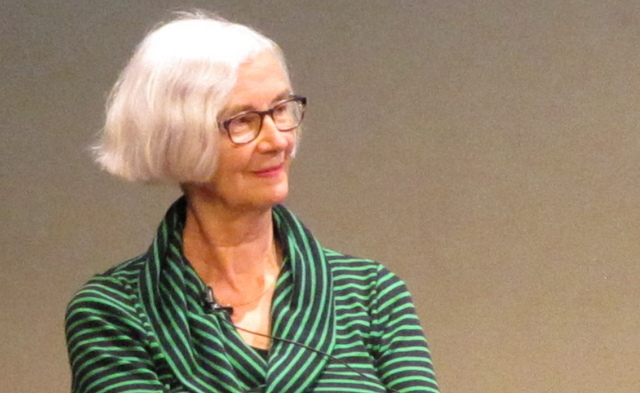
“Blue Clouds” deals up predatory males, mothers and daughters, betrayed and doubly betrayed women (an ancient story told with freshness and aplomb with just a hint of perverse eroticism), against an ironic backdrop of political engagement — even more ironic because it’s all told through the eyes of the cleaning help. Cynthia Flood writes like a telegram — terse, elliptical — but creates fictional worlds dense with character, drama and a sudden crimping of emotion. Cynthia Flood’s stories found their way into Best Canadian Stories twice (1997 & 2001) in the decade I edited the book; it’s wonderful to have her on the pages of NC. (The author photos are by Dean Sinnett.)

dg


The pattern often isn’t noticed till a man’s in his thirties, even forties. By then he’s had several — serious relationships, the comrades say. Serial monogamy, they say that too. If his teens were examined there’d be no surprise finding he’d favoured girlfriends with dear little sisters, but here at the hall people mostly arrive in their twenties. Their time before the movement is hidden, except what they pick to tell, and telling is cleaning.

Back up. Such a man, when he falls for a woman she has a daughter. Maybe two. Could be sons also, but he’s not aiming for importance in the life of a small man. It’s the small woman he wants. Oh, not to rape, though maybe a hug she’ll remember on a birthday, or when she’s back from summer camp. No, he wants to implant his image, so if she thinks Man it’s him. He puts his arm round her mother, tongue-kisses, turns to smile. This is how it’s done. Your mum likes it. Seen it, seen it, the offer to babysit. The young mum goes off smiling to her CR group. This guy really wants her to be liberated! He plays with the girl, helps with homework, is fun with her friends, and if she’s in her teens lets her know sideways that boys haven’t much to offer. He and she chat about how immature they are, how the girl deserves better. Then the break-up: he’s charmed by a fresh girl/woman combo. Stale mother, alone again. A child missing him can be comforted but a teen turns sour, specially to revolutionary mum.

Exceptions, yes. Roy’s a carpenter, in his late forties. On him, those years look good. He and Marion and her daughter came to Vancouver from the Calgary branch ten years ago. At the Friday suppers R and M are side by side at the big table. They dance, they picket and poster and go to conventions. Marion’s a lifer at the post office, friendly, considerate. Not much for theory. Jennifer just finished high school. Hasn’t joined the Youth. Comes with the grownups to the Oct Rev and May Day banquets, that’s all. Sullen.

Her father?

“None of your beeswax,” says the old one.

The true sign of no nastiness with Roy is that he and Marion and Jennifer don’t live together. To be under the same roof — the girl-hunters engineer and plot to get there, but this mum and her daughter keep their own place.

Enough chit-chat. The bathrooms at the movement hall are Monday.  After every weekend, vomit’s here and there because the Youth can’t manage booze yet. Not only them, either. The divided bucket: dip mop in cleaning solution on one side, then in water so hot it hurts. Use the side-press wringer. Repeat, repeat. Disinfect the wheezing toilets. Smear abrasive cream on porcelain. Sprinkle deodorizing powder on the floor, sweep it up. The bathrooms won’t ever look like ads, but they’re better than the Cavalier’s. That’s down the street, Monday’s next job. Pub washrooms take twice as long to clean. Shovel, more like. Stinking loops of paper that never reached the bowl, condoms, underpants, butts, coke, bloody pads draped over the pedal-cans, smashed glass, the red crushed wax of lipstick.

§

The problem of the strong women is different.

The old one’s in her sixties. Pushy as hell to survive and support her girl (near forty now) and do the political. Husband? AWOL decades back, couldn’t manage her. Such a life, rebelling through Depression War Cold War, struggling for abortion and birth control, still at it, startled and happy to meet today’s young libbers. Hardworking beyond hardworking. Known to every lefty in the city, admired.

“No point any man sniffing around thank you very much. I like my independence.”

Used to be, her typewriter rattled on for hours. Arthritis now. Hates help.

Her daughter’s the opposite. When she comes round, not often, always for money, the old one’s sad after. Hides in a bathroom to re-braid her hair, the tiara brown still with grey woven in. Out again. Slam. “Jake, you call this sink clean?” Marion sometimes sits with her, talking quietly. A hug round the shoulders.

Back up! Women like the old one don’t mean harm. They’re just big. Breathing normally, they suck out all the oxygen. Beloveds can suffocate.

Enough. Cleaner, that’s the job here at the hall. And handyman.

Why can’t the TU comrades — revolutionary electricians carpenters fishermen longshoremen — shim the filing cabinet, rewire the ceiling light, put a new ribbon in the Remington when the old one’s fingers won’t? Because they’re not here weekdays. They work. Or, in this period of intensifying struggle, they’re on strike. Locked out. A demo, a flying picket, a union meeting.

The men on staff here were mostly students, before. They can’t put a handle on a pencil-sharpener, let alone finesse the old Gestetner. The present Organizer once took twenty minutes by the clock deciding whether to phone Toronto Centre long-distance. (No.) Swivels his chair about, reads, wouldn’t notice a mass uprising at the front door. Recently the old one reamed him out when a still-meaty chicken carcass vanished from the fridge. “There’s petty cash in this hall, too,” shouting. “Typewriters, easy to pawn. Open your eyes, asshole!”

Back up back up back up. Girl-hunters, strong women — these are types. Learning to identify, over two decades of cleaning here. Others too. The too-enthusiastic contact who toils at the hall night and day for months, then gone without a word. “Here on a visit,“ the cdes state.

The misfits, so-called, those with a serious lack, a family it may be, looks, social ease, fluency in English, even a job. They want compensation.

So do those mourning a religion or a love. Mourning a baby, once, but after two years dying of grief she revived and left.

As for the nut-cases, no one here or elsewhere knows what to do. Some cdes, forcibly removed in ambulances, come back to rant and throw furniture.

Back up!

Roy too lives in the old three-storey building near English Bay. The Sandringham. Good construction, not like now. Solid wood doors, brass carpet-rods on the stairs (tricky to clean), small delivery cupboards outside each apartment door. For milk, long ago, by horse-drawn cart no doubt. Roy’s on the top floor. Says Hello. Chats at the mail boxes, or by the laundry next to the small basement suite. In exchange for interior maintenance, reduced rent. A deal. Ideal.

Once Roy wisecracked about the old mole Revolution, underground. Nothing to say occurred. The place in fact is bright.

Most tenants are elderly, female, alone. Some dodder. Not Mrs Wolfe. That Saturday she came over because she’d been away a day or two, on Bowen, lovely weather, and was now afraid for Miss Nugent above her, who did not answer door or phone.

“But I heard a tap on my ceiling.”

To the second floor. In Mrs W’s bare spare kitchen, listening upwards to silence.

Then to the manager’s apartment, but Russell’s almost always sozzled since his wife died. Couldn’t locate a key. What a jeezly mess. Mrs W’s eyebrows up to the hairline.

The stairs with her again, third floor, seeking Roy’s skill and strength. Also he might know locks. Rap, rap.

Mrs W wondered, “That milk cupboard. Could someone get through?”

Broad male shoulders the problem, not only Roy’s.

He said, “I’ll phone Marion. Jennifer might.”

Not long till the two arrived. The girl slender as celery.

Roy broke through Miss N’s milk-door.

Mrs Wolfe’s trill. “Emily! Emily?”

Nothing.

The girl’s arms, head, shoulders into the aperture, Marion lifting legs to help. Jennifer’s bum, compressed, wiggling through. Roy’s gaze. Savouring. A tumble, a scramble. The latch clicking open.

What was expected. Not dead, out cold, one hip at a wrong angle. Ugly breathing. The kitchen floor puddled.  Been there two days anyway, the ambulance guessed.

Miss N gone then, feet first as the saying goes, unlikely to return. Siren fading. Mrs W weepy, Roy and Jennifer slipping out, useless Russell barging in.

Marion. “A cup of tea, Mrs Wolfe? Your place? Best to take your friend’s keys.” Poking through the shabby purse, more tears.

Alone to clean up, also as expected. Floor soon done, but Roy to be all rethought. Marion too. The girl didn’t arrive alone. Not allowed? Separate apartments. What went on in Calgary?

§

Each Monday, the quality of the previous evening’s branch meeting is palpable.

Attacking the bathrooms, even a humble contact — a man who’s never joined, never paid dues, invented a party-name, raised a hand, spoken his word, taken to the streets, held a banner, waved a leaflet, a man who only cleans for statutory hours as he cleans all the rental spaces in this building, offices, storage rooms, cubbies for solo notaries accountants psychics — even that man can smell the night’s doings. Fear sometimes. Anger, agitation.  The tang of power.

To sense.

Long long ago, a so-called friend of the mum whispered she hadn’t wanted this baby. Tried to have it out, failed. Illegal then and still. This whisper heard at thirteen, approx. Why tell? Mean. A child’s word, correct. Rancid with meanness. Much thought given to that whisper.

Life alone with her, scanty hard rough, tempers lost voices raised but never an unwanted feel, not even with the school troubles, abc and xyz and all between. She wasn’t a big person, either, plenty of air. Though large when gone.

Years later, realizing that teller’s envy. Of the mum. With her failure by her side. Warmth ran all the way back through the shared time.

§

Back up back up.

The hall, one morning — like sniffing leftovers from the fridge, Nose declaring On the turn. Irrevocable. Trouble.

At big tables, cdes fold, staple, lick stamps, smoke. From the back room, no printing sounds because the monster’s on the fritz. This week’s forum leaflet is just a ditto. Nobody’s pleased. Waste-paper all over the O’s office, the basket full. His plaid shirt stiff with sweat. What a reek. The worker daily handling dirt grime scum cum dust rot grit mould ooze shit pee grease slime puke scuzz grunge — that one, his body’s clean. Fresh overalls. On such a day, routine sustains. Ammonia. Baking soda. Snaky wet-mop whispers, swirling over lino. The power of bleach. New rubber gloves. Where not pitted, the chrome shines.

Tired.

The old one isn’t talking. Sternly brings coffee. Not enough sugar. After twenty years she should know.

At last, check the stuck Gestetner. Ink can’t be forced through. Roller, drums, something inside, invisible. No time now to take it apart.

Tired. A nap on the fold-out cot? Better to exit this bad air. The Cavalier’s dirt a relief.

§

Late afternoon, going home.

Mrs Wolfe outside the Chinese grocery. Holding a turnip. “Jake, that Jennifer is in the building.”

Clarification. Mrs W has gone up to air out Miss N’s place, launder the lonely tea-towel and undies in the hamper.  Has seen the girl.

“I’ve never liked that man’s looks. Trouble coming.”

In she goes, to pay for her vegetable. So she too has a list of types. If she and the old one met? Scorn, to start. Prim proper, tough coarse sharp. They’d find links though. Care for others, disapproval. Mrs W was once a crack typist.

Looking up at Roy’s windows. That girl in his bed, bum and all. The mother alone.

Telling should have happened then. A word to the old one. To the women’s fraction leader, not that Ms Loose Tits ever notices a cleaner’s work. To the O, even.  Should, should, telling is cleaning, but. But she was under the Sandringham’s roof, night after night. Close by. Wake, sense. Once, up the carpeted stairs. Silence. Stained glass backlit by the moon. The corridor still, by Roy’s. No vibrations.

Some days later, he’s in the laundry room. Cross. Shoving sheets into the dryer.

“Nothing but meddling old women here.”

They find somewhere else. At night, the building’s different.

§

On Wednesday the off-smell at the hall is overlaid by tension, like before a demo, or a bitter forum where all know the TU cdes will haul some yelling sectarian out. What? There’s been no announcement.

Kitchen.

After the big Friday suppers it’s late when cdes clean up, all are tired, the fluorescents cast distorting shadows. Mondays, bathrooms take precedence. Thus, today’s task is to degrease. On counters, sinks, oven racks, shelving, baking pans, soup-kettles, sharp liquids force soft fats to huddle into little orbs while hard ones slide off like scabs. The new spray-can foams penetrate where a soapy rag can’t. Skin itches. Eyes hurt. The old one reads aloud the cans’ contents, but she’s no chemist. Familiar cleansers are harsh anyway. Over time, steel wool blurs fingerprints.

Now all squeaks clean, but the sink won’t drain. A wire hook fishes up carbonized macaroni thick with tapioca cement. Still water won’t rush down. The cut-off valve. A bucket. Hands and knees, to the j-pipe. Wrench. Open. Scrape, but the foul blockage lacks any spoon, bottle-opener, pencil. No obvious blame. Back painful, twisted. The Gestetner can wait.

§

Work socks, cheapest at Army & Navy.  Parcel in hand, out to sunshine, and on the corner a group of women. Not young, not libbers. The light’s hard on used skin, bare arms. A chocolate bar, shared. Laughter in the sun. Downlines by the lips curl way up. The old one’s daughter waves her cigarette in the air, a big circle, more giggles, affection all round. Watching them, a fellow on crutches. Once a logger? Skid row’s full of broken men. Coal dust ground into every old miner’s cheeks, forehead, ears, into the eyelids’ red linings.

§

“Jennifer is eighteen.” The old one speaks through tight teeth. “A woman grown.” Purple eye-bags. “Won’t listen, naturally. Little fool. As for him. . . .”  She goes on scalping potatoes for supper.

The big machine releases the coils of its hose.

To run the vacuum is to be doubly invisible. From room to room the roaring goes without a glance from cdes rolling out paper tablecloth, slinging cutlery, setting up chairs and lectern and the lit table. Fridays aren’t as important as Sundays, but they do matter. Suppers and forums draw contacts.

The cord’s too short to do the whole place in one go, so pull from one outlet, plug into another. The beast snorts up dirt. In the noise-gaps comrades go on talking loudly as they pin up the regular decorations, posters of screaming naked child, screaming kneeling woman, man shot dead in the ear, a president’s snarl, women holding sky.

Someone surprised those two in Stanley Park. Movement behind bushes. Not just someone. Marion. She made a scene at the branch exec.

Jennifer and Roy moved the girl’s stuff to his place, meanwhile. Every single thing.

Jennifer wouldn’t listen to the old one. Laughed at Marion. No, the mother slapped the daughter. True, both.

Roy’s quitting the movement. No, he refused to quit. Cited women’s liberation, the girl’s right to control her own body, choose lovers freely.

At this the mother shouted, “Bullshit! God damn you to hell.” Lots of atheists still curse by God. The women’s fraction mostly on side with the mother. Two leading women against.

The O’s torn. Roy might be expelled. Mightn’t.

As the vacuum noses towards its cave, the old one wades into the hissing gossip. “Shut up, the lot of you! Can’t you see it’s a tragedy?” Throws down her apron, blunders weeping to the door and out into summer rain.

About this work. After the vacuuming, no one says, “Wow, look at the floors!” Cover given by the noise is unnecessary. Stocky, not tall, not authoritative, not admired by any girl. Who’ll observe a toilet’s blanching? An unspotted mirror, shelves unfurred? Young cdes assume  things clean themselves. Telling is cleaning. Without, the inexorable slide from malfunction to breakdown, mess to filth.

Rare, to eat supper at the hall. This evening the tables packed, loud. Who peeled the spuds after the old one left? No matter. Plain food, plentiful. All await, none saying so, the arrival of — Roy? He’d have the nerve. Jennifer? Raging Marion?

None.

Staying to hear the speaker is beyond rare, but to leave feels incomplete. Plus disloyal to the old one, still AWOL.

The draft-dodger at the lectern is black Irish, his family raw from Dublin to New York somewhere in the 19th c. Witty yet dead serious. A vocabulary to stun. Vietnam his theme. His topic, divisions in the anti-war movement over slogans. With vigour he parses Victory to the Vietcong, Bring The Troops Home, Stop Canadian Complicity, U S Out Now, arrives at the right conclusion — and leaps off again, soaring to a prosecutor’s summing up of capitalism’s bellicose crimes. Then a paean to the brave Vietnamese. To the sacrifice and glory of the workers’ movements around the world. Their history. Their future.

When with a startled look the speaker ceases, applause. Spontaneously all rise to sing the Internationale. He blushes. Then the old one’s up the aisle, tiara and clothes damp with rain. She claps him on the back, the first of many.

Not including the old one’s daughter. Snuck in. Nearby. The bleak face hateful, scornful of hall, speaker, song, applause. Oh why tonight, her mother happy? How to get rid? The forum over, everyone in motion. Hand to pocket but too slow. Those two pairs of eyes find each other.

A kind of finish. The day not yet over, though.

To the Cavalier, as a customer. Alone, to consider that young man’s exultation. The old one’s sorrow. Days of blame before she’ll be anything like herself. If hand quicker to pocket, all changed? No. For sure that daughter wants to wound.

Back up. No, no, this isn’t like not telling about the girl. That wasn’t for sure. Might have changed things. Coward. Worse.

A second beer. The daughter’s contempt aims at her mother, but it’s common these days on the call-in radio shows, TV, the talk on buses. Loathing. Fear. But what if no young rebelled? Just grew old? Before departure, a visit to the men’s room. Disgusting, though scrubbed savagely this morning. There’s the answer to What if.

Then the dark hike down to English Bay. Will Roy’s bedroom light be on? No, dirty coward. They’re elsewhere.

§

Sunset.

Here on the beach at English Bay, a sharp curve in the seawall makes good shelter to watch the sky split into gold and orange feathers. People come round that point squinting westward, don’t see someone almost at their feet on the grey sand.

Can that be Roy, hungry, hang-dog?

Be certain!

Up from beach to path, scurry ahead of the pair. Dip down by shrubs.

She’s in view first. Cat got the cream, look at me! Not a glance at that desperate figure by her, starved. Watching a handsome man thus, pure pleasure. Hot tasty spite. Meanness. Typical.

The colours in the sky go on for hours, as they do in summer.

§

Weekly, the Bissell beats as it sweeps as it cleans the carpet-runners on the first floor of The Sandringham, the second, third.

Dust banisters. Dust the sills of the stained-glass windows, nearly colourless by day.

Behind Miss N’s door, silence.

Behind Roy’s too.

Neither he nor Marion appears at the hall, their absence a sore licked by sixty tongues a day. Other cdes take on their assignments. The O studies his documents. For no reason the old one’s arthritis lets up, and at 110 wpm the Remington’s carriage-bell rings madly. Newspaper copy, minutes, letters, drafts of leaflets and pamphlets.

§

The Cavalier’s lino is so scarred and broken that cleaning the floor is ritual only, but the front windows still do respond.

What? The old one’s limping down the street toward the pub. Well-known of course, Red Annie, local character.

Out of the boozy dim, vinegar rag in hand.

“Jake, it’s Jennifer. Get Marion.”

In the struggle towards reading, some words are fireworks. War, for example, even if it comes up as raw, once learned isn’t forgotten. Same with hearing. That name’s a floodlight.

Run.

“Good comrade!” cries the old one.

Seven blocks downtown, hot bright streets, breathless.

At the post office, the mother’s on a break, where? Run upstairs, the cafeteria, panting, not there, down, corridors, where? Doors, counters, asking. At last Marion’s surprise, terror.

“Quick,” she gasps, exiting the PO.

Vinegar rag waves for a taxi.

Arrival. Marion headlong into the hall.

The  cab waits.

From the Gestetner room, the O’s swivel chair emerges. Slumped in it, Jennifer, eyes half-closed. The old one pushes the chair forward, kicks at Roy, elbows him off.

“Mummy?”

“Right here, darling.” An embrace. Marion grabs the chair, heads for the door. Roy trails.

With the old one, a shared stare at the print-room. The Gestetner to be eviscerated. The ditto machine. Folded-out cot. Silkscreen. Splats on the lino.

“Later!” she cries, pulling an arm. “They’ve been in there for weeks. He’d got a hall key somehow.” Passing the O’s office. “Damn fool never noticed.”

Out to the sidewalk.

“Bastard, how could you?” The mother spits.

Roy’s chin drips. “It wasn’t a quack I took her to! I’d never do that, Marion, you know me! I love her.”

“In we get, darling.”

Taxi’s off to Emergency. The not-father-to-be runs after. “Marion, come back!” Slows. Slinks off.

Double-quick, to the Cavalier for a mickey. The swig’s sharp, hot.

Back. Into the kitchen, at the big table by the old one.

She swallows.

Again.

Calmer now.

In a bit she’ll go over to the Remington, won’t notice the bucket’s clank. Cleaning solution this side, pink water that.

“If the cops don’t come down on us for aiding and abetting, we’ll be lucky. Procuring, even. Bloody irresponsible.”  She doesn’t know the half of that. “And you heard, he quote loves her. Typical.” Sighing, she sets the flask aside, smoothes her hair.

§

At the PO, Marion puts in for a transfer and returns to Calgary.

Strong Jennifer moves to Toronto. Bum never seen again.

At the next branch, Roy shoves in to argue his case. TU cdes strong-arm him out. In this the old one doesn’t exactly take pleasure, but she doesn’t not either.

Russell manages to locate the Apt For Rent sign, pens 2 clumsily before Apt.

A day later, a summons from Mrs W.

“Look what that man did before he left.”

The Sandringham’s garbage cans, tossed. Newsprint all over the alley, cat-litter, tins, jars, peels and grounds, bacon-fat, tea-bags. Slimy leavings coat the cans’ insides. After tomorrow’s pickup, scrub. Russell won’t do it. Somebody has to.

“He even threw these out.“ Wet white papers stick to asphalt, drift under parked cars. She holds out a handful. “From when Jennifer was a little girl.”

Artworks, back through elementary. One picture has a strip of green along the bottom, red flower-dots above, a white sky thick with paint. Along the top are plump blue clouds with scalloped edges.

“Poor girl. She got that all wrong too.”

This doesn’t cover the whole situation, yet nothing to say occurs. Mrs W stoops to gather up more refuse.

                                                                                    —————————————————

Cynthia Flood’s latest collection of short fiction is The English Stories (Biblioasis 2009). Her stories have appeared in many Canadian magazines and anthologies and in Best Canadian Stories, and have won the Journey Prize and a National Magazine Gold among other awards. She’s at work on a fourth collection of stories and has published recently at FoundPress.com and Joyland.ca  After decades in a house on Vancouver’s East Side, she now lives in a 7th-floor apartment overlooking Lost Lagoon in Stanley Park. Heaven!