Jun 162017
 

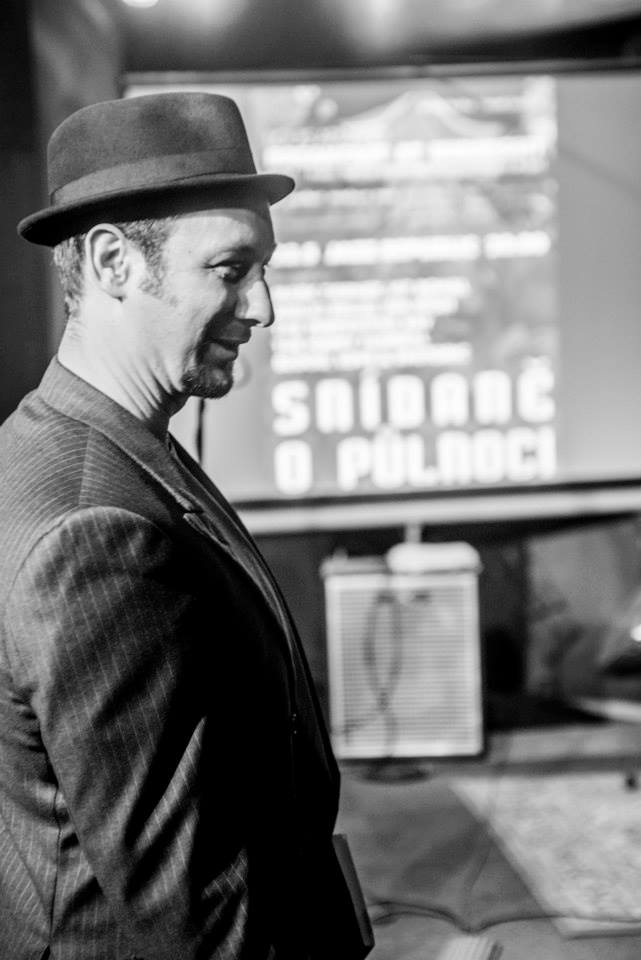
Photo by César Cid

Rodrigo Fresán’s The Invented Part is a wild ride of a novel that takes on many different forms. The following excerpt comes from early in the book, and concerns two young documentary filmmakers who are working to put together a project on the novel’s nameless protagonist, a writer who recently threw himself into the Hadron Collider and merged with the God Particle.

As they piece together footage at the writer’s home, they also gather quotes and passages said by the writer in various interviews throughout his career. These are frequently hilarious and insightful, and they stretch over many pages. Presented here are just a few of the quotes collected by the filmmakers, which give the reader a sense of author Fresán’s playful approach to storytelling. Note: all bracketed ellipses are part of the novel’s text.

The Invented Part is translated from the Spanish by Will Vanderhyden.

— Benjamin Woodard

.

*A recommendation of Pink Floyd’s Wish You Were Here and Bach’s Goldberg Variations by Glen Gould (his second version, almost a farewell) as “an ideal soundtrack for sitting down and remaining seated and writing. [. . .] Perfect music for trying to attain that thing Fitzgerald said, that thing about how ‘all good writing is like swimming under water and holding your breath.’” And “Big Sky” by The Kinks as “the best way to kick-start every workday. [. . .] A kind of supplication. An Our Father who is, indeed, in heaven because he is the heavens. And also a way to remember that, while a good part of the writers of my generation wanted to be U2, it’s not bad at all, better in fact, to want to be The Kinks. True, the tours would be more uncomfortable and less spectacular. And the loneliness of the backstage hallway before the instant glory of those hundred meters. But better to be like Harry Nilsson than like Bono. Do any of you have even the slightest idea who Harry Nilsson was or is? Or Warren Zevon? And, just to be clear, I’m not talking about their dissonant and clever self-destructive epics but about their constructive intimacy in the moment of composing subtle and perfect songs. The exquisite way they assemble and disassemble verses and choruses and bridges so their poetry can cross over to the other side where you’re waiting for it. So, that’s how I think about the writing of stories and novels. A particular balance of feelings and sound and phrasings and word games. And the Greek Choir holding hands and singing ‘He goes around saying he’d rather be a rocker than writer, doo do doo, doo do doo, doo do, do doo do doo, doo do, doo do . . .’ In the end . . . Where was I? Ah, yes, I’ll find an easy example: better to be like Ray Davies than like Bono, I think. And I’m repeating myself. I insist. The Kinks. The ones of ‘You Really Got Me,’ Right? But I think more about a song like ‘Big Sky.’ In ‘Big Sky’—like Harry Nilsson in ‘Good Old Desk’ singing to his divine desk; or Warren Zevon in ‘Desperados Under the Eaves,’ feeling down and listening to the sound of the air conditioner, which suddenly inspires a final and majestic crescendo—Ray Davies invokes, without getting too anxious, a sort of unknown deity who doesn’t care much about us. Bono, on the other hand, time and again desperately kneels down in intense prayer to someone he knows well—to himself [. . .]. Staying on topic—and band—I can’t think of a better song than ‘Days,’ also by The Kinks, as background music for lowering the blinds at the end of a workday. But it might be better to listen to Elvis Costello’s crepuscular version and not The Kinks’ original . . . Ray Davies. Thank you . . . All of a sudden I remember that once, a long time ago, Ray Davies rescued me from a University lost among the Iowa cornfields and made it possible for me to go to New York, to hear him sing ‘Days.’ I was there, as a sort of guest writer in an academic B-movie. And I couldn’t leave that place. I was held captive by the bureaucratic spell of a special visa that didn’t allow you to travel around the United States unless someone took responsibility for you. So I found out that Ray Davies was going to play in Manhattan. And I’d never heard or seen him live and in person. And I needed to see him and to hear him. So I tracked down the number of the hotel where he was staying, I was able to get them to put me through to his room and he answered and I explained the situation. He had to talk to the Dean so they would let me leave, so I could go to his concert. Of course at first Ray Davies thought it was a prank being played by some malicious friend, and then, to verify that I was an authentic fan, he made me sing several of his songs over the telephone. Not the easiest ones. No hits. Songs like ‘Polly’ or ‘Too Much on My Mind’ (one of my all-time favorites) or ‘People Take Pictures of Each Other’ or ‘Art Lover’ or ‘Scattered.’ And I knew all of them. But pretty soon he got tired and hung up. A few days later, thanks to a message he sent to the Dean, I left heading east. Ray Davies invited me to have tea with him; he gave me a ticket, and said, ‘This is as far as we go and we’re never going to see each other again, right?’ A true gentleman, yes. An artist who merely raised an eyebrow above the Darjeeling-perfumed steam that rose from his cup and smiled somewhere between amused and sad when I mentioned, indignant, the gall with which, at that time, Blur and Oasis and Pulp stole and falsified his style and songs, reveling in money and fame and barely acknowledging his genius and tutelage and mastery. There are no writers, no writers of books like that. And if there are, I’m not aware of them. There are no fans of writers like that either. Fans of musicians are happy to know their songs and to howl them at concerts or inside rooms with doors shut tight. Fans of writers, on the other hand, are more dangerous: fans of writers want to write, to write something of their own and, with their own writing, to rewrite the other and what the other has written.”

* Something that John Banville said to him once, as they walked around the outside of Martello Tower in Sandycove, about how “style goes on ahead giving triumphal leaps while the plot follows along behind dragging its feet.” Later he wondered whether it might not be possible for the style to go back a few steps and lovingly lift the plot up in its arms, as if it were a brilliant and complicated child, and turn it into something new, different: into a stylized plot, into the most well-plotted of styles. It was Nabokov, and he almost always agreed with Nabokov, who postulated that the best part of a writer’s biography didn’t pass through the record of his adventures, but through the history of his style. Style as an adventure and adventure as style, yes.

* Something he once told someone, while they walked around the outside of who knows where: “The gods of one religion frequently become the devils of the religion that follows it. Something similar happens with writers, with the writers of a prior generation when they are evaluated by the writers of the generation that follows them.”

* Answer: “What would I like as an epitaph on my gravestone? Easy: my name, the word ‘Reader,’ and the years 1963-1,000,000,000 and increasing. And it’s not that I want to live that long; but, warning, the code for the impossible second number passes through the word ‘Reader.’ Which is to say: more time, all time, to be able not to continue writing but to continue reading . . . When I was very young and still concerned with things like my photo on the jacket flap of my books, I once posed wearing a black T-shirt where, written in white letters, it read ‘So many books . . . so little time!’ . . . I bought it in a New York bookstore that no longer exists. The T-shirt no longer exists in my closet either. It disappeared along with those other T-shirts: one with the legend ‘Likes Like/Like Likes’ and another with a reproduction of the cover of Sgt. Pepper’s Lonely Hearts Club Band, where a friend who designed album covers had inserted my face next to that of William S. Burroughs. But the thing from the first T-shirt—I still think that. It’s extremely unfair that, clearly, neither I, nor anyone else, has the time, all-the-time-in-the-world, to read everything you need to read first in order to write later. To write the best that anyone can write . . . Faulkner, without going any further. I have him here, all the Library of America tomes, waiting. I read him a little and poorly in my adolescence, in deficient translations (which, also, might bring me to all the time I lack to reread, which is like a glorified version of reading) and there he remains, waiting for me. To read? Or not to read? Now? In summer or winter? Is it better that the climate and temperature of the external landscape correspond to Faulkner’s South? Or just the opposite? Next year? Is my writer DNA ready to receive such an explosion and, maybe, find itself changed forever? Who knows? Faulkner is there and there Faulkner stays, howling, like one of those dangerous wolves with one foot tied to a chain whose exact length is unknown. So how close can you safely get without him jumping on you and eating your face? Or, unbeknownst to you, chewing through his own foot and lying there, waiting for you? A lone wolf. Never forget how Faulkner responded to Hemingway suggesting that writers unite and make themselves strong, like doctors and lawyers and wolves. Faulkner mistrusted writers who came together and formed groups and generations, saying they were doomed to disappear, like wolves who are only wolves in packs, but are nothing but docile and harmless dogs on their own, dogs that are all bark and no bite.”

— Rodrigo Fresán, Translated from the Spanish by Will Vanderhyden

Published with permission from Open Letter Books

.

Rodrigo Fresán is the author of nine novels, including Kensington GardensMantra, and The Bottom of the Sky. His works incorporate many elements from science-fiction (Philip K. Dick in particular) alongside pop culture and literary references.

§

Will Vanderhyden received an MA in Literary Translation from the University of Rochester. He has translated fiction from Carlos Labbé, Edgardo Cozarinsky, Alfredo Bryce Echenique, Juan Marsé, Rafael Sánchez Ferlosio, Rodrigo Fresán, and Elvio Gandolfo.

.

.

Jun 112017


.

On ‘stress leave’ from the Afghanistan, Canadian soldier Elias Triffanis has recently arrived on the politically-divided island of Cyprus. In this opening scene, a doctor interviews Elias about the troubling after effects of a recent combat mission that went horribly wrong.  Elias’s troubles, however, are just beginning. —Richard Farrell 

§

PAPHOS, CYPRUS, 26 OCTOBER

“How long is it, then, since you have slept?” the doctor asked.

Elias looked up at the ceiling, trying to recall. The blades of the fan turned listlessly—in fact, they seemed to be slowing, as if the power had just cut out again.

“Surely you’ve slept a little since we last met?”

“It was yesterday, right?”

“Yesterday morning.”

“Okay.”

“About thirty hours ago,” the doctor said.

“I’ve passed out a couple of times, for a while. I tried not to.”

“So, you did not remain asleep? You had the dream again?”

“Yes.”

“You wish to describe it again, or the incident itself?”

“They’re almost the same. It’s not really a dream. More like a video of an atrocity.”

“As I said, this is typical of your condition—diagnostic, actually. However—”

“And, no, I don’t.”

“Pardon me?”

“Want to describe it again.”

Drops of sweat glistened on the raw-looking scalp under the doctor’s blond comb-over. Thick glasses magnified his colourless, pink-rimmed eyes, which blinked often. “Avoiding sleep, however,” he said. “It’s understandable, but I fear that such a—such a practice can only make the matter worse.”

“I’ve never needed much sleep.”

“Men of your kind often boast of how little sleep they need.”

“You’re not meant to mock your patients, are you?”

“You do look tired,” the doctor said, as if he hadn’t heard, “though in fact you seem somewhat improved today. Still, I apologize—”

“Frankly, I don’t feel that bad, I feel relieved, because I’m awake now, not asleep and reliving things. Insomnia is a fucking joy in comparison to that.”

“Self-inflicted sleep deprivation—not insomnia.”

“What did you mean by men of my kind?”

“Why do you ask?”

“Because I have no idea myself anymore.”

“Large men, robust. Metamorphic. Pardon me, mesomorphic.”

Elias Trifannis looked out the window over the doctor’s shoulder: a white pebble beach, the calm Mediterranean pixelated with sunlight. The army was using this former student residence on the west coast of Cyprus to treat personnel on stress leave from the war. Last night, while Elias silently performed yet another set of push-ups on the cold cement floor of his room, trying to hold off sleep, the patient in the next room screamed catastrophically. That was helpful: a few extra hours of adrenalized alertness.

“It’s funny how people think they can look at your body and know your soul,” Elias said.

That magnified blinking again. In a faster, fainter voice the doctor said, “Ah, mais oui, you are quite right, one should never assume a correlation between, between . . . how could I put it . . .”

Elias yawned helplessly, gapingly, a pathological yawn that convulsed his whole body. “Sorry, Dr. Boudreau,” he said at last. “I really do enjoy talking to you.”

“Perhaps you will be able to sleep better on your weekend away? I hope so. You are going across the island, to visit family?”

“Distant relatives.”

“How is your Greek now?”

“Etsi ki etsi. If you don’t mind my saying, you look really tired yourself.”

“Yes.” The doctor’s blinking made it seem he was trying to communicate something in a sort of binary code, words he couldn’t bring himself to say. “It’s not simply this heat wave. Normally, one grows used to working with the—the traumatized, yet I seem to find it increasingly . . . But what am I saying? I must not say such things!”

The fan still gave the illusion of perpetually slowing without ever stopping.

“In any case, Master Corporal—I wish you a peaceful weekend.”

“Don’t call me that, okay?”

“And, please, don’t speak of what happened in Kandahar.”

“I wouldn’t know how to speak about it.”

“And bear in mind, it was not your fault! Not anyone’s fault!”

The doctor subdued his twitching by closing his eyes for a second, then opening them wide. “It was simply . . .”

“An accident. I know.”

“And don’t forget your medication.”

“No way. I love my medication.”

Dizzy, seeing double, Elias tried to focus his gaze. Out the window in the distance a sunburned figure in a swimsuit—who seemed impossibly to be the doctor—appeared on the shore and walked into the sea.

— Steven Heighton

Excerpted from The Nightingale Won’t Let You Sleep by Steven Heighton. Copyright © 2017 by Steven Heighton. Published by Hamish Hamilton Canada, a division of Penguin Random House Canada Limited. Reproduced by arrangement with the Publisher. All rights reserved.

N5

Steven Heighton is the author of fourteen books, including three short story collections, three novels and six poetry collections, including he Waking Comes Late (2016),  The Dead Are More Visible (2012), Every Lost Country (2010), and Afterlands (2005) 

N5

May 102017
 

As this section opens, the unnamed narrator is leaving the hotel in Rio de Janeiro where he has spent the night. He is anxiously embarking on some sort of necessary journey. But he is travelling without luggage and, it would seem, without a clearly defined purpose, or destination.

Atlantic Hotel is translated from the Portuguese by Adam Morris.

—  Joseph Schreiber

.

I went down the hotel steps half stooped, my legs and back were killing me. When I got to the door I put one of my hands against the wall to hold myself up, and with the other I pressed against the pain in my lower back. Maybe I should go back to my room? I wondered. Maybe I should stay, give up? Maybe I should marry the flapper from reception? Maybe I’ll be content with the company of a woman?

I’m old, I thought. Old at barely forty. Traipsing around would be madness. Legs, weak. Irregular heartbeat, I know. And my rheumatoid posture…

There, stopped in the hotel doorway, I felt vertigo. Foggy vision, out of breath…

But I needed to get going. I stepped down from the stoop and leaned against the wall of the building. Lots of people were passing along Nossa Senhora de Copacabana, just like every morning, some brushed against me, touched me inadvertently, coughed.

I felt on the verge of fainting but avoided the idea of asking for help. Resorting to another person’s assistance would be the same as staying, and I needed to go.

Then I thought about getting a taxi. So I went looking for one. I walked by moving one leg at a time, steadying myself on other people like a drunk. Until my feet stepped into the dark puddle in the gutter. I hailed a cab and it stopped.

I told the cabbie I was going to the bus station. I got in the back, curled up, lying down on the seat. The driver asked if I was sick. With what remained of my voice I said I was only tired. Bus station, I repeated. The cabbie kept talking, but I couldn’t follow.

At one point I understood he was talking about the cold. I said: Oh, the cold, as cold as the Russian steppes. He told me: The Russian steppes are cold as death. This I heard quite clearly.

I returned to my senses. The traffic. The cabbie commenting on the smog in the Rebouças tunnel. I leveraged my hands against the seat back and managed to bring myself upright. The car was emerging from the tunnel.

I was almost better, just a tremble in my hands.

“How come you’re so tired?” the cabbie asked.

“I was partying all night,” I replied.

He laughed. I showed him my hand and said, “Look how I’m trembling, it’s alcohol tremors.”

“You’re an alcoholic?” he asked.

“Yeah, but I’m going to a treatment center in Minas,” I replied.

He shook his head, gave a little snort of assent, and said, “I have a brother-in-law who drinks. He was in rehab three times.”

Suddenly, the cabbie said we’d arrived at the bus station.

“You all right?” he asked.

“Great,” I replied, almost startled.

I watched the commotion at the bus station and saw the hour of my departure had arrived, the way someone going under for surgery witnesses the anesthesiologist’s first procedure.

I took a wad of money from my pocket, opened my hand, and gave it to the cabbie. He asked if I wanted change. I inquired if he knew where to find the ticket counters for the buses to Minas. He smiled, gave me a look, and said he had no idea.

“I’m sorry.” I said it full of a sudden shame.

“Sorry for what, man?” he asked.

“Sorry for being who I am,” I replied, closing the car door softly.

I got on the escalator going up. The one coming down was jammed with people. Between the up and down escalators there was a long concrete staircase. People in a hurry were going up and down, skipping steps.

On the escalators everyone seemed totally immersed in what they were doing. Noticing this relaxed me. I too would manage: travel, take the bus, arrive somewhere else.

There were long lines at the ticket windows. A lot of people were milling around. Many others sat on benches. A man and a woman kissed shamelessly at a lunch counter. A man left the pharmacy looking at his watch.

I sat on a bench, way at the end. The rest of the bench was full. I stretched out one of my legs a bit, without letting my heel come off the floor. My leg looked a bit pitiful. Maybe it was the crumpled up unwashed sock, the fleck of mud on my shoe. A pitiful state I’d done everything I could to disguise. I brought the leg back over beside the other.

Now I was looking at nothing except the dirty floor on the upper deck of the bus station. Gazing at that dirty floor, I had nothing else to think about. Maybe a vague yearning for a child’s intimacy with the floor.

It struck me that my journey might bring me back to that intimacy. A voice inside me said, between excitement and apprehension, Who knows, maybe I’ll end up sleeping on the ground.

I took out the ball cap I always carried in the pocket of my blazer. I put it on my head in the position I liked, a little to the right side. I no longer needed a mirror to be sure the cap was placed in exactly that position.

The cap obeyed, loyal. My hands had memorized the way to execute their task. As always, when the task was completed, I gave a little tap on the cap’s brim to see if it was really on right.

I ran my hands down my body as though searching for something and felt a bulk in the blazer’s other pocket. It was a thick piece of paper folded several times—a map of Brazil I’d bought two days earlier.

I looked around, making sure there was room to open the map all the way. I put my legs over the armrest of the bench. Now, with nobody on either side, I could extend my arms.

As I opened the map I remembered what I’d said to the cabbie. That I’d be going to alcohol rehab in the Minas countryside.

On the map, the Minas countryside looked like a swarm of little towns. My gaze descended a little, crossing into São Paulo State and stopping on Paraná.

I was thirsty. I thought about getting a mineral water. I folded the map, discreetly tucked it under my butt. Then I got up and walked away.

I didn’t even make it five steps. A woman seated on the bench facing mine called out, “Hey, sir, sir, I think you forgot something there.”

I looked back, toward the spot where I’d been sitting, saw the paper folded on the bench seat, turned to the woman, and shook my head, saying, “It’s not mine.”

— João Gilberto Noll, Translated from Portuguese by Adam Morris

Excerpt courtesy of Two Lines Press; translation copyright 2017 Adam Morris

.

João Gilberto Noll (1946–2017) is the author of nearly twenty books. His work appeared in Brazil’s leading periodicals, and he was a guest of the Rockefeller Foundation, King’s College London, and the University of California at Berkeley, as well as a Guggenheim Fellow. A five-time recipient of the Prêmio Jabuti, and the recipient of more than ten awards in all, he died in Porto Alegre, Brazil, at the age of 70.

§

Adam Morris has a PhD in Latin American Literature from Stanford University and is the recipient of the 2012 Susan Sontag Foundation Prize in literary translation. He is the translator of João Gilberto Noll’s Atlantic Hotel (Two Lines Press, 2017) and Quiet Creature on the Corner (Two Lines Press, 2016), and Hilda Hilst’s With My Dog-Eyes (Melville House Books, 2014). His writing and translations have been published widely, including in BOMB magazine, the Los Angeles Review of Books, and many others. He lives in San Francisco.

.

Apr 092017
 

The following excerpt, the opening passage of Frontier, introduces the central character, Liujin. Note the the crisp, unadorned quality of Can Xue’s prose and the fine membrane between the ordinary and the surreal. 

Frontier is translated from the Chinese by Karen Gernant and Chen Zeping.

—  Joseph Schreiber

.
LIUJIN

IT WAS LATE. Liujin stood there, leaning against the wooden door. The ripe grapes hanging on the arbors flickered with a slight fluorescence in the moonlight. Blowing in the wind, the leaves of the old poplar tree sounded lovely. The voice of someone talking blended with the rustling of the poplar leaves. Liujin couldn’t hear what he was saying. She knew it was the man who had recently been coming here late every night and sitting on the stone bench near the courtyard gate. At first, this had frightened Liujin and she hadn’t dared to go outside. Time after time, she had peeped out the window. Later on, realizing that this bear-like old man was harmless, she worked up the courage to approach him. He had good eyesight: even in the dim light, his eyes were as penetrating as sharp glass. He was busying his hands twisting hemp. He didn’t like to talk with people; his answers to Liujin’s questions were always vague: “I’m not sure . . .” He wasn’t one of her neighbors; where did he come from? Although he didn’t talk with her, he seemed to enjoy talking to himself. His words kept time with the sound of the wind and the leaves. When the wind stopped, he stopped. This was really strange. Tonight, his voice was louder, and pricking up her ears, Liujin made out a few words: “At noon, in the market . . .” Liujin tried hard to imagine the scene in this indoor market: piece goods, gold and silver jewelry, raisins, tambourines, foreigners, and so on. But she had no clue what the old man meant. Even though it was late, a woman was actually singing piteously and plaintively on the other side of the street; the woman seemed to be young. Could she be singing for the old man? But he apparently wasn’t listening; he was talking to himself. These days, Liujin had grown accustomed to his voice. She thought the old man looked a little like the poplar tree in the courtyard. The poplar was old, and so this man must be old, too. Liujin asked: Are you twisting the hemp to sell it? He didn’t answer. Sleepy, Liujin went off to bed. Before she fell asleep, she heard the young woman’s song turn sad and shrill. When she arose in the morning, she saw that the old man had left without a trace—not even a bit of hemp had been dropped on the ground. He really was a strange person. When she inquired of the neighbors, they said they didn’t know of such a person. No one had seen him. This made sense, for people generally didn’t go out so late. Liujin knew that she went to bed later than anyone else in the little town: she had formed this habit a long time ago. Still, what about the young woman singing? Judging by the direction the voice came from, she seemed to be from Meng Yu’s family. That family bought sheep from the pastures, slaughtered them in the market, and sold the fresh meat. With the strange old man showing up in her yard, Liujin no longer felt desolate and lonely in the autumn nights. She felt a vague affection for him, but she preferred not to explore the nature of this emotion.

She had lived by herself in this small enclosed area for five years. Before she was born, her parents had moved here from a large industrial city in the interior. Five years ago, her elderly parents went back to their hometown with many others, but she didn’t. Why had she stayed? Why hadn’t she wanted to go to the big city? She had some impressions of the city from her father’s descriptions of it. These impressions were mostly misty, not very reliable; she had tried hard to synthesize them, but without success. And so when her parents packed their bags and prepared to leave this small frontier town to go back to their old home, she began to feel dizzy. She was even unsteady when she walked. Late at night, for several days before they left, she heard the cracking sound at the riverside: with her bizarre sense of hearing, she knew the sound came from the poplars. These explosions came at intervals until the wee hours. In response to this inauspicious sound, a vague notion gradually occurred to Liujin. When she suggested that she stay behind, her father merely raised his right eyebrow. This was the way he expressed himself whenever something confirmed what he thought. “You’re an adult. It’s your choice.” All of a sudden, Liujin realized that he and Mama had been waiting for her to suggest this: she really was an idiot. So she unpacked her suitcase and put everything back where it belonged. True, she was thirty years old: why did she have to live with her parents? When the train started, her parents didn’t lean out the window. She didn’t know what they were thinking about. But when the last car was about to vanish from view, she suddenly saw clearly the big city in the distance. To be precise, it wasn’t a city, but a large white cloud floating in midair, with mirages in the mist. She even saw the apartment in the tall building where her parents lived. She didn’t know why their window was so dark in the strong light. How had she recognized it? Because her mother’s old-style pleated skirt was hanging in front of the window. On her way back, she walked steadily. She was returning to the home that now belonged to her alone. She trembled a little in excitement.

At first, Liujin wasn’t used to living alone. She sold cloth at the market. Every day when she left the noisy market and returned to the isolated little house, it was dark. For several days in a row, a tiny white wagtail strode hurriedly into her house; the little thing cried out briefly and sharply, as if looking for its companion. After quickly patrolling around inside, it left with a despondent cry. Liujin heard it fly to a tree, where it continued chirping. Had it experienced some tragedy in its life? Sitting under the lamp, she thought about the man who had recently been coming often to the market. He wore glasses, and when he picked up the cloth to look at it, his glasses almost touched the material. Liujin found this amusing. He seemed out of place in the market. He wasn’t like the other shoppers, and he didn’t bring any shopping bags, either. He was dressed like a farmer from the frontier. Of course he wasn’t a farmer; one could see that from the expression in his eyes. He always looked at cloth, but never bought any. Nor did he glance at Liujin. The way he touched the homemade cloth brought about an almost physiological response in Liujin. What kind of person was he? “I’m just looking,” he said, as if imploring Liujin. “Go ahead and look as long as you like,” she replied stiffly. All of a sudden—she didn’t know why—she felt empty inside.

One day, although it was late, the white wagtail hadn’t returned to its nest. It was circling beside a thorny rose bush, singing sadly. Acting on a hunch that something had happened, Liujin walked into the courtyard. She saw the bespectacled man from the market talking with a young woman under the streetlight. Suddenly, the woman screamed and ran away. Looking dizzy, the man leaned against a power pole, closed his eyes, and rested. The wagtail sang even more sadly, as if it were a mother who had lost her daughter. Approaching the man, Liujin said softly, “Tomorrow, I’ll take out a few more bolts of new cloth with a snow lotus pattern. It’s like . . . snow lotus, and yet it isn’t.” When the man heard her talking to him, he relaxed a little and said “Hello.” He turned and looked at her courtyard. Just then, she noticed that the wagtail had disappeared. Without saying anything else, the man left. The way he walked was funny—a little like a horse. Liujin had heard others call him “Mr. Sherman.” Maybe her encounters with him at the market weren’t accidental. Otherwise, why had he appeared in front of her house today? She also remembered the way the young woman had stamped her feet impatiently; at that time, the wagtail was chirping non-stop. Later, Liujin ran into this man in front of her house several times and greeted him properly, calling him “Mr. Sherman.” He always stood there—a little as if he were waiting for someone, for he kept looking at his watch. Liujin wondered if he was waiting for the young woman. Why had he chosen this place? How strange.

With Mr. Sherman showing up, Liujin had more energy. She worked hard tending her garden. Whenever she had a day off, she went into full swing. She planted many chrysanthemums and salvia along the wall—near the thorny rose bushes that were already there. There were still two poplars, one in the front and one in the back of the courtyard. Now she planted a few sandthorn trees: she liked plain trees like this. She also fertilized the grapes. On one of her days off, Mr. Sherman entered her courtyard. Liujin invited him to sit under the grape arbor. She brought out a tea table and placed a tea set on it. Just as they were about to drink tea, the wagtail appeared. It walked quickly back and forth, its tail jumping with each step. It kept chirping. Mr. Sherman paled and craned his neck like a horse and looked out. Finally, without drinking his tea, he apologized and took his leave. Liujin was very puzzled. It was this bird—perhaps it was two or three birds, all of them alike—that particularly puzzled her. Liujin realized she hadn’t seen the young woman again. What was going on between her and Mr. Sherman? Just now as he was sitting here, she had noticed that his right index finger was hurt and was wrapped in a thick bandage. He was dexterous in picking up his teacup with his left hand. Maybe he was left-handed.

By and large, Liujin’s life consisted of going from her home to the market and from the market to her home. On an impulse one night, she walked out and took the street to the riverside. The water level was low, and the small river would soon dry up. The sky was high. She walked along the river in the moonlight. There, she saw the corpses of poplars. She didn’t know if the four or five poplars had died of old age or if they had died unexpectedly. Their tall, straight trunks were ghostly. At first sight, her heart beat quickly. It was hard to muster the nerve to walk over to them. She startled a few willow warblers: their sharp cries made her legs quiver. She turned around and left, walking until she was sweating all over; then finally she looked back. How could the dead poplar trees still be right before her? A shadow emerged from the poplar grove and said, “Ah, are you here, too?” The sound startled her and almost made her faint. Luckily, she recognized her neighbor’s voice. The neighbor wasn’t alone. Behind him was another shadow. It was Mr. Sherman, and he was laughing. As he approached, Mr. Sherman said to Liujin, “When one sees dead trees like this, one shouldn’t run away. If you do, they’ll chase right after you.” The neighbor chimed in, “Mr. Sherman’s telling the truth, Liujin. You haven’t experienced this before, have you?” Even though she was standing in the shadows, Liujin felt her face turn fiery red. Had these two been hiding here long? How had she happened to come here just now? She recalled sitting at the table earlier writing her mother a letter, and being unable to go on writing because her mother’s words kept reverberating in her ears: “. . . Liujin, Liujin. There’s no way for you to come back to us. You’d better take good care of yourself.” Did Mama want her back after so long? She stood up and listened closely for a while to the wagtail’s lonely singing in the courtyard. When she had rushed out the gate, she forgot to close it. Perhaps these two men came here often to study these dead trees, but it was the first time she had ever come here.

“Look, the others are flourishing. It’s only these few trees: Did they commit collective suicide?”

When Mr. Sherman spoke again, his glasses were flashing with light. Liujin looked over at the trees and saw the moon brighten. The other poplars were so beautiful and vivacious that they seemed on the verge of speaking. Only the few dead ones were spooky. Her neighbor, old Song Feiyuan, rammed a shovel against a dead poplar trunk. Liujin noticed that the tree trunk remained absolutely still. Old Song chucked the shovel away and stood dazed in front of the trunk. Mr. Sherman laughed a little drily. Liujin suddenly recalled how wild this neighbor was when he was home. That autumn, this old man had gone crazy and dismantled the rear wall of his house. Luckily, the roof was covered with light couch grass, so the house didn’t collapse. In the winter, he warded off the cold north wind with oilcloth.

“Brother Feiyuan, what are you doing? These trees are dead,” Liujin tried to calm him down. A sound came from the river, as if a large fish had jumped up out of the water.

Liujin was three meters away from the men as she spoke to them. She wanted to get a little closer, but whenever she took a step, they backed up. When she straightened again after bending down to free a grain of sand from her shoe, they had disappeared into the woods. A gust of wind blew over her, and Liujin felt afraid. She turned around to leave, but bumped into a dead tree. After taking a few steps around the dead tree, she bumped into another one. She saw stars and shouted “Ouch!” She looked up and saw that the dead tree trunks, standing close together, were like a wall bending around her and enclosing her. Apart from the sky above, she could see only the dark wall of trees. Frustrated, she sat down on the ground, feeling that the end of the world was approaching. It was really absurd: How had she come here? Fish were still jumping in the little river, but the sound of the water was far away. She buried her head in her hands. She didn’t want to see the tree trunks. She thought it might be her neighbor Song Feiyuan playing tricks. This had to be an illusion, yet how had he and Mr. Sherman caused her to produce such an illusion? She strained to consider this question, but she was too anxious and couldn’t reach a conclusion. Suddenly aware of a strong light, she moved her hands and saw lightning—one bolt after another lit up her surroundings until they shone snow-bright. The dead trees that had closed up around her had now retreated far into the distance. The branches danced solemnly and wildly in the lightning. She stood up and ran home without stopping.

Recalling these events, Liujin felt it was quite natural that the old man had come to her small courtyard. Perhaps it was time for—for what? She wasn’t sure; she only felt vaguely that it had something to do with her parents who were far away. She remembered that the year before he left, her father had also twisted hemp. In the winter, he had sat on the bare courtyard wall: he had watched the activity on the street while twisting hemp. Not many people were on the road then, and there were even fewer vehicles. Father twisted the hemp unhurriedly, and—a hint of a smile floating on his face—gazed at the people passing by. “Dad, do you see someone you know?” Liujin asked. “Ah, no one is a stranger. This is a small town.” Liujin thought to herself, Since every person was familiar, then Father must be taking note of something. What was it? Liujin walked into the courtyard and went over to the wall where her father had often sat. Just then, she heard the sorrowful singing of a bird. The bird was in a nearby nest; perhaps it had lost its children, or perhaps it was hurt, or perhaps nothing had happened. Or was it a pessimist by nature? From its voice, she could tell that the bird was no longer young. Maybe, back then, Father had sat here in order to listen to it. This seemed to be the only spot where one could hear it. What kind of bird was it? She guessed that the nest was built in the poplar tree in back, but when she walked a few steps away, she couldn’t hear the bird. When she returned to her original spot, she could hear it again. If Father had made a companion of it in the winter, it must be a local bird. Could it be an injured goose? If a wild goose had been injured, how could it build a nest in a poplar tree? It did sound a little like a goose. Geese flying south sometimes sounded like this. Whenever Liujin heard geese at night, she couldn’t hold back her tears. It was clearly a cry of freedom, but it sounded to her like the dread that precedes execution. “The sound is directional. You can’t hear it unless you’re in just the right place,” the old man addressed her suddenly and quite distinctly. The hemp in his hands gave off soft silver-white light. “Where did you come from?” Liujin walked over to him. He lowered his head and mumbled, “I can’t remember . . . Look, I am . . .” He broke off. Liujin thought, What kind of person has no memory? Is there a category of people like this? He is . . . who is he? She wanted to move closer to him, but she felt something pull at her right foot and nearly fell down. She was greatly surprised. After regaining her balance, she thought she would try once more—but this time with her left foot. She staggered and ended up sitting on the ground. The old man sat there twisting hemp, as if he hadn’t noticed. Liujin heard herself shout at him angrily, “Who are you?!”

Though it was late at night, a column of horse-drawn carts ran past. This hadn’t happened for years. Liujin had heard that the city was growing, but she’d had no interest in looking at those places. She heard it was expanding toward the east, but the snow mountain was to the east. How could the city expand there? Had a corner of the snow mountain been chopped off? Or were houses being built halfway up the mountain? Liujin had seen snow leopards squatting on a large rock halfway up the mountain: they were graceful and mighty—like the god of the snow mountain. Later, she had dreamed several times of the snow leopards roaring, and at the time, rumbling thunder had echoed from the earth. But even now, she wasn’t sure what snow leopards sounded like. Because it was the weekend, she resolved to watch the old man all night, and find out when he left and where he went. After the sound of the horse-carts disappeared, he stood up. From behind, he looked like a brown bear. He crossed the street and headed for Meng Yu’s home. Meng Yu’s window was lit up. After the old man went in, the young woman, who was singing again, began to wail sadly and shrilly. Liujin heard loud noises coming from the house: Was something going to happen? But after a while it grew quiet and the lamp was also extinguished. After standing there a little longer, she went back to her house and fell asleep. She didn’t know when daylight came. The night seemed long, very long.

— Can Xue, Translated from the Chinese by Karen Gernant & Chen Zeping

Published with permission from Open Letter Books

.

Can Xue is a pseudonym meaning “dirty snow, leftover snow.” She learned English on her own and has written books on Borges, Shakespeare, and Dante. Her publications in English include, The Embroidered ShoesFive Spice StreetVertical Motion, and The Last Lover, which won the 2015 Best Translated Book Award for Fiction.

Karen Gernant is a professor emerita of Chinese history at Southern Oregon University. She translates in collaboration with Chen Zeping.

Chen Zeping is a professor of Chinese linguistics at Fujian Teachers’ University, and has collaborated with Karen Gernant on more than ten translations.

.

.

Mar 122017
 

This section of The Long Dry provides a wonderful snapshot of the novel as a whole. Here we can spot the tense-yet-loving dynamic in Gareth and Kate’s marriage; we sense the interminable hardship and danger of farm life itself; and we get a glimpse of the book’s central plot point: the cow that has gone missing at the height of a drought. Perhaps most importantly, we also get a snippet of Jones’ lean, spare prose — the signature quality of this fine book. — Mark Sampson

.

The Finger

Inside she sets the table. The knives and forks and plates in piles on the vinyl cloth. She starts to read her catalog of supplements, things she hopes will stop her aging, help her hold less water, help her be less tired, and make her want sex more. For her age, she is a very beautiful woman, but she does not see it. It is beginning to go from her. She knows it.

He comes in, scraping his feet on the metal grill outside the back door, not because he needs to, but from habit. Or perhaps it is his announcement—a signal they have always had but never spoken of. They had many of these when they were younger.

She rinses the cafetière and warms the cup with water from the kettle, which she’s boiled several times while she has waited for him. She does not make the coffee. Some things she mustn’t do. She’s threatened by the coffee, about how strong to make it, how it tastes when it is made. He makes coffee every day, just for himself as no one else drinks it. He makes a strong potful of coffee at this time of the morning and it does him for the day, warming up the cupfuls in a pan as they are needed, which makes them stronger as the day goes on. No one else touches the pan. She says it’s why he does not sleep. His first coffee each morning is the remnants of the night before because he does not want to wake the house grinding the beans, and the children sleep above the thin ceiling of the kitchen.

He sits at the table with a loose fist and runs his thumb over the first joint of his forefinger in the way he has, so it makes a quiet purring sound, like rubbing leather.

“What about the dosing?”

“It’ll have to wait,” he says.

He rubs his finger. He does this always at the table, talking or reading a paper, even with the handle of a cup held there, so that this part of his finger is smooth and shines. Whenever he’s at rest.

“I don’t know,” he says. “I’ve checked the obvious places and she’s not there. She’s got her head down and gone.”

He does not tell her about the stillborn calf.

“It’s typical. It has to be today,” she says. “I should have gotten up to check.”

“She would have gone anyway,” he says quietly.

He looks down at the missing part of his little finger on his right hand and makes the sound against his thumb again. She still blames herself for this damage to him. He was trying to free the bailer from the new tractor and she had done something and the catch had just bit down. He takes a mouthful of coffee. It was a clean cut and it healed well and he could have lost his hand instead. That’s how he looks at it. In some ways he loves it.

She burned the toast, so he goes quietly over and makes some more while she tries to rescue the wrecked slices.

“The vet phoned about Curly,” she says.

“Oh.”

“He wants to come today.”

He knows the vet will put the old dog down. Not today, he thinks. It’s a hard thing to have happen today, if he has
to find the cow too.

“You should have some breakfast,” he says to her. It’s odd how seriously we take the silly names of animals.

The door latch snaps and Emmy comes in still dressed in her pajamas and with her blanket tucked in her hand, thumb in her mouth. She shuffles over to the old settle and curls up with her green-and-purple zebra. She would come down when she heard her parents talking in the kitchen below in the morning.

“Hello, sweetie,” says her mother.

She shines her eyes up at her mother, looks to her father quickly, shyly. Something secret passes between them and she smiles and settles. They stop talking of the cow.

He sits there rubbing his finger and looking at the stump of his little finger fondly.

“It’s going to be hot again today,” he says.

—Cynan Jones

“The Finger” is excerpted by permission from The Long Dry (Granta Books and Parthian Books, 2014; Coffee House Press, 2017). Copyright © 2014 by Cynan Jones.

N5

Cynan Jones is the author of six novels, including The Dig, Everything I Found on the Beach, and Bird, Blood, Snow. He lives in Wales

.

Dec 062016
 

green_loving_2048x2048

green

Loving (1945), Henry Green’s fifth and best novel, is set on a sprawling estate in Ireland during WWII. It centers on the servants who keep the place running, especially Charley Raunce who, in the novel’s opening pages, ascends to the position of butler, and who uses his promotion to woo one of the housemaids. The war is far away, but it suffuses the text: the mostly English characters fear a German invasion, feel at once grateful and guilty that they are away from the Blitz, and fret endlessly about whether they should return home.

The following excerpt shows off many of the qualities that give Loving its odd and enduring charms: delight in dialogue and the rhythms of speech (“Holy Moses look at the clock… ten to three and me not on me bed. Come on look slippy”); arresting images and disorienting syntax (“Bert stood motionless his right hand stiff with wet knives”); and a peculiar refusal to describe states of mind with certainty (“He appeared to be thinking”; “Apparently he could not leave it alone”). Above all it introduces a novel that is busy with life, bursting with small instances of pilfering, lying, and spying, but also of laughing, eating, and, of course, loving.

—Dorian Stuber


.
Once upon a day an old butler called Eldon lay dying in his room attended by the head housemaid, Miss Agatha Burch. From time to time the other servants separately or in chorus gave expression to proper sentiments and then went on with what they had been doing.

One name he uttered over and over, “Ellen.”


The pointed windows of Mr. Eldon’s room were naked glass with no blinds or curtains. For this was in Eire where there is no blackout.

Came a man’s laugh. Miss Burch jerked, then the voice broke out again. Charley Raunce, head footman, was talking outside to Bert his yellow pantry boy. She recognized the voice but could not catch what was said.

“. . . on with what I was on with,” he spoke, “you should clean your teeth before ever you have anything to do with a woman. That’s a matter of personal hygiene. Because I take an interest in you for which you should be thankful. I’m sayin’ you want to take it easy my lad, or you’ll be the death of yourself.”

The lad looked sick.

“A spot of john barley corn is what you are in need of,” Raunce went on, but the boy was not having any.

“Not in there,” he said in answer, quavering, “I couldn’t.”

“How’s that? You know where he keeps the decanter don’t you? Surely you must do.”

“Not out of that room I couldn’t.”

“Go ahead, don’t let a little thing worry your guts,” Raunce said. He was a pale individual, paler now. “The old man’s on with his Ellen, ’e won’t take notice.”

“But there’s Miss Burch.”

“Is that so? Then why didn’t you say in the first place? That’s different. Now you get stuck into my knives and forks. I’ll handle her.”

Raunce hesitated, then went in. The boy looked to listen as for a shriek. The door having been left ajar he could hear the way Raunce put it to her.

“This is my afternoon on in case they take it into their heads to punish the bell,” he told her. “If you like I’ll sit by him for a spell while you go get a breath of air.”

“Very good then,” she replied, “I might.”

“That’s the idea Miss Burch, you take yourself out for a stroll. It’ll fetch your mind off.”

“I shan’t be far. Not out of sight just round by the back. You’d call me, now, if he came in for a bad spell?”

Charley reassured her. She came away. Bert stood motionless his right hand stiff with wet knives. That door hung wide once more. Then, almost before Miss Burch was far enough to miss it, was a noise of the drawer being closed. Raunce came back, a cut-glass decanter warm with whisky in his hands. The door stayed gaping open.

“Go ahead, listen,” he said to Bert, “it’s meat and drink at your age, I know, an old man dying but this stuff is more than grub or wine to me. That’s what. Let’s get us behind the old door.”

To do so had been ritual in Mr. Eldon’s day. There was cover between this other door, opened back, and a wall of the pantry. Here they poured Mrs. T.’s whisky. “Ellen,” came the voice again, “Ellen.”

At a rustle Raunce stuck his head out while Bert, farther in because he was smallest, could do no more than peek the other way along a back passage, his eyes on a level with one of the door hinges. Bert saw no one. But Charley eyed Edith, one of two under-housemaids.

She stood averted watching that first door which stayed swung back into Mr. Eldon’s room. Not until he had said, “hello there,” did she turn. Only then could he see that she had stuck a peacock’s feather above her lovely head, in her dark-folded hair. “What have you?” he asked pushing the decanter out to the front edge so much as to say, “look what I’ve found.”

In both hands she held a gauntlet glove by the wrist. He could tell that it was packed full of white unbroken eggs.

“Why you gave me a jump,” she said, not startled.

“Look what I’ve got us,” he answered, glancing at the decanter he held out. Then he turned his attention back where perhaps she expected, onto the feather in her hair.

“You take that off before they can set eyes on you,” he went on, “and what’s this? Eggs? What for?” he asked. Bert poked his head out under the decanter, putting on a kind of male child’s grin for girls. With no change in expression, without warning, she began to blush. The slow tide frosted her dark eyes, endowed them with facets. “You won’t tell,” she pleaded and Charley was about to give back that it depended when a bell rang. The indicator board gave a chock. “Oh all right,” Raunce said, coming out to see which room had rung. Bert followed sheepish.

Charley put two wet glasses into a wooden tub in the sink, shut that decanter away in a pantry drawer. “Ellen,” the old man called faintly. This drew Edith’s eyes back towards the butler’s room. “Now lad,” Raunce said to Bert, “I’m relying on you mind to see Mrs. Welch won’t come out of her kitchen to knock the whisky off.” He did not get a laugh. Both younger ones must have been listening for Mr. Eldon. The bell rang a second time. “O.K.,” Raunce said, “I’m coming. And let me have that glove back,” he went on. “I’ll have to slap it on a salver to take in some time.”

“Yes Mr. Raunce,” she replied.

“Mister is it now,” he said, grinning as he put on his jacket. When he was gone she turned to Bert. She was short with him. She was no more than three months older, yet by the tone of voice she might have been his mother’s sister.

“Well he’ll be Mr. Raunce when it’s over,” she said.

“Will Mr. Eldon die?” Bert asked, then swallowed.

“Why surely,” says she giving a shocked giggle, then passing a hand along her cheek.

Meantime Charley entered as Mrs. Tennant yawned. She said to him,

“Oh yes I rang didn’t I, Arthur,” she said and he was called by that name as every footman from the first had been called, whose name had really been Arthur, all the Toms, Harrys, Percys, Victors one after the other, all called Arthur. “Have you seen a gardening glove of mine? One of a pair I brought back from London?”

“No Madam.”

“Ask if any of the other servants have come across it will you? Such a nuisance.”

“Yes Madam.”

“And, oh tell me, how is Eldon?”

“Much about the same I believe Madam.”

“Dear dear. Yes thank you Arthur. That will be all. Listen though. I expect Doctor Connolly will be here directly.”

He went out, shutting the mahogany door without a sound. After twenty trained paces he closed a green baize door behind him. As it clicked he called out,

“Now me lad she wants that glove and don’t forget.”

“What glove?”

“The old gardening glove Edith went birds’-nesting with,” Raunce replied. “Holy Moses look at the clock,” he went on, “ten to three and me not on me bed. Come on look slippy.” He whipped out the decanter while Bert provided those tumblers that had not yet been dried. “God rest his soul,” Raunce added in a different tone of voice then carried on,

“Wet glasses? Where was you brought up? No we’ll have two dry ones thank you,” he cried. “Get crackin’ now. Behind the old door.” Upon this came yet another double pitiful appeal to Ellen. “And there’s another thing, Mrs. T. she still calls me Arthur. But it will be Mr. Raunce to you d’you hear?”

“’E ain’t dead yet.”

“Nor he ain’t far to go before he will be. Oh dear. Yes and that reminds me. Did you ever notice where the old man kept that black book of his and the red one?”

“What d’you mean? I never touched ’em.”

“Don’t be daft. I never said you did did I? But he wouldn’t trouble to watch himself in front of you. Times out of mind you must have seen.”

“Not me I never.”

“We shan’t make anything out of you, that’s one thing certain,” Raunce stated. “There’s occasions I despair altogether.” He went on, “You mean to stand and tell me you’ve never so much as set eyes on ’em, not even to tell where they was kept.”

“What for Mr. Raunce?”

“Well you can’t help seeing when a thing’s before your nose, though I’m getting so’s I could believe any mortal idiotic stroke of yours, so help me.”

“I never.”

“So you never eh? You never what?” Raunce asked. “Don’t talk so sloppy. What I’m asking is can you call to mind his studying in a black or a red thrupenny notebook?”

“Study what?” Bert said, bolder by his tot now the glass he held was empty.

“All right. You’ve never seen those books then. That’s all I wanted. But I ask you look at the clock. I’m going to get the old head down, it’s me siesta. And don’t forget to give us a call sharp on four thirty. You can’t be trusted yet to lay the tea. Listen though. If that front door rings it will likely be the doctor. He’s expected. Show him straight in,” Raunce said, pointing with his thumb into the door agape. He made off.

“What about Miss Burch?” the boy called.

“Shall I call her?” he shouted, desperate.

Raunce must have heard, but he gave no answer. Left alone young Albert began to shake.

.

In the morning room two days later Raunce stood before Mrs. Tennant and showed part of his back to Violet her daughter-in-law.

“Might I speak to you for a moment Madam?”

“Yes Arthur what is it?”

“I’m sure I would not want to cause any inconvenience but I desire to give in my notice.”

She could not see Violet because he was in the way. So she glared at the last button but one of his waistcoat, on a level with her daughter-in-law’s head behind him. He had been standing with arms loose at his sides and now a hand came uncertainly to find if he was done up and having found dropped back.

“What Arthur?” she asked. She seemed exasperated. “Just when I’m like this when this has happened to Eldon?”

“The place won’t be the same without him Madam.”

“Surely that’s not a reason. Well never mind. I daresay not but I simply can’t run to another butler.”

“No Madam.”

“Things are not what they used to be you know. It’s the war. And then there’s taxation and everything. You must understand that.”

“I’m sure I have always tried to give every satisfaction Madam,” he replied.

At this she picked up a newspaper. She put it down again. She got to her feet. She walked over to one of six tall french windows with gothic arches. “Violet,” she said, “I can’t imagine what Michael thinks he is about with the grass court darling. Even from where I am I can see plantains like the tops of palm trees.”

Her daughter-in-law’s silence seemed to imply that all effort was to butt one’s head against wire netting. Charley stood firm. Mrs. T. turned. With her back to the light he could not see her mouth and nose.

“Very well then,” she announced, “I suppose we shall have to call you Raunce.”

“Thank you Madam.”

“Think it over will you?” She was smiling. “Mind I’ve said nothing about more wages.” She dropped her eyes and in so doing she deepened her forehead on which once each month a hundred miles away in Dublin her white hair was washed in blue and waved and curled. She moved over to another table. She pushed the ashtray with one long lacquered oyster nail across the black slab of polished marble supported by a dolphin layered in gold. Then she added as though confidentially,

“I feel we should all hang together in these detestable times.”

“Yes Madam.”

“We’re really in enemy country here you know. We simply must keep things up. With my boy away at the war. Just go and think it over.”

“Yes Madam.”

“We know we can rely on you you know Arthur.”

“Thank you Madam.”

“Then don’t let me hear any more of this nonsense. Oh and I can’t find one of my gloves I use for gardening. I can’t find it anywhere.”

“I will make enquiries. Very good Madam.”

He shut the great door after. He almost swung his arms, he might have been said to step out for the thirty yards he had to go along that soft passage to the green baize door. Then he stopped. In one of the malachite vases, filled with daffodils, which stood on tall pedestals of gold naked male children without wings, he had seen a withered trumpet. He cut off the head with a pair of nail clippers. He carried this head away in cupped hand from above thick pile carpet in black and white squares through onto linoleum which was bordered with a purple key pattern on white until, when he had shut that green door to open his kingdom, he punted the daffodil ahead like a rugger ball. It fell limp on the oiled parquet a yard beyond his pointed shoes.

He was kicking this flower into his pantry not more than thirty inches at a time when Miss Burch with no warning opened and came out of Mr. Eldon’s death chamber. She was snuffling. He picked it up off the floor quick. He said friendly,

“The stink of flowers always makes my eyes run.”

“And when may daffodils have had a perfume,” she asked, tart through tears.

“I seem to recollect they had a smell once,” he said.

“You’re referring to musk, oh dear,” she answered making off, tearful. But apparently he could not leave it alone.

“Then what about hay fever?” he almost shouted. “That never comes with hay, or does it? There was a lady once at a place where I worked,” and then he stopped. Miss Burch had moved out of earshot. “Well if you won’t pay heed I can’t force you,” he said out loud. He shut Mr. Eldon’s door, then stood with his back to it. He spoke to Bert.

“What time’s the interment?” he asked. “And how long to go before dinner?” not waiting for answers. “See here my lad I’ve got something that needs must be attended to you know where.” He jangled keys in his pocket. Then instead of entering Mr. Eldon’s room he walked away to dispose of the daffodil in a bucket. He coughed. He came back again. “All right,” he said, “give us a whistle if one of ’em shows up.”

He slipped inside like an eel into its drainpipe. He closed the door so that Bert could not see. Within all was immeasurable stillness with the mass of daffodils on the bed. He stood face averted then hurried smooth and his quietest to the roll-top desk. He held his breath. He had the top left-hand drawer open. He breathed again. And then Bert whistled.

Raunce snatched at those red and black notebooks. He had them. He put them away in a hip pocket. They fitted. “Close that drawer,” he said aloud. He did this. He fairly scrambled out again. He shut the door after, leaving all immeasurably still within. He stood with his back to it, taking out a handkerchief, and looked about.

He saw Edith. She was just inside the pantry where Bert watched him open mouthed. Raunce eyed her very sharp. He seemed to appraise the dark eyes she sported which were warm and yet caught the light like plums dipped in cold water. He stayed absolutely quiet. At last she said quite calm,

“Would the dinner bell have gone yet?”

“My dinner,” he cried obviously putting on an act, “holy smoke is it as late as that, and this lad of mine not taken up the nursery tray yet. Get going,” he said to Bert, “look sharp.” The boy rushed out. “God forgive me,” he remarked, “but there’s times I want to liquidate ’im. Come to father beautiful,” he said.

“Not me,” she replied amused.

“Well if you don’t want I’m not one to insist. But did nobody never tell you about yourself?”

“Aren’t you just awful,” she said apparently delighted.

“That’s as may be,” he answered, “but it’s you we’re speaking of. With those eyes you ought to be in pictures.”

“Oh yeah?”

“Come on,” he said, “if we’re going to be lucky with our dinner we’d best be going for it.”

“No, you don’t,” she said slipping before him. And they came out through this pantry into the long high stone passage with a vaulted ceiling which led to the kitchen and their servants’ hall.

“Now steady,” he said, as he caught up with her. “What will Miss Burch say if she finds us chasing one after the other?” When they were walking side by side he asked.

“What made you come through my way to dinner?”

“Why you do need to know a lot,” she said.

“I know all I can my girl and that’s never done me harm. I got other things to think to besides love and kisses, did you know?”

“No I didn’t, not from the way you go on I didn’t.”

“The trouble with you girls is you take everything so solemn. Now all I was asking was why you looked in on us while you came down to dinner?”

“Thinkin’ I came to see you I suppose,” she said. She turned to look at him. What she saw made her giggle mouth open and almost soundless. Then she slapped a hand across her teeth and ran on ahead. He took no notice. With a swirl of the coloured skirt of her uniform she turned a corner in front along this high endless corridor. The tap of her shoes faded. He walked on. He appeared to be thinking. He went so soft he might have been a ghost without a head. But as he made his way he repeated to himself, over and over,

“This time I’ll take his old chair. I must.”

He arrived to find the household seated at table waiting, except for Mrs. Welch and her two girls who ate in the kitchen and for Bert who was late. There was his place laid for Raunce next Miss Burch. Kate and Edith were drawn up ready. They sat with hands folded on laps before their knives, spoons and forks. At the head, empty, was the large chair from which Mr. Eldon had been accustomed to preside. At the last and apart sat Paddy the lampman. For this huge house, which was almost entirely shut up, had no electric light.

Charley went straight over to a red mahogany sideboard that was decorated with a swan at either end to support the top on each long curved neck. In the centre three ferns were niggardly growing in gold Worcester vases. He took out a knife, a spoon and a fork. He sat down in Mr. Eldon’s chair, the one with arms. Seated, he laid his own place. They all stared at him.

“What are we waiting for?” he said into the silence. He took out a handkerchief again. Then he blew his nose as though nervous.

“Would you be in a draught?” Miss Burch enquired at last.

“Why no thank you,” he replied. The silence was pregnant.

“I thought perhaps you might be,” she said and sniffed.

At that he turned to see whether he had forgotten to close the door. It was shut all right. The way he looked made Kate choke.

“I heard no one venture a pleasantry,” Miss Burch announced at this girl.

“I thought I caught Paddy crack one of his jokes,” Raunce added with a sort of violence. A grin spread over this man’s face as it always did when his name was mentioned. He was uncouth, in shirtsleeves, barely coming up over the table he was so short. With a thick dark neck and face he had a thatch of hair which also sprouted grey from the nostrils. His eyes were light blue as was one of Charley’s, for Raunce had different coloured eyes, one dark one light which was arresting.

The girls looked down to their laps.

“Or maybe she swallowed the wrong way although there’s nothing on the table and it’s all growing cold in the kitchen,” Raunce continued. He got no reply.

“Well what are we waiting on?” he asked.

“Why for your precious lad to fetch in our joint,” Miss Burch replied.

“I shouldn’t wonder if the nursery hasn’t detained him,” was Charley’s answer.

“Then Kate had better bring it,” Miss Burch said. And they sat without a word while she was gone. Twice Agatha made as though to speak, seated as he was for the first time in Mr. Eldon’s place, but she did not seem able to bring it to words. Her eyes, which before now had been dull, each sported a ripple of light from tears. Until, after Kate had returned laden Raunce cast a calculated look at Miss Burch as he stood to carve, saying,

“Nor I won’t go. Not even if it is to be Church of England I don’t aim to watch them lower that coffin in the soil.”

At this Miss Burch pushed the plate away from in front of her to sit with closed eyes. He paused. Then as he handed a portion to Edith he went on,

“I don’t reckon on that as the last I shall see of the man. It’s nothing but superstition all that part.”

“And the wicked shall flourish even as a green bay tree,” Miss Burch announced in a loud voice as though something had her by the throat. Once more there was a pause. Then Raunce began again as he served Paddy. Because he had taken a roast potato into his mouth with the carving fork he spoke uneasy.

“Why will Mrs. Welch have it that she must carve for the kitchen? Don’t call her cook she don’t like the name. There’s not much I can do the way this joint’s been started.”

The girls were busy with their food. O’Conor was noisy with the portion before him. Raunce settled down to his plate. Agatha still sat back.

“And how many months would it be since you went out?” she asked like vinegar.

“Let me think now. The last occasion must have been when I had to see Paddy here to the Park Gates that time he was ‘dronk’ at Christmas.”

This man grinned although his mouth was watering in volume so that he had to swallow constantly.

“Careful now,” said Raunce.

Kate and Edith stopped eating to watch the Irishman open eyed. This man was their sport and to one of them he was even more than that. In spite of Miss Burch he looked so ludicrous that they had suddenly to choke back tremors of giggling.

“It was nearly my lot,” Raunce added.

“It couldn’t hurt no one to show respect to the dead,” Miss Burch tremulously said. Charley answered in downright tones,

“Begging your pardon Miss Burch my feelings are my own and I daresay there’s no one here but yourself misses him more than me. Only this morning I went to Mrs. T., asked leave and told her,” but he did not at once continue. The silence in which he was received seemed to daunt him. With a clumsy manner he turned it off, saying,

“Yes, I remember when I came for my first interview she said I can’t call you Charles, no she says ‘I’ll call you Arthur. All the first footmen have been called Arthur ever since Arthur Weavell, a real jewel that man was,’ she said.”

He looked at Miss Burch to find that she had flushed.

“And now I make no doubt you are counting on her addressing you as Raunce,” Miss Burch said in real anger. “With Mr. Eldon not yet in the ground. But I’ll tell you one thing,” she continued, her voice rising, “you’ll never get a Mr. out of me not ever, even if there is a war on.”

“What’s the war got to do with it?” he asked, and he winked at Kate. “Never mind let it go. Anyway I know now don’t I.”

“No,” she said, having the last word, “men like you never will appreciate or realize.”

—Henry Green

Copyright © 1945 by the estate of Henry Green

N5

henry-green

Henry Green (1905 – 1973) was the nom de plume of Henry Vincent Yorke. He was the author of nine novels, most notably Loving, Party Going, and Living.

.
.

Sep 112016
 

Black-Bread

teixidor

The setting is rural Catalonia in the early years following the Spanish Civil War, and the young narrator of Black Bread has been sent to stay with relatives on his paternal grandmother’s farm. His father has been jailed and his mother is too busy to care for him. In this excerpt, Andreu and his cousins, Quinze and “Cry-Baby,” enjoy that last days before school resumes playing in the orchard and spying on the TB patients in the monastery garden. They have, however, the clear sense that the adults in their lives are not entirely truthful about what is really going on during this troubled time.

Black Bread was originally published at Pa negre in 2003, and is translated from the Catalan by the great Peter Bush.

— Joseph Schreiber

.

WE LIVED UP the plum tree until autumn came.

When the days began to shorten, nighttime sometimes caught us in the tree and Ció had to shout to us to climb down.

“Blessed kids!” she’d gripe after she’d stopped bawling, when we were standing in front of her. “You spend too much time playing for the age you are. One of these days a branch will break and you’ll crack your skulls open.”

“They’re all up to no good, they run riot,” said Grandmother, keeping her eyes glued to the knitting needles her fingers moved over her ample bosom, while she kept her arms still.

The Novíssima didn’t start until early October, and for the early weeks of school when we three chased back to the farmhouse, the first thing we did was put our cardboard satchels on the stone bench in the entrance, go into the kitchen and grab the slices of bread spread with oil and sugar or wine and sugar Ció or Grandmother had prepared for us on a dish in the middle of the table, then we’d run with our snacks to the plum tree so we could climb up and eat them lounging back on our branches.

Now and then, when a colder breeze blew and the reddish sun didn’t linger as it did in summer, when evenings were like the inside walls of a bread oven that retained the heat from the flames of logs burnt moments before, we took blankets up the tree to wrap around us and fought off as best we could the cold and early nighttime damp coming out of the woods. The damp, stifling heat, treacherous cold or gusting wind all emerged from the forest that was like an immense belly or huge pantry full of small compartments that hoarded all the good and bad luck that existed in the world. Up in our plum tree we often thought we’d be able to catch the moment when the leaves changed colour, but the change in the leaves, like moulting feathers, always happened from one day to the next; overnight an area of wood turned a dazzling saffron yellow, and a few days later the beech trees had turned wine-red, soon to be followed by the silvery white of the poplars, the dark brown of the chestnut trees, the humid greens… We looked at each other in dismay, as if someone was making fun of our wait and one year Cry-Baby suggested we stay there the whole night to catch the precise moment of change.

“You’re such an idiot!” laughed Quirze. “How would we ever see anything? It’s pitch black at night and we won’t see the new colours until the following morning, when it will all be over and done with!”

However, Cry-Baby was stubborn and ignored him. She’d say nothing and I could tell from her determination, from her staring eyes, firm lips and jutting chin that she wouldn’t give up until she got a proper answer.

From the tree we used to gaze at the mysterious little lights in the cells in the Saint Camillus monastery as they lit up one after another, indicating that the friars, brothers and novices were getting ready to go out to care for the moribund souls in the neighbouring farmhouses or village.

Until someone howled from the gallery: “Where have those little blighters got to?”

“I want to see them here breaking up the sweetcorn. Or fetching buckets of water for the troughs or the sink.”

Cry-Baby was such a ninny nobody ever included her in their summons.

“They’re back up the plum tree!” shouted an astonished Dad Quirze or a farmhand, usually Jan, the oldest hand, who was like a piece of the furniture.

“Where did you get those blankets?” raged Ció, as she watched us walking towards her, shamefaced, with our blankets. “No corner of this house is safe with you drones buzzing around. I’ve told you a thousand times not to touch the things I keep in the two big baskets in the doorway, whatever they might be. These blankets don’t belong to us! Put them back where you found them right away.”

And when we were just about to return them to the big basket, before removing the lid, Ció snatched them from us, looking alarmed: “Leave them on the floor! Don’t ever touch them again. Nobody must touch them. They are all infected. Go and wash your hands at once, you naughty devils! You’re disgusting!”

We three didn’t know what to do next. We knew Ció was contradicting herself and we put that down to her being so upset by our mischief-making. We didn’t understand why the easygoing Ció was getting worked up by what we thought was a worthless pile of cloth no doubt destined to be used by the livestock, the mule, the mares, the horses or the colt, that was small and frisky like a toy and the one we liked best.

“They are the blankets the Saint Camillus friars threw out because they stank to high heaven. Ugh! They used them to cover their ill patients until they breathed their last. Most were draped over the ones with TB who sun themselves in the heartsease garden. Ugh! I wasn’t very keen to take them, and I only did so as a favour, and I didn’t touch a single one with my hands, I stuffed them in the big basket using tongs and a pitchfork.”

However, whenever we spied on the heartsease garden from the top of the plum tree, or, especially when we’d stood by the wall separating the land around the farmhouse near the pond and hazelnut spinney from the monastery gardens and orchards, we were horrified to see a row of naked, skeletal bodies stretched out, all young men, sunning themselves in a meadow full of yellow daisies, pale pink carnations, bright red poppies and purple, almost lilac or mauve heartsease, the colour of the habits the Saint Camillus order reserved for Holy Week. All those boys, or rather, young men, lay on the whitest of sheets, some clutching a corner to cover their nether parts, the area that most drew our attention, the bit that fascinated us infinitely more than their emaciated faces, sunken eyes, the small beads of sweat on their temples, their chests striped by protruding ribs, bellies, collapsed in some cases, swollen in others, and their off-white or yellow rancid butter skin…, those blackened, shrunken genitals and a crop of lank hair like an obscene black bloodstain…, monsters in our eyes, phantoms from a forbidden world, sickly, worn down and consumed by a horrible microbe, victims of a contagious, suppurating disease like the rabies dogs spread or sheep’s foot-and-mouth, that can be caught simply by breathing the air or drinking from the same glass a TB sufferer has used, an accursed disease, contracted as a result of an errant life of vice, sick men condemned in life, proof of the deity’s pitiless punishment of sin, swaddled in white sheets like premature cadavers in dazzling white shrouds… Yet we’d never seen one under a blanket.

A black umbrella was planted next to the sheets of just three or four TB sufferers, so the shade protected their heads. The presence of those faceless bodies, some shamelessly displaying their sexes, were shocking in our eyes and beyond words. A mystery and a secret no one could fathom. And a friar sat next to the little gate from the vegetable plots to the monastery garden, reading his breviary and never looking up, as if to have sight of the infirm was to behold evil, physical evil, a palpable sign of invisible spiritual evil, a repugnant manifestation of sin.

We didn’t touch another blanket that autumn. But the two baskets, especially the big one, were inexplicably marked out as things only adults could handle. Why did they keep those dangerous blankets in that place of transit, within everyone’s reach and what should the movers and shakers in the house—Dad Quirze and Aunt Ció—the delegates of our invisible masters, do about them? Why didn’t the friars destroy them in the monastery if they were worthless? What deal had they done over those ignominious bits of cloth?

“They should be washed back and front, boiled, scrubbed, scraped, dusted and dried and then we’ll see if they are any use,” said Ció on that occasion, after she’d calmed down. “On Saturday when we go to the market in Vic, we’ll leave them with the wenches who launder the lovely linen from the Poor Hospital, and let’s see what they can do. The Town Hall allows those nuns to use the communal wash-house all night, when nobody else washes and the water is filthy from all the daytime washing. On Sunday, when the sisters have finished, they change the water. And even then the wretched Saint Camillus folk won’t make anything from them.”

However, one day, surely another autumn, when we were looking for clothes to keep us warm, when the weather drove us from our tree, when we’d all forgotten her little rant, Aunt Ció mentioned those blankets again.

“Don’t touch the blankets!” she said this time. “God knows where those damned friars found them! I expect they collected them up after the war, when they returned to the monastery the lice-ridden militia had occupied like a barracks, and the church was full of shit, with hens running round the altar and sheep penned up in the Chapel of the Most Holy Spirit as if it were a stable… I bet they found them on the floor abandoned by the Republican soldiers who’d had to beat it hell-for-leather when the fascist troops, led by the Moors, entered Vic. And now they don’t know what to do with them, they can’t use them, not even to wrap up the sick, and they want us to sell them in the market: I wonder what we’ll get for rags that are so old and filthy not even the novices in the monastery want them, ugh, and so full of bugs they need washing at least ten times.”

We never saw anyone take the blankets to Vic market on that Saturday or any other.

Adults think children have the same poor powers of recall they have. They forget we children have no memories of anything, that words and acts are all new to us and every little detail remains automatically etched on our brains.

— Emili Teixidor, translated from the Catalan by Peter Bush

Excerpt from the novel Black Bread, translated into English by Peter Bush, and published by Biblioasis.

.

Born in 1933, Emili Teixidor‘s first novel, Retrato de un asesino de pájaros, was published to tremendous acclaim in 1988, followed by several more which established him as one of Spain’s greatest contemporary authors. Teixidor died in 2012.

§

Bush_Peter-289x300

Peter Bush is a prize-winning English literary translator. He has translated works from Catalan, French, Spanish and Portuguese to English, including the work of Josep Pla, Joan Sales and Merce Rodoreda.

.

Sep 042016
 

Naked1

toussaint

Throughout the first three novels in Jean-Philippe Toussaint’s tetralogy, the unnamed narrator and his love interest Marie have been on the verge of break-up and broken up. Yet, in some ways, they’ve never really been apart. In this passage from the fourth and final novel Naked, after returning from a trip where the couple rekindled their love, the narrator sits alone in his apartment thinking of Marie, waiting for a sign that she’s thinking of him too.

Naked was originally published in 2013, and is translated from the French by Edward Gauvin.

— Jason Lucarelli

.

IDIDN’T DARE admit it to myself outright, but what I was waiting for now at the window was—already—a phone call from Marie. I even hoped to get her call before stepping away from the window, before I had time to do anything in the apartment, go through my mail or unpack my bags, so that when I picked up I could say, the amused modesty in my voice perhaps tinged with a zest of triumph, “Already?” and the endless half-hour I spent in front of the window waiting in vain for Marie’s call was like an abridged version of the two expectant months I was about to spend waiting for any sign from her at all. In the first few moments, fervor and impatience still held sway, feelings of love the days spent together on Elba had rekindled, the intact desire to hear her voice on the phone—perhaps intimidated, tender, light-hearted, suggesting we see each other that very night—and then, as the minutes, the hours, the days, the weeks, and soon even the whole month of September went by without so much as a word from Marie, my initial impatience gradually gave way to fatalism and resignation. My feelings toward Marie went progressively from the impatient affection of those first few moments to a kind of annoyance I was still trying to get under control. After a while, I no longer held anything back and gave free rein to my resentment. Marie’s final act of fickleness, inviting me to spend two weeks with her on Elba just to ignore me and not make so much as a peep afterward, was but the ultimate demonstration of her radical nonchalance.

But now a new element, perhaps, since our return from Elba, was that Marie managed the feat of annoying me even when she wasn’t around. For up till now, whenever Marie hadn’t been around, I’d missed her immediately, nothing whetted my love for her more than distance—what to say, then, about her absence? This new annoyance, this more deeply ingrained irritation, taking shape right there at the window as I waited for her call, was perhaps the sign that I was readying myself for our separation and imperceptibly beginning to resign myself to it—except that, and here the nuance is vital, it might very well be the case that if Marie annoyed me so much when she wasn’t around, it was perhaps quite simply because she wasn’t around. There was also an odd, abiding element in my love for Marie, which was that as soon as anyone, even me, took it in mind to criticize her, and quite justifiably, with the best intentions in the world, I couldn’t keep myself from dashing to her rescue straightaway, as in certain couples where the one defending his or her partner tooth and nail is in the best position to know the extent of that partner’s shortcomings. In fact, I needed no outside detractors to come up with all the ill that could be said of Marie, I quite sufficed. I knew very well that Marie was exasperating. I knew perfectly well indeed, along with her detractors, who didn’t even know the quarter of it, that she was superficial, fickle, frivolous, and careless (and that she never shut drawers), but no sooner did I alight on this litany of deprecating qualifiers than I saw the other side to these complaints, their secret underside, concealed from view, like the precious hidden lining of too-flashy finery. For though glittering sequins sometimes kept one from seeing Marie clearly at first, to reduce her to the frothy society gossip abubble in her wake would be to underestimate her. A more substantial wave, timeless, ineluctable, carried her through life. What characterized Marie above all else was her way of being in tune with the world, those moments when she felt flooded by a feeling of pure joy: then tears would start rolling uncontrollably down her cheeks, as if she were melting with rapture. I don’t know if Marie was aware she contained, deep within, this unusual kind of exaltation, but everything in her bearing bore witness to her capacity for intimate harmony with the world. For just as there exists such a thing as oceanic feeling, so we may speak, where Marie is concerned, of oceanic affinities. Marie had a gift, that singular ability, that miraculous faculty, for being at one with the world in the moment, of knowing harmony between herself and the universe, in an utter dissolving of her own consciousness. Everything else about her personality—Marie the businesswoman and Marie the CEO, who signed contracts and closed real estate deals in Paris and China, who knew the dollar’s daily exchange rate and followed the latest market fluctuations, Marie the fashion designer who worked with dozens of assistants and collaborators the world over, Marie the woman of her time, active, overworked, and urbane, who lived in luxury hotels and dashed through airports in cream-colored trench coats, belt trailing on the floor, pushing two or three carts over owing with luggage, suitcases, clutches, portfolios, poster tubes, not to mention—dear God, I can picture it still—parakeet cages (fortunately empty, for she rarely transported living animals, apart from a thoroughbred—a trifle—as it happens, on her last trip back from Tokyo)—also characterized her, but only superficially, including her without defining her, encircling her without grasping her, nothing in the end but mist and spray beside the fundamental affinity that alone characterized her completely, the oceanic affinity. Intuitively, Marie always knew how to be in spontaneous tune with natural elements: with the sea, into which she melted with delight, naked in the salt water surrounding her body, with the earth, whose touch she loved, primitive and crude, dry or slightly slimy in her palms. Marie instinctively attained a cosmic dimension of existence, even if she sometimes seemed to spurn its social dimension entirely, and treated her every acquaintance with the same natural simplicity, ignoring age and formalities, seniority and etiquette, showing each the same considerate kindness, the same graces of sensitivity and benevolence, the charms of her smile and her figure, whether it was an ambassador having her over to dinner at his residence during a show, the cleaning lady she’d befriended, or the latest intern at the fashion house Let’s Go Daddy-O, seeing only the human being in each of them without a care in the world for rank, as if, beneath all the finery of the adult she’d become and her standing as a world-renowned artist, it was the child in her that had survived, with that child’s bottomless well of innocent generosity. There was something in her like a radical abstraction, an abrasion, a stripping-away of the social reality of things, such that she always seemed to be wandering around naked on the surface of the world, the “seemed” even being redundant with her, so often did she actually walk around naked in real life, at home or in the yard of the house on Elba, to the astonishment of creatures that watched her rapturously, a butterfly coming upon its alter ego in nature or the tiny, exhilarated fish quivering behind her in the sea, when I myself wasn’t the privileged witness to her innocent fancy for walking around nude at the drop of a hat, which was almost like her signature, her soul number, the proof of her integral harmony with the world, with what has been most permanent and essential about it for hundreds of thousands of years.

As we had just come back from Elba, these were the sunlit images of Marie that now came to mind as I stood before the window: Marie half naked under an old blue shirt of her father’s in the yard on Elba. I stared at the gray, rainy Paris street before me, and it was Marie who raced irresistibly through my mind without the slightest conscious effort on my part. I don’t know if Marie knew just how alive she was in my thoughts at that moment, as if, beside the real Marie who must have reached her apartment on Rue de La Vrillière by now, where the taxi had dropped her off, was another Marie, free, autonomous, separate from herself, existing only in my mind, where I let her come to life and move about my thoughts as she went swimming naked in my memories or took shape in the yard of her father’s house. I saw her again, then, in the little yard on Elba, that double, my personal Marie, wearing a basic swimsuit she’d pulled down and rolled around her waist because it was too hot (or even with no swimsuit at all, I kid you not). Cautiously, I drew closer to her in my mind, and through the tree branches in the little yard shivering in a light breeze made out her bare silhouette, the skin on her shoulder dappled with sun-shimmer, crouching by an earthenware jar, kneading the potting soil with both hands and tamping it down, evening out the earth around young shoots she’d just replanted and watered, watching the meager trickle from the hose intently, with a kind of meditative steadiness that seemed to wholly absorb her. I skimmed her shoulder as I joined her in the yard and told her in passing that for lack of a swimsuit, she could maybe put on a hat—people do that when they’re naked, you know (and she shrugged, didn’t dignify that with a reply). Marie, who always managed to surprise me, throw me for a loop, unpredictable Marie who, a few weeks earlier on Elba, had filched an apricot from the display at a fruit stand in Portoferraio’s old town, and kept the pit in her mouth for a long time, sucking on it dreamily in the sun, before suddenly pinning me to the wall in a shady alley near the port to press her lips abruptly against mine and dispose of the pit in my mouth.

And then I realized that I was chewing over these same happy visions time and again, the same summer images of Marie kept coming back to me, as if filtered by my mind, purified of any unpleasant elements and made more endearing still as they began to grow distant in time with my return. But since, I told myself, any true love and, more broadly speaking, any project, any undertaking, from the flowering of a bud to the growth of a tree to the realization of a work of art, has but one aim and intent, to persevere in being, doesn’t it always, inevitably, come down to chewing the same thing over? And a few weeks later, taking up this idea again of love as rumination or continual reprise, I would further refine my phrasing, asking Marie if the secret to lasting love was never to swallow.

I don’t know how much time had passed since I got back, but day was beginning to wane in Rue des Filles-Saint-Thomas, and I still hadn’t budged from the window. The street had gotten a bit livelier, a few signs were now lighted near the Bourse. One of the houses across from me was being renovated. On the fourth floor, an apartment had been laid utterly bare, the façade gone, leaving the entrails of the building exposed, as if after a hurricane or an earthquake. Under the arc lights, a few workers in helmets passed to and fro over plastic tarps covering the floorboards of what must once have been the living room. The scene had something, if not hallucinatory, then at least not very Parisian about it (or I’m no Parisian), and seemed instead to be taking place in a major Asian metropolis, by neon light and the glare of welding torches. I contemplated the building under construction across from me, and thought back to the trip Marie and I had made to Japan at the beginning of the year. That was where everything had started, or rather everything had ended for us, for that was where we’d broken up, that was where we’d made love for the last time, in the room of a luxury hotel in Shinjuku. We’d left for Japan together, and come home separately two weeks later, each to our own lives, no longer speaking, no longer bothering to stay in touch. When I got back to Paris, I finalized our breakup, in a way, by moving to Rue des Filles-Saint-Thomas, and we had barely seen each other at all till late summer, when she’d suggested I join her on Elba. But what Marie didn’t know—and still doesn’t—is that I, too, was there the night her show opened at the Contemporary Art Space in Shinagawa.

— Jean-Philippe Toussaint, translated from the French by Edward Gauvin

Excerpt from Naked appears by permission of Dalkey Archive Press.

.

Jean-Philippe Toussaint is the author of nine novels and the winner of numerous literary prizes, including the Prix Décembre for The Truth about Marie, which is available from Dalkey Archive Press. His writing has been compared to the works of Samuel Beckett, Jacques Tati, Jim Jarmusch, and even Charlie Chaplin.

§

SONY DSC

A graduate of the Iowa Writers’ Workshop, Edward Gauvin was a 2007 fellow at the American Literary Translators Association conference and received a residency from the Ban International Literary Translation Centre. His translation of Jean-Philippe Toussaint’s Urgency and Patience was published by Dalkey Archive Press in 2015.

.

Aug 122016
 

Revulsion

Photo by Nina Subin

The following excerpt appears about a third of the way into Moya’s wonderful novel, where we find Vega, Revulsion‘s narrator, describing his relationship with his brother, Ivo, to the author. Vega has spent fifteen days living at his brother’s home while trying to sell their dead mother’s house, and he has had enough of the noise made by Ivo’s family.

This passage works as an excellent example of Moya’s commitment to writing in the style of Thomas Bernhard. You’ll notice many of the Austrian writer’s techniques on display, from long, run-on sentences to a fantastic sequence of repetition when Vega describes soccer players as “undernourished.”

Revulsion: Thomas Bernhard in San Salvador was originally published in 1997 in Spanish as El asco, Thomas Bernhard en El Salvador, and has been translated into English by Lee Klein. 

— Benjamin Woodard

.

MY BROTHER Ivo and I are the most different people you can imagine, Moya, we don’t resemble each other in any way, we have not a single thing in common, no one would believe we’re from the same mother, we’re so different we never even became friends, only a few acquaintances know we share the same parents, the same last name, the same house, said Vega. We haven’t seen each other for eighteen years. We never write each other. The half dozen times my mother would call me and he’d be with her, Moya, we’d hardly exchange hellos or commonplaces; we never called each other because we didn’t have anything to say, each of us lived without having to think about the other, because we’re complete strangers, we’re total opposites, living proof that blood doesn’t mean a thing, it’s random, something perfectly worthless, said Vega. I just turned thirty-eight years old, Moya, same as you, I am four years older than my brother, and if my mother hadn’t died I would have been able to live my entire life without returning to see my brother Ivo; that said, Moya, we don’t hate each other, we’re simply two planets on distinct orbits, without anything to say, with nothing to share, no similar tastes, the only thing that brought us together is the task of having inherited my mother’s house in Miramonte, nothing more, said Vega. I have nothing in common with a guy who dedicates his life to making keys, a guy who has dedicated his life to making copies of keys, whose only concern is that his business produces more and more copies of keys, Moya, someone whose life revolves around a business called “Millions of Keys.” His friends gave him the inevitable nickname “Key Ring,” his total universe, his most vital worries, fail to exceed the dimensions of a key, said Vega. My brother is possessed, Moya, it causes me true sorrow that someone could live a life like that, it causes me profound sadness to think about someone dedicating his life to making the most possible copies of keys, said Vega. My brother is worse than someone possessed, Moya, he’s the typical middle-class businessman who trains to accumulate the money he needs to buy more cars, houses, and women than he needs; for my brother, the ideal world would be an immense locksmith operation, and he would be the only owner, an immense locksmith operation where they would only talk about keys, locks, doorknobs, latchkeys. And it’s not going badly for him, Moya, on the contrary, it’s going very well for my brother, every day he sells more keys, every day he opens another branch of “Millions of Keys,” every day he accumulates more money thanks to his key business, my brother is a true success, Moya, he’s found his goldmine, I doubt there exists another country where people have the same obsession for keys and locks, I don’t think there exists another country where people so obsessively lock themselves in, which is why my brother is a success, because people need tons of keys and locks for the walled houses they live in, said Vega. For fifteen days I haven’t had a conversation that’s been worth it, Moya, for fifteen days these two have talked to me only about keys, locks, and doorknobs, and about the papers I should sign to make the sale of my mother’s house possible, it’s horrible, Moya, I have absolutely nothing to say to my brother, there isn’t a single minimally decent topic we could address with intelligence, said Vega. The principal intellectual preoccupation of my brother is soccer, Moya, he can talk for hours and hours about teams and players, especially about his favorite team, called the Alliance, for my brother the Alliance is the finest manifestation of humanity, he doesn’t miss a single game, he’d commit the most heinous sin if it meant the Alliance would win all its matches, said Vega. My brother’s fanaticism for the Alliance is so high, after a few days it actually occurred to him to invite me to the stadium, can you imagine, Moya, he invited me to the stadium to support the Alliance in a difficult match against their long-time rivals, that’s how he proposed it to me, as if he didn’t know that I detest huge crowds, that concentrations of humanity produce in me an indescribable affliction. There’s nothing more detestable to me than sports, Moya, nothing seems more boring and stupid than sports, most of all the National Soccer League, I don’t understand how my brother could give a damn about twenty-two undernourished morons running after a ball, only someone like my brother could almost have a heart attack about the stumbling of twenty-two undernourished men running after a ball and making a show of their mental deficiency, only someone like my brother could have passionate ideas about locksmithing and a team of undernourished morons that calls itself the Alliance, said Vega. At first my brother thought he would be able to convince me that we shouldn’t sell my mother’s house, that it was best to rent it instead, according to him the real estate market improves every day, my brother said he had no desire to sell my mother’s house, but I was emphatic from the start, I had no doubt that the best decision was to sell her house, it’s what suits me best, so I never have to return to this country, so I can break all ties with this place, with the past, with my brother and his family, so I don’t have to hear anything more about them, which, to be blunt, is why I was emphatic from the start, I didn’t even let my brother make his case against the sale of the house, I said I only wanted my half, if he could pay me the forty- five thousand dollars right then, he could keep the house, that’s what I told him, Moya, because I saw his intention to blackmail me with idiotic sentimentalities, with ideas natural to a guy whose life is limited to keys and locks, idiotic sentimentalities like saying my mother’s house represents the family heritage, like saying we were raised there and similarly the house is associated with the best moments of our youth, I didn’t let him continue with that nonsense, Moya, I told him that for me the family was coincidental, without any importance, proof of this was that the two of us had been able to pass eighteen years without a single conversation, proof was that if this house hadn’t existed we surely wouldn’t have decided to meet again, that’s what I told him, Moya, and I explained that I wanted to forget everything that has to do with my youth spent in this country, my youth lived in this walled house that now I must sell, there is nothing so abominable as the years I spent here, nothing more repulsive than the first twenty years of my life, said Vega, they were years committed only to idiocies, Moya, horrible years, associated with the Marist Brothers, with anxiety about getting away from here, the uneasiness caused by the inevitability of having to live my life in the middle of this rottenness.

—  Horacio Castellanos Moya, translated from the Spanish by Lee Klein

Excerpt from the novel Revulsion: Thomas Bernhard in San Salvador, translated into English by Lee Klein, and published by New Directions, on July 26, 2016.

.

moya_nina_subin

Horacio Castellanos Moya was born in 1957 in Honduras and grew up in El Salvador. The author of eleven novels (including SenselessnessThe She-Devil in the MirrorTyrant Memory, and The Dream of My Return), he is now living in the U.S.

§

Klein

Lee Klein‘s fiction, essays, reviews, and translations have appeared in Harper’sThe Best American Nonrequired Reading 2007, and many other sites, journals, and anthologies. A graduate of the Iowa Writers’ Workshop, he is also the author of The Shimmering Go-BetweenThanks and Sorry and Good Luck: Rejection Letters from the Eyeshot Outbox, and Incidents of Egotourism in the Temporary World. He lives in South Philadelphia.

.

Jul 122016
 

Capture

ericdupont~614

The following excerpt opens as the narrator and his sister arrive on the Gaspé Peninsula. Eric’s father and step-mother, otherwise known as Henry VIII and Anne Boleyn, are expecting a child together and have decided to uproot the family from Rivière-du-Loup, mobile home and all, to relocate 300 kilometres to the east. The move to the town of Matane will effectively put an abrupt end to the children’s weekly visits with their beloved mother whom they refer to as either Catherine of Aragon or “Micheline Raymond, professional cook.” The year is 1977 and separatist sentiments are rising in Québéc. The king and queen are staunch Sovereigntists and want to solidify their influence by introducing a series of rules to define the protocols of “court life” in their new setting.

Life in the Court of Matane was originally published in 2008 in French as Bestiaire. The English translation is by Peter McCambridge.

—Joseph Schreiber

.

EVEN TODAY, every time I drive along Route 132 east of Rivière-du-Loup, I fall into a kind of trance. Something about it upsets me. Despite the picture-postcard scenery, despite the lovely people and the smell of the sea, something presses down on my lungs, reminding me that I’m moving away from where I belong. I watch in the rear-view mirror as Rivière-du-Loup slowly recedes into the distance. It’s usually at times like this that I feel my little earthquakes.

At Sainte-Flavie, they told us we had arrived in Gaspésie. The invisible line separating the Lower Saint Lawrence and the Gaspé Peninsula is much more than an arbitrary border drawn up by geographers with nothing better to do. People live quite differently to the east and west of the dividing line: The people of the Lower Saint Lawrence expect things will pick up, while those on the Gaspé Peninsula know they’ll only get worse. Both sides are sometimes disappointed. When Henry VIII and Anne Boleyn told us with a smile that we had just entered the Gaspé Peninsula and the north shore of the St. Lawrence was nothing more than a thin strip of blue land, I became a Gaspé man once and for all.

At the end of that day, I stood before Matane like Attila before Rome. Looking toward the town, I wished it would just disappear. When I awoke after my first night there, I waited in vain for the TV people to come pack up the miserable set. Truth be told, the main problem with Matane was that it wasn’t Rivière-du-Loup. Ironically enough, my father seemed to like Matane for the very same reason. And yet of all Quebecers, the good people of Matane are probably among the friendliest of the lot. Their cheeks have turned rosy from the wind that blows over the town three hundred and sixty-two days of the year. There, the supports below our trailer drew back, and on a cliff overlooking the sea the house fell down in a puff of smoke. We didn’t stay there very long. A year or two, I think. I was seven when we moved to Matane. I had already had six addresses. In the decade I was to spend in my new town, I would have six others. Henry VIII wasn’t the type to sit still. In Matane the rules of censorship were repeated even more firmly than the first time. We were given a helpful list of ins and outs:

In:………..Quebec (and all its symbols)
…………….Anne Boleyn
…………….Jacques Brel
…………….Cod in all its forms

Out:………Canada (and all its symbols)
…………….Catherine of Aragon
…………….Elvis Presley
…………….Drives in the Renault 5

They couldn’t have been clearer with us. In the same tone used to shout “Die, you pig, I’m gonna come spit on your grave!” the new rules of memory were presented to us. Over the years, a series of inexorable royal edicts were added. Edict 101: It is strictly forbidden to pronounce the name of Micheline Raymond, professional cook. Edict 102: The eating of Cadbury products is forbidden. Edict 103: The telephone is not a toy. It is strictly prohibited to call anyone without permission. All conversations shall be supervised by the queen. Get used to it. Edict 104: The word of the Lord is outlawed in the royal court. The king and queen shall hear no talk of catechisms, nuns, the new or old testaments, or resurrection. The dead shall not rise again. Edict 105: It is forbidden to make any allusions to the past in front of the soon-to-be-born little brother. He will have to work out how we got here by himself. Edict 106: You shall lend your unfailing support to the sovereignty movement, on pain of being disowned. The fleur-de-lys is your emblem, and Quebec is your country. Edict 107: This home is no place for halfwits. It is therefore forbidden to watch television for more than one hour per day. All programs must be approved by the queen. All TVA programs are outlawed. Since we will have no truck with cable, you shall have to make do with Radio-Québec and Radio-Canada. You will thank us later. Edict 108: You shall do the dishes thrice daily, after each meal. Even when visiting. The queen shall inspect the plates. Edict 109: Saturdays are devoted to cleaning. The girl shall scour the palace bathrooms, and the boy shall ensure the floors are spotless. Everyone shall do his or her bit in the kingdom of Anne Boleyn. And even then, the queen shall not let you out of her sight as you go about your work. Edict 110: You shall respect and obey your queen, whom you shall address by her first name. The queen’s jurisdiction extends to justice, stewardship of the palace, financial management, culture, and telecommunications. You no longer have a mother. The king shall from time to time take it upon himself to remind you where you come from. For all questions about the matter, see Edict 101.

Oppression breeds revolution. The crushers will be crushed. Or at least that’s what we like to believe. Anne Boleyn was a boycotter. Her strategy was a means of survival. She forbade. Castrated. First came the boycott of our mother. There then followed a series of lesser bans that made everyday life tough. One of them involved Cadbury, the chocolate makers. In 1976, after the Parti québécois had been elected in Quebec, a number of English companies had seized the occasion to move their head offices to Toronto, preferring the comfort of boredom to the tribulations of Quebec politics. Outraged separatists launched a boycott of Cadbury (and Sun Life Insurance, among others). Chanting “Let’s bar Cadbury” as their slogan, they waged war against the English manufacturer of the sweet candy. Their movement would have left me completely indifferent at the age of seven had Anne Boleyn and the king not decided to buy into it. It was thereafter forbidden to purchase or consume any Cadbury products in the presence of the king or Anne Boleyn. The same glacial tones reserved for my mother were used to proclaim the banning of Cadbury.

There was just one problem: Cadbury was—and still is—the maker of the Caramilk bar, a chocolate bar with a soft caramel centre that at the time was high on my list of favourite things to eat. My mother would pass them to me in her Renault 5 as I sang Gérard Lenorman to her. “Caramilk” had become a hammer word. Whenever I managed to scrape together thirty cents, I would slip off to a store where no one knew me to buy a Caramilk. I had to bike for kilometres to make sure word didn’t get out. Anything not to get caught. Once we were in the depths of the countryside, beyond the village of Saint-Ulric near Matane, I settled on an old general store run by two senile biddies. It belonged to a different era, an old-fashioned general store that smelled of before the war. In the deserted store, you had to wait for one of the old witches to limp her way out of the storeroom. Children in the village used to say that they had both been dead for years and we were being served by ghosts. Their memory was so shaky that I could walk into the store four times in the same day without them remembering a thing about my earlier visits. Alzheimer’s guaranteed my anonymity. Even under the harshest interrogation, at best they would have been able to confirm I had been to the store. They would never have been able to betray the nature of my purchases.

The first time I did it, I remember I was wracked by guilt and high on the sweet smell of dissidence. I stood before one of the two old crones and asked for a Caramilk bar. A few seconds went by in silence. A clock struck three. Slowly, she asked me to repeat my order, tapping away at a small device lodged in her ear. “A Caramilk! I want a Caramilk!” I repeated, pointing at the coveted candy. She turned around. I heard her bones protest. Three short steps toward a counter in disarray. From there, she looked at me to make sure she had understood, pointing to a bottle of bleach. Patience was paramount. My finger tried to guide her shaking hand toward the Caramilk. Sometimes, she would break off to ask me if I was Armand’s son, a man who had probably been dead and buried for over seventy years. Then, a glimmer of reason flashed across her eyes, and her hand at last grasped the Caramilk. Her memory had also forgotten inflation. Thinking she was still in 1970, she asked me for twenty cents. Not that I was going to contradict her. I fled so that she wouldn’t have to denounce me if ever the king raided the store. Then I went to the beach, the place of all outlawed activities, where Anne Boleyn never set foot because it was too windy. Hiding behind a rock, I devoured my Caramilk while looking out to sea. I had to be careful not to leave the orange and brown wrapper at the bottom of my pocket. It would have been giving myself away too cheaply. I dug a hole half a metre wide and buried it there. Today I sometimes still buy a Caramilk, eat it in secret, and burn the wrapper to destroy the evidence. I am the only Montrealer for whom eating a Caramilk is a subversive, revolutionary act.

Back home, some first-rate lying covered my tracks. Always have an alibi. In the court of Anne Boleyn and Henry VIII, the sovereignty-association debate had plumbed the depths of the most commonplace candies. Some of their most memorable mini-boycotts included religious education, the TVA television network, my sister wearing makeup, anything made by non-unionized workers, and visits to relatives Anne Boleyn didn’t like. Boycotts invariably lead to other boycotts, until everybody ends up boycotting everything. After boycotting the Moscow Olympic Games in 1980, the tables were turned on the Americans when the Soviets boycotted the Los Angeles Games in 1984. What goes up must come down, apart from Cadbury, that is. Since 1976, the company has more than doubled in size, in spite of the separatist boycott. It just goes to show that sugar always wins in the end.

— Eric Dupont, Translated from the French by Peter McCambridge

Reproduced with permission from QC Fiction, a new imprint featuring the very best of a new generation of Quebec storytellers. qcfiction.com

.

Eric-Dupont-Photo-Credit-Sarah-Scott

Born in 1970, Eric Dupont lives and works in Montreal. He has published 4 novels with Marchand de feuilles and in France with Éditions du Toucan and Éditions J’ai lu (Flammarion). He is a past winner of Radio-Canada’s “Combat des livres” (the equivalent of the CBC’s Canada Reads contest), a finalist for the Prix littéraire France-Québec and the Prix des cinq continents, and a winner of the Prix des libraires and the Prix littéraire des collégiens. His fourth novel, La fiancée américaine, has sold over 60,000 copies in Quebec alone.

§

Photo_Peter-McCambridge

Originally from Ireland, Peter McCambridge holds a BA in modern languages from Cambridge University, England, and has lived in Quebec City since 2003. He runs Québec Reads and now QC Fiction. Life in the Court of Matane was the first novel he chose for this collection and the book that made him want to become a literary translator in the first place. His translation of the first chapter won the 2012 John Dryden Translation Prize.

.

Jan 062014
 

Segura

Mauricio Segura’s Eucalyptus, part of the Biblioasis International Translation Series, is a novel about identity and ownership, a narrative that drops a (relative) stranger into a (relative) strange land and lets the skeletons tumble from the closet. This may sound familiar. And yet, Segura avoids the clichés normally associated with these kinds of stories, twisting Eucalyptus into a strange, existential whodunnit. As I wrote in my review, “Segura isn’t quite interested in ‘you can’t go home again’ platitudes. Rather, he finds fascination in more oblique questions: What is home? Who truly belongs to a parcel of land? And it is these queries that make Eucalyptus an adventurous, hypnotic read.”

The following excerpt comes from chapter two, chosen because it does a great job representing not only Segura’s skills at immersing the reader in location, but also the thematic ideas of identity and ownership that pervade the narrative. There isn’t much one needs to know to appreciate this snippet: Alberto, Eucalyptus‘s protagonist, has just traveled to Chile with his young son, Marco, to bury his father, Roberto. In chapter one, the duo come across Araya, Alberto’s uncle, who tells Alberto a tale that paints Roberto in a cold light. As chapter two opens, Alberto and Marco are waiting for Roberto’s sister, Noemi, to meet them.

— Benjamin Woodard

Eucalyptus

In the middle of the afternoon, tired of waiting for Noemi to come back, tired of the stale odour in the house, Alberto took off in the pickup with Marco. His elbow propped on the open window, he watched, through the rear-view mirror, the light wind at play in his son’s hair. When he turned into the Avenida Pablo Neruda, a flash of sunlight created a blinding spot on the windshield, with a rainbow-coloured aura. He passed square after square, and although on many of them youngsters were playing football or marbles, although the benches shone bottle- green, although no litter was lying about, they all seemed drab, desolate. Was it the concrete covering the ground? Or the smog that, like an ulterior motive, darkened the city in full daylight?

He parked the pickup in front of a glass building, in which were reflected the movie theatre’s heavy columns, encrusted with dirt. He bought some fried cheese empanadas, Marco’s favourite, in a nearby grocery store, and they ate them in the shade of a palm tree, on a bench in the Plaza de Armas. As the fountain shot its jet of water towards the sky in a deafening cloud, he scanned an election poster on a lamppost. “Francisco Huenchumilla, Concertación candidate for mayor of Temuco. Para un ciudad próspera.” He wondered if Temuco had ever had a native mayor. Behind them, music from another time, childlike and gay, drifted into the square. A man with a hand organ was drawing all eyes. On his shoulder, a monkey munched peanuts and made faces. When he saw Marco watching the show, wide-eyed, Alberto remembered his first impressions of the city when, after having left Chile at the age of four, he returned with his family. At the time everything seemed dirty and old-fashioned; the cars, the excessive pollution, the shifty faces of the street children, the cadaverous features of the women kneeling on the sidewalk, selling Kleenex or mote con huesillo. And then, during the same visit, he went from one extreme to the other: he suddenly felt as if he were being reunited with a buried part of himself. He didn’t want to leave. But this honeymoon didn’t last: people, his extended family above all, made him understand that he was not quite one of them, that in certain respects, perhaps the most important, he was too gringo, a remark they let drop, sometimes in jest, at other times in all seriousness. Since then, he had never felt at home either here or back there.

A little girl, her hair held back with pink ribbons, was walking with her mother, a balloon in her hand. He bought one for Marco, and made a knot for him at his wrist with the string; from that point on his son kept his eyes on the balloon, a smile on his lips. They strolled, and soon came on itinerant sellers of every age, set up in front of a shopping centre, behind wool blankets on which were displayed miniature tanks, lighters, ballpoint pens, underpants. Alberto told himself that Araya’s story was not at all surprising. He was like that, his father, totally unpredictable, loving to spring surprises and to make a scene, seeking always to protect his moral and material independence.

“And what are going to do now your papa’s dead?” asked Marco.

The question pulled him up short.

“Don’t worry about me.”

And he tried to smile.

“Fleurette says we go up to heaven when we die.”

Fleurette was his schoolteacher.

“You think Abuelo’s going to heaven?”

“If he behaved well, yes. If not, perhaps no.”

“Did he behave well?”

Alberto shrugged his shoulders.

Then, a bit farther on:

“Papa, but why did he die, Abuelo?”

He met his son’s eyes.

“Are you going to die one day, too?”

He nodded, yes.

Seeing his son’s concern, he added:

“Don’t bother about that. It won’t be for many years. We’ve lots of good times ahead of us.”

He gripped his hand a little more tightly.

*  *  *

Back in his grandparents’ house, he went upstairs with Marco to the room where his father was laid out. Abuela, still sitting in front of the window, raised her head and blinked her eyes when they appeared, her wine-red manta accentuating her slumped shoulders. She stared at them, knitting her brows, then with a movement of her chin she ordered Alberto to introduce himself. When he revealed his identity, she repeated to herself, “Roberto’s son,” as if she no longer remembered Roberto but didn’t want to admit it. After a moment, as Alberto became conscious of the dim light surrounding him, she asked him curtly to leave, because the real Alberto was a boy living in Canada “who’s no bigger than that,” she said, stretching out the fingers of one hand. He replied that he was the boy, that he had visited her four years earlier. But she made a dismissive gesture with her index and middle fingers, indicating that he should leave. Then he took out of his pocket a watch with a chain, a present from his grandfather, went up to her and held it out. She took it, weighed it, and stared for a long time at the motionless hands, as if memories were working their way bit by bit up to the surface of her mind.

“It doesn’t work anymore?”

“For the last few days, it stops and starts. It has to be repaired.”

She gave it back to him, and venturing a smile, she said:

“It’s really you, Albertito?”

He held the watch and got on his knees at her feet. With her rough fingers, she patted Alberto’s hair and cheeks. He looked at her face, which, despite her yellowed eyes, despite the ravages of time, brought back to him a torrent of memories, of when he was Marco’s age and she kept him with her for entire days, before the dictatorship chased them out of the country again.

“You look more and more like Roberto,” she said, mussing his hair. “Do you have his character, too?” she asked, teasingly. “Ay, Dios mío, I hope not!” she added, smiling.

He returned her smile and pushed his face up against her skirts. He felt her own special odour attack his nostrils, one of wool, of tenderness, and of a madness she would not concede. He kept his eyes closed, persuaded that when he opened them he could remove himself from this oppressive climate of mourning.

She gestured to Marco that he should come near. Caressing his hands vigorously, as if she could not believe the softness of his skin, she asked him where his mother was. When the child explained that she had stayed in Canada, she looked at Alberto the way she used to when she was going to scold him.

“I’m not wrong, then?” she said. “You are like Roberto?”

Continuing to pass her hands through his curly hair, she raised her eyes to the ceiling and, in a stronger voice, as if she were addressing a large audience, embarked on a confused tirade against men and the desires that possess them like evil spirits. An evil she traced back to her dead husband, and her husband’s father, and his father before him. She went on with her monologue, digging deeper into the family’s past, and recalling, as she never failed to do, their ancestors’ arrival from Europe in the second half of the nineteenth century, from an idyllic village called Monastir, today Bitola, at the heart of Macedonia. And Alberto was treated to the entire narrative of the family’s founding, only now it was timely, because although he knew it was a romanticized version, he needed to hear this story of emigration, of a flight by boat against the backdrop of a great conflagration, of the persecution of the Jewish community, and the decadence of the Ottoman Empire. Then, losing the thread of what she was saying, as if suddenly she had come back to herself and the weighty concerns of the present, she went silent. Her eyes darted this way and that, while at last tears ran down Alberto’s cheeks.

— Mauricio Segura, translated from the French by Donald Winkler

————————————

Born in Chile in 1969, Mauricio Segura grew up in Montreal and studied at Université de Montréal and McGill University. A well-known journalist and documentary filmmaker, he is the author of three novels and a study of French perceptions of Latin America. He lives with his family in Montreal.

Donald Winkler is a Montreal-based literary translator and documentary filmmaker. He has translated books by the astrophysicist Hubert Reeves, the philosopher Georges Leroux and the novelists Daniel Poliquin and Nadine Bismuth. Winkler is a three-time winner of the Governor General of Canada’s Award for French-to-English translation.

Dec 022013
 

Louis Armand at Jazz Republic 23.5.13

L

ouis Armand’s fiction saunters through the darkest underbelly of society, illuminating the forgotten and the discarded. His recent novel Breakfast at Midnight (2012) reads like a twisted, brilliantly savage acid noir: amid a decaying Prague, rechristened Kafkaville, a quasi-mystery unfurls through the addled mind of a nameless fugitive, a man looking to solve a murder and piece together his own history. Canicule, released this past April, finds purchase through the lens of cinema: a man commits suicide, forcing his friends—failing screenwriter Hess and terrorist-sympathizer Wolf—to reenter each other’s orbit. A narrative revealed in snippets—“I’m not able to put the pieces back together, because I don’t understand them,” Hess confesses. “They’re pieces of an alien life, a completely alien life.”—the novel’s elasticity feels like an experimental film, spliced together on a dusty Steenbeck. Constantly moving forward and backward in time, Armand refuses to coddle his audience, and the result is a tale full of irony, repetition, and alcohol-fueled remorse.

Now comes Cairo. Set for publication in January (Equus Press), the following excerpt fuses themes and beats from Armand’s earlier novels: a murder, followed by a mystery left for men out of their element to decipher. Cinema bubbles throughout, as well, as Armand’s characters employ film tropes to handle their increasingly odd situation. And yet, while these ideas resurface, Cairo’s aura is nothing like that of Breakfast and Canicule, for while those settled on a far more serious plain, Cairo is downright playful. What makes this excerpt so very interesting is that it showcases Armand’s gift for language, both in his wickedly funny character exchanges and in the way he describes locations: senses are explored, filling us in on not only the tangible space, but also its sonic properties, its perfume, truly creating in three dimensions the underbelly of the underbelly.

Benjamin Woodard

louis armand_cairo_front cover

ELEPHANT’S EGG 

T

he East Ham Mortuary off Barking Road was a squat cube of dark brick with a set of blue doors at the entrance. Nicky Cohn was waiting under a yellow CCTV sign, collar up, cigarette drooping from the corner of his mouth, somehow still alight in the drizzle, when Joblard wheeled up riding the clutch. A naked fluorescent blinked over the doorway, lending the journalist’s features a decidedly funereal cast. The light glistened on the wet chrome of the BSA’s petrol tank, catching the steam as it hissed up from the single cylinder. Then it didn’t. Then it did.

“You’re looking bright and chirpy,” Nicky Cohn said as Joblard yanked off his helmet, face a blur behind frozen breath. “Not half bloody cold.”

“Nice night for it alright,” Joblard said, “though I’d rather be in the back lounge getting intimate with a pint. You been in yet?”

“Nah, just got here. Thought I’d have a fag before trying to blague my way past the Homicide and Serious Crime boys. I recognised two of them when I peeked in through the door. They can be right cunts when it suits them.”

Joblard stuffed his gloves inside his bellstaf jacket, helmet under one arm.

“That’s good, I could fancy a couple of cunts on a night like this.”

“Not like these you wouldn’t. Speaking of which, what’s your Spielberg up to these days?”

“You on the square brother?”

“Eh?”

“Freemasons. Grand Lodge. He’s got some notion about poking a camera into the holy of holies. Ladies of the Illuminati.”

“The what?”

“Yeah, I reckon our mate Johnny Fluoride might’ve been getting him some of the more candid stuff. Kind of spank-and-tell exposé of the secret handshake brigade.”

“Tell me about it after,” Nicky Cohn said, tossing the unsmoked half of his cigarette on the ground. “I’m freezing my balls off out here.”

Behind the blue doors was a corridor and an office with a little window where Nicky Cohn showed his press credentials and signed in. Joblard took in the atmosphere. A couple of plods eyeballed him from where they were sitting beside a pair of swing-doors, like they were on stakeout duty waiting for a corpse to show up and trying to outguess each other about whose it might be. Joblard grinned at them. It was a rule he had with cops: you never break eye contact and always smile, drives the fuckers nuts. Nicky finished with the forms and they waited for a technician in a blue smock to come and give them the grand tour. He was a tall and skinny, with a straggly goatee and hair down past his collar and acne on his neck. Student-type. Taking full advantage of the opportunities society had on offer.

“This way gentlemen,” he said, taking a chit from the receptionist behind the window. “My name’s Zack and I’m your guide for this evening. The main attraction’s just through here and on the left.”

They ran the gauntlet of the two Homicide boys, busy giving Joblard the business with their cop stares, tongues working the backs of their teeth, but not making any more than a show of it.

Joblard jerked his thumb back at the swing-doors, behind them now as their guide steered them left along an underlit tunnel of half-tone green:

“What’s with the local entertainment, Zack?”

“One of our residents has attracted special attention.”

“Zack,” Nicky said, “I have a confession to make. That’s who we’re here to see.”

The technician stopped and scrutinised the chit he was holding.

Joblard, trying to get a look at it over the technician’s shoulder, found himself with an unobstructed view of a dandruff condition on the verge of spiralling out of control. Greenish flakes of dead scalp layered the back and shoulders of Zack-the-mortuary-technician’s smock, sifting down between greasy cords of black hair. Joblard edged back to maintain a safe interpersonal distance. Dandruff always made him think of leprosy. It was an association he’d had ever since childhood and the smell of antidandruff shampoo in the change rooms. Afraid he’d catch the stuff. At least they’d had the decency to wash. Some people, he thought, ogling the back of the technician’s head, lack the very basics of self-respect.

“You’re not here to see 856?”

“No.”

“We’re supposed to report anyone who wants to visit the new guy.”

Nicky slipped a freshly minted portrait of Queen Liz into the pocket of the technician’s smock.

“Put this towards your scholarship fund, Zack. No-one ever need know. You just got the numbers mixed up, that’s all.”

Zack glanced at the bill, which in the light of the corridor was the brown of a freshly minted turd.

“She looks kind of lonely, don’t you think? Got another one of those to keep her company?”

Nicky slipped the technician another royal likeness. The kid grinned.

“Right through here then, gents,” Zack said, leading the way.

Once when he’d been KO’d in the ring by the southpaw Mickey “the Hammer” Mulligan, Joblard had woken up on the floor staring at a light thinking he’d died already and was stretch out on one of those mortuary slabs they have in movies and any minute some geezer in a white labcoat was going to come in and poke a scalpel in his brain and pronounce the cause of death. Telling himself how “Hammer” wasn’t a name Mulligan earned in the ring but operating a protection racket off Brick Lane. But the room Zack the technician ushered them into wasn’t like anything in a film, more like a wholesaler’s stockroom. The far wall was lined with time-warped refrigerator doors you’d expect to find racks of frozen meat behind. Sides of beef, lamb, pork. A whole raffle bonanza.

The technician went straight to the third door down and yanked it open. Behind it there were three more doors, square, one above another, old paint a dozen hues of off-white cracked and flaking. Johnny Fluoride had taken up residence behind the door third from the bottom. Like those Japanese coffin hotels. Zack trundled out the slab. Joblard shivered. Johnny Fluoride’s body, sans head, was wrapped in semi-opaque plastic. The swim hadn’t done him any kindnesses. Even with the plastic on he looked terrible, like he’d been force-fed through the proverbial wringer. But whatever took his head off, that sure as hell hadn’t beaten around the bush.

“Jesus!”

The corpse, Joblard duly noted, had bare feet. Eventually, he supposed, the Coroner’s Office would release a report. He wondered what they’d make of the fact Johnny here had gone swimming without his boots on. Getting a head start, so to speak. The violent crime boys hadn’t made a positive ID yet. Their floater had washed up not only sans head but sans anything in his pockets. According to Nicky’s mate at the yard, Johnny Fluoride’s body had still been zipped into his army surplus when they found him. Which was how he knew it was Johnny Fluoride. The anorak had somehow kept him afloat, otherwise he mightn’t’ve turned up at all till next week, if ever.

Still, Joblard supposed, it’d only be a matter of time now before the Homicide boys rang the old widow’s doorbell over in Greenwich and got themselves an earful. And then from Greenwich to Canvey, which was all they’d need to put him on the spot. A knock on the door in the middle of the night. But at that moment, all Joblard could really think of was how the fuck…?

The three of them stared at the body for a while in silence. Nicky flicked at the chipped paint on the freezer door. The room seemed to Joblard to’ve grown noticeably colder. Nicky pulled a splinter of old paint from under a fingernail and held it up to the light.

“You know,” he said, breaking the silence, “they reckon lead paint’s accountable for half the violent crime on the planet. God’s truth. But just try telling that to the Homicide boys. And the people responsible for the stuff? Why, only the honest-living folk at Innospec, up on the Manchester Ship Canal, flogging tetraethyl lead wherever it hasn’t been banned yet. Fun places like Burma, Iraq, Afghanistan, North Korea. The fact it’s illegal to sell in good old Blighty doesn’t mean they can’t manufacture and export the stuff. Now if it was anthrax…”

“Somehow I don’t think it was lead paint did that,” Joblard said, pointing at the mess where Johnny Fluoride’s head formerly resided.

“The interesting thing,” the technician said, fingering the tag affixed to the big toe of Johnny Fluoride’s right foot, “is they found river water in your man’s stomach, but not in the lungs. Whoever blew his head off gave him a soaking first. Must’ve had something they wanted. That’s my guess. Held his head under till he talked. Then pop. No further use. Seen it before. The Albanian they found in a suitcase last year? He’d swallowed half a gallon of Thames water too, and not from any tap. Except they used a saw on him instead of a canon. Never found the head, either. Your mate involved in any funny business, then?”

“Nah,” Nicky said. “He ran nostalgia tours for old pub-rock fans. Didn’t know shit from clay. Probably a case of mistaken identity.” Turning to Joblard: “What do you reckon?”

“Yeah, mistaken identity,” Joblard echoed. “Poor sod.”

“Did he have a name?”

“Mmm,” Nicky said. “Can’t remember.” To Joblard: “D’you remember his name?”

“Frank maybe? Don’t rightly think he ever told us.”

“Too bad,” Zack said. “Too bad.”

A wedge of lemon floated in the glass of water Nicky Cohn was holding up to the light, eyeballing the citrus bits drifting around in it. He’d watched the waitress closely while she filled the glass straight from the tap.

“That stuff comes direct from the river, you realise?” Joblard said, trying on the tone of voice of someone attempting to be helpful. “If you’re lucky, there might even be a couple of particles of Johnny Fluoride in there. Not to mention all the other crap they dump in the Thames. London’s Pride.”

Nicky Cohn snorted and set his glass down in front of him. The bar they’d retreated to from the East Ham Mortuary was slowly filling up for the evening with what looked like a regular crowd. Joblard counted at least a dozen different types of Adidas tracksuit. The only beer they had on tap wasn’t beer at all but some foreign crap called Carlsberg, so he’d settled for a cup of tea. The publican had given him one of those looks. The de rigeur TV in the corner was running the day’s Ashes highlights. Depressing viewing. They’d’ve done better switching to one of the disaster channels. BSkyB or whatever. Rapping out the small print on why the world was going to shit. Global warming conspiracy nuts. The latest candidate for World War Three.

On cue the box cut from the cricket roundup to the news desk. Some joker in a flash suit talking to himself in a studio with lots of high-tech graphics making up the décor. Lip-syncing to a soundtrack that’d been swapped for the usual pub banter in competition with some sort of Kylie Monogue remix. Text scrolled across the bottom of the screen. Then cut to footage of what looked very much like riots on Wall Street. Archive material on the Twin Towers going down. Joblard registered crowd shots and helicopters. Something brewing on the other side of the pond, he thought. Nicky Cohn was still eyeing his glass in a manner you might describe at pensive.

“Gone to a better place, if you believe that stuff,” Joblard offered, thinking condolences of some sort might be in order. Though exactly what Nicky’s connection with Johnny Fluoride was, he didn’t know. Nicky looked up from his glass at the bulge Joblard’s gloves made inside his jacket.

“Your tea’s getting cold.”

“Don’t really fancy it anyhow.”

“My mum used to say cold tea’s good for piles.”

“That right?”

“She made my old man drink the stuff till the day he died. Sure enough, never did get piles. Fucked his liver good and proper though.”

“Eh?”

“Used to slip rum in the tea to make the stuff drinkable, when the old girl wasn’t watching. She’d keep a pot cooling on the windowsill for all occasions. Earle Grey. By the time he finished his third cup of an evening, the poor bugger could hardly stand up. Which the old girl attributed to the tea’s potent medicinal effect.”

Joblard sniffed his cup then set it back down on its saucer.

“Just regular tea, this. Probably doesn’t work.”

Nicky squinted up at him.

“They put out a call for witnesses. A couple of those lugs might want to have a talk with you. Canvey jetty. How many people saw you together?”

“Just the barman. And maybe this scarecrow character with some sort of skin disease on his face.”

“Mmm. Barman’ll probably just mind his own business, unless they make a point on it. Who’s the scarecrow?”

“Dunno. Followed me, though.”

“Followed you?”

“Yeah, him and a dwarf. They both followed me when I went over to Johnny Fluoride’s gaff. After the shithead decided to take a swim. That’s the bit I can’t figure out.”

“Dwarf?”

“Former associate of our headless friend, I do believe. Seems Johnny accidentally snapped a pic of him and he didn’t like it. Kind of, in flagrante delicto, as they say.”

“You’re not making much sense, old chum. Care to fill in the blanks?”

Joblard, against his better judgement, took a sip of the tea. Grimaced. Resisted the urge to spit it back out.

“Disgusting.”

“Like I said.”

Joblard wiped his mouth on his sleeve, pushed the cup and saucer aside, then folded his arms.

“Bludhorn paid Johhny Fluoride to take some candids. Some geezer getting his jollies being tickled with a riding crop. High class stuff. In the middle of which, this dwarf turns up, blows the geezer’s head off. On film.”

“Kosher?”

“One hundred percent.”

“So Johnny was tied up with Bludhorn, too, eh? And that’s why you were out on Canvey? Because of these pictures?”

“Except I never knew anything about what was in the pictures till after.”

“And I suppose Bludhorn has them safely under lock and key?”

“Curious are you?”

“Curious, old chum, is hardly the word.”

“Doesn’t look like you’re the only one.”

“You think whoever nixed Johnny might be after the pictures?”

“Stands to reason, doesn’t it? Besides, I spotted scarecrow and his mate hanging around Bludhorn’s club in Soho.”

“Maybe we should give the old bugger a call.”

“Maybe.”

“Got anything better to do for the next five minutes?”

Joblard creased his brow like someone trying hard to think, glanced sidelong at his teacup, then fished his mobile out of his inside pocket. Nicky Cohn looked at him in disgust.

“Knowing how you hate these things…”

“You’re begging for cancer of the brain, you realise that?”

Joblard grinned, fingered the keypad, stared at the screen. The background noise covered the dial tone, but a little icon on the screen indicated that the phone at the other end, Bludhorn’s, was ringing. Joblard had counted to five when the icon was replaced by a message saying his call had been interrupted and please try again later.

“Not answering?”

“Nope.”

“Mmm. You know, this could be one hell of a story.”

“Could be. Could also just be a coincidence.”

“Come off it. Why the heck’d anyone go to the trouble of saving a clown like Johnny Fluoride from drowning just to blow his head off?”

“Beats me. Maybe he washed up all by himself, emptied his own pockets, then blew his head off just for the hell of it. Or maybe he got sucked into another dimension. Dr Who stuff. And his head’s still on the other side, mashed into the vortex. One thing I do know, he was scared shitless of somebody. Said they were out to get him. Thought it was because he saw something he wasn’t supposed to see and they found out about it. Or maybe they wanted to send a message further up the line. Join the dots, you know, so whoever arranged to take the pictures in the first place’d get the connection. So they’d know not to fuck with it. Masonic conspiracy stuff, maybe.”

“Is that what Mr Undertaker says?”

“Bludhorn knows who the geezer is but he’s not saying. In the pictures you can’t really make out his face. There’s just this geezer tied to a chair getting whipped. Stiff upper-lip type. Then there’s a flash. Next thing the dwarf appears out of nowhere and the geezer’s head’s vanished. Just like that.”

“Too bad.”

“Hey, did you hear about that coke-dealer, blew some kid’s head off in Wapping last night?”

“Twelve gauge? Yeah. Sodomised the corpse. Made a real mess of himself afterwards, too. Think there might be a connection?”

“You never know.”

“Nah. It’s too crazy. The lunatic shot himself in the head.”

“What if it only looked that way and someone else shot him in the head?”

“Nah.”

“It’s a possibility.”

“Shit. That’d make four. Four headless fucking corpses in one day. One of whom we don’t know anything about. It’s too much.”

“Don’t forget the tart with the whip. If she copped the same treatment, that’d make five.”

“Five? I don’t buy it.”

“Why not ask your mate to scan the register. See if anyone else’s checked into a morgue lately without their head attached.”

“Bodies could’ve ended up anywhere. In a bleedin’ meat factory, for all we know. Fed into a mincer. Bzzzz. Like they keep finding horse DNA in beef paddies. What if it was human DNA instead? Soylent Green stuff. Kid munching on quarter-pounder spits out a couple of fingernails. Not the sort of thing they’d want to see on the six o’clock news. Imagine it. Wozzie the Cannibal Clown! Bad for business.”

“I’ll stick to being vegetarian.”

“You could do far worse, chum. Say, what’re the chances you can actually find this dwarf character?”

“Dunno. All look the fucking same to me. I was figuring they’d probably show up again by themselves. Unfinished business. You know Bludhorn’s got a thing about midgets?”

“Size.”

“Eh?”

“It’s all about size. Midgets. Small.”

“I know what a fucking midget is.”

“Same reason they go for the oriental girls, you know. Little hands.”

“What’re you talking about?”

“Nothing, chum. Over your head.”

“There’s a freak running around blowing people’s heads off and you’re on about some slanty tart’s manicure?”

“A dwarf. Blowing people’s head’s off. Apparently connected in some way to your Mr Undertaker. Capische?”

“What’s that mean, then?”

“What’s what mean?”

“Capische?”

“Don’t you watch films?”

“Not those sort of fucking films I don’t. You want to have a conversation with fucking subtitles, go to fucking Poland.”

“Maybe the dwarf’s fucking Polish, you ever consider that?”

Joblard blinked, looked thoughtful, creased his brow. Nicky Cohn shook his head, muttering to himself. He sniffed at his glass of water, took a sip.

“Oh, and I forgot to mention,” Joblard said, “they were driving a smartcar.”

Nicky Cohn peered over the rim of his glass, set it carefully on the table, picking a sliver of lemon seed from is lip.

“What?”

“You know,” Joblard said, “one of those poxy little jobs, like a golf buggy with an M.O.T.…”

Nicky Cohn made a sucking sound with his teeth, poking his tongue up under his lip.

“I’ll tell you something, chum,” Nicky Cohn said, straightening his mouth out. “If I hadn’t just seen Johnny Fluoride’s headless corpse with my own eyes, I’d swear you’re flaming nuts.”

Back during what used to be called The Troubles, old Uncle Hugo, ex-Sandhurst, had the good fortune to spend a tour of duty behind eight inches of plate glass in a pillbox in the fair city of Armagh. He’d been standing there one day watching the drizzle slowly mutating from bad to worse when some Fenian fucker, parked on a hillside a mile away, took a pot-shot at him with an elephant gun. He’d seen the shell embed itself three-quarters the way through the glass, big as his thumb. When he told the story afterwards, he’d always joke that if there’d been a tailwind, the bullet would’ve caught him right between the eyes. And taken his whole bleeding head off.

Joblard had been thinking of Uncle Hugo’s story while he watched the helicopters circle the Shard. It looked like the flattened head of an enormous glass prawn, sticking up above the Canada Square towers. Some Mujahadin types had tried to blow it up a week ago and now they had half the RAF up there every night at tax-payers expense, searchlights criss-crossing the rooftops. Every wisearse on the South Bank was probably laying bets on how long it’d be before some trigger-happy Afghan vet in a chopper went bezerk and did the job himself, like the one that smacked into the crane over in Vauxhall. Maybe blame it this time on a meteorite.

What killed Uncle Hugo in the end was a brain tumour. “Size of an elephant’s egg,” he’d say, while the nurse prepared his bed-bath. “Elephants don’t lay eggs, Captain Banks,” the nurse would tell him. “This one did.” And that, as they say, was the end of the matter. Joblard remembered the picture the doctor showed his mum. You could see the skull and what he supposed was brain tissue with a void right in the middle of it. Like that Fenian bullet had a bad karmic vibe that’d lodged in his uncle’s head and grown there for forty years into a knot of dead cell tissue, invading whole swathes of cortex till his motor neurons finally packed it in.

Joblard had tried calling Bludhorn once more after leaving Nicky Cohn, but the proverbial Undertaker still wasn’t picking up. Piss-taker, more like, Joblard thought. If things keep the way they’ve been going. He decided to swing by the Hindu’s hole-in-the-wall for a bucket of soy Vindaloo, papadums and sweet mango. Then back to the Fridge. Upstairs one of the regular parties was in full-swing, sub-sonic bass shaking the windows in their frames. He killed the engine and wheeled around to the service lift, chained the BSA to the grill and hung a tarp over it. The basement lights weren’t on, so he figured Bird Girl probably wasn’t back yet. Decided to go in quietly anyhow, in case she was there asleep. Though how anyone could sleep with that Moby shit playing, he didn’t know.

The basement wasn’t exactly luxurious, but it was big. A single room, about ten yards wide, ran the length of the building, a kitchenette with garret windows at the back. It’d been used once upon a time for storage. Upstairs was where the meat processing had gone on. Some of the residents practiced a type of voodoo to ward of bad spirits, appease the bovine gods. Joblard wasn’t interested in animal karma. The place stank of rat bait. Every other morning he took a bag of dead rats out to the trash. He burned incense. Told Bird Girl there must be some sort of rat disease going around. Had to be careful what he left the bait around in, though, in case one of the resident freaks from upstairs got to scrounging munchies on a comedown.

Joblard left the takeaway by the door, tiptoeing through the basement obstacle course in his boots and trying not to bang his head on any fixtures. The sound of snoring was audible despite the thumping bass. Joblard peered into the bed – a king-size mattress on trestles high enough for a dwarf to camp under. On account of the rats. The bed, though, was empty. The snoring came from the other side of it. Joblard made out something moon-like wrapped in an overcoat, lying on the couch. It didn’t look like Bird Girl. He went over and flipped on the lights. Ol’ Pasty, with his head back, felt hat tipped forward, mouth open, was snoring like a bullfrog. His coat was gathered at the neck in the ball of a skinny fist, blotchy like his face. His other hand was wrapped around the butt of a service issue .45.

By the time the scarecrow got his eyes open, Joblard already had an elasticated ocky strap round his wrists and was in the process of cocooning the bastard with an industrial roll of kitchen wrap. Ol’ Pasty’s eyes bugged. They bugged even more when Joblard shoved the .45 in his mouth and asked him very politely to sit still. Wearing about fifty feet of kitchen wrap, the scarecrow looked like a sick grub. He squirmed when Joblard pulled the gun out of his mouth. It made Joblard think of his first day in school.

“You’re not going to piss on my couch, are you?”

Scarecrow shook his head. His grey felt hat had tipped to one side, revealing a serious case of eczema. It gave Joblard the creeps.

“Where’s your mate?”

Scarecrow just looked at him.

“You’re not fucking Polish, are you? Rozumiesz anglielskiego, ty głupi pizdy?

Scarecrow glared.

“Suit yourself.”

Joblard tore off a strip of kitchen wrap and somehow got it around the scarecrow’s head without making contact with the eczema.

“Since you’ve got nothing to say,” Joblard pocketed the gun. “Any trouble breathing, just remember to holler.”

Joblard went to the kitchenette and grabbed a six-pack of Guinness from the fridge, then back to collect his vindaloo. He pulled up an armchair by the door and killed the lights, letting his eyes adjust to the gloom. Maybe, after he’d enjoyed a decent meal, he’d get the jumper leads out and see how the scarecrow responded to a little encouragement. Maybe the fucker was mute, hehe. That’d be a laugh. Better him than me.

Outside, the same Moby track was still echoing in the stairwell. There was the sound of the DLR rattling by. The usual peace and quiet. Joblard grinned to himself, spooned some rice into his curry, popped a can of stout and settled back, munching on a papadum, to see what the remainder of the evening might bring.

Nicky Cohn was standing in the middle of the room, toeing an orange-and-brown paisley rug Bird Girl had said blended with the couch. Joblard couldn’t help thinking she was right. He spooned some instant into two give-away Wozzie Burger coffee mugs and snapped off the kettle. Poured. Doused the mix with soy milk.

“Sugar?”

Nicky Cohn pulled a face like the very idea appalled him.

“Nice place you’ve got here. Pity about the stiff.”

Joblard brought over the coffee and stood beside Nicky Cohn. They both sipped their coffee, surveying the couch. The scarecrow’s brains had made a complete mess of it. But there was no denying it had a certain affinity with the rug. Little fractalised blobules of red, black and grey floating in a type of Rorschach amber that continued half-way up the wall, punctured by bone shard. Bits of the scarecrow’s brains were even stuck to the ceiling. Joblard thought he recognised a patch of eczematous scalp glued to the lightshade – a paper globe that’d once been white, but now looked like a sepia pock-marked moon. Sea of Tranquillity and all that.

At some point in the night Joblard had dozed off under a dusting of papadum crumbs and pilau rice. What woke him was a sound like rats trying to burrow out through the walls. He’d been dreaming of a boat, somewhere on a river. A sort of funeral barque. Egyptian. Head of a jackal at stern. Anorexis, or whatever it was called. Dog god. With a gold sarcophagus in the middle of it. Like Bludhorn’s museum. Naked midgets at the oars. Ol’ Pasty there, too, beating a big drum. A sail with billowing Rosicrucian eye. And Joblard himself, trapped inside the sarcophagus, gasping for breath, tangled in mummy wrappings, trying desperately to escape.

He spilled what was left of the vindaloo grabbing for the .45 wedged in his Bellstafs, lucky the safety catch was still on. At first he thought the scarecrow had gotten away. The place was quiet. The party upstairs must’ve ended. And then he saw it, a faint mock of paracelene from the back windows glinting on the kitchen wrap, casting a long shadow up the wall. Only it was no shadow…

“What d’you know,” Nicky Cohn slurped his coffee. “Looks like your pal must’ve wore falsies.”

“Eh?”

“Unless those are yours?”

He poked his mug towards a splotch on the back of the couch. Joblard squinted at it. A pair of dentures was embedded in the muck. They seemed to grin back at him.

“Yikes.”

“Think someone’s trying to finger you, old chum?”

Joblard pulled out the scarecrow’s gun. Sniffed at it. Nicky Cohn glanced at him with a vague look of apprehension.

“Hasn’t been fired. Beside,” he held the gun out for Nicky Cohn to inspect, “no .45 on Earth could’ve done that.”

 Nicky Cohn demurred.

“Still, doesn’t exactly look good, does it?”

Joblard stuffed the gun back in his pants.

“What’re we going to do?”

Nicky Cohn held out his empty mug, Wozzie-the-Clown smirking sideways from it.

“I’ll take another one of these, if you’re offering.”

It’d been just after four o’clock when Joblard called Nicky Cohn. Figured he slept in his office. Got the answering machine. Shouted something incomprehensible at it. Rang again. Third go, the answering machine cut-out mid-message and the real-life Nicky Cohn came on.

“D’you know what time it is?”

“Of course I know what fucking time it is!”

“This better be good, old chum.”

“What if I told you there’s a headless fucking corpse sitting on my couch?”

He’d made it there in fifteen minutes. The sort of thing possible in London only around four a.m.

“You weren’t kidding,” Nicky Cohn said, when he saw the scarecrow. “There’s a corpse with no head sitting on your couch. What’s he wrapped in plastic for?”

Joblard spieled it out while Nicky Cohn clicked his tongue, shook his head, toed the rug. Sniffed.

“Rat bait,” Joblard explained.

His visitor appraised the room without moving from the spot, keeping an eye out for stray rodents.

“Nice place…”

Handing Nicky Cohn a fresh mug of coffee, Joblard pondered the situation. Nicky was right. If the cops got hold of this, they’d be all over him. Wouldn’t matter what he said. Wasn’t a single alibi he could think of that’d hold water. So to speak.

“In the films,” Nicky Cohn offered, warming is hands around his coffee, “they always search the body first, get rid of any I.D., then put it – the body, that is – in a bin liner and dump it somewhere. Got any of those housewife gloves? You know, for washing dishes and stuff?”

“What about his mate?”

And that’s when Joblard knew he’d have to find the dwarf. But even then, none of it made any sense. He’d spent half-an-hour scrubbing the wall and ceiling, scooping bits of brain matter off the floor, then bundling the stiff into a couple of bright yellow bin-liners – the ones they sold cheep at the local Sainsbury’s. The couch was a goner. He tried getting the stains out with diluted bleach. It only made matters worse. Nicky Cohn sat over by the door and watched, throwing in the odd suggestion from time-to-time. Like why not just toss the carpet over the back of the couch and be done with it?

The only thing Joblard had been able to find on the scarecrow was a roll of tenners and a pawnshop ticket. Castle Square, Brighton. He could dump the stiff and get down there on the bike before the place opened. See what he could find out. But the first thing was where to do the dumping. He’d never been all that conscientious about recycling. And riding about with a couple of bright yellow bin-liners on the back of a vintage BSA wasn’t exactly low-key. But then, nothing he ever did was. He figured the best thing to do was drop the lot into the canal, over by Tequila Warf. It was only a block away. Nicky Cohn didn’t like the idea quite so much. It wasn’t the headless corpse that bothered him. It was being a possible accessory that gave him the heebie-jeebies.

“Don’t tell me you’re suffering from a case of journalistic ethics?”

“Do I work for the Sun?

“Thought you type were all the same.”

“Listen, chum, some of us have a future to think about.”

“What about the poor fucker with his head blown off. You reckon he didn’t have a future to think about?”

“Not sure I get your point, chum.”

“Nicky. There’s a headless stiff on my couch. If we don’t get it out of here, I’m screwed. You think I popped Johnny Fluoride? There were witnesses.”

“I just want to be able to write the story without calling down any heat. My mate at the Yard already smells a rat. Like where I got the tip-off on the floater. This could end up ruining my expense account.”

“Shut up and give me a hand, will you.”

Joblard bundled the disposal job in Bird Girl’s rug and left the stain on the couch to look after itself. Between the two of them they got the rug out into the yard, along the alley behind the Rajasthan Café. Nicky Cohn huffed and puffed at the back while Joblard shouldered most of the weight up front.

“For a skinny bastard, he sure weighs a bloody tonne.”

Once they’d made it across the parking lot off Brunton Place, it was easy going. Trees lined the canal, shrouding it in shadow. Bits of concrete rubble lay piled hither and yon. Bricks. Steel piping. Coiled wire. A body-disposal paradise. Across the water, a billboard stood up from the wharf, facing the Commercial Road Bridge, as if the plan was to get your average out-bound commuter worked up for the homeward run, and the missus-and-three-veg. Miss Big Tits in the Wonder Bra ad. Hello Pikers! Some local vigilantes had sprayed out the offending bits, adding WHORE across Miss Big Tits’s face. The marketing geniuses had really picked their demographic. It wasn’t called the East End for nothing. Any further east, you’d be in fucking Cairo.

“I heard somewhere,” Joblard said, hoisting the weighted bin-liners across the tow-path to the edge of the canal, “that if you cut the guts open, a body won’t float. On account of the gas. When it decomposes.”

“Not much good when it’s wrapped in a plastic bag, is it?”

“Shit. He’ll blow up like a fucking balloon.”

“Forget it. Your man ever floats, he’ll wash up in the locks. Maybe get pulled down to the river. Means they’ll have company for Johnny boy. Give the fuzz something to think about.”

“Shame about the rug.”

It made less of a splash than either of them expected, swallowed by the dark water. Joblard tossed the gun in after it. There were lights coming on over at the wharf. The six o’clock shift. Time to get a move-on. It was going to be another long day.

— Louis Armand

——————————

Louis Armand is the author of seven collections of poetry and five novels, most recently Breakfast at Midnight (2012) and Canicule (2013), both from Equus (London). His screenplay, Clair Obscur, received honourable mention at the 2009 Alpe Adria Trieste International Film Festival. He is an editor of VLAK magazine and has worked as a subtitles technician at the Karlovy Vary Film Festival. He lives in Prague.
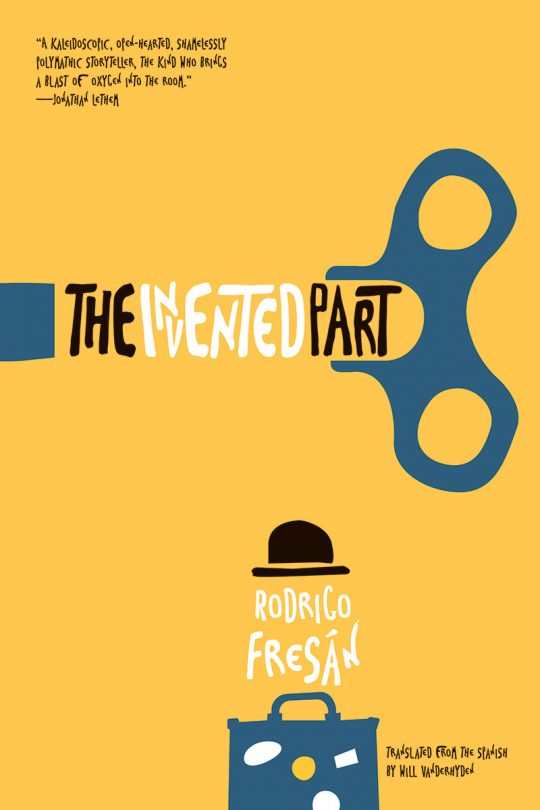
Jul 092013
 

Marcom 2

I have secret writers: or writers I want to keep secret. At the same time, want to tell everyone who will listen to go read their work. Micheline Aharonian Marcom is one of those writers. She is not an easy read by any means, even when she writes with short sentences, they are often heartbreaking and frequently morally and socially ambiguous. She is a writer of the heart—a heart in conflict with itself—and A Brief History of Yes (Dalkey Archive Press) is a very sincere novel. Modern cynicism won’t be welcomed. As in her previous novel The Mirror in the Well, I think she is trying to rehabilitate words that have lost their meaning through overuse or cliché.  Words like “love,” “lover,” and “beloved” abound in this novel, and at one point her protagonist poses the question—“What is love?” The modern reader winces at this point of inquiry because to his/her ears it’s hokey and played-out—it’s pop music lyrics appearing in a serious novel. Yet to read Marcom’s book is to ponder the question without prejudice and with seriousness.

Herewith are the opening five chapters of A Brief History of Yes.

Jason DeYoung

brief-history-yes

.

1.

So that, yes, here are the two lovers again, and their love affair spans a calendar year—August to August, dry season to dry season—and like the songbird who remains a short while in the hillside grove before he departs for the south—the lovers arrive and pass their season together and then pass on to other lovers and another season in the following summer, or autumn for the hermit thrush who returned to the girl’s hillside grove in October from the North two months after the end of the love affair, made his yearly urgent unstoppable migration, stays his three weeks, and the earth revolving around the sun, and the songbird singing his ingrained blood song and moving toward his final winter destination as the weather permits and decrees.

.

2.

He is tall, blond-haired, blue-eyed. She is tall for a Portuguese, and dark-eyed, dark-haired. She is called Maria like so many of the women of her generation for the mother of God, and he bears a deformity across his chest where the bones and cartilage did not form properly across his heart when he was a child—“There was the possibility of a surgery when I was a boy,” he tells Maria after they have removed their clothes for one another for the first time, the naked body, and made love in August and she sees his concave chest area, the hollow, in the summer eve in the window light of his bedroom, “a surgeon offered to break each rib bone in my chest and to place a steel rod through the cartilage below the sternum.” He is a man with a concave chest, he is someone who needs love she thinks when she sees him naked on this first occasion; or: he is someone who has not had it, his heart tight and duly too hemmed in by the chest cartilage which holds closely to the muscle. “My parents did not force me to have the surgery,” and he says that he is grateful to them now, “for there could have been complications,” he tells her while they lie on the wide bed in his city apartment, “the procedure has since been improved upon, and now to correct the deformity the surgeon will place an enormous magnet below the skin and one on the top of it also, here, and thereby make a force to pull the chest bones outward,” he smiles, and Maria smiles also: her brown eyes, his blue, the colors magnetic, the invisible chords which draw this particular woman, a Portuguese, across the ocean from her city on the Tagus to this man in his city by a large salt-water bay in America. I made a journey to your country to find you, she doesn’t tell him. It is also true that she has lived in his country for twenty-five years and there have been many lovers before him and a husband also, and an eight-year-old son from her marriage and I’ll fix your heart, she thinks, a little arrogant in the way that she thinks it, as women sometimes are in their desire to fix and alter and abrogate the male (I’ll wash your feet for you); my own muscle to pull yours hidden outward.

Twelve months later in August, the blue-eyed lover will tell the Portuguese girl that he would like to end their affair, “I love you, Maria, but I am not in-love with you,” he will say to her on the telephone. She cries into the black machine after he says the not-in-love-with-you words. “But last week,” she tells him, “when you said” and. And she will think at that moment on the telephone and their bodies separated by miles, by the bay waters, by the ineffable, not of him but of his ill-formed and moderately collapsed chest bones, the concavity of his body which unprotrudes below the satellites of his sternum, of love and property—and of his conventional and moderate ideas (and hers always immoderate) of love and property, for it is a small fact like a small nuisance (a small corrosive fact) that her blue-eyed lover is a rich man and his monies sit in accounts where the numbers only move skyward, and many things rise up for her lover except for his breast bone and cartilage contused and dimly knitted and hunkered down over muscle, except for love. And like a boy alone on his child’s bed, the boy who hit his head against a wooden headboard in his inability to sleep and find ease each night at bedtime, and so rocked and hit the body against wood for the rhythm it made the sleep it then brought, her lover not-thinks but learnt that succor is found in these lonely collisions. His mother told Maria of it once, “I could hear him alone in his room when he was a boy. He’d hit his head against the black board of his bed and rocked himself thereby to sleep each night.” I couldn’t stop it, I could not help him, his mother did not say to Maria, but the quiet blue-eyed, anxious-failed-look of the mother said it to the Portuguese girl: the too tightly knit mother for whom all things must needed to be proper and in their place and observant of all of the codes of the moral Protestant upper classes and the codes placed thereby above the son (which needs which desires, his terrors) when he was a boy and the mother was filled with all of her strict and proper (not love) ideas of love.

.

3.

The lovers take a walk on the beach in the third week of their affair, months before Maria met her lover’s mother, months also before he mentioned to Maria on a walk in a dark wood how he used to put himself to sleep each night by rhythmically rocking and hitting his head against the wall of his headboard when he was a child. The lovers walk together on the long beach, although they do not walk hand in hand, for the blue-eyed lover does not like to hold the hand of his beloved, “It makes me uncomfortable,” he says. The lovers walk and the waves crash against the sand and the sea water is cold and they tell each other the stories that lovers will tell at the beginning of an affair, he of his family on the Eastern Seaboard, of his schooling (although he will not yet confide that he and his family are of the upper class, just as he does not confide for many months: eight: how many women he has fucked and the prostitutes and the casual encounters he makes via the dating services; I distinguish virgin and whore), “My mother was a brat,” he says. And Maria is surprised and taken aback at the casual and critical manner in which her lover speaks of his mother, and to someone whom he has only just met, and they are walking unhand in hand on the beach, her shoulder presses against his at certain intervals.

And Maria tells her lover of her parents and of her childhood in Lisbon, and of the summers they spent at the village house in the Alentejo when she was a young girl, and of how she emigrated to America twenty-five years ago with her mother when she was fifteen years old.

Later at a Japanese restaurant he will say, “I am not like everyone else.” Or Maria says it, “I am unlike the others,” and the two lovers smile at each other: his blue and hers brown smiling look, thinking that we have found each other, that here you are: recognition in a flash of light of dialogue a phrase handed out between two perambulators first on a beach and now sitting in a Japanese restaurant, “Yes,” she says; yes he also; and the yeses make light, make something to yes to, to love alongside of in time.

.

4.

In January at her lover’s house, in her lover’s bed, Maria dreamed of the old village house in the Alentejo and of ghosts. A ghost stood in the living room in her dream, as he stood in the old house when she was a girl, and it was a frightening, lurking feeling to see him again, and the winds, the waters of the Atlantic rested tightly upon his brow, and he was a fisherman who died too early and then returned and would not leave the village house and says to Maria that he is lonely, alone, cold, and sad, that can she help him. Then Maria is in the house she lives in now in the dream, by the hillside grove of trees, except that it is a house down the street from her lover’s house and in her lover’s city and she is alone (as she was often alone in the village house in the Alentejo) and there is a different ghost and no, she says, she won’t allow it inside of this clean house. Then she walks into the garden and there is a newly dug grave, whose grave? she wonders, and sees in the dirt hole a decaying corpse but does not cannot recognize the man. And she and her lover did not fight last night, in fact there is love like a river between them now, and moves down stronger, wider than the Tagus and with pleasure—she loves him, he doesn’t leave her now, I love you, he says into the space they make between their chestbones in bed and naked.

Last night they touched their knees one to the other, and she told him a story about the beginning of their love affair and he told her how when he saw her walk into the bar the first time that he saw her (what did you think? she asked), he thought that she was beautiful. Ah, she said, I am happy now. I am happy also, he said. And the two lovers went to sleep side by side and she fell into sleep so deeply and soundly that upon waking she didn’t know where she was, only the remembered houses with ghosts and bright colors, the dead fisherman from the sea in the Alentejo in her dream in the past. Who, she wondered, and what. And does the corpse return, does death.

.

5.

He and she stand at a threshold not holding hands; they stand apart, they break apart. He says, “Maria, you are not right for me. We are no match, not a good match” like an unlighted object. Or: “Maria, your English breaks down sometimes and incorrectly turns a phrase or long vowels: why can’t you put it together more correctly.” Or: “Maria, you could laugh more; you could laugh into my ear tonight late and why don’t you laugh more and play with me and are all the Portuguese as you are—sadder?” And, “Maria, I need a happy girl, a girl for whom to be happy and to laugh come easily like a clean and organized house: easy for a woman to make it so,” (and to fix my buttons, resole my shoes, cook the meal, hold the unheld heart, laugh me up into the rising thermals; in this house all of the insides of kitchen cabinet drawers are orderly and clean and happy.)

Maria made a story about the lover and he was blond and blueeyed and he arrived into the village house in the Alentejo in a lonely white clay city at night inside a bar with twin palms painted onto the sign hanging outside of the bar premises, palms for victory and auspicious futures. You were sad; whiteshirted; I saw you could save you, Maria says in the story she made; in my country I saved thousands of men. And today she is poised on the threshold and she is going to pass through into another place without the lover, for the lover has berated her, he has turned from love, he has said to her not this. (What has the girl said; what story wrought from iron from past-tense muscles? What no?)

There are three-legged dogs in the white clay city, they jump up and down onto their lone back appendage. There is a girl, Maria is dark-eyed, dark-haired, some say that she could be beautiful in the night if the lights have not risen over the steep crevices of the lonely mind; inside of the The Twin Palms Bar where the lovers first met in August, she is the most beautiful. In the August of the following year, she is afraid. “Lover,” she turns to look at him, “Lover, do I pass over the threshold without you? Will you, will you not, miss me? (long for me?)” This is the beloved’s poorly phrased question, Maria says: “Lover, the world began with a yes.”

Sometimes I have wondered, she thinks, if in the realm of the lover, the beloved, some things must be felt, some powers wielded with knife, with mace, and it matters not who wields the weapon: just that the invisible energies of the lovers move around the girl, the boy; he berates her; she cries; she walks out of the room from him; he says you are not right for me; she says that he is blind; she then he then he then she. As if the invisible forces must have their due; as if the old gods have not disappeared into ether, although their stories no more read told or understood than the three-legged dogs, the limping and howling taciturn mongrels of the white clay city, they can dance only on the one extant hind leg.

But today, Lover, she says, we have not spoken in more than a century. The winds have passed over and into tree branches outside my window; there is a house on a hill across the saltwater bay in another city, it has windows; doors; a songbird which returned today to the grove of trees adjacent to it. Do you hear it singing? Maria asks her young son in the morning. She has not yelled her lover’s name; her son has not cried this morning to see the maenad, his mother, avenging with her black cape her black nails and ugly old eye-looks. I am old now, Maria thinks, since my lover and I parted ways.

Do I call you? What will I say to you? Return to me, for I am afraid at the loss of your scent, your blue-eyed look when it is filled-to with desire on the occasions that your fear was abated; your feet and the curvature of the nails on your feet, your hands (I could wash your feet). But which sacrifice? Have I not listened? Have I not been myself, and who is she: Maria? The beloved? A woman from Portugal’s capital city. A sexually voracious she-ox? The suffering one. Mother of god. And inside of the maze of my own thoughts and ideas, Maria thinks, did I lose the girl who said I am free I laugh the joy comes on like the next awaited season.

—Micheline Aharonian Marcom

.
.

Jun 112013
 

Gordon Lish photo by Bill HaywardGordon Lish: Photo by bill hayward

Gordon Lish, despite his pesky notoriety vis a vis Raymond Carver, bestrides the American literary scene like a colossus but not, you know, in an obvious way because he stands outside the non-tradition of the marketplace, that other colossus. He is a restlessly prolific author, editor and teacher; his influence seeps into the interstices of the culture. He has established a taste and a method (see Jason Lucarelli’s “The Consecution of Gordon Lish: An Essay on Form and Influence“). His ghostly signature lies on what a lot of readers and writers today think of as good writing. There are websites devoted to listing the writers he has touched. The last American prose writer who had this kind of impact on the minds of the best writers of her era was Gertrude Stein.  Like Stein, Lish is in the ranks of the avant garde, the Modernists. Once he was known as Captain Fiction and edited fiction for Esquire and later books for Knopf. I always found that amazing, a disjunct. Because the first piece of Gordon Lish fiction I read was his 1989 novel Extravaganza, which was unlike any American fiction I had read before (and, I thought, completely NOT mainstream — how could this guy be working for Esquire?). Extravaganza is 200 pages of borscht-belt standup comedy, one Jewish joke after another. There is no story at all, but gradually the language of the jokes becomes infected with references to the Holocaust, the hoary old jokes are disrupted with references to whips and cattle cars. It is a beautiful, scary, maddeningly recursive adventure. The recursiveness, the throw of grammar, lulls the reader, defines expectation. Then Lish defies expectation; violence, depradation, sadism, mayhem explode into the sentences.

So, yes, when I think of Gordon Lish, I think of Gertrude Stein, I think of Flaubert (Extravaganza seems like an heir to Bouvard and Pécuchet). I think of the avant garde. I think of a writer super-conscious of the role of language in the shaping of reality. I think of a writer steeped in Continental philosophy (Deleuze, Kristeva — and I think how extremely small-minded and beside the point are the debates about his role in Raymond Carver’s career). I think of a writer who has an almost mystical appreciation for the relationship of words (type, text) and the white space, the frame. I interviewed Lish once (I have published the sound file on NC: Causing Damage — Captain Fiction Redivivus: DG Interview With Gordon Lish), and we spent some time talking about this, his idea of cutting words to expose the “mystery,” the word “mystery” having, yes, a technical armature, almost tangible for Lish. We are talking here not of a mere writer of stories, but of a man who self-dramatizes as being on the world’s rim, the space between language and not-language. He gets your blood up, does Gordon Lish. His sentences make you itch to write.

All this by way of introducing the following brief, shocking excerpt from Lish’s 1986 novel Peru, just republished by Dalkey Archive Press with an introduction by the author. Peru is a compulsively “spoken,” recursive, stylized monologue that circles around and around the moment in 1940, when, at the age of six, the narrator murdered another six-year-old boy with a toy hoe in a sandbox. I give you here one of the great death/murder scenes, bizarrely dispassionate, full of a kind of schizophrenic detail and a consciousness on the narrator’s part of wanting to tell you the story correctly. So, at the outset, the first detail he tells you about the murder is that he could hear water running for the garden spigot, a detail that seems irrelevant and then compelling. We see the pitted marks the hoe leaves on the victim’s face. We see the victim getting up from his dying and stumbling around, watching his own dying. Everything is strange, focused, and unexpected. Lish escapes the novelese of conventional expectation and launches us into a realm of language and horror.

In addition to the excerpt, I point you here to David Winters’ excellent essay on the novel in 3AM Magazine: “Truth, Force, Composition.” Also, as linked above, Jason Lucarelli’s essay on Lish’s compositional method, called consecution, and my interview with Lish. Finally, the photographer bill hayward, long an associate and friend of Gordon Lish, recently allowed NC to publish a series of Lish portraits: Gordon Lish: Photographs — bill hayward.

dg

Peru

§

I’ll tell you one of the worst things in my life.  This is one of the worst things in my life—a day when the nanny said that I couldn’t come over and play but one when she went ahead and changed her mind later on and said that I could actually do it—and then it started raining just a little bit after she’d said it, like just instants, just instants after she had given me her blessing—and then for the whole rest of the day, all the rest of that day after Andy Lieblich went in and the nanny went in with him, I sat down inside of our garage and kept feeling funny and out of the ordinary, like as if I was in some kind of trouble and that certain things which I did not exactly know about yet were probably dangerously unfinished, lying lopsided somewhere and being dangerous, and it made me feel a terrible wildness, this strange feeling, which I think, to my way of thinking as a child, was the worse one, the feeling before the feeling of wildness, the feeling of incompletion and of chaos, a feeling of things getting started and of never getting them over with, of parts of them being impossible for you to ever get them totally taken care of yourself.

In a halfway sense, I think I can say that the day I killed Steven Adinoff, that is, that that particular day—but only in this halfway sense of things which I have mentioned—was a day like that.  On the other hand, now that I have said that, I think it is only fair for me to say that I have the feeling that I am making too much out of the thing, that I am probably not really remembering anything.

I should be skipping the feelings and be sticking to other things, anyway.  To what I remember because I actually heard it or saw it or so forth and so on—I should be sticking to things like this before things start getting too mixed up.

I heard the water going.

The whole time I was killing him I heard the water getting out of where the colored man had it hooked up to the Lieblich’s spigot—the water he was using for the Buick, the whole time the other thing was happening, the water for the fit between the hose, on the one hand, and the spigot, on the other, was a little bit loose, even though it was the colored man who had it hooked up and who—next to me, next to me—was the world’s most watchful human being in the whole wide world.

Even afterwards, even when I was going home, it was still going then, the tiny hissing was, like a sizzle, like the way a frying pan with some drops of water in it will sizzle, or make a sizzle, or sound like it’s sizzling.

The nanny saw it.  Andy Lieblich saw it.  So did Steven Adinoff himself.  We all saw it.  We all watched.  Steven Adinoff watched just as much as anybody else.

That’s the thing about it—you watch.

That’s the unbelievable thing about it—that you watch it even if it’s you yourself that’s getting killed.

He watched himself get chopped up.

To me it looked like he was interested in just lying there and watching it.  Because isn’t it interesting to watch it even if it’s happening to you?  That you’re the one who’s getting it doesn’t make any difference.  Actually, if my own personal experience can be counted for anything, that part of it—my opinion is that that part of it is the part of it which just makes you al the more interested in it.

But maybe he did not understand what was going on anymore, what connection there was between him getting killed and the hoe anymore, between what was happening to him and what I myself was doing to him with the hoe anymore.  Maybe the thing was that Steven Adinoff was probably thinking of something else.

I don’t know.  Maybe that’s what you do—you think of something else.  Maybe you can’t even help it.  Maybe you can’t even stop yourself from just going ahead and thinking of something which doesn’t have anything to do with the thing that is happening to you, except I myself don’t think that’s it, that that explains it, no.

But I don’t know what does, what would.  I can’t even begin to guess, except for the fact that I think it’s got something to do with a nice feeling, with having a nice dreamy sleepy very special, very sleepy now feeling.

Or else I am overdoing it or am anyway just wrong.  Maybe he just wanted to see how getting killed looked.  Maybe it didn’t matter to him who was getting killed.  Because for a lot of the time he just lay there watching instead of trying to get up and fight back and try to kill me back—and then he finally did, finally did get up—except that by then he was almost dead, except by then I think he was almost dead, even though he wasn’t actually acting dead, even though he just got up and started acting baffled and shocked instead of being sorrowful or mad at me.  But I don’t think it was so much on account of someone having almost killed him as it was on account of his realizing how he’d missed the boat on this thing by getting distracted, by letting himself get distracted, and by not paying enough attention to it, or at least not to the part of it which really counted, until it was just too late and you felt silly for more or less being the center of attention of what’s going on but the last one to be informed as to what it is all about and means.  I mean, I’ll bet it’s like finding out that you are the last one to get in on a secret which turns out to have been much more about you than you ever dreamed it was, ever could have, in your wildest dreams, dreamed of or thought of anything.

To my mind, Steven Adinoff was just woolgathering and then caught himself at it and went ahead and woke himself up and then noticed he was almost dead.

Except that it was just probably only a gesture by then.

There were pieces of his face—there were all of these cuts which were deep in his head.

Not that he couldn’t actually get up when he tried.  He got right back up on his feet again and went and got the rake again and then he walked around for a while, then he walked in and out of the sandbox for a while, stepping up to get in it and then stepping down to get out of it, and meanwhile saying these different things and looking in his pockets almost all of this time, but some of it, some of the time, looking at me again and trying to get me with the rake again before I myself got ready to really buckle down to business again and kill him again and then he fell over again almost as soon as I got busy on him again and really dug in.

Anybody could tell that this time it was for good.  It didn’t matter if you were just a six-year-old boy.

Any six-year-old could have killed Steven Adinoff.


Gordon Lish

Jun 272012
 

Photo by Dani Werner

It is my great pleasure to introduce Mary François Rockcastle and her fiction to the pages of Numéro Cinq. I met Mary in an airport shuttle, both of us homebound to Minneapolis after the AWP conference in Chicago. Whereas I was completely exhausted and could have passed among the living dead, Mary seemed energetic, friendly and grounded. Chatting with her in Midway terminal was a perfect anodyne for post-AWP fatigue. Later, when I met with Mary in St. Paul to discuss her most recent novel, In Caddis Wood, I wasn’t surprised to learn that she has extended this same amount of energy throughout the renaissance of the Twin Cities’ burgeoning literary community. Indeed, Mary is a pioneer and champion of Minnesota literature: Mary and her colleagues launched Minnesota’s first MFA in Creative Writing program at Hamline University; she founded Hamline’s literary journal, Water Stone Review and remains its executive editor. Mary is the founding dean of Hamline’s Graduate Liberal Studies program as well as its Director of Creative Writing Programs.

But this list of career accomplishments (which is not all-inclusive) is to say nothing of the fact that Mary also writes books. Earlier in her writing career, Mary created a writing refuge in Minneapolis’s Loft Literary Center to make time to write after hours. Her ensuing dedication resulted in two novels—Rainy Lake and In Caddis Wood—both published by Graywolf Press and both nominated for a Minnesota Book Award in 1995 and 2012 respectively. The longer gestation period novels is not surprising. In Caddis Wood is a product of tireless research—a thoughtful study in botany, architecture, medicine and poetry. In Caddis Wood ultimately pays tribute to the midwestern landscapes of urban Minneapolis and the woods of Wisconsin––a place that becomes a fully-formed character in its own complexity and reveals a fragile symbiosis between humans and nature in the novel’s thematic undercurrent. The narrative oscillates between the two distinct points of view and voices of Hallie and Carl, whose storytelling reflects on their long marriage, weaving seamlessly between memory and the present day as they encounter Carl’s quickly-degrading health. In Caddis Wood has received praises from Publisher’s Weekly and the Star Tribune, which hailed Mary Rockcastle’s “remarkable accomplishment to find in [these] everyday occurrences a story of great moment.”

In chapter twelve excerpted below, Carl suffers from advanced stages of Shy Drager Syndrome, finding himself in a semi-lucid state that blurs memory with present day, the living with the dead. The chapter is a convergence of characters: Cory and Bea are Carl and Hallie’s daughters, Joe and Marnie are their neighbors. Among the dead are Tim, Cory’s former partner, and Alice, the former proprietress of Carl and Hallie’s cabin home.

— Mary Stein

 –––


HE CAN hardly speak now, only manages to scribble a few words.  Hallie is good at interpreting his broken sentences and sprawled lines.  He is a book, its pages laid out in front of her, written in a language only she can understand.  She resists the gradual wasting away of his body, insisting on his daily exercises, pouring lotion on his peeling skin, feeding him as if he is a growing child and not a dying man.

Each morning she rolls the hospital bed onto the porch and as close to the window as possible, raising it so he’s in a sitting position and can see out.  She cracks the window open a few inches.  The drama in his head is as vivid as anything he sees on the television or DVD player.  Sounds enter the constantly evolving film in his imagination: part real, part memory, part what happens when the different tracks collide and merge.  He doesn’t know how much is caused by the illness, the cells in his brain ossifying like the rest of his body.  After years of intense industry, his mind and body filling and using each moment, he has become friends with slowness.  He is acutely aware of his surroundings, of each tiny change in his body and in the world he can see and hear.

He hears the pop, pop, bang of frozen trees.  Swelling fibres of wood bursting and cracking.  The rustle of cattails beside the stream, the ruffed grouse striking the white pine’s brittle branches, Hallie making coffee in the kitchen.  He can hear his mother and father talking softly, thinking he’s asleep—one of their happier moments, making plans for Sunday at the beach.  He’s in and out of the arcing waves, waits eagerly for the white froth to rise over his shoulder before he dives forward, bodysurfing the wave in to shore.  Gritty sand against his stomach.

Soft clacking and crunching beneath the pines, snapping brush, skitters across frozen snow.  Loud echo of a snapping branch, which clatters to the ground.  Bittersweet berries flash scarlet on the bank and Bea in her red hat and Cory in her blue are rolling a head for the snowman.  Tim’s curly hair is uncovered.  They wind Lucas’ woolen scarf around the snowman’s neck, put one of Carl’s fishing hats on the head.  Cory throws a snowball and they tumble over each other in the snow.

Sometimes he hears Alice’s voice, which is impossible since she was dead by the time they bought the summer cabin.  But he knows it’s her.  She and Hallie were right about the garden.  All his grand schemes—flowers and shrubs and soil carted in, fertilizer, herbicide, pesticide, fences, screens.  Nature laughing at him.  Now, when spring comes, the meadow will bloom with native prairie grasses and wildflowers.  Shrubbery planted along the edge of the house and meadow will provide food and cover for grouse, birds, the red fox family, woodchucks, and other animals.  Hallie, with Joe’s help, has kept up the vegetable garden, though he suspects she’ll let it go once he’s gone.

He hears other voices, too.  They began as a whisper, more than the sounds and music nature made.  He listened hard, thought his mind was playing tricks or that the disease had entered his brain and was causing auditory synapses to misfire.  The whisper grew and multiplied, became a chorus, until one day the sounds held meaning for him.  Anima antiqua, Alice wrote in her notebook, the spirit that’s lived in a place for a long time.  He hears it beneath the snow, the frozen ground.  He hears it in the creaking branches, inside the whispering stream.

we are out we are inside the house     we were here before     we have our own lives hidden in the dark     we nest inside the walls, beneath the floor     we shudder and pop     tap tap tap     we’re hungry     we sleep     we dig our roots deep we die     we return we listen we love in our own way     we remember     we are born in the dark we reach up toward the light

His mind is a camera, memories sharp as photographs.  The house on that first visit: dull brown linoleum, dusty books, gray husks on sills.  In the closet hung Henry’s parkas, flannel shirts, Alice’s hand-knit sweaters.  Beneath them boots, bathinette, Swedish linens.  Photographs: Alice’s mother against the Baltic Sea, Alice at age twelve—white middy blouse and knickers.  Henry in his waders, Will in his Marine’s uniform.  Hallie peers through the cloudy kitchen window.  When she removes her hat, her hair tumbles like a rain of sugar maple leaves.  He blinks and they are inside the tent and she is tweezing ticks off his body.  In the light of the kerosene lantern against the walls of the tent, she takes off her blouse.  He gazes at her graceful neck, the swing of her hair, her perfect breasts.

Hallie steps up behind him and wraps her arms around him, careful not to hurt him.  For a moment he’s unsure where he is, whether they are here on this porch on a winter morning or there, inside the tent, the house silent in the dark.  The birdfeeder spins and he remembers.

When he was a young man, he thought the body was everything.  He looked at women, even after he was married, and lusted after their bodies.  At night he’d wake and roll toward Hallie and just the feel of her skin or the smell of her hair made him harden with desire.  He’d press against her, helpless to stop it, even though he knew she was sleeping and didn’t want it.  Sometimes his drive was so great he woke her and she turned to him and let him come inside.  Years later he felt the coldness in her back, her anger and his hurt and the loneliness in each of them.  Then she fell in love with someone else, though he didn’t know it, only that he needed to go after her, make her believe in him again.

Now, when he can no longer string sounds into words, when his body is useless, when all sexual desire and function are gone, he reads her love for him in her eyes, feels it in the touch of her hands, the sound of her voice as she reads to him.  He is surprised at how busy she keeps herself, how cheerful she is most days—humming or singing as she cooks or does housework, silent only when she reads or writes or works at the computer.  Was she always this busy and happy in her daily life?  Did the darkness descend only when hewas present?  She does not hover or interrupt his reverie.  After years of simple meals, when she was teaching full time and writing, she enjoys cooking again.  He loves the smells, warmth emanating from the kitchen.  She wraps up what’s left over and takes it to Joe and Marnie’s, freezes it for Cordelia, who visits regularly, gives it to Father O’Neil, the priest from St. Luke’s Church in Spooner who comes once a week to give him Communion.

He hears a cupboard in the kitchen opening and closing, a pot against the stove.  Soon the room fills with the smell of onions, beef, and vegetables.  When the girls were little, he moved their high chairs side by side, pinned bibs around their necks as he fed them creamed carrots from a jar.  Their orange faces stare back at him from the window pane.  Cordelia chortles and spits carrots back at him.  Bea blows hers into bubbles that dribble onto the tray.  They laugh as he swipes at their faces with the washcloth.

Hallie pulls up a chair and a small table where she sets a steaming bowl of soup, plate of bread, and two cotton towels.  One she lays across his upper chest and the other she hangs over her shoulder.  She blows on the surface of the soup.  He sees the tiny puckers in her lower lip, the downy hair on her skin.  When she spills, she lifts the towel from her shoulder and deftly wipes his mouth and chin.

After, she puts on a stack of CDs and bundles up to go out.  Each day she walks to the county road, five miles there and back.  Unless it’s below zero, and then she goes only as far as the red gate.  “Need anything?” she calls.  Seeing by his face that he’s all right, she waves and shuts the door.  He hears the crunch of her boots on the path.  A wing flickers to his left and a rare chickadee lands on the feeder.  tap tap tap     cheer-up cheerily cheer-up cheerily, what-cheer cheer what-cheer cheer

The house shifts and groans.  Beneath the floor the pine snake sleeps in an S-shaped coil.  Eggs lie dormant in the sill between panes of glass.  A red squirrel plucks a berry from the hedge and emits a chipping plaint.  In her closet Alice’s hand-knit sweater slips off a hanger and falls noiselessly to the floor.

A woman appears in the yard, dressed in a brown overcoat.  She glides lightly across the snow and disappears into the trees that line the slope above the swamp garden.  He watches in his mind’s eye as she wends her way along the path.  she knows our voice     many voices not one     she listens    come home Henry come home     she hears the rustling wind     burbling bubbling rising and falling song     trills chirps whistles metallic chips of birds     she slides the pouch with Henry’s ashes inside the wall     some of us die before our time     we do not choose     we feel what is lost but it is not grief     we are in we are out of time

The phone rings and clicks and Cordelia’s voice pierces the quiet.  “Hi, Dad.  I e-mailed you the latest models.  The committee liked your triangulated grid and the wrapped walkways.  They were especially excited about the idea of drawing water up through the piles and distributing it through the landscape trays.  Tell me what you think of the models.  I’ll be out by dinnertime on Friday.  Love you, Dad.”

Cordelia is walking toward the house, something held in her cupped hands:  eggshells crushed by the bird’s weight.  Yellowed leaves falling in the spring, acid in the stream, fish filled with toxins.  He blinks and she is gone.  A movement of white and then another and within minutes the air is filled with snowflakes that blanket the brown grass and melt into the metal-covered stream.  He tries to focus on one flake at a time but they are falling too fast and blur into a confetti of white.  At his grandfather’s window, he knelt as the snow fell on frozen fields.   On Christmas Eve, at their home in Minneapolis, he stood on the back deck, meticulously scarring the new-fallen snow.  The next morning Beatrice and Cordelia knelt at the dining room window peering out at the perfect line of reindeer tracks.  What do you mean there’s no Santa.  How the heck did those reindeer tracks get there?  Tell me that.  Years later Cordelia found the hand-made metal instrument in the garage, the long extender bar, forked ends mimicking the tracks of deer.

He had to wait until the ground had thawed enough to bury his mother.  The local cemetery let him keep her in their vault, which was generous since neither she nor his grandfather was buried in that cemetery.  The orchard was sacred ground for both of them.  Carl dropped two red roses into the newly dug grave, the only black in a blanket of white.

The snow continues to fall and he hopes that Hallie will turn around and come back.  Just the kind of weather they would have snowshoed or hiked in once.  In Oslo, he and Sverre Bergström strolled at midnight through the snow, brainstorming ideas for the town hall.  In the white he sees a figure.  As the form moves closer, he recognizes his father’s telltale walk.  He wills his hand to move, but the limb lies useless on the sheet.  Where have you been?  Tommy is dressed in the same brown corduroy slacks, navy blue sweater, blue Oxford cloth shirt.  His hair and shoulders are flecked with snow.

Tommy stops a few feet from the window and they gaze at one another.  Carl has so much he wants to tell him.  I hear things: human voices, living and dead, sounds of the non-human world.  I hear the creak and groan of the earth, sighs and whistling breaths of hibernating creatures, rasp of roots and silt sifting in the stream.  I hear Cordelia and Beatrice at play.  I hear my mother, your wife, weeping in the bedroom.  I hear music and don’t know who is playing—Beatrice or her.  I hear Frank Rossi calling me from the street, the click of our sticks against the ball, the El rumbling past my window.

When Hallie wakes him, he blinks at the darkened meadow, the untouched surface of the snow.  She lights the lamps and washes his face and hands.  She moves into the kitchen where he hears her preparations for dinner.  Once the casserole is in the oven, she pulls her reading chair close to him, picks up Rilke’s Book of the Hours, and reads:

Summer was like your house: you knew
where each thing stood.
Now you must go out into your heart
as onto a vast plain. Now
the immense loneliness begins.

The days go numb, the wind
sucks the world from your senses like withered leaves. 

He sees the shadowy trees, tips of wind-burned reeds.  Hallie’s voice rises and falls like the tumbling stream.

Through the empty branches the sky remains.
It is what you have.
Be earth now, and evensong.
Be the ground lying under that sky.
Be modest now, like a thing
ripened until it is real,
so that he who began it all
can feel you when he reaches for you. 

He wants to tell her what it is like to be alive like this.  She hides her sadness but he sees the imprint on her face when she returns from her walks.  They await Bea’s next phone call, Cory’s visits, the next chapter of the book she’s reading to him, the way the woods change with each passing day.  She feeds him, washes him, catheterizes him every few hours.  It is just the two of them—her voice rising and falling, her hands tending him, her heat beside him.

 ––– Mary François Rockcastle

––––––––––––––––––––––––––––––––––––

Mary François Rockcastle is the author of Rainy Lake. She is the director of The Creative Writing Programs at Hamline University, and the founding and executive editor of Water~Stone Review. She lives in Minneapolis.


Jun 252012
 

“My Lives Among the Stars” is an excerpt from Lawrence Sutin’s novel-in-progress, a loving and whimsical look at the salad days of Hollywood in the form of the garrulous and comically self-important reminiscences of one Matheson Maysin, a lifelong Hollywood extra, as dictated to a paid hack, Reg Ahem, who is expected to produce a book from their nightly talks.  In the following section, Matheson waxes nostalgic about his inconsequential (but not to him) role in the real 1934 Frederic March/Constance Bennett comedy The Affairs of Cellini. Fay Wray played Angela in the movie, and off the set, according to Matheson, took his youthful virginity. I love this line “… I was there to stay and the best way to do that is to get so lost that you couldn’t possibly find your way out, which I never did.” And the rhythms and sentiments of this: “Then she kissed me on the forehead to say that is enough, is it not, be happy boy and I was.”

Lawrence Sutin is an old friend and colleague from Vermont College of Fine Arts where he is a renowned and gifted lecturer (oh, the miles I have driven without noticing the time go by, listening to Larry talk about writing on car radio).

dg


So I appeared in my first movie, Reg.  There is nothing else like that in your life, not even losing your virginity, and I’ll soon get to how I lost mine.  The movie was The Affairs of Cellini, and by the time it was released in August 1934 I had been in twelve more films in uncredited or extra roles of some sort.  But The Affairs of Cellini was the perfect entrance for me into Hollywood.  Have you seen it, Reg?  You haven’t.  You had better fucking well find a copy and watch it.  You watch especially hard for the final scene in the court of the Duke of Florence when Benvenuto Cellini, do you know who he was, Reg?   You had better fucking Google him before you try to write up my goddamn debut.  The great Cellini creates a stir by openly flirting with the married Duchess.  Look over the left shoulder of the cape of Frederic March just as he’s giving Constance Bennett one of those I-know-you-want-me looks, especially while he’s in tights and doublet and codpiece and blouse and puffy cap, he’s the type to make costumes look nicely tight, he’s pretending to drink wine from a goblet, it’s colored water, and he thinks he looks like he believes that he’s at a Renaissance banquet and that makes him an actor in the long trail of twentieth-century celluloid that spanned the world but kept its beating heart in Hollywood, he’s drinking to the long life of the provider of his wine, the soon-to-be cuckolded Duke played by Frank Morgan, who later nabbed the title role in a little pitchah (as we used to like to say it in the thirties) called The Wizard of Oz.  But it was for his identical dithering performance as the Duke in The Affairs of Cellini that Frank was nominated for a Best Actor Oscar.  No one on the set would have said they had seen that coming.  There was a whole lot more to look at than Frank Morgan.  For me there sure was.

It was the Depression and the theory was that what the people wanted was opulence, to indulge their eyes on the riches and beauties they could not smell or eat or wear or so much as touch.  The theory makes sense to me because the first time I walked on the set that was sure what I wanted to see.  But what struck me, beyond the glamour, was how organized it all was.  The director was Gregory La Cava, a name no one much knows these days which doesn’t much matter to La Cava because he’s dead.  While he was alive and in his prime he knew how to keep things moving on budget on time on a set, which kept him working.  La Cava and I never talked, I was pushed into place for the crowd scenes by his dutiful assistants, but I watched him and he was pulling the strings of his stars, March and Bennett, at least while they were on camera, and as for the crew, he was the walking-talking brain that directed their movements.  La Cava was no great director, but he knew that directing depends upon power, perhaps even more so than upon artistry.   You must make people obey you.  I would find that tiresome.  I like to charm people, I did charm people, but the charm of charm for me was that I won their consent, not their obedience.

Don’t obey me, Reg, fuck don’t bother ever to see the film.  Just believe me when I say that the costumes of even the extras were fluffed and finely stitched and convincingly something like what audience members who can’t spell or pronounce “Renaissance” imagine that period was like.  It’s what I imagine it was like and why shouldn’t I, I was there, like I told you, I was acting, when I was bowing or sipping or clapping or conveying surprise by pretending to gasp I believed that I was there, I lost myself in it.  You may say that being an extra is little enough to lose yourself in, and if you said that, I mean the reader, I know you wouldn’t, Reg, you’ve been around the business yourself, but if some reader thought it whom I shall never meet, I would say in response, first, that extras give long days of their lives laboring on sets, being costumed and made-up, learning their movements and gestures, preparing themselves to be ready when the call of “Action” breaks the pre-scene silence, ready for the sake of their careers each and every take, because if a star like March or Bennett screws up La Cava pats them on the shoulder, tells them a joke, gives them an easy little tip like pretend you are breathing into his or her ear from afar, which would contribute nothing to their performance but would distract them from dwelling on their mistake.  Neither March nor Bennett did their best work in that film. March merely struck vigorous poses, Bennett draped herself in gowns and slid through scenes with her swept blonde hair and bedazzling almost succeeding in distracting from her bored monotone delivery even of passionate lines.  Yet La Cava found no real fault with either of them ever.  But if one of the extras walked in or out of the camera out of sync or raised their goblet before the toast had been finished, then the whole take was ruined and La Cava made sure he got his casting director to explain to him how that extra had ever been allowed on the set.  So I lost myself in it, reader, out of necessity and because I was there to stay and the best way to do that is to get so lost that you couldn’t possibly find your way out, which I never did.

My virginity.  Fay Raye.  The greatest assonantal Hollywood name.    She played the secondary female role in the film, a beautiful peasant too simple of heart to fall deeply for the conniving Cellini.  Fay Raye, you, Reg, know as the blonde beauty who killed the beast as the final line in King Kong has it.  Fay was wearing a blonde wig for that role.  In our film together she was back to her natural brunette hair.  I thought she looked wonderful in either color.  Her eyebrows were her most striking feature to me—they far outspanned her eyes, which were all the more lovely under those delicate and protective angel wings.  Her nose was turned up just a bit, but she could look down it if the part called for hauteur.  Her lips, they were delicate and sweet and that was why she was most often the good girl in her films.  When I met her on the set she was at first kind to me in passing, no more.  I was eleven years younger and a nothing extra, I wouldn’t have dared to talk to her, but she started talking to me.   She said that she could see that I loved being on a movie set just like she did, and that I should continue to love it no matter how many cynics I met, and I could believe her because, and her voice became sad for the only time that I heard it become sad during the shooting, she wasn’t sure how many more movies she would get to make, Constance Bennett was the star of this one, she, Fay, was the second, the third choice for so many parts, soon she would be the last and she hadn’t even hit thirty.  But then she went back to smiling at me, admiring my courtly costume and joking about her own peasant dress and then she wondered, no longer joking, if I would help her rehearse her lines for a scene to come with Frederic March.  In her dressing room.  It was a love scene, March was declaring his passion to her and Fay was too pure to say yes just yet.  It was the exact opposite of the situation between us, which was that Fay wanted to enjoy herself on the movie set in all the ways that one could and I was not yet aware that such things were done.  Speaking March’s lines I began to feel them and once I began to feel them Fay dropped the pretence of practicing her lines and smiled in such away that I felt her lips kiss me before they touched me which they did oh so quickly afterwards.  I will not give any more details, Reg.  Just this.  We both loved being on a movie set, we both understood that anything can happen in the movies, Fay had been held in the massive hand of King Kong atop the Empire State Building, we knew too that the movies are not just what is shown on the screen but everything that goes into the making of them while they last, which in some senses is not very long, a few weeks and the cast and crew wander off to different sets, different studios, return to their marriages as Fay would.  But in some senses it is forever, people who see movies and people who make movies both believe that movies will last forever somehow, transmuted from technology to technology, recolored, redimensioned, but still movies. Fay whispered to me on the final day of shooting that her scenes with March would always be for me no matter what else became of our lives.  Then she kissed me on the forehead to say that is enough, is it not, be happy boy and I was.

— Excerpt from the novel My Lives Among Stars, by Lawrence Sutin, Copyright 2012

——————————

Lawrence Sutin is the author of a novel, When to Go Into the Water (Sarabande 2009), two memoirs, A Postcard Memoir (Graywolf 2000) and Jack and Rochelle: A Holocaust Story of Love and Resistance (Graywolf), two biographies–of Philip K. Dick and Aleister Crowley, and a historical work on the coming of Buddhism to the West.  In addition, his erasure books can be seen at Lawrencesutin.com.  He teaches in the creative writing programs of Hamline University and the Vermont College of Fine Arts.


Oct 012011
 

Carrie Cogan

.

Set in New Orleans “The Filthiest of Shiny Things” is a gorgeous excerpt from a novel-in-progress by Carrie Cogan who lives on Salt Spring Island, off the coast of British Columbia, with her husband and two small sons. Carrie earlier contributed a “What It’s Like Living Here” essay to Numéro Cinq. The two photos of New Orleans architectural details were snapped by Sarah Gadola Campbell, her old friend and long ago co-worker at Aunt Sally’s Praline Shop in Jackson Square. Everything Carrie writes is a treat. “The Filthiest of Shiny Things” is also a bit of a tease, not only because of the amazing title, but also because after reading this bit, you’ll want to read the whole thing.

dg

.

AS ROSE GETS OLDER she gets more stunted. Shorter, and skittish. Her eyes dart around so much that by afternoon a blink will feel so good she’ll draw it out, stop short on a sidewalk or halfway across the kitchen floor with her lids down, settling into the dark. If pressed–and she moves around enough no one knows what she started as, to ask how she slipped–she’ll trace her deterioration to the years she spent living alone on dry, deserted land, in a shed just bigger than a closet. But she knows she probably wouldn’t have chosen to live there, if she wasn’t stunted already. In that parched isolation she followed lots of bugs, and unlearned some grammar.

Now she’s in a city–the one they call The Crescent City, The City that Never Sleeps–and she speaks properly. She hardly speaks. But when she watches people, she can tell the ones who are chasing or being chased from the ones who are just sitting peacefully inside themselves, settled to the ground like musk beetles to a leaf. Some people, they are flat on their backs flailing in panic, and she can spot this even as they glide along fine.

.
She tries tricks–the little ones she can manage–to give her appearance the illusion of moisture. Something called Face Dew, with a bright pink applicator brush. As she spreads the shiny, heavy blots of Face Dew into her cheeks, she envisions a snail inching forward and recoiling across her face. She buys hand cream made for horse hooves, and lip gloss infused with silver glitter.

Down at the Walgreen’s on Canal Street, Rose watches a young black girl reach for a hair gel on the shelves while a kinky strand of her hair, seemingly electric, crackles free from a barrette. Now Rose uses the same product–it is thick as shellac, and smells like a stick of clove doused in gasoline. When she works it through her hair the strands fall heavy and damp, like drenched wool socks dipping a clothesline. She has noticed more than once, upon walking into a store, the way people glance worriedly from her gelled hair to the windowpane, expecting splatters of raindrops on the glass.

All these efforts to look moist–in the city with the wettest air. But Rose still appears on the outside how she feels underneath. Something like rust on a corroded battery. She suspects the landscape where she’d isolated herself–cacti, bones, flint and rusty barbed-wire–was the one that marked her.

People always look surprised when she says her name is Rose.

.
Rose has washed dishes all over the country. It whets her appetite. The plates here get filthier than any she’s seen–tourists like their creme brulees creamy and their jambalayas thick. She doesn’t make friends with the cooks, because it feels like she’s changing their diapers. Rose once caught a waitress named Junie picking at a piece of cornbread on a plate waiting to be washed. She’ll say say Hi to Junie. Otherwise she keeps her eyes on the dishes, or–while in transit to the sink–on the water and bits of food speckling the rubber tips of her sneakers into an abstract painting.

A large man, so black he sometimes looks purple, shucks oysters on Sundays, and Rose will step away from the sink to watch that. It’s no safer than juggling swords. His hand never slips and he lays the shells apart as smooth and easy as stepping one leg away from another. Sometimes when she’s watching him she pictures him shucking oysters inside a giant oyster, the shells parted just a slit. In that dark only his eyes, teeth, and the diamond shooting off the knife blade show. He whistles through his teeth and the whistle ricochets off the walls of the shell, becoming in its pearly hollows a cold, spinning wind.

After work her old red motorcycle boots, scuffed grey in places, hit the pavement chuck chuck chuck. And as she tromps she schemes, arranging and re-arranging the delicate details of abduction. But it’s easy to be distracted. Whole blocks go by with her half-drugged on the sights and smells. The wavering flames of gas-lamps, snapping without sound. A carriage horse’s hoof thudding softly into the shit left by some other carriage horse. The beads and vomit decorating naked chests; the unreachable gardens and fountains, framed in wrought iron shadows.

Some people paint their bodies silver, even their eyelashes, and stand comatose on pedestals. For that stillness Rose gives up her coins. One girl is solid white with golden hair and wings, an angel. And when she breaks her perfect freeze to bow she manages to make the bow look stiller than her stillness. People set flowers and 20 dollar bills at her feet. Rose bets she’s an old lady under all that. Still, she drops what change she has. She doesn’t give to the stilted Uncle Sam, or to the escape artist with a megaphone, or to the man who walks barefoot across broken glass, hefting the biggest person from the crowd on his shoulders.

.
She wasn’t completely isolated back in the desert. And it wasn’t just the landscape that dried her up into nothing. She blames a boy. He wasn’t technically a boy but he had giant dark eyes that never seemed to blink and a fresh take on things, like he had just arrived in the world. He drove a truck with a bullet-hole in the hub-cap, and tore open her bra with his teeth. So, man. Boy, man. Ghost. When one day his truck wheels failed to crackle the gravel leading to her shed, when one day the silence hollered and kept on getting louder, Rose became one of those people haunted by a living ghost. She despises such people. Crying into their drinks, re-playing the same moldy scenes on an endless loop. Pitiful people, pinned by cobweb shackles. For fifteen years she’s been mute, rather than talk the lovesick crap screaming inside her.

Now her ghost resides seven miles south-west of her apartment, and the air is full of music. Some guy in a red lumber-jack coat sitting on the corner of Dauphine and Ursulines wails a blues song like he’s sliding a knife from his wool picket, setting a heart out on the curb, and stabbing it ruthlessly. He’s just singing. But Rose, she doesn’t collapse. She doesn’t think of the way that boy made perfect sprinkler sounds beside her ear, to cool her off. Or the bits of smashed orange bicycle reflector he stuffed into his pocket. Grubby treasure, he called it, and strung some of it into a mobile he tied above her bed. Rose doesn’t care. I’ve been places way over the sea, the musician cries. She doesn’t falter or flinch. That’s how I know you’ve done forgotten about me. If anything, Rose’s step quickens. The blues pulse her forward with the force of a battle hymn.

.
If not for the constant machine sounds and traffic barreling by, Rose might think–by the smell of her apartment–that she lives beside the ocean. She rents a second story in the Bywater, beside a fish factory. The toilet is broken, and that constant gushing inside the bowl could be shoreline. Also the floorboards are rotting, and they give under her feet like sand. One of the workers at the fish factory sings, but the machinery there is so loud it took Rose two weeks to figure out he was singing in French. When she walks out her door each morning, she stops short with her face tilted down, admiring how the pavement sparkles with scales and guts.

She has a time-tested theory about moving into an apartment: unless you drag in a good piece of furniture that first day, or have a good meal, good drug trip, or good fuck in it within that first twenty-four hours, it’s destined to be a miserable space. When she got the keys to this one, she shook all the clothes out of her pack, into the middle of the empty floor, and fell asleep on them. It was light when she went to sleep and light when she awoke, but a day had passed. So she knows there’s no hope for this place.

In the first weeks she draped some of the beads she’d found along the gutters–dice, camels and fleur-de-lis–around the nails in the walls. But they looked too pathetically hopeful–like lawn ornaments in dead grass. She is grateful to whoever left the nails behind, because depending on the light they flash or give a dot of tar black in the familiar places and her eyes automatically travel to them, as they would to paintings.

.
Inside the Quarter, behind a fence of wire diamonds, looms a large brick elementary school: Bishop Acadamy. If she’s in the area Rose consults her watch–an old Mickey Mouse one repaired, in the split leather strap, with silver duct tape. The children spill out into the schoolyard for recess at 12:20. If she arrives even a minute early, she gets to witness the transformation of the absolutely still asphalt bombarded by flailing limbs and screeches. The students remind Rose of ocean: they spill out the door fast and roaring, then seem to slow and murmur as they spread out to the far reaches of the yard. They sizzle quietly in the peripheries, like sea-foam. She lifts one hand above her eyes against the glare, scanning through the heads of hair, searching.

After passing so many half-naked people in the Quarter, the student uniform of plaid skirts or shorts, white shirts, and black neckties lend a surreal feel to the scene, like Rose has stumbled into an Opera.

One afternoon a short man with bleached hair and mirrored sunglasses sidles up to her. An undercover cop? A parent? Or a plotting child-snatcher, like her? He curls one hand around the fence, the other around a go-cup.

“Which one is yours?” she says curtly. When he turns to her she spots a shrunken image of herself in his lenses. Leering at him with her frazzled hair. A wolf.

“None,” he says. It takes just one word to reveal a southern drawl. His lips stretch out, impossibly slowly, into a smile. “I was just trying to remember what that was like.”

“Oh,” says Rose. “Recess, you mean?”

“Yes Ma’am,” he says. He takes a sip from his cup, which could be water but for the swizzle stick and lime wedge floating in it. “I figure it’s something you either like or don’t, and I was just trying to remember if I did.”

“My son doesn’t, usually,” Rose says. “Or he doesn’t like the idea of it. I think he actually has a good time during recess.”

The man takes his hand from the fence and pushes his sunglasses to the top of his head. Rose takes this to be a gallant and old-fashioned gesture, this show of eyes to prove that he’s listening. They gleam blue, a little wetter than they should, which makes Rose wonder if he’s lying and does remember his childhood after all. The possibility makes her like him ferociously.

“He’s kind of a loner, see, so he stresses over group games.” She gushes. “But on the other hand, once he’s out there’s much more space between him and other people.”

“Which one is he?”

Rose was hoping he would ask.

“Just there,” she says. He’s the whitest in the crowd–almost pale-blue. He’s over in the corner on one knee, sorting through gravel. They can’t see his freckles from here. His hair is sticking up where it shouldn’t, styled like only the wind would’ve done it. Alexander, he’s called. She’s pretty sure never Alex or Zander. If he got glasses, Rose thinks, by the next day the kids wouldn’t be able to remember him without glasses. He would be difficult to lure away. Harder than Ryder, the one Rose is going to take. Rose hasn’t seen Ryder in his schoolyard yet, but she assumes he talks to all sorts of people. Still, she suspects she’d have a better time with Alexander. She’d want to keep a tally of what he said.
“He looks like you.” The stranger, her new best friend, the confidant she’ll never see again, says.

“Really?” Rose is smiling, her lips up close to the fence.

“Yeah. You’ve both got that really smart look, like you just woke up.”

.
Rose remembers all kinds of crazy things from her childhood as she’s washing dishes. It’s not like tea leaf readings, not that the soap suds drift and bond into visible images. Maybe it’s the sloshing of her hands repeatedly into the warm water, dipping her right back into the womb, into baby baths. Or the flashes hypnotize her–the light bouncing off of soap suds, silverware, spanning bellies of plates in the drying rack. As a toddler she hoarded the filthiest of shiny things, mistaking them for treasure. She remembers her mother feeding this fervor, carefully twisting off the tabs from her beer cans or gingerly handing over the cellophane from inside her cigarette packs. You be very, very careful with this. On the other hand, her mother once handed Rose a thick envelope with a small sparkling seal embedded into it. The square flashed silver from a distance, but up close revealed a spectrum of colors, pale blue green yellow and pink–all those you’d see in a dragonfly wing. It’s a hollowgram, Rose murmured. Her mother laughed and said sweepstakes were for suckers.

.
A few times weekly Rose takes the streetcar uptown, and walks two blocks to her ghost’s house. A towering three-story white house beside a cemetery that would stand out as monstrous were it not sandwiched between similar houses. It has gables and wrought iron balconies–and from the faint, constant whirring she suspects it also has an elevator, or a pool.

The boy Rose loved lived in a trailer and tacked polaroid photographs to the walls with chewing gum. Now he’s married to a famous pop star: skinny, with long shiny yellow hair and a white smile. Rose isn’t sure the radio would play her if she were homely. She’s right in tune, but her songs repeat the chorus at least three more times than they should, and always end on it. Her lyrics sometimes allude to being haunted, but her voice stays smooth and so never seems to agree.

The lyrics in his wife’s songs are nothing like the perfect sentences the boy had scrawled in his letters. Now those were songs. Astounding details of the every day noted in a crazy mix of capital and little letters Most of the pages he sent were penciled faintly, so that even as she clutched them, freshly-salvaged from the tin jaws of the mailbox, Rose would sense her letters–they were hers! They had her name at the top of them!–disappearing. Reading those letters felt like looking into a mirror and seeing, beyond your face, a faraway bird dipping and soaring and somersaulting end over end through gaudy blue sky. There is so much beauty in the world, his letters said without saying. And you’re facing it. You’re it the most. Because you see it.

.
Rose perches in the cemetery, at the fence-line, where she can see his house from a part in the hedges. The hedges are otherwise packed tightly together; just this one break, where a child or a spirit or a mourner mad with grief broke through. No one ever sits on the front porch chairs, or on the ones on the higher balcony. They’re just there for parades, Rose supposes. All the empty porches and balconies in the neighborhood seem strange coming from the Bywater, where bodies lounges on every stoop, stair, or plot of sidewalk.

The house is so still. Rose has no way of knowing, by staring at the house, if anyone is inside. They might have been out of town for weeks. How boring is architecture? She thinks. So private and unmoving. So unlike the human face that has me standing here, staring at a house. Even the memory of a face is like dancing, dancing on fire, compared to this line of still white houses. Rose sighs, and turns around. The tombs too are massive, impenetrable. The head of a flower–pink, with crispy brown edges, as though it has been set in an oven and timed just so–lies quivering atop one, impossibly fragile.

.
Sundays, the restaurant spills outside to a patio with tower-high bloody marys and oysters on the half-shell. Rose is on her break, sipping the dregs of the kitchen coffee. Chewing on the grinds. And watching the oyster shells fly. She knows customers don’t like seeing the person who has to wash up after them–it’s like being told goodbye before they’ve even ordered. So she stays over to the side, in the shadows.

The oyster shucker pauses, raises a bottle of orange pop to his lips. The lump in his neck bounces five times on one sip. Crush, the bottle says. In big puffy letters, more inflated than crushed.

“Hey,” says a voice beside her, “You don’t have a light, do you?” Rose is dismayed she didn’t see Junie coming, in her bright green-and-white checkered waitress uniform with the starched white half apron in the middle. She shakes her head.

Junie sighs. “I guess it’d be bad policy to ask him,” she says, nodding towards the oyster shucker. “Seeing as his hands are busy.”

She slouches back against the wall and holds the cigarette up, squinting at the tip of it. Rose can’t tell if Junie’s honey-colored hair is dry or greasy because she always has it in braids. Today the braids are pinned up into curls on either side of her head, Princess Leia style. Her lips are pillows of bright red, the kind of brightest red that makes you think before she approached you were watching a black-and-white world without knowing it. She probably puts powder on her lips first, so the lipstick will stay. Rose read about that in a magazine.

“Those bloody marys have whole salad bars in them,” Junie says. “But I guess you know that.”

Rose shakes her head again. “Most of the bloody mary glasses come back empty.” They are slippery to wash: long diamonds with many sides and thin bases.

“Well, let’s see. They have olives, and celery, and artichoke hearts, and marinated mushrooms, and dilly beans, and those tiny corn-on the-cobs that don’t taste like corn.”

“All that?” Rose says.

Junie nods. “I have to constantly reassure people they’re not lacking vodka.”

Junie lifts the cigarette to her mouth, inhales as though it were lit. When she pulls it away the end blazes crimson. She is pretty, Rose realizes suddenly. If you look past the plaid uniform, past the clumsy and distracted way Junie moves. She remembers thinking once, as she saw Junie stepping across the restaurant with a tray of dishes, in that jerky and spacey way: She looks like someone who is bird-watching. Someone who might trip over her own feet and bust the binoculars around her neck. But now, up close, Junie looks regal, like someone who should glide. She has good cheekbones–twin diagonal pillows that add gleam and shadow and dale, a whole landscape, to her face. And perfect skin, like she drinks twelve cups of water every day. If this were the movies, Rose thinks. Junie would pull out a cigarette and five different men would appear out of nowhere to light it. Why are you working here, she wonders. But it’s not a question Rose would ask, since it’s a question she would hate to be asked.

“So ends my break,” Junie says. She reaches into a pocket beneath her apron and pulls out a cigarette box, carefully feeding in this one with the stained tip. “I’m trying to quit anyway.”

“Good luck there,” Rose says. She saw how delicately Junie treated that unlit cigarette.

“New Orleans is the shits for trying to quit things. Do you find that?”

Rose gulps, and looks down. Beside her shoe is a stray oyster, naked and leaking. So much of the litter on these streets looks like it’s alive, she thinks. Alive, or newly dissected out of someone.

“I do,” she manages.

.
Rose knows if she spends a couple hours with his son–the youngest one, who looked almost Three in the internet photo–she will get over her ghost. The boy has his father’s huge dark eyes and his mother’s silk-yellow hair. They will eat sundaes at the ice cream parlor she passes on her way to work, their long spoons clinking against the deep tear-drop dishes she sees dangling in a long line above the counter (sparkling, because all dishes look well-washed if you hang them high). Dada this, he will say, between mouthfuls of ice cream, Mama this. Dada Mama do this, Dada Mama say this. Brother Other Brother Sister Dada Mama Doggie together in House. Rose feels certain, hearing this toddler talk about his family, that she will get it then. She will suddenly and thoroughly understand, in a way she can’t seem to otherwise, that the boy from her past is gone from her. She can finally put the past in the past.

If only his family lived in the suburbs somewhere, in a simple house without a fence or alarms. Maybe she wouldn’t have to borrow the boy. She could peek into their yellow-lit windows one dinner hour, watching them all interact around a table, and have the same yearned-for epiphany. Your locks and alarms, your shutters and massive square footage, she whispers. They’ve made your house dangerous.

.
The daiquiri shops are a skewed sort of laundry-mat. Pitch dark laundry-mats, so you can never see if your clothes got clean. Laundry-mats with frozen drinks instead of clothes spinning in the line of silver dryers. And the background radio music suddenly shifts to loud metal in the later hours, to distract potential re-orderers within from the fact that they’re drunk.

Rose wouldn’t mind working in one. The new people, the tourists–some from places where you have to drive a long ways to get bottles of alcohol you can’t open in public–they can’t hide their glee. They think they’re dreaming. Here you go, she might shout, over the music, and wave her hand down the line of whirring colors. Dispensing the dream. Here is a 180 proof drink resembling the Icee of your childhood, as big around as a trash can, in so many more flavors than cherry and cola. Take it out into the heat with you. Walk with it. Meet the cop’s eyes as you take a long draw on the straw.

Initially Rose tried all the flavors, but she found the High-Octane made stuff that wasn’t moving dance real pretty, and froze all the pretty people she saw dancing to slow-mo. So she sticks with that. As a bonus it gives her lips a nice application of dark red.

Junie orders the Blue Hawaiian. She turns at the register and says something Rose can’t hear, smiles. She reminds Rose of Day of the Dead decor: big white skeletal teeth sandwiched between cheekbones, which are sandwiched between braids.

“You got the small,” Junie says, when they are back on the street.

Rose has to be careful. She wouldn’t want to moan heartbreak. Or boast revenge. She doesn’t want Junie to have a single glimpse into her. And yet, and yet. She wouldn’t mind a friend like Junie. Junie’s the kind of bug who could lug an entire dead rat away, millimeter by millimeter.

“I’ve broken my wrist a few times,” she lies. She nods at Junie’s cup. “That size could snap it.”

.
When Rose collapses down on her single mattress, in the triangle of floor cast white by street-light, she weakens. Her mother made her pray before she fell asleep, and Rose still hears her voice, prompting. What are you thankful for? What did you do that you’re sorry for? The mere memory of her mother’s voice dissolves her plotting warrior and she writhes, flopping, twisting the tail of her long white undershirt. It was her ghost’s shirt once, so it almost reaches her knees. The hole just beneath the left armpit has spread enough she sometimes wakes up with her elbow, caught inside it.

She worries into the dark that when she snatches his son after school, and takes him for ice cream, he’ll order pistachio. And just because his dad always did, as stupid as that–Rose will fall in love with him. She worries time will go all funny when they’re together, the way it had when she was with his dad, so that the minutes won’t slide into each other but stand apart in magical chunks, unrelated. She worries this boy will already have the same slanted take on things his dad did, which made everyone afterwards sound so sickeningly predictably. Then she’ll have to keep him. Just to stop his beautiful observations from that day repeating in She’ll have to keep him so her ghost can know what it is to be haunted.

And what if? Humans walk by her window all night, laughing and singing, cursing or vomiting, and Rose begs silently for their sounds to carry her firmly into the present, into this room in this city. She focuses sharply on the geometry of the window-frame, then of the perfect shadow it casts, but her worry seeps everything blurry and yanks her backwards through time into this one what if.

What if this boy is somehow the living re-incarnation of the child she aborted when they were together?

(The baby-that-never-was is sleeping deeply, drawing her down with it. She closes her eyes to better see it. Tiny, damp and stunned, snatching breaths so big they make its translucent red chest bubble out and in, out and in, like the throat of a frog.)

With her eyelids lowered Rose practices saying the name out-loud, so it will sound casual. It has to sound like she just now heard it. Ryder, she says. Hi Ryder, she says. I’m Rose.

—Carrie Cogan

Aug 182011


.

Ian Colford is an author and librarian (not a bad side occupation for a writer) at Dalhousie University in Halifax, Nova Scotia. He has had stories and commentary published in about 20 different print and online literary journals including “Laurianne’s Choice” in Numéro Cinq. His 2008 story collection, Evidence, was shortlisted for several prizes, among them the Thomas Raddall, the Danuta Gleed and the ReLit. It won the Margaret and John Savage Award for best first book. 

The Crimes of Hector Tomás is a novel the action of which takes place in an unnamed South American country during a period of political turmoil in the 1960s. Hector is fifteen. He has committed an assault, and rather than risk his arrest his parents are sending him away to live with his aunt and uncle on their farm in Envigado. For a number of months his father’s behaviour had aroused Hector’s suspicions, and the assault was motivated by Hector’s jealousy of another boy, Jorge, on whom his father had been lavishing attention. Nadia is Hector’s girlfriend. Hector’s brother Carlos is also mentioned. A few years earlier Carlos became involved with a resistance group. One night he was abducted by armed thugs. He has not been seen since. Parts of the novel were composed at writing retreats in the US (Yaddo) and Scotland (Hawthornden Castle).

dg

.

From The Crimes of Hector Tomás

By Ian Colford

.

The rickety train skirted the mountains, passing villages that were no more than clusters of huts and shanties, occasionally winding its way up into the hills and chugging laboriously across a high plain. There were frequent stops. Hector could hear and see, in the warmth of greetings and in the eyes of children trying to sell plastic Virgin Marys, molasses drops, and dried figs to the passengers, that the train’s arrival was a momentous event for the people who inhabited these parts.

Progress was slow. He had plenty of time to drift from one sweltering compartment to another, to watch the ocean pass by on his right and the mountains on his left.

His belongings filled a single small valise: clothes, toiletries, a deck of cards, a few prized superhero comic books: The Flash, Spiderman. He wore his only pair of shoes, which still bore traces of Jorgé’s blood. The lazy swaying of the train made him restless and he did not like the way his traveling companions looked at him—sullenly, as if he represented all that was troublesome in their lives. The soldiers in particular, of which there were many, seemed annoyed by his presence. He did not trust any of these people and when he roamed from one compartment to another he carried the valise with him. He took it with him to the toilet. He saw how the other passengers watched him and knew they did not trust him either, and for the first time in his life he began to suspect that the black hair and swarthy complexion he had inherited from his mother’s family marked him in some way. The man who examined his ticket did so with a wary frown, as if he could hardly believe there wasn’t some trick being played on him. Sitting by the window half dozing, Hector inadvertently met the glance of a young mother, and at the moment of contact she gathered her baby close to her breast as if to protect her from the evil eye. What did they think? That he was dangerous? A murderer? Many people had black hair and skin darkened by the sun. It did not mean they were murderers. He smiled at the woman with the baby, but she lifted her chin and did not smile back. A few moments later she stood, collected her things, and left the compartment.

The landscape was parched. The sun beat down without mercy and Hector recalled the geography lesson in which his teacher had told the class that certain regions of the country had not seen a drop of rain for a hundred years. In some areas people working the fields paused and stared as if mystified, watching the train pass them by. Hunched and motionless, they seemed like stumps from huge felled trees. Oxen and goats huddled behind sun-flayed wooden fences had a look of doomed resignation about them.

Continue reading »

Jun 172011
 

Winterbach
Of The Book of Happenstance, a novel from the award-winning South African author Ingrid Winterbach, our reviewer wrote: “The Book of Happenstance is about memory and death, yet paradoxically so, for the novel is ebulliently alive, ironic and smart. The characters seem hyper-linked to Google and Wikipedia; the book is full of spontaneous eruptions of intelligence, and that is fun to read.” Here’s a delightful excerpt from a new translation hot off the presses at Open Letter Books. Read the whole Numéro Cinq review here.

dg

Capture


The dead move along their own orbits, like planets. Like celestial bodies they encircle me in their elliptical courses. My mother, not urgently present in my thoughts for a long time, now appears in my dreams night after night. Her soft, elliptical path is at its point of closest proximity to me, and each of her appearances ushers in a great sadness. I see her lying in a small room, with only a bed and a tiny window. She is sleeping. She is abandoned, she is sick or dying. There is something indescribably desolate about her sleeping form under the blanket. There is something about the blanket which lends it an unbearable emphasis. I cannot hold on to the dream to reflect on it. Even worse is when I know that I have dreamt of her, but cannot remember the dream.

If Marthinus Maritz should describe an orbital course, it would be that of a distant, cold planet. Would he be one of the outer planets? Neptune with its howling winds? Uranus with its aeons of darkness, where time gets infinitely extended? Saturn, so light that it could float on an enormous lake? Or Pluto, the smallest, coldest, darkest, and most distant—the only solid outer planet, with its surface of ice and methane, a frozen rock?

Sof phones again late one night, shortly after we had sat in the car looking out over the sea in the manner of Mrs. C and Vercueil. At least this time I am not asleep. I am still immersed in my unravelling, in my laborious journey through evolutionary and geological history. I am still trying to make sense of the magma ocean, of iron pools, of the cooling earth crust, of the crystallising of the earth’s mantle. (How in God’s name should I conceive of all these processes?) My eyes are burning. Much more than a therapist (and here I have to differ from my lover), I need a geologist to guide me step by step through this inaccessible and treacherous terrain.

“Am I disturbing you?” Sof asks.

“No,” I say.

“I’m thinking of taking a lover,” she says and clears her throat slightly.

What can I say to this? Have you anyone particular in mind? Who is the lucky man, or woman? Nowadays anything is possible, and I am not yet familiar with the ambit of Sof’s sexual preferences.

“Who is it, Sof?” I ask.

“It is my children’s paediatrician,” she says, and gives an exculpatory little cough.

“I see. What does he look like? She? What kind of person is this—a kindred spirit, a concordant fellow being? Is there a future in it for the two of you?” I am tired, the nightly acquisition of complex knowledge is taking up much of my energy.

“He’s a cripple. I think he had polio as a child. He has reddish hair. He has heavy eyelids that flutter slightly when he speaks, as if he can open his eyes only with great effort,” she says with the unmistakeable tremor of erotic excitement in her voice.

“That has to be irresistible,” I say.

I know the type; I am familiar with the erotic persuasiveness of a russet complexion. (Perhaps I should never have terminated the relationship with Felix du Randt.) As regards the other afflictions, I do not need much convincing, since I have been beguiled by a variety of aberrations and deviancies—physical as well as psychological—myself. Consider the bony brow and the blunt death’s-nose. I should have re–mained true to Felix du Randt. He would have been a good man for me. He would have kept me on the straight path, the virtuous way. I would have been less exposed to temptation and spared many woes. My impressionable spirit would have been less contaminated. I am suddenly under the impression of the lifelong burden of emotional sullying (from the French souiller, to soil, Theo would have pointed out).

“It is!” Sof says. “It was the fluttering, half-mast eyelids that finally did the trick.”

“When was the deal clinched, so to speak?”

“This afternoon.”

“What is the next step? Where will you meet? Will you go dancing? No, sorry, I guess that’s not an option.”

“I’m meeting him in his consulting room on Friday afternoon after five. We will take it from there.”

“Sof,” I say, “this is unexpected. I don’t know what to say to you. I wish you luck. Happiness, ecstasy if needs be.”

(If I had the choice now between the bitter excitement of a drawn-out erotic intrigue and the grind and risk of writing—to which Becket refers as the “bitter folly”—which would I choose?)

“I’ve just read an interesting article,” Sof says with a little cough. She is embarrassed; she wants to change the topic. “All writers are actually pursuing a single ideal, namely the universal.”

“I’ve always thought the universal to be suspect.”

“It is,” she says, “but it does not make the striving of writers less valid. All writers intuitively know this—the one who gets a grip on the so-called universal attains the upper hand. The trump card. Whatever. I thought it would interest you.”

During this time Theo sometimes leaves the office in the afternoon for an hour or two to attend auctions. He returns with a feverish glint in his eye. In this state of heightened excitement he listens to Schubert’s piano sonatas to calm himself down. He breathes deeply, closes his eyes, and surrenders himself to the music. Only then can he resume his work.

Did you see lovely things? I ask cautiously. (What is the ironic undertone doing in my voice?) Beautiful, he says, but does not elaborate.

Enamoured of something? His heart set on objects of beauty? With that I am well acquainted.

His hands are not small, but well-formed, like his wrists. His nails are somewhat fan-shaped, the way I like them. He is no longer a young man. The well-defined, youthful male form has begun to soften. The eyelid is softer, it looks more vulnerable, as does the skin of the neck—I know how desirable I find that in my lover. The hair on his chest (what is visible of it) is beginning to turn grey. All these things appeal to me. I am here to assist him. The documentation of words no longer commonly used, that is our shared purpose.

I return to the cards. Eindera, regional term for eintlik—actually. Eindjie—archaic form of entjie—a little way (stap ’n eindjie met my saam, my lief—walk a little way with me, my love). Einste, originally eienste—decidedly the same. Eindtyd—the end of time, end of the earthly dispensation. Êit!—restraining exclamation: êit, kêrel, nie so onverskillig nie—easy, lad, not so reckless! Elkedaags and elkedags—outdated variants of everyday. Elkelike—regional term de-noting regularity. Elkaar and elkander (each other); elkend-een (everyone); elkendeur or elkensdeur (time and again); elkenkeer or elkenmaal (every time)—all of them outdated forms. Ellend (variant of ellende—misery).

Die ellende staan blou in die blom,” I say. (Misery stands blue in the bud.) “A lovely expression. What would be the origin of ellende? Of the word, I mean.”

Theo explains that the Dutch ellende is derived from the Middle Dutch ellende,which means another country, or exile, also a disastrous condition, grinding poverty, and privation. This may be compared to the Old Dutch elelendi from the tenth century, the Old Saxon elilendi, and the Old High German elilenti, of which the el was abbreviated from elders, alja, and lende, landa—which literally means land elsewhere, that is to say, sojourn in a foreign country, exile, and its accompanying feelings of uprootedness.

“Thank you,” I say. “Now I understand that our earthly existence is essentially wretched.”

Theo smiles, but will not take the bait. I wonder how often I am mistaken about him.

We often listen to Schubert during this time. When Theo is relaxed, he sometimes whistles softly to the music.

A day or two later he shows me a ring that he has bought at an auction. It is an antique Indian ring, white gold, inlaid with countless small amethyst stones. He must have paid a fabulous sum for it.

“Is it a gift for someone?” I ask (cautiously).

“Yes,” he says.

“For your wife, perhaps?”

“Yes,” Theo says, “yes. It’s a present for my wife.”

“Then she is a lucky woman,” I say.

“Do you think so?” he says, and looks at me searchingly for a moment.

He holds the ring in his left hand with the tips of four fingers and a thumb. I notice that his fingers are trembling slightly. He is under the impression of the beauty, of the costliness of the ring, his face suffused with blood, his eyes gleaming with gratification. I can see that it gave him plea-sure to buy it. He turns the ring ever so slightly for the stones to catch the light. He slips it on the little finger of his left hand and spreads his fingers. He looks at it as a woman would look at it. I have seldom seen him so pleased, elated even.

At the end of July we have completed the letter D. From doodbabbel (babble to death), to deurween (to thoroughly bewail). From dadedrang (the urge to act, to do the deed), to dabbeljasgras (edible grass, on which the man from Am-ster-dam survives in the riddle). From diepborstig (deep-chested) to donkerbloedig (dark-blooded—with or from blood of a non-white, sic). From droeflik (a sorrow-filled state), to duiwel,sometimes duwel: the devil incarnate and carnal, the real, the one and only, undisguised and palpable, Beelzebub and Belial, the Foul Fiend, old Nick, old Scratch and Harry, the Evil One, lord of the evil kingdom and underminer of the salvation of our soul. All his folk names we have written up: Asmannetjie and Bokbaard (Ash Goblin and Goatbeard); Bokhoringkies and Bokspoot (Little Goat’s Horns and Goat’s Hoof); Broesa, Damoen, Drietoon (Three-toe); Gratebene (Fishbone Legs); Herrie, Horrelpoot (Club-foot), and Hans Jas (Hans with the Coat). Jasbok, Jonkers, Joos, Josie. Kantvoet (Lacefoot)and Klamhandjies (Little Damphands). Knakstert (Snaptail); Kopertoon (Coppertoe); Oortjies (Small-ears); Oupa langoor (Grandpa Longear); Ou Vale (Old Grey); Penkop (Peghead); Pikhakskene (Tarheels); Pylstert (Arrow-tail); Stofjas (Dustcoat); Swart Piet (Black Piet); Vaaljas (Old Drabcoat); Vaalkaros (Greykaross); Vaal-toon (Greytoe); Veins-aard (Trickster); Vuilbaard (Dirt-beard); and Woltone (Wool-toes). All the devil combinations we have written up.

Duiwelsnaaigare?” I ask. Devil’s serving thread. Also called monniksbaard (monk’s beard), nooienshaar (maidenhair), perdeslaai (horse salad), or duiwelstou (devil’s rope), Theo Verwey explains. Duiwelsloënaar (devil’s denier), and duiwelsprenteboek (devil’s picture book). Duiwelstuig (devil’s instrument), and duiwelstoejaer (jack of all trades—my role as Theo’s sidekick and factotum).

The endless death combinations have been rounded off and written up. The cards have been alphabetised, brought up to date, catalogued. We move on, the devil and death and all the possible names and combinations we leave behind us. Too long we have tarried there.

—Ingrid Winterbach, translated from Afrikaans by Ingrid Winterback & Dirk Winterbach

.
.

May 272011
 

Herewith, a short excerpt from Tammy Greenwood’s novel, Two Rivers, from Kensington Press (2009).  Harper Montgomery’s wife has been dead for a dozen years. He’s raising a daughter on his own and still grieving the death of his wife.  He’s also hiding his involvement in a violent crime. Everything changes when a train derails in the fictional town of Two Rivers, Vermont.  Amidst the wreckage, Harper finds Maggie, a fifteen-year-old pregnant girl with dark skin and nowhere to live. Harper takes Maggie into his home and begins his journey toward redemption.  Howard Frank Mosher described Two Rivers as ‘the story that people want to read: the one they have never read before.”

This excerpt is from the novel’s prologue.  Read an interview with Tammy Greenwood here.

-RJF

from Two Rivers

by T. Greenwood

1968: Fall

Blackberries. The man’s skin reminds him of late summer blackberries. The color of not-quite midnight. The color of bruise. This is what Harper thinks as he looks at the man they have taken to the river, the one who is half-drowned now, pleading for his life: the miracle that human skin can have the same blue-black stillness as ripe fruit, as evening, as sorrow itself. 

Of course he also thinks about what you might see (if you were here at the confluence of rivers). Three white boys. One black man, begging to be saved. The harvest moon casting an orange haze over everything: just a sepia picture on a lynching postcard like the ones his mother had shown him once. He’d had to look away then, both because the hanged man had no eyes, and because it was the only time he’d seen his mother cry. And he knows that if she were still alive she’d be weeping now too, but not only because of the black man about to die.

It was anger that brought him here. After he understood that Betsy was dead (not wounded, not hurt, but gone), everything else — the grief, the sadness, the horror — became distilled, watery sap boiled down into thick syrup. All that was left then was anger, in its purest form. It was rage that brought him here. But somehow, now, in the cool forest at the place where the two rivers meet, as the man looks straight into Harper’s eyes and pleads, the anger is gone. Swallowed up by the night, by old sadness and new regret.

“Please,” the man says, and Harper thinks only of blackberries.

He will see this color when he closes his eyes tonight and every night afterward and wonder what, if anything, it has to do with the most despicable thing he’s ever done.

Oct 282010
 

AMP

Alan Michael Parker is an old friend and colleague from my stint as the McGee Professor of Writing at Davidson College in North Carolina. (Coincidentally, we have two Davidson graduates who appear frequently on Numéro Cinq—Contributing Editor Gary Garvin and Cynthia Newberry Martin of Catching Days.) Among his many claims on my affection, Alan had the good taste to marry a Canadian, the painter Felicia van Bork. He is a prolific poet and a novelist, a poet-novelist, a wry, energetic presence with a gift for teaching and satire. His most recent book of poems is Elephants & Butterflies (BOA Editions) and his most recent novel is Whale Man (WordFarm Books) which is due out February, 2011. It’s a great pleasure and delight to introduce him to the pages of Numéro Cinq. These three excerpts are from a new novel in progress, The Committee on Town Happiness.

dg


All Swimming Pools

No diving. No skipping. No three-legged competitions. No talking to the lifeguard from behind the lifeguard stand. No eating in the shallow end. No keys in the water. No unlabeled towels. No food dyes.

All swimming pools are to be skimmed daily with the use of skimmers attached to telescopic poles, those good ideas made better. All swimming pools are to employ regulation geometric symbols: triangles for fish, circles for rescue rings, squares for the Snack Hut, rectangles for chaise lounges, etc. Color coding may apply. Primary colors may apply, given the recent popularity of goggles.

No hiking boots inside the fence. No pets in water six inches above their heads. All swimming pools offering consumer services shall employ kitty corner entrances and exits—the latter through the gift areas, to encourage community. When we buy together, we are together. No indecency. No metal belts.

All swimming pools shall appoint a Wildlife Officer who shall successfully complete Level Three Wildlife Training. All swimming pools shall post the hours of All Swim. All swimming pools shall offer shallow ends and deeps, to remind us of our progress in life, with demarcations clearly marked in graduated units, to remind us of all we trust.

In case of emergency, all swimming pools shall be prepared to accept displaced persons; all Snack Huts must be equipped with sleeping bags and hurricane lamps. Sterno and a flare gun, safety cones. One torch per every three employees. In case of inclement weather, T-shirts may be awarded. “I Survived…” slogans are acceptable. No underwater lighting. No realistic inflatables.

The Marching Band

Petitioned by the Active Mothers in Support of the Marching Band (AMSMB), we considered previously undirected funds. Granted, the timing of the request seemed carefully timed, raising more than one eyebrow, our fiscal year concluding, earmarked monies marked for non-displaced expenditures and needing to be spent. We saw there were expenses, naturally: the unfortunate state of the glockenspiel, for example, and the need for eighteen sets of snap-on straps. No one mentioned the excessively woolen caps. Was it all so serendipitous? Is serendipity to be believed? We wondered, when the AMSMB was joined in an amicus motion by the Pre-Holidays Happiness Sub-Committee (M. Barriston, W. Weiss). Of course, every petition has petitioners, every dollar its admirers.

If only. In the subsequent filing period, the “cooling off,” due diligence and discoveries. Around the practice field, an empty trombone case, a bell. Two uniform shirts balled in the trash behind the former Sewing Notions store (now boarded up with cardboard, tightly X-ed with tape). Then there was the unfortunate bassoon that no amount of cleaning would unclog. And the note intercepted from the clarinetist: such antipathy between a first and second chair.

After four, we could still hear the muted, brassy airs from far away, drums quick as a rabbit’s heart. Not that anyone would deny a child music, but. Who was that playing, considering the recent losses? The AMSMB appeared perplexed. So we voted, 5-2, to wait. “Maybe they can march in place,” quipped F. Czerniwicz, not all that helpfully.

Report from the Committee on Town Happiness

It would not have been feasible to keep adding members to our ranks, even though we had our feelings and our losses, so we voted, 4-2, not to open up the rolls (S. Avumito and W. Weiss abstaining, since they were so new). When the vote was tallied, we were wide-eyed. There was the outside prospect of a pall.

But on to business: the Committee on Town Happiness has been thinking about the Community Garden. All those mirrors of our personalities; who grows the cukes, who the cosmos, who the daffodils, who the ornamentals; who comes to dig at night rather than go home. Who composts, who sprays and with what. Who shares. We have voted, 6-1 (M. Barriston recused, due to her portfolio) that Community Garden plots shall hereby be awarded based on the applicant’s commitment to the Community Garden Market. We have voted, 6-1, to establish a Community Garden Market, staffed by volunteers who already work for the town. Not strictly “in this time of need,” although the phrase was entered into the minutes.

We think that growing and marketing vegetables and flowers together will bring us all together. Our bodies are what we have in common, after all. The organism business, the willingness to participate as people. We voted, 5-3, to recognize the relationship between togetherness and happiness—and maybe, as M. Espinoza said, the tightness of the vote was telling, but maybe not.

We, the Committee on Town Happiness, would like to thank the three representatives from the Community Garden who came so promptly despite the sirens, and who shall henceforth be recognized as the three representatives of the Community Garden Market. We thanked them formally, 8-0. The smiles accompanying our unanimity were what we most encouraged all to see.

–By Alan Michael Parker


Sep 122010
 

Genni venice

Here are the opening pages of Genni Gunn‘s new novel Solitaria. Genni is an old friend of DG, dating back to the time before he had children and used to fly across the country to this or that summer workshop (the summer he met Genni, he did three in a row in New Brunswick, Ontario and Saskatchewan). Once upon a time, Genni used to tour with bands in western Canada, which always struck DG as exciting and romantic (given his own sheltered upbringing). Now she writes novels, stories, and poems and the occasional opera. She is Italian by heritage. The photo above was taken in Venice and seems to DG to be iconic–Genni in the mysterious aquatic city, only half-western, caught in the embrace of the golden and opulent east.

By way of a further introduction, here is the novel trailer.

http://www.youtube.com/watch?v=oaXiH_NSRqE

dg

From Solitaria

By Genni Gunn

Facilis descensus Averni:
noctes atque dies patet atri ianua Ditis;
sed revocare gradium superasque evadere ad auras,
hoc opus, hic labor est.

It is easy to go down into Hell:
night and day, the gates of dark Death stand wide;
but to climb back again, to retrace one’s steps to the upper air,
there’s the rub, the task.

— Virgil

Prologue
Fregene, Italy, July 15, 2002

They navigate through thick traffic, from Rome, for an hour and a half, in stifling heat, among stalled cars and angry drivers. Finally, the Fregene exit leads them off the freeway, and onto Viale di Pineta through the ancient pinery, down to Lungomare di Levante, where they turn left at the seashore, and continue until they stop in front of iron gates, chained and padlocked. Visible through the bars, a dilapidated villa rises among pines and wild hibiscus whose magenta petals shimmer in the July heat. Yellow police tape girdles the entire area.

Once, this villa was the pride of its owners, nestled in a sprawling lot facing the Tyrrhenian Sea, surrounded by palms and oleanders on manicured lawns where children played and cats sunned themselves. Over time, the children grew and moved to the cities. When the owners died, the villa was sold to foreigners who came only in summer. In the winter months, small boys climbed over the fence and played in the tall grass no one tended. Sometimes, they built fires on the beach, and tried to pry open the green shutters. The villa was sold and resold, neglected and abandoned by owner after owner, none of whom lived there.

“This must be it,” the cameraman says, pointing to the number on a pillar whose plaster has broken away in chunks to reveal old bricks and mortar. He turns down the air conditioner.

The show’s anchorwoman sits beside him, fanning herself with a small spiral notebook. On the side of the van, the familiar logo — a large c ending in a question mark, inside which are the words: Chi L’Ha Visto? Who Has Seen Him?

A policeman unlocks the gate, checks their ids, and lets them in. While the crew unloads the van, the anchorwoman walks around, surveying the area for appropriate footage.

The villa looms over her, casting a dark shadow to the east, eclipsing the tent erected over the excavation site — a makeshift lab where forensic specialists gather specimens. She shivers under the unrelenting sun, then searches for the demolition foreman, interviews him, and jots his answers in the notebook.

The new owners want to tear it down and build something new.

We were going to take out the trees first, and that’s when we found him.

Continue reading »

May 052010
 

I’m pleased here to present the first  few pages of Steven Heighton’s new novel Every Lost Country, published just yesterday (really! May 4) by Random House in Canada. Many Numéro Cinq readers will already be familiar with Steven, having read his poem “Herself,  Revised” published here a couple of weeks ago. The poem is from his recently published collection Patient Frame. It is not my intention to flood the market with Steven Heighton prose and poetry, but the man is a walking definition of the word “prolific” and ambidextrous and a compatriot and his words are good companions in the long summer evenings.

dg

from Every Lost Country

Air this thin turns anyone into a mystic.  Dulling the mind, it dulls distinctions, slurs the border between abstractions—right and wrong—or apparent opposites—dead and alive, past and present, you and him.  The brain, rationing oxygen, quiets to a murmur, like a fine-print clause or codicil.  You’re at high altitude for the first time and this mental twilight is a surprise as rewarding as the scenery.  This recess from judgement, sedation of the conscience.  How your sleep here seems too shallow for the nightmares that await you at a certain depth.  You and the rest of the party are basically drunk.  Till now you’ve had to treat others for minor problems only, small cuts and contusions, headaches, insomnia, so this intoxication remains a luxury, not a medical challenge.  Or a moral one.

To you, right and wrong are not abstractions.

Still, think of the freedom of those summit squads dreamily bypassing climbers fallen in the Death Zone—the strange luxury of that.  What Lawson himself has done.  You might have thought twice about joining his expedition as doctor, and bringing along your  daughter, if you’d known his story when you signed the contract.  But at this altitude your numbed mind has to wonder.  Camp One.  Put yourself in his boots if you can.  Now say for certain what you’d have done, or will do.


September 20, 2006, 4: 17 p.m.

She sees the trouble coming because she knows her father.

Sophie sits where she has sat for the last few afternoons, on the flat top of a concrete cylinder rebarred into the glacier, her backside in Nepal and her boots in China—Tibet.  The seat of her favourite ripped jeans covers the line of Chinese characters inscribed in the concrete.  Beside her stands a lightweight aluminum flagpole not much taller than she is and skewed some degrees off vertical.  The breeze cooling her back can’t stir the small Chinese flag, because monsoon winds or, more likely, mischievous Sherpas like Kaljang and Tashi have spooled and tangled the flag tightly to the pole.  Come to think of it—and the notion pleases her on a number of grounds, playful, political—she is likely seated a dozen steps or more inside China now.  Chinese border patrols have to hike up the glacier and adjust the markers from time to time.  A week ago, she and her father and Kaljang and Amaris stood at the edge of base camp and watched the Chinese set up a device on a tripod and take readings and untangle and lower the flag and remove the flagstaff and pry out the marker and roll it laboriously upslope and core new holes in the ice and slot it in.  Some of the men were in blue coveralls and black toques like a SWAT team, others in olive down vests over camouflage gear.  They trudged from chore to chore and said little.  They ignored their audience, though one of the men in camouflage, maybe eighteen or so, waved shyly and blew kisses to her and Amaris.  Amaris ignored him.  Sophie waved back.  Beside her, Kaljang’s eyes narrowed merrily in his brown face and he showed his nicotine teeth.  She snuck a glance at her father on her other side, but he too seemed tickled by the scene, rubbing his salt and pepper stubble, shaking his head affably.  He seemed almost himself again up here.

Read the rest!

Apr 272010
 

jacob-10-09_115-edited

Jacob Paul is a former student of mine, a VCFA graduate, a ferocious mountain climber, and the only person I know who was in the World Trade Center when the planes hit on 9/11. 

This is a hot-off-the-press excerpt from his first novel Sarah/Sara, a book that reflects Jacob’s own orthodox Jewish upbringing, his love of Nature’s astringent extremes, and, yes, the haunting mystery of political terror and death.

dg


August 10

What will become of me? Yesterday, I skipped out on Shabbat. I wrote all day, cooked over my stove, didn’t da’aven. Basically, the only violation that I could conceivably have done, but didn’t, would have been to travel in my kayak.  And that’s the one thing it might have made some sense to do (though the fog was really too thick to travel; it seems to be fog season here). Today, on the other hand, I da’avened three times, morning, noon and night (the distinctions between which I’m coming to accept as any sense of ongoing wonder at this unmitigated day bores me now).  It makes no sense.  I don’t transgress smartly.

And here is the other thing that doesn’t quite jive. Those days on which I da’aven, do follow my structure and order, are my best; and yet I so rarely bother to pray anymore. But really, today was a perfect day. I woke up on time; promptly washed my hands and said the bruchah for that; doused myself in mosquito repellant; said Shemah and Shemonah Esrai; ate, saying bruchahs before and benching afterward; rowed out past the breakers in the fast sea like I am trained; pulled ashore for lunch saying bruchahs before eating, benching afterward, and then saying Shemah and Shemonah Esrai before getting back in the boat.

The afternoon session on the water was equally productive. I felt strong and elected to row rather than sail, blissfully blanking my mind in an exegesis of physical endurance. A small pod of white whales breached intermittently on my left – generally a common sight but anomalous in the dense fog – atomizing a sardine-scented mist that drifted in wisps of otherwise indiscernible wind and precipitated along the lee side of my boat and myself. I really stink now.  And then past that interlude, and late in the day, I rounded a rock-corniced jetty, a jumble of leaning shattered gray rock testifying to a lost glacier’s ocean border. On its far side, a concavity of black sand beach steeply shelters the facing side of a frigid trickle rushing through tundra from the hills. I set up camp on a step in the beach’s curve well above the high-water mark. Above the beach, all still passes for summer, but the sun will set soon, and once it starts to do that, darkness grows like a bad habit, staying out a little longer each night until it loses itself in a months long binge of black night and effervescent celestial light and death-cold.

I prepared a dinner of rice and beans cooked with butter and rehydrated eggs and ate it wrapped in flour tortillas. Gradually, while I ate, lifting fog uncloaked a broadening landscape. Finished eating, I benched and da’avened for the third time, leery of saying nighttime prayers proscribed for sometime after three stars come out, in what passes for broad daylight here. Finished with the day’s obligations, feeling good, swaddled in fleece, top, bottom, head and toes, and able to see the landscape for the first time in a while, I delicately felt my way down the deep rut my hull carved on the way up to what passes for surf here, my down booties finding there slightly less tenuous purchase than on the rest of the steep slick sand.

Near the waterline, the grade relented and I comfortably walked along surf-scum tailings towards a large flat rock I’d noticed on the way in.  The rock was about four feet high, and I easily climbed on top of it. Scanning the now-visible horizon, my intention was to lose myself in a meditation on my mother. I perused the ocean in front, beach and jetty to the left, mountains behind, wondering what she might think if confronted with this brutal landscape, empty of people, jagged and raw and colorful. She’d made fun of it for years. I continued my revolving watch. To my right, where the beach abruptly ended in a scrub of brush, I saw the glint of glass. I focused. Yes, the low sun caught something amber and reflective. I thought, well here’s evidence of people; trash is everywhere. I thought to go pick it up and pack it out, but figured that with all the corroded oil drums I’d passed and not thought to remove, what difference could this infinitely smaller relic make?

But I have all the time in the world, in a certain sense. There’s nothing for me to do, really, once I’ve rowed for the day. I was under no obligation or discipline to stay on my rock, thinking about my mother, and staring off into space (literally, when the clouds clear, the horizon here ends in space. I’m confident of it).  So I sort of slid-slash-jumped off the rock, smashing out twin bootie prints that seeped water like a rotten hull, and picked my way across to the shrub.

I have to say, I’ve never felt so self-consciously awkward as I did walking over, completely unobserved, to investigate this oddity in the bush. After several weeks of purposeful motion, this luxurious amble made me feel guilty. And how innocent and clear my mind was then. Because this is what I found in the shrub: my whiskey.

Abba and Eema, if you guys are watching over me, please explain what this all means. Am I being tested? Am I meant to hurl the bottle back into the surf whence it reemerged having so successfully followed me here? Am I supposed to carry it out as trash? Or am I being regranted the right to drink having had a recovery of sorts these past several days? Or is the world in fact entirely random as my mother believed? No, I’m way to creeped out to believe that this is entirely accidental.

And have I mentioned how pissed I am that in two week’s hard effort rowing – has it been two weeks since I cast off the booze? I should check this journal – I’ve made no better time than a drifting bottle. Though, in my defense, I have at my best rowed twelve hours in a day while this bottle has plugged ahead twenty-four seven, no rest stops for it. Or has it? Can’t it be possible that it too washed ashore from time to time, only to be sucked out by a changing tide, all the while wondering whether it would be better to go backwards or forwards or just stop for once and for all? Could it not have in fact been carried by a playful polar bear great long distances?

Ursus Marinus may well have seen that glinting, highland confection and taking it for a reflective bauble playfully pushed and batted it along the frozen shoreline, carrying it like a dog’s toy baby on long northward detours to ice floes past the 85th parallel. Perhaps he showed it to his friends, and in the face of their ridicule – what ferocious white bear, god of the natives, carries a manmade, glass liter bottle around with him – abandoned it back to the waves. Or maybe he had it beside him as he lurked on top of a seal’s breathing hole and when making that fateful lunge, slipped, tragically on the smooth, rolling glass, and succeeded in losing at once both libation and dinner. And maybe the seal, inquisitively trailing the stream of bubble accompanying the bottle’s temporary plunge, pushed its savior along the bottom of the ice until it reached open sea again, bidding it alas farewell, safe home, good journey. Or maybe the bear stashed the bottle here temporarily. Or maybe it wasn’t a bear at all but some people in a boat, or on a beach, who found my whiskey and expecting some special message in that buoyant bottle instead found the best of clan McCallan, aged in oak twelve years. And those people, as they passed this piece of shore, stashed the bottle for safekeeping (unlikely, the bottle hardly seemed stashed, it looked as if it had been entrapped on the backwash of wave, held back in a sieve of stunted willow as the water dropped. No, if in its journey it encountered other humans, they did not willing leave it there. And yet, they may have parted with it as willingly as I, taking that piece of dangerous trash far out into the ocean and dropping it, hopefully to never return.

Or perhaps Hashem, creator the universe, simply ceased the bottle’s existence once I cast it from me, and now, for reasons only known to the divine, has recreated it in my path.

I don’t know.

I also don’t know whether to have a drink or not.

I don’t think I’ll throw it back just yet.

August 11

Like a donkey after a carrot, I followed The Whiskey bottle duct-taped to my bow all day. It sits there, glowering, an ever-watchful, never-sleeping bowspirit; baruch Hashem.

/

August 12

White-knuckled, not-sleeping, hanging-on-for-dear-life, tehillim-reciting me is still here. And so is It, unopened. Baruch Hashem.

But I passed a long abandoned sod and wood hut today. Something I expected to see far more of than I have. I stopped there for lunch. A track where the last visitors hauled boats out persisted above the waterline. I reached and circled the hut. Behind it, meadows broken by rain-pools stretched back at a gentle but increasing slope into the foothills of the mountains, which are growing ever nearer. In a week or so, I expect to reach their near-confluence with the ocean, which will be the closest I come to the tree line on this journey, one of only two stops in towns, and the Canadian border. The hut’s roof was well set into the small rise of land on which, and undoubtedly, from which, it was built. It faced out towards the water. I went inside, an easy feat in the absence of doors. Ancient cigarette filters – lone survivors of butts long pilfered for remnant tobacco – mixed with bits of fur and random decomposition on the floor.  The space would have been claustrophobic had the front opening been closed and the sod washed away from the wood walls. In other words, restored, the hut would have been quite unpleasant.

Yet there were conveniences and comforts that made sense for a small outpost on a near empty arctic shore. The center of the floor was carved in lower, the way snow caves are, so that cold air sinks out of the structure. The walls were well shaped to accommodate sitting backs and stacks of fur. A small oil fire in here would be very warm. No longer. This place is like nature now. For decades, passing itinerants, what few there are, have probably used it to get out of the wind, maybe cook a meal. But no one vests an interest in maintaining the hut, or what others like it persist. No one counts on it as a point of return. No, nomadic arctic life is a failing experiment, even amongst those born into it. What am I doing here?

—Jacob Paul

From Sarah/Sara pages 98-103, courtesy of Ig Publishing, Copyright 2010

/
/

Apr 162010
 

breckenridge-cropped

It’s a huge pleasure to introduce Donald Breckenridge to these pages. He’s an old friend and supporter, the fiction editor at The Brooklyn Rail, editor of The Brooklyn Rail Fiction Anthology and co-editor of the Intranslation web site. He’s written a dozen plays as well as the novella Rockaway Wherein and two novels, 6/2/95 and YOU ARE HERE.

The following is an excerpt from his forthcoming novel This Young Girl Passing (Autonomedia, 2011). A while ago I read the ms. and wrote the following: This Young Girl Passing is a deceptively short, dense, ferociously poignant novel of sexual betrayal and despair set in impoverished upstate New York, a Raymond Carver-ish milieu of never-weres and left-behinds. Breckenridge is a pointillist, constructing scene after scene with precise details of dialogue and gesture, each tiny in itself but accumulating astonishing power and bleak complexity. The novel’s triumph though is in its architecture, its skillfully fractured chronology and the deft back and forth between the two main plot lines, two desperate, sad affairs twenty years apart and the hollow echoes in the blast zone of life around them.

dg


Monday April 19, 1976

Bill had kept Sarah after the bell to find out why she was failing his class.  She dutifully asked him to recommend a senior who would be willing to tutor her. He wrote a name and number down on a scrap of orange paper then offered her a ride home.

“And the photographs,” Sarah glanced at Bill, “you should see them,” as they continued along the narrow path, “the models are wearing casts and some of them even have black eyes,” they walked by a cluster of bluebells as she concluded, “it’s like pornography only worse.” A chipmunk scurried across a large rock then disappeared into a pile of leaves. “Women being beaten by groups of men in suits… How could anyone find that beautiful?” Bill stepped over a tree trunk that had fallen over the trail, “I know I don’t,” turned to her and held out his right hand. The cloudless sky was teeming with dozens of songbirds in flight. She placed her left hand in his, “it’s like the feminist movement never happened,” and stepped over the trunk. The plaster cast on Sarah’s right arm extended from her elbow to her wrist. He stepped on a brittle weed and a cluster of brown thistles clung to the cuff of his pant leg. Her best friend Laura had covered the cast in tiny red hearts and flowers with fingernail polish. When a blossoming willow caught Bill’s eye he stopped walking, “I think they’ve run out of supposedly wholesome ways,” and pointed it out to her, “to sell expensive clothes to wealthy women.” The willow’s flowering limbs swayed as the breeze cast off a shower of yellow petals. “What does that say about the way society treats women?” A multitude of bees, undeterred by the breeze, pollinated the tree. Bill realized that he was still holding her hand, “but the models are just well paid mannequins.” She frowned, “What does that mean?” “It isn’t that complicated Sarah,” beads of sweat appeared on his forehead, “the people behind the camera simply script fantasy roles for women and those roles have little or nothing to do with reality.” The air around them was enriched by the scent of the blooming tree. “Well,” she looked at him closely, “don’t you think it says a lot about the kind of people who buy them?” and noticed the faint outline of her reflection in his brown eyes. “I suppose,” he nodded, “but aren’t most of those designers gay?” A robin in a nearby tree began to sing. They saw each other in class, their last class of the day, five-days a week, and yet she never looked the same. He was almost twice her age, “I mean, that really doesn’t have anything to do with it, but it does seem strange that you would get so worked up about advertisements in fashion magazines.” She smiled tentatively at her reflection while asking, “How is it not complicated?” Bill had been married for three years, “things like that are very temporal,” and he was as bored by his wife’s passionless lovemaking as he was repulsed by the middle-class existence that pacified her. He was as embarrassed by his wife’s ideals, “next year they’ll find something else,” as he was resigned to them. “Like what?” “Who knows,” Bill shrugged, “maybe next year they’ll use vivisection to peddle their dresses.” Sarah let go of his hand, “that’s very funny,” and began walking away. He watched her hips sway beneath her blue jeans, “Can I ask you something?” She turned around, “you just did.” He stepped toward her, “Why does that bother you so much?” She lowered her eyes, “I really thought you were different,” and scratched at the rash above her cast, “So, why make jokes about something you obviously don’t understand?” Her fingernails left faint whitish trails around the rash. “I was being ironic, Sarah.” A bee hovered above a cluster of dandelions just inches away from the tips of her sandals. “You’re being an asshole.”

She had told him in the car that the cast would be removed next Monday and that she was very self-conscious about the way it smelled. When asked if her parents were concerned about her grades she looked out the open window of his Impala and laughed. When asked why that was funny she spoke enthusiastically about Truffaut’s 400 Blows that he had shown the class a month ago—then made it clear to him that the only place she didn’t want to go was home.

“What is it that I don’t understand Sarah?” She placed her hands on her hips, “What is it that you wanted to show me, mister Richardson?” He took two steps forward, “I thought that maybe we could talk and that you could tell me-” “Tell you what,” she held her ground, “that I’m going to love playing in your magic tree-fort?” “You can start by telling me why you’re failing my class.” She shrugged before looking intently above his head. He softened his tone, “there’s a beautiful lake a short walk from here,” then motioned toward the tail, “are you coming or not?” She nodded sullenly and they continued along the trail. “I don’t care if you call me an asshole, we can always disagree, but please don’t ever call me mister.” “Why not?” “Because it makes me feel like an old man.” “What about mister Asshole,” she laughed, “Can I call you that?” “That really doesn’t work either,” furrowing his brow, “I’d really like for you to think of me as a friend… okay?” She took his hand and asked, “How old are you?” “I’ll be thirty-one this August.” “Oh, that’s right, you’re a Leo… you are the most willful.” “Not that nonsense again.” “It’s not nonsense Bill, you can tell a lot about a person from the sign they are born under.” “For instance?”  “The Zodiac is how we, as mortal beings, have passed from the spirit world into the material one.” Holding Sarah’s warm hand while being lectured about the Zodiac made Bill feel like he was sixteen again. “The world is divided into two opposing parts, involution and evolution.  The first six signs of the Zodiac represent involution and-” “What are the first six signs?” He asked. “Aries, Taurus, Gemini, Cancer, and then you the Leo,” squeezing his hand for emphasis, “the willful lion and then Virgo, the soulful giver.” “And when were you born?” With a smile, “my birthday is in February, under the sign of Aquarius.” “Isn’t that a water sign?” “Right, it’s the eleventh sign in the Zodiac and it’s a water sign, on the side of evolution. Aquarius symbolizes the disintegration of existing forms. It’s a symbol of liberation.” Bill’s foot got caught on a root and he almost tripped. “Be careful there…” he nodded sheepishly as she continued, “the Egyptians identified Aquarius with their god Hapi who personified the Nile and when it flooded it was a tremendous source of both agricultural and spiritual importance.” He was tempted to suggest that if she spent half-as much time studying French as she did astrology then she wouldn’t be failing his class. They passed a rusting black and white sign nailed to a tree warning trespassers that they would be prosecuted. “So,” Sarah concluded, “we are from opposite sides of the Zodiac and I think that is a very good thing.” The trail opened onto a small clearing. “And you consider yourself a liberated person?” They startled a pair of Mourning Doves foraging in the tall grass and their wings made an airy whistling sound as they flew away. “I do,” with a solemn nod, “to the extent that a woman can be in a society dominated by men.” He turned to her, “And how much of that has to do with the sign you are born under?” She said, “everything,” with conviction. “Come on Sarah, don’t you think your environment has more to do with shaping the person you are and the one you’ll turn out to be?” “No I don’t,” she stopped walking, “I think it’s the other way around,” then let go of his hand. “It’s all up to your astrological sign?” “You know,” noting his smirk, “arrogance is another one of the Leo’s traits.” He placed his hands on his waist, “it seems to me that you’ve got it all backwards.” “How so?” A crow cawed as it flew above the meadow. He looked away from her before asking, “How did you break your arm?” “I fell off my bike,” she bit her lower lip, “I told you that.” He frowned, “yes, you did.” She looked down at the clump of green grass between them, “So how far away is this world famous lake of yours?” He nodded in the direction they’d been walking, “it’s just beyond this meadow.” She tried to sound apathetic, “Are we going there or not?” He cleared his throat before stating, “the most important virtue in any relationship is honesty.” She stepped toward him, “you are nothing like any of my other teachers.” “I think most of your teachers are in school because of the paycheck they get every other Friday.” She nodded, “it is so easy to talk to you.” “If they had to sell shoes instead of teaching to pay the bills it wouldn’t faze them one bit.” Her curly blonde locks, “everyone in class thinks you’re really cool,” were rearranged by the breeze. He glanced at her chest, “it is very important to me that we are always honest with each other.” Her dark brown nipples were erect and visible through the light cotton blouse. “Sure Bill.” He scratched the top of his head, “I’m really glad you feel that way Sarah,” and looked down at her sandals, “let’s not keep any secrets from each other.” Her toes were perfectly symmetrical and the nails were dark red. “Sure Bill, I think that honesty-” “I think you already know that I really care about you,” he looked into her eyes, “and I always want you to tell me the truth.” Her smile, “sure,” revealed the narrow gap between her two front teeth. “Don’t you have a boyfriend?” “No, I did,” shaking her head, “but he broke up with me right before Christmas.” “Did he hurt you?”  The trees cast shadows around the edge of the meadow. “Not really, he was a real jerk though… I still don’t know why I went out with him.” “No,” Bill shook his head, “I meant physically,” while looking at her intently, “Did he break your arm?” “No way,” her eyes widened, “I don’t like guys like that… jocks or violent ones.” A jet silently streaked across the blue sky leaving a thin vapor trail behind. “What kind of guys do you like?”  She began to blush, “older ones I guess, most of the guys my age are so immature… they behave like little kids.” “What about married men?” She laughed out loud. “Why is that so funny?” The last thing she wanted to do was offend him, “it’s not,” but he had such a constipated expression on his face, “you make it sound so serious,” she took hold of his left hand and examined the gold band, “Aren’t you married?” he nodded before she quickly added, “I’ve even met your wife.” Bill slowly pulled his hand away, “When?” “She’s almost as tall as me and she has long brown hair and,” Sarah winked, “and her name is Mary.” “How do you know her name?” She felt like a lawyer on television presenting a surprise witness to a stunned jury, “Mary chaperoned a dance in my sophomore year,” with a giggle, “your not very happily married to Mary though.” “Sarah,” he began to blush, “I asked you a question and I’d like for you to answer it.” She held up her left hand, “okay,” and whispered an oath, “I’ve never dated a married man,” before placing her left hand on his shoulder and kissing him on the mouth, “but in twenty years you’ll still be fourteen years older than me.”
/

Friday March 28, 1997

Sarah contemplated his tranquil expression before saying, “I always thought that you had,” in a soft voice. Bill pulled the damp condom off his flaccid erection, “that isn’t true.” The pounding in his chest had begun to subside. Sarah possessed a glowing intensity that radiated between them, “a lot of girls in school,” her cheeks were a rosy pink, “said they slept with you,” and her eyes were wide open. Sperm collected in the tip of the condom he held between the thumb and forefinger of his right hand. She pressed her thighs together and sighed. He weighed the fluid with an absentminded pride, “that certainly doesn’t mean that I did.” A television could be heard through the wall behind the bed. She reached behind her back with both hands and undid the tangled clasp of her bra. He leaned over and placed the condom in the ashtray. She pulled the black bra away from her breasts and cast it onto the edge of the bed. To the right of the ashtray there was a beige touch-tone phone. “How could you believe something like that was true?” To the right of the phone a red and white brochure instructed the occupants on how to exit the building in the event of a fire. A metal lamp with a beige lampshade was mounted to the wall above the nightstand, a sixty-watt bulb illuminated a portion of the room. She waited for him to adjust the thin foam pillow beneath his head before claiming, “because you never took me seriously.” Long brown watermarks ran across the ceiling above the bed. He closed his eyes, “that isn’t true,” clasped his hands and rested them on his stomach.

Bill had saved a batch of color photographs of Sarah from the spring of ’76 and would remove them from the cardboard box marked poetry that was buried in the bottom of the closet in his study at least twice every five years. Mary would be spending the weekend at her sister’s in Bridgeport and he would be home alone and very drunk. Bill and Sarah had driven up to Sylvian Beach on a sunny weekday during the Easter break of her junior year. The image of Sarah standing on the beach with her jeans rolled up to her knees as small waves broke before her pale ankles. The image of Sarah feeding a seagull (with outstretched wings) French-fries while sitting at a dark red picnic bench. The portrait of her looking directly into the 50-millimeter lens—her blue eyes almost mirrored the cloudless sky. Sarah sitting on the back of a green bench overlooking Oneida Lake. Sarah holding a melting chocolate ice cream cone with a sardonic grin. Bill would spend hours pouring over the images until he was seeing double.

The springs in the mattress creaked, “like you were just testing the bath water with the tip of your foot,” as she placed her right arm on his chest. He opened his eyes, “What does that mean?” The television on the dresser reflected their faint silhouettes on its darkened screen. She noticed the crows-feet, “That you were just interested in having sex with me,” etched around the corners of his eyes, “and that you just saw me as some dumb, needy girl-” “How can you-” He tried to interject.  “-Who really couldn’t give you anything else.” “-You were sixteen years old,” Bill shook his head while adding, “and I couldn’t believe how lucky I was to have found someone who was as… as passionately interested in me as you were then,” then lowered his voice, “it was like a dream come true,” as the realization that it had taken two decades to tell her that descended upon him. “You never made me feel like you were committed to our relationship.” “I certainly tried,” he nodded with conviction, “the sex was very important, the sex was incredible, as it should be in every relationship, although it never is… but we shared a lot of the same interests as well.” Her eyes narrowed, “you never made me feel appreciated.” That she would berate him about the way their relationship ended didn’t come as a surprise, “I think that had a lot more to do with your upbringing and besides-” “I always felt like you were taking me for granted,” she pursed her lips, “like that letter you gave me.” “Twenty years ago,” he shrugged his shoulders, “you can’t change the past so why live in it?” Wasn’t renewing their relationship a way of reliving the past? Televised laughter could be heard through the wall as she thought about his question. How could she have harbored his betrayal for twenty years?

Sarah took her arm off his chest and sat up, “you know that I kept it.” Bill looked puzzled, “Kept what?” “That letter you gave me on the last day of school,” Sarah rested her shoulders against the headboard. “Oh that,” he contemplated their reflection in the television screen. “Oh that,” she placed the tip of her index finger on her chin, “I should have brought it tonight,” while watching his expression turn sullen, “Do you remember that day?” He nodded, “I don’t remember what I wrote in it though.” “You don’t?” “No of course not… Jesus Christ… not word for word.” She saw herself sprinting through the teacher’s parking lot, “I guess you’ve done it before,” and reached his car just as he was turning the key in the ignition. She was about to ask him what was wrong, “it was in the parking lot,” as he rolled down the window, “on the last day of school,” and shoved the envelope into her hands. He noticed the burgundy lipstick, “yes,” smudged around the corners of her mouth, “I do remember that.” “I’ll have to show it to you sometime… maybe that will freshen your memory.” Bill recalled how idiotic it felt waking up with a hangover on the daybed in his study to discover those photographs scattered across his desk. “What good would that do,” he shrugged, “I’m sure that you can find a lot of faults with anyone in retrospect.” “And I would get so angry with myself for wanting that life with you,” she brushed his right hand off of her thigh, “you had convinced me that you didn’t love her and I gave myself to you… unconditionally… and then you-” “I think you were being delusional,” Bill unclenched his fists, “I was never going to leave Mary,” before changing the subject, “What happened with your parents?” Sarah swallowed hard, “my mother is in a nursing home and I haven’t spoken to my father in thirteen years.” A door down the hall slammed. “Really?” She leveled her eyes at him, “if anyone hurt Kate the way he hurt me I would kill them.” “And no jury would ever convict you,” He cleared his throat before adding, “what if you got pregnant.” “I wanted that life with you so badly,” she hadn’t taken her eyes off his chest, “and I…” “What then Sarah,” he pressed his hands on hers, “what sort of life would we be living now?” “And I…” she blinked twice while looking intently at his face, “and I’ve never loved anyone the way I loved you. Not even my husband,” she squeezed his hands, “even when things were really good between us. I’ve compared every man I’ve been involved with to you and none of them have even come close.” He leaned forward, “I’m right here,” and kissed her on the forehead. “I had an affair,” she turned her head away, “with my boss.” “The dentist?” She nodded, “at one point he wanted to leave his wife and kids for me and I told him I would quit and end our relationship if he even suggested it again.” “How long did this go on for?” “The other night I realized that I was never really able to love any of them… it was more like a role that I was playing,” she cleared her throat, “after we ran into each other last month I ended it with him.” Bill managed to mask his skepticism, “just like that,” but how many hours had she spent with her boss in a room like this, “you didn’t know,” he swallowed dryly, “you didn’t know that we would be intimate again?” “That didn’t matter,” she leaned forward, “knowing that you still cared about me was enough,” and kissed him on the mouth. Bill thought of taking her picture as she stood on the shore of Sylvain Beach. Sarah had removed her sneakers and socks, rolled up her jeans and stepped into the dark gray water. “It’s sooo fucking cold!” He was standing five yards away when he framed her in the viewfinder and focused. She looked down at the miniature waves breaking around her ankles just before he took the picture.

“Why were you playing a role?” Bill asked. Sarah’s shoulders were covered with gooseflesh, “I guess in some stupid way I felt that if I couldn’t be fulfilled by one person than two might make me feel,” she stopped herself from saying happy, “the thing is I could never convince myself that it was true.” He shifted on the bed, “That what was true?” She frowned, “that I was unhappy,” shrugging her shoulders, “or that I was just really lonely,” then looked closely at his face, “or maybe I had finally convinced myself that things would never change and that I would never have another chance with you.” Bill examined their entwined fingers, “When did you start sleeping with your boss?” comparing their mismatched wedding bands. “In December.” “That wasn’t very long ago,” he sighed, “you made it sound like-” “December of ’94,” she bit her lower lip, “it was three years ago… right after I started taking Prozac.” “And you’re still working there?” When she smiled and said, “I just got a raise,” he noticed how white her teeth were. He took his hands away and stood up. “Where are you going?” He slowly crossed the room, “to the bathroom.”

Dearest Sarah, She saw him in the teacher’s parking lot and ran over to his car. We have had the very real pleasure of each other’s company for more than a year now, but this relationship cannot continue any longer. She got there just as he was turning the key in the ignition and breathlessly asked, “What’s the matter with you?” I know this will not be easy for you to understand and it wasn’t easy for me to reach this decision but I need you to be strong for me and for yourself. He rolled down the window and gave her the letter. I have carefully thought through the plans we have made and the dreams we share for our life together and I honestly feel that I will be nothing more than a blight on your future. When she asked what was wrong he replied, “I think it’s time to move on.” The love and passion we have shared has been a real blessing and you have helped me rediscover a part of my youth that I thought I had lost forever. “What,” she pressed her hands on the car door, “what are you talking about?” I am ashamed to admit that I could never be willing or able to leave my wife for you. He revved the engine while asking, “How is this being discreet?” And instead of living a lie that would have only created greater unhappiness for us in the future I think it’s best that we come to our senses now and honor the secret love and friendship that we have shared. The car pulled away as she stood there. I will never forget you and I will always be devoted to the memory of our time together.

With much love and gratitude,

Bill

She was smoking when he returned. “Does it bother you that I’m on anti-depressants?” He stood at the end of the bed, “Isn’t everyone in America on Prozac?” She exhaled, “I’m being serious,” while scrutinizing his torso. “Well,” shifting his feet, “is it helping?” She said, “sometimes,” before placing the cigarette between her lips. “Then it doesn’t bother me,” the mattress sagged beneath him, “I didn’t know that you smoked,” as he sat next to her. “Maybe a pack every other week,” she noticed a tiny bit of flesh-colored wax on his earlobe, “why were you looking at me like,” picked it off with her index fingernail and flicked it onto the floor, “like you were afraid of me.” Bill shrugged, “Did you hear about that cult in California?” Their clothes had slipped off the back of the wooden chair and formed a pile on the gray carpet. “Heavens Gate?” The smoke from her cigarette swirled above the lampshade.  He nodded, “it was all over the news again tonight.” She cleared her throat, “they thought the comet was coming to take their souls away,” and placed the cigarette between her lips. “And maybe it did,” he turned to her, “you know it’s flying above our heads right now.” She exhaled slowly, “Hale-Bop,” and the smoke was pushed beneath the lampshade, “that is just so sad,” where it lingered in the yellow light, “they claimed their bodies were only temporary vehicles holding in their souls and when Kate and I saw that clip on the news she said that all of those bodies, that the way they were dressed in those uniforms, made them look like envelopes.” “I really loved you Sarah.” Her eyes were downcast, “Then why did you end it?” Shaking his head, “I wasn’t.” She reached over and crushed the cigarette in the ashtray, “you used me.” “That was twenty years ago.” She crossed her arms beneath her breasts, “Can’t you just apologize for hurting me?” “Why have you victimized yourself over this?” Clenching her jaw, “I want to know why you took me for granted.” He let out a long sigh, “The risks were just impossible.” She placed her hands on her knees, “Just tell me why you gave up on us.” He frowned, “Answer my question.” “It’s not like I could have gotten pregnant anyway,” she looked at him uneasily, “I was on the pill, remember that, that was your idea.” He nodded, “Weren’t you on the pill in college?” The off-handed way she said, “I really wanted to have your baby,” stunned him.  Bill shook his head in disbelief, “I wouldn’t have given you that choice.” “You’re an idiot,” she looked away and whispered, “I wanted to spend my life with you.” “That’s not what I thought was best for you,” he examined the tufts of hair below his knuckles, “that was a mistake on my part, a selfish and –” “Is this a mistake?” He didn’t hesitate, “No, no it isn’t.” She stretched her long legs out on the bedspread, “I’m going to see you again?” He nodded before asking, “If we had married then do you think we would still be happy?” “Why,” she placed her hands on his shoulders, “wouldn’t we be happy now?” and kissed him on the cheek. He cleared his throat before saying, “that’s an interesting question.”

—Donald Breckenridge

/
/