Patrick J. Keane’s “Wordsworthian Sources” bears a title that slightly masks its poignant and human subject matter, that is, Emerson’s struggle to come to grips with the death of his beloved brother Charles from tuberculosis. It’s a beautiful essay, densely argued, replete with quotation, and full of link-lines to other essays Pat has published in Numéro Cinq, which taken together begin to look like a book on the Emerson-Wordsworth-Nietzsche-Twain constellation. What Pat does here is focus on the nexus of emotion (mourning), reading and tradition that helped form Emerson’s reactions to his brother’s death, the mental processes by which he dealt with his emotional surplus, as it were. Emerson finds, yes, hope in Wordsworth’s poems, but is not blinded by hope, is rather fascinated by the will to believe (that is, he foreshadows the modern move from ontology to phenomenology). He tries to honour his brother by setting his papers in order for publication, only to find them surprisingly inadequate. He even reaches for solace into a chilly transcendentalism, for which he is sometimes castigated. As always Pat Keane, immerses his readers in a world of the mind, a world of books (are they different?), the heady and inspiring world of great writers talking together.
dg
—
We tough modernists are frequently put off by Emersonian “optimism,” whether depicted as Emerson’s refusal to face hard facts, his lack of a “tragic vision,” or, more personally, as a relentless serenity and untroubled cheerfulness that can, at times, seem less admirable than repellent: an Idealist or Stoical detached tranquility bordering on coldness. There is, of course, some truth in this latter characterization, and Emerson will never be everyone’s cup of tea, especially in an age that prides itself on confronting dark realities and peering into the abyss. I come neither to praise Emerson’s equanimity nor to condemn his inveterate optimism and his more-than-occasional emotional chilliness. Instead, I’d rather try to understand where he’s coming from by exploring just a few sources of Emersonian “hope,” his ability, or determination, to find “light” in even the most profound darkness.
Aware of the traditions in which, and precursors in whom, he was spiritually, intellectually, and emotionally steeped, one might expect a Transcendentalist Emerson besieged by painful circumstances to turn primarily to his religion; or to the perennial philosophy of Plato and Plotinus; to the Stoicism of Seneca and Marcus Aurelius; to the Milton who offers, directly or through angelic personae, recompense for even the most grievous loss. Above all, perhaps, one might expect the more “realist” side of Emerson to fall back on his cherished Montaigne, that world-renowned counselor and practitioner of tranquility of mind and a constructive calmness in affliction—especially since Montaigne was no more a stranger to what Emerson called the “House of Pain” than was Emerson himself, who suffered, in a single terrible yet productive decade (1831-42), a harrowing sequence of familial tragedies. He does find comfort in these traditions and writers, but I want on this occasion, and in this context, to emphasize the crucial importance to Emerson of his reading of Wordsworth, in particular as a source of consolation in the immediate aftermath of the death of his dearest brother, Charles, in 1836.
The caricature of Emerson as an unfeeling man whose optimistic theory so blinded him to a vision of evil as to render him incapable of experiencing pain and suffering may be corrected by examining, through a Wordworthian lens, Emerson’s response to, and frequent transcendence of, harsh and apparently unregenerate reality: what Keats, in one of his remarkable letters, called “this world of circumstance,” a Vale of Tears we struggle to convert into a secular “vale of Soul-Making.” Like so many others in the nineteenth century, Keats was immersed in, and responding to, the same Wordsworth poems that shaped Emerson: “Tintern Abbey,” the “Prospectus” to The Recluse, the meditations of the Wanderer in The Excursion, and, above all, that Emersonian favorite, the great “Ode: Intimations of Immortality from Recollections of Early Childhood”—the ninth stanza of which was Emerson’s principle source of consolation in distress.
Had we world enough and time, I would also discuss some of the many short Wordsworth consolatory lyrics Emerson loved, as well as the two substantial Wordsworth poems, “Laodamia” and “Dion,” that he consistently ranked second only to the Ode. These two poems, both based on classical sources, epitomize Emerson’s attraction to Wordsworthian austerity and to elegy: a genre that traditionally balances suffering with some form of compensation. Emerson believed, as Wordsworth put it in the remarkably balanced final line of “Elegiac Stanzas,” that it is “Not without hope we suffer and we mourn.” That kind of hope, allied with the Ode’s “truths that wake/ To perish never,” provided Emerson (who repeatedly alludes to these very passages) with light in the darkness as he struggled, personally and philosophically, to reconcile his philosophy with a harsh reality most painfully embodied in the early deaths of those he most loved.
1
In 1836, five years after the death of his young wife Ellen and two years after the death of his younger brother Edward, Emerson’s closest brother, Charles, succumbed to tuberculosis. The two had just been reading Sophocles’ Antigone and Electra, with Emerson—as Charles, the superior Greek scholar, told his fiancée, Elizabeth Hoar—“quite enamoured of the severe beauty of the Greek tragic muse.” To be thus enamored is to go some distance, at least aesthetically, toward what Emerson would call, a decade and a half later in his essay “Fate,” submission to the essence of Greek Tragedy: the will of Zeus in the form of “Beautiful Necessity”—or what Emerson’s disciple Nietzsche would later celebrate as amor fati. A month after their reading of Antigone, Charles, as though to put the beauty of tragedy to the test, was dead. Emerson wondered, as he turned from the grave with an enigmatic laugh, what there was left “worth living for.” Two weeks later, though declaring that “night rests on all sides upon the facts of our being,” he added we “must own, our upper nature lies always in Day.” (L 2:19, 20, 25)
Lying “in Day” and associated with the “light of all our day” in Wordsworth’s Ode, that “upper nature” reflected a higher law. Underlying all pain and tragic suffering, Emerson detected a “spiritual law” allied with Antigone’s pronouncement of an immutable higher law. In “Experience,” the great essay so closely related to perhaps the most devastating of all his familial tragedies, the death in 1842 of his little boy, Waldo, Emerson repairs to the locus classicus of that law: “Since neither now nor yesterday began/These thoughts, which have been ever, nor yet can/ A man be found who their first entrance knew” (E&L 473). Emerson is translating, rather awkwardly, from one of the most famous speeches in Greek tragedy. Responding to Creon’s charge that, in burying her brother, Polyneices, she had violated royal “laws,” Antigone archly observes that she did not think that Creon’s edicts, those of a mere mortal even if a king,
……….could over-run the gods’ unwritten and unfailing laws;
Not now, nor yesterday’s, they always live,
And no one knows their origin in time. (Antigone, lines 455-57).
This is the earliest, often-cited statement of the eternal, unwritten justice (themis): the inner, supreme, spiritual “law,” its origins unknown in time and for that very reason imperishable. The truths of this unwritten and immutable divine law are opposed to human, written legislation (nomoi), civil proclamations here today and gone tomorrow. These are the ever-living “truths that wake,/ To perish never,” to which Emerson repeatedly refers, quoting, as he almost obsessively does, from the numinous ninth stanza of Wordsworth’s Intimations Ode. As Emerson had said earlier in this paragraph of “Experience,” underneath the vicissitudes of chance and life’s “inharmonious and trivial particulars,” there is a “musical perfection, the Ideal journeying with us, the heaven without rent or seam,” in the form of a “spiritual law,” revealed to us by the very “mode of our illumination” (E&L 472).
That “illumination” is allied with the assertion that “our upper nature lies always in Day,” a phrase that deliberately echoes the repetition of “day” in Wordsworth’s Ode: not the fading (in the poem’s opening stanza) of celestial radiance “into the light of common day,” but that Plotinian “fountain light of all our day”—the line of the Ode to which Emerson most frequently alludes. The “Child” of the middle stanzas of the Ode had been addressed as “Thou, over whom thy Immortality/ Broods like the Day.” Wordsworth was at once sublime, certain, and vague about the source of that fontal light; he gives thanks for “those first affections,/ Those shadowy recollections,/ Which, be they what they may,/ Are yet the fountain light of all our day,/ Are yet a master light of all our seeing.” It is in this luminous yet shadowy region, a region of mastery rather than servitude, that, Emerson insists, “our upper nature lies”: Experience’s version of Wordsworthian blissful Innocence, when “Heaven lies about us in our infancy.”
Wordsworth
The central issue, as confirmed by the title of Wordsworth’s Ode, has to do with “intimations of immortality” drawn from recollections of our earliest childhood when, in Platonic and Neoplatonic theory, we were closest to Eternity. By 1836, Emerson was having increasing difficulty believing in either a personal divinity in the sense of a god external to the self, or in a conventional, religiously orthodox sense of immortality. He had only that Wordsworthian and Plotinian presence brooding over him “like the Day.” What Wordsworth and Emerson, like Plotinus, describe as intuitive gleams do not pretend to be “rational” demonstrations, nor are they conventionally supernatural. What then, Emerson asks in his essay “Immortality,” is the source of the mind’s intimations of eternity or infinity? “Whence came it? Who put it in the mind? It was not I, it was not you; it is elemental….” It is also, for a reader of the Romantics, elementally Wordsworthian, mysterious and yet certain; a “gleam” and “a master-light”—which Emerson habitually, and significantly, altered to “the master light.” This “wonderful” idea, he says, “belongs to thought and virtue, and whenever we have either, we see the beams of this light” (W 8:333).
This “light of all our day,” along with inextinguishable “hope,” provide the crucial terms, for in assuming what is both mysterious and unproveable, Emerson is falling back on Wordsworth as his apostle of “hope” and his authority on the intuitive, rather than the cognitively demonstrable. As he said in all versions of “Immortality,” beginning with the 1861 lecture on which the essay was based, he would “abstain from writing or printing on the immortality of the soul,” aware that he would disappoint his readers’ “hungry eyes” or fail to satisfy the “desire” of his “listeners.” And, he adds,
I shall be as much wronged by their hasty conclusions, as they feel themselves wronged by my omissions. I mean that I am a better believer, and all serious souls are better believers in the immortality, than we can give grounds for. The real evidence is too subtle, or is higher than we can write down in propositions, and therefore Wordsworth’s “Ode” is the best modern essay on the subject. (W 8:345-46)
“We cannot,” Emerson continues in the very next sentence, “prove our faith by syllogisms.” This is yet another variation on the familiar point that the “shadowy recollections” and “visionary gleams” of numinous intuition cannot be categorized or proven—“be they what they may,” as Wordsworth says in the Ode, acknowledging his own ignorance of ultimate mystery. Nevertheless, those intuitive and compensatory gleams of light remain indisputable—proven, as it were, on the pulses. Wordsworth, like Emerson after him, anticipates the related but more recent “Testimony” (1999) of W. S. Merwin:
I am not certain as to how
The pain of learning what is lost
Is transformed into light at last.
Yet, as usual in Emerson, who refuses to dogmatize obscurity into a facile clarity, what matters is not doctrine but the mysterious, yet irresistible affirmative instinct. As he says, again in his crucial essay “Experience,” it “is not what we believe concerning the immortality of the soul and the like, but the universal impulse to believe, that is the material circumstance and is the principal fact in the history of the globe” (E&L 486; italics added). It is a matter, as Tennyson would put it in In Memoriam, of “Believing where we cannot prove”; or, as it was famously phrased by William James (who found that he could not obey his own imperative): “the will to believe.” Emerson was capable of correcting even what he took to be Wordsworth’s position when it came to the indispensable Intimations Ode. Mistakenly expanding Wordsworth’s comment about his employment of Platonic or Neoplatonic myth (making the “best use” he could of it “as a poet”) into authorial judgment on the revelations of the poem as a whole, Emerson, trusting the tale and not the teller, rose to the Ode’s defense: “Wordsworth wrote his ode on reminiscence, & when questioned afterwards, said, it was only poetry. He did not know it was the only truth” (TN, 2:262).
Though, even in the days immediately following Charles’s death, Emerson would echo the Ode in asserting that “our upper nature lies always in Day,” his own battered faith during this “gloomy epoch” offered little religious consolation in bereavement. We see the gloom in “Dirge,” a heartbroken 1838 elegy for his two brothers, his “strong, star-bright companions,” in which he envisioned, not a Christian heaven, but a classical or pagan sunset plain “full of ghosts” now “they are gone.” A more hopeful variation occurs in lines originally included in his long poem, “May-Day,” but subsequently extracted to form the conclusion of Emerson’s still-later poem, “The Harp.” “At eventide,/ …listening” for “the syllable that Nature spoke” (but which, aside from the “wind-harp,” has been “adequately utter[ed]” by none, not even “Wordsworth, Pan’s recording voice”), the old poet suddenly finds himself in the visionary presence of the lost companions of his youth:
O joy, for what recoveries rare!
Renewed, I breathe Elysian air,
See youth’s glad mates in earliest bloom…..
The “Aeolian” harp and “Elysian” air are classical, but Emerson is once again (if rather feebly) echoing the Intimations Ode. The recovery-stanza (his favorite) opens with the same exclamation—“O joy! That in our embers/ Is something that doth live,/That Nature yet remembers/ What was so fugitive!”—and ends with a vision of immortal “children” sporting on the shore of eternity. In the lines that immediately follow in his own poem, Emerson concludes by expressing the hope of an eternal Spring beyond the intruding grave: “Break not my dream, intrusive tomb!/ Or teach thou, Spring! The grand recoil/ Of life resurgent from the soil/ Wherein was dropped the mortal spoil.”
After three weeks of mourning the death of Charles, Emerson concluded that “We are no longer permitted to think that the presence or absence of friends is material to our highest states of mind,” for personal relationships pale in the light of the “absolute life” of our relationship to the divine. This austerely Neoplatonic perspective will emerge in the seminal if paradoxically-titled Nature, in that highest state when Emerson, “uplifted into infinite space,” becomes “a transparent eye-ball” and the “name of the nearest friend sounds then foreign and accidental: to be brothers, to be acquaintances…is then a trifle and a disturbance” (E&L 10). This epiphany is Emerson’s partial compensation for the loss of Charles. “Who can ever supply his place to me? None….The eye is closed that was to see Nature for me, & give me leave to see” (JMN 5:152). Now Charles’s metaphorical transmutation into an all-seeing but impersonal eye-ball leaves Emerson at once exhilarated and isolated, friendship reduced to the foreign and accidental, even brotherhood a trifle. Similarly, “Experience,” written in the aftermath of little Waldo’s death, will proclaim the “inequality between every subject and every object,” and, consequently, the superficial nature of grief and love: “The great and crescive self, rooted in absolute nature, supplants all relative existence, and ruins the mortal kingdom of friendship and love.” There is a “gulf between every me and thee, as between the original and the picture.” The soul “is not twice-born, but the only begotten,” and admits “no co-life,” since “We believe in ourselves as we do not believe in others” (E&L 487-88).
Emerson’s notorious announcement, earlier in “Experience,” that the loss of his precious boy “falls off from me, and leaves no scar. It was caducous” (E&L 473; italics added), is related to those idealist, sense-transcending “High instincts” at the center of the pivotal ninth stanza of the Intimations Ode. The offensive word, so deliberately and coldly technical, is of course “caducous,” which more often describes a floral or organic rather than a human “falling off” of connected but separable parts (leaves, or a placenta). Emerson’s point can be clarified, if not made much more palatable, by being compared to “those obstinate questionings” (again, in the ninth stanza of the Ode) “Of sense and outward things,/ Fallings from us, vanishings….” But if Wordsworth is abstract and austere in the ninth stanza, the crux of the Ode, Emerson seems, in “Experience,” positively cold, far removed from the spiritual and humane hope, expressed at the time of Ellen’s death, that he might retrieve that lost “beautiful Vision” by entering with her into what (echoing Milton’s “Lycidas”) he calls “the great Vision of the Whole” (JMN 3:230-31). In his new thinking, reflecting both a genuine Idealist vision of transcendence (as in the epiphany of the transparent eye-ball) and a need to numb himself to the pain of repeated loss, the human beings we love, the living and the dead, are said to have nothing to do with the “absolute life” of one’s relationship with God; for in “that communion our dearest friends are strangers. There is no personeity in it” (L 2:21; JMN 5:150-61, 170).
We may be reminded of what Keats termed “the Wordsworthian or egotistical sublime.” For this is Transcendentalist Emerson at his most aloof and least humane, a momentary scandal to even his fiercest worshiper, Harold Bloom. But Emerson was, fortunately, not utterly caught up in his own theory of a friend-estranging and personality-excluding communion with God. Thus, collaborating with Charles’s fiancée, Elizabeth Hoar, he first sought for his brother a literary immortality by trying to put the dead man’s scholarly writings—that “drawer of papers” that formed Elizabeth’s heritage—into shape for publication. He was no more successful than Montaigne had been in his similarly doomed attempt to adequately represent his friend La Boétie by posthumously publishing his papers. In fact, Emerson was shocked to discover from Charles’s journals just how “melancholy, penitential, and self-accusing” his destructively-ambitious and self-doubting brother had been. He found “little in a finished state and far too much of his dark, hopeless, self-pitying streak,” the “creepings of an eclipsing temperament over his abiding light of character” (JMN 5:152). Emerson’s own affinities, in precise contrast, were with a finally uneclipsed and abiding light, hope, and self-affirmation. Writing on March 19 after having read Charles’s “noble but sad” letters to Elizabeth, letters containing “so little hope” that they “harrowed me,” Emerson declared no book “so good to read as that which sets the reader into a working mood, makes him feel his strength….Such are Plutarch, & Montaigne, & Wordsworth” (JMN 5:288-89). We can trace his recovery from the blow of Charles’s death in a crucial journal entry—one centered less on Plutarch or Montaigne’s “On Friendship,” than on Wordsworth, this time quite explicitly.
2
Emerson’s study
Writing in mid-May 1836, after ten days of “helpless mourning,” Emerson begins, tentatively, to recover. “I find myself slowly….I remember states of mind that perhaps I had long lost before this grief, the native mountains whose tops reappear after we have traversed many a mile of weary region from our home. Them shall I ever revisit?” These “states of mind” are reflected in the conversation of friends who have “ministered to my highest needs,” even that “intrepid doubter,” Achille Murat, Napoleon’s nephew, with whom Emerson had “talked incessantly” nine years earlier, during his return from his recuperative trip to Florida (JMN 3:77). The “elevating” discussions of such men, and these men themselves, “are to me,” says Emerson, “what the Wanderer” [in Wordsworth’s Excursion] is to the poet. And Wordsworth’s total value is of this kind….Theirs is the true light of all our day. They are the argument for the spiritual world for their spirit is it” (JMN 5:160-61).
Emerson was particularly impressed by the Wanderer, the composite character in whom Wordsworth concentrated, not all, but most of his own thoughts and feelings, and who reminded Emerson of his idealist friend Bronson Alcott. In Book 4 (“Despondency Corrected”) of The Excursion, Wordsworth has the Wanderer draw comfort from men such as himself: men whose hearts and minds, shaped in nature’s presence and able to convert pain and misery into a higher delight, attain a humanity-glorifying form of tragic joy. Such men are “their own upholders, to themselves/ Encouragement, and energy and will.” But there are others, “still higher,” who are “framed for contemplation” rather than “words,” words being mere “under-agents in their souls.” Theirs “is the language of heaven, the power,/ The thought, the image, and the silent joy.” And “theirs,” as Emerson says of such ministering men and once again echoing the Ode, “is the true light of all our day.” Familiar with The Excursion as early as 1821, when he inscribed in his journal a synopsis of its nine books (JMN 1:271-72), Emerson would have endorsed the following accurate synopsis, by critic Charles J. Smith in a 1954 PMLA essay on Wordsworth’s “dualistic imagery”:
Throughout this long poem, filled with the aspirations, struggles, and heartaches of humanity, Wordsworth tells us that even in the very midst of Mutability, loss and grief, there are, to the practiced eye, signs and symbols of eternal rest and peace. The Wanderer has the wisdom to perceive and the feelings to appreciate these symbols and has faith in what lies behind them.
Parts of the opening Book of The Excursion have always been admired, especially the account of the Wanderer’s boyhood (a Wordsworthian seed-time in Nature’s presence, much cherished by Emerson) and his tale of Margaret and the Ruined Cottage. But it was Book 4, “Despondency Corrected,” that many readers (including Lamb, Keats and, Ruskin; Emerson, his Aunt Mary, and his poet-friend, Jones Very) considered not only the best thing in The Excursion, but among the supreme achievements of Wordsworth’s career. Indeed, it was his previous experience in reading Book 4, and absorbing the philosophy and consolation offered by the Wanderer to the despondent Solitary, that made Emerson confident, when he picked up the latest volume of Wordsworth’s poetry seeking consolation in the painful aftermath of Charles’s death, that he would “find thoughts in harmony with the great frame of Nature, the placid aspect of the Universe” (JMN 5:99).
Anticipating Emersonian “optimism” and his precise dialectic of “conversion” in the essay “Compensation,” the Wanderer, a Romantic Stoic, describes in Boethian/Miltonic terms the operations of benign Providence, ever converting accidents “to good” (4:16-17). In his great speech at the opening of the final Book of The Excursion, the Wanderer tells his listeners, echoing his own earlier metaphor of the “fire of light” that “feeds” on and transforms even the most “palpable oppressions of despair” (4:1058-77), that
The food of hope is meditated action; robbed of this
Her sole support, she languishes and dies.
We perish also; for we live by hope
And by desire; we see by the glad light
And breathe the sweet air of futurity
And so we live, or else we have no life. (9:21-26; italics added)
Though far too heterodox a believer in the God within to be in accord with every aspect of the Wanderer’s religiosity, Emerson, through allusion and influence, in effect records his agreement with the Wordsworthian “Author,” in the coda to Book 4: that the words uttered by the Wanderer “shall not pass away/ Dispersed, like music that the wind takes up/ By snatches, and lets fall, to be forgotten.” They “sank into me,” Emerson could say as well, the Wanderer’s words forming the “bounteous gift”
Of one accustomed to desires that feed
On fruitage gathered from the tree of life;
To hopes on knowledge and experience built;
Of one in whom persuasion and belief
Had ripened into faith, and faith become
A passionate intuition; whence the Soul,
Though bound to earth by ties of pity and love, From all injurious servitude was free. (4:1291-98; italics added)
Emerson’s reference in his 1836 note to the “reappearance of his native mountains” suggests his recollection of the final Book of The Excursion, which concludes with a mountain vision, an elevated and affirmative perspective adumbrated by a passage, earlier in this ninth Book, which appealed immensely to Emerson. I mean the Wanderer’s metaphor of advancing age not as a decline, but an ascent—a “final EMINENCE” from which we look down upon the “VALE of years” (9:49-52). Thus “placed by age” upon a solitary height above “the Plain below,” we may find conferred upon us power to commune with the invisible world, “And hear the mighty stream of tendency/ Uttering, for elevation of our thought,/ A clear sonorous voice…” (9:81-92). In his twenties, Emerson endorsed this attitude, that of a “poet represented as listening in pious silence ‘To hear the mighty stream of Tendency’” (JMN 3:80), and in later life he frequently alluded to the passage—once in the immediate aftermath of Waldo’s death—in advocating an elevated, enlarged, more affirmative perspective. Praising “serenity” in his essay on Montaigne,” Emerson again echoes Wordsworth’s Wanderer: “Through the years and the centuries, through evil agents, through toys and atoms, a great and beneficent tendency irresistibly streams” (E&L, 709).
This perspective—optimistic, providential, luminous, and elevated—is reified in the grand sunset viewed by the Wanderer and the “thoughtful few” (9:658), including the Pastor and the Solitary, in the scene toward the conclusion of Book 9. A sunset is seen from a grassy hillside among “scattered groves,/ And mountains bare” (9:505-6). The rays of light, “suddenly diverging from the orb/ Retired behind the mountain-tops,” shot up into the blue firmament in fiery radiance, the clouds “giving back” the bright hues they had “imbibed,” and continued “to receive” (9:592-606). In the shared spectacle of this mountain sunset, the natural Paradise envisaged in one of Emerson’s favorite Wordsworth poems (the “Prospectus” to The Recluse) seems actualized, so that “a willing mind” might almost think,
at this affecting hour,
That paradise, the lost abode of man,
Was raised again, and to a happy few,
In its original beauty, here restored. (9:712-19)
If he is recalling the conclusion of Book 9, Emerson would surely detect Wordsworth’s self-echoing there of the Intimations Ode. The “little band” descends and makes its way in the boat across the lake in falling darkness, no trace remaining of “those celestial splendours ” now “too faint almost for sight” (9: 760, 763; italics added). The Solitary’s parting words, he having “on each bestowed/ A farewell salutation; and the like/ Receiving,” seem casual: “’Another sun,’/ Said he, ‘shall shine upon us, ere we part;/ Another sun, and peradventure more…’” (9:779-80). The Solitary has been gradually converted from a recluse isolated and despairing to one engaged in amity and social responsibility. Even at its most morbid and misanthropic, the Solitary’s conversation had, the Wanderer noted, “caught at every turn/ The colours of the sun” (4:1125-26). Reciprocal salutation and anticipation of “another” and yet another shared “sun,” coming from that “wounded spirit,/Dejected,” indicates the degree of “renovation,” “healing,” and participation in “delightful hopes” (9:771-73, 793) that has been achieved by the end of The Excursion. Appropriately, Wordsworth gives the Solitary words—especially that repeated, hopeful “another…”—that echo the Ode’s hard-earned victory: “Another race hath been, and other palms are won.” Six years after the death of his brother Charles, pitting the latent power of the divinity within him against, and yet in concert with, the impersonal Fate that had just taken from him his precious boy, Waldo, Emerson ends one of his most justly-famous journal entries: “I am Defeated all the time, yet to Victory am I born” (JMN 8:228)
Though that audacity is, of course, a far cry from the acquiescence in the divine Will espoused by Wordsworth’s pious Wanderer, what binds these Romantic strugglers together is their awareness, however affirmative their vision, that life involves loss, misery, pain, and ultimately death. There would be no need to seek so ardently for despair-transforming “hope” if there were not ample cause to despair in the first place. Even “optimism” arises from an agon. “He has seen but half the Universe who never has been shown the house of Pain,” Emerson confided to his aunt while recuperating from tuberculosis in 1827. “Pleasure and peace are but indifferent teachers of what it is life to know.” In his opening words in “Despondency Corrected,” the Wanderer tells the Solitary that he is to find in hope the “one adequate support/ For the calamities of mortal life” (4:10-24). In his essay “Fate,” a more Stoical or proto-Nietzschean Emerson concludes that “Every calamity is a spur and valuable hint,” hints or intimations that “tell as tendency” (E&L 960; italics added). Affirmation and freedom are always under challenge from oppressive forces, ranging from the faculties of “sense” that would dominate imagination and darken the light of all our day, to the distinct yet related loss of “hope” in the state Wordsworth calls Despondency and Coleridge, Dejection. What we require, says the Wanderer, is a faith which, once it becomes a “passionate intuition,” liberates us “From all injurious servitude” (4:1296-98). Among the worse forms of human servitude is despair, the “Despondency” the Wanderer seeks to “correct.” He may not, even by Book 9, have succeeded completely. But the Solitary has come a long way; and that, too, is a victory.
As his 1836 journal-entry confirms, Emerson found solace, even Wordsworth’s “total value,” in the Intimations Ode, in the “blessed consolations in distress” promised in the “Prospectus” to The Recluse, and in the comfort offered by the Wanderer in The Excursion. When a grief-stricken Emerson, devastated by the death of Charles, hoped against hope to “revisit” his own “native mountains that reappear” after we have traversed many a weary mile from our “home,” he thought of the Wanderer and his various doctrines—pantheistic, Stoic, Christian—of all-encompassing hope, at length in Book 4 and, concisely, at the beginning of Book 9. But his mountain-imagery also evokes the mountain sunset toward the end of this final Book of The Excursion. Consoled and “elevated” by the intellectual and emotional companionship of Wordsworthian men able to convert “sorrow” into “delight,” the “palpable oppressions of despair” into the “active Principle” of hope announced by that stoical visionary, the Wanderer, the grieving Emerson saw his own native mountain-tops begin to reappear, to feel again that influx of hope, power, and “glad light” which is, in the familiar line he paraphrases from the Intimations Ode, “the true light of all our day”: a spirituality incarnate in, and indistinguishable from, such self-upholding men, “their spirit” being, as Emerson insists, “the spiritual world” itself (JMN 5:160-61).
As I said at the outset, were there time enough, I would have discussed the two Wordsworth poems Emerson ranked second only to the Ode. Both “Laodamia” and “Dion” are austere, tragic poems that reflect their classical origins, and yet hold out a vestige of consolation, either despite or because of their rather severe Neoplatonism. Emerson coupled “Laodamia” with the Intimations Ode as Wordsworth’s “best” poem on at least two occasions: in an 1868 notebook entry (JMN 16:129) and, six years later, in his Preface to Parnassus, his personal anthology of his favorite poems. If “Laodamia” and “Dion” are less than popular, even, in the case of the latter, barely known to most modern readers, that may be more a comment on the audience than on the artistry of two poems which are at once marmoreal and moving.
Certainly Emerson found them so, placing them just below the great Ode itself, which he considered the age’s supreme exploration not only of that “fountain light of all our day” and “master light of all our seeing,” but of the mysteries of human suffering and mortality. In lines Emerson had by heart, Wordsworth speaks of “truths that wake/ To perish never,” intimations so powerful that nothing, not even “all that is at enmity with joy/ Can utterly abolish or destroy” them. But, as that “utterly” suggests, this is no Pollyanna version of “optimism” The pain registered is real, and that original fontal light is poignantly and irretrievably lost. And yet he insists, as Emerson would after him, that it is “not without hope we suffer and we mourn,” and that implicit in even the most tragic loss there is a stoic and mysteriously spiritual compensation, a denial of grief uttered even as the heart aches:
What though the radiance which was once so bright SPACEBe now for ever taken from my sight, SPACESPACEThough nothing can bring back the hour SPACEOf splendour in the grass, of glory in the flower; SPACESPACEWe will grieve not, rather find SPACESPACEStrength in what remains behind; SPACESPACEIn the primal sympathy SPACESPACEWhich having been must ever be; SPACESPACEIn the soothing thoughts that spring SPACESPACEOut of human suffering….
—Patrick J. Keane
——————————-
E&LEmerson: Essays and Lecture. Ed. Joel Porte. New York: Library of America, 1983.
JMN The Journals and Miscellaneous Notebooks of Ralph Waldo Emerson. Ed. William H. Gilman, Ralph H. Orth. Et al. 16 vols. Cambridge: Harvard University Press, 1960-82.
L The Letters of Ralph Waldo Emerson. 10 vols. Ed. Ralph L. Rusk (vols. 1-6), and Eleanor M. Tilton (vols. 7-10). New York: Columbia University Press, 1939, 1995.
TN Topical Notebooks of Ralph Waldo Emerson. Ed.Ralph H. Orth, et al. 3 vols. Columbia: University of Missouri Press, 1990-94.
W The Complete Works of Ralph Waldo Emerson. Centenary Edition. Ed. Edward Waldo Emerson. 22 vols. Boston and New York: Houghton Mifflin, 1903-04.
For the poems—Emerson: Collected Poems and Translations. Ed. Harold Bloom and Paul Kane. New York: Library of America, 1994; and Wordsworth: The Poems. Ed. John O. Hayden. 2 vols. New Haven: Yale University Press, 1981.
In an eloquent, erudite and brilliant essay, Patrick J. Keane takes us straight into the heart of Nietzsche’s concept of perspectivism, his somewhat or so-called relativist riposte to Enlightenment rationalism and the God-backed objectivism of Descartes, which sounds daunting except that Pat is so damn entertaining and will insist on packing his essays with spectacular quotations, asides, and digressions so that you just want to stop and dwell. I stopped and thought when I got to the Nietzsche quotes on truth as a woman (and Pat’s excursus on feminism) and then the Nietzsche quotes on interpretation and text (yes, yes, while all fiction writers may have crawled out from under Gogol’s overcoat, all modern philosophy, literary criticism and politics seem to have crawled out from under Nietzsche). I also especially liked the asides on Emerson’s influence on Nietzsche (we have an image of Nietzsche’s copy of Emerson’s essays, scribbled over with notes) and Pat’s amazing appendix on The Tempest and (yes) his melancholy reference to Nietzsche’s sad last years (and we have sketches, photos and even film/video of Nietzsche a year before he died). I could go on but will stop. Read the essay.
dg
§
This essay on Nietzsche’s legacy has nothing to do with that passé topic, “Nietzsche and the Nazis,” nor, other than peripherally, with his central concepts of the Űbermensch or Eternal Recurrence, nor the contrast between the Apollonian and the Dionysian. Even the Will to Power, his thoughts on Slave Morality and Master Morality, and Nietzsche’s assault on Christianity are here subsumed within a wider challenge: to the transcendence of God and to all scientific, philosophic, and moral claims to universality. In exploring his undermining of the Absolute, especially of the traditional philosophic and religious belief that truth is One and unchanging, I will focus on Nietzsche’s radical perspectivism, its relation to earlier “modern philosophy,” and, especially, its role in contemporary thought and “theory.” Though the poststructuralist floodtide may have receded somewhat, the diffused impact remains, and Nietzsche continues to be, in the phrase of Simon Blackburn, “the most influential of the great philosophers and the ‘patron saint of postmodernism’,” his thought—according to Jurgen Habermas, in The Philosophical Discourse of Modernity—“the entry into post-modernity.” But my main point is that the patron and precursor adopted and adapted by postmodern theorists is not the only “Nietzsche.” After discussing René Descartes and the ambiguous legacy he bequeathed to subsequent thinkers, I’ll turn to Nietzsche’s even more ambiguous legacy. Navigating a course between the extremes of Cartesian objectivism and the utter relativism all-too-often associated with Nietzsche, I’ll explore his primary, if not exclusive, emphasis on the inevitability of “interpretation,” his alternating insistence on intrinsic as well as subjective (even creative) reading. In my conclusion, I stress Nietzsche’s dual legacy as at once our most influential perspectival thinker and as a passionate seeker, paradoxically enough, of the very truths he more than anyone else put in question.
1
To begin with a paradox: Descartes, the father of modern philosophy, is both an “objectivist” and a “subjectivist,” a radical skeptic who also emerges as an ultra-rationalist. In this case, the dualism can be easily clarified. The skepticism is essentially methodological, a provisional first stage. Descartes overcame his famous “systematic doubt” by “finally” arriving at an indisputable first principal: namely, that in order to doubt, he obviously had to think, and to think he necessarily had to exist: je pense, donc je suis, or cogito, ergo sum—I think, therefore I am. This takes him, and us, only so far. At this stage of the Cartesian argument, the only thing I can know with certainty is my own mind and its contents. Everything else—other minds, the physical universe, including my own body (separate, Descartes insists, from the mind)—can only be inferred from this single absolutely known entity. The result is a radical dualism between body and soul, between my mind (res cogitans) and all external entities (res extensa), between “I” and both the physical world of nature and the social world of other human beings. By emphasizing this chasm between his private consciousness and everything else, Descartes introduced subjectivism into modern philosophy: the famous Ich and Nicht-Ich of Fichte, turned into English by Carlyle and Emerson as the distinction between “Me and the NOT ME.”
Paradoxically, the cogito also introduces what Descartes claims is an absolutely true and certain proposition. For the single indisputably true belief (“I think, therefore I am”) meets Descartes’ requirements for any first principle: it is self-evident and irrefutable; to deny it is to affirm it since to doubt I must think and to think I must exist. The cogito is “true and certain” insofar as it is “clear and distinct” to the mind. Finally, since it is based on “I,” it is not inferred from any more ultimate truth. So what am I conscious of? All I can know, given the absolute distinction between mind and matter, are ideas. Ideas, at least “clear and distinct” ideas, have what Descartes calls “objective reality” to the extent that they refer to external objects. But how can I know whether they do or not, locked as I seem to be in my own private consciousness?
Echoing Anselm’s ontological proof of the existence of God, Descartes undertakes at this point a philosophic version of what Kierkegaard would later call a leap of faith. Having established the certitude of the cogito, Descartes “proves” to his own satisfaction that the preeminent “clear and distinct” idea—that of God—must have a cause as real as the idea. The perfect idea, in short, must have a perfect referent:an actual, existing, infinite, benevolent deity. Such a perfect Being would not maliciously plant in his creatures clear and distinct ideas intended to deceive us. Descartes is here engaged in a spectacular, and rather obvious, piece of circular reasoning. Even if the idea of God is “clear and distinct,” our clear and distinct ideas themselves derive from, and depend on, divine sanction. God must exist in order to guarantee the “proof” ofhis own existence. This is the famous “Cartesian Circle”: a logical absurdity exposed by Kant and others, including Nietzsche, most cogently in The Will to Power §436.
Having established God as the guarantor, Descartes—free of his methodological skepticism and residual doubt—proceeds to erect on this divine foundation the whole material world, a fixed and knowable universe. Descartes was a Christian, a Jesuit-trained Catholic. Nevertheless, his philosophy led historically to mechanistic determinism and to a purely rational Deism, in which God as Prime Mover is out of a job once creation gets rolling. The Cartesian universe emerges as a law-governed clockwork (even non-human animals, lacking rational souls, are mere automata) with God as the original stem-winder, and the human mind or soul (in Gilbert Ryle’s famous phrase) the “ghost in the machine”: the sole flicker of freedom in a determined cosmos. This “Mechanico-corpuscular Philosophy” was condemned as sheer “invention” by that Romantic philosopher of dynamic organicism, Samuel Taylor Coleridge. The “invention” was, he acknowledges in Aids to Reflection (1825), anticipating Nietzsche, an immensely valuable “fiction of science.” The problem was that Descartes propounded it “as truth of fact,” and so sacrificed the vital created world to a “lifeless Machine whirled about by the dust of its own Grinding”—an argument amplified precisely a century later by Alfred North Whitehead, in Science and the Modern World (1925), an organicist text celebrating Coleridge and Wordsworth, who transformed Coleridgean philosophy into great poetry, re-enchanting the world of nature.
For Descartes, our understanding of that pre-Romantic mechanistic universe is purely rational, reason being the one human faculty able in principle to gain access to a world which is itself orderly and “rational.” In this scheme, the passions and bodily instincts are a hindrance rather than a help, a blood-dimmed tide clouding our clear and distinct ideas. Further, despite Descartes’ project-initiating subjectivism, our understanding of the universe is not only rational; it is objective and universal. Anticipating Kant and his Categories of the Human Understanding, Descartes argues that human faculties of reason and sensation are, at least potentially, the same for all, regardless of gender, race, historical contingencies, culture, class, and so on. Starting from the psychological privacy of his own mind, Descartes has reached out to embrace—with supposedly absolute understanding and full certitude—an external and re-divinized world as clear, distinct, and orderly as (it comes as no surprise) the nature-schematizing, mathematical mind from which it is inferred. The universe becomes, in effect, a macrocosmic projection of the cogito, Descartes’ own mind writ large. We may wonder just how far we have moved from subjectivism after all.
2
When, following Descartes’ lead, Hegel later declared the whole of reality accessible to human understanding, that “the initially hidden and precluded essence of the universe” cannot “resist the courage of knowledge,” he was accused of “Gothic heaven-storming.” The accuser was Nietzsche (Musarionausgabe, XVI, 82), whose Zarathustra mocks the vaunted “will to truth” of philosophical distorters who manhandle the utterly unformulatable world of flux and fluent becoming, attempting to comprehend and even dominate it through crude simplification. This “will to the thinkability of all being” by those who doubt “with well-founded suspicion” that it is thinkable, is not at all a “will to truth,” Zarathustra insists, but an exercise of the “will to power.” Such philosophers want the world to “yield and bend” to them, to “become smooth and serve the spirit as its mirror and reflection.” (Zarathustra II 12; The Will to Power §517, 520).
This may seem a variation on the Cartesian projection of the cogito; but in Beyond Good and Evil and in The Will to Power (see, in addition to §436, §484, 533, 577-78), Nietzsche was penetrating in his critique of Descartes. That “father of rationalism” is described as “superficial” since “reason is merely an instrument” (Beyond Good and Evil §191). In launching his assault on the Cartesian ideal of reason as a “pure” and “objective” faculty, Nietzsche characteristically struck through the mask, selecting as his primary target the very foundation –which, for Descartes, is God himself, the guarantor. Indeed, Descartes had initially separated mind and body, spirit and matter, in an attempt to reconcile his mechanistic science with his religious faith. The Judeo-Christian God was famously if prematurely given his last rites by Nietzsche. But his madman’s announcement in The Gay Science that “God is dead” was for Nietzsche himself as elegiac and terrifying as it was liberating—no Enlightenment witticism but a personally painful conclusion he compared to “tearing out the fibers of my own heart.” That madman who ran through the marketplace seeking God announces: “We have killed him—you and I.” As God’s murderers, we are left bewildered, reduced to a series of vertiginous and unanswerable questions:
What did we do when we unchained this earth from its sun? Whither is it moving now? Whither are we moving now? Away from all suns? Are we not plunging continually? Backward, sideward, forward, in all directions? Is there any up or down left? Are we not straying as through an infinite nothing? Do we not feel the breath of empty space? Has it not become colder? Is not night and more night coming on all the while? Must not lanterns be lit in the morning? Do we not hear anything yet of the noise of the gravediggers burying God?…God is dead. God remains dead. And we have killed him. (The Gay Science §125)
With God “dead,” we are left with Descartes’ initial subjectivism and skepticism without his saving and sanctioning deity. The result has been the post-Nietzschean world of modernism and postmodernism: a contingent world torn from its divine mooring—“unsponsored, free,” as Wallace Stevens would put it in his notably Nietzschean poem, “Sunday Morning.” With the earth unchained from its sun, untethered from God and from Absolute Truth, we are condemned to be free, existentially and—by a crucial and influential extension—linguistically.
In his groundbreaking 1976 book, Of Grammatology, Jacques Derrida acknowledged deconstruction’s debt to Nietzsche, who “contributed a great deal to the liberation of the signifier from its dependence or derivation with respect to the logos and the related concept of truth” (31-32). Derrida’s argument, with its radical metaphysical and linguistic skepticism, rests on the insistence that there is no logos, no ultimate referent or “transcendental signified” outside the linguistic system, and therefore nothing to anchor or “fix” the “undecidable,” infinite “freeplay” of language. The absence of a “transcendental signified” extends “the domain and the play of signification indefinitely.” Derrida’s terms derive from Saussure’s Course in General Linguistics; but once we set them in the context of his absorption of the work of Descartes and Nietzsche, we see that at bottom they constitute God-talk—“in the beginning,” says the apostle John, “was the Word [Logos].” Following Nietzsche, but apparently with none of his metaphysical anguish, Derrida cancels Descartes’ “ultimate referent,” the “transcendental” Being “signified” by our “ideas” and language about “God.” All such subjective signifiers refer to—nothing: “an infinite nothing,” as Nietzsche’s madman says, in which we are plunging and straying without direction. There is no “transcendental signified.” God is dead, remains dead, and we are his murderers.
For Michel Foucault, Nietzsche’s Death of God also meant the disappearance of man, his murderer. Others stressed a re-centering on the human. The famous slogan, “Man is the measure of all things,” goes back to the Greek philosopher Protagoras, an ancient axiom revitalized by Renaissance humanism and enshrined in Romanticism, which transfers most of the attributes formerly designating the “divine” to the creative human imagination. But as we are told by Emerson—the American Romantic considered by Nietzsche the major thinker of the age—“nothing is got for nothing.” The apotheosis (or the disappearance) of the human inherent in the concept of the Űbermensch required—though Emerson never accepted the price—the death of God: the dark starting point of much of modern literature and philosophy. W. B. Yeats, who also resisted Nietzsche’s atheism while being deeply “excited” by him, caught in a single line the centrifugal imagery of the Nietzschean madman’s announcement: “Things fall apart; the centre cannot hold.” Unsurprisingly “The Second Coming,” the most frequently-cited modern poem, is also one of Yeats’s most profoundly Nietzschean texts. The radical crisis initiated by the pronouncement of the Death of God has been addressed in a variety of ways by such modern and postmodern continental thinkers as Heidegger, Sartre, Foucault, Deleuze, and Derrida. Whatever their differences, they have one thing in common. Like the Irish poet, all have been influenced by the German philosopher Yeats called in 1902 “that strong enchanter” (Letters, 379).
3
Once the transcendent God who represented and sanctioned absolute and eternal Truth was pronounced dead, the ensuing vacuum was filled—by the mature Nietzsche who first fully emerges in the famous Preface to Beyond Good and Evil (1885)—by two wholly human-centered tasks, interpretation and evaluation, inescapable activities pursued by means of Nietzsche’s pervasive if problematic perspectivism. How does Nietzsche’s influence play out in terms of perspectivism and the need for interpretation? The latter is a particularly vexed issue since Nietzsche, a pioneer in brooding over these questions, has himself been notoriously subject to differing interpretations. Quite aside from the fact that he went through distinct phases (he was even, in his middle period, briefly a positivist), Nietzsche’s volatile and changing thought resists definitive characterization. Back in 1975, in an article in Salmagundi titled “On Truth and Lie in Nietzsche,” I struggled with the ambivalence and contradictions in this endlessly dialectical thinker. In that essay (which I stand by, though, like Nietzsche himself, it goes round in circles), I referred to John Wilcox’s then recently-published Truth and Value in Nietzsche, which made a case for Nietzsche as a cognitivist. A decade later, he was declared a radical relativist by, among others, Alasdair MacIntyre, in After Virtue, and Alan Megill, in Prophets of Extremity, though Megill praised Wilcox’s honesty in presenting passages from Nietzsche’s texts at odds with his conclusion. Megill’s own conclusion was that Nietzsche, whose dialectic exposed every contradiction in even his own argument, is a relativist for whom there is no such thing as a correct interpretation. This is not because any statement is as true as any other, but because there is no such thing “as a thing.” Everything is a “mask” for something else, ad infinitum: precisely what Derrida means by “dissemination” and the endless and undecidable play of signification.
There is, of course, much in Nietzsche to support the conclusion that he was, at bottom, a noncognitivist philosopher for whom values and truths are to be understood in solely in terms of the person who holds them; cannot be supported by bare “facts” or sound reasoning; and are created or constructed rather than discovered. This is in accord with the postmodernist position that “truth” and “value” are not universal, ontological concepts, but subjective, relative, variable. Nietzsche’s reputation as a great liberator—once based on his incendiary language, the audacity with which he punctured hypocrisy, supplied tonic correctives to plebian pieties, and sanctioned the return to heroic, aristocratic values—now derives primarily from his radical perspectivism and the characteristic brio of his formulations. Many of the most striking are to be found among fragments dating from 1885-87, posthumously published in The Will to Power. It is dangerous, as the example of Heidegger’s study of Nietzsche demonstrates, to rely on passages, many though not all of which the author himself chose not to publish. Nevertheless, let us have a representative half-dozen of these on the table, buttressed by a few other of Nietzsche’s most famous, or infamous, “perspectival” passages from texts he did publish.
Refuting the positivist position that “there are onlyfacts,” Nietzsche replies: “no, facts are precisely what there is not, only interpretations [Interpretationen]”; things exist only for human “optics,” and “all the laws of perspective must by their nature be errors.” We “cannot establish any fact ‘in itself’.” Perhaps, he adds, mocking Kant, “it is folly to want to do such a thing” (The Will to Power §481). “The criterion of truth lies in the intensification of power” (§534). For truth “is not something there, that might be found or discovered—but something that must be created” (§552). Nietzsche speaks of the “imposition” of “meaning” from one or another “viewpoint,” claiming that “the essence of a thing is only an opinion about the ‘thing’” (§556). That “things possess a constitution in themselves quite apart from interpretation and subjectivity” is, he says, an “idle hypothesis” that “presupposes that interpretation and subjectivity are not essential.” Could it not be, he asks rhetorically, that “the apparent objective character of things” is “only a false concept of a genus and an antithesis within the subjective?” (§560) Perspective is decisive. “As if,” he exclaims, shocked at the very thought, “a world would still remain over after one deducted the perspective!” (§567) “There are no facts, everything is in flux, incomprehensible, elusive; what is relatively most enduring is—our opinions” (§604).
Though these have become the familiar axioms of the poststructuralist world, even now, they retain much of their original shock value. That last formulation, wittily maneuvered into a paradox enhanced by the dash, is Nietzsche at his most ironic and audacious. Even the so-called laws of nature, he says in his 1873 essay “On Truth and Lie,” are “regulative fictions,” scientific vestigia of mythological dreaming, schematic impositions upon the chaos of the actual. Far from determining an interpretation, “facts” are shaped by our interpretive constructs. This may seem to resemble Kant; but, for Nietzsche, man’s “truths” are merely “his irrefutable errors,” for all of life is based on “semblance, art, deception, points of view, and the necessity of perspectives and error” (The Gay Science §265). Our appeals to “objectivity” are actually expressions of “subjective will”—inventions of our acts of interpretation, outside of which there is “nothing.” And yet, will includes the “will to truth,” which Nietzsche, an “immoralist” who is also one of modernity’s major moral philosophers, never quite abandons. We cannot simplify the multiplicity of Nietzsche, at once a mocker of, and a participant in, the quest for truth, enlisting in different contexts under one or the other of these seemingly incompatible banners.
4
We can agree that Nietzsche attacked the Cartesian concept of objectivity, the idealized notion of a “pure” reason, freed from the allegedly contaminating influences of the body, instinct, will, emotion. From Plato on, the Western philosophical tradition has exalted reason over emotion as the knowledge-acquiring faculty. This privileging of Logos over subversive Eros has been exposed by feminists as not only phallocentric but phallogocentric thinking: resulting in the cock-sure establishment of a masculine hierarchy in which “male” intellect and ratiocination are sharply distinguished from and elevated above emotion and intuition, reductively characterized as “female” and stigmatized as inferior. French feminism succeeded in recuperating the power of intuition and the role of the body; but the ultimate reversal, or transvaluation, of phallocentrism has recently been proposed, sweepingly if rather pseudo-mystically and reductively, by American feminist Naomi Wolf in a 2012 book whose one-word title says it all: Vagina. Nietzsche opened Beyond Good and Evil with his own cunning speculation: “Suppose that truth is a woman—what then?” In the Epilogue to Nietzsche Contra Wagner, he adds that philosophic “artists” (and “we have art lest we perish of the truth” [The Will to Power §822]) consider it “a matter of decency not to wish to see everything naked…Perhaps truth is a woman who has reasons for not letting us see her reasons?” Sexist stereotype aside, Nietzsche is making a playfully subtle point: that truth, though never fully attainable, is best pursued, not by direct frontal assault, but, obliquely, perspectivally. This subtlety recalls the misread alternate title to Twilight of the Idols. How to Philosophize with a Hammer does not urge us to wield a brutal sledge hammer; we are to test for hollowness the “idols of the age,” as well as “eternal idols,” delicately tapping “with a hammer as with a tuning fork.”
While some of his prose approximates écriture féminine, Nietzsche is obviously no feminist. However, like Hume and the Romantic poets before him, and William James and others after him, feminists included, Nietzsche resisted, the valorization of Logos and of a supposedly disembodied “pure” reason disconnected from culture, history, gender, the passions—all those filters that get between us and the Kantian ding an sich, that “thing in itself” which Nietzsche dismissed in Twilight of the Idols as a “horrendum pudendum of the metaphysicians.” In the same text, he declares that “an attack on the roots of passion means an attack on the roots of life.” This insistence on the role of the passions crosses gender lines. Emphasizing sublimation rather than extirpation of the passions, condemned (again in Twilight of the Idols) as “castratism,” Nietzsche asserted, in one of the Blakean epigrams in Beyond Good and Evil, that “The degree and kind of a man’s sexuality reach up into the ultimate pinnacle of his spirit” (§175). Consequently, he celebrated, in the projected figure of the Űbermensch, the ideal of power and passion disciplined rather than denied. Emotion, will, instinct, and disciplined passion, far from clouding and contaminating “clear and distinct” ideas, were necessary ingredients in a total—integrated, holistic—human response to the world.
Here, in this case as part of his condemnation of Christianity’s assault on nature and life. Nietzsche once again proves his credentials as a central figure in the Romantic reaction to Enlightenment hyper-rationalism. Accordingly, his favorite targets, with the exception of Spinoza (whom he valued as, in some ways a “great precursor”), were the major idealist philosophers—Plato, Descartes, Kant—along with orthodox Christianity, loftily dismissed in the opening section of the Preface to Beyond Good and Evil as “Platonism for the ‘people’.” However, his earliest, most personal critique was mounted against Plato’s mentor, Socrates, with whom Nietzsche had a complex love-hate relationship. Though a questioner and a dialectician, Socrates was, Nietzsche charged, a dogmatist who presented his views and values, not merely as appropriate to himself, but, in the words of Alexander Nehamas (Nietzsche: Life as Literature [1985], 4), “as views and values that should be accepted by everyone on account of their rational, objective, and unconditional authority.”
Given his reputation as the poster-child for deconstruction and a thoroughly relativistic perspectivism, it is important to point out that Nietzsche opposes, not a quest for truth, but, rather, precisely that dogmatism (whether philosophic, religious, scientific, or ideological) that conceals, from others and from itself, the fact that its particular interpretation is decidedly not the only possible or plausible one, and therefore should not be binding on others, let alone on everyone. So much for the Kantian Categorical Imperative, or any other form of universality. And yet, for all his skepticism, Nietzsche recasts rather than rejects philosophy, and he does not dismiss either science or the will to truth; indeed, he insists that the latter persists, even for those who question its value and ultimate legitimacy (The Gay Science §344, On the Genealogy of Morals III 25). Though, for Nietzsche, truth and values can no longer be considered absolute and timeless, it does not follow that no moral center can hold, nor that truth is not to be pursued or values asserted and assessed. I will return to this central thematic point.
In the meantime, as the preceding paragraph exemplifies, there is no avoiding the problem of vocabulary: the inconvenient fact that any attempt to elucidate Nietzsche’s argument requires the use of terms he himself has displaced, even parodied. It is well to remember (to quote Harvard philosopher Josiah Royce’s “Nietzsche,” a perceptive article posthumously published in 1917) that, “Like both Emerson and Walt Whitman, Nietzsche feels perfectly free to follow the dialectic of his own mental development, to contradict himself, or as Walt Whitman said, ‘to contain multitudes’.” Cognizant of Whitman’s well-known debt to Emerson, Royce was not aware of the extraordinary extent to which Nietzsche himself was indebted to Emerson, and not only for his dismissal, in “Self-Reliance,” of “mediocre minds,” capped by his grand assertion that “a foolish consistency is the hobgoblin of little minds.” That, as Royce rightly implied, was the source of Whitman’s even more audacious question-and-answer monologue in Song of Myself §51: Out-Emersoning Emerson, cosmic Walt asks: “Do I contradict myself?/ Very well then I contradict myself./ (I am large, I contain multitudes).”
Nietzsche’s dialectical mind, anything but little or mediocre, was certainly “inconsistent” in the sense that it was capacious, volatile, and multitudinous enough to entertain apparently “contradictory” positions. That dialectic is nowhere more dramatic and deep-rooted than in his seemingly antithetical perspectives on “truth.” Nietzsche repeatedly expresses, despite his own more-than-occasional tone of vatic certitude, a deep antipathy toward those who claim any monopoly on truth. Indeed, his skepticism prevents him from presenting any of his own views, including perspectivism itself, in a dogmatic manner. If everything is a matter of “optics” and “will,” then perspectivism, too, is just one more way of seeing things, an “interpretation.” Nietzsche admits as much even in describing his own central doctrine, the Will to Power: “Supposing that it also is only interpretation—and you will be eager enough to make this objection?—well, so much the better” (Beyond Good and Evil §22).
Nietzsche is as chameleon-like as the Emerson he adored. The endless twists and turns, the playful subtleties and self-cancellations of his texts, may seem to anticipate the thoroughgoing relativism we associate with deconstruction. Nevertheless, Nietzschean perspectivism does not imply that any interpretation is as good as any other; the fact that many points of view are possible does not make them equally legitimate. Though he insists that even one’s most passionately-held convictions must remain provisional, Nietzsche also assumes that, in some sense, his own theories are valid, and he repeatedly posits a hierarchy of values. The activities of interpretation and evaluation may be limited to the humanly possible or conceivable, but, as Richard Schacht memorably put it in “Nietzsche’s Kind of Philosophy” (1996), “this does not doom all ways of making sense to perpetual parity, none of which may lay any stronger claim to the notions of ‘truth’ and ‘knowledge’ than any others, like the Hegelian ‘night in which all cows are black’.” Going further, Nehemas insists that Nietzsche’s perspectival emphases do not “imply that we can never reach correct results or that we can never be ‘objective.’”
5
Indeed, when it comes to the interpretation of texts rather than of “things,” Nietzsche can occasionally turn almost sternly objectivist, claiming that we can produce an account freed from subjective limitations and biases. Attacking theologians as bad philologists, Nietzsche describes philology (his own original “field,” his expertise in which won him a university chair at the unheard-of age of twenty-five) as “the art of reading well—of being able to read off a fact without falsifying it by interpretation” (The Antichrist §52). In his original note (The Will to Power §479), he had described this ability to “read off a text as a text without interposing an interpretation” as “the last-developed form of ‘inner experience’—perhaps one that is hardly possible.” It is “hardly possible” for his more skeptical heirs to follow the leader here. Nietzsche is, after all, the master perspectivist and linguistic skeptic to whom homage is paid by all anti-foundationalist modern thinkers: by Derrida and the deconstructionists; by Stanley Fish and other reader-response critics; by Foucault, Nietzsche’s heir as a genealogist of power; and by such neo-pragmatic philosophers as Richard Rorty. Is Nietzsche, of all people (they might ask), really claiming that texts—at least some texts—are in effect “transparent,” requiring only good reading without the intrusion of “interpretation”? If “there are no facts, only interpretations,” what can Nietzsche possibly mean in such “objectivist” passages? What he means, I think, is that, if we are “good” readers, we submit ourselves to the text, letting what is there come through without precipitously imposing on it a falsifying interpretation, distorting it to suit our particular purposes—whether to satisfy an arbitrary whim or to make it serve our vested interests. The text, one might say, has something resembling “rights” of its own, which ought not to be violated by readers abusing their interpretive freedom. On this point, Nietzsche would concur with John Milton’s famous distinction in Sonnet XII: “License they mean when they cry Liberty.”
Though postmodern philosophers and literary critics often blur that Miltonic distinction, confusing many with any, there is a difference between multiplicity and what Yeats called “mere anarchy.” In Of Grammatology, the founder of deconstruction himself calls authorial intention an “indispensable guardrail… protecting” readings from the wilder excesses associated with his term “freeplay” (158). Of course, Derrida adds that the problematics of figurative language itself, with its catachreses and aporias, subtly undermine an author’s intention. But then who among us believes, after absorbing Nietzsche, that complex texts inevitably say precisely what their authors intended? Our sophistication in these matters reflects part of the ambiguous legacy of Nietzsche, aware in his twenties of the pervasively figural nature of language. In a now-celebrated 1873 fragment, “On Truth and Lie in an Extra-Moral Sense” (Musarianausgabe, X, 189-215), the most significant portion of which has been made conveniently accessible by Kaufmann (Portable Nietzsche, 42-47), Nietzsche argues that “the first laws of truth” were furnished by the invention of an arbitrarily “fixed” designation of things, a “linguistic legislation.” “What, then, is truth?” asks the young Nietzsche (repeating that question of Pilate he thought “the only saying that has value” in the New Testament ([The Antichrist §46]). “Truth,” he answers, in an often-quoted sentence, is “a mobile army of metaphors, metonyms, and anthropomorphisms—in short a sum of human relations, which have been enhanced, transposed, and embellished poetically and rhetorically, and which after long use seem firm, canonical, and obligatory to a people: truths are illusions about which one has forgotten that this is what they are….”
While such illusions and “necessary fictions” are, as the noncognitist Nietzsche often insists, valuable, “life-promoting,” even necessary for our survival (Beyond Good and Evil §4), they leave little room for faith in the stability of language. Yet, in praising “the art of reading well,” Nietzsche does not advocate, as he so often does, creative ingenuity, but close attention to what is there, present in the text. But what—to employ the rhetorical question he raised about “things” in The Will to Power—is “there” once “interpretation” has been deducted? Even if language were more stable than it seems to be, our engagement with a text would still, necessarily, constitute an act of interpretation. What choice is there? Since Nietzsche resists any dogmatic claim to univocal truth, there will always be alternative readings, but interpretations, like perspectives themselves, are not egalitarian. Some will be better informed, more comprehensive, more insightful, more “elevated,” than others. Comprehension, never complete or absolute, can be enhanced. An “interpretation” may even turn out to be—accurate!
6
Let us return to the notion of “reading off” a text without imposing on it a falsifying interpretation. In such cases, Nietzsche is dealing, not with “natural” objects in the universe, but with human artifacts—whether a literary text or a theory about nature—that have been produced by human will and skill, and are thus accessible to human construal. This contrast between the physical world of nature and humanly-conceived and constructed artifacts recalls another poem by Wallace Stevens, his gnomic “Anecdote of the Jar”:
I placed a jar in Tennessee,
And round it was, upon a hill.
It made the slovenly wilderness
Surround that hill.
The wilderness rose up to it,
And sprawled around, no longer wild.
The jar was round upon the ground
And tall and of a port in air.
It took dominion everywhere.
The jar was gray and bare.
It did not give of bird or bush,
Like nothing else in Tennessee.
Like William Paley’s famous watch lying on the ground as a supposed demonstration of “intellectual design,” or the geometrically precise monolith in Stanley Kubrick’s 2001, Stevens’s jar stands out—ordered and unlike anything else in the surrounding “natural” world. Nietzsche might say that an art critic could offer an expert, even “accurate,” account of that round, gray, bare aesthetic artifact, but not of the alien, “slovenly wilderness” sprawling around it. Reading this poem, as in contemplating its precursor, Keats’s “Ode on a Grecian Urn,” we are implicitly being asked to consider which of the two, Art or Nature, is to be judged “superior”—here, the human-made jar, or the wilderness in which it is delicately “placed” (momentarily reducing the whole of vast “Tennessee” to a table or shelf). Certainly, the artifact exerts power. The “slovenly wilderness,” which “rose up to it,” and “sprawled around, no longer wild,” seems tamed, almost civilized, by the imperial jar, which, being “tall and of a port in air,” unsurprisingly “made” the wilderness “surround” it, and “took dominion everywhere.” Yet, “gray and bare,” the jar is static, sterile, lifeless. Bereft of the animal procreant urge and vegetative vitality “of bird or bush,” it emerges, though still unique (“Like nothing else in Tennessee”), as singular in a negative as well as a positive sense. And yet, and yet, this diminutive, slightly comical artifact (“round upon the ground”) remains the imposing and orienting center, the still point, around which that otherwise inchoate nature is arranged. Stevens’s cryptic anecdote itself remains—deliberately—ambiguous, but the traditional issue raised—the interaction and tension between Art and Nature, Apollo and Dionysius, Imagination and Reality, Platonic form and chaotic but fecund flux—is both determinate and accessible to interpretation, however much interpretations will differ.
Here, and elsewhere, Stevens himself seems ambivalent on this crucial question. Nor, in the end, though it has to be taken into provisional account, should an author’s own interpretation be determinative. We who are “good” readers in the philological Nietzschean sense can submit ourselves to such a text as this poem by Stevens—or Keats’s originating Ode, also thematically re-enacted in Yeats’s Byzantium poems—without obsequiously prostrating ourselves before an author’s “authoritarian” power. D. H. Lawrence’s imperative remains valid: trust the tale and not the teller, since, to adapt Pascal in a way that would be approved by deconstructionists, a poem will sometimes have reasons the poet knows not of. Should we not, therefore, strive for the best intrinsic, text-centered reading we can achieve? As Nietzsche knew, indeed insisted, we all have our own worldviews, beliefs, feelings, and perspectives—everything that makes us living, breathing, human beings, and that necessarily affects how we read the texts we read. But, he argues in his philological mode, we should, at least temporarily, set aside narrowly subjective interests in order to submit ourselves to the poem, allowing it to do its aesthetic work before we do it the Procrustean injustice of imposingourselves on it. We should “interpret” without, for example, reducing a text to a mere springboard for our private speculations, or to a helpless specimen to be submitted to a litmus test of ethical or ideological correctness, or converting it to a Lockean tabula rasa (or an ever-changing etch-a-sketch pad) on which we do our own writing.
This will seem alien to the spirit of the Nietzsche with whom we are most familiar: the perspectival subjectivist who so often imposes, both on what he writes and on his readers, his own unique personality. Indeed, he claims that “every great philosophy so far,” no matter how “objective” its truth-seeking pretensions, is really only “the personal confession of its author and a kind of involuntary and unconscious memoir” (Beyond Good and Evil §6). In short, consciously or unconsciously, philosophers impose rather than discover, “reading into” nature what they want to find. (As Oscar Wilde once wittily remarked of the great poet of nature, “Wordsworth found under stones the sermons he had already placed there.”) If Nietzsche’s own philosophy is also a “personal confession and involuntary memoir,” what does that say about his occasional claims to “objective reading”?
Again, we are back to the problems of “truth” and “error,” “fact” and “interpretation,” and the pervasiveness of perspective. Whether we are reading or merely “reading into,” interpretation is inevitable. Yet the fate of Nietzsche’s own writings exemplifies the damage and distortion that can occur when a text is bent to the will of a reader, especially a strong reader with his or her own agenda. The “Nietzsche” many sophisticated postmodernists know is, to some degree, the construct of Martin Heidegger, laid out in a massive two-volume study (Nietzsche, 1961) based not on what Nietzsche himself chose to publish, nor even on the Nachlass on which Heidegger almost exclusively relies, but, finally, on Heidegger’s own “interpretation”: at once insightful, influential, and often profoundly arbitrary. The reductio ad absurdum comes with Nietzsche’s brilliant heir in analyzing “power”: Foucault, who claims both to understand Nietzsche’s thought and to honor it by knowingly distorting it: “The only valid tribute to thought such as Nietzsche’s”—he writes in “Nietzsche, Genealogy, History”—“is precisely to use it, to deform it, to make it groan and protest. And if commentators then say that I am being faithful or unfaithful to Nietzsche, that is of absolutely no interest” (in Power/Knowledge, 53-54). Of course, it is of interest to those who, while aware of the role of creative reception in a reader’s development of his own project, are disturbed by tortured readings handed down as legitimate “interpretations” of Nietzsche’s texts—texts having some determinate meaning even for Foucault, who, exercising his own will to power, admits to willfully “deforming” them.
7
Our response to things, or people, or “texts,” is neither totally objective nor totally subjective, but a mixture—in which the thing, person, or text may (or may not) have its own intrinsic value. Two Shakespearean passages come to mind. In the famous exchange as to whether or not “Denmark is a prison,” Hamlet says the answer depends on individual perception: “for there is nothing either good or bad, but thinking making it so” (II.ii): a claim echoed by Nietzsche in declaring, in a school essay he wrote at Pforta, that “nothing can be judged except from the viewpoint of the spirit involved in it.” In his most “modern,” cynically “relativistic” play, Troilus and Cressida, Shakespeare presents, in the War Council scene (also II.ii), an exchange between Troilus and his older brother Hector—the Trojan champion and the one admirable character in this nearly nihilistic drama. Discussing Helen, the cause of the war and, in this play, little more than a pretty airhead, Hector declares her “not worth what she doth cost/ The keeping.” Troilus poses a rhetorical question: “What is aught, but as ’tis valued?” That draws from Hector a response relevant to the relationship between “objectivism” and “perspectivism,” a response at odds with that of Hamlet, but no less applicable to the relationship between a literary text and its readers. Rejecting Troilus’s position (here and elsewhere in the play) that value is exclusively conferred by external estimation unrelated to intrinsic merit, Hector replies:
But value dwells not in particular will;
It holds his estimate and dignity
As well wherein ‘tis precious of itself
As in the prizer. ‘Tis mad idolatry
To make the service greater than the god.
The prize and the prizer together comprise “value,” but to disregard the preciousness inherent in the thing itself, or to make the subjective “service” greater than the admired object, would be like making religious worship greater than the deity worshipped. The result—self-admiration or self-esteem rather than admiration of something “precious of itself”—is a subjectivist perversion. It is also a reversal relevant to a variety of postmodernist critics who have shifted authority, and even minimal control, away from authors and texts to—themselves, though even their autonomy is strictly limited given that readers, as most of these critics concede or claim elsewhere, are inevitably conditioned by those contexts Descartes tried to transcend but in which we are all embedded: gender, culture, history….
Hector speaks of the “mad idolatry” involved in making the service “greater than the god,” and it was Nietzsche’s “madman” who announced “the death of God.” In 1977, emulating the master, post-Nietzschean theorists Roland Barthes (“The Death of the Author,” in Image-Music-Text) and Foucault (“What is an Author?” in Language, Counter-Memory, Practice), consciously echoing the Death of God, announced the “Death of the Author.” Freeing text and subtext of “authoritarian” control would be liberating, we were assured by these and other non-mourners at the authorial bier. An intrinsic reader, committed to the autonomy of the work of art itself, would agree. But the French theorists, stressing the subjectivist strand of Nietzschean thought, insisted that what we must come to see as truly autonomous was not the poems, plays, novels or essays we read, but, rather, ourselves, or the deconstructive play of language itself. With the artist removed as art’s enabling and shaping force, power was shifted to individual readers sophisticatedly engaging protean “texts.” The danger of anarchic individualism—anticipated by Descartes and resolved by the Kantian Categories, the shared mental apparatus by means of which all minds perceive external phenomena—was also anticipated by Nietzsche, who, as we shall see in a moment, expanded his optical perspective by calling for “more eyes, different eyes” (On the Genealogy of Morals III 12), just as Stanley Fish, in order to prevent the total anarchy potentially inherent in his reader-response theory, grouped readers in informed “interpretive communities”—linguistically-sophisticated schools of Fish.
There has been an even more inclusive and expansive move away from the individual reader as well as from the autonomous individual text. In the case of the New Historicists (often Marxists or critics adopting Marxian methodology), in whose work the center is often abandoned and the margins valorized, the governing authority has been shifted to history itself—though it is worth noting that this emphasis on history as the enabling factor was tempered by pioneering New Historicist Stephen Greenblatt, in the concluding essay of his 1990 collection Learning to Curse. In “Resonance and Wonder,” he himself wonders if attention to the former, the “resonance” of the temporal network in which a text is enmeshed, hasn’t detracted from attention to the linguistic “wonder” of the work of art itself, its own “internal resonances.” As suggested by the title of Greenblatt’s book, a phrase borrowed from Caliban, there is no better example than The Tempest, interpretations of which have been distorted by over-emphasizing either the romanticized relation of Prospero to Shakespeare himself or the imperial-colonial theme epitomized by the subjection of the “native,” Caliban. As the play’s finest editor, Frank Kermode, concluded in the nuanced final sentence of his chapter on The Tempest (Shakespeare’s Language, 2000): “Of course, it cannot be said that neither of these relationships exists, only that they are secondary to the beautiful object itself” (300). See Appendix for a discussion of modern re-envisionings of The Tempest, and a “Nietzschean” response to them by Harold Bloom.
What is primary or secondary depends on interpretation; a work of art “is like a bow,” said Stendhal, “and the violin that produces the sounds is the reader’s soul.” But what of authorial intention? With the author having joined God among the deceased, some egregious examples of interpretive license have been advanced under a Nietzschean banner. Once we realize that readers, not writers, “make meaning,” and that a text “really means whatever any reader seriously believes it to mean,” the “war of all against all” will be replaced by “tolerance” and the “easy equality of friends.” (Robert Crosman, “Do Readers Make Meaning?” in The Reader in the Text, 162). For all his own emphasis on subjectivist and “creative” reading, Nietzsche would be hard put to muster sufficient contempt for this I’m-OK, you’re OK version of what he called in Beyond Good and Evil §44 “the universal green pasture happiness of the herd.” Pending the dawn of this easy egalitarianism, little “tolerance” is extended to those who try to interpret texts, not as utterly dependent on language or history, or on the inventiveness of readers, but as signifying to some extent what a writer meant to communicate. Derrida did not cavalierly discount authorial intention (a guardrail protecting a reading from going completely over the cliff); but for many poststructuralists, the author, at the mercy of his or her own metaphors, has been completely displaced as an originating consciousness by the deconstructive play of language, with its own uncontrollable, autonomous logic. This can result in readings that are illogical, even silly. Everyone has favorite examples of critical excess—the titles of some MLA presentations often seemed self-parodies—committed by those who too uncritically embrace Nietzsche, Saussure, Derrida, and Foucault. As for uninformed readers who puzzle inordinately over what some poor writer might have “meant”: they were often portrayed as adherents of an intentionalist fallacy exposed almost three-quarters of a century ago by the then-New Critics, or as naive victims of an outdated objectivist delusion—and boring drudges to boot.
8
But, as we have seen, the “patron saint of postmodernism” himself is on both sides of this question—and, paradoxically, in service to some form of “truth.” The philologist in Nietzsche made him an astute close reader, committed to explicating the meaning of a text; in doing so, he was seeking, in some sense, the “truth” of that text. As a moral genealogist, he emphasized the personality of the authors he read, often disclosing, with uncanny psychological insight, the hidden forces motivating them. But, once again, he was seeking the truth, however camouflaged it may have been. Nietzsche would hardly have signed on to the postmodern idea of the Death of the Author, being himself the author of books he described as “written in my own blood”: a rather visceral validation of truth. Yet, this search for truth seems incompatible with Nietzsche’s skepticism about, and play with, language, along with that perspectivism and indeterminism that have been so immensely influential, for good and ill, in shaping postmodern debates over literary theory and the problem of interpretation. The Nietzsche invoked by poststructuralist literary critics and philosophers is the noncognitist thinker who took Socrates and Plato, Descartes, Kant, and Hegel, to task for their objectifying and universalizing of the troubled concept of “truth.” Yet, as my italicization of the word truth in this paragraph is meant to emphasize, dialectical Nietzsche was simultaneously committed to that concept, and to its pursuit.
The very first item in Kaufmann’s Portable Nietzsche, a letter from the twenty-year old student to his sister, celebrates the difficult loneliness of the explorer striking out on new paths in search of truth. Though Kaufmann doesn’t notice, young Nietzsche was in fact following a path paved by his mentor, Emerson, who posed, in his essay “Intellect,” a “choice,” given “to every mind,” between either “truth” or “repose.” Between the two, “as a pendulum, man oscillates.” He in whom the “love of repose dominates,” will accept the creed or philosophy nearest at hand; as a consequence, he gets rest and ease; “but he shuts the door to truth.” In contrast,
he in whom the love of truth predominates will keep himself aloof from all moorings, and afloat. He will abstain from dogmatism, and recognize all the opposite negations, between which, as walls, his being is swung. He submits to the inconvenience of suspense and imperfect opinion, but he is a candidate for truth, as the other is not, and respects the highest law of his being.
We do not have to imagine the momentous impact of such a contrast on the formative mind of the young Nietzsche; that impact is seismically registered in the letter to his sister, which opens with a rhetorical question, and, despite his choice of a lonely quest, echoes Emerson:
Is it decisive after all that we arrive at that view of God, world, and reconciliation which makes us feel most comfortable? Rather, is not the result of his inquiries something wholly indifferent to the true inquirer? Do we after all seek rest, peace, and pleasure in our inquiries? No, only truth—even if it be the most abhorrent and ugly….Faith does not offer the least support for a proof of objective truth. Here the ways of men part: if you wish to strive for peace of soul and pleasure, then believe; if you wish to be a devotee of truth, then inquire.
With this ardent proclamation of a philosophic knight errant, we are in the rarefied company of the most radically authentic, most severe and dedicated spirits: philalethes, friends of truth. For all his noncognitivist perspectivism and denial of “objective truth,” there is no dearth of passages, early and late, in which Nietzsche burns his candle at the altar of truth and expresses unmitigated contempt for the “lie,” a word which, in various forms, appears dozens of times in his work, especially in the late text, The Antichrist (see §8, 13, 26, 38, 42-44, 55, 62).
Theory, though it has become diffuse and often narrowly coterie, is still very much with us. So it is still the case that to so much as mention the “pursuit of truth” in post-Nietzschean, anti-foundationalist quarters is often to be dismissed as chimerical, or condemned as an insufficiently “problematized” hubristic objectivist or a hegemonic reactionary—or, worst of all, to be pitied as clinging to a tattered vestige from the past. Letting the word drop without a bemused smile may risk ridicule by progressive ideologues for whom “truth” is not merely disputed rather than a donnée, but just another lobby, a mask for bourgeois oppression. Like the neo-pragmatist Richard Rorty and other anti-essentialists, I do not believe that one can attain pure objectivity, absolute truth, or any transcendental signified: quixotic ideals that evade the real issue. But neither do I believe that the impossibility of attaining the ideal releases the individual, especially the scholar, from what the distinguished classical historian Peter Green called in 1990, in the Preface to his monumental Alexander to Actium: The Historical Evolution of the Hellenistic Age, “the harsh obligation of striving for it to the best of his or her ability. To do otherwise is as though (to draw a theological parallel) the concept of inherent human sinfulness and fallibility were taken as a self-evident reason neither to pursue virtue, nor to avoid error; or, worse, as indicating that the terms ‘virtue’ and ‘error’ had no significant meaning” ( xvi). It might seem obvious that Nietzsche, as atheist, would resist the “theological parallel,” and, as perspectivist, would respond that the pursuit of “virtue” and avoidance of “error” had (precisely) “no significant meaning,” since he himself had unmasked and transvalued those traditional terms. And yet, as we have already seen and will again, it is not at all that simple.
Green was alluding to the poststructuralist ethos then dominating some American universities, a climate in which scholarly research was (and sometimes still is) seldom or never a “disinterested” project; in which “facts” (a dubious concept to begin with) were sometimes concocted or altered to serve a political purpose; in which ethnicity, gender, and other collectively subjective factors were routinely “privileged” over scholarly “objectivity.” This skeptical perspectivism—much of it derived from some, though not all, of Nietzsche’s texts—has in many ways been beneficial. It has exposed the role of “power,” including the power of conscious and unconscious bias; punctured much essentialist afflatus; and provided a tonic corrective to disembodied Cartesian rationalism. Intellectual forces unleashed by Nietzsche have also given the lie to Kantian things in themselves, or “knowledge in itself,” including the futile attempt, in Leopold von Ranke’s phrase, to describe history “as it really was.” Still, as we have seen, this is not the whole of Nietzsche. In the very passage of On the Genealogy of Morals (a passage to which I have already alluded) in which he advised his fellow philosophers to “guard against” such “snares,” he insisted on not one, but two “optical” points:
There is only a perspective seeing, only a perspective “knowing”; and the more affects we allow to speak about one thing, the more eyes, different eyes, we can use to observe one thing, the more complete will our “concept” of this thing, our “objectivity,” be. (III.12)
The scare-quotes are still required; but in our aspiration toward elusive truth and knowledge, surely it is more fruitful to deploy a wide range of perspectives rather than restrict ourselves to a single viewpoint likely to reflect our most egocentric interests. This multi-perspectival approach (“more eyes, different eyes”) to greater plausibility by means of a convergence of viewpoints resembles what the physicist Niels Bohr called “complementarity.” To dismiss this cumulative, ever-more-complete attempt to approximate “objectivity” is to license and even validate any “subjective” position, no matter how narrowly limited. Even demonstrable error—at worst, dangerous nonsense (dinosaurs walking the earth with humans, preposterous conspiracy theories, Obama as non-citizen)—becomes someone’s unassailable “truth” when one’s perception is not only influenced or inflected but totally determined by a single perspective: one’s political ideology or religious belief, gender, class, culture, or ethnicity. For example, dead white males who long conflated “the way things are” with their own myopic but hegemonic perspective have spawned, as merely apparent opposites, more conscious though equally biased successors among extremists implementing a self-segregating doctrine according to which culture and scholarship are determined by gender, race, or ideology.
9
Speaking personally: shaped in part by Nietzsche, I am a perspectivist. I’ve also been influenced by a multiculturalism which, taking into account suppressed ethnic perspectives as well as the human experience we have in common, is sensitive to the racist sins of the past—and the present. At the same time, I have not enlisted among those who often seem eager to trash (in the name of broadening) the entire Western tradition via some current “ism”—whether it’s bourgeois-baiting Marxism, or certain strands of radical feminism, or a dogmatic intolerance and exclusionary tribalism that may masquerade as multiculturalism. Such militant and atomizing extremism threatens but cannot undo the positive aspects of any of these perspective-altering ways of envisioning the world. The collapse of the brutal and dehumanizing Soviet version of Communism did not invalidate crucial elements of the Marxian diagnosis of capitalism any more than genuine multiculturalism is discredited by Islamic extremism or by what Henry Louis Gates, Jr. called a generation ago the “ethnic fundamentalism” of certain Afrocentrists who attempted to resurrect and reverse the racist pseudoscience of the past to prove black superiority. Above all, perhaps, the richest insights of feminism, transcending the necessary but transitional stage of monolithic sisterhood, have permanently changed the way we all see ourselves and our world, including much of the literature we thought we knew best.
Still speaking personally, as a literary critic influenced by Nietzsche, I recognize not only the inevitability of “interpretation” but the force of his radical linguistic skepticism, and do in part believe it. Whether accepting or resisting, I have, like every thoughtful reader, been affected by the impact of the perspectivism and skepticism Nietzsche expressed so strikingly more than a century ago. His very omnipresence indicates that few current theories, critical and political, are as novel as their more a-historical practitioners sometimes pretend; one quickly wearied, for example, of the repeated but false claim that what preceded them was a monolithic and dogmatic commitment to univocal, “correct” reading. The influence of Nietzsche has sometimes been baleful, and often deplored. Nevertheless, his most penetrating insights have introduced an exhilarating breath of fresh air. They have sharpened any number of analytical tools and made us all rethink certain facile and complacent assumptions—about power, race, and gender; about concepts and values less permanently fixed than historically and culturally contingent; about language, silence, and the problematic relation of rhetoric to reality; about the impossibility of Cartesian “objectivity” given the tendency to universalize personal or cultural biases. As a teacher of literature, I came to cast a colder eye on the belief, or pretense, that only feminist and minority-culture courses have “political” content. Though I still ardently believe in a canon of great works, a canon evolving rather than static, I have, after reading Nietzsche and those he influenced, become more skeptical of the criteria behind canon-formation—including, at times at least, even the intrinsic aesthetic value I once thought not only the principal but the exclusive determinant of admission into the pantheon of literary works that have “pleased many and pleased long.”
Yet Nietzsche’s legacy remains ambiguous. Which of the two is the more quintessential Nietzsche: the precursor of postmodernism who brought to bear the full force of his skepticism and perspectival optics? Or, however contradictorily, the dedicated seeker of “truths” that he knew could never be fully attained? The whole point of my essay is that the question cannot be definitively answered. Like Shakespeare’s Claudius, Nietzsche is a man “to double-business bound,” a noncognitist and a cognitivist, at once a destroyer and a creator, a transvaluer of values and a great liberator who was, in his own life and thought, not altogether liberated from tradition, and from the quest for “truth.” Nietzsche, who critiqued pity, is hardly one to seek it. Yet, impressed as we are by the insight, acumen and seductive “style” of Nietzsche as a genealogist of error, we cannot help but be moved by the nobility of the haunted and haunting truth-seeker.
After the “festive” opening of “The Free Spirit” section of Beyond Good and Evil, celebrating the “willing-unwilling” love of “error” as indistinguishable from the “love of life,” Nietzsche addressed a “serious word” to the “most serious”: “Beware, you philosophers and friends of knowledge, and guard against martyrdom! Against suffering ‘for the sake of truth’!” There “might be more laudable truthfulness in every little question mark you place after your favorite words and beloved doctrines.” Thus, to “sacrifice for the sake of truth” would be to “degenerate into ‘martyrs,’ crying out from their stages” in “an epilogue farce,” proving that philosophy’s “actual long tragedy has come to an end” (§24, 25). It is an irony worthy of Nietzsche that in contemplating the personal tragedy of his life, one is tempted, whatever the medical evidence, to envision him as a destroyer who, precisely, sacrificed himself on the altar of truth. In “Nietzsche’s Philosophy in the Light of Recent History” (1947), Thomas Mann, himself a supreme ironist, described, as both a “heartbreaking spectacle” and a tragic “destiny,” Nietzsche’s suffering of a “martyr’s death on the cross of thought,” with his “immoralism” best understood as the “self-destruction of morality out of concern for truth.”
Agreeing, I would add that Nietzsche remained one of those who—as he movingly put it in The Gay Science—“still take our fire…from the flame lit by a faith that is thousands of years old, that Christian faith which was also the faith of Plato, that God is the truth, that truth is divine” (§344). Even as a “godless anti-metaphysician,” fearful that the only “divine” thing left was “error,” and that “God himself” would “prove to be our most enduring lie” (§344), Nietzsche, in some profound sense, remained committed, not to the “lies” and life-promoting “fictions” that might have preserved his sanity, but to the inconvenient truths he uncovered in the course of his longing for that lost divine Truth he had himself unmasked. In this same passage of The Gay Science, he notes that the “will to truth” means—and there “is no alternative”—that “I want not to deceive, not even myself; and with that we stand on moral ground.”
But not on dogmatic ground. Discussing “the intellectual conscience,” Nietzsche insisted that “Not to question, not to tremble with the craving and the joy of questioning: that is what I feel to be contemptible” (The Gay Science §2). Ambivalent to the core, Nietzsche objects to that “beautiful sentiment,” the “faith in truth,” retained by the last “idealists of knowledge,” those “in whom alone the intellectual conscience dwells and is incarnate today,” and who “constitute the honor of our age” (On the Genealogy of Morals III 24). But in a still later work, though he again objects to “beautiful sentiments,” Nietzsche insists that
At every step one has to wrestle for truth; one has had to surrender for it almost everything to which the heart, to which our love, our trust in life, cling otherwise. What does it mean, after all, to have integrity in matters of the spirit? That one is severe against one’s heart, that one despises ‘beautiful sentiments,’ that one makes of every Yes and No a matter of conscience. Faith makes blessed: consequently it lies. (The Antichrist §50)
As he had put it in that early “Emersonian” letter: “if you wish to strive for peace of soul and pleasure, then believe; if you wish to be a devotee of truth” (no matter how “abhorrent and ugly” that truth), “then inquire.” Ironically, Nietzsche’s relentlessly inquiring spirit, an honesty exacerbating his illness, may have contributed to his final destruction, since it led to the discovery of dark truths he himself believed were “terrible” and of whose “impossibility” (as he plaintively remarked in a letter of July 2, 1885, to his friend Franz Overbeck) he wished in vain “someone would convince me.”
Charcoal sketch of the bedridden Nietzsche, made in 1899, one year before his death after a decade of mental illness. The photograph taken at the time by the artist, Hans Olde, reveals only a vacuous lassitude, the subject’s eyes half-closed and in shadow, a mind adrift. But in his drawing, which otherwise adheres very closely to his photo, Olde opens the patient’s eyes, creating a mesmerizing stare directed mostly inward. The duality of the penetrating gaze — at once half-mad and yet intensely meditative, even “prophetic” — seems evocative of what I have been calling Nietzsche’s ambiguous legacy.
Hans Olde film of Nietzsche
Appendix
Liberty and License: Re-Reading and Re-Writing The Tempest
As noted in the body of my essay, The Tempest has become something of a critical and cultural battleground, a site for combat between aesthetic and historicist readers. Exercising the hermeneutics of suspicion, many New Historicists depict intrinsic readers who insist on giving priority to what is actually there in a text—say, the text of this Shakespeare play—as both knowing and sinister: “hegemonic” reactionaries conspiring to keep the text’s “real,” if unintended, political meaning from being uttered. That “real” meaning, usually conveyed inadvertently by a politics-effacing author, typically has to do with the dominant (Western) culture’s sexist, classist, and racist suppression of its victims. Along with Defoe’s Robinson Crusoe, The Tempest has been a prime text: criticized, revised, and politically re-envisioned by creative writers, typically from former colonial states. Since such revisionary and creative reading seems notably Nietzschean or Emersonian, I want to register, with reservations, an assault mounted by an eminent contemporary critic powerfully influenced by, precisely, Emerson and Nietzsche.
In the case of The Tempest —its island set in the Mediterranean but reflecting Shakespeare’s reading of Montaigne’s “On Cannibals” and of contemporary accounts of shipwreck and salvation in the Bermudas—Latin-American writers have been particularly active, beginning with Nicaraguan Rubén Dario’s 1898 essay “The Triumph of Caliban,” followed two years later by Ariel, by Uruguayan statesman José Enrique Rodó. French colonial civil servant Octave Mannoni’s influential Psychologie de la colonization (1950) was translated more pointedly into English as Prospero and Caliban. Perhaps most notably, Aimé Césaire of Martinique in 1969 rewrote The Tempest in his own play, Une Tempête, in which Caliban, declaring that “now it’s over,” rebels against the hated “image” imposed on him by Prospero, and finally threatens that “one day,” he will raise his “bare fist” against his Shakespearean master. In Césaire’s revision, master and slave end up staying on the island when the others have left. After many years together, Prospero comes to think of himself and Caliban as indistinguishable: “You-me. Me you.” This might seem to flesh out, even fulfill, those lines at the end of Shakespeare’s play (V.i.275-76) when Prospero reluctantly concedes, “this thing of darkness I/ Acknowledge mine.” But by the time Césaire’s Prospero finally claims identification, Caliban has disappeared, and the last word the audience hears—echoing and altering Caliban’s delusory and ignominious cry of “Freedom!” at the end of Act II of Shakespeare’s play—is the genuinely triumphant offstage cry, “LIBERTY!”
The factors informing such rewritings—ethnicity, economics, social class, colonial history—are among the historical and perspectival elements that condition our responses to the world, and to texts. In the debate with Cartesian and other a-historical conceptions of reason and response as pure, absolute, essentialist, universal, these contingent and conditioning factors will be weighed on Nietzsche’s side of the ledger. Indeed, they will be over-weighed by readers of Nietzsche interested only in the perspectival, noncognitivist aspect of his ambiguous legacy, and in his often brilliant exposure of an author’s hidden and subconscious motivations. My own ambivalence is reflected in Coleridge’s Submerged Politics (1994), a book influenced by, and in part written in reaction to, the New Historicist emphasis on a “repressed” or “invisibilized” content under the surface or “manifest content” of a text: what the author, bound by his or her own limiting perspectives, did not, or could not, say. As the terminology indicates, these theorists have absorbed Freud on The Interpretation of Dreams. The no less overt influence is the Marxian doctrine that works of art are determined by the dominant ideology, and resistance to it. Thus we must read between and probe beneath the lines of a literary work to tease out its meaning. It is, as they say, “no accident” that contemporary Marxian critics repeatedly refer to a text’s “not saids,” its “absences,” and “significant silences.” Nor is it surprising that some readers—politically engaged readers of The Tempest, for example—will want to creatively fill in such absences and silences in ways that remold the text nearer to their own heart’s desires.
In the Age of Theory, a poststructuralist era largely shaped by Nietzsche, most of us will agree that literary texts are not verbal icons hermetically sealed off from the world. They reflect and are influenced by the social and historical contexts in which they are complexly anchored, and they require readers, similarly influenced, to “actualize” them in what Hans George Gadamer calls a hermeneutic or dialogic “fusion of horizons” (Truth and Method, 320). The danger is that in properly asking questions from our present socio-economic horizon, we will also impose answers on the past; or that, in “recontextualizing” works of art, we may temporally limit them to their own historical moment, inflicting aesthetic injury in the process. Often, New Historicist readings, whatever their many illuminations, are closed monoreadings that risk losing the palpable poem in the attempt to recover sociopolitical realities the original author supposedly tried to evade. Marxian theorists—for example, Pierre Macherey in A Theory of Literary Production—insist that these silences and absences are inevitable, ideologically predetermined. Deconstructionists invariably find text-unravelling aporias; what many New Historicists must look for, and invariably find, in “privatized” poems is the effaced “public” dimension, the vestigial politics still lurking in the unspoken but no longer quite inaudible subtext. The claim that often follows, whether explicit or implicit, is that, having ferreted out these buried meanings, we have succeeding in “decoding” the poem, revealing its “absent” and therefore primary level of meaning—the interpretation having the highest priority. Again, Frank Kermode’s admonition is pertinent. Even when, as in The Tempest, the political dimension is actually there, in Shakespeare’s text—however blind earlier readers seem to have been to the layer of meaning often emphasized in our own age—these relations, though they exist in the play, should be “secondary to the beautiful object itself.”
In concurring with Kermode that our actual “highest priority” should be aesthetic, I am not suggesting a simplistic return to the art-for-art’s-sake school of rarified, Paterian “Appreciation.” Certainly, in the specific case of The Tempest, I would not go as far as one of my own cherished mentors, Harold Bloom. Inveighing against the contemporary critical trends he dismisses (deliberately echoing Nietzsche’s famous condemnation of ressentiment) as “the School of Resentment,” Bloom declares: “Of all Shakespeare’s plays, the two visionary comedies—A Midsummer Night’s Dream and The Tempest—these days share the sad distinction of being the worst interpreted and performed. Erotomania possesses the critics and directors of the Dream, while ideology drives the despoilers of The Tempest.” These characteristically emphatic, judgmental sentences open the chapter on The Tempest in Bloom’s 1998 study, Shakespeare: The Invention of the Human. He goes on to make it clear that he is open to such creative re-visitings of the play as Robert Browning’s remarkable dramatic monologue, “Caliban upon Setebos,” and W. H. Auden’s prose address, from The Sea and the Mirror, titled “Caliban to the Audience,” which, though “more Auden than Shakespeare,” catches, as Bloom acknowledges, much of Caliban’s “dilemma” and his “pathos.” What stirs Bloom’s Nietzschean wrath are the political reconfigurings I’ve already mentioned, specifically the transformation of Caliban, “a poignant but cowardly (and murderous) half-human creature,” into “an African-Caribbean heroic Freedom Fighter,” a move Bloom dismisses as “not even a weak misreading.”
This condemnation is less political (Bloom is on the permanent Left) than an allusion to his own long-held literary theory, which celebrates strong, but decidedly not weak, “misreading.” From The Anxiety of Influence on, Bloom has famously apotheosized the “strong reader,” one who brings to bear his own personality, and reads the work of others above all to stimulate his own creativity. Bloom has repeatedly acknowledged that his theory and practice derive primarily from two exemplars: Emerson and his disciple Nietzsche. Emerson insists, in “The American Scholar,” that there is “creative reading as well as creative writing,” and announces, in “Uses of Great Men” (in Representative Men), that “Other men are lenses through which we read our own minds.” At the very outset of Ecce Homo (in the chapter “Why I Write Such Good Books”), Nietzsche claims that, “Ultimately, nobody can get more out of things, including books, than he already knows.” He then goes on, “inconsistently” if prophetically, to complain that anyone who claimed to understand his work “had made up something out of me after his own image.”
This Emersonian-Nietzschean line of revisionary reading Bloom labels “antithetical,” this time borrowing his term from Yeats, who called Nietzsche his “strong enchanter,” and declared in his 1930 diary, “We do not seek truth in argument or in books, but clarification of what we already believe” (Explorations, 310). Bloom champions “strong” misprision (misreading), repeatedly asserting, from The Anxiety of Influence on, that “really strong poets can read only themselves,” indeed, that for such readers “to be judicious is to be weak.” His dismissal is therefore all the more damning when Bloom insists that the post-colonial reinterpretation of Caliban “is not even a weak misreading; that anyone who arrives at that view is simply not interested in reading the play at all. Marxists, multiculturalists, feminists, nouveau historicists—the usual suspects—know their causes but not Shakespeare’s plays” (Shakespeare, 622).
Nietzsche’s copy of an 1858 translation of Emerson’s Essays. His four Emerson volumes are the most heavily-annotated of all the books in Nietzsche’s personal library; in fact, his marginalia became so copious that eventually he recorded some forty passages separately in a black notebook. Though he often transcribed verbatim, at times he shifted to the first-person, almost becoming Emerson, his “Brother-Soul.” Since both Emerson and Nietzsche were adamant champions of utter self-reliance, this creative interaction with his American percursor not only illustrates the general paradox of originality, but incarnates a truth Emerson announced in Representative Men: providing they are kindred spirits, “Other men are lenses through which we read our own thoughts.”
Without rejecting it, I would qualify the indictment. Those “suspects” are reading the play, but reading it badly, allowing their political “causes,” which really are implicit in Shakespeare’s text, to become primary rather than remaining, in Kermode’s term, “secondary.” The stock of Prospero, that valorized magus and Shakespeare-surrogate of much of the earlier criticism, has fallen in the twentieth century. Though Prospero retains majority support, his (often justified) harshness, always there in the text, has become more evident, both to readers and, depending on the director, to theatergoers. Having become far more sensitive to the irascible, bullying aspects of Prospero, many have consequently become more sympathetic to the plight of the always fascinating Caliban. Bloom himself describes Caliban as “poignant” and applauds Auden for stressing his dilemma and pathos. What Bloom resists is the determinism, ideological and theoretical, of the political readers and re-writers of The Tempest. For them, Caliban, suppressed by Shakespeare as well as by Prospero, must be the play’s hero.
It is, in general, an intriguing poststructuralist phenomenon that so many who theoretically pronounce texts indeterminate—bereft of authorial meaning, with text and interpretation alike determined by the inevitable linguistic gap between signifier and signified, by temporal limitations, by political ideology, class or gender bias—also, in practice, repeatedly claim to have decoded, “unmasked” or “exposed,” what is “really” going on: what a play such as The Tempest “conceals” as well as what it “reveals,” even to “correct” what has been “distorted.” As Richard Levin asked in 1990—cocking a mischievous eye in his PMLA article “The Politics and Poetics of Bardicide”—who is more guilty of what the indeterminists dismiss as “hubristic objectivism.” Is it those who believe that literary works are written by actual authors whose meanings (intention having become achievement) are there in the text, to be interpreted? Or is it those for whom the “hermeneutic vacuum” left by the Death of the Author must be filled by “a universal law” that “dictates what one must look for, and must find, in every [text]?”
I would add, in the case of The Tempest, that while an Aimé Césaire has every right to recreate Shakespeare in forging his own work of art, for the most part we are dealing with revisionists who, having not found the political subtext of The Tempest adequately expressed, are compelled to “foreground” or “privilege” it in ways which, however creative and even illuminating, distort the original play. Not only as a philological “good reader” but as a moralist, Nietzsche would approve of Bloom’s enrollment of such revisionists in “The School of Resentment.” For the crucial Nietzschean concept of ressentiment—stemming from the contrast introduced in Beyond Good and Evil §260 between “master morality and slave morality,” and fully developed a year later in On the Genealogy of Morals—has to do precisely with frustration, psychological and political, arising from a sense of inferiority inseparable from subjugation. Finally, in terms of the revisionist act of creative reading performed by Césaire in Une Tempête, I have already suggested (section 5, above) that the philologist in Nietzsche, who praised the ability to “read off a text as a text” without “falsifying” it by “interposing an interpretation” would concur with Milton’s distinction, in contemplating the truth that shall make us free, between License and Liberty. “LIBERTY!” cries Césaire’s Caliban, but it means, as an act of interpretation, “License” in regard to The Tempest of Shakespeare—of whose authorial death rumors have been greatly exaggerated.
Casper David Friedrich, The Wanderer Above the Sea of Fog, 1818, Courtesy of Wikipedia
Contributing Editor Pat Keane goes from strength to strength; sometimes I feel that inviting him to write for NC I unleashed one of those Platonic demons — a torrent of thought, word, reference, and wit has erupted. This time he has outdone himself — “Mountain Visions and Imaginative Usurpations” is my favourite of his essays so far. He begins with Columbus sighting America but only uses that as an occasion, as a peg upon which to weave a gorgeous meditation on mountains, mountains in literature, sublimity, and poetry. Pat has more than a way with words and the gift of intelligence; he has vast reading and an astonishing memory — he seems to live in a house of words (in his mind), reaching this quotation and that off the shelf at will. Focused primarily on Wordsworth’s The Prelude, the essay leaps also from Petrarch (climbing a mountain) to Augustine, to Keats, to Yeats (“Lapis Lazuli” — see image below), to Emerson, to Kant and Nietzsche, and every reference is cited with intimate familiarity as if the author’s mind and the culture of ideas have somehow melded (think Vulcan mind-meld). Such feats are a deep pleasure in the reading. Hell, I am editing and publishing this AND I keep taking notes on the side for myself.
dg
1
This essay was completed on the first day of October, 2012. Five hundred and twenty years ago almost to the day, a man saw something, a kind of vision. “About 10 o’clock at night, while standing on the sterncastle, I thought I saw a light to the west. It looked like a little wax candle bobbing up and down….The moon, in its third quarter, rose in the east shortly before midnight…. Then, two hours after midnight, the Pinta fired a cannon, my prearranged signal for the sighting of land. I now believe that the light I saw earlier was a sign from God and that it was truly the first positive indication of land.” The flash of light Christopher Columbus saw from the sterncastle of the Santa Maria on the night of October 11, 1492, transformed human history, mostly if not always for good. Even for those of us open to the ideal vision of America as a City on a Hill, or as earth’s last best hope, there are moments when mindless chants of “USA! USA!,” accompanied by an increasingly jingoistic insistence on American “exceptionalism,” make us appreciate, if not quite endorse, Mark Twain’s sardonic entry for the traditional date in Pudd’nhead Wilson’s Calendar: “THE DISCOVERY. It was wonderful to find America, but it would have been even more wonderful to miss it.”
Columbus’s Diario or log reveals a man of single-minded intensity, though hardly one with the elevated perspective marking the genuine visionary. I’m interested on this occasion in what I’m calling mountain vision; and, symbolically speaking, Columbus’s shipboard tower or sterncastle simply wasn’t high enough. He took the Bahamas for China and Cuba for Japan, and can hardly be said (anymore than the Norsemen 500 years earlier) to have “discovered” a world populated for millennia by native peoples, for whom Columbus’s voyage proved to be anything but a “sign from God”—emerging, instead, as a negative form of what William Wordsworth, describing the relation between the physical sight of mountains and the transforming power of imagination, termed “usurpation.”
And yet, in the full sense of the word, it was obviously “wonderful” to find America. The European Renaissance, an exciting Age of Exploration and Discovery, had a kind of rebirth in the Romantic period, which in many ways replicated that earlier explosion of science, exploration, and wonder-struck literature. The title of Richard Holmes’s splendid 2008 book seems inevitable: The Age of Wonder: How the Romantic Generation Discovered the Beauty and Terror of Science. The discoveries discussed by Holmes—by men like Joseph Banks, William Herschel, and Humphry Davy—were, of course, anticipated by the discoveries of such Renaissance and post-Renaissance men as Robert Hooke, Andreas Vesalius, and Isaac Newton. As if to confirm the link between the two Ages, Wordsworth added some lines to the epic poem that would be posthumously published as The Prelude. Recalling the statue of Newton at Cambridge, “with his prism and his silent face,” the poet paid tribute to the range of Newton’s extraordinary and solitary genius: “The marble index of a mind for ever/ Voyaging through strange seas of Thought, alone” (III.62-63).
Wordsworth added those magnificent lines in 1838. In October, 1816, a younger Romantic poet, John Keats, evoked an adventurous quest for knowledge resembling that attributed by Wordsworth to Newton, and also connecting Romantic-era science with the age of European Discovery. Writing more than three centuries after Columbus, the young Keats unforgettably recaptured that initial sense of wondrous exploration and revelation. In the octave of his sonnet “On First Looking into Chapman’s Homer,” Keats depicts himself as an explorer of “goodly states” and islands dedicated to the god of poetry. But for a young reader ignorant of Greek a vast continent or ocean lay unexplored:
Much have I travelled in the realms of gold, ………..And many goodly states and kingdoms seen; ………..Round many western islands have I been
Which bards in fealty to Apollo hold.
Oft of one wide expanse had I been told ………..That deep-browed Homer ruled as his demesne; ………..Yet never did I breathe its pure serene
Till I heard Chapman speak out loud and bold.
Seeking analogues to express the sense of unexpected discovery he experienced on first reading Homer in the vigorous Elizabethan translation of George Chapman, Keats, in the sestet, deploys ocular images, astronomical and exploratory, of sudden revelation, stunned vision. He begins by evoking the discovery in 1781 of the planet Uranus by William Herschel, about which Keats had read in a book given him as a school prize: “Then felt I like some watcher of the skies/ When a new planet swims into his ken…”
But his second and clinching simile reflects his reading about geographical discovery in the Americas. Keats may, like Columbus, have been mistaken in details—it was not Cortez but Balboa who looked out upon the unexpected Pacific from the mountain at the Isthmus of Panama. But no one has better captured the awestruck moment of mountain vision, of revelation from the heights. Keats envisions the heroic conquistadore,
…………………….when with eagle eyes …………..He stared at the Pacific—and all his men
Looked at each other with a wild surmise— …………..Silent, upon a peak in Darien.
Poetic technique and form alone cannot account for that breakthrough into the Sublime—the assonance, alliteration, and double caesura that produce that final catch-in-the-breath moment, with its attendant sense of monumental tranquility. Nevertheless, it seems appropriate that Keats should cast his revelation in the form of a Petrarchan sonnet (rhymed abbaabba cdcdcd). The Italian Renaissance humanist, poet, and scholar Francesco Petrarca not only established an enduring form for the sonnet; he may be said to have initiated the modern sense of mountain vision. Keats depicts the discoverer and his men atop Mount Darien, that peak on the Isthmus of Panama. On April 26, 1336, Petrarch and his brother climbed a 6,000 foot peak, Mount Ventoux. His “only motive” for making “the ascent of the highest mountain in the region,” he writes a friend, “was the wish to see what so great an elevation had to offer.” In his letter he describes the ascent in realistic detail. Unlike his brother, Petrarch tried easier, more circuitous paths up the mountain before realizing that, ultimately, he had to face the difficult ordeal of a tough vertical climb. Suspended between Medieval allegory, Renaissance symbolism, and the sheer exertion and exhilaration of the climb and the final prospect from the heights, Petrarch gives us a version of the old dialogue between body and soul, flesh and spirit, the outer and the inner worlds. In short, the climb, as literary as it is actual, is a spiritual as well as a physical ascent; and in describing it the great humanist pays no less tribute to the classical writers of pagan antiquity than he does to Christian saints.
Appropriately, however, since the friend to whom he wrote this letter was an Augustinian monk, Petrarch emphasizes Saint Augustine, a small-sized codex copy of whose Confessions, given him by his friend, he took with him on his ascent. Once atop the mountain, Petrarch took out the book and, he swears, opened the text (as Augustine himself famously had, turning at random to Romans XIII.13:13-14, at the moment of his conversion) to a revelatory passage. The words Petrarch opened to occur at Confessions, X. viii. 15: “And men go about to wonder at the heights of the mountains, and the mighty waves of the sea, and the wide sweep of rivers, and the circuit of the ocean, and the revolution of the stars, but themselves they consider not.” Brooding on Augustine, Petrarch “thought in silence” of we who “neglect what is noblest in ourselves, scatter our energies in all directions, and waste ourselves in a vain show, because we look about us for what is to be found only within.” Clinching the analogy between his initially meandering route up the mountain and his final direct ascent, Petrarch ends his paysage moralisé by requesting his friend’s prayer that “these vague and wandering thoughts of mine may sometime become firmly fixed, and, after having been vainly tossed about from one interest to another, may direct themselves at last toward the single, true, certain, and everlasting good.” (Letter to Dionysio da Borga San Sepolcro)
.
2
For more than four centuries, for reasons elaborated in Marjorie Hope Nicolson’s Mountain Gloom and Mountain Glory (1959), the human view from and of mountains, thought to be deformed expressions of God’s wrath, was largely eclipsed in Western literature. Perhaps recalling Moses on Sinai, John Milton has several supernatural “mountain” scenes in Paradise Lost. In Book V, his archangel Raphael, describing at Adam’s request the revolt in heaven, depicts “the Father infinite,” together with his Son, announcing his decision to appoint that Son Lord and vice-regent, “as from a flaming mount, whose top/ Brightness had made invisible.” This luminous eminence is echoed later in Book V, when Raphael envisions a third of the angelic host approaching Lucifer-Satan on his “royal seat/ High on a hill, far blazing, as a mount/ Rais’d on a mount,” with the chief of the rebelling angels “Affecting all equality with God,/ In imitation of that mount whereon/ Messiah was declar’d in sight of heaven” (V.596-99, 756-58, 764-65). Still later, in the final Book, Milton’s angel Michael, a “seer blest,” reveals the far future to fallen Adam from a height, assuring him as they descend that, thanks to the redemptive sacrifice of Christ, the Eden lost by Adam and Eve despite Raphael’s warning will be replaced by a “paradise within thee, happier far” (XIV..587).
Benjamin Robert Hayden’s 1842 portrait of Wordsworth (then 72), posed against Helvellyn Peak, a Lake District mountain (the third highest in England) often climbed by the poet). The painting was inspired by a Wordsworth sonnet commemorating one such climb.
This seems a version of the Petrarchan quest for “what is to be found only within.” But it took Milton’s great heir, William Wordsworth, to return poetry to human heights and to secularly redeem the false sense of “divinity within,” an autonomous instinct that proved lethal to Adam and Eve (Paradise Lost IX. 1010), but which defines the creative Imagination for poets in the Romantic tradition. Naturalizing supernaturalism, and fusing the power of Milton, and of Edmund Burke and Immanuel Kant on the Beautiful and the Sublime, with his own climbing experiences in the mountainous Lake District of England, in Wales, and in the French Alps, Wordsworth gives us, at two climactic moments of his autobiographical epic, The Prelude, unforgettable examples of mountain vision.
Those symbolic moments (in Books VI and XIV) are foreshadowed in the opening Book. Dramatizing the fair seed-time in which he “grew up/Fostered alike by beauty and by fear,” Wordsworth describes, among his boyish sports, stealing birds’ eggs from mountain nests. Though the object was “mean,” the outcome “was not ignoble.” In a terrifying but thrilling moment of enhanced sensory apprehension, the solitary climber, hung perilously on the cliff, is caught up in that sublime “motion” that, for Wordsworth, animates the vital universe. The descriptions are virtually identical in the 1805 (lines 341-50) and 1850 (lines 330-39) versions of The Prelude. Here I cite the 1850 text:
……………….Oh! When I have hung
Above the Raven’s nest, by knots of grass
And half-inch fissures in the slippery rock
But ill-sustained; and almost (so it seemed)
Suspended by the blast that blew amain,
Shouldering the naked crag; Oh, at that time,
When on the perilous ridge, I hung alone,
With what strange utterance did the loud dry wind
Blow through my ears! The sky seemed not a sky
Of earth, and with what motion moved the clouds!
Registering the ministry of fear more than of beauty, the Jesuit poet Gerard Manley Hopkins would echo these lines in one of the “terrible sonnets” of 1885. “Pitched past pitch of grief” in the dark night of his soul, he interiorized Wordsworth’s moment “hung” on the cliff: “O the mind, mind has mountains; cliffs of fall/ Frightful, sheer, no-man fathomed. Hold them cheap/ May who ne’er hung there.” As Hopkins knew, mountain terror rears its head elsewhere in Wordsworth’s accounts of his youthful activities in this first Book of The Prelude. In the famous boat-stealing episode, the boy (whose stealth and guilt echo that of pear-thieving Augustine in the Confessions), is not only surrounded by “mountain-echoes.” As he rows farther from the shore, his changing perspective reveals “a huge peak, black and huge,” which, hitherto hidden below the horizon, now “towered up between me and the stars,” and “strode” after him, “with purpose of its own/ And measured motion.” The memory of this terrifying spectacle—self-created by the rower yet soul-fostering” and sublime in its effect—plunged him into a world of “unknown modes of being,” with no familiar or pleasant shapes, but “huge and mighty Forms” that “moved slowly through the mind/ By day, and were a trouble to my dreams” (1850: I. 356-400).
Sublimity supersedes fear in the crossing of the Simplon Pass in Book VI. Traveling in revolutionary France in the summer of 1790, Wordsworth and a fellow climber, Robert Jones, journeyed to the Alps, the majesty of the mountains further inspiring their revolutionary hopes. The great passage is foreshadowed by a brief but telling description of how they “first/ Beheld the summit of Mont Blanc, and grieved/ To have a soulless image on the eye” (the actual sight of Mont Blanc), which “had usurped upon a living thought/ That never more could be” (VI [1805]453-57). The living thought temporarily “usurped” is Wordsworth’s imagination of the great mountain, its summit more dramatically “Unveiled” in the 1850 version, but its merely Alpine sublimity still inferior to the imaginative power of what Wordsworth’s perceptive admirer Keats would later refer to as “the Wordsworthian or egotistical sublime.”
That usurpation will be repeated, and crucially reversed, seventy lines later. Climbing along the “steep and lofty” Simplon Pass, ascending with eagerness, Wordsworth and his friend lose both their way and their comrades. At length, they encounter a peasant who tells them that they must “descend” to the spot where they first became perplexed, and that “their future course, all plain to sight,/Was downwards.” Reluctant to believe what they so “grieved” to hear, for, as Wordsworth emphasized in 1850, “still we had hopes that pointed to the clouds,” they question the peasant repeatedly, yet every word, augmented by their own feelings, ended in the fact (italicized in 1850) “that we had crossed the Alps” (524).
And here I pause to report another kind of “discovery.” On the very day I thought I had written the final version of this section of my essay, a newly-published book arrived in the mail: English Past and Present, edited by Wolfgang Viereck, consisting of papers selected from an IAUPE conference held in Malta. One essay caught my eye: “Constructions of Identity in Romanticism: The Case of William Wordsworth,” written by a distinguished German Romantic scholar and friend, Christoph Bode. To my initial dismay and eventual delight (an appropriately Wordsworthian trajectory), I discovered that he, too, was examining, with characteristic brilliance, the mountain episodes in The Prelude. Though relieved that we took the same general position, I was humbled by the ingenuity of his nuanced discussion.
For example—to return to and refocus on that crossing of the Alps—Bode persuasively argues that “it is almost as if, contrary to what the preceding lines say, Wordsworth is immensely relieved to know that from now on it is downhill.” While there is surely some disappointment (including Wordsworth’s feeling of having been betrayed by bodily senses and instincts that should have informed him when he was at the high point), compensation, though it came in retrospect, takes the form of a glorious rhetorical outpouring which is, as Bode says, “one of the most impressive apotheoses of the imagination in Wordsworth’s entire oeuvre.” The experience in the Alps was then, 1790. Now, a decade and a half later, its hidden significance is revealed in a visionary experience that apparently came to Wordsworth primarily if not exclusively in the act of writing about that Alpine crossing. Though I prefer the 1850 version, the layering of time requires citation of the 1805 text:
………………..Imagination! Lifting up itself
Before the eye and progress of my Song
Like an unfathered vapour; here that Power,
In all the might of its endowments, came
Athwart me; I was lost as in a cloud,
Halted without an effort to break through.
And now, recovering, to my Soul I say
I recognize thy glory; in such strength
Of usurpation, in such visitings
Of awful promise, when the light of sense
Goes out in flashes, that have shown to us
The invisible world, doth Greatness make abode,
There harbors, whether we be young or old.
Our destiny, our nature, and our home
Is with infinitude, and only there;
With hope it is, hope that can never die,
Effort, and expectation, and desire,
And something evermore about to be. (525-42)
What Wordsworth, that preeminent prophet of human hope, realizes in retrospect is that a man’s reach should exceed his grasp. For Romantics enlisted in the visionary company, the glory of the human spirit consists, not in attaining the attainable but in striving for the infinite, even if our mortal capabilities are necessarily finite. Reversing the previous “usurpation,” in which the physical sight of Mont Blanc imposed upon an imaginative vision, Wordsworth, “recovering,” can say to his more conscious soul: “I recognize thy glory.” It is the glory of that “awful Power” which, through “sad incompetence of human speech” (1850 version), we call “Imagination.” This is the creative Romantic Imagination, whose “strength/ Of usurpation” succeeds and supersedes the mere “light of sense,” extinguished “in flashes” that reveal to us “the invisible world.”
The lines immediately following confirm the political analogy. Once ardently committed to the French Revolution (“Bliss was it in that dawn to be alive,/ But to be young was very heaven!”), Wordsworth in effect revokes that delusory dream of a material, external Eden in favor of a paradise within:
The mind beneath such banners militant
Thinks not of spoils or trophies, nor of aught
That may attest its prowess, blest in thoughts
That are their own perfection and reward,
Strong in itself, and in the access of joy
Which hides it like the overflowing Nile. (543-48)
Later readers have often been distressed by Wordsworth’s increasingly orthodox religiosity (traceable in the 1850 version of these lines, where the “mind” becomes “the soul,” and that overflowing “access of joy” a more pious “beatitude”). Some will also deem his personal conversion of politics into a cognitive, imaginative revolution less courageous than a retreat to quietism. Here, it seems powerfully validated by those intuitive “flashes” (recalling the Intimations of Immortality Ode’s “master light of all our seeing”) revealing both the invisible world and a “greatness” that transcends any merely external triumph. The language remains martial, but, as Yeats would later ask in an unpublished lecture titled “Friends of My Youth”: “Why should we honor those that die upon the field of battle? a man may show as reckless a courage in entering into the abyss of himself.” Writing in 1805, at the apogee of the empire of Napoleon, that usurper of the Revolution, who had by then twice exploited the strategic significance of the Simplon Pass (the shortest route between Paris and Milan) by building suspended bridges across the ravine), centripetal Wordsworth is no less dismissive of external battle, its spoils and trophies, and equally insistent on inward strength. Like Paul, Milton, Blake, and Yeats himself, Wordsworth elevates spiritual or imaginative struggle over “corporeal warfare.”
Having recorded the inner reward of mountain vision, the poet returns to the initiating experience. Overcoming the “dull and heavy slackening” that ensued on hearing the peasant’s news, Wordsworth and his friend hastened down a narrow chasm, their pace slowing as they descended. What Wordsworth sees and hears (rocks muttering, crags speaking “as if a voice were in them”) in the Gorge of Gondo is at once natural and epiphanic. The clash of polar opposites is apocalyptically reconciled, natural flux ending in permanent form, tumult in a final peace:
The immeasurable height
Of woods decaying, never to be decayed,
The stationary blasts of waterfalls,
And everywhere along the hollow rent
Winds thwarting winds, bewildered and forlorn,
The torrents shooting from the clear blue sky,
The rocks that muttered close upon our ears,
Black drizzling crags that spake by the way-side
As if a voice were in them, the sick sight
And giddy prospect of the raving stream,
The unfettered clouds, the region of the Heavens,
Tumult and peace, the darkness and the light—
Were all like workings of one mind, the features
Of the same face, blossoms upon one tree,
Characters of the great Apocalypse,
The types and symbols of Eternity,
Of first and last, and midst, and without end. (VI. 556-72)
The Alpha and Omega of Revelation is fused—though, in Wordsworth’s case, with no reference to God—with Adam’s prayer (Paradise Lost V. 153-65) that the things of this world should extol their Creator, “him first, him last, him midst, and without end.” Though the revelation, at last, of the natural sublimity of the mountain landscape is revealed when Wordsworth is descending, we may be reminded of Petrarch, meditating on his ascent of the mountain and seeking his friend’s prayer that his “wandering thoughts” may become “more coherent” and, having been “cast in all directions,…may direct themselves at last to the one, true, certain, and never-ending good.” Both poets are internalizing the external mountain scenery, but while Petrarch’s terms are specifically Christian and moral, Wordsworth’s language, though echoing the Bible and Milton, remains nonsectarian, mysterious, Sublime. There is a striking resemblance (coincidental or a reflection of Coleridge’s Kantian influence on his friend) to Kant’s theory of the sublime, a feeling experienced when, however overwhelmed or even terrified as a merely sensual being, one realizes that, through the power of Reason, “a faculty of the mind surpassing every standard of Sense,” one is able to form an idea of the Infinite. As Bode notes of Wordsworth’s Alpine descent, now that the mountains, with all their “infinite grandeur,” are “identified as the external representation of something internal, they are no longer terrifying, but [in a serious pun] downright uplifting. The landscape does not praise God, it praises Mind,” in its most exalted, or intuitive, form: that of the creative Imagination.
3
Appropriately, inevitably, the final Book of The Prelude gives us, along with Wordsworth’s climactic mountain vision, his re-assertion of the even more sublime power of the creative imagination, that glorious faculty (to quote the final lines of both versions of The Prelude) almost infinitely “more beautiful than the earth” on which “man dwells, above this Frame of things,” in “beauty exalted, as it is itself/ Of substance and of fabric more divine.” Since in this case, and in both versions, the inner meaning of what was seen and heard on the mountain was recognized during the climb rather than retrospectively, and since in this case the 1850 version is rhetorically superior, I will quote the later text.
Accompanied again by his friend Jones and a third companion, the poet ascended at night the highest peak in Wales, “to see the sun/ Rise from the top of Snowdon.” Climbing with “eager pace, and no less eager thoughts,” Wordsworth was in the lead, when suddenly “at my feet the ground brightened,/And with a step or two seemed brighter still.” No time was “given to ask, or learn, the cause;/ For instantly a light upon the turf/ Fell like a flash.” Unlike the inner “flash” of Imagination revealing “the invisible world” in Book VI, this flash of light comes from above. It is not, however, the rising sun, the spectacle that motivated this nocturnal excursion, but the lunar recipient of the sun’s reflected light:
………………..lo! As I looked up,
The Moon hung naked in a firmament
Of azure without cloud, and at my feet
Rested a silent sea of hoary mist. (XIV. 5-6, 35-42)
The vapors project over headlands and promontories, “Into the main Atlantic, that appeared/ To dwindle, and give up his majesty,/Usurped upon as far as sight could reach” (46-50). But the mist does not encroach upon the heavens, dominated by “the full-orbed Moon,/Who, from her solemn elevation, gazed/ Upon the billowy ocean, as it lay/All meek and silent,” except for the noise audible through a rift in the clouds. Through that rift (in lines recalling the Gorge of Gondo, though reversing perspective) “Mounted the roar of waters, torrents, streams/ Innumerable, roaring with one voice!” (50-60). Once reflected upon with “calm thought,” what he describes as “That Vision, given to Spirits of the night,/And three chance human wanderers,” appeared to the climber “the type/ Of a majestic intellect.” As Wordsworth’s language reveals, that emblematic Mind is a secular variation on Milton’s Holy Spirit “brooding” dove-like over the “vast abyss,” making Chaos fruitful (ParadiseLost I. 20-22):
There I beheld the emblem of a Mind
That feeds upon infinity, that broods
Over the dark abyss, intent to hear
Its voices issuing forth to silent light
In one continuous stream; a mind sustained
By recognitions of transcendent power,
In sense conducting to ideal form,
In soul of more than mortal privilege. (70-77)
While the mountain scene is natural, and we mount to vision through the senses, those truly gifted recognize the transcendent power of the mind, its capacity to creatively mold and convert sensory apprehensions of the outward show of innumerable and ever-changing phenomena into ideal and emblematic forms, permanent and unified. The initial project, “to see the sun/ Rise from the top of Snowdon,” is now utterly beside the point. Even the moon, “hung in a firmament/ Of azure without cloud,” beautiful as it is, is secondary not only to its source of light, the sun, but to another power that bathes the world in luminous meaning. This transforming, or “usurping,” power is, as always, that of the human mind in its highest form, “intuitive Reason” (120), by which Wordsworth—like Milton, Coleridge, and Ralph Waldo Emerson—means what Coleridge called the “shaping spirit of Imagination.” For Coleridge and those he influenced, the Romantic Imagination—a faculty at once emotional, cognitive, and spiritual—echoes and alters the epistemological re-orientation announced in the “Transcendental Idealism” section of Kant’s Critique of Pure Reason: that “Copernican revolution” in which the shaping mind gives form to the external objects it perceives, subordinating things to thought, just as the sensual is ultimately dominated by the cognitive in Kant’s theory of the Sublime.
Reflecting his own Coleridgean reading of Kant, Emerson ended his seminal text, ironically titled Nature, by asserting “the kingdom of man over nature.” An equally Coleridgean Wordsworth, speaking directly to his friend, writes that, together, they will “instruct” others (in the concluding lines of this epic poem dedicated to Coleridge) “how the mind of Man becomes/ A thousand times more beautiful than the earth/ On which he dwells,” being “In beauty exalted, as it is itself/ Of quality and fabric more divine” (1850: XIV, 450-56). In the Snowdon passage, struggling to depict the reciprocal relationship between the mind and external Nature, Wordsworth falls back on epistemologically slippery or at least paradoxical formulations (“mutual domination,” “interchangeable supremacy”), and an emphasis on the senses and emotion before, inevitably, celebrating the power of the all-illuminating mind:
One function, above all, of such a mind
Had Nature shadowed there, by putting forth,
‘Mid circumstances awful and sublime,
That mutual domination which she loves
To exert upon the face of outward things,
So moulded, joined, abstracted; so endowed
With interchangeable supremacy,
That men least sensitive see, hear, perceive,
And cannot choose but feel. The power which all
Acknowledge when thus moved, which Nature thus
To bodily sense exhibits, is the express
Resemblance of that glorious faculty
That higher minds bear with them as their own. (78-90)
The passage is complex, but what emerges is the supremacy of what Nature merely “shadowed there”—namely, that “glorious faculty,” the creative Imagination, in the exercise of which the highest human minds, at once reflecting and exceeding the orchestrating but limited power of Kant’s pure Reason, resemble Miltonic “angels stopped upon the wing by sound/ Of harmony from heaven’s remotest spheres” (98-99).
.
4
The Prelude has long been recognized as, next to Paradise Lost itself, the greatest poem of its length in English. Excerpts, including the crossing of the Simplon Pass, appeared during Wordsworth’s lifetime, but the poem as a whole became public only after the poet’s death, in 1850. The long poem known to his contemporaries was not his autobiographical epic, but The Excursion (1814), the poem intended to be second in the triadic structure announced in the prefatory poem: “a kind of Prospectus of the design and scope of the whole” of his project, including the culminating epic, to be called The Recluse. This so-called “Prospectus” to The Recluse was of immense importance to Emerson, who reprinted its 107 lines in his anthology, Parnassus, under his own title, “Outline.” Emerson was also impressed by the poem it accompanied, The Excursion, a lesser epic which nevertheless contains several notable mountain visions. In his 1840 essay “Thoughts on Modern Literature,” Emerson remarked that “The Excursion awakened in every lover of nature the right feeling. We saw stars shine, we felt the awe of mountains….” He is recalling those moments in Book I (paralleling the formative personal experiences recounted in the opening Book of The Prelude) where the boy who would become the Wanderer interacted with the natural world. We encounter him, as Emerson remembered, as he “all alone/ Beheld the stars come out above his head” (128-29), and “felt the awe of mountains.” That boy knew his Bible; “But in the mountains did he feel his faith” (223), a feeling of sublimity in which “the least of things/ Seemed infinite; and there his spirit shaped/ Her prospects; nor did he believe,–he saw.”
…………..Such was the Boy—but for the growing Youth
What soul was his, when, from the naked top
Of some bold headland, he beheld the sun
Rise up, and bathe the world in light! He looked—
Ocean and earth, the solid frame of earth
And ocean’s liquid mass, in gladness lay
Beneath him:–far and wide the clouds were touched
And in their silent faces could he read
Unutterable love…his spirit drank
The spectacle: sensation soul, and form,
All melted into him…in them did he live,
And by them did he live; they were his life. (197-210)
At such times, the Wanderer was “Rapt into still communion that transcends/ The imperfect offices of prayer and praise,/ His mind was a thanksgiving to the power/ That made him; it was blessedness and love!” (215-18). It is hardly surprising that the American Transcendentalist, who most famously presents himself rapt in a still communion in which he becomes “a transparent eyeball” (recapturing as well the moment in “Tintern Abbey,” when “we see into the life of things”) should respond so intensely to such a transcendent moment, and even think that “obviously for that passage” the whole of The Excursion “was written.” Emerson had, as any one would, reservations about the didactic stretches of The Excursion (“This will never do,” Francis Jeffrey’s famous Edinburgh Review dismissal of the long-awaited epic, has resonated with more than a few readers). But there were other passages than the one for which the poem was “obviously” written that also haunted Emerson. At certain privileged and precarious moments (he recorded in his journal) the soul “in raptures unites herself to God and Wordsworth truly said, “’Tis the most difficult of tasks to keep/ Heights which the soul is competent to gain’” (Journals and Miscellaneous Notebooks 4:87). Emerson often cited these lines (Excursion IV.139-40), most memorably in his late essay “Inspiration,” where he laments the unpredictability and evanescence of such moments on the “Heights”: “with us” there is “a flash of light, then a long darkness, then a flash again…This insecurity of possession, this quick ebb of power…tantalizes us.”
Emerson was also fascinated by a related moment of “sublimity” in Book II of The Excursion, a vision experienced, as Emerson records in his journal, by “Wordsworth’s Recluse on the mountain” (JMN 8:51). The blinding mountain mist momentarily parts and the Recluse (or Solitary) glimpses “Glory beyond all glory ever seen.” He has a vision of a heavenly city, a natural phenomenon revelatory of the supernatural, an intimation of immortality (II. 827-81). Emerson, along with John Ruskin (Modern Painters, 364), thought this the most sublime of Wordsworth’s mountain visions. But Emerson was also affected by the mountain perspective with which The Excursion ends: a vision of a magnificent sunset seen from a “grassy mountain’s open side,” an “elevated spot” surrounded “by rocks impassable and mountains huge” (IX. 570-612).
All of these Wordsworthian mountain visions were consciously echoed by Emerson, striving to attain an elevated, enlarged, more affirmative perspective, especially at times when he was desperately seeking consolation in distress. Emerson suffered many familial tragedies, among them the premature death in 1836 of his closest brother, Charles. For all his alleged, even notorious “serenity,” Emerson had, five years earlier, intensely mourned the death of his nineteen-year-old wife, Ellen. In the privacy of his journal he confronted “that which passes away & never returns,” almost fearing that “this miserable apathy” will wear off, and that he will resume among his friends “a tranquil countenance.” He may even, stooping again to “little hopes & little fears,”
forget the graveyard. But will thy eye that was closed on Tuesday ever beam again in the fullness of love on me? Shall I ever be able to connect the face of outward nature, the mists of the morn, the star of eve, the flowers, & all poetry, with the heart & life of an enchanting friend. No. There is one birth & one baptism & and one first love and the affections cannot keep their youth any more than men. (JMN 3:226-27)
Retreating to the solitude of the White Mountains, and then sailing to Europe to meet Wordsworth, Coleridge, and Carlyle, Emerson had eventually recovered from that loss. But as he turned from Charles’s grave, he asked with an enigmatic laugh, what there was “worth living for.” Two weeks later, though he could say, “night rests on all sides upon the facts of our being,” he could also add: we “must own, our upper nature lies always in Day” (Letters 2:19-25). But in the immediate aftermath of the devastating loss of his brother, Emerson fell into a despondency relieved, he tells us, by intense reading of Wordsworth: “Tintern Abbey,” the Intimations Ode (his favorite poem), and, again, the speeches of the Wanderer in The Excursion. “Those who have ministered to my highest needs,” he wrote in his journal for May 9, 1836, “are to me what the Wanderer in The Excursion is to the Poet. And Wordsworth’s total value is of this kind.” Echoing the Ode, as he had in insisting that “our upper nature lies always in Day,” he describes men such as Wordsworth, who offer comfort in distress, as possessing “the true light of all our day.” Their “spirit” constitutes “the argument for the spiritual world” (JMN 5:160-61). Writing in mid-May, after ten days of “helpless mourning,” Emerson began, tentatively, to recover. “I find myself slowly….I remember states of mind that perhaps I had long lost before this grief, the native mountains whose tops reappear after we have traversed many a mile of weary region from our home. Them shall I ever revisit?” (JMN 3:77).
Here, in struggling to achieve that “most difficult of tasks,” to “keep” the Wordsworthian “Heights” or mountain tops he knew the soul was capable of gaining, Emerson was recalling, as a despairing William James later would, the mountain visions and hopeful “states of mind” dramatized by Wordsworth in The Prelude, as well as the consolation offered by his stoical yet enraptured visionary, the Wanderer, especially in the fourth and final Books of The Excursion. Comforted and “elevated” by the Wanderer’s urging of the grief-stricken to convert “sorrow” into “delight,” the “palpable oppressions of despair” into the “active Principle” of hope (Excursion IV. 1058-77; IX. 20-26), a grieving Emerson saw the “tops” of his own “native mountains” begin to reappear, to feel an influx of hope, power, and that “glad light” that is, as he says, “the true light of all our day.” In the journal-entry mourning the loss of Ellen, Emerson had feared that he was forever cut off from nature and from life itself, since there is only “one first love and the affections cannot keep their youth.” That imagery is related to his persistent evocation of the “light of all our day.” To quote the lines he repeatedly, almost obsessively, cites or paraphrases from Wordsworth’s great Ode, Emerson is struggling to recover
……………………………….those first affections, …………………….Those shadowy recollections …………..Which, be they what they may,
Are yet the fountain light of all our day,
Are yet a master light of all our seeing….(Ode, lines 148-52)
Since the recollection of those “first affections” and the intimations of immortality inherent in that light “Uphold us, cherish, and have power to make/ Our noisy years,” including “all that is at enmity with joy,” seem mere “moments in the being/ Of the eternal Silence: truths that wake/ To perish never,” it is not surprising that, in quoting the lines, Emerson invariably elevated “a master light of all our seeing” to “the master light of all our seeing.” There is one other reason, immediately relevant to the theme of this essay, for my emphasis on the “Ode: Intimations of Immortality from Recollections of Early Childhood.” Since we began with the “light” seen by Columbus on October 11, 1492, and have been emphasizing, beginning with Keats’s discovery-sonnet and Petrarch’s ascent of Mount Ventoux, the imaginative internalization of exploration, it seems worth adding that, for Emerson, Wordsworth’s great Ode was, above all, a momentous act of discovery. The poem was, he insisted, a “new” voyage “through the void,” representing the “high-water mark” the human mind “has reached in this age….No courage has surpassed that” of the Ode’s author, “this finer Columbus” (JMN 14:98). Emerson revisited that journal entry, reinforcing his variation on the imperial theme, a variation resembling Wordsworth’s sublimation of “banners militant” and “trophies” of war in the lines on the crossing of the Simplon Pass. Emerson concludes chapter 17 of English Traits by asserting that Wordsworth’s Ode added “new realms…to the empire of the muse.”
5
An admirer of the Ode, but a less likely reader of The Excursion, was W. B. Yeats, who set himself—as “a duty to posterity,” according to Ezra Pound, staying with him at Stone Cottage at the time—a Herculean task. He told his father in January 1915 that he had “just started to read through the whole seven volumes of Wordsworth in Dowden’s edition. I have finished The Excursion and begun The Prelude.” But the sententious Wanderer was too facilely optimistic for Yeats’s more astringently joyful taste. Locating himself among “the last Romantics,” Yeats never forgot his boyhood image of Byron’s Manfred, poised in solitude above the clouds on the narrow ledge of the mountain glacier: an image visually echoed in Caspar David Friedrich’s mountain-masterpiece, The Wanderer Above the Sea of Fog, painted the year after Byron wrote Manfred. In turn, Yeats associated the Byronic hero with Nietzsche—accurately, since the youthful Nietzsche was no less enraptured than was Yeats by the solitary and autonomous Manfred, destined to become one of the principal prototypes of the Űbermensch. Unsurprisingly, Yeats’s ultimate mountain vision, epitomizing “tragic joy,” emerges under auspices less Wordsworthian than Nietzschean. I conclude with Yeats’s superb late poem, “Lapis Lazuli,” written in 1936—precisely a century after Emerson’s journal entries and six centuries after Petrarch ascended Mount Ventoux. Appropriately enough, the poem was published on the eve of World War II.
Writing, like Wordsworth, at a moment of historical crisis, Yeats is annoyed by those who cannot abide the gaiety of artists creating amid impending catastrophe. To counter their consternation, dismissed as “hysterical,” Yeats presents a panorama of civilizations falling and being rebuilt. In his famous “Ode,” Arthur O’Shaughnessy, noting that, while one age may be dying, another is coming to birth, claimed that poets “Built Ninevah with our sighing,/ And Babel itself with our mirth.” An echoing Yeats asserts that “All things fall and are built again,/ And those that build them again are gay”: visionary artists creating out of an ineradicable joy—Homeric, Shakespearean, Nietzschean—in the face of tragedy. Specifically countering the “hysterical women” of the opening lines, Yeats presents Shakespearean heroines—Ophelia and Cordelia, with the glorious queen of the final act of Antony and Cleopatra in the wings—who “do not break up their lines to weep.” Above all, “Hamlet and Lear are gay;/ Gaiety transfiguring all that dread.” Fusing western heroism with Eastern serenity and a more specifically Nietzschean joy, the poem turns in its final movement to the mountain-shaped lapis lazuli sculpture given to Yeats as a gift, and which, in turn, giving the poet his title, serves as the Yeatsian equivalent of Keats’s Grecian urn. He begins by describing the figures on the stone:
Two Chinamen, behind them a third,
Are carved in lapis lazuli;
Over them a long-legged bird,
A symbol of longevity;
The third, doubtless a serving man,
Carries a musical instrument.
In the “Ode on a Grecian Urn,” Keats’s empathetic imagination peaks in evoking scenes not pictured on the urn. Speculating about the origin of those in the sacrificial procession in the fourth stanza, he asks: “What little town by river or sea-shore,/ Or mountain built with peaceful citadel,” has been “emptied” of its people, now caught forever, frozen in stone and never to return. In a similar leap of imagination (even to the repeated ors), Yeats goes on to transform into natural aspects of an invented mountain scenery what were mere imperfections in the stone (accidents I almost added to some years ago, nearly dropping the piece of lapis while visiting the home of Michael and Grania Yeats):
Every discoloration of the stone;
Every accidental crack or dent,
Seems a water-course or an avalanche, Or lofty slope where it still snows
Though doubtless plum or cherry-branch
Sweetens the little half-way house
Those Chinamen climb towards….
Adopting, as Keats had, what Wordsworth calls the “usurping” power of that “glorious faculty,” the Imagination, Yeats not only transforms defects in the stone into features of mountain scenery; in describing what is depicted on the sculpture, he creatively imagines the immobile climbers (as frozen in stone as Keats’s urn-figures) having actually attained the gazebo they are depicted climbing “towards”:
………………………………and I Delight to imagine them seated there;
There, on the mountain and the sky
On all the tragic scene they stare….
Once “there,” they attain, thanks to the imaginative intervention of Yeats, a prospect from which, like Keats’s explorers on Darien, they “stare” out, surveying “all.” One of the two Chinese sages requests music from their companion, who, though “doubtless a serving-man,” is the poem’s musician and resident artist. “Accomplished fingers begin to play,” producing silent music from a carved instrument played by a carved man. Addressing the musical instrument carried by the piper carved on the surface of the Grecian urn, Keats insists that “Heard melodies are sweet, but those unheard/ Are sweeter; therefore, ye soft pipes, play on.” This “soft” music (just, as it were, beneath the threshold of hearing) is addressed, “Not to the sensual ear,” but, more cherished, “to the spirit.” In both poems, we have an auditory as well as a visual leap of the creative imagination, and an appeal beyond the merely sensual.
The music in “Lapis Lazuli” contributes to the softening of what might have been an austere scene. A few years earlier, in his sonnet “Meru,” Yeats had imagined other mountain visionaries: “Hermits upon Mount Meru or Everest,/ Caverned in night under the drifted snow,” or exposed to dreadful winter storms that “Beat down upon their naked bodies.” While the poet of “Lapis Lazuli” asserts that all things fall and are built again, the Hindu hermits on their sacred mountain, having entered into “the desolation of reality,” know only that “day brings round the night, that before dawn,” man’s “glory and his monuments are gone.” In “Lapis Lazuli,” where the falling “snow,” far from battering naked bodies, seems indistinguishable from cherry blossoms, the tragic vision ends in tragic affirmation.
The melodies may be “mournful,” but, again balancing East with West, the final movement also registers what Yeats perceptively identified as Nietzsche’s “curious astringent joy.” There is even a conscious echo of the gravity-defying gaya scienza of Nietzsche’s prophet, Zarathustra, who insists (I.7, “On Reading and Writing”) that “he who climbs the highest mountains laughs at all tragic plays and tragic seriousness.” Though Yeats didn’t know it, Zarathustra was echoing Wordsworth’s disciple Emerson, in turn a formative influence on the life and work of Nietzsche, who considered him the finest, and most tonic, thinker of the age. Since Emerson himself had referred to the “gay science,” it seems only appropriate that the original epigraph to Nietzsche’s The Gay Science was taken from Emerson. In a splendid passage of Twilight of the Idols (IX.13), contrasting Emerson with his friend Carlyle, Nietzsche pronounces the former “Much more enlightened, more roving, more manifold, subtler than Carlyle; above all, happier.” Illuminating rather than caricaturing Emersonian “optimism,” Nietzsche associates his mentor with his own Zarathustrian dismissal of the spirit of gravity: “Emerson has that gracious and clever cheerfulness which discourages all seriousness.” Here, at last, are the crucial concluding lines of “Lapis Lazuli,” but they require, as context, re-quotation of the whole of the exquisite final movement:
Every discoloration of the stone;
Every accidental crack or dent,
Seems a water-course or an avalanche,
Or lofty slope where it still snows
Though doubtless plum or cherry-branch
Sweetens the little half-way house
Those Chinamen climb towards, and I
Delight to imagine them seated there;
There, on the mountain and the sky,
On all the tragic scene they stare.
One asks for mournful melodies;
Accomplished fingers begin to play.
Their eyes mid many wrinkles, their eyes,
Their ancient glittering eyes are gay.
The fact that the perspective is not quite sub specie aeternitatis, that the “little half-way house” is situated at the midpoint rather than on the summit, makes this a human rather than divine vision. But that in itself also makes it the very epitome of a modern mountain vision, an affirmation, registered in full awareness of “all the tragic scene,” in which the eyes, and the Ayes, have it. The eyes of Yeats’s Rembrandt-like Chinamen, wreathed in the wrinkles of mutability yet still glittering with tragic joy, recall another Wordsworthian “flash”—the “flash” that breaks from “the sable orbs” of the “yet-vivid eyes” of the decrepit but enduring old leech-gatherer in “Resolution and Independence,” one of Yeats’s favorite Wordsworth poems. Those “ancient glittering eyes” evoke as well the famous “glittering eye” of the Ancient Mariner of Samuel Taylor Coleridge. Appropriately enough, Coleridge was the friend to whom Wordsworth dedicated The Prelude, that epic exceeding even the passages of The Excursion that haunted Emerson as the definitive celebration of the sublime glory of mountain vision.
~
In conclusion: the thematically crucial point is that, for all the high Romantics, early and late, what makes these mountain visions, actual or carved in lapis, truly sublime is that their sensuous, external glory is enhanced—indeed, usurped—by an even greater glory, one “to be found,” as Petrarch said, “only within”: namely, the transforming power of the human imagination. Emphasized in the finales of Emerson’s Nature, Wordsworth’s Prelude, and (as we’ll see in a moment) Keats’s “Ode to Psyche,” that priority is definitively established in the poem in which (as Emerson recognized in re-titling it “Outline”) Wordsworth laid out his entire canonical project. In the “Prospectus” to The Recluse, Wordsworth announces (lines 28-41) that he intends to surpass his master Milton by locating the arena of action in neither the supernatural nor the natural worlds, but within the human mind. Wordsworth is still thinking in terms of mountain gorges and mountain peaks; but, sinking “deep” and ascending “aloft” psychologically rather than physically, he will “pass” by heaven and hell and all other external terrors “unalarmed,” for nothing
………..can breed such fear and awe
As fall upon us when we look
Into our Minds, into the Mind of Man, My haunt, and the main region of my song.
Fittingly for an admirer of Wordsworth, when John Keats, echoing these lines from the “Prospectus” in the final stanza of the “Ode to Psyche,” declares that he will be Psyche’s solitary “priest, and build a fane/ In some untrodden region of my mind,” he surrounds the sanctuary in that interiorized mental landscape with the “branched thoughts” of “dark-clustered trees” that “Fledge the wild-ridged mountains steep by steep.”
In context, this oracular landscape is necessarily Greek, which may remind us that in the first of his two break-through poems (the second is this Ode), the young discoverer of the greatest of Greek epic poets imagined, as the climactic analogue of his experience on first looking into Chapman’s Homer, the eagle-eyed discoverer of the Pacific staring out, “Silent, upon a peak in Darien.” Keats’s poetic temple dedicated to the one neglected goddess in Greek mythology is the autonomous creation of a young poet, as he insists earlier in the Ode, “by my own eyes inspired.” Necessarily, that temple is to be found only within, in “the Mind of Man”: Wordsworth’s “haunt,” and the “main region” of his poetry. When Keats locates his shrine to Psyche in a secluded “region of my mind,” the echo reconfirms that it is a mental edifice, a dome built in air. And yet, in the poet’s imagination—a creative imagination as delighted and fecund as Yeats’s in “Lapis Lazuli”—that shrine is surrounded by “wild-ridged mountains steep by steep.” In short, no matter how interiorized the “region,” it retains, perhaps inevitably given Keats’s reverence of Wordsworth, the vestiges of yet another of his precursor’s imaginatively-transfigured mountain visions.*
————
*A sad postscript. Keats thought The Excursion, including the “Prospectus” that introduced it, one of the few things “to be wondered at in this age,” and we know, from his friend Benjamin Hayden, that the passage he preferred “to all others” was the beautiful evocation of the world of Greek mythology in Book IV, reanimating the sun-god Apollo with his “blazing chariot” and ravishing lute, and the “beaming” moon-goddess, Diana, moving “across the lawn and through the darksome groves” (850-64). Yet when Keats, urged by Hayden, read aloud to Wordsworth his early “Hymn to Pan,” the older poet famously if somewhat ambiguously responded: “a very pretty piece of paganism,” apparently condemning with faint praise. Would Keats’s hero have thought the same of the far superior “Ode to Psyche”? Though one fervently hopes not, he may have, given his hardening Christian orthodoxy by then, and what Keats perceptively and, with equal ambiguity, designated “the Wordsworthian or egotistical sublime.” The “Mind of Man” that was the “main region” of his song was, after all, first and foremost the “mind”—of William Wordsworth.
A foolish consistency is the hobgoblin of little minds, adored by statesmen and philosophers and divines. If you would be a man, speak today what you think today in words as hard as cannon-balls, and tomorrow speak what tomorrow thinks in hard words again, though it contradict everything you said today.
-Ralph Waldo Emerson
/
My car has a factory-installed blind spot detector, a system that the manufacturer, Volvo, calls BLIS, or Blind Spot Illumination System. (The actual device, fortunately, works better than the acronym.) It consists of a camera mounted below the mirror that is wired to a tiny orange light inside the car. The dime-sized, triangular light illuminates when another vehicle is moving somewhere in my car’s blind spot. I’ve grown quite fond of BLIS, quite accustomed to the orange glow, especially in the dizzying commutes on Southern California freeways. It’s a helpful aid. A cheat, if you will, a machine doing the vigilant work that the driver is supposed to do. With only a quick glance at the side mirrors, my peripheral vision catches the orange light and I know that something lurks in those hidden spaces.
I wonder what it would be like to install an automated blind spot detector on myself, BLIS for the soul, illuminating the parts I fail to see. What would such a device show? Would it light up when my hot temper flares, or when I’m impatient with my kids or insincere with my wife? Perhaps it would reveal buried things about my desires, expose my snap judgments toward other people, or render visible my hidden fears and anxieties. How embarrassing it would be to have at a party, in a room full of strangers, glowing as a boorish lawyer droned on about his wonderful job, or lighting up like Rudolph’s nose on Christmas Eve as a pretty woman crossed the room. But if I’m already aware of these shortcomings, even in brief, then maybe that’s not what this blind spot detector would do at all. Maybe it would only flash on when least expected, revealing aspects of myself I can’t see, or don’t want to. How often would that little orange light glow?
For a good portion of my adult life, I’ve turned to Ralph Waldo Emerson, the great nineteenth century American transcendentalist writer, whenever my vision gets cluttered . When I wonder about the world and my place in it, his writings have a restorative effect on me. I own this wonderful, worn paperback book, Self Reliance: The Writings of Ralph Waldo Emerson as Inspiration for Daily Living. It’s a condensed version of Emerson’s essays edited by Richard Whelan. My copy is almost twenty years old, the cover worn to a sun-bleached smoothness, the pages gently yellowed. A small part of me is ashamed that I turn to this much-abridged, ‘best-of’ version of Emerson’s work rather than reading the whole text, but the Whelan book has been with me since I was a young man more prone to short cuts and self-help aisles in the bookstore. I’ve underlined and starred dozens of the pages. In many ways, the book has been a trusted companion for most of my adulthood.
The voices which we hear in solitude grow faint and inaudible as we enter the world. Society everywhere is in conspiracy against the manhood of every one of its members, Emerson writes, always speaking directly to my heart, always illuminating the dark corners of my introverted being. He may ignore the danger of his philosophy, that tendency toward self-righteous solitude and mild paranoia that self-reliance can engender, but he reassures me. This world can be a transcendent place.
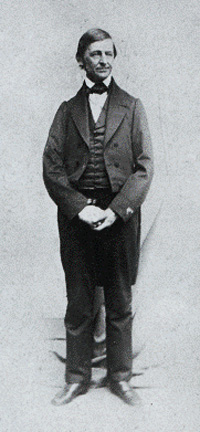 The caricature of Emerson as an unfeeling man whose optimistic theory so blinded him to a vision of evil as to render him incapable of experiencing pain and suffering may be corrected by examining, through a Wordworthian lens, Emerson’s response to, and frequent transcendence of, harsh and apparently unregenerate reality: what Keats, in one of his remarkable letters, called “this world of circumstance,” a Vale of Tears we struggle to convert into a secular “vale of Soul-Making.” Like so many others in the nineteenth century, Keats was immersed in, and responding to, the same Wordsworth poems that shaped Emerson: “Tintern Abbey,” the “Prospectus” to The Recluse, the meditations of the Wanderer in The Excursion, and, above all, that Emersonian favorite, the great “Ode: Intimations of Immortality from Recollections of Early Childhood”—the ninth stanza of which was Emerson’s principle source of consolation in distress.
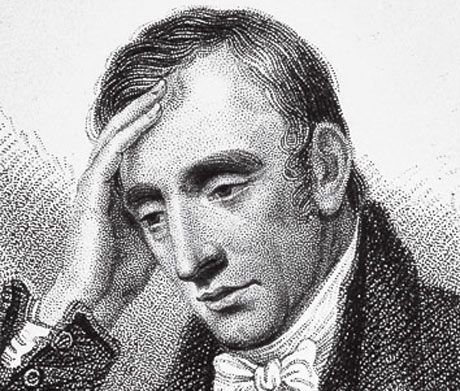
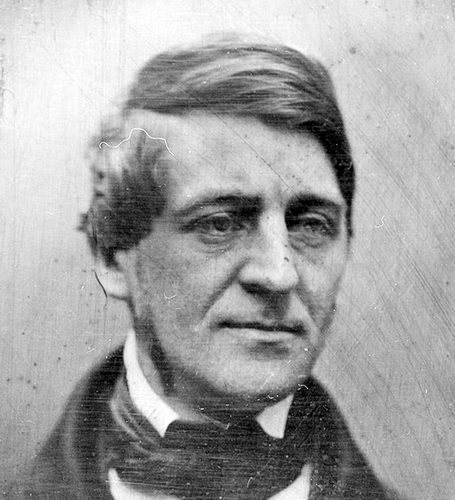
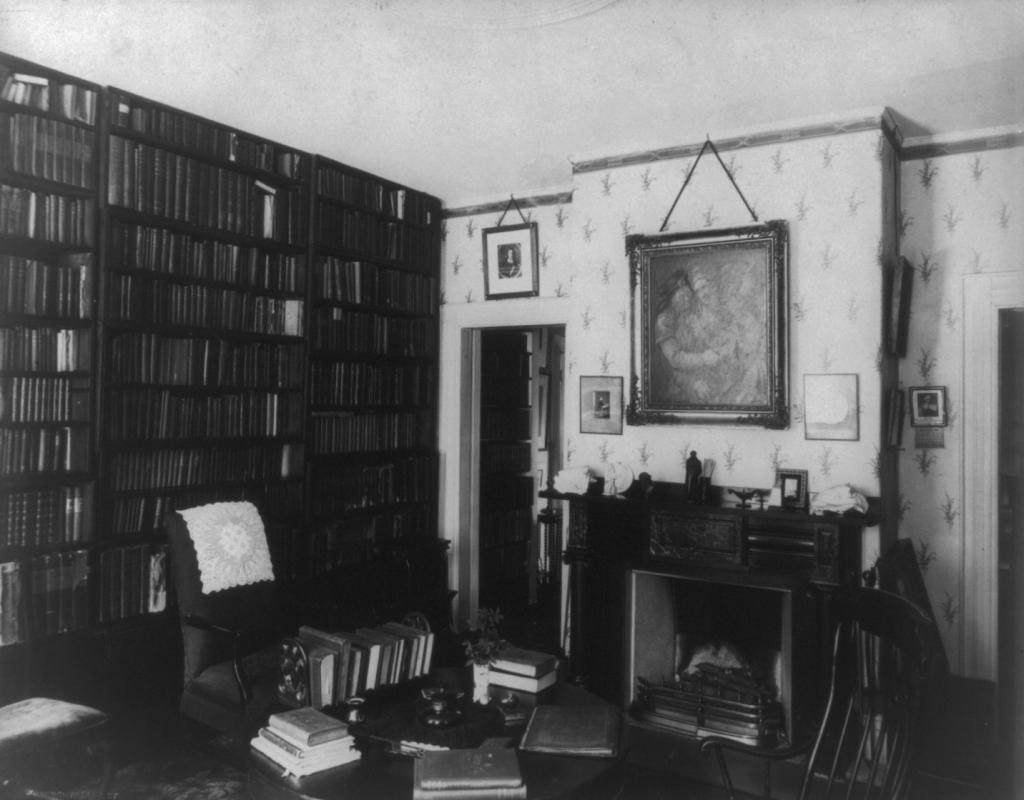

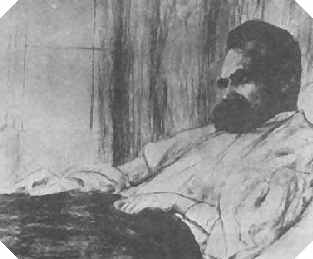
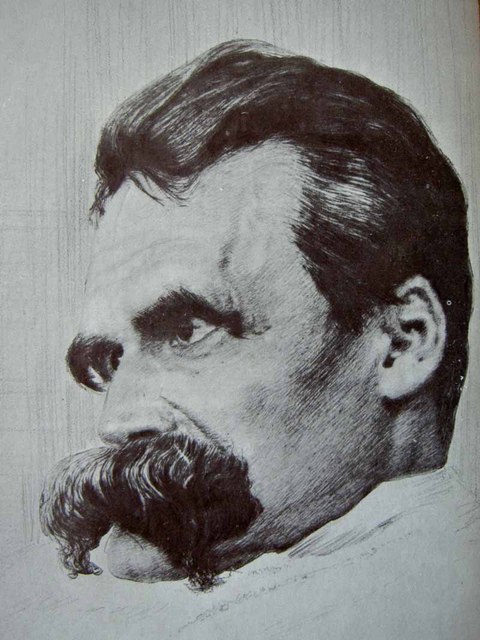
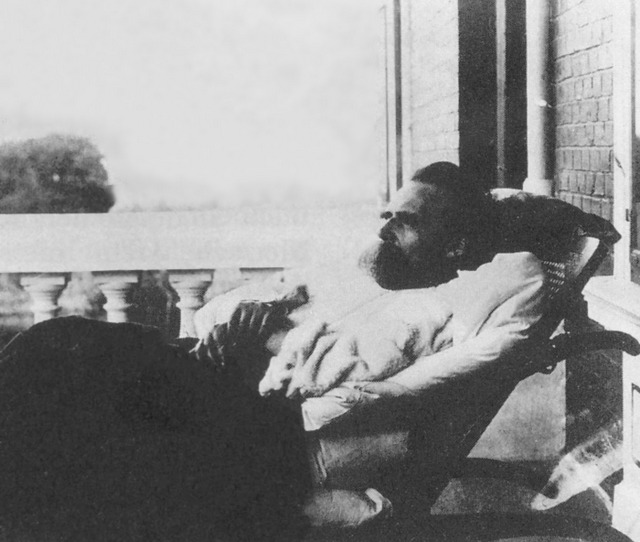
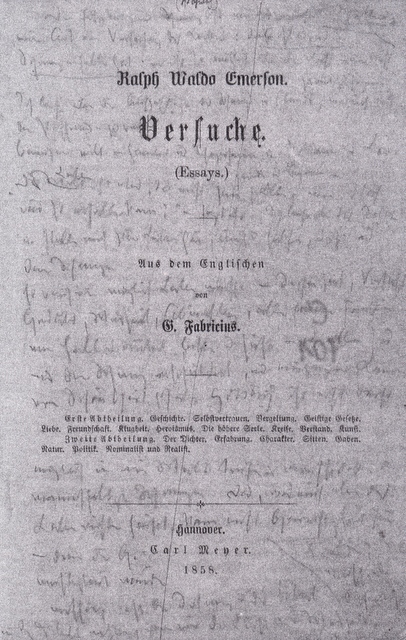
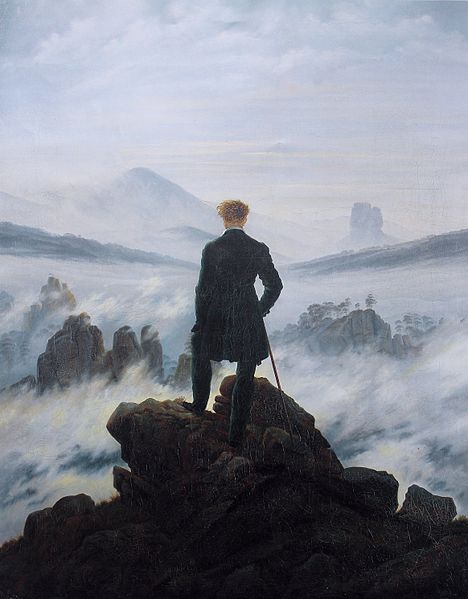
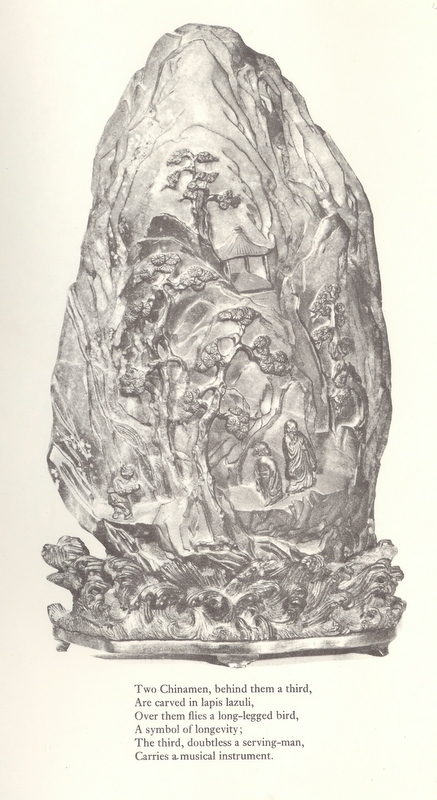
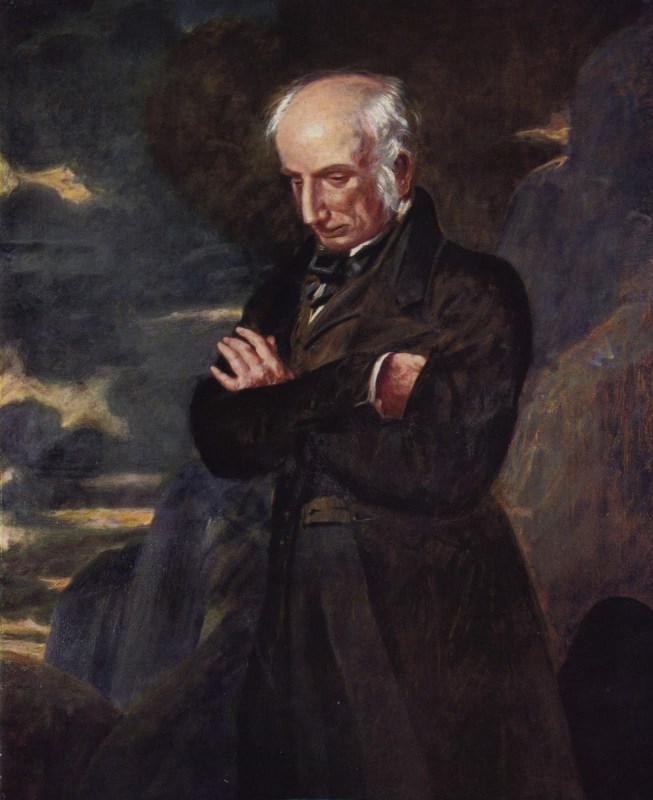


 For a good portion of my adult life, I’ve turned to Ralph Waldo Emerson, the great nineteenth century American transcendentalist writer, whenever my vision gets cluttered . When I wonder about the world and my place in it, his writings have a restorative effect on me. I own this wonderful, worn paperback book, Self Reliance: The Writings of Ralph Waldo Emerson as Inspiration for Daily Living. It’s a condensed version of Emerson’s essays edited by Richard Whelan. My copy is almost twenty years old, the cover worn to a sun-bleached smoothness, the pages gently yellowed. A small part of me is ashamed that I turn to this much-abridged, ‘best-of’ version of Emerson’s work rather than reading the whole text, but the Whelan book has been with me since I was a young man more prone to short cuts and self-help aisles in the bookstore. I’ve underlined and starred dozens of the pages. In many ways, the book has been a trusted companion for most of my adulthood.