Jun 072015
 

Tom Faure2Tom Faure portrait by 2015 student Emanuel Wickenburg

Below, the lecture I delivered to my high school sophomores in our last class of the year at the French-American School of NY. I tie the fundamental problems explored in our Western Civ curriculum – half history of Western philosophy, half classic literature – to the analogous problems facing this next generation. —Tom Faure

.

YOU’VE COME A LONG way this year. You’ve encountered bronze-kneed Greeks (Iliad), old and midnight hags (Macbeth), and white bitches from Bronxville (“Virgins”). You’ve met impetuous gods, impetuous angels, impetuous humans. Tragic humans—many tragic humans. Remember Camus’ words: humans are tragic because they are conscious. We’ve journeyed the stormy waters of the history of Western Civilization, noting with irony that history is written by the victors. History is written by the victors—and all too often these victors have been white men. White men who embody primitive instincts like strength and courage. Cruel men. White men too, though, who possess a relative wisdom.

I use this term “relative wisdom” to assure you of a very important fact of human nature: our virtues and our vices are limited, relative. They are relative to our technology, our social conventions, the knowledge and morals of our time. Our paradigms. More on this later.

So yes, the victors have been white men—not white bitches from Bronxville. But, though we have used the dead white men as the spine of our yearlong conversation about human nature and human nurturing, I hope you have seen how frequently the discussion has turned our attention to the non-dead, the non-white, the non-men. What I’m getting at is that notion we have treated both seriously and laughingly this year: privilege. And those who are underprivileged. Privilege—as I have defined it in my own words: access to capital (economic, political, cultural)—privilege is at the center of today’s paradigm about global capitalism. But you might have a different definition for it. It is not a new notion. As we have analyzed this year, the same concepts keep returning wearing new robes—new names. Macbeth and Lady Macbeth are like Frank and Claire Underwood. The Iliad explores the psychological experience of war as do “Redeployment” and “The Point.” The Flood of “Gilgamesh” and the Flood of Oryx and Crake. God of the Bible and Satan of Paradise Lost. Everywhere a search for knowledge, for understanding why we were made. Fallen heroes everywhere. The brashly democratic rogues at FIFA are like Agamemnon and, well, like Vladimir Putin. And like Obama and our American democracy. Oh well. The analogies are everywhere. History does not repeat itself, but it rhymes. That’s not my line—it’s attributed to Mark Twain, but apparently it wasn’t his line either. History in a nutshell, there. History does not repeat itself, but it rhymes. The myths of the epic hero are echoed by the myths of the religious fanatic, are echoed by the myths of the American Dream, are echoed by the myths of the dorm room hacker-ingénue. The morality, logistics, and existential threat of Artificial Intelligence and high-frequency trading are analogues to the morality, logistics, and existential threat of any of the supernatural forces we’ve read about this year—gods, God, witchcraft, the uncanny, the unknowable tricks of nature and fate.

Privilege, it seems, is one of the various threads we could sew through Oryx and Crake, through Gilgamesh, into the Greek Philosophers, around the Saints and the Dantes, up and under Shakespeare, Milton, and the Renaissance, through the existentialists and the contemporary short story writers. Privilege—knowledge, strength, moral righteousness. Access. Our texts invite basic questions: what do we want our leaders to be like? Do we want our leaders to be like us, or better than us? Like gods? What about our gods? Our idols? Do we want our heroes to be made in our image or to transcend it—to whisper of possibilities, to suggest there is more out there? These are some of the questions you will continually return to as you search the world and search within yourselves for a sense of what exactly the hell is going on. Other questions we have asked this year and you will continue to ask—because history does not repeat, but it rhymes: what is the universe? Who are we? How can humans co-exist? Why do we have morality—is it in our nature, as some studies suggest (but have failed to prove), or does it stem from religion, mythology, and other collective responses to what was deemed necessity? A sad truth about most influential people today is that they accept the Hobbesian view that man is biologically bad and so created society to hold this bad nature in check. But a number of the philosophers and writers you studied this year, including the Cynics, Locke, and Rousseau, argue compellingly that man is naturally good—that society is not inherently a regulatory mechanism designed to keep man from his baser nature, but is rather a harmful set of restrictions designed by those in power in order to maintain control. The politicians and scientists who dominate mainstream intellectual discourse do not recognize this. They are a product of Western capitalism, which has a tendency to try to placate the dissenter with the odd reflection: “if it is so, it must be so for a good reason.” Please do not forget the Rousseauian perspective.

Today I want to turn your focus, as I have often done in our classes together, onto you. What will become of you? “The world is your oyster.” That’s an expression suggesting you have limitless potential. The world is within your reach! The world is your oyster. Unfortunately, the oyster has been sitting in the sun a little too long. (That’s a global warming joke.)

The reason I want to bore into you this concept of relative wisdom is because, as I allude to with the oyster gone bad, your generation faces a terrible time. And we have more ways than ever before to learn about how terrible that time is. This global awareness and interconnectedness can trick us into thinking that if we just think BIG enough, we can solve the big problems. It’s very tempting. But I think that, if you think too big, you might despair. You might fall into the black hole Kurt described in “The Point.” So think about RELATIVE success. Because you happen to have been born at a particular time when there is more information available than ever before about how underprivileged most people are. Our world is incoherent: the 1% own 40% of the wealth. Public schools are becoming ghettos for children of the poor. Indeed, the proliferation of private schools in the 20th century is due in no small part to the efforts by Civil Rights Movement reformers to desegregate public schools. White folks—in other words, the people in power—realized the government was going to try to create equal opportunities, so they expanded the small business of elite private schooling and turned it into the de facto segregating mechanism we have today. I’ll make it simple for you: the globe produces enough food for at least, by conservative measures, 9 billion people. There are 7 billion people on the planet. 2 billion people are going hungry. 2 billion people’s worth of extra food. 2 billion people starving. That’s some incoherent math for you.

And yet millions of poor people in the world actually describe themselves in happier terms than the rich do. Yes. It may be a question of ignorance—i.e.: they don’t know better. What do you think? Are they just ignorant? Perhaps they have relative wisdom. They have a moral life as rich as a wealthy Westerner’s, if not more so, yet they do not suffer the angst of the complacent consumer suffering an embarrassment of riches. The sense is that the unhappiest people are those who are physically suffering (which is a significant number of people) and those who, wading through a muck of decadence, have never learned how to actually fight for happiness.

You face a global capitalist economy and a system of geo-political boundaries whose only impartial (nominally impartial—in reality, I don’t know) oversight comes from a weak, castrated United Nations. Socialism is a dirty word for fascism in some parts, democracy is a dirty word for American imperialism in others. We as a country are wealthier than ever and lonelier than ever. Easy consumption and communication further isolate us. Our solution to isolation is to increase our isolation by interacting with digital versions of ourselves, digital and therefore boxed in by the logics of computation. We begin to define ourselves in response to our performances online—our social network avatars take precedence over the spontaneous, creative, freeing capacities that humans possess and computers don’t. You operate in a digitized social network that feeds valuable information to the technocrats of the future. Google, Facebook, and the NSA are compiling enough data to write the next Matrix. Are we still here, or have we finally plugged in too long? The Matrix might be disguised as the next Bible or the Q’ran. Are we the old man who dreamed he was a butterfly? Or are we the butterfly who dreamed of being an old man? I will tell you one thing: I’d rather be a butterfly than a computer algorithm.

Let’s think about our classic texts. On the one hand, technology could have really helped Oedipus out! Imagine if he could have Googled his genetic heritage! Or if he had Twitter! @Oedipus: “Feeling confused. Bad things keep happening around me.” @BlindProphet@Oedipus: “You accidentally killed your Pops. Try not to sleep with your moms now #self-fulfillingprophecy” @Oedipus@BlindProphet: “I see you. (See you. Get it?) Thanks for the heads up. My bad about King Laius.” We might have been robbed of some quality dramatic irony. But more seriously, imagine technology in the hands of Agamemnon. Think of the war shouts he could have delivered if he had data on behavioral trends, your search engine history, your deepest secrets texted to your friend when you thought no one was looking. He would of course exploit that and inspire you and you wouldn’t even know it. Every omen would be a good omen! (Remember his humorous diatribe against Nestor, the seer: “You never give me a good omen!”) Every omen would be good, and it would be evil. You would die for his ego, his empire.

I am frightened by the likelihood that this is close to what goes on now. It’s only paranoia if I’m wrong.

But I’m getting off track. The point is that, yes, it’s fun to think about these things, and joke about the past, and compare Agamemnon to the Most Interesting Man in the World from Dox Equis. By the way, the meme contains its own particularly interesting narrative power and therefore a subtextual dynamic of privilege. But, yes, while you have a series of collective challenges ahead of you (global warming, poverty, inequality, and systematic opacity blocking sound governance) you also have a series of personal challenges you each will face. You are no doubt already aware of some of them. The personal challenges may seem more difficult, though at the same time you may have better luck overcoming your own demons than making the world a better place.

This all comes back to the things we’ve been reading. What is man—this conscious being whose consciousness may be the only thing that makes it unique. Consciousness makes us tragic; it also makes us capable of something computers literally can’t do: think outside the box.

This lecture raises the notion I called “relative wisdom.” I do not want to suggest that everything is relative. Objectivity does exist. This year we have continually explored the difference between absolutes and particulars. 2+2=4. All bachelors are single. Not all bachelors, on the other hand, are happy. It is raining or not raining. Some of our knowledge is true a priori, while some is true conditionally or a posteriori. And SOME of our accepted knowledge is NEITHER true a priori nor a posteriori—it is UNTRUE, we just don’t know it yet ! Yes, some knowledge will be defeated by the progress of knowledge. C’est la vie. The earth is not flat, but it’s also not round—it’s actually an oblong type of flattened sphere, bulging in the middle, like Mr. Faure—kind of like a deflated soccer ball. Somebody call Tom Brady and the NFL. Speaking of corruption.

The point: there is universality. There is objectivity. But you have to accept your own limitations. Relative wisdom. Another concept: the Romantic poet Keats’ negative capability. Recall that this is the ability to accept the fact that some things can’t be immediately known—it is a relinquishing of enormous pressure. It links nicely to Sartre’s call not to give up in the face of radical freedom. A third concept: Nietzsche’s amor fati. Embracing your fate. These all triangulate around a central, primitive emotion: fear of the unknown. I will be the first to tell you I don’t know everything. I don’t even know everything that I DON’T know—that is my personal weakness, my own project. I hope one day to have climbed Plato’s ladder sufficiently to simply understand my own lack of understanding. Yes. You know me fairly well now—you might have noticed my own intellectual confidence. But I actually do possess some humility, I am not all that arrogant—I try to espouse the humility of Socratic self-doubt. I doubt myself. I don’t let others make me doubt myself, I do it myself. And I find that there is so much I don’t know. So step on in. I welcome you to the unknown. It is quite cozy in here.

So let us accept that some things are knowable, and our lives are worth pursuing even if we have stared into the dark abyss of meaninglessness and seen it has a compelling face. Even Nietzsche, to whom we have mistakenly ascribed the label of nihilism, believed life is worth living—in fact, he thought nothing was more essential. What can we do about the problems I’ve mentioned—problems just barely mentioned, and which are just the tip of the iceberg? There are many more problems, universal and personal, you will encounter. I’ve mentioned a few obvious ones. For all this, and in sincere fondness and full acknowledgement that I am just one small, well intentioned but flawed person of thousands whom you encounter in your life journey, I offer you a few parting thoughts, which I won’t go so far as to call lessons:

1) People are generally good.

It’s systems, bureaucracies, institutions, and especially these over the course of time that usually cause the problems. It’s the slow crawl of change. And the essential phenomenological division between individuals and groups—it makes it difficult and frustrating to reconcile individual desires and ideas with the plodding, democratic group’s work. This leads people to frustration and to giving up on the group project. They grab what they can and say “hey, survival of the fittest.” But that doesn’t mean people are bad. Don’t become cynical (small -c) about humans. You can be cynical about humanity, but don’t let that ruin your experience of humans. Humanity =/= Humans.

2) Commune

You need community. The thing about today is you could easily live in a gorgeous expensive luxury New York City apartment and never leave it. You could work from home, shop from home, have sex from home. And this would be your end. Do not hole yourself up inside a world devoid of actual human interaction. I’m not saying this to be anti-social networking. It’s not about that. It’s about the dulling of your senses, your empathy, and your creativity. Empathy, creativity. Because computers are closed circuits. Social networks are not conscious, not tragic, not free. You will be happier if you have people.

3) Relative wisdom.

Maintain an ambition to understand everything and everyone. Accept that you will fail. Accept the unknowableness of being. Accept this even as you study the history of your people and, building on this class, the history of other people. History is written by the victors. But just because history is a construct does not mean we cannot learn from it.

4) There is no perfect painting.

Extending from the previous point: don’t be afraid to fail, period. Not only don’t fear your ignorance. Don’t fear your inevitable failures. Remember what Sartre said. We face—and continually reface—a blank canvas. And we may be tempted to stare at the blank canvas and not add a single brushstroke until we see the endgame, the eventual painting. This is a mistake. You should attack that canvas. We could spend eternity staring at the canvas, unwilling to mark it, searching for the perfect painting. The radical freedom should not render you forlorn. Do not be afraid to mark the canvas. There is no perfect painting.

5) All you need is love.

Not only the Beatles knew this. Some of the most influential engineers and scientists have said the same thing. That the meaning of life is in the ones we love. We have, after all, very little other purpose. Let’s close read that sentence. “All you need is love” sounds like it is defining something via a negative: that ALL you need is love, in other words you need NOTHING except love. But you can read it another way too: “EVERYTHING that you need is love.” Think about that. Everything that you need involves love. Everything you love, you will need. All you love, you need. All you need is love. Woot close reading!

Love is a mystery—we’ve associated it this year with eros, pietas, beatific love, platonic love, familial love…yes, it is probably instinctively as powerful as our fear of the unknown. We biologically need love for the survival of our species. And love has been responsible for the horrors of war and the truth and beauty (another Keats line) of art. Remember Oryx and Crake, the game “Blood and Roses.” Love is a primary motivation for both sides of human history.

I can tell you up front that love is the single greatest thing you will experience, and that on the flip side love will probably cause you great pain. Why? Because human life is short, and the experience of our lives is also myopic, and we make mistakes. We screw up, we hurt people, and, even if we don’t do that, we eventually die. Death is the best case scenario. Grief is the price we pay for love. So yes, love may hurt you. And if it does, then you will be one of the lucky ones—for that pain, though sucky, would be a testament to the greatest feeling a human being can have.

This year I have tried to guide you on your own journey to more critical thinking and reading. I hope the journey has opened your eyes, transported your mind, etc. Maybe even occasionally touched your heart. It has mine. It’s been a pleasure being the Anchises to your Aeneas, the “wise” (hah!) elder who offers the hero knowledge or a weapon so as to obtain the elixir for the hero’s people. I do not take so much credit—you have sought out much more knowledge than I could give. Please, please, keep doing so. Go forth and plunder. Climb the Platonic ladder. Do not forget that the hero’s journey always involves, either directly or indirectly, the seeking of knowledge. Don’t ever let anyone cause you to question yourself. Question yourself. Be well and be good.

—Tom Faure

tom faure

Sep 172013
 

.

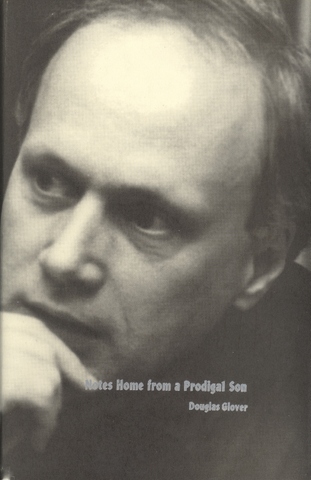
This is the beginning of things, the Ur-essay, the thought-lode out of which most everything else I have written about literature has evolved. It was written in the late 1980s and so, to an ever so slight extent, is a period piece. It forms the centre piece of my book of essays and memoir Notes Home from a Prodigal Son (Oberon Press, 1999). The ideas here expressed evolved out of my philosophical background, long reading, and the lessons I learned during my time at the Iowa Writers Workshop. I mention specifically the novelist Robert Day (who now contributes mightily to NC), but I would be remiss if I didn’t also recall the influence of the late Claude Richard, who was a visiting professor from the University of Montpellier at the time.

I reprint the essay here because the book and the essay were both published long ago; such is the nature of readership that older things fall out of the line of vision. But in fact this essay (and Notes Home from a Prodigal Son), along with The Enamoured Knight and Attack of the Copula Spiders and my long essay “Mappa Mundi: The Structure of Western Thought” form a consistent, coherent and elaborated system of thought about writing, criticism and philosophy.

dg

…there is an other [irony] besides the irony of the learned man; there is the poem, in the sense that it is rhythm, death and future.

— Julia Kristeva

1

The best writing teacher I ever had was a Kansas cowboy named Robert Day who showed up at the Iowa Writers’ Workshop as a last minute, one-semester replacement for a sick colleague in January, 1981. The first day of classes he strode into the room wearing Fry boots, jeans and a checked shirt. Without saying a word, he picked up a piece of chalk and wrote across the full length of the blackboard in huge looping letters: REMEMBER TO TELL THEM THE NOVEL IS A POEM.

At the time, Day had only published one novel, a book called The Last Cattle Drive. He was a tenured English professor at Washington College in Maryland. He was a past president of the Associated Writing Programs. As a young man, he had worked at G. P. Putnam’s in New York and could recall for us the excitement over the publication of Vladimir Nabokov’s Lolita. Summers he went back to western Kansas where friends ran a borderline ranch. He kept a horse there, a horse which at various times had eaten loaves of bread through the kitchen window, or Day’s hat. All summer long he would hand out with his friends, their cattle and his horse.

That semester we read Queneau, Musil, Rulfo, Achebe, Nabokov, Tutuola, Abe and Marquez. Day did not tell us what he meant — REMEMBER TO TELL THEM THE NOVEL IS A POEM. Maybe he forgot. Half-way through the semester he read the second draft of my novel Precious, three hundred typed pages of plot, dialogue and scene that stubbornly refused to come alive. I still have the notes I made during our conference, fifty-four words. It took less than fifteen minutes. But like a skilled surgeon he had opened the novel up for me and shown me its heart still beating, its bones, nerves and veins.

He taught me four basic devices. The first  was what he called the language overlay. My first person narrator was a newspaperman, he had printer’s ink in his blood. Day said I ought to go through the novel, splicing in words and images, a discourse, in other words, that reflected my hero’s passion for the newspaper world. So, for example, Precious now begins: “Jerry Menenga’s bar hid like an overlooked misprint amid a block of jutting bank towers…” Or, in moments of excitement, the narrator will spout a series of headlines in lieu of thoughts.

Second, Day taught me about sub-plots. The main plot of a novel, he said, is like a pioneer wagon train moving across the prairie. The sub-plot is like the Indians coming in out of the hills to attack from time to time. The pattern of the sub-plot must reflect or parallel the pattern of the main plot, Day said, just as the gene inside a cell contains the pattern for the whole body.

Third, he showed me how to use background and revery. My protagonist must have been somewhere before the novel began, he must have a story to tell that will give texture and depth to his thoughts and, by extension, to the narrative. In Day’s words, he wanted me to “give the novel a memory.” Once again, the background must reflect or parallel or bear the seeds of the main action. A revery that does not bear a relation, in pattern, to the main plot is wasted. It diffuses the reader’s attention. It makes the book foggy and boring.

What this means in practice is that far from being “loose and baggy monsters,” to use Henry James’s phrase, in which the author has room to digress, expand or linger, a good novel is a tight, formal production with very few wasted words.

Finally, Day told me how James used the confidante device to modulate the weight of a given speech. In Precious, I had two secondary characters who were both close to the hero. What if I created a pattern of giving and withholding information? What if I made one of the secondary characters the hero’s confidante, the person to whom he told his secrets? He could then maintain an ironic distance from the other, giving opportunities for lightness and humor. The reader would sit up and pay attention when the confidante was on the scene.

Day then lied and told me I could splice all these changes into the novel in three weeks. Actually, it took me five months, and I rewrote the thing from beginning to end. I remember those months as being the best time of my life; the woman I lived with then says otherwise. She says she never remembers me being more miserable. What that means, really, was that the work was hard but also amazingly exhilarating.

What I had learned was far more than a collection of four devices. I had learned a secret about writing stories, novels and poems. Also painting pictures and composing symphonies. I had learned that a novel is not a string of seventy-five thousand words, all different, all pressing the plot forward. If you think about it, the stories of most novels can be told in a page or two of summary. Then imagine me trying to stretch that summary over another two hundred and ninety-eight pages.

Or, to use an image I had carried in my head through two earlier failed novels, think of a novel as a bridge thrown across a bottomless gorge with nothing to support it from one end to the other. In my mind I had to get a running start and write fast for fear of not making it across. I wrote my first novel in six weeks in a state of terror. As a bridge it was a shambles.

What I had learned was that besides story, plot and characters, the novel needs patterns. That in fact the story, plot and characters don’t begin to come alive until they are submitted to a pattern. I had made a common mistake. Before Robert Day, I had assumed that a novel’s “aliveness” depended upon its verisimilitude, i.e. how closely it resembled what we call real life, whereas in fact it depends upon patterns. I think this is what Day meant when he wrote REMEMBER TO TELL THEM THE NOVEL IS A POEM. He meant for us to notice that, like a poem, the novel should be seen as an arrangement of materials of which one, but only one, is the story. This patterning is the poetic quality of prose.

2

In a poem it is much easier to see the patterns. We’ve all had to map out sequences of stressed and unstressed syllables, the ABBAs of rhyme, the internal rhymes of alliteration, the surprising anti-patterns of sprung rhythm and free verse. We’ve all dissected extended conceits, noted the effects of diction and imagery. These are the things we focus on in a poem. Narrative, story and verisimilitude are secondary to the poetry of poetry, by which I mean the effect of patterns.

With novels and stories, the reverse is true. We tend to read a novel first for plot and character and the narrative’s relation to reality, what post-Saussurean critics call its “aboutness,” and only secondarily, if at all, for pattern. This is a little like Ludwig Wittgenstein’s duck-rabbit argument. You know how you can draw a little circular figure with an elongation here and a dot there. If you squint your eyes one way, you can see it’s a rabbit with long ears. But if you squint another way, it becomes a duck with a protruding beak. With poems and novels, you can read for pattern or you can read for aboutness, depending on how you squint your eyes.

It happens to be the case, though, that we rarely read novels for patterns. One reason for this is that the novel’s very aboutness gets in the way. It is the easiest and most natural thing in the world to read a novel for plot and character. In fact, in most cases you have to read for plot and character in order to situate yourself, as an observer, in the world of the novel. The shift of focus, the new squint, if you will, from plot to pattern only happens on rereading. A good reader, as Nabokov wrote in his essay “How to Read, How to Write,” is a rereader.

When we read a book for the first time the very process of laboriously moving our eyes from left to right, line after line, page after page, this complicated physical work upon the book, the very process of learning in terms of space and time what the book is about, this stands between us and the artistic appreciation. When we look at a painting we do not have to move our eyes in a special way even if, as in a book, the picture contains elements of depth and development. The element of time does not really enter in a first contact with a painting. In reading a book, we must have time to acquaint ourselves with it. We have no physical organ (as we have one in regard to the eye in a painting) that takes in the whole picture and then can enjoy the details. But at a second, or third, or fourth reading we do, in a sense, behave toward the book as we do toward a painting.

When Nabokov makes a distinction between “what the book is about” and our “artistic appreciation” of the book, he is separating our reading of the subject, story and characters — the book’s aboutness — from our appreciation of the book’s so-called artistic qualities, the details we would notice if we looked at a novel the way we look at a painting.

Nabokov assumes that we all look at paintings for more than the resemblance they bear to old dead people in funny clothes, for more than romantic seascapes and sunsets. He assumes that we see, for example, Whistler’s mother as something other than an elderly lady in a plain black dress and that we know, perhaps, that the painting of Whistler’s mother was originally titled “Arrangement in Grey and Black” and that when Whistler talked about painting he would say, as he did in a letter to his friend Fantin-Latour:

…it seems to me that color ought to be, as it were, embroidered on the canvas, that is to say, the same color ought to appear in the picture continually here and there, in the same way that a thread appears in an embroidery, and so should all the others, more or less according to their importance; in this way the whole will form a harmony.

Whistler is talking about patterns, patterns of color that exist over and above and through the subject of the picture, its aboutness. And when Nabokov talks about “artistic appreciation,” he is talking about appreciating the patterns of the novel in the same way, the repetition of certain verbal events or structures in a novel like the colors in a painting. This is precisely the way we appreciate poetry, where it is, as I have said, much easier to see that sounds and words are like oil paints or, for that matter, like notes in a piece of music.

3

Other ages and times have provided writers with pattern books, with instructions on rhetoric and composition. They put names to commonly used devices: paronomesia, periphrasis, prosopopoeia. Even in the 1920s at the University of Toronto’s Victoria College, my aunt was taught to write, to compose sentences, by translating back and forth from Latin to English. But no one teaches composition any more except in remedial programs to students who patently can’t write at all.

Instead we teach creative writing with the emphasis on “creative” (which, I guess, implies that there is “uncreative” writing as well, though I have never seen it). At Iowa, outside of Robert Day, teachers tended to urge us to “write what you know.” If we managed to do that, they said, whatever we wrote would come out all right. Ernest Hemingway, that most brazen of liars, once wrote, “All you have to do is write one true sentence…,” sending generations of his competitors chasing vainly after a will o’ the wisp reality. Why people choose to believe what he says about writing and not what he says about his manliness is a curious instance of intellectual willfulness and self-deception.

In university English departments, on the other hand, students are taught criticism — Arnoldian, Freudian, New, Structuralist and Post-Structuralist, etc. Archetypes, symbols, influences, foreshadowing, metaphor and theme. Academic critics tend to see a novel as full-blown, not something built; as something found, not constructed. Academics are romantics — they see, or prefer to think they see, romantic intention in a novel as opposed to the bricks and mortar. I tried to tell a friend of mine, a person partway through a PhD. in English, what I meant by a pattern in a novel. She said, “Well, we call that recurring imagery.” A singularly bloodless phrase. But fair enough. Yes, that is sort of what I mean.

But why does it recur? And who made it recur? And is that all there is to it? Does the phrase “recurring imagery” help a writer? Academic critics generally see recurring images as evidence of a point the author is trying to make, part of the aboutness of the work. Deconstructionists, on the other hand, look for recurring images that the author may not have intended so as to “deconstruct” the aboutness of the work. In either case, they are wedded to thematics, to aboutness, to truth. Write what you know, throw in a little recurring imagery, and it’ll come out right. That’s what the creative writing schools and the English departments teach us.

In general it’s not terribly bad advice. Many writers get by with no other. Every writer borrows to a greater or lesser extent from the real world the images which he or she deploys in his or her novel. Every writer who has read significantly has an instinctive feel for rhythm, pacing and the repetition of images. But to go through life believing “Write what you know and throw in recurring imagery” is like going through life believing in God and free enterprise — it leads to a conservative and narrow view of life and art.

4

Pattern is an ambiguous word and I want to keep it that way. Writing a novel, Faulkner once said, is like a one-armed man nailing together a chicken coop in a hurricane. It helps to be open-minded and undogmatic about the rules of the operation.
Experience itself rests on our ability to recognize patterns — Forms Plato called them — in the sensory flux. A pattern that does not repeat itself is not a pattern, it is chaos, or it is something like God, or it is nothing. And the ability to recognize patterns is tied up with out ability to remember. Pattern, repetition and memory are the foundations of consciousness.

The same happens in a novel. On a very rudimentary level the author depends on pattern, repetition and memory to give the reader confidence in the world of the book, what we call verisimilitude, the quality of seeming to be real. In Leo Tolstoy’s Anna Karenina, Anna appears on almost every page. Anna is a pattern, a group of words and characteristics that repeat. If Tolstoy had changed Anna’s name, age, hair color and social background every chapter or so, we would throw the book down in disgust.

Pattern can mean a model or design upon which something else is constructed. Or it can mean the systematic repetition of certain design elements as in the pattern in wallpaper.

Pattern can, for example, refer to something large such as a plot.  All romances are based on, say, the model boy meets girl, boys loses girl, boy gets girl. We also say there are no new plots under the sun. And we refer to coming-of-age novels, which have plots based on myths and rites of passage, or adventure novels, which are based on the quest model. What we call genre is a sort of pattern.

But pattern can also refer to something minute, a device such as, say, the list or the epic simile or even the structure of a sentence. Here is Nabokov talking about Flaubert’s Madame Bovary:

Gogol called his Dead Souls a prose poem; Flaubert’s novel is also a poem but one that is composed better, with a closer, finer texture. In order to plunge at once into the matter, I want to draw attention first of all to Flaubert’s use of the word and preceded by a semicolon. This semicolon-and comes after an enumeration of actions or states or objects; then the semicolon creates a pause and the and proceeds to round up the paragraph, to introduce a culminating image, or a vivid detail, descriptive, poetic, melancholy, or amusing. This is a peculiar feature of Flaubert’s style.

Now, though the actual number of usable patterns may, for practical purposes, be infinite, we always choose to use a finite number in any given piece of writing. This finite number of further reduced by the fact that many of the patterns are repeated throughout any given work. The more patterns a writer knows, however, the better his or her chances of being published, being read, or of writing a masterpiece that will endure. The way a person learns patterns is by reading; literature is an encyclopedia of patterns and devices.

Though it is possible to invent a pattern that no one has ever used before, originality in a writer generally amounts to an ability to vary the pattern in fresh ways. One might, for example, decide to use Flaubert’s semicolon-and sentence pattern in a contemporary rites-of-passage novel set in Montreal’s Jamaican emigre community. The pattern would be Flaubert’s, but the variation, the unique application, would be the author’s own.

Repetition, as I have said, is also a pattern. But it is a pattern of a different order, perhaps the pattern of patterns. To me, it is the heart of the mystery of art, of novel-writing. Without it, the novel becomes a strung-out plot summary.

I have tried to think out why repetition is appealing, why it is aesthetically pleasing as a pure thing. I think there are two reasons, or sorts of reasons. The first is essentially conservative — repetition is allied to memory, to coherence and verisimilitude.

The second is biological or procreative or sexual. Repetition creates rhythm which on a biological level is pleasurable in itself, the beating of our hearts, the combers rolling up on a beach, the motion of love. This is the sort of thing Lyotard is talking about when he writes about “intensities” or patterns of intensities in his book Économie Libidinal, or what the Spaniard Madariaga meant when he talked about the “waves of energy” in Tirso de Molina’s El Burlador de Seville.

In Anna Karenina there are two sub-plots: Levin’s marriage and Anna’s brother’s marriage. The novel actually begins with a sub-plot scene — Anna’s brother banished to sleep in his study for having an affair with a maid. These subplots are not simply tacked on. They repeat the marriage theme of the main plot, Anna’s marriage. Anna’s brother’s marriage is, like her own, a marriage on the rocks because of infidelity. Levin’s marriage is, by contrast, dutiful and steadfast.

Tolstoy created three identical patterns which twine and leapfrog and reverberate through the novel. Of course, the details, the contents, are different (this is one sort of variation); and, in the case of Levin’s plot, the structure, the pattern, is inverted, a positive to the negative of the other two plots (repetitions of abstract structures such as plots or relationships can vary in three ways — congruence, contrast or inversion, and the tree in the seed).

References to plot and subplot form a kind of rhythm in the novel. This rhythmic repetition of structures has something to do with what we call pace. As each plot comes round again for scrutiny by author and reader, it is like a new wave of energy, a drum beat. Anna’s story is the melody; Levin’s is a kind of booming base note thudding in counterpoint to Anna’s; Anna’s brother’s rhythm is lighter, more frenzied and comic. Or they are like Whistler’s colors, threading through a painting, darker, lighter, heavier, fainter.

There is another sort of repetition in Anna Karenina, one more mysterious yet. Just after Anna meets Vronsky, there is a train accident. A station guard, either drunk or muffled up too much against the cold weather, fails to hear the train approaching and is crushed to death. This station guard returns in Anna’s thoughts over and over again. He begins to inhabit her nightmares. He even migrates into Vronsky’s nightmares — transformed now into a dreadful-looking little man with a bedraggled beard, bending over a sack, groping in it for something and talking in French about having to beat, to pound into a shape a piece of iron. At the end of the novel, Anna sees him again just as she throws herself beneath the wheels of the train: “A peasant muttering something was working at the iron above her.”

Obviously train imagery is repeated as well, at the beginning and the end. Why? Coincidence? Or is Tolstoy telling us something about the 19th century Russian transportation system? Of course not. Is it foreshadowing? Well, sort of. But foreshadowing is a word I don’t trust. Does this mean Tolstoy is telling us ahead of time that Anna is going to die in a train accident? I think not. I think there is some other motive at work, that the repetition of trains and bedraggled peasants, this bookending of image and incident, the beginning and the end, has a pleasing quality all its own, symmetry, if you will, a rightness, that is felt and appreciated, not “known.” Overture and coda, rather than prediction. A symmetry that would be lost, say, if Anna drowned herself or beat herself to death with a hatchet.

As a pattern, this terrifying little peasant just seems to pop up. He is just there — and there and there and there. He “means” nothing, except insofar as he is associated by juxtaposition with a larger pattern of trains, death, dreams and Vronsky. Somehow he manages to accrue all the potential horror of that pattern. He reminds us, not of the end to which Anna journeys, but of the beginning; so that when she dies, her end is freighted with a kind of fatedness that makes it all the more horrible and pathetic. The peasant is a tiny thread in the tapestry of the novel, a hint of color in the painting, a grace note in the symphony. Nothing more. Yet without him, how much shallower a book Anna Karenina might be.

It is worth noting that certain kinds of patterning, e.g. the repetition of character traits, enhance verisimilitude, while others, e.g. Anna’s peasant, work against it. We might distinguish between these by calling the one sort patterns of verisimilitude and the other patterns of technique. Every novel uses both, so every novel is a little balancing act between the two, or a war. John Hawkes, the experimental novelist, for example, says that “plot, character, setting and theme” (which are generally what I mean by patterns of verisimilitude) are the real enemies of the novel. “And structure,” he adds, “–verbal and psychological coherence — is still my largest concern as a writer. Related or corresponding event, recurring image and recurring action, these constitute the essential substance or meaningful density of writing.”

But, oddly, though patterns of technique and patterns of verisimilitude tend to destroy one another, like matter and antimatter, both are necessary to the work. Depending on how heavily the author plays up one or the other, his or her novel will be more or less “realistic” or more or less “experimental.”

Getting the balances right in any given work is part of the art of art and its mystery and is a skill that cannot be taught. It leads to the feeling, a feeling I have had twice, once with each of my novels, of submission, of loss of freedom, of loss of expressiveness. Because there is a point in the process of writing a novel at which you must submit to the strictures of pattern that you have chosen. All of a sudden, there are things you can no longer fit into this novel, things you must cut, and other things that you must put in. And, of course, with something as complicated as a novel, you never get it right. And you end up wanting to slash your wrists.

As Paul Valéry once said, “A work of art is never completed, only abandoned.”

5

I have already noted that some patterns in novels, those patterns which tend to create verisimilitude, are like the patterns of experience in the world. This is as much as to say that a conventionally realistic novel reflects a certain metaphysics or philosophy of being and knowing. Modern novels of a less conventional sort also reflect a metaphysics, but it is a new metaphysics, a radically new way of talking about the locale of existence.

Vladimir Nabokov, whom I have quoted extensively and who has influenced a whole generation of North American writers (in Canada, at least two Governor-General’s Award winners, Robert Kroetsch’s The Studhorse Man and Hubert Aquin’s Trou de Memoire, owe huge debts to the structural and verbal pyrotechnics of Nabokov’s novel Pale Fire), was an intellectual heir of the Russian Formalists. Formalism was an aesthetic and critical movement that thrived in St. Petersburg and other eastern European cities early in the twentieth century. The Formalists pegged a whole philosophy of language and literature on the split between meaning and signifiers, between aboutness and pattern.

What they did was put a theory to the things painters like Whistler and, soon after, the French Impressionists, and Surrealist poets like Breton, Eluard and Ponge — all the way back to Mallarme (Nabokov sneaks Mallarme quotations into his novels) — had been doing ten, twenty, thirty or more years before. They simply recognized that aboutness and pattern were two aspects of the things we call art and language, and that you could, in fact, have pattern without aboutness.

Since it seem impossible to have aboutness without pattern, a corollary of this is that aboutness is somehow secondary, a poor cousin, on the aesthetic scale of things, to pattern. Nabokov again:

There are…two varieties of imagination in the reader’s case… First, there is the comparatively lowly kind which turns for support to the simple emotions and is of a definitely personal nature… A situation in a book is intensely felt because it reminds us of something that happened to us or to someone we know or knew. Or, again, a reader treasures a book mainly because it evokes a country, a landscape, a mode of living which he nostalgically recalls as part of his own past. Or, and this is the worst thing a reader can do, he identifies himself with a character in the book. This lowly variety is not the kind of imagination I would like readers to use.

This is what the post-Sausurrean critics, recently so popular in Europe and on American university campuses, are saying. Aboutness is old-fashioned, authoritarian, and patriarchal. Signs — read, pattern, poetry — are playful, subversive, and female. How a thinker can jump from a purely logical incongruence — the fact that, apparently, you can have pattern without aboutness but not vice versa — to these strings of value-loaded predicates is marvelous indeed and evidence that the instinct for narrative and romance has not died behind the ivy-covered walls of academe.

Another corollary of splitting the categories of pattern and aboutness is that there is a sense in which pattern itself creates meaning. Or to put it another way, the novel is about its own form. Or every book is about another book, or books. And every work of art is a message on a string of messages which begins nowhere and ends nowhere, to no one and from no one, and about nothing except the field of pseudo-meaning created by previous and future messages. It is all a game of mirrors and echoes. A little dance of images, words, and patterns. The of the Hindus, or all is vanity, all is dust, sure enough.

Keats wrote, “A man’s life is an allegory.” Nothing else. Or conversely, Korzybski says, “The map (read, the allegory, the pattern, the words) is not the territory.” Which is to say, as Jacques Lacan does, that all utterances are symptomatic and that the real is impossible.

6

Form (or pattern) and aboutness (or content, or reality) are the binary opposites of thought. The stance of the modern, whether he or she is a novelist, critic, theologian, or psychologist, is that ontology begins and ends with the former, that so-called reality is a highly suspicious article.

We are pressed back to a position of washed-out Cartesianism: I think, therefore, I think; or more precisely, I think, therefore something is thinking. Structuralists like Levi-Strauss say things like, “There is a simultaneous production of myths themselves, by the mind that generates them, and, by the myths, of an image of the world which is already inherent in the structure of the mind.” Linguistic philosophers like Wittgenstein say, “The world is my world: that is shown by the fact that the limits of language stand for the limits of my world…I am my world.” Except that this “I am” is not the body but language itself.

Reality, meaning, aboutness, the good, God and the self are pushed away into the realms of the unconscious, the unknowable, the unspeakable, and the unfathomable. In a very logical sense, they no longer concern us here as we race toward the end of the twentieth century. To say you are writing “realistic novel” is to commit as much of an intellectual solecism as, say, the Reverend Jimmy Swaggart does when he says God spoke with him before breakfast. The words “realistic novel” can only be spoken by a person who is speaking in the discourse of an earlier age or in parody.

Think of yourself in a room with bare plaster walls and no windows or doors. You have an infinite supply of variegated wallpapers. You paper the room with something in blue with a skylark pattern, then you do it over with angels, then an abstract, decorative pattern.

The first thing you notice is that you can’t see the wall anymore. This is the first effect of language, according to the philosophers and critics. As soon as you begin to use language, describe the world, you can no longer see it. You can only see your description. In fact, since we can’t even begin to describe something without language, then the existence of the wall itself becomes moot.

The second thing you notice is that each layer of wallpaper covers the previous layers. They’re lost, though you know they’re under there. In a sense the old wallpaper, the past, becomes part of the reality you are describing with each new layer of wallpaper. And sometimes you wake up in the morning and wish you still had the skylarks. You might even try to scrape some of the new wallpaper off. But that only makes a mess.

All you have is the design of each successive layer of wallpaper, and, just possibly, the shape of the room, its broad outlines, its cubic form. Life and art are a little like this. We only see the current wallpaper, remember bits and pieces of the old in the form of myths and memories of memories and fragments of discourse which no longer “mean” what they once meant. And, if we’re lucky, we intuit, or think we intuit, some vague outline of the something which may or may not be the room or the womb of reality.

To be a writer is to write with this knowledge, that the wallpaper is wallpaper and not the room, walls and plaster. It is to have that quality which Keats said went to form a man of achievement “especially in literature and which Shakespeare possessed so enormously,” what he called Negative Capability — “that is when a man is capable of being in uncertainties, Mysteries, doubts, without any irritable reaching after fact and reason.”

Negative Capability is the artist’s ability to suspend belief in any particular conceptual system (or wallpaper) or to see the conceptual system as pattern, as opposed to reality, as material in itself to be juggled and juxtaposed. Or, to put this another way, aboutness is illusory. What we see as aboutness the artist sees as just another pattern or part of a pattern. Or again, everything is pattern, infinitely plastic and malleable. A person who believes in a particular conceptual system believes that everything can be explained by reference to that conceptual system. Whereas the artist sees the pattern and feels the mystery that looms beyond the pattern.

The truth of the matter, everything that seems supremely important in life, begins when the talking, writing, painting, sculpting, filming and singing of discourse stop. All talk or art that says it’s telling you the truth about life is second rate. Of course, you can write something second rate that’s very popular, even quite good, for all these categories are relative. But great art is pattern over mystery, it is juggling words over whirlpools of silence.

7

In the extended sense, this view of language, life and art can seem exceedingly austere, if not forbidding and bleak. “The ultimate goal of the human sciences is not constitute, but to dissolve man,” says Levi-Strauss. (Just as Nabokov says that one of the functions of a novel is to prove that the novel in general does not exist.) Few of us can help feeling a nostalgia for the old ways, or what we think are the old ways, of talking. For ancient beliefs. For certainty and immortality. For familiar stories with plots and characters and recognizable locales. For adventure, romance and magic.

A lot of fictional, intellectual and political hay has been made out of this nostalgia, a nostalgia expressed, say, in the phrase “breakdown of values.” When an old way of talking disappears, many people are forced to apply narrative in order to explain it to themselves. They often feel they have a stake in the old way. They invent metaphors and analogies — machine breakdowns, erosion, war, disease — to make themselves feel easier. And to sell books.

You can see where nostalgia led Levi-Strauss in his wonderful autobiographical novel Tristes Tropiques. The annihilation of the self, of meaning and aboutness, by structural anthropology drove him into a quest for theological support, which he may or may not have found wandering amongst the Buddhist temples of the Far East. Or think of Sartre turning from the barrenness of existentialism to the warm, sloppy infantilism of Chairman Mao’s Little Red Book. Or of Michel Foucault leaving his university office every afternoon to pursue a gruesome and self-destructive quest through the bath houses of New York until his death from AIDS.

One can look at people like Sartre, Foucault and Levi-Strauss as contemporary monks whose intellectual vigor and honesty led them to the conclusion that God, man and reality cannot be reached through words. (On December 6, 1273, at the age of fifty, Thomas Aquinas suffered something like a nervous breakdown and never wrote again.) That, by analogy, telling a story is a logically impossible project. That our only recourse (save for silence) is to take a step willy-nilly into narrative, or faith — Keat’s Negative Capability is something like Kierkegaard’s Leap of Faith. It can’t be done — all the critics and philosophers tell us — but some of us will jump in anyway and start the story “Once upon a time…”

In this regard, the American Catholic novelist Walker Percy once wrote:

…a novelist these days has to be an ex-suicide. A good novel — and, I imagine, a good poem — is possible only after one has given up and let go. Then, once one realizes that all is lost, the jig is up, that after all nothing is dumber than a grown man sitting down and making up a story to entertain somebody or working in a “tradition” or “school” to maintain his reputation as a practitioner of the nouveau roman or whatever — once one sees that this is a dumb way to live, there are two possibilities: either commit suicide or not commit suicide. If one opts for the former, that is that; it is a letzte Losung and there is nothing more to write or say about it. But if one opts of the latter, one is in a sense dispensed and living on borrowed time. One is not dead! One is alive! One is free! I won’t say that one is like God on the first day, with the chaos before him and a free hand. Rather one feels, What the hell, here I am washed up, it is true, but also cast up, cast up on the beach, alive and in one piece. I can move my toe up and then down and do anything else I choose. The possibilities open to one are infinite. So why not do something Shakespeare and Dostoevsky and Faulkner didn’t do, for after all they are nothing more than dead writers, members of this and that tradition, much admired busts on the shelf. A dead writer may be famous but he is also dead as a duck, finished. And I, cast up here on this beach? I am a survivor! Alive! A free man! They’re finished. Possibilities are closed. As for God? That’s his affair. True, he made the beach, which, now that I look at it, is not all that great. As for me, I might try a little something here in the wet sand, a word, a form…”

—Douglas Glover

Sep 112013
 

My father worked in the World Trade Center back in 2001. At thirteen, I only vaguely knew this about him. (What did I care? That clear blue Tuesday morning, it became unforgettable.) Some hours of early grief followed, which involved processing both my dad’s absence and larger, then-unarticulated existential anxieties: me, my family, America, etc.; safety and harmony, etc.

But my father (and everyone in his firm) got out, just like so many others. We were the lucky ones—it took years to understand how that day traumatized me nonetheless.

My point right now though, even as we ask the same questions we did following 9/11 (the more things change…), is that at that time, I possessed a therapeutic ace in the hole. I had a fantastic education, one that had introduced me by 10th grade to Plato, St. Augustine, Descartes, and Kant. In the years that followed 9/11, my community and I engaged in healing and assessment of the situation through the usual tried-and-true methods. We raised American flags. (I also endured some light torment as a French-American, witnessing “freedom fries” and other idiocy.)

But I also had Diogenes. I had Epicurus. I had Kant. Respectively, they forced me in the wake of 9/11 consider my outlook on life, my outlook on death, and my outlook on right and wrong. Plato’s cave gave me a strange hope about the power of education and knowledge—that it leads to wisdom and virtue. In my young mind this was all connected—the wealthy United States, my family’s fairly idyllic home, the spread of knowledge and virtue. I did not feel hatred for the terrorists. (Perhaps I felt pity or something likewise patronizing, but I forgive myself, for how patronizing can any thirteen-year-old be?)

Aside from a good hug, nothing makes a stronger impact on a child than the power of a new idea.

Twelve years on I’m older and have expanded my knowledge of philosophy (adding non-DWEM among other things!), so that I view current events with a more nuanced approach than simply pitting Diogenes’ cynicism against a vaguely American optimism (now I call this capitalism). The news has not changed much. I am thankful for having my father and for my education. Both have changed my life.

—Tom Faure

Feb 282012
 

And so the world has accelerated to the point that one gets left behind in one’s own life. We’ve learned to play catch-up with our digital shadows. As opposed to forging ahead, more and more we feel ourselves getting carried along. This may occur against our will. The best protest we can manage is to clot the dataflow. But even this is an unwinnable war. — Noah Gataveckas

Last time Noah Gataveckas appeared on NC he was burning books. Here now, with pleasure, is Noah channeling Marshall McLuhan in an excerpt from his Symposium: A Philosophical Mash-up, a work-in-progress Noah describes as “a postmodern textbook/encyclopaedia of philosophy, discussing the issues of metaphysics, epistemology, ethics, aesthetics, etc., in a semi-systematic manner. The twist that makes it ‘postmodern’ is that it ‘simulates’ various rhetorical styles of philosophy-writing in doing so (e.g. Platonic dialogues, Thomist theology, Pascalian pensees, the Hegelian System, Nietzschean polemics, Wittgensteinian Tractatus-style lists, etc.). It is an attempt to show the poetry in philosophy. It tries to synthesize research with original composition, but doesn’t use footnotes. Instead, it relies on sections I’ve called ‘Metawords’ that ‘simulate’ conversations between various thinkers over the years, relying on their actual statements, juxtaposed in such a way that it creates a ‘symposium’ of ideas, flowing naturally from one to the next. (I got the idea from the way that DJs are said to ‘mash-up’ multiple songs into a single flow, regardless of source or genre.)”

dg

§


I wish to speak to you about the nature of media.

How do I intend to do this? Through a medium.

That is: I speak, you read/listen. We meet at the nexus of the text.

That is: a formal structure that conditions where and how me and my message are reproduced and represented. For texts are bundles of codes, systems, formulas, alphabets. None of which you or I have any say in creating—except when we do, which is never. Therefore we speak only in inherited languages, on public phones through community trunks.

You might state: ‘But what difference does it make? Either way the speech gets spoken.’

The point is not what gets spoken, but the way.

That is: if you want to listen to what I have to say, you have no choice but to perceive me in this given fashion. And that means I’m immediately assimilated into your past memories and experiences with this immediate medium.

This, of course, is what you – yes, you, the reader/listener – are undergoing right now as you read/hear me write/speak.

The point is that a series of implicit, unnoticed bodily rituals and unconscious expectations are built in toyour perception of me and my message. As such, they can play a distortive role, depending on what you have come to expect from this sort of visual/auditory medium.

Not to mention the medium itself—which, by the way, is my message. Due to the internal apparatus contained within the machine—built into its very fibre—which reconfigures the dimensions of how you and I communicate—which distorts the ratios of how you and I experience language and thought—the bureaucracy of knowledge that is technology—along these lines do me and my message get distorted, too.

Because of this I must necessarily lie. But it also means that I can’t but tell the truth.

This distortion – some of which is a natural result of your personal exposure to the medium, some of which is due strictly to the formal structure of the medium – determines your evaluation of what I say and what it’s worth. Perhaps even more than what I actually say and what it’s actually worth.

If you were to hear me on the radio, see me on TV, read me in a book, and talk to me in person, I would come off alarmist, crazy, cryptic, and intense, respectively. Yet I am all/none of these characteristics.

What I say transcends truth and lies. It exists in a third category. It is elevated above falsity, yet stuck below truth. How is this possible, you ask?

The answer: medium is magic.

But here’s the important question: is this me more real than that me? Where is a message most true: on radio, on TV, in print, or in person? The new world disorder cannot be denied. Truth has become fragmented, fractured, outsourced to automated processes and foreign interests. If you or I are going to make any sense of the situation, we’ll have to extend our theorizing to include those objects that are in the real world which emanate ourselves back to us, like pre-emptive mirrors. Technology acts as if it built us—it pulls us in every direction at once—we are extended ever-so-slightly outside of ourselves…

Media are the extensions of humanity. The psyche has blown up into a multitude of self-regulating information systems. Caught in the skynet of cyberspace, society reorganizes its thoughts and feelings to fit within the virtual schema. It upgrades to Life 2.0. Our public discourse now consist of tweets, txts, bells, beeps, and blue teeth. Everyone is interrupted by the internet. The public mind now hangs in the air like a new dimension, adding social and symbolic depth to the fabric of space-time, distorting humanity’s experience of reality in strange new ways. Idealism coexists simultaneously on top of materialism.

And so the world has accelerated to the point that one gets left behind in one’s own life. We’ve learned to play catch-up with our digital shadows. As opposed to forging ahead, more and more we feel ourselves getting carried along. This may occur against our will. The best protest we can manage is to clot the dataflow. But even this is an unwinnable war. Either tune in or drop out; that is to say, go native, like so many Doomers are planning to do by the time peak oil rolls around. But they will learn that there is no turning off in the age of eternal daylight and twentyfour-hour news broadcasts. Our lives are at the whim of the integrated system.

The new norm for consciousness is distortion. We are always getting blown in one way or another by the prevailing winds of the media landscape. We resist—and we get stretched to new extremes. We seem to have lost our sense of rationality, and now blow tattered in the breeze…

The eyes look through the television, the ears hear through the stereo, the mind thinks through the printed word. All three senses are combined when processed through the computer screen. A new ontological sphere is opened up in this supermedium. All it takes is participation on the part of the audience and, in return, they are taken to another world consisting of its own physics and logic(s). A second life awaits inside the experience machine.

If our senses were outsourced to different media, then what of the mind? Its dissemination goes back to the dawn of civilization. Knowledge was outsourced to libraries, memories to keepsakes and photo albums, character to fashion and accessorizing, anxieties and fears to religions and superstitions, and emotions to the theatre, music, and poetry. Now we are always outside of ourselves. The mind’s little driver has developed schizophrenia.

We live in the age of extended minds. It no longer makes sense to say that the mind is hidden from view. It is now available for public consumption, as advertised on Facebook, MySpace, Youtube, etc. We now enter the noösphere: the mind has projected past our bodies, taking on a material reality that transcends private cognition.

Our technologies do more and more of the thinking for us. Soon enough we won’t have to think for ourselves. This faculty will be outsourced, just like our abilities to sense and feel and know have already been turned into audiovisual technologies and token narratives and online encyclopaedias. Download to the hard drive, register, install, and activate—iThink will manage all cognitions automatically, leaving you free to play solitaire.

The past is trauma. The future is inevitable. The present is all we have, and all we have is a remote control to flip between channels. All flicker and flash. But it doesn’t matter that there’s 57 channels and nothing on—we still watch. (We find the static comforting, like a laugh track.) The rule of the 21st century is that we’re plugged in from birth unto retirement and beyond. ’Til death do we logout…

Dedicated to Marshall McLuhan

—Noah Gataveckas

———————————————

Noah was born in Oakville, Ontario, in 1985, and educated at Acadia University in Wolfville, Nova Scotia. After moving to Toronto to work as a DJ in the entertainment district, he rediscovered his love of reading and writing. He is the author of poetry (“Silence”, “The King of the River”), journalism (“Hijacked: The Posthumous Reinscription of a Socialist in Canadian Consciousness,” “Digital Theft in a Digital World”), polemic (“Why Occupy? An Approach to Finance Capital”), theatre (Five Star), and a book-in-progress entitled Symposium: A Philosophical Mash-up. He lives and works in Toronto.

Feb 122010
 

I finished re-reading Gombrowicz’s A Guide to Philosophy in Six Hours and Fifteen Minutes. G was sick with heart disease and his wife realized the only thing that could take his mind off his trouble was to get him to talk about philosophy. So she and a friend sat through these little talks and, I guess, took notes or these are G’s notes. Apparently, some of the original was unreadable hence the dropped lines indicated in the text. G’s main idea is that the history of philosophy is the story of the step-by-step reduction or narrowing of our conception of what can be accomplished by reason. He can be pretty acerbic. Here he is on Nietzsche:

In order to understand Nietzsche, it is necessary to understand an idea as simple as that of raising cows.

A cattleman is going to try to improve the species in such a way that he will let the weakest cows die and will keep the strongest cows and bulls for breeding.

All of Nietzschean morality finds its basis here.

Then I read the first and last stories in James Purdy’s 63: Dream Palace. Purdy is something else. He works to create a patina of anxious ordinariness that he then ruptures with violence. A young father grapples with his little son, forcing him to spit out something metallic concealed in his mouth. The object turns out to be the father’s wedding ring (the mother/wife had run off with someone else shortly after the boy was born). The boy (he really is little, sleeps with a stuffed crocodile–now that I think of it, that should have been a clue) kicks the father in the balls and leaves him weeping on the carpet.

I went on reading into the morning.

dg