Mar 052013
 

Rich baseball

.

It is August 11, 1978. A humid morning succumbs to another blistering New England afternoon. Potbellied cumuli gather low on the horizon in an otherwise pristine cobalt sky. Colleen is twelve, three years my senior, an insurmountable chasm of days standing between us. I am already madly in love with her. She lives next door on Walter Street in Worcester, Massachusetts. For fifteen years, our bedroom windows will stare unblinkingly at one another across ten yards of space. Blue eyes (of course), a demure grin, tan legs, and a habit of staring straight through me when she speaks. From time to time, a tiny cluster of heat blisters forms on her lower lip like a welcoming galaxy.

“Can Ritchie walk to the store with me?” Colleen asks my mother. We are standing in my small kitchen. My sister is playing on the floor. Golden light leans through the screen windows. My memory paints this moment like a Vermeer.

There must be a split second of panic for my mother as she decides. The store is a mile away and I’ve never walked this far without an adult before. Colleen’s request challenges the very frontiers of a boy’s permissible geography. Is this okay? Even I don’t know the answer. But I am praying, pleading in silence, for my mother to say yes.

Why Colleen requests me to accompany her confuses me beyond logic, though I’m wise enough not to interrogate such confusion. After a long pause, my mother slips a dollar into my hand and tells me to be careful. A tether snaps.

While we are gone, Colleen’s father will suffer a massive heart attack and die in their living room. The margins of childhood will be forever defined by this hour-long walk to the store and back. And though I will be only a peripheral actor, a bit player in this tragedy, Mr. Gearin’s death will haunt me, too. This hour, even today, stands in sharp relief to almost every other.

Anne Carson writes, “We live by tunneling for we are people buried alive.” Why do we continue to tunnel? Why don’t  we simply breathe in the dirt and forget? Are we digging for meaning? For connection? Salvation?

In childhood, the exceptions stood out. The most vivid days were the occasional ones, when routines snapped and I was estranged from the habits of life. Maybe I’m tunneling for these.

How an overnight storm piled snow beneath my bedroom window like huge pillows. The floor heater creaked as I woke and, with frigid feet, crawled to the window. There, below me, was a landscape transformed. I climbed back into bed and listened to the whip of snow against window, my mother turning a radio in the kitchen. I held my breath until I heard: school or no school.

Or the summer day when I was five and the Fowlers’ house was struck by lightning. It was my mother’s birthday and we were next door. Colleen was there, Kelly, Cathy, Shawn, and Mrs. Gearin. Our fathers were at work. An awful boom rattled the walls. We raced to the front door and gazed into the street. The facade of the gray, two-story house literally had ripped away from its frame, so that I could see into the upstairs bedroom, as if looking into a life-sized dollhouse. A fireman leaned out from the smoldering second story, inspecting the damage. The black sky snapped again. Terrified, I reached for my mother’s hand.

˜

RichJen on couch

Colleen’s father has given her money for a handful of things. Bread, butter, a carton of milk. We follow long meandering sidewalks past the houses we know. Walter Street could double as a Dublin phone book: Baxter, Doherty, Farrell, Fowler, Gearin, McCarthy, Murphy. We curl down Paradox Drive, moving silently in front of the Bermans’ brick house, Elkinds, Jacobsons, and Flannagans. Past Sansoucy’s quarry. When we turn left onto Beaconsfield Road, we enter a terra incognita. The same songbirds chirp and the same shade cools our skin, but these front doors are unfamiliar.

What do we talk about on the journey out? If there’s a cruelty to time, it’s the erasures, the things we lose. What does Colleen wear that day? What does her voice sound like? I forget the name of purple wildflowers that we pinch between our fingers. I forget even the name of the store we are walking toward.  But I remember feeling grown up beside her. I remember how easy it is talking with Colleen, and the strangeness of this sensation, because, at nine years old, shyness and silence are my default positions around girls. What mixture of tenderness and warmth does Colleen radiate that gives me the confidence to be myself? How does she draw me out?  A word comes to mind: grace.

Twenty minutes speed past and we enter the store. A blast of air conditioning cools our sweat, brings a relief like water. We separate here, me to spend my dollar and Colleen to gather things for her father, who, at that very second, is taking his last breath.

Thomas Wolfe writes, “O lost, and by the wind grieved, ghost, come back again.” What ghost returns? What orients the jurisdiction of memory?  Why is time as ungainly as the growing feet on a young boy?

I had a happy childhood.

Under certain wind conditions, I could smell Mrs. Sheedy’s simmering marinara sauce from two doors down. I watched the same wind turn elm leaves from green to silver as a storm approached. The sky seemed endless, full of possibilities. White vapor trails rulered across the blue as jets descend into Logan or, further south and east, into JFK. I identified them all, a taxonomy of flight: 747, L-1011 and DC-9. The planes’ contrails were as distinctive to me as faces, as nicknames.

Nicknames were a mark of respect on Walter Street. Orson, Shed, Burger, McMurphy, Sadness, Bessie. The “Big Kids” were teenagers when I was nine. They watched out for me with a tolerance and concern that, even now, seems uncommon. Somewhere along the way, they christened me ‘Head’. To have a nickname at nine amongst teenagers felt like a laurel wreath, a brass trophy with arms upraised on a pillar of marble.

Our families were Irish and Italian, Catholic and Jewish. We stood a single rung above blue collar. We shared the liminal space of upward mobility: close enough to the mills of the BlackstoneValley to still smell the grease but far enough out for new bikes and above ground swimming pools. Life was intuitive, and instincts of the body overruled the brain.

˜

Walterstsnow-page-0

Colleen and I meet back near the cash registers. Inexplicably, my father appears. He stands in line with us. He is on his way home from work and he offers us a ride.

“I’ve got to grab a couple of pizzas first,” he says. “I’ll take you guys home if you want.”

Why do I decline my father’s offer? How do I know this is the right thing? How do I know that a half-hour walk with a twelve year-old girl contains more mystery than the convenience of a ride on a hot day?

I follow Colleen up Pleasant Street. Cars whir past. It is a Friday afternoon and people are heading home early. We move past our school, the red-bricked Tatnuck Elementary, dormant for a few weeks more. Colleen will start middle school in the fall. I will be going into fourth grade.

We turn the corner, cut through the fire station driveway, and then begin to climb back up Beaconsfield Road. When it snows, this stretch of road is the most treacherous. Potholes and cracked humps of concrete mar the surfaces. Someone is sealing a driveway. The smell of asphalt rises on a breeze.

Surely I am aware of Colleen, of the proximity of her, though I have no idea what to do with such feelings yet. We ascend the steepest half of the road, past run-down American Four Squares, freshly painted Tudors and CapeCods, all of them inhaling this summer day through open front doors.

Our legs straining, Colleen points to a path and we take it. The three years between us have widened her intimacy with place. She knows the paths, the shortcuts, better than I do. One more hill before home, this one through a wooded boundary between the neighborhoods. We are in shade, beneath a verdant stand of tall trees, following a footpath.

“The point of departure must be unyielding despair,” Pattiann Rogers writes.  “We start from the recognition of that point to build the soul’s habitation.” Was this the work we were doing that day—building a habitation for our future souls? Why did the walk have to end? Why couldn’t we have just kept going, beyond our homes, back out into the woods?

Other days come back. I’d gone fishing with my friends at Cook’s Pond. Tony, Chris, Randy, Dean, Eric, Glenn, Mark. We baited our hooks with worms and watched orange and white bobbers float across the dark surface. A bobber sank. Someone hauled a fish ashore. We stood around rejoicing the catch until Glenn stuffed a lit firecracker in the perch’s gaping mouth. The slimy fish flopped in the dirt as we all laughed, waiting for the bang. But the wet wick fizzled out. Our curiosity about the world was confused, mixed with a cruelty we all assumed we would forget. Not to be deterred by failure, we grabbed an insulin needle from Mark’s lunch pail and began injecting fruit punch into the fish’s spine. It didn’t die, but contorted into a palsied horror. The fish’s back curled around, an anguished arch that I’ve never forgotten. We slipped the deformed creature back into the pond and watched as it corkscrewed into the depths, blowing up tiny bubbles.

My grandfather taught me to fish. My first catch was a ten-inch bass that I wrapped in plastic and kept in my freezer for six months as some sort of morbid trophy. My grandfather also gave me a brass 20mm cartridge from a ship in the war. A Japanese Zero had strafed their deck. Navy guns fired back.

“I saw a captured Jap pilot once,” he told me. “The little guy was shaking. He thought the Americans were going to chop off his head. He didn’t speak a word of English, but he asked for a cigarette.”

My grandfather placed two fingers up to his mouth and made a puffing sound with his lips. Why does this memory return so clearly?

The first model I ever built was a 1/48 scale Japanese Zero. It took a week to assemble, from start to finish, but the shiny Japanese fighter plane never measured up to the one pictured on the box cover. Globs of glue piled up at every joint. Thick brushstrokes of silver paint defaced the wings and fuselage. One of the orange ‘rising sun’ decals tore down the center. Still, I was damn proud of completing it.

In time, my bedroom became a crowded menagerie of airplanes in flight. Suspended on monofilament fishing thread, an F-4 Phantom, loaded with heat-seeking missiles, banked left. An A-10 Thunderbolt, gear down, lined up on short final over my bed. A Russian Mig-21, red Soviet stars on its tail, climbed out on patrol.

˜

Grampa Tisdell

Colleen brushes back thorny bramble as the path continues. We are almost home now, just a few hundred yards left. We cross the Edinburghs’ front lawn, and slip through their side yard. The grass is worn flat and gray-brown. The path skirts along the edge of the Deans’ house with their lush gardens. A red, wide-plank fence defines the yards. The Deans own the florist’s shop in Tatnuck Square. Every year at Halloween, the Edinburghs pass out nickels while the Deans pass out baskets of treats, whole candy bars, caramel apples wrapped in red cellophane. From here the path jogs right, behind the Markowitzs’ house. They have a two story game room that I’m never allowed inside. Once, I left a banana peel in their yard by accident. Mrs. Markowitz knocked on the front door, insisted I come back and retrieve it.

Wild flowers and tall grass gives way to a copse of white-barked birch trees into the Sheedys’ backyard. Mr. Sheedy is an air-traffic controller. His wife loves Elvis Presley. They have a son, an old dog, but no car. Yellow taxis take them to the grocery store, to work.

Are we still talking as we approach the Bessettes’ huge front lawn? The Bessettes are my neighbors on the other side. They were the original family on Walter Street. A large field, remnant of the original farms, wraps behind our backyards. Crab apple trees line the field. Once, they planted and sold Christmas trees in the field, a whole grove of evergreens like a perpetual holiday.

Colleen and I stop in the shade of a flickering birch. We are so close to the end. The air smells humid, the afternoon light beginning to soften.

Emerson writes, “All loss, all pain, is particular; the universe remains to the heart unhurt.” Loss radiates out from the center of this moment. The innocence that is Childhood cannot escape unharmed, despite what Emerson says.

In front of us is an ambulance in the street, lights flashing. A fire truck idles further down. There is an indecipherable second before either Colleen or I can register what’s happening.

We inch forward. The distance from where we spot the flashing lights to my front door is no more than thirty yards. To cross this ninety feet of space is to cross a galaxy.

Perhaps the great shame is that I only think of myself. Is the emergency at my house? Who is the ambulance for? I feel a twinge of relief when I realize that whatever is happening, is happening next door. I’ve forgotten that Colleen is just inches away.

Why don’t I take her hand? Why don’t I at least say something? Of course, I am nine. What possible words do I possess?

The most amazing thing is that we keep walking. In lock-step almost. Neither one of us breaks into a run. Neither one of us thinks to turn around. We simply walk forward in silence.

In the driveway is my father, still in his work clothes. Half the neighborhood stands together on my front lawn. The scene appears almost festive except no one is talking. No one is smiling. They all turn toward us as we approach, but no one speaks.

We come astride my front steps. Colleen stops, but I keep walking toward my father. He is, of course, safety. He can orient the confusion for me. A second later, Cathy, Colleen’s older sister, appears in my front door. Her face is red and swollen. My mother is standing behind her.

“What is it?” Colleen asks. She is so brave then, standing alone, apart from the rest. Just a twelve-year-old girl asking for an explanation.

“It’s Daddy,” Cathy says to her from behind the screen.  “He’s dead.”

Then my mother does what I’ve failed to do. She comes down the stairs and takes Colleen in her arms, brings her inside. The screen door closes. I stand next to my father and the others in the driveway. We watch and wait.

˜

Richie 1

Chekhov writes, “Happiness is something we never have, but only long for.”  I disagree.  I’m certain that I had a happy childhood. But perhaps happiness can only be understood when it’s held up against sadness. Contrast defines and focuses the feeling, and this happens slowly, after decades. On that bright summer afternoon, I learned something about love and joy, something about death and sadness. I caught a glimpse of life that I have never forgotten.

I walked a mile from my home with a girl I loved. Neither one of us knew what that walk would mean. We never could have guessed at the way world would suddenly change by the end.  And more than any other, that single hour taught me about the precarious, precious and magical nature of being alive. How it can turn in an instant. How we never know what’s waiting.

Childhood was an island unto itself, sacred, broken, pure. Those days were both a paradise and a prison, as all such islands must be. Memory was the penance, forgetting the sin. I’ve left out so much. So much has disappeared, like, cumulus clouds and the smell of asphalt on a summer afternoon. To snare even the outline of such things demands the habits of organized lunacy.

—Richard Farrell

.

Richard Farrell

Richard Farrell is  the Creative Non-Fiction Editor at upstreet and a Senior Editor at Numéro Cinq (in fact, he is one of the original group of Vermont College of Fine Arts students who helped found the site). A graduate of the U.S. Naval Academy, he has worked as a high school teacher, a defense contractor, and as a Navy pilot. He is a graduate from the MFA in Writing Program at Vermont College of Fine Arts. He is currently at work on a collection of short stories. His work, including short stories, memoir, craft essays, interviews, and book reviews, has been published or is forthcoming at Hunger Mountain, upstreet, A Year in Ink Anthology, Descant, New Plains Review and Numéro Cinq. He lives in San Diego.

For more NC Childhood essays visit our Childhood page.

.
.

Mar 172011


The Soul’s Habitation: Emotion and Writing

By Richard Farrell


Contributor’s Note: This essay is based on my graduate lecture delivered at VCFA in January, 2011.

When I was eight-years-old, I started hanging out with the older boys in my neighborhood, many of them already teenagers. They nicknamed me ‘Head,’ because I had, or rather I have, a large head.  At eight, I also had a tangled mass of blonde wavy hair, hair which made my already considerable melon twice as noticeable atop of my scrawny body.   Today, my son is likewise afflicted.  But getting a nickname in that world was also a sign of acceptance.  I was the only boy under the age of ten so honored in my neighborhood.

One summer day ‘Bessie’, who was fifteen at the time, who lived next door to me, and who hung himself five years later, suggested that we go behind the Doherty’s house and throw crab apples at a nest off field mice.  The mice had been recently discovered by my twelve year old neighbor, ‘Burger.’ A hunting party formed.  Six or seven of us set out for the field, armed with fistfuls of crab apples and barbaric energy.

We found a piece of plywood lying flat in a field of summer grasses.  We circled round it in a phalanx, armed and angry, our eyes brimming with the thrill of the hunt, our weaponized apples cocked and at the ready.  Bessie reached down and lifted a board of rotting plywood from the matted rectangle of bleached yellow grass.  A second later, half a dozen mice scattered in every direction.  Apples flew like arrows.  Someone whooped as the fruit ricocheted off the dirt.  Boys jumped.  The mice darted between our feet.  Dozens of apples pummeled the ground, but the mice evaded them, scurrying into the grass and safety.

Somehow, I ended up holding the last apple.  And somehow one tiny mouse kept running around in circles, spiraling around the center of the flattened yellow grass, dazed, while I took aim.  It circled once more.  I clenched the spotty apple in my hand, then I chucked it with everything I had.

My shot pelted the mouse square in the head and it flipped in the air. The boys screamed and laughed.  The mouse flopped on its side, a streak of blood leaking from its mouth, which hung open in a grim smile.  Its legs twitched, then went still.  Bessie raised my hand in the air as the boys howled their approval, but I stood there, frozen, staring at that dying mouse.

Much of my desire to write seems to stem from that moment, if not directly, then at least indirectly, at least in the sense of my need to reconcile that act with all that has followed it.  That mouse still haunts me, even after so much time.  I’m neither a pacifist nor a vegan and I still love football.  I know that many worse things have happened in the world than the death of a tiny mouse. But the emotional core of who I am has not strayed very far from that eight year old boy standing in a summer field.  It’s not just that single incident, clearly, but all the things which have followed, all the joys I’ve felt, the sorrows, the loves, the passions, the rages, the tears.  When I stop and analyze what I love about good writing and why I want to be a writer, it strikes me quite plainly that writing retains the ability to express profound emotions through language.  I should broaden the scope a bit.  Art does this, not just writing, though I can’t paint and I can’t make music, so I struggle to sing on the canvas of the page.  And it’s not intellect, though clearly good writing does challenge my brain.  The intellect is necessary to take something as abstract as an emotion and to convey it plainly.  But my desire to write seems tied up with a deep need, with a desire to express that swirling, muddied mess of interior emotions.

Margot Livesy

Margot Livesey says that “one of the main ambitions of art is to depict and evoke emotion.”  At its best, a work of art furiously explores, conjuring and capturing the full palate of human emotions with unflinching honesty.  A well-written story guides us toward thought, compassion, and insight; it points the way toward wisdom.  Good writing does not teach by brutalizing the intellect, or by subduing the spirit or proselytizing to the uninitiated, but by finding a way to make contact with another soul. Art teaches emotionally.

An object of art is a negotiation, the artist bartering with the observer, the transaction conducted between song and ear, between painting and eye, between story and reader, and the primary currency of these transactions is emotion.  We write, because through the act of exploring our ideas conceived in words, we stumble toward meaning, toward a deeper, more complex understanding of ourselves and of others.  Through writing, we radicalize the emotional core of life, which for me is the sacred center.  Poet Pattiann Rogers echoes Bertrand Russell when she calls for us to build the ‘soul’s habitation’ in our work, a place we write from and towards, a place of exile and yearning.  In the end we attempt to create an enduring object through writing because this remains one of the few affirming ways left to communicate our unadulterated selves:  our fears and desires, our grief and hope, our love and our desperation.    The artist speaks, first and foremost, from his soul’s habitation, which for me has a secular but no less powerful meaning.  It can be touched only within the emotional transactions of art.

Jane Kenyon offers this:

Why do we want to write?  What is behind this crazy impulse?  The wish to connect with others, on a deep level, about inward things.  The pressure of emotion, which many people prefer to ignore, but which, for you, is the very substance of your work, your clay.  There’s the need to make sense of life behind the impulse to write.

But how?  How do we transform these ideas, these feelings, into stories, essays and poems?  This exploration, this journey in, must have techniques, right? There must be clues.

In fiction, at least, it begins with characters.  The fiction writer must put characters into dramatic situations and figure out how those characters will feel things, how they will explore their world with action and thought, but with the emotional baggage always in tow.  Only after this can the writer consider how that depiction will conjure a response in the reader.  John Gardner says,

The first business of the writer must be to make us see and feel vividly what his characters see and feel.  However odd, however wildly unfamiliar the fictional world—odd as hog-farming to a fourth-generation Parisian designer, or Wall Street to an unemployed tuba player—we must be drawn into the characters’ world as if we were born to it.


The first step, then, is to build a world that characters can experience through their senses, actions, thoughts, and memories.  A world we construct, word by word, image by image, on the page.

Before a writer can evoke any emotional response in the reader, she must give her characters their due.  And characters demand to be heard; they insist on feeling things deeply—to laugh, cry and punch holes through the page.  Only then can the reader be drawn in.  Only then can the reader hope to feel something too.

This is an area where I struggle in my writing.  I have a difficult time entering my characters’ space. I don’t dwell in their soul’s habitation. I’m not experiencing the emotions first-hand, but through the filtering lens of my intellect.  And this holds my writing back.  It prevents my stories from conveying emotion because the initial, primary depiction is off.  I’m like an actor dutifully memorizing my lines, but unable to inhabit my characters, unable to make my characters believable.

Before emotion can be conveyed to a reader, it must be authentically, honestly depicted within the story.

Yet none of this should take on the appearance of dogma.  This is not an argument for strict realism. The artist doesn’t gerrymander emotions.  She doesn’t manipulate, she explores.  The outcome is never certain, and the pathway often less so.  And technique alone is never enough.  Depicting emotion in a story a certain way can arouse strong feelings in one reader and none in a second.  Every person brings his or her own emotional histories to their reading.  And the emotions portrayed and evoked can often be unpleasant, disturbing, even downright brutal.  Also, the feelings we experience as readers are often very different than those characters feel within the story.

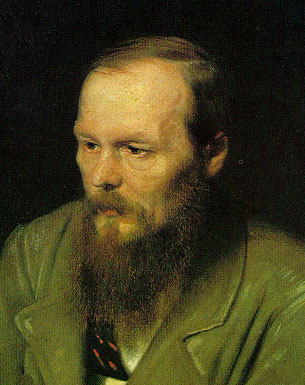
Dostoevsky’s murderous student, Raskolnikov, evokes a powerful reaction in me, but I don’t share his emotions as he bashes in the skull of his pawn broker and her sister. So why do I identify with him? Douglas Glover once said in a workshop that we don’t identify with a character so much as we do with their desires. To wit: I feel the restrictions of Raskolnikov’s life; I feel his desire to break free; I have sympathy for his desire to make something out of his life.  I might even understand his murderous impulses at times.  I can feel these things in myself because Dostoevsky depicts Raskolnikov’s desires so vividly.  But as the axe blades shatters the skulls of his victims, I feel very differently than the character does.  What’s depicted and what’s conveyed are almost diametrically opposed, but it is effective because Dostoevsky paints such vivid interior details of his characters.

The day I slaughtered that mouse, I also slaughtered the first innocence of myself. I spent the next twenty years trying to prove that what I felt that day was not weakness.  I spent most of my life bound to male rituals, to contact sports and the military and the systematic suppression of my emotions.  I hoped, like many men and women, that the rituals would toughen the core of me, would harden the exterior and overcome what I perceived to be softness.  Because I couldn’t celebrate with those other boys, because I couldn’t share their mutual joy at my kill, I spent twenty years distancing myself from the pain of watching that mouse die at my hands.  I ran away from my soul’s habitation.

I’d like to think that I’ve stopped running, and I’ve spent the last ten years trying to figure out how to render the complexity of emotions that life can evoke. I’ve tried to express that through writing.  In part, this is why I want to write.  I want to time travel and tell that little eight year old boy that what he’s feeling is okay.  And while I can’t do that, I can hope to reconstruct in my stories a place where my characters, my readers and my self can feel things without worrying that what we feel is wrong.  I haven’t accomplished this yet, but it’s a long race back to that summer field.  Sometimes, the only guides I have are other writers who’ve succeeded.

In the end, we are bound to structure and ritual in writing.  But as Bob Vivian once eloquently stated, structure, technique, grammar, words, even genre, only provide only the vessel, the container which holds the water.  And though we need the vessel, and we struggle so much to build it, what we desire is the water inside.  We desire not the walls which make up the soul’s habitation, but the fire burning in the hearth inside those walls.

I don’t know if anything I write can ever heal that first wound.  But maybe healing isn’t the goal.  Maybe the goal is not inward, but outward.  Maybe the goal is discovering ways to express the internal, to share it, and not hide it away.  Maybe that’s what all good stories do.

—Richard Farrell

Apr 132010
 

CaptureLorrie Moore

Birds-of-America

/

Dancing Amidst Despair: From Cosmology to Counterpointed Characterization

We begin adrift, as an idea hovering above a blank page, as two cells floating in the miasma of fallopian tubes.  Our stories and our lives begin as little-things, as truly, almost nothing.  And from the void emerges a word, a unified cell; and thus begins the story, begins the life.  How much does an idea weigh?  Certainly even less than a single cell, if such weights were quantifiable, yet all things are built upon these foundations of lightness.  A creation begins with the merest thing.  The idea, like the cell, must gain by accretion.  It lives only with connections to other ideas—without those connections, it vanishes.  And with variability, with diversity, with contrast, the stories and characters become rich and layered.

Pattiann Rogers opens her essay, Twentieth-Century Cosmology and the Soul’s Habitation, with this thought: “I’m very curious about the grid upon which we mentally place ourselves in time and space.  There must be a grid of some kind there for each of us, a visual scaffolding, for balance, for orientation.”  I think of that grid as a story, as the details which define the particular world of imagined lives captured on a page.  I think of that grid as the small, Pennsylvania college town where Lorrie Moore’s unnamed narrator has gone for an evening to meet up with her old friend, Cal, in the short story “Dance In America.”  I’d like to dwell on that grid awhile, to see if it can provide some clue what it’s all about.

Moore opens with an evocative, almost lyrical passage about dance.  Yet absent in this opening is character.  The unnamed narrator speaks in abstractions to an undefined audience, albeit with carefully crafted words.

I tell them dance begins when a moment of hurt combines with a moment of boredom.  I tell them it’s the body’s reaching, bringing air into itself.  I tell them it’s the heart’s triumph, the victory speech of the feet, the refinement of animal lunge and flight, the purest metaphor of tribe and self.  It is life flipping death the bird.

I make this stuff up.

Despite the power of the language, the story suffers because we don’t have a grid yet, we don’t have a context for what’s happening, until the second paragraph, that is.  Until the narrator bursts in and says, “I make this stuff up.”  That short sentence brings life in.  It opens up the story so that a character speaks honestly about herself.  It reveals instantly a penetrating and close narrative voice.  The rest is slight by comparison—beautiful phrases destined for posters hanging in a dance studio.  Without the dancer, the words mean almost nothing.  Character must be present to contextualize the abstraction.

Later, the narrator and Cal are out walking his dog, and talking about the past.  “He’d been exaggerating his interest in dance.  ‘I didn’t get it,’ he admitted.  ‘I kept trying to figure out the story.’” Dance continues to remain abstract here, a concept not yet alive.  Cal as much as tells us this.  There is also a distinct coolness between these two old friends so far.  “I’m determined to be agreeable,” the narrator says at one point; “I must be nice,” she says just a paragraph later.  They talk about paint colors and trade witticisms about Snickerdoodles, but all of this is surface clutter.  There is not enough contrast or conflict between the narrator and Cal.  At one point on the walk, they even think the same thoughts.  “Up in the sky, Venus and the thinnest pairing of sickle moon, like a cup and saucer, like a nose and mouth, have made the Turkish flag in the sky,” thinks the narrator.  “‘Wow,’ Cal says.  ‘The Turkish flag.’”  Were this to continue, I would argue that these two characters would not generate much dramatic spark.  Such energy-providing contrast comes from what Charles Baxter calls counterpointed characterization.  This will come in a minute, but first, back to the cosmos.

Rogers quotes Bertrand Russell when she says, “The point of departure must be ‘unyielding despair.’  We start from the recognition of that point to build the soul’s habitation.”  This despair emerges from a modern cosmology, a historically recent understanding of the universe and our almost imperceptible presence in it.  Rogers says:

The Sun is tiny compared to the size of the solar system, the solar system to the size of the Milky Way galaxy, the Milky Way to the size of the Andromeda galaxy, which is twice as big, containing 400 billion stars.  And yet the Andromeda galaxy is tiny compared to the universe, which contains billions of other galaxies.  All of that, up there, going on at this moment.

The point of departure Rogers refers to is the act of creation within the vast coldness of an indifferent cosmos.  In the past, such creation had a single source and a single destination: the divine and it’s manifestation of a destiny—a revealed plan for man.  For a long time in the West, art, history, politics and society served and glorified God, with a capital G.   Modern thinking, however, must contend with a much different perception of reality.  Rogers says: “As a result of this cosmology all of us, I would venture to say, have seen ourselves at some moment or other as ‘mankind aimlessly adrift in a meaningless universe.’”  We begin adrift. This awareness of our diminished role in the cosmos leads directly to a sense of unyielding despair.  What can we do, specks of dust on a piece of rock floating in an unfathomable, endless universe? How can we create something of value in a universe devoid of meaning?  Rogers turns not to science’s reductive approach of cutting and measuring (which she also defends and respects) but by seeking an artistic interconnectedness in things.  “The creative person, whether scientist or artist,…is that person who imagines new, different connections, broadening our conception of the universe and its interconnectedness as a whole.”   Charles Baxter echoes this too, although more narrowly, when he talks of the “incompatibility of passion and gentility” in James Joyce’s short story “The Dead.”  The artist seeks to illuminate the human condition in the darkness of an unfathomable universe.  Creation, in its highest forms, begins as an act of passion.  “Passion knocks decency right off the stage,” Baxter says.  The soul’s habitation is constructed on this grid, against this backdrop of cold, endless despair, filled with quotidian formality, gentility, struggles and structures, but in the hearth, a fire surely burns.

In order to render such passion in fiction, characters must be brought into contrast.  Baxter says, “Plot often develops out of the tension between characters, and in order to get that tension, a writer sometimes has to be something of a matchmaker, creating characters who counterpoint one another.”  Baxter says that characters are designed to rub up against each other, to create friction of sort, or even warmth, but that it is the connections between the characters that make the story.  “Certain kinds of people are pushed together, people who bring out a crucial response in each other.  A latent energy rises to the surface.”  It can’t be done with beautiful prose alone, at least not in a sustainable way.  Without the characters, the prose energy cools quickly. With counterpointed characters, the energy levels rise even more quickly.  In “Dance In America,” Lorrie Moore works to heat up her story with the introduction of a seven year-old boy named Eugene.

Eugene, the son of Cal and his wife, Simone, has cystic fibrosis and his “whole life is a race with medical research.”  Moore never says so directly, but we gather that the boy is dying.  “Already, Cal says, Eugene has degenerated, grown worse, too much liquid in his lungs.  ‘Stickiness,’ he calls it. ‘If he were three instead of seven, there’d be more hope.’”  Enter the backdrop of despair. Yet in spite of his condition, a condition which makes him labor for breath, Eugene steals this story, crashing into it with life and verve.  Notice the verbs Moore uses with respect to Eugene:  shouts, slides, chases, races, grabs, and smiles.  Eugene roars with life, overcoming his parents, the narrator and even our own despair.  Before he even enters the story directly, his presence pulsates with energy.  Talking to the narrator, Cal says:

‘It’s not that I’m not for the arts’, says Cal.  ‘You’re here; money for the arts brought you here.  That’s wonderful.  It’s wonderful to see you after all these years.  It’s wonderful to fund the arts.  The arts are so nice and wonderful.  But really: I say, let’s give all the money, every last fucking dime, to science.’

Notice the contrast here.  The repetitive use of wonderful and the clichéd language in relationship to abstract things, and in relation to the narrator’s visit, builds to an almost ecstatic outpouring for Eugene, who has yet to appear but whose illness has been introduced.  Moore uses the word fuck two times in this story, and both times (I will examine the second use below) the energy and force of that most un-genteel word strike exactly the right tone.  There is no vulgarity here, only passion.  The last sentence of this paragraph works like a prayer, like a devotion to the modern god, Science, driven by the most desperate yearning of the human spirit.

Eugene works as the counterpointed character to the adults in the story.  With only Cal, Simone and the narrator, the story would fall flat.  Eugene reminds the other characters what life is supposed to be about.  In talking about counterpointed characters, Baxter says:

A third element is born when these characters meet.  This element is not just drama, the force of conflicting desires.  It is a kind of invisible presence whose identity is generated by the proximity of these…characters, and this presence in not moral or simple.

Eugene shakes up this story when he arrives.  The adult lives are turned completely around.  The story becomes exciting during Eugene’s time on stage.  Notice the changes in the voice of the narrator especially—gone is the cynicism and ironic detachment from her voice.  “He huddles close, cold in the drafty house, and I extend my long sweater around him like a shawl.”  “He watches, rapt.  His brown hair hangs in strings in his face, and he chews it.”  With Eugene present, the narrator is dancing for the first time.  Through his suffering, Eugene teaches the narrator (and presumably, hopefully, the reader) to celebrate life. After dinner, they actually go and dance in Cal’s living room.  The narrator takes the hand of the “amazing Eugene” and loses herself to the music of Kenny Loggins.  “We make a phalanx and march, strut, slide to the music.  We crouch, move backward, then burst forward again.  We’re aiming to create the mildew, resinous sweat smell of dance.”

This story works with no real direct conflict in it, other than the unyielding despair of an indifferent universe that would besiege a seven year-old boy with cystic fibrosis.  What drives this story is the contrast between the adult word of sophistication and social codes and the free, more open world of Eugene.   It’s Baxter’s passion knocking decency off the stage again.  “Counterpointing substitutes for conflict, or displaces it,” Baxter says.  Were Eugene not present, some other motive force would have to drive this story forward.  Instead, Eugene’s vibrancy works to shake the characters loose of their doldrums.  It’s managed carefully, however.  Moore is hardly preaching and hardly providing a caricature of morality.  In one telling scene, Eugene practically begs the narrator to visit his classroom the next day, when she stops by his school to conduct a dance workshop for older kids.  “‘Sure,’ I say, not knowing that, in a rush, I will forget, and that I’ll be on a plane home already, leafing through some inane airline magazine before I remember that I forgot to do it.”  Moore uses prolepsis here to underscore this scene’s importance, and she shows us how easy it is to forget the sublime in place of the mundane.  The use of the airline magazine works to underscore this point.  Just because Eugene’s presence shines like a beacon in this story, Moore is a careful enough artist to render reality’s often cold indifference to the light.

Yet, in spite of the pain and suffering, we press forward.   Rogers puts it this way:  “And here’s a miracle that must be constantly celebrated: In spite of the moments of the soul’s desperation, we do proceed.”  Moore paints this picture vividly in the story, again using the sharp contrasts between Eugene and the adults.   After he is called to dinner, Eugene must take a regimen of pills for his illness.  Notice the verbs and how they contrast between the characters.

‘Coming!’ shouts Eugene, and he leaps off the couch and slides into the dining room, falling sideways into her chair.  ‘Whoo,’ he says, out of breath.  ‘I almost didn’t make it.’

‘Here,’ says Cal.  He places a goblet of pills at Eugene’s place setting.

Eugene makes a face, but in the chair, he gets up on his knees, leans forward, glass of water in one hand, and begins the arduous activity of taking all the pills.

I sit in the chair opposite him and place my napkin in my lap.

In this short example, we have despair and miraculous procession.  The illness hovers always over Eugene.  Like the universe, it is a dark, relentless presence that cannot be escaped.  Yet Eugene perseveres, undaunted by the magnitude of it.  Notice also the counterpointing to create this effect: Cal, placing the pills, the narrator placing the napkin, while Eugene shouts, leaps, slides and falls into his chair.  And though out of breath, he finds the strength to speak while the adults watch in near silence.  As readers, we feel the emotional weight of Eugene through the adult consciousness of the story, but it is Eugene, not the adults, who instructs us how to live under the cold universe.  Rogers says that “we continue to build the soul’s habitation” by “expressing the awe and thrill and gratitude we feel at the mystery and beauty of the universe.”

The final scene in “Dance in America” seems to capture this feeling of awe perfectly.  The characters are dancing in the living room but Eugene tires due to his illness. He is “determined not to cough until the end,” and the narrator then goes to him.  Notice the change in language from the opening.

I am thinking of the dancing body’s magnificent and ostentatious scorn.  This is how we offer ourselves, enter heaven, enter speaking: we say with motion, in space, This is what life’s done so far down here; this is all and what and everything it’s managed—this body, these bodies, that body—so what do you think, Heaven?  What do you fucking think?

This passage is the narrator’s direct answer to the cosmos; it’s her defiant answer to the question, What’s it all about, down here?  In spite of the flaws and terrible fates awaiting them, these characters are dancing.  They are staring into the unfathomable emptiness of infinity and “flipping death the bird.”   Moore’s narrator has reclaimed the language of her opening, by rubbing up against Eugene, and has taken the “latent energy ris(ing) to the surface” and burst it over the top.  By achieving a harmonious balance between very different characters, Moore has crafted both a simple story and a profoundly moving one, one that seeks to find a grid, a location to construct the human soul’s rightful habitation in the universe.

—Richard Farrell

Works Cited

Baxter, Charles.  Burning Down the House.  (Saint Paul, MN: Graywolf Press, 1997)

Moore, Lorrie.  “Dance in America.”  In Birds of America. (London: Faber and Faber, 1998)

Rogers, Pattiann.  “Twentieth-Century Cosmology and the Soul’s Habitation.”  In Writing it Down for James, edited by Kurt Brown.  (Boston: Beacon Press, 1995)

/
/