May 162014
 

Desktop52W. G. Sebald

The movie writer/director Ron Shelton once told me he figured he had enough material for a movie when he had enough for twelve movies. Something like that must be at the back of Patrick Madden’s essays because he will wander and digress and quote and ponder and talk about himself and reflect and quote again. This essay is notionally about W. G. Sebald’s discursive, essayistic novels, especially The Rings of Saturn, but then Patrick wanders off and talks about the nature of the essay itself, the nature of creative nonfiction, the fictional aspects of nonfiction and the nonfictional aspects of fiction, and the way he likes to write his own essays (maybe a dozen different topics—you count). In effect, he incarnates the form (of the essay) in his discussion of the essay and Sebald as essayist in the most amiable and slyly convincing manner. “Walking, Researching, Remembering” is, yes, an extremely amiable and charming tour de force, which, to me, also has the advantage of drawing attention to one of the differences between North American and European fiction — the Europeans (see Kundera’s The Art of the Novel) have never been averse to mixing their essays with their novels, whereas North Americans have been stunned into minimalism by that show-don’t-tell nonsense. Don’t get me started.

dg


In his book Understanding W. G. Sebald, Mark McCulloh contends that “Even more than The Emigrants, The Rings of Saturn defies description; it does not seem to fit into any conventional prose or fiction category.” This sentiment has found its way into praise and criticism from the beginning, ever since Sebald’s books began to appear in English. Yet I disagree; unless we remove the essay from the ranks of “conventional” genres, it fits what Sebald wrote very aptly. But I would do well to begin by defining terms.

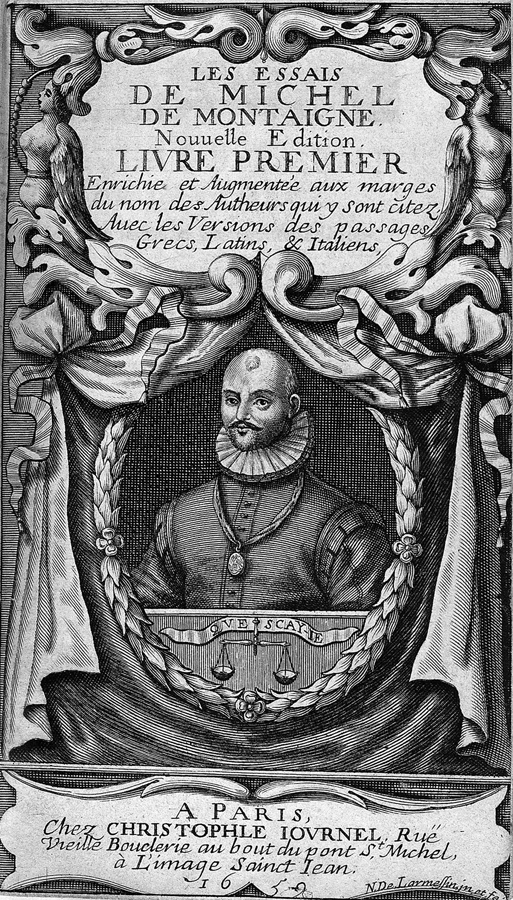
The word essay has been misused and abused for long centuries since Montaigne appropriated it to describe his writings. School teachers and children use it to mean a written test of knowledge, usually with an expected correct answer. Colleagues of mine use it to refer to academic articles, which may have somewhat in common with essays, but which are quite different in direction and intent. In fact, the best theoretical works on the essay, including those written by Georg Lukacs, Theodor Adorno, and William Gass, pit the essay in opposition to this very thing. This is how I’ve grown to think of the essay, not as non-fiction, but as non-article. It is a malleable literary form that admits experimentation and imagination. More on this in a minute.

It is not usually my nature to make arguments. I’m more likely to content myself with leisurely explorations that churn up questions but not answers. So I expect to go back and forth, circle around my claim, perhaps contradict myself (it was Walt Whitman who declared it so memorably, but we should remember that Montaigne made a genre out of it). And, speaking of Montaigne, here’s his justification for drifting, rambling a bit:

It is the inattentive reader who loses my subject, not I. Some word about it will always be found off in a corner, which will not fail to be sufficient.

In any case, before I get lost in the branches, let me return to the trunk of my argument: Sebald was an essayist. I’ll focus my here today on my favorite of his books, The Rings of Saturn, but not only on that book. I’ll divide my argument into two considerations: Fiction vs. Nonfiction and The Essay as Form.

Capture

#

Part I: Fiction v. Nonfiction

Although it’s rarely professed explicitly, far too many of my academic colleagues seem to espouse a one-drop theory of creative nonfiction: if a writer invents even a small detail, the prose is deemed fiction. Of course, this view immediately becomes problematic, as any nonfiction writer will attest to inventing dialogue, or crafting it to recall approximately what was said, not offer a verbatim transcript. A more theoretical view argues that all writing is fiction, either because it is a made thing or, more in line with our colloquial definition, because it is a recreation in words of an exterior reality. This is sometimes fun to ponder, but I think we’re arguing about the wrong thing. After all, poetry is not divided along factual lines; it is a literary form that admits invention as well as re-creation.

Nevertheless, the essay as a literary genre has been swept up in the current trend of “creative nonfiction,” and as it has traditionally been a nonfictional genre—one that utilizes real-life experience as a springboard to thinking—this has come to be a sort of requirement or expectation. I am not saying that this is always a bad thing—in my own writing I make it a point to stick to the facts as I remember or can discover them—but that the essay form is big enough to admit some fictionalizing.
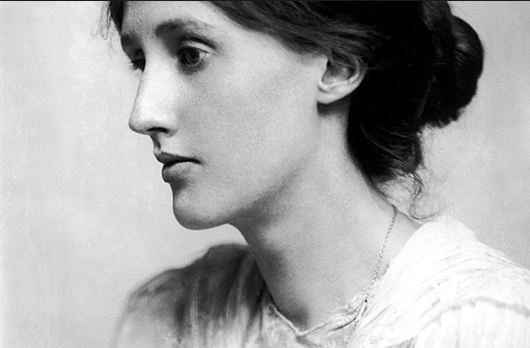
CaptureVirginia Woolf

#

Fictionalizing essayists

An easy case may be made for essays that use fiction in a way that is not deceptive. Take, for instance, Virginia Woolf’s “Street Haunting,” whose plot is utterly undramatic—she goes in search of a pencil—and yet whose technique is highly imaginative—she invents thoughts and backgrounds for the strangers she encounters along the way. No critical reader believes that Woolf knows the details she writes. She obviously makes them up. Similarly, no critical reader believes every detail in a James Thurber essay, or a Christopher Morley or Robert Benchley or David Sedaris. And what can we make of Joseph Addison writing in the voice of a shilling that has traveled the world or of George Orwell perhaps borrowing the haunting central scene of “A Hanging” from a comrade’s recollection? What of Ian Frazier writing as one of Elizabeth Taylor’s ex-husbands? Or as a coyote captured in Central Park!? Essayists have been utilizing fiction for as long as the essay has existed.

There is also the question of an essayist’s persona. Much is made, directly and indirectly, of Sebald’s narrators. Critics are careful not to associate author and speaker, to make such an amateur’s conflation. Yet, I would argue that an essayist always speaks through a persona, at least through a necessarily partial version of him- or herself. Was Sebald as neurotic or morose as his narrators? No, say those who knew him. Was he as interested in history and biography? He must have been, to write his books. Martin Swales assures us that “the persona clearly overlaps with the author…there is a good deal of shared identity between the narrative voice and the person who wrote and published the text.” Mark McCulloh assents: “The self-references, the literary references, the references to art and music, and the seemingly tangential digressions are indeed drawn from the author’s life and researches” (82). Most readers I know seem to agree and accept this notion. But again let’s look at a few examples of old to trouble this question:

Charles Lamb wrote his essays under the pen name Elia, an Italian immigrant, a clerk, a person very much like “the real” Lamb, but not entirely. To complicate matters further, “Charles Lamb” appears as a third-party in some of Elia’s essays, including “Christ’s Hospital Five-and-Thirty Years Ago,” written by Elia to debunk an overly sunny Lamb composition on the same subject. A third level of difficulty arises as Elia appropriates Samuel Taylor Coleridge’s troublesome experiences as a youth at the boarding school both Coleridge and Lamb attended. This resembles very much the nature of Sebald’s ficionalizations: conflating two acquaintances to create the painter Max Ferber (whose name was changed in the English translation to be less recognizable), and two others to create Austerlitz, changing the names of certain characters, moving buildings, rearranging events, etc. There are other examples, too, of essayists trying on fictional personas, perhaps most notably Oliver Goldsmith, an Irishman posing as a visiting Chinese man writing about eighteenth-century England. Edith Maude Eaton performed a similar self-revision, writing as Sui Sin Far. Violet Paget wrote her essays as Vernon Lee, and other women likewise wrote as men. And while critics may argue the literary merits and meanings of their works, the question of their genre seems to have been settled. They wrote essays.
Montaigne

#

Sebald’s nonfiction

Still, lots of us want to know what really happened, whether Sebald wrote true to life. On the one hand, it seems naïve, unsophisticated, to wonder if or to hope that Sebald’s books are nonfiction. On the other hand, this very question has given a number of academics projects to investigate and write about. And they seem to enjoy their quests. Certainly I enjoy reading Jo Catling’s revelation that the Eccles Church Tower Sebald places in Dunwich is really far north of there; Silke Hostkotte’s puzzlement at the library date-stamp on the newspaper that Sebald supposedly bought in Switzerland; Adrian Daub’s conclusion that the Eastern Daily Press article about Major George Wyndham LeStrange must be a forgery created by Sebald. These researchers seem genuinely pleased with the treasure hunt Sebald has left them. I myself have twice set out on my own brief treasure hunt, a tour of some of the places Sebald (and his narrator, if you prefer) visited in The Rings of Saturn.

Thankfully, then, a lot of interviewers were interested in just this very subject, and Sebald was never coy. Carole Angier, in an interview for the Jewish Quarterly, asks about the real people behind the four narratives in The Emigrants. They were real, says Sebald, “with some small changes.” He explains these changes, adding that “What matters is all true…The big events…you might think those were made up for dramatic effect. But on the contrary, they are real.” He adds “The vast majority of factual and personal detail that I use is very viable.” Nevertheless, Angier has her answer: the book is fiction.

Very well, the books fit that bill, but it is still heartening to hear Sebald detail the nonfictional elements of his books. Ninety percent of the images are authentic (41), he says. His narrator’s travels mirror his own travels. He does a great deal of historical research, searching for connections. Sometimes these connections present themselves from the long shadows of memory. Certain epiphanies “can be achieved only by actually going to certain places, by looking, by expending great amounts of time in actually exposing oneself to places that no one else goes to” (85). “The changes that I made, i.e., extending certain vectors, foreshortening certain things, adding here and there, taking something away, are marginal changes, changes of style rather than changes of substance” (38).

CaptureTheodor Adorno

#

Part II: The Essay as Form

There must be something, then, that distinguishes the essay as a genre. In terms of form, the simplest way to distinguish genres is by their shape on the page. My children can tell a poem from a play from prose. They can also tell country music from jazz from rock-n-roll. This is where the essay differs from the short story or the novel.

Theodor Adorno, as I have mentioned briefly, begins his “Essay as Form” railing against the tendency of humans to categorize, compartmentalize, and therefore cage. He singles out what he calls a German binary: art is irrational, science is knowledge. This is not only a German tendency, nor is it relegated to the past, of course. Adorno returns regularly to this dichotomy: on the one hand the systematic article, on the other, art, and in the middle, the confluence of the two, in good deconstructivist style, is the essay, free of restraint or obligation to either camp. The “intellectual freedom” here symbolized by the essay seems as much praise and rebellion as description, and Adorno’s tone is often exasperated, his words a counterattack on those “enemies of the essay” who “hire out to stupidity as a watchdog against the mind” (4). Central to Adorno’s idea of the essay form, then, is its fragmentariness (a mirror of fragmentary reality), its intuitiveness, its “luck and play” (4), its individuality, its uncertainty, its incompleteness, its focus on the “transient and ephemeral” (10), its dealings in experience, its contingency, its situatedness within culture, its immediacy, its skepticism, its non-linearity, its direct treatment of complexity, its resistance to reduction, its grounding in language, its musical logic, its self-reflexivity, its heresy. He is often quoted for this last sentiment, with which he ends his essay on the essay: “The essay’s innermost formal law is heresy” (23). He means, I think, a rejection of the norms of thought, of the fear of thought, of the fear of losing the solid ground created by the illusion of objective knowledge. The essay is cast in relief (perhaps with a double meaning: “standing out” and “refreshing”) against the rigid systems of science, positivism, the reification of methodical provable truth. An essay, in this sense, is a kind of anti-genre, or at least, in O. B. Hardison’s words, a “protean” form.

Georg Lukacs, who preceded Adorno and who offers many similar statements, seems to deal specifically with an essay that begins with an external, not a personal subject, much as Sebald’s work is derived from studies of other people, places, and events. Lukacs’s rendition of the science/art split hinges on his statement that “science offers us facts and the relationships between facts, but art offers us souls and destinies” (3). He justifies the need for essays in contrast with drama (or, I imagine, fiction) by pointing out that some reactions can be shown visually and aurally, but thought is invisible. Thus the essay deals with the inner workings of a mind. The essay is needed also as intermediary between concepts (abstractions) and things (concretions), between image and significance. For Lukacs, then, the essay form is marked by its questioning, its avoidance of didactic or simplistic answers, its fragmentariness, its humor, its modesty, its consideration of the quotidian, its irony, its fight against tradition, its visionary nature, its friction with fact (perhaps this is key), its interruptions, its primacy of point of view over feeling. He sees the essay as process, not product, journey, not destination. The essay, according to Phillip Lopate [Against 75], “allows one to ramble in a way that more truly reflects the mind at work,” struggling, grasping, circling, but never preaching.

Adorno deals with the misguided view of essay as simply nonfiction when he writes, “The bad essay tells stories about people instead of elucidating the matter at hand” (6). Lukacs would seem to agree: “Every event [is] only an occasion for seeing concepts more clearly,” he writes (14), and “The idea is the measure of everything that exists….Only something that is great and true can live in the proximity of the idea.” (16). Both writers stress that the essay is an ordering of things already present, not a creation ex nihilo. This calls to mind an Sebald interview with Michael Zeeman, [Netherlands TV, 12 July 1998] in which he says, “Making in prose a decent pattern out of what happens to come your way is a preoccupation, which, in a sense, has no higher ambitions than, for a brief moment in time, to rescue something out of that stream of history that keeps rushing past.” To Zeeman’s amazement, Sebald claims that as he’s writing, necessary and fitting items seem to present themselves to him. He quotes (he thinks) Adorno: “If you’re on the right track, then the quotations come and offer themselves to you; you don’t have to look for them.”

#

Others’ statements about Sebald’s form

I hope you have read some of Sebald’s works, have marveled at their complexity and swooned in their beauty. If you’re like me, you’ve noticed that the traits Adorno and Lukacs (and others) attribute to the essay fit Sebald. Critics and academics have made similar statements to describe Sebald’s strange prose.

Susan Sontag said The Emigrants was “like nothing I’ve ever read…an unclassifiable book, at once autobiography and fiction and historical chronicle. A roman d’essai?” Margo Jefferson of the New York Times wondered about categorizing Sebald’s books: “What does one call them? meditations, elegies, mutations grown from memoir, history, literary biography and prose poetry.”

W. S. Merwin said that Sebald’s writing conjures from the details and sequences of daily life, and their circumstances and encounters, from apparent chance and its unsounded calculus, the dimension of dream and a sense of the depth of time that makes his books, one by one, indispensable. He evokes at once the minutiae and the vastness of individual existence, the inconsolable sorrow of history and the scintillating beauty of the moment and its ground of memory.

Michael Silverblatt, in a radio interview, comments that “The wandering that the prose does, both syntactically and in terms of subjects, reminds me a bit of my favorite of the English essayists, de Quincey: the need, in a sense, to almost sleepwalk, somnambulate from one center of attention to another, and a feeling in the reader that one has hallucinated the connection between the parts.”

J. J. Long, in W. G. Sebald: Image, Archive, Modernity finds in The Rings of Saturn an anti-Cartesian parallel between the narrator’s ambling and the narrative’s form: “He wanders with no ostensible purpose or goal, following the dictates of the land, inadvertently doubling back on himself, inexplicably tracing out the same route time and again, and striking out only to end up back where he started…The Rings of Saturn, like the journey it recounts, is filled with diversions, recursions and a refusal of teleology.” The book, he says, “consists almost entirely of digressions.” The narrator’s walking “is deliberately inefficient and, one might say, anti-disciplinary. This tendency to explore byways rather than make beelines goes hand in hand with a narrative technique that is multiply digressive: it repeatedly shifts focus, as each digressions is soon abandoned in favour of another digression or a brief return to the story of the journey itself; it frequently changes the context within which phenomena are understood, evoking a parallel mythic temporality that transfigures the quotidian object-world and produces a split attention, a kind of distraction, in both the narrator and the reader; and it frequently gets sidetracked into length enumrations of physical objects” (140).

Mark McCulloh, in Understanding W. G. Sebald, makes similar claims about Sebald’s digressiveness, adding that The Rings of Saturn declares its subject from the outset, another essay commonality, thus eschewing suspense and drama, that it, like Thomas Browne’s work, pursues enigmatic interconnections, “casting doubt on virtually anything that is readily apparent” (61). “The book is thus an associative, digressive, and allusive journey through East Anglia,” he concludes.

Charles Simic notes that “[Sebald] never hesitates to interject some interesting anecdote or bit of factual information arrived at by some not-always-apparent process of association. He does this without forewarning, transition, or even paragraph break” (146)

Or hear Martin Swales [“Intertextuality, Authenticity, Metonymy? On Reading W. G. Sebald” from The Anatomist of Melancholy ed. Rüdinger Görner]: “Random meetings, memories involuntarily triggered, chance thoughts—these are the stuff of his imaginative universe.” And “In a curious way, the Sebald text stays where is has been from the outset; it does not quite go anywhere, in other words.”

#

Sebald’s statements on his method of writing

It’s not only the critics who see Sebald’s books as digressive, associative, logically non-linear. When Sebald discussed his writing style and methods, he likewise seemed to be describing essaying. Consider what he told Joseph Cuomo:

I never liked doing things systematically. Not even my Ph.D. research was done systematically. It was done in a random, haphazard fashion. The more I got on, the more I felt that, really, one can find something only in that way—in the same way in which, say, a dog runs through a field. If you look at a dog following the advice of his nose, he traverses a patch of land in a completely unplottable manner. And he invariably finds what he is looking for. … So you then have a small amount of material and you accumulate things, and it grows, and one thing takes you to another, and you make something out of these haphazardly assembled materials. And, as they have been assembled in this random fashion, you have to strain your imagination in order to create a connection between the two things. If you look for things that are like the things that you have looked for before, then, obviously, they’ll connect up. But they’ll only connect up in an obvious sort of way, which actually isn’t, in terms of writing something new, very productive. You have to take heterogeneous materials in order to get your mind to do something that it hasn’t done before. That’s how I thought about it. Then, of course, curiosity gets the better of you.

Later in that same interview, he describes his “escape,” as it were, from the demands of academic life: “The preoccupation with making something out of nothing, which is, after all, what writing is about, took me at that point. And what I liked about it was that if you just changed, as it were, the nature of your writing from academic monographs to something indefinable, then you had complete liberty” (99). His dichotomy seems to be the same as Adorno’s: article vs. essay.

In “An Attempt at Restitution,” published in English in Campo Santo, Sebald describes his method or procedure as “adhering to an exact historical perspective, patiently engraving and linking together apparently disparate things in the manner of a still life” (200). To Arthur Lubow, he once explained, speaking specifically of a 1918 German army map: “I don’t think I shall be able to understand it, but I want to marvel at it,” which seems to me the fundamental impulse behind the essay.

#

Textual evidences from The Rings of Saturn

The plot of The Rings of Saturn is the author takes a series of walks in the countryside of southeastern England. Not much really happens to invite drama or excite our sense of the exotic, but this book is not about plot, it’s about keen observation, happenstance research, memory and meditation. One need only turn to the book’s contents page to get a sense of the breadth and depth of the subjects it mulls. Take, for instance, chapter 3: “Fishermen on the beach – The natural history of the herring – George Wyndham Le Strange – A great herd of swine – The reduplication of man – Orbis Tertius.” Already the work displays its digressive, meandering nature.

I read The Rings of Saturn as I was living for a year in Uruguay, riding the buses downtown each morning, finding books in the National Library and the used book shops, interviewing former revolutionaries about their pasts. I found in Sebald a tempered, beautiful prose that swept me up in its rhythms and convolutions, that seemed to perfectly reproduce the author’s mind processing the accidental sights and insights that crossed his path. Along for the journey with Sebald are Thomas Browne, Rembrandt, Jorge Luis Borges, Joseph Conrad, Roger Casement, the Dowager Empress. Underlying the meandering (on land and in mind) are considerations of the strange geometric form called a quincunx, the intrigue behind the coming of silk worms to the West, the strange resonances between Sebald’s life and the life of one Michael Hamburger, the unstoppable decline and decay of cities and lives and all that man may hope to build up, the shadow cast by death.

One of my favorite passages, one that made me laugh out loud, is this: Sebald is very tired after a day of traipsing about, so he falls asleep in an armchair watching a BBC documentary about Roger Casement. He is left with only vague, ethereal notions of what he had heard as he drifted off to sleep, but he’s interested enough to want to write about him. He says, “I have since tried to reconstruct from the sources, as far as I have been able, the story I slept through that night in Southwold.” Then he goes on to tell the story of Casement at great length.

And here is a Sebaldian moment for you: When I first wrote the above passages, for a brief book review, I repassed the section of the book in which Sebald parallels his life to Michael Hamburger’s, but I could not find the name Hamburger, only Michael. I thought I remembered Hamburger in any case, so I did what any self-respecting twenty-first-century essayist would do. I googled “Michael Hamburger.” The top results were all obituaries. I clicked on the one from the Guardian. Sure enough, this was the man I was looking for. He had just died that very week.

#

Fin

I am self-aware enough to recognize that part of my drive to see Sebald’s writing as essay is selfish, a wish to claim him as part of my tribe, so that maybe some of his glory will shine on me. But weren’t more prominent critics performing a similar feat by claiming genrelessness for Sebald? Wasn’t their real message that “Sebald is great”? I don’t think there’s anything wrong with participating in a genre, especially one as malleable as the essay. And after all, genre definitions are more like recommendations or descriptions, not prescriptions. So when I say that Sebald works for me as an example of an essayist par excellence, that his works serve as models to scores of nonfiction writers as well as fiction writers, all I’m really saying is “Sebald is great,” a rather unacademic thing to say, but I wager it’s what we’re all saying, underneath it all.

—Patrick Madden

.

Madden_Num5Patrick Madden walking

Patrick Madden teaches at Brigham Young University and Vermont College of Fine Arts. His first book, Quotidiana, won an Independent Publisher Book of the Year award, and his essays have been published widely in journals and anthologies. He’s completing his second book, Sublime Physick, and an anthology, with David Lazar, called After Montaigne: Contemporary Writers Cover the Essays.


Apr 162014
 

madden_montaigne

Yesterday, Brevity Magazine‘s blog posted Patrick Madden’s short essay detailing Madden’s family outing to Michel de Montaigne’s tower:

The first goal on the Madden Family European Road Trip Vacation (after my semester directing a study abroad program in Madrid) was my own pilgrimage to Montaigne’s tower in the Perigord region east of Bordeaux. We arrived after a long day in the car and were surprised to find a chain blocking the entrance. Turns out the site was closed not just on Mondays, as David Lazar had warned me, but on Tuesdays as well.

What follows is an insightful look at opportunity, charity, and the quests writers take on to complete their work.

Read the rest here. (And read Madden’s NC contribution, “Essay as Evolutionary Advantage (après Borges),” here.)

— Benjamin Woodard

Mar 022014
 

Photo on 2-19-14 at 1.35 PM
During the last winter residency at Vermont College of Fine Arts, Patrick Madden and I co-led a creative nonfiction workshop. Besides the usual group discussion of a student manuscripts, we found time to do some teaching as well, focusing on trying to nudge the class away from the general student obsession with narrative, with just getting the true story down. We tried to get them to think about something else while they were writing, things like technique, genre, and tradition. In the first (of six) workshops, we talked briefly about the use of lists in composition (lists in sentences, lists in paragraphs, and list as structural devices). Then we directed the class to read Leonard Michaels’s short story “In the Fifties,” an autobiographical story (might as well have been called an essay), plotless, apparently, a list of events and characters he met. Then we invited the students to write an imitation, or at least use the idea of a list and the Michaels story as a springboard for launching themselves into their own material.

After a week, in the last workshop, the students read out their  essays, cobbled together in a few days interrupted by workshops, lectures, readings and revelery. The results were spectacular, beyond expectation (it was an unusual class to begin with). Two seemed eminently publishable. Today I am publishing the first (the second, Kay Henry’s “In  Dubai,” is here), “Ten Ways to Leave” by Melissa Matthewson, a lovely, poignant evocation of a relationship in the leaving of it, charmingly written, rich with detail (in so brief a piece), startling  and profound in its emotional honesty. And, of course, you can barely see the influence. Such is the nature of influence; good writers take an influence and make it their very own thing.

dg

.
I.

She could go out the back door and down through the yard marked about in roses with hips and the overgrown grass, the juniper slope, the limestone soil and past the jungle gym where the children play out their dreams of kings and queens and kingdoms ruled with swords, fire, dragons, and sometimes happy endings.

II.

She hears a story one afternoon and can’t forget the image of a woman walking the highway at night, alone, having left her husband standing in the parking lot of a store where he has chosen smoke instead of love and so she thinks she could leave with that same kind of drama: treading the turnpike while he watches her from a convenient store window, the road spread out before him like a long strung out piece of thread that will unravel the more you fuss with it, the more you tear at it with your fingers.

III.

She could go while he is sleeping, but she thinks that would be unfair and doesn’t he deserve just a little bit of reason? If she did leave that way, she could sit on the bed first, the children sleeping in the other room, and watch his chest swell to the night, put her hand on his mouth, see every part of him move in dreams or nightmares, something she’s never done, never even been curious about, which makes her wonder. So maybe when the ice thaws, she’ll sneak from the bed tiptoeing through the house to the door and exit into a landscape of disquiet, apprehensive of the choice to go, but surely confident in the fantasy she holds in her mind.

IV.

She left him once for Montana, driving up the north highway and over the mountains into the snow and that was it for awhile. She lived alone in a new place and she thought this was life chosen well, but she missed him remembering when they drank beer on porches while watching cars and bicycles and stars heavy with sky. From there, she went on talking to her sheets at night, grabbing the pillow for his absence.

V.

Maybe they could go for a hike, climb to the top of a mountain and look out from there, the way they did with their children once, the spread of all that grass and rock and peak, the wildflowers just then a new thing. They ate lunch: cheese, chocolate, salami, crackers. On top of that mountain, the wind picked up and it blew their children’s hair and they pointed their fingers to their house in its blue painted wood, just over the three ridges to the west where they could barely make out its slant and hold in the distance. They picked ticks from their hair because they lay in the grass laughing at the sky and it was spring remember. Yes, she thinks they could go for a hike and she could leave him there with the children on the mountain. She could remember him cutting cheese into slices on his knee listening for any movement in the manzanita.

VI.

Or maybe that’s too dramatic. Maybe they should just be straight about it—sit on the couch together over coffee, or more likely, a drink: bourbon, ginger, bitters, a little lemon, the kind she always makes for him in a small glass with ice. She might sit with him and look out the window and over all that they’ve done together, everything they’ve created, and still know it is all lost to the past anyway. Maybe she would cry. Maybe he would too. Or maybe there would be no tears. Maybe they would have used up everything they had in the build-up to that moment, so that at that point, the fatigue of a relationship overcomes them and they are quiet in their chairs in that room when the shadows take over the floors and the walls and all that is heard is the empty burden of what is absolute then: the love having gone a long time ago slipped from them when they weren’t paying attention.

VII.

She could remember how they never did take a honeymoon. She could remember how they watched a sunset over the water in Baja one time when they thought they knew love. She could go like a butterfly. Or the coyote they saw in a field, trotting in from a distance and surely the postman would stop in his wagon if he came along. They watched from the car, the animal poised in dangerous pursuit of its prey, all of it in the last flicker of day until the coyote ran up into the frustrated hills without dinner, without anything to take his hunger away.

VIII.

Or she could remember how they left Homer’s tomb one morning in Greece, the Aegean spread out behind them like a blue map made up of what they couldn’t know. She could remember how they brushed their teeth on his grave. She could remember how they spit. She could remember how they held hands. She guesses that staying is a probability because of just these memories, that story, those moments. She considers their weighted history over and over again and really, she thinks the complicated details of leaving are the only things that keep her there still. It’s the mechanics, she’ll say.

IX.

She thinks then about the train she once took through France, through Switzerland, through Spain. She rode the early rail and left him in Brussels, though she lingered in the entry to the hostel before she left, sat down on the couch, pulled him to her, let his head fall into her lap, their cheeks flushed from pints of beer. He walked her to the station through a storm and when he left, she sat on the depot floor wishing for coffee and one last night next to him in bed naked and in love. She can’t recall that feeling now. She can’t conjure it in this tired, cold place of leaving.

X.

She could leave by writing the departure. Maybe that’s the best way. Like here. There could be any number of scenes: stomping out of the restaurant throwing her napkin on the floor; sneaking out through the window too late when another man waits in an idling car; running away as if in pursuit chased by children or thieves or…; in the car early in the morning with just the sprinklers and newspaper man; or a surprise retreat when he returns from an errand, the house packed up, or just her things packed up, the door slightly ajar, her coat waiting on the couch, hands fumbling with the zipper of her sweater or her earrings and she thinks perhaps this is the most obvious choice, the most conventional and unoriginal of all departures, the one and only way she can retreat and leave behind the safest thing she’s ever had, this story that was never supposed to end in this way, at this point, in this now.

—Melissa Matthewson

Melissa Matthewson lives and writes in the Applegate Valley of southwestern Oregon. Her essays, reviews, and poetry have appeared in TerrainUnder the Gum Tree, Literary Mama, Prime Number, Hothouse, and Camas, among other publications. She holds an M.S. in Environmental Studies from the University of Montana. She is currently pursuing an MFA in creative nonfiction at the Vermont College of Fine Arts.


Jun 072013
 

AdamRegnArvidson

Former NC contributor Adam Regn Arvidson makes a return visit with some salutary advice for the beginning essayist (and maybe the not-so-beginning essayist) on where to find submission venues. The advice he gives happens to accord with my own practice in the dark eons before time, the years of my apprenticeship. The  best way to give your story or essay or poem a chance at a life is to submit to magazines that are reviewed by the standard anthologies: Best American/Canadian (Stories, Essays…), Pushcart, O’Henry, etc. While you’re here, check out Adam’s Nature Writing in America series on NC and his short craft essays in the NC Craft Book.

dg

BAE2012BAE2011BAE2010BAE2009

Like it or not, the Best American series has a certain gravity. Whether you feel it actually publishes the best American writing, this annual compendium is eagerly awaited by writers everywhere. It’s a little easier to digest than the Pushcart doorstop, and somehow the overall system—regular editors that winnow down and pass along a selection to a guest editor that makes the final selections—seems to have the right combination of consistency and nuance, populism and expertise.

But this isn’t a review of the Best American vehicle.  This is an analysis.

A while back, when I started thinking maybe, just maybe, a couple of my essays might be “ready,” I asked the essayist Patrick Madden where I should submit them. As always at the ready with sage advice, Patrick told me (and I’m taking some liberties with the quote here): “Most places you publish will doom your essay to an inglorious death: one issue that few people read, and then the trash heap. Sure you can list it in your cover letters, but wouldn’t you like people to actually see your essay. I’d recommend looking at the Best American Essays—especially the back section, the “Other Notable Essays”—and find out which journals are represented there. At least you know that a BA editor is (possibly) reading your stuff.”

So, like a good student (and the data-curious, research-driven writer I am), I went ahead and catalogued a few years of Best American Essays, and Best American Science and Nature Writing, and Best American Travel Writing. Then I went back and did a few previous years, just to flesh out the sample size. Yes, I have a spreadsheet of each journal that has appeared in these three BA series and the number of times it has appeared. Give me a journal and I can tell you exactly how many times it has had included essays and notable essays in any year since 2008.

BASNW2012  BATW2012

I can hear the “holy crap, that guy’s got too much time on his hands” echo through the datasphere. But wait, because I tell you it helps.  First, this is how I find journals. That lesser known annual magazine creeping up in numbers of notable essays: perhaps a good up-and-coming venue for a newer writer. Second, this is how I work some hierarchy into my submissions. Maybe I send something out to one of the more represented journals first, then, upon rejection, work my way downward on the list.

I know this is an imperfect science, but essay (or short story or spiritual writing or poem) submission is inherently imperfect. This gives me a guide.  And it’s kind of fun to know how everybody’s doing. So I’d like to share my data with you.

But first, a few parameters. I’m an essayist—a nature and environment essayist. The data here deal just with the “Essays” and “Science and Nature” volumes of BA.  Next, I make no distinction whatsoever between the “notable” essays in the back of the book and the 20 or so actually printed. The notables are selected by the main editor. The 20-or-so are the result of one annually selected big-name’s own sensibilities. Getting printed is a crap-shoot, in my opinion.

Some of the names in these lists won’t be surprises to any of you (what! The New Yorker dominates the Best American series??!). Some will.  So without further dithering, here we go:

Top 10 Journals: Best American Essays, 2008-2012

1. The New Yorker, 47
2. Harper’s, 42
3. American Scholar, 23
4. Fourth Genre, 23
5. Granta, 20
6. Southwest Review, 20
7. The Sun, 18
8. Missouri Review, 17
9. Michigan Quarterly Review, 16
10. New York Times Magazine, 16

Frankly, I was surprised to see Missouri Review and Michigan Quarterly Review on this list, considering how few essays they publish in each issue. Might be interesting to discover the journal with the best percentage of total essays that appear in BA…  Hmmm.

SciAm2013

Top 10 Journals: Best American Science and Nature Writing, 2008-2012

1. The New Yorker, 48
2. National Geographic, 41
3. Discover, 36
4. Scientific American (with this one’s name, it ought to be here), 32
5. Orion, 22
6. OnEarth (including on-line), 19
7. The Atlantic, 18
8. Outside, 18
9. Harper’s, 17
10. Wired, 17

Ok, so this batch can barely be called literary magazines. There’s not a university journal among the top ten. And frankly (though I hate to be critical of a particular magazine, even if I read it religiously), I wonder if all the pretty pictures are skewing everyone’s opinion of the actual writing in National Geographic

Ecotone_14_CoverLooking down through the top 25, the only literary journals here are Ecotone (#19, 7 inclusions) and Isotope (#23, 5 inclusions), but the latter is defunct. (Oddly, just above Isotope is the Bulletin of the Atomic Scientists, perhaps publishing lively essays on gluons and quarks!)

I have done different methods of totaling these two series, but honestly the Science and Nature tends to dominate and skew the number, since a much smaller set of journals appears in that series. For you generalist essayists, it is probably more useful to dig a little deeper into the BAE rankings.  So here are all the journals that averaged at least two appearances per year (at least 10 appearances total) for the five years I have kept track. These are probably middle-of-the-road submission venues for you. Not the most incredible work, but still credible according to BAE. (Also, plenty of literary magazines here.)

Gettysburg Review, 15
Massachusetts Review, 15
Orion, 15 (ooh, they can do S&N AND Essays!)
Salmagundi, 15

The Atlantic, 14
Ecotone, 14
Georgia Review, 14
New York Review of Books, 14
Southern Review,14
Iowa Review, 13

Alaska Quarterly Review, 12
Boulevard, 12
Harvard Review, 12
Kenyon Review (and KR Online), 12
Ninth Letter, 12

Colorado Review, 11
Image, 11
New Letters, 11
Oxford American, 11
River Teeth, 11
Washington Post Magazine, 11

Creative Nonfiction, 10
Hotel Amerika, 10
New Republic, 10
Sewanee Review, 10
Under the Sun, 10
Vanity Fair, 10

CNF2013

Of course, how you use this data is up to you. If you’re curious about a particular magazine, or want to know all those with a certain total number, just comment here. At the very least, think about subscribing to some of these. They are consistently publishing excellent essays.  Support them so they can perhaps some day support you.

— Adam Regn Arvidson

—————————–

AdamAdam Regn Arvidson is an essayist, editor, and landscape architect based in Minneapolis. His work, including his Nature Writing in America series, has appeared previously in Numéro Cinq, as well as in Creative Nonfiction, Michigan Quarterly Review, flyway, and Briar Cliff Review. He is a recent MFA graduate of the Vermont College of Fine Arts.

Apr 062013
 

Patrick Madden and family in Uruguay

Patrick Madden, a tall man, a good friend, and a colleague at Vermont College of Fine Arts, is an erudite essayist who wears his erudition under a baseball cap with a twinkle in his eye, a ploy he learned, perhaps, at the feet of the master, Jorge Luis Borges. He is amiable and exacting, and always an immense pleasure to read. His effort to capture the essay as an ancient and protean form is evident in the amazing website — Quotidiana — an anthology of great essays from the past and a constant reminder that creative nonfiction wasn’t invented in a writing workshop five years ago (or ten). See also his terrific “Dispatches from Montevideo” at McSweeney’s Internet Tendency and, of course, his essay collection, also named Quotidiana.

Herewith we offer a tiny essay, a micro-essay, a playful bit of faux erudition, which, as Borges well-knew, most people can’t tell from the real thing. It is an imitation of something that doesn’t exist (endless message loops leading to absence), ever so ironic, parodic and yet shimmering with substance.

dg

I’ve long admired Jorge Luis Borges’s concision, the way he supposes the existence of vast texts (or objects) and writes subtle fictions from them while circumventing the texts/objects themselves. My fragment, “Essay as Evolutionary Advantage,” mimics “On Exactitude in Science,”[1]as a way to say something small yet profound about the important ways essays influence our selves or become ways of seeing and being in the world.

—Patrick Madden
.

§

Essay as Evolutionary Advantage (après Borges)

…We may posit a time long ago, when our distant ancestors wandered the savanna in small nomadic groups. Those whose senses observed their surroundings most keenly, and whose minds could assimilate and organize information associatively, assured themselves longer lives and greater opportunities to breed. The rash, the simplistic, the routinary, the self-assured or self-righteous, the easily bored thrill-seeker, these personalities were doomed to superficial interaction and solitary, poor, nasty, brutish, and short lives. And what of those whose apprehension of the world was more than utilitarian, who stayed awake nights weaving stories, imagining the implications of every small detail, for whom the world retained its newness no matter how often they’d encountered it?

Cabrera Arias, Breve teoría sobre la evolución humana, Cap. VX, Colón, 1880

—Patrick Madden

—————————————

Patrick Madden teaches at Brigham Young University and Vermont College of Fine Arts. His first book, Quotidiana, was a PEN Center USA finalist. His second book, Sublime Physick, is forthcoming. He curates the amazing Quotidiana, an online anthology of classical essays and contemporary essay resources.

m

m

m

m

Footnotes    (↵ returns to text)

  1. “On Exactitude in Science” by Jorge Luis BorgesXXXXX…In that Empire, the Art of Cartography attained such Perfection that the map of a single Province occupied the entirety of a City, and the map of the Empire, the entirety of a Province. In time, those Unconscionable Maps no longer satisfied, and the Cartographers Guilds struck a Map of the Empire whose size was that of the Empire, and which coincided point for point with it. The following Generations, who were not so fond of the Study of Cartography as their Forebears had been, saw that that vast Map was Useless, and not without some Pitilessness was it, that they delivered it up to the Inclemencies of Sun and Winters. In the Deserts of the West, still today, there are Tattered Ruins of that Map, inhabited by Animals and Beggars; in all the Land there is no other Relic of the Disciplines of Geography.—Suarez Miranda, Viajes de varones prudentes, Libro IV, Cap. XLV, Lerida, 1658
Nov 012010
 

EDITOR’S NOTE: This is the third in a four-part series of essays on Montaigne.

To read the entire series, CLICK HERE.

———-

I teach writing to college students. It’s a great job – only two or three days on campus, I get to teach what I do, and I’m paid to talk about things that matter to me. I teach at a small liberal arts college, so by necessity I teach writing in many of its variants – media writing, academic writing (the Art Formerly Known as Composition), creative writing – and, partially because of this, I tend to see many overlaps in these disciplines. Take the personal essay, for example – as a form of creative writing it was given, about 20 years ago, the nomer “Creative Nonfiction (CNF)”; in the media world it wears such hats as “literary journalism” and “immersion writing”; the realm of academic writing (populated primarily by wide-eyed freshmen) it usually gives it lip service as “personal narrative,” usually the only assignment freshmen find remotely enjoyable to write.

As I read more and more personal essays, creative nonfiction, literary journalism, what-have-you, I’m finding the overlap to be instructive. The separation between these forms comes not from fundamental differences in the writing, but from the need – in both academia and the publishing marketplace – to categorize and delineate. Perhaps due to this realization, I find it almost a rebellion to concentrate more on the similarities. This search for common ground, for conversation, is in fact the taproot of the personal essay. The form is essentially a written conversation between the essayist and the world, the essayist’s sources, and the essayist’s self.

To give this argument a touch more humanity, indulge me in an analogy: I think of the world of the essay as a big party, and reading an essay as mingling. As a reader I think of every writer as a person at this big party, and each essay as a conversation with this person. The first thing to turn me off to an essay is essentially the same prompt for me to excuse myself from polite conversation – listening to people talk only about themselves is boring. This could be why I’ve never liked Proust, or to be more specific why I once threw Swann’s Way across the room after 90 pages. There’s one guy I’d never want to corner me at a cocktail party – I can imagine him over a tray of hors d’oeuvres , explaining in excruciating detail what childhood trauma each piece of food reminded him of. Just as boring, I suppose, is just talking about the world – small talk.  While many times the beginning of a substantial conversation, it’s never a replacement for it, at least if you’re looking for anything but small talk. And of course, the blowhard who only talks about what he’s read tends, in the short term, to seem pretentious, and after awhile makes the reader/listener wonder if he has anything original to say.

So, then, the most successful essays are the ones that converse organically with all three of these things, engaging the reader on each level. Another challenge for the essayist, as with the conversationalist, is to make it seem natural, like all of these conversations come easy.  I say all of this to introduce the element of Montaigne’s work that he’s perhaps best known for – his conversational style –  and to contextualize it with the trifecta of interlocutors I’ve mentioned – his world (including the reader), his sources (primarily drawn from his voluminous library), and himself.

The essayist is a student of the world; for reinforcement of this, one need look no further than the first of Montaigne’s Essays, “We reach the same end by discrepant means,” in which he compares many of the conquering heroes of his time, using the term “assay,” a cognate of essay, three times, not in relation to himself, but to his subjects:

The soldier, having assayed all kinds of submissiveness and supplications to try and appease him, as a last resort resolved to await him, sword in hand. (6)

Now these examples seem to me to be even more to the point in that souls which have been assaulted and assayed by both these methods can be seen to resist one without flinching only to bow to the other. (6)

None was so overcome with wounds that he did not assay with his latest breath to wreak revenge and to find consolation for his own death in the death of an enemy. (8)

This introduces a key element of Montaigne’s writing style that was different from the styles of any of his contemporaries I’ve read, which has become a seminal characteristic of the personal essay form –just as a soldier or leader assays his courage and fortitude in battle, the essayist assays his ideas in conversation with other ideas. This example may seem a bit feudal, but keep in mind that Montaigne writes mostly about soldiers and leaders in this essay – including Prince Edward of Wales, Emperor Conrad III, Dionysius, and Alexander the Great – as heroes who became noble through testing, or assaying, their mettle in physical attack and rebuttal with other heroes (or potential heroes). Analogously, the essayist tests the value of his ideas, conjectures, and stories most thoroughly through direct discussion with other ideas.

This bring us to sources, which in Montaigne’s case were primarily readings from his prodigious library. In “On solitude,” Montaigne expresses an opinion on choosing sources that can best be described as alternately cautionary…

Spending time with books has its painful side like everything else and is equally inimical to health, which must be our main concern; we must not let our edge be blunted by the pleasure we take in books: it is the same pleasure as destroys the manager of estates, the miser, the voluptuary and the man of ambition. (105)

…and lackadaisical:

There are branches of learning both sterile and prickly, most of them made for the throng: they may be left to those who serve society. Personally I only like pleasurable easy books which tickle my interest, or those which console me and counsel me how to control my life and death. (106)

Of course there is considerable cheekiness to be read into each of these passages, as there is in the voices of most personal essayists after him. Essaying oneself in conversation with other writers, to Montaigne, is built on associations rather than formal transitions. As a telling example of this pellmell in-and-out assaying of ideas in relation to each other, his 64-page “On some lines of Virgil” spends the first eleven pages citing and/or referring to Ovid, Martial, Plato, Seneca, Cicero, Horace, Catullus, Pseudo-Gallus, Bishop Caius Sollius Apollinaris, George Buchanon, Ravisius Textor, Plutarch, Erasmus, Nicephoros Callistos Xanthopoullos, St. Augustine, Origen, Hippocrates, Diogenes Laertius, and Aristotle before actually getting to any lines of Virgil! But in “In Defense of Seneca and Plutarch,” for example, he reveals  a sincere appreciation for the sources he assays himself against, defending Seneca from what he sees as false analogies to King Nero and faulty characterization by the historian Dion (186-187) and, in response to what he sees as egoistic responses to Plutarch, he takes to task those who either can’t or won’t transcend their own subjective prejudices when reading or encountering others:

We must not judge what is possible or impossible according to what seems credible or incredible to our own minds…It is nevertheless a major fault into which most people fall…to make difficulties about believing of another anything which they could not or would not do themselves. It seems to each man the master Form of Nature is in himself, as a touchstone by which he may compare all the other forms. Activities which do not take this form as their model are feigned and artificial. What brute-like stupidity! (190-191)

In segueing into Montaigne’s conversations with himself, it’s worth noting an analogy he makes between fatherhood  and writing towards the end of “On the affection of fathers for their children”:

Now once we consider the fact that we love our children simply because we begot them, calling them our second selves, we can see that we also produce something else from ourselves, no less worthy of commendation: for the things we engender in our soul, the offspring of our mind, of our wisdom and talents, are the products of a part more noble than the body and are more purely our own. In this act of generation we are both mother and father; these ‘children’ cost us dearer and, if they are any good, bring us more honour. In the case of our other children their good qualities belong much more to them than to us: we have only a very slight share in them; but in the case of these, all their grace, worth and beauty belong to us. (165)

This correspondence with the self that produces writing, then, is not necessarily a challenge or assay like the conversation he creates between himself and his sources, or even himself and the world – it’s intimate, consummate, and capable of producing a life that proceeds from the intercourse in the form of the essay. Then, carrying on the metaphor of Writing as Family in “On three good wives,” after telling the story of Seneca’s wife finding that her husband was to be bled to death and arranging the same fate for herself, Montaigne cites the essay as the Good Wife who gathers man’s stories together and making them beautiful:

If any author should wish to construct them into a single interconnected unity he would only need to supply the link – like soldering metals together with another metal. He could by such means make a compilation of many true incidents of every sort, varying his arrangement as the beauty of his work required. (200)

*            *            *

In “Remember Death,” a not-as-morbid-as-the-title-implies essay in Patrick Madden’s 2010 collection Quotidiana, Madden refers to the skull in St Jerome’s study, a symbol many writers of the Renaissance and probably earlier always kept nearby to remind them of their own mortality. That same skull, or one nearly identical, adorns the cover of my copy of Montaigne’s The Essays: A Selection. Madden follows his mention of St. Jerome’s skull with the same quote (different translation) from“Of Three Good Wives” by (his nomer) Papa Montaigne. The connections to Big Papa don’t end there. Like Montaigne’s essays, Madden’s flow like cream, so that the reader finishes a twenty-page essay in roughly a half hour (longer, if you’re as slow a reader as I am), then realizes how rich and full the prose was. His style, like Montaigne’s, is conversational in the best sense. His voice  – learned but not stuffy, confident but self-effacing – holds the reader’s interest by letting us in on the conversations he’s having with the world.

Take, for example, “Panis Angelicus,” his essay that gets its title from recording he has of his grandmother singing an old Catholic hymn in Latin. He sets up the discourse of the essay by defining Catholic mass as a process of spiritual transubstantiation:

In the Mass, transubstantiation is the change from bread and water into the body and blood of Christ…But transubstantiations happen all the time: food into muscle and blood and bone, water to vapor to snow back to water, ideas and images into words and images and ideas in another head.

I’ll be the first to admit that my idea of transubstantiation was fuzzy at best before reading this, but Madden manages to not only define a relatively opaque term but to include the reader in the discussion on whichever level we choose – spiritual, physical, or academic. The connections he then makes in the essay, between listening for the first time to his grandmother’s  voice as an adult with his children and extended family, to his father’s survival of Vietnam, to a busker he hears singing “Panis Angelicus” on a bus in Uruguay while on a Fulbright Fellowship. Everything in the world, he implies, is connected, as are we.

Madden’s choice of sources is just as varied than Montaigne’s. He juxtaposes literary, critical, and historical references with mathematical formulas, condensed narratives, lists, quotations, and pictures (including one of Montaigne himself) – and that’s all just in the essay “Gravity and Distance.” Another essay, “Asymptosy” (another new vocabulary word for me), essentially about words and numbers and images and the relationship between them, is set up in sections that seem to be a set of riddles and puzzlers. And the essay “Singing” starts each section with a general statement, sometimes aphoristic, sometimes personal – that he then expands on, including:

Singing is at once natural and unnatural.

And:

One time I and two other motorists, whom I could see in my rearview mirror, were singing the same song at the same time.

And my personal favorite:

Cantar es disparar contra el olvido.
[To sing is to fight against forgetting.]

Each of these is a sort of call-and-response, like a musical convocation or a work holler. And as always, he’s finding connections – my personal favorite is his discovery that “Twinkle, Twinkle Little Star” and the ABC song share the exact same tune, a discovery that I made as well recently with my daughter. We were sitting outside a coffee shop and I was humming “Twinkle Twinkle Little Star” to her, when a little girl next to us who must have been four or five years old started practicing her ABC’s.

And finally there are the conversations Madden has with himself, most notable (for me, at least) in the final and longest essay of Quotidiana, “Finity,” which he starts by relaying his obsessive-compulsive counting of the grapes he bought at his local supermarket:

There are 172 grapes in the bag I bought from my local Smith’s supermarket. One-hundred-sixty of them look to be in good shape, four of them are undeveloped, six of them are deflated, and two were hiding underneath the drain in the sink where I washed them yesterday, thus upsetting the nicely round number (a prime number multiplied by ten!) I thought I had.

In itself, this literal recounting of his inner compulsions might be offputtingly Proustian, but Madden uses this compulsion to numerate the stars in the sky; possible grains of sand in the world; the progeny of Abraham, Brigham Young, Niall Noigiallach, Genghis Khan, and his own forefathers; surnames of his family; and the world population. But he also interjects this numeration with the stories that underlie them – of Abraham’s struggles with his own faith, for example – and punctuates the juxtaposition by reminding the reader that we no longer need to count grapes, people, or grains of sand:

Once we see the expanse of this vast world, once we can know, almost instantly, the tragedies our brothers and sisters are facing halfway around the globe, once our fruits come to us no matter the season and from far away, more temperate places that grow things we could not have otherwise, we no longer wonder, at least not so much, how many there are of things.

If this all sounds a lot like the dialectic of list and story I covered in Part II, I’ll chalk that up to another level of the conversation.

—By John Proctor

See also

Montaigne’s Motifs, Part 2: The Dialectic of List and Story, with Joe Brainard in Tow

Montaigne’s Motifs, Part 1: Integrating Universal Ideas with Personal Narrative (With a Glance at Joan Didion as a Contemporary Example)