Jan 132011
 

Jeanie Chung is a Vermont College of Fine Arts graduate and one of dg’s former students. She was a dream of a student and a dog lover, so she and dg had things to talk about besides writing (see current dog in group photo at bottom of essay). Jeanie’s stories have been published or are forthcoming in upstreet, Madison Review, Stymie and elsewhere. Her author interviews have been published in Writer’s Chronicle and Rain Taxi online; her interview with Aleksandar Hemon will be out in Writer’s Chronicle this spring. She used to be a sportswriter for the Chicago Sun-Times. Now she is working on a novel-in-stories based on her experiences covering high school and college basketball. See also her essay in Drunken Boat.

What It’s Like Living Here

from Jeanie Chung in Chicago


Part 1: The second city

Welcome to Chicago. We’re so happy you’ll be staying for a while. You see, so many people view us as nothing more than an airport, a place to change planes between coasts. We used to have the nation’s busiest airport, though now it’s No. 2.

Yes, it seems we’re always No. 2. It’s even our nickname: the Second City. We don’t mind. Second is just fine for us, thank you. In fact, we prefer it. We wear our runner-up status like a sensible winter coat. Sure, it’s puffy and ugly, but screw you: we’re warm. You can see our second-city pride in our malapropism-spouting mayor, our crystalline lake — filtered by invasive zebra mussels! —  that coastal visitors take pains to point out is lovely, but does not smell like the ocean or have tides like the ocean, but they guess that’s OK because, my goodness, who would have thought that such an interesting, vibrant city could exist in the Midwest, of all places? Our embrace — well, the embrace of some us — of a baseball team whose unofficial motto is a cheerful, “Wait ’til next year!” We could be the capitol of Flyover Country, but really, that title should go to a city in Iowa or Nebraska. We’re too big to be properly insignificant.

Continue reading »

Dec 292010
 

Here’s a lovely, exotic What it’s like living here essay from Renee Giovarelli who graduated from Vermont College of Fine Arts last summer. Renee travels the world for an NGO involved in reforming land and property rights. But she also writes urgent, passionate essays about the places she visits. Her essay “The Bad Malaria Shot,” which she presented at her graduate reading in the summer, was a finalist for the Wasafiri 2010 New Writing Prize.

dg

The Apartment

I don’t notice what it’s like living here when I’m here.  I sit down to write about place, and I only recall conversations.

I’m at a small wooden blue built-in table in someone else’s apartment kitchen.  The kitchen is small but bright, full of the high-desert sun.  Sitting here, writing, with no kids, no husband, no groceries to buy, bills to pay, dogs to feed and walk, bird cages to clean, I am a different person.  I will only live in this apartment for three weeks.  But while I’m here, I will work, I will write, and I will spend time with friends.  I will not juggle anything else—only those three things.

When I come to Bishkek to work, I live in someone else’s apartment—never the same apartment, it depends on who, in the network of friends and relatives of my co-workers, needs the money.  This time I’m on the fifth floor of a Soviet-style building, which could be any building in the city—no elevators, uneven stairs, the smell of cooking mutton in the stairwell.

For these three weeks, the owner and her family have moved in with a relative in the same complex–one building over.  There are three buildings, all five stories high, all facing a common yard.  The yard is dirt with a swing-set and a few benches.

“It’s not going to be that clean,” Zina says.  “They’re Kyrgyz.”

Zina’s Kyrgyz but she calls herself a marginal.  She blames the uncleanliness on the Kyrgyz’ nomadic ways.  Zina is my interpreter and friend.  She found this apartment for me.  The apartment belongs to someone she knows, but the connection is never made clear.  I will pay forty dollars a night to stay here, and after three weeks, the owner will have enough money to take care of her large extended family for months.  The owner will owe Zina a favor—the Kyrgyz accounting system Zina calls it.

Continue reading »

Dec 162010
 

Here’s a lovely “What it’s like living here” piece from Robin Oliveira, former dg student, Vermont College of Fine Arts MFA graduate, winner of the James Jones First Novel Fellowship and author of the novel My Name is Mary Sutter

For a complete list of “What it’s like living here” texts, click here.

dg

What it’s like living here

By Robin Oliveira on Cougar Mountain, just outside Seattle

You live on Cougar Mountain, the first mountain on the right as you leave Seattle. The children—your reason for moving to the mountain—have moved out, and yet you cling to the house in which you raised them, unable to let go of the memories. Cougar Mountain hovers between wilderness and civilization. Sometimes you wake up in the middle of the night to yapping coyotes surrounding and terrifying some poor mammal they then eat. Before they die, the animals cry, a sound so human you leap from your bed and peer out the window. Black bears sprawl on the hillside behind your house, watching passing cars. Startled deer wander in the former meadows houses now occupy. They seem puzzled, these animals, incapable of altering their patterns in the face of encroachment. One day, on a bike ride, you gut out the steep climb from Puget Sound to the top of Magnolia, a hill long ago urbanized. A cougar has been spotted in the park, where for days, the fields of tawny grass camouflage him. You wonder what ancient memory has led him back into the city. You are sad when the park rangers capture the animal. Where do they take it? You don’t know. Maybe to your mountain, where the historical society exhibits pictures of the old days, when men hunted cougar for sport, then hung them upside down and posed beside them. Another day, flames shoot above the red cedar and Douglas fir behind your house. You turn on all the hoses and water the roof while your husband and neighbor attempt to douse the advancing fire. The flames lick thirty feet high; you breathe smoke; embers fall onto your shoulders and into your hair. Then the fire trucks arrive and unleash a spray of white foam that in two minutes extinguishes the blaze.

Now that the children are gone, you have all day every day to work. In your office, you turn on a sun light to ward off S.A.D., seasonal affective disorder, which struck you down about the middle of the nineties, fifteen years into your interment under the drizzly menace that is the Pacific Northwest sky. With the fake sunlight bathing your retinas, you write. Ten thousand luxes a day are the prescription for your well-being—about thirty minutes worth—but you indulge and keep the light on all day. When the real sun breaks from behind the clouds, you play hooky. Microsoft money has littered the mountain with mansions of ridiculous dimension, but you climb on the paths above them, through preserved corridors of wilderness, where it is still possible to meet a cougar or a lone coyote, so you carry a stick. You climb until you see the fingerling glacial lakes that strike northward and the snow-topped Cascade Mountains, coolly indigo against the eastern sky. To the west, the Olympic Mountains shimmer jagged against the western horizon. If you had a pair of binoculars, you could see the Space Needle floating beneath them.

Continue reading »

Dec 142010
 

Capture

 Blue has no dimensions, it is beyond dimensions, whereas other colors are not.  They are psychological spaces; red, for example, presupposing a hearth releasing heat.  All colors bring forth specific associative ideas, tangible or psychological, while blue suggests, at most, the sea and sky, and they, after all, are in actual nature what is most abstract. — Yves Klein

.

Winter

You meet a girl.  A local girl.  They all seem to be local girls.  You trudge through the snow between her apartment and yours in the middle of the street, because the sidewalks are unreliable—some already cleared by ambitious homeowners with powerful snowblowers, many still buried in the drifts.  You don’t think it strange anymore when the first snowfall of the year happens in October.  The public radio station devotes a whole hour to discussing the impending event, and listeners call in to ask when the earliest measurable snowfall occurred or what was the most snow the city ever got in October.  You learn that talk about the weather isn’t just small talk here; it is a well-researched discussion, full of personal opinion, documented theses, and bold predictions.  You surprise yourself by enjoying that October snowfall, the way it hangs in the trees still spangled with the yellow and orange of autumn, the way it lays on pumpkin patches like a blanket on a bed of marbles, the way the people immediately commandeer it for their own fun: the making of six-foot snowmen, the strapping on of actual skis to replace the versions with wheels that the die-hards have been training on for weeks, the dangerous racing on sleds down the park hills toward the not-yet-frozen creek.  You marry the girl. You snowshoe with her under the gnarled bur oaks in the park near the house you bought together.  She pauses, smiles, her winter coat bulging at the middle with your first-born. You drive past the lake near your house on the way to pick up the new storm windows you ordered, and you are struck by the blackness of the water—a bottomless void in the white world.

Spring

This is called the City of Lakes.  Minneapolis.  The Lakota word for water; the Greek word for city.  There is hardly any private waterfront here.  Cedar Lake, Lake of the Isles, Calhoun, Nokomis, Harriet, Hiawatha, Minnehaha Creek, the Mississippi River: The big houses stare at these waters across public swaths of green through which meander slow parkways, bicycle trails, walking paths, and lush plantings of trees and shrubs, lovingly maintained by the parks department.  You move here for a job.  You are a young landscape architect and there is a deep legacy here.  In 1890 H.W.S. Cleveland laid out these 40 miles of waterside parkways.  In 1930 came Theodore Wirth, the parks-builder, who made the nation’s northernmost public rose garden, wild bird sanctuaries, sledding hills, swimming beaches.  His son Conrad, who grew up in a house in a park near Lake Calhoun, became director of the National Park Service in the 1960s and went on a building spree himself: visitor centers, trails, scenic overlooks: all you expect from National Parks today.  Conrad’s son Ted, who visited his grandfather often in Minneapolis, built his own firm in Montana and designed park systems for the world: Riyadh, Kuwait, Nigeria.  You are new here, and an anomaly.  Everyone is from here and few leave.  You walk the trails around Lake Harriet in 45 degrees in shorts and a tee-shirt.

Summer

You fall for a girl.  A blue-eyed Norwegian redhead.  A girl with a family who have lived here all their lives and have a cabin up north.  The natives all have cabins and have left the urban lakes for other lakes.  Minnesota.  Land of 10,000 Lakes.  10,000 shards of summer sky reflected on the ground.  Lakota for sky-tinted waters.  The lakes become grass-tinted as the temperature rises, choked with algae feeding on the phosphorous you pour on your cabin’s lawn.  You mow to the shoreline and dump sand for your beach on the reeds and arrowheads growing out in the water.  You break the silence once broken only by loon calls with the scream of Jet-Skis.  You campaign for a Constitutional amendment to forever protect your right to hunt, fish, and trap.  You sue the government to let you shoot wolves.  You marry the girl.  And the family.  You sit in traffic on Sunday afternoon on Highway 169 heading back to the city from Brainerd, your little boy, facing backward, unhappy, his lake-blue eyes squinched tight and soaking wet.  Then you sit in traffic on Monday morning and make plans for another weekend at the cabin in just five workdays.

Autumn

The summer construction season is ending and you attend grand openings.  The Walker Art Center, lightning rod for anti-NEA conservatives, is featuring Eiko and Koma: a Japanese couple lying naked in a gallery in a bed of feathers – for a month.  You sit politely and watch them move at glacial pace, then file out without a word.  You wander the halls of this giant steel cube, designed by Swiss architects Herzog and deMeuron to resemble a folded bit of paper cut through paper-snowflake style.  You watch the videos of how Yves Klein made his artworks: naked women bathing in International Klein Blue paint, then pressing themselves on canvases leaving the blue outlines of hips, breasts.  You stare into his untitled blue squares and are pulled inward.  Across town is the Guthrie Theatre, another grand opening, designed by Klein’s countryman Jean Nouvel.  It sits above the river, a cobalt hulk at the scale of the hundred-year old General Mills and Pillsbury grain silos that stored the flour that built this city.  You walk out on the skybridge, a cantilever stretching out toward the Mississippi River.  You think it an unnecessary extravagance but that it offers an incredible view.  The river rushes hundreds of feet below you, hemmed in by locks-and-dams and the ruins of original sawmill and flourmill races.  To your left the water slides down St. Anthony Falls, once the most quickly eroding waterfall in the world, now a concrete flume.  To your right the river curves from view through the gorge, the only place it is limited so tightly.  Mississippi.  Ojibwe for Great River.  The leaves are changing.  You are pretty far north, exactly half-way from the equator to the pole, and the summer light at 10 PM will soon give way to winter darkness at 4:30.  You flee the city one last time to take the dock out of the water, pick Honeycrisp apples, navigate a corn maze.

Winter

You marry a girl.  A girl with eyelashes long enough to catch snowflakes.  A girl who stays fashionable in winter: sweater, scarf, long coat, tights, chunky Sorel snowboots. You buy a 1200 square foot bungalow near a lake in the city and you don’t meet your neighbors until spring.  You move your car from one side of the street to the other and back, over three successive days, every time it snows, to let the plows clear the streets.  Every storm is compared to the “Great Halloween Blizzard of 1991.”  Your two-and-a-half year old son thinks a big lizard came to town last night.  The city around you is dark but alive, grumbling about the slush, the chill, but reveling in the new possibilities of skiing on the creeks, cuddling up near the heat of coffee shop hearths.  White Christmases are guaranteed.  Your father-in-law takes you ice fishing, something you always thought pointless and boring, and you find there’s a certain Zen-like peace to it.  The augur drills down into the lake to reveal a cylinder of blue, into which you drop your hooked minnow, weights, bobber, and you wait.  After hours interspersed by sips of whisky, handfuls of canned mixed nuts, bites of sandwich warmed in foil on the propane heater, your bobber plunges downward.  Your rod spins and you raise a crappie, speckled like a lake full of augur holes, cold and firm.  You kill it with a blow to its head and hold it in bare hands like a chunk of ice, then toss it out of the shack to freeze.  You learn that crappies taste better through the ice.  You notice that the heavens and earth have reversed.  The blue lakes of spring have iced and gone white.  The hazy hot cloudy sky of summer has gone crystalline blue.  Even married into this place, ice-caught crappie in hand, you will never be from here.  But you will find it hard to leave.

—Adam Regn Arvidson


Dec 102010
 

Capture

.
Merge Right (or Left)

I’m on my way to see the play Studies in Motion, the true story of Eadweard Muybridge, the man who more than a century ago tried to stop time through experimental photography, but couldn’t stop the tragic entropy of his own marriage.  As I sit in my car, alone again, waiting to merge in a construction zone, I remember the essence of an old joke. An Edmontonian stuck in traffic comments to his friend that it’s a nice place to live, and will be even nicer when it’s finished.  This frustrating and seemingly endless road construction hints at a deeper truth.  The city is always building, always inventing itself, but it’s never clear what it’s trying to become.  There is always progress, but what is the goal?

The city is confused, juggling multiple and conflicting personalities.  Edmonton is isolated and extreme.  It is the northernmost, major city on the continent, and on a map, it sits apart from the other Canadian cities that huddle around the American border.  My life has been filled with long, contemplative hours behind the wheel, the endless patchwork of farmland and prairie mesmerizing me as I try to get somewhere, maybe to see her, maybe someone else.  This sense of isolation is fed by the severe climate: temperatures typically range between -40C and +30C.  People here have a sense of grim survival, gladly spreading their blankets on the flattened grass in Hawrelak Park in July, battling mosquito mobs, just to absorb a little of the solar radiation that will be such a rare commodity later in the year.  In deep winter, the sun is a weak orange orb, low in the sky, limping across the horizon for barely seven hours a day.  In my days as a cubicle drone, sunlight was only a vague dream.  Now it’s a little better: my office has a window that provides me a thin hope that I might survive the coming darkness.

Work Will Save You

People here like to think they are friendly and helpful, but sometimes, harder sensibilities prevail. Edmonton is an industrial city, a centre for the oil industry.  Not the oil executives, though: the pressed-white shirts, the money, reside in Calgary, a fact that only helps feed the city’s inferiority complex.  No, Edmonton is the service centre for the real work, a place where looming, skeletal refineries greet visitors from the east; where a gravel pit and fogged windows once provided the necessary seclusion for my young, urgent flesh to press against hers, only to be illuminated by a policeman’s light, a memory that was once a hot ember but is now a cold stone; where endless industrial parks of cinder block and corrugated steel circle the perimeter; where, from the clearly inferior position in my Honda, I must peer around pick-up trucks driven by real men.  Work matters here; idleness is a sin.  The first thing anyone you meet will ask you is “What do you do?”

Culture Frenzy

In a city of immigrants, one’s roots are celebrated:  the annual Heritage Day festival attracts hundreds of thousands of people, all eager to sample spicy ethnic food and over-amplified traditional music.  Every year, I navigate the mass of humanity that swarms Hawrelak Park, melting inside the red plastic tents as I search for the perfect curry.  Where you come from seems more important than where you are.  Similar numbers of people are attracted to a variety of summer arts festivals.  In August, the Fringe Festival transforms Whyte Avenue into a seething, chaotic display of alternative theatre and street performers.  This year, while munching on some unidentifiable, deep-fried morsel, I gave $20 to a New Zealander who was juggling basketballs while riding a ridiculously tall unicycle.  This guy deserved some reward for traveling so far to such a remote place just to entertain me on another empty afternoon.  An artistic feeding-frenzy consumes the city between June and August, an expression of the urgent need to pack as much culture and activity as possible into the few available warm months.

Too Much History Coming Down

History here waits like a prisoner on death row. Buildings more than fifty or sixty years old are often viewed as liabilities, more likely to be torn down than preserved.  New buildings imply progress and wealth; old buildings suggest inefficiency and poverty.  Architecture is functional and anonymous – best not to stand out too much.  There are exceptions, of course.  The new Art Gallery of Alberta stamps a striking presence on an otherwise humdrum downtown.  I love spending a few hours with the works of Picasso, Escher, the Group of Seven, or even Warner Brothers’ animators, then relaxing on the on the roof-top patio with a dark and bitter coffee, watching the traffic below. A lazy afternoon at the gallery was something that we once shared, when time mattered, when our hands would find each other’s even if our eyes were locked on the canvases.

Who Am I?

Edmonton may wear a blue collar, but it wears it on a lab coat: the city has been trying to reinvent itself as a centre of knowledge and research.  The University of Alberta, home to dizzying variety of programs, is still a place I will gravitate to on a Sunday afternoon, wandering empty corridors seeking out hidden passages, then later, sitting and reading a book while sipping my Java Jive special.  I spent four years as an undergraduate here, and I am always pulled back, like a marble spinning down a funnel.  The campus, a sprawling jumble of architectural styles, seems aloof as it overlooks the broad river valley, the largest continuous urban green space in North America.  The North Saskatchewan River, sometimes a slow moving, dirty green serpent, sometimes a haphazard, geometric collision of ice chunks, was once the boundary between two cities that became one.  As the largely undeveloped valley sprawls across the entire city, it pushes away at the edges, seeming to reject any identity that is imposed on it.  It is easy to get lost here if you leave the trail, and I have been entangled many times in the dense and unforgiving growth.

Weather Approaches

The play will be starting soon, but I am still waiting to merge.  The light has faded now, and the sky is beginning to threaten, to tease with a few snowflakes, a hint of the long chill that will soon arrive.  As I stare at the road signs, cells raw from the recent implosion of a twenty-year marriage, heart cracked, self-confidence shattered, immobile but unable to stop time, I consider my uncertain future and think that, yes, this city with no true identity, no definite goals, no sense of history, belongs to me.

It’s going to be a long winter.

—Glenn Arnold

.

Arnold

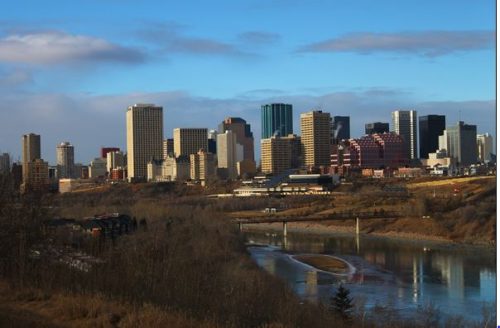
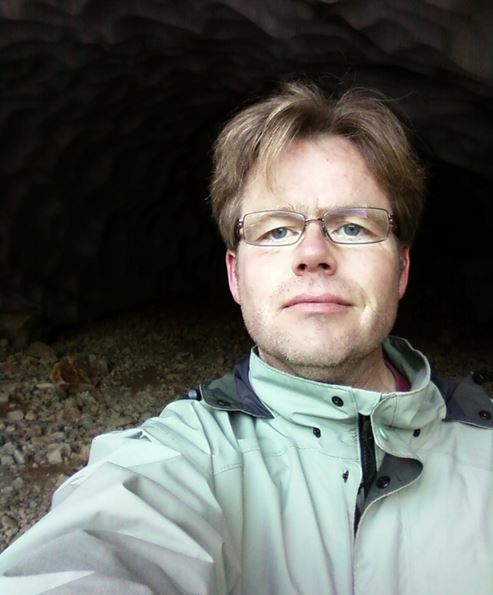
Glenn Arnold lives in Edmonton, Alberta, where it goes to -40 in the winter and there’s more oil than in Texas. Glenn took the photos of himself and the art gallery. His son Craig Arnold shot the street view, the refinery and the gorgeous cityscape down the valley.

.
.

Dec 032010
 

This is Natalia  Sarkissian’s second “What it’s like living here” piece. The first brought us the shocking news of her son’s illness. This one delivers the aftermath, hope and dogs and gorgeous cityscapes from Milan.

dg

What it’s like living here

By Natalia Sarkissian in Milan

December, 2010

Dear DG:

You ask about Nick, his heart, the operation. He’s pretty much himself again; kids are resilient that way (their mothers and fathers less so). We’re picking up where we left off before we put everything on hold. Not easy these days with life everywhere often a challenge:


“Camera da Letto” means refuge

The alarm rings in the pearly gray of morning.

White sheets—from a transatlantic trip to Macy’s in Boston—slide like silk as you stir, your dreams of sand and sun on the Sound dispersing with the squeal.

You reach out an arm. You fiddle with a button. Silence ensues.

You blink in the shadowy room. Then you light the alabaster lamp from Volterra, the one you bought on sale years ago when Rinascente department store revamped and unloaded merchandise—60% off. Now a milky glow shines encouragement on your side of the bed.

Don’t move quite yet. Study instead the India-ink drawings of cocktail parties and frivolity facing you—the ones you sketched when you were twenty and going to be a painter. Then contemplate the alcove where your desk sits piled with papers, the old dresser loaded with a tower of books. You’re a mother, a part-time translator, part-time English teacher and when time permits—writer—now. A translation project (small) awaits. A lesson plan (a doctor wants to converse in English for an hour) awaits too. Not much money, but at least it’s some. In the afternoon you’ll do homework with Chris. And then there’s that novel you’re writing.

Sigh, and say, “first things first.”

Kick the sheets back.

Slip into your jeans, your t-shirt, your sweater.

Turn off the light: a mound still snores gently under the white sheets from Macy’s.

Tiptoe: the mound, in the old days (how many months of joblessness is it now?) used to be up first, shaving and showering before a day directing strategic sales in a large multinational. Now, if roused, the mound remonstrates.


“Cucina” means good morning

An old-fashioned door from the twenties (two panels, with glass, bolted across the middle with a brassy lock) bars entrance to the kitchen. On the far side, a six-month-old beast whimpers and jumps and the doors rattle and shake.

“Come girl,” you say, releasing your as-of-yet-un-housebroken pup from her nightly exile to the tiled floor and newspaper inside. Tail wagging, she hops and jolts, somersaulting with joy.

“I love you too,” you say, patting, but rushing. Bladders are small, muscles are weak, minutes are precious.

Seize the leash, grab a parka, open the front door. Step out onto the marble, lock up, press the button. But then wait for the old-iron-bird-cage elevator to crank up to four.

Say, ‘accidenti—goodness,when you note a spreading yellow stain beneath your wriggling puppy. And then louder, ‘cazzo—fuck.’

Across the landing the neighbor lady—up early too—flings her door open.

“Not again!” she cries, her hands on her hips, her feet stuck in felt slippers, her white hair in scruffy clumps about her gray face. “Aren’t you going to scold her?”

“Yes,” you say, and you do, but your heart’s not in it, not when you’ve got a disapproving audience.  Apologize again. Say, “she’s just a puppy.”

Promise to clean up when you return.

When the neighbor lady says, “things were fine before you went and got that dog,” and then slams her door, you shrug and step into the elevator. You know things weren’t fine before you went and got that dog. You know you went and got that dog to help things be fine.

Decide you’ll walk her long and languid.

“Parco delle Basiliche e Le Colonne di San Lorenzo” mean survival

A green expanse stretches from the Basilica of San Lorenzo to the Basilica of Sant’Eustorgio where, according to legend, relics of the Three Magi once were conserved. At one time infested marshlands, the land was reclaimed and fashioned into a park in the twentieth century. Students eat their lunches here on sunny days. Children swing from monkey bars in the afternoon. Along the park’s fringes, fashionable establishments serve elegant food on iron tables in vine-draped niches at midday and in the evening.

You used to have aperitivi here at sunset when brick buildings glow red. You haven’t had an aperitivo here, or anywhere, in months. Nor have you watched bricks glow as the sun sinks.

Nearby stand sixteen Corinthian columns, Roman ruins of the 3rd century. They were moved here in the 4th century as part of the construction project of San Lorenzo. Survivors of Roman Mediolanum, Barbarian invasions, Austrian invasions, World Wars, and urban re-edification, the columns symbolize survival against all odds.

You like to walk Wendy here, in this piazza and park strewn with evidence of survival, of rejuvenation.

This morning, cars rush by at 7:30, their taillights fuzzy red globes in the early morning fog. The green 94 bus wheezes along, leaving a wake that tastes of petroleum. Thick and gray it clogs your throat. You cough, cross the street, enter the park, your dog pulling on her leash, a flock of pigeons in her sights.

“Area Cani” means leashlessness

In the midst of the park of the basilicas a fence encloses trees and grass and muddy patches: a dog run.

Open the gate, release Wendy.

Throw a ball, toss a stick.

Soon Signora Mastini and her beagle arrive.

“You’re here early,” you say to Signora Mastini. You watch the dogs roll together in muddy orange leaves and enjoy their nips and jumps and yips.
“Volunteer work at church today,” says Signora Mastini.
“Volunteer work?”
“The homeless. I feed them. I clothe them. So many these days. So many.”
“Oh,” you say, inhaling the damp smell of autumn rot.
“Single men. Divorced men. Family men. They lose their jobs, can’t pay the rent, then they’re out on the streets.”
“Oh,” you say, “oh.” You zip your zipper against the chill.
“Did you know they fight over clothes? Winter jackets are in short supply. But I’m never worried. ‘Basta!’ I say. ‘Cut it out, or I’ll throw you out.’ They always listen. They can’t afford not to.”

Yes. You nod.

Then whistle. You yank Wendy away from her frolicking friend.

“Come on, girl,” you say and shut the gate. You can’t afford to think about homelessness. It isn’t looming, is it?

Walk. Then walk some more so you won’t think.

“Via Torino” means thoroughfare

Cut around the perimeter of San Lorenzo, then through the Carrobbio, an old intersection where the Roman Ticino Gate once stood. Walk north, along via Torino, a shopping artery that connects San Lorenzo to the center of town. Admire a door spray-painted by a graffiti artist but ignore the attractive shop windows up and down on either side. Forget what you don’t need and can’t have.

Pause in front of S. Giorgio al Palazzo, an 8th century church, the name of which comes from a no-longer-extant Roman Imperial palace built by Diocletian. The church houses a cycle of paintings by Bernardo Luini and a late medieval relief of St. George and the Dragon.  

Decide to view St. George slaying his dragon. Consider it good for morale.

The doors are open for morning mass, but a frowning man in a cleric’s collar says you can’t enter with your dog. Even if you carry her. Even if you fit her in your bag.

Traipse north. Stop while a concierge washes the sidewalk in front of her apartment building. Enjoy the hiss of her hose on the pavement.  Approve of how,
with deft flicks, she sends debris sliding to the gutter.
Wait until she finishes spraying. Squelch past, listening to your rubber soles slapping against the wet. Then stop again.

Consult your phone. The battery’s low, but still, it’s enough. Scroll and find it. Piazza San Babila, 3.

Walk where your directory tells you.


“Piazza San Babila” means shelter

Piazza San Babila, with fountains and gardens, surrounded by porticoes filled with boutiques, long considered the ‘salotto buono,’ or the living room of the affluent, perches at the crossroads of the swankiest streets of Milan: Via Montepoleone, Corso Venezia, Corso Europa. Lined with neo-fascist buildings, it’s named after the venerable brick church that oversees the bustle at one far end.

Head here, to this piazza, at 9 am, your little dog following.

Quit Via Torino, cross Piazza Duomo, traverse the pedestrian walkway of Corso Vittorio Emanuele II, still silent, still empty of tourists and street vendors. Ignore Rinascente, Pollini, D&G as you go.

Forget what you don’t need and can’t have.

But as you near Diesel boutique, nod at a middle-aged man with a sleeping bag in a shopping cart. When he asks you for money, hand him a euro. Realize you think you’re buying distance, you think you’re buying time.
“Nice dog,” he says when Wendy sniffs his feet. “I had a dog once.”
You smile and nod again but he doesn’t.

A few steps further, a young couple, sitting on cardboard, plastic bags filled with old clothes strewn around them, eats breakfast from McDonalds. Wendy barks and the woman spills coffee on her dirty pink track suit.
“Shhh,” you say. Eyes averted, you hurry your dog past.

Still further, nearing the piazza, an old man with a grizzled beard and gray hair sprawls in the doorway. Think: when the shoppers disperse, the dispossessed find a night’s worth of relief.

“No, Wendy,” you say when she starts to growl, “Piazza San Babila has many faces. Right now it still means shelter.”

You know that soon, when the stores open, the men and the woman will be made to move. Maybe they’ll go to Signora Mastini for a hot lunch and to fight over shoes.

“Ufficio di Lavoro Interinale” means temp agency

Rounding the corner, you’ve made it. San Babila, 3. But although you search, you can’t find the shelter you seek.

The temp agency. Where your phone says it was. It used to be here. You’re sure it was here. Wasn’t it here? Hadn’t you been here, seeking a job once, not so many years ago?

A fashion house occupies the offices here now.

You perch on a granite bench facing a fountain to rest. You’d imagined a listing for which he was qualified. Something more substantial for you.

No matter.

“Let’s go home,” you say to your dog. “We’ll get on the computer. It was crazy to try legwork. Things have changed.”

But then, you think, maybe legwork wasn’t crazy, after all. You walked to escape when you first started out. Now you’re energized.

Wendy wags her tail. She likes legwork with you. You stick her in your bag, sneak her through the turnstile, carry her onto the metro, ride the red line home.

“Cucina” now means hope

The mound is out of the bed and no longer a mound. He’s in the kitchen, making espresso. He’s bright and cheery. And he’s wearing a red tie. Wendy hops and jumps when she sees him and he scratches her behind the ears, laughing when her pink tongue flicks against his hand.

The kitchen seems different now. Full of light, you think.

“I’ve got an interview,” he says, straightening, stirring sugar, his spoon clinking against the cup. “A second interview.” He smiles. His eyes are green and his teeth shine.

“A second interview?”

“That head of operations job in Cairo.”

“Oh my God,” is what you say. “Cairo? Cairo?”

You don’t want to hope too much. But still, for him—for all of you—you do.

–Best,

Natalia

—Post text and layout by Natalia Sarkissian

Dec 012010
 

Denton, Texas Brad Green

Brad Green writes from Denton, Texas, dry, empty land filling up with urban detritus no different from anywhere else. But it looks different, and Brad writes of it with a raw, desolate naturalism reminiscent of the young Larry McMurtry of, say, The Last Picture Show. Someone just wrote dg about these “What it’s like living here” pieces. She said, “I guess what I like best is that every essay, supposedly on place (and even when it seems to strictly adhere to details of a place’s terrain and citizens) is really, at the end, so nakedly about its author.” All dg can add is, “Yup. That’s the way it works.” Read this one.

dg

.

What is Felt

Of course, the days are filled with sound. That sense comes to you well before touch, before sight or cognition even. It’s habit now to slap that numb walrus of a hand on the alarm to halt the return of the world, anything to stay away for a few moments more, but your feet find the floor in the dark and bear your morning wobble. They always do. The bedroom door squeaks open. Steam billows in the shower. You forget to flip on the exhaust fan and when you step past the fish-patterned curtain, the mirror reveals your face full of fog. Who you are sharpens as the morning evolves, though. A half-hour later, your fingers feel blood-carbonated and you’re able to grasp the toothbrush, the keys, the steering wheel. One can curse the carpal-tunnel or consider it some sort of earned pain the way a war hero carries an amputation, but really, you’ve done nothing heroic—ever. That numbness pillows each night because you hunch over the keyboard, filling your evenings with failure.


 What is Feared

The road is white in the morning air. It’s some new compacting gravel that men in mudblistered trucks put down. You live far enough out that you don’t warrant asphalt. Slow cattle bend their heads to the grass and oaks thick with dust blur through the window glass. At stop signs, the car engine sounds confused. The plugs need changing. Things are out of tune. A hard, black carbon clogs the chambers, the motor working harder than it needs in compressing the distance between you and where you must go. You stop where the gravel road ends and dust boils up around the car. The ground in North Texas is cracked most of the time, congested with bristleroot, trumpet vine, or the tortured gnarls of juniper, so dry it tatters up behind wherever you go. Before you turn onto the paved road leading to the highway, you face the sky, tightening your fists on the steering wheel. Contrary to what people say, wide horizons make us small.

Photo 2


What is Endured

There’s a vent you listen to all day in your office. It hisses air, flutters the leaves of the bamboo you bought for life and color. Faces float by the slim rectangle window in your office door. The email dings reverberate and follow you around, warble the phone in your pocket. One feels pursued, exposed, dedicated, hollow.


What is Lost

Where you work used to be barren field. It seems like that wasn’t so long ago, but the grass waved there long before the baseball of ache took up camp in your lower back, before the stiff gray began its sly fuming around your ears. Concrete and glass have sprouted in vast squares where once in high school you stood naked on the dirt with a girl till the morning sun found you. Now there’s a squatting Wal-Mart, a place impossible to be that human in again. There’s a Best Buy, a Target, the Bed Bath and Beyond, Fuddruckers, IHOP, and the lot, now smooth with concrete, where there was a house in which you got drunk mixing diet coke and beer (a bad night), and another two streets over where your finger found M—’s most precious nub and you watched her buck and shudder into an entirely new person, afraid that you’d committed some irreparable harm. There’s where your father grabbed you by the collar and slammed you against the car for running away, and there, just a short jog down the road, there’s where you lost God.


What is Found

Capture2What’s on the other side is remarkably similar to where you are now.

And that’s what you find moving through the day, the shape of the absences in your life, the holes where things once were. You encounter memory at every turn and each turn shades what you see now. In fact, the more the world glints, the more resonant the once-lived. So you drive around at lunch, finding moments, scribbling them down in your notebook. There’s Thrill Hill where you got that ponderous, brown Oldsmobile airborne before it thudded into the road, scraping the frame against the sun-hot spall. There’s the old barn where you fucked A— and came in her sock, laughing as she wore it crusty all the way home. There’s the pole where C— lost control of his truck and you found him whimpering on the seat, eyes bright with shattered glass. There’s the house where you cranked the big block engine in your 62 Chevy truck, heard something wrong, and had to unwedge a kitten from the fan blades. There’s where you held it soft as warm pudding in your palms, and there’s the field where you cried after hiding it under a rock.

Denton, Texas

Why these memories? Why not something else? Why not the way a chocolate ice cream cone melts? Why not your high score on Space Invaders? Why not those 45,000 words about a desert planet you wrote after reading Dune when you were eleven? Why not the white flesh of an apple bursting its juice in your mouth?


What is Heard

There are questions you can’t realistically answer, but are doomed to ask. Those questions arise from place. Place fuels our sense of the important and loss is the measure of everything we might become. It’s not the sex we remember as much as where it happened. Death is a thing that occurs in a geographic location and God, well God is absent from the largest space we can imagine. When that place becomes too onerous to bear, you turn to fog and rely on what you hear, because when our palms slip free of their tactile nature, we demand more of the ears and are left with the dings and alarm of a quotidian life: a hissing air vent, the metallic confusion of a car engine, the grey chatter of an office. The keys clatter late at night, those slim hours all that you have to plumb what matters, a narrowing time when the air is fraught with night-creaks and windows blacken the world until place loses it shape to the dark, moments you’ve lost swelling into their forgotten forms, drawing breath again in your mind unmoored by Rum until you finish your day alone with want and that catch in your throat, the numbness threading fat through your palms, the page holding you rapt in its wide, white jaw.

—Brad Green

bg_big

.
.

Nov 262010
 

Kim Aubrey writes about Toronto, her adoptive home, soon to be left behind. Vet visits, bed bugs, in-laws—and the silence and melancholy of being uprooted and leaving loved ones and things behind.

dg

What it’s like living here

from Kim Aubrey in Toronto


Bathurst Street

You drive the six miles home down Bathurst from your doctor’s office, where you’ve been weighed, measured and questioned about the year’s habits, good and bad. You pass the bagel shops and delis, the Bowlerama where you used to take your daughters for birthday parties, and a little further south, the square squat apartment buildings with their blond-brick facades. A young man in jeans and a light jacket dances up the sidewalk, hips fluid, hands pressed together, long arms flipping outward and upward, as if he’s a yogi praying. When someone approaches him from the opposite direction, the dancer lowers his arms, quiets his body to a walk. You wonder if he’s just being polite and will start up again once he has the sidewalk to himself.  Or if it’s simple Canadian diffidence, only surprising in one willing to dance at the edge of a busy street in the middle of morning.


Yonge Street

Your Jetta crawls in rainy rush-hour traffic up what used to be the longest street in the world. You and your husband were in Paris yesterday morning, eating croissants and jam in a sunny café, the Pantheon cutting its iconic shape into a blue sky. Now you’re both jetlagged, ready for bed at six in the evening.  Instead, you’ve agreed to pick up your daughter and her field spaniel, Iggy, from the vet, who has sliced away the puppy’s testicles and sewn him back up again.

Continue reading »

Nov 182010
 

.

Y

ou remember once, when words were your only company, how it felt like treachery when writers wrote about their kids.  You swore you never would.  It was an easy vow, since you figured your books would be your babies.  Your boys would be in books.  Now you have babies, you have boys—but no books.  O crazy carnival ride life: turning you here, depositing you there.  Splitting open your heart, tying off your tongue.  Could anywhere be the same as anywhere else?

Strangling on Trees

There are so many big trees on this island.  Alder, Arbutus, Fir, Gary Oak, Pine,  Spruce, Hemlock, Cedar, Yew, Maple, Dogwood:  the light above your desk dims with each tree you type.  Because nearly everyone who lives on this island is an environmentalist of some sort, it is considered a crime (worthy of, at the very least, several angry but carefully-composed rants against you in the editorial pages of the local paper) if you cut down a tree.  Neighbors hear the chain-saw and come running in their gumboots.  Even at 3 a.m. they hear it.  Especially at 3 a.m. they hear it.   Seeing the panicked fury on their faces, you decide to pretend that they are owls, swooping down to alert you to their nests of downy-white owlets perched in the branches above.   Kindly apologize, while shivering in the shade that rotted tree casts.

You could argue that the giant slab of nature known as sky—the clouds the sun the stars the moon—are being neglected here, choked out by greenery.  You never would.  Somehow all this forested wilderness is inherent to being Canadian.  And because you hide your American origin carefully, you also hide your tree-induced claustrophobia.

The Arbutus tree is your favorite.  Muscular and red as any horse’s leg, twisting against sky with little adornment.  When you go hiking your son likes to carry a piece of fragile red Arbutus bark in the pinch of his hand, which makes you think of love letters you left behind, in some other place you lived.   He can only carry  it a few steps this way before ripping it.

Because nobody cuts any trees or bushes back, when you pull up to an intersection you have to drive out into the road—into crashable territory, with your boys in the backseat—to determine whether it’s safe to pull out.  You cringe and fight urges to close your eyes as you step on the pedal.  You fantasize about coasting forward in a convertible, wielding a 30-foot -long bayonet.

You love the sun.  You always thought you would live in the desert, as a hermit.  You would take long walks on parched land in search of bones and flint, until your silhouette resembled barbed-wire.

When the wind blows wildly, limbs that normally nest snugly against the power-lines—because, again, it would be wrong to cut them—fall lightly, and everyone loses power.  Your first son remembers with delight the Christmas Eve you each wore all your coats at once and melted pots of snow on the wood-stove to make drinking water.   Admit it was very quiet, so quiet you could hear the snowflakes clicking as they landed.  Remember the fun your son had scooping snow, the wonder on his face when he mistook the flickering candle’s reflection on the black windowpane for a sleigh scooting across the sky.

Still, when you go to a birthday party for a two-year-old who has begged for a logging cake—and the artistic mother has complied with hacked Cadbury Flakes for tree carcasses, with jagged silver gum wrappers folded into chain-saws—you laugh with delight and eat two pieces.

Other Lives: Sponsored by Water

Oh how you love to look across the water.  The distance opens your mind.  It’s as if someone skipped your brain across the sun-lit surface and every near-thought expanded into many full and amazing thoughts.   Your island has, in addition to the ocean surrounding it, five large lakes.  You spend large amounts of time at the edge of these waters, holding a baby, staring out.  Once upon a time you were a long-distance swimmer.  Your body twitches, remembering.  You swallow.  It’s cruel that freezing water can be so clean and turquoise.  It’s cruel to feel land-locked on an island with so many empty boats and kayaks speckling the shores, begging (in little dips) for passengers.

During a limited stretch of hot summer days, you can bring the boys into the water with you.  The older one wears water-wings; the younger lets himself be glided, emperor-style, in an inflatable boat.   But you can’t go far.  Your boys are anchors.  You imagine one day they’ll take running leaps off the dock and stroke so fast away from you that you’ll have to stop and rest, treading water.  You’ll look back to shore and remember wistfully how for years you trapped first one and then the other there, breast-feeding them on a blanket.

People live on boats in the harbours.  From visiting 25-foot luxury yachts to old wooden planks with torn roofs, rotting into the ocean.  Kids from the outer islands take a boat called The Scholarship to and from your island’s high school.  No school bus for them.  No chipper morning kid bombarding you with chatter, nope, not over the boat engine.  Don’t forget your life jacket, honey!  Calls your mother at the door.  And at the dinner table you lift your fork and say: Today on the way to school?  We almost hit a seal.

Your favorite boat isn’t technically a boat.  You have to hike through hoards of trees to look out at it.   You bring binoculars, and peer at the deck for signs of life.  You never see any signs of life, which enables you to invent all sorts of stories about who lives there.  Usually who lives on it is an 8 year-old girl named Delany who is crazy about the color orange.  She is quite civilized for an orphan, and brushes her teeth three times a day.  She made her toothbrush herself, out of driftwood and dog hair.   People–all the people from all the places she might live but won’t—gather and they call out from the shore:  Dellannnyyy! Delllannnyyyy! Come on home now!  But she just keeps moving her eyes or her hand over the page and doesn’t hear.

Drop Me Right Here

Hitch-hikers on this island get rides.  And then you will read something in the paper like this:  To the hitch-hiker I picked up last Tuesday morning at Cranberry, headed to Fulford:  you left your green metallic travel mug in my car.  Call 653-8003 and I can return it to you.  Nice drivers.   Nice passengers, too.  One of your friends claims a hitch-hiker left her a whole bar of organic dark chocolate in the seat.  On purpose? You ask.  I pretend yes, she says.  She sighs and adds that ever  since then she always gives her car-seat a careful scrutiny when the hitch-hiker steps out.  Those damn hitch-hikers, she says.  They make me crave chocolate.

(She is a friend from the prairies.  You find the people from the prairies speak their mind more, with less polite wording, than the people from British Columbia.  Because they have fewer trees to hide behind?  Someday you will visit the prairies and see if it is like Texas, where you also lived.  You hope it will be like Texas, but with less litter and animal corpses.)

You pick up hitch-hikers, too, if you’re not running late and your baby isn’t wailing in the back-seat.  If Bob Dylan is playing on the car radio.  You don’t stop for the crazy looking ones, the ones who probably need rides most.  Usually you pick up females, who as the stats show are less likely to rape a driver or her babies.

Sometimes a hitch-hiker will shine with excitement, making you wistful for the days you were alone, travelling light and without an itinerary.  Sometimes a hitch-hiker will be fatigued and full of shadows.  When you drop her off your two boys, in the rear-view mirror, are coated with rings of light like in smultzy paintings of Jesus and you can barely breathe, hit smack in the throat with your huge luck.

Mama? Your son sang to you from the backseat, when he was Two, Do hitch-hikers have Mamas?

Animals That Aren’t That One

You had seen this landscape before you ever came to Canada, all swirling greens and greys and blues, peeping shards of sky, in the paintings by Emily Carr.  Even her sweeping curves prepared you, for Salt Spring Island is full of hills and steep winding roads and therefore when you and your sons try to re-create your island in the bathtub you can’t just splay a floating bath-book out flat and call it done.  You have to pile it up quite high with tipped plastic boats and cups and wash rags curled into hills.  If you run here you will get faster.  After eight months pushing your baby up and down hills in a stroller you will dash through a marathon in pouring rain to qualify for the Boston Marathon.  Boston, you will murmur dreamily—until you double-check the atlas and see it, across that deceivingly-flat page, all the way over there.   Unfathomable.

The first time you land in Canada and step out of the Vancouver airport you can’t believe the air.  So cool and clean: you keep huffing it until someone asks if you are  alright.  If this is air, then what was that you had thought was air, back in those other places you’d lived?  It must have been exhaust.

Geese dapple the fields, private and public.  They dapple until you are right upon them—then they loom.  Then they explode into the sky.  Chasing a field of geese is well worth the mess it collects on the bottom of your shoes.  When your first son is up and running, you waver between teaching him to ignite a whole field of geese with his wobbly body, and teaching him not to bother them.  You do a bit of both.

You love the geese, and the deer: the deer that lurk all day and night outside the gate of your fence, waiting for you to swing it open, as plotting and stubborn as any deer in Gary Larson cartoons.   They eat the apple-starts off the apple trees.  They stomp across your tomatoes to get to the lettuce.  When your son and husband rush out in their gum boots to corral the deer out the gate—the boy shrieking with delight, the man booming out the game plan, you stand at the back door laughing.  No matter what they are wearing, you see them streaking across the yard in overalls and Daniel Boone caps.  The sight is  worth accidentally leaving the gate open.  It is worth a ruined garden.

You love the geese and the deer for what they are not.  They are not the animals that used to prowl the place where you lived before this, way up north.  They are not bears, they are not mountain lions.  They are not the grizzly bear that you surprised, that surprised you: it rose up on its hind legs and swatted at you, roaring.  The roar echoed across the air; it would echo in your head for weeks.  The grizzly mock-charged, its claws narrowly missing your face.  But there is nothing mock about a charge.  You put up your hands in surrender.  I’m sorry, you half-spoke, half-whined: pathetic last words.  You found it was impossible not to look into the eyes of the thing that is going to kill you.  They were very dark, and flashing like the eyes of someone trying not to cry.  You got away.  One of you got away, and the other one of you will always be a mauled corpse on the side of a dirt road.

You’re told that sometimes a bear will swim across the ocean and land on this island.  On ferry boat rides you scan the water not for orcas or dolphins, but for a massive hump of slick brown fur, straining furiously toward you.

Lots of Space to Generalize

The people here.  To generalize, which of course any sentence must that begins, The people here.  The people here…are industrious.   Here are some of the things these islanders offer for sale, on the 15 minute drive to your son’s preschool:  pottery, flowers, jam, vegetables, organic beef, eggs, kindling, monster dolls, honey, portable sawmill (for hire), knit leggings, birdhouses, baked goods, venison.   You also pass two wineries, three (of many) art galleries, and the workshop of a shipwright.

You can sell whatever you make, too, right outside your house.  But first you have to be industrious enough to construct a little wooden farm-stand.

The people here.  They…..are polite and mild.  Formal.  Respectful of space.

In many ways this is a relief.  You are a secretive Scorpio spy who has always associated being seen with diminished seeing powers.  Also you have some social anxiety, otherwise known as:  can’t we just communicate on paper?  You’ve been known to slide into a closet when someone knocks on the door.  When the phone rings, you step away from it.  If you are returning from a run and see a visiting car in the driveway, even if you know the car and like its owners, your first impulse (and the one you usually take) is to keep running.  So it’s a relief being here, where people give you a lot of room to hide.

On the down side, you can feel brash and snoopy, when you are merely being direct.  When you feel brash and snoopy, you feel like a parody of an American.  You can feel lonely at a party.   Specifically, you can feel lonely for bars in places like Bandera, Texas, where heated discussions (possibly escalating into full-out pistol duels), made for wonderful entertainment and quick friendships.  You can feel lonely for insistent, engaging types.  Like the New Orleans musician on the corner of Iberville and Decatur who would call out to you on your way to work:  Those new shoes you sportin’, aren’t they?  Why you lookin’ so glum now, with this sun lovin’ on you?  You best hustle, girl, you late today!  You smiled at him, even when he drove you crazy–and now, when for long stretches polite islanders fail to call you out (too loud) or ask about you (too nosy), you are glad you smiled.  Some people just flipped him the bird.

A woman you meet briefly tells you about a friend from the United States who was visiting her in Vancouver.   He had recently been in a car accident, and his face had a fresh and gruesome scar right down one side of it.  She introduced her friend to all her friends.  They went to several dinner parties.  And no one!  She roars.   Not one person asked him about his face!
You giggle.  How rude, you say.

But.  The people here….are kind.  And smart.  Respectful.  And wanting to do good.   And industrious.  You feel lucky to be raising kids among people with these qualities.  The flamboyant brashness–that can be introduced easily enough in so many places.  By the television set, for instance.  This other, the quiet space people create here, is so much harder to come by.

.

Things you do to fit

When you hear the temperature, you double it in your head and add thirty.  You say pro-ject, not pra-ject.  You write labour and colour and metre.  You sing out “Zed” with your son during the alphabet song, even though it makes the verse not rhyme.

You say, Now where did I put my toque? without cracking a smile.

When you go to an outdoor festival in the heat of summer you don’t smirk at the little roped-off area you have to be inside of, to drink a beer.  And babies aren’t allowed: they might grow up to be drinkers.  You won’t smirk nor will you cry, thinking of those years you prowled the French Quarter with one hand curled around a go-cup.

In September, you add little tin wheels on the biggest zucchini from your garden so your son can enter the zucchini races at Fall Fair.  At Salt Spring Fall Fair, for 20 dollars, you can enter “Muffin Madness” by betting on a tiny plot of numbered field.  If the amply-fed-with-special-grain cow they release into the field decides to let his fresh poop drop on your number, you win the entire profit of the ticket sales.   It’s quite a lot.  People clench the fence nervously, willing an uncomfortable and oblivious animal to step right or left, to step forward or back.

In October, you take off your shoes and stomp with tons of other barefoot people–all various levels of clean—in a vat of grapes.  For a long while after this you refrain from buying local wine.  You make your Mom’s oyster dressing for Canadian Thanksgiving and wait for her or your sisters to call, so you can brag how you got to eat yours a month early.  But no one calls; none of your people in the U.S.A. ever remember the mid-October day that is Canadian Thanksgiving.

In November, you wear a poppy on your shirt and ignore the election disputes  that waif in vaguely from your computer.  But you always watch nervously as the results of the Giller Prize—Canada’s big literary award–are announced on T.V.  You rasp Shhhh!  to your boys as the finalists, each one in turn, approach the podium to read excerpts from their books.   You laugh a lot because of the amazing public fanfare made over books, and because writers make such lousy rock stars.  When the lights hit their made-up faces, they twitch like moles caught naked and quivering outside their holes.  The book you like best is seldom picked.  Each year you wish you’d planned a party around the prize, with big money bets and impromptu readings and literary drinking games at the commercial breaks.  But it is on in the morning, when all the writers you don’t know are writing.

In December, you watch as a large crowd of people huddled around a television set refuse to return to their vehicles and board the ferry headed for Swartz Bay.   It has come down to shoot-outs in the Olympic Canada versus U.S.A. hockey match.  Who you cheering for, Mama? Your son asks, over the excited commentary on the car radio.  Uh, you say, suddenly exhausted.  Does being an expatriate, straddling two homelands, automatically sap a person of the energy to cheer for either of them?  Or is it just you?  A disgruntled ferry worker begins waving cars forward and back, directing the intricate maneuvering required to drive around the abandoned vehicles.  It is the last ferry of the night, but the crowd in there—black figures postured tensely in the yellow windows—would rather be without their beds than leave the game.  Canadians, you finally say.   Your husband winces, so that you have to quickly tell him you don’t mean the Montreal Canadiens.   I mean those Canadians, you say, pointing to the empty cars as he rolls the truck forward.

In winter, it rains for weeks on end.  This is good.  If it snows, the very few plows your island has will focus on the main roads and neglect the hilly side streets.  It rains, or it snows—it rains and it snows, the snow turns to rain again.  The rain freezes.  One night over whiskey, while your husband talks dreamily about his time in Belize, you try to remember your own hot seaside places.  They are faded poloraids, buried under leaves and limbs.  You tilt your face up at the snow-buried skylight, straining to recall.  How can your body forget that kind of heat?  A heat so stark it instantaneously dried the ocean droplets on your skin to lines of lace.

In winter,  you take a hot bath with your boys.

But before that—twice, in fact—you decide it will be fine to give birth without drugs—since there is no anesthesiologist or surgeon on your island.  The first baby is born on a table at the local hospital with the crazy mid-wife telling you not to push and the Victoria helicopter team on hold on the telephone.  The second one is born with the calm and wise midwife, the one you wanted the first time.  The baby arrives on a Friday afternoon on the floor of your bedroom, right where your husband tends to pile his dirty clothes.  Because you spend most of your labour in the bathtub, you thereafter find taking a bath with his real live body in your arms, in the same tub, an extraordinary and humbling thing.  This, you think, is why people stop moving.  This is why they find a home and stay in it.

In winter, you grab a wash-cloth and get your whole face wet, so your older son doesn’t ask you why you’re crying.

–Carrie Cogan

Carrie

.
.

Nov 132010
 

A deeply shocking and poignant “What it’s like living here” from Court Merrigan in Torrington, Wyoming. Neither a former student, nor a VCFA graduate (he doesn’t have an MFA), Court is just a writer and a human being who joined the conversation and became part of the NC community. DG wishes there were more like him, more nominal outsiders who join the blog just because they like writing and a supportive camaraderie. We’re not a closed shop. This text reminds dg of something Tomaso Landolfi once wrote: “…is not this a world in which incredible things take place and, I would say, only incredible things?”

dg

WHAT IT’S LIKE LIVING HERE
by Court Merrigan

Bedside

Four extra bedtime stories for your daughter, five.  She grows fidgety and irritated, wants to be left alone to sleep.  Once she would have stayed up all night with you.  Now she’s three and those days are gone.  You trudge upstairs.  Your wife is in bed.  She goes to bed early nowadays.  It’s too early for you.  Time to get yourself occupied.

Two weeks it’s been.  Two weeks of closing your eyes to see Todd.

1.5 miles up Laramie Peak Trail

At first Todd looked like he was taking a nap, or had just leaned against the warm rock on that perfect seventy-degree day, looking across Friend Creek through a golden-leafed bough of aspens to the sheer mountain slabs across the rift valley.  I thought he was on the lookout for mountain goats.  He really wanted to see a mountain goat, kept on asking if we thought we’d spot one.

“Well, this is about where we expected to catch up with him,” my father said.

Irritated, I thought that he ought to be further along than this, that he was going to start talking about the goddamn mountain goats again – all he wanted out of Wyoming, it seemed – and at his trudging pace, it would be hours before we got back to the trailhead.  He was semi-retired and at his leisure, but I had a pregnant wife and a kid to get back to.

Then I noticed the odd angle of his neck, the wrist twisted behind his back, legs folded in an Asian posture he could not possibly have adopted at sixty years of age.  I began to run.  His face was slack jawed, sunglasses askew, lips a pale violet.  When I knelt and touched his face a skein of spit dribbled onto his new denim shirt, so new you could see the store creases, smell the store shelf.

Continue reading »

Nov 072010
 

cindy2 019_2_4

Cynthia Newberry Martin takes time from her writing and from her splendid writing blog Catching Days (one of Powell’s Books “Lit Blogs We Love”) to let NC know what it’s like living in Columbus, Georgia. Catching Days is a fascinating site with links to Cynthia’s own publications, reviews, and an ongoing series of posts in which noted authors describe a typical working day. See the latest, “A Day in the Life of Bruce Machart,” here. Cynthia has been commenting on NC from the very beginning, a generous, helpful presence.

dg

What it’s like living here

From Cynthia Newberry Martin

in Columbus

Dear DG,

In Columbus, the seasons change, but they take their sweet time about it. First summer doesn’t want to let go, and then the leaves cling to the trees. Not until late October do the golds, oranges, and reds sprinkle this over-green world with color.


The river and Carson McCullers

The Chattahoochee River, the western border of Columbus, floods the city with the mood that gave rise to Carson McCullers:

I want – I want – I want – was all that she could think about – but just what this real want was she did not know.

And to Ma Rainey:

Thought I’d rest me, I couldn’t hear no news. I’ll soon be there ’cause I got the walking blues.

The words and the blues flow together and join the river. And these days, you gather your want and walk your blues for miles and miles on the Riverwalk, a narrow park that edges the banks of the river. You spend a lazy day beside the water, your thoughts swirling with the current. You see Alabama on the other side, and you imagine the rest of the world out there somewhere. You cross the bridge and look back at Columbus with perspective—not a lot but enough.

Red brick

Columbus wears its clay-red brick well. The old buildings, only two or three stories high, allow plenty of light to reach the sidewalks and plenty of air to breathe. Downtown streets are divided by a grass median the width of what could have been another lane. Statues hide benches inside. The place of art in the world is valued, as is a good place to rest and watch that world go by. And downtown, the train still chugs through the middle of the street, right in front of the modern eleven-storied Government Center. You hear the whistle and stop to watch. Each time, it’s hard to believe.

Row houses and the wash

Columbus used to be a mill town, but most of the factories now lie in empty disrepair. Living here you become fascinated by the beauty of abandoned buildings, the simplicity of row houses, and the openness of laundry hanging on lines to dry. These images stay with you and recur in your stories.

The people

Friends bring supper when you’re sick—pimento cheese and egg salad, country captain, fried chicken. The people who come to your door care about you too. Dale is your FedEx guy. He gives you a package and shows you a picture of his twin granddaughters, Layla and Dakota. He gives you his cell phone number so if you need to sign for a package, you can call and find out where he is. The UPS guy is a real person as well, knocking on the door to ask if you’re supposed to receive a new printer three days in a row. It’s a long story, you say. He smiles.

foxThe little fox

Sitting at your desk, you watch deer graze—whole families. The doe, the buck and the fawns. You take a picture, and their white tails flash through the woods. A hawk lands on top of the old wooden swing set where no one plays anymore. But it’s the little fox who wins your heart. He doesn’t know he’s not supposed to play for hours in the middle of the grass right in front of your window, distracting you from the words. You look up from your computer more often, hoping to see him. You watch him learn to sit like a fox is supposed to sit. And then, one day, he doesn’t come out. You miss him. Back to the words.

Family

Your husband is the reason you’re here. Long ago he sweet-talked you into moving to the town where he grew up and where he plans to stay. Your children live in other places now—Texas, Scotland, California. Only one left at home. You’re hoping for the Northeast.

And in Columbus, the unhurried life is the perfect soil for words. Take your time, it says. You have plenty of it. Fall is your favorite season, the harsh heat of summer behind you and nothing but cold mornings and dark, early nights ahead. Bare branches. Fires inside and out.

—Cynthia Newberry Martin

Oct 292010
 

Radio

Another Numéro Cinq What-it’s-like-living-here piece, this time by Shelagh Shapiro, a Vermont College of Fine Arts graduate, short story writer, author of that lovely Novel-in-a-Box Contest entry Infinity Falling,  and producer/interviewer for her own amazing radio show Write the Book. Listen to her latest show, an interview with Richard Russo here.

dg

What it’s like living here

From Shelagh Shapiro

The View From The Baby’s Room

You moved here – out to the country – nineteen years ago. One-year married and seven months pregnant, you slid the moving boxes around and directed other people where to carry the furniture. The mosquitoes got so bad with doors open all that day, you took to vacuuming them out of the air. When you first looked over the property, you woke up a raccoon in the barn. Groggy and comfortable, he didn’t bother you. That night, you and Jerry slept in the baby’s bedroom at the back of the house, because the water bed wasn’t filled yet in your room. (All the next day, the bed would fill, that sixty-foot hose snaking up through the bathroom window.) The baby’s room faced the pond—as it does still—and the peepers lulled you to sleep.

Continue reading »

Oct 192010
 

100_0371

Steven Axelrod is a former student, a painter of houses on Nantucket, an inveterate blogger on Open Salon.com. He also won the 2010 Memoir-in-a-Box contest with a gorgeous piece on the demise of a marriage. Herewith another in an infinite series of Numéro Cinq “What it’s like living here” pieces, in this instance, Steve’s elegiac homage to his adoptive hometown.

dg

What it’s like living here

By Steven Axelrod on Nantucket


Closed for the Season

You walk around your island, stunned by the sudden fair weather, the giant wheel shifting the wind from north east to south west, the air like silk against your face,  the town moving into full dress rehearsal mode for the coming summer: painters sprucing up the store fronts, renovations scrambling to completion, pot holes patched, grass cut, hedges trimmed, waiting for the first boats full of Memorial Day tourists, the first surge of Range Rovers and boat trailers as the summer people take their  seats and the curtain goes up.

Ack 2 Go, Whalers!

Your son Tom graduates from high school today, and you feel ambushed by your own emotions. For years it seems you’ve known every possible sentiment ahead of time, shrugging as they trundled towards you: this is going to make you angry, that will be fun; whatever. But this comes at you from too many directions at once. It’s strange and troubling to have a feeling you can’t identify.

You grasp just bits and pieces of it at first. You feel a tug of genuine suspense when your son was crosses the stage to pick up his diploma … as if something might happen to screw it up, as if the diploma itself might be blank. You know other people feel the same way: You make the joke with a few of the parents you know, and see the nervous smile of recognition on their faces. Then comes the relief.

You call your ex-wife and you talk for a while. Later, you say to your Mom, “No one else knows what this feels like.” And she says, “What about me? I’ve been through it, too.” You hug and you find that you’re crying. She says: “For twenty years you’ve been putting yourself last; now you can finally put yourself first. You can finally do what you want. But what is that?” And you really have no idea. But you feel like some huge changes could begin now; as if you had graduated, not your son.

But even that isn’t all. The graduation unplugs you from a whole community that you didn’t even know you cared about. You weren’t really part of it, in any big way: You didn’t volunteer, or chaperone or substitute teach. But you know these kids, and through them their parents and through those families the real life of the island you live on and the town that had somehow, almost against your will, become your home. Now that living connection is gone, too. The next bunch of kids will be strangers to you; the next crazy teacher won’t be your problem. So this rite of passage isolates you. It makes you feel your age. You finished my fiftieth year, your first real novel and your children’s high school careers, all in the same week. That’s a lot of endings.

Continue reading »

Oct 052010
 

.

October, 2010

Dear DG,

Thanks for your email. You ask about Milan. What it’s like living here. You ask for descriptions, for photos…. Enclosed please find my views :


“Duomo” means cathedral.

A Gothic version wrought with grimacing monsters presides in central Milan. Recently renovated, the marble shines a bright white in direct sunlight, blushes at dawn, or grows ruddy in the gloaming of nightfall.

Pickpockets roam the piazza spread out like a large, bumpy placemat beneath the Duomo. Their glittery black eyes home in on the naïve tourist. Hand to your pocket, or arm firmly over purse, please. You have treasures to lose.

Merchandisers sell Inter, Milan, Juve soccer scarves—blue&black, red&black, white&black—from small wooden kiosks; marketers ring the perimeter with fluorescent neon in pink and blue that exhorts purchases of Gucci, Prada, Sony. Close your eyes to (un)subliminal messaging. Times are tough. Save your dough.

Pigeons squat on the equestrian bronze of King Vittorio Emanuele. White streaks drip from his greened shoulders. Hurry past, head hunkered down.

Seven o’clock shadows lengthen and grow violet while the sun sinks. Cut across the cobblestones of the piazza, wind through pickpockets, tourists, merchandisers, marketers, and pigeons. Climb the steps, enter the Duomo through tall bronze doors, choose the side altar where the Renaissance panel of the Virgin and her Son hangs. Light a candle below the image. Kneel. Even if you’re not Catholic, even if you’re not religious.

The smoky sputter of burning wax. The golden light ringing bowed heads like glowing halos. The sting of incense wafting from the main altar—hundreds of yards away—where evening mass reaches a crescendo.
 The intonation of millions of prayers, seven hundred years’ worth, reverberates in the cavernous, vibrating enclave.

You listen, knees against the stool, fingers laced together on the rail.

Dive in, again today, as you have every day since disaster struck. Add to the swirling mix.

When you finish, fall back into your wooden pew.

You remember that John Ruskin hated the aesthetics of this place. That Oscar Wilde called it monstrous in taste. But that Mark Twain, like you, scoured the thousands of niches decorated with statues of saints, and bugs and birds, and all of nature, and knew here, in the Duomo, he wasn’t alone.

“Salsamenteria” means Sauce-eria.

A new one, near the recently-opened Abercrombie and Fitch, waylays the hungry in a narrow street not far from the Duomo. Salt-cured pig haunches hang from hooks on the walls and rafters in the ceiling. Brown paper mats plaster square oak tables. Kegs of cheaper wine sprawl on a hutch to the left of the bar, bottles of finer wine march across a shelf.

Study the menu taped to the window.

Coppa, it says. Prosciutto, Culatello di Zibello. Tortellini, Ravioli. Lambrusco. Bardolino. DOP–the best of the best. 5 Euros. 6 Euros. 10 Euros. 3.5 Euros. 2 Euros. 4 Euros. 3.9 Euros. Eat. You need to eat. Mangia. Mangia. Keep your strength up.

Take a break from your vigil. Enter. Choose a table for one near the door.

Black eyes, black hair, brown skin. The waitress from Kenya, poised to serve. Pencil on pad.

Order a sandwich. Select some wine.

Pink slabs fall from thick slices of peasant bread. Green sauce—made from parsley, capers, oil and anchovies—glistens in a finger bowl on the middle of your table. Unkegged Bardolino fizzes in the white ceramic bowl the graceful Kenyan girl serves it in.

Dip your sandwich into the oily green, slurp the slick red.

Forget while you eat and drink. Listen to the clinking in the kitchen, the tap of forks against ceramic plates. Watch the girl glide and whirl.

Chew.

And when wine splats on your blouse like blood (drops of crimson on white gauze) blot and wipe in the room with the skirted stick figure on the door.

Remember.

Hurry out to evening mass at the Duomo.

“Ca’Granda Policlinico” means Hospital.

Designed in the Renaissance by Filarete, the Florentine, with perfect courtyards, graceful loggias and brick fretwork, the first Ca’Granda is where the ill of the city was nursed back to health. Now university students occupy Filarete’s harmonic spaces, while the Ca’Granda has migrated across the street to become the Ca’Granda Policlinico and occupy dozens of buildings of eclectic styles and dubious periods.

Rush your teenage boy here one ill-fated Monday. See how he is classified code red.

Tell the doctors: He’s healthy. Nothing like this has ever happened before.

Tell the doctors: His heart’s fine. But then listen to it beat 200 times a minute.

Wait, sitting on linoleum lit by neon.

An orderly changes rumpled blue sheets on an abandoned gurney. An infant, red with fever, cries in its father’s arms. A small pink girl in a wheelchair, her broken wrist held to her chest, fusses at her gold-jewelry-laden-black-leather-jacketed mother. And a blond boy lies down the hall, behind closed doors, in intensive care, monitors hooked to his chest and fingers.

Wait, sitting on linoleum lit by neon.

Relatives of the injured arrive. One, with stiff gray hair and sturdy brown pumps, holds the infant so his father can go to the men’s room. The pink girl’s burly grandfather bellows into his cellphone. The mother in black and gold lights a cigarette beyond sliding glass. Soon, her exhaust curls up through the night.

Your husband calls. He’s home, caring for your youngest. How is our boy? He asks.

Ask a nurse, How is my boy?

Then wait, sitting on linoleum lit by neon.

“Parco” means park.

A nineteenth-century park—the parco Sempione—sprawls around the Castello Sforzesco, the imposing castle that was built in the early Renaissance where Leonardo da Vinci frescoed rooms for Ludovico il Moro. The parco encompasses the Triennale Art Museum too, and DeChirico’s beach house sculpture.

On sunny autumn afternoons boys bring their dogs to the happy corners of Parco Sempione and run. Disks of red plastic spin through the air, dogs fetch, their pink tongues curling and flapping.

Don’t worry about curbing your dog here—no one does. But check your shoes—wipe them on the graveled walkways—when you quit the grass.

On sunny autumn afternoons boys play soccer on the grassy knolls of Parco Sempione. Under the elm, off to the side. And here, one boy, a teenage boy with blue eyes and a chipped front tooth who plays soccer in autumn crumples one graying afternoon. His chest thumps at two hundred beats a minute—like a golden hummingbird’s—while the parco fades into black.

Call 118 when this happens. Climb into the wailing vehicle. Bump over old, winding streets, ancient alleys, circular passageways, through centuries of urban sprawl and nonexistent urban planning. At rush hour.

Say faster, please faster, as you watch your boy’s lips turn blue.

Hold his hand, whisper a prayer when you see his eyelids twitch.

Plan to light a candle at the Duomo every evening until he wakes.

Best,
Natalia


—Natalia Sarkissian

.
.

Sep 172010
 
Trekking on top of the Perito Moreno glacier

An Estancia in Patagonia

Donigan Merritt

Porteños, the people of Buenos Aires, like to refer to their city as the Paris of Latin America. It is not. (Neither was Prague when calling itself the new Paris.) Depending on one’s level of chauvinism, this may or may not be seen as a compliment, but what Porteños can accurately claim is that their city is the most European and the least Latino city anywhere in the Americas.

Buenos Aires is thought to represent Argentina, but it does not. At least Porteños should hope it does not. People outside of Latin America usually know five things about Argentina: Eva Peron’s crying song, the “dirty war,” the economic meltdown and debt default in the early years of the 21st century, steak houses, and Patagonia. Wise Porteños should claim that Patagonia is representative of the real Argentina.

Somewhat similar to “dude ranches” in the States, an estancia is a working ranch that now takes in guests to make ends meet. Although the word estancia simply means ranch, and many, if not most, are working ranches, not bucolic B and B’s with a few decorative cattle and sheep, plus a couple of decked-out gauchos strolling about in picturesque berets. Many estancias are huge, thousands of acres, particularly in the West Texas flat of the Pampas, where gauchos still work much as they have for two centuries.

The estancia at Nibepo Aike

Not all estancia guest ranches are alike. I have visited two. One just an hour and a half’s drive from the center of Buenos Aires, the other a long flight down the length of Argentina, to the bottom of Patagonia. The former is more hotel (two swimming pools, for example, one an infinity pool), with the only ranching activity being performed as a show for guests; their feature was horseback rides along the creek. The other was a working ranch with a large herd of range fed cattle, and even larger flocks of sheep. That one, Nibepo Aike, located a rough one hour slog on a ragged dirt road from the airport in the town of El Calafate, houses the few guests it can accommodate in a wing of the ranch house that used to bunk gauchos, and offers mainly one service: food and drink. Although they are helpful with directions and setting you up with excursions.

Joined by six friends from Europe, my wife and I spent a few days at Nibepo Aike this past January (mid-summer down here), using it mostly as a base from which to explore the nearby glaciers, in particular, the Perito Moreno glacier, one of the only glaciers in the world that is not receding rapidly; no one is quite sure why it is still expanding. The estancia is, convenient for explorations, on the far edge of the Glacier National Park, at the terminus of the dirt road from El Calafate – terminating because just past the estancia is the impassable Andes range and the border with Chile.

The view of the Andes and one of the small glacier lakes from the Estancia

The rooms are along each side of a narrow, creaking hallway leading away from the large main room, behind which is the kitchen, from where an amazing amount of food is delivered three times a day. Most of the décor remains from the days before guests were taken in, and the few additions fit nicely with what’s already there. My favorite piece was an ancient Underwood typewriter made into a lamp.

There is a large stone fireplace in the main room – a wonderful evening treat even in the middle of summer (it’s not much further down the road to the jump off to Antarctica, it’s worth remembering), to while away the late hours with a glass, or a bottle, of Argentina’s fine vino tinto – Malbec. When we were there, it was full, but that means only two other couples; with our eight people, that took all the rooms. One couple was Swiss, the other from Buenos Aires.

Gauchos bringing in the sheep in the afternoon

Awakening the first morning early, hoping to get in a long hike in the nearby hills, I encountered grazing cattle milling about on the lawn next to our room. The gauchos were already on their horses and at work. On the way in to have breakfast, two gauchos moved a group of fifty or sixty sheep along the road out front.

We spent that day hiking around one of the small lakes just a short walk from the estancia, and in the hills behind the estancia, that grow up to be the Andes on the other side. That night we were treated to a full Monty parilla (it means grill or BBQ), during which Malbec flowed through our glasses like water and burdened platters groaning under the heaping weight of cow and lamb parts, half of which I had never considered edible before. (I still hold that opinion about some of it.)

Only able to eat a bit of yogurt the next morning, we were picked up in a van and driven to the Glacier National Park, where we boarded a boat on Lake Argentina and wandered around among ethereally blue ice bergs and ice islands on our way to Perito Moreno.

Cooking up the lamb

There is no way to write about this that can come even close to what it looks like, up close and personal, and even less to be able to describe the sound of ice cracking within the glacier itself, and chunks the size of buses or houses exploding away from the glacier’s leading edge. The best I can do is say that ice cracking in a glacier sounds like a howitzer firing next door.

To come to Argentina and only see Buenos Aires, is like going to the United States and only visiting New York. What is best about this country, what is best about the United States, for that matter, is not to be found in its signature cities, but in the “out there,” and Patagonia is the most out there place I have ever seen.

—Donigan Merritt