Jan 032015
 

michel-de-montaigne-006


Each summer and into the early fall, my wife, the painter Kathryn Jankus Day, and I take up residence at L’Étang, a 16th-century farmhouse on the estate of Michel de Montaigne just outside the village of St. Michel de Montaigne. The farmhouse sits in a valley near a pond below the Montaigne castle—a huge Disney-like 19th-century Loire valley imitation built after a maid set fire to the original castle in order to steal some jewelry. Or so the local story goes. Montaigne would be skeptical.

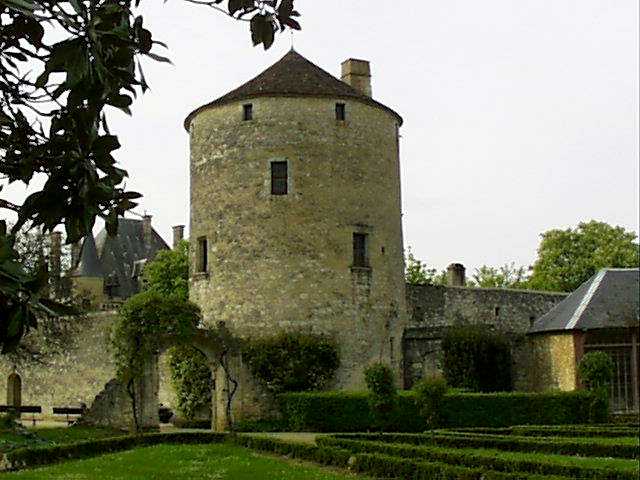
Montaigne’s tower (where he wrote his essays) did not burn, and to this day you can take a narrow, circular stone stairway up to his round study where there sits a full-sized cloth mannequin of Montaigne himself. He is arranged as if reading the facsimile of the Bordeaux edition of his essays on the table in front of him.

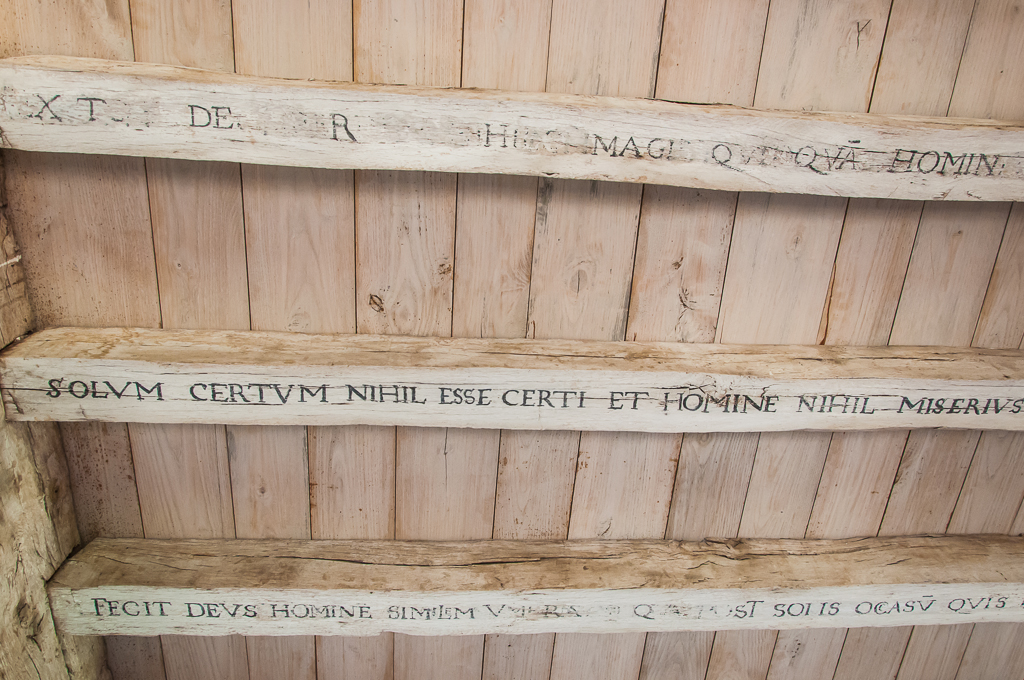
Above this faux Montaigne are carved into the ceiling beams his beloved quotations from the ancients: I don’t understand, I am in doubt, (both from Sextus Empiricus) among more than 50 others. The judgments of the Lord are a vast abyss (Psalm 35); There is much to be said on all matters, both for and against (Homer, The Iliad).

montaignes-tower-13

It will bring you luck (again, according to local lore) if, during your visit to Montaigne’s tower, you see on the stairs—or in the study itself—a black and white cat. The cat’s name is Balzac. He was once our cat, a lost-and-found kitty we rescued from a poplar woods near St. Michel de Montaigne, a woods we have since named Bois de Balzac. My wife and I not only have our patois, we are the ones who started the story about spotting Balzac in Montaigne’s tower bringing good luck. We believe in local lore.

Montaigne’s famous inquiry is persistent: What do we know? As is its modern corollary: How do we know? The first question was Montaigne’s motto: Que sais-je? The second concerns our age of “expanding information,” superhighways of information that race in an infinite number of lanes around the earth on cosmic beltways, complete with cloverleafs and exits—Paris, Rome, Athens, Bombay, Hong Kong, Los Angeles, Chicago, New York, St. Michel de Montaigne, Bly, Kansas—all going faster by far than “break-neck speed,” a phrase my mother would use to describe cars that passed our two-door Champion Studebaker as my father drove the R&P speed limit (Reasonable and Proper) on the roads of rural Kansas. Where are they going at “break-neck speed?” my mother would wonder. What madness is it? my father would reply.

Where are we all going at our 21st-century cosmic pace?—a pace that is not only to be contrasted with the R&P limits of 1950s Kansas roads, but with the walk-along rate of the Dordogne River that flows in the valley below Montaigne’s tower: past the village of Lamothe, Montravel, then west to Castillon, Branne, Libourne and Fronsac—after which it joins the Gironde near Bourg. Then to sea. Where is the strong brown god of the river going? At what speed? Are we flowing with it? What do we know?

montaigne_towerMontaigne’s Tower

Does it mean something to how we know that it would have taken Montaigne four days on horseback to follow the Dordogne to Bourg and back in order to learn—and return with—the news that the grape harvest along the Côte de Bourg was just as bad as it had been for the Côte de Castillon? Does it make a difference to what we know that my father had to drive to see my uncle (who had no phone) to tell him of a death in the family? And to return with my uncle who wanted to stay with us that night because, as my mother said, he was feeling “mortal,”—and that that was the first time I had heard that word and was afraid to ask its meaning. Is there a ratio of speed to knowledge? Of information to knowledge? Of information to ignorance? Which of these ratios are literal? Which are inverse, ironic? What do we ever know? Seeing Balzac brings you good luck. If you say so.

I like Montaigne’s way of thinking. In college I came to study him—as perhaps we all did—as the père of the essay. He was a master of “form.” There were forms of literature in those days: novels, poems, short stories, essays. We were taught that the French word essai meant “to try,” “to attempt.” I don’t remember any of us asking what we were to “attempt” when we took to writing our own essays; but over the years, it has occurred to me that in main we are to try to think. Not so much to “reason”—as if an essay were a pudgy syllogism—but to think in a contemplative way, a tentative way. An essay as a walk along a road taken in search of a discovered thought provoked by a singular image: the black bird in the cedar limbs just as it is beginning to snow—and is going to snow.

In this way we let our words discover our reason. Is it a way of knowing? Maybe. Is it a way of knowing everything? Maybe. It is a way of knowing yourself, then, to wit Montaigne: “There is nothing so contrary to my style as continuous narrative.” Walks with stops as digressions. Not a four-day, but a six-day trip to Bourg and back if on the way you ride your horse up the steep hill to St. Emillon and consider what there is to see. The Dordogne in the valley below. Someone on horseback riding toward Bourg. An essay on the move. The essay as a form of life. A way of knowing as a way of life.

—Robert Day

g
Robert Day

Robert Day’s new novel Let Us Imagine Lost Love premiered here on Numéro Cinq in its entirety as a serial novel and will be published in fall 2014 by Mammoth Publications. Prior to that, his most recent book was Where I Am Now, a collection of short fiction published by the University of Missouri-Kansas City BookMark Press. Booklist wrote: “Day’s smart and lovely writing effortlessly animates his characters, hinting at their secrets and coyly dangling a glimpse of rich and story-filled lives in front of his readers.” And Publisher’s Weekly observed: “Day’s prose feels fresh and compelling making for warmly appealing stories.”

May 162014
 

Desktop52W. G. Sebald

The movie writer/director Ron Shelton once told me he figured he had enough material for a movie when he had enough for twelve movies. Something like that must be at the back of Patrick Madden’s essays because he will wander and digress and quote and ponder and talk about himself and reflect and quote again. This essay is notionally about W. G. Sebald’s discursive, essayistic novels, especially The Rings of Saturn, but then Patrick wanders off and talks about the nature of the essay itself, the nature of creative nonfiction, the fictional aspects of nonfiction and the nonfictional aspects of fiction, and the way he likes to write his own essays (maybe a dozen different topics—you count). In effect, he incarnates the form (of the essay) in his discussion of the essay and Sebald as essayist in the most amiable and slyly convincing manner. “Walking, Researching, Remembering” is, yes, an extremely amiable and charming tour de force, which, to me, also has the advantage of drawing attention to one of the differences between North American and European fiction — the Europeans (see Kundera’s The Art of the Novel) have never been averse to mixing their essays with their novels, whereas North Americans have been stunned into minimalism by that show-don’t-tell nonsense. Don’t get me started.

dg


In his book Understanding W. G. Sebald, Mark McCulloh contends that “Even more than The Emigrants, The Rings of Saturn defies description; it does not seem to fit into any conventional prose or fiction category.” This sentiment has found its way into praise and criticism from the beginning, ever since Sebald’s books began to appear in English. Yet I disagree; unless we remove the essay from the ranks of “conventional” genres, it fits what Sebald wrote very aptly. But I would do well to begin by defining terms.

The word essay has been misused and abused for long centuries since Montaigne appropriated it to describe his writings. School teachers and children use it to mean a written test of knowledge, usually with an expected correct answer. Colleagues of mine use it to refer to academic articles, which may have somewhat in common with essays, but which are quite different in direction and intent. In fact, the best theoretical works on the essay, including those written by Georg Lukacs, Theodor Adorno, and William Gass, pit the essay in opposition to this very thing. This is how I’ve grown to think of the essay, not as non-fiction, but as non-article. It is a malleable literary form that admits experimentation and imagination. More on this in a minute.

It is not usually my nature to make arguments. I’m more likely to content myself with leisurely explorations that churn up questions but not answers. So I expect to go back and forth, circle around my claim, perhaps contradict myself (it was Walt Whitman who declared it so memorably, but we should remember that Montaigne made a genre out of it). And, speaking of Montaigne, here’s his justification for drifting, rambling a bit:

It is the inattentive reader who loses my subject, not I. Some word about it will always be found off in a corner, which will not fail to be sufficient.

In any case, before I get lost in the branches, let me return to the trunk of my argument: Sebald was an essayist. I’ll focus my here today on my favorite of his books, The Rings of Saturn, but not only on that book. I’ll divide my argument into two considerations: Fiction vs. Nonfiction and The Essay as Form.

Capture

#

Part I: Fiction v. Nonfiction

Although it’s rarely professed explicitly, far too many of my academic colleagues seem to espouse a one-drop theory of creative nonfiction: if a writer invents even a small detail, the prose is deemed fiction. Of course, this view immediately becomes problematic, as any nonfiction writer will attest to inventing dialogue, or crafting it to recall approximately what was said, not offer a verbatim transcript. A more theoretical view argues that all writing is fiction, either because it is a made thing or, more in line with our colloquial definition, because it is a recreation in words of an exterior reality. This is sometimes fun to ponder, but I think we’re arguing about the wrong thing. After all, poetry is not divided along factual lines; it is a literary form that admits invention as well as re-creation.

Nevertheless, the essay as a literary genre has been swept up in the current trend of “creative nonfiction,” and as it has traditionally been a nonfictional genre—one that utilizes real-life experience as a springboard to thinking—this has come to be a sort of requirement or expectation. I am not saying that this is always a bad thing—in my own writing I make it a point to stick to the facts as I remember or can discover them—but that the essay form is big enough to admit some fictionalizing.
CaptureVirginia Woolf

#

Fictionalizing essayists

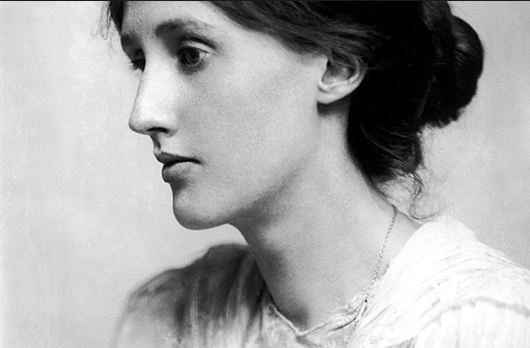
An easy case may be made for essays that use fiction in a way that is not deceptive. Take, for instance, Virginia Woolf’s “Street Haunting,” whose plot is utterly undramatic—she goes in search of a pencil—and yet whose technique is highly imaginative—she invents thoughts and backgrounds for the strangers she encounters along the way. No critical reader believes that Woolf knows the details she writes. She obviously makes them up. Similarly, no critical reader believes every detail in a James Thurber essay, or a Christopher Morley or Robert Benchley or David Sedaris. And what can we make of Joseph Addison writing in the voice of a shilling that has traveled the world or of George Orwell perhaps borrowing the haunting central scene of “A Hanging” from a comrade’s recollection? What of Ian Frazier writing as one of Elizabeth Taylor’s ex-husbands? Or as a coyote captured in Central Park!? Essayists have been utilizing fiction for as long as the essay has existed.

There is also the question of an essayist’s persona. Much is made, directly and indirectly, of Sebald’s narrators. Critics are careful not to associate author and speaker, to make such an amateur’s conflation. Yet, I would argue that an essayist always speaks through a persona, at least through a necessarily partial version of him- or herself. Was Sebald as neurotic or morose as his narrators? No, say those who knew him. Was he as interested in history and biography? He must have been, to write his books. Martin Swales assures us that “the persona clearly overlaps with the author…there is a good deal of shared identity between the narrative voice and the person who wrote and published the text.” Mark McCulloh assents: “The self-references, the literary references, the references to art and music, and the seemingly tangential digressions are indeed drawn from the author’s life and researches” (82). Most readers I know seem to agree and accept this notion. But again let’s look at a few examples of old to trouble this question:

Charles Lamb wrote his essays under the pen name Elia, an Italian immigrant, a clerk, a person very much like “the real” Lamb, but not entirely. To complicate matters further, “Charles Lamb” appears as a third-party in some of Elia’s essays, including “Christ’s Hospital Five-and-Thirty Years Ago,” written by Elia to debunk an overly sunny Lamb composition on the same subject. A third level of difficulty arises as Elia appropriates Samuel Taylor Coleridge’s troublesome experiences as a youth at the boarding school both Coleridge and Lamb attended. This resembles very much the nature of Sebald’s ficionalizations: conflating two acquaintances to create the painter Max Ferber (whose name was changed in the English translation to be less recognizable), and two others to create Austerlitz, changing the names of certain characters, moving buildings, rearranging events, etc. There are other examples, too, of essayists trying on fictional personas, perhaps most notably Oliver Goldsmith, an Irishman posing as a visiting Chinese man writing about eighteenth-century England. Edith Maude Eaton performed a similar self-revision, writing as Sui Sin Far. Violet Paget wrote her essays as Vernon Lee, and other women likewise wrote as men. And while critics may argue the literary merits and meanings of their works, the question of their genre seems to have been settled. They wrote essays.
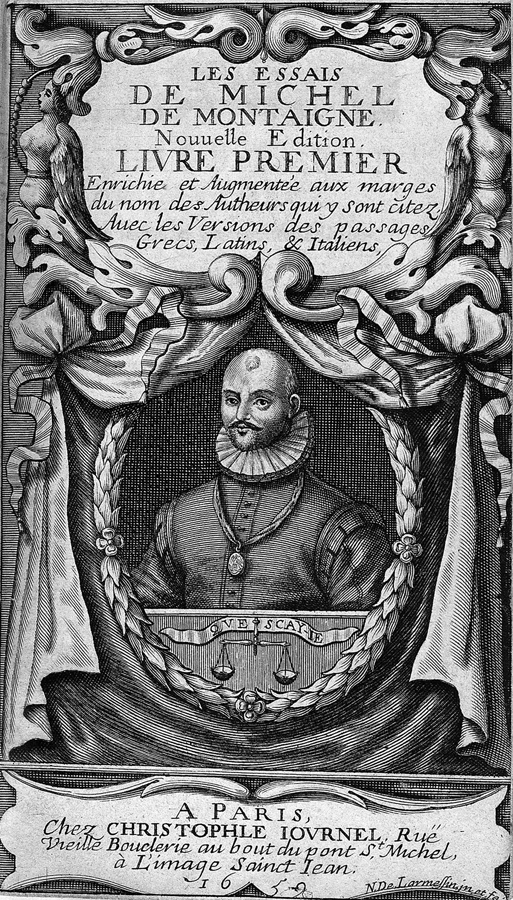
Montaigne

#

Sebald’s nonfiction

Still, lots of us want to know what really happened, whether Sebald wrote true to life. On the one hand, it seems naïve, unsophisticated, to wonder if or to hope that Sebald’s books are nonfiction. On the other hand, this very question has given a number of academics projects to investigate and write about. And they seem to enjoy their quests. Certainly I enjoy reading Jo Catling’s revelation that the Eccles Church Tower Sebald places in Dunwich is really far north of there; Silke Hostkotte’s puzzlement at the library date-stamp on the newspaper that Sebald supposedly bought in Switzerland; Adrian Daub’s conclusion that the Eastern Daily Press article about Major George Wyndham LeStrange must be a forgery created by Sebald. These researchers seem genuinely pleased with the treasure hunt Sebald has left them. I myself have twice set out on my own brief treasure hunt, a tour of some of the places Sebald (and his narrator, if you prefer) visited in The Rings of Saturn.

Thankfully, then, a lot of interviewers were interested in just this very subject, and Sebald was never coy. Carole Angier, in an interview for the Jewish Quarterly, asks about the real people behind the four narratives in The Emigrants. They were real, says Sebald, “with some small changes.” He explains these changes, adding that “What matters is all true…The big events…you might think those were made up for dramatic effect. But on the contrary, they are real.” He adds “The vast majority of factual and personal detail that I use is very viable.” Nevertheless, Angier has her answer: the book is fiction.

Very well, the books fit that bill, but it is still heartening to hear Sebald detail the nonfictional elements of his books. Ninety percent of the images are authentic (41), he says. His narrator’s travels mirror his own travels. He does a great deal of historical research, searching for connections. Sometimes these connections present themselves from the long shadows of memory. Certain epiphanies “can be achieved only by actually going to certain places, by looking, by expending great amounts of time in actually exposing oneself to places that no one else goes to” (85). “The changes that I made, i.e., extending certain vectors, foreshortening certain things, adding here and there, taking something away, are marginal changes, changes of style rather than changes of substance” (38).

CaptureTheodor Adorno

#

Part II: The Essay as Form

There must be something, then, that distinguishes the essay as a genre. In terms of form, the simplest way to distinguish genres is by their shape on the page. My children can tell a poem from a play from prose. They can also tell country music from jazz from rock-n-roll. This is where the essay differs from the short story or the novel.

Theodor Adorno, as I have mentioned briefly, begins his “Essay as Form” railing against the tendency of humans to categorize, compartmentalize, and therefore cage. He singles out what he calls a German binary: art is irrational, science is knowledge. This is not only a German tendency, nor is it relegated to the past, of course. Adorno returns regularly to this dichotomy: on the one hand the systematic article, on the other, art, and in the middle, the confluence of the two, in good deconstructivist style, is the essay, free of restraint or obligation to either camp. The “intellectual freedom” here symbolized by the essay seems as much praise and rebellion as description, and Adorno’s tone is often exasperated, his words a counterattack on those “enemies of the essay” who “hire out to stupidity as a watchdog against the mind” (4). Central to Adorno’s idea of the essay form, then, is its fragmentariness (a mirror of fragmentary reality), its intuitiveness, its “luck and play” (4), its individuality, its uncertainty, its incompleteness, its focus on the “transient and ephemeral” (10), its dealings in experience, its contingency, its situatedness within culture, its immediacy, its skepticism, its non-linearity, its direct treatment of complexity, its resistance to reduction, its grounding in language, its musical logic, its self-reflexivity, its heresy. He is often quoted for this last sentiment, with which he ends his essay on the essay: “The essay’s innermost formal law is heresy” (23). He means, I think, a rejection of the norms of thought, of the fear of thought, of the fear of losing the solid ground created by the illusion of objective knowledge. The essay is cast in relief (perhaps with a double meaning: “standing out” and “refreshing”) against the rigid systems of science, positivism, the reification of methodical provable truth. An essay, in this sense, is a kind of anti-genre, or at least, in O. B. Hardison’s words, a “protean” form.

Georg Lukacs, who preceded Adorno and who offers many similar statements, seems to deal specifically with an essay that begins with an external, not a personal subject, much as Sebald’s work is derived from studies of other people, places, and events. Lukacs’s rendition of the science/art split hinges on his statement that “science offers us facts and the relationships between facts, but art offers us souls and destinies” (3). He justifies the need for essays in contrast with drama (or, I imagine, fiction) by pointing out that some reactions can be shown visually and aurally, but thought is invisible. Thus the essay deals with the inner workings of a mind. The essay is needed also as intermediary between concepts (abstractions) and things (concretions), between image and significance. For Lukacs, then, the essay form is marked by its questioning, its avoidance of didactic or simplistic answers, its fragmentariness, its humor, its modesty, its consideration of the quotidian, its irony, its fight against tradition, its visionary nature, its friction with fact (perhaps this is key), its interruptions, its primacy of point of view over feeling. He sees the essay as process, not product, journey, not destination. The essay, according to Phillip Lopate [Against 75], “allows one to ramble in a way that more truly reflects the mind at work,” struggling, grasping, circling, but never preaching.

Adorno deals with the misguided view of essay as simply nonfiction when he writes, “The bad essay tells stories about people instead of elucidating the matter at hand” (6). Lukacs would seem to agree: “Every event [is] only an occasion for seeing concepts more clearly,” he writes (14), and “The idea is the measure of everything that exists….Only something that is great and true can live in the proximity of the idea.” (16). Both writers stress that the essay is an ordering of things already present, not a creation ex nihilo. This calls to mind an Sebald interview with Michael Zeeman, [Netherlands TV, 12 July 1998] in which he says, “Making in prose a decent pattern out of what happens to come your way is a preoccupation, which, in a sense, has no higher ambitions than, for a brief moment in time, to rescue something out of that stream of history that keeps rushing past.” To Zeeman’s amazement, Sebald claims that as he’s writing, necessary and fitting items seem to present themselves to him. He quotes (he thinks) Adorno: “If you’re on the right track, then the quotations come and offer themselves to you; you don’t have to look for them.”

#

Others’ statements about Sebald’s form

I hope you have read some of Sebald’s works, have marveled at their complexity and swooned in their beauty. If you’re like me, you’ve noticed that the traits Adorno and Lukacs (and others) attribute to the essay fit Sebald. Critics and academics have made similar statements to describe Sebald’s strange prose.

Susan Sontag said The Emigrants was “like nothing I’ve ever read…an unclassifiable book, at once autobiography and fiction and historical chronicle. A roman d’essai?” Margo Jefferson of the New York Times wondered about categorizing Sebald’s books: “What does one call them? meditations, elegies, mutations grown from memoir, history, literary biography and prose poetry.”

W. S. Merwin said that Sebald’s writing conjures from the details and sequences of daily life, and their circumstances and encounters, from apparent chance and its unsounded calculus, the dimension of dream and a sense of the depth of time that makes his books, one by one, indispensable. He evokes at once the minutiae and the vastness of individual existence, the inconsolable sorrow of history and the scintillating beauty of the moment and its ground of memory.

Michael Silverblatt, in a radio interview, comments that “The wandering that the prose does, both syntactically and in terms of subjects, reminds me a bit of my favorite of the English essayists, de Quincey: the need, in a sense, to almost sleepwalk, somnambulate from one center of attention to another, and a feeling in the reader that one has hallucinated the connection between the parts.”

J. J. Long, in W. G. Sebald: Image, Archive, Modernity finds in The Rings of Saturn an anti-Cartesian parallel between the narrator’s ambling and the narrative’s form: “He wanders with no ostensible purpose or goal, following the dictates of the land, inadvertently doubling back on himself, inexplicably tracing out the same route time and again, and striking out only to end up back where he started…The Rings of Saturn, like the journey it recounts, is filled with diversions, recursions and a refusal of teleology.” The book, he says, “consists almost entirely of digressions.” The narrator’s walking “is deliberately inefficient and, one might say, anti-disciplinary. This tendency to explore byways rather than make beelines goes hand in hand with a narrative technique that is multiply digressive: it repeatedly shifts focus, as each digressions is soon abandoned in favour of another digression or a brief return to the story of the journey itself; it frequently changes the context within which phenomena are understood, evoking a parallel mythic temporality that transfigures the quotidian object-world and produces a split attention, a kind of distraction, in both the narrator and the reader; and it frequently gets sidetracked into length enumrations of physical objects” (140).

Mark McCulloh, in Understanding W. G. Sebald, makes similar claims about Sebald’s digressiveness, adding that The Rings of Saturn declares its subject from the outset, another essay commonality, thus eschewing suspense and drama, that it, like Thomas Browne’s work, pursues enigmatic interconnections, “casting doubt on virtually anything that is readily apparent” (61). “The book is thus an associative, digressive, and allusive journey through East Anglia,” he concludes.

Charles Simic notes that “[Sebald] never hesitates to interject some interesting anecdote or bit of factual information arrived at by some not-always-apparent process of association. He does this without forewarning, transition, or even paragraph break” (146)

Or hear Martin Swales [“Intertextuality, Authenticity, Metonymy? On Reading W. G. Sebald” from The Anatomist of Melancholy ed. Rüdinger Görner]: “Random meetings, memories involuntarily triggered, chance thoughts—these are the stuff of his imaginative universe.” And “In a curious way, the Sebald text stays where is has been from the outset; it does not quite go anywhere, in other words.”

#

Sebald’s statements on his method of writing

It’s not only the critics who see Sebald’s books as digressive, associative, logically non-linear. When Sebald discussed his writing style and methods, he likewise seemed to be describing essaying. Consider what he told Joseph Cuomo:

I never liked doing things systematically. Not even my Ph.D. research was done systematically. It was done in a random, haphazard fashion. The more I got on, the more I felt that, really, one can find something only in that way—in the same way in which, say, a dog runs through a field. If you look at a dog following the advice of his nose, he traverses a patch of land in a completely unplottable manner. And he invariably finds what he is looking for. … So you then have a small amount of material and you accumulate things, and it grows, and one thing takes you to another, and you make something out of these haphazardly assembled materials. And, as they have been assembled in this random fashion, you have to strain your imagination in order to create a connection between the two things. If you look for things that are like the things that you have looked for before, then, obviously, they’ll connect up. But they’ll only connect up in an obvious sort of way, which actually isn’t, in terms of writing something new, very productive. You have to take heterogeneous materials in order to get your mind to do something that it hasn’t done before. That’s how I thought about it. Then, of course, curiosity gets the better of you.

Later in that same interview, he describes his “escape,” as it were, from the demands of academic life: “The preoccupation with making something out of nothing, which is, after all, what writing is about, took me at that point. And what I liked about it was that if you just changed, as it were, the nature of your writing from academic monographs to something indefinable, then you had complete liberty” (99). His dichotomy seems to be the same as Adorno’s: article vs. essay.

In “An Attempt at Restitution,” published in English in Campo Santo, Sebald describes his method or procedure as “adhering to an exact historical perspective, patiently engraving and linking together apparently disparate things in the manner of a still life” (200). To Arthur Lubow, he once explained, speaking specifically of a 1918 German army map: “I don’t think I shall be able to understand it, but I want to marvel at it,” which seems to me the fundamental impulse behind the essay.

#

Textual evidences from The Rings of Saturn

The plot of The Rings of Saturn is the author takes a series of walks in the countryside of southeastern England. Not much really happens to invite drama or excite our sense of the exotic, but this book is not about plot, it’s about keen observation, happenstance research, memory and meditation. One need only turn to the book’s contents page to get a sense of the breadth and depth of the subjects it mulls. Take, for instance, chapter 3: “Fishermen on the beach – The natural history of the herring – George Wyndham Le Strange – A great herd of swine – The reduplication of man – Orbis Tertius.” Already the work displays its digressive, meandering nature.

I read The Rings of Saturn as I was living for a year in Uruguay, riding the buses downtown each morning, finding books in the National Library and the used book shops, interviewing former revolutionaries about their pasts. I found in Sebald a tempered, beautiful prose that swept me up in its rhythms and convolutions, that seemed to perfectly reproduce the author’s mind processing the accidental sights and insights that crossed his path. Along for the journey with Sebald are Thomas Browne, Rembrandt, Jorge Luis Borges, Joseph Conrad, Roger Casement, the Dowager Empress. Underlying the meandering (on land and in mind) are considerations of the strange geometric form called a quincunx, the intrigue behind the coming of silk worms to the West, the strange resonances between Sebald’s life and the life of one Michael Hamburger, the unstoppable decline and decay of cities and lives and all that man may hope to build up, the shadow cast by death.

One of my favorite passages, one that made me laugh out loud, is this: Sebald is very tired after a day of traipsing about, so he falls asleep in an armchair watching a BBC documentary about Roger Casement. He is left with only vague, ethereal notions of what he had heard as he drifted off to sleep, but he’s interested enough to want to write about him. He says, “I have since tried to reconstruct from the sources, as far as I have been able, the story I slept through that night in Southwold.” Then he goes on to tell the story of Casement at great length.

And here is a Sebaldian moment for you: When I first wrote the above passages, for a brief book review, I repassed the section of the book in which Sebald parallels his life to Michael Hamburger’s, but I could not find the name Hamburger, only Michael. I thought I remembered Hamburger in any case, so I did what any self-respecting twenty-first-century essayist would do. I googled “Michael Hamburger.” The top results were all obituaries. I clicked on the one from the Guardian. Sure enough, this was the man I was looking for. He had just died that very week.

#

Fin

I am self-aware enough to recognize that part of my drive to see Sebald’s writing as essay is selfish, a wish to claim him as part of my tribe, so that maybe some of his glory will shine on me. But weren’t more prominent critics performing a similar feat by claiming genrelessness for Sebald? Wasn’t their real message that “Sebald is great”? I don’t think there’s anything wrong with participating in a genre, especially one as malleable as the essay. And after all, genre definitions are more like recommendations or descriptions, not prescriptions. So when I say that Sebald works for me as an example of an essayist par excellence, that his works serve as models to scores of nonfiction writers as well as fiction writers, all I’m really saying is “Sebald is great,” a rather unacademic thing to say, but I wager it’s what we’re all saying, underneath it all.

—Patrick Madden

.
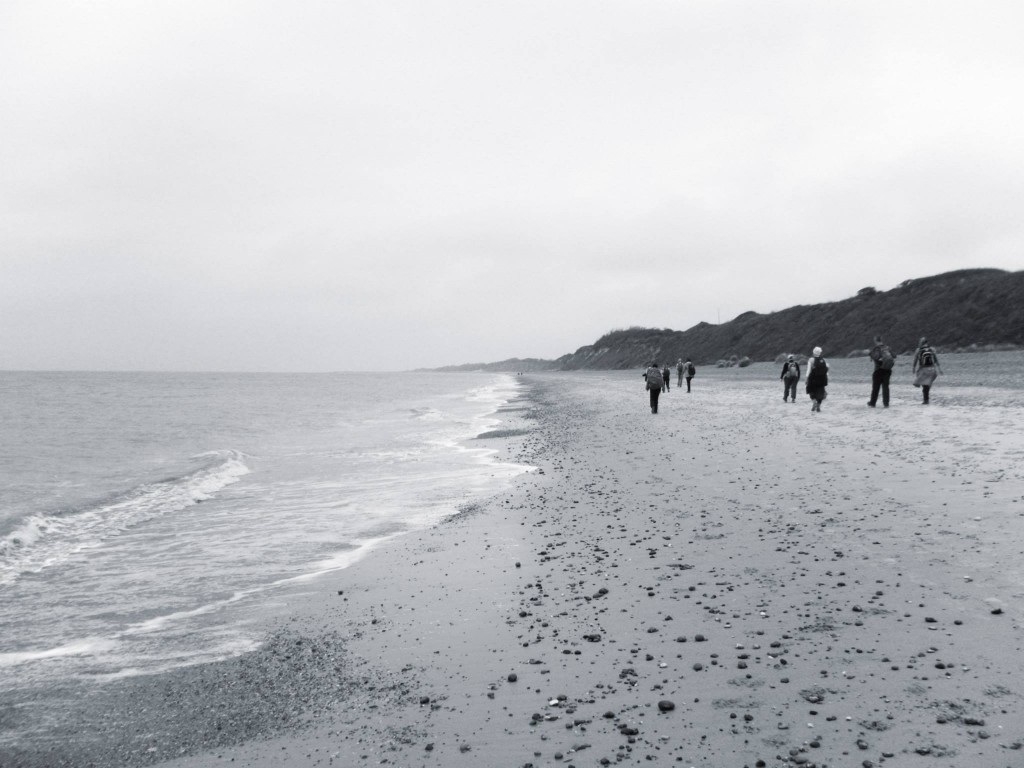
Madden_Num5Patrick Madden walking

Patrick Madden teaches at Brigham Young University and Vermont College of Fine Arts. His first book, Quotidiana, won an Independent Publisher Book of the Year award, and his essays have been published widely in journals and anthologies. He’s completing his second book, Sublime Physick, and an anthology, with David Lazar, called After Montaigne: Contemporary Writers Cover the Essays.

 

Apr 162014
 

madden_montaigne

Yesterday, Brevity Magazine‘s blog posted Patrick Madden’s short essay detailing Madden’s family outing to Michel de Montaigne’s tower:

The first goal on the Madden Family European Road Trip Vacation (after my semester directing a study abroad program in Madrid) was my own pilgrimage to Montaigne’s tower in the Perigord region east of Bordeaux. We arrived after a long day in the car and were surprised to find a chain blocking the entrance. Turns out the site was closed not just on Mondays, as David Lazar had warned me, but on Tuesdays as well.

What follows is an insightful look at opportunity, charity, and the quests writers take on to complete their work.

Read the rest here. (And read Madden’s NC contribution, “Essay as Evolutionary Advantage (après Borges),” here.)

— Benjamin Woodard

May 122013
 

robert_day_baby


MY MOTHER ALWAYS WANTED to live in a French Provincial house–but the house she imagined was in Fairway Manor, Kansas not in rural France.  And her idea of “French Provincial” was not a southwest peasant Perigord but a Midwest suburban ranch.  A shake shingle roof, wide soffits, and something called “weeping mortar” could turn a Frank Lloyd Wright Prairie House  into a domesticated Mansard.  Decorate the inside in late fifties chartreuse drapes and upholstery, put identical lamps on identical tables on either side of a three cushion couch (with a matching “coffee table” in front–on which you never had coffee, and in a living room in which you did not live), and you were in my mother’s Midi.

“I don’t know why you have to leave America,” my mother said when I told her I planned to settle in France.  “How am I going to call you if I need you?”  We are sitting (for once) at my mother’s coffee table.  I have come on a surprise visit over a May weekend that has lifted the ban on the living room.

“I’ll write out all the numbers.”

“They’ll be in French,” my mother said.

“French numbers and America numbers are the same,” I said.

“You’re talking,” she said.  My mother had a way of teasing me that I was never sure about.

“I’ll call you,” I said.

“I’ll be here,” my mother had said.  “But write me as well. You can’t reread a phone call.”

“Yes, mother.”

“Do you speak French?”

“Un petit peu.”

“What does that mean?”

“ ‘A little bit,’” I said.

“You can tell me other French words when you call.”

“Five a phone call and after a year you’ll be speaking French,” I said.

“I should live so long.”

My mother was suspicious of Europe, especially of France.  Not that she was ignorant of foreign countries.  Because my father had worked for TWA, we traveled when I was growing up:  Paris.  Rome.  Venice.  London. And a few car trips as well.  I remember a long drive from Athens to Paris along the peaceful Adriatic coast of Tito’s Yugoslavia, complete with a two-day stop in Joyce’s Trieste.

And not that my mother was the “Ugly American” of those days.  She traveled with patience and modesty, and with the understanding that if she did not always appreciate the local customs that was more her problem than others.  Still, it did not suit her in Paris to eat hard rolls in the mornings, nor to drink wine at lunch, nor for the stores to be closed from noon to two–nor for dinner to be served at eight in the evening.

“It is bad for the digestion,” she would say.  “You’ll just get fat and lazy eating so much at night and then going to sleep on a full stomach.  And the lunches they have!   With wine.  And corks in the bottles. No wonder they have to take a nap.”  It was my mother who insisted that we book reservations at our Paris hotel restaurant for six.  We ate in lonely splendor.  And then took a long walk along the Seine afterwards.

“That’s better,” she had said.  “Look at Notre Dame.  The name means ‘Our Lady.’  The French are Catholic. Tomorrow we go home.”  Home was Fairway Manor, Kansas.  Weeping mortar.  A privet hedge.  Anne Page bread from which she made “French Toast” on Sundays.  And dinner at six, with wine–my mother drank Mogen David.  No corks.  My father had a Jim Beam before dinner.  A Coors afterwards. On Fridays two Coors while he watched the fights.

But even given her relative patience with foreign travel, my mother was still wary of it.  There was the water problem.   The money was difficult to figure. Venice had an odor about it.  In Athens they spoke Greek.  In Paris it rained.    There were menus to read and misunderstand  (in northern Italy she once ordered what appeared to me then–and even now in my mind’s eye–to be the stuffed intestine of a small mammal). The traffic was impossible.  Especially in cities where her assignment was to be the navigator to my captain father.

“We are at via Vicenza and Polizia,” said my mother as we wound our way in and around Rome one day in desperate search of our hotel.  We had just come back from a two-day trip down the Almafie drive.

“That can’t be,” said my father.

“Now we are at Via Vicenza and Gelato,” said my mother.

“’Gelato’ means ice cream,” I said from the back seat.

“’Polizia’ probably means ‘police’,” my father said from his Captain’s seat.  When under pressure my father would resort to understatement.

“There’s the train station,” my mother said.  “Does that help?”

“We’re looking for Piazza Navona,” my father said.  “Our hotel is just off the Piazza Navona.”

“We’re at Piazza Maggiore,” said my mother, looking up from her map, then down, then up.  “Take the first left.”  Which my father did, going a number of blocks the wrong way up a one-way street against a full orchestra of Italian horns.

“I don’t think this right,” said my father.

“Oh dear,” said my mother.   “Now we’re at Via de Serpenti and Gelato.” In Rome all roads lead to ice cream.  Or to the Polizia–who stopped us just as we exited into Roman sunshine of some fountained circle–and then waved us on when they saw that my mother was an American housewife lost in her map.

“Oh dear.”

“When we get to the hotel may I get an ice cream cone?”

“Just what are you going to do in France?” my mother had asked that May Sunday.

“Live,” I said.   How else to explain to her what I was not sure I could explain to myself.

“Not like the French, I hope,” she said.  “Promise me you won’t eat late.  You’ll just get fat and lazy.  Or drink wine for lunch.  And tell the truth when you write me, not like those stories of yours.  The things you make up.”

“I won’t promise,” I said.  “But by this time next year, you can come and see for yourself.  I’ll pick you up at the airport. You’ll be speaking French.”

“I should live so long,” she said.  “Now where is it you are you going to be?”

“Southwestern France,” I said.  “Far from Paris.”

“Do they still have those hard rolls?” she said.  “And what about the water?”

“The water is fine,” I said.  “And yes they still have the hard rolls.  But I eat pain au chocolate for breakfasts.”

“What’s that?”

“You don’t want to know.”

“You must eat cereal for breakfast,” she said.  “Even in France.  And remember cheese constipates.  Eat salads with dinner. Prunes will help.”

“Yes mother.”

“I don’t see the sense in it,” she said.  “Show me on a map exactly where you’re going to live so I know where to call when I need you.”

“Yes, mother.”

I got out the map of France and southern Europe I had brought along for her to see where Bordeaux was, and where St. Emilion and Castillion were, and where the tiny village of St. Michel de Montaigne was–for it was in St. Michel and on the former Montaigne estate that I had made arrangements with Armel, a friend of mine, to restore an old farm house in exchange for living there.  Until the basic work was done I would be staying in Armel’s guest house in the village itself.

“Have we ever been there?” said my mother as she looked at the map, and the place on the map I had circled.  “Did we go there with your father?”

“No,” I said.  “I have been there, but you haven’t.   However the three of us drove up through Austria from Athens, then on to Paris.”  And I showed her the route we had taken.

“Where did I order the inside of the possum?”  she asked.  “You remember the time I ordered the inside of the possum?”

“I do,” I said.  And I pointed to northern Italy.

“Do you remember the time in Rome when I kept telling your father we were at the corner of Via whatever and ice cream,” she said.

“I do indeed,” I said.

“Those were good times,” she said.  “And do you remember how your father took us to Alfrado’s after we finally found the hotel, and that Alfrado served me the pasta in his own bowl with those golden spoons.”

“Yes.”

“And when the violinist came to our table your father asked him to play Come back to Sorrento, because that was the day we came back from Sorrento and how scared I was of the road.”  She is looking at the map and with her finger finding these places on it.

“I remember that as well,” I said.

“Your father was very patient with me,” said my mother.  “Now tell me again, why are you going to France?”

“It is a doctor for you from American on the phone,” Armel says. It is the middle of the night.  He has come over to the guesthouse to wake me.

Over the summer I had made it my habit to call my mother every Sunday.  In this way I have told her of my life in France: How the water is safe to drink; that I have named the swallows nesting at the farm house I am restoring; and about Hooter, a Dame Blanche that flies out of attic each evening at dusk.  I have not told her that I drink wine with corks in the bottles.

She wants to know about the weather and if I am eating my cereal.  And salads.  And prunes.  I tell her about the trips I make with Armel in his Deux Chevaux, and that its name means “two horses,” and that the French word for ice cream is glace, and the word for street is rue.  I have written her as well, but not as often as I should have.  You can’t reread a phone call echoes in my head after all these years.

As summer faded and September came on, I tell my mother about the grape harvest, and how I am helping at the Montaigne estate pick the grapes that will be made into wine, and that I will have the owner sign a bottle for her that will be her present when she visits me next May.  I tell her that we will use Armel’s Deux Chevaux and ride to Castillion and have lunch at the Hotel des Voyageurs and drink wine from a bottle that had a cork in it–and afterward, we will have glace from a pastry shop I know down the rue were the ice cream is rich and smooth.

I should live so long, she had said on the phone the Sunday before Armel came to the guest room to wake me.

 —Robert Day

.

Robert DayRobert Days most recent books are Where I Am Now, a collection of short stories published by the University of Missouri-Kansas City BookMark Press, Speaking French in Kansas (short stories) and The Committee to Save the World (literary non-fiction) can be obtained through Western Books.  His 1977 novel The Last Cattle Drive was a Book-of-the-Month Club selection and has seen multiple reprintings. Day is past president of the Associated Writing Programs and Adjunct Professor at Washington College in Maryland.

.
.

Nov 302011
 

.

The Answer I Found in a Fortune Cookie:

Toward a Digital Conception of Nonfiction

By John Proctor

.

I don’t know whether this is an ancient Chinese proverb or a mass-manufactured brainchild of an underpaid copywriter somewhere in Chicago. I do know that it was inside my fortune cookie after I had lunch at Hunan Delight about a year ago, and it changed the way I look at nonfiction. Perhaps I shouldn’t be so quick to gather meaning from mass-produced slips of paper, but isn’t that what books are made of? I come from a family of electricians and mechanics, and though I can barely keep the oil changed in my car and frequently need my wife’s help to operate my MacBook, I know this much: Digital circuits work in bits of information, each bit working into the systematic logic of the circuit. If any bit doesn’t logically fit, the circuit will malfunction. Each bit, though, works in a continuous  strand, but has its own infinitely variable sequential order. I teach a class on convergent media, and one of the things we talk about is how digital online media have changed the way we read, and think. One of the ways we talk about this is by making a distinction between “analog reading,” in which a person reads something from beginning to end without stopping, and “digital reading,” in which a reader stops to analyze a piece of writing into interlocked units.  The first reading of anything is usually mostly analog; subsequent readings, if they happen, are usually digital.

Two years ago, I started writing creative nonfiction in earnest. My first and most looming problem was that I didn’t really know what creative nonfiction was. I’d spent most of my life writing journals, poetry, criticism, fiction, and some freelance journalism, in that basic order. When I applied to MFA programs, most were in fiction. I’d seen the term “creative nonfiction” in passing, and had mostly thought it an unjust term – if it’s creative, can it be truly called nonfiction? And if it’s nonfiction, where’s the room for creativity on the writer’s part? Nonetheless, I was finding myself drawn more and more to nonfiction – about my own life, but also the world I saw around me. In the movie Sideways, a man tells the main character, a novel writer, “I like nonfiction. There is so much to know about this world. I think you read something somebody just invented, waste of time.” I found myself agreeing with the nonfiction reader. But I still felt a bit justified in distrusting a genre that is younger than I am – Lee Gutkind, the “Godfather of CNF,” says he’s been using the term “creative nonfiction” loosely since the 1970s, and the National Endowment for the Arts made the term official in 1983 in order to justify handing out fellowships for it.

That’s where the fortune cookie comes in. If the nonfiction writer’s subject is the world, and his or her place in it, the first responsibility of the writer is to reduce the world into workable units. Much like a reader must read something numerous times to piece out the analog parts and then find the digital circuit at work, the nonfiction writer must find the story-units in the world and then fit them into a working digital circuit of the writing.  In telling the myriad stories the world and the self contain, one of the writer’s first steps is shaping and condensing systematic and narrative units. For our purposes here I’ll coin the term “digital nonfiction” for this process – if an essay or a memoir or a news story (and, universally, the world) can be thought of as a digital circuit, and if all the millions and millions of stories are the analog parts, then the creativity of the nonfiction writer is primarily on how the writer sorts – or lists – those analog stories.

Continue reading »

Dec 052010
 

EDITOR’S NOTE: This is the fourth in a four-part series of essays on Montaigne.

To read the entire series, CLICK HERE.

————

Every new beginning comes from some other beginning’s end.
– Semisonic, “Closing Time”

On this, the last for now of my studies of Montaigne’s motifs, I thought it fitting to discuss his dislike for succinctly wrapping things up. It makes sense, then, that the last of Montaigne’s Essays is also the least singular in topic, and the most far-ranging in scope. And it’s also interesting that the first in order of Montaigne’s Essays, written more than a decade earlier, is titled “We Reach the Same End by Discrepant Means” – even then, when his essays were generally shorter and more singular in topic and theme, he was pushing the singularity of individual experience as the most important facet of truth (a notion much less popular in the late sixteenth century than it is now). This is perhaps one reason he’s now accepted as the fountainhead of the form – he put the “personal” in the personal essay.

That I am ending my Montaigne series on the fourth entry, one short of the promised five, only serves to reinforce this point – one cannot predict where our own experience will take us, or for how long, which Montaigne essentially says in “On Experience,” the final in his Essays:

I, unconcerned and ignorant within this universe, allow myself to be governed by this world’s general law, which I shall know sufficiently when I feel it.    (374)

Personal, learned experience as the only conveyor of truth is an idea Montaigne examines playfully through much of “On Experience”:

Oh what a soft and delightful pillow, and what a sane one on which to rest a well-schooled head, are ignorance and unconcern…Is a man not stupid if he remembers having been so wrong in his judgement yet does not become deeply distrustful of it afterward?…To learn that we have said or done a stupid thing is nothing: we must learn a more ample and important lesson: that we are but blockheads. (375-376)

With this we come to perhaps an important attribute of the personal essay, and nonfiction in general, which sets it apart from the novel for instance, which serves its reality in a delineated framework, as Nabokov describes in “Good Readers and Good Writers” from his Lectures on Literature:

We should always remember that the work of art [Nabokov is referring to the novel here, specifically Madame Bovary] is invariably the creation of a new world, so that the first thing we should do is to study that new world as closely as possible, approaching it as something brand new, having no obvious connection with the worlds we already know. (1)

This, to me, is one of the great pleasures of the novel – at the end of a great (or even good) novel, one feels a sense of loss at having finished it, at leaving the fictional world it’s created. But unlike the novel as Nabokov describes it here, the essay never ends at its end. There is always another essay to write, as long as there is another human to write about human experience, continuing to assay and refine our collective understanding through the individual thought and expression of that understanding. Closure, then, is not something essayists, and essay readers, try to find in the essay, but rather what they try to escape.

This brings us, again, back to “Of Experience.” In it Montaigne ponders verisimilitude and enstrangement (“Nature does not makes things ‘one’ as much as unlikeness makes them other: Nature has bound herself to make nothing ‘other’ which is not unlike”), gives opinions on law which seem to predict Locke’s, ponders whether truth is watered down in interpretation and fragmentation, of course contemplates himself extensively (herein lies the line, reacting to Aristotle, “I study myself more than any subject. That is my metaphysics; that is my physics.” ), repeats his distrust of medicine he began in earlier essays, and stresses the importance of habit in sleeping, diet, and bowel movements.

I’d like to focus the last of my commentary on the last 20 or so pages of the essay, as Montaigne weaves a few threads together here, providing a thematic crescendo for both the essay and his Essays, without ever acknowledging an end to his work. For 10 pages, he directly alternates a rather lighthearted discussion of food, class and serenity with a frank meditation on his own aging; some highlights:

I have decided never again to run: it is enough for me if I can drag myself along. Nor do I lament the natural decline which has me in its grip – no more do I lament that my lifespan is not as long and massive as an oak’s. (404)

There are men who groan and suffer for want of beef or ham in the midst of partridge! Good for them: that is to be a gourmet among gourmets: it is a weak ill-favored taste which finds insipid those ordinary everyday foods…The essence of that vice consists in failing to enjoy what others do and in taking anxious care over your diet…let boys be fashioned by fortune to the natural laws of the common people; let them become accustomed to frugal and severely simple fare, so that they have to clamber down from austerity rather than scrambling up to it. (405-406)

God shows mercy to those from whom he takes away life a little at a time: that is the sole advantage of growing old; the last death which you die will be all the less total and painful: it will only be killing off half a man, or a quarter…Everywhere death intermingles and merges with our life: our decline anticipates its hour and even forces itself upon our very progress. (407-408)

A man who wants a regimen which serves him must not allow it to go on and on; for we become conditioned to it; our strength is benumbed by it…Thus are men undermined when they allow themselves to become encumbered with restricted diets and to cling to them superstitiously. They need to go farther and farther on, and then farther still. There is no end to it. (410)

Perhaps I should apply Montaigne’s advice to my quoting, though I might like to continue further with the juxtaposition as his two intertwined conversations dovetail into a beautifully rendered exposition on the last few pages of Montaigne’s philosophy of the essay’s, humanity’s, and time itself’s boundless nature:

I who boast that I so sedulously and individually welcome the pleasures of this life find virtually nothing but wind in them when I examine them in detail. But then we too are nothing but wind. And the wind (more wise than we are) delights in its rustling and blowing, and is content with its own role without yearning for qualities which are nothing to do with it such as immovability or density. (413-414)

This meditation gains a great splendour by a comparison of my condition with that of others. And so I pass in review, from hundreds of aspects, those whom fortune or their own mistakes sweep off into tempestuous seas, as well as those, closer to my own case, who accept their good fortune with such languid unconcern. Those folk really do ‘pass’ their time: they pass beyond the present and the things they have in order to put themselves in bondage to hope and to those shadows and vain ghosts which their imagination holds out to them – the more you chase them, the faster and farther they run away…so too your only purpose in chasing after them, your only gain, lies in the chase. (421)

*            *            *

Albert Goldbarth’s “Griffin,” like Montaigne’s “Of Experience,” is more interested in connections than endings. Like Joe Brainard, who was a visual artist first and a writer second, Albert Goldbarth is not known primarily as an essayist but as a poet. I haven’t read any of his poetry, but that presumption surprises me, especially since the Wikipedia on him entry notes his “distinctively ‘talky’ style,” which could also be said about Montaigne. I discovered Goldbarth while reconning TheDiagram.com’s “hybrid essay” contest last year; I had no idea what a hybrid essay was, and TheDiagram recommended that anyone who, like me, wasn’t familiar with the loose formal requirements of the form read Goldbarth’s “Griffin.” So I did.

The griffin, or gryphon, is a mythical lion/eagle hybrid, and Goldbarth uses it to explore the beginnings and endings of things – relationships, civilizations, boundaries – using the Griffin’s own lack of a clear, defined type or species as the archetype of transcendence – in being two things at once, it is neither and both of them, and something more than either:

And in fact the griffin and all of its kin – all of the hybridizedopposites, from real-life hermaphrodites to the fabled goat-footed people of northern Scythia and the dog-headed tribes of western Libya – hold a psychological value. They lead us through the horrors and astonishments of realizing that all of us lead dichotomized lives, and all of us…are the stuff of amazing weddings, some metaphorical, some literal. (22)

The essay, a meditation on convergence and divergence, floats associatively through time, space, and tone. Starting with “This seems to be the summer of com-, recom-, and uncombining,” Goldbarth introduces the reader to his friends Arthur and Martha, who are recently separated. Arthur has moved out and Goldbarth is taking a walk with Martha, who is telling him about Arthur’s stated need to find himself. Throughout the essay Goldbarth recounts the jolt this separation gives to the stability of his circle of friends – they had, after all, merged Arthur and Martha linguistically, calling them Marthur and Artha. In a moment of especially close self-examination Goldbarth, speaking of his friends, intimates a sense of the role of the nonfiction writer that echoes Montaigne:

Ah, yes. If only friends were characters, whose lives abide by authorly rules of beauty and whose suffering could, at the very least, be explained away in those acceptable terms. But I’m at a loss for advice, now, here, in the park, as the light and the branches deal out the scenery of our friendship. (10)

Goldbarth also explores the erotic poetry of Catullus and Ovid in an attempt to contextualize his friends’ breakup, but also to explore whether it’s ever possible, or advisable, to completely merge oneself with another:

So: what is and what isn’t a proper coupling? We could say that the definition of those two states is what a culture exists for. (5)

Besides the Griffin, Goldbarth explores some more popular myths – Adam and Eve, vampires, werewolves, Springsteen’s New Jersey – in an attempt to justify and/or nullify humanity’s tendency toward wedlock, and its attendant fear of death. This makes me think of Olympia Dukakis’s famous interaction with Danny Aiello in Moonstruck, when she asks him why men chase women – he evades the question by alluding to Adam’s missing rib then finally, when she continues pressing him, he says, “I dunno. Maybe because they fear death?” “That’s it!” she says. “That’s the reason. Thank you – thank you, for answering my question.” Of course, her question was also her answer. I bring this in because Goldbarth spends a substantial portion of the essay exploring our connections with each other as attempts to connect with something greater than ourselves, something that perhaps is as conflicted as we are:

Maybe a people’s God is required to be so whole, and his people so unreservedly pledged to a mimetic wholeness, only because some last remaining intention-node in the back of the brain suspects that in reality the Creator of this universe is conflicted in his own wants and intentions. To suspect such a frightening thing is to need immediately to deny it, with every atom of our zealousness. (37)

I’m listening to Bruce’s song “The River” right now, from the album of the same name – by a strange coincidence, they’re playing it at the coffee house while I’m writing about an essay that devotes multiple pages to Bruce’s Jersey mythology. Like many of the songs on the album, it’s about an unhappy marriage. In the climactic verse leading into the last chorus, the narrator remembers taking his wife to the reservoir in the summer before their discontent:

At night on them banks I’d lie awake
And hold her close just to feel each breath she’d take
Now those memories come back to haunt me, they haunt me like a curse
Is a dream a lie if it don’t come true, or is it something worse?

Perhaps I’ve gone a little off topic. But perhaps not – perhaps, by diverting from the stated topic, I’ve attempted what both Montaigne and Goldbarth do. Allowing free rein to thought is, perhaps, an escape from the beginnings and the ends – a chase after the thoughts that will escape into the ether if they don’t cross the boundary, as Lou Reed once said, of the lifetime between thought and expression.

—John Proctor

See also Part One of the series.

Part Two.

Part Three.

Nov 012010
 

EDITOR’S NOTE: This is the third in a four-part series of essays on Montaigne.

To read the entire series, CLICK HERE.

———-

I teach writing to college students. It’s a great job – only two or three days on campus, I get to teach what I do, and I’m paid to talk about things that matter to me. I teach at a small liberal arts college, so by necessity I teach writing in many of its variants – media writing, academic writing (the Art Formerly Known as Composition), creative writing – and, partially because of this, I tend to see many overlaps in these disciplines. Take the personal essay, for example – as a form of creative writing it was given, about 20 years ago, the nomer “Creative Nonfiction (CNF)”; in the media world it wears such hats as “literary journalism” and “immersion writing”; the realm of academic writing (populated primarily by wide-eyed freshmen) it usually gives it lip service as “personal narrative,” usually the only assignment freshmen find remotely enjoyable to write.

As I read more and more personal essays, creative nonfiction, literary journalism, what-have-you, I’m finding the overlap to be instructive. The separation between these forms comes not from fundamental differences in the writing, but from the need – in both academia and the publishing marketplace – to categorize and delineate. Perhaps due to this realization, I find it almost a rebellion to concentrate more on the similarities. This search for common ground, for conversation, is in fact the taproot of the personal essay. The form is essentially a written conversation between the essayist and the world, the essayist’s sources, and the essayist’s self.

To give this argument a touch more humanity, indulge me in an analogy: I think of the world of the essay as a big party, and reading an essay as mingling. As a reader I think of every writer as a person at this big party, and each essay as a conversation with this person. The first thing to turn me off to an essay is essentially the same prompt for me to excuse myself from polite conversation – listening to people talk only about themselves is boring. This could be why I’ve never liked Proust, or to be more specific why I once threw Swann’s Way across the room after 90 pages. There’s one guy I’d never want to corner me at a cocktail party – I can imagine him over a tray of hors d’oeuvres , explaining in excruciating detail what childhood trauma each piece of food reminded him of. Just as boring, I suppose, is just talking about the world – small talk.  While many times the beginning of a substantial conversation, it’s never a replacement for it, at least if you’re looking for anything but small talk. And of course, the blowhard who only talks about what he’s read tends, in the short term, to seem pretentious, and after awhile makes the reader/listener wonder if he has anything original to say.

So, then, the most successful essays are the ones that converse organically with all three of these things, engaging the reader on each level. Another challenge for the essayist, as with the conversationalist, is to make it seem natural, like all of these conversations come easy.  I say all of this to introduce the element of Montaigne’s work that he’s perhaps best known for – his conversational style –  and to contextualize it with the trifecta of interlocutors I’ve mentioned – his world (including the reader), his sources (primarily drawn from his voluminous library), and himself.

The essayist is a student of the world; for reinforcement of this, one need look no further than the first of Montaigne’s Essays, “We reach the same end by discrepant means,” in which he compares many of the conquering heroes of his time, using the term “assay,” a cognate of essay, three times, not in relation to himself, but to his subjects:

The soldier, having assayed all kinds of submissiveness and supplications to try and appease him, as a last resort resolved to await him, sword in hand. (6)

Now these examples seem to me to be even more to the point in that souls which have been assaulted and assayed by both these methods can be seen to resist one without flinching only to bow to the other. (6)

None was so overcome with wounds that he did not assay with his latest breath to wreak revenge and to find consolation for his own death in the death of an enemy. (8)

This introduces a key element of Montaigne’s writing style that was different from the styles of any of his contemporaries I’ve read, which has become a seminal characteristic of the personal essay form –just as a soldier or leader assays his courage and fortitude in battle, the essayist assays his ideas in conversation with other ideas. This example may seem a bit feudal, but keep in mind that Montaigne writes mostly about soldiers and leaders in this essay – including Prince Edward of Wales, Emperor Conrad III, Dionysius, and Alexander the Great – as heroes who became noble through testing, or assaying, their mettle in physical attack and rebuttal with other heroes (or potential heroes). Analogously, the essayist tests the value of his ideas, conjectures, and stories most thoroughly through direct discussion with other ideas.

This bring us to sources, which in Montaigne’s case were primarily readings from his prodigious library. In “On solitude,” Montaigne expresses an opinion on choosing sources that can best be described as alternately cautionary…

Spending time with books has its painful side like everything else and is equally inimical to health, which must be our main concern; we must not let our edge be blunted by the pleasure we take in books: it is the same pleasure as destroys the manager of estates, the miser, the voluptuary and the man of ambition. (105)

…and lackadaisical:

There are branches of learning both sterile and prickly, most of them made for the throng: they may be left to those who serve society. Personally I only like pleasurable easy books which tickle my interest, or those which console me and counsel me how to control my life and death. (106)

Of course there is considerable cheekiness to be read into each of these passages, as there is in the voices of most personal essayists after him. Essaying oneself in conversation with other writers, to Montaigne, is built on associations rather than formal transitions. As a telling example of this pellmell in-and-out assaying of ideas in relation to each other, his 64-page “On some lines of Virgil” spends the first eleven pages citing and/or referring to Ovid, Martial, Plato, Seneca, Cicero, Horace, Catullus, Pseudo-Gallus, Bishop Caius Sollius Apollinaris, George Buchanon, Ravisius Textor, Plutarch, Erasmus, Nicephoros Callistos Xanthopoullos, St. Augustine, Origen, Hippocrates, Diogenes Laertius, and Aristotle before actually getting to any lines of Virgil! But in “In Defense of Seneca and Plutarch,” for example, he reveals  a sincere appreciation for the sources he assays himself against, defending Seneca from what he sees as false analogies to King Nero and faulty characterization by the historian Dion (186-187) and, in response to what he sees as egoistic responses to Plutarch, he takes to task those who either can’t or won’t transcend their own subjective prejudices when reading or encountering others:

We must not judge what is possible or impossible according to what seems credible or incredible to our own minds…It is nevertheless a major fault into which most people fall…to make difficulties about believing of another anything which they could not or would not do themselves. It seems to each man the master Form of Nature is in himself, as a touchstone by which he may compare all the other forms. Activities which do not take this form as their model are feigned and artificial. What brute-like stupidity! (190-191)

In segueing into Montaigne’s conversations with himself, it’s worth noting an analogy he makes between fatherhood  and writing towards the end of “On the affection of fathers for their children”:

Now once we consider the fact that we love our children simply because we begot them, calling them our second selves, we can see that we also produce something else from ourselves, no less worthy of commendation: for the things we engender in our soul, the offspring of our mind, of our wisdom and talents, are the products of a part more noble than the body and are more purely our own. In this act of generation we are both mother and father; these ‘children’ cost us dearer and, if they are any good, bring us more honour. In the case of our other children their good qualities belong much more to them than to us: we have only a very slight share in them; but in the case of these, all their grace, worth and beauty belong to us. (165)

This correspondence with the self that produces writing, then, is not necessarily a challenge or assay like the conversation he creates between himself and his sources, or even himself and the world – it’s intimate, consummate, and capable of producing a life that proceeds from the intercourse in the form of the essay. Then, carrying on the metaphor of Writing as Family in “On three good wives,” after telling the story of Seneca’s wife finding that her husband was to be bled to death and arranging the same fate for herself, Montaigne cites the essay as the Good Wife who gathers man’s stories together and making them beautiful:

If any author should wish to construct them into a single interconnected unity he would only need to supply the link – like soldering metals together with another metal. He could by such means make a compilation of many true incidents of every sort, varying his arrangement as the beauty of his work required. (200)

*            *            *

In “Remember Death,” a not-as-morbid-as-the-title-implies essay in Patrick Madden’s 2010 collection Quotidiana, Madden refers to the skull in St Jerome’s study, a symbol many writers of the Renaissance and probably earlier always kept nearby to remind them of their own mortality. That same skull, or one nearly identical, adorns the cover of my copy of Montaigne’s The Essays: A Selection. Madden follows his mention of St. Jerome’s skull with the same quote (different translation) from“Of Three Good Wives” by (his nomer) Papa Montaigne. The connections to Big Papa don’t end there. Like Montaigne’s essays, Madden’s flow like cream, so that the reader finishes a twenty-page essay in roughly a half hour (longer, if you’re as slow a reader as I am), then realizes how rich and full the prose was. His style, like Montaigne’s, is conversational in the best sense. His voice  – learned but not stuffy, confident but self-effacing – holds the reader’s interest by letting us in on the conversations he’s having with the world.

Take, for example, “Panis Angelicus,” his essay that gets its title from recording he has of his grandmother singing an old Catholic hymn in Latin. He sets up the discourse of the essay by defining Catholic mass as a process of spiritual transubstantiation:

In the Mass, transubstantiation is the change from bread and water into the body and blood of Christ…But transubstantiations happen all the time: food into muscle and blood and bone, water to vapor to snow back to water, ideas and images into words and images and ideas in another head.

I’ll be the first to admit that my idea of transubstantiation was fuzzy at best before reading this, but Madden manages to not only define a relatively opaque term but to include the reader in the discussion on whichever level we choose – spiritual, physical, or academic. The connections he then makes in the essay, between listening for the first time to his grandmother’s  voice as an adult with his children and extended family, to his father’s survival of Vietnam, to a busker he hears singing “Panis Angelicus” on a bus in Uruguay while on a Fulbright Fellowship. Everything in the world, he implies, is connected, as are we.

Madden’s choice of sources is just as varied than Montaigne’s. He juxtaposes literary, critical, and historical references with mathematical formulas, condensed narratives, lists, quotations, and pictures (including one of Montaigne himself) – and that’s all just in the essay “Gravity and Distance.” Another essay, “Asymptosy” (another new vocabulary word for me), essentially about words and numbers and images and the relationship between them, is set up in sections that seem to be a set of riddles and puzzlers. And the essay “Singing” starts each section with a general statement, sometimes aphoristic, sometimes personal – that he then expands on, including:

Singing is at once natural and unnatural.

And:

One time I and two other motorists, whom I could see in my rearview mirror, were singing the same song at the same time.

And my personal favorite:

Cantar es disparar contra el olvido.
[To sing is to fight against forgetting.]

Each of these is a sort of call-and-response, like a musical convocation or a work holler. And as always, he’s finding connections – my personal favorite is his discovery that “Twinkle, Twinkle Little Star” and the ABC song share the exact same tune, a discovery that I made as well recently with my daughter. We were sitting outside a coffee shop and I was humming “Twinkle Twinkle Little Star” to her, when a little girl next to us who must have been four or five years old started practicing her ABC’s.

And finally there are the conversations Madden has with himself, most notable (for me, at least) in the final and longest essay of Quotidiana, “Finity,” which he starts by relaying his obsessive-compulsive counting of the grapes he bought at his local supermarket:

There are 172 grapes in the bag I bought from my local Smith’s supermarket. One-hundred-sixty of them look to be in good shape, four of them are undeveloped, six of them are deflated, and two were hiding underneath the drain in the sink where I washed them yesterday, thus upsetting the nicely round number (a prime number multiplied by ten!) I thought I had.

In itself, this literal recounting of his inner compulsions might be offputtingly Proustian, but Madden uses this compulsion to numerate the stars in the sky; possible grains of sand in the world; the progeny of Abraham, Brigham Young, Niall Noigiallach, Genghis Khan, and his own forefathers; surnames of his family; and the world population. But he also interjects this numeration with the stories that underlie them – of Abraham’s struggles with his own faith, for example – and punctuates the juxtaposition by reminding the reader that we no longer need to count grapes, people, or grains of sand:

Once we see the expanse of this vast world, once we can know, almost instantly, the tragedies our brothers and sisters are facing halfway around the globe, once our fruits come to us no matter the season and from far away, more temperate places that grow things we could not have otherwise, we no longer wonder, at least not so much, how many there are of things.

If this all sounds a lot like the dialectic of list and story I covered in Part II, I’ll chalk that up to another level of the conversation.

—By John Proctor

See also

Montaigne’s Motifs, Part 2: The Dialectic of List and Story, with Joe Brainard in Tow

Montaigne’s Motifs, Part 1: Integrating Universal Ideas with Personal Narrative (With a Glance at Joan Didion as a Contemporary Example)

Sep 242010
 

EDITOR’S NOTE: This is the second in a four-part series of essays on Montaigne.

To read the entire series, CLICK HERE.

———–

Life is not a constant thing, it’s only made of short stories
I couldn’t even tell you where I’m from…I’m guided by the voices I’ve perfected.

Neko Case, “Guided by Wire”

I have to admit I totally cribbed the title for this part from John D. O’Banion’s book Reorienting Rhetoric: The Dialectic of List and Story,  a review of which is linked in an early Numero Cinq post. I’m currently ingesting this book, which attempts to reclaim narrative discourse  (which he dubs “story”) as an essential half of the dialectic of rhetorical theory, the other half being analytical thought (he calls this “list”). I’ve found it mind-expanding on every level of my own writing – I just replace “rhetorical theory” with “creative nonfiction.” I also wrote an earlier post called “7 Things I Learned from Reading 15 ‘List Essays’” which explored this dialectic before I actually started reading O’Banion’s book.

Montaigne understood this dialectic intuitively centuries before it was given a name. Every essay of his I’ve read (I’m now up to eleven) sidles effortlessly between his own thoughts and condensed narratives, so much so that the two are sometimes indistinguishable. His thoughts range from the aphoristic to personal (the subject of last month’s post), and most of the narratives are either summaries of things he’s read or accounts from his own life. One result of the fluid shifting from systematized “list” (his own thoughts) and “story” (which are, again, mostly short and condensed narratives) is that Montaigne’s essays don’t really seem like “essays” in the modern, systematized sense, but neither do they seem like narrative memoir or history . They are in effect, to borrow from Shklovsky, enstranged – they seem not normal, not scannable, not easily explained or summarized.

Perhaps this has something to do with Montaigne’s own reading habits.  Despite dying  roughly 400 years before the advent of the internet, Montaigne managed to surround himself with continual media stimuli. A gregarious, well-traveled statesman during a time of civil war in France before settling into mayorship of his hometown of Bordeaux, he also was an early beneficiary of the invention of Gutenberg’s printing press 80 years earlier, with a library with which he converses in his essays as fluidly as the many contemporary, living people in his town and country at the time. Thus, writers, statesmen, and local townsfolk bustle in and out of his work, sometimes seemingly without thought to logical or narrative structure – that is, until readers—and millions have read him in the last 430 years—realize that the structure is uniquely Montaigne’s. By the end of his three books of essays, Montaigne changes his mind about some things, solidifies his opinions and viewpoints on others – all within the confines of his strange, shapeshifting, personal systematic method of thought.

Take briefly, for our purposes here, “To philosophize is to learn how to die” from Book I of his essays. Though he begins the essay with three pages expounding on pleasure as the ultimate goal of wisdom, Montaigne’s melancholic mood while writing the essay is quite obvious from the fourth page on, as he approaches death from every angle he can find:

To begin depriving death of its greatest advantage over us, let us adopt a way clean contrary to that common one; let us deprive death of its strangeness; let us frequent it, let us get used to it; let us have nothing more often in mind than death. At every instant let us evoke it in our imagination under all its aspects. (24)

And with this singular determination of thought, Montaigne tells of Egyptians bringing mummified corpses to the dinner table with them (24); the pagan practice of placing their graveyards next to the temples “so that this continual spectacle of bones, tombs and funerals should remind us of our human condition” (27); his own personal admission that he most fears death when he’s at his healthiest (28); tiny creatures in the Hypanis River who live only one day (“those which die at eight in the morning die in youth; those which die at five in the evening die of senility”) (30); Chiron refusing immortality when he found out how long it would last (35); and many, many more examples – too many to list, really. All of this is of course unified not by a specific thesis but by the Great Unifier itself:

Yes, but all leave life in the same circumstances, young and old alike. (21)

For a great majority of Montaigne’s essays I’ve read so far, narrative plays a subservient role to Montaigne’s personal system of discourse – he has thoughts and runs with them, employing personal anecdote and epic story in service to this thought. One notable exception I’ve found so far is “On the Cannibals,” which seems to do the inverse. Most of that essay – about 80% by my estimation – gives extended narratives of warring “savage” tribes in Palestine, the continent of Africa, and elsewhere that European explorers where writing about in disgust at the time. He keeps his own comments relatively infrequent. Actually, his “comments” are mostly stories from European antiquity that mirror the acts that his contemporaries were dismissing as savage. Interestingly, in Chapter 8 of Reorienting Rhetoric , “The Rejection of Narration,” O’Banion speaks to a tendency among sociologists  to rely too heavily on listing and systematizing tribal cultures, most of them oral cultures whose primary mode of thought is narrative. This attempt to systematize tribal narratives leads to ethnocentrism:

By ethnocentrism [sociologist Jack Goody] means a “framework” of thought, including presuppositions, preconceived classification systems, and unnecessary and unconsciously held limitations of perspective. (156)

Compare this, then, to one of the few instances of commentary in “Of the Cannibals”:

…every man calls barbarous anything he is not accustomed to; it is indeed the case that we have no other criterion of truth or right-reason than the example and form of the opinions and customs of our own country. (82)

Here, then, is an example of Montaigne traversing the limitations of his own culture’s systematic thought by employing, when writing of “savage” tribal cultures, their primary mode of discourse – narrative. While this example reveals the limitations of systematic thought, the modern example of I Remember tells Joe Brainard’s own personal narrative as a list.

It’s not surprising after reading even one page of I Remember that Joe Brainard was primarily a visual collage artist and secondarily a writer (to his own mind, at least) – his list-memoir is a pastiche of over a thousand descriptive images, short narratives, inversions, fantasies, revelations, and name checks, all tied together only by the fact that all begin with the words “I remember.” Brainard arranges them rarely with any apparent care for narrative cohesion – rather, he piles image upon image, memory upon memory, until the memories, almost by sheer weight, combine and condense into a vibrant, sometimes hilarious, sometimes gross, sometimes heartrending portrait of a gay youth in Tulsa, Oklahoma in the Fifties who moves to New York City and becomes part of a major art movement.

When reading various “list essays,” one question continually nagged at me: Could anyone pull this off in a book-length work?  I asked this question to Patrick Madden at the July residency, and he asked me if I’d ever heard of Joe Brainard. I’d heard the name, but didn’t know much about  him – to my shame, it turns out. Brainard was an integral part of the New York School of poetry (not the New York School of art and painting, to whose aesthetic movement his artwork bore little resemblance) and, living in New York City and fancying myself a novice historian, I’m now duly embarrassed that Brainard has eluded me until now. I Remember is not just a book but a compilation – he published many of the entries in smaller, chapbook-like editions through the Seventies, including I Remember, I Remember More, and More I Remember More.

If Brainard’s memory is a wide horizon, he swathes  the disparate elements into bundles in multiple ways. Due to the list format he uses to relay those memories, I found in myself a tendency to delineate his memories into categories, or simply “areas.” I’ll attempt to and elucidate many of these areas in due time, but before that it’s important to grasp two elements they all share:

  1. Brainard is a lingual minimalist. All of his memory-paragraphs are short, with almost no modifiers (i.e., adjectives or  adverbs).
  2. Every memory is separated by both an tab indent and a line break.

Now, to briefly return to Shklovsky. These two stylistic choices work together  to remove each memory from the linear horizon, to decontextualize it, to make it strange:

The purpose of the image is not to draw our understanding closer to that which the image stands for, but rather to allow us to perceive the object in a special way, in short, to lead us to a “vision of this object rather than mere “recognition.” (Shklovsky, “Art as Device,” Theory of Prose p10)

Brainard frees each individual memory  from its original context, and forces it to stand naked, competing with thousands more naked memories before and after it for the reader’s attention. Sometimes there is a vague, free-associative sense of the memories’ relationships to each other, as in these four short paragraphs:

I remember chalk.

I remember when green chalkboards were new.

I remember a backdrop of a brick wall I painted for a play. I painted each red brick in by hand. Afterwards it occurred to me that I could have just painted the whole thing red and put in the white lines.

I remember how much I tried to like Van Gogh. And how much, finally, I did like him. And how much, now, I can’t stand him. [28]

But much more often the memories are estranged from each other, leaving the associations to the reader. These reader associations can be personal, whether a recognition of objects, emotions, or references in the memories. They can also be connections inferred between the memories – I, for example, noticed that Brainard remembered “the outhouse and a Sears and Roebuck catalog “ on page  24, then on page 60 “a ringworm epidemic and being scared to death that I would get it,” and I remembered a recent show on NPR where a scientist described his lifetime contribution to his field – the discovery in the fifties that ringworms were spread primarily through fecal remnants that bare feet stepped into on their way to the outhouse.

Now, about those categories. At first I was going to number each memory and list the occurrences of each major area of experience, maybe even make a nice circle graph that would reveal something about the balance of the memories or some logic in their ordering, but I soon realized that 1) that’s a lot of work, 2) it would be a little too nurturing of my own obsessive-compulsive tendencies, and 3) most importantly, such itemization would do a disservice to the intuitive, spontaneous quality of the work Brainard has created. So instead, in light if the impulsive nature of the book itself, I decided to simply open the book at random with my notecard of categories/areas in hand, pick a memory, and explain how it elucidates at least one of the categories I’ve deduced from my first reading. (The categories are in italics.)

  • “I remember a tower on top of a building in Tulsa that changed colors every few minutes. But only green and yellow and white.” (104)
    This simple, airtight description of an object is something Brainard repeats many, many times throughout the book. Sometimes these objects come before over after an event or action that gives them context, but many times, like this one which comes right after a series of memories involving the barber shop, the context is quite loose. It’s followed by a memory about the hat store, so the only inference I could imagine would be an aesthetic or metaphoric connection of the tower atop the building and the hat atop the head. Which actually makes a strange sense, given Brainard’s penchant for visual collage which is apparent here and elsewhere in the book though his visual description of colors.
  • “I remember (after school) soda fountain shops with booths, and a jukebox, but only in the movies.” (143)
    I really love this one, because it does, in three lines, many of the things Brainard does so well throughout the book – he remembers something from his childhood, then inverts it into something else, thus commenting in the influence TV had (has) on his perspective (he was, after all, raised in the golden age of television).
  • “I remember a boy I once made love with and after it was all over he asked me if I believed in God.” (20)
    Actual self-contained narratives are relatively sparse in the book, and as seen here, are sparse within themselves when they do appear. But here we have a story, in a sentence, that merges (so to speak) two of Brainard’s main concerns throughout the book, sexual discovery and god and religion. While many of his other descriptions of sexual encounters are graphic and non-erotic, this one is actually both sweet and ironic. It’s one of the few times his idealized view of love and romance shares space with the reality of his own experience.
  • “I remember a story about a couple who owned a diner. The husband murdered his wife and ground her up into hamburger meat. Then one day a man was eating a hamburger at the diner and he came across a piece of her fingernail. That’s how the husband got caught.” (59)
    This might be called cheating, if there were rules – not an actual memory but a memory of a communal myth, made especially delectable  by the nature of the myth. I mean, who hasn’t heard a story, growing up, about something disturbing going on at the fast food joint? (My mother used to tell me McDonald’s made their burgers from worms, a legend so ubiquitous that Snopes.com devoted a page to disproving it.) This memory/legend also combines Brainard’s fascination with the disgusting and his sense of humor with his sometimes morbid, sometimes elegiac, always matter-of-fact mention of death.
  • “I remember feeling sorry for black people, not because I thought they were persecuted, but because I thought they were ugly.”
    Holy mackerel. I have to say, this one actually made me stop reading for a minute when I first read it. Here is something you’re not supposed to admit remembering, a racially charged episode where the primary cultural plotline of his time, the Civil Rights Movement, assumes secondary importance to the child’s simplistic, external view of the world. More than most, this particular memory walks a fine line between honest and asinine.

The wonderful irony of both Montaigne’s essays and Brainard’s I Remember is that both, through intuitive enstrangement of normal, everyday language, achieve their own sort of “magical realism,” for lack of a less-used term. Where Montaigne achieves this through seamless juxtaposition of the personal narrative and grand, almost omniscient statements, Brainard makes his own personal experiences epic by singling them out and alienating them from each other, and using clean, sparse language to relay them.

Serendipitiously (for me, if not for the topic of the piece), I read a recent article on TheRumpus.net about Kevin Morrissey, the Virginia Quarterly editor whose suicide has attracted national media attention. In this devastating, sad essay, Steve Almond uses a list format similar in style to Brainard’s to trace the narrative of Morrissey’s death and the aftermath, and also to question a publishing industry that’s becoming more and more bottom line-driven, writers and editors – himself included – who sometimes forget amidst the seas of rejection letters (and our own narcissism) why we write:

We’re going to destroy ourselves as a species if we lose the capacity to imagine the suffering of others. One way to do this – the best way – is via our imaginations, via storytelling. It’s our job to help spread that particular virus, in our work and our lives. The point isn’t to take sides. There are no sides. There’s just the one side. And we’re all on it. [Read it all]

—John Proctor

Aug 222010
 

EDITOR’S NOTE: This is the first in a four-part series of essays on Montaigne. To read the entire series, CLICK HERE.

The personal essay as a form is relatively new to me; I enrolled at VCFA in the area of Creative Nonfiction, in fact, without a complete understanding of what the term means, and after my first residency I found I wasn’t the only one. In asking CNF faculty, I found they frequently brought up the terms “literary journalism” and “personal essay.” They almost always referred us to Phillip Lopate’s introductory essay from The Art of the Personal Essay for basic traditions of the personal essay form, and I referred to Mark Kramer’s “Breakable Rules of Literary Journalism” from the Literary Journalism anthology, which I also teach in my Media Writing classes. I’ve found that, while my media writing (and teaching) tends to follow the rules of literary journalism, the work I’ve been most interested in learning and doing recently has been personal essay. So, it makes sense that I would want to learn the traditions and conventions of the form, in the context of both my own writing and the CNF genre.

While Lopate’s introduction to The Art of the Personal Essay is a perfectly apt summation of the form for the general reader, I had my worries as a writer about applying a descriptive list of formal attributes to my own writing (and reading!). One name, though, kept coming up in both the introduction and my conversations with other people writing, teaching, and learning the personal essay form, a man who died more than 400 years ago, whom Lopate considers so important to the personal essay that he gave him his own section titled “Fountainhead” – Michel de Montaigne. I hadn’t read him since taking an undergraduate Renaissance literature course, and the only thing I remember is liking the fact that he was the only Renaissance writer we read who wasn’t obsessed with the nature of God. So last semester I read Montaigne’s three essays in the Lopate anthology, including the 54-page “On Some Verses of Virgil.” After reading all three of them, but especially “On Some Verses…,”I started to realize why Montaigne is so frequently cited, and – I’m not ashamed to admit it – I decided I want to write like him.

Which is, of course, a fool’s errand. But, at the least, I’ve decided to use his work as a model. So, for each of the five months of this semester, I’ll identify a technique Montaigne uses, show said technique at work in at least one other personal essay, and attempt an explanation of its purpose and effects. Besides my obvious hope that it will somehow ingrain some of these things in my own writing, I hope this series will be helpful to other writers struggling to come to grips with the personal essay form. And yes, I’m making this up as I go– I’ll be reading Montaigne’s Collected Essays each month as I go, annotating, denotating (okay, denoting), compiling, and analyzing as I go, god help me.

This month’s entry is on a central concern to most non-fiction writing (perhaps more so than fiction, but not exclusive to non-fiction) – the integration of “big ideas” with first-person narrative.  Montaigne does this masterfully in all three of his essays I’ve annotated so far, but none so seamlessly and extensively as the 54-page “On Some Verses of Virgil.” I’ll describe the macro pattern first, then for the sake of brevity I’ll  look at this pattern in the first two pages of the essay. After that, I’ll look at how Joan Didion employs this technique in her essay “Goodbye to All That.”

All 54 pages of “On Some Verses” generally eschew an overarching narrative, instead integrating, in order according to the amount  of words Montaigne gives to each, the following three elements:

  1. Personal anecdote, self-revelation, and opinion
  2. Aphorism, advice, and universal wisdom
  3. Direct quotations from other authors

For now I’ll concentrate specifically on 1 and 2, as 3 will probably merit its own essay later this semester. It’s also important here to note the difference between opinion and aphorism. In the (more frequent) cases where Montaigne gives his personal opinion, he generally uses the first-person and employs humor and winking self-deprecation; when using aphorism, he switches to the omniscient third person and the tone shifts to a weighty circumspection.  The fact that the personal material takes up the most space doesn’t necessarily betray a preference on Montaigne’s part – though it probably does – but rather  a necessity of the form. Montaigne’s forbear Cicero, quoted here from John O’Banlon’s Reorienting Rhetoric: The Dialectic of List and Story, posited that narrative is “the fountainhead from which the whole remainder of the speech flows.” Most readers will attest that a story is more interesting than an argument, and the arguments people respond to most are the ones grounded in personal narrative, whether theirs or someone else’s.

Montaigne starts “On Some Verses” big:

To the extent that useful thoughts are fuller and more solid, they are also more absorbing and more burdensome. Vice, death, poverty, disease, are grave subjects and grieve us. We should have our soul instructed in the means to sustain and combat evils and in the rules for right living and right belief, and should often arouse it and exercise it in fine study. But for a soul of the common sort this must be done with some respite and with moderation; it goes mad if it is continually tense. [58-59]

You’ve probably already noticed that he’s meta-writing here, identifying and addressing some of the issues I’ve just pointed out that a personal essayist faces when writing, and reading  – we want to read and write important things – but too much weight at once will crush all but the most interested readers. (Edie Brickell’s most memorable words, to me, were “Shove me into shallow water, before I get too deep.”) Aware of this, Montaigne spends a lengthy paragraph confessing that his own body is failing him, summarizing in one confessional sequence how he went from, “In my youth [needing] to warn and urge myself to stick to my duty,” to his present state, where “I defend myself against temperance as I once did against sensual pleasure.” He continues in this vein for several pages afterward, describing – sometimes with humor, sometimes with a sigh – what a drag it is getting old, punctuating his personal confessions with aphorism and advice like “Wisdom has its excesses, and has no less need of moderation than does folly,” and “Let childhood look ahead, old age backward.” [59] In the course of 54 pages, Montaigne covers disease, depression, women’s roles, sex, love, vice, religion, fatherhood, and literary criticism, maintaining an obvious  self-awareness as a writer throughout.

Joan Didion’s “Goodbye to All That,” written roughly 400 years after “On Some Verses,” also mixes personal anecdote with universal statement; it also, at least in part, covers similar thematic territory. One of the essay’s major tropes is a Blakean focus on innocence and experience. I’ll focus on this here in context of the essay’s relationship to Montaigne’s. The innocence (or youth) vs. experience motif runs through literally every page of Didon’s essay, intermingling with the other motifs as well as narrative snapshots of her life in New York:

…one of the mixed blessings of being twenty and twenty-one and even twenty-three is the conviction that nothing like this, all evidence to the contrary notwithstanding, has ever happened to anyone before .(681)

She then tells of arriving at Idlewild, hearing a song on a jukebox on the Upper East Side that she thinks must be about her, and mistaking the Triboro Bridge for the Brooklyn Bridge from her apartment window in Queens. The most aphoristic statement of the essay is perhaps the one I can most endorse personally:

It is often said that New York is a city for only the very rich and the very poor. It is less often said that New York is also, at least for those of us who came there from somewhere else, a city only for the very young. (682)

She segues from this into a story of a party in December which she goes to with an older male friend who has slept with five women and owes money to two men from the last party they went to, giving narrative attestation to her previous aphorism.

…I was in love with New York. I do not mean “love” in any colloquial way, I mean that I was in love with the city, the way you love the first person who ever touches you and never loves anyone quite that way again. (683)

After this, she tells of eating a peach on Lexington Avenue with the lush detail of a first kiss.

I knew that it would cost something sooner or later – because I did not belong there, did not come from there – but when you are twenty-two or twenty-three, you figure that later you will have high emotional balance. (683)

There a delicious ambiguity to this statement – will the peach cost her something later, or is it something else? She recounts charging food at Bloomingdale’s in order to eat on $70 a week, looking in the windows of brownstones while thinking about she ways she would make herself rich, meeting extravagant people at extravagant parties, and watching the holidays and years go by.

New York was no mere city. It was instead an infinitely romantic notion, the mysterious nexus of all love and money and power, the shining and perishable dream itself. To think of “living” there was to reduce the miraculous to the mundane; one does not “live” at Xanadu. (684)

Which leads into her observation that for her first year she lived entirely in other people’s apartments, and after that she had a longstanding aversion to buying furniture, eventually leaving all of her belongings in her old apartment to move into a “monastic” apartment on 75th Street, where her new husband finally moved actual furniture when they were married.

That was the year, my twenty-eighth, when I was discovering that not all the promises would be kept, that some things are in fact irrevocable and that it had counted after all, every evasion and every procrastination, every mistake, every word, all of it. (685)

This leads her to recount minute, seemingly unrelated flashes of memory, mnemonic smells, touches, sensations.

I suppose that a lot of us who have been in New York have the same scenes on our home screens. (685-6)

After this, she transposes a panoply of sleepless nights with friends at different bars with the comfort of Chock Full O’ Nuts coffee at her midtown job writing advertising copy, then describes the comforting loneliness of housesitting her friend’s apartment in the West Village with no one calling her, to the very end going to every party she was invited to.

You will have perceived by now that I was not one to profit by the experience of others, that it was a very long time indeed before I stopped believing in new faces and began to understand the lesson in that story, which was that it is distinctly possible to stay too long at the fair. (687)

And here she tells of everything seeming old, like she’d heard it all before, avoiding certain parts of the city, hurting people she cared about, insulted those she didn’t, crying compulsively “in elevators and in taxis and in Chinese laundries,” contemplating the final step to becoming a New Yorker – getting a therapist – but getting married instead, and leaving New York with him.

All I mean is that I was very young in New York, and that at some point the golden rhythm was broken, and I am not that young anymore. (688)

It wasn’t until I strung these lofty statements together and summarized the stories between that I discovered the road maps they gave to the succession of short narratives that might seem to have only intuitive coincidence with each other. In fact, each story reinforces the aphoristic point made by these epic statements, and allows her to be open-ended about the ending – in fact, seems to leave her no choice but open-endedness, as that’s the structure she set up.

—John Proctor

EDITOR’S NOTE: This is the first in a four-part series of essays on Montaigne.

To read the entire series, CLICK HERE.

Mar 192010
 

Dog

An aphorism is a rhetorical structure that more often than not functions as a balanced antithesis. This against that. There are many sub-varieties. Wit is introduced through surprising twists or juxtapositions, puns, and homophones.

E.g. “Obliquity of style leads straight to the Purgatory of vagueness.” (This I wrote in a student packet letter.)

“Separation gives one a chance to be a new person, but the new person has to take this huge, mangy, bloody, limping, rabid, mongrel dog on a leash everywhere he goes — this dog is the old person.” (This was a fugitive autobiographical thought.)

Here is one model exemplified by the Marquis de Sade. “There are two positions available to us–either crime which renders us happy, or the noose, which prevents us from being unhappy.”

And here is one of my own written after de Sade’s example. I wrote it to a student in a packet letter not so long ago. “There are two kinds of readers–the adventurers who glory in the breathtaking audacity and risk of a well-turned aphorism and the weenies who, lacking courage themselves, find it affront in others.”

Here is a Lawrence Durrell variant from his novel Clea: “‘There are only three things to be done with a woman,’ said Clea once. ‘You can love her, suffer for her, or turn her into literature.'”

And here is one of mine using the model: “Three people become famous as a result of any new artistic movement: the one who invents it, the one who does it best, and the one who parodies it.”

Here is an aphorism by Montaigne: “The world is but a school of inquiry.”

And this is one of mine using the same model. It’s from my story “Bad News of the Heart.” “Love is an erotic accident prolonged to disaster.”

This is from “The Indonesian Client.” “All sex is the manipulation of guilt for pleasure.”

Here is another from my story “Woman Gored by Bison Lives.” “Life is always better under the influence of mild intoxicants.”

There are many more variants of the form. Finding them and identifying them is a little like bird watching.

dg

See Numéro Cinq‘s First Ever Aphorism Contest below.

Mar 122010
 

I was rereading Walter Kaufmann’s Nietzsche last night, focusing on the bit about Nietzsche’s “style of decadence.” This should be interesting to any of us but especially to writers of nonfiction. Like Kierkegaard, Nietzsche is an anti-system thinker; he attacked the idea that the classic philosophical ideals of system, coherence and completeness were a guarantee of truth (recall how Kierkegaard mischievously titled his great work Concluding Unscientific Postscript). His style of decadence was aphoristic and fragmentary. Each piece was a thought experiment, not necessarily meant to reveal a truth. He called them Versuche, experiments or attempts (reflect on how this resonates with Montaigne’s essais, the root of which is the verb essayer, to attempt or try), and they varied in length from a line to several pages. He’s difficult to read because he is playful and ironic and because of this open and hypothetical quality. His style is also dialectic in the sense that he often approaches a topic by critiquing the assumptions of conventional philosophical arguments, thus trying to find a negative or backwards path to a substantive claim.

Kaufmann:

Each aphorism or sequence of aphorisms–and in Nietzsche’s later works some of these sequences are about a hundred pages long, and the aphoristic style is only superficially maintained–may be considered as a thought experiment. The discontinuity or, positively speaking, the great number of experiments, reflects the conviction that making only one experiment would be one-sided. One may here recall Kierkegaard’s comment on Hegel: “If Hegel had written the whole of his Logic and then said… that it was merely an experiment in thought…then he would certainly have been the greatest thinker who had ever lived. As it is, he is merely comic.” (Journals, ed. Alexander Dru, 134). Nietzsche insists that the philosopher must be willing to make ever new experiments; he must retain an open mind and be prepared, if necessary, “boldly at any time to declare himself against his previous opinion” (FW 296)–just as he would expect a scientist to revise his theories in the light of new experiments.

Think how liberating it must be to imagine each piece of writing as an experiment, as a trial balloon, as inquiry instead of conclusion; too many writers inhibit themselves by trying to stake out their territory, by trying to tell the truth. Instead of writing, This is what happened; you write, Is this what happened, or this, or this?

Theodor Adorno practiced Nietzsche’s dialectical and aphoristic style in spades. See his Minima Moralia. Ludwig Wittgenstein invented one totalizing systematic philosophy in the Tractatus Logico-Philosophicus and then turned around and invented a fragmentary anti-systematic philosophy in the Philosophical Investigations (fragments and thought experiments on the nature of language). See also E. M. Cioran’s books of aphorisms. e.g. The Trouble With Being Born.

dg

Feb 062010
 

Montaigne

Jacob Glover1Jacob Glover/

/

In the essay “On Experience” Michel de Montaigne writes, “I study myself more than any other subject. That is my metaphysics[1]; that is my physics.”  At first glance this statement seems generally narcissistic, even flamboyantly so. Essentially, Montaigne disregards the entire study of philosophy up until his own time and replaces it with his own idea of philosophy. He uses the word “me” to both express the idea of ownership of the philosophy but also to emphasize his philosophy is based on examination of the self. It is obvious that Montaigne studied many others, in addition to himself, and clearly understood their importance because he quotes them throughout the essay. Montaigne’s words, therefore, are not narcissistic: he is not saying he is self-obsessed. Rather Montaigne is trying to emphasize the human, not as a thinking animal, nor as a philosopher, but as someone who, while thinking and reasoning also lives in and is affected by the world. A human who, to borrow a term from Montaigne, “shits.” I will argue, in other words, that what Montaigne emphasizes is that humans are a composite and it is our full composition that makes us human; to deny our sensuousness is to deny our humanity, but at the same time to deny our rationality is also to deny our humanity. Montaigne’s essay is about how these two halves of the human must be used in conjunction to gain knowledge, understanding, or truth.

Montaigne begins the essay with a line borrowed from Aristotle’s Metaphysics: “No desire is more natural than the desire for knowledge.” The quote announces that the essay is going to be about the acquisition of knowledge. It is as if Montaigne is pointing out that he is doing the same thing Aristotle tried to; starting from the same basic platform of thought, how to gain knowledge and understanding, and writing about it in a new way. The interesting thing about Montaigne opening “On Experience” with a quote by an ancient is that it seems to both mimic the ancients and to name the people who will be the opponents in the essay. The ancients believed that the pathway to knowledge was in the mind alone, and that is what Montaigne would like to refute. In the body of his essay he discusses by way of implicative and digressive examples the importance of a composite human (both thinking and experiencing). First he points out failings in reason and then points out failings in experience. Montaigne comes to the conclusion that the only way to acquire knowledge, truth or understanding lies within the composite human — a thinking, and sensuous being.

First Montaigne discusses the failures of reason or contemplative thinking-a thing implied to be purely of the mind, and to have direct connection to the senses. What’s crucially different about Montaigne’s thinking, and what distinguishes him from the ancients, is that first reason is not perfect and second that senses can help to make up for reason’s imperfections. Montaigne writes, “We assay all the means that can lead us to [knowledge]. When reason fails us we make use of experience.” These lines can be read on two levels. On one level, they suggest that humans will naturally try to contemplate things first to gain knowledge. But on a second level, the line seems to claim that “we”, meaning epistemological theorists, have tried everything possible to find knowledge and now it seems that just thinking about forms or God is not enough: “we” now need to examine our own experiences. Montaigne’s gives examples of reason failing during his discussion on laws. He declares that “the most desirable laws are those which are fewest, simplest and most general.”  This line describes a desire to reduce the number of laws, in order to find a more general set. The law makers “have so weighed down every syllable and every species of conjunction that they end up entangled and bogged down in an infinitude of grammatical functions and tiny sub-clauses which defy all rule and order and any definite interpretation.” Montaigne thinks that laws are a demonstrative example of reason failing because the amount, complexity, and particularization are all due to an over thinking by the law makers. To Montaigne the laws are a downfall of reason because they move away from a general interpretation of, in this case, justice to multiple interpretations. And “you can feel from experience that so many interpretations dissipate the truth and break it up.” This quote is crucial to Montaigne’s argument because he is pointing out that where reason fails experience points to the mistake. So to Montaigne laws are best made by someone who uses reason to create the law but experience to measure its applicability. And that is to say that a composite human is best suited for making laws, understanding justice, or more generally, grasping the truth.

Montaigne’s emphasis on a new composite human thinking process is, it seems, developed from the skeptical viewpoint that “reason has so many forms that we do not know which to resort to: [and] experience has no fewer.”  In other words, there are so many ways to experience that “induction which we wish to draw from the likeness between events is unsure since they all show unlikeness.” And that is to say that in any similarity we can find between two forms of experience, any “likeness”, there is inherently difference because according to Montaigne “Nature has bound herself to make nothing “other” which is not unlike.” In other words nothing can be a separate thing and be completely identical to another thing. This pervasive difference makes experience an inherently faulty way of examining the world. As an example of experience failing Montaigne writes, “Scientific investigations and inquiries serve merely to feed our curiosity. They have nothing to do with knowledge so sublime.” Here where experience, in this case scientific observation, fails to gather the deepest truth; reason can provide support. The crucial idea to understand is that to Montaigne truth cannot be grasped by experience alone. Experience needs to be filtered by the mind in order for it to elucidate any truths or knowledge. This filtering process is what a composite human, both a thinking and sensing, would intuitively do, and which is what Montaigne believes is the way to truth, knowledge or understanding.

Montaigne concludes “On Experience” with a description of himself. The point of this section is to demonstrate the human as a composite. What Montaigne does here is take something he calls his metaphysics, thereby comparing it with The Metaphysics, and then writes about his “mortal fear of smells.” Montaigne wants to show the examination of the self can be a philosophical act. That is to say that experience can be a philosophical act. And this emphasis on self-examination is another example of Montaigne’s argument to find certainty within a world saturated with difference. Montaigne brings together the two halves of the composite human with the sentence “things are sensed through the understanding [and] understood through the senses.” In other words the halves are dependent upon the other to function. For someone to sense something he needs to know they are sensing it; for someone to understand something it must pass first through the senses. To Montaigne the human is body and mind and for a human to have understanding, or know truth he must use both parts of his duality.

To Montaigne difference and uncertainty pervade the world and make it impossible to glean any knowledge through the application of either reason or experience alone. But, as I have argued, these two tools used in conjunction are the key to understanding the world and gathering any truth. Montaigne writes, “All things are connected by some similarity; yet every example limps and any correspondence which we draw from experience is feeble and imperfect; we can nevertheless find some corner or other by which to link our comparisons.” That is to say that there are indeed similarities or certainties in the world, but we cannot purely sense them nor purely contemplate upon them. To Montaigne we can examine ourselves and therefore our sensual experience with, and along side of, our reason to find that subtle certainty and similarity in the very difference that subsists throughout the world. Montaigne finds a most basic certainty in the embrace of our composite selves as a necessity to glean knowledge, truth or understanding.

— Jacob Glover

/
/

Footnotes    (↵ returns to text)

  1. See Mappa Mundi: The Structure of Western Thought
Jan 142010
 

So Jacob read Madame de Lafayette’s novel The Princess of Cleves yesterday and noted how it clearly influenced Madame Bovary (a sort of instruction-book idealized version of love set against the real thing). Then his lecturer this morning mentioned that a precursor of  The Princess of Cleves was Marguerite de Navarre’s 16th century short story collection Heptameron which contains, coincidentally, the first account of how a young French woman was marooned on an island in the Gulf of St. Lawrence–which is, yes, the story on which my novel Elle is based. A sample title from the Heptameron: “The wife of a saddler of Amboise is saved on her deathbed through a fit of anger at seeing her husband fondle a servant-maid.”

I will stop mentioning Jake (well, probably not). It’s just that he’s reading more than I am (myself I am grinding slowly through Theodor Adorno’s essay “Cultural Criticism and Society”) and we have these fascinating conversations that get my brain going. This was a surprising little loop of a conversation.

dg

Jan 132010
 

My son Jacob is writing an essay on Montaigne’s “Of Experience” and so I was skimming that and then skimming some secondary sources–all the reading I could manage today. In graduate school I wrote an essay on “On Cannibals” and that had an echo later on in my interest in natives that came out in The Life and Times of Captain N and Elle. Montaigne is such a character in his essays, weaving the abstract and the personal, and by “personal” I mean really personal. In “Of Experience” he goes on about his bowel habits. And he says, in my translation, “Kings and philosophers go to stool, and ladies too” which in Jacob’s translation comes out as “and women shit.”

dg