Jul 062017
 

Even though Saba’s text is incomplete, he gives us enough of a glimpse into pivotal events in the life of Ernesto to make his novella an important, historical piece of gay and bisexual literature.  — Melissa Beck
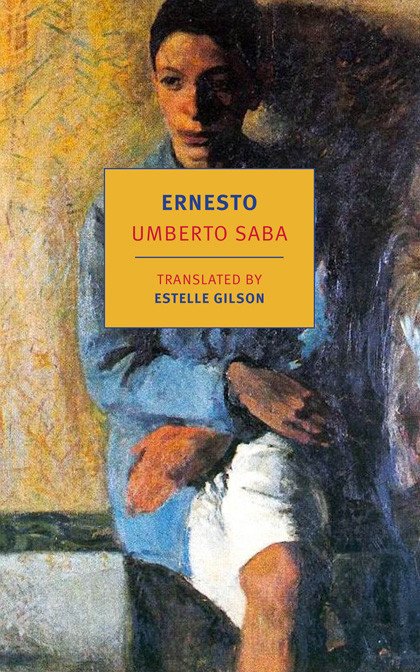
Ernesto
Umberto Saba
Translation by Estelle Gilson
New York Review of Books, 2017
160 pages; $14.95

.
Umberto Saba’s unfinished novella Ernesto, published this year for the first time in English translation by The New York Review of Books, is part of an ever-growing body of recent literature that explores the idea that human sexuality is more pliable and fluid than the rigid labels to which we assign it. The recent novels by Bae Suah (Reciation), Andre Aciman (Enigma Variations), and Anne Garreta (Not One Day) have also opened up important conversations about experimentation with sexuality. But what sets Ernesto apart and makes it stand out among the works of these other authors is that it was written in 1953, a time in which many considered homosexuality scandalous, or often illegal.

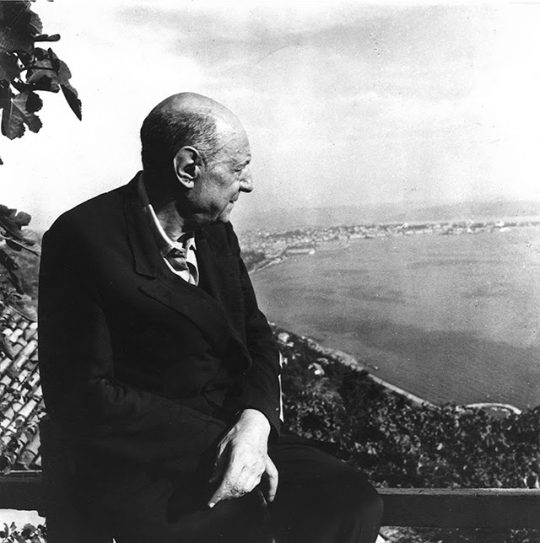
Born in 1883, in the Mediterranean port of Trieste, Italy, Umberto Saba is best known for his deeply personal and honest poetry. Ernesto is, in fact, his only work of fiction. Written at the age of seventy when, after suffering one of his many nervous breakdowns, and confined to a sanatorium in Rome, Ernesto tells a loosely autobiographical coming-of-age tale about a boy’s burgeoning sexuality. Estelle Gilson, the translator, writes in her introduction to the NYRB edition, “What he was writing was for himself alone—his adolescent experiences in Trieste as they suddenly welled up within him and demanded release.”

Like his teenage protagonist in Ernesto, Saba was abandoned by his father, raised in Trieste by an aunt and a single mother, worked in a flour factory at the age of sixteen, and had serious questions about his sexuality. Because of the autobiographical and sexual content of Ernesto, Saba showed his drafts to a few carefully chosen confidants. In addition to his doctor at the sanatorium, one of the only other people to read Ernesto was Saba’s daughter, Linuccia, to whom he would send parts of the manuscript with very strict instructions about keeping his writings secret. In his letters to Linuccia, Saba requests that his daughter keep his drafts in a locked container and that she send his writing back to him immediately after reading it. Linuccia took her father’s instructions seriously and didn’t publish Saba’s novella until 1975, nearly twenty years after the author’s death.

Composed in five “Episodes” with an additional section entitled “Almost a Conclusion,” the strength of Saba’s writing lies in the bold and, at times, brutally honest language that he employs throughout his text. Set in Trieste, in the last few years of the nineteenth century, the sixteen-year-old protagonist is raised by his single mother and his elderly aunt. Ernesto’s world reflects the diversity of Trieste which, because of its location in northeastern Italy between the Adriatic Sea and Slovenia, was influenced by Italian, Slavic and German cultures. During this period of time, Trieste is an Imperial Free City within the Austro-Hungarian Empire, and had been under Hapsburg rule since the fourteenth century. Although most of its citizens were Italian and loyal to an Italian Republic, Germans controlled the bustling business and commerce of the city and held positions of power.

Ernesto works as an apprentice in a German flour factory where he meets a laborer, a lower-class Triestine, identified as “the man” with whom he has his first sexual encounter. Ernesto’s erotic exploits with the man leave him bewildered, ashamed and confused not only because of the illicit nature of his experiences, but also because he is still sexually attracted to women.

Ernesto’s sexual encounters with the man take place in the first Episode but the emotional consequences linger with Ernesto throughout the narrative. The language of Saba’s Ernesto is candid, especially when describing the titillating and erotic first sexual encounter between Ernesto and the man. The two negotiate the intimate details of what the sex will be like as Ernesto is both excited and scared about this new experience:

“There’s a lot of things you can do in an hour,” the man said urgently.

“And what do you want to do?”

“Don’t you remember what we were talking about yesterday? That you almost promised to do. Don’t you know what I’d like to do with you?”

“Yeah, put it up my ass,” Ernesto replied with quiet innocence.

In an essay entitled “What Remains for Poets to do,” Saba argues that “It remains for poets to write honest poetry.” Saba applies this pursuit of literary honesty to his prose as well when he inserts his own commentary into the text to explain and justify Ernesto’s explicit language. Saba’s interjection of his own voice into the narrative are some of the most beautiful and enlightening pieces of writing in the novella:

With that brief, precise utterance, the boy unwittingly revealed what many years later, after many experiences and much suffering would become his “style;” his going to the heart of things; to the red-hot center of life, overriding resistance and inhibitions, foregoing circumlocutions and useless word twistings. He dealt with matters considered coarse, vulgar (even forbidden) and those considered “exalted” just as Nature does—placing them all on the same level. Of course, he wasn’t thinking of any of that now. He had blurted the sentence (which practically had a laborer blushing) because the circumstance warranted it.

The episode ends with an act that deftly mixes emotions of both tenderness and shame: the man kindly turns over the stained sack of flour at Ernesto’s request so that no one will be suspicious of what happened between them.

Shame is a theme that Saba returns to repeatedly in his narrative as Ernesto attempts to find fulfillment, pleasure and love with a man and a woman. The fact that the man is never given a name is perhaps significant because Saba, likely through his own sense of shame at recalling these events, can’t bring himself to give Ernesto’s seducer a true identity. After two months, Ernesto decides that he can no longer keep having these sexual encounters with the man because they make him feel dirty and keeping such a secret from his mother feels shameful and wrong. After his trysts with the man, Ernesto has the overwhelming desire to prove himself a man and is impatient to have sex, for the first time, with a woman. He is ashamed because all of his friends have bragged about sleeping with women and the only sex he has had is with a man. Shame is what motivates him to seek out sex with a prostitute which erotic scene in the book is equally as tender and explicit as the one with the man. This time, however, he gives the prostitute a name because sex with a woman, even though it is a prostitute, is not as shameful as having sex with a man.   Once Tanda undresses Ernesto, she finds the best position that will give Ernesto the most pleasure for his first time. And after he climaxes she washes him with a disinfectant and his sense of shame and embarrassment cause him to excessively overpay her and leave suddenly.

Themes of loneliness, alienation and sadness—demons with which Saba himself wrestled throughout his life—also pervade Saba’s coming-of-age narrative. Ernesto is initially drawn to the man who propositions him with sex because the man loves the boy. Because of the absence of a father in his life, Ernesto wants to please the man who shows him affection and adoration. He likes the prostitute because she is warm and tender with him and this causes him to eagerly anticipate his next visit with her. Ernesto’s mother is stern with him and shows him little affection although affection is something he craves more than anything. Like many young people inexperienced with matters of intimacy and sex he mistakenly equates physical attention with emotional connection and love.

Some of Ernesto’s sadness, alienation and even shame is relieved by the unlikeliest of characters, his dour mother, who is the third point in the novella’s triangular structure—the man, the prostitute and Ernesto’s mother. His mother is a presence that lingers throughout the entire story and even when the man is trying to seduce him, Ernesto mentions his mother and the guilt he feels over keeping a secret from her. The woman, who was abandoned by Ernesto’s father before the boy was born, is overbearing and overprotective of her only child. Yet, she believes that she must be harsh in her rearing of the boy and must not show him very much affection. When Ernesto no longer wants sex with the man, he gets himself fired from the factory so he never has to see him again. The loss of his job devastates Ernesto’s mother and he feels compelled to confess his true reasons for not wanting to return to the factory. When Ernesto tells his mother in great detail about the whole affair with the man, the full force of the emotional connection between mother and son is fully revealed. Saba writes a touching scene that is sympathetic to both the character of Ernesto and his mother:

With his mother’s kiss and the sense that he would be forgiven, Ernesto felt himself reborn. It was one of the few kisses she had ever given him. (The poor woman wanted so much to be, and even more to be seen as, a “Spartan mother.”)

We can’t help but wonder if Saba’s own sense of shame and loneliness haunted him for the rest of his life and was the reason, at least partially, for his many depressive and nervous episodes for which he was hospitalized. He was married for many years, and although they remained married, the couple’s relationship was troubled and they spent quite a bit of time living apart. It is fitting that Saba writes Ernesto in the last few years in his life as part of his therapy in the sanatorium. But it appears that so many years of shame and hiding who he truly was became too exhausting for the author because he can’t gather enough strength to finish writing Ernesto. Saba writes about his decision to leave his novella unfinished: “Add to those pages Ernesto’s breakthrough to his true calling, and you would, in fact, have the complete story of his adolescence. Unfortunately, the author is too old, too weary and embittered to summon the strength to write all that.”

Even though Saba’s text is incomplete, he gives us enough of a glimpse into pivotal events in the life of Ernesto to make his novella an important, historical piece of gay and bisexual literature. It also helps us better understand Saba’s poetry which writing is equally as personal and intense as Ernesto. To this end, I include a particularly apt final poem of Saba’s called “To the Reader” filled with all the conflict and terror that Saba perhaps felt in composing Ernesto:

This book, Good Reader, though a balm to you,
shames its creator and should go unread.
Although he spoke as a living man, he was
(or should have been, for decency’s sake) dead.

— Melissa Beck

N5

Melissa Beck has a B.A. and an M.A. in Classics. She also completed most of a Ph.D. in Classics for which her specialty was Seneca, Stoicism and Roman Tragedy. But she stopped writing her dissertation after the first chapter so she could live the life of wealth and prestige by teaching Latin and Ancient Greek to students at Woodstock Academy in Northeastern Connecticut. She now uses the copious amounts of money that she has earned as a teacher over the course of the past eighteen years to buy books for which she writes reviews on her website The Book Binder’s Daughter. Her reviews have also appeared in World Literature Today and The Portland Book Review. She has an essay on the nature of the soul forthcoming in the 2017 Seagull Books catalog and has contributed an essay about Epicureanism to the anthology Rush and Philosophy.

N5

Feb 042017
 

Nancy, Jean-Luc

In this age of addiction and excessive consumption where massive modes of pleasure are readily available, have we completely fucked ourselves into oblivion? Do we give a fuck about fucking anymore? And now that we have come to the point of post-structuralism, post-modernism, post-privacy and post-truth, have we also arrived at the era of post-pleasure?     —Melissa Considine Beck

coming cover2

Coming
Jean-Luc Nancy with Adele Van Reeth
Translated by Charlotte Mandell
Fordham University Press, 2016
168 pages, $22.00

.
In this age of addiction and excessive consumption where massive modes of pleasure are readily available, have we completely fucked ourselves into oblivion? Do we give a fuck about fucking anymore? And now that we have come to the point of post-structuralism, post-modernism, post-privacy and post-truth, have we also arrived at the era of post-pleasure? There are just a few of the provocative questions that French philosopher Jean-Luc Nancy raises in his book Coming as he explores the tricky, elusive and titillating French word jouissance and its various associations with orgasm, sex, coming, pleasure, joy, property and consumption.

Coming, which is the English translation of the French title la jouissance, takes the form of an interview, divided into five part as Adèle Van Reeth, the producer and host of France Cultural Radio’s daily program on philosophy, asks Nancy a series of questions about the idea of jouissance.  Through the course of this dialogue, Nancy lays out the original meaning of jouissance, which was used solely as a legal term, and he takes us on a fascinating linguistic journey to discover how this word evolved to become associated with sexual pleasure and orgasm and from consummation is now associated with the modern idea of consumption. This book is an excellent introduction for those who are new to Nancy or for those who are familiar with his prolific writings as it contains some of his most favored topics: community, modern psychology, linguistics, Christianity, the body, sex and Platonism, just to name a few.

Nancy made the suggestion of using the infinitive, “To Come” for the English title of this book but Charlotte Mandell thought that the gerund “Coming” would be a better choice to capture the continual nature of movement associated with jouissance. Included in the edition published by Fordham University Press is a beginning note that Nancy writes himself in which he explains the problem with rendering jouissance into an appropriate English title:

In English, sexual orgasm is expressed by the verb “to come.” This has no corresponding noun. What is shared by both lexical registers is an idea of accomplishment. In French, we say venir (to come) for “reaching jouissance,” but the word is mostly used between sexual partners (“viens!” for example.) In choosing the gerund “coming,” Charlotte Mandell aptly brings out action or movement, something that is in the process of occurring, which, in fact, is attached to jouissance and to jouir; that is, precisely, what remains irreducible either to a state or to an acquisition, to an accomplishment or to an appropriation.

It is interesting to note that throughout the text of Coming, jouissance is simply translated in brackets as “pleasure” or is not translated at all, a constant reminder of the elusive nature of this word that has no equivalent translation in English.

.

Defining Jouissance: What the fuck does this French word mean?

Nancy is a master at speaking about the nuances of language and uncovers, unpacks and explains specific French words, with their etymological roots in Latin, that are closely related to jouissance. He begins the discussion with an examination of the French verb Jouir, which means “to enjoy” and “to have an orgasm,” and is derived from the Latin verb gaudere, “to rejoice,” and therefore has no etymological relationship to sex or sexuality. At some point there is a shift in meaning of jouissance from property to sexual pleasure and orgasm. Nancy speculates that this shift begins with the middle French use of joie (joy) which denotes the sensual or sexual feelings of the troubadour poets; these poets have a joy of love that is sensual but jouissance, in the sense of reaching orgasm, is avoided. Nancy exclaims, “One of the ordeals of courtly love even consisted of the knight sleeping with his lady without making love!”

He further explores this shift in meaning by comparing the French words jouissance [pleasure] and joy [joie] and how they are different. Nancy argues that jouisssance corresponds to what Kant called pleasant—when something is pleasant it is something that is felt inside of me because something suits me. Joy, however, is outside of me and carries me towards something else. Nancy goes one step further in the etymological connections of various words to jouissance and explains réjouissance (rejoicing), whose root and meaning are very close to jouissance. Nancy points out that réjouissance is not used very often today and when it is used it describes something that is public such as popular festivities. Nancy concludes about the etymological connection between réjouissance and jouissance:

The idea of festivities, réjouissances, refers to festive excess, to a certain suspension of everyday activities, but also to obligation and finality. That is where we find jouissance, in the sense of joyful acclamations greeting the arrival of an important person, like the jouissance of the people at the arrival of the king.

We can say, then, that joy and réjouissance are like jouissance in that they all denote an excess. The idea of excess and its association with jouissance will be a topic brought repeated throughout Coming. Jouissance is an experience of excessive sexual pleasure in the form of orgasm which experience we seek over and over again.

.

Jouissance as a shared experience: Is it possible to fuck alone?

The style of interview works exceptionally well for Coming because not only does Van Reeth adeptly sum up Nancy’s complicated thoughts, but she also asks him precise questions which elicit more of his ideas; Van Reeth is able to challenge Nancy to expound on his positions and she keeps the dialogue moving forward rather fluidly. In this part of the interview that deals with the subject and the object in the context of jouissance, Van Reeth begins:

Jouissance as experience implies a dissolution of the subject as well as the impossibility of appropriating its object. How then can we define what makes us enjoy [jouir]? And above all, since the question of object goes back to that of the subject: Who is it that enjoys [jouit]?

Nancy insists that jouissance has no specific subject because I am not the owner of my jouissance. How can it be possible for a person to own an orgasm if his or her sexual climax involves another person, another body. What I take pleasure from is just as much my pleasure as it is the pleasure of the other with whom I am engaging in a sexual relationship. Nancy brilliantly anticipates his critics who would argue that masturbation disproves the nonexistence of subject and takes his argument a step further by stating that when pleasuring oneself the other is still present in the form of a fantasy. So when we fuck, we are never fucking alone even if there isn’t another physical body in the room.

It during this part of the discussion that Nancy brings up Lacan and his exploration of jouissance in relation to the pleasure principal. Lacan believes that a subject attempts to go beyond, to transgress the pleasure principal and this brings about pain. It is with this excess, with this reaching of pleasure beyond a limit that Lacan defines jouissance. Although Nancy has been critical of modern psychology throughout his career, he credits Lacan with his effort “to try to find the meaning of jouissance, beyond the fulfillment of satisfaction, into a sortie, outside oneself, into exuberance, ecstasy….”

Van Reeth’s importance in this philosophical exchange is underscored in this section as she further presses Nancy on Lacan’s examination of jouissance:

How do you understand Lacan’s phrase asserting there is no sexual relationship? If there is no sexual relationship, there is no sexual jouissance. But wouldn’t it be truer to understand not that jouissance is impossible, but that it is inconceivable? Just as the fact that there is no sexual relationship would signify that there is no thinkable relationship. It would be a way to preserve the space unique to jouissance as experience.

Nancy’s insight into Lacan is a starting point for his thoughts on jouissance as a shared experience and it will also serve as a prompt from which to discuss the links between aesthetic and sexual jouissance in the next section of the interview:

That is probably what Lacan means. ‘There is no sexual relationship’ can be understood in several ways: There is no proportion, no commensurability, no conclusion either. The sexual relationship cannot be written down. The implication is: there is no account of it, no ‘report’ [rapport, which also means ‘relationship]’ But it is precisely to that extent that there is a real rapport, which demands incommensurability and a form of non-conclusion. A relationship is maintained [s’entretient]. It is not completed. A completed, accomplishment is either a breakup, or a fusion. And in fusion there is no longer any relationship. It would be truer to say, then, that jouissance is inconceivable, not impossible.

In sum, pleasure comes down to a matter of shared meaning whether there is a sexual partner or not. At the end of this section dealing with subject and shared pleasure, Nancy makes one of the simplest, yet thought-provoking statements in this entire volume: Where does sexuality begin and where does it stop? He concludes, “Perhaps it begins very, very far from the sexual act itself.”

.

Aesthetic and Sexual Jouissance: Fucking in motion

Even though Nancy argues that jouissance is never a solitary experience, he also explains that pleasure is unshareable, much in the same way that aesthetic pleasure is a singular experience, unique to each individual.  As he opens thoughts on the link between sexual jouissance and aesthetic jouissance, Nancy points out that it is Freud who first establishes the transfer of aesthetic jouissance to sexual jouissance. Nancy’s criticism of psychology becomes apparent as he disagrees with Freud on his speculation that there is a specific order in which seduction happens—gazing, hearing, touching, must happen first, Freud argues, and only at the end of this progression does Freud finally come to the genitalia through which the tension in the form of orgasm is released.

This part of the discussion in which Nancy brings his reader to understand the connection between sexual and aesthetic jouissance is typical of his very dense, erudite, and multifaceted writing. He references various texts of Freud, he dissects more Latin words via Spinoza, he mentions the young Chilean philosopher Juan Manuel Garrido, he quotes David Hume, and he reaches all the way back to the ancient texts of Plato to make a point about pleasure. As I carefully read his text which is thick with history, philosophy and literature, I take notes, I read or reread authors whose books are sitting on my shelf to whom Nancy has referenced, I search the Internet for authors unknown to me, which laborious activities sometimes feel like a feeble attempt to absorb the full scope of his genius. But all of a sudden, at the end of a complicated series of thoughts, Nancy composes a short, simple, beautiful, concise paragraph that grabs me so forcefully that I pause my frenzy of research:

What we enjoy in an aesthetic form is the movement of this form, even though it ends up being completed. What’s more, an aesthetic form is probably never exhausted and, on the contrary, does not stop enjoying itself (jouir d’elle-meme).

And a bit further on in the same discussion:

In jouissance, they [bodies] become almost formless. Which is radically opposed to that call to eroticism, in advertising or movies, always summoning beautiful, perfected forms. Whereas in eroticism, in eros, these forms become undone.

Nancy reveals in these two simple yet erudite statements that in art there is no formula for what is considered beautiful. Furthermore, we can carry this over to jouissance in which there is no formula to be followed; each person experiences beauty, art and sexual jouissance in his or her own unique way this experience is impossible to share. In a relationship there are no accepted forms or defined forms of beauty, these forms are uniquely decided by the persons within a relationship.

.

The Creative Power of Jouissance: Is There an Art to Fucking?

Nancy’s discussion of the link between sexual and aesthetic jouissance, with a particular emphasis on the art of writing, is the most accessible and interesting piece of this interview. Nancy argues that even when an artist produces a jouissance in his or her viewers, there is always a constantly renewed dissatisfaction that keeps the artist working again and again. “The artist,” he argues, “is in action in his work, and he also takes pleasure [jouit] from being in the process of working. He suffers too, it’s always laborious.”

Nancy is a prominent and well-known contributor to the studies of art and his cultural writings have covered the topics of literature, poetry, theater, music and film. Nancy has written books on the subject of art and has also written pieces for international art journals and art catalogs. He has a text from a lecture given 1992 at the Louvre displayed with the painting ‘The death of the virgin’ by the Italian painter Caravaggio. It is fitting that Fordham University Press has used a Caravaggio painting for this edition of Coming thereby reminding us of Nancy’s interest in the Italian painter.

In order to lead Nancy into elaborating on the similarities between the pleasure of art, specifically the art of writing, and sex, Van Reeth reads a passage from Rilke’s Letters to a Young Poet in which the author asserts that writing and sexuality bring about the same pleasure. In a letter dated April 13, 1903 from Viarregio, near Pisa, Rilke writes:

And in fact artistic experiences lies so incredibly close to that of sex, to its pain and its ecstasy, that the two manifestations are indeed but different forms of one and the same yearning and delight.

Nancy picks up on the idea that Rilke is speaking of writing as working toward the unknown, without a goal, which is also true for artists who work with music or paint. The art passes through the artist to the spectator who experiences the work of art through a plethora of senses. In the end the artist has no real understanding of how his or her work is received, of the various ways in which someone experiences pleasure through his or her art. The pleasure that is experienced by the spectator as a result of interacting with his work is unshareable just as the experience of sexual jouissance. When we speak about sexual pleasure and orgasm, is there really a word or phrase that captures a good fuck? How can we truly and accurately describe the best fuck we’ve ever had? The experience is unshareable when we make any attempt to put it in words.

The true brilliance of Nancy’s dissection of language comes with his elaboration on the verbal similarities of art and sex. Artistic media such as color and rhythm are used to describe both art and sex. Rhythm, for instance, is present in an art’s use of color and can also be applied to the lover’s caress of the body. The best sex is enjoyed when lovers find a rhythm and Rhythm is a coming-and-going, a constant movement a repetition. Nancy concludes about rhythm:

Rhythm in general is born from what is never definitively there, from what does not stay in place and causes us to return, what leads to jouissance. Rhythm is fundamental for humans, bur for nature as well; think of the rhythm of the stars.

Art and sex cannot exist without movement. It is the seduction, the process, the rhythm that leads to artistic and sexual jouissance

.

Suffering and Fucking—Christianity’s Influence on jouissance

The fourth part of the book, dealing with Christianity and its influence on jouissance is the shortest and the least stimulating part of the dialogue. Nancy has been interested in and critical of Christianity throughout his career and we get a cursory survey of his thoughts in this section. Throughout their dialogue on pleasure, Nancy and Van Reeth both tangentially bring up the close relationship between pleasure and suffering. Nancy sites the works of de Sade as an example of jouisssance being the result of pain inflicted on another or on oneself. Pain and pleasure have an intensity in common and in the moments before orgasm the tension that one experiences can be painful. Van Reeth uses the example of Proust’s narrator who, in the beginning of Sodome et Gomorrhe, describes the very noisy sexual encounter between Baron de Charlus and Julien as akin to the sound of a man having his throat split. The narrator concludes, “if there is one thing as loud as suffering, it’s pleasure.”

Nancy begins the section by arguing that Christianity was the calming solution to the disintegration of the theocratic regimes, the loss of which political system caused great anxiety and unrest. Christianity brings to mankind the idea that life is simply a passage to another spiritual side, a passage that is marked by suffering. It is the Passion of Christ that provides us with a redemptive kind of suffering and suffering is specifically attached to life on earth. One must pass through suffering in this life in order to attain salvation. As a result there is a definitive break and distinction between heavenly joy and human joy. Because of Christianity’s condemnation of the flesh, earthly pleasures such as human joy and jouissance become evil and separate from heavenly joy and jubilation. It is fitting that their discussion on Christianity and suffering, even in relation to jouissance, is the most somber part of Van Reeth and Nancy’s dialogue.

.

From Consummation to Consumption: Do we give a fuck about anything anymore?

Nancy explains that Christianity was an attempt to organize people into one community, but the appearance of a modern state served to divide individuals until the invention of capitalism. “which would insert the individual subject into the circuit of a new jouissance: no longer the jouissance of excess, but that of accumulation and investment. It’s a jouissance that can no longer bear that name.” Van Reeth asks Nancy what, exactly, has changed to cause the meaning of jouissance to shift once again.

It was Communism, Nancy argues, that provided the connection between jouissance and profit, which political theory believed that everyone’s hard work will produce profits that can be equally shared by all –this sharing of profits would be a source of jouissance. But nowadays, people are working harder than ever and the profits are accumulated by a very small percentage of the upper classes. Nancy argues that jouissance has now come full circle to be associated with its legal meaning which is that of possession and acquisition.

Today, jouissance has become confused with and associated with profit as well as property.   Excess has now taken on a quantitative definition in that we must possess the greatest possible number of things that we can. Nancy concludes: “It has left heaven, joy, to land again on earth.” With the ubiquity of things that we consume that push us to the brink of addition—little blue pills, a plethora of opiates, internet pornography—jouissance today has evolved into a kind of greedy consumption in which excess has become the norm. With the disappearance of excess what is left that gives us pleasure? Have we landed in an epoch of post-pleasure?

In this final part of the dialogue when Nancy brings up modern ideas of consumption and their relation to jouissance he shows that he has continued to think about philosophical topics and how they can be applied to current social and political situations. Orgasm, masturbation, sexual pleasure, addiction, and jouissance itself are topics that seem more fitting for the field of psychology and have not been explored by philosophers. Despite his years of suffering through grave illnesses and his advanced age, Nancy proves in the publication of Coming that he is as relevant and progressive as ever in his field.

Although Coming is a short book, some might be intimidated by the breadth and depth of Nancy’s thought. It is, however, an excellent and thorough introduction to the wide range of ideas on which Nancy has expertly written and a scintillating discussion of pleasure, sex, orgasm, fucking, desire, pain, and how we experience these things with our bodies. The interview style of the text in which Van Reeth summarizes Nancy’s main points and propels the conversation forward with her questions makes Coming one of his most accessible and fucking enjoyable books.

—Melissa Considine Beck

N5

m-beck-bio-pic

Melissa Beck has a B.A. and an M.A. in Classics. She also completed most of a Ph.D. in Classics for which her specialty was Seneca, Stoicism and Roman Tragedy. But she stopped writing her dissertation after the first chapter so she could live the life of wealth and prestige by teaching Latin and Ancient Greek to students at Woodstock Academy in Northeastern Connecticut. She now uses the copious amounts of money that she has earned as a teacher over the course of the past eighteen years to buy books for which she writes reviews on her website The Book Binder’s Daughter. Her reviews have also appeared in World Literature Today and The Portland Book Review. She has an essay on the nature of the soul forthcoming in the 2017 Seagull Books catalog and has contributed an essay about Epicureanism to the anthology Rush and Philosophy..

Dec 122016
 

john_kaag

To think that this horde of precious and irreplaceable books was sitting in the woods less than 2 hours away from my home in New England sends chills down my spine. —Melissa Considine Beck

american-philosophy-a-love-story-book-cover

American Philosophy: A Love Story
John Kaag
Farrar, Straus & Giroux, 2016
272 pages; $26.00


O Wild West Wood, thou breath of Autumn’s being.
Thou, from those unseen presence the leaves dead
Are driven like ghosts from an enchanter fleeing.

Yellow, and black, and pale, and hectic red,
Pestilence-stricken multitudes: O thou
Who chariotest to their dark wintry bed.

—“Ode to the West Wind,” Percy Shelley

.
Holden Chapel, at first glance, is a small, unassuming, forty-foot, Georgian style, brick building on the campus of Harvard University. But it has a rich and interesting history as the third oldest building at Harvard and as one of the oldest college buildings in America. In December of 1741, Harvard accepted a generous donation of 400 pounds sterling from Mrs. Holden, widow of Samuel Holden, and her daughters to build a chapel on campus. The building was erected in 1744 and from that year until 1772 morning and even prayers were held for students in the quaint building and it also served as a place for intimate and engaging lectures. On April 15th, 1895 the American Philosopher William James delivered his famous “Is Life Worth Living?” essay to a group of young men from the Harvard YMCA.

William James, known as the Father of American Psychology, was the son of Henry James, Sr., the Swedenborgian theologian, and the brother of the famous American novelist Henry James. William James contemplated becoming an artist, but in 1861 he enrolled in medical school at Harvard where he eventually graduated with an MD. But James never practiced medicine and was instead drawn to psychology and philosophy and became a pioneer in both of these fields. During his young adulthood James suffered from long bouts of depression which were diagnosed at the time as neurasthenia. His depression and anxiety, which he calls his “soul-sickness” led him to contemplate suicide and he even overdosed on chloral hydrate in the 1870’s just to see how close he could come to death without actually crossing that threshold. It was the exploration of philosophy and his attempt to answer the question “Is Life Worth Living” that brings him out of his malaise and inspires him to compose some of the most important philosophical pieces that make up the American school of pragmatic philosophy.

John Kaag’s philosophical and literary memoir American Philosophy: A Love Story, begins with the young philosopher’s own “soul-sickness” and his frequent visits to the site of James’s famous lecture, Holden Chapel, in the Spring of 2008. Kaag is on a postdoc at The American Academy of Arts and Sciences when his crumbling marriage, the death of his alcoholic father and the stagnation of his research push him to contemplate what he believes to be William James’s most important philosophical question: “Is Life Worth Living?”

I was supposed to be writing on the confluence of eighteen century German idealism and American Pragmatism. Things were progressing, albeit very slowly.

But then, on an evening in the Spring of 2008 I gave up. Abandoning the research had nothing to do with the work itself and everything to do with the sense that it, along with everything else in my life, couldn’t possibly matter. For the rest of my year at Harvard I assiduously avoided its libraries. I avoided my wife, my family, my friends. When I came to the university at all I went only to Holden Chapel. I walked past it, sat next to it, read against it, lunched near it, sneaked into it when I could—became obsessed with it. James had, as far as I was concerned, asked the only question that really mattered. Is life worth living? I couldn’t shake it and I couldn’t answer it.

Kaag’s clipped and pithy sentences which employ asyndeton for maximum dramatic effect make this book about so much more than philosophy and literature. He is not afraid to reveal his darkest thoughts or lowest moments and he is also not above using profanity or embarrassing stories about himself to get his point across.   The style of deep, private reflection mixed with philosophical dialogue is reminiscent of Robert Pirsig’s Zen and the Art of Motorcycle Maintenance. But, unlike Pirsig, who wrote computer manuals for a living, Kaag’s book is a great personal and professional risk for a philosopher whose two previous books are for a very specific, academic, Ivory Tower audience: Thinking Through the Imagination: Aesthetics in Human Cognition and Idealism, Pragmatism, and Feminism: The Philosophy of Ella Lyman Cabot.

holden_chapel_harvard_universityHolden Chapel, Harvard University

American Philosophy is aptly and cleverly divided into three main parts which recall the journey in Dante’s Divine Comedy: Hell, Purgatory and Redemption. Kaag’s journey starts in Part I, in “Hell,” on his way to the White Mountains in New Hampshire for a philosophy conference on William James at the Chocorua Public Library, but he gets sidetracked for the first of many times throughout the book. There is a sense of wandering and loneliness that punctuates American Philosophy and in this instance, the first real instance of meandering, Kaag can’t even bring himself to his end point which is a professional conference. Instead of going to meet his colleagues at the Chocorua Library, he stops at a German bakery where he meets Bunn Nickerson.   This kind, ninety-three-year old, local gentleman tells Kaag that William Ernest Hocking, the prominent 20th century American philosophy professor from Harvard, has an estate which is nearby and contains a unique library. Bunn offers to take Kaag there to have a look around.

The family still used the Hocking estate, which was named West Wood, in the summer, but in the fall of 2008 all of the buildings were empty of any human inhabitants and the library appeared to be utterly neglected and abandoned. A copy of The Century Dictionary from 1889, a first edition encyclopedic dictionary with more than seven thousand pages and ten-thousand wood engraved illustrations, catches his eye through the window and his decision to enter this library, even though it was trespassing, completely alters the course of Kaag’s life for the better.

Kaag stumbles upon an opportunity to heal his soul in the form of West Wood’s stone library which, upon entering, he discovers is home to more than 10,000 books. The books that Kaag finds inside this unlocked and unheated building, especially the number of first editions, are the stuff of dreams for any bibliophile. Among the rodent droppings, porcupines, termites, various other bugs and dust Kaag finds Descartes’ Discourse on Method–first edition from 1649, Thomas Hobbes’s Levithan-first edition from 1651, the complete, leather-bound volumes of the Journal of Speculative Philosophy, John Locke’s Two Treatise on Government from 1690, Kant’s Kritik der reinen Vernunft from 1781, Emerson’s Letters and Social Aims–first edition, 1875 and on and on. To think that this horde of precious and irreplaceable books was sitting in the woods less than 2 hours away from my home in New England sends chills down my spine.

William Ernest Hocking, the owner of this vast personal library was, like his teacher William James, also a pragmatist who believed that philosophy could have an effect on real life. His personal library was a collection of not only European thinkers and philosophers, but he also amassed books that contained the thoughts of Eastern philosophy. Hocking studied with James at Harvard as well as other American thinkers such as Royce, Palmer and Santayana. In 1908, Hocking moved from his home on the West Coast to accept a teaching position at Yale and in 1916 when his mentor, Josiah Royce died, Hocking took over his chair in philosophy at Harvard. Hocking would go on to spend the next forty years at Harvard making a name for himself as one of the prominent scholars of American pragmatism. Kaag discovers that many of the books in Hocking’s library were once owned by Hocking’s famous teachers and colleagues at Harvard and some of their signatures, notations and inscriptions inside the books were just as valuable as the leather bound books themselves.

hockingWilliam Ernest Hocking

Throughout the course of Part I, Kaag’s “Hell,” he comes to the painful decision that his marriage is a mess and not capable of being saved. He leaves his wife in Boston and spends more and more time at West Wind where he becomes acquainted with Hocking’s granddaughters, Jennifer, Jill and Penny. The sisters are “surprised and releived” that someone is interested in the books and Kaag begins to catalog the massive collection and attempts to save the oldest, most vulnerable books by moving them to dry storage. As he works his way through the books he continues on his deeply personal and lonely struggle with his own purpose and existence. He writes:

In the following months I started cheating on my wife with a room full of books. I made the trip to New Hampshire repeatedly. My wife and mother—in a unison that always infuriated me—demanded to know where I was going. I could have told the truth but instead I chose to lie, making up conferences that needed to be attended and friends I wanted to visit. Up until that point my life had been so routine, so scripted, so normal, so good—but my brief encounter with my dead father the previous year had brought that life to an unceremonious end. Nothing about life is normal. And nothing about life has to be good. It’s completely up to the liver. The question—Is life worth living?—doesn’t have a scripted, public answer. Each answer is excruciatingly personal, and therefore, I thought, private.

One of the greatest strengths of Kaag’s narrative is that he is not afraid to show that his attempt to escape his wretched existence by means of the library at West Wind was not always noble or dignified or pretty. He skips meals, he neglects his hygiene, he drinks excessively, he begins to prematurely age and he sleeps out in the woods behind West Wind where he catches a nasty case of Lyme Disease. Who among us hasn’t hit a low point in our lives to which we can look back and trace our gradual ascent out of the abyss? The stark honesty of Kaag’s narrative is brave, especially for someone who is an academic philosopher, because he includes all of the ugliness of his journey from Hell to Redemption which details he could have just as easily skimmed over or avoided altogether.

The ideas and themes of American philosophy and literature which are unfolded within the pages of Kaag’s book mimic the philosophers own process of discovery as he unpacks and unfolds the wonders of Hocking’s library. One encounters James, Emerson, Thoreau, Coleridge, Camus, Royce, Whitman, Peirce, Frost and Dante just to name a few. Many readers never give much thought to American philosophers, or as Kaag notes, American philosophy is regarded as “provincial” and “narrow in its focus.” Kaag, however, delves into the pages of American philosophical writings with unbridled enthusiasm that is enhanced by his literary ability to tell interesting and engaging stories about the real lives of these great American thinkers. As one example of this, Kaag summarizes the philosopher Charles Sanders Peirce’s struggle with the idea of freedom and the impact chance has on our choices. Peirce took issue with the emphasis of orderly design over chance and freedom that Darwin and the evolutionists promoted. The philosophical theories of Peirce’s Design and Chance are discussed by Kaag in the context of Peirce’s struggle in his personal life with romantic love. The anecdotes and stories about Peirce’s real life struggles makes what could be a dry recounting of Peirce’s philosophical pragmatism into a gripping story about a great thinker who is attempting to make sense out of his confusing and chaotic world.

Kaag spends the next year in the woods at West Wood with Hocking’s books and continues to contemplate James’s important question. As he works his way through the library he reads countless volumes of American philosophy and literature, with a few Europeans mixed in, that help him through the different stages of his emotional and spiritual journey. The most significant turning point in Kaag’s Hell is when he begins reading Thoreau and reflecting on that writer’s own retreat to the woods. Kaag becomes frustrated with Emerson’s idea of self-reliance which he feels is unattainable and unrealistic. Instead he embraces Thoreau’s example of simplicity, cultivating the earth, and turning off and tuning out all of the modern amenities that distract us from searching for real meaning in our lives.

At one point Kaag takes a break from sifting through books in the library asks Hocking’s granddaughter, Jennifer, the least “intellectual” of the sisters, if he can help her clear a field by scything. As he takes in the simplicity of the landscape at West Wood and tries to deal with this very physical task, Kaag comes to realize through this experience of scything that the process of self-discovery needs to happen for him outside of the walls of the stone library and that this process would be slow and couldn’t be forced; he learns to stop and look around him and be mindful of his surroundings and this becomes his first, significant step from Hell to Purgatory.

william-jamesWilliam James

In Kaag’s Purgatory, the subtitle of “A Love Story” is further explained through the first glimpses and descriptions of Carol whom the author confesses he should, by all accounts, have hated. By this point in the book he is divorced and his ex-wife is remarried and moving out west, but Kaag’s loneliness and isolation linger. He continues to spend hours and days and weeks at West Wind and to catalogue Hocking’s library and to save the most precious volumes from the elements. One weekend he invites Carol, a colleague of his from UMass Lowell, a Kantian feminist, who is also his rival for a tenure track academic job, to join him in sifting through the library at West Wood. Carol is married, but her husband lives in Canada so their long distance relationship gives her plenty of freedom and independence to travel with Kaag to New Hampshire on this as well as many occasions.

While sifting through the pages of Hocking’s library and taking hikes through the White Mountains together, it is evident that Kaag’s feelings for Carol become more than friendly. There is a hint in the text that Kaag, in the tradition of Dante, wants to find his inspiration, his Beatrice and he has found just such a companion in Carol. But her marriage and his general uncertainty about the direction of his life makes for an unexpected element of suspense in the midst of the book as he debates how or when he should reveal his true affections for her. Thoughts of American philosophy and James run through his mind as he is mulling over his decisions:

Shall I profess my love? Shall I be moral? Shall I live? These are the most important questions of modern life, but are also questions that do not have factually verifiable answers. For James such answers will be, at best, provisional. There are no physical signs that one is emotionally ready to become a lover or husband, auguries that suggest one will be any good at any of it. In fact, there is often a disturbing amount of countervailing evidence. But human beings still have to choose, to make significant decisions in the face of uncertainty. Love is what James would have called a “forced option”—you either choose to love or you don’t. There is no middle ground.

Kaag deliberately chooses to exclude the details of his development of an intimate relationship with Carol. The decision to keep this part of his personal life between himself and Carol is worthy of great admiration and respect—he knows that an author can cross the threshold into the type of salacious writing that is meant to sell books and Kaag stops just shy of veering into the realm of romance. Kaag simply remarks about their decision to choose love and to choose one another: “Some things are better left unsaid, and others can’t be said at all.”

But we do get a glimpse of their life together in the final part of American Philosophy which has the hopeful title of “Redemption.” Kaag finds happiness, true love and companionship and Hocking’s books find a safe haven in the library at UMass Lowell. But despite the happy ending for all persons and things involved in his journey, Kaag is still all too aware of the ephemeral nature of our existence and he acknowledges that we are responsible for making our own meaning in life with what we are given.

Kaag concludes with a reflection of his time at West Wood and how far he has come from those lonely days in 2008 when he was obsessed with Holden Chapel. In 1780 religious services ceased to be held in Holden Chapel and in 1800 it was converted into a chemistry and dissection lab for the students of Harvard medical school. Bones that were the remains of medical dissections were discovered in the walls of the chapel when it was renovated in 1990. Nowadays Holden Chapel reverberates with the sweets sounds of music as it is used by the Harvard Glee Club for practice. Kaag notes that in the Middle Ages it was not uncommon to bury the bones of the dead in buildings for apotropaic purposes but also because they were good for the acoustics. This strange mix of the sounds of the living occupying the same space as the bones of the dead in this small, historical chapel is reminiscent of the opening lines of Yves Bonnefoy’s Ursa Major:

What’s that noise?

     I didn’t hear anything….

     You must have! That rumbling. As if a train had roared
through the cellar.

     We don’t have a cellar.

     Or the walls.

     But they’re so thick! And packed so hard by so many

centuries…

—Melissa Considine Beck

N5

m-beck-bio-pic

Melissa Beck has a B.A. and an M.A. in Classics. She also completed most of a Ph.D. in Classics for which her specialty was Seneca, Stoicism and Roman Tragedy. But she stopped writing her dissertation after the first chapter so she could live the life of wealth and prestige by teaching Latin and Ancient Greek to students at Woodstock Academy in Northeastern Connecticut. She now uses the copious amounts of money that she has earned as a teacher over the course of the past eighteen years to buy books for which she writes reviews on her website The Book Binder’s Daughter. Her reviews have also appeared in World Literature Today and The Portland Book Review. She has an essay on the nature of the soul forthcoming in the 2017 Seagull Books catalog and has contributed an essay about Epicureanism to the anthology Rush and Philosophy.

.
.