Dec 052011


 ‘Beauty is truth, truth beauty,’ — that is all
Ye know on earth, and all ye need to know.
— John Keats

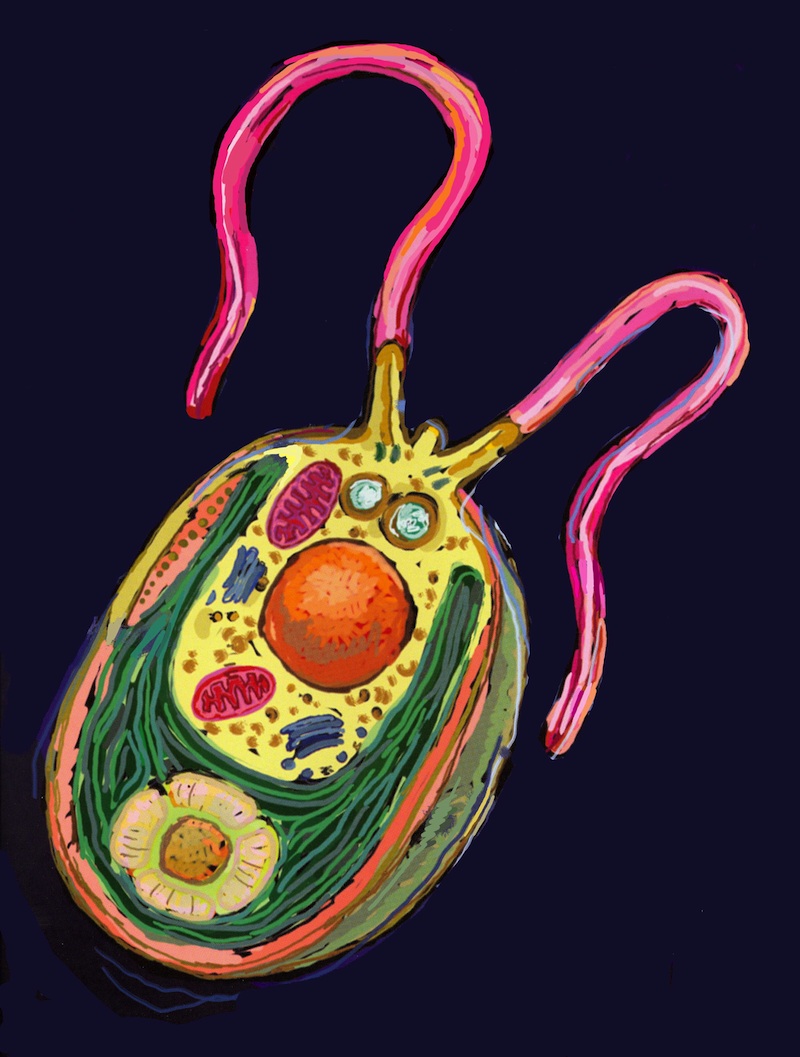
Chlamydomonas is my favorite “model organism.” It is a small green alga that is one of a handful of unlikely organisms that serve science by acting as proxies for the human body. Scientists don’t pick so-called model organisms for exceptional evolutionary achievement and there is no scientific catwalk of gorgeous creatures. Some scientists do exclaim over the beauty of these creatures, but really. Pond scum? Writhing white round worms? Slime mold? The truth is, model organisms are a haphazard lot that scientists select from the teeming crowds because of quirks that make them useful for laboratory research. They are useful and as we work with them we come to know them.


Thank Evolution

Life on Earth emerged relatively soon (0.7 billion years) after our Solar System formed and it has been evolving ever since (i.e. for 3.8 billion years). Because all of life on Earth shares fundamental biochemical pathways, it is likely that we are all descended from a common ancestor – presumably the most robust of the emergent life forms.  This commonality means that studies of almost any organism can shed light on the others.
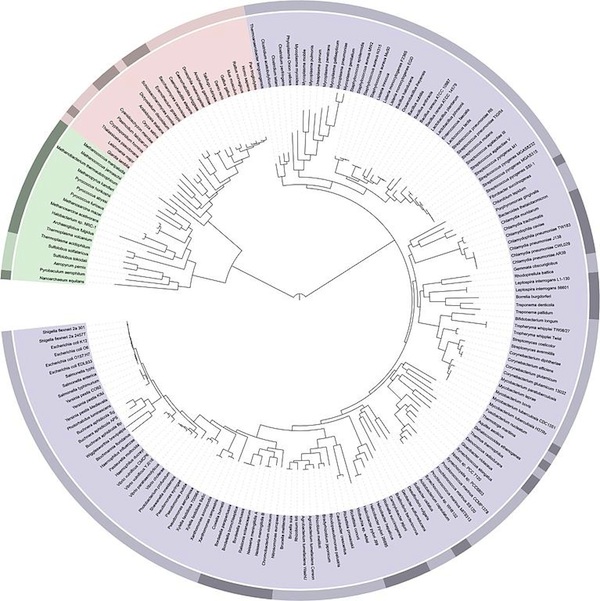
In this Tree of Life diagram the centre represents the last common ancestor of all life on earth. Pink are the eukaryotes (plants, animals and fungi); blue are the bacteria and green are the archea. Humans are second from the rightmost edge of the pink segment. The species included in this illustration are those whose genomes have been sequenced. (Courtesy of FD Ciccarelli).


When word gets out that an organism is well suited to a particular type of experiment other scientists interested in related problems begin using this species for their work. Over time, we learn a great deal about the organism and along the way we develop an array of experimental tools to study it. With the application of these tools, the organism expands its repertoire of usefulness to science. In other words, a few assets and a great deal of happenstance get the ball rolling. As our knowledge of an organism and our skill in working with it increase, the organism becomes established as a model.

.

Microscopic Models

E. coli, the infamous gut microbe variants of which can wreak havoc with human health, grows rapidly and is one of the easiest beasts to study in the lab. It and a few other bacteria serve as models for understanding microbial-based pathogenesis. They also serve as tools for the experimental dissection of fundamental biochemical processes. From these studies we have learned that although bacteria are small, they are surprisingly sophisticated and are by no means simpler versions of us. They branched off early and have taken a different evolutionary path than us. Because of this divergence, E. coli is of limited use as a model organism for understanding how human cells work.
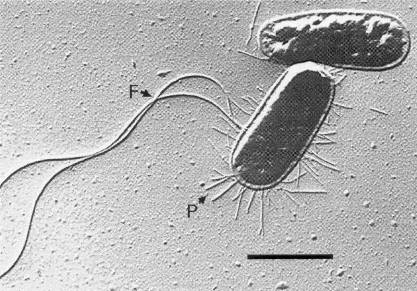
 

Electron microscopic image of E. coli  courtesy of MediaWiki

We tend to think of ourselves as more highly evolved than, well, everything else. This is a strange idea given that every living thing has an evolutionary history as long as ours. We confuse evolutionary longevity with complexity. While we are no more highly evolved than any other being on Earth, we are arguably the most complex beings in an evolutionary lineage that specializes in complexity, a lineage we call the eukaryotes.

Around two billion years ago, by a process that seems to have involved some early cells engulfing other early cells and them all coming to live in peaceful co-existence, the eukaryotic lineage was born. These larger and considerably more complex cells, containing what have since become nuclei and mitochondria, allowed a blossoming of innovation, including complex multicellularity.

Under conditions of starvation, free living single cells of the slime mold Dictyostelium crawl towards one another. Eventually they aggregate into a slug-like creature that crawls around for a bit. Cells that find themselves in different parts of the slug differentiate into specialized types and together the community of cells (organism?) forms a base, a stalk and a fruiting body to launch spores (towards the end of this clip you can see the base and stalk on the left, the fruiting body filled with hopeful spores is just off screen to the left)..

Yeast

Fungi, plants, and animals, we are all eukaryotes.  We are certainly different from one another, yet we are related closely enough that our genes are sometimes interchangeable. In a dramatic demonstration of this fact, Paul Nurse and Melanie Lee used a human gene to replace an essential gene in a single-celled fungus, a variety of yeast that is used in Africa to brew beer. [1]

Saccharomyces cerevisiae, the budding yeast, is another microscopic fungus, the predominant yeast that we have been using for brewing and baking for something like 10,000 years. Like the fission yeast used by Nurse, the budding yeast grows rapidly and we are adept at manipulating its growth and life cycle in the lab. Yeast is a strikingly good model organism for a growing array of cellular processes, including cell division.


Dividing yeast cells courtsey of the Salmon Lab, University of North Carolina

.

Yeast has proven itself so useful that hundreds of independent laboratories from around the world use it as a model organism. These scientists have developed sophisticated technologies that allow them to probe deep into the workings of cellular processes such as cell growth and division.

Cell growth and division may look simple, but consider what is being accomplished:  cells grow and divide in just the right balance to maintain cell size within a limited range – too much division with not enough growth produces wee cells and vice versa. Cells must be able to assess their own size and then divide with exquisite precision.  Cell division is not initiated until each strand of DNA is completely copied once and only once. Each daughter cell receives precisely one copy of each chromosome along with a share of mitochondria and other essential organelles. The more we learn about the molecular machines that control and execute these feats, the more stunning it all becomes. The mysteries are deeper with every layer that is pulled back.   And the relevance to humans is unambiguous: cancer is cell division control gone awry.

Dance of the chromosomes: vertebrate cell division

As useful as yeast continues to be, there are some questions for which yeast is of no use at all. We tend to think of evolution as a process of acquiring ever more fancy ways of doing more and doing it better, but often it goes the other way. When conditions change, structures that previously served a purpose may no longer be of any use. Because it costs energy to build structures, individuals with a mutation that prevent the structures from being built can put the saved energy into other things – breeding being an eternal favorite. Such was the case in the deep caves of Mexico where light does not penetrate. After generations in complete darkness, a fish known as the Mexican cave Tetra no longer has eyes.

Like the eyeless Mexican Tetra, yeast is a bit weird in that it is a stripped down little creature. Over evolutionary time, yeast has lost some features, presumably because the cells have adapted to environmental niches where these features are of no use.  Among the attributes that yeast lost are cilia, small hair-like structures that protrude from the surface of the cell.

How do we know that one lineage (e.g. yeast) lost something (cilia) as opposed to the possibility that the thing never developed in that lineage to begin with? We know because cilia appear in all major branches of the eukaryotes and in each case they are fundamentally the same, built from the same complex array of molecules assembled in the same way by the same molecular machinery.  The last common ancestor of plants, animals and fungi was a single-celled organism with cilia.
.

How I Met Chlamydomonas

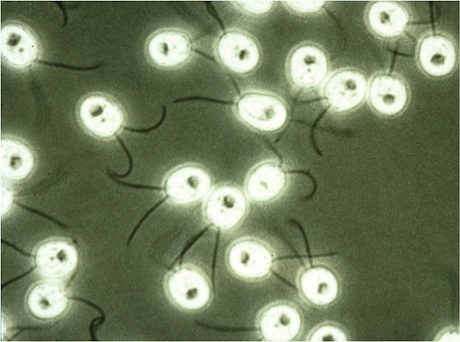
Chlamydomonas is a unicellular organism that has some of the attributes that recommend yeast, with the bonus that it has retained its cilia. This microscopic green alga is found worldwide living in soils, ponds and even on snow. All they need is light, water and a few minerals – they grow well in a flask of fertilized water on a windowsill. Specific cellular traits have made Chlamydomonas a valuable model for energy capture (photosynthesis of crop plants, biofuels and artificial leaves), cellular stress responses, mechanisms of evolution, and an array of human genetic diseases. Although I now use Chlamydomonas as a model organism to study the biology of cilia, that is not where my relationship with this cell began.

I first met Chlamydomonas in 1988 when I was doing my Ph.D. dissertation research in genetics and biochemistry at the University of Connecticut. I was part of a team trying to understand how the leaves of the majestic Rain Tree fold up at night (to conserve water) and unfurl in the morning (to capture sunlight).[2]

At night the cells on the inside of each tiny elbow of the leaf shrivel while those on the outside expand, causing the elbow to bend and the leaves to fold. Each morning the process reverses, the elbows straighten and the leaves unfold. We were interested in how these cellular shape changes were controlled by a circadian clock.  Sapling trees kept in the dark for days at a time continue to fold and unfold their leaves in time with the changing light outside.


We were testing the hypothesis that a particular biochemical pathway was involved in coupling the cellular shape changes to the circadian clock. The work involved growing sapling trees in large light-controlled growth chambers, harvesting the tiny elbows and incubating them in small vials of radioactive fertilizer, where they would continue to bend and stretch even while detached from the plant. After the elbows had taken up and incorporated the radioactivity into their cells, we would carefully dissect the inside of the elbow away from the outside of the elbow, freezing each section of tissue on dry ice, grinding with a mortar and pedestal, and then conducting biochemical analysis of the material. It was slow, painstaking work and we were not getting clear answers.

At the time we didn’t even know whether the biochemical pathway of interest was used to regulate activity in cells in the plant lineage. I wasn’t familiar with the concept of model organisms, but as an oceanography student I had worked with single-celled algae.

I soon started growing my first Chlamydomonas cells and it was love at first sight – they are green, they are beautiful and using them for this project was a way of bringing together my long-time fascination with algae and my new interest in biochemistry.

.

Getting To Know My Organism

Eventually I got the experiments working and determined that the biochemical pathway we were looking for was present in Chlamydomonas. I was getting to know my organism. After learning how to grow it and how to manipulate it for experiments, the next step was to see if our pathway controlled any of the behaviours of this tiny alga.

I surveyed three behaviours: phototaxis, mating and deflagellation. Phototaxis is directed movement in response to light:  Chlamydomonas cells swim towards dim light and away from bright light. Mating is, yes, sex. Chlamydomonas comes in two mating types, plus and minus – male and female, just like us (as it were). Flagella[3] on cells of opposite mating type stick to one another, bringing the cells together for fusion. The third behaviour, deflagellation, is a stress response wherein Chlamydomonas jettisons its flagella, to grow new ones later when the stress has passed.


Phototaxis and mating are both complex behaviours. I didn’t find any evidence that our biochemical pathway was involved in either, but then, I didn’t know the organism well enough to finesse the experiments. Thankfully, deflagellation was simple: shock the cells with a chemical treatment and the flagella would pop off.  I was lucky and discovered that our biochemical pathway kicked into high gear during deflagellation.

Excited by the biochemistry, I detoured into postdoctoral research at the University of Texas Southwestern Medical Center in Dallas where I studied the molecular pathways by which mammalian cells respond to hormones. But I pined for Chlamydomonas. Eventually I established my own lab at Emory University specifically focused on the problem of how and why Chlamydomonas cells deflagellate.

.

Intimacy

One particular memory stands out from those early years in my own lab when I was getting to know my organism more intimately. It was late in the evening and no one else was around. While waiting for an experiment, I was occupying myself by sitting at the microscope watching Chlamydomonas.

Under the microscope you can see the cell wall for which Chlamydomonas is named. “Chlamys” is Greek for “a shoulder draped cloak.” That night I happened upon a mother cell wall containing the daughters from a recent cell division. I saw the evidence of three divisions in rapid succession: eight Chlamydomonas daughter cells still encased in their mother’s cell wall. Over the next hour and a half I watched as the daughters grew flagella and started waving them about within the confined womb. Eventually, they managed to rip a hole in the wall and one by one I watched the cells emerge and swim away.

The cilia that protrude from almost all of the cells in the human body are essentially the same as those of Chlamydomonas. Some of our cells, such as those lining our respiratory tracts and the ventricles of our brains, are topped with a cluster of motile cilia that serve to move fluids – mucus and cerebral-spinal fluid, respectively. Primarily because of experiments on Chlamydomonas scientists are beginning to understand the molecular machines that generate this beautiful form of motility.

Cilia of mouse brain ependymal cells maintaining flow of cerebrospinal fluid. Movie courtesy of Karl Lechtreck, University of Georgia.

The cells that make up most of our tissues – brain, liver, kidney, muscles, skin – have only one, very small and non-motile, cilium.  Until recently, scientists ignored these relatively pathetic looking little structures with no assigned function, considering them to be vestiges of our evolutionary past. A little over a decade ago, Chlamydomonas researchers seeking to understand how cilia are built made discoveries that have lead to a revolution in our thinking about ‘vestigial’ cilia.

Over the past dozen years we have learned that these tiny immotile cilia serve critical roles as cellular antennae, processing centres for the myriad signals that cells are tuned to detect. Signals from the environment and from other cells dictate differentiation into the various cell types that make up the organs of our body. Similar signals that maintain the physiological functioning of the adult. Both developmental and physiological signals are detected and integrated by cilia. Commensurate with the varied and important signals that cilia process, we are now discovering that defects in cilia cause a long list of diseases ranging from too many fingers and toes to obesity to Polycystic Kidney Disease and retinal degeneration.

.

Flies and Worms

Research in both Chlamydomonas and yeast depends upon the study of heredity, or genetics, a tool that is available because of research on another model organism, the fruit fly. Thomas Hunt Morgan followed visible traits of Drosophila melanogaster to discover that genes carried on chromosomes are the basis of heredity. [4]

As with other model organisms, Drosophila became ever more useful to scientists the better they came to know it. Experiments in Drosophila revealed master control genes in charge of establishing whether a leg or an eye would develop and fly researchers were among the first to decipher the language used by cells in a multicellular organism to establish their division of labor.  Drosophila continues to be an important model organism for studies of developmental biology. Because Drosophila exhibits complex behaviours that are controlled by a nervous system and can be dissected genetically, it has also become an important model for behavioural neuroscience.

In his acceptance speech for the shared 2002 Nobel Prize in Physiology or Medicine, Sydney Brenner said, “Without doubt the fourth winner of the Nobel Prize this year is Caenohabditis elegans; it deserves all of the honor but, of course, it will not be able to share the monetary award.”[5] . Selected for the transparency of its embryo and the limited number of cells in the adult worm (fewer than 1,000) C. elegans is a premier organism for studying the how cells distinguish themselves from one another and live or die to serve the development of complex organ systems.

Crawling C. elegans courtesy of Bob Goldstein, University of North Carolina.
These are brief introductions to a few of my favorite model organisms, there are many more. Experiments with model organisms continue to help us understand the molecular interactions that underlie cell growth, division and differentiation, the development and physiology of organisms. Can life be distilled into molecular interactions whose chemical properties we can measure and ultimately predict?

.

A Feeling For The Organism

Barbara McClintock (1902-1992) was a botanist and geneticist who studied corn. McClintock discovered genetic recombination, mobile genetic elements, centromeres, telomeres and genetic regulation decades in advance of our molecular understanding of these things. She was one of the most brilliant minds of the last century. Recognized with many awards, including the 1983 Nobel Prize in Physiology or Medicine, this woman of uncontested scientific acumen had something of a spiritual relationship with her organism.

“I start with the seedling, and I don’t want to leave it. I don’t feel I really know the story if I don’t watch the plant all the way along. So I know every plant in the field. I know them intimately, and I find it a real pleasure to know them.”[6]

The mysteries of life remain so numerous and profound that researchers pushing the edges of our understanding are prone to witness strange happenings. Perplexing new observations become new discoveries – after you make sense of them. On the report of some new cellular activity it is not uncommon to hear scientists say, “I saw that too. I just didn’t know what to make of it.” Those with an intimate knowledge of their organism are better equipped to discern important changes and to make the intuitive leaps that turn perplexing observations into new knowledge.

The intuitive knowing that arises from familiarity is entwined with an awareness of kinship, of common origin. We may lose ourselves in pursuit of the specific mysteries of our creature, yet always what we are doing is revealing who we are. From small and specific questions arise big answers.

We grow fond of these quirky distant cousins who at times can be quite disagreeable (ask any cell biology graduate student). And on those rare occasions when our model organisms reveal their secrets and provide us with discoveries, the fondness feels like love.

— Lynne Quarmby

Footnotes    (↵ returns to text)

  1. Lee, M. G. & Nurse, P. Complementation used to clone a human homologue of the fission yeast cell cycle control gene cdc2. Nature 327, 31-35 (1987). For this and other discoveries Nurse shared the 2001 Nobel Prize in Physiology or Medicine.
  2. The Rain Tree, native from the Yucatan Pennisula to Brazil, and naturalized around the tropical world, is known by many names: Monkey Pod; Mimosa; Saman; Coco, French, or Cow Tamarind.  To scientists it is Samanea saman.
  3. In Chlamydomonas the cilia are called flagella simply because way-back-when scientists did not appreciate that they were the same structure. Bacterial flagella are something entirely different.
  4. This discovery won Morgan the 1933 Nobel Prize for Physiology or Medicine.
  5. Sydney Brenner, Robert Horvitz, and John Sulston shared the prize “for their discoveries concerning genetic regulation of organ development and programmed cell death.”
  6. From A Feeling for the Organism: The Life and Work of Barbara McClintock by Evelyn Fox Keller, 1983. (p. 198)
Jun 062011
 

Large numbers of supporters waited outside dg's house for the formal announcement this morning

At long last the People have spoken, two winners have emerged, both co-equal in the esteem of public and peers, whose vision is ever wise, democratic and mysteriously accurate (on the other hand, dg has been known to have counted the votes inaccurately). The voting was close, and several villanelles came in for exuberant praise from their supporters. Some people voted so many times it was difficult to keep count. But this year’s winners are Lynne Quarmby for her science villanelle “Antonj van Leeuwenhoek” and Kim Aubrey for her “Canadian Shield, or a middle-aged woman’s thoughts turn to the cottage.” May they wear their crowns with appropriate dignity and pride as befitting winners of one of North American’s most prestigious literary prizes (winners are expected to wear their crowns, without fail, for a whole year, even in the shower; they are also required to appear at promotional events for Numéro Cinq at their own expense and appear in public wearing sandwich boards advertising the magazine and various licensed products including our line of Blue Dog figurines, our High School Essays Tailored For You subsidiary, and the ever popular Gary Garvin ballroom dancing instructional CD).

Count the votes for yourselves here. Discrepancies will be rigorously investigated and illegalities or miscounts will be prosecuted to the extent of the law.

View the complete entry list here.

Read the winning villanelles below.

dg

Continue reading »

May 192011
 

Volvox, first described by van Leeuwenhoek in 1700, is a close relative of Chlamydomonas.

.

Reasons to Rejoice in Green Algae
By Lynne Quarmby

.

Every once in awhile you get shown the light
In the strangest of places if you look at it right
– The Grateful Dead

.

We’ve had three hundred years of microscopy and some of us are still fascinated with the beautiful creatures that swim in pond water. To the naked eye, to the unpracticed observer, they look like cloudy, icky scum and we don’t want to swim with them. But they are also delightfully alive, they congregate, they swim (and wouldn’t care if we swam with them), they even “see” or at least sense light. And under the microscope, in the lab, in experiment after experiment, these tiny green algae are yielding discoveries that are important to you and me, in terms of health and the environment and, yes, in the revelations they bring of the wondrous reality of the molecular world.

Continue reading »

Apr 122011
 

Here’s the first in a series of science essays from NC’s resident scientist (also painter, author, musician, mountain woman), Simon Fraser University gene biologist Lynne Quarmby, who promises to lead us into that fierce nexus of mystery, art, literature, beauty and science. Lynne has already contributed aphorisms, a “What it’s like living here” piece and paintings to the pages of NC. It seems only fitting that she now extend our reach into the laboratory, into the cell and atom. Lynne wrote her own short intro to the series. DG could do no better.

dg

It’s amazing all
this motion going
on and
water can lie still
in glasses and the gas
can in the
garage doesn’t rattle.

—AR Ammons

Have you ever watched a sunset and reminded yourself that you are standing on a ball that is spinning and that you are flying backwards away from the sun? It totally changes the experience. Try flying into a “sunrise”-– that’s really wild. On the evolutionary timescale, it has been the blink of an eye since Copernicus realized — and Galileo observed — that we have day and night because we live on a spinning world that orbits the Sun. We’re still trying to get used to the idea.

Our direct sensory experience of the world evolved with us; in our hearts the world is what our sensory organs tell us it is. Our senses are superbly effective for helping us function in the everyday world—that’s why we’re still here—so it’s understandable that when science reveals something counter-intuitive or paradoxical, we have difficulty integrating the new ideas into our worldview. But if we can recognize and acknowledge that our direct biological senses, as wonderful as they are, give us only a tightly pinched and cloudy view of the world, then we open ourselves to unimagined beauty.

From where I view the spinning world—as a cell biologist—I see our experience of the world expanding so much that what it means to be human is changing as profoundly as it did when Copernicus and Galileo bumped Earth out of the centre of the Universe. Our intellectual peripheral vision has picked up on the shift, but as usual, our spirits and souls are lagging behind, as though they fear that there isn’t a place for them. —LQ

Stem Cells and the Fountain of Youth

By Lynne Quarmby


I hope I die before I get old
—Pete Townshend (from “My Generation”)

In some societies the aged are venerated, in none are they envied. The inevitable decay of our bodies and minds is something we prefer not to contemplate. There is nothing appealing about decreased mobility, loss of muscle and bone mass, reduced immune function, decreasing liver, kidney and brain function, decline in ability to respond to stress and an increasing susceptibility to stroke, heart attack, diabetes and neurodegenerative disorders. A dollop of increased wisdom seems meager compensation.

Everyday we are witness to the inevitability of decay; our buildings and roads crumble, landscapes erode and holes appear in our socks. It is something we know more deeply as we grow older: if we manage to dodge the proverbial bus, our bodies will decay until one day we die. The idea of reversing this decay goes entirely against our experiential knowledge of the world. Yet time and again the tools of science reveal that the world is not as it seems. We are learning that ageing is not simply the inevitable decay we’ve assumed it to be.

Our bodies are not static structures. The cells lining our intestine turn over approximately every five days. Similarly, our skin cells last on average two weeks, our blood cells a few months and the cells in our liver turn over approximately once/year. The average age of our muscles is estimated at 15 years. Cells of the heart are longer lived, but they too turn over. There is a large variation in the lifetime of our brain cells: Olfactory neurons are short-lived, but the neurons of our visual and cerebral cortices may be the ones we were born with. The average age of the cells in an adult has been estimated to be something like 10 years.

Old cells die and new ones are born. The dying cells are those that have done specialized service (filtering urine, absorbing glucose, detoxifying drugs, secreting milk, engulfing bacteria, detecting odors, and so on). At the end of their life span cells undergo a process known as apoptosis, or programmed cell death, and housekeeping cells clear the debris away. New cells go through a program of specialization (known as differentiation) and assume the duties of the old cells.

The new cells are born from adult stem cells that reside in special niches in every tissue. Stem cells can divide indefinitely and with each division one of the daughters replaces the stem cell and the other becomes a progenitor for the differentiated cells of the tissue. Embryonic stem cells have the potential to produce any cell in the body – that is how we develop from sacs of cells – but so far as we know, adult stem cells are restricted in the variety of cells they can produce.

About five years ago scientists discovered that adding extra copies of a specific set of genes could convert differentiated adult cells (from your skin, for example) back into pluripotent stem cells – called iPSCs for induced Pluripotent Stem Cells. These cells earned the name “pluripotent” because their daughters can be enticed (by various combinations of hormones) to become any of a wide variety of differentiated cell types. iPSCs were big news medically because they suggested the possibility of grow-your-own replacements for diseased or damaged tissues. The original iPSCs caused cancer (in mice) and while it isn’t clear yet whether we will be able to overcome all of the problems that are hindering the use of iPSCs in tissue regeneration, these cells have already become hugely valuable for research. Ageing is one of the research areas that is benefitting from iPSCs.

Continue reading »

Feb 202011
 
http://www.youtube.com/watch?v=xdCrZfTkG1c

Click to play for appropriate soundtrack during your reading of the post.

After an inexcusable delay, here are the finalists for the OFFICIAL 2011 Numéro Cinq Erasure Contest. The management wishes to apologize for the tardiness of this post. One can only blame the indolent and refractory judges who, for reasons known only to themselves, decided to strike in sympathy with protesters against autocratic regimes in Tunisia, Egypt, Bahrain, Iraq, Yemen, and Wisconsin.

Just to be clear: newcomers should realize that all NC contests have a double trajectory. There is a People’s Choice Winner and then an Official Winner chosen by a panel of anonymous, highly paid, drunken, dissolute, rebellious, puerile, ill-read layabouts. Thus the Official NC Winner is something like the Booker Prize. The list of OFFICIAL ENTRIES for this year’s contest is here. And the PEOPLE’S CHOICE winner is here.

Aside from malcontent judges, there were many difficulties involved in coming up with a short list, chief among them the huge number of highly creative and even surprising entries including Anna Maria Johnson’s “wall” entry with its gorgeous visual pun and Meg Harris’s blog entry which you had to follow a link to read. In the end the judges decided to decide by strictly applying the two signal virtues recognized on NC: WIT & ARROGANCE—above all else. This meant that the best entries had to carve out a sentiment that was somehow entirely DIFFERENT from the one intended in the original piece and add some twist of irony or grammar that also gave it ZING, EXCITEMENT, AFFLATUS, or HUMOUR.

Thus we ended up with a list that included Vivian Dorsel’s text, tumescent with double entendres, Lynne Quarmby’s “scholar” entry, which very slyly reads like a fortune cookie, Marilyn McCabe’s extremely witty double entry that manages to repeat the same thought in two radically different modes, Adam Arvidson’s whatever-it-is with its thudding parallel constructions and final turn, Sarah Braud’s hilarious list of rules, and then, yes, Lynne Quarmby AGAIN for her little doublet about two people named Grace and Prudence.

It is thought by the judges that these entries embody the values that we at Numéro Cinq hold dear.

Continue reading »

Jan 262011
 

Missing Dad

by Natalia Sarkissian

I can say I lost my father when I was six.

That was the year my parents separated. Although they weren’t divorced until a year or so later, I never spent long chunks of time with him after. I traveled from New York to Morgantown and later to Texas to visit him at Christmas and for two weeks every summer, but I was a kid. Instead of asking questions about his childhood (he grew up in Tehran, the son of well-to-do Russian émigrés) or his work (he was a professor of genetics), I roller skated in the driveway, swam in the pool at the complex or played Barbies in the bedroom with Rhonda, the girl next door. I didn’t know then that illness would cut his promising career and life short. And he never worried me with the fleeting nature of time.

(My father is the boy in the sailor suit, front and center.)

Maybe, if I’d had an inkling.

Maybe, if I’d been older.

I’d have sat next to his recliner in the den in Morgantown or the family room in Texas on at least one of those bi-annual visits and listened.

Dad died in 1978 when he was 45, from complications of multiple sclerosis.

Ever since I’ve lived with regret. What was it like growing up on well-heeled Jordan Avenue, Tehran, in the middle of an extended family of musicians, engineers and dentists? Did he ever go with my grandmother, Babi, when she taught piano to the Shah of Iran’s sister? Did he ever accompany my grandfather, Dida, on the civil works projects Dida oversaw for the Shah? What games did he play with General Norman Schwarzkopf (a classmate) before the General became a general? Who the first girl he ever loved? When did he know he wanted to be a scientist? Did he ever regret coming to live in America?

I will never know the answers.

(My father is center, back row with Norman behind him and to his right.

(My father is in the back row, center. Schwarzkopf is the blond boy to his right.)

But recently, through Numéro Cinq, I met Lynne Quarmby, a professor of cell biology at Simon Fraser University in Vancouver. We ‘friended’ each other on Facebook, and began to correspond. One day, on a whim, I asked Lynne if she’d ever heard of my father. I’d been thinking of childhood and essays for Numéro Cinq Magazine.

“His name was Igor V. Sarkissian,” I wrote. “Back in the 60s and 70s he was experimenting on hybrid corn and beans (which is about all I know of his work).”

(My father in his lab in the 1960s.)

Lynne said she’d look and see what she could find out. A few days later she sent me this gift:

Dear Natasha,

So far as I can tell, your father published 91 scientific papers (there may be others that my searching did not uncover). He produced a solid body of work, taking a biochemical approach to an important agricultural and intriguing physiological problem. There was a peak of interest in his work in the 70’s (during which time his work was cited 50 or more times per year in the published work of other researchers). As is typical of virtually all scientific papers, the citations tapered off over the years. However, and this is the remarkable thing, his work is still being cited today. The field of biology, including plant genetics is moving so incredibly quickly that the vast majority of papers drop out of sight within a few years. To be cited more than 30 years after publication is a significant accomplishment and your father achieved that with 5 of his papers. Because he worked in an area somewhat distant from my expertise, it is difficult for me to provide a synopsis of his body of work. In lieu of that, I choose to focus on his mostly highly cited work, a 1966 publication – which by the way, has already received a 2011 citation in a review paper (this means that a current expert in the field has commented on the impact of this particular piece of work by your father).   –Lynne

Lynne then reviews my father’s 1966 paper, about hybrid vigor, translating it into laymen’s terms. I won’t summarize the 1966 article here—a future post—but the crux of the matter is this:

I’d had an idea that my father’s work had been important, but I had no idea as to its scope or that it was still generating interest. My father would be proud to know he made an impact.

When he found out, at age 24, that he had multiple sclerosis, he became single-minded, hoping to have enough time to be able to make some kind of contribution. And the fact that he was able to partially do so lessens the sadness I feel for his short and somewhat unlucky life.

–Natalia Sarkissian

Jan 242011
 

Lynne Quarmby is a gene biologist who  runs a research lab at Simon Fraser University and lives in West Vancouver; she’s also a painter (see five water colours earlier posted on NC), a musician and a big-time outdoorswoman. DG briefly attended Simon Fraser in the summer of 1969 as a graduate student in philosophy. That summer he won the British Columbia 5,000m track championship, climbed the Lions (the twin snowy peaks you can see in the distance from downtown Vancouver), and went to San Francisco and hung out on Haight and Ashberry (where nothing much happened). Lynne’s “What it’s like living here” essay reminds him of the past (although it was summer and it didn’t rain much, and he lived on campus on top of Burnaby Mountain and didn’t have to commute). Vancouver really is one of the most gorgeous cities in the world, with English Bay out in front and the beaches and the ships and the great bridges and the snowy mountains just behind.

dg

Rain

The one thing everyone seems to know about Vancouver is that it rains. It’s true. It is raining now, as I look from my 4th floor apartment in West Vancouver across English Bay to Kitsilano. The glow of streetlights at 11 am this January 7 morning emphasizes the daytime darkness and feeds the sense that the soft rain will continue unrelenting for weeks to come, socked-in, drizzling, misty, foggy, dark and wet. When days are this dark melancholy seeps in – you’ve been forgetting to dose with vitamin D to compensate for the lack of sunlight (and thinking too much about the lack of research funding). But Vancouver is a coy place. It relents, the clouds thin and lift and you thrill to the spectrum of grays – oyster, pearly, mousy, leaden, silver. It’s 3 pm and the continuously changing light makes it difficult to stay focused on the lecture that needs to be written.  I relent and head out for a walk, knowing that I will be up late working.


Balcony in the sun

The Sun

2 PM Saturday, January 8. I sit outside, soaking up sunshine. The surprise arrival of this sunny day demands attention. The sun shines directly onto my building, and because the heat is absorbed by and radiates from the concrete building, my balcony is warm. I’ve eaten lunch outside in my shirtsleeves, absorbing the warmth, absorbed by the view of sky & sea. I watch the freighters at anchor as they swing with the flow of the tide. One steams into port for its turn at the docks. The seagulls cry. A lone kayaker paddles up the coast. I am watching through a curtain of rain. At this moment I am the pot of gold at the end of someone’s rainbow. I look across the bay to the city – whose rainbow?  I close my eyes and focus on the warmth of the winter sun. I breathe deeply and slowly, savoring the air – cleaner than we deserve, refreshed daily by the mountains and the sea breezes. It is all too much, and soon it will be gone again. How long can I sit here absorbing paradise? About 30 minutes. If you were here perhaps we’d sit for a while longer.

The Lions from Sky Train


The Forests and the Mountains and the Sea

It’s Sunday afternoon and I’ve driven the 15 minutes up the mountain directly behind my apartment. The open area around the parking lot is a zoo. Families with sleds, tubes, dogs, and kids running wild  – everyone is manic with the sunshine. We all act as though the sun never shines in the winter, that this is remarkable, spectacular, something to write home about. And it is, even though it isn’t really all that unusual. It is my first ski of the winter and I feel awkward as I set out cross-country into the forest. Within 500 meters I find a deep quiet and feel the peace.  I try to ski high enough for a view across the ocean as we roll away from the sun, but I am too slow.


Cypress Mountain

The Commute

West Vancouver is a small town; a city distinct from Vancouver. Here I walk the seawall to wherever I need to go – yesterday 0.5 Km west to the village of Dundarave where I picked up a roll of quarters for the laundry. Frequently I see seals, but on this walk I saw a sea otter. Later I took my backpack and walked east 1 Km to the village of Ambleside to buy groceries from Mitra’s, a Persian market. There was a heron fishing in the intertidal. There are usually bright scooters, occasionally bald eagles, and always seagulls. Last week I watched a seagull swallow a starfish. Perhaps next weekend I will walk a little further to the sailing club to ask about kayak rentals. During the week I leave this idyllic community and commute to Simon Fraser University where I am a professor of Cell Biology.

Although it takes twice as long as driving, I commute by public transit. I take a bus over the Lion’s Gate Bridge, through Stanley Park into the city (by which we mean downtown Vancouver) where I disembark to a chorus of “thank you” “thanks” “have a good day” – riders here acknowledge the driver as they exit the bus. Buses that pass you by because they are out of service or full announce “Sorry” on their destination screens.   From downtown I take the sky train out of the city. Twenty-five years after Expo ’86, riding the sky train still feels futuristic.  It is a clear day and Mt Baker, a large (inactive?) volcano about 100 Km southeast in Washington State, hangs in the sky like a rock & ice metaphor for our big brother to the south – always there even when we don’t see it. Out the north window, although small & distant the snow capped coastal range captures my attention. The people-watching is fabulous, but the listening isn’t. It helps to have a great set of headphones – every commute is a movie and I get to choose the sound track.

Bookclub Dessert

Lemon meringue pie
Bus with standing room only
Serve “transit rider parfait”

Lion’s Gate Bridge and Stanley Park from the seawall in front of my apartment


The University on Top of Burnaby Mountain

Tuesday January 11. This morning I delivered a 2-hour lecture to ~70 Molecular Biology & Biochemistry majors on how cilia – those tiny rod-like structures that protrude from the surface of almost every cell in your body – function as cellular antennae. In particular, I was reviewing for the students some recently published data that (almost) reveals how urine flow through the collecting ducts of the kidney causes cilia to bend and send signals to keep the cells small. When this flow-induced signalling pathway is defective, as it is in patients with Polycystic Kidney Disease, the control of cell size and division is disrupted and ducts bellow into cysts. We work through the evidence to decide whether there is causality behind an intriguing correlation.

After lecture I stop by my lab. We are feeling a little lowly these days because last week we learned that my application for the renewal of the federal grant that funds our research was not successful. The application scored in the “excellent” category but research dollars are short.  The reviewers raved about the proposal, but they want more preliminary data to demonstrate that our ideas are on the right track. I’ve had to give notice to three people. Today I have only 30 minutes to spend in the lab because I am on the examining committee for a thesis defense this afternoon. When I get to the lab I find everyone waiting expectantly. There is excitement because Laura has obtained a new result.

Laura loading gel

Laura is a self-confident third year graduate student who isn’t yet sure whether a life in science is worth the sacrifices. She prepares a slide for me and we go to the microscope. She doesn’t tell me which sample is the control but the result is so clear that it is obvious. All through the thesis defense I jot notes. This new data is a big boost for the renewal application and I am trying to decide how it affects where to put our efforts over the next six weeks. It is important to only do experiments that can give us informative results before the application is due; it is also important to do the key experiments. Which key experiments are most likely to work and to work quickly?

Wednesday, January 12. SFU gets a snow day while the rest of the city goes to work. More commonly we go to work like everyone else and then get stranded on the mountain when the roads close. I make sure I have snow boots with me so I can walk the 45 min down the trail into the rainy lowlands and catch a bus home.


The Future

Friday, January 14 the rain is back in spades. In the evening I decide to go for a swim – in the summer that would mean the ocean, but tonight I pull up the hood on my raincoat and head across the road to the Aquatic Centre.  It feels good to be in the bright light, listening to families splashing in the play area next to where I swim lengths. As I leave the Aquatic Centre, Brenda is arriving. A fellow resident of Surfside Towers, Brenda is in her 50’s, or maybe 40’s – it’s difficult to tell. She is about 5’2” and has puffy features with small squinty eyes. Brenda speaks in a mumbling nasal voice, but her manner is caring and gentle. I learn that she swims every Friday night. She tells me about the sauna and the steam room – I’d missed those. After running home through the rain, I arrive at our building at the same time as Steve who is returning from an event at the Legion. He is a tall man in his 70’s with a dignified carriage and a gracious manner. Tonight he is in uniform with medals on his chest. At first Steve doesn’t recognize me (we’d met at the Christmas party). Then he sees that I’ve been swimming. He tells me that Brenda swims every Friday night. On our way up in the elevator he pushes “G.” It is nice, he explains, for people coming home in the evening to have the elevator waiting.

Shades of gray from my balcony

Tomorrow I will take the ferry to visit friends on Bowen Island. I’ll break my mostly vegetarian routine to share a meal of wild venison.  We’ll talk of recent shows we’ve seen in the city – whenever Bela Fleck or Chick Corea comes to town we’ll all be there. We may try out the new Sauna they’ve built of driftwood.

—Lynne Quarmby

Jan 172011
 

The First Annual Numéro Cinq Erasure Contest

Here’s a mini-contest. Not so hard, not as daunting as writing a rondeau or translating from the Dutch without a dictionary. The words have all been written for you. You just have to find the story. This should be a dream for those of us who are imaginatively challenged. The text below is from Monsieur L’Abbat’s Fencing, or, the Use of the Small Sword published in Dublin in 1734 (text and illustrations from Project Gutenberg). Dg is not sure what makes a good erasure text, so this is somewhat experimental. Someone suggested using a passage from the Bible, but that seemed vaguely blasphemous. A sword-fighting instruction book has the advantage of a certain drama in the choice of diction. Conflict is of the essence.

Rules: There are always rules. An erasure is a text created by taking words out of an existing text. In the best of all possible worlds, you’d have been able to submit the original text with words blotted out—this would make for a certain drama of presentation. And dg supposes it would be possible for you to convert the text into a jpeg and then use a photo processing program to effect the erasures and then submit the final jpeg. But somehow the mechanics of this seem anti-inspirational. For the purposes of this contest, you just need to take out the words you don’t want and submit the remaining text. You can’t change the order of the words and you can’t change the capitalization. The words in your new text have to be exactly the same and in the same order as they were in the original. You can insert your own punctuation. Try to make it something sensible–a love story, perhaps. But it doesn’t necessarily have to be a story. It could be a poem or a scene. Let the words take you where they listeth.

Remember: at NC we value wit and arrogance as the paramount literary values.

The contest is open to absolutely anyone. Newcomers and people who cannot speak English are especially welcome. (People with memory loss issues would seem especially adapted to this contest.) Just sign in on the comment box and erase away.

Entries, as usual in these contests, must be submitted in the comment box at the bottom of this post (yes, yes, in the past, some NC members have been deeply confused on this point and entered under completely unrelated posts). Multiple entries are perfectly acceptable.

Entries must be submitted between midnight January 15 and midnight January 31.

There are no other rules except, of course, Gary Garvin will notice a loophole and dg will retroactively have to rewrite the rules. If anything is unclear, please mention it in the comment box.

Munificent prizes will be awarded (come to think of it, we forgot to award prizes at the NC party in Montpelier) as usual. A list of actual prizes will be provided upon request (send your requests to the chair of the Official Judges Panel).

dg

Here is the official contest UR-text

It begins here. When you have for some time used yourself to push and parry at the Wall, according to the Rules that I have laid down, you must, (tho’ ’tis not the Rule of Schools, especially when you push with Strangers,) you must I say, when you push with a Scholar of your own Master, push and parry a Thrust alternately, disengaging, and then do the same Feinting, and sometime after you shou’d make the other Thrusts, telling one another your design, which makes you execute and parry them by Rule, especially if you reflect on the Motions and Postures of the Lunges and Parades. Being a little formed to this method, you may, being warned of the Thrust, parry it, telling the Adversary where you intend your Riposte, which puts him in a condition to avoid it, and gives him room to redouble after his Parade, either strait or by a Feint, at which you are not surprised, expecting by being forewarned the Thrust he is to make, which puts you easily on your Defence and Offence: by this manner of Exercise, you may not only improve faster, but with more art, the Eye and Parts being insensibly disposed to follow the Rule, whereas without this Method, the difference that there is between a lesson of assaulting a Man who forewarns you, helps you, and lets you hit him, and another who endeavours to defend himself and hit you, is, that except the Practice of Lessons be very well taught by long exercise, you fall into a Disorder which is often owing to the want of Art more than to any Defect in Nature. The taking a Lesson well, and the Manner of Pushing and Parrying which I have just described, may be attained to by Practice only, but some other things are necessary to make an Assault well; for besides the Turn of the Body, the Lightness, Suppleness and Vigour which compose the exteriour Part, you must be stout and prudent, qualities so essential, that without them you cannot act with a good Grace, nor to the purpose. If you are apprehensive, besides, that you don’t push home, or justly, fear making you keep back your Thrust, or follow the Blade, the least Motion of the Enemy disorders you, and puts you out of a Condition to hit him, and to avoid his Thrusts. Without Prudence, you cannot take the advantage of the situation, motions designs of the enemy, which changing very often, according to his Capacity and to the Measure, demonstrates that an ill concerted Enterprise exposes more to Danger than it procures Advantage: in order to turn this Quality to an advantage, you are to observe the Enemy’s fort and feeble, whether he attack or defend; if he attack it will be either by plain Thrusts strait, or disengaged, or by Feints or Engagements, which may be opposed by Time, or Ripostes: if he keeps on his Defence, it is either to take the Time or to Riposte. In case of the first; you shou’d, by half Thrusts, oblige him to push in order to take a Counter to his Time, and if he sticks to his Parade you must serve in what Manner, in order to disorder him by Feints, and push where he gives Light. And ends here.

Nov 072010
 

Lynne Q summer 2008

Lynne Quarmby is an old friend, an eminent gene biologist with a lab at Simon Fraser University in Vancouver, an outdoorswoman, and a painter. She paints with water colours and what comes out often looks genetic, looks biological, looks like an image of life filtered through a microscope, rhythmic, patterned, explosive.

dg

focal plane high res

Focal Plane (14”x10”)

Star Island

Star Island (14”x10”)

Continue reading »