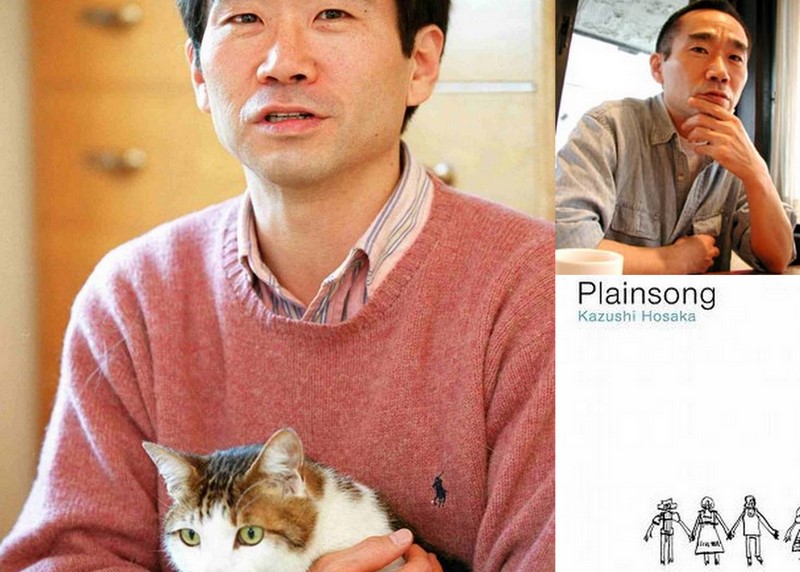
Kazushi Hosaka ©Yomiuri Shimbun
.
The In-Between Generation
A Review of Kazushi Hosaka’s Novel Plainsong
By Brianna Berbenuik
.
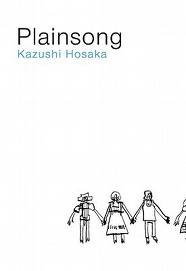
Plainsong
Kazushi Hosaka
Translated by Paul Warham
Dalkey Archive Press
176 pages; $17.95
Kazuchi Hosaka’s first novel Plainsong is full of characters who read like Japanese versions of Bret Easton Ellis’s narcissistic, directionless young Americans.
They seem trapped in limbo, on an aimless pursuit while an older generation overtakes them. They suffer from what you might call premature nostalgia, a Quixotic expectation, an empty yearning for something that doesn’t exist for their generation but was ever-present for generations before.
Hosaka’s characters are like ghosts; they are never quite fully fleshed out and remain incomplete – an eerie transience, in a sense trapped in the plight of their generation. None of the characters is particularly rebellious, though perhaps the more eccentric ones, like the jobless and outwardly childish Akira, think of themselves as rebels. They are, after all, an “in between” generation.
Hosaka was born 1956 within the same decade as two better-known Japanese authors: Haruki Murakami (IQ84 and Kafka on the Shore) and Ryu Murakami (Almost Transparent Blue and Coin Locker Babies). Haruki Murakami established himself as a literary giant with a distinctive style often aligned with magic realism (in Plainsong the nameless protagonist mentions that he once wrote an article about Haruki Murakami); Ryu Murakami writes about sex, drugs and the disenfranchised youth of Japan; Kazushi Hosaka, in contrast, has taken on the subtle and quiet themes of everyday people, exploring relationships with a delicacy and sensitivity that gives his writing a “naked” feel without being too revealing.
Hosaka’s prose is sparse and minimalist. His slender novel is a meandering journey, almost dream-like despite the plain, everyday details. The action takes place in 1986 (when Hosaka would have been thirty). The nameless narrator’s girlfriend has just left him; he suddenly finds himself accumulating a steady stream of strange house guests. The novel allows you to watch the characters through the eyes of the narrator, but does not allow you intimate access to their thoughts or feelings. They are passing acquaintances; simple, transient people entering and exiting the reader’s field of view in the course of the novel. At the end, they are easy to let go. Like a passing satellite view – you’re there, then you’re gone and over different terrain.