Oct 042015
 

Claire Hennessy2


The text comes in from Sophie at 5.03pm – Getting ready for the Debs @ Anna’s, can’t believe you’re not coming! Miss yer face. xoxo

Amy already knows. She has Facebook open on her phone, scrolling through the photos and status updates. There’s Sophie deliberately looking ridiculous, hip jutting out and her lips in a pout, her hair still wrapped up in a towel on top of her head. There’s Ruth’s dress on a hanger, silvery and sleek, the one Amy told her she didn’t look fat in, to stop worrying about it. There are the boys posting updates about how drunk they’re going to get, except for Will who claims to be ALREADY HAMMERED!!! And there’s the link to Michael’s latest blog post, which she opens in a new window, and then sets the phone down on her bedside locker before it loads.

Downstairs, she pushes open the door of the sitting room. Her parents are watching some old fashioned murder mystery series, one of those things where everyone talks in posh English accents and there’s never any blood on the screen, even when they do show a dead body. Amy waits for a pause in the dialogue before speaking. “I’m putting the kettle on, do you guys want anything?”

“Can you make a pot of tea?” Mam asks.

“Yeah, cool.” She hovers in the doorway for a moment, watching the detective walk briskly while looking thoughtful.

“Here, sit down, sit down,” Dad says, dislodging a cushion to his right.

She declines, instead retreating to the kitchen to make the tea. She reaches for her phone while the kettle boils, and then remembers its weight and contents are safely upstairs.

When she brings in the tea, Mam turns to her. “What are you up to tonight?”

Does she remember the date? Amy shrugs. “Just stuff for college.” She’s all of three days into her course, but there are articles she could be reading, theories she could grapple with. Or she could slip on the black dress she thought she’d be wearing tonight and make an appearance at one of those seemingly endless society events to welcome freshers. She’d walk in the door and impress them all; the conversation would still and then embrace her. Maybe she’d have them laughing at her wit, or nodding at her insights. The possibilities stretch out and then dissolve. Amy hasn’t exchanged more than a sentence with anyone in college since she started, and she’s fairly sure few people are, in real life, striking enough to wow a roomful of strangers simply by wearing a little black dress.

This is what she does, she knows. Dreams up how things should be, carving out shapes for disappointment to seep into.

Upstairs, she picks up the phone. Her fingers tap at the screen and there it is, Michael’s blog. She stares at it and then opens up other apps, cycling through who’s tweeted what and what moments of the last five minutes have been deemed Instagram-worthy. The post is already making its presence felt, though. It’s been like this all summer, since some quasi-celebrity in RTÉ found the blog and gushed about it, repeating ‘inspirational’ so often it lost all meaning. Then one of the more earnestly Catholic columnists for the Irish Times criticised Michael for his flippancy – the post where he’d compiled all the jokes about losing a leg – and suddenly he was even more popular for the absence of saccharine. Now there’s some comedian sharing the link to the latest post, saying, Michael Carter’s latest on getting ready for the Debs after a year of chemo – food for thought but also hilaaaaarious! READ!

It wasn’t a year of chemo, just like it wasn’t a constant on-the-brink-of-death struggle, but Amy’s used to the version of events people believe. Brave Michael, lover of hurling, lover of life, flung into despair when the doctors told him he had bone cancer, thrust into even deeper torments when his leg had to be amputated, but now discovering that life was meant to be lived, that the day was designed to be seized, and that the internet was an ideal forum to share these revelations with the world.

Let me tell you, the latest post begins, it’s tricky getting into a tux with only one leg! I almost fell over trying it on! Most trousers are grand but I was worried the prosthetic might get caught and tear these and when you’re renting that’s the last thing you want to happen!

There’s a photo, and her breath catches. Michael has the bluest eyes she’s ever seen and even in photographs, even in their tiny versions on her cracked screen, they get to her. For a second it’s nine months ago and he’s telling her she’s beautiful.

She keeps scrolling. I don’t have a date for tonight – I’m just going with the lads and we’re going to have the best night ever! I know that might sound like I’m trying to talk myself out of feeling bad about not having a lady on my arm, but the truth is, these guys are the ones who’ve been there for me the whole time I’ve been sick. We’ve already started going our separate ways, so it feels right that we have this one last chance to hang out and have the craic! I hope those of you reading this have a bunch of friends that you know you can always count on – hang on to them. It’s people like that who make life worth living.

The hot tears aren’t a surprise. Neither is the shaking. She should have known better. Why is she still reading this? The world of her screen, unlike school, is something she can curate, but she still knows when Michael has updated his blog or shared a new set of photos or reblogged inspirational quotes on his Tumblr.

There are endless possibilities for how she could spend the night but they collapse into this screen. Photos pop up from the dinner, and she marvels at how grown-up everyone looks. There’s one of Sophie, Anna, Ruth and Cliona, every facial imperfection smoothed out, and for a moment Amy looks for herself there too. There are so many photos of the five of them, going back to when they were gawky first-years, before discovering hair dye and contact lenses. She used to imagine them at weddings of the future, taking turns with bridesmaids’ dresses.

Sophie’s the only one who still texts her. There’s another message at 10.11pm – Great night, wish you were here. xxxx

It’s not that she broke up with Michael. That’s why the rest of the school think she’s a bitch, but the girls might have stayed friends with her if she’d done all the things they did when there was a breakup, the dissecting and regretting and rebounding. It was the silence. It’s her own fault.

“Don’t stay up too late,” Mam calls from the other side of the door, somewhere close to midnight.

“Night, Mam,” she calls back. The photos are still popping up. There are the boys, making faces in their suits, losing jackets as the night progresses. There are the girls, their smiles broader and wilder after several drinks. There’s Cliona with her date. There’s Anna and Sophie mid-clink. There’s Ruth sitting on Michael’s lap.

It’s pathetic to be still awake and at home alone at this hour but she texts Sophie anyway. What’s going on with Ruth & Michael???

1.03am – Did u see pic? I KNOW!!! All over each other!!!

Amy’s still staring at the message when the phone rings.

“Amy, oh my God, I just sent that and thought – can you hear me?”

“Yeah.” There are noises in the background, voices, but Sophie’s voice is coming through.

“I wasn’t even thinking when I said that, are you okay?”

“About Ruth and Michael?”

“Yeah. Are you upset? I really don’t want you to be upset, I feel bad now …” Sophie’s about a drink and a half away from locking herself in the bathroom and crying, Amy estimates.

“It’s fine. He can be with whoever he wants.”

“You sure?”

“I broke up with him,” Amy reminds her.

“I know, but, like, it’s Michael.”

Amy says nothing. There is nothing to say to this. There is nothing she can say that doesn’t make her the villain. Her fingers tighten around the phone, and when Sophie doesn’t fill the silence, she forces herself to speak. “Listen, go enjoy yourself. Have a great night.” She hangs up before Sophie can reply.

She used to imagine going to the Debs with him. Not just that, but other nights, other events. Maybe weddings, even, one day. Maybe. She used to imagine the romance, the magic. Rose petals on a hotel bed and his blue eyes fixed on hers as he slotted inside her, all so stupidly movie-like now she wants to slap her past self. She used to imagine he’d tell her she was beautiful, and that she’d know it was right. (Not being the stupid bitch who didn’t even want to fuck her boyfriend when he’d just got the worst news of his life. Who said yes, yes please, so she’d prove she wasn’t selfish, that she did love him.) (Not swallowing back tears when it hurt, the jabbing inside her, and all he was looking at was her goose-bumped breasts.)

This is what she does, the dreaming. She knows it needs to stop. This is the real world, and she’s nothing like a heroine, and fairytales weren’t ever real to begin with.

Ruth’s just posted a photo of herself and Michael, captioned LEGEND! <3

Amy has her number, still. Watch yourself, she could say. Or, don’t go home with him. But Ruth – Ruth will know the right things to do. She’ll know she’s in the presence of a hero. She’ll drop to her knees.

—Claire Hennessy

.

Claire Hennessy is a writer, editor and creative writing facilitator from Dublin. She has published several YA novels, and is currently working on a collection of short stories for adults, supported by an Arts Council bursary. She is the co-editor and co-founder of Banshee literary journal and tweets incessantly at @clairehennessy.

.
.

Apr 012015
 
john connell author

Photo by John Minihan

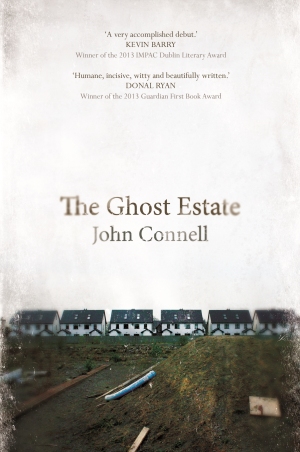
Born in County Longford, where his debut novel is set, John Connell like many Irish before him emigrated to Australia. The success of his short story The Little Black brought him to the attention of Picador Australia publisher of The Ghost Estate. Set during the Celtic Tiger, the novel explores the psychological and emotional “boom and bust” of those reckless times:

“Gerard McQuaid has been waiting for his start in life: his house, his girl, his land. And with rural Ireland being swept up by the Celtic Tiger and villages becoming towns, the electrician’s moment has finally arrived. With the chance to run a big job, McQuaid finds himself on Birchview Manor, a decrepit estate where the dreams of modern Ireland crash up against the weight of history. As McQuaid gets further into the restoration, he falls deeper into the story of the estate’s previous owner, Lord Henry Lefoyle, whose fate begins to loom ghost-like over McQuaid’s own.”


Gerard Beirne (GB): John, your debut novel, Ghost Estate, somewhat unusually for an Irish writer is being published in Australia (Picador). How did that come about? Are their plans for it to be published in Ireland or England?

John Connell (JC): Yes it is quite unusual. I was an Irish emigrant living and studying in Australia and wrote a short story which was included in two short story anthologies in the country and happily for me it received quite a bit of attention and a few different publishers approached me with book offers. I decided to go with Picador as they said I could write about whatever I wanted so that was a really great gift. I have just engaged an agent at the moment who is looking to see about publishing the book in UK/Irl and other regions. So hopefully 2015 will see the Ghost Estate get an Irish release.

GB: Tens of thousands of Irish have move to Australia in the last decade with many staying on to become permanent residents or citizens? Why did you move there and do you intend on staying?

JC: I went to Australia as an exchange student studying journalism, I was then offered to finish my degree there and did my final degree project on the aboriginal communities in remote Australia and produced an investigative radio documentary, That piece won a journalism award and secured me work with ABC the national broadcaster. I had only ever intended on being in Australia for 6 months which later turned into four and a half years before moving to Canada.

GB: Many of those who have emigrated have done so because of Australia’s “booming” economy – having written a novel about the boom and bust in Ireland, do you see any similarities there, any concerns, warning signs?

JC: Ah yes of course, Australia is in a boom and the refugees of the Tiger are driving that boom in so many sectors. In my few years in Australia I saw the price of living increase, the price of houses, the proliferation of money and its wasting, all the hallmarks of a country running away with itself. Australia unlike Ireland has mineral wealth that won’t run out any time soon, but it is dependent on its trade relationship with China, its number one trade partner. In my opinion, Australia won’t crash like Ireland, but it will slow down (and it has started to slow down- I have Irish friends who work on rigs and mines that have been let go with that same slow down). The greed is fairly pronounced there at the moment sadly.

GB: Where was the book written? If Australia, did this make a difference to the writing of the book? If Ireland, was it necessary to go back to Ireland to write it? If both, was this a necessary part of the process and why? 

JC: The book was wrote in Ireland in a portacabin in a field in Longford. It was necessary to write the book in Ireland (I even did the rewrites here). I needed to be in the atmosphere of the place and listening to the local people talk, and I also gained so many stories from local people that ultimately found their way in some form into the book. It would not be the same book if it had been written in Australia. I just actually can’t imagine what it would have been. Ireland was the canvas and the book was the paint if you’ll pardon that bad analogy.

GB: How does the literary world in Australia compare to that in Ireland? — The literary community, the publishing scene, the literature itself? Is there an Irish literary community there?

JC: The literary scene in Australia is quite small compared to Ireland. There are lots of publications and publishing houses but not the sheer volume of writers as we have in Ireland. However, there are wonderful Australian writers with a unique Australian voice. It was only in living in Australia and Canada that I realized the tremendous output of Ireland in world literature. Thomas Keneally author of Schindlers’ List is Irish-Australian and would be the one stop shop for Irish literary scene to my opinion though other writers such as David Malouf have wrote books on Ireland or Irish-Australian subject manner.  Ireland and Irishness is part of the history and story of Australia and many Australians have Irish heritage so I suppose we are part of the Australian story in many respects. I mean Ned Kelly was Irish after all. Peter Carey would not have got his Booker without us convicts!

GB: The novel is set in Longford where you grew up – how did the Celtic Tiger and its aftermath affect your home and community? Depression plays a central role in the novel. We know that suicide rates increased due to the recession particularly amongst those in the property business. What has been the psychological impact of the “bust”?

JC: The Celtic Tiger and its death had a huge impact on Longford and other rural communities. Longford was a very quiet place as a child, but it gradually became very busy during the boom years, and in the death of the tiger a ghost county as opposed to a Ghost Estate. Suicide was sadly all too common and still is. We have 10 suicides a week in Ireland. 8 of those are men. Many young men who had known nothing but success in the boom years suddenly found themselves in debt, unemployed and caught; and sadly far too many remained silent, suffered quietly and took their lives. It is a sad, sad truth but one that has yet to be fully talked about. For many, it was either emigrate to Australia and now Canada or face the quiet lonely Longford nights and the dole queue.

GB: You grew up on a farm — how has that played a role in your life? How has farming been impacted by the Celtic Tiger years and how have the changes affected rural communities?

JC: I enjoy the countryside and I’m proud of my rural roots but that’s about it. The Celtic Tiger changed everything in Ireland even farming; farmers were builders and developers too.  Thankfully that has calmed down now and people are returning to the land in a more healing and respectful manner.

GB: On a final note, you mentioned that you know Yanis Varoufakis the current Greek Finance Minister. What is your connection to him and does it have any relevance to the book?

JC: Yanis and I talked a number of times after I heard a lecture he gave on the GFC. I was on the rewrite of my book at the time and Yanis’s ideas combined with those of Tony Judt whom I met before he passed away, really cemented some of my economic thinking on why things got as bad as they did. Yanis had offered for me to study with him in Texas, but I had a wedding to plan and he a country to run. Maybe in time we might get to reconnect on that one!

—John Connell & Gerard Beirne

.

Listen to John Connell read an excerpt.


cover

Excerpt: Kane – a short chapter about the developer

John Kane balanced the car keys and mug of tea in his hands as he opened the sleek black door of his new Landrover. It was a bright if somewhat cold morning. He let the engine warm before he turned the ignition. One, two, three. He sipped from his mug quietly, as the window slowly defrosted.

He was used to this morning routine now. The Landrover moved smoothly along the country roads. He could hear the scrape of briars and overgrown branches against the vehicle as the lanes narrowed towards the cottage.

How many times had he come up this lane? It was beyond measure now. The house was still the same, had been since Noel had lived there. Old Noel, his distant cousin, the bachelor, the man who had left him everything in his will.

But wasn’t that what he had wanted, he reminded himself, all those visits, the shopping trips to Longford, the dinner in the Landmark. Had it all been for the hunger, the want of land, those twenty acres and the plot of turf in Kelleher bog? Yes, he admitted, and no. He and Noel had shared a friendship, and while it was not a surprise that one day the man asked to be brought to the solicitors in town, some part of him felt that he was entitled to it. It was in a way a gift. Though Noel’s niece had never seen it in that light. Not at the funeral when he had taken the front pew reserved for immediate family, nor at the reading of the will when she had received nothing, despite nursing him in those last few months.

Friendship had a price and that was not his fault.

He rolled to the door and beeped the horn. The vehicle hummed quietly as he waited on the cracked concrete. The house was old. Sheds dotted here and there around the yard were filled with turf and old creamery cans. The turf was never burned any more. The house ran on oil.

The Poles emerged with their shaved heads and plastic bags full of sandwiches. Odd they never seemed to have a lunchbox, not one between them, Kane thought to himself.

They had lived here for over two years. He’d done little with the house: put in some bunk beds, a lick of paint and that cheap oil burner instead of the range. The walls were still damp on cold winter mornings. They had probably brought on Noel’s bad chest and would, in time, would make the Poles sick too. But they were young and hardy.

‘Good morning lads,’ Kane said as Jans and the others began slowly to climb into the vehicle.

‘Morning boss,’ said Jans quietly.

‘We’re all well I hope?’ asked Kane, looking in the rear-view mirror towards the others.

‘We well, yes,’ they agreed sullenly.

Each morning was the same. A talk, a half-hearted chat that petered out. There existed in the car two different worlds with many incomprehensions.

‘I drop you at the manor today, okay?’ he said.

The group nodded.

‘Jans, can you come with me to the office? I need you to give me a hand.’

The Polish had arrived with the boom, come like a wind indeed. The country had woken up to find new names and faces that spoke of towns and villages no one had ever heard of. They were good workers and in so many ways were what the Irish had once been, Kane thought. Strong-backed, fond of a drink and, yes, ignorant. They were in search of a better life in another land and yet dreamed only of returning home.

Jans, who spoke the best English, had been a teacher of sorts, but there was more money to be made lifting blocks than teaching children. He, like all the others, had made that Ryanair migration across Europe and somehow, somehow, ended up in Longford.

It still puzzled Kane, Longford being multicultural, and was there not enough trouble between the two native groups that lived here already, not to mention the travellers? How were they ever to come to terms with foreigners when they had yet to come to terms with themselves?

But there was work to be done, and these men, these Poles, were ready to do it.

They never complained, they never questioned, they simply shrugged and worked. They had become serfs in a way; a man’s success could be measured by how many Poles he had working for him.

Kane drove toward the estate. Big Jack would be waiting for them. It was the same routine each morning. And they would be set to work on some menial task around the sites, something a contractor would refuse to do. They were the workhorses of this boom and when it ended, whenever that might be, they would be sent away like all old nags.

On Fridays after work he would bring them to town to wire their wages back to Poland, back to their families. It was perhaps paternalistic but he knew the minds of young men well. If they had the money, they would spend it, and an arsehole pub in the middle of Ireland was no place to waste a week’s work. He would give them their pay slips and drive them to the Western Union branch and the rest was their own choice.

It was not really a life, Kane often thought, to work and save and never be able to fully communicate your thoughts and fears for the lack of words. It was little wonder the men took to the cheap bottles of vodka at the weekend.

They were not so different, not so very different at all, Kane thought. A picture of Poland instead of Ireland on the cheap bedroom walls and a set of rosary beads under each man’s pillow. Poverty had a way of repeating its motifs.

‘Come on, Jans,’ he said as Lech and the others packed out of the Landrover. ‘The gutters in the office need a good clean. They’re full of fucking weeds.’

‘Yes, boss,’ Jans said simply, and returned to silence.

Was it better than teaching, Kane thought. It must be. It must be.

—John Connell


John Connell was born in 1986. He grew up in County Longford, Ireland. An award-winning investigative journalist, playwright and producer, The Ghost Estate (Picador Australia) is his first novel.

.
.

Dec 082014
 

Mary-Morrissy-NLB

.

The treatment doesn’t make me sick, it makes me dazed. And tired. Dog-tired. Fatigue strikes like a power cut and I have to sit down ─ now ─ or I think I’ll die. The hospital is a stone’s throw from Suesey Street, the part of town I used to frequent a decade ago, when we were an item. Last week, after my session, I found myself wandering there when I had one of my turns. It was a thundery kind of day; the sun was spiteful. There I was, passing “our” pub. Where we would meet on days like this one, hot and humid, or on brown afternoons threatening rain, during our two seasons together. Either way, this was where we would meet in secret and hide from the prevailing climate of prying eyes.

As I halted in front of the pub, I wondered if I could still rightfully call it ours, since on the outside it had clearly been made over. The masonry is now a fuchsia red and there’s a new name over the door – it’s called Billy Pilgrim’s now. I suspected that inside would be similarly altered ─ primary colours, stainless steel, loud music, themed. Superstitiously, I’ve never gone back there. But needs must. Migrainous from the sun, I knew if I didn’t take the weight off my feet soon, I would fall down on the street. I pushed through the pub’s double doors with the same milky glass panels I remember from before, and became a visitor in my own past.

I made my way through the outer bar to our spot in the long back room, under the big station clock, so, you said, we wouldn’t be reminded of how little time we had. The relief of sinking into pub leatherette was ecstatic. I looked around furtively in case I had registered out loud to the fact. But there was no one in the pub except for the bar-tender, a blocky, shaven-headed young man, with his sleeves rolled up and nothing to do. Apart from him ─ and he was probably still in short trousers when we were meeting in here ─ the rest of the pub was unchanged. The same polished oak, marble-topped counter, partitions of dimpled glass, brass rail to lean your feet on, a snug in the front of the shop, a back room and a mirror behind the bar so that even before you’ve got drunk you’re seeing double. The smell was just the same too. An oozing mix of stale porter and pungent urinal. I sat in our corner gratefully and ordered a mineral water. (A bald woman wearing a wig downing vodkas alone at four in the afternoon would have seemed as big a cliché as our affair – the older married man and the youngish single woman trysting in a pub. These days I’m trying to avoid clichés, even age-appropriate ones.) The electively bald barman landed the glass on the low table with a clink-clunk and obligingly opened the bottle and poured. I drank thirstily. The flinty taste of the carbonated water set my teeth on edge ─ funny aversions afflict you with chemo. I pushed the glass to one side where it spat effervescently still trying to be the life and soul of the party.

I confirmed the barman’s suspicions that I was a mad old bat when I called him back and ordered coffee instead. It came in a thick cream catering cup, slopped obligingly in the saucer. It was thin and bad, from a jug stewed for hours on a hot plate of torture. But it was like a madeleine to our long lost affair. With each sour sip, I was no longer visiting my past, I was right back in it.

After treatment, most sensible people would go home and crawl into bed. But post-chemo, the last thing I want to do is to give in to sleep during the day. If I do, it means I’ll be awake – and alone ─ in the blackout hours. Ironically, I live alone, or should that be I live alone ironically? I have made it a practice to call out “Honey, I’m home” when I let myself in as a joke to myself, on myself, and to puncture the squeamish silence of a house unmolested since I left it. I try to imagine the Sanforized existence that would match my smooth and hearty greeting. The set of “I Love Lucy” comes to mind, a gleaming kitchen rich in appliances, a brave suburban light. Not my dim and over-shadowed household. I use all the tricks of wolfish loners to combat solitude. I talk my way through tasks aloud. Trina, I say, time to sluice the tub. And so I set to, wiping down the surfaces, the tiles, the wash-hand basin and colouring the bowl with a squirt of lemony liquid. And because I can never manage to keep the towel wrapped around me ─ and now my body geometry can’t support it – I end up naked and sweating amidst the disinfectant fumes, the closest I get to a sexual glow these days.

This was the time of day we used to meet. It annoyed me that you would arrive breathlessly as if you were just managing to squeeze me in. But once you sat and calmed, we entered another time zone where all other pre-occupations fell away. So absorbed would we become that a parade of our nearest and dearest could have passed by and we wouldn’t have noticed. This place absolved us from being furtive; it was the only time we were not mindful of our situation, where it became just the pair of us, alone in the world. Perhaps that’s why it was so intense; for an hour-and-a-half twice a week we played ourselves. No wonder I hadn’t wanted to come back. But as I sat there, I found myself soothed by the atmosphere, not haunted by the associated memories. In the torpor of an empty afternoon pub, I realised I’d found the perfect asylum for the chemically blasted.

It didn’t stay empty for long, of course. Students started trickling in, a few pensioners arrived, men with caps and newspapers, and embroidered the bar. A family of tourists, Italians, guide book in hand, joined me in the back room. Mama, Papa, Silvio and Chiara. They took photos of themselves with their phones. Papa tried a pint and didn’t like it; the children bought crisps and released salt and vinegar into the air. I ordered another coffee and settled in. Not out of nostalgia. I cannot be nostalgic for something I destroyed myself; I am not that perverse. I stayed because it was easier than going home. And then, coming up for five when I was totally off-guard, when I had made my own of the place, you arrived.

Really, it was you. You, as a boy, that is. Slender – you always said you’d been a beanpole in your youth ─ a thin hollowed-out face, gaunt almost, a mop of black curls and eyes to match. It was uncanny. The boy wore a sludge-coloured rain mac over a faded t-shirt, a pair of navy drainpipe jeans, dilapidated Beatle boots with pointed toes. If it wasn’t you, this boy must have raided your youthful wardrobe. He sat in the outer bar in the corner but right in my line of vision. He – you, what pronoun to use? ─ nodded at the barman. He was a regular, it seemed. (Did you have a life in this bar before it became our haunt, I wondered?) He fished a paperback out of a canvas satchel and began to read. When the barman steered a pint towards him, he raised his eyes to say thanks and his gaze met mine. Well, I was staring. He raised the pint to his lips – I almost expected him to raise it in a toast – and then over a moustache of foam he smiled directly at me. Then I knew. Knew it was you, because that crease appeared between your eyebrows (the one I thought had come only in middle-age from too much worry) and your mouth turned downwards. You don’t smile up like most people. It isn’t – wasn’t ─ a mirthless smile, just one tempered with a clownish sadness. I felt myself weaken all over again. Shyly, I smiled back. Why shyly? Because I felt all my old uncertainties return as if I too had been spun back in time. To a time before I met you. To a “you” you’d never known. You settled into your book. By right it should have been one of those orange-covered Penguins – Evelyn Waugh or Graham Greene – but without my specs, I couldn’t work out what it was. After the initial startlement, I felt invisible and pleasantly voyeuristic. I was happy to sit and watch you. After all these years, I finally had you all to myself.

Sharing. That’s what usually dooms an illicit affair in the end. The mistress not wanting to share. But I didn’t care about that. In truth, I didn’t feel I was sharing you with anyone. She was just the silent partner as far as I was concerned. I just didn’t want anything broken because of our association. I hated it when you talked about your past. Not because it contained her, but because it contained you. You blamed the past for our predicament. Bad timing, you would say. If I’d met you when I was younger we could have. . . We could have what? Obliterated your mistakes? Had children? When I still could. You could have brought out the maternal in me. If you’d known me then you’d understand. . . Understand what, though? That you weren’t always this rueful self? The trouble was I couldn’t imagine you younger; I could only see you as you were. Acting old, your role to impart wisdom, already writing me out. Don’t do what I did, you used to say, don’t marry for gratitude. As if I were inundated with suitors seeking my hand. I was 37 and considered past it. Worse than past it, because I was engaged in a fantasy relationship that couldn’t stand the light of day. That’s what my girlfriends told me. Even if you had managed to leave the silent partner, I’d have got the worst of you, an old man with sagging dugs and slowing walk, enduring a guilty superannuation trying to win back his wounded off-spring. I would get compromise while the silent partner would have had the wholehearted best of you. That ardent, warrior youth you seemed so nostalgic for. I would become the bath-chair pusher, the caretaker, witness to your decline. That was never my style. For one thing, I’ve always been careless. Careless with people. Other people might mistake it for carefree; not the same thing at all. I am free of care because I care less. I was not vigilant enough even about myself, as it turned out. If I had, I might have noticed the giveaway pellet of hardness on the underside of my breast, right over my heart.

The clock struck six and a girl breezed in. She had long, sand-coloured hair and a gapped fringe. She wore something filmy and floral. Not my type at all, but then that’s presuming I was your type. She looked like the kind of girl who’d stand on the shore with a towel to dry you off if you were in swimming. Girlie was territorial about you, fixed you with her big eyes and talked – a lot – some breathless account during which she would snatch your hand for emphasis, or poke you playfully on the arm.

“And then he asked me if I’d cover the late shift. . .” She exhaled indignation. “I mean, really!”

You played with the ends of her hair and gazed at her with an unseemly kind of yearning that made me look away. Then you leaned in and kissed her. She was bruised into silence by your lips. That was something you used to do with me. In mid-flight I would find my words smothered by your mouth. It used to infuriate me that you couldn’t bear my small talk. Looking at it now, I recognised desire. As you disengaged, another person joined you, a boy this time. I thought maybe I’d be able to identify him. Maybe he’d be someone who had survived into my time? But I couldn’t. He had a face whose features seemed in untimely progression. He had a boy’s eyes and soft chin, but a man’s brow and nose. His mane of nondescript hair grazed his dejected-looking shoulders. I christened him Lionheart, but it was you, with your dark looks, that consumed my attention. I kept you constantly in my sight-lines and every so often our eyes would meet and lock for a moment, though as the pub filled up with office workers, it was harder to maintain a clear line of vision. Girlie produced a phone and I could hear you planning the rest of your night. You wanted to go to a gig with a band called Methuselah, Girlie wanted to go for something to eat. Lionheart eyed Girlie, then you – he seemed to have the casting vote. I wasn’t sure who he was most in love with, you or Girlie. Between the standing army of drinkers, I kept on catching your eye. A quizzical eye, at first, lightly sardonic, then more calculating, curious. This is how it was when we met. Even with age you couldn’t cloak your emotions so everything got played out on your face. I felt, somehow, you were communicating with me, over the heads of your friends and the Friday night crowd. But what were you saying?

I hadn’t thought of you in years. Really! Not in that way, I mean. Not in the pained malignant way of the unrequited. But no, that’s not true. I was requited. During that time with you I was more alive and more unhappy than I had ever been. Maybe the two go together. Now I am chronically content and half-dead. Though even at the time I knew what we were doing was a recipe for heartbreak – someone’s. Yours, as it turned out. In the end, I couldn’t stand the tension of waiting to see who would break first. You? Me? Or the silent partner? I wasn’t slave enough to the cliché to wait for you to say – I can’t leave my wife. So I ended it. Chop chop. A swift guillotine. I remember your face when I said it – here on this very spot. Everything fell, as if I’d struck you. You started bargaining furiously.

““I’ll do it, right now.”

““It’s not that,” I said but you weren’t listening.

““Here, I’ll phone her now,” you said, lifting the mobile like it was a brick with which you were going to smash your life to pieces. On my account. A gesture. Our gestures give us away.

““Put it away,” I said. “It’s over.”

It’s not every day you get a chance to see the prequel to love. That’s what kept me in a sticky, airless Friday night pub sipping cold coffee. I’ve never liked being alone in a pub – call me old-fashioned. Even when we were together, I hated being early. Waiting for someone I was never sure of, full of dread about being hit upon by amateur predators. That wasn’t a problem now. If anyone was a predator in this situation it was me. But I couldn’t bear to leave before you. It seemed important this time around that you leave me. Finally at half seven, the three of you rose, gathering up your stuff and pushed out into the main thoroughfare of the pub. Immediately, in a pincer movement, three of the suited ones moved into claim your space. I felt the betraying heave of disappointment that goes with the beloved’s withdrawal of presence. You turned to go; then you stopped and whispered in Girlie’s ear. She looked back at you briefly then bounced towards the exit where Lionheart was waiting patiently. I could see his face lighting up as she approached. Ah, so it was her he was after. He pulled open the door and she darted through it. He followed her. You turned towards me. I felt panicky but told myself to stop. You were going to the toilets, maybe, or using the side-door, the one that opened out on to a laneway, the one I used to favour when we were together. I could see your head bobbing up and down as you weaved your way around the crowd that stood between us. I was trapped; this was too close for comfort. I had not banked on our worlds actually colliding like this. You stopped in front of me.

Chemo fugue, my friends say. It was your ex-lover’s son you saw. But no, I knew you had fathered only daughters. A trick of the mind, the light. But no, it was none of that.

“Do I know you?” he asked.

When I didn’t answer – well, how could I answer? ─ he rephrased it.

““Do you know me?”

He was more earnest than I expected. You were never earnest; had it beaten out of you, you said, in the rough justice of boarding school. You were playful in company, serious in bed.

““It’s just that. . .” he started. A lighter voice than yours; age makes us growl and grate.

““Yes?” I said, feeling the bloom of ambiguous trepidation show on my face.

““Can I . . .?”

I nodded.

He folded himself on to the small stool opposite me that had remained empty except as a repository for bags and jackets. He laid these carefully on the banquette seat beside me. If it was a delaying tactic, it worked. What was he going to say? Could he do me for harassment? Young people are touchy about this sort of thing and I had not kept custody of the eyes, as we were instructed in convent school.

““You’ve been staring at me all night,” he said simply. No outlandish accusations, then.

““I’m sorry,” I said, rising to go. I had been a bad voyeur; I’d attracted attention by the focus of my own. “I have to go. . .”

I tried to squeeze by him but he grabbed my arm.

“Why is that?” he demanded. “What do you want?”

To turn the clock back, I wanted to say. He gripped my wrist and looked up at me imploringly.

“Are you my mother?”

That broke the spell, the chemo fog.

“What? No!!”

“Are you my mother?” he repeated and stood up. There was the steel I knew from your eyes, the grit of refusal. I shook him off, my folly made manifest.

“My natural mother,” he hissed in my ear.

The airwaves had been full of stories of adoptees trying to trace their natural parents; I felt I had stumbled into someone else’s reality show. I tried to wriggle out of our awkward embrace.

“Are you the woman who gave me up? Who gave up on me?” He raised his voice. “Who refused to meet me but feels free to spy on me? Are you?”

There was a ripple of anticipation in those around us; a pub crowd recognises when there is a row brewing. What I wanted to say was yes. Yes to everything. Except to the accusation of motherhood. To that I wanted to say – do you think, dear boy, that if I were your mother, I wouldn’t rush bald-headed to claim you?

“Is it you?” he pleaded, “come for me?”

Oh God, I couldn’t bear the interrogative. I had come for you. But the wrong you. I yanked my hand away and ploughed my way through the crowds of drinkers, jogging elbows and upsetting drinks as I went. A couple of aggrieved “heys” followed in my wake. I stepped out into the laneway where more shirt-sleeved drinkers had spilled out into the golden evening. Once clear of them, I ran. I ran, clutching my false hair in case I should lose it too. In my haste I crashed into a stack of shopping trolleys parked in a bay outside one of those late-opening supermarkets. I ducked in and found myself in the refrigerated aisle. He didn’t follow me, or if he did, he didn’t find me. I counted it as a lucky escape, a remission of sorts.

—Mary Morrissy

.
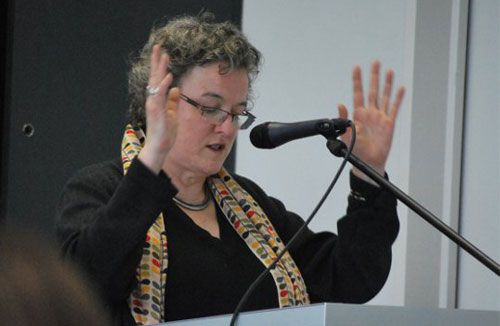
Mary_Morrissey_300_200

Mary Morrissy is an award-winning Irish novelist (The Hennessy Award, Lannan Foundation Award) and short story writer, the author of three novels, Mother of Pearl, The Pretender and The Rising of Bella Casey (long-listed for the 2015 IMPAC Award), and a collection of short stories, A Lazy Eye. A second collection of linked stories, Diaspora, is forthcoming from Jonathan Cape. Her website is available here.

.
.

Apr 062014
 

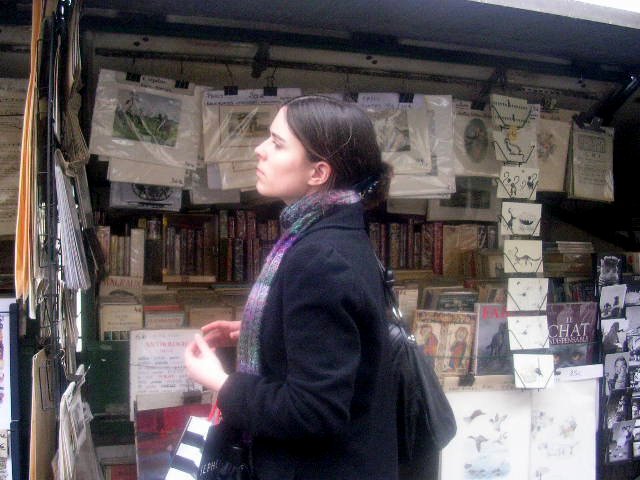
Nuala Ní Chonchúir author photo

Nuala Ní Chonchúir, like Doireann Ni Griofa who was featured in last month’s Uimhir a Cúig, is bilingual although she writes predominantly in English. A prolific writer of novels, short-story collections, flash fiction, and poetry, she utilizes a variety of constructs and perspectives often to explore the intimate issues of gender, sexuality and the corporeal.

In her story “Tinnycross,” Ní Chonchúir alludes to the prodigal son parable, but here the unexpected presence of a wife in the family home repositions the fraternal conflict. Her assertive influence shapes the emotional and material divides, internally and externally, yielding ultimately a resolution with hints of forgiveness if not exactly salvation.

The vocabulary rarely comforts. Not surprising since the returning son finds that “the familiarity of everything” is “both balm and thorn to him.” He is at odds not just with his brother but “with every blade of grass on every acre of the land.” To this end, Ní Chonchúir uses language like a plow, turning over the upper layer of the brothers’ hardened relationship to bring to the surface the roots of abandonment in the hopes of cultivating some form of reclamation. A cruelty borne out of rectitude, decency even.

—Gerard Beirne


By the time Oliver drove the avenue under the horse chestnuts, the bluebells were already thinning out. He had noticed puddles of cherry blossom along the pathways in the village. It struck some tender part of him that another year was hurtling towards summer, leaving him in a muddled January place, trying to catch up. The house lay squat and crabby ahead, and Oliver could feel his mood switch to match it; the undulating angst that always accompanied him at Tinnycross began to roll through him. He was a young man again, suckled and strangled by the place, and at odds with every blade of grass on every acre of the land.

He pulled up in front of the house and sat for a while to quell his building rage. Oliver knew that like all such rages his agitation was mixed with a kind of love. He often longed for Tinnycross – for home – for a version of it or the past, but it also repelled him. Wanting to be calm when he confronted Bunny, he sat in the car and waited and willed himself peaceful.

 After five minutes Oliver got out and went around the side of the house to the back door; the front door was never used. He stepped into the kitchen and was assailed by its brightness. And then by the sight of a woman standing at the table – his mother’s deal table – kneading dough with care in a cabled bowl. She was silver haired, neat as an egg, and she – for it could only have been she – had reawakened the kitchen. His mother’s furniture still stood: the table, the dresser, the chairs, but all of it looked fresh and the walls were painted. Things were immaculate again.

‘You must be…’ Oliver searched on his tongue for the right term. ‘You must be the cleaner,’ he said, eventually, settling on that word because he could come up with no other.

‘I’m Bunny’s wife.’ She threw a glance his way as if she had been expecting him.

‘His wife?’ Oliver said, and snorted. The woman stopped kneading and stared at him. ‘Is Bunny home?’ he asked.

‘He’s below in the field. Will I ring his mobile?’

‘No, I’ll go down to him.’

She wiped her fingers on her apron and came towards him with one hand out. ‘Fidelma,’ she said.

‘Oliver O’Donnell.’

She smiled. ‘I know who you are.’

Oliver left the kitchen and stood in the yard. The land fell to the river – Tinnycross was one huge field with no ditches or fences to mark it out. Hay bales sheathed in black plastic were dotted around like giant cuts of liquorice, and a stand of rape burned its yellow among the green and brown. His heart swelled into his throat and he drew a few deep breaths. The familiarity of everything was both balm and thorn to him. It was quiet in the yard but he could hear the far off burr of a tractor and the bird calls that were the same bird calls as forty years before. Oliver gazed down over the land. How could a field – one ordinary field – have such a pull on him?

He looked at his shoes, then at the muddy track that lead from the yard to the land. A wife? Well. That surely changed things. By what luck had Bunny, of all people, got himself a woman? Oliver shrugged and headed down the track, at first treading the verge to avoid the muck and save his shoes, then staying off the grass because it was littered with pearls of sheep shit like beads scattered from a rosary. The brother is a quarehawk right enough, he thought.

Oliver looked up to find Bunny strolling towards him; he was a shambles as always in his torn fisherman’s jumper and folded down wellies. The wife’s ministrations had extended only to the house, it seemed. Bunny was swinging a stick like a dandy.

‘Olly,’ he said.

‘Bunny. How’s the form?’ They shook hands. ‘And it’s Oliver. Please.’

‘So I don’t get to be Bernard but you get to be Oliver. Big man Olly.’ Bunny slapped the ground with his stick.

‘Did you get my letter?’ Oliver said.

‘I got a letter from Folan and Company, if that’s the one you mean.’

‘We need to settle this, Bunny, for once and for all.’

Bunny whacked the tree beside him with his stick; it was the old hawthorn, bent sideways by the wind, its branches beseeching the tree beside it. That hawthorn was their mother’s favourite tree; she would stand under its dense crown to call daddy from the field.

‘Settle, Olly?’ Bunny said. ‘What’s to settle?’

‘Ah, don’t start.’ Oliver put his hands on his hips and stood in front of his brother.

‘You think you’re the prodigal coming back here. Well, you’ll get nothing out of me.’

‘Bernard.’ Bunny’s wife had come down from the house without either of them noticing. They both looked at her. ‘Why don’t we go inside and talk?’

‘It’s none of your business, Fidelma,’ Bunny said.

‘Oh, I think you’ll find that it is,’ she replied.

She walked behind them up the track towards the house, a shepherdess herding a pair of recalcitrant rams.

Oliver stood in his parents’ bedroom, watching dust waver in the air. Their marriage bed had become Bunny’s. The lousy shite hadn’t even bought his wife a new bed. Oliver recalled his father’s last days in that bed. Daddy had started to say their mother’s name again; it fluttered out of his mouth like a butterfly looking for somewhere to land. It sounded alien launching off his tongue: ‘Catherine. Catherine. Catherine.’ He hadn’t called her by name for years; hadn’t cajoled her, or pleaded, or thanked her with her given name. Their mother sat by the bed day after day, holding their father’s hand, soothing him, wiping his drink-haunted face.

‘It’s all right, Daddy,’ she said. ‘I’m here, I’m here. Your Catherine is here. I’m right beside you, Martin.’

Mammy was gone now too – Oliver had not witnessed her death – but he could feel her in the house still, a revenant gliding from room to room. He put his hands on the cold iron of the footboard and gripped hard; he rocked himself and pushed his chin to his chest.

‘Come through to the kitchen, Oliver.’ Fidelma stood in the doorway; her voice was gentle. ‘I’ve made tea. We’ll talk.’

He didn’t turn to look at her. ‘Both mammy and daddy died in that bed.’

‘I know that. Bernard told me.’

‘I’m not trying to be cruel,’ Oliver said, hanging his head. ‘I just remember. This place makes me remember.’

‘Memory is a true thing, but it can make fools of us too,’ Fidelma said.

‘This all ends with Bunny and me. No offence, but you won’t be producing an heir. Tinnycross will go to God-knows-who.’

‘Let’s talk it out and see what we can come up with between us.’

Oliver followed her into the kitchen; Bunny had their father’s seat at the side of the table near the range. If visitors ever deferred to daddy, wanting him to take the head of the table, their father always said, ‘Wherever O’Donnell sits is the head of the table.’

Oliver said this to his brother, hoping to make him smile, but Bunny ignored the remark.

‘We’ll give you a third of the market value,’ he said. ‘There’s the three of us in it now.’

‘Mammy died during the boom; I’m entitled to half of what it would have gone for then.’

‘Are you trying to put me out of my home?’ Bunny crashed his fist onto the table. ‘Are you trying to kill me?’

‘I only want what’s mine.’ Oliver rattled a teaspoon around his mug. ‘My business has gone under. The bank is talking about repossessing my apartment.’

‘Well, boo fucking hoo. If you can’t look after yourself, it’s no concern of ours.’

‘Tinnycross belongs to both of us, Bunny. Mammy always said it. There’s no way around that.’

‘You took your time looking for your share.’

‘I thought you’d give it to me and, then, well, you didn’t.’

‘And bankrupt myself? Are you fucking mad, Olly?’

Fidelma reached across and squeezed Bunny’s arm. ‘We have my money, love; the money from my house.’

‘You want to give the man who killed my mother your money?’

Oliver stood. ‘Ah, here, there’s no need for that.’

Bunny dropped his head and spoke his words to the table. ‘Mammy asked you to come to Tinnycross and you wouldn’t come. She asked you again and again.’

‘It wasn’t that simple, Bunny, and you know it. I was in Dubai for Christ’s sake.’

‘Your mother begged you to come and you turned your back on her. You turned your back on Tinnycross.’ Bunny pushed back his chair, stood and left the room.

‘Not to worry, now,’ Fidelma said, patting Oliver’s arm.

‘That was harsh. Bunny knows I was abroad, I couldn’t get on a plane every time she asked me to; she was always trying to get me to come. I helped mammy in other ways.’

‘I know you did,’ Fidelma said. ‘Bunny is very attached to this place; we both are. He lashed out there and he shouldn’t have.’

Oliver suffered a twist of jealousy – Bunny hadn’t just landed himself a woman, but a decent woman, one who was happy with what she was made of; a woman secure in herself and the world; someone who liked to give.

Fidelma invited Oliver to stay the night. He didn’t want to, but he didn’t want to leave everything undone either; he hesitated.

‘Sure stay. Do,’ she said.

‘I will so,’ Oliver said, and thanked her.

Fidelma made up his childhood bedroom. He could barely get himself across the threshold and into the bed, the room bulged with so many memories: days spent in sickness fevers, nights spent in girl-induced ones. At least it smelled different now – he couldn’t have stood it if the room held the small boy and young man stench of himself.

Oliver lay rigid in the narrow bed, watching the moon with her mouth agape, spilling light over Tinnycross. He could see the corner of the barn, lidded with corrugate and lit up by moon-glow. He felt the presence of his parents and was unsettled by the knowledge that through the wall his brother was in their bed with his wife. His decent, loving wife. Sleeping warmly beside her or, perhaps, complaining about him in a low voice.

In the morning Fidelma propped a neat envelope against the milk jug that sat on the table in front of Oliver. He was breakfasting on his own; Bunny was already out on the land. Oliver picked it up, knowing without opening the flap that the cheque would have her signature on it; hers alone.

‘Are you sure?’ he said.

‘I am. It’s best to leave himself to me; I can deal with him. I’ll sort it out.’

‘Thanks a million, Fidelma,’ Oliver said.

When he had finished eating he shook her hand.

‘Don’t be a stranger,’ Fidelma said, and she let him out the front door and waved him off as he drove away.

The plains around Tinnycross were green and dappled with sheep. Every other field held an inky lamb among its white brethren. This lamb was always a maverick, sitting or standing apart from the others, living its own quiet destiny. Oliver drove past and watched the lambs, willing the dark ones to gambol and play with the others, but they stayed where they were, resolutely alone.

He thought about Tinnycross as he drove further and further away from it, on towards the city. He could feel the backward pull to it, to its green and its yellow and its light. Oliver knew he might never see the place again. Is it possible, he wondered, to be in love with a field. And if it is possible, is it wise?

—Nuala Ní Chonchúir


Nuala Ní Chonchúir author photo

Nuala Ní Chonchúir was born in Dublin in 1970; she lives in East Galway. Her fourth short story collection Mother America was published by New Island in 2012. A chapbook of flash Of Dublin and Other Fictions was published in the US in late 2013 by Tower Press and Nuala’s second novel The Closet of Savage Mementos appears April 2014 from New Island. Nuala’s third novel, Miss Emily, appears 2015 from Penguin USA and Penguin Canada. www.nualanichonchuir.com