May 182013
 

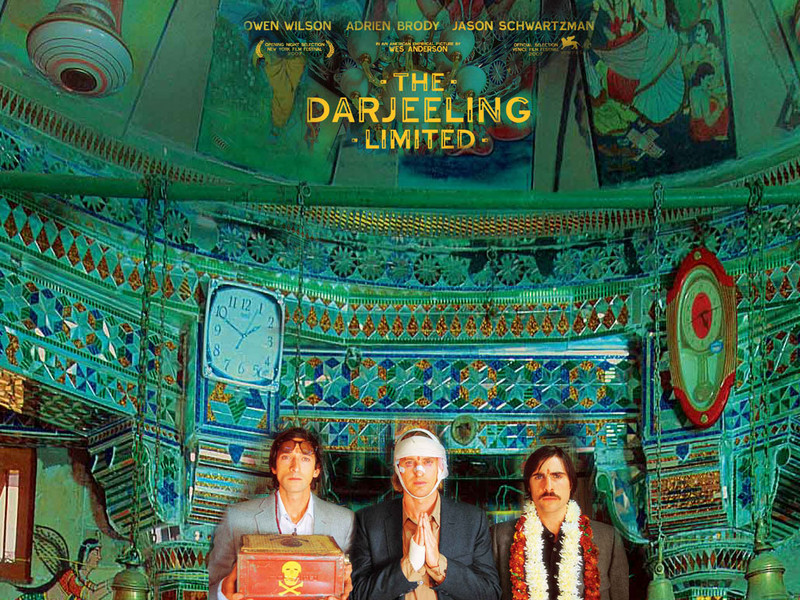
Wes Anderson’s short film “Hotel Chevalier” is a lean, bruised and naked tale in a Paris hotel room. Anderson shot the short with his own funds (and the actors, Natalie Portman and Jason Schwartzman, donated their time) two years prior to his feature The Darjeeling Limited but it was often screened at the same time and is referred to by many as a prologue to that feature film that followed it (as mentioned in this previous NC at the Movies entry). The two are aesthetically consistent, but that’s not surprising as most of Anderson’s films belong to the same visual palate and characters seem descended from the same family tree.
the-darjeeling-limited

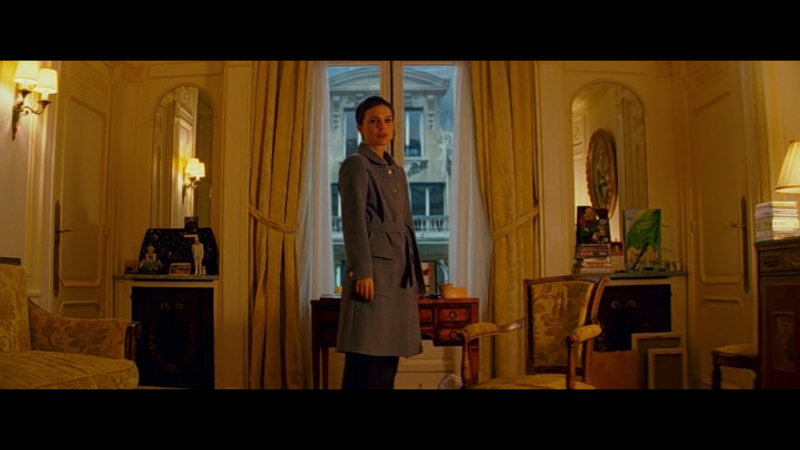
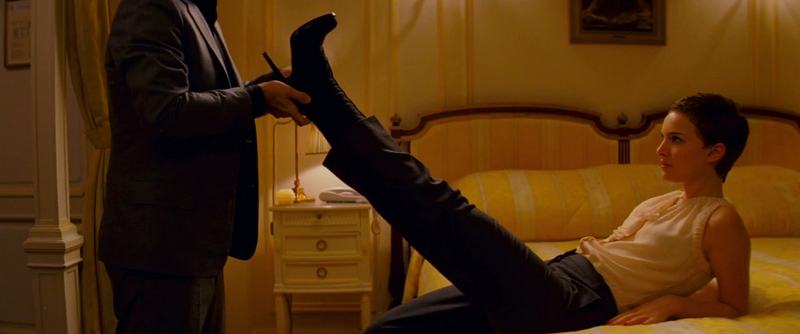
Though they were conceived separately, Anderson brought the short and feature together through their common character of Jack Whitmore.  Whitmore is precious, careful and, in his manicured construction of his hotel room a bit compulsive. In contrast, his beloved shows up with her fierce toothpick-in-mouth machismo, her velociraptor-attack dialogue (“What the fuck is going on?”), and her sudden bruised nakedness.
5

It is an uncomfortable film on several levels: visually there are the awkward, stagey wide shots of the room, the contrasting dolly shots and camera pans, the manicured way Jack has designed the room for his beloved’s arrival (complete with soundtrack queue on the ipod and a freshly painted painting): has he created the perfect setting for their reunion or a well designed bunker to defend himself against her impending assault? And does it matter since either would be in vain?

Then there is greater discomfort as Portman’s character arrives, asks almost mockingly “What’s this music?” and then touches all the carefully laid details of the room with further ridicule, even touching the wet painting, all as if to throw aside any attempts he had to set decorate or defend himself.
00000011

Does he love her or hate her? At this late stage they’re post woodchipper and it seems futile to sort through the bits of each. We’re given next to no back story except that she says to him “I never hurt you on purpose” and that he escaped her and seems clear when he says to her, “I will never be your friend. Ever.”
m4K5FLo5X9PR0vTrEweXujxN3JE

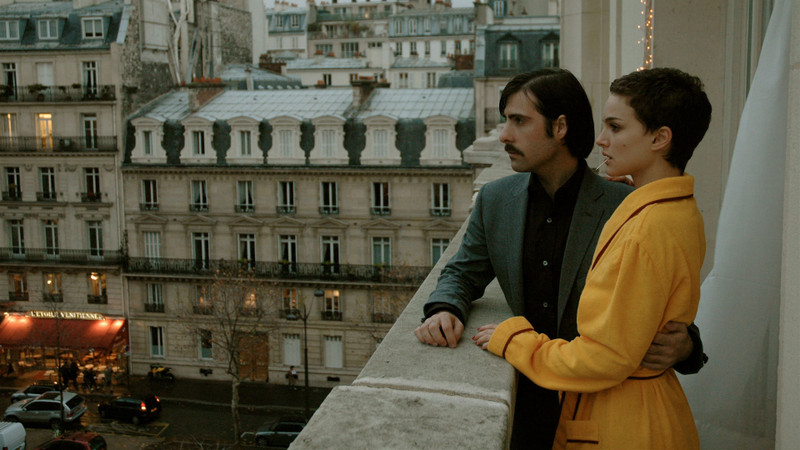
We don’t need to know more. This is the story of a man who fled, waits, then with gentle bath robe in hand shows her his view of Paris and offers her back her toothpick.  She’s only there for the night after all. It’s a perfect condensation of past and present with no future.

— R. W. Gray
Jun 222012
 

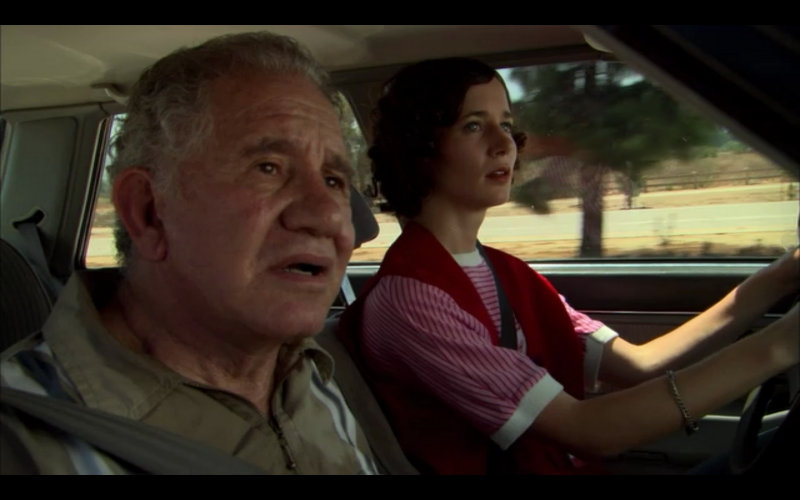
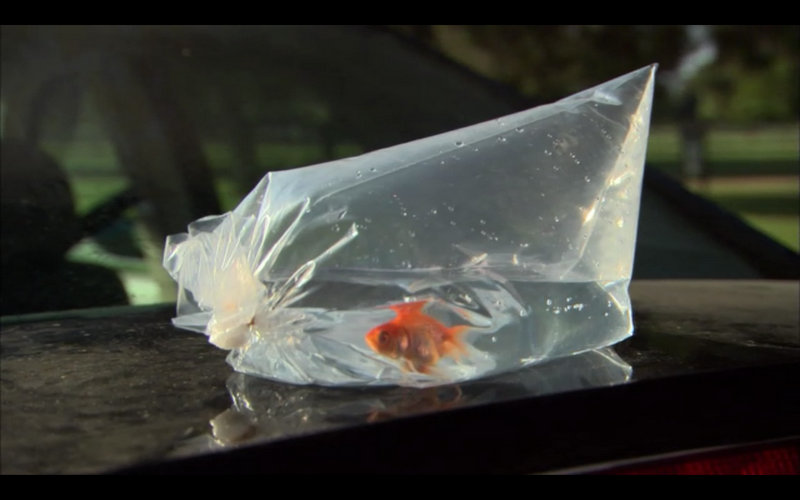
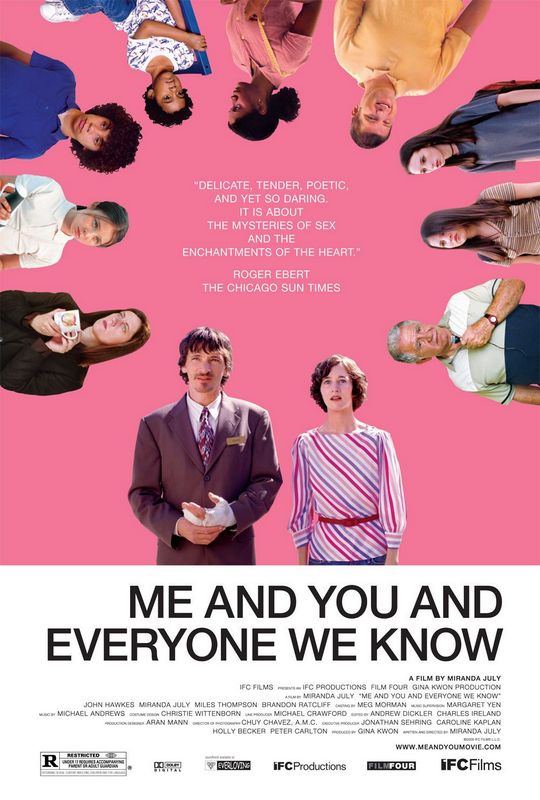
Occasionally, in the structure of a larger film there will appear a scene or sequence that can stand on its own, discretely, as its own short film. Here I would include the opening scene to Neil LaBute’s Your Friends & Neighbors, the seduction / meeting scene in Julio Medem’s Sex and Lucia, the “Hotel Chevalier” short shot alongside Wes Anderson’s The Darjeeling Limited (a separate film but theatres often screened it with the feature and it contains events referred to throughout the film), and this short set of scenes spanning the story of a goldfish on a freeway in the middle of Miranda July’s first feature film Me and You and Everyone We Know.

Structurally each of these shorts can be viewed discretely from their feature films and some, as in the case of July’s goldfish story, may even seem like an aside, though I think it still adds something tangentially to the larger film it belongs in. Some like “Hotel Chevalier” are subplots. Others like the opening to Your Friends & Neighbors and Medem’s seduction scene are building blocks of the main plot but could still exist as separate entities. Despite these differences, what they do have in common is that they provide enough narrative cohesion and catharsis to exist on their own if they had to. Or if you wanted to see them that way.

The goldfish sequence is tonally and stylistically similar to the rest of the film it appears in but is also similar to “Are You the Favourite Person of Anybody?” which was previously featured in Numero Cinq at the Movies. In July’s worlds we find absurdist realities where what happens is probable, realistic, but told in an overdrawn way, here particularly evident in the dialogue between Christine (Miranda July) and Michael (Hector Elias).

There are also strong similarities between this oversaturated reality and the style of Jane Campion’s short films (which were also featured in Numero Cinq at the Movies) which is no surprise as July commonly cites Campion as one of her inspirations and influences.

Though the goldfish short fits within the feature it is a part of, viewed on its own it offers a different experience. It is then a short film about loss, about condensed meaningful moments, and connection between strangers witnessing those moments. This isn’t at odds with the feature film it belongs to, but is in hues and tenor more melancholy than the rest of the film.

There are two things which tonally shift this shared sad experience, though, and keep it from plummeting into melodrama: 1) the couple in the vehicle that is the goldfish’s penultimate landing place are oblivious to the goldfish’s last moments, even though, as Michael notes, “at least we are all together in this.”

2) It’s about the death of a goldfish, possible the world’s most disposable pet. Truly, for the goldfish, these last moments hurtling down the freeway in his little bag of water might be a much more euphoric way to die than the neglect and probable toilet bowl funeral ending that would have awaited him at the little girl’s home. Regardless, the accidental death that connects these strangers is light on tragedy as a result.

All told this mixes into something sublime: a little accident, a little collision between strangers, a little loss, all finding something meaningful and significant that is more than a little beyond words.

None of this is intended to disparage the larger work, July’s absurd and lovely first feature Me and You and Everyone We Know. It’s just there’s a pleasure within the pleasure. And this might be worth tasting on its own.

–R. W. Gray